Cost of living in Australia depends on factors like accommodation, food, tuition fees, travel costs, internet bills and utilities. The average cost of living in Australia for international students to study in Australia is around AUD 1,400 - AUD 2,500 per month (INR 73,539 - 1,31,320) depending on the location. Candidates can calculate the cost of living in Australia from the study Australia government website using the calculator. Some of the most expensive cities for cost of Living in Australia per month are Sydney, Brisbane, Canberra, Melbourne, and Adelaide. Some tips to save money are given below
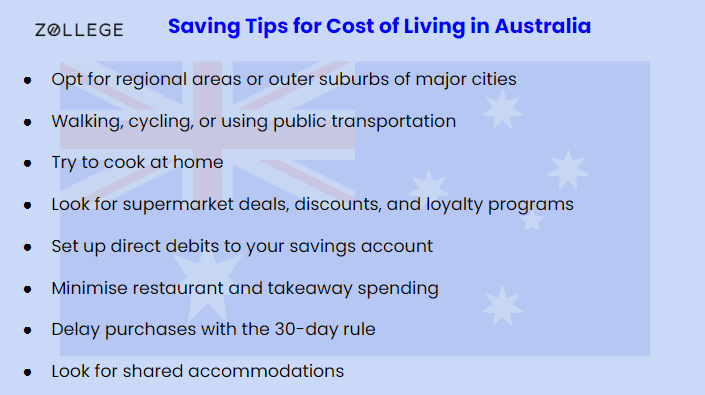
Australia's cost of living is generally higher than the global average, particularly in the best Australian cities like Sydney and Melbourne. Housing costs significantly impact the overall affordability. Regional areas tend to be much cheaper than major city centers. As example, the monthly cost for a single person in Perth is 1,768 AUD, while in Sydney it is 1,819 AUD. Candidates must also keep in mind the Australian student visa cost and the entertainment cost while calculating the average cost of living in Australia. If the candidate wants to live with the family, the cost of living will increase.
Cost of living in Australia is, on average, 231.2% higher than in India. While, rent in Australia is, on average, 513.8% higher than in India. These numbers might confuse you, but it needs no mention that these are comparatively cheaper than UK, USA, or Canada. As example, rent in United States is, on average, 643.1% higher than in India. So yes, you can choose to study in top universities in Australia at comparatively lower tuition fees.
Factors Affecting Cost of Living in Australia
There are many factors that affect the cost of living. The factors that affect the cost of living for students in the cheapest universities in Australia are:
- Types of college housing in Australia
- Utilities usage
- Lifestyle
- On Campus and Off Campus Stay
- Distance from the University
- Traveling Costs
- Staying alone or with family
Cost of Living in Australia for International Students
Many Indian students choose to complete their higher education in Australia. The cost of living in Australia for Indian students varies as per the expense types. Candidates might ask is the cost of living in Australia high. This depends on many factors. The cost of living in Australia for students depending on what candidates choose are:
Type of Accommodation
The rural and western regions of the western and northern Australian states are cheaper than cities like Sydney and Brisbane. Candidates can find accommodation as low as AUD 200 (INR 10,487) and can go up to AUD 2000 (INR 1,04,870). This depends on the city and the lifestyle of the candidates. The average student accommodation in Australia costs are tabulated below:
| Type of Accommodation | Average Monthly Rent |
| Homestays | AUD 450 - AUD 1,200 |
| Residence Halls | AUD 440 - AUD 1,100 |
| Single Apartment | AUD 750 - AUD 1,700 |
| Shared apartment | AUD 550 - AUD 1400 |
Note: 1 AUD = 54.36 INR as of March 15, 2024
Utilities Usage Cost in Australia
Apart from general academics, many international students choose to study VET courses in Australia for its broader career prospects. All the candidates staying in shared or single apartments need to bear the utilities cost. The university hostels include the utility cost on their cost of accommodation. The utliliutes include electricity, internet, mobile recharge, water expense etc.
| Basic Utilities | Monthly Charges |
| Electricity, Heating, Cooling, Water, Garbage | AUD 327.53 |
| Mobile Phone Monthly Plan | AUD 44.24 |
| Internet | AUD 87.33 |
Note: 1 AUD = 54.36 INR as of March 15, 2024
Cost of Living in Australia Food Charges
Food and meals are essential to travel and stay in Australia. The cost of living includes food charges, lifestyle, groceries and many more. You can also use cost of Living in Australia calculator for better understanding
| Expenses | Monthly Charges |
| Meal in an Inexpensive Restaurant | AUD 25 |
| Meal for 2 People, Mid-range Restaurant | AUD 120 |
| Meal at McDonalds | AUD 15 |
| Regular Coffee | AUD 5.24 |
| Soft Drinks like Coke/ Pepsi (0.33 liter bottle) | AUD 3.93 |
| Water (0.33 liter bottle) | AUD 3.36 |
| 1 liter milk | AUD 2.28 |
| Loaf of White Bread (500g) | AUD 3.47 |
| 1 Kg white Rice | AUD 3.23 |
| A dozen of regular eggs | AUD 5.69 |
| 1 Kg Local Cheese | AUD 14.21 |
| 1 Kg Chicken Filets | AUD 12.54 |
| Fruits | AUD 15 |
| Vegetables | AUD 20-30 |
| Water (1.5 liter bottle) | AUD 2.66 |
Note: 1 AUD = 54.36 INR as of March 15, 2024
Transportation Costs in Australia
Candidates can reduce the cost of transportation in Australia by staying near the university or the campus. They can travel by bus, shared transport or private vehicles. Depending on the comfort and usability, the price will increase. If a candidate travels by bus, the expense is les where as by shared transport it is medium. Private vehicles are expensive. The details of the public transportation and private transportation total cost of living in Australia are:
| Transportation Details | Monthly Charges |
| One-way Ticket (Local Transport) | AUD 4.60 |
| Monthly Pass Price | AUD 172.61 |
| Taxi | AUD 4.86 |
| Taxi 1km | AUD 2.19 |
| 1 liter Gasoline | AUD 2.00 |
| Volkswagen Golf 1.4 90 KW Trendline Or Equivalent New Car | AUD 35,000 |
| Toyota Corolla Sedan 1.6l 97kW Comfort Or Equivalent New Car) | AUD 30,822 |
Note: 1 AUD = 54.36 INR as of March 15, 2024
City Wise Cost of Living in Australia
If you choose to immigrate to Australia, choose the city first where you intend to live in. The cost of living in Australia varies as per the city. Candidates might ask how much does it cost to live in Australia. The top cities with most expense include:
- Sydney
- Melbourne
- Perth
- Canberra
- Adelaide
Some cities around the outskirts of Australia have lower cost of living. The cities with lowest cost of living include:
- Gold Coast
- Wollongong
- Hobart
- Sunshine Coast
- Cairns
The details of the cost of Living in Australia as a student in these cities are:
| Comparison of Australia’s most expensive and least expensive cities | ||||
| Top Expensive Cities | Less Expensive Cities | |||
| Sydney | Melbourne | Gold Coast | Wollongong | |
| Accommodation | AUD 2300 (INR 1,20,814) | AUD 2000 (INR 1,05,056) | AUD 1800 (INR 94,550) | AUD 1650 (INR 86,671) |
| Transport | AUD 217 (INR 11,398) | AUD 200 (INR 10,505) | AUD 160 (INR 8,404) | AUD 75 (INR 3,939) |
| Fooding | AUD 250 (INR 13,132) | AUD 280 (INR 14,707) | AUD 200 (INR 10,505) | AUD 200 (INR 10,505) |
| Utilities | AUD 450 (INR 23,637) | AUD 440 (INR 23,112) | AUD 310 (INR 16,283) | AUD 380 (INR 19,960) |
| Total | AUD 3,217 (INR 1,68,982) | AUD 2,920 (INR 1,53,382) | AUD 2,470 (INR 1,29,744) | AUD 2,305 (INR 1,21,077) |
Note: 1 AUD = 54.36 INR as of March 15, 2024
Cost of Living in Australia for Indian Family
The cost of living in Australia for an Indian family depends on how big the family is. Candidates with a family of 4 can expect an expense of up to AUD 5000 (INR 2,62,176) a month. This is excluded of Australian student visa charges. The details of accommodation and expenses are:
| Particulars | Average Expense |
| Accommodation | AUD 3000 (2 room apartment) |
| Transport | AUD 500 |
| Fooding | AUD 1000 (for 4 people) |
| Utilities | AUD 500 |
| Total | AUD 5000 |
Note: 1 AUD = 54.36 INR as of March 15, 2024
The cost of living differs if the candidate is staying alone. Candidates must also consider the visa cost and other expenses before calculating the cost of living in Australia.
FAQs
Ques: What factors contribute to the cost of living in Australia for international students?
Ans: The cost of living in Australia for international students depends on various factors such as accommodation, food, transportation, healthcare, entertainment, and miscellaneous expenses. The city you choose to reside in, your lifestyle preferences, and the type of accommodation you opt for greatly influence your overall expenses.
Ques: How much should I budget for accommodation in Australia as an international student?
Ans: Accommodation costs vary significantly across different cities and regions in Australia. On average, you can expect to spend between AUD $150 to $400 per week for shared accommodation and between AUD $250 to $800 per week for private accommodation, depending on the location and amenities provided.
Ques: What are the options for affordable accommodation for international students in Australia?
Ans: International students in Australia have several options for affordable accommodation, including university-managed student housing, homestays, shared apartments, and rental accommodation. University-managed student housing is often a cost-effective choice and provides additional support services for students.
Ques: How much should I budget for groceries and meals in Australia?
Ans: On average, international students in Australia spend approximately AUD $80 to $200 per week on groceries, depending on their dietary preferences and eating habits. Cooking at home is generally more economical than dining out, but occasional meals at restaurants or cafes can add to your expenses.
Ques: Are there any tips for saving money on food expenses in Australia?
Ans: To save money on food expenses, international students can opt for budget-friendly grocery stores, cook meals in bulk, meal prep, and utilize discounts or loyalty programs offered by supermarkets. Additionally, packing lunch and snacks when attending classes or exploring the city can help minimize spending on food.
Ques: What are the transportation expenses like for international students in Australia?
Ans: Transportation costs for international students in Australia vary depending on the mode of transport and frequency of travel. On average, monthly transportation expenses range from AUD $40 to $180, including public transport fares, fuel costs (if you own a vehicle), and occasional taxi or rideshare services.
Ques: Is it more cost-effective to use public transportation or own a vehicle in Australia?
Ans: Public transportation is generally more cost-effective for international students in Australia, especially in major cities like Sydney, Melbourne, and Brisbane. Owning a vehicle involves additional expenses such as registration, insurance, fuel, maintenance, and parking fees, which can significantly increase your overall transportation costs.
Ques: How much should I budget for healthcare expenses in Australia?
Ans: International students in Australia are required to have Overseas Student Health Cover (OSHC) to cover medical expenses during their stay. The cost of OSHC varies depending on the duration of your visa and the level of coverage you choose, ranging from approximately AUD $500 to $2,000 per year.
Ques: Are there any additional healthcare expenses that international students should consider?
Ans: In addition to OSHC, international students may encounter out-of-pocket expenses for medical services not fully covered by their insurance, such as dental care, optical services, and certain medications. It's essential to budget for these potential healthcare expenses to avoid financial strain during emergencies.
Ques: What are the entertainment and recreational expenses like for international students in Australia?
Ans: Entertainment and recreational expenses for international students in Australia vary based on individual preferences and lifestyle choices. Costs may include movie tickets, dining out, gym memberships, recreational activities, and travel expenses for exploring the country. On average, international students allocate approximately AUD $50 to $150 per week for entertainment.
Ques: How can international students save money on entertainment expenses in Australia?
Ans: To save money on entertainment expenses, international students can take advantage of student discounts, free or low-cost community events, outdoor activities such as hiking or beach outings, and cultural experiences offered by their university or local organizations. Additionally, exploring student-friendly venues and opting for group activities can help reduce expenses.
Ques: What are some miscellaneous expenses that international students should account for in Australia?
Ans: Miscellaneous expenses for international students in Australia may include visa application fees, academic materials and textbooks, mobile phone bills, internet charges, personal hygiene products, laundry expenses, and other unforeseen costs. It's essential to budget for these miscellaneous expenses to manage your finances effectively.
Ques: Are there part-time job opportunities available for international students in Australia?
Ans: International students in Australia are permitted to work up to 40 hours per fortnight during the academic year and full-time during scheduled course breaks. Part-time job opportunities are available in various sectors such as hospitality, retail, administration, and tutoring, which can help supplement your income and offset living expenses.
Ques: How can international students manage their finances effectively while studying in Australia?
Ans: To manage finances effectively, international students can create a detailed budget outlining their income, expenses, and savings goals. It's essential to track spending, prioritize essential expenses, explore cost-saving strategies, such as cooking at home and using student discounts, and consider opening a local bank account for easier transactions.
Ques: Are there any financial assistance or support services available for international students in Australia?
Ans: Many Australian universities offer financial assistance, scholarships, grants, and emergency support services to international students facing financial hardship. Students can also seek guidance from university advisors, student welfare offices, or community organizations for assistance with budgeting, accommodation, and accessing available resources.
![Australian National University [ANU]](https://static.zollege.in/public/college_data/images/studyabroad/logos/college_597_12-11:31_anu_logo_fb_350.png?tr=w-50,h-50,c-force?tr=h-40,w-35,c-force)
![The University of Melbourne [unimelb]](https://static.zollege.in/public/college_data/images/studyabroad/logos/college_609_20-15:00_mel-Logo.jpeg?tr=w-50,h-50,c-force?tr=h-40,w-35,c-force)
![University of New South Wales [UNSW]](https://static.zollege.in/public/college_data/images/studyabroad/logos/college_603_29-10:36_logo.jpeg?tr=w-50,h-50,c-force?tr=h-40,w-35,c-force)
![The University of Sydney [USYD]](https://static.zollege.in/public/college_data/images/studyabroad/logos/college_620_29-11:04_logo.jpeg?tr=w-50,h-50,c-force?tr=h-40,w-35,c-force)
![The University of Queensland [UQ]](https://static.zollege.in/public/college_data/images/studyabroad/logos/college_596_29-11:20_queensland_Logo.jpeg?tr=w-50,h-50,c-force?tr=h-40,w-35,c-force)