
TS LAWCET 2022 Question Paper with Solutions Pdf


Content Writer | Updated On - Feb 6, 2026
The TS LAWCET 2022 Question Paper with Solutions is now available for download. The Telangana State Law Common Entrance Test (TS LAWCET), conducted by Osmania University, Hyderabad on behalf of the Telangana State Council of Higher Education (TSCHE), serves as the state-level entrance test for admission into 3-year and 5-year LL.B. programmes. The examination was conducted for a duration of 90 minutes, comprising various sections aimed at evaluating the candidate's general knowledge, mental ability, current affairs, and aptitude for the study of law.
TS LAWCET 2022 (5 Years) LLB Question Paper with Solutions
| TS LAWCET 2022 (5 Years) LLB Question Paper | Download PDF | Check Solutions |

The Government of India Act, 1935 vested the residuary power of legislation in the
View Solution
Step 1: Understanding the Concept:
The Government of India Act, 1935 was a landmark legislation that proposed a federal structure for India.
It distributed legislative powers between the Centre and the Provinces through three lists: Federal, Provincial, and Concurrent.
Step 2: Detailed Explanation:
Residuary powers refer to those subjects that are not explicitly mentioned in any of the three legislative lists.
Unlike modern federal systems like the USA (where they rest with states) or modern India (where they rest with the Union Parliament), the 1935 Act took a unique approach.
According to Section 104 of the Act, the power to assign residuary subjects was given to the Governor-General.
The Governor-General had the discretion to empower either the Federal or the Provincial legislature to enact laws on such residuary matters.
Step 3: Final Answer:
Therefore, the residuary power of legislation was vested in the Governor-General.
Quick Tip: In the current Constitution of India, Article 248 vests residuary powers in the Parliament of India (the Union), following the Canadian model rather than the 1935 model.
Who among the following was elected as the first woman president of the United Nations General Assembly?
View Solution
Step 1: Understanding the Concept:
The United Nations General Assembly (UNGA) is the main policy-making organ of the UN.
The President of the UNGA is elected annually by the member states.
Step 2: Detailed Explanation:
Vijaya Lakshmi Pandit was an Indian diplomat and politician who played a vital role in India's freedom struggle.
In 1953, she achieved the historic milestone of being elected as the first woman President of the United Nations General Assembly during its eighth session.
She was the sister of Jawaharlal Nehru and also served as India's high commissioner to the United Kingdom and ambassador to the United States.
Step 3: Final Answer:
The first woman president of the UNGA was Vijaya Lakshmi Pandit.
Quick Tip: Vijaya Lakshmi Pandit was also the first woman to hold a cabinet post in pre-independent India (United Provinces).
Quit India Movement is also known as ____________
View Solution
Step 1: Understanding the Concept:
The Quit India Movement was a massive civil disobedience movement launched during the Second World War to end British rule in India.
Step 2: Detailed Explanation:
Mahatma Gandhi launched the movement on 8th August 1942 at the Gowalia Tank Maidan in Bombay.
Due to its commencement in the month of August, it is famously known as the "August Movement" or "August Kranti".
It was during this movement that Gandhi gave the historic call of "Do or Die" (Karo ya Maro).
Step 3: Final Answer:
The Quit India Movement is also known as the August Movement.
Quick Tip: The movement was launched following the failure of the Cripps Mission in 1942.
What is the capital city of Ukraine?
View Solution
Step 1: Understanding the Concept:
Identifying the capital cities of sovereign nations is a fundamental part of world geography.
Step 2: Detailed Explanation:
Ukraine is a country located in Eastern Europe.
Kyiv (often spelled Kiev) is the capital city and the most populous city of Ukraine.
The other options provided—Kharkiv, Odessa, and Mariupol—are significant Ukrainian cities, but they are regional centers, not the national capital.
Step 3: Final Answer:
The capital of Ukraine is Kyiv.
Quick Tip: Kyiv is one of the oldest cities in Eastern Europe and is located on the Dnieper River.
Washing Machine works on the principle of ____________
View Solution
Step 1: Understanding the Concept:
In physics, centrifugation is a technique used for the separation of particles from a solution according to their size, shape, density, and viscosity.
Step 2: Detailed Explanation:
A washing machine uses a rapidly rotating drum to clean clothes.
During the spin cycle, the drum rotates at very high speeds.
This creates a centrifugal force that acts on the wet clothes.
Because the water is less dense and free to move, it is forced out through the holes in the drum while the clothes remain inside.
This process of using centrifugal force to separate water from clothes is called centrifugation.
Step 3: Final Answer:
Washing machines work on the principle of centrifugation.
Quick Tip: The same principle is used in laboratories to separate cream from milk or blood cells from plasma.
Which day is observed as the World Day of War Orphans?
View Solution
Step 1: Understanding the Concept:
Various international days are observed to create awareness about the social and humanitarian issues affecting vulnerable sections of society.
Step 2: Detailed Explanation:
World Day of War Orphans is observed globally on January 6 every year.
It was initiated by the French organization, SOS Enfants en Detresse, to highlight the plight of children orphaned by war.
The day aims to raise awareness about the physical and psychological challenges faced by such children and ensures their rights are upheld.
Step 3: Final Answer:
The World Day of War Orphans is observed on January 6.
Quick Tip: Important days related to children and human rights are frequently asked in competitive exams; maintain a monthly calendar of these dates.
Which of the following is NOT a fundamental duty imposed on citizens by the Indian Constitution?
View Solution
Step 1: Understanding the Concept:
Fundamental Duties are listed in Article 51A of the Indian Constitution, under Part IV-A.
They were added by the 42nd Amendment Act in 1976 based on the recommendations of the Swaran Singh Committee.
Step 2: Detailed Explanation:
There are currently 11 Fundamental Duties.
Option (A) "To defend the country and render national service" is a Fundamental Duty under Art 51A(d).
Option (C) "To develop the scientific temper, humanism and the spirit of inquiry" is a Fundamental Duty under Art 51A(h).
Option (D) "To safeguard public property and to abjure violence" is a Fundamental Duty under Art 51A(i).
The Swaran Singh Committee did recommend the duty "to pay taxes," but the government did not include it in the Constitution. Therefore, paying taxes is a legal duty but not a "Fundamental Duty."
Step 3: Final Answer:
"To pay taxes" is not a fundamental duty.
Quick Tip: Fundamental Duties are non-justiciable, meaning courts cannot directly enforce them unless a specific law is passed by Parliament.
Area wise, India is the ____________ largest country in the world.
View Solution
Step 1: Understanding the Concept:
This question tests basic knowledge of world geography and India's global standing in terms of physical land area.
Step 2: Detailed Explanation:
India has a total land area of approximately 3.28 million square kilometers.
The countries larger than India in terms of area are:
1. Russia
2. Canada
3. China
4. United States
5. Brazil
6. Australia
7. India
India accounts for about 2.4% \( % \) of the world's total land area.
Step 3: Final Answer:
Area-wise, India is the seventh largest country in the world.
Quick Tip: While India is 7th in area, it is now the 1st in population according to recent UN estimates.
Which among the following does not fall under the category of broadband internet connection?
View Solution
Step 1: Understanding the Concept:
Broadband is defined as a high-capacity transmission technique using a wide range of frequencies, which enables the fast transport of data.
Step 2: Detailed Explanation:
Broadband connections are "always on" and much faster than older technologies. Common types include:
- DSL (Digital Subscriber Line): Uses existing telephone lines to deliver high-speed data.
- Cable: Uses the coaxial cable used for television.
- Satellite: Uses orbiting satellites to provide internet, useful in remote areas.
Dial-up uses a standard phone line and a modem. It requires the user to "dial" into the network, occupies the phone line during use, and has very low speeds (usually capped at 56 kbps). Therefore, it is considered narrowband, not broadband.
Step 3: Final Answer:
Dial up does not fall under the category of broadband internet connection.
Quick Tip: Fiber-optic (FTTH) is currently the fastest type of broadband connection available to consumers.
What is the motto of the 2022 Winter Olympics and Paralympics?
View Solution
Step 1: Understanding the Concept:
Major international sporting events like the Olympics use a motto to reflect the core theme and values of the host nation and the global spirit of the games.
Step 2: Detailed Explanation:
The 2022 Winter Olympics were held in Beijing, China.
The official motto for the games was "Together for a Shared Future" (Chinese: Yi qi xiang wei lai).
This motto was chosen to represent the power of the games to unite people and overcome global challenges together.
Step 3: Final Answer:
The motto was "Together for a Shared Future."
Quick Tip: The generic Olympic motto was also updated recently to "Citius, Altius, Fortius – Communiter" (Faster, Higher, Stronger – Together).
The British East India Company’s private army under Robert Clive annexed Bengal in the Battle of Plassey in the year ____________
View Solution
Step 1: Understanding the Concept:
The Battle of Plassey was a pivotal battle in Indian history that laid the foundation of British rule in India.
Step 2: Detailed Explanation:
The battle took place on June 23, 1757.
It was fought between the forces of the British East India Company, led by Robert Clive, and the Nawab of Bengal, Siraj-ud-Daulah.
The victory of the British was largely due to the treachery of Mir Jafar, the commander of the Nawab's army.
This victory gave the Company control over the wealthy province of Bengal.
Step 3: Final Answer:
The Battle of Plassey occurred in the year 1757.
Quick Tip: Remember: Plassey (1757) gave the British a foothold, while Buxar (1764) made them the de facto rulers of Bengal, Bihar, and Odisha.
The first Indian Woman to win the Miss World title was ____________
View Solution
Step 1: Understanding the Concept:
This question relates to historical firsts achieved by Indian women in international forums.
Step 2: Detailed Explanation:
- Reita Faria Powell became the first Indian and Asian woman to win the Miss World title in 1966.
- Aishwarya Rai won the title much later in 1994.
- Sushmita Sen was the first Indian to win the Miss Universe title in 1994.
- Manushi Chillar won the Miss World title in 2017.
Step 3: Final Answer:
The first Indian woman to win the Miss World title was Reita Faria Powell.
Quick Tip: Reita Faria was a medical student when she won the crown and later became a successful doctor.
____________ was the first spacecraft to go into orbit around the Moon, and the first human-made object to orbit anybody beyond the Earth.
View Solution
Step 1: Understanding the Concept:
The Soviet Union's Luna program was a series of robotic spacecraft missions sent to the Moon between 1959 and 1976.
Step 2: Detailed Explanation:
- Luna 2 was the first spacecraft to reach the Moon (impactor) in 1959.
- Luna 9 was the first to achieve a soft landing in 1966.
- Luna 10 was launched on March 31, 1966, and entered lunar orbit on April 3, 1966.
It became the first human-made object to successfully orbit another celestial body.
Step 3: Final Answer:
Luna 10 was the first spacecraft to orbit the Moon.
Quick Tip: Luna 10 also broadcast the "Internationale" (the socialist anthem) back to Earth from lunar orbit.
Who appoints the members of Election Commission of India?
View Solution
Step 1: Understanding the Concept:
The Election Commission of India (ECI) is an autonomous constitutional authority responsible for administering election processes in India.
Step 2: Detailed Explanation:
Under Article 324 of the Constitution, the power of superintendence, direction, and control of elections is vested in the Election Commission.
Article 324(2) states that the Chief Election Commissioner and other Election Commissioners shall be appointed by the President.
While the President makes the appointment, he acts on the advice of the executive (Council of Ministers).
Step 3: Final Answer:
The President of India appoints the members of the Election Commission.
Quick Tip: Following a 2023 Supreme Court ruling and subsequent legislation, the appointment process now involves a selection committee consisting of the Prime Minister, a Union Cabinet Minister, and the Leader of Opposition.
Who among the following colonial British Administrators formulated and implemented the 'Doctrine of Lapse'?
View Solution
Step 1: Understanding the Concept:
The 'Doctrine of Lapse' was an annexation policy applied by the British East India Company in India until 1858.
According to this doctrine, any princely state under the direct or indirect (suzerainty) control of the British where the ruler did not have a legal male heir would be annexed by the British.
Step 2: Detailed Explanation:
James Andrew Broun-Ramsay, popularly known as Lord Dalhousie, served as the Governor-General of India from 1848 to 1856.
He is most famously associated with the formulation and aggressive implementation of the Doctrine of Lapse to expand British territories in India.
Under this policy, states like Satara (1848), Sambalpur (1849), Udaipur (1852), Nagpur (1853), and Jhansi (1854) were annexed.
This policy was one of the major underlying causes of the Indian Rebellion of 1857.
Step 3: Final Answer:
The Doctrine of Lapse was formulated and implemented by Lord Dalhousie.
Quick Tip: While Dalhousie made it famous, the principle existed earlier. However, he codified it into a formal tool for imperial expansion.
In the Indian National Flag/Tricolour, saffron (kesari) represents:
View Solution
Step 1: Understanding the Concept:
The National Flag of India, known as the Tiranga, consists of three horizontal bands of different colors, each carrying a specific symbolic meaning representing the values of the nation.
Step 2: Detailed Explanation:
The three colors of the Indian National Flag represent the following:
1. Saffron (Kesari): Represents the strength, courage, and sacrifice of the country.
2. White: Represents peace and truth with Dharma Chakra.
3. Green: Represents the fertility, growth, and auspiciousness of the land.
Step 3: Final Answer:
In the Indian Tricolour, saffron represents Courage and Sacrifice.
Quick Tip: The design of the Indian National Flag was adopted by the Constituent Assembly on July 22, 1947.
Who wrote the book 'India Wins Freedom'?
View Solution
Step 1: Understanding the Concept:
This question tests knowledge of famous autobiographies and historical accounts written by prominent leaders of the Indian independence movement.
Step 2: Detailed Explanation:
'India Wins Freedom' is an autobiographical narrative written by Maulana Abul Kalam Azad.
The book provides an insider's view of the Indian independence struggle, specifically focusing on the events leading up to the partition of India.
Maulana Azad was the first Education Minister of independent India and a senior leader of the Indian National Congress.
Step 3: Final Answer:
The book 'India Wins Freedom' was authored by Maulana Abul Kalam Azad.
Quick Tip: Maulana Azad's birthday, November 11, is celebrated as National Education Day in India.
In which of the following Cycles, the same pattern of solar eclipse repeats every 18 years 11 days 8 hours?
View Solution
Step 1: Understanding the Concept:
Astronomers use specific cycles to predict the recurrence of eclipses based on the relative positions of the Earth, Moon, and Sun.
Step 2: Detailed Explanation:
The Saros cycle is a period of approximately 6,585.3 days (18 years, 11 days, 8 hours).
This cycle is used to predict very similar eclipses of the Sun and Moon.
After one Saros cycle, the Sun, Moon, and Earth return to approximately the same relative geometry, and a nearly identical eclipse will occur.
Because of the extra 8 hours (one-third of a day), the subsequent eclipse occurs about 120 degrees to the west on Earth.
Step 3: Final Answer:
The cycle that repeats every 18 years 11 days 8 hours is the Saros cycle.
Quick Tip: A series of eclipses separated by one Saros is called a Saros series.
Pointing to a girl, Shivalingam said, "She is the daughter of the only son of my mother." How is Shivalingam related to that girl?
View Solution
Step 1: Understanding the Concept:
This is a blood relation problem. The best approach is to break down the description from the end of the sentence towards the beginning.
Step 2: Detailed Explanation:
1. "My mother": Refers to Shivalingam's mother.
2. "The only son of my mother": Shivalingam's mother has only one son. Therefore, that only son must be Shivalingam himself.
3. "Daughter of [the only son of my mother]": This means the "Daughter of Shivalingam".
4. The girl is identified as Shivalingam's daughter.
5. Thus, Shivalingam is the Father of the girl.
Step 3: Final Answer:
Shivalingam is the Father of the girl.
Quick Tip: Whenever you see the phrase "only son of my mother/father" in a male's speech, it almost always refers to the speaker himself.
In a coding system, 'JUNE' is written as 'PQRS' and 'AUGUST' is written as 'WQFQMN'. How can 'GUEST' be written in the same coding language?
View Solution
Step 1: Understanding the Concept:
This is a direct substitution coding problem. Each letter in the word is assigned a specific code letter based on the provided examples.
Step 2: Detailed Explanation:
From 'JUNE' = 'PQRS', we get:
J = P
U = Q
N = R
E = S
From 'AUGUST' = 'WQFQMN', we get:
A = W
U = Q (Matches with JUNE)
G = F
U = Q
S = M
T = N
Now, coding 'GUEST':
G \(\rightarrow\) F
U \(\rightarrow\) Q
E \(\rightarrow\) S
S \(\rightarrow\) M
T \(\rightarrow\) N
The resulting code is FQSMN.
Step 3: Final Answer:
'GUEST' is written as FQSMN.
Quick Tip: In substitution coding, verify that letters repeating in the source words (like 'U' in JUNE and AUGUST) have consistent codes (Q) to confirm the pattern.
Find the number of triangles in the given figure.
View Solution
Step 1: Understanding the Concept:
To count triangles in complex geometric figures, it is best to count individual small triangles first and then look for combinations of 2, 3, or more parts that form larger triangles.
Step 2: Detailed Explanation:
The figure consists of a rectangle with two diagonals and a horizontal line through the center.
1. Smallest individual triangles: There are 8 small triangles formed by the diagonals and the horizontal line.
2. Triangles made of 2 small parts:
- Combining adjacent small triangles at the corners gives 4 triangles (one at each corner).
- Combining adjacent small triangles along the horizontal line gives 2 more (on the left and right sides). Total = \(4 + 2 = 6\).
3. Triangles made of 4 small parts:
- The two diagonals divide the large rectangle into 4 large triangles (Top, Bottom, Left, Right). Total = 4.
Summing these up: \(8 (small) + 6 (medium) + 4 (large) = 18\) triangles.
Step 3: Final Answer:
The total number of triangles in the figure is 18.
Quick Tip: For a square/rectangle with both diagonals, the number of triangles is \(n \times 2\) where \(n\) is the number of small sections. Here, with a horizontal line, \(n=8\), so \(8 \times 2 = 16\). Then add the 2 extra triangles formed by the horizontal division on the sides to get 18.
The sum of first five prime numbers is:
View Solution
Step 1: Understanding the Concept:
A prime number is a natural number greater than 1 that has no positive divisors other than 1 and itself.
Step 2: Detailed Explanation:
The first five prime numbers are:
1st prime = 2
2nd prime = 3
3rd prime = 5
4th prime = 7
5th prime = 11
Now, we calculate the sum:
\[ Sum = 2 + 3 + 5 + 7 + 11 \] \[ Sum = 5 + 5 + 7 + 11 \] \[ Sum = 10 + 7 + 11 \] \[ Sum = 17 + 11 = 28 \]
Step 3: Final Answer:
The sum of the first five prime numbers is 28.
Quick Tip: Note that '1' is neither prime nor composite. The number '2' is the only even prime number.
A man goes from Hyderabad to Warangal at a speed of 4 km/hr and returns to Hyderabad at a speed of 6km/hr. What is his average speed of the entire journey?
View Solution
Step 1: Understanding the Concept:
Average speed is not the simple arithmetic mean of the speeds if the distances are the same. It is the harmonic mean because speed and time are inversely proportional for a fixed distance.
Step 2: Key Formula or Approach:
When an object travels equal distances at speeds \(x\) and \(y\), the average speed is given by:
\[ Average Speed = \frac{2xy}{x + y} \]
Step 3: Detailed Explanation:
Given:
Speed to Warangal (\( x \)) = 4 km/hr
Return speed (\( y \)) = 6 km/hr
Plugging the values into the formula:
\[ Average Speed = \frac{2 \times 4 \times 6}{4 + 6} \] \[ Average Speed = \frac{48}{10} \] \[ Average Speed = 4.8 km/hr \]
Step 4: Final Answer:
The average speed for the entire journey is 4.8 km/hr.
Quick Tip: Never take the simple average (like \((4+6)/2 = 5\)) for this type of problem; the result will always be less than the arithmetic mean when speeds are different.
Leaning Tower of Pisa is located in which country?
View Solution
Step 1: Understanding the Concept:
This question pertains to world geography and famous international landmarks.
Step 2: Detailed Explanation:
The Leaning Tower of Pisa (Torre pendente di Pisa) is a famous campanile, or freestanding bell tower, of the cathedral of the Italian city of Pisa.
It is world-renowned for its unintended tilt to one side, which began during construction in the 12th century due to soft ground.
Step 3: Final Answer:
The Leaning Tower of Pisa is located in Italy.
Quick Tip: The tower is part of the Piazza dei Miracoli (Square of Miracles), a UNESCO World Heritage Site.
Arrange the following layers of atmosphere, in the lowest to highest order from the earth's surface.
i. Stratosphere
ii. Troposphere
iii. Mesosphere
View Solution
Step 1: Understanding the Concept:
The Earth's atmosphere is divided into several layers based on temperature changes and physical properties.
These layers are arranged vertically, starting from the surface and extending outwards into space.
Step 2: Detailed Explanation:
The layers of the atmosphere from the Earth's surface upwards are:
1. Troposphere (ii): This is the lowest layer, extending from the surface up to about 12 km. This is where almost all weather occurs.
2. Stratosphere (i): This layer extends from the top of the troposphere to about 50 km. It contains the ozone layer.
3. Mesosphere (iii): This layer extends from 50 km to about 85 km. It is the coldest layer and where most meteors burn up.
4. Thermosphere: Extends from 85 km upwards.
5. Exosphere: The outermost layer that merges with space.
Based on the provided options, the order from lowest to highest is Troposphere (ii), Stratosphere (i), and then Mesosphere (iii).
Step 3: Final Answer:
The correct sequence is ii, i, iii.
Quick Tip: Use the mnemonic "Trust Me, She's The Best" (Troposphere, Stratosphere, Mesosphere, Thermosphere, Exosphere) to remember the order from bottom to top.
The maximum number of columns which can be inserted in a MS Word document are _______.
View Solution
Step 1: Understanding the Concept:
Microsoft Word has specific design and formatting limitations regarding the number of elements like columns, table cells, or font sizes it can handle on a single page.
Step 2: Detailed Explanation:
In MS Word, columns are used to format text into vertical blocks like newspapers or magazines.
While you can customize column widths and spacing, there is a hard limit set by the software.
The maximum number of columns allowed in a single Microsoft Word document section is 63.
Attempting to enter a number higher than 63 in the "Number of columns" field in the Page Setup/Columns dialog will result in an error message stating that the measurement must be between 1 and 63.
Step 3: Final Answer:
The maximum number of columns is 63.
Quick Tip: Note that while Word allows 63 columns, the actual number you can practically use depends on your page width and margins; columns cannot be thinner than about 0.5 inches in most versions.
The Mughal empire reached its maximum territorial extent during the reign of
View Solution
Step 1: Understanding the Concept:
The Mughal Empire saw continuous expansion from its inception in 1526, reaching different milestones under various emperors.
Step 2: Detailed Explanation:
- Akbar consolidated the empire and expanded it significantly into Northern and Central India.
- Shah Jahan maintained the empire and carried out some Deccan campaigns.
- Aurangzeb (Alamgir), who ruled from 1658 to 1707, spent much of his reign campaigning in the Deccan.
Under his rule, the Mughal Empire reached its greatest geographical extent, covering almost the entire Indian subcontinent (except the extreme southern tip).
At its peak around 1700, it stretched from Kabul in the west to Chittagong in the east, and from Kashmir in the north to the Kaveri River in the south.
Step 3: Final Answer:
The Mughal empire reached its maximum territorial extent during the reign of Aurangzeb.
Quick Tip: While Aurangzeb expanded the territory to its peak, his long wars in the Deccan also drained the Mughal treasury and contributed to the subsequent decline of the empire.
Against whom was the second Opium War fought by British India?
View Solution
Step 1: Understanding the Concept:
The Opium Wars were two conflicts in the mid-19th century involving Anglo-Chinese disputes over British trade in China and China's sovereignty.
Step 2: Detailed Explanation:
The Second Opium War (1856–1860) was fought by Great Britain and France against the Qing dynasty of China.
British India played a significant role because it was the primary source of opium production and provided a large number of troops (Sipahis) and naval support for the British expeditions.
The war was triggered by the "Arrow Incident" and resulted in the Treaty of Tientsin, which further opened Chinese ports to foreign trade and legalized the opium trade.
Step 3: Final Answer:
The second Opium War was fought against China.
Quick Tip: Remember that both Opium Wars (1839–1842 and 1856–1860) were essentially trade wars between Western powers and the Qing Empire of China.
Who founded the Banaras Hindu University, the largest residential Central University in Asia located in Varanasi?
View Solution
Step 1: Understanding the Concept:
Banaras Hindu University (BHU) is a world-renowned international center of learning, established during the Indian nationalist movement.
Step 2: Detailed Explanation:
Banaras Hindu University was founded in 1916.
The primary force behind its establishment was Pandit Madan Mohan Malaviya, a prominent educator and politician.
He was assisted by Dr. Annie Besant, who had previously founded the Central Hindu College, and Sunder Lal.
The university was created to promote education that combined Western science and technology with traditional Indian culture and values.
Step 3: Final Answer:
The founder of BHU was Madan Mohan Malaviya.
Quick Tip: Madan Mohan Malaviya was posthumously conferred with the Bharat Ratna, India's highest civilian award, in 2014.
What is the missing number in the following sequence?
5, 7, 11, ?, 35, 67
View Solution
Step 1: Understanding the Concept:
To find a missing term in a number series, we analyze the differences between consecutive terms to identify a logical pattern or progression.
Step 2: Key Formula or Approach:
Let the terms be \( a_1, a_2, a_3, a_4, a_5, a_6 \).
Calculate the differences:
\( d_1 = 7 - 5 = 2 \)
\( d_2 = 11 - 7 = 4 \)
\( d_3 = x - 11 \)
\( d_4 = 35 - x \)
\( d_5 = 67 - 35 = 32 \)
Step 3: Detailed Explanation:
Observe the sequence of differences: 2, 4, ?, ?, 32.
The differences appear to be powers of 2 (i.e., \( 2^1, 2^2, 2^3, 2^4, 2^5 \)):
\( 2^1 = 2 \)
\( 2^2 = 4 \)
If the pattern continues:
\( 2^3 = 8 \)
\( 2^4 = 16 \)
\( 2^5 = 32 \)
Let's check if this fits:
If \( d_3 = 8 \), then the missing term is \( 11 + 8 = 19 \).
Verify the next term: If the term is 19, then the next difference \( d_4 \) should be \( 35 - 19 = 16 \).
Since 16 is \( 2^4 \), the pattern \( 2, 4, 8, 16, 32 \) is perfectly consistent.
Step 4: Final Answer:
The missing number is 19.
Quick Tip: In series problems, always check for simple differences first. If the differences grow rapidly, check for geometric progression (multiplication) or powers of numbers.
Captain GR Gopinath was the co-founder of which Airline in India?
View Solution
Step 1: Understanding the Concept:
This question relates to the history of the aviation industry in India and the pioneers of low-cost carriers (LCC).
Step 2: Detailed Explanation:
Captain Gorur Ramaswamy Iyengar Gopinath is an Indian entrepreneur and a retired Captain of the Indian Army.
He is widely regarded as the pioneer of low-cost aviation in India.
In 2003, he founded Air Deccan, which was India's first low-cost airline.
His vision was to make flying affordable for the common man, famously aiming to enable every Indian to fly at least once in their lifetime.
Air Deccan was later merged with Kingfisher Airlines in 2007.
Step 3: Final Answer:
Captain GR Gopinath was the co-founder of Air Deccan.
Quick Tip: Captain Gopinath's autobiography is titled "Simply Fly: A Deccan Odyssey," which also inspired the Tamil film "Soorarai Pottru."
Ricky Kej and Falguni Shah are the recent winners of which award in 2022?
View Solution
Step 1: Understanding the Concept:
The Grammy Awards are prestigious international honors presented by the Recording Academy to recognize "Outstanding Achievement in the music industry."
Step 2: Detailed Explanation:
In the 64th Annual Grammy Awards held in 2022, two Indian-origin musicians made the nation proud.
Ricky Kej won his second Grammy for the album 'Divine Tides' in the Best New Age Album category.
Falguni Shah, known as Falu, won her first Grammy for 'A Colorful World' in the Best Children's Music Album category.
Step 3: Final Answer:
Ricky Kej and Falguni Shah won the Grammy Awards in 2022.
Quick Tip: Ricky Kej won his first Grammy in 2015 for 'Winds of Samsara' and his third Grammy in 2023 for 'Divine Tides,' becoming the first Indian to win three Grammys.
____________ is the name of the biennial bilateral maritime exercise between Indian Navy and Russian Navy.
View Solution
Step 1: Understanding the Concept:
Bilateral military and naval exercises are conducted between nations to enhance interoperability and strengthen defense ties.
Step 2: Detailed Explanation:
INDRA NAVY is the biennial bilateral maritime exercise between the Indian Navy and the Russian Navy.
The name "INDRA" is derived from combining the names of the two countries: INDia and RUssia.
It was initiated in 2003 and aims at developing mutual understanding and procedures for maritime security operations.
In contrast, VARUNA is an exercise with France, and SITMEX involves Singapore, India, and Thailand.
Step 3: Final Answer:
The maritime exercise between the Indian and Russian Navies is INDRA NAVY.
Quick Tip: Tri-service exercises between India and Russia are also conducted under the name "Exercise INDRA."
The Theory of Absolute Cost Advantage was propounded by____________
View Solution
Step 1: Understanding the Concept:
International trade theories explain how and why countries trade with each other based on their efficiency in producing goods.
Step 2: Detailed Explanation:
The Theory of Absolute Cost Advantage was introduced by Adam Smith, the father of modern economics, in his 1776 book 'The Wealth of Nations'.
The theory states that a country should specialize in and export those goods which it can produce more efficiently (at a lower absolute cost) than other countries.
Conversely, it should import goods that it produces less efficiently.
David Ricardo later refined this into the "Comparative Advantage" theory.
Step 3: Final Answer:
The Theory of Absolute Cost Advantage was propounded by Adam Smith.
Quick Tip: Differentiate between Absolute Advantage (Adam Smith) and Comparative Advantage (David Ricardo) to avoid confusion in exams.
Who was awarded the 2022 International Booker Prize for the novel "Tomb of Sand"?
View Solution
Step 1: Understanding the Concept:
The International Booker Prize is awarded annually for a single book, translated into English and published in the UK or Ireland.
Step 2: Detailed Explanation:
In 2022, Indian author Geetanjali Shree won the International Booker Prize for her novel 'Tomb of Sand'.
Originally written in Hindi as 'Ret Samadhi', it was translated into English by Daisy Rockwell.
This was a historic win as it was the first novel originally written in any Indian language to win this prestigious award.
The novel follows an 80-year-old woman who travels to Pakistan to confront the trauma of partition.
Step 3: Final Answer:
Geetanjali Shree was awarded the 2022 International Booker Prize.
Quick Tip: Note that the prize money for the International Booker Prize is shared equally between the author and the translator.
Artists of which of the following paintings are also known as Patua painters?
View Solution
Step 1: Understanding the Concept:
Folk arts in India often have specific communities or regional names associated with the artists who practice them.
Step 2: Detailed Explanation:
The artists associated with Kalighat paintings are traditionally known as 'Patuas'.
Originating in the 19th century near the Kalighat Temple in Kolkata, West Bengal, these painters began as scroll painters (known as 'Patas').
They moved from the villages to the city and evolved their style into a unique form of art using watercolours on paper, often depicting social commentary and deities.
Step 3: Final Answer:
Artists of Kalighat paintings are known as Patua painters.
Quick Tip: Patuas traditionally used to sing "Pater Gaan" while unrolling the scrolls to explain the stories depicted in the paintings.
Which of the following chemical agents is responsible for turning the Taj Mahal yellow?
View Solution
Step 1: Understanding the Concept:
Atmospheric pollution and acid rain can cause physical and chemical damage to monuments made of marble (calcium carbonate).
Step 2: Detailed Explanation:
The yellowing of the Taj Mahal's white marble is primarily caused by atmospheric pollutants, specifically Sulphur dioxide (\( SO_2 \)).
Industrial activities in the Mathura refinery and other nearby areas release high levels of \( SO_2 \) into the air.
When \( SO_2 \) reacts with water vapour and oxygen, it forms sulphuric acid (\( H_2SO_4 \)), which falls as acid rain.
The chemical reaction with marble is:
\[ CaCO_3 + H_2SO_4 \rightarrow CaSO_4 + H_2O + CO_2 \]
This process corrodes the marble and turns it yellowish and dull over time.
Step 3: Final Answer:
Sulphur dioxide is the main agent responsible for the yellowing of the Taj Mahal.
Quick Tip: To protect the monument, the Government has established the "Taj Trapezium Zone" (TTZ) where the use of polluting fuels is strictly prohibited.
Who won the gold medal in the Men's Javelin Throw event at the 2020 Tokyo Olympics?
View Solution
Step 1: Understanding the Concept:
This question identifies key historical achievements in Indian sports history on a global stage.
Step 2: Detailed Explanation:
Neeraj Chopra created history at the 2020 Tokyo Olympics (held in 2021) by winning the gold medal in the Men's Javelin Throw.
He recorded a massive throw of 87.58 metres in his second attempt.
With this victory, he became the first Indian track and field athlete to win an Olympic gold medal.
He also became only the second Indian individual to win an Olympic gold after Abhinav Bindra.
Step 3: Final Answer:
The gold medal was won by Neeraj Chopra.
Quick Tip: August 7, the day Neeraj won the gold, is now celebrated annually as "National Javelin Day" in India.
Who is next to Chief Justice NV Ramana in line of succession to become the Chief Justice of India?
View Solution
Step 1: Understanding the Concept:
The appointment of the Chief Justice of India (CJI) generally follows the "seniority principle," where the senior-most judge of the Supreme Court is recommended by the outgoing CJI.
Step 2: Detailed Explanation:
Justice N.V. Ramana served as the 48th Chief Justice of India and retired on August 26, 2022.
Following the established convention of seniority, Justice Uday Umesh Lalit was next in line.
He was appointed by the President and served as the 49th Chief Justice of India from August to November 2022.
He was followed by Justice D.Y. Chandrachud (50th CJI).
Step 3: Final Answer:
Justice Uday Umesh Lalit was the successor to CJI NV Ramana.
Quick Tip: Justice U.U. Lalit was only the second CJI to be directly elevated from the Bar (as a lawyer) to the Supreme Court bench.
The Union Budget for FY 2022-23 aims to strengthen the infrastructure with its focus on four priorities. Which of the following is NOT one of those priorities?
View Solution
Step 1: Understanding the Concept:
The Union Budget defines specific pillars or priorities for the economic growth of the country for a given fiscal year.
Step 2: Detailed Explanation:
The Union Budget 2022-23 focused on the following four pillars/priorities:
1. PM GatiShakti: For seamless multi-modal connectivity and logistics.
2. Inclusive Development: Reaching out to all sections of society.
3. Productivity Enhancement \& Investment, Sunrise Opportunities, Energy Transition, and Climate Action.
4. Financing of Investments.
The term "Exclusive Development" is contradictory to the government's motto of "Sabka Saath, Sabka Vikas" and was not a priority.
Step 3: Final Answer:
Exclusive Development is NOT one of the priorities.
Quick Tip: PM GatiShakti is driven by seven engines: Roads, Railways, Airports, Ports, Mass Transport, Waterways, and Logistics Infrastructure.
Who among the following had resigned as the Prime Minister of Sri Lanka in May 2022 in the wake of severe economic crisis and public outcry in the country?
View Solution
Step 1: Understanding the Concept:
This question pertains to the political and economic turmoil in Sri Lanka during the year 2022.
Step 2: Detailed Explanation:
In May 2022, Sri Lanka faced its worst economic crisis since independence, leading to massive anti-government protests.
On May 9, 2022, Mahinda Rajapaksa resigned from the post of Prime Minister following violent clashes.
His brother, Gotabaya Rajapaksa, who was the President, resigned later in July 2022 after fleeing the country.
Ranil Wickremesinghe subsequently took over as Prime Minister and then President.
Step 3: Final Answer:
Mahinda Rajapaksa resigned as Prime Minister in May 2022.
Quick Tip: The crisis in Sri Lanka was largely caused by a shortage of foreign exchange reserves, leading to fuel and food shortages.
Who is the present Solicitor General of India, with a term up to 30\(^{th}\) June 2023?
View Solution
Step 1: Understanding the Concept:
The Solicitor General of India is the second-highest law officer in the country, assisting the Attorney General for India.
Step 2: Detailed Explanation:
Tushar Mehta has been serving as the Solicitor General of India since October 2018.
His term has been extended multiple times by the Appointments Committee of the Cabinet.
As per the timeline specified in the question (2022-2023 context), Tushar Mehta was the incumbent Solicitor General.
He was recently re-appointed for another three-year term starting July 1, 2023.
Step 3: Final Answer:
The present Solicitor General is Tushar Mehta.
Quick Tip: Unlike the Attorney General (Article 76), the office of the Solicitor General is a statutory post, not a constitutional one.
Ambedkar Young Entrepreneur (AYE)-Mentor program' is a new scheme of which Union Ministry?
View Solution
Step 1: Understanding the Concept:
Government schemes are designed for the upliftment of specific target groups and are administered by relevant ministries.
Step 2: Detailed Explanation:
The 'Ambedkar Young Entrepreneur Mentor' (AYE-Mentor) program is an initiative of the Ministry of Social Justice and Empowerment.
The scheme aims to provide handholding and mentorship to young entrepreneurs from the Scheduled Castes (SC) community who have taken loans under the Venture Capital Fund for Scheduled Castes (VCF-SC).
Mentors include successful professionals and industry leaders who guide the youth in business management and scaling.
Step 3: Final Answer:
The scheme belongs to the Ministry of Social Justice \& Empowerment.
Quick Tip: Schemes named after Dr. B.R. Ambedkar are almost always associated with the Ministry of Social Justice and Empowerment.
Who took over as NITI Aayog Vice Chairperson from 1 May 2022?
View Solution
Step 1: Understanding the Concept:
NITI Aayog (National Institution for Transforming India) is the premier policy 'Think Tank' of the Government of India.
Step 2: Detailed Explanation:
Economist Suman Bery took charge as the Vice Chairperson of NITI Aayog on May 1, 2022.
He succeeded Dr. Rajiv Kumar, who stepped down after nearly five years in the role.
Suman Bery had previously served as the Director-General of the National Council of Applied Economic Research (NCAER).
Arvind Panagariya was the first Vice Chairperson of NITI Aayog.
Step 3: Final Answer:
Suman Bery took over as the Vice Chairperson.
Quick Tip: The Prime Minister of India is the ex-officio Chairperson of NITI Aayog.
Which actress has won the "Best Actress in a Leading Role" Award at the 94\(^{th}\) Oscars Awards 2022?
View Solution
Step 1: Understanding the Concept:
The Academy Awards (Oscars) are the most significant awards in the global film industry.
Step 2: Detailed Explanation:
At the 94th Academy Awards held in 2022, Jessica Chastain won the Oscar for Best Actress in a Leading Role.
She won the award for her performance in the film 'The Eyes of Tammy Faye', where she portrayed the famous televangelist Tammy Faye Bakker.
The Best Actor award at the same ceremony was won by Will Smith for 'King Richard'.
Step 3: Final Answer:
Jessica Chastain won the Best Actress award at the 94th Oscars.
Quick Tip: The 94th Oscars ceremony is also famously remembered for the "slap" incident involving Will Smith and Chris Rock.
Salil Parekh has been reappointed in 2022 as the CEO and Managing Director of ____________ for five more years.
View Solution
Step 1: Understanding the Concept:
The question asks about the leadership of a prominent Indian IT services company.
Appointments and reappointments of CEOs in major corporations are significant business events.
Step 2: Detailed Explanation:
Salil Parekh took over as the Chief Executive Officer and Managing Director of Infosys in January 2018.
In May 2022, the Board of Directors of Infosys approved his reappointment for a second term of five years.
This reappointment was based on the company's strong performance and growth under his leadership during his first tenure.
His current term extends until July 2027.
Step 3: Final Answer:
Salil Parekh was reappointed as the CEO and MD of Infosys.
Quick Tip: Salil Parekh succeeded Vishal Sikka at Infosys. He is known for successfully navigating the company through internal leadership transitions and the COVID-19 pandemic.
With ____________ missions, NASA will land the first woman and first person of colour on the Moon, using innovative technologies to explore more of the lunar surface than ever before.
View Solution
Step 1: Understanding the Concept:
The question refers to NASA's modern lunar exploration program designed to return humans to the Moon and establish a sustainable presence.
Step 2: Detailed Explanation:
The Artemis program is an international human spaceflight program led by NASA.
Its primary goal is to return humans to the Moon, specifically landing at the lunar south pole region.
The program aims to land the first woman and the first person of colour on the lunar surface by the mid-2020s.
It serves as a stepping stone for the next giant leap—sending the first astronauts to Mars.
In contrast, Apollo-Soyuz and Skylab are historical space programs from the 1970s.
Step 3: Final Answer:
The correct mission name is Artemis.
Quick Tip: While the Apollo missions (1960s-70s) focused on landing any human on the Moon, the Artemis program emphasizes diversity and long-term sustainability through the "Gateway" lunar station.
'E-2025 Initiative' of World Health Organization (WHO) which was making news recently, aims at eradication of which disease?
View Solution
Step 1: Understanding the Concept:
International health organizations launch specific time-bound initiatives to eliminate or eradicate life-threatening diseases globally.
Step 2: Detailed Explanation:
The World Health Organization (WHO) launched the 'E-2025 initiative' in 2021.
It identified 25 countries that have the potential to eliminate malaria by the year 2025.
This initiative builds on the success of the previous 'E-2020 initiative', where several countries successfully reached zero malaria cases.
The program provides specialized support and technical guidance to these countries to halt the transmission of the disease.
Step 3: Final Answer:
The E-2025 initiative aims at the eradication of Malaria.
Quick Tip: World Malaria Day is observed on April 25 every year. Countries like China and El Salvador were recently certified malaria-free by the WHO.
The headquarter of North Central Railway Zone is located at ____________.
View Solution
Step 1: Understanding the Concept:
Indian Railways is divided into several administrative zones, each having its own headquarters to manage regional operations effectively.
Step 2: Detailed Explanation:
The North Central Railway (NCR) is one of the 19 railway zones in India.
It was formed on April 1, 2003, and is headquartered at Prayagraj (formerly Allahabad) in Uttar Pradesh.
The zone includes three divisions: Prayagraj, Jhansi, and Agra.
Gorakhpur is the headquarters of the North Eastern Railway, while New Delhi is the headquarters of the Northern Railway.
Step 3: Final Answer:
The headquarter of North Central Railway Zone is Prayagraj.
Quick Tip: Prayagraj is often called the "heart" of the North Central Railway because it sits on the crucial Golden Quadrilateral route connecting Delhi and Kolkata.
The 'Unbox Me campaign', which was launched in March 2022, is associated with which day?
View Solution
Step 1: Understanding the Concept:
Campaigns are often launched to raise awareness and support for the rights and visibility of marginalized communities on specific international days.
Step 2: Detailed Explanation:
The 'Unbox Me' campaign was launched in March 2022 to mark the International Transgender Day of Visibility (observed on March 31).
The campaign was a creative initiative by UNAIDS and other partners.
It aimed to highlight the hidden identities of transgender children and the need for societal acceptance and legal rights.
The "unbox" metaphor represents revealing one's true self to a world that often boxes people into rigid gender norms.
Step 3: Final Answer:
The campaign is associated with the International Transgender Day of Visibility.
Quick Tip: International Transgender Day of Visibility was founded in 2009 by Rachel Crandall to celebrate the accomplishments of transgender people rather than solely focusing on the violence they face.
Which country officially opened in January 2022, the Ijmuiden Sea Lock, claimed to be the largest sea lock in the world?
View Solution
Step 1: Understanding the Concept:
Sea locks are essential engineering structures in canal systems that allow ships to pass between bodies of water at different levels.
Step 2: Detailed Explanation:
The Ijmuiden Sea Lock (Zeesluis IJmuiden) was officially opened on January 26, 2022, by King Willem-Alexander.
It is located in the port city of Ijmuiden in The Netherlands.
The lock is 500 meters long, 70 meters wide, and 18 meters deep, making it the largest sea lock in the world.
It was designed to allow larger modern cargo ships to access the Port of Amsterdam through the North Sea Canal.
Step 3: Final Answer:
The Ijmuiden Sea Lock was opened in The Netherlands.
Quick Tip: The Netherlands is famous for its hydraulic engineering and water management systems as a significant portion of its land is below sea level.
'HAECHI-II', an operation against cyber-enabled financial crime was undertaken by which institution in 2021?
View Solution
Step 1: Understanding the Concept:
Law enforcement agencies often conduct coordinated international operations to tackle cross-border crimes like cyber fraud and money laundering.
Step 2: Detailed Explanation:
Operation 'HAECHI-II' was a massive law enforcement operation coordinated by INTERPOL (International Criminal Police Organization).
Executed in 2021 across 20 countries, it targeted cyber-enabled financial crimes, including investment fraud, romance scams, and illegal online gambling.
The operation resulted in the arrest of more than 1,000 individuals and the interception of approximately
(27 million in illicit funds.
It highlighted the effectiveness of international cooperation in tracking digital financial trails.
Step 3: Final Answer:
The institution that undertook Operation HAECHI-II is INTERPOL.
Quick Tip: INTERPOL is headquartered in Lyon, France. It facilitates police cooperation across 196 member countries.
Pierre Cardin, who died in December 2021 was a well-known ____________.
View Solution
Step 1: Understanding the Concept:
The question identifies a famous personality and their contribution to a specific field.
Step 2: Detailed Explanation:
Pierre Cardin (1922–2020) was a legendary French fashion designer of Italian birth.
He was known for his avant-garde style and Space Age designs, often using geometric shapes and motifs.
He was a pioneer in "ready-to-wear" (prêt-à-porter) fashion and was one of the first designers to license his name for various products beyond clothing.
(Note: While the question mentions December 2021, he actually passed away on December 29, 2020; however, he is famously recognized as a French Designer).
Step 3: Final Answer:
Pierre Cardin was a French Designer.
Quick Tip: Cardin is famous for the "bubble dress" (1954) and for bringing high fashion to the masses through department stores.
``Complex Pasts: Diverse Futures'' was the theme of which special day celebrated on April 18, 2021?
View Solution
Step 1: Understanding the Concept:
International days observed by UNESCO or ICOMOS often have annual themes to focus on specific aspects of conservation and cultural awareness.
Step 2: Detailed Explanation:
April 18 is celebrated annually as the International Day for Monuments and Sites, also known as World Heritage Day.
In 2021, the theme chosen by ICOMOS (International Council on Monuments and Sites) was "Complex Pasts: Diverse Futures".
This theme invited reflection on past narratives that may have been excluded and aimed to promote a more inclusive future for heritage conservation.
Step 3: Final Answer:
The day is World Heritage Day.
Quick Tip: World Heritage Day was first proposed by ICOMOS in 1982 and approved by UNESCO in 1983. Its goal is to protect and preserve the world's heritage.
Which of the following bacteria form an association with roots of legumes that helps in Nitrogen Fixation?
View Solution
Step 1: Understanding the Concept:
Nitrogen fixation is the process by which atmospheric nitrogen is converted into a form (like ammonia) that plants can use.
Step 2: Detailed Explanation:
Rhizobium is a genus of Gram-negative soil bacteria.
It forms a symbiotic (mutually beneficial) relationship with the roots of leguminous plants (such as peas, beans, and lentils).
The bacteria enter the root hairs and cause the formation of nodules.
Inside these nodules, Rhizobium converts atmospheric nitrogen into nitrogenous compounds.
In return, the plant provides the bacteria with nutrients and a protected environment.
Other options like Salmonella and Staphylococcus are human pathogens.
Step 3: Final Answer:
The bacteria is Rhizobium.
Quick Tip: Nitrogen fixation by Rhizobium is a key component of the Nitrogen Cycle and reduces the need for chemical fertilizers in legume farming.
To counter China's dominance in the Indo-Pacific region, trade ministers of India, Japan and Australia launched the SCRI. What is SCRI?
View Solution
Step 1: Understanding the Concept:
Global supply chain dependencies on a single nation can lead to economic vulnerabilities during geopolitical tensions or pandemics.
Step 2: Detailed Explanation:
The Supply Chain Resilience Initiative (SCRI) was officially launched by the trade ministers of India, Japan, and Australia in April 2021.
The primary objective of SCRI is to reduce the over-reliance on China for critical goods and to build resilient, diversified supply chains in the Indo-Pacific region.
It encourages foreign direct investment and promotes the sharing of best practices in supply chain management among the member nations.
The initiative was accelerated by the supply chain disruptions experienced globally during the COVID-19 pandemic.
Step 3: Final Answer:
SCRI stands for Supply Chain Resilience Initiative.
Quick Tip: Resilience in supply chains means the ability to recover quickly from disruptions. This initiative is often seen as an economic counterpart to the "Quad" security dialogue.
‘Begonia gigantica’, one of the world’s largest specimen of plant genera, is found in which country/region?
View Solution
Step 1: Understanding the Concept:
This question pertains to a recent botanical discovery of a specific plant species that sets a record for its size within its genus.
Step 2: Detailed Explanation:
Begonia gigantica is a newly described species of the genus Begonia.
It was discovered by Chinese researchers in the year 2021-2022 in the region of Tibet (specifically in the Medog County of the Tibet Autonomous Region).
This species is notable for being one of the tallest begonias in the world, with some specimens reaching heights of nearly 4 meters.
The discovery highlights the rich and unique biodiversity found in the Eastern Himalayan region of Tibet.
Step 3: Final Answer:
The plant ‘Begonia gigantica’ is found in the Tibet region.
Quick Tip: Tibet and the surrounding Himalayan regions are biodiversity hotspots. Many "gigantic" variants of common plant genera are often discovered there due to the specific climatic conditions.
Which of the following is NOT a member of the Quad?
View Solution
Step 1: Understanding the Concept:
The "Quad" refers to the Quadrilateral Security Dialogue, which is a strategic forum between four nations aimed at maintaining a free and open Indo-Pacific region.
Step 2: Detailed Explanation:
The Quad was initiated in 2007 by Prime Minister Shinzo Abe of Japan and consists of four democratic nations:
1. India
2. United States of America
3. Japan
4. Australia
Brazil is not a part of this strategic alliance; instead, Brazil is a member of other international groups like BRICS (Brazil, Russia, India, China, South Africa) and G20.
Step 3: Final Answer:
Brazil is NOT a member of the Quad.
Quick Tip: Remember the "Quad" as the four major powers surrounding the Indo-Pacific: India, Japan, Australia, and the USA. Brazil is geographically located in the Atlantic region.
Which country defeated the 14-time champions Indonesia to win the Thomas Cup in Badminton for the first time in May 2022?
View Solution
Step 1: Understanding the Concept:
The Thomas Cup is the prestigious international men's team badminton championship held every two years.
Step 2: Detailed Explanation:
In May 2022, the final of the Thomas Cup was held in Bangkok, Thailand.
India created history by reaching the final for the first time and defeating the powerhouse of badminton, Indonesia, with a score of 3-0.
Indonesia had previously won the title 14 times and was the defending champion.
Key players like Lakshya Sen, Kidambi Srikanth, and the doubles pair of Satwiksairaj Rankireddy and Chirag Shetty played instrumental roles in this historic victory.
Step 3: Final Answer:
India defeated Indonesia to win the Thomas Cup for the first time in 2022.
Quick Tip: The Thomas Cup is for Men’s Team Badminton, while the \textbf{Uber Cup} is the equivalent international championship for Women’s Team Badminton.
Who were awarded the Nobel Peace Prize in 2021 for their efforts to safeguard freedom of expression, which is a precondition for democracy and lasting peace?
View Solution
Step 1: Understanding the Concept:
The Nobel Peace Prize is one of the five Nobel Prizes established by the will of Alfred Nobel.
It is awarded to those who have "done the most or the best work for fraternity between nations, for the abolition or reduction of standing armies and for the holding and promotion of peace congresses."
In recent years, the committee has also emphasized human rights and freedom of information as fundamental pillars of peace.
Step 2: Detailed Explanation:
In 2021, the Norwegian Nobel Committee recognized the vital role of independent journalism in protecting democracy.
The prize was awarded to Maria Ressa (from the Philippines) and Dmitry Muratov (from Russia).
Maria Ressa uses freedom of expression to expose abuse of power, use of violence, and growing authoritarianism in her native country, the Philippines.
Dmitry Muratov has for decades defended freedom of speech in Russia under increasingly challenging conditions as one of the founders of the independent newspaper Novaya Gazeta.
The other options provided refer to Nobel laureates in different categories for 2021:
- David Julius and Ardem Patapoutian won in Physiology or Medicine.
- Benjamin List and David MacMillan won in Chemistry.
- Paul Milgrom and Robert Wilson won the Economic Sciences prize in 2020.
Step 3: Final Answer:
The Nobel Peace Prize 2021 was awarded to Maria Ressa and Dmitry Andreyevich Muratov.
Quick Tip: To remember Nobel winners, group them by category and year.
For the Peace Prize, focus on the "Cause" mentioned in the question (e.g., "Freedom of Expression" for 2021).
Maria Ressa was the first Nobel laureate from the Philippines.
Which of the following amended the Preamble to the Constitution of India?
View Solution
Step 1: Understanding the Concept:
The Preamble is an introductory statement of the Constitution that sets out the guidelines, principles, and objectives of the document.
It has been amended only once in the history of the Indian Constitution.
Step 2: Detailed Explanation:
The 42\(^{nd}\) Constitutional Amendment Act of 1976 is often referred to as the 'Mini-Constitution' due to the vast changes it brought.
This specific amendment modified the Preamble by adding three new words: 'Socialist', 'Secular', and 'Integrity'.
Before this amendment, the description was 'Sovereign Democratic Republic'; afterward, it became 'Sovereign Socialist Secular Democratic Republic'.
It also changed 'unity of the Nation' to 'unity and integrity of the Nation'.
Step 3: Final Answer:
The 42\(^{nd}\) Constitutional Amendment is the only act that has amended the Preamble.
Quick Tip: Remember the three words added using the mnemonic 'SSI': Socialist, Secular, and Integrity.
Which part of the Constitution incorporates the concept of ‘Welfare State’?
View Solution
Step 1: Understanding the Concept:
A 'Welfare State' is a concept where the state plays a key role in the protection and promotion of the economic and social well-being of its citizens.
Step 2: Detailed Explanation:
The Directive Principles of State Policy (DPSP), contained in Part IV (Articles 36 to 51) of the Indian Constitution, aim to establish social and economic democracy.
Article 38 specifically directs the State to secure a social order for the promotion of the welfare of the people.
Unlike Fundamental Rights, which are individual-centric and justiciable, the DPSP are collective-centric and serve as guidelines for the government to create a just society and a welfare state.
Step 3: Final Answer:
The concept of a 'Welfare State' is incorporated in the Directive Principles of State Policy.
Quick Tip: DPSP were borrowed from the Irish Constitution and are fundamental in the governance of the country.
An agreement in restraint of marriage is ____________.
View Solution
Step 1: Understanding the Concept:
Under the Indian Contract Act, 1872, certain types of agreements are declared void because they oppose public policy or restrict fundamental freedoms.
Step 2: Detailed Explanation:
Section 26 of the Indian Contract Act, 1872, deals with 'Agreement in restraint of marriage'.
The section states: "Every agreement in restraint of the marriage of any person, other than a minor, is void."
This means that if a person enters into a contract promising not to marry at all, or not to marry a particular person, such a contract cannot be enforced in a court of law because it restricts the personal liberty of an individual to marry.
The only exception provided in the law is for minors.
Step 3: Final Answer:
An agreement in restraint of marriage is void.
Quick Tip: Always remember: Restraint of Marriage (Section 26), Restraint of Trade (Section 27), and Restraint of Legal Proceedings (Section 28) are all void under the Indian Contract Act.
Prohibition of traffic in human beings and forced labor comes under which of the following fundamental rights?
View Solution
Step 1: Understanding the Concept:
The Right against Exploitation is one of the six categories of Fundamental Rights guaranteed by the Indian Constitution to protect individuals from various forms of inhuman treatment.
Step 2: Detailed Explanation:
Articles 23 and 24 of the Indian Constitution constitute the Right against Exploitation.
Article 23 specifically prohibits trafficking in human beings, 'begar' (forced labor), and other similar forms of forced labor.
Any contravention of this provision is an offense punishable in accordance with the law.
This right protects both citizens and non-citizens against the State as well as private individuals.
Step 3: Final Answer:
Prohibition of traffic in human beings and forced labor is covered under the Right against Exploitation.
Quick Tip: Article 23 prohibits human trafficking, while Article 24 prohibits the employment of children below 14 years in factories/mines.
Which Amendment Act added the Right to Free and Compulsory Education for children between 6 and 14 years as a fundamental right?
View Solution
Step 1: Understanding the Concept:
The right to education was initially a Directive Principle but was later elevated to a Fundamental Right to ensure universal primary education.
Step 2: Detailed Explanation:
The 86\(^{th}\) Constitutional Amendment Act of 2002 inserted Article 21A into the Constitution.
Article 21A declares that the State shall provide free and compulsory education to all children of the age of six to fourteen years in such manner as the State may, by law, determine.
This amendment also changed the subject matter of Article 45 in DPSP and added a new Fundamental Duty under Article 51A(k).
Step 3: Final Answer:
The 86\(^{th}\) Amendment Act added the Right to Free and Compulsory Education as a fundamental right.
Quick Tip: The Right of Children to Free and Compulsory Education (RTE) Act was subsequently passed in 2009 to give effect to this fundamental right.
The executive power of the Union is vested in which one of the below?
View Solution
Step 1: Understanding the Concept:
The Indian Constitution establishes a parliamentary form of government where the President is the formal head of the executive.
Step 2: Detailed Explanation:
According to Article 53(1) of the Indian Constitution, "The executive power of the Union shall be vested in the President and shall be exercised by him either directly or through officers subordinate to him in accordance with this Constitution."
While the President is the 'De jure' (formal) head, the Prime Minister is the 'De facto' (actual) head who leads the Council of Ministers.
All executive actions of the Government of India are formally taken in the name of the President.
Step 3: Final Answer:
The executive power of the Union is vested in the President.
Quick Tip: Article 53 makes the President the supreme commander of the Defence Forces of the Union.
Recently, the Government of India proposed to increase the marriageable age of girls to ____ years.
View Solution
Step 1: Understanding the Concept:
The marriageable age is the minimum age at which a person is legally allowed to marry.
Step 2: Detailed Explanation:
In December 2021, the Government of India introduced the Prohibition of Child Marriage (Amendment) Bill in the Lok Sabha.
The primary objective of this bill is to increase the minimum age of marriage for girls from 18 years to 21 years.
This proposal aims to bring the marriageable age of women at par with that of men (which is already 21 years).
The change is intended to empower women, improve maternal and child health, and provide better opportunities for higher education.
Step 3: Final Answer:
The proposed marriageable age for girls is 21 years.
Quick Tip: This proposal was based on the recommendations of the Jaya Jaitly Committee.
When the offices of both the Speaker and Deputy Speaker of the Lok Sabha are vacant, who will appoint the person to perform the functions of the Speaker?
View Solution
Step 1: Understanding the Concept:
The Constitution provides contingency measures for the smooth functioning of Parliament when presiding offices fall vacant.
Step 2: Detailed Explanation:
According to Article 95(1) of the Indian Constitution, while the office of Speaker is vacant, the duties shall be performed by the Deputy Speaker.
If the office of Deputy Speaker is also vacant, the duties shall be performed by such member of the House of the People as the President may appoint for the purpose.
This person is usually referred to as the 'Speaker Pro Tem' when a new Lok Sabha is constituted, but the power to appoint a member for vacancy also rests with the President.
Step 3: Final Answer:
The President appoints the person to perform the functions of the Speaker when both offices are vacant.
Quick Tip: Note the difference: If they are only 'absent' (not vacant), a member from the Panel of Chairpersons presides as per the rules of the House.
In which of the following cases, was it held that Articles 14, 19 and 21 are not mutually exclusive and jointly aim at reasonableness and fairness?
View Solution
Step 1: Understanding the Concept:
The 'Golden Triangle' of the Indian Constitution refers to the interconnectedness of Articles 14, 19, and 21.
Step 2: Detailed Explanation:
In the landmark case of Maneka Gandhi v. Union of India (1978), the Supreme Court overruled the previous 'A.K. Gopalan' view that Fundamental Rights are separate silos.
The Court held that Articles 14 (Right to Equality), 19 (Fundamental Freedoms), and 21 (Right to Life and Liberty) form an integrated whole.
Any law depriving a person of personal liberty under Article 21 must also satisfy the tests of Article 14 and Article 19.
The Court introduced the concept of 'Due Process' by ruling that the 'procedure established by law' must be just, fair, and reasonable, and not arbitrary.
Step 3: Final Answer:
The case is Maneka Gandhi v. Union of India.
Quick Tip: The triple test for Article 21 is: there must be a law, the law must specify a procedure, and the procedure must be reasonable (Article 14) and fair (Article 19).
On which of the following freedoms can reasonable restrictions be imposed on the ground of Security of the State?
View Solution
Step 1: Understanding the Concept:
Fundamental Rights under Article 19 are not absolute; they are subject to 'reasonable restrictions' on specific grounds mentioned in the Constitution.
Step 2: Detailed Explanation:
Article 19(2) explicitly lists the grounds on which the State can impose reasonable restrictions on the 'freedom of speech and expression'. These grounds include:
1. Sovereignty and integrity of India.
2. Security of the State.
3. Friendly relations with foreign States.
4. Public order.
5. Decency or morality.
6. Contempt of court.
7. Defamation.
8. Incitement to an offence.
For other freedoms like Assembly (19(3)) and Association (19(4)), the grounds are mainly Sovereignty, Integrity, and Public Order, but not specifically 'Security of the State'.
Step 3: Final Answer:
Reasonable restrictions on the ground of 'Security of the State' apply to the Freedom of speech and expression.
Quick Tip: The term 'Security of the State' refers to serious and aggravated forms of public disorder (e.g., rebellion, waging war) rather than ordinary law and order issues.
In which of the following cases did the Supreme Court rule that the principle of sovereign immunity will not apply to a proceeding for award of compensation for violation of fundamental rights?
View Solution
Step 1: Understanding the Concept:
Sovereign immunity is a legal doctrine where the State cannot be sued for its 'sovereign' acts. However, this defense is limited when Fundamental Rights are at stake.
Step 2: Detailed Explanation:
While Rudal Sah (1983) was the first case where the Supreme Court awarded monetary compensation for the violation of Fundamental Rights, the specific non-applicability of sovereign immunity was solidified later.
In Nilabati Behera v. State of Orissa (1993), the Supreme Court held that the defense of sovereign immunity is not available in a public law remedy for the enforcement of fundamental rights.
The Court stated that the award of compensation under Article 32 or 226 is a remedy in public law based on strict liability for the contravention of fundamental rights, and the principle of sovereign immunity applies only to private law (tort).
Step 3: Final Answer:
The ruling that sovereign immunity will not apply for compensation for violation of fundamental rights was given in Nilabati Behera v. State of Orissa.
Quick Tip: Kasturi Lal v. State of U.P. is the famous case where sovereign immunity \textbf{was} allowed as a defense in a tort claim; Nilabati Behera distinguished this for fundamental rights.
Directive principles are
View Solution
Step 1: Understanding the Concept:
The Directive Principles of State Policy (DPSP) are enumerated in Part IV of the Constitution from Articles 36 to 51.
They represent the socio-economic goals that the state should strive to achieve for the welfare of the people.
Step 2: Detailed Explanation:
According to Article 37 of the Indian Constitution, Directive Principles are non-justiciable, which means they are not enforceable by any court of law for their violation.
However, the same Article declares that these principles are "fundamental in the governance of the country."
It is the constitutional duty of the State to apply these principles while making laws.
While Fundamental Rights are individualistic and justiciable, DPSPs are collective and serve as a guide for creating a welfare state.
Step 3: Final Answer:
Directive principles are not justiciable, yet fundamental in the governance of the country.
Quick Tip: DPSP were borrowed from the Irish Constitution. Think of them as "Moral Precepts" for the government to follow during legislation.
Defamation for which damages are claimed will be part of the law of ____________.
View Solution
Step 1: Understanding the Concept:
Defamation is the injury to the reputation of a person. It can be categorized under both criminal law and civil law.
Step 2: Detailed Explanation:
In India, defamation is both a civil wrong and a criminal offense.
As a civil wrong, it falls under the Law of Torts. In a civil suit for defamation, the objective is to compensate the victim for the injury to their reputation through monetary "damages."
As a criminal offense, it is defined under Sections 499 and 500 of the Indian Penal Code (IPC), where the objective is to punish the wrongdoer with imprisonment or a fine.
Since the question specifically mentions "damages are claimed," it refers to the civil aspect, which is governed by the Law of Torts.
Step 3: Final Answer:
Defamation for which damages are claimed is a part of the Law of Torts.
Quick Tip: Remember: Damages (money) = Torts/Civil; Punishment (jail) = Crime/Criminal.
Article 48A of the Constitution deals with
View Solution
Step 1: Understanding the Concept:
Article 48A is a Directive Principle of State Policy (DPSP) that was added by the 42\(^{nd}\) Constitutional Amendment Act of 1976.
Step 2: Detailed Explanation:
Article 48A states: "The State shall endeavour to protect and improve the environment and to safeguard the forests and wild life of the country."
Since it is part of Part IV (DPSP), it describes the "duty" or "obligation" of the State towards environmental conservation.
Conversely, Article 51A(g) describes the "duty" of every citizen to protect and improve the natural environment.
Step 3: Final Answer:
Article 48A deals with the State's duty to protect and improve the environment.
Quick Tip: Always distinguish between Article 48A (State's duty) and Article 51A(g) (Citizen's duty) regarding the environment.
Who among the followings takes the decision whether a Bill introduced in State legislative is a Money Bill or not?
View Solution
Step 1: Understanding the Concept:
A Money Bill deals strictly with financial matters like taxation, public expenditure, etc. The procedure for its passage is unique compared to ordinary bills.
Step 2: Detailed Explanation:
Under Article 199 of the Indian Constitution, if any question arises whether a Bill introduced in the State Legislature is a Money Bill or not, the decision of the Speaker of the Legislative Assembly (Vidhan Sabha) shall be final.
This is parallel to the power of the Speaker of the Lok Sabha at the Union level (Article 110).
The Chairman (of the Legislative Council) or the Governor does not have the authority to make this specific determination.
Step 3: Final Answer:
The Speaker of the State Legislative Assembly decides whether a bill is a Money Bill.
Quick Tip: A Money Bill can only be introduced in the Legislative Assembly and only on the recommendation of the Governor.
The transfer of specific interest in immovable property as security for repayment of loan is called ____________.
View Solution
Step 1: Understanding the Concept:
Various legal terms describe the creation of security interests over assets to ensure the repayment of a debt.
Step 2: Detailed Explanation:
- Mortgage: Defined under the Transfer of Property Act, it is the transfer of an interest in specific immovable property as security for the payment of money advanced as a loan.
- Pledge: Involves the bailment (delivery) of movable goods as security for a debt (e.g., gold loan).
- Bailment: The delivery of goods by one person to another for some purpose, upon a contract that they shall be returned when the purpose is accomplished. Security is not always the goal.
- Hypothecation: A charge created on movable property where the possession remains with the borrower (e.g., car loan).
Step 3: Final Answer:
The transfer of interest in immovable property for a loan is called a Mortgage.
Quick Tip: Keywords to remember: Immovable property = Mortgage; Movable goods (possession with lender) = Pledge.
When was the Universal Declaration of Human Rights adopted by UN?
View Solution
Step 1: Understanding the Concept:
The Universal Declaration of Human Rights (UDHR) is a milestone document in the history of human rights, drafted by representatives with different legal and cultural backgrounds from all regions of the world.
Step 2: Detailed Explanation:
The UDHR was adopted by the United Nations General Assembly in Paris on 10\(^{th}\) December 1948 (General Assembly resolution 217 A).
It sets out, for the first time, fundamental human rights to be universally protected.
The date of its adoption, 10\(^{th}\) December, is celebrated annually as Human Rights Day across the globe.
Step 3: Final Answer:
The UDHR was adopted on 10\(^{th}\) December 1948.
Quick Tip: Human Rights Day is always observed on December 10 to commemorate the UDHR adoption.
Shah Bano Begum and Shayara Bano are the women who were successful in empowerment of Muslim women in the matters of ____________ and ____________ respectively.
View Solution
Step 1: Understanding the Concept:
These are landmark legal cases in India that addressed personal laws and the rights of Muslim women.
Step 2: Detailed Explanation:
1. Shah Bano Case (1985): The Supreme Court ruled that a Muslim woman is entitled to maintenance from her husband under Section 125 of the Code of Criminal Procedure (CrPC) even after the iddat period if she is unable to maintain herself.
2. Shayara Bano Case (2017): The Supreme Court held the practice of Instantaneous Triple Talaq (Talaq-e-Biddat) as unconstitutional, arbitrary, and void. This led to the enactment of the Muslim Women (Protection of Rights on Marriage) Act, 2019.
Step 3: Final Answer:
Shah Bano and Shayara Bano were successful in matters of Maintenance and Instantaneous Triple Talaq respectively.
Quick Tip: Shah Bano \(\rightarrow\) Maintenance (Alimony); Shayara Bano \(\rightarrow\) Triple Talaq (Divorce).
________ means "wrong because it is prohibited."
View Solution
Step 1: Understanding the Concept:
Legal terminology often uses Latin phrases to distinguish between different types of illegal acts.
Step 2: Detailed Explanation:
- Mala Prohibita: Refers to acts that are considered wrong only because they are prohibited by statute (e.g., traffic violations, copyright infringement). They are not necessarily immoral in themselves.
- Mala in se: Refers to acts that are "wrong in themselves" or inherently evil according to natural law and moral principles (e.g., murder, theft).
- Actus Reus: The physical act or conduct that constitutes a crime.
- Mens Rea: The mental intent or "guilty mind" required to commit a crime.
Step 3: Final Answer:
Mala Prohibita means "wrong because it is prohibited."
Quick Tip: Mnemonic: "Prohibita" looks like "Prohibited." If it is prohibited by law, it is Mala Prohibita.
Finance Commission is constituted by the President of India, for every_______
View Solution
Step 1: Understanding the Concept:
The Finance Commission is a constitutional body that gives recommendations on the distribution of tax revenues between the Union and the States.
Step 2: Detailed Explanation:
Under Article 280 of the Indian Constitution, the President of India is required to constitute a Finance Commission at the expiration of every fifth year or at such earlier time as the President considers necessary.
The commission consists of a Chairman and four other members.
Its primary role is to ensure fiscal federalism and horizontal/vertical equity in revenue sharing.
Step 3: Final Answer:
The Finance Commission is constituted every five years.
Quick Tip: The 16\(^{th}\) Finance Commission (Chairperson: Arvind Panagariya) was recently constituted in December 2023.
An agreement which is enforceable by law at the option of other or others is:
View Solution
Step 1: Understanding the Concept:
The Indian Contract Act, 1872 classifies agreements based on their enforceability.
Step 2: Detailed Explanation:
According to Section 2(i) of the Indian Contract Act: "An agreement which is enforceable by law at the option of one or more of the parties thereto, but not at the option of the other or others, is a voidable contract."
This usually happens when the consent of a party is obtained by coercion, undue influence, fraud, or misrepresentation.
The aggrieved party has the right to either continue with the contract (make it valid) or rescind it (make it void).
Step 3: Final Answer:
Such an agreement is a Voidable Contract.
Quick Tip: Voidable = Choice. The victim party has the choice to enforce it or cancel it.
Right to private defence is:
View Solution
Step 1: Understanding the Concept:
The right to private defence is the right of an individual to defend their own body or property, or the body/property of another person, against an illegal act.
Step 2: Detailed Explanation:
Under the Indian Penal Code (Sections 96 to 106), the right of private defence is based on the principle that the first duty of the State is to protect its citizens, but when the State aid cannot be obtained, the citizen has the right to defend himself.
However, Section 99 provides limitations to this right. It states: "There is no right of private defence in cases in which there is time to have recourse to the protection of the public authorities."
Therefore, the right is only available as a necessity when there is no time to seek help from the police or other legal authorities.
Step 3: Final Answer:
The right to private defence is available where there is no time to have recourse to the protection of public authorities.
Quick Tip: The right of private defence is a right of self-preservation, not a right of retribution or punishment.
What protects the intellectual property in paintings created by artists?
View Solution
Step 1: Understanding the Concept:
Intellectual Property Rights (IPR) are legal rights that protect the creations of the human mind.
Different types of creations are protected by different legal frameworks based on their nature.
Step 2: Detailed Explanation:
Copyright is a legal term used to describe the rights that creators have over their literary and artistic works.
Works covered by copyright range from books, music, and films to paintings, sculpture, and computer programs.
A painting is considered an "artistic work" under the Copyright Act.
Copyright arises automatically as soon as the work is created in a tangible form.
It gives the artist exclusive rights to reproduce, distribute, and display their work.
Patents are for inventions, Designs are for the aesthetic look of industrial products, and GIs are for products originating from a specific location.
Step 3: Final Answer:
The intellectual property in paintings is protected by Copyright.
Quick Tip: In India, the Copyright Act of 1957 provides protection for the lifetime of the artist plus 60 years after their death.
If a company develops a new technology that improves its main product, what type of intellectual property right can they use to stop others from copying their invention?
View Solution
Step 1: Understanding the Concept:
Technological inventions and improvements require a form of protection that prevents competitors from using the same technical solution.
Step 2: Detailed Explanation:
A Patent is an exclusive right granted for an invention, which is a product or a process that provides a new way of doing something or offers a new technical solution to a problem.
To be patentable, the invention must fulfill three criteria: it must be new (novelty), involve an inventive step (non-obviousness), and be capable of industrial application.
In this scenario, since the company has developed a "new technology" or an improvement, a patent is the appropriate tool.
Once granted, it allows the owner to stop others from making, using, or selling the invention for a limited period, usually 20 years.
Step 3: Final Answer:
The company can use a Patent to protect their technological invention.
Quick Tip: While copyrights protect the expression of ideas, patents protect the functional and technical aspects of the ideas themselves.
The money or property given or agreed to be given by bridegroom to his bride in a Muslim marriage is ______.
View Solution
Step 1: Understanding the Concept:
Personal laws in India vary by religion. In Islamic law (Sharia), marriage is considered a civil contract rather than a sacrament.
Step 2: Detailed Explanation:
"Mehr" (or Dower) is a mandatory payment, in the form of money or possessions, paid or promised by the groom to the bride at the time of marriage (Nikah).
Unlike dowry (which is often given by the bride's family to the groom), Mehr is a legal right of the wife and a debt upon the husband.
It is intended to provide financial security to the wife and acts as a token of respect.
Mehr can be "Prompt" (payable immediately) or "Deferred" (payable on dissolution of marriage or death).
Step 3: Final Answer:
The property given by the groom to the bride is called Mehr.
Quick Tip: Mehr is an essential element of a Muslim marriage; even if it is not specified in the contract, the law presumes its existence (Proper Dower).
Name the convict in Rajiv Gandhi Assassination case freed by the Supreme Court recently.
View Solution
Step 1: Understanding the Concept:
The case involves the exercise of extraordinary powers by the Supreme Court regarding the release of a long-term convict.
Step 2: Detailed Explanation:
A.G. Perarivalan was one of the convicts sentenced to life imprisonment in the 1991 Rajiv Gandhi assassination case.
He had served over 30 years in prison.
In May 2022, the Supreme Court of India ordered his immediate release.
The court exercised its powers under Article 142 of the Constitution, which allows it to pass orders to do "complete justice."
The ruling came after a long legal battle regarding the delay by the Governor of Tamil Nadu in deciding on Perarivalan's plea for remission.
Step 3: Final Answer:
A.G. Perarivalan is the convict who was freed by the Supreme Court.
Quick Tip: Article 142 is a unique provision that gives the Supreme Court the power to bypass procedural delays to ensure justice is served.
Who among the following has the right to establish the bench of the Supreme Court elsewhere in the country?
View Solution
Step 1: Understanding the Concept:
The Constitution specifies the seat of the Supreme Court but allows for flexibility under certain conditions.
Step 2: Detailed Explanation:
Article 130 of the Constitution of India deals with the seat of the Supreme Court.
It states: "The Supreme Court shall sit in Delhi or in such other place or places, as the Chief Justice of India may, with the approval of the President, from time to time, appoint."
This means the power to establish regional benches or a different seat resides with the Chief Justice of India (CJI).
However, this power is not absolute and requires the prior approval of the President of India.
So far, no permanent benches have been established outside of Delhi.
Step 3: Final Answer:
The CJI, with the approval of the President, has the right to establish a bench elsewhere.
Quick Tip: While the Parliament has powers over the jurisdiction of the SC, the physical location of the seat is decided under Article 130.
Who among the following was the first Chairperson of the National Commission for Women?
View Solution
Step 1: Understanding the Concept:
The National Commission for Women (NCW) is a statutory body established to protect and promote the interests of women in India.
Step 2: Detailed Explanation:
The NCW was constituted on 31 January 1992 under the provisions of the National Commission for Women Act, 1990.
Jayanti Patnaik was appointed as its first Chairperson and served from 1992 to 1995.
The commission reviews constitutional and legal safeguards for women, recommends remedial legislative measures, and facilitates redressal of grievances.
Step 3: Final Answer:
Jayanti Patnaik was the first Chairperson of the NCW.
Quick Tip: The Chairperson is appointed by the Central Government for a term of three years.
The famous English Case of Rylands v. Fletcher has laid down the principle of ______.
View Solution
Step 1: Understanding the Concept:
In the Law of Torts, liability usually depends on fault (negligence). However, certain situations impose liability even without fault.
Step 2: Detailed Explanation:
The landmark English case of \textit{Rylands v. Fletcher (1868) established the rule of "Strict Liability."
The rule states that a person who, for his own purposes, brings on his land and collects and keeps there anything likely to do mischief if it escapes, must keep it in at his peril.
If it escapes, he is prima facie answerable for all the damage which is the natural consequence of its escape, even if he was not negligent.
However, this rule has several exceptions like Act of God, Plaintiff's fault, etc.
In India, the SC established a stricter version called "Absolute Liability" in the \textit{MC Mehta v. Union of India case.
Step 3: Final Answer:
\textit{Rylands v. Fletcher laid down the principle of Strict Liability.
Quick Tip: Strict Liability allows for exceptions; Absolute Liability does not allow any exceptions for hazardous industries in India.
The idea of a Constituent Assembly was put forward for the first time by:
View Solution
Step 1: Understanding the Concept:
The Constituent Assembly was the body tasked with drafting the Constitution of India. The demand for such a body evolved over time during the freedom struggle.
Step 2: Detailed Explanation:
The idea of a Constituent Assembly for India was put forward for the first time by M.N. Roy in 1934.
M.N. Roy was a pioneer of the Communist movement in India and an advocate of radical democratism.
In 1935, the Indian National Congress (INC) officially demanded a Constituent Assembly for the first time to frame the Constitution of India.
The demand was eventually accepted by the British in the "August Offer" of 1940.
Step 3: Final Answer:
The idea was first proposed by M.N. Roy.
Quick Tip: While M.N. Roy proposed the idea, the assembly was finally constituted in 1946 based on the Cabinet Mission Plan.
The new Consumer Protection Act in India was made in the year:
View Solution
Step 1: Understanding the Concept:
Consumer protection laws are updated periodically to address new challenges such as e-commerce and changing market dynamics.
Step 2: Detailed Explanation:
The first major Consumer Protection Act in India was enacted in 1986.
To provide better protection and settle consumer disputes more effectively in the digital age, a new law was introduced.
The Consumer Protection Act, 2019 was passed by the Parliament and replaced the old 1986 Act.
It introduced concepts like product liability, Central Consumer Protection Authority (CCPA), and stricter penalties for misleading advertisements.
The new act came into force on 20 July 2020.
Step 3: Final Answer:
The new Consumer Protection Act was made in 2019.
Quick Tip: The 2019 Act allows consumers to file complaints electronically and from their place of residence, unlike the previous act.
The Ombudsman appointed to inquire into allegations of corruption by State Government Employees is called ______.
View Solution
Step 1: Understanding the Concept:
An Ombudsman is an official appointed to investigate complaints against public authorities or government departments.
Step 2: Detailed Explanation:
In India, the anti-corruption ombudsman system is established under the Lokpal and Lokayuktas Act, 2013.
The institution at the Central level (Federal level) is called the "Lokpal."
The corresponding institutions established at the State level to investigate corruption charges against state public officials are called the "Lokayuktas."
Maharashtra was the first state in India to establish the institution of Lokayukta in 1971.
Step 3: Final Answer:
The state-level ombudsman is called the Lokayukta.
Quick Tip: Mnemonic: Lok\textbf{P}al = \textbf{P}rime Minister/Center level; Lok\textbf{A}yukta = St\textbf{A}te level.
The case of Air India v. Nergesh Meerza relating to termination of service on ground of first pregnancy is a classic example of ______.
View Solution
Step 1: Understanding the Concept:
Article 14 of the Constitution guarantees equality. It prohibits class legislation but permits reasonable classification. However, any act that is arbitrary is considered a violation of equality.
Step 2: Detailed Explanation:
In the landmark case of \textit{Air India v. Nergesh Meerza (1981), the Supreme Court examined the service regulations of Air India.
The regulations provided that an air hostess would be retired from service upon her first pregnancy.
The Court struck down this provision as unconstitutional.
It held that the regulation was "most unreasonable and over-bearing" and "grossly unethical."
It was found to be a violation of Article 14 because it was arbitrary and lacked a reasonable nexus with the object of the regulation.
Therefore, it serves as a classic example of manifest "Unreasonableness" (also known as Wednesbury unreasonableness in administrative law).
Step 3: Final Answer:
The case is an example of Unreasonableness.
Quick Tip: Reasonableness is a key test under Article 14; any rule that is capricious or discriminatory is struck down by the courts.
In electronic contracts, B2C denotes:
View Solution
Step 1: Understanding the Concept:
Electronic contracts or e-commerce transactions are categorized based on the nature of the parties involved in the digital trade.
These classifications help in determining the regulatory framework and consumer protection laws applicable to the transaction.
Step 2: Detailed Explanation:
The abbreviation B2C stands for Business to Consumer.
In this model, a commercial entity or company sells its products or services directly to individual end-users via an online platform.
Common examples include purchasing clothes from an online retail store or subscribing to a streaming service.
Other common models include:
1. B2B (Business to Business): Transactions where one business sells to another (e.g., a manufacturer selling to a wholesaler).
2. C2C (Consumer to Consumer): Where individuals trade with each other on third-party platforms (e.g., selling a used car on a classifieds site).
3. C2B (Consumer to Business): Where an individual provides services or products to a company (e.g., a freelance designer selling a logo to a firm).
Step 3: Final Answer:
In electronic contracts, B2C denotes Business to Consumer.
Quick Tip: Most of our daily online interactions with apps like Amazon, Zomato, or Netflix fall under the B2C category.
As per the Juvenile Justice (Care and Protection of Children) Act 2015, which of the following children can be kept in special homes?
View Solution
Step 1: Understanding the Concept:
The Juvenile Justice (Care and Protection of Children) Act, 2015, is designed to provide for the reform and rehabilitation of children.
The Act creates a clear distinction between children who need care due to circumstances (CNCP) and children who have allegedly committed a crime (CICL).
Step 2: Detailed Explanation:
According to the Act, different institutions serve different purposes:
1. Special Homes: These are established for the rehabilitation of a child in conflict with law (CICL). After a Juvenile Justice Board finds that the child has committed an offense, they may be sent here for long-term reform.
2. Observation Homes: These are temporary facilities for a child in conflict with law while their legal inquiry is still pending.
3. Children’s Homes: These are meant for "children in need of care and protection" (CNCP), which includes neglected, abused, abandoned, or street children.
The goal of a Special Home is to provide education, vocational training, and counseling to integrate the young offender back into society.
Step 3: Final Answer:
As per the Act, a "child in conflict with law" can be kept in special homes.
Quick Tip: Remember: "Children's Homes" are for protection/care, while "Special/Observation Homes" are for legal/judicial cases involving minors.
Which of the following punishments is NOT prescribed under the Indian Penal Code?
View Solution
Step 1: Understanding the Concept:
Section 53 of the Indian Penal Code (IPC), 1860, provides a specific list of punishments that courts can award to offenders.
These punishments have evolved over time through various amendments to the Code.
Step 2: Detailed Explanation:
The current punishments listed under Section 53 of the IPC are:
1. Death: The highest form of punishment, reserved for the "rarest of rare" cases.
2. Imprisonment for life: This means imprisonment for the remainder of the natural life of the convict.
3. Imprisonment: This is of two types—Rigorous (with hard labor) and Simple.
4. Forfeiture of property: Legal seizure of the convict's assets.
5. Fine: Monetary penalty imposed by the court.
The punishment of "Transportation from India" (historically known as 'Kala Pani') was a colonial-era punishment where convicts were sent to overseas penal colonies.
This was officially abolished in 1955 and replaced with "imprisonment for life" in most legal provisions.
Step 3: Final Answer:
Transportation from India is no longer a prescribed punishment under the IPC.
Quick Tip: Always check the current validity of colonial-era terms; "forfeiture of property" and "fine" are often overlooked but are valid IPC punishments.
In India, pre-natal sex determination of an unborn child is legally
View Solution
Step 1: Understanding the Concept:
The Pre-conception and Pre-natal Diagnostic Techniques (PCPNDT) Act, 1994, was enacted to prevent female foeticide and address the declining child sex ratio in India.
The Act regulates the use of diagnostic technologies to ensure they are used only for legitimate medical reasons.
Step 2: Detailed Explanation:
Under Indian law, determining or disclosing the sex of a fetus is a criminal offense.
While techniques like ultrasonography and amniocentesis are legally permitted to detect genetic abnormalities, metabolic disorders, or chromosomal defects (related to Option C), the disclosure or determination of the sex during these tests is strictly prohibited.
No doctor, geneticist, or hospital is allowed to communicate the sex of the unborn child to the pregnant woman or her relatives.
There are no exceptions based on the number of existing children or the type of pregnancy (twins).
Violations of this Act lead to heavy fines and imprisonment for both the medical professional and the family seeking the information.
Step 3: Final Answer:
Pre-natal sex determination is legally not allowed at all in India.
Quick Tip: Be careful with the wording: The \textbf{diagnostic test} itself might be allowed for health reasons, but the \textbf{sex determination} part is never allowed.
In which landmark judgement did the Supreme Court of India lay down the Basic Structure theory?
View Solution
Step 1: Understanding the Concept:
The Basic Structure Doctrine is a judicial principle stating that the Parliament's power to amend the Constitution under Article 368 is not absolute.
Certain core features of the Constitution are so fundamental that they cannot be altered or destroyed by any constitutional amendment.
Step 2: Detailed Explanation:
The theory was established in the Kesavananda Bharati v. State of Kerala (1973) case.
A record-breaking bench of 13 judges sat for several months to decide the extent of the Parliament's amending power.
In a 7:6 majority decision, the Court held that while Parliament can amend any part of the Constitution (including Fundamental Rights), it cannot touch the "Basic Structure."
The Court did not provide an exhaustive list of what constitutes the basic structure but mentioned elements like the Supremacy of the Constitution, Republican and Democratic form of Government, Secularism, and Separation of Powers.
Earlier, in the \textit{Golaknath case (1967), the court had said Fundamental Rights could not be amended at all, but \textit{Kesavananda Bharati modified this by introducing the "Basic Structure" flexibility.
Step 3: Final Answer:
The Basic Structure theory was laid down in Kesavananda Bharati v. State of Kerala.
Quick Tip: This is the most significant case in Indian legal history. Remember the year (1973) and that it involved the largest constitutional bench ever (13 judges).
Which American Supreme Court Judgement relating to right to privacy of a woman relating to abortion has been overruled in June 2022?
View Solution
Step 1: Understanding the Concept:
This question pertains to a major development in global human rights and comparative constitutional law involving the U.S. Supreme Court.
Step 2: Detailed Explanation:
In 1973, the landmark case of Roe v. Wade established that a woman's right to an abortion was protected by the U.S. Constitution under the "Right to Privacy."
For nearly 50 years, this precedent prevented individual states from banning abortion during the first trimester of pregnancy.
In June 2022, in the case of \textit{Dobbs v. Jackson Women's Health Organization, the U.S. Supreme Court officially overruled Roe v. Wade.
The Court held that the Constitution does not confer a right to abortion, and therefore, the authority to regulate or prohibit abortion is returned to the people and their elected representatives in individual states.
This ruling led to immediate changes in abortion access across various American states.
Step 3: Final Answer:
The judgement overruled in June 2022 is Roe v. Wade.
Quick Tip: Marbury v. Madison (1803) is another famous case, but it established "Judicial Review," not abortion rights. Do not confuse the two.
In which of the following case, the Supreme Court decriminalised adultery by striking down Section 497 of the Indian Penal Code, 1860 (IPC).
View Solution
Step 1: Understanding the Concept:
Section 497 of the IPC was a colonial-era law that made adultery a criminal offense.
The law was criticized for being gender-biased, as it only punished the man involved and treated the woman as the "chattel" or property of her husband.
Step 2: Detailed Explanation:
In the landmark case of Joseph Shine v. Union of India (2018), a five-judge Constitution Bench of the Supreme Court struck down Section 497.
The Court held that the law violated Article 14 (Equality) and Article 21 (Privacy and Dignity) of the Constitution.
Key reasons for striking it down included:
1. It penalized the man but not the woman, creating an arbitrary gender distinction.
2. It assumed that a woman's sexual autonomy belongs to her husband.
3. It interfered in the private lives of individuals where no public interest was involved.
The Court clarified that while adultery is no longer a "crime" punishable by jail, it remains a valid ground for civil divorce.
Step 3: Final Answer:
The Supreme Court decriminalised adultery in the Joseph Shine v. Union of India case.
Quick Tip: Decriminalization means it is no longer a police matter, but it is still a "marital wrong" that can be used in family court for divorce.
Which of the following is NOT a cybercrime?
View Solution
Step 1: Understanding the Concept:
Cybercrime refers to criminal activities carried out by means of computers or the internet.
These crimes usually involve illegal access to data, disruption of services, or fraudulent digital interactions.
Step 2: Detailed Explanation:
Let us evaluate each term:
1. Hacking: Gaining unauthorized access to a computer system or network. This is a primary cybercrime.
2. Phishing: A fraudulent attempt to obtain sensitive information like passwords or credit card details by disguising as a trustworthy entity in electronic communication. This is a cybercrime.
3. Denial of Service (DoS) Attack: An attempt to make a machine or network resource unavailable to its users by flooding it with traffic. This is a cybercrime.
4. Plagiarism: This involves taking someone else's work, ideas, or writing and passing them off as one's own. While it can be done using the internet, it is fundamentally an Intellectual Property (Copyright) or Ethical violation, not a "cybercrime" involving technical attacks on systems.
Step 3: Final Answer:
Plagiarism is not considered a cybercrime in this context.
Quick Tip: Cybercrimes usually have a "technical" target (hacking a server), whereas plagiarism is about "content" theft (copying a paragraph).
What is the full form of GST?
View Solution
Step 1: Understanding the Concept:
GST is a comprehensive, multi-stage, destination-based indirect tax that replaced most of the previous indirect taxes in India.
It was implemented to create a unified national market and eliminate the cascading effect of taxes.
Step 2: Detailed Explanation:
The full form of GST is Goods and Services Tax.
It was introduced in India on July 1, 2017, through the 101st Constitutional Amendment Act.
GST has three components:
1. CGST (Central GST): Collected by the Central Government on intra-state sales.
2. SGST (State GST): Collected by the State Government on intra-state sales.
3. IGST (Integrated GST): Collected by the Central Government for inter-state sales and imports.
It effectively merged taxes like VAT, Service Tax, Central Excise Duty, and Luxury Tax into a single tax structure.
Step 3: Final Answer:
The full form of GST is Goods and Services Tax.
Quick Tip: GST is a "Destination-based" tax, meaning it is collected by the state where the goods are consumed, not where they are produced.
An employee of a public or private organization who exposes certain irregularities in such organization in larger public interest to the higher authorities can be called ___________.
View Solution
Step 1: Understanding the Concept:
The term refers to an individual who reports wrongdoing, corruption, or illegal activities within an organization.
This act is often performed to protect the public interest or the integrity of the institution.
Step 2: Detailed Explanation:
A "Whistle Blower" is typically an insider (employee, contractor, or former employee) who releases information regarding unethical or illegal practices.
In India, the Whistle Blowers Protection Act, 2014, provides a mechanism to receive complaints relating to disclosure on any allegation of corruption or wilful misuse of power by public servants.
The other options are incorrect because:
1. An Onlooker is simply a bystander who witnesses an event but does not necessarily act or belong to the organization.
2. A Shareholder is an owner of shares in a company.
3. An Insider is anyone within the organization, but the specific act of exposing irregularities is termed "whistleblowing."
Step 3: Final Answer:
The correct term for such an individual is a Whistle Blower.
Quick Tip: The term "Whistle Blower" originated from the practice of English policemen who would blow their whistles when they noticed a crime being committed to alert other officers and the public.
The Law which governs disputes among nationals of different countries is called ___________.
View Solution
Step 1: Understanding the Concept:
International Law is broadly divided into two categories: Public and Private.
The distinction lies in whether the entities involved are sovereign states or private individuals/corporations.
Step 2: Detailed Explanation:
1. Private International Law: Also known as "Conflict of Laws," it deals with disputes between private parties (individuals or companies) from different countries.
It addresses which country's courts have jurisdiction and which country's laws should be applied to the dispute.
2. Public International Law: Governs the relationship between sovereign nations and international entities (like the UN).
Options like "World Law" and "Global Law" are not standard technical terms used in the legal classification of international disputes.
Step 3: Final Answer:
The law governing disputes among nationals of different countries is Private International Law.
Quick Tip: Remember: Private \(=\) People (Individuals/Corporations); Public \(=\) Polities (States/Nations).
Which of the following offences was NOT introduced in the Indian Penal Code after the Nirbhaya incident in 2012?
View Solution
Step 1: Understanding the Concept:
Following the 2012 Nirbhaya case, the Justice Verma Committee was formed, leading to the Criminal Law (Amendment) Act, 2013.
This amendment introduced several new specific offences to the Indian Penal Code (IPC) to enhance the protection of women.
Step 2: Detailed Explanation:
The 2013 Amendment added several sections:
1. Section 354A: Sexual Harassment.
2. Section 354C: Voyeurism.
3. Section 354D: Stalking.
Custodial Rape (Section 376(2)) was already a part of the IPC long before 2012.
It was introduced/strengthened after the Mathura rape case in the early 1980s via the Criminal Law (Amendment) Act, 1983.
While the 2013 amendment modified the punishments and scope for rape, it did not "introduce" the category of custodial rape as a new concept.
Step 3: Final Answer:
Custodial Rape was not newly introduced after the 2012 incident; it existed previously.
Quick Tip: The 2013 Amendment is often called the "Nirbhaya Act" and it codified specific stalking and voyeurism laws for the first time in India.
Which committee was appointed to look into the demand for separate statehood for Telangana?
View Solution
Step 1: Understanding the Concept:
The formation of Telangana as the 29\(^{th}\) state of India involved long-standing political movements and formal committee reviews.
Step 2: Detailed Explanation:
In 2010, the Government of India constituted a five-member committee headed by Justice B.N. Srikrishna.
The committee was tasked with examining the situation in Andhra Pradesh with reference to the demand for a separate state of Telangana as well as the demand for maintaining a united Andhra Pradesh.
The committee submitted its report in December 2010, suggesting six different options for the future of the state.
The other committees mentioned are unrelated:
1. J.S. Verma Committee was for criminal law reforms.
2. No prominent "Chidambaram" or "Duggal" committee was central to the statehood demand in this specific capacity.
Step 3: Final Answer:
The Srikrishna Committee was appointed for the Telangana statehood issue.
Quick Tip: Telangana eventually became a state on June 2, 2014, under the Andhra Pradesh Reorganisation Act, 2014.
The term “taking cognizance” used in Criminal Law means ___________.
View Solution
Step 1: Understanding the Concept:
Cognizance is a fundamental stage in criminal procedure under the Code of Criminal Procedure (CrPC).
It marks the point where the court first takes official notice of an alleged crime.
Step 2: Detailed Explanation:
According to Section 190 of the CrPC, a Magistrate takes cognizance of an offence when they apply their judicial mind to the facts mentioned in a police report, complaint, or their own knowledge.
It is not the start of a trial (which begins later), nor is it a mere administrative act.
It means the court has decided that there is sufficient ground to proceed further with the case.
Once cognizance is taken, the Magistrate can then issue process (summons or warrants) to the accused.
Step 3: Final Answer:
Taking cognizance means taking judicial notice of the matter.
Quick Tip: Cognizance is taken of the "offence" (the act) and not the "offender" (the person).
Lakshadweep is under the jurisdiction which High Court?
View Solution
Step 1: Understanding the Concept:
Under Article 241 of the Indian Constitution, Parliament can extend the jurisdiction of a High Court to a Union Territory.
Due to geographical proximity and administrative convenience, several Union Territories share High Courts with neighboring states.
Step 2: Detailed Explanation:
Lakshadweep, an archipelago in the Arabian Sea, does not have its own High Court.
Its judicial matters are handled by the Kerala High Court, which is located in Ernakulam, Kochi.
This arrangement was established to ensure that the residents of the island territory have access to a nearby established judicial system.
Step 3: Final Answer:
Lakshadweep is under the jurisdiction of the High Court of Kerala.
Quick Tip: Other UT pairings: Andaman \& Nicobar \(\rightarrow\) Calcutta High Court; Puducherry \(\rightarrow\) Madras High Court; Dadra \& Nagar Haveli and Daman \& Diu \(\rightarrow\) Bombay High Court.
Match List-I with List-II and select correct answer using the codes given below
List-I
i. Power of President to promulgate Ordinances
ii. Right to life and Personal liberty
iii. Uniform Civil Code for citizens
iv. Appointment of Supreme Court Judges
List-II
a. Article 124
b. Article 44
c. Article 123
d. Article 21
View Solution
Step 1: Understanding the Concept:
This question requires matching significant articles of the Indian Constitution with their respective subject matters.
Step 2: Detailed Explanation:
1. Power of President to promulgate Ordinances: This is found in Article 123. It allows the President to issue laws when Parliament is not in session.
2. Right to life and Personal liberty: This is a fundamental right under Article 21.
3. Uniform Civil Code for citizens: This is a Directive Principle of State Policy found in Article 44.
4. Appointment of Supreme Court Judges: This is detailed in Article 124.
Matching the items:
i \(\rightarrow\) c
ii \(\rightarrow\) d
iii \(\rightarrow\) b
iv \(\rightarrow\) a
This matches code (3) or (C).
Step 3: Final Answer:
The correct matching sequence is i-c, ii-d, iii-b, iv-a.
Quick Tip: Ordinance powers: Article 123 (President) and Article 213 (Governor). Note the swap of the first two digits!
“Which cannot be done directly, cannot be done indirectly” This statement epitomizes the doctrine of ___________.
View Solution
Step 1: Understanding the Concept:
Constitutional doctrines are tools used by the judiciary to interpret the powers of the legislature and ensure they do not exceed their constitutional limits.
Step 2: Detailed Explanation:
The Doctrine of Colourable Legislation is based on the Latin maxim: \textit{"Quando aliquid prohibetur ex directo, prohibetur et per obliquum" (Whatever cannot be done directly, cannot be done indirectly).
This doctrine is applied when a legislature, lacking the power to make a law on a particular subject, tries to disguise the law as something else that it \textit{does have the power to regulate.
If the "substance" of the law is beyond the legislature's competence, the court will strike it down, even if the "form" looks valid.
Other doctrines:
1. Pith and Substance: Used to determine the true nature of a law when it encroaches on another list.
2. Harmonious Construction: Used to resolve conflicts between two different provisions of the Constitution.
3. Eclipse: Relates to pre-constitutional laws that are inconsistent with Fundamental Rights.
Step 3: Final Answer:
The statement refers to the Doctrine of Colourable Legislation.
Quick Tip: Colourable legislation means "fraud on the Constitution" regarding legislative competence.
Which of the following statement is correct according to the passage?
View Solution
Step 1: Understanding the Concept:
The question requires an assessment of the current legal status of witness protection in India based on the author's assertions in the text.
Step 2: Detailed Explanation:
In the third paragraph, the author notes that while some limited attention has been given to witnesses in specific anti-terrorism laws, "there is an urgent need to have a comprehensive legislative scheme dealing with the second aspect of physical protection."
The phrase "urgent need to have" directly implies that such a comprehensive framework is currently non-existent or insufficient. Therefore, statement (A) accurately reflects the author's core premise.
Step 3: Final Answer:
According to the passage, the correct statement is that there is currently no comprehensive legislation dealing with witness protection.
Quick Tip: In reading comprehension, if an author suggests an "urgent need" for a law or system, it almost always implies that the system is currently missing or defective.
According to the passage, what are the two broad aspects to the need for witness protection?
View Solution
Step 1: Understanding the Concept:
This question asks to identify the specific two-fold categorization of witness protection introduced at the beginning of the passage.
Step 2: Detailed Explanation:
The passage begins by stating: "There are two broad aspects to the need for witness protection."
1. The first aspect (Paragraph 1) is preventing witnesses from turning "hostile" due to a failure to protect the evidence already collected.
2. The second aspect (Paragraph 2) involves addressing the "physical and mental vulnerability of the witness" which requires physical protection at all stages of the process.
Option (A) captures both these distinct aspects as described in the text.
Step 3: Final Answer:
The two aspects are the prevention of witnesses turning hostile and the physical protection of the witness.
Quick Tip: Paragraph-wise structure often mirrors the logical divisions of a topic. Use transitional phrases like "The first is..." and "The other aspect is..." to find list-based answers quickly.
The main idea of the given passage is related to
View Solution
Step 1: Understanding the Concept:
This question identifies the overarching theme or central subject around which the entire text is built.
Step 2: Detailed Explanation:
The entire passage discusses the complexities, aspects, and requirements for safeguarding individuals who provide evidence in court. Every paragraph expands on a different dimension of this topic, such as:
- Protecting evidence from hostile witnesses.
- Physical/mental vulnerability.
- Legislative schemes and anonymity.
All these points converge on the single central theme of "Witness Protection."
Step 3: Final Answer:
The primary subject and main idea of the passage is witness protection.
Quick Tip: To find the main idea, look for the most frequently occurring keyword. Here, "witness" and "protection" are repeated in almost every sentence.
According to the passage, why should special procedures be introduced into the criminal law?
View Solution
Step 1: Understanding the Concept:
The question asks for the specific objective of introducing special procedures within the criminal justice framework as mentioned by the author.
Step 2: Detailed Explanation:
The first paragraph explicitly states: "This in turn would entail special procedures to be introduced into the criminal law to balance the need for anonymity of witnesses on the one hand and the rights of the accused, on the other, for an open public trial with a right to cross examination..."
The rationale is to create a legal compromise where witnesses remain safe through anonymity while the defendant’s constitutional right to a fair, public trial and cross-examination is not compromised.
Step 3: Final Answer:
Special procedures are needed to balance witness anonymity with the legal rights of the accused to a transparent trial and cross-examination.
Quick Tip: Whenever a question asks "why," look for sentences in the passage containing the infinitive "to" (e.g., "to balance...") or conjunctions like "because" or "since."
According to the passage, what is needed to deal with the physical protection of the witness
View Solution
Step 1: Understanding the Concept:
The question focuses on the author's suggested solution for ensuring the physical safety of witnesses.
Step 2: Detailed Explanation:
The third paragraph provides the answer directly: "...there is an urgent need to have a comprehensive legislative scheme dealing with the second aspect of physical protection of the witness as well."
The author argues that while some measures exist for terrorism cases, a full-scale legal framework (comprehensive legislative scheme) is required for all grave crimes to properly implement protection programs.
Step 3: Final Answer:
According to the text, a comprehensive legislative scheme is necessary to address the physical protection of witnesses.
Quick Tip: Pay close attention to recommendations made by the author. Phrases like "urgent need to have" or "should be introduced" identify essential requirements in the passage.
In the first paragraph, the word “resile” means
View Solution
Step 1: Understanding the Concept:
This is a vocabulary-based question where the meaning of a word must be determined based on its contextual usage in the legal passage.
Step 2: Detailed Explanation:
In the first paragraph, the passage mentions: "...evidence of witnesses that has already been collected... is not allowed to be destroyed by witnesses resiling from their statements while deposing on oath..."
In a legal context, when a witness "resiles," they go back on a previous statement or withdraw their earlier testimony.
1. Destroy means to end the existence of something.
2. Retract means to draw back or withdraw a statement or accusation. This matches the contextual meaning of "resile."
3. Hurt means to cause physical pain or injury.
4. Steady means firm, fixed, or stable.
Step 3: Final Answer:
The word "resile" in the passage means to withdraw or retract a statement.
Quick Tip: Contextual vocabulary tip: Look at the surrounding words. "Resiling from their statements" suggests a change in their position or testimony, making "retract" the most logical fit.
According to the passage, both aspects of anonymity and witness protection will have to be ensured in_____
View Solution
Step 1: Understanding the Concept:
This question seeks to identify the scope of witness protection as proposed by the author of the passage.
Step 2: Detailed Explanation:
The third paragraph of the passage explicitly states: "Further, both aspects of anonymity and witness protection will have to be ensured in all criminal cases involving grave crimes not limited to terrorist crimes."
The author argues that while some protection currently exists only in specific anti-terrorism laws, the scope needs to be broadened to cover all serious or "grave" criminal offenses to ensure the integrity of the judicial process.
Step 3: Final Answer:
The correct scope as per the passage is all criminal cases involving grave crimes, not just those related to terrorism.
Quick Tip: Reading Comprehension Tip: Avoid options containing absolute words like "only" unless the text explicitly restricts the scope to just one category. The text here clearly advocates for an expansion.
According to the passage, which of the following is NOT mentioned as a part of giving personal protection to the witness?
View Solution
Step 1: Understanding the Concept:
This is a detail-oriented question requiring the identification of an element not explicitly stated as a measure in the witness protection program described in the text.
Step 2: Detailed Explanation:
In the final paragraph, the passage lists the components of a Witness Protection Programme:
1. "...shifting the witness to a different place or even a different country" (Matches Option A).
2. "...providing some money for maintenance" (Matches Option B).
3. "...providing employment elsewhere" (Matches Option C).
The text mentions "providing employment elsewhere" in a general sense. It does not specifically state that the witness must be provided with a "Government job." Therefore, Option (D) is a specific detail not present in the passage.
Step 3: Final Answer:
Providing a Government job is not mentioned as a part of the personal protection measures in the passage.
Quick Tip: Elimination Technique: Cross-reference each option directly with the last paragraph of the passage. The phrase "employment elsewhere" is more generic than "Government job."
What are the two main aspects which should be included while implementing a Witness Protection Law?
View Solution
Step 1: Understanding the Concept:
This question asks for the two specific operational pillars required for the implementation of the law as identified in the passage.
Step 2: Detailed Explanation:
In the third paragraph, the author writes: "The implementation of such a law would involve drawing up (a) procedures for granting anonymity to witnesses and also (b) introducing Witness Protection Programmes as well in which personal protection is granted to the witness..."
These two components address the two needs identified earlier in the text: protecting the evidence (anonymity) and protecting the person (programmes).
Step 3: Final Answer:
The two main aspects are procedures for granting anonymity and introducing Witness Protection Programmes.
Quick Tip: Structure markers: Look for list markers like "(a)" and "(b)" or "firstly/secondly" to identify multi-part requirements in a passage.
According to the passage, what has received limited attention at the hands of Parliament in some special statutes dealing with terrorism?
View Solution
Step 1: Understanding the Concept:
This question tests the ability to recall specific observations made by the author regarding the current state of legislation.
Step 2: Detailed Explanation:
The beginning of the third paragraph states: "While the first aspect of protecting the evidence of witnesses from the danger of their turning 'hostile' has received limited attention at the hands of Parliament in some special statutes dealing with terrorism..."
The "first aspect" refers to the preservation of evidence from resiling witnesses, which the author notes has seen minor legislative action, unlike the second aspect (physical protection), which is completely missing from comprehensive legislation.
Step 3: Final Answer:
Protecting the evidence from witnesses turning hostile is the aspect that has received limited parliamentary attention in certain terrorism statutes.
Quick Tip: Referential clarity: When the text says "the first aspect," look back to the earlier paragraphs to confirm exactly what that aspect entails.
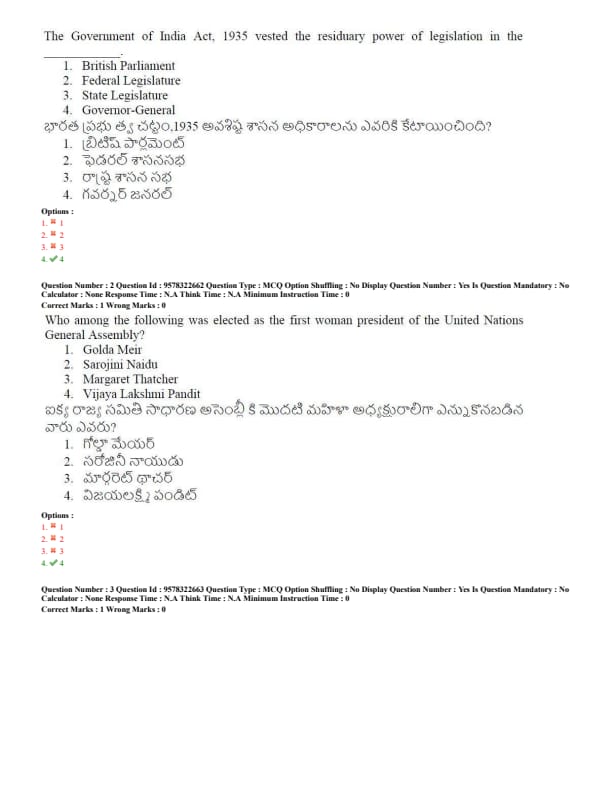
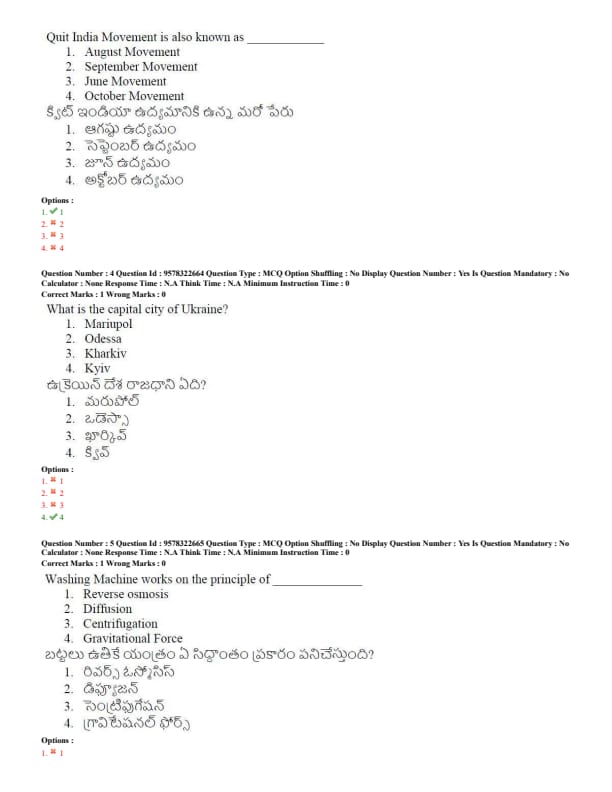
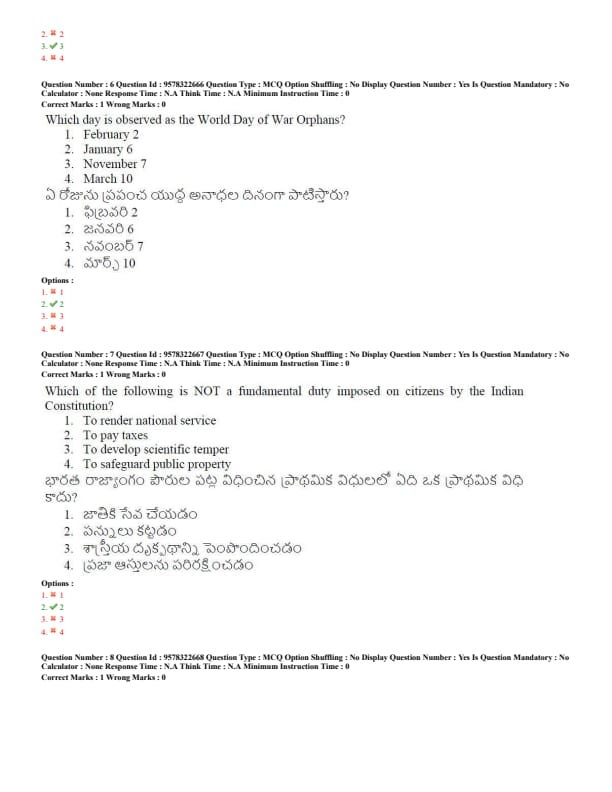
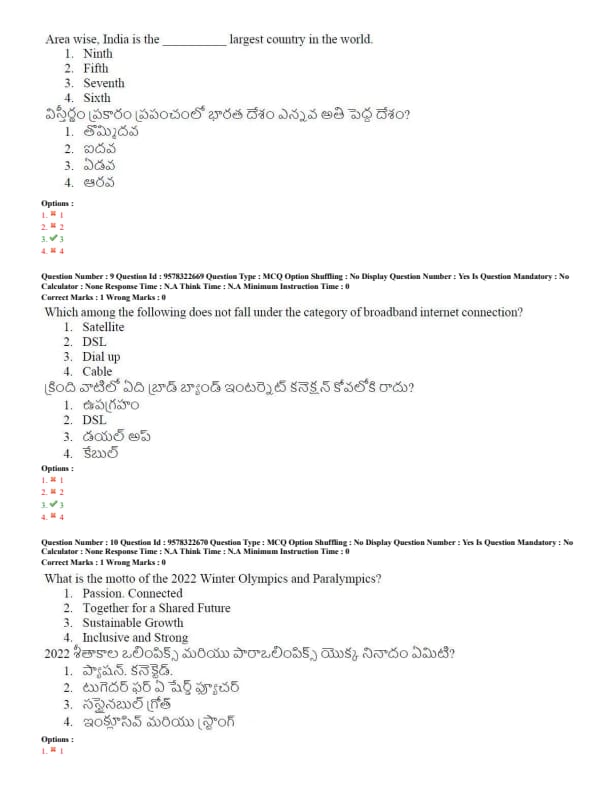
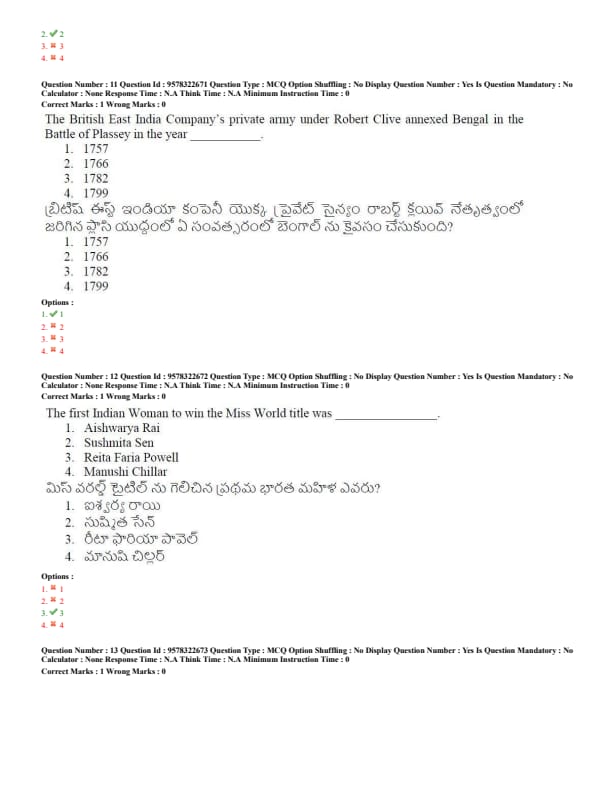
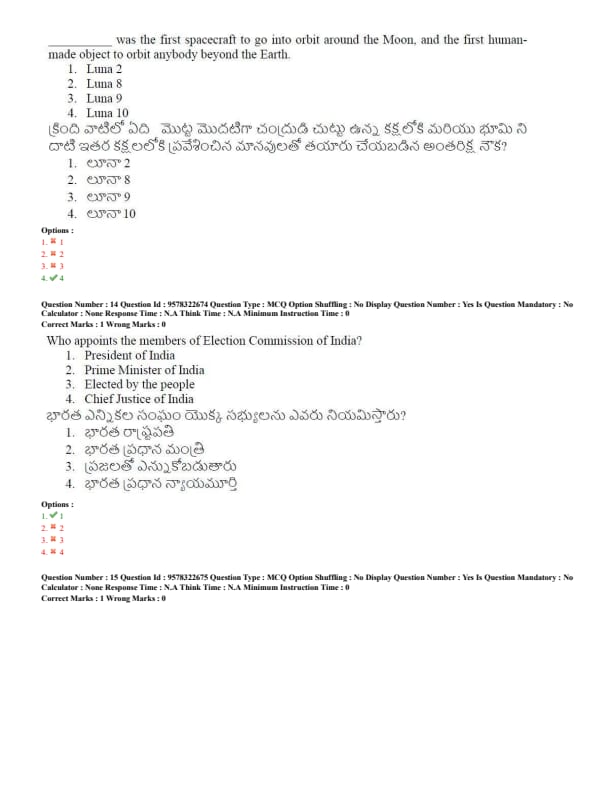
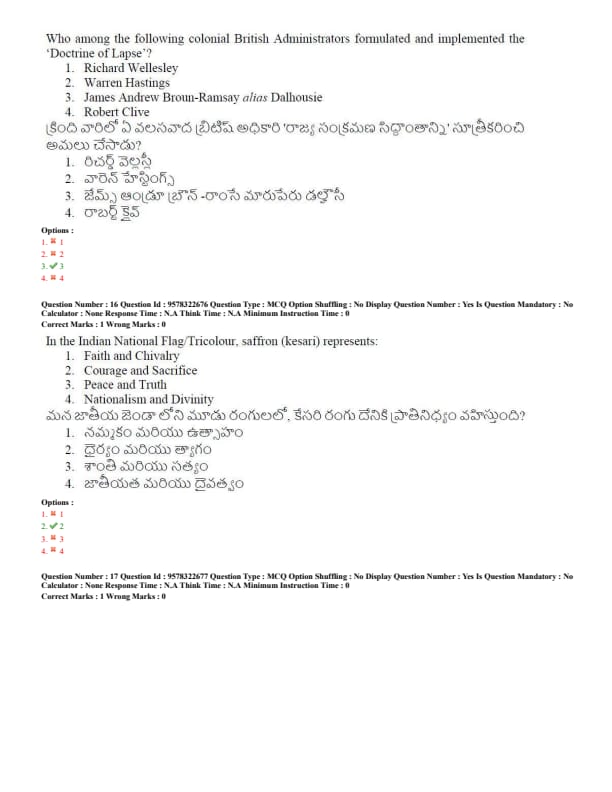
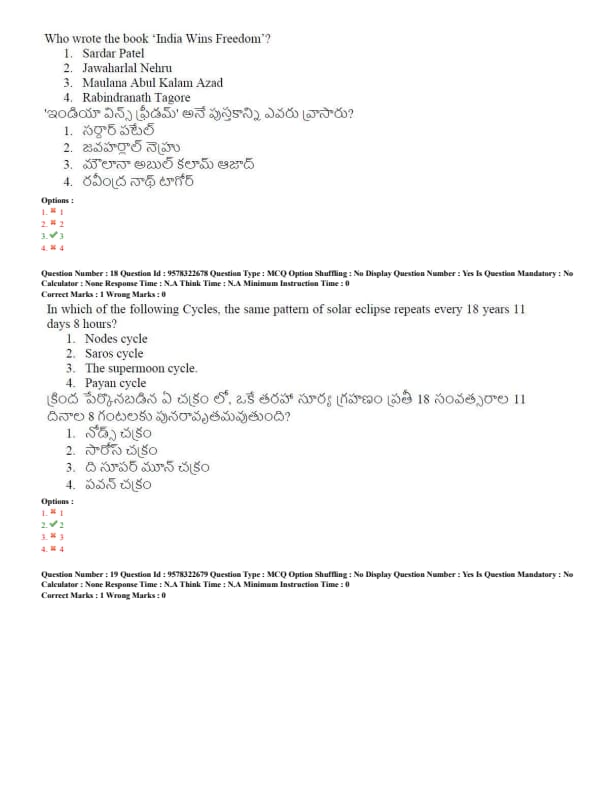
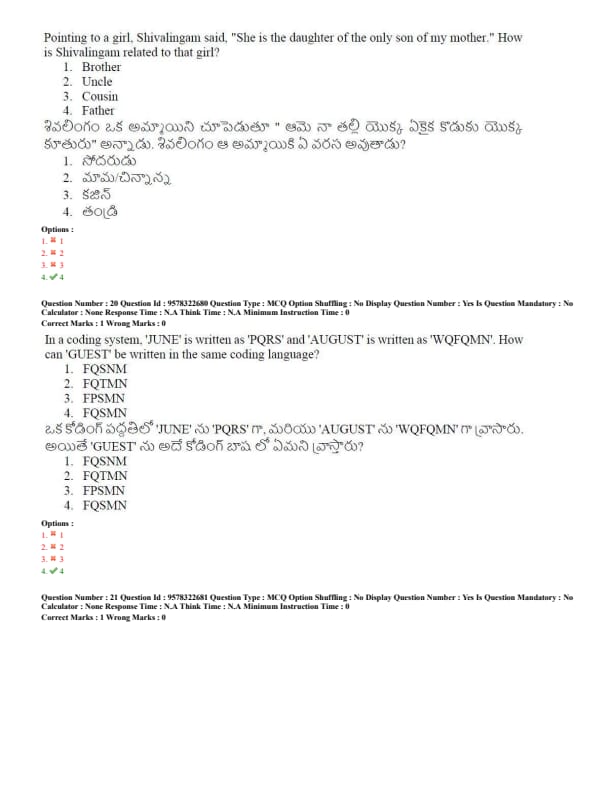
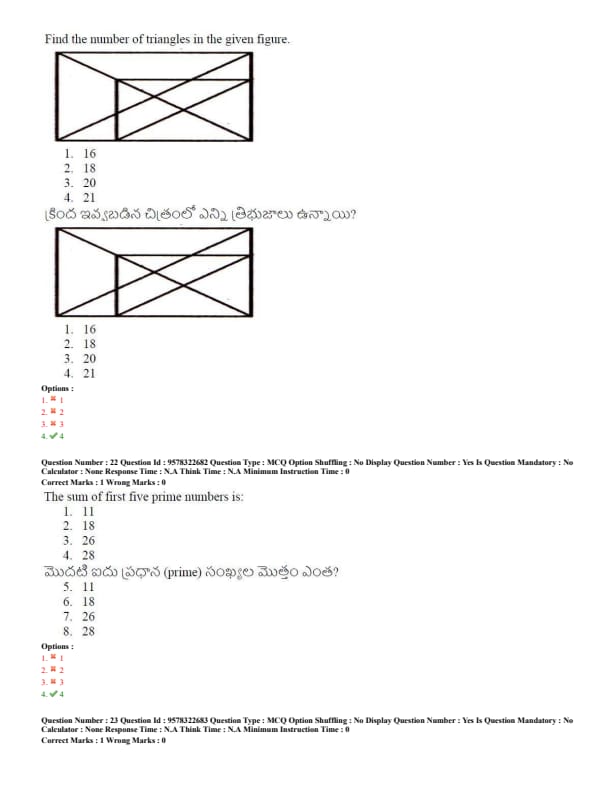
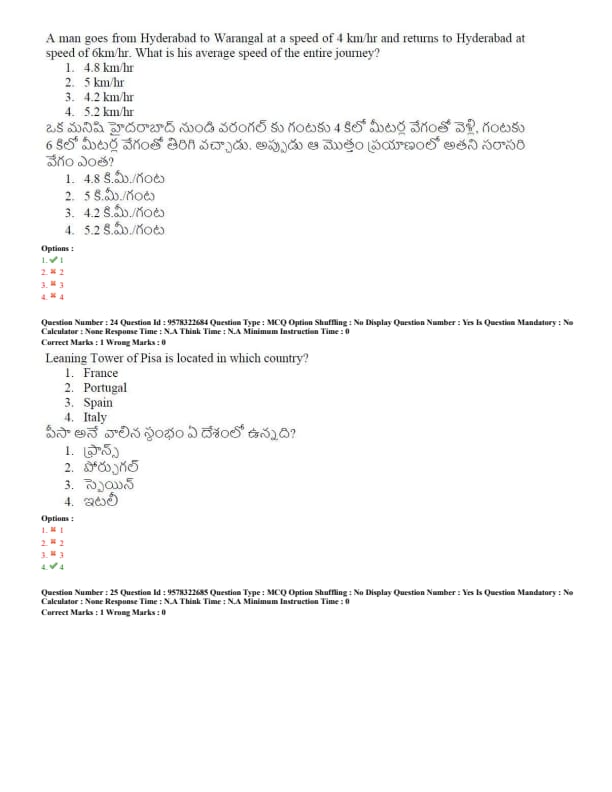
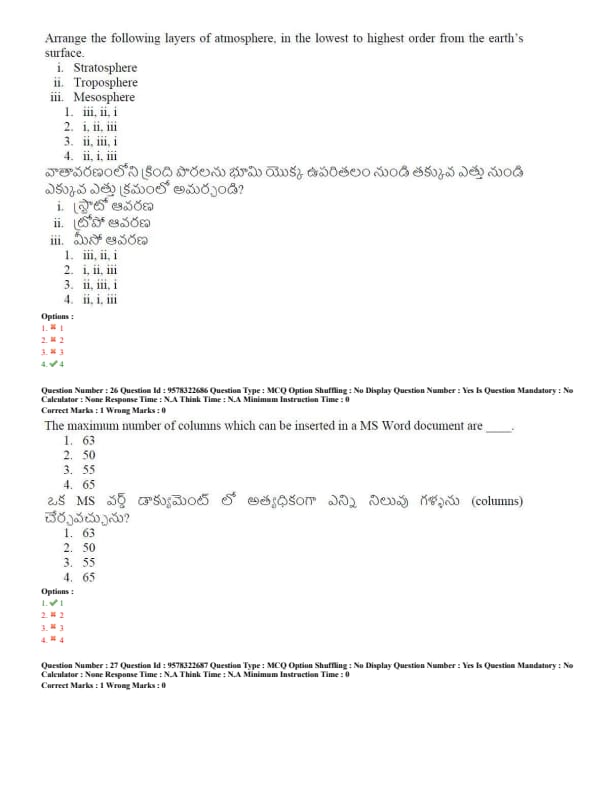
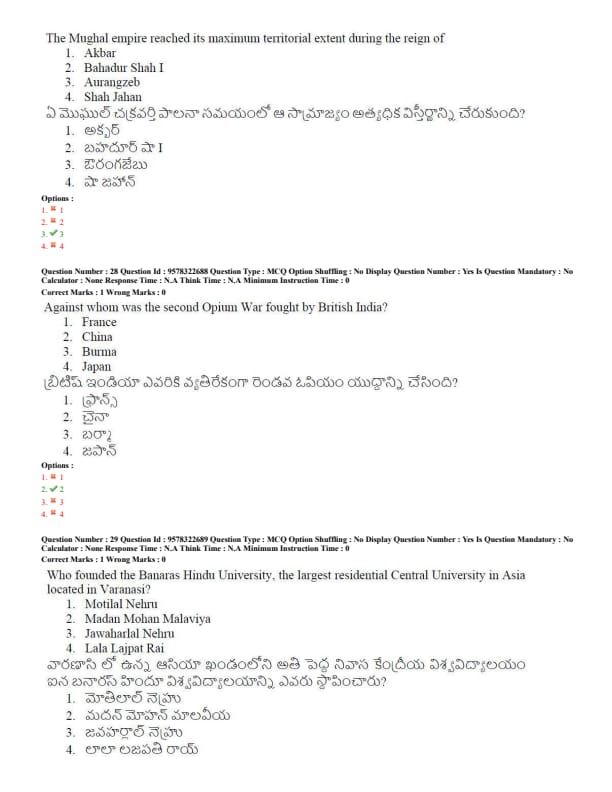
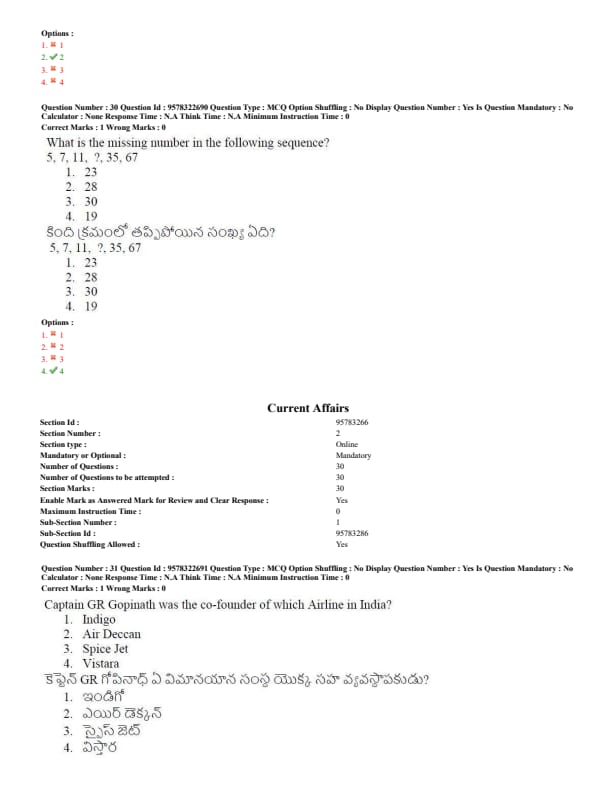
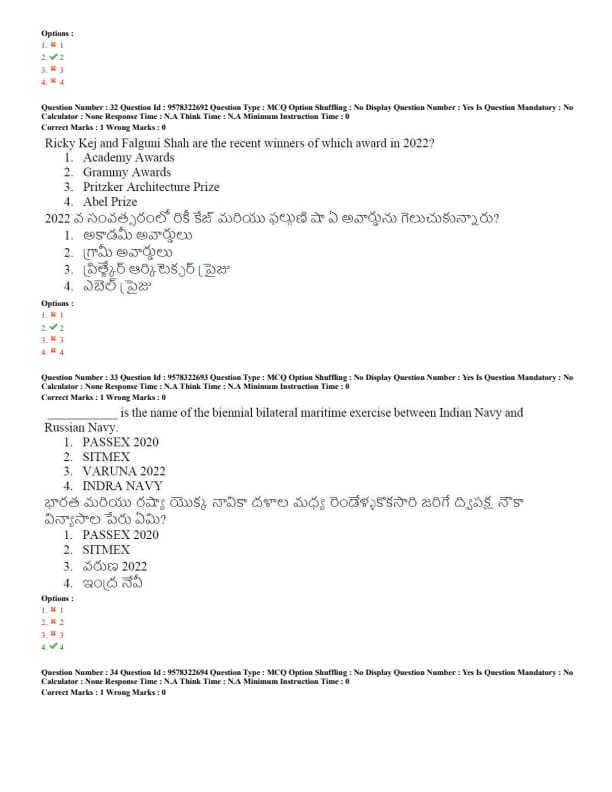
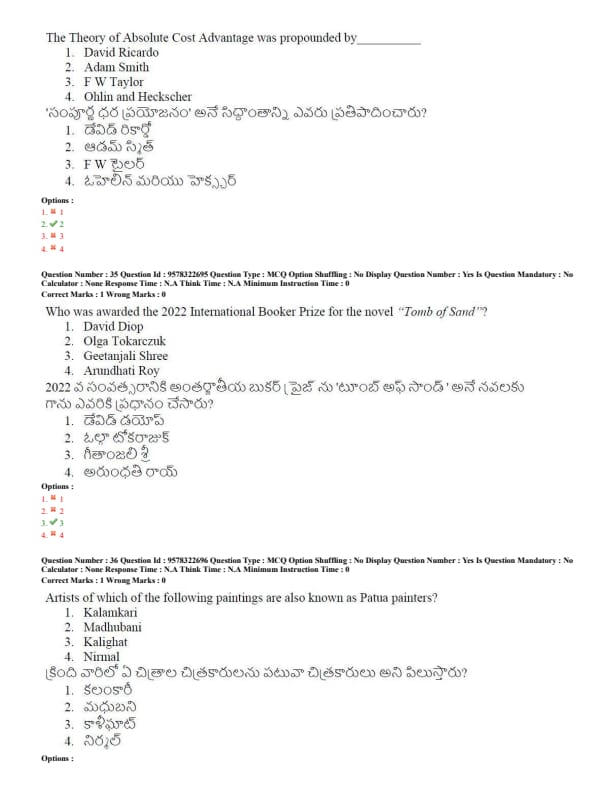
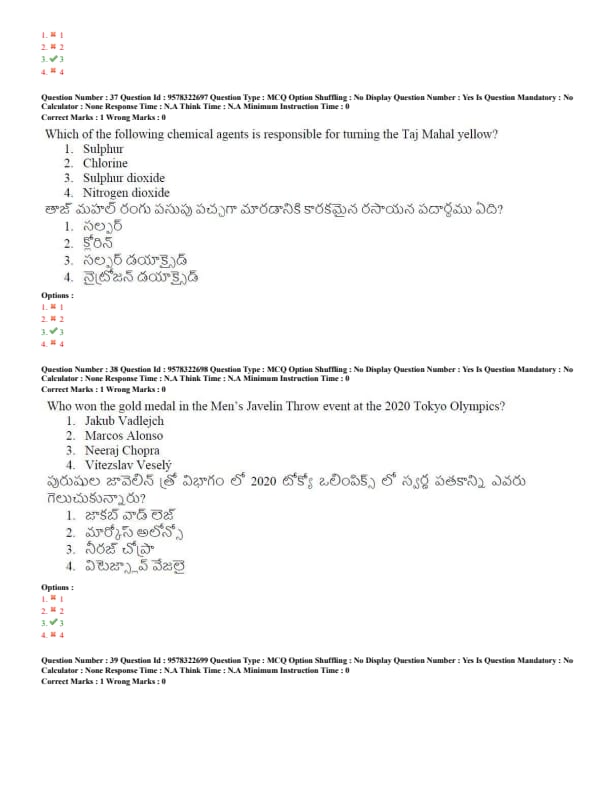
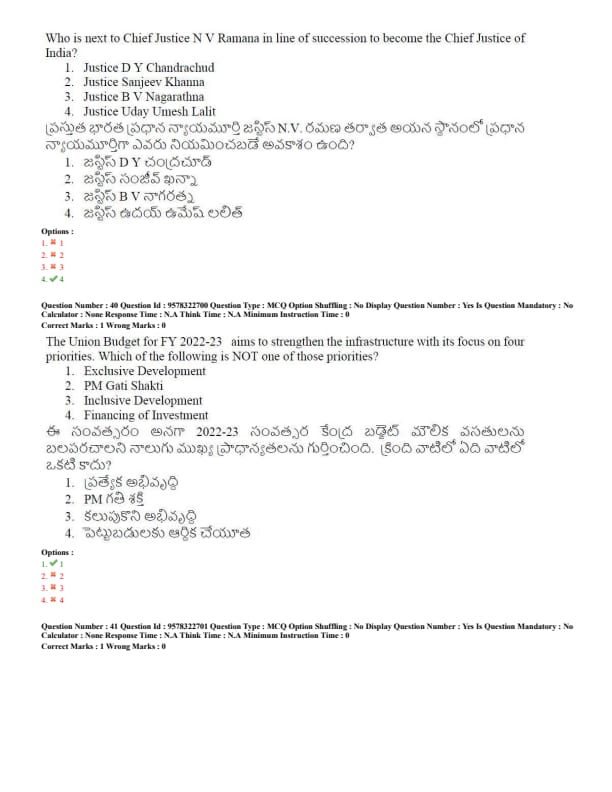
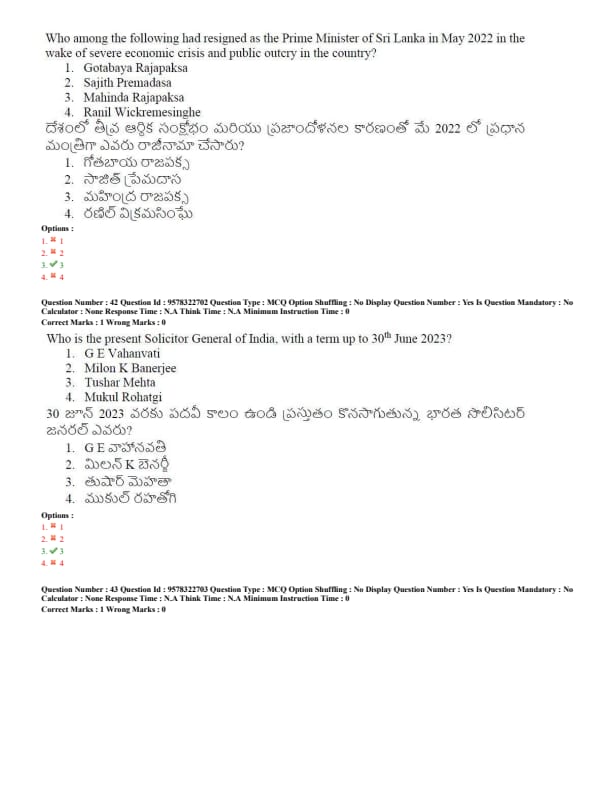
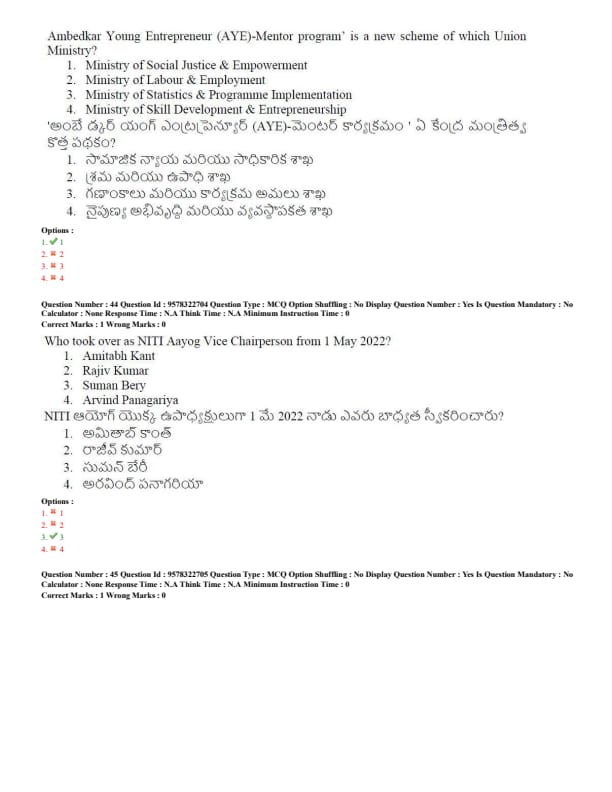
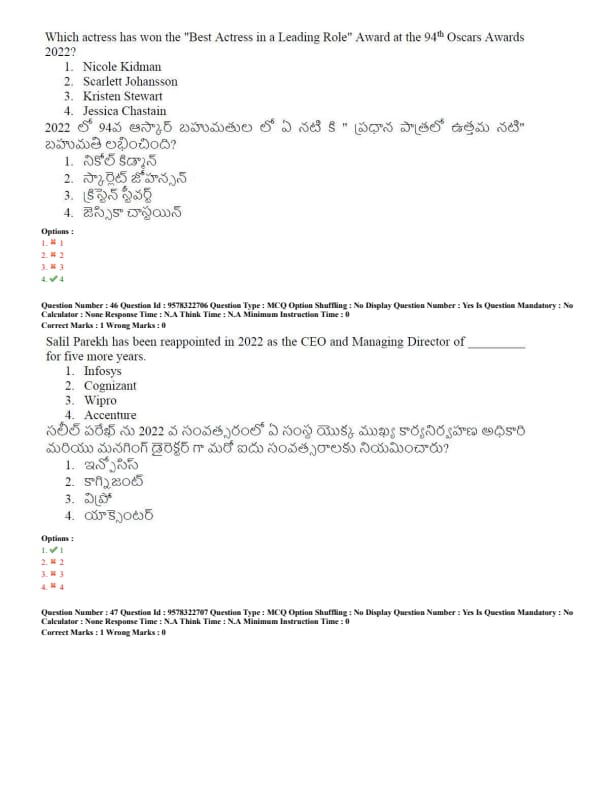
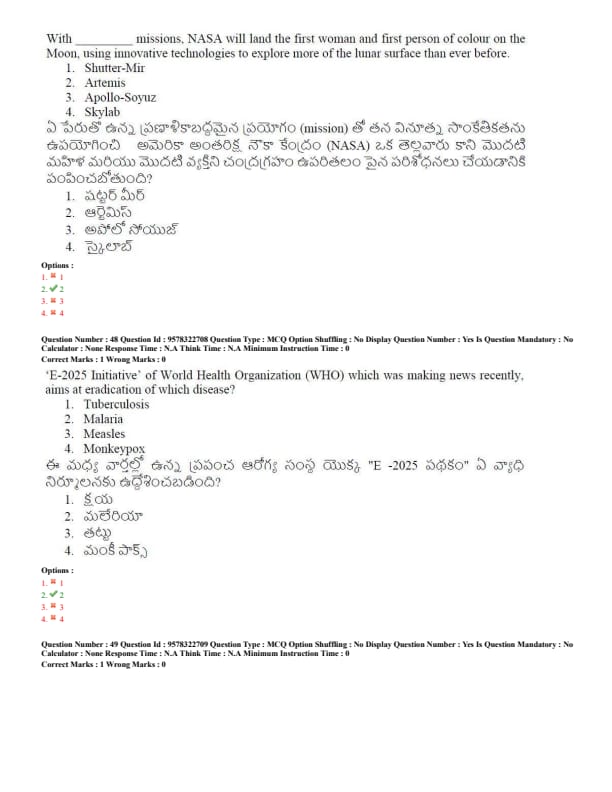
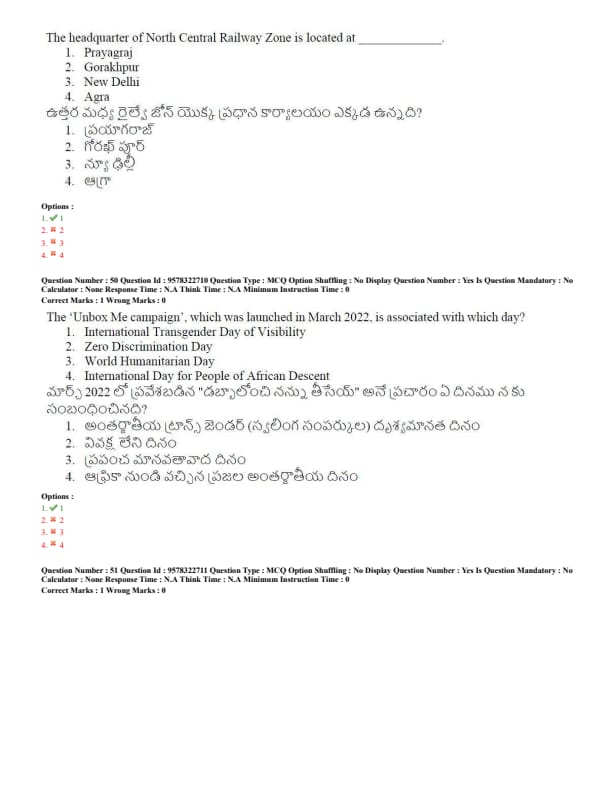
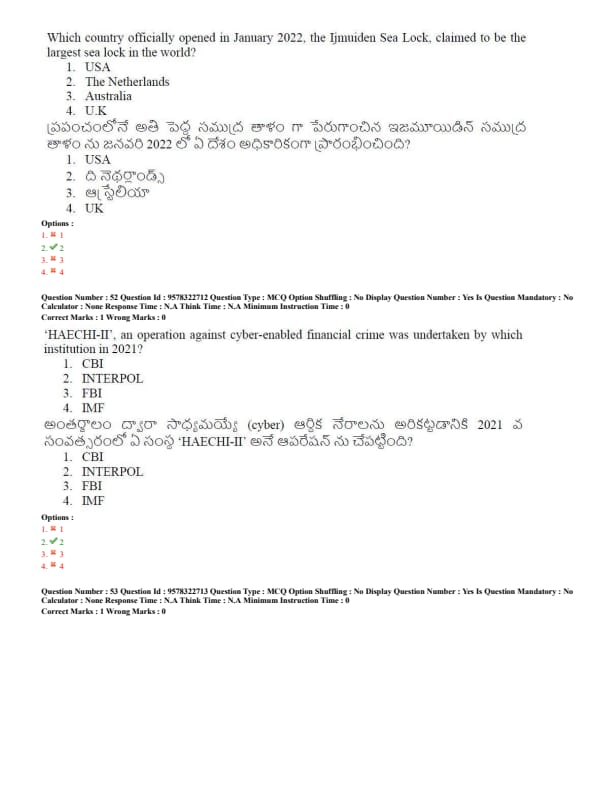
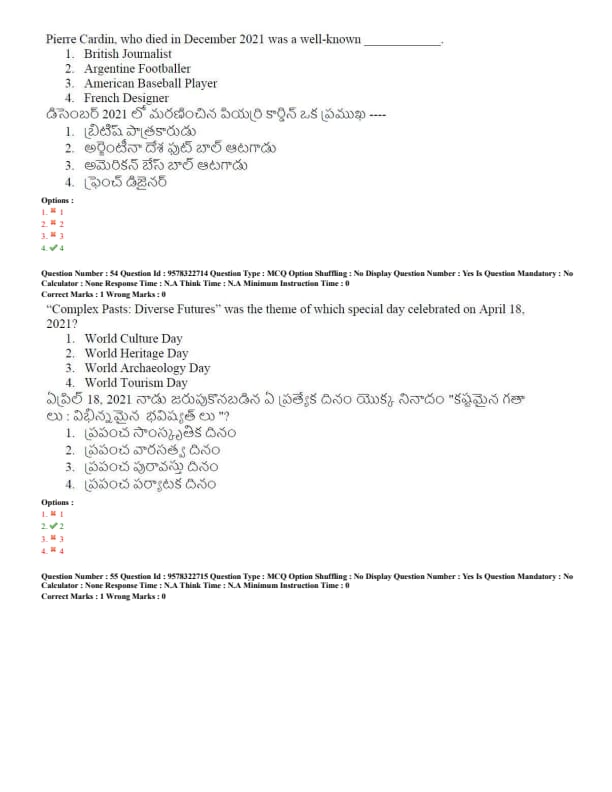
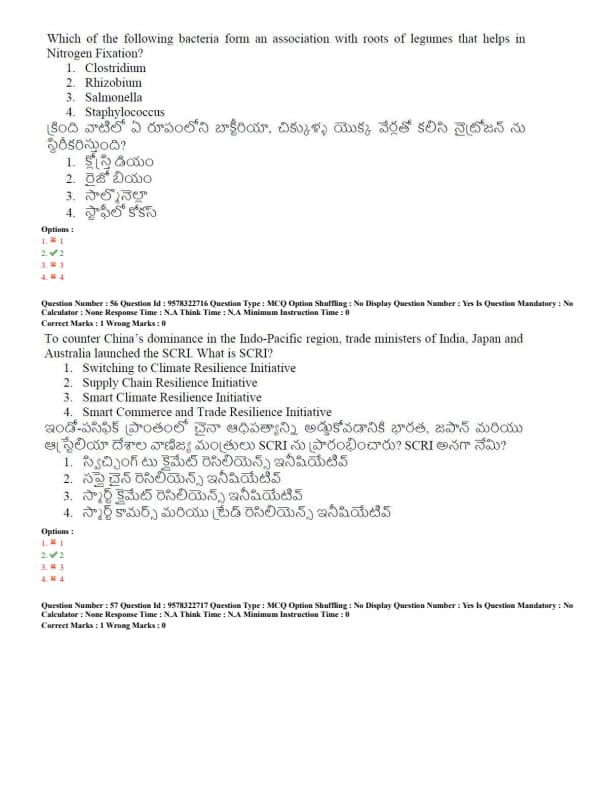
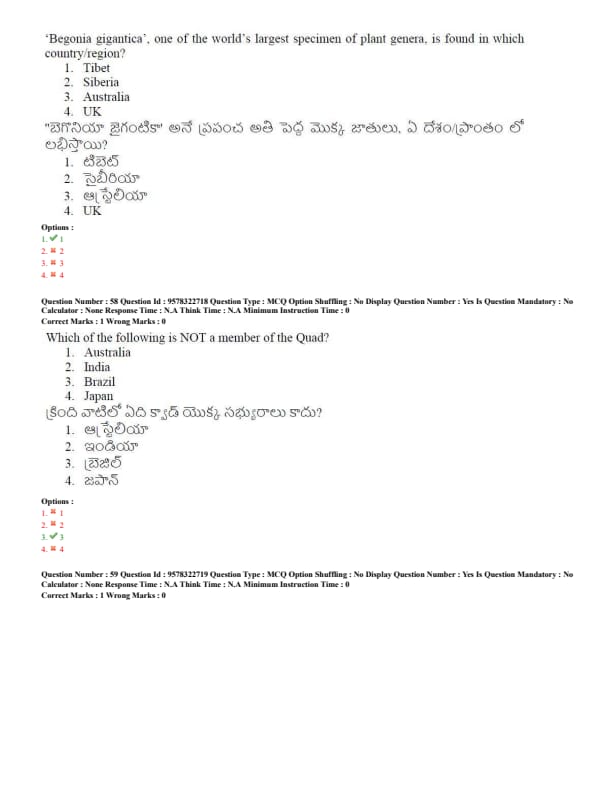
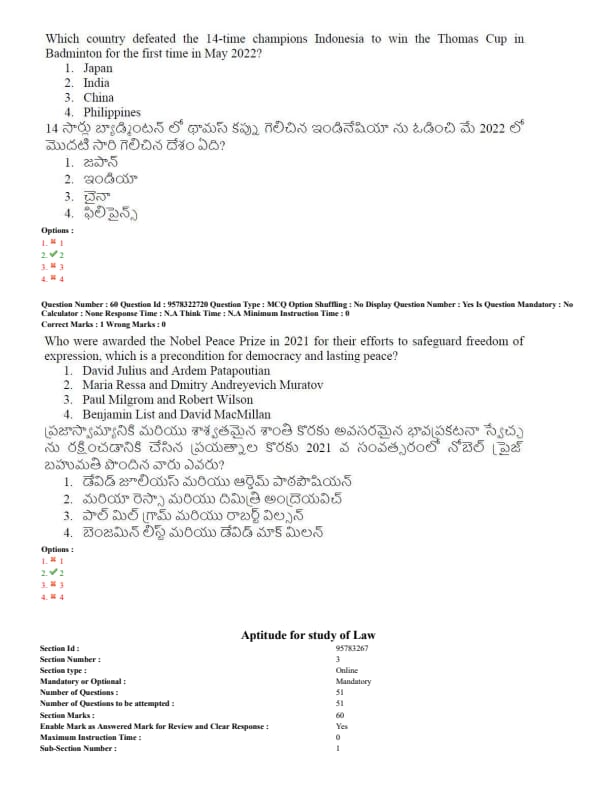
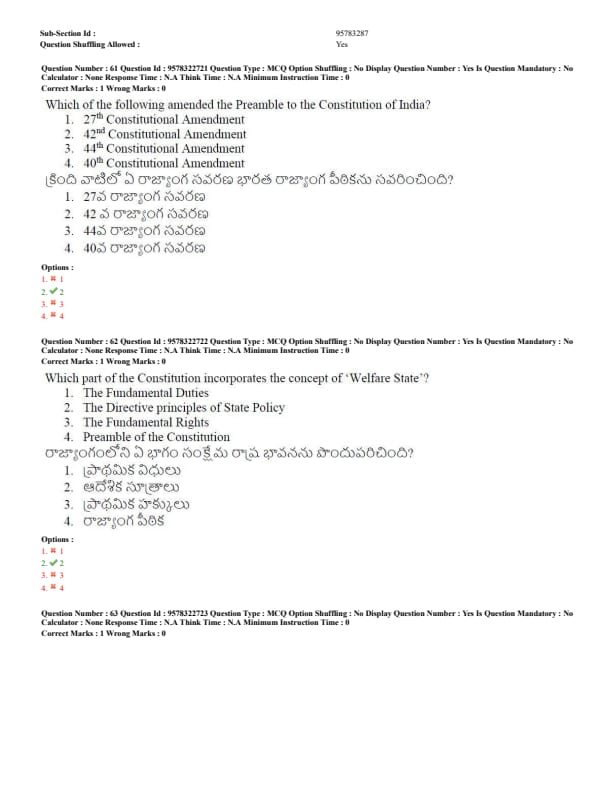
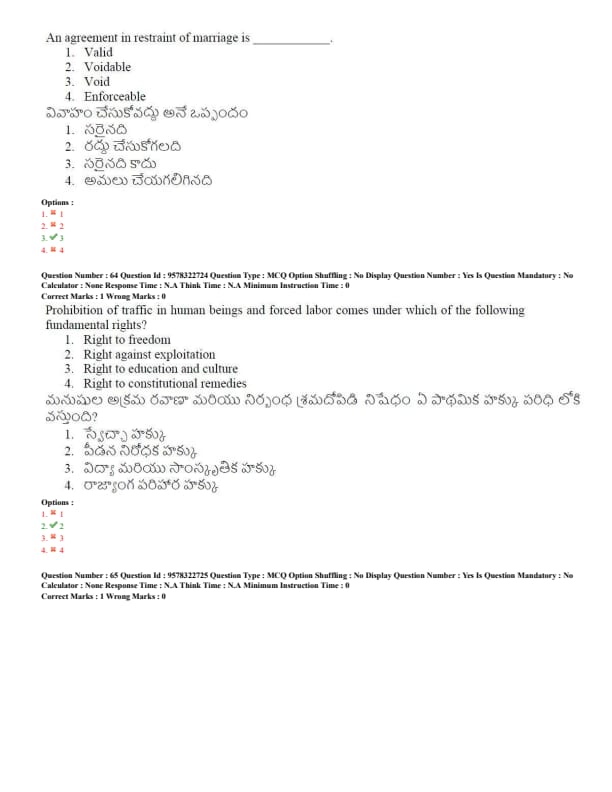
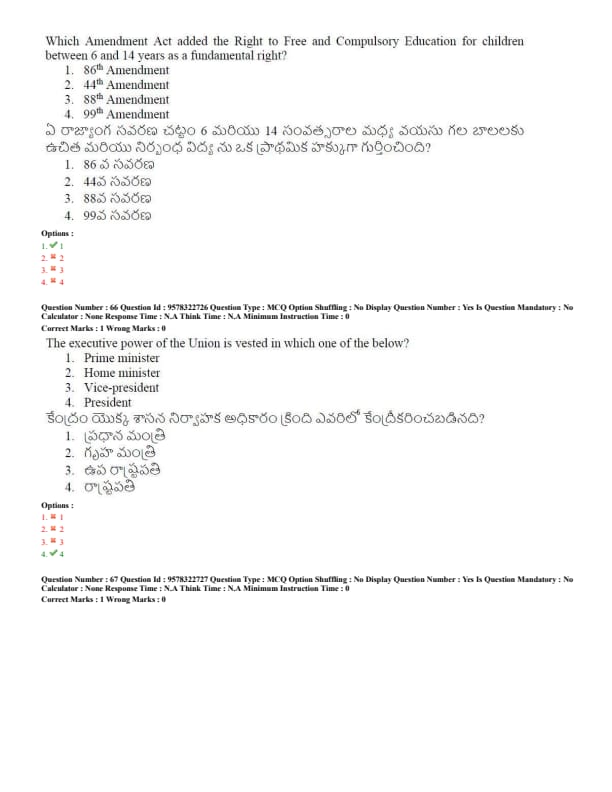
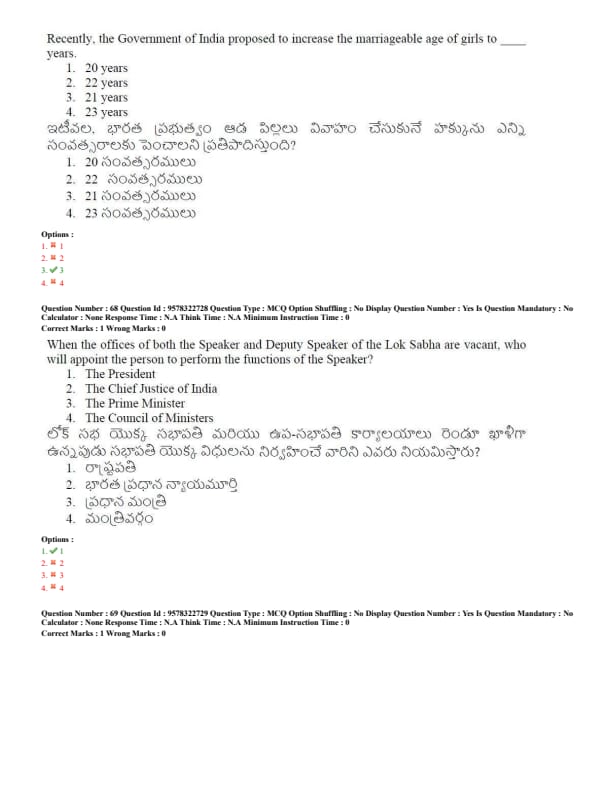
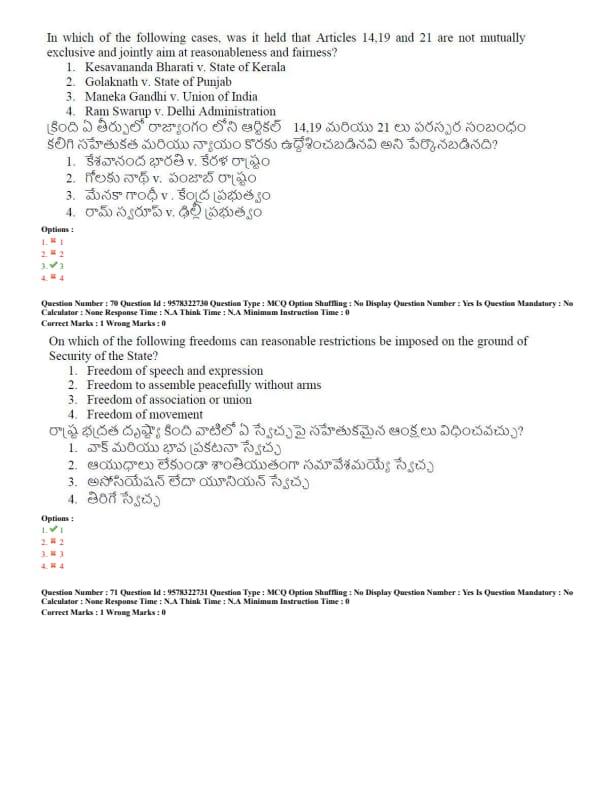
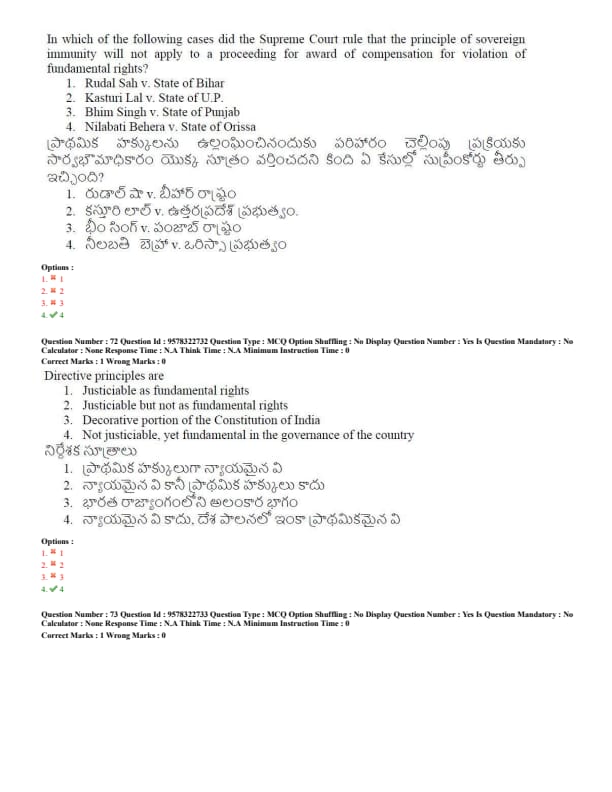
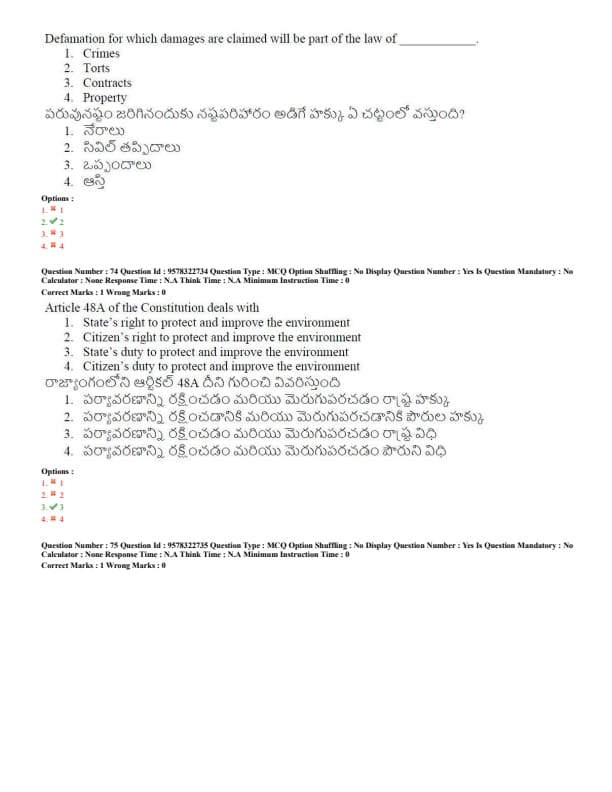
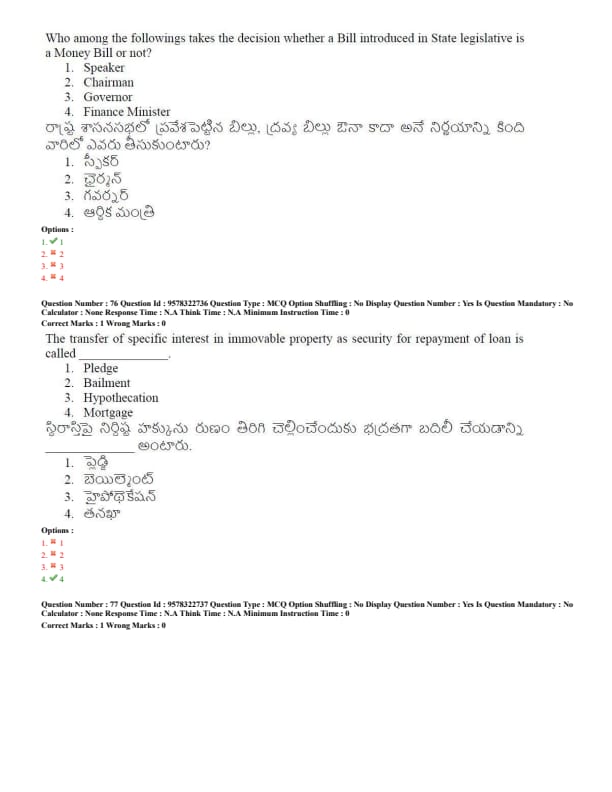
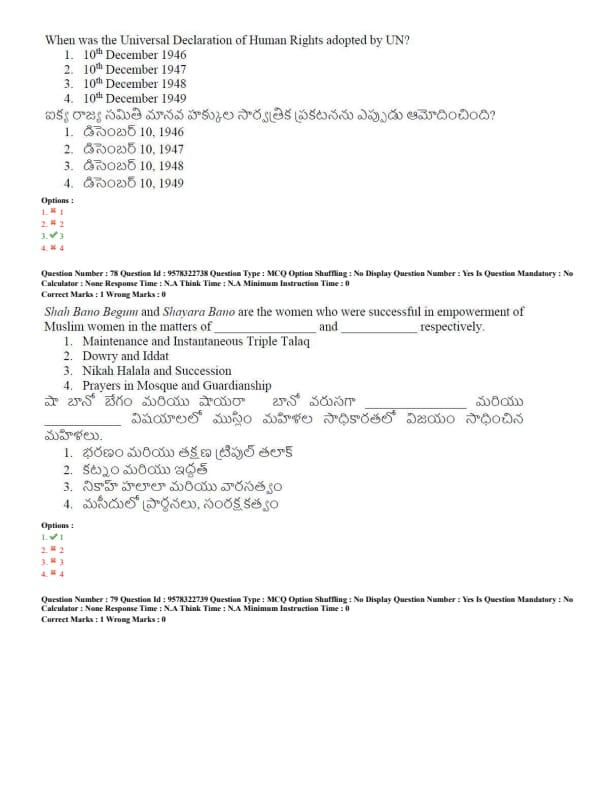
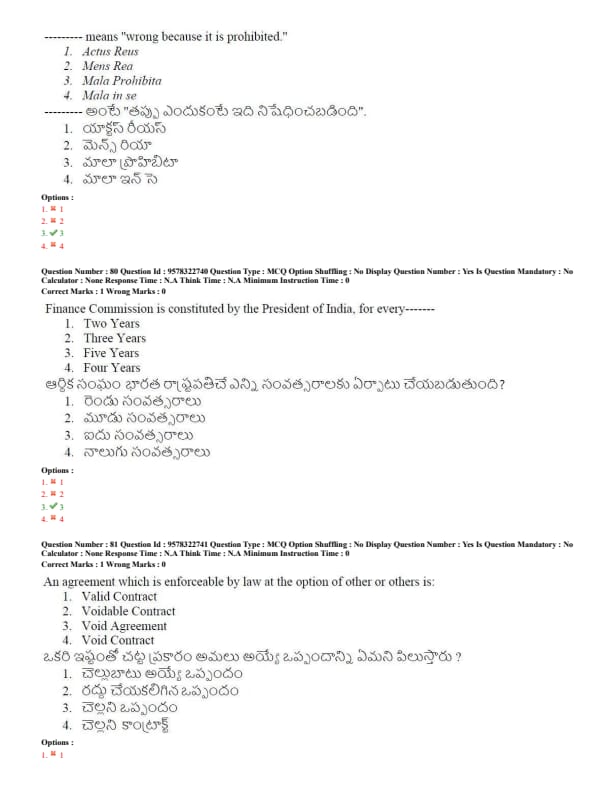
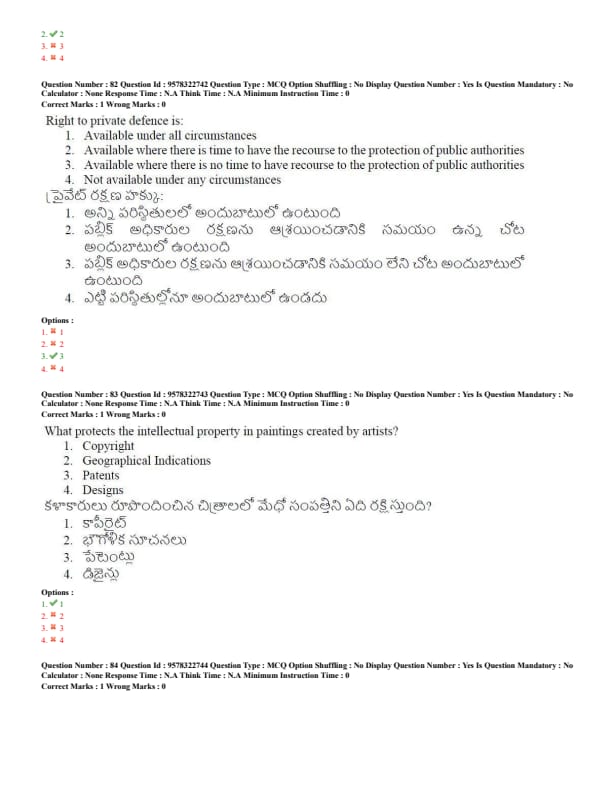
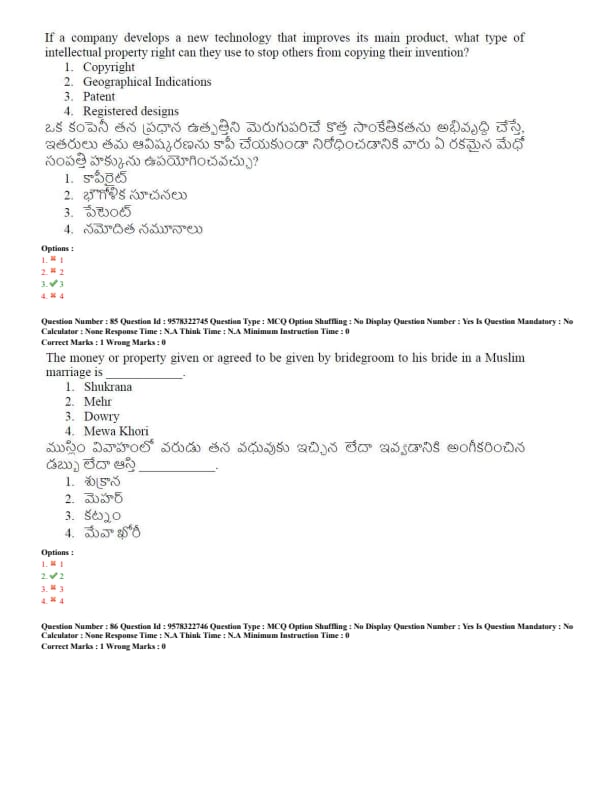
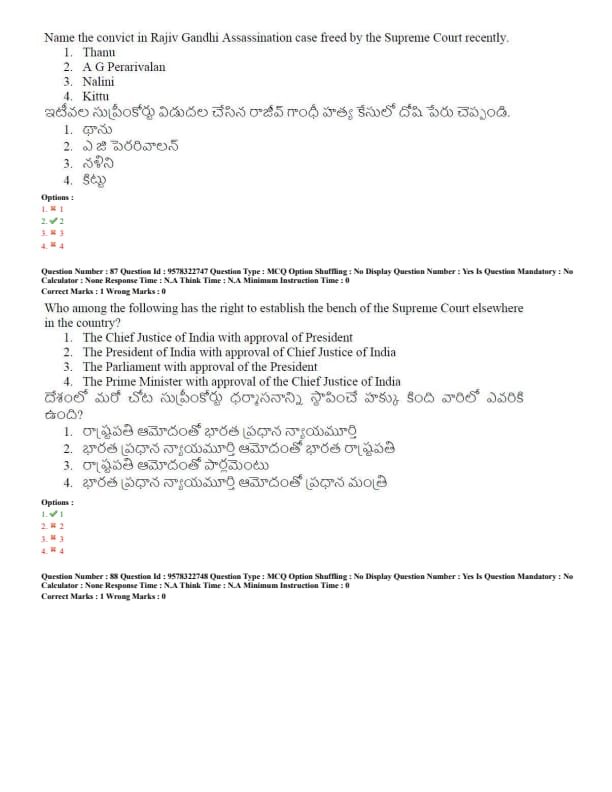
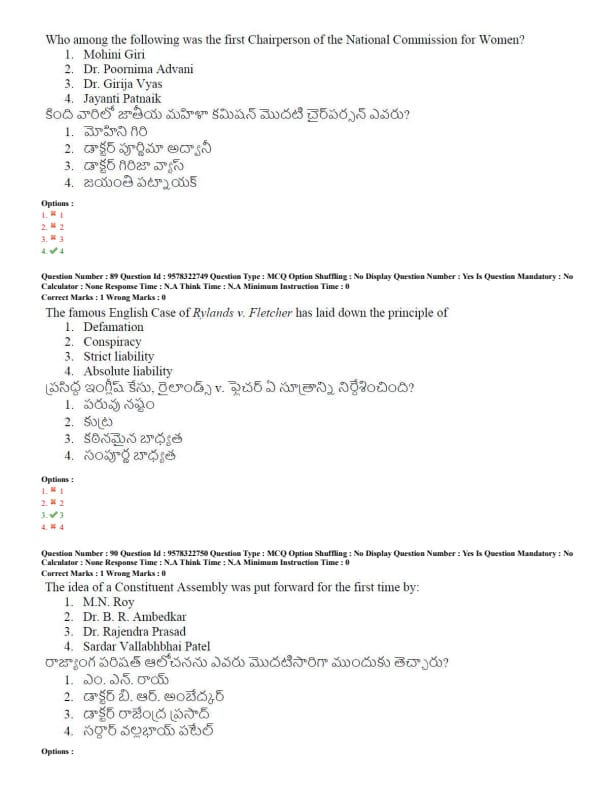
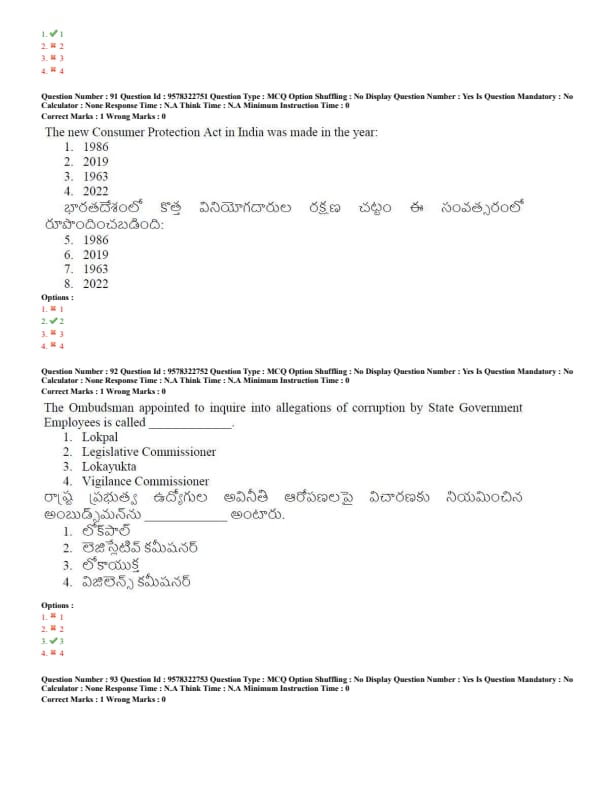
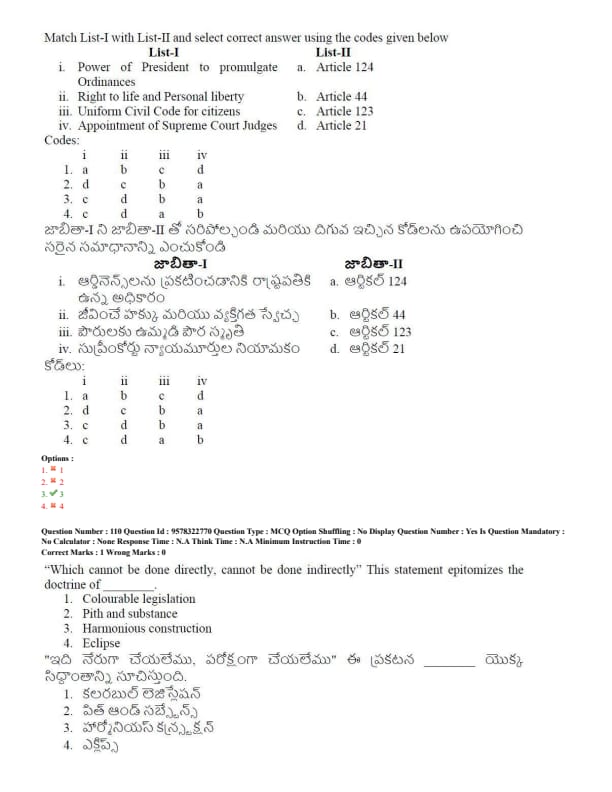
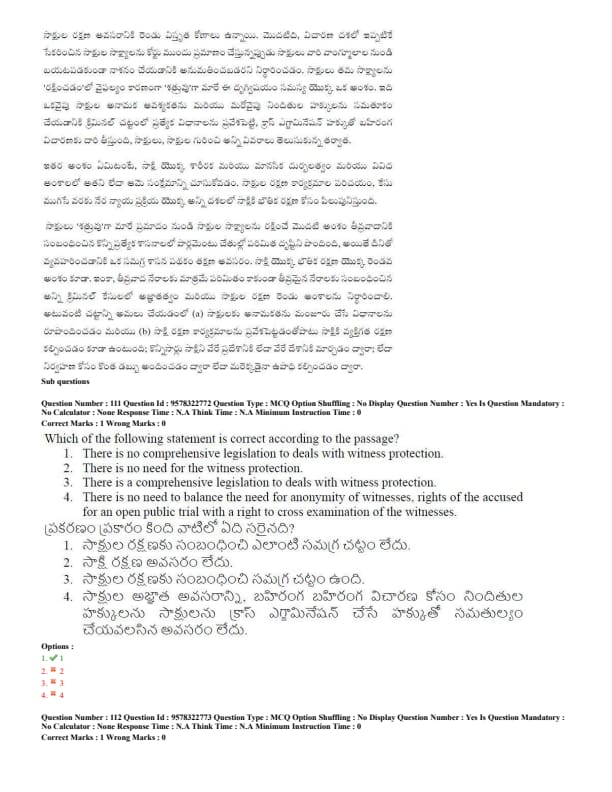
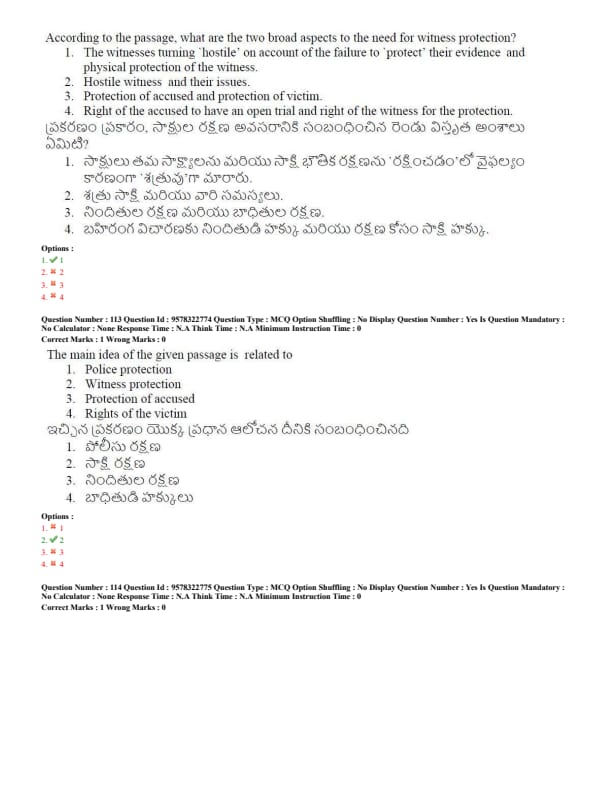
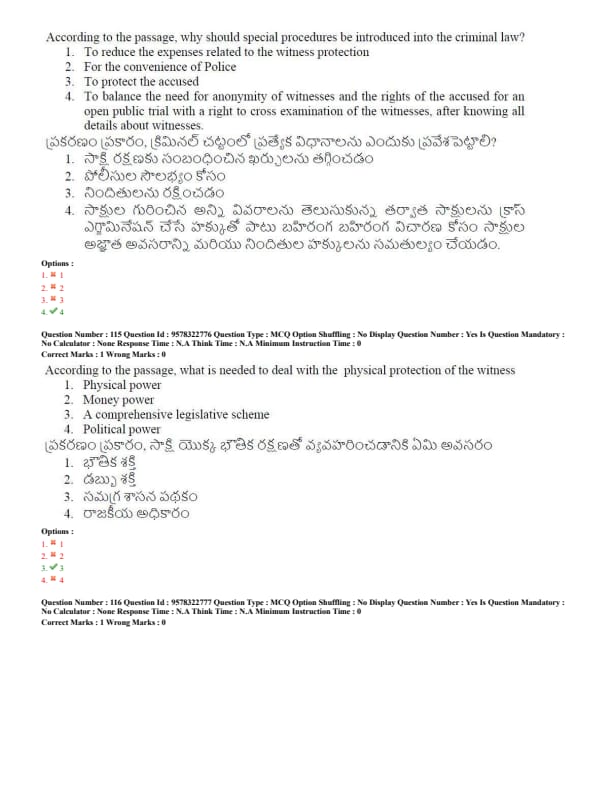
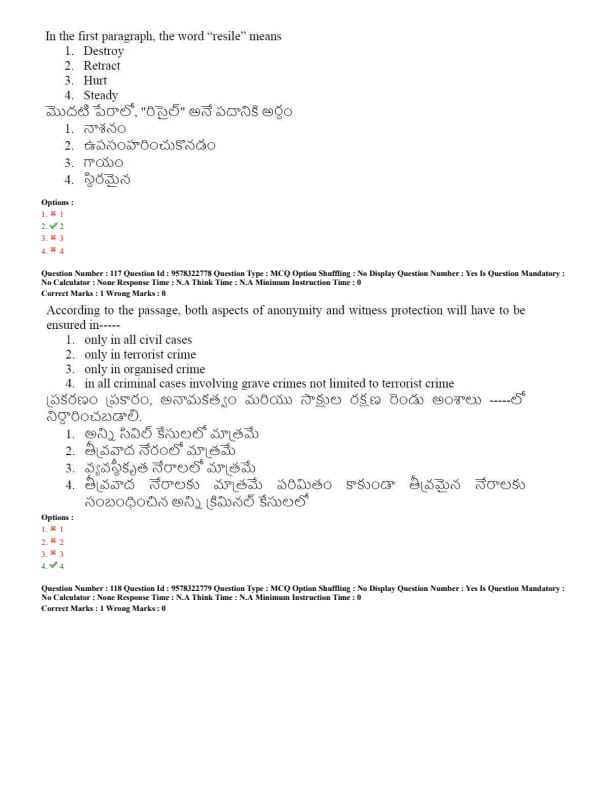
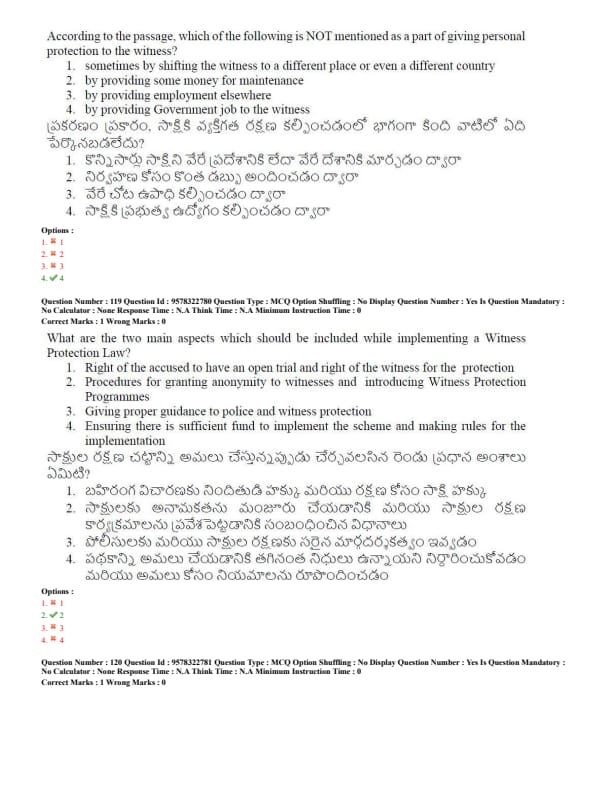
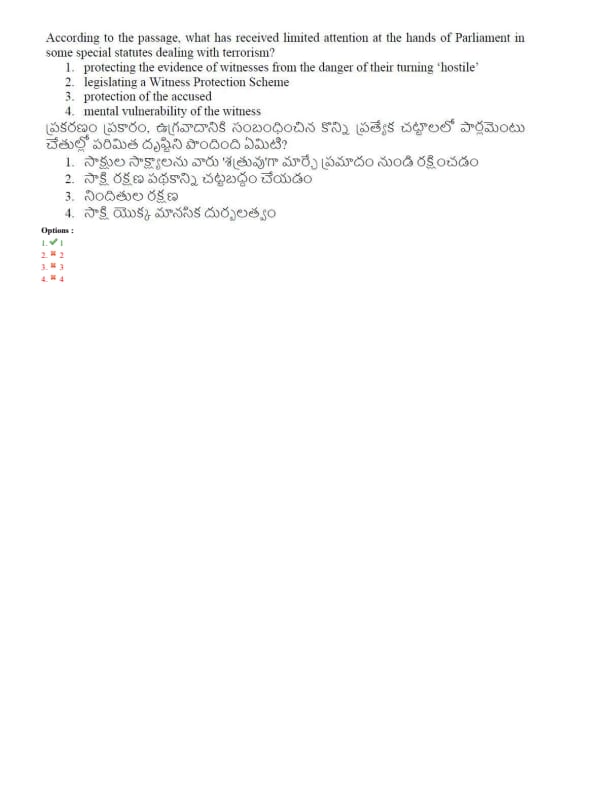
*The article might have information for the previous academic years, please refer the official website of the exam.