
TS LAWCET 2023 Question Paper with Solutions Pdf


Content Writer | Updated On - Feb 3, 2026
The TS LAWCET 2023 Question Paper with Solutions is now available for download. The Telangana State Law Common Entrance Test (TS LAWCET), conducted by Osmania University, Hyderabad on behalf of the Telangana State Council of Higher Education (TSCHE), serves as the state-level entrance test for admission into 3-year and 5-year LL.B. programmes. The examination was conducted for a duration of 90 minutes, comprising various sections aimed at evaluating the candidate's general knowledge, mental ability, current affairs, and aptitude for the study of law.
TS LAWCET 2023 (5 Years) LLB Question Paper with Solutions
| TS LAWCET 2023 (5 Years) LLB Question Paper | Download PDF | Check Solutions |

Who Invented the 3-D printer?
View Solution
Step 1: Understanding the Concept:
3D printing, or additive manufacturing, is the process of making three-dimensional solid objects from a digital file.
It works by laying down successive layers of material until the entire object is created.
Step 2: Detailed Explanation:
In \( 1983 \), Charles "Chuck" Hull invented stereolithography (SLA), which is the first-ever 3D printing technology.
He realized that he could use UV light to harden photosensitive polymers layer by layer to create a physical object.
He filed the patent for "Apparatus for Production of Three-Dimensional Objects by Stereolithography" in \( 1984 \) and was granted it in \( 1986 \).
He subsequently founded 3D Systems, the first 3D printing company in the world.
Regarding other options:
Nick Holonyak is credited with inventing the first practical visible-spectrum LED in \( 1962 \).
Elias Howe was a pioneer in the creation of the modern lockstitch sewing machine.
Christiaan Huygens was a prominent Dutch scientist who invented the pendulum clock and proposed the wave theory of light.
Step 3: Final Answer:
The 3-D printer was invented by Chuck Hull.
Quick Tip: Chuck Hull's invention "Stereolithography" (SLA) is still one of the most accurate types of 3D printing used for industrial prototyping today.
Which Vitamin is responsible for blood clotting?
View Solution
Step 1: Understanding the Concept:
Coagulation or blood clotting is a complex process involving various "clotting factors" that turn liquid blood into a gel-like substance to stop bleeding at a wound site.
Step 2: Detailed Explanation:
Vitamin K is a group of fat-soluble vitamins that play a crucial role in blood clotting, bone metabolism, and regulating blood calcium levels.
The body needs Vitamin K to produce prothrombin, a protein and clotting factor that is vital for blood coagulation and bone metabolism.
Without sufficient Vitamin K, the clotting factors (specifically factors II, VII, IX, and X) cannot be synthesized by the liver in their active form.
This leads to a condition where the blood takes an abnormally long time to clot, resulting in excessive hemorrhaging.
Dietary sources of Vitamin K include green leafy vegetables like spinach, kale, and broccoli.
Other options: Vitamin A is for eyesight; Vitamin B complex is for cellular energy; Vitamin E is an antioxidant that protects cells from damage.
Step 3: Final Answer:
Vitamin K is the primary vitamin responsible for the blood clotting mechanism.
Quick Tip: Newborn babies are often given a Vitamin K injection because they are born with very low levels of this vitamin and are at risk of bleeding disorders.
Who established the 'Brahmo Samaj' reformist movement?
View Solution
Step 1: Understanding the Concept:
The Brahmo Samaj was a monotheistic sect within Hinduism that emerged during the Bengal Renaissance to fight against social evils and religious superstitions.
Step 2: Detailed Explanation:
Raja Ram Mohan Roy founded the Brahmo Sabha in \( 1828 \), which was later renamed the Brahmo Samaj.
He is widely regarded as the "Father of Modern India" due to his efforts to modernize Indian society while retaining its spiritual core.
The movement strongly opposed idol worship, the caste system, and animal sacrifice.
Roy was a staunch advocate for women's rights and was instrumental in the legal abolition of the Sati practice in \( 1829 \) under Lord William Bentinck.
The movement also focused on rationalism and the study of the Upanishads to promote the worship of one formless God.
Other options: Subhas Chandra Bose led the Azad Hind Fauj; Annie Besant was the leader of the Home Rule movement; Bhagat Singh was a revolutionary who fought for complete independence.
Step 3: Final Answer:
The Brahmo Samaj was established by Raja Ram Mohan Roy.
Quick Tip: Raja Ram Mohan Roy also started the first Persian newspaper in India, called "Mirat-ul-Akbar," to spread progressive ideas.
India celebrates 'Civil Services Day' to commemorate the address of which leader to the Administrative Service Officers?
View Solution
Step 1: Understanding the Concept:
Civil Services Day is observed to remind civil servants of their dedication to serving the citizens of the nation and to evaluate the performance of various departments.
Step 2: Detailed Explanation:
On April \( 21, 1947 \), Sardar Vallabhbhai Patel, the first Home Minister of independent India, gave a historic speech to the first batch of IAS probationers at Metcalf House, Delhi.
In this address, he famously referred to the civil servants as the "Steel Frame of India," emphasizing their role as the backbone of the nation's administration.
This date was officially designated as National Civil Services Day to honor his vision of a neutral, efficient, and professional administrative service.
The Government of India presents "Prime Minister’s Awards for Excellence in Public Administration" on this day every year.
Step 3: Final Answer:
Civil Services Day commemorates the address of Sardar Vallabhbhai Patel.
Quick Tip: Sardar Patel is also called the "Bismarck of India" for his role in the political integration of \( 562 \) princely states into the Indian Union.
In Which state, the Indus International School introduced the first Teaching Robot in India?
View Solution
Step 1: Understanding the Concept:
The use of Artificial Intelligence (AI) and Robotics in education is a burgeoning field aimed at personalized and interactive learning experiences.
Step 2: Detailed Explanation:
Indus International School, located in Hyderabad (the capital of Telangana), introduced "Eagle," India's first humanoid teaching robot.
These robots were deployed to assist teachers in classrooms for students in grades \( 7 \) through \( 9 \).
The robot "Eagle" is capable of teaching subjects like Physics, Chemistry, Biology, and Geography, and can interact in multiple languages.
The project was designed to showcase how AI can assist human teachers by handling repetitive content delivery while teachers focus on mentorship and emotional support.
Step 3: Final Answer:
The first teaching robot was introduced in the state of Telangana.
Quick Tip: Hyderabad is often referred to as "Cyberabad" due to its rapid growth in information technology and robotics sectors.
Which State has the longest coastline in India?
View Solution
Step 1: Understanding the Concept:
India is a peninsular country with a vast coastline bordering the Arabian Sea to the west and the Bay of Bengal to the east.
Step 2: Detailed Explanation:
Gujarat has the longest coastline among all Indian states, with a total length of approximately \( 1,214.7 \) km.
The extensive length is due to the state's irregular and highly indented geography, featuring major inlets like the Gulf of Kutch and the Gulf of Khambhat.
In terms of ranking:
\( 1. \) Gujarat (\( 1,214.7 \) km)
\( 2. \) Andhra Pradesh (\( 974 \) km)
\( 3. \) Tamil Nadu (\( 906.9 \) km)
\( 4. \) Maharashtra (\( 652.6 \) km)
If islands are included, the Andaman and Nicobar Islands actually have a longer coastline (\( 1,962 \) km) than Gujarat, but among mainland states, Gujarat remains the leader.
Step 3: Final Answer:
Gujarat is the state with the longest coastline in India.
Quick Tip: The state with the shortest coastline among the maritime states of India is Goa (\( 101 \) km).
Quit India Movement was started in the year _____.
View Solution
Step 1: Understanding the Concept:
The Quit India Movement, or the Bharat Chhodon Andolan, was a call for the immediate withdrawal of British forces from India.
Step 2: Detailed Explanation:
The movement was officially launched by Mahatma Gandhi on August \( 8, 1942 \), at the Gowalia Tank Maidan in Bombay (now Mumbai).
This followed the failure of the Cripps Mission, which had offered India limited autonomy instead of full independence.
Gandhi delivered his famous "Do or Die" (Karo ya Maro) speech, calling on every Indian to act as a free citizen and resist British authority.
The British responded by arresting almost the entire leadership of the Indian National Congress within hours of the resolution, but the movement continued as a mass-led struggle.
Other options: \( 1920 \) saw the Non-Cooperation Movement; \( 1930 \) was the year of the Dandi March and Civil Disobedience Movement.
Step 3: Final Answer:
The Quit India Movement was started in \( 1942 \).
Quick Tip: The Quit India Movement is also known as the "August Kranti" (August Revolution) because it was launched in the month of August.
Where is Guindy National Park located?
View Solution
Step 1: Understanding the Concept:
National Parks are areas set aside by the government for the protection of wildlife, flora, fauna, and the natural landscape.
Step 2: Detailed Explanation:
Guindy National Park is unique because it is one of the very few national parks in India located entirely within a metropolitan city.
It is situated in Chennai, the capital of Tamil Nadu.
It was originally part of the Guindy Lodge, the residence of the Governor of Madras.
The park covers an area of about \( 2.70 \) sq. km and is a sanctuary for the endangered blackbuck, spotted deer, and more than \( 150 \) species of birds.
It also houses the famous Guindy Snake Park and a Children's Park.
Step 3: Final Answer:
Guindy National Park is located in Tamil Nadu.
Quick Tip: Guindy is the \( 8^{th} \) smallest National Park in India and serves as a vital "green lung" for the city of Chennai.
Which of the following rivers has Musi River as one of its tributaries?
View Solution
Step 1: Understanding the Concept:
A tributary is a river or stream that flows into a larger river rather than directly into a sea or lake.
Step 2: Detailed Explanation:
The Musi River is a major tributary of the Krishna River in the Deccan Plateau.
It originates in the Ananthagiri Hills near Vikarabad and flows through the heart of Hyderabad city.
The river joins the Krishna River at Wazirabad in Nalgonda district, Telangana.
Historically, the city of Hyderabad was founded on its banks in \( 1591 \) by Muhammad Quli Qutb Shah.
Other major tributaries of the Krishna River include the Tungabhadra, Bhima, Koyna, and Panchganga.
Step 3: Final Answer:
The Musi River is a tributary of the Krishna River.
Quick Tip: The famous Osman Sagar and Himayat Sagar dams were built on the Musi and its tributary Esi to prevent floods and provide water to Hyderabad.
Hirakud Dam is located in _______ State.
View Solution
Step 1: Understanding the Concept:
Dams are multipurpose projects used for flood control, irrigation, and the generation of hydroelectric power.
Step 2: Detailed Explanation:
The Hirakud Dam is a massive project built across the Mahanadi River.
It is located about \( 15 \) km from Sambalpur in the state of Odisha.
It was the first major multipurpose river valley project started after India’s independence.
The main dam has an overall length of \( 4.8 \) km, but the entire dam structure (including dikes) spans \( 25.8 \) km, making it the longest earthen dam in the world.
The reservoir formed by the dam, Hirakud Reservoir, is one of the largest artificial lakes in Asia.
Step 3: Final Answer:
Hirakud Dam is located in the state of Odisha.
Quick Tip: Think of the "M" combination: \textbf{M}ahanadi River flows through Odisha and features the \textbf{M}ighty Hirakud Dam.
Who discovered bacteria?
View Solution
Step 1: Understanding the Concept:
The field of microbiology was born when humans first observed living things that were invisible to the naked eye.
Step 2: Detailed Explanation:
Antonie van Leeuwenhoek, a Dutch scientist and lens maker, is known as the "Father of Microbiology."
In the \( 1670s \), using high-quality single-lens microscopes that he crafted himself, he became the first person to observe and describe single-celled organisms.
He referred to them as "animalcules" (little animals).
His drawings and descriptions sent to the Royal Society of London were the first documented evidence of bacteria and protozoa.
Other options: Louis Pasteur later developed the "Germ Theory of Disease" in the \( 19^{th} \) century; Satyendra Nath Bose was an Indian physicist; Thomas Edison was an American inventor.
Step 3: Final Answer:
Bacteria were discovered by Antonie van Leeuwenhoek.
Quick Tip: While Leeuwenhoek discovered bacteria, the name "Bacterium" was actually coined much later in \( 1828 \) by Christian Gottfried Ehrenberg.
How many goals are there in the Sustainable Development Goals (SDGs) adopted by the UN?
View Solution
Step 1: Understanding the Concept:
The Sustainable Development Goals (SDGs) are a set of global targets adopted by the United Nations to end poverty, protect the planet, and ensure prosperity for all by \( 2030 \).
Step 2: Detailed Explanation:
The UN General Assembly adopted the \( 2030 \) Agenda for Sustainable Development in September \( 2015 \).
This agenda contains exactly \( 17 \) global goals and \( 169 \) associated targets.
These goals cover a wide range of social and economic development issues, including:
\( 1. \) No Poverty
\( 2. \) Zero Hunger
\( 3. \) Good Health and Well-being
\( 4. \) Quality Education
\( 5. \) Gender Equality ... up to Goal \( 17 \) (Partnerships for the Goals).
These goals succeeded the Millennium Development Goals (MDGs), which consisted of only \( 8 \) goals.
Step 3: Final Answer:
There are \( 17 \) Sustainable Development Goals.
Quick Tip: The SDGs are also known as the "Global Goals" and follow the principle of "Leaving No One Behind."
Gibraltar straits connect which of the following?
View Solution
Step 1: Understanding the Concept:
A strait is a narrow channel of water that connects two larger bodies of water and separates two landmasses.
Step 2: Detailed Explanation:
The Strait of Gibraltar is a vital maritime passage that connects the Atlantic Ocean to the Mediterranean Sea.
It also acts as a boundary between the continents of Europe (specifically the Iberian Peninsula/Spain) and Africa (specifically Morocco).
At its narrowest point, the two continents are only about \( 14.3 \) km apart.
This strait is of immense geopolitical importance as it is the only natural entrance to the Mediterranean Sea from the Atlantic.
Other options: The Suez Canal (man-made) connects the Mediterranean and Red Sea; the Bab-el-Mandeb connects the Red Sea and the Gulf of Aden.
Step 3: Final Answer:
The Gibraltar straits connect the Atlantic Ocean and the Mediterranean Sea.
Quick Tip: The ancient Greeks referred to the mountains on either side of the Strait of Gibraltar as the "Pillars of Hercules."
Who was known as Martin Luther of India?
View Solution
Step 1: Understanding the Concept:
This question pertains to historical titles and key figures of the Indian social reform movement in the \( 19^{th} \) century.
Step 2: Detailed Explanation:
Swami Dayanand Saraswati (\( 1824-1883 \)) was a prominent social reformer and the founder of the Arya Samaj in \( 1875 \).
He is widely referred to as the "Martin Luther of India."
This title was given because he sought to purge Hinduism of social evils and religious superstitions, much like Martin Luther led the Protestant Reformation in Europe to reform the Christian Church.
Dayanand Saraswati gave the famous call "Go back to the Vedas," emphasizing that the original Vedic scriptures were the only source of true knowledge and monotheistic worship.
He campaigned against idol worship, child marriage, and the rigid caste system while advocating for women's education and widow remarriage.
Step 3: Final Answer:
The "Martin Luther of India" was Swami Dayanand Saraswati.
Quick Tip: Remember that Swami Dayanand Saraswati also wrote the famous book "Satyarth Prakash," which outlines the principles of Arya Samaj.
BHIM full form is __________.
View Solution
Step 1: Understanding the Concept:
The question relates to digital payment systems and mobile application initiatives launched by the Government of India.
Step 2: Detailed Explanation:
BHIM stands for Bharat Interface for Money.
It is a mobile payment application based on the Unified Payments Interface (UPI).
The app was developed by the National Payments Corporation of India (NPCI) and was launched by Prime Minister Narendra Modi on December \( 30, 2016 \).
It was named after Dr. Bhimrao Ambedkar to signify the empowerment of common people through digital transactions.
The app allows users to make instant bank-to-bank transfers and pay merchants using a mobile number or a unique Virtual Payment Address (VPA).
Step 3: Final Answer:
The full form of BHIM is Bharat Interface for Money.
Quick Tip: BHIM app works on all mobile devices including basic feature phones using the USSD code *99\#, which does not require an active internet connection.
Who among the following renounced his Knighthood following the Jallianwala Bagh massacre?
View Solution
Step 1: Understanding the Concept:
This question covers a major historical event during the Indian freedom struggle and the reaction of intellectual leaders to British colonial atrocities.
Step 2: Detailed Explanation:
The Jallianwala Bagh massacre took place on April \( 13, 1919 \), in Amritsar, where British troops under General Dyer opened fire on a peaceful assembly.
In a profound protest against this brutal act, the Nobel Laureate Rabindranath Tagore renounced his Knighthood title.
He wrote a scathing letter to the then Viceroy, Lord Chelmsford, stating that the "time has come when badges of honour make our shame glaring in the incongruous context of humiliation."
His renunciation became a significant symbol of the nationalistic anger and disillusionment with British rule.
Step 3: Final Answer:
Rabindranath Tagore renounced his Knighthood in protest of the Jallianwala Bagh massacre.
Quick Tip: Note the difference: While Tagore renounced his Knighthood, Mahatma Gandhi returned his "Kaiser-i-Hind" medal in protest during the Non-Cooperation Movement (\( 1920 \)).
The Actor to win the first-ever film fare award in the category of best actor for the film Daag is __________.
View Solution
Step 1: Understanding the Concept:
This question pertains to the history of Indian Cinema and the prestigious Filmfare Awards, which honor excellence in Hindi-language films.
Step 2: Detailed Explanation:
The Filmfare Awards were first introduced in \( 1954 \).
Dilip Kumar, a legendary actor often referred to as the "Tragedy King" of Indian Cinema, became the first-ever recipient of the Filmfare Best Actor Award.
He won this award for his exceptional performance in the film "Daag," which was directed by Amiya Chakravarty and released in \( 1952 \).
Dilip Kumar holds the record for the most Filmfare Best Actor wins (total of \( 8 \) awards), a record he shares with Shah Rukh Khan.
Step 3: Final Answer:
The first actor to win a Filmfare Award for Best Actor was Dilip Kumar for the film Daag.
Quick Tip: The inaugural Filmfare awards in \( 1954 \) were known as the "Clares," named after the film critic Clare Mendonca.
Daily a human being must consume less than __________ grams of salt.
View Solution
Step 1: Understanding the Concept:
This question involves standard nutritional guidelines provided by international health bodies for maintaining a healthy lifestyle.
Step 2: Detailed Explanation:
The World Health Organization (WHO) recommends that adults should consume less than \( 5 \) grams of salt per day (which is roughly equivalent to one teaspoon).
Reducing salt intake helps in lowering blood pressure and significantly reduces the risk of cardiovascular diseases, stroke, and coronary heart attack.
Sodium is an essential nutrient for maintaining plasma volume and the transmission of nerve impulses, but excessive intake is linked to adverse health outcomes globally.
Step 3: Final Answer:
A human being should consume less than \( 5 \) grams of salt daily.
Quick Tip: Lowering salt intake is a "best buy" for public health as it is a cost-effective way to control hypertension-related diseases.
What is the theme of ‘World Environment Day 2022’?
View Solution
Step 1: Understanding the Concept:
This question tests knowledge of international observances and the specific annual themes associated with them.
Step 2: Detailed Explanation:
World Environment Day is celebrated every year on June \( 5 \).
The year \( 2022 \) marked the \( 50^{th} \) anniversary of the First United Nations Conference on the Human Environment (the \( 1972 \) Stockholm Conference).
The theme for World Environment Day \( 2022 \) was "Only One Earth," hosted by Sweden.
The theme emphasizes the message that in the universe there are billions of galaxies, but there is only one home for us, and we must protect its limited resources.
Other options: "Invest in our Planet" was the theme for Earth Day \( 2022 \).
Step 3: Final Answer:
The theme for World Environment Day \( 2022 \) was "Only One Earth."
Quick Tip: World Environment Day was established by the UN General Assembly in \( 1972 \) during the Stockholm Conference on the Human Environment.
Which day is celebrated as World Health Day?
View Solution
Step 1: Understanding the Concept:
The question requires identifying a specific date associated with a global health observance.
Step 2: Detailed Explanation:
World Health Day is observed globally on April \( 7^{th} \) every year.
This date marks the anniversary of the founding of the World Health Organization (WHO) in \( 1948 \).
The purpose of this day is to raise awareness about specific health themes and to highlight priority areas of concern for the global community.
Other options:
\( 8^{th} \) March is International Women's Day.
\( 1^{st} \) May is International Labour Day (May Day).
\( 10^{th} \) December is Human Rights Day.
Step 3: Final Answer:
World Health Day is celebrated on April \( 7^{th} \).
Quick Tip: Always remember that the WHO headquarters is located in Geneva, Switzerland.
If the 2nd day of a month is Sunday, then what day will it be on the 31st of the same month?
View Solution
Step 1: Understanding the Concept:
This is a calendar-based reasoning problem. The fundamental rule is that the same day of the week repeats after every \( 7 \) days.
Step 2: Key Formula or Approach:
If a date \( D \) is a particular day, then \( D + 7 \), \( D + 14 \), \( D + 21 \), and \( D + 28 \) will be the same day of the week.
Step 3: Detailed Explanation:
Given: \( 2^{nd} \) day = Sunday.
To find: \( 31^{st} \) day.
Add multiples of \( 7 \) to the given date:
\( 2 + 28 = 30^{th} \) day.
Since \( 2^{nd} \) is a Sunday and \( 28 \) is exactly \( 4 \) weeks later, the \( 30^{th} \) day must also be a Sunday.
Now, we need to find the \( 31^{st} \) day:
\( 31^{st} \) day = \( 30^{th} \) day \( + 1 \) day.
\( 31^{st} \) day = Sunday \( + 1 \) day = Monday.
Step 4: Final Answer:
The \( 31^{st} \) day of the month will be a Monday.
Quick Tip: Alternatively, calculate the difference in days: \( 31 - 2 = 29 \) days.
Divide by \( 7 \): \( 29 \div 7 = 4 \) weeks and \( 1 \) remainder (odd day).
Sunday \( + 1 \) odd day = Monday.
In a certain code, MONKEY is written as XDJMNL. How is TIGER written in that code?
View Solution
Step 1: Understanding the Concept:
This is a coding-decoding problem where a word is transformed into a code following a specific alphabetic shift or positional logic.
Step 2: Detailed Explanation:
Let's analyze the pattern for MONKEY \(\rightarrow\) XDJMNL:
The logic involves reversing the word and then shifting each letter backward by \( 1 \) position (\( -1 \)).
Word: MONKEY
Reverse the word: Y E K N O M
Apply (\( -1 \)) to each letter:
Y \( - 1 = X \)
E \( - 1 = D \)
K \( - 1 = J \)
N \( - 1 = M \)
O \( - 1 = N \)
M \( - 1 = L \)
Resulting Code: XDJMNL.
Now, apply the same logic to TIGER:
Word: TIGER
Reverse the word: R E G I T
Apply (\( -1 \)) to each letter:
R \( - 1 = Q \)
E \( - 1 = D \)
G \( - 1 = F \)
I \( - 1 = H \)
T \( - 1 = S \)
Final Code: QDFHS.
Step 3: Final Answer:
The code for TIGER is QDFHS.
Quick Tip: In such coding problems, if the first letter of the code doesn't match the first letter of the word via a simple shift, check the last letter of the word or reverse the word.
If Z = 52 and ACT = 48, then BAT = ?
View Solution
Step 1: Understanding the Concept:
This problem involves letter-to-number coding based on the positional values of the English alphabet (\( A=1, B=2, \dots, Z=26 \)).
Step 2: Detailed Explanation:
First, check the logic for Z:
Position of Z in alphabet = \( 26 \).
Given value = \( 52 \).
Logic: \( 26 \times 2 = 52 \).
Now, check ACT:
Position values: A = \( 1 \), C = \( 3 \), T = \( 20 \).
Sum of positions = \( 1 + 3 + 20 = 24 \).
Given value = \( 48 \).
Logic: \( 24 \times 2 = 48 \).
Applying the same logic to BAT:
Position values: B = \( 2 \), A = \( 1 \), T = \( 20 \).
Sum of positions = \( 2 + 1 + 20 = 23 \).
Final calculation: \( 23 \times 2 = 46 \).
Step 3: Final Answer:
BAT is equal to \( 46 \).
Quick Tip: Memorize the positions of letters using the keyword 'EJOTY' where E=\( 5 \), J=\( 10 \), O=\( 15 \), T=\( 20 \), Y=\( 25 \).
Grass : Erosion :: Dam : ?
View Solution
Step 1: Understanding the Concept:
This is an analogy question that requires identifying the relationship between the first pair of words and applying it to the second.
Step 2: Detailed Explanation:
Let's define the relationship in the first pair:
Grass prevents or controls soil Erosion. (Grass roots hold the soil together to prevent it from being washed or blown away).
Similarly, a Dam is built to control or stop the uncontrolled flow of Water.
While a dam specifically prevents floods, in this context of identifying what the object "acts upon" to provide protection or control, Water is the correct counterpart to Erosion.
Step 3: Final Answer:
The correct analogy is Dam : Water.
Quick Tip: Ask yourself "Object A is used to prevent/control process/substance B". This logic helps solve most simple analogies.
A clock is set right at 05:00 A.M. The clock loses 16 minutes in 24 hours. What will be the true time when the clock indicates 10:00 P.M. on fourth day?
View Solution
Step 1: Understanding the Concept:
This problem deals with incorrect clocks (faulty clocks) that either gain or lose time. We need to find the ratio between true time and faulty time.
Step 2: Key Formula or Approach:
True time elapsed = (Faulty time elapsed) \(\times\) \(\frac{True clock speed}{Faulty clock speed}\).
Step 3: Detailed Explanation:
1. Calculate the faulty clock's speed:
In \( 24 \) hours (True Time), the clock loses \( 16 \) minutes.
So, faulty clock shows \( 23 \) hours and \( 44 \) minutes for every \( 24 \) true hours.
Faulty time = \( 23 + \frac{44}{60} = 23 + \frac{11}{15} = \frac{345+11}{15} = \frac{356}{15} \) hours.
Ratio: \( \frac{356}{15} \) faulty hours = \( 24 \) true hours.
Ratio: \( 1 \) faulty hour = \( 24 \times \frac{15}{356} = \frac{360}{356} = \frac{90}{89} \) true hours.
2. Calculate total faulty time elapsed:
From Day \( 1 \), \( 05:00 \) A.M. to Day \( 4 \), \( 10:00 \) P.M.
Day \( 1 \) \( 05:00 \) A.M. to Day \( 4 \) \( 05:00 \) A.M. = \( 3 \times 24 = 72 \) hours.
Day \( 4 \) \( 05:00 \) A.M. to Day \( 4 \) \( 10:00 \) P.M. = \( 17 \) hours.
Total faulty time = \( 72 + 17 = 89 \) hours.
3. Calculate total true time elapsed:
True time = \( 89 \) faulty hours \(\times\) \( \frac{90}{89} \) = \( 90 \) true hours.
4. Determine final true time:
\( 90 \) hours = \( 72 \) hours \( + 18 \) hours.
\( 72 \) hours from Day \( 1 \), \( 05:00 \) A.M. = Day \( 4 \), \( 05:00 \) A.M.
Adding \( 18 \) more hours: \( 05:00 \) A.M. \( + 18 \) hours = \( 11:00 \) P.M.
Step 4: Final Answer:
The true time will be \( 11:00 \) P.M.
Quick Tip: If the clock loses time, the true time will always be ahead of the time shown on the faulty clock. Use this to eliminate options.
A and B are married couple. A being the male member. D is the only son of C, who is the brother of A. E is the sister of D. B is the daughter-in-law of F, whose husband has died. How is E related to C?
View Solution
Step 1: Understanding the Concept:
This is a blood relation problem that requires building a family tree based on the provided descriptions of relationships.
Step 2: Detailed Explanation:
1. A and B are a married couple. A is male (+), so B must be female (-).
2. C is the brother of A. So A and C are siblings. C is male (+).
3. D is the only son of C. This makes D the next generation below C. D is male (+).
4. E is the sister of D. Since D is the son of C, and E is D's sister, E must also be the child of C. E is female (-).
5. B is daughter-in-law of F. This implies F is the parent of A (B's husband). Since A and C are brothers, F is also the parent of C.
The question asks: How is E related to C?
As established, E is the sister of C's son (D), which means E is the daughter of C.
Step 3: Final Answer:
E is the daughter of C.
Quick Tip: Use symbols for gender (+ for male, - for female) and draw a horizontal line for the same generation and a vertical line for different generations.
A woman introduces a man as the son of the brother of her mother. How is the man related to the woman?
View Solution
Step 1: Understanding the Concept:
This question belongs to the category of "Blood Relations."
The goal is to decode a complex relationship description by breaking it down into simpler components starting from the reference person (the woman).
Step 2: Detailed Explanation:
Let us break down the statement made by the woman:
1. First, identify the person referred to as "the brother of her mother."
The brother of one's mother is known as a maternal uncle.
2. Now, identify the man based on this relationship: the man is the "son of the maternal uncle."
The children of one's uncle (whether maternal or paternal) are referred to as cousins.
Therefore, the man is the maternal cousin of the woman.
In standard competitive exams, the term "Cousin" is used for both male and female children of uncles and aunts.
Step 3: Final Answer:
The man is the woman's cousin.
Quick Tip: In blood relation problems, always try to solve the relations from the end of the sentence towards the beginning (Backtracking method).
Mother's brother \( \rightarrow \) Uncle; Uncle's son \( \rightarrow \) Cousin.
Find the odd one out: Veranda, Cabin, Room, Chamber
View Solution
Step 1: Understanding the Concept:
This is a classification question where we must identify the common characteristic shared by three items and find the one that does not fit that category.
Step 2: Detailed Explanation:
Let us examine the characteristics of each term:
1. Cabin: A small, enclosed room or compartment, typically used for living or working.
2. Room: A part or division of a building enclosed by walls, floor, and ceiling.
3. Chamber: A large or private room used for a particular purpose, usually fully enclosed.
4. Veranda: A roofed, open gallery or porch, often partially enclosed by a railing, that extends along the outside of a building.
The primary distinction is that a Cabin, Room, and Chamber are all fully enclosed internal living or working spaces.
A Veranda is essentially an external or semi-open space attached to the main structure.
Step 3: Final Answer:
Veranda is the odd one out because it is an open/external space, while the others are enclosed/internal spaces.
Quick Tip: In "odd one out" questions regarding structures, look for differences in physical attributes like "enclosed vs. open" or "internal vs. external."
Your mother is 4 years younger than your father. Your father is 6 times older than you. If you are 6 years old, what is your mother's age?
View Solution
Step 1: Understanding the Concept:
This problem involves basic algebraic operations applied to age-related scenarios.
We need to calculate the values sequentially based on the given conditions.
Step 2: Key Formula or Approach:
We will define the ages of the characters as variables:
Let \( Y \) be your age, \( F \) be the father's age, and \( M \) be the mother's age.
From the question:
1. \( M = F - 4 \)
2. \( F = 6 \times Y \)
3. \( Y = 6 \)
Step 3: Detailed Explanation:
First, we find the father's age using your age:
Given: You are \( 6 \) years old (\( Y = 6 \)).
The father is \( 6 \) times older than you.
\[ F = 6 \times 6 = 36 years. \]
Next, we find the mother's age based on the father's age:
The mother is \( 4 \) years younger than the father.
\[ M = F - 4 \]
\[ M = 36 - 4 = 32 years. \]
Step 4: Final Answer:
The mother's age is \( 32 \) years.
Quick Tip: Always identify the "known" value first (in this case, your age) and use it to solve for the other variables in a step-by-step manner.
Find the next letters in the given series. JAK, KBL, LCM, MDN, ?
View Solution
Step 1: Understanding the Concept:
This is a letter series problem. The best approach is to examine the sequence of each character position (first, second, and third) independently to find the underlying pattern.
Step 2: Detailed Explanation:
Let us break the terms into their constituent letters:
Series: JAK, KBL, LCM, MDN, ...
1. First Letter Analysis:
J \( \rightarrow \) K \( \rightarrow \) L \( \rightarrow \) M \( \rightarrow \) ?
The pattern is simply the next consecutive letter in the alphabet (\( +1 \)).
The next letter after M is N.
2. Second Letter Analysis:
A \( \rightarrow \) B \( \rightarrow \) C \( \rightarrow \) D \( \rightarrow \) ?
The pattern is also the next consecutive letter in the alphabet (\( +1 \)).
The next letter after D is E.
3. Third Letter Analysis:
K \( \rightarrow \) L \( \rightarrow \) M \( \rightarrow \) N \( \rightarrow \) ?
The pattern continues to be the next consecutive letter in the alphabet (\( +1 \)).
The next letter after N is O.
Combining these, the next term in the sequence is NEO.
Step 3: Final Answer:
The next letters in the series are NEO.
Quick Tip: For series questions with multiple characters per term, check the first letter of every term first. Often, you can eliminate \( 2-3 \) options just by finding the first character of the answer.
The RBI has recently announced withdrawal of the Rs.2000 denomination banknotes from circulation, and allowed deposit or exchange of the Rs.2000 notes at Banks until ________.
View Solution
Step 1: Understanding the Concept:
This question pertains to the monetary policy and currency management decisions taken by the Reserve Bank of India (RBI) regarding high-denomination currency notes.
Step 2: Detailed Explanation:
The Reserve Bank of India (RBI) announced the withdrawal of \( Rs. 2000 \) denomination banknotes from circulation on May 19, 2023.
This decision was taken under the "Clean Note Policy" of the RBI.
The banknotes continued to be legal tender, but the public was requested to deposit them into their bank accounts or exchange them for banknotes of other denominations at any bank branch.
The initial deadline provided for this exercise was September 30, 2023.
Later, on the final day, the RBI extended this deadline by one week to October 7, 2023, after which the notes could only be exchanged at RBI Issue Offices.
However, based on the options provided and the initial official announcement, 30th September 2023 is the correct primary answer.
Step 3: Final Answer:
The RBI allowed deposit or exchange until 30th September, 2023.
Quick Tip: The "Clean Note Policy" aims to provide the public with high-quality currency notes and coins with better security features while withdrawing soiled or old notes.
Which institution released the 'Landslide Atlas of India'?
View Solution
Step 1: Understanding the Concept:
The 'Landslide Atlas of India' is a scientific document that maps landslide-prone areas using satellite data and remote sensing technology to aid in disaster management.
Step 2: Detailed Explanation:
The Indian Space Research Organisation (ISRO) released the 'Landslide Atlas of India' in early 2023.
The document was specifically prepared by the National Remote Sensing Centre (NRSC), which is one of the primary centers of ISRO based in Hyderabad.
The atlas provides a comprehensive database of landslide occurrences in the country, identifying high-risk zones across the Himalayas and the Western Ghats.
It ranks districts based on their exposure to landslide risk, with Rudraprayag and Tehri Garhwal in Uttarakhand topping the list.
Step 3: Final Answer:
ISRO (NRSC) is the institution that released the Landslide Atlas of India.
Quick Tip: Remember that any national-level mapping or "Atlas" involving satellite imagery in India is almost always a product of ISRO or its wing, the NRSC.
Saunamara, also known as the 'Hockey Village', is located in which State?
View Solution
Step 1: Understanding the Concept:
The question relates to the cultural and sporting heritage of Indian states, specifically identifying a village famous for producing national-level athletes.
Step 2: Detailed Explanation:
Saunamara village is located in the Balisankara block of the Sundargarh district in the state of Odisha.
The village is famously known as the 'Hockey Village' because it has produced several legendary hockey players for India.
Notable players from this village include Dilip Tirkey (former India captain and current Hockey India President), Subhadra Pradhan, and many others.
Sundargarh district is considered the cradle of Indian hockey, contributing significantly to both men's and women's national teams over decades.
Step 3: Final Answer:
Saunamara is located in the state of Odisha.
Quick Tip: Odisha has become a global hub for Hockey, hosting the Men's Hockey World Cup twice (2018 and 2023) and building the world's largest seated hockey stadium in Rourkela.
Recently, due to non-payment of salaries nearly 100 pilots reported sick in which airlines?
View Solution
Step 1: Understanding the Concept:
This question refers to a specific industrial dispute and labor issue in the Indian aviation sector that occurred in early 2023.
Step 2: Detailed Explanation:
In April 2023, Alliance Air, a state-owned regional airline, faced a major crisis when nearly \( 100 \) of its pilots went on a strike by "reporting sick" simultaneously.
The primary reason for this mass sick leave was the non-payment of salaries and the non-restoration of allowances that had been cut during the COVID-19 pandemic.
This led to the cancellation of more than \( 70 \) flights across the country, causing significant disruption to regional connectivity.
Alliance Air was previously a subsidiary of Air India but remained under government control (AIHL) after Air India was privatized.
Step 3: Final Answer:
The airline affected was Alliance Air.
Quick Tip: Alliance Air is the only public-sector airline remaining in India after the privatization of the Air India group.
'Safe Harbour Principle' is associated with which Act?
View Solution
Step 1: Understanding the Concept:
The 'Safe Harbour Principle' is a legal concept that provides protection to intermediaries (like social media platforms) from liability for the content posted by their users.
Step 2: Detailed Explanation:
In the context of Indian law, the Safe Harbour Principle is enshrined in Section 79 of the Information Technology (IT) Act, 2000.
It states that an intermediary shall not be held legally responsible for any third-party information, data, or communication link made available or hosted by them.
This protection is conditional; the intermediary must comply with "due diligence" requirements and must remove illegal content once notified by the government or a court order.
This principle is fundamental to the functioning of platforms like Twitter, Facebook, and WhatsApp.
Step 3: Final Answer:
The Safe Harbour Principle is associated with The Information Technology Act, 2000.
Quick Tip: Intermediaries lose their "Safe Harbour" protection if they do not follow the IT Rules (Intermediary Guidelines and Digital Media Ethics Code).
T-Hub (Technology Hub) is an innovation intermediary and business incubator based in which State?
View Solution
Step 1: Understanding the Concept:
Innovation hubs and incubators are specialized facilities designed to support the growth of startups and new businesses by providing infrastructure and mentorship.
Step 2: Detailed Explanation:
T-Hub (Technology Hub) is India's largest startup incubator and is located in Hyderabad, Telangana.
It is a public-private partnership between the Government of Telangana, three premier academic institutes (IIIT-H, ISB, and NALSAR), and the private sector.
The first phase (T-Hub 1.0) was launched in 2015.
In June 2022, the state government inaugurated T-Hub 2.0, which is the world's largest innovation campus, spanning over \( 3.7 \) lakh square feet.
Step 3: Final Answer:
T-Hub is based in the state of Telangana.
Quick Tip: The building of T-Hub 2.0 is designed in the shape of a spacesuit to symbolize its futuristic and innovative mission.
Which institution introduced the 'Global Greenhouse Gas Monitoring Infrastructure'?
View Solution
Step 1: Understanding the Concept:
This initiative aims to establish a standardized global system for tracking greenhouse gases (GHG) like Carbon Dioxide and Methane to improve climate change predictions.
Step 2: Detailed Explanation:
The World Meteorological Organization (WMO) introduced the 'Global Greenhouse Gas Monitoring Infrastructure' (now officially known as Global Greenhouse Gas Watch - G3W) in March 2023.
This new infrastructure aims to create a coordinated global network of surface-based and space-based observations.
It provides more accurate and timely data on how much CO\(_2\), methane, and nitrous oxide are in the atmosphere and where they are coming from.
This initiative helps countries track their progress towards the goals of the Paris Agreement.
Step 3: Final Answer:
The World Meteorological Organization (WMO) introduced this infrastructure.
Quick Tip: WMO is a specialized agency of the United Nations headquartered in Geneva, Switzerland, responsible for meteorology and hydrology.
Who became the first Tennis player to win 80 matches in all 4 Grand Slams?
View Solution
Step 1: Understanding the Concept:
This record reflects a high level of consistency across all four major surfaces in tennis: Australian Open (Hard), French Open (Clay), Wimbledon (Grass), and US Open (Hard).
Step 2: Detailed Explanation:
Novak Djokovic became the first tennis player (male or female) in history to win at least \( 80 \) matches in each of the four Grand Slam tournaments.
He achieved this feat during the 2022 Wimbledon Championships after winning his first-round match against Soonwoo Kwon.
Prior to this, he already had over \( 80 \) wins in the Australian Open, French Open, and US Open.
While Roger Federer and Rafael Nadal have also won numerous matches, they did not reach the \( 80 \)-win mark in every single one of the four slams simultaneously at that point.
Step 3: Final Answer:
Novak Djokovic is the first player to achieve this milestone.
Quick Tip: Novak Djokovic also holds the record for the most total Grand Slam titles in the Men's singles category.
Shri C R Rao a well-known Indian and American mathematician and statistician was awarded with International Prize in Statistics which is equal to Nobel Prize. He is at present _____ years old?
View Solution
Step 1: Understanding the Concept:
This question recognizes the achievements of a legendary scientist and relates to current events regarding prestigious academic awards.
Step 2: Detailed Explanation:
Calyampudi Radhakrishna Rao (C.R. Rao) was born on September 10, 1920.
In April 2023, he was awarded the International Prize in Statistics, which is widely considered the "Nobel Prize for Statistics."
Since he was born in September 1920, in early to mid-2023 (at the time of the award and common current affairs cycles), he was \( 102 \) years old.
He celebrated his \( 100th \) birthday in 2020.
Sadly, C.R. Rao passed away in August 2023 shortly before turning \( 103 \).
Step 3: Final Answer:
He was 102 years old at the time of the award.
Quick Tip: The "Cramer-Rao Bound" and "Rao-Blackwell Theorem" are fundamental concepts in statistics named after him.
Which institution launched its Right to Information (RTI) online portal?
View Solution
Step 1: Understanding the Concept:
RTI portals allow citizens to file applications and first appeals under the RTI Act online to ensure transparency and ease of access.
Step 2: Detailed Explanation:
The Supreme Court of India launched its own online portal to file Right to Information (RTI) applications and first appeals in November 2022.
Chief Justice of India D.Y. Chandrachud inaugurated the portal to facilitate citizens in seeking information regarding the court's administrative side.
Prior to this, RTI applications to the Supreme Court had to be filed physically through the post.
This move was aimed at enhancing transparency in the judicial system.
Step 3: Final Answer:
The Supreme Court of India launched its RTI online portal.
Quick Tip: The Right to Information Act was enacted in 2005 to promote accountability in the working of every public authority.
Which organisation released the 'Women, Business and the Law Index'?
View Solution
Step 1: Understanding the Concept:
This index measures how laws and regulations affect women’s economic opportunity and equality in various countries.
Step 2: Detailed Explanation:
The 'Women, Business and the Law' report is an annual publication of the World Bank.
The report identifies the barriers to women’s economic participation and encourages the reform of discriminatory laws.
It analyzes eight indicators: Mobility, Workplace, Pay, Marriage, Parenthood, Entrepreneurship, Assets, and Pension.
In the 2023 report, India scored \( 74.4 \) out of \( 100 \), indicating that while progress has been made, gaps still exist in legal equality.
Step 3: Final Answer:
The World Bank releases this index.
Quick Tip: The World Bank also publishes the "World Development Report" and the (now discontinued) "Ease of Doing Business" index.
Which city corporation launched the World Bank's Flagship Gender Toolkit?
View Solution
Step 1: Understanding the Concept:
This toolkit aims to guide city administrators on how to design and manage public transport and urban infrastructure to be safe and inclusive for women.
Step 2: Detailed Explanation:
The Greater Chennai Corporation (GCC) launched the World Bank’s flagship "Gender Toolkit on Enabling Gender-Responsive Urban Mobility and Public Spaces" in December 2022.
Chennai was selected because of its innovative "Safe City" project and its efforts to integrate gender-responsive designs in urban planning.
The toolkit provides a step-by-step guide for cities to assess and address the unique challenges women face while using public transport.
Step 3: Final Answer:
The Chennai city corporation launched the toolkit.
Quick Tip: Public transport usage by women in Chennai is high, partly due to the state government's policy of free bus rides for women.
Which Union Ministry is set to host the 'World Food India 2023' event?
View Solution
Step 1: Understanding the Concept:
World Food India is a major international mega-food event aimed at showcasing the strength of the Indian food sector and attracting global investments.
Step 2: Detailed Explanation:
The Ministry of Food Processing Industries (MoFPI) hosted the second edition of 'World Food India 2023' from November 3-5, 2023, in New Delhi.
The event was organized as part of the celebration of the "International Year of Millets 2023."
It focused on making India a "Global Food Hub" and a destination for investment in the food processing sector.
Prime Minister Narendra Modi inaugurated the event, which saw participation from various countries, food giants, and stakeholders.
Step 3: Final Answer:
The Ministry of Food Processing Industries hosted the event.
Quick Tip: 2023 was declared as the "International Year of Millets" by the UN, a proposal led by India.
Who laid the foundation stone for the National Forensic Sciences University?
View Solution
Step 1: Understanding the Concept:
The National Forensic Sciences University (NFSU) is an institution of national importance specializing in forensic science and investigative sciences.
Step 2: Detailed Explanation:
Union Home Minister Shri Amit Shah laid the foundation stone for the Karnataka campus of the National Forensic Sciences University (NFSU) in Dharwad, Karnataka.
The NFSU was established to address the shortage of forensic experts in the country and to strengthen the criminal justice system through scientific investigation.
This initiative aims to provide world-class training and research facilities to students and police personnel.
As the Home Minister, Shri Amit Shah has been a key proponent of integrating forensic science into the mandatory investigation process for serious crimes.
Step 3: Final Answer:
Shri Amit Shah laid the foundation stone for the National Forensic Sciences University.
Quick Tip: The main campus of NFSU is located in Gandhinagar, Gujarat, and it was previously known as the Gujarat Forensic Sciences University.
Which company has initiated 'Project ELLORA' to promote local languages in India's Digital world?
View Solution
Step 1: Understanding the Concept:
Project ELLORA stands for "Enabling Low Resource Languages." It is a research initiative aimed at preserving and digitizing languages that do not have a significant presence on the internet.
Step 2: Detailed Explanation:
Microsoft Research India has initiated Project ELLORA to bring small, under-represented, and low-resource languages into the digital fold.
The project focuses on creating digital resources for languages like Gondi, Mundari, and Idu Mishmi, which are spoken by specific communities in India but lack digitized data for AI and machine learning.
By developing technologies like speech-to-text and translation for these languages, Microsoft aims to ensure that native speakers can access modern digital services in their own tongue.
This helps in the cultural preservation of indigenous languages and promotes digital inclusivity in rural and tribal regions.
Step 3: Final Answer:
Microsoft initiated Project ELLORA.
Quick Tip: Project ELLORA is part of Microsoft's broader goal to use Artificial Intelligence for societal impact and cultural heritage preservation.
In which city did Prime Minister Shri Narendra Modi inaugurate the Arabic Academy?
View Solution
Step 1: Understanding the Concept:
This event highlights the government's engagement with minority communities and the promotion of educational institutions.
Step 2: Detailed Explanation:
Prime Minister Narendra Modi inaugurated the new campus of Aljamea-tus-Saifiyah (The Saifee Academy), an Arabic Academy of the Dawoodi Bohra community.
The academy is located in the Marol area of Mumbai, Maharashtra.
During the inauguration, the Prime Minister spoke about the long-standing tradition of education within the Dawoodi Bohra community and the importance of modernizing educational frameworks.
The Aljamea-tus-Saifiyah is a premier educational institute that teaches traditional sciences alongside modern subjects.
Step 3: Final Answer:
The Arabic Academy was inaugurated in Mumbai.
Quick Tip: Prime Minister Modi has a long-standing relationship with the Dawoodi Bohra community, dating back to his time as the Chief Minister of Gujarat.
Which country's first underground Air Force Base is Eagle 44 (Oghab 44)?
View Solution
Step 1: Understanding the Concept:
Military infrastructure built underground is designed to protect assets from aerial bombardment and long-range missile strikes.
Step 2: Detailed Explanation:
Iran unveiled its first underground air force base, named "Eagle 44" (or "Oghab 44" in Persian), in February 2023.
The base is large enough to house various types of fighter jets, bombers, and unmanned aerial vehicles (UAVs) equipped with long-range cruise missiles.
It is built deep into the mountains to withstand potential bunker-buster bombs and other high-impact munitions.
The unveiling was seen as a show of military strength and strategic depth amidst regional tensions.
Step 3: Final Answer:
Eagle 44 is an underground Air Force Base of Iran.
Quick Tip: Oghab 44 is one of several such "tactical" underground bases operated by the Iranian military to ensure survival during an all-out war.
Which country has launched pilot project called 'Welcome Corps' for refugees?
View Solution
Step 1: Understanding the Concept:
The Welcome Corps is a private sponsorship program designed to allow ordinary citizens to help in the resettlement of refugees.
Step 2: Detailed Explanation:
The U.S. Department of State launched the 'Welcome Corps' in early 2023.
This program allows groups of at least five private American citizens or permanent residents to sponsor and assist refugees as they transition to life in the United States.
Sponsors take responsibility for raising funds, finding housing, and helping refugees find jobs and enroll children in school.
It represents the most significant change to the U.S. refugee resettlement system since its inception in 1980.
Step 3: Final Answer:
The Welcome Corps project was launched by the U.S.A.
Quick Tip: The program is modeled after a similar and successful private sponsorship system used in Canada.
Which of the following became the first Indian Union Territories to completely shift to e-governance mode?
View Solution
Step 1: Understanding the Concept:
Complete e-governance means all government services are provided digitally to citizens, eliminating the need for physical visits to government offices.
Step 2: Detailed Explanation:
Jammu \& Kashmir became the first Union Territory in India to completely switch to a digital mode of administration.
All governmental and citizen-centric services in J\&K are now hosted on a digital platform, ensuring transparency, accountability, and speed.
The Lieutenant Governor of J\&K, Manoj Sinha, declared that the administration is "digital-first" and has successfully implemented the "Jan Sugam" and other portals for service delivery.
This transition aims to eliminate corruption and simplify the life of common citizens in the border region.
Step 3: Final Answer:
Jammu \& Kashmir is the first UT to shift completely to e-governance.
Quick Tip: Jammu \& Kashmir also has a high ranking in the National e-Governance Service Delivery Assessment (NeSDA).
US Food and Drug Administration (FDA) has approved 'Lecanemab' medication to treat which disease?
View Solution
Step 1: Understanding the Concept:
Medical breakthroughs in neurological diseases often focus on removing harmful protein buildups in the brain.
Step 2: Detailed Explanation:
The US Food and Drug Administration (FDA) granted accelerated approval to 'Lecanemab' (marketed as Leqembi) for the treatment of Alzheimer’s disease.
Lecanemab is a monoclonal antibody that targets amyloid-beta plaques in the brain, which are a hallmark of Alzheimer’s disease.
In clinical trials, the drug showed a moderate reduction in cognitive decline among patients with early-stage Alzheimer’s.
It is one of the first drugs designed to modify the underlying course of the disease rather than just managing symptoms.
Step 3: Final Answer:
Lecanemab is used to treat Alzheimer's disease.
Quick Tip: Alzheimer's is a progressive neurodegenerative disease and is the most common cause of dementia in older adults.
Which country launched the domestic card scheme AfriGo to boost its cashless economy?
View Solution
Step 1: Understanding the Concept:
Domestic card schemes are local alternatives to international payment networks like Visa and Mastercard, aimed at reducing transaction costs and improving data sovereignty.
Step 2: Detailed Explanation:
The Central Bank of Nigeria (CBN) launched "AfriGo," a domestic card scheme, to compete with global giants and drive financial inclusion.
AfriGo is designed to be a cheaper and more accessible payment option for Nigerians, specifically tailored to the local market needs.
By using a domestic system, the country can reduce its dependence on foreign exchange for processing transactions.
Nigeria is Africa's largest economy and has been aggressively pushing for a "cashless" transition to reduce the cost of currency management and curb inflation.
Step 3: Final Answer:
Nigeria launched the AfriGo card scheme.
Quick Tip: AfriGo is similar to India's "RuPay" card scheme, which provides a sovereign alternative to international payment gateways.
Which State Government has passed the Bill providing 30% horizontal reservation to domiciled women of the State?
View Solution
Step 1: Understanding the Concept:
Horizontal reservation refers to reservations within a specific category (like General, SC, or ST). It ensures that a certain percentage of candidates from that category belong to a specific subgroup, in this case, women.
Step 2: Detailed Explanation:
The Uttarakhand Governor gave his assent to the 'Uttarakhand Public Service (Horizontal Reservation for Women) Bill, 2022' in January 2023.
The bill provides for \( 30% \) horizontal reservation for women who are permanent residents (domiciles) of the state in public services and posts.
The legislation was passed to overcome legal hurdles after the High Court had stayed a previous government order regarding such reservations.
The state government argued that women in the hilly terrain of Uttarakhand face unique geographical and social challenges, justifying the need for state-specific reservation.
Step 3: Final Answer:
The Uttarakhand government passed the 30% horizontal reservation bill for women.
Quick Tip: "Horizontal reservation" cuts across "Vertical reservations" (like those for SC/ST/OBC).
National Cadet Corps (NCC) signed MoU with which institution to tackle the issue of plastic pollution?
View Solution
Step 1: Understanding the Concept:
Plastic pollution is a global environmental crisis. Institutional collaborations between youth organizations and international bodies help in mobilizing large-scale awareness and cleanup campaigns.
Step 2: Detailed Explanation:
The National Cadet Corps (NCC) signed a Memorandum of Understanding (MoU) with the United Nations Environment Programme (UNEP) in 2022.
The primary objective of this partnership is to tackle plastic pollution through the "Puneet Sagar Abhiyan."
The 'Puneet Sagar Abhiyan' is a nationwide flagship campaign launched by the NCC to clean sea shores and beaches of plastic and other waste.
Through this MoU, UNEP provides technical support and international recognition to the efforts of NCC cadets in promoting a clean and green environment.
The collaboration also focuses on educating and sensitizing the youth and general public about the harmful effects of single-use plastics.
Step 3: Final Answer:
NCC signed an MoU with the United Nations Environment Programme (UNEP).
Quick Tip: "Puneet Sagar Abhiyan" has successfully mobilized millions of cadets to clean up thousands of kilograms of plastic from India's water bodies.
As per Central Pollution Control Board (CPCB) data, which city was the most polluted place in India in 2022?
View Solution
Step 1: Understanding the Concept:
The Central Pollution Control Board (CPCB) monitors air quality across various Indian cities based on the concentration of particulate matter (\( PM_{2.5} \) and \( PM_{10} \)) and other pollutants.
Step 2: Detailed Explanation:
According to an analysis of the CPCB data by the National Clean Air Programme (NCAP) Tracker, New Delhi emerged as the most polluted city in India in \( 2022 \).
The annual average concentration of \( PM_{2.5} \) in Delhi was significantly higher than the safe limits prescribed by national and international standards.
The data highlighted that while several cities were monitored, Delhi continued to grapple with severe air quality issues due to factors like stubble burning, vehicular emissions, and industrial activities.
Other cities like Faridabad and Ghaziabad also featured prominently in high pollution rankings, but New Delhi occupied the top spot for the year \( 2022 \).
Step 3: Final Answer:
As per CPCB data, New Delhi was the most polluted place in India in \( 2022 \).
Quick Tip: The National Clean Air Programme (NCAP) aims for a \( 20% \) to \( 30% \) reduction in particulate matter concentration by \( 2024 \) in \( 122 \) non-attainment cities.
Which of the following teams has won Women's Premier League (WPL) 2023 final?
View Solution
Step 1: Understanding the Concept:
The Women's Premier League (WPL) is a women's T20 cricket franchise league in India, organized by the Board of Control for Cricket in India (BCCI).
Step 2: Detailed Explanation:
The inaugural edition of the Women's Premier League (WPL) took place in \( 2023 \).
The final match was played between Mumbai Indians and Delhi Capitals at the Brabourne Stadium in Mumbai.
Mumbai Indians, captained by Harmanpreet Kaur, defeated Delhi Capitals by \( 7 \) wickets to lift the first-ever WPL trophy.
Nat Sciver-Brunt played a crucial role in the final, remaining unbeaten to guide her team to victory.
Step 3: Final Answer:
Mumbai Indians won the Women's Premier League (WPL) \( 2023 \) final.
Quick Tip: Harmanpreet Kaur was the winning captain for the inaugural WPL, while Meg Lanning of Delhi Capitals won the Orange Cap (most runs).
Which country signed a deal with India to relocate dozens of Cheetahs?
View Solution
Step 1: Understanding the Concept:
The Cheetah Reintroduction Project is an initiative by the Government of India to reintroduce cheetahs into the wild after they were declared extinct in the country in \( 1952 \).
Step 2: Detailed Explanation:
Following the arrival of eight cheetahs from Namibia in September \( 2022 \), India signed a formal Memorandum of Understanding (MoU) with South Africa in January \( 2023 \).
The agreement entails the relocation of dozens of cheetahs over the next decade.
As part of the initial phase of this deal, \( 12 \) cheetahs (seven males and five females) were flown from South Africa to India in February \( 2023 \).
These cheetahs were released into the Kuno National Park in Madhya Pradesh to join the existing population from Namibia.
Step 3: Final Answer:
South Africa signed a deal with India to relocate dozens of Cheetahs.
Quick Tip: Cheetahs are the only large carnivores that became extinct in Independent India; Kuno National Park was chosen for its suitable grassland habitat.
Which country's population has dropped by 8,50,000, declining for the first time since the Great Famine of 1961?
View Solution
Step 1: Understanding the Concept:
Demographic shifts occur due to various reasons, including changes in birth rates, death rates, and migration patterns.
Step 2: Detailed Explanation:
In early \( 2023 \), the National Bureau of Statistics in China reported that its population fell by roughly \( 850,000 \) in \( 2022 \).
This marked the first time the country's population has shrunk since \( 1961 \), which was the final year of the Great Famine.
The decline is attributed to a combination of a falling birth rate and an aging population, despite various government incentives to encourage larger families.
This significant demographic milestone has major implications for the global economy and China's future labor market.
Step 3: Final Answer:
China's population dropped by \( 850,000 \), declining for the first time since \( 1961 \).
Quick Tip: China recently shifted from a "Two-Child Policy" to a "Three-Child Policy" to combat declining birth rates and an aging demographic.
Which institution declares 'Domestic Systemically Important Banks (D-SIBs)' in India?
View Solution
Step 1: Understanding the Concept:
Domestic Systemically Important Banks (D-SIBs) are banks that are considered "Too Big To Fail" (TBTF). Their failure could cause significant disruption to the essential services they provide and the overall economy.
Step 2: Detailed Explanation:
The Reserve Bank of India (RBI) is the statutory body responsible for identifying and declaring D-SIBs in India.
The RBI released the framework for dealing with D-SIBs in \( 2014 \), and it has been identifying banks under this category since \( 2015 \).
Banks are identified based on their size, interconnectedness, lack of readily available substitutes, and complexity.
Currently, State Bank of India (SBI), ICICI Bank, and HDFC Bank are classified as D-SIBs by the RBI.
These banks are required to maintain additional Common Equity Tier \( 1 \) (CET1) capital as a percentage of Risk Weighted Assets (RWAs).
Step 3: Final Answer:
The Reserve Bank of India declares 'Domestic Systemically Important Banks (D-SIBs)' in India.
Quick Tip: D-SIBs are subjected to higher levels of supervision and regulatory requirements to mitigate the risks they pose to the financial system.
The World Economic Forum (WEF) has chosen which city for establishing its Centre for the Fourth Industrial Revolution?
View Solution
Step 1: Understanding the Concept:
The Centre for the Fourth Industrial Revolution (C4IR) is a network created by the World Economic Forum (WEF) to facilitate multi-stakeholder collaboration on emerging technologies.
Step 2: Detailed Explanation:
The World Economic Forum (WEF) and the Government of Telangana entered into an agreement to establish the C4IR in Hyderabad.
This centre is the first of its kind in the world to focus specifically on Life Sciences and Healthcare.
The objective is to leverage technologies like Artificial Intelligence (AI), the Internet of Things (IoT), and blockchain to transform the healthcare ecosystem and enhance precision medicine.
Hyderabad's selection is a recognition of its established status as a global hub for pharmaceuticals and biotechnology.
Step 3: Final Answer:
The World Economic Forum (WEF) chose Hyderabad for establishing its Centre for the Fourth Industrial Revolution.
Quick Tip: Hyderabad is often referred to as the "Vaccine Capital of the World" and "Genome Valley," highlighting its leadership in healthcare innovation.
Which District in India has become the country's first Constitution literate district?
View Solution
Step 1: Understanding the Concept:
Constitution literacy involves ensuring that citizens are aware of the fundamental rights, duties, and the basic structure of the Constitution of India.
Step 2: Detailed Explanation:
In January \( 2023 \), the Kollam district in Kerala was officially declared India's first "Constitution Literate" district.
This achievement was the result of a massive seven-month-long campaign called "The Citizen," jointly organized by the Kollam district panchayat, District Planning Committee, and the Kerala Institute of Local Administration (KILA).
The campaign aimed to provide basic awareness of the Constitution to all citizens aged \( 10 \) and above in the district.
Trained volunteers, known as "senators," visited houses and offices to educate the public on the Preamble, fundamental rights, and constitutional values.
Step 3: Final Answer:
Kollam district in Kerala has become India's first Constitution literate district.
Quick Tip: Kerala often leads in literacy-related milestones; remember the "The Citizen" campaign for this specific constitutional achievement.
_________ Constitutional Amendment discontinued the nomination of two Anglo-Indian members to Lok Sabha.
View Solution
Step 1: Understanding the Concept:
The Constitution of India originally contained provisions for the nomination of members from the Anglo-Indian community to the Lok Sabha and State Legislative Assemblies if the President or Governor felt they were not adequately represented.
Step 2: Detailed Explanation:
The \( 104^{th} \) Constitutional Amendment Act, \( 2019 \), introduced significant changes to the reservation policies in the Indian legislature.
While the amendment extended the reservation of seats for Scheduled Castes (SCs) and Scheduled Tribes (STs) in the Lok Sabha and State Assemblies for another ten years (until \( 2030 \)), it consciously chose not to extend the provision for the nomination of the Anglo-Indian community.
Prior to this, under Article \( 331 \), the President could nominate two members of the Anglo-Indian community to the Lok Sabha.
Similarly, under Article \( 333 \), the Governor of a State could nominate one member to the State Legislative Assembly.
The government justified this discontinuation by stating that the Anglo-Indian community had become well-integrated and numerically small, making special nomination unnecessary.
The amendment came into effect in January \( 2020 \), effectively ending the \( 70 \)-year-old practice.
Step 3: Final Answer:
The \( 104^{th} \) Constitutional Amendment discontinued the nomination of two Anglo-Indian members to the Lok Sabha.
Quick Tip: Always remember: The \( 104^{th} \) Amendment did two things—it extended SC/ST reservation but effectively ended Anglo-Indian nomination. This is a favorite topic in recent competitive exams.
Which of the following High Courts exercises jurisdiction over the Union territory of Andaman and Nicobar Islands?
View Solution
Step 1: Understanding the Concept:
In the Indian judicial system, not every Union Territory (UT) has its own independent High Court. Some High Courts have extended jurisdiction over neighboring States or UTs as per Parliamentary laws.
Step 2: Detailed Explanation:
The Calcutta High Court, established in \( 1862 \), is the oldest High Court in India.
Its territorial jurisdiction is not limited to the State of West Bengal; it also extends to the Union Territory of the Andaman and Nicobar Islands.
To ensure that the residents of these islands have access to justice without traveling to the mainland, a permanent Circuit Bench of the Calcutta High Court operates at Port Blair.
Other examples of extended jurisdiction include:
1. Kerala High Court: Jurisdiction over Lakshadweep.
2. Madras High Court: Jurisdiction over Puducherry.
3. Bombay High Court: Jurisdiction over Goa, Dadra and Nagar Haveli, and Daman and Diu.
4. Punjab and Haryana High Court: Jurisdiction over Chandigarh.
Step 3: Final Answer:
The Calcutta High Court exercises jurisdiction over the Union territory of Andaman and Nicobar Islands.
Quick Tip: Mnemonic: Think of the easternmost High Court (Calcutta) serving the easternmost islands (Andaman \& Nicobar).
Absolute liability means _____________.
View Solution
Step 1: Understanding the Concept:
Absolute liability is a legal doctrine in tort law where a person or enterprise is held responsible for damages even if they took all possible precautions and were not negligent.
Step 2: Detailed Explanation:
The principle of Absolute Liability was evolved by the Supreme Court of India in the landmark case of M.C. Mehta v. Union of India (1987), following the Oleum Gas Leak disaster.
It is a stricter version of the English law principle of "Strict Liability" (Rylands v. Fletcher).
In Strict Liability, a defendant can escape liability using certain defenses (like Act of God or Sabotage).
However, in Absolute Liability, there are no exceptions.
If an enterprise is engaged in a hazardous or inherently dangerous activity and any harm results to anyone on account of an accident in the operation of such activity, the enterprise is strictly and absolutely liable to compensate all those who are affected.
The law presumes the liability because the activity itself is so dangerous that the person conducting it must bear the risk of any "no-fault" accident.
Step 3: Final Answer:
Absolute liability means a person is liable for no fault of his (No-fault liability).
Quick Tip: Absolute Liability = Strict Liability MINUS Exceptions. It was specifically created to handle large-scale industrial disasters in India.
NALSA vs. Union of India 2014, case is related to _____________.
View Solution
Step 1: Understanding the Concept:
This landmark judgment deals with the fundamental rights and legal recognition of the transgender community in India under the Constitution.
Step 2: Detailed Explanation:
In the case of National Legal Services Authority (NALSA) v. Union of India (2014), the Supreme Court of India officially recognized transgender persons as the "Third Gender."
The court ruled that the spirit of the Constitution (Articles \( 14, 15, 16, 19, \) and \( 21 \)) protects the right of every individual to self-identify their gender.
The judgment directed the Central and State Governments to treat transgender persons as socially and educationally backward classes (OBCs) to provide them with reservations in educational institutions and public appointments.
It also emphasized that gender identity is integral to dignity and personal liberty, thus falling squarely under the protection of Article \( 21 \).
Step 3: Final Answer:
The NALSA vs. Union of India case is related to the recognition of transgenders as the third gender.
Quick Tip: Associate "NALSA 2014" with "Third Gender" and "Self-Identification." It is a cornerstone for LGBTQ+ rights in India.
Who was the First Woman Judge of the Supreme Court of India?
View Solution
Step 1: Understanding the Concept:
This is a factual historical question regarding the milestones of female representation in the highest levels of the Indian Judiciary.
Step 2: Detailed Explanation:
Justice M. Fathima Beevi made history in \( 1989 \) when she was appointed as a Judge of the Supreme Court of India.
She was the first female judge to reach the apex court since its inception in \( 1950 \).
Before her elevation to the Supreme Court, she served as a judge in the Kerala High Court.
After her retirement from the judiciary, she also served as the Governor of Tamil Nadu.
While the other options (Gyan Sudha Mishra, R. Banumathi, and Indira Banerjee) are also distinguished women who served as Supreme Court judges, they were appointed much later.
Step 3: Final Answer:
Justice M. Fathima Beevi was the first woman judge of the Supreme Court of India.
Quick Tip: Justice Fathima Beevi was not only the first woman judge in the SC but also the first Muslim woman to be appointed to any of the higher judiciaries in India.
Which Article of the Indian Constitution deals with the Right to Protection against Arrest and Detention in certain cases?
View Solution
Step 1: Understanding the Concept:
Fundamental Rights in India provide procedural safeguards to individuals to prevent arbitrary state action during criminal investigations and detention.
Step 2: Detailed Explanation:
Article \( 22 \) of the Indian Constitution provides specific rights to a person who is arrested or detained.
1. Right to be informed: The arrested person must be told the grounds of their arrest.
2. Right to legal counsel: They have the right to consult and be defended by a legal practitioner of their choice.
3. The 24-hour rule: Every person arrested must be produced before the nearest magistrate within \( 24 \) hours (excluding travel time).
4. Preventive Detention: The Article also outlines the rules for preventive detention (detaining someone without a trial to prevent a crime), placing limits on how long such detention can last without an advisory board's review.
Comparison with other options:
Article \( 20 \): Protection in respect of conviction for offences (Double Jeopardy, Self-incrimination).
Article \( 21 \): Right to life and personal liberty.
Article \( 23 \): Prohibition of human trafficking and forced labor.
Step 3: Final Answer:
Article \( 22 \) deals with the Right to Protection against Arrest and Detention.
Quick Tip: Remember: Art \( 20 \) is protection *after* or during trial; Art \( 22 \) is protection at the time of *arrest* and detention.
In Cognizable offences _____________.
View Solution
Step 1: Understanding the Concept:
Offences in the Indian Penal Code (IPC/BNS) are categorized into Cognizable and Non-Cognizable based on their severity.
Step 2: Detailed Explanation:
A "Cognizable Offence" is a serious crime where a police officer has the authority to investigate and take action without waiting for a court's permission.
According to the Code of Criminal Procedure (CrPC), in cognizable cases, a police officer can arrest an accused person without a warrant.
Examples of such offences include murder, rape, theft, and kidnapping.
Because these crimes are grave, the law empowers the police to act immediately to prevent the escape of the offender or the destruction of evidence.
In contrast, for "Non-Cognizable" offences (like simple hurt or defamation), the police cannot arrest without a warrant and cannot start an investigation without a Magistrate's order.
Step 3: Final Answer:
In cognizable offences, a police officer may arrest without a warrant.
Quick Tip: Logic: Cognizable = Serious = Immediate action needed = No warrant required.
'In camera proceedings' in a court refers to _____________.
View Solution
Step 1: Understanding the Concept:
Usually, court trials are "open," meaning anyone can sit and watch. However, for sensitive matters, the law allows the court to be closed to the public.
Step 2: Detailed Explanation:
The term "In-camera" comes from the Latin word "camera," which means a chamber or a room.
In legal terminology, "in-camera proceedings" are trials or hearings held in private, usually in the judge's chamber or a courtroom where the general public and press are excluded.
These are conducted in cases where privacy and sensitivity are paramount, such as:
1. Matrimonial disputes (divorce, custody).
2. Cases involving sexual offences (to protect the identity and dignity of the victim).
3. Cases involving national security secrets.
This ensures that the trial is conducted without the pressure or scrutiny of the public eye, protecting the stakeholders involved.
Step 3: Final Answer:
'In camera proceedings' refers to a private hearing.
Quick Tip: Do not confuse "in-camera" with "video camera." It simply means "in the room" (private).
Extradition means _____________.
View Solution
Step 1: Understanding the Concept:
Extradition is a formal process in international law where one country (the requested state) hands over a person to another country (the requesting state).
Step 2: Detailed Explanation:
Extradition is the legal process by which a person suspected or convicted of a crime is surrendered by one sovereign state to another for trial or punishment.
It is typically based on bilateral or multilateral "Extradition Treaties" (the "mutual understanding" mentioned in the options).
For example, if a person commits a crime in India and flees to the UK, India can request the UK to "extradite" that individual back to India to face the law.
Key conditions often include "Dual Criminality," meaning the act must be a crime in both countries.
Option (B) accurately describes the physical and legal movement of the accused under such an international agreement.
Step 3: Final Answer:
Extradition means the transportation of the accused or offender with mutual understanding between the two countries.
Quick Tip: Extradition is a matter of "Comity" (friendly behavior between nations) and written treaties. Most countries will not extradite someone for political crimes.
A writ by court, to a person or body of persons to compel it to perform some public duty is _____________.
View Solution
Step 1: Understanding the Concept:
Writs are formal written orders issued by the Supreme Court (Article \( 32 \)) or High Courts (Article \( 226 \)) to protect fundamental rights and ensure public authorities perform their legal duties.
Step 2: Detailed Explanation:
The writ of "Mandamus" literally translates from Latin to "We Command."
It is a judicial remedy issued by a superior court to any public authority, lower court, or tribunal, commanding them to perform a specific legal or public duty which they have failed to perform.
Key features of Mandamus:
1. It is used to "compel" action.
2. It can only be issued against public bodies or officers, not private individuals.
3. The petitioner must have a legal right to expect that duty to be performed.
Quick review of other writs:
Habeas Corpus: To release a person from illegal detention.
Quo Warranto: To challenge the authority of someone holding a public office.
Prohibition: To stop a lower court from exceeding its jurisdiction.
Step 3: Final Answer:
The writ used to compel the performance of a public duty is Mandamus.
Quick Tip: Mandamus = Command to DO. Prohibition = Command to STOP.
'In lieu' means __________.
View Solution
Step 1: Understanding the Concept:
The phrase 'In lieu' is a legal and formal English term derived from Old French 'lieu', which literally means 'place'.
Step 2: Detailed Explanation:
In legal and administrative contexts, 'in lieu' is used to indicate that something is being given or used as a substitute for something else.
For example, if an employee works on a holiday, they might receive 'time off in lieu' (TOIL), meaning they get a different day off instead of receiving extra pay.
Options (B), (C), and (D) represent meanings related to similarity or difference, which do not align with the substitutionary nature of this phrase.
Step 3: Final Answer:
Therefore, 'in lieu' correctly translates to 'in place of'.
Quick Tip: Many legal terms in English are derived from Latin or French.
Remembering that 'lieu' means 'place' (like in the word 'location') helps in identifying the correct meaning.
Who can file an election petition in India?
View Solution
Step 1: Understanding the Concept:
An election petition is the only legal remedy available to challenge the result of an election to the Parliament or the State Legislature.
Step 2: Detailed Explanation:
As per Section 81 of the Representation of the People Act, 1951, an election petition can be presented by any candidate at such election or any elector (voter) of the concerned constituency.
The petition must be filed in the High Court of the state where the constituency is located within 45 days from the date of the election of the returned candidate.
Malpractice, corrupt practices, or improper rejection of nomination papers are common grounds for filing such a petition.
Step 3: Final Answer:
Both a candidate and an elector have the legal standing (locus standi) to file an election petition.
Quick Tip: Remember that individual voters (electors) have the power to challenge election integrity, not just the candidates themselves.
This ensures democratic accountability at the grassroots level.
Entry to a person's land or property without permission is called __________.
View Solution
Step 1: Understanding the Concept:
The question asks for the legal term used when one person enters another person's property without legal justification or authorization.
Step 2: Detailed Explanation:
Trespass is an unlawful intrusion into another person's property.
In civil law, it is a tort, and in criminal law, it is defined under Section 441 of the Indian Penal Code (IPC) as 'Criminal Trespass' when the entry is made with intent to commit an offence or to intimidate, insult, or annoy.
Criminal Misappropriation relates to the dishonest use of movable property.
Mischief involves causing damage to property with intent.
Assault is a threat of physical force against a person, not property.
Step 3: Final Answer:
The act of unauthorized entry is defined as Trespass.
Quick Tip: Trespass can be to a person, to goods, or to land.
In the context of property, 'unauthorized entry' is the key phrase that points directly to Trespass.
Who is the ex-officio Chairman of the Rajya Sabha?
View Solution
Step 1: Understanding the Concept:
The term 'ex-officio' means 'by virtue of holding an office'.
It implies that whoever holds a specific position automatically gains another position.
Step 2: Detailed Explanation:
According to Article 64 and Article 89(1) of the Indian Constitution, the Vice President of India shall be the ex-officio Chairman of the Council of States (Rajya Sabha).
While the Lok Sabha elects its own Speaker, the Rajya Sabha is presided over by the Vice President, who is not a member of the house.
The Vice President performs functions similar to the Speaker of the Lok Sabha, such as maintaining order and regulating the proceedings of the house.
Step 3: Final Answer:
The Vice President of India holds the position of Chairman of Rajya Sabha by virtue of their primary office.
Quick Tip: Unlike the Speaker of Lok Sabha, the Chairman of Rajya Sabha (Vice President) does not have a vote in the first instance, but can cast a deciding vote in case of a tie.
Donoghue vs. Stevenson case relates to __________.
View Solution
Step 1: Understanding the Concept:
Donoghue v. Stevenson (1932) is perhaps the most famous case in the history of the Law of Torts, often referred to as the 'snail in the bottle' case.
Step 2: Detailed Explanation:
In this case, Mrs. Donoghue consumed ginger beer from an opaque bottle which contained the decomposed remains of a snail.
She fell ill and sued the manufacturer.
The House of Lords established the modern law of Negligence and the 'Neighbor Principle'.
Lord Atkin stated that one must take reasonable care to avoid acts or omissions which you can reasonably foresee would be likely to injure your neighbor.
Step 3: Final Answer:
The case established the legal foundation for the tort of Negligence.
Quick Tip: Remember 'Donoghue = Snail = Negligence'.
This case shifted liability from just contractual parties to manufacturers owing a duty of care to the end consumer.
The Governor General who is known as 'The Liberator of The Press' is __________.
View Solution
Step 1: Understanding the Concept:
During British rule in India, various Governor Generals implemented policies either restricting or liberalizing the freedom of the press.
Step 2: Detailed Explanation:
Sir Charles Metcalfe served as the acting Governor General of India from 1835 to 1836.
He is famous for repealing the restrictive 1823 Licensing Regulations.
He passed the Press Act of 1835 (also known as the Metcalfe Act), which greatly eased restrictions on newspapers and allowed the press to function more freely.
For this act of liberalization, he earned the title 'Liberator of the Indian Press'.
Step 3: Final Answer:
Charles Metcalfe is the Governor General credited with liberating the Indian press.
Quick Tip: Contrast Metcalfe with Lord Lytton, who passed the Vernacular Press Act (1878) to 'gag' the local press.
These two figures are often tested together in historical contexts.
Who among the following is the author of the book "Off the Bench"?
View Solution
Step 1: Understanding the Concept:
This is a factual question regarding legal literature written by prominent Indian jurists.
Step 2: Detailed Explanation:
Justice V. R. Krishna Iyer was a legendary judge of the Supreme Court of India known for his contribution to Public Interest Litigation (PIL) and human rights.
He authored several books reflecting his judicial philosophy.
"Off the Bench" is one of his significant works where he shares his views on the judiciary and social justice after retirement.
Justice A. R. Lakshmanan wrote "The Judge Speaks".
Step 3: Final Answer:
The book "Off the Bench" was authored by Justice V. R. Krishna Iyer.
Quick Tip: Justice Krishna Iyer is often called the "Father of Public Interest Litigation" in India along with Justice P.N. Bhagwati.
Knowing their literary works is essential for legal competitive exams.
Who is the custodian of the Constitution of India?
View Solution
Step 1: Understanding the Concept:
The 'custodian' or 'guardian' of the Constitution is the authority responsible for protecting it from violation and interpreting its provisions.
Step 2: Detailed Explanation:
The Supreme Court of India is the final interpreter and guardian of the Constitution.
Through the power of Judicial Review, the Supreme Court can strike down laws passed by the Parliament or actions taken by the Executive if they violate the provisions of the Constitution.
Under Article 32, the Supreme Court is also the protector of Fundamental Rights.
While the President takes an oath to 'preserve, protect and defend' the Constitution, the actual judicial power to act as the final custodian rests with the Supreme Court.
Step 3: Final Answer:
The Supreme Court is considered the ultimate custodian of the Indian Constitution.
Quick Tip: Do not confuse 'Head of State' (President) with 'Custodian of Constitution' (Supreme Court).
The Supreme Court has the final power to declare any law 'ultra vires' or unconstitutional.
Which of the following is not a fundamental duty of the citizen of India?
View Solution
Step 1: Understanding the Concept:
Fundamental Duties were added to the Indian Constitution by the 42nd Amendment Act, 1976, under Article 51A, based on the recommendations of the Swaran Singh Committee.
Step 2: Detailed Explanation:
There are currently 11 Fundamental Duties listed in Article 51A.
To protect and improve the natural environment is mentioned in Clause (g).
To safeguard public property is mentioned in Clause (i).
To defend the country and render national service is mentioned in Clause (d).
Paying income tax is a legal and statutory duty under the Income Tax Act, but it is not listed as a Fundamental Duty in the Constitution.
The Swaran Singh Committee had originally suggested making the payment of taxes a fundamental duty, but the Parliament chose not to include it.
Step 3: Final Answer:
To pay income tax is not a Fundamental Duty.
Quick Tip: Commonly confused duties: Voting in elections and Paying Taxes are legal duties but are NOT listed as Fundamental Duties under Article 51A.
Who among the following presided over the first meeting of the Constituent Assembly?
View Solution
Step 1: Understanding the Concept:
The Constituent Assembly met for the first time on December 9, 1946.
It was necessary to have a presiding officer before a permanent President could be elected.
Step 2: Detailed Explanation:
Following the French practice of appointing the oldest member as the temporary Chairman, Dr. Sachidananda Sinha was chosen to preside over the inaugural meeting on December 9, 1946.
Later, on December 11, 1946, Dr. Rajendra Prasad was elected as the permanent President of the Constituent Assembly.
Dr. B.R. Ambedkar was the Chairman of the Drafting Committee, and Nehru moved the Objectives Resolution later in the session.
Step 3: Final Answer:
Dr. Sachidananda Sinha was the temporary President who presided over the first meeting.
Quick Tip: Distinguish between 'Temporary President' (Sinha) and 'Permanent President' (Prasad).
Most exams ask specifically for the 'first meeting' to test this exact distinction.
The oldest High Court in India is __________.
View Solution
Step 1: Understanding the Concept:
The High Courts in India were first established under the Indian High Courts Act of 1861.
Step 2: Detailed Explanation:
Three High Courts were established in the presidency towns of Calcutta, Bombay, and Madras in 1862.
Calcutta High Court was established on July 1, 1862.
Bombay High Court was established on August 14, 1862.
Madras High Court was established on August 15, 1862.
Allahabad High Court was established later in 1866.
Since the Calcutta High Court was the first to be formally inaugurated, it is the oldest High Court in India.
Step 3: Final Answer:
The Calcutta High Court is the oldest High Court in the country.
Quick Tip: The Calcutta High Court has jurisdiction over West Bengal and the Union Territory of Andaman and Nicobar Islands.
Its building is architecturally modeled after the Cloth Hall in Ypres, Belgium.
The Electoral College for the election of the President of India consists of __________.
View Solution
Step 1: Understanding the Concept:
The President of India is elected indirectly by an electoral college as per Article 54 of the Constitution.
Step 2: Detailed Explanation:
The electoral college consists of:
1. The elected members of both Houses of Parliament (Lok Sabha and Rajya Sabha).
2. The elected members of the Legislative Assemblies of the States (MLAs).
3. The elected members of the Legislative Assemblies of the Union Territories of Delhi and Puducherry.
Crucially, nominated members (like the 12 members in Rajya Sabha) do not participate in the Presidential election.
Step 3: Final Answer:
Only elected members of the Parliament and State Legislative Assemblies (including specific UTs) form the electoral college.
Quick Tip: Keyword to remember: "ELECTED MEMBERS ONLY".
Nominated members participate in the removal (impeachment) of the President but not in the election process.
The Estimates Committee of the Indian Parliament comprises of ______ members.
View Solution
Step 1: Understanding the Concept:
The Estimates Committee is a standing committee of the Parliament of India.
It is one of the three financial committees of the Parliament, alongside the Public Accounts Committee and the Committee on Public Undertakings.
Step 2: Detailed Explanation:
The Estimates Committee is the largest committee of the Parliament.
It consists of 30 members.
A unique feature of this committee is that all its 30 members are elected only from the Lok Sabha (Lower House).
The Rajya Sabha has no representation in this committee.
The members are elected every year from amongst its members according to the principle of proportional representation by means of a single transferable vote.
The main function of the committee is to examine the estimates included in the budget and suggest 'economies' in public expenditure.
Step 3: Final Answer:
The Estimates Committee comprises of 30 members.
Quick Tip: Remember: Estimates Committee = 30 members (All from Lok Sabha).
Public Accounts Committee = 22 members (15 LS + 7 RS).
The boundary line between India and China is known as ______.
View Solution
Step 1: Understanding the Concept:
International boundaries are specific lines demarcating the territorial limits of neighboring countries.
Step 2: Detailed Explanation:
The boundary line between India and China is the McMahon Line.
It was determined in 1914 at the Simla Convention between Great Britain and Tibet.
It primarily demarcates the boundary between the Tibetan region of China and the North-East region of India (Arunachal Pradesh).
Other options explained:
1. Radcliffe Line: Demarcates the boundary between India and Pakistan.
2. Durand Line: Demarcates the boundary between Pakistan and Afghanistan.
3. Indira Point: The southernmost point of India's territory, located in the Andaman and Nicobar Islands.
Step 3: Final Answer:
The India-China boundary is known as the McMahon Line.
Quick Tip: Mnemonic: 'MC' stands for McMahon and 'C' stands for China.
'R' stands for Radcliffe and 'P' stands for Pakistan.
Arun instigates Balu to murder Kumar. Balu refuses to do so. Arun is guilty of ______.
View Solution
Step 1: Understanding the Concept:
This question pertains to the law of Abetment under the Indian Penal Code (IPC), specifically Section 107 and Section 108.
Step 2: Detailed Explanation:
Abetment involves instigating, engaging in a conspiracy, or intentionally aiding a person to commit an offence.
According to Section 108 of the IPC, a person abets an offence who abets either the commission of an offence or the commission of an act which would be an offence if committed by a person capable by law of committing an offence with the same intention.
Crucially, Explanation 2 to Section 108 states: "To constitute the offence of abetment it is not necessary that the act abetted should be committed, or that the effect requisite to constitute the offence should be caused."
In this scenario, as soon as Arun instigates Balu to commit murder, the offence of abetment is complete.
The fact that Balu refused to carry out the murder does not exonerate Arun from the charge of abetment.
Step 3: Final Answer:
Arun is guilty of abetment.
Quick Tip: Abetment is a substantive offence. Its completion depends on the act of the abettor (instigation), not the success or failure of the actual crime by the perpetrator.
Minimum age required to contest for office of the President is ______.
View Solution
Step 1: Understanding the Concept:
The qualifications for the election as President of India are laid down in Article 58 of the Indian Constitution.
Step 2: Detailed Explanation:
According to Article 58, a person shall be eligible for election as President if he:
1. Is a citizen of India.
2. Has completed the age of 35 years.
3. Is qualified for election as a member of the Lok Sabha.
Age requirements for other offices:
- 25 years: Member of Lok Sabha or Legislative Assembly.
- 30 years: Member of Rajya Sabha or Legislative Council.
- 35 years: President, Vice-President, and Governor.
- 21 years: Minimum age for contesting local body elections (Panchayats/Municipalities).
Step 3: Final Answer:
The minimum age for the office of the President is 35 years.
Quick Tip: Higher responsibility offices (President/VP/Governor) require the highest minimum age limit, which is 35 years in the Indian Constitution.
In case of vacancy of office of both the President and Vice President of India, who shall act as the President of India?
View Solution
Step 1: Understanding the Concept:
The Constitution and supplementary laws provide a line of succession to ensure the office of the President is never vacant.
Step 2: Detailed Explanation:
When the President's office falls vacant (due to death, resignation, or removal), the Vice-President acts as the President.
If the Vice-President's office is also vacant, the Chief Justice of India (CJI) acts as the President.
This is governed by 'The President (Discharge of Functions) Act, 1969'.
If even the CJI is unavailable, the senior-most judge of the Supreme Court of India acts as the President.
Historically, Justice M. Hidayatullah is the only CJI to have served as the Acting President of India in 1969.
Step 3: Final Answer:
The Chief Justice of India shall act as the President in the absence of both the President and the Vice President.
Quick Tip: Succession order: President \(\rightarrow\) Vice-President \(\rightarrow\) Chief Justice of India \(\rightarrow\) Senior-most Judge of Supreme Court.
Double jeopardy means ______:
View Solution
Step 1: Understanding the Concept:
Double Jeopardy is a fundamental legal principle and a fundamental right guaranteed under the Indian Constitution to protect citizens from multiple prosecutions for a single act.
Step 2: Detailed Explanation:
Article 20(2) of the Indian Constitution states: "No person shall be prosecuted and punished for the same offence more than once."
This reflects the legal maxim 'Nemo debet bis vexari pro una et eadem causa', which means no man should be put in jeopardy twice for the same cause.
For double jeopardy to apply, there must have been a previous prosecution and a punishment in a court of law or judicial tribunal.
Departmental inquiries or administrative actions do not constitute 'prosecution' for the purpose of this article.
Step 3: Final Answer:
Double jeopardy means a person cannot be punished twice for the same offence.
Quick Tip: Think of it as the "one crime, one punishment" rule.
It prevents the state from repeatedly trying to convict a person for an act they have already been punished for.
Who was the First Chief Information Commissioner of India?
View Solution
Step 1: Understanding the Concept:
The Central Information Commission was established in 2005 under the Right to Information Act, 2005.
Step 2: Detailed Explanation:
The Commission consists of a Chief Information Commissioner and not more than ten Information Commissioners.
Wajahat Habibullah, an IAS officer, served as the first Chief Information Commissioner of India.
He held the office from 2005 to 2010.
The Commission has jurisdiction over all central public authorities.
Step 3: Final Answer:
Wajahat Habibullah was the first Chief Information Commissioner of India.
Quick Tip: The Chief Information Commissioner is appointed by the President on the recommendation of a committee consisting of the PM, the Leader of Opposition in Lok Sabha, and a Union Cabinet Minister.
De novo means ______.
View Solution
Step 1: Understanding the Concept:
'De novo' is a Latin legal term frequently used in court proceedings and legal documents.
Step 2: Detailed Explanation:
The literal meaning of 'De novo' is 'anew', 'from the beginning', or 'fresh'.
In a legal context, a 'de novo' trial or hearing means a completely new trial, as if the first trial had never taken place.
For example, an appellate court might conduct a 'de novo' review of a case, meaning it looks at the evidence and the law from scratch without deferring to the lower court's findings.
Step 3: Final Answer:
De novo means New or Anew.
Quick Tip: Mnemonic: 'Novo' is similar to 'Novel' or 'Novice', both of which relate to being 'new'.
Which of the following bodies is not set up under the Constitution of India?
View Solution
Step 1: Understanding the Concept:
Bodies in India are categorized as Constitutional (mentioned in the Constitution), Statutory (created by an Act of Parliament), or Executive (created by a government order).
Step 2: Detailed Explanation:
1. Election Commission: Established under Article 324 of the Constitution.
2. Union Public Service Commission (UPSC): Established under Article 315 of the Constitution.
3. Supreme Court of India: Established under Article 124 of the Constitution.
4. National Human Rights Commission (NHRC): This is a statutory body. It was established on October 12, 1993, under the 'Protection of Human Rights Act, 1993'. Since it was created by a law passed by the Parliament and not mentioned in the original text of the Constitution, it is not a constitutional body.
Step 3: Final Answer:
The National Human Rights Commission is not set up under the Constitution.
Quick Tip: Constitutional bodies have specific Article numbers associated with them. NHRC, NGT, and SEBI are common examples of statutory bodies.
What is the maximum duration of a Money Bill in the Rajya Sabha?
View Solution
Step 1: Understanding the Concept:
A Money Bill (Article 110) has a special legislative procedure where the Lok Sabha has predominant power over the Rajya Sabha.
Step 2: Detailed Explanation:
After a Money Bill is passed by the Lok Sabha, it is transmitted to the Rajya Sabha for its recommendations.
According to Article 109 of the Constitution:
1. The Rajya Sabha must return the bill to the Lok Sabha within a period of 14 days from the date of its receipt.
2. The Rajya Sabha cannot reject or amend a Money Bill; it can only make recommendations.
3. If the Rajya Sabha does not return the bill within 14 days, it is deemed to have been passed by both Houses in the form in which it was passed by the Lok Sabha.
Step 3: Final Answer:
The maximum duration for a Money Bill in the Rajya Sabha is 14 days.
Quick Tip: 14 days is the "deadline" for the Rajya Sabha. If they stay silent, the bill is considered passed automatically.
Who for the first time put forward the idea of constituent assembly for India in 1934?
View Solution
Step 1: Understanding the Concept:
The Constituent Assembly was the body formed to draft the Constitution of India.
The demand for such an assembly was a significant milestone in India's struggle for self-determination and sovereign legal status.
Step 2: Detailed Explanation:
The idea of a Constituent Assembly for India was put forward for the first time in 1934 by M.N. Roy.
M.N. Roy (Manabendra Nath Roy) was a pioneer of the Communist movement in India and an advocate of radical humanism.
Following his proposal, the Indian National Congress (INC) officially demanded a Constituent Assembly for the first time in 1935.
In 1938, Jawaharlal Nehru, on behalf of the INC, declared that the Constitution of free India must be framed by a Constituent Assembly elected on the basis of adult franchise, without outside interference.
The demand was eventually accepted in principle by the British Government in what is known as the 'August Offer' of 1940.
Step 3: Final Answer:
The individual who first proposed the idea in 1934 was M.N. Roy.
Quick Tip: While M.N. Roy proposed the idea in 1934, it was the Cabinet Mission Plan of 1946 that actually led to the formation of the assembly.
Which Commission was appointed to investigate the circumstances that warranted the declaration of an Emergency in 1975?
View Solution
Step 1: Understanding the Concept:
The Emergency was declared in India on June 25, 1975, by President Fakhruddin Ali Ahmed on the advice of Prime Minister Indira Gandhi.
After the Emergency ended in 1977 and a new government was formed, an inquiry was initiated to examine the excesses committed during that period.
Step 2: Detailed Explanation:
The Shah Commission was appointed by the Government of India in May 1977 under the chairmanship of Justice J.C. Shah, a retired Chief Justice of the Supreme Court of India.
The commission's primary mandate was to inquire into:
1. The circumstances that led to the declaration of Emergency.
2. The various allegations of abuse of authority, excesses, and malpractices committed by public servants during the period.
Other options:
- Sarkaria Commission (1983) dealt with Centre-State relations.
- Nanavati Commission (2000) investigated the 1984 anti-Sikh riots.
Step 3: Final Answer:
The Shah Commission was the body tasked with investigating the 1975 Emergency.
Quick Tip: The Shah Commission's reports provided a detailed account of the suspension of fundamental rights and the administrative machinery during the 21-month Emergency period.
A person who is not a member of Parliament can be appointed as a Minister by the President for a period of __________.
View Solution
Step 1: Understanding the Concept:
Under the Indian Parliamentary system, ministers are usually chosen from among the members of the legislature (Lok Sabha or Rajya Sabha).
However, the Constitution allows for flexibility in specific appointments.
Step 2: Detailed Explanation:
According to Article 75(5) of the Constitution of India, a Minister who for any period of six consecutive months is not a member of either House of Parliament shall at the expiration of that period cease to be a Minister.
This means a person who is not an MP can be appointed as a Minister (including Prime Minister), but they must get elected to either the Lok Sabha or the Rajya Sabha within six months of their appointment.
If they fail to do so, they must resign and cannot be reappointed as a minister for the remainder of the term of that Lok Sabha without getting elected first.
Step 3: Final Answer:
The maximum period for which a non-member can remain a minister is 6 months.
Quick Tip: This provision is often used when a person is appointed as Chief Minister or Prime Minister before they have contested and won an election (e.g., bypass the immediate need for a seat).
Fundamental Rights have been taken from __________ Constitution.
View Solution
Step 1: Understanding the Concept:
The Indian Constitution is often described as a 'bag of borrowings' as it adopted several features from various constitutions of the world.
Step 2: Detailed Explanation:
The concept of Fundamental Rights (contained in Part III of the Indian Constitution) was inspired by the **Bill of Rights** of the American Constitution (USA).
Other major borrowings:
- French: Liberty, Equality, and Fraternity.
- German (Weimar): Suspension of Fundamental Rights during Emergency.
- Australian: Concurrent List, Freedom of trade and commerce.
- Irish: Directive Principles of State Policy.
Step 3: Final Answer:
The source for Fundamental Rights is the American Constitution.
Quick Tip: While the "inspiration" came from the US Bill of Rights, the Indian Fundamental Rights are much more detailed and contain specific reasonable restrictions.
The 44th Amendment Act of 1978 to the Constitution of India __________.
View Solution
Step 1: Understanding the Concept:
The 44th Amendment Act was enacted by the Janata Party government to nullify several changes made by the 42nd Amendment and to rectify constitutional imbalances.
Step 2: Detailed Explanation:
One of the most significant changes made by the 44th Amendment Act (1978) was the removal of the Right to Property as a Fundamental Right.
- It deleted Article 19(1)(f) and Article 31 from the list of Fundamental Rights.
- Instead, it inserted a new Article 300A in Part XII, which made the right to property a Legal Right (Constitutional Right) rather than a Fundamental Right.
- This means that no person shall be deprived of his property save by authority of law.
Step 3: Final Answer:
The act deleted the Fundamental Right to acquire, hold, and dispose of property.
Quick Tip: Before 1978, there were 7 Fundamental Rights. Since the 44th Amendment, there are only 6 Fundamental Rights.
Who appoints the Attorney General of India?
View Solution
Step 1: Understanding the Concept:
The Attorney General for India (AG) is the Indian government's chief legal advisor and its primary lawyer in the Supreme Court of India.
Step 2: Detailed Explanation:
Under Article 76 of the Constitution, the President of India appoints a person who is qualified to be appointed a Judge of the Supreme Court to be Attorney General for India.
Key facts about the AG:
1. Holds office during the pleasure of the President.
2. Has the right of audience in all courts in the territory of India.
3. Has the right to speak and take part in the proceedings of both Houses of Parliament (without the right to vote).
Step 3: Final Answer:
The appointing authority for the Attorney General is the President of India.
Quick Tip: The AG is not considered a full-time counsel for the Government and does not fall into the category of government servants. He/She can maintain a private legal practice.
Which of the following is entrusted with a statutory duty of laying down the standards of professional conduct and etiquette for advocates in India?
View Solution
Step 1: Understanding the Concept:
The legal profession in India is regulated by a statutory body established to ensure legal education and professional ethics.
Step 2: Detailed Explanation:
The Bar Council of India (BCI) is a statutory body created by Parliament under the Advocates Act, 1961.
Functions of BCI include:
1. Laying down standards of professional conduct and etiquette for advocates.
2. Safeguarding the rights, privileges, and interests of advocates.
3. Promoting legal education and laying down standards of such education in consultation with Universities.
4. Recognizing Universities whose degree in law shall be a qualification for enrolment as an advocate.
Step 3: Final Answer:
The Bar Council of India is the body responsible for professional standards of advocates.
Quick Tip: While State Bar Councils (like Delhi Bar Council) handle the enrollment of advocates, the central policy and standards are set by the Bar Council of India.
A person dying intestate means __________.
View Solution
Step 1: Understanding the Concept:
Succession can be of two types: Testate and Intestate.
Step 2: Detailed Explanation:
When a person dies Testate, it means they have left behind a valid Will (testament) specifying how their property should be distributed.
When a person dies Intestate, it means they have died without making a valid Will.
In such cases, the deceased's property is distributed among their legal heirs according to the personal laws of succession applicable to them (e.g., Hindu Succession Act, 1956, or Indian Succession Act, 1925).
Step 3: Final Answer:
Dying intestate specifically refers to the absence of a Will at the time of death.
Quick Tip: An "Executor" is a person named in a Will to carry out its instructions, whereas an "Administrator" is appointed by a court to manage an intestate estate.
Debenture holders of a company are the company's __________.
View Solution
Step 1: Understanding the Concept:
A company can raise capital by issuing shares (equity) or by borrowing money (debt).
Step 2: Detailed Explanation:
A Debenture is a debt instrument used by companies to borrow money from the public at a fixed rate of interest.
- Persons who purchase these debentures are called Debenture Holders.
- Since they have lent money to the company, they are considered Creditors of the company.
- They are entitled to receive interest at regular intervals regardless of whether the company makes a profit or not.
- In contrast, Shareholders are the Owners of the company.
Step 3: Final Answer:
Debenture holders have a creditor-debtor relationship with the company.
Quick Tip: In the event of a company's liquidation, debenture holders (as creditors) are paid before shareholders (as owners).
"Apostasy" means __________.
View Solution
Step 1: Understanding the Concept:
Apostasy is a formal term used in religious and legal contexts to describe the act of abandoning one's faith.
Step 2: Detailed Explanation:
Apostasy is the formal disaffiliation from, or renunciation of a religion by a person.
It can also refer to the abandonment or criticism of a political party or a set of beliefs.
One who commits apostasy is known as an apostate.
Other options:
- Renunciation of society is often termed 'Asceticism' or 'Sanyasa'.
- Celibacy refers to abstaining from marriage and sexual relations.
Step 3: Final Answer:
The correct meaning is the renunciation of a religion.
Quick Tip: In many historical legal systems, apostasy was considered a criminal offense, though in modern secular democracies, it is protected under the freedom of conscience.
A prerogative writ used to command a person or a public authority who is detaining another in custody to produce that person before the court is ______.
View Solution
Step 1: Understanding the Concept:
The Indian Constitution empowers the Supreme Court (under Article 32) and High Courts (under Article 226) to issue writs for the enforcement of Fundamental Rights.
Writs are formal written orders issued by a judicial authority.
Step 2: Detailed Explanation:
The term 'Habeas Corpus' literally means "to have the body".
It is an order issued by the court to a person or authority who has detained another person, to produce the body of the latter before it.
The court then examines the cause and legality of the detention.
If the detention is found to be illegal, the court sets the detained person free.
This writ is a powerful safeguard of individual liberty against arbitrary state action or private detention.
Step 3: Final Answer:
The writ used to produce a detained person before the court is Habeas Corpus.
Quick Tip: Remember: Habeas Corpus = "To have the body".
Mandamus = "We command".
Quo Warranto = "By what authority".
Certiorari = "To be certified".
By which Constitutional Amendment the voting age was reduced from 21 to 18 years?
View Solution
Step 1: Understanding the Concept:
Article 326 of the Indian Constitution deals with elections to the Lok Sabha and the Legislative Assemblies of States to be on the basis of adult suffrage.
Step 2: Detailed Explanation:
The 61st Constitutional Amendment Act, 1988, reduced the voting age from 21 years to 18 years for the Lok Sabha and State Legislative Assembly elections.
The act was introduced by the Rajiv Gandhi government with the intention of encouraging the youth of the country to participate in the democratic process.
The amendment was ratified and came into force on March 28, 1989.
Step 3: Final Answer:
The 61st Amendment of 1988 reduced the voting age to 18 years.
Quick Tip: The 61st Amendment is one of the most frequently asked amendments in competitive exams alongside the 42nd, 44th, and 73rd amendments.
United Nations Conference on Trade and Development (UNCTAD) is headquartered at ______.
View Solution
Step 1: Understanding the Concept:
UNCTAD is a permanent intergovernmental body established by the United Nations General Assembly in 1964.
Step 2: Detailed Explanation:
UNCTAD's primary goal is to maximize the trade, investment, and development opportunities of developing countries and assist them in their efforts to integrate into the world economy on an equitable basis.
The headquarters of UNCTAD are located in Geneva, Switzerland.
Geneva is a major hub for international organizations, also housing the WTO, WHO, and ILO.
Step 3: Final Answer:
The headquarters of UNCTAD are in Geneva, Switzerland.
Quick Tip: Most UN-related organizations dealing with trade, labor, or health are headquartered in Geneva.
The Hague is primarily known for legal bodies like the ICJ.
Which High Court exercises jurisdiction over Lakshadweep?
View Solution
Step 1: Understanding the Concept:
In India, not every State and Union Territory (UT) has a separate High Court.
Parliament has the power to extend the jurisdiction of a High Court to a Union Territory.
Step 2: Detailed Explanation:
The Kerala High Court, situated at Kochi, has territorial jurisdiction over both the state of Kerala and the Union Territory of Lakshadweep.
This is because Lakshadweep is geographically close to Kerala, and Malayalam is the primary language spoken in the UT.
Step 3: Final Answer:
The Kerala High Court exercises jurisdiction over Lakshadweep.
Quick Tip: Important UT Jurisdictions:
Lakshadweep \(\rightarrow\) Kerala High Court.
Andaman and Nicobar \(\rightarrow\) Calcutta High Court.
Puducherry \(\rightarrow\) Madras High Court.
CEDAW is the acronym of ______.
View Solution
Step 1: Understanding the Concept:
CEDAW is often described as an international bill of rights for women.
Step 2: Detailed Explanation:
CEDAW stands for the Convention on the Elimination of All Forms of Discrimination against Women.
It was adopted by the United Nations General Assembly in 1979 and came into force in 1981.
It defines what constitutes discrimination against women and sets up an agenda for national action to end such discrimination.
Step 3: Final Answer:
The correct acronym expansion is Convention on the Elimination of All Forms of Discrimination against Women.
Quick Tip: CEDAW focuses on "Convention" (a binding agreement) rather than just a "Conference".
Pay close attention to the word "Elimination" in the title.
Whoever commits or conspires to commit cyber terrorism shall be punishable with imprisonment which may extend to ______, under the Information Technology Act, 2000.
View Solution
Step 1: Understanding the Concept:
The Information Technology Act, 2000, was amended in 2008 to include provisions related to cyber terrorism to address threats to national security.
Step 2: Detailed Explanation:
Section 66F of the Information Technology (Amendment) Act, 2008, specifically defines the offence of cyber terrorism.
It covers acts intended to threaten the unity, integrity, security, or sovereignty of India or to strike terror in the people by using computer resources.
According to Section 66F(2), whoever commits or conspires to commit cyber terrorism shall be punishable with imprisonment for life.
Step 3: Final Answer:
Cyber terrorism is punishable with imprisonment for life under the IT Act.
Quick Tip: Section 66F is one of the most stringent sections in the IT Act because of its impact on national security.
Always link 'Cyber Terrorism' with 'Life Imprisonment' in this context.
The High Courts in India do not possess ______.
View Solution
Step 1: Understanding the Concept:
High Courts have several powers and jurisdictions including original, appellate, and writ jurisdictions.
Step 2: Detailed Explanation:
1. Original Jurisdiction: High Courts can hear certain cases directly (e.g., matrimonial, contempt of court, enforcement of Fundamental Rights).
2. Appellate Jurisdiction: They hear appeals against the judgments of subordinate courts.
3. Advisory Jurisdiction: This power is exclusive to the Supreme Court of India under Article 143. The President can seek the opinion of the Supreme Court on questions of law or fact. High Courts do not have this power.
4. Revisory Jurisdiction: High Courts can call for the records of any subordinate court to satisfy themselves about the legality or propriety of an order.
Step 3: Final Answer:
Advisory jurisdiction is not a power possessed by the High Courts in India.
Quick Tip: Article 143 (Advisory Jurisdiction) is a special power of the Supreme Court.
High Courts act as a bridge between Subordinate Courts and the Supreme Court but lack the presidential advisory role.
What is the name of the first Chief Justice of India?
View Solution
Step 1: Understanding the Concept:
The Supreme Court of India was established on January 26, 1950, succeeding the Federal Court of India.
Step 2: Detailed Explanation:
Harilal Jekisundas Kania (H.J. Kania) was the first Chief Justice of India.
He served from January 26, 1950, until his death in office on November 6, 1951.
Before being appointed as the CJI, he had served as a judge of the Federal Court.
Dr. B.R. Ambedkar was the Chairman of the Drafting Committee and India's first Law Minister, but never a judge or CJI.
Step 3: Final Answer:
The first Chief Justice of India was H.J. Kania.
Quick Tip: First CJI: H.J. Kania.
First woman Judge of Supreme Court: M. Fathima Beevi.
These historical firsts are common GK questions in law exams.
What are the rights enshrined in Article 14 of the Indian Constitution?
View Solution
Step 1: Understanding the Concept:
Article 14 is the cornerstone of the Fundamental Rights in the Indian Constitution, establishing the principle of egalitarianism.
Step 2: Detailed Explanation:
The provided passage explicitly states: "The Indian Constitution provides for the right to equality, including equality before the law and equal protection of the law. These rights are enshrined in Article 14 of the Constitution..."
Equality before the law ensures that no one is above the law, while equal protection of the law ensures that individuals in similar circumstances are treated equally by the law.
Other options like "Right to Liberty" are mentioned elsewhere in the passage but are not attributed to Article 14.
Step 3: Final Answer:
Based on the text, Article 14 enshrines the Right to Equality and Equal Protection of the Law.
Quick Tip: While Article 14 is available to both citizens and non-citizens (persons) in reality, always answer based strictly on the provided passage in comprehension tests.
Who is entitled to the right to equality under the Indian Constitution?
View Solution
Step 1: Understanding the Concept:
This question seeks to identify the group that is designated as the beneficiaries of the rights mentioned in the context of the passage.
Step 2: Detailed Explanation:
According to the second sentence of the passage: "These rights are enshrined in Article 14 of the Constitution and are available to all citizens of India."
The passage focuses on the applicability of these fundamental rights to the citizenry of the nation.
Options like "Every old person" or "only children" are too narrow, and "Aliens" (foreigners) is not mentioned as the primary group in this specific text.
Step 3: Final Answer:
The passage confirms that the right to equality is available to all the Citizens.
Quick Tip: In Reading Comprehension, avoid using outside legal knowledge if it contradicts the text. Stick to what the passage explicitly declares.
What is the basis of the Indian legal system?
View Solution
Step 1: Understanding the Concept:
Legal systems are generally categorized into types like Civil Law or Common Law. This question identifies the foundational roots of the Indian system.
Step 2: Detailed Explanation:
The passage states: "The Indian legal system is based on common law principles..."
Common law is a legal system characterized by case law (judicial precedents) developed by judges, courts, and similar tribunals.
While the Indian system has evolved and includes elements of statutory law, its foundational framework remains rooted in Common Law, largely due to historical influences.
Step 3: Final Answer:
The basis of the Indian legal system, as per the text, is Common law principles.
Quick Tip: The "Common Law" system relies heavily on the principle of Stare Decisis, which means standing by decided cases/precedents.
What is the function of the Supreme Court of India?
View Solution
Step 1: Understanding the Concept:
The Supreme Court acts as the apex judicial body and the final interpreter of the law of the land.
Step 2: Detailed Explanation:
The passage describes the Supreme Court as follows: "The Supreme Court of India is the highest court in the land, with the power to interpret the Constitution and make binding judgments on matters of law."
This dual role ensures that the Constitution is upheld and that its interpretations are followed as law throughout the territory of India.
Options containing the word "Only" are generally incorrect in comprehension as they tend to be too restrictive and miss the full scope of the text.
Step 3: Final Answer:
The function of the Supreme Court is to interpret the Constitution and make binding judgments.
Quick Tip: Under Article 141 of the Constitution, the law declared by the Supreme Court shall be binding on all courts within the territory of India.
Indian Judiciary is _________.
View Solution
Step 1: Understanding the Concept:
The independence and impartiality of the judiciary are vital for a functioning democracy and the protection of the rule of law.
Step 2: Detailed Explanation:
The passage clearly defines the nature of the judiciary: "...and the judiciary is independent and impartial."
"Independent" refers to being free from the influence of the legislative or executive branches.
"Impartial" means making decisions based on objective criteria rather than bias or prejudice.
Option (D) combines both characteristics mentioned in the text.
Step 3: Final Answer:
The Indian Judiciary is both Independent and Impartial.
Quick Tip: Independence of the Judiciary is considered a "Basic Structure" of the Indian Constitution, meaning it cannot be altered by Parliament.
As per the above passage which is the best antonym for skeptical?
View Solution
Step 1: Understanding the Concept:
The question asks for the antonym (opposite meaning) of the word "skeptical" based on its usage in the passage.
Step 2: Detailed Explanation:
The word "skeptical" refers to a person who has doubts, is not easily convinced, or lacks trust in a particular claim or statistic.
In the passage, the author mentions "For those who are skeptical, can refer to recent statistics," implying those who do not trust the general claim.
Analyzing the options:
(A) Doubtful: This is a synonym of skeptical, not an antonym.
(B) Careful: This refers to being cautious, which does not directly oppose skepticism.
(C) Sympathetic: This refers to feeling compassion for others, which is unrelated to doubt or belief.
(D) Trustworthy: While usually describing a source, in this multiple-choice context, it represents the quality of being reliable or believable, standing in opposition to the doubt represented by skepticism.
Step 3: Final Answer:
The best antonym provided among the choices is trustworthy.
Quick Tip: When looking for antonyms in a passage, first define the word in its context.
Skeptical = Doubting.
The opposite must mean Believing or Trusting.
The main purpose of the passage is to __________.
View Solution
Step 1: Understanding the Concept:
Main purpose questions require identifying the primary objective of the author in writing the entire text.
Step 2: Detailed Explanation:
The author acknowledges the arguments made by opponents of helmet laws (education and individual liberty) but systematically provides logical reasons why these arguments fail to justify repealing the law.
For example, the author counters the "liberty" argument by showing that an unhelmeted rider's injury imposes a financial burden on the public, thus making it more than a matter of "individual" choice.
This process of identifying and deconstructing the opposition's reasoning is the act of exposing logical flaws.
Step 3: Final Answer:
The main purpose is to expose the logical flaws in potential counterarguments.
Quick Tip: If an author presents an opposing view and then uses "but" or "however" to explain why it is wrong, the purpose is often to refute or expose flaws in that view.
The tone of the author can best be described as __________.
View Solution
Step 1: Understanding the Concept:
Tone refers to the author's attitude toward the subject matter, conveyed through word choice and argumentative style.
Step 2: Detailed Explanation:
The author uses strong, definitive language such as "senseless," "impossible to ignore," and "Therefore we must require."
However, the author also uses logic and statistics rather than pure emotion (not fiery) or force (not coercive).
The stance is unyielding but based on structured reasoning, which is best described as "firm."
(A) Fiery: Too emotional or angry.
(B) Rigid: Unbending without reason.
(C) Coercive: Using threats of force.
(D) Firm: Strong, resolute, and steady in belief.
Step 3: Final Answer:
The tone is best described as firm.
Quick Tip: Logical arguments supported by definitive conclusions usually indicate a firm or persuasive tone.
According to the opinion of author some accidents are __________.
View Solution
Step 1: Understanding the Concept:
This is a detail-based question requiring direct extraction of information from the passage.
Step 2: Detailed Explanation:
In the third paragraph, while discussing rider education, the author states: "I agree entirely; all motorcycle riders should be properly educated and should ride their bikes responsibly. Some accidents, however, are unavoidable..."
The author uses this point to argue that even if everyone is well-educated, accidents will still happen, making helmets necessary as a safety measure.
Step 3: Final Answer:
According to the author, some accidents are unavoidable.
Quick Tip: Scan the passage for specific keywords like "accidents" to find the author's exact phrasing.
Which of the following statements can be described as one of the author's unstated assumptions?
View Solution
Step 1: Understanding the Concept:
An unstated assumption is an underlying belief that must be true for the author's conclusion to hold weight, but is not explicitly written.
Step 2: Detailed Explanation:
The author's core argument against the "personal freedom" claim is that injured riders often lack insurance and rely on "public funds to subsidize their healthcare costs."
The author concludes that because they cost the public money, they must be required to wear helmets.
This implies an underlying assumption that if an individual is at fault for their injury (by choosing not to wear a helmet), they should ideally be responsible for the resulting costs.
If the author did not believe that individuals should bear the cost of their own risky decisions, the argument about "public funds" being a reason to limit "individual liberty" would not be logically consistent.
(A) is explicitly stated.
(B) is contradicted by the text ("protect... against injury or death" in general).
(C) is not the focus of the author's argument.
Step 3: Final Answer:
The unstated assumption is that individuals should be responsible for the costs of their own medical care if they bear responsibility for their injuries.
Quick Tip: Assumptions link the evidence (Public funds are used) to the conclusion (Helmets must be mandatory).
The link here is the belief that public money shouldn't have to cover private irresponsibility.
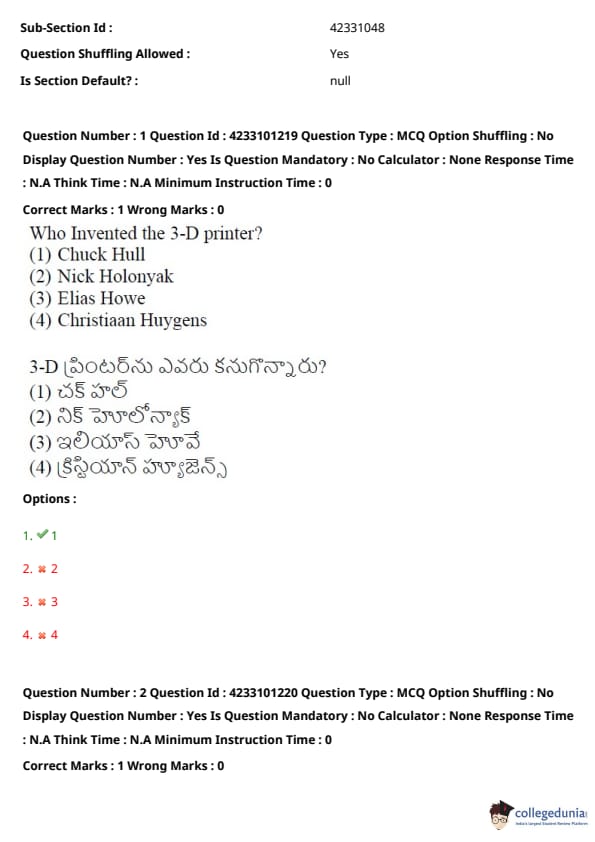
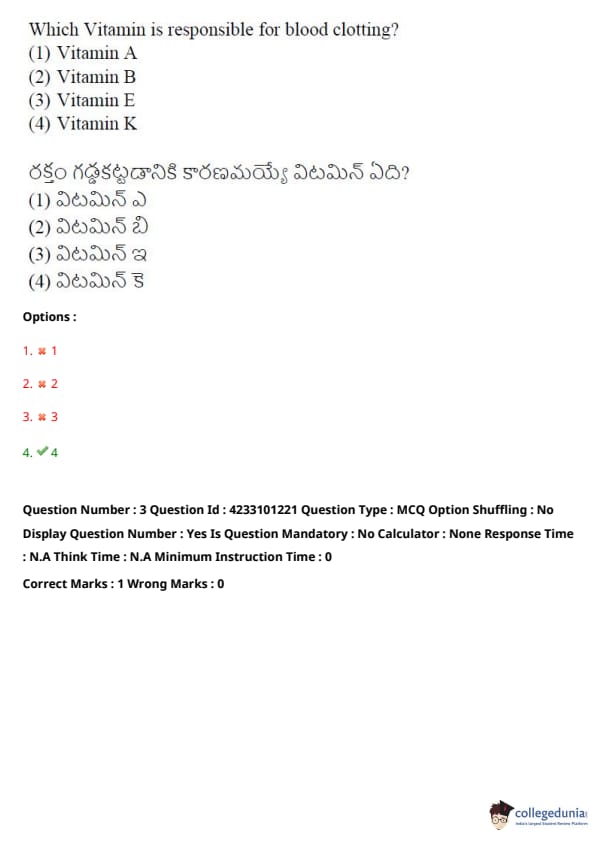
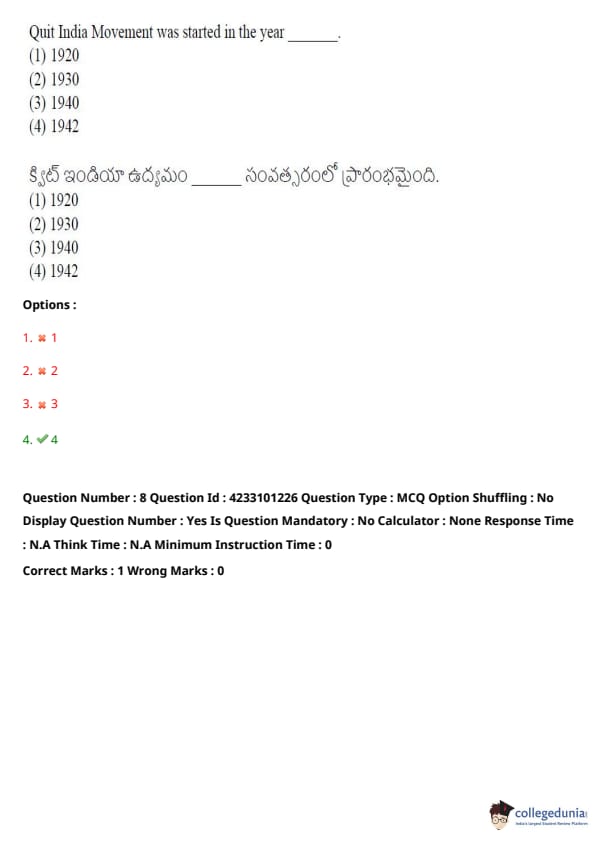
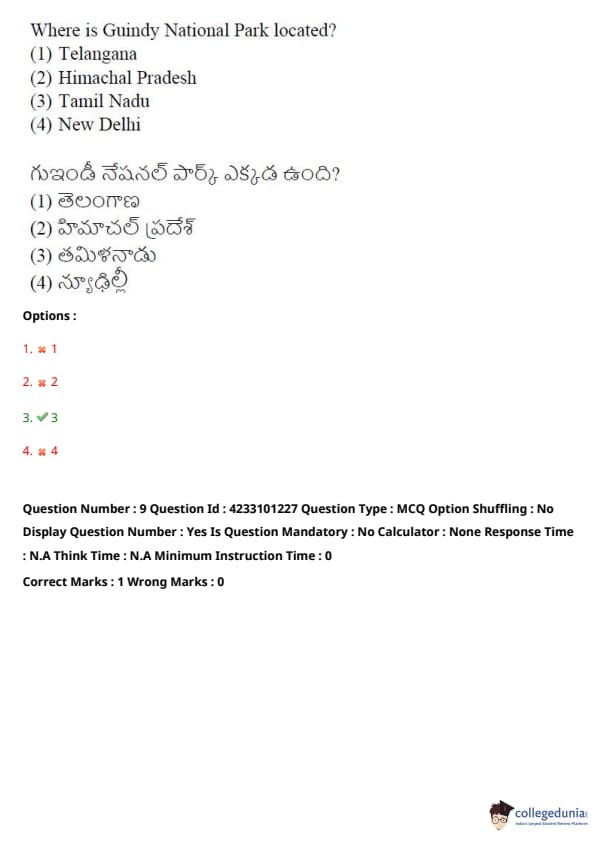
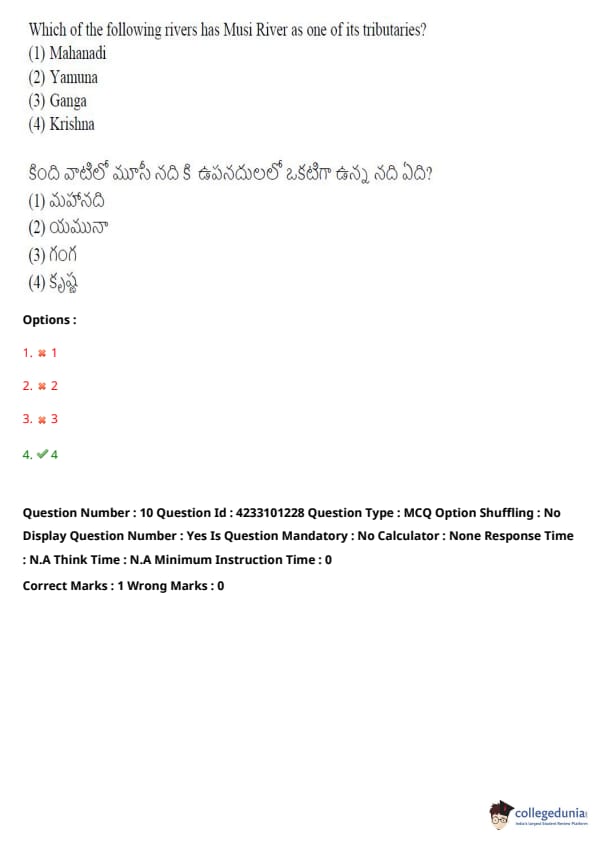
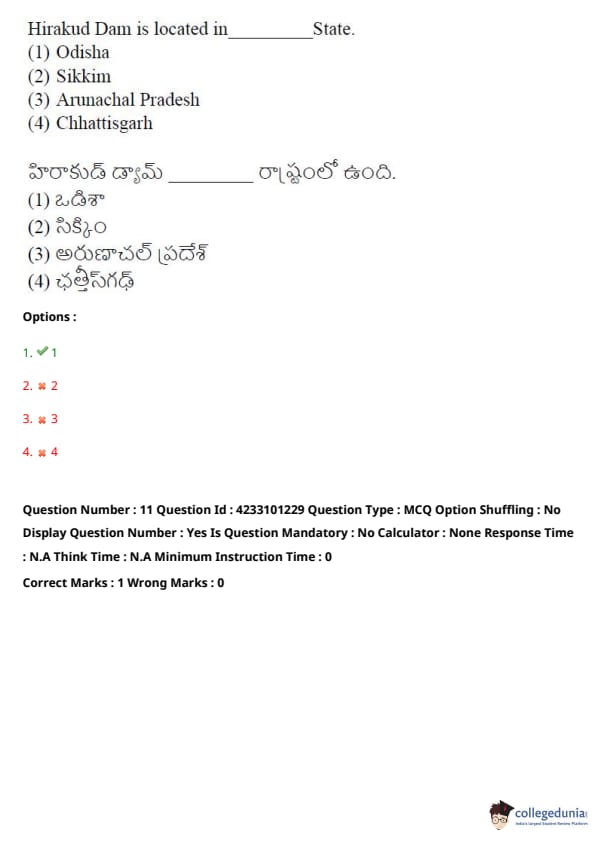
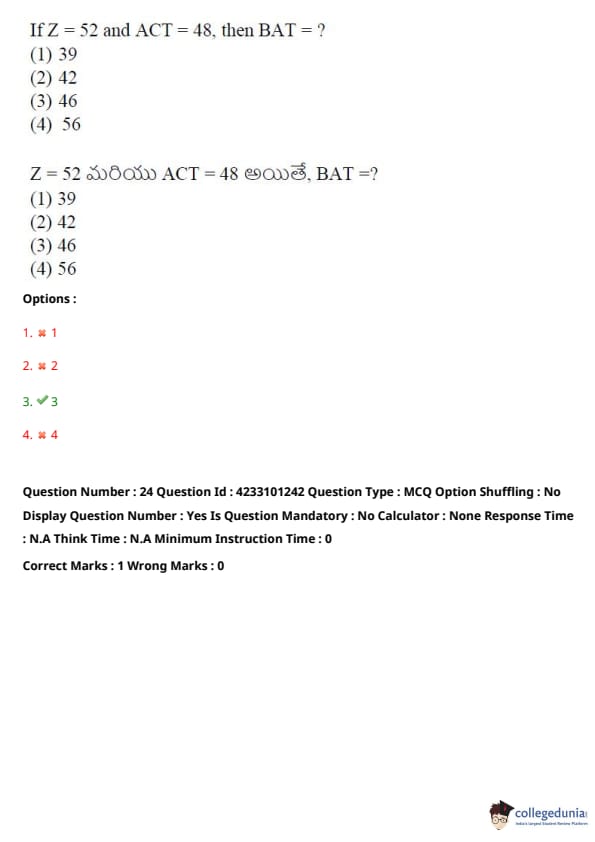
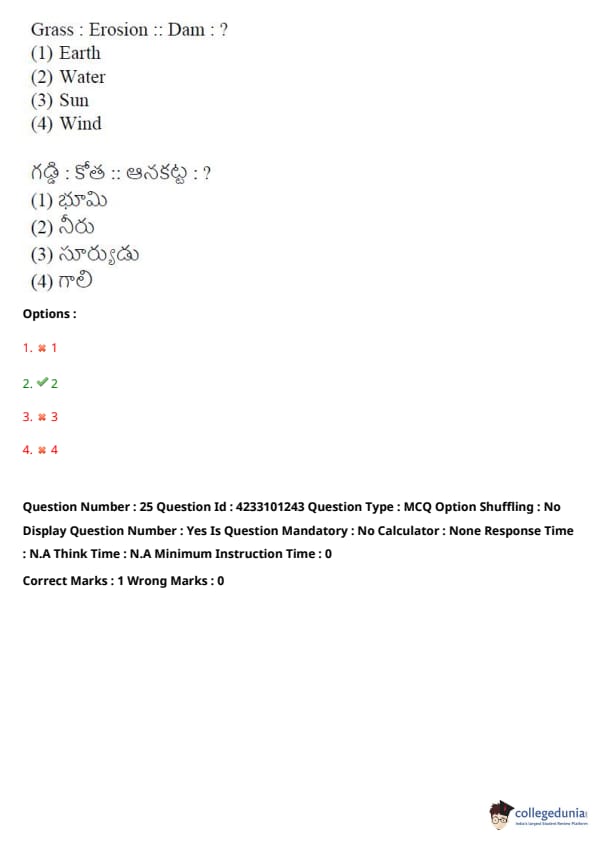
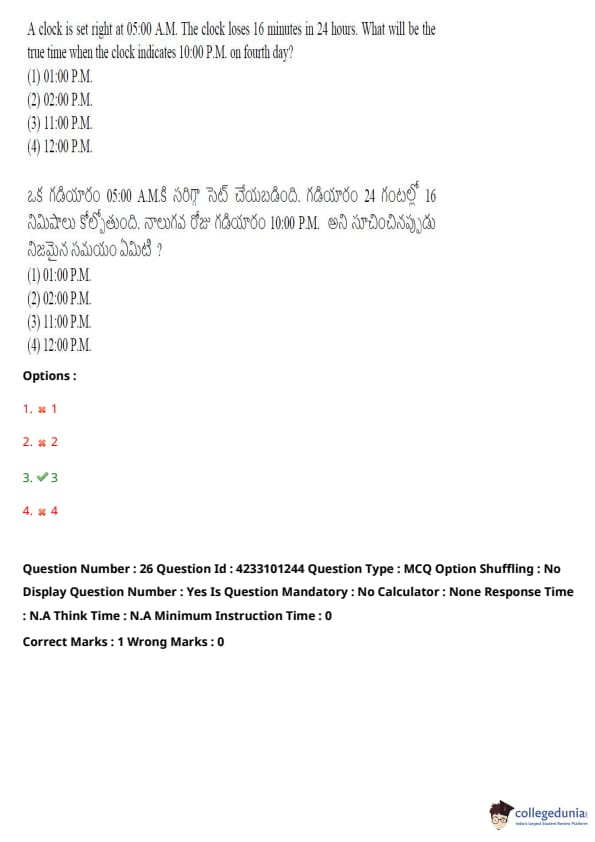
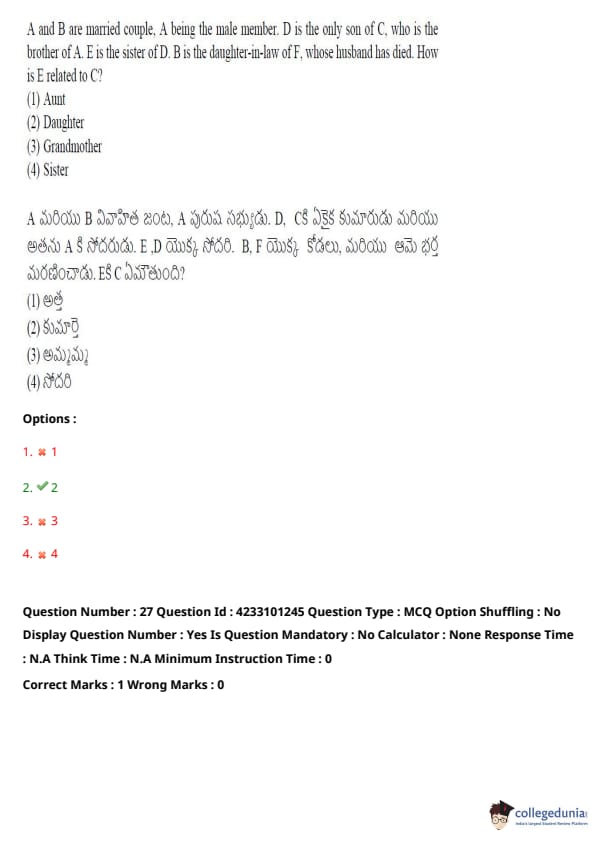
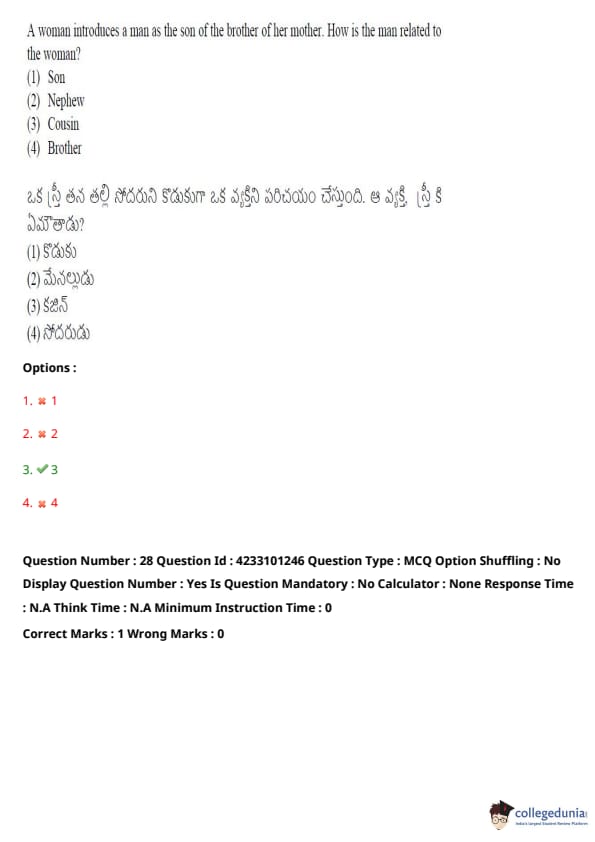
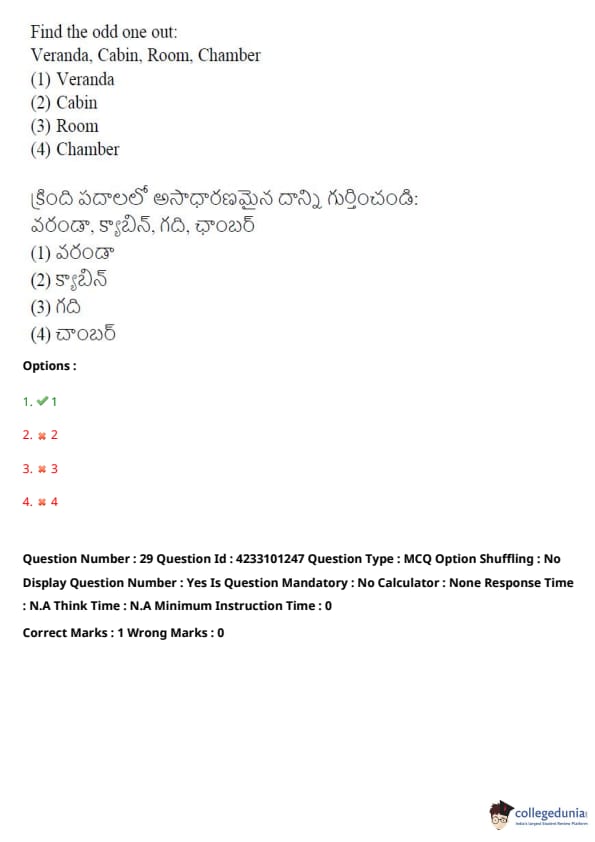
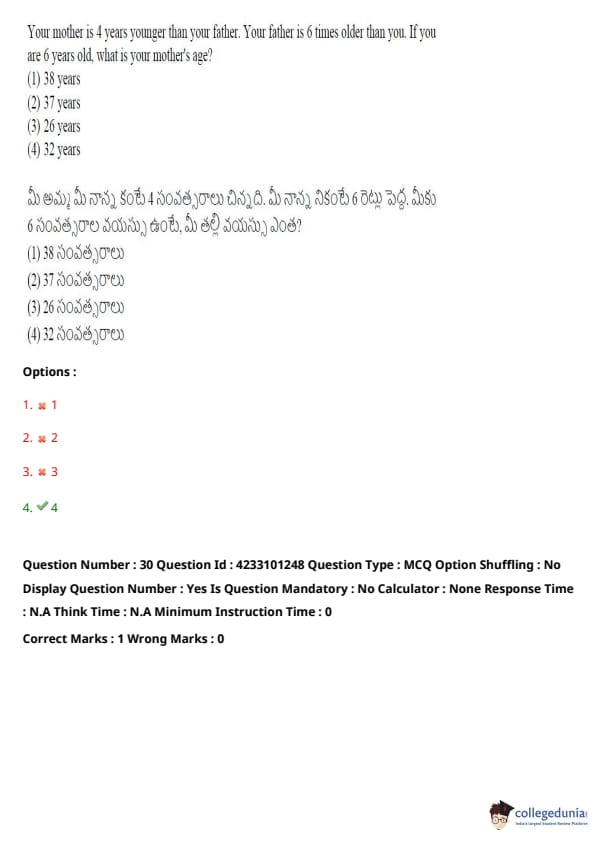
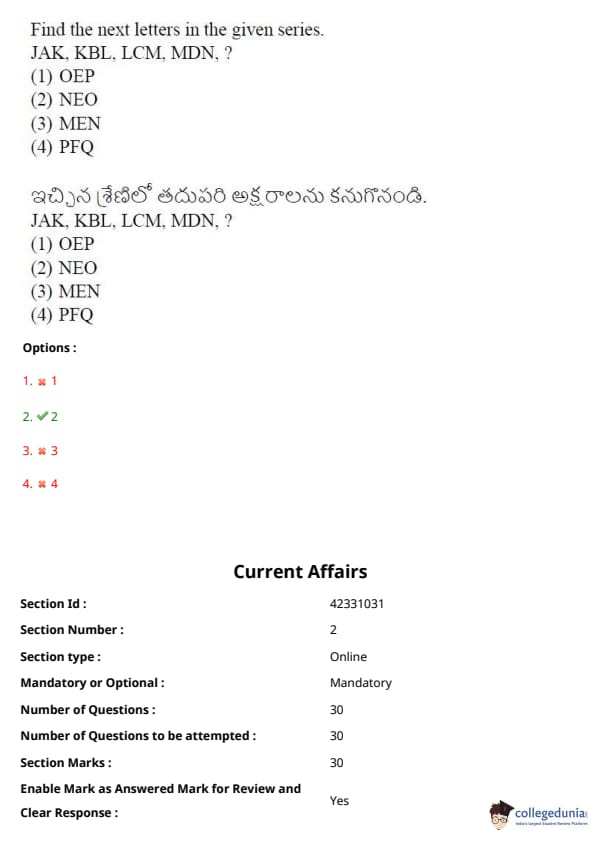
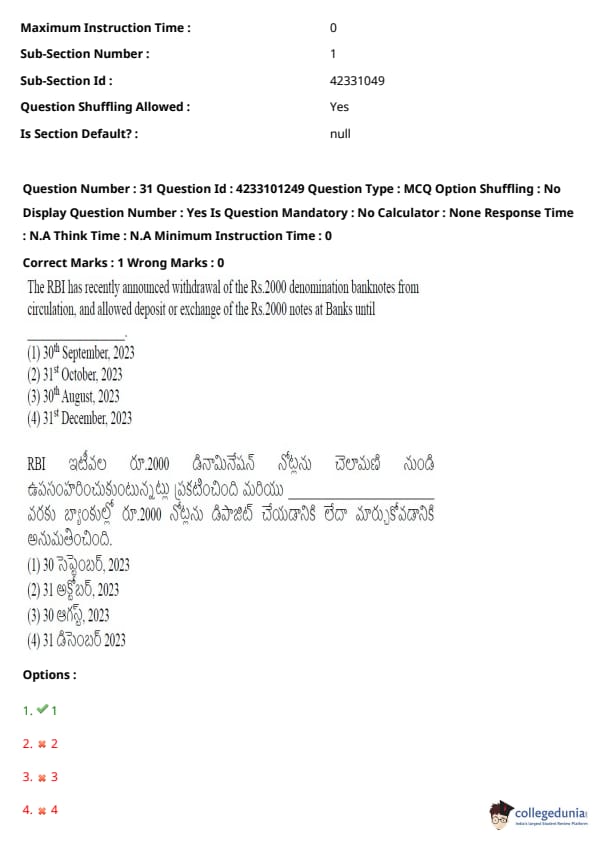
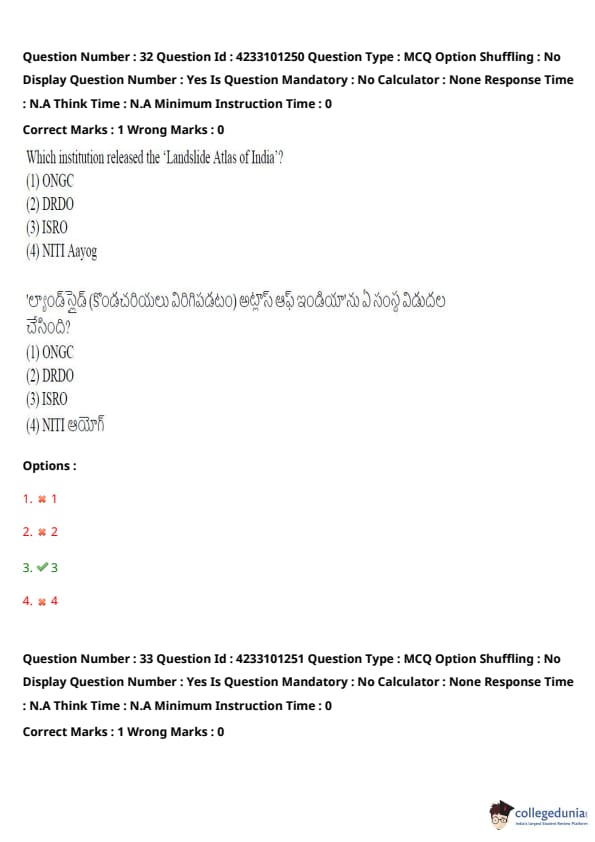
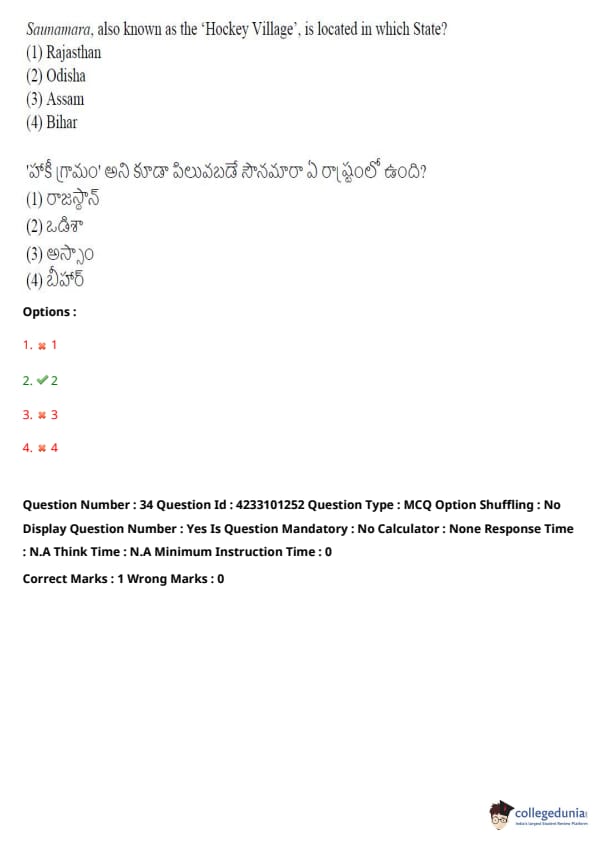
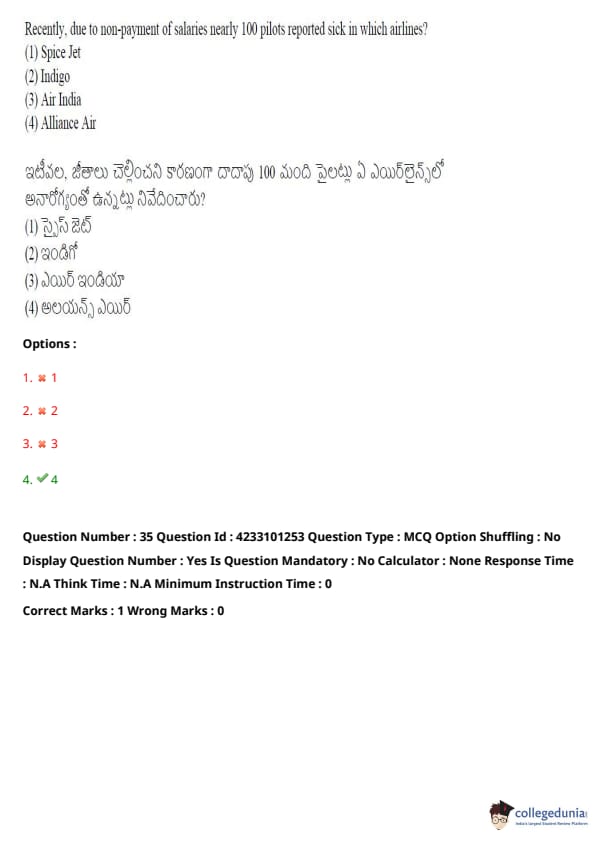
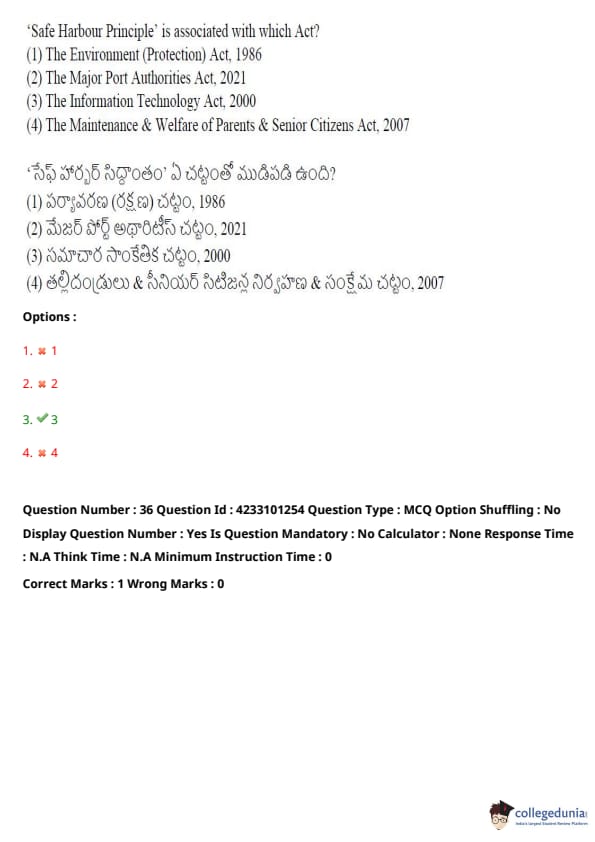
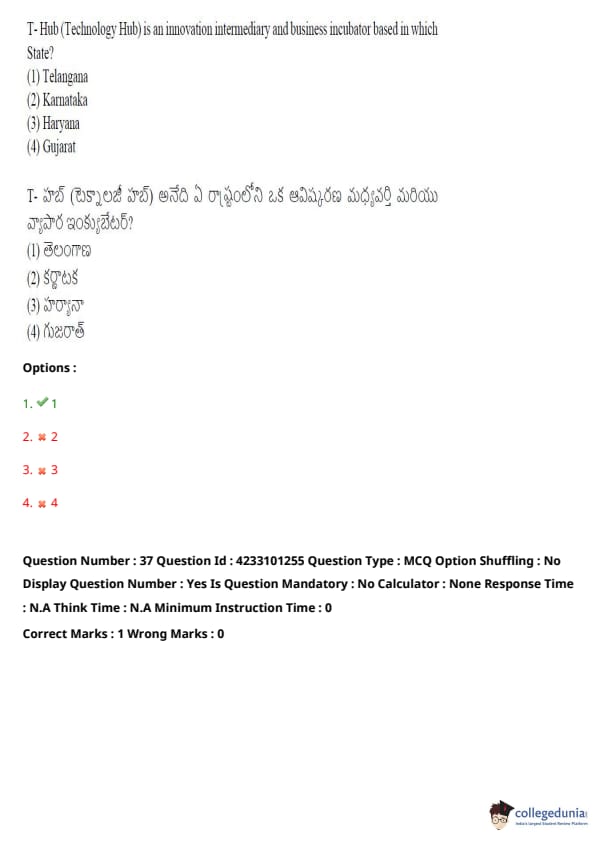
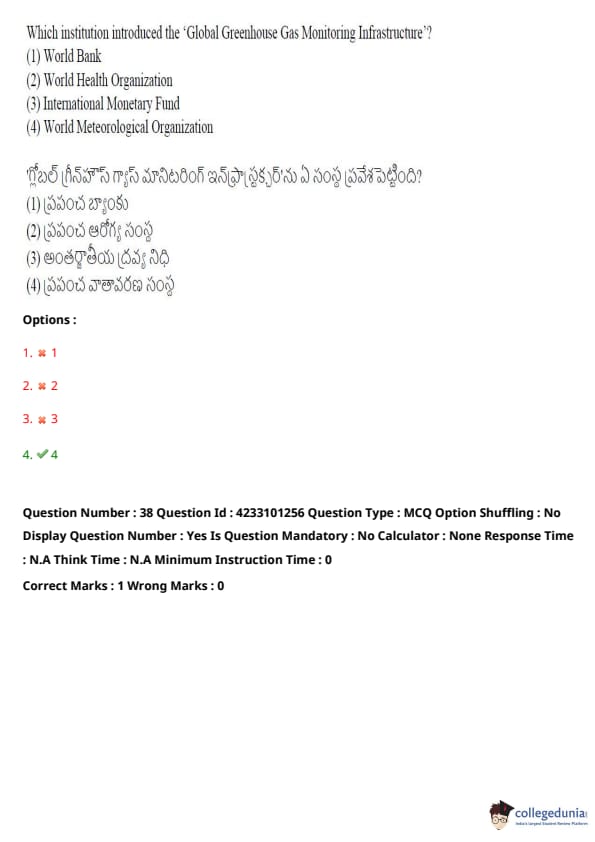
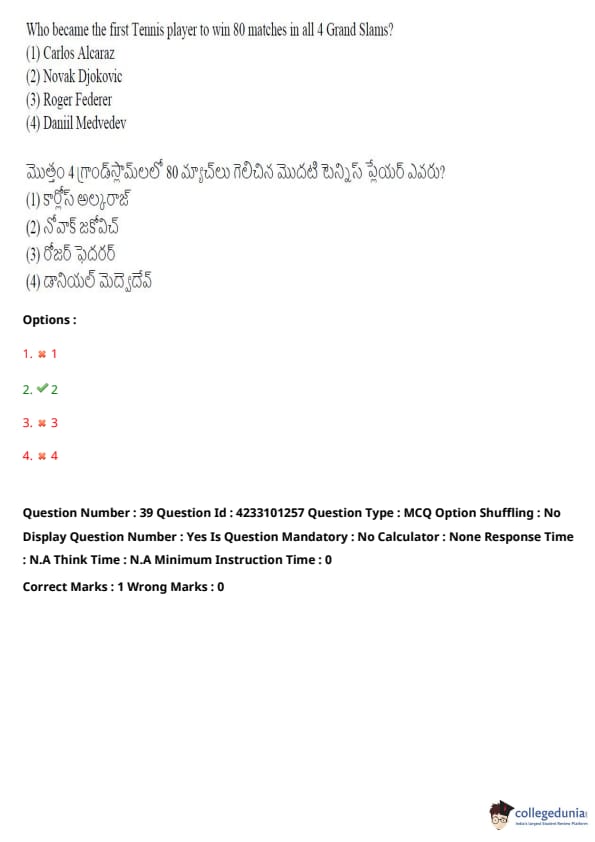
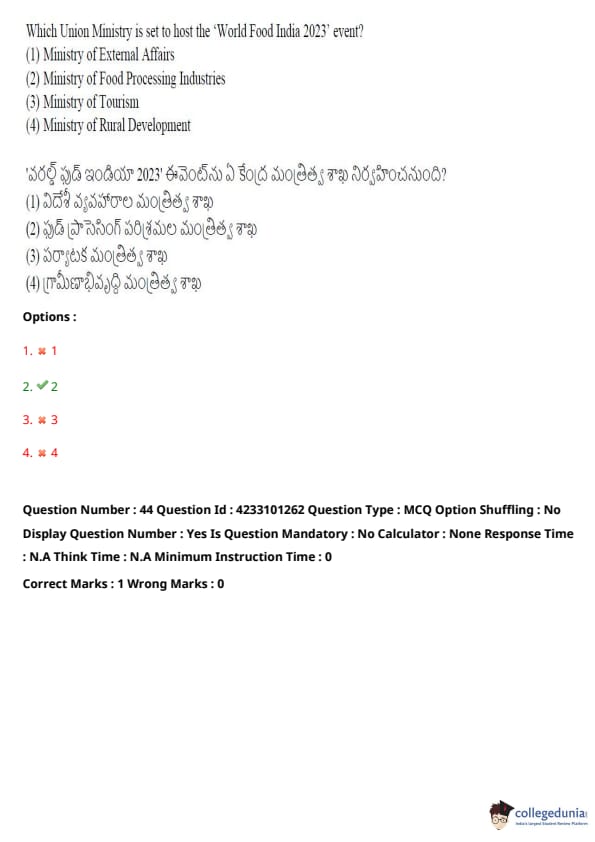
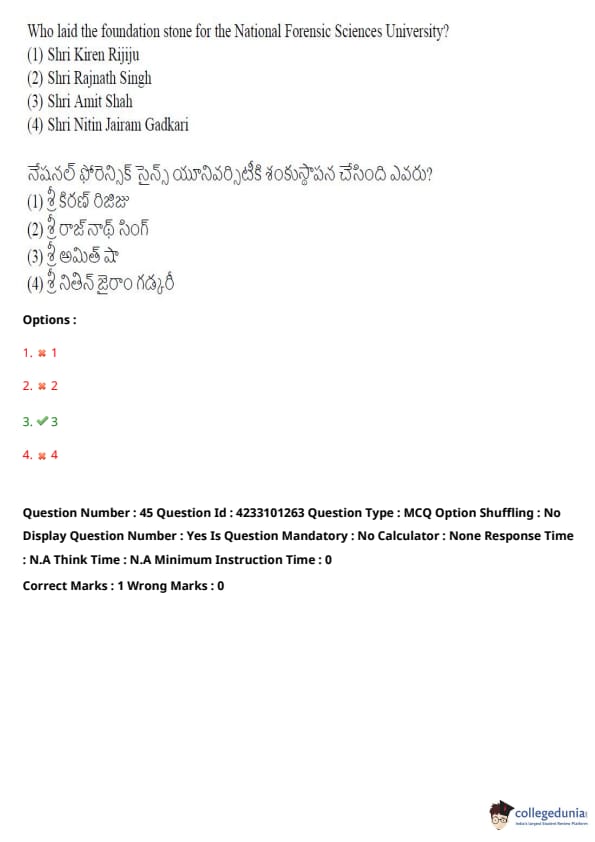
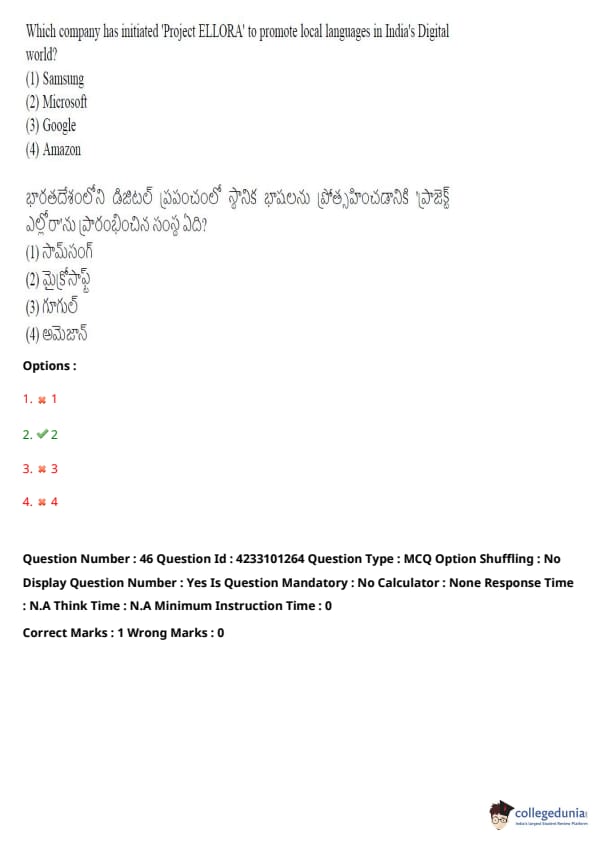
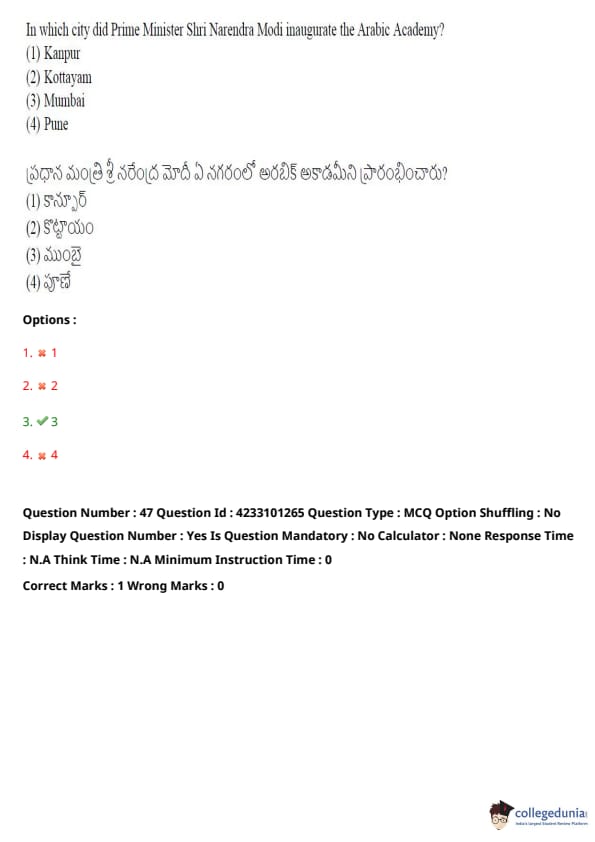
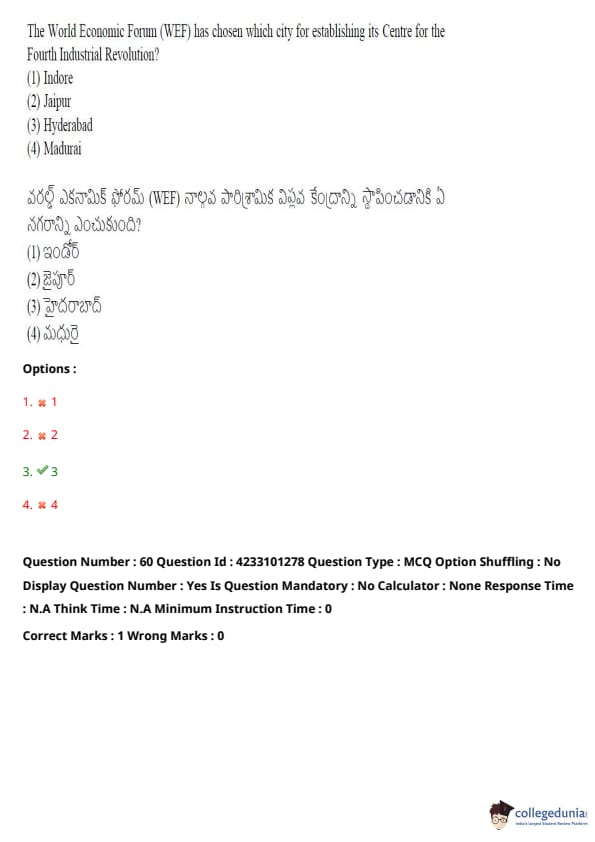
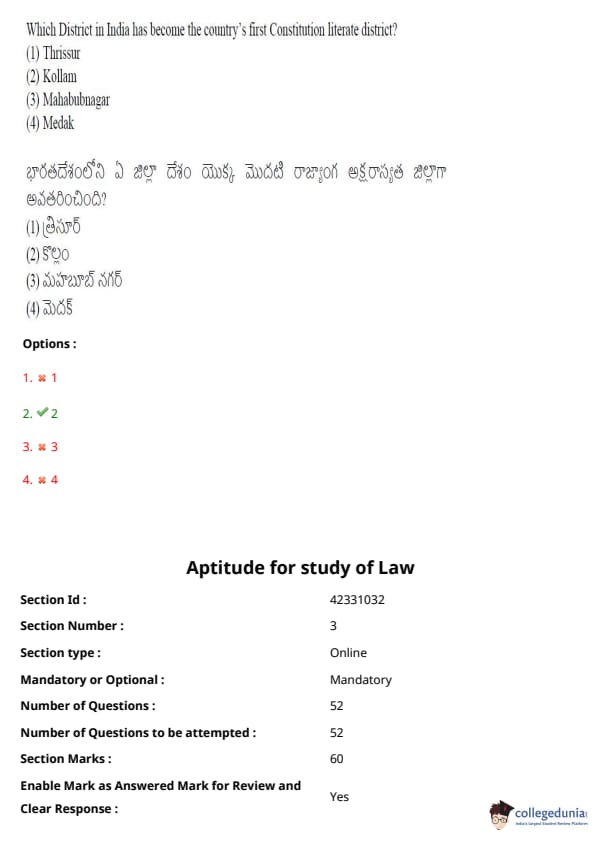
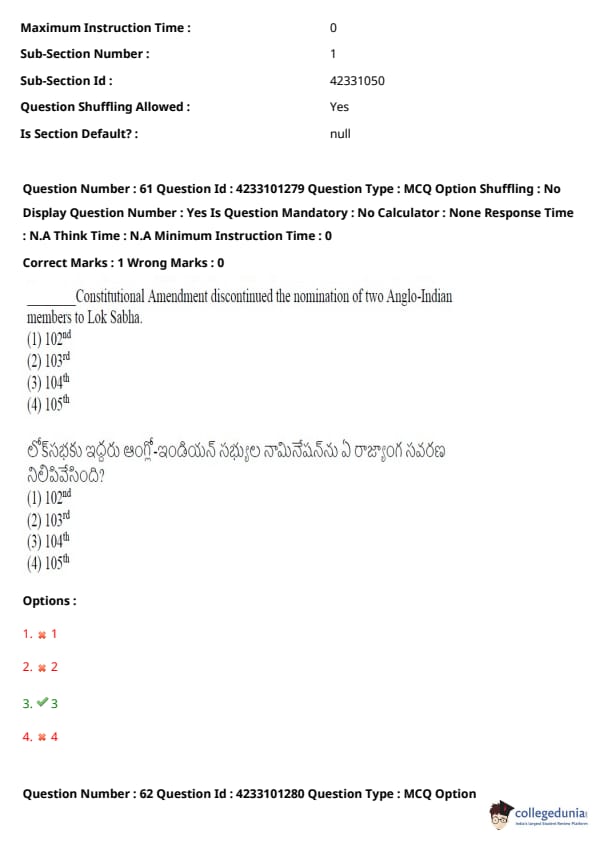
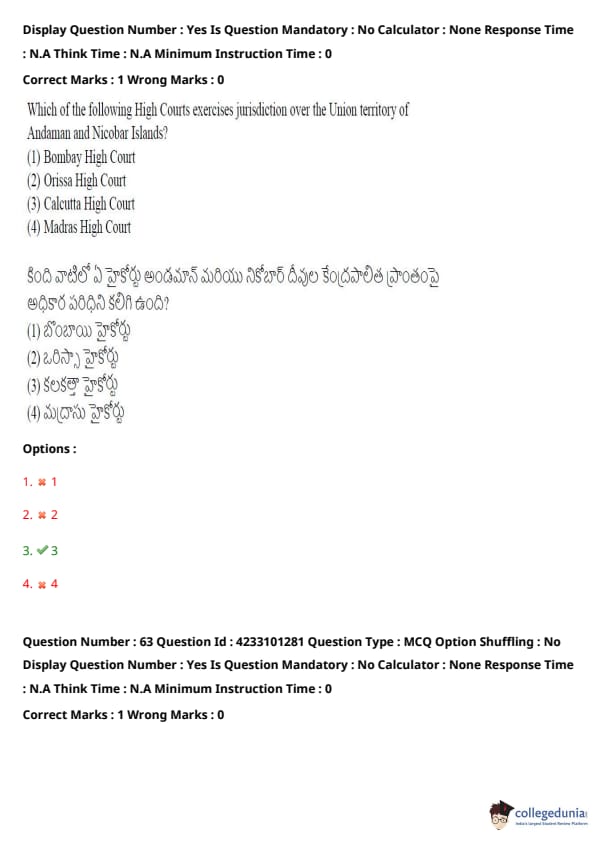
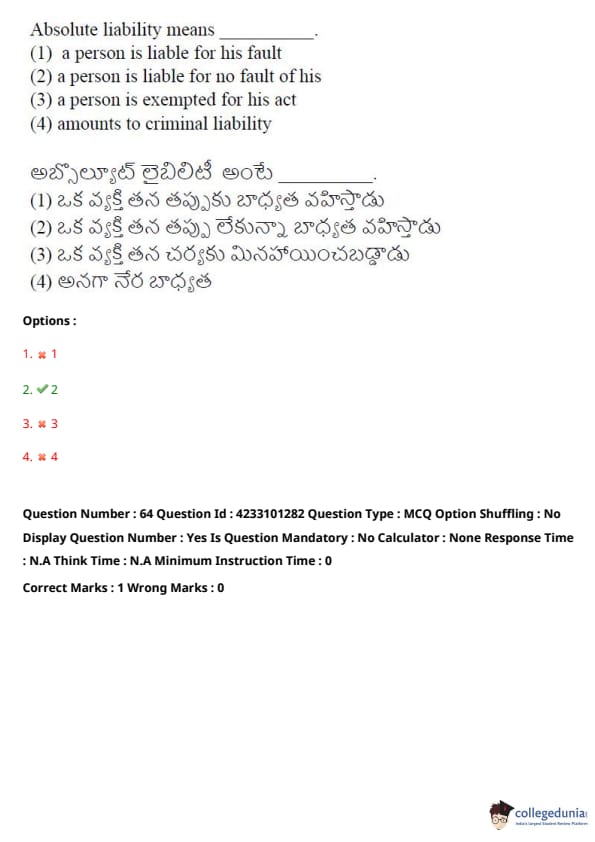
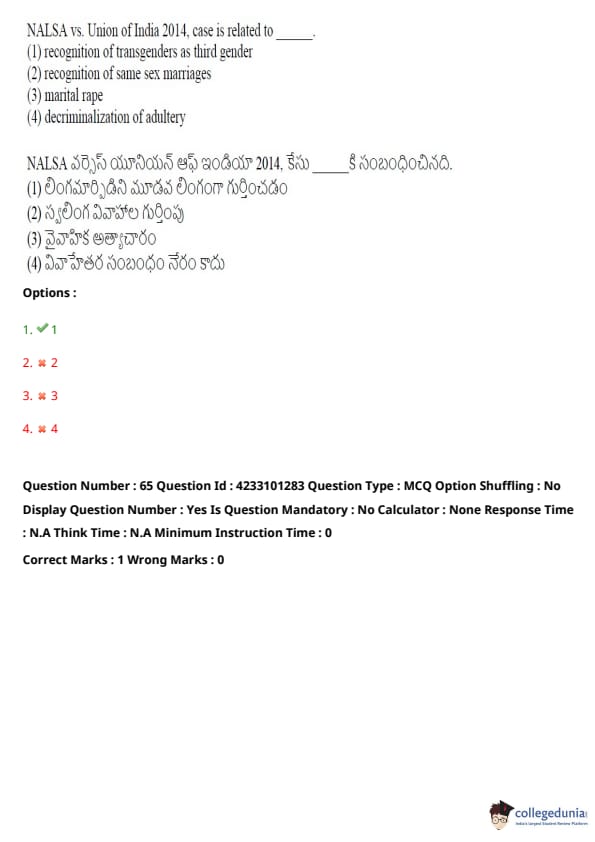
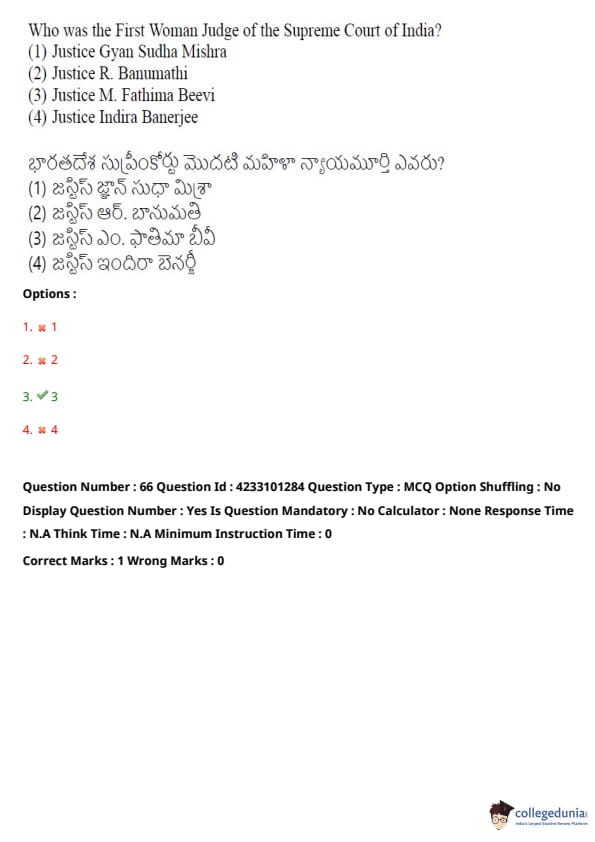
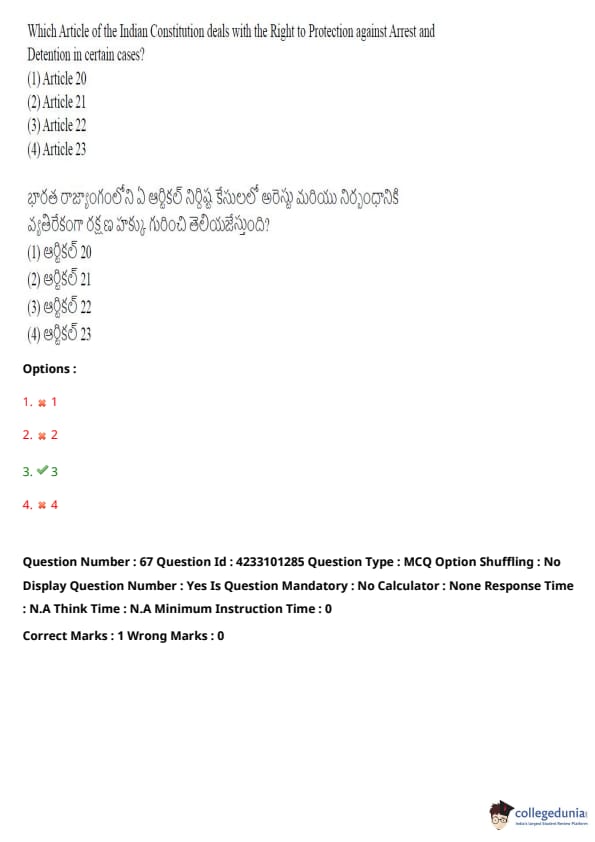
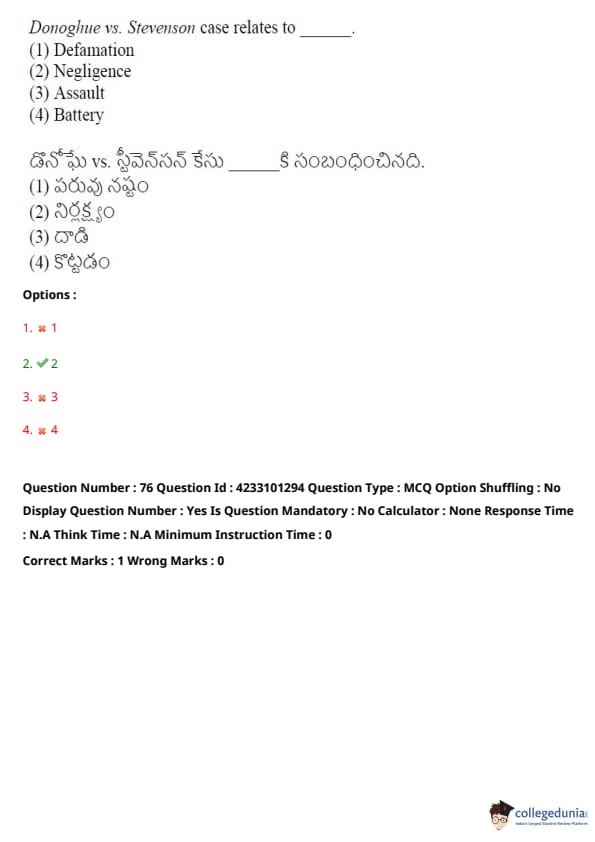
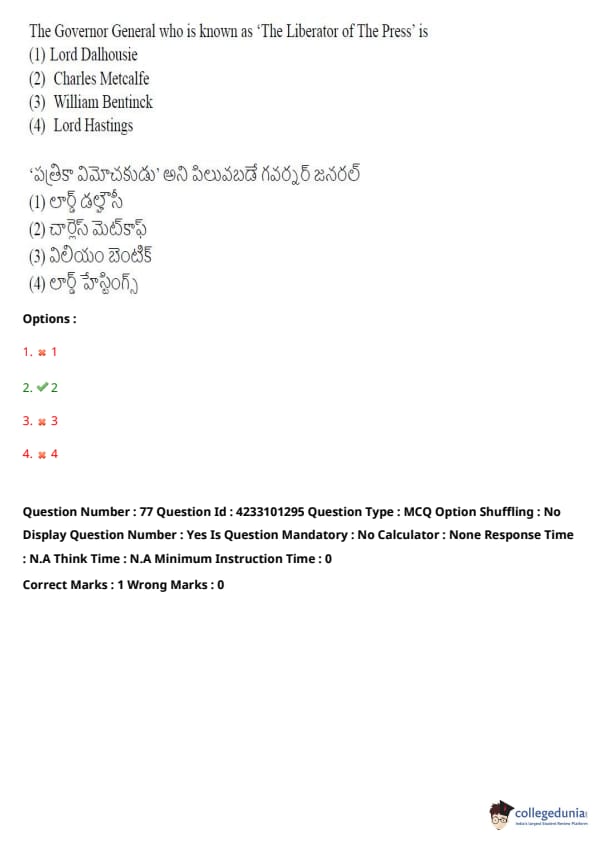
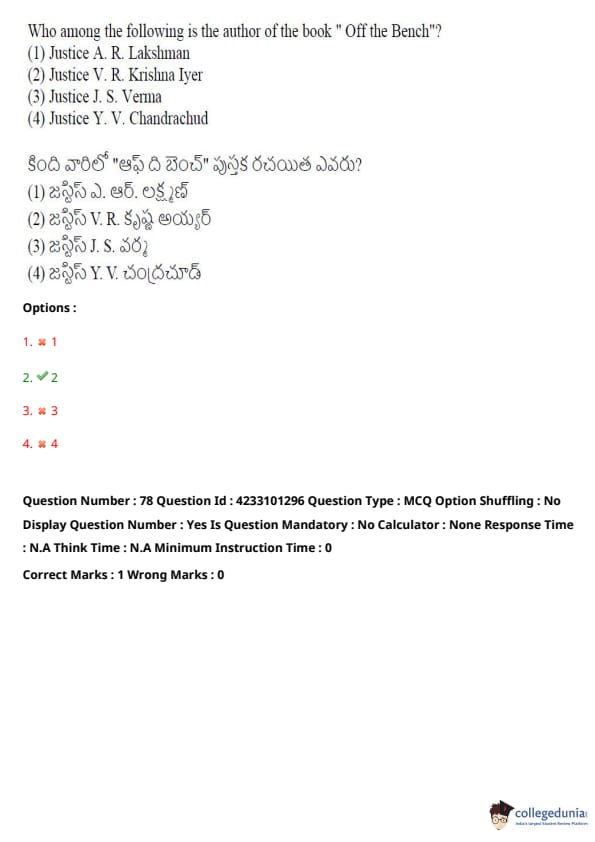
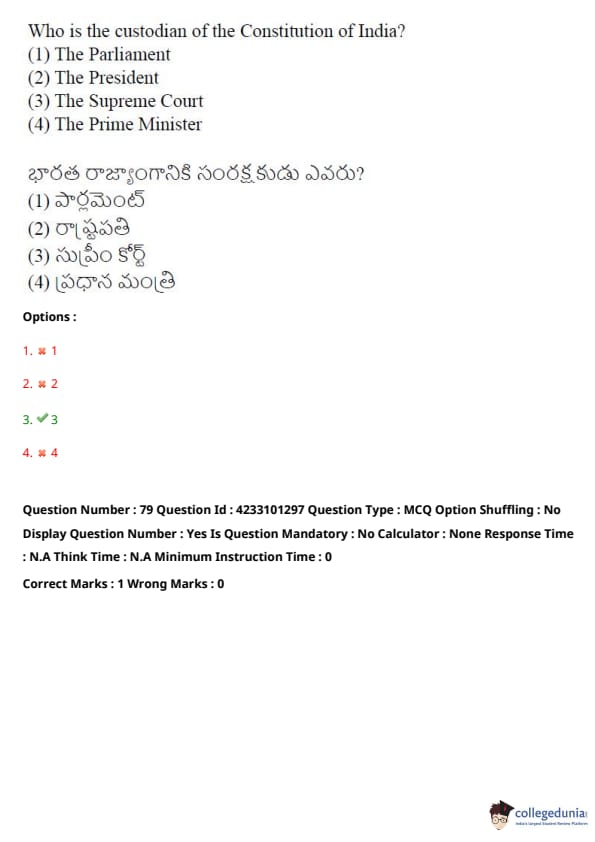
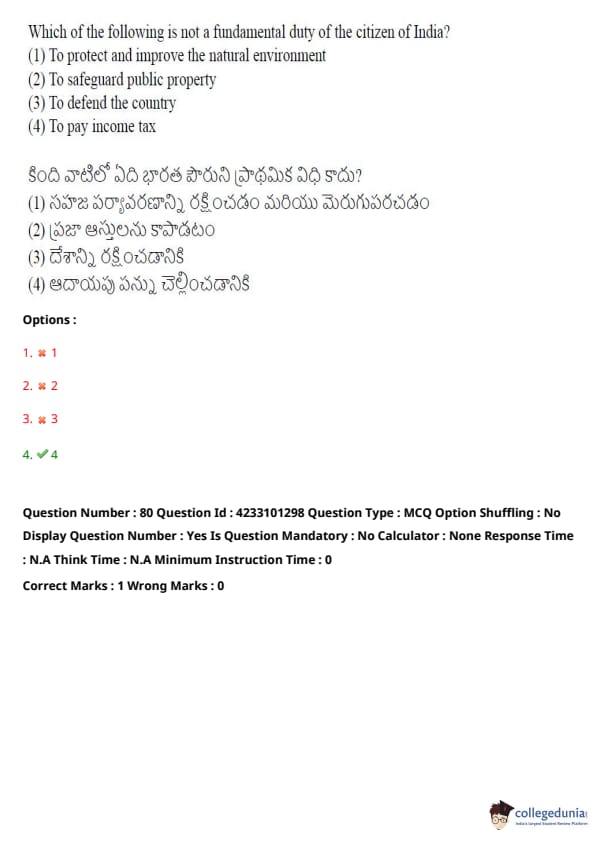
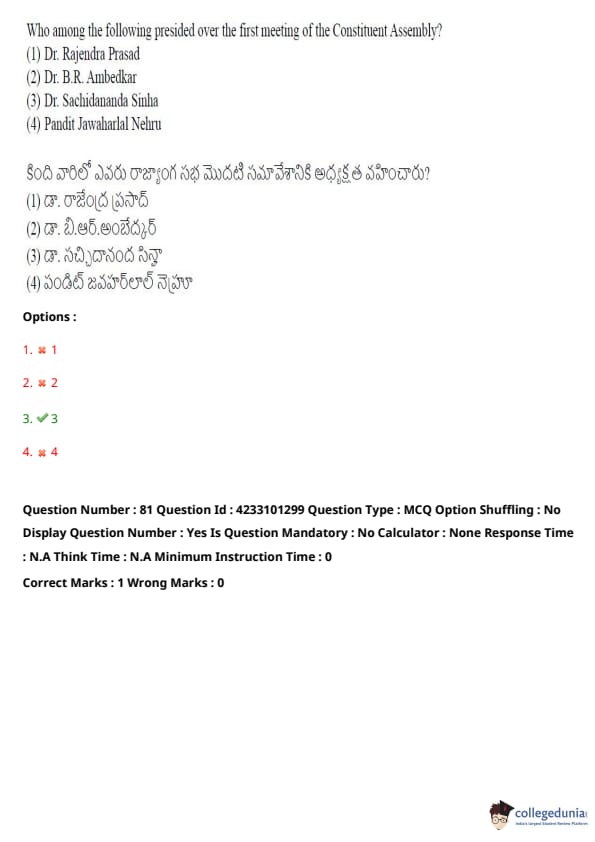
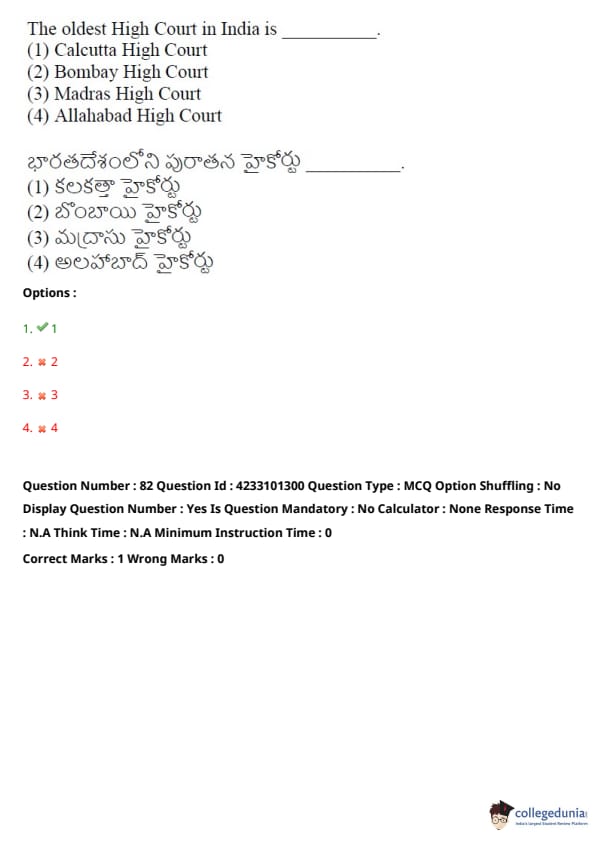
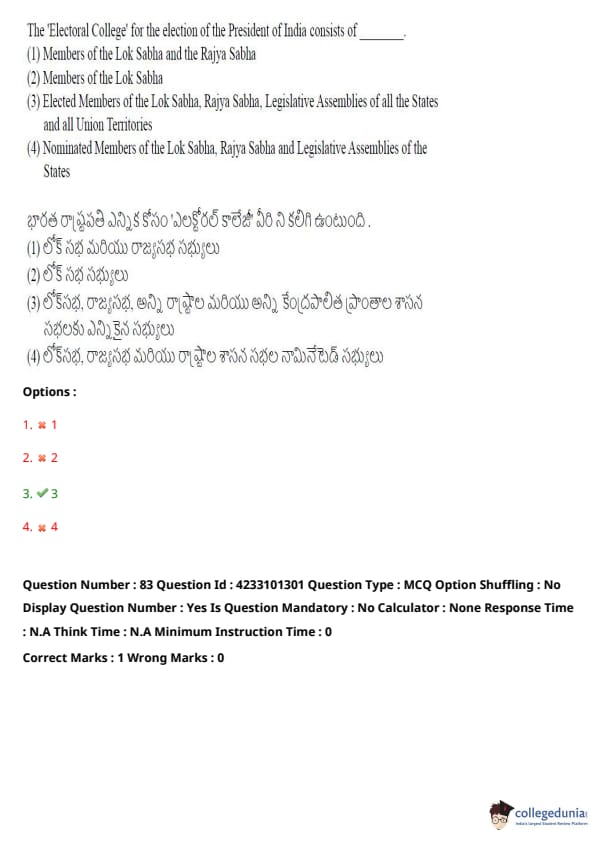
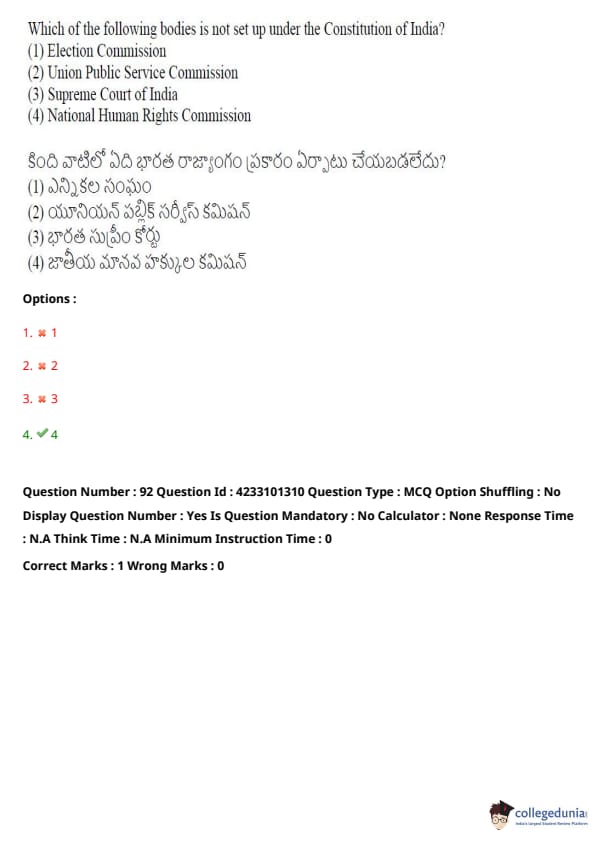
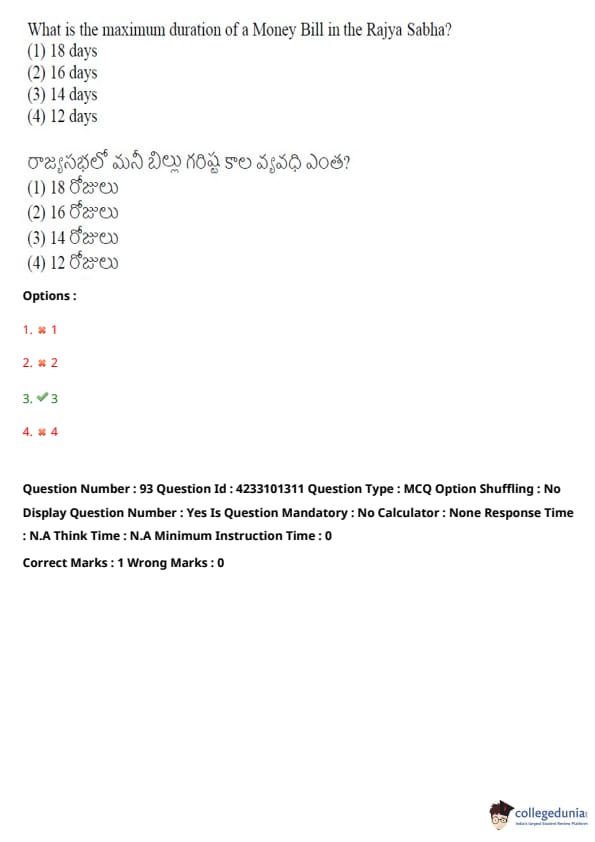
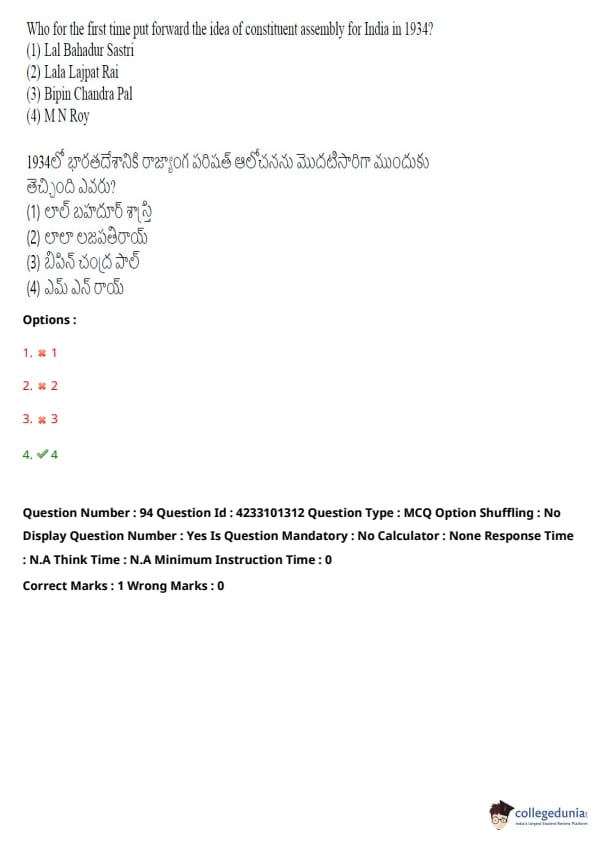
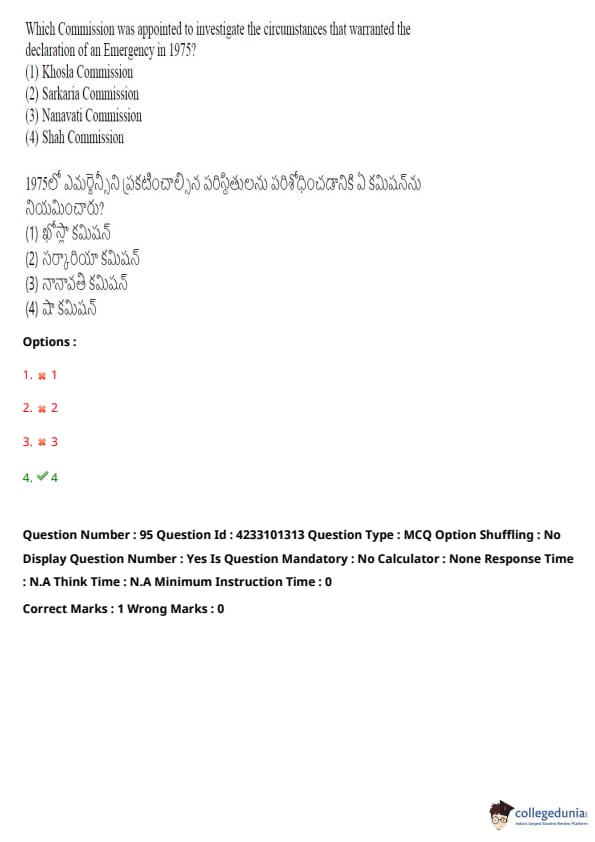
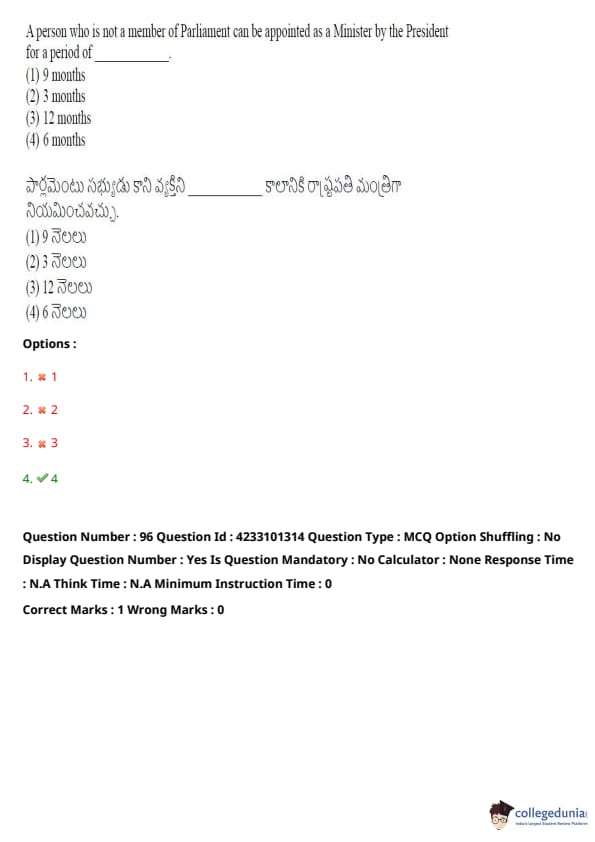
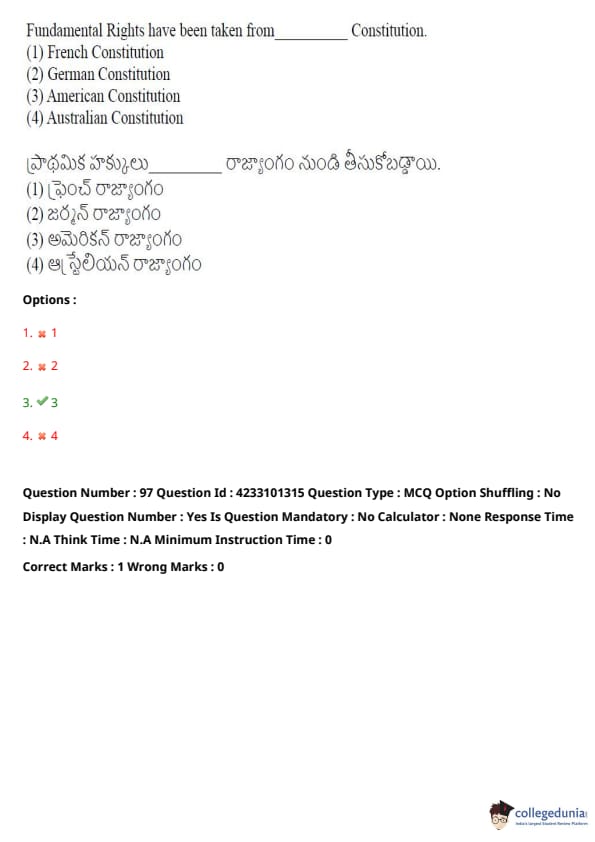
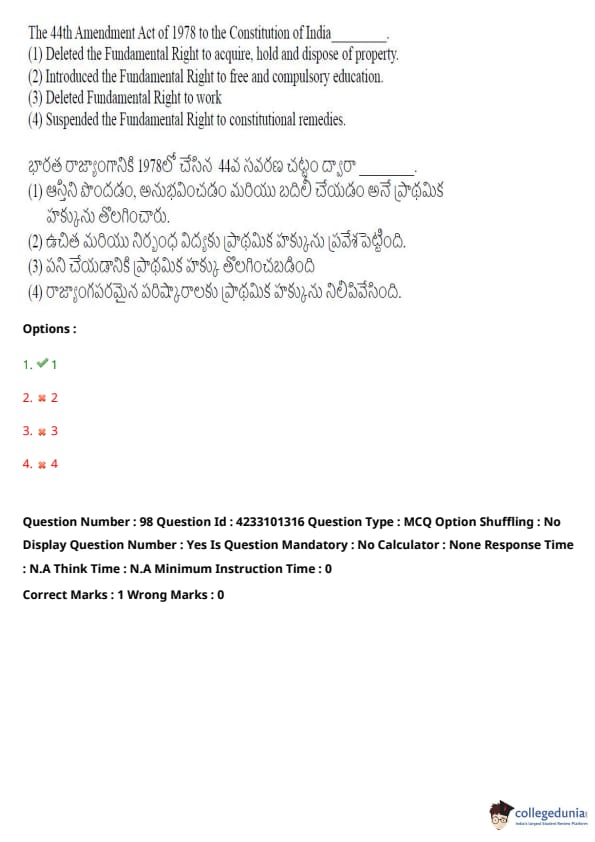
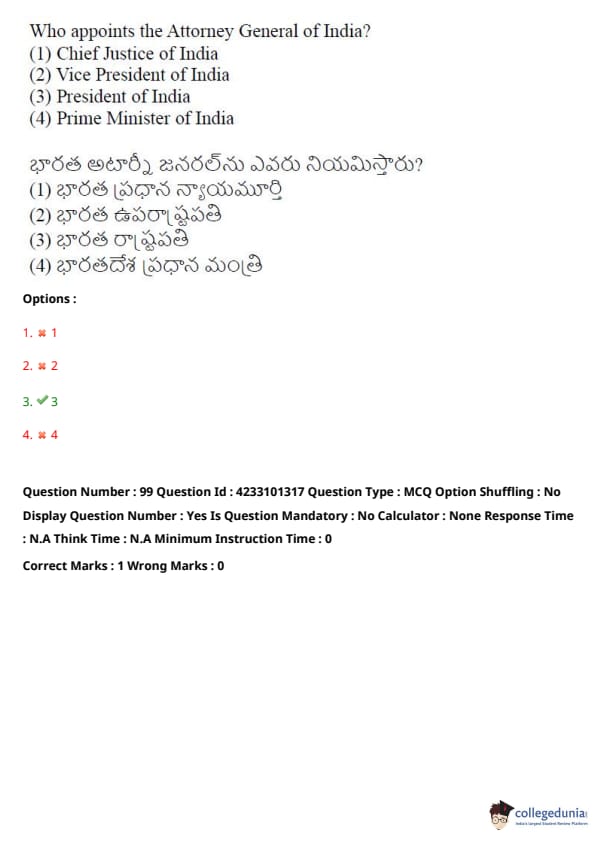
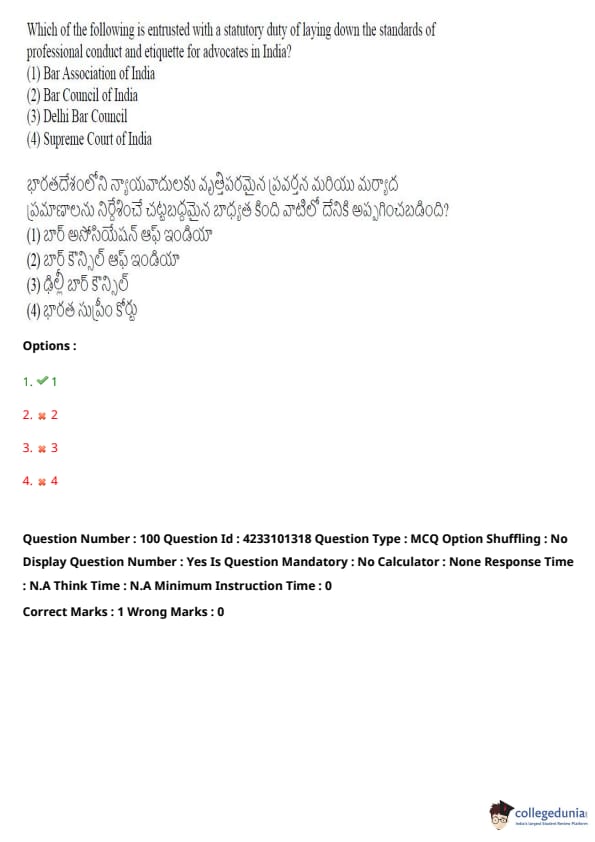
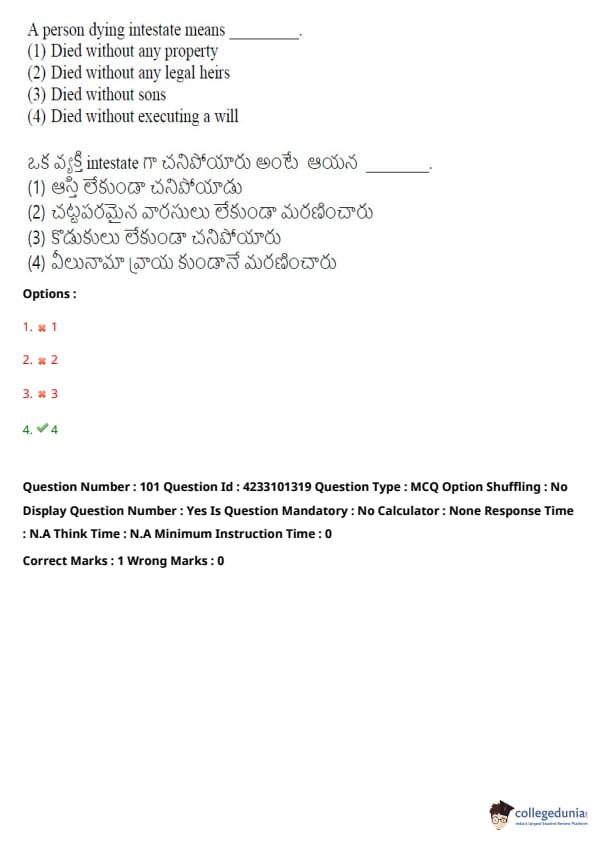
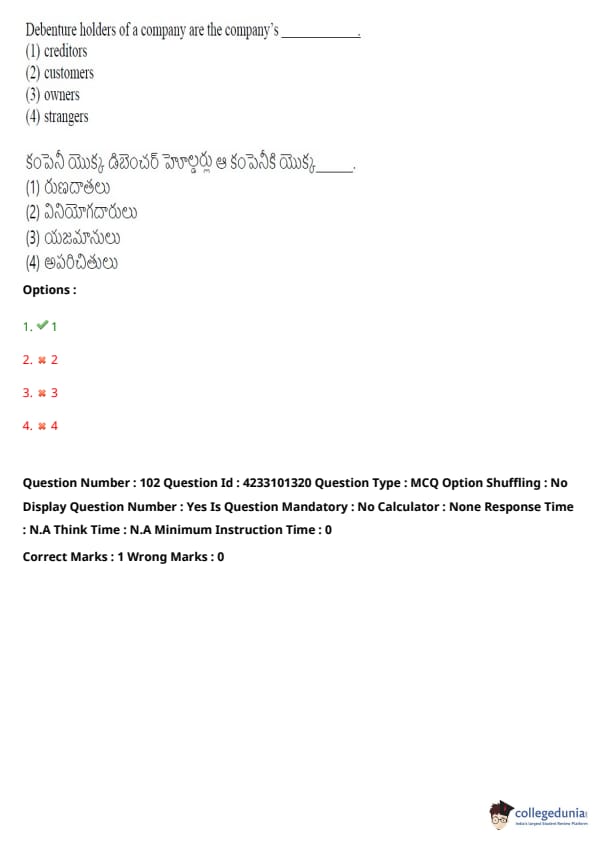
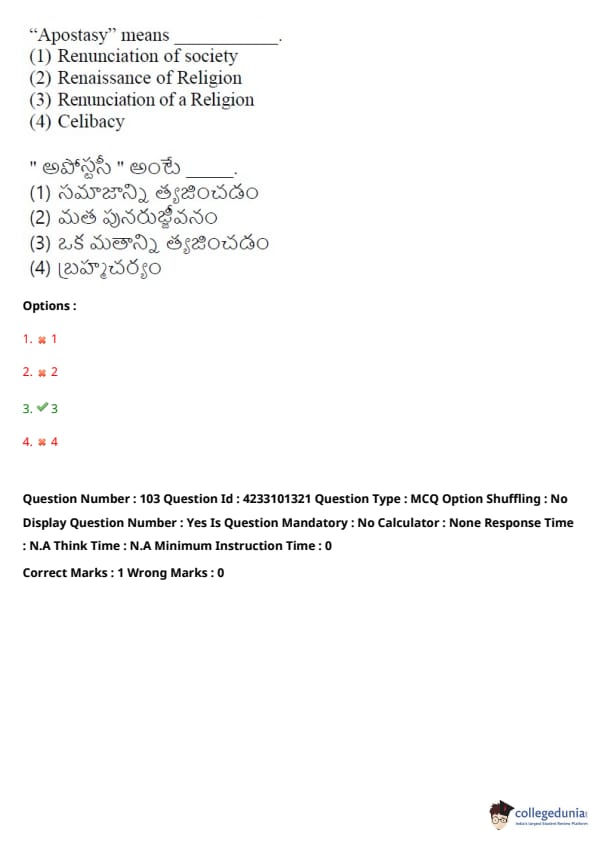
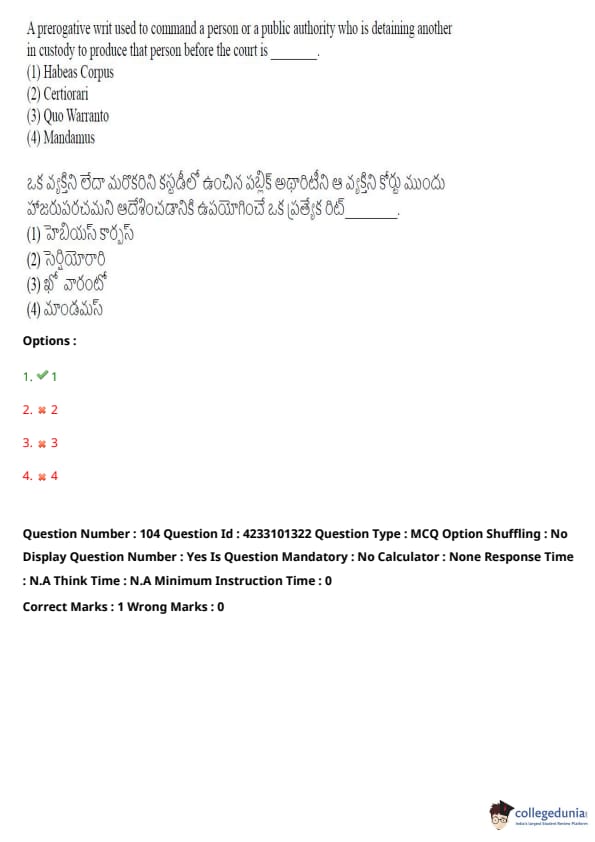
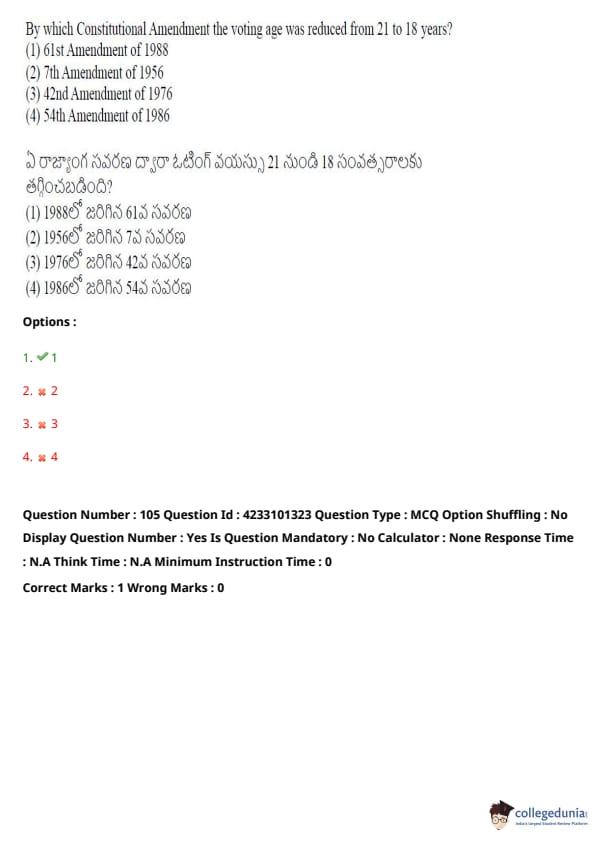
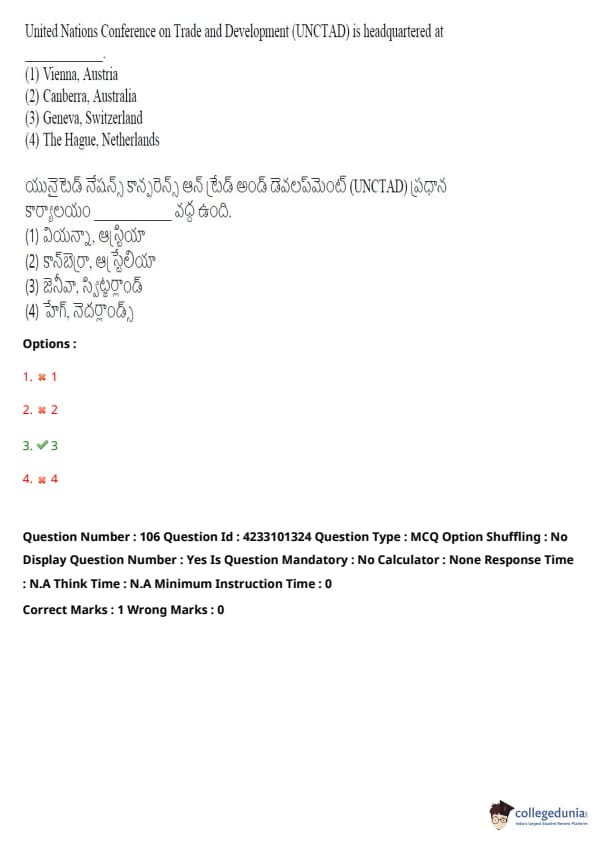
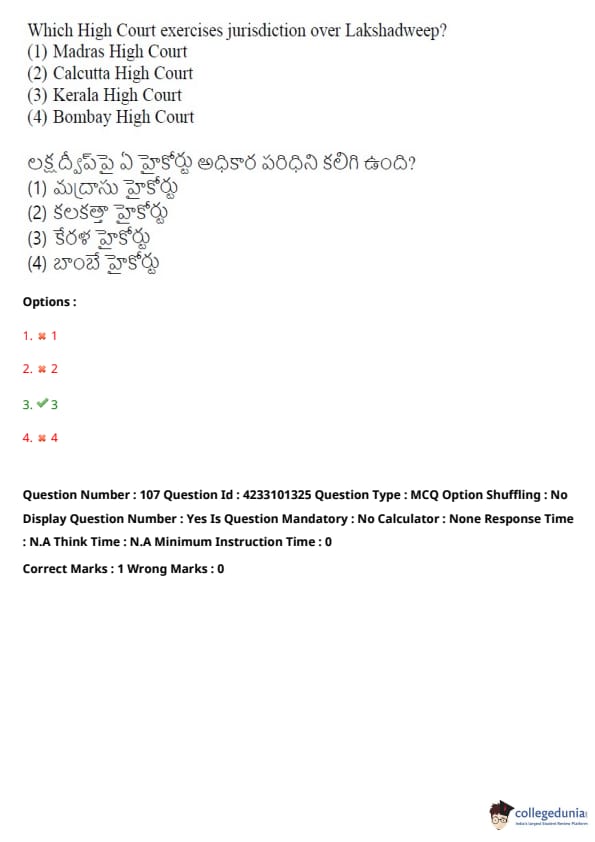
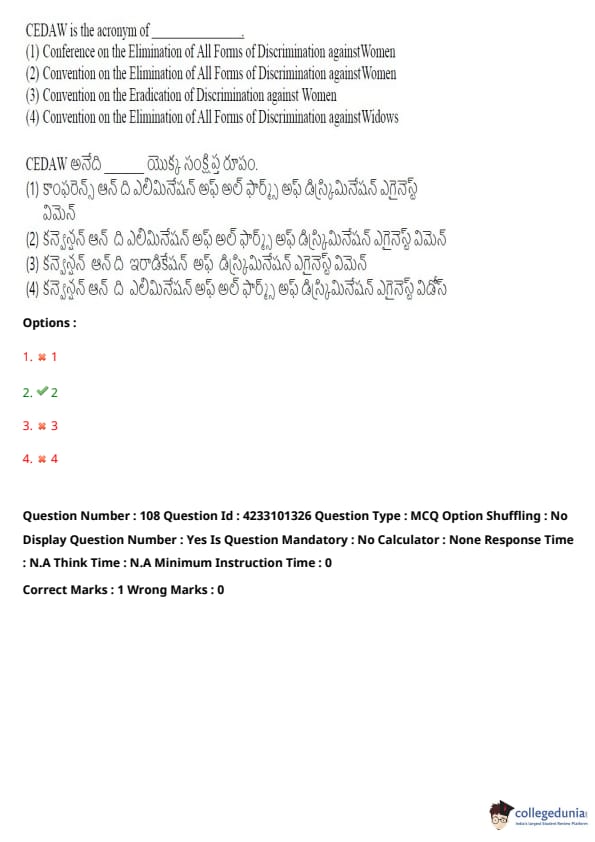
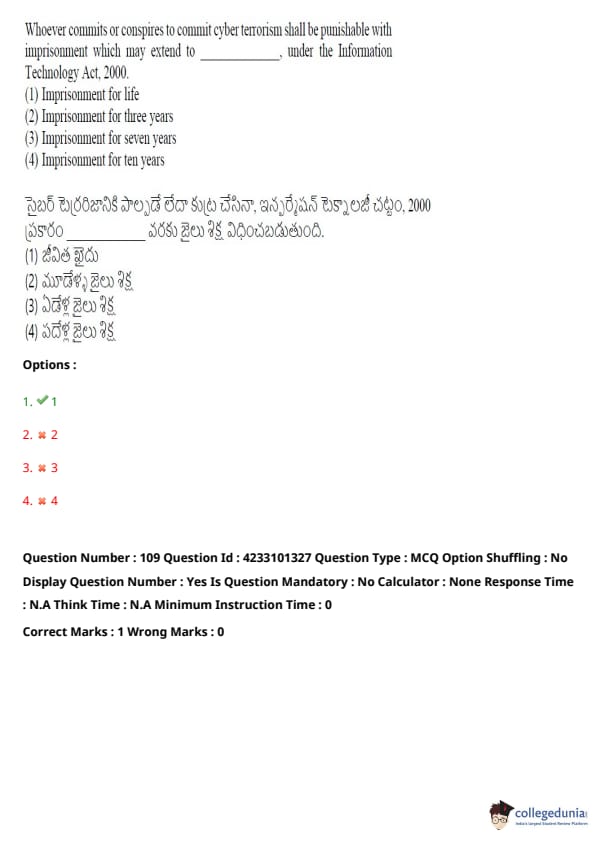
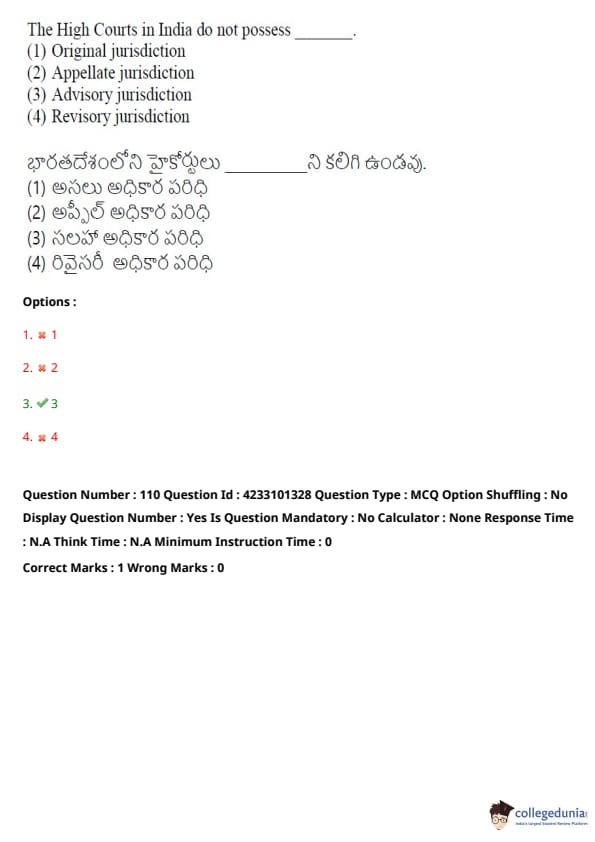
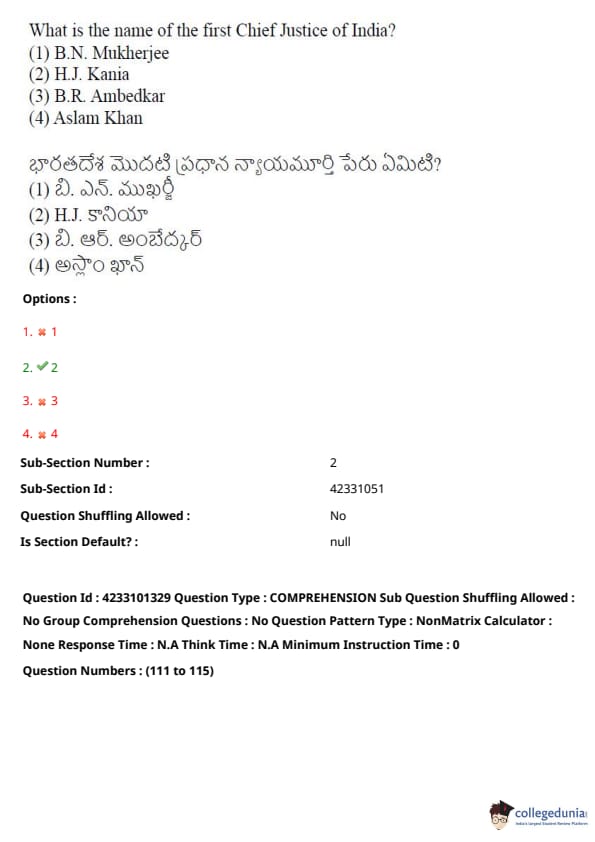
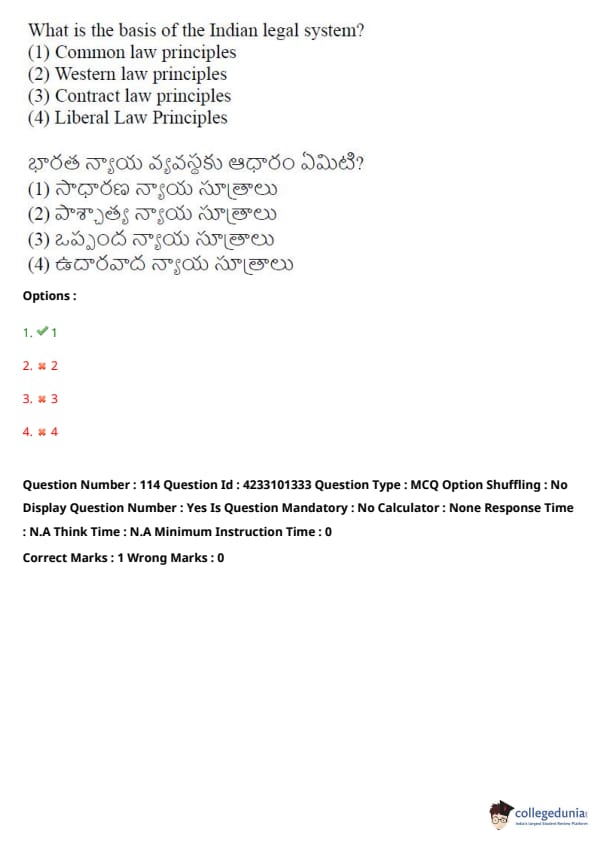
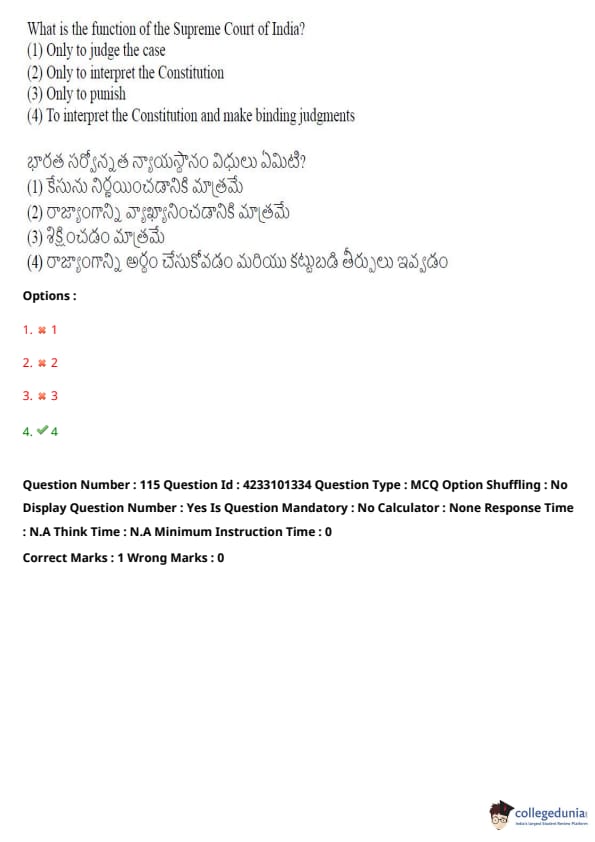
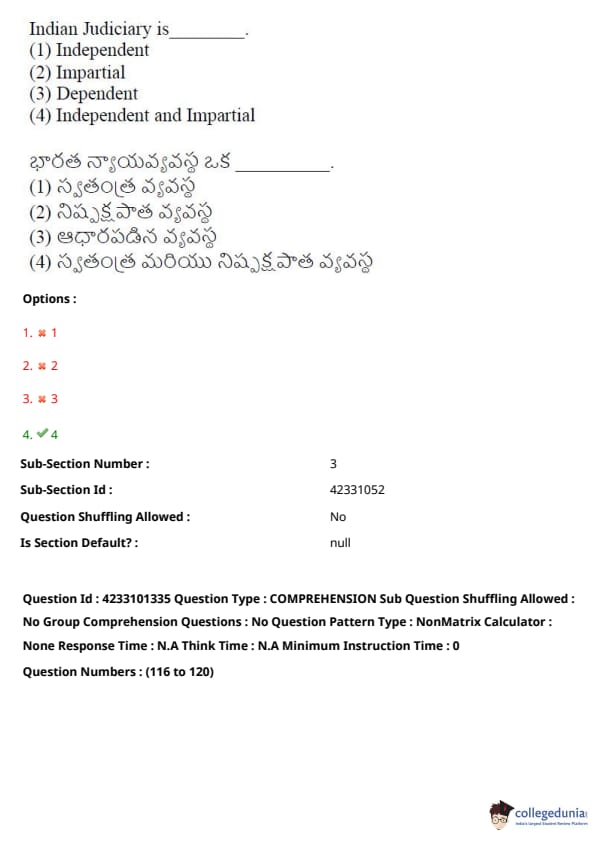
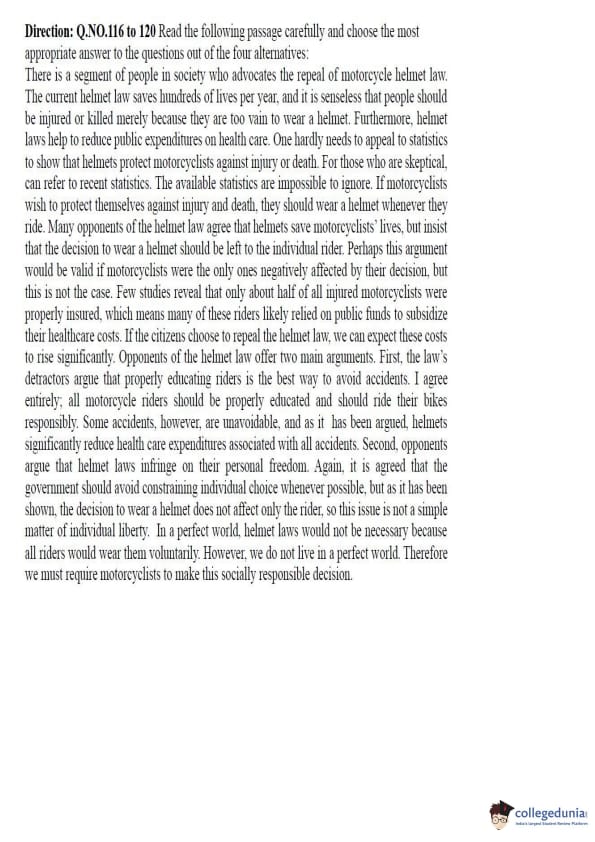
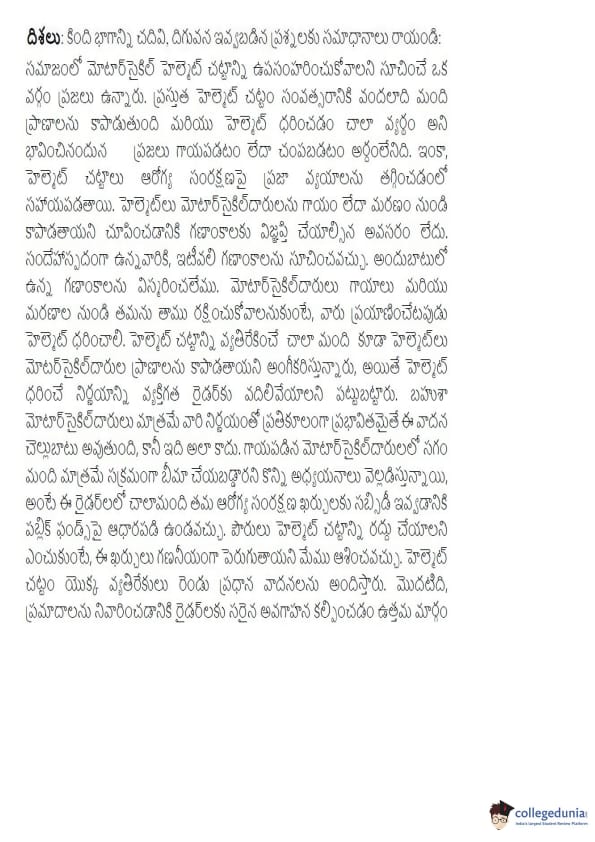
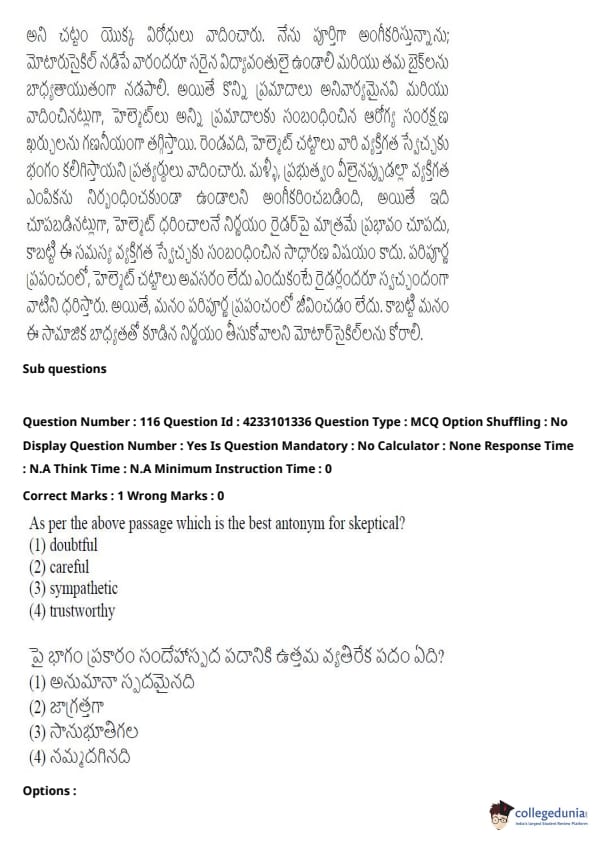
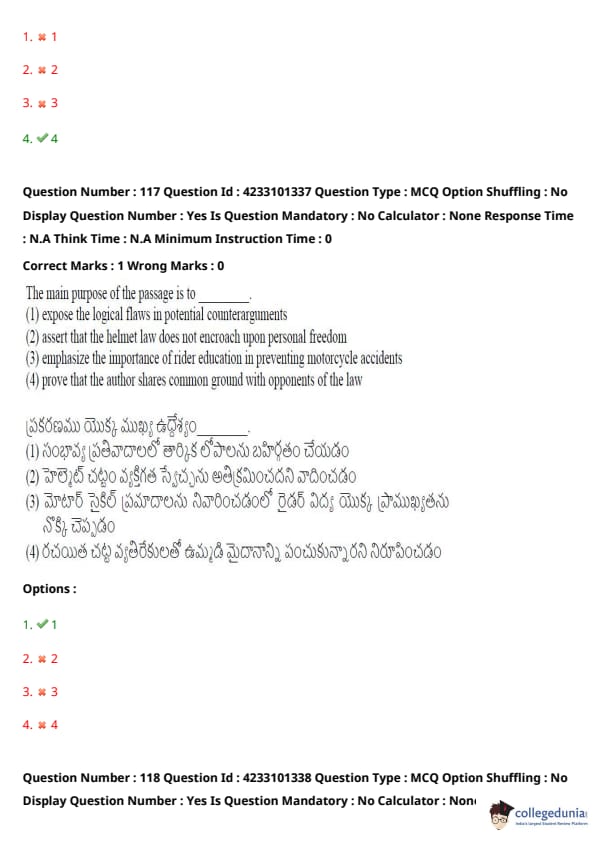
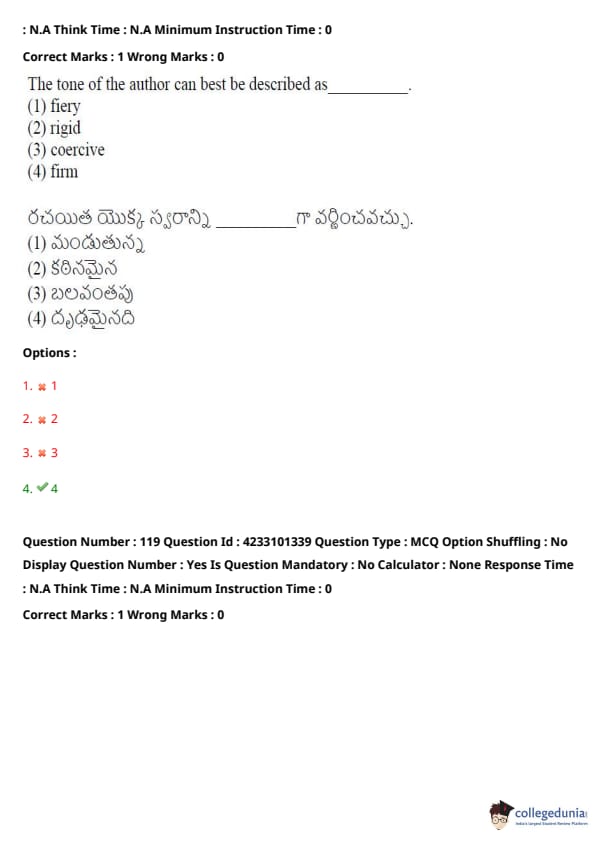
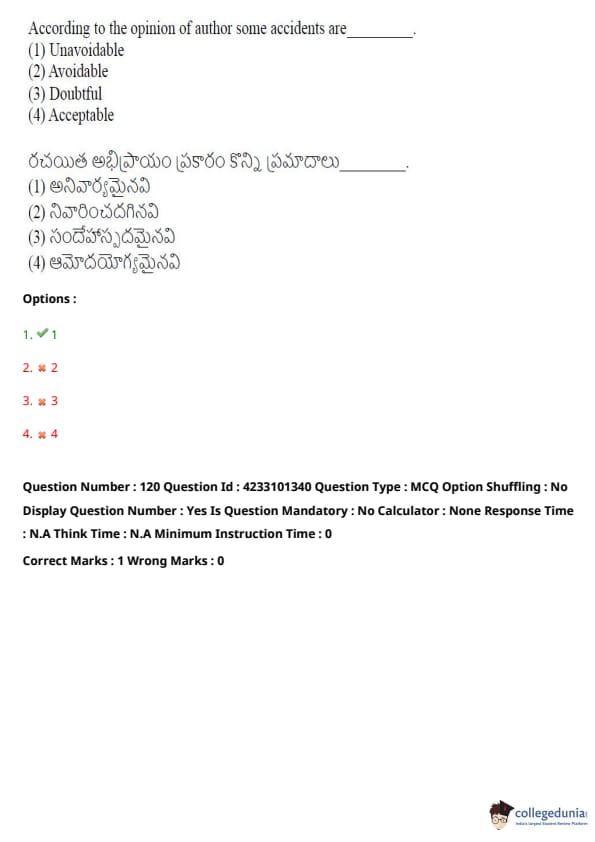
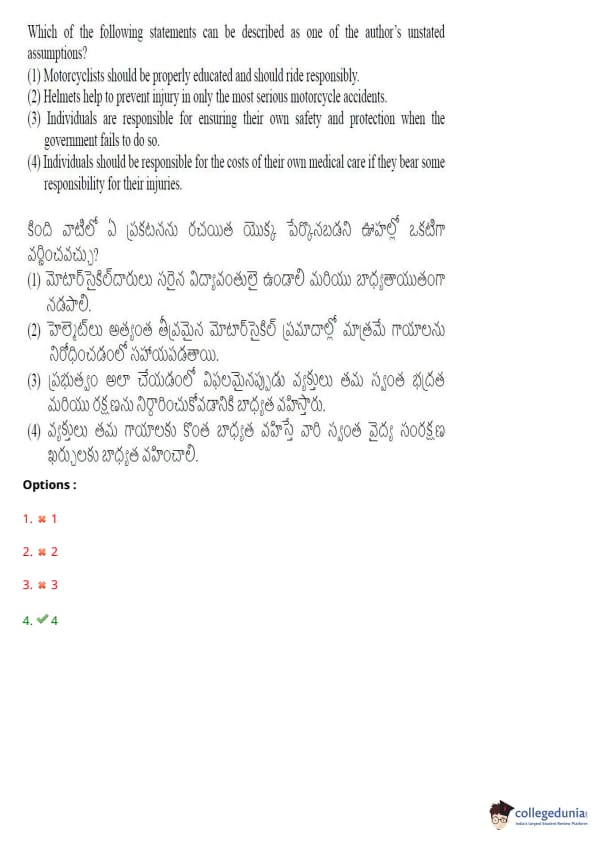
*The article might have information for the previous academic years, please refer the official website of the exam.