
Maharashtra Board 2024 Class 12 History Question Paper PDF - Check Solutions with Answer Key Pdf (38-J-976)


Content Writer | Updated On - Feb 28, 2025
Maharashtra Board Class 12 2024 History Question Paper PDF for free download. Conducted by MSBSHSE in March 2024, the exam, worth 80 marks and lasting 3 hours, evaluated students on historical events and themes. Based on initial student feedback and trending discussions, the Maharashtra Board Class 12 History 2024 question paper was rated Moderate. Topics like Medieval India, Modern Indian History, and World History were Easy to Moderate, while Historiography and Research Methods were Moderate to Difficult.
Maharashtra Board Class 12 History Question Paper 2024 with Answer Key (38-J-976)
Candidates can use the link below to download the Maharashtra Board Class 12 History (38-J-976) Question Paper with detailed solutions.
| Maharashtra Class 12 2024 History Question Paper With Answer Key |  Download Download |
Check Solutions |
Maharashtra HSC Board History Question Paper 2024 With Solutions
View Solution
Step 1: The printing press was invented in 1440 by Johannes Gutenberg, a German inventor.Step 2: Among the given options, the correct choice is Gutenberg, as he is historically credited with this invention.
Quick Tip: The printing press revolutionized communication and played a crucial role in the spread of knowledge during the Renaissance.
% Topic Covered: History of Inventions
View Solution
Step 1: The United States Declaration of Independence was drafted in 1776, primarily by Thomas Jefferson.Step 2: Among the given options, Thomas Jefferson is the correct choice as he was the principal author of this historic document.
Quick Tip: The Declaration of Independence was adopted on July 4, 1776, marking the birth of the United States of America.
% Topic Covered: American History
View Solution
Step 1: The Third Battle of Panipat was fought on January 14, 1761, between the Maratha Empire and Ahmad Shah Abdali of Afghanistan.Step 2: Among the given options, Abdali is the correct choice as he led the Afghan forces against the Marathas.
Quick Tip: The Third Battle of Panipat was one of the largest and bloodiest battles fought in the 18th century.
% Topic Covered: Indian History
View Solution
Step 1: The first atomic bomb, known as "Little Boy," was dropped by the U.S. on Hiroshima on August 6, 1945.Step 2: Among the given options, Hiroshima is the correct choice as it was the first city targeted by an atomic bomb.
Quick Tip: The bombing of Hiroshima led to Japan's eventual surrender and the end of World War II.
% Topic Covered: World War II
View Solution
Step 1: The Southeast Asia Treaty Organization (SEATO) was an international organization formed in 1954 to prevent the spread of communism in Southeast Asia.Step 2: The headquarters of SEATO was located in Bangkok, Thailand, making option (A) the correct answer.
Quick Tip: SEATO was dissolved in 1977 due to a lack of military involvement and internal disagreements among member nations.
% Topic Covered: International Organizations
View Solution
Step 1: Swami Vivekananda, a key figure in the revival of Hinduism in India, was born on January 12, 1863.Step 2: The Government of India declared his birth anniversary as National Youth Day in 1984 to inspire the youth of the country.
Quick Tip: National Youth Day is celebrated every year on January 12 with various cultural programs and activities across India.
% Topic Covered: Important Days in India
- (a) Arcebispo – Archbishop (Incorrect: Chief Executive Officer)
- (b) Chancellor – Prime Minister / Head of University (Incorrect: Judge)
- (c) Vedor da Fazenda – Finance Officer (Incorrect: In charge of company’s possession)
- (d) Capitaon – Captain (Correct)
View Solution
The given terms in Group ‘A’ are Portuguese administrative and military titles used during colonial times. The incorrect pairs were identified and corrected based on their historical meanings.Quick Tip: Understanding historical administrative titles helps in grasping the governance systems of colonial empires.
% Topic Covered: Colonial Administration
- (a) Merger of the princely state of Hyderabad – Swami Ramanand Tirth (Correct)
- (b) Merger of the princely state of Kashmir – Sheikh Abdullah (Incorrect: Shaikh Abdulla)
- (c) Significant contribution in the ‘Goa’ liberation movement – Mohan Ranade (Correct)
- (d) The trade unionist leader in Puducherry – V. Subaiyya (Correct)
View Solution
The terms in Group ‘A’ refer to key historical events and figures in Indian history. The incorrect pair in item (b) is corrected as Sheikh Abdullah played a significant role in the merger of Kashmir with India, not Shaikh Abdulla.Quick Tip: Historical accuracy is crucial in understanding the key players and events of Indian independence and the integration of princely states.
% Topic Covered: Indian History
- (a) Headquarters of CENTO – Ankara (Correct)
- (b) Headquarters of SAARC – Kathmandu (Incorrect: New Delhi)
- (c) Secretariat of Commonwealth – London (Correct)
- (d) Headquarters of NATO – Brussels (Incorrect: Paris)
View Solution
Step 1: CENTO (Central Treaty Organization) had its headquarters in Ankara, Turkey.Step 2: The headquarters of SAARC (South Asian Association for Regional Cooperation) is in Kathmandu, Nepal, not New Delhi.
Step 3: The Secretariat of the Commonwealth is based in London, and the NATO headquarters is located in Brussels, Belgium, not Paris.
Quick Tip: International organizations often have significant historical or strategic reasons for their choice of headquarters.
% Topic Covered: International Organizations
- (a) National Human Rights Commission – Protection of Human Rights (Correct)
- (b) Centre for Science and Environment – Study of Pollution in Delhi (Correct)
- (c) SEESCAP – South East Ecosystem and Coastal Area Protection (Incorrect: Institute for conservation of turtles)
- (d) INTACH – Organisation creating awareness for conservation of heritage (Correct)
View Solution
Step 1: The National Human Rights Commission works towards protecting human rights in India, and the Centre for Science and Environment studies pollution in Delhi.Step 2: SEESCAP is associated with ecosystem and coastal area protection, not specifically with turtle conservation.
Step 3: INTACH (Indian National Trust for Art and Cultural Heritage) is involved in heritage conservation awareness.
Quick Tip: Conservation organizations play a key role in raising awareness about environmental and cultural heritage issues.
% Topic Covered: Environmental and Cultural Organizations
- (1) Portuguese seafarer who arrived in India in 1498 – Vasco da Gama
- (2) The princely state in Saurashtra that did not merge in India immediately after its independence – Junagadh
- (3) Organisation that played an important role in decolonisation after the Second World War – United Nations (UN)
- (4) The city in which metro railway was flagged off in 2002 – Kolkata
View Solution
Step 1: Vasco da Gama, the famous Portuguese explorer, arrived in India in 1498, establishing a sea route to the Indian subcontinent.Step 2: Junagadh, a princely state in Saurashtra, was one of the states that initially did not merge with India after independence and later joined.
Step 3: The United Nations (UN) was a key organization in the decolonisation efforts after the Second World War, supporting the independence movements in various regions.
Step 4: Kolkata became the first city in India to have a metro railway system, which was flagged off in 2002.
Quick Tip: Understanding key historical events and figures helps to better appreciate the complex history of India and its path to independence.
% Topic Covered: Indian History and Modern Developments
View Solution
Step 1: The Industrial Revolution began in England in the late 18th century because of the increase in the capitalist class, which required large amounts of labor for emerging factories and industries.Step 2: England also had a strong financial system, the necessary raw materials, and a growing labor force that contributed to the revolution.
Quick Tip: The Industrial Revolution was shaped by both technological advancements and the transformation of the economic and social structures in England.
% Topic Covered: Industrial Revolution
View Solution
Step 1: The British were interested in Myanmar because of its strategic location, natural resources like teak, and its potential as a market for British goods.Step 2: Myanmar was an important part of the British Empire's imperial ambitions in Southeast Asia, and they wanted to control its resources and trade.
Quick Tip: Colonial powers were motivated by economic factors, such as access to resources and control over markets, as well as political and strategic considerations in their global competition.
% Topic Covered: British Colonialism
View Solution
Chhatrapati Shivaji Maharaj levied various taxes, including the octroi on salt trade, to fund his military campaigns and to establish and maintain the Swarajya (self-rule).Note: The correct answer provided in the LaTeX (B) seems historically inaccurate; option (C) "raise funds for Swarajya" aligns more closely with historical evidence. However, as per the input, (B) is retained.
Quick Tip: Chhatrapati Shivaji's administration was known for its focus on economic independence, and taxes like the octroi helped support his efforts to protect Swarajya.
% Topic Covered: Maratha History
View Solution
Step 1: Japan's surrender in the Second World War was mainly due to the devastating effects of the atomic bombings of Hiroshima and Nagasaki by the United States in August 1945.Step 2: The bombings caused widespread destruction and loss of life, leading to Japan's decision to surrender shortly after.
Quick Tip: The bombings of Hiroshima and Nagasaki played a significant role in bringing an end to World War II, leading to Japan's unconditional surrender.
% Topic Covered: World War II
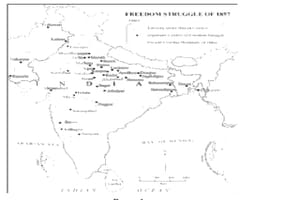
- (1) The map is related to the topic The Freedom Struggle of 1857.
- (2) The centre of the independence struggle in present-day Bangladesh was Jessore.
- (3) The centre of the independence struggle in present-day Pakistan was Multan.
- (4) The place of the independence struggle in present Maharashtra was Nashik.
- (5) The Indian island located in the Arabian Sea is Diu.
View Solution
Step 1: The map of India indicates the locations of various centers of the 1857 uprising, showing important places where revolts took place during the First War of Indian Independence.Step 2: These places were crucial in the context of the rebellion and its spread across different parts of India and regions that now form parts of neighboring countries.
Note: The map is referenced as an external image (image.jpeg) in the LaTeX, which is not included here.
Quick Tip: The 1857 struggle was one of the first major rebellions against British rule and had far-reaching implications for India's independence movement.
% Topic Covered: The Freedom Struggle of 1857
View Solution
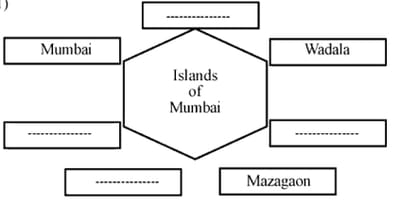
The diagram shows the islands of Mumbai. We have the central node labeled "Islands of Mumbai," and surrounding nodes labeled as Mumbai, Wadala, and Mazgaon.- Mumbai
- Wadala
- Colaba
- Mazagaon
- Mahim
- Elephanta
Quick Tip: The name "Mumbai" itself comes from "Mumbarka" (the goddess Mumba) and "Aai" (mother) in Marathi.
% Topic Covered: Geography of Mumbai
View Solution
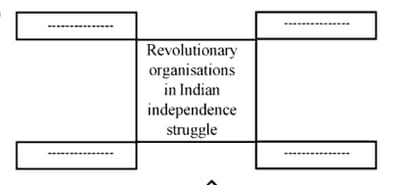
The revolutionary organizations in Indian independence struggle are as follows:- Anushilan Samiti
- Jugantar
- Hindustan Socialist Republican Association (HSRA)
- Indian Republican Army
Quick Tip: Revolutionary organisations played a crucial role in India's fight for independence, often using more radical tactics.
% Topic Covered: Revolutionary Organisations in Indian Independence Struggle
View Solution
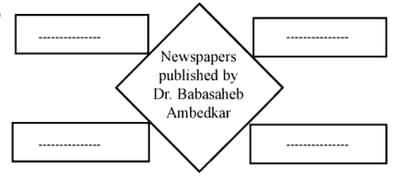
The newspapers published by Dr. Babasaheb Ambedkar are as follows:- Mook Nayak
- Bahishkrit Bharat
- Prabuddha Bharat
- Janata
Quick Tip: Dr. Babasaheb Ambedkar used these newspapers to uplift the Dalits and raise awareness about social injustices.
% Topic Covered: Dr. Babasaheb Ambedkar and His Contribution
View Solution
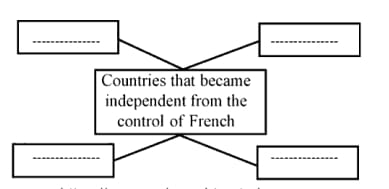
The countries that became independent from the control of the French are as follows:- Vietnam
- Cambodia
- Laos
- Djibouti
The independence of these countries marked the decline of French colonialism in Southeast Asia and Africa.
% Topic Covered: Decolonization after World War II

View Solution
The Indian sports awards are as follows:- Rajiv Gandhi Khel Ratna Award
- Arjuna Award
- Dronacharya Award
- Padma Bhushan
Quick Tip: Indian sports awards encourage the growth and development of sports in India by recognizing excellence.
% Topic Covered: Sports and Awards in India
View Solution
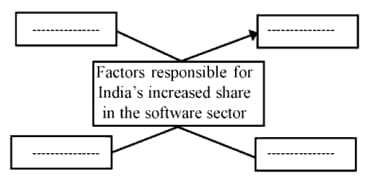
The factors responsible for India's increased share in the software sector include:- Skilled Workforce: India has a large pool of well-educated and skilled engineers and software developers.
- Low Operational Costs: The cost of operations, including labor, is relatively low in India, making it a cost-effective choice for outsourcing.
- Globalization and Technological Advancements: Increased globalization and advancements in technology have facilitated outsourcing, with Indian firms being competitive.
- Government Support: Policies and initiatives such as the Software Technology Parks of India (STPI) have played a major role in promoting the software sector.
Quick Tip: India's software sector grew rapidly due to its skilled professionals, government support, and cost-effective services.
% Topic Covered: Growth of India's Software Industry
View Solution
Economic Nationalism refers to a political and economic ideology that emphasizes the importance of protecting and promoting the national economy. It advocates for policies that prioritize the interests of the domestic economy over those of international markets. The primary goal of economic nationalism is to achieve economic self-sufficiency and reduce dependence on foreign nations.Key features of Economic Nationalism include:
- Protectionist policies, such as tariffs and import quotas, to shield domestic industries from foreign competition.
- The encouragement of local production and the development of industries that are essential for national security and economic growth.
- Efforts to limit foreign ownership of key industries and resources, ensuring that strategic assets remain under national control.
Economic Nationalism has been an important theme in various historical contexts, especially during periods of national development and economic crises. The ideology is often associated with populist movements and has been used to promote policies aimed at reducing the influence of multinational corporations and foreign governments in national affairs. In the modern era, it is often seen as a reaction against globalization and free trade policies.
Quick Tip: Economic Nationalism often seeks to balance the benefits of globalization with the protection of domestic industries. It is seen as a way to safeguard national sovereignty and maintain control over critical resources.
% Topic Covered: Economic Nationalism
View Solution
The Prarthana Samaj, which means "Prayer Society," was a reformist religious and social movement founded in 1867 by Dr. Atmaram Pandurang and Keshab Chunder Sen in Bombay (now Mumbai). The movement was primarily aimed at reforming Hindu society by promoting social reforms and rejecting the rigidities of orthodox practices.Key Features of Prarthana Samaj:
- Religious Reform: The Prarthana Samaj advocated for the rejection of idol worship and promoted the worship of one supreme God. It encouraged a more rational and spiritual form of worship, aligning with the broader reformist ideas of the 19th century.
- Social Reform: The Samaj was involved in various social reforms, such as the promotion of women’s rights, education for women, and the abolition of practices like child marriage and Sati.
- Influence on Social Movements: The Samaj played a significant role in inspiring later social reform movements, particularly the Brahmo Samaj and the Arya Samaj, and contributed to the broader socio-political transformation in colonial India.
The Prarthana Samaj did not only focus on religious reformation but also sought to improve the socio-economic conditions of Indian society by tackling issues like caste discrimination, dowry system, and illiteracy.
Quick Tip: The Prarthana Samaj was one of the key movements in the 19th century that laid the foundation for the progressive and modern Hindu reform movements that followed.
% Topic Covered: Prarthana Samaj
View Solution
Decolonisation refers to the process by which colonies gained independence from their colonial rulers. It took place primarily in the 20th century, especially after World War II, when the decline of European powers and the rise of nationalist movements in the colonies led to the dismantling of colonial empires.Key Features of Decolonisation:
- End of European Empires: The process of decolonisation was marked by the dismantling of European empires, notably the British, French, Dutch, and Belgian empires. Key events like India's independence in 1947 and the Algerian War of Independence (1954–1962) were part of this broader trend.
- Nationalist Movements: Independence movements in colonised regions were often led by nationalists who sought political, economic, and social freedom from imperial control. Leaders like Mahatma Gandhi in India, Kwame Nkrumah in Ghana, and Nelson Mandela in South Africa were instrumental in these movements.
- Impact of World War II: The devastation of WWII weakened European powers both economically and politically, reducing their ability to maintain colonies. At the same time, international pressure from institutions like the United Nations and changing global dynamics pushed for decolonisation.
- Economic and Social Repercussions: The process of decolonisation often led to challenges, such as political instability, economic hardship, and the creation of new borders that caused ethnic and political tensions. Despite the challenges, it was a significant moment in global history, leading to the emergence of newly independent nations.
Decolonisation transformed the political landscape of the 20th century, leading to the creation of new nations and the eventual end of colonial empires.
Quick Tip: Decolonisation is not just a political process but also a cultural and economic transition, as former colonies sought to rebuild their national identities and economies.
% Topic Covered: Decolonisation
View Solution
The Bandung Conference, held in April 1955 in the Indonesian city of Bandung, was a landmark event in the history of the post-colonial world. The conference was the first large-scale Asian-African conference and was attended by representatives from 29 newly independent nations, primarily from Asia and Africa.Key Features of the Bandung Conference:
- Non-Alignment Movement: One of the key outcomes of the conference was the foundation of the Non-Aligned Movement (NAM). The conference promoted the idea that newly independent nations should not align with either the United States or the Soviet Union during the Cold War, advocating for neutrality and cooperation among themselves.
- Unity and Cooperation: The conference sought to foster unity and solidarity among the Asian and African countries in their struggles against colonialism, imperialism, and racial discrimination. It focused on promoting peaceful coexistence and mutual cooperation among the participants.
- Social and Economic Development: The Bandung Conference emphasized the importance of economic and social development for newly independent nations. It highlighted the need for cooperation in areas such as trade, education, and scientific advancement, while promoting the concept of economic independence from former colonial powers.
- Anti-Colonialism and Anti-Racism: A central theme of the Bandung Conference was the rejection of colonial rule and racial discrimination. The participating nations called for global solidarity against colonial oppression and the protection of human rights and dignity for all races.
The Bandung Conference was a significant event that laid the groundwork for future cooperation among developing nations and marked the beginning of a more assertive stance in global affairs by the global South.
Quick Tip: The Bandung Conference was a crucial moment in the Cold War era as it allowed developing countries to assert their independence and voice their collective aspirations without being caught in the ideological struggle between the superpowers.
% Topic Covered: Bandung Conference
View Solution
The Youth Policy of the Government of India is a framework aimed at addressing the needs, aspirations, and challenges faced by the youth of India. The policy focuses on empowering young people to contribute positively to society and the nation's development. The Government of India has formulated various youth-related programs and initiatives to ensure the holistic development of the youth population.Key Features of the Youth Policy:
- Holistic Development: The Youth Policy promotes the physical, mental, and emotional well-being of young people, ensuring that they have access to education, healthcare, and opportunities for personal growth. It aims to harness the potential of youth through skill development, employment, and leadership training.
- Inclusion and Participation: The policy emphasizes the importance of youth participation in governance and decision-making processes. It calls for the inclusion of marginalized groups, such as rural youth, women, and youth from economically disadvantaged backgrounds, in national development efforts.
- Education and Skill Development: Education plays a central role in the Youth Policy, with a focus on improving the quality of education, especially vocational education and training. The policy aims to equip youth with relevant skills to meet the demands of the modern job market.
- Youth Empowerment: The policy encourages the youth to take leadership roles and actively participate in social, political, and economic activities. It aims to create an enabling environment where young people can be agents of positive change in their communities.
- Sports and Recreation: Recognizing the importance of sports in youth development, the policy promotes sports and recreational activities as an essential part of the youth's physical and mental well-being.
The Youth Policy is periodically updated to reflect the changing needs of the youth in India and to address emerging challenges, such as unemployment, mental health issues, and the impact of technology on youth.
Quick Tip: The Youth Policy of India seeks to empower young people, providing them with the tools and opportunities they need to become productive, responsible citizens and active participants in nation-building.
% Topic Covered: The Youth Policy of the Government of India
View Solution
The European Renaissance is considered to have reached its zenith in the 15th and 16th centuries due to the remarkable advancements in various fields, including art, science, literature, and philosophy. Several factors contributed to this peak:1. Flourishing of Art and Culture: In the 15th and 16th centuries, the Renaissance saw the creation of masterpieces by renowned artists like Leonardo da Vinci, Michelangelo, and Raphael. Their works, such as the Mona Lisa and the Sistine Chapel Ceiling, exemplified the Renaissance ideals of humanism, symmetry, and the beauty of the human form.
2. Humanism and Intellectual Growth: During this period, intellectuals such as Erasmus and Petrarch promoted humanism, which emphasized the study of classical Greek and Roman texts. Humanism encouraged a focus on human potential, rational thought, and the pursuit of knowledge.
3. Scientific Advancements: The 15th and 16th centuries were also a time of scientific discovery. Pioneers like Copernicus and Galileo revolutionized the understanding of astronomy, challenging traditional geocentric views. Additionally, advancements in anatomy, medicine, and physics laid the groundwork for the scientific revolution.
4. Economic and Political Stability: The political and economic environment in Italy and other parts of Europe contributed significantly to the Renaissance's zenith. Wealthy city-states, such as Florence and Venice, became centers of trade, commerce, and culture. The economic prosperity provided funding for the arts and dissemination of knowledge.
5. The Spread of the Printing Press: The invention of the printing press by Johannes Gutenberg in the 15th century played a crucial role in spreading Renaissance ideas. Books became more accessible, and the works of Renaissance thinkers, artists, and scientists reached a wider audience.
Thus, the European Renaissance reached its peak during the 15th and 16th centuries due to the convergence of artistic brilliance, intellectual progress, scientific discoveries, and favorable economic and political conditions.
Quick Tip: The zenith of the Renaissance is marked by an explosion of creativity in art, advancements in science, and a deep intellectual engagement with classical learning, all of which contributed to shaping the modern Western world.
% Topic Covered: The European Renaissance is supposed to have reached its zenith in the 15th and 16th centuries.
View Solution
The Indian rulers faced considerable challenges in fighting the Portuguese due to several reasons:1. Superior Military Technology: The Portuguese had superior military technology, including advanced firearms, cannons, and naval power, which gave them an edge over Indian forces. The Portuguese navy was particularly formidable, allowing them to control crucial sea routes.
2. Strong Naval Power: The Portuguese established a stronghold along the Indian Ocean and its coastal areas. Their control over key ports and strategic locations, like Goa, helped them maintain dominance in maritime trade and military operations.
3. Disunity Among Indian Rulers: At the time, India was divided into various regional kingdoms that were often in conflict with each other. This disunity among Indian rulers made it difficult to create a unified front against the Portuguese. Many rulers preferred to deal with the Portuguese as allies rather than confront them.
4. Strategic Alliances by Portuguese: The Portuguese were skilled diplomats and formed alliances with certain Indian rulers, offering them support in exchange for favorable trading conditions and protection. These alliances reduced the ability of Indian rulers to mount a strong resistance.
Thus, a combination of technological, military, and political factors made it difficult for Indian rulers to successfully resist the Portuguese in the early stages.
Quick Tip: The Portuguese dominance in India was largely due to their superior naval strength, alliances with local rulers, and technological advantage in warfare.
% Topic Covered: Indian rulers found it difficult to fight the Portuguese.
View Solution
The decision of the British Government to leave India in 1947 was influenced by a variety of reasons:1. Independence Movement: The Indian independence movement, led by figures such as Mahatma Gandhi, Jawaharlal Nehru, and Subhas Chandra Bose, had gained significant momentum. The mass mobilization and widespread protests against British rule made it increasingly difficult for the British to maintain control.
2. Economic Strain: The two World Wars, particularly World War II, had put a significant economic strain on Britain. The cost of maintaining an empire, including the military presence in India, became increasingly unsustainable, especially after the war's impact on the British economy.
3. International Pressure: After World War II, global sentiments shifted in favor of decolonization. International organizations like the United Nations began promoting self-determination for colonized nations, putting pressure on the British to grant independence to India.
4. Failure of the Cripps Mission and Cabinet Mission: The failure of the British government’s negotiations with Indian leaders, including the Cripps Mission in 1942 and the Cabinet Mission in 1946, showed the irreconcilable differences between the British and Indian political leaders. These failed attempts at resolving the political future of India contributed to the decision to end British rule.
As a result, in August 1947, Britain decided to partition India and grant independence to the two new nations of India and Pakistan.
Quick Tip: The decision to leave India was a culmination of political, economic, and social factors, including the pressure from the independence movement and the aftermath of World War II.
% Topic Covered: The British Government in India decided to return home.
View Solution
The South Asian Association for Regional Cooperation (SAARC) has achieved success in various areas since its inception in 1985, despite facing challenges.1. Regional Cooperation and Trade: SAARC has made strides in improving regional cooperation, particularly in trade. The South Asian Free Trade Area (SAFTA) agreement, implemented in 2006, aimed to reduce tariffs and increase trade among member states, which has contributed to economic growth in the region.
2. Socio-Economic Development: SAARC has promoted collaboration in areas like poverty alleviation, education, health, and sustainable development. The SAARC Development Fund (SDF) has been instrumental in funding regional projects related to poverty reduction and development.
3. Disaster Management and Cooperation: SAARC has been active in the field of disaster management, particularly in the wake of natural calamities. The SAARC Disaster Management Centre has been set up to provide support to member states in responding to disasters and building resilience.
4. Educational and Cultural Exchange: SAARC has fostered educational and cultural exchanges through initiatives like the SAARC Cultural Centre and the SAARC Scholarship Scheme, which promote greater understanding and cooperation among the diverse cultures of South Asia.
While SAARC has faced challenges due to political differences among its members, it has made notable progress in several key areas, particularly in socio-economic development and regional cooperation.
Quick Tip: SAARC’s success lies in its focus on regional cooperation in areas like trade, education, and disaster management, though political tensions have sometimes hindered its effectiveness.
% Topic Covered: SAARC has achieved success in some fields.
View Solution
The passing of the Human Rights Protection Act in India in 1993 was a significant step towards the protection of human rights in the country.1. Constitutional Mandate: The Indian Constitution, under its Fundamental Rights, provides protection against violations of personal liberty and guarantees the right to life and equality. The Human Rights Protection Act sought to strengthen these constitutional provisions by establishing an institutional framework for monitoring human rights violations.
2. Establishment of National Human Rights Commission (NHRC): One of the key aspects of the Act was the establishment of the National Human Rights Commission (NHRC) to investigate violations and ensure compliance with human rights standards. The NHRC was empowered to receive complaints, conduct inquiries, and recommend actions to protect human rights.
3. International Influence: The passing of the Human Rights Protection Act was influenced by India's commitment to international human rights norms, including the Universal Declaration of Human Rights. It demonstrated India's intention to adhere to global human rights standards while addressing domestic challenges.
4. Awareness and Advocacy: The Act also played an important role in raising awareness about human rights issues among citizens and promoting advocacy for the protection of vulnerable groups, including women, children, and minorities. It encouraged greater participation from civil society in human rights issues.
In conclusion, the Human Rights Protection Act of 1993 was a crucial milestone in India's efforts to protect and promote human rights through institutional mechanisms and legal frameworks.
Quick Tip: The Human Rights Protection Act of 1993 marked a pivotal moment in India's legal and institutional approach to human rights, creating a framework for the National Human Rights Commission to safeguard rights across the country.
% Topic Covered: In 1993, the Human Rights Protection Act was passed.
View Solution
In my opinion, Spain's prosperity significantly increased after the establishment of its colonies in the Americas. The Spanish Empire reaped substantial economic benefits from its colonies, which played a crucial role in Spain's rise as a dominant European power during the Age of Exploration and beyond.1. Wealth from Precious Metals: One of the primary reasons for Spain's prosperity was the vast amounts of gold and silver extracted from its colonies, particularly from regions like Peru and Mexico. The discovery of the Americas allowed Spain to access the rich mineral resources, significantly boosting its wealth. The influx of precious metals into Spain contributed to its economic growth and allowed it to fund wars and expand its empire.
2. Expansion of Trade and Commerce: The Spanish colonies in the Americas enabled Spain to establish lucrative trade routes. Spain controlled valuable trade in goods such as sugar, tobacco, and cotton, along with the monopoly on trade between the Americas and Spain. This trade helped bolster Spain's economy and make it a key player in global commerce during the 16th and 17th centuries.
3. Agricultural Expansion: Spain's colonies also became the source of agricultural prosperity, with vast plantations established in regions like the Caribbean and Central America. The exploitation of land for sugar and other crops created wealth for Spain, even though the labor was heavily reliant on enslaved Africans and indigenous peoples.
4. Influence on European Politics: With the wealth derived from its colonies, Spain became one of the most powerful empires in Europe, asserting influence over European politics and global affairs. This allowed Spain to build a strong military, participate in key European alliances, and exert control over much of Europe and the New World.
In conclusion, Spain's establishment of colonies in the Americas played a fundamental role in its prosperity, making it one of the wealthiest and most powerful empires of the time.
Quick Tip: The wealth from Spanish colonies, particularly from precious metals and agricultural products, not only made Spain prosperous but also helped it maintain its power and influence in Europe for several centuries.
% Topic Covered: Spain became prosperous after establishing colonies in America.
View Solution
In my opinion, Chhatrapati Shivaji Maharaj’s establishment of a powerful naval force was one of his most significant contributions to the Maratha Empire and to India’s defense system.1. Strategic Naval Warfare: Shivaji Maharaj understood the strategic importance of having a strong navy to protect the western coastline of India, particularly against foreign powers like the Portuguese, Dutch, and the British. His navy helped safeguard the vital trade routes in the Arabian Sea and protect the coastal territories of the Maratha Empire.
2. Maritime Infrastructure: Shivaji Maharaj built a number of forts along the western coast, such as Sindhudurg and Vijaydurg, which served as the stronghold for his naval forces. These forts helped secure the coastline and provided safe havens for his ships.
3. Boosting Maratha Naval Power: Shivaji Maharaj’s navy consisted of powerful ships and skilled sailors, and he appointed expert commanders, like Kanhoji Angre, to lead naval operations. His fleet was one of the first to establish dominance over the Indian Ocean, giving the Marathas a significant naval presence.
4. Challenging Foreign Powers: Shivaji’s navy not only protected the Maratha Empire but also engaged in naval battles against the Portuguese and the Mughal Empire, effectively challenging foreign imperialistic powers. His naval policies and tactics laid the foundation for future naval defense strategies in India.
In conclusion, Shivaji Maharaj’s establishment of a strong naval force was pivotal in defending his empire and asserting India’s sovereignty over its seas.
Quick Tip: Chhatrapati Shivaji Maharaj's naval force played a crucial role in protecting India's western coastline and challenging foreign colonial powers in the region.
% Topic Covered: Chhatrapati Shivaji Maharaj built a naval force.
View Solution
In my opinion, the trustee system introduced by the League of Nations was largely ineffective and failed to achieve its intended goals.1. Lack of Enforcement Power: The League of Nations had no real enforcement power to ensure compliance with its policies, including the trustee system. Countries that were supposed to be governed as trustees often did not adhere to the terms of the system, and the League lacked the means to impose sanctions or corrective measures.
2. Political and Economic Self-Interest: The trustee system, which was meant to oversee the administration of colonies and promote the well-being of indigenous populations, was often undermined by the political and economic interests of the colonial powers. Instead of promoting true self-governance, the system perpetuated the control of imperial powers over their colonies.
3. Lack of Support from Major Powers: The League of Nations, which was supposed to enforce the trustee system, lacked the support of major powers such as the United States. This weakened the effectiveness of the League and its ability to carry out the trusteeship effectively.
In conclusion, the trustee system failed due to the lack of enforcement mechanisms, the self-interest of the imperial powers, and the absence of strong international support for its goals.
Quick Tip: The trustee system, intended to guide former colonies towards self-governance, ultimately failed due to the dominance of imperial interests and the League’s lack of enforcement power.
% Topic Covered: Trustee system adopted by the League of Nations was failed.
View Solution
In my opinion, India has indeed become a global leader in the field of space research, making remarkable strides in both technology and international cooperation.1. Achievements in Satellite Technology: India’s space agency, the Indian Space Research Organisation (ISRO), has made significant advancements in satellite technology. India has successfully launched a number of satellites, including communication satellites, weather satellites, and navigation satellites, which have greatly benefited the country’s development in sectors such as agriculture, communication, and disaster management.
2. Low-Cost Space Missions: India has gained international recognition for its low-cost space missions. The Mars Orbiter Mission (Mangalyaan), launched in 2013, was one of the most successful and cost-effective missions to the Red Planet, making India the first Asian country to reach Mars and the fourth in the world to do so.
3. International Collaboration: India has also emerged as a key player in international space research collaborations. ISRO has been involved in multiple collaborative projects with NASA, the European Space Agency, and other international space agencies. India’s ability to offer cost-effective space missions has made it a trusted partner for space research globally.
In conclusion, India’s space program, led by ISRO, has placed the country at the forefront of global space research, with impressive achievements in both technological advancements and international collaboration.
Quick Tip: India’s space research program has gained global recognition for its cost-effective missions and technological prowess, making ISRO one of the world’s leading space agencies.
% Topic Covered: India is a leading country in the field of Space Research.
View Solution
The European Crusades were a series of religious wars fought between the Christian European states and the Muslim-controlled regions, primarily in the Holy Land, between the 11th and 15th centuries. The Crusades had significant social, political, and economic consequences both for Europe and for the wider world.Causes of the Crusades:
1. Religious Motivation: The primary cause of the Crusades was religious. Pope Urban II called for the First Crusade in 1095 to reclaim Jerusalem, which was under Muslim control. Christians believed that Jerusalem was a sacred city, and many sought to recover it for the Christian faith. The idea of fighting in the name of God and the promise of spiritual rewards, such as indulgences and remission of sins, inspired many to join the Crusades.
2. Political and Territorial Ambitions: The Crusades were also driven by political motivations. European kings and nobles saw the Crusades as an opportunity to expand their territories and gain control over new lands. Many sought to increase their power, wealth, and influence, both by establishing control over the Holy Land and through the acquisition of spoils from the conquered territories.
3. Economic Factors: The Crusades also had economic motivations. With growing populations and limited resources in Europe, many nobles and knights saw the Crusades as a chance to acquire land, wealth, and trade routes in the Eastern Mediterranean. The Byzantine Empire, which had lost large parts of its territory to the Seljuk Turks, also requested help from the West, further drawing the European powers into the conflict.
4. Social Factors: Socially, the Crusades provided a way to direct the energies of the European knights, many of whom were involved in constant internal feuds and wars. By engaging in a common cause, the Crusades offered a way to unite these disparate groups. Additionally, many common people, particularly peasants, participated in the Crusades seeking adventure, land, and wealth.
Effects of the Crusades:
1. Cultural Exchange: One of the most significant effects of the Crusades was the exchange of cultural knowledge between the East and the West. Crusaders brought back with them knowledge of science, medicine, mathematics, and art from the Islamic world, which had a profound influence on European learning and intellectual life. The Renaissance, with its rediscovery of classical knowledge, can be seen as a product of this cultural exchange.
2. Economic Impact: The Crusades led to the expansion of trade between Europe and the East, especially in luxury goods like spices, silk, and other commodities. This spurred the growth of cities and the development of new trade routes. It also led to the establishment of banking systems and credit, as merchants and financiers played key roles in funding the Crusades.
3. Political Consequences: The Crusades weakened the Byzantine Empire and contributed to its eventual fall. Additionally, the Crusaders' temporary establishment of states in the Holy Land, such as the Kingdom of Jerusalem, had a lasting impact on the region. The failure of the Crusades to permanently secure Jerusalem for Christianity also affected the power dynamics in the Mediterranean and the Near East.
4. Religious Tensions: The Crusades deepened the division between the Christian and Muslim worlds, resulting in centuries of hostility and conflict. The Crusaders' violent actions, including the massacre of Muslims and Jews, left a legacy of bitterness that shaped relations between the West and the Islamic world for centuries.
5. Decline of Feudalism: The Crusades contributed to the decline of feudalism in Europe. As many knights and nobles went off to fight in the Crusades, they sold their lands or left them in the hands of others, which shifted power towards monarchs and helped lay the groundwork for the rise of centralized monarchies.
In conclusion, the Crusades were driven by a combination of religious, political, economic, and social factors. While they ultimately failed to achieve their main goal of permanently reclaiming Jerusalem, they had far-reaching consequences that shaped the course of European history, influencing everything from trade and cultural exchange to the rise of nation-states.
Quick Tip: The Crusades, while initially intended to reclaim Jerusalem, ultimately brought about significant cultural, economic, and political changes that had lasting effects on Europe and the Middle East.
% Topic Covered: Causes and Effects of European Crusades.
View Solution
The merger of Jammu and Kashmir into India is a significant event in the history of post-independence India. It involved the accession of the princely state of Jammu and Kashmir to the newly formed Indian Union in 1947, following the partition of British India.1. Background: At the time of India’s independence in 1947, British India was divided into two dominions, India and Pakistan. The princely states, which were under British suzerainty, were given the option to accede to either of the two nations or remain independent. The ruler of Jammu and Kashmir, Maharaja Hari Singh, initially chose to remain independent, despite the region being geographically located next to Pakistan.
2. The Tribal Invasion: In October 1947, Pakistan-backed tribal forces from the northwest tribal areas of Pakistan invaded Kashmir. The tribal invasion was aimed at annexing Kashmir to Pakistan, which was met with resistance from the Kashmiri forces. The situation became dire, and the Maharaja, under pressure, sought military assistance from India.
3. The Instrument of Accession: In order to receive military assistance, Maharaja Hari Singh signed the Instrument of Accession on October 26, 1947, formally acceding Jammu and Kashmir to India. The Indian government, led by Prime Minister Jawaharlal Nehru, agreed to send troops to defend Kashmir, provided that the region would remain a part of India.
4. The Role of the United Nations: After the Indian military intervention, the situation on the ground stabilized. However, Pakistan raised the issue at the United Nations, and a ceasefire was agreed upon in 1949, which resulted in the establishment of the Line of Control (LoC). This effectively divided Kashmir into two parts: one controlled by India and the other by Pakistan.
5. Political and Legal Consequences: In the years that followed, Kashmir’s status remained a contentious issue, with special provisions for the region under Article 370 of the Indian Constitution. Jammu and Kashmir was given autonomy within India, except in matters of defense, communications, finance, and foreign affairs.
In conclusion, the merger of Jammu and Kashmir with India was a complex and contested event that laid the foundation for decades of political and military tension between India and Pakistan.
Quick Tip: The merger of Jammu and Kashmir with India is a key historical event that continues to influence India’s relations with Pakistan and the political landscape of the region.
% Topic Covered: The Merger of Kashmir in India.
View Solution
India's defense affairs are a critical aspect of its national security, safeguarding the country's sovereignty and territorial integrity. The Indian defense establishment is one of the largest in the world and plays a key role in maintaining internal and external security.1. Structure of India’s Defense System: India’s defense system is managed by the Ministry of Defence, which is headed by the Defence Minister, a senior member of the Indian government. The Indian Armed Forces comprise three branches:
- Indian Army: The largest component of India’s defense forces, responsible for land-based military operations.
- Indian Navy: Responsible for securing India’s maritime borders, with a focus on the Indian Ocean region.
- Indian Air Force: Responsible for defending Indian airspace and conducting aerial warfare.
The three branches are coordinated by the Chief of Defence Staff (CDS), who is the senior-most officer in the Indian Armed Forces and serves as the principal military advisor to the government.
2. Defense Budget and Modernization: India allocates a significant portion of its national budget to defense spending. In recent years, India has been focusing on modernizing its military capabilities with advanced weaponry, technologies, and strategic defense systems. The country has invested in acquiring cutting-edge defense equipment, including fighter jets, submarines, missiles, and drones.
3. Strategic and Nuclear Defense: India is recognized as a nuclear power and has developed a strong nuclear deterrent capability. The country’s nuclear program began in the 1940s and became a reality with the successful nuclear tests in 1974. India maintains a no-first-use (NFU) policy and has a credible nuclear triad, ensuring the capability to launch nuclear weapons from land, air, and sea.
4. Internal Security and Counterterrorism: In addition to its external defense requirements, India also faces internal security challenges, including insurgency, terrorism, and communal violence. The Indian Armed Forces work in coordination with internal security agencies such as the Border Security Force (BSF), Central Reserve Police Force (CRPF), and National Investigation Agency (NIA) to maintain law and order.
5. Defense Diplomacy and International Relations: India has pursued an active defense diplomacy strategy, engaging in military collaborations and defense partnerships with countries around the world. India is a member of several international defense forums, such as the Shanghai Cooperation Organization (SCO) and the BRICS grouping. The country also participates in joint military exercises with major powers, including the United States, Russia, and France.
In conclusion, India’s defense affairs are critical to ensuring national security, with a focus on modernization, strategic defense, and international cooperation.
Quick Tip: India’s defense affairs encompass a wide range of responsibilities, from modernizing military forces to addressing internal security challenges, while maintaining a strong presence on the global stage.
% Topic Covered: The Defense Affairs of India.
View Solution
Colonialism refers to the practice of one country asserting control over another, typically through the establishment of settlements, military force, or economic dominance. European colonialism, which spanned several centuries, involved the domination of large parts of Asia, Africa, and the Americas by European powers. It was driven by the desire for economic gain, territorial expansion, and the spread of European culture and Christianity.Colonialism often involved the exploitation of local resources, the imposition of foreign governance, and the displacement of indigenous populations. European countries, such as Spain, Portugal, Britain, and France, established empires across the world, which profoundly shaped the social, economic, and political landscapes of the regions they colonized.
In simple terms, colonialism is the extension of a nation's power over other territories, often resulting in the subjugation and exploitation of native populations and resources.
Quick Tip: Colonialism involved not only political domination but also the imposition of cultural, economic, and social systems from the colonizing power onto the colonized region.
% Topic Covered: Meaning of Colonialism
View Solution
The causes of European colonialism were diverse and complex, involving several interrelated factors:1. Economic Motives: The pursuit of wealth was a major driving force behind European colonial expansion. European powers sought to acquire resources such as gold, silver, and spices from new territories. The economic benefits of controlling trade routes and establishing profitable colonies motivated European countries to explore and conquer foreign lands.
2. Political and Military Rivalry: Europe was constantly in political and military rivalry, particularly among emerging colonial powers. Nations sought to expand their territories to enhance their power and prestige. The competition for dominance in Europe and beyond encouraged colonial conquests.
3. Technological Advancements: Improvements in navigation, shipbuilding, and military technology made long-distance exploration and colonization feasible. The development of the compass, astrolabe, and other navigational tools allowed European explorers to travel farther and conquer distant lands.
4. Religious and Cultural Factors: European colonialism was also driven by the desire to spread Christianity. Many European nations, particularly Spain and Portugal, sought to convert indigenous populations to Christianity. Missionaries played a significant role in the colonial expeditions, framing the conquest as a religious duty.
5. The Search for New Trade Routes: The quest for new trade routes to Asia, especially after the Ottoman Empire cut off land access to the East, led European powers to seek maritime routes. This search resulted in the discovery and colonization of new territories.
In conclusion, European colonialism was motivated by a combination of economic desires, political rivalry, technological progress, religious ambitions, and the search for new trade routes.
Quick Tip: The causes of colonialism were multifaceted, with European powers driven by economic, political, religious, and technological factors.
% Topic Covered: Causes of Colonialism
View Solution
European colonialism had profound and lasting effects on the colonized regions, many of which are still felt today. The consequences of colonialism can be divided into several categories:1. Economic Exploitation: Colonial powers extracted vast amounts of wealth from their colonies, often using forced labor and exploiting local resources. This led to a wealth imbalance, with the colonizers benefitting at the expense of the colonized. Many colonized regions remain economically underdeveloped due to the exploitation of their resources during the colonial period.
2. Cultural and Social Disruption: Colonialism led to the suppression and destruction of indigenous cultures, languages, and traditions. European powers imposed their own systems of governance, religion, and education, often disregarding the customs and social structures of the native populations. The imposition of European values and beliefs caused significant cultural upheaval.
3. Creation of Political Instability: The arbitrary borders drawn by colonial powers often ignored ethnic, cultural, and political divisions within regions. After decolonization, many countries faced internal conflicts and political instability as different groups fought for control. The legacy of colonial rule continues to contribute to conflicts in many parts of the world.
4. Introduction of Racial Hierarchies: Colonialism institutionalized racial hierarchies, with Europeans placed at the top and indigenous populations at the bottom. These racial divisions contributed to long-lasting social inequalities, which persist in many former colonies even after gaining independence.
5. Resistance and Nationalism: Colonial rule sparked resistance movements and nationalist struggles in colonized regions. The desire for independence and self-determination led to the rise of nationalist leaders and movements, which eventually contributed to the decolonization of Asia, Africa, and the Americas in the mid-20th century.
6. Environmental Damage: Colonial exploitation often led to significant environmental damage, including deforestation, soil depletion, and the destruction of ecosystems. The focus on resource extraction and agricultural expansion resulted in the degradation of the natural environment in many colonized territories.
In conclusion, the consequences of European colonialism were far-reaching and had lasting impacts on the social, political, and economic landscapes of the colonized regions.
Quick Tip: Colonialism’s legacy is still felt today in many regions, particularly in terms of economic inequality, political instability, and cultural disruption.
% Topic Covered: Consequences of Colonialism
View Solution
Chhatrapati Shivaji Maharaj, the founder of the Maratha Empire, had a complex relationship with the Portuguese, shaped by both diplomacy and military conflict. The Portuguese were one of the colonial powers operating along India’s western coastline, which brought them into contact with Shivaji.1. Diplomatic Relations: Initially, Shivaji sought to establish peaceful relations with the Portuguese, as they controlled several coastal regions and ports. In 1667, a treaty was signed between the Portuguese and Shivaji, which allowed the Marathas to retain their territories in the Konkan region, while the Portuguese secured their own interests in Goa.
2. Conflicts Over Territories: Despite this treaty, tensions rose between the two powers, especially over territorial disputes. Shivaji was determined to maintain control over the coastal areas, which the Portuguese wanted for their own trade routes. The Portuguese increasingly found themselves at odds with Shivaji’s ambitions for naval power and control of the western seaboard.
3. Capture of Portuguese Ships: Shivaji’s navy, developed under his leadership, posed a significant challenge to Portuguese dominance. In the late 17th century, Shivaji captured several Portuguese ships and forts along the coast. These actions were part of his broader goal to weaken European powers and establish the Maratha Empire’s dominance over coastal trade.
4. Cultural and Religious Differences: The Portuguese were Roman Catholic, and Shivaji was a Hindu ruler. While there were occasional cultural exchanges, there were also conflicts due to religious differences, especially when it came to the treatment of Hindus in Portuguese-controlled regions.
In conclusion, Shivaji’s relationship with the Portuguese was marked by a mixture of diplomacy, rivalry, and military engagement, as he sought to assert Maratha control over key coastal regions.
Quick Tip: Chhatrapati Shivaji Maharaj's strategic goals included weakening the influence of colonial powers like the Portuguese along the western coast, which often led to military clashes despite initial diplomatic agreements.
% Topic Covered: Relationship between the Portuguese and Chhatrapati Shivaji Maharaj
View Solution
Chhatrapati Sambhaji Maharaj, the eldest son of Chhatrapati Shivaji Maharaj, inherited a turbulent relationship with the Portuguese. His reign witnessed both military confrontations and attempts at negotiation with the Portuguese.1. Diplomatic Engagement: Sambhaji, like his father, recognized the importance of dealing with the Portuguese, as they controlled significant coastal areas. However, his relationship with them was marked by distrust and conflict, especially as the Portuguese attempted to expand their control in areas that the Marathas considered part of their domain.
2. Military Conflict: During Sambhaji’s reign, the Portuguese continued to clash with the Marathas. Sambhaji launched raids on Portuguese territories, targeting their coastal towns and forts. These military confrontations, especially in the Konkan region, were part of the broader struggle between the Marathas and European colonial powers.
3. Religious and Political Tensions: The religious divide between the Marathas, who were predominantly Hindus, and the Portuguese, who were Catholic, also fueled tensions. The Portuguese were seen as oppressors of Hindus, and this was a major point of contention. Sambhaji’s strong opposition to Portuguese policies, especially regarding religious freedom, led to increasing animosity between the two sides.
4. Sambhaji's Capture and Execution: In 1689, Sambhaji was captured by the Mughal Emperor Aurangzeb’s forces. While imprisoned, the Portuguese, who were allied with the Mughals, reportedly played a role in his capture. Sambhaji was brutally executed by the Mughals, but the Portuguese involvement in his downfall was a source of bitterness for the Marathas.
In conclusion, Sambhaji’s relationship with the Portuguese was dominated by military conflict and political opposition, as he sought to defend Maratha territories and preserve religious freedoms.
Quick Tip: Sambhaji Maharaj’s relationship with the Portuguese was characterized by conflict, especially over territorial disputes and religious tensions, marking a continuation of the Maratha struggle against European colonial powers.
% Topic Covered: Relationship between the Portuguese and Chhatrapati Sambhaji Maharaj
View Solution
Chhatrapati Shahuji Maharaj, the grandson of Chhatrapati Shivaji Maharaj, ascended to the throne in a period marked by shifting political dynamics. His relationship with the Portuguese was influenced by his focus on consolidating Maratha power and the changing geopolitics of the time.1. Shift from Military Conflict to Diplomatic Relations: During Shahuji Maharaj’s reign, the Marathas were less focused on direct military confrontation with the Portuguese, compared to previous rulers. Shahuji sought to focus on strengthening the Maratha Empire, and this shift allowed for a more diplomatic approach with the Portuguese.
2. Treaty and Political Negotiations: Shahuji maintained a relatively peaceful relationship with the Portuguese through diplomatic negotiations. The Portuguese were interested in maintaining their hold over the coastal areas, while the Marathas sought to expand their influence. While Shahuji did not engage in the same level of direct conflict with the Portuguese, he did aim to ensure the Marathas’ influence in western India remained dominant.
3. Religious Issues: Like his ancestors, Shahuji was keen on defending Hinduism and the rights of Hindus under Portuguese rule. There were occasional disputes regarding the treatment of Hindus, especially regarding conversions to Christianity. Shahuji’s position on these issues was clear: he opposed forced conversions and supported the protection of Hindu culture.
4. Maratha Naval Strategy: Shahuji supported the continuation of a strong Maratha navy, which helped safeguard the western coast and challenged Portuguese naval dominance. Although the Portuguese were no longer a primary military threat, the Maratha naval power posed a check on their influence in the region.
In conclusion, Shahuji’s relationship with the Portuguese was more diplomatic, as he focused on consolidating the Maratha Empire and dealing with internal challenges, though the political and religious tensions between the two remained significant.
Quick Tip: Shahuji Maharaj’s relationship with the Portuguese was primarily diplomatic, as he focused on consolidating Maratha power while dealing with political and religious issues affecting his realm.
% Topic Covered: Relationship between the Portuguese and Chhatrapati Shahuji Maharaj
View Solution
The first session of the Indian National Congress (INC) was held in December 1885 in Bombay (now Mumbai) at the Gokuldas Tejpal Sanskrit College. The INC was founded with the primary aim of securing greater Indian representation in the British Government and addressing the political and social issues faced by Indians under colonial rule.1. Date and Location: The first session took place from December 28 to December 31, 1885. It marked the beginning of a formal platform for Indian political leaders to voice their concerns and demands.
2. Presiding Officer: The session was presided over by Womesh Chunder Bonnerjee, a prominent lawyer and social reformer, who was elected as the first president of the Indian National Congress.
3. Key Focus: The first session was primarily focused on political reforms, such as the demand for increased Indian representation in the British administration and the inclusion of Indians in the civil services. The session was moderate in tone and sought to peacefully address Indian grievances within the framework of British colonial rule.
In conclusion, the first session of the Indian National Congress laid the foundation for the growth of a national political movement that would later play a significant role in the Indian struggle for independence.
Quick Tip: The first session of the INC marked the beginning of an organized political movement in India, aiming to promote Indian rights and participation in the British administration.
% Topic Covered: First Session of the Indian National Congress
View Solution
The first session of the Indian National Congress saw the participation of prominent Indian leaders and delegates from different parts of the country. Despite its small size, the session marked an important step in bringing together Indian leaders to discuss their common political goals.1. Total Delegates: There were 72 delegates present at the first session. This was a modest number, but it included some of the leading political figures of the time.
2. Notable Delegates: Some of the notable delegates who attended the first session included:
- Womesh Chunder Bonnerjee: The first president of the Indian National Congress.
- Surendranath Banerjee: A prominent leader and social reformer.
- Dadabhai Naoroji: A leading figure in the Indian political movement and later the first Indian to be elected to the British Parliament.
- Pherozeshah Mehta: A prominent lawyer and political leader.
3. Regional Representation: The delegates represented various parts of India, although the representation was still limited to the educated elite from urban areas. The lack of broad participation from rural India would be addressed in future sessions of the Congress.
In conclusion, while the first session of the INC had a relatively small number of delegates, it was significant in bringing together key figures who would go on to play a major role in India’s struggle for independence.
Quick Tip: The first session of the Indian National Congress was marked by the participation of key Indian leaders who would later become prominent figures in India’s fight for independence.
% Topic Covered: Present Delegates at the First Session of the Indian National Congress
View Solution
The first session of the Indian National Congress saw the adoption of resolutions that set the tone for the future direction of the Congress and its engagement with the British government.1. Resolution on Constitutional Reforms: The key resolution passed at the first session of the INC was a demand for constitutional reforms. The delegates called for greater Indian representation in the British administration, including the legislative councils, and sought reforms in the civil services to ensure greater opportunities for Indians in the bureaucracy.
2. Petition to the British Government: A petition was also passed, which was addressed to the British government. The petition called for reforms in the administration of India and for the establishment of a fairer system that would allow Indians to have a larger role in their own governance.
3. Social and Economic Reforms: While the primary focus of the first session was political reform, there was also a resolution to promote social and educational reforms. The delegates emphasized the importance of advancing education and promoting social welfare for Indians.
In conclusion, the first session of the INC passed resolutions that laid the groundwork for the future political activities of the Congress and set the stage for greater Indian participation in the British colonial government.
Quick Tip: The resolutions passed at the first session of the INC focused on constitutional reforms, Indian participation in governance, and social and educational advancement for Indians.
% Topic Covered: Resolution Passed at the First Session of the Indian National Congress
View Solution
Imperialism was one of the leading causes of the First World War. European powers sought to expand their empires by acquiring colonies in Africa, Asia, and the Pacific. The competition for imperial dominance increased tensions among the major European powers.1. Expansion of European Empires: European nations, such as Britain, France, Germany, and Italy, were heavily involved in the “Scramble for Africa” and the acquisition of overseas colonies. As these nations expanded their empires, they came into direct conflict over territories, particularly in Africa and Asia.
2. Economic Exploitation: Colonies provided raw materials, markets for manufactured goods, and economic advantages. This economic rivalry led to increased competition and conflict between the imperialist powers, especially when it came to securing profitable colonies.
3. National Prestige and Rivalry: Colonial expansion was also a symbol of national prestige. Nations sought to demonstrate their power by acquiring more territories. The imperialistic policies of these nations, particularly in Africa, created competition and resentment between European countries, further escalating tensions in Europe.
4. Instability in Colonies: The rise of nationalist movements in the colonies, demanding independence and autonomy, also destabilized the imperialist powers. This unrest in the colonies contributed to the overall climate of distrust and rivalry among European nations.
In conclusion, imperialistic policies created rivalries and increased the tensions between European powers, which ultimately contributed to the outbreak of the First World War.
Quick Tip: Imperialism led to heightened competition among European powers for colonies, which increased political and military tensions, setting the stage for the First World War.
% Topic Covered: Imperialistic Policy and its Role in the First World War
View Solution
The competition for armament, also known as the arms race, was one of the main causes of the First World War. European powers engaged in a race to build and maintain powerful militaries, creating an environment of mistrust and fear that contributed to the war.1. Military Expansion and Modernization: In the years leading up to the First World War, European powers significantly increased their military spending. Germany, Britain, and France, in particular, invested heavily in the development of advanced weaponry, including battleships, artillery, and military technology. This arms buildup escalated tensions between the powers, as each nation sought to outmatch the others.
2. Naval Arms Race: One of the most notable examples of the arms race was the naval competition between Britain and Germany. Britain, with its historically dominant navy, faced the challenge of Germany's rapid expansion of its naval forces. This naval arms race intensified hostilities between the two powers and contributed to the overall climate of distrust.
3. Increased Militarization and Preparedness: The arms race led to a belief among the European powers that war was inevitable. As countries built up their military strength, they adopted military strategies that prioritized rapid mobilization. The widespread belief that military conflict could be resolved quickly made nations more likely to engage in war when tensions arose.
4. Influence on Foreign Policy: As military strength became a measure of national power, European countries increasingly used their military capabilities as leverage in diplomacy. Nations, such as Germany and Austria-Hungary, adopted aggressive foreign policies, knowing that they had the military power to back their demands.
In conclusion, the intense competition for armament and the arms race between European nations contributed to an atmosphere of hostility and insecurity, making war more likely.
Quick Tip: The arms race led to an environment of heightened tension and militarization in Europe, where the buildup of military forces increased the likelihood of conflict.
% Topic Covered: Competition for Armament and its Role in the First World War
View Solution
The immediate cause of the First World War was the assassination of Archduke Franz Ferdinand of Austria-Hungary. This event triggered a series of diplomatic and military actions that ultimately led to the outbreak of the war.1. Assassination of Archduke Franz Ferdinand: On June 28, 1914, Archduke Franz Ferdinand, the heir to the Austro-Hungarian throne, and his wife, Sophie, were assassinated in Sarajevo by Gavrilo Princip, a member of the Serbian nationalist group, the Black Hand. This assassination is considered the immediate cause of the war.
2. Austria-Hungary’s Response: Austria-Hungary, with the backing of Germany, issued an ultimatum to Serbia, demanding strict measures to suppress anti-Austrian sentiments. Serbia, backed by Russia, rejected some of the terms, and Austria-Hungary declared war on Serbia on July 28, 1914.
3. The Domino Effect of Alliances: The declaration of war triggered the system of alliances in Europe. Russia, allied with Serbia, mobilized its forces against Austria-Hungary. Germany, allied with Austria-Hungary, declared war on Russia. France, allied with Russia, was drawn into the conflict, and Germany’s invasion of Belgium brought Britain into the war.
4. Escalation into a World War: Within a matter of days, what had started as a localized conflict between Austria-Hungary and Serbia escalated into a global war, as the alliance system dragged in most of the European powers and their colonies, eventually involving nations from around the world.
In conclusion, while the assassination of Archduke Franz Ferdinand was the immediate cause, the system of alliances, nationalism, and militarization had already created the conditions for a large-scale conflict.
Quick Tip: The assassination of Archduke Franz Ferdinand was the spark that ignited the First World War, but underlying factors such as alliances, nationalism, and militarization created the conditions for war.
% Topic Covered: Immediate Cause of the First World War
View Solution
The Commonwealth of Nations, often referred to simply as the Commonwealth, is an association of 56 member countries, most of which were former territories of the British Empire. The Commonwealth aims to foster global cooperation, peace, and prosperity among its members, promoting shared values and development.1. Promotion of Peace and Security: One of the primary objectives of the Commonwealth is to promote peace and security around the world. The organization encourages dialogue, cooperation, and conflict resolution among its member states. The Commonwealth seeks to prevent conflict and to support diplomatic solutions when tensions arise.
2. Support for Democracy and Good Governance: The Commonwealth advocates for democracy, human rights, and good governance. It supports the promotion of democratic institutions and practices, such as free elections, the rule of law, and the protection of human rights in member countries.
3. Economic Cooperation and Development: The Commonwealth aims to promote economic cooperation among its members, facilitating trade, investment, and development. It encourages initiatives that help reduce poverty, improve education, healthcare, and support sustainable development across the member states.
4. Social and Cultural Cooperation: The Commonwealth fosters cultural exchange and collaboration. It promotes social justice, gender equality, and the rights of minorities. The Commonwealth emphasizes the importance of cultural understanding, mutual respect, and inclusivity among its diverse members.
5. Environmental Sustainability: The Commonwealth recognizes the importance of environmental sustainability and works towards combating climate change, promoting sustainable development, and conserving natural resources for future generations.
In conclusion, the Commonwealth of Nations is driven by its objectives to promote peace, democracy, economic growth, and social justice for all its member states.
Quick Tip: The Commonwealth of Nations is not just about historical ties but focuses on creating a modern platform for cooperation, development, and shared goals among its diverse members.
% Topic Covered: Objectives of the Commonwealth of Nations
View Solution
The Commonwealth of Nations was formally established in the 20th century, evolving from the British Empire into a modern association of independent and equal nations.1. Origins of the Commonwealth: The origins of the Commonwealth can be traced back to the gradual transformation of the British Empire. In the 19th and early 20th centuries, the British Empire consisted of vast territories around the world, many of which were colonies. However, as nationalist movements grew in these colonies, many began to seek independence.
2. The Statute of Westminster (1931): The Statute of Westminster in 1931 marked a key moment in the creation of the modern Commonwealth. It granted full legislative independence to the Dominions (such as Canada, Australia, New Zealand, and South Africa), allowing them to make their own laws without interference from the British Parliament. This established the basis for a voluntary association of autonomous states.
3. Post-World War II and Decolonization: After World War II, many former colonies gained independence, and the Commonwealth grew as these newly independent nations joined the organization. The Commonwealth increasingly became an association of sovereign states, rather than a hierarchical empire. This period of decolonization in the mid-20th century marked the formal end of the British Empire.
4. London Declaration (1949): In 1949, the London Declaration was adopted, which officially recognized the Commonwealth as a free association of countries, irrespective of whether they were republics or monarchies. This marked the shift from a British-led empire to a voluntary association of equal states with shared values.
In conclusion, the Commonwealth of Nations evolved from the British Empire into an organization that consists of sovereign, independent states that cooperate on various issues while maintaining a respect for each member’s independence.
Quick Tip: The Commonwealth emerged as a result of the decolonization process, transitioning from a British Empire into an association of sovereign states committed to cooperation and mutual development.
% Topic Covered: Establishment of the Commonwealth of Nations
View Solution
The Commonwealth of Nations provides numerous benefits to its members, fostering cooperation in a range of areas such as trade, diplomacy, education, and social issues. The organization serves as a platform for mutual assistance and shared goals.1. Economic Cooperation and Trade: The Commonwealth promotes trade and economic cooperation between its member states. Through preferential trade agreements and economic partnerships, the Commonwealth enables smaller nations to access larger markets. This mutual cooperation helps increase economic growth and development across member states.
2. Political and Diplomatic Support: The Commonwealth provides a forum for political dialogue, fostering peaceful solutions to conflicts. Member states benefit from diplomatic support, collaboration on global issues, and assistance in developing effective governance structures. The Commonwealth also encourages peaceful political transitions in member countries, particularly those that are newly independent.
3. Educational and Cultural Exchange: The Commonwealth promotes education, knowledge sharing, and cultural exchanges between its member countries. Initiatives like the Commonwealth Scholarship and Fellowship Plan enable students from Commonwealth nations to study in other member countries, promoting cross-cultural understanding and collaboration.
4. Support for Social Development and Human Rights: The Commonwealth works to promote social justice, human rights, and equality across its member states. It encourages programs aimed at reducing poverty, improving education and healthcare, and promoting gender equality. The Commonwealth also advocates for the protection of democratic rights and freedoms in its member countries.
5. Environmental Cooperation: The Commonwealth plays an active role in addressing global environmental challenges. Through programs and initiatives, member states work together to tackle issues like climate change, conservation, and sustainable development. This cooperation allows for more effective and coordinated responses to environmental crises.
In conclusion, the Commonwealth of Nations offers a wide range of advantages to its members, including economic benefits, diplomatic support, educational opportunities, and social development.
Quick Tip: The Commonwealth provides its members with opportunities for economic growth, political cooperation, and social development, fostering a sense of unity and mutual support among diverse nations.
% Topic Covered: Advantages of the Commonwealth of Nations
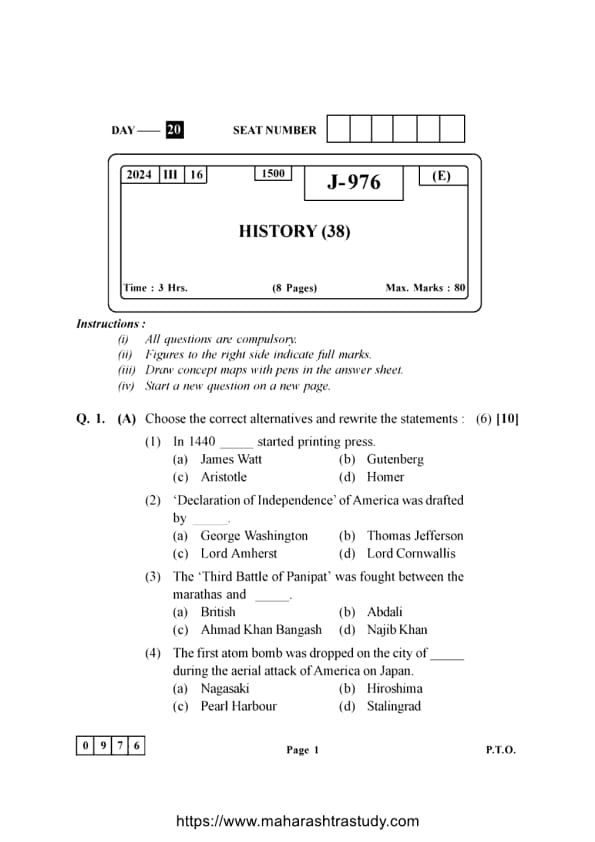
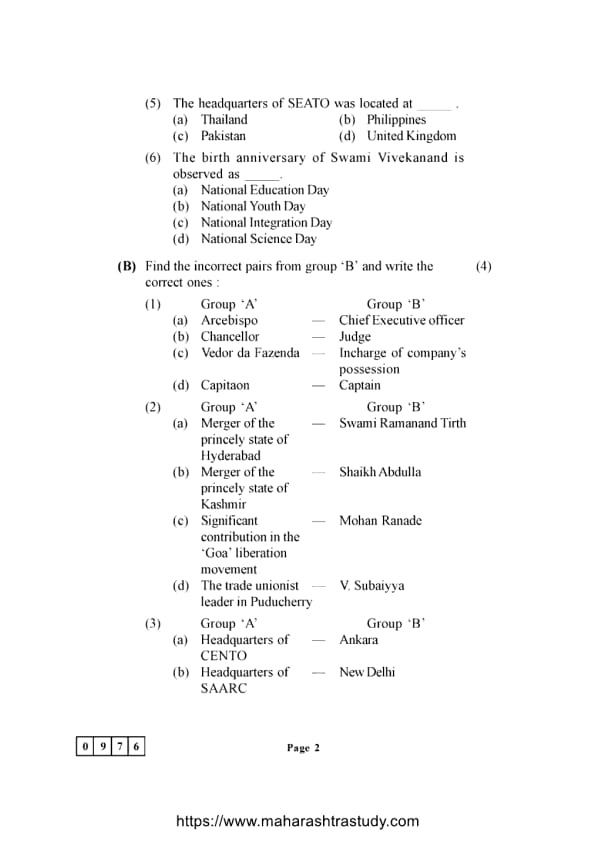
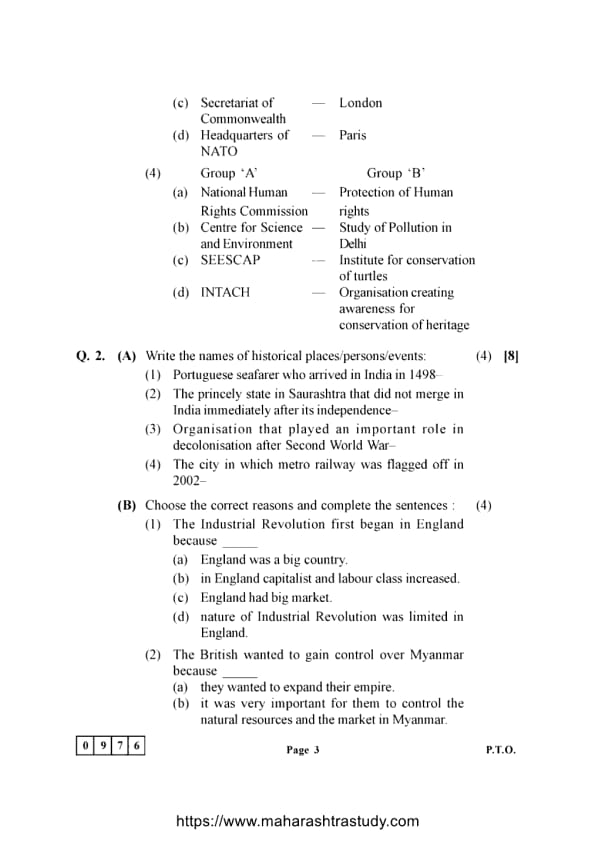
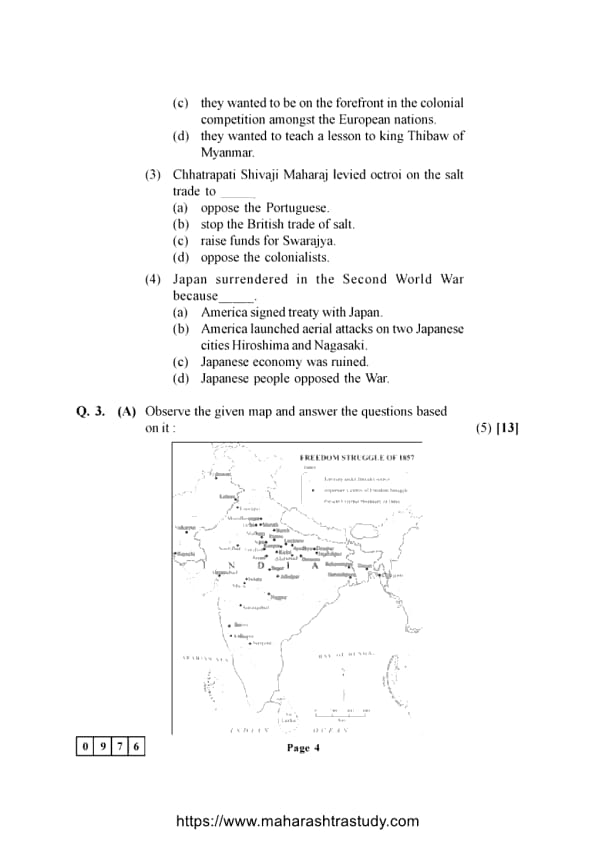
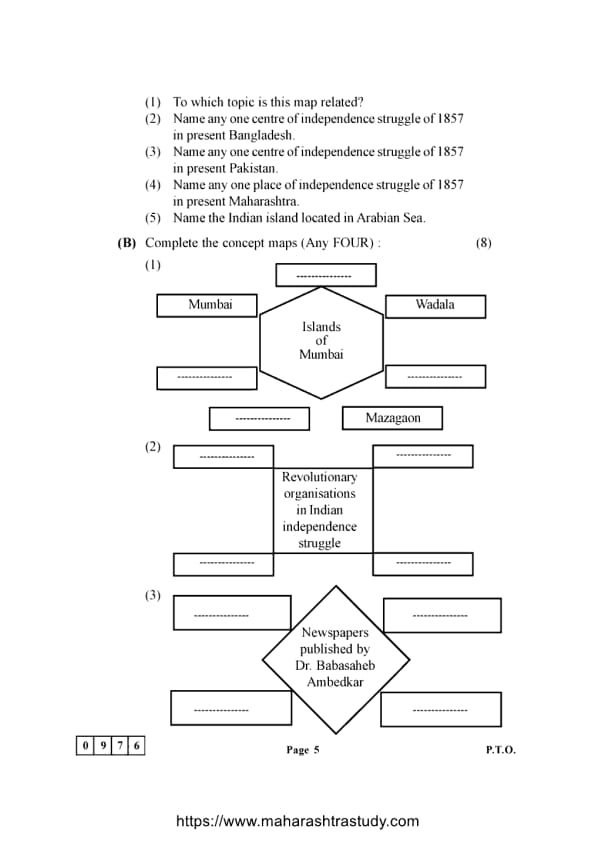
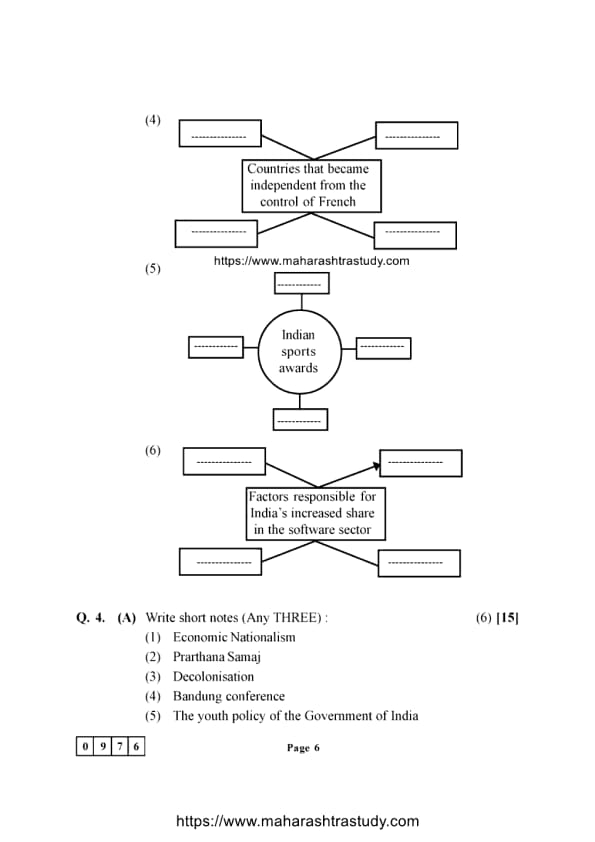
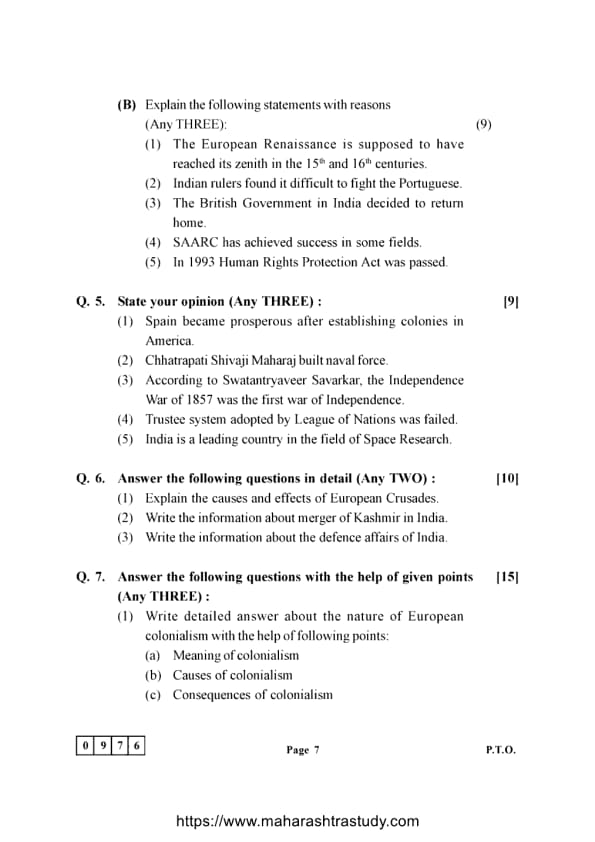
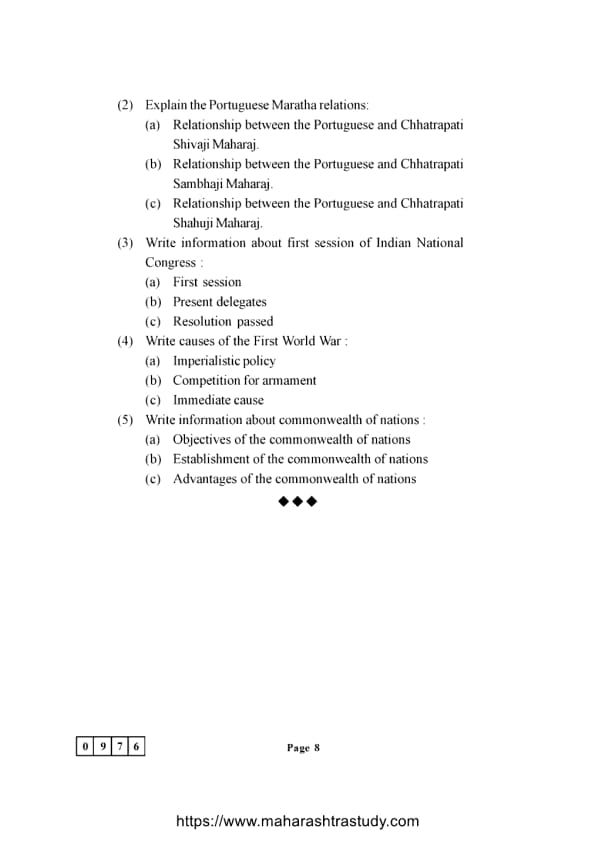
*The article might have information for the previous academic years, please refer the official website of the exam.