
Maharashtra Board Class 12 Biology (56-J-885) Question Paper 2024 Available- Download Solution PDF with Answer Key

.jpg?tr=h-55,w-55,c-force)
Content Strategist|Tech-innovator|National Hackathon Winner | Updated On - Feb 24, 2025
The Maharashtra Board 2024 Class 12th Biology exam is being conducted (February 27, 2024). The question paper along with the solution PDF will be available here to download once the exam is conducted successfully.
The Maharashtra Board 12th Boards Biology exam is expected to be easy to moderate based on previous year trends. The Biology exam includes reproduction, genetics, evolution, biotechnology, human welfare, ecology, and environmental issues.
Maharashtra Board Class 12 Biology( 56-J-885) Question Paper 2024 with Solutions
| Maharashtra Board Class 12 Biology Question Paper with Answer Key |  Download Download |
Check Solution |
Maharashtra Board Class 12 Biology( 56-J-885) Question Paper 2024 with Solutions
Section-A
Question 1:
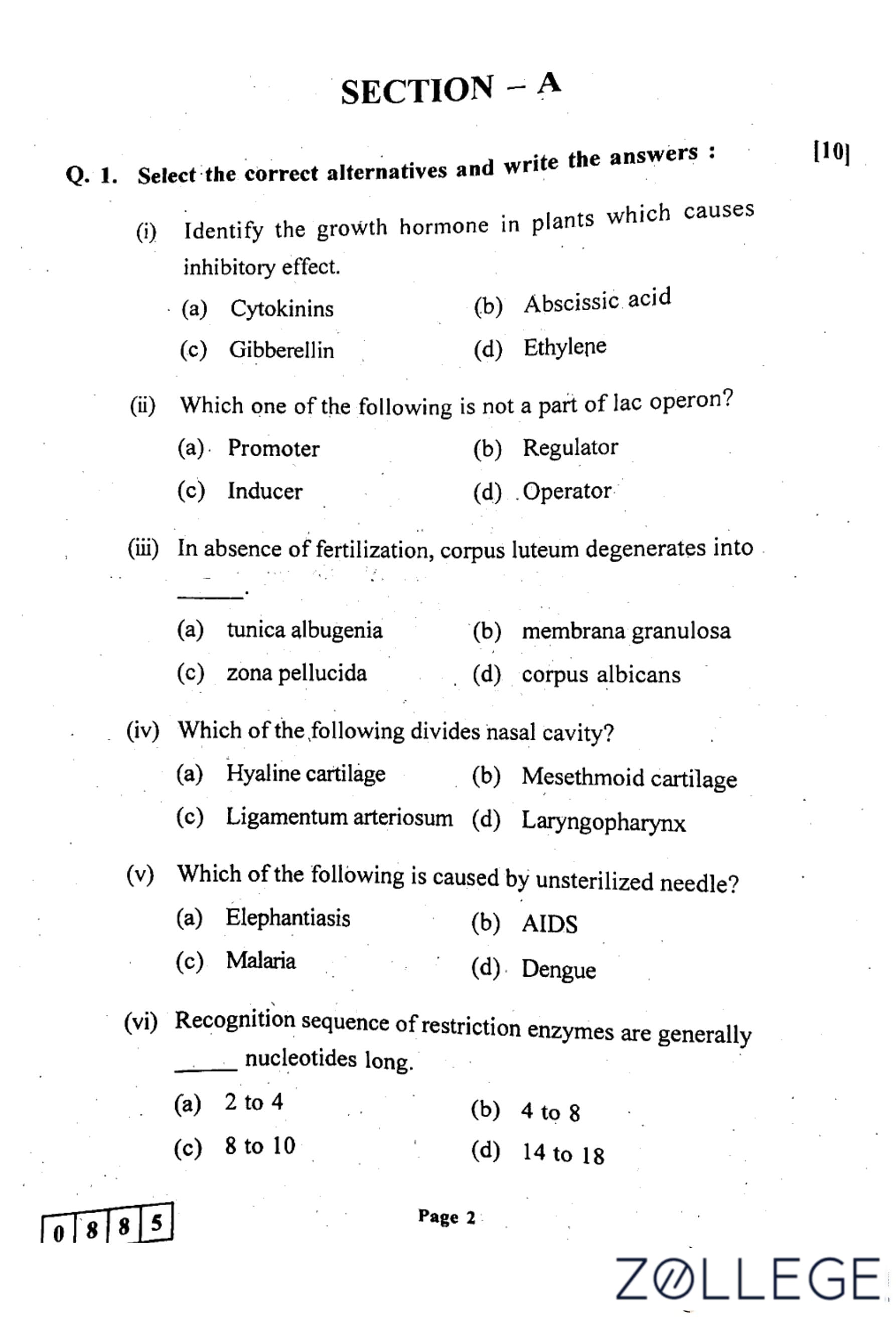
Select the correct alternatives and write the answers :
(i).Identify the growth hormone in plants which causes inhibitory effect.
View Solution
Abscisic acid (ABA) is a plant hormone that primarily functions as a growth inhibitor. It plays a crucial role in inducing seed dormancy, closing stomata during water stress, and responding to environmental stresses such as drought. Quick Tip: Abscisic acid is often called the "stress hormone" because it helps plants respond to unfavorable conditions by inhibiting growth and conserving water.
(ii).Which one of the following is not a part of lac operon?
View Solution
The lac operon consists of structural genes, a promoter, an operator, and a regulator. An inducer, such as allolactose, is a molecule that binds to the repressor and deactivates it, allowing gene expression, but it is not a direct structural part of the operon. Quick Tip: The lac operon is an example of an inducible operon, meaning it is usually off but can be turned on in the presence of an inducer like lactose.
(iii).In absence of fertilization, corpus luteum degenerates into ____.
View Solution
The corpus luteum degenerates into the corpus albicans when fertilization does not occur. The corpus albicans is a fibrous scar tissue that replaces the corpus luteum in the ovary. Quick Tip: The corpus luteum produces progesterone to maintain pregnancy, but if fertilization does not happen, it degenerates into corpus albicans.
(iv). Which of the following divides the nasal cavity?
View Solution
The mesethmoid cartilage plays a crucial role in dividing the nasal cavity, forming part of the nasal septum in many vertebrates. Quick Tip: The nasal septum is primarily formed by the perpendicular plate of the ethmoid bone and the vomer bone.
(v). Which of the following is caused by an unsterilized needle?
View Solution
AIDS (Acquired Immunodeficiency Syndrome) is caused by the Human Immunodeficiency Virus (HIV), which can be transmitted through unsterilized needles, infected blood transfusions, and sexual contact. Quick Tip: Always use sterilized needles and avoid sharing syringes to prevent transmission of infections like HIV and hepatitis.
(vi). Recognition sequences of restriction enzymes are generally ____ nucleotides long.
View Solution
Restriction enzymes recognize specific palindromic sequences in DNA, which are typically 4 to 8 nucleotides long. These enzymes are essential in genetic engineering and molecular biology. Quick Tip: Common restriction enzymes like EcoRI and HindIII recognize sequences that are usually 6 base pairs long.
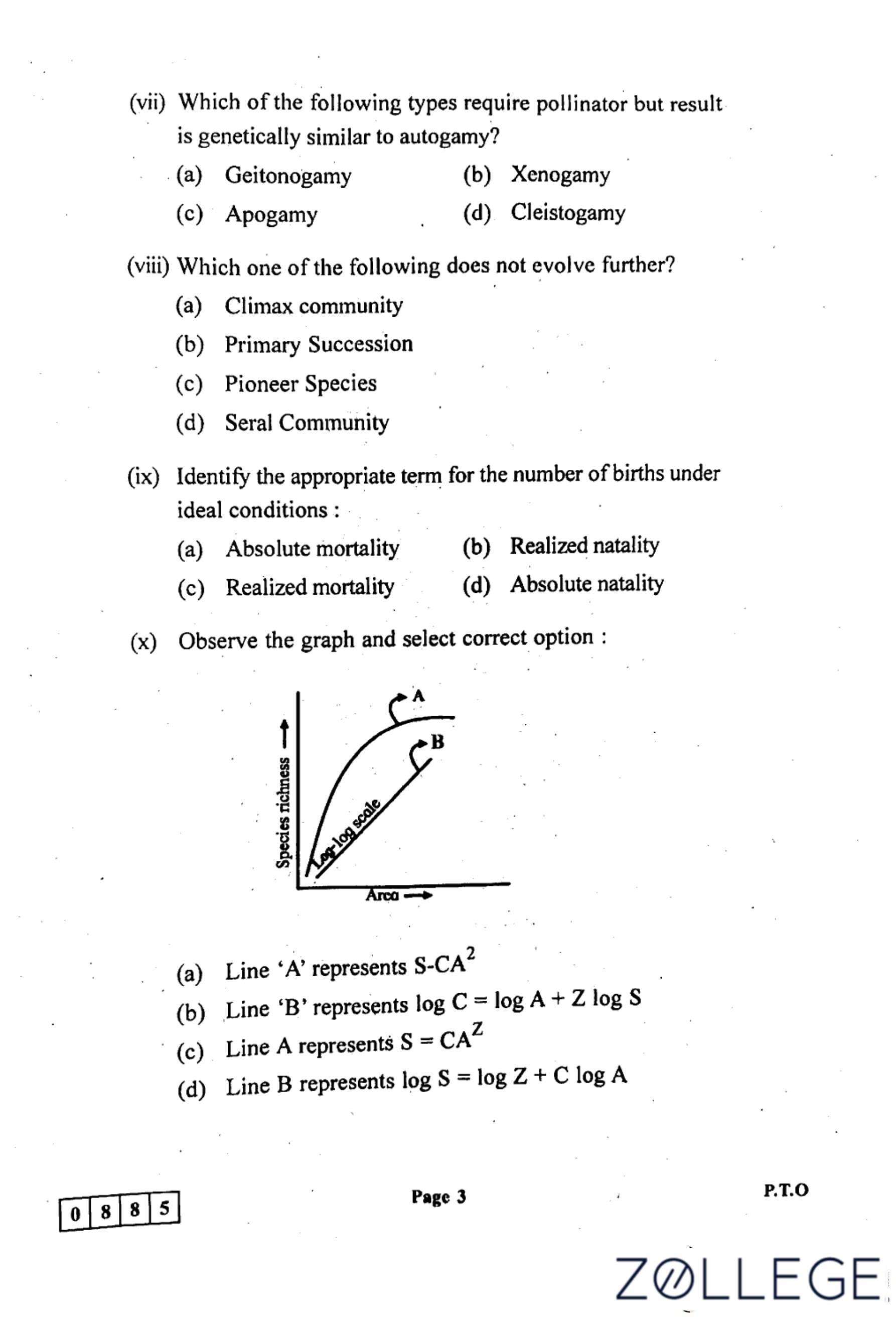
(vii). Which of the following types require pollinator but result is genetically similar to autogamy?
View Solution
Geitonogamy is a type of self-pollination where pollen is transferred from one flower to another flower on the same plant. Since both flowers belong to the same plant, the genetic outcome is similar to autogamy. Quick Tip: Geitonogamy involves a pollinator but does not introduce genetic variation like xenogamy.
(viii). Which one of the following does not evolve further?
View Solution
A climax community is the final, stable stage of ecological succession. Once it is established, it remains relatively unchanged unless disturbed by external factors. Quick Tip: Climax communities are in a state of dynamic equilibrium and are the endpoint of ecological succession.
(ix). Identify the appropriate term for the number of births under ideal conditions:
View Solution
Absolute natality refers to the maximum birth rate under ideal conditions, where there are no limiting factors affecting reproduction. Quick Tip: Absolute natality represents the highest possible birth rate in an optimal environment, whereas realized natality is influenced by actual environmental conditions.
(x). Observe the graph and select the correct option:

View Solution
The species-area relationship follows the equation:
\[ S = C A^Z \]
where:
- \( S \) is species richness,
- \( A \) is the area,
- \( C \) and \( Z \) are constants.
This equation, proposed by Alexander von Humboldt, suggests that species richness increases with area but not linearly.
Quick Tip: In a logarithmic form, the species-area relationship is expressed as: \[ \log S = \log C + Z \log A \] which forms a straight-line equation when plotted on a log-log scale.
Question 2:
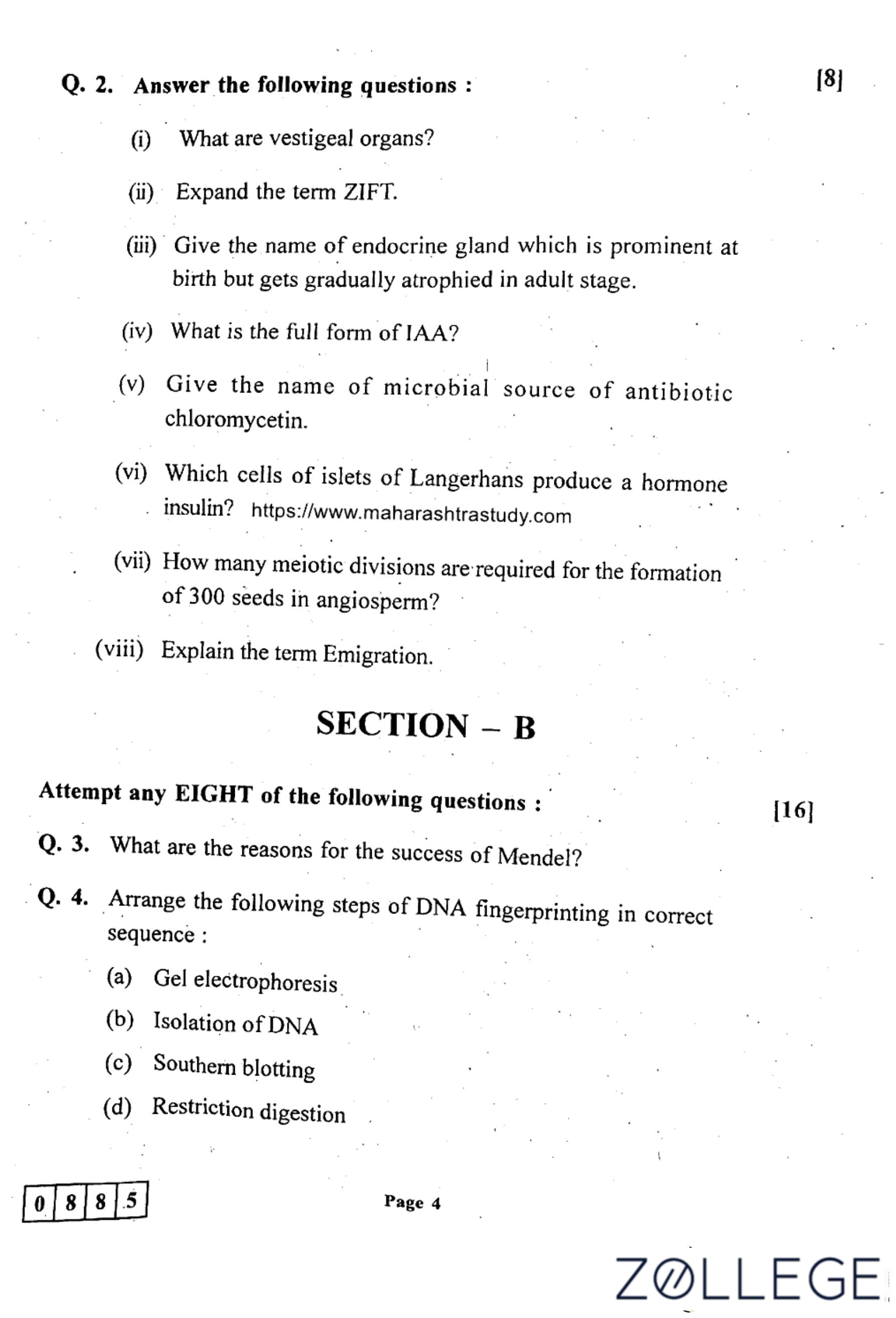
Answer the following questions:
(i). What are vestigial organs?
View Solution
Vestigial organs are remnants of functional structures that were once useful in an ancestor but have become non-functional or minimally functional due to evolutionary changes. These structures persist due to genetic inheritance but do not provide any significant advantage to the organism.
Examples in Humans:
Appendix: A small, finger-like projection in the large intestine that may have once helped in digestion but is now functionally redundant.
Wisdom teeth: These were useful for chewing tough plant materials in early human ancestors but are now often removed due to lack of space in the jaw.
Coccyx (Tailbone): A remnant of ancestral tails in mammals, serving no significant purpose in humans.
Auricular Muscles: These are the small muscles around the ears that some animals use to move their ears, but they are non-functional in humans. Quick Tip: Vestigial organs provide strong evidence for evolution, as they indicate the presence of ancestral traits that have been lost due to environmental changes and adaptation.
(ii). Expand the term ZIFT.
View Solution
ZIFT is a technique in which a fertilized zygote is transferred into the fallopian tube instead of the uterus. This method is used for couples experiencing infertility issues, especially in cases of blocked fallopian tubes.
Steps in ZIFT:
Ovarian Stimulation: Hormonal treatments stimulate the ovaries to produce multiple eggs.
Egg Retrieval: Eggs are collected from the ovaries through a minor surgical procedure.
Fertilization: The retrieved eggs are fertilized with sperm in a laboratory setting.
Zygote Transfer: The resulting zygote (fertilized egg at the one-cell stage) is placed into the fallopian tube through laparoscopic surgery.
Implantation \& Pregnancy: The zygote travels naturally to the uterus and implants, leading to pregnancy. Quick Tip: ZIFT is similar to IVF (In-Vitro Fertilization), but in IVF, the embryo is transferred directly to the uterus rather than the fallopian tube.
(iii). Give the name of the endocrine gland which is prominent at birth but gets gradually atrophied in the adult stage.
View Solution
The thymus gland is a specialized primary lymphoid organ of the immune system. It is located in the upper part of the chest, just behind the sternum.
Role of the Thymus:
It plays a crucial role in the development and maturation of T-lymphocytes (T-cells), which are essential for adaptive immunity.
During childhood, the thymus is highly active in producing immune cells.
As a person reaches puberty, the thymus starts shrinking (a process called involution), and its function is gradually taken over by other immune organs such as lymph nodes and the spleen.
The atrophy of the thymus is a natural process, and by adulthood, it becomes largely replaced by fatty tissue. Quick Tip: The thymus is essential for immune system development, and its decline in adulthood does not severely impact immunity because memory T-cells remain active throughout life.
(iv). What is the full form of IAA?
View Solution
It is a naturally occurring plant hormone in the auxin family that regulates various aspects of plant growth and development.
Indole-3-Acetic Acid (IAA) is the most common and naturally occurring plant hormone from the auxin family. It plays a key role in plant growth and development.
Functions of IAA:
Cell Elongation: Promotes the elongation of plant cells, particularly in shoot growth.
Apical Dominance: Ensures the dominance of the main shoot over lateral branches.
Root Growth \& Development: Helps in root initiation and formation.
Tropisms: Involved in phototropism (response to light) and gravitropism (response to gravity).
Fruit Development: Stimulates fruit formation and prevents premature fruit drop.
IAA is synthesized primarily in the shoot apical meristem and young leaves, and it moves downward through the plant via polar transport. Quick Tip: IAA is a widely used plant hormone in agriculture for promoting root growth in cuttings and increasing fruit yield.
(v). Give the name of the microbial source of the antibiotic chloromycetin.
View Solution
Chloromycetin, also known as chloramphenicol, is a broad-spectrum antibiotic produced by the bacterium Streptomyces venezuelae. It was the first antibiotic to be manufactured synthetically and is highly effective against a wide range of bacteria.
Mode of Action: Chloramphenicol inhibits bacterial protein synthesis by binding to the 50S ribosomal subunit and preventing peptide bond formation.
Uses: It is used to treat serious bacterial infections, including typhoid fever, meningitis, and eye infections.
Side Effects: Its use is limited due to potential side effects such as bone marrow suppression and aplastic anemia. Quick Tip: Chloramphenicol was originally extracted from Streptomyces venezuelae, but today it is largely produced synthetically for medical use.
(vi). Which cells of islets of Langerhans produce the hormone insulin?
View Solution
The islets of Langerhans are clusters of endocrine cells present in the pancreas that regulate blood glucose levels.
Beta cells (\(\beta\)-cells) are responsible for producing and secreting insulin, a hormone that lowers blood sugar levels.
When blood glucose levels rise after eating, beta cells release insulin, promoting glucose uptake by body cells and storing excess glucose as glycogen in the liver.
A deficiency or dysfunction of beta cells leads to diabetes mellitus, a metabolic disorder characterized by high blood sugar levels. Quick Tip: Other cells in the islets of Langerhans include:
Alpha cells: Produce glucagon, which increases blood sugar.
Delta cells: Produce somatostatin, which regulates insulin and glucagon.
(vii). How many meiotic divisions are required for the formation of 300 seeds in angiosperm?
View Solution
Each seed in an angiosperm develops from a fertilized ovule, and each ovule is produced by one meiotic division in the ovary.
In angiosperms, a megaspore mother cell (MMC) undergoes one meiotic division to form four haploid megaspores, but only one megaspore survives to develop into an embryo sac.
Since each megaspore mother cell produces one functional megaspore, the number of meiotic divisions required is equal to the number of seeds formed.
Therefore, for 300 seeds, 300 meiotic divisions are required. Quick Tip: Each functional megaspore undergoes mitotic divisions to develop into an embryo sac, but only one meiotic division is required for each seed.
Question 2:
(viii). Explain the term Emigration.
View Solution
Emigration is one of the factors that influence population dynamics and affects the size of a population.
It refers to the permanent movement of individuals out of a population, reducing the population size.
Emigration is an important component of population ecology, influencing genetic diversity, resource competition, and species distribution.
It is commonly observed in animals migrating to find food, escape harsh environmental conditions, or seek better breeding grounds.
Examples of Emigration:
Bird Migration: Birds leave colder regions in winter to migrate to warmer places.
Wildebeest Migration: Large herds of wildebeest migrate seasonally to find fresh grazing areas.
Human Emigration: People migrate from rural to urban areas for better job opportunities. Quick Tip: The opposite of emigration is **immigration**, which refers to individuals moving into a population.
Section B
What are the reasons for the success of Mendel?
View Solution
The success of Gregor Mendel in formulating the fundamental principles of genetics was due to his scientific approach, well-planned experiments, and use of mathematical analysis.
Gregor Mendel, known as the Father of Genetics, conducted hybridization experiments on pea plants (\textit{Pisum sativum) and formulated the Laws of Inheritance. His success can be attributed to the following key reasons:
Selection of a Suitable Experimental Plant:
Mendel selected the pea plant (\textit{Pisum sativum), which had easily distinguishable traits and a short life cycle.
It produced a large number of offspring, allowing him to collect sufficient data.
Use of Pure-Breeding Plants:
Mendel used plants that were pure-breeding (homozygous for traits) to ensure accurate inheritance patterns.
This helped him establish clear dominant and recessive traits.
Controlled Pollination:
Mendel conducted artificial cross-pollination and prevented self-pollination by removing anthers, ensuring controlled breeding experiments.
Quantitative and Statistical Analysis:
Unlike his predecessors, Mendel applied mathematical and statistical methods to analyze inheritance patterns.
He used the ratio concept (3:1, 9:3:3:1), which led to the formation of his laws.
Large Sample Size:
He worked with a large number of plants, reducing errors and increasing the reliability of his results.
Concept of Dominant and Recessive Traits:
Mendel distinguished between dominant and recessive characters, laying the foundation for modern genetics.
Formulation of Laws of Inheritance:
Mendel's experiments led to three fundamental laws:
Law of Dominance - Some traits dominate over others.
Law of Segregation - Genes separate independently during gamete formation.
Law of Independent Assortment - Traits are inherited separately. Quick Tip: Mendel’s work was ignored initially but later rediscovered in the early 20th century by scientists like Hugo de Vries, Carl Correns, and Erich von Tschermak, leading to the development of modern genetics.
Arrange the following steps of DNA fingerprinting in correct sequence:
[(a)] Gel electrophoresis
[(b)] Isolation of DNA
[(c)] Southern blotting
[(d)] Restriction digestion
View Solution
DNA fingerprinting is a technique used for identification of individuals based on their unique DNA sequences. The correct sequence of steps in DNA fingerprinting is:
Isolation of DNA (Step - b):
DNA is extracted from cells (such as blood, hair roots, or saliva) using chemical treatments to break cell membranes.
Restriction Digestion (Step - d):
The extracted DNA is treated with restriction enzymes, which cut the DNA at specific sequences, generating DNA fragments of different lengths.
Gel Electrophoresis (Step - a):
The digested DNA fragments are separated according to their sizes using agarose gel electrophoresis.
The negatively charged DNA fragments move towards the positive electrode, with smaller fragments migrating faster.
Southern Blotting (Step - c):
The separated DNA fragments are transferred from the gel to a nylon membrane by blotting.
A radioactive or fluorescent DNA probe complementary to the target sequences is used to detect specific DNA fragments.
Final Steps (Not listed in question but important):
The DNA bands are visualized using X-ray film (autoradiography).
The unique banding pattern forms a DNA fingerprint, which is used for forensic analysis, paternity testing, and genetic studies. Quick Tip: DNA fingerprinting is widely used in forensic investigations, paternity testing, and identifying genetic relationships. The technique was developed by Alec Jeffreys in 1984.
Distinguish between human sperm and ovum.
View Solution
The key differences between human sperm and ovum are as follows:
| Feature | Sperm | Ovum |
|---|---|---|
| Structure | Small, motile | Large, non-motile |
| Shape | Tadpole-like with a tail | Spherical |
| Motility | Motile due to flagellum | Non-motile |
| Size | Very small (about 50-60µm) | Large (about 100µm) |
| Nucleus | Condensed | Large, with more cytoplasm |
| Cytoplasm | Very little | Abundant |
| Production | Continuously produced in testes | Released cyclically from ovaries |
Enlist the uses of gene therapy.
View Solution
Uses of Gene Therapy:
Gene therapy is a medical technique that involves modifying or replacing defective genes to treat genetic disorders.
Treatment of Genetic Disorders: Helps in treating diseases such as cystic fibrosis, hemophilia, and sickle cell anemia.
Cancer Treatment: Used to introduce genes that either kill cancerous cells or enhance the immune system’s ability to fight cancer.
Treatment of Neurological Disorders: Helps in managing diseases like Parkinson’s disease by restoring normal gene function.
Correction of Immune Deficiencies: Used in treating Severe Combined Immunodeficiency (SCID) by introducing functional immune-related genes.
Gene Editing and Personalized Medicine: CRISPR technology enables precise correction of faulty genes. Quick Tip: Gene therapy has great potential for curing previously untreatable genetic disorders but requires strict regulation to prevent ethical concerns.
Question 7:
Define the following terms:
(a). Gene Flow
View Solution
N/A
Chromosomal Aberrations
View Solution
Types of Chromosomal Aberrations:
Chromosomal aberrations are structural or numerical changes in chromosomes that lead to genetic disorders.
Deletion: A segment of a chromosome is lost.
Duplication: A chromosome segment is repeated.
Inversion: A segment is reversed within the chromosome.
Translocation: A segment is moved to another chromosome.
Aneuploidy: Gain or loss of whole chromosomes, e.g., Down syndrome (Trisomy 21). Quick Tip: Gene flow maintains genetic variation, while chromosomal aberrations can cause genetic disorders.
What are the significances of double fertilization?
View Solution
Significance of Double Fertilization:
Double fertilization is a unique feature of flowering plants where one male gamete fertilizes the egg to form a zygote, while another fuses with the polar nuclei to form the triploid endosperm.
Efficient Resource Utilization: Ensures that the endosperm, which provides nutrients to the embryo, is only formed when fertilization occurs.
Simultaneous Formation of Two Structures: Leads to the development of both zygote (embryo) and endosperm.
Increases Seed Viability: Ensures better nourishment and survival chances of the developing embryo.
Triploid Endosperm Formation: Provides food storage for the seedling, aiding early growth. Quick Tip: Double fertilization is exclusive to angiosperms and contributes to their evolutionary success by improving seed viability.
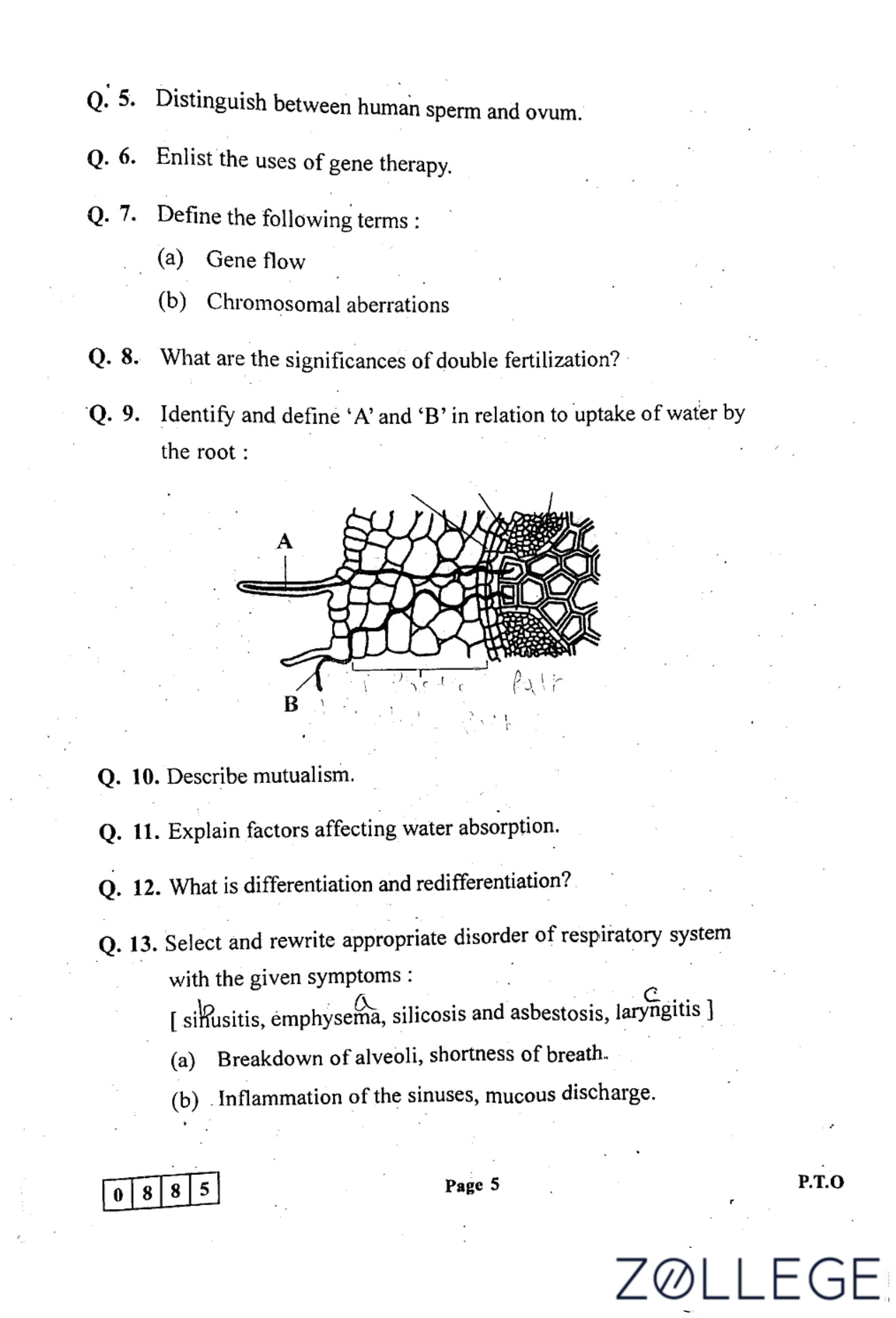
Identify and define ‘A’ and ‘B’ in relation to the uptake of water by the root:

View Solution
A - Root Hair: Specialized epidermal cells that increase the surface area for water absorption.
B - Xylem: Vascular tissue responsible for the conduction of water and minerals from roots to other parts of the plant.
In plants, the root system is responsible for the uptake of water and minerals from the soil. The given diagram shows a longitudinal section of the root, highlighting structures involved in this process.
Identification of 'A' - Root Hair:
Root hairs are elongated extensions of epidermal cells that increase the surface area for absorption.
They facilitate osmosis, allowing water to move into the root cells due to the concentration gradient.
Identification of 'B' - Xylem:
Xylem consists of tracheids and vessels that conduct water and dissolved minerals from the roots to the rest of the plant.
It plays a key role in the ascent of sap, moving water upwards due to transpiration pull, cohesion, and adhesion forces.
Mechanism of Water Uptake:
Water moves from the soil into the root hairs through osmosis.
It travels across root cortex cells by the apoplast pathway (through cell walls) or symplast pathway (through plasmodesmata).
Finally, water enters the xylem and is transported upwards by transpiration pull. Quick Tip: Root hairs are short-lived but crucial for efficient water absorption. The Casparian strip in the endodermis ensures that water passes through a regulated symplastic route before reaching the xylem.
Describe mutualism.
View Solution
Mutualism is a type of ecological interaction in which two different species benefit from each other.
Mutualism is a form of symbiotic relationship where both organisms involved derive mutual benefit. It is an important ecological interaction that promotes survival and reproduction.
Types of Mutualism:
Obligate Mutualism: The relationship is essential for the survival of both species.
Facultative Mutualism: Both species benefit, but they can survive independently.
Examples of Mutualism:
Lichen: A mutualistic association between fungi and algae/cyanobacteria.
Pollination: Bees collect nectar from flowers (food source) while aiding in pollination.
Mycorrhizae: Fungi and plant roots exchange nutrients and water.
Nitrogen Fixation: Rhizobium bacteria live in leguminous plant roots, fixing nitrogen for the plant while receiving carbohydrates. Quick Tip: Mutualism helps maintain ecological balance and biodiversity by ensuring the survival of interdependent species.
Explain factors affecting water absorption.
View Solution
Water absorption in plants is influenced by both external (environmental) factors and internal (plant) factors.
Water absorption occurs mainly through root hairs via osmosis and is transported through the xylem. The process is influenced by several factors:
External (Environmental) Factors:
Soil Water Availability: Higher soil moisture leads to increased water absorption.
Temperature: Higher temperatures increase transpiration, indirectly increasing water uptake.
Soil Aeration: Poor aeration reduces oxygen availability for root respiration, decreasing absorption.
Soil Salinity: High salt concentration lowers water potential, reducing water absorption.
Internal (Plant) Factors:
Root Surface Area: More root hairs increase absorption efficiency.
Transpiration Rate: Higher transpiration enhances the water gradient, facilitating absorption.
Metabolic Activity: Active root cells enhance water uptake through energy-dependent processes. Quick Tip: Water absorption follows passive osmosis but is influenced by active processes like ion transport that regulate osmotic balance.
What is differentiation and redifferentiation?
View Solution
Differentiation and redifferentiation are processes of cellular specialization in plants
Differentiation:
The process in which unspecialized meristematic cells develop into specialized cells with specific functions.
Example: Cambium differentiating into xylem and phloem.
Redifferentiation:
The process where previously differentiated cells regain the ability to divide or specialize again for a new function.
Example: Secondary growth in woody plants, where parenchyma cells redifferentiate into vascular tissues. Quick Tip: Differentiation leads to cell specialization, while redifferentiation allows cells to regain functional capabilities.
Select and rewrite the appropriate disorder of the respiratory system based on the given symptoms:
(a) Breakdown of alveoli, shortness of breath.
(b) Inflammation of the sinuses, mucous discharge.
(c) Inflammation of larynx, vocal cords, sore throat, hoarseness of voice, mucous build-up, and cough.
(d) Inflammation of fibrosis, lung damage.
View Solution
The respiratory disorders listed above are classified based on their symptoms and causes:
Emphysema: A chronic obstructive pulmonary disease (COPD) where alveolar walls break down, reducing oxygen exchange efficiency.
Sinusitis: Inflammation of the sinus cavities due to infection or allergy, leading to nasal congestion and mucus buildup.
Laryngitis: Swelling of the larynx, usually caused by infections, excessive voice use, or irritants, affecting speech and causing hoarseness.
Silicosis and Asbestosis: Caused by prolonged inhalation of fine particles of silica or asbestos, leading to lung fibrosis, reduced lung function, and respiratory distress. Quick Tip: Long-term exposure to air pollutants, smoking, and occupational hazards significantly increase the risk of chronic respiratory diseases.
Explain the steps involved in the preliminary treatment of sewage.
View Solution
Preliminary treatment of sewage involves the removal of large solids, grit, and debris before biological or chemical treatment.
The preliminary treatment of sewage is the first step in wastewater treatment, aimed at removing large floating and settleable solids. It prevents damage to machinery and improves the efficiency of further treatment processes.
The major steps involved in preliminary sewage treatment are:
Screening:
Large solid particles such as plastic, rags, leaves, and paper are removed using metal screens or bar racks.
Prevents clogging and protects downstream equipment.
Grit Removal:
Heavy inorganic particles such as sand, gravel, and small stones settle in a grit chamber.
Prevents abrasion of pumps and pipelines.
Skimming:
Floating grease, oils, and light materials are removed using skimming tanks.
Essential for preventing pipe blockages.
Pre-Sedimentation:
Large suspended solids settle down in sedimentation tanks.
Reduces the organic load on secondary treatment processes. Quick Tip: Preliminary treatment is essential for reducing operational costs and preventing damage to biological treatment units.
Section C
Give the different steps involved in the formation of mRNA from hnRNA.
View Solution
The formation of mature mRNA from heterogeneous nuclear RNA (hnRNA) occurs through a process known as RNA processing.
The major steps involved in mRNA maturation are:
Capping:
A 7-methylguanosine (m⁷G) cap is added to the 5’ end of the hnRNA.
This protects the mRNA from degradation and facilitates ribosome recognition.
Splicing:
Non-coding regions (introns) are removed, and coding sequences (exons) are joined together.
Performed by a spliceosome complex.
Polyadenylation:
A poly-A tail (about 200 adenine residues) is added at the 3’ end.
Helps in mRNA stability and transport. Quick Tip: RNA processing occurs in the nucleus before the mature mRNA is exported for translation.
What is reproductive isolation? Describe any two types each of pre-mating and post-mating isolating mechanisms.
View Solution
Types of Reproductive Isolation:
Reproductive isolation is a mechanism that prevents gene flow between species, leading to speciation.
1. Pre-mating Isolation (Prezygotic Barriers)
Temporal Isolation: Species reproduce at different times.
Mechanical Isolation: Structural differences prevent mating.
2. Post-mating Isolation (Postzygotic Barriers)
Hybrid Inviability: The hybrid does not develop properly.
Hybrid Sterility: The hybrid is sterile (e.g., mule). Quick Tip: Reproductive isolation plays a crucial role in the formation of new species (speciation).
Explain unique features of acquired immunity.
View Solution
Unique Features of Acquired Immunity:
Acquired immunity is a specific and adaptive immune response that develops over time.
Specificity: Targets specific pathogens through antigen recognition.
Memory: Generates memory cells for faster response upon reinfection.
Self vs. Non-Self Recognition: Distinguishes between body cells and foreign invaders.
Diversity: Can recognize millions of different antigens. Quick Tip: Acquired immunity is mediated by B cells (antibody production) and T cells (cell-mediated immunity).
Name and describe hormones secreted by ovaries.
View Solution
Hormones Secreted by Ovaries:
The ovaries secrete estrogen and progesterone, which regulate female reproductive functions.
Estrogen:
Promotes the development of female secondary sexual characteristics.
Regulates the menstrual cycle.
Progesterone:
Maintains the uterine lining for pregnancy.
Inhibits ovulation during pregnancy. Quick Tip: Estrogen is highest before ovulation, while progesterone dominates the luteal phase.
Explain different steps involved in the PCR technique.
View Solution
Steps of PCR:
Polymerase Chain Reaction (PCR) is a molecular biology technique used to amplify DNA.
Denaturation: DNA is heated to 94-98°C to break hydrogen bonds, separating the strands.
Annealing: Primers bind to the target DNA sequence at 50-65°C.
Extension: DNA polymerase (Taq polymerase) synthesizes new DNA at 72°C.
Amplification: The cycle repeats multiple times, exponentially increasing DNA copies. Quick Tip: PCR is widely used in forensic science, disease diagnosis, and genetic engineering.

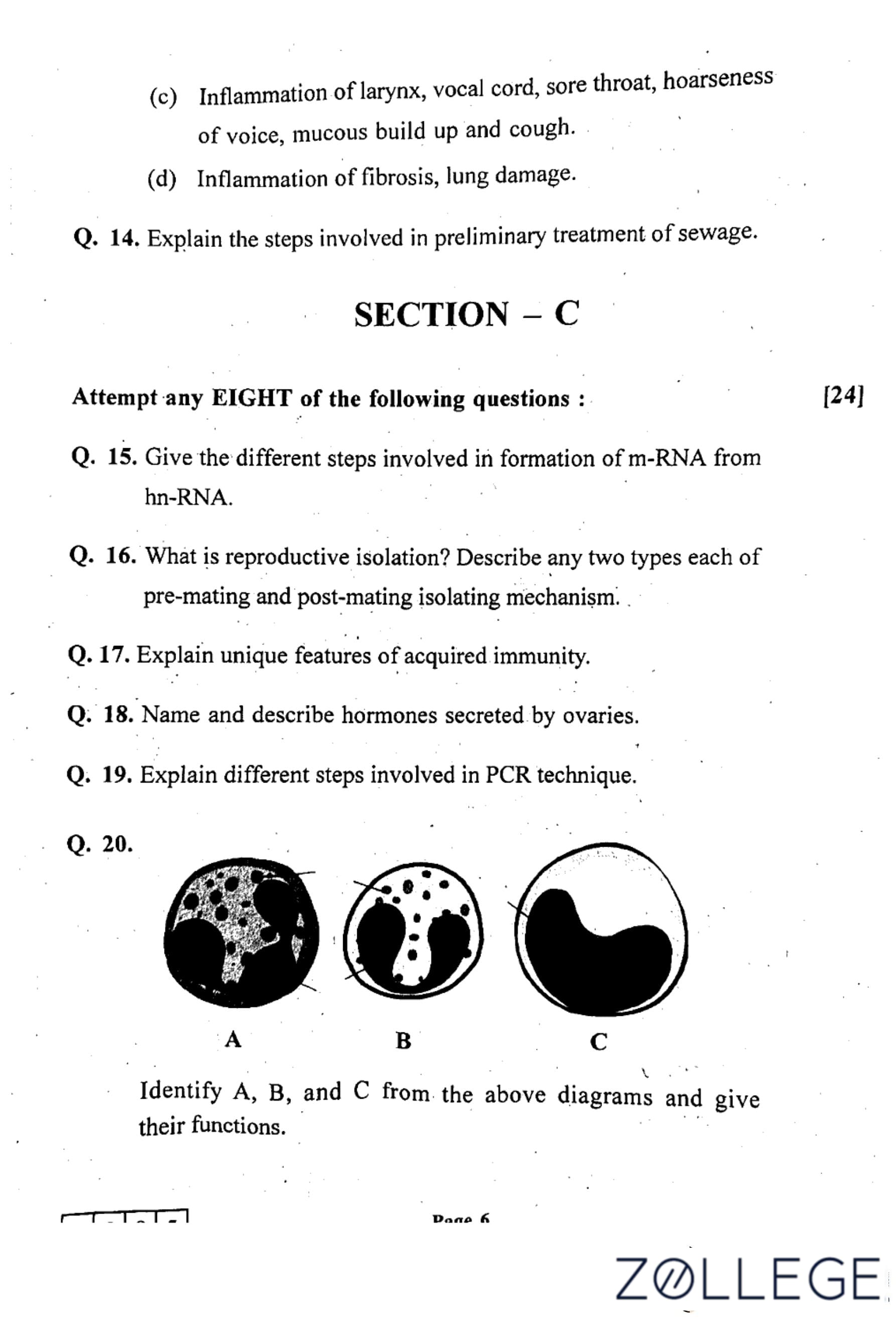
Identify A, B, and C from the above diagrams and give their functions.
View Solution
The given images represent different types of white blood cells (WBCs) involved in immune defense. Their identifications and functions are:
A - Neutrophil: The most abundant type of WBCs, playing a crucial role in phagocytosis of bacteria and pathogens.
B - Eosinophil: Primarily involved in allergic reactions and parasitic infections, releasing histamine and other inflammatory mediators.
C - Monocyte: The largest type of WBCs, which differentiates into macrophages and helps in long-term immunity by engulfing pathogens.
Neutrophil (A):
Multi-lobed nucleus with granular cytoplasm.
First responders to infections; kill pathogens via phagocytosis.
Produce enzymes that digest bacteria and cellular debris.
Eosinophil (B):
Bilobed nucleus with bright red-staining granules.
Involved in parasitic infections and allergic reactions.
Releases histamine to mediate inflammatory responses.
Monocyte (C):
Large kidney-shaped nucleus.
Differentiates into macrophages, which engulf dead cells and pathogens.
Plays a role in antigen presentation to activate adaptive immunity. Quick Tip: White blood cells (leukocytes) are key players in immunity. Neutrophils act immediately, eosinophils regulate allergies, and monocytes provide long-term immune defense.
What are the limitations of the root pressure theory?
View Solution
Limitations of Root Pressure Theory:
Root pressure theory attempts to explain water movement in plants but has several limitations.
Insufficient for Tall Trees: Root pressure alone cannot generate enough force to transport water to the tops of tall trees, where transpiration pull plays a dominant role.
No Role During Dry Conditions: Root pressure is primarily observed during the night or early morning when transpiration is low. It does not work efficiently during dry conditions.
Not the Sole Mechanism: While root pressure is important, it is not the primary force driving water transport; transpiration pull and capillary action are more significant.
Presence of Non-Living Xylem: The ascent of sap occurs in dead xylem vessels, which lack metabolic activity, making it unlikely that active root pressure alone could drive water movement. Quick Tip: Root pressure is a minor contributor to water movement; the cohesion-tension theory better explains long-distance water transport.
Explain the greenhouse effect with reference to gases responsible for it and their sources.
View Solution
Mechanism of Greenhouse Effect:
The greenhouse effect is the warming of Earth's atmosphere due to the trapping of heat by greenhouse gases.
The sun emits shortwave radiation that reaches Earth's surface.
Earth absorbs this energy and emits it as longwave infrared radiation.
Greenhouse gases trap this infrared radiation, preventing it from escaping into space.
This leads to an increase in Earth's temperature, contributing to global warming.
Major Greenhouse Gases and Their Sources:
Carbon dioxide (CO\(_2\)) – Released from burning fossil fuels, deforestation, and industrial processes.
Methane (CH\(_4\)) – Emitted by cattle digestion (enteric fermentation), rice paddies, and landfills.
Nitrous Oxide (N\(_2\)O) – Originates from excessive use of nitrogen fertilizers and combustion engines.
Chlorofluorocarbons (CFCs) – Released from refrigerants, aerosol sprays, and foam-blowing agents.
Effects of the Greenhouse Effect:
Rise in global temperatures, leading to climate change.
Melting of polar ice caps and rising sea levels.
Increased frequency of extreme weather events (hurricanes, droughts). Quick Tip: Reducing greenhouse gas emissions through renewable energy and conservation can mitigate global warming.
Describe the physiological effects and applications of ethylene.
View Solution
Physiological Effects of Ethylene:
Ethylene is a plant hormone responsible for regulating fruit ripening and stress responses.
Fruit Ripening: Ethylene accelerates ripening in climacteric fruits like bananas, mangoes, and tomatoes.
Leaf Abscission: Causes leaf and flower drop by weakening cell walls at the base of petioles.
Stem Thickening: Promotes lateral expansion, resulting in shorter, thicker stems.
Root Growth: Enhances root initiation and adventitious root formation.
Applications of Ethylene in Agriculture:
Used in artificial fruit ripening in commercial agriculture.
Promotes flowering in pineapples.
Induces synchronized fruit maturation in crops. Quick Tip: Ethylene is widely used in agriculture to regulate plant growth and fruit production.
Give the name and type of I, IV and VII cranial nerves.
View Solution
The cranial nerves are part of the peripheral nervous system, and there are twelve pairs of cranial nerves in total. Let's discuss the names and types of the I, IV, and VII cranial nerves:
Cranial Nerve I (Olfactory Nerve):
- Name: Olfactory nerve
- Type: Sensory
- Function: Responsible for the sense of smell. It transmits sensory information related to odors from the nasal cavity to the brain.
Cranial Nerve IV (Trochlear Nerve):
- Name: Trochlear nerve
- Type: Motor
- Function: It controls the superior oblique muscle of the eye, which is responsible for downward and inward movement of the eyeball.
Cranial Nerve VII (Facial Nerve):
- Name: Facial nerve
- Type: Mixed (Sensory and Motor)
- Function: It controls the muscles of facial expression, taste sensation from the anterior two-thirds of the tongue, and provides parasympathetic innervation to certain glands such as the lacrimal and salivary glands.
Quick Tip: Cranial nerves are essential for various sensory and motor functions, including sensory (smell, taste) and motor (muscle movement) roles.
Describe the pyramid of energy with the help of a diagram.
View Solution

The energy pyramid represents the flow of energy across trophic levels in an ecosystem.
Explanation:
The producers (plants) are at the base and have the highest energy content.
Primary consumers (herbivores) obtain energy by consuming plants.
Secondary and tertiary consumers feed on herbivores and other carnivores.
Energy is lost as heat at each trophic level due to metabolic activities.
Key Features of Energy Pyramid:
Only 10percentage of energy is passed to the next trophic level (as per the 10percentage Law).
Energy flow is unidirectional (does not recycle).
The pyramid is always upright, as energy decreases at higher trophic levels. Quick Tip: The 10percentage Law of Energy Transfer states that only 10percentage of energy is passed to the next trophic level, while 90percentage is lost as heat.
What is lac? Enlist economic importance of Lac.
View Solution
Lac is a natural resin secreted by tiny insects called lac insects (scientific name: \textit{Kerria lacca) that are found on certain trees, primarily in India, Southeast Asia, and Africa. It is harvested from the branches of these trees after the lac insects have produced the resin, which hardens to form the lac.
Economic Importance of Lac:
Industrial Use: Lac is used in the manufacturing of a wide variety of products such as varnishes, paints, and lacquers. It is an important raw material in the production of shellac, which is used as a coating and adhesive in industries.
Textile Industry: It is also used for dyeing and as a finishing agent in the textile industry.
Cultural and Religious Significance: Lac has cultural significance and is used in making jewelry, beads, and other traditional ornaments, particularly in India and some Southeast Asian countries.
Medicinal Use: Lac is used in traditional medicine in some cultures to treat a variety of ailments.
Export: Lac is one of the important export products for countries like India, generating significant income from its export. Quick Tip: Lac is a highly versatile product that has applications across various industries, including manufacturing, textiles, and medicine.
Section D
Describe the histological structure of the testis with a well-labeled diagram.
View Solution
Histological Structure of Testis:
The testis is the primary male reproductive organ responsible for the production of sperm and testosterone. It consists of several structural components involved in sperm formation.
The testis is enclosed by a fibrous capsule called the tunica albuginea.
It is divided into several compartments called testicular lobules.
Each lobule contains seminiferous tubules, where spermatogenesis occurs.
The tubules are lined with two main cell types:
Sertoli Cells: Support and nourish developing sperm.
Germ Cells: Undergo meiosis to form spermatozoa.
The Leydig cells, found in the interstitial spaces, produce testosterone.
% Diagram

Functions of Testis:
Spermatogenesis: Formation of sperm in the seminiferous tubules.
Hormone Secretion: Leydig cells produce testosterone, essential for male secondary sexual characteristics. Quick Tip: Testosterone plays a key role in spermatogenesis, muscle growth, and male reproductive function.
What are chromosomal disorders? Describe Turner’s syndrome and Klinefelter’s syndrome.
View Solution
Definition of Chromosomal Disorders:
Chromosomal disorders arise due to:
Chromosomal disorders occur due to abnormalities in chromosome number or structure, leading to genetic diseases.
Aneuploidy: Presence of an abnormal number of chromosomes.
Deletion, duplication, or translocation of chromosomal segments.
Types of Chromosomal Disorders:
Turner’s Syndrome (45, XO):
Occurs due to the absence of one X chromosome in females.
Affected individuals have short stature, webbed neck, and undeveloped ovaries.
Leads to infertility, lack of secondary sexual characteristics, and heart defects.
Klinefelter’s Syndrome (47, XXY):
Affects males, resulting from an extra X chromosome.
Individuals have tall stature, less body hair, enlarged breasts (gynecomastia), and small testes.
Often leads to reduced fertility and learning difficulties. Quick Tip: Turner’s syndrome affects females (XO, 45 chromosomes), while Klinefelter’s syndrome affects males (XXY, 47 chromosomes).
Describe the nervous system in Planaria with a well-labeled diagram.
View Solution
Structure of the Nervous System in Planaria:
Planaria, a type of flatworm, has a ladder-like nervous system with a simple cephalized structure.
Planaria has a bilaterally symmetrical body.
The cerebral ganglia (primitive brain) is present at the anterior end.
Two ventral nerve cords run longitudinally along the body.
Transverse nerve branches connect the ventral nerve cords, forming a ladder-like structure.
Ocelli (eyespots) on the head help in light detection.

Functions of the Planarian Nervous System:
Sensory Reception: Ocelli detect light, and auricles sense touch and chemicals.
Motor Coordination: The nerve cords coordinate body movement.
Reflex Actions: Planaria exhibits simple reflex movements in response to stimuli. Quick Tip: Planaria has the simplest bilaterally symmetrical nervous system, which is a precursor to more complex nervous systems in higher organisms.
Question 30:
Explain the following terms:
(a). Grafting
View Solution
Grafting is a horticultural technique where tissues of two plants are joined to grow as one. The plant providing the root system is the stock, while the plant providing the upper part is the scion.
Applications:
Used in fruit trees like mango, apple, and citrus.
Helps in disease resistance and improved yield.
Apomixis
View Solution
Apomixis is a type of asexual reproduction in plants where seeds are produced without fertilization.\\
Examples:
Found in some grasses, dandelions, and citrus plants.
Importance:
Maintains genetic uniformity in hybrid plants.
Polyembryony
View Solution:
Polyembryony refers to the formation of multiple embryos from a single fertilized egg.\\
Examples:
Citrus, mango, and some gymnosperms.
Armadillos exhibit polyembryony in animals.
Significance:
Used in seed propagation for increased productivity.
Parthenocarpy
View Solution
Parthenocarpy is the development of seedless fruits without fertilization.
Examples:
Banana, pineapple, seedless grapes.
Applications:
Important for commercial fruit production. Quick Tip: Parthenocarpy produces seedless fruits, while apomixis ensures genetically identical offspring.
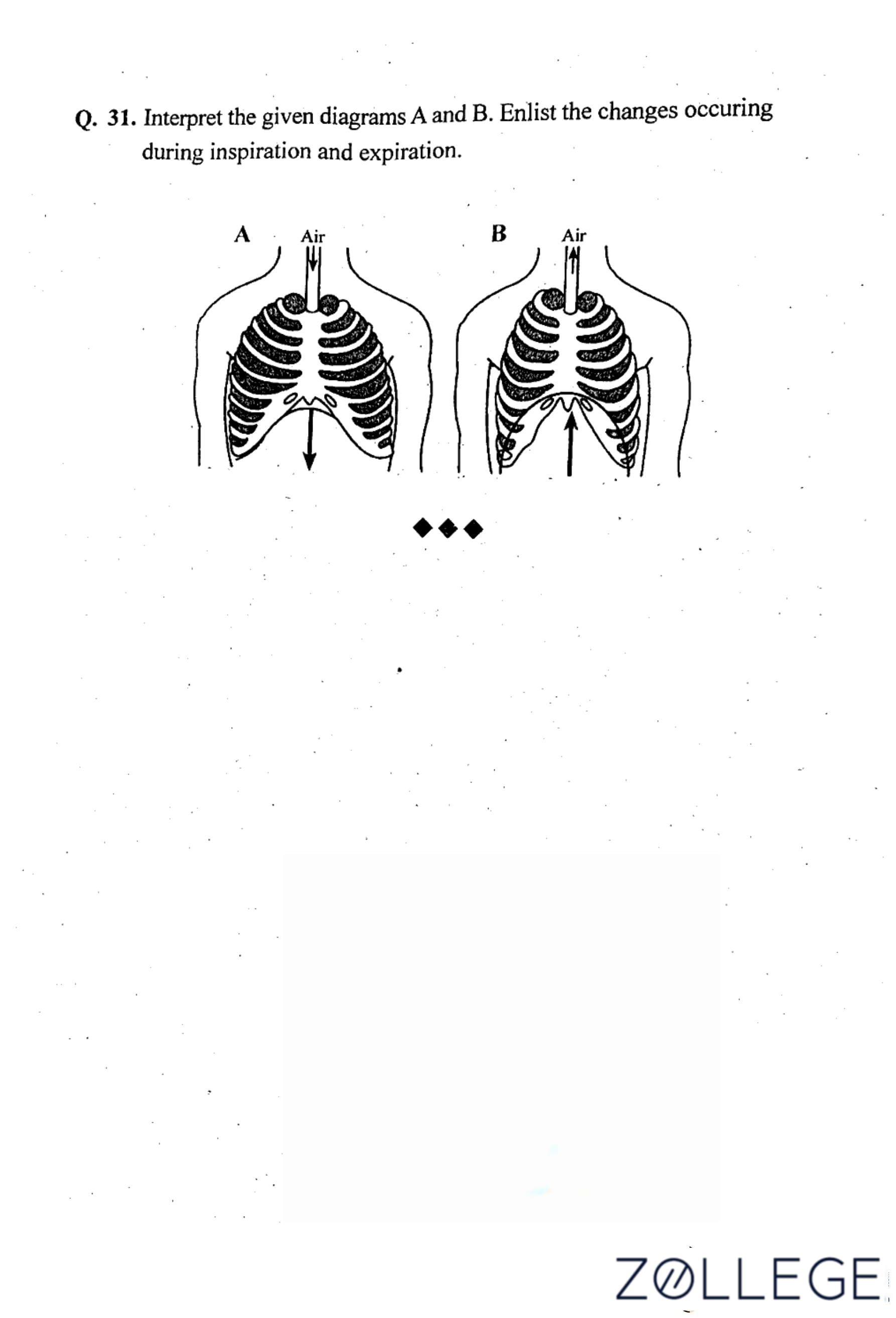
Interpret the given diagrams A and B. Enlist the changes occurring during inspiration and expiration.

View Solution
Interpretation of Diagrams:
The given diagrams represent pulmonary ventilation, specifically inspiration (A) and expiration (B).


Diagram A - Inspiration (Inhalation):
The diaphragm contracts and moves downward.
The rib cage expands as the intercostal muscles contract.
The volume of the thoracic cavity increases, reducing pressure inside the lungs.
Air rushes into the lungs due to the pressure difference.
Diagram B - Expiration (Exhalation):
The diaphragm relaxes and moves upward.
The rib cage moves downward and inward as intercostal muscles relax.
The volume of the thoracic cavity decreases, increasing pressure inside the lungs.
Air is pushed out of the lungs.
\begin{table[h]
\centering
\begin{tabular{ |p{3cm||p{3cm|p{3cm|p{3cm|
\hline
Feature & Inspiration (A) & Expiration (B)
\hline
Diaphragm & Contracts, moves down & Relaxes, moves up
\hline
Rib Cage & Expands outward & Moves inward
\hline
Thoracic Volume & Increases & Decreases
\hline
Air Pressure in Lungs & Decreases & Increases
\hline
Air Movement & Inhaled into lungs & Exhaled from lungs
\hline
\end{tabular
\end{table Quick Tip: Inspiration is an active process requiring muscle contraction, whereas expiration is a passive process due to muscle relaxation.
*The article might have information for the previous academic years, please refer the official website of the exam.