
Maharashtra Board 2024 Class 12 Psychology Question Paper PDF - Check Solutions with Answer Key Pdf (48-J-962)


Content Writer | Updated On - Feb 26, 2025
Maharashtra Board Class 12 2024 Psychology Question Paper PDF for free download. Conducted by MSBSHSE in March 2024, the exam, worth 80 marks and lasting 3 hours, assessed students on psychological concepts and theories. Based on initial student reactions and trending discussions on X in February 2025, the Maharashtra Board Class 12 Psychology 2024 question paper was rated Moderate. Topics like Intelligence, Psychological Disorders, and Positive Psychology were Easy to Moderate, while First Aid in Mental Health and Psychological Testing were Moderate to Difficult.
Maharashtra Board Class 12 Psychology Question Paper 2024 with Answer Key (48-J-962)
Candidates can use the link below to download the Maharashtra Board Class 12 Psychology (48-J-962) Question Paper with detailed solutions.
| Maharashtra Class 12 2024 Psychology Question Paper With Answer Key |  Download Download |
Check Solutions |
Maharashtra Board Class 12 Psychology Question Paper With Solutions
Question 1:
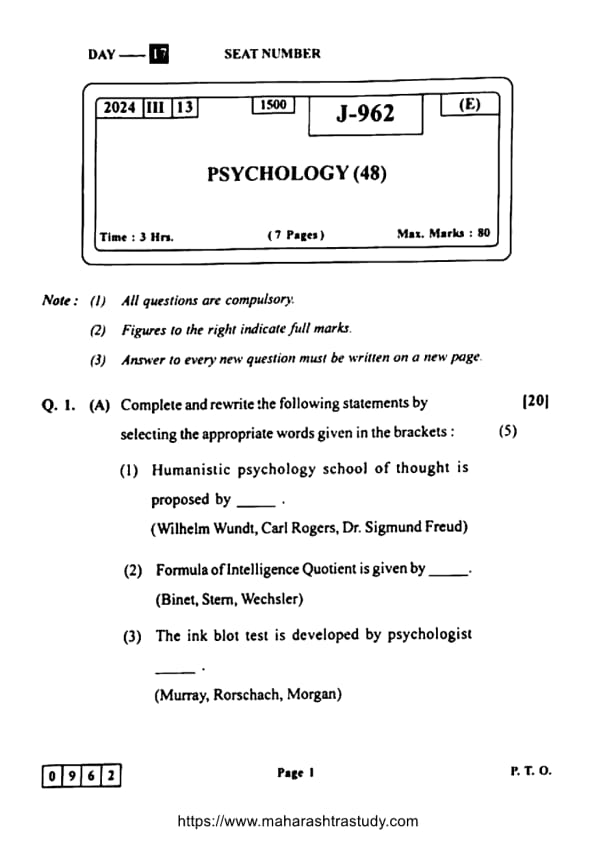
Humanistic psychology school of thought is proposed by ___.
View Solution
Carl Rogers proposed the Humanistic psychology school of thought, which emphasizes self-actualization and the intrinsic potential of individuals.
Quick Tip: Humanistic psychology focuses on personal growth, free will, and the human potential for self-improvement.
Formula of Intelligence Quotient is given by ___.
View Solution
William Stern introduced the Intelligence Quotient (IQ) formula, which is calculated as (Mental Age/Chronological Age) × 100. This formula helps measure an individual's cognitive abilities compared to their age group.
Quick Tip: IQ tests have evolved, with contributions from Binet, Stern, and Wechsler, but the formula was originally given by Stern.
The ink blot test is developed by psychologist ___.
View Solution
Hermann Rorschach developed the ink blot test, a projective psychological test used to analyze a person's personality, emotions, and subconscious mind. The test consists of ambiguous inkblots interpreted by the individual, revealing underlying thoughts and emotions.
Quick Tip: The Rorschach test is still used in psychology for assessing personality traits and thought disorders.
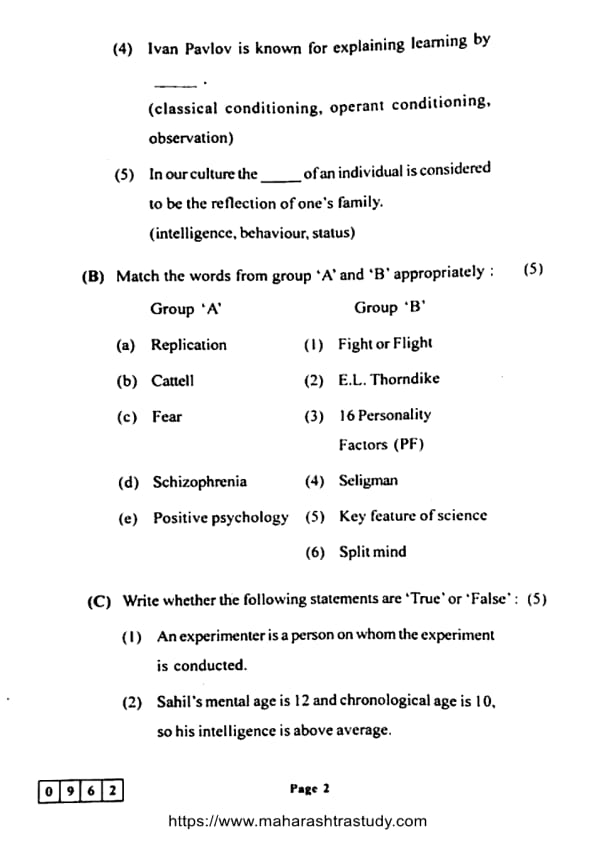
Ivan Pavlov is known for explaining learning by ___.
View Solution
Ivan Pavlov is famous for his work on classical conditioning, demonstrated in his experiment with dogs, where he conditioned them to salivate at the sound of a bell.
Quick Tip: Classical conditioning involves learning through association, where a neutral stimulus becomes associated with a reflex response.
In our culture, the ___ of an individual is considered to be the reflection of one’s family.
View Solution
In many cultures, an individual’s behaviour is often seen as a reflection of their family values and upbringing. This emphasizes the role of social conditioning and cultural expectations.
Quick Tip: Social behaviour is shaped by cultural norms, family influence, and societal expectations.
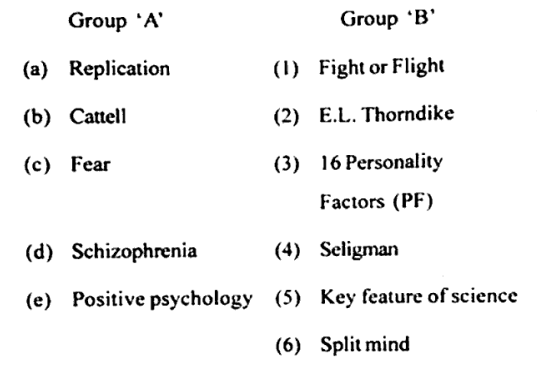
Match the words from group ‘A’ and ‘B’ appropriately:
View Solution
(a) Replication is a key feature of science, ensuring results can be verified. It is the process of repeating an experiment to confirm the reliability and accuracy of the results.
(b) Raymond Cattell is known for his 16 Personality Factors (PF) theory, which identifies 16 fundamental traits that make up human personality.
(c) Fear triggers the fight-or-flight response, a physiological reaction that prepares the body for immediate physical action when faced with a threat.
(d) Schizophrenia was historically referred to as "split mind" due to the disconnection between thoughts, emotions, and behaviors seen in the condition.
(e) Martin Seligman is a major proponent of positive psychology, a field focusing on human strengths, well-being, and happiness. He emphasizes the importance of personal fulfillment and thriving.
Quick Tip: When matching psychology terms, remember key contributors and their theories. Familiarize yourself with the concepts and terminology associated with each major figure.
Question 1:
An experimenter is a person on whom the experiment is conducted.
View Solution
An experimenter is the person who conducts the experiment, whereas the person on whom the experiment is conducted is called a "subject" or "participant."
Quick Tip: In research, an experimenter controls variables, while participants are studied.
Sahil’s mental age is 12 and chronological age is 10, so his intelligence is above average.
View Solution
IQ is calculated using the formula: \[ IQ = \left(\frac{Mental Age}{Chronological Age}\right) \times 100 \]
Here, \[ IQ = \left(\frac{12}{10}\right) \times 100 = 120 \]
Since an IQ score of 100 is considered average, a score of 120 is above average.
Quick Tip: IQ scores above 110 indicate above-average intelligence, while 90-110 is considered normal.
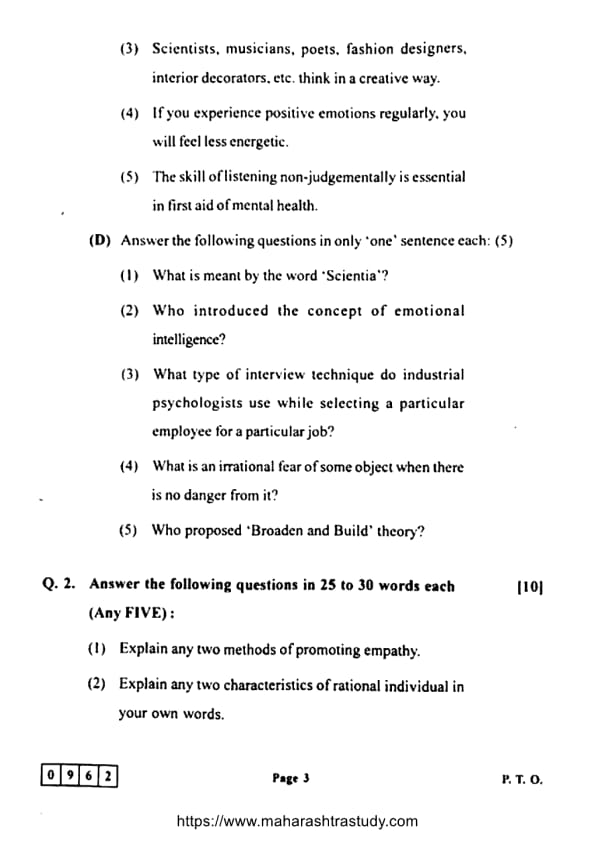
Scientists, musicians, poets, fashion designers, interior decorators, etc. think in a creative way.
View Solution
Creativity is essential for professionals in various fields such as science, music, literature, and design. It enables innovation, artistic expression, and problem-solving.
Quick Tip: Creative thinking involves originality, problem-solving, and innovation in different fields.
If you experience positive emotions regularly, you will feel less energetic.
View Solution
Positive emotions generally boost energy levels, motivation, and overall well-being. They contribute to better mental health and increased resilience.
Quick Tip: Experiencing positive emotions enhances well-being, motivation, and energy rather than reducing it.
The skill of listening non-judgementally is essential in first aid of mental health.
View Solution
Active and non-judgmental listening is a key skill in mental health support. It helps individuals feel heard, valued, and understood, which is crucial in emotional distress situations.
Quick Tip: Practicing empathetic and non-judgmental listening fosters trust and emotional well-being.
Question 1:
What is meant by the word ‘Scientia’?
View Solution
‘Scientia’ is a Latin word that means knowledge or science, representing systematic study and understanding.
Quick Tip: The word "science" is derived from the Latin term "scientia," meaning knowledge.
Who introduced the concept of emotional intelligence?
View Solution
The concept of emotional intelligence was introduced by Peter Salovey and John Mayer and later popularized by Daniel Goleman in his book "Emotional Intelligence."
Quick Tip: Emotional intelligence refers to the ability to recognize, understand, and manage emotions effectively.
What type of interview technique do industrial psychologists use while selecting a particular employee for a particular job?
View Solution
Industrial psychologists commonly use structured interviews, which involve standardized questions to ensure objective candidate evaluation.
Quick Tip: Structured interviews help reduce bias and improve hiring decisions in organizations.
What is an irrational fear of some object when there is no danger from it?
View Solution
An irrational fear of an object or situation without real danger is called a phobia, which is classified as an anxiety disorder in psychology.
Quick Tip: Common phobias include acrophobia (fear of heights) and claustrophobia (fear of confined spaces).
Who proposed ‘Broaden and Build’ theory?
View Solution
The ‘Broaden and Build’ theory was proposed by Barbara Fredrickson, explaining how positive emotions expand cognition and social resources.
Quick Tip: The Broaden and Build theory emphasizes the role of positive emotions in enhancing personal growth and well-being.
Question 1:
Explain any two methods of promoting empathy.
View Solution
Empathy can be promoted by active listening, where individuals focus on understanding others without judgment, and by practicing perspective-taking, which helps in seeing situations from another person’s viewpoint.
Quick Tip: Empathy improves interpersonal relationships by fostering understanding and emotional connection.
Explain any two characteristics of a rational individual in your own words.
View Solution
A rational individual makes decisions based on logic and reason rather than emotions. They also evaluate evidence carefully before forming judgments or conclusions.
Quick Tip: Rational thinking helps in problem-solving and making well-informed decisions.
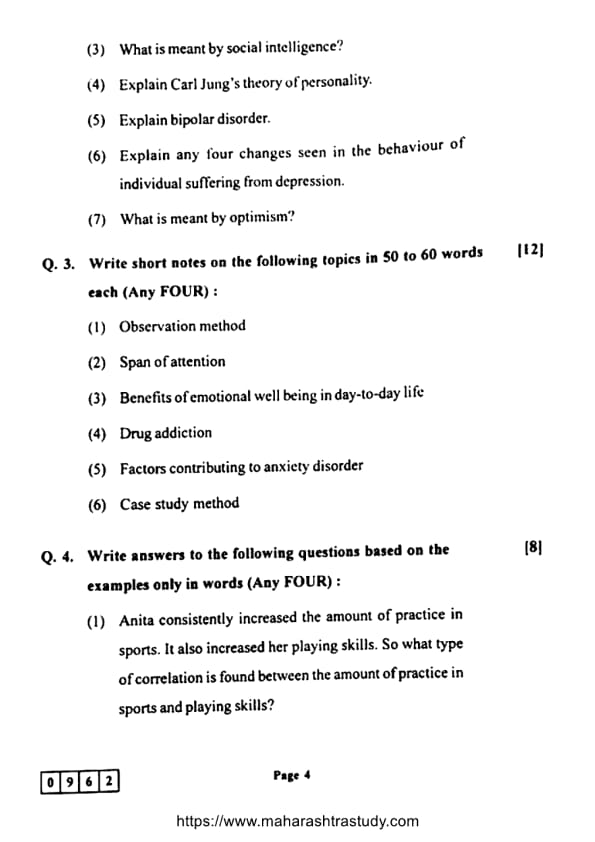
What is meant by social intelligence?
View Solution
Social intelligence refers to the ability to navigate social situations effectively, understand emotions, and communicate well with others in different social contexts.
Quick Tip: Social intelligence is crucial for building strong personal and professional relationships.
Explain Carl Jung’s theory of personality.
View Solution
Carl Jung’s theory of personality includes the concepts of introversion and extraversion, along with archetypes like the self, shadow, anima, and persona, which influence individual behavior.
Quick Tip: Jung’s personality theory helps understand individual differences and psychological traits.
Explain bipolar disorder.
View Solution
Bipolar disorder is a mental health condition characterized by extreme mood swings, including episodes of mania (high energy) and depression (low energy, sadness).
Quick Tip: Bipolar disorder can be managed with medication, therapy, and lifestyle adjustments.
Explain any four changes seen in the behaviour of individuals during adolescence.
View Solution
During adolescence, individuals experience mood swings, increased independence, peer influence, and identity exploration, leading to emotional and behavioral changes.
Quick Tip: Adolescence is a crucial phase for emotional and cognitive development.
What is meant by optimism?
View Solution
Optimism is a positive mindset where individuals expect favorable outcomes and focus on possibilities for growth and success despite challenges.
Quick Tip: Optimism enhances mental well-being and resilience, leading to a positive outlook on life.
Question 1:
Observation method
View Solution
The observation method is a research technique where psychologists study behavior in natural or controlled settings without interference. It helps in understanding real-life interactions and patterns. Observations can be structured (systematic and pre-planned) or unstructured (flexible and spontaneous). This method provides valuable insights but may suffer from observer bias and lack of control over variables.
Quick Tip: Observation is widely used in behavioral studies, child psychology, and market research.
Span of attention
View Solution
The span of attention refers to the duration an individual can focus on a task before losing concentration. It varies by age, cognitive ability, and environmental factors. Shorter attention spans affect learning, while techniques like mindfulness, eliminating distractions, and brain-training exercises can help improve it. A strong attention span enhances memory, productivity, and problem-solving skills.
Quick Tip: Digital distractions and multitasking can reduce attention span significantly.
Benefits of emotional well-being in day-to-day life
View Solution
Emotional well-being leads to improved mental health, better stress management, and stronger relationships. It helps individuals stay optimistic, resilient, and motivated. Positive emotional health enhances work productivity, decision-making, and self-esteem. Engaging in self-care activities, building social support, and practicing mindfulness contribute to emotional stability, reducing anxiety and depression, and promoting overall life satisfaction.
Quick Tip: A balanced lifestyle with self-care and emotional regulation boosts well-being.
Drug addiction
View Solution
Drug addiction is a chronic condition where individuals develop dependency on substances like alcohol, nicotine, or narcotics. It affects brain function, leading to compulsive behaviors and health issues. Social, genetic, and environmental factors contribute to addiction. Treatment includes therapy, medication, and rehabilitation. Prevention through awareness, counseling, and support systems plays a crucial role in overcoming addiction.
Quick Tip: Early intervention and family support are key to addiction recovery.
Factors contributing to anxiety disorder
View Solution
Anxiety disorders develop due to genetic predisposition, stressful life events, imbalances in brain chemicals, and personality traits. Prolonged stress, traumatic experiences, and lack of coping mechanisms worsen anxiety. Symptoms include excessive worry, restlessness, and rapid heartbeat. Treatment includes cognitive-behavioral therapy (CBT), medication, and relaxation techniques to help manage symptoms and improve overall mental health.
Quick Tip: Regular exercise, therapy, and meditation help in reducing anxiety.
Case study method
View Solution
The case study method is an in-depth research approach that examines a single individual, group, or event to gain detailed insights. It is widely used in psychology to study rare conditions and behaviors. Case studies provide rich qualitative data but may lack generalizability. They help develop theories, understand complex issues, and explore long-term patterns of behavior.
Quick Tip: Case studies are essential in clinical psychology and forensic investigations.
Question 1:
Anita consistently increased the amount of practice in sports. It also increased her playing skills. So what type of correlation is found between the amount of practice in sports and playing skills?
View Solution
The correlation found between the amount of practice in sports and playing skills is a positive correlation. As the amount of practice increases, the performance in playing skills also improves, indicating a direct relationship between the two variables.
Quick Tip: A positive correlation means both variables increase or decrease together.
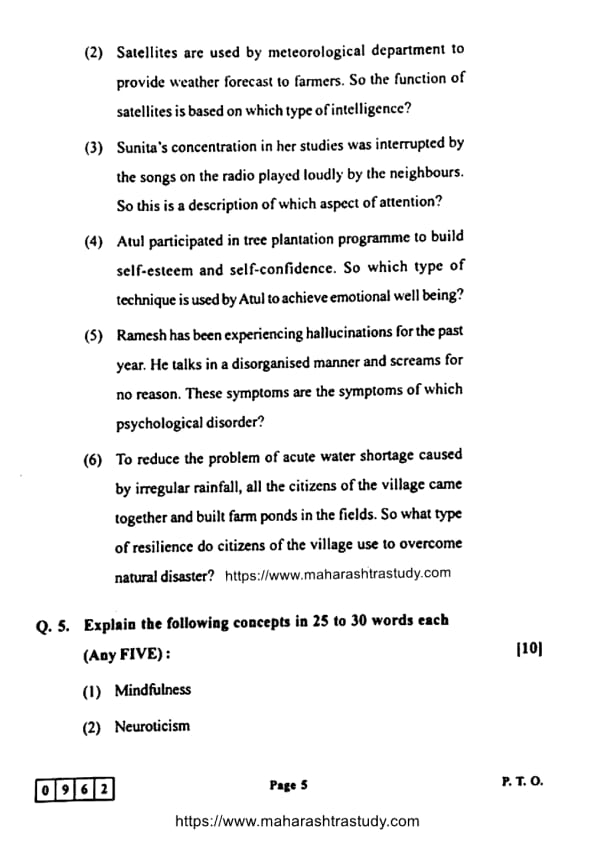
Satellites are used by the meteorological department to provide weather forecasts to farmers. So the function of satellites is based on which type of intelligence?
View Solution
The function of satellites in meteorology is based on naturalistic intelligence. This type of intelligence involves understanding patterns in nature, weather forecasting, and the ability to analyze environmental changes.
Quick Tip: Naturalistic intelligence is essential in meteorology, farming, and environmental sciences.
Sunita’s concentration in her studies was interrupted by the songs on the radio played loudly by the neighbors. So this is a description of which aspect of attention?
View Solution
This situation describes divided attention, where Sunita's focus is disturbed by an external distraction. Divided attention occurs when an individual has to split their focus between multiple stimuli, often leading to reduced efficiency in the primary task.
Quick Tip: Minimizing distractions improves concentration and enhances focus on tasks.
Atul participated in a tree plantation program to build self-esteem and self-confidence. So which type of technique is used by Atul to achieve emotional well-being?
View Solution
Atul is using altruism as a technique to enhance emotional well-being. Helping others through activities like tree plantation fosters a sense of purpose, increases self-worth, and promotes mental well-being by creating positive social connections.
Quick Tip: Acts of kindness and community service boost emotional health and self-esteem.
Ramesh has been experiencing hallucinations for the past year. He talks in a disorganized manner and screams for no reason. These symptoms are symptoms of which psychological disorder?
View Solution
Ramesh’s symptoms indicate schizophrenia, a severe mental disorder characterized by hallucinations, disorganized thinking, delusions, and impaired perception of reality. It affects cognition, emotions, and behavior, often requiring long-term medical treatment and therapy.
Quick Tip: Schizophrenia is treated using antipsychotic medications, therapy, and social support.
To reduce the problem of acute water shortage caused by irregular rainfall, all the citizens of the village came together and built farm ponds in the fields. So what type of resilience do citizens of the village use to overcome natural disaster?
View Solution
The citizens of the village demonstrate community resilience, which refers to the collective ability of a community to adapt, recover, and implement long-term solutions to environmental challenges like natural disasters. By working together and building farm ponds, they ensure sustainable water management and disaster preparedness.
Quick Tip: Community resilience involves cooperation, resource management, and sustainable solutions.
Question 1:
Mindfulness
View Solution
Mindfulness is the practice of staying present and fully engaged in the current moment without judgment. It helps reduce stress, improve focus, and enhance emotional well-being by promoting awareness and self-regulation.
Quick Tip: Practicing mindfulness daily can improve mental clarity and emotional stability.
Neuroticism
View Solution
Neuroticism is a personality trait characterized by emotional instability, anxiety, mood swings, and excessive worry. People with high neuroticism often experience stress and negative emotions more intensely than others.
Quick Tip: Managing neuroticism involves stress management, therapy, and positive lifestyle habits.
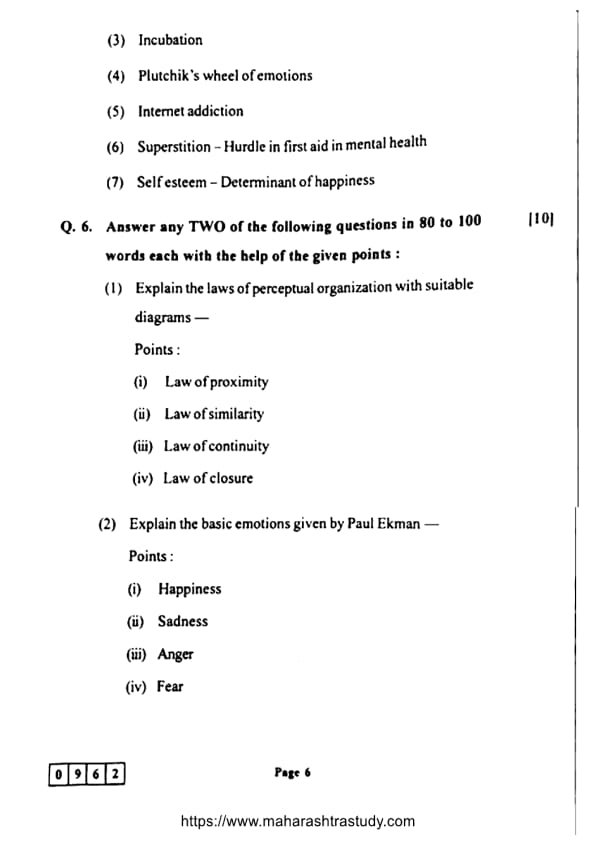
Incubation
View Solution
Incubation is a problem-solving process where an individual takes a break from actively thinking about an issue, allowing unconscious processing to generate creative solutions later.
Quick Tip: Taking breaks during problem-solving can enhance creativity and idea generation.
Plutchik’s wheel of emotions
View Solution
Plutchik’s wheel of emotions is a model that categorizes eight basic emotions: joy, trust, fear, surprise, sadness, disgust, anger, and anticipation, showing their intensity and interrelation.
Quick Tip: Understanding emotions helps in emotional intelligence and better interpersonal relationships.
Internet addiction
View Solution
Internet addiction is excessive use of the internet, leading to neglect of daily responsibilities, social withdrawal, and mental health issues. It affects productivity, sleep, and emotional well-being.
Quick Tip: Limiting screen time and engaging in offline activities can help reduce internet addiction.
Superstition – Hurdle in first aid in mental health
View Solution
Superstition can hinder mental health care by promoting myths and preventing scientific treatment. Belief in supernatural causes of mental illness delays medical intervention, worsening the condition.
Quick Tip: Awareness and education help in overcoming superstitions related to mental health.
Self-esteem – Determinant of happiness
View Solution
Self-esteem is the confidence and self-worth a person holds. High self-esteem leads to positive thinking, better relationships, and overall happiness, while low self-esteem can cause insecurity and anxiety.
Quick Tip: Building self-esteem involves self-acceptance, setting goals, and maintaining a positive outlook.
Question 1:
Explain the laws of perceptual organization with suitable diagrams.
Points:
(i) Law of proximity
(ii) Law of similarity
(iii) Law of continuity
(iv) Law of closure
View Solution
The laws of perceptual organization were proposed by Gestalt psychologists to explain how humans naturally perceive patterns and structures.
i) Law of Proximity: Objects that are close to each other are perceived as a group. For example, words in a sentence appear together rather than as separate letters.
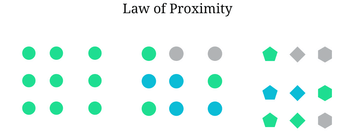
ii) Law of Similarity: Similar objects, such as shapes, colors, or sizes, are perceived as part of the same group. This principle is widely used in design and pattern recognition.

iii) Law of Continuity: The mind prefers continuous, smooth patterns rather than abrupt changes. For example, a flowing curve is perceived as one continuous shape rather than separate parts.
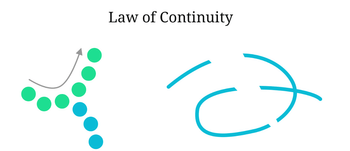
iv) Law of Closure: When a shape or figure is incomplete, the brain automatically fills in the gaps to perceive a whole object. This explains how we see familiar figures in incomplete drawings.
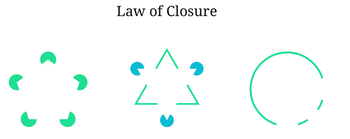
These principles are widely applied in visual perception, graphic design, and psychology to enhance organization and pattern recognition.
Quick Tip: Gestalt laws help in understanding how perception influences design, logos, and daily interactions.
Explain the basic emotions given by Paul Ekman.
Points:
(i) Happiness
(ii) Sadness
(iii) Anger
(iv) Fear
View Solution
Paul Ekman identified six basic emotions that are universally recognized across cultures. Four of them are:
Happiness: A positive emotional state linked to pleasure and life satisfaction. It promotes well-being and social bonding.
Sadness: An emotional response to loss or disappointment. It helps in processing grief and seeking support from others.
Anger: A reaction to perceived threats or injustice. While it can motivate action, excessive anger can lead to conflict.
Fear: A survival mechanism that triggers the fight-or-flight response in dangerous situations. It helps in avoiding harm.
These emotions play a crucial role in human behavior, communication, and survival.
Quick Tip: Ekman’s emotions are universal and are often studied in facial expression research.
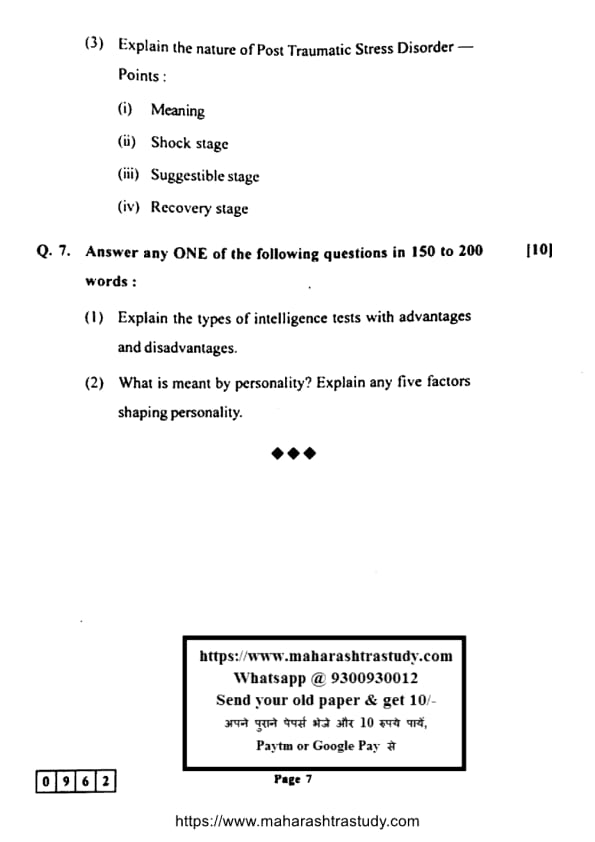
Explain the nature of Post-Traumatic Stress Disorder (PTSD).
Points:
(i) Meaning
(ii) Shock stage
(iii) Suggestible stage
(iv) Recovery stage
View Solution
Post-Traumatic Stress Disorder (PTSD) is a mental health condition that occurs after experiencing or witnessing a traumatic event. It affects emotions, cognition, and daily functioning.
Shock stage: The initial reaction includes numbness, disbelief, and emotional detachment from reality.
Suggestible stage: The individual experiences heightened anxiety, flashbacks, and intrusive thoughts related to the trauma. They may become highly reactive to triggers.
Recovery stage: With therapy, support, and coping strategies, individuals gradually regain emotional stability and learn to process the trauma in a healthier way.
PTSD is managed through cognitive-behavioral therapy (CBT), counseling, and medication.
Quick Tip: Early intervention and social support play a key role in PTSD recovery.
Question 1:
Explain the types of intelligence tests with advantages and disadvantages.
View Solution
Intelligence tests measure cognitive abilities, problem-solving skills, and logical reasoning. They are classified into two main types:
1. Verbal Intelligence Tests: These tests assess language skills, comprehension, reasoning, and verbal memory. Examples include the Stanford-Binet Intelligence Test and the Wechsler Adult Intelligence Scale (WAIS).
2. Non-Verbal Intelligence Tests: These tests measure reasoning and problem-solving abilities using symbols and patterns, making them useful for individuals with language difficulties. Examples include Raven’s Progressive Matrices and Culture-Fair Tests.
Advantages:
- Helps in assessing cognitive abilities and educational planning.
- Useful in diagnosing learning disabilities and intellectual potential.
- Non-verbal tests reduce cultural and language biases.
Disadvantages:
- May not accurately measure creativity and emotional intelligence.
- Can be influenced by test anxiety and environmental factors.
- Cultural and socio-economic differences may affect test performance.
Intelligence tests are widely used in education, employment, and psychological assessments but must be interpreted carefully to avoid bias and misrepresentation.
Quick Tip: Intelligence tests assess cognitive skills but should be combined with other measures for a complete evaluation.
What is meant by personality? Explain any five factors shaping personality.
View Solution
Personality refers to an individual’s unique patterns of thinking, feeling, and behaving. It is shaped by biological, psychological, and social influences.
Factors Influencing Personality:
1. Heredity: Genetic factors play a crucial role in determining personality traits such as temperament, emotional stability, and intelligence.
2. Environment: Social surroundings, culture, and upbringing influence personality development. Family interactions and educational experiences shape an individual’s behavior.
3. Experiences: Life events, challenges, and personal experiences contribute to personality growth. Positive and negative experiences impact confidence, resilience, and attitude.
4. Social Relationships: Interactions with peers, teachers, and colleagues influence personality. Social acceptance and group dynamics affect self-esteem and behavior.
5. Culture and Society: Societal norms, traditions, and values shape an individual’s way of thinking and acting. Different cultures promote different personality traits and behaviors.
Personality is a dynamic and evolving aspect of human nature, influenced by both innate traits and external experiences. Understanding personality helps in self-awareness, career choices, and interpersonal relationships.
Quick Tip: Personality development is a lifelong process influenced by internal and external factors.
*The article might have information for the previous academic years, please refer the official website of the exam.