Sir Jamsetjee Jejeebhoy (JJ) School of Art, Architecture and Design in Mumbai is a government art institution founded in 1857. It is among Asia’s oldest fine arts schools. The institution was previously affiliated with the University of Mumbai before the UGC awarded it de novo Deemed to be University status in 2023. This status took effect from the 2024-25 academic session, making it Maharashtra’s only government-run deemed-to-be university.
The Government of Maharashtra funds and manages the institution, which also has AICTE approval. Following its recent change to deemed university status, Sir JJ School of Art did not feature in NIRF or other major Indian rankings as of 2025.
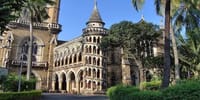
The campus stands at 78, Dr. D. N. Road, Fort, Mumbai 400001, within South Mumbai’s heritage precinct. Its colonial-era premises include a Grade I heritage building, large studios, sculpture courts and workshop halls.
- The 4-year Bachelor of Fine Arts (BFA) has 75 seats and six specialisations:
- Painting, Sculpture, Ceramics, Metal Work, Textile Design and Interior Decoration
- The 2-year Master of Fine Arts (MFA) is available in Painting, Sculpture, Ceramics, Graphics, Metal Work, Interior Decoration, Portrait and Textile.
- Diploma options include the 2-year Diploma in Art Teacher, Diploma in Art Education and Diploma in Sculpture.
- The certificate-level offering is the Certificate in Art Master.
Under the government quota, the complete BFA fee is INR 42,200 for four years, while the two-year MFA costs INR 64,000. The institution does not organise conventional campus placements. Its graduates have instead established careers worldwide in fine arts, design, architecture, cinema and art education. Its noted alumni include MF Hussain, Dadasaheb Phalke, BV Doshi, Amol Palekar and Nana Patekar. BV Doshi received the Pritzker Architecture Prize in 2018.
- Sir JJ School of Art Admission Dates 2027-28
- Sir JJ School of Art Courses and Fees
- Sir JJ School of Art Admission Process
- Sir JJ School of Art Placements and Career Outcomes
- Sir JJ School of Art Campus and Infrastructure
- Sir JJ School of Art vs MS University Baroda vs Jamia Fine Arts
- Sir JJ School of Art FAQs
Sir JJ School of Art Admission Dates 2027-28
BFA applicants enter through the Maharashtra Applied Arts and Crafts Common Entrance Test, known as MAH AAC CET and administered by the Maharashtra State CET Cell. The institution separately selects MFA students through an entrance assessment and portfolio review. The following schedule for the 2027-28 cycle is tentative, and applicants should follow the official MAH AAC CET notification for confirmed dates.
| Event | Date |
|---|---|
| MAH AAC CET 2027 registration begins | April 2027 |
| MAH AAC CET 2027 registration ends | May 2027 |
| MAH AAC CET 2027 examination | June 2027 |
| Merit list publication and seat allotment | June to July 2027 |
| MFA entrance assessment and portfolio review | June to July 2027 |
Subject to revision. Kindly check with the official sources to confirm
Sir JJ School of Art Courses and Fees
The main undergraduate course is the four-year BFA, with 75 seats divided among six specialisations. At the postgraduate level, the two-year MFA covers eight areas of study. Diploma and certificate courses also support art teachers, practising artists and educators. Government funding keeps regular quota fees subsidised.
| Course | Duration | Seats | Eligibility | Total Fees (Govt Quota) |
|---|---|---|---|---|
| BFA in Painting, Sculpture, Ceramics, Metal Work, Textile Design or Interior Decoration | 4 years | 75 across 6 specialisations | 10+2 in any stream and MAH AAC CET | INR 42,200 |
| MFA in 8 specialisations | 2 years | Limited | BFA or an equivalent qualification, entrance test and portfolio | INR 64,000 |
| Diploma in Art Teacher | 2 years | Limited | 10+2 or graduation with an art background | INR 15,000 |
| Diploma in Art Education | 1 year | Limited | BFA or an equivalent qualification | INR 7,500 |
| Diploma in Sculpture | 1 year | Limited | Art background | INR 10,000 |
| Certificate in Art Master | Short-term | Limited | Art background | INR 15,000 |
Subject to revision. Kindly check with the official sources to confirm
Textile Design and Interior Decoration can lead BFA students towards work in the design sector. Ceramics and Metal Work are uncommon undergraduate specialisations in India and are available at few institutions of this level. Fees are higher for NRI and management quota seats. Regular government quota study remains among the least expensive options in India for premium fine arts education.
Sir JJ School of Art Admission Process
BFA selection uses MAH AAC CET, a Maharashtra state-level examination for applied arts and crafts. Based on exam scores, the Maharashtra DTE assigns seats through its Centralised Admission Process, or CAP. MFA and shorter programmes follow separate institution-level selection methods.
BFA (Undergraduate)
- Complete 10+2 or an equivalent examination in any stream from a recognised board.
- Secure at least 45% aggregate marks in Class 12. The minimum is 40% for reserved category applicants.
- Appear for MAH AAC CET and obtain a valid score.
- Register for the DTE Maharashtra online CAP rounds and submit course preferences.
- Receive a seat according to the MAH AAC CET percentile, preference choices and CAP allotment. The total BFA intake is 75 seats across six specialisations.
Students choose from Painting, Sculpture, Ceramics, Metal Work, Textile Design and Interior Decoration. Depending on the intake arrangement, the specialisation may be assigned through admission preferences or after the first year. Applicants should have a genuine interest in visual arts. Previous art training is not compulsory, but it can strengthen an application.
MFA (Postgraduate)
MAH AAC CET is not used for MFA admission. Applicants need a BFA or an equivalent degree from a recognised institution. The school conducts an entrance test to evaluate art-making ability and also reviews each applicant’s portfolio. The eight available areas are Painting, Sculpture, Ceramics, Graphics, Metal Work, Interior Decoration, Portrait and Textile. Each specialisation has limited seats.
Diploma and Certificate Programmes
Applicants for the Diploma in Art Teacher need either a 10+2 background in arts or a BFA. The Diploma in Art Education and Certificate in Art Master serve practising artists and educators who have a relevant art background. Admission is based on merit and an institutional interview.
Sir JJ School of Art Placements and Career Outcomes
Sir JJ School of Art has no standard campus placement system. Students build portfolios and commonly enter professional life through exhibitions, commissioned projects, design companies, educational organisations, or film and media work instead of organised recruitment drives.
An alumni tradition extending across more than 165 years connects the institution with Indian art history. BV Doshi became the first Indian architect to win the Pritzker Architecture Prize in 2018. Dadasaheb Phalke, a BFA graduate, is known as the father of Indian cinema, while MF Hussain became one of India’s most celebrated painters worldwide. Film personalities Amol Palekar and Nana Patekar also trained at the school.
| Career Pathway | Domain |
|---|---|
| Fine Arts Practice | Painting, sculpture and printmaking through gallery representation, commissions and public art |
| Design Industry | Textile design, interior design, product and metal craft, and jewellery design |
| Film and Media | Art direction, production design, costume design, animation and visual effects |
| Art Education | Schools, colleges, cultural organisations and government art academies |
| Arts Administration | Museum curation, gallery management and cultural heritage conservation |
| Commercial Arts | Graphic design, illustration, advertising and digital media |
BFA graduates from Textile Design and Interior Decoration have worked with design firms in Mumbai, Pune and Bengaluru, as well as export-focused textile manufacturers. Ceramics and Metal Work graduates enter specialised areas such as studio craft, export design and luxury goods. Because the school is in Fort, students are close to Mumbai’s commercial art, media and design sectors.
Sir JJ School of Art Campus and Infrastructure
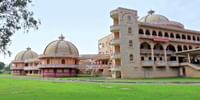
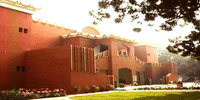
The campus occupies a landmark Grade I heritage building at 78, Dr. D. N. Road, Fort, Mumbai. The original structure follows neo-Gothic Indo-Saracenic architecture. Facilities include spacious painting and sculpture studios, a sculpture garden, a print studio and separate craft workshops for ceramics, metalwork and textile fabrication. High ceilings allow the studios to receive the natural north light suited to fine arts work.
A specialised fine arts library holds historical artworks, manuscripts and reference resources on Indian and Western art history. Three studio auditoria host critiques, exhibitions and public talks by practising artists and designers. Chhatrapati Shivaji Maharaj Vastu Sangrahalaya, formerly the Prince of Wales Museum, is a short walk from the campus and offers students additional study resources as one of India’s leading art museums.
Sir JJ School of Art vs MS University Baroda vs Jamia Fine Arts
Students comparing leading government fine arts institutions often consider Sir JJ School of Art alongside the Faculty of Fine Arts at MS University of Baroda in Vadodara and the Faculty of Fine Arts at Jamia Millia Islamia in New Delhi. Each institution receives government funding, has a long history and follows a highly competitive admission process.
| Parameter | Sir JJ School of Art, Mumbai | Faculty of Fine Arts, MS University Baroda | Faculty of Fine Arts, Jamia Millia Islamia, Delhi |
|---|---|---|---|
| Established | 1857 | 1950 | 1960 (faculty established) |
| Type | Deemed University under the Maharashtra Government | Central University faculty | Central University faculty |
| BFA Specialisations | Painting, Sculpture, Ceramics, Metal Work, Textile and Interior Decoration | Painting, Sculpture, Printmaking, Applied Art and Art History | Painting, Sculpture, Printmaking, Applied Art and Photography |
| BFA Fees (Govt Quota) | INR 42,200 for 4 years | Central University fees, which are very low | Central University fees, which are very low |
| Admission Route | State-level MAH AAC CET | CUET UG and university test | CUET UG and entrance test |
| Location Advantage | South Mumbai, close to the design and media industry | Vadodara, with an established art community | New Delhi, near national art and cultural institutions |
Sir JJ School of Art is distinguished by its long history, Mumbai location and applied craft subjects such as Ceramics and Metal Work. MS University Baroda’s Faculty of Fine Arts is widely recognised for academic strength and has educated many national award-winning artists. Jamia’s Faculty of Fine Arts suits students who prefer New Delhi and central government university status. Since entry to all three is very competitive, applicants should weigh their preferred subject and study city along with institutional reputation.
Sir JJ School of Art FAQs
Ques. When did Sir JJ School of Art receive deemed university status?
Ans. The UGC granted Sir JJ School of Art de novo Deemed to be University status in 2023. Now named Sir JJ School of Art, Architecture and Design (Deemed to be University), it is Maharashtra’s only government-run deemed-to-be university. The status became operational in the 2024-25 academic session.
Ques. What is the selection route for the BFA at Sir JJ School of Art?
Ans. Applicants must take MAH AAC CET, the Maharashtra Applied Arts and Crafts Common Entrance Test conducted by the Maharashtra State CET Cell. They need at least 45% aggregate marks in 10+2. DTE Maharashtra then assigns seats through CAP using MAH AAC CET scores and the choices submitted by applicants.
Ques. How much does the complete Sir JJ School of Art BFA cost?
Ans. The government quota fee for the entire four-year BFA is INR 42,200. Government of Maharashtra funding makes this one of India’s lowest fee structures among premier fine arts institutions.
Ques. How many students can enter the BFA programme?
Ans. Sir JJ School of Art has a total BFA intake of 75 seats. These seats cover Painting, Sculpture, Ceramics, Metal Work, Textile Design and Interior Decoration, making admission highly competitive.
Ques. Which professional fields are open to BFA graduates from Sir JJ School of Art?
Ans. Graduates work in painting, sculpture, printmaking, textile and interior design, metal craft, art direction, production design, art education, gallery management and commercial art. Internationally known artists, architects, designers and filmmakers are part of the institution’s alumni community.
Ques. Does Sir JJ School of Art currently have an NIRF rank?
Ans. Sir JJ School of Art does not currently appear in NIRF rankings. Its institutional structure changed when deemed university operations began in 2024-25, and participation under the new structure is expected in later ranking cycles.
Ques. Which well-known people studied at Sir JJ School of Art?
Ans. Alumni include MF Hussain, the celebrated Indian painter; Dadasaheb Phalke, known as the father of Indian cinema; BV Doshi, the first Indian recipient of the Pritzker Architecture Prize in 2018; actor and filmmaker Amol Palekar; and actor Nana Patekar. For more than a century, graduates of the school have influenced Indian art, cinema, architecture and design.