
CBSE Class 10 Banking and Insurance 2024 Question Paper with Solution PDF (Available)


Content Strategist | Updated On - Jan 5, 2025
CBSE Class 10 Question Papers are the most important study material for effective exam preparation. We at Zollege have provided all CBSE Class 10 Previous Year Papers with Solution PDFs here.
Students can freely download the CBSE Class 10 previous year's question paper PDFs along with their solutions here. We strongly encourage CBSE 10 aspirants to scan through all the CBSE Class 10 Question Paper to know the overall difficulty level, CBSE Class 10 Syllabus and understand the changes in CBSE Class 10 Exam Pattern over the years.
CBSE Class 10 Banking and Insurance 2024 Question Paper with Solution PDF
| CBSE Class 10 Banking and Insurance 2024 Question Paper with Solution PDF |  Download Download |
Check Solution |
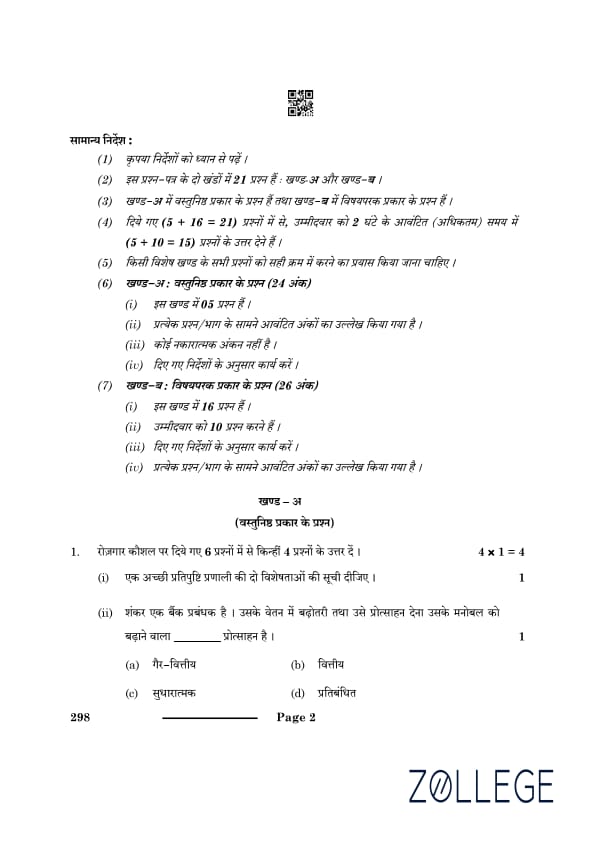
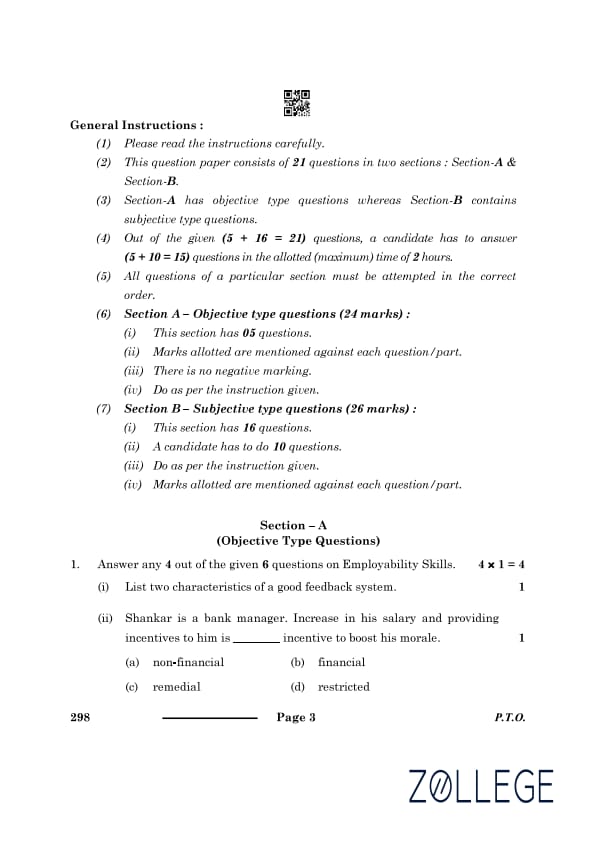
Question 1: Answer any 4 out of the given 6 questions on Employability Skills.
(i) List two characteristics of a good feedback system.
Read More
1. Specificity: Feedback should be clear and specific, focusing on particular areas of improvement or success.
2. Constructiveness: Feedback should aim to help the recipient improve, avoiding criticism and promoting positive change.
Good feedback should always focus on actionable advice and encourage improvement.
(ii) Shankar is a bank manager. Increase in his salary and providing incentives to him is ……….. incentive to boost his morale.
- (a) non-financial
- (b) financial
- (c) remedial
- (d) restricted
Solution: A salary increase and monetary incentives are forms of financial motivation.
Read More
These incentives provide direct financial benefits to the employee, motivating them to perform better and stay engaged in their role. Financial incentives involve monetary rewards, while non-financial incentives include praise, recognition, or opportunities for growth.
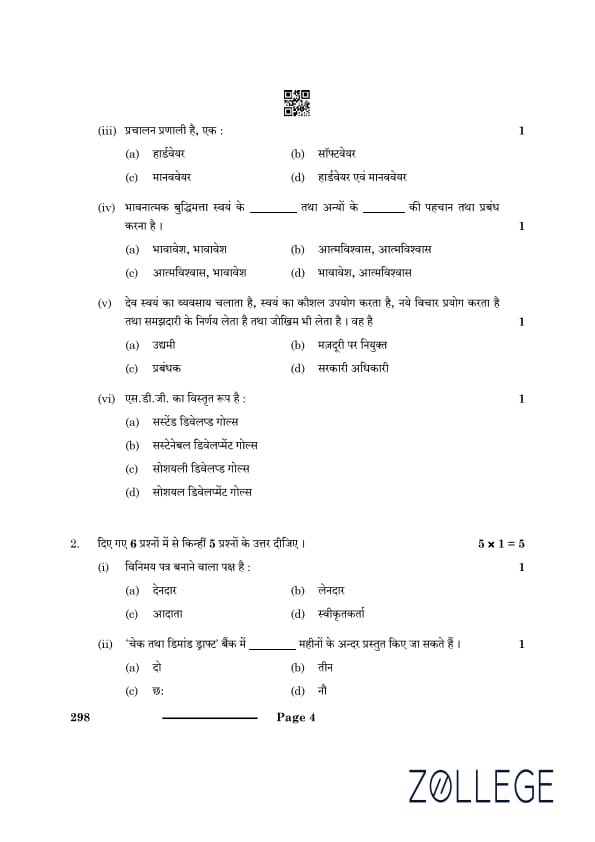
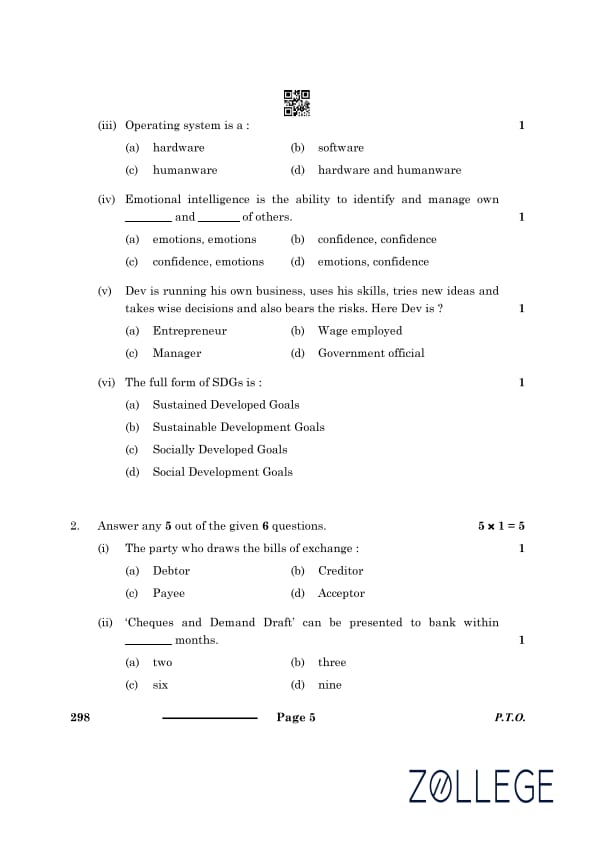
(iii) Operating system is a:
- (a) hardware
- (b) software
- (c) humanware
- (d) hardware and humanware
Solution: An operating system (OS) is a type of software that acts as an interface between the user and the hardware of a computer.
Read More
Examples include Windows, macOS, and Linux. The OS manages system resources and provides a platform for running applications. Remember that software includes programs and operating systems, while hardware refers to physical components.
(iv) Emotional intelligence is the ability to identify and manage own ……... and ………. of others.
- (a) emotions, emotions
- (b) confidence, confidence
- (c) confidence, emotions
- (d) emotions, confidence
Solution: Emotional intelligence refers to the ability to recognize, understand, and manage one's emotions as well as the emotions of others.
Read More
This skill leads to better interpersonal relationships and is crucial for personal and professional success. Emotional intelligence focuses on understanding feelings, both your own and others', to build stronger relationships.
(v) Dev is running his own business, uses his skills, tries new ideas and takes wise decisions and also bears the risks. Here Dev is?
- (a) Entrepreneur
- (b) Wage employed
- (c) Manager
- (d) Government official
Solution: An entrepreneur is someone who starts and runs their own business, takes risks, and innovates to succeed.
Read More
Dev fits this definition as he is running his business and making decisions independently. Entrepreneurs are risk-takers and decision-makers who create new business opportunities.
(vi) The full form of SDGs is:
- (a) Sustained Developed Goals
- (b) Sustainable Development Goals
- (c) Socially Developed Goals
- (d) Social Development Goals
Solution: The Sustainable Development Goals (SDGs) are a set of 17 global goals established by the United Nations.
Read More
These goals address challenges like poverty, inequality, climate change, and environmental sustainability. SDGs aim to create a better and more sustainable future for all.
Question 2: Answer any 5 out of the given 6 questions.
(i) The party who draws the bills of exchange:
- (a) Debtor
- (b) Creditor
- (c) Payee
- (d) Acceptor
Solution: The creditor is the party who draws the bill of exchange.
Read More
The creditor has the right to demand payment from the debtor and thus creates (or draws) the bill. Remember that the drawer (the party drawing the bill) is always the creditor, while the drawee is the debtor responsible for payment.
(ii) 'Cheques and Demand Draft' can be presented to the bank within \_\_\_\_\_ months.
- (a) two
- (b) three
- (c) six
- (d) nine
Solution: Cheques and demand drafts are valid for a maximum period of six months from the date of issue.
Read More
After this period, they are considered stale and cannot be processed. Always check the date on cheques or demand drafts to ensure they are within the six-month validity period.
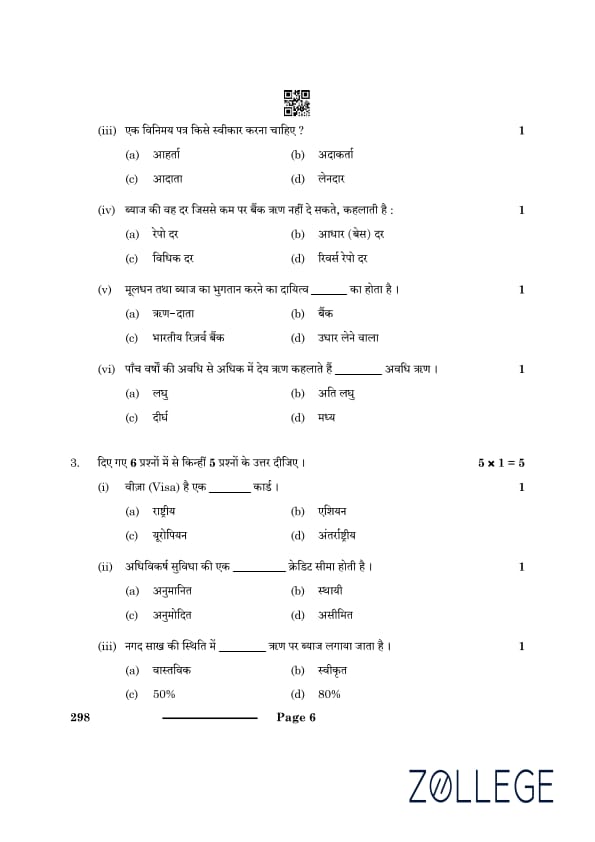
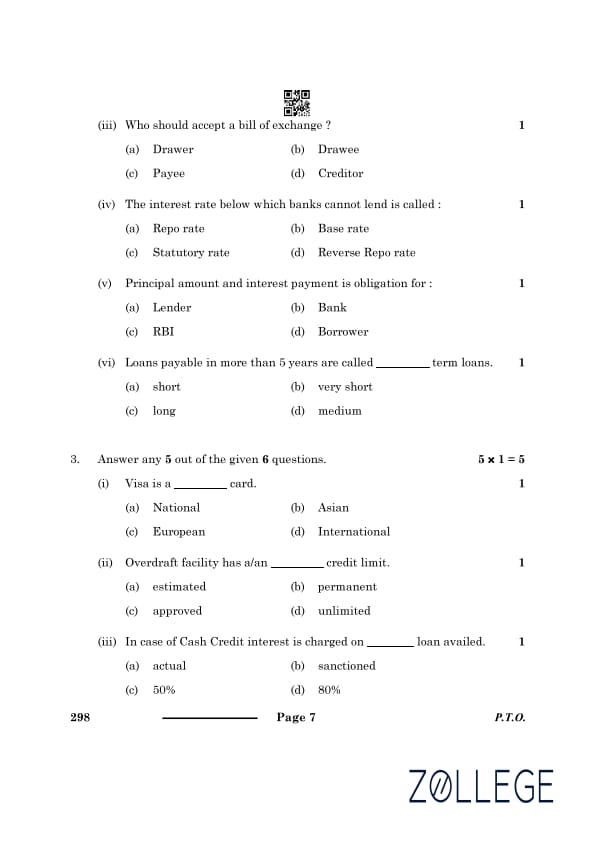
(iii) Who should accept a bill of exchange?
- (a) Drawer
- (b) Drawee
- (c) Payee
- (d) Creditor
Solution: The drawee is the person on whom the bill of exchange is drawn and who is required to accept it.
Read More
Acceptance by the drawee signifies their agreement to pay the amount specified in the bill on the due date. The drawee is the one who accepts the bill, while the drawer is the party who creates it.
(iv) The interest rate below which banks cannot lend is called:
- (a) Repo rate
- (b) Base rate
- (c) Statutory rate
- (d) Reverse Repo rate
Solution: The base rate is the minimum interest rate set by a bank below which it cannot lend to customers.
Read More
This applies except in specific cases such as for agricultural loans or government schemes. The base rate is designed to ensure transparency in lending rates and prevent unfair practices.
(v) Principal amount and interest payment is obligation for:
- (a) Lender
- (b) Bank
- (c) RBI
- (d) Borrower
Solution: The borrower is the person or entity that takes a loan and has the obligation to repay the principal amount along with any interest accrued on it.
Read More
The lender provides the funds. A borrower owes both the principal and interest, while the lender earns interest as a return.
(vi) Loans payable in more than 5 years are called ……... term loans.
- (a) short
- (b) very short
- (c) long
- (d) medium
Solution: Loans with a repayment period of more than five years are categorized as long-term loans.
Read More
These are typically used for large investments like purchasing property or funding major business projects. Loan categories include: short-term (up to 1 year), medium-term (1–5 years), and long-term (more than 5 years).
Question 3: Answer any 5 out of the given 6 questions.
(i) Visa is a …….. card.
- (a) National
- (b) Asian
- (c) European
- (d) International
Solution: Visa cards are widely accepted globally and are categorized as international cards.
Read More
They can be used for transactions across different countries and currencies. Remember that Visa and Mastercard are examples of international cards due to their global usage and acceptance.
(ii) Overdraft facility has a/an ………. credit limit.
- (a) estimated
- (b) permanent
- (c) approved
- (d) unlimited
Solution: An overdraft facility allows the account holder to withdraw more money than what is available in their account.
Read More
However, the credit limit for overdraft is predefined and approved by the bank. The credit limit for an overdraft is determined by the bank based on the account holder's eligibility.
(iii) In case of Cash Credit, interest is charged on ……….. loan availed.
- (a) actual
- (b) sanctioned
- (c) 50%
- (d) 80%
Solution: In Cash Credit, the interest is charged only on the amount that is actually utilized or withdrawn by the borrower.
Read More
This makes Cash Credit cost-effective for businesses. Interest on Cash Credit is calculated only on the actual amount utilized, unlike loans where it is based on the full sanctioned amount.
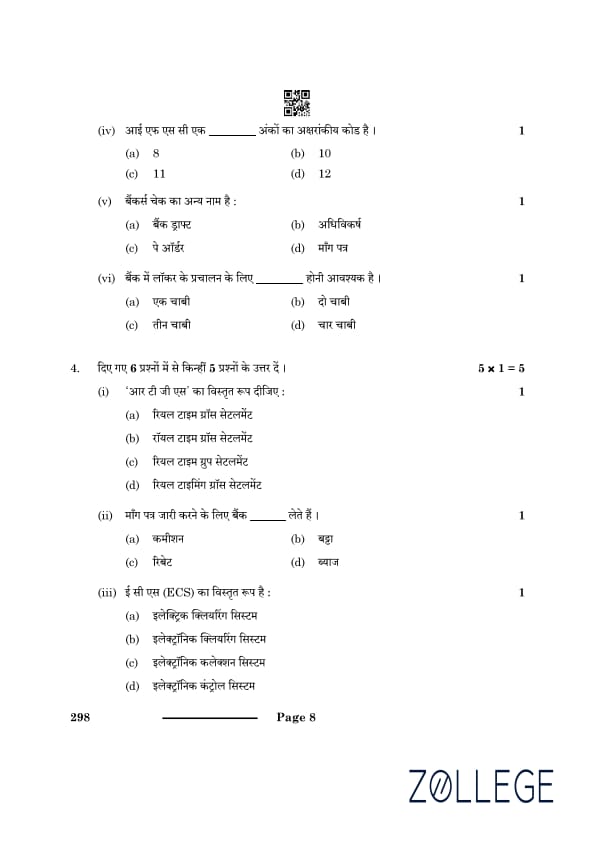
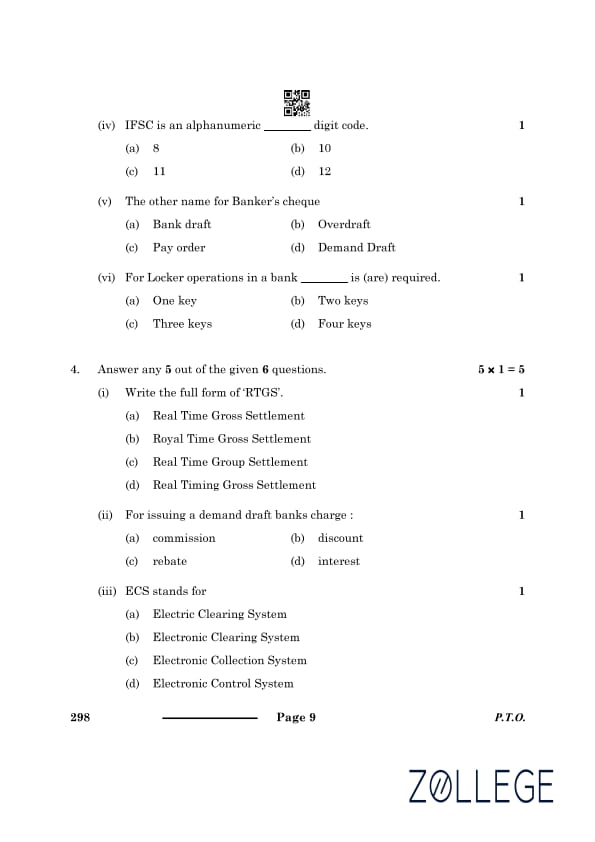
(iv) IFSC is an alphanumeric …………. digit code.
- (a) 8
- (b) 10
- (c) 11
- (d) 12
Solution: IFSC (Indian Financial System Code) is an 11-digit alphanumeric code used to uniquely identify a bank branch in India.
Read More
It is used for electronic payment systems like NEFT and RTGS. The IFSC code is 11 digits: the first 4 characters represent the bank, the 5th is always '0', and the last 6 characters identify the branch.
(v) The other name for Banker's cheque is:
- (a) Bank draft
- (b) Overdraft
- (c) Pay order
- (d) Demand Draft
Solution: A banker's cheque, also known as a pay order, is a financial instrument issued by a bank.
Read More
It instructs the bank itself to pay a certain amount to a specified person. It is used for local transactions. A pay order (banker's cheque) is similar to a demand draft but is used within the same city or region.
(vi) For Locker operations in a bank …………. is (are) required.
- (a) One key
- (b) Two keys
- (c) Three keys
- (d) Four keys
Solution: Bank lockers operate with two keys: one is kept by the bank (master key), and the other is given to the customer.
Read More
Both keys are required simultaneously to open the locker. Always remember that bank lockers require both the customer's key and the bank's master key for operation.
Question 4: Answer any 5 out of the given 6 questions.
(i) Write the full form of ‘RTGS’.
- (a) Real Time Gross Settlement
- (b) Royal Time Gross Settlement
- (c) Real Time Group Settlement
- (d) Real Timing Gross Settlement
Solution: RTGS stands for Real Time Gross Settlement.
Read More
It is a system where money is transferred electronically from one bank account to another in real time and on a gross basis. This method is used for high-value transactions. RTGS is fast and secure for high-value transactions, ensuring the funds are transferred immediately.
(ii) For issuing a demand draft banks charge:
- (a) commission
- (b) discount
- (c) rebate
- (d) interest
Solution: Banks charge a commission for issuing a demand draft.
Read More
The commission depends on the value of the draft and serves as a service fee for processing the transaction. Remember, banks levy commission for services like demand drafts, not discounts or rebates.
(iii) ECS stands for:
- (a) Electric Clearing System
- (b) Electronic Clearing System
- (c) Electronic Collection System
- (d) Electronic Control System
Solution: ECS, or Electronic Clearing System, is used for electronic fund transfer.
Read More
It is commonly used for recurring transactions like salary, pension, or utility bill payments. ECS is widely used for automated recurring payments like EMI or bill payments.
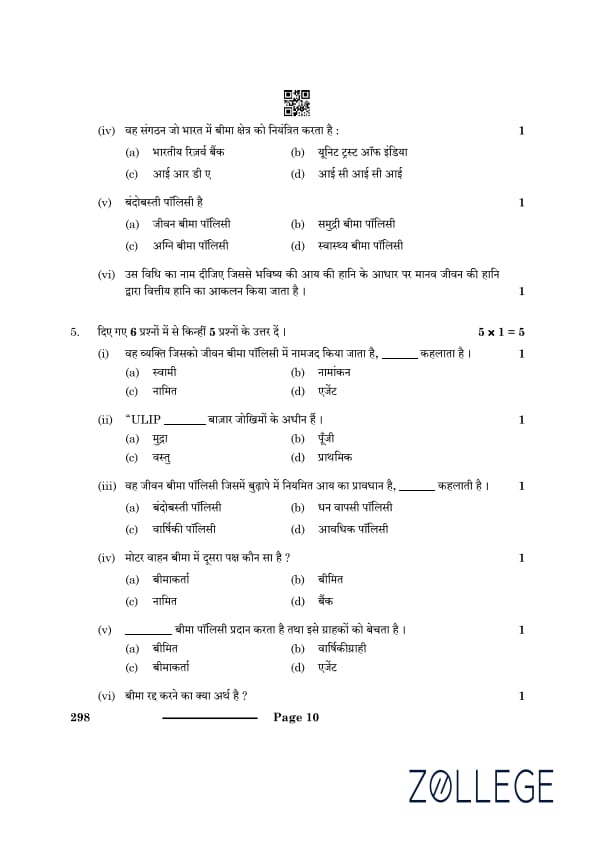
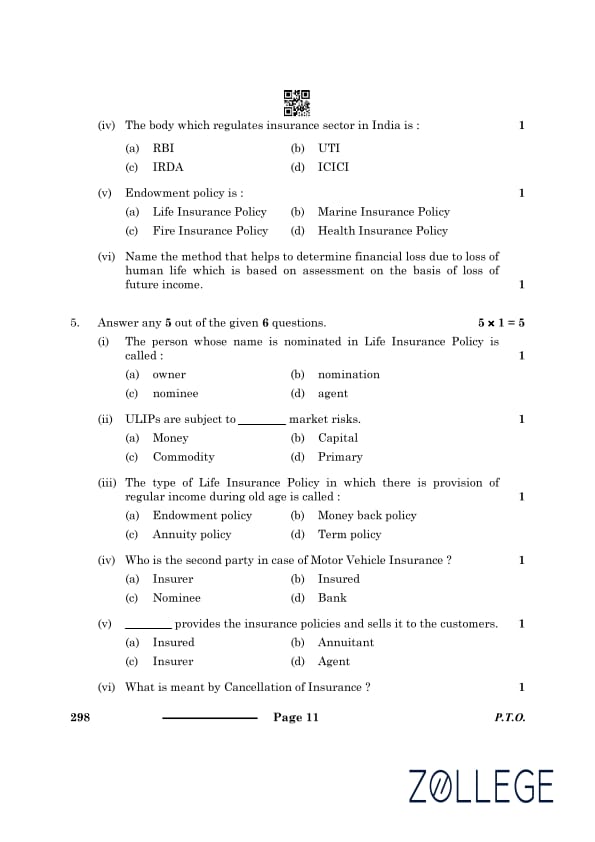
(iv) The body which regulates the insurance sector in India is:
- (a) RBI
- (b) UTI
- (c) IRDA
- (d) ICICI
Solution: The Insurance Regulatory and Development Authority of India (IRDA) is the statutory body responsible for regulating and promoting the insurance and reinsurance industries in India.
Read More
Remember, IRDA regulates insurance, while RBI oversees banking in India.
(v) Endowment policy is:
- (a) Life Insurance Policy
- (b) Marine Insurance Policy
- (c) Fire Insurance Policy
- (d) Health Insurance Policy
Solution: An endowment policy is a type of life insurance policy.
Read More
It provides a lump sum amount to the insured at the end of the policy term or to the beneficiaries in case of the policyholder's death. Endowment policies combine life insurance with savings or investment benefits.
(vi) Name the method that helps to determine financial loss due to loss of human life which is based on assessment on the basis of loss of future income.
Solution: The Human Life Value (HLV) method assesses the financial loss caused by the death of a person.
Read More
It calculates the future income the person would have earned and their financial contribution to dependents. HLV helps calculate insurance needs based on potential financial loss due to a person's death.
Question 5: Answer any 5 out of the given 6 questions.
(i) The person whose name is nominated in a Life Insurance Policy is called:
- (a) owner
- (b) nomination
- (c) nominee
- (d) agent
Solution: The nominee in a life insurance policy is the person named by the policyholder to receive the policy benefits in the event of the policyholder's death.
Read More
The nominee ensures that the benefits are provided to the intended beneficiary. The nominee is the person legally entitled to claim the benefits of the policy after the policyholder’s death.
(ii) ULIPs are subject to ………... market risks.
- (a) Money
- (b) Capital
- (c) Commodity
- (d) Primary
Solution: Unit Linked Insurance Plans (ULIPs) invest in equity and debt markets, making them subject to capital market risks.
Read More
Their returns depend on the market's performance. ULIPs combine insurance and investment, so their returns fluctuate with capital market performance.
(iii) The type of Life Insurance Policy in which there is provision of regular income during old age is called:
- (a) Endowment policy
- (b) Money back policy
- (c) Annuity policy
- (d) Term policy
Solution: An annuity policy provides regular payouts to the insured, typically after retirement or reaching a certain age.
Read More
It is designed to offer financial stability during old age. Annuity policies are great for retirees as they provide a steady income during retirement years.
(iv) Who is the second party in case of Motor Vehicle Insurance?
- (a) Insurer
- (b) Insured
- (c) Nominee
- (d) Bank
Solution: In motor vehicle insurance, the insured is the second party.
Read More
The insured is the person or entity who purchases the policy and is covered against losses or damages as specified in the policy. In any insurance contract, the insured (policyholder) is always the second party, while the insurer is the first party.
(v) …………... provides the insurance policies and sells them to the customers.
- (a) Insured
- (b) Annuitant
- (c) Insurer
- (d) Agent
Solution: The insurer is the company or entity that offers insurance policies to customers and bears the risk.
Read More
The insured pays a premium in return for the coverage provided by the insurer. The insurer is the company offering the policy, and the agent is the intermediary selling it.
(vi) What is meant by Cancellation of Insurance?
Read More
This could happen due to reasons such as non-payment of premiums, fraud, or upon the request of the policyholder. Once canceled, the policyholder loses all coverage benefits. Always keep your insurance premiums updated to avoid unintentional cancellation of your policy.
Question 6:
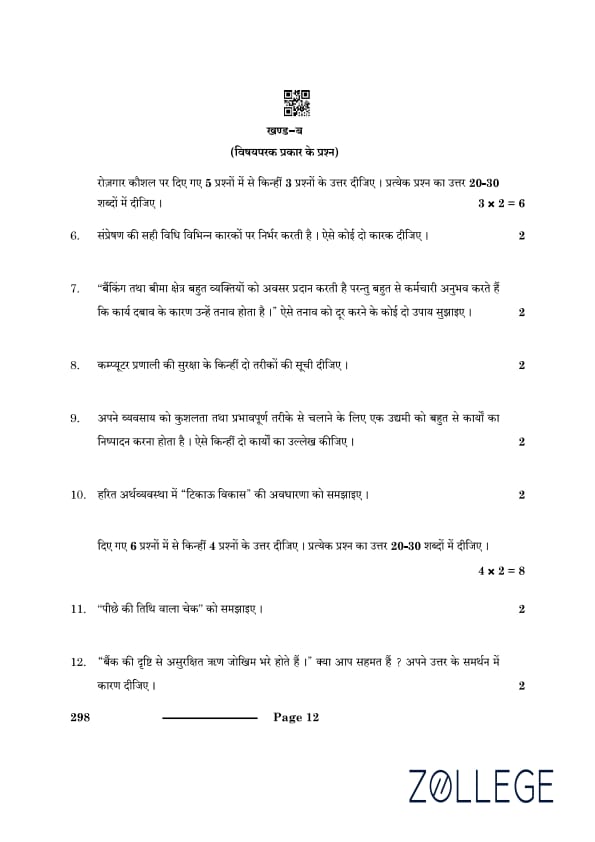
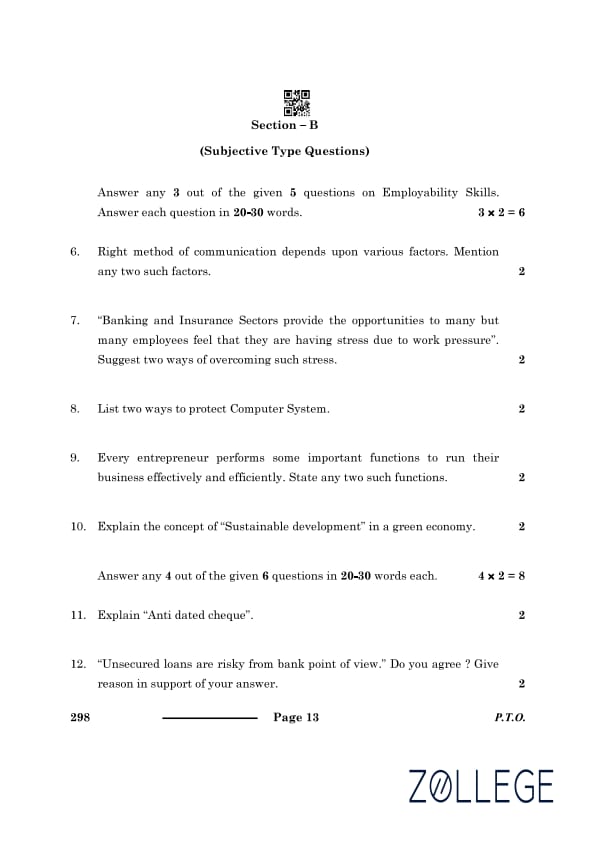
Right method of communication depends upon various factors. Mention any two such factors.
1. Clarity of Message: The message should be clear and concise to avoid confusion.
2. Audience Understanding: Consider the audience's knowledge level, language, and preferences to ensure the message is effectively received.
Read More
Always tailor your communication style to the audience and keep the message clear for better understanding. Ensuring clarity avoids misinterpretations, and considering the audience helps in delivering the message effectively.
Question 7:
“Banking and Insurance Sectors provide opportunities to many but many employees feel that they are having stress due to work pressure.” Suggest two ways of overcoming such stress.
1. Time Management: Employees can prioritize tasks and manage their time effectively to reduce workload stress.
2. Regular Breaks and Relaxation: Taking short breaks during work and practicing relaxation techniques like deep breathing or meditation can help reduce stress.
Read More
Managing time effectively ensures that employees can complete their tasks without feeling overwhelmed. Regular breaks and relaxation techniques promote mental well-being and improve overall productivity.
Question 8:
List two ways to protect a Computer System.
1. Install Antivirus Software: Protect the system from malware and viruses by installing reliable antivirus software.
2. Use Strong Passwords: Ensure the computer is secured with strong, unique passwords to prevent unauthorized access.
Read More
Regular updates to antivirus software ensure optimal protection against evolving threats. Using strong passwords minimizes the risk of unauthorized access and data breaches, enhancing system security.
Question 9:
Every entrepreneur performs some important functions to run their business effectively and efficiently. State any two such functions.
1. Planning: Entrepreneurs plan business activities and strategies to achieve their goals efficiently.
2. Resource Management: They allocate resources like time, money, and manpower to ensure smooth operations.
Read More
Proper planning helps set clear objectives and strategies, while effective resource management ensures optimal utilization of assets, promoting business success.
Question 10:
Explain the concept of “Sustainable development” in a green economy.
Sustainable development focuses on meeting present needs without compromising the ability of future generations to meet theirs. It emphasizes eco-friendly practices, resource conservation, and reducing environmental harm.
Read More
This concept integrates economic growth with environmental protection by promoting renewable energy, reducing carbon footprints, and encouraging responsible resource use to ensure a healthier planet for future generations.
Question 11:
Explain “Anti-dated cheque.”
An anti-dated cheque is a cheque that is issued with a date earlier than the current date. It is valid for six months from the date mentioned on it.
Read More
Anti-dated cheques are useful in situations where payments are delayed but the issuer wants the cheque to reflect an earlier payment date. They remain valid as long as they are presented within six months of the mentioned date.
Question 12:
“Unsecured loans are risky from a bank’s point of view.” Do you agree? Give reason in support of your answer.
Yes, unsecured loans are risky as they do not require collateral. If the borrower defaults, the bank cannot recover the loan by selling assets.
Read More
Since unsecured loans lack collateral, banks rely solely on the borrower’s creditworthiness. To mitigate risks, banks often charge higher interest rates and conduct thorough credit checks before approval.
Question 13:
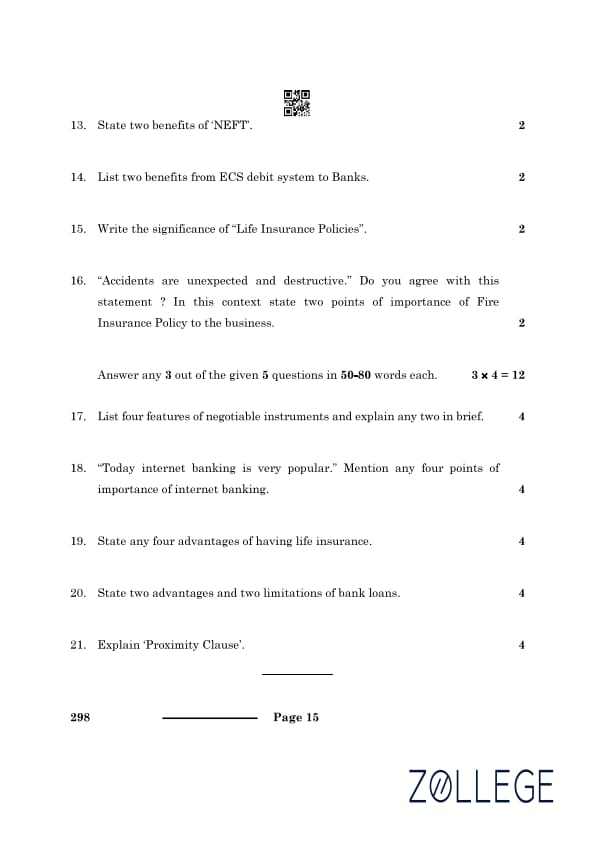
State two benefits of NEFT.
1. Convenient Fund Transfer: NEFT allows easy and secure fund transfers across bank accounts.
2. Nationwide Accessibility: NEFT is available throughout the country, enabling seamless transactions.
Read More
NEFT (National Electronic Funds Transfer) is a reliable system for transferring funds between banks. It operates in batches, ensuring secure and cost-effective transactions, suitable for both individuals and businesses.
Question 14:
List two benefits from ECS debit system to Banks.
1. Automation of Payments: ECS debit automates recurring payments, reducing manual effort for banks.
2. Cost Efficiency: It lowers operational costs by reducing paperwork and errors.
Read More
Electronic Clearing Service (ECS) debit helps banks streamline recurring transactions such as utility bill payments, subscriptions, and EMIs. Its automation reduces errors, enhances efficiency, and improves customer satisfaction.
Question 15:
Write the significance of “Life Insurance Policies.”
1. Financial Security: Life insurance provides financial support to the family in case of the policyholder's death.
2. Savings and Investment: Many policies also serve as a means of savings and long-term investment.
Read More
Life insurance offers dual benefits: protection and financial planning. It ensures the policyholder’s family is supported during unforeseen events and also acts as a disciplined savings tool for future goals.
Question 16:
“Accidents are unexpected and destructive.” Do you agree with this statement? In this context, state two points of importance of Fire Insurance Policy to the business.
1. Financial Protection: Fire insurance compensates for losses due to accidental fire, helping businesses recover.
2. Risk Coverage: It provides coverage for damages to property, goods, and machinery, ensuring continuity of operations.
Read More
Fire insurance plays a critical role in protecting businesses from financial risks associated with fire accidents. By covering the cost of damaged assets, it ensures smooth recovery and reduces operational disruptions, helping businesses maintain continuity and financial stability.
Question 17:
List four features of negotiable instruments and explain any two in brief.
Features of negotiable instruments:
1. Transferability: They can be transferred easily from one person to another.
2. Guaranteed Payment: The payment to the holder is guaranteed as per the terms.
3. Written Document: It must be in writing.
4. Legal Framework: They are governed by legal acts such as the Negotiable Instruments Act, 1881.
Read More
Explanation:
- Transferability: Ownership of the instrument can be transferred by endorsement and delivery, ensuring ease of use in financial transactions.
- Guaranteed Payment: The payee is assured of receiving payment as stipulated in the terms, making negotiable instruments reliable and widely accepted.
Question 18:
“Today internet banking is very popular.” Mention any four points of importance of internet banking.
1. Convenience: Customers can access their accounts 24/7 from anywhere.
2. Time-Saving: Transactions can be completed without visiting a branch.
3. Cost-Effective: Reduces the need for physical infrastructure and paperwork.
4. Enhanced Services: Offers additional services like bill payments, fund transfers, and account management.
Read More
Internet banking has revolutionized the banking industry by providing secure, fast, and efficient banking services. Customers can transfer funds, check account details, and pay bills seamlessly, all from the comfort of their homes.
Question 19:
State any four advantages of having life insurance.
1. Financial Protection: Provides financial security to the family in case of the policyholder's death.
2. Tax Benefits: Premiums paid for life insurance are tax-deductible under Section 80C of the Income Tax Act.
3. Long-Term Savings: Certain policies help in accumulating savings over time.
4. Loan Facility: Policyholders can borrow against the life insurance policy in emergencies.
Read More
Life insurance is an essential financial tool that offers dual benefits of protection and savings. It ensures peace of mind by safeguarding the family's future and helping meet long-term financial goals.
Question 20:
State two advantages and two limitations of bank loans.
Advantages:
1. Access to Funds: Provides necessary funds for personal or business purposes.
2. Lower Interest Rates: Loans typically have lower interest rates compared to other financing options.
Limitations:
1. Repayment Burden: Fixed monthly repayments can strain finances.
2. Collateral Requirement: Most loans require collateral, which might not be available to everyone.
Read More
Bank loans are a vital source of funds but require careful financial planning. While they offer affordable financing, the obligation to repay on time and the need for collateral can pose challenges for some borrowers.
Question 21:
Explain ‘Proximity Clause.’
The Proximity Clause in insurance refers to the principle of identifying the closest and most direct cause of loss when multiple factors contribute to the damage.
Read More
This clause helps determine whether the loss is covered under the policy by evaluating the direct cause. For example, if a fire caused by an electrical short circuit damages property, the insurer considers the fire as the proximate cause for claim settlement.

*The article might have information for the previous academic years, please refer the official website of the exam.