
CBSE Class 10 2025 Social Science Set-3 (32/6/3) Question Paper Available: Download Answer Key and Solution PDF


| Updated On - Sep 13, 2025
The CBSE 2025 Class 10 Social Science exam was held on 25th Feb, from 10:30 AM to 1:30 PM. The CBSE Class 10 Social Science Question Paper 2025 is available here with Solution PDF. The Social Science theory paper is of 80 marks, while 20 marks are allocated for the internal assessment
CBSE Board Class 10 Social Science Question Paper Set-3 32/6/3 2025 with Solutions
| CBSE Board Class 10 Social Science Question Paper with Answer Key | Download PDF | Check Solution |

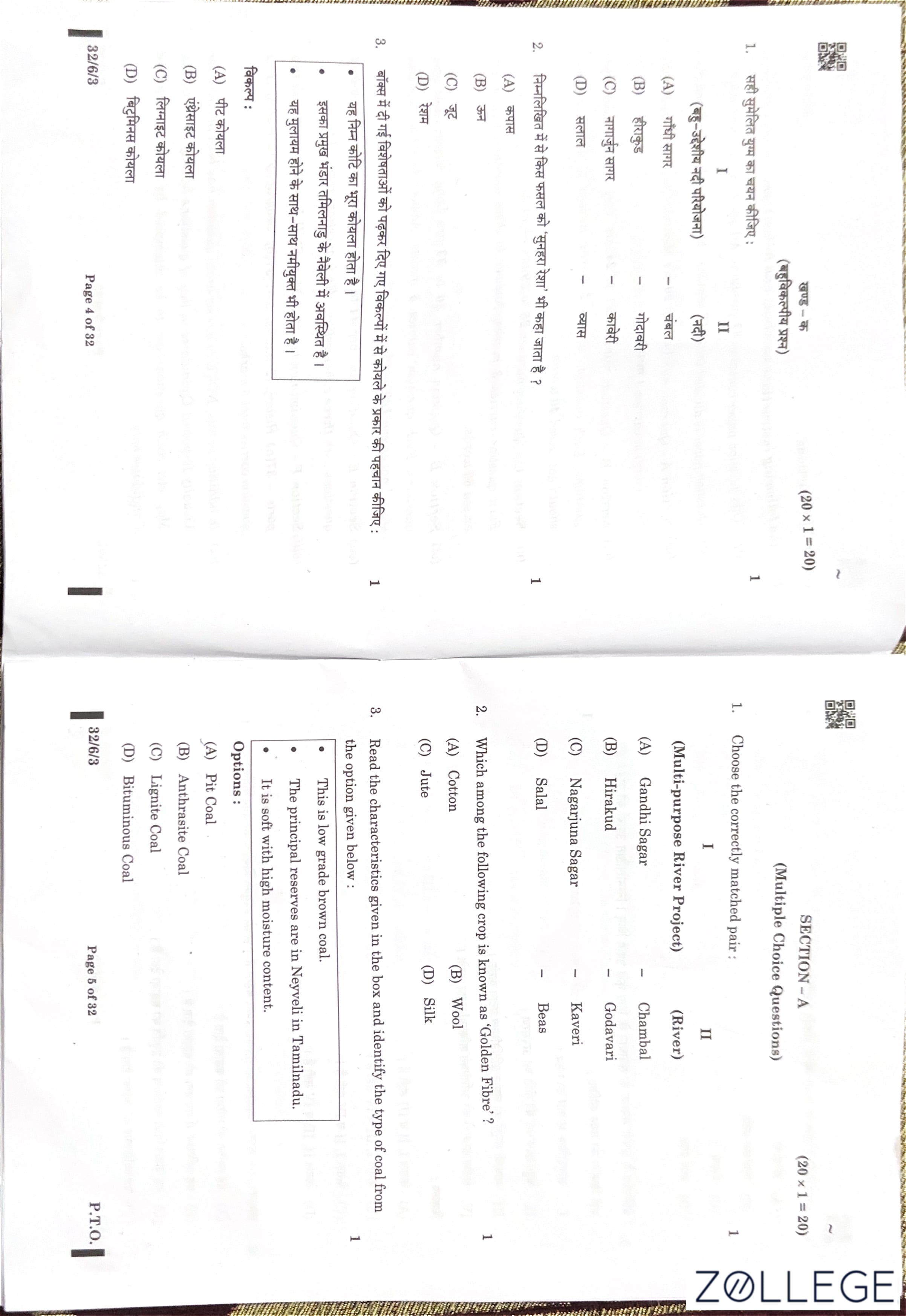
Choose the correctly matched pair:
View Solution
Step 1: Correctly matching the river projects with their respective rivers:
Gandhi Sagar is a dam located on the Chambal river in Madhya Pradesh. Therefore, option (1) is correct.
Hirakud is located on the Mahanadi river, not the Godavari, which makes option (2) incorrect.
Nagarjuna Sagar is located on the Krishna river, not the Kaveri, making option (3) incorrect.
Salal is located on the Chenab river, not the Beas, which means option (4) is incorrect.
Quick Tip: When matching river projects, always check the location of the dam and the river it is built on.
Which among the following crop is known as 'Golden Fibre'?
View Solution
Step 1: The crop known as 'Golden Fibre' is Jute.
Jute is a natural fibre, which has a golden colour, and hence it is called 'Golden Fibre'. It is widely used in the textile industry for making ropes, sacks, and other products. Jute is primarily grown in regions like West Bengal and Bangladesh, where the climatic conditions are ideal for its cultivation. Quick Tip: Jute is primarily grown in West Bengal and Bangladesh and is known for its eco-friendly properties.
Read the characteristics given in the box and identify the type of coal from the options given below:
This is low grade brown coal.
The principal reserves are in Neyveli in Tamil Nadu.
It is soft with high moisture content.
View Solution
Step 1: The coal described is Lignite Coal.
Lignite coal, also known as brown coal, is the lowest grade of coal with a high moisture content. It is softer than other types of coal and has a low carbon content. The principal reserves of lignite coal are found in Neyveli, Tamil Nadu, which makes this the correct answer.
Lignite is used primarily in electricity generation due to its high moisture content, which reduces its energy efficiency compared to higher grades of coal. Quick Tip: Lignite coal is often used for electricity generation due to its high moisture content, which reduces its efficiency compared to other coals.
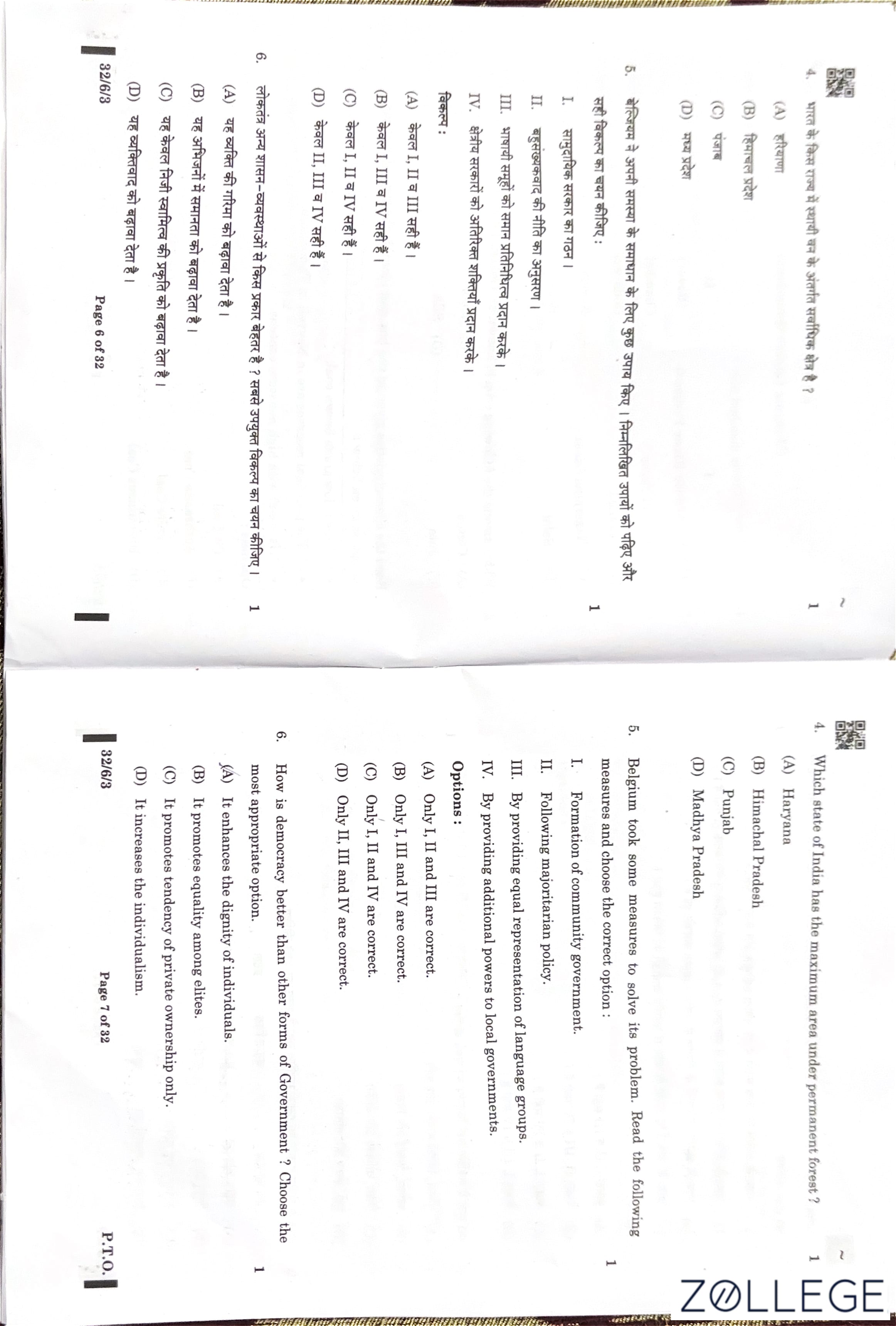
Which state of India has the maximum area under permanent forest?
View Solution
Step 1: The state with the maximum area under permanent forest is Madhya Pradesh.
Madhya Pradesh has the largest forest cover in India, both in terms of the area covered and biodiversity. This makes it the correct answer. The state plays a crucial role in preserving India's ecological balance due to its vast forested regions. Quick Tip: India's forest cover is a crucial part of its biodiversity and ecosystem. Protecting these forests is essential for maintaining environmental balance.
Belgium took some measures to solve its problem.
Read the following measures and choose the correct option:
I. Formation of community government.
II. Following majoritarian policy.
III. By providing equal representation to language groups.
IV. By providing additional powers to local governments.
View Solution
Step 1: Belgium’s measures involved creating a community government, providing equal representation to language groups, and giving powers to local governments.
Belgium had to deal with significant ethnic and linguistic diversity, particularly between its Dutch-speaking and French-speaking communities. To resolve conflicts, it formed a community government that gave equal representation to each language group. Additionally, it granted powers to local governments to ensure autonomy and prevent one group from dominating.
However, the majoritarian policy was not followed, as it could have resulted in the domination of one community over others, which was a source of tension. Quick Tip: Belgium's political system was designed to accommodate its ethnic diversity, avoiding conflicts by ensuring political representation for each group.
How is democracy better than other forms of Government? Choose the most appropriate option.
View Solution
Democracy emphasizes equality and justice for all individuals, ensuring their dignity and rights. It fosters a sense of collective well-being, in contrast to other forms of government that may prioritize a few over the many. Quick Tip: In a democracy, it is important to ensure individual dignity and equality among citizens, which makes it distinct from other forms of government.
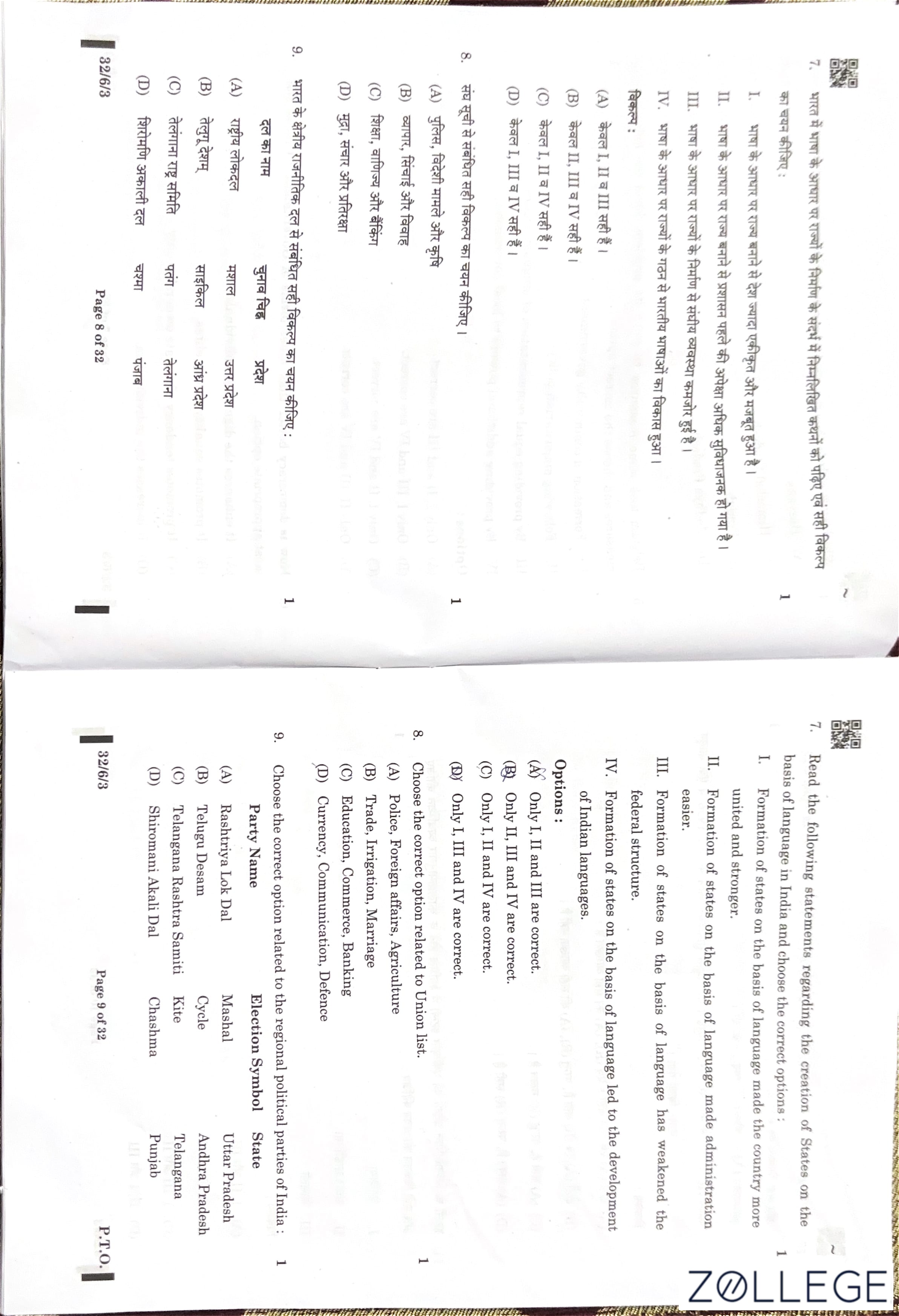
Read the following statements regarding the creation of States on the basis of language in India and choose the correct options:
I. Formation of states on the basis of language made the country more united and stronger.
II. Formation of states on the basis of language made administration easier.
III. Formation of states on the basis of language has weakened the federal structure.
IV. Formation of states on the basis of language led to the development of Indian languages.
View Solution
The creation of states on the basis of language led to a more united country, easier administration, and promoted the development of languages. However, it did not weaken the federal structure significantly, as regionalism was addressed with adequate provisions. Quick Tip: When forming states based on language, consider how it affects both national unity and the linguistic diversity of the country.
Choose the correct option related to the Union list:
View Solution
The Union list comprises matters that are the exclusive domain of the central government, including areas such as currency, communication, and defence. Quick Tip: The Union list covers areas of national importance, such as defence and currency, which are solely under the control of the central government.
Choose the correct option related to the regional political parties of India:
View Solution
Rashtriya Lok Dal is a regional party in Uttar Pradesh with the symbol "Mashal". Other regional parties are associated with different states and symbols, but the correct answer corresponds to Uttar Pradesh. Quick Tip: Regional political parties play a significant role in state-level politics, and knowing their symbols and states is important for elections.
Two statements are given below. They are Assertion (A) and Reason (R). Read both the statements carefully and choose the correct option.
Assertion (A): There was civil war in Sri Lanka.
Reason (R): An Act was passed in 1956 to secure dominance of Sinhala community on the government.
View Solution
The civil war in Sri Lanka was indeed a result of ethnic tensions exacerbated by the Sinhala-only Act of 1956. However, the civil war had multiple causes and cannot be solely explained by the Act. Quick Tip: In questions with Assertion and Reason, it’s important to evaluate both the truth and explanation behind each statement carefully.
Arrange the following regions of Italy in the order of their inclusion in the Unified Italy and choose the correct option:
I. Venetia
II. Savoy Sardinia
III. Sicilies
View Solution
Step 1: The correct order of the regions in the context of the Unification of Italy is:
Savoy Sardinia (II) was the first to join the unified Italy in 1861.
Sicilies (III) was next, in 1860, after the unification of the Kingdom of the Two Sicilies.
Venetia (I) was the last to join, in 1866, after the Austro-Prussian war.
Quick Tip: The Unification of Italy, also known as the Risorgimento, was a series of political and military events in the 19th century that led to the consolidation of different states into the Kingdom of Italy.
In the 17th century, the city El Dorado in South America became famous as which one of the following?
View Solution
Step 1: El Dorado was famously known as the 'City of Gold'.
The term 'El Dorado' referred to a mythical city of gold that European explorers believed existed somewhere in the Americas. The legend was tied to the idea of a kingdom with vast wealth, which led to numerous expeditions in search of it. Quick Tip: The legend of El Dorado inspired many explorers during the Age of Discovery and the Spanish conquest of the Americas, although the city was never found.
Arrange the following historical events in chronological order and choose the correct option:
I. Second Round Table Conference
II. Simon Commission arrives in India
III. Beginning of Dandi March
IV. Incident of Chauri Chaura
View Solution
Step 1: The chronological order of events is:
The Incident of Chauri Chaura (IV) occurred first, in February 1922.
The Simon Commission arrived in India (II) in 1928.
The Second Round Table Conference (I) took place in 1931.
The Dandi March (III) began in March 1930.
Quick Tip: These events were significant in the history of India's struggle for independence, marking key moments in the political resistance against British rule.
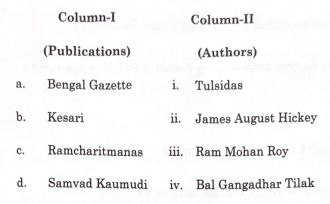
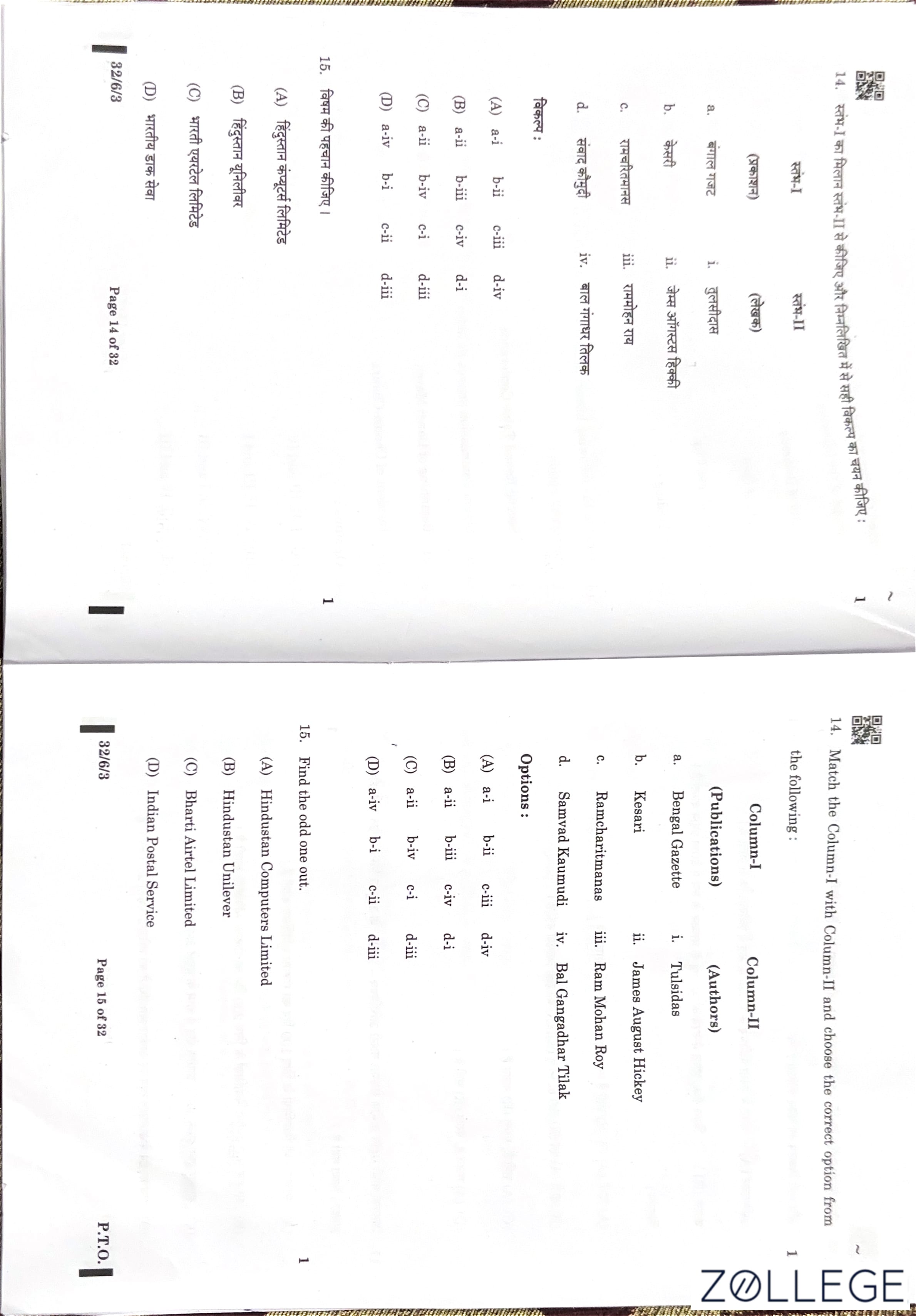
Match the Column-I with Column-II and choose the correct option from the following:
View Solution
Step 1: The correct matching is:
Bengal Gazette (a) was published by James August Hickey (ii).
Kesari (b) was associated with Bal Gangadhar Tilak (iv).
Ramcharitmanas (c) was written by Tulsidas (i).
Samvad Kaumudi (d) was founded by Ram Mohan Roy (iii).
Quick Tip: These publications and authors were key to the intellectual and political movements in colonial India.
Find the odd one out.
View Solution
Step 1: The odd one out is Indian Postal Service (Option 4).
Hindustan Computers Limited (HCL), Hindustan Unilever, and Bharti Airtel Limited are private sector companies, while the Indian Postal Service is a government-run organization. Quick Tip: The Indian Postal Service is a public sector entity, unlike the other options, which are private companies.
Two statements are given below. They are Assertion (A) and Reason (R). Read both the statements carefully and choose the correct option:
Assertion (A): Rupees is accepted as medium of exchange in India.
Reason (R): The World Bank legalises the use of rupee as a medium of payment in India.
View Solution
Step 1: Assertion (A) is correct.
The rupee (₹) is the official currency and is widely accepted as a medium of exchange for goods and services in India. This is the standard form of payment used within the country.
Step 2: Reason (R) is incorrect.
While it is true that the World Bank is involved in financial assistance and reforms, it does not play a role in legalizing currency in a country. The Reserve Bank of India (RBI), as the central bank, is responsible for issuing and regulating the currency in India. Therefore, the World Bank does not directly legalize the rupee or influence its use as a medium of payment. Quick Tip: The World Bank helps countries with economic development, but the use of national currencies is a sovereign decision made by individual countries.
Which of the following provisions have been made under the 'Mahatma Gandhi National Rural Employment Guarantee Act - 2005'?
View Solution
Step 1: MGNREGA ensures 100 days of wage employment, but the Act was later amended to ensure up to 200 days of employment in certain conditions.
The Mahatma Gandhi National Rural Employment Guarantee Act (MGNREGA) was designed to provide employment to rural people in India. The provision of employment is not limited to grains but includes wages for work, and in case the government is unable to provide employment, an unemployment allowance is provided under specific conditions.
Step 2: The Act focuses on wage employment, not the provision of grains.
The primary objective is to enhance livelihood security in rural areas by providing at least 100 days of employment to every rural household whose adult members volunteer to do unskilled manual labor. Quick Tip: MGNREGA is a crucial scheme for alleviating rural poverty, creating infrastructure, and empowering rural communities.
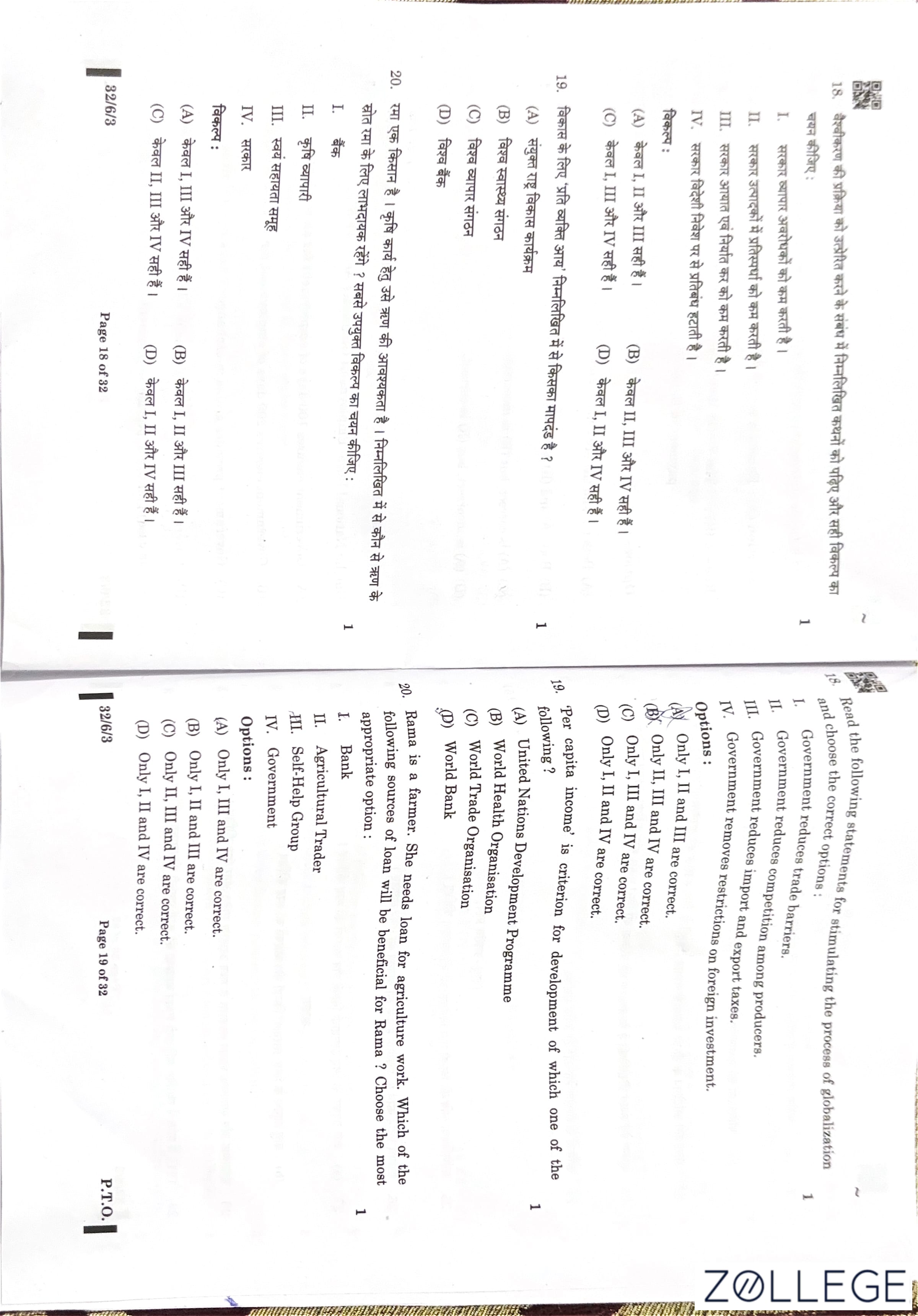
Read the following statements for stimulating the process of globalization and choose the correct option:
I. Government reduces trade barriers.
II. Government reduces competition among producers.
III. Government reduces import and export taxes.
IV. Government removes restrictions on foreign investment.
View Solution
Step 1: Globalization is stimulated by reducing trade barriers (I), lowering import and export taxes (III), and relaxing restrictions on foreign investments (IV).
These policies promote international trade and investment, driving economic growth and integration with the global economy.
Step 2: Reducing competition among producers (II) does not promote globalization.
In fact, globalization thrives in a competitive environment as it encourages innovation, efficiency, and market expansion. Quick Tip: Globalization is driven by open markets, reduced barriers, and policies that encourage competition and investment, not the reduction of competition.
'Per capita income' is a criterion for development of which one of the following?
View Solution
Step 1: Per capita income is a common indicator used by the World Bank to assess and compare the economic development of countries.
It is calculated by dividing the national income by the total population, providing a measure of the average income of citizens in a country.
Step 2: The United Nations Development Programme (UNDP) uses other human development indicators such as life expectancy and education, while the World Bank focuses on economic indicators like per capita income. Quick Tip: The World Bank uses per capita income to categorize countries into different income groups, such as low-income, middle-income, and high-income economies.
Rama is a farmer. She needs loan for agriculture work. Which of the following sources of loan will be beneficial for Rama? Choose the most appropriate option:
I. Bank
II. Agricultural Trader
III. Self-Help Group
IV. Government
View Solution
Step 1: Rama can seek loans from banks (I), self-help groups (III), and government schemes (IV), all of which provide financing for agricultural purposes.
These sources offer favorable terms and often provide subsidized or low-interest loans tailored for farmers.
Step 2: Agricultural traders (II) may offer loans, but their interest rates and terms are often unfavorable, making them less beneficial.
Therefore, they are not the best source of loans for Rama. Quick Tip: Banks, self-help groups, and government schemes are the most beneficial sources of loans for farmers as they provide affordable rates and favorable terms.
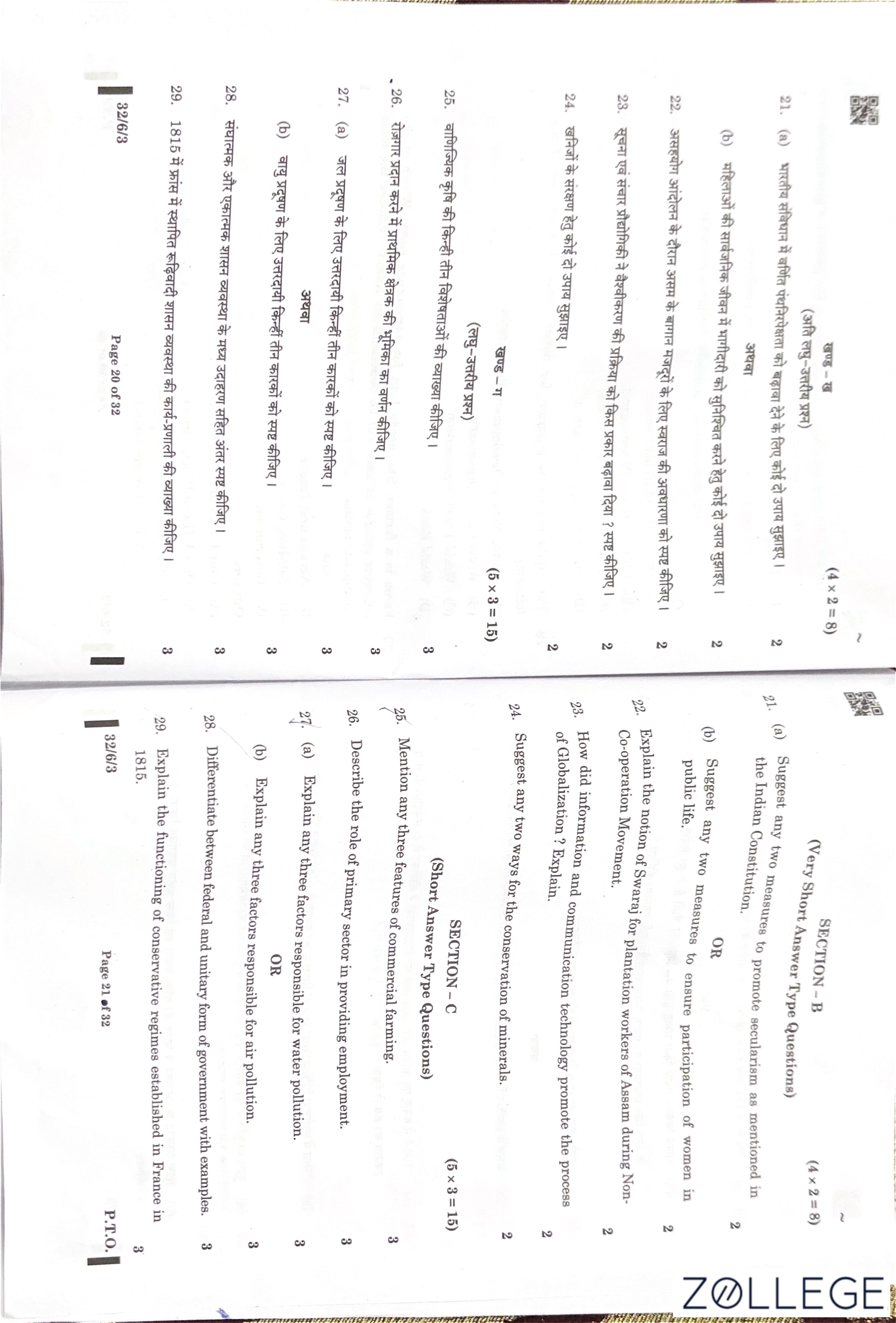
(a) Suggest any two measures to promote secularism as mentioned in the Indian Constitution.
View Solution
Secularism, as mentioned in the Indian Constitution, ensures that the state does not favor any particular religion. The following measures promote secularism:
1. Equal Treatment of All Religions:
The Indian Constitution ensures that all religions are treated equally by the state. There is no state religion, and the government is neutral in matters of religion.
2. Freedom of Religion:
Article 25 to 28 of the Indian Constitution guarantees the right to freely practice, profess, and propagate religion, promoting religious harmony and secularism.
Quick Tip: Promoting secularism requires legal and social frameworks that protect individual religious freedoms while maintaining state neutrality.
OR
Question 21:
Suggest any two measures to ensure participation of women in public life.
View Solution
To ensure women's participation in public life, the following measures are essential:
1. Reservation of Seats: Providing reservation for women in local bodies, assemblies, and the parliament, helps in increasing their representation and voice in public decisions.
2. Legal Frameworks for Equality: Enacting laws that ensure gender equality, such as the Protection of Women from Domestic Violence Act and the Sexual Harassment of Women at Workplace Act, creates a safer and more inclusive environment for women in public life.
Quick Tip: Women’s participation in public life can be increased by ensuring equal opportunities, legal protections, and representation in decision-making bodies.
Explain the notion of Swaraj for plantation workers of Assam during Non-Cooperation Movement.
View Solution
During the Non-Cooperation Movement, Mahatma Gandhi's concept of Swaraj (self-rule) became an essential call for freedom. For the plantation workers of Assam, Swaraj meant:
1. Economic Independence: The workers demanded better wages, improved working conditions, and the abolition of forced labor that they faced under the British planters.
2. Political Freedom: Swaraj was also seen as a call for the workers’ political rights and freedom from British colonial rule, which limited their agency.
Swaraj, for them, was not just about self-rule but also about social and economic justice, and the removal of the oppressive system under the colonial government. Quick Tip: Swaraj was not only a political concept for the Indian masses but also a tool for economic and social justice for marginalized groups like plantation workers.
How did information and communication technology promote the process of Globalization? Explain.
View Solution
Information and communication technology (ICT) has significantly contributed to the process of globalization through the following ways:
1. Faster Communication: ICT tools like email, video calls, and messaging platforms enable faster communication across the globe, breaking down geographical barriers.
2. Global Networks and Trade: ICT facilitates e-commerce and the creation of global markets. It allows businesses to trade globally, access international resources, and connect with customers worldwide.
This interconnectedness has led to the free flow of information, goods, and services, which is central to globalization. Quick Tip: ICT is a key driver of globalization, allowing instant communication and access to international markets and networks.
Suggest any two ways for the conservation of minerals.
View Solution
Conserving minerals is crucial due to their finite nature. The following methods can help in their conservation:
1. Recycling and Reuse: Recycling metal products and reusing minerals in industrial processes reduces the demand for raw materials and prevents waste.
2. Adopting Sustainable Mining Practices: Sustainable mining technologies, like improved extraction techniques and better waste management practices, can reduce the environmental impact and conserve mineral resources for future generations.
Quick Tip: Conservation of minerals is essential for sustainable development, and it can be achieved through recycling, efficient use, and sustainable extraction methods.
Mention any three features of commercial farming.
View Solution
Commercial farming involves the large-scale production of crops for sale in the market, not for personal consumption.
The use of advanced technology and machinery such as tractors, harvesters, and irrigation systems is common in commercial farming to increase efficiency and productivity.
Commercial farming is often monoculture, meaning a single crop is grown over a large area, allowing for specialization in production. Quick Tip: Commercial farming is closely linked to the global market, and its success depends on market demand and prices.
Describe the role of primary sector in providing employment.
View Solution
The primary sector is the backbone of any economy, as it involves extracting and harvesting natural resources. Its role in providing employment can be explained as follows:
The primary sector employs a large proportion of the rural workforce in activities like agriculture, mining, fishing, and forestry.
It provides livelihood opportunities for a significant portion of the population, especially in developing countries where agriculture is the main source of income.
Primary sector jobs are generally less skilled but offer employment opportunities to people with minimal education or technical training. Quick Tip: Even though the primary sector offers substantial employment, it is highly dependent on the natural environment and can be affected by seasonal and climatic conditions.
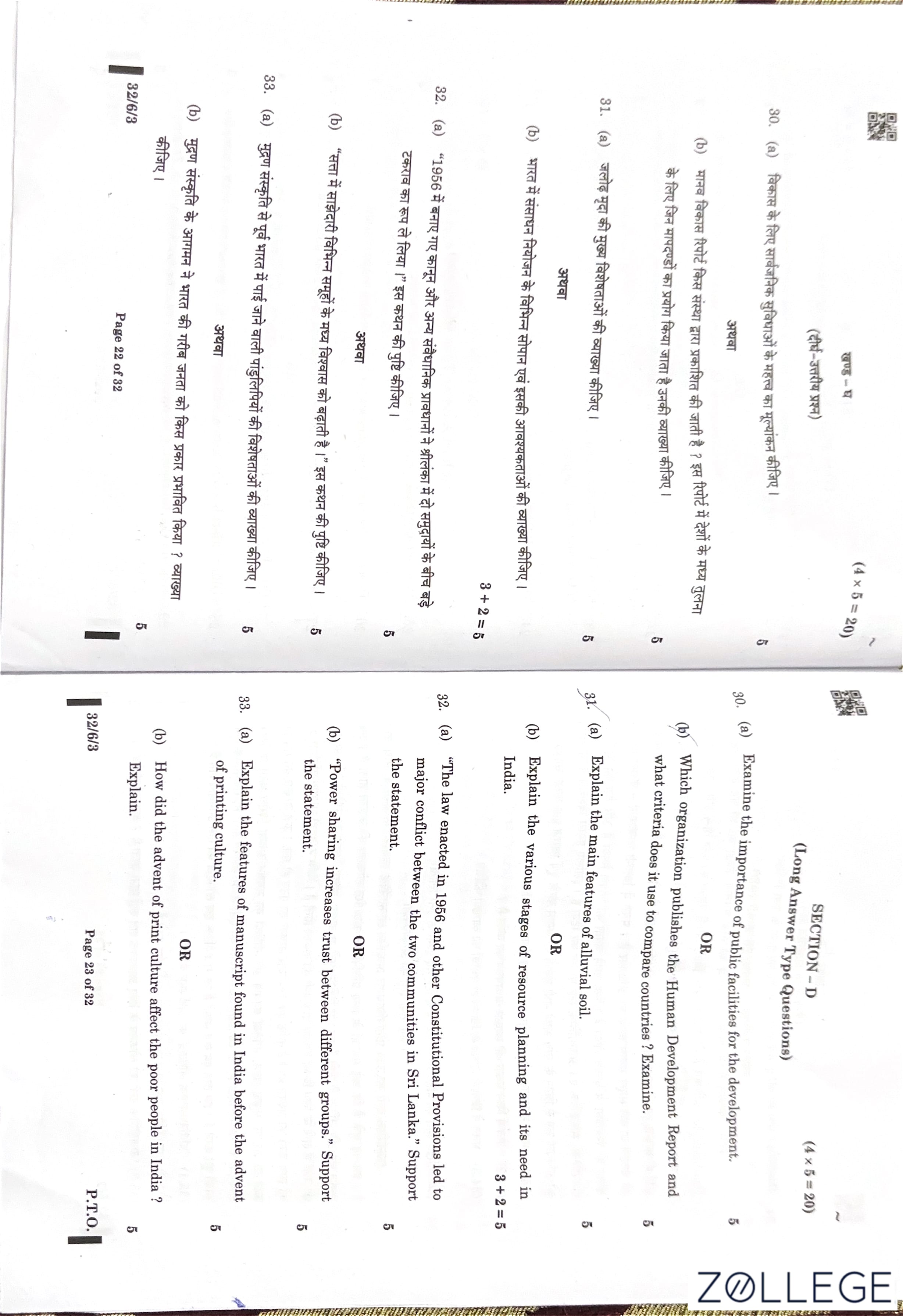
(a) Explain any three factors responsible for water pollution.
View Solution
Water pollution is caused by the contamination of water bodies through various human activities. Three major factors responsible for water pollution are:
Industrial Waste: Factories and industries often discharge harmful chemicals and untreated waste directly into rivers, lakes, and oceans, causing significant water pollution.
Agricultural Runoff: The excessive use of chemical fertilizers and pesticides in agriculture leads to runoff into nearby water bodies, contaminating the water with harmful substances.
Sewage and Waste Disposal: Improper disposal of untreated sewage and household waste into water bodies contributes to the spread of diseases and contamination of drinking water sources. Quick Tip: Water pollution not only harms aquatic life but also affects human health and ecosystem balance.
(b) Explain any three factors responsible for air pollution.
View Solution
Air pollution is caused by the presence of harmful substances in the air. Three major factors responsible for air pollution are:
1. Vehicular Emissions: The burning of fossil fuels in vehicles produces harmful gases such as carbon monoxide, nitrogen oxides, and particulate matter, which contribute to air pollution, especially in urban areas.
2. Industrial Pollution: Factories and industrial units release a variety of pollutants into the atmosphere, including sulfur dioxide, carbon dioxide, and toxic chemicals, which degrade air quality and contribute to smog.
3. Burning of Biomass and Waste: The burning of agricultural waste, wood, and other biomass releases particulate matter, carbon dioxide, and other pollutants into the air, leading to poor air quality, particularly in rural areas.
Quick Tip: Air pollution can have severe health effects, including respiratory problems, cardiovascular diseases, and even cancer, making it crucial to address its causes.
Differentiate between federal and unitary form of government with examples.
View Solution
The main difference between federal and unitary governments lies in the distribution of power:
Federal Government: In a federal system, power is shared between a central government and regional governments. Each level of government has its own responsibilities and authority. Example: The United States and India have a federal system of government.
Unitary Government: In a unitary system, all powers are concentrated in the central government. The central authority may delegate powers to local units, but it retains the ultimate decision-making power. Example: The United Kingdom and France have a unitary form of government. Quick Tip: Federal systems provide a balance of power between central and regional authorities, whereas unitary systems concentrate power at the center.
Explain the functioning of conservative regimes established in France in 1815.
View Solution
The conservative regimes established in France in 1815 were largely a response to the upheaval caused by the French Revolution and the Napoleonic Wars. The major aspects of their functioning include:
Restoration of Monarchy: After the defeat of Napoleon, the Bourbon monarchy was restored with Louis XVIII as the king, who attempted to maintain the pre-revolutionary system. This was a conservative effort to preserve the old aristocratic and monarchical order.
Repressive Policies: The conservative regimes enacted laws to curtail the power of revolutionary ideals, including limiting freedom of the press and suppressing political movements.
Limited Constitutional Monarchy: While the monarchy was restored, there were still some constitutional elements, such as the Charter of 1814, which granted certain civil liberties but did not allow for the full democratic participation of the people. Quick Tip: The conservative regimes in France aimed to stabilize the country after years of revolution and war, but their policies often led to discontent and unrest.
(A) Examine the importance of public facilities for the development.
View Solution
Public facilities play a crucial role in the development of a country. They ensure that essential services like healthcare, education, transport, and sanitation are accessible to all sections of society.
1. Economic Growth: Public facilities such as roads, railways, and communication infrastructure support industries and markets, leading to economic growth.
2. Health and Education: Access to public health services and education ensures that people can contribute productively to society, lifting them out of poverty.
3. Social Well-being: Public services like sanitation, water supply, and public transportation improve the quality of life for citizens, contributing to a more stable society.
Thus, the provision of public facilities is an integral part of any nation's development strategy. Quick Tip: The development of public facilities directly influences the economic, social, and political stability of a country.
(B) Which organization publishes the Human Development Report and what criteria does it use to compare countries? Examine.
View Solution
The United Nations Development Programme (UNDP) publishes the Human Development Report (HDR). This report provides an overview of global development and highlights disparities between countries.
The main criteria used in the HDR to compare countries include:
1. Human Development Index (HDI): This composite index includes life expectancy, education (mean years of schooling and expected years of schooling), and per capita income indicators to assess the overall development of a country.
2. Inequality-Adjusted HDI: This adjusts the HDI to account for inequalities in health, education, and income.
3. Gender Inequality Index (GII): This measures gender inequalities in three aspects—reproductive health, empowerment, and labor market participation.
4. Environmental Sustainability: The HDR also considers environmental sustainability, examining countries' efforts to combat climate change and promote green development.
These criteria help to assess the human welfare and development of countries beyond just economic growth. Quick Tip: The Human Development Report provides a broader perspective on development, incorporating factors such as inequality and environmental sustainability.
(A) Explain the main features of alluvial soil.
View Solution
Alluvial soil is one of the most fertile soils, found in river basins and flood plains. Its main features are:
1. Formation: Alluvial soil is formed by the deposition of sediments brought by rivers. It is rich in nutrients and minerals, which makes it ideal for agriculture.
2. Texture: It has a fine texture with a mixture of sand, silt, and clay. This gives it good water retention properties.
3. Fertility: Alluvial soil is rich in potash, phosphoric acid, and lime, making it highly fertile for growing a variety of crops such as rice, wheat, sugarcane, and cotton.
4. Color: It varies in color from light brown to dark brown or even reddish, depending on the mineral content.
5. Drainage: It has good drainage properties, allowing plants to grow easily without waterlogging.
These features make alluvial soil highly suitable for intensive agricultural activities. Quick Tip: Alluvial soils are essential for agriculture due to their fertility and good water retention, supporting the growth of a variety of crops.
(B) Explain the various stages of resource planning and its need in India.
View Solution
Resource planning is the process of utilizing natural resources in an optimal and sustainable manner. The various stages of resource planning are:
1. Identification of Resources: The first stage involves identifying available resources like water, minerals, forests, and land, assessing their quantity, quality, and distribution across the country.
2. Conservation of Resources: This involves ensuring the conservation of non-renewable resources and using renewable resources judiciously to prevent depletion.
3. Optimal Utilization: This stage focuses on using resources in an efficient manner, balancing the needs of the present generation with those of the future.
4. Sustainable Development: The final stage focuses on integrating economic growth with environmental sustainability, promoting renewable energy sources, afforestation, and sustainable farming practices.
Resource planning is needed in India due to:
The unequal distribution of resources across the country.
The depletion of natural resources due to over-exploitation.
The need for balancing development and conservation to ensure long-term sustainability.
Quick Tip: Resource planning ensures that natural resources are used sustainably and equitably, which is vital for the overall development of a country.
(A) "The law enacted in 1956 and other Constitutional Provisions led to major conflict between the two communities in Sri Lanka." Support the statement.
View Solution
The law enacted in 1956, known as the Sinhala Only Act, made Sinhala the only official language of Sri Lanka, which had significant implications for the Tamil minority community. The act was seen as an attempt by the Sinhalese majority to assert dominance over the Tamils, leading to:
1. Exclusion of Tamils: Tamils, who had used Tamil as their language for centuries, were excluded from many government jobs, and the Sinhala language became a barrier for them in public life.
2. Strained Relations: The law intensified ethnic tensions and led to the alienation of Tamils, ultimately contributing to the rise of Tamil nationalism and the demand for an independent Tamil Eelam.
3. Civil War: This institutionalized discrimination was one of the key factors that led to the civil war between the Sinhalese majority and the Tamil Tigers in Sri Lanka, which lasted for decades.
Thus, the law enacted in 1956 exacerbated the conflict between the two communities, leading to years of violence and civil unrest. Quick Tip: Ethnic conflicts can be exacerbated by laws that favor one group over another, leading to social division and unrest.
(B) "Power sharing increases trust between different groups." Support the statement.
View Solution
Power sharing is the practice of dividing power and responsibilities between different groups, which helps in maintaining harmony and trust.
1. Inclusive Governance: Power sharing ensures that no single group or community holds all the power, which encourages cooperation and reduces the chances of conflict.
2. Promotes Unity: By giving different groups a say in decision-making, it fosters a sense of belonging and reduces feelings of marginalization or oppression.
3. Prevents Dominance: Power sharing prevents one group from dominating others, ensuring that all groups have equal opportunities to participate in governance.
Examples of power-sharing arrangements include federalism, proportional representation, and coalition governments, which promote peaceful coexistence among diverse communities. Quick Tip: Power sharing can create a sense of mutual respect and trust, which is essential for the peaceful coexistence of different communities in a pluralistic society.
(a) Explain the features of manuscript found in India before the advent of printing culture.
View Solution
Before the advent of the printing culture, manuscripts were handwritten and represented the primary mode of disseminating knowledge in India. Some features of these manuscripts are:
1. Manuscripts were written on materials such as palm leaves, paper, and birch bark. These materials were either locally sourced or imported.
2. The manuscripts were hand-copied by scribes, often in calligraphic scripts such as Brahmi, Sanskrit, and Devanagari, making them unique and valuable.
3. Manuscripts were primarily preserved in temples, libraries, and royal courts, and were mostly used for religious, philosophical, and scientific texts. Quick Tip: Manuscripts were central to preserving cultural heritage before printing press technology made mass production of books possible.
OR
Question 33:
(b) How did the advent of print culture affect the poor people in India? Explain.
View Solution
The advent of print culture in India had a significant impact on various sections of society, including the poor. Some of the effects on the poor people are:
1. Access to Knowledge: Print culture made books, newspapers, and pamphlets more widely available, allowing the poor to access new ideas, political literature, and information about their rights, which were previously unavailable to them.
2. Awareness of Social Issues: Print culture played a key role in raising awareness about social issues like caste discrimination, child labor, and exploitation. The poor were able to read and discuss these issues, which led to social movements and reform activities.
3. Improved Literacy: The spread of printed materials contributed to the spread of literacy. As the poor gained access to education and reading materials, they became more aware of social and political changes happening around them, which had an empowering effect.
Quick Tip: The advent of print culture was instrumental in creating a more informed society, with a significant impact on marginalized communities, including the poor.
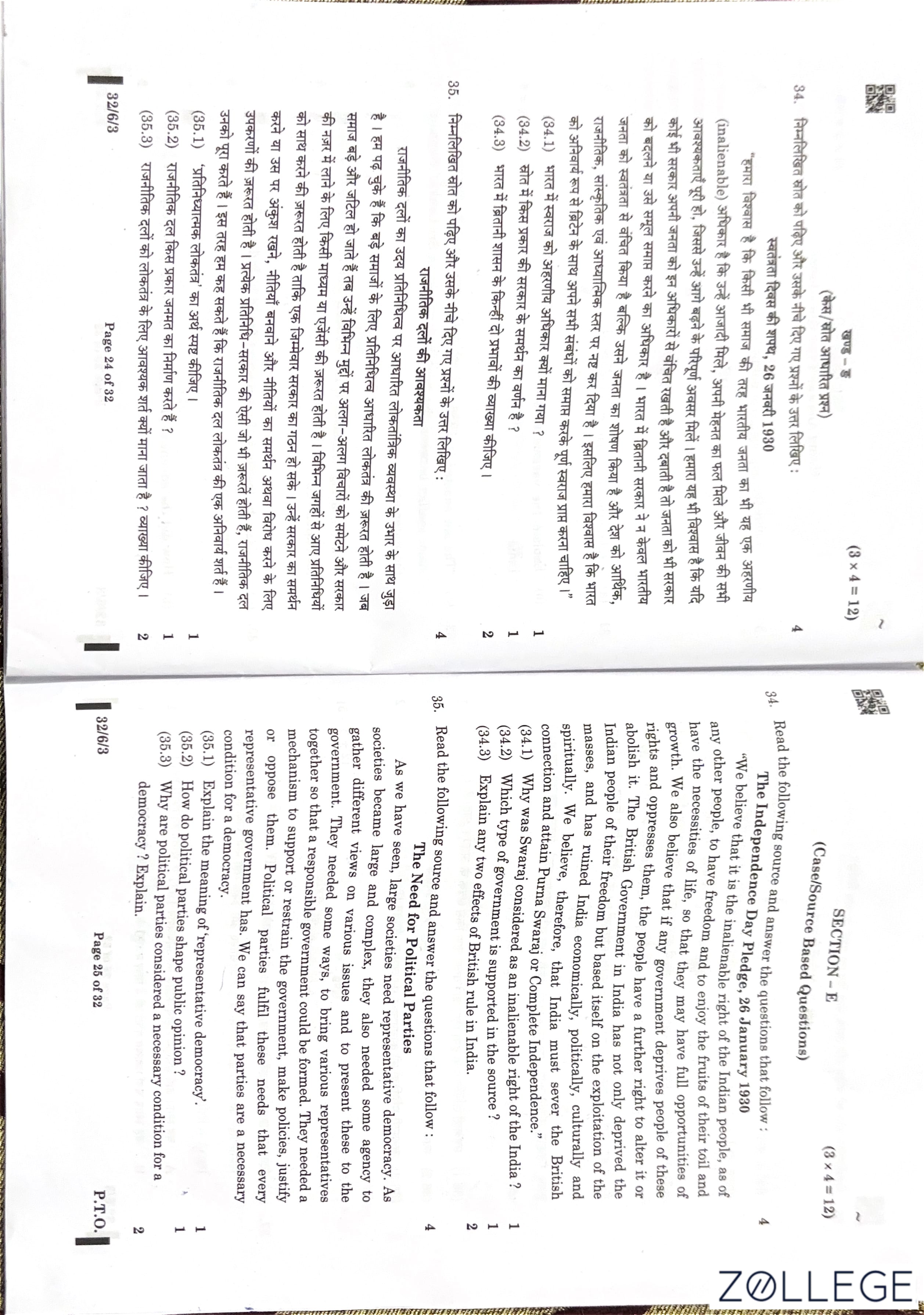
Read the following source and answer the questions that follow:
The Independence Day Pledge, 26 January 1930
“We believe that it is the inalienable right of the Indian people, as of any other people, to have freedom and to enjoy the fruits of their toil and have the necessities of life, so that they may have full opportunities of growth. We also believe that if any government deprives people of these rights and oppresses them, the people have a further right to alter it or abolish it. The British Government in India has not only deprived the Indian people of their freedom but based itself on the exploitation of the masses, and has ruined India economically, politically, culturally and spiritually. We believe, therefore, that India must sever the British connection and attain Purna Swaraj or Complete Independence.”
(i) Why was Swaraj considered as an inalienable right of the India?
(ii) Which type of government is supported in the source?
(iii)Explain any two effects of British rule in India.
View Solution
(i) Swaraj was considered an inalienable right of India because the Indian people believed that they had the inherent right to self-rule, free from British colonial control. The exploitation and suppression of the Indian population by the British government led to widespread discontent, making independence an undeniable right for the people of India.
(ii) The source supports a democratic government, where the people have the right to choose their leaders and determine their own future without external oppression. It emphasizes the need for self-rule, which is the core principle of democracy.
(iii) 1. Economic Exploitation: British rule led to the economic exploitation of India. The colonial government extracted resources and wealth, which led to the impoverishment of the Indian population. This included the drain of wealth and the destruction of local industries.
2. Political Repression: The British government imposed repressive laws that curtailed Indian freedoms, such as the Rowlatt Act, which allowed for the arrest of individuals without trial. This led to widespread resentment and the growth of nationalist movements. Quick Tip: The struggle for independence was driven by both economic exploitation and the lack of political freedom under British colonial rule.
Read the following source and answer the questions that follow:
The Need for Political Parties
"As we have seen, large societies need representative democracy. As societies became large and complex, they also needed some agency to gather different views on various issues and to present these to the government. They needed some ways, to bring various representatives together so that a responsible government could be formed. They needed a mechanism to support or restrain the government, make policies, justify or oppose them. Political parties fulfil these needs that every representative government has. We can say that parties are a necessary condition for a democracy."
(i)Explain the meaning of 'representative democracy'.
(ii)How do political parties shape public opinion?
(iii)Why are political parties considered a necessary condition for a democracy?
View Solution
(i)Representative democracy is a form of government where citizens elect representatives to make decisions on their behalf. Instead of direct participation in lawmaking, people choose leaders who represent their interests and concerns in government. This system allows large societies to function efficiently while ensuring that the people's voices are heard.
(ii) Political parties shape public opinion through various means such as media campaigns, public speeches, and party manifestos. By presenting their views on key issues, political parties educate and persuade the public, helping them form opinions on political matters. Parties often use social media, advertisements, and rallies to influence and mobilize voters.
(iii) Political parties are considered a necessary condition for democracy because they provide a mechanism for organizing and representing diverse views in society. They help form a government by contesting elections, develop policies, and ensure accountability in the political system. Without political parties, it would be difficult to ensure political stability, policy formulation, and effective representation in a democratic system. Quick Tip: Political parties are essential in shaping governance and public policies in any democratic society by ensuring broad-based representation.
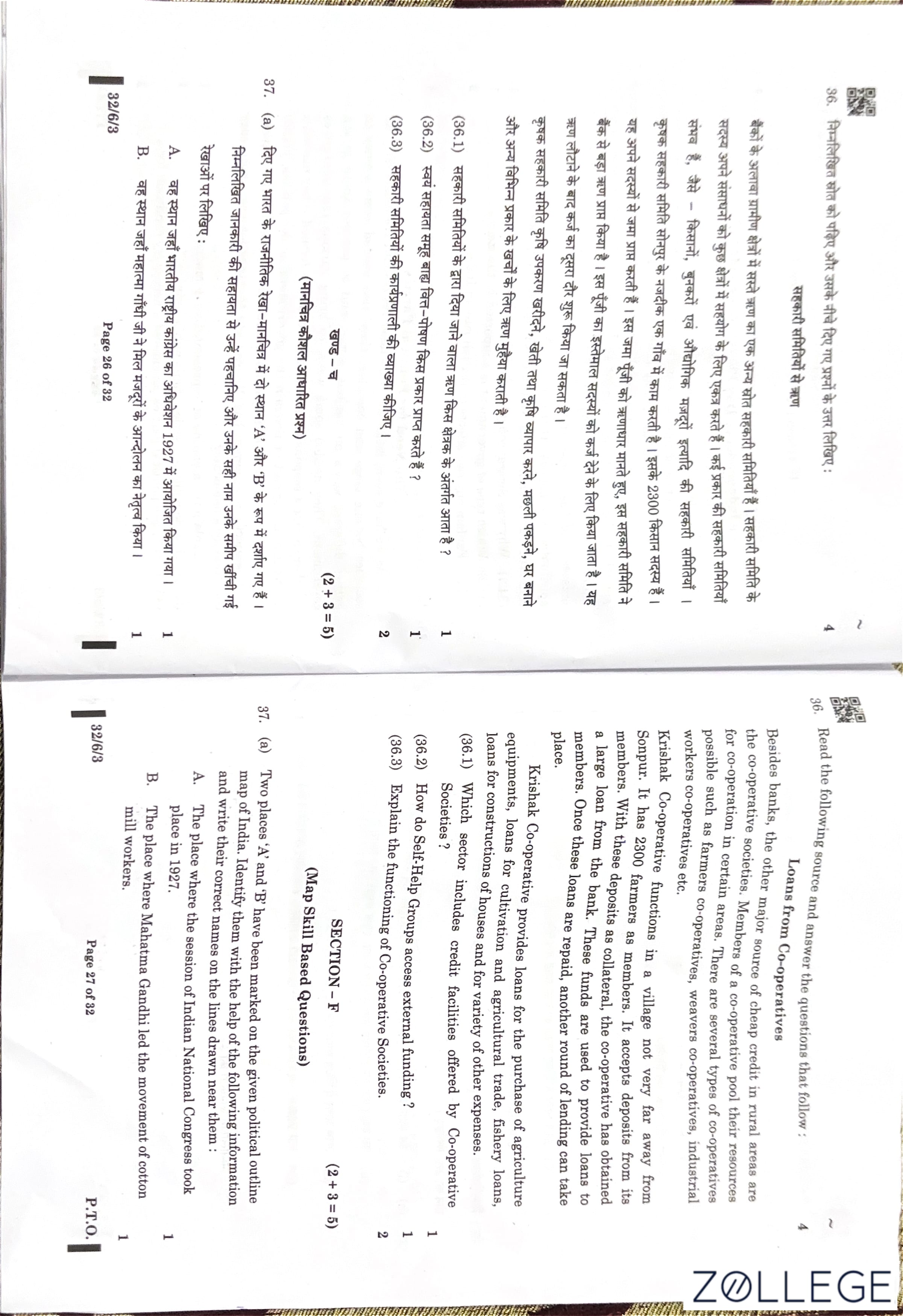
Question 36:
Read the following source and answer the questions that follow:
Loans from Co-operatives
Besides banks, the other major source of cheap credit in rural areas are the co-operative soci-
eties. Members of a co-operative pool their resources for co-operation in certain areas. There
are several types of co-operatives possible such as farmers’ co-operatives, weavers’ co-operatives,
industrial workers’ co-operatives etc.
Krishak Co-operative functions in a village not very far away from Sonpur. It has 2300 farmers
as members. It accepts deposits from its members. With these deposits as collateral, the co-
operative has obtained a large loan from the bank. These funds are used to provide loans to
members. Once these loans are repaid, another round of lending can take place.
Krishak Co-operative provides loans for the purchase of agriculture equipment, loans for culti-
vation and agricultural trade, fishery loans, loans for construction of houses and for variety of
other expenses.
(1) Which sector includes credit facilities offered by Co-operative Societies?
View Solution
The sector that includes credit facilities offered by co-operative societies is primarily the Agricultural Sector. Co-operatives provide financial support for agricultural activities, including the purchase of equipment, cultivation, and agricultural trade. They also extend loans to farmers for fishery and housing purposes, which are part of the rural economy. Quick Tip: Co-operatives play a significant role in the rural economy by offering credit facilities, promoting financial inclusion, and supporting agriculture and related industries.
(2) How do Self-Help Groups access external funding?
View Solution
Self-Help Groups (SHGs) are community-based organizations that primarily focus on promoting savings, lending, and microfinance activities. They access external funding through the following methods:
1. Bank Linkage Program: SHGs are linked with commercial banks for accessing loans. After building a good credit history and demonstrating their financial discipline, SHGs can receive financial support from banks at relatively lower interest rates.
2. Government Schemes: SHGs also access external funding through government programs like the National Rural Livelihood Mission (NRLM), which provides funds for women empowerment, livelihood activities, and other community development purposes.
3. Non-Governmental Organizations (NGOs): NGOs support SHGs by providing financial assistance and training to enhance their functioning and capacity. Quick Tip: SHGs access external funding primarily through bank linkages, government programs, and NGOs, promoting financial independence and social upliftment.
(3) Explain the functioning of co-operative societies.
View Solution
Co-operative societies function by pooling the resources of their members to provide financial support and services. The key functions of co-operative societies are:
1. Pooling Resources: Members contribute their savings to the co-operative society, which is used as collateral for loans. This helps in creating a common fund for lending to members.
2. Lending and Borrowing: The co-operative lends money to its members for various purposes such as agriculture, trade, and housing. These loans are provided at lower interest rates than commercial banks.
3. Repayment and Sustainability: As loans are repaid, the funds are replenished, and the co-operative continues to function sustainably by offering fresh loans to other members.
4. Profit Sharing: The co-operative distributes its profits among the members, based on their contribution and participation.
Co-operatives aim to enhance economic self-sufficiency for rural communities, empowering them financially. Quick Tip: Co-operatives are community-driven financial institutions that help in promoting savings, offering credit, and ensuring financial inclusion in rural areas.
(a) Two places ‘A’ and ‘B’ have been marked on the given political outline map of India. Identify them with the help of the following information and write their correct names on the lines drawn near them:
A. The place where the session of Indian National Congress took place in 1927.
B. The place where Mahatma Gandhi led the movement of cotton mill workers.
View Solution
Place A refers to the city of Lucknow, where the Indian National Congress session took place in 1927.
Place B refers to the city of Ahmedabad, where Mahatma Gandhi led the movement of cotton mill workers. Quick Tip: The 1927 Lucknow session of the Indian National Congress was significant for the adoption of the resolution that demanded complete independence from British rule. The Ahmedabad mill strike of 1918 marked a turning point in India's labor movement.
(a) (i) Name the place where the session of Indian National Congress took place in 1927.
(ii) Name the place where Mahatma Gandhi led the movement of cotton mill workers.
View Solution
N/A
(b) On the same outline map of India locate and label any three of the following with suitable symbols:
(i) An International Airport located in Punjab.
(ii) A major Sea port located in Gujarat.
(iii) A major oil field of India located in Arabian Sea.
(iv) A Nuclear Power Plant located in Uttar Pradesh.
View Solution
(i) The international airport located in Punjab is Amritsar Airport.
(ii) A major sea port located in Gujarat is Mundra Port.
(iii) A major oil field located in the Arabian Sea is Bombay High Oil Field.
(iv) A nuclear power plant located in Uttar Pradesh is Narora Nuclear Power Plant. Quick Tip: These locations are significant for India's infrastructure, energy, and economy.
(b) Name the place where the following are located:
(i) An International Airport located in Punjab.
(ii) Name the place where a major sea port is located in Gujarat.
(iii) Name an oil field of India located in the Arabian Sea.
(iv) Name the place where a nuclear power plant is located in Uttar Pradesh.
View Solution
(i) The international airport located in Punjab is Amritsar Airport.
(ii) A major sea port located in Gujarat is Mundra Port.
(iii) A major oil field located in the Arabian Sea is Bombay High Oil Field.
(iv) A nuclear power plant located in Uttar Pradesh is Narora Nuclear Power Plant. Quick Tip: These places are integral to India’s transport, energy, and natural resource sectors.





*The article might have information for the previous academic years, please refer the official website of the exam.