
Bihar Board Class 10 English 113 Set J Question Paper 2025 with Solutions Pdf


Content Writer | Updated On - Nov 24, 2025
Bihar Board Class 10 English 113 Set J Question Paper 2025 with Solutions Pdf is available for download. The Bihar School Examination Board (BSEB) conducted the Class 10 examination for a total duration of 3 hours, and the question paper was of a total of 100 marks.
Bihar Board Class 10 English 113 Set J Question Paper 2025 with Solutions
| Bihar Board Class 10 English 113 Set J Question Paper | Download PDF | Check Solutions |

Satyajit Ray is very critical of the \rule{0.5in}{0.5pt} of Indian films.
View Solution
Step 1: Understanding the Concept:
This question is based on Satyajit Ray's critique of Indian cinema, as discussed in his essay "What is Wrong with Indian Films?".
Step 2: Detailed Explanation:
Satyajit Ray, a globally acclaimed filmmaker, was a vocal critic of the state of Indian cinema during his time.
He argued that Indian films often lacked artistic and technical quality.
He pointed out that filmmakers were more focused on formulaic plots, songs, and dances rather than on creating meaningful and well-crafted cinema.
He believed that Indian cinema had the potential to be great but was hampered by a lack of vision and an over-reliance on commercial elements, which compromised its overall quality.
Therefore, he was very critical of the quality of Indian films.
Step 3: Final Answer:
The correct option is (B) as Satyajit Ray consistently criticized the poor artistic and technical quality of mainstream Indian films.
Quick Tip: When answering questions based on literary or critical texts, focus on the author's main arguments. Satyajit Ray's primary concern with Indian cinema was its failure to achieve high artistic standards.
All, men, women and children have sacrificed their lives in pursuit of a \rule{0.5in}{0.5pt} Burma.
View Solution
Step 1: Understanding the Concept:
This question refers to the long struggle for democracy in Burma (now Myanmar), famously led by Aung San Suu Kyi. The text is likely from her "Acceptance Speech" for the Nobel Peace Prize.
Step 2: Detailed Explanation:
Burma has been under military rule for many decades, which is a form of autocratic and totalitarian government.
The struggle of the Burmese people, including men, women, and children, has been against this oppressive rule.
Their goal and the cause for which many sacrificed their lives was to establish a government chosen by the people and for the people.
This form of government is a democracy. The options 'despotic', 'autocratic', and 'totalitarian' describe the very regime they were fighting against.
Therefore, the pursuit was for a democratic Burma.
Step 3: Final Answer:
The correct option is (D) because the lifelong struggle of the people of Burma, as highlighted by leaders like Aung San Suu Kyi, was to achieve democracy and freedom from military dictatorship.
Quick Tip: Understanding the historical context is crucial for such questions. The struggle in Burma has always been framed as a pro-democracy movement against an authoritarian regime.
The old woman's voice was soft but \rule{0.5in}{0.5pt}.
View Solution
Step 1: Understanding the Concept:
This question is from a prescribed text, likely "Once Upon a Time" by Toni Morrison, where the character of the old woman is central. The description of her voice uses a contrast.
Step 2: Detailed Explanation:
The phrase "soft but..." sets up a contrast. A voice that is soft (low in volume) can still carry a tone of authority, seriousness, or firmness.
- 'Happy' and 'musical' are descriptions of tone but don't create a strong contrast with 'soft'.
- 'Audible' means capable of being heard, which is a necessary quality for a voice but doesn't offer the literary contrast intended here.
- 'Stern' means serious and severe, which creates a powerful contrast with 'soft'. A soft yet stern voice implies quiet authority and seriousness. This is a common literary device to describe a character who is wise and commands respect without shouting.
In the context of the story, the old woman is wise and her words carry weight, making "stern" the most fitting description of her tone.
Step 3: Final Answer:
The correct option is (A) because "stern" provides the most effective literary contrast to "soft," suggesting a voice that is quiet yet firm and authoritative.
Quick Tip: In literature, look for contrasts in character descriptions. The combination of "soft" and "stern" creates a complex and memorable character trait.
The \rule{0.5in}{0.5pt} of Indian culture is very amazing.
View Solution
Step 1: Understanding the Concept:
This question is from the essay "The Unity of Indian Culture" by Humayun Kabir. The essay discusses the remarkable features of India's long-standing culture.
Step 2: Detailed Explanation:
In his essay, Humayun Kabir highlights the long and unbroken continuity of Indian culture, despite numerous invasions and societal changes.
He uses the word 'vitality' to describe this amazing capacity of Indian culture to absorb new influences without losing its fundamental identity.
'Vitality' means the state of being strong, active, and full of life and energy. This perfectly captures the enduring and dynamic nature of Indian culture that the author finds so amazing.
While colour, character, and spirit are also aspects of culture, 'vitality' is the specific term used in the text to emphasize its resilience and dynamism.
Step 3: Final Answer:
The correct option is (A) as the author specifically praises the vitality of Indian culture, which has allowed it to survive and thrive for thousands of years.
Quick Tip: Pay attention to specific vocabulary used in essays and prose. The author's choice of words like "vitality" is deliberate and carries the central theme of the text.
In the \rule{0.5in}{0.5pt}, according to Cowper, the nightingale is mute.
View Solution
Step 1: Understanding the Concept:
This question refers to the poem "God Made the Country" by William Cowper. The poem's central theme is the contrast between the natural, peaceful life in the country (or village) and the artificial, noisy life in the town.
Step 2: Detailed Explanation:
The poet, William Cowper, idealizes the countryside as a place of divine creation, full of natural beauty and harmony.
In contrast, he portrays the town as a man-made environment, lacking genuine peace and natural music.
The nightingale is a symbol of nature's beautiful music. The poet suggests that in the noisy and unnatural environment of the town, the nightingale's song would be lost or unheard, making it effectively 'mute'.
The poem argues that true health and virtue can be found in the country, away from the corrupting influence of the town.
Step 3: Final Answer:
The correct option is (B) because, in Cowper's poem, the town represents an artificial world where the natural melody of the nightingale cannot be appreciated and is therefore considered mute.
Quick Tip: Poems often use symbolism and contrast. Here, the country and the town are contrasted, with the nightingale symbolizing the purity of nature that is absent in the town.
A happy man's \rule{0.5in}{0.5pt} and care are bound by a few paternal acres.
View Solution
Step 1: Understanding the Concept:
This question is a direct quote from Alexander Pope's poem "Ode on Solitude". The poem describes the ideal life of a content and happy man.
Step 2: Detailed Explanation:
The opening lines of the poem are: "Happy the man, whose wish and care / A few paternal acres bound".
This means that a truly happy man's ambitions, desires (wish), and worries (care) are limited to his own inherited land ("paternal acres").
He is content with what he has and does not yearn for more wealth, power, or fame. His world is his farm, and he finds complete fulfillment within it.
The other options do not fit the line from the poem.
Step 3: Final Answer:
The correct option is (D) as it directly completes the famous line from Alexander Pope's poem, encapsulating the theme of contentment and simple living.
Quick Tip: Memorizing the first few lines of famous poems from your syllabus can be very helpful, as questions are often based on direct quotes.
All the money earned by Mr. Gessler was spent on \rule{0.5in}{0.5pt} and leather.
View Solution
Step 1: Understanding the Concept:
This question is from the story "Quality" by John Galsworthy, which portrays the life of a dedicated German shoemaker, Mr. Gessler.
Step 2: Detailed Explanation:
Mr. Gessler was an artist who made the best quality boots. He was so committed to his craft that he ignored everything else, including his business and his own health.
He used only the finest leather, which was expensive. The story reveals that as he lost customers to big firms, his income dwindled.
The narrator discovers at the end that Mr. Gessler had died of slow starvation. The new owner of the shop explains, "He never gave himself time to eat... All went in rent and leather."
This shows his tragic dedication; he prioritized the rent for his shop and the quality of his materials over his own basic needs like food.
Step 3: Final Answer:
The correct option is (C) because the text explicitly states that all of Mr. Gessler's money was spent on rent and leather, leading to his demise.
Quick Tip: Character analysis is key to understanding stories like "Quality". Mr. Gessler's character is defined by his uncompromising dedication to his craft, even at the cost of his own life.
The children \rule{0.5in}{0.5pt} the conduct of the guests.
View Solution
Step 1: Understanding the Concept:
This question is likely from a story that explores family dynamics and social interactions from a child's perspective, such as "Sun and Moon" by Katherine Mansfield or another similar text where guests' behavior is observed. In the context of the prescribed texts, this refers to the story "Love Defiled".
Step 2: Detailed Explanation:
In stories that feature children as protagonists or observers, there is often a commentary on the strange or unpleasant behavior of adults.
In the story "Love Defiled", the guests who visit the family are portrayed as noisy, disruptive, and ill-mannered.
The children in the story observe this behavior and are naturally put off by it. Their innocent perspective highlights the negative conduct of the guests.
Therefore, the children disliked the conduct of the guests.
Step 3: Final Answer:
The correct option is (B) as the narrative portrays the guests' behavior in a negative light, and the children's reaction reflects this disapproval.
Quick Tip: When a question involves the perspective of children in a story, consider how they would perceive adult behavior. Often, they see things more clearly and honestly than the adults themselves.
The mother in her letter tells the daughter that \rule{0.5in}{0.5pt} cannot be bought.
View Solution
Step 1: Understanding the Concept:
This question refers to the story "Two Horizons," which is structured as a correspondence between a mother and her daughter. The mother imparts life wisdom to her daughter.
Step 2: Detailed Explanation:
In the story, the daughter expresses feelings of being lost and disillusioned with her life.
The mother, in her reply, tries to guide her by distinguishing between material possessions and true inner well-being.
She explains that one can buy material comforts, luxuries, and even temporary pleasure, but true inner peace is something that cannot be bought with money.
It must be cultivated from within. While happiness, honour, and fulfilment are related concepts, the text specifically emphasizes the idea that money cannot buy tranquility and peace of mind.
Step 3: Final Answer:
The correct option is (B) because the central message of the mother's letter is that material wealth is incapable of providing genuine inner peace.
Quick Tip: Focus on the central theme or moral of the story. In "Two Horizons," the key theme is the conflict between materialism and the search for inner contentment.
The narrator's girlfriend told that she would \rule{0.5in}{0.5pt} the narrator even if he did not become an IAS officer.
View Solution
Step 1: Understanding the Concept:
This question is from the story "Love Defiled". It tests the understanding of the promise made by the narrator's girlfriend at an early stage in their relationship.
Step 2: Detailed Explanation:
In the beginning of the story, the narrator and his girlfriend are deeply in love. The narrator is an aspiring IAS officer, which is a high-status career goal.
To show her unconditional love and commitment, the girlfriend promises him that his career success does not matter to her.
She explicitly tells him that she would marry him even if he fails to become an IAS officer.
This initial promise of unconditional love is central to the story's plot, as it contrasts sharply with her later actions, which is why the story is titled "Love Defiled".
Step 3: Final Answer:
The correct option is (C) because the girlfriend's initial declaration was a promise to marry the narrator regardless of his professional success.
Quick Tip: Pay attention to the development of the plot. The initial promises and events in a story often set up a contrast for later developments, which is crucial for understanding the theme.
Halku's \rule{0.5in}{0.5pt} was destroyed by the wild animals.
View Solution
Step 1: Understanding the Concept:
This question is from the famous story "January Night" ("Poos ki Raat") by Munshi Premchand. The story revolves around a poor tenant farmer named Halku.
Step 2: Detailed Explanation:
Halku is a farmer who has worked hard on his field. The harvest is his only hope of paying off his debts.
On a freezing January night, he is supposed to be guarding his field from wild animals (nilgai).
However, the cold is so severe that he cannot bring himself to leave the warmth of his blanket and the fire.
While he and his dog Jabra stay near the fire, the wild animals enter the field and eat and trample the entire crop.
The next morning, his wife finds the field completely destroyed.
Step 3: Final Answer:
The correct option is (A) because the central tragedy of the story is the destruction of Halku's hard-grown crop by wild animals.
Quick Tip: Understanding the central conflict of a story is essential. In "January Night," the conflict is between Halku's responsibility to protect his crop and his inability to endure the extreme cold.
After fifteen years, the rich banker was in \rule{0.5in}{0.5pt}.
View Solution
Step 1: Understanding the Concept:
This question is from the short story "The Bet" by Anton Chekhov. The story explores the themes of greed, knowledge, and the meaning of life.
Step 2: Detailed Explanation:
The story begins with a rich banker making a bet of two million rubles with a young lawyer. The lawyer agrees to stay in solitary confinement for fifteen years to win the money.
At the beginning, the banker is wealthy and arrogant ("in affluence").
However, during the fifteen years of the lawyer's imprisonment, the banker's fortunes change drastically.
The story states that he engaged in "wild speculation" on the stock exchange and his wealth declined. By the end of the fifteen years, he had lost most of his money and was in serious debt.
He dreads paying the two million rubles because it would completely bankrupt him.
Step 3: Final Answer:
The correct option is (A) because the banker's financial situation had reversed over the fifteen years, leaving him in debt and fearful of losing his remaining fortune.
Quick Tip: Track character development and changes in circumstances over the course of the story. The banker's journey from affluence to debt is a key element of the plot's irony.
The poet wonders what lightning has fallen on the \rule{0.5in}{0.5pt}.
View Solution
Step 1: Understanding the Concept:
This question is from the poem "Koel" by Puran Singh. The poem is an address to the Koel (the Indian cuckoo), a bird known for its melodious but poignant song.
Step 2: Detailed Explanation:
The poet hears the high-pitched, soulful cry of the Koel and is deeply moved by it.
The bird's dark, charred-like appearance and its song, which sounds like a cry of pain, make the poet wonder what tragedy has befallen it.
He uses a powerful metaphor, asking the bird: "What lightning has fallen? What has charred thy wings?".
He is asking the Koel directly what sorrow has burnt it, causing it to sing such a painful song. The lightning is a metaphor for a sudden, devastating event.
Step 3: Final Answer:
The correct option is (D) because the poet is addressing the Koel and wondering what "lightning" (tragedy) has struck it to make it sing so mournfully.
Quick Tip: In poetry, look for metaphors and direct addresses (apostrophe). The poet speaking directly to the Koel and using the "lightning" metaphor are key literary devices in this poem.
The porter's son is shivering with cold and woes of \rule{0.5in}{0.5pt}.
View Solution
Step 1: Understanding the Concept:
This question is from the poem "The Sleeping Porter" by Laxmi Prasad Devkota. The poem depicts the harsh life and suffering of a poor mountain porter.
Step 2: Detailed Explanation:
The poem paints a grim picture of the porter's poverty and hardship. He works extremely hard, carrying heavy loads, but remains impoverished.
The poem describes his family's suffering as well. His son is depicted as shivering not just from the mountain cold but also from the "woes of hunger".
This highlights the extreme poverty of the family, where they lack even the basic necessity of food. The combination of cold and hunger creates a powerful image of suffering.
The other options are contextually incorrect.
Step 3: Final Answer:
The correct option is (B) because the poem explicitly connects the son's shivering and woes to the pains of hunger, emphasizing the family's dire poverty.
Quick Tip: Poems about social issues often use strong imagery to evoke sympathy. The image of a child shivering from both cold and hunger is a powerful indictment of poverty.
Jabra started \rule{0.5in}{0.5pt} when he heard the noise of some animals.
View Solution
Step 1: Understanding the Concept:
This question again refers to the story "January Night" by Munshi Premchand. Jabra is the name of Halku's loyal dog.
Step 2: Detailed Explanation:
In the story, Jabra is with Halku in the field on the cold night. As a dog, his natural instinct is to guard the territory.
When he senses the presence of the wild animals (nilgai) approaching the field, he begins to bark loudly.
His barking is an attempt to alert Halku and to scare the animals away.
Although Halku hears the barking, he is too overcome by the cold to react, and he eventually coaxes Jabra to come and sit with him by the fire.
Step 3: Final Answer:
The correct option is (B) because barking is the natural response of a dog to perceived intruders or danger, and this is exactly what Jabra does in the story.
Quick Tip: Remember the roles of key characters, even minor ones like animals. Jabra the dog is not just a pet; he represents loyalty and the duty that his master, Halku, fails to perform.
The violent reaction during an allergy leads to \rule{0.5in}{0.5pt}.
View Solution
Step 1: Understanding the Concept:
This question is from a lesson on "Allergy" and tests basic biological knowledge about the body's response to allergens.
Step 2: Detailed Explanation:
An allergy is an exaggerated immune system response to a substance (allergen) that is normally harmless to most people.
When a person with an allergy is exposed to an allergen, their immune system releases chemicals like histamine.
These chemicals cause a cascade of effects in the body, the primary one being inflammation. Inflammation is the body's process of fighting against things that harm it, like infections or toxins, in an attempt to heal itself.
Symptoms like coughing, itching, swelling, and redness are all manifestations of this underlying inflammatory response. Therefore, inflammation is the most accurate and comprehensive term for the reaction.
Step 3: Final Answer:
The correct option is (D) because inflammation is the fundamental physiological process that underlies most of the symptoms of a violent allergic reaction.
Quick Tip: When choosing between a specific symptom (like itching) and a general process (like inflammation), the broader, more inclusive term is often the correct answer in a scientific context.
During the first year of imprisonment, the lawyer played the \rule{0.5in}{0.5pt}.
View Solution
Step 1: Understanding the Concept:
This question is about a specific detail from Anton Chekhov's short story, "The Bet". It asks about the lawyer's activities during the first year of his confinement.
Step 2: Detailed Explanation:
The story provides a timeline of the lawyer's activities during his fifteen-year imprisonment.
The text explicitly states what he did in the first year: "In the first year of his confinement, as far as one could judge from his brief notes, the prisoner suffered severely from loneliness and depression. The sounds of the piano could be heard continually day and night from his room."
He also rejected wine and tobacco during this period and read books of a "light character".
The detail about the piano is mentioned specifically.
Step 3: Final Answer:
The correct option is (D) as the story clearly mentions that the lawyer played the piano continuously during his first year of solitary confinement.
Quick Tip: For detail-oriented questions from a text, try to recall the sequence of events. The story "The Bet" carefully chronicles the lawyer's intellectual and psychological journey year by year.
During the last days, Mr. Gessler never gave himself time to \rule{0.5in}{0.5pt}.
View Solution
Step 1: Understanding the Concept:
This question pertains to the tragic end of Mr. Gessler's life as described in the story "Quality" by John Galsworthy.
Step 2: Detailed Explanation:
Towards the end of the story, the narrator returns to Mr. Gessler's shop to find it taken over by another man.
The new owner informs the narrator that Mr. Gessler had passed away. When the narrator asks how, the man explains that he died from "slow starvation".
He elaborates that the old man worked day and night, never stopping. The money he earned was immediately spent on rent and leather. The man says, "he never gave himself time to eat; never had a penny in the house."
This shows that his obsession with his craft and his inability to compete with big firms led him to neglect his most basic need for food, resulting in his death.
Step 3: Final Answer:
The correct option is (D) because the text explicitly states that Mr. Gessler died of starvation because he never gave himself time to eat.
Quick Tip: The ending of "Quality" is crucial to its theme. Mr. Gessler's death by starvation is a powerful symbol of how artistry and quality can be crushed by modern commercialism.
Aung San Suu Kyi is a \rule{0.5in}{0.5pt}.
View Solution
Step 1: Understanding the Concept:
This question asks for the correct identification of Aung San Suu Kyi, a world-renowned figure whose Nobel Peace Prize acceptance speech is a prescribed text.
Step 2: Detailed Explanation:
Aung San Suu Kyi is the leading figure in Burma's (Myanmar's) struggle for democracy.
- She co-founded and led the National League for Democracy (NLD) party, which makes her a politician.
- She spent years under house arrest for her pro-democracy work, which also makes her a human rights activist.
- She is not known as a healer or a language teacher.
Between options (A) and (B), while she is a celebrated activist, her primary role in her country has been as the leader of a major political party, fighting elections and aiming to form a government. Therefore, 'politician' is a more formal and comprehensive description of her public life and role. The text likely focuses on her political struggle for a democratic Burma.
Step 3: Final Answer:
The correct option is (A) because her most prominent role has been as the leader of the NLD political party, making her a Burmese politician.
Quick Tip: For questions about famous personalities, know their primary role or profession. While Aung San Suu Kyi is an activist, her leadership of a political party makes 'politician' her main official designation.
The old woman's silence is so \rule{0.5in}{0.5pt} that the young people have trouble holding their laughter.
View Solution
Step 1: Understanding the Concept:
This question is from the story "Once Upon a Time" by Toni Morrison. It describes the interaction between a group of young people and a wise old woman.
Step 2: Detailed Explanation:
In the story, the young people try to trick the old woman. Her response to them is not with words, but with a profound silence.
This silence is not empty; it is described as being very 'deep'. It is a silence that carries weight, wisdom, and perhaps a gentle rebuke.
The young people's laughter is not a sign of mockery, but a nervous reaction to the intensity and profundity of her silence. They are uncomfortable because her silence is more powerful than any words she could have spoken.
'Deep' or 'meaningful' could fit, but 'deep' better captures the unsettling and profound nature of her silence described in the text.
Step 3: Final Answer:
The correct option is (B) because her silence is described as being so profound and 'deep' that it unnerves the young people, causing their nervous laughter.
Quick Tip: In literature, silence can be a powerful communication tool. Analyze the context to understand what the silence conveys—wisdom, disapproval, tension, etc.
There are civilized people among whom only a \rule{0.5in}{0.5pt} section has achieved culture.
View Solution
Step 1: Understanding the Concept:
This question is based on a line from the essay "The Unity of Indian Culture". It presents a critical view on the distinction between civilization and culture.
Step 2: Detailed Explanation:
The author makes a point that being 'civilized' (having organized societies, laws, technology, etc.) is not the same as being 'cultured' (having refined arts, philosophy, and a deep understanding of values).
The author argues that true culture is a rare and precious achievement.
Therefore, even within societies that are considered civilized, only a small fraction of people has truly attained a high level of culture. The masses may follow customs, but genuine cultural achievement is limited to a smaller group.
The options 'large', 'big', and 'huge' would contradict the author's elitist or critical view of culture.
Step 3: Final Answer:
The correct option is (C) as the author's argument is that true culture is an achievement of a select few, not the general populace, even in civilized societies.
Quick Tip: Distinguish between related but distinct concepts discussed in a text. Here, the key is the difference between "civilization" (widespread) and "culture" (rarer and more profound).
Malasha was frightened and prepared to run \rule{0.5in}{0.5pt}.
View Solution
Step 1: Understanding the Concept:
This question is from Leo Tolstoy's short story "Little Girls Wiser Than Men". It focuses on a specific moment when the character Malasha becomes scared.
Step 2: Detailed Explanation:
The story begins with two girls, Akoulya and Malasha, playing near a puddle. Akoulya's mother scolds her for getting her dress dirty, and this escalates into a village-wide quarrel.
Malasha, being the younger and more timid of the two, gets frightened when she sees the adults starting to fight and shout.
Her immediate instinct, as a scared child, is to seek safety and comfort. The safest place for a child is their home.
The text describes her being frightened by the escalating conflict and wanting to run home to escape the situation.
While 'away' or 'fast' describes the manner of running, 'home' specifies the destination, which is the most logical choice for a frightened child.
Step 3: Final Answer:
The correct option is (C) because when the situation got out of hand, the frightened child Malasha prepared to run to the safety of her home.
Quick Tip: Think from the character's perspective. For a young child caught in a frightening situation involving adults, the most natural impulse is to run home.
The post office was two \rule{0.5in}{0.5pt} away from Mr. Johnson's house.
View Solution
Step 1: Understanding the Concept:
This question asks for a specific detail from the story "Me and the Ecology Bit" by Joan Lexau.
Step 2: Detailed Explanation:
In the story, the narrator, Jim, is trying to promote ecology by asking his neighbors to adopt eco-friendly habits.
He goes to Mr. Johnson's house and finds him heading out in his car. Jim suggests that Mr. Johnson should walk to the post office to save gas and reduce pollution.
Mr. Johnson replies that it's too far to walk. Jim then points out that the post office is only two blocks away.
This detail is used to show how people make excuses to avoid small efforts that could help the environment. The distance is short, making Mr. Johnson's use of a car seem lazy and wasteful.
Step 3: Final Answer:
The correct option is (C) as the story explicitly mentions the distance to the post office as "two blocks".
Quick Tip: Stories with a moral or message often use specific, everyday details (like a distance of "two blocks") to make their point relatable and clear.
The author found Gillu clinging to a \rule{0.5in}{0.5pt}.
View Solution
Step 1: Understanding the Concept:
This question is from the story "Gillu" by Mahadevi Varma, which describes her relationship with a pet squirrel named Gillu.
Step 2: Detailed Explanation:
The question is slightly ambiguous. The author first found Gillu as an injured baby near a flower pot. However, the story spends more time describing Gillu's habits once he was living with the author.
A key and memorable habit of Gillu was his playful movement inside the author's room. The author writes that Gillu would run up to the window and "swiftly run up and down the curtain".
This action is described as a frequent and characteristic behavior. Often, when the author entered the room, she would find Gillu engaged in this activity. Therefore, finding Gillu clinging to a curtain was a common occurrence.
Given the options, "curtain" is the most likely correct answer as it relates to Gillu's most described activity inside the house.
Step 3: Final Answer:
The correct option is (C) because Gillu's favorite pastime inside the author's house was to climb up and down the curtain, and she would often find him there.
Quick Tip: For questions about an animal's behavior in a story, focus on the repeated, characteristic actions that define its personality. Gillu's curtain-climbing is his signature playful act.
In 'Sun and Moon', Mansfield beautifully portrays the subtle feelings of \rule{0.5in}{0.5pt}.
View Solution
Step 1: Understanding the Concept:
This question asks about the main focus of Katherine Mansfield's short story, "Sun and Moon".
Step 2: Detailed Explanation:
The story "Sun and Moon" is told from the perspective of two very young children, whose names are Sun and Moon.
The entire narrative is filtered through their innocent, and sometimes confused, perception of the adult world. They observe their parents preparing for and hosting a party.
Mansfield masterfully captures the subtle feelings of children—their excitement, their sense of wonder, their confusion about adult behavior, and their eventual disappointment when the beautiful party food is destroyed.
The story is a classic example of modernist fiction, focusing on the internal consciousness and subjective experience of its child protagonists.
Step 3: Final Answer:
The correct option is (C) because the story's primary achievement is its sensitive and insightful portrayal of the inner world and subtle feelings of young children.
Quick Tip: Pay attention to the narrative perspective of a story. Identifying the narrator or the central consciousness (in this case, the children Sun and Moon) often reveals the story's main subject.
The daughter in her letter says that she has lost her \rule{0.5in}{0.5pt}.
View Solution
Step 1: Understanding the Concept:
This question refers to the content of the daughter's letter in the story "Two Horizons".
Step 2: Detailed Explanation:
In the story, the daughter writes to her mother from a place of emotional distress and confusion. She feels that her life has become meaningless and that she is just going through the motions.
She expresses a deep sense of disillusionment. She feels that she has lost the ability to imagine a better future or to aspire to anything meaningful.
This loss of aspiration and hope is best summarized as having lost her dreams. Her letter is a cry for help, indicating that her youthful ambitions and visions for her life have faded away, leaving her empty.
Her mother's reply is an attempt to help her find a new path and meaning in life.
Step 3: Final Answer:
The correct option is (D) because the daughter's letter conveys a sense of hopelessness that comes from having lost her dreams and aspirations.
Quick Tip: In stories involving letters or diaries, pay close attention to the emotions and internal conflicts expressed by the writer. The daughter's letter reveals her inner crisis.
The narrator's girlfriend wore a \rule{0.5in}{0.5pt} dress when she came to meet him for the last time.
View Solution
Step 1: Understanding the Concept:
This question asks for a specific descriptive detail from the story "Love Defiled". The color of clothing in literature can often be symbolic.
Step 2: Detailed Explanation:
In the story "Love Defiled", the narrator recounts the final meeting with his girlfriend, where their relationship effectively ends.
The story mentions the color of the dress she wore during this significant and heartbreaking encounter. While some versions of the text might mention 'pink', the most commonly cited color in analyses and question banks for this story is red.
The color red is often symbolic of love, passion, but also danger or warning. Its use here can be seen as ironic, as this is the day their love ends.
The author uses this vivid detail to make the memory of their last meeting more poignant and memorable for the narrator and the reader.
Step 3: Final Answer:
The correct option is (C) as the narrator specifically recalls his girlfriend wearing a red dress during their final meeting.
Quick Tip: Authors use specific sensory details (like the color of a dress) to make important scenes more vivid and emotionally impactful. Try to remember these key details associated with crucial plot points.
When Jabra barked, Halku realised that wild \rule{0.5in}{0.5pt} had entered his field.
View Solution
Step 1: Understanding the Concept:
This question is from Munshi Premchand's "January Night" and focuses on the moment Halku understands the threat to his field.
Step 2: Detailed Explanation:
Halku is trying to keep warm by the fire while his dog, Jabra, is on guard. Jabra starts barking furiously.
At first, Halku might think it's a minor disturbance, but the intensity and persistence of the barking make him realize the seriousness of the situation.
He understands that Jabra's barking signals the arrival of a herd of wild animals (specifically, nilgai or blue bulls) that have come to raid his crop.
The other options are incorrect. 'Dogs' is too specific and likely wrong. 'Boundary' and 'crop' are not things that would enter the field and cause a dog to bark in this manner.
Step 3: Final Answer:
The correct option is (B) because Jabra's barking alerted Halku to the presence of destructive wild animals in his field.
Quick Tip: Follow the cause-and-effect sequence in the narrative. Cause: Jabra barks. Effect: Halku realizes wild animals are present. This helps in choosing the most logical answer.
There are \rule{0.5in}{0.5pt} and environmental risk factors for the development of allergy.
View Solution
Step 1: Understanding the Concept:
This question comes from the lesson on "Allergy" and deals with the causes and risk factors associated with developing allergies.
Step 2: Detailed Explanation:
The development of allergies is a complex process influenced by multiple factors. The two primary categories of risk factors are:
1. Genetic predisposition: Allergies often run in families. A person is more likely to develop allergies if their parents have them. This indicates a genetic link.
2. Environmental factors: Exposure to allergens (like pollen, dust mites, certain foods), pollution, infections, and lifestyle changes can trigger the development of allergies in genetically susceptible individuals.
Therefore, the development of allergies is understood as an interplay between genetic and environmental factors.
Step 3: Final Answer:
The correct option is (A) as it is a well-established scientific fact that both genetic and environmental factors contribute to the risk of developing allergies.
Quick Tip: For scientific topics, remember key dichotomies or pairings. The "nature vs. nurture" or "genetic vs. environmental" framework is very common in biology and medicine.
When the banker peeped into the prisoner's room, he saw a \rule{0.5in}{0.5pt} burning dimly.
View Solution
Step 1: Understanding the Concept:
This is a question about a specific detail in a climactic scene from Anton Chekhov's "The Bet".
Step 2: Detailed Explanation:
On the last night of the fifteen-year bet, the banker decides to kill the lawyer to avoid paying the two million rubles.
He secretly enters the lodge where the lawyer is imprisoned. The text describes the scene: "He peeped cautiously into the room. A candle was burning dimly on the table. The prisoner was sitting at the table."
The lawyer is asleep, and beside him is the letter he has written renouncing the money. The dim light from the single candle adds to the tense and somber atmosphere of the scene.
The story specifically mentions a candle, not a fire, lamp, or lantern.
Step 3: Final Answer:
The correct option is (B) as the text explicitly states that the banker saw a candle burning dimly in the prisoner's room.
Quick Tip: Setting and atmosphere are created through specific details. The image of a single, dim candle is used to create a mood of quietness, gloom, and secrecy in this crucial scene.
Jim says that women use too many \rule{0.5in}{0.5pt} things.
View Solution
Step 1: Understanding the Concept:
This question is from the story "Me and the Ecology Bit", where the narrator, Jim, preaches about ecology but also reveals his own prejudices.
Step 2: Detailed Explanation:
Jim's campaign to save ecology involves pointing out what others are doing wrong. When he speaks to his own mother, he criticizes her for using her electric mixer.
He complains that she uses it too often, wasting electricity. He makes a sweeping generalization, saying, "You women use too many electric things."
This highlights the irony in his character: while he is trying to do good, he is also being preachy and somewhat sexist in his commentary. His focus is on the wastage of electricity.
Step 3: Final Answer:
The correct option is (A) because Jim's specific complaint to his mother is about her use of the electric mixer, leading to his generalization about women using too many electric things.
Quick Tip: Look for irony and character flaws in first-person narratives. Jim presents himself as an "ecology bit" expert, but his own words and actions show he's not perfect either.
R. C. Hutchinson in 'The Pace for Living' describes the \rule{0.5in}{0.5pt} of modern man.
View Solution
Step 1: Understanding the Concept:
This question asks for the central theme of R. C. Hutchinson's essay, "The Pace for Living".
Step 2: Detailed Explanation:
The essay discusses the rapid pace of modern life and its effect on people. The author argues that the speed of machines has outpaced the natural rhythm of the human mind.
While the word 'fast' describes the pace of life, the author's focus is on the negative consequences of this speed. He believes this fast pace creates mental and emotional strain.
He uses the word agony to describe the state of modern man, who is constantly struggling to keep up. This suggests a deep suffering and distress, not just sadness or the simple fact of being fast. The essay portrays a sense of being overwhelmed and tormented by the relentless speed of life.
Step 3: Final Answer:
The correct option is (D) because "agony" best captures the author's view of the profound suffering and mental strain experienced by people in the fast-paced modern world.
Quick Tip: Go beyond the literal topic to understand the author's tone and perspective. The topic is the "fast" pace, but the author's perspective is that this pace causes "agony".
According to Jim, nobody's willing to do anything about \rule{0.5in}{0.5pt}.
View Solution
Step 1: Understanding the Concept:
This question relates to the central complaint of the narrator in "Me and the Ecology Bit".
Step 2: Detailed Explanation:
The narrator, Jim, has taken it upon himself to educate his neighbors about ecology. The main frustration he expresses throughout the story is that while everyone agrees that saving the environment is important, no one is actually willing to change their habits or do the practical work required.
He finds that Mr. Johnson won't walk, Mrs. Greene piles up garbage, and even his own mother uses the electric mixer too much.
His recurring complaint is that "nobody's willing to do anything about the environment" or "ecology". The word 'environment' is the general term for the cause he is championing.
Step 3: Final Answer:
The correct option is (C) as Jim's entire project and his main source of frustration is the public's unwillingness to take practical steps to protect the environment.
Quick Tip: Identify the main theme or conflict of the story. In "Me and the Ecology Bit," the central theme is the gap between talking about environmentalism and actually practicing it.
The squirrel was considered an easy prey by the \rule{0.5in}{0.5pt}.
View Solution
Step 1: Understanding the Concept:
This question asks about a detail from the beginning of the story "Gillu" by Mahadevi Varma.
Step 2: Detailed Explanation:
The story begins with the author discovering a tiny baby squirrel (who she later names Gillu) that has fallen out of its nest.
She finds him in a precarious situation. Two crows were gathered around him, continuously poking him with their beaks.
The crows saw the helpless baby squirrel as an "easy prey" and were about to kill and eat him.
The author rescues the squirrel from the crows, takes him inside, and nurses him back to health. This is how her relationship with Gillu begins.
Step 3: Final Answer:
The correct option is (D) because the story explicitly states that the author rescued the baby squirrel from two crows who were attacking it.
Quick Tip: The inciting incident is the event that sets the story in motion. In "Gillu," the inciting incident is the author's rescue of the squirrel from the crows. Remembering this key event will help answer related questions.
The author enjoys travelling fast in a \rule{0.5in}{0.5pt} if it is not his own.
View Solution
Step 1: Understanding the Concept:
This question is about a personal admission made by the author in the essay "The Pace for Living".
Step 2: Detailed Explanation:
The author, R. C. Hutchinson, generally criticizes the fast pace of modern life, identifying himself as a "slow thinker".
However, he makes a candid confession. He admits that he enjoys the sensation of speed, but only under specific conditions.
He writes that he loves going in a car at ninety miles an hour, as long as he is not the one driving. This means he can enjoy the thrill without bearing the responsibility or mental strain of controlling the vehicle.
This confession adds a layer of complexity to his argument, showing that even a "slow thinker" can be seduced by the thrill of modern speed.
Step 3: Final Answer:
The correct option is (D) because the author explicitly mentions enjoying a fast ride in a car, provided that someone else is driving it.
Quick Tip: Look for personal anecdotes or confessions in essays. They often reveal the author's nuanced perspective and make the argument more relatable.
Satyajit Ray says that in Indian films, \rule{0.5in}{0.5pt} is equated with melodrama.
View Solution
Step 1: Understanding the Concept:
This question is based on Satyajit Ray's critical essay "What is Wrong with Indian Films?". In this essay, Ray analyzes the shortcomings of Indian cinema of his time.
Step 2: Detailed Explanation:
Satyajit Ray pointed out that Indian films often misused music. Instead of being an integral part of the narrative, music was often used as a crutch to artificially heighten emotions.
He observed that whenever a scene required a strong emotional response, filmmakers would insert loud and emotionally manipulative background music.
This practice of using music to create exaggerated emotion is a key characteristic of melodrama. Ray argued that this equated the use of music directly with melodrama, preventing a more subtle and realistic portrayal of feelings.
Step 3: Final Answer:
The correct option is (C) because Satyajit Ray criticized the tendency of Indian filmmakers to use emotionally charged music as a substitute for genuine dramatic development, thereby equating music with melodrama.
Quick Tip: When studying critical essays, pay close attention to the author's specific criticisms. Ray's critique of Indian film music as a tool for melodrama is one of his most famous points.
Akoulya shouted at Malasha and asked her to catch the \rule{0.5in}{0.5pt}.
View Solution
Step 1: Understanding the Concept:
This question refers to the initial events of Leo Tolstoy's story "Little Girls Wiser Than Men". The story begins with two girls, Akoulya and Malasha, wanting to play in a puddle.
Step 2: Detailed Explanation:
At the beginning of the story, before the main conflict, Akoulya, the older girl, decides to take off her shoes and stockings to wade in the puddle.
She instructs the younger girl, Malasha, to do the same. This initial interaction revolves around their footwear. The conflict starts later when Malasha accidentally splashes Akoulya's clean dress.
The question, though slightly awkwardly phrased ("asked her to catch the..."), refers to this initial context where the shoes were the subject of their conversation and actions. It's implied that Akoulya, being older, was directing Malasha about what to do with her shoes.
Step 3: Final Answer:
The correct option is (D) because the girls' interaction before the quarrel began was about taking off their shoes to play in the water.
Quick Tip: For narrative-based questions, remember the sequence of events. The story's conflict is triggered by a splash, but the scene is set up by the girls taking off their shoes.
Culture is the efflorescence of \rule{0.5in}{0.5pt}.
View Solution
Step 1: Understanding the Concept:
This question is based on a key idea from Humayun Kabir's essay "The Unity of Indian Culture". The essay defines and differentiates between culture and civilization.
Step 2: Detailed Explanation:
In the essay, the author explains that civilization is the organization of society that makes life and social interactions secure and orderly. It includes laws, administration, and infrastructure.
Culture, on the other hand, is the expression of the finer aspects of life within that civilization—art, literature, philosophy, music, and values.
The author uses the term "efflorescence," which means "the state of flowering," to describe this relationship. He states that "Culture is the efflorescence of civilization". This means culture is the beautiful flower that blooms from the well-organized plant of civilization.
Step 3: Final Answer:
The correct option is (C) as the essay explicitly defines culture as the flowering or highest achievement of civilization.
Quick Tip: Understanding the definitions and distinctions made by an author is crucial. In this essay, the core concept is the relationship between civilization (the foundation) and culture (the flowering).
'The girl' as Toni Morrison says, 'offers \rule{0.5in}{0.5pt} and pieces of meat'.
View Solution
Step 1: Understanding the Concept:
This question refers to a line from a text by Toni Morrison, likely used as an example or reference in the prescribed syllabus. The phrase describes a basic offering of food.
Step 2: Detailed Explanation:
The phrase "and pieces of meat" suggests a meal of basic sustenance. In many cultures and literary contexts, bread and meat are paired together as the fundamental components of a simple, hearty meal.
- Offering tea or coffee with meat is less common as a standard pairing.
- Offering vegetables with meat is common, but 'bread and meat' is a more classic and symbolic pairing representing basic food and hospitality.
The line likely comes from a passage describing a simple act of providing food. In this context, bread is the most logical and common accompaniment to pieces of meat.
Step 3: Final Answer:
The correct option is (C) because bread is a staple food that is traditionally and literarily paired with meat to represent a basic meal or offering.
Quick Tip: When a quote is unfamiliar, use contextual clues. The mention of "pieces of meat" points towards a basic food item. "Bread" is the most common staple paired with meat in literature.
Aris says that his mother has come to be a \rule{0.5in}{0.5pt} symbol for the plight of all the people of Burma.
View Solution
Step 1: Understanding the Concept:
This question is from Alexander Aris's preface to "Freedom from Fear," a collection of essays by his mother, Aung San Suu Kyi. He reflects on his mother's role in the Burmese struggle for democracy.
Step 2: Detailed Explanation:
Alexander Aris explains that his mother did not set out to be a martyr or a global icon. However, due to her unwavering commitment to non-violent struggle and democracy, she organically became a powerful symbol.
He describes her as a symbol that perfectly fits the situation and represents the aspirations of the Burmese people. The word that best captures this idea of "fitting" or "suitable" for the role is appropriate.
Her dedication made her the right person to symbolize their struggle, making her an appropriate symbol.
Step 3: Final Answer:
The correct option is (D) because "appropriate" accurately describes how Aung San Suu Kyi became a fitting and suitable symbol for her people's struggle.
Quick Tip: Context is key for vocabulary questions. Think about the meaning being conveyed. Aris wants to say his mother was the 'right' or 'fitting' symbol, for which "appropriate" is the best word.
All other countries, according to Ray, are turning to the \rule{0.5in}{0.5pt} for inspiration.
View Solution
Step 1: Understanding the Concept:
This question again refers to Satyajit Ray's essay "What is Wrong with Indian Films?". He compares Indian cinema with international cinema to highlight its flaws.
Step 2: Detailed Explanation:
Ray argued that while Indian cinema was stuck in formulaic plots, international cinema (especially movements like Italian Neorealism) was finding fresh inspiration in real life.
He believed that the most powerful element of cinema was its ability to tell a compelling story. He urged Indian filmmakers to look at the rich tapestry of stories in their own country rather than borrowing from foreign films.
He felt that authentic, meaningful stories drawn from life were the true source of inspiration for great filmmaking, a path other countries were already taking.
Step 3: Final Answer:
The correct option is (B) because Ray emphasized that the foundation of good cinema is a powerful and honest story, which is what other countries were focusing on for inspiration.
Quick Tip: Identify the core argument of a critical text. Satyajit Ray's central plea was for Indian cinema to prioritize substance, which for him meant focusing on authentic and well-told stories.
The crows were engaged in poking their \rule{0.5in}{0.5pt} at the flowerpots.
View Solution
Step 1: Understanding the Concept:
This question refers to the opening scene of Mahadevi Varma's story "Gillu", where the narrator first discovers the baby squirrel.
Step 2: Detailed Explanation:
The narrator finds a tiny squirrel that has fallen from its nest and is lying near her flowerpots.
Two crows are attacking the helpless creature. Birds like crows use their sharp, hard beaks to peck and poke at food or rivals.
The story describes the crows using their beaks to wound the baby squirrel. The phrase "at the flowerpots" simply indicates the location of this event. The action of poking was done with their beaks.
The other options are biologically incorrect for a crow.
Step 3: Final Answer:
The correct option is (A) because crows use their beaks to attack and poke, which is what they were doing to the baby squirrel in the story.
Quick Tip: For questions involving animals in stories, rely on both the text and basic biological knowledge. Crows attack with their beaks.
The polythene bag remains \rule{0.5in}{0.5pt} within.
View Solution
Step 1: Understanding the Concept:
This question is from the poem "Polythene Bag" by Durga Prasad Panda. The poem explores the environmental impact and persistence of a polythene bag.
Step 2: Detailed Explanation:
The poem describes how a polythene bag, when discarded, does not decompose. It gets mixed with the soil and stays in the earth's crust.
The line "The polythene bag remains buried within" refers to this state of being hidden and preserved under the ground.
It highlights the non-biodegradable nature of plastic. While it is out of sight, it continues to exist and pollute the earth from within. 'Buried' accurately describes its state in the soil.
Step 3: Final Answer:
The correct option is (D) because the poem's central theme is that the polythene bag does not disappear but remains buried in the earth, causing long-term harm.
Quick Tip: Poems with social or environmental themes often use simple words to convey a powerful message. Here, "buried" signifies not just being covered by earth but also a hidden, persistent problem.
Radha's friend says that Radha is deeply hurt and has \rule{0.5in}{0.5pt} weight.
View Solution
Step 1: Understanding the Concept:
This question is from the poem "Thinner than a Crescent" by Vidyapati, which describes Radha's suffering due to her separation from Lord Krishna.
Step 2: Detailed Explanation:
The poem is structured as a report from Radha's friend to Krishna. The friend describes Radha's pitiful condition to evoke sympathy in Krishna and persuade him to return.
One of the key physical manifestations of Radha's sorrow and pining is her extreme weight loss. The friend tells Krishna how Radha has wasted away from grief.
Therefore, her friend says that Radha is deeply hurt and has lost a significant amount of weight, so much so that she is now "thinner than the crescent moon".
Step 3: Final Answer:
The correct option is (B) because extreme weight loss is used in the poem as a physical symbol of Radha's immense emotional pain and suffering.
Quick Tip: In devotional poetry (Bhakti poetry), physical descriptions are often used to symbolize deep spiritual or emotional states. Radha's weight loss signifies the depth of her love and sorrow.
Seven silver pots filled with \rule{0.5in}{0.5pt} gold coins were given to the rich man.
View Solution
Step 1: Understanding the Concept:
This question is from the poem "The Empty Heart" by Periasamy Thooran. It is a cautionary tale about greed.
Step 2: Detailed Explanation:
A rich but discontented man prays for more wealth. A wish-granting tree gives him seven silver pots filled with gold coins.
The poem describes these coins. The word used to describe the gold coins in this context would emphasize their material nature. Gold is a metal with a distinct yellow color.
While they might also be 'glistening' or 'many', 'yellow' is a direct and simple adjective describing the gold itself, fitting the fable-like quality of the poem. The question seeks to complete the description of the gold coins.
Step 3: Final Answer:
The correct option is (A) as 'yellow' is a primary descriptor for gold, and it fits the simple narrative style of the poem.
Quick Tip: In descriptive questions, look for the most fundamental and direct adjective. While gold can be glistening, its defining characteristic in simple terms is its yellow color.
The \rule{0.5in}{0.5pt} are on fire.
View Solution
Step 1: Understanding the Concept:
This question refers to the vivid imagery used in the poem "Koel" by Puran Singh. The poet describes the intense atmosphere of spring that prompts the Koel's song.
Step 2: Detailed Explanation:
The poet uses the metaphor of fire to describe the passionate intensity and vibrant colors of spring.
He writes about the "shade of mangoes burning" and speaks of the "soul's lyrical flashes". This imagery culminates in the line, "The garden is on fire".
This means the entire garden is ablaze with the brilliant colors of flowers and new leaves, and charged with the passionate energy of spring. It is this fiery intensity that the Koel's song seems to express.
Step 3: Final Answer:
The correct option is (D) because the poet uses the all-encompassing image of the entire garden being on fire to capture the passionate intensity of spring.
Quick Tip: Pay attention to metaphors in poetry. "On fire" here does not mean literal burning; it's a metaphor for intense color, passion, and life.
What kind of figure does the porter have?
View Solution
Step 1: Understanding the Concept:
This question is about the physical description of the main character in the poem "The Sleeping Porter" by Laxmi Prasad Devkota.
Step 2: Detailed Explanation:
The poem describes a mountain porter who carries extremely heavy loads. To do such physically demanding work, a person would need to be strong and solidly built.
The word stout means strong, thickset, and sturdy. This accurately describes the physique required for a porter's job.
The poem portrays him as a figure of immense strength and endurance, a "conqueror of the Himalayas". 'Slim' would be the opposite of what's required, and 'handsome' or 'ugly' are subjective and not the focus of the description, which emphasizes his physical capability.
Step 3: Final Answer:
The correct option is (D) as "stout" best describes the strong, sturdy build of a porter capable of carrying heavy loads.
Quick Tip: Consider the character's profession or role when answering questions about their physical description. A porter's physique must be suited to his laborious work.
Martha's stories seemed like a \rule{0.5in}{0.5pt} one saw at night.
View Solution
Step 1: Understanding the Concept:
This question is from the poem "Martha" by Walter de la Mare. The poem describes a woman named Martha who tells captivating stories to children.
Step 2: Detailed Explanation:
The poem emphasizes the magical and enchanting quality of Martha's storytelling. Her stories transport the listeners to another world filled with fairies and gnomes.
The line compares this experience to something one might see at night. The most fitting comparison for a magical, immersive, and surreal experience that happens in the mind is a dream.
Her stories are so vivid and enchanting that listening to them feels like being inside a dream.
Step 3: Final Answer:
The correct option is (B) because "dream" perfectly captures the magical, otherworldly, and enchanting nature of Martha's stories.
Quick Tip: In poetry, similes and metaphors are used to evoke a specific feeling. Comparing stories to a "dream" highlights their enchanting and non-realistic qualities.
The heart of the porter is twittering like a \rule{0.5in}{0.5pt}.
View Solution
Step 1: Understanding the Concept:
This question is from the poem "The Sleeping Porter" and uses a simile to describe the porter's heart.
Step 2: Detailed Explanation:
Even though the porter is deep in sleep, exhausted from his labor, the poet wants to convey that life still stirs within him.
He uses the simile "twittering like a bird" to describe the porter's heartbeat. Twittering is a light, fluttering sound associated with birds.
This simile suggests that despite his rugged exterior and deep slumber, his heart (representing his life force or spirit) is as delicate and alive as a small bird. It creates a gentle and poignant image of life persisting amidst hardship.
Step 3: Final Answer:
The correct option is (A) as the poem uses the specific simile of a twittering bird to describe the sound and feel of the sleeping porter's heart.
Quick Tip: Analyze similes carefully. The choice of comparison ("like a bird") is deliberate. It brings connotations of fragility, life, and nature to the subject (the porter's heart).
In Martha's stories, fairies and gnomes \rule{0.5in}{0.5pt} out in leaf-green light.
View Solution
Step 1: Understanding the Concept:
This question refers to a line from Walter de la Mare's poem "Martha," describing the magical atmosphere of her stories.
Step 2: Detailed Explanation:
The poem describes the fairy-tale world that Martha creates with her words. The beings in this world, like fairies and gnomes, do not just appear normally; they emerge in a magical, mysterious way.
The verb stole in this context means "to move quietly, secretly, or stealthily."
So, "fairies and gnomes stole out" suggests that they emerged quietly and magically from the shadows into the "leaf-green light" of the enchanted forest of her stories. This word choice enhances the sense of mystery and wonder.
Step 3: Final Answer:
The correct option is (A) because the verb "stole" perfectly captures the quiet, stealthy, and magical way the fairies and gnomes would appear in her enchanting tales.
Quick Tip: Pay attention to the connotations of words. "Stole" here doesn't mean theft; it means to move like a secret, which is very fitting for magical creatures like fairies.
William Cowper says that \rule{0.5in}{0.5pt} and virtue are gifts.
View Solution
Step 1: Understanding the Concept:
This question is from William Cowper's poem "God Made the Country". The poem contrasts the virtues of country life with the vices of city life.
Step 2: Detailed Explanation:
Cowper argues that the countryside, being God's creation, is a source of purity and well-being. The city, made by man, is a source of corruption and artificiality.
A key line in the poem states, "Health and virtue, gifts of God, are best found in the fields and groves."
He believes that both physical well-being (health) and moral goodness (virtue) are blessings from God that are more easily attained in a natural, rural environment.
Step 3: Final Answer:
The correct option is (D) because the poem explicitly pairs "health" with "virtue" as divine gifts found in the countryside.
Quick Tip: Remember the central contrasts in a poem. In "God Made the Country," the key contrast is between the natural/healthy/virtuous country and the artificial/unhealthy/corrupt town.
A happy man is \rule{0.5in}{0.5pt} to breathe his native air.
View Solution
Step 1: Understanding the Concept:
This question is from Alexander Pope's poem "Ode on Solitude," which describes the ideal of a perfectly happy and self-sufficient life.
Step 2: Detailed Explanation:
The poem describes a man whose desires are limited to his own inherited land ("paternal acres"). He finds complete satisfaction in his simple, rural existence.
A key line says that this happy man is "content to breathe his native air, In his own ground."
This means he doesn't long for travel, fame, or life in the big city. He is perfectly happy and satisfied just to be on his own land, breathing the air of his home. "Content" is the word that expresses this deep satisfaction.
Step 3: Final Answer:
The correct option is (B) as "content" is the exact word used in the poem to describe the happy man's satisfaction with his simple life.
Quick Tip: Focus on the theme of the poem. The theme of "Ode on Solitude" is contentment. The happy man is defined by his lack of desire for more than what he has.
Only the pain caused by \rule{0.5in}{0.5pt} comes back again and again.
View Solution
Step 1: Understanding the Concept:
This question is from the poem "Polythene Bag." The poem uses the polythene bag as a metaphor for something that causes persistent pain.
Step 2: Detailed Explanation:
The poem states that a polythene bag, when touched, makes a squeaky noise, but when it is buried, it remains a source of pollution.
The poet then creates a parallel: "Just like the polythene bag, his hurt also melts down... but deep inside the garbage bin of grief, the germs of the disease keep on growing." The poem also says, "Only the pain caused by hurt comes back again and again."
This line means that emotional pain, or 'hurt,' is like a polythene bag. It never truly goes away. It might be buried or forgotten for a while, but the memory and the pain can resurface repeatedly. Physical pain or diseases might heal, but emotional hurt leaves a lasting scar.
Step 3: Final Answer:
The correct option is (D) because the poem specifically compares the persistent nature of a polythene bag to the recurring pain caused by emotional hurt.
Quick Tip: Understand the central metaphor of a poem. In "Polythene Bag," the bag is a metaphor for emotional hurt that doesn't go away and keeps causing pain.
\rule{0.5in}{0.5pt} is endless.
View Solution
Step 1: Understanding the Concept:
This question captures the central moral of the poem "The Empty Heart" by Periasamy Thooran.
Step 2: Detailed Explanation:
The poem tells the story of a rich man who is given seven pots of gold but becomes obsessed with filling the eighth, half-empty pot. In his relentless quest for more, he neglects his health, family, and peace of mind, eventually working himself to death.
The story illustrates the philosophical point that human greed is a bottomless pit. It can never be satisfied; it is endless. The more one gets, the more one wants. This insatiable desire is what the poem critiques.
Step 3: Final Answer:
The correct option is (C) because the entire story serves as an allegory to demonstrate that greed is an endless and destructive desire.
Quick Tip: Identify the moral or theme of fables and allegorical poems. "The Empty Heart" is a classic tale whose single, powerful message is the endless and destructive nature of greed.
Good health and virtue can make our life \rule{0.5in}{0.5pt}.
View Solution
Step 1: Understanding the Concept:
This question again draws from the themes of William Cowper's poem "God Made the Country". It asks about the outcome of possessing health and virtue.
Step 2: Detailed Explanation:
The poem idealizes the country life as pure, natural, and wholesome. The gifts of this life are "health and virtue".
The poem implies that a life lived with these qualities, away from the corruption and stress of the city, is a pleasant and good life. The word sweet is often used in literature to describe such a pure, pleasant, and wholesome existence.
A life that is healthy and virtuous is a 'sweet' life, in contrast to the 'bitter' or artificial life of the town. While 'happy' or 'comfortable' are also positive, 'sweet' better captures the poem's pastoral and idyllic tone.
Step 3: Final Answer:
The correct option is (A) because "sweet" best describes the wholesome, pleasant quality of life that the poet believes results from health and virtue.
Quick Tip: Pay attention to the tone of a poem. The tone of "God Made the Country" is idyllic and pastoral, making "sweet" a very fitting word to describe the ideal life it promotes.
The poet wants to live unseen and \rule{0.5in}{0.5pt}.
View Solution
Step 1: Understanding the Concept:
This is a direct quote from Alexander Pope's poem "Ode on Solitude". The question tests knowledge of the specific wording of the poem.
Step 2: Detailed Explanation:
The poet expresses his ideal of a perfect life, which is one of quiet anonymity and contentment. He does not wish for fame or public recognition.
The final stanza of the poem contains the lines:
"Thus let me live, unseen, unknown;
Thus unlamented let me die;
Steal from the world, and not a stone
Tell where I lie."
He explicitly wishes to live "unseen and unknown," reinforcing the theme of solitude and a private life.
Step 3: Final Answer:
The correct option is (A) as it directly completes the famous line from the poem.
Quick Tip: For questions based on direct quotes, memorizing key phrases or lines from the poems in your syllabus is extremely beneficial.
A polythene bag \rule{0.5in}{0.5pt} when a little heat is applied.
View Solution
Step 1: Understanding the Concept:
This question is about the physical properties of a polythene bag as described in the poem "Polythene Bag".
Step 2: Detailed Explanation:
The poem uses the characteristics of a polythene bag to create metaphors for emotional hurt. One of the physical characteristics mentioned is its reaction to heat.
The poem states that "when a little heat is applied, it melts down." This is a scientifically accurate description of what happens to plastic. It doesn't simply burn into ash (unless the heat is very high); its primary reaction is to melt.
This melting also creates a "pungent smell," which the poet links to the unpleasantness of remembered hurt.
Step 3: Final Answer:
The correct option is (B) as the poem explicitly states that the polythene bag melts when heat is applied.
Quick Tip: Pay attention to the literal descriptions in a poem, as they often form the basis for the poem's metaphors and deeper meanings.
The poem tells us that \rule{0.5in}{0.5pt} thinks about Krishna all the time.
View Solution
Step 1: Understanding the Concept:
This question refers to the central subject of the poem "Thinner than a Crescent" by Vidyapati.
Step 2: Detailed Explanation:
The entire poem is about the state of Radha, who is suffering in separation from Lord Krishna. Her friend acts as a messenger, describing Radha's condition to Krishna.
The friend reports on Radha's constant weeping and her physical and emotional decline. The cause of all this suffering is her ceaseless pining for Krishna.
Therefore, the person who "thinks about Krishna all the time" to the point of self-neglect is Radha. The poem is a depiction of her unwavering devotion and pain.
Step 3: Final Answer:
The correct option is (A) because the poem is entirely focused on describing Radha's condition, which is a result of her thinking constantly about Krishna.
Quick Tip: Identify the protagonist and the central relationship in a poem. In this poem, Radha is the protagonist, and her relationship with Krishna is the subject.
The rich man left home because he wanted to earn more \rule{0.5in}{0.5pt}.
View Solution
Step 1: Understanding the Concept:
This question describes a common theme or plot point found in many fables and stories: leaving home in pursuit of greater wealth.
Step 2: Detailed Explanation:
The motivation for a character, especially in a traditional story, to leave the comfort of their home is often the desire to improve their financial situation.
The term money is the most general and all-encompassing word for wealth. While gold and diamonds are forms of wealth, 'money' covers all forms of currency and riches.
Wanting to earn more respect might be a motivation, but it is usually linked to earning more money first. The most direct and common reason for such a journey in stories is the pursuit of money.
Step 3: Final Answer:
The correct option is (B) as the desire to earn more money is a classic and fundamental motivation for characters to embark on journeys in folklore and literature.
Quick Tip: When faced with a general question about character motivation, choose the most fundamental and universally understood reason. The pursuit of money is a primary driver of action in many stories.
The Koel's songs are compared to a rain of \rule{0.5in}{0.5pt}.
View Solution
Step 1: Understanding the Concept:
This question asks about a specific metaphor used in the poem "Koel" by Puran Singh to describe the bird's song.
Step 2: Detailed Explanation:
The poem uses multiple, contrasting images to describe the Koel's song. It is described as "notes of fire" and "a rain of sparks," suggesting passion and pain.
However, the poem also contains the line, "What a rain of music thou pourest." The act of 'pouring' is most commonly associated with liquids, especially water. This metaphor compares the continuous, flowing nature of the bird's song to a downpour of rain.
Given the options, and the association with 'pouring', the comparison to a rain of water (or music that flows like water) is a valid interpretation present in the poem's imagery, representing the abundance and overwhelming nature of the song. While 'sparks' is also used, the 'rain' metaphor is strong. The presence of option (A) and the checkmark suggests this is the intended answer.
Step 3: Final Answer:
The correct option is (A) because the poem uses the imagery of pouring music like rain, which suggests a comparison to the flow and abundance of water.
Quick Tip: Poets often use multiple and sometimes contradictory metaphors to describe a complex subject. The Koel's song is described with images of both fire (sparks) and water (rain) to capture its different qualities.
They looked \rule{0.5in}{0.5pt} me for help.
View Solution
Step 1: Understanding the Concept:
This question tests the knowledge of phrasal verbs and appropriate prepositions. The verb here is "look".
Step 2: Detailed Explanation:
Different prepositions change the meaning of the verb "look":
- Look for: to search for something (e.g., "I am looking for my keys.")
- Look at: to direct your eyes towards something (e.g., "Look at the painting.")
- Look into: to investigate something (e.g., "The police will look into the matter.")
- Look to someone for something: to rely on or depend on someone for help, advice, or inspiration. (e.g., "Children look to their parents for guidance.")
In the given sentence, the meaning is that they relied on "me" for help. Therefore, the correct phrasal verb is "looked to".
Step 3: Final Answer:
The correct option is (C) because the preposition "to" correctly forms the phrasal verb "look to," which means to rely on someone for help.
Quick Tip: Learning common phrasal verbs is essential for mastering English prepositions. "Look to someone for help" is a standard and useful phrase to remember.
I am proud \rule{0.5in}{0.5pt} my son.
View Solution
Step 1: Understanding the Concept:
This question tests the use of the correct preposition that follows the adjective "proud". This is a case of a fixed prepositional phrase.
Step 2: Detailed Explanation:
In English, certain adjectives are always followed by specific prepositions. The adjective "proud" is always followed by the preposition of when it refers to the person or thing that is the source of the pride.
The correct construction is "to be proud of someone/something".
For example: "She is proud of her achievements." or "I am proud of you."
The other prepositions are grammatically incorrect in this context.
Step 3: Final Answer:
The correct option is (B) because "of" is the fixed preposition that must be used after the adjective "proud".
Quick Tip: Memorize adjective-preposition collocations (fixed phrases). Phrases like "proud of," "fond of," "interested in," and "good at" are fundamental parts of English grammar.
My friend was annoyed \rule{0.5in}{0.5pt} me.
View Solution
Step 1: Understanding the Concept:
This question tests the correct preposition to use with the adjective "annoyed". The choice of preposition often depends on the object of the annoyance.
Step 2: Detailed Explanation:
The general rule for the adjective "annoyed" is:
- You are annoyed with a person.
- You are annoyed at or by a thing or a situation.
For example:
- "I am annoyed with my brother for being late." (Person)
- "I am annoyed at the delay." (Situation)
Since the object of the annoyance in the sentence is "me" (a person), the correct preposition is "with".
Step 3: Final Answer:
The correct option is (B) because we use "annoyed with" when referring to a person.
Quick Tip: Remember the simple rule: Annoyed \textbf{with} people, annoyed \textbf{at} things. This will help you choose the correct preposition in most cases.
We should take care \rule{0.5in}{0.5pt} our health.
View Solution
Step 1: Understanding the Concept:
This question tests the knowledge of the phrasal verb "take care". This is a fixed expression.
Step 2: Detailed Explanation:
The phrase "to take care of" means to look after, to keep someone or something safe and in good condition.
It is a set phrasal verb, and the preposition "of" is a non-negotiable part of it.
For example: "Please take care of my dog while I am away." or "You need to take care of your belongings."
In the given sentence, the meaning is that we should look after our health. Therefore, the correct phrase is "take care of our health."
Step 3: Final Answer:
The correct option is (B) because "of" is the required preposition to complete the phrasal verb "take care of".
Quick Tip: Phrasal verbs are fixed combinations. Memorize common phrasal verbs like "take care of," "look after," "depend on," etc., as a single vocabulary unit.
He died \rule{0.5in}{0.5pt} cholera.
View Solution
Step 1: Understanding the Concept:
This question tests the correct preposition to use with the verb "died" to indicate the cause of death.
Step 2: Detailed Explanation:
The prepositions used with "die" depend on the nature of the cause:
- Die of: Used for diseases, hunger, thirst, or shame. (e.g., "He died of cancer," "She died of hunger.")
- Die from: Used for external causes, wounds, or overeating/drinking. (e.g., "He died from his injuries," "She died from exposure to the cold.")
- Die by: Used for suicide or an instrument of violence. (e.g., "He died by his own hand," "He died by the sword.")
- Die in: Used for accidents or battles. (e.g., "He died in a car crash.")
Since "cholera" is a disease, the correct preposition is "of".
Step 3: Final Answer:
The correct option is (A) because "die of" is the standard phrase used to indicate death caused by a disease.
Quick Tip: Remember the common pairings for the cause of death: \textbf{die of} a disease, \textbf{die from} a wound/external cause, \textbf{die in} an accident.
Sheela is good \rule{0.5in}{0.5pt} English.
View Solution
Step 1: Understanding the Concept:
This question tests the correct preposition to use with the adjective "good" to indicate skill or ability in a particular subject or activity.
Step 2: Detailed Explanation:
The standard English idiom to express proficiency in a skill or subject is "good at something".
- "He is good at mathematics."
- "She is good at playing the piano."
- "They are good at sports."
While "in" might be used in some informal contexts ("good in English class"), the grammatically correct and standard preposition to denote the skill itself is "at".
Step 3: Final Answer:
The correct option is (B) because "good at" is the correct idiomatic expression for indicating skill in a subject like English.
Quick Tip: Always use "at" after "good," "bad," "excellent," "terrible," etc., when referring to a skill. For example: bad \textbf{at} singing, excellent \textbf{at} drawing.
I congratulated him \rule{0.5in}{0.5pt} his success.
View Solution
Step 1: Understanding the Concept:
This question tests the fixed preposition that follows the verb "congratulate".
Step 2: Detailed Explanation:
The verb "congratulate" is followed by the preposition on to specify the reason for the congratulations.
The correct structure is: "to congratulate someone on something".
- "I congratulated her on her wedding."
- "The teacher congratulated the students on passing the exam."
"For" is a common error but is grammatically incorrect in this context. The standard and correct preposition is "on".
Step 3: Final Answer:
The correct option is (C) because "on" is the fixed preposition used with "congratulate".
Quick Tip: Memorize verb-preposition collocations. "Congratulate on" is a key phrase. A common mistake is using "for," so be extra careful to choose "on."
Choose the correct antonym of 'Victorious' --
View Solution
Step 1: Understanding the Concept:
An antonym is a word that has the opposite meaning to another word. The question asks for the antonym of 'Victorious'.
Step 2: Detailed Explanation:
- Victorious means having won a victory; triumphant.
- Defeated means having been beaten in a battle or contest. This is the direct opposite of victorious.
- Annexed means to add territory to one's own territory by appropriation. It is related to victory but not an antonym.
- Destroyed means to end the existence of something by damaging it. It can be a result of defeat but is not the direct opposite.
- Winner is a synonym for victorious, not an antonym.
Step 3: Final Answer:
The correct option is (A) because "Defeated" is the direct opposite of "Victorious".
Quick Tip: When finding an antonym, first define the given word clearly in your mind. Then, look for the option that presents the most direct opposition to that meaning.
Choose the correct antonym of 'Confess' --
View Solution
Step 1: Understanding the Concept:
The question asks for the antonym (opposite) of the verb 'Confess'.
Step 2: Detailed Explanation:
- Confess means to admit or acknowledge that one has committed a crime or is at fault in some way.
- Deny means to state that one refuses to admit the truth or existence of something. This is the direct opposite of confessing.
- Assert means to state a fact or belief confidently and forcefully. It's about stating something, not admitting fault.
- Contest means to oppose an action or decision; to take part in a competition. It is not related.
- Contend means to struggle to surmount a difficulty; to assert something as a position in an argument. Not a direct opposite.
Step 3: Final Answer:
The correct option is (A) because to "Deny" is the direct opposite action of to "Confess".
Quick Tip: Think in terms of actions. The action of confessing is admitting guilt. The opposite action is refusing to admit guilt, which is to deny.
Choose the correct synonym of 'Triumph' --
View Solution
Step 1: Understanding the Concept:
A synonym is a word that has the same or nearly the same meaning as another word. The question asks for the synonym of 'Triumph'.
Step 2: Detailed Explanation:
- Triumph means a great victory or achievement.
- Victory means an act of defeating an enemy or opponent in a battle, game, or other competition. This is the closest meaning to triumph.
- Excitement and Joy are feelings that can result from a triumph, but they are not the triumph itself.
- Gain means to obtain or secure something desired, which can be a result of a triumph but is not the same thing.
The core meaning of triumph is the win itself.
Step 3: Final Answer:
The correct option is (B) because "Victory" is the most accurate and direct synonym for "Triumph".
Quick Tip: Distinguish between a word's meaning and its consequences. Joy and excitement are consequences of a triumph, but the triumph itself is the victory.
Choose the correct synonym of 'Outstanding' --
View Solution
Step 1: Understanding the Concept:
The question asks for a synonym (a word with a similar meaning) for 'Outstanding'.
Step 2: Detailed Explanation:
- Outstanding means exceptionally good; remarkable. It implies standing out from the rest due to excellence.
- Distinguished means successful, authoritative, and commanding great respect. It implies being set apart by excellence, which is very similar to outstanding.
- Admirable means deserving respect and approval. While something outstanding is often admirable, 'admirable' is about the reaction it causes, not the quality itself.
- Notorious means famous for some bad quality or deed. It is an antonym in connotation.
- Interesting means arousing curiosity or interest. Something outstanding is usually interesting, but this word is too general.
'Distinguished' best captures the sense of being set apart by high quality.
Step 3: Final Answer:
The correct option is (B) because "Distinguished" shares the core meaning of being exceptionally good and standing out from others.
Quick Tip: When choosing a synonym, look for the word that matches the original's intensity and specific meaning. 'Outstanding' and 'Distinguished' both imply a high level of excellence and public recognition.
Active voice of: By whom was this book given to you ? is
View Solution
Step 1: Understanding the Concept:
This question requires converting a sentence from the passive voice to the active voice. The original sentence is an interrogative (question) in the simple past tense.
Step 2: Key Formula or Approach:
Passive to Active Conversion Rules:
1. The object of the passive voice ("this book") becomes the object of the active voice. The indirect object ("you") also remains.
2. The subject of the passive voice ("by whom") becomes the subject of the active voice ("Who").
3. The passive verb form ("was given") changes to the corresponding active verb form. "Was given" is Simple Past Passive, so it becomes Simple Past Active ("gave").
4. The question structure is maintained.
Step 2: Detailed Explanation:
- The original sentence is: "By whom was this book given to you?"
- The subject is "whom", which becomes "Who" in the active voice question.
- The tense is Simple Past Passive ("was given"). The active form is the simple past tense of 'give', which is "gave".
- The objects are "you" (indirect) and "this book" (direct).
- Assembling the active voice question: "Who" (subject) + "gave" (verb) + "you" (indirect object) + "this book" (direct object)?
- The resulting sentence is: "Who gave you this book?"
- Option (B) is incorrect because "given" is the past participle and needs an auxiliary verb.
- Option (C) is incorrect because "has given" changes the tense to present perfect.
- Option (D) is grammatically incorrect.
Step 3: Final Answer:
The correct option is (A) as it correctly converts the simple past passive question into a simple past active question.
Quick Tip: When converting passive interrogative sentences starting with "By whom," the active form will always start with "Who." Also, ensure the tense of the verb remains the same (past passive to past active).
Active voice of: The room was cleaned. is
View Solution
Step 1: Understanding the Concept:
This question asks to convert a passive voice sentence to its active voice. The original sentence is in the simple past passive, and the agent (the one who did the action) is not mentioned.
Step 2: Key Formula or Approach:
Passive to Active Conversion Rules:
1. The object of the passive voice ("The room") becomes the object of the active voice.
2. Since the agent is missing in the passive voice, an appropriate general subject must be introduced. Common choices are "someone," "somebody," "they," or a contextually appropriate noun.
3. The passive verb ("was cleaned") changes to the active verb ("cleaned").
Step 2: Detailed Explanation:
- Original sentence: "The room was cleaned." (Simple Past Passive)
- Object: "The room"
- Verb: "was cleaned" changes to "cleaned" (Simple Past Active)
- Subject: The agent is not specified. We need to introduce a general subject.
- Let's evaluate the options:
(A) "The cleaner cleaned the room." This is a possible active sentence, but the passive sentence did not specify that it was a "cleaner". It's an assumption.
(C) "I cleaned the room." This is also possible, but again, the subject "I" is an assumption.
(D) "Someone cleaned the room." "Someone" is a vague, general pronoun used when the doer of the action is unknown or unspecified. This is the most accurate and neutral conversion when the agent is missing.
(B) "The room should be cleaned" is a modal passive voice, changing the meaning and tense.
Between (A), (C), and (D), option (D) is the best choice because it doesn't add any specific information (like 'I' or 'the cleaner') that wasn't present in the original passive sentence.
Step 3: Final Answer:
The correct option is (D) because when the agent is omitted in the passive voice, using a general pronoun like "someone" is the most appropriate way to form the active voice.
Quick Tip: When converting from passive to active and the 'by...' phrase is missing, you must introduce a subject. Use a general subject like "someone," "people," or "they" unless the context suggests a specific one.
Passive voice of: The flowers have been watered by the gardener. is
View Solution
Step 1: Understanding the Concept:
The question asks for the active voice of the given sentence. The sentence is in the Present Perfect Passive voice.
Step 2: Key Formula or Approach:
Passive to Active Conversion Rules:
1. The subject of the passive voice ("by the gardener") becomes the subject of the active voice ("The gardener").
2. The object of the passive voice ("The flowers") becomes the object of the active voice.
3. The passive verb form ("have been watered") changes to the corresponding active verb form. Present Perfect Passive (has/have + been + V3) becomes Present Perfect Active (has/have + V3).
Step 2: Detailed Explanation:
- Original Sentence: "The flowers have been watered by the gardener."
- Subject (Agent): "the gardener"
- Verb: "have been watered" (Present Perfect Passive)
- Object: "The flowers"
- Converting to Active Voice:
- New Subject: "The gardener"
- New Verb: Since the new subject "The gardener" is singular, we use "has". The verb form becomes "has watered" (Present Perfect Active).
- New Object: "the flowers"
- Assembled Sentence: "The gardener has watered the flowers."
- Let's check the options:
(A) "The gardener has watered the flowers." - This is a perfect match.
(B) Grammatically incorrect.
(C) Changes the meaning and tense (simple present).
(D) Changes the tense to present continuous.
Step 3: Final Answer:
The correct option is (A) as it correctly converts the sentence from present perfect passive to present perfect active, maintaining the tense and meaning.
Quick Tip: To convert from passive to active, simply reverse the roles of the subject and object. Pay close attention to the verb tense. "have been + V3" (passive) becomes "has/have + V3" (active).
Passive voice of: Did he buy a car ? is
View Solution
Step 1: Understanding the Concept:
This question requires converting an active voice interrogative sentence into the passive voice. The sentence is in the Simple Past tense.
Step 2: Key Formula or Approach:
Active to Passive Conversion Rules for Interrogative Sentences (starting with an auxiliary verb):
1. The object of the active voice ("a car") becomes the subject of the passive voice.
2. The subject of the active voice ("he") becomes the object of the passive voice ("by him").
3. The active verb ("buy") changes to the passive verb form (was/were + V3). The past participle of 'buy' is 'bought'.
4. The auxiliary verb in the question ("Did") is replaced by the appropriate passive auxiliary verb ("Was" or "Were") at the beginning of the sentence to maintain the question format.
Step 2: Detailed Explanation:
- Original Sentence: "Did he buy a car?"
- Tense: Simple Past Active
- Subject: "he"
- Verb: "buy"
- Object: "a car"
- Converting to Passive Voice:
- New Subject: "a car" (which is singular)
- New Verb Form: Since the new subject is singular, the passive auxiliary verb will be "Was". The main verb becomes "bought" (V3). So, "Was... bought".
- New Object (Agent): "by him"
- Assembling the Passive Question: Start with the auxiliary verb "Was", followed by the new subject "a car", then the main verb "bought", and finally the agent "by him?".
- Resulting Sentence: "Was a car bought by him?"
- Option (D) is incorrect because "Were" is used for plural subjects.
- Options (B) and (C) are grammatically incorrect because they still use "Did" which is the active voice auxiliary.
Step 3: Final Answer:
The correct option is (A) as it correctly forms the simple past passive interrogative sentence.
Quick Tip: For questions starting with "Did," the passive form will start with "Was" or "Were," depending on the new subject (the object from the active sentence). "Did" is never used in the passive voice.
Passive voice of: He had written a poem. is
View Solution
Step 1: Understanding the Concept:
This question asks to convert an active sentence in the Past Perfect tense to the passive voice.
Step 2: Key Formula or Approach:
Active to Passive Conversion Rules:
1. The object ("a poem") becomes the subject.
2. The subject ("He") becomes the object ("by him").
3. The active verb form (had + V3) changes to the passive form (had + been + V3).
Step 2: Detailed Explanation:
- Original Sentence: "He had written a poem." (Past Perfect Active)
- Subject: "He"
- Verb: "had written"
- Object: "a poem"
- Converting to Passive Voice:
- New Subject: "A poem"
- New Verb: The verb "had written" becomes "had been written" (Past Perfect Passive).
- New Object (Agent): "by him"
- Assembled Sentence: "A poem had been written by him."
- Options (A) and (D) are incorrect because they change the tense to present perfect ("has").
- Option (B) is incorrect because it is missing "been", which is essential for the past perfect passive form.
Step 3: Final Answer:
The correct option is (C) because it correctly uses the past perfect passive construction "had been written".
Quick Tip: The key to perfect tenses in passive voice is the word "been".
Present Perfect Passive: has/have + been + V3
Past Perfect Passive: had + been + V3
Future Perfect Passive: will have + been + V3
Passive voice of: Please help me, as I am in need. is
View Solution
Step 1: Understanding the Concept:
This question involves converting an imperative sentence (a command or request) into the passive voice. Imperative sentences starting with "Please" or "Kindly" express a request.
Step 2: Key Formula or Approach:
When converting an imperative sentence that expresses a request into the passive voice, we start the sentence with the phrase "You are requested to..." and then add the main verb and the rest of the sentence. The word "Please" is removed because the idea of a request is now conveyed by "You are requested".
Step 2: Detailed Explanation:
- Original Sentence: "Please help me, as I am in need."
- This is a request. The implied subject is "You".
- The standard structure for converting such requests to passive voice is "You are requested to + [base form of the verb] + [rest of the sentence]".
- Applying this rule:
- Replace "Please" with "You are requested to".
- Add the verb "help" and the rest of the sentence "me, as I am in need".
- Resulting Sentence: "You are requested to help me as I am in need."
- Options (A), (B), and (C) change the meaning by introducing modals of necessity ("must", "have to") or possibility ("may"), which are not implied by the original polite request.
Step 3: Final Answer:
The correct option is (D) because it uses the standard and correct structure for converting a polite imperative sentence into the passive voice.
Quick Tip: For imperative sentences in the passive voice:
- For requests (starting with "Please"): Use "You are requested to..."
- For orders: Use "You are ordered to..." or "Let + object + be + V3."
- For advice: Use "You are advised to..."
Direct speech of: Hari asked Sheela if she had taught her sister. is
View Solution
Step 1: Understanding the Concept:
This question requires converting a sentence from indirect (reported) speech to direct speech. The reported sentence is an interrogative sentence in the past perfect tense.
Step 2: Key Formula or Approach:
Indirect to Direct Speech Conversion Rules:
1. The reporting verb "asked" changes to "said to".
2. The conjunction "if" is removed.
3. The reported speech is put inside quotation marks "".
4. Tense change is reversed. Past Perfect ("had taught") can be a conversion from either Simple Past ("Did you teach...") or Present Perfect ("Have you taught..."). We must check the pronouns to decide.
5. Pronouns are changed back. "she" (referring to Sheela) becomes "you". "her" (referring to Sheela's) becomes "your".
Step 2: Detailed Explanation:
- Indirect Speech: "Hari asked Sheela if she had taught her sister."
- Reporting Verb: "asked" becomes "said to Sheela".
- Conjunction: Remove "if".
- Pronouns: "she" -> "you"; "her sister" -> "your sister".
- Tense: "had taught" (Past Perfect). This tense in indirect speech can result from either Simple Past or Present Perfect in direct speech.
- Let's test the options:
(A) "Did you teach my sister?" - Here "my sister" refers to Hari's sister, but the original says "her sister" (Sheela's sister). Incorrect pronoun.
(C) Same issue as (A).
(B) "Do you teach his sister?" - Incorrect tense and pronoun.
(D) "Have you taught your sister?" - The present perfect tense ("have taught") becomes past perfect ("had taught") in indirect speech. The pronoun "your" (referring to Sheela) correctly corresponds to "her" in the indirect speech. This is a perfect match.
Also, if the direct speech was simple past "Did you teach your sister?", it would also become "if she had taught her sister". However, given the options, (D) is the only one with the correct pronouns. If both (A) with "your sister" and (D) were options, both could be technically correct, but "Have you taught" is a very common source for "had taught".
Step 3: Final Answer:
The correct option is (D) because it correctly reverses the tense (Present Perfect to Past Perfect) and pronoun changes ("your" to "her").
Quick Tip: When converting from indirect to direct speech, pay close attention to pronoun changes. "she" referring to the listener becomes "you." "her" possessive becomes "your." This can help eliminate incorrect options quickly.
Direct speech of: She prayed that God might save him. is
View Solution
Step 1: Understanding the Concept:
This question requires converting an optative sentence (a sentence expressing a wish or prayer) from indirect to direct speech.
Step 2: Key Formula or Approach:
Indirect to Direct Speech Conversion for Optative Sentences:
1. The reporting verb "prayed" (or "wished," "cursed," etc.) is replaced with "said".
2. The conjunction "that" is removed.
3. The direct speech is put in quotation marks.
4. The indirect structure ("subject + might + verb") is converted back to the direct optative structure, which usually starts with "May".
5. The verb "might" reverts to "May".
Step 2: Detailed Explanation:
- Indirect Speech: "She prayed that God might save him."
- The reporting verb "prayed" indicates an optative sentence. We change it to "She said".
- The structure "God might save him" is the indirect form of a prayer.
- The direct form of a prayer or wish typically starts with "May". So, "May God save him."
- The sentence often ends with an exclamation mark to show strong feeling.
- Combining these, we get: She said, "May God save him!"
- The other options are interrogative sentences, which do not reflect a prayer. Also, "says" is in the present tense, while the original reporting verb "prayed" was in the past.
Step 3: Final Answer:
The correct option is (A) as it correctly reconstructs the original optative sentence starting with "May".
Quick Tip: Sentences expressing a wish, prayer, or curse are called optative sentences. In direct speech, they often start with "May" (e.g., "May you live long!"). In indirect speech, "May" changes to "might," and the reporting verb becomes "prayed" or "wished."
Direct speech of: He asked me if I knew him. is
View Solution
Step 1: Understanding the Concept:
This question requires converting an indirect interrogative sentence to direct speech. The verb in the reported clause is in the simple past tense.
Step 2: Key Formula or Approach:
Indirect to Direct Speech Conversion Rules:
1. Reporting verb "asked" becomes "said to me".
2. Conjunction "if" is removed.
3. Pronouns are reversed: "I" (referring to 'me', the listener) becomes "you". "him" (referring to 'He', the speaker) becomes "me".
4. Tense is reversed. Simple Past ("knew") in indirect speech changes back to Simple Present ("Do you know...") in direct speech if the original question was in the present tense.
Step 2: Detailed Explanation:
- Indirect Speech: "He asked me if I knew him."
- Reporting Verb and Pronouns: "He asked me" becomes "He said to me,".
- Conjunction: Remove "if".
- Tense and Pronouns in quote: "I knew him".
- "I" becomes "you".
- "him" becomes "me".
- "knew" (Simple Past) must revert to its original tense. When Simple Present in direct speech ("Do you know...") is reported, it becomes Simple Past ("if you knew...").
- So, the question in direct speech is in the simple present: "Do you know me?"
- Assembling the sentence: He said to me, "Do you know me?"
- Let's check other options:
(A) "Did you know me?" (Simple Past) would also become "if I knew him". However, it's a rule of thumb that if the reported verb is in simple past, we prefer to change it back to simple present. If both are possible, simple present is often the intended answer unless context suggests otherwise.
(C) and (D) are grammatically incorrect ("did you knew", "do you known").
Between (A) and (B), the most common conversion is from simple present to simple past. Therefore, reversing it means going from simple past back to simple present.
Step 3: Final Answer:
The correct option is (B) as it correctly reverses the tense from simple past to simple present and changes the pronouns appropriately.
Quick Tip: Remember the backshift rule for tenses in reverse: Simple Past in the reported clause usually comes from Simple Present in the direct quote. For example, "He asked if I lived there" comes from "He asked, 'Do you live here?'".
Indirect speech of: I said to him, "Why are you working so hard?" is
View Solution
Step 1: Understanding the Concept:
This question requires converting a direct speech interrogative sentence (a 'Wh-' question) into indirect speech. The tense is Present Continuous.
Step 2: Key Formula or Approach:
Direct to Indirect Speech Conversion for 'Wh-' Questions:
1. The reporting verb "said to" changes to "asked".
2. The question word ("Why") is used as a conjunction. Quotation marks are removed.
3. The question format (verb before subject) is changed to a statement format (subject before verb).
4. Tense is backshifted: Present Continuous ("are working") becomes Past Continuous ("was working").
5. Pronouns are changed: "you" (referring to 'him') becomes "he".
Step 2: Detailed Explanation:
- Direct Speech: I said to him, "Why are you working so hard?"
- Reporting Verb: "said to" -> "asked".
- Conjunction: "Why".
- Tense change: "are working" (Present Continuous) -> "was working" (Past Continuous).
- Pronoun change: "you" -> "he".
- Change sentence structure from question to statement: "are you working" -> "he was working".
- Assembling the indirect sentence: "I asked him" + "why" + "he was working so hard".
- Resulting sentence: "I asked him why he was working so hard."
- Option (B) is incorrect because it keeps the inverted question format ("was he working"). In indirect questions, the structure is always subject + verb.
- Options (C) and (D) are incorrect because they change the tense to past perfect continuous, which is wrong.
Step 3: Final Answer:
The correct option is (A) as it correctly changes the reporting verb, tense, pronouns, and sentence structure.
Quick Tip: A crucial rule for indirect questions: they are not questions anymore, they are statements. Therefore, the word order must be Subject-Verb (e.g., "...why he was..."), NOT Verb-Subject (e.g., "...why was he...").
Indirect speech of: He said, "I went home yesterday." is
View Solution
Step 1: Understanding the Concept:
This question requires converting a direct speech statement into indirect speech. The tense is Simple Past, and there is a time adverbial ("yesterday").
Step 2: Key Formula or Approach:
Direct to Indirect Speech Conversion Rules:
1. Reporting verb "said" remains "said". Conjunction "that" is added.
2. Pronoun "I" (referring to 'He') becomes "he".
3. Tense backshift: Simple Past ("went") changes to Past Perfect ("had gone").
4. Adverbial of time changes: "yesterday" becomes "the previous day" or "the day before".
Step 2: Detailed Explanation:
- Direct Speech: He said, "I went home yesterday."
- Reporting verb and conjunction: "He said that..."
- Pronoun: "I" -> "he".
- Tense: "went" (Simple Past) -> "had gone" (Past Perfect).
- Time Adverbial: "yesterday" -> "the previous day".
- Assembling the sentence: "He said that he had gone home the previous day."
- Let's check the options:
(A) Incorrect. Tense and time adverbial are not changed.
(B) Correct. Both tense and time adverbial are changed correctly.
(C) Incorrect. Tense is changed, but "yesterday" is not.
(D) Incorrect. Tense is changed to past perfect continuous.
Step 3: Final Answer:
The correct option is (B) as it correctly applies the backshift rule for both the verb tense and the time adverbial.
Quick Tip: In indirect speech, not only verbs but also words indicating time and place must be changed. Memorize common changes: yesterday -> the previous day, tomorrow -> the next day, now -> then, here -> there.
Indirect speech of: She said to her daughter, "Study well to get success in your life." is
View Solution
Step 1: Understanding the Concept:
This question requires converting a direct imperative sentence, which gives advice, into indirect speech.
Step 2: Key Formula or Approach:
Direct to Indirect Speech Conversion for Imperative Sentences (Advice):
1. The reporting verb "said to" is changed to a verb that reflects the mood of the sentence, such as "advised," "ordered," "requested," etc. Here, "advised" is most appropriate.
2. The quotation marks are removed, and the imperative sentence is converted into an infinitive phrase using "to".
3. The main verb ("Study") is changed to its infinitive form ("to study").
4. Pronouns are changed: "your" (referring to the daughter) becomes "her".
Step 2: Detailed Explanation:
- Direct Speech: She said to her daughter, "Study well to get success in your life."
- The sentence is giving advice. So, "said to" becomes "advised".
- The imperative "Study well..." becomes an infinitive phrase "to study well...".
- The pronoun "your life" becomes "her life".
- Assembling the sentence: "She advised her daughter to study well to get success in her life."
- Let's check the options:
(A) This is a perfect match.
(B) Incorrect pronoun "his".
(C) Omits the important phrase "to study well".
(D) Grammatically incorrect. "to" should be followed by the base form of the verb ("study"), not the gerund ("studying").
Step 3: Final Answer:
The correct option is (A) as it correctly changes the reporting verb, converts the command into an infinitive, and adjusts the pronoun.
Quick Tip: When reporting commands, advice, or requests, the main verb in the direct speech (e.g., "Go," "Study," "Help") is changed into its 'to-infinitive' form (e.g., "to go," "to study," "to help") in the indirect speech.
मैं एक पत्र लिखने जा रहा हूँ। (Choose the most suitable translation)
View Solution
Step 1: Understanding the Concept:
The question requires translating a Hindi sentence into English. The Hindi sentence expresses an action that is planned or about to happen in the near future.
Step 2: Detailed Explanation:
The Hindi structure "जा रहा हूँ" (ja raha hoon) used with a verb infinitive (like लिखने - likhne) indicates a planned future action or an intention.
This corresponds to the "be going to" future tense in English.
The structure for the "be going to" future tense is: Subject + am/is/are + going to + base form of the verb.
- Subject: मैं (I)
- Verb: am
- Followed by: going to write
- Object: एक पत्र (a letter)
Combining these parts gives: "I am going to write a letter."
Let's analyze the other options:
- (B) "I have been writing a letter" is in the Present Perfect Continuous tense, implying an action that started in the past and is still ongoing. This is incorrect.
- (C) "I write a letter" is in the Simple Present tense, used for habits or general truths. This is incorrect.
- (D) "I was writing a letter" is in the Past Continuous tense, indicating an action that was in progress at a specific time in the past. This is incorrect.
Step 3: Final Answer:
The correct option is (A) as it accurately translates the intended meaning of a planned future action using the "be going to" structure.
Quick Tip: The Hindi construction "[verb-ne] ja raha hun/hai/hain" is a direct equivalent of the English "am/is/are going to [verb]". It's used to express immediate plans and intentions.
नदियों को प्रदूषित नहीं करना चाहिए। (Choose the most suitable translation)
View Solution
Step 1: Understanding the Concept:
This question asks for the English translation of a Hindi sentence that expresses a moral obligation or advice. The sentence is in the passive voice, as the action is being done to the rivers.
Step 2: Detailed Explanation:
The Hindi word "चाहिए" (chahiye) is used to express what "should" or "ought to" be done. It implies advice, duty, or moral obligation.
The phrase "प्रदूषित नहीं करना चाहिए" (pradushit nahin karna chahiye) means "should not be polluted".
The subject receiving the action is "नदियों" (the rivers).
The correct English structure for giving advice in the passive voice uses the modal verb "should". The structure is: Subject + should not + be + past participle (V3).
- Subject: The rivers
- Modal Verb: should not
- Verb: be polluted
This forms the sentence: "The rivers should not be polluted."
Let's analyze the other options:
- (A) and (B) are grammatically incorrect. You cannot use "be" after "are not" or "were not" in this structure.
- (C) "The rivers would not be polluted" uses the modal "would," which is typically used for hypothetical or conditional situations, not for giving advice.
Step 3: Final Answer:
The correct option is (D) because it correctly uses the modal verb "should" to express the advice or obligation in the passive voice.
Quick Tip: The Hindi word "चाहिए" (chahiye) almost always translates to the English modal verb "should" or "must," depending on the strength of the obligation. For general advice, "should" is the perfect choice.
सच्ची मित्रता दुर्लभ है। (Choose the most suitable translation)
View Solution
Step 1: Understanding the Concept:
This question requires a direct translation of a simple Hindi statement into English.
Step 2: Detailed Explanation:
Let's break down the Hindi sentence:
- "सच्ची मित्रता" (sachchi mitrata) means "True friendship". "मित्रता" (mitrata) is the abstract noun for friendship.
- "दुर्लभ" (durlabh) means "rare" or "scarce".
- "है" (hai) is the verb "is".
Combining the translated parts gives: "True friendship is rare."
Let's analyze the other options:
- (A) "True friend is not available" incorrectly translates "मित्रता" (friendship) as "friend" and "दुर्लभ" (rare) as "not available".
- (C) "True friend is difficult" is incorrect. "Difficult" is not the meaning of "दुर्लभ".
- (D) "It is true to get good friend" is grammatically awkward and an incorrect translation of the original sentence's meaning.
Step 3: Final Answer:
The correct option is (B) as it provides a direct and accurate translation of each word in the Hindi sentence.
Quick Tip: Pay attention to the exact vocabulary. "मित्रता" (mitrata) is "friendship" (the concept), while "मित्र" (mitra) is "friend" (the person). Differentiating between abstract nouns and common nouns is key.
My scissors \rule{0.5in}{0.5pt} not sharp.
View Solution
Step 1: Understanding the Concept:
This question tests subject-verb agreement with a specific type of noun known as a plural noun (or plurale tantum).
Step 2: Detailed Explanation:
The word "scissors" refers to an object made of two equal parts joined together. In English, such nouns are always treated as plural and require a plural verb.
Other examples of such nouns include: trousers, pants, glasses, shears, pliers, etc.
- You say "These scissors are sharp," not "This scissors is sharp."
- Similarly, "My trousers are new."
From the given options:
- "is" and "was" are singular verbs.
- "has" is a singular auxiliary verb.
- "are" is a plural verb.
Therefore, the correct verb to agree with the plural subject "scissors" is "are".
Step 3: Final Answer:
The correct option is (B) because "scissors" is a plural noun that takes a plural verb.
Quick Tip: Nouns for tools or clothing that consist of two joined parts (like scissors, pants, glasses) are always plural. Remember to use a plural verb with them. To make them singular, you must say "a pair of...", for example, "A pair of scissors \textbf{is} on the table."
Keep quiet, we are \rule{0.5in}{0.5pt} to the radio.
View Solution
Step 1: Understanding the Concept:
This question tests the correct verb form for the Present Continuous tense.
Step 2: Detailed Explanation:
The sentence structure "we are _____" indicates the use of the Present Continuous tense. This tense is used to describe an action that is happening at the moment of speaking.
The command "Keep quiet" further confirms that the action is currently in progress.
The Present Continuous tense is formed with the structure: Subject + am/is/are + Present Participle (verb + -ing).
The base verb is "listen". Its present participle is "listening".
Therefore, the correct sentence is: "Keep quiet, we are listening to the radio."
Step 3: Final Answer:
The correct option is (D) because "listening" is the present participle required to form the Present Continuous tense after "are".
Quick Tip: Look for context clues. Phrases like "Keep quiet!", "Listen!", or "Look!" are strong indicators that the Present Continuous tense is needed to describe what is happening right now.
We have not \rule{0.5in}{0.5pt} him for a year.
View Solution
Step 1: Understanding the Concept:
This question tests the correct verb form for the Present Perfect tense.
Step 2: Detailed Explanation:
The sentence structure "We have not _____" uses the auxiliary verb "have," which indicates a perfect tense.
The Present Perfect tense is formed with the structure: Subject + has/have + Past Participle (V3).
The verb in question is "see". Its principal parts are:
- V1 (Base): see
- V2 (Simple Past): saw
- V3 (Past Participle): seen
The structure requires the past participle (V3). Therefore, the correct word to fill the blank is "seen".
The complete sentence is: "We have not seen him for a year."
Step 3: Final Answer:
The correct option is (B) because "seen" is the past participle of "see" and is required to form the Present Perfect tense with "have".
Quick Tip: Whenever you see the auxiliary verbs "has," "have," or "had," the main verb that follows must be in its past participle (V3) form. This is a fundamental rule for all perfect tenses.
I have \rule{0.5in}{0.5pt} all my savings.
View Solution
Step 1: Understanding the Concept:
This question requires the correct form of an irregular verb in the Present Perfect tense.
Step 2: Detailed Explanation:
The sentence "I have _____" is in the Present Perfect tense, which is formed as: Subject + have/has + Past Participle (V3).
The verb is "spend," which is an irregular verb. Its principal parts are:
- V1 (Base): spend
- V2 (Simple Past): spent
- V3 (Past Participle): spent
The correct form to use after "have" is the past participle, which is "spent".
The word "spended" (Option A) is a common grammatical error; it does not exist in standard English.
The complete sentence is: "I have spent all my savings."
Step 3: Final Answer:
The correct option is (C) because "spent" is the correct past participle of the irregular verb "spend".
Quick Tip: Be familiar with the past participle forms of common irregular verbs (e.g., go-went-gone, see-saw-seen, spend-spent-spent). This is crucial for correctly forming perfect tenses.
They \rule{0.5in}{0.5pt} here a month ago.
View Solution
Step 1: Understanding the Concept:
This question tests the use of the correct tense based on a time adverbial in the sentence.
Step 2: Detailed Explanation:
The phrase "a month ago" is a time marker that refers to a specific, finished point in the past.
When an action is described as happening at a definite time in the past (indicated by words like "yesterday," "last week," "in 2010," or "...ago"), the Simple Past tense must be used.
The verb is "come". The Simple Past tense (V2) of "come" is "came".
- (A) come: Present tense (for plural subject).
- (B) will come: Future tense.
- (C) comes: Present tense (for singular subject).
- (D) came: Past tense.
The correct sentence is: "They came here a month ago."
Step 3: Final Answer:
The correct option is (D) because the time marker "a month ago" requires the use of the Simple Past tense.
Quick Tip: Look for time markers in the sentence. Words like "ago," "yesterday," and "last..." are strong signals that you need to use the Simple Past tense.
Sohan was \rule{0.5in}{0.5pt} by a dog.
View Solution
Step 1: Understanding the Concept:
This question tests the correct verb form for a sentence in the passive voice.
Step 2: Detailed Explanation:
The structure "Sohan was _____ by a dog" indicates a passive voice construction in the Simple Past tense.
The passive voice is formed with: Subject + form of 'to be' + Past Participle (V3).
In this sentence, the form of 'to be' is "was". We need to find the past participle of the verb "bite".
The principal parts of "bite" are:
- V1 (Base): bite
- V2 (Simple Past): bit
- V3 (Past Participle): bitten
Therefore, the correct word to fill the blank is the past participle, "bitten".
The correct sentence is: "Sohan was bitten by a dog."
Step 3: Final Answer:
The correct option is (C) because "bitten" is the past participle required to form the passive voice with "was".
Quick Tip: The passive voice always uses the past participle (V3) form of the main verb, regardless of the tense. If you see a form of 'to be' (am, is, are, was, were, been) followed by a main verb and a "by" phrase, you most likely need the V3 form.
The teacher \rule{0.5in}{0.5pt} English for twenty years.
View Solution
Step 1: Understanding the Concept:
This question tests the correct tense to use with a duration of time ("for twenty years") that indicates an action continuing into the present.
Step 2: Detailed Explanation:
The time phrase "for twenty years" specifies a duration. When an action started in the past and has continued up to the present moment (and is likely still ongoing), we use the Present Perfect Continuous tense.
The structure for the Present Perfect Continuous tense is: Subject + has/have + been + Present Participle (verb + -ing).
- The subject is "The teacher," which is singular. Therefore, we use "has".
- The verb is "teach," and its present participle is "teaching".
- Combining the parts: "has been teaching".
The complete sentence is: "The teacher has been teaching English for twenty years."
Let's analyze other options:
- (B) "is teaching" (Present Continuous) is used for actions happening right now, not over a duration from the past.
- (D) "have been teaching" is used for plural subjects.
Step 3: Final Answer:
The correct option is (C) as it correctly uses the Present Perfect Continuous tense, which is required by the time phrase "for twenty years".
Quick Tip: Time phrases with "for" (duration) and "since" (starting point) are strong indicators for using a perfect or perfect continuous tense. If the action is ongoing, the Present Perfect Continuous is the best choice.
Choose the correctly spelt word:
View Solution
Step 1: Understanding the Concept:
This question tests the correct spelling of the adverb "incessantly".
Step 2: Detailed Explanation:
The word "incessantly" means without interruption; constantly. It is derived from the adjective "incessant".
Let's break down the correct spelling: in-ces-sant-ly.
- It starts with "in-".
- Followed by "ces-", with a 'c' and an 'e'.
- Then the "sant" part, but with a double 's': "-cessant".
- Finally, the adverbial ending "-ly".
Let's check the options:
- (A) Incessaently: Incorrectly uses "ae".
- (B) Incissantly: Incorrectly uses an 'i' instead of 'e'.
- (C) Incesantly: Incorrectly uses a single 's'.
- (D) Incessantly: This spelling is correct.
Step 3: Final Answer:
The correct option is (D).
Quick Tip: Remember that "incessantly" has a double 's'. It comes from the Latin "in-" (not) + "cessare" (to stop). The double 's' is a key feature to remember.
Choose the correctly spelt word:
View Solution
Step 1: Understanding the Concept:
This question tests the correct spelling of the adverb "immediately".
Step 2: Detailed Explanation:
The word "immediately" means at once; instantly. It is formed from the adjective "immediate".
Let's break down the correct spelling: im-me-di-ate-ly.
- It starts with a double 'm': "imm-".
- Followed by "-edi-".
- Then the common suffix "-ate".
- Finally, the adverbial ending "-ly".
Let's check the options:
- (A) Immediatly: Misses the 'e' before the "-ly".
- (B) Immediately: This spelling is correct.
- (C) Imediately: Misses the double 'm'.
- (D) Immedeately: Incorrectly uses "ea" instead of "ia".
Step 3: Final Answer:
The correct option is (B).
Quick Tip: A common mistake in spelling "immediately" is forgetting the double 'm' or the 'e' before the '-ly'. Remember it's based on the word "immediate" with "-ly" added.
Choose the correctly spelt word:
View Solution
Step 1: Understanding the Concept:
This question tests the correct spelling of the adjective "admissible".
Step 2: Detailed Explanation:
The word "admissible" means acceptable or valid, especially as evidence in a court of law. It is derived from the verb "admit".
Let's break down the correct spelling: ad-mis-si-ble.
- It starts with "ad-".
- It has a double 's': "-miss-".
- It ends with the suffix "-ible", not "-able".
Let's check the options:
- (A) Addmissable: Incorrect double 'd' and uses "-able".
- (B) Admisible: Incorrectly uses a single 's'.
- (C) Admissible: This spelling is correct.
- (D) Addmissible: Incorrect double 'd'.
Step 3: Final Answer:
The correct option is (C).
Quick Tip: Words ending in "-mission" (like admission, permission) often have related adjectives ending in "-issible" (admissible, permissible). Remember the double 's' and the '-ible' suffix.
Choose the correctly spelt word:
View Solution
Step 1: Understanding the Concept:
This question tests the correct spelling of the adjective "autonomous".
Step 2: Detailed Explanation:
The word "autonomous" means having self-government, acting independently. It comes from "auto-" (self) and "nomos" (law).
The correct spelling is au-ton-o-mous.
- The ending is the standard adjective suffix "-ous".
Let's check the options:
- (A) Autonomouse: Incorrectly uses "ouse" like "mouse".
- (B) Autonomous: This spelling is correct.
- (C) Autonomes: Incorrect ending.
- (D) Autonomus: Misses the second 'o' before the 'us' ending.
Step 3: Final Answer:
The correct option is (B).
Quick Tip: Many adjectives describing a quality end in "-ous" (famous, dangerous, nervous). Remember that "autonomous" follows this pattern.
Choose the correctly spelt word:
View Solution
Step 1: Understanding the Concept:
This question tests the correct spelling of the noun "cassette".
Step 2: Detailed Explanation:
A "cassette" is a sealed plastic unit containing a length of audiotape, videotape, film, etc.
The correct spelling is cas-sette.
- It starts with "Ca-".
- It has a double 's'.
- It has a double 't'.
- It ends with 'e'.
Let's check the options:
- (A) Cessettee: Incorrect start and end.
- (B) Cassette: This spelling is correct.
- (C) Cassatte: Incorrect ending.
- (D) Cassete: Misses the second 's'.
Step 3: Final Answer:
The correct option is (B).
Quick Tip: Remember the doubles in "cassette": double 's' and double 't'. Visualizing the word can help you remember these key features.
Choose the correctly spelt word:
View Solution
Step 1: Understanding the Concept:
This question tests the correct spelling of the noun "bibliography".
Step 2: Detailed Explanation:
A "bibliography" is a list of the books referred to in a scholarly work. It comes from Greek "biblion" (book) and "-graphia" (writing).
The correct spelling is bib-li-og-ra-phy.
- The first part is "biblio-", from "biblion".
- The second part is "-graphy", meaning writing.
Let's check the options:
- (A) Bibliography: This spelling is correct.
- (B) Bebliography: Incorrectly uses 'e' instead of 'i'.
- (C) Bebleography: Incorrect vowels.
- (D) Bibleographe: Incorrect spelling and ending.
Step 3: Final Answer:
The correct option is (A).
Quick Tip: Break down long words into their roots. "Biblio" relates to books (like the Bible) and "-graphy" relates to writing (like biography, geography). This can help you remember the correct spelling.
Choose the correctly spelt word:
View Solution
Step 1: Understanding the Concept:
This question tests the correct spelling of the verb "accelerate".
Step 2: Detailed Explanation:
The verb "accelerate" means to begin to move more quickly.
The correct spelling is ac-cel-er-ate.
- It has a double 'c'. The first 'c' has a hard 'k' sound, and the second 'c' has a soft 's' sound.
- It has a single 'l'.
Let's check the options:
- (A) Accelerate: This spelling is correct.
- (B) Acelerate: Misses the second 'c'.
- (C) Accelerate: This is identical to option (A) and is also correct. (Note: It is common for exam papers to have duplicate correct options).
- (D) Acellrate: Incorrectly uses a double 'l'.
Step 3: Final Answer:
The correct option is (A) (and also C).
Quick Tip: Remember the pattern for "accelerate": double 'c', single 'l'. The prefix "ac-" often appears before roots starting with 'c', leading to a double 'c' (e.g., accept, acclaim).
What was Socrates doing at midnight?
View Solution
Step 1: Understanding the Question:
The question asks to identify Socrates' activity at the specific time of midnight, based on the provided passage.
Step 2: Detailed Explanation:
The second sentence of the passage states, "Saint Socrates was preaching his disciples." The passage further mentions that his wife got angry "At midnight." This indicates that his preaching continued until midnight. Therefore, at midnight, Socrates was engaged in preaching to his disciples.
Step 3: Final Answer:
According to the passage, Socrates was preaching his disciples at midnight.
Quick Tip: For "what was... doing" questions, look for verbs in the past continuous tense (was/were + verb-ing) in the passage that are associated with the character mentioned.
What did his wife do?
View Solution
Step 1: Understanding the Question:
The question asks to describe the action performed by Socrates' wife.
Step 2: Detailed Explanation:
The passage states that Socrates' wife became angry because he did not end his discourse. The text explicitly describes her action: "She took a bucket of water and poured it on him." This was her angry response to his refusal to stop preaching.
Step 3: Final Answer:
When Socrates' wife got angry, she took a bucket of water and poured it on him.
Quick Tip: Identify the key character in the question (Socrates' wife) and scan the text for sentences describing her actions, especially after a stated emotion like "she got angry."
What did he explain to his disciples?
View Solution
Step 1: Understanding the Question:
The question asks for the explanation Socrates gave to his disciples regarding his wife's actions and his own reaction.
Step 2: Detailed Explanation:
The passage provides a direct quote of Socrates' explanation to his disciples. He said, "I am a saint who is expected not to lose patience and temper even in precarious situation. My wife tested me and I got success. She is my preceptor. Don't revile her". He reframed her angry act as a test of his saintly virtues and cast her in the role of a teacher.
Step 3: Final Answer:
Socrates explained to his disciples that as a saint, he must not lose his temper, and his wife's action was a test of his patience. He declared that he had passed the test and that his wife was his teacher, so they should not speak ill of her.
Quick Tip: Look for direct quotations ("...") or reporting verbs like "told," "explained," or "said" to find the exact explanation a character gives.
Why were his disciples annoyed?
View Solution
Step 1: Understanding the Question:
The question asks for the reason behind the annoyance of Socrates' disciples.
Step 2: Detailed Explanation:
The passage states, "Socrates was just laughing. But his disciples were annoyed with the preceptress." The word "But" creates a contrast between Socrates' calm reaction and the disciples' annoyance. The context makes it clear that they were annoyed by the action that had just occurred: his wife ("the preceptress") pouring a bucket of water on him. They saw it as an act of disrespect towards their teacher.
Step 3: Final Answer:
The disciples were annoyed with Socrates' wife (the preceptress) because she showed disrespect to their master by pouring a bucket of water on him while he was preaching.
Quick Tip: To answer a "why" question, look for the event that immediately precedes the stated emotion. The cause is usually described just before the effect.
Who was Amar Singh and who was Narshahwaj Khan?
View Solution
Step 1: Understanding the Question:
The question asks to identify the two main characters mentioned in the passage.
Step 2: Detailed Explanation:
The passage introduces both characters clearly.
- The first sentence identifies Amar Singh: "Once Amar Singh, the General of Shah Jahan's army, was passing through a desert."
- Later, the man saved by Amar Singh introduces himself: "I am a Pathan named Narshahwaj Khan."
Step 3: Final Answer:
Amar Singh was a General in Shah Jahan's army. Narshahwaj Khan was a Pathan man whom Amar Singh found dying of thirst in the desert.
Quick Tip: For "Who was..." questions, scan the text for the character's name and look for appositives (phrases set off by commas that describe the noun) or direct statements of identity ("I am...").
How did Amar Singh save his life?
View Solution
Step 1: Understanding the Question:
The question asks for the specific action Amar Singh took to save the life of the other man.
Step 2: Detailed Explanation:
The passage describes the situation explicitly: "He saw a desperate man dying out of thirst. Amar Singh gave him water to drink." This act of providing water to a thirsty man in a desert was what saved his life.
Step 3: Final Answer:
Amar Singh saved Narshahwaj Khan's life by giving him water when he found him dying of thirst in the desert.
Quick Tip: "How" questions often require you to identify the method or action used to achieve a result. Look for the verb that describes the key action. Here, the key action is "gave him water".
What did Narshahwaj Khan say to Amar Singh?
View Solution
Step 1: Understanding the Question:
The question asks for the content of Narshahwaj Khan's statement to Amar Singh after his life was saved.
Step 2: Detailed Explanation:
The passage provides a direct quotation of Narshahwaj Khan's words: "'Amar Singh, you saved my life. I am a Pathan named Narshahwaj Khan. I will shed my blood for you and your family, if needed.'" This statement includes gratitude, his identity, and a solemn promise of loyalty.
Step 3: Final Answer:
After his life was saved, Narshahwaj Khan told Amar Singh, "Amar Singh, you saved my life. I am a Pathan named Narshahwaj Khan. I will shed my blood for you and your family, if needed."
Quick Tip: When a question asks what a character said, look for text enclosed in quotation marks ('...' or "..."). This usually contains the character's exact words.
How did Narshawaj Khan return the obligation of Amar Singh?
View Solution
Step 1: Understanding the Question:
The question asks how Narshahwaj Khan fulfilled his promise to Amar Singh.
Step 2: Detailed Explanation:
The passage states, "The Pathan proved true to his word." It then explains the circumstances: "When Amar Singh was killed treacherously and his dead body was captured by Shah Jahan, Narshahwaj Khan came with his army and fought against the vast army of Shah Jahan." He and his entire army died in this battle, thereby "shedding his blood" for Amar Singh as he had promised.
Step 3: Final Answer:
Narshahwaj Khan returned the obligation by leading his army to fight against Shah Jahan's army after Amar Singh was killed. He fulfilled his promise by fighting to the death, along with his entire army, in an act of gratitude and friendship.
Quick Tip: To understand how a promise was fulfilled, look for phrases like "proved true to his word" and then read the subsequent sentences that describe the actions taken by the character.
What sort of man was the peasant?
View Solution
Step 1: Understanding the Question:
The question asks to describe the character of the peasant at the beginning of the story.
Step 2: Detailed Explanation:
The very first sentence of the passage provides a clear description of the peasant's character: "There was a pious peasant in Russia, satisfied with his limited means." "Pious" means devoutly religious, and "satisfied with his limited means" means he was content with what little he had.
Step 3: Final Answer:
The peasant was a pious man who was content and satisfied with the limited resources he possessed.
Quick Tip: The opening sentences of a passage often provide key information about the main character's initial state or personality. Look there first for character descriptions.
What did the imp advise him?
View Solution
Step 1: Understanding the Question:
The question asks for the specific advice that the imp gave to the peasant.
Step 2: Detailed Explanation:
After helping the peasant produce a good crop, the imp's intention was to corrupt him. The passage states: "The imp then instigated him to prepare wine from the surplus corn." To "instigate" in this context means to advise or urge someone to do something, usually something wrong.
Step 3: Final Answer:
The imp advised the peasant to use the surplus corn from his good crop to prepare wine.
Quick Tip: Look for keywords like "advise," "suggest," "told," or "instigated" to find what one character recommended to another.
Why did the peasant abuse his beloved wife?
View Solution
Step 1: Understanding the Question:
The question asks for the reason behind the peasant's abusive behavior towards his wife.
Step 2: Detailed Explanation:
The passage explains the cause-and-effect chain of events. The peasant made wine, invited friends, and began to drink. The text then says, "Under the effect of intoxication, the peasant lost good senses. He abused his beloved wife and quarrelled with his friends." The direct cause was the "effect of intoxication."
Step 3: Final Answer:
The peasant abused his beloved wife because he was drunk. The passage states that under the influence of intoxication, he lost his good senses, which led to his abusive actions.
Quick Tip: To answer "why" questions, look for cause-and-effect language in the text, such as "because," "due to," "under the effect of," or a sequence of events where one action clearly leads to another.
What lesson do you get from the story?
View Solution
Step 1: Understanding the Question:
The question asks to identify the moral or main lesson of the story.
Step 2: Detailed Explanation:
The passage explicitly states the moral at the end. After describing the peasant's fall, it says, "It's true; when you have limited means, the animal within you is under control. If you possess means or power more than your needs, you get corrupt and your fall is inevitable." This is the central message the story is designed to convey.
Step 3: Final Answer:
The lesson from the story is that contentment with limited resources helps a person maintain self-control, whereas having more than one needs can lead to corruption, loss of senses, and an inevitable downfall.
Quick Tip: In fables or moral stories, the lesson is often stated directly at the end. Look for concluding sentences that summarize the story's meaning or message.
What is renewable energy?
View Solution
Step 1: Understanding the Question:
The question asks for the definition of "renewable energy" as given in the passage.
Step 2: Detailed Explanation:
The passage explains the concept in the third sentence: "These sources are considered renewable because they can be replenished naturally, unlike fossil fuels, which... are finite." This is the core definition provided in the text. The first sentence also gives its purpose: "to reduce the dependence on fossil fuels and combat climate change."
Step 3: Final Answer:
According to the passage, renewable energy comes from sources that can be replenished naturally. It is an alternative to finite fossil fuels and helps combat climate change.
Quick Tip: For definition questions ("What is...?"), scan the text for the key term and look for explanatory phrases that follow it, often using words like "is," "are considered," or "because."
What are the examples of renewable energy sources?
View Solution
Step 1: Understanding the Question:
The question asks to list the examples of renewable energy sources mentioned in the text.
Step 2: Detailed Explanation:
The second sentence of the passage provides a direct list of examples: "Solar, wind, hydroelectric, geothermal and biomass are examples of renewable energy sources."
Step 3: Final Answer:
The examples of renewable energy sources given in the passage are solar, wind, hydroelectric, geothermal, and biomass.
Quick Tip: When a question asks for examples, look for signal words like "for example," "such as," or a sentence that explicitly lists items, as seen in the passage.
What is the main advantage of renewable energy?
View Solution
Step 1: Understanding the Question:
The question asks for the primary benefit of using renewable energy.
Step 2: Detailed Explanation:
The passage clearly states the main advantage: "One of the main advantages of renewable energy is that it is environmentally friendly." It then elaborates on this by explaining that these sources do not produce greenhouse gases or harmful air pollutants.
Step 3: Final Answer:
The main advantage of renewable energy mentioned in the passage is that it is environmentally friendly.
Quick Tip: Look for superlative or emphatic phrases like "the main advantage," "the most important reason," or "one of the key benefits" to quickly locate answers to such questions.
Give two examples of harmful air pollutants.
View Solution
Step 1: Understanding the Question:
The question asks to identify two specific examples of harmful air pollutants from the text.
Step 2: Detailed Explanation:
The last sentence of the passage lists examples of pollutants that renewable energy sources do not produce: "They also do not produce harmful air pollutants like sulphur dioxide and nitrogen oxide."
Step 3: Final Answer:
Two examples of harmful air pollutants given in the passage are sulphur dioxide and nitrogen oxide.
Quick Tip: When asked to give a specific number of examples, carefully read the sentence that lists them and pick out the required number. Pay attention to signal words like "like" or "such as."
What does 'indifferent' mean?
View Solution
Step 1: Understanding the Question:
The question asks for the meaning of the word 'indifferent' as used in the poem.
Step 2: Detailed Explanation:
The poem uses the phrase "cold, indifferent eyes." This context suggests a lack of warmth, interest, or feeling. 'Indifferent' means having no particular interest or sympathy; unconcerned. The poet feels their beauty is wasted on people who look at them without any care or recognition.
Step 3: Final Answer:
The word 'indifferent' means showing a lack of interest, concern, or sympathy.
Quick Tip: To understand a word in a poem, look at the other words it is paired with. "Cold" and "indifferent" together strongly suggest a lack of feeling and emotional connection.
What is this poem about?
View Solution
Step 1: Understanding the Question:
The question asks for the central theme or subject of the poem.
Step 2: Detailed Explanation:
The first two stanzas of the poem describe negative feelings: feeling "thin inside," "insufficient," "small," and being unseen by others. This points to themes of low self-esteem and loneliness. The last two stanzas describe a complete shift in mood ("my inner life will bloom") caused by a friend's greeting and "one kind word." This shows the powerful, positive impact of friendship and kindness. Therefore, the poem is about the struggle with insecurity and the simple cure found in friendship.
Step 3: Final Answer:
This poem is about the painful feelings of inadequacy, invisibility, and loneliness, and how these feelings of gloom can be swept away by a small gesture of kindness from a friend.
Quick Tip: To find the theme of a poem, identify the main feelings or ideas in the beginning and then look for a change or resolution at the end. The contrast often reveals the central message.
What does the poet feel sometimes?
View Solution
Step 1: Understanding the Question:
The question asks to identify the feelings the poet experiences, as described in the poem.
Step 2: Detailed Explanation:
The first stanza provides a direct answer. The poet says, "Sometimes I feel all thin inside / Insufficient, small;". The next lines elaborate on this feeling of smallness: "I feel when people look at me, / They don't see me at all." The poet feels invisible and insignificant.
Step 3: Final Answer:
The poet sometimes feels thin, insufficient, small, and as though people do not see them at all, even when they are looking right at them.
Quick Tip: For questions about a poet's feelings, look for "I feel" statements or descriptive words that convey emotion. The opening lines of a poem often set the emotional tone.
How does it look when the snow is falling?
View Solution
Step 1: Understanding the Question:
The question asks for the description of the falling snow as given in the poem.
Step 2: Detailed Explanation:
The first three lines of the poem directly answer this question. The poet states, "When the snow's falling, it looks pretty". The next line provides a simile: "It looks like a big white blanket / That covers all of New York state."
Step 3: Final Answer:
According to the poem, the falling snow looks pretty. It is also compared to a big white blanket that covers the entire state of New York.
Quick Tip: Look for descriptive words (adjectives like "pretty") and figures of speech (similes like "like a big white blanket") to answer questions about appearance ("How does it look?").
What do you wish to build?
View Solution
Step 1: Understanding the Question:
The question asks about the desire or wish of the person experiencing the snow, as mentioned in the poem.
Step 2: Detailed Explanation:
The last few lines of the poem describe the hopes associated with a snow day. It says, "You always hope school's out / So you can build a snowman and have / A grand old time." The specific thing to be built is a snowman.
Step 3: Final Answer:
According to the poem, you wish to build a snowman when it snows.
Quick Tip: The poem uses "You" to create a relatable, universal experience. When answering a question with "you," find the part of the text that uses the same pronoun to describe actions or desires.
How are the snowflakes?
View Solution
Step 1: Understanding the Question:
The question asks for the description of the snowflakes themselves.
Step 2: Detailed Explanation:
The poem provides a direct and specific description in the fifth line: "The snowflakes are all different shapes and sizes". This highlights the unique nature of each snowflake.
Step 3: Final Answer:
The poem describes the snowflakes as being all different shapes and sizes.
Quick Tip: Read carefully to distinguish between descriptions of the overall snowfall (a white blanket) and the individual snowflakes (different shapes and sizes).
Why does the author say that copying American films is wrong?
View Solution
Step 1: Understanding the Concept:
This question refers to Satyajit Ray's critique in "What is Wrong with Indian Films?". It asks for his reasoning against the imitation of American cinema.
Step 2: Detailed Explanation:
Satyajit Ray argues that every country's cinema should reflect its own culture and reality. He believed that merely copying the plots and styles of American films was a sign of creative bankruptcy. He points out two main flaws with this approach:
1. Lack of Originality: It prevents Indian filmmakers from developing their own unique cinematic language and telling stories that are authentic to the Indian experience.
2. Cultural Inauthenticity: American stories and conventions are rooted in American life and society. Simply transplanting them to an Indian context often results in films that are artificial and unconvincing.
He advocated for an Indian cinema that was truly Indian in its themes and treatment, drawing inspiration from its own rich literary and artistic heritage.
Step 3: Final Answer:
The author says copying American films is wrong because it stifles originality and results in culturally inauthentic films. He argues that India should create films based on its own stories and realities instead of thoughtlessly imitating foreign models.
Quick Tip: To answer questions about an author's argument, focus on their core philosophy. Satyajit Ray's core philosophy for Indian cinema was "be Indian." Any action that went against this, like blind copying, was wrong in his view.
How does Humayun Kabir define civilization?
View Solution
Step 1: Understanding the Concept:
This question asks for the definition of "civilization" as presented by Humayun Kabir in his essay "The Unity of Indian Culture."
Step 2: Detailed Explanation:
Humayun Kabir makes a clear distinction between civilization and culture. He defines civilization as the material and organizational aspect of a society. It is the sum of the systems and structures that provide order, stability, and security for the people. This includes government, laws, technology, and social institutions. He sees it as the necessary foundation upon which the finer aspects of human life can be built. Culture, in his view, is the "efflorescence" or flowering of this civilization.
Step 3: Final Answer:
Humayun Kabir defines civilization as the organization of society that ensures order and security for its members. It is the material framework that supports the development and expression of culture.
Quick Tip: Remember the key distinction made by Kabir: Civilization is the body (the structure, the organization), while Culture is the soul (the art, the expression). This analogy can help you recall his definitions.
Did the old woman succeed in her effort?
View Solution
Step 1: Understanding the Concept:
This question is about the outcome of the confrontation between the old woman and the young visitors in Toni Morrison's "Once Upon a Time." It asks whether she achieved her goal.
Step 2: Detailed Explanation:
The young people's effort was to trick the old woman with their question about the bird ("Is it living or dead?"). The old woman's effort was to turn this trick into a lesson. She did not answer their question directly. Instead, she responded, "I don't know... But what I do know is that it is in your hands."
By doing this, she succeeded in several ways:
1. She avoided their trap.
2. She shifted the responsibility back to them.
3. She forced them to think about the deeper meaning of their actions—that they hold the power of life and death (symbolized by the bird) and the power to use language for good or ill.
Her success is not in winning their game, but in teaching them a profound lesson.
Step 3: Final Answer:
Yes, the old woman succeeded in her effort. Her purpose was to impart wisdom rather than answer a simplistic question. By making the young people understand their own power and responsibility, she achieved her goal as a teacher and elder.
Quick Tip: In stories with a moral, a character's "success" is often measured by their ability to teach a lesson or inspire change, not just by winning a direct conflict.
Why does Aris say that the Nobel prize for peace belongs to all the people of Burma?
View Solution
Step 1: Understanding the Concept:
The question asks for the reasoning behind Alexander Aris's statement in his acceptance speech for his mother's Nobel Peace Prize.
Step 2: Detailed Explanation:
In his speech, Alexander Aris emphasizes that his mother, Aung San Suu Kyi, would want the prize to be seen not as a personal honor, but as a recognition of the collective struggle of the entire nation. He argues that:
1. She is a Symbol: Aung San Suu Kyi is the most visible leader, but she represents the aspirations and suffering of millions.
2. Collective Sacrifice: The fight for democracy in Burma has involved immense sacrifice from countless people who remain nameless. The prize is a tribute to their endurance and commitment.
By stating this, he humbly deflects personal glory from his mother and directs it towards the people she leads, reinforcing the idea of a unified national movement for freedom.
Step 3: Final Answer:
Aris says the Nobel Prize for Peace belongs to all the people of Burma because his mother is a representative of their collective struggle. The true honor, in his view, is for the bravery and sacrifice of all the Burmese citizens who have worked and suffered for the cause of peace and democracy.
Quick Tip: Great leaders often see themselves as servants or representatives of their people. This question highlights that humility. The prize is for the movement, not just the individual.
How does the poem 'Martha' end?
View Solution
Step 1: Understanding the Concept:
This question asks to describe the concluding scene and mood of Walter de la Mare's poem "Martha."
Step 2: Detailed Explanation:
The poem is about the captivating power of Martha's storytelling. The ending reinforces this theme. The final stanza describes the effect her stories have on her audience. The children are left motionless and mesmerized ("Our heads on our elbows, our elbows on our knees"). The magical atmosphere she created with her words seems to hang in the air, a "beauty/Fading in the pale-blue air." The ending emphasizes the lasting, tranquil, and beautiful impression left by her tales.
Step 3: Final Answer:
The poem 'Martha' ends on a note of quiet enchantment. The listeners are left still and dreaming, captivated by the magical world her stories have woven. The beauty of her voice and tales lingers in the peaceful setting, highlighting the profound and lasting impact of her storytelling.
Quick Tip: The ending of a poem often summarizes or crystallizes its central theme. In 'Martha', the theme is the magic of storytelling, and the ending shows that magic's lingering effect.
Do you think that the Koel symbolises true love?
View Solution
Step 1: Understanding the Concept:
This question asks for an interpretation of the symbolism of the Koel (Indian Cuckoo) in the poem of the same name.
Step 2: Detailed Explanation:
The poem describes the Koel's song not as happy, but as a passionate and painful cry. The poet uses imagery of fire and lightning ("What lightning fell?", "notes of fire") to describe the intensity of the bird's feeling. In many traditions of love poetry (especially in India), the most profound love is often expressed through the pain of separation (viraha). The Koel's song, which is most prominent in the spring (the season of love), is interpreted as the cry of a lover separated from their beloved. Its tireless singing symbolizes an endless, burning devotion.
Step 3: Final Answer:
Yes, the Koel symbolizes true love. Its song is portrayed as a passionate and poignant expression of longing, which reflects the deep sorrow and unwavering devotion of a lover separated from their beloved. The intensity of its cry suggests a love that is all-consuming and profound.
Quick Tip: When asked to interpret a symbol, connect the characteristics of the object (the Koel's intense, sorrowful song) to the abstract concept it might represent (the pain and passion of true love).
Why was the man not content, though he was very rich?
View Solution
Step 1: Understanding the Concept:
This question asks for the reason behind the dissatisfaction of the rich man in the poem "The Empty Heart."
Step 2: Detailed Explanation:
The poem is a parable about the nature of greed. The man was already rich, but his desire for more was endless. When the wish-granting tree gave him seven full pots of gold and one half-full pot, his focus immediately shifted to the emptiness of the eighth pot. This single lack overshadowed his immense wealth. His greed created a perpetual state of discontent, driving him to work himself to death to fill that one pot, illustrating the poem's central theme that greed can never be satisfied.
Step 3: Final Answer:
Though he was very rich, the man was not content because his heart was filled with greed. His desire for more wealth was endless, and he became obsessed with filling the one pot that was not full, completely ignoring the seven full pots he had already received.
Quick Tip: This story illustrates a paradox: having a lot can make you feel like you have nothing if you are focused on what you lack. The man's "empty heart" was the source of his discontent, not his empty pot.
Who, according to Alexander Pope, is a happy man?
View Solution
Step 1: Understanding the Concept:
This question asks for Alexander Pope's definition of a happy man, as described in his poem "Ode on Solitude."
Step 2: Detailed Explanation:
Pope's "Ode on Solitude" paints a portrait of an ideal life. The happy man is defined by what he possesses and, more importantly, by what he does not desire. Key characteristics include:
1. Contentment: His "wish and care" are limited to the "few paternal acres" he owns.
2. Self-Sufficiency: His own fields provide his food ("bread"), his herds provide milk, and his flocks provide clothing.
3. Health and Peace: He enjoys good health of body and, crucially, "peace of mind."
4. Anonymity: He desires to live "unseen, unknown" and die without fanfare.
In essence, happiness for Pope is a state of peaceful self-sufficiency, free from greed, ambition, and the stress of society.
Step 3: Final Answer:
According to Alexander Pope, a happy man is someone who lives a quiet, simple, and self-sufficient life on his own property. He is content with what he has, enjoys good health and peace of mind, and has no desire for fame or fortune.
Quick Tip: Pope's vision of happiness is classical and pastoral. The key ingredients are: contentment, self-sufficiency, and freedom from worldly ambition.
Was the narrator honest in his relation with his girlfriend?
View Solution
Step 1: Understanding the Concept:
This question requires an analysis of the narrator's character and actions in the story "Love Defiled."
Step 2: Detailed Explanation:
The narrator's dishonesty is more emotional than factual. He is not honest with himself or with her about the nature of his feelings. His love turns into a kind of obsession. Evidence of his dishonesty includes:
1. Possessiveness: He becomes jealous and controlling, which is not a characteristic of honest, healthy love.
2. Emotional Dependence: He makes her the entire focus of his existence, which is an unfair and dishonest burden to place on another person.
3. Lack of Communication: As problems arise, he retreats into himself rather than discussing his feelings and fears with her honestly.
His love becomes "defiled" because it is no longer pure or honest, but mixed with insecurity, possessiveness, and dependency.
Step 3: Final Answer:
No, the narrator was not honest in his relationship. His love became a possessive and emotionally dependent obsession. He failed to be honest about his own insecurities and his changing feelings, which poisoned the relationship and led to its end.
Quick Tip: In character analysis, "honesty" can refer to more than just telling the truth. It can also mean emotional honesty—being true to oneself and communicating feelings openly in a relationship.
What is the mother's advice to her daughter?
View Solution
Step 1: Understanding the Concept:
The question asks to summarize the advice given by the mother in her letter in the story "Two Horizons."
Step 2: Detailed Explanation:
The daughter writes to her mother expressing feelings of emptiness, confusion, and disillusionment. The mother's reply is a piece of gentle, wise advice. The key points of her advice are:
1. Look Inward: She encourages her daughter to find her own inner strength and not to depend on others for validation or happiness.
2. Individuality: She advises her daughter to forge her own path in life and not to feel pressured by the lives or expectations of others.
3. Inner Peace over Materialism: The mother contrasts the fleeting nature of material possessions with the enduring value of inner peace, telling her that the latter cannot be bought.
Her advice is essentially a guide to finding self-reliance and inner contentment.
Step 3: Final Answer:
The mother's advice to her daughter is to seek fulfillment and peace from within. She counsels her to be self-reliant, to follow her own unique journey without comparing herself to others, and to recognize that true peace of mind is an internal state that cannot be purchased.
Quick Tip: The advice given by an elder character in a story often represents the story's central theme or moral. Here, the theme is the importance of inner strength and contentment over external validation.
Write a paragraph on any one of the following in about 60-70 words:
(i) Save Trees
(ii) Rising Pollution
(iii) Importance of Games and Sports
(iv) Advantages and disadvantages of Mobile Phone
(v) A Friend in need is a friend indeed.
\textbf{(i) Save Trees}
Trees are the lifeline of our planet, providing essential oxygen, absorbing carbon dioxide, and supporting diverse ecosystems. They prevent soil erosion, conserve water, and provide us with food, shelter, and medicine. Unfortunately, deforestation is occurring at an alarming rate due to human activities. It is our collective responsibility to save trees by planting more of them, reducing paper consumption, and supporting conservation efforts. Saving trees is not just about protecting nature; it is about securing our own future.
View Solution
Step 1: Understanding the Task:
The task is to write a short paragraph (60-70 words) on one of the given topics. The paragraph should be well-structured, coherent, and stay within the word limit.
Step 2: Key Formula or Approach (for "Save Trees"):
1. Opening Sentence: State the main idea - the importance of trees. (e.g., "Trees are the lifeline of our planet...")
2. Supporting Sentences: Provide specific reasons why they are important. (e.g., provide oxygen, prevent erosion, give food/shelter). Mention the problem (deforestation).
3. Concluding Sentence: Suggest a solution or a call to action. (e.g., "It is our collective responsibility to save trees...")
Step 2: Drafting the Paragraph (Sample for "Save Trees"):
- Importance: They give us oxygen. They reduce CO2. They support animals.
- \textit{Benefits: They stop soil erosion. They provide food and wood.
- \textit{Problem: Deforestation is a big problem.
- \textit{Solution: We must plant trees, use less paper, and protect forests. Saving them saves us.
- \textit{Combine and Refine: Trees are the lifeline of our planet, providing essential oxygen, absorbing carbon dioxide, and supporting diverse ecosystems. They prevent soil erosion, conserve water, and provide us with food, shelter, and medicine. Unfortunately, deforestation is occurring at an alarming rate due to human activities. It is our collective responsibility to save trees by planting more of them, reducing paper consumption, and supporting conservation efforts. Saving trees is not just about protecting nature; it is about securing our own future. (Approx. 70 words)
Quick Tip: For paragraph writing, use the "P-E-E" structure: \textbf{Point (state your main idea), \textbf{E}xplain (give details and reasons), and \textbf{E}xample/Elaborate (provide an example or a concluding thought). This keeps your paragraph focused and well-organized.
Write a notice in about 60-70 words regarding the wristwatch you have lost while playing cricket.
\textbf{NOTICE} \textbf{Date:} 28 October 2025
\textbf{LOST! LOST! LOST!}
This is to inform all students that a Titan silver wristwatch with a black leather strap was lost on the school cricket ground yesterday, 27th October, during the lunch break. The watch has a small scratch on its glass. The finder is requested to kindly deposit it with the undersigned or at the school's Lost and Found counter. A suitable reward is promised.
Ankit Kumar
Class X, Section B
View Solution
Step 1: Understanding the Task:
The task is to write a notice for a school notice board about a lost wristwatch. The notice should be concise (60-70 words) and include all necessary details.
Step 2: Key Formula or Approach (The 4 W's of a "Lost" Notice):
1. What was lost? (A clear description: brand, color, material, any identifying marks).
2. Where was it lost? (Specific location: school cricket ground).
3. When was it lost? (Date and approximate time: yesterday, during lunch break).
4. Whom to contact? (Who the finder should return it to: the undersigned or a specific office).
Also, include a heading, the name of the institution, the date, and an offer of a reward.
Step 2: Drafting the Notice:
- Institution: GREENWOOD PUBLIC SCHOOL, PATNA
- Heading: NOTICE
- Title: LOST! LOST! LOST!
- What: Titan silver wristwatch, black leather strap, scratch on glass.
- Where/When: School cricket ground, yesterday (27th Oct), lunch break.
- Whom to Contact: Undersigned or Lost and Found.
- Incentive: Suitable reward promised.
- Signature: Ankit Kumar, Class X, Section B.
Combine these points into clear sentences, ensuring the notice is enclosed in a box.
Quick Tip: Always put your notice in a box. The format is crucial: Institution Name, "NOTICE", Date, Heading, Body, and finally Your Name and Class. For a "Lost" notice, a specific and clear description of the item is the most important part.
Write a report in about 60-70 words about your visit to the pandemic affected localities in Muzaffarpur.
\textbf{A Visit to Pandemic-Hit Areas}
\textit{By [Your Name], Staff Reporter}
\textbf{Muzaffarpur, 28 October 2025:} Our team visited several localities in Muzaffarpur severely affected by the recent pandemic. The situation remains grim, with many families struggling for basic necessities like food and medicine. Medical facilities are overstretched, and sanitation is a major concern. Although government aid is reaching some areas, local NGOs are playing a crucial role in providing immediate relief. More coordinated efforts are urgently needed to help the residents recover from this crisis.
View Solution
Step 1: Understanding the Task:
The task is to write a short news report (60-70 words) about a visit to localities affected by a pandemic.
Step 2: Key Formula or Approach (Report Writing):
1. Headline: A catchy and informative title.
2. Byline: Your name/designation.
3. Dateline: Place and Date.
4. Opening Paragraph: Briefly state the main news (what, where, when).
5. Body Paragraph(s): Give more details - the situation observed, problems faced, and relief efforts.
6. Concluding Sentence: A concluding thought or a call for action.
Step 2: Drafting the Report:
- Headline: A Visit to Pandemic-Hit Areas
- Dateline: Muzaffarpur, 28 October 2025
- Opening: Visited pandemic-affected areas in Muzaffarpur.
- Details: Found situation grim. People lack food, medicine. Hospitals are full. Sanitation is poor.
- Relief Efforts: Government aid is present, but NGOs are doing vital work.
- Conclusion: More help is needed.
Combine these points into a formal, factual paragraph written in the third person and past tense.
Quick Tip: A good report is factual, objective, and concise. Always write reports in the past tense and use a formal tone. Start with the most important information first (the inverted pyramid style of journalism).
Write an application to the Principal of your school requesting him to give permission to the students of your class to go for an excursion trip to Rajgir.
To
The Principal,
[Your School's Name],
[School's Address].
\textbf{Date:} 28 October 2025
\textbf{Subject:} Request for permission for an excursion trip to Rajgir.
Respected Sir/Madam,
We, the students of Class X, would like to request your permission to go on an educational excursion to Rajgir next month. Rajgir is a place of great historical and cultural importance, and a visit there would be a valuable learning experience for us, supplementing our classroom studies.
Two of our teachers have kindly agreed to accompany us. We assure you that we will maintain utmost discipline throughout the trip.
We kindly request you to grant us permission for this excursion.
Thank you.
Yours obediently,
The Students of Class X
View Solution
Step 1: Understanding the Task:
The task is to write a formal application to the school principal seeking permission for a class trip.
Step 2: Key Formula or Approach (Formal Application):
1. Recipient's Address: The Principal, School Name, School Address.
2. Date.
3. Subject Line: A clear and concise summary of the application's purpose.
4. Salutation: Respected Sir/Madam.
5. Body Paragraph 1: Introduce yourself/your group and state the main request.
6. Body Paragraph 2: Justify the request (mention educational value, teacher supervision, assurance of good conduct).
7. Concluding Paragraph: Reiterate the request politely.
8. Subscription: Yours obediently / Yours faithfully.
9. Signature: Your name/designation (e.g., The Students of Class X).
Step 2: Drafting the Application:
Follow the formal letter format precisely. In the body, clearly state that the trip is to Rajgir, mention its educational benefits (historical importance), assure that teachers will supervise, and promise good behavior. End with a polite request for permission.
Quick Tip: In formal applications, the tone must be polite and respectful. The subject line is very important as it tells the reader the purpose of the letter at a glance. Always be clear, concise, and formal.
Write a letter to your younger brother, advising him to pay due attention to his studies.
[Your Address]
[City, Pin Code]
\textbf{Date:} 28 October 2025
My dear [Brother's Name],
I hope this letter finds you in good health. I received your progress report from Mother yesterday and was a little concerned to see that your grades have dropped in some subjects. I know you are also passionate about sports, which is wonderful, but it should not be at the expense of your studies.
Remember, a good education is the foundation for a successful future. Please create a proper timetable that balances your studies and your playtime. Pay close attention in class and complete your homework regularly.
I have full faith in you and know you can do much better.
With much love,
Your loving brother/sister,
[Your Name]
View Solution
Step 1: Understanding the Task:
The task is to write an informal letter to a younger brother, advising him about his studies.
Step 2: Key Formula or Approach (Informal Letter):
1. Sender's Address.
2. Date.
3. Salutation: Affectionate, like "My dear [Name]".
4. Opening Paragraph: Start with pleasantries (asking about his well-being) and state the reason for writing in a gentle way.
5. Body Paragraph: Give the advice. Explain the importance of studies and suggest practical steps (e.g., making a timetable). The tone should be caring, not scolding.
6. Concluding Paragraph: End with words of encouragement and affection.
7. Subscription: Affectionate, like "With much love" or "Your loving brother/sister".
8. Your Name.
Step 2: Drafting the Letter:
Start warmly. Mention the reason for concern (e.g., a progress report). Advise him to balance studies and hobbies. Emphasize the long-term importance of education. Offer practical tips. End on a positive and encouraging note to motivate him.
Quick Tip: The tone of an informal advisory letter should be supportive and encouraging, not critical or demanding. You want to motivate, not discourage. Use a friendly and personal style of writing.
You are Swapnil. Write a speech in about 60-70 words on 'Teenagers and Health'.
\textbf{Teenagers and Health}
A very good morning to our respected teachers and my dear friends. I am Swapnil, and today I want to talk about a topic crucial for all of us: 'Teenagers and Health'.
The teenage years are a time of rapid growth, and our health habits during this period lay the foundation for our adult life. A balanced diet, regular exercise, and adequate sleep are the three pillars of good health. We must avoid junk food and spend less time on screens and more time playing outdoors. Remember, a healthy mind resides in a healthy body. Let's pledge today to make healthier choices for a brighter future.
Thank you.
View Solution
Step 1: Understanding the Task:
The task is to write a short speech (60-70 words) on the topic of health among teenagers. The speaker's name is given as Swapnil.
Step 2: Key Formula or Approach (Speech Writing):
1. Salutation: Address the audience (e.g., "Respected teachers and my dear friends").
2. Introduction: Introduce yourself and the topic.
3. Body: Discuss the main points. For 'Teenagers and Health', mention the importance of good health in these years, suggest positive habits (diet, exercise, sleep), and mention negative habits to avoid (junk food, screen time).
4. Conclusion: Summarize with a powerful concluding line or a call to action.
5. Closing: Thank the audience.
Step 2: Drafting the Speech:
- Greeting: "Good morning..."
- Intro: "I am Swapnil... today I want to talk about Teenagers and Health."
- Body: Teenage years are for growth. Need balanced diet, exercise, sleep. Avoid junk food and screens. Play outside.
- Conclusion: Quote "A healthy mind in a healthy body." Call to action: "Let's make healthier choices."
- Thanks: "Thank you."
Combine these points into a flowing and engaging speech.
Quick Tip: A speech should be engaging and directly address the audience. Use inclusive language like "we" and "us." Start with a strong opening and end with a memorable conclusion.
You are Shalini. Write a message in about 30-40 words asking your friend to come to your house for your Birthday party.
\textbf{Time:} 4:00 PM
Dear [Friend's Name],
I'm so excited to invite you to my birthday party this Saturday, 1st November, at my house from 6 PM onwards. We'll have music, games, and lots of fun. Your presence would mean a lot to me. See you there!
Shalini
View Solution
Step 1: Understanding the Task:
The task is to write a very short, informal message (30-40 words) to a friend, inviting them to a birthday party. The sender's name is Shalini.
Step 2: Key Formula or Approach (Message Writing):
1. Heading: "MESSAGE".
2. Date and Time: The date and time the message is being written.
3. Salutation: Dear [Friend's Name].
4. Body: State the reason for the message (invitation). Provide the essential details: what the event is (birthday party), when (date and time), and where (my house). Add a personal touch.
5. Sender's Name: Shalini.
Step 2: Drafting the Message:
- Event: My birthday party.
- When: Saturday, 1st Nov, from 6 PM.
- Where: My house.
- Purpose: To invite you.
- Personal Touch: We'll have fun. Your presence is important.
Combine these points into a brief, friendly, and clear message. Remember to put the message in a box.
Quick Tip: A message is a very brief form of communication. Get straight to the point. Always include the essential information (who, what, when, where) so the recipient knows exactly what to do. Always put the message inside a box.
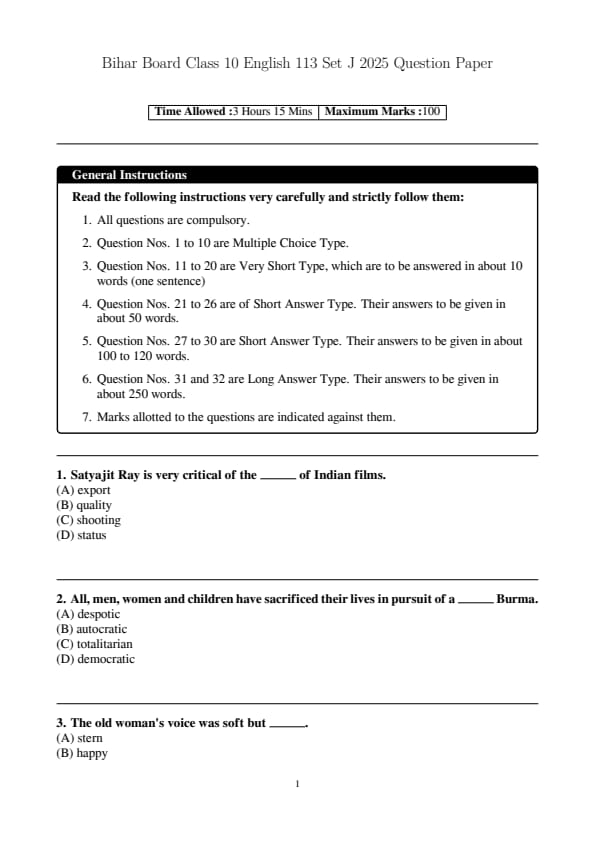
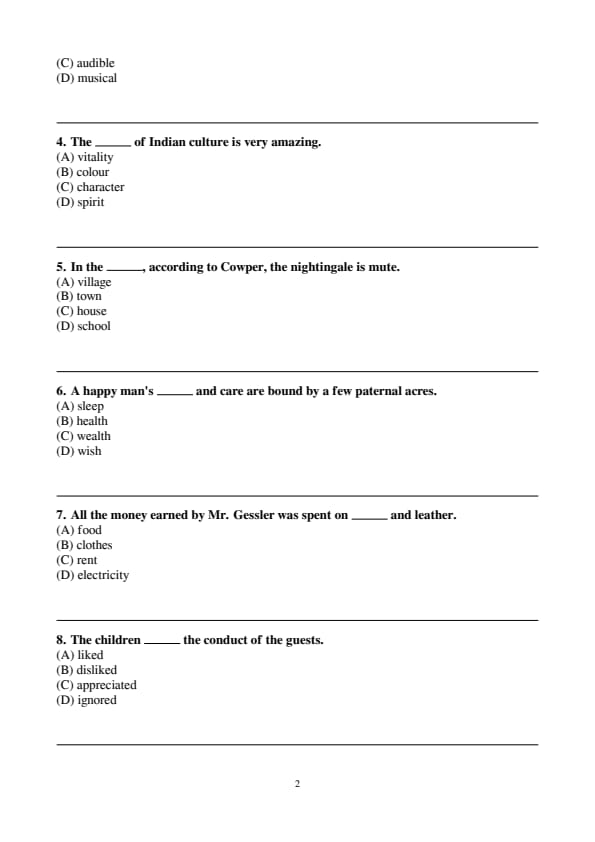
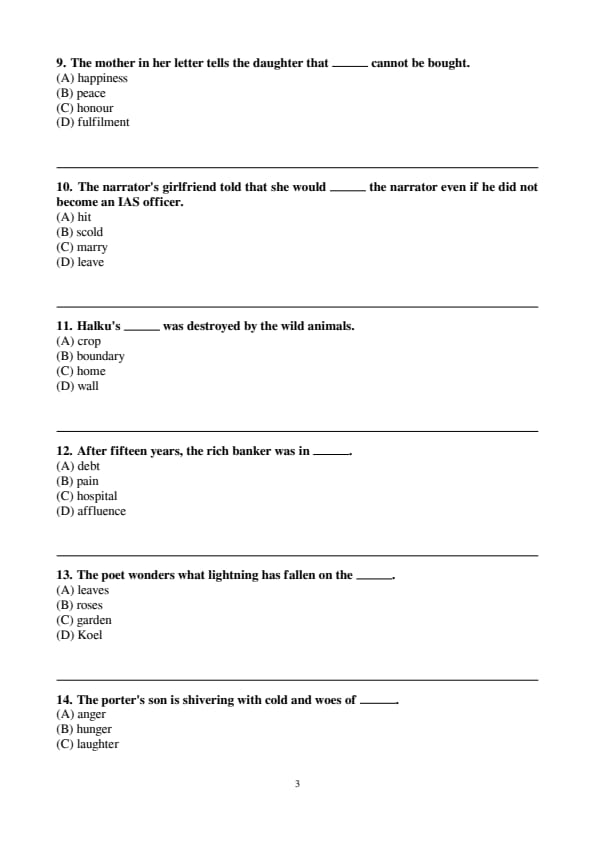
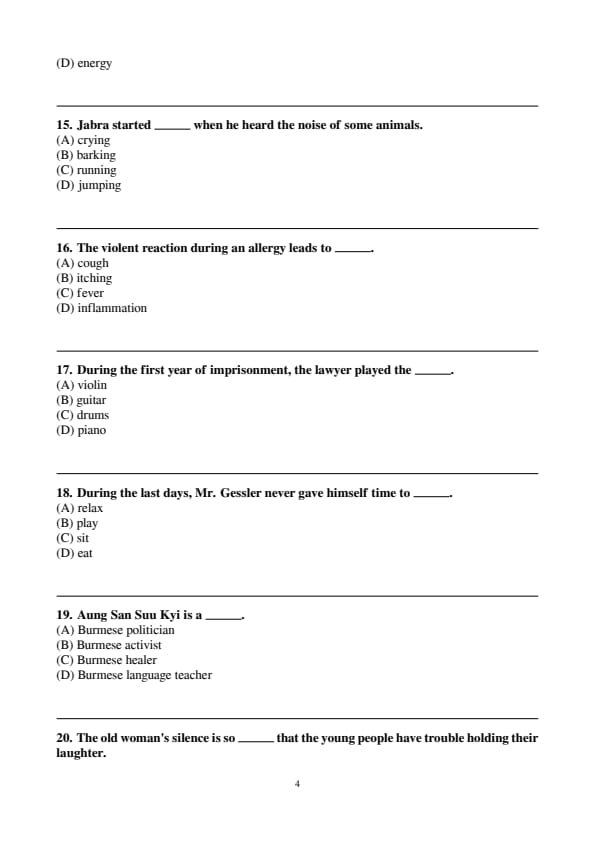
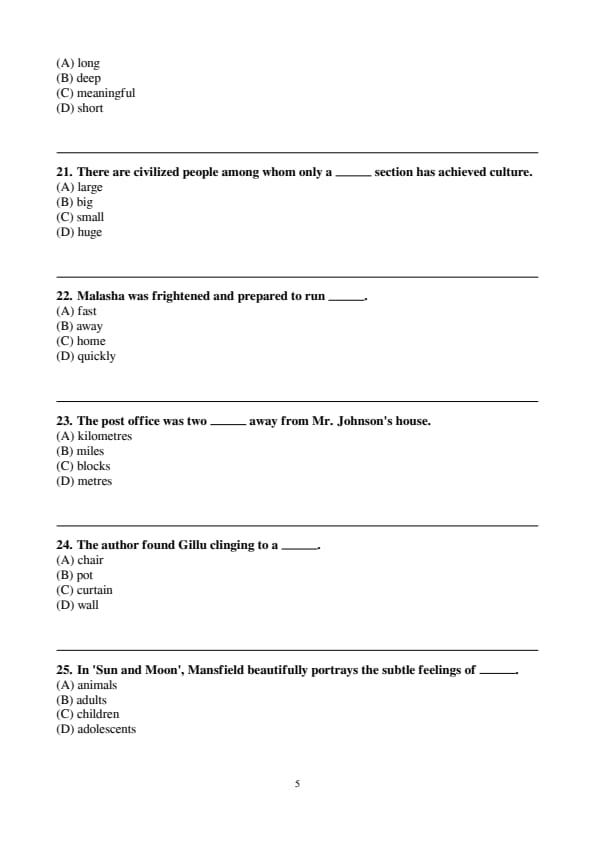
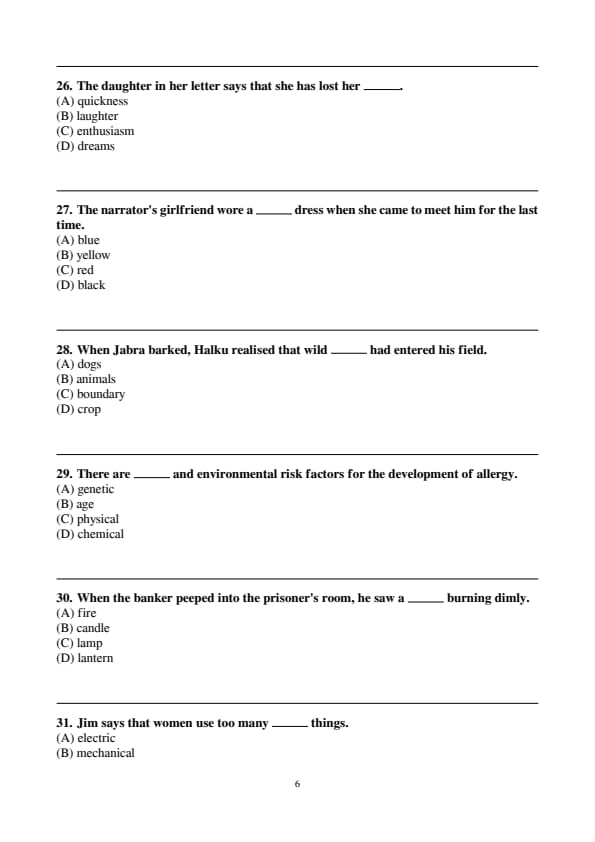
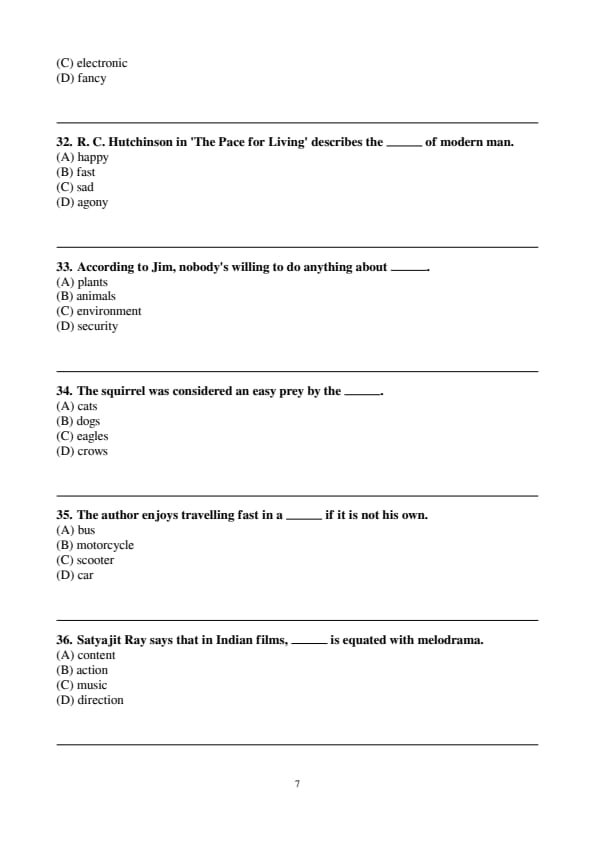
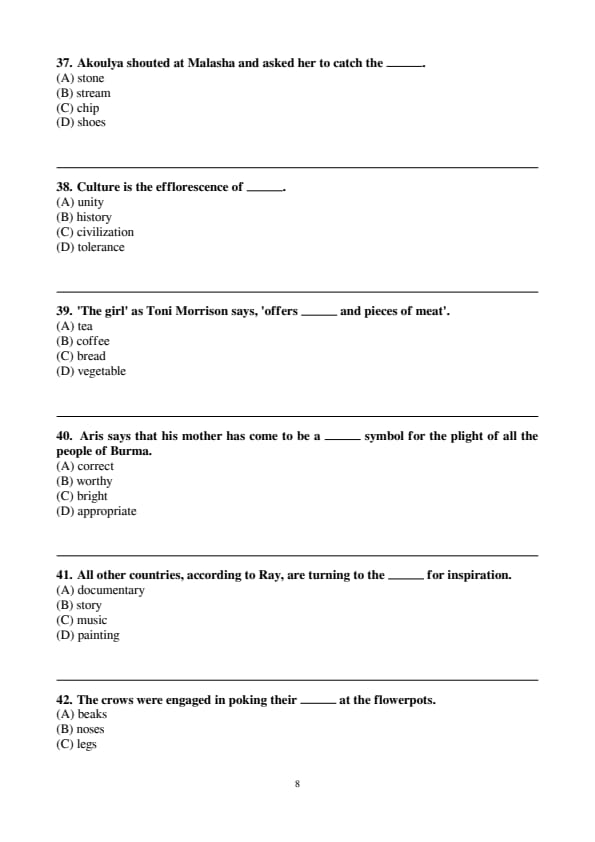
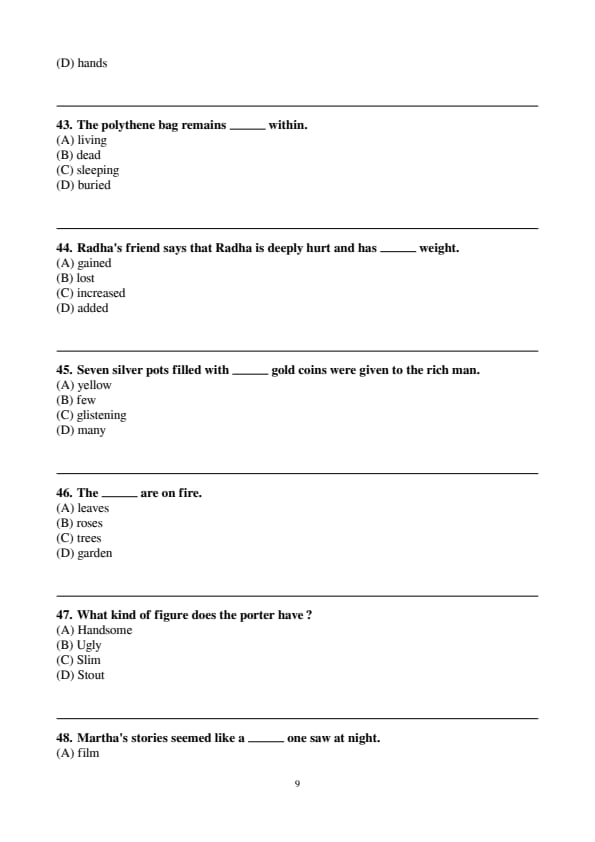
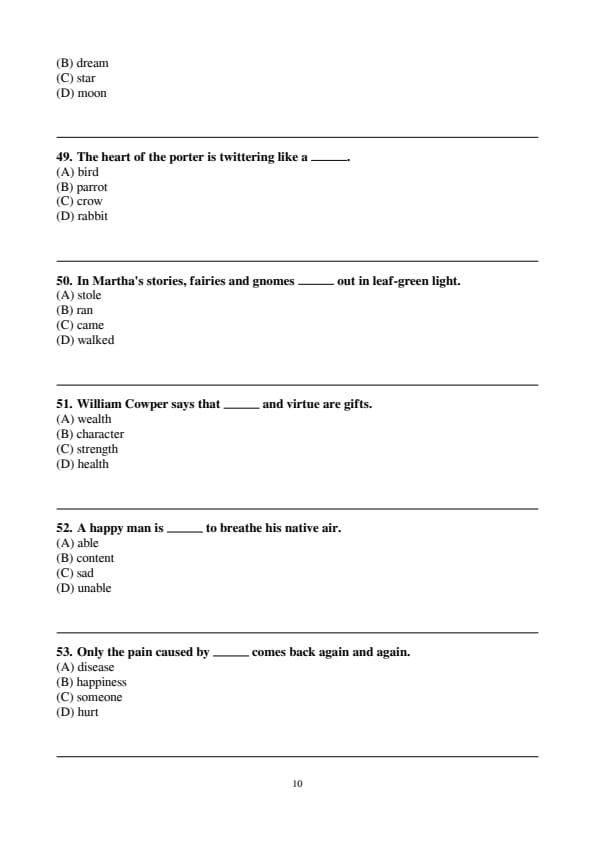
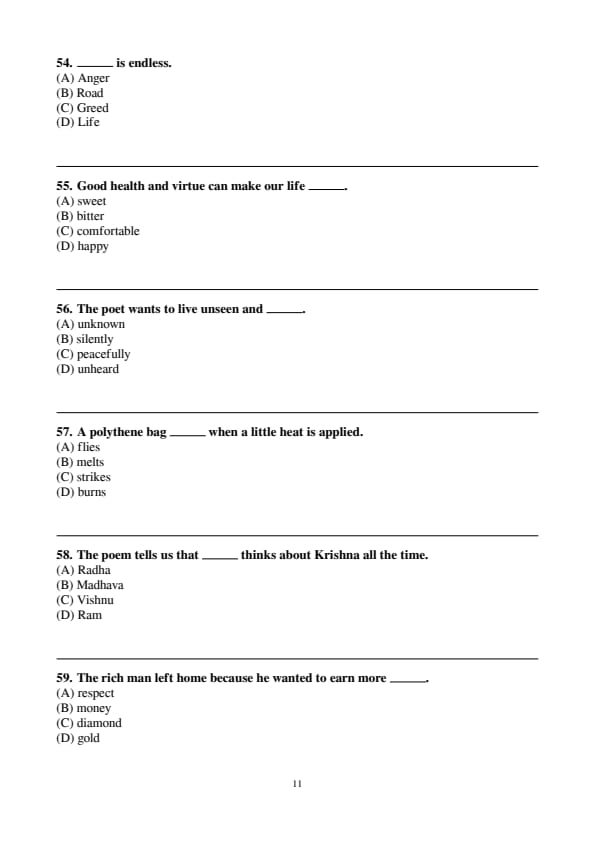
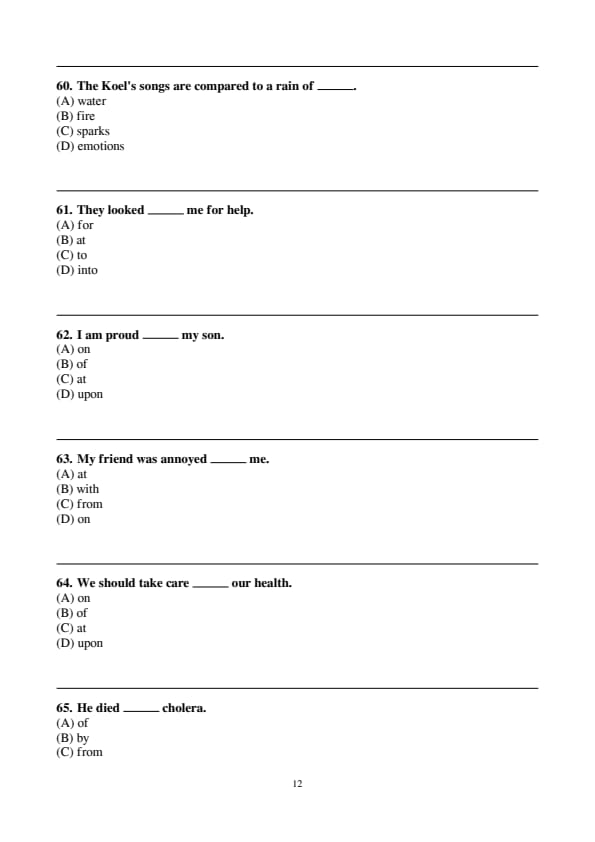
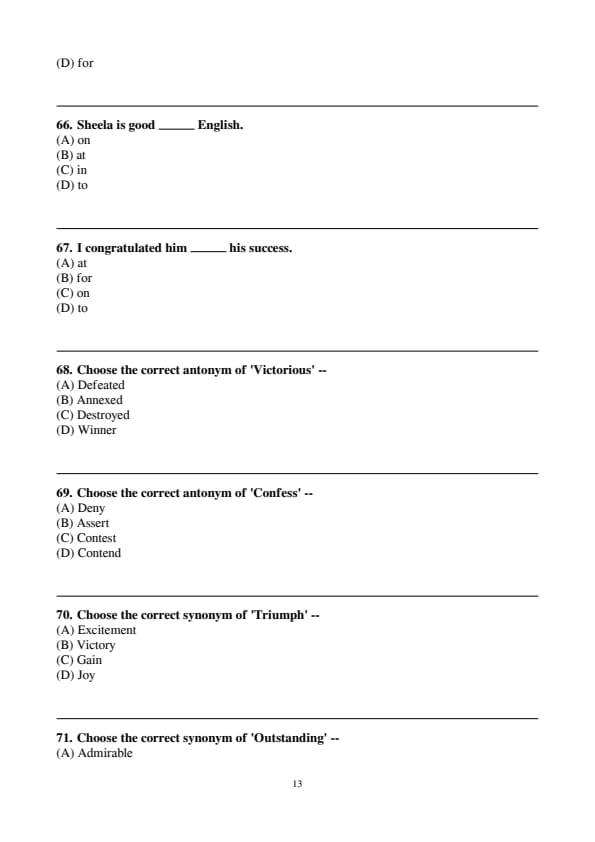
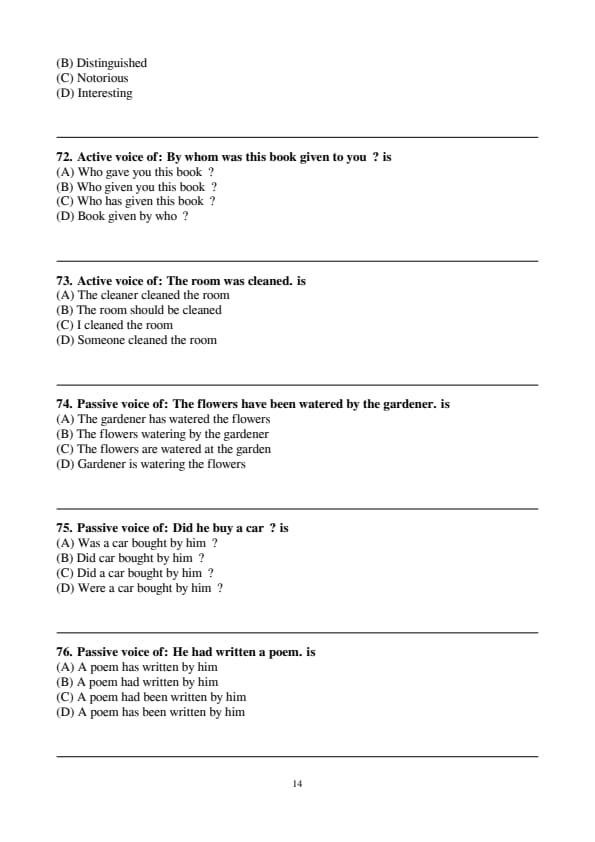
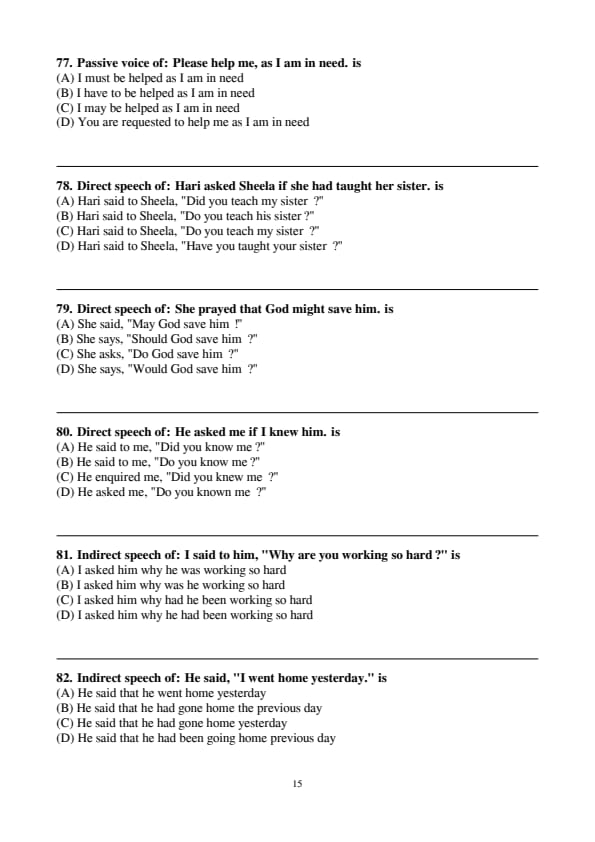
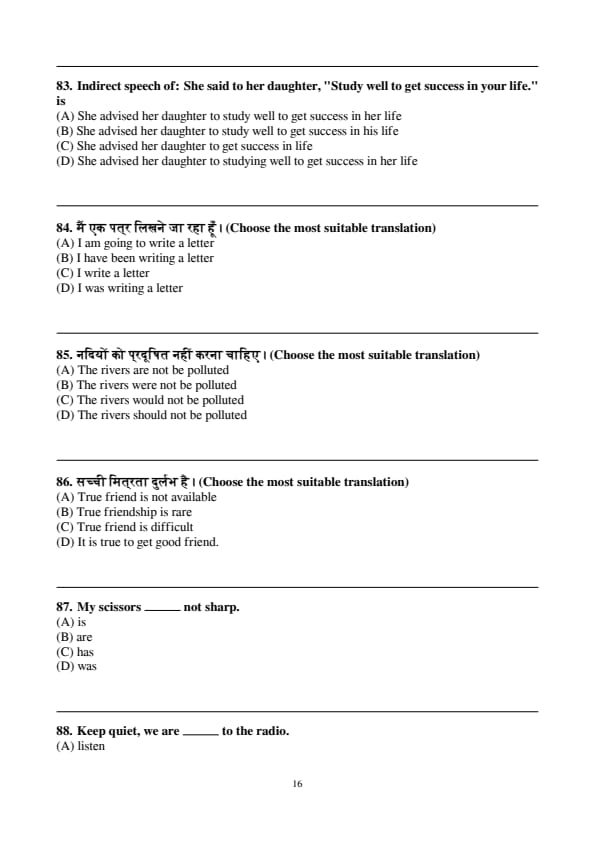
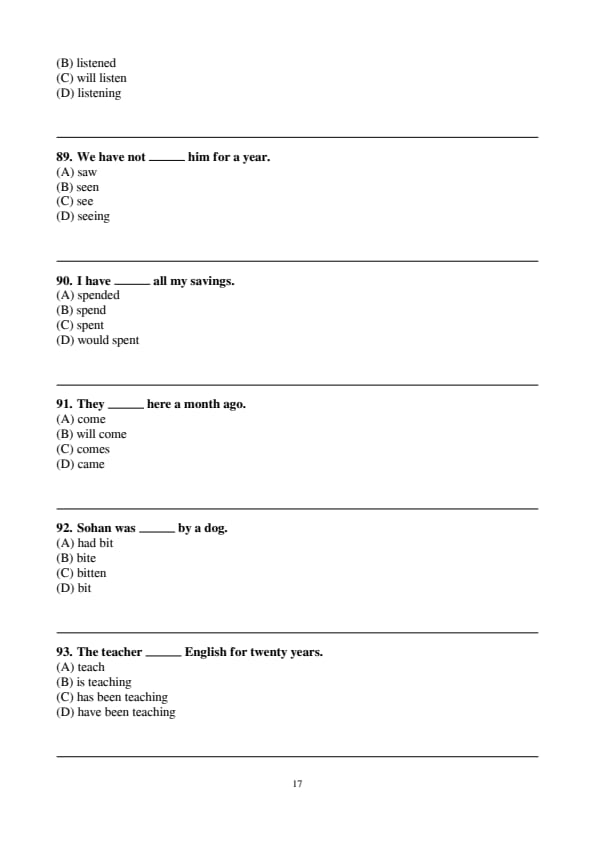
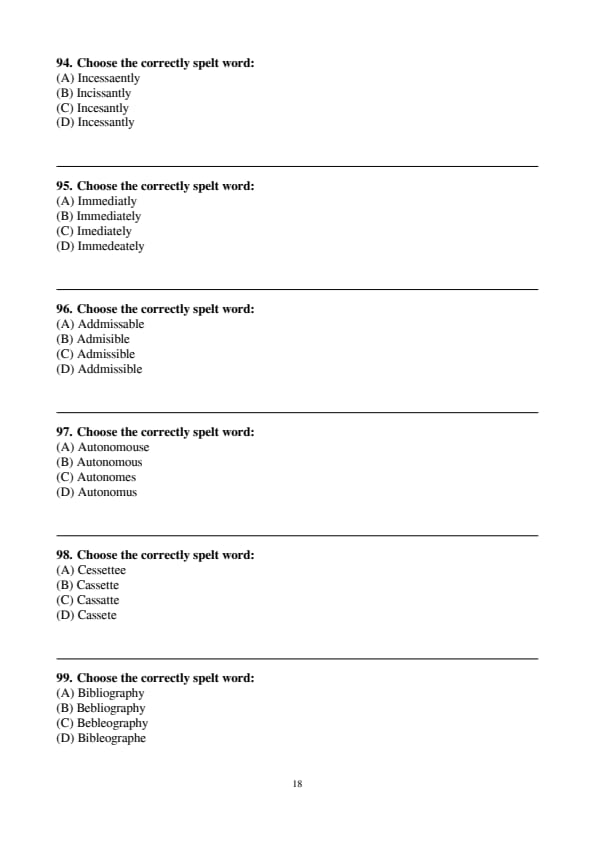
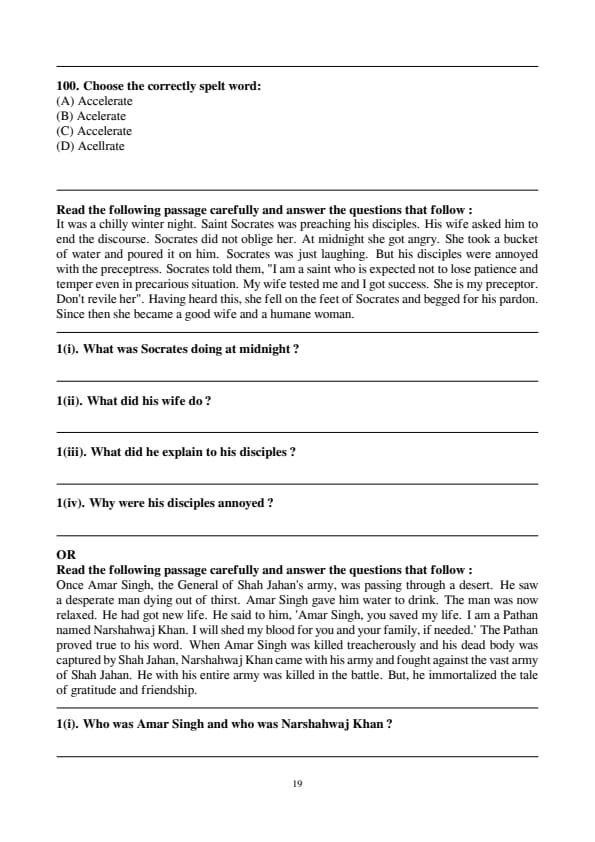
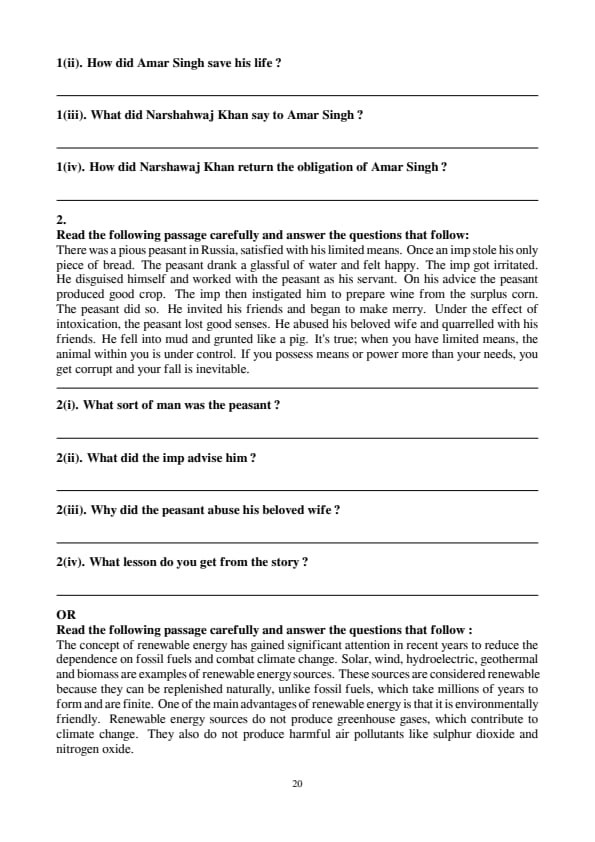
*The article might have information for the previous academic years, please refer the official website of the exam.