
UP Board Class 10 English(Code 817 HK) Question Paper 2024 with Solutions


Content Writer | Updated On - Mar 5, 2025
UP Board Class 10 English Question Paper 2024 PDF (Code 817 HK) is available for download here. The English exam was conducted on March 4, 2024 in the Morning Shift from 8:30 AM to 11:45 AM. The total marks for the theory paper are 70. Students reported the paper to be easy to moderate.
UP Board Class 10 English Question Paper 2024 (Code 817 HK) with Solutions
| UP Board Class 10 English Question Paper With Answer Key | Check Solution |


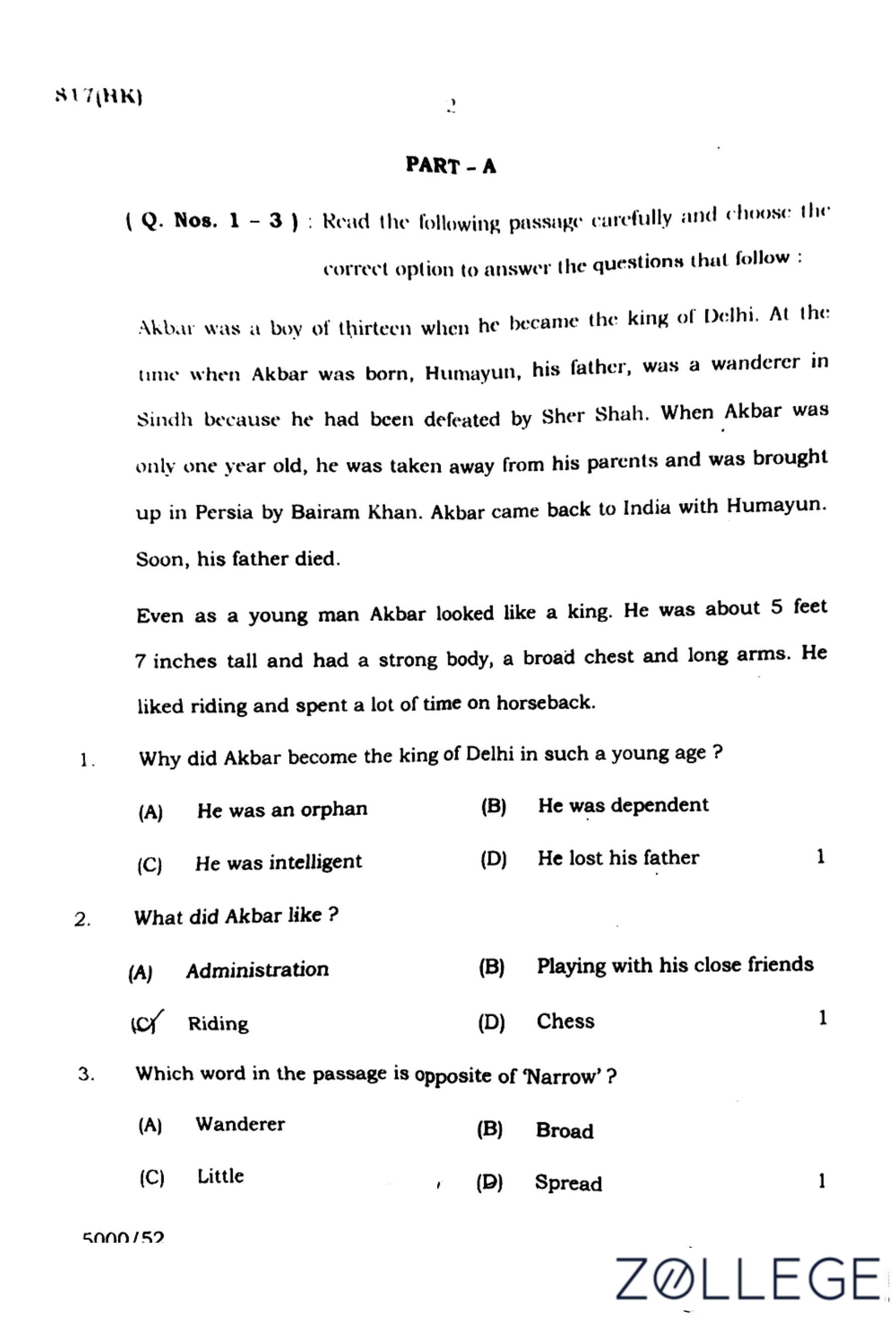
Why did Akbar become the king of Delhi in such a young age?
View Solution
Akbar became the king of Delhi at a young age because his father, Humayun, passed away when Akbar was only 13 years old, thus making him the successor to the throne. Quick Tip: Understanding historical events such as the early life of Akbar helps in gaining insights into the socio-political structure of his time.
What did Akbar like?
View Solution
According to the passage, Akbar was fond of riding and spent a lot of time on horseback, making it his preference. Quick Tip: Riding was a common activity among royalty, often seen as a symbol of strength and skill.
Which word in the passage is opposite of ‘Narrow’?
View Solution
The opposite of 'narrow' in the context of the passage, where it describes Akbar’s physique, is 'broad', referring to Akbar’s broad chest and strong body. Quick Tip: In reading comprehension, always consider context when determining the antonyms of words.
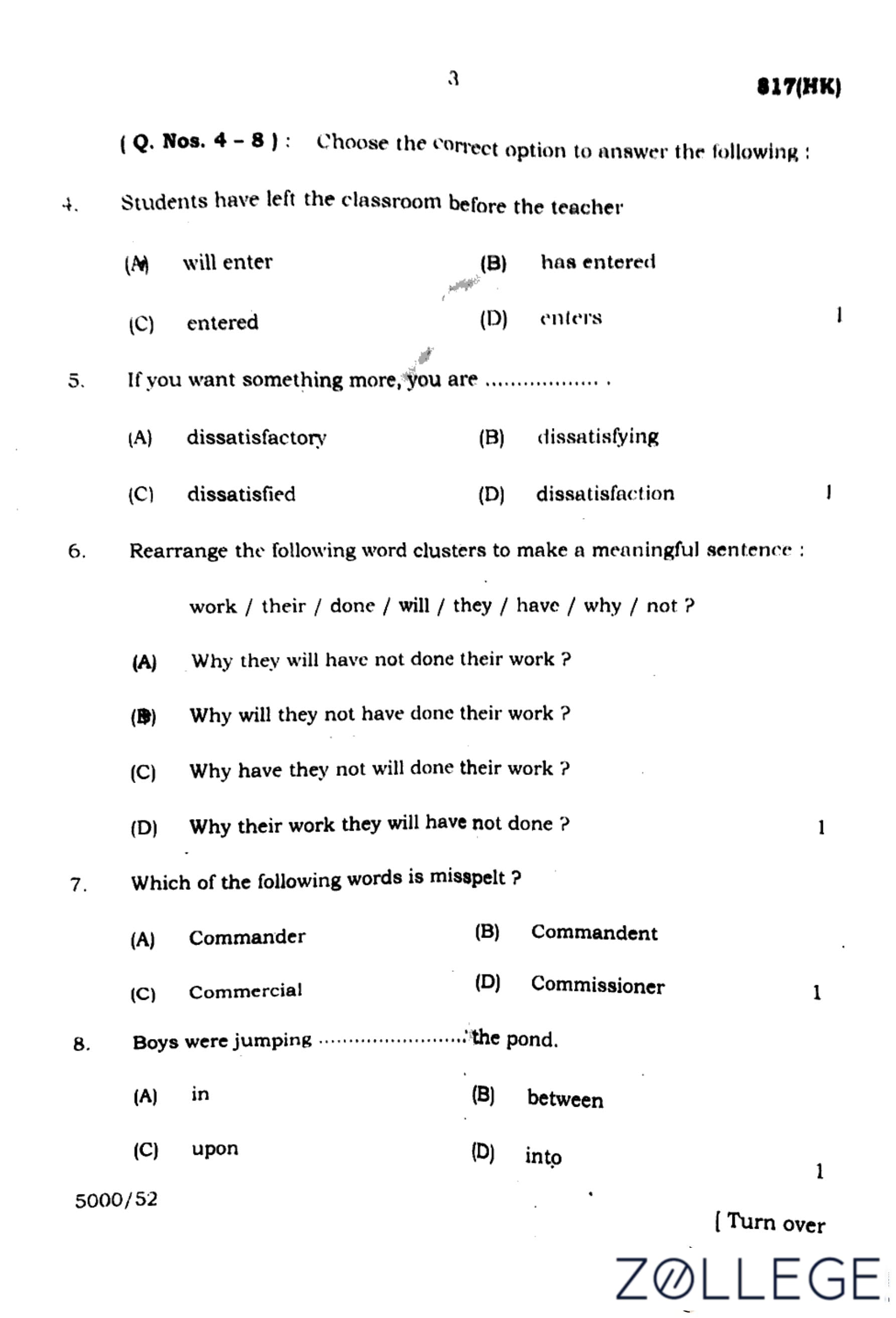
Students have left the classroom before the teacher.
View Solution
The sentence is in the past tense, indicating that the students had already left the classroom before the teacher, so the correct answer is "entered". Quick Tip: Pay attention to the tense of the sentence to choose the correct verb form.
If you want something more, you are...
View Solution
The correct word to complete the sentence is "dissatisfied", which describes a state of unhappiness or lack of contentment with something. Quick Tip: In English grammar, adjectives (like "dissatisfied") are used to describe a feeling or state.
Rearrange the following word clusters to make a meaningful sentence:
work / their / done / will / they / have / why / not?
View Solution
Rearranging the words to form a grammatically correct and meaningful sentence gives: "Why will they not have done their work?" Quick Tip: To form a correct sentence, remember the subject-verb-object order and proper placement of auxiliary verbs.
Which of the following words is misspelled?
View Solution
The correct spelling is "Commander", while "Commandent" is a misspelling. Quick Tip: When checking for spelling errors, ensure the word matches the correct dictionary form.
Boys were jumping ............ the pond.
View Solution
The correct preposition to use is "into," which indicates movement towards a place, in this case, the pond. Quick Tip: Prepositions are crucial to indicating movement and direction in sentences.
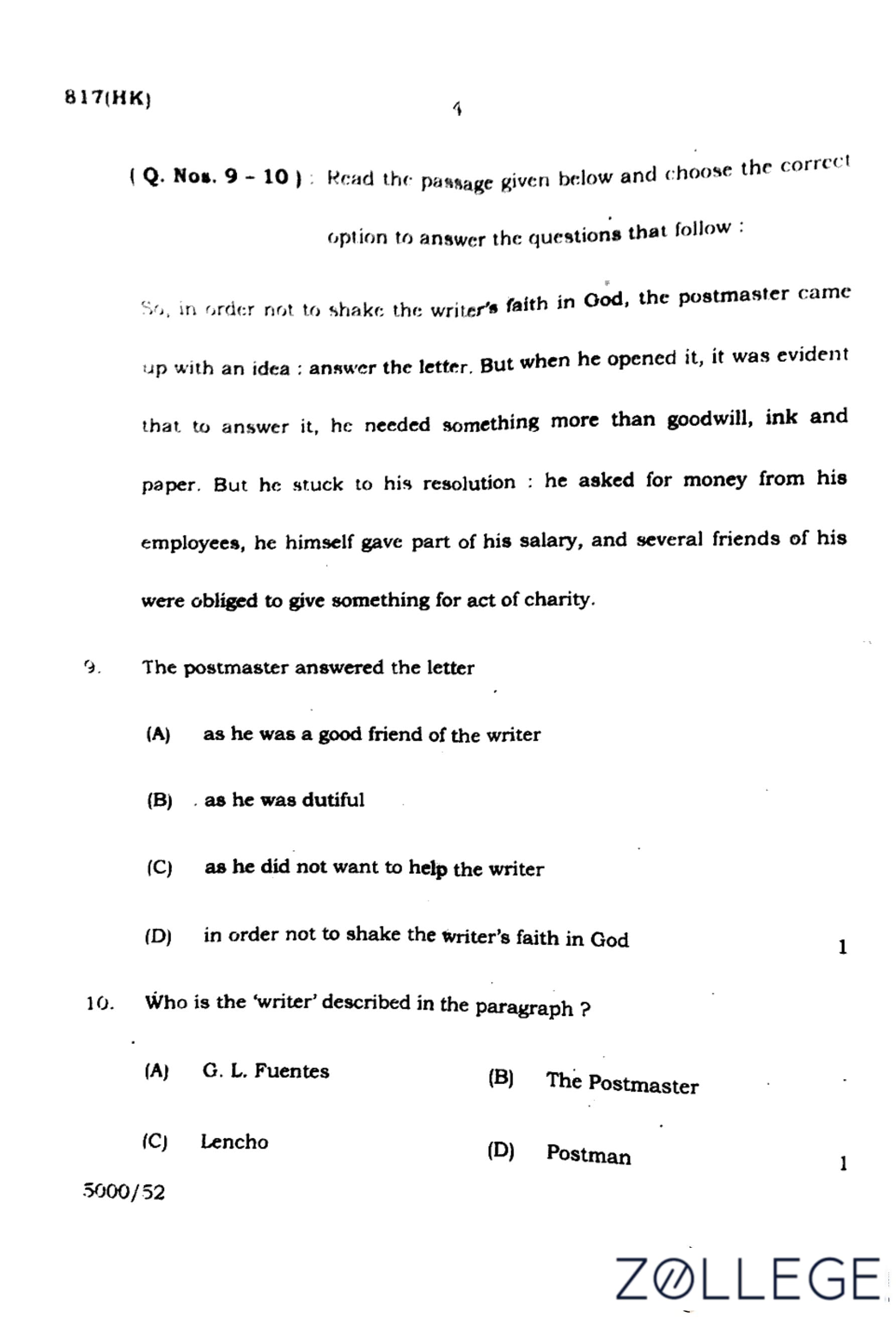
The postmaster answered the letter:
View Solution
The postmaster answered the letter because he didn’t want to shake the writer’s faith in God, which was his primary motive. Quick Tip: Always focus on understanding the emotional or moral reasoning behind actions in narrative texts.
Who is the 'writer' described in the paragraph?
View Solution
The writer in the passage refers to Lencho, who wrote a letter to the postmaster asking for money. Quick Tip: When reading comprehension texts, carefully identify the characters involved by paying attention to descriptive pronouns and context.
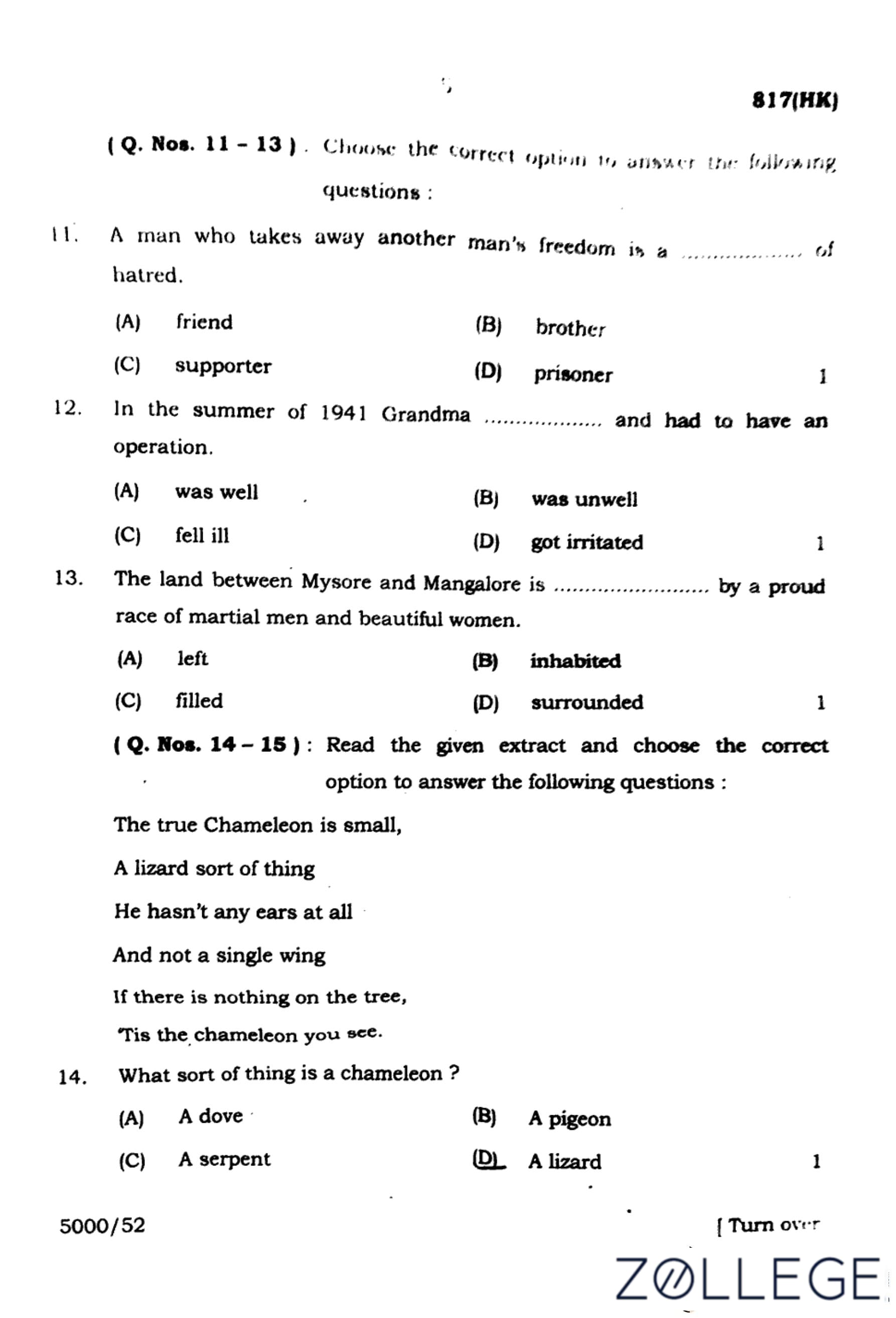
A man who takes away another man's freedom is a .......... of hatred.
View Solution
A man who takes away another's freedom, such as a prisoner, is an embodiment of hatred or oppression. Quick Tip: Pay attention to the metaphors used in literature. They often convey deeper meanings related to themes of justice or morality.
In the summer of 1941, Grandma ........... and had to have an operation.
View Solution
In the summer of 1941, Grandma "fell ill" and had to have an operation. The phrase "fell ill" is commonly used to describe a sudden onset of illness. Quick Tip: When identifying causes in narrative texts, phrases like "fell ill" are often used to describe a sudden or unexpected health decline.
The land between Mysore and Mangalore is ........... by a proud race of martial men and beautiful women.
View Solution
The phrase "surrounded by a proud race of martial men and beautiful women" suggests that the land is enclosed by such people. Quick Tip: Identify descriptive words that provide a sense of place or atmosphere, especially when considering geographical or cultural references.
What sort of thing is a chameleon?
View Solution
A chameleon is a type of lizard known for its ability to change color and blend into its surroundings.
Quick Tip: Recognize the characteristics of animals mentioned in literary passages to identify them correctly.
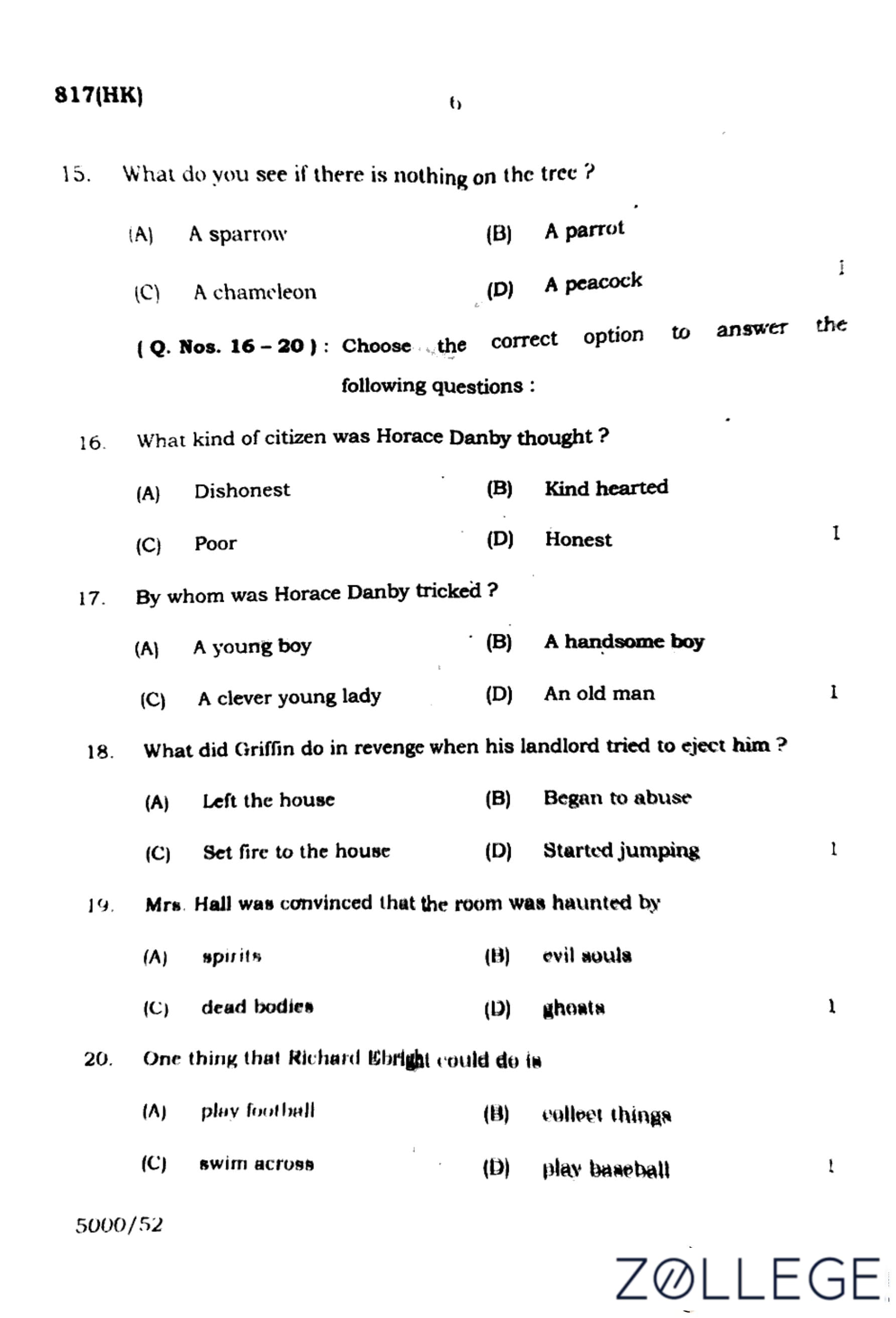
What do you see if there is nothing on the tree?
View Solution
The passage mentions that a chameleon blends into its environment and is not easily seen on the tree, making it the correct answer. Quick Tip: Chameleons are known for their ability to camouflage, making them an interesting animal to mention in descriptive passages.
What kind of citizen was Horace Danby thought?
View Solution
In the passage, Horace Danby is described as being an honest man, despite his actions later in the story. Quick Tip: Always look for context clues in the passage to determine the true nature of a character or person described.
By whom was Horace Danby tricked?
View Solution
Horace Danby was tricked by a clever young lady, who deceived him into helping her with a plan. Quick Tip: Pay attention to the main events and characters involved in a story, especially when they play a significant role in the plot.
What did Griffin do in revenge when his landlord tried to eject him?
View Solution
Griffin, in a fit of rage and revenge, set fire to the house when his landlord tried to evict him. Quick Tip: In narratives where emotions drive action, identify key moments where characters take drastic actions in response to conflict.
Mrs. Hall was convinced that the room was haunted by...
View Solution
Mrs. Hall was convinced that the room was haunted by spirits, a common belief in stories involving supernatural occurrences. This belief often reflects the character's fear or misunderstanding of unexplained events. Quick Tip: In mystery and suspense narratives, characters' fears of spirits or supernatural beings can be used to create tension and intrigue.
One thing that Richard Ebright could do is...
View Solution
Richard Ebright was known for his interest in collecting things, which contributed to his future success in science. Quick Tip: When analyzing characters in biographical or semi-autobiographical texts, pay attention to their hobbies or actions that contribute to their character development.
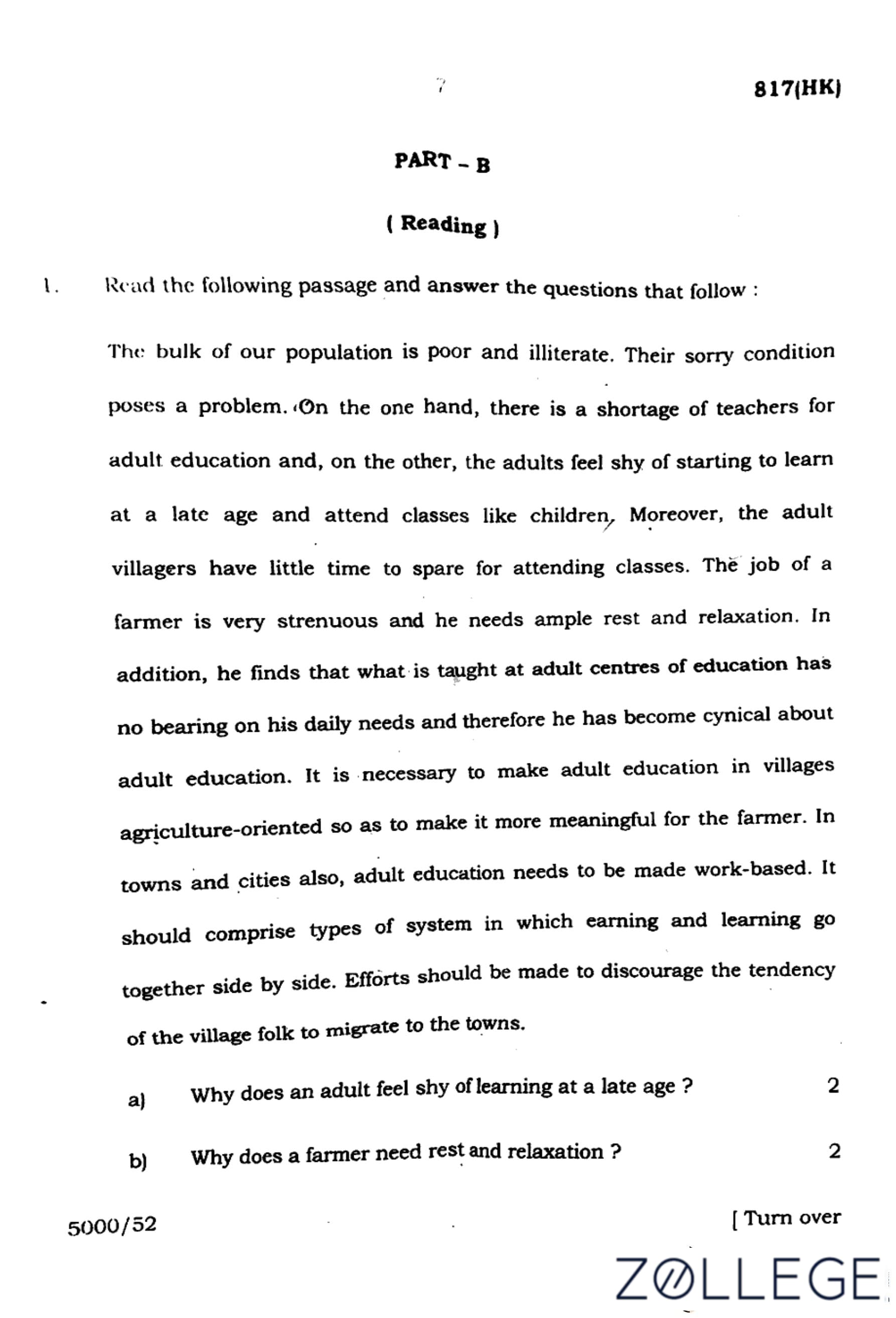
Read the following passage and answer the questions that follow:
The bulk of our population is poor and illiterate. Their sorry condition poses a problem. On the one hand, there is a shortage of teachers for adult education and, on the other, the adults feel shy of starting to learn at a late age and attend classes like children. Moreover, the adult villagers have little time to spare for attending classes. The job of a farmer is very strenuous and he needs ample rest and relaxation. In addition, he finds that what is taught at adult centers of education has no bearing on his daily needs and therefore he has become cynical about adult education. It is necessary to make adult education in villages agriculture-oriented so as to make it more meaningful for the farmer. In towns and cities also, adult education needs to be made work-based. It should comprise types of system in which earning and learning go together side by side. Efforts should be made to discourage the tendency of the village folk to migrate to the towns.
Why does an adult feel shy of learning at a late age?
View Solution
In the passage, it is mentioned that adults feel shy about learning at a late age because they feel embarrassed to attend classes that are generally meant for children. They perceive learning as a youthful activity and may fear judgment from others, making them reluctant to start adult education at an older age. Quick Tip: Look for social or emotional factors in the passage to understand the character's reluctance or hesitation. Here, societal perceptions about age and education play a key role.
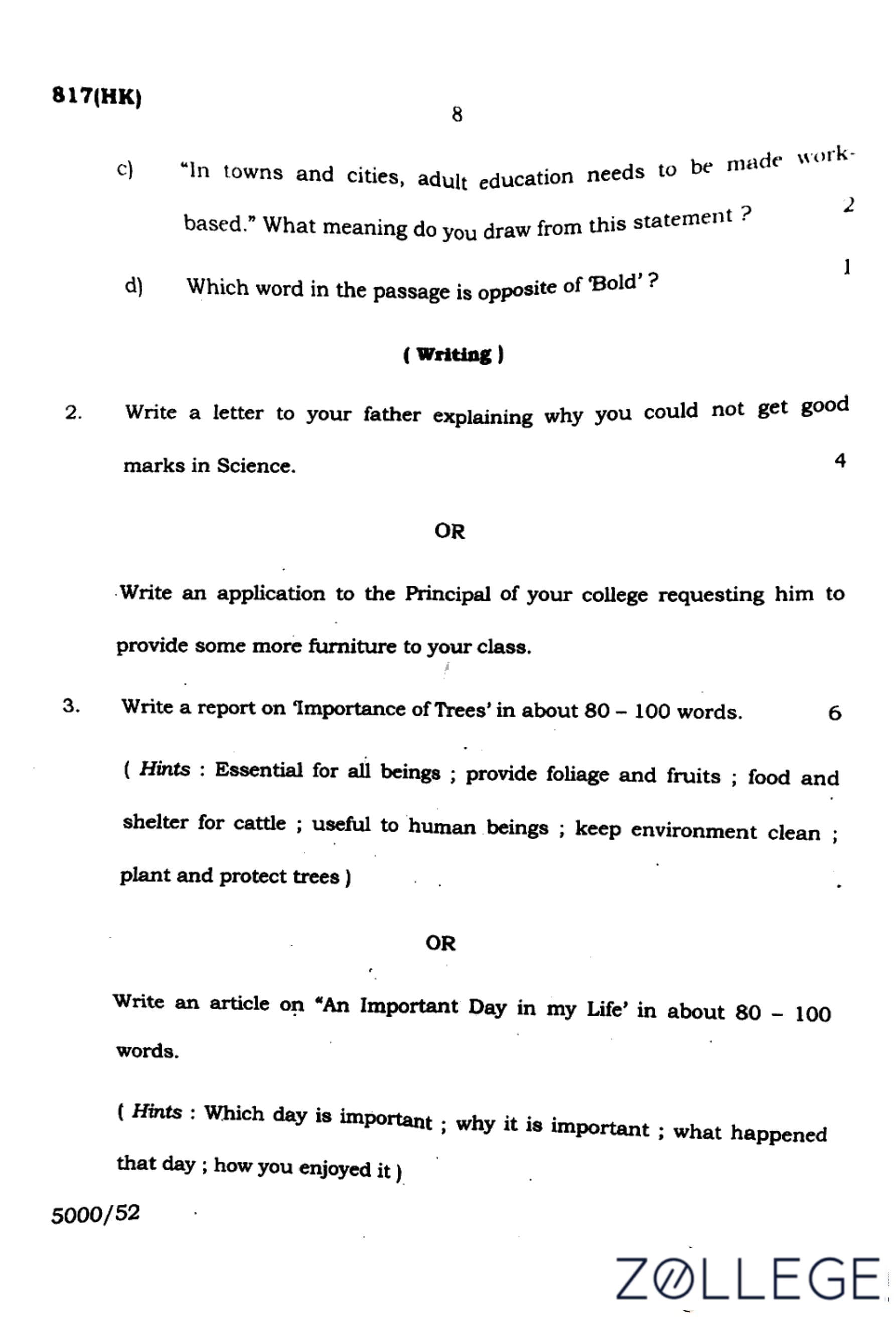
Write a letter to your father explaining why you could not get good marks in Science.
View Solution
Dear Father,
I hope this letter finds you in good health. I regret to inform you that I could not perform well in my Science exam. I had put in a lot of effort, but unfortunately, I encountered some difficulties during the preparation period. My time management was poor, and I was not able to revise all the chapters thoroughly. Additionally, I faced some personal issues that diverted my attention from my studies. However, I have learned from my mistakes and I am planning to improve my study habits. I will work harder, focus better, and ensure that this doesn’t happen again in the future. Please do not worry, I will make sure to do better in the next exams.
Looking forward to your support and guidance.
Yours lovingly,
[Your Name] Quick Tip: In formal letters to family members, maintain a polite and respectful tone, explain the situation clearly, and convey your intent to improve. Offering a solution or plan for improvement shows responsibility.
Write a report on 'Importance of Trees' in about 80 - 100 words.
View Solution
Importance of Trees
Trees are essential for maintaining ecological balance. They absorb carbon dioxide, release oxygen, and reduce air pollution. Trees also prevent soil erosion and provide habitats for various species. In urban areas, trees help cool the environment, provide shade, and improve mental well-being. They are also important for maintaining water cycles and supporting biodiversity. As a renewable resource, trees provide materials such as timber and fruits. It is important to protect and conserve trees to ensure a sustainable and healthy environment for future generations. Quick Tip: When writing reports, focus on presenting the key points clearly and concisely. Highlight the importance of the topic and support your statements with relevant facts.
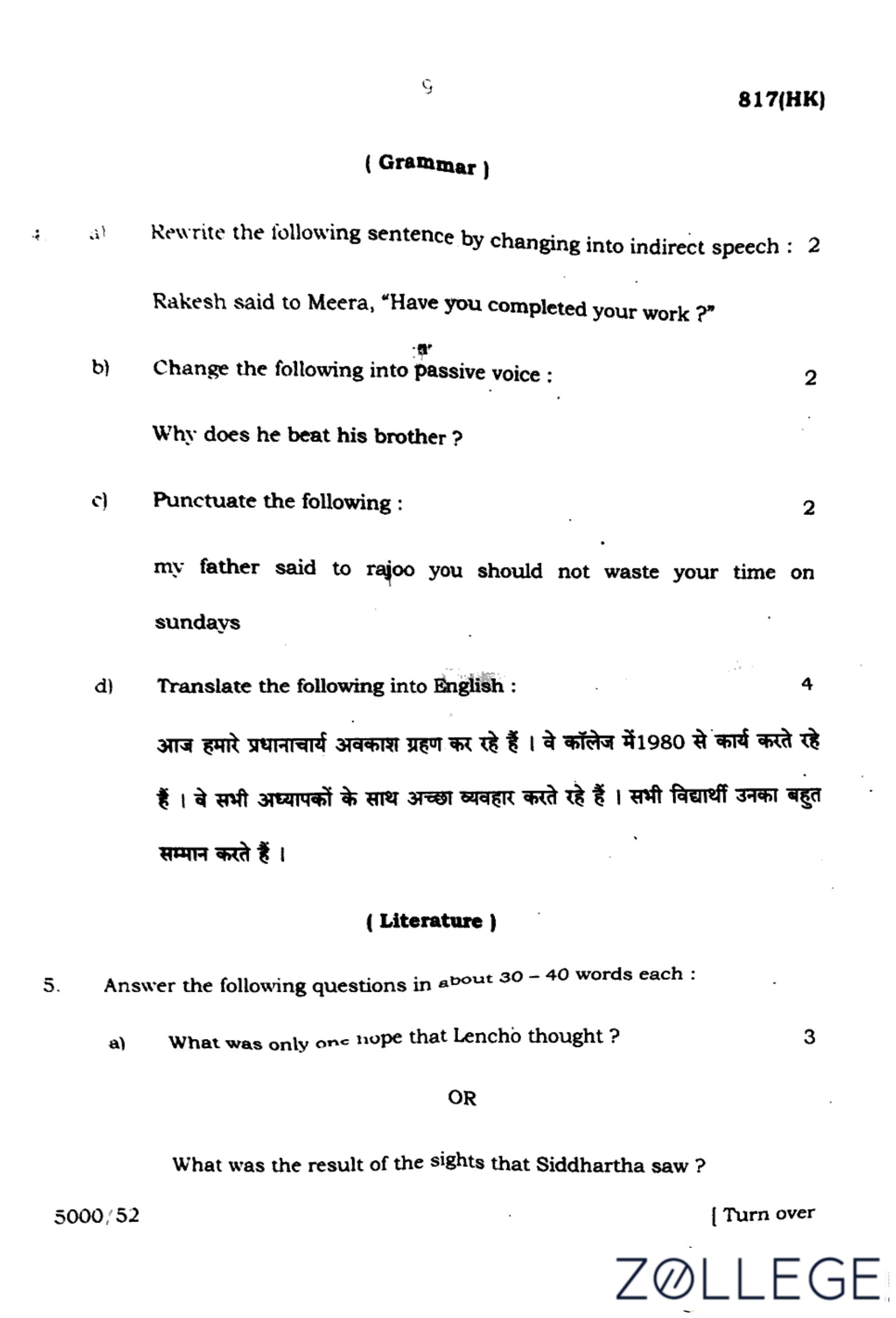
Answer the following questions in about 30 - 40 words each:
What was only one hope that Lencho thought?
View Solution
Lencho's only hope was that God would help him by sending money to save his crop. He had full faith in the divine power and expected God to send him exactly 100 pesos.
Quick Tip: When answering questions on character motivations, focus on the key emotions or beliefs driving their actions. Here, faith in God is central to Lencho's hope.
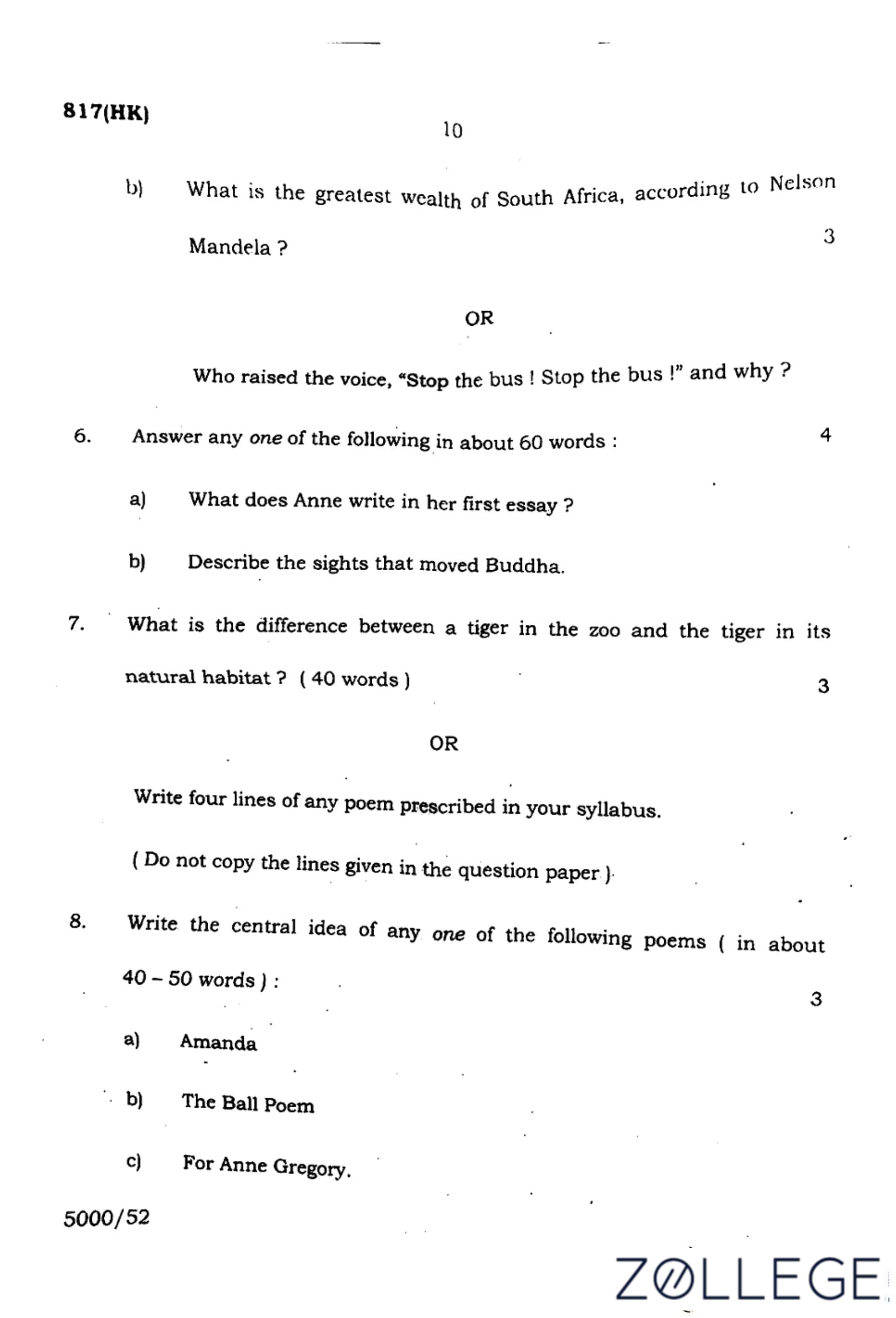
Answer any one of the following in about 60 words:
What does Anne write in her first essay?
View Solution
In her first essay, Anne Frank writes about the lack of freedom and the need to find a voice for herself during the time she is in hiding. She uses her writing to express her thoughts on the difficulties and the emotional challenges of living in such conditions, reflecting on her inner world and personal experiences. Quick Tip: When analyzing a literary work, focus on how the character uses writing as a tool for self-expression. Anne’s writing is a powerful means to cope with her difficult reality.
What is the difference between a tiger in the zoo and the tiger in its natural habitat? (40 words)
View Solution
A tiger in the zoo is confined and lacks freedom, leading to a less natural behavior. In contrast, a tiger in its natural habitat is free to roam, hunt, and exhibit natural instincts. The difference lies in the constraints and the impact on the animal’s well-being. Quick Tip: When comparing subjects, focus on the key differences that affect behavior or characteristics. Here, the tiger’s behavior is shaped by freedom versus confinement.
Write the central idea of any one of the following poems (in about 40 - 50 words):
Amanda
View Solution
"Amanda" addresses the theme of societal pressures on young individuals. The poem focuses on Amanda's longing for freedom from constant criticism, as she is told how to behave. It highlights the tension between personal desires and external expectations, stressing the importance of self-expression and independence.
Quick Tip: When discussing societal pressures, focus on how characters are restricted and what they desire beyond societal norms.
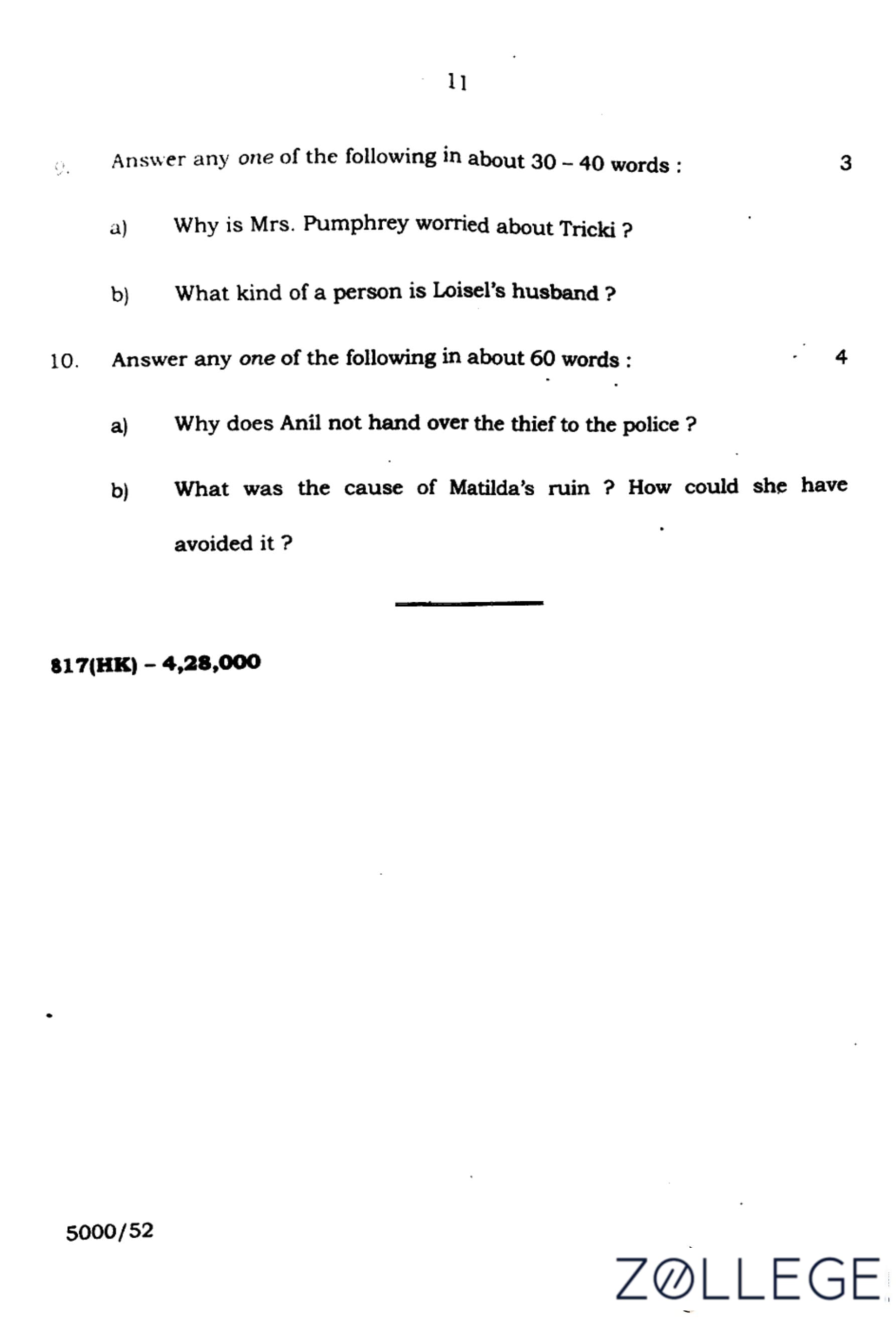
Why is Mrs. Pumphrey worried about Tricki?
View Solution
Mrs. Pumphrey was worried about Tricki because he was not eating well and had become lethargic. She feared that his condition might be serious, as he had stopped his usual playful behavior and seemed depressed. Quick Tip: In questions about character motivations, focus on their emotional responses and the actions they take to solve the problem. Mrs. Pumphrey's concern for Tricki stems from his change in behavior.
Why does Anil not hand over the thief to the police?
View Solution
Anil refrains from handing over the thief to the police because he empathizes with the boy's circumstances. Anil understands that the boy resorted to stealing due to poverty and desperation. Instead of punishing him, Anil chooses to help him change, offering him a chance to turn his life around. Anil’s act reflects deep compassion and belief in redemption. Quick Tip: In literary works, pay attention to the characters' empathy and moral decisions. Anil's decision not to turn the boy in highlights the theme of compassion over strict justice.
*The article might have information for the previous academic years, please refer the official website of the exam.