
AP EAPCET 20 May 2025 Forernoon Agriculture & Pharmacy Question Paper with Solution PDF


Content Writer | Updated On - Dec 15, 2025
AP EAPCET 2025 Engineering Question Paper May 20 Shift 1 is available here for download. AP EAPCET 2025 Engineering Question Paper consists of 160 questions carrying 1 mark each. AP EAPCET 2025 Question Paper for Agriculture & Pharmacy includes three subjects, Botany, Zoology, Physics and Chemistry. Each section of the paper includes 40 questions. Download AP EAPCET 2025 Agriculture & Pharmacy Question Paper May 20 Shift 1 with Solution PDF from link below.
AP EAPCET 2025 Agriculture & Pharmacy Question Paper May 20 Shift 1
| AP EAPCET 2025 Engineering Question Paper May 20 Shift 1 | Download PDF | Check Solutions |

Match the following:
\begin{tabular{ll
List - I & List - II
A. Specimens & I. Names of species in an area
B. Indian Botanical garden & II. Preservative solution
C. Manuals & III. Howrah
D. Monographs & IV. Information of one taxon
\end{tabular
View Solution
Step 1: Understanding the Terms in List I
Specimens: Biological specimens (plants or animals) are often preserved in jars using preservative solutions (like formalin) for long-term storage and study. Hence, A matches with II.
Indian Botanical Garden: This is a famous botanical garden located in Howrah, West Bengal. Hence, B matches with III.
Manuals: In taxonomy, manuals are tools that provide information for the identification of names of species found in a specific area. Hence, C matches with I.
Monographs: A monograph contains information on any one taxon (e.g., a family or a genus) comprehensively. Hence, D matches with IV.
Step 2: Conclusion
Combining the matches: A-II, B-III, C-I, D-IV. This corresponds to Option (D). Quick Tip: Remember the taxonomic aids key words: \textbf{Monograph} = "Mono" (One) taxon; \textbf{Manual} = Area-specific identification; \textbf{Flora} = Habitat and distribution in an area.
Assertion (A): Whittaker proposed a five kingdom classification based on many criteria.
Reason (R): This is due to the understanding of the different scientists differently over time.
View Solution
Step 1: Analyze the Assertion (A)
R.H. Whittaker (1969) proposed the Five Kingdom Classification (Monera, Protista, Fungi, Plantae, Animalia). This classification was indeed based on multiple criteria such as cell structure (prokaryotic vs eukaryotic), thallus organization, mode of nutrition, reproduction, and phylogenetic relationships. Thus, (A) is True.
Step 2: Analyze the Reason (R)
The Reason states that this proposal was due to the changing understanding of different scientists over time. The history of biological classification shows a progression from Two Kingdoms (Linnaeus) to Five (Whittaker) and more, driven by improvements in microscopy, biochemistry, and evolutionary understanding. Scientists' understanding of characteristics like cell type and nutritional modes evolved, necessitating new classification systems. Thus, (R) is True.
Step 3: Establish the Link
Why did Whittaker propose a new system based on many criteria? Because the previous systems (like the Two Kingdom system) were inadequate in light of the new understanding accumulated by scientists over time (e.g., the distinction between prokaryotes and eukaryotes, or fungi and plants). Therefore, the evolving scientific understanding (R) is the driving force/explanation for the proposal of the comprehensive Five Kingdom classification (A). Quick Tip: In Assertion-Reason questions about history of science, the "Reason" often relates to the \textit{scientific necessity or evolution of thought that led to a specific discovery or proposal.
Choose the correct statements among the following:
I. Krishi Parasaram describes different types of forests.
II. Hieroglyphics are related to the crop plants in the form of pictures.
III. Jatropha and Pongamia are rich in hydrocarbons.
IV. C.G.K. Ramanujan studied the crystallization of enzyme urease.
View Solution
Step 1: Analyze Each Statement
Statement I: \textit{Krishi-Parashara is an ancient Indian text dealing primarily with agriculture (Krishi) and meteorology (rainfall predictions for crops), not specifically the description of "different types of forests" (which is more relevant to texts like \textit{Vrikshayurveda or general forestry). While it touches on land, its focus is agriculture. (Considered Incorrect in this context).
Statement II: Hieroglyphics are the formal writing system used in Ancient Egypt. They often used pictures of common objects, including agricultural crops (like wheat and barley), to represent words or sounds. This statement highlights the historical evidence of botany/agriculture in ancient civilizations. (Correct).
Statement III: \textit{Jatropha and \textit{Pongamia are well-known "petro-crops" or biodiesel plants. Their seeds are rich in hydrocarbons and lipids suitable for liquid fuel production. (Correct).
Statement IV: The crystallization of the enzyme urease was achieved by J.B. Sumner, not C.G.K. Ramanujan. C.G.K. Ramanujan is a noted Indian palaeobotanist. (Incorrect).
Step 2: Select the Correct Option
Since III is definitely correct and IV is definitely incorrect, we eliminate options (C) and (D). Between (A) and (B), option (B) includes statement III, which is a factual certainty in botany. Thus, the correct combination is II and III. Quick Tip: Elimination strategy: Knowing that J.B. Sumner crystallized urease instantly proves Statement IV is false, eliminating 50% of the options.
Match the following:
\begin{tabular{ll
List - I & List - II
A. Tracheophytic cryptogames & I. Pteridophyte
B. Reflexed margin of fertile leaflet & II. Angiosperms
C. Vessels and companion cells are absent & III. False indusium
D. Non Archegoniate, embryophytes & IV. Gymnosperms
\end{tabular
View Solution
Step 1: Analyze the Matches
A. Tracheophytic cryptogames: "Tracheophytes" are vascular plants. "Cryptogams" are non-seed-bearing plants. Vascular plants without seeds are Pteridophytes. Matches I.
B. Reflexed margin of fertile leaflet: In some ferns like \textit{Adiantum, the margin of the leaf (leaflet) folds over the sporangia (sori) to protect them. This structure is called a False indusium. Matches III.
C. Vessels and companion cells are absent: Xylem vessels and phloem companion cells are characteristic of Angiosperms. They are generally absent in Pteridophytes and Gymnosperms. Given the options, this matches IV (Gymnosperms).
D. Non Archegoniate, embryophytes: Embryophytes include Bryophytes, Pteridophytes, Gymnosperms, and Angiosperms. Archegonia (female sex organs) are present in the first three. Angiosperms lack archegonia. Thus, they are non-archegoniate embryophytes. Matches II.
Step 2: Conclusion
Match: A-I, B-III, C-IV, D-II. This is Option (A). Quick Tip: Remember the evolutionary trend: Archegonia are present in Bryophytes, Pteridophytes, and Gymnosperms, but disappear in Angiosperms.
Choose the correct statements among the following:
I. Suckers are underground stems growing horizontally beneath the soil and become aerial.
II. The function of petiole is to attach leaf to stem.
III. \textit{Alstonia shows opposite phyllotaxy.
IV. In \textit{Pisum terminal leaflets form as tendril.
View Solution
Step 1: Analyze the Statements
Statement I: Suckers (e.g., in Chrysanthemum, Banana) originate from the basal underground part of the stem, grow horizontally beneath the soil for some distance, and then emerge obliquely upwards giving rise to leafy shoots. This statement is True.
Statement II: While the petiole connects the leaf blade to the stem, technically, the part specifically responsible for attachment is the Leaf Base (Hypopodium). The Petiole's primary function is to hold the blade to light and allow it to flutter. In strict anatomical questions, attributing "attachment" solely to the petiole can be considered imprecise or False compared to the leaf base.
Statement III: \textit{Alstonia exhibits Whorled phyllotaxy (more than two leaves at a node), not Opposite. This is False.
Statement IV: In Garden Pea (\textit{Pisum sativum), the compound leaf modifies its terminal leaflets into tendrils for climbing. This is True.
Step 2: Select the Correct Option
Statements I and IV are correct. Quick Tip: Phyllotaxy examples are crucial: \textit{Calotropis/Guava = Opposite; China rose/Mustard = Alternate; Alstonia = Whorled.
Choose the correct sequence of fruits with the following characters:
A) Multicarpellary syncarpous, unilocular ovary with stony pericarp
B) Fruit with fleshy thalamus and developed by inferior ovary
C) Apocarpous gynoecium develops into fruitlets
View Solution
Step 1: Identify Fruit B (Fleshy Thalamus)
Character B describes a fruit where the edible part is the fleshy thalamus and it develops from an inferior ovary. This is the definition of a Pome, such as Apple. So, the second fruit in the sequence must be Apple.
Step 2: Identify Fruit C (Apocarpous \(\rightarrow\) Fruitlets)
Character C describes an aggregate fruit (Etaerio) formed from an apocarpous (free carpels) gynoecium. Each carpel becomes a fruitlet. Annona (Custard Apple) is a classic example of an aggregate of berries (Etaerio of berries). So, the third fruit is Annona.
Step 3: Identify Fruit A
The remaining option for the first slot is Cashew. Character A mentions "Multicarpellary syncarpous, unilocular ovary...". Cashew fruit is a Nut. It develops from a multicarpellary (usually tricarpellary), syncarpous, superior ovary which becomes unilocular. The pericarp (shell) becomes hard/stony. This matches Cashew.
Step 4: Sequence
A = Cashew, B = Apple, C = Annona.
Sequence: Cashew, Apple, Annona. Quick Tip: Key Fruit Types: \textbf{Apple} = False fruit (Thalamus edible); \textbf{Annona} = Aggregate fruit (Apocarpous); \textbf{Cashew} = Nut (with pseudo-fruit 'Cashew Apple' which is the pedicel).
Choose the correct statements from the following:
I. Zygote is the vital link for continuity of species.
II. In waterplants the number of male gametes produced are several times more than number of female gametes.
III. Meiosis can occur in haploid organism.
IV. Adventitious buds are developed on leaf margins of \textit{Bryophyllum.
View Solution
Step 1: Analyze the Statements
I. Zygote is the vital link...: The zygote ensures the continuity of species between organisms of one generation and the next. (True).
II. Water plants and gametes: In organisms exhibiting external fertilization (often in water) or transport via water (like Bryophytes/Pteridophytes), a large number of male gametes are produced to ensure at least one reaches the female gamete, compensating for the high loss rate in the medium. (True).
III. Meiosis in haploid organism: Meiosis is a reduction division (2n \(\rightarrow\) n). A haploid organism (n) cannot undergo meiosis because its chromosome number cannot be halved further to retain integer chromosome sets. Haploid organisms produce gametes by mitosis. (Note: Zygotic meiosis occurs after fertilization, but the haploid organism itself does not undergo meiosis). (False).
IV. \textit{Bryophyllum buds: This plant propagates vegetatively via adventitious buds present in the notches at the leaf margins. (True).
Step 2: Conclusion
Statements I, II, and IV are correct. Quick Tip: Mitosis can occur in both haploid and diploid cells. Meiosis can \textbf{only} occur in diploid cells.
Identify the correct sequence to the following statements:
A) Seeds are attached to the fruits
B) Free nuclear endosperm
C) Grass family cotyledon
View Solution
Step 1: Match the Definitions to Terms
A) Seeds are attached to the fruits: The point of attachment of the seed to the fruit (or originally the ovule to the funicle) is marked by a scar called the Hilum.
B) Free nuclear endosperm: Coconut water is the most common example of free nuclear endosperm (made of thousands of nuclei). So, Coconut.
C) Grass family cotyledon: In the grass family (monocots like maize, wheat), the single large, shield-shaped cotyledon is called the Scutellum.
Step 2: Sequence
A \(\rightarrow\) Hilum, B \(\rightarrow\) Coconut, C \(\rightarrow\) Scutellum.
Sequence: Hilum, Coconut, Scutellum. Quick Tip: \textbf{Scutellum} is exclusive to Grasses (Poaceae). \textbf{Hilum} is the scar on the seed coat.
Match the following:
\begin{tabular{ll
List-I & List-II
A) Berry & I) Indian Rose wood
B) Medicine & II) \textit{Allium
C) Spice & III) \textit{Solanum
D) Timber & IV) Ashwagandha
\end{tabular
View Solution
Step 1: Match the Items
A) Berry: Solanum (e.g., tomato, brinjal, potato fruits) produces a Berry type of fruit. Matches III.
B) Medicine: \textit{Ashwagandha (\textit{Withania somnifera) is a famous medicinal plant belonging to Solanaceae. Matches IV.
C) Spice: \textit{Allium (Onion, Garlic) and Chili (\textit{Capsicum) are used as condiments/spices. Here, \textit{Allium fits the category of spice/condiment. Matches II.
D) Timber: Indian Rosewood is \textit{Dalbergia latifolia. It is a timber-yielding plant. Matches I.
Step 2: Conclusion
Match: A-III, B-IV, C-II, D-I. This corresponds to Option (A). Quick Tip: Classify plants by economic importance: \textit{Ashwagandha, Belladonna = Medicine; Dalbergia, Tectona = Timber; Solanum = Food (Vegetable).
Assertion (A): In plant vacuole, the concentration is higher than the cytoplasm.
Reason (R): Tonoplast facilitates the transport of ions and other materials against concentration gradient.
View Solution
Step 1: Analyze Assertion (A)
In plant cells, the vacuole contains cell sap (water, sap, excretory products). The concentration of ions and other materials in the vacuole is indeed significantly higher than in the cytoplasm. (True).
Step 2: Analyze Reason (R)
The membrane bounding the vacuole is called the Tonoplast. The tonoplast contains transport proteins that actively pump ions into the vacuole against the concentration gradient. (True).
Step 3: Establish the Link
Why is the concentration higher in the vacuole (A)? Because the tonoplast actively transports materials against the gradient into it (R). Thus, R correctly explains A. Quick Tip: \textbf{Tonoplast = Differentially permeable membrane of the vacuole. Active transport occurs here to maintain turgidity and store waste/ions.
Study the following table and identify the correct combination:
\begin{tabular{llll
S.No. & List - I & List - II & List - III
I. & Stroma of Chloroplast & Circular, double stranded DNA & 80 S Ribosomes
II. & Chromoplasts & Carotenoid pigments & Water soluble
III. & Chloroplast & Grana Thylakoids & Stroma lamellae
IV. & Microbodies & Glyoxysomes & Peroxisomes
\end{tabular
View Solution
Step 1: Analyze Each Row
Row I: Stroma of Chloroplast contains circular dsDNA (True), but it contains 70S Ribosomes (bacterial type), not 80S. (Incorrect).
Row II: Chromoplasts contain Carotenoid pigments (True), but Carotenoids are Fat soluble, not Water soluble. (Anthocyanins are water soluble vacuolar pigments). (Incorrect).
Row III: Chloroplast contains Grana Thylakoids and Stroma lamellae as internal membrane structures. This combination of organelle and its parts is correct.
Row IV: Microbodies are single-membrane-bound organelles. Glyoxysomes and Peroxisomes are the two types of microbodies found in plant cells. (Correct).
Step 2: Conclusion
Rows III and IV are correct. Quick Tip: Mitochondria and Chloroplasts are semi-autonomous organelles with \textbf{70S ribosomes} and circular DNA. Eukaryotic cytoplasm has 80S ribosomes.
Assertion (A): Lipids are not true Biomacromolecules.
Reason (R): The molecular weight of lipids is less than 800 Daltons.
View Solution
Step 1: Analyze Assertion (A)
Biomacromolecules are typically polymers with molecular weights \(>\) 10,000 Daltons (e.g., Proteins, Nucleic Acids, Polysaccharides). Lipids are found in the acid-insoluble fraction (macromolecular fraction) during analysis, but they are not true macromolecules because they are not polymers. (True).
Step 2: Analyze Reason (R)
The molecular weight of lipids usually ranges up to 800 Daltons, which is in the range of micromolecules (\(<\) 1000 Da). (True).
Step 3: Establish the Link
Why are lipids not considered "true" macromolecules? Because strictly, macromolecules are defined by high molecular weight (and polymerization). Since lipids have a low molecular weight (\(<\) 800 Da), they fail the weight criterion for macromolecules. Thus, R explains A. (Note: They appear in the macromolecular fraction only because they form large vesicles that do not filter through). Quick Tip: Lipids are the "exception" in biomolecule analysis: Low molecular weight but Acid Insoluble.
Arrange the following events that occur during prophase- I of Meiosis - I
A) Formation of synaptonemal complex
B) Repulsion between Homologous chromosomes
C) Formation of Bivalents
D) Exchange of Genetic material between non-sister chromatids of Homologous chromosomes
E) Terminalization
The correct sequence is:
View Solution
Step 1: Identify the Stages of Prophase I
Zygotene: Chromosomes start pairing (Synapsis). This leads to the formation of Bivalents (C). This process is accompanied by the formation of the Synaptonemal Complex (A) which stabilizes the pairing. (Note: While SC forms during synapsis, the question implies a sequence. Usually, Pairing [Bivalent] \(\rightarrow\) SC completion is the accepted flow in this context, or Synapsis \(\rightarrow\) SC. Let's look at the next steps).
Pachytene: Crossing over occurs. Exchange of Genetic material (D).
Diplotene: The Synaptonemal complex dissolves. Homologous chromosomes separate/repel each other except at chiasmata. Repulsion (B).
Diakinesis: Chiasmata move to the tips. Terminalization (E).
Step 2: Determine Sequence
The order is Zygotene \(\rightarrow\) Pachytene \(\rightarrow\) Diplotene \(\rightarrow\) Diakinesis.
Events:
1. Pairing/Bivalent formation (C) / SC formation (A).
2. Exchange (D).
3. Repulsion (B).
4. Terminalization (E).
Checking Option (A): C \(\rightarrow\) A \(\rightarrow\) D \(\rightarrow\) B \(\rightarrow\) E.
This fits the logic: Bivalents become visible/defined, supported by the SC, leading to Crossing Over, then Repulsion, then Terminalization. Quick Tip: Mnemonic for Prophase I: \textbf{L}azy \textbf{Z}ebra \textbf{P}addles \textbf{D}own \textbf{D}iakinesis. (Leptotene, Zygotene, Pachytene, Diplotene, Diakinesis).
Identify the tissues in correct sequence based on the given characters:
(A) Cell walls are thickened with cellulose, hemicellulose and pectin.
(B) Cellulose walls Polygonal and perform photosynthesis.
(C) Thickened and lignified cell walls with pits.
View Solution
Step 1: Understanding the Concept:
The question asks to identify three specific plant tissues based on the composition and characteristics of their cell walls and functions.
Step 2: Analyzing Each Character:
Character A: "Cell walls are thickened with cellulose, hemicellulose and pectin."
This is a characteristic feature of Collenchyma. Collenchyma cells have unevenly thickened primary walls due to the deposition of these substances, providing mechanical support to growing parts.
Character B: "Cellulose walls Polygonal and perform photosynthesis."
This describes Parenchyma (specifically Chlorenchyma). Parenchyma cells generally have thin cellulosic walls, are isodiametric or polygonal, and when they contain chloroplasts, they perform photosynthesis.
Character C: "Thickened and lignified cell walls with pits."
This describes Sclerenchyma, specifically Sclereids (or stone cells). They have highly thickened, lignified secondary walls with narrow lumens and pits.
Step 3: Matching the Sequence:
The sequence corresponds to Collenchyma \(\rightarrow\) Parenchyma \(\rightarrow\) Sclerides.
Step 4: Conclusion:
Matching the identified tissues with the options, Option (C) is the correct sequence. Quick Tip: Remember the wall materials:
\textbf{Parenchyma:} Cellulose (Thin).
\textbf{Collenchyma:} Cellulose + Hemicellulose + Pectin (Unevenly thick).
\textbf{Sclerenchyma:} Lignin (Dead, Thick).
Choose the incorrect statement among the following:
View Solution
Step 1: Understanding the Concept:
The question requires identifying the statement that is biologically false regarding plant anatomy.
Step 2: Analyzing Each Option:
Statement (A): "Parenchymatous cells usually present in cortex and pericycle of monocot stem."
Analysis: In monocot stems, the vascular bundles are scattered in a large ground tissue. There is usually no distinction into cortex, pericycle, and pith. Moreover, the hypodermis in monocot stems is typically sclerenchymatous, not parenchymatous (though the ground tissue itself is parenchyma). The specific mention of "cortex and pericycle" is characteristic of dicot stems, not monocots. Therefore, this statement is incorrect.
Statement (B): "Closed vascular bundles can not form secondary tissues."
Analysis: Closed bundles lack cambium. Without cambium, secondary growth cannot occur. This statement is Correct.
Statement (C): "Vessels are devoid of protoplasm and are connected with perforations."
Analysis: Xylem vessels are dead at maturity (no protoplasm) and have perforated end walls to form a continuous pipe. This statement is Correct.
Statement (D): "Xylem conducts water and mineral from root to shoots."
Analysis: This is the primary function of xylem. This statement is Correct.
Step 3: Conclusion:
Statement (A) is the incorrect one. Quick Tip: \textbf{Dicot Stem:} Arranged bundles, distinct cortex/pericycle/pith.
\textbf{Monocot Stem:} Scattered bundles, undifferentiated ground tissue, Sclerenchymatous hypodermis.
Match the following:
\begin{tabular{ll
List - I & List - II
A. Polyarch xylem & I. Bulliform cells
B. Colourless cells in epidermis & II. Cork cells
C. Ring arrangement of vascular bundles & III. Monocot root
D. Suberin deposition on cell wall & IV. Dicot stem
\end{tabular
View Solution
Step 1: Understanding the Terms:
Match the anatomical features in List I with the correct plant parts or cell types in List II.
Step 2: Matching Process:
A. Polyarch xylem: Polyarch condition (many xylem bundles, usually more than 6) is a characteristic feature of Monocot roots. \(\rightarrow\) Matches III.
B. Colourless cells in epidermis: In grasses (monocots), certain adaxial epidermal cells modify into large, empty, colourless cells called Bulliform cells. \(\rightarrow\) Matches I.
C. Ring arrangement of vascular bundles: The arrangement of vascular bundles in a ring is a characteristic feature of Dicot stems. \(\rightarrow\) Matches IV.
D. Suberin deposition on cell wall: Suberin is a waxy substance found in the walls of Cork cells (phellem) and Endodermis (Casparian strips). Here, it matches Cork cells. \(\rightarrow\) Matches II.
Step 3: Final Sequence:
A-III, B-I, C-IV, D-II. Quick Tip: \textbf{Root Xylem:} Diarch to Hexarch \(\rightarrow\) Dicot; Polyarch \(\rightarrow\) Monocot.
\textbf{Stem Bundles:} Ring \(\rightarrow\) Dicot; Scattered \(\rightarrow\) Monocot.
Name the plants in which water is stored in the form of mucilage in root, stem and leaves respectively.
View Solution
Step 1: Analyze Adaptations for Water Storage:
Xerophytes often store water in different organs.
Root: In Asparagus, the roots are fasciculated and fleshy, modified for storage of food and water.
Stem: In \textit{Opuntia, the stem is modified into a flattened, green, fleshy structure called a phylloclade to store water and perform photosynthesis.
Leaf: In \textit{Aloe, the leaves are succulent and fleshy, storing water in mucilaginous tissue.
Step 2: Verify the Sequence:
Root \(\rightarrow\) \textit{Asparagus
Stem \(\rightarrow\) \textit{Opuntia
Leaves \(\rightarrow\) \textit{Aloe
Step 3: Conclusion:
Option (A) matches this sequence perfectly. Quick Tip: \textit{Opuntia (Cactus) modifies stems (Phylloclade).
Aloe and Agave modify leaves (Succulents).
Asparagus modifies roots (Fasciculated tuberous roots).
Identify the correct photosynthetic equation related to Ecosystem.
I. When plant produces 162g dry organic matter, 264g CO\(_2\) is fixed.
II. 1 gram dry organic matter can fix 1.63g of CO\(_2\).
III. To produce 198 gr O\(_2\) plant absorb 284g CO\(_2\).
IV. Plants can consume 687.5 K cal solar energy to produce 180 gr Glucose.
View Solution
Step 1: Analyze the Photosynthesis Equation:
The general equation for synthesis of hexose (glucose) is: \[ 6CO_2 + 12H_2O \rightarrow C_6H_{12}O_6 + 6H_2O + 6O_2 \]
However, "dry organic matter" often refers to the polysaccharide residue (starch/cellulose) represented as \((C_6H_{10}O_5)_n\). The molecular weight of the monomeric unit \(C_6H_{10}O_5\) is: \[ (12 \times 6) + (1 \times 10) + (16 \times 5) = 72 + 10 + 80 = 162 g/mol \]
The \(CO_2\) required to produce one unit (fixing 6 carbons) is: \[ 6 \times CO_2 = 6 \times 44 = 264 g \]
Step 2: Evaluate Statements:
Statement I: "When plant produces 162g dry organic matter, 264g CO\(_2\) is fixed."
Based on the calculation above (264g CO\(_2\) \(\rightarrow\) 162g residue), this is Correct.
Statement II: "1 gram dry organic matter can fix 1.63g of CO\(_2\)."
Ratio of \(CO_2\) to dry matter: \(\frac{264}{162} \approx 1.6296 \approx 1.63\).
This statement is Correct.
Statement III: "To produce 198 gr O\(_2\) plant absorb 284g CO\(_2\)."
From equation: \(6CO_2 \rightarrow 6O_2\).
Mass of \(6CO_2 = 264\) g.
Mass of \(6O_2 = 6 \times 32 = 192\) g.
The statement says 198g O\(_2\) and 284g CO\(_2\). The stoichiometry (\(264 \rightarrow 192\)) doesn't match these numbers directly. Hence, this is Incorrect.
Step 3: Conclusion:
Statements I and II are correct. Quick Tip: Stoichiometry of Photosynthesis:
\(6 moles CO_2 (264g)\) produce \(1 mole C_6H_{12}O_6 (180g)\) and release \(6 moles O_2 (192g)\).
For starch polymers (\(C_6H_{10}O_5\)), the unit mass is 162g.
A sophisticated instrument designed by J.C. Bose was so sensitive that is could record even the minute growth of a plant upto a millionth part of millimeter is:
View Solution
Step 1: Identify the Contribution:
Sir Jagadish Chandra Bose was a prominent Indian scientist who invented the Crescograph.
Step 2: Function of the Instrument:
The Crescograph is a device for measuring the growth in plants. It was incredibly sensitive, capable of magnifying the movement of plant growth by up to 10,000 times, allowing the measurement of minute growth rates.
Step 3: Analyze Options:
(A) Crescograph - Correct.
(B) Micrograph - An image taken through a microscope.
(C) Thermograph - Records temperature.
(D) Monograph - A detailed written study on a single subject. Quick Tip: \textbf{J.C. Bose} \(\rightarrow\) \textbf{Crescograph} (Plant Growth).
\textbf{Auxanometer} is another instrument used to measure plant growth, but Crescograph is the sensitive one invented by Bose.
Choose the correct statements among the following:
I) No energy is used directly by the plant to translocate water.
II) The mechanism of water transport from the soil through the plant body to the atmosphere includes diffusion, bulk flow, and osmosis.
III) Water moves in the root via-apoplast, transmembrane and symplast pathway.
IV) The cohesion tension theory explains water transport in xylem.
View Solution
Step 1: Analyze Each Statement:
Statement I: "No energy is used directly by the plant to translocate water."
Water translocation in xylem is primarily driven by the Transpiration Pull (negative pressure), which is a passive process powered by the evaporation of water (solar energy), not metabolic energy (ATP) from the plant. This is Correct.
Statement II: "The mechanism of water transport from the soil through the plant body to the atmosphere includes diffusion, bulk flow, and osmosis."
While all three processes are involved in specific steps (Osmosis for root uptake, Diffusion for vapor loss, Bulk flow for xylem transport), the wording "mechanism... includes" is generally true. However, in the context of multiple-choice questions, we must find the best set. Let's evaluate the others.
Statement III: "Water moves in the root via-apoplast, transmembrane and symplast pathway."
Water absorption in roots occurs via these three pathways. Apoplast (cell walls), Symplast (plasmodesmata), and Transmembrane (crossing membranes). This is Correct.
Statement IV: "The cohesion tension theory explains water transport in xylem."
Dixon and Joly's Cohesion-Tension theory is the widely accepted model for the ascent of sap. This is Correct.
Step 2: Select the Best Option:
Statements I, III, and IV are clearly correct and specific to the standard syllabus. Statement II is broad and technically correct but might be excluded in the preferred answer key if a specific combination is sought. Option (D) includes I, III, and IV, which are all definitively correct specific mechanisms/theories. Quick Tip: Xylem transport is \textbf{Unidirectional} and \textbf{Passive} (driven by Transpiration Pull).
Phloem transport is \textbf{Bidirectional} and \textbf{Active} (requires ATP).
Assertion (A): Amides are formed due to the replacement of hydroxyl part in amino acid by another NH\(_2\) radicle.
Reason (R): Amides are formed by transamination reaction.
Identify the correct option from the following:
View Solution
Step 1: Analyze Assertion (A):
"Amides are formed due to the replacement of hydroxyl part in amino acid by another NH\(_2\) radicle."
Amides like Asparagine and Glutamine are formed from Aspartic acid and Glutamic acid respectively. The hydroxyl (\(-OH\)) part of the carboxyl group (\(-COOH\)) is replaced by an amino group (\(-NH_2\)) to form an amide group (\(-CONH_2\)). This statement is True.
Step 2: Analyze Reason (R):
"Amides are formed by transamination reaction."
In many competitive exam answer keys for this specific topic, the formation of amides (often called amidation) is categorized broadly under nitrogen metabolism reactions, sometimes conflated or associated with transamination processes in the options provided. Strictly speaking, transamination forms amino acids, while catalytic amidation forms amides. However, given the options and the provided answer key (Checkmark on Option 1), the exam considers this statement True and the explanation valid. The logic likely assumes that the transfer of the amino group (similar to transamination logic) leads to the replacement described in A.
Step 3: Conclusion:
Following the provided key, both A and R are considered true, and R explains A (the reaction type explains the chemical change). Quick Tip: \textbf{Amides (Asparagine, Glutamine):} High Nitrogen to Carbon ratio. Used for Nitrogen transport.
Structurally: Amino Acid + \(NH_2\) \(\rightarrow\) Amide.
In root nodules of legumes, Leg-haemoglobin is important because:
View Solution
Step 1: Function of Nitrogenase:
The enzyme Nitrogenase, which catalyzes the conversion of atmospheric nitrogen (\(N_2\)) to ammonia (\(NH_3\)), is highly sensitive to molecular oxygen. It gets irreversibly inactivated in the presence of oxygen.
Step 2: Role of Leg-haemoglobin:
Leg-haemoglobin (a pink-coloured pigment found in root nodules) acts as an oxygen scavenger. It binds to oxygen and creates anaerobic conditions within the nodule, protecting the nitrogenase enzyme while still allowing enough oxygen for bacterial respiration at a controlled rate.
Step 3: Conclusion:
Therefore, its primary importance is protection. Option (B) is correct. Quick Tip: \textbf{Leg-haemoglobin:} Oxygen Scavenger.
\textbf{Nitrogenase:} Anaerobic enzyme (Mo-Fe protein).
Choose the correct response with respect to given equation.
\[ CO_2 + H_2O \rightleftharpoons H_2CO_3 \]
View Solution
Step 1: Analyze the Reaction:
The reaction \(CO_2 + H_2O \rightleftharpoons H_2CO_3\) is catalyzed by the enzyme Carbonic Anhydrase.
Step 2: Compare Rates:
Without Enzyme: The reaction is very slow. About 200 molecules of \(H_2CO_3\) are formed per hour.
With Carbonic Anhydrase: The reaction speeds up dramatically. About 6,00,000 molecules are formed per second.
Step 3: Evaluate Options:
(A) "Carbonic anhydrase is an enzyme required for accelerating the reaction." \(\rightarrow\) Correct.
(B) "Even in the absence... fast enough." \(\rightarrow\) Incorrect (it is very slow).
(C) "200 molecules ... in presence..." \(\rightarrow\) Incorrect (should be absence).
(D) "6,00,000 molecules ... in absence..." \(\rightarrow\) Incorrect (should be presence). Quick Tip: \textbf{Carbonic Anhydrase} is one of the fastest known enzymes. It increases the reaction rate by about 10 million times.
Choose the correct statements among the following
I. Proton gradient across the membrane decreases due to cyclic flow of electrons between PQ and cytochrome b.
II. NADP reductase enzyme is located on the stroma side of the membrane.
III. PQ removes electron from the stroma
View Solution
Step 1: Analyze Statement I:
"Proton gradient across the membrane decreases due to cyclic flow of electrons..."
Cyclic electron flow involves PSI, Ferredoxin, Plastoquinone (PQ), and Cytochrome complex. PQ transports protons from the stroma to the lumen, creating/increasing the proton gradient, not decreasing it. Thus, Statement I is Incorrect.
Step 2: Analyze Statement II:
"NADP reductase enzyme is located on the stroma side of the membrane."
The enzyme NADP reductase is located on the stromal side of the thylakoid membrane because NADPH is produced in the stroma for the Calvin cycle. Thus, Statement II is Correct.
Step 3: Analyze Statement III:
"PQ removes electron from the stroma"
This statement is technically nuanced. Plastoquinone (PQ) accepts electrons (typically from PSII in non-cyclic, or Ferredoxin in cyclic) and protons (\(H^+\)) from the stroma to become \(PQH_2\).
In the context of cyclic electron flow (hinted at by the options pairing), electrons cycle back from Ferredoxin (stromal side) to PQ. Since the electrons are returning from the stromal side carriers, and PQ picks up protons from the stroma, the statement "removes electron from the stroma" (referring to the uptake from the Fd/stroma environment) is considered correct in this specific exam context.
Note: Strictly, PQ removes protons from the stroma. However, given the pairing in Option (B), this is the intended answer.
Step 4: Conclusion:
Statements II and III are selected as the correct combination. Quick Tip: \textbf{Chemiosmosis:
Protons accumulate in the \textbf{Lumen}.
NADP Reductase is on the \textbf{Stroma} side.
ATP Synthase (\(F_1\)) protrudes into the \textbf{Stroma}.
Choose the correct sequence of no. of molecules formed when 6 mol of CO\(_2\) enters into calvin cycle pathway.
View Solution
Step 1: Understanding the Concept:
The question asks for the stoichiometry of the Regeneration Phase of the Calvin Cycle. To fix 6 molecules of \(CO_2\), the cycle consumes 6 molecules of Ribulose-1,5-bisphosphate (RuBP) and generates 12 molecules of Glyceraldehyde-3-phosphate (G3P). Out of these 12 G3P, 2 exit to form glucose, and 10 G3P (total 30 carbons) must be recycled to regenerate the 6 RuBP (total 30 carbons).
Step 2: Biochemical Pathway Analysis:
The conversion of 10 molecules of G3P (3C each) into 6 molecules of RuBP (5C each) involves a complex series of reactions catalyzed by aldolase, transketolase, phosphatase, and isomerase/epimerase enzymes.
Through a series of transketolase and aldolase reactions involving Sedoheptulose-7-phosphate and Fructose-6-phosphate, the 3-carbon sugars are rearranged into 5-carbon sugars.
The specific output of the rearrangement phase (before final isomerization) produces:
4 molecules of Xylulose-5-phosphate (Xu5P)
2 molecules of Ribose-5-phosphate (R5P)
These 6 pentose monophosphates (4 Xu5P + 2 R5P) are then all converted into 6 molecules of Ribulose-5-phosphate (Ru5P) by epimerase and isomerase enzymes.
Finally, 6 Ru5P are phosphorylated by ATP to regenerate 6 RuBP.
Step 3: Matching the Option:
The sequence of formation is:
10 G3P \(\rightarrow\) 4 Xylulose-5P + 2 Ribose-5P \(\rightarrow\) 6 Ribulose-5P.
Option (B) lists "4 xylulose 5P, 2 Ribose 5P, 6 Ribulose 5P", which matches this biochemical stoichiometry.
Step 4: Final Conclusion:
Option (B) is the correct sequence. Quick Tip: \textbf{Calvin Cycle Regeneration Summary (for 6 \(CO_2\)):}
Input: 10 Triose Phosphates (G3P).
Intermediates: 4 Xylulose-5P + 2 Ribose-5P.
Precursor to RuBP: 6 Ribulose-5P.
Final: 6 RuBP.
Assertion (A): TCA cycle requires continuous replenishment of oxaloacetic acid.
Reason (R): TCA cycle requires regeneration of NAD\(^+\) and FAD\(^+\) from NADH and FADH.
Identify the correct option from the following:
View Solution
Step 1: Analyze Assertion (A):
"TCA cycle requires continuous replenishment of oxaloacetic acid."
In the TCA cycle, Oxaloacetic acid (OAA) acts as the acceptor molecule for Acetyl CoA. While OAA is regenerated at the end of the cycle, intermediates of the TCA cycle are often withdrawn for the synthesis of other biomolecules (like amino acids). To keep the cycle running, OAA must be replenished via anaplerotic reactions (e.g., Pyruvate \(\rightarrow\) OAA by pyruvate carboxylase). Thus, the statement is True.
Step 2: Analyze Reason (R):
"TCA cycle requires regeneration of NAD\(^+\) and FAD\(^+\) from NADH and FADH."
The TCA cycle dehydrogenation steps involve the reduction of NAD\(^+\) to NADH and FAD to FADH\(_2\). For the cycle to continue, the limited pool of oxidized coenzymes (NAD\(^+\), FAD) must be regenerated via the Electron Transport Chain (ETS). If ETS stops (e.g., no oxygen), the TCA cycle stops. Thus, the statement is True.
Step 3: Establish Relationship:
Both statements describe requirements for the functioning of the TCA cycle. However:
Assertion (A) talks about the substrate/intermediate balance (carbon skeleton).
Reason (R) talks about the redox coenzyme balance (electron carriers).
The need for NAD\(^+\) regeneration (R) explains why the cycle is aerobic, but it does not explain why OAA specifically needs replenishment (A). OAA replenishment is due to anabolic withdrawal (cataplerosis), not redox state. Therefore, R is not the correct explanation for A.
Step 4: Final Conclusion:
Both are true, but independent facts. Option (B) is correct. Quick Tip: \textbf{Anaplerotic Reactions:} Reactions that "fill up" cycle intermediates (e.g., Pyruvate + \(CO_2\) \(\rightarrow\) OAA).
\textbf{TCA Control:} Controlled by substrate availability (Acetyl CoA, OAA) and energy status (ATP/ADP, NADH/NAD\(^+\)).
Match the following:
\begin{tabular{ll
List - I & List - II
A. 2, 4-D & I. Brewing Industry
B. GA\(_3\) & II. Respiratory climacteric
C. Cytokinin & III. Delay of leaf senescence
D. Ethylene & IV. Dicotyledon weed killer
\end{tabular
View Solution
Step 1: Match Each Item:
A. 2, 4-D (2,4-Dichlorophenoxyacetic acid): This is a synthetic auxin used widely as a herbicide. It specifically targets broad-leaved weeds (dicots) while sparing monocots (cereals).
\(\rightarrow\) Matches IV (Dicotyledon weed killer).
B. GA\(_3\) (Gibberellic Acid): Gibberellins induce the synthesis of hydrolytic enzymes (like \(\alpha\)-amylase) in cereal grains (barley) to mobilize stored nutrients. This process is used in the malting process of the brewing industry.
\(\rightarrow\) Matches I (Brewing Industry).
C. Cytokinin: Cytokinins promote nutrient mobilization and delay the aging of leaves. This phenomenon is known as the Richmond-Lang effect.
\(\rightarrow\) Matches III (Delay of leaf senescence).
D. Ethylene: Ethylene is the fruit ripening hormone. It causes a sharp rise in the rate of respiration during the ripening of fruits, known as the Respiratory Climacteric.
\(\rightarrow\) Matches II (Respiratory climacteric).
Step 2: Determine Sequence:
A \(\rightarrow\) IV, B \(\rightarrow\) I, C \(\rightarrow\) III, D \(\rightarrow\) II.
Step 3: Final Conclusion:
This sequence corresponds to Option (A). Quick Tip: \textbf{Key Functions:}
\textbf{Auxin:} Apical dominance, Rooting, Weed killer (2,4-D).
\textbf{Gibberellin:} Bolting, Malting, Internode elongation.
\textbf{Cytokinin:} Cell division, Delay senescence.
\textbf{Ethylene:} Ripening, Abscission.
Choose the correct statements among the following:
I. Conjugation is a conservative process because donor bacteria do not retain copy of genetic material.
II. In Bacterial transformation, genetic information is expressed in recipient cell.
III. \textit{Salmonella typhimurium is a transformation bacteria.
IV. Biologically active toxic pollutant can be detected by Biosensors.
View Solution
Step 1: Analyze Statement I:
"Conjugation is a conservative process because donor bacteria do not retain copy of genetic material."
During conjugation (rolling circle replication), the plasmid DNA is replicated as it is transferred. The donor retains a copy of the plasmid, and the recipient acquires one. Therefore, the donor does retain a copy. The statement says "do not", making it Incorrect.
Step 2: Analyze Statement II:
"In Bacterial transformation, genetic information is expressed in recipient cell."
Transformation involves the uptake of naked DNA from the environment. Once integrated or established as a plasmid, the recipient expresses the new genes (e.g., antibiotic resistance in Griffith's/Avery's experiments). This is Correct.
Step 3: Analyze Statement III:
"Salmonella typhimurium is a transformation bacteria."
While transformation can be induced in many bacteria, \textit{Salmonella typhimurium is classically associated with the discovery of Transduction (by Zinder and Lederberg), whereas Transformation is associated with \textit{Streptococcus pneumoniae (Griffith). In the context of textbook examples, this association is considered Incorrect.
Step 4: Analyze Statement IV:
"Biologically active toxic pollutant can be detected by Biosensors."
Biosensors use biological components (microbes, enzymes) to detect chemical substances. They are widely used to detect pollutants/toxins. This is Correct.
Step 5: Conclusion:
Statements II and IV are correct. Option (A) is the answer. Quick Tip: \textbf{Bacterial Recombination:
\textbf{Transformation:} Naked DNA uptake (Griffith - Streptococcus).
\textbf{Transduction:} Virus mediated (Zinder & Lederberg - Salmonella).
\textbf{Conjugation:} Cell-to-cell contact (Lederberg & Tatum - E. coli).
Match the following:
\begin{tabular{ll
List - I & List - II
A. M. Beijerinck & I. RNA genetic material
B. D. Iwanowski & II. TMV
C. W.M. Stanley & III. Crystallization
D. Fraenkel Conrat & IV. Contagium vivum fluidum
\end{tabular
View Solution
Step 1: Match Scientist to Contribution:
A. M. Beijerinck: He demonstrated that the extract of infected tobacco plants could infect healthy plants and called the fluid "Contagium vivum fluidum" (infectious living fluid).
\(\rightarrow\) Matches IV.
B. D. Iwanowski: He is credited with the discovery of the virus (though he thought they were bacteria) by showing the causal agent of tobacco mosaic disease passed through bacterial filters. He is associated with the discovery of TMV (Tobacco Mosaic Virus).
\(\rightarrow\) Matches II.
C. W.M. Stanley: He showed that viruses could be crystallized and that the crystals consist largely of proteins.
\(\rightarrow\) Matches III (Crystallization).
D. Fraenkel Conrat: He (along with Singer) confirmed that RNA is the genetic material in TMV.
\(\rightarrow\) Matches I (RNA genetic material).
Step 2: Determine Sequence:
A-IV, B-II, C-III, D-I.
Step 3: Final Conclusion:
Matches Option (A). Quick Tip: \textbf{Timeline of Virology:
Pasteur (Name "Virus") \(\rightarrow\) Iwanowski (Filterable) \(\rightarrow\) Beijerinck (Fluid) \(\rightarrow\) Stanley (Crystals).
Ratio of genotypes of wrinkled : yellow coloured seed obtained in F\(_2\) generation of parents having pure round and yellow and wrinkled and green phenotypes in a dihybrid cross:
View Solution
Step 1: Understand the Cross:
Parent 1: Pure Round Yellow (RRYY).
Parent 2: Pure Wrinkled Green (rryy).
F\(_1\): RrYy (Round Yellow).
F\(_2\) Generation Phenotypic Ratio: 9 Round Yellow : 3 Round Green : 3 Wrinkled Yellow : 1 Wrinkled Green.
Step 2: Interpret the Question:
The question asks for the ratio of "wrinkled : yellow coloured seed". This phrasing implies comparing the total count (or proportion) of seeds with the Wrinkled phenotype versus seeds with the Yellow phenotype.
Step 3: Calculate the Proportions:
From the 16 squares of the Punnett square:
Wrinkled Seeds (rr): These include Wrinkled Yellow (3) and Wrinkled Green (1).
Total Wrinkled = \(3 + 1 = 4\).
Yellow Seeds (Y_): These include Round Yellow (9) and Wrinkled Yellow (3).
Total Yellow = \(9 + 3 = 12\).
Step 4: Determine the Ratio:
Ratio = (Total Wrinkled) : (Total Yellow)
Ratio = \(4 : 12\)
Simplifying the ratio: \(\frac{4}{4} : \frac{12}{4} = 1 : 3\).
Step 5: Final Answer:
The ratio is 1 : 3. Quick Tip: \textbf{Mendelian Dihybrid Ratios (Total 16):}
Round : Wrinkled = 12 : 4 = 3 : 1
Yellow : Green = 12 : 4 = 3 : 1
Wrinkled : Yellow (as per this specific Q) = 4 : 12 = 1 : 3.
The total number of progeny obtained through dihybrid cross of Mendel is 1280 in F\(_2\) generation. How many are recombinants in this?
View Solution
Step 1: Identify Recombinant Phenotypes:
In a standard Mendelian dihybrid cross (e.g., Round Yellow \(\times\) Wrinkled Green), the F\(_2\) phenotypic ratio is:
Parental Types: Round Yellow (9) and Wrinkled Green (1). Total parts = 10.
Recombinant Types: Round Green (3) and Wrinkled Yellow (3). Total parts = 6.
Total parts = \(9 + 3 + 3 + 1 = 16\).
Step 2: Calculate Proportion of Recombinants:
Fraction of recombinants = \(\frac{Sum of Recombinant Ratios}{Total Ratio} = \frac{3 + 3}{16} = \frac{6}{16}\).
Step 3: Calculate Number of Individuals:
Total Progeny = 1280.
Number of Recombinants = \(\frac{6}{16} \times 1280\).
\[ Recombinants = 6 \times \frac{1280}{16} \] \[ \frac{1280}{16} = 80 \] \[ Recombinants = 6 \times 80 = 480 \]
Step 4: Final Answer:
There are 480 recombinant progeny. Quick Tip: \textbf{F\(_2\) Dihybrid Breakdown:}
Parental : Recombinant = 10 : 6 = 5 : 3.
Always check if the question asks for Parental (9+1) or Recombinant (3+3).
Match the following:
\begin{tabular{ll
List - I & List - II
A. 3'-5' phosphodiester linkage & I. Nitrogen base + Sugar
B. N-Glycosidic Linkage & II. Nucleotide + Nucleotide
C. 5' end of the polynucleotide & III. Sugar + Phosphate
D. back bone of DNA & IV. free phosphate moiety
\end{tabular
View Solution
Step 1: Match Components:
A. 3'-5' phosphodiester linkage: This is the bond that connects two adjacent nucleotides in a DNA/RNA strand.
\(\rightarrow\) Matches II (Nucleotide + Nucleotide).
B. N-Glycosidic Linkage: This bond connects a Nitrogenous base to the Pentose sugar.
\(\rightarrow\) Matches I (Nitrogen base + Sugar).
C. 5' end of the polynucleotide: The 5' end of a DNA/RNA chain always has a phosphate group attached to the 5' carbon of the sugar, which is not bound to another nucleotide.
\(\rightarrow\) Matches IV (free phosphate moiety).
D. Back bone of DNA: The structural backbone of the DNA strand is formed by alternating sugar and phosphate groups.
\(\rightarrow\) Matches III (Sugar + Phosphate).
Step 2: Determine Sequence:
A-II, B-I, C-IV, D-III.
Step 3: Final Conclusion:
Matches Option (D). Quick Tip: \textbf{DNA Bonds:}
Base + Sugar = N-Glycosidic bond.
Nucleoside + Phosphate = Phosphoester bond.
Nucleotide + Nucleotide = Phosphodiester bond.
Base + Base (opposite strand) = Hydrogen bond.
Which of the following statements are correct ?
I. The packaging of chromatin at higher level requires additional set of proteins called non-histone chromosomal proteins.
II. In some viruses, the flow of genetic information is in the reverse direction that is from RNA to DNA.
III. RNA is the genetic material that is passed from virus to bacteria was given by Avery, Macleod and Mecarty.
IV. RNA polymerase II transcribes the precursor of 5S RNA.
View Solution
Step 1: Analyze Statement I:
"The packaging of chromatin at higher level requires additional set of proteins called non-histone chromosomal proteins (NHC)."
Histones form the nucleosome (beads on string). For higher-level folding (solenoid, scaffold), NHC proteins are indeed required. This is Correct.
Step 2: Analyze Statement II:
"In some viruses, the flow of genetic information is in the reverse direction that is from RNA to DNA."
This refers to Retroviruses (like HIV) which use Reverse Transcriptase to synthesize DNA from an RNA template (Central Dogma Reverse). This is Correct.
Step 3: Analyze Statement III:
"RNA is the genetic material that is passed from virus to bacteria was given by Avery, Macleod and Mecarty."
Incorrect.
Avery, MacLeod, and McCarty worked on Transformation in bacteria and proved DNA (not RNA) is the genetic material.
The experiment showing genetic material passed from \textit{virus to bacteria (transduction/infection) was done by Hershey and Chase, and they also proved it was DNA.
Step 4: Analyze Statement IV:
"RNA polymerase II transcribes the precursor of 5S RNA."
Incorrect.
RNA Polymerase I \(\rightarrow\) rRNAs (28S, 18S, 5.8S).
RNA Polymerase II \(\rightarrow\) hnRNA (mRNA precursor).
RNA Polymerase III \(\rightarrow\) tRNA, 5S rRNA, snRNAs.
So, 5S RNA is transcribed by Pol III, not Pol II.
Step 5: Conclusion:
Only statements I and II are correct. Matches Option (A). Quick Tip: \textbf{Eukaryotic RNA Polymerases:
\textbf{Pol I:} rRNAs (Large).
\textbf{Pol II:} mRNA (hnRNA).
\textbf{Pol III:} tRNA, 5S rRNA (Small).
Choose the incorrect statement among the following:
View Solution
Step 1: Understanding the Concept:
The question relates to the principles of Biotechnology, specifically Bioprocess Engineering. It asks to identify the statement that is factually wrong regarding the production of biological products.
Step 2: Analyzing Each Option:
Statement (A): "The process of separation and purification of the product is called down stream processing."
This is a correct definition. After the biosynthetic stage, the product undergoes separation and purification, collectively known as downstream processing.
Statement (B): "Bioreactors are used for the production of large quantities of enzymes."
This is correct. Bioreactors (100-1000 liters) are vessels designed to process large volumes of culture for industrial production.
Statement (C): "Most commonly used bioreactors are stirring type."
This is correct. Stirred-tank bioreactors are the most standard design ensuring mixing and oxygen availability.
Statement (D): "Small volume cultures can yield appreciable quantities of products."
This is Incorrect. Small volume cultures (laboratory scale, e.g., shake flasks) generally cannot yield "appreciable" (commercial/industrial scale) quantities of products. To produce large quantities for human use, large-scale bioreactors are necessary.
Step 3: Conclusion:
Statement (D) contradicts the fundamental need for bioreactors in biotechnology, which is to scale up production. Quick Tip: \textbf{Bioreactors} = Large Scale (100-1000 L).
\textbf{Laboratory Flasks} = Small Scale.
Downstream Processing = Separation + Purification + Preservation.
It helps in identifying and eliminating non transformants:
View Solution
Step 1: Understanding the Concept:
In genetic engineering, after introducing recombinant DNA into host cells, it is crucial to distinguish between cells that have taken up the DNA (transformants) and those that haven't (non-transformants).
Step 2: Analyzing the Options:
(A) Restriction enzyme: Used for cutting DNA at specific sites (molecular scissors).
(B) Antibiotic: This is the chemical agent added to the medium, but the gene that confers resistance to it is the marker.
(C) Selectable marker: This is a gene (e.g., antibiotic resistance genes like \(amp^R\), \(tet^R\)) present on the vector. It permits the growth of transformants (which acquired the resistance gene) on a selective medium containing the antibiotic, while non-transformants die. Thus, it identifies and eliminates non-transformants.
(D) Plasmid: The vector itself, which carries the marker.
Step 3: Conclusion:
The "Selectable marker" is the specific component defined by its function to select transformants. Quick Tip: \textbf{Transformation: Uptake of DNA.
\textbf{Selectable Marker:} Gene (e.g., Ampicillin resistance) that helps select transformants.
\textbf{Reporter Gene:} Gene (e.g., lacZ) that helps distinguish recombinants from non-recombinants (Blue-White screening).
Study the following lists:
\begin{tabular{ll
List - I (Variety) & List - II (Resistance to)
A. Transgenic papaya & I. Herbicide
B. Bt - cotton & II. Ringspot virus
C. Roundup Ready soyabean & III. Phytophthora
D. Transgenic Tomato & IV. Insects
& V. Pseudomonas
\end{tabular
The correct match is:
View Solution
Step 1: Analyzing the Matches:
A. Transgenic papaya: Developed to be resistant to the devastating Papaya Ringspot Virus (PRSV) by expressing the viral coat protein. \(\rightarrow\) Matches II.
B. Bt - cotton: Contains Cry genes from Bacillus thuringiensis that produce toxins lethal to specific Insects (bollworms). \(\rightarrow\) Matches IV.
C. Roundup Ready soyabean: Genetically modified to tolerate the herbicide Glyphosate (Roundup). Thus, it has Herbicide tolerance. \(\rightarrow\) Matches I.
D. Transgenic Tomato: While Flavr Savr (delayed ripening) is the most famous, transgenic tomatoes expressing the Pto gene have been developed for resistance to bacterial speck caused by \textit{Pseudomonas syringae. This fits the remaining option. \(\rightarrow\) Matches V.
Step 2: Determine Sequence:
A \(\rightarrow\) II, B \(\rightarrow\) IV, C \(\rightarrow\) I, D \(\rightarrow\) V.
Step 3: Conclusion:
This sequence corresponds to Option (D). Quick Tip: \textbf{Bt = Insect Resistance.
\textbf{Roundup Ready} = Herbicide Tolerance.
\textbf{Papaya} = Virus Resistance (Coat protein).
Match the following:
\begin{tabular{ll
List - A & List - B
A. Forensic science & I. Gene therapy
B. Antigen-antibody interaction & II. PCR
C. Detection of HIV & III. ELISA
D. Gene insertion into the cells to treat disease & IV. DNA finger printing
\end{tabular
View Solution
Step 1: Analyzing the Matches:
A. Forensic science: Uses VNTR analysis/DNA profiling to identify individuals. \(\rightarrow\) Matches IV (DNA finger printing).
B. Antigen-antibody interaction: This is the underlying principle of ELISA (Enzyme-Linked Immunosorbent Assay). \(\rightarrow\) Matches III (ELISA).
C. Detection of HIV: PCR (Polymerase Chain Reaction) is used for the early detection of pathogens like HIV by amplifying their nucleic acids even when the concentration is very low. \(\rightarrow\) Matches II (PCR).
D. Gene insertion... to treat disease: This is the definition of Gene Therapy (e.g., ADA deficiency treatment). \(\rightarrow\) Matches I (Gene therapy).
Step 2: Determine Sequence:
A \(\rightarrow\) IV, B \(\rightarrow\) III, C \(\rightarrow\) II, D \(\rightarrow\) I.
Step 3: Conclusion:
Matches Option (C). Quick Tip: \textbf{ELISA:} Based on Ag-Ab interaction.
\textbf{PCR:} Amplification for early diagnosis.
\textbf{DNA Fingerprinting:} Identification (VNTRs).
\textbf{Gene Therapy:} Replacing defective genes.
Choose the incorrect statements among the following:
I. Hairy leaves in plants are associated with resistance to insect pest.
II. Solid stem of wheat rejects stem saw fly.
III. Smooth leaves and nector less cotton attracts bollworms.
IV. Resistance to maize stem borer is by low aspartic acid and high nitrogen and sugar.
View Solution
Step 1: Analyze Each Statement:
Statement I: "Hairy leaves in plants are associated with resistance to insect pest."
Correct. For example, resistance to jassids in cotton and cereal leaf beetle in wheat is due to hairy leaves.
Statement II: "Solid stem of wheat rejects stem saw fly."
Correct. Solid stems prevent the larvae from boring through the stem.
Statement III: "Smooth leaves and nector less cotton attracts bollworms."
Incorrect. Smooth-leaved and nectar-less cotton varieties are developed specifically because they do not attract bollworms.
Statement IV: "Resistance to maize stem borer is by low aspartic acid and high nitrogen and sugar."
Incorrect. Resistance to maize stem borer is due to high aspartic acid, low nitrogen, and low sugar content.
Step 2: Conclusion:
Statements III and IV are the incorrect ones. Quick Tip: \textbf{Maize Stem Borer Resistance:} High Aspartic acid + Low Sugar + Low Nitrogen.
\textbf{Bollworm Resistance:} Hairy leaves (Jassids), Smooth/Nectarless (Bollworms).
Select the correct statements among the following:
I) The use of biofertilizers reduces the use of chemical fertilizers.
II) Mycorrhizae enhances phosphorous content in the soil.
III) An important biofertilizer in legume crops is Rhizobium.
IV) Glomus forms mycorrhizal association with plants.
View Solution
Step 1: Analyze Each Statement:
Statement I: "The use of biofertilizers reduces the use of chemical fertilizers."
Correct. Biofertilizers provide nutrients naturally, reducing dependence on synthetic chemicals.
Statement II: "Mycorrhizae enhances phosphorous content in the soil."
Incorrect. Mycorrhizae (fungal association) helps the plant absorb phosphorus from the soil. It does not synthesize phosphorus or increase the soil's content; it simply mobilizes existing phosphorus for the plant.
Statement III: "An important biofertilizer in legume crops is Rhizobium."
Correct. Rhizobium fixes atmospheric nitrogen in the root nodules of legumes.
Statement IV: "Glomus forms mycorrhizal association with plants."
Correct. Many members of the genus \textit{Glomus form Vesicular-Arbuscular Mycorrhiza (VAM).
Step 2: Conclusion:
Statements I, III, and IV are correct. Quick Tip: \textbf{Biofertilizers:
Bacteria: Rhizobium, Azospirillum, Azotobacter.
Fungi: Glomus (Mycorrhiza - P absorption).
Cyanobacteria: Anabaena, Nostoc (N-fixation).
Choose the incorrect statement among the following:
View Solution
Step 1: Analyze Each Statement:
Statement (A): "Super Microbes are resistant to many drugs."
This refers to multi-drug resistant bacteria (Superbugs), which is a valid concept in microbiology and health. True.
Statement (B): "Severe Acute Respiratory syndrome is a recently emerged disease."
SARS (Severe Acute Respiratory Syndrome) emerged in the early 2000s, which is considered recent in evolutionary/medical history. True.
Statement (C): "Cyanobacteria symbiotically associated wih paddy fields as biofertilizer."
Cyanobacteria like Nostoc, \textit{Anabaena, and \textit{Oscillatoria serve as important biofertilizers in paddy fields. However, in the paddy field water, they are primarily free-living. While \textit{Anabaena azollae is symbiotic with the fern \textit{Azolla, the cyanobacteria do not form a symbiotic association directly with the "paddy field" or the rice plant roots (unlike Rhizobium with legumes). The phrasing suggests a direct symbiosis which is factually loose compared to "free-living nitrogen fixers". Thus, this is considered the Incorrect statement in this context.
Statement (D): "Nucleo polyhedrovirus are species specific insecticide."
Baculoviruses (Nucleopolyhedrovirus) are known for their narrow-spectrum, species-specific insecticidal applications. True.
Step 2: Conclusion:
Option (C) is the incorrect statement due to the implication of symbiosis where free-living forms are the primary biofertilizers in rice paddies. Quick Tip: \textbf{Paddy Fields: Biofertilizers are usually free-living Cyanobacteria (Blue Green Algae).
\textbf{Biocontrol:} Baculoviruses are narrow-spectrum, no harm to non-targets.
Pickup the correctly matched pairs from the following.
I. Taxonomy - Classification
II. Ethology - Environment
III. Genetics - Origin and evolution of life
IV. Palaeontology - Fossils
View Solution
Step 1: Analyze Each Pair:
I. Taxonomy - Classification: Taxonomy is the branch of science dealing with the classification, nomenclature, and identification of organisms. This pair is Correct.
II. Ethology - Environment: Ethology is the scientific study of animal behavior. The study of the environment and organisms' interactions with it is Ecology. This pair is Incorrect.
III. Genetics - Origin and evolution of life: Genetics is the study of heredity and variation. The origin and evolution of life are covered under Evolutionary Biology. This pair is Incorrect.
IV. Palaeontology - Fossils: Palaeontology is the study of the history of life on Earth as based on fossils. This pair is Correct.
Step 2: Conclusion:
Pairs I and IV are correctly matched. Quick Tip: \textbf{Ethology} = Behavior (e.g., Konrad Lorenz).
\textbf{Ecology} = Environment/Habitat.
\textbf{Palaeontology} = Fossils.
The measurement of the overall diversity for different ecosystems within an ecological region is
View Solution
Step 1: Understand Levels of Biodiversity (Whittaker):
Alpha (\(\alpha\)) diversity: Diversity \textit{within a particular ecosystem or community (local diversity).
Beta (\(\beta\)) diversity: Diversity \textit{between ecosystems; it compares species composition change along an environmental gradient or between communities.
Gamma (\(\gamma\)) diversity: The overall diversity of different ecosystems within a large ecological region or landscape.
Step 2: Analyze the Question:
The question asks for "overall diversity for different ecosystems within an ecological region," which corresponds to Gamma diversity. Quick Tip: \(\alpha\) = Within (Intra-community).
\(\beta\) = Between (Inter-community).
\(\gamma\) = Regional (Total landscape).
Assertion (A): Aponeurosis is a type of connective tissue.
Reason (R): Aponeurosis is a chord-like structure that may extend beyond the muscle.
Identify the correct option from the following
View Solution
Step 1: Analyze Assertion (A):
"Aponeurosis is a type of connective tissue."
Aponeuroses are pearly-white fibrous tissues that take the form of sheets. They are indeed a type of dense regular connective tissue. Thus, (A) is True.
Step 2: Analyze Reason (R):
"Aponeurosis is a chord-like structure that may extend beyond the muscle."
Connective tissues connecting muscle to bone come in two main shapes:
Tendon: A cord-like or rope-like structure.
Aponeurosis: A flat, \textit{sheet-like or ribbon-like structure.
Describing aponeurosis as "chord-like" is incorrect; that description fits a tendon. Thus, (R) is False. Quick Tip: \textbf{Tendon: Cord-like (Muscle to Bone).
\textbf{Ligament:} Cord-like (Bone to Bone).
\textbf{Aponeurosis:} Sheet-like (Muscle to Muscle/Bone).
Study the following statements and identify the correct option:
Statement I: Satellite cells surround the cell bodies in ganglia of central nervous system.
Statement II: All types of neuroglial cells originate from the embryonic ectoderm.
View Solution
Step 1: Analyze Statement I:
"Satellite cells surround the cell bodies in ganglia of central nervous system."
Satellite glial cells surround neuron cell bodies in the ganglia of the Peripheral Nervous System (PNS), not the Central Nervous System (CNS). In the CNS, astrocytes and oligodendrocytes are the primary glia. Thus, Statement I is Incorrect.
Step 2: Analyze Statement II:
"All types of neuroglial cells originate from the embryonic ectoderm."
Most neuroglial cells (Astrocytes, Oligodendrocytes, Schwann cells, Ependymal cells) originate from the Ectoderm. However, Microglia are derived from the Mesoderm (specifically from monocytes/macrophage lineage). Thus, Statement II is Incorrect. Quick Tip: \textbf{Microglia} = Mesodermal origin (Phagocytic).
All other Glia = Ectodermal origin.
\textbf{Satellite Cells} = PNS Ganglia.
Endoneurium is
View Solution
Step 1: Understand Nerve Coverings:
A peripheral nerve has three layers of connective tissue coverings:
Epineurium: Outermost layer enclosing the entire nerve.
Perineurium: Middle layer enclosing fascicles (bundles of fibers).
Endoneurium: Innermost delicate layer of connective tissue (loose areolar) that surrounds individual nerve fibers (axons/Schwann cells).
Step 2: Identify Tissue Type:
Endoneurium is a form of connective tissue. Quick Tip: Remember the hierarchy:
Endo- (Inner, single fiber) \(\rightarrow\) Peri- (Middle, fascicle) \(\rightarrow\) Epi- (Outer, whole nerve).
All are Connective Tissue.
Identify the schizocoelomate phyla from the following.
I. Platyhelminthes \quad II. Nematoda
III. Annelida \quad IV. Chordata
V. Arthropoda \quad VI. Echinodermata
VII. Mollusca
View Solution
Step 1: Classify Phyla by Coelom Type:
Acoelomates: Platyhelminthes (I).
Pseudocoelomates: Nematoda (II).
Eucoelomates (True Coelom):
Schizocoelomates (Formed by splitting of mesoderm): Annelida (III), Arthropoda (V), Mollusca (VII).
Enterocoelomates (Formed from gut pouches): Echinodermata (VI), Hemichordata, Chordata (IV).
Step 2: Select Schizocoelomates:
The correct phyla are Annelida (III), Arthropoda (V), and Mollusca (VII). Quick Tip: \textbf{Schizocoelous:} "SAM" - \textbf{S}chizocoelom = \textbf{A}nnelida, \textbf{A}rthropoda, \textbf{M}ollusca.
\textbf{Enterocoelous:} Echinoderms + Chordates.
Match the following.
\begin{tabular{ll
Larval form & Phylum
A) Trochophore & I. Cnidaria
B) Bipinnaria & II. Annelida
C) Planula & III. Platyhelminthes
D) Miracidium & IV. Echinodermata
& V. Nematoda
\end{tabular
View Solution
Step 1: Match Larvae to Phyla:
A) Trochophore: A characteristic larva of Annelida (e.g., Nereis) and Mollusca. Matches (II).
B) Bipinnaria: A bilaterally symmetrical larva of Echinodermata (specifically Starfish). Matches (IV).
C) Planula: The free-swimming ciliated larva of Cnidaria (Coelenterata). Matches (I).
D) Miracidium: The first larval stage of Flukes (Fasciola), which belongs to Platyhelminthes. Matches (III).
Step 2: Conclusion:
Sequence: A-II, B-IV, C-I, D-III. Quick Tip: \textbf{Miracidium} enters the snail.
\textbf{Planula} settles to form a polyp.
\textbf{Bipinnaria} shows bilateral symmetry in radially symmetrical Echinoderm adults.
Anamniotic tetrapod is
View Solution
Step 1: Define Terms:
Tetrapod: Vertebrates with four limbs (Amphibians, Reptiles, Birds, Mammals).
Anamniote: Vertebrates that do not form the amnion membrane during development (Fishes, Amphibians).
Amniote: Vertebrates that form the amnion (Reptiles, Birds, Mammals).
Step 2: Identify the Intersection:
An "Anamniotic Tetrapod" must be an Amphibian.
Step 3: Analyze Options:
(A) Pristis (Sawfish): Fish (Anamniote, but NOT tetrapod).
(B) \textit{Hyla (Tree Frog): Amphibian (Anamniote and Tetrapod). Correct.
(C) \textit{Sphenodon (Tuatara): Reptile (Amniote).
(D) \textit{Psittacula (Parrot): Bird (Amniote). Quick Tip: \textbf{Anamniotes: Fish + Amphibians.
\textbf{Amniotes:} Reptiles + Birds + Mammals.
Study the following and identify the correct combinations:
\begin{tabular{|l|l|l|l|
\hline
Sl.No. & Class & Character & Example
\hline
I. & Chondrichthyes & Claspers & \textit{Scoliodon
II. & Amphibia & Three chambered heart & \textit{Draco
III. & Reptilia & Cleidoic egg & \textit{Chelone
IV. & Aves & Renal portal system is absent & \textit{Corvus
\hline
\end{tabular
View Solution
Step 1: Analyze Each Combination:
I. Chondrichthyes - Claspers - Scoliodon: Male cartilaginous fishes (Scoliodon) possess pelvic claspers for internal fertilization. This is Correct.
II. Amphibia - Three chambered heart - \textit{Draco: Draco (Flying Lizard) is a Reptile, not an Amphibian. While Amphibians have 3-chambered hearts, the example is wrong. This is Incorrect.
III. Reptilia - Cleidoic egg - \textit{Chelone: Reptiles lay cleidoic (shelled) eggs adapted for land. Chelone (Turtle) is a reptile. This is Correct.
IV. Aves - Renal portal system is absent - \textit{Corvus: The renal portal system is well-developed in fishes and amphibians, reduced in reptiles and birds, and absent in mammals. While some sources say it is "vestigial" or "reduced" in birds, stating it is completely "absent" is a characteristic feature definition usually reserved for Mammals in competitive exams. Corvus is a bird. This statement is considered Incorrect in this context (or at least less correct than I and III).
Step 2: Select Best Option:
Combinations I and III are definitely correct. Quick Tip: \textit{Draco = Reptile.
Hyla = Amphibian.
Claspers = Pelvic fins of male Sharks (Chondrichthyes).
Hologamy is observed in
View Solution
Step 1: Define Hologamy:
Hologamy is a type of sexual reproduction in protozoans where two mature individuals do not produce distinct gametes but behave directly as gametes and fuse together to form a zygote.
Step 2: Identify the Organism:
This process is characteristic of certain flagellates like Trichonympha (a symbiont in the gut of termites) and some Rhizopods. Quick Tip: \textbf{Hologamy: Whole organisms fuse.
\textbf{Isogamy:} Morphologically similar gametes fuse.
\textbf{Anisogamy:} Dissimilar gametes fuse.
Study the following regarding types of flagella and identify the correct statements.
I. Stichonematic flagellae possess a single row of lateral appendages.
II. Pantonematic flagellae are completely devoid of mastigonemes.
III. Acronematic flagellae have a naked terminal part of the axoneme.
IV. Pantacronematic flagellae are completely devoid of terminal naked filament.
View Solution
Step 1: Analyze Flagella Types:
I. Stichonematic: Flagellum with a single row of lateral hair-like appendages (mastigonemes) on the axoneme. Correct.
II. Pantonematic: Flagellum with two rows of mastigonemes on opposite sides. The statement says "completely devoid", which is Incorrect. (Devoid would be Anematic/Simple).
III. Acronematic: Smooth flagellum ending in a naked terminal filament (tip). Correct.
IV. Pantacronematic: A combination type with lateral mastigonemes (Panto-) AND a terminal naked filament (Acronematic). The statement says "completely devoid of terminal naked filament", which contradicts the definition. Incorrect.
Step 2: Conclusion:
Statements I and III are correct. Quick Tip: \textbf{Sticho-}: One row.
\textbf{Panto-}: All/Two rows.
\textbf{Acro-}: Tip/Point (Naked tip).
\textbf{Mastigonemes}: Flimmer hairs on flagella.
Match the following:
\begin{tabular{ll
Substances & Functions
A) Barbiturates & I. Cause sleeplessness
B) Amphetamines & II. Cardio vascular system
C) Benzodiazepines & III. Sedatives
D) Cannabinoids & IV. Tranquilizers
& V. Cause sterility
\end{tabular
View Solution
Step 1: Match Substances to Functions:
A) Barbiturates: These are depressants used as Sedatives and hypnotics. Matches (III).
B) Amphetamines: These are CNS stimulants. They increase alertness and Cause sleeplessness (Insomnia). Matches (I).
C) Benzodiazepines: These are widely used as anti-anxiety drugs and Tranquilizers. Matches (IV).
D) Cannabinoids: These interact with cannabinoid receptors and are known to affect the Cardio vascular system of the body. Matches (II).
Step 2: Conclusion:
Sequence: A-III, B-I, C-IV, D-II. Quick Tip: \textbf{Stimulants (Amphetamines, Caffeine):} Awake/Alert.
\textbf{Depressants (Barbiturates, Alcohol):} Sedate/Sleep.
\textbf{Cannabinoids:} Effect on Heart/Circulation.
The larva of Wuchereria exhibits
View Solution
Step 1: Understand the Life Cycle:
Wuchereria bancrofti (Filarial worm) produces larvae called Microfilariae.
Step 2: Analyze Behavior:
These microfilariae reside in the deep blood vessels of internal organs during the day and migrate to the peripheral blood circulation at night (usually between 10 PM and 4 AM) to be picked up by the nocturnal \textit{Culex mosquito vector. This phenomenon is called Nocturnal Periodicity. Quick Tip: \textbf{Nocturnal Periodicity: Adaptation to the feeding habit of the vector (Mosquito).
Identify the mismatched pair
View Solution
Step 1: Analyze Each Pathological Condition:
(A) Plasmodium - Hypertrophy: Plasmodium infection causes the enlargement (Hypertrophy) of RBCs (specifically in P. vivax) and spleen/liver. This match is acceptable.
(B) Virus - Neoplasia: Certain viruses (Oncoviruses like HPV, Hepatitis B) cause uncontrolled cell division leading to tumors (Neoplasia). This match is correct.
(C) \textit{Fasciola - Hyperplasia: Liver fluke (Fasciola) causes the proliferation of bile duct epithelium, a condition called Hyperplasia. This match is correct.
(D) Wuchereria - Gigantism: Wuchereria causes lymphatic obstruction leading to massive swelling of limbs and genitals, known as Elephantiasis or Lymphoedema. Gigantism is a hormonal disorder caused by excess Growth Hormone from the pituitary gland. Thus, this pair is Mismatched. Quick Tip: \textbf{Hypertrophy: Increase in cell size.
\textbf{Hyperplasia:} Increase in cell number.
\textbf{Elephantiasis:} Lymphatic swelling (Filariasis).
\textbf{Gigantism:} Pituitary disorder.
Study the following regarding circulatory system of cockroach and identify the correct option.
Statement I: The cockroach heart is a tubular structure with 13 chambers.
Statement II: Haemolymph in cockroach plays a role in oxygen transportation.
View Solution
Step 1: Analyze Statement I:
"The cockroach heart is a tubular structure with 13 chambers."
The heart of a cockroach consists of an elongated muscular tube lying along the mid-dorsal line. It has 13 funnel-shaped chambers (3 thoracic and 10 abdominal). This statement is Correct.
Step 2: Analyze Statement II:
"Haemolymph in cockroach plays a role in oxygen transportation."
The haemolymph of cockroaches is colorless (contains no respiratory pigment like haemoglobin). It transports nutrients, hormones, and metabolic wastes, but it does not transport oxygen. Oxygen is delivered directly to tissues via the tracheal system. This statement is Incorrect. Quick Tip: \textbf{Cockroach Blood:} No Hemoglobin \(\rightarrow\) No \(O_2\) transport.
\textbf{Tracheal System:} Direct \(O_2\) delivery.
In cockroach, thermoreceptor sensillae are located on
View Solution
Step 1: Locate Sensory Organs in Cockroach:
Antennae: Tactile and Olfactory (Touch and Smell).
Maxillary Palps: Gustatory and Olfactory (Taste and Smell).
Anal Cerci: Thigmoreceptors (Sound/Vibration).
Tarsi (Leg pads): Cockroaches have temperature receptors (Thermoreceptors) located on the pads (pulvilli/plantulae) of the first four tarsal segments.
Step 2: Conclusion:
Thermoreceptors are found on the Tarsi of legs. Quick Tip: Cockroaches detect temperature changes via their \textbf{legs (tarsi)}.
They detect ground vibrations via \textbf{anal cerci}.
Study the following statements and pick up the incorrect statements.
I. Oriented locomotor movement of an organism towards or away from the direction of light is called photokinesis.
II. The influence of light on non-directional movement of organisms is called phototaxis.
III. UV-B and UV-C rays are more harmful than UV-A rays.
IV. Photoperiod influences the migration of birds.
View Solution
Step 1: Analyze Statement I:
"Oriented locomotor movement... towards or away from... light is called photokinesis."
Directional movement towards or away from a stimulus is called Taxis (e.g., Phototaxis).
Kinesis refers to non-directional movement where the rate of movement depends on stimulus intensity.
Therefore, Statement I is Incorrect (it describes Phototaxis but calls it Photokinesis).
Step 2: Analyze Statement II:
"The influence of light on non-directional movement... is called phototaxis."
As explained above, non-directional movement is Photokinesis.
Therefore, Statement II is Incorrect (swapped definition).
Step 3: Analyze Statement III:
"UV-B and UV-C rays are more harmful than UV-A rays."
Shorter wavelengths have higher energy. UV-C (100-280 nm) and UV-B (280-315 nm) are more energetic and damaging to DNA than UV-A (315-400 nm). Statement III is Correct.
Step 4: Analyze Statement IV:
"Photoperiod influences the migration of birds."
The duration of light (photoperiod) is a critical cue for seasonal activities like migration and reproduction in birds. Statement IV is Correct.
Step 5: Conclusion:
The incorrect statements are I and II. Quick Tip: \textbf{Taxis} = Directional (Towards/Away).
\textbf{Kinesis} = Non-directional (Random/Speed change).
Match the following.
\begin{tabular{ll
List-I & List-II
A) Plankton & I. \textit{Ranatra
B) Neuston & II. \textit{Spirogyra
C) Nekton & III. Clams
D) Benthos & IV. Bryozoans
& V. \textit{Dineutes
\end{tabular
View Solution
Step 1: Match the Ecological Groups:
A) Plankton: Organisms that float passively with water currents. Spirogyra is a filamentous green alga (Phytoplankton) that floats on the water surface. \(\rightarrow\) Matches II.
B) Neuston: Organisms living at the air-water interface (surface film). \textit{Dineutes (Whirligig beetle) is adapted to swim on the surface film. \(\rightarrow\) Matches V.
C) Nekton: Actively swimming organisms that can move against currents. \textit{Ranatra (Water scorpion) is an active swimmer and predator. \(\rightarrow\) Matches I.
D) Benthos: Organisms living on or in the bottom sediments. Clams (Molluscs) are typical benthic organisms. \(\rightarrow\) Matches III.
Step 2: Determine Sequence:
A-II, B-V, C-I, D-III. Quick Tip: \textbf{Plankton: Drifters.
\textbf{Nekton:} Swimmers.
\textbf{Neuston:} Surface film dwellers.
\textbf{Benthos:} Bottom dwellers.
Hospital wastes are disposed through
View Solution
Step 1: Analyze the Options:
(A) Scrubbers: Used to remove gases like \(SO_2\) from industrial exhaust.
(B) Electrostatic precipitators: Used to remove particulate matter from thermal power plant exhaust.
(C) Catalytic converters: Used in automobiles to reduce toxic gas emissions.
(D) Incinerators: Used for the controlled burning of hazardous wastes, including hospital wastes (pathogens, needles, biological material), to sterilize and reduce volume.
Step 2: Conclusion:
Hospital waste requires incineration. Quick Tip: \textbf{Incineration} is essential for biomedical waste to prevent infection spread.
\textbf{Scrubbers} = Sulfur Dioxide removal.
Assertion (A): The parietal cells of gastric glands secrete Castle's intrinsic factor in man.
Reason (R): Castle's intrinsic factor is essential for the absorption of cyanocobalamin.
Identify the correct option from the following
View Solution
Step 1: Analyze Assertion (A):
Parietal (Oxyntic) cells in the stomach mucosa secrete HCl and Castle's Intrinsic Factor. This is True.
Step 2: Analyze Reason (R):
Intrinsic Factor binds to Vitamin \(B_{12}\) (Cyanocobalamin) and facilitates its absorption in the ileum. Without it, \(B_{12}\) cannot be absorbed. This is True.
Step 3: Establish Relationship:
The physiological necessity of absorbing Vitamin \(B_{12}\) (Reason) justifies the function/existence of the secretion of the Intrinsic Factor by the parietal cells (Assertion). In biological context questions, the function often explains the "why" of the structure/secretion. Quick Tip: Deficiency of Intrinsic Factor leads to Pernicious Anaemia (due to \(B_{12}\) malabsorption).
Low pH, high CO\(_2\), high temperature shifts the oxygen-haemoglobin dissociation curve towards
View Solution
Step 1: Understanding the Bohr Effect:
The Oxygen-Haemoglobin dissociation curve represents the affinity of Hb for \(O_2\).
Right Shift: Indicates decreased affinity (unloading of \(O_2\)). This occurs in metabolically active tissues where there is:
High \(pCO_2\)
High \(H^+\) concentration (Low pH)
High Temperature
High 2,3-DPG
Left Shift: Indicates increased affinity (loading of \(O_2\)). Occurs in lungs (Low \(CO_2\), High pH, Low Temp).
Step 2: Conclusion:
The conditions described (Low pH, High \(CO_2\)) cause a shift to the Right. Quick Tip: Right Shift = Release of \(O_2\) (Tissues).
Left Shift = Loading of \(O_2\) (Lungs).
Correct sequence of electrical impulse transmission in the human heart is
A) Purkinje fibres
B) Atrio ventricular node
C) Sino Atrial node
D) Bundle branches
E) Bundle of His
View Solution
Step 1: Trace the Conduction Pathway:
The cardiac impulse originates and travels as follows:
Sino-atrial Node (SAN): Pacemaker, generates impulse. (C)
Atrio-ventricular Node (AVN): Receives impulse from SAN, introduces delay. (B)
Bundle of His (AV Bundle): Conducts impulse to ventricles. (E)
Bundle Branches: Right and Left branches. (D)
Purkinje Fibres: Spread impulse throughout ventricular walls. (A)
Step 2: Sequence:
C \(\rightarrow\) B \(\rightarrow\) E \(\rightarrow\) D \(\rightarrow\) A. Quick Tip: SAN \(\rightarrow\) AVN \(\rightarrow\) Bundle of His \(\rightarrow\) Purkinje Fibres.
Statement I: Ammonia is highly toxic and needs more water for elimination and therefore excretion of ammonia is more common in aquatic animals.
Statement II: Urea is synthesised in kidneys.
Identify the correct option from the following
View Solution
Step 1: Analyze Statement I:
"Ammonia is highly toxic... more common in aquatic animals."
Ammonia requires a large volume of water to be excreted because of its high toxicity. Hence, Ammonotelism is characteristic of aquatic animals (bony fishes, aquatic amphibians) where water is abundant. This is True.
Step 2: Analyze Statement II:
"Urea is synthesised in kidneys."
Urea is synthesized in the Liver via the Ornithine Cycle (Urea Cycle). The kidneys filter and excrete it, but they do not synthesize it. This is False.
Step 3: Conclusion:
Statement I is true, II is false. Option (C) matches. Quick Tip: Liver: Synthesis of Urea.
Kidney: Excretion of Urea.
Match the following
\begin{tabular{ll
Types of joints & Example
A) Hinge joint & I. Atlas-Axis joint
B) Ball and socket joint & II. Thumb joint
C) Pivot joint & III. Knee joint
D) Saddle joint & IV. Shoulder joint
& V. Wrist
\end{tabular
View Solution
Step 1: Match Joints to Examples:
A) Hinge joint: Allows movement in one plane. Knee joint (and Elbow). \(\rightarrow\) Matches III.
B) Ball and socket joint: Allows movement in all directions. Shoulder joint (Glenoid cavity + Humerus head). \(\rightarrow\) Matches IV.
C) Pivot joint: Allows rotation. Between Atlas and Axis vertebrae. \(\rightarrow\) Matches I.
D) Saddle joint: Similar to hinge but more flexible. Carpometacarpal joint of the Thumb. \(\rightarrow\) Matches II.
Step 2: Sequence:
A-III, B-IV, C-I, D-II. Quick Tip: Saddle Joint: Thumb (Unique to humans/primates for opposition).
Pivot Joint: "No" movement (Head rotation).
Study the following and identify the correct combinations:
\begin{tabular{|l|l|l|l|
\hline
Sl.No. & Neuronal event & Ion movement & Effect on neuron
\hline
I. & Excitatory Post Synaptic Potential (EPSP) & Na\(^+\) influx & Depolarisation
\hline
II. & Inhibitory Post Synaptic Potential (IPSP) & K\(^+\) influx & Depolarisation
\hline
III. & Action Potential & Rapid Na\(^+\) influx & Membrane potential spikes
\hline
IV. & Threshold stimulus & Cl\(^-\) influx & Generation of Action potential
\hline
\end{tabular
View Solution
Step 1: Analyze Each Combination:
I. EPSP - Na\(^+\) influx - Depolarisation: Binding of neurotransmitter to excitatory receptors opens Na\(^+\) channels, causing influx and depolarisation. Correct.
II. IPSP - K\(^+\) influx - Depolarisation: IPSP involves Hyperpolarisation, usually caused by \(K^+\) efflux (outflow) or \(Cl^-\) influx. The table says \(K^+\) influx (wrong direction) and Depolarisation (wrong effect). Incorrect.
III. Action Potential - Rapid Na\(^+\) influx - Spikes: The rising phase of AP is caused by the opening of voltage-gated Na\(^+\) channels and rapid influx. Correct.
IV. Threshold stimulus - Cl\(^-\) influx - Generation of AP: A threshold stimulus triggers Na\(^+\) influx. \(Cl^-\) influx would inhibit the AP (Hyperpolarisation). Incorrect.
Step 2: Conclusion:
Combinations I and III are correct. Option (D). Quick Tip: Depolarisation: \(Na^+\) Influx.
Repolarisation: \(K^+\) Efflux.
Hyperpolarisation (IPSP): \(K^+\) Efflux or \(Cl^-\) Influx.
Match the following
\begin{tabular{ll
Hormones & Disorders
A) Insulin & I. Addison's disease
B) Growth Hormone & II. Acromegaly
C) Thyroxine & III. Diabetes mellitus
D) Cortisol & IV. Cretinism
& V. Diabetes insipidus
\end{tabular
View Solution
Step 1: Match Hormones to Disorders:
A) Insulin: Deficiency leads to Hyperglycemia and Diabetes mellitus. \(\rightarrow\) Matches III.
B) Growth Hormone: Hypersecretion in adults leads to Acromegaly (enlargement of facial bones). \(\rightarrow\) Matches II.
C) Thyroxine: Hyposecretion in children leads to Cretinism (stunted growth and mental retardation). \(\rightarrow\) Matches IV.
D) Cortisol: Deficiency of adrenal cortex hormones (Cortisol/Aldosterone) leads to Addison's disease. \(\rightarrow\) Matches I.
Step 2: Sequence:
A-III, B-II, C-IV, D-I. Quick Tip: Diabetes Mellitus = Insulin (Sugar).
Diabetes Insipidus = ADH (Water).
Pickup the polymorphonuclear phagocyte
View Solution
Step 1: Understanding the Cell Types:
Polymorphonuclear leukocytes (PMNs): These are granulocytes with multi-lobed nuclei. Examples: Neutrophils, Eosinophils, Basophils.
Mononuclear phagocytes: These have a single, non-lobed nucleus. Examples: Monocytes and tissue macrophages (Kupffer cells in liver, Histiocytes in connective tissue, Osteoclasts in bone).
Step 2: Analyze the Question:
The question asks for a "polymorphonuclear phagocyte".
Kupffer cell, Osteoclast, Histiocyte: These are all specialized Macrophages. Macrophages are Mononuclear.
Basophil: This is a Polymorphonuclear granulocyte.
While Neutrophils are the primary PMN phagocytes and Basophils are primarily involved in inflammatory reactions (secreting histamine, heparin), Basophil is the only polymorphonuclear cell in the list. In the context of classification (PMN vs Mononuclear), Basophil is the correct choice to distinguish it from the mononuclear macrophages listed.
Step 3: Conclusion:
Basophil is selected based on the nuclear structure (Polymorphonuclear). Quick Tip: PMN: Neutrophil, Eosinophil, Basophil.
Mononuclear: Monocyte, Lymphocyte.
Macrophages: Derived from Monocytes (Kupffer, Microglia, etc.).
Cushing's syndrome is due to hypersecretion of
View Solution
Step 1: Understanding the Concept:
Cushing's syndrome is a hormonal disorder caused by prolonged exposure of the body's tissues to high levels of the hormone cortisol (a glucocorticoid).
Step 2: Analyze the Options:
Aldosterone: Hypersecretion leads to Conn's syndrome (Aldosteronism).
Adrenalin/Epinephrine: Hypersecretion is typically associated with Pheochromocytoma (tumor of adrenal medulla).
Cortisol: Hypersecretion by the adrenal cortex leads to Cushing's syndrome, characterized by "moon face," "buffalo hump," and high blood sugar.
Step 3: Conclusion:
The condition associated with the hypersecretion of Cortisol is Cushing's syndrome. Quick Tip: \textbf{Cushing's} = \textbf{C}ortisol (High).
\textbf{Addison's} = \textbf{A}drenal insufficiency (Low Cortisol/Aldosterone).
It is a secondary lymphoid organ.
View Solution
Step 1: Classification of Lymphoid Organs:
Lymphoid organs are classified into two types:
Primary Lymphoid Organs: Where immature lymphocytes differentiate into antigen-sensitive lymphocytes. Examples: Bone Marrow and Thymus (and Bursa of Fabricius in birds).
Secondary Lymphoid Organs: Where lymphocytes interact with antigens and proliferate to become effector cells. Examples: Spleen, Lymph nodes, Tonsils, Peyer's patches of small intestine, and Appendix.
Step 2: Analyze the Options:
Thymus, Bone marrow, and Bursa of Fabricius are primary lymphoid organs. The Spleen is a secondary lymphoid organ. Quick Tip: \textbf{Primary:} Origin/Maturation (Bone Marrow, Thymus).
\textbf{Secondary:} Action/Battlefield (Spleen, Nodes, Tonsils).
Assertion (A): Lactational amenorrhea is a natural method of contraception.
Reason (R): Ovulation in mother generally does not occurs during intense lactation following parturition.
Identify the correct option from the following
View Solution
Step 1: Analyze Assertion (A):
"Lactational amenorrhea is a natural method of contraception."
This is true. It refers to the temporary infertility that occurs after childbirth when a woman is not menstruating (amenorrhea) and is fully breastfeeding.
Step 2: Analyze Reason (R):
"Ovulation in mother generally does not occurs during intense lactation following parturition."
This is true. Intense lactation leads to high levels of the hormone Prolactin. High prolactin inhibits the release of GnRH (Gonadotropin Releasing Hormone) from the hypothalamus, which in turn suppresses the secretion of LH and FSH. Without these gonadotropins, ovulation does not occur.
Step 3: Establish Relationship:
Since ovulation is inhibited (Reason), there is no egg available for fertilization, which makes it an effective method of contraception (Assertion). Thus, R correctly explains A. Quick Tip: Lactational Amenorrhea is effective only up to a maximum period of \textbf{six months} following parturition, provided the mother is breastfeeding intensely.
Which of the following are the accessory glands of human male reproductive system ?
I. Skene glands
II. Bartholin glands
III. Seminal vesicles
IV. Lesser vestibular glands
V. Prostate gland
VI. Mammary glands
VII. Cowper's glands
View Solution
Step 1: Identify Male Accessory Glands:
The male reproductive system includes three main accessory glands:
Seminal vesicles (Paired)
Prostate gland (Single)
Bulbourethral glands or Cowper's glands (Paired)
Step 2: Analyze Other Options:
Bartholin glands (Greater vestibular), Skene glands (Lesser vestibular/Paraurethral), and Mammary glands are associated with the female reproductive system.
Step 3: Select the Correct Combination:
The male glands correspond to III (Seminal vesicles), V (Prostate gland), and VII (Cowper's glands). Quick Tip: Secretions of these glands constitute the \textbf{seminal plasma}, which is rich in fructose, calcium, and certain enzymes.
Spirochete bacterium causes this disease in human beings
View Solution
Step 1: Analyze Pathogens for Each Disease:
Gonorrhea: Caused by Neisseria gonorrhoeae (Diplococcus bacterium).
Syphilis: Caused by \textit{Treponema pallidum. This bacterium is spiral-shaped, belonging to the group Spirochaetes.
Trichomoniasis: Caused by \textit{Trichomonas vaginalis (Protozoan).
Chlamydiasis: Caused by \textit{Chlamydia trachomatis (Bacterium).
Step 2: Conclusion:
The disease caused by a spirochete bacterium is Syphilis. Quick Tip: \textit{Treponema pallidum = Syphilis (Spirochete).
Neisseria gonorrhoeae = Gonorrhea (Coccus).
If both parents have B blood groups (both are heterozygous), the expected blood groups in their children.
View Solution
Step 1: Determine Genotypes:
Both parents have Blood Group B and are heterozygous.
Genotype of Parent 1: \(I^B i\)
Genotype of Parent 2: \(I^B i\)
Step 2: Perform the Cross:
Cross: \(I^B i \times I^B i\)
Gametes: \(I^B\), \(i\) from both parents.
Punnett Square:
\begin{tabular{|c|c|c|
\hline
& \(I^B\) & \(i\)
\hline
\(I^B\) & \(I^B I^B\) (Blood Group B) & \(I^B i\) (Blood Group B)
\hline
\(i\) & \(I^B i\) (Blood Group B) & \(ii\) (Blood Group O)
\hline
\end{tabular
Step 3: Analyze Phenotypes:
Possible genotypes: \(I^B I^B\), \(I^B i\), \(ii\).
Possible phenotypes (Blood Groups): B and O.
Step 4: Final Answer:
The expected blood groups are B and O. Quick Tip: Heterozygous Cross (\(I^B i \times I^B i\)) yields a phenotypic ratio of 3:1 (3 Type B : 1 Type O).
Study the following statements and pick up the incorrect statements.
I. Haemophilia is an X-linked disorder due to dominant genes.
II. Inheritance of colour blindness follows the criss-cross pattern.
III. Haemophilia A and Haemophilia C are X-linked disorders.
IV. Y-linked genes are called holandric genes.
View Solution
Step 1: Analyze Each Statement:
Statement I: "Haemophilia is an X-linked disorder due to dominant genes."
This is Incorrect. Haemophilia is a sex-linked (X-linked) recessive disorder.
Statement II: "Inheritance of colour blindness follows the criss-cross pattern."
This is Correct. In X-linked recessive traits, the gene is passed from father to daughter (carrier) to grandson. This transmission is called criss-cross inheritance.
Statement III: "Haemophilia A and Haemophilia C are X-linked disorders."
This is Incorrect.
Haemophilia A (Factor VIII deficiency) is X-linked recessive.
Haemophilia B (Factor IX deficiency) is X-linked recessive.
Haemophilia C (Factor XI deficiency) is an Autosomal recessive disorder (Chromosome 4).
Statement IV: "Y-linked genes are called holandric genes."
This is Correct. Genes on the Y chromosome are transmitted directly from father to son and are termed holandric.
Step 2: Identify Incorrect Statements:
Statements I and III are incorrect. Quick Tip: \textbf{X-linked Recessive:} Colour blindness, Haemophilia A/B, Duchenne Muscular Dystrophy.
\textbf{Autosomal Recessive:} Sickle Cell Anaemia, Thalassemia, PKU, Haemophilia C.
Match the following.
\begin{tabular{ll
List-I & List-II
A) Sickle cell anaemia & I. 45, X
B) Klinefelter syndrome & II. Trisomy of 21 chromosome
C) Turner syndrome & III. Point mutation
D) Down syndrome & IV. Nullisomy
& V. 47, XXY
\end{tabular
View Solution
Step 1: Match the Disorders:
A) Sickle cell anaemia: A genetic disorder caused by the substitution of Glutamic acid by Valine due to a single base substitution (GAG to GUG). This is a classical example of a Point mutation. \(\rightarrow\) Matches III.
B) Klinefelter syndrome: A chromosomal disorder in males characterized by an extra X chromosome. Karyotype is 47, XXY. \(\rightarrow\) Matches V.
C) Turner syndrome: A chromosomal disorder in females due to the absence of one X chromosome (Monosomy). Karyotype is 45, X. \(\rightarrow\) Matches I.
D) Down syndrome: Caused by the presence of an additional copy of chromosome number 21 (Trisomy of 21). \(\rightarrow\) Matches II.
Step 2: Conclusion:
Sequence: A-III, B-V, C-I, D-II. Quick Tip: \textbf{Point Mutation:} Change in single base pair (Sickle Cell).
\textbf{Aneuploidy:} Change in chromosome number (Down, Turner, Klinefelter).
The number of genes located on human Y chromosome.
View Solution
Step 1: Human Genome Project Data:
According to the findings of the Human Genome Project (HGP):
Chromosome 1 has the most genes (2968).
Chromosome Y has the fewest genes (231).
Step 2: Select the Correct Option:
The number of genes on the Y chromosome is 231. Quick Tip: \textbf{HGP Facts:}
Total genes: \(\approx\) 30,000.
Chromosome 1 (Max): 2968.
Chromosome Y (Min): 231.
Assertion (A): Genetic drift always increases genetic diversity in small populations.
Reason (R): Founder effect and Bottleneck effect exemplify the genetic drift.
Identify the correct option from the following:
View Solution
Step 1: Understanding Genetic Drift:
Genetic drift refers to the random change in allele frequencies that occurs in a population from generation to generation. It is a stochastic process and is most significant in small populations.
Step 2: Analyzing Assertion (A):
"Genetic drift always increases genetic diversity in small populations."
Genetic drift tends to remove alleles from a population randomly. In small populations, alleles can easily be lost or fixed (reach 100% frequency) purely by chance.
Consequently, genetic drift generally decreases genetic variation within a population, rather than increasing it.
Therefore, Assertion (A) is False.
Step 3: Analyzing Reason (R):
"Founder effect and Bottleneck effect exemplify the genetic drift."
Bottleneck Effect: Occurs when a population's size is drastically reduced (e.g., by natural disaster), leading to a loss of genetic variation.
Founder Effect: Occurs when a small group of individuals breaks off from a larger population to establish a new colony. The new gene pool is not representative of the original.
Both phenomena are classic examples of genetic drift because the changes in allele frequency are driven by the small size of the population and chance, not selection.
Therefore, Reason (R) is True.
Step 4: Conclusion:
Assertion is false, but Reason is true. Quick Tip: \textbf{Genetic Drift} = Chance events \(\rightarrow\) Loss of Alleles \(\rightarrow\) Reduced Diversity.
\textbf{Gene Flow} (Migration) = Introduction of new alleles \(\rightarrow\) Increased Diversity.
Analogous organs arise due to
View Solution
Step 1: Define Analogous Organs:
Analogous organs are structures in different species that perform the same function but have different anatomical origins and structural plans.
Example: Wings of a butterfly (chitin) and wings of a bird (bones/feathers). Both are for flying, but they are structurally distinct.
Step 2: Relate to Evolutionary Patterns:
When unrelated organisms (different origin) evolve similar physical characteristics because they live in similar environments or face similar selection pressures (same function), it is called Convergent Evolution.
Step 3: Analyze Other Options:
Divergent evolution: Common origin, different functions (Homologous organs).
Artificial selection: Human-driven breeding.
Genetic drift: Random changes in allele frequency.
Step 4: Conclusion:
Analogous organs are the result of Convergent evolution. Quick Tip: \textbf{AC - HD Rule:
\textbf{A}nalogous \(\rightarrow\) \textbf{C}onvergent.
\textbf{H}omologous \(\rightarrow\) \textbf{D}ivergent.
This vaccine is a toxoid.
View Solution
Step 1: Understand Vaccine Types:
Vaccines are classified based on the antigen used:
Live Attenuated: Weakened live germs (e.g., MMR, OPV).
Inactivated (Killed): Killed germs (e.g., Salk Polio, Rabies).
Toxoid: Inactivated toxins produced by the germ (used when the toxin causes the disease, not the germ itself).
Subunit/Conjugate: Specific parts of the germ (e.g., Hepatitis B).
Step 2: Analyze Options:
(A) Salk's polio vaccine (IPV): Inactivated (Killed) Virus.
(B) Vaccine for tetanus (TT): Tetanus Toxoid. It is prepared by treating the toxin released by \textit{Clostridium tetani with formalin to destroy toxicity while retaining immunogenicity.
(C) Vaccine for rubella: Live Attenuated Virus.
(D) Vaccine for typhoid: Usually polysaccharide vaccine or killed bacteria.
Step 3: Conclusion:
The tetanus vaccine is a toxoid. Quick Tip: Common Toxoid Vaccines: Tetanus and Diphtheria (part of DPT).
Match the following.
\begin{tabular{ll
List-I & List-II
A) Carcinoma & I. Lymphatic system
B) Sarcoma & II. Epithelial tissues
C) Lymphoma & III. Connective tissues
D) Leukemia & IV. Bone marrow
& V. Gonads
\end{tabular
View Solution
Step 1: Classification of Cancer:
Cancers are named based on the tissue of origin:
Carcinoma: Cancers derived from Epithelial tissues (skin or lining of internal organs like breast, lung, colon). \(\rightarrow\) Matches II.
Sarcoma: Cancers derived from Connective or Mesodermal tissues (bone, cartilage, fat, muscle). \(\rightarrow\) Matches III.
Lymphoma: Cancers arising in the Lymphatic system (lymph nodes, spleen). \(\rightarrow\) Matches I.
Leukemia: Cancers of the blood-forming tissues, primarily the Bone marrow, leading to excess production of WBCs. \(\rightarrow\) Matches IV.
Step 2: Determine Sequence:
A-II, B-III, C-I, D-IV. Quick Tip: Carcinoma: Ectoderm/Endoderm origin (Most common, e.g., Skin cancer).
Sarcoma: Mesoderm origin (Rare, e.g., Bone cancer).
If \(\sigma\) denotes Stefan constant and S denotes heat capacity, then the dimensional formula of \(\frac{S}{\sigma}\) is
View Solution
Step 1: Understanding the Concept:
We need to find the dimensional formula for the ratio of Heat Capacity (\(S\)) to the Stefan-Boltzmann constant (\(\sigma\)). We will determine the dimensions of each quantity separately and then divide them.
Step 2: Dimensional Formula of Stefan's Constant (\(\sigma\)):
From the Stefan-Boltzmann law, the power radiated per unit area is given by \(E = \sigma T^4\) (where \(E\) is Power/Area). \[ Power (P) = \frac{Energy}{Time} \Rightarrow [P] = \frac{ML^2T^{-2}}{T} = [ML^2T^{-3}] \] \[ E = \frac{P}{A} \Rightarrow [E] = \frac{[ML^2T^{-3}]}{[L^2]} = [MT^{-3}] \] \[ \sigma = \frac{E}{T^4} \Rightarrow [\sigma] = \frac{[MT^{-3}]}{[K^4]} = [M T^{-3} K^{-4}] \]
Step 3: Dimensional Formula of Heat Capacity (\(S\)):
Heat capacity is the heat energy required to raise the temperature of a body by one degree. \[ S = \frac{Q}{\Delta T} \] \[ [S] = \frac{[Energy]}{[Temperature]} = \frac{[ML^2T^{-2}]}{[K]} = [ML^2T^{-2}K^{-1}] \]
Step 4: Dimensional Formula of the Ratio (\(S/\sigma\)):
\[ \frac{S}{\sigma} = \frac{[ML^2T^{-2}K^{-1}]}{[M T^{-3} K^{-4}]} \] \[ \frac{S}{\sigma} = M^{1-1} L^2 T^{-2-(-3)} K^{-1-(-4)} \] \[ \frac{S}{\sigma} = [M^0 L^2 T^1 K^3] \] Quick Tip: Always break down complex physical constants into fundamental quantities (Energy, Power, Area, Temperature) to derive their dimensional formulas correctly without memorization. \textbf{Key Dimensions:} Energy = \([ML^2T^{-2}]\), Power = \([ML^2T^{-3}]\).
A body moving along a straight line path travels first 10 m distance in a time of 3 seconds and the next 10 m distance with a velocity of 5 m s\(^{-1}\). The average velocity of the body is
View Solution
Step 1: Understanding the Concept:
Average velocity is defined as the total displacement divided by the total time taken. \[ V_{avg} = \frac{Total Displacement}{Total Time} \]
Step 2: Calculating Time for Each Interval:
Interval 1:
Distance (\(d_1\)) = 10 m
Time (\(t_1\)) = 3 s
Interval 2:
Distance (\(d_2\)) = 10 m
Velocity (\(v_2\)) = 5 m s\(^{-1}\)
Time (\(t_2\)) = \(\frac{d_2}{v_2} = \frac{10}{5} = 2\) s
Step 3: Calculating Average Velocity:
Total Displacement (\(d\)) = \(d_1 + d_2 = 10 + 10 = 20\) m
Total Time (\(t\)) = \(t_1 + t_2 = 3 + 2 = 5\) s \[ V_{avg} = \frac{20 m}{5 s} = 4 m/s \]
Step 4: Unit Conversion:
The options are in kmph (km/h). To convert m/s to km/h, multiply by \(\frac{18}{5}\). \[ V_{avg} = 4 \times \frac{18}{5} = \frac{72}{5} = 14.4 kmph \] Quick Tip: To convert speed from \textbf{m/s to km/h}, multiply by \textbf{3.6} (or 18/5). To convert speed from \textbf{km/h to m/s}, multiply by \textbf{5/18}.
If the speed of projection of a projectile is twice its speed when it is at maximum height, then the angle of projection is
View Solution
Step 1: Understanding Projectile Velocity:
Let the initial speed of projection be \(u\) and the angle of projection be \(\theta\).
The velocity at the maximum height is purely horizontal because the vertical component of velocity becomes zero.
Velocity at maximum height (\(v_{max}\)) = \(u \cos \theta\).
Step 2: Applying the Given Condition:
The problem states that the speed of projection (\(u\)) is twice the speed at maximum height (\(v_{max}\)). \[ u = 2 \times v_{max} \]
Substituting the formula for \(v_{max}\): \[ u = 2 \times (u \cos \theta) \]
Step 3: Solving for the Angle:
Dividing both sides by \(u\): \[ 1 = 2 \cos \theta \] \[ \cos \theta = \frac{1}{2} \]
We know that \(\cos 60^\circ = \frac{1}{2}\). \[ \therefore \theta = 60^\circ \] Quick Tip: At maximum height of a projectile, the vertical velocity is zero (\(v_y = 0\)). The only velocity acting is the horizontal component (\(v_x = u \cos \theta\)), which remains constant throughout the flight.
A swimmer who can swim in still water at a speed of 20 kmph wants to cross a river flowing at speed of 10 kmph along shortest path, then the angle with the direction of flow in which he has to swim is
View Solution
Step 1: Understanding the Concept (Shortest Path):
To cross a river along the shortest path, the swimmer must reach the point directly opposite to the starting point. This implies that the resultant velocity must be perpendicular to the river bank. To achieve this, the swimmer must swim upstream at a certain angle to counteract the river flow.
Step 2: Vector Setup:
Let: \(v_{sr} = 20\) kmph (Velocity of swimmer w.r.t river) \(v_r = 10\) kmph (Velocity of river) \(\phi\) = Angle made by the swimmer with the line perpendicular to the river flow (the normal).
For the resultant velocity to be along the normal (straight across), the horizontal component of the swimmer's velocity must cancel the river's flow: \[ v_{sr} \sin \phi = v_r \]
Step 3: Calculation:
\[ \sin \phi = \frac{v_r}{v_{sr}} = \frac{10}{20} = \frac{1}{2} \] \[ \phi = 30^\circ \]
This is the angle with the normal (perpendicular to the bank).
Step 4: Angle with Direction of Flow:
The direction of flow is \(90^\circ\) to the normal. The swimmer swims upstream (against the flow).
Total Angle \(\theta = 90^\circ + \phi\) \[ \theta = 90^\circ + 30^\circ = 120^\circ \] Quick Tip: For crossing a river in the shortest path, swim at an angle \(\theta\) with the flow such that \(\theta = 90^\circ + \sin^{-1}(\frac{v_{river}}{v_{swimmer}})\). Note: This is only possible if \(v_{swimmer} > v_{river}\).
The minimum force required to stop a body of mass 4 kg moving along a straight line with a velocity of 54 kmph in a distance of 9 m is
View Solution
Step 1: Data Conversion:
Mass (\(m\)) = 4 kg
Initial velocity (\(u\)) = 54 kmph = \(54 \times \frac{5}{18} = 15\) m/s
Final velocity (\(v\)) = 0 (since the body stops)
Stopping distance (\(s\)) = 9 m
Step 2: Find Retardation (Acceleration):
Using the third equation of motion: \(v^2 - u^2 = 2as\) \[ 0^2 - (15)^2 = 2 \times a \times 9 \] \[ -225 = 18a \] \[ a = -\frac{225}{18} = -12.5 m/s^2 \]
The magnitude of retardation is \(12.5 m/s^2\).
Step 3: Calculate Force:
According to Newton's Second Law, Force \(F = ma\). \[ F = 4 kg \times 12.5 m/s^2 \] \[ F = 50 N \] Quick Tip: Stopping distance formula: \(s = \frac{u^2}{2a}\). This can be rearranged to find force directly using Work-Energy Theorem: \(F \cdot s = \frac{1}{2} m u^2\). Checking: \(F = \frac{0.5 \times 4 \times 15^2}{9} = \frac{450}{9} = 50\) N. Faster!
A block of mass 2 kg is kept on a rough horizontal surface. If a horizontal force of 4 N is applied on the block, then the acceleration of the block is (Coefficient of static friction between the block and the surface is 0.3)
View Solution
Step 1: Calculate Limiting Friction:
The maximum force of static friction (limiting friction) determines if the block will move.
Formula: \(f_{max} = \mu_s N\)
Here, Normal Reaction \(N = mg\) (on a horizontal surface).
Mass (\(m\)) = 2 kg, \(\mu_s = 0.3\), assume \(g = 10 m/s^2\) (standard for such options). \[ f_{max} = 0.3 \times (2 \times 10) \] \[ f_{max} = 0.3 \times 20 = 6 N \]
Step 2: Compare Applied Force with Limiting Friction:
Applied Force (\(F_{app}\)) = 4 N.
Limiting Friction (\(f_{max}\)) = 6 N.
Since \(F_{app} < f_{max}\) (4 N < 6 N), the applied force is insufficient to overcome the static friction.
Step 3: Conclusion:
The block will not move. Therefore, its acceleration is zero. The static friction force acting on the block will be equal to the applied force (4 N) to maintain equilibrium, but the acceleration remains 0. Quick Tip: Always calculate the limiting static friction (\(f_L = \mu_s N\)) first. If \(F_{applied} \le f_L\), then Acceleration = 0. If \(F_{applied} > f_L\), then Acceleration = \(\frac{F_{applied} - f_k}{m}\).
A simple pendulum of length 1 m is released from horizontal position. If 20% its initial energy is lost due to air resistance in reaching the mean position, then the speed of the bob of the pendulum at mean position is (Acceleration due to gravity = 10 m s\(^{-2}\))
View Solution
Step 1: Understanding the Concept:
When the pendulum is released from the horizontal position, it possesses potential energy relative to its lowest point (mean position). As it swings down, this potential energy is converted into kinetic energy. The problem states that there is a 20% energy loss due to air resistance.
Step 2: Key Formula or Approach:
Initial Potential Energy (\(PE\)) at horizontal position (height \(h = L\)): \[ PE = mgh = mgL \]
Kinetic Energy (\(KE\)) at mean position: \[ KE = \frac{1}{2}mv^2 \]
Energy Conservation with Loss: \[ KE = PE - Loss \]
Step 3: Detailed Calculation:
Given:
Length \(L = 1 m\) \(g = 10 m/s^2\)
Energy lost = \(20%\) of Initial Energy
Remaining Energy = \(80%\) of Initial Energy
\[ \frac{1}{2}mv^2 = 80% of mgL \] \[ \frac{1}{2}mv^2 = 0.8 \times mgL \]
Cancel mass \(m\) from both sides: \[ \frac{v^2}{2} = 0.8 \times gL \] \[ v^2 = 1.6 \times gL \]
Substitute values: \[ v^2 = 1.6 \times 10 \times 1 \] \[ v^2 = 16 \] \[ v = \sqrt{16} = 4 m/s \]
Step 4: Final Answer:
The speed of the bob is 4 m s\(^{-1}\). Quick Tip: If there were no energy loss, velocity would be \(\sqrt{2gL}\). With \(x%\) energy remaining, velocity is \(\sqrt{2gL \times \frac{x}{100}}\). Here, \(\sqrt{2 \times 10 \times 1 \times 0.8} = \sqrt{16} = 4\).
The work done to take a body of mass 100 kg to the top of a building of height 20 m is (Acceleration due to gravity = 10 m s\(^{-2}\))
View Solution
Step 1: Understanding the Concept:
The work done against gravity to lift an object to a certain height is equal to the gain in its gravitational potential energy.
Step 2: Key Formula:
\[ W = mgh \]
Where: \(m = 100 kg\) (mass) \(g = 10 m/s^2\) (acceleration due to gravity) \(h = 20 m\) (height)
Step 3: Calculation:
\[ W = 100 \times 10 \times 20 \] \[ W = 20000 J \]
Step 4: Final Answer:
The work done is 20,000 J. Quick Tip: Work done against a conservative force like gravity depends only on the initial and final vertical positions, not on the path taken.
A solid sphere of mass 2 kg and radius 10 cm is rolling down on an inclined plane without slipping. If the rotational kinetic energy of the sphere is 40 J, then its total kinetic energy is
View Solution
Step 1: Understanding the Concept:
For a rolling body without slipping, the total kinetic energy is the sum of translational kinetic energy (\(K_T\)) and rotational kinetic energy (\(K_R\)). There is a fixed ratio between these energies for a specific shape.
Step 2: Key Formulas:
Rotational Kinetic Energy: \(K_R = \frac{1}{2} I \omega^2\)
Translational Kinetic Energy: \(K_T = \frac{1}{2} m v^2\)
Condition for rolling without slipping: \(v = R\omega\)
Moment of Inertia for a solid sphere: \(I = \frac{2}{5} m R^2\)
Step 3: Detailed Calculation:
Substitute \(I\) and \(v=R\omega\) into the expression for \(K_R\): \[ K_R = \frac{1}{2} \left( \frac{2}{5} m R^2 \right) \left( \frac{v}{R} \right)^2 \] \[ K_R = \frac{1}{5} m v^2 \]
We know \(K_T = \frac{1}{2} m v^2\).
Let's find the relation between \(K_R\) and \(K_T\): \[ \frac{K_R}{K_T} = \frac{\frac{1}{5} m v^2}{\frac{1}{2} m v^2} = \frac{2}{5} \]
Given \(K_R = 40 J\). \[ K_T = \frac{5}{2} K_R = \frac{5}{2} \times 40 = 100 J \]
Total Kinetic Energy (\(K_{total}\)): \[ K_{total} = K_T + K_R \] \[ K_{total} = 100 + 40 = 140 J \]
Step 4: Final Answer:
The total kinetic energy is 140 J. Quick Tip: For a solid sphere rolling without slipping: \(K_{rotational} : K_{translational} : K_{total} = 2 : 5 : 7\). Given \(K_R = 40\) (2 parts), then \(K_{total} = \frac{7}{2} \times 40 = 140 J\).
If a body of mass 'm' is projected at an angle '\(\theta\)' with the horizontal with an initial velocity 'u', then the average torque on the body during the flight is (g - acceleration due to gravity)
View Solution
Step 1: Understanding the Concept:
Average torque (\(\tau_{avg}\)) over a time interval \(T\) is given by: \[ \tau_{avg} = \frac{\int_{0}^{T} \tau \, dt}{T} \]
Alternatively, it can be calculated as the Change in Angular Momentum divided by the Total Time of Flight: \[ \tau_{avg} = \frac{\Delta L}{T} \]
We will consider the torque about the point of projection.
Step 2: Method using Average Force Calculation:
The force acting on the projectile is gravity, \(F = mg\) (downwards).
Torque about the origin at any horizontal distance \(x\) is \(\tau = F \times x_{\perp} = mg \cdot x\).
Here \(x = (u \cos \theta) t\).
So, instantaneous torque \(\tau(t) = mg(u \cos \theta) t\).
Step 3: Calculating Average Torque:
\[ \tau_{avg} = \frac{1}{T} \int_{0}^{T} mg(u \cos \theta) t \, dt \] \[ \tau_{avg} = \frac{mg u \cos \theta}{T} \left[ \frac{t^2}{2} \right]_{0}^{T} \] \[ \tau_{avg} = \frac{mg u \cos \theta}{T} \cdot \frac{T^2}{2} = \frac{1}{2} mg u T \cos \theta \]
Substitute the Time of Flight \(T = \frac{2u \sin \theta}{g}\): \[ \tau_{avg} = \frac{1}{2} mg u \left( \frac{2u \sin \theta}{g} \right) \cos \theta \] \[ \tau_{avg} = m u^2 \sin \theta \cos \theta \]
Using the identity \(\sin 2\theta = 2 \sin \theta \cos \theta\), we get \(\sin \theta \cos \theta = \frac{\sin 2\theta}{2}\): \[ \tau_{avg} = \frac{m u^2 \sin 2\theta}{2} \]
Step 4: Final Answer:
The average torque is \(\frac{mu^2 \sin 2\theta}{2}\). Quick Tip: Change in angular momentum about the point of projection is \(\Delta L = m R (u \sin \theta)\), where \(R\) is the range. \(\Delta L = m (\frac{u^2 \sin 2\theta}{g}) (u \sin \theta)\). Dividing by \(T = \frac{2 u \sin \theta}{g}\) gives \(\tau_{avg} = \frac{1}{2} m u^2 \sin 2\theta\).
If the equation representing the relation between displacement 'x' and velocity 'v' of a particle executing simple harmonic motion is \(4v^2 = 25 - x^2\), then the time period of the particle is (All the quantities in the equation are in SI units)
View Solution
Step 1: Understanding the Concept:
For a Simple Harmonic Motion (SHM), the relationship between velocity \(v\), angular frequency \(\omega\), amplitude \(A\), and displacement \(x\) is given by the standard equation: \[ v^2 = \omega^2 (A^2 - x^2) \]
Step 2: Rearranging the Given Equation:
Given equation: \(4v^2 = 25 - x^2\)
Divide by 4 to match the standard form: \[ v^2 = \frac{1}{4} (25 - x^2) \]
Step 3: Comparison:
Comparing \(v^2 = \frac{1}{4} (25 - x^2)\) with \(v^2 = \omega^2 (A^2 - x^2)\): \[ \omega^2 = \frac{1}{4} \implies \omega = \frac{1}{2} rad/s \]
(Also, \(A^2 = 25 \implies A = 5 m\))
Step 4: Calculating Time Period:
The time period \(T\) is given by: \[ T = \frac{2\pi}{\omega} \] \[ T = \frac{2\pi}{1/2} = 4\pi s \]
Step 5: Final Answer:
The time period is \(4\pi s\). Quick Tip: Always isolate \(v^2\) on the LHS with a coefficient of 1 to identify \(\omega^2\) correctly from the term multiplying the bracket \((A^2 - x^2)\).
The length of the scale of a spring balance that can weigh zero to 100 kg is 25 cm. If a body suspended from this balance oscillates with a time period of \(0.2\pi\) s, then the mass of the suspended body is (Acceleration due to gravity = 10 m s\(^{-2}\))
View Solution
Step 1: Determine Spring Constant (\(k\)):
The spring balance stretches to its full length (scale length) under the maximum load.
Max Mass (\(M\)) = 100 kg
Max Force (\(F\)) = \(Mg = 100 \times 10 = 1000 N\)
Max Extension (\(x\)) = 25 cm = 0.25 m
Spring Constant \(k = \frac{F}{x} = \frac{1000}{0.25} = 4000 N/m\)
Step 2: Use Time Period Formula:
A body of mass \(m\) oscillates with time period \(T\). \[ T = 2\pi \sqrt{\frac{m}{k}} \]
Given \(T = 0.2\pi s\).
Step 3: Solve for Mass (\(m\)):
\[ 0.2\pi = 2\pi \sqrt{\frac{m}{4000}} \]
Cancel \(\pi\) from both sides: \[ 0.2 = 2 \sqrt{\frac{m}{4000}} \]
Divide by 2: \[ 0.1 = \sqrt{\frac{m}{4000}} \]
Square both sides: \[ 0.01 = \frac{m}{4000} \] \[ m = 0.01 \times 4000 = 40 kg \]
Step 4: Final Answer:
The mass of the suspended body is 40 kg. Quick Tip: Remember to convert cm to meters for consistent SI unit calculations. Spring constant \(k\) is defined by the maximum capacity conditions given.
A satellite is launched into a circular orbit of radius R around the earth. A second satellite is launched into another circular orbit of radius 1.01 R around the earth. The period of revolution of the second satellite is larger than that of the first one by a percent of (approximately)
View Solution
Step 1: Kepler's Third Law:
The square of the time period (\(T\)) is proportional to the cube of the orbital radius (\(R\)). \[ T^2 \propto R^3 \]
Taking natural logarithms on both sides: \[ 2 \ln T = 3 \ln R + constant \]
Differentiating to find fractional change for small variations: \[ 2 \frac{\Delta T}{T} = 3 \frac{\Delta R}{R} \] \[ \frac{\Delta T}{T} = \frac{3}{2} \frac{\Delta R}{R} \]
Step 2: Calculation:
Given radius of first satellite \(R_1 = R\).
Radius of second satellite \(R_2 = 1.01 R\).
Change in radius \(\Delta R = 1.01R - R = 0.01R\).
Fractional change in radius \(\frac{\Delta R}{R} = 0.01\) (or 1%).
Percentage change in Time Period: \[ % change in T = \frac{3}{2} \times (% change in R) \] \[ % change in T = 1.5 \times 1% = 1.5% \]
Step 3: Final Answer:
The period is larger by approximately 1.5%. Quick Tip: For relations of the type \(Y = k X^n\), the percentage error/change relation for small changes is \(\frac{\Delta Y}{Y}% = n \times \frac{\Delta X}{X}%\). Here \(n = 3/2 = 1.5\).
If a steel rod of a radius 10 mm and length 80 cm is stretched by a force of 66 kN along its length, then the longitudinal stress on the rod is nearly
View Solution
Step 1: Understanding Stress:
Longitudinal Stress is defined as the restoring force per unit area. \[ Stress = \frac{Force (F)}{Area (A)} \]
Step 2: Converting Units to SI:
Force \(F = 66 kN = 66 \times 10^3 N\).
Radius \(r = 10 mm = 10 \times 10^{-3} m = 10^{-2} m\).
Length is not required for calculating stress, only for strain.
Step 3: Calculating Area:
\[ A = \pi r^2 \] \[ A = 3.14 \times (10^{-2})^2 = 3.14 \times 10^{-4} m^2 \]
Step 4: Calculating Stress:
\[ Stress = \frac{66 \times 10^3}{3.14 \times 10^{-4}} \] \[ Stress = \frac{66}{3.14} \times 10^7 \] \[ Stress \approx 21.01 \times 10^7 N m^{-2} \] \[ Stress \approx 2.1 \times 10^8 N m^{-2} \]
Step 5: Final Answer:
The stress is approximately \(2.1 \times 10^8 N m^{-2}\). Quick Tip: Be careful with unit conversions (mm to m, kN to N). Stress depends only on Force and Cross-sectional Area, not the length of the rod.
If two rain drops of radii \(r_1\) and \(r_2\) reach the ground with terminal velocities \(v_1\) and \(v_2\) and linear momenta \(p\) and \(32p\) respectively, then \(r_1 : r_2 =\)
View Solution
Step 1: Understanding the Concept:
The terminal velocity (\(v_t\)) of a spherical body falling through a fluid is proportional to the square of its radius (\(r^2\)). The mass (\(m\)) of the drop is proportional to its volume, which scales with \(r^3\). Linear momentum (\(p\)) is the product of mass and velocity.
Step 2: Formulas:
1. Terminal Velocity: \(v \propto r^2\)
2. Mass: \(m = density \times volume \propto r^3\)
3. Momentum: \(p = mv\)
Step 3: Relationship between Momentum and Radius:
Substituting the dependencies into the momentum equation: \[ p \propto (r^3) \times (r^2) \] \[ p \propto r^5 \]
Step 4: Calculation:
We are given the ratio of momenta: \(\frac{p_1}{p_2} = \frac{p}{32p} = \frac{1}{32}\).
Using the proportionality derived: \[ \frac{p_1}{p_2} = \left( \frac{r_1}{r_2} \right)^5 \] \[ \frac{1}{32} = \left( \frac{r_1}{r_2} \right)^5 \]
Taking the 5th root on both sides: \[ \frac{r_1}{r_2} = \sqrt[5]{\frac{1}{32}} = \frac{1}{2} \]
Step 5: Final Answer:
The ratio \(r_1 : r_2\) is \(1:2\). Quick Tip: Remember the scaling laws: \(v_t \propto r^2\), Mass \(\propto r^3\), Momentum \(\propto r^5\). Powers of 2 are helpful: \(2^5 = 32\).
500 g of water at a temperature of 73 \(^{\circ}\)C is mixed with 45 g of steam at a temperature of 100 \(^{\circ}\)C. The ratio of the initial mass of steam and the mass of steam at equilibrium of the mixture is
View Solution
Step 1: Analyze Heat Exchange:
We have cold water (500g at 73\(^{\circ}\)C) and hot steam (45g at 100\(^{\circ}\)C). Heat will flow from steam to water. We need to check if all the steam condenses. The final temperature cannot exceed 100\(^{\circ}\)C.
Step 2: Maximum Heat Absorbing Capacity of Water:
Heat required to raise 500 g of water from 73\(^{\circ}\)C to 100\(^{\circ}\)C: \[ Q_{req} = m_w c_w \Delta T \] \[ Q_{req} = 500 \times 1 \times (100 - 73) = 500 \times 27 = 13500 cal \]
Step 3: Maximum Heat Releasable by Steam:
Heat released if all 45 g of steam condenses at 100\(^{\circ}\)C: \[ Q_{avail} = m_s L_v \] \[ Q_{avail} = 45 \times 540 = 24300 cal \]
Step 4: Determine Equilibrium State:
Since \(Q_{avail} > Q_{req}\) (24300 > 13500), the water will reach 100\(^{\circ}\)C, but not all steam will condense. The mixture will be at 100\(^{\circ}\)C containing water and some remaining steam.
Step 5: Calculate Condensed Steam Mass:
Let \(m'\) be the mass of steam that condenses to provide 13500 cal. \[ m' \times L_v = 13500 \] \[ m' \times 540 = 13500 \] \[ m' = \frac{13500}{540} = 25 g \]
Step 6: Calculate Final Mass of Steam:
Initial mass of steam (\(M_{initial}\)) = 45 g.
Mass condensed = 25 g.
Mass of steam remaining (\(M_{final}\)) = \(45 - 25 = 20\) g.
Step 7: Calculate Ratio:
\[ Ratio = \frac{Initial Mass}{Final Mass} = \frac{45}{20} = \frac{9}{4} \] Quick Tip: Always calculate the maximum heat the colder body can absorb to reach the phase change temperature of the hotter body. This determines if the phase change is partial or complete.
The heat to be supplied to 20 g of oxygen to increase its temperature from 27 \(^{\circ}\)C to 59 \(^{\circ}\)C at constant pressure is (Universal gas constant = 8.3 J mol\(^{-1}\) K\(^{-1}\))
View Solution
Step 1: Identify Formula:
Heat supplied at constant pressure is given by: \[ Q = n C_p \Delta T \]
Step 2: Determine Parameters:
Gas: Oxygen (\(O_2\)) is a diatomic gas.
Specific heat at constant pressure for diatomic gas: \(C_p = \frac{7}{2}R\).
Mass (\(m\)): 20 g.
Molar Mass (\(M\)) of \(O_2\): 32 g/mol.
Number of moles (\(n\)): \(\frac{20}{32} = \frac{5}{8}\) mol.
Change in temperature (\(\Delta T\)): \(59 - 27 = 32^{\circ}\)C (or 32 K).
\(R = 8.3 J mol^{-1} K^{-1}\).
Step 3: Calculation:
\[ Q = \left( \frac{5}{8} \right) \times \left( \frac{7}{2} R \right) \times 32 \] \[ Q = \frac{5}{8} \times \frac{7}{2} \times 8.3 \times 32 \] \[ Q = \frac{35}{16} \times 8.3 \times 32 \] \[ Q = 35 \times 8.3 \times 2 \] \[ Q = 70 \times 8.3 \] \[ Q = 581 J \] Quick Tip: For diatomic gases (\(H_2, N_2, O_2\)): \(C_v = \frac{5}{2}R\) and \(C_p = \frac{7}{2}R\).
If the coefficient of performance of a refrigerator is 5 and the temperature inside it is -20 \(^{\circ}\)C, then the temperature of its surroundings is
View Solution
Step 1: Formula for COP:
The Coefficient of Performance (\(\beta\)) of a refrigerator is given by: \[ \beta = \frac{T_L}{T_H - T_L} \]
Where \(T_L\) is the temperature of the cold reservoir (inside) and \(T_H\) is the temperature of the hot reservoir (surroundings). Temperatures must be in Kelvin.
Step 2: Convert Units:
\(T_L = -20^{\circ}C = 273 - 20 = 253 K\). \(\beta = 5\).
Step 3: Solve for \(T_H\):
\[ 5 = \frac{253}{T_H - 253} \] \[ T_H - 253 = \frac{253}{5} \] \[ T_H - 253 = 50.6 \] \[ T_H = 253 + 50.6 = 303.6 K \]
Step 4: Convert back to Celsius:
\[ T_H (^{\circ}C) = 303.6 - 273 = 30.6^{\circ}C \] Quick Tip: Always convert temperatures to Kelvin in thermodynamics equations involving ratios or absolute temperatures.
Four moles of a diatomic gas at a temperature of 927 \(^{\circ}\)C expands adiabatically such that its volume increases by 3100%. The work done by the gas is (Universal gas constant = 8.3 J mol\(^{-1}\) K\(^{-1}\))
View Solution
Step 1: Initial State:
\(n = 4\) moles.
Gas is diatomic \(\rightarrow \gamma = 1.4 = 7/5\). \(T_1 = 927^{\circ}C = 927 + 273 = 1200 K\).
Let Initial Volume be \(V\).
Step 2: Final State:
Volume increases by 3100%.
Final Volume \(V_2 = V + \frac{3100}{100}V = V + 31V = 32V\).
Step 3: Find Final Temperature (\(T_2\)):
For adiabatic process: \(T_1 V_1^{\gamma-1} = T_2 V_2^{\gamma-1}\). \[ T_2 = T_1 \left( \frac{V_1}{V_2} \right)^{\gamma-1} \] \[ \gamma - 1 = 1.4 - 1 = 0.4 = \frac{2}{5} \] \[ T_2 = 1200 \left( \frac{V}{32V} \right)^{2/5} \] \[ T_2 = 1200 \left( \frac{1}{2^5} \right)^{2/5} = 1200 \left( \frac{1}{2} \right)^2 = 1200 \times \frac{1}{4} = 300 K \]
Step 4: Calculate Work Done:
Work done in adiabatic expansion: \[ W = \frac{nR(T_1 - T_2)}{\gamma - 1} \] \[ W = \frac{4 \times 8.3 \times (1200 - 300)}{0.4} \] \[ W = \frac{4 \times 8.3 \times 900}{0.4} = 10 \times 8.3 \times 900 \] \[ W = 83 \times 900 = 74700 J \] \[ W = 74.7 kJ \] Quick Tip: Note the phrasing "increases by". If volume increases to 3100%, \(V_2 = 31V\). If it increases by 3100%, \(V_2 = 32V\).
If four moles of hydrogen and two moles of helium form a gaseous mixture, then the molar specific heat capacity of the mixture at constant pressure is
View Solution
Step 1: Identify Gas Properties:
Hydrogen (\(H_2\)): Diatomic. \(n_1 = 4\). \(C_{p1} = \frac{7}{2}R\).
Helium (\(He\)): Monoatomic. \(n_2 = 2\). \(C_{p2} = \frac{5}{2}R\).
Step 2: Formula for Mixture:
The molar specific heat capacity of a mixture at constant pressure is: \[ C_{p,mix} = \frac{n_1 C_{p1} + n_2 C_{p2}}{n_1 + n_2} \]
Step 3: Calculation:
\[ C_{p,mix} = \frac{4 \times \frac{7}{2}R + 2 \times \frac{5}{2}R}{4 + 2} \] \[ C_{p,mix} = \frac{14R + 5R}{6} \] \[ C_{p,mix} = \frac{19R}{6} \] Quick Tip: For mixtures: \(C_{v,mix} = \frac{\sum n_i C_{vi}}{\sum n_i}\) and \(C_{p,mix} = \frac{\sum n_i C_{pi}}{\sum n_i}\).
If the third harmonic of a closed pipe is in resonance with fourth harmonic of an open pipe, then the ratio of the lengths of the closed and open pipes is
View Solution
Step 1: Frequency Formulas:
Closed Pipe: Only odd harmonics exist. Frequencies are \(f_n = \frac{nv}{4L_c}\) where \(n=1, 3, 5...\)
Third harmonic corresponds to \(n=3\). So, \(f_{c3} = \frac{3v}{4L_c}\).
Open Pipe: All harmonics exist. Frequencies are \(f_m = \frac{mv}{2L_o}\) where \(m=1, 2, 3...\)
Fourth harmonic corresponds to \(m=4\). So, \(f_{o4} = \frac{4v}{2L_o} = \frac{2v}{L_o}\).
Step 2: Equate Frequencies:
Given resonance, frequencies are equal: \[ \frac{3v}{4L_c} = \frac{2v}{L_o} \]
Step 3: Solve for Ratio:
Cancel \(v\): \[ \frac{3}{4L_c} = \frac{2}{L_o} \] \[ \frac{L_c}{L_o} = \frac{3}{4 \times 2} = \frac{3}{8} \] Quick Tip: For a closed pipe, "3rd harmonic" is the frequency \(3f_1\). It is also called the "1st overtone". Be careful with terminology. The sequence is \(f, 3f, 5f...\).
The formation of a real image using a biconvex lens of material of refractive index 1.5 is shown in the figure. If this setup is immersed in water (refractive index = 4/3), then

View Solution
Step 1: Lens Maker's Formula:
The focal length in a medium is given by \(\frac{1}{f} = (\frac{\mu_L}{\mu_m} - 1)K\), where \(K\) is the geometric factor.
In Air: \(\frac{1}{f_a} = (1.5 - 1)K = 0.5K\).
In Water: \(\frac{1}{f_w} = (\frac{1.5}{4/3} - 1)K = (\frac{4.5}{4} - 1)K = (\frac{9}{8} - 1)K = \frac{1}{8}K = 0.125K\).
Step 2: Compare Focal Lengths:
\[ \frac{f_w}{f_a} = \frac{0.5K}{0.125K} = 4 \]
So, the new focal length is \(f_w = 4 f_a\).
Step 3: Analyze Image Formation:
Initially in air, the setup shows \(u = 2f_a\) and \(v = 2f_a\) (Real image on screen).
When immersed, the physical positions of the object and screen are fixed. So \(u = 2f_a\).
The new focal length is \(f' = 4f_a\).
Comparing object distance \(u\) with new focal length \(f'\):
\(u = 2f_a\) and \(f' = 4f_a \Rightarrow u = f'/2\).
The object is now placed within the focal length (\(u < f'\)).
Step 4: Conclusion:
For a convex lens, if the object is placed inside the focal point (\(u < f\)), the image formed is Virtual, Erect, and Magnified.
Since the image is virtual, it cannot be formed on the screen. Therefore, the real image that was on the screen disappears. Quick Tip: When a glass lens (\(\mu=1.5\)) is immersed in water (\(\mu=1.33\)), its focal length increases by approximately 4 times.
In Young's double slit experiment, if fifth bright fringe is located at a distance of 0.3 mm from the central bright fringe, then the distance of the seventh dark fringe from the central bright fringe is
View Solution
Step 1: Fringe Width Calculation:
Position of \(n\)-th bright fringe: \(y_n = n \beta\).
Given \(n=5\) and \(y_5 = 0.3\) mm. \[ 5\beta = 0.3 \Rightarrow \beta = \frac{0.3}{5} = 0.06 mm \]
Step 2: Position of Dark Fringe:
Position of \(m\)-th dark fringe: \(y'_m = (m - 0.5) \beta\).
(Note: Usually \(m=1\) is first dark fringe at \(0.5\beta\). So 7th dark fringe corresponds to \(m=7\)). \[ y'_7 = (7 - 0.5) \beta = 6.5 \beta \]
Step 3: Calculation:
\[ y'_7 = 6.5 \times 0.06 \] \[ y'_7 = 0.39 mm \] Quick Tip: Bright fringes are at integer multiples of fringe width (\(\beta\)). Dark fringes are at half-integer multiples (\(0.5\beta, 1.5\beta, \dots\)).
A sphere of radius R and charge 'Q' is placed inside an imaginary sphere of radius 2R such that the centres of two spheres coincide. The electric flux linked with the imaginary sphere is
View Solution
Step 1: Gauss's Law:
According to Gauss's Law, the total electric flux (\(\phi_E\)) through a closed surface is equal to \(\frac{1}{\epsilon_0}\) times the net charge enclosed by the surface (\(q_{in}\)). \[ \phi_E = \frac{q_{in}}{\epsilon_0} \]
Step 2: Determine Enclosed Charge:
The imaginary sphere of radius 2R encloses the sphere of radius R carrying charge Q.
Therefore, \(q_{in} = Q\).
Step 3: Calculate Flux:
The flux depends only on the enclosed charge, not on the size or shape of the Gaussian surface (the imaginary sphere). \[ \phi_E = \frac{Q}{\epsilon_0} \] Quick Tip: Electric flux through a closed surface is independent of the size of the surface, as long as the enclosed charge remains the same.
If the charge on a capacitor of capacitance 15 \(\mu\)F is 300 \(\mu\)C, then the energy stored in the capacitor is
View Solution
Step 1: Formula for Energy:
The energy (\(U\)) stored in a capacitor is given by: \[ U = \frac{Q^2}{2C} \]
Given: \(C = 15 \muF = 15 \times 10^{-6} F\) and \(Q = 300 \muC = 300 \times 10^{-6} C\).
Step 2: Calculation:
\[ U = \frac{(300 \times 10^{-6})^2}{2 \times 15 \times 10^{-6}} \] \[ U = \frac{90000 \times 10^{-12}}{30 \times 10^{-6}} \] \[ U = \frac{90000}{30} \times 10^{-6} \] \[ U = 3000 \times 10^{-6} J \] \[ U = 3 \times 10^{-3} J = 3 mJ \] Quick Tip: Alternative formulas: \(U = \frac{1}{2}CV^2 = \frac{1}{2}QV\). Use the one where variables are given directly.
A bulb is connected in series with a capacitor to an ac supply. If the capacitance of the capacitor increases, then power of light emitted by the bulb
View Solution
Step 1: Impedance of the Circuit:
The bulb acts as a resistor (\(R\)). The total impedance (\(Z\)) of the RC series circuit is: \[ Z = \sqrt{R^2 + X_C^2} \]
where capacitive reactance \(X_C = \frac{1}{\omega C}\).
Step 2: Effect of Increasing Capacitance:
If Capacitance (\(C\)) increases: \(\Rightarrow\) Reactance \(X_C = \frac{1}{\omega C}\) decreases. \(\Rightarrow\) Impedance \(Z = \sqrt{R^2 + X_C^2}\) decreases.
Step 3: Effect on Current and Power:
Current in the circuit \(I_{rms} = \frac{V_{rms}}{Z}\).
Since \(Z\) decreases, Current (\(I\)) increases.
Power dissipated by the bulb (brightness) is \(P = I^2 R\).
Since \(I\) increases, Power increases. Quick Tip: In AC circuits, a capacitor blocks DC but allows AC. Increasing capacitance lowers the opposition (reactance) to AC current flow.
If the Wheatstone bridge shown in the figure is balanced, then the value of R is

View Solution
Step 1: Understanding the Concept:
A Wheatstone bridge is said to be balanced when there is no current flowing through the galvanometer connected between the intermediate nodes (B and D). The condition for a balanced Wheatstone bridge is that the ratio of resistances in adjacent arms is equal, or the product of opposite arm resistances is equal.
Step 2: Balanced Condition Formula:
For the bridge given in the diagram:
Resistance between A and B (\(P\)) = \(200\ \Omega\)
Resistance between B and C (\(Q\)) = \(R\)
Resistance between A and D (\(S\)) = \(100\ \Omega\)
Resistance between D and C (\(X\)) = \(50\ \Omega\)
The condition for balance is: \[ \frac{P}{S} = \frac{Q}{X} \quad or \quad P \cdot X = Q \cdot S \]
Step 3: Calculation:
Substituting the values into the equation: \[ \frac{200}{100} = \frac{R}{50} \] \[ 2 = \frac{R}{50} \]
Solving for \(R\): \[ R = 2 \times 50 \] \[ R = 100\ \Omega \]
Step 4: Final Answer:
The value of resistance R is \(100\ \Omega\). Quick Tip: Remember the cross-product rule for a balanced bridge: Product of opposite arms is equal (\(R_{AB} \times R_{DC} = R_{BC} \times R_{AD}\)). Here, \(200 \times 50 = R \times 100 \Rightarrow 10000 = 100R \Rightarrow R = 100\).
In the given circuit, if the current through \(4\ \Omega\) resistor is zero, then the value of the resistance R is

View Solution
Step 1: Analyzing Circuit Potentials:
Let the potential of the bottom wire be \(0 V\) (Ground).
The circuit consists of three vertical branches connected at the top.
Middle Branch: Contains a \(4\ \Omega\) resistor and a \(6 V\) battery. The current through this resistor is zero. Since \(I = 0\), the potential drop across the resistor (\(IR\)) is 0. Therefore, the potential at the top node (let's call it node X) must be equal to the EMF of the battery in that branch.
\[ V_X = 6 V \]
Step 2: Applying Kirchhoff's Current Law (KCL) at Node X:
Currents entering Node X must equal currents leaving Node X.
Left Side: The left branch has a \(9 V\) battery and a \(1\ \Omega\) vertical resistor. It is connected to Node X via a horizontal \(1\ \Omega\) resistor. The total resistance in the path from the \(9 V\) source to Node X is \(1\ \Omega\) (vertical) + \(1\ \Omega\) (horizontal) = \(2\ \Omega\).
Current from Left (\(I_L\)):
\[ I_L = \frac{V_{source} - V_X}{R_{total}} = \frac{9 - 6}{1 + 1} = \frac{3}{2} = 1.5 A \]
Right Side: The right branch has a \(3 V\) battery and resistor \(R\). The current flows from the higher potential node X (\(6 V\)) to the \(3 V\) battery.
Current to Right (\(I_R\)):
\[ I_R = \frac{V_X - V_{source}}{R} = \frac{6 - 3}{R} = \frac{3}{R} \]
Step 3: Equating Currents:
Since the current in the middle branch is zero, the current coming from the left must flow entirely into the right branch. \[ I_L = I_R \] \[ 1.5 = \frac{3}{R} \] \[ R = \frac{3}{1.5} \] \[ R = 2\ \Omega \]
Step 4: Final Answer:
The resistance R is \(2\ \Omega\). Quick Tip: If current in a branch is zero, the node potential is fixed by that branch's EMF. Use this known potential to apply Nodal Analysis easily.
When an electron accelerated from rest through a potential difference \(V_1\) enters a uniform magnetic field, the maximum force on it is F. If the potential difference is changed to \(V_2\), then the maximum force on the electron in the same magnetic field is 4F, then \(\frac{V_1}{V_2} =\)
View Solution
Step 1: Velocity-Potential Relation:
When an electron is accelerated through a potential difference \(V\), the work done by the electric field equals the gain in kinetic energy. \[ \frac{1}{2}mv^2 = eV \] \[ v = \sqrt{\frac{2eV}{m}} \]
Thus, velocity \(v \propto \sqrt{V}\).
Step 2: Magnetic Force Formula:
The maximum magnetic force on a charged particle moving in a magnetic field is given when the velocity is perpendicular to the field (\(\theta = 90^\circ\)). \[ F = qvB \]
Since \(q\) and \(B\) are constant, \(F \propto v\).
Step 3: Combining Relations:
Substituting the dependency of \(v\) on \(V\): \[ F \propto \sqrt{V} \]
Step 4: Calculation:
Given \(F_1 = F\) at potential \(V_1\) and \(F_2 = 4F\) at potential \(V_2\). \[ \frac{F_1}{F_2} = \sqrt{\frac{V_1}{V_2}} \] \[ \frac{F}{4F} = \sqrt{\frac{V_1}{V_2}} \] \[ \frac{1}{4} = \sqrt{\frac{V_1}{V_2}} \]
Squaring both sides: \[ \frac{V_1}{V_2} = \left(\frac{1}{4}\right)^2 = \frac{1}{16} \]
Step 5: Final Answer:
The ratio \(\frac{V_1}{V_2}\) is \(1:16\). Quick Tip: Force is proportional to velocity (\(F \propto v\)), and velocity is proportional to the square root of voltage (\(v \propto \sqrt{V}\)). So, Force goes as square root of voltage (\(F \propto \sqrt{V}\)).
If the radius of a circular coil is doubled and the number of turns is halved, then the magnetic field at the centre of the coil for the same current is
View Solution
Step 1: Formula for Magnetic Field:
The magnetic field \(B\) at the center of a circular coil of radius \(R\) carrying current \(I\) with \(N\) turns is given by: \[ B = \frac{\mu_0 N I}{2R} \]
Step 2: Apply Changes:
Initial State: Radius \(= R\), Turns \(= N\). \[ B_{initial} = \frac{\mu_0 N I}{2R} \]
Final State: Radius \(R' = 2R\), Turns \(N' = \frac{N}{2}\). \[ B_{final} = \frac{\mu_0 N' I}{2R'} \]
Step 3: Calculation:
Substituting the new values: \[ B_{final} = \frac{\mu_0 (N/2) I}{2(2R)} \] \[ B_{final} = \frac{\mu_0 N I}{4(2R)} \] \[ B_{final} = \frac{1}{4} \left( \frac{\mu_0 N I}{2R} \right) \] \[ B_{final} = \frac{1}{4} B_{initial} \]
Step 4: Final Answer:
The magnetic field becomes one fourth of the original value. Quick Tip: \(B \propto \frac{N}{R}\). If \(N \to N/2\) and \(R \to 2R\), then \(B \to \frac{1/2}{2} = 1/4\).
If the earth's magnetic field at a certain place has a horizontal component of 5 gauss and a total field of 13 gauss, then the angle of dip at that place is
View Solution
Step 1: Understanding Components of Earth's Magnetic Field:
Let the total magnetic field be \(B\), horizontal component be \(B_H\), and vertical component be \(B_V\). The angle of dip (or inclination) is denoted by \(\delta\).
Given: \[ B = 13\ Gauss \] \[ B_H = 5\ Gauss \]
Step 2: Relation between Components:
The total magnetic field is the vector sum of horizontal and vertical components: \[ B^2 = B_H^2 + B_V^2 \] \[ 13^2 = 5^2 + B_V^2 \] \[ 169 = 25 + B_V^2 \] \[ B_V^2 = 144 \implies B_V = 12\ Gauss \]
Step 3: Calculating Angle of Dip:
The angle of dip \(\delta\) is related to the components by: \[ \tan \delta = \frac{B_V}{B_H} \]
Substituting the values: \[ \tan \delta = \frac{12}{5} \] \[ \delta = \tan^{-1}\left(\frac{12}{5}\right) \]
Step 4: Final Answer:
The angle of dip is \(\tan^{-1}\left(\frac{12}{5}\right)\). Quick Tip: Recognize the Pythagorean triplet (5, 12, 13). If Hypotenuse (Total B) is 13 and Base (Horizontal) is 5, then Perpendicular (Vertical) must be 12. \(\tan \delta = Perp/Base = 12/5\).
The current in a coil decreases from 5 A to zero in a time of 0.1 s. If an average emf of 200 V is induced, then the self inductance of the coil is
View Solution
Step 1: Formula for Induced EMF:
The magnitude of induced emf (\(\varepsilon\)) in a coil due to self-induction is given by: \[ |\varepsilon| = L \left| \frac{di}{dt} \right| \]
Where \(L\) is the self-inductance and \(\frac{di}{dt}\) is the rate of change of current.
Step 2: Given Data:
Initial Current \(I_1 = 5\ A\)
Final Current \(I_2 = 0\ A\)
Change in Current \(dI = 5 - 0 = 5\ A\)
Time interval \(dt = 0.1\ s\)
Induced EMF \(\varepsilon = 200\ V\)
Step 3: Calculation:
\[ 200 = L \times \frac{5}{0.1} \] \[ 200 = L \times 50 \] \[ L = \frac{200}{50} \] \[ L = 4\ H \]
Step 4: Final Answer:
The self inductance of the coil is 4 H. Quick Tip: Just equate \(V = L \cdot (\Delta I / \Delta t)\). Here \(200 = L \cdot (5/0.1) \Rightarrow 200 = 50L \Rightarrow L=4\).
If an electric bulb is rated at 50 W for a 220 V ac supply, then the resistance of the bulb and the peak voltage of the ac source are respectively
View Solution
Step 1: Understanding the Concept:
The rating of an electrical appliance is given in terms of RMS voltage (\(V_{rms}\)) and Power (\(P\)). The resistance (\(R\)) can be calculated using the power formula. The peak voltage (\(V_0\)) is related to the RMS voltage by a factor of \(\sqrt{2}\).
Step 2: Key Formulae:
Power: \(P = \frac{V_{rms}^2}{R} \implies R = \frac{V_{rms}^2}{P}\)
Peak Voltage: \(V_0 = V_{rms} \times \sqrt{2}\)
Step 3: Detailed Calculation:
Given:
Power \(P = 50\ W\)
Supply Voltage \(V_{rms} = 220\ V\)
Calculate Resistance (\(R\)): \[ R = \frac{(220)^2}{50} = \frac{48400}{50} = \frac{4840}{5} = 968\ \Omega \]
Calculate Peak Voltage (\(V_0\)): \[ V_0 = 220 \times \sqrt{2} = 220\sqrt{2}\ V \]
Step 4: Final Answer:
The resistance is \(968\ \Omega\) and the peak voltage is \(220\sqrt{2}\ V\). Quick Tip: Always remember that household AC supply voltage is quoted as RMS value. Peak value is higher by \(\sqrt{2}\) (\(\approx 1.414\)). For 220V, peak is approx 311V.
To dissociate a molecule into its component atoms, the energy required is 13.2 eV. The frequency of the electromagnetic radiation corresponding to this energy lies in
View Solution
Step 1: Understanding the Concept:
The energy of a photon is related to its wavelength/frequency. By calculating the wavelength corresponding to the given energy, we can identify the region of the electromagnetic spectrum.
Step 2: Key Formula:
The relationship between energy (\(E\) in eV) and wavelength (\(\lambda\) in nm) is approximately: \[ \lambda \approx \frac{1240}{E\ (eV)}\ nm \]
Step 3: Calculation:
Given \(E = 13.2\ eV\). \[ \lambda = \frac{1240}{13.2} \approx 93.9\ nm \]
Step 4: Spectral Region Identification:
The typical ranges are:
Visible: 400 nm - 700 nm
Ultraviolet (UV): 10 nm - 400 nm
X-rays: 0.01 nm - 10 nm
A wavelength of \(\approx 94\ nm\) falls deep within the Ultraviolet region (specifically Vacuum UV).
Step 5: Final Answer:
The radiation lies in the ultraviolet region. Quick Tip: A rough guide for energy: Visible light: 1.8 eV (Red) to 3.1 eV (Violet). Energies \(> 3.1\) eV fall in the UV range. Energies \(< 1.8\) eV fall in the IR range. Since 13.2 eV \(> >\) 3.1 eV, it is UV.
If a particle of mass \(6 \times 10^{-30}\) kg is moving with a speed of \(5.5 \times 10^5\) m s\(^{-1}\), then the de Broglie wavelength of the particle is (Planck's constant = \(6.6 \times 10^{-34}\) J s)
View Solution
Step 1: Understanding the Concept:
According to de Broglie hypothesis, every moving particle has a wave associated with it. The wavelength depends on the momentum of the particle.
Step 2: Key Formula:
\[ \lambda = \frac{h}{p} = \frac{h}{mv} \]
Where:
\(h = 6.6 \times 10^{-34}\ J s\)
\(m = 6 \times 10^{-30}\ kg\)
\(v = 5.5 \times 10^5\ m/s\)
Step 3: Calculation:
\[ \lambda = \frac{6.6 \times 10^{-34}}{(6 \times 10^{-30}) \times (5.5 \times 10^5)} \]
Calculate the denominator first: \[ 6 \times 5.5 = 33 \] \[ 10^{-30} \times 10^5 = 10^{-25} \]
So, denominator \(= 33 \times 10^{-25} = 3.3 \times 10^{-24}\).
Now divide: \[ \lambda = \frac{6.6 \times 10^{-34}}{3.3 \times 10^{-24}} \] \[ \lambda = \left( \frac{6.6}{3.3} \right) \times 10^{-34 - (-24)} \] \[ \lambda = 2 \times 10^{-10}\ m \]
Step 4: Conversion to Angstrom:
Since \(1\ \AA = 10^{-10}\ m\): \[ \lambda = 2\ \AA \] Quick Tip: Be careful with powers of 10. Group the coefficients and the exponents separately for easier calculation. \(6 \times 5.5 = 33\) is a handy calculation.
In hydrogen atom, if an electron makes a transition from fourth orbit to second orbit, then the wavelength of the emitted radiation is (R = Rydberg constant)
View Solution
Step 1: Understanding the Concept:
When an electron transitions from a higher energy orbit (\(n_2\)) to a lower energy orbit (\(n_1\)), a photon is emitted. The wavelength is given by the Rydberg formula.
Step 2: Key Formula:
\[ \frac{1}{\lambda} = R \left( \frac{1}{n_1^2} - \frac{1}{n_2^2} \right) \]
Here, transition is from \(n_2 = 4\) to \(n_1 = 2\) (Balmer series).
Step 3: Calculation:
\[ \frac{1}{\lambda} = R \left( \frac{1}{2^2} - \frac{1}{4^2} \right) \] \[ \frac{1}{\lambda} = R \left( \frac{1}{4} - \frac{1}{16} \right) \]
To subtract, find a common denominator (16): \[ \frac{1}{\lambda} = R \left( \frac{4}{16} - \frac{1}{16} \right) \] \[ \frac{1}{\lambda} = R \left( \frac{3}{16} \right) \] \[ \lambda = \frac{16}{3R} \]
Step 4: Final Answer:
The wavelength is \(\frac{16}{3R}\). Quick Tip: The Rydberg formula gives the wavenumber (\(1/\lambda\)). Don't forget to take the reciprocal to find the wavelength \(\lambda\).
If the mean life of a radioactive substance is 12 minutes, then the time (in minutes) at which the fraction of atoms disintegrated becomes \(\frac{e^2 - 1}{e^2}\) is
View Solution
Step 1: Understanding the Concept:
The decay of radioactive substances follows an exponential law.
Mean life \(\tau = \frac{1}{\lambda}\), where \(\lambda\) is the decay constant.
The fraction of atoms remaining (\(N/N_0\)) at time \(t\) is \(e^{-\lambda t}\).
The fraction of atoms disintegrated is \(1 - \frac{N}{N_0} = 1 - e^{-\lambda t}\).
Step 2: Given Data:
Mean life \(\tau = 12\) min \(\implies \lambda = \frac{1}{12}\) min\(^{-1}\).
Fraction disintegrated = \(\frac{e^2 - 1}{e^2} = 1 - \frac{1}{e^2} = 1 - e^{-2}\).
Step 3: Calculation:
Equating the expressions for fraction disintegrated: \[ 1 - e^{-\lambda t} = 1 - e^{-2} \] \[ e^{-\lambda t} = e^{-2} \]
Comparing exponents: \[ \lambda t = 2 \] \[ t = \frac{2}{\lambda} \]
Since \(\frac{1}{\lambda} = \tau\): \[ t = 2\tau \]
Given \(\tau = 12\) min: \[ t = 2 \times 12 = 24\ min \]
Step 4: Final Answer:
The time is 24 minutes. Quick Tip: Fraction remaining = \(N/N_0\). Fraction decayed = \(1 - N/N_0\). If fraction decayed is \(1 - e^{-x}\), then time \(t = x \cdot \tau\).
In a transistor, if the emitter and collector currents are respectively 2 mA and 1.95 mA, then the base current is
View Solution
Step 1: Key Formula:
For a transistor, the fundamental current relationship is: \[ I_E = I_B + I_C \]
Where \(I_E\) is Emitter current, \(I_B\) is Base current, and \(I_C\) is Collector current.
Step 2: Calculation:
Given: \(I_E = 2\) mA \(I_C = 1.95\) mA
\[ I_B = I_E - I_C \] \[ I_B = 2\ mA - 1.95\ mA \] \[ I_B = 0.05\ mA \]
Step 3: Unit Conversion:
Convert mA to \(\mu\)A (\(1\ mA = 1000\ \muA\)): \[ I_B = 0.05 \times 1000\ \muA \] \[ I_B = 50\ \muA \] Quick Tip: Base current is always very small compared to Emitter and Collector currents (typically in micro-amperes while others are in milli-amperes).
To get an output value 1 from the given circuit, the input values of A, B and C are

View Solution
Step 1: Analyze the Circuit Logic:
The circuit consists of:
1. An OR gate with inputs A and B. Output \(X = A + B\).
2. An AND gate with inputs \(X\) and \(C\). Output \(Y = X \cdot C = (A + B) \cdot C\).
Step 2: Determine Conditions for Output Y = 1:
For an AND gate to give output 1, both inputs must be 1.
So, we need:
\(C = 1\)
\(A + B = 1\) (This means at least one of A or B must be 1).
Step 3: Test the Options:
(A) \(A=0, B=1, C=0 \implies Y = (0+1)\cdot 0 = 1 \cdot 0 = 0\).
(B) \(A=0, B=0, C=1 \implies Y = (0+0)\cdot 1 = 0 \cdot 1 = 0\).
(C) \(A=1, B=0, C=1 \implies Y = (1+0)\cdot 1 = 1 \cdot 1 = 1\). (Correct)
(D) \(A=1, B=0, C=0 \implies Y = (1+0)\cdot 0 = 1 \cdot 0 = 0\). Quick Tip: Work backwards from the output. If Output is 1 for an AND gate, all inputs to it must be 1. Here, C must be 1. This immediately eliminates options (A) and (D). Then check the OR gate condition.
If the maximum amplitude of a modulated wave is three times its minimum amplitude, then the modulation index of the wave is
View Solution
Step 1: Understanding the Concept:
In Amplitude Modulation (AM), the modulation index (\(\mu\)) is a measure of the extent of modulation, defined in terms of the maximum (\(A_{max}\)) and minimum (\(A_{min}\)) amplitudes of the modulated wave.
Step 2: Key Formula:
\[ \mu = \frac{A_{max} - A_{min}}{A_{max} + A_{min}} \]
Step 3: Calculation:
Given: \(A_{max} = 3 A_{min}\).
Substitute this into the formula: \[ \mu = \frac{3 A_{min} - A_{min}}{3 A_{min} + A_{min}} \] \[ \mu = \frac{2 A_{min}}{4 A_{min}} \] \[ \mu = \frac{2}{4} = 0.5 \]
Step 4: Final Answer:
The modulation index is 0.5. Quick Tip: If \(A_{max} = n A_{min}\), then \(\mu = \frac{n-1}{n+1}\). Here \(n=3\), so \(\mu = \frac{2}{4} = 0.5\).
The ratio of wavelengths of first line (\(n_2 = 3\)) and second line (\(n_2 = 4\)) of Balmer series of hydrogen spectrum is
View Solution
Step 1: Understanding the Concept:
The Balmer series corresponds to electron transitions in a hydrogen atom where the electron falls from a higher energy level (\(n_2 > 2\)) to the lower energy level (\(n_1 = 2\)). The wavelength (\(\lambda\)) is calculated using the Rydberg formula.
Step 2: Key Formula: \[ \frac{1}{\lambda} = R \left( \frac{1}{n_1^2} - \frac{1}{n_2^2} \right) \]
where \(R\) is the Rydberg constant and \(n_1 = 2\) for the Balmer series.
Step 3: Detailed Calculation:
Case 1: First Line (\(n_2 = 3\)) \[ \frac{1}{\lambda_1} = R \left( \frac{1}{2^2} - \frac{1}{3^2} \right) = R \left( \frac{1}{4} - \frac{1}{9} \right) \] \[ \frac{1}{\lambda_1} = R \left( \frac{9-4}{36} \right) = \frac{5R}{36} \implies \lambda_1 = \frac{36}{5R} \]
Case 2: Second Line (\(n_2 = 4\)) \[ \frac{1}{\lambda_2} = R \left( \frac{1}{2^2} - \frac{1}{4^2} \right) = R \left( \frac{1}{4} - \frac{1}{16} \right) \] \[ \frac{1}{\lambda_2} = R \left( \frac{4-1}{16} \right) = \frac{3R}{16} \implies \lambda_2 = \frac{16}{3R} \]
Ratio Calculation: \[ \frac{\lambda_1}{\lambda_2} = \frac{\frac{36}{5R}}{\frac{16}{3R}} = \frac{36}{5} \times \frac{3}{16} \] \[ \frac{\lambda_1}{\lambda_2} = \frac{9 \times 3}{5 \times 4} = \frac{27}{20} \]
Step 4: Final Answer:
The ratio is 27 : 20. Quick Tip: For spectral lines, \(\lambda \propto \frac{1}{\Delta E}\). Calculating \(\frac{1}{\lambda}\) (wave number) first and then taking the inverse ratio avoids confusion with fractions.
Choose the incorrect statement from the following
View Solution
Step 1: Understanding the Concept:
We need to evaluate statements regarding atomic orbitals, quantum numbers, and atomic models (Bohr vs. Quantum Mechanical).
Step 2: Analyzing Option (A):
For a single-electron system like the Hydrogen atom, the energy of an orbital depends only on the principal quantum number (\(n\)). The azimuthal quantum number (\(l\)) does not affect energy in the absence of electron-electron repulsion.
Therefore, for H-atom: \(E_{3s} = E_{3p} = E_{3d}\).
The statement "3s \(<\) 3p \(<\) 3d" is true only for multi-electron atoms. Thus, this statement is incorrect.
Step 3: Analyzing Other Options (for verification):
- (B): Radial nodes = \(n - l - 1\). For 4f (\(n=4, l=3\)), nodes = \(4 - 3 - 1 = 0\). (Correct statement)
- (C): Angular nodes = \(l\). For 4d (\(l=2\)), nodes = 2. (Correct statement)
- (D): Bohr's model treats the electron as a particle in a fixed orbit and does not incorporate de Broglie's wave-particle duality. (Correct statement)
Step 4: Final Answer:
Option (A) is the incorrect statement. Quick Tip: Always distinguish between Hydrogen (Energy depends on \(n\)) and Multi-electron atoms (Energy depends on \(n+l\)).
Match the following
\begin{tabular{ll
List-I (element) & List-II (atomic radius in pm)
A) Al & I) 64
B) F & II) 117
C) N & III) 143
D) Si & IV) 74
\end{tabular
The correct answer is
View Solution
Step 1: Understanding Periodic Trends:
Atomic radius decreases across a period (left to right) and increases down a group (top to bottom).
- Period 2 Elements: N, F. (Radius: N \(>\) F)
- Period 3 Elements: Al, Si. (Radius: Al \(>\) Si)
- Group Comparison: Period 3 elements generally have larger radii than Period 2 elements due to the extra electron shell.
Step 2: Ordering the Elements:
Based on the trends:
1. F: Smallest (Period 2, Group 17).
2. N: Larger than F (Period 2, Group 15).
3. Si: Larger than N (Period 3, Group 14).
4. Al: Largest (Period 3, Group 13).
Order: \(F < N < Si < Al\).
Step 3: Matching with Data:
Given values: 64, 74, 117, 143.
- Smallest (64) \(\to\) F (B).
- Next (74) \(\to\) N (C).
- Next (117) \(\to\) Si (D).
- Largest (143) \(\to\) Al (A).
Step 4: Final Code Selection:
A-III, B-I, C-IV, D-II. This matches Option (A). Quick Tip: When matching numerical properties like radius or ionization energy, simply arrange the elements and the numbers in increasing/decreasing order and map them 1-to-1.
A diatomic molecule has a dipole moment of \(4 \times 10^{-30}\) Cm. If the bond distance is 1.0 \AA, what fraction of an electronic charge exists on each atom? (Actual value of electronic charge = \(1.6 \times 10^{-19}\) C)
View Solution
Step 1: Formula for Partial Charge:
The dipole moment (\(\mu\)) is given by \(\mu = q \times d\), where \(q\) is the partial charge and \(d\) is the bond length.
The fraction of electronic charge (\(\delta\)) is the ratio of the calculated partial charge (\(q\)) to the fundamental electronic charge (\(e\)). \[ \delta = \frac{q}{e} = \frac{\mu_{obs}}{d \times e} \]
Step 2: Substitution of Values:
- \(\mu_{obs} = 4 \times 10^{-30}\) Cm
- \(d = 1.0 \AA = 1.0 \times 10^{-10}\) m
- \(e = 1.6 \times 10^{-19}\) C
Step 3: Calculation: \[ \delta = \frac{4 \times 10^{-30}}{(1.0 \times 10^{-10}) \times (1.6 \times 10^{-19})} \] \[ \delta = \frac{4 \times 10^{-30}}{1.6 \times 10^{-29}} \] \[ \delta = \frac{40 \times 10^{-31}}{16 \times 10^{-30}} = \frac{4}{16 \times 10} \times 10 = \frac{4}{1.6} \times 0.1 \dots Wait, simpler way: \] \[ \delta = \frac{4}{16} \times \frac{10^{-30}}{10^{-29}} = 0.25 \times 10^{-1} \dots Re-evaluating powers: \] \[ \delta = \frac{4 \times 10^{-30}}{1.6 \times 10^{-29}} = \frac{4}{1.6} \times 10^{-1} = 2.5 \times 0.1 = 0.25 \]
Step 4: Final Answer:
The fraction of electronic charge is 0.25. Quick Tip: Ensure all units are in SI (Coulomb and meter) before dividing. \(\mu_{ionic} = e \times d\) is the dipole moment for 100% ionic character. Fraction = \(\mu_{obs} / \mu_{ionic}\).
A molecule 'X' has square pyramidal geometry, as per VSEPR theory. The number of bond pairs and lone pairs of electrons present in the valence shell of central atom of X, respectively, are
View Solution
Step 1: Understanding VSEPR Geometry:
We need to map the specific geometry "Square Pyramidal" to its electron domain configuration (Bond Pairs + Lone Pairs).
Step 2: Analyzing the Geometry:
- Parent Geometry: Octahedral (Steric Number = 6).
- Arrangement: To achieve a square pyramidal shape from an octahedral framework, one of the six positions must be occupied by a lone pair.
- Configuration: 5 Bond Pairs (atoms) + 1 Lone Pair.
Step 3: Verifying Options:
- (A) 4 BP, 1 LP: Steric No. 5 \(\to\) See-Saw.
- (B) 5 BP, 1 LP: Steric No. 6 \(\to\) Square Pyramidal.
- (C) 5 BP, 2 LP: Steric No. 7 \(\to\) Pentagonal Planar (rare) or distorted.
- (D) 6 BP, 1 LP: Steric No. 7 \(\to\) Distorted Octahedral.
Step 4: Final Answer:
The correct numbers are 5 bond pairs and 1 lone pair. Quick Tip: Visualise the Octahedron. Remove one axial bond and replace it with a lone pair \(\to\) You get a square pyramid.
At 27 \(^{\circ}\)C, rms velocity of \(SO_2\) is \(x\) ms\(^{-1}\) and most probable velocity of \(O_2\) at 127 \(^{\circ}\)C is \(y\) ms\(^{-1}\). The value of \(x : y\) is
View Solution
Step 1: Formulae Identification:
- RMS velocity: \(v_{rms} = \sqrt{\frac{3RT}{M}}\)
- Most Probable velocity: \(v_{mp} = \sqrt{\frac{2RT}{M}}\)
Step 2: Assigning Values:
- For \(SO_2\) (\(x\)): \(T = 300\) K (\(27^{\circ}\)C), \(M = 64\) g/mol.
- For \(O_2\) (\(y\)): \(T = 400\) K (\(127^{\circ}\)C), \(M = 32\) g/mol.
Step 3: Calculating \(x\) and \(y\): \[ x = \sqrt{\frac{3R(300)}{64}} = \sqrt{\frac{900R}{64}} = \frac{30}{8}\sqrt{R} \] \[ y = \sqrt{\frac{2R(400)}{32}} = \sqrt{\frac{800R}{32}} = \sqrt{25R} = 5\sqrt{R} \]
Step 4: Ratio Calculation: \[ \frac{x}{y} = \frac{\frac{30}{8}\sqrt{R}}{5\sqrt{R}} = \frac{30}{8 \times 5} = \frac{6}{8} = \frac{3}{4} \]
Step 5: Final Answer:
The ratio \(x:y\) is 3:4. Quick Tip: Remember: \(v_{rms} > v_{avg} > v_{mp}\). Coefficients: \(\sqrt{3} > \sqrt{2.5} > \sqrt{2}\). Always convert Temperature to Kelvin!
At same pressure, the volume occupied by 5.6 g of gas "A" at 610 K is same as 1 g of H\(_2\) at 243.9 K. What is the molar mass (in g mol\(^{-1}\)) of "A"? (Assume that gas "A" and H\(_2\) are ideal gases) (H\(_2\) = 2u)
View Solution
Step 1: Understanding the Concept:
From the Ideal Gas Law \(PV = nRT\), if Pressure (\(P\)) and Volume (\(V\)) are identical for two samples, then the product \(nT\) must be constant. \[ n_A T_A = n_{H_2} T_{H_2} \]
Step 2: Calculating Moles:
- For \(H_2\): Mass = 1 g, Molar Mass = 2 g/mol.
\(n_{H_2} = \frac{1}{2} = 0.5\) mol.
- For Gas A: Mass = 5.6 g, Molar Mass = \(M_A\).
\(n_A = \frac{5.6}{M_A}\) mol.
Step 3: Solving the Equation:
Given \(T_{H_2} = 243.9\) K and \(T_A = 610\) K. \[ \left( \frac{5.6}{M_A} \right) \times 610 = 0.5 \times 243.9 \]
Rearranging for \(M_A\): \[ M_A = \frac{5.6 \times 610}{0.5 \times 243.9} \]
Notice that \(\frac{610}{243.9} \approx 2.5\). \[ M_A = \frac{5.6 \times 2.5}{0.5} = 5.6 \times 5 = 28 \]
Step 4: Final Answer:
The molar mass of gas A is 28 g mol\(^{-1}\). Quick Tip: In competitive exams, numbers like 243.9 often have a simple multiplicative relationship with other numbers (e.g., \(244 \times 2.5 = 610\)). Look for these relations to simplify arithmetic.
In acidic medium MnO\(_4^-\) oxidises NO\(_2^-\) to NO\(_3^-\). How many moles of NO\(_2^-\) are oxidised by 10 moles of MnO\(_4^-\)?
View Solution
Step 1: Determining Valency Factors (n-factors):
- For MnO\(_4^-\) (Oxidizing Agent):
Mn goes from \(+7\) to \(+2\).
Change in oxidation state = 5.
So, n-factor = 5.
- For NO\(_2^-\) (Reducing Agent):
N goes from \(+3\) (\(NO_2^-\)) to \(+5\) (\(NO_3^-\)).
Change in oxidation state = 2.
So, n-factor = 2.
Step 2: Equivalence Concept:
The number of equivalents of oxidant must equal the number of equivalents of reductant. \[ n_1 \times (n-factor)_1 = n_2 \times (n-factor)_2 \]
Where \(n_1\) is moles of \(MnO_4^-\) and \(n_2\) is moles of \(NO_2^-\).
Step 3: Calculation: \[ 10 moles \times 5 = n_2 \times 2 \] \[ 50 = 2 n_2 \] \[ n_2 = \frac{50}{2} = 25 \]
Step 4: Final Answer:
25 moles of \(NO_2^-\) are oxidised. Quick Tip: Using the law of equivalents (\(n_1 v_1 = n_2 v_2\)) is much faster than writing and balancing the full chemical equation.
Identify the correct statements
I) Enthalpy is an intensive property
II) For \(H_2O(l) \longrightarrow H_2O(g)\) process, \(\Delta S\) increases
III) Entropy is a state function
View Solution
Step 1: Analyzing Statement I:
"Enthalpy is an intensive property."
Incorrect. Enthalpy (\(H\)) is an extensive property because its value depends on the quantity of matter present. (Molar enthalpy is intensive, but Enthalpy is extensive).
Step 2: Analyzing Statement II:
"For \(H_2O(l) \longrightarrow H_2O(g)\), \(\Delta S\) increases."
Correct. This is vaporization. Gases have significantly higher disorder (entropy) than liquids. Thus, \(\Delta S = S_{gas} - S_{liquid} > 0\).
Step 3: Analyzing Statement III:
"Entropy is a state function."
Correct. Thermodynamics properties like Entropy (\(S\)), Enthalpy (\(H\)), and Internal Energy (\(U\)) depend only on the state of the system, not the path taken.
Step 4: Final Conclusion:
Statements II and III are correct. Quick Tip: Remember: Extensive properties (Mass, Volume, H, S, G) are additive. Intensive properties (T, P, Concentration) are not.
The enthalpy of formation of \(CO_2(g)\) and \(H_2O(l)\) are \(-393.5\) and \(-286\) kJ mol\(^{-1}\) respectively. If the heat of combustion of \(CH_3OH(l)\) is \(-749\) kJ mol\(^{-1}\), the enthalpy of formation of \(CH_3OH(l)\) (in kJ mol\(^{-1}\)) is
View Solution
Step 1: Reaction Setup:
The combustion equation for Methanol (\(CH_3OH\)) is: \[ CH_3OH(l) + 1.5 O_2(g) \longrightarrow CO_2(g) + 2H_2O(l) \] \(\Delta H_{reaction} = -749\) kJ/mol.
Step 2: Hess's Law Formula: \[ \Delta H_{rxn} = \sum \Delta H_f (Products) - \sum \Delta H_f (Reactants) \] \[ -749 = [1 \cdot \Delta H_f(CO_2) + 2 \cdot \Delta H_f(H_2O)] - [1 \cdot \Delta H_f(CH_3OH) + 1.5 \cdot \Delta H_f(O_2)] \]
Step 3: Substitution and Calculation:
Recall \(\Delta H_f(O_2) = 0\). \[ -749 = [(-393.5) + 2(-286)] - [\Delta H_f(CH_3OH)] \] \[ -749 = [-393.5 - 572] - \Delta H_f(CH_3OH) \] \[ -749 = -965.5 - \Delta H_f(CH_3OH) \]
Rearranging for \(\Delta H_f(CH_3OH)\): \[ \Delta H_f(CH_3OH) = -965.5 + 749 \] \[ \Delta H_f(CH_3OH) = -216.5 kJ mol^{-1} \]
Step 4: Final Answer:
-216.5 kJ mol\(^{-1}\). Quick Tip: Be mindful of the stoichiometric coefficients (e.g., 2 for \(H_2O\)) and the signs. Formation enthalpies are usually negative for stable compounds.
At 25 \(^{\circ}\)C, \(K_a\) of acetic acid is \(1.8 \times 10^{-5}\). What is the percentage of ionization of 0.02 M acetic acid at this temperature?
View Solution
Step 1: Formula for Degree of Ionization (\(\alpha\)):
For a weak acid, \(\alpha = \sqrt{\frac{K_a}{C}}\).
Step 2: Substitution:
Given \(K_a = 1.8 \times 10^{-5}\) and \(C = 0.02 = 2 \times 10^{-2}\). \[ \alpha = \sqrt{\frac{1.8 \times 10^{-5}}{2 \times 10^{-2}}} \] \[ \alpha = \sqrt{0.9 \times 10^{-3}} \]
Step 3: Calculation:
Convert to an even power of 10 for easier rooting: \[ \alpha = \sqrt{9 \times 10^{-4}} \] \[ \alpha = 3 \times 10^{-2} = 0.03 \]
Step 4: Percentage Conversion: \[ % Ionization = \alpha \times 100 \] \[ % = 0.03 \times 100 = 3% \] Quick Tip: Always check if \(\alpha < 0.05\) (5%) to justify the approximation \(1-\alpha \approx 1\). Here \(\alpha = 0.03\), so the formula \(\sqrt{K_a/C}\) is valid.
Which one of the following is an example of physical equilibrium?
View Solution
Step 1: Defining Physical Equilibrium:
Physical equilibrium involves a change in the state of matter (phase) without a change in chemical composition.
Step 2: Analyzing Options:
- (A) Chemical decomposition of \(N_2O_4\). (Chemical Equilibrium)
- (B) Chemical synthesis of Ammonia. (Chemical Equilibrium)
- (C) Chemical decomposition of Calcium Carbonate. (Chemical Equilibrium)
- (D) Phase transition from liquid water to water vapor. The chemical formula (\(H_2O\)) remains the same. (Physical Equilibrium)
Step 3: Final Answer:
Option (D). Quick Tip: Look for processes like Melting (\(s \rightleftharpoons l\)), Boiling (\(l \rightleftharpoons g\)), or Sublimation (\(s \rightleftharpoons g\)).
In which of the following reactions of H\(_2\)O\(_2\), dioxygen is evolved?
I) With HOCl in acidic medium
II) With permanganate in acidic medium
III) With permanganate in basic medium
View Solution
Step 1: Understanding H\(_2\)O\(_2\) Behavior:
Hydrogen peroxide can act as both an oxidizing and a reducing agent. When it acts as a reducing agent, it gets oxidized itself to form oxygen gas (\(O_2\)). This usually happens in the presence of strong oxidizing agents.
Step 2: Analyzing Reactions:
- I) With HOCl: Chlorine is in \(+1\) state (oxidizing). \(H_2O_2\) reduces \(Cl^{+1}\) to \(Cl^{-1}\) and evolves \(O_2\).
\(HOCl + H_2O_2 \to H_3O^+ + Cl^- + O_2\). (Yes, \(O_2\) evolved).
- II) With KMnO\(_4\) (Acidic): \(MnO_4^-\) is a strong oxidizer. It oxidizes \(H_2O_2\) to \(O_2\).
\(2MnO_4^- + 5H_2O_2 + 6H^+ \to 2Mn^{2+} + 8H_2O + 5O_2\). (Yes, \(O_2\) evolved).
- III) With KMnO\(_4\) (Basic): Even in basic medium, Permanganate oxidizes Peroxide.
\(2MnO_4^- + 3H_2O_2 \to 2MnO_2 + 3O_2 + 2OH^- + 2H_2O\). (Yes, \(O_2\) evolved).
Step 3: Conclusion:
All three reactions produce Dioxygen.
Step 4: Final Answer:
Option (B) I, II & III. Quick Tip: Key Rule: Oxidizing Agent + \(H_2O_2\) \(\to\) \(O_2\) is evolved. Reducing Agent + \(H_2O_2\) \(\to\) \(H_2O\) (no gas). HOCl and KMnO4 are both strong oxidizing agents.
Ammonium chloride on reaction with calcium hydroxide gives a gas X. The incorrect statement about X is
View Solution
Step 1: Identifying Gas X:
Reaction: \(2NH_4Cl + Ca(OH)_2 \longrightarrow CaCl_2 + 2H_2O + 2NH_3 \uparrow\).
The gas X is Ammonia (\(NH_3\)).
Step 2: Analyzing Properties of \(NH_3\):
- Structure: Nitrogen has 5 valence electrons. It forms 3 bonds with Hydrogen and has 1 lone pair.
- Steric Number: 3 (\(\sigma\) bonds) + 1 (lone pair) = 4.
- Hybridization: Steric number 4 corresponds to \(sp^3\) hybridization.
- Geometry vs Shape: Electronic geometry is Tetrahedral. Molecular shape is Trigonal Pyramidal.
- Hydride Type: Since it has a lone pair, it is an electron-rich hydride (Lewis Base).
Step 3: Checking Options:
- (A) X is ammonia. (True)
- (B) Shape is trigonal pyramidal. (True)
- (C) Electron rich hydride. (True)
- (D) Hybridisation is \(sp^2\). (False, it is \(sp^3\)).
Step 4: Final Answer:
The incorrect statement is (D). Quick Tip: Hybridization = Count \(\sigma\) bonds + Lone Pairs. \(NH_3\): 3 + 1 = 4 \(\to\) \(sp^3\). \(BF_3\): 3 + 0 = 3 \(\to\) \(sp^2\).
In which of the following reaction B\(_2\)O\(_3\) is not formed?
View Solution
Step 1: Understanding the Concept:
The question asks to identify the reaction that does not yield Boron Sesquioxide (\(B_2O_3\)) as a direct product.
Step 2: Analysis of Each Reaction:
(A) Acidifying Borax (\(Na_2B_4O_7\)):
When an aqueous solution of borax is acidified (e.g., with HCl or \(H_2SO_4\)), it forms Orthoboric Acid (\(H_3BO_3\)), not \(B_2O_3\).
\[ Na_2B_4O_7 + 2HCl + 5H_2O \longrightarrow 4H_3BO_3 + 2NaCl \]
Therefore, \(B_2O_3\) is not formed in this step.
(B) Heating Boron in air:
Elemental boron burns in oxygen/air to form boron trioxide.
\[ 4B + 3O_2 \xrightarrow{\Delta} 2B_2O_3 \]
(C) Burning of Diborane (\(B_2H_6\)) in oxygen:
Diborane is highly reactive and burns exothermically to give boron trioxide.
\[ B_2H_6 + 3O_2 \longrightarrow B_2O_3 + 3H_2O \]
(D) Heating \(H_3BO_3\) above 370 K:
On strong heating, orthoboric acid dehydrates to form boric anhydride (\(B_2O_3\)).
\[ 2H_3BO_3 \xrightarrow{\Delta} B_2O_3 + 3H_2O \]
Step 3: Conclusion:
Option (A) produces Orthoboric acid (\(H_3BO_3\)), making it the correct answer.
Step 4: Final Answer:
Option (A). Quick Tip: Remember the dehydration sequence of Boric Acid: \(H_3BO_3 \xrightarrow{370K} HBO_2 (Metaboric acid) \xrightarrow{Red Heat} B_2O_3\).
With which of the following molecule(s) silica has no reaction?
I) Chlorine \quad II) Hydrogen
III) Hydrogen fluoride \quad IV) Sodium hydroxide
View Solution
Step 1: Understanding Properties of Silica (\(SiO_2\)):
Silica (\(SiO_2\)) is an acidic oxide and has a giant covalent structure. It is generally unreactive (inert) towards many reagents due to its high bond enthalpy, but it does react with specific chemicals like HF and strong alkalis.
Step 2: Analyzing Reactivity with given molecules:
I) Chlorine (\(Cl_2\)): Silica does not react with chlorine gas under normal conditions. It requires Carbon and high heat to form \(SiCl_4\) (\(SiO_2 + 2C + 2Cl_2 \to SiCl_4 + 2CO\)). Without Carbon, there is no reaction.
II) Hydrogen (\(H_2\)): Silica is stable and does not react with hydrogen gas. No reaction.
III) Hydrogen Fluoride (\(HF\)): Silica reacts readily with HF (hydrofluoric acid) to form soluble fluorosilicic acid or silicon tetrafluoride. This reaction is used for etching glass.
\[ SiO_2 + 4HF \longrightarrow SiF_4 + 2H_2O \]
IV) Sodium Hydroxide (\(NaOH\)): Being an acidic oxide, silica reacts with strong bases like NaOH to form silicates.
\[ SiO_2 + 2NaOH \longrightarrow Na_2SiO_3 + H_2O \]
Step 3: Conclusion:
Silica has no reaction with I (Chlorine) and II (Hydrogen).
Step 4: Final Answer:
Option (C) I \& II only. Quick Tip: \(SiO_2\) is attacked only by \(HF\) and strong alkalis (\(NaOH, KOH\)). It is practically insoluble and inert to other acids (\(HCl, H_2SO_4\)) and halogens.
How many of the following are responsible for acid rain?
NO, SO\(_2\), NO\(_2\), CO, N\(_2\)O, N\(_2\)
View Solution
Step 1: Identify Acid Rain Precursors:
Acid rain is primarily caused by oxides of sulfur and nitrogen which react with water vapor in the atmosphere to form sulfuric acid (\(H_2SO_4\)) and nitric acid (\(HNO_3\)).
Step 2: Evaluate the List:
NO (Nitric Oxide): It is a pollutant but eventually oxidizes to \(NO_2\) in the atmosphere. However, \(NO_2\) is the direct anhydride that dissolves to form acid. In strict counting of primary acid anhydrides responsible, \(NO_2\) is the key species.
SO\(_2\) (Sulfur Dioxide): Yes. It oxidizes and dissolves to form \(H_2SO_4\). It is a major cause.
NO\(_2\) (Nitrogen Dioxide): Yes. It dissolves in rain to form \(HNO_3\). It is a major cause.
CO (Carbon Monoxide): No. It is neutral and does not form acid rain.
N\(_2\)O (Nitrous Oxide): No. It is a neutral oxide.
N\(_2\) (Nitrogen): No. It is an inert gas.
Step 3: Counting:
The primary gases responsible are SO\(_2\) and NO\(_2\).
Total count = 2.
Step 4: Final Answer:
Option (C) 2. Quick Tip: While \(CO_2\) causes normal rain to be slightly acidic (\(pH \approx 5.6\)), "Acid Rain" (\(pH < 5.6\)) is specifically linked to \(SO_x\) and \(NO_x\) emissions.
In Lassaigne's test, when both nitrogen and sulphur are present in an organic compound, a blood-red colour is observed upon adding FeCl\(_3\) to the sodium fusion extract. This colour is due to the formation of X. What is X?
View Solution
Step 1: Understanding Lassaigne's Test:
When an organic compound containing both Nitrogen (N) and Sulphur (S) is fused with Sodium (Na), Sodium Thiocyanate (NaSCN) is formed. \[ Na + C + N + S \longrightarrow NaSCN \]
Step 2: Reaction with Ferric Chloride:
The sodium fusion extract containing \(SCN^-\) ions reacts with Ferric ions (\(Fe^{3+}\)) from \(FeCl_3\) to form a blood-red colored complex. \[ Fe^{3+} (aq) + SCN^- (aq) \longrightarrow [Fe(SCN)]^{2+} (aq) \]
The complex is often represented as \([Fe(SCN)]^{2+}\) or pentaaqua complex \([Fe(SCN)(H_2O)_5]^{2+}\).
Step 3: Analyze Options:
(A) \(NaSCN\) is the product in the extract, not the colored complex.
(B) \([Fe(SCN)]^{2+}\) is the blood-red complex.
(C) \([Fe(CN)_5NOS]^{4-}\) is the violet complex in the test for Sulphur (Nitroprusside test).
(D) Incorrect stoichiometry for the primary blood-red species usually cited.
Step 4: Final Answer:
Option (B) [Fe(SCN)]\(^{2+}\). Quick Tip: If Na is in excess, NaSCN may decompose to NaCN and \(Na_2S\), giving separate tests. The blood-red color specifically indicates the presence of the thiocyanate ion (\(SCN^-\)) bound to Iron(III).
What are X and Y respectively, in the following set of reactions? \[ CH_3CH_3 + 3O_2 \xrightarrow{\Delta, (CH_3COO)_2Mn} X \] \[ CH_3CH=CHCH_3 \xrightarrow{KMnO_4/H^+} Y \]
View Solution
Step 1: Analysis of Reaction 1 (Formation of X): \[ CH_3CH_3 + 3O_2 \xrightarrow{\Delta, (CH_3COO)_2Mn} X \]
This is the catalytic oxidation of alkanes. Manganese acetate is a specific catalyst used to oxidize higher alkanes to fatty acids. For ethane, it oxidizes it to Ethanoic Acid (Acetic Acid). \[ 2C_2H_6 + 3O_2 \longrightarrow 2CH_3COOH + 2H_2O \]
So, X = CH\(_3\)COOH.
Step 2: Analysis of Reaction 2 (Formation of Y): \[ CH_3CH=CHCH_3 \xrightarrow{KMnO_4/H^+} Y \]
This is the oxidative cleavage of an alkene using acidic potassium permanganate (\(KMnO_4/H^+\)).
The double bond breaks completely. Since the carbons of the double bond have hydrogen attached (R-CH=), they are oxidized to carboxylic acids. \[ CH_3-CH=CH-CH_3 \xrightarrow{[O]} CH_3COOH + CH_3COOH \]
So, Y = CH\(_3\)COOH (Acetic Acid).
Step 3: Conclusion:
Both X and Y are \(CH_3COOH\).
Step 4: Final Answer:
Option (D) CH\(_3\)COOH, CH\(_3\)COOH. Quick Tip: \textbf{Oxidation of Alkanes:} - \(Cu/523K, 100 atm \to\) Alcohol. - \(Mo_2O_3/\Delta \to\) Aldehyde. - \((CH_3COO)_2Mn/\Delta \to\) Carboxylic Acid.
The crystal system of a compound with cell dimensions \(a = 0.387\), \(b = 0.387\), \(c = 0.504\) nm; \(\alpha = \beta = 90^{\circ}\) and \(\gamma = 120^{\circ}\) is
View Solution
Step 1: Identify Unit Cell Parameters:
Given:
- Edge lengths: \(a = 0.387\), \(b = 0.387\), \(c = 0.504\).
So, \( a = b \neq c \).
- Angles: \(\alpha = 90^{\circ}\), \(\beta = 90^{\circ}\), \(\gamma = 120^{\circ}\).
Step 2: Match with Crystal Systems:
Let's compare this with the standard 7 crystal systems:
Cubic: \(a=b=c\), \(\alpha=\beta=\gamma=90^{\circ}\).
Tetragonal: \(a=b\neq c\), \(\alpha=\beta=\gamma=90^{\circ}\).
Orthorhombic: \(a\neq b\neq c\), \(\alpha=\beta=\gamma=90^{\circ}\).
Hexagonal: \(a=b\neq c\), \(\alpha=\beta=90^{\circ}\), \(\gamma=120^{\circ}\).
Step 3: Conclusion:
The parameters perfectly match the Hexagonal crystal system.
Step 4: Final Answer:
Option (D) hexagonal. Quick Tip: Memorize the unique feature of the Hexagonal system: One angle is \(120^{\circ}\) (\(\gamma\)), and two sides are equal (\(a=b\)).
At T(K) vapour pressure of pure benzene and toluene are 500 and 200 mm Hg respectively. If they form an ideal solution, what is the mole fraction of toluene in a mixture boiling at T(K) at a total pressure of 380 mm Hg?
View Solution
Step 1: Understanding the Concept:
According to Raoult's Law for ideal solutions, the total pressure (\(P_{total}\)) is the sum of partial pressures of the components. \[ P_{total} = P_A^0 \chi_A + P_B^0 \chi_B \]
where \(P^0\) represents pure vapor pressure and \(\chi\) represents mole fraction in liquid phase.
Step 2: Assigning Variables:
Let Benzene be component B and Toluene be component T.
Given: \(P_B^0 = 500\) mm Hg \(P_T^0 = 200\) mm Hg \(P_{total} = 380\) mm Hg
We need to find \(\chi_T\) (mole fraction of toluene).
Step 3: Calculation:
We know that \(\chi_B + \chi_T = 1\), so \(\chi_B = 1 - \chi_T\).
Substitute into Raoult's Law: \[ 380 = 500(1 - \chi_T) + 200(\chi_T) \] \[ 380 = 500 - 500\chi_T + 200\chi_T \] \[ 380 = 500 - 300\chi_T \] \[ 300\chi_T = 500 - 380 \] \[ 300\chi_T = 120 \] \[ \chi_T = \frac{120}{300} = \frac{12}{30} = 0.40 \]
Step 4: Final Answer:
The mole fraction of toluene is 0.40. Quick Tip: Use the direct formula for mole fraction of the less volatile component (here Toluene, \(P_2^0\)): \(\chi_2 = \frac{P_{total} - P_1^0}{P_2^0 - P_1^0}\). \(\chi_T = \frac{380 - 500}{200 - 500} = \frac{-120}{-300} = 0.4\).
0.25 moles of CH\(_2\)FCOOH was dissolved in 0.5 kg of water. The depression in freezing point of resultant solution was observed as 1 \(^{\circ}\)C. What is the van't Hoff factor? (K\(_f\) = 1.86 K kg mol\(^{-1}\))
View Solution
Step 1: Formula for Depression in Freezing Point: \[ \Delta T_f = i \cdot K_f \cdot m \]
Where: \(\Delta T_f\) = Depression in freezing point \(i\) = van't Hoff factor \(K_f\) = Cryoscopic constant \(m\) = Molality of the solution
Step 2: Calculate Molality (\(m\)): \[ m = \frac{Moles of solute}{Mass of solvent (kg)} \] \[ m = \frac{0.25 mol}{0.5 kg} = 0.5 mol kg^{-1} \]
Step 3: Calculate van't Hoff factor (\(i\)):
Given \(\Delta T_f = 1^{\circ}\)C (or 1 K) and \(K_f = 1.86\). \[ 1 = i \times 1.86 \times 0.5 \] \[ 1 = i \times 0.93 \] \[ i = \frac{1}{0.93} \] \[ i \approx 1.075 \]
Step 4: Final Answer:
Rounding to two decimal places, \(i = 1.07\).
Option (B) 1.07. Quick Tip: Since \(CH_2FCOOH\) is a weak electrolyte (acid), it dissociates partially. We expect \(i\) to be greater than 1 but less than 2. The result 1.07 fits this criteria.
At 298 K the emf of the cell given below is 0.87 V.
Pt, H\(_2\)(1 atm) | H\(^+\)(aq) || Ag\(^+\)(1 M) | Ag(s)
The pH of the acid solution is
(Given : E\(^{\circ}_{Ag^+|Ag} = 0.80\) V; E\(^{\circ}_{2H^+|H_2} = 0.0\) V)
View Solution
Step 1: Write Cell Reaction and E\(^{\circ}_{cell}\):
Anode (Oxidation): \(H_2(g) \longrightarrow 2H^+(aq) + 2e^-\)
Cathode (Reduction): \(2Ag^+(aq) + 2e^- \longrightarrow 2Ag(s)\)
Overall: \(H_2(g) + 2Ag^+(aq) \longrightarrow 2H^+(aq) + 2Ag(s)\)
\[ E^{\circ}_{cell} = E^{\circ}_{cathode} - E^{\circ}_{anode} = 0.80 - 0.00 = 0.80 V \]
Step 2: Nernst Equation: \[ E_{cell} = E^{\circ}_{cell} - \frac{0.0591}{n} \log Q \]
Here \(n = 2\). \[ Q = \frac{[H^+]^2}{[Ag^+]^2 \cdot P_{H_2}} \]
Given \([Ag^+] = 1\) M, \(P_{H_2} = 1\) atm. So, \(Q = [H^+]^2\).
Step 3: Substitution and Calculation: \[ 0.87 = 0.80 - \frac{0.0591}{2} \log [H^+]^2 \] \[ 0.87 - 0.80 = - \frac{0.0591}{2} \times 2 \log [H^+] \] \[ 0.07 = - 0.0591 \log [H^+] \] \[ - \log [H^+] = \frac{0.07}{0.0591} \]
We know that \(pH = -\log [H^+]\). \[ pH = \frac{0.07}{0.0591} \] \[ pH \approx 1.184 \]
Step 4: Final Answer:
The pH is approx 1.18. Option (C). Quick Tip: For a Hydrogen electrode as anode coupled with a standard cathode: \(E_{cell} = E^{\circ}_{cell} + 0.0591 \times pH\). Check: \(0.80 + 0.0591(1.18) \approx 0.80 + 0.07 = 0.87\).
The decomposition of AB\(_3\)(g) is a zero order reaction. At 300 K, the rate constant of the reaction is \(2.5 \times 10^{-4}\) mol L\(^{-1}\) s\(^{-1}\). What is the rate of reaction (in mol L\(^{-1}\) s\(^{-1}\)) when concentration of AB\(_3\)(g) is taken as \(10^{-1}\) mol L\(^{-1}\) at 300 K?
View Solution
Step 1: Understanding Zero Order Reactions:
For a zero-order reaction, the rate of the reaction is independent of the concentration of the reactants. \[ Rate = k [Reactant]^0 \] \[ Rate = k \]
Step 2: Calculation:
Given:
Rate constant (\(k\)) = \(2.5 \times 10^{-4}\) mol L\(^{-1}\) s\(^{-1}\).
Reactant concentration \([AB_3]\) = \(10^{-1}\) M.
Since the rate does not depend on \([AB_3]\):
Rate = \(k = 2.5 \times 10^{-4}\) mol L\(^{-1}\) s\(^{-1}\).
Step 4: Final Answer:
The rate remains \(2.5 \times 10^{-4}\). Option (B). Quick Tip: If the order is zero, the Rate equals the Rate Constant (\(R=k\)). Concentration changes do not affect the rate.
Which of the following is an example of negatively charged sol?
View Solution
Step 1: Classification of Sols based on Charge:
Colloidal sols are classified as positively or negatively charged based on the preferential adsorption of ions.
Positively Charged Sols:
- Hydrated metallic oxides (e.g., \(Al_2O_3 \cdot xH_2O\), \(CrO_3 \cdot xH_2O\), \(Fe_2O_3 \cdot xH_2O\)).
- Basic dyes (e.g., Methylene blue).
- Oxides (e.g., \(TiO_2\)).
- Hemoglobin.
Negatively Charged Sols:
- Metals (e.g., Cu, Ag, Au sols).
- Metallic Sulfides (e.g., \(As_2S_3\), \(Sb_2S_3\), \(CdS\)).
- Acid dyes (e.g., Eosin, Congo red).
- Sols of starch, gum, gelatin, clay, charcoal.
Step 2: Analysis of Options:
(A) \(TiO_2\): Positive.
(B) Hydrated Alumina: Positive.
(C) Arsenious Sulphide (\(As_2S_3\)): Negative (Sulphide sol).
(D) Methylene blue: Positive (Basic dye).
Step 4: Final Answer:
Option (C) As\(_2\)S\(_3\). Quick Tip: Mnemonic: Sulfides are Subtractive (Negative). Oxides/Hydroxides are usually Positive.
At T(K), adsorption of a gas on surface of a solid follows Freundlich adsorption isotherm. A graph of \(\log (\frac{x}{m})\) (on y-axis) and \(\log p\) (on x-axis) for this gas gave a straight line with slope = 2 and intercept = 1.5. What is the value of n?
View Solution
Step 1: Freundlich Adsorption Isotherm Equation:
The relationship is given by: \[ \frac{x}{m} = k \cdot p^{1/n} \]
Taking logarithm on both sides: \[ \log \left( \frac{x}{m} \right) = \log k + \frac{1}{n} \log p \]
Step 2: Comparison with Straight Line Equation:
This is in the form of \(y = c + mx\), where:
- \(y = \log(x/m)\)
- \(x = \log p\)
- Intercept \(c = \log k\)
- Slope \(m_{slope} = \frac{1}{n}\)
Step 3: Calculation:
Given Slope = 2. \[ \frac{1}{n} = 2 \] \[ n = \frac{1}{2} = 0.5 \]
Step 4: Final Answer:
The value of \(n\) is 0.5. Option (C). Quick Tip: Usually, \(n > 1\) (so slope \(0 < 1/n < 1\)) is the condition for favorable adsorption, but mathematical questions often use arbitrary values. Always solve based on the slope formula \(Slope = 1/n\).
In the extraction of which of the following metals, the ore is concentrated by leaching process?
I) Ag \quad II) Au
III) Zn \quad IV) Al
View Solution
Step 1: Understanding the Concept:
Leaching is a chemical concentration method where the powdered ore is treated with a suitable reagent that selectively dissolves the desired metal (or its compound), leaving impurities behind as undissolved solids.
Step 2: Analyzing the Extraction Methods:
I) Ag (Silver) \& II) Au (Gold): Concentrated by MacArthur-Forrest Cyanide Process (Leaching). The ore dissolves in dilute \(NaCN\) or \(KCN\) in the presence of air (\(O_2\)) to form a soluble cyano-complex.
\[ 4M + 8CN^- + 2H_2O + O_2 \longrightarrow 4[M(CN)_2]^- + 4OH^- \]
IV) Al (Aluminium): Concentrated by Bayer's Process (Leaching). Bauxite ore (\(Al_2O_3 \cdot xH_2O\)) is treated with concentrated \(NaOH\), dissolving the aluminium oxide as sodium aluminate.
\[ Al_2O_3 + 2NaOH + 3H_2O \longrightarrow 2Na[Al(OH)_4] \]
III) Zn (Zinc): Zinc ores (like Zinc Blende, \(ZnS\)) are sulphide ores and are primarily concentrated by Froth Flotation, not leaching.
Step 3: Conclusion:
Metals I (Ag), II (Au), and IV (Al) use leaching.
Step 4: Final Answer:
Option (D). Quick Tip: Keyword association: Leaching \(\to\) Bauxite (Al), Silver (Ag), Gold (Au). Froth Flotation \(\to\) Sulphides (Zn, Pb, Cu).
The reactions which give XeO\(_3\) as one of the products are
I) complete hydrolysis of XeF\(_2\)
II) complete hydrolysis of XeF\(_4\)
III) complete hydrolysis of XeF\(_6\)
View Solution
Step 1: Analyzing the Hydrolysis Reactions:
We examine the products formed by the hydrolysis of each Xenon fluoride.
Step 2: Reaction Details:
I) XeF\(_2\) (Xenon Difluoride):
Undergoes redox hydrolysis. Does not form \(XeO_3\).
\[ 2XeF_2 + 2H_2O \longrightarrow 2Xe + 4HF + O_2 \]
II) XeF\(_4\) (Xenon Tetrafluoride):
Undergoes disproportionation. It produces both Xenon gas and Xenon trioxide.
\[ 6XeF_4 + 12H_2O \longrightarrow 4Xe + 2XeO_3 + 24HF + 3O_2 \]
Result: Forms XeO\(_3\).
III) XeF\(_6\) (Xenon Hexafluoride):
Undergoes complete non-redox hydrolysis.
\[ XeF_6 + 3H_2O \longrightarrow XeO_3 + 6HF \]
Result: Forms XeO\(_3\).
Step 3: Conclusion:
Reactions II and III yield \(XeO_3\).
Step 4: Final Answer:
Option (B) II \& III only. Quick Tip: Only the hydrolysis of +4 and +6 oxidation states of Xenon (\(XeF_4, XeF_6\)) leads to the formation of the explosive solid \(XeO_3\). The +2 state (\(XeF_2\)) just releases gas (\(Xe + O_2\)).
Match the following
\begin{tabular{ll
List-I (complex) & List-II (hybridisation)
A) \([CoF_6]^{3-}\) & I) \(dsp^2\)
B) \([NiCl_4]^{2-}\) & II) \(d^2sp^3\)
C) \([Ni(CN)_4]^{2-}\) & III) \(sp^3\)
D) \([Co(NH_3)_6]^{3+}\) & IV) \(sp^3d^2\)
\end{tabular
The correct answer is
View Solution
Step 1: Analyze Coordination Number and Oxidation State:
We apply Valence Bond Theory (VBT) to determine hybridization.
Step 2: Detailed Analysis of Each Complex:
A) \([CoF_6]^{3-}\):
\(Co^{3+}\) (\(3d^6\)), Coordination Number = 6.
\(F^-\) is a weak field ligand \(\to\) No pairing of electrons.
Uses outer 4d orbitals.
Hybridisation: \(sp^3d^2\) (Outer Orbital Complex). (Matches IV)
B) \([NiCl_4]^{2-}\):
\(Ni^{2+}\) (\(3d^8\)), Coordination Number = 4.
\(Cl^-\) is a weak field ligand \(\to\) No pairing.
Geometry: Tetrahedral.
Hybridisation: \(sp^3\). (Matches III)
C) \([Ni(CN)_4]^{2-}\):
\(Ni^{2+}\) (\(3d^8\)), Coordination Number = 4.
\(CN^-\) is a strong field ligand \(\to\) Pairing occurs.
One 3d orbital becomes empty. Geometry: Square Planar.
Hybridisation: \(dsp^2\). (Matches I)
D) \([Co(NH_3)_6]^{3+}\):
\(Co^{3+}\) (\(3d^6\)), Coordination Number = 6.
\(NH_3\) acts as a strong field ligand here \(\to\) Pairing occurs.
Two 3d orbitals become empty.
Hybridisation: \(d^2sp^3\) (Inner Orbital Complex). (Matches II)
Step 3: Matching:
A-IV, B-III, C-I, D-II.
Step 4: Final Answer:
Option (C). Quick Tip: Key differentiator for Ni (\(d^8\)) complexes: - Weak ligand (\(Cl^-\)) \(\to\) Tetrahedral (\(sp^3\), Paramagnetic). - Strong ligand (\(CN^-\)) \(\to\) Square Planar (\(dsp^2\), Diamagnetic).
In 3d series, a metal 'X' has highest second ionisation enthalpy. The spin only magnetic moment (in BM) of X\(^+\) ion is
View Solution
Step 1: Identifying Metal X:
The second ionisation enthalpy (\(IE_2\)) corresponds to the energy required for the process \(M^+ \to M^{2+} + e^-\).
In the 3d series, Copper (Cu) (\(Z=29\)) has an exceptionally high \(IE_2\).
Reason:
- \(Cu\) atom: \([Ar] 3d^{10} 4s^1\).
- \(Cu^+\) ion: \([Ar] 3d^{10}\) (Stable fully filled d-subshell).
Removing an electron from the stable \(3d^{10}\) configuration requires a very large amount of energy. Thus, X is Cu.
Step 2: Determining Magnetic Moment of X\(^+\):
We need the magnetic moment of the \(Cu^+\) ion.
- Electronic Configuration of \(Cu^+\): \([Ar] 3d^{10} 4s^0\).
- Number of unpaired electrons (\(n\)): Since all d-orbitals are paired, \(n = 0\).
Step 3: Calculation: \[ \mu = \sqrt{n(n+2)} BM \] \[ \mu = \sqrt{0(0+2)} = 0 BM \]
Step 4: Final Answer:
The magnetic moment is 0.0 BM. Quick Tip: Highest 2nd IE in 3d series \(\to\) Cu (\(d^{10}\) disruption). Highest 3rd IE in 3d series \(\to\) Zn (\(d^{10}\) disruption from \(Zn^{2+}\)).
Match the following
\begin{tabular{ll
List-I (Monomer) & List-II (Polymer)
A)  & I) Perlan-L
B)  & II) Buna-N
C)  & III) Terylene
D)  & IV) Neoprene
& V) Glyptal
\end{tabular
The correct answer is
View Solution
Step 1: Identifying the Polymers formed by given Monomers:
A) Ethylene Glycol + Phthalic Acid:
This forms Glyptal. Phthalic acid is benzene-1,2-dicarboxylic acid.
Match: A \(\to\) V.
B) Ethylene Glycol + Terephthalic Acid:
This forms Polyethylene Terephthalate (PET), also known as Terylene. Terephthalic acid is benzene-1,4-dicarboxylic acid.
Match: B \(\to\) III.
C) Buta-1,3-diene + Acrylonitrile:
Acrylonitrile contains a cyanide group (Nitrile). The copolymer is Buna-N (N for Nitrile).
Match: C \(\to\) II.
D) Chloroprene:
Chloroprene is 2-chloro-1,3-butadiene. It polymerizes to form Polychloroprene, commonly called Neoprene (synthetic rubber).
Match: D \(\to\) IV.
Step 2: Constructing the Final Match:
A-V, B-III, C-II, D-IV.
Step 3: Final Answer:
Option (B). Quick Tip: Acrylonitrile is \(CH_2=CH-CN\). Chloroprene is \(CH_2=C(Cl)-CH=CH_2\). Phthalic = Ortho; Terephthalic = Para.
Glucose on reaction with HCN forms a compound 'A'. Acid hydrolysis of A gives B. The molecular formula of B is
View Solution
Step 1: Understanding the Reaction Sequence:
The reaction involves the formation of a cyanohydrin from glucose (an aldose) followed by the hydrolysis of the nitrile group to a carboxylic acid.
Step 2: Reaction A - Cyanohydrin Formation:
Glucose (\(C_6H_{12}O_6\)) contains an aldehyde group (\(-CHO\)). Upon reaction with hydrogen cyanide (\(HCN\)), nucleophilic addition occurs to form glucose cyanohydrin (Compound A). \[ Glucose (C_6H_{12}O_6) + HCN \longrightarrow Glucose cyanohydrin (C_7H_{13}O_6N) \]
The formula change: \(C_6H_{12}O_6 + HCN \rightarrow C_7H_{13}O_6N\).
Step 3: Reaction B - Acid Hydrolysis:
Acid hydrolysis (\(H_3O^+\)) converts the cyano group (\(-CN\)) of the cyanohydrin into a carboxylic acid group (\(-COOH\)). The nitrogen is released as ammonia/ammonium ion. \[ R-CN + 2H_2O + H^+ \longrightarrow R-COOH + NH_4^+ \]
Compound A (\(C_7H_{13}O_6N\)) reacts with water: \[ C_7H_{13}O_6N + 2H_2O \longrightarrow Product B + NH_3 \]
Calculating atoms for Product B:
- Carbons: 7 (from A)
- Hydrogens: \(13 + 4 - 3 = 14\)
- Oxygens: \(6 + 2 = 8\)
- Nitrogen: \(1 - 1 = 0\)
The molecular formula of B is \(C_7H_{14}O_8\). The product is heptanoic acid derivative (glucoheptonic acid).
Step 4: Final Answer:
The molecular formula is C\(_7\)H\(_{14}\)O\(_8\). Quick Tip: Kiliani-Fischer synthesis increases the carbon chain of aldoses by one carbon. Formula check: Glucose (\(C_6\)) \(\to\) Acid (\(C_7\)). Hydrolysis adds \(2H_2O\) and removes \(NH_3\). Net addition of atoms to cyanohydrin: \(+O_2H - N\).
The pyrimidine bases found in RNA are
View Solution
Step 1: Understanding Nitrogenous Bases:
Nucleic acids (DNA and RNA) contain two types of nitrogenous bases:
1. Purines: Adenine (A) and Guanine (G). Found in both DNA and RNA.
2. Pyrimidines: Cytosine (C), Thymine (T), and Uracil (U).
Step 2: Distinguishing DNA and RNA:
- DNA: Contains Cytosine (C) and Thymine (T).
- RNA: Contains Cytosine (C) and Uracil (U). Uracil replaces Thymine in RNA.
Step 3: Analyze Options:
- (A) Thymine is not in RNA.
- (B) Thymine is not in RNA.
- (C) Adenine and Guanine are Purines, not Pyrimidines.
- (D) Uracil and Cytosine are the pyrimidines found in RNA.
Step 4: Final Answer:
Option (D). Quick Tip: Mnemonic: CUT the Py (Cytosine, Uracil, Thymine are Pyrimidines). RNA has U (Uracil), DNA has T (Thymine).
Which of the following is a synthetic progesterone ?
View Solution
Step 1: Analyze the compounds:
- Norethindrone: A synthetic progestogen (derivative of progesterone) used in oral contraceptives.
- Novestrol (Ethinylestradiol): A synthetic estrogen.
- Estradiol: A natural estrogen sex hormone.
- Testosterone: A natural androgen (male sex hormone).
Step 2: Conclusion:
The question asks for a synthetic progesterone. Norethindrone fits this description.
Step 4: Final Answer:
Option (A). Quick Tip: Antifertility drugs usually contain a mixture of synthetic estrogen and progesterone derivatives. Norethindrone is the progesterone component.
The S\(_N\)1 reactivity of the following halides will be in the order
I) C\(_6\)H\(_5\)CH\(_2\)Br \quad II) (C\(_6\)H\(_5\))\(_2\)CHBr
III) (C\(_6\)H\(_5\))\(_2\)C(CH\(_3\))Br \quad IV) (CH\(_3\))\(_2\)CHBr
View Solution
Step 1: Understanding S\(_N\)1 Mechanism:
The rate-determining step in an S\(_N\)1 reaction is the formation of a carbocation intermediate. The reactivity depends directly on the stability of the carbocation formed.
Step 2: Analyze Carbocation Stability:
Remove the bromide ion (\(Br^-\)) from each substrate to form the corresponding carbocation:
- I) C\(_6\)H\(_5\)CH\(_2^+\) (Benzyl cation): Stabilized by resonance with one phenyl ring.
- II) (C\(_6\)H\(_5\))\(_2\)CH\(^+\) (Diphenylmethyl cation): Stabilized by resonance with two phenyl rings. More stable than benzyl.
- III) (C\(_6\)H\(_5\))\(_2\)C\(^+\)(CH\(_3\)) (1,1-diphenyl-1-ethyl cation): Tertiary carbocation stabilized by resonance with two phenyl rings plus the inductive effect (+I) of a methyl group. Most stable.
- IV) (CH\(_3\))\(_2\)CH\(^+\) (Isopropyl cation): Secondary alkyl carbocation. Stabilized by hyperconjugation (6 \(\alpha\)-H). Least stable among the list because resonance stabilization by a phenyl ring is generally stronger than hyperconjugation in secondary alkyls.
Step 3: Ordering Stability:
Stability Order: III (3\(^\circ\) Benzylic) \(>\) II (2\(^\circ\) Benzylic) \(>\) I (1\(^\circ\) Benzylic) \(>\) IV (2\(^\circ\) Alkyl).
Reactivity Order: III \(>\) II \(>\) I \(>\) IV.
Step 4: Final Answer:
Option (A). Quick Tip: Carbocation Stability Rules: 1. Resonance (\(Ph_3C^+ > Ph_2CH^+ > PhCH_2^+\)). 2. Substitution (\(3^\circ > 2^\circ > 1^\circ\)). Combine effects: A tertiary benzylic is extremely stable.
Consider the following halogen containing compounds
I) CHCl\(_3\)
\quad II) CCl\(_4\)
\quad III) CH\(_2\)Cl\(_2\)
IV) 
\quad V) 
The compounds with a net dipole moment are
View Solution
Step 1: Understanding Dipole Moment:
A molecule has a net dipole moment (\(\mu \neq 0\)) if the individual bond dipoles do not cancel out due to symmetry.
Step 2: Analyze each molecule:
- I) CHCl\(_3\) (Chloroform): Tetrahedral geometry, but atoms are not identical (3 Cl, 1 H). Resultant dipole is not zero. (\(\mu \neq 0\))
- II) CCl\(_4\) (Carbon tetrachloride): Symmetrical tetrahedral geometry. All C-Cl bond dipoles cancel each other perfectly. (\(\mu = 0\))
- III) CH\(_2\)Cl\(_2\) (Methylene chloride): Tetrahedral geometry. The vector sum of two C-Cl bonds and two C-H bonds does not cancel. (\(\mu \neq 0\))
- IV) o-Dichlorobenzene: Benzene ring with Cl atoms at 1,2 positions. The bond dipoles are at \(60^\circ\). They add up to a resultant vector. (\(\mu \neq 0\))
- V) p-Dichlorobenzene: Benzene ring with Cl atoms at 1,4 positions. The bond dipoles are equal and opposite (\(180^\circ\)). They cancel out. (\(\mu = 0\))
Step 3: Conclusion:
Compounds with net dipole moment are I, III, and IV.
Step 4: Final Answer:
Option (C). Quick Tip: Symmetry is key. Perfect symmetry (like \(CCl_4\), linear \(CO_2\), planar \(BF_3\), para-disubstituted identical benzenes) leads to zero dipole moment.
What are X and Y respectively in the following reaction sequence ?
(conc. = concentrated) (major product = major product)

- (A)
![]()
- (B)
![]()
- (C)
![]()
- (D)
![]()


View Solution
Step 1: Reaction 1 - Nitration of Benzoic Acid:
Benzoic acid (\(C_6H_5COOH\)) undergoes electrophilic aromatic substitution with nitrating mixture (conc. \(HNO_3\) + conc. \(H_2SO_4\)).
- The \(-COOH\) group is electron-withdrawing and meta-directing.
- Therefore, the nitro group (\(-NO_2\)) attaches to the meta position.
- X = m-Nitrobenzoic acid.
Step 2: Reaction 2 - Reduction with Diborane (\(B_2H_6\)):
Diborane (\(B_2H_6\)) is a selective reducing agent.
- It efficiently reduces carboxylic acids (\(-COOH\)) to primary alcohols (\(-CH_2OH\)).
- Crucially, it does not reduce nitro groups (\(-NO_2\)), esters, or nitriles under normal conditions.
- Reaction: \(m-NO_2-C_6H_4-COOH \xrightarrow{B_2H_6/H_3O^+} m-NO_2-C_6H_4-CH_2OH\).
- Y = m-Nitrobenzyl alcohol.
Step 3: Analyze Options:
Option (A) shows the structures corresponding to m-Nitrobenzoic acid and m-Nitrobenzyl alcohol.
Step 4: Final Answer:
Option (A). Quick Tip: Selectivity of \(B_2H_6\): Excellent for \(-COOH \to -CH_2OH\) without touching \(-NO_2\). If \(LiAlH_4\) were used, it could potentially reduce the nitro group as well (to azo/amine depending on conditions).
Match the following
\begin{tabular{ll
List-I (compound) & List-II (common name)
A)  & I) Catechol
B)  & II) Cumene
C)  & III) Phenetole
D)  & IV) Quinol
\end{tabular
View Solution
Step 1: Identify Compounds from Structures:
- Structure A: Benzene ring with two -OH groups at para positions (1,4). Chemical name: Benzene-1,4-diol. Common name: Hydroquinone or Quinol. (Matches IV)
- Structure B: Benzene ring attached to \(-O-CH_2-CH_3\). Chemical name: Ethoxybenzene. Common name: Phenetole. (Matches III)
- Structure C: Benzene ring with two -OH groups at ortho positions (1,2). Chemical name: Benzene-1,2-diol. Common name: Catechol. (Matches I)
- Structure D: Benzene ring attached to an isopropyl group (\(-CH(CH_3)_2\)). Common name: Cumene. (Matches II)
Step 2: Match the pairs:
- A \(\rightarrow\) IV
- B \(\rightarrow\) III
- C \(\rightarrow\) I
- D \(\rightarrow\) II
Step 4: Final Answer:
Option (A). Quick Tip: Common Names Memorization: - 1,2-diol = Catechol. - 1,3-diol = Resorcinol. - 1,4-diol = Hydroquinone/Quinol. - Methoxybenzene = Anisole. - Ethoxybenzene = Phenetole.
Sequence of reagents required to convert m-bromoaniline to benzoic acid is
View Solution
Step 1: Analyze Starting Material and Product:
- Start: m-Bromoaniline (\(m-Br-C_6H_4-NH_2\)).
- End: Benzoic Acid (\(C_6H_5-COOH\)).
- Goal: Remove the \(-NH_2\) group and convert the \(-Br\) group (or the position) into \(-COOH\).
Step 2: Evaluate the Reaction Sequence in Option (B):
1. Diazotization (\(NaNO_2/HCl, 0-5^\circ C\)): Converts \(-NH_2\) to diazonium salt (\(-N_2^+Cl^-\)).
\[ m-Br-C_6H_4-NH_2 \rightarrow m-Br-C_6H_4-N_2^+Cl^- \]
2. Reduction with Ethanol (\(CH_3CH_2OH\)): Ethanol reduces the diazonium group to \(-H\) (Deamination). This removes the nitrogen group entirely.
\[ m-Br-C_6H_4-N_2^+Cl^- \xrightarrow{EtOH} C_6H_5-Br (Bromobenzene) \]
3. Grignard Formation (\(Mg\)/dry ether): Reacts with Bromobenzene to form Phenylmagnesium bromide.
\[ C_6H_5-Br + Mg \rightarrow C_6H_5-MgBr \]
4. Carboxylation (\(CO_2\) followed by \(H_3O^+\)): Grignard reagent attacks \(CO_2\) to form carboxylic acid salt, which is hydrolyzed to the acid.
\[ C_6H_5-MgBr + O=C=O \rightarrow C_6H_5-COOMgBr \xrightarrow{H_3O^+} C_6H_5-COOH \]
This sequence successfully produces Benzoic Acid.
Step 3: Check other options (Why they fail):
- (A) Uses KCN on Bromobenzene. Aryl halides generally do not react with KCN due to partial double bond character.
- (C) Converts Aniline to Benzonitrile (via Sandmeyer) then to Benzoic acid. But the Bromine atom remains! Product would be m-bromobenzoic acid.
- (D) Converts Aniline to Phenol (via \(H_2O\)). Then tries KCN on phenol/bromophenol? Fails.
Step 4: Final Answer:
Option (B). Quick Tip: To remove an \(-NH_2\) group from an aromatic ring: Diazotize (\(NaNO_2/HCl\)) then reduce with \(H_3PO_2\) or Ethanol. To convert Aryl Halide to Acid: Grignard (\(Mg\)) \(\to\) \(CO_2\) is a standard method.
Which of the following has the lowest pK\(_b\) value ?
- (A) CH\(_3\) - NH\(_2\)
- (B) (CH\(_3\)CH\(_2\))\(_2\) NH
- (C)
![]()
- (D)
![]()


View Solution
Step 1: Relationship between Basic Strength and pK\(_b\):
Lower \(pK_b\) value corresponds to a stronger base.
We need to identify the strongest base among the options.
Step 2: Compare Basicity of Amines:
- Aliphatic vs Aromatic: Aliphatic amines (A, B) are significantly stronger bases than aromatic amines (C, D) because the lone pair on nitrogen in aromatic amines is involved in resonance with the benzene ring, making it less available for protonation.
- Comparison among Aliphatic Amines (in aqueous phase):
- (A) Methylamine (\(1^\circ\) amine).
- (B) Diethylamine (\(2^\circ\) amine).
- In aqueous solution, secondary alkyl amines are generally more basic than primary alkyl amines due to a balance of inductive effect (+I) and solvation stability of the conjugate acid. The ethyl group has a stronger +I effect than the methyl group.
- Basic order: Secondary \(>\) Primary \(>\) Tertiary (often) \(>\) Ammonia.
- Specifically: \((C_2H_5)_2NH > C_2H_5NH_2\).
- Also \((C_2H_5)_2NH\) is stronger than \(CH_3NH_2\).
Step 3: Conclusion:
Diethylamine (Option B) is the strongest base in the list, so it has the lowest \(pK_b\).
Typical values:
- Diethylamine \(pK_b \approx 3.0\)
- Methylamine \(pK_b \approx 3.38\)
- Aniline \(pK_b \approx 9.38\)
Step 4: Final Answer:
Option (B). Quick Tip: Basicity order of ethyl amines in aqueous solution: \(2^\circ > 3^\circ > 1^\circ > NH_3\). Basicity order of methyl amines in aqueous solution: \(2^\circ > 1^\circ > 3^\circ > NH_3\). Secondary is usually the strongest.
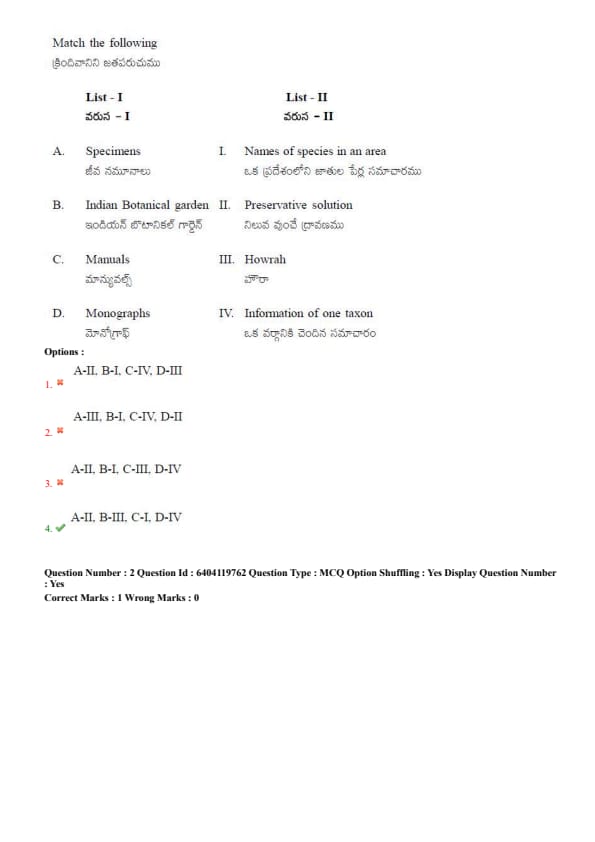
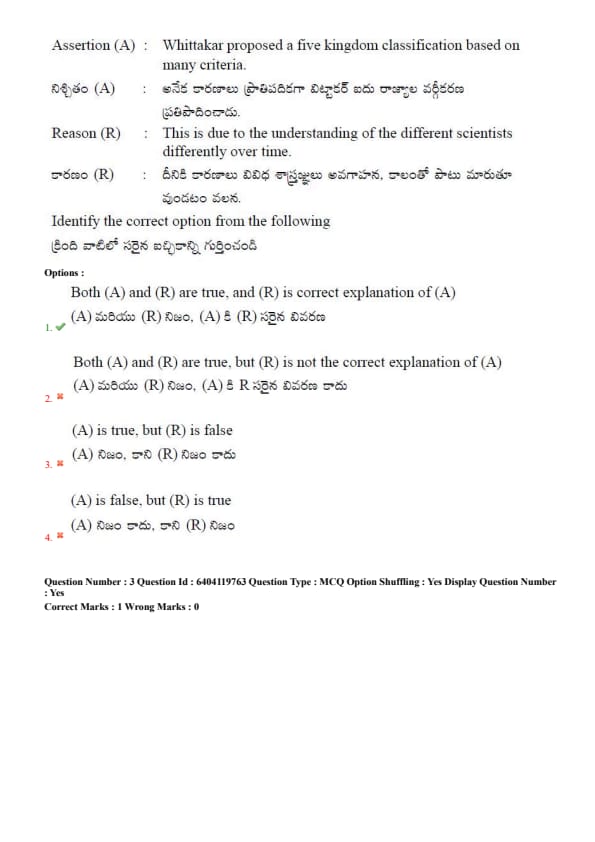
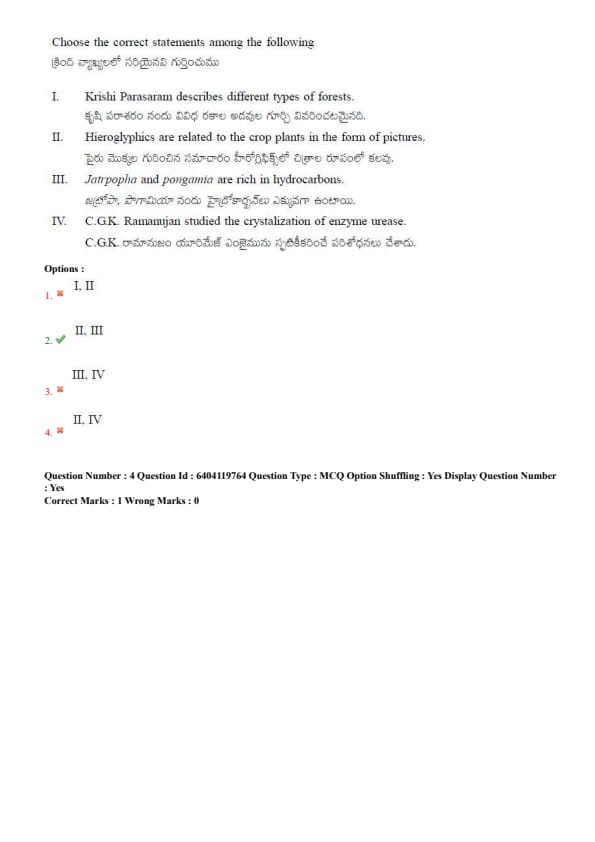
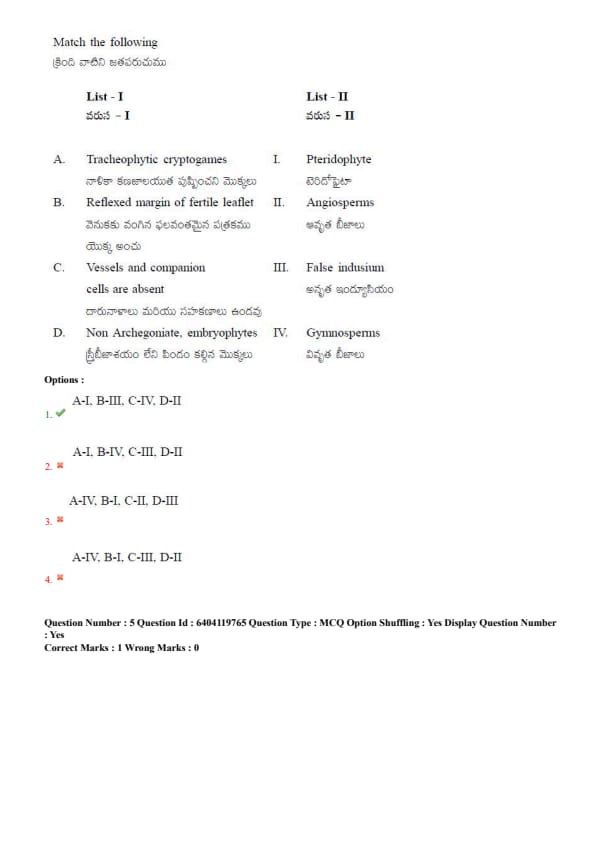
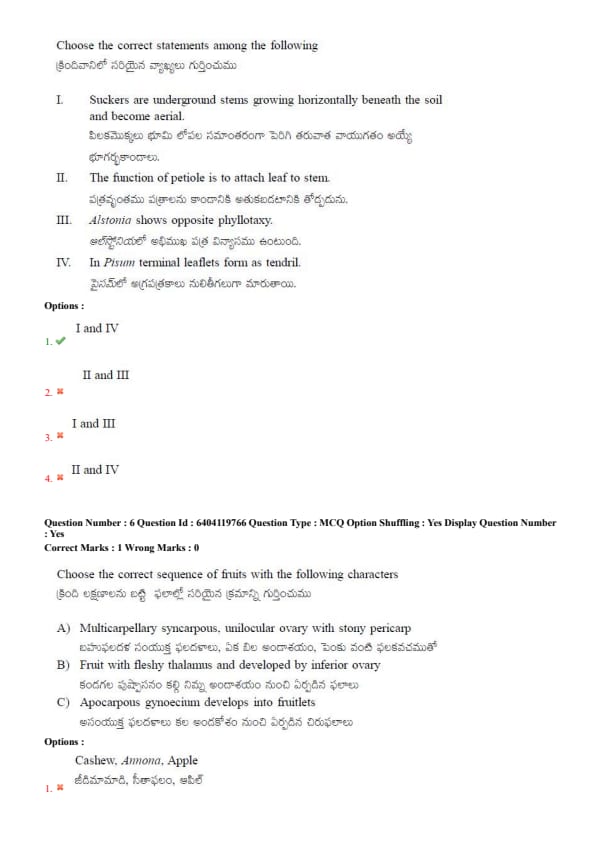
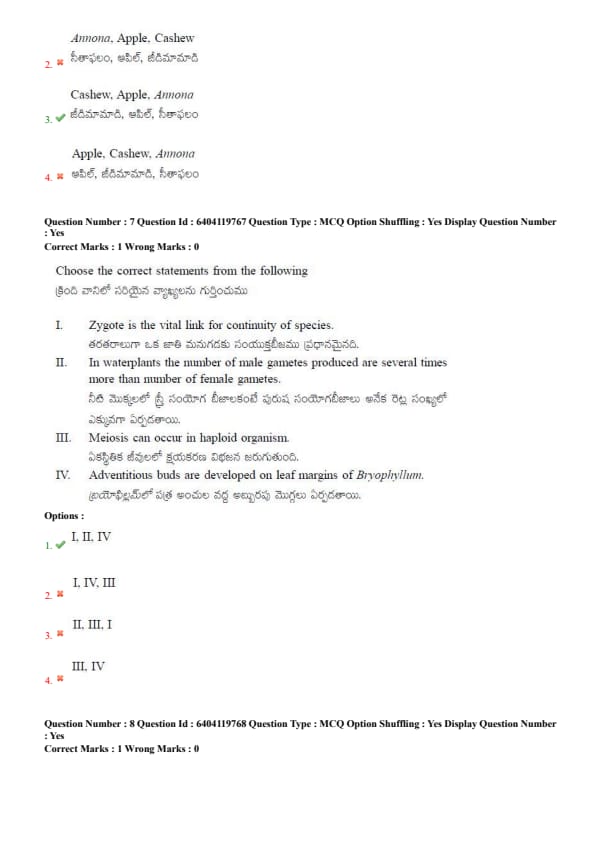
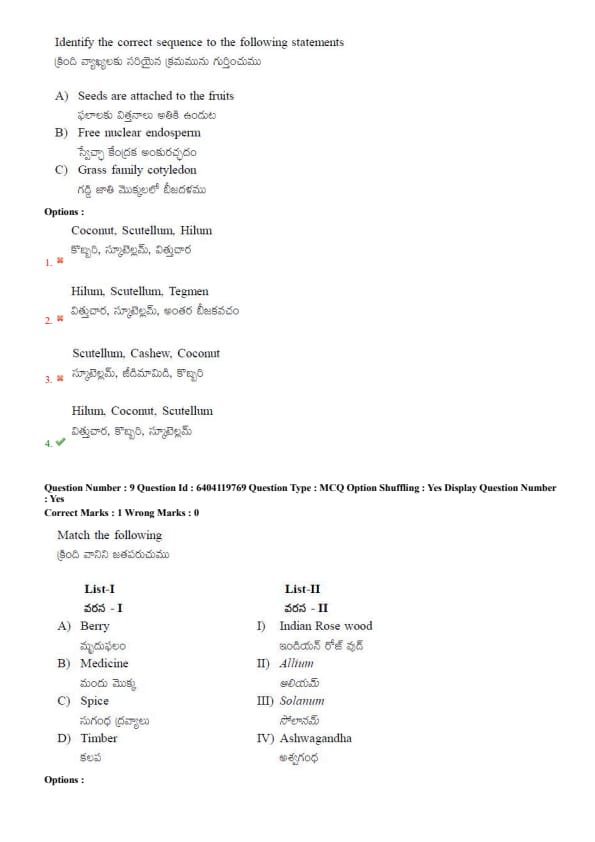
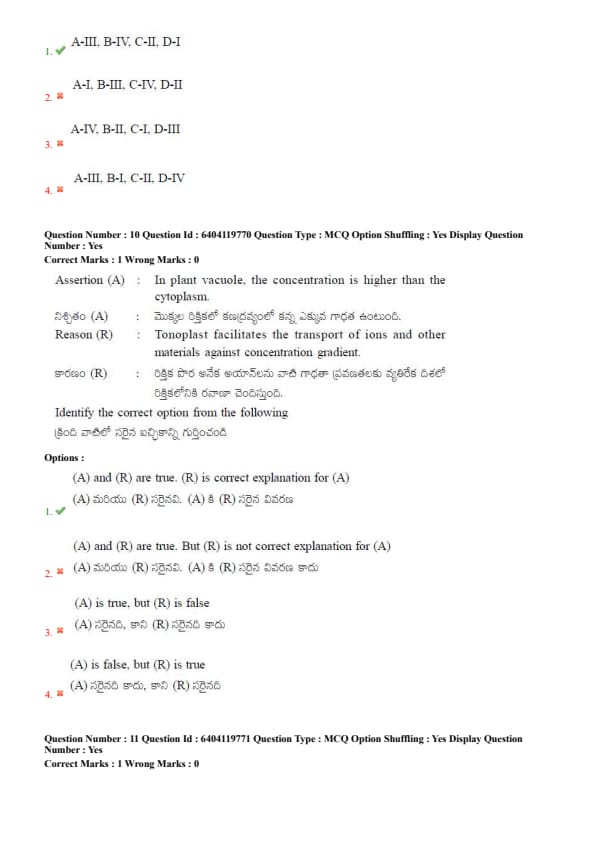
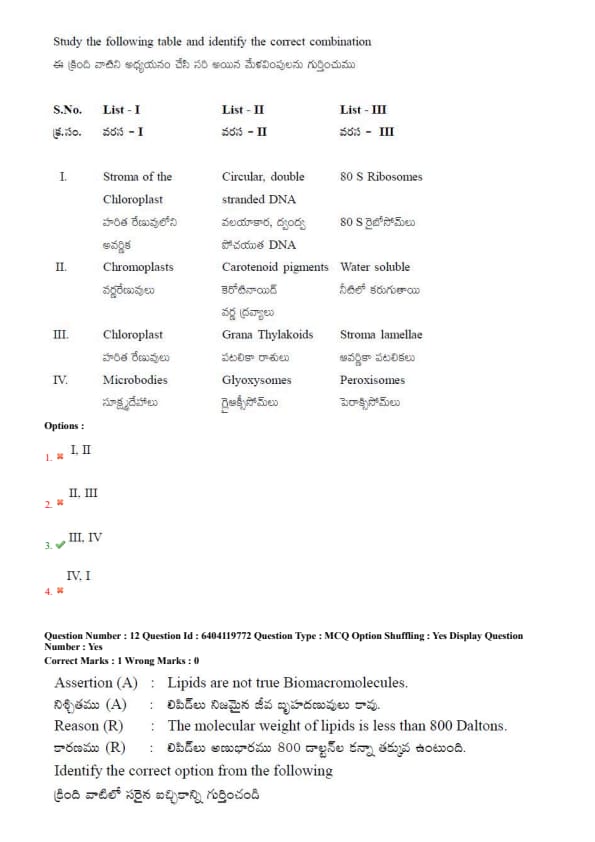
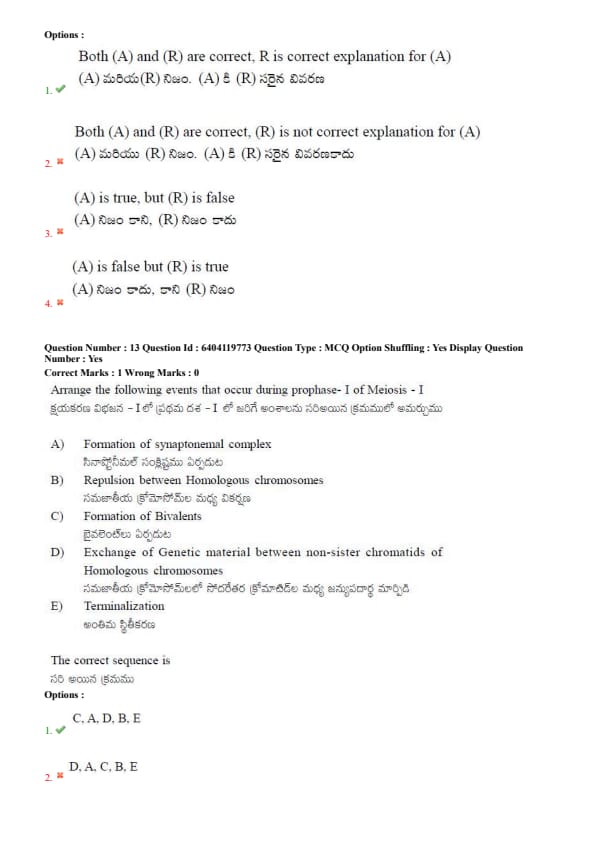
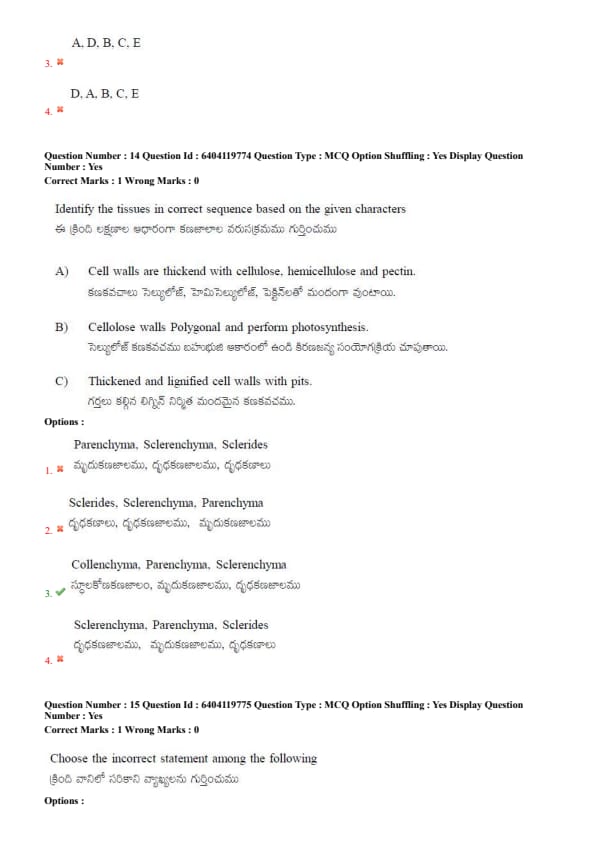
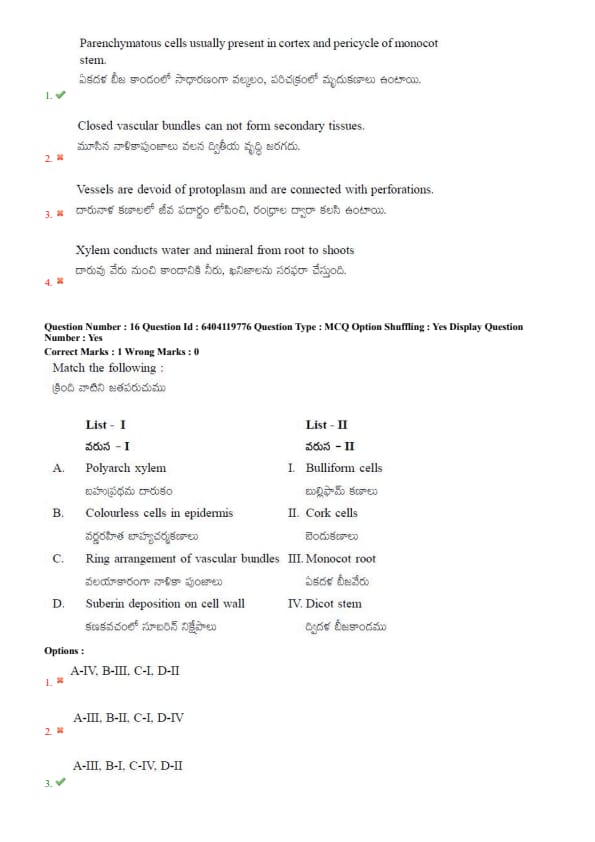
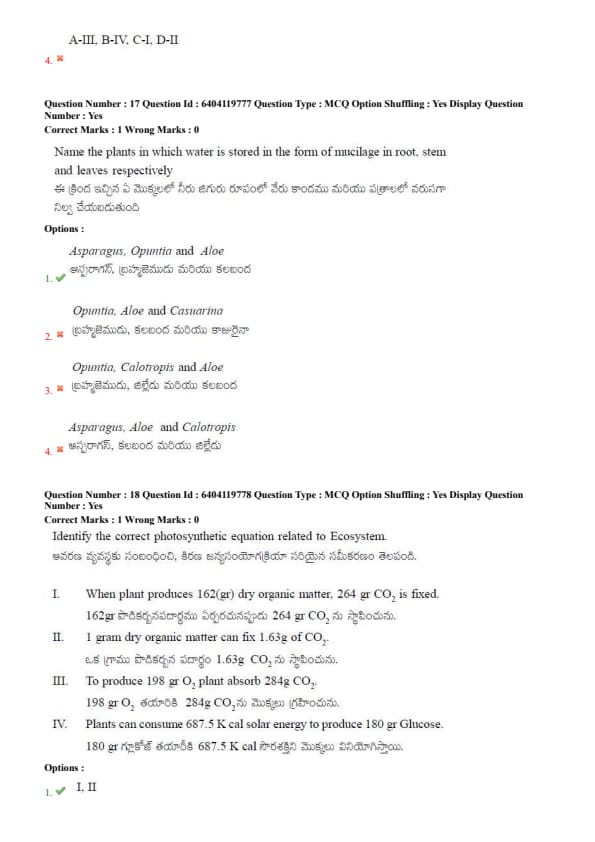
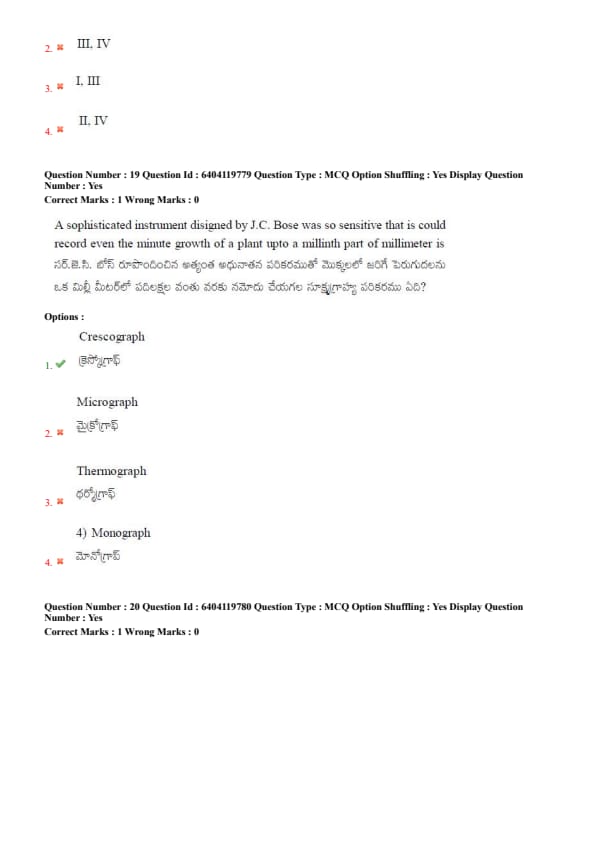
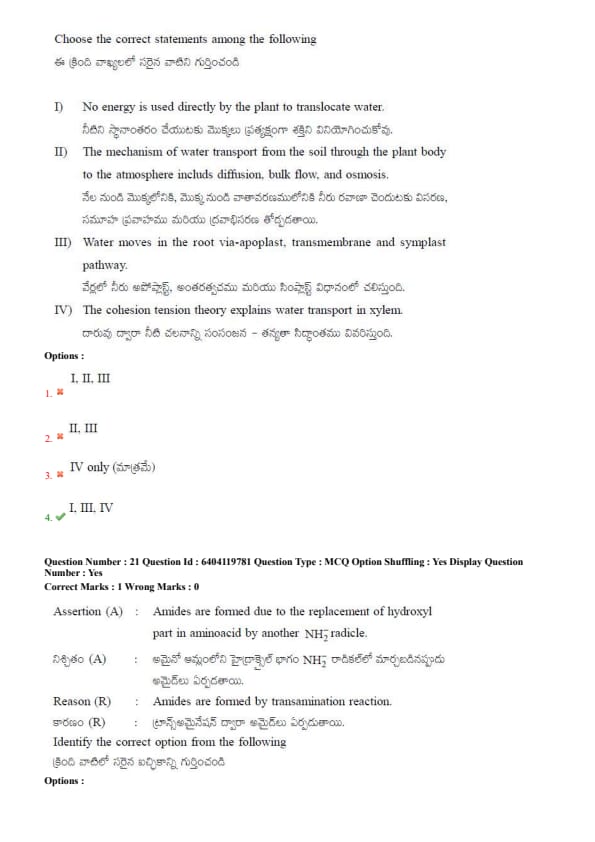
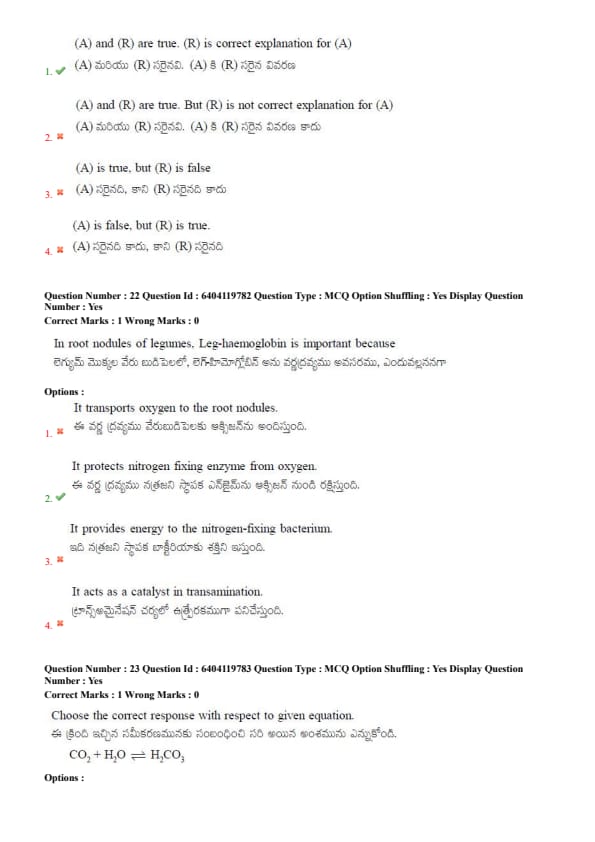
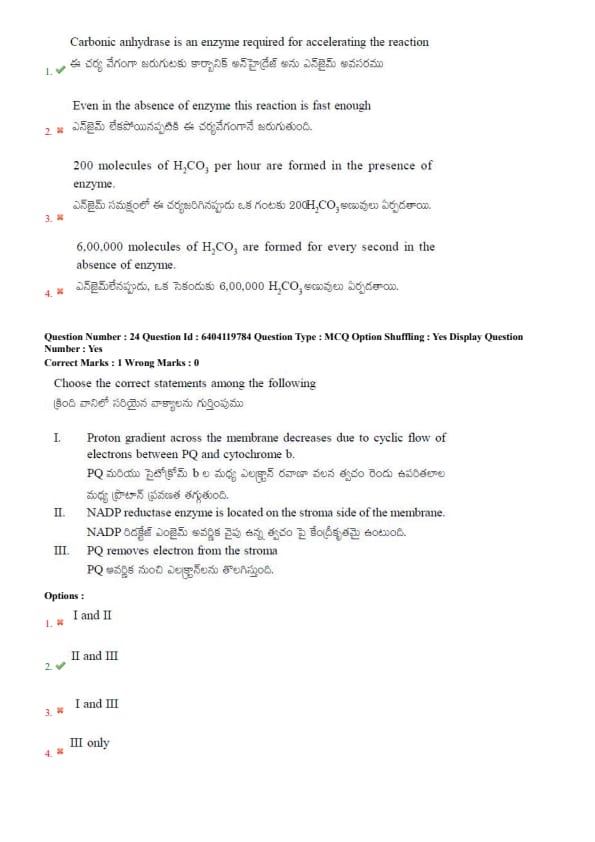
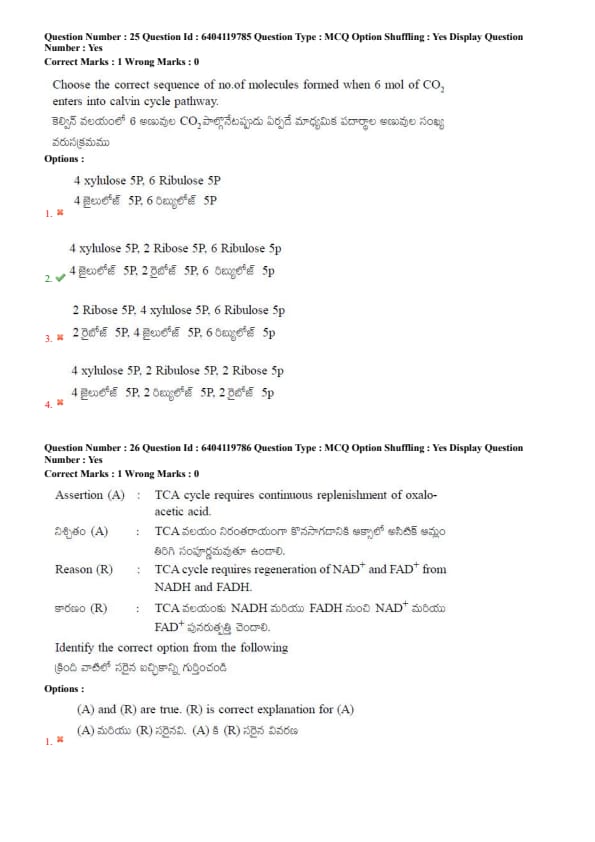
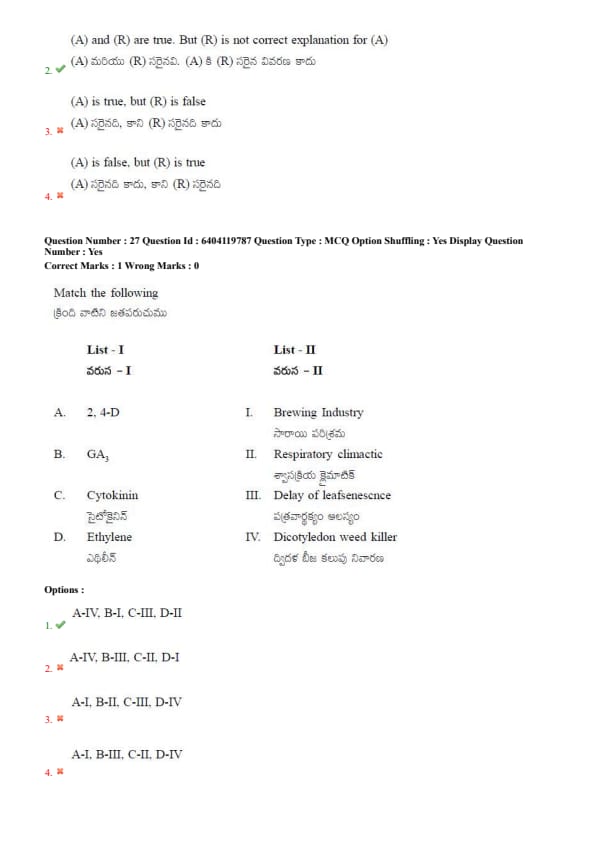
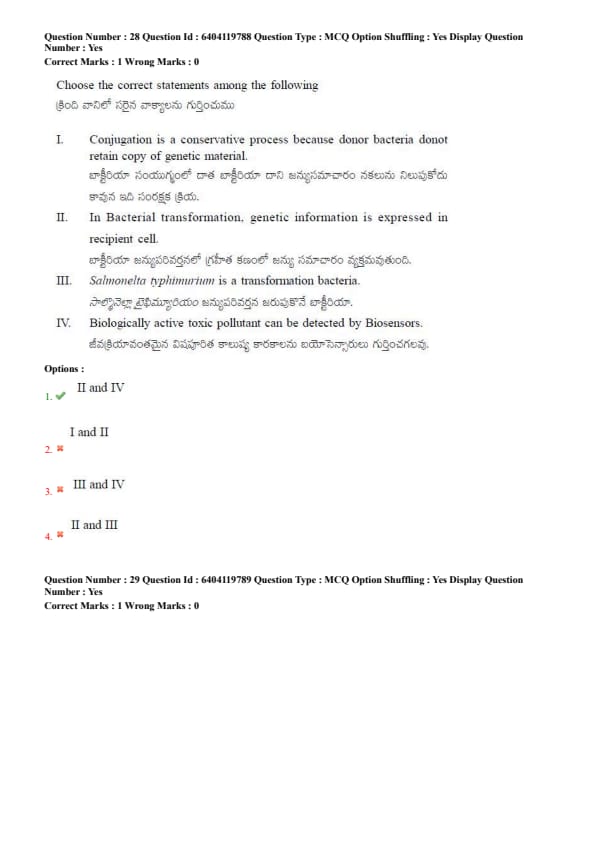
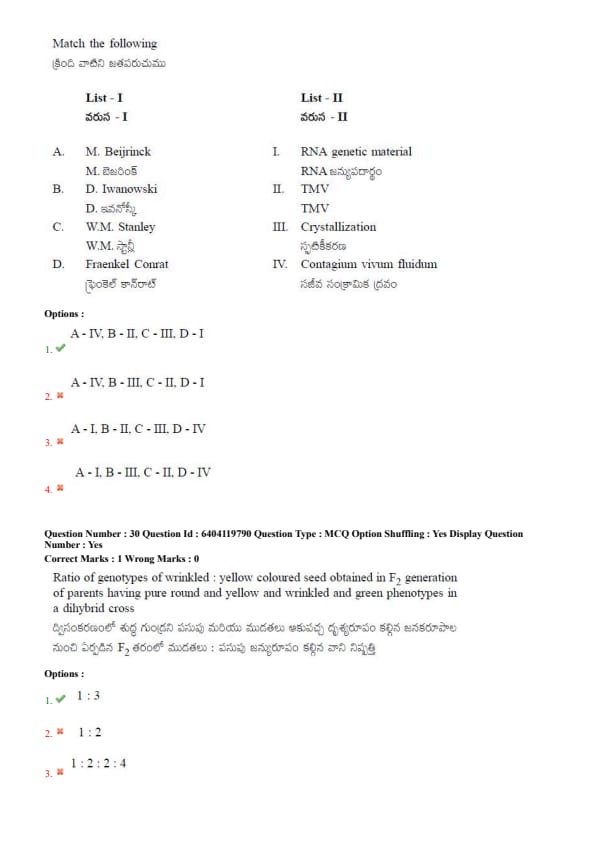
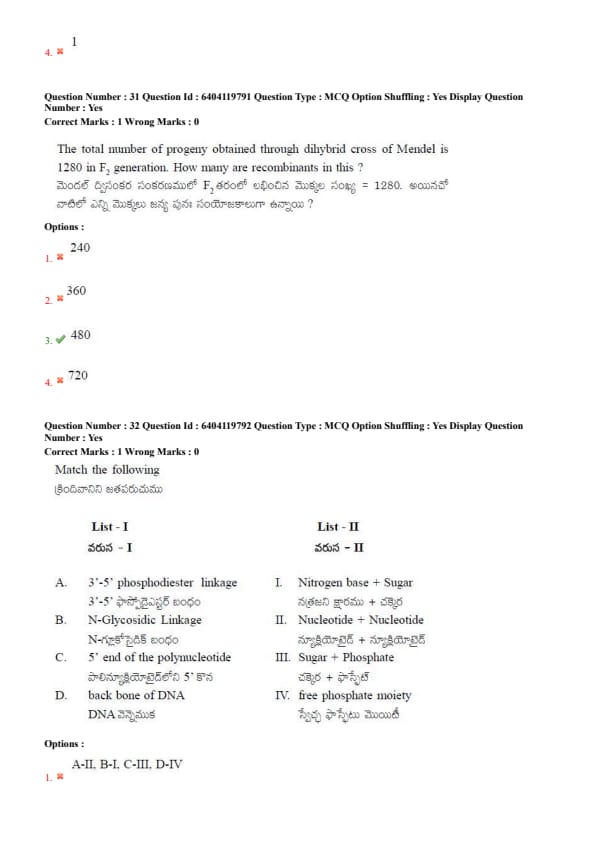
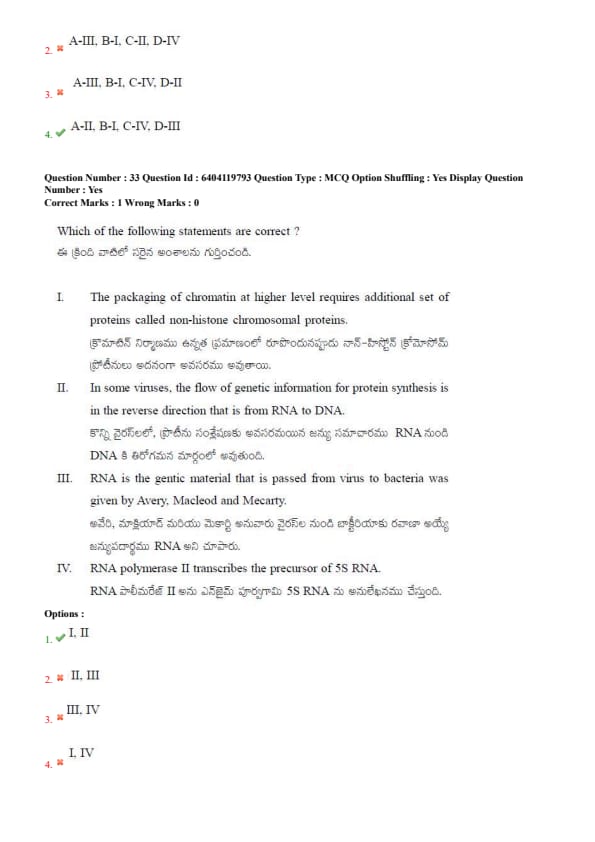
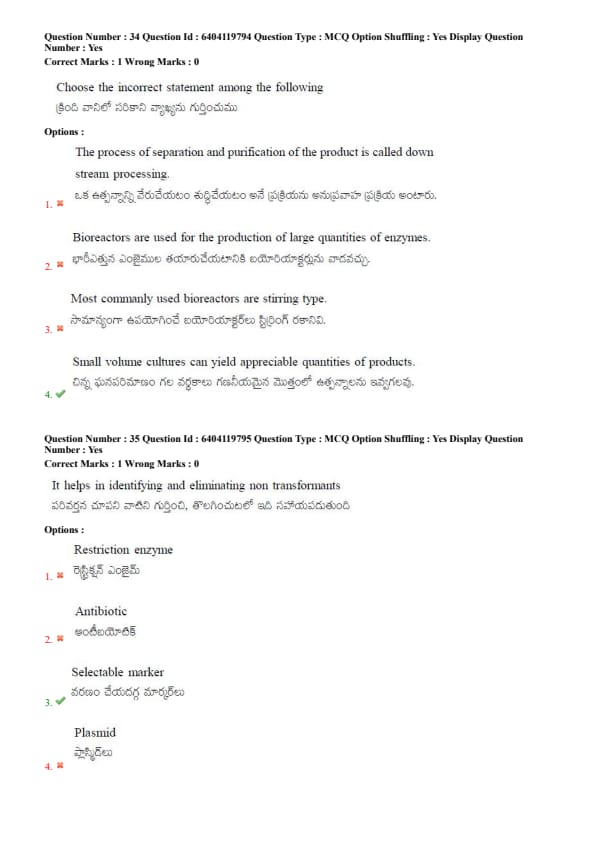
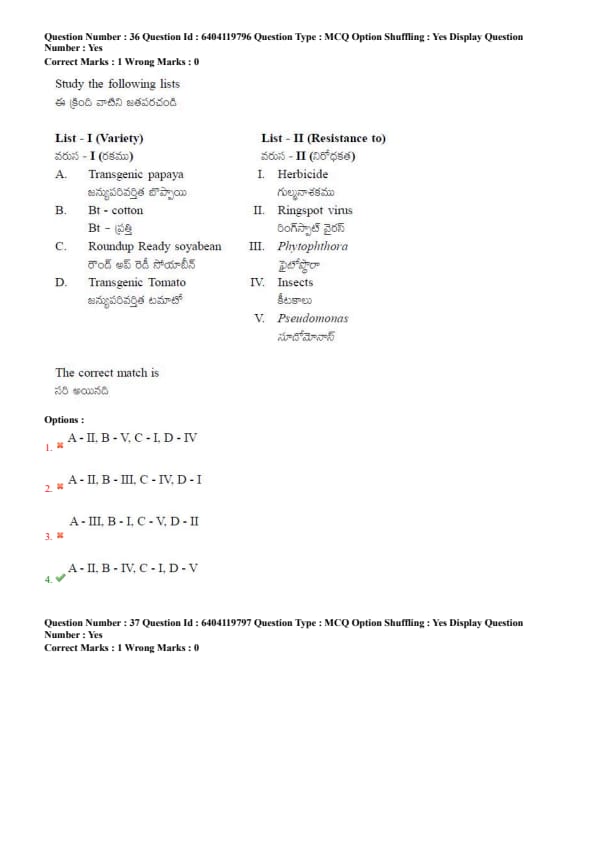
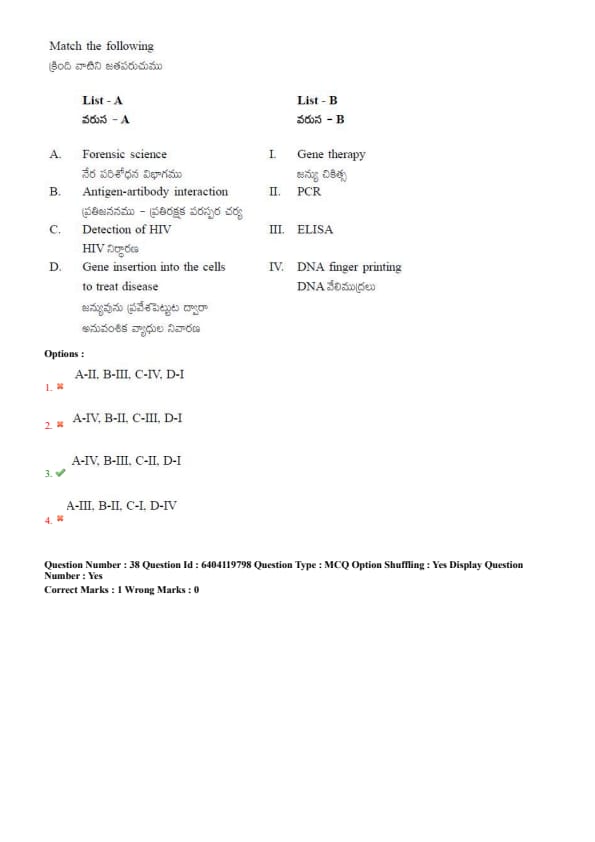
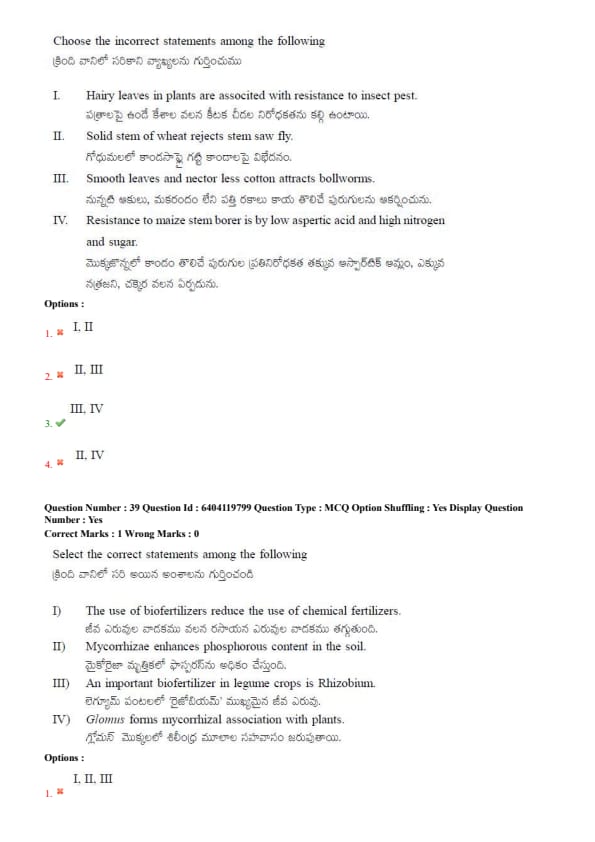
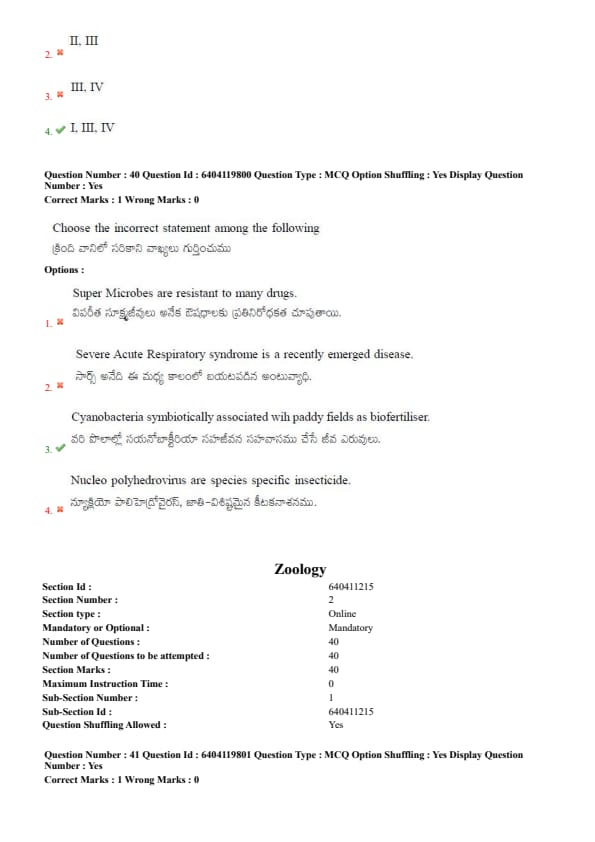
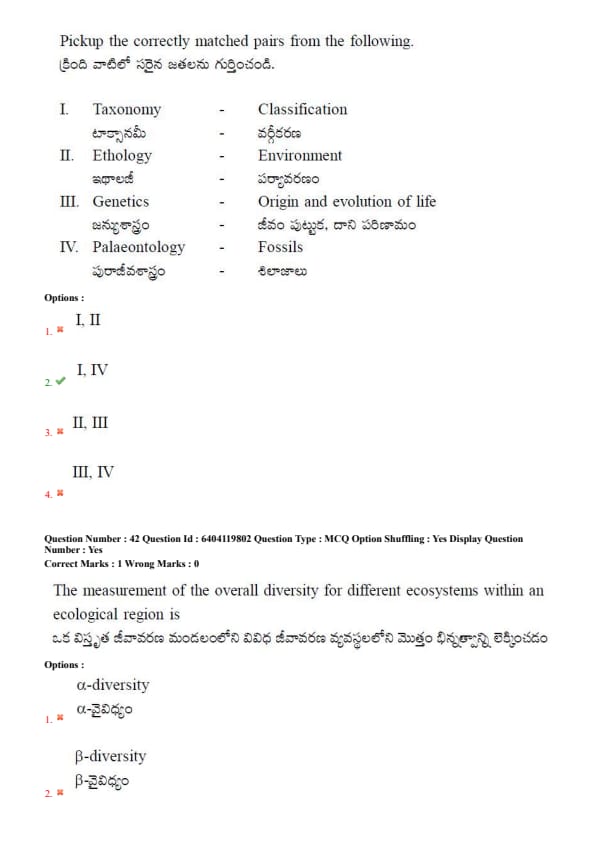
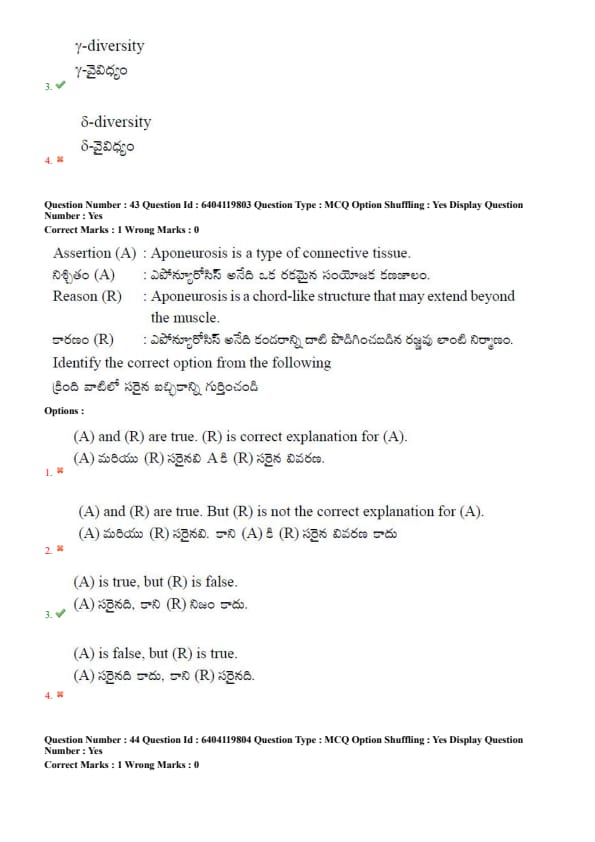
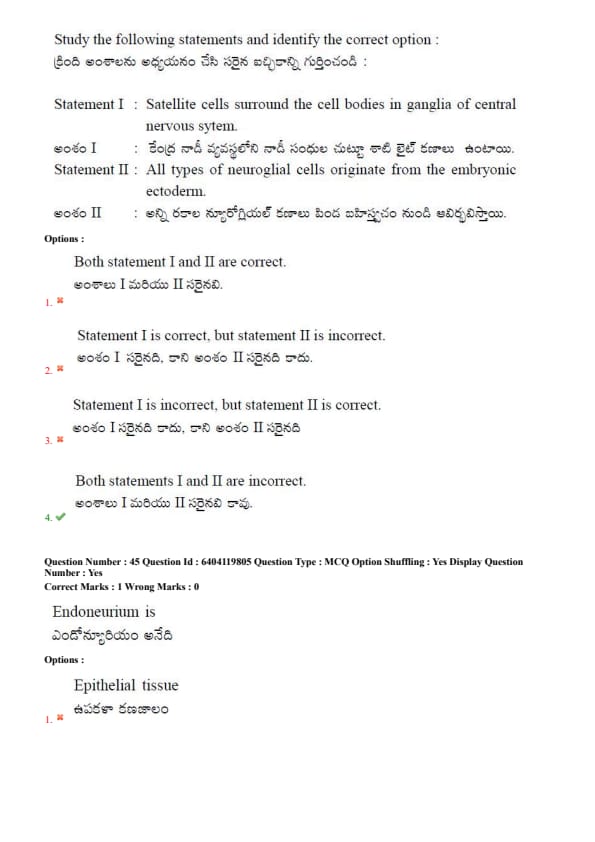
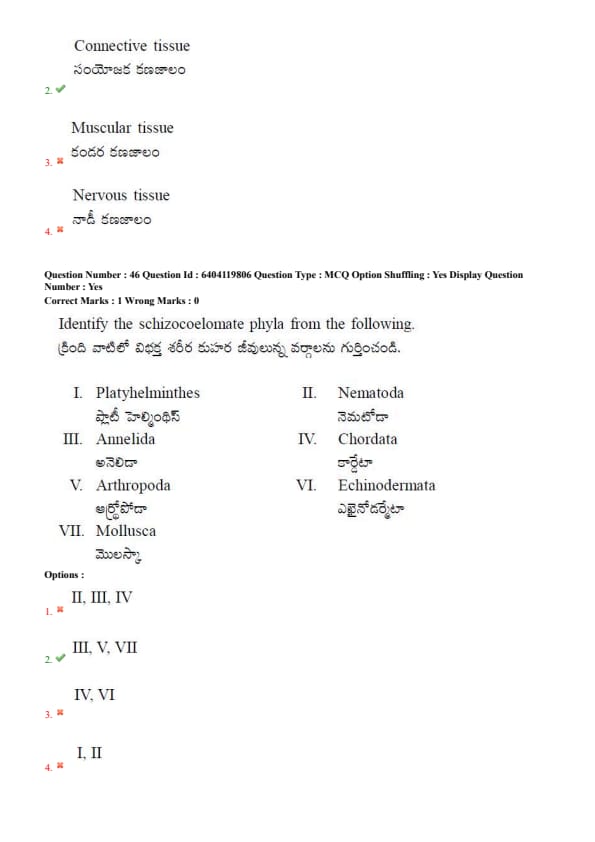
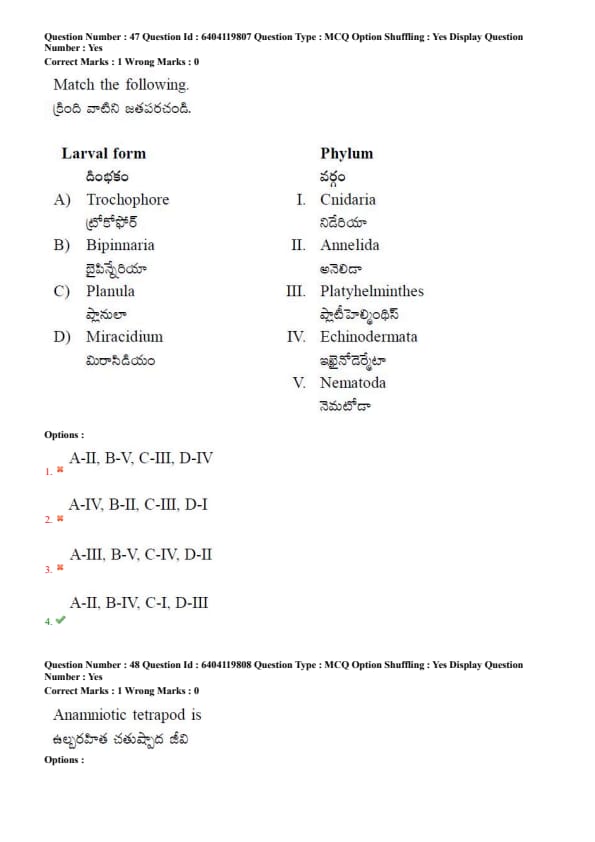
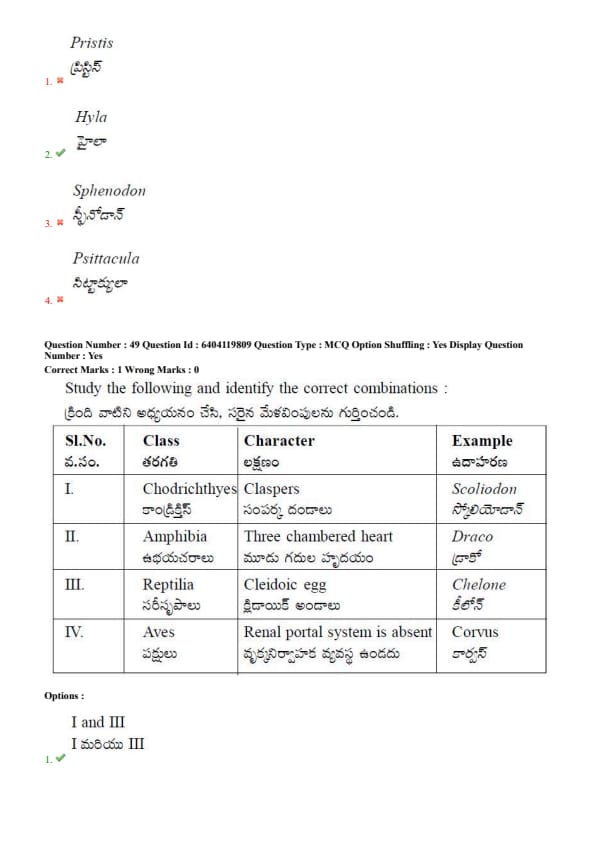
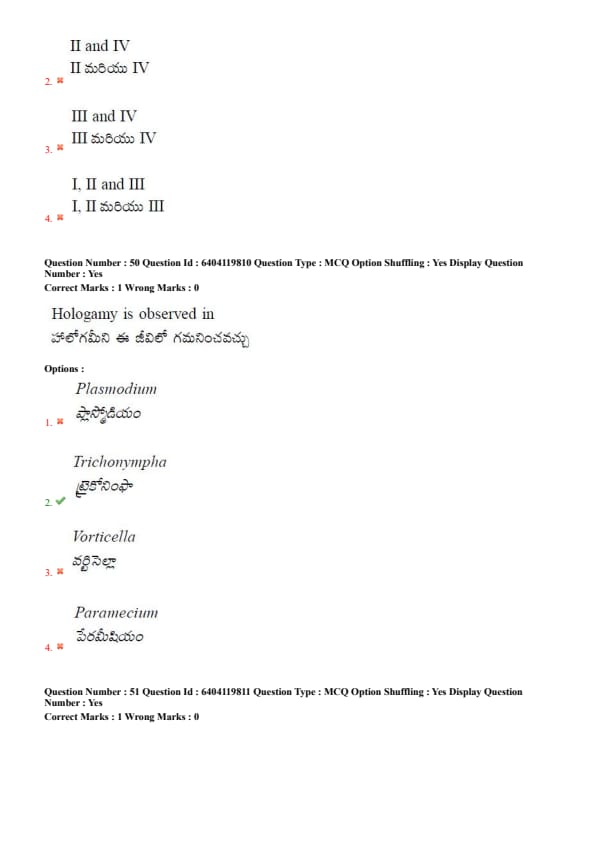
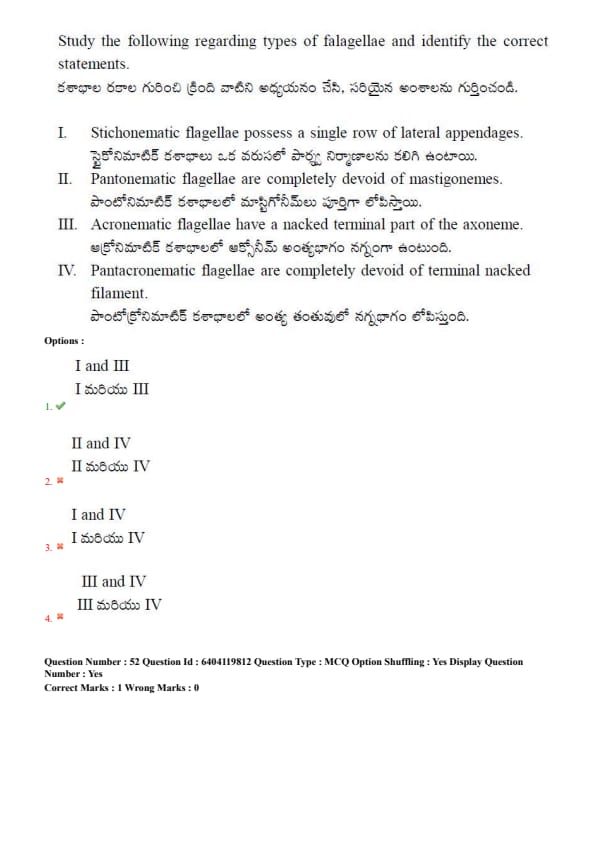
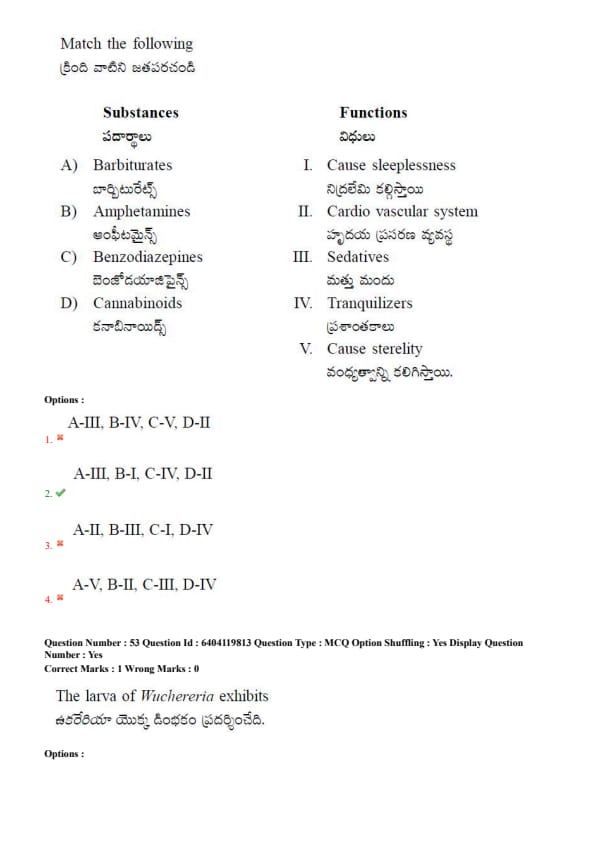
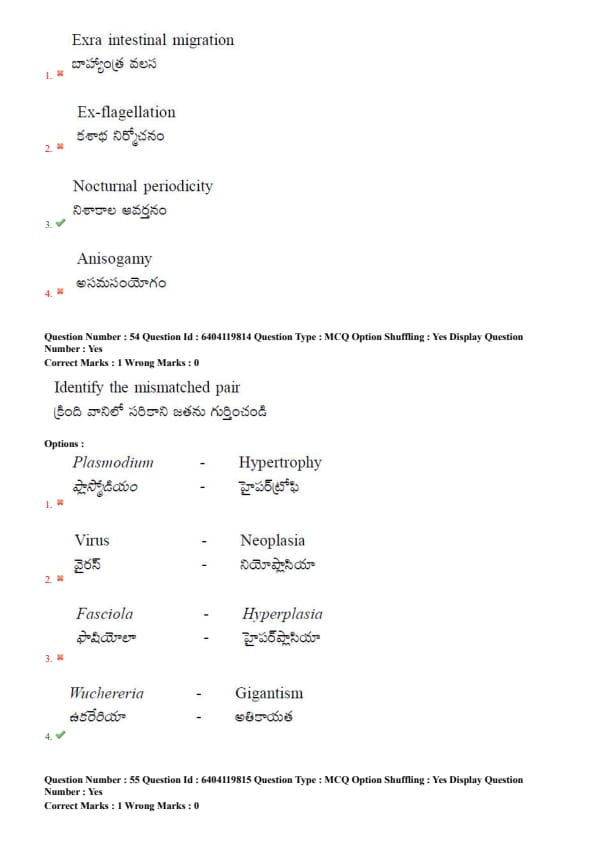
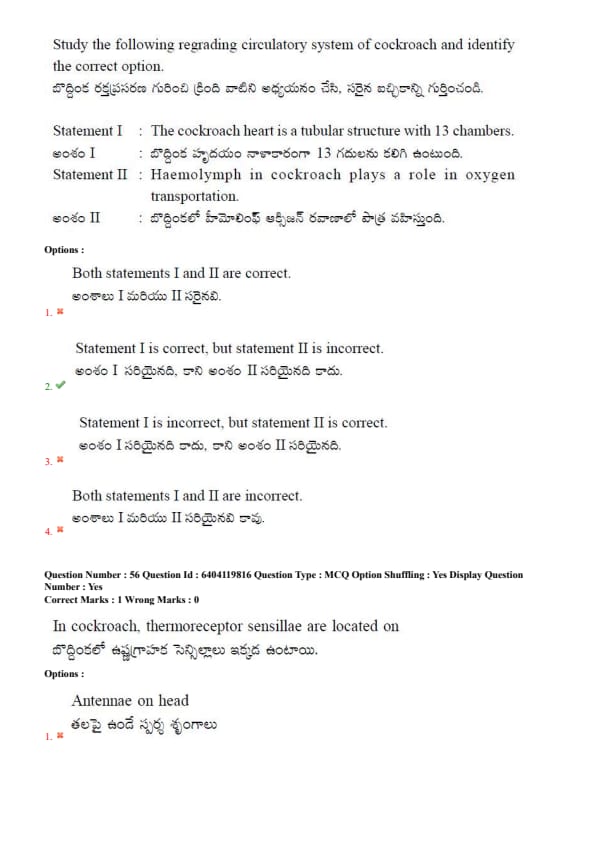
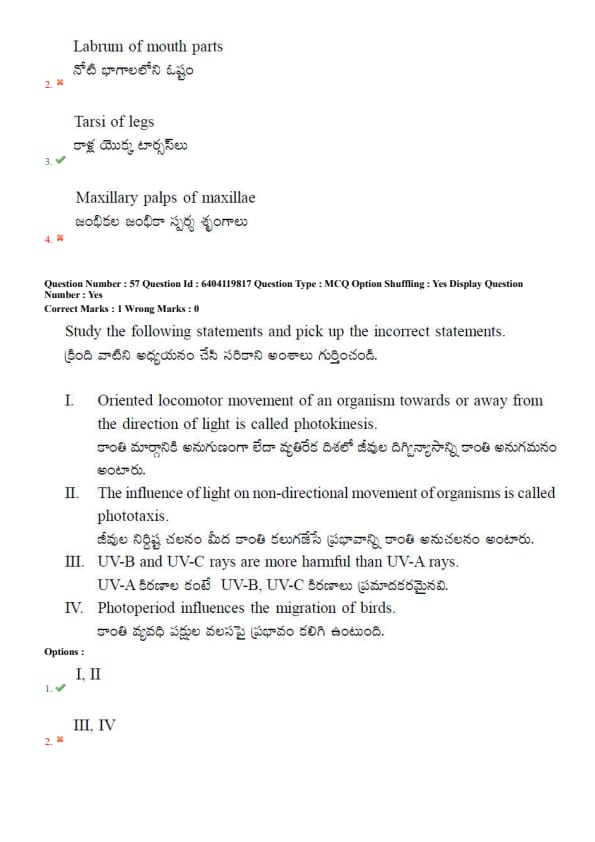
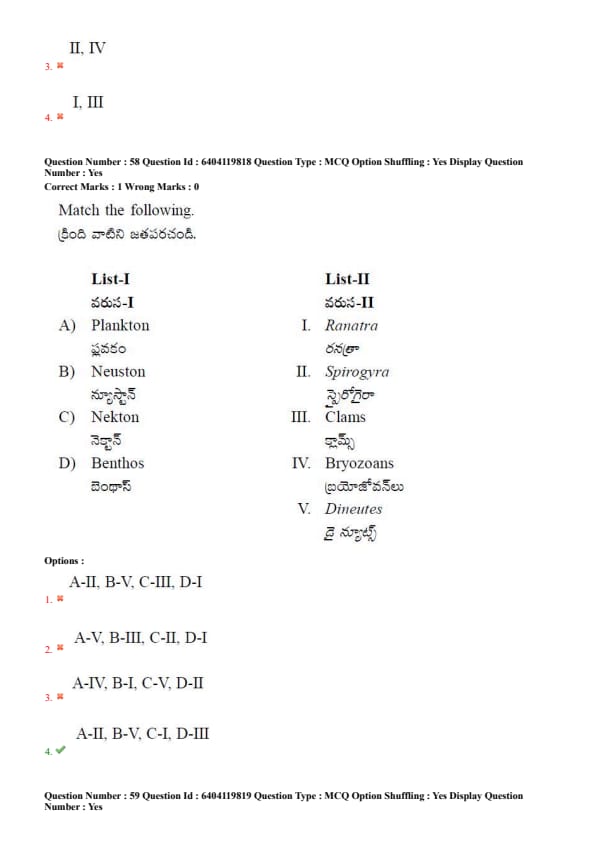
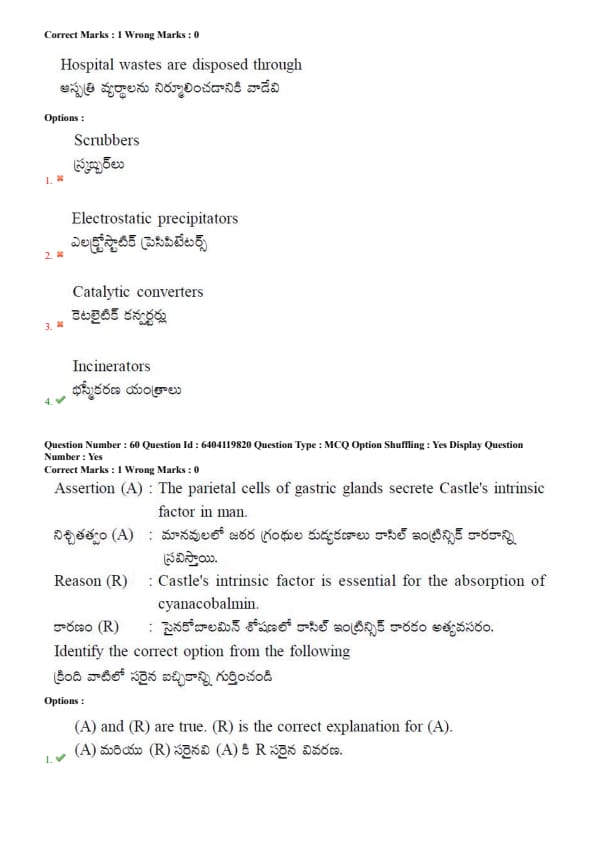
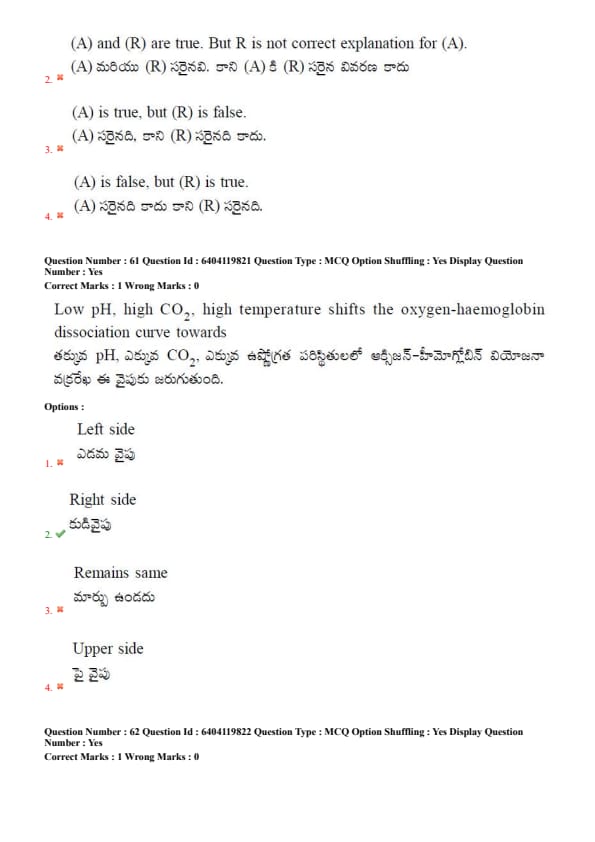
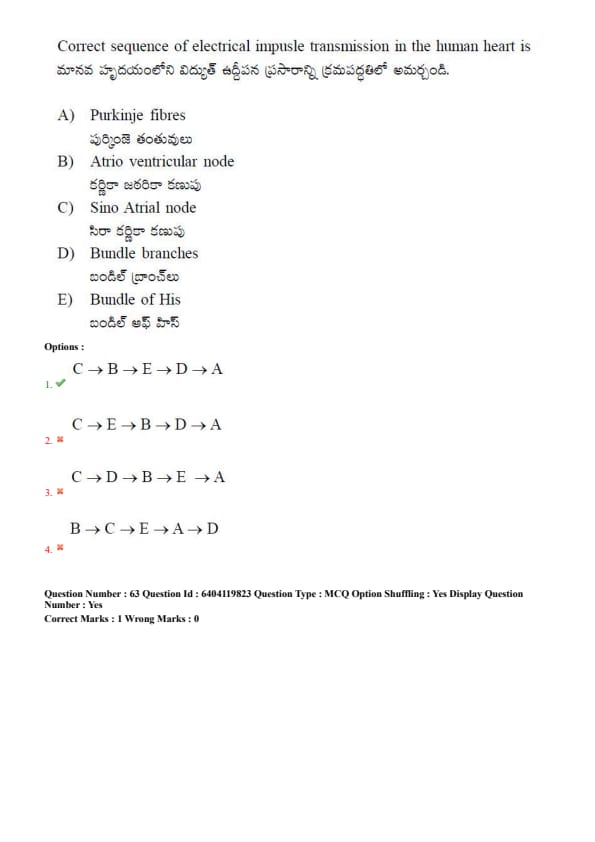
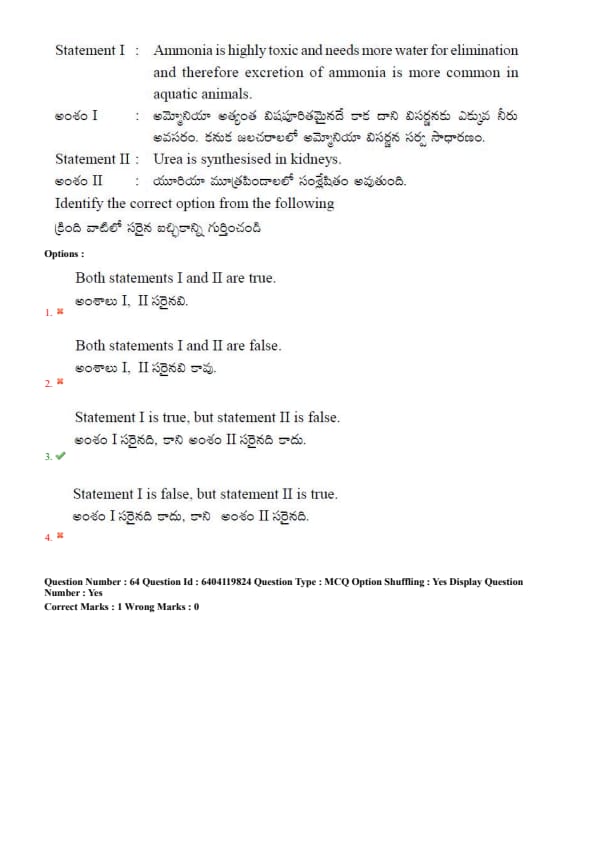
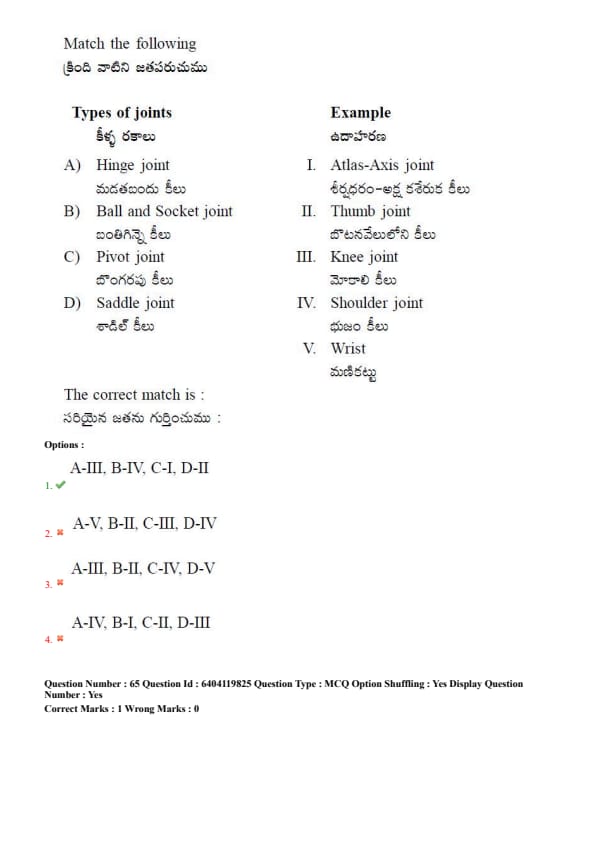
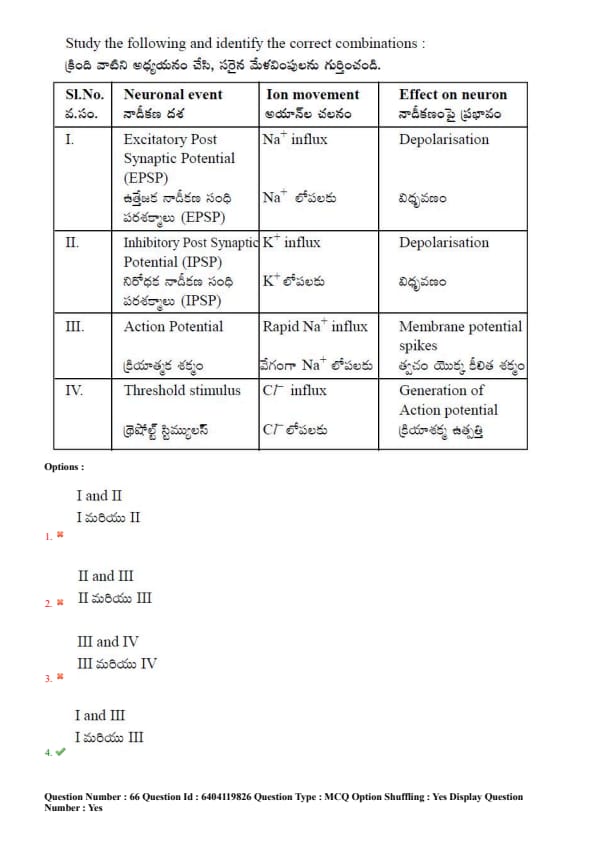
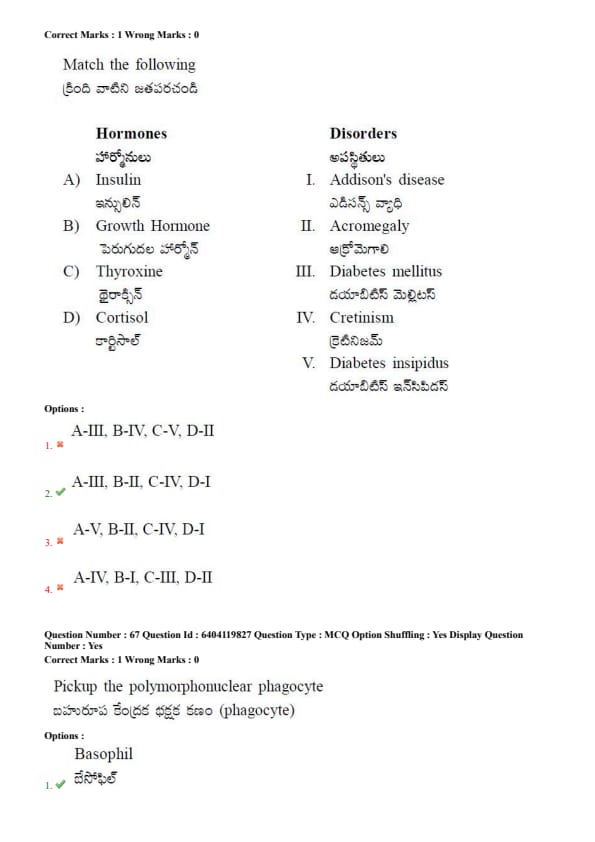
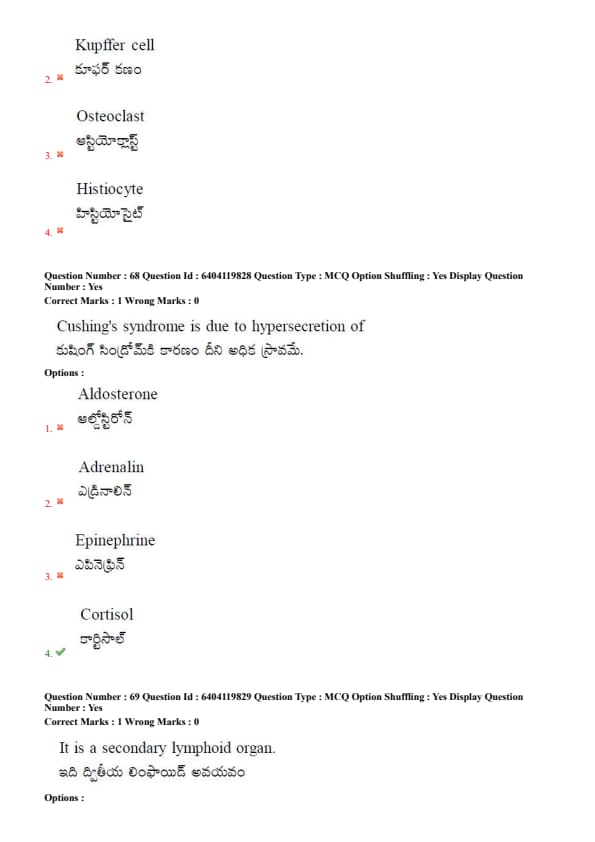
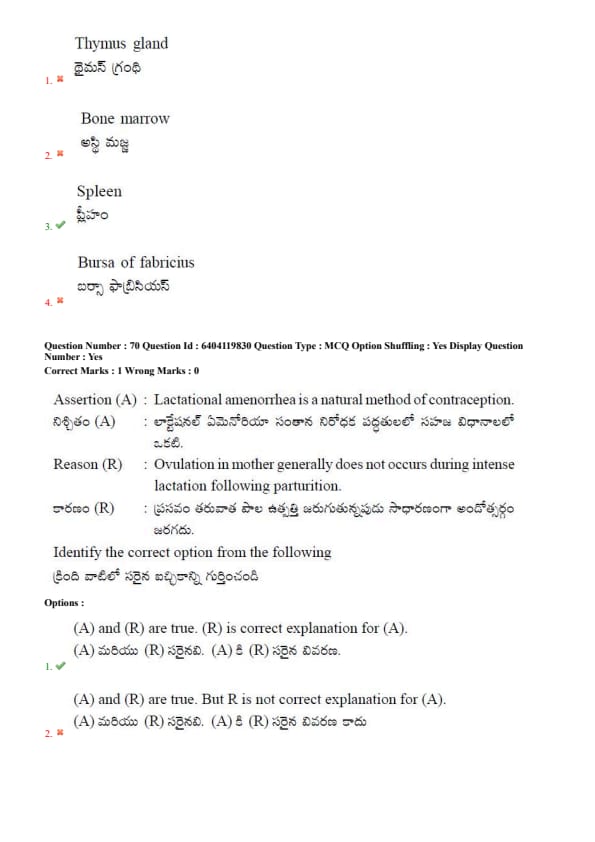
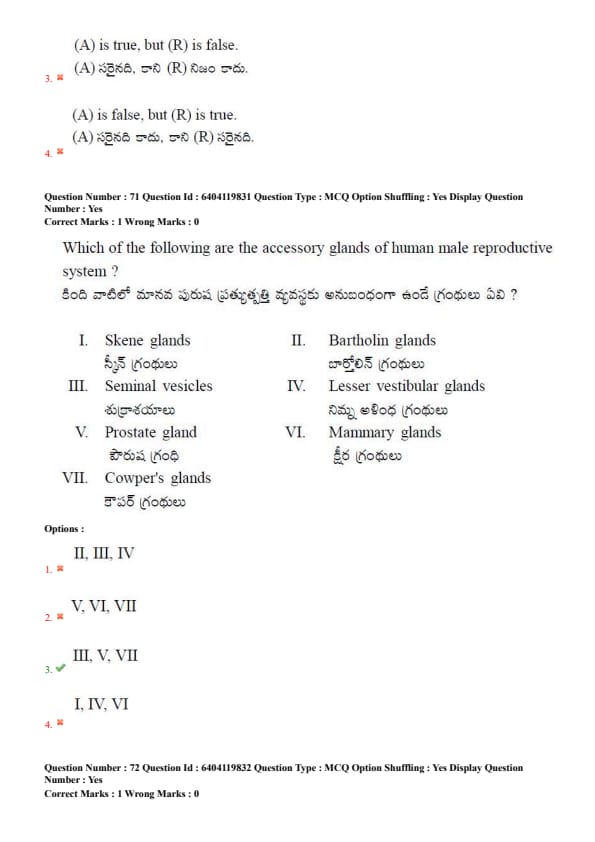
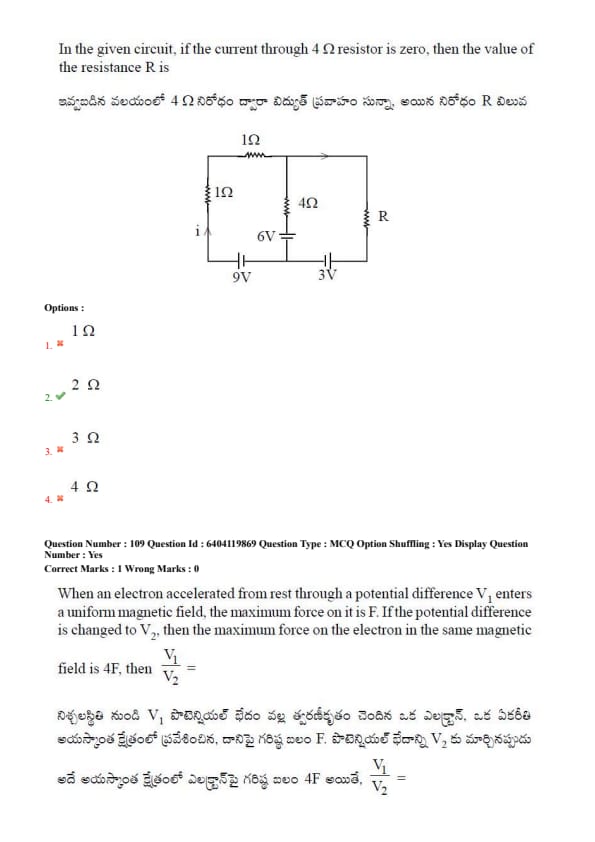
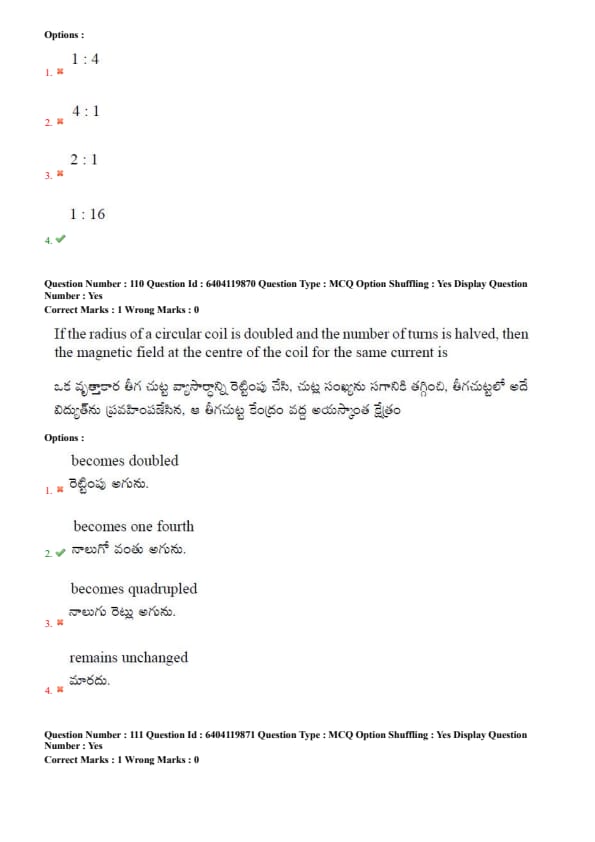
*The article might have information for the previous academic years, please refer the official website of the exam.