Tribhuvan Sahkari University (TSU), previously known as the Institute of Rural Management Anand (IRMA), became India’s first cooperative university through a Parliament Act in 2025. IRMA was established in 1979 with support from the National Dairy Development Board (NDDB). TSU carries forward five decades of experience in rural and cooperative management and is recognised by the University Grants Commission (UGC).
TSU holds the 54th position in the Management category of NIRF 2025. Its residential campus is in Anand, Gujarat, where Amul (GCMMF), cooperative institutions and the NDDB are based. Students are also close to agribusiness networks in the Anand-Ahmedabad corridor.
The university runs one flagship postgraduate course, the two-year residential MBA in Development Management and Cooperation (MBA-DMC). The programme has four specialisations:
- Agribusiness Management, covering commodity markets, agri-inputs, food processing and supply chains
- Banking and Finance, with a focus on rural credit, cooperative banking and finance linked to NABARD
- Cooperative Management, covering dairy and housing cooperatives, cooperative federations and multi-state cooperatives
- Rural Management, focusing on government programmes, development organisations and NGO management
Each specialisation has the same two-year programme fee of INR 16,43,800, while hostel accommodation costs another INR 1,40,000. During the 2025 placement season, the highest CTC reached INR 31.84 LPA and the mean CTC was INR 15.64 LPA. More than 130 recruiters extended 339 offers to 250 students.
TSU Admission Dates 2027
The admission process for the 2026-28 batch has ended. The 2027-29 application cycle is expected to begin after the CAT 2026 process concludes. These tentative dates follow the previous admission schedule, with CAT 2026 planned for November 29, 2026.
| Event | Date |
|---|---|
| CAT 2026 Exam | November 29, 2026 |
| CAT 2026 Result | December 24, 2026 (Tentative) |
| XAT 2027 Registration Last Date | December 6, 2026 |
| XAT 2027 Exam | January 3, 2027 |
| CMAT 2027 Exam | January 24, 2027 (Tentative) |
| TSU Application Opens for the 2027-29 Cycle | December 2026 (Tentative) |
| TSU Application Last Date for the 2027-29 Cycle | January 2027 (Tentative) |
| TSUWAT, or Written Ability Test | February 2027 (Tentative) |
| Personal Interview | February to April 2027 (Tentative) |
| Academic Session Begins | July 2027 (Tentative) |
Subject to revision. Kindly check with the official sources to confirm
Admission to every MBA-DMC specialisation uses the following examinations and selection stages.
| Programme | Accepted Exams | Selection Stages |
|---|---|---|
| MBA-DMC, including all four specialisations | CAT, XAT, CMAT, CUET-PG, GATE, GMAT and GRE | Shortlisting through an entrance score, followed by TSUWAT and a Personal Interview |
TSU Courses and Fees
TSU offers the MBA in Development Management and Cooperation as its only postgraduate programme. It is a two-year residential course available in four specialisations. The programme fee is identical for every specialisation, while hostel and mess expenses are charged separately.
| Course | Duration | Eligibility | Total Fees |
|---|---|---|---|
| MBA in Agribusiness Management | 2 years, residential | Graduation with 50%, or 45% for reserved categories, plus CAT, XAT, CMAT, CUET-PG, GATE, GMAT or GRE | INR 16,43,800 |
| MBA in Banking and Finance | 2 years, residential | Graduation with 50%, or 45% for reserved categories, plus CAT, XAT, CMAT, CUET-PG, GATE, GMAT or GRE | INR 16,43,800 |
| MBA in Cooperative Management | 2 years, residential | Graduation with 50%, or 45% for reserved categories, plus CAT, XAT, CMAT, CUET-PG, GATE, GMAT or GRE | INR 16,43,800 |
| MBA in Rural Management | 2 years, residential | Graduation with 50%, or 45% for reserved categories, plus CAT, XAT, CMAT, CUET-PG, GATE, GMAT or GRE | INR 16,43,800 |
Subject to revision. Kindly check with the official sources to confirm
Hostel accommodation costs INR 1,40,000 for two years, or INR 70,000 per year. Students also pay a refundable two-year mess deposit of INR 1,00,000, while the variable mess charge is INR 4,500 per month. Excluding the refundable deposit, the stated total cost for two years is INR 19,91,800.
TSU Admission Process
Selection at TSU takes place in two stages. First, applicants are shortlisted using their national-level entrance examination scores. Shortlisted students then take the TSUWAT, which is a Written Ability Test, and attend a Personal Interview. TSU neither reserves a management quota nor conducts a separate proprietary entrance examination.
Eligibility
Applicants from any discipline may apply after earning a bachelor’s degree from a recognised university with at least 50% aggregate marks. The minimum is 45% for SC, ST, OBC-NC, EWS and PwD applicants. Students in the final year of graduation are also eligible, but they must complete every examination before the academic session begins in July.
- TSU accepts CAT, XAT, CMAT, CUET-PG, GATE, GMAT and GRE scores.
- Work experience is not compulsory, so both fresh graduates and experienced applicants can apply.
- The application charge is INR 2,000 for General, OBC and EWS applicants and INR 1,500 for SC, ST and PwD applicants.
Selection Process
Entrance scores determine the initial shortlist. Those selected at this stage take the TSUWAT and attend an interview held across 16 centres in 15 states. During the interview stage, TSU gives weight to academic history, regional diversity and work completed in rural or cooperative sectors.
- Stage 1: Shortlisting through the CAT, XAT or CMAT percentile
- Stage 2: TSUWAT, or Written Ability Test, followed by a Personal Interview
- Final selection: A combined score based on the entrance examination, WAT, PI, academic record and work experience
Experience in agriculture, cooperative banking, NGOs or rural development agencies receives attention during the interview because these fields match TSU’s sector focus.
TSU Placements
Placement results at TSU, formerly IRMA Anand, improved across the two reported cycles. In 2025, all 250 students were placed. More than 130 recruiters participated and issued 339 offers.
| Metric | 2025 Placement Season | 2024 Placement Season |
|---|---|---|
| Highest CTC | INR 31.84 LPA | Not disclosed |
| Mean CTC | INR 15.64 LPA | INR 14.14 LPA |
| Median CTC | INR 15.80 LPA | INR 15.00 LPA |
| Total Offers | 339 | Not disclosed |
| Participating Recruiters | 130+ | Not disclosed |
| Placement Rate | 100% | 100% |
BFSI was the leading placement sector and recruited 39% of the batch. Cooperative banks, NABARD, HDFC Bank and rural finance organisations contributed to this share. Other students joined agribusiness companies, development organisations and government-linked bodies. Confirmed recruiters included Amul (GCMMF), HDFC Bank, ITC, Adani, PwC, EY, NABARD, UNDP, IFAD, CARE India, Oxfam and BRAC.
The university’s focus brings recruiters from a specialised set of fields. These include multilateral development organisations such as UNDP and IFAD, cooperative federations such as Amul and state dairy cooperatives, rural development agencies and agribusiness groups. This recruitment mix differs from that of general MBA colleges and matches the sector-based design of the MBA-DMC course.
TSU Rankings
TSU continues the ranking record built by IRMA Anand in management education. It was placed 54th among Indian management institutions by NIRF Management 2025. In the Outlook India management ranking for 2026, the university received the 19th position.
| Ranking Body | Category | 2026 Rank | 2025 Rank |
|---|---|---|---|
| NIRF | Management | Not yet released | 54 |
| Outlook India | Management | 19 | Not available |
The difference between the NIRF position of 54 and the Outlook India position of 19 comes from their separate assessment methods. NIRF places substantial weight on research output and financial resources, while Outlook India considers employer reputation and factors related to specific sectors. Since TSU offers a distinctive cooperative and rural management programme, comparison with general management institutions is limited.
TSU Campus and Infrastructure
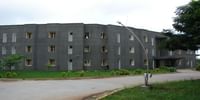
The fully residential TSU campus is in Anand, Gujarat, a major centre of India’s cooperative movement and the base of Amul and the National Dairy Development Board. Hostel rooms are available in single and double occupancy formats. Students also have access to high-speed internet and shared study spaces. Under the current schedule, mess expenses are INR 4,500 per month.
Being based in Anand places students near cooperative bodies, agricultural research centres and the operating network of India’s largest dairy cooperative system. The MBA-DMC curriculum includes field immersion placements and live assignments with rural and cooperative organisations.
TSU vs IIFM Bhopal vs MANAGE Hyderabad
Students planning careers in cooperative, rural or development management may consider TSU Anand alongside the Indian Institute of Forest Management (IIFM), Bhopal, and the National Institute of Agricultural Extension Management (MANAGE), Hyderabad. Each institution receives government support and specialises in an area connected with the development sector.
| Parameter | TSU Anand | IIFM Bhopal | MANAGE Hyderabad |
|---|---|---|---|
| Established | 1979 as IRMA, reconstituted in 2025 | 1999 | 1987 |
| Location | Anand, Gujarat | Bhopal, Madhya Pradesh | Hyderabad, Telangana |
| Programme | MBA-DMC in Cooperative Management, Rural Management, Agribusiness Management and Banking and Finance | MBA in Forestry Management | PGDM in Agribusiness Management |
| Sector Focus | Cooperative institutions, rural development and agribusiness | Forestry and natural resource management | Agricultural extension, agribusiness and government schemes |
| NIRF Management 2025 | 54 | Ranked, but the specific position is not verified | Ranked, but the specific position is not verified |
| MBA-DMC Total Fee | INR 16,43,800 | Not verified | Not verified |
TSU stands apart through its strength in cooperative and banking recruitment. BFSI hired 39% of its batch, and recruiters included Amul, NABARD and HDFC Bank. IIFM has greater reach in forestry and environmental work, while MANAGE is more closely connected with government agricultural extension programmes. Among these three institutions, TSU alone prepares students directly for cooperative management positions, a field expanding with the growth of cooperative banks, dairy federations and multi-state cooperatives.
TSU FAQs
Ques. How are Tribhuvan Sahkari University and IRMA Anand connected?
Ans. Tribhuvan Sahkari University is the institution formed by reconstituting the Institute of Rural Management Anand. Established in 1979, IRMA became a leading Indian institute for rural management. A Parliament Act converted it into India’s first cooperative university in 2025 and gave it the name Tribhuvan Sahkari University. Its MBA-DMC carries forward the tradition of the earlier PGDM-RM programme.
Ques. Where does TSU Anand stand in the management rankings?
Ans. TSU holds the 54th rank in the Management category of NIRF 2025. Outlook India placed it 19th for management in 2026.
Ques. How much does the complete TSU MBA-DMC programme cost?
Ans. The two-year residential MBA-DMC programme fee is INR 16,43,800. This amount is the same for Agribusiness Management, Banking and Finance, Cooperative Management and Rural Management. Two years of hostel charges add INR 1,40,000, and the mess costs INR 4,500 per month.
Ques. What examination scores can applicants use for TSU MBA admission?
Ans. Applicants may submit CAT, XAT, CMAT, CUET-PG, GATE, GMAT or GRE scores. TSU does not conduct a separate entrance examination. Students who are shortlisted must take the TSUWAT, which is a Written Ability Test, and then attend a Personal Interview. The application fee is INR 2,000 for General category applicants and INR 1,500 for SC, ST and PwD applicants.
Ques. What placement figures did TSU Anand report for 2025?
Ans. For its 250-student batch, TSU reported a mean CTC of INR 15.64 LPA, a median CTC of INR 15.80 LPA and a highest CTC of INR 31.84 LPA. More than 130 recruiters provided 339 offers, resulting in 100% placement. Recruiters included Amul (GCMMF), HDFC Bank, NABARD, ITC, PwC, UNDP and BRAC.
Ques. What is the expected admission schedule for TSU’s 2027-29 MBA-DMC batch?
Ans. Applications are tentatively expected to begin in December 2026, after the CAT 2026 results. CAT 2026 is scheduled for November 29, 2026, and the 2027-29 academic session is tentatively planned to start in July 2027. The official TSU portal will confirm the schedule.