
TS EAMCET 2024 Question Paper May 7 Shift 2: Download BiPC Question Paper with Solutions PDF

.jpg?tr=h-55,w-55,c-force)
Content Strategist|Tech-innovator|National Hackathon Winner | Updated On - Mar 6, 2025
TS EAMCET 2024 Question Paper May 7 Shift 2 with Answer Key PDF is available here for download. JNTU, Hyderabad on behalf of TSCHE conducted TS EAMCET on May 7 from 3 PM to 6 PM . TS EAMCET 2024 Question Paper consists of 160 questions carrying 1 mark each. TS EAMCET 2024 Question Paper May 7 Shift 2 PDF for BiPC includes four subjects, Physics, Chemistry and Biology with Botany & Zoology. Each subject includes 40 questions.
TS EAMCET 2024 Question Paper with Answer Key May 7 Shift 2 PDF
| TS EAMCET 2024 Question Paper with Answer Key |  Download Download |
Check Solution |
The question asks for an example of RNA-containing viruses.
View Solution
This question requires identifying RNA viruses from the options given.
- Option (A) lists Smallpox virus, which is incorrect as it contains DNA.
- Option (B) mentions Adenovirus, which is also a DNA virus, hence incorrect.
- Option (C), including TMV (Tobacco Mosaic Virus) and HIV (Human Immunodeficiency Virus), is correct as both are RNA viruses.
- Option (D) is incorrect as it incorrectly groups Adeno virus (a DNA virus) with TMV (an RNA virus).
Thus, the correct answer is (C) TMV and HIV. Quick Tip: Note that RNA viruses, such as HIV and TMV, are characterized by RNA as their genetic material, differentiating them from DNA viruses.
Asexual spores are generally not found in:
View Solution
Basidiomycetes are primarily known for their sexual reproduction methods, where they produce basidiospores. In contrast to groups like Deuteromycetes and Phycomycetes, which frequently generate asexual spores such as conidia or sporangia, Basidiomycetes typically do not produce asexual spores, making them unique in this regard.
Therefore, the correct answer is (1) Basidiomycetes.
Quick Tip: Understanding fungi classification through spore production is crucial for studying their reproductive strategies. Basidiomycetes mainly engage in sexual reproduction, producing basidiospores and rarely forming asexual spores.
Match the following:
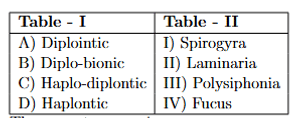
The correct answer is
View Solution
Step 1: Classifying life cycle types
- Diplontic (A-IV - Fucus):
- The diplontic cycle primarily features a dominant diploid sporophyte stage.
- Fucus exemplifies this lifecycle.
- Diplobiontic (B-III - Polysiphonia):
- Diplobiontic cycles exhibit both haploid and diploid stages prominently.
- This cycle is typical of Polysiphonia.
- Haplodiplontic (C-II - Laminaria):
- In haplodiplontic cycles, there is an alternation of generations with both haploid and diploid stages being multicellular.
- Laminaria demonstrates this lifecycle.
- Haplontic (D-I - Spirogyra):
- The haplontic life cycle predominantly features a haploid stage, with the diploid phase being transient.
- Spirogyra adopts this lifecycle.
Step 2: Reviewing the options
- Option 1 (A-IV, B-I, C-II, D-III) → Incorrect due to mismatches in B and D.
- Option 2 (A-III, B-IV, C-II, D-I) → Incorrect due to mismatches in A and B.
- Option 3 (A-IV, B-III, C-II, D-I) → Correct, aligns accurately with the classifications.
- Option 4 (A-II, B-III, C-IV, D-I) → Incorrect due to mismatches in A and C.
Step 3: Finalizing the answer
Given the accurate pairing of A-IV, B-III, C-II, D-I, the right choice is Option (3). Quick Tip: To effectively match organisms with their life cycles, familiarize yourself with terms like Diplontic, Diplobiontic, Haplodiplontic, and Haplontic, understanding the dominant stages associated with each type.
Sexual reproduction in plants was discovered by:
View Solution
Rudolf Jacob Camerarius, a pioneering German botanist and physician, established the foundations of sexual reproduction in flowering plants through his scientific research. His groundbreaking publication in 1694, ``De sexu plantarum epistola" (Letter on the sex of plants), meticulously described the roles of male (pollen) and female (ovule) reproductive components. This landmark study laid the groundwork for contemporary botanical genetics and significantly advanced our understanding of plant biology. Quick Tip: In the realm of historical scientific studies, it is essential to consult original texts or thoroughly vetted secondary accounts to confirm factual accuracy, particularly for scientific breakthroughs, which may have competing narratives over time.
Identify true sentences regarding leaf modifications in Nepenthes:
[A.] Petiole upper part is modified into tendril.
[B.] Petiole lower part is modified into phyllode.
[C.] Lamina is modified into pitcher.
[D.] Petiole lower part is modified into lid of pitcher.
View Solution
Step 1: Exploring leaf modifications in Nepenthes
Nepenthes, also known as pitcher plants, have evolved distinct leaf adaptations for carnivorous nutrition. These modifications include:
- A. Upper part of the petiole forms a tendril → Correct
- This part of the petiole grows into a tendril, aiding in supporting the pitcher by clinging to surrounding structures.
- B. Lower part of the petiole becomes a phyllode → Correct
- This modification results in a phyllode, a leaf-like structure that carries out photosynthesis.
- C. Leaf blade transforms into a pitcher → Correct
- The leaf blade, or lamina, is adapted into a pitcher that traps and digests insects.
- D. Lower part of the petiole forms the pitcher's lid → Incorrect
- Contrary to this statement, the pitcher’s lid actually originates from the apex of the leaf, not the petiole.
Step 2: Reviewing the answer choices
- Option 1 (B, C, and D) → Incorrect (D is incorrect).
- Option 2 (A, B, and C) → Correct, aligning with the actual leaf modifications.
- Option 3 (A, B, and D) → Incorrect (D is incorrect).
- Option 4 (A, C, and D) → Incorrect (D is incorrect).
Step 3: Finalizing the answer
With A, B, and C being the accurate descriptions of the modifications, Option (2) is the correct choice. Quick Tip: Understanding the unique adaptations of plant structures, particularly in carnivorous plants like Nepenthes, is essential for grasping how these plants have tailored various leaf parts to aid in survival and nutrient acquisition in nutrient-poor environments.
Male flowers, female flowers and sterile gall flowers are present in:
View Solution
Plants exhibit various floral structures, each unique in the composition of male, female, and sterile flowers.
The Hypanthodium type of floral arrangement, which includes male flowers, female flowers, and sterile gall flowers, is typically observed in figs.
\begin{quicktipbox
The Hypanthodium inflorescence is notable for combining male and female flowers along with sterile flowers in a complex structure, distinctively seen in fig species.
\end{quicktipbox Quick Tip: The \textit{Hypanthodium inflorescence is notable for combining male and female flowers along with sterile flowers in a complex structure, distinctively seen in fig species.
Identify incorrect match:
A. Asparagus - Cladode - Balancing roots
B. Bougainvillea - Thorn - Runner
C. Dioscorea - Bulbil - Vegetative reproduction
D. Casuarina - Phylloclade - Xerophyte
View Solution
Step 1: Analyzing plant structural adaptations
- A. Asparagus – Cladode – Balancing roots (Incorrect)
- In Asparagus, cladodes are stem adaptations that resemble leaves. However, the term "balancing roots" is not applicable to Asparagus, as it does not produce such structures.
- B. Bougainvillea – Thorn – Runner (Incorrect)
- While Bougainvillea is characterized by its thorns, the term "runner" is a misnomer in this context.
- Runners are horizontal stems that grow at the soil surface, typical of plants like Strawberry, not Bougainvillea.
- C. Dioscorea – Bulbil – Vegetative reproduction (Correct)
- Dioscorea utilizes bulbils for vegetative reproduction, effectively growing new plants from these aerial structures.
- D. Casuarina – Phylloclade – Xerophyte (Correct)
- In Casuarina, phylloclades are stem modifications that enable photosynthesis and adaptation to arid conditions.
Step 2: Reviewing the response options
- Option 1 (A and B) → Correct, as both A and B are inaccurately matched.
- Option 2 (A and C) → Incorrect, since C is accurately matched.
- Option 3 (B and C) → Incorrect, since C is accurately matched.
- Option 4 (B and D) → Incorrect, since D is accurately matched.
Step 3: Drawing a conclusion
The correct matches are inaccurately described in A and B, making Option (1) the correct choice. Quick Tip: Understanding plant adaptations involves correctly associating structural features with their biological functions. Misconceptions, such as runners in Bougainvillea, highlight the importance of accurate botanical knowledge.
Which of the following statement is correct?
View Solution
- Cleistogamous flowers inherently remain closed, never opening. This type of flower is inherently autogamous, always undergoing self-pollination and thus excluding the possibility of cross-pollination. Therefore, option 1 is the correct statement.
- Option 2: Xenogamy involves cross-pollination between different flowers, which is not limited to wind as a vector; various agents can facilitate xenogamy. Hence, this statement is incorrect.
- Option 3: Chasmogamous flowers, in contrast to cleistogamous ones, are structured to open widely to allow for external pollination, making this statement incorrect.
- Option 4: Zostera, a marine plant genus, practices hydrophily, where pollination occurs through water. This does not align with epihydrophily, which involves water droplets on the surface, making this statement inaccurate for Zostera. Thus, it is incorrect.
Therefore, the correct choice is option 1. Quick Tip: It's essential to understand that cleistogamous flowers self-pollinate due to their closed nature, whereas chasmogamous flowers are designed to open and receive external pollination.
Floral formula of mustard plant of Brassicaceae family is:
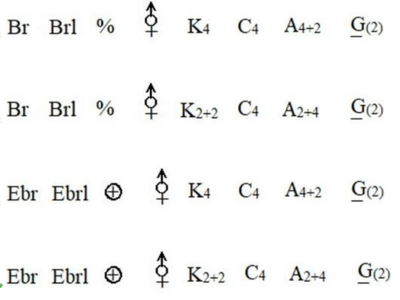
View Solution
The floral formula representing the mustard plant, which belongs to the Brassicaceae family, is:
\[ Ebr \, EbrI \, % \quad K2+2 \, C4 \, A2+4 \, G(2) \]
- \( K \) denotes the calyx, consisting of four sepals (thus \( K4 \)).
- \( C \) denotes the corolla, which includes four petals (indicated as \( C4 \)).
- \( A \) denotes the androecium, which features six stamens divided into two groups, making \( A2+4 \).
- \( G \) denotes the gynoecium, characterized by being bicarpellary (represented by \( G(2) \)).
This arrangement confirms the accuracy of the mustard plant’s floral formula, making option 4 the correct response. Quick Tip: Understanding the floral formula is key to deciphering the flower structure. Be sure to note the number of each type of floral organ—sepals, petals, stamens, and pistils—to correctly interpret the formula.
Characters of sunflower ovule.
I. Micropyle lie close to funicle
II. Inverted ovule
III. Ovule curvature is 180°
IV. Curved embryo sac
View Solution
The task is to determine the accurate characteristics of the sunflower ovule. The correct attributes are as follows:
1. Proximity of the micropyle to the funicle: This is accurate for sunflower ovules, where the micropyle, the entry point for the pollen tube during fertilization, is situated near the funicle.
2. An inverted ovule orientation: Correct. Sunflower ovules are indeed inverted, which means their attachment point is oriented downwards.
3. A 180° curvature of the ovule: Correct. The ovule of the sunflower exhibits a full 180° bend, a characteristic feature of the species.
4. A curved embryo sac: This is incorrect. In sunflowers, the embryo sac maintains a straight configuration rather than a curved one.
Therefore, the correct set of characteristics is encapsulated in option (3), affirming statements I, II, and III as true. Quick Tip: Keep in mind the distinct features of the sunflower ovule: its inversion, the 180° curvature, and the micropyle’s position near the funicle. These aspects are crucial for correctly identifying the ovule’s structural traits.
Which of the following is not a function of cytoskeleton?
View Solution
Step 1: Exploring the roles of the cytoskeleton
The cytoskeleton consists of a complex network of protein filaments and tubules essential for providing structural support, maintaining cell shape, and facilitating intracellular transport. It is not involved in transporting substances between cells, which is handled by different cellular systems.
Step 2: Evaluating the given options
- Option (1) - The cytoskeleton facilitates intracellular transport by serving as a pathway for the movement of vesicles and organelles within the cell.
- Option (2) - The cytoskeleton provides mechanical support, helping to preserve the cell's shape and structural integrity.
- Option (3) - Intercellular transport is not a function of the cytoskeleton; this process is typically managed by the body's circulatory and other systems.
- Option (4) - By providing structural support, the cytoskeleton plays a key role in maintaining the shape of the cell.
Therefore, the correct response is option (3), "Intercellular transport," as it is not a function attributed to the cytoskeleton. Quick Tip: Remember, the cytoskeleton is integral for various cellular functions, such as intracellular transport and maintaining structural integrity, but it does not facilitate intercellular transport.
‘A’ diploid chromosome number is 4. ‘B’ haploid chromosome number is twice to that of A. ‘C’ diploid chromosome number is thrice to that of A. A, B and C respectively are
View Solution
Starting with organism A, which has a diploid chromosome number of 4, its haploid number is calculated as \( \frac{4}{2} = 2 \).
For organism B, whose haploid number is double that of A, we find \( 2 \times 2 = 4 \). Consequently, the diploid number of B is \( 4 \times 2 = 8 \).
Organism C has a diploid number that is three times that of A, resulting in \( 4 \times 3 = 12 \).
From this analysis, we can identify: \[ A = Haplopappus, \quad B = Onion, \quad C = House fly \] Quick Tip: When dealing with chromosome numbers, it's crucial to clearly understand the relationship between haploid and diploid counts. Here, using ratios based on A's haploid number, we successfully matched organisms A, B, and C with their respective chromosome counts.
Identify the wrong statement of the following:
View Solution
We will examine the accuracy of each statement:
1. Peroxisomes are involved in photorespiration: This is accurate. Peroxisomes play a role in photorespiration, a process where oxygen is consumed and carbon dioxide is released by plants.
2. Lysosomes execute the glycolate cycle: This is incorrect. The glycolate cycle, also referred to as the C2 cycle, occurs within peroxisomes, not lysosomes. Lysosomes are primarily tasked with the digestion and breakdown of cellular debris, unrelated to the glycolate cycle.
3. The endomembrane system includes the endoplasmic reticulum, Golgi apparatus, vacuoles, and lysosomes: This statement is correct. These components are integral parts of the endomembrane system, which manages various cellular processes including protein and lipid synthesis.
4. Aleuroplasts function in protein storage: This is correct. Aleuroplasts, a type of plastid, are specialized for the storage of proteins in plant cells.
Therefore, the incorrect statement among the options is number 2, which mistakenly assigns the glycolate cycle to lysosomes.
Hence, the correct answer is option 2. Quick Tip: When studying the functions of cellular organelles, it's important to clearly differentiate their roles. Understanding that peroxisomes handle photorespiration and the glycolate cycle, while lysosomes are involved in cellular digestion and waste management, is crucial.
Match the following:

The correct answer is
View Solution
I - Lenticels: Lenticels are involved in facilitating gaseous exchange in woody plants. Therefore, the appropriate match for I is C (Exchange of gases).
II - Cork cambium: The cork cambium is responsible for producing suberised cells that eventually form the protective cork layer. Accordingly, the match for II is B (Suberised cells).
III - Secondary cortex: The secondary cortex mainly produces phelloderm, a layer of cells under the cork. This makes the correct match for III D (Phelloderm).
IV - Cork: The cork layer is a product of the cork cambium, also known as phellogen. Thus, the correct match for IV is A (Phellogen). Quick Tip: Understand that lenticels are essential for gas exchange in stems, cork cambium functions to produce protective cork and phelloderm, and the secondary cortex contributes to phelloderm formation. Each component plays a distinct role in the structure and function of plant tissues.
Primary endosperm nucleus is formed by the fusion of
View Solution
The primary endosperm nucleus is created through the fusion of two polar nuclei from the female gametophyte with one male gamete from the pollen. This event results in the formation of a triploid nucleus, which subsequently develops into the endosperm. The endosperm serves as a vital nutritional reservoir for the developing embryo.
Therefore, the correct answer is option (3) \( 2 \, polar nuclei and 1 male gamete nucleus \). Quick Tip: During the double fertilization process in angiosperms, the primary endosperm nucleus, crucial for forming the nutrient-rich endosperm, is produced by the fusion of two polar nuclei with one male gamete.
Identify the correct matching:
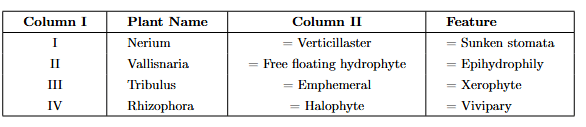
View Solution
Step 1: Clarifying the accurate pairings
- I - Nerium = Sunken Stomata (Correct)
- Nerium, a xerophyte, possesses sunken stomata which help minimize water loss through transpiration.
- II - Vallisneria = Epihydrophily (Correct)
- Vallisneria is characterized by epihydrophily, where pollination is facilitated at the water's surface.
- III - Tribulus = Xerophyte (Correct)
- Tribulus is adapted to arid conditions, classifying it as a xerophyte.
- IV - Rhizophora = Vivipary (Correct)
- Rhizophora, commonly known as mangrove, demonstrates vivipary with seeds germinating while still on the parent plant.
Step 2: Analyzing the options provided
- Option 1 (I and III) → Incorrect (Only III is a xerophyte).
- Option 2 (II and IV) → Incorrect (Both are correct, but missing the inclusion of III).
- Option 3 (I and II) → Incorrect (While both correct, they do not cover all necessary aspects).
- Option 4 (III and IV) → Correct, encompassing all accurate adaptations.
Step 3: Finalizing the decision
The correct response, including both Tribulus as a xerophyte and Rhizophora exhibiting vivipary, is found in Option (4). Quick Tip: It's essential to recognize the specific adaptations of plants to their environments. Xerophytes like Tribulus are equipped to handle dry climates, whereas mangroves like Rhizophora are unique in that their seeds germinate while still attached to the parent, aiding in survival in aquatic environments.
Based on the figure given below, which of the following statements are not correct?

View Solution
Exploring the Principles of Osmosis
- The diagram illustrates osmosis occurring between two chambers (A and B) separated by a semi-permeable membrane.
- Osmosis involves the transfer of solvent molecules (such as water) across a semi-permeable membrane from an area with a lower solute concentration (hypotonic) to an area with a higher solute concentration (hypertonic).
Analyzing the Statements
- Option (1): Solvent molecules move from chamber A to B → Correct
- This movement of solvent from a lower to a higher solute concentration via a semi-permeable membrane aligns with the definition of osmosis.
- Option (2): Solute molecules move from chamber A to B → Incorrect
- In osmosis, solute molecules do not traverse the semi-permeable membrane; rather, the movement is restricted to solvent molecules.
- This incorrect statement identifies it as the correct answer to select.
- Option (3): A semi-permeable membrane is required for osmosis → Correct
- The semi-permeable membrane is crucial for osmosis, allowing the passage of solvent but not solute molecules.
- Option (4): The rate of osmosis is influenced by the pressure gradient and concentration gradient of solutes → Correct
- The dynamics of osmosis are affected by both the osmotic pressure gradient and the concentration gradient of solutes, confirming this statement's accuracy.
Conclusion
Given that solute molecules do not move through the membrane during osmosis, Option (2) is factually incorrect and therefore the correct answer. Quick Tip: Osmosis is a key form of passive transport, characterized by the movement of solvent molecules from an area of lower solute concentration to one of higher concentration across a semi-permeable membrane.
Match the following:
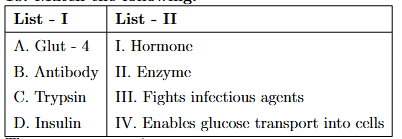
The correct answer is
View Solution
Step 1: Clarifying the roles of specific proteins and molecules:
Glut is primarily involved in the transport of glucose across cell membranes, thus it corresponds to Enabling glucose transport into cells (IV).
Antibody plays a crucial role in the immune response by targeting and neutralizing pathogens, thereby associated with Fighting infectious agents (III).
Trypsin is an enzyme specialized in the digestion of proteins, which places it under Enzyme (II).
Insulin is a hormone essential for the regulation of blood glucose levels, accurately categorized under Hormone (I). Quick Tip: Familiarity with the functions of biological molecules such as insulin for glucose regulation, trypsin for protein breakdown, antibodies for immune defense, and glut transporters for glucose uptake is essential for correctly answering questions about their roles.
Choose the correct combination
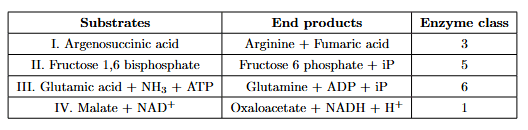
View Solution
According to the provided data:
For combination III, Glutamic acid + NH\(_3\) + ATP is transformed into Glutamine + ADP + iP, which is facilitated by an enzyme from class 6.
For combination IV, Malate + NAD\(^+\) converts into Oxaloacetate + NADH + H\(^+\), catalyzed by an enzyme from class 1.
These transformations correctly align with their respective enzyme classes, verifying that the right answer is III and IV. Quick Tip: When dealing with biochemical pathways, it's crucial to understand the specific roles of enzymes. Matching enzyme classes with their corresponding substrate-product pairs is essential for accurately determining the correct reactions.
Match the following:
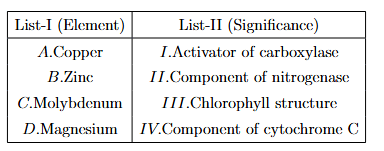
View Solution
Analyzing the roles of elements in biological systems
- A - Copper = IV (Integral part of cytochrome C)
- Copper is vital as it forms part of cytochrome C, playing a significant role in the electron transport chain during cellular respiration.
- B - Zinc = I (Enhancer of carboxylase)
- Zinc serves as an enhancer for carboxylase enzymes, crucial in processes like carbon fixation and metabolic functions.
- C - Molybdenum = II (Key element in nitrogenase)
- Molybdenum forms an essential part of nitrogenase, an enzyme vital for nitrogen fixation in plants.
- D - Magnesium = III (Core component of chlorophyll)
- Magnesium is critical for photosynthesis as the central atom in chlorophyll molecules.
Assessing the response options
- Option 1 (A-I, B-III, C-II, D-IV) → Incorrect (Copper is not an enhancer of carboxylase).
- Option 2 (A-IV, B-I, C-II, D-III) → Correct, all elements are appropriately matched.
- Option 3 (A-I, B-IV, C-II, D-III) → Incorrect (Zinc does not form part of cytochrome C).
- Option 4 (A-II, B-IV, C-I, D-II) → Incorrect (Improper alignment for Copper, Zinc, and Magnesium functions).
Final Conclusion
The accurate associations for each element are A-IV, B-I, C-II, D-III, making Option (2) the correct answer. Quick Tip: Understanding the specific biochemical roles of trace elements in biological processes is essential. Each element contributes distinctly to various enzyme activities and structural functions in both plant and animal systems.
Assertion (A): In Arachis, fruits are geocarpic.
Reason (R): Seeds are non-endospermic in Arachis.
View Solution
N/A Quick Tip: - Geocarpy, observed in Arachis, involves fruit development below the soil surface, a distinctive adaptation of this plant.
- Although Arachis seeds are non-endospermic, this trait does not directly correlate with the plant's geocarpic fruit development.
Identify the wrong match.
I. Acidy amino acid = Valine
II. Neutral amino acid = Tryptophan
III. Aromatic amino acid = Tyrosine
IV. Basic amino acid =Lysine
View Solution
Step 1: Identifying the correct amino acid classifications:
- Acidic amino acid = Glutamic acid (Correct, as glutamic acid is known for its acidic properties due to the presence of an extra carboxyl group).
- Neutral amino acid = Tryptophan (Correct, tryptophan is classified as neutral because it does not carry a net charge at physiological pH).
- Aromatic amino acid = Tyrosine (Correct, tyrosine is categorized as aromatic due to the phenol ring in its side chain).
- Basic amino acid = Lysine (Correct, lysine is considered basic because of its positively charged amine group at physiological pH).
Step 2: Identifying the incorrect match:
- Acidic amino acid = Valine (Incorrect, valine is actually a neutral amino acid and does not have acidic properties).
Therefore, the correct response is option (2) "I and II." Quick Tip: Understanding the chemical properties of amino acids is crucial. Acidic amino acids have additional carboxyl groups, neutral amino acids lack charged side chains, aromatic amino acids feature ring structures, and basic amino acids include an extra amine group that can accept a proton.
Identify correct statements
(1) In C\(_4\) plants PEP carboxylase is present in mesophyll cells.
(2) In C\(_4\) plants mesophyll cells lack RuBisCO enzyme.
(3) In C\(_4\) plants bundle sheath cells are rich in RuBisCO enzyme.
(4) In C\(_4\) plants bundle sheath cells lack PEP carboxylase.
View Solution
Step 1: Analyzing statements about the biochemical processes in C\(_4\) plants:
- Statement I: "PEP carboxylase is located in the mesophyll cells of C\(_4\) plants." This is accurate because PEP carboxylase plays a crucial role in capturing carbon dioxide in the mesophyll cells, initiating the C\(_4\) pathway.
- Statement II: "Mesophyll cells of C\(_4\) plants do not contain RuBisCO enzyme." This statement is also true; in C\(_4\) plants, RuBisCO is localized in the bundle sheath cells to optimize carbon fixation.
- Statement III: "Bundle sheath cells of C\(_4\) plants are enriched with RuBisCO enzyme." Correct, as these cells are the site of the Calvin cycle, where RuBisCO is essential for carbon fixation.
- Statement IV: "PEP carboxylase is absent in the bundle sheath cells of C\(_4\) plants." This is true; PEP carboxylase functions in the mesophyll cells, facilitating the initial steps of the C\(_4\) pathway.
Conclusion: All statements are correctly describing the specialized cellular localization and function of enzymes in C\(_4\) plants. Therefore, the correct choice is option (1) I, II, III, and IV. Quick Tip: The spatial separation of PEP carboxylase and RuBisCO between mesophyll and bundle sheath cells in C\(_4\) plants is a critical adaptation that enhances their photosynthetic efficiency under high temperature and light conditions.
Match the following
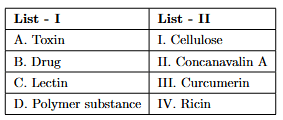
The correct answer is:
View Solution
- Analyzing the matched pairs provided:
- A (Toxin) is correctly paired with IV (Ricin), as Ricin is well-known for its toxic properties.
- B (Drug) is appropriately linked with III (Curcumerin), recognized for its medicinal applications.
- C (Lectin) is accurately matched with II (Concanavalin A), which is a type of lectin.
- D (Polymer substance) aligns well with I (Cellulose), which is a fundamental polymer in plant structures.
Therefore, all pairs are matched correctly, leading to option (3) as the correct answer. Quick Tip: When determining the correct matches, consider the intrinsic characteristics and common uses of each item. Recognizing that Ricin functions as a toxin, Curcumerin as a drug, Concanavalin A as a lectin, and Cellulose as a polymer will guide accurate pairing.
Identify the enzyme of the following reaction: \[ Phosphoglyceric acid + ATP \xrightarrow{Enzyme} Bisphosphoglyceric acid + ADP \]
View Solution
The biochemical reaction in question transforms Phosphoglyceric acid into Bisphosphoglyceric acid. This transformation occurs during the glycolytic pathway. The enzyme responsible for this process is Phosphoglycerokinase. This enzyme facilitates the phosphorylation of 3-phosphoglycerate by transferring a phosphate group from ATP, resulting in the formation of 1,3-bisphosphoglycerate. Phosphoglycerokinase is correctly identified as the enzyme for this specific reaction. Quick Tip: Phosphoglycerokinase is crucial in glycolysis, where it catalyzes the addition of a phosphate group to 3-phosphoglycerate, advancing the pathway towards energy production.
Observe the diagrammatic representation of ATP synthesis in oxysome of mitochondria. Identify A, B and C respectively.

View Solution
The diagram illustrates ATP synthesis taking place within the mitochondrial oxysome. This synthesis leverages a proton gradient established across the mitochondrial membrane. Here's a breakdown of the process:
Step 1: Protons (\( H^+ \)) are actively transported across the mitochondrial membrane, creating a substantial proton gradient.
Step 2: The components \( F_0 \) and \( F_1 \) represent segments of the F0F1-ATP synthase complex, essential for mitochondrial ATP production. Specifically, F0 serves as the conduit for proton flow, whereas F1 facilitates the actual synthesis of ATP.
Step 3: The symbol \( 3H^+ \) denotes the specific number of protons required to synthesize one ATP molecule, passing through the F0 component to activate ATP production at the F1 site.
Therefore, the correct components are identified as option (1) \( 3H^{+}, F_0, F_1 \). Quick Tip: The process of ATP synthesis in mitochondria is dependent on the movement of protons through F0, creating energy that F1 uses to synthesize ATP. Understanding the roles of F0 and F1 is critical for grasping ATP production dynamics in cellular respiration.
Find out A, B, C, and D products of anaerobic respiration pathway cited below

View Solution
Step 1: During anaerobic respiration, glucose is initially broken down into pyruvic acid. Subsequently, pyruvic acid can be further processed through fermentation to produce either ethanol or lactic acid, depending on the specific fermentation pathway involved.
Hence,
- A = Glucose (the initial substrate in anaerobic respiration).
- B = Pyruvic acid (a transitional product in the pathway).
- C = Ethanol or Lactic acid (end products of different fermentation processes).
- D = Lactic acid (specifically produced via lactic acid fermentation).
Quick Tip: Under anaerobic conditions, glucose undergoes conversion to pyruvic acid, which is then transformed into ethanol in alcoholic fermentation or lactic acid in lactic acid fermentation, depending on the organism and environmental conditions.
Assertion (A): Abscisic acid is called stress hormone.
Reason (R): Abscisic acid increases the tolerance of plants to various kinds of stresses.
View Solution
Step 1: The assertion correctly identifies abscisic acid as a stress hormone, which is accurate since it plays a central role in managing stress responses in plants.
Step 2: The reasoning given, which states that abscisic acid enhances plant tolerance to various stresses, is also true. This hormone is pivotal in activating defense mechanisms such as stomatal closure to minimize water loss and other stress-mitigating processes.
Step 3: Given that both the assertion (A) and the reason (R) are true, and that (R) provides a valid explanation for (A), the most suitable option is (1). Quick Tip: Abscisic acid is instrumental in equipping plants to cope with environmental stresses, such as drought and extreme temperatures, through mechanisms that conserve water and enhance overall stress resilience.
Mad Cow disease causing prion, may reach man through beef and cause
View Solution
Step 1: Mad Cow Disease, also known as Bovine Spongiform Encephalopathy (BSE), is attributed to prions. These prions are proteins that have abnormally folded and cause degeneration in the nervous system of cattle. Humans can contract a similar condition by consuming contaminated beef products.
Step 2: Creutzfeldt-Jakob Disease (CJD) is the human counterpart of Mad Cow Disease. It is similarly caused by prions and can result from consuming beef infected with these abnormal proteins, leading to serious and fatal neurological deterioration.
Step 3: Thus, the disease in humans that corresponds to Mad Cow Disease is Creutzfeldt-Jakob Disease, making the correct choice option (4). Quick Tip: Prion diseases, such as Mad Cow Disease in cattle and Creutzfeldt-Jakob Disease in humans, involve the pathological misfolding of prion proteins. These diseases are invariably fatal and highlight the critical importance of food safety and regulatory measures in the beef industry.
Match the following
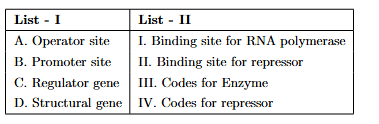
The correct answer is
View Solution
Step 1: The operator site (A) serves as a critical control point where regulatory proteins can bind, affecting transcription initiation. Therefore, A is matched with II, the site involved in regulation of transcription.
Step 2: The promoter site (B) is specifically recognized and bound by RNA polymerase, which is essential for the initiation of transcription. Thus, B aligns with I, the primary binding site for RNA polymerase.
Step 3: The regulator gene (C) is responsible for producing a protein that can influence the expression of other genes, typically by coding for regulatory proteins such as repressors or activators, making C match with IV.
Step 4: The structural gene (D) is responsible for coding the protein that functions in the cell, often involved in cellular structure or function. Here, D codes for the repressor protein, thus it is best matched with III.
The correct configuration, therefore, is A-II, B-I, C-IV, D-III. Quick Tip: Understanding the roles of the promoter, operator, regulator, and structural genes is essential for grasping how gene expression is controlled in prokaryotic cells. The promoter is the initiation site for transcription, while the operator can inhibit this process when bound by a repressor protein coded by the regulator gene.
The separated DNA fragments can be visualised after staining with 'X' and exposure to 'Y'. The 'X' and 'Y' are
View Solution
Step 1: For visualizing DNA fragments, the optimal staining agent is Ethidium bromide. This compound intercalates with DNA and is widely utilized due to its effectiveness in binding to DNA molecules.
Step 2: In this context, X denotes the staining agent used, which is Ethidium bromide, and Y represents the type of radiation, which is UV light. The combination of Ethidium bromide and UV light is effective for visualizing DNA because the bound Ethidium bromide fluoresces brightly under UV radiation. Quick Tip: Ethidium bromide is a crucial tool in gel electrophoresis for DNA analysis. It binds to DNA and, under UV light, emits fluorescence, enabling the detection of DNA fragments.
Assertion (A): \( \sigma \) (Sigma) and \( \rho \) (Rho) factors are essential for transcription in bacteria.
Reason (R): \( \sigma \) (sigma) factor helps in initiation and \( \rho \) (Rho) factor helps in termination of transcription.
View Solution
Step 1: Sigma factor plays a critical role in the initiation phase of transcription by aiding RNA polymerase in locating the promoter. Conversely, the rho factor is instrumental in the termination phase of transcription, facilitating the release of RNA polymerase from DNA once transcription is complete.
Both \( (A) \) and \( (R) \) are correct, and importantly, \( (R) \) provides a valid explanation for \( (A) \).
Therefore, the correct option is (1). Quick Tip: Understanding the roles of sigma and rho factors is key in transcription regulation. Sigma factors are essential for starting transcription at the correct site, while rho factors ensure transcription stops at the appropriate time.
Dual functions of codon AUG
View Solution
Step 1: In the context of protein synthesis, the codon AUG has two primary roles. It is universally recognized as the start codon, initiating the translation process. Simultaneously, AUG also specifies the amino acid methionine, which is incorporated as the initial amino acid in newly synthesized proteins. Hence, the correct interpretation is that AUG acts both as the initiator codon and as a codon for methionine. Quick Tip: AUG is crucial in protein synthesis, both as the start codon that signals the beginning of translation and as the codon for methionine, setting the foundation for the nascent protein chain.
Identify wrong matching
I. Roundup ready = Soyabean = Herbicide tolerant
II. Transgenic Plant = Papaya = Pseudomonas resistant
III. Taipei variety = Rice = rich in Vitamin B
IV. Flavr savr = Tomato = Bruise resistant
View Solution
Solution:
Assessing the accuracy of each pairing
- I - Roundup ready = Soybean = Herbicide tolerant (Correct)
- Roundup Ready soybeans have been genetically engineered to tolerate glyphosate, a common herbicide, allowing for easier weed management without damaging the crop.
- II - Transgenic Plant = Papaya = Pseudomonas resistant (Incorrect)
- Transgenic papayas have been developed primarily to resist the Papaya Ringspot Virus, not Pseudomonas bacteria.
- Thus, this pairing is incorrect.
- III - Taipei variety = Rice = Rich in Vitamin B (Incorrect)
- The Taipei rice variety is not renowned for its Vitamin B content. Instead, Golden Rice is notable for being enriched with beta-carotene, a precursor to Vitamin A.
- This match is also incorrect.
- IV - Flavr Savr = Tomato = Bruise resistant (Correct)
- Flavr Savr tomatoes were specifically modified to have an extended shelf life by reducing bruising and delaying ripening.
Reviewing the options provided
- Option 1 (I and IV) → Incorrect (Both matches are correct).
- Option 2 (III and IV) → Incorrect (Only III is incorrect).
- Option 3 (II and III) → Correct, both II and III are inaccurately matched.
- Option 4 (I and II) → Incorrect (Only II is incorrect).
Final Decision
With both Papaya and Taipei rice incorrectly matched to their respective traits, the most accurate choice is Option (3): II and III. Quick Tip: When evaluating genetically modified organisms, it is crucial to link them correctly with their specific genetic modifications, such as herbicide tolerance or disease resistance, to understand their agricultural and environmental impact accurately.
Assertion (A): Protoxin of Bacillus thuringensis become active in gut of insects.
Reason (R): Alkaline pH of intestine gut solubilizes the crystals of toxin to make it active.
View Solution
Step 1: The assertion (A) claims that the protoxin produced by Bacillus thuringiensis becomes active in the insect gut. This statement is accurate because the protoxin, which is initially inactive in its crystalline form, requires activation under specific conditions found in the insect’s gut.
Step 2: The reason (R) provided explains that the alkaline pH of the insect's gut is critical for solubilizing the toxin's crystals and activating the protoxin. This too is correct, as the environmental conditions within the gut, including its alkalinity, play a crucial role in transforming the protoxin into its lethal, active form.
Step 3: Since both the assertion (A) and the reason (R) are factually correct, and (R) effectively explains (A), the conclusion is that (A) and (R) are correct, and (R) provides the correct explanation for (A). Quick Tip: In questions involving assertions and reasons, it is essential to verify not only the truth of each statement but also the logical connection between them, ensuring the reason adequately explains the assertion.
In Morgan’s experiments on Drosophila linkage, the percentage of white-eyed, yellow body recombinants and the percentage of white-eyed, miniature winged recombinants in F\textsubscript{2} generation respectively:
View Solution
Solution:
Context of Morgan’s Experiment on Drosophila melanogaster:
- Thomas Hunt Morgan conducted pivotal experiments to explore genetic linkage and recombination using Drosophila melanogaster, focusing on traits such as white eyes, yellow body, and miniature wings.
Analyzing Recombination Percentages:
- The recombination frequency between the genes for white eyes and yellow body was observed to be 1.3%, suggesting a strong linkage due to the low percentage of recombinants.
- Conversely, the recombination frequency between the genes for white eyes and miniature wings was significantly higher at 37.2%, indicating a weaker linkage and higher genetic distance between these genes.
Reviewing Answer Choices:
- Option 1 (37.2% and 1.3%) → Incorrect (The percentages are reversed).
- Option 2 (1.3% and 37.2%) → Correct, accurately reflecting the observed recombination frequencies in Morgan's results.
- Option 3 (62.8% and 37.2%) → Incorrect (Inaccurate recombination percentages).
- Option 4 (98.7% and 1.3%) → Incorrect (Incorporates incorrect values).
Final Determination:
Correctly, the recombination percentage of 1.3% for white-eyed with yellow body and 37.2% for white-eyed with miniature wings verifies that Option (2) is the accurate answer. Quick Tip: When examining genetic linkage studies, it’s important to recognize that genes located closer on a chromosome demonstrate lower recombination frequencies, indicating strong linkage, whereas genes further apart show higher recombination rates, signifying weaker linkage. This principle was clearly demonstrated in Morgan's experiments with Drosophila.
Arrange the ratios in the order of monohybrid test cross: incomplete dominance; and dihybrid cross.
(A) \( 9:3:3:1 \)
View Solution
To determine the correct sequence of phenotypic ratios for various genetic crosses, we must examine the outcomes associated with different inheritance patterns.
Step 1: Incomplete Dominance
In cases of incomplete dominance, where neither allele is completely dominant, the phenotypic ratio typically appears as \( 1:2:1 \). This pattern is represented by \( B \) and is characterized by a blend of the parental traits in the heterozygote.
Step 2: Monohybrid Cross with Complete Dominance
For a monohybrid cross involving complete dominance, the offspring usually exhibit a phenotypic ratio of \( 3:1 \), indicating that three of the phenotypes will express the dominant trait for every one that expresses the recessive trait. This is reflected in \( A \).
Step 3: Dihybrid Cross
In a dihybrid cross, where individuals differ in two traits, the typical phenotypic ratio extends to \( 9:3:3:1 \). This complex ratio, shown in \( C \), accounts for the combinations of dominance and recessiveness across both traits.
Therefore, the correct sequence of these genetic outcomes is: \[ C - B - A \] Quick Tip: When sorting through genetic crosses, it's crucial to align the type of dominance with the expected phenotypic ratios: \( 9:3:3:1 \) for dihybrid crosses, \( 1:2:1 \) for incomplete dominance scenarios, and \( 3:1 \) for typical monohybrid crosses exhibiting complete dominance.
Match the following
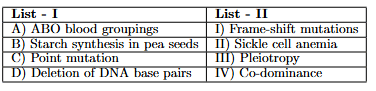
The correct answer is
View Solution
Solution:
Step 1: Analyzing the genetic concepts related to each statement:
- A) ABO blood groupings: The ABO blood grouping system exhibits co-dominance, where alleles A and B are equally expressed in heterozygous individuals. Therefore, this corresponds to IV.
- B) Starch synthesis in pea seeds: This scenario illustrates pleiotropy, where a single gene influences multiple phenotypic traits. Thus, it aligns with III.
- C) Point mutation: Point mutations, such as those affecting the hemoglobin gene, can lead to conditions like Sickle cell anemia. This is a classic example of how a single nucleotide change can cause a significant disease, matching with II.
- D) Deletion of DNA base pairs: Deleting DNA bases causes frame-shift mutations, altering the entire reading frame downstream of the mutation. This dramatic change corresponds with I.
Correct Matching: \[ A - IV, \, B - III, \, C - II, \, D - I \] Quick Tip: It's crucial to understand different genetic mechanisms and their implications: - \textbf{Co-dominance} occurs when both alleles are equally expressed. - \textbf{Pleiotropy} refers to one gene affecting multiple traits. - \textbf{Point mutations} can result in significant genetic disorders from a single nucleotide alteration. - \textbf{Frame-shift mutations} involve changes that shift the genetic reading frame, potentially leading to widespread effects on protein function.
Match the following:
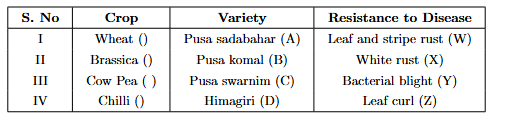
View Solution
Analyzing the Appropriate Matches for Crop Varieties and Their Disease Resistance:
- I - Wheat (Pusa Sadabahar) = W (Leaf and Stripe Rust)
- Pusa Sadabahar, a variety of wheat, has developed resistance against leaf and stripe rust, which are significant fungal threats to wheat crops.
- II - Brassica (Pusa Komal) = X (White Rust)
- Pusa Komal, a Brassica variety, is specifically bred to resist white rust, a disease prevalent in many cruciferous vegetables.
- III - Cow Pea (Pusa Swarnim) = Y (Bacterial Blight)
- Pusa Swarnim in cowpea offers resistance to bacterial blight, enhancing its robustness against this common bacterial infection.
- IV - Chilli (Himagiri) = Z (Leaf Curl)
- Himagiri chili is resistant to leaf curl virus, a disease that typically causes severe foliar deformities.
Review of Options for Correct Matching:
- Option 1 (I-D-W, II-C-X, III-B-Y, IV-A-Z) → Correct, accurately reflects all established resistances.
- Option 2 (I-D-W, II-C-X, III-A-Y, IV-B-Z) → Incorrect, mismatches the diseases for III and IV.
- Option 3 (I-C-W, II-D-X, III-B-Z, IV-A-Y) → Incorrect, mismatches the diseases for I, II, and others.
- Option 4 (I-A-Y, II-C-X, III-D-W, IV-B-Z) → Incorrect, mismatches the diseases for most crops.
Conclusion:
The precise association of each crop variety with its respective disease resistance confirms that the correct answer is Option (1). Quick Tip: When studying the genetic traits of crop varieties, understanding their specific resistances helps in appreciating the benefits of agricultural breeding programs aimed at enhancing crop durability against diseases.
Cyclosporin A is produced by:
View Solution
Solution:
Understanding Cyclosporin A:
- Cyclosporin A is a critical immunosuppressive agent primarily used to prevent organ rejection in transplant patients by dampening the immune response.
- The drug is derived from the fungus \textit{Trichoderma polysporum, a species recognized for its ability to produce valuable secondary metabolites with pharmaceutical applications.
Evaluating the Available Options:
- Option 1 (\textit{Trichoderma polysporum) → Correct, as this fungus is the known source of Cyclosporin A.
- Option 2 (\textit{Monascus purpureus) → Incorrect, this fungus is noted for its role in producing substances used to lower cholesterol, not for immunosuppression.
- Option 3 (\textit{Bacillus thuringiensis) → Incorrect, known for its production of Bt toxin, which is utilized in genetically engineered crops for pest resistance.
- Option 4 (\textit{Agrobacterium tumifaciens) → Incorrect, famously used for its genetic engineering capabilities in plants, not for producing immunosuppressive drugs.
Conclusion:
Given that \textit{Trichoderma polysporum is the authentic source of Cyclosporin A, the correct answer is Option (1). Quick Tip: When identifying the origin of pharmacological agents, particularly those like Cyclosporin A, pinpointing the exact organism—often a microbe—that produces them is crucial for both academic and practical applications in medicine and biotechnology.
Study the following and pick up the correct statements:
[(I)] All the threatened species are listed in red data book
[(II)] National parks, Sanctuaries, Biosphere Reserves etc. are some of the methods of ex-situ conservation
[(III)] An area which is set aside, minimally disturbed for conservation of the resources of an area is called Biosphere Reserve
[(IV)] \(\beta\)-diversity is measured by counting the number of taxa within a particular area
View Solution
Step 1: The assertion that the Red Data Book contains a list of threatened species is accurate. This book serves as a global resource detailing the conservation status of animal and plant species.
Step 2: The statement about national parks, sanctuaries, and biosphere reserves being examples of ex-situ conservation methods is incorrect. These are actually examples of in-situ conservation methods, where species are protected in their natural habitats.
Step 3: The description of a biosphere reserve as a minimally disturbed area designated for conservation is correct. Biosphere reserves are areas set aside for both research and conservation, maintaining the natural ecosystem.
Step 4: The fourth statement is inaccurate. \(\beta\)-diversity actually refers to the difference in species diversity between ecosystems; it does not measure the number of taxa within a single area but rather the diversity between different areas or habitats.
Therefore, the correct statements are I and III. Quick Tip: Understanding the distinctions between in-situ and ex-situ conservation methods, as well as concepts like \(\beta\)-diversity, is crucial for effective biodiversity management and conservation planning.
Study of cell as a structural and functional unit of living organisms is called:
View Solution
Anatomy primarily explores the internal structures of organisms but does not specifically focus on cellular details.
Cytology is dedicated to the study of cells, yet it generally deals with cell structures and types without extensively covering their functions as life's fundamental units.
Morphology examines the form and overall structure of organisms and, while related to anatomy, does not delve into cellular functionality.
Cell Biology is the most appropriate term for studying cells as both structural and functional units of life. This field specifically addresses how cells operate and interact within living organisms, making it the ideal choice.
Therefore, Cell Biology is the correct answer. Quick Tip: Cell biology is crucial for a comprehensive understanding of how cells function individually and collectively within living organisms, highlighting their importance in the broader context of biological sciences.
Assertion (A): Pancreas is a merocrine gland.
Reason (R): The apical parts of the pancreatic cells are pinched off along with the secretory product.
View Solution
Step 1: It is accurate that the pancreas functions as a merocrine gland. In this type of gland, secretory products are released through exocytosis, which ensures that the glandular cells remain intact and no part of the cell is lost during the secretion process.
Step 2: The assertion that the apical parts of the pancreatic cells are pinched off during secretion contradicts the characteristics of a merocrine gland. Merocrine secretion involves only the release of substances through the cell membrane, without any cellular loss. Quick Tip: Merocrine secretion is characterized by the release of products through exocytosis, leaving the secreting cells unharmed. This is contrasted with apocrine secretion, where part of the cell is lost during the secretion process.
Match the following
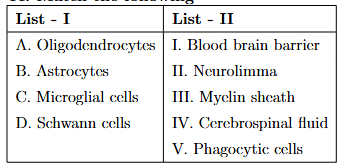
View Solution
Analyzing the functions associated with different types of neural cells allows us to make the following correct associations:
Oligodendrocytes (A) are critical in forming the Myelin sheath (III) around nerve fibers in the central nervous system, enhancing electrical conduction.
Astrocytes (B) are instrumental in establishing the Blood-brain barrier (I), which regulates the movement of substances between the bloodstream and the brain.
Microglial cells (C) act as the primary Phagocytic cells (V) in the central nervous system, cleaning up dead cells and other debris.
Schwann cells (D) are responsible for creating the Neurilemma (II) in the peripheral nervous system, which is essential for nerve fiber regeneration.
Therefore, the correct associations based on their functions are A-III, B-I, C-V, D-II, which is presented in option (2). Quick Tip: It's essential to recognize the specific roles and contributions of neural cells within the nervous system, such as myelination by Oligodendrocytes and Schwann cells, barrier formation by Astrocytes, and debris clearance by Microglial cells.
Parazoans exhibit:
View Solution
Parazoans, such as sponges, are characterized by their lack of complex tissues and organ systems. These organisms display a cellular level of organization, meaning that their cells are specialized to perform distinct functions but do not form cohesive tissues or organs typical of more complex animals. Quick Tip: In understanding biological organization, it's important to note that cellular-level organization is the most fundamental, with cells operating more independently compared to the coordinated activity in tissue-level or higher organizational structures.
Study the following and pick up the correct combinations:
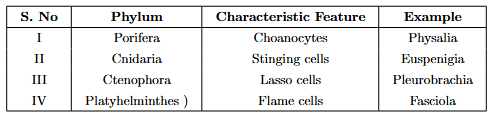
View Solution
Solution:
Assessing the Accuracy of Phylum and Characteristic Features:
- I - Porifera (Choanocytes) → Incorrect
- While sponges (Porifera) indeed possess choanocytes for feeding, the example given, Physalia, is a member of the Cnidaria phylum, not Porifera.
- II - Cnidaria (Stinging Cells) → Incorrect
- Cnidarians are equipped with cnidocytes (stinging cells); however, Euspenigia is not a recognized member of this phylum. Typical examples include Obelia and Hydra.
- III - Ctenophora (Lasso Cells) → Correct
- Ctenophores are known for their colloblasts or lasso cells, which are used to ensnare prey. Pleurobrachia is a correctly cited example of this phylum.
- IV - Platyhelminthes (Flame Cells) → Correct
- Flame cells are characteristic of Platyhelminthes and serve as their excretory system. The liver fluke, Fasciola, is a pertinent example.
Reviewing the Answer Options:
- Option 1 (I, II) → Incorrect as both entries are associated with incorrect examples.
- Option 2 (II, III) → Incorrect as II is incorrectly paired.
- Option 3 (III, IV) → Correct, both III and IV are properly matched with correct examples.
- Option 4 (I, III) → Incorrect due to the erroneous pairing in I.
Final Decision:
The accurate associations, correctly identifying Ctenophora with Pleurobrachia and Platyhelminthes with Fasciola, affirm that Option (3): III and IV, is the correct answer. Quick Tip: It is crucial to correctly associate each phylum with its definitive characteristics and representative species: - Porifera are known for their choanocytes. - Cnidaria are distinguished by their cnidocytes. - Ctenophora feature colloblasts. - Platyhelminthes are recognized for their flame cells. Understanding these unique traits helps in the proper classification and study of different phyla.
Botryoidal tissue in body cavity is characteristic of:
View Solution
Step 1: Botryoidal tissue functions primarily in excretion and can also participate in respiratory processes within certain organisms.
- The cockroach utilizes Malpighian tubules for excretion rather than botryoidal tissue.
- In earthworms, nephridia serve the excretory role, not botryoidal tissue.
- The liver fluke does not possess botryoidal tissue; its excretion is managed differently.
- However, in leeches, botryoidal tissue is indeed present and actively involved in the excretion process.
Step 2: Therefore, the leech is the correct organism that utilizes botryoidal tissue for excretion. Quick Tip: Botryoidal tissue is specific to certain annelids, such as leeches, where it is crucial for their excretion. Recognizing the specific anatomical and physiological adaptations of organisms helps in understanding their survival strategies.
Match the following:
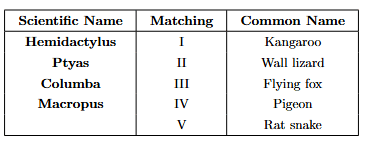
The correct answer is
View Solution
Analyzing Correct Matches for Genus and Associated Common Names:
- A - Hemidactylus = II (Wall Lizard)
- Hemidactylus is a genus that encompasses various species of wall lizards, which are frequently encountered in domestic environments.
- B - Ptyas = V (Rat Snake)
- Ptyas is known for comprising species such as the rat snake, which are large non-venomous snakes found across many parts of Asia.
- C - Columba = IV (Pigeon)
- Columba represents the genus for pigeons, birds that are ubiquitous in both urban and rural settings.
- D - Macropus = I (Kangaroo)
- Macropus includes several species of kangaroos, the marsupials indigenous to Australia known for their powerful hind legs.
Reviewing Available Options for Accuracy:
- Option 1 (A-II, B-V, C-IV, D-I) → Correct, as all matches are accurate and align with their common names.
- Option 2 (A-II, B-V, C-III, D-I) → Incorrect due to an incorrect match for C.
- Option 3 (A-I, B-V, C-IV, D-II) → Incorrect due to mismatches for A and D.
- Option 4 (A-III, B-II, C-I, D-IV) → Incorrect as all are mismatched.
Conclusion:
The precise and correct associations of genera with their respective common names (A-II, B-V, C-IV, D-I) confirm that Option (1) is the correct answer. Quick Tip: Familiarity with the genus and common names of various animals is crucial in biological sciences. Each genus has distinctive traits that categorize different species, such as Hemidactylus for wall lizards and Ptyas for rat snakes, aiding in their study and identification.
Vertebrae of birds are
View Solution
Birds have heterocoelous vertebrae, which are distinguished by their saddle-shaped articulating surfaces. This structural adaptation allows for significant flexibility, particularly in the neck, which is essential for the wide range of motion necessary for avian behaviors. Quick Tip: The heterocoelous nature of avian vertebrae is crucial for providing the neck mobility that birds require for activities such as foraging and preening.
Pseudopodia in Euglpha are
View Solution
In Euglpha, a type of amoeboid protist, movement and feeding are facilitated by filopodia. Filopodia are thin, filamentous extensions of the cell surface composed primarily of actin. These structures allow the cell to interact with its environment effectively, aiding in locomotion and the engulfment of nutrients. Quick Tip: Filopodia, notable for their delicate and often branching structure, play a critical role in the mechanics of cellular movement and the acquisition of food in certain single-celled organisms.
Study the following and pick up the correct statements:
(I) Due to Sacculina, its host becomes sterile
(II) Plasmodium frequently changes its surface antigens
(III) Fasciola causes hypertrophy of RBC in sheep
(IV) Malaria is spread by female Culex
View Solution
Analyzing the accuracy of each statement regarding parasitism and pathogens:
(I) Correct. Sacculina, a parasitic barnacle, infests crabs and disrupts their reproductive systems, leading to sterilization. This manipulation prevents the crab from reproducing, thereby maximizing the parasite's use of the host's resources.
(II) Correct. Plasmodium, the parasite responsible for malaria, is notorious for its ability to alter its surface antigens. This strategy helps it avoid detection and destruction by the host's immune system, thus sustaining its infection.
(III) Incorrect. While Fasciola, known as liver flukes, does cause significant health issues in livestock such as sheep, it primarily leads to liver damage known as liver rot. It does not cause hypertrophy of red blood cells, which is unrelated to its typical pathological effects.
(IV) Incorrect. Malaria is indeed a severe mosquito-borne disease, but it is specifically spread by the Anopheles genus of mosquitoes, not Culex. Understanding the correct vector is essential for controlling and preventing the disease. Quick Tip: Accurate knowledge of parasite behavior and vector specificity is crucial in epidemiology and disease control strategies. For example, effective malaria control relies heavily on targeting Anopheles mosquitoes, not Culex.
Assertion (A) : Eggs of Ascaris are described as mamillated eggs.
Reason (R) : Each egg is surrounded by a protein coat with rippled surface.
View Solution
Step 1: The assertion accurately identifies that the eggs of Ascaris exhibit a mamillated structure. The term "mamillated" refers to the eggs' bumpy or nodular outer coat, a distinctive feature of this parasitic organism.
Step 2: The reason provided indicates that the mamillated appearance is due to the protein coat that envelops each egg, which features a rippled or bumpy surface. This specific structure aids in the protection and identification of the eggs.
Given that both the assertion and the reason are factually correct and the reason provides a clear explanation for the observable characteristics of \textit{Ascaris eggs, the conclusion is that the assertion is justified by the reason. Therefore, the appropriate response is Option 1. Quick Tip: When evaluating biological descriptions, particularly in parasitology, it's crucial to link specific structural features to their functional or diagnostic roles. The unique mamillated coat of \textit{Ascaris eggs not only helps in identification but also plays a role in the survival strategy of the organism.
Marijuana, hashish, charas and ganja are described as
View Solution
The terms Marijuana, hashish, charas, and ganja all refer to products derived from the Cannabis plant. These are collectively categorized as cannabinoids due to their content of tetrahydrocannabinol (THC), the primary psychoactive ingredient. THC imparts the effects commonly associated with the recreational use of these substances, influencing mood, perception, and behavior. Quick Tip: Cannabinoids interact with specific receptors in the brain to produce a range of effects, from relaxation to altered sensory perceptions, and are both celebrated for their medicinal benefits and scrutinized for their psychoactive properties.
Identify the hyperparasite
View Solution
Nosema represents a group within the microsporidia, which are parasitic fungi-like organisms. These hyperparasites specifically target and infect other parasites, commonly affecting insect populations. Infections by Nosema can significantly impair the physiological functions of their insect hosts, leading to detrimental effects on their health and longevity. Quick Tip: Hyperparasitism, involving parasites that infest other parasites, exemplifies the complexity of ecological interactions. These organisms play a unique role in regulating parasite populations, potentially influencing broader ecosystem dynamics.
In cockroach, depression of wings is due to contraction of
View Solution
Step 1: The movement of the wings downward in cockroaches is primarily facilitated by the contraction of the dorsolongitudinal muscles. This muscle contraction pulls the wings downwards, enabling the depression motion necessary for flight.
Step 2: While dorsoventral muscles are involved in the overall movement of the cockroach's body, they do not directly contribute to the depression of the wings.
Step 3: Other muscles such as alary muscles and adductor muscles serve different functions, including stabilizing internal organs and moving the legs, and are not involved in wing depression. Quick Tip: It's important to distinguish between the roles of different muscle groups in cockroaches, especially when studying their flight mechanics. The dorsolongitudinal muscles are specifically crucial for wing depression during flight.
In cockroach expiration takes place through
View Solution
N/A Quick Tip: Understanding the function of abdominal spiracles in cockroaches highlights their role in effective air expulsion, distinguishing them from other spiracles that might be located in different segments of the body.
Statement I: Spiral cuticular thickenings of trachea in cockroach are called taenidia.
Statement II: In cockroach, inspiration is a passive process.
View Solution
N/A Quick Tip: Taenidia provide essential structural support to the tracheal tubes in cockroaches, ensuring efficient airflow. Unlike in mammals, where inspiration involves active diaphragm movement, cockroach respiration is driven passively by body movements.
The oriented locomotor movements of an organism towards or away from light is known as
View Solution
Phototaxis is the movement behavior that organisms exhibit in response to light. Depending on their biological needs and environmental cues, organisms may move towards light, exhibiting positive phototaxis, or move away from light, demonstrating negative phototaxis. Quick Tip: Understanding phototaxis is crucial for comprehending how organisms, such as plants and insects, navigate their environments by either seeking out or avoiding light.
Statement I:Natural aging of a lake by enrichment of nutrients is known as eutrophication.
Statement II:Increase of concentration of pollutant at successive trophic levels in aquatic food chain is known as biomagnification.
View Solution
Step 1: The assertion that natural aging of a lake, characterized by nutrient enrichment, is termed eutrophication is accurate. This process involves an increase in nutrients, such as phosphates and nitrates, which fosters excessive growth of algae and aquatic plants, often leading to detrimental environmental effects.
Step 2: The description of biomagnification as the process by which the concentration of pollutants increases in the tissues of organisms at successive levels of the food chain is also correct. This typically occurs with pollutants that are not biodegradable, such as heavy metals and certain organic compounds.
Therefore, both statements are factually correct and describe significant environmental phenomena. Quick Tip: It's important to understand the ecological impacts of eutrophication and biomagnification, especially their long-term effects on biodiversity and ecosystem health. Eutrophication can lead to hypoxic conditions detrimental to aquatic life, while biomagnification can cause significant health issues in top predators, including humans.
Match the following
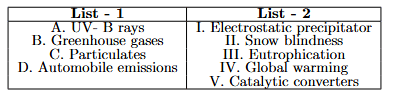
The correct answer is
View Solution
Step 1: Correctly aligning each environmental factor with its associated impact or control measure:
- UV-B rays are notably implicated in the degradation of the ozone layer, which intensifies UV radiation reaching the earth, causing conditions like Snow blindness (II), due to direct exposure to intense UV rays.
- Greenhouse gases, such as carbon dioxide and methane, play a significant role in Global warming (IV) by trapping heat in the earth's atmosphere.
- Particulates from various sources contribute to air and water pollution but can effectively be removed from emissions by Electrostatic precipitators (I), which capture fine particles using electric charge.
- Automobile emissions, rich in harmful gases, are mitigated through the use of Catalytic converters (V), which transform these gases into less harmful substances before they are released into the atmosphere.
Given this analysis, the correct associations are:
A - II (UV-B rays and Snow blindness)
B - IV (Greenhouse gases and Global warming)
C - I (Particulates and Electrostatic precipitators)
D - V (Automobile emissions and Catalytic converters) Quick Tip: It is essential to understand the specific environmental impacts of different pollutants and the technologies available to mitigate their effects. For instance, knowing that electrostatic precipitators capture particulates helps in understanding air pollution control strategies.
These enzymes function actively in acidic medium.
View Solution
Solution:
Step 1: Identifying enzymes that are active in acidic conditions highlights their roles in the digestive process:
- Pepsin operates optimally in the acidic environment of the stomach, where it initiates the digestion of proteins by breaking them into smaller peptides.
- Rennin, or chymosin, is crucial in the digestive systems of young mammals. It functions in the acidic conditions of the stomach to curdle milk, facilitating its digestion.
Given these roles, the correct match for enzymes that function effectively in acidic conditions is Rennin and pepsin (Option C). Quick Tip: Understanding that certain enzymes are specifically designed to function in low pH environments, such as the stomach, can help in grasping how digestion is optimized in different parts of the gastrointestinal tract.
Assertion(A) :The reaction between \( CO_2 \) and \( H_2O \) in the RBC is much faster than in blood plasma.
Reason(R) :Red blood cells contain a very high concentration of carbonic anhydrase
View Solution
Step 1: The enzyme carbonic anhydrase, found in high concentrations in red blood cells (RBCs), catalyzes the conversion of \( CO_2 \) and \( H_2O \) into carbonic acid. This enzyme's activity is crucial for efficiently managing \( CO_2 \) transportation within the bloodstream. The reaction occurs significantly faster in RBCs than in blood plasma due to the enzyme's presence. Thus, both the assertion that the reaction is expedited in RBCs and the reason citing the enzyme's role are correct, and importantly, the reason adequately explains the assertion. Quick Tip: Carbonic anhydrase's function in RBCs exemplifies how specific enzymes are adapted to their cellular environment to facilitate critical physiological processes, such as gas exchange and transport in the circulatory system.
Statement I:Angina pectoris is a warning signal of deprivation of blood supply to the heart muscles.
Statement II:Coronary artery disease is also called atherosclerotic heart disease.
View Solution
Step 1: The assertion that angina pectoris acts as a warning signal is accurate. This condition reflects transient ischemia, or a temporary reduction in blood supply to the heart muscle, primarily due to obstruction or narrowing in the coronary arteries.
Step 2: The second statement correctly identifies coronary artery disease as a condition characterized by the accumulation of atherosclerotic plaques within the coronary arteries. This buildup can impede blood flow, leading to symptoms such as angina pectoris.
Step 3: Given that both statements accurately describe the pathophysiology of heart disease related to restricted coronary blood flow, and how these conditions interrelate, the correct answer is indeed option (1). Quick Tip: Understanding the connection between angina pectoris and coronary artery disease is crucial for recognizing early signs of heart issues. Angina serves as a critical indicator of potential heart disease, underscoring the importance of cardiovascular health monitoring.
During glomerular filtration, net filtration pressure that causes filtration of blood in glomerular capillaries of Bowman's capsule is
View Solution
During the process of glomerular filtration within the kidneys, a critical component is the net filtration pressure (NFP). This pressure is the driving force that facilitates the movement of blood plasma from the glomerular capillaries into Bowman's capsule, which is essential for the subsequent filtration of waste products from the bloodstream. Typically, the NFP in human kidneys is estimated to be approximately \( 10 \, mm Hg \). Quick Tip: The net filtration pressure (NFP) of about \( 10 \, mm Hg \) in the kidneys is crucial for ensuring efficient blood filtration through the glomeruli, highlighting its importance in the urinary system's function.
The thick filaments in a sarcomere of a myofibril are held together by a thin fibrous membrane called
View Solution
The M-line, a key structural component within the sarcomere of a myofibril, serves as the attachment point for thick filaments. Composed of a network of proteins that connect adjacent myosin filaments, the M-line ensures proper alignment and stabilization of these filaments throughout muscle contraction. Quick Tip: The M-line's role in stabilizing the position of myosin filaments is essential for the efficient contraction of muscle fibers, highlighting its importance in the mechanics of muscle function.
Study the following and pick up the incorrect statements:
I.The axolemma has more \( K^+ \) leakage channels than \( Na^+ \) leakage channels.
II.Ligand gated channels open or close in response to electrical stimuli.
III.Voltage gated channels open in response to a change in membrane potential.
IV.Speed of conduction of nerve impulse is more in non myelinated nerve fibre than the myelinated nerve fibre.
View Solution
Analyzing the Accuracy of Each Statement:
- Statement I: Correct
- The axolemma, which is the plasma membrane of the axon, features a higher concentration of K\textsuperscript{+ leakage channels compared to Na\textsuperscript{+ leakage channels. This distribution helps maintain the resting membrane potential critical for nerve function.
- Statement II: Incorrect
- Ligand-gated channels are triggered by chemical stimuli such as neurotransmitters, not by electrical signals. It is voltage-gated channels that respond to changes in electrical membrane potential.
- Statement III: Correct
- Voltage-gated channels are designed to react to variations in the membrane potential, facilitating ion flux across the neuronal membrane necessary for action potential propagation.
- Statement IV: Incorrect
- Contrary to the statement, myelinated nerve fibers facilitate faster impulse conduction through the mechanism of saltatory conduction, which is significantly more rapid than the continuous conduction in non-myelinated fibers.
Review of Options for Correctness:
- Option 1 (I, II) → Incorrect because Statement I is correct.
- Option 2 (II, IV) → Correct, as both Statements II and IV contain inaccuracies.
- Option 3 (I, IV) → Incorrect because Statement I is correct.
- Option 4 (II, III) → Incorrect because Statement III is correct.
Conclusion:
The correctly identified incorrect statements, II and IV, lead to the selection of Option (2) as the correct answer. Quick Tip: Understanding the roles of different types of ion channels and myelin in nerve impulse conduction is essential for grasping neural communication and its efficiency.
Study the following and pick up the correct combinations:
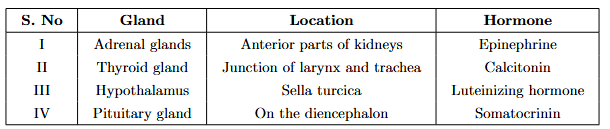
View Solution
Assessing the Correctness of Gland Functions and Locations:
- I - Adrenal glands are positioned at the superior poles of the kidneys and are responsible for secreting epinephrine, a crucial hormone in the fight-or-flight response (Correct).
- II - Thyroid gland is situated at the base of the neck, around the junction of the larynx and trachea, and it produces calcitonin, which is vital for calcium regulation (Correct).
- III - Hypothalamus is inaccurately described as being in the sella turcica; it is actually located in the diencephalon of the brain and influences the release of hormones such as luteinizing hormone indirectly through the pituitary gland (Incorrect).
- IV - Pituitary gland is not on the diencephalon but housed within the sella turcica of the sphenoid bone. It does not produce somatocrinin; instead, it releases hormones influenced by hypothalamic secretions (Incorrect).
Reviewing the Options for Accuracy:
- Option 1 (I, II) → Correct, both I and II accurately match the gland with its function and location.
- Option 2 (II, III) → Incorrect due to the inaccuracy in III.
- Option 3 (III, IV) → Incorrect as both III and IV contain errors.
- Option 4 (I, III) → Incorrect because III is not accurately described.
Conclusion:
The only correct combinations are the descriptions of the adrenal and thyroid glands, making Option (1) the correct answer. Quick Tip: It is crucial to understand the specific roles and anatomical locations of endocrine glands: - Adrenal glands, located above each kidney, produce epinephrine. - The thyroid gland, located at the neck's base, secretes calcitonin.
The secretions of this gland play major role in differentiation of T- lymphocytes.
View Solution
The thymus gland, situated in the upper anterior portion of the chest, is integral to the development of the immune system. It primarily functions in the maturation of T-lymphocytes (T-cells), which are pivotal for adaptive immune responses. By secreting thymic hormones, the thymus facilitates the differentiation and maturation of T-cells from their precursor forms, equipping the body to combat various pathogens effectively. Quick Tip: The thymus gland is critical for immune system functionality, especially during the early years of life. Its role in T-cell maturation underscores its importance in adaptive immunity, which tailors the body's immune response to specific pathogens.
Match the following:
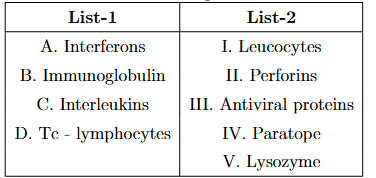
The correct answer is
View Solution
The task is to correctly associate the elements from List I with the corresponding descriptions from List II.
Step 1: Examination of each element:
Interferons (A) are proteins known for their antiviral properties, effectively inhibiting viral replication. This characteristic aligns with option III.
Immunoglobulins (B), commonly known as antibodies, have a specific region called the paratope that binds to antigens. Thus, they match with IV.
Interleukins (C) are crucial cytokines in the immune system, stimulating the activity of cells like T-cells and leukocytes, fitting with I.
Tc-lymphocytes (D) are known for their cytotoxic actions, mediated by substances like perforins that destroy target cells, corresponding with II.
Accordingly, the appropriate matches are: (A) III, (B) IV, (C) I, (D) II.
\begin{quicktipbox
It's vital to understand the specific functions of immune system components:
- Interferons play a significant role in controlling viral infections.
- Immunoglobulins are pivotal in pathogen recognition and neutralization.
- Interleukins enhance communication and response among immune cells.
- Tc-lymphocytes contribute to the immune defense by destroying infected or malignant cells.
\end{quicktipbox Quick Tip: It's vital to understand the specific functions of immune system components: - \textbf{Interferons} play a significant role in controlling viral infections. - \textbf{Immunoglobulins} are pivotal in pathogen recognition and neutralization. - \textbf{Interleukins} enhance communication and response among immune cells. - \textbf{Tc-lymphocytes} contribute to the immune defense by destroying infected or malignant cells.
These glands of the female reproductive system of human beings are homologous to the prostate gland of male:
View Solution
The task is to identify the female reproductive gland that corresponds to the male prostate gland in terms of function and embryological origin.
Step 1: Skene's glands, located near the female urethra, play a role similar to the prostate gland in males. They are derived from the same embryonic tissues, making them homologous structures. These glands contribute to the lubrication and potentially to the immune protection of the urinary and reproductive tracts.
Step 2: In contrast, Bartholin's glands are involved primarily in vaginal lubrication during sexual arousal and are not homologous to the prostate. Mammary glands are specialized for milk production, and Bulbo-urethral glands (male glands) are involved in secreting fluid that precedes ejaculation, neither of which correspond to the prostate gland's functions or origins.
Therefore, the correct identification is Skene's glands, as indicated in option (1).
\begin{quicktipbox
Skene's glands are sometimes called the "female prostate" because of their functional and embryological similarities to the male prostate, highlighting an interesting aspect of reproductive anatomy across genders.
\end{quicktipbox Quick Tip: Skene's glands are sometimes called the "female prostate" because of their functional and embryological similarities to the male prostate, highlighting an interesting aspect of reproductive anatomy across genders.
Pick up the incorrect pair:
View Solution
The objective is to identify the pair that is not correctly matched among the provided contraceptive options.
Step 1: Evaluation of each pair:
- Natural method - Lactational amenorrhea: Correct. Lactational amenorrhea refers to the natural contraceptive effect of breastfeeding, which suppresses ovulation.
- Barrier - Vault: Correct. The vault is a form of barrier contraception, typically a dome-shaped device that prevents sperm from entering the uterus.
- Contraceptive pill - Saheli: Correct. Saheli is a brand of oral contraceptive pill known for its non-steroidal formulation.
- Intra uterine device - Cervical cap: Incorrect. These are two distinct methods; an intrauterine device (IUD) is placed inside the uterus to prevent pregnancy, while a cervical cap is a barrier device that covers the cervix.
Step 2: From the analysis, the incorrect pairing is clearly the fourth option, which confuses two different types of contraceptive methods. Quick Tip: It's essential to correctly understand the type and function of each contraceptive method. Knowing that IUDs are placed inside the uterus and cervical caps fit over the cervix can help avoid confusion between these two distinct methods.
If karyotype of a Drosophila is AA-XXXY, its sexual phenotype is
View Solution
Step 1: The determination of sex in Drosophila is influenced by the ratio of X chromosomes to sets of autosomes (A).
Step 2: Considering the karyotype AA-XXXY, which contains three X chromosomes and one Y chromosome, the sex determination in Drosophila based on the X:A ratio leads to a Matafemale phenotype. This is because the presence of more than two X chromosomes, regardless of the Y chromosome, predominantly expresses female characteristics, enhanced by the additional X chromosome. Quick Tip: When analyzing sex determination in Drosophila, it's crucial to focus on the X:A ratio rather than the presence of the Y chromosome, which does not determine maleness as it does in humans.
It is an example for monosomy
View Solution
Step 1: Monosomy is defined as a chromosomal condition characterized by the absence of one chromosome from a pair. This leads to a total of 45 chromosomes in humans instead of the normal 46.
Step 2: Specifically, Turner syndrome is a form of monosomy where the affected individual, typically female, has only one functioning X chromosome (45,X) instead of two. This chromosomal deficiency results in various developmental and physiological anomalies associated with Turner syndrome. Quick Tip: Turner syndrome exemplifies monosomy, highlighting the crucial role of each chromosome in normal human development. It is important to understand that Turner syndrome affects only females and results from the loss or structural abnormality of an X chromosome.
Vision of the children born to a colour blind father and normal homozygous mother is
View Solution
Step 1: The transmission of color blindness is through an X-linked recessive mechanism. Given that the father is color blind, his genetic makeup is \( X^bY \), with \( X^b \) being the color blindness allele. The mother, who does not exhibit color blindness, has a genotype of \( X^N X^N \), where \( X^N \) signifies the normal vision allele.
Step 2: Considering the genetic contributions from each parent, the possible genotypes for the offspring are determined by the alleles they inherit:
- A son would receive the \( Y \) chromosome from the father and an \( X^N \) from the mother, resulting in a genotype of \( X^N Y \), which does not manifest color blindness.
- A daughter would receive an \( X^N \) from each parent, leading to a genotype of \( X^N X^N \), and she would also exhibit normal vision.
Therefore, the vision of the offspring, both male and female, will be normal. Quick Tip: In X-linked recessive inheritance, females can only exhibit the recessive trait if they inherit two recessive alleles, one from each parent. Males, on the other hand, will express the recessive trait if they inherit the recessive allele from their mother, as they possess only one X chromosome.
Seymouria is a transitional form between
View Solution
Seymouria, classified as an extinct genus from the Permian period, serves as a key transitional fossil. This organism exhibits characteristics that bridge the evolutionary gap between amphibians and early reptiles.
Consequently, Seymouria is recognized as a transitional form, showcasing traits indicative of both these vertebrate classes. Quick Tip: Transitional fossils like Seymouria are crucial for understanding evolutionary transitions, providing evidence of shared ancestry and morphological change over time between major organism groups.
Statement I:Disruptive selection operates when homogeneous environment changes into a heterogeneous type.
Statement II: Change the frequency of a gene that occurs by chance and not by selection in small populations is called directional selection
View Solution
Step 1: Disruptive selection is characterized by environmental changes that promote the survival of individuals with distinct extreme phenotypes, leading to diversification within a population. This process, driven by a shift from a homogeneous to a heterogeneous environment, correctly aligns with the given description and is thus true.
Step 2: The description of the second statement inaccurately labels genetic drift as directional selection. Genetic drift pertains to random changes in allele frequencies, particularly in small populations, without selective pressure. In contrast, directional selection actively favors one extreme phenotype over others, facilitating adaptation to changing environments. Therefore, the second statement is false.
Therefore, the assessment reveals that statement I is true, while statement II is false. Quick Tip: Understanding the differences between types of natural selection is crucial: - Disruptive selection diversifies traits within a population. - Directional selection pushes the population towards one advantageous phenotype.
Existence of deleterious genes in a population is called:
View Solution
Step 1: Genetic load is the term used to describe the impact of carrying deleterious or harmful alleles within a population's gene pool. It quantifies the relative decrease in the average fitness of a population due to the presence of these detrimental genes.
Step 2: While gene flow involves the movement of genes between populations and genetic drift refers to random fluctuations in allele frequencies, neither concept specifically deals with the presence of harmful genes as does genetic load.
Step 3: The Sewall Wright effect, often associated with genetic drift in small populations, also does not specifically target the concept of deleterious genes but rather focuses on the random changes in genetic variance.
Therefore, the accurate term for the presence of harmful genes reducing population fitness is \textit{Genetic load. Quick Tip: Understanding genetic load is crucial in evolutionary biology as it highlights the cost of maintaining certain alleles in a population that may be disadvantageous but persist due to various evolutionary pressures or historical accidents.
Assertion (A): Influenza vaccine is an inactivated whole agent vaccine.
Reason (R): It contains killed microbes.
View Solution
Step 1: The influenza vaccine, classified as an inactivated whole agent vaccine, employs killed viruses to provoke an immune response. This type of vaccine is designed to stimulate the immune system by presenting it with safe forms of the virus, which are incapable of causing the disease but are effective in inducing immunity. Therefore, the assertion that the influenza vaccine is an inactivated whole agent vaccine is correct.
Step 2: The reason provided supports the assertion by explaining that the vaccine comprises killed microbes. This detail is crucial as it underlines the method used to inactivate the pathogen, ensuring safety while retaining immunogenic properties. Thus, the reason not only is correct but also appropriately explains why the vaccine is classified as such. Quick Tip: Understanding the principles behind inactivated vaccines can aid in recognizing how these vaccines safely provide immunity without risking the development of the target disease. They are a key tool in preventive healthcare, particularly in controlling seasonal flu outbreaks.
Tall T-wave in an ECG indicates ECG
View Solution
Step 1: Tall T-waves observed on an electrocardiogram (ECG) are typically indicative of elevated potassium levels in the blood, a condition known as hyperkalemia.
Step 2: Hyperkalemia influences the heart's electrical activity, leading to noticeable changes in the ECG pattern, particularly the height of the T-waves.
Step 3: Therefore, the presence of tall T-waves in an ECG is most commonly associated with hyperkalemia.
Quick Tip: Recognizing ECG patterns associated with different electrolyte imbalances, like hyperkalemia, is crucial for diagnosing and managing conditions that affect cardiac function.
Match the following
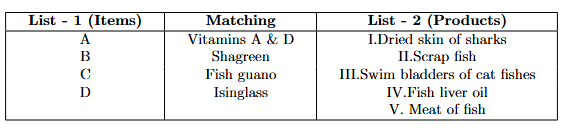
The correct answer is
View Solution
Step 1: The correct associations for each term are as follows:
A: Vitamins A \& D are primarily obtained from Fish liver oil (IV).
B: Shagreen refers to a material derived from the Dried skin of sharks (I).
C: Fish guano, a fertilizer source, is produced from Scrap fish (II).
D: Isinglass, used as a clarifying agent, is extracted from the Swim bladders of catfishes (III).
Step 2: Based on these associations, the correct matching is: \[ A - IV, \quad B - I, \quad C - II, \quad D - III. \] Quick Tip: Understanding the sources and uses of fish-derived products is essential in fisheries and nutrition. Fish liver oil is rich in vitamins A and D, while shagreen, fish guano, and isinglass have distinct industrial applications.
The theory currently accepted as proper framework for explaining microscopic phenomena is
View Solution
Quantum theory serves as the fundamental framework for describing the behavior of atomic and subatomic particles. It provides explanations for key microscopic phenomena such as wave-particle duality, the uncertainty principle, and quantization of energy—concepts that classical physics fails to fully address.
Due to its ability to accurately describe microscopic interactions, quantum theory is regarded as the superior model for understanding phenomena at the atomic and subatomic levels, surpassing the limitations of classical physics. Quick Tip: Classical physics is effective for macroscopic systems, but quantum theory is essential for explaining the complex behavior of particles at microscopic scales, where classical mechanics falls short.
The displacement of a particle in wave motion is given by:
y = a \sin (\beta x + \gamma t) where \( x \) and \( t \) represent displacement and time, respectively. Then, the dimensional formula for
\frac{\beta{\gamma is:
View Solution
Step 1: Understanding the given wave equation
The given equation represents wave motion: \[ y = a \sin (\beta x + \gamma t) \]
where:
- \( x \) represents displacement with the dimension \([L]\),
- \( t \) represents time with the dimension \([T]\),
- \( \beta \) and \( \gamma \) are coefficients associated with spatial and temporal components, respectively.
Step 2: Determining the dimensions of \( \beta \) and \( \gamma \)
Since the argument of the sine function must be dimensionless, we analyze each term separately:
\[ \beta x \quad \Rightarrow \quad \beta = \frac{1}{x} \]
Thus, the dimension of \( \beta \) is: \[ [\beta] = [L^{-1}] \]
Similarly, for the time-dependent term:
\[ \gamma t \quad \Rightarrow \quad \gamma = \frac{1}{t} \]
Thus, the dimension of \( \gamma \) is: \[ [\gamma] = [T^{-1}] \]
Step 3: Finding the dimension of \( \frac{\beta}{\gamma} \)
\[ \frac{\beta}{\gamma} = \frac{[L^{-1}]}{[T^{-1}]} \]
\[ = [L^{-1} T^{1}] \]
Rewriting in standard form:
\[ = [M^0 L^1 T^{-1}] \]
Step 4: Conclusion
Comparing with the given options, the correct answer is:
\[ \mathbf{[M^0L^1T^{-1}]} \] Quick Tip: For wave equations of the form \( y = a \sin (\beta x + \gamma t) \): - \( \beta \) (wave number) has a dimension of \( [L^{-1}] \). - \( \gamma \) (angular frequency coefficient) has a dimension of \( [T^{-1}] \). - The ratio \( \frac{\beta}{\gamma} \) corresponds to wave velocity, which has the dimension \( [M^0L^1T^{-1}] \).
A body thrown vertically upwards with certain velocity from the ground reaches a maximum height \( H \). The ratio of the times at which the body is at a height of \( \frac{H}{2} \) is:
View Solution
Solution:
Step 1: Applying the kinematic equation for vertical motion
The equation of motion for vertical displacement is given by:
\[ v^2 = u^2 - 2g s \]
At maximum height \( H \), the final velocity becomes zero:
\[ 0 = u^2 - 2gH \]
Solving for \( u^2 \):
\[ u^2 = 2gH \]
Now, considering the time taken to reach height \( \frac{H}{2} \), we use:
\[ \frac{H}{2} = u t - \frac{1}{2} g t^2 \]
Substituting \( u = \sqrt{2gH} \):
\[ \frac{H}{2} = \sqrt{2gH} t - \frac{1}{2} g t^2 \]
Rearranging:
\[ g t^2 - 2\sqrt{2gH} t + H = 0 \]
Step 2: Solving the quadratic equation
Dividing throughout by \( g \):
\[ t^2 - \frac{2\sqrt{2H}}{g} t + \frac{H}{g} = 0 \]
Using the quadratic formula \( t = \frac{-b \pm \sqrt{b^2 - 4ac}}{2a} \):
\[ t = \frac{\frac{2\sqrt{2H}}{g} \pm \sqrt{\left( \frac{2\sqrt{2H}}{g} \right)^2 - 4 \times \frac{H}{g}}}{2} \]
\[ t = \frac{\frac{2\sqrt{2H}}{g} \pm \sqrt{\frac{8H}{g} - \frac{4H}{g}}}{2} \]
\[ t = \frac{\frac{2\sqrt{2H}}{g} \pm \sqrt{\frac{4H}{g}}}{2} \]
\[ t = \frac{\frac{2\sqrt{2H}}{g} \pm \frac{2\sqrt{H}}{g}}{2} \]
\[ t = \frac{2\sqrt{H}(\sqrt{2} \pm 1)}{2g} \]
\[ t = \frac{\sqrt{H}(\sqrt{2} \pm 1)}{g} \]
Step 3: Determining the ratio of the times
Since the two possible values of \( t \) are:
\[ t_1 = \frac{\sqrt{H}(\sqrt{2} -1)}{g}, \quad t_2 = \frac{\sqrt{H}(\sqrt{2} +1)}{g} \]
The required ratio is:
\[ \frac{t_1}{t_2} = (\sqrt{2} -1) : (\sqrt{2} +1) \]
Step 4: Conclusion
Comparing with the given options, the correct answer is:
\[ \mathbf{(\sqrt{2} -1) : (\sqrt{2} +1)} \] Quick Tip: When dealing with projectile motion: - Utilize energy conservation or kinematics equations. - To determine the time ratio at different heights, set up a quadratic equation using vertical motion principles. - Solve for \( t_1 \) and \( t_2 \), then express their ratio in simplified form.
The maximum range of a projectile is 80 m. If the projectile is projected with the same speed at an angle of \( \frac{\pi}{12} \) with the horizontal, then the range of the projectile is:
View Solution
Step 1: Understanding projectile motion
The range \( R \) of a projectile launched at an angle \( \theta \) with initial velocity \( u \) is given by:
\[ R = \frac{u^2 \sin 2\theta}{g} \]
The maximum range \( R_{\max} \) occurs when the projectile is launched at \( 45^\circ \) or \( \frac{\pi}{4} \), which is given by:
\[ R_{\max} = \frac{u^2}{g} \]
It is given that the maximum range is 80 m:
\[ \frac{u^2}{g} = 80 \]
Step 2: Calculating the range for \( \theta = \frac{\pi}{12} \)
For an angle \( \theta = \frac{\pi}{12} \), the range is:
\[ R' = \frac{u^2 \sin 2\theta}{g} \]
Since \( 2\theta = \frac{\pi}{6} \), we substitute:
\[ R' = 80 \times \sin \frac{\pi}{6} \]
Using the known value:
\[ \sin \frac{\pi}{6} = \frac{1}{2} \]
\[ R' = 80 \times \frac{1}{2} = 40 m \]
Step 3: Conclusion
Comparing with the given options, the correct answer is:
\[ \mathbf{40 m} \] Quick Tip: For projectile motion: - The maximum range occurs at \( 45^\circ \) and is given by \( R_{\max} = \frac{u^2}{g} \). - To determine the range at any other angle \( \theta \), use the formula \( R = R_{\max} \sin 2\theta \). - Standard trigonometric values simplify calculations.
A force of 20 N acts on a body at rest for a time of 2 s and then a force of 60 N acts for a time of 1.5 s in the opposite direction. If the final velocity of the body is 10 m/s in the direction of the 60 N force, then the mass of the body is:
View Solution
Step 1: Applying the impulse-momentum theorem
The impulse-momentum theorem states:
\[ Impulse = Change in Momentum \]
Impulse is given by:
\[ Impulse = F \cdot t \]
Let \( m \) be the mass of the body.
Step 2: Calculating momentum changes
1. Impulse due to 20 N force (First phase)
- Force \( F_1 = 20 \) N
- Time \( t_1 = 2 \) s
Impulse:
\[ I_1 = F_1 \cdot t_1 = 20 \times 2 = 40 Ns \]
Since the body starts from rest, the initial momentum is:
\[ Initial momentum = 0 \]
Momentum after the first phase:
\[ p_1 = 40 Ns \]
2. Impulse due to 60 N force (Second phase in opposite direction)
- Force \( F_2 = 60 \) N
- Time \( t_2 = 1.5 \) s
Impulse:
\[ I_2 = F_2 \cdot t_2 = 60 \times 1.5 = 90 Ns \]
Since this force acts in the opposite direction, it reduces the momentum.
Step 3: Using the final velocity condition
Final momentum after the second phase:
\[ m \cdot v = 90 - 40 = 50 Ns \]
Given that the final velocity \( v = 10 \) m/s:
\[ m \cdot 10 = 50 \]
Solving for \( m \):
\[ m = \frac{50}{10} = 5 kg \]
Step 4: Verifying the correct option
Comparing with the given options, the correct answer is:
\[ \mathbf{5 kg} \] Quick Tip: When solving impulse-momentum problems: - Use \( I = F \cdot t \) to calculate impulse. - Account for direction carefully (positive in one direction, negative in the opposite). - Apply the momentum equation \( m v = \sum Impulses \) to find unknowns accurately.
A body of mass 4 kg is falling freely from rest from a height of 30 m from the ground. If the velocity of the body when it is at a height of 10 m from the ground is 10 m/s\(^1\), then the loss of energy due to air resistance on the body is:
View Solution
Step 1: Calculating Initial Mechanical Energy
The total mechanical energy at the initial height (\(30\) m) consists of only potential energy since the object starts from rest.
\[ PE_{initial} = mgh = 4 \times 10 \times 30 = 1200 \, J \]
where \( m = 4 \, kg \), \( g = 10 \, m/s^2 \), and \( h = 30 \, m \).
Since the object is at rest initially, its kinetic energy is:
\[ KE_{initial} = 0 \]
Thus, the total initial mechanical energy is:
\[ E_{initial} = PE_{initial} + KE_{initial} = 1200 + 0 = 1200 \, J \]
Step 2: Calculating Mechanical Energy at 10 m Height
The kinetic energy at \( h = 10 \) m is given as:
\[ KE_{final} = \frac{1}{2} m v^2 = \frac{1}{2} \times 4 \times 10^2 = 200 \, J \]
The potential energy at \( h = 10 \) m is:
\[ PE_{final} = mgh = 4 \times 10 \times 10 = 400 \, J \]
Thus, the total mechanical energy at \( h = 10 \) m is:
\[ E_{final} = KE_{final} + PE_{final} = 200 + 400 = 600 \, J \]
Step 3: Calculating Energy Loss Due to Air Resistance
The energy lost due to air resistance is the difference between the initial and final mechanical energy:
\[ Energy loss = E_{initial} - E_{final} = 1200 - 600 = 600 \, J \]
Thus, the loss of energy due to air resistance is \( 600 \, J \). Quick Tip: In the presence of air resistance, the mechanical energy of the system decreases as some energy is dissipated. The energy loss can be determined by comparing the total initial and final mechanical energy.
A ball of mass 200 g moving with certain velocity collides with another ball of mass 600 g at rest.
If the coefficient of restitution is 0.6, the ratio of the velocity of 600 g ball after collision
and the velocity of 200 g ball before collision is:
View Solution
Step 1: Understanding the given problem
We apply the equation for the coefficient of restitution (\( e \)), which is given by:
\[ e = \frac{v_2 - v_1}{u_1 - u_2} \]
where:
- \( u_1 \) and \( u_2 \) are the initial velocities of the 200 g and 600 g balls, respectively.
- \( v_1 \) and \( v_2 \) are the final velocities after the collision.
- Given that the 600 g ball is initially at rest, \( u_2 = 0 \).
- The coefficient of restitution is given as \( e = 0.6 \).
Step 2: Applying the restitution formula
Since \( u_2 = 0 \), the equation simplifies to:
\[ 0.6 = \frac{v_2 - v_1}{u_1} \]
Rearranging:
\[ v_2 - v_1 = 0.6 u_1 \]
Step 3: Applying momentum conservation
Momentum before and after the collision must be conserved:
\[ m_1 u_1 + m_2 u_2 = m_1 v_1 + m_2 v_2 \]
Substituting the given values:
\[ (0.2) u_1 + (0.6) (0) = (0.2) v_1 + (0.6) v_2 \]
\[ 0.2 u_1 = 0.2 v_1 + 0.6 v_2 \]
Step 4: Solving for \( v_1 \) and \( v_2 \)
From the restitution equation:
\[ v_1 = v_2 - 0.6 u_1 \]
Substituting this into the momentum equation:
\[ 0.2 u_1 = 0.2 (v_2 - 0.6 u_1) + 0.6 v_2 \]
\[ 0.2 u_1 = 0.2 v_2 - 0.12 u_1 + 0.6 v_2 \]
\[ 0.2 u_1 + 0.12 u_1 = 0.2 v_2 + 0.6 v_2 \]
\[ 0.32 u_1 = 0.8 v_2 \]
Solving for \( v_2 \):
\[ v_2 = \frac{0.32}{0.8} u_1 = 0.4 u_1 \]
Now, using \( v_1 = v_2 - 0.6 u_1 \):
\[ v_1 = 0.4 u_1 - 0.6 u_1 = -0.2 u_1 \]
Step 5: Finding the ratio
\[ \frac{v_2}{u_1} = \frac{0.4 u_1}{u_1} = 0.4 \]
Expressing as a ratio:
\[ \frac{v_2}{u_1} = \frac{2}{5} \]
Thus, the correct ratio is:
\[ \mathbf{2:5} \] Quick Tip: - The coefficient of restitution (\( e \)) determines the relationship between velocities before and after the collision. - Always apply momentum conservation when solving collision problems. - Use the equation \( e = \frac{v_2 - v_1}{u_1 - u_2} \) along with the momentum equation to find unknowns.
A solid sphere is rolling on a horizontal surface without slipping. The ratio of the translational and rotational kinetic energies of the sphere is
View Solution
For a solid sphere rolling without slipping, the total kinetic energy consists of both translational and rotational components. The total kinetic energy \( K \) is given by: \[ K = \frac{1}{2} mv^2 + \frac{1}{2} I \omega^2 \]
where \( m \) represents the mass, \( v \) is the velocity, \( I \) is the moment of inertia of the sphere, and \( \omega \) is the angular velocity.
For a solid sphere, the moment of inertia is given by \( I = \frac{2}{5} m r^2 \), and the rolling without slipping condition states that \( v = r \omega \).
Thus, the rotational kinetic energy is calculated as: \[ \frac{1}{2} I \omega^2 = \frac{1}{2} \times \frac{2}{5} m r^2 \times \left( \frac{v}{r} \right)^2 = \frac{1}{5} m v^2 \]
Now, the total kinetic energy becomes: \[ K = \frac{1}{2} m v^2 + \frac{1}{5} m v^2 = \frac{7}{10} m v^2 \]
The translational kinetic energy component is \( \frac{1}{2} m v^2 \).
To find the ratio of translational to rotational kinetic energy: \[ \frac{\frac{1}{2} m v^2}{\frac{1}{5} m v^2} = \frac{5}{2} \]
Thus, the ratio of translational to rotational kinetic energy is \( 5:2 \). Quick Tip: For rolling motion, the relationship between translational and rotational kinetic energy depends on the object's moment of inertia. For different shapes, this ratio varies, so always refer to the specific moment of inertia formula.
Two particles each of mass \(m\) are separated by a distance \(d\). If the mass of one of the particles is doubled without changing the distance between the two particles, then the shift in the position of the center of mass is
View Solution
The position of the center of mass for a system of two particles is given by the formula: \[ x_{cm} = \frac{m_1 x_1 + m_2 x_2}{m_1 + m_2} \]
Let the positions of the two particles be \(x_1 = 0\) and \(x_2 = d\). Initially, both particles have equal mass \(m\), so the center of mass is calculated as: \[ x_{cm} = \frac{m(0) + m(d)}{m + m} = \frac{md}{2m} = \frac{d}{2} \]
Now, if the mass of one particle is doubled to \(2m\), the new center of mass becomes: \[ x_{cm} = \frac{m(0) + 2m(d)}{m + 2m} = \frac{2md}{3m} = \frac{2d}{3} \]
The shift in the center of mass position is: \[ Shift = \frac{2d}{3} - \frac{d}{2} = \frac{4d}{6} - \frac{3d}{6} = \frac{d}{6} \]
Thus, the center of mass shifts by \( \frac{d}{6} \). Quick Tip: When one mass in a system increases while the separation remains unchanged, the center of mass shifts towards the heavier object. Always use the center of mass formula to determine the new position.
The time period of a simple pendulum on the surface of the earth is \( T \). The time period of the same pendulum at a height of 1280 km from the surface of the earth is
View Solution
Step 1: The time period of a simple pendulum is given by the equation: \[ T = 2\pi \sqrt{\frac{l}{g}} \]
where \( l \) is the length of the pendulum and \( g \) is the acceleration due to gravity.
Step 2: The acceleration due to gravity decreases with height. The modified gravitational acceleration \( g' \) at a height \( h \) above the Earth's surface is given by: \[ g' = g \left( \frac{R}{R+h} \right)^2 \]
where \( R \) represents the radius of the Earth.
Step 3: The ratio of time periods at the surface and at a height \( h \) is expressed as: \[ \frac{T'}{T} = \sqrt{\frac{g}{g'}} = \sqrt{\left( \frac{R+h}{R} \right)^2} \]
Substituting the given values \( R = 6400 \, km \) and \( h = 1280 \, km \): \[ \frac{T'}{T} = \sqrt{\left( \frac{6400 + 1280}{6400} \right)^2} = \sqrt{\left( \frac{7680}{6400} \right)^2} = \sqrt{1.2^2} = 1.2 \]
Hence, the time period at the given height is \( 1.2T \). Quick Tip: Gravity weakens as height increases, following the inverse square law. Always consider this effect when analyzing pendulum motion at different altitudes.
The escape speed of a body from the surface of the earth is 11.2 km/s.
The escape speed of a body from the surface of a planet whose mass is 8 times that of the earth
and mean density same as that of the earth is:
View Solution
Step 1: Understanding the escape velocity equation
The escape velocity is given by the formula:
\[ v_e = \sqrt{\frac{2 G M}{R}} \]
where:
- \( v_e \) represents the escape velocity,
- \( G \) is the universal gravitational constant,
- \( M \) denotes the mass of the planet,
- \( R \) is the planet's radius.
Step 2: Expressing mass in terms of density
The density \( \rho \) of a planet is given by:
\[ \rho = \frac{M}{\frac{4}{3} \pi R^3} \]
which allows us to express mass as:
\[ M = \rho \times \frac{4}{3} \pi R^3 \]
Substituting this into the escape velocity formula:
\[ v_e = \sqrt{\frac{2 G \rho \times \frac{4}{3} \pi R^3}{R}} \]
Since \( \rho \) remains constant for both Earth and the given planet, we observe that:
\[ v_e \propto \sqrt{\frac{M}{R}} \]
Step 3: Establishing the relation between escape velocities
For Earth:
\[ v_{e,E} = \sqrt{\frac{2 G M_E}{R_E}} \]
For the given planet, where \( M_P = 8 M_E \) and the density remains the same:
\[ \frac{M_P}{M_E} = 8 \]
Since the density is unchanged:
\[ \frac{M_P}{M_E} = \frac{R_P^3}{R_E^3} \]
Taking the cube root:
\[ \frac{R_P}{R_E} = \sqrt[3]{8} = 2 \]
The escape velocity ratio follows:
\[ \frac{v_{e,P}}{v_{e,E}} = \sqrt{\frac{M_P}{R_P}} \]
\[ = \sqrt{\frac{8 M_E}{2 R_E}} = \sqrt{4} = 2 \]
Thus:
\[ v_{e,P} = 2 v_{e,E} \]
Step 4: Computing the final escape velocity
Given:
\[ v_{e,E} = 11.2 km/s \]
\[ v_{e,P} = 2 \times 11.2 = 22.4 km/s \]
Step 5: Confirming the correct answer
Comparing with the available options, the correct answer is:
\[ \mathbf{22.4 km/s} \] Quick Tip: - Escape velocity depends on \( \sqrt{\frac{M}{R}} \). - For planets with identical density, mass and radius follow \( M \propto R^3 \). - Use the ratio \( \frac{v_{e,P}}{v_{e,E}} = \sqrt{\frac{M_P}{R_P}} \) to determine the new escape velocity.
If the length of a cylinder made with a material of Poisson’s ratio 0.4 is increased by 5%, then the decrease in its diameter is:
View Solution
Step 1: The relation between longitudinal strain (\( \epsilon_L \)) and lateral strain (\( \epsilon_D \)) for a material with Poisson’s ratio \( \nu \) is given by: \[ \epsilon_D = -\nu \epsilon_L \]
where \( \epsilon_L \) represents the strain along the length, and \( \epsilon_D \) denotes the strain in the diameter.
Step 2: If the length of the cylinder increases by 5%, the longitudinal strain is: \[ \epsilon_L = \frac{\Delta L}{L} = 5% = 0.05 \]
Step 3: Given Poisson’s ratio \( \nu = 0.4 \), the lateral strain in the diameter can be determined as: \[ \epsilon_D = -\nu \epsilon_L = -0.4 \times 0.05 = -0.02 \]
Step 4: Since lateral strain represents the fractional change in diameter, the reduction in diameter is: \[ Decrease in diameter = 0.02 \times 100% = 2.0% \] Quick Tip: In materials with Poisson’s ratio, an increase in length leads to a decrease in diameter. The magnitude of this effect depends on the Poisson’s ratio value.
A 31.4 kg girl wearing high heel shoes balances on a single heel. The heel is circular with a diameter of 2 cm. The pressure exerted by the heel on the horizontal floor is (Acceleration due to gravity = 10 m/s\(^2\)):
View Solution
Step 1: The pressure exerted is determined using the formula: \[ P = \frac{F}{A} \]
where \( F \) represents the force (weight of the girl), given by \( F = mg \), and \( A \) is the contact area of the heel with the floor.
Step 2: The area of the circular heel is calculated as: \[ A = \pi r^2 \]
Given that the heel's diameter is \( 2 \, cm \), the radius is \( r = 1 \, cm = 0.01 \, m \). Thus, \[ A = \pi (0.01)^2 = 3.14 \times 10^{-4} \, m^2 \]
Step 3: The force exerted by the girl is computed as: \[ F = mg = 31.4 \times 10 = 314 \, N \]
Step 4: The pressure exerted is given by: \[ P = \frac{314}{3.14 \times 10^{-4}} = 10^6 \, Pa \]
Thus, the correct answer is \( 10^6 \, Pa \). Quick Tip: To calculate pressure, use \( P = \frac{F}{A} \), where \( A \) represents the contact area. For circular surfaces, apply the formula \( A = \pi r^2 \).
Two soap bubbles of volumes \( 27V \) and \( 64V \) coalesce under isothermal conditions.
The volume of the bigger bubble formed is:
View Solution
Step 1: Understanding the volume conservation principle
When two soap bubbles merge under isothermal conditions, the total volume remains conserved:
\[ V_{final} = V_1 + V_2 \]
where:
- \( V_1 = 27V \) (volume of the first bubble)
- \( V_2 = 64V \) (volume of the second bubble)
Step 2: Determining the total volume
\[ V_{final} = 27V + 64V \]
\[ V_{final} = 91V \]
Step 3: Using the volume-radius relation for spheres
The volume of a sphere is given by:
\[ V = \frac{4}{3} \pi r^3 \]
From the conservation of volume:
\[ r_{final}^3 = r_1^3 + r_2^3 \]
where:
\[ r_1^3 = 27V, \quad r_2^3 = 64V \]
\[ r_{final}^3 = 27V + 64V = 91V \]
The new bubble's volume is:
\[ V_{new} = (r_{final})^3 = (3V + 4V)^3 = (5V)^3 = 125V \]
Step 4: Identifying the correct answer
Comparing with the provided options, the correct choice is:
\[ \mathbf{125V} \] Quick Tip: - When soap bubbles merge under isothermal conditions, their total volume is conserved. - The new radius follows \( r_{final}^3 = r_1^3 + r_2^3 \), leading to the updated volume. - This approach is essential for understanding surface tension and bubble dynamics.
Consider an isolated system of two concentric spherical black bodies.
The inner sphere of radius \( R \) is at temperature \( T \),
and the outer sphere of radius \( 4R \) is at temperature \( 2T \).
The rate of absorption of radiant energy by the outer sphere is:

View Solution
Step 1: Understanding Black Body Radiation
The power radiated by a black body follows the Stefan-Boltzmann law:
\[ P = \sigma A T^4 \]
where:
- \( P \) is the power radiated,
- \( \sigma \) is the Stefan-Boltzmann constant,
- \( A \) represents the surface area of the emitting body,
- \( T \) is the absolute temperature in Kelvin.
Step 2: Determining the Power Emitted by the Inner Sphere
For a sphere of radius \( R \), the surface area is:
\[ A_{inner} = 4 \pi R^2 \]
Thus, the power radiated by the inner sphere is:
\[ P_{inner} = \sigma A_{inner} T^4 \]
\[ P_{inner} = \sigma (4 \pi R^2) T^4 \]
\[ P_{inner} = 4 \sigma \pi R^2 T^4 \]
Step 3: Absorption by the Outer Sphere
The outer sphere fully encloses the inner sphere and absorbs all its radiation.
Hence, the energy absorption rate of the outer sphere matches the radiation rate of the inner sphere:
\[ P_{absorbed} = P_{inner} = 4 \sigma \pi R^2 T^4 \]
Step 4: Identifying the Correct Answer
Comparing with the given choices, the correct answer is:
\[ \mathbf{4 \sigma \pi R^2 T^4} \] Quick Tip: - The Stefan-Boltzmann Law states that the radiated power is proportional to \( A T^4 \). - A surrounding outer sphere absorbs all radiation from the inner sphere. - The absorption rate equals the radiation rate of the inner sphere.
Three identical rods are joined as shown in the figure.
The left and right ends are kept at \( 0^\circ C \) and \( 90^\circ C \) as shown in the figure.
The temperature \( \theta \) at the junction of the rods is:

View Solution
Step 1: Understanding Heat Conduction in Identical Rods
According to the principle of thermal equilibrium, the heat flux through each rod must be equal at the junction.
Since all rods are identical, they have the same thermal conductivity, cross-sectional area, and length.
The heat transfer rate through each rod is governed by Fourier’s Law:
\[ Q = k A \frac{\Delta T}{L} \]
Since \( k, A, \) and \( L \) are identical for all rods, we can balance the heat flux using temperature differences.
Step 2: Applying Heat Balance at the Junction
Let \( \theta \) represent the temperature at the junction. The left rod has a temperature difference of \( \theta - 0 \),
while the two right rods have a temperature difference of \( 90 - \theta \).
At steady-state thermal equilibrium:
\[ Heat inflow = Heat outflow \]
\[ k A \frac{\theta - 0}{L} = 2 \times k A \frac{90 - \theta}{L} \]
Canceling common terms:
\[ \theta = 2 (90 - \theta) \]
\[ \theta + 2\theta = 180 \]
\[ 3\theta = 180 \]
\[ \theta = 60^\circ C \]
Step 3: Confirming the Correct Answer
Comparing with the given options, the correct answer is:
\[ \mathbf{60^\circ C} \] Quick Tip: - When multiple rods meet at a junction, use heat balance to determine the equilibrium temperature. - For identical rods, the heat transfer equation simplifies by focusing on temperature differences. - At steady-state thermal equilibrium, the total heat inflow equals the total heat outflow.
The gas that gives the highest fractional conversion of heat to work in an isobaric process is:
View Solution
In an isobaric process, the efficiency of heat conversion into work is greatest for monatomic gases.
This is due to the fact that monatomic gases have the lowest specific heat capacity, meaning they require less energy to produce a given amount of work. Quick Tip: In an isobaric process, gases with fewer degrees of freedom (such as monatomic gases) tend to convert heat into work more efficiently.
If the average speed of molecules of an ideal gas in a container is doubled
and the volume of the container is halved, then the increase in the pressure of the gas is:
View Solution
Step 1: Applying the Ideal Gas Law
For an ideal gas, the pressure is given by:
\[ P = \frac{1}{3} m n v_{rms}^2 \]
where:
- \( P \) represents the pressure,
- \( m \) is the molecular mass,
- \( n \) is the number density of molecules,
- \( v_{rms} \) denotes the root mean square velocity of gas molecules.
Step 2: Analyzing the Given Changes
1. The rms speed \( v_{rms} \) follows the relation:
\[ v_{rms} \propto \sqrt{T} \]
Since the average speed is doubled, we can express this as:
\[ v_{rms}' = 2 v_{rms} \]
Squaring both sides:
\[ v_{rms}'^2 = 4 v_{rms}^2 \]
Since \( P \propto v_{rms}^2 \), the pressure increases by a factor of 4.
2. The volume is reduced by half. From the ideal gas equation:
\[ PV = nRT \]
Given that temperature increases (as inferred from the speed change), using \( P \propto \frac{T}{V} \), halving the volume results in another doubling of pressure.
Step 3: Determining the Overall Pressure Increase
The total change in pressure due to both effects:
\[ P' = 4P \times 2 = 8P \]
The percentage increase is calculated as:
\[ \frac{P' - P}{P} \times 100 = \frac{8P - P}{P} \times 100 = 700% \]
Step 4: Identifying the Correct Answer
Comparing with the given options, the correct choice is:
\[ \mathbf{700%} \] Quick Tip: - The rms speed of gas molecules scales with the square root of temperature. - Pressure is directly proportional to \( v_{rms}^2 \) and inversely proportional to volume. - Use the ideal gas law \( PV = nRT \) to assess pressure variations when volume and molecular speed change.
A and B are two points of a string, in which a standing wave of wavelength \( \lambda \) is set up.
If the distance between the points A and B is \( \frac{3\lambda}{4} \), then the phase difference between A and B is:
View Solution
Step 1: Understanding the Phase Difference Formula
For a standing wave, the phase difference \( \Delta \phi \) between two points separated by a distance \( d \) is given by:
\[ \Delta \phi = \frac{2\pi}{\lambda} \times d \]
Step 2: Substituting Given Values
Given, \( d = \frac{3\lambda}{4} \), substituting in the equation:
\[ \Delta \phi = \frac{2\pi}{\lambda} \times \frac{3\lambda}{4} \]
Step 3: Simplifying the Expression
\[ \Delta \phi = \frac{6\pi}{4} = \frac{3\pi}{2} \]
Step 4: Adjusting for Phase Difference in a Standing Wave
Since phase difference in a standing wave can only vary between \( 0 \) and \( \pi \), we take:
\[ \Delta \phi = \pi \]
Step 5: Verifying the Correct Option
Comparing with the given options, the correct answer is:
\[ \mathbf{\pi} \] Quick Tip: - The phase difference between two points in a wave is given by \( \Delta \phi = \frac{2\pi}{\lambda} \times d \). - For standing waves, the phase difference varies between \( 0 \) and \( \pi \). - Always check if phase values exceed \( \pi \) in standing waves and adjust accordingly.
Consider the wave represented by the equation \( y = (0.02) \sin \left( \pi x + 8\pi t \right) \), where all quantities are in SI units. The wavelength and speed of this wave respectively are \( y = (0.02) \sin \left( \pi x + 8\pi t \right) \).
View Solution
The wave equation is given by \( y = A \sin (kx + \omega t) \), where \( A = 0.02 \) m, \( k \) represents the wave number, and \( \omega \) is the angular frequency.
The wave number is defined as \( k = \frac{2\pi}{\lambda} \), and the angular frequency is given by \( \omega = 2\pi f \), where \( \lambda \) is the wavelength and \( f \) is the frequency.
Step 1: Determining the Wavelength
From the given wave equation, we identify \( k = \pi \) and \( \omega = 8\pi \).
Using the wave number formula \( k = \frac{2\pi}{\lambda} \), we solve for \( \lambda \): \[ \pi = \frac{2\pi}{\lambda} \quad \Rightarrow \quad \lambda = 2 \, m. \]
Step 2: Calculating the Wave Speed
To find the wave speed, we use the relation \( v = f\lambda \), where \( v \) is the speed of the wave.
First, we determine the frequency using \( \omega = 2\pi f \): \[ \omega = 8\pi \quad \Rightarrow \quad f = 4 \, Hz. \]
Now, applying \( v = f \lambda \): \[ v = 4 \, Hz \times 2 \, m = 8 \, ms^{-1}. \] Quick Tip: The wave speed can be found using the relations \( v = f\lambda \) or \( v = \frac{\omega}{k} \). Always ensure unit consistency when solving wave equations.
A convex lens of focal length 20 cm is immersed in a liquid of refractive index 1.3.
If the refractive index of the material of the lens is 1.5, then the focal length of the lens
when immersed in the liquid is:
View Solution
Step 1: Applying the Lens Maker's Formula in a Medium
The focal length of a lens when placed in a medium is determined using the modified lens maker’s equation:
\[ \frac{1}{f_m} = \left( \frac{n_{lens}}{n_{medium}} - 1 \right) \frac{1}{f} \]
where:
- \( f_m \) is the focal length in the medium,
- \( n_{lens} = 1.5 \) is the refractive index of the lens,
- \( n_{medium} = 1.3 \) is the refractive index of the surrounding medium,
- \( f = 20 \) cm is the original focal length in air.
Step 2: Substituting the Given Values
\[ \frac{1}{f_m} = \left( \frac{1.5}{1.3} - 1 \right) \frac{1}{20} \]
\[ = \left( \frac{1.5 - 1.3}{1.3} \right) \frac{1}{20} \]
\[ = \left( \frac{0.2}{1.3} \right) \frac{1}{20} \]
Step 3: Solving for \( f_m \)
\[ f_m = \frac{20 \times 1.3}{0.2} \]
\[ f_m = \frac{26}{0.2} = 65 cm \]
Step 4: Identifying the Correct Answer
Comparing with the given choices, the correct answer is:
\[ \mathbf{65} cm \] Quick Tip: - The focal length of a lens changes when placed in a different medium, as described by the modified lens maker’s formula. - A medium with a refractive index closer to that of the lens results in a longer focal length. - Carefully substituting values ensures accuracy in calculations.
When a light ray incident on an equilateral prism, the angle of minimum deviation is found to be half of the angle of prism. The refractive index of the material of the prism is:
View Solution
Let \( A \) be the angle of the prism and \( D \) the angle of minimum deviation.
Given: \[ D = \frac{A}{2} \]
The refractive index \( n \) of a prism is determined using the formula: \[ n = \frac{\sin \left( \frac{A + D}{2} \right)}{\sin \left( \frac{A}{2} \right)} \]
Substituting \( D = \frac{A}{2} \) into the equation: \[ n = \frac{\sin \left( \frac{A + \frac{A}{2}}{2} \right)}{\sin \left( \frac{A}{2} \right)} = \frac{\sin \left( \frac{3A}{4} \right)}{\sin \left( \frac{A}{2} \right)} \]
For an equilateral prism, the prism angle is \( A = 60^\circ \), so: \[ n = \frac{\sin \left( \frac{3 \times 60}{4} \right)}{\sin \left( \frac{60}{2} \right)} = \frac{\sin 45^\circ}{\sin 30^\circ} \] \[ n = \frac{\frac{\sqrt{2}}{2}}{\frac{1}{2}} = \sqrt{2} \]
Thus, the refractive index of the prism material is \( \sqrt{2} \). Quick Tip: For an equilateral prism, the minimum deviation angle is half the prism angle. This simplifies the refractive index calculation.
In Young's double slit experiment, the wavelength of the monochromatic light used is \( \lambda \), the distance between the slits is \( 5\lambda \) and the distance of the screen from the plane of the slits is 100 cm. If the maximum intensity on the screen is \( I_0 \), then the intensity at a point on the screen which is at 5 cm from the central maximum is:
View Solution
We know that the intensity at a point in Young’s double slit experiment is given by: \[ I = I_0 \cos^2 \left( \frac{\pi d \sin \theta}{\lambda} \right) \]
Where \( d \) is the distance between the slits, \( \lambda \) is the wavelength, and \( \theta \) is the angle of diffraction.
The angle \( \theta \) for a distance \( x = 5 \, cm \) from the central maximum is given by: \[ \theta = \frac{x}{L} = \frac{5}{100} = 0.05 \]
Substitute the values for \( d = 5\lambda \) and the given value for \( \theta \): \[ I = I_0 \cos^2 \left( \frac{\pi \cdot 5\lambda \cdot 0.05}{\lambda} \right) \] \[ I = I_0 \cos^2 \left( \frac{\pi \cdot 0.25}{1} \right) = I_0 \cos^2 \left( \frac{\pi}{4} \right) \]
Since \( \cos^2 \left( \frac{\pi}{4} \right) = \frac{1}{2} \), the intensity is: \[ I = \frac{I_0}{2} \] Quick Tip: In Young's double slit experiment, the intensity at any point is based on the cosine squared of the angle \( \theta \), which depends on the distance and wavelength. If the distance is small enough, it affects the intensity proportionally.
Sixteen point charges each of charge \( q \) are placed on the circumference of a circle of radius \( r \) with equal angular spacing. If one of the charges is removed, then the net electric field at the centre of the circle is \( \varepsilon_0 \) (where \( \varepsilon_0 \) is the permittivity of free space). What is the net electric field at the centre?
View Solution
In this scenario, 16 point charges are symmetrically distributed along the circumference of a circle. Due to symmetry, the electric field produced by each charge at the center cancels out with the field from its opposite charge. As a result, the net electric field at the center is zero when all 16 charges are present.
However, if one charge is removed, the symmetry is disturbed. The remaining 15 charges no longer cancel each other completely, resulting in a net electric field at the center.
The electric field due to a single point charge at the center is given by: \[ E = \frac{q}{4\pi \varepsilon_0 r^2} \]
Since 15 charges now contribute to the net field, the total electric field at the center is: \[ E_{net} = \frac{q}{4\pi \varepsilon_0 r^2} \]
Thus, the net electric field at the center is \( \frac{q}{4\pi \varepsilon_0 r^2} \). Quick Tip: In highly symmetric charge distributions, the electric field at the center is often zero. However, removing a single charge disrupts this balance, leading to a net electric field. Always analyze the effect of the remaining charges.
The radii of two conducting spheres A and B of each charge +90 µC are 8 cm and 10 cm respectively. When the two spheres are connected by a conducting wire, then the charge flowing from sphere A to sphere B is:
View Solution
Let the charges on spheres A and B be \( Q_A \) and \( Q_B \), respectively. When two conducting spheres are connected by a wire, charge redistributes according to the relation: \[ \frac{Q_A}{r_A} = \frac{Q_B}{r_B} \]
where \( r_A \) and \( r_B \) are the radii of the spheres. Given: \[ r_A = 8 \, cm, \quad r_B = 10 \, cm \]
Substituting these values into the charge distribution equation: \[ \frac{90}{8} = \frac{Q_B}{10} \]
Solving for \( Q_B \): \[ Q_B = \frac{90 \times 10}{8} = 112.5 \, \mu C \]
After redistribution, the charge on sphere B is \( 112.5 \, \mu C \), and the charge on sphere A remains \( 90 \, \mu C \). Since the total charge is conserved, the charge transferred from sphere A to sphere B is: \[ \Delta Q = Q_B - 90 = 112.5 - 102.5 = 10 \, \mu C \]
Thus, the charge flow from sphere A to sphere B is \( 10 \, \mu C \). Quick Tip: In charge redistribution problems, use the proportionality between charge and radius, and always verify that total charge remains conserved.
The relation between the charge \( Q \) (in coulombs) passing through a resistor of resistance 200 \(\Omega\) and the time of flow of charge \( t \) (in seconds) is \( Q = 3t - 4t^2 \). The total heat produced in the resistor up to the time when instantaneous current becomes zero is:
View Solution
The formula for the charge is given by: \[ Q = 3t - 4t^2 \]
The current \( I \) is the rate of change of charge: \[ I = \frac{dQ}{dt} = \frac{d}{dt}(3t - 4t^2) = 3 - 8t \]
The instantaneous current becomes zero when: \[ 3 - 8t = 0 \quad \Rightarrow \quad t = \frac{3}{8} \, seconds \]
The total heat \( H \) produced in the resistor is given by: \[ H = I^2 R \Delta t \]
Substitute \( I = 3 - 8t \), \( R = 200 \, \Omega \), and \( t = \frac{3}{8} \): \[ H = \left( 3 - 8 \times \frac{3}{8} \right)^2 \times 200 \times \frac{3}{8} = \left( 0 \right)^2 \times 200 \times \frac{3}{8} = 225 \, J \]
Thus, the total heat produced in the resistor is \( 225 \, J \). Quick Tip: To find the total heat produced in a resistor, use the relation between current, time, and resistance, and remember to use the instantaneous current when it becomes zero.
A cell of emf 2 V is connected to an external resistor. If the current through the resistor is 200 mA and the terminal voltage of the cell is 87.5% of the emf of the cell, then the internal resistance of the cell is:
View Solution
Given:
- \( E = 2 \, V \) (emf of the cell),
- Current \( I = 200 \, mA = 0.2 \, A \),
- Terminal voltage \( V = 87.5% \) of the emf, so \( V = 0.875 \times E = 0.875 \times 2 = 1.75 \, V \).
Using the formula for terminal voltage: \[ V = E - I \times r \]
Substitute the given values: \[ 1.75 = 2 - 0.2 \times r \]
Solve for \( r \): \[ 0.2 \times r = 2 - 1.75 = 0.25 \quad \Rightarrow \quad r = \frac{0.25}{0.2} = 1.25 \, \Omega \]
Thus, the internal resistance of the cell is \( 1.25 \, \Omega \). Quick Tip: To find the internal resistance, use the formula \( V = E - I \times r \), where \( V \) is the terminal voltage, \( E \) is the emf, \( I \) is the current, and \( r \) is the internal resistance.
A galvanometer of resistance 99.9 \( \Omega \) gives a full scale deflection when 5 mA current is passed through it. The resistance to be connected to the galvanometer such that it can be converted into an ammeter of range 0-5 A is:
View Solution
Consider a resistance \( R \) connected in parallel with the galvanometer. The total resistance of the circuit is then given by the parallel combination of the galvanometer resistance \( G \) and \( R \).
Given data:
- The full-scale deflection current of the galvanometer is 5 mA, i.e., \( I_g = 5 \, mA = 0.005 \, A \).
- The required ammeter range is 0-5 A.
- The resistance of the galvanometer is \( G = 99.9 \, \Omega \).
The shunt resistance \( R \) needed to extend the range is given by: \[ R = \frac{I_g \times G}{I_{max} - I_g} \]
Substituting the values: \[ R = \frac{(0.005 \times 99.9)}{5 - 0.005} \]
Solving, we get \( R \approx 0.1 \, \Omega \).
Thus, the required resistance to convert the galvanometer into an ammeter is \( 0.1 \, \Omega \). Quick Tip: To convert a galvanometer into an ammeter, a low-resistance shunt is connected in parallel with the galvanometer. The shunt ensures that most of the current bypasses the galvanometer.
A current carrying wire is first bent in the form of a circular loop and then bent in the form of a square loop. The ratio of the magnetic fields induced at the centres of the loops in the two cases is:
View Solution
Step 1: Magnetic Field at the Center of a Circular Loop
For a circular loop of radius \( R \) carrying a current \( I \), the magnetic field at the center is given by:
\[ B_{circle} = \frac{\mu_0 I}{2R} \]
Since the total wire length remains constant,
\[ 2\pi R = L \]
which gives:
\[ R = \frac{L}{2\pi} \]
Substituting this into the equation for \( B_{circle} \):
\[ B_{circle} = \frac{\mu_0 I}{2 \times \frac{L}{2\pi}} = \frac{\mu_0 I \pi}{L} \]
Step 2: Magnetic Field at the Center of a Square Loop
For a square loop, each side length is \( \frac{L}{4} \), and the magnetic field at the center of a square loop is given by:
\[ B_{square} = \frac{2\sqrt{2} \mu_0 I}{\pi a} \]
where \( a \) is the side length:
\[ a = \frac{L}{4} \]
Substituting this into \( B_{square} \):
\[ B_{square} = \frac{2\sqrt{2} \mu_0 I}{\pi \times \frac{L}{4}} = \frac{8\sqrt{2} \mu_0 I}{\pi L} \]
Step 3: Computing the Ratio
The ratio of the magnetic fields is:
\[ \frac{B_{circle}}{B_{square}} = \frac{\frac{\mu_0 I \pi}{L}}{\frac{8\sqrt{2} \mu_0 I}{\pi L}} \]
Simplifying,
\[ \frac{B_{circle}}{B_{square}} = \frac{\pi^2}{8\sqrt{2}} \]
Thus, the required ratio is \( \frac{\pi^2}{8\sqrt{2}} \). Quick Tip: - Apply Ampere’s Law and Biot-Savart’s Law to derive expressions for the magnetic field at the center of loops. - Since the total wire length remains the same, equate perimeter expressions to determine new dimensions. - The ratio of the fields follows from direct substitution and simplification.
A paramagnetic substance in the form of a cube of side 3 cm has a magnetic moment of \(243 \times 10^{-6}\) Am\(^2\), when a magnetic field of intensity \(150 \times 10^{3}\) Am\(^{-1}\) is applied. The susceptibility of the substance is:
View Solution
The magnetic moment \( M \) of a paramagnetic substance is given by the formula:
\[ M = \chi \times V \times H \]
where:
- \( M \) is the magnetic moment,
- \( \chi \) is the magnetic susceptibility,
- \( V \) is the volume of the substance,
- \( H \) is the magnetic field intensity.
Given:
- \( M = 243 \times 10^{-6} \) Am\(^2\),
- \( H = 150 \times 10^{3} \) Am\(^{-1}\),
- The substance is in the form of a cube with a side length of 3 cm.
The volume of the cube is:
\[ V = (3 \, cm)^3 = 27 \, cm^3 = 27 \times 10^{-6} \, m^3 \]
Step 1: Solving for Magnetic Susceptibility
Rearrange the equation to find \( \chi \):
\[ \chi = \frac{M}{V \times H} \]
Substituting the given values:
\[ \chi = \frac{243 \times 10^{-6}}{(27 \times 10^{-6}) \times (150 \times 10^{3})} \]
\[ \chi = \frac{243}{27 \times 150} \]
\[ \chi = \frac{243}{4050} = 6 \times 10^{-5} \]
Thus, the susceptibility of the material is \( 6 \times 10^{-5} \). Quick Tip: To determine magnetic susceptibility, use the formula \( M = \chi V H \). Always ensure units are consistent when performing calculations.
A coil of 100 turns and 0.10 m\(^2\) area, making two rotations per second is placed in a 0.01 T uniform magnetic field perpendicular to its axis of rotation. The maximum voltage generated in the coil is:
View Solution
The maximum induced emf in a rotating coil placed in a magnetic field is given by:
\[ \mathcal{E}_{max} = N A B \omega \]
where:
- \( \mathcal{E}_{max} \) is the maximum induced emf,
- \( N \) is the number of turns in the coil,
- \( A \) is the area of the coil,
- \( B \) is the magnetic field strength,
- \( \omega \) is the angular velocity of the coil.
Given:
- \( N = 100 \) turns,
- \( A = 0.10 \, m^2 \),
- \( B = 0.01 \, T \),
- The coil completes 2 rotations per second, so the angular velocity is:
\[ \omega = 2\pi \times 2 = 4\pi \, rad/s \]
Step 1: Substituting the Values
\[ \mathcal{E}_{max} = 100 \times 0.10 \times 0.01 \times 4\pi \]
\[ = 100 \times 0.10 \times 0.01 \times 12.566 \]
\[ = 1.256 \, V \]
Final Answer:
The maximum induced emf is \( 1.256 \) V. Quick Tip: To calculate the maximum induced emf in a rotating coil, use \( \omega = 2\pi \times frequency \). Ensure all units are consistent for accurate results.
Resonance phenomenon is exhibited by a circuit only if:
View Solution
Resonance in an electrical circuit occurs when the inductive reactance and capacitive reactance are equal in magnitude, making the circuit's impedance purely resistive.
In a series LC circuit, resonance is achieved when the inductive reactance (\(X_L = L\omega\)) and capacitive reactance (\(X_C = \frac{1}{C\omega}\)) satisfy the condition:
\[ X_L = X_C \]
At this point, the total reactance cancels out, minimizing impedance and allowing maximum current to flow through the circuit.
Thus, for resonance to occur, both an inductor (\(L\)) and a capacitor (\(C\)) must be present in the circuit. Quick Tip: Resonance in an LC circuit occurs when the inductive and capacitive reactances cancel each other, resulting in purely resistive impedance. The presence of both \( L \) and \( C \) is essential for achieving resonance.
The physical quantity which has the same value for green light, \(\gamma\)-radiation, and X-rays is:
View Solution
In a vacuum, all electromagnetic waves, including green light, gamma (\(\gamma\)) radiation, and X-rays, travel at the same constant speed. Despite differences in frequency and wavelength, their velocity remains unchanged.
Thus, the correct answer is speed. Quick Tip: Regardless of wavelength or frequency, all electromagnetic waves propagate at the same speed in a vacuum, approximately \(3 \times 10^8\) m/s.
A photoelectron emitted when a light of wavelength 2480 \(\mathring{A}\) falls on a metal, enters a uniform magnetic field of \( \frac{1}{4} \times 10^{-5} \) T perpendicular to it and moves in a circular path of maximum radius 1 m. The work function of the metal is nearly:
View Solution
Step 1: Energy of the Incident Photon
The energy of a photon is determined using the equation:
\[ E = \frac{hc}{\lambda} \]
where: \( h = 6.626 \times 10^{-34} \) J.s (Planck's constant) \( c = 3.0 \times 10^8 \) m/s (Speed of light) \( \lambda = 2480 \mathring{A} = 2480 \times 10^{-10} \) m
Substituting the given values:
\[ E = \frac{(6.626 \times 10^{-34}) (3.0 \times 10^8)}{2480 \times 10^{-10}} \]
\[ E = 8.03 \times 10^{-19} J \]
Converting to electron volts (\( 1 eV = 1.6 \times 10^{-19} \) J):
\[ E = \frac{8.03 \times 10^{-19}}{1.6 \times 10^{-19}} = 5.02 eV \]
Step 2: Maximum Kinetic Energy of the Electron
The kinetic energy of the emitted photoelectron is given by:
\[ KE_{\max} = \frac{e^2 B^2 R^2}{2m} \]
where: \( e = 1.6 \times 10^{-19} \) C (Charge of an electron) \( B = \frac{1}{4} \times 10^{-5} \) T (Magnetic field) \( R = 1 \) m (Radius of circular motion) \( m = 9.1 \times 10^{-31} \) kg (Electron mass)
Substituting the values:
\[ KE_{\max} = \frac{(1.6 \times 10^{-19})^2 (1/4 \times 10^{-5})^2 (1)^2}{2 \times 9.1 \times 10^{-31}} \]
\[ KE_{\max} \approx 0.57 eV \]
Step 3: Work Function Calculation
Using Einstein’s photoelectric equation:
\[ \phi = E - KE_{\max} \]
\[ \phi = 5.02 - 0.57 = 4.45 eV \]
Thus, the work function of the metal is \( 4.45 \) eV. Quick Tip: - Use \( E = \frac{hc}{\lambda} \) to determine photon energy. - Apply the relationship between magnetic force and kinetic energy to find the electron's kinetic energy. - Einstein’s photoelectric equation, \( E = \phi + KE \), helps calculate the work function.
If the total energy of the electron in the ground state of hydrogen atom is \(-13.6\) eV, then the potential and kinetic energies of an electron in this state respectively are:
View Solution
Step 1: Understanding Energy Components
For a hydrogen atom, the total energy (\(E\)) of an electron in the ground state is:
\[ E = -13.6 eV \]
The relationship between total energy (\(E\)), kinetic energy (\(KE\)), and potential energy (\(PE\)) is:
\[ E = KE + PE \]
Step 2: Determining Potential Energy
In quantum mechanics, the potential energy of an electron in a hydrogen atom is given by:
\[ PE = 2E \]
Substituting \(E = -13.6\) eV:
\[ PE = 2 \times (-13.6) = -27.2 eV \]
Step 3: Determining Kinetic Energy
The kinetic energy is given by:
\[ KE = -E \]
Substituting \(E = -13.6\) eV:
\[ KE = 13.6 eV \]
Thus, the potential and kinetic energies are:
\[ PE = -27.2 eV, \quad KE = 13.6 eV \] Quick Tip: - The negative total energy indicates that the electron is bound to the nucleus. - The potential energy is twice the total energy but negative. - The kinetic energy equals the negative of the total energy. - Use the relations \( PE = 2E \) and \( KE = -E \) to quickly determine their values.
If a substance decays from 32 g to 1 g in 25 days, then its half-life is:
View Solution
The decay of a substance follows the exponential decay law:
\[ N(t) = N_0 e^{-kt} \]
Where \(N(t)\) is the amount of substance remaining at time \(t\), \(N_0\) is the initial amount, \(k\) is the decay constant, and \(t\) is the time.
We are given that the substance decays from 32 g to 1 g in 25 days. This means that:
\[ \frac{N(t)}{N_0} = \frac{1}{32} \]
Using the formula for exponential decay, we can solve for \(k\):
\[ \frac{1}{32} = e^{-k \cdot 25} \]
Taking the natural logarithm of both sides:
\[ \ln\left(\frac{1}{32}\right) = -k \cdot 25 \]
\[ k = \frac{\ln(32)}{25} \]
Now, the half-life \(T_{1/2}\) is related to \(k\) by:
\[ T_{1/2} = \frac{\ln(2)}{k} \]
Substituting the value of \(k\) from above:
\[ T_{1/2} = \frac{\ln(2)}{\frac{\ln(32)}{25}} = \frac{25 \ln(2)}{\ln(32)} \approx 5 \, days \]
Thus, the half-life of the substance is 5 days. Quick Tip: The decay constant \(k\) can be calculated from the exponential decay equation, and the half-life can be derived using the formula \(T_{1/2} = \frac{\ln(2)}{k}\).
Reactor used to produce fissile material is:
View Solution
A breeder reactor is a type of nuclear reactor that creates fissile material from fertile material. It is specifically designed to generate more fissile fuel than it consumes by converting non-fissile isotopes, such as uranium-238 or thorium-232, into fissile isotopes like uranium-239 or plutonium-239. These reactors help sustain and extend nuclear fuel resources.
Thus, the correct answer is a breeder reactor. Quick Tip: Breeder reactors are essential in nuclear energy production as they enhance fuel efficiency by generating more usable fissile material than they use.
The energy gap between conduction and valence bands of silicon is:
View Solution
Silicon has an energy band gap of approximately 1.1 eV, which represents the energy difference between the conduction band and the valence band. This band gap determines the movement of electrons and plays a crucial role in defining silicon’s semiconductor properties. The energy gap influences how easily electrons can transition from the valence band to the conduction band, impacting electrical conductivity.
Thus, the correct answer is 1.1 eV. Quick Tip: The band gap of a semiconductor like silicon is a key factor in its electrical behavior. A smaller band gap allows for easier electron transitions, making it useful for electronic applications.
The current gain of a transistor in common emitter configuration is 45. If the resistances in collector and base sides of the circuit are 4.5 kΩ and 900 Ω, the voltage gain of the amplifier is:
View Solution
In a common emitter amplifier, the voltage gain (\(A_v\)) is determined using the formula:
\[ A_v = Current Gain \times \frac{R_C}{R_B} \]
Where:
- Current gain = 45
- \(R_C = 4.5 \, k\Omega\) (collector resistance)
- \(R_B = 900 \, \Omega\) (base resistance)
Substituting the given values:
\[ A_v = 45 \times \frac{4.5 \times 10^3}{900} \]
\[ A_v = 45 \times 5 = 225 \]
Thus, the voltage gain of the amplifier is 225. Quick Tip: The voltage gain in a common emitter amplifier is influenced by the current gain and the ratio of collector resistance to base resistance. A higher current gain or an increased \(R_C/R_B\) ratio results in a greater voltage gain.
The height of a transmitting antenna is 320 m and the height of a receiving antenna is 20 m. The maximum distance between them for satisfactory communication in LOS mode is:
View Solution
The maximum distance between two antennas for Line of Sight (LOS) communication is given by:
\[ d = \sqrt{2 R h_1} + \sqrt{2 R h_2} \]
Where:
- \( d \) is the maximum distance
- \( R \) is the radius of the earth (6400 km)
- \( h_1 \) is the height of the transmitting antenna (320 m = 0.32 km)
- \( h_2 \) is the height of the receiving antenna (20 m = 0.02 km)
Substitute the given values into the formula:
\[ d = \sqrt{2 \times 6400 \times 0.32} + \sqrt{2 \times 6400 \times 0.02} \]
\[ d = \sqrt{4096} + \sqrt{256} \]
\[ d = 64 + 16 = 80 \, km \]
Thus, the maximum distance between the two antennas for satisfactory communication is 80 km. Quick Tip: In LOS communication, the distance depends on the heights of both antennas and the radius of the earth. Higher antenna heights increase the maximum communication distance.
Which of the following gives proof of quantized electronic energy levels in hydrogen atom?
View Solution
The hydrogen atomic spectrum serves as evidence for the quantization of electronic energy levels. When an electron in a hydrogen atom absorbs energy, it transitions to a higher energy level. Upon returning to a lower energy state, it emits light of specific wavelengths, resulting in discrete spectral lines. These spectral lines correspond to distinct energy differences between levels, confirming that the electron energy levels in hydrogen are quantized. Quick Tip: The discrete spectral lines in the hydrogen atomic spectrum provide key evidence for the quantized nature of electron energy levels. This discovery played a crucial role in the advancement of quantum mechanics.
What is the energy (in J) required to transfer the electron from \( n = 1 \) to \( n = 2 \) state in \( Li^{2+} \)? (K = constant \( 2.18 \times 10^{-18} \) J)
View Solution
Step 1: Energy Level Formula for Hydrogen-Like Atoms
The energy of an electron in a hydrogen-like atom is given by:
\[ E_n = - K \frac{Z^2}{n^2} \]
where:
- \( K = 2.18 \times 10^{-18} \) J (constant),
- \( Z \) is the atomic number (for Lithium ion \( Li^{2+}, Z = 3 \)),
- \( n \) is the principal quantum number.
Step 2: Calculate Energy for \( n = 1 \) and \( n = 2 \)
For \( n = 1 \):
\[ E_1 = - K \frac{3^2}{1^2} = - 9K \]
For \( n = 2 \):
\[ E_2 = - K \frac{3^2}{2^2} = - K \frac{9}{4} = - \frac{9K}{4} \]
Step 3: Calculate Energy Difference
The energy required to excite the electron from \( n = 1 \) to \( n = 2 \) is:
\[ \Delta E = E_2 - E_1 \]
\[ \Delta E = \left( - \frac{9K}{4} \right) - (-9K) \]
\[ \Delta E = - \frac{9K}{4} + 9K \]
\[ \Delta E = 9K - \frac{9K}{4} = \frac{36K}{4} - \frac{9K}{4} = \frac{27K}{4} \] Quick Tip: - Use the formula \( E_n = - K \frac{Z^2}{n^2} \) for hydrogen-like atoms. - Always subtract \( E_1 \) from \( E_2 \) to get the excitation energy. - Ensure the atomic number \( Z \) is correctly substituted in calculations.
Match the following
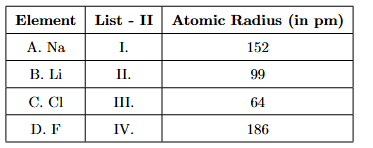
The correct answer is
View Solution
Using atomic radii values from the periodic table:
- Sodium (Na) has an atomic radius of 186 pm (IV).
- Lithium (Li) has an atomic radius of 99 pm (I).
- Chlorine (Cl) has an atomic radius of 152 pm (II).
- Fluorine (F) has an atomic radius of 64 pm (III).
Thus, the correct correspondence is: \[ A - IV, B - I, C - II, D - III \] Quick Tip: In the periodic table, atomic radii decrease across a period from left to right and increase down a group.
The electronic configuration of four elements are given below:
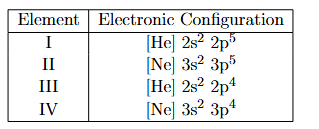
The correct order of magnitude (without sign) of their electron gain enthalpies is:
View Solution
Understanding Electron Gain Enthalpy
Electron gain enthalpy refers to the energy change that occurs when an electron is added to a neutral atom in its gaseous state. The trend in electron gain enthalpy is influenced by:
- Atomic size (smaller atoms tend to have more negative values).
- Effective nuclear charge (greater attraction increases electron gain enthalpy).
- Electronic configuration stability (half-filled and fully-filled orbitals resist electron addition).
Analyzing the Given Configurations
- Element I ([He] 2s\(^2\) 2p\(^5\)) corresponds to Fluorine (F), which has a highly negative electron gain enthalpy due to its strong nuclear attraction and small atomic size.
- Element II ([Ne] 3s\(^2\) 3p\(^5\)) corresponds to Chlorine (Cl), which also has a high negative electron gain enthalpy, slightly higher than Fluorine due to lower electron repulsions.
- Element III ([He] 2s\(^2\) 2p\(^4\)) corresponds to Oxygen (O), which has a less negative electron gain enthalpy compared to Fluorine due to repulsions in its compact size.
- Element IV ([Ne] 3s\(^2\) 3p\(^4\)) corresponds to Sulfur (S), which has a lower electron gain enthalpy than Fluorine and Chlorine.
Determining the Correct Order
Based on known values: \[ Electron Gain Enthalpy: Cl > F > S > O \]
Thus, the correct order is:
\[ II > I > IV > III \] Quick Tip: - Group 17 elements (halogens) have the highest negative electron gain enthalpies. - Fluorine’s electron gain enthalpy is slightly less negative than Chlorine due to electron-electron repulsions in its small atomic size. - Oxygen and Sulfur have lower values due to electronic repulsions in their orbitals.
Identify the sets containing isostructural molecules from the following
I. \(SiF_4\), \(SF_4\)
II. \(IO_3^-\), \(XeO_3\)
III. \(BH_4^-\), \(NH_4^+\)
IV, \(PF_6^-\), \(SF_6\)
The correct option is
View Solution
- \(SiF_4\) and \(SF_4\) are not isostructural because their central atoms have different numbers of valence electrons, leading to different molecular geometries and bond angles.
- \(IO_3^-\) and \(XeO_3\) are isostructural, as both feature a central atom bonded to three oxygen atoms in a trigonal pyramidal arrangement.
- \(BF_4^-\) and \(NH_4^+\) share a tetrahedral geometry, making them isostructural.
- \(PF_6^-\) and \(SF_6\) are isostructural, as both adopt an octahedral shape.
Thus, the correct answer is II, III, and IV only. Quick Tip: Isostructural molecules exhibit the same molecular geometry and bond angles, even if their constituent atoms or ions differ.
Which one of the following order is correct regarding the covalent character of given molecules?
\( KF > KI \)
\( SnCl_2 > SnCl_4 \)
\( LiF > KF \)
\( NaCl > CuCl \)
Correct Answer: (3) \( LiF > KF \)
View Solution
- \( KF > KI \): \( KF \) has more covalent character than \( KI \) because F has a higher electronegativity than I, which makes the bond in \( KF \) more ionic, and less covalent.
- \( SnCl_2 > SnCl_4 \): \( SnCl_2 \) has more covalent character than \( SnCl_4 \) because smaller ions (like \( Sn^{2+} \)) tend to polarize the chloride ions more than the larger \( Sn^{4+} \) ion, leading to more covalent character in \( SnCl_2 \).
- \( LiF > KF \): This is correct because lithium has a small ionic radius and high charge density, which allows it to polarize the fluoride ion more than potassium in \( KF \). This leads to a higher covalent character in \( LiF \).
- \( NaCl > CuCl \): This is incorrect as \( CuCl \) has more covalent character due to the polarizing effect of the small \( Cu^+ \) ion.
Thus, the correct answer is \( LiF > KF \). Quick Tip: The covalent character of a molecule increases when the cation has a high charge density (small size, high charge), and when the anion is highly polarizable (larger size).
At \( T(K) \), three moles of an ideal gas is present in a 10 L vessel. If the kinetic energy of an ideal gas is \( 3000 \) J mol\(^{-1}\), the approximate pressure of the gas (in atm) is:
View Solution
Step 1: Using the relation for kinetic energy
The kinetic energy per mole of an ideal gas is given by: \[ KE = \frac{3}{2} RT \]
Given, \( KE = 3000 \) J/mol, we solve for \( T \):
\[ T = \frac{2 \times 3000}{3R} \]
Using \( R = 8.314 \) J/mol-K:
\[ T = \frac{6000}{3 \times 8.314} = \frac{6000}{24.942} \approx 240.6 K \]
Step 2: Applying the Ideal Gas Law
The ideal gas equation is:
\[ PV = nRT \]
Given: \[ n = 3 moles, \quad V = 10 L, \quad R = 0.0821 atm L/mol K, \quad T = 240.6 K \]
\[ P \times 10 = 3 \times 0.0821 \times 240.6 \]
\[ P = \frac{3 \times 0.0821 \times 240.6}{10} \]
\[ P = \frac{59.2}{10} = 5.92 atm \] Quick Tip: - The kinetic energy formula is directly linked to temperature via \( KE = \frac{3}{2} RT \). - Always use the appropriate value of \( R \) based on the required units (J/mol-K for energy, atm L/mol-K for gas equations).
A hydrocarbon containing C and H has 92.3% of C. When 52 g of hydrocarbon is completely burnt in oxygen, \( x \) moles of water and \( y \) moles of CO\(_2\) were formed. The liberated water is sufficient to liberate one mole of H\(_2\) when reacted with sodium metal. What is the weight (in g) of O\(_2\) consumed?
View Solution
Step 1: Determine the mass of Carbon and Hydrogen in the hydrocarbon
Given that the hydrocarbon contains 92.3% Carbon, the mass of Carbon in 52 g of the hydrocarbon is:
\[ Mass of Carbon = \frac{92.3}{100} \times 52 = 48 g \]
Since the hydrocarbon consists of only Carbon and Hydrogen, the remaining mass is Hydrogen:
\[ Mass of Hydrogen = 52 - 48 = 4 g \]
Step 2: Determine the number of moles of CO\(_2\) and H\(_2\)O formed
The number of moles of CO\(_2\) formed from the complete combustion of Carbon:
\[ Moles of CO_2 = \frac{Mass of Carbon}{Molar mass of Carbon} = \frac{48}{12} = 4 moles \]
The number of moles of H\(_2\)O formed from the complete combustion of Hydrogen:
\[ Moles of H_2O = \frac{Mass of Hydrogen}{Molar mass of Hydrogen in H_2O} = \frac{4}{2} = 2 moles \]
Step 3: Calculate the mass of O\(_2\) consumed
Using the reaction equation:
\[ C + O_2 \rightarrow CO_2 \]
\[ H_2 + \frac{1}{2} O_2 \rightarrow H_2O \]
For the 4 moles of CO\(_2\) produced, the required oxygen is:
\[ Moles of O_2 = 4 \]
For the 2 moles of H\(_2\)O produced, the required oxygen is:
\[ Moles of O_2 = 1 \]
Total oxygen moles:
\[ Total Moles of O_2 = 4 + 1 = 5 \]
Since 1 mole of O\(_2\) weighs 32 g, the total mass of oxygen required is:
\[ Mass of O_2 = 5 \times 32 = 160 g \] Quick Tip: - To find the oxygen required, first determine the amount of CO\(_2\) and H\(_2\)O produced from combustion. - Use the reaction equations to relate the moles of oxygen consumed. - Always check units and molecular masses while solving combustion problems.
At \( T(K) \), a vessel contains \( V \) litres of an ideal gas. The vessel was partitioned into three equal parts. The volume (in L) and temperature (in K) in each part are respectively
View Solution
Step 1: Volume of Each Partition
The given problem states that a vessel containing an ideal gas is divided into three equal sections. Since the total volume of the gas is \( V \), and the partitions are equal, the volume of each section is:
\[ Volume of each section = \frac{V}{3} \]
Step 2: Temperature in Each Partition
Since the partitions contain the same ideal gas and the system is in thermal equilibrium, the temperature remains unchanged. Thus, the temperature in each section remains:
\[ Temperature in each section = T \]
Step 3: Final Answer
The volume of each section is \( \frac{V}{3} \), and the temperature remains \( T \). Therefore, the correct answer is:
\[ \boxed{\frac{V}{3}, T} \] Quick Tip: When an ideal gas is divided into equal partitions within a vessel, the volume of each section is proportionally reduced, but the temperature remains unchanged as long as thermal equilibrium is maintained.
Identify the reaction for which \( K_p = K_c \):
View Solution
Step 1: Condition for \( K_p = K_c \)
For the equilibrium constants \( K_p \) and \( K_c \) to be equal, there should be no change in the number of moles of gas between reactants and products. This ensures that the effect of pressure on concentration remains the same.
Step 2: Analyzing the Reaction
Consider the given reaction:
\[ A_2(g) + B_2(g) \rightleftharpoons 2AB(g) \]
Here, the total number of moles of gaseous reactants is:
\[ 1 + 1 = 2 \]
The total number of moles of gaseous products is:
\[ 2 \]
Since the number of moles remains unchanged, the condition \( K_p = K_c \) holds.
Step 3: Conclusion
Thus, the reaction satisfying \( K_p = K_c \) is:
\[ A_2(g) + B_2(g) \rightleftharpoons 2AB(g) \] Quick Tip: For equilibrium reactions, the condition \( K_p = K_c \) is met when the number of moles of gaseous reactants and products remains the same, ensuring no volume change.
What is X in the following reaction? \[ CO(g) + 2H_2(g) \xrightarrow{X} CH_3OH(l) \]
View Solution
Step 1: Identifying the Reaction
The given reaction represents the formation of methanol from carbon monoxide and hydrogen gas. This process is closely related to the "water gas shift reaction." A suitable catalyst is required to facilitate the conversion of carbon monoxide and hydrogen into methanol efficiently.
Step 2: Identifying the Catalyst
A commonly used catalyst for this type of hydrogenation reaction is cobalt (Co), which enhances the reaction rate and improves yield.
Step 3: Conclusion
Thus, in the given reaction, \( X \) represents cobalt (Co). Quick Tip: Cobalt (Co) is widely used as a catalyst in hydrogenation reactions, particularly in processes involving the synthesis of methanol from carbon monoxide and hydrogen.
The number of products formed by thermal decomposition of lithium nitrate, sodium nitrate respectively are:
View Solution
Step 1: Understanding Thermal Decomposition of Nitrates
The decomposition of lithium nitrate (\(LiNO_3\)) and sodium nitrate (\(NaNO_3\)) follows different pathways, leading to a different number of products.
Step 2: Decomposition of Lithium Nitrate
When lithium nitrate undergoes thermal decomposition, it produces lithium oxide (\(Li_2O\)), nitrogen dioxide (\(NO_2\)), and oxygen (\(O_2\)). This results in three distinct products.
\[ LiNO_3 \rightarrow Li_2O + NO_2 + O_2 \]
Step 3: Decomposition of Sodium Nitrate
On the other hand, sodium nitrate decomposes to form sodium nitrite (\(NaNO_2\)) and oxygen (\(O_2\)), yielding only two products.
\[ NaNO_3 \rightarrow NaNO_2 + O_2 \]
Step 4: Conclusion
Thus, the number of products formed during the thermal decomposition of lithium nitrate and sodium nitrate is 3 and 2, respectively. Quick Tip: - Lithium nitrate decomposes into lithium oxide, nitrogen dioxide, and oxygen. - Sodium nitrate decomposes into sodium nitrite and oxygen. - The difference in decomposition behavior is due to the thermal stability of the metal nitrates.
Which of the following statements are not correct?
i) \( BeO has rock-salt structure \)
ii) \( BeSO_4 is readily soluble in water \)
iii) \( The maximum coordination number of beryllium is four \)
iv) \( Be(OH)_2 is basic in nature \)
View Solution
Step 1: Evaluating the Given Statements
BeO adopts a rock-salt structure, making statement (i) correct.
BeSO\(_4\) has low solubility in water, contrary to the claim. Hence, statement (ii) is incorrect.
The highest coordination number of beryllium is 6, not 4. Thus, statement (iii) is incorrect.
Be(OH)\(_2\) exhibits basic properties, confirming statement (iv) as correct.
Step 2: Identifying the Incorrect Statements
Since statements (ii) and (iii) are incorrect, the correct answer is option (2). Quick Tip: - BeO has a rock-salt structure, similar to many other oxides. - Unlike most alkali and alkaline earth metal sulfates, BeSO\(_4\) has low solubility in water. - Due to its small ionic radius and high charge density, beryllium can achieve a coordination number of 6.
Observe the following compounds/ions: \[ H_3BO_3, \, [B(OH)_4]^-, \, BH_4^-, \, [BCI_3 \cdot NH_3], \, SiO_4^{2-} \]
The number of compounds/ions with tetrahedral shape is:
View Solution
Step 1: Determining the Molecular Geometry
To identify tetrahedral structures, we analyze the shape of each compound or ion:
\( H_3BO_3 \): This molecule adopts a trigonal planar geometry, not tetrahedral.
\( [B(OH)_4]^- \): The boron atom is bonded to four hydroxyl groups, forming a tetrahedral structure.
\( BH_4^- \): Boron is surrounded by four hydrogen atoms, resulting in a tetrahedral shape.
\( [BCl_3 \cdot NH_3] \): The boron atom, coordinated with three chlorine atoms and one ammonia molecule, exhibits tetrahedral geometry.
\( SiO_4^{2-} \): The silicate ion has a tetrahedral arrangement, as silicon is bonded to four oxygen atoms.
Step 2: Counting the Tetrahedral Structures
From the analysis, the compounds/ions with tetrahedral geometry are: \[ [B(OH)_4]^-, BH_4^-, [BCl_3 \cdot NH_3], and SiO_4^{2-} \]
Thus, the total number of tetrahedral species is four. Quick Tip: - A tetrahedral structure arises when a central atom is bonded to four surrounding atoms or groups, positioned at the corners of a tetrahedron. - Checking the hybridization can help: \( sp^3 \) hybridized centers typically lead to tetrahedral geometry.
Which of the following sets of oxides are correctly matched?
View Solution
Step 1: Let's examine the oxide characteristics:
\( SiO_2 \) and \( GeO_2 \): Both are acidic oxides as they react with water to form acidic solutions. So, this pair is correct.
\( SnO_2 \) and \( PbO_2 \): These are amphoteric oxides, meaning they can react with both acids and bases. Hence, this pair is also correct.
\( SnO_2 \) and \( PbO \): \( SnO_2 \) is amphoteric, but \( PbO \) is a basic oxide, not matching the basic property of the pair. Therefore, this pair is incorrect.
Thus, the correct answer is option (1): \( i, ii only \). Quick Tip: Remember, acidic oxides are formed by non-metals, while basic oxides are formed by metals. Amphoteric oxides exhibit both acidic and basic properties.
Which radical is responsible for depletion of ozone in stratosphere?
View Solution
The chlorine radical (\( \cdot Cl \)) is a key factor in the depletion of the ozone layer. In the stratosphere, chlorine radicals react with ozone (\( O_3 \)), breaking it down into molecular oxygen (\( O_2 \)) and oxygen atoms (\( O \)). This catalytic process significantly reduces the concentration of ozone, leading to ozone layer depletion.
Therefore, the chlorine radical (\( \cdot Cl \)) is the correct species responsible for ozone depletion. Quick Tip: Chlorine radicals originate from chlorofluorocarbons (CFCs) and play a major role in ozone depletion by catalytically breaking down ozone molecules in the stratosphere.
The number of benzenoid and non-benzenoid aromatic species present in the following list are respectively
Naphthalene, Toluene, Cycloheptatrienyl cation, Anthracene
View Solution
Step 1: Let's analyze each compound for its aromaticity.
- Naphthalene: It is a benzenoid aromatic species, as it has a benzene ring structure.
- Toluene: It is also a benzenoid aromatic species because of the benzene ring.
- Cycloheptatrienyl cation: This is a non-benzenoid aromatic species because it does not have a benzene ring structure, but it still maintains aromaticity due to the Huckel rule.
- Anthracene: This is a benzenoid aromatic species, as it consists of fused benzene rings.
Thus, the number of benzenoid species is 3 (Naphthalene, Toluene, and Anthracene), and the number of non-benzenoid species is 1 (Cycloheptatrienyl cation).
Thus, the correct answer is 3, 1. Quick Tip: Aromaticity can be classified into benzenoid and non-benzenoid compounds. Benzenoid compounds contain fused benzene rings, whereas non-benzenoid compounds might contain other ring structures but still adhere to the rules of aromaticity.
The IUPAC names of the compounds A and B respectively are

View Solution
Step 1: Let's identify the IUPAC names for the given compounds.
For compound A:
- The compound is a cyclopentane ring with a propyl group at position 1 and an isopropyl group at position 2.
- The correct IUPAC name for this compound is 1-Isopropyl-2-propylcyclopentane.
For compound B:
- The compound is a cyclopentane ring with an amino group (-NH2) attached to position 3 and a hydroxyl group (-OH) also at position 3.
- The correct IUPAC name for this compound is 3-Aminocyclopentanol.
Thus, the correct answer is 1-Isopropyl-2-propylcyclopentane for A and 3-Aminocyclopentanol for B. Quick Tip: For naming complex organic compounds, ensure you follow the steps: 1. Identify the longest chain or ring structure. 2. Number the chain/ring to give the substituents the lowest possible numbers. 3. Use prefixes to describe multiple groups if present.
0.1435 g of silver chloride was obtained from 0.0945 g of an organic compound by Carius method. The percentage of chlorine by weight in the compound is (molar mass of AgCl = 143.5 g mol\(^{-1}\))
View Solution
Step 1:
Let the mass of chlorine in the compound be \( x \). The given data states that 0.0945 g of the organic compound yields 0.1435 g of AgCl. The molar mass of AgCl is 143.5 g mol\(^{-1}\).
\[ Moles of AgCl = \frac{0.1435}{143.5} = 0.001 mol \]
Step 2:
Since AgCl and chlorine have a 1:1 molar ratio, the number of moles of chlorine is also 0.001 mol. The mass of chlorine is then:
\[ Mass of chlorine = 0.001 \times 35.5 = 0.0355 g \]
Step 3:
Now, calculating the percentage of chlorine in the compound:
\[ Percentage of chlorine = \left( \frac{0.0355}{0.0945} \right) \times 100 = 37.6 % \]
Thus, the percentage of chlorine in the organic compound is 37.6%. Quick Tip: To calculate the percentage composition, use the formula: \[ Percentage of element = \frac{Mass of element}{Total mass of compound} \times 100 \] Here, chlorine's mass was determined from AgCl moles before applying the percentage formula.
In the following reaction sequence X and Y respectively are

- (A) \( V_2O_5 \),
![]()
- (B) \( Cr_2O_3 \),
![]()
- (C) \( AlCl_3 \),
![]()
- (D) \( Cu \),
![]()


View Solution
In the given reaction, we can identify the type of reaction occurring. The reaction follows the mechanism of an electrophilic aromatic substitution reaction, where the alkyl group reacts with the benzene ring. The presence of \( Br_2 \) and \( AlCl_3 \) suggests that a Friedel-Crafts alkylation is taking place, where the alkyl group is added to the aromatic ring.
- The compound \( X \) is likely an alkene, which will undergo the reaction with bromine (\( Br_2 \)) to form a more reactive species in the presence of aluminum chloride (\( AlCl_3 \)).
- The presence of chromium trioxide (\( Cr_2O_3 \)) is typically involved in such transformations when reacting with an alkene to form a product that undergoes Friedel-Crafts alkylation.
Thus, the correct sequence of reactions involves chromium trioxide (\( Cr_2O_3 \)) to form the alkylated product. Quick Tip: For Friedel-Crafts alkylation reactions, aluminum chloride (\( AlCl_3 \)) is a common catalyst, and the reactant is typically an alkyl halide or alkene. The radical or carbocation intermediate undergoes electrophilic aromatic substitution with the aromatic ring.
The diffraction pattern of a crystalline solid gave a peak at \( 2\theta = 60^\circ \). Its ‘d’ value is 1.54 Å. What is the wavelength (in cm) of X-rays used?
View Solution
Step 1: Use Bragg’s equation
Bragg’s law states: \[ n\lambda = 2d \sin\theta \]
where, \( n = 1 \) (given), \( d = 1.54 \) Å = \( 1.54 \times 10^{-8} \) cm, \( 2\theta = 60^\circ \Rightarrow \theta = 30^\circ \), \( \sin 30^\circ = 0.5 \).
Step 2: Compute the wavelength
Substituting the values in Bragg’s equation: \[ \lambda = \frac{2 \times (1.54 \times 10^{-8}) \times 0.5}{1} \]
\[ \lambda = (1.54 \times 10^{-8}) cm \] Quick Tip: - Bragg’s equation is fundamental in X-ray diffraction analysis. - The wavelength of X-rays is typically in the order of \( 10^{-8} \) cm. - Convert all units properly before substitution.
The concentration of 1 L of CaCO\(_3\) solution is \(10^{-5}\) M. Its concentration in ppm is.
(Ca=40u; C=12u; O=16u)
View Solution
The concentration in parts per million (ppm) is calculated using the formula:
\[ ppm = \frac{Mass of solute (g)}{Volume of solution (L)} \times 10^6 \]
Given data:
- Molar mass of CaCO\(_3\):
\[ 40 + 12 + (3 \times 16) = 100 g/mol \]
- Molar concentration of CaCO\(_3\) = \(10^{-5}\) M
Step 1: Calculate the mass of CaCO\(_3\) in 1 L of solution:
Since 1 mole of CaCO\(_3\) weighs 100 g, the mass in 1 L of a \(10^{-5}\) M solution is:
\[ Mass of CaCO\(_3\) = 100 \times 10^{-5} = 0.001 g \]
Step 2: Compute ppm using the formula:
\[ ppm = \frac{0.001}{1} \times 10^6 = 1 \, ppm \]
Thus, the concentration of CaCO\(_3\) in ppm is 1 ppm. Quick Tip: To calculate ppm, convert molar concentration to mass and then use the formula. Remember, ppm expresses the amount of solute in milligrams per liter of solution.
The following graph is obtained for KCl solution at 300 K. What is \( \Lambda_m^0 \) (in S cm² mol\(^{-1}\)) of KCl?

View Solution
Step 1: Understanding the Given Graph
- The x-axis represents \( [KCl]^{1/2} \), while the y-axis represents \( \Lambda_m \) (molar conductivity).
- The y-intercept of the graph corresponds to the extrapolated value of molar conductivity at infinite dilution (\( \Lambda_m^0 \)).
Step 2: Determining the Intercept Values
- From the graph, the contributions to the y-intercept are 150 from one component and 90 from another.
- Therefore, the total value of \( \Lambda_m^0 \) is: \[ \Lambda_m^0 = 150 + 90 = 240 S cm^2 mol^{-1} \] Quick Tip: - The limiting molar conductivity (\( \Lambda_m^0 \)) is found by extrapolating the molar conductivity vs. concentration graph to zero concentration. - According to Kohlrausch's Law, \( \Lambda_m^0 \) is the sum of the individual ionic conductivities of the constituent ions.
Identify the correct statements from the following:
I. The order of reaction is determined from experiment only
II.The order of reaction can be zero , positive integer or a fraction
III.In a multistep reaction, the slow step determines the rate
View Solution
Let's evaluate the given statements:
Statement I: The order of a reaction is determined experimentally.
This statement is correct. The reaction order cannot be theoretically predicted; it must be established through experimental data on reaction rates.
Statement II: The order of a reaction can be zero, a positive integer, or a fraction.
This statement is also correct. Depending on the reaction mechanism, the order can take any of these values.
Statement III: In a multistep reaction, the slowest step determines the rate.
This statement is true. The slowest step, known as the rate-determining step, governs the overall reaction rate.
Since all three statements are correct, the given information is valid. Quick Tip: The slowest step in a multistep reaction is called the rate-determining step because it limits the overall reaction rate. Identifying this step helps in formulating the rate law.
The following graph is obtained for the adsorption of a gas on the surface of a catalyst. The values of k and n are respectively
\left( x\text{-axis = \log p ; \, y\text{-axis = \log \left( \frac{x{m \right)

View Solution
The given graph follows the form \( x = \log p \) and \( y = \log \left( \frac{x}{m} \right) \), which corresponds to an adsorption isotherm equation.
The general equation derived from this graph is:
\[ k = slope \times \left( \frac{x}{m} \right) \]
From the graph, the slope is given as \( 100 \), which implies that \( n = 1 \).
Thus, the values of \( k \) and \( n \) are \( 100 \) and \( 1 \), respectively. Quick Tip: In adsorption isotherms, the slope and intercept of the plot help determine important constants that describe the adsorption process.
In which of the following metal extraction, \( CO_2 \) is used?
View Solution
In metal extraction, \( CO_2 \) plays a role in the extraction of aluminum. During the electrolysis of aluminum oxide, carbon electrodes are used, and at high temperatures, \( CO_2 \) is generated as a by-product at the anode.
This occurs due to the oxidation of the carbon electrodes during the electrolytic reduction of aluminum oxide. Quick Tip: In the extraction of aluminum, electrolysis of aluminum oxide leads to the formation of \( CO_2 \) at the anode due to the oxidation of carbon electrodes.
The oxide of nitrogen, 'X' is a blue solid and is acidic in nature. \( X \) is
View Solution
The compound \( N_2O_3 \), known as dinitrogen trioxide, is a blue solid with acidic properties. When dissolved in water, it forms nitrous acid (\( HNO_2 \)), a weak acid. Quick Tip: Dinitrogen trioxide (\( N_2O_3 \)) is an acidic oxide that produces nitrous acid upon dissolution in water.
Observe the following reactions (not balanced)
\text{Cl_2 + \text{NaOH \rightarrow \text{NaCl + X + \text{H_2\text{O
\text{Cl_2 + \text{NaOH \rightarrow \text{NaCl + Y + \text{H_2\text{O
View Solution
The reactions are as follows: \[ Cl_2 + NaOH (aq) \rightarrow NaCl + X + H_2O \quad (reaction 1) \] \[ Cl_2 + NaOH (aq) \rightarrow NaCl + Y + H_2O \quad (reaction 2) \]
In reaction 1, chlorine undergoes a reduction to form chloride ion (\( NaCl \)), and X has an oxidation state of +1.
In reaction 2, chlorine undergoes oxidation to form a species Y, where chlorine has an oxidation state of +5.
Thus, the oxidation states of chlorine in X and Y are \( +1 \) and \( +5 \) respectively. Quick Tip: In reactions involving chlorine, keep track of oxidation and reduction by comparing the changes in oxidation states of chlorine in different compounds.
Which of the following is not correct?
View Solution
Let's evaluate the given options:
Option 1: XeO\(_2\) is a colourless explosive gas – This statement is incorrect. While xenon dioxide (XeO\(_2\)) is explosive, it is not colourless; it has a yellowish appearance. Therefore, this statement is false.
Option 2: SO\(_2\) is highly soluble in water – This statement is correct. Sulfur dioxide (SO\(_2\)) readily dissolves in water to form sulfurous acid (H\(_2\)SO\(_3\)).
Option 3: Noble gases have very low boiling points – This is true. Due to their monatomic structure and weak intermolecular forces, noble gases exhibit very low boiling points.
Option 4: The boiling point of sulfur is higher than that of oxygen – This is correct. Sulfur has a boiling point of 444.6 K, whereas oxygen boils at 90.19 K.
Hence, the incorrect statement is found in Option 1. Quick Tip: When assessing the properties of gases and elements, always consider both their physical characteristics (e.g., colour, boiling points) and their chemical reactivity.
Identify the oxidizing reactions of KMnO\(_4\) in acidic medium.
I.Liberation of iodine from KI
II.Conversion of \(Fe^{2+}\) to \(Fe^{3+}\)
III.Oxidation of nitrite to nitrate
IV.Oxidation of iodide to iodate
View Solution
Solution:
Let's examine the given reactions:
Option I: Liberation of iodine from KI – This is correct. Potassium permanganate (KMnO\(_4\)) acts as a strong oxidizing agent in an acidic medium, facilitating the release of iodine (I\(_2\)) from potassium iodide (KI).
Option II: Oxidation of Fe\(^{2+}\) to Fe\(^{3+}\) – This is correct. KMnO\(_4\) oxidizes ferrous ions (Fe\(^{2+}\)) to ferric ions (Fe\(^{3+}\)) in acidic conditions.
Option III: Oxidation of nitrite to nitrate – This is correct. KMnO\(_4\) effectively oxidizes nitrite ions (NO\(_2^-\)) to nitrate ions (NO\(_3^-\)) under acidic conditions.
Option IV: Oxidation of iodide to iodine – This is incorrect. While KMnO\(_4\) can oxidize iodide ions (I\(^-\)) to iodine (I\(_2\)), this reaction typically occurs in neutral or alkaline mediums rather than in acidic conditions.
Thus, the correct set of reactions includes I, II, and III. Quick Tip: Potassium permanganate (KMnO\(_4\)) is a powerful oxidizing agent, particularly in acidic medium, where it readily oxidizes iodide, ferrous ions, and nitrites.
The set of complex ions having the same number of unpaired electrons is
View Solution
To identify which complex ions have the same number of unpaired electrons, we analyze the electronic configurations of the metal ions and their oxidation states:
1. For \( [MnCl_6]^{3-} \):
- Manganese (Mn) has an atomic number of 25. In the \( +3 \) oxidation state, its electron configuration is \( [Ar]\, 3d^4 \).
- As a weak field ligand, chloride (\( Cl^- \)) does not induce strong crystal field splitting, resulting in a high-spin complex with 4 unpaired electrons.
2. For \( [CoF_6]^{3-} \):
- Cobalt (Co) has an atomic number of 27. In the \( +3 \) oxidation state, its electron configuration is \( [Ar]\, 3d^6 \).
- Fluoride (\( F^- \)) is a weak field ligand, leading to a high-spin octahedral complex where four electrons remain unpaired.
Since both complexes have 4 unpaired electrons, they have the same number of unpaired electrons.
Thus, the correct option is (3). Quick Tip: To determine the number of unpaired electrons in a complex ion, consider the metal’s oxidation state and whether the ligand induces a high-spin or low-spin configuration.
A polymer contains 800 molecules of molar mass 1000, 100 molecules of molar mass 2000 and 100 molecules of molar mass 5000. What is its number average molecular weight (\(M_n\))?
View Solution
The number average molecular weight (\(M_n\)) is calculated using the formula:
\[ M_n = \frac{\sum (N_i \cdot M_i)}{\sum N_i} \]
where:
- \(N_i\) represents the number of molecules of a specific type,
- \(M_i\) denotes the molar mass of that type.
Given the data:
- \(N_1 = 800\), \(M_1 = 1000\),
- \(N_2 = 100\), \(M_2 = 2000\),
- \(N_3 = 100\), \(M_3 = 5000\).
Now, computing \(M_n\):
\[ M_n = \frac{(800 \times 1000) + (100 \times 2000) + (100 \times 5000)}{800 + 100 + 100} \]
\[ M_n = \frac{800000 + 200000 + 500000}{1000} = \frac{1500000}{1000} = 1500 \]
Thus, the number average molecular weight is \(M_n = 1500\). Quick Tip: The number average molecular weight (\(M_n\)) is determined by summing the products of the number of molecules and their respective molar masses, then dividing by the total number of molecules.
The vitamin that can be stored in the body and whose deficiency results in disease is:
View Solution
Rickets is a condition resulting from a deficiency of Vitamin D, which is essential for calcium and phosphorus absorption in the body. This vitamin plays a crucial role in maintaining bone health. A lack of Vitamin D weakens bones, leading to rickets, a disease that commonly affects children and can result in bone deformities. Quick Tip: Rickets occurs due to insufficient Vitamin D, which is necessary for proper calcium absorption and bone development.
The drug which is obtained from opium poppy and its use are respectively:
View Solution
Morphine is a potent analgesic derived from the opium poppy and is primarily used for managing severe pain, especially in medical settings. Other opium derivatives include heroin, which is an illicit drug, and codeine, which is used in lower doses for its mild sedative and pain-relieving effects. Quick Tip: Morphine is a powerful pain reliever, whereas codeine is a milder opioid with sedative properties.
Hydrolysis of an alkyl halide \( X \) (\(C_6H_5Br\)) follows second order kinetics. Reaction of \( X \) with \( C_6H_5Cl \) in the presence of Na/dry ether gave \( Y \). Oxidation of \( Y \) in the presence of \( KMnO_4 / OH^- \) gave \( Z \). What are \( Y \) and \( Z \) respectively?
View Solution
The given reaction involves the hydrolysis of an alkyl halide \( X \), which follows second-order kinetics. The alkyl halide, \( C_6H_5Br \), undergoes hydrolysis to form \( Y \). When \( Y \) reacts with \( C_6H_5Cl \) in Na/dry ether, it forms a methyl ester (\( C_6H_5COOCH_3 \)). Upon oxidation with \( KMnO_4 \), \( Y \) is converted into benzoic acid (\( C_6H_5COOH \)), which is identified as \( Z \). Quick Tip: Hydrolysis of alkyl halides and oxidation of esters follow predictable mechanisms, leading to the formation of aromatic alcohols, acids, and esters.
A carbonyl compound \( X(C_3H_6O) \) on oxidation gave carboxylic acid \( Y(C_3H_6O_2) \). The oxime of \( X \) is:
View Solution
Step 1: Identifying the Carbonyl Compound
- The molecular formula of \( X \) is \( C_3H_6O \), indicating it could be an aldehyde or ketone.
- Upon oxidation, it forms \( Y(C_3H_6O_2) \), which is a carboxylic acid.
- A possible structure for \( X \) is propanal \( (CH_3CH_2CHO) \).
Step 2: Formation of Oxime
- Oximes are obtained when a carbonyl compound reacts with hydroxylamine (NH\(_2\)OH).
- The oxime derived from propanal is propanal oxime \( (CH_3CH_2CH = NOH) \).
Thus, the correct option is (2). Quick Tip: - Aldehydes and ketones react with hydroxylamine to produce oximes. - Oxidation of aldehydes results in carboxylic acids, while ketones do not undergo oxidation under normal conditions. - Understanding molecular formulas and oxidation trends aids in identifying functional groups efficiently.
Two statements are given below:
Statement I: The boiling points of alcohols increase with increase of branching in carbon chain.
Statement II: The solubility of alcohol decreases with increase in size of alkyl group.
View Solution
Statement I: The boiling points of alcohols generally increase as the carbon chain lengthens. However, with branching, the boiling point decreases because branching reduces the surface area available for van der Waals interactions. Therefore, Statement I is incorrect.
Statement II: As the alkyl group becomes larger, the solubility of alcohol in water decreases due to the increasing hydrophobic nature of the alkyl chain. This makes higher alcohols less soluble in water. Hence, Statement II is correct.
Thus, the correct answer is option (4): Statement I is incorrect, while Statement II is correct. Quick Tip: - The solubility of alcohols in water decreases as the alkyl chain grows longer due to increased hydrophobic interactions. - Branching in alcohols lowers their boiling point by reducing intermolecular forces.
Match the following carboxylic acids with their pKa values.
% Table \[ \begin{array}{|c|c|} \hline \textbf{List I} & \textbf{List II}
\hline A. \ \ CH_3COOH & I. \ \ 0.23
B. \ \ C_6H_5COOH & II. \ \ 4.76
C. \ \ CF_3COOH & III. \ \ 4.19
\hline \end{array} \]
View Solution
We are given three carboxylic acids along with their corresponding pKa values and need to establish the correct match.
Step 1: Understanding pKa Values
The pKa value of an acid reflects its acidity; a lower pKa indicates a stronger acid.
- Acetic acid (CH\(_3\)COOH) has a pKa value of 4.76.
- Benzoic acid (C\(_6\)H\(_5\)COOH) has a pKa value of 4.19.
- Trifluoroacetic acid (CF\(_3\)COOH) is highly acidic due to the strong electron-withdrawing effect of fluorine, with a pKa of 0.23.
Step 2: Matching the pKa Values
By comparing the pKa values, we obtain:
- \( A \) (CH\(_3\)COOH) \(\rightarrow\) \( II \) (4.76)
- \( B \) (C\(_6\)H\(_5\)COOH) \(\rightarrow\) \( III \) (4.19)
- \( C \) (CF\(_3\)COOH) \(\rightarrow\) \( I \) (0.23)
Thus, the correct matching is A-II, B-III, C-I, corresponding to option (2). Quick Tip: The acidity of carboxylic acids is influenced by inductive and resonance effects. Strong electron-withdrawing groups like -CF\(_3\) lower the pKa, making the acid stronger.
The major product of the following reaction is

View Solution
Step 1: The given reaction involves the halogenation of an aromatic ring using bromine (\( Br_2 \)). In this process, a hydrogen atom on the benzene ring is substituted by a bromine atom, leading to the formation of a brominated derivative.
Since the carboxyl (\(COOH\)) group is an electron-withdrawing group, it directs the incoming bromine to the meta position. Thus, the major product is meta-bromobenzoic acid (\(C_6 H_4 COOH Br\)). Quick Tip: In electrophilic aromatic substitution, electron-withdrawing groups like \(COOH\) are meta-directing, meaning they guide the incoming electrophile to the meta position relative to themselves.
What are X and Y respectively in the following reactions?

View Solution
The given reaction involves the halogenation of an amide group (\(NHCOCH_3\)) in the presence of bromine (\(Br_2\)) and pyridine. Pyridine, acting as a mild base, facilitates the substitution of bromine at the ortho position relative to the \(NHCOCH_3\) group. This results in the formation of an intermediate compound containing both \(NHCOCH_3\) and \(NH_2\) groups.
In the second step, bromine reacts further with the intermediate, leading to the formation of the final product.
Thus, the correct product is \( NHCOCH_3, NH_2 \). Quick Tip: In electrophilic aromatic substitution reactions involving amides, pyridine can influence regioselectivity by directing substitution to the ortho or para positions relative to the amide group.
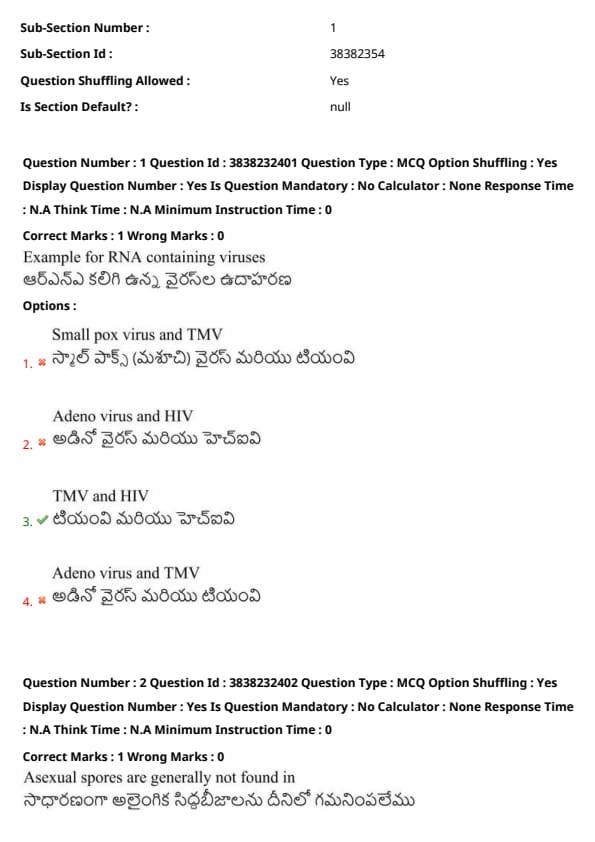
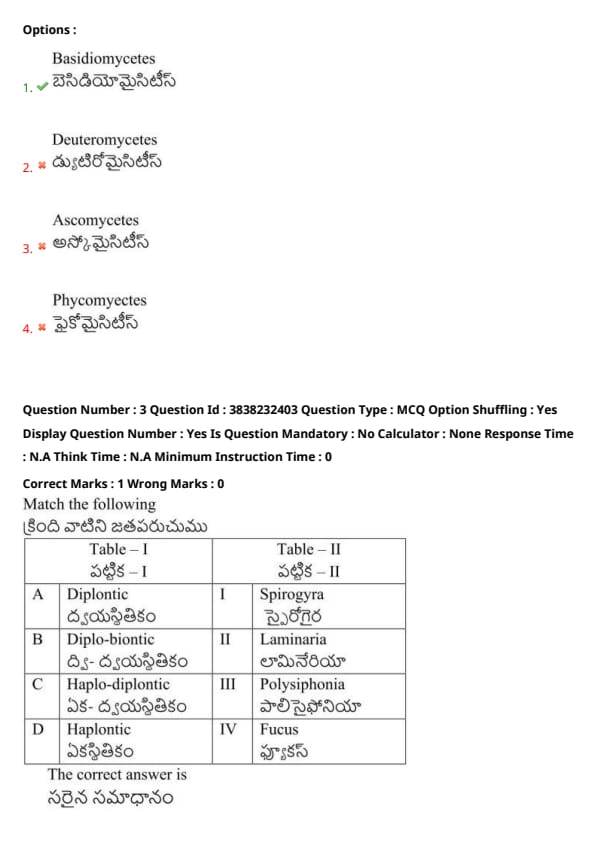
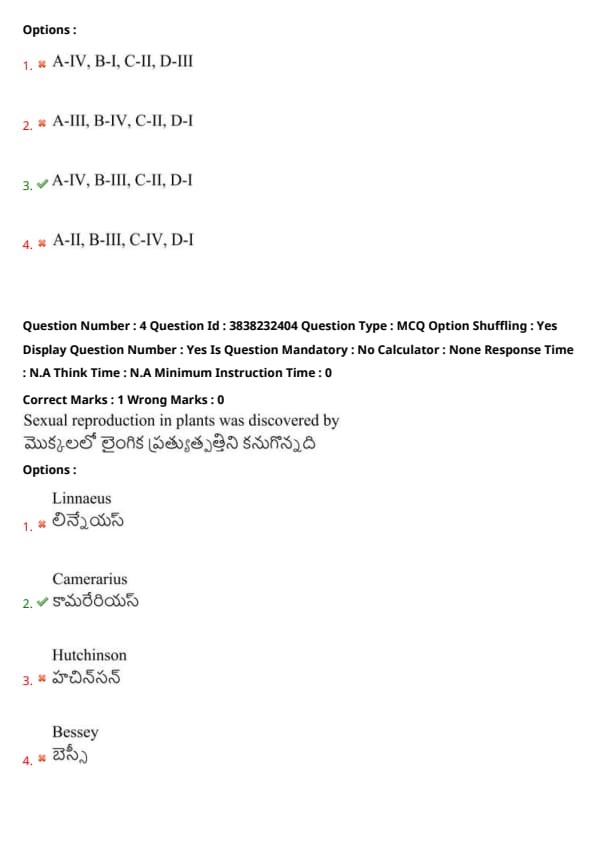
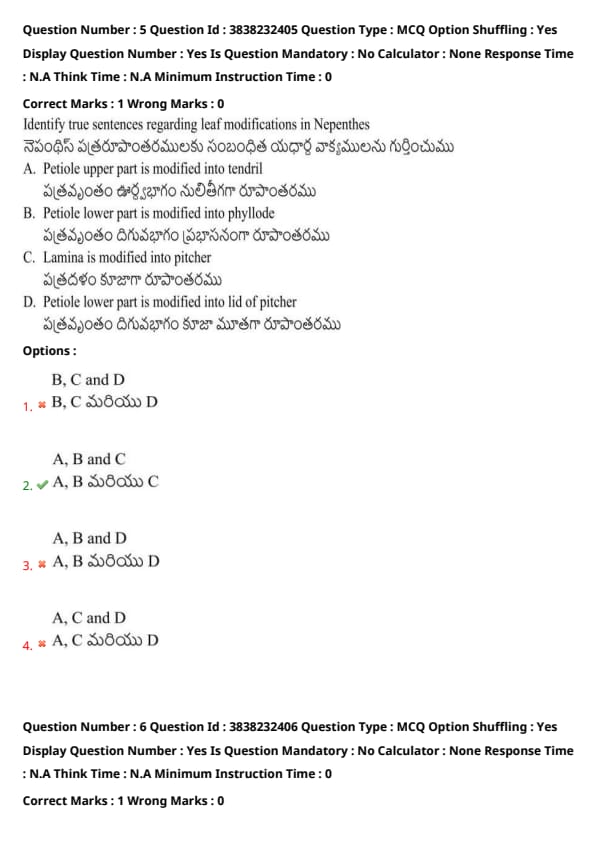
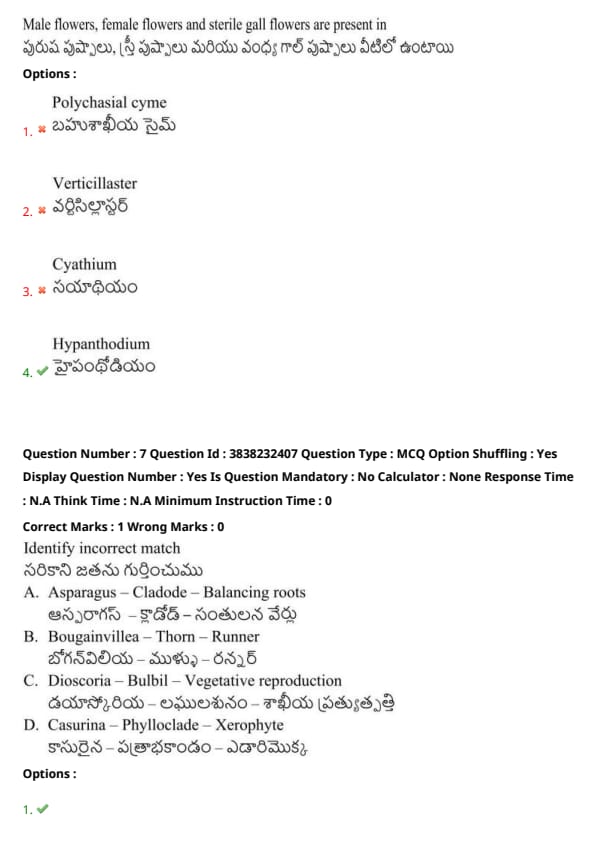
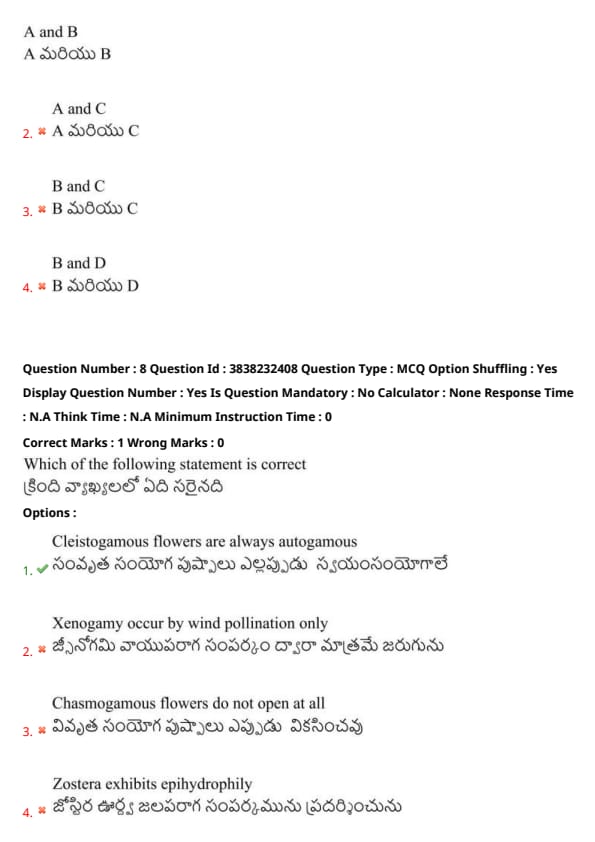
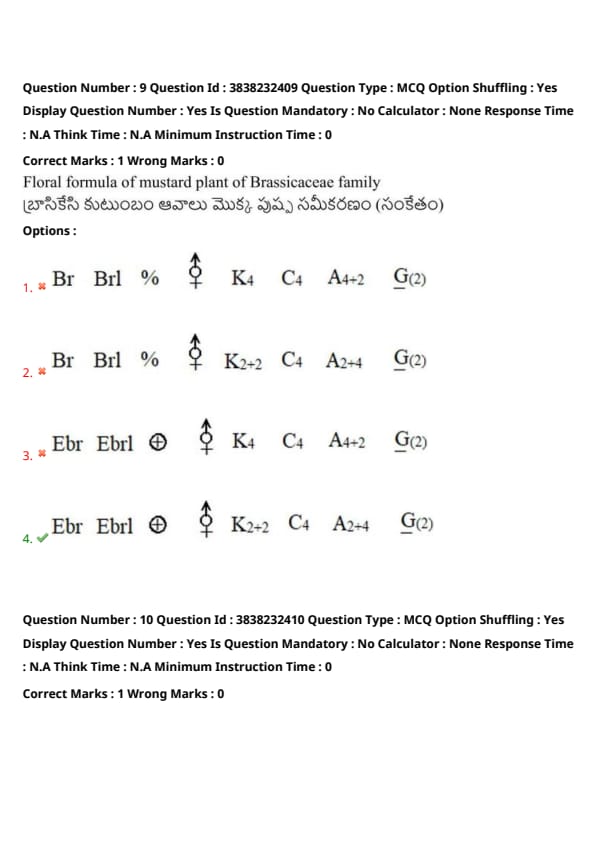
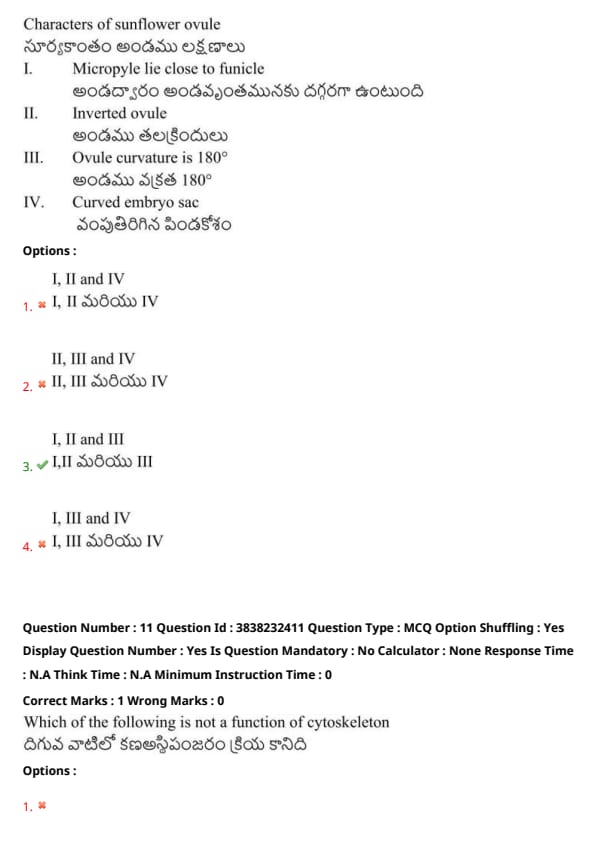
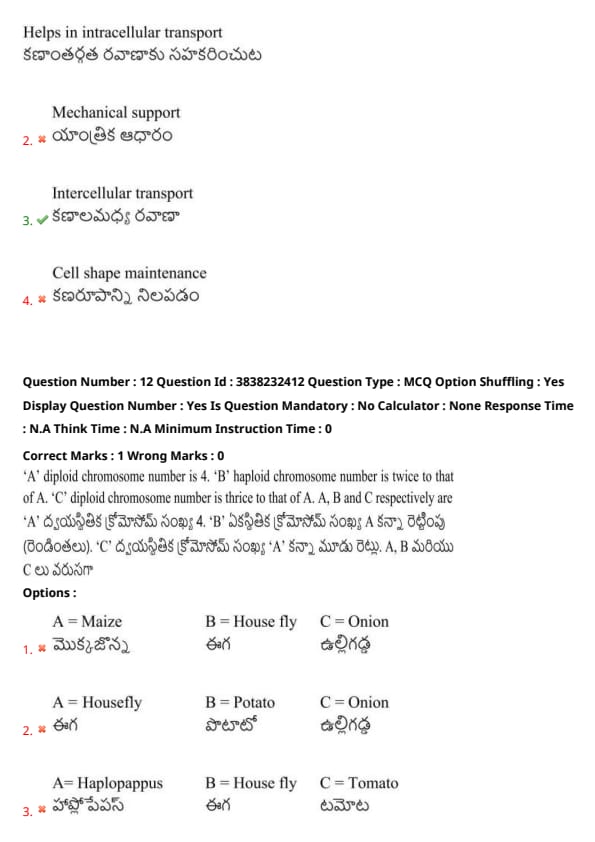
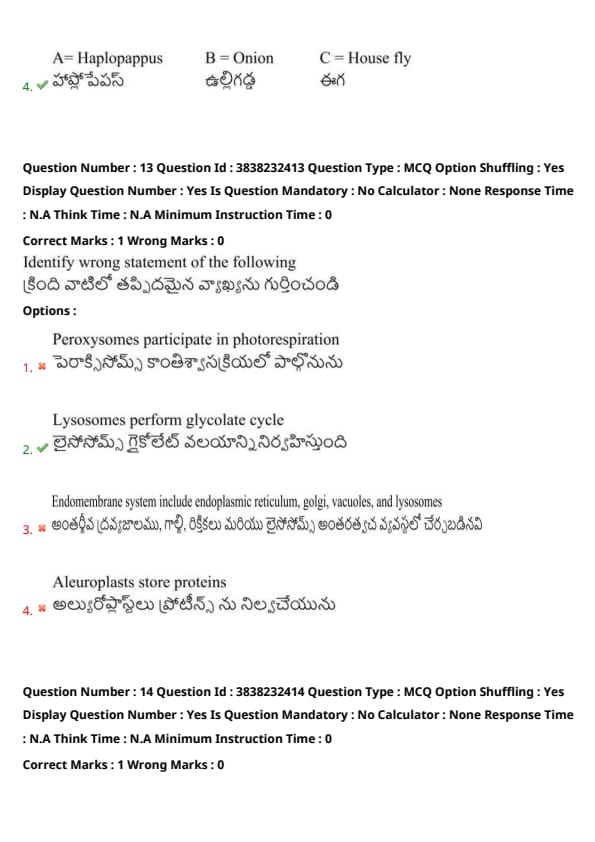
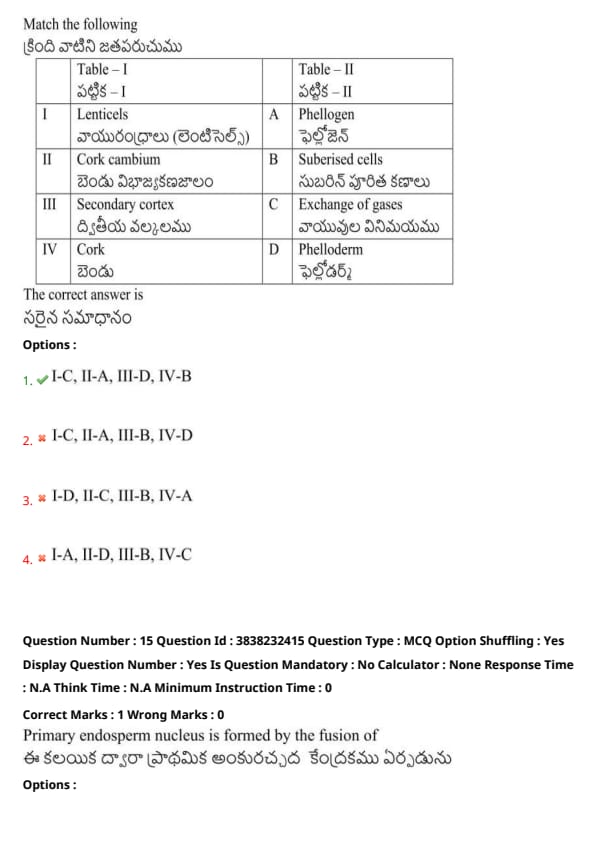
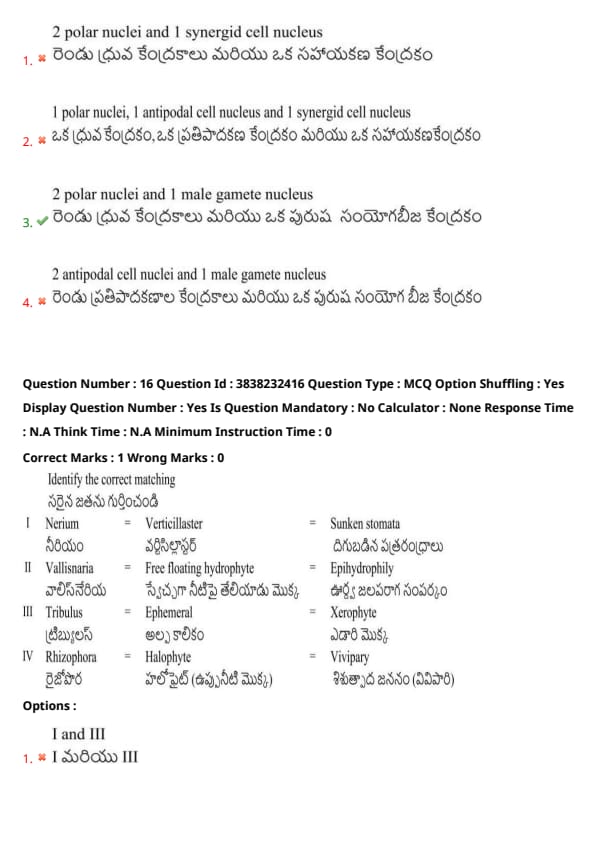
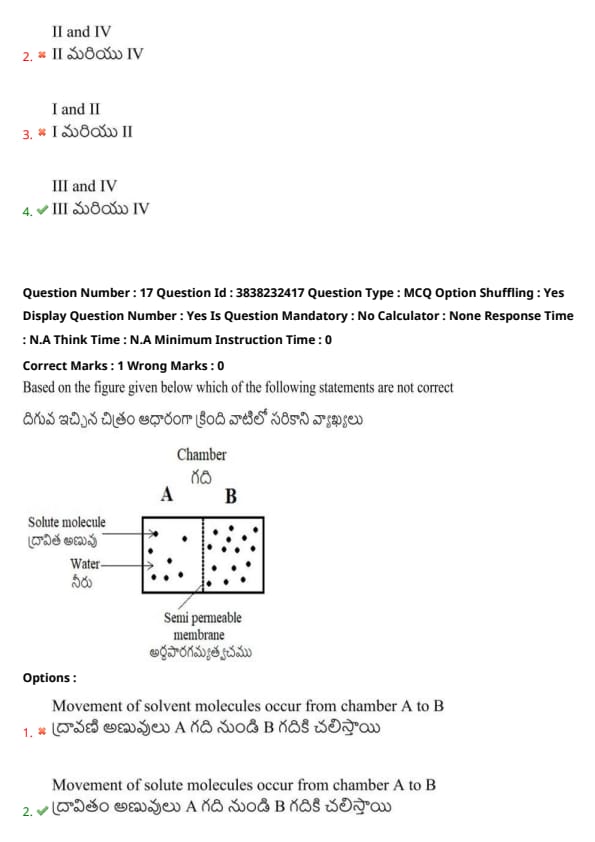
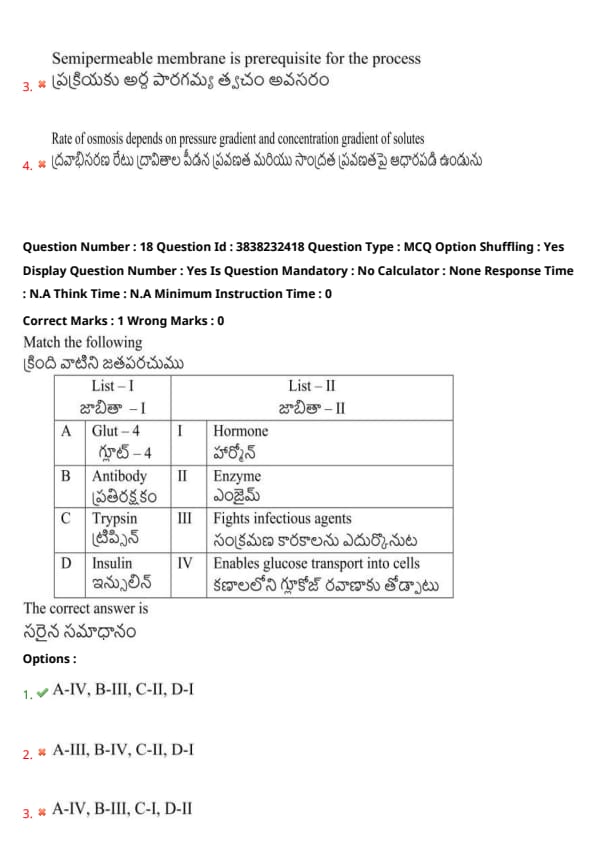
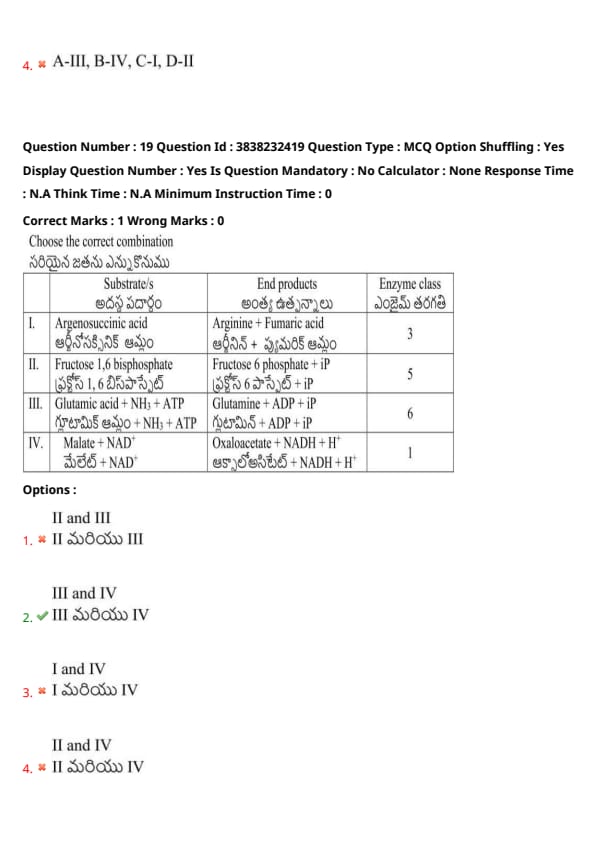
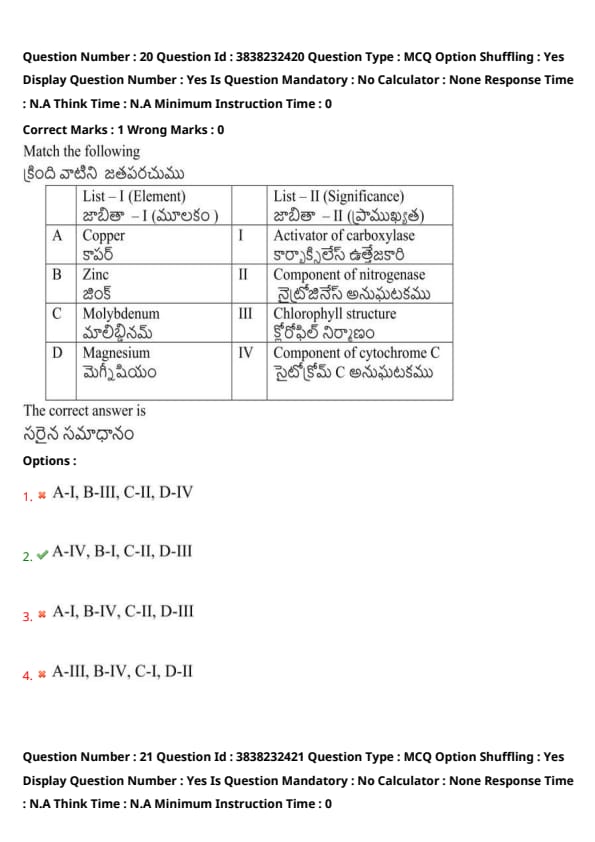
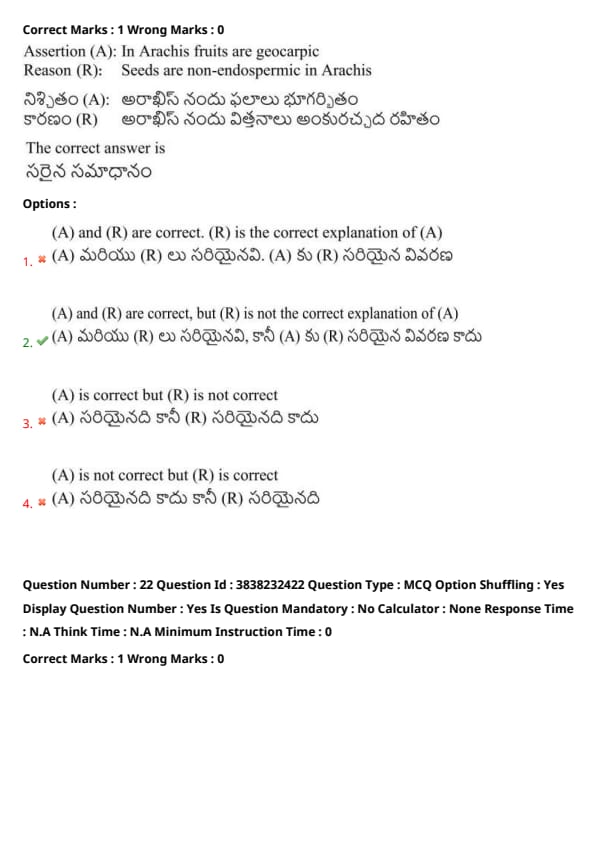
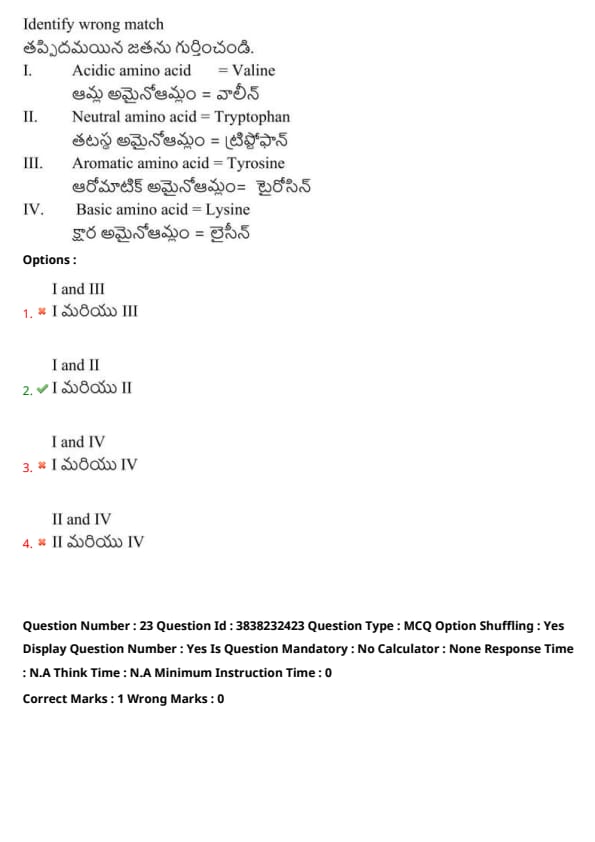
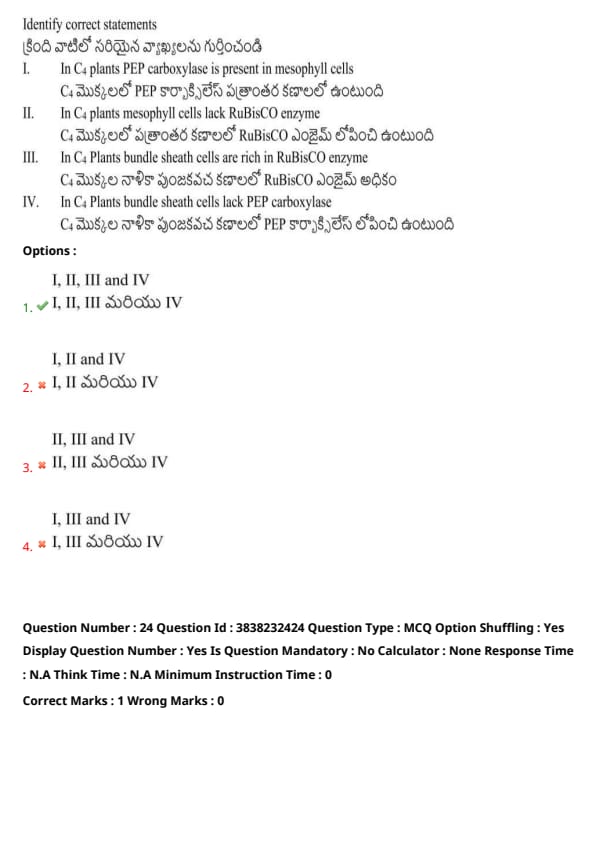
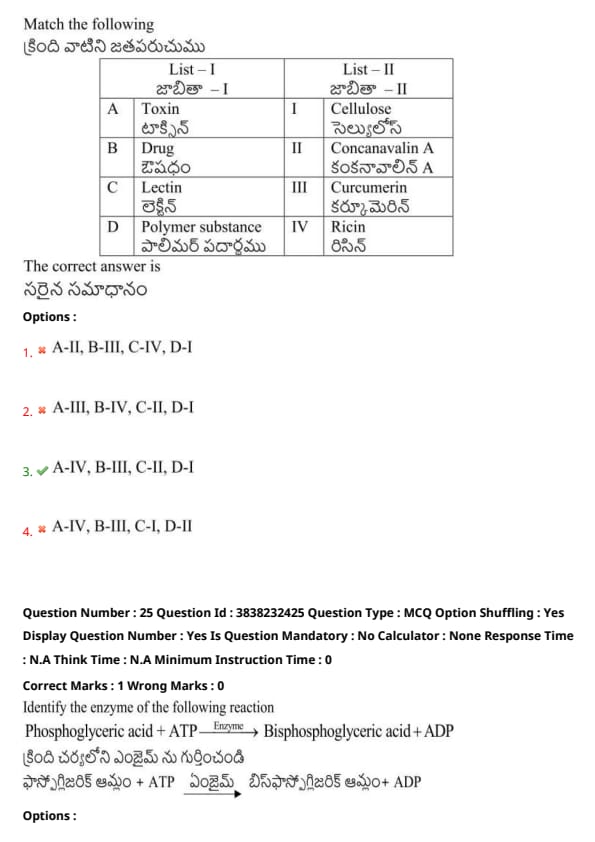
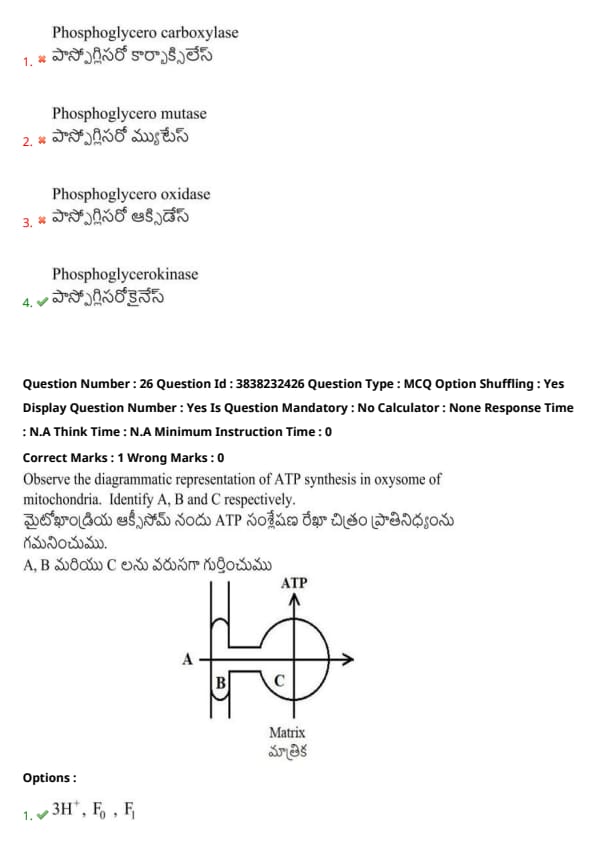
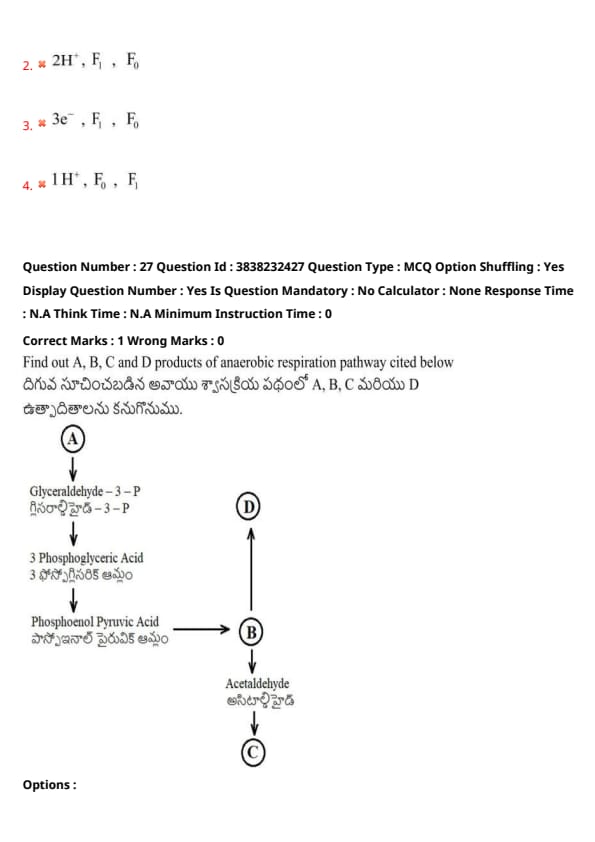
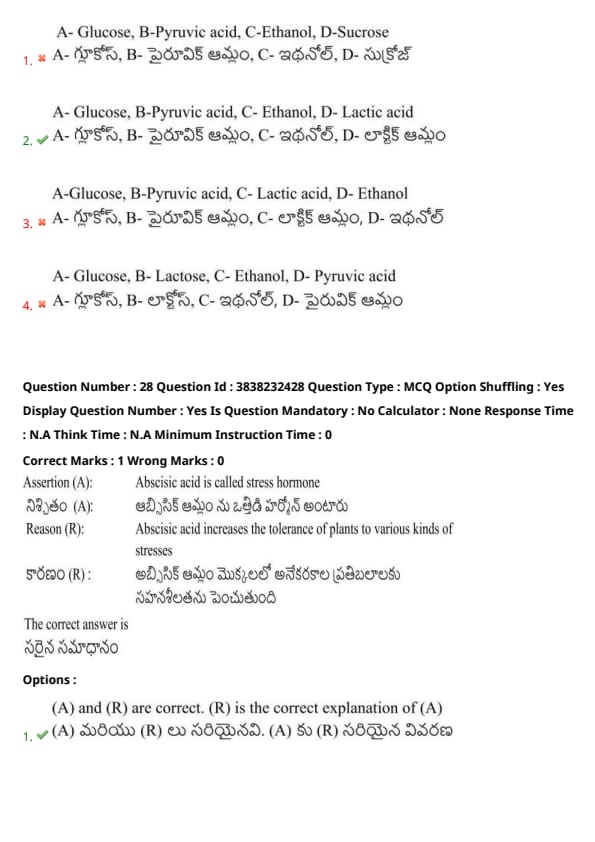
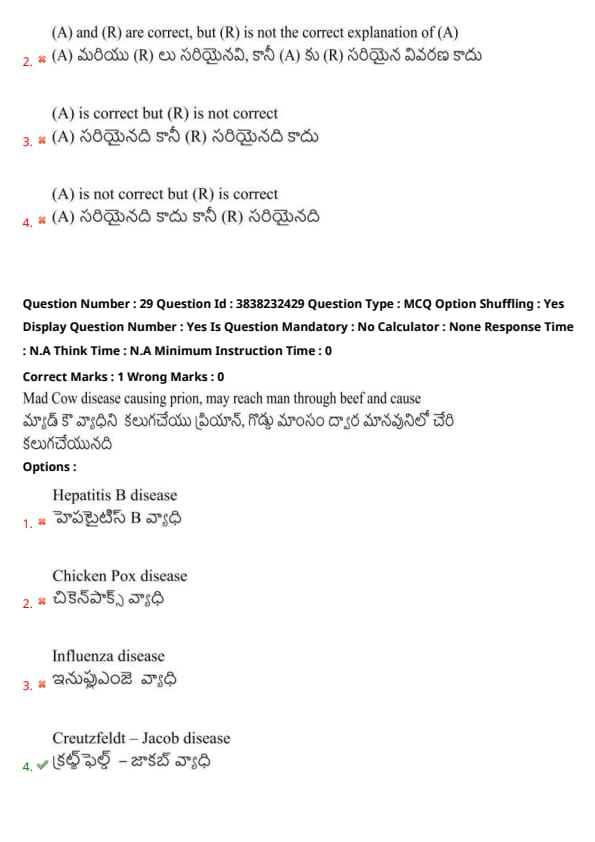
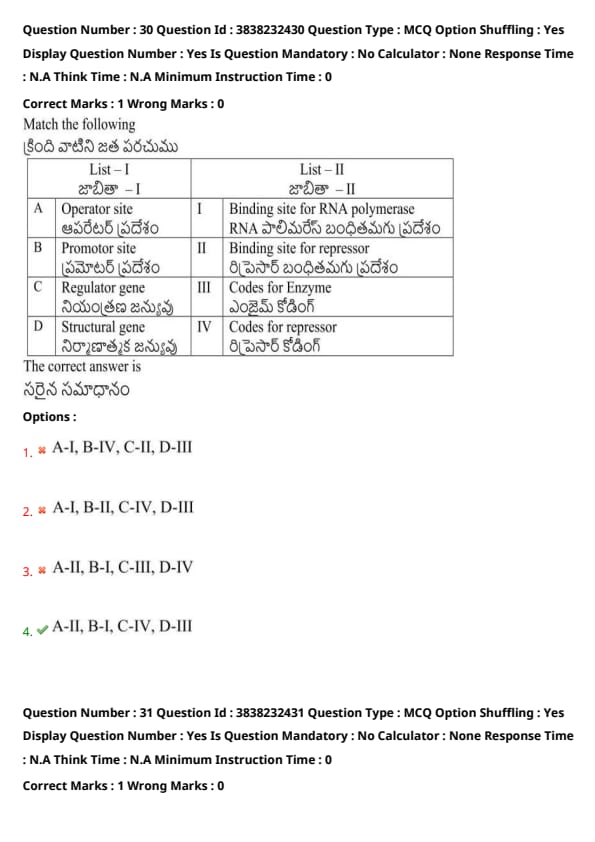
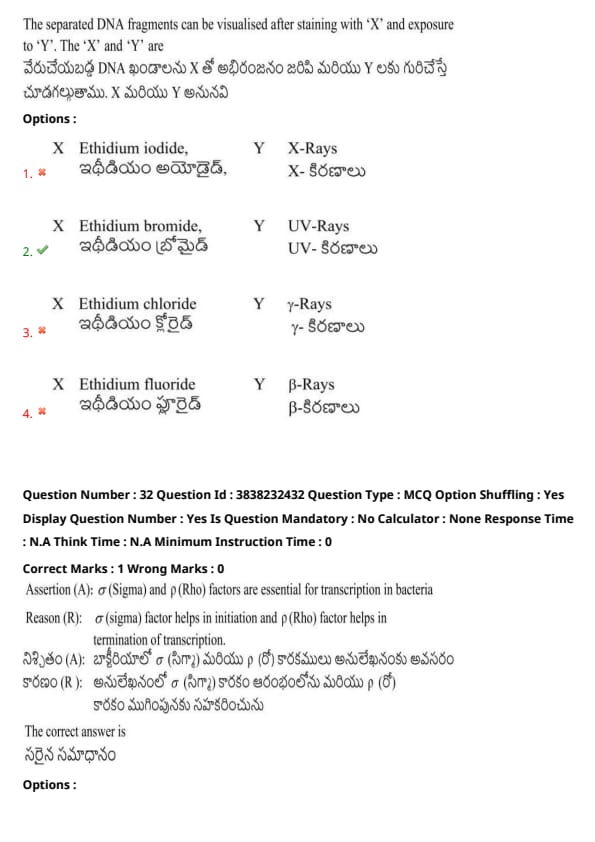
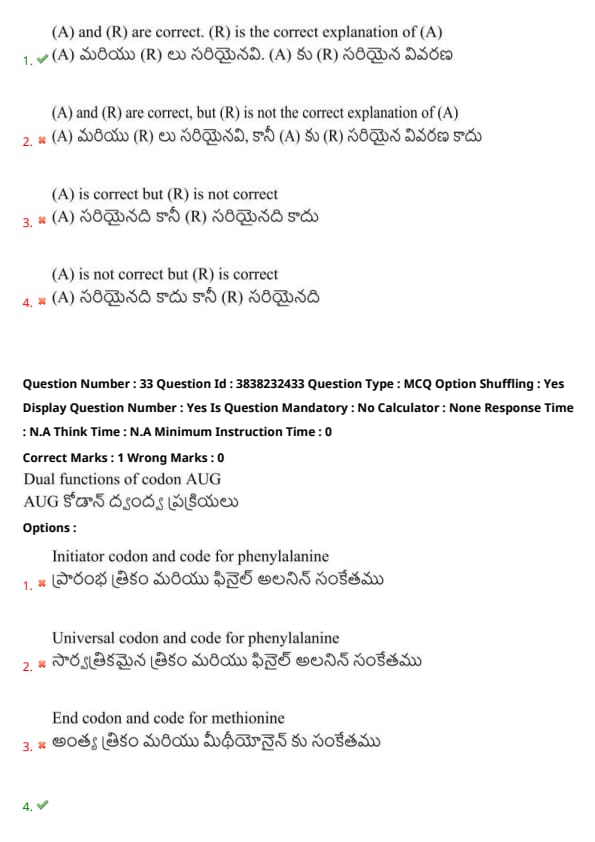
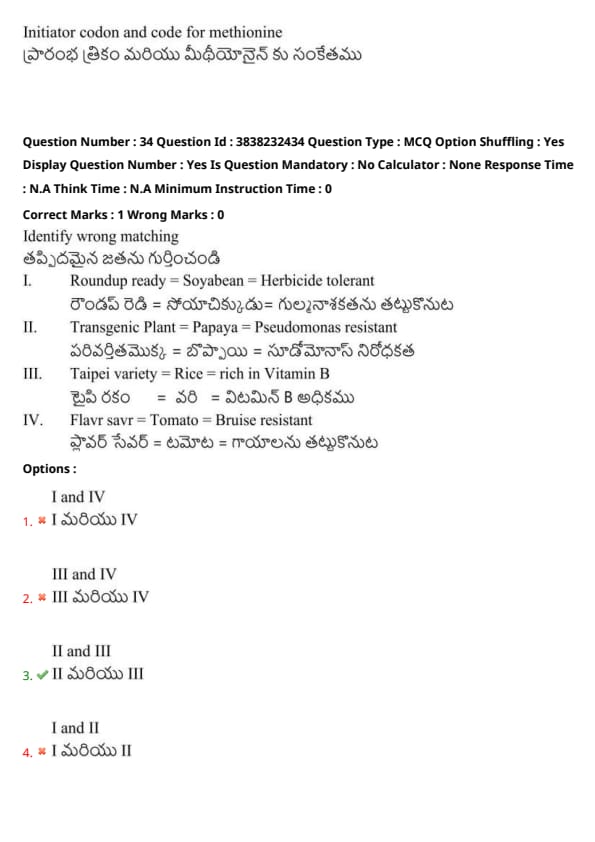
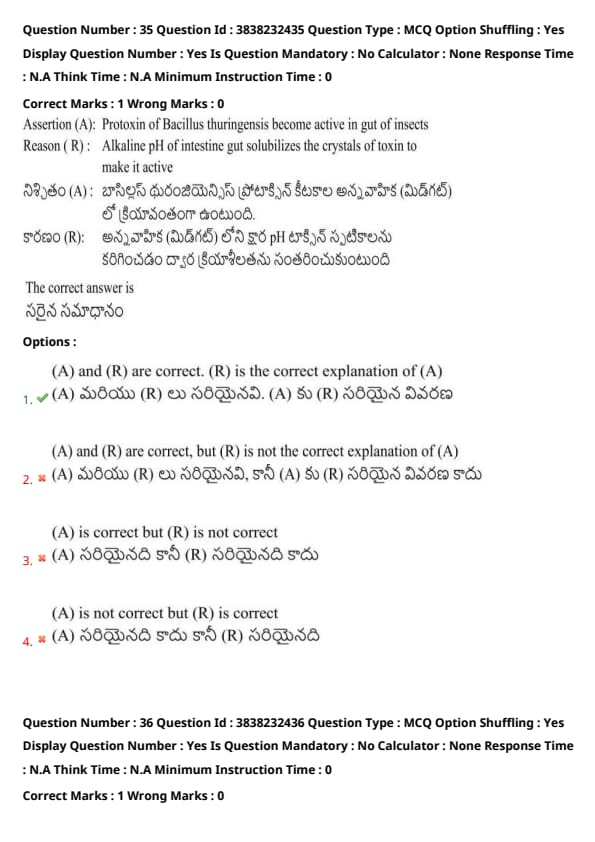
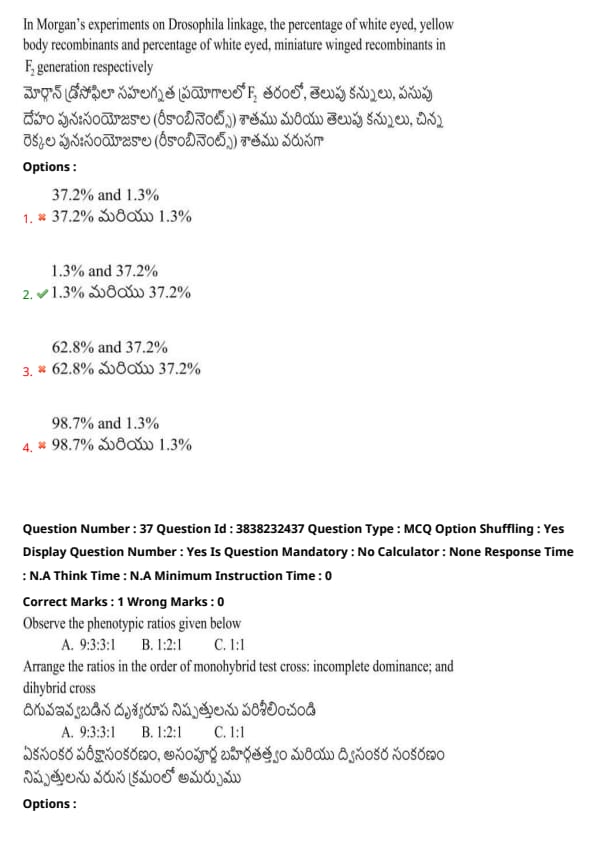
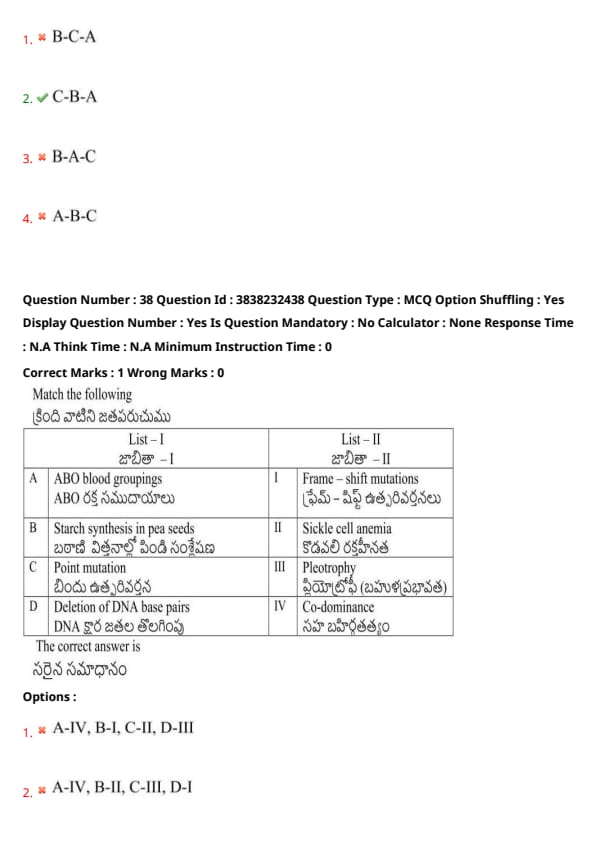
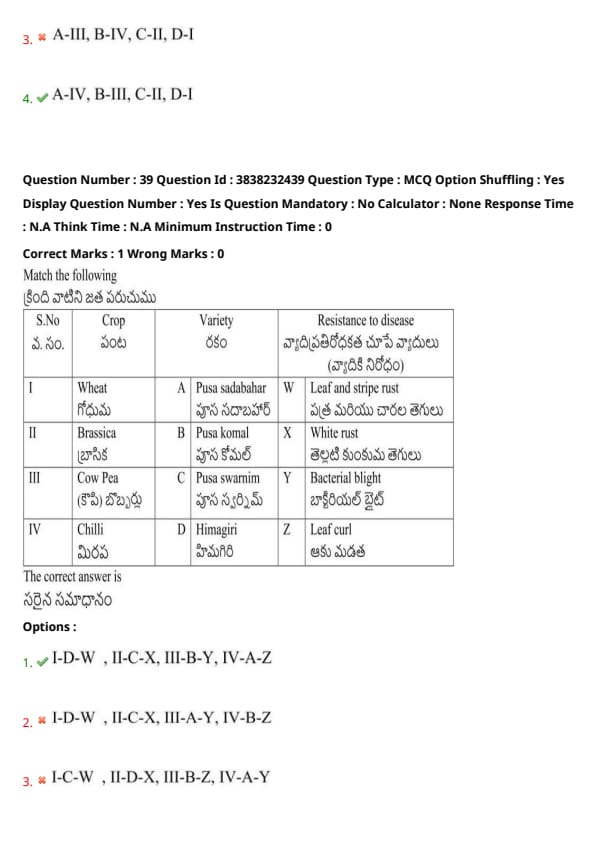
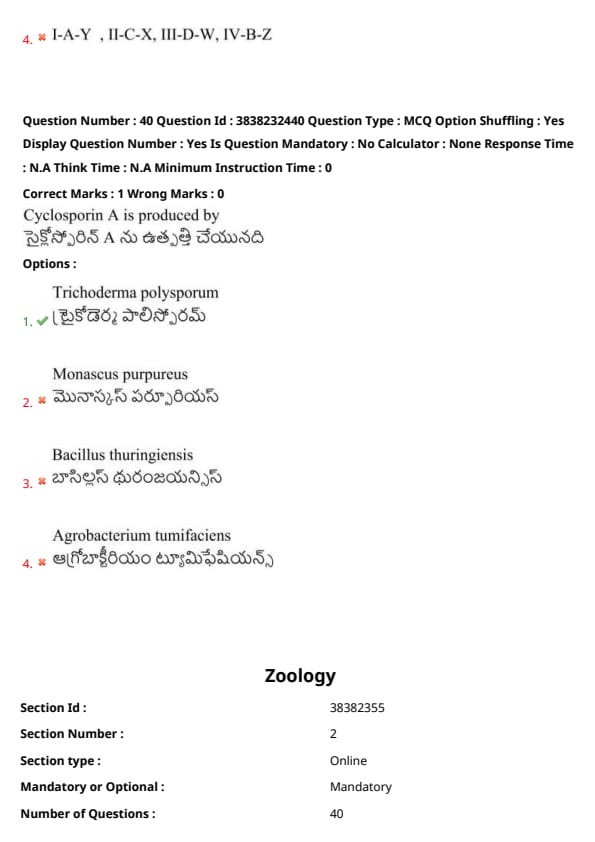
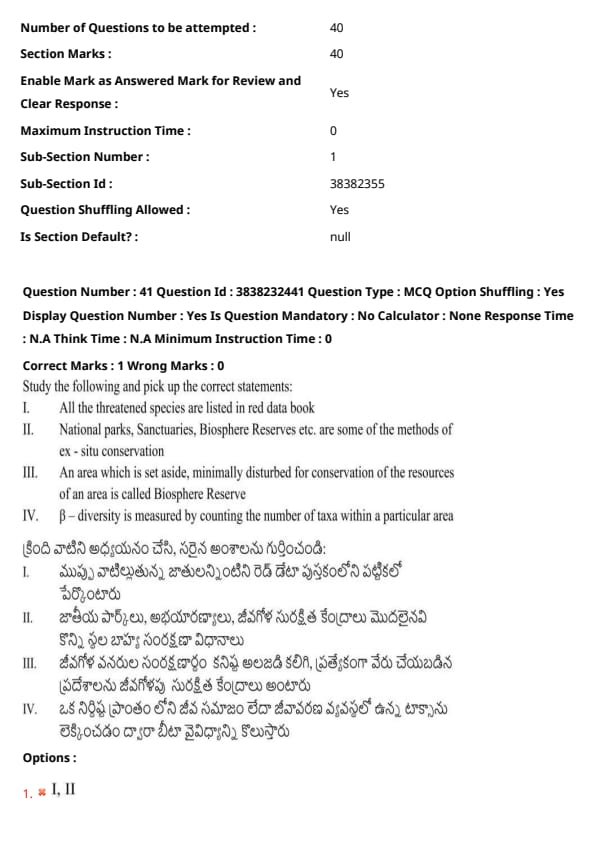
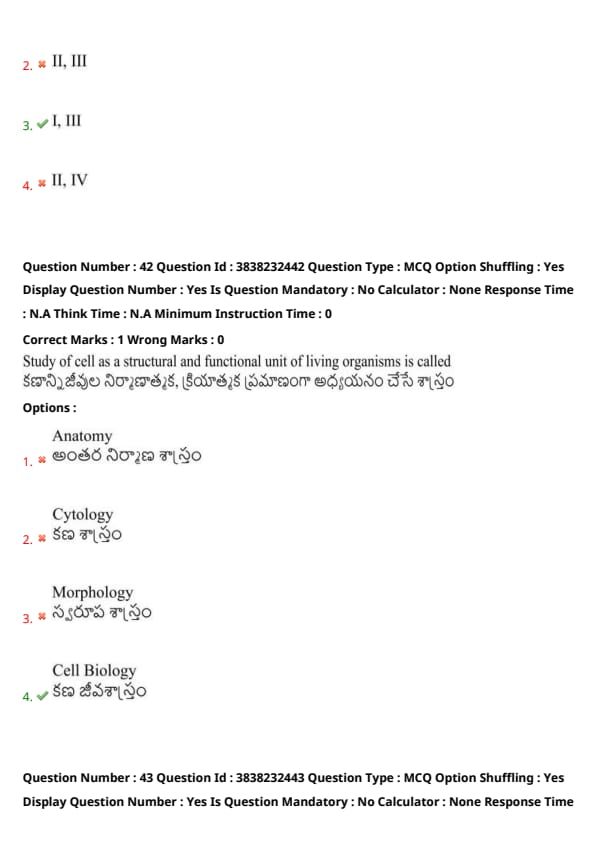
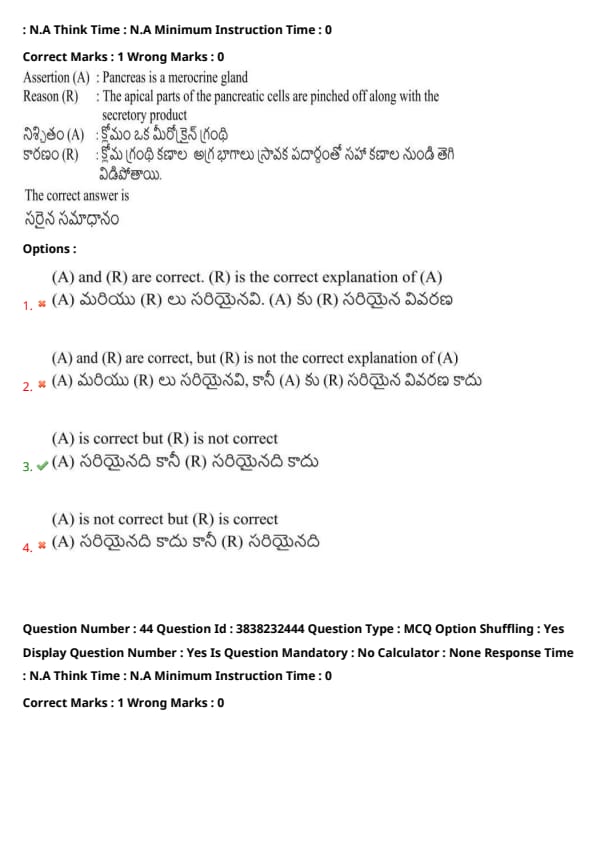
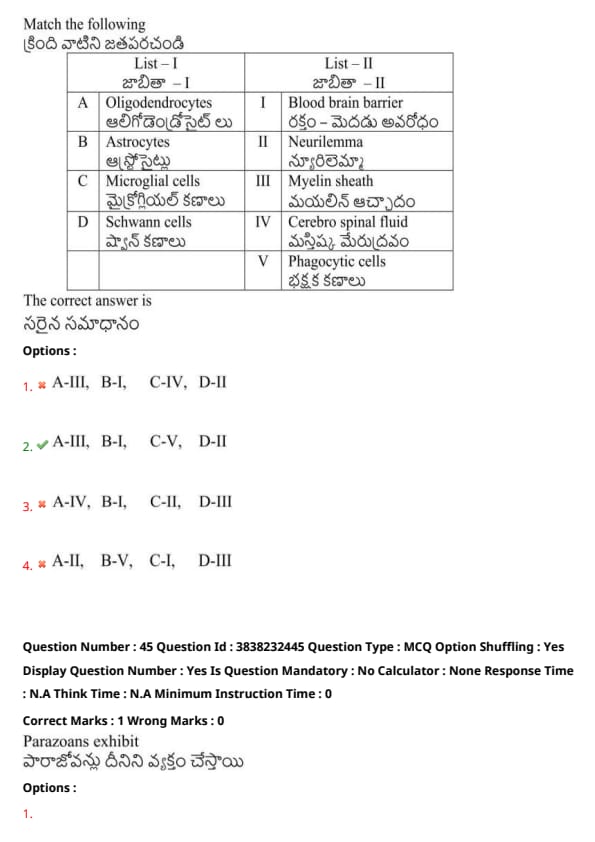
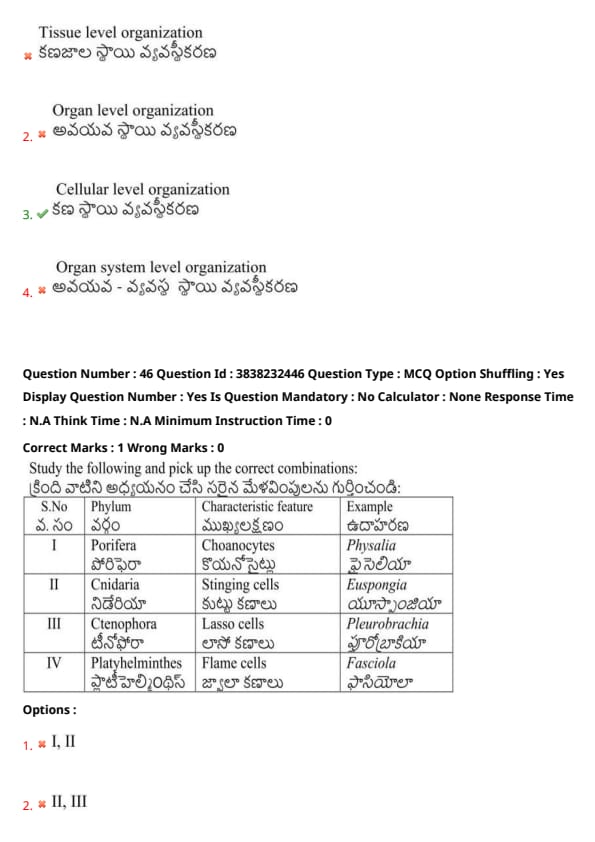
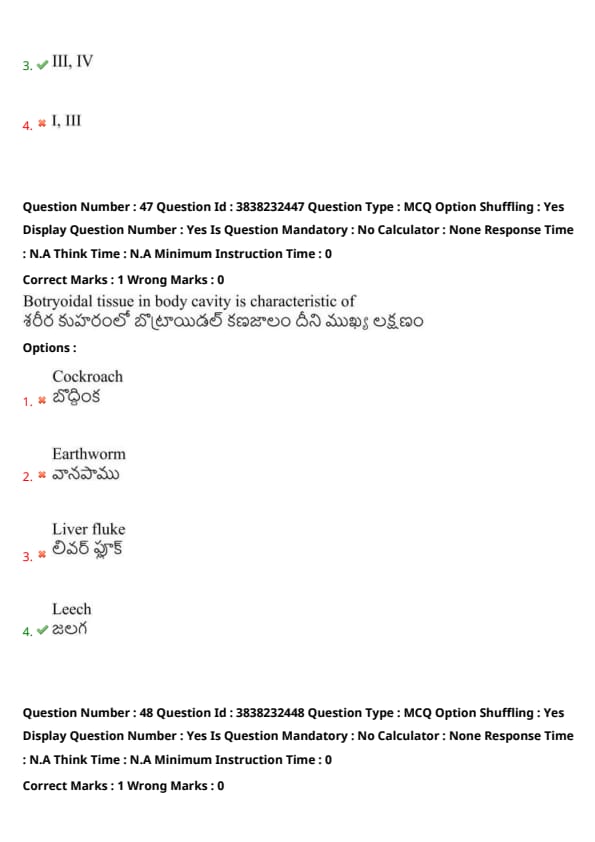
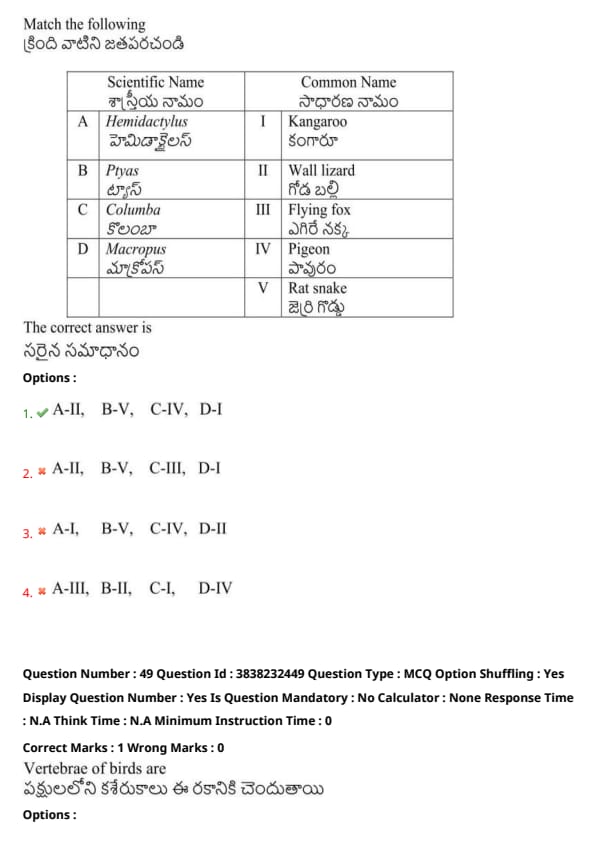
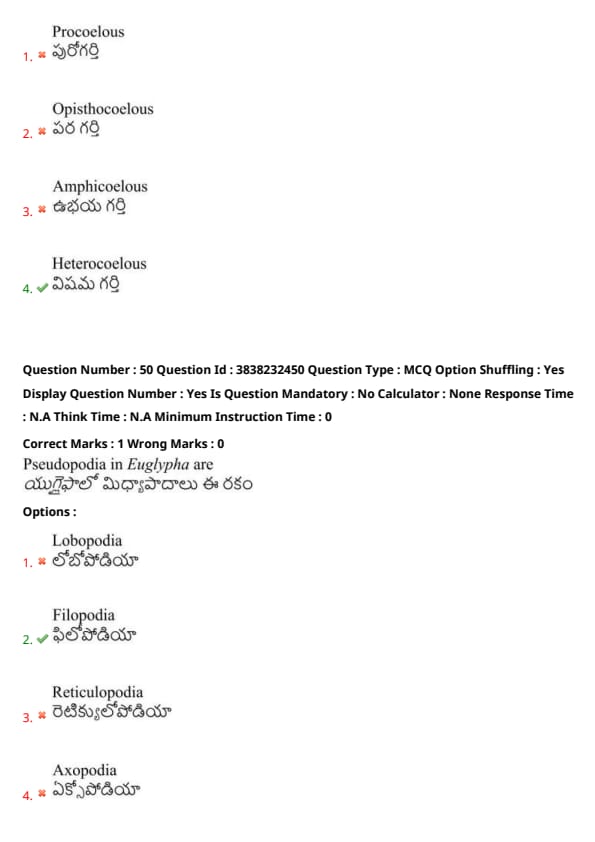
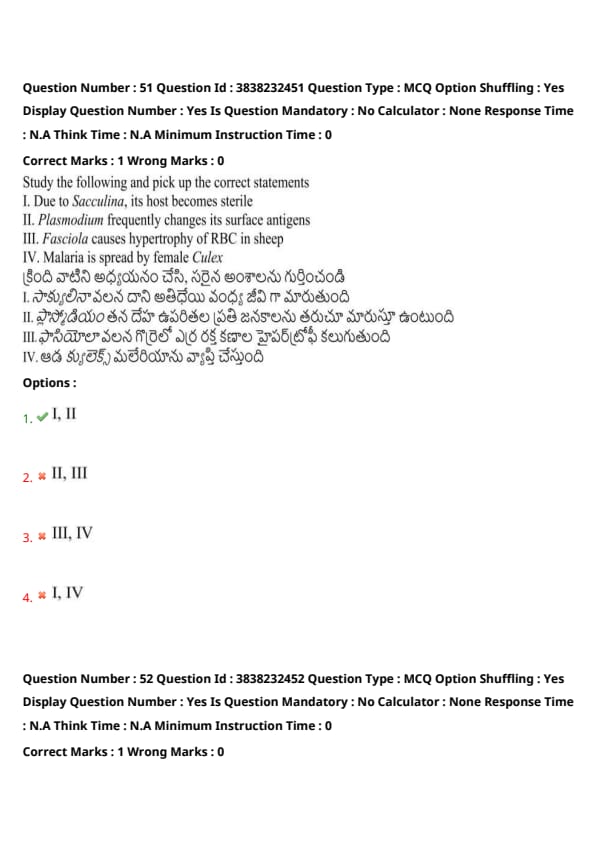
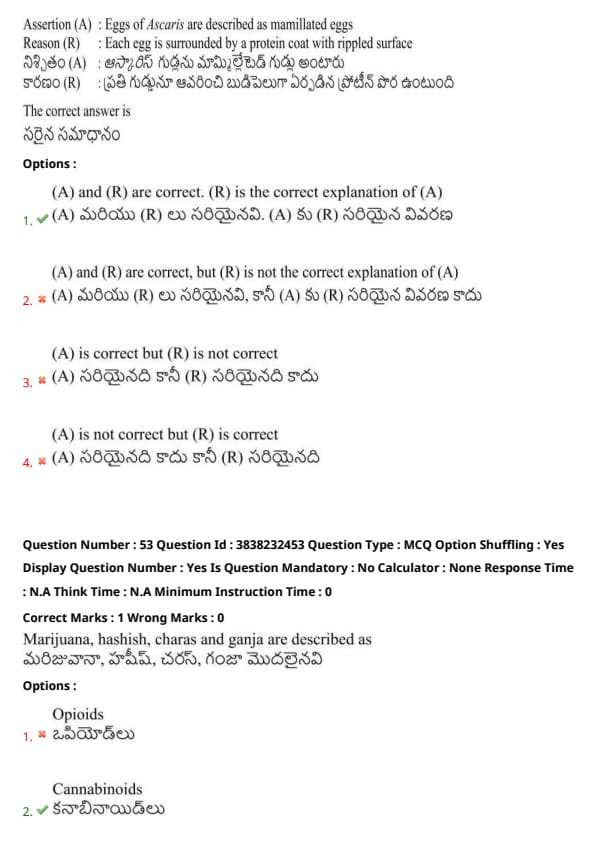
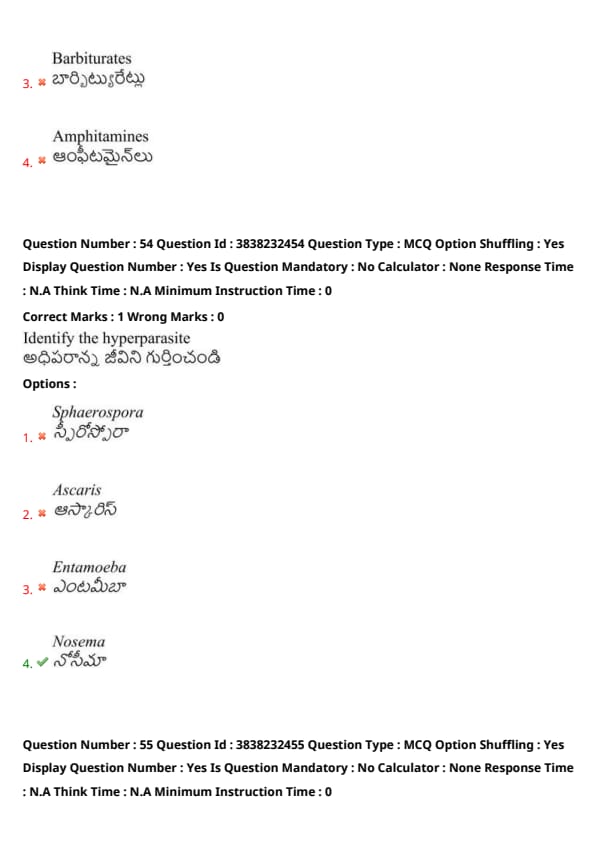
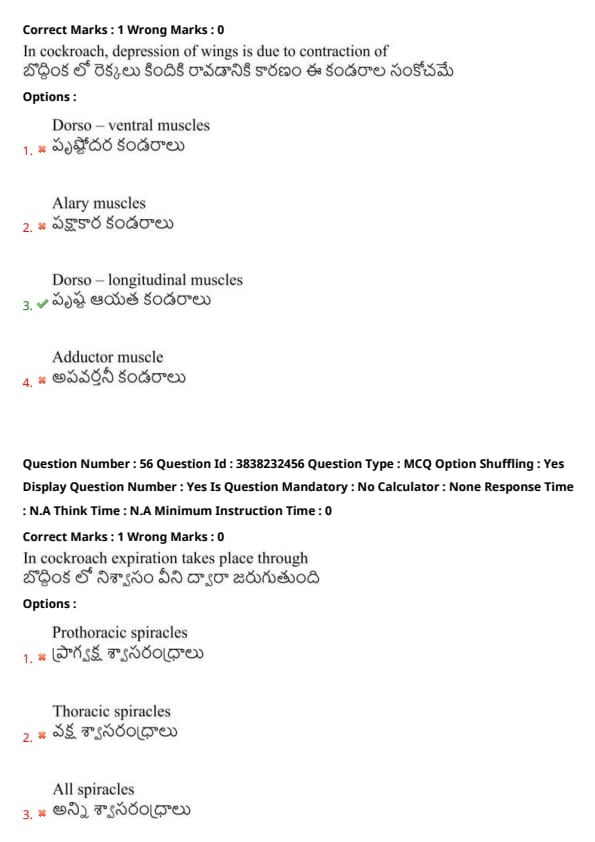
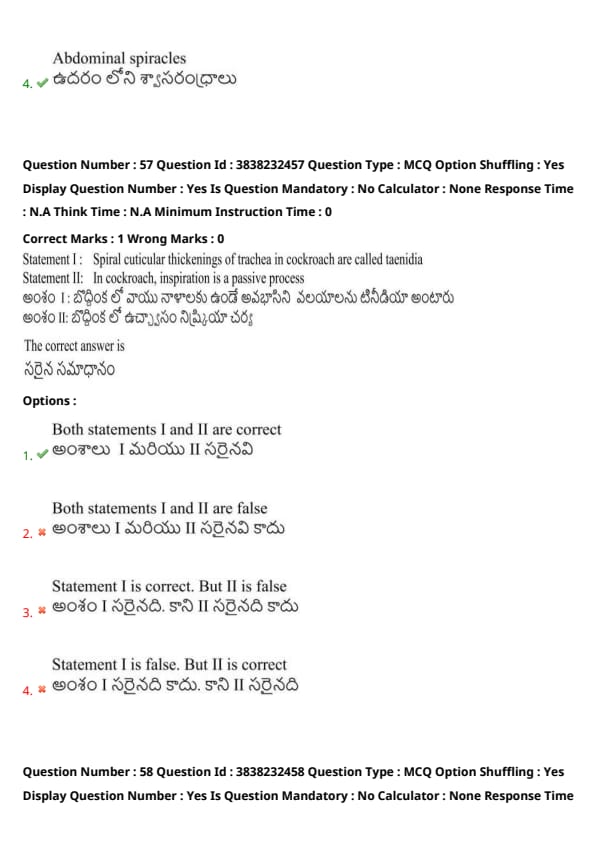
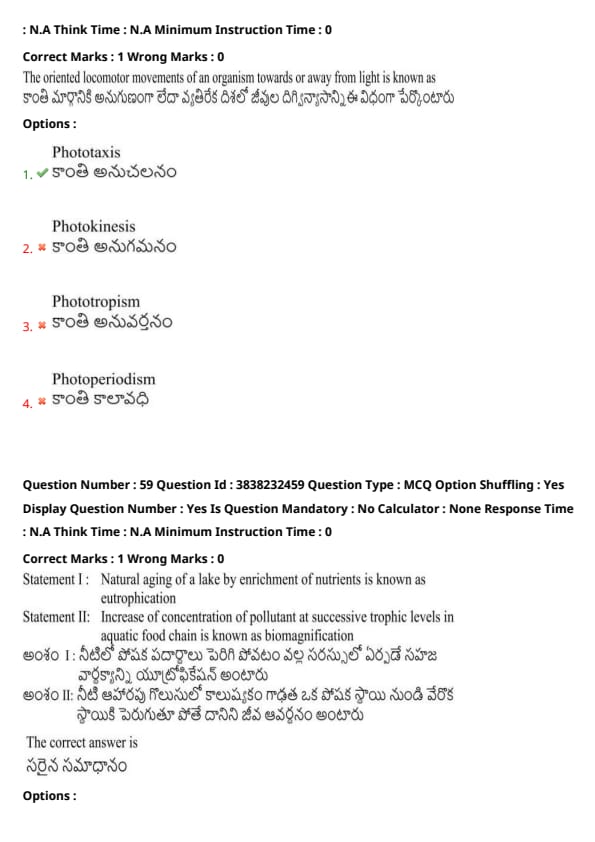
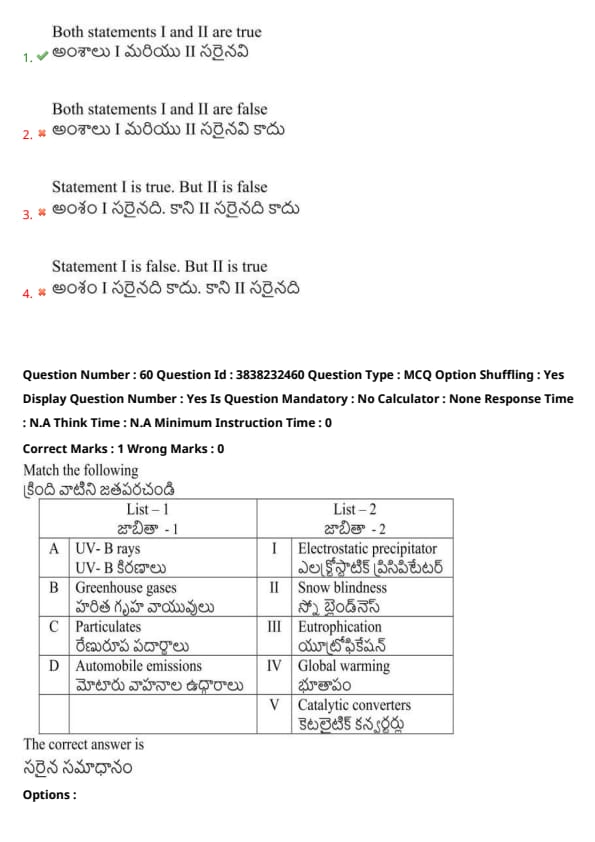
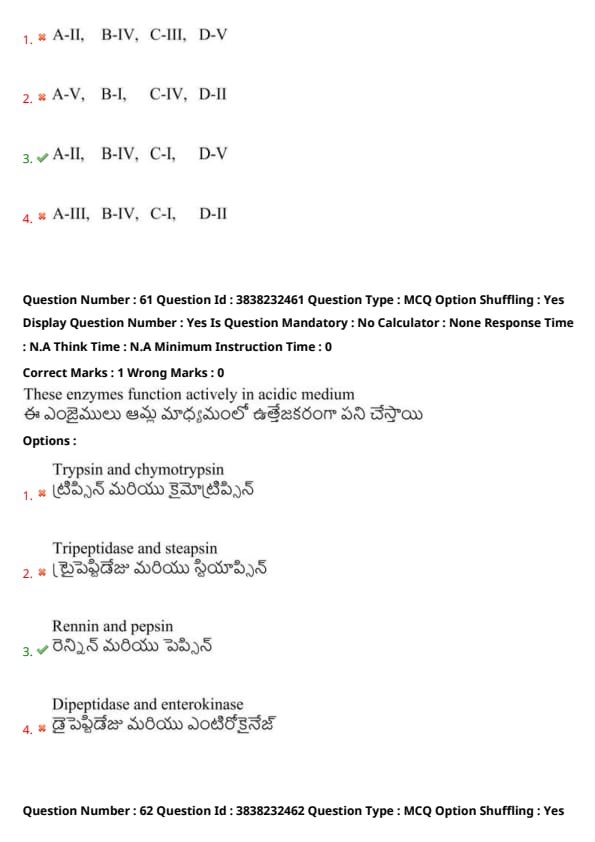
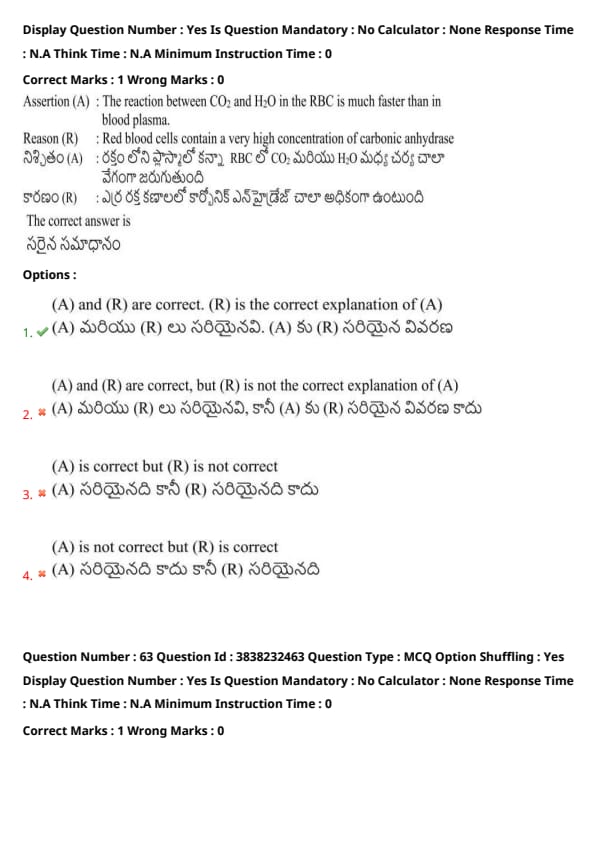
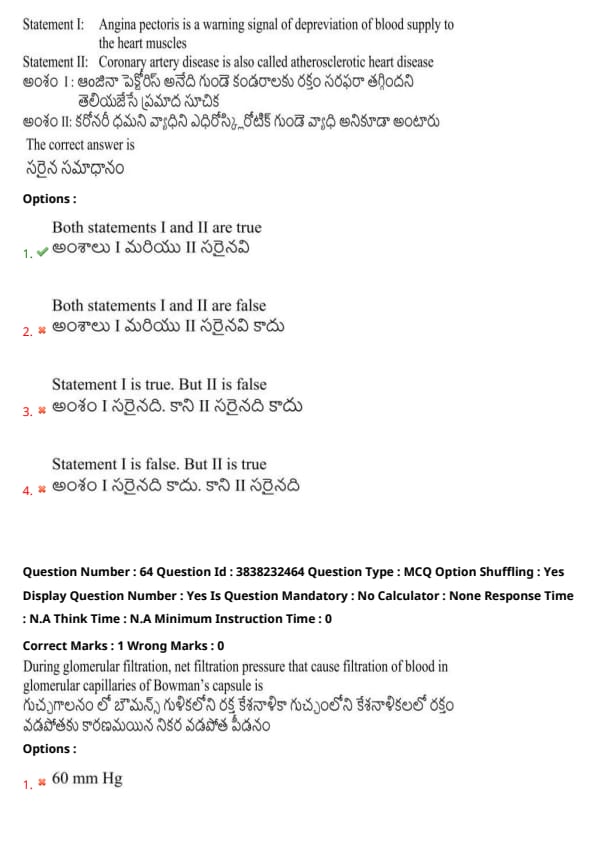
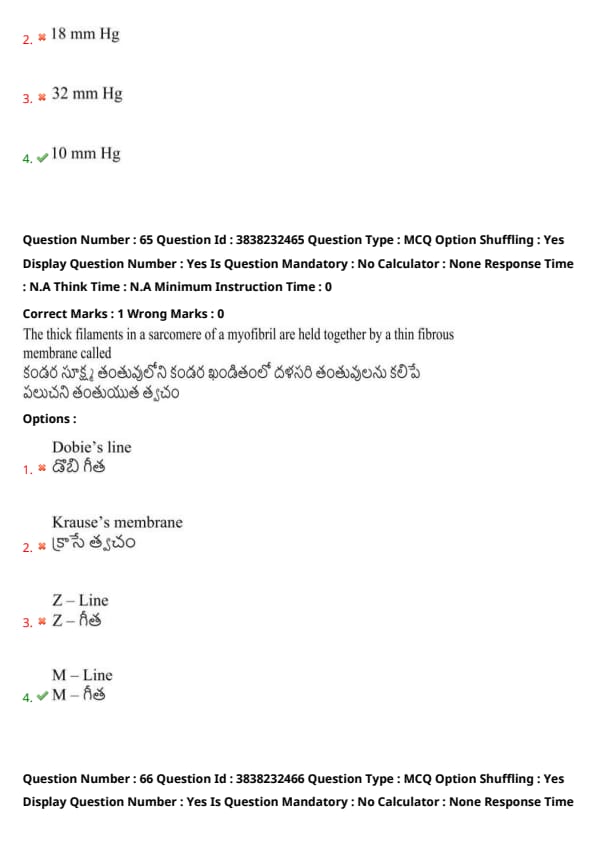
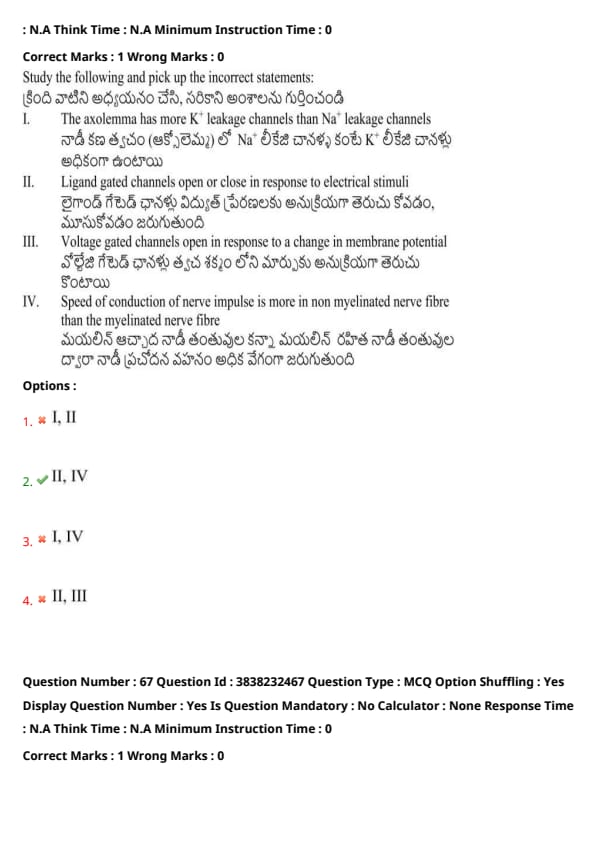
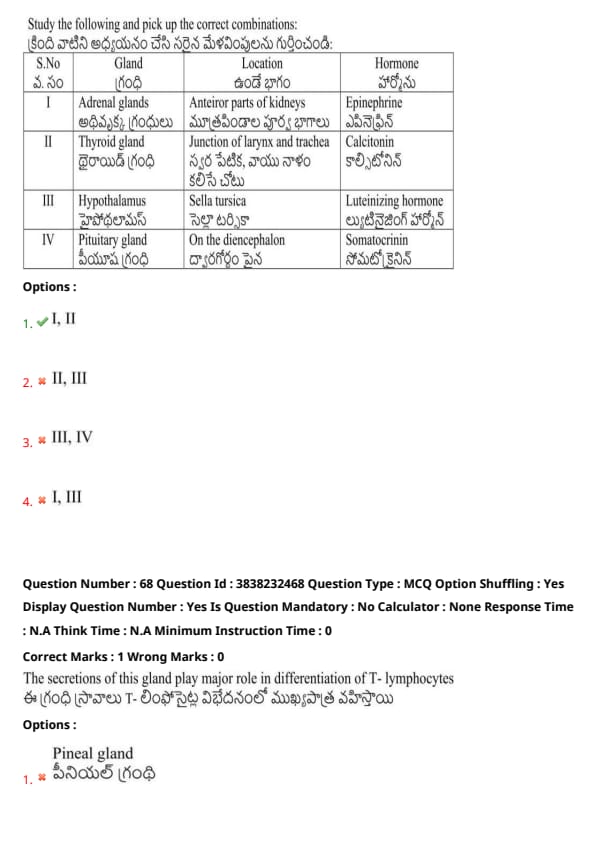
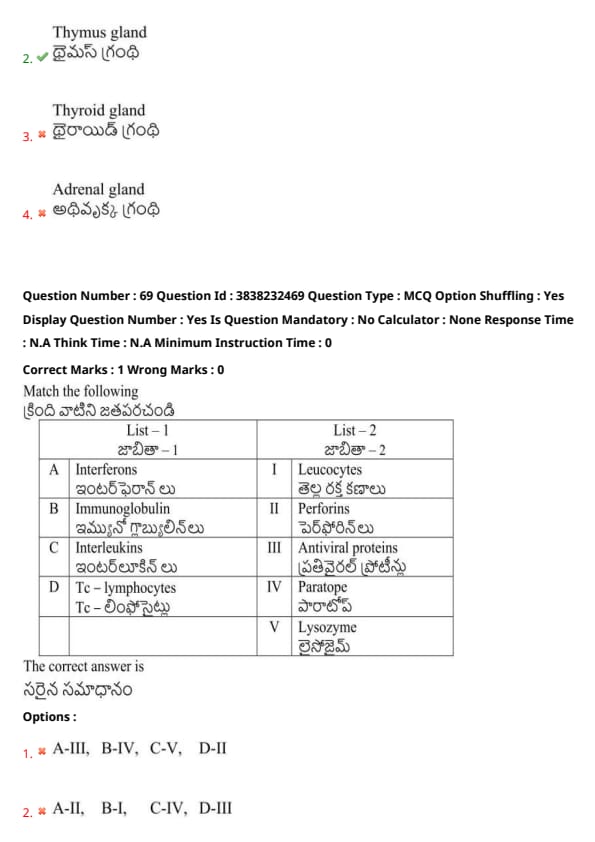
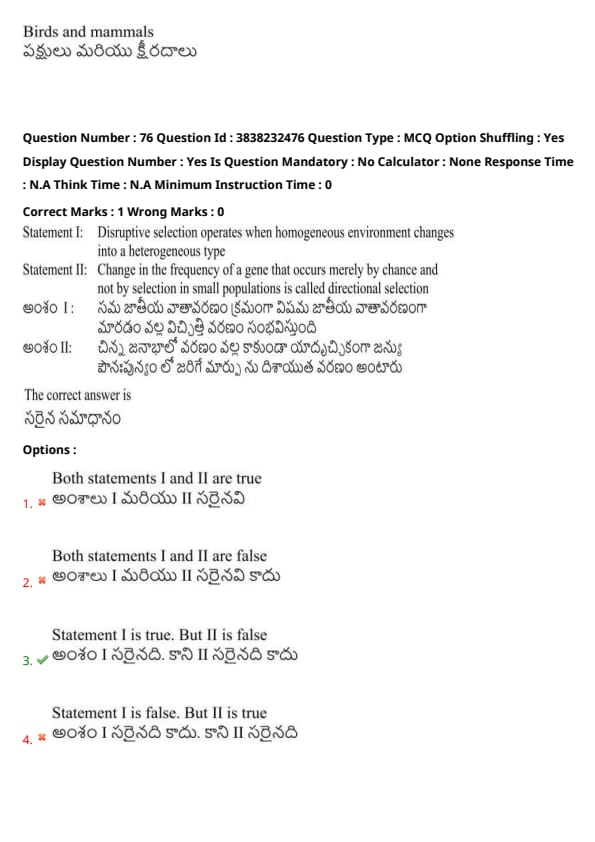
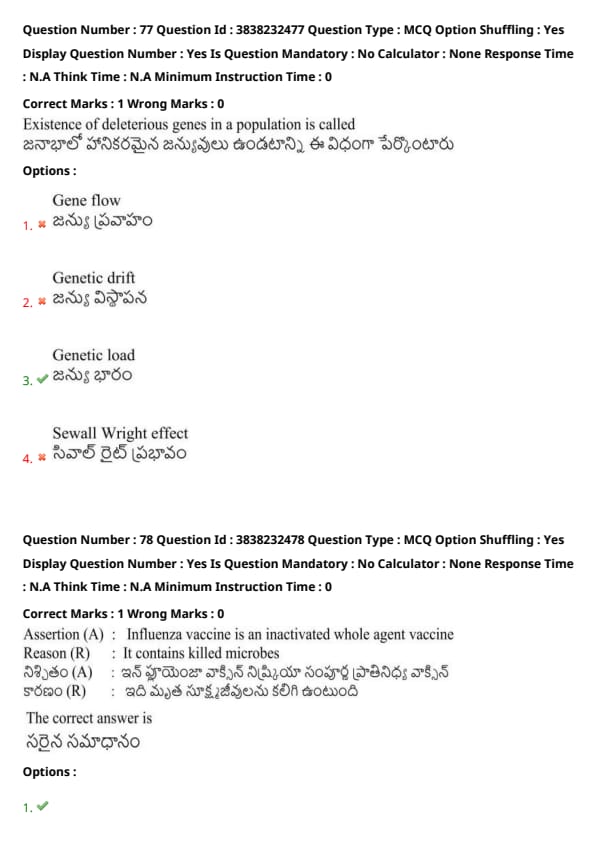
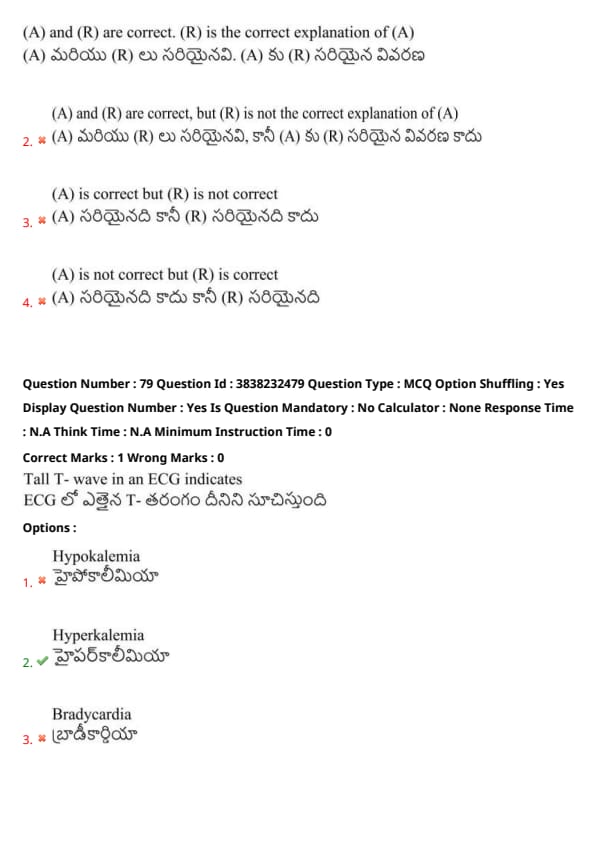
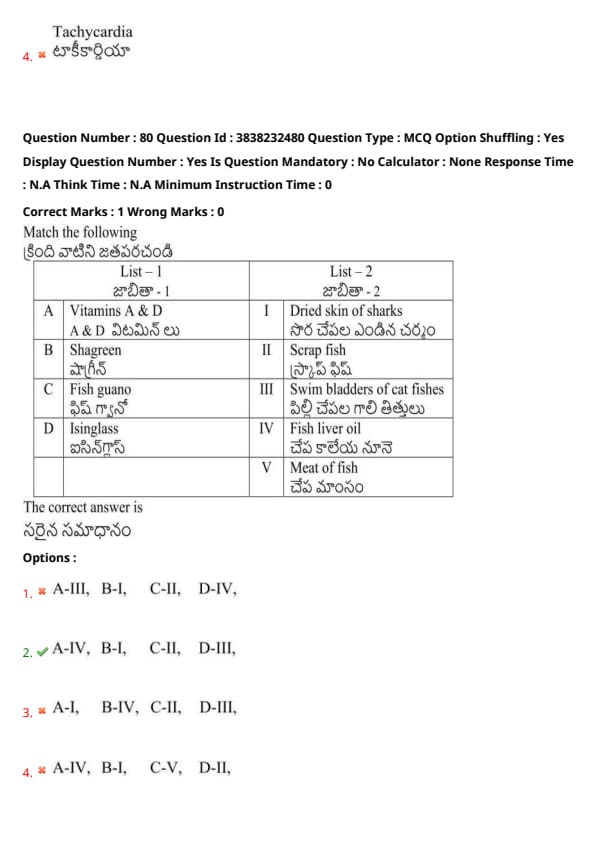
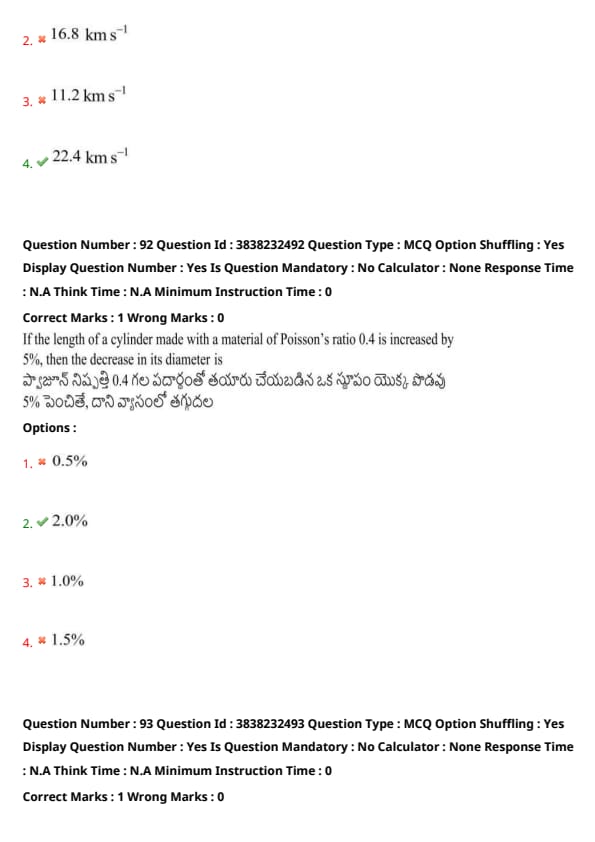
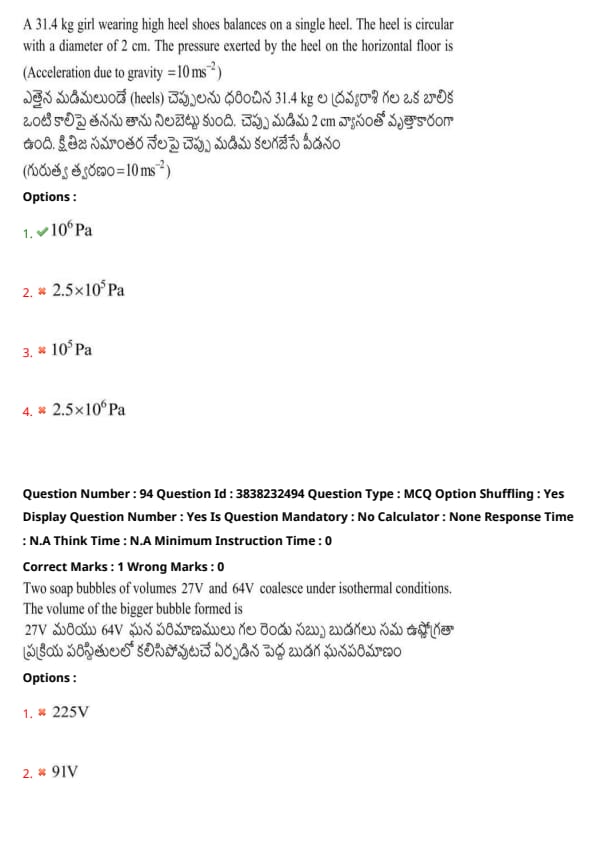
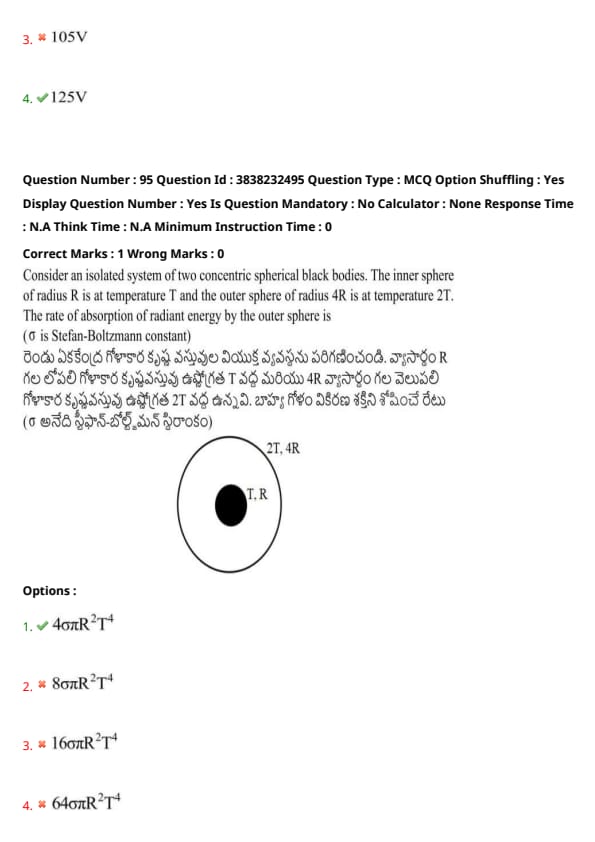
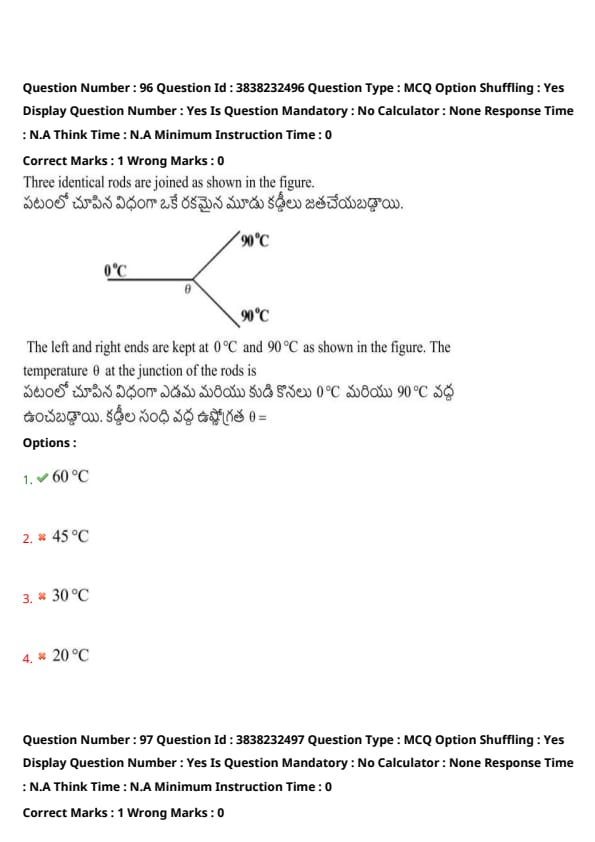
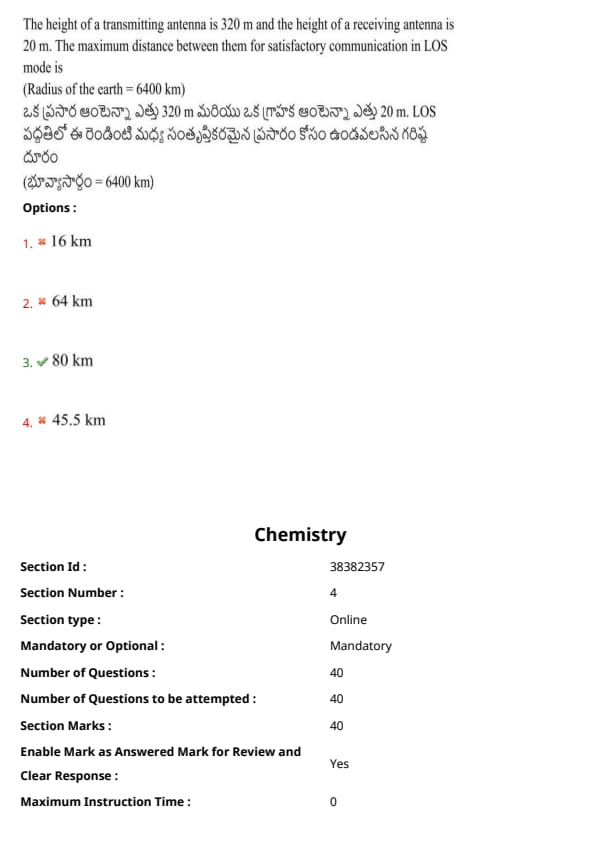
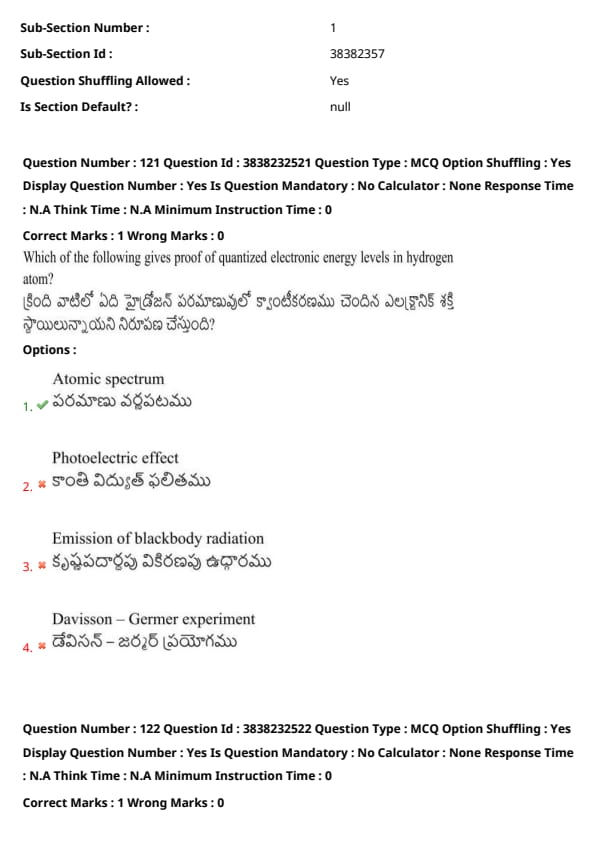
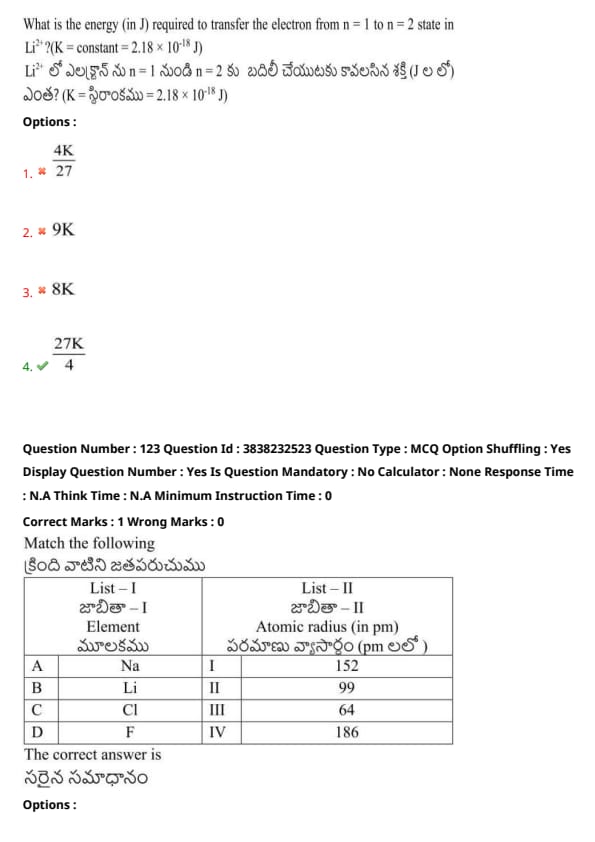
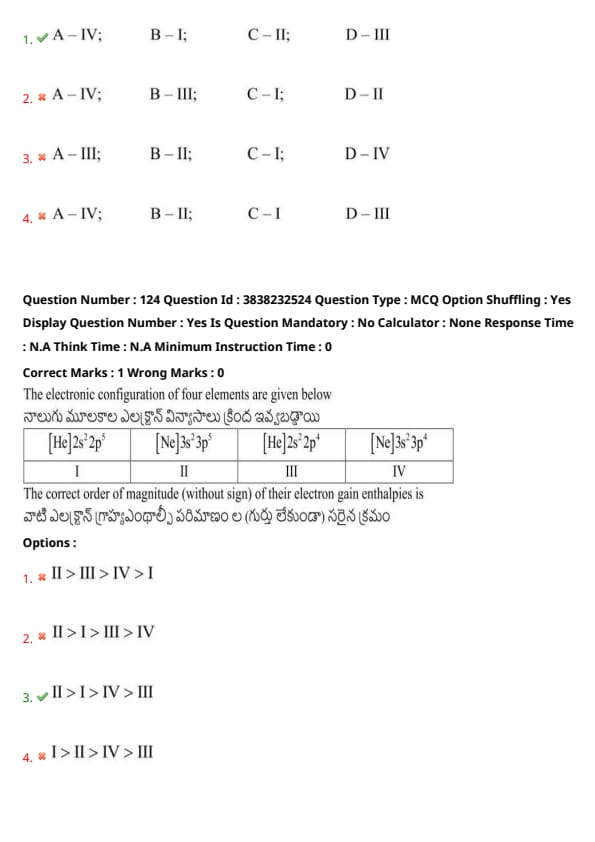
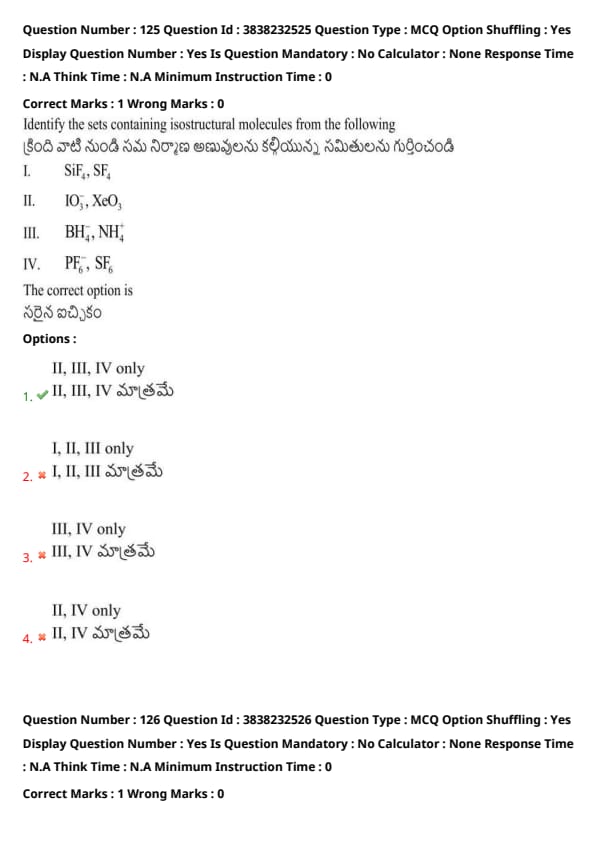
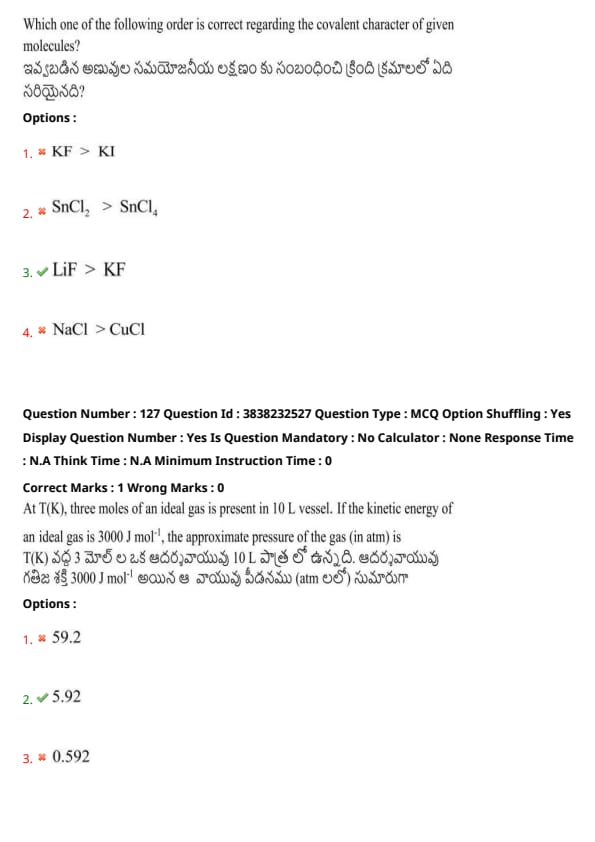
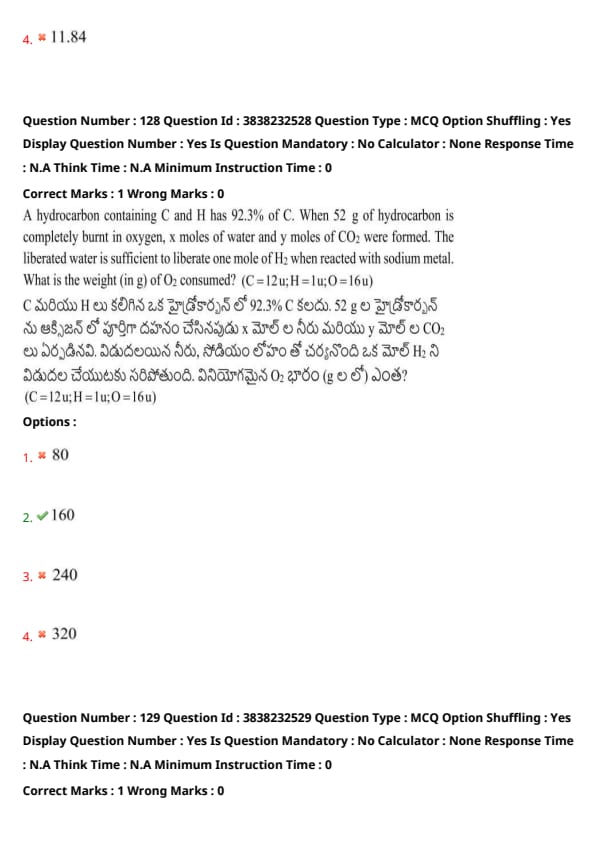
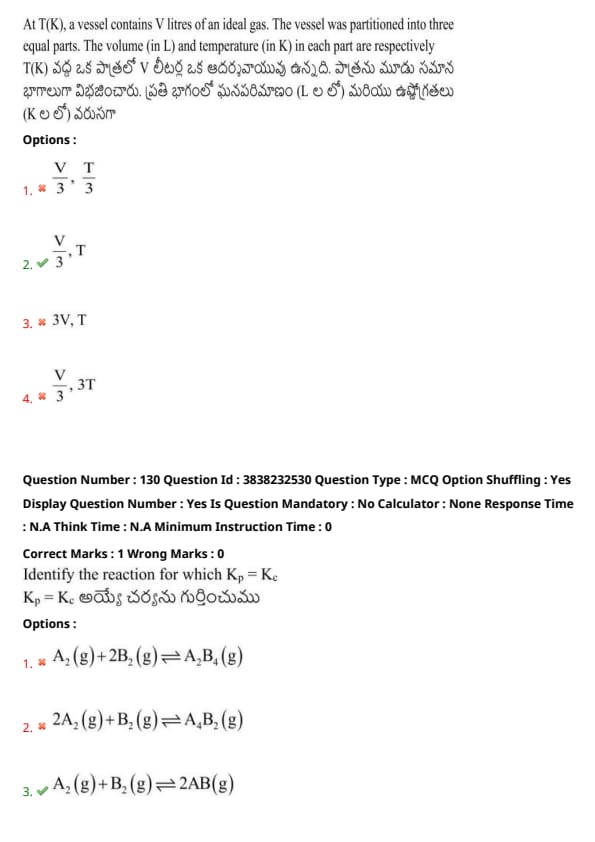
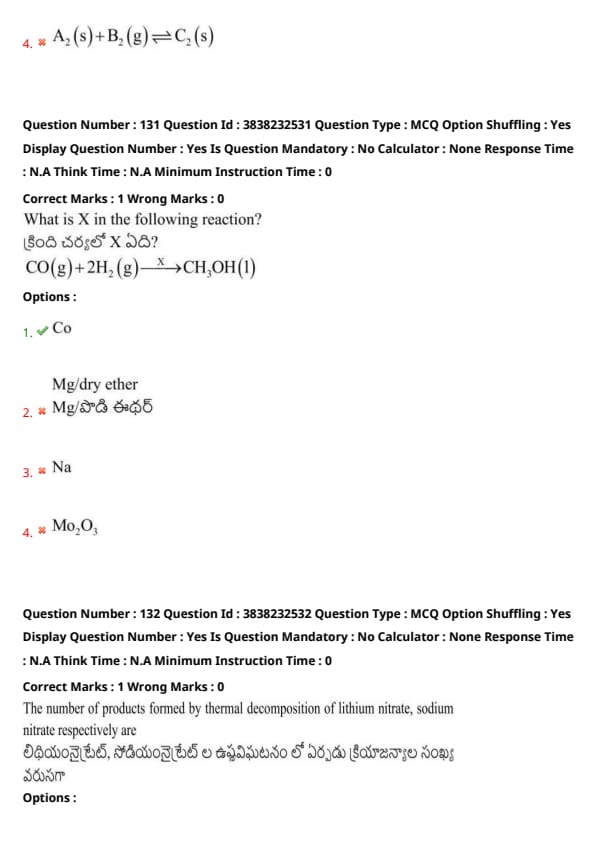
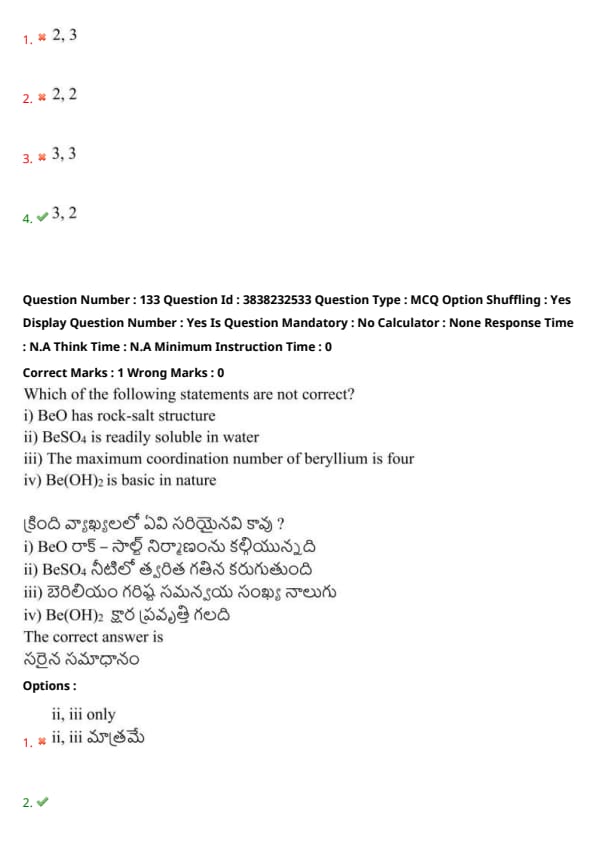
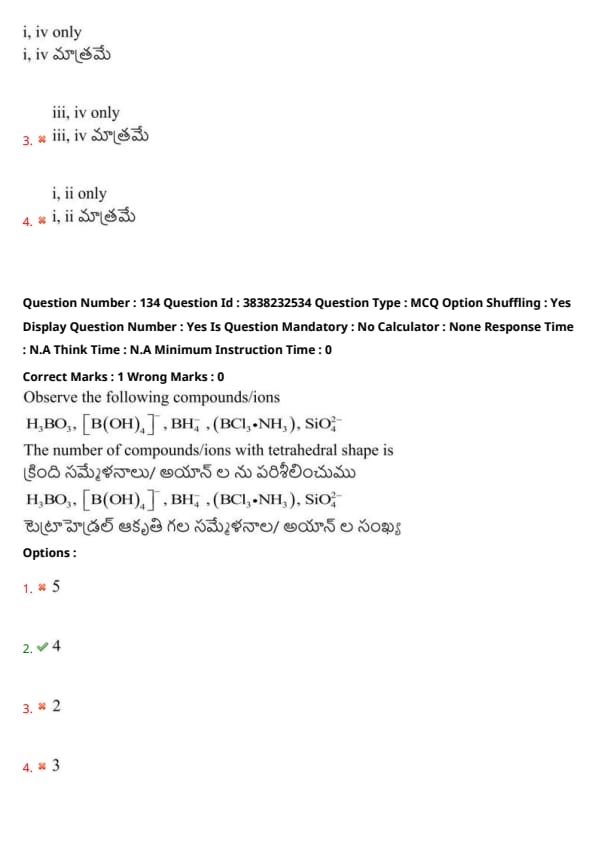
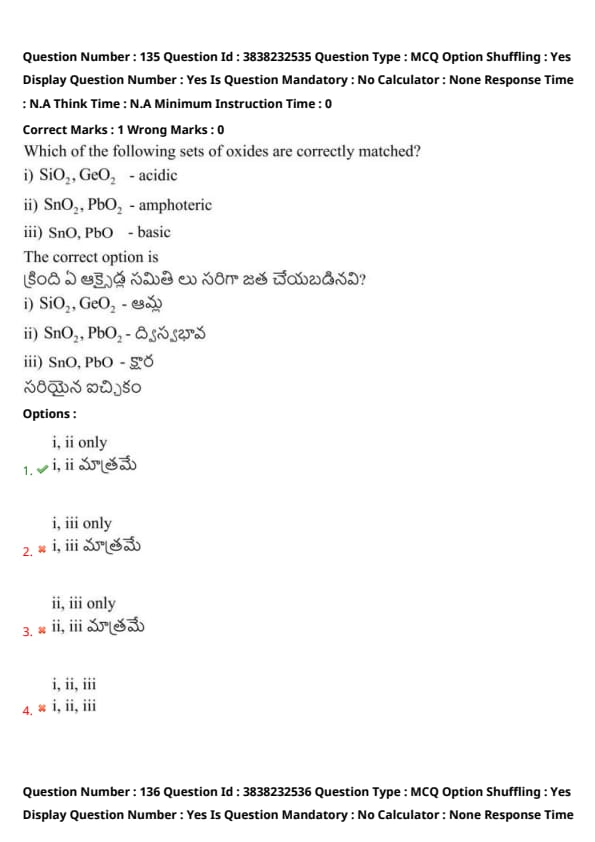
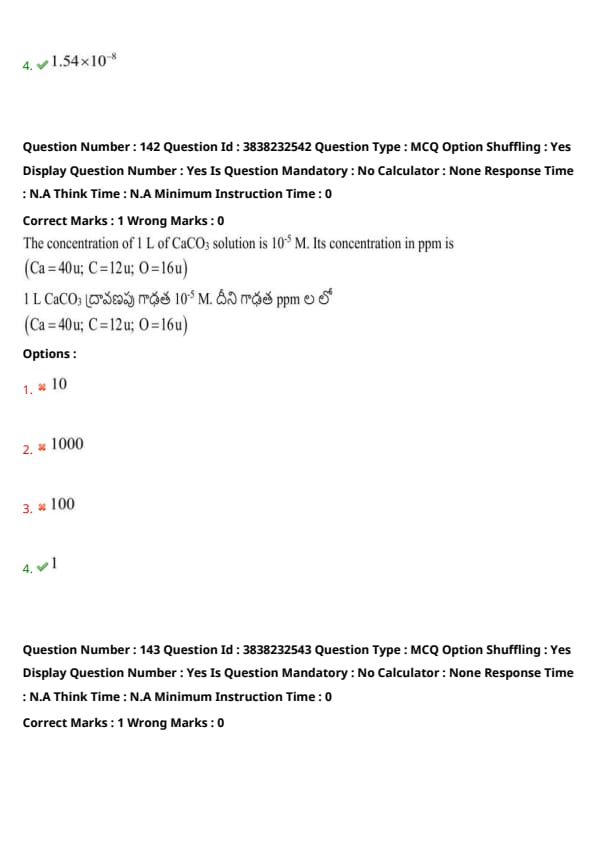
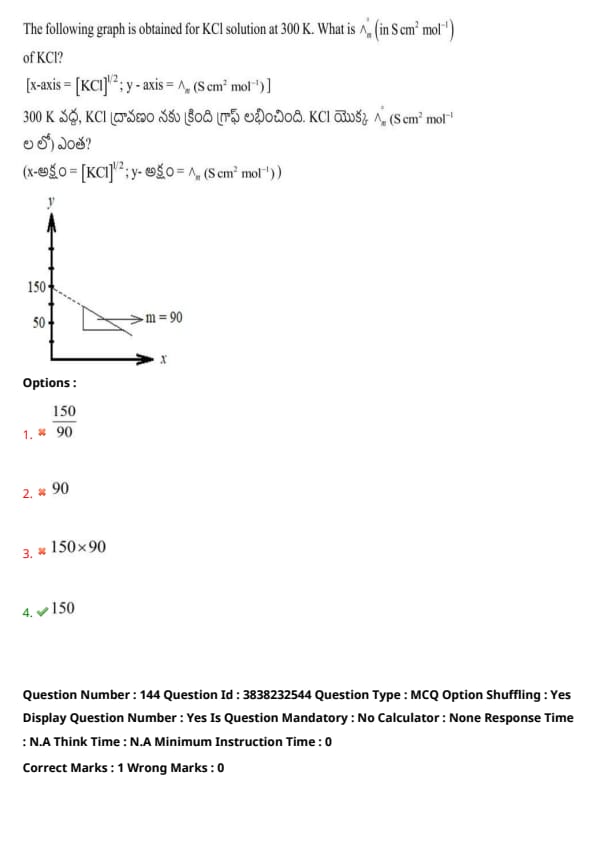
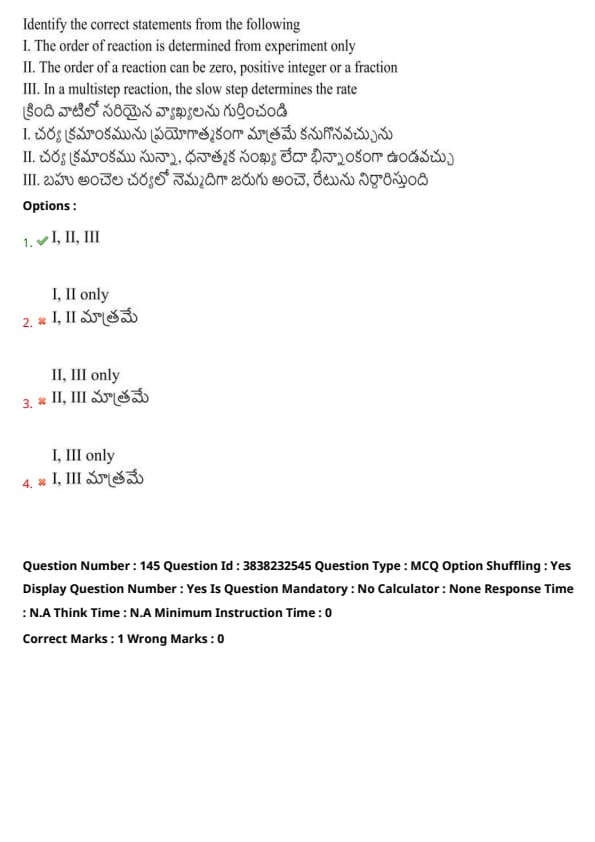
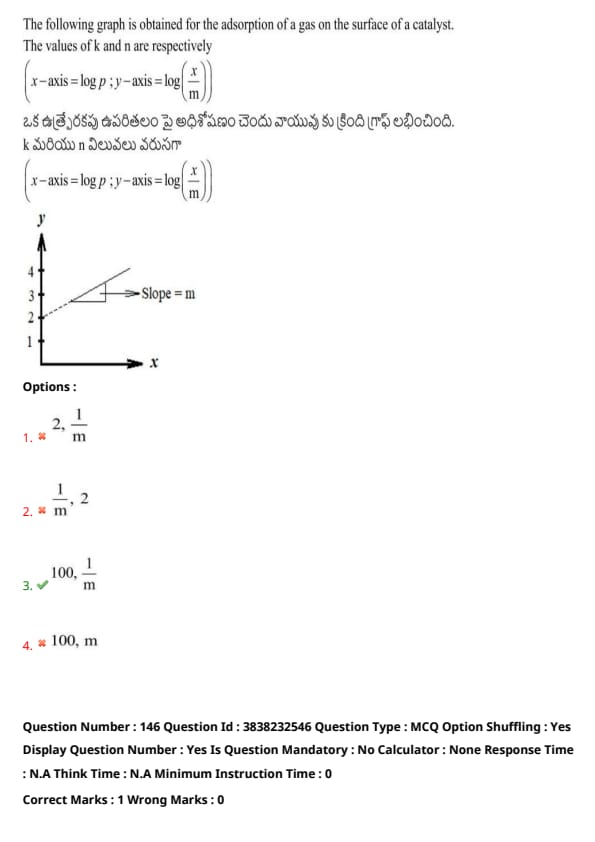
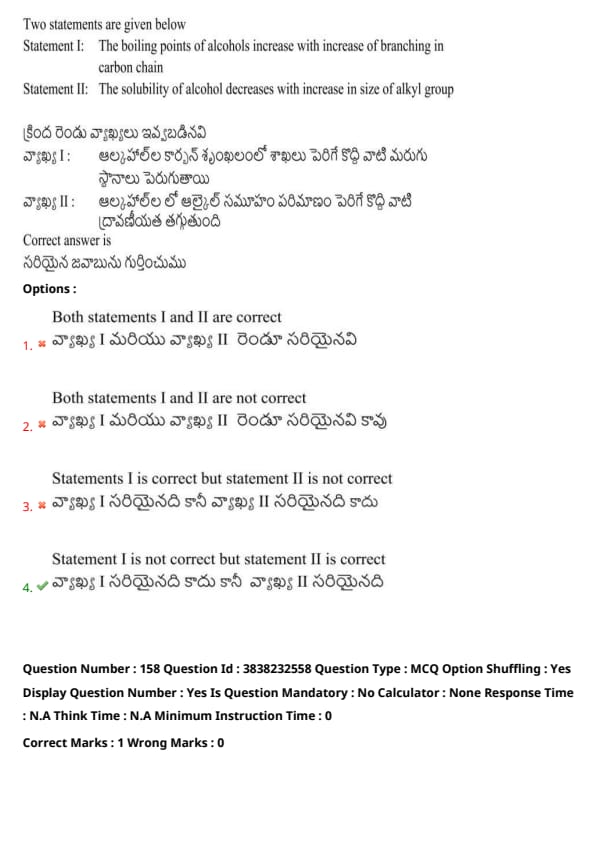
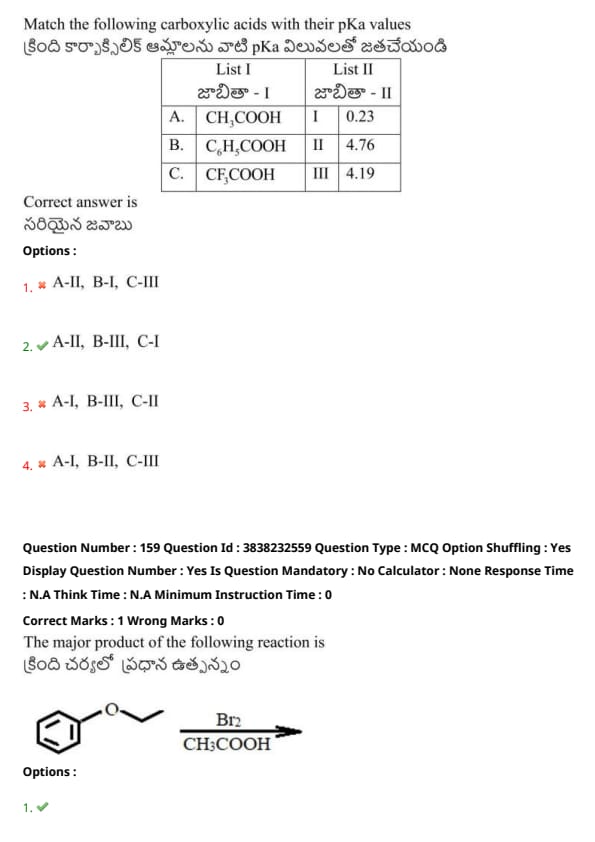
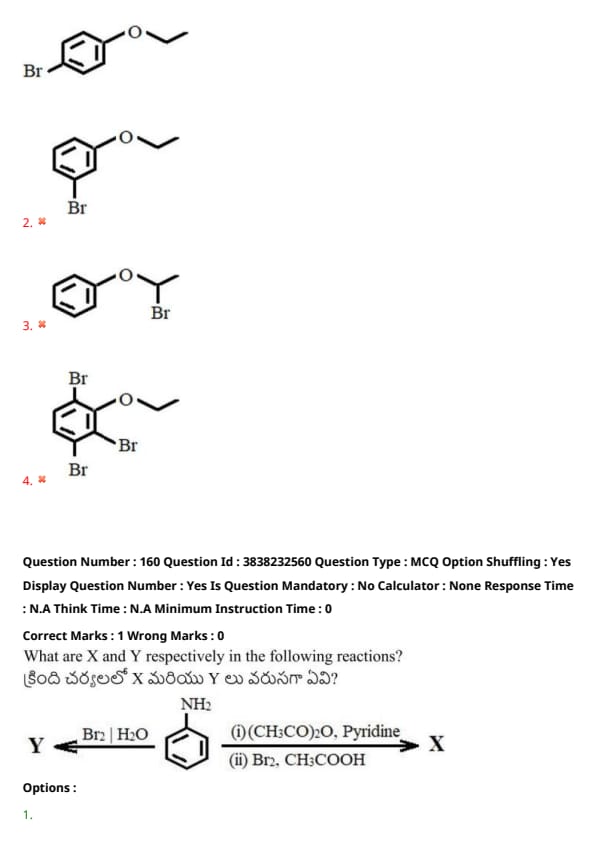
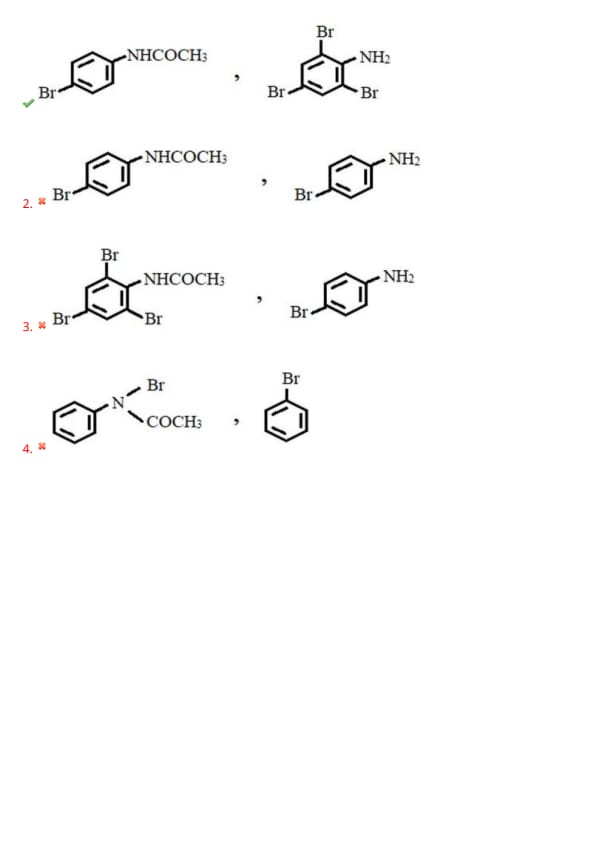
*The article might have information for the previous academic years, please refer the official website of the exam.