Content Curator | Updated On - Oct 28, 2026
Bachelor of Education [B.Ed] (Special Education) is a two-year teacher training degree for teaching children with disabilities, approved by the National Council for Teacher Education. It runs in four semesters and carries a specialisation in one disability area, such as visual impairment, hearing impairment, intellectual disability, autism, cerebral palsy or multiple disabilities. Placement happens in special schools and inclusive classrooms. Graduates take up special educator and resource teacher posts in government and private schools.
| Key point | Course outcome |
|---|---|
| Understanding disability | Read a disability not as a deficit but as a difference in how a child learns, sees, hears, moves or communicates. |
| Teaching methods | Adapt the classroom, the material and the method to the need of the child in front of you, using the assistive tools of the disability area. |
| Assessment | Set the assessment that a child with a disability can actually attempt, and read it in a way that shows what the child has learnt. |
| Inclusive classroom | Work in an ordinary classroom with children with and without disabilities together, and support both groups. |
| Family partnership | Work with the parents and the family of the child on the goals that matter to them, in the language they use. |
| Professional records | Keep the record of the case work, the individualised plan and the progress of the child, in the form the law and the school expect. |
- B.Ed Special Education Highlights and Disability Areas
- B.Ed Special Education Course Details
- B.Ed Special Education Eligibility Criteria
- B.Ed Special Education Admission Procedure
- B.Ed Special Education Entrance Exams and Recruitment Tests
- B.Ed Special Education Syllabus Semester Wise
- B.Ed Special Education Career Scope and Opportunities
- B.Ed Special Education Colleges in India
- B.Ed Special Education Scholarships
- B.Ed Special Education Frequently Asked Questions
B.Ed Special Education Highlights and Disability Areas
The degree is called B.Ed Special Education, B.Ed Spl.Ed or B.Ed with specialisation, and the name changes with the university. What it always carries is a training in one disability area, so that the graduate knows the language, the tools and the classroom practice of that area rather than only the theory of inclusion.
| Particular | Details |
|---|---|
| Full form | Bachelor of Education with specialisation in a disability area |
| Level | Teacher training degree for the special education and inclusive education stages |
| Regulator | National Council for Teacher Education, with the university awarding the degree |
| Duration | Two years in four semesters, with the training and the school placement spread across the semesters |
| Specialisation | One disability area chosen at the start of the second year, with the specialisation papers and the placement tied to it |
| Practice | Placement in a special school, an inclusive classroom and the resource room of the school |
| Legal backing | The Rights of Persons with Disabilities Act makes inclusive education a duty of the school and the state |
| Progression | Many universities run an integrated four-year route that combines the graduation and the B.Ed, and some run a B.Ed in Special Education as an integrated programme with a secondary subject |
The disability areas the degree covers
| Area | What the training covers |
|---|---|
| Visual impairment | Braille, the teaching of Indian Sign Language, orientation and mobility, the use of low vision devices and assistive technology |
| Hearing impairment | Indian Sign Language, audiology, speech and language, the hearing aid and the language of the deaf |
| Intellectual disability | Functional and adaptive skills, life skills education, the functional curriculum and supported employment |
| Autism spectrum disorder | Communication and social skills, structured teaching, behaviour support and the visual schedule |
| Cerebral palsy | Motor function, positioning and handling, physiotherapy in the classroom and communication support |
| Multiple disabilities | Combined needs, the individualised plan and the coordination of several specialists |
| Learning disabilities | Dyslexia, dyscalculia and dysgraphia, remedial teaching and the screening of children for specific learning difficulties |
B.Ed Special Education Course Details
The two years carry three strands. The theory papers give the history of the disability rights movement and the legal framework, the specialisation papers give the method and the tools of the chosen area, and the placement gives the practice of working with a real child in a real classroom.
What the programme covers
| Area | What you learn |
|---|---|
| Foundations of education | The philosophy of education, the school system, the child and the curriculum, and the rights of the child |
| Pedagogy of a school subject | The method of teaching a subject to the child, adapted to the disability area you have chosen |
| Specialisation papers | The education of children with visual impairment, hearing impairment, intellectual disability, autism, cerebral palsy or multiple disabilities |
| Inclusive education | Inclusion in the ordinary classroom, the peer support of the school and the Individual Education Plan |
| Assessment and evaluation | Continuous assessment, the adapted test, the portfolio of the child and the record of the progress |
| Guidance, health and technology | Psychological counselling, health and physical education, assistive devices and the assistive technology in the classroom |
| School experience | Placement in a special school or an inclusive classroom, with a supervisor, a report and an evaluation |
Who suits this course
- Patience and a steady voice, since the pace of the child sets the pace of the class
- Willingness to learn a new language, a new script or a new way of communicating
- The ability to work with parents and with other specialists as a team
- An interest in making the ordinary classroom work for every child in it
B.Ed Special Education Eligibility Criteria
| B.Ed Special Education eligibility particulars | Requirements |
|---|---|
| Qualifying examination | A bachelor degree in any discipline from a recognised university, with a diploma in elementary education also accepted in some states |
| Minimum marks | At least 50 percent in the qualifying degree, with a relaxation of 5 percent for the reserved categories at most universities |
| Visual impairment | The bachelor degree with a training in Braille and in orientation, and a working knowledge of Bengali or Hindi |
| Hearing impairment | The bachelor degree with a training in Indian Sign Language and in audiology |
| Other disability areas | The bachelor degree with a training in the chosen area, such as autism, intellectual disability or cerebral palsy |
| Registration | Registration with the Rehabilitation Council of India, which several states insist on for a special educator post |
| Physical fitness | A medical fitness certificate, since the work includes physical handling and individual attention |
| Age limit | No upper age limit is fixed by the Council, and the limit of the admitting university applies |
Two things decide the application. The degree has to be in the discipline, because the training for a blind child and the training for a child with cerebral palsy are not the same course, and the certification of the training has to match the disability category of the post you want.
- Keep your mark sheets, the degree certificate and the category certificate ready
- Check whether the university asks for the certificate of competency issued for a person with a disability
- Check whether the state requires registration with the Rehabilitation Council of India
- Confirm the medium of instruction, because the placement happens in the language of the school
Official references: National Council for Teacher Education, Department of Empowerment of Persons with Disabilities, Ministry of Education, National Scholarship Portal.
B.Ed Special Education Admission Procedure
The admission for this degree is set by the university, and the entrance test carries much more weight than usual, because the council gives the state a long list of the disabilities to be taught and each state fills those subjects with qualified special educators.
| Step | What students should do |
|---|---|
| 1. Read the university notification | Check the disability areas on offer, the number of seats in each and the entrance test pattern. |
| 2. Apply and pay the fee | Fill the online form, upload the documents and pay the application fee before the closing date. |
| 3. Sit the entrance test | Appear for the entrance examination, which usually carries the educational qualification, the general awareness and the reasoning. |
| 4. Attend the document check or the interview | Bring the original certificates, the disability certificate and the proof of the training where it is asked for. |
| 5. Accept the seat and the disability area | Accept the allotment, pay the course fee and confirm the area of specialisation. |
| 6. Join the programme | Join the college, take up the school placement and start the first semester. |
Documents required
- Mark sheets, transcripts and the degree certificate of the qualifying degree
- Entrance test score card and the allotment letter
- Disability certificate issued by the competent authority
- Certificate of competency, where the state issues one
- Certificate of the specialisation training, for the areas where the university asks for it
- Category certificate and a medical fitness certificate
B.Ed Special Education Entrance Exams and Recruitment Tests
| Exam or route | Conducting body | Where it applies |
|---|---|---|
| University entrance test | The university or the affiliated college | The standard route for the B.Ed Special Education seats, with the test covering the educational qualification, general awareness and reasoning |
| Common university entrance test | National Testing Agency | Accepted by the universities that take the common entrance for the education programmes |
| Central Teacher Eligibility Test | Central Board of Secondary Education | A recruitment test and not an admission test, with Paper I for the primary stage and Paper II for the upper primary stage |
| State teacher eligibility test | The state board of secondary education | The recruitment test that most states run for special educator posts |
The distinction matters. The eligibility test decides whether you may be appointed to a teaching post, and the entrance test decides whether you may join the course. Clearing one does not clear the other, and a state may accept the central test, the state test or both for recruitment.
A special educator post in a government school usually carries the condition of registration with the Rehabilitation Council of India, and in several states the recruitment notice names the certificate of competency issued for a person with a disability as a required document. Read the recruitment notice of the state before you choose the course.
B.Ed Special Education Syllabus Semester Wise
The paper list below follows the common structure of the council approved special education programme. Each university names the papers in its own way and adds the papers of the disability area it offers, but the pattern of the core papers and the placement is close to this.
| Semester | Main papers |
|---|---|
| Semester 1 | Foundations of education, the pedagogy of a school subject, educational technology, psychology of learning and human development, school organisation and administration, and the school experience in a classroom |
| Semester 2 | Assessment and evaluation, guidance and counselling, health and physical education, inclusive education and the rights of the person with a disability, the learning difficulties, and the school experience |
| Semester 3 | The specialisation papers of the chosen disability area, the methods of teaching that area, the assistive technology and the material development, with the second school placement |
| Semester 4 | The applied specialisation papers, the individualised education plan and case work, the work experience, the training internship and the project with a viva voce |
The practical work in the programme
- Placement in a special school or an inclusive classroom in every semester of the training
- Work in the resource room of the school, where the child receives the individual support
- Use of the assistive devices of the area, from the screen reader and the magnifier to the hearing aid and the switch
- Case work with a family, with a written record of the plan and of the progress
B.Ed Special Education Career Scope and Opportunities
The degree opens work in special schools, in inclusive classrooms and in the support services that the education and the social welfare departments run. Posting and pay depend on the employer and on the rules of the state, so no fixed salary is quoted here.
| Work area | Typical work | What is usually needed |
|---|---|---|
| Special educator in a school | Teaching a class that includes children with disabilities, and writing the individual education plan | The degree with the specialisation, and the teacher eligibility test of the state |
| Resource teacher | Running the resource room, the assessment of the child and the support to the class teacher | The degree and the registration of the council where the state asks for it |
| Inclusive education teacher | Teaching in an ordinary school and running the plan for the children with disabilities in it | The degree and the training of the state |
| Braille educator | Teaching reading and writing in Braille, and supporting the use of low vision devices | The degree with the visual impairment specialisation and a Braille qualification |
| Indian Sign Language teacher | Teaching sign language and supporting the deaf children in the classroom | The degree with the hearing impairment specialisation and a sign language qualification |
| Rehabilitation counsellor | Counselling the children and the families, and the assessment in the clinical setting | A postgraduate qualification and the registration with the council |
| Non-profit and inclusive education projects | Running the programmes of an organisation in the area of disability rights and inclusive schooling | Field experience and the ability to write the project report |
| Training and research | Training the teachers of the area and researching on disability education | A postgraduate degree and a research record |
The demand for special educators has grown with the inclusive education rules, because a school that admits a child with a disability has to show that the child is being taught. That work is done by a trained teacher, which is exactly what this degree produces.
B.Ed Special Education Colleges in India
The institutes below run the programme, and most of them are listed on Zollege. This is not a ranking, and the list changes with every admission. Check the disability areas on offer, the recognition of the programme, the entrance route and the fee notice before you apply.
| Institutes | Other institutes |
|---|---|
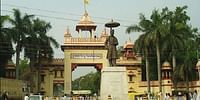
| Banaras Hindu University, Varanasi | Sanskriti University, Mathura |
| Christ University, Bengaluru | The ICFAI University, Dehradun |
| Lovely Professional University, Jalandhar | Andhra University, Visakhapatnam |
How B.Ed Special Education fees compare
A state university or a government college charges a fee fixed by the state, and a private college or a deemed university publishes a fee of its own. The published notice normally separates the components below. Ask the college about the cost of the training in the area of your specialisation, because the materials and the equipment of some areas are not covered by the tuition fee.
| Fee element | What it covers |
|---|---|
| Application and entrance fee | The entrance examination, the counselling and the document verification |
| Course fee | The tuition, the supervision, the specialisation training and the examination of the two-year programme |
| Practice and training costs | The training materials, the assistive devices and the project work of the disability area |
| Placement and travel | The travel and the stay connected with the school placement and the training internship |
| Caution deposit | A refundable deposit held by the college |
For a broader search, see the Bachelor of Education course page and B.Ed colleges in Delhi NCR.
B.Ed Special Education Scholarships
Students of the degree can use the central scholarship schemes, the state schemes for reserved categories and for students from rural schools, and the fee concessions that a college reserves for its own candidates.
| Scheme | Who can apply | Benefit |
|---|---|---|
| Central Sector Scheme of Scholarship for College and University Students | Candidates in regular mode who are not availing another scholarship, with family income up to INR 4.5 Lakhs | Part of the daily study cost, paid through direct benefit transfer to the Aadhaar seeded bank account |
| Central Sector Scholarship of Top Class Education for SC Students | Scheduled Caste students admitted to institutions empanelled by the Department of Social Justice and Empowerment | Financial support for study beyond Class 12 |
| PM YASASVI central sector scholarship for OBC, EBC and DNT students | Students in those categories admitted to empanelled institutions | Financial support for higher studies |
| National Means Cum Merit Scholarship | Students from economically weaker families who performed well in the Class 10 examination | Support that can continue through the undergraduate stage |
| State scholarship and institute concession | Students admitted under a state reservation quota, and students with a disability who hold the certificate of competency | Tuition fee support under the rules of the state or the institution |
Apply through the National Scholarship Portal and keep your mark sheets, income proof, category certificate and disability certificate ready. Several states also run a separate assistance for candidates with a disability who take up a teaching post after the degree, so ask the state department of education about it as well.
B.Ed Special Education Frequently Asked Questions
Ques. What is B.Ed Special Education?
Ans: It is a two-year teacher training degree for teaching children with disabilities, approved by the National Council for Teacher Education. It runs in four semesters and carries a specialisation in one disability area, with placement in special schools and inclusive classrooms.
Ques. How long does the B.Ed Special Education course take?
Ans: The degree runs for two years in four semesters, with the school placement spread across the semesters. Many universities also run an integrated four-year route that combines the graduation with the B.Ed and the specialisation training.
Ques. What is the eligibility for B.Ed Special Education?
Ans: You need a bachelor degree in any discipline with at least 50 percent, and the training in the disability area you choose. Registration with the Rehabilitation Council of India is asked for by several states before a special educator can be appointed.
Ques. Which disability areas does the B.Ed Special Education cover?
Ans: The usual areas are visual impairment, hearing impairment, intellectual disability, autism spectrum disorder, cerebral palsy, multiple disabilities and learning disabilities. The university may offer only some of them in a given admission.
Ques. Is CTET needed for B.Ed Special Education admission?
Ans: No. The Central Teacher Eligibility Test is a recruitment test for teaching posts, not an admission test for the course. Paper I is for the primary stage and Paper II for the upper primary stage, and it does not replace the university entrance test.
Ques. What subjects are covered in the B.Ed Special Education syllabus?
Ans: The core papers cover the foundations of education, the pedagogy of a school subject, educational technology, assessment and evaluation, guidance, health, inclusive education and the rights of the person with a disability, with the specialisation papers added in the second year.
Ques. What career options are open after B.Ed Special Education?
Ans: Special educator, resource teacher, inclusive education teacher, Braille educator, sign language teacher, rehabilitation counsellor, work in disability focused non-profits and teaching at the college level are all common directions.
Ques. How much does B.Ed Special Education cost?
Ans: A state university or a government college charges a fee fixed by the state, and a private college or a deemed university publishes a fee of its own. The training materials and the assistive devices of the specialisation are often outside the tuition fee.
Ques. Can B.Ed Special Education be done in distance mode?
Ans: Some universities run a distance or online mode for the theory papers, but the placement, the practice and the training in the disability area stay in person, because the degree is built on practical work. Check what the university allows before you apply.