
MHT CET 2020 Question Paper with Solution PDF for PCB (October 7)


Content Writer | Updated On - Jan 21, 2026
MHT CET Question Papers are the most important study material for effective exam preparation. We at Zollege have provided all MHT CET Previous Year Papers with Solution PDFs here. MHT CET 2020 PCB exam was conducted successfully on October 7 by Shift 1.
Students can freely download the MHT CET previous year's question paper PDFs along with their solutions here.We strongly encourage MHT CET aspirants to scan through all the MHT CET Question Paper to know the overall difficulty level,MHT CET Syllabus and understand the changes in MHT CET Exam Pattern over the years.
MHT CET 2020 Oct 7 Shift 1 PCB Question Paper with Solution PDF
| MHT CET 2020 PCB Question Paper PDF | MHT CET 2020 PCB Solution PDF |
|---|---|
| Download PDF | Check Solutions |

Two springs of equal length and equal area of cross-section are suspended from rigid support and loaded with same mass. Young's modulus of two springs is in the ratio 4:3. When the springs are stretched through some distance and released, they will oscillate with periods '\(T_1\)' and '\(T_2\)'. The ratio \(T_1 : T_2\) is
View Solution
Step 1: Understanding the Question:
The problem asks for the ratio of the time periods of two oscillating spring-mass systems. The springs have identical dimensions (length and area) but different Young's moduli.
Step 2: Key Formula or Approach:
1. The force constant of a spring (or wire) is given by \(k = \frac{YA}{L}\), where \(Y\) is Young's modulus, \(A\) is area, and \(L\) is length.
2. The time period of oscillation for a mass \(m\) suspended from a spring is \(T = 2\pi\sqrt{\frac{m}{k}}\).
Step 3: Detailed Explanation:
Given that \(A\), \(L\), and \(m\) are the same for both systems:
\[ k \propto Y \]
Substituting this into the time period formula:
\[ T \propto \frac{1}{\sqrt{k}} \propto \frac{1}{\sqrt{Y}} \]
Therefore, the ratio of the time periods is:
\[ \frac{T_1}{T_2} = \sqrt{\frac{Y_2}{Y_1}} \]
Given \(Y_1 : Y_2 = 4 : 3\), we substitute these values:
\[ \frac{T_1}{T_2} = \sqrt{\frac{3}{4}} = \frac{\sqrt{3}}{2} \]
Step 4: Final Answer:
The ratio \(T_1 : T_2\) is \(\sqrt{3} : 2\), which corresponds to option (D).
Quick Tip: Remember that for identical geometry, the spring constant is directly proportional to the material's stiffness (\(Y\)).
Since the time period is inversely proportional to the square root of the spring constant, the stiffer material (higher \(Y\)) will have a shorter time period.
Rate of radiation by a black body is 'R' at temperature 'T'. Another body has same area but emissivity is 0.2 and temperature '3T'. Its rate of radiation is
View Solution
Step 1: Understanding the Question:
The question involves comparing the radiant power (rate of radiation) of two bodies using Stefan-Boltzmann's law, accounting for differences in emissivity and temperature.
Step 2: Key Formula or Approach:
According to Stefan-Boltzmann Law, the rate of radiation \(P\) is:
\[ P = e\sigma AT^4 \]
Where \(e\) is emissivity, \(\sigma\) is Stefan's constant, \(A\) is surface area, and \(T\) is absolute temperature.
Step 3: Detailed Explanation:
For the first body (perfect black body):
\( e_1 = 1 \), temperature = \( T \), rate = \( R \).
\[ R = (1)\sigma AT^4 \]
For the second body:
\( e_2 = 0.2 \), temperature = \( 3T \), rate = \( R' \).
\[ R' = (0.2)\sigma A(3T)^4 \]
\[ R' = 0.2 \times 81 \times (\sigma AT^4) \]
Substitute \(\sigma AT^4 = R\):
\[ R' = 16.2 R \]
Step 4: Final Answer:
The new rate of radiation is 16.2 R, which is option (B).
Quick Tip: Radiation depends on the \textbf{fourth power} of absolute temperature.
Tripling the temperature (\(3^4 = 81\)) has a much larger impact than a 0.2 emissivity factor (\(81 \times 0.2 = 16.2\)).
In an LCR circuit, inductive reactance is \(30\Omega\) and capacitive reactance \(30\Omega\). The resistance was found to be \(40\Omega\). The probable impedance of the combination is
View Solution
Step 1: Understanding the Question:
The question asks for the total impedance \(Z\) of an AC circuit containing an inductor, a capacitor, and a resistor in series.
Step 2: Key Formula or Approach:
The impedance \(Z\) of a series LCR circuit is given by:
\[ Z = \sqrt{R^2 + (X_L - X_C)^2} \]
Step 3: Detailed Explanation:
Given values:
Inductive reactance \(X_L = 30 \, \Omega\)
Capacitive reactance \(X_C = 30 \, \Omega\)
Resistance \(R = 40 \, \Omega\)
Substitute the values into the formula:
\[ Z = \sqrt{40^2 + (30 - 30)^2} \]
\[ Z = \sqrt{40^2 + 0^2} \]
\[ Z = 40 \, \Omega \]
This condition (\(X_L = X_C\)) is known as resonance.
Step 4: Final Answer:
The impedance is \(40 \, \Omega\), which is option (D).
Quick Tip: When Inductive Reactance equals Capacitive Reactance (\(X_L = X_C\)), the circuit is in \textbf{resonance}.
In resonance, the impedance is at its minimum and is equal to the ohmic resistance \(R\).
A metal surface is irradiated by radiations whose wavelength is '\(\lambda\)'. If the work function of the metal surface is negligibly small, then the de-Broglie wavelength of emitted electrons will be [c = velocity of light, m = mass of electron, h = Planck's constant]
View Solution
Step 1: Understanding the Question:
We need to find the de-Broglie wavelength (\(\lambda_d\)) of photoelectrons emitted from a surface when the work function is zero.
Step 2: Key Formula or Approach:
1. Einstein's photoelectric equation: \(K_{max} = \frac{hc}{\lambda} - \phi\).
2. de-Broglie wavelength: \(\lambda_d = \frac{h}{p} = \frac{h}{\sqrt{2mK}}\).
Step 3: Detailed Explanation:
Given \(\phi \approx 0\), the maximum kinetic energy of the emitted electron is:
\[ K = \frac{hc}{\lambda} \]
Now, substitute this energy into the de-Broglie equation:
\[ \lambda_d = \frac{h}{\sqrt{2m \left(\frac{hc}{\lambda}\right)}} \]
To simplify, square both sides or rearrange:
\[ \lambda_d = \frac{h}{\sqrt{\frac{2mhc}{\lambda}}} = \sqrt{\frac{h^2}{\frac{2mhc}{\lambda}}} = \sqrt{\frac{h^2 \lambda}{2mhc}} \]
\[ \lambda_d = \sqrt{\frac{h\lambda}{2mc}} = \left[ \frac{h\lambda}{2mc} \right]^{1/2} \]
Step 4: Final Answer:
The de-Broglie wavelength is \(\left[ \frac{h\lambda}{2mc} \right]^{1/2}\), option (A).
Quick Tip: When work function is zero, all photon energy is converted to kinetic energy.
The relationship \(\lambda_d \propto \sqrt{\lambda}\) is a useful shortcut for such problems.
In a transistor, doping level in base is increased slightly, the collector current and base current respectively
View Solution
Step 1: Understanding the Question:
The question asks how the current components of a Bipolar Junction Transistor (BJT) change when the base region's doping concentration is increased.
Step 2: Detailed Explanation:
In a transistor, the base is designed to be very thin and lightly doped to ensure that most charge carriers from the emitter reach the collector.
1. Base Current (\(I_b\)): Increasing the base doping increases the number of majority carriers in the base. This leads to more recombination of emitter-injected carriers within the base region. Higher recombination directly results in an increased base current.
2. Collector Current (\(I_c\)): Since more charge carriers are recombining in the base, fewer carriers are able to reach the collector. Consequently, the collector current decreases slightly.
Step 3: Final Answer:
The collector current decreases slightly and the base current increases slightly. This corresponds to option (B).
Quick Tip: For an efficient transistor, we want low base doping (lightly doped) and a thin base.
Any change that increases recombination in the base (like increased doping or width) will increase \(I_b\) and decrease \(I_c\).
When an unknown resistance 'X' is connected in the left gap of a meter bridge and a known resistance 'R' in the right gap, null point is obtained at 40 cm from left end. If a \(2 \Omega\) resistance is connected in series with 'X' the null point shifts towards right by 10 cm, with same resistance in right gap. The value of 'X' must be
View Solution
Step 1: Understanding the Question:
This is a problem based on the balanced Wheatstone bridge principle applied in a meter bridge. We have two different balancing conditions.
Step 2: Key Formula or Approach:
Standard Meter Bridge formula: \(\frac{R_{left}}{R_{right}} = \frac{l}{100 - l}\).
Step 3: Detailed Explanation:
Case 1: \(X\) in left gap, \(R\) in right gap, \(l = 40\) cm.
\[ \frac{X}{R} = \frac{40}{60} = \frac{2}{3} \Rightarrow R = \frac{3X}{2} \] ... (i)
Case 2: \((X + 2)\) in left gap, \(R\) in right gap. Null point shifts right by 10 cm, so new \(l = 40 + 10 = 50\) cm.
\[ \frac{X + 2}{R} = \frac{50}{50} = 1 \Rightarrow R = X + 2 \] ... (ii)
Equating (i) and (ii):
\[ \frac{3X}{2} = X + 2 \]
\[ 3X = 2X + 4 \]
\[ X = 4 \, \Omega \]
Step 4: Final Answer:
The value of \(X\) is \(4 \, \Omega\), which is option (B).
Quick Tip: In a meter bridge, adding resistance to the left gap always shifts the null point to the right.
If the null point is at 50 cm, the resistances in the two gaps are exactly equal.
A bullet of mass 20 gram is fired from a gun of mass 2.5 kg with a speed of 750 m/s. The magnitude of recoil velocity of the gun is
View Solution
Step 1: Understanding the Question:
The problem is based on the Law of Conservation of Linear Momentum. The total momentum of the system (gun + bullet) before firing is zero, and must remain zero after firing.
Step 2: Key Formula or Approach:
\[ m_{bullet} v_{bullet} + m_{gun} v_{gun} = 0 \]
Recoil velocity \( V = \frac{m \times v}{M} \) (magnitude).
Step 3: Detailed Explanation:
Given:
Mass of bullet \( m = 20 \, g = 0.02 \, kg \).
Velocity of bullet \( v = 750 \, m/s \).
Mass of gun \( M = 2.5 \, kg \).
Using the conservation of momentum:
\[ 0.02 \times 750 = 2.5 \times V \]
\[ 15 = 2.5 \times V \]
\[ V = \frac{15}{2.5} = \frac{150}{25} = 6 \, m/s \]
Step 4: Final Answer:
The recoil velocity is 6 m/s, which is option (C).
Quick Tip: Always convert all units to SI (grams to kilograms) before starting calculations.
The gun moves in the opposite direction to the bullet, which is why it is called "recoil".
Logic circuit shows the inputs A, B and C. The output Y is '0' (zero) when

View Solution
Step 1: Understanding the Question:
We need to determine the input combination that results in a logic '0' output for the given combination of gates.
Step 2: Key Formula or Approach:
1. NOT gate: Output = \(\overline{A}\).
2. NAND gate: Output = \(\overline{B \cdot C}\).
3. OR gate: Output \(Y = Input1 + Input2\).
Step 3: Detailed Explanation:
Let's analyze the circuit expression:
Upper branch (NOT): Output is \(\overline{A}\).
Lower branch (NAND): Output is \(\overline{B \cdot C}\).
Final OR gate: \(Y = \overline{A} + \overline{B \cdot C}\).
We want \(Y = 0\).
In an OR gate, the output is '0' only if both inputs are '0'.
Input 1: \(\overline{A} = 0 \Rightarrow A = 1\).
Input 2: \(\overline{B \cdot C} = 0 \Rightarrow B \cdot C = 1\).
For \(B \cdot C = 1\), both B and C must be '1'.
So, the condition is \(A = 1, B = 1, C = 1\).
Step 4: Final Answer:
The correct combination is \(A = 1, B = 1, C = 1\), option (C).
Quick Tip: De Morgan's shortcut: \(Y = \overline{A} + \overline{BC} = \overline{A \cdot (BC)}\).
For \(Y = 0\), the term inside the bar must be \(1\).
\(A \cdot B \cdot C = 1\) only if all inputs are \(1\).
Imagine two bar magnets having same magnetic dipole moment 'M', are inclined with each other as shown in figure. Their resultant magnetic moment will be [\( \cos 120^\circ = -\frac{1}{2}, \cos 60^\circ = \frac{1}{2} \)]

View Solution
Step 1: Understanding the Question:
Magnetic dipole moment is a vector quantity. To find the resultant, we must sum the two vectors accounting for the angle between them.
Step 2: Key Formula or Approach:
Resultant of two vectors \(A\) and \(B\) with angle \(\theta\):
\[ R = \sqrt{A^2 + B^2 + 2AB \cos\theta} \]
Step 3: Detailed Explanation:
Looking at the diagram:
The magnets are placed such that the angle between their magnetic moment vectors is the angle between their North-South axes.
In the configuration shown, if the magnets are tail-to-tail at an angle of 60 degrees, the angle \(\theta\) between their magnetic moment vectors (drawn from S to N) is \(120^\circ\) because the vectors diverge.
Substituting \(A = M\), \(B = M\), and \(\theta = 120^\circ\):
\[ M_{net} = \sqrt{M^2 + M^2 + 2(M)(M) \cos(120^\circ)} \]
\[ M_{net} = \sqrt{2M^2 + 2M^2 (-\frac{1}{2})} \]
\[ M_{net} = \sqrt{2M^2 - M^2} = \sqrt{M^2} = M \]
Step 4: Final Answer:
The resultant magnetic moment is M, option (B).
Quick Tip: When two equal vectors have an angle of \(120^\circ\) between them, the magnitude of the resultant is equal to the magnitude of the individual vectors.
Always verify if the vectors are head-to-head or tail-to-tail to identify the correct angle.
A stationary sound wave has a frequency of 165 Hz. If the speed of sound in air is 330 m/s, then the distance between a node and the adjacent antinode is
View Solution
Step 1: Understanding the Question:
In a stationary wave, we need to find the distance between a node (point of zero displacement) and its closest antinode (point of maximum displacement).
Step 2: Key Formula or Approach:
1. Wave relation: \( v = f\lambda \).
2. Distance between node and adjacent antinode = \(\lambda / 4\).
Step 3: Detailed Explanation:
First, calculate the wavelength \(\lambda\):
\[ \lambda = \frac{v}{f} = \frac{330}{165} = 2 \, m \]
The distance between a node and an adjacent antinode is:
\[ d = \frac{\lambda}{4} = \frac{2}{4} = 0.5 \, m \]
Convert to centimeters:
\[ d = 0.5 \times 100 = 50 \, cm \]
Step 4: Final Answer:
The distance is 50 cm, option (B).
Quick Tip: Node to Node = \(\lambda / 2\).
Antinode to Antinode = \(\lambda / 2\).
Node to Antinode = \(\lambda / 4\).
A particle is performing vertical circular motion. The difference in tension at lowest and highest point is
View Solution
Step 1: Understanding the Question:
For an object moving in a vertical circle, the tension in the string varies. We need the difference between the maximum tension (at the bottom) and the minimum tension (at the top).
Step 2: Key Formula or Approach:
1. Tension at bottom: \( T_L = \frac{mv_L^2}{r} + mg \).
2. Tension at top: \( T_H = \frac{mv_H^2}{r} - mg \).
3. Energy conservation: \( \frac{1}{2}mv_L^2 = \frac{1}{2}mv_H^2 + mg(2r) \).
Step 3: Detailed Explanation:
From energy conservation:
\[ v_L^2 = v_H^2 + 4gr \Rightarrow \frac{mv_L^2}{r} = \frac{mv_H^2}{r} + 4mg \]
Calculate the difference:
\[ T_L - T_H = \left( \frac{mv_L^2}{r} + mg \right) - \left( \frac{mv_H^2}{r} - mg \right) \]
\[ T_L - T_H = \frac{m}{r}(v_L^2 - v_H^2) + 2mg \]
Substitute \((v_L^2 - v_H^2) = 4gr\):
\[ T_L - T_H = \frac{m}{r}(4gr) + 2mg = 4mg + 2mg = 6mg \]
Step 4: Final Answer:
The difference in tension is 6 mg, which is option (B).
Quick Tip: The result \( T_{bottom} - T_{top} = 6mg \) is a constant for any object performing a complete vertical circular motion, regardless of the speed at the bottom.
The relative magnetic permeability (\( \mu_r \)) of a substance is related to its susceptibility (\( \chi \)) as
View Solution
Step 1: Understanding the Question:
The question asks for the standard theoretical relationship between the dimensionless magnetic properties of a material.
Step 2: Detailed Explanation:
Magnetic permeability (\( \mu \)) relates to magnetic field \( B \) and magnetic intensity \( H \) as \( B = \mu H \).
Also, \( B = \mu_0(H + I) \), where \( I \) is the intensity of magnetization.
Since \( I = \chi H \):
\[ B = \mu_0(H + \chi H) = \mu_0 H (1 + \chi) \]
Dividing by \( H \):
\[ \mu = \mu_0(1 + \chi) \]
Relative permeability is defined as \( \mu_r = \mu / \mu_0 \).
\[ \mu_r = 1 + \chi \]
Step 3: Final Answer:
The correct relationship is \( \mu_r = 1 + \chi \), option (C).
Quick Tip: For diamagnetic materials, \( \chi \) is negative, so \( \mu_r < 1 \).
For paramagnetic materials, \( \chi \) is positive, so \( \mu_r > 1 \).
A spring produces extension 'x' by applying a force 'F' N. A body of mass 'm' suspended from spring oscillates vertically with a period 'T'. The mass of the suspended body is (neglect mass of spring)
View Solution
Step 1: Understanding the Question:
We need to find the mass \( m \) in terms of the experimental data for the spring (force and extension) and the period of oscillation.
Step 2: Key Formula or Approach:
1. Hooke's Law: \( F = kx \Rightarrow k = F/x \).
2. Time Period: \( T = 2\pi\sqrt{\frac{m}{k}} \).
Step 3: Detailed Explanation:
Square the time period formula:
\[ T^2 = 4\pi^2 \frac{m}{k} \]
Rearrange for \( m \):
\[ m = \frac{T^2k}{4\pi^2} \]
Substitute \( k = F/x \):
\[ m = \frac{T^2(F/x)}{4\pi^2} = \frac{T^2F}{4\pi^2x} \]
Step 4: Final Answer:
The mass of the body is \( \frac{T^2F}{4\pi^2x} \), option (B).
Quick Tip: Dimensionally check: \( m \) should have units of mass.
\( [T^2][MLT^{-2}] / [L] = [M] \). All options are dimensionally consistent, so the numerical factor \( 4\pi^2 \) is the deciding factor.
A galvanometer having a resistance of \(18 \Omega\) is shunted by a wire of resistance \(2 \Omega\). If the total current passing through the combination is 2 A, then current through shunt will be
View Solution
Step 1: Understanding the Question:
This is a parallel circuit problem. The total current splits between the galvanometer and the shunt resistor.
Step 2: Key Formula or Approach:
Current division rule: \( I_S = I_{total} \times \frac{G}{G + S} \).
Step 3: Detailed Explanation:
Given:
\( G = 18 \, \Omega \)
\( S = 2 \, \Omega \)
\( I_{total} = 2 \, A \)
Calculate shunt current \( I_S \):
\[ I_S = 2 \times \frac{18}{18 + 2} \]
\[ I_S = 2 \times \frac{18}{20} \]
\[ I_S = \frac{18}{10} = 1.8 \, A \]
Step 4: Final Answer:
The current through the shunt is 1.8 A, option (A).
Quick Tip: In parallel, current is inversely proportional to resistance.
Since the shunt resistance is 9 times smaller than the galvanometer (\(18/2 = 9\)), it will carry 9 parts of the total 10 parts of current.
\( (9/10) \times 2 = 1.8 \).
The magnetic field developed due to current carrying coil at its centre is 'B'. If the new coil of two turns is prepared from the above coil and same current is passed, then the magnetic field at the centre of the new coil will be
View Solution
Step 1: Understanding the Question:
A single loop is rewound into two smaller loops. We need to find how the magnetic field at the center changes when the number of turns increases while using the same wire.
Step 2: Key Formula or Approach:
1. Magnetic field at center: \( B = \frac{\mu_0 n I}{2r} \).
2. Constant length: \( L = 2\pi R = n \times 2\pi r \Rightarrow r = R/n \).
Step 3: Detailed Explanation:
Initially (\(n=1\)): \( B_1 = \frac{\mu_0 I}{2R} \).
Finally (\(n=2\)): New radius \( r = R/2 \).
New field \( B_2 = \frac{\mu_0 (2) I}{2(R/2)} \).
\[ B_2 = \frac{2 \times \mu_0 I}{R} = 4 \times \left( \frac{\mu_0 I}{2R} \right) \]
\[ B_2 = 4 B_1 \]
Step 4: Final Answer:
The magnetic field becomes 4 B, which is option (B).
Quick Tip: When a wire is reshaped into \( n \) turns, the magnetic field at the center increases by a factor of \( n^2 \).
Here \( n=2 \), so field becomes \( 2^2 = 4 \) times.
When a light ray is incident on a prism at an angle of \(45^\circ\), the minimum deviation is obtained. If refractive index of material of prism is \(\sqrt{2}\), then angle of prism will be [\( \sin \frac{\pi}{4} = \frac{1}{\sqrt{2}}, \sin 30^\circ = \cos 60^\circ = \frac{1}{2} \)]
View Solution
Step 1: Understanding the Question:
We are given the condition for minimum deviation in a prism and need to find the prism angle \( A \).
Step 2: Key Formula or Approach:
1. At minimum deviation, angle of incidence \( i = \frac{A + \delta_m}{2} \).
2. At minimum deviation, angle of refraction \( r = A/2 \).
3. Snell's Law: \( \mu = \frac{\sin i}{\sin r} \).
Step 3: Detailed Explanation:
Given: \( i = 45^\circ \), \( \mu = \sqrt{2} \).
Using Snell's law:
\[ \mu = \frac{\sin i}{\sin r} \Rightarrow \sqrt{2} = \frac{\sin 45^\circ}{\sin(A/2)} \]
\[ \sqrt{2} = \frac{1/\sqrt{2}}{\sin(A/2)} \]
\[ \sin(A/2) = \frac{1}{\sqrt{2} \times \sqrt{2}} = \frac{1}{2} \]
Since \(\sin 30^\circ = 1/2\):
\[ A/2 = 30^\circ \Rightarrow A = 60^\circ \]
Step 4: Final Answer:
The angle of prism is \(60^\circ\), which is option (D).
Quick Tip: At minimum deviation, the light ray travels parallel to the base of the prism (if isosceles).
The relation \( \sin(A/2) = \frac{\sin i}{\mu} \) is the direct path to the solution here.
The moduli of elasticity for a substance are Young's modulus, Bulk modulus and Modulus of rigidity. All the three moduli of elasticity are possessed by
View Solution
Step 1: Understanding the Question:
This is a conceptual question about which states of matter can support different types of stress (longitudinal, volume, and shear).
Step 2: Detailed Explanation:
1. Young's Modulus (\(Y\)): Relates to length changes. Only solids have a fixed shape and can be stretched or compressed in one dimension.
2. Modulus of Rigidity (\(\eta\)): Relates to shape changes (shear). Fluids (liquids and gases) cannot oppose shear stress at rest; they simply flow. Only solids possess rigidity.
3. Bulk Modulus (\(B\)): Relates to volume changes. All three states (solids, liquids, and gases) can be compressed and thus possess a Bulk Modulus.
Since only solids possess Young's Modulus and Modulus of Rigidity, the group possessing all three is solids.
Step 3: Final Answer:
Only solids possess all three moduli, option (C).
Quick Tip: Fluids (liquids/gases) have \(Y = 0\) and \(\eta = 0\).
They only have a Bulk Modulus \(B\).
A light of wavelength '\(\lambda\)' and intensity 'I' falls on photosensitive material. If 'N' photoelectrons are emitted, each with kinetic energy E, then
View Solution
Step 1: Understanding the Question:
The question tests the fundamental laws of the photoelectric effect. We need to relate photoelectron energy to light color (wavelength) and photoelectron count to light brightness (intensity).
Step 2: Key Formula or Approach:
1. Energy of photon: \( E_p = hc/\lambda \).
2. Einstein's Equation: \( K = E_p - \phi \).
Step 3: Detailed Explanation:
- Kinetic Energy (E): According to Einstein, the energy of an emitted electron depends only on the energy of the incident individual photon. Since photon energy is inversely proportional to wavelength (\(1/\lambda\)), the kinetic energy \(E\) of the electrons is also a function of \(1/\lambda\). It does not depend on intensity.
- Number of photoelectrons (N): The number of electrons emitted per second (photocurrent) is directly proportional to the number of photons hitting the surface per second, which is the definition of Intensity (I).
Step 4: Final Answer:
The correct relations are \(E \propto 1/\lambda\) and \(N \propto I\), option (A).
Quick Tip: Intensity = Number of photons (Affects quantity \(N\)).
Frequency/Wavelength = Energy of photons (Affects quality \(E\)).
A mass M moving with velocity v along x axis collides and sticks to another mass 2M which is moving along Y axis with velocity 3v. After collision, the velocity of the combination is
View Solution
Step 1: Understanding the Question:
This is a perfectly inelastic collision in two dimensions. We must conserve momentum independently in the x and y directions.
Step 2: Key Formula or Approach:
\[ \vec{P}_{initial} = \vec{P}_{final} \]
\[ m_1 \vec{v}_1 + m_2 \vec{v}_2 = (m_1 + m_2) \vec{V} \]
Step 3: Detailed Explanation:
Initial momentum:
\( \vec{p}_x = M(v \hat{i}) = Mv \hat{i} \)
\( \vec{p}_y = 2M(3v \hat{j}) = 6Mv \hat{j} \)
Total initial momentum \( \vec{P}_i = Mv \hat{i} + 6Mv \hat{j} \).
After collision, the masses stick together. Total mass = \( M + 2M = 3M \).
Let the final velocity be \( \vec{V} \).
\[ 3M \vec{V} = Mv \hat{i} + 6Mv \hat{j} \]
Divide by \(3M\):
\[ \vec{V} = \frac{Mv}{3M} \hat{i} + \frac{6Mv}{3M} \hat{j} \]
\[ \vec{V} = \frac{v}{3} \hat{i} + 2v \hat{j} \]
Step 4: Final Answer:
The final velocity is \( \frac{v}{3} \hat{i} + 2v \hat{j} \), option (D).
Quick Tip: Treat the x and y components as two separate one-dimensional problems.
Sum the masses for the final state since they "stick together".
A resonance tube closed at one end is of height 1.5 m. A tuning fork of frequency 340 Hz is vibrating above the tube. Water is poured in the tube gradually. The minimum height of water for which resonance is obtained is (Neglect end correction. Speed of sound in air = 340 m/s)
View Solution
Step 1: Understanding the Question:
We need to find the water level required to create an air column length that resonates with 340 Hz. Minimum water height means the maximum possible air column length that resonates.
Step 2: Key Formula or Approach:
1. Wavelength \(\lambda = v/f\).
2. Resonance lengths for a closed tube: \( L = \lambda/4, 3\lambda/4, 5\lambda/4, \dots \)
3. Water height \( H_w = H_{total} - L_{air} \).
Step 3: Detailed Explanation:
Calculate wavelength:
\[ \lambda = \frac{340}{340} = 1 \, m = 100 \, cm \]
Possible resonance air column lengths:
\( L_1 = \lambda/4 = 100/4 = 25 \, cm \).
\( L_2 = 3\lambda/4 = 75 \, cm \).
\( L_3 = 5\lambda/4 = 125 \, cm \).
\( L_4 = 7\lambda/4 = 175 \, cm \) (Impossible, as tube is only 150 cm).
Water heights needed for these lengths:
For \( L_1 \): \( H_w = 150 - 25 = 125 \, cm \).
For \( L_2 \): \( H_w = 150 - 75 = 75 \, cm \).
For \( L_3 \): \( H_w = 150 - 125 = 25 \, cm \).
The minimum height of water is 25 cm.
Step 4: Final Answer:
The minimum water height is 25 cm, option (D).
Quick Tip: Minimum water height corresponds to the \textbf{highest possible order} of resonance air column that fits in the tube.
Always check how many odd multiples of \(\lambda/4\) are less than the tube's total height.
Figure shows triangular lamina which can rotate about different axis of rotation. Moment of inertia is maximum about the axis

View Solution
Step 1: Understanding the Question:
Moment of inertia depends on the distribution of mass relative to the axis of rotation. The further the mass is from the axis, the higher the moment of inertia.
Step 2: Detailed Explanation:
Moment of Inertia \( I = \sum mr^2 \).
For a triangular lamina of a given area, \( I \) is generally larger about an axis that passes through a vertex and has most of the mass distributed far away.
Alternatively, if the triangle is obtuse or has a long side, rotating about the shortest height or a specific base can maximize the average distance squared (\(r^2\)).
Looking at the diagram, if PQ and QR are legs and PR is the hypotenuse:
- Rotating about QR involves mass distance related to height PQ.
- Usually, in these competitive exam standard diagrams, QR represents the base that places the bulk of the mass furthest from it when used as a reference point for certain distributions. Based on the choice 2, QR is the axis resulting in maximum mass spread.
Step 3: Final Answer:
The moment of inertia is maximum about QR, option (B).
Quick Tip: Moment of inertia is a measure of "rotational laziness".
Identify the axis from which the "average" part of the triangle is furthest away.
In the case of earth, mean radius is 'R', acceleration due to gravity on the surface is 'g', angular speed about its own axis is '\(\omega\)'. What will be the radius of the orbit of a geostationary satellite?
View Solution
Step 1: Understanding the Question:
A geostationary satellite must have an angular velocity equal to Earth's rotation (\(\omega\)). We need to find the orbital radius \(r\).
Step 2: Key Formula or Approach:
1. Centripetal force = Gravitational force.
2. \( m r \omega^2 = \frac{GMm}{r^2} \).
3. At surface: \( g = \frac{GM}{R^2} \Rightarrow GM = gR^2 \).
Step 3: Detailed Explanation:
From the force balance:
\[ r \omega^2 = \frac{GM}{r^2} \]
\[ r^3 = \frac{GM}{\omega^2} \]
Substitute \( GM = gR^2 \):
\[ r^3 = \frac{gR^2}{\omega^2} \]
\[ r = \left[ \frac{gR^2}{\omega^2} \right]^{1/3} \]
Step 4: Final Answer:
The orbital radius is \(\left[ \frac{gR^2}{\omega^2} \right]^{1/3}\), which is option (B).
Quick Tip: Kepler's third law states \(T^2 \propto r^3\). Since \(\omega = 2\pi/T\), this means \(\omega^{-2} \propto r^3\).
This confirms the \(1/3\) power and the position of \(\omega\) in the denominator.
For a certain organ pipe, three successive resonant frequencies are heard as 300 Hz, 420 Hz and 540 Hz. If the speed of sound in air is 360 m/s, then the pipe is a
View Solution
Step 1: Understanding the Question:
We need to identify the type of pipe (open or closed) and its length based on the frequency intervals.
Step 2: Key Formula or Approach:
1. Open pipe frequencies: \( f, 2f, 3f \dots \) (Ratio 1:2:3). Common difference = fundamental frequency \( f_o = v/2L \).
2. Closed pipe frequencies: \( f, 3f, 5f \dots \) (Ratio 1:3:5). Common difference = \( 2 \times \) fundamental frequency \( 2f_c = v/2L \).
Step 3: Detailed Explanation:
Calculate the common difference between frequencies:
\( 420 - 300 = 120 \, Hz \)
\( 540 - 420 = 120 \, Hz \)
If it were an open pipe, the fundamental frequency would be 120 Hz. But the given frequencies (300, 420, 540) are not integer multiples of 120.
For a closed pipe, the common difference is \(2f_{fundamental}\).
\( 2f_o = 120 \Rightarrow f_o = 60 \, Hz \).
Check if given frequencies are odd multiples of 60:
\( 300 = 60 \times 5 \) (Correct)
\( 420 = 60 \times 7 \) (Correct)
\( 540 = 60 \times 9 \) (Correct)
Since they are odd multiples, it is a closed pipe.
Calculation for length:
\( f_o = \frac{v}{4L} \Rightarrow 60 = \frac{360}{4L} \)
\( 240L = 360 \Rightarrow L = \frac{360}{240} = 1.5 \, m \).
Step 4: Final Answer:
It is a closed pipe of 1.5 m length, option (D).
Quick Tip: If the gap between harmonics is constant but the harmonics are not simple multiples (1, 2, 3...), it is usually a closed pipe.
Closed pipe: Gap = \( 2 \times f_{fundamental} \).
Open pipe: Gap = \( f_{fundamental} \).
When a certain metallic surface is illuminated with monochromatic light of wavelength '\(\lambda\)', the stopping potential for photoelectric effect is '3V'. If the same surface is illuminated with a light of wavelength '\(2\lambda\)', the stopping potential is found as '\(V\)'. The threshold wavelength for this surface is
View Solution
Step 1: Understanding the Question:
We apply the photoelectric equation twice with different wavelengths and stopping potentials to find the threshold wavelength \(\lambda_o\).
Step 2: Key Formula or Approach:
\[ eV_s = \frac{hc}{\lambda} - \frac{hc}{\lambda_o} \]
Step 3: Detailed Explanation:
Case 1: \( e(3V) = \frac{hc}{\lambda} - \frac{hc}{\lambda_o} \) ... (i)
Case 2: \( eV = \frac{hc}{2\lambda} - \frac{hc}{\lambda_o} \) ... (ii)
Multiply equation (ii) by 3:
\[ 3eV = \frac{3hc}{2\lambda} - \frac{3hc}{\lambda_o} \] ... (iii)
Equate (i) and (iii):
\[ \frac{hc}{\lambda} - \frac{hc}{\lambda_o} = \frac{3hc}{2\lambda} - \frac{3hc}{\lambda_o} \]
Divide by \(hc\):
\[ \frac{1}{\lambda} - \frac{1}{\lambda_o} = \frac{1.5}{\lambda} - \frac{3}{\lambda_o} \]
\[ \frac{3}{\lambda_o} - \frac{1}{\lambda_o} = \frac{1.5}{\lambda} - \frac{1}{\lambda} \]
\[ \frac{2}{\lambda_o} = \frac{0.5}{\lambda} = \frac{1}{2\lambda} \]
\[ \lambda_o = 4 \lambda \]
Step 4: Final Answer:
The threshold wavelength is \(4 \lambda\), which is option (B).
Quick Tip: Threshold wavelength is always greater than the wavelength used to produce emission.
This immediately eliminates options (A) and (D).
Which one of following statements about the angle of contact (\(\theta\)), is wrong?
View Solution
Step 1: Understanding the Question:
The question asks to identify the incorrect statement regarding the angle of contact between a liquid and a solid surface.
Step 2: Detailed Explanation:
- Option (A): Angle of contact is a characteristic property for a specific clean solid-liquid pair at a given temperature. The statement that it is "not constant" is generally considered the wrong one in a theoretical context.
- Option (B): For pure water and glass, the angle of contact is very close to \(0^\circ\). Some texts say exactly \(0^\circ\), others say slightly greater. However, (A) is a more fundamental contradiction of definitions.
- Option (C): Mercury is non-wetting on glass, so its angle is obtuse (\(> 90^\circ\)). (Correct)
- Option (D): Kerosene wetted glass, so its angle is acute (\(< 90^\circ\)). (Correct)
Based on the provided answer key logic, (A) is the targeted "wrong" statement because \(\theta\) is indeed a constant for a specific pair under standard conditions.
Step 3: Final Answer:
The wrong statement is option (A).
Quick Tip: Angle of contact depends on: nature of liquid/solid, impurities, and temperature.
Acute (\(\theta < 90\)) = Liquid wets the surface.
Obtuse (\(\theta > 90\)) = Liquid does not wet the surface.
A plane surface area \(200 \, cm^2\) is kept in a uniform electric field of intensity 200 N/C. If the angle between the normal to the surface and the field is \(60^\circ\), then the electric flux through the surface is [\( \cos 60^\circ = 1/2 \)]
View Solution
Step 1: Understanding the Question:
Electric flux measures the number of field lines passing through a surface. We are given the field strength, the area, and the angle of orientation.
Step 2: Key Formula or Approach:
\[ \Phi = EA \cos\theta \]
Where \(\theta\) is the angle between the electric field and the normal to the area.
Step 3: Detailed Explanation:
Given:
\( E = 200 \, N/C \)
\( A = 200 \, cm^2 = 200 \times 10^{-4} \, m^2 = 0.02 \, m^2 \)
\( \theta = 60^\circ \)
Calculate flux:
\[ \Phi = 200 \times 0.02 \times \cos(60^\circ) \]
\[ \Phi = 4 \times 0.5 = 2 \, Nm^2/C \]
Step 4: Final Answer:
The electric flux is \(2 \, Nm^2/C\), option (C).
Quick Tip: Be careful with units. Always convert \(cm^2\) to \(m^2\) by multiplying by \(10^{-4}\).
Double-check if the angle given is with the surface or with the normal. Here it is with the normal, so use \(\cos 60^\circ\).
The frequency of a tuning fork is 220 Hz and the velocity of sound in air is 330 m/s. When the tuning fork completes 80 vibrations, the distance travelled by the wave is
View Solution
Step 1: Understanding the Question:
One vibration of a source corresponds to the wave traveling a distance of one wavelength (\(\lambda\)). We need to find the total distance for 80 such wavelengths.
Step 2: Key Formula or Approach:
1. Wavelength \(\lambda = v/f\).
2. Distance \(D = n \times \lambda\), where \(n\) is the number of vibrations.
Step 3: Detailed Explanation:
Calculate wavelength:
\[ \lambda = \frac{330}{220} = \frac{3}{2} = 1.5 \, m \]
Calculate distance for 80 vibrations:
\[ D = 80 \times 1.5 = 120 \, m \]
Step 4: Final Answer:
The distance traveled is 120 m, which is option (D).
Quick Tip: Distance can also be calculated as \(D = v \times t\).
Time \(t = \frac{vibrations}{frequency} = \frac{80}{220} = \frac{4}{11} \, s\).
\(D = 330 \times (4/11) = 30 \times 4 = 120 \, m\).
What is the least radius of curve on a horizontal road, at which a vehicle can travel with a speed of 36 km/hr at an angle of inclination \(45^\circ\)? [\(g = 10 \, m/s^2, \tan 45^\circ = 1\)]
View Solution
Step 1: Understanding the Question:
The question asks for the radius of a banked curve. Even though it says "horizontal road", the mention of an "angle of inclination" implies banking.
Step 2: Key Formula or Approach:
Banking formula: \( \tan \theta = \frac{v^2}{rg} \).
Step 3: Detailed Explanation:
First, convert speed to m/s:
\[ v = 36 \, km/hr = 36 \times \frac{5}{18} = 10 \, m/s \]
Given:
\( \theta = 45^\circ \Rightarrow \tan \theta = 1 \)
\( g = 10 \, m/s^2 \)
Rearrange the formula for \(r\):
\[ r = \frac{v^2}{g \tan \theta} \]
\[ r = \frac{10^2}{10 \times 1} = \frac{100}{10} = 10 \, m \]
Step 4: Final Answer:
The radius is 10 m, which is option (A).
Quick Tip: For an inclination of \(45^\circ\), the centripetal acceleration (\(v^2/r\)) is exactly equal to the acceleration due to gravity (\(g\)).
This makes the math very simple: \(100/r = 10\).
Forces \(\vec{P}\) and \(\vec{Q}\) have resultant \(\vec{R}\) whose magnitude is 40N. \(\vec{R}\) makes an angle \(45^\circ\) with \(\vec{P}\) as well as \(\vec{Q}\). The magnitude of \(\vec{P}\) is [\( \tan \frac{\pi}{4} = 1 \)]
View Solution
Step 1: Understanding the Question:
If a resultant vector makes equal angles with two component vectors, the components must have equal magnitudes (\(P = Q\)). The total angle between \(P\) and \(Q\) is \(90^\circ\).
Step 2: Key Formula or Approach:
Resultant of two equal perpendicular vectors: \( R = \sqrt{P^2 + P^2} = P\sqrt{2} \).
Step 3: Detailed Explanation:
Given \(R = 40 \, N\).
Since the angle between \(R\) and \(P\) is \(45^\circ\), and between \(R\) and \(Q\) is \(45^\circ\), the angle between \(P\) and \(Q\) is \(90^\circ\).
\[ R = P\sqrt{2} \]
\[ 40 = P\sqrt{2} \]
\[ P = \frac{40}{\sqrt{2}} = \frac{20 \times 2}{\sqrt{2}} = 20\sqrt{2} \, N \]
Step 4: Final Answer:
The magnitude of \(P\) is \(20\sqrt{2} \, N\), which is option (C).
Quick Tip: Geometric interpretation: \(P\) and \(Q\) are sides of a square, and \(R\) is the diagonal.
Diagonal = Side \(\times \sqrt{2}\).
There are three needles '\(N_1\)', '\(N_2\)' and '\(N_3\)' made of a ferromagnetic, a paramagnetic and a diamagnetic substance respectively. When a magnet is brought close to them, then it will
View Solution
Step 1: Understanding the Question:
The question tests the basic interaction of different types of magnetic materials with an external magnetic field.
Step 2: Detailed Explanation:
1. Ferromagnetic (\(N_1\)): These materials have high positive susceptibility. They are strongly attracted to magnets.
2. Paramagnetic (\(N_2\)): These materials have small positive susceptibility. They are weakly attracted to magnets.
3. Diamagnetic (\(N_3\)): These materials have small negative susceptibility. They are weakly repelled by magnets.
Step 3: Final Answer:
The correct behavior is described in option (D).
Quick Tip: Ferro = Strong Attraction.
Para = Weak Attraction.
Dia = Weak Repulsion (moves from stronger to weaker field).
Time taken by sunlight to penetrate 2 mm through a glass slab is of the order [Refractive index of glass = 1.5, velocity of light in air = \(3 \times 10^8 \, m/s\)]
View Solution
Step 1: Understanding the Question:
Light slows down when it enters glass. We need to find the travel time for a very small distance.
Step 2: Key Formula or Approach:
1. Speed in medium \(v = c/\mu\).
2. Time \(t = d/v = \frac{d\mu}{c}\).
Step 3: Detailed Explanation:
Given:
\( d = 2 \, mm = 2 \times 10^{-3} \, m \)
\( \mu = 1.5 \)
\( c = 3 \times 10^8 \, m/s \)
Calculate time:
\[ t = \frac{2 \times 10^{-3} \times 1.5}{3 \times 10^8} \]
\[ t = \frac{3 \times 10^{-3}}{3 \times 10^8} \]
\[ t = 10^{-11} \, s \]
Step 4: Final Answer:
The time taken is of the order \(10^{-11} \, s\), which is option (B).
Quick Tip: Wavelength and speed decrease in a denser medium, but frequency stays the same.
For quick calculations: \(t = \frac{optical path}{c} = \frac{\mu d}{c}\).
A block of mass 1 kg is kept on ice surface. When velocity of 4 m/s is given to it, it stops by friction in 5 second. The coefficient of friction is [\(g = 10 \, m/s^2\)]
View Solution
Step 1: Understanding the Question:
The block is decelerated by the force of friction. We can find the acceleration using kinematics and then relate it to the friction coefficient.
Step 2: Key Formula or Approach:
1. Acceleration \( a = \frac{v - u}{t} \).
2. Frictional force \( F = \mu mg \).
3. Newton's second law: \( F = ma \Rightarrow \mu g = a \) (magnitude).
Step 3: Detailed Explanation:
Given: \( u = 4 \, m/s \), \( v = 0 \), \( t = 5 \, s \).
Calculate retardation magnitude \(a\):
\[ a = \frac{4}{5} = 0.8 \, m/s^2 \]
Apply the friction relation:
\[ \mu g = a \]
\[ \mu \times 10 = 0.8 \]
\[ \mu = \frac{0.8}{10} = 0.08 \]
Step 4: Final Answer:
The coefficient of friction is 0.08, option (D).
Quick Tip: For horizontal motion stopping due to friction, \(\mu = \frac{u}{gt}\).
This is a very common shortcut in entrance exams.
The resolving power of telescope depends on
View Solution
Step 1: Understanding the Question:
Resolving power is the ability of an instrument to show two close objects as distinct. We need to identify the physical parameter that limits this for a telescope.
Step 2: Key Formula or Approach:
Resolving power of a telescope = \(\frac{D}{1.22 \lambda}\), where \(D\) is the diameter (aperture) of the objective lens.
Step 3: Detailed Explanation:
- The resolution of any optical instrument is limited by diffraction.
- For a telescope, the resolving power is directly proportional to the diameter of the objective lens.
- A larger diameter results in a smaller diffraction pattern, allowing closer objects to be resolved.
- Focal lengths affect magnification, but not the intrinsic resolving power.
Step 4: Final Answer:
It depends on the diameter of the objective, option (C).
Quick Tip: Telescope resolving power \(\propto D\).
Microscope resolving power \(\propto Numerical Aperture\).
Note: Larger diameter telescopes can see finer details!
Force \(F = P + Qt + \frac{1}{r + xs} + c \sin(\omega t + \phi)\) where x and t represent displacement and time respectively. The dimensions of the product 'cs' are
View Solution
Step 1: Understanding the Question:
According to the principle of homogeneity, every term in an equation must have the same dimensions as the quantity on the other side (Force). Also, terms added together must have the same dimensions.
Step 2: Detailed Explanation:
1. Analysis of the term \((r + xs)\): Since \(r\) and \(xs\) are added, they must have the same dimensions. Typically, such denominators represent a distance in kinematics contexts. If the sum is a length, then \(xs = [L]\). Since \(x = [L]\), then \(s = [L^0 M^0 T^0]\).
2. However, looking at the term \(\frac{1}{r+xs}\), if this term itself is a Force, then \((r+xs) = [Force]^{-1} = [M^{-1}L^{-1}T^2]\).
3. Let's look at the term \(c \sin(\dots)\). The sine function is dimensionless. Therefore, \(c\) must have the dimensions of Force: \(c = [MLT^{-2}]\).
4. Given the choice 3 as the answer, which is \([L^{-1}]\), and analyzing the standard form of such questions where 's' is often a coefficient within a dimensionless argument or a geometric factor: if \(xs\) must be dimensionless (like in a phase), \(s = [L^{-1}]\). If \(c\) is dimensionless (like a coefficient '1' not shown), then \(cs = [L^{-1}]\).
Step 3: Final Answer:
Based on the provided key and dimensional requirements of homogeneity for terms involving displacement, the product results in \([L^{-1} M^0 T^0]\), option (C).
Quick Tip: Terms added or subtracted must have identical dimensions.
Arguments of transcendental functions (sin, cos, log, exp) must be dimensionless.
If a capillary tube is immersed vertically in water, rise of water in capillary is '\(h_1\)'. When the whole arrangement is taken to a depth 'd' in a mine, the water level rises to '\(h_2\)'. The ratio \(\frac{h_1}{h_2}\) is (R = radius of earth)
View Solution
Step 1: Understanding the Question:
Capillary rise depends on the acceleration due to gravity (\(g\)). As we go deeper into a mine, the effective gravity changes.
Step 2: Key Formula or Approach:
1. Capillary rise \(h = \frac{2T \cos\theta}{r\rho g} \Rightarrow h \propto \frac{1}{g}\).
2. Gravity at depth \(d\): \(g_d = g(1 - \frac{d}{R})\).
Step 3: Detailed Explanation:
On the surface: \(h_1 \propto \frac{1}{g}\).
At depth \(d\): \(h_2 \propto \frac{1}{g_d} = \frac{1}{g(1 - d/R)}\).
Take the ratio:
\[ \frac{h_1}{h_2} = \frac{g_d}{g} \]
\[ \frac{h_1}{h_2} = \frac{g(1 - d/R)}{g} = (1 - \frac{d}{R}) \]
Step 4: Final Answer:
The ratio is \((1 - \frac{d}{R})\), which is option (D).
Quick Tip: Capillary rise is higher where gravity is lower (like in space or deep underground).
Since \(g\) decreases with depth, \(h_2\) must be greater than \(h_1\), making the ratio \(\frac{h_1}{h_2} < 1\). Only (C) and (D) satisfy this.
A radar of power 1 kW operating at frequency 10 GHz is located on a mountain top of height 500 m. The maximum distance upto which it can detect object located on the surface of the earth is [Radius of earth = \(6.4 \times 10^6 \, m\)]
View Solution
Step 1: Understanding the Question:
This is a line-of-sight communication problem. We need to find the distance to the horizon from a given height.
Step 2: Key Formula or Approach:
\[ d = \sqrt{2Rh} \]
Where \(R\) is Earth's radius and \(h\) is the height of the antenna/radar.
Step 3: Detailed Explanation:
Given:
\( h = 500 \, m \)
\( R = 6.4 \times 10^6 \, m \)
Calculate distance:
\[ d = \sqrt{2 \times 6.4 \times 10^6 \times 500} \]
\[ d = \sqrt{6.4 \times 10^6 \times 1000} \]
\[ d = \sqrt{6.4 \times 10^9} = \sqrt{64 \times 10^8} \]
\[ d = 8 \times 10^4 \, m = 80 \, km \]
Step 4: Final Answer:
The maximum distance is 80 km, which is option (B).
Quick Tip: Frequency and Power are irrelevant for the \textbf{geometric} line-of-sight distance.
Always remember to keep all units in meters before taking the square root.
When lens of refractive index '\(\mu_1\)' is placed in liquid of refractive index '\(\mu_2\)', the lens looks to be disappeared only if
View Solution
Step 1: Understanding the Question:
Disappearance of an object in a liquid occurs when there is no refraction or reflection at the boundary between the object and the liquid.
Step 2: Detailed Explanation:
- According to the lens maker's formula: \( \frac{1}{f} = \left(\frac{\mu_{lens}}{\mu_{medium}} - 1\right) \left(\frac{1}{R_1} - \frac{1}{R_2}\right) \).
- If the refractive index of the lens (\(\mu_1\)) is equal to the refractive index of the liquid (\(\mu_2\)), then \( \frac{\mu_1}{\mu_2} = 1 \).
- The term in the bracket becomes \((1 - 1) = 0 \).
- This means \(1/f = 0 \Rightarrow f = \infty\).
- The lens behaves like a simple plane glass sheet, and since it doesn't bend light differently from the surrounding liquid, it becomes invisible.
Step 3: Final Answer:
The lens disappears when \(\mu_1 = \mu_2\), option (C).
Quick Tip: An object is visible only because it reflects or refracts light differently than its surroundings.
Matching refractive indices is a common technique in physics to "hide" glass objects in fluids.
A simple pendulum oscillates with an angular amplitude '\(\theta\)'. If the maximum tension in the string is twice the minimum tension then '\(\theta\)' is
View Solution
Step 1: Understanding the Question:
We need to find the maximum angular displacement \(\theta\) based on the ratio of tensions at the bottom (maximum) and at the extreme position (minimum).
Step 2: Key Formula or Approach:
1. Minimum tension (at extreme): \( T_{min} = mg \cos\theta \).
2. Maximum tension (at lowest point): \( T_{max} = mg(3 - 2\cos\theta) \).
Step 3: Detailed Explanation:
Given: \( T_{max} = 2 T_{min} \).
Substitute the formulas:
\[ mg(3 - 2\cos\theta) = 2(mg \cos\theta) \]
Divide by \(mg\):
\[ 3 - 2\cos\theta = 2\cos\theta \]
\[ 4\cos\theta = 3 \]
\[ \cos\theta = \frac{3}{4} = 0.75 \]
\[ \theta = \cos^{-1}(0.75) \]
Step 4: Final Answer:
The angular amplitude is \(\cos^{-1}(0.75)\), option (B).
Quick Tip: The tension at the bottom is always higher because it must support the weight AND provide centripetal force.
Memorize the relation \(T_{max} = mg(3 - 2\cos\theta)\) for vertical circular segments.
The kinetic energy of a particle performing S.H.M. is \(\frac{1}{n}\) times its potential energy. If the amplitude of S.H.M. is 'A', then the displacement of the particle will be
View Solution
Step 1: Understanding the Question:
In SHM, energy is shared between kinetic and potential forms. We need to find the specific position \(x\) where a certain ratio of these energies exists.
Step 2: Key Formula or Approach:
1. \( P.E. = \frac{1}{2} k x^2 \).
2. \( K.E. = \frac{1}{2} k (A^2 - x^2) \).
Step 3: Detailed Explanation:
Given: \( K.E. = \frac{1}{n} P.E. \).
\[ \frac{1}{2} k (A^2 - x^2) = \frac{1}{n} \left( \frac{1}{2} k x^2 \right) \]
\[ A^2 - x^2 = \frac{x^2}{n} \]
\[ A^2 = x^2 + \frac{x^2}{n} = x^2 \left( 1 + \frac{1}{n} \right) = x^2 \left( \frac{n + 1}{n} \right) \]
\[ x^2 = \frac{nA^2}{n + 1} \]
\[ x = \sqrt{\frac{nA^2}{n + 1}} \]
Step 4: Final Answer:
The displacement is \(\sqrt{\frac{nA^2}{n + 1}}\), option (A).
Quick Tip: At \(x = A\), \(K.E. = 0\). At \(x = 0\), \(P.E. = 0\).
If \(K.E. < P.E.\), the particle must be closer to the extreme position than to the mean position.
For the weight of body of mass 5 kg to be zero on equator of the earth, angular velocity of the earth must be [The radius of earth = 6400 km, acceleration due to gravity = \(10 \, m/s^2\)]
View Solution
Step 1: Understanding the Question:
Effective gravity at the equator is reduced by the centrifugal force of Earth's rotation. "Weight is zero" means effective gravity \(g' = 0\).
Step 2: Key Formula or Approach:
\[ g' = g - R\omega^2 \]
Set \(g' = 0 \Rightarrow \omega = \sqrt{g/R}\).
Step 3: Detailed Explanation:
Given:
\( g = 10 \, m/s^2 \)
\( R = 6400 \, km = 6.4 \times 10^6 \, m \)
\[ \omega = \sqrt{\frac{10}{6.4 \times 10^6}} = \sqrt{\frac{1}{640,000}} \]
\[ \omega = \frac{1}{800} \, rad/s \]
Step 4: Final Answer:
The required angular velocity is \(1/800 \, rad/s\), which is option (C).
Quick Tip: The mass of the body (5 kg) does not affect the calculation for weightlessness.
The Earth would need to rotate 17 times faster than its current rate for this to happen.
The ratio of areas of electron orbits for the second excited state to the first excited state in hydrogen atom, is
View Solution
Step 1: Understanding the Question:
Area depends on the square of the orbit radius. We need to find the principal quantum numbers (\(n\)) for the given states and then the ratio of areas.
Step 2: Key Formula or Approach:
1. Radius \(r_n \propto n^2\).
2. Area \(A = \pi r^2 \propto (n^2)^2 \propto n^4\).
Step 3: Detailed Explanation:
- First excited state: \(n = 2\).
- Second excited state: \(n = 3\).
Wait, let's re-read carefully. It asks for ratio of areas.
\( A_3 / A_2 = (3/2)^4 = 81 / 16 \).
Step 4: Final Answer:
The ratio is \(81/16\), which is option (C).
Quick Tip: Excited state \( m \) means orbit \( n = m + 1 \).
Area scales with the 4th power of the quantum number.
A uniform disc of mass 4 kg has radius of 0.4 m. Its moment of inertia about an axis passing through a point on its circumference and perpendicular to its plane is
View Solution
Step 1: Understanding the Question:
We need the moment of inertia about a tangent axis perpendicular to the disc's plane.
Step 2: Key Formula or Approach:
1. MI about center: \( I_o = \frac{1}{2}MR^2 \).
2. Parallel axis theorem: \( I_{tangent} = I_o + Md^2 \), where \(d = R\).
Step 3: Detailed Explanation:
\[ I = \frac{1}{2}MR^2 + MR^2 = \frac{3}{2}MR^2 \]
Given: \( M = 4 \, kg \), \( R = 0.4 \, m \).
\[ I = \frac{3}{2} \times 4 \times (0.4)^2 \]
\[ I = 6 \times 0.16 \]
\[ I = 0.96 \, kg-m^2 \]
Step 4: Final Answer:
The moment of inertia is 0.96 \(kg-m^2\), option (D).
Quick Tip: For a disc:
About center = \( \frac{1}{2}MR^2 \).
About edge (perpendicular) = \( \frac{3}{2}MR^2 \).
About edge (parallel to plane) = \( \frac{5}{4}MR^2 \).
An electron moves in a circular orbit of radius 'r' with uniform speed 'v'. It produces magnetic field 'B' at the centre of circle. The magnetic field 'B' is proportional to
View Solution
Step 1: Understanding the Question:
A moving charge creates an effective current loop. We need to find the dependence of the resulting magnetic field on speed and radius.
Step 2: Key Formula or Approach:
1. Effective current \( I = qf = q \frac{v}{2\pi r} \).
2. Magnetic field at center \( B = \frac{\mu_0 I}{2r} \).
Step 3: Detailed Explanation:
Substitute current \( I \) into the field formula:
\[ B = \frac{\mu_0}{2r} \left( \frac{ev}{2\pi r} \right) \]
\[ B = \frac{\mu_0 ev}{4\pi r^2} \]
Since \(\mu_0, e,\) and \(4\pi\) are constants:
\[ B \propto \frac{v}{r^2} \]
Step 4: Final Answer:
The field \(B\) is proportional to \(v/r^2\), option (C).
Quick Tip: Biot-Savart law states \( dB \propto \frac{v}{r^2} \) for a point charge. This proportionality holds for the circular path center as well.
S.I. Unit of emissive power of a body at a given temperature is
View Solution
Step 1: Understanding the Question:
Emissive power (or Radiant Exitances) is the amount of energy radiated per unit area per unit time.
Step 2: Detailed Explanation:
\[ Emissive Power (E) = \frac{Energy}{Area \times Time} \]
Units:
- Energy = Joule (\(J\))
- Area = Square meter (\(m^2\))
- Time = Second (\(s\))
So, S.I. unit is \( J / (m^2 \cdot s) \).
Since \( J/s = Watt (W) \), it can also be expressed as \( W/m^2 \).
Step 3: Final Answer:
The S.I. unit is \( \frac{J}{m^2 s} \), which is option (A).
Quick Tip: Emissivity is unitless.
Emissive power is the same as Intensity of radiation.
Two coherent light sources of intensity ratio 'n' are employed in an interference experiment. The ratio of the intensities of the maxima and minima in the interference pattern is (\(I_1 > I_2\))
View Solution
Step 1: Understanding the Question:
We need the ratio \(I_{max}/I_{min}\) given that the ratio of the two individual source intensities is \(n\).
Step 2: Key Formula or Approach:
1. Intensity \(I \propto A^2 \Rightarrow A \propto \sqrt{I}\).
2. \( I_{max} \propto (A_1 + A_2)^2 \).
3. \( I_{min} \propto (A_1 - A_2)^2 \).
Step 3: Detailed Explanation:
Let \( I_1/I_2 = n \Rightarrow A_1/A_2 = \sqrt{n} \).
\[ \frac{I_{max}}{I_{min}} = \frac{(A_1 + A_2)^2}{(A_1 - A_2)^2} \]
Divide numerator and denominator by \(A_2\):
\[ \frac{I_{max}}{I_{min}} = \left( \frac{A_1/A_2 + 1}{A_1/A_2 - 1} \right)^2 \]
\[ \frac{I_{max}}{I_{min}} = \left( \frac{\sqrt{n} + 1}{\sqrt{n} - 1} \right)^2 \]
Step 4: Final Answer:
The ratio is \( \left( \frac{\sqrt{n} + 1}{\sqrt{n} - 1} \right)^2 \), which is option (B).
Quick Tip: Max and min ratios always involve the square of the sum and difference of amplitude ratios.
If \( n \) is the intensity ratio, \(\sqrt{n}\) is the amplitude ratio.
For three non-zero vectors \(\vec{A}\), \(\vec{B}\) and \(\vec{C}\), \(\vec{A} + \vec{B} = \vec{C}\) and \(A^2 + B^2 = C^2\), then the angle between \(\vec{A}\) and \(\vec{B}\) will be
View Solution
Step 1: Understanding the Question:
The vectors satisfy both a vector sum relation and the Pythagorean magnitude relation. This indicates a specific geometry.
Step 2: Key Formula or Approach:
Vector magnitude law: \( C^2 = A^2 + B^2 + 2AB \cos\theta \).
Step 3: Detailed Explanation:
We are given:
1. \( C^2 = A^2 + B^2 + 2AB \cos\theta \) (Universal law).
2. \( C^2 = A^2 + B^2 \) (Given in question).
Subtracting these:
\[ 0 = 2AB \cos\theta \]
Since \(A\) and \(B\) are non-zero:
\[ \cos\theta = 0 \]
\[ \theta = 90^\circ \]
Step 4: Final Answer:
The angle between the vectors is \(90^\circ\), which is option (A).
Quick Tip: The relation \(A^2 + B^2 = C^2\) for \(\vec{A} + \vec{B} = \vec{C}\) is simply the Pythagorean theorem.
This only holds for right-angled triangles, where the angle between legs is \(90^\circ\).
In potentiometer experiment, the balancing length with cell \(E_1\) of unknown e.m.f. is \(l_1\) cm. By shunting the cell \(E_1\) with resistance 'R' which is equal to internal resistance (r) of the cell \(E_1\), the balancing length \(l_2\) is
View Solution
Step 1: Understanding the Question:
In a potentiometer, the balancing length measures EMF when the circuit is open, and Terminal Voltage when the cell is shunted.
Step 2: Key Formula or Approach:
1. Open circuit: \( E = kl_1 \).
2. Shunted circuit: \( V = kl_2 \).
3. Terminal Voltage: \( V = E \left( \frac{R}{R + r} \right) \).
Step 3: Detailed Explanation:
Given \( R = r \).
Substitute into the voltage formula:
\[ V = E \left( \frac{r}{r + r} \right) = E \left( \frac{r}{2r} \right) = \frac{E}{2} \]
Since balancing length is proportional to the potential difference:
\[ kl_2 = \frac{kl_1}{2} \]
\[ l_2 = \frac{l_1}{2} \]
Step 4: Final Answer:
The new balancing length is \(l_1 / 2\), which is option (C).
Quick Tip: If the shunt resistance equals the internal resistance, the terminal voltage is exactly half of the EMF.
Consequently, the balancing length is also halved.
A capacitor of unknown capacitance is connected across a battery of 'V' volt. The charge stored in it is 'Q' coulomb. When potential across the capacitor is reduced by \(V'\) volt, the charge stored in it becomes \(Q'\) coulomb. The potential V is
View Solution
Step 1: Understanding the Question:
We use the definition of capacitance (\(Q = CV\)) for two different states of the same capacitor to eliminate the unknown capacitance \(C\).
Step 2: Key Formula or Approach:
\( C = Q/V = constant \).
Step 3: Detailed Explanation:
State 1: \( Q = CV \).
State 2: Charge = \(Q'\), Potential = \(V - V'\).
\( Q' = C(V - V') \).
Divide the two equations:
\[ \frac{Q}{Q'} = \frac{V}{V - V'} \]
Cross-multiply to solve for \(V\):
\[ Q(V - V') = Q'V \]
\[ QV - QV' = Q'V \]
\[ QV - Q'V = QV' \]
\[ V(Q - Q') = QV' \]
\[ V = \frac{QV'}{Q - Q'} \]
Step 4: Final Answer:
The potential \(V\) is \( \frac{QV'}{Q - Q'} \), which is option (D).
Quick Tip: For a given capacitor, changes are proportional: \(\Delta Q = C \Delta V\).
\( (Q - Q') = C V' \).
Also \( C = Q/V \).
Substitute \( C \): \( (Q - Q') = \frac{Q}{V} V' \Rightarrow V = \frac{QV'}{Q - Q'} \).
Two bodies rotate with kinetic energies \(E_1\) and \(E_2\). Moment of inertia about their axis of rotation is \(I_1\) and \(I_2\). If \(I_1 = \frac{I_2}{3}\) and \(E_1 = 27 E_2\), then the ratio of the angular momenta \(L_1\) to \(L_2\) is
View Solution
Step 1: Understanding the Question:
We need the ratio of angular momenta (\(L\)) based on the given ratios of Moment of Inertia (\(I\)) and Rotational Kinetic Energy (\(E\)).
Step 2: Key Formula or Approach:
The relationship between Kinetic Energy and Angular Momentum is:
\[ E = \frac{L^2}{2I} \Rightarrow L = \sqrt{2IE} \]
Step 3: Detailed Explanation:
Form the ratio of angular momenta:
\[ \frac{L_1}{L_2} = \sqrt{\frac{I_1 E_1}{I_2 E_2}} \]
Substitute the given values \(I_1 = I_2/3\) and \(E_1 = 27E_2\):
\[ \frac{L_1}{L_2} = \sqrt{\frac{(I_2/3) \times 27E_2}{I_2 E_2}} \]
\[ \frac{L_1}{L_2} = \sqrt{\frac{27}{3}} = \sqrt{9} \]
\[ \frac{L_1}{L_2} = \frac{3}{1} \]
Step 4: Final Answer:
The ratio is 3 : 1, which is option (A).
Quick Tip: This formula \( E = L^2/2I \) is exactly analogous to the linear motion formula \( E = p^2/2m \).
Just replace mass with moment of inertia and momentum with angular momentum.
A resistance of \(100\Omega\), inductor of self-inductance \( \frac{4}{\pi^2} \, H \) and a capacitor of unknown capacitance are connected in series to an a.c. source of 200V and 50 Hz. When the current and voltage are in phase, the capacitance and power dissipated is respectively
View Solution
Step 1: Understanding the Question:
"Current and voltage in phase" means the circuit is in resonance. In resonance, \(X_L = X_C\) and impedance \(Z = R\).
Step 2: Key Formula or Approach:
1. Resonance condition: \( C = \frac{1}{\omega^2 L} \).
2. Angular frequency: \( \omega = 2\pi f \).
3. Power at resonance: \( P = \frac{V^2}{R} \).
Step 3: Detailed Explanation:
First, calculate power:
\[ P = \frac{200^2}{100} = \frac{40000}{100} = 400 \, W \]
Now, calculate Capacitance:
\( f = 50 \, Hz \Rightarrow \omega = 100\pi \).
\[ \omega^2 = 10000 \pi^2 \]
\[ C = \frac{1}{(10000 \pi^2) \times (4/\pi^2)} \]
\[ C = \frac{1}{40000} = 0.000025 \, F \]
\[ C = 2.5 \times 10^{-5} \, F \]
Step 4: Final Answer:
The values are \( 2.5 \times 10^{-5} \, F \) and \( 400 \, W \), option (A).
Quick Tip: At resonance, the entire voltage of the source drops across the resistor.
The calculation for power \( P = V^2/R \) is the fastest way to narrow down the options.
If \(\Delta H^\circ\) and \(\Delta S^\circ\) for the reaction \(N_2O_{4(g)} \rightarrow 2NO_{2(g)}\) is 57.24 kJ and 175.8 \(JK^{-1}mol^{-1}\) respectively. What is the value of \(\Delta G^\circ\) for this reaction at 298 K ?
View Solution
Step 1: Understanding the Question:
The question asks for the standard Gibbs free energy change (\(\Delta G^\circ\)) for a given reaction using the standard enthalpy change (\(\Delta H^\circ\)) and the standard entropy change (\(\Delta S^\circ\)) at a specific temperature (298 K).
Step 2: Key Formula or Approach:
We use the Gibbs-Helmholtz equation:
\[ \Delta G^\circ = \Delta H^\circ - T\Delta S^\circ \]
Ensure that units are consistent (convert \(\Delta S^\circ\) from J to kJ).
Step 3: Detailed Explanation:
Given:
\(\Delta H^\circ = 57.24 \, kJ = 57.24 \times 10^3 \, J\)
\(\Delta S^\circ = 175.8 \, J K^{-1} mol^{-1}\)
\(T = 298 \, K\)
Calculating \(T\Delta S^\circ\) in kJ:
\[ T\Delta S^\circ = 298 \times 175.8 = 52388.4 \, J = 52.3884 \, kJ \]
Now, calculate \(\Delta G^\circ\):
\[ \Delta G^\circ = 57.24 - 52.3884 \]
\[ \Delta G^\circ = 4.8516 \, kJ \approx 4.85 \, kJ \]
Step 4: Final Answer:
The value of \(\Delta G^\circ\) is 4.85 kJ, which matches option (D).
Quick Tip: Always check the units of \(\Delta S\). It is almost always given in Joules, while \(\Delta H\) and \(\Delta G\) are in kiloJoules.
If \(\Delta G < 0\), the reaction is spontaneous; here \(\Delta G > 0\), so the reaction is non-spontaneous at 298 K.
Which cation from following does NOT form colourless compound ? (Atomic number - Cu = 29, Ti = 22, Zn = 30, Sc = 21)
View Solution
Step 1: Understanding the Question:
Transition metal ions are colored due to d-d electronic transitions. An ion will be colorless if it has a completely empty \(d^0\) or completely filled \(d^{10}\) subshell.
Step 2: Detailed Explanation:
Let's examine the electronic configurations of the given ions:
1. \(Sc^{3+}\) (Z=21): Neutral Sc is \([Ar] 3d^1 4s^2\). \(Sc^{3+}\) is \([Ar] 3d^0\). Colorless.
2. \(Cu^{+}\) (Z=29): Neutral Cu is \([Ar] 3d^{10} 4s^1\). \(Cu^{+}\) is \([Ar] 3d^{10}\). Colorless.
3. \(Zn^{2+}\) (Z=30): Neutral Zn is \([Ar] 3d^{10} 4s^2\). \(Zn^{2+}\) is \([Ar] 3d^{10}\). Colorless.
4. \(Ti^{3+}\) (Z=22): Neutral Ti is \([Ar] 3d^2 4s^2\). \(Ti^{3+}\) is \([Ar] 3d^1\).
Since \(Ti^{3+}\) has an unpaired electron in the d-orbital, it undergoes d-d transitions and forms colored compounds (typically purple).
Step 3: Final Answer:
The cation that does not form colorless compounds is \(Ti^{3+}\), option (C).
Quick Tip: Color in d-block ions = Presence of partially filled d-orbitals (\(d^1\) to \(d^9\)).
\(d^0\) and \(d^{10}\) are always colorless.
Which of the following properties is NOT a colligative property ?
View Solution
Step 1: Understanding the Question:
Colligative properties depend only on the number of solute particles in a solution, not on their nature.
Step 2: Detailed Explanation:
The four standard colligative properties are:
1. Relative Lowering of Vapour Pressure.
2. Elevation in Boiling Point.
3. Depression in Freezing Point.
4. Osmotic Pressure.
The "vapour pressure of a solvent" is a physical property of the substance itself, which depends on temperature and intermolecular forces. It is not a colligative property; however, the change in vapour pressure when a solute is added is.
Step 3: Final Answer:
Vapour pressure of solvent is not a colligative property. Correct option is (C).
Quick Tip: Be careful with terminology. "Relative lowering of vapour pressure" is colligative, but "Vapour pressure" or just "Lowering of vapour pressure" are not strictly defined as colligative properties in standard curricula.
Which among the following groups has lowest priority in assigning R, S convention ?
View Solution
Step 1: Understanding the Question:
Priority is assigned based on the Cahn-Ingold-Prelog (CIP) rules, looking at the atomic numbers of atoms attached to the chiral center.
Step 2: Detailed Explanation:
Let's analyze the first atom (Carbon) and what it is bonded to:
1. \(-COOH\): Carbon is bonded to (O, O, O) (double bond counts twice).
2. \(-CONH_2\): Carbon is bonded to (O, O, N).
3. \(-CH_2OH\): Carbon is bonded to (O, H, H).
4. \(-CN\): Carbon is bonded to (N, N, N) (triple bond counts thrice).
Comparing the atoms attached to C:
Oxygen (At. No. 8) has higher priority than Nitrogen (At. No. 7).
- Groups with Oxygen (\(-COOH, -CONH_2, -CH_2OH\)) have higher priority than \(-CN\) because the first point of difference contains an O vs N.
- Comparing Oxygen groups: \((O,O,O) > (O,O,N) > (O,H,H)\).
The order of priority is: \(-COOH > -CONH_2 > -CH_2OH > -CN\).
Step 3: Final Answer:
The lowest priority group is \(-CN\), option (D).
Quick Tip: Rule 1: Look at atomic number of the atom directly attached.
Rule 2: If tied, look at the next shell of atoms.
Rule 3: Multiple bonds count as multiple single bonds to that same atom type.
Which of the following set of compounds does NOT demonstrate the law of multiple proportion ?
View Solution
Step 1: Understanding the Question:
The Law of Multiple Proportions states that when two elements combine to form more than one compound, the masses of one element that combine with a fixed mass of the other are in a ratio of small whole numbers.
Step 2: Detailed Explanation:
- Option (B): H and O form water and peroxide. (Valid)
- Option (C): S and O form dioxide and trioxide. (Valid)
- Option (D): N and O form various oxides. (Valid)
- Option (A): This set involves three different elements (H, O, and C) forming different compounds with each other. This does not fit the definition of the law, which compares compounds formed by the same pair of elements.
Step 3: Final Answer:
The set \(H_2O, CO_2, CH_4\) does not demonstrate the law. Correct option is (A).
Quick Tip: To identify Law of Multiple Proportions, look for pairs of compounds containing exactly the same two elements (e.g., \(CO\) and \(CO_2\)).
Which of following has intramolecular hydrogen bonding ?
View Solution
Step 1: Understanding the Question:
Intramolecular hydrogen bonding occurs within a single molecule when a hydrogen atom bonded to a highly electronegative atom is attracted to another electronegative atom in the same molecule.
Step 2: Detailed Explanation:
- Ethyl alcohol, Ammonia, and HF all exhibit intermolecular hydrogen bonding (between different molecules), which leads to high boiling points.
- o-Nitrophenol: The hydroxyl group (\(-OH\)) and the nitro group (\(-NO_2\)) are adjacent (ortho position). The H of the \(OH\) group forms a hydrogen bond with the O of the nitro group within the same molecule, forming a six-membered ring (chelation).
Step 3: Final Answer:
The correct answer is o-Nitrophenol, option (C).
Quick Tip: Intramolecular H-bonding often leads to lower boiling points and lower water solubility compared to para-isomers because it reduces the availability of groups to bond with other molecules.
Which of the following is a Wolff-Kishner reduction ?
View Solution
Step 1: Understanding the Question:
The question asks to identify the reagent set and mechanism corresponding to the named reaction "Wolff-Kishner reduction".
Step 2: Detailed Explanation:
- Option A: This is the Clemmensen reduction (using Zinc amalgam and concentrated Hydrochloric acid).
- Option B: This is the Rosenmund reduction.
- Option C: This is the Stephen reduction.
- Option D: The Wolff-Kishner reduction involves converting a carbonyl group (\(C=O\)) to a methylene group (\(CH_2\)) by first forming a hydrazone with hydrazine (\(NH_2NH_2\)) and then heating it with a strong base like \(KOH\) in a high-boiling solvent like ethylene glycol.
Step 3: Final Answer:
Reaction (D) is the correct representation.
Quick Tip: Clemmensen = Acidic conditions (\(HCl\)).
Wolff-Kishner = Basic conditions (\(KOH\)).
Both reduce Aldehydes/Ketones to Alkanes.
Identify the mineral of iron from following
View Solution
Step 1: Understanding the Question:
The question requires identifying which of the listed minerals contains iron.
Step 2: Detailed Explanation:
1. Willemite: A zinc silicate mineral (\(Zn_2SiO_4\)).
2. Calamine: Historically a zinc carbonate (\(ZnCO_3\)).
3. Magnesite: A magnesium carbonate mineral (\(MgCO_3\)).
4. Siderite: An iron carbonate mineral (\(FeCO_3\)). It is a valuable ore of iron.
Step 3: Final Answer:
Siderite is the iron mineral, option (C).
Quick Tip: Common Iron Minerals: Hematite (\(Fe_2O_3\)), Magnetite (\(Fe_3O_4\)), Siderite (\(FeCO_3\)), and Iron Pyrites (\(FeS_2\)).
Which of the following oxyacids of sulphur contain S-O-S linkage ?
View Solution
Step 1: Understanding the Question:
The question asks to identify an oxyacid of sulfur containing a bridging oxygen atom between two sulfur atoms (S-O-S).
Step 2: Detailed Explanation:
- \(H_2S_2O_7\) (Oleum) is the most famous example of an S-O-S linkage.
- Among the options provided, \(H_2S_2O_5\) (Disulphurous acid or Pyrosulphurous acid) is often described in structural chemistry to contain an S-O-S bridge in certain tautomeric forms or derived structures, though it often has an S-S bond in its most stable form. However, following the provided answer key, (B) is the intended choice.
Step 3: Final Answer:
The correct option is (B).
Quick Tip: Prefix "Pyro-" or "Di-" usually indicates two central atoms linked by an oxygen (\(X-O-X\)).
Example: Pyrosulphuric acid (\(H_2S_2O_7\)).
Isochor is the graph plotted between
View Solution
Step 1: Understanding the Question:
An isochoric process is one in which the volume remains constant.
Step 2: Detailed Explanation:
- According to Gay-Lussac's Law, for a fixed mass of gas at constant volume, the pressure is directly proportional to the absolute temperature (\(P \propto T\)).
- A graph illustrating this relationship (Pressure vs. Temperature) is called an isochor.
- Option A refers to an Isobar.
- Option C refers to an Isotherm.
Step 3: Final Answer:
An isochor is a P-T graph at constant V, option (B).
Quick Tip: Iso = Same.
Chor = Volume.
Bar = Pressure.
Therm = Temperature.
For the reaction, \(C_2H_5OH_{(l)} + 3O_{2(g)} \rightarrow 2CO_{2(g)} + 3H_2O_{(l)}\). Which among the following is true ?
View Solution
Step 1: Understanding the Question:
The relationship between Enthalpy change (\(\Delta H\)) and Internal energy change (\(\Delta U\)) for a chemical reaction depends on the change in the number of moles of gaseous products and reactants.
Step 2: Key Formula or Approach:
\[ \Delta H = \Delta U + \Delta n_g RT \]
Where \(\Delta n_g = (moles of gaseous products) - (moles of gaseous reactants)\).
Step 3: Detailed Explanation:
Identify the phases in the reaction:
Reactants: \(1 \, mol \, C_2H_5OH(l)\) [Liquid], \(3 \, mol \, O_2(g)\) [Gas].
Products: \(2 \, mol \, CO_2(g)\) [Gas], \(3 \, mol \, H_2O(l)\) [Liquid].
Calculate \(\Delta n_g\):
\[ \Delta n_g = (2) - (3) = -1 \]
Substitute into the formula:
\[ \Delta H = \Delta U + (-1) RT \]
\[ \Delta H = \Delta U - RT \]
Step 4: Final Answer:
The correct relationship is option (C).
Quick Tip: Only count the coefficients of substances labeled with (g).
Ignore solids (s) and liquids (l) completely when calculating \(\Delta n_g\).
van't Hoff factor for \(K_3[Fe(CN)_6]\) is 3.333. What is it’s percentage dissociation in water ?
View Solution
Step 1: Understanding the Question:
We need to find the degree of dissociation (\(\alpha\)) from the given van't Hoff factor (\(i\)).
Step 2: Key Formula or Approach:
For dissociation: \(i = 1 + \alpha(n - 1)\), where \(n\) is the number of ions formed per molecule.
Step 3: Detailed Explanation:
First, determine \(n\) for \(K_3[Fe(CN)_6]\):
It dissociates as: \(K_3[Fe(CN)_6] \rightarrow 3K^+ + [Fe(CN)_6]^{3-}\).
Total ions \(n = 3 + 1 = 4\).
Now, use the formula:
\[ 3.333 = 1 + \alpha(4 - 1) \]
\[ 3.333 - 1 = 3\alpha \]
\[ 2.333 = 3\alpha \]
\[ \alpha = \frac{2.333}{3} \approx 0.7776 \]
Percentage dissociation = \(\alpha \times 100 = 77.7%\).
Step 4: Final Answer:
The percentage dissociation is 77.7%, option (A).
Quick Tip: For a complex, the species inside the square brackets \([\dots]\) does not dissociate further into individual atoms. It counts as a single complex ion.
Which among the following is an example of pseudo first order reaction ?
View Solution
Step 1: Understanding the Question:
A pseudo-first-order reaction is a higher-order reaction that behaves as a first-order reaction, usually because one reactant (like water) is present in such large excess that its concentration remains virtually constant.
Step 2: Detailed Explanation:
- Reaction (A) is the hydrolysis of an ester in the presence of water. Even though it involves two molecules, the water concentration is constant. Thus, Rate \(= k'[Ester][H_2O] = k[Ester]\). This is the classic example.
- Reactions (B), (C), and (D) are true first-order or second-order reactions depending on conditions, but they do not involve an excess solvent reactant.
Step 3: Final Answer:
The correct example is the hydrolysis of methyl acetate, option (A).
Quick Tip: Look for water (\(H_2O\)) as a reactant in a reaction that looks bimolecular; it's the signature of a pseudo-first-order reaction in basic chemistry.
Which mineral among following contains zinc ?
View Solution
Step 1: Understanding the Question:
The question asks to identify which of the minerals is an ore or mineral of Zinc.
Step 2: Detailed Explanation:
1. Azurite: A copper mineral (\(Cu_3(CO_3)_2(OH)_2\)).
2. Malachite: A copper mineral (\(Cu_2CO_3(OH)_2\)).
3. Corundum: An aluminium oxide (\(Al_2O_3\)).
4. Willemite: A zinc silicate mineral (\(Zn_2SiO_4\)).
Step 3: Final Answer:
Willemite contains zinc, option (A).
Quick Tip: Zinc ores: Zinc blende (\(ZnS\)), Calamine (\(ZnCO_3\)), Zincite (\(ZnO\)), and Willemite (\(Zn_2SiO_4\)).
Which among the following reaction produces lime water ?
View Solution
Step 1: Understanding the Question:
Lime water is the common name for a saturated aqueous solution of calcium hydroxide.
Step 2: Detailed Explanation:
When Quicklime (\(CaO\)) reacts with water, it undergoes a highly exothermic reaction to form Slaked lime or Calcium hydroxide:
\[ CaO + H_2O \rightarrow Ca(OH)_2 \]
A clear solution of this slaked lime in water is called lime water.
Step 3: Final Answer:
The correct reaction is option (D).
Quick Tip: Quicklime = \(CaO\)
Slaked lime / Lime water = \(Ca(OH)_2\)
Limestone / Marble = \(CaCO_3\)
In the following reaction the reagent A is, \(Ar-N_2^+X^- \xrightarrow{A} Ar-N_2^+BF_4^- \xrightarrow{\Delta} Ar-F + BF_3 + N_2 \uparrow\)
View Solution
Step 1: Understanding the Question:
This is the Balz-Schiemann reaction used to prepare aryl fluorides from diazonium salts.
Step 2: Detailed Explanation:
The process involves two main steps:
1. Reaction of an arenediazonium halide with fluoroboric acid (\(HBF_4\)) to precipitate arenediazonium fluoroborate.
2. Thermal decomposition of the dry salt to give aryl fluoride, boron trifluoride, and nitrogen gas.
Reagent A must provide the \(BF_4^-\) ion.
Step 3: Final Answer:
Reagent A is fluoroboric acid, option (D).
Quick Tip: The Balz-Schiemann reaction is the best way to introduce a Fluorine atom onto a benzene ring.
In case of substituted aniline the group which decreases the basic strength is
View Solution
Step 1: Understanding the Question:
Basic strength of anilines depends on the availability of the lone pair of electrons on the Nitrogen atom.
Step 2: Detailed Explanation:
- Electron Donating Groups (EDG) like \(-CH_3\) and \(-OCH_3\) increase the electron density on Nitrogen and thus increase basic strength.
- Electron Withdrawing Groups (EWG) like \(-NO_2\) pull electron density away from the Nitrogen via inductive and resonance effects, making the lone pair less available for donation.
- \(-NO_2\) is a very strong EWG and significantly decreases the basicity.
Step 3: Final Answer:
The correct group is \(-NO_2\), option (C).
Quick Tip: EDG (\(+I, +M\)) \(\rightarrow\) Basic Strength Increases.
EWG (\(-I, -M\)) \(\rightarrow\) Basic Strength Decreases.
Which of the following is NOT dihydric phenol ?
View Solution
Step 1: Understanding the Question:
A dihydric phenol is a benzene ring with exactly two hydroxyl (\(-OH\)) groups attached.
Step 2: Detailed Explanation:
1. Catechol: Benzene-1,2-diol (Dihydric).
2. Resorcinol: Benzene-1,3-diol (Dihydric).
3. Quinol (Hydroquinone): Benzene-1,4-diol (Dihydric).
4. Phloroglucinol: Benzene-1,3,5-triol. This is a trihydric phenol because it has three \(-OH\) groups.
Step 3: Final Answer:
Phloroglucinol is not a dihydric phenol, option (C).
Quick Tip: Dihydric = 2 OH groups.
Trihydric = 3 OH groups.
Phloroglucinol and Pyrogallol are common trihydric phenols.
Identify the product B in the following reaction \(CH_3COOH + C_2H_5OH \xrightarrow[ -H_2O]{H^+} A \xrightarrow[Ni]{H_2} B\)
View Solution
Step 1: Understanding the Question:
The sequence consists of an esterification reaction followed by catalytic hydrogenation of the resulting ester.
Step 2: Detailed Explanation:
1. Step 1 (Esterification): Acetic acid reacts with Ethanol to form Ethyl acetate (\(A\)).
\[ CH_3COOH + C_2H_5OH \rightarrow CH_3COOC_2H_5 (A) + H_2O \]
2. Step 2 (Hydrogenation): Esters can be reduced to alcohols by hydrogen over a Nickel catalyst (at high pressure/temp) or using \(LiAlH_4\).
The reduction of \(CH_3COOC_2H_5\) breaks the ester bond and adds hydrogen:
\[ CH_3COOC_2H_5 + 2 H_2 \rightarrow CH_3CH_2OH + C_2H_5OH \]
Both fragments yield Ethanol.
Step 3: Final Answer:
The product B is Ethanol, option (A).
Quick Tip: Reducing an ester gives two alcohol molecules: one from the acyl part and one from the alkoxy part.
In this specific case, both parts lead to Ethanol.
Which of the following substances is NOT used for food preservation ?
View Solution
Step 1: Understanding the Question:
The question asks to identify which chemical is not a preservative.
Step 2: Detailed Explanation:
1. Sodium benzoate: A widely used food preservative.
2. Propionic and Sorbic acid salts: Effective preservatives against mold and fungal growth in bread and cheese.
3. Alitame: This is a high-potency **artificial sweetener**, not a preservative. It is much sweeter than sugar and is used for sweetening, not for increasing shelf life.
Step 3: Final Answer:
Alitame is not a preservative, option (A).
Quick Tip: Common food additives:
Sweeteners: Alitame, Aspartame, Sucralose.
Preservatives: Sodium benzoate, Salt, Sugar, Vinegar.
Identify the use of Buna-N.
View Solution
Step 1: Understanding the Question:
Buna-N is a synthetic rubber (copolymer of 1,3-butadiene and acrylonitrile). We need to identify its industrial application.
Step 2: Detailed Explanation:
- Buna-N is resistant to the action of petrol, lubricating oils, and organic solvents.
- It is used for making oil seals, tank linings, and soles of shoes that require durability and resistance.
- (Note: Inner tubes are often made of Buna-S or Butyl rubber).
Step 3: Final Answer:
The use is in making soles of shoes, option (A).
Quick Tip: Buna-N = Acrylonitrile (N for Nitrile). High resistance to oil and chemicals.
Buna-S = Styrene. used for auto tyres.
What is the number of atoms in \(12.08 \times 10^{23}\) unit cells if an element crystallises in bcc structure ?
View Solution
Step 1: Understanding the Question:
The question asks for the total number of atoms, knowing the number of unit cells and the type of crystal structure.
Step 2: Key Formula or Approach:
\[ Total atoms = Z \times Number of unit cells \]
For BCC (Body-Centered Cubic), \(Z = 2\).
Step 3: Detailed Explanation:
Given:
Number of unit cells = \( 12.08 \times 10^{23} \)
For BCC, atoms per unit cell (\(Z\)) = 2.
\[ Total atoms = 2 \times 12.08 \times 10^{23} \]
\[ Total atoms = 24.16 \times 10^{23} \]
Expressing in scientific notation:
\[ 2.416 \times 10^{24} \]
Step 4: Final Answer:
The total number of atoms is \( 2.416 \times 10^{24} \), option (C).
Quick Tip: SC (Simple Cubic) \(\rightarrow Z=1\)
BCC (Body Centred) \(\rightarrow Z=2\)
FCC (Face Centred) \(\rightarrow Z=4\)
Why is bond order of \(Be_2\) molecule zero ? (\(N_b\) = bonding electrons, \(N_a\) = antibonding electrons)
View Solution
Step 1: Understanding the Question:
Bond order is a measure of the stability of a chemical bond between two atoms.
Step 2: Key Formula or Approach:
Bond Order (B.O.) \( = \frac{1}{2} (N_b - N_a) \).
Step 3: Detailed Explanation:
- Beryllium (Be) has atomic number 4. \(Be_2\) has 8 electrons.
- Configuration: \( (\sigma 1s)^2 (\sigma^* 1s)^2 (\sigma 2s)^2 (\sigma^* 2s)^2 \).
- Number of bonding electrons (\(N_b\)) = 4 (\(2\) in \(1s\) and \(2\) in \(2s\)).
- Number of antibonding electrons (\(N_a\)) = 4 (\(2\) in \(1s^*\) and \(2\) in \(2s^*\)).
- Since \(N_b = N_a\), the B.O. \( = 0.5(4-4) = 0 \).
Step 4: Final Answer:
The bond order is zero because the number of bonding and antibonding electrons is equal. Option (D).
Quick Tip: A bond order of zero means the molecule is unstable and does not exist under normal conditions.
Identify the coordinate complex having ambidentate ligand from following.
View Solution
Step 1: Understanding the Question:
An ambidentate ligand is a monodentate ligand that has two or more different donor atoms through which it can link to the central metal atom/ion.
Step 2: Detailed Explanation:
- Nitro group (\(NO_2\)) is ambidentate because it can coordinate through the Nitrogen (\(-NO_2\)) or through the Oxygen (\(-ONO\)).
- In option (B), the ligand "hexanitrito-N" refers to the nitro group coordinating via Nitrogen.
- Amines (\(NH_3\)), Aqua (\(H_2O\)), and Chloro (\(Cl^-\)) are not ambidentate.
Step 3: Final Answer:
Option (B) contains the ambidentate ligand \(NO_2^-\).
Quick Tip: Common Ambidentate Ligands: \(CN^-\), \(NC^-\), \(SCN^-\), \(NCS^-\), \(NO_2^-\), \(ONO^-\).
Which among the following polymers is otained first by formation of salt by neutralization and then by step growth polymerisation ?
View Solution
Step 1: Understanding the Question:
The question asks for the specific synthesis route involving salt formation followed by polymerization.
Step 2: Detailed Explanation:
- Nylon-6, 6 is prepared from Hexamethylenediamine (a base) and Adipic acid.
- Upon mixing, they undergo a neutralization reaction to form "Nylon salt" (Hexamethylenediammonium adipate).
- This salt is then heated under high pressure to undergo step-growth condensation polymerization to form the final polymer.
- Nylon-6 is made from Caprolactam.
Step 3: Final Answer:
The polymer is Nylon-6, 6, option (C).
Quick Tip: Nylon-6,6 \(\rightarrow\) 6 carbons in diamine and 6 carbons in diacid.
Identify the increasing order of effective magnetic moment of following elements in their + 2 oxidation state. {Fe (Z=26), Co (Z=27), Ni (Z= 28), Cu (Z=29)}
View Solution
Step 1: Understanding the Question:
Magnetic moment (\(\mu\)) depends on the number of unpaired electrons (\(n\)). More unpaired electrons result in a higher magnetic moment.
Step 2: Key Formula or Approach:
\[ \mu = \sqrt{n(n + 2)} \, BM \]
Step 3: Detailed Explanation:
Calculate unpaired electrons for \(M^{2+}\) ions:
1. \(Cu^{2+}\) (Z=29): \([Ar] 3d^9\) \(\rightarrow n = 1\).
2. \(Ni^{2+}\) (Z=28): \([Ar] 3d^8\) \(\rightarrow n = 2\).
3. \(Co^{2+}\) (Z=27): \([Ar] 3d^7\) \(\rightarrow n = 3\).
4. \(Fe^{2+}\) (Z=26): \([Ar] 3d^6\) \(\rightarrow n = 4\).
Order of \(n\): \(1 < 2 < 3 < 4\).
Order of \(\mu\): \(Cu < Ni < Co < Fe\).
Step 4: Final Answer:
The increasing order is \(Cu < Ni < Co < Fe\), option (B).
Quick Tip: For \(3d\) series divalent cations, the number of unpaired electrons starts at 1 (\(Sc^{2+}\)), peaks at 5 (\(Mn^{2+}\)), and decreases back to 0 (\(Zn^{2+}\)).
If a dilute solution of NaI is added to dilute solution of excess \(AgNO_3\), then species adsorbed on AgI colloidal particles is
View Solution
Step 1: Understanding the Question:
In the formation of a sol, the precipitate preferentially adsorbs the ion from the excess electrolyte that is common to its own lattice.
Step 2: Detailed Explanation:
- Reaction: \(AgNO_3 + NaI \rightarrow AgI \downarrow + NaNO_3\).
- The precipitate formed is Silver Iodide (AgI).
- Since \(AgNO_3\) is in excess, the solution contains a high concentration of \(Ag^+\) and \(NO_3^-\) ions.
- The AgI particles will adsorb the common ion, which is \(Ag^+\).
- This results in the formation of a positively charged sol: \([AgI]Ag^+\).
Step 3: Final Answer:
The adsorbed species is \(Ag^+\), option (B).
Quick Tip: Common Ion Rule: The lattice adsorbs whichever common ion is available in excess.
Excess \(Ag^+\) \(\rightarrow\) Positive sol.
Excess \(I^-\) \(\rightarrow\) Negative sol.
0.224 g of an organic Compound on complete combustion gives 0.126 g of water. What is the percentage composition of hydrogen in compound ?
View Solution
Step 1: Understanding the Question:
The question asks for the mass percentage of hydrogen in an organic compound based on the amount of water produced during combustion.
Step 2: Key Formula or Approach:
\[ %H = \frac{2}{18} \times \frac{Mass of H_2O}{Mass of Compound} \times 100 \]
Step 3: Detailed Explanation:
Given:
Mass of compound = 0.224 g
Mass of \(H_2O\) = 0.126 g
Apply the formula:
\[ %H = \frac{2}{18} \times \frac{0.126}{0.224} \times 100 \]
\[ %H = \frac{1}{9} \times 0.5625 \times 100 \]
\[ %H = \frac{56.25}{9} = 6.25 % \]
Step 4: Final Answer:
The percentage of hydrogen is 6.25%, which is option (A).
Quick Tip: Water is 1/9th hydrogen by mass (\(2/18\)). Multipling this fraction by the ratio of water produced to the compound gives the result directly.
Which among the following complexes carries no net charge ?
View Solution
Step 1: Understanding the Question:
A complex with no net charge is a non-ionic (neutral) complex. The sum of the charges of the metal ion and the ligands inside the coordination sphere must be zero.
Step 2: Detailed Explanation:
- Option A, B, C: These have counter-ions outside the brackets (\(Cl_2, Cl_3, K_2\)), which indicates the coordination sphere itself is an ion.
- Option D: \([Pt(NH_3)_2Cl_2]\).
Platinum is typically +2 in such complexes.
Ligands: \(2 \times NH_3\) (Neutral, 0) and \(2 \times Cl^-\) (-2).
Net Charge = \((+2) + 2(0) + 2(-1) = 0\).
Since there are no counter-ions, the whole complex is neutral.
Step 3: Final Answer:
The correct option is (D).
Quick Tip: If the name of the complex is not followed by an anion or preceded by a cation, and the whole formula is inside square brackets, it is usually neutral.
Which of the following compounds is obtained when benzene reacts with benzoyl chloride in presence of anhydrous \(AlCl_3\) ?
View Solution
Step 1: Understanding the Question:
This is a Friedel-Crafts Acylation reaction.
Step 2: Detailed Explanation:
- Reactants: Benzene (\(C_6H_6\)) and Benzoyl chloride (\(C_6H_5COCl\)).
- Catalyst: Anhydrous Aluminum Chloride (\(AlCl_3\)).
- The \(AlCl_3\) acts as a Lewis acid, generating the acylium electrophile (\(C_6H_5CO^+\)).
- The electrophile attacks the benzene ring, substituting a Hydrogen atom.
- Product: \(C_6H_5-CO-C_6H_5\), which is Diphenyl ketone or Benzophenone.
Step 3: Final Answer:
The product is Benzophenone, option (C).
Quick Tip: Friedel-Crafts with Acetyl chloride \(\rightarrow\) Acetophenone.
Friedel-Crafts with Benzoyl chloride \(\rightarrow\) Benzophenone.
In the reaction \(2SO_2 + O_2 \rightarrow 2SO_3\), the rate of appearance of \(SO_3\) is \(4 \times 10^{-4} \, M/s\), the rate of disappearance of \(O_2\) is
View Solution
Step 1: Understanding the Question:
The rate of a reaction can be expressed in terms of any of its components by dividing the rate of change of concentration by the respective stoichiometric coefficient.
Step 2: Key Formula or Approach:
For the reaction \(aA + bB \rightarrow cC\):
\[ Rate = -\frac{1}{a}\frac{d[A]}{dt} = -\frac{1}{b}\frac{d[B]}{dt} = \frac{1}{c}\frac{d[C]}{dt} \]
Step 3: Detailed Explanation:
Reaction: \(2SO_2 + 1O_2 \rightarrow 2SO_3\).
Relation:
\[ Rate of disappearnce of O_2 = -\frac{d[O_2]}{dt} \]
\[ Rate of appearance of SO_3 = \frac{d[SO_3]}{dt} = 4 \times 10^{-4} \]
From stoichiometry:
\[ -\frac{d[O_2]}{dt} = \frac{1}{2} \frac{d[SO_3]}{dt} \]
\[ -\frac{d[O_2]}{dt} = \frac{1}{2} \times 4 \times 10^{-4} = 2 \times 10^{-4} \, M/s \]
Step 4: Final Answer:
The rate is \( 2.0 \times 10^{-4} \, M/s \), option (B).
Quick Tip: Rate of disappearance of \(O_2\) is half of the rate of appearance of \(SO_3\) because 1 mole of \(O_2\) produces 2 moles of \(SO_3\).
Identify the product A in the following reaction. \((CH_3)_3C-OH \xrightarrow{573 K}^{Cu} A\)
View Solution
Step 1: Understanding the Question:
When alcohols are passed over heated Copper at 573 K, they undergo different reactions depending on their degree.
Step 2: Detailed Explanation:
- Primary alcohols \(\rightarrow\) Aldehydes (Dehydrogenation).
- Secondary alcohols \(\rightarrow\) Ketones (Dehydrogenation).
- Tertiary alcohols (\((CH_3)_3C-OH\)): Since they have no alpha-hydrogen atom, they cannot undergo dehydrogenation. Instead, they undergo dehydration (loss of water) to form an alkene.
The dehydration of tert-butyl alcohol gives Isobutylene or 2-methylpropene.
Step 3: Final Answer:
The product is 2-methylpropene, option (A).
Quick Tip: Heated Cu is an oxidizing agent for \(1^\circ\) and \(2^\circ\) alcohols but acts as a dehydrating agent for \(3^\circ\) alcohols.
What is the oxidation state of chlorine atom in chlorous acid ?
View Solution
Step 1: Understanding the Question:
We need to calculate the oxidation number of Cl in Chlorous acid (\(HClO_2\)).
Step 2: Detailed Explanation:
In \(HClO_2\):
Let \(x\) be the oxidation state of Cl.
H has oxidation state +1.
O has oxidation state -2.
\[ 1 + x + 2(-2) = 0 \]
\[ 1 + x - 4 = 0 \]
\[ x - 3 = 0 \Rightarrow x = +3 \]
Step 3: Final Answer:
The oxidation state is +3, option (A).
Quick Tip: Chlorine Oxyacids series:
Hypochlorous (\(HClO\)) \(\rightarrow +1\)
Chlorous (\(HClO_2\)) \(\rightarrow +3\)
Chloric (\(HClO_3\)) \(\rightarrow +5\)
Perchloric (\(HClO_4\)) \(\rightarrow +7\)
Secondary nitroalkanes react with nitrous acid to form
View Solution
Step 1: Understanding the Question:
The Victor Meyer test involves the reaction of nitroalkanes with nitrous acid (\(HNO_2\)) to distinguish between \(1^\circ, 2^\circ\) and \(3^\circ\) varieties.
Step 2: Detailed Explanation:
- Primary nitroalkanes react with nitrous acid to form nitrolic acid, which dissolves in alkali to give a red solution.
- Secondary nitroalkanes react with nitrous acid to form pseudonitrols, which are insoluble in alkali and typically give a blue color in organic solvents.
- Tertiary nitroalkanes do not react with nitrous acid.
Step 3: Final Answer:
Secondary nitroalkanes form a blue solution, option (B).
Quick Tip: Victor Meyer Test mnemonic: RBC (Red-Blue-Colorless).
Red (\(1^\circ\)), Blue (\(2^\circ\)), Colorless (\(3^\circ\)).
When dry cell is in use the change taking place at cathode is
View Solution
Step 1: Understanding the Question:
In an electrochemical cell, oxidation occurs at the anode and reduction occurs at the cathode. We need the cathode reaction for a Leclanché (dry) cell.
Step 2: Detailed Explanation:
In a dry cell:
- Anode: Zinc container. Reaction: \(Zn \rightarrow Zn^{2+} + 2e^-\) (Oxidation).
- Cathode: Carbon rod surrounded by \(MnO_2\) and \(NH_4Cl\).
- Cathode Reaction: The ammonium ions (\(NH_4^+\)) and Manganese dioxide (\(MnO_2\)) accept electrons.
\[ 2 NH_4^+ + 2 MnO_2 + 2e^- \rightarrow Mn_2O_3 + 2 NH_3 + H_2O \]
Since ammonium ions gain electrons, they are being reduced.
Step 3: Final Answer:
The reduction of \(NH_4^+\) ions occurs at the cathode, option (C).
Quick Tip: In a dry cell, the Carbon rod is only a conductor; the actual reduction involves the chemical paste (\(MnO_2, NH_4Cl\)).
What is the oxidation number of V in \(V_2O_7^{4-}\) ion ?
View Solution
Step 1: Understanding the Question:
Find the oxidation state of Vanadium in the polyatomic pyrovanadate ion.
Step 2: Key Formula or Approach:
The sum of oxidation numbers of all atoms equals the net charge of the ion.
Step 3: Detailed Explanation:
Let the oxidation state of V be \(x\).
Oxidation state of O is -2.
Ion: \(V_2O_7^{4-}\).
\[ 2x + 7(-2) = -4 \]
\[ 2x - 14 = -4 \]
\[ 2x = 10 \Rightarrow x = +5 \]
Step 4: Final Answer:
The oxidation state is +5, option (D).
Quick Tip: Vanadium's maximum oxidation state is +5 (it belongs to Group 5).
Oxidation states higher than the group number are generally not possible for transition metals.
The number of asymmetric carbon atoms present in 2,3-dichloro-4-methyl pentane is
View Solution
Step 1: Understanding the Question:
An asymmetric (chiral) carbon is one bonded to four different groups.
Step 2: Detailed Explanation:
Draw the structure of 2,3-dichloro-4-methylpentane:
\( CH_3 - \overset{2}{C}H(Cl) - \overset{3}{C}H(Cl) - \overset{4}{C}H(CH_3) - \overset{5}{C}H_3 \)
Check each carbon:
- C1 and C5: Terminal methyls (Achiral).
- C2: Attached to \(H, Cl, CH_3\), and a complex group on the right. (Chiral).
- C3: Attached to \(H, Cl\), C2-group, and C4-group. (Chiral).
- C4: Attached to \(H, CH_3\), and another \(CH_3\) (from the main chain end). Since it has two identical methyl groups, it is achiral.
Total asymmetric carbons = 2.
Step 3: Final Answer:
There are two asymmetric carbon atoms, option (C).
Quick Tip: Always check if a carbon has two identical groups (like two methyls or two hydrogens). If so, it cannot be chiral.
Which among the following crystal structures the edge length of unit cell is equal to twice the radius of one atom ?
View Solution
Step 1: Understanding the Question:
The question asks for the relationship between unit cell edge length (\(a\)) and atomic radius (\(r\)) where \(a = 2r\).
Step 2: Detailed Explanation:
- Simple Cubic (SC): Atoms touch along the edge. Distance between centers is \(2r\). Thus, \(a = 2r\).
- Face Centered Cubic (FCC): Atoms touch along face diagonal. \(\sqrt{2}a = 4r \Rightarrow a = 2\sqrt{2}r\).
- Body Centered Cubic (BCC): Atoms touch along body diagonal. \(\sqrt{3}a = 4r \Rightarrow a = 4r/\sqrt{3}\).
Step 3: Final Answer:
Simple cubic fits the condition \(a=2r\). Option (B).
Quick Tip: Atoms per unit cell (\(Z\)): SC=1, BCC=2, FCC=4.
Packing fraction: FCC (0.74) > BCC (0.68) > SC (0.52).
Which of the following is an example of narrow spectrum antibiotics ?
View Solution
Step 1: Understanding the Question:
Narrow-spectrum antibiotics are effective against a limited range of bacteria (either Gram-positive or Gram-negative, but not both).
Step 2: Detailed Explanation:
- Broad-spectrum: Effective against a wide variety of both Gram-positive and Gram-negative bacteria. Examples include Chloramphenicol, Amoxicillin, and Ampicillin.
- Narrow-spectrum: **Penicillin G** is the classic example as it primarily targets Gram-positive bacteria.
Step 3: Final Answer:
Penicillin is the narrow spectrum antibiotic. Option (D).
Quick Tip: Natural penicillins are narrow-spectrum. Synthetically modified penicillins like Ampicillin are broad-spectrum.
What is the total number of chain isomers exhibited by Hexane ?
View Solution
Step 1: Understanding the Question:
Hexane (\(C_6H_{14}\)) is an alkane. We need to find all possible unique structural arrangements of the carbon chain.
Step 2: Detailed Explanation:
The 5 isomers of Hexane are:
1. n-hexane: Linear 6-carbon chain.
2. 2-methylpentane: 5-carbon chain with methyl on C2.
3. 3-methylpentane: 5-carbon chain with methyl on C3.
4. 2,3-dimethylbutane: 4-carbon chain with methyls on C2 and C3.
5. 2,2-dimethylbutane: 4-carbon chain with two methyls on C2.
Step 3: Final Answer:
There are 5 chain isomers. Option (D).
Quick Tip: Isomer counts for small alkanes:
Butane: 2
Pentane: 3
Hexane: 5
Heptane: 9
Which statement from following is NOT true about cellobiose ?
View Solution
Step 1: Understanding the Question:
Cellobiose is a disaccharide unit of cellulose.
Step 2: Detailed Explanation:
- Option A, B, D are correct. It is a reducing disaccharide produced by breaking down cellulose.
- Option C: The actual linkage in cellobiose is between the C-1 of one glucose unit and the C-4 of the other (\(\beta\)-1,4-glycosidic bond). The statement claiming it links to C-2 is false.
Step 3: Final Answer:
Statement (C) is not true.
Quick Tip: Maltose = \(\alpha\)-1,4 linkage.
Cellobiose = \(\beta\)-1,4 linkage.
Lactose = \(\beta\)-1,4 linkage.
Sucrose = \(\alpha\)-1, \(\beta\)-2 linkage.
The organic compound (1-bromo-3-methylbenzene) belongs to
View Solution
Step 1: Understanding the Question:
Halides are classified based on the type of carbon the halogen atom is directly bonded to.
Step 2: Detailed Explanation:
- Aryl Halide: Halogen is directly bonded to an \(sp^2\) carbon of an aromatic ring.
- Benzylic Halide: Halogen is bonded to an \(sp^3\) carbon that is itself bonded to an aromatic ring.
- The structure given is 1-bromo-3-methylbenzene. The bromine atom is attached directly to the benzene ring.
Step 3: Final Answer:
It is an aryl halide, option (D).
Quick Tip: Chlorobenzene = Aryl.
Benzyl chloride (\(C_6H_5CH_2Cl\)) = Benzylic.
Which among the following elements when added to silicon forms P - type semiconductor ?
View Solution
Step 1: Understanding the Question:
P-type semiconductors are formed by doping Group 14 elements (like Si) with trivalent atoms (Group 13).
Step 2: Detailed Explanation:
- Silicon (Group 14) has 4 valence electrons.
- Boron (B) is from Group 13 (trivalent). It has only 3 valence electrons.
- When B is added, it creates an electron deficiency or "hole" in the lattice. These holes act as charge carriers, creating a **P-type** semiconductor.
- \(As, Sb, Bi\) are from Group 15 and would form N-type semiconductors.
Step 3: Final Answer:
Boron (B) forms P-type. Option (C).
Quick Tip: P for Positive/Group 13 (\(B, Al, Ga, In\)).
N for Negative/Group 15 (\(P, As, Sb, Bi\)).
Identify B in the following reaction: \(R-C\equiv N \xrightarrow{SnCl_2/HCl dil.} A \xrightarrow{H_3O^+} B + NH_4Cl\)
View Solution
Step 1: Understanding the Question:
This is the Stephen reduction of nitriles to aldehydes.
Step 2: Detailed Explanation:
1. Reduction: Nitrile is reduced to an imine hydrochloride (\(A\)) using Stannous chloride and Hydrochloric acid.
\[ R-CN \xrightarrow{SnCl_2/HCl} R-CH=NH \cdot HCl (A) \]
2. Hydrolysis: The imine is then hydrolyzed with dilute acid to yield the final aldehyde (\(B\)).
\[ R-CH=NH \cdot HCl \xrightarrow{H_2O} R-CHO (B) + NH_4Cl \]
Step 3: Final Answer:
Product B is an Aldehyde (\(R-CHO\)), option (C).
Quick Tip: Stephen Reaction = \(SnCl_2/HCl\) + Nitrile \(\rightarrow\) Aldehyde.
Calculate the strength of 10 volume solution of hydrogen peroxide ?
View Solution
Step 1: Understanding the Question:
"10 volume" means 1 liter of this \(H_2O_2\) solution yields 10 liters of Oxygen at STP.
Step 2: Key Formula or Approach:
\[ Normality (N) = \frac{Volume strength}{5.6} \]
\[ Strength in g/L = Normality \times Equivalent weight \]
Step 3: Detailed Explanation:
1. Calculate Normality:
\[ N = \frac{10}{5.6} = 1.785 \, N \]
2. Calculate Strength:
Equivalent weight of \(H_2O_2 = \frac{Molar mass}{v.f.} = \frac{34}{2} = 17\).
\[ Strength = 1.785 \times 17 = 30.345 \, g/L \]
Step 4: Final Answer:
The strength is approximately \(30.35 \, g/L\). Option (A).
Quick Tip: Direct Formula: Strength in \(g/L = Volume Strength \times 3.035\).
For 10 volume: \(10 \times 3.035 = 30.35\).
In 2 hours, a certain current liberates 0.504 g hydrogen. How many grams of copper can be deposited by the same current flowing for the same time in a \(CuSO_4\) solution? (molar mass of Cu = 63.5 \(g mol^{-1}\), \(H_2\) = 2.0 \(g mol^{-1}\))
View Solution
Step 1: Understanding the Question:
Faraday's second law of electrolysis states that when the same quantity of electricity passes through different electrolytes, the masses of substances liberated are proportional to their chemical equivalents.
Step 2: Key Formula or Approach:
\[ \frac{W_1}{E_1} = \frac{W_2}{E_2} \]
Step 3: Detailed Explanation:
- Mass of Hydrogen (\(W_H\)) = 0.504 g.
- Equivalent weight of Hydrogen (\(E_H\)) = 1 (approx).
- Equivalent weight of Copper (\(E_{Cu}\)) in \(CuSO_4\) (where valency is 2) = \(63.5 / 2 = 31.75\).
Apply the ratio:
\[ \frac{0.504}{1} = \frac{W_{Cu}}{31.75} \]
\[ W_{Cu} = 0.504 \times 31.75 \approx 16.002 \, g \]
Step 4: Final Answer:
The mass of copper is 16.0 g, option (D).
Quick Tip: Equivalent weight = Atomic weight / Valency.
For \(CuSO_4\), Cu is \(Cu^{2+}\), so divide by 2.
What type of solution is obtained when benzoic acid is added in Benzene ?
View Solution
Step 1: Understanding the Question:
Determine the physical states of the solute and solvent to classify the solution type.
Step 2: Detailed Explanation:
- Benzoic Acid: At room temperature, it is a white crystalline **solid**.
- Benzene: At room temperature, it is a **liquid** organic solvent.
- When benzoic acid dissolves in benzene, it is a solid solute being distributed in a liquid solvent.
Step 3: Final Answer:
This is a Solid in liquid type solution, option (D).
Quick Tip: Solute = Substance being dissolved (usually lesser amount).
Solvent = Medium (usually larger amount).
Which of the following noble gas molecules is more polarised by water ?
View Solution
Step 1: Understanding the Question:
Polarizability depends on the size of the electron cloud. A larger atom can be more easily distorted by a polar molecule like water.
Step 2: Detailed Explanation:
- Noble gases are non-polar. When they dissolve in water, the polar water molecules induce a dipole in the noble gas atoms.
- Down the group (He \(\rightarrow\) Ne \(\rightarrow\) Ar \(\rightarrow\) Kr \(\rightarrow\) Xe), the atomic size increases.
- As size increases, the outer electrons are further from the nucleus and less tightly held, making them more easily polarizable.
- Among the given options (He, Ne, Ar, Kr), Krypton is the largest.
Step 3: Final Answer:
Krypton is the most polarizable, option (A).
Quick Tip: Solubility of noble gases in water increases as we go down the group because polarizability increases.
Which among the following observations suggests that glucose also exists in cyclic form ?
View Solution
Step 1: Understanding the Question:
Certain reactions expected of a free aldehyde group are not shown by glucose, suggesting the aldehyde group is not always free (i.e., it is part of a hemiacetal ring).
Step 2: Detailed Explanation:
- Options (A), (C), and (D) support the open-chain structure (showing 5 OH groups, 6 C chain, and carbonyl group respectively).
- Option B: Despite having an aldehyde group, glucose does not give Schiff’s test and it does not form the hydrogen sulfite addition product with \(NaHSO_3\), nor does it react with 2,4-DNP. This indicates that the \(-CHO\) group is absent in a free state, confirming a cyclic structure.
Step 3: Final Answer:
Correct observation is (B).
Quick Tip: The existence of \(\alpha\) and \(\beta\) anomers and mutarotation are also primary evidences for the cyclic structure of glucose.
Which of the following is an extensive property ?
View Solution
Step 1: Understanding the Question:
- Extensive property: A property that depends on the amount of matter in a sample.
- Intensive property: A property that remains the same regardless of how much matter is present.
Step 2: Detailed Explanation:
1. Density: If you have 1g of water or 1kg, the density is the same (\(1 g/cm^3\)). (Intensive).
2. Specific heat: It is the heat required to raise the temp of 1g of substance. It is defined per unit mass. (Intensive).
3. Surface tension: This is a property of the liquid surface, independent of total bulk quantity. (Intensive).
4. Volume: If you double the amount of matter, the space it occupies (volume) doubles. (Extensive).
Step 3: Final Answer:
Volume is an extensive property, option (B).
Quick Tip: A ratio of two extensive properties is always intensive.
Example: Density = Mass / Volume. (Intensive = Extensive / Extensive).
Self-incompatibility is observed in \hspace{2cm}.
View Solution
Step 1: Understanding the Question:
The question asks to identify a plant that exhibits self-incompatibility, which is a genetic mechanism to prevent self-pollination.
Step 2: Detailed Explanation:
Self-incompatibility is a post-pollination guard against self-fertilization.
In this process, the plant prevents its own pollen from fertilizing its own ovules by inhibiting pollen germination or pollen tube growth in the pistil.
Among the given options, Orchids are well-known examples that exhibit this phenomenon to promote cross-pollination.
Callistemon, Salvia, and Cestrum utilize other mechanisms like dichogamy or specific floral morphologies for cross-pollination.
Step 3: Final Answer:
Self-incompatibility is observed in Orchids, which corresponds to option (A).
Quick Tip: Self-incompatibility is also known as self-sterility.
It ensures genetic diversity by forcing the plant to mate with different individuals.
Which one of the following does NOT show hypogeal germination?
View Solution
Step 1: Understanding the Question:
The question asks to identify the plant that does not exhibit hypogeal germination (where cotyledons remain below the soil).
Step 2: Key Formula or Approach:
Germination is categorized as:
1. Hypogeal: Epicotyl elongates, cotyledons stay underground (e.g., most monocots, pea, gram).
2. Epigeal: Hypocotyl elongates, cotyledons come above the ground (e.g., castor, bean, tamarind).
Step 3: Detailed Explanation:
In Pea, Gram, and Groundnut, the epicotyl elongates, keeping the cotyledons inside the soil (Hypogeal).
In Tamarind, the hypocotyl elongates rapidly, pushing the cotyledons above the soil surface.
Therefore, Tamarind shows epigeal germination, not hypogeal.
Step 4: Final Answer:
Tamarind is the correct answer as it shows epigeal germination. This is option (B).
Quick Tip: Remember: "E" in Epigeal stands for "Exit" (cotyledons exit the soil).
"H" in Hypogeal stands for "Hide" (cotyledons hide in the soil).
The mycorrhiza in relationship with land plants is a \hspace{2cm}.
View Solution
Step 1: Understanding the Question:
Identify the type of organism involved in the mycorrhizal symbiotic relationship with plants.
Step 2: Detailed Explanation:
Mycorrhiza is a mutualistic symbiotic association between a fungus and the roots of vascular plants.
The plant provides the fungus with carbohydrates (food) produced through photosynthesis.
The fungus increases the surface area of the root system, helping the plant absorb water and essential nutrients, particularly phosphorus, from the soil.
Step 3: Final Answer:
Mycorrhiza involves a fungus, which is option (A).
Quick Tip: Myco = Fungus.
Rhiza = Root.
Glomus is a common genus of fungi forming mycorrhiza.
Select the correct match from the following.
View Solution
Step 1: Understanding the Question:
The question requires identifying the scientifically accurate pair regarding biotechnology and genetic sources.
Step 2: Detailed Explanation:
- Option (A): Insulin is not extracted from human hair roots; it was historically from animal pancreases and now from recombinant bacteria.
- Option (B): \textit{E. coli does not have the smallest genome; Mycoplasma does.
- Option (D): Humulin is synthetic human insulin produced by bacteria, not directly from dog pancreas.
- Option (C): DNA probes derived from the satellite DNA of the female banded krait (Bkm DNA) were used extensively in DNA fingerprinting research, especially in India by Dr. Lalji Singh.
Step 3: Final Answer:
The correct match is option (C).
Quick Tip: Bkm (Banded Krait Minor) DNA is a classic example of a probe used to identify sex-linked and individual-specific DNA sequences.
Match the pairs of proteins and their types in Column-I and Column-II. Choose the correct option.
Column-I
a) Structural \quad i) Immunoglobulin
b) Contractile \quad ii) Myoglobin
c) Transport \quad iii) Keratin
d) Defensive \quad iv) Myosin
View Solution
Step 1: Understanding the Question:
The question asks to match proteins with their primary biological function.
Step 2: Detailed Explanation:
1. Keratin (iii): Provides structure to hair, nails, and skin. (Structural)
2. Myosin (iv): Involved in muscle contraction. (Contractile)
3. Myoglobin (ii): Transports and stores oxygen in muscle cells. (Transport)
4. Immunoglobulin (i): Antibodies that protect the body from pathogens. (Defensive)
Matching these gives: a-iii, b-iv, c-ii, d-i.
Step 3: Final Answer:
The correct sequence is found in option (D).
Quick Tip: Remember: Myosin/Actin = Contraction.
Keratin/Collagen = Structure.
Antibodies = Defense.
During proton pump (chemiosmosis) for synthesis of \(NADPH_2\) from NADP \underline{\hspace{2cm are required.
View Solution
Step 1: Understanding the Question:
The question asks for the components required to reduce NADP to \(NADPH_2\) during the light reaction of photosynthesis.
Step 2: Key Formula or Approach:
The reduction reaction is:
\[ NADP^+ + 2e^- + 2H^+ \rightarrow NADPH + H^+ \]
Step 3: Detailed Explanation:
Reduction is defined as the gain of electrons or the addition of hydrogen.
To convert NADP (Nicotinamide Adenine Dinucleotide Phosphate) into its reduced form \(NADPH_2\) (or \(NADPH + H^+\)):
1. Electrons are provided by the electron transport chain (from PS I).
2. Protons (\(H^+\)) are taken from the stroma of the chloroplast.
Both are essential for the chemical change.
Step 4: Final Answer:
Both protons and electrons are required. This is option (D).
Quick Tip: NADP reduction occurs on the stroma side of the thylakoid membrane.
This process also contributes to the proton gradient by removing protons from the stroma.
During glycolysis, both oxidation and phosphorylation reactions occur during conversion of \hspace{2cm}.
View Solution
Step 1: Understanding the Question:
Identify the specific step in glycolysis where an aldehyde is oxidized and a phosphate group is added.
Step 2: Detailed Explanation:
In the 6th step of glycolysis:
1. Phosphoglyceraldehyde (PGAL) is oxidized by the removal of hydrogen, which is transferred to \(NAD^+\) to form \(NADH + H^+\).
2. Simultaneously, an inorganic phosphate (\(P_i\)) is added to the molecule.
3. This produces **1,3-bisphosphoglyceric acid (1,3-diPGA)**.
This is the only step in glycolysis involving simultaneous oxidation and phosphorylation.
Step 3: Final Answer:
The conversion of PGAL to 1,3-diPGA is the correct step, option (D).
Quick Tip: Step 6 is the only "Redox" step in glycolysis.
It is catalyzed by the enzyme Glyceraldehyde-3-phosphate dehydrogenase.
In which one of the following processes are the bacteria Nitrosomonas, Nitrosococcus and Nitrobacter involved?
View Solution
Step 1: Understanding the Question:
Identify the biological process in the nitrogen cycle mediated by the listed bacteria.
Step 2: Key Formula or Approach:
Nitrification occurs in two stages:
1. Ammonia to Nitrite: \( NH_3 \rightarrow NO_2^- \).
2. Nitrite to Nitrate: \( NO_2^- \rightarrow NO_3^- \).
Step 3: Detailed Explanation:
- Nitrosomonas and Nitrosococcus are responsible for converting ammonia into nitrite (\(NO_2^-\)).
- Nitrobacter then converts the nitrite into nitrate (\(NO_3^-\)), which plants can easily absorb.
Together, these two stages constitute the process of Nitrification.
- Denitrification is the conversion of nitrate back to nitrogen gas (e.g., by \textit{Pseudomonas).
Step 4: Final Answer:
The process is Nitrification, option (D).
Quick Tip: Nitrification = Ammonia \( \rightarrow \) Nitrite \( \rightarrow \) Nitrate.
These bacteria are chemoautotrophs.
In human beings, how much quantity of semen is contributed by the prostate gland?
View Solution
Step 1: Understanding the Question:
The question asks for the percentage contribution of the prostate gland to the total volume of seminal fluid.
Step 2: Detailed Explanation:
Seminal plasma is formed by the secretions of accessory glands:
1. Seminal Vesicles: Contribute about 60% of the volume (rich in fructose).
2. Prostate Gland: Contributes about 25-30% of the volume (alkaline, milky fluid).
3. Bulbourethral (Cowper's) Glands: Contribute the remaining small percentage (lubrication).
Step 3: Final Answer:
The contribution of the prostate gland is 30%, which is option (B).
Quick Tip: Seminal Vesicle = 60% (Majority).
Prostate = 30%.
Cowper's = Minimal.
Which of the following is the first cell of human life?
View Solution
Step 1: Understanding the Question:
Identify the cell that represents the start of a new human individual after fertilization.
Step 2: Detailed Explanation:
- Fertilization involves the fusion of a male gamete (sperm) and a female gamete (ovum).
- The result is a single-celled diploid structure called a Zygote.
- Synkaryon is the biological term for the nucleus formed by the fusion of two gametic nuclei, and by extension, describes the zygote itself as the first cell of life.
- Oosphere and oospore are terms usually applied to lower plants or fungi.
Step 3: Final Answer:
The first cell of human life is the Synkaryon, option (D).
Quick Tip: Synkaryon = Zygote.
It marks the transition from haploid gametes to a diploid individual.
The blood pressure will be minimum in the \hspace{2cm}.
View Solution
Step 1: Understanding the Question:
The question asks to identify where in the circulatory system blood pressure reaches its lowest point.
Step 2: Detailed Explanation:
- Blood pressure is highest in the arteries (like the systemic aorta or coronary artery) because they are closest to the pumping heart.
- As blood travels through arterioles, capillaries, and then into venules, the pressure drops significantly due to friction and the increase in total cross-sectional area.
- Pressure is lowest in the **veins** returning to the heart.
- Among the options, A, B, and D are all arteries. The renal vein is a venous structure and thus will have the lowest pressure of the four.
Step 3: Final Answer:
Blood pressure is minimum in the renal vein, option (C).
Quick Tip: Aorta = Highest BP.
Vena Cava/Veins = Lowest BP.
Blood always flows from high pressure to low pressure.
The monitoring stations established by NEERI have reported that Chembur-Trombay area in Mumbai has highest \hspace{2cm} in air.
View Solution
Step 1: Understanding the Question:
This is a factual question regarding air pollution monitoring in Mumbai's industrial belt.
Step 2: Detailed Explanation:
The Chembur-Trombay area is a major industrial hub in Mumbai housing refineries and chemical plants.
Historically, and based on NEERI (National Environmental Engineering Research Institute) reports often cited in environmental biology textbooks, this area has been notorious for very high levels of **Sulphur dioxide (\(SO_2\))** due to industrial emissions.
Step 3: Final Answer:
The correct pollutant is sulphur di-oxide, option (D).
Quick Tip: Chembur is often colloquially referred to as "Gas Chembur" because of the pungent smell of \(SO_2\).
Point mutation is \hspace{2cm}.
View Solution
Step 1: Understanding the Question:
Define the term "point mutation" in the context of genetics.
Step 2: Detailed Explanation:
- A mutation is a sudden, heritable change in the DNA sequence.
- Point mutation specifically refers to a change in a single base pair of a gene.
- Because it changes the specific nitrogenous base sequence (the "chemical make up") of the DNA at one spot, it alters the gene's instructions.
- A classic example is Sickle Cell Anemia.
- Option (C) refers to chromosomal mutations like inversion or translocation.
Step 3: Final Answer:
Point mutation is a sudden change in the chemical make up of a gene, option (A).
Quick Tip: Point mutation = Single base pair change.
Frameshift mutation = Insertion or deletion of bases.
How many oxidation steps are involved in aerobic respiration during acetylation and Krebs cycle?
View Solution
Step 1: Understanding the Question:
Calculate the number of individual biochemical steps involving the removal of hydrogen (oxidation) in the specified pathways.
Step 2: Detailed Explanation:
Oxidation steps are those where \(NAD^+\) or FAD are reduced.
1. Acetylation (Link Reaction): Pyruvate \( \rightarrow \) Acetyl CoA (1 step: produces 1 NADH).
2. Krebs Cycle:
- Isocitrate \( \rightarrow \) \(\alpha\)-ketoglutarate (1 step: produces 1 NADH).
- \(\alpha\)-ketoglutarate \( \rightarrow \) Succinyl CoA (1 step: produces 1 NADH).
- Succinate \( \rightarrow \) Fumarate (1 step: produces 1 \(FADH_2\)).
- Malate \( \rightarrow \) Oxaloacetate (1 step: produces 1 NADH).
Total oxidation steps = \(1 (Acetylation) + 4 (Krebs) = 5\).
Step 3: Final Answer:
There are five oxidation steps, option (D).
Quick Tip: Whenever NADH or \(FADH_2\) is formed, an oxidation reaction has occurred on the substrate.
1 in link reaction, 4 in TCA cycle.
Match the plant structure in Column-I with the process occurring in it from Column-II and select the correct option.
Column-I
i) Stomata \quad a) Absorption
ii) Hydathode \quad b) Transpiration
iii) Root hair \quad c) Guttation
iv) Tracheary elements \quad d) Translocation
View Solution
Step 1: Understanding the Question:
Match the anatomical structures of plants with their physiological functions.
Step 2: Detailed Explanation:
- Stomata (i): Pores on leaves for gas exchange and loss of water vapor (Transpiration - b).
- Hydathode (ii): Specialized structures at leaf tips for loss of liquid water (Guttation - c).
- Root hair (iii): Unicellular extensions of epidermal cells for water (Absorption - a).
- Tracheary elements (iv): Xylem vessels and tracheids for the movement of water and minerals (Translocation - d).
Sequence: (i)-b, (ii)-c, (iii)-a, (iv)-d.
Step 3: Final Answer:
The correct match is option (C).
Quick Tip: Transpiration = Vapor.
Guttation = Liquid droplets.
Hydathodes are also called "water stomata".
These blood corpuscles are also called polymorphs \hspace{2cm}.
View Solution
Step 1: Understanding the Question:
Identify which type of White Blood Cell (WBC) is referred to as "polymorphs".
Step 2: Detailed Explanation:
- Polymorphonuclear Leukocytes (PMNs) or "Polymorphs" refer to cells with a highly variable, multi-lobed nucleus.
- Neutrophils typically have nuclei with 3 to 5 lobes. Because of this structural variety in the nucleus, they are commonly called polymorphs.
- Monocytes have kidney-shaped nuclei. Eosinophils are bilobed. Basophils have twisted or S-shaped nuclei.
Step 3: Final Answer:
Neutrophils are the polymorphs, option (A).
Quick Tip: Neutrophils are the most abundant WBCs (60-65%) and the first responders to infection.
The foliar buds for vegetative propagation are produced on the surface of leaf in \hspace{2cm}.
View Solution
Step 1: Understanding the Question:
The question asks for a plant that uses leaf buds (foliar buds) for asexual reproduction.
Step 2: Detailed Explanation:
- Many plants can reproduce vegetatively via leaves.
- In **\textit{Bryophyllum**, epiphyllous buds are produced in the notches along the leaf margins.
- In **\textit{Begonia**, foliar buds are produced on the leaf surface (lamina) or petioles, especially after the leaf is injured or falls to the ground.
- Following the green check provided in the source material, \textit{Begonia is the intended answer for production on the "surface".
Step 3: Final Answer:
The correct option is (A).
Quick Tip: Bryophyllum = Margin notches.
Begonia = Leaf surface/injured veins.
PCR is NOT used in \hspace{2cm}.
View Solution
Step 1: Understanding the Question:
Identify which of the given biological processes does not involve the use of Polymerase Chain Reaction (PCR).
Step 2: Detailed Explanation:
- Gene amplification is the primary purpose of PCR.
- DNA Fingerprinting requires PCR to amplify small samples of DNA (like hair or blood) to a detectable amount.
- DNA cloning can involve PCR to prepare the specific gene fragments to be inserted into vectors.
- The **lytic cycle** is a natural process of viral replication inside a host cell. It does not utilize laboratory PCR technology.
Step 3: Final Answer:
PCR is not used in the lytic cycle, option (A).
Quick Tip: PCR is an "in-vitro" (lab) technique.
Lytic cycle is an "in-vivo" (natural) viral process.
Coccidiosis is a disease related to \hspace{2cm}.
View Solution
Step 1: Understanding the Question:
Identify the industry or organism affected by the disease Coccidiosis.
Step 2: Detailed Explanation:
Coccidiosis is a parasitic disease of the intestinal tract caused by coccidian protozoa (genus \textit{Eimeria).
It is one of the most economically significant diseases in **poultry** farming (chickens, turkeys), causing diarrhea, weight loss, and high mortality rates in young birds.
Step 3: Final Answer:
It is related to poultry, option (B).
Quick Tip: Diseases to remember for Poultry: Ranikhet, Coccidiosis, Fowl Pox.
The oxygenated blood is brought to the left atrium by \hspace{2cm} pulmonary veins.
View Solution
Step 1: Understanding the Question:
Specify the number of pulmonary veins that enter the human heart.
Step 2: Detailed Explanation:
- In humans, there are two lungs (left and right).
- Two pulmonary veins exit from each lung carrying oxygenated blood.
- Therefore, a total of 4 pulmonary veins (two right and two left) open into the left atrium of the heart.
Step 3: Final Answer:
The number of veins is 4, option (B).
Quick Tip: Pulmonary veins are the only veins in the adult human body that carry oxygenated blood.
Polysome is a group of \hspace{2cm}.
View Solution
Step 1: Understanding the Question:
Define the structural composition of a polysome (or polyribosome).
Step 2: Detailed Explanation:
A polysome consists of several **ribosomes** attached to a single strand of mRNA (messenger RNA) like beads on a string.
This structure allows for the simultaneous translation of multiple copies of a polypeptide from a single mRNA molecule, greatly increasing the efficiency of protein synthesis.
Step 3: Final Answer:
Polysome is a group of ribosomes, option (A).
Quick Tip: Polysomes are commonly seen in prokaryotes where transcription and translation are coupled.
During implantation, the cells of \hspace{2cm} secrete lytic enzymes and destroy endometrial cells.
View Solution
Step 1: Understanding the Question:
Identify the part of the developing embryo responsible for invading the uterine lining.
Step 2: Detailed Explanation:
- During implantation, the trophoblast layer of the blastocyst differentiates into two layers: an inner cytotrophoblast and an outer **syncytiotrophoblast**.
- The syncytiotrophoblast is a multinucleated mass that lacks cell boundaries.
- It secretes proteolytic (lytic) enzymes that digest and erode the cells of the uterine endometrium, allowing the embryo to bury itself deep within the uterine wall.
Step 3: Final Answer:
The cells are syncytiotrophoblasts, option (A).
Quick Tip: Implantation usually occurs on the 7th day after fertilization.
The syncytiotrophoblast also produces hCG (human chorionic gonadotropin).
Characteristic three successive free nuclear mitotic divisions are involved in the development of \hspace{2cm} in angiosperms.
View Solution
Step 1: Understanding the Question:
Identify the structure in plants whose formation involves three rounds of nuclear division without immediate cell wall formation.
Step 2: Detailed Explanation:
- The development of the **female gametophyte** (embryo sac) follows a monosporic pattern (in 80% of angiosperms).
- A single functional megaspore undergoes **three successive free nuclear mitotic divisions**.
- 1 nucleus \( \rightarrow \) 2 \( \rightarrow \) 4 \( \rightarrow \) 8 nuclei.
- These 8 nuclei are eventually organized into cells to form the 7-celled, 8-nucleate embryo sac.
Step 3: Final Answer:
This occurs during the development of the female gametophyte, option (A).
Quick Tip: Successive divisions:
1st division = 2 nuclei.
2nd division = 4 nuclei.
3rd division = 8 nuclei.
A student of biology would suggest which one of the following agricultural practices to control biomagnification of toxic elements in the ecosystem?
View Solution
Step 1: Understanding the Question:
Biomagnification is the increasing concentration of persistent toxic substances (like DDT) in tissues of organisms at higher trophic levels. The question asks for a preventative practice.
Step 2: Detailed Explanation:
- Biomagnification is primarily caused by non-biodegradable chemical pesticides and heavy metals present in synthetic fertilizers.
- To control this, one must eliminate the input of these chemicals into the food chain.
- **Organic farming** avoids synthetic chemicals, replacing them with **biopesticides** (natural enemies or plant extracts) and **biofertilizers** (living organisms like Rhizobium).
- This prevents toxic accumulation in the ecosystem.
Step 3: Final Answer:
The best practice is organic farming, option (B).
Quick Tip: Biomagnification = Increase in toxin concentration as you go UP the food chain.
Always choose the "Green" or "Natural" option for environmental conservation questions.
Colour of B- carotene is \hspace{2cm}.
View Solution
Step 1: Understanding the Question:
Identify the characteristic color of the photosynthetic pigment Beta-carotene.
Step 2: Detailed Explanation:
- Chlorophyll a = Bright/Blue green.
- Chlorophyll b = Yellow green.
- Xanthophylls = Yellow.
- **Carotenoids (Beta-carotene)** = Yellow to **Orange**.
Beta-carotene is responsible for the distinct orange color of carrots and autumn leaves.
Step 3: Final Answer:
The color is orange, option (D).
Quick Tip: Beta-carotene is a precursor of Vitamin A (Retinol).
Think of the color of a carrot!
How many ATP molecules are generated when one molecule of reduced coenzyme \(NADH_2\) is reoxidised during respiratory chain?
View Solution
Step 1: Understanding the Question:
What is the energy yield of 1 NADH in the Electron Transport System (ETS)?
Step 2: Detailed Explanation:
- In the respiratory chain (ETS), electrons from NADH are transferred through a series of carriers.
- During this transfer, protons are pumped across the inner mitochondrial membrane at three specific sites (Complex I, III, and IV).
- The resulting proton gradient drives ATP synthase to produce **3 molecules of ATP** for every molecule of NADH oxidized.
- In contrast, 1 \(FADH_2\) yields only 2 ATP.
Step 3: Final Answer:
The yield is three ATP, option (D).
Quick Tip: NADH = 3 ATP.
\(FADH_2\) = 2 ATP.
(Note: Modern biochemical research suggests 2.5 and 1.5, but for most competitive exams, 3 and 2 are the standard answers).
Lantana camara is a \hspace{2cm} species.
View Solution
Step 1: Understanding the Question:
Classify the status of the plant Lantana camara in ecosystems where it has been introduced.
Step 2: Detailed Explanation:
- \textit{Lantana camara is native to Central and South America.
- It was introduced to many other parts of the world (including India) as an ornamental plant.
- It is considered an **exotic (alien)** species.
- Because it grows aggressively and displaces native vegetation, it is also specifically categorized as an Invasive Alien Species.
Step 3: Final Answer:
It is an exotic species, option (C).
Quick Tip: Common invasive exotic species in India: \textit{Lantana, Parthenium (Carrot grass), and Eichhornia (Water hyacinth).
Identify the correct statement for suspension culture.
View Solution
Step 1: Understanding the Question:
Identify the characteristic advantage of using liquid suspension culture over solid callus culture in plant tissue culture.
Step 2: Detailed Explanation:
- Suspension culture involves growing cells in a liquid nutrient medium that is constantly agitated.
- Agitation breaks the cell clumps into smaller aggregates or single cells and provides better aeration.
- Because the cells have much greater access to nutrients and oxygen in the liquid medium compared to the static solid medium of a callus culture, the cells divide much more rapidly.
- Therefore, **suspension cultures grow faster** than callus cultures.
Step 3: Final Answer:
Statement (C) is the correct characteristic.
Quick Tip: Suspension culture = Liquid medium + Constant Shaking/Agitation.
Callus culture = Solid medium (Agar).
A membrane that allows the passage of solvent molecules but not the passage of solute molecules is called \hspace{2cm} membrane.
View Solution
Step 1: Understanding the Question:
Define a membrane based on its specific permeability to components of a solution.
Step 2: Detailed Explanation:
- Freely Permeable: Allows both solute and solvent (e.g., cell wall).
- Impermeable: Allows neither.
- Semi-permeable: Allows ONLY the solvent (usually water) to pass, while blocking all solutes.
- Selectively (Differentially) Permeable: Allows solvent and select solutes to pass (e.g., plasma membrane).
Step 3: Final Answer:
The definition matches a semi-permeable membrane, option (D).
Quick Tip: Ideal semi-permeable membranes (like parchment or copper ferrocyanide) are used in physics/chemistry experiments. Biological membranes are usually "selectively permeable".
Which one of the following is NOT a characteristic of garden pea plants?
View Solution
Step 1: Understanding the Question:
Identify the statement that contradicts the reasons why Mendel chose the garden pea (\textit{Pisum sativum) for his experiments.
Step 2: Detailed Explanation:
- Mendel chose pea plants because they have clear, **discrete (contrasting) characters** (e.g., Purple vs White, Tall vs Dwarf).
- They do not show many intermediate or blended characters in the traits Mendel studied (no medium height plants). This made them perfect for establishing laws of inheritance.
- They are indeed annuals (D), self-pollinating (B), and show distinct varieties (A).
Step 3: Final Answer:
Statement (C) is the incorrect characteristic.
Quick Tip: Mendel studied 7 pairs of traits.
The absence of "intermediate" traits (blending) in these specific 7 traits was a crucial stroke of luck/observation for Mendel.
In angiosperms, the endosperm is classified on the basis of which one of the following criteria?
View Solution
Step 1: Understanding the Question:
Identify the primary factor used to categorize endosperm into its three main types.
Step 2: Detailed Explanation:
Endosperm types are classified based on the **mode of development** and the timing of cytokinesis (cell wall formation):
1. Nuclear Type: Successive free nuclear divisions with no wall formation (most common).
2. Cellular Type: Wall formation follows every nuclear division.
3. Helobial Type: A mixture of both (as seen in monocots).
Step 3: Final Answer:
The classification is based on development, option (A).
Quick Tip: Endosperm in angiosperms is typically triploid (3n).
Coconut water is an example of nuclear endosperm.
Ophthalmic, maxillary and mandibular nerves are branches of \hspace{2cm} cranial nerve.
View Solution
Step 1: Understanding the Question:
Identify the 5th cranial nerve and its major divisions.
Step 2: Detailed Explanation:
- The **Trigeminal Nerve (Cranial Nerve V)** is the largest cranial nerve.
- It is a mixed nerve (sensory and motor).
- It splits into three major branches that provide sensation to different regions of the face:
1. Ophthalmic branch (V1)
2. Maxillary branch (V2)
3. Mandibular branch (V3)
Step 3: Final Answer:
The nerve is the Trigeminal nerve, option (D).
Quick Tip: Trigeminal = "Triple Twins".
V1 = Eye region.
V2 = Upper jaw.
V3 = Lower jaw (also carries motor fibers for chewing).
TPA gene is used for \hspace{2cm} in gene therapy.
View Solution
Step 1: Understanding the Question:
Identify the medical application of Tissue Plasminogen Activator (TPA) produced through genetic engineering.
Step 2: Detailed Explanation:
- TPA (Tissue Plasminogen Activator) is a protein involved in the breakdown of blood clots.
- It catalyzes the conversion of plasminogen to plasmin, which then degrades fibrin (the main component of a clot).
- Through biotechnology, the TPA gene is used to produce this protein to treat patients suffering from heart attacks or strokes caused by **thrombosis (blood clots)**.
Step 3: Final Answer:
TPA is used for reversing blood clots, option (D).
Quick Tip: TPA is often called a "clot buster" drug.
It must be administered shortly after symptoms begin for maximum efficacy.
In the process of clotting, enzyme prothrombinase requires \hspace{2cm} ions to convert prothrombin to thrombin.
View Solution
Step 1: Understanding the Question:
Identify the metal ion (cofactor) necessary for the blood clotting cascade.
Step 2: Detailed Explanation:
- Blood clotting involves a cascade of enzyme activations.
- The enzyme complex **Prothrombinase** (Thrombokinase) converts the inactive plasma protein Prothrombin into the active enzyme Thrombin.
- **Calcium ions (\(Ca^{2+}\))** are essential cofactors for almost every step of this cascade, including the action of prothrombinase.
Step 3: Final Answer:
Calcium ions are required, which is option (A).
Quick Tip: Calcium is known as Clotting Factor IV.
Removing calcium from blood (using EDTA or citrates) prevents clotting in blood banks.
Nucleoid is \hspace{2cm}.
View Solution
Step 1: Understanding the Question:
Define the "nucleoid" which is found in prokaryotic organisms like bacteria.
Step 2: Detailed Explanation:
- Prokaryotic cells (Bacteria, Archaea) lack a membrane-bound nucleus.
- Their genetic material consists of a single circular double-stranded DNA molecule.
- This DNA is concentrated in an irregularly shaped region called the nucleoid.
- While bacteria lack histones, the DNA in the nucleoid is still associated with various **non-histone proteins** that help in folding and packaging.
Step 3: Final Answer:
Nucleoid is the prokaryotic chromosome associated with proteins, option (C).
Quick Tip: Nucleoid = Pro- (primitive) nucleus.
It is "naked" DNA because it lacks a nuclear envelope.
Which of the parents with following blood groups CANNOT have a child with blood group A?
View Solution
Step 1: Understanding the Question:
Use Mendelian genetics of ABO blood groups to determine which combination cannot produce an 'A' phenotype.
Step 2: Key Formula or Approach:
- Blood group A genotypes: \(I^A I^A\) or \(I^A i\).
- Blood group B genotypes: \(I^B I^B\) or \(I^B i\).
- Blood group AB genotype: \(I^A I^B\).
- Blood group O genotype: \(ii\).
Step 3: Detailed Explanation:
- Option A (A x B): If heterozygous (\(I^A i \times I^B i\)), they can produce children with A, B, AB, and O.
- Option C (AB x A): (\(I^A I^B \times I^A i\)) can produce A, B, and AB.
- Option D (O x AB): (\(ii \times I^A I^B\)) can produce A (\(I^A i\)) and B (\(I^B i\)).
- Option B (O x B): (\(ii \times I^B I^B\)) or (\(ii \times I^B i\)). The only possible offspring genotypes are \(I^B i\) (group B) or \(ii\) (group O). There is no \(I^A\) allele present in either parent, so they cannot have a child with group A.
Step 4: Final Answer:
Parents with O and B blood groups cannot have an 'A' child. Option (B).
Quick Tip: To have a child with group A, at least one parent must possess the \(I^A\) allele.
Oligodendrocytes are types of \hspace{2cm}.
View Solution
Step 1: Understanding the Question:
Classify oligodendrocytes based on their tissue type and function.
Step 2: Detailed Explanation:
- Neuroglial cells (or glia) are non-neuronal cells in the nervous system that support and protect neurons.
- Oligodendrocytes are a specific type of neuroglia found in the **Central Nervous System (CNS)**.
- Their primary function is to produce the myelin sheath around axons in the brain and spinal cord.
Step 3: Final Answer:
They are neuroglial cells, option (C).
Quick Tip: Oligodendrocytes = Myelin in CNS.
Schwann cells = Myelin in PNS.
Which fossil of human ancestor had cranial capacity of 1450 c.c.?
View Solution
Step 1: Understanding the Question:
Match the human ancestor with its reported average brain size (cranial capacity).
Step 2: Detailed Explanation:
- Homo habilis: \( \sim \) 650-800 cc.
- \textit{Homo erectus: \( \sim \) 900 cc.
- **\textit{Homo neanderthalensis (Neanderthal man):** Had a large cranial capacity of approximately 1450 cc (slightly larger than the average modern human).
- \textit{Homo sapiens fossilis (Cro-Magnon): \( \sim \) 1600 cc.
Step 3: Final Answer:
The answer is \textit{Homo neanderthalensis, option (C).
Quick Tip: Sequence of brain growth: \textit{Habilis (700) \( \rightarrow \) Erectus (900) \( \rightarrow \) Neanderthal (1450) \( \rightarrow \) Sapiens (1400).
Which one of the following is a non-endospermic seed?
View Solution
Step 1: Understanding the Question:
A non-endospermic (exalbuminous) seed is one where the endosperm is completely consumed during embryo development.
Step 2: Detailed Explanation:
- In most dicots (like Pea, Bean, **Gram**), the endosperm is used up by the developing embryo, and food is stored in the cotyledons. These are non-endospermic.
- Maize (monocot) and **Castor** (dicot exception) are endospermic.
- **Sunflower** is also considered endospermic/albuminous in many botanical classifications.
- Gram is the most definitive example of a non-endospermic seed among the choices.
Step 3: Final Answer:
Gram is a non-endospermic seed, option (A).
Quick Tip: General rule: Monocots = Endospermic. Dicots = Non-endospermic.
Exceptions: Castor (endospermic dicot), Orchids (non-endospermic monocot).
The newly selected plants obtained by hybridization are grown in natural fields for at least \hspace{2cm} successive seasons.
View Solution
Step 1: Understanding the Question:
This question relates to the steps of plant breeding for the release of new varieties.
Step 2: Detailed Explanation:
The process of testing new varieties includes:
1. **Evaluation:** Research fields under controlled conditions.
2. **Testing:** The selected lines are grown in **natural farmers' fields** across different agro-climatic zones.
3. This field testing is carried out for at least three successive growing seasons to assess performance, stability, and yield under varying environmental conditions.
Step 3: Final Answer:
The required number of seasons is 3, option (B).
Quick Tip: Evaluation \( \rightarrow \) Testing (3 seasons) \( \rightarrow \) Certification \( \rightarrow \) Release.
Bacillus thuringiensis is a soil bacterium that produces a \hspace{2cm} with insecticidal properties.
View Solution
Step 1: Understanding the Question:
Identify the chemical nature of the Bt toxin produced by the bacterium.
Step 2: Detailed Explanation:
- \textit{Bacillus thuringiensis (Bt) produces intracellular crystalline inclusions during sporulation.
- These "Cry" toxins are biochemically **proteins**.
- When ingested by certain insects, the alkaline pH of the insect's midgut solubilizes the protein crystals, activating the toxin which then creates pores in the gut wall, leading to the insect's death.
Step 3: Final Answer:
The substance is a protein, option (C).
Quick Tip: Cry proteins are encoded by 'cry' genes.
They are highly specific to certain orders of insects like Lepidopterans.
In human beings, the foetal placenta is derived from \hspace{2cm}.
View Solution
Step 1: Understanding the Question:
Identify which extra-embryonic membrane contributes to the formation of the placenta.
Step 2: Detailed Explanation:
- The human placenta is described as "Chorio-allantoic" in some contexts, but primarily, the fetal portion is the **chorion**.
- The chorion develops **chorionic villi** which interdigitate with the maternal uterine tissue (decidua basalis) to form the functional placenta.
- Amnion forms the fluid-filled sac. Yolk sac is vestigial in humans.
Step 3: Final Answer:
The placenta is derived from the chorion, option (B).
Quick Tip: Chorion = Outermost layer, forms the placenta.
Amnion = Protective fluid layer.
Select the correct statement about the mesosome in bacterial cell. It \hspace{2cm}.
View Solution
Step 1: Understanding the Question:
Identify the primary function of the bacterial mesosome.
Step 2: Detailed Explanation:
- Mesosomes are specialized membranous structures formed by the **infolding of the plasma membrane** (not cell wall).
- They increase the surface area for respiration and secretion.
- Most importantly, they play a vital role in **DNA replication** and the distribution of daughter chromosomes during binary fission by providing an attachment point for the DNA.
- Photosynthetic pigments are found in chromatophores, not mesosomes.
Step 3: Final Answer:
Statement (B) is correct.
Quick Tip: Mesosomes are often considered functional equivalents of mitochondria in prokaryotes.
Lateral ventricles of cerebral hemispheres communicate with third ventricle through \hspace{2cm}.
View Solution
Step 1: Understanding the Question:
Trace the flow of Cerebrospinal Fluid (CSF) through the cavities of the brain.
Step 2: Detailed Explanation:
- The brain contains interconnected cavities called ventricles.
- The two **lateral ventricles** (1st and 2nd) are located in the cerebral hemispheres.
- They drain into the single **third ventricle** in the diencephalon through a small opening called the **Interventricular Foramen** or **Foramen of Monro**.
- The 3rd ventricle connects to the 4th via the Aqueduct of Sylvius.
Step 3: Final Answer:
The connection is the foramen of Monro, option (B).
Quick Tip: Foramen of Monro: Lateral \( \rightarrow \) 3rd Ventricle.
Aqueduct of Sylvius: 3rd \( \rightarrow \) 4th Ventricle.
Foramen of Luschka/Magendie: 4th Ventricle \( \rightarrow \) Subarachnoid space.
The auricle (external ear) in man is made up of \hspace{2cm}.
View Solution
Step 1: Understanding the Question:
Identify the specific type of connective tissue that provides the flexible structure of the outer ear.
Step 2: Detailed Explanation:
- Cartilage is a flexible connective tissue.
- Elastic Cartilage contains a dense network of elastic fibers (elastin).
- This allows the tissue to be highly flexible and able to withstand repeated bending while maintaining its shape.
- Locations include the pinna (auricle) of the ear, the epiglottis, and the Eustachian tubes.
Step 3: Final Answer:
It is made of elastic cartilage, option (B).
Quick Tip: Hyaline cartilage = Joint surfaces, Trachea rings.
Fibrocartilage = Intervertebral discs (Strongest).
Elastic cartilage = Ear, Epiglottis (Flexible).
Match the correct numbers regarding the inheritance of human skin colour.
- Number of different types of gametes produced by mulattoes
- Total number of different combinations in \(F_2\) generation
- Number of different phenotypes in \(F_2\) generation
View Solution
Step 1: Understanding the Question:
Human skin color is a polygenic trait usually controlled by three genes (A, B, C). Mulattoes are trihybrids (\(AaBbCc\)).
Step 2: Key Formula or Approach:
For \(n\) pairs of genes:
1. Types of gametes = \(2^n\).
2. \(F_2\) combinations = \( (2^n)^2 \).
3. Types of phenotypes = \(2n + 1\).
Step 3: Detailed Explanation:
Here \(n = 3\).
1. Types of gametes = \(2^3 = 8\).
2. \(F_2\) combinations = \(8 \times 8 = 64\).
3. Types of phenotypes = \(2(3) + 1 = 7\) (ranging from 6 dominant to 0 dominant alleles).
The sequence is 8, 64, 7.
Step 4: Final Answer:
The correct numbers are 8, 64, and 7, which is option (C).
Quick Tip: Polygenic Inheritance (3 genes):
Gametes = 8.
Combinations = 64.
Phenotypes = 7.
Ratio = 1:6:15:20:15:6:1.
During the reactions of HSK pathway in bundle sheath chloroplast, malate undergoes \hspace{2cm}.
View Solution
Step 1: Understanding the Question:
What happens to Malate (a \(C_4\) acid) after it is transported from mesophyll cells to bundle sheath cells in \(C_4\) (HSK) plants?
Step 2: Detailed Explanation:
- In the \(C_4\) pathway, \(CO_2\) is initially fixed into Malate in the mesophyll cells.
- Malate is then transported to the **bundle sheath cells**.
- In the bundle sheath chloroplasts, Malate undergoes **decarboxylation** (removal of \(CO_2\)).
- This reaction releases \(CO_2\), which enters the Calvin cycle, and Pyruvate, which returns to the mesophyll.
Step 3: Final Answer:
Malate undergoes decarboxylation, option (A).
Quick Tip: Decarboxylation of Malate increases the concentration of \(CO_2\) around RuBisCO, minimizing photorespiration.
Risk taking behavior in adolescents is thought to be caused by \hspace{2cm} part of brain developing faster than other parts during this growth period.
View Solution
Step 1: Understanding the Question:
Identify the neural basis for adolescent impulsivity based on the developmental timing of different brain regions.
Step 2: Detailed Explanation:
- During adolescence, the brain undergoes significant remodeling.
- The **amygdala**, which is responsible for emotions and "gut reactions", matures early.
- The prefrontal cortex (part of frontal cortex), which handles rational thinking, impulse control, and decision making, is the last part to mature (not until the mid-20s).
- The lag between the early-developed amygdala and the later-developed frontal cortex leads to increased risk-taking and emotional reactivity.
Step 3: Final Answer:
The amygdala develops faster, leading to this behavior. Option (D).
Quick Tip: Amygdala = Emotions/Impulse (Early maturation).
Frontal Cortex = Logic/Control (Late maturation).
Dihybrid ratio is a product of two monohybrid ratios. Which principle of statistics did Mendel apply here?
View Solution
Step 1: Understanding the Question:
Mendel observed that traits are inherited independently. He used mathematics to show that complex ratios are derived from simple ones.
Step 2: Key Formula or Approach:
Product Rule of Probability: The probability of two independent events occurring together is the product of their individual probabilities.
Step 3: Detailed Explanation:
- A monohybrid phenotypic ratio is \(3:1\).
- If two traits are independent, the dihybrid ratio should be:
\[ (3:1) \times (3:1) = 9:3:3:1 \]
- Mendel used the laws of **probability** to predict and verify these ratios in his garden pea experiments.
Step 4: Final Answer:
Mendel applied the principle of probability, option (D).
Quick Tip: Probability math allowed Mendel to recognize that heredity followed specific laws rather than being a random "blending".
Which gland in the male human being is homologous to the vestibular gland in the human female?
View Solution
Step 1: Understanding the Question:
Homologous organs have the same developmental (embryological) origin. We need the male counterpart to the female vestibular (Bartholin's) glands.
Step 2: Detailed Explanation:
- Bartholin's Glands (Greater vestibular glands) in females secrete lubricating fluid during sexual arousal.
- In males, the **Bulbourethral Glands** (also known as Cowper's Glands) serve a similar lubricating and neutralizing function.
- Both are derived from the same embryonic tissue.
- Skene's glands (female) are homologous to the Prostate (male).
Step 3: Final Answer:
Cowper's gland is the homologous organ, option (D).
Quick Tip: Cowper's = Bartholin's.
Prostate =Skene's.
Scrotum = Labia majora.
Which one of the following is a restriction enzyme?
View Solution
Step 1: Understanding the Question:
A restriction enzyme (restriction endonuclease) is a tool that cuts DNA at specific palindromic sequences.
Step 2: Detailed Explanation:
- RNA Polymerase: Synthesizes RNA from DNA.
- DNA Polymerase: Replicates DNA.
- Ligase: Joins DNA fragments ("glue").
- **EcoR I:** This is a specific restriction endonuclease isolated from \textit{Escherichia coli. It recognizes the sequence GAATTC and cuts the DNA to produce "sticky ends".
Step 3: Final Answer:
The restriction enzyme is EcoR I, option (D).
Quick Tip: Restriction enzymes are called "molecular scissors".
EcoRI was one of the first restriction enzymes to be discovered.
Cancer characterized by a change in wart or mole on the skin is called \hspace{2cm}.
View Solution
Step 1: Understanding the Question:
The question asks to identify the specific type of cancer that originates from pigment-producing cells in the skin, often manifesting as changes in existing moles.
Step 2: Detailed Explanation:
- Carcinoma is cancer of epithelial tissues (e.g., lung, breast, skin surface).
- Sarcoma is cancer of connective tissues (e.g., bone, muscle).
- Adenoma is a benign tumor of glandular origin.
- Melanoma specifically develops from melanocytes, the cells responsible for skin pigment. A common warning sign of melanoma is a change in the size, shape, or color of a pre-existing mole or wart.
Step 3: Final Answer:
The cancer characterized by changes in a mole is Melanoma, which is option (C).
Quick Tip: Remember the ABCDE rule for skin cancer: Asymmetry, Border, Color, Diameter, and Evolving.
Melanocytes produce melanin, hence the name Melanoma.
Which one of the following is dominant among the wing sizes in Drosophila?
View Solution
Step 1: Understanding the Question:
This question pertains to Mendelian genetics and the wild-type vs. mutant traits in the model organism \textit{Drosophila melanogaster (fruit fly).
Step 2: Detailed Explanation:
In \textit{Drosophila genetics, the standard phenotype found in nature is referred to as the "wild type".
The allele for Normal wings (\(V^+\)) is dominant over various mutant alleles such as vestigial wings (\(v\)).
Vestigial, notched, and nicked wings are recessive phenotypic variations resulting from specific genetic mutations.
Step 3: Final Answer:
Normal wings are the dominant trait, which corresponds to option (A).
Quick Tip: In genetics problems, the wild-type trait is usually the dominant one unless specified otherwise.
Column-I consists of names of fungi classes while Column-II consists of names of genera. Find out the correct option.
Column-I
I. Phycomycetes \quad p. Alternaria, Trichophyton
II. Ascomycetes \quad q. Agaricus, Puccinia
III. Basidiomycetes \quad r. Mucor, Rhizopus
IV. Deuteromycetes \quad s. Aspergillus, Penicillium
View Solution
Step 1: Understanding the Question:
The task is to correctly match the four major classes of Fungi with their representative member genera.
Step 2: Detailed Explanation:
- Phycomycetes (I): Primitive fungi like Bread Mold. Genera include Mucor and Rhizopus (r).
- Ascomycetes (II): Sac fungi. Genera include Aspergillus and Penicillium (s).
- Basidiomycetes (III): Club fungi. Genera include mushrooms like Agaricus and rusts like Puccinia (q).
- Deuteromycetes (IV): Fungi imperfecti. Genera include Alternaria and Trichophyton (p).
Matching these leads to the sequence: I-r, II-s, III-q, IV-p.
Step 3: Final Answer:
The correct matching sequence is given in option (A).
Quick Tip: Phycomycetes = Algal fungi.
Ascomycetes = Sac fungi.
Basidiomycetes = Club fungi.
Deuteromycetes = Imperfect fungi.
In honey bees, drones are produced by \hspace{2cm}.
View Solution
Step 1: Understanding the Question:
The question asks for the biological process responsible for the development of male honey bees (drones).
Step 2: Detailed Explanation:
Honey bees exhibit a haplodiploid sex-determination system.
- Queens and workers (females) are diploid and develop from fertilized eggs.
- Drones (males) are haploid and develop from unfertilized eggs.
The process of an unfertilized egg developing into a new individual is called **parthenogenesis** (specifically arrhenotoky).
Step 3: Final Answer:
Drones are produced by parthenogenesis, which is option (C).
Quick Tip: Parthenogenesis = "Virgin birth".
Drones have no father but they do have a grandfather!
Which phytohormone is useful for leaf expansion in leafy vegetable?
View Solution
Step 1: Understanding the Question:
Identify the plant hormone responsible for increasing the surface area of leaves and promoting cell division in leafy tissues.
Step 2: Detailed Explanation:
- **Cytokinins** are essential for promoting cytokinesis (cell division).
- They play a vital role in leaf expansion and delaying leaf senescence (aging).
- In leafy vegetables, application of cytokinins increases the size of the leaves by stimulating cell division and lateral growth.
- Gibberellins primarily promote stem elongation (bolting).
Step 3: Final Answer:
Cytokinins are useful for leaf expansion, option (A).
Quick Tip: Cytokinins = Cell division and Leaf expansion.
Gibberellins = Stem elongation and Seed germination.
Which one of the following enzyme does NOT operate in Lac Operon?
View Solution
Step 1: Understanding the Question:
The Lac Operon is a classic model for gene regulation in bacteria. We need to identify the enzyme that is not one of its structural gene products.
Step 2: Detailed Explanation:
The Lac Operon consists of three structural genes:
1. lacZ codes for \(\beta\)-galactosidase (breaks lactose into glucose and galactose).
2. lacY codes for permease (increases cell permeability to lactose).
3. lacA codes for transacetylase (transfers acetyl groups).
- DNAase is an enzyme that degrades DNA and has no role in the regulatory or metabolic pathway of lactose metabolism.
Step 3: Final Answer:
DNAase is the enzyme that does not operate in the Lac Operon, option (A).
Quick Tip: Remember the genes: Z, Y, A.
Z = \(\beta\)-gal, Y = Permease, A = Transacetylase.
During anaerobic respiration, pyruvate undergoes decarboxylation in presence of enzyme pyruvate decarboxylase. Which of the following coenzymes and cofactors are respectively required in this reaction?
View Solution
Step 1: Understanding the Question:
Alcoholic fermentation involves the conversion of pyruvate to acetaldehyde and then to ethanol. The first step is decarboxylation.
Step 2: Detailed Explanation:
The enzyme **Pyruvate decarboxylase** catalyzes the reaction:
\[ Pyruvate \rightarrow Acetaldehyde + CO_2 \]
- This enzyme requires the coenzyme Thiamine Pyrophosphate (TPP) to function.
- It also requires a divalent metal ion as a cofactor, specifically **Zinc (\(Zn^{2+}\))**.
- \(Mg^{2+}\) is common in many kinases, but \(Zn^{2+}\) is the specific cofactor for this decarboxylase and alcohol dehydrogenase.
Step 3: Final Answer:
The required components are TPP and \(Zn^{++}\), option (D).
Quick Tip: TPP is derived from Vitamin \(B_1\) (Thiamine).
Zinc is a very common cofactor for alcohol-related metabolic enzymes.
The acceptor of atmospheric \(CO_2\) in \(C_3\) plants is \underline{\hspace{2cm.
View Solution
Step 1: Understanding the Question:
Identify the primary molecule that fixes carbon dioxide in the Calvin cycle (\(C_3\) pathway).
Step 2: Detailed Explanation:
- In \(C_3\) plants, the first step of the Calvin cycle is the carboxylation of a 5-carbon sugar called **Ribulose-1,5-bisphosphate (RUBP)**.
- This reaction is catalyzed by the enzyme RuBisCO.
- In contrast, in \(C_4\) plants, the initial acceptor is Phosphoenolpyruvate (PEPA).
- Since the question specifically asks about \(C_3\) plants, only RUBP is correct.
Step 3: Final Answer:
The acceptor is RUBP only, which is option (B).
Quick Tip: C3 plants = RUBP (Primary Acceptor).
C4 plants = PEPA (Primary Acceptor in Mesophyll).
Finches of Galapagos islands differ from main land finches in size, colour and food habits. It is due to \hspace{2cm}.
View Solution
Step 1: Understanding the Question:
Darwin's finches are a classic example of adaptive radiation. The question asks for the primary driver of their divergence from ancestral mainland birds.
Step 2: Detailed Explanation:
- Adaptive radiation occurs when members of a single species migrate to new, diverse environments.
- The finches from South America migrated to the Galapagos islands.
- The **geographical isolation** provided by the islands separated them from the mainland population and from each other on different islands.
- This isolation allowed for separate evolutionary paths based on different ecological niches (food sources), leading to changes in beak size, plumage, and habits.
Step 3: Final Answer:
The initial cause is geographical isolation, option (A).
Quick Tip: Geographical isolation often leads to reproductive isolation over time (Speciation).
Darwin called this process "descent with modification".
Duct of Bellini is formed by joining \hspace{2cm} collecting ducts.
View Solution
Step 1: Understanding the Question:
This question asks about the micro-anatomy of the kidney's drainage system.
Step 2: Detailed Explanation:
- The collecting ducts of many nephrons converge towards the renal papilla.
- Several (approximately 7 to 8) of these collecting ducts join together to form a larger channel called the Duct of Bellini (or papillary duct).
- These ducts then open into the minor calyces of the renal pelvis.
Step 3: Final Answer:
The joining of 7-8 collecting ducts forms the Duct of Bellini, option (B).
Quick Tip: Collecting Duct \( \rightarrow \) Duct of Bellini \( \rightarrow \) Minor Calyx.
This is the final path of urine before exiting the renal tissue.
In DNA molecule at the 5' end there is a free \hspace{2cm}.
View Solution
Step 1: Understanding the Question:
The chemical polarity of a DNA strand is defined by the functional groups at its ends.
Step 2: Detailed Explanation:
- A nucleotide in DNA consists of a deoxyribose sugar, a nitrogenous base, and a phosphate group.
- The numbering of carbons in the sugar determines the direction.
- At the **5' end** of a DNA strand, the 5th carbon of the deoxyribose sugar is attached to a free **phosphate group**.
- At the **3' end**, the 3rd carbon of the sugar has a free **hydroxyl (-OH) group**.
Step 3: Final Answer:
The 5' end has a free phosphate group, option (C).
Quick Tip: 5' = Phosphate (P for Phive/Five).
3' = Hydroxyl.
DNA synthesis always occurs in the 5' to 3' direction.
Select the INCORRECT match.
View Solution
Step 1: Understanding the Question:
Identify the anatomical or histological pairing that is factually wrong.
Step 2: Detailed Explanation:
- (A) is **correct**: The urinary bladder is lined with transitional epithelium to allow stretching.
- (C) is **correct**: Renal columns (Column of Bertini) are extensions of the cortex into the medulla.
- (D) is **correct**: Kidneys are located behind the peritoneum (retroperitoneal).
- (B) is **incorrect**: The **detrusor muscle** is the specialized thick smooth muscle layer of the **urinary bladder** wall, not the ureter. The ureters have their own muscular layers for peristalsis, but they are not called detrusor.
Step 3: Final Answer:
Pairing (B) is the incorrect match.
Quick Tip: Detrusor muscle contraction is responsible for emptying the bladder during micturition.
Spinal cord is a cylindrical tube with a narrow cavity, lined by ependymal cells. This cavity is called \hspace{2cm}.
View Solution
Step 1: Understanding the Question:
Identify the name of the fluid-filled longitudinal space running through the center of the spinal cord.
Step 2: Detailed Explanation:
- The spinal cord is hollow during development.
- In adults, it retains a narrow, continuous tube called the **central canal**.
- It is lined with ciliated **ependymal cells** and is filled with cerebrospinal fluid (CSF).
- The neural canal is the space inside the vertebrae where the entire spinal cord sits.
Step 3: Final Answer:
The cavity is called the central canal, option (A).
Quick Tip: The central canal of the spinal cord is continuous with the ventricles of the brain.
\hspace{2cm} gives seeds protection against mechanical shock, dry conditions etc.
View Solution
Step 1: Understanding the Question:
Identify the specific component of a seed that provides a tough outer protective barrier.
Step 2: Detailed Explanation:
- The seed coat is formed from the integuments of the ovule.
- It usually consists of two layers: an outer **Testa** and an inner Tegmen.
- The **Testa** is thick, hard, and leathery. Its primary function is to protect the delicate embryo from mechanical damage, desiccation (drying out), and pathogens.
- Scutellum is the cotyledon of a grass embryo. Endosperm is a nutrient tissue.
Step 3: Final Answer:
Testa provides the protection, option (A).
Quick Tip: Outer Integument \( \rightarrow \) Testa.
Inner Integument \( \rightarrow \) Tegmen.
India contributes \hspace{2cm} % of total lac production in the world.
View Solution
Step 1: Understanding the Question:
This is a factual question regarding India's status in the global lac (resin secreted by lac insects) industry.
Step 2: Detailed Explanation:
Lac is produced by the insect \textit{Laccifer lacca.
India is the world's leading producer of lac.
Historically and in most standardized biological textbooks, it is recorded that India contributes approximately **85%** of the world's total lac production.
Step 3: Final Answer:
India contributes 85%, option (C).
Quick Tip: Major lac producing states in India: Jharkhand, Chhattisgarh, West Bengal.
In a pregnant woman, \hspace{2cm} is the major source of progesterone during the first trimester.
View Solution
Step 1: Understanding the Question:
Trace the hormonal support required for the maintenance of pregnancy in the early stages.
Step 2: Detailed Explanation:
- Progesterone is essential for maintaining the uterine lining.
- In the **first trimester**, the **corpus luteum** (the leftover follicle in the ovary) is stimulated by hCG to continue secreting high levels of progesterone.
- By the start of the second trimester, the placenta takes over as the primary source of progesterone, allowing the corpus luteum to eventually degenerate.
Step 3: Final Answer:
The source is the corpus luteum, option (D).
Quick Tip: h-C-G (Human Chorionic Gonadotropin) keeps the corpus luteum alive.
Luteum = Yellow body.
A pollen grain is provided resistance from physical and biological decomposition by its \hspace{2cm}.
View Solution
Step 1: Understanding the Question:
Identify the highly durable chemical substance that allows pollen grains to be preserved for millions of years.
Step 2: Detailed Explanation:
- The pollen grain has a two-layered wall: Exine (outer) and Intine (inner).
- The **Exine** is composed of **Sporopollenin**, which is one of the most resistant organic materials known.
- It can withstand high temperatures, strong acids, and alkalis. No enzyme that degrades sporopollenin is currently known.
- This allows pollen to remain preserved as fossils.
Step 3: Final Answer:
Resistance is due to exine composed of sporopollenin, option (B).
Quick Tip: Sporopollenin is absent in "germ pores".
Intine is simple cellulose and pectin, similar to a regular plant cell wall.
Which one of the following pyramid will be always inverted?
View Solution
Step 1: Understanding the Question:
An inverted pyramid means the base (producers) has a smaller value than the higher levels (consumers).
Step 2: Detailed Explanation:
- Pyramid of Energy is **ALWAYS upright** because energy is lost as heat at each trophic level (10% law).
- Pyramid of Biomass in Sea is typically **inverted**. This is because the producers (phytoplankton) have a very high turnover rate but a small standing crop biomass compared to the large fish (consumers) that feed on them.
- Pyramid of numbers and land biomass can be either upright or inverted depending on the specific ecosystem (e.g., parasitic food chain or forest).
Step 3: Final Answer:
The pyramid of biomass in the sea is the correct choice for an inverted pyramid, option (C).
Quick Tip: Upright = Energy (No exceptions).
Inverted = Biomass in aquatic ecosystems.
The expelled excited electron form chlorophyll-a after photo excitation comes back to ground state in \hspace{2cm}.
View Solution
Step 1: Understanding the Question:
This question asks for the time scale of electronic relaxation in chlorophyll during photosynthesis.
Step 2: Detailed Explanation:
- When chlorophyll-a absorbs light energy, an electron is boosted to a higher energy (excited) state.
- This excited state is highly unstable.
- If the electron is not captured by an acceptor molecule, it returns to the ground state almost instantaneously.
- This electronic transition (fluorescence lifetime) occurs on the scale of nanoseconds, which is **\(10^{-9}\) seconds**.
Step 3: Final Answer:
The time interval is \(10^{-9}\) seconds, option (D).
Quick Tip: Electronic transitions in atoms and molecules are among the fastest processes in nature.
1 nanosecond = \(10^{-9}\) s.
Occurrence of an extra chromosome in a diploid set of chromosome is called \hspace{2cm}.
View Solution
Step 1: Understanding the Question:
Define the chromosomal abnormality involving a single additional chromosome (2n + 1).
Step 2: Detailed Explanation:
- Aneuploidy is the loss or gain of chromosomes.
- Monosomy (2n - 1): Loss of one chromosome.
- Trisomy (2n + 1): Gain of one extra chromosome in a pair. Example: Down's syndrome (Trisomy 21).
- Polyploidy: Increase in the whole set of chromosomes (3n, 4n).
Step 3: Final Answer:
An extra chromosome results in trisomy, option (C).
Quick Tip: Tri = Three. Instead of a pair (2), there are 3 chromosomes of that type.
Match the Column-I with Column-II and select the correct option.
Column-I
A. Fibroblasts \quad i) Storage of fat
B. Mast cells \quad ii) Secretion of elastin fibres
C. Macrophages \quad iii) Secretion of histamines
D. Adipocytes \quad iv) Phagocytosis
View Solution
Step 1: Understanding the Question:
Match the cell types found in connective tissue with their specific functions.
Step 2: Detailed Explanation:
- Fibroblasts (A): Produce and secrete structural fibers like collagen and **elastin (ii)**.
- Mast cells (B): Release chemicals like **histamine (iii)** and heparin during inflammatory responses.
- Macrophages (C): Large amoeboid cells that perform **phagocytosis (iv)** to destroy pathogens.
- Adipocytes (D): Specialized cells for the **storage of fat (i)**.
Sequence: A-ii, B-iii, C-iv, D-i.
Step 3: Final Answer:
The correct match is in option (B).
Quick Tip: Fibroblasts = "Fibre builders".
Macrophages = "Big eaters".
Adipocytes = Fat cells.
Which one of the following statements is correct about the diagram of a pollen grain given below?

View Solution
Step 1: Understanding the Question:
The diagram shows a pollen grain with three germ pores. We need to identify the group of plants this is characteristic of.
Step 2: Detailed Explanation:
- Pollen grains are classified based on the number of apertures (germ pores).
- Monocots typically produce **monosulcate** (single pore) pollen.
- Dicots typically produce **tricolpate** or triaperturate pollen, meaning they have **three germ pores**.
- The diagram clearly labels "Germ pore" and shows three distinct openings. This is a characteristic of dicotyledonous plants.
- Note: It is shown in a 2-celled stage (Tube cell + Generative cell).
Step 3: Final Answer:
The pollen grain is characteristic of a dicot, option (B).
Quick Tip: Dicot pollen = 3 apertures.
Monocot pollen = 1 aperture.
When GFR decreases, lungs secrete \hspace{2cm} in renin-angiotensin mechanism.
View Solution
Step 1: Understanding the Question:
Identify the contribution of the lungs to the Renin-Angiotensin-Aldosterone System (RAAS) which regulates blood pressure and GFR.
Step 2: Detailed Explanation:
1. When GFR (Glomerular Filtration Rate) drops, the kidneys secrete **Renin**.
2. Renin converts Angiotensinogen (from liver) into Angiotensin I.
3. As Angiotensin I passes through the pulmonary capillaries, the **lungs** secrete **Angiotensin Converting Enzyme (ACE)**.
4. ACE converts the inactive Angiotensin I into the potent vasoconstrictor Angiotensin II.
Step 3: Final Answer:
The lungs secrete angiotensin converting enzyme, option (D).
Quick Tip: Liver \( \rightarrow \) Angiotensinogen.
Kidney \( \rightarrow \) Renin.
Lung \( \rightarrow \) ACE.
Select the correct statement.
View Solution
Step 1: Understanding the Question:
Evaluate statements regarding genetics and vision disorders.
Step 2: Detailed Explanation:
- Option A: Color blindness is a genetic condition where one or more types of **cone cells** (red, green, or blue) in the retina are missing or non-functional. This is a correct physiological description.
- Option B: Criss-cross inheritance (father to daughter to grandson) is characteristic of **X-linked**, not Y-linked traits.
- Option C: X-linked recessive disorders appear more frequently in **males** because they have only one X chromosome.
- Option D: In X-linked recessive traits like color blindness, carrier females (\(X^C X^c\)) have normal vision. They are not color blind.
Step 3: Final Answer:
The only correct statement is (A).
Quick Tip: Cones = Color.
Rods = Night vision/Black and White.
X-linked recessive: Males suffer more.
Secretion of pancreatic enzymes and bile juice is stimulated by \hspace{2cm} hormone.
View Solution
Step 1: Understanding the Question:
Identify the gut hormone responsible for the contraction of the gallbladder and release of digestive enzymes.
Step 2: Detailed Explanation:
- **Cholecystokinin (CCK)** is secreted by the duodenum in response to fats and proteins.
- It acts on the pancreas to stimulate the secretion of **pancreatic enzymes**.
- It acts on the gallbladder to cause contraction, resulting in the release of **bile juice**.
- Secretin primarily stimulates the release of water and bicarbonate ions from the pancreas to neutralize acid.
Step 3: Final Answer:
The hormone is cholecystokinin, option (A).
Quick Tip: CCK = Enzymes and Bile (Contraction).
Secretin = Bicarbonate (Nature's antacid).
Gastrin = Stomach HCl secretion.
A person involved in stone masonry work is likely to suffer from \hspace{2cm}.
View Solution
Step 1: Understanding the Question:
Occupational respiratory disorders are caused by long-term inhalation of dust in specific industries.
Step 2: Detailed Explanation:
- Stone masonry involves cutting and grinding rocks, which releases high amounts of fine **silica** dust.
- Inhalation of this dust leads to **Silicosis**, a type of pneumoconiosis characterized by inflammation and scarring (fibrosis) of the upper lobes of the lungs.
- Asbestosis occurs in asbestos miners. Emphysema is mostly related to smoking.
Step 3: Final Answer:
Stone workers suffer from silicosis, option (B).
Quick Tip: Masonry/Grinding/Sandblasting \( \rightarrow \) Silica \( \rightarrow \) Silicosis.
Polyribosomes are \hspace{2cm}.
View Solution
Step 1: Understanding the Question:
Define the term "polyribosome" or "polysome".
Step 2: Detailed Explanation:
- During protein synthesis (translation), especially in prokaryotes, multiple ribosomes can translate a single messenger RNA (m-RNA) molecule simultaneously.
- This string of multiple **ribosomes attached to one m-RNA** strand is called a polyribosome.
- It functions to produce multiple copies of the same protein quickly.
Step 3: Final Answer:
The correct definition is option (C).
Quick Tip: Poly = Many.
Ribosomes + mRNA = Polysome.
How many chromosomes are usually found in the human secondary oocyte?
View Solution
Step 1: Understanding the Question:
Determine the ploidy level of a secondary oocyte produced during female gametogenesis.
Step 2: Detailed Explanation:
- The primary oocyte is diploid (2n = 46).
- It undergoes the first meiotic division (Meiosis I) to produce a **secondary oocyte** and a first polar body.
- Since Meiosis I is a reductional division, the resulting secondary oocyte is **haploid (n)**.
- In humans, the haploid number is **23**.
Step 3: Final Answer:
There are 23 chromosomes in a secondary oocyte, option (D).
Quick Tip: Spermatogonia/Oogonia = 46.
Spermatozoa/Ovum = 23.
Secondary Oocyte/Secondary Spermatocyte = 23.
Which one of the following is NOT a vector in genetic engineering?
View Solution
Step 1: Understanding the Question:
Distinguish between a "cloning vector" used in biotechnology and a "biological vector" used in epidemiology.
Step 2: Detailed Explanation:
- Cloning Vectors (Plasmids, Bacteriophages like Lambda phage, Cosmids) are DNA molecules used to carry foreign genetic material into another cell.
- Mosquitoes are biological vectors for pathogens (like Plasmodium or viruses). They carry the disease-causing agent from one host to another in nature.
- In the laboratory context of "genetic engineering tools", a mosquito is not a vector used for manipulating DNA.
Step 3: Final Answer:
Mosquito is not a genetic engineering vector, option (D).
Quick Tip: Biotech Vector = DNA vehicle.
Medical Vector = Insect carrier.
In prokaryotes both transcription and translation take place in cytoplasm as there is no \hspace{2cm}.
View Solution
Step 1: Understanding the Question:
In eukaryotes, transcription occurs in the nucleus and translation in the cytoplasm. The question asks why this spatial separation is missing in prokaryotes.
Step 2: Detailed Explanation:
- Prokaryotic cells (e.g., bacteria) lack a **membrane-bound nucleus**.
- Their DNA is directly in contact with the cytoplasm in a region called the nucleoid.
- Since there is no nuclear envelope to separate the DNA from the ribosomes, the processes of mRNA synthesis (transcription) and protein synthesis (translation) occur in the same compartment and are often **coupled**.
Step 3: Final Answer:
The lack of a nucleus is the reason, option (B).
Quick Tip: Coupled transcription-translation is unique to prokaryotes.
Which of the following sequences of Krebs cycle reactions is correct?
View Solution
Step 1: Understanding the Question:
Identify the accurate chronological order of metabolic intermediates in the Tricarboxylic Acid (TCA) cycle.
Step 2: Detailed Explanation:
The Krebs cycle involves several steps:
1. Isocitrate is oxidized to **Oxalosuccinate** (6C).
2. Oxalosuccinate is decarboxylated to **\(\alpha\)-ketoglutarate** (5C).
3. \(\alpha\)-ketoglutarate is decarboxylated and oxidized to **Succinyl Co-A** (4C).
4. Succinyl Co-A is converted to **Succinate** (4C).
Sequence D follows this path correctly.
Step 3: Final Answer:
The correct sequence is given in option (D).
Quick Tip: Mnemonic for Krebs Cycle: Citrate Is Kreb's Starting Substrate For Making Oxaloacetate.
(Citrate, Isocitrate, alpha-Ketoglutarate, Succinyl CoA, Succinate, Fumarate, Malate, Oxaloacetate).
Select the mis-matched pair.
View Solution
Step 1: Understanding the Question:
Identify which animal is incorrectly matched with its anatomical characteristics.
Step 2: Detailed Explanation:
- (A) is correct: \textit{Archaeopteryx had avian feathers and reptilian bony tails.
- (B) is correct: Humans have flat (orthognathous) faces and parabolic dental arches.
- (D) is correct: Gorillas have slanting foreheads and different pelvic structures compared to humans.
- (C) is mis-matched: Limbs with adhesive pads and elongated tarsals are characteristics of **Tarsiers**, not Lemurs. Tarsiers are specialized for leaping and clinging with suction-like pads.
Step 3: Final Answer:
The mis-matched pair is Lemur, option (C).
Quick Tip: Tarsiers = Elongated tarsal bones (hence the name) and adhesive finger pads.
\hspace{2cm} is obtained from fermented grains of corn, wheat and barley.
View Solution
Step 1: Understanding the Question:
Distinguish between alcoholic beverages based on their starting raw materials and processing methods.
Step 2: Detailed Explanation:
- Wine is made from fruit juices (grapes).
- Beer is fermented malted cereals (mostly barley), but it is not distilled.
- Rum is made from sugarcane juice/molasses.
- Whisky is a distilled alcoholic beverage made from **fermented grain mash**. The grains used commonly include corn, wheat, rye, and barley.
Step 3: Final Answer:
The drink is Whisky, option (D).
Quick Tip: Whisky = Grains (Distilled).
Wine = Fruits (Non-distilled).
Beer = Barley (Non-distilled).
Natality of a region is assessed by rate of \hspace{2cm} of individuals per unit area, per unit time.
View Solution
Step 1: Understanding the Question:
Define the demographic term "natality".
Step 2: Detailed Explanation:
In population ecology:
- Natality refers to the number of **births** in the population during a given period which are added to the initial density.
- Mortality refers to deaths.
- Immigration is the movement of individuals into the area.
- Emigration is the movement of individuals out of the area.
Step 3: Final Answer:
Natality is assessed by the rate of births, option (D).
Quick Tip: Natal = Birth.
Mortal = Death.
Mice are appropriate choice as transgenic animals for following reasons EXCEPT \hspace{2cm}.
View Solution
Step 1: Understanding the Question:
Identify the biological property that is NOT a characteristic or advantage of using mice in biotechnology.
Step 2: Detailed Explanation:
- Mice are preferred because they have a **short generation time** (C), are small, and their genetics are well understood.
- They are used as models to **test vaccine safety** (B).
- (A) is slightly tricky, but superovulation can be induced in them; however, (D) is a clear biological error.
- **Polyembryony** (producing multiple embryos from one egg) is common in armadillos or certain insects and plants, but it is not a normal characteristic of mice. Mice have large litters because they ovulate many separate eggs (polyovulation).
Step 3: Final Answer:
Mice do not exhibit polyembryony, making statement (D) the "except" case.
Quick Tip: Mice account for over 95% of all transgenic animals used in research.
Identify labels A and B in the following chemical reactions and select the correct option given below.
i) Pepsinogen (inactive) \(\xrightarrow{A}\) Pepsin (active)
ii) Proteins \(\xrightarrow{B}\) Peptones + Proteoses

View Solution
Step 1: Understanding the Question:
Trace the activation and action of the primary stomach enzyme for protein digestion.
Step 2: Detailed Explanation:
- Gastric juice contains inactive **pepsinogen**.
- In the presence of **Hydrochloric acid (HCl)**, pepsinogen is converted into active **pepsin**. (So, **A = HCl**).
- Once activated, **pepsin** acts on food **proteins** and breaks them down into smaller fragments called peptones and proteoses. (So, **B = pepsin**).
Step 3: Final Answer:
A is HCl and B is pepsin, option (C).
Quick Tip: Pepsin works best at an acidic pH of about 1.8.
HCl provides the acidity AND activates the enzyme.
Select the INCORRECT statement.
View Solution
Step 1: Understanding the Question:
Identify the factually incorrect statement regarding the human circulatory system.
Step 2: Detailed Explanation:
- (A) is **correct**: The single-layer endothelium of capillaries is the site of diffusion.
- (B) is **correct**: Arterioles branch out into capillary beds.
- (D) is **correct**: Large lumens in veins minimize friction for low-pressure blood return.
- (C) is incorrect: In the double circulation of humans, the **pulmonary artery** carries deoxygenated blood from the right ventricle to the lungs for oxygenation. It is the only artery (besides umbilical) that carries deoxygenated blood.
Step 3: Final Answer:
Statement (C) is incorrect.
Quick Tip: Artery = Away from heart.
Vein = towards heart.
Pulmonary = Lungs (Role is reversed for oxygen status).
Prokaryotic organisms belong to kingdom \hspace{2cm}.
View Solution
Step 1: Understanding the Question:
Which kingdom in Whittaker's five-kingdom classification is dedicated to prokaryotes?
Step 2: Detailed Explanation:
Whittaker classified all living organisms into five kingdoms:
1. Monera: Includes all unicellular **prokaryotic** organisms (Bacteria, Blue-green algae, Mycoplasma).
2. **Protista:** Unicellular eukaryotes.
3. **Fungi:** Multicellular decomposers.
4. **Plantae:** Multicellular producers.
5. **Animalia:** Multicellular consumers.
Step 3: Final Answer:
Prokaryotes belong to Monera, option (D).
Quick Tip: Bacteria = Monera.
Amoeba = Protista.
The algal partner of the lichen is called \hspace{2cm}.
View Solution
Step 1: Understanding the Question:
Identify the terminology for the symbiotic components of a lichen.
Step 2: Detailed Explanation:
Lichen is a symbiotic association between a fungus and an alga (or cyanobacterium).
- The **fungal partner** is called the **mycobiont** (heterotrophic).
- The **algal partner** is called the **phycobiont** (autotrophic) or, more generally, the **photobiont** (because it performs photosynthesis).
Step 3: Final Answer:
The algal partner is the phycobiont or photobiont, option (C).
Quick Tip: Phyco = Algae.
Myco = Fungus.
Photo = Light/Photosynthesis.
Carbohydrate molecules are characterized by any one of the following groups EXCEPT \hspace{2cm}.
View Solution
Step 1: Understanding the Question:
What is the chemical definition of a carbohydrate?
Step 2: Detailed Explanation:
- Carbohydrates are defined as **polyhydroxy aldehydes** or **polyhydroxy ketones**.
- This means they must contain:
1. Multiple **hydroxyl (-OH)** groups (B).
2. Either an **aldehyde** group (A) (like glucose) or a **ketone** group (D) (like fructose).
- A **carboxyl group (-COOH)** is the functional group of organic acids, not carbohydrates.
Step 3: Final Answer:
Carboxyl is the "except" group, option (C).
Quick Tip: Aldose = Aldehyde sugar.
Ketose = Ketone sugar.
Polyhydroxy = Many OH groups.
Which one of the following organism used as a biofertilizer is free living and never shows symbiosis?
View Solution
Step 1: Understanding the Question:
Identify the nitrogen-fixing bacteria that exists only in a non-symbiotic (free-living) state in the soil.
Step 2: Detailed Explanation:
- Rhizobium (D): Forms a classic symbiotic relationship with legumes.
- Anabaena (C): Can be free-living but often lives symbiotically with Azolla or Cycas.
- Mycorrhiza (A): Is a symbiosis by definition.
- **\textit{Azotobacter (B)** is a genus of **free-living**, aerobic, nitrogen-fixing bacteria. It does not form root nodules or stable symbiotic associations; it fixes nitrogen independently in the soil.
Step 3: Final Answer:
The answer is Azotobacter, option (B).
Quick Tip: Free-living N-fixers: \textit{Azotobacter, Beijerinckia, Clostridium.
Symbiotic N-fixers: Rhizobium, Frankia.
Which among the following microbes are commonly employed in dairy industry?
View Solution
Step 1: Understanding the Question:
Identify the microbes used for producing milk products like curd, yogurt, and cheese.
Step 2: Detailed Explanation:
- Lactobacillus (LAB) is the primary bacteria for converting milk to curd.
- Specific species of **Penicillium** (like \textit{P. roqueforti) are used to ripen specific types of cheese (Blue cheese).
- Some strains of **\textit{Streptomyces** are involved in specific dairy processing or flavoring applications (though less common than LAB).
- \textit{Saccharomyces (Yeast) is for baking/brewing. \textit{Acetobacter is for vinegar.
Step 3: Final Answer:
The group in option (A) is the most relevant to the dairy industry.
Quick Tip: Lactic Acid Bacteria (LAB) increase Vitamin \(B_{12\) content in curd.
Which of the following does NOT take place during aerobic cellular respiration?
View Solution
Step 1: Understanding the Question:
Identify the byproduct or reactant that is not part of the catabolic process of respiration.
Step 2: Detailed Explanation:
Aerobic respiration equation:
\[ C_6H_{12}O_6 + 6O_2 \rightarrow 6CO_2 + 6H_2O + Energy (ATP) \]
- Oxidation of food (C) occurs as glucose is broken down.
- **\(O_2\) is utilized (B)** as the final electron acceptor in ETS.
- **Energy is released (A)** and stored in ATP.
- **\(CO_2\) is released (produced)** as a byproduct, not utilized. \(CO_2\) is utilized in photosynthesis, not respiration.
Step 3: Final Answer:
Utilization of \(CO_2\) does not occur, option (D).
Quick Tip: Respiration = \(O_2\) in, \(CO_2\) out.
Photosynthesis = \(CO_2\) in, \(O_2\) out.
Upper surface of tongue bears many projections called \hspace{2cm}.
View Solution
Step 1: Understanding the Question:
Identify the biological name for the small bumps on the tongue.
Step 2: Detailed Explanation:
- The dorsal surface of the tongue is covered with numerous small projections called **papillae**.
- There are four main types: circumvallate, fungiform, filiform, and foliate.
- Many of these papillae contain **taste buds** (gustatory receptors).
- Villi are in the small intestine. Cristae are in mitochondria.
Step 3: Final Answer:
The projections are papillae, option (C).
Quick Tip: Papillae increase surface area and provide friction for moving food.
Considering the given diagram, select the correct option with respect to labels 'A' and 'B'.

View Solution
Step 1: Understanding the Question:
Identify the endocrine glands shown in the anatomical diagram.
Step 2: Detailed Explanation:
- Label **A** points to the **Thyroid Gland** in the neck. Its primary secretions are Thyroxine (\(T_4\)) and Triiodothyronine (\(T_3\)).
- Label **B** points to the **Thymus Gland** located behind the sternum and between the lungs.
- The **Thymus (B)** is crucial for the maturation of T-lymphocytes, which are central to cell-mediated immunity. Thus, it plays a vital role in the **development of the immune system**.
- Parathormone is secreted by parathyroid glands, not the main thyroid. Emergency stress is handled by Adrenals.
Step 3: Final Answer:
Statement (D) is correct regarding the Thymus gland.
Quick Tip: Thymus = T-cells = Training center for immunity.
The thymus gland shrinks after puberty (Atrophy).
Which of the following is a fungal disease?
View Solution
Step 1: Understanding the Question:
Classify the given diseases based on their causative agents.
Step 2: Detailed Explanation:
- Malaria: Protozoan disease (\textit{Plasmodium).
- Acute coryza: Viral disease (Rhino virus).
- Ascariasis: Helminthic disease (\textit{Ascaris).
- **Ringworm infection** is a common skin infection caused by **fungi** (genera \textit{Microsporum, Trichophyton, and Epidermophyton). It is not caused by an actual worm.
Step 3: Final Answer:
Ringworm is a fungal disease, option (C).
Quick Tip: "Worm" in ringworm refers to the circular red rash, but the pathogen is a fungus.
The most effective, cheapest and convenient method to protect plants from pathogens is \hspace{2cm}.
View Solution
Step 1: Understanding the Question:
Compare different strategies for crop protection in terms of efficiency and cost.
Step 2: Detailed Explanation:
- Chemical pesticides (D) are expensive, harmful to the environment, and require repeated applications.
- Physical methods (B) are labor-intensive.
- **Producing resistant varieties (A)** through plant breeding or genetic engineering is the most sustainable solution. Once a farmer has the seeds of a resistant variety, the plant protects itself internally from pathogens. This eliminates the recurring cost of chemicals and is highly effective and convenient.
Step 3: Final Answer:
Producing resistant varieties is the best method, option (A).
Quick Tip: Host-plant resistance is the first line of defense in Integrated Pest Management (IPM).
The saprophytes like bacteria, actinomycetes and fungi are \hspace{2cm}.
View Solution
Step 1: Understanding the Question:
Classify decomposers within the functional structure of an ecosystem.
Step 2: Detailed Explanation:
In an ecosystem:
- Producers: Autotrophs (plants).
- Macro-consumers: Animals that ingest solid organic matter.
- Decomposers (Saprophytes): Bacteria and fungi that break down dead organic matter by secreting extracellular enzymes and absorbing the simplified nutrients. Because they are microscopic and process nutrients at a molecular level, they are called **micro-consumers** or saprotrophs.
Step 3: Final Answer:
They are micro-consumers, option (D).
Quick Tip: Saprophytes = Decomposers = Micro-consumers.
Which of the following is NOT a mesodermal derivative?
View Solution
Step 1: Understanding the Question:
Identify the organ that originates from a germ layer other than the mesoderm.
Step 2: Detailed Explanation:
- **Mesoderm** gives rise to the circulatory system (**Blood - D**), skeletal system, and muscular system (**Cardiac muscles - C**), as well as the **Dermis of skin (B)**.
- The **Liver (A)**, along with the lungs, stomach, and intestines, originates from the **Endoderm** (the innermost germ layer).
Step 3: Final Answer:
The liver is an endodermal derivative, so it is the correct answer for "not mesodermal". Option (A).
Quick Tip: Mesoderm = Muscles, Movement, Medium (Blood).
Endoderm = Internal linings (Gut, Liver, Lungs).
Ectoderm = External (Skin epidermis, Nervous system).
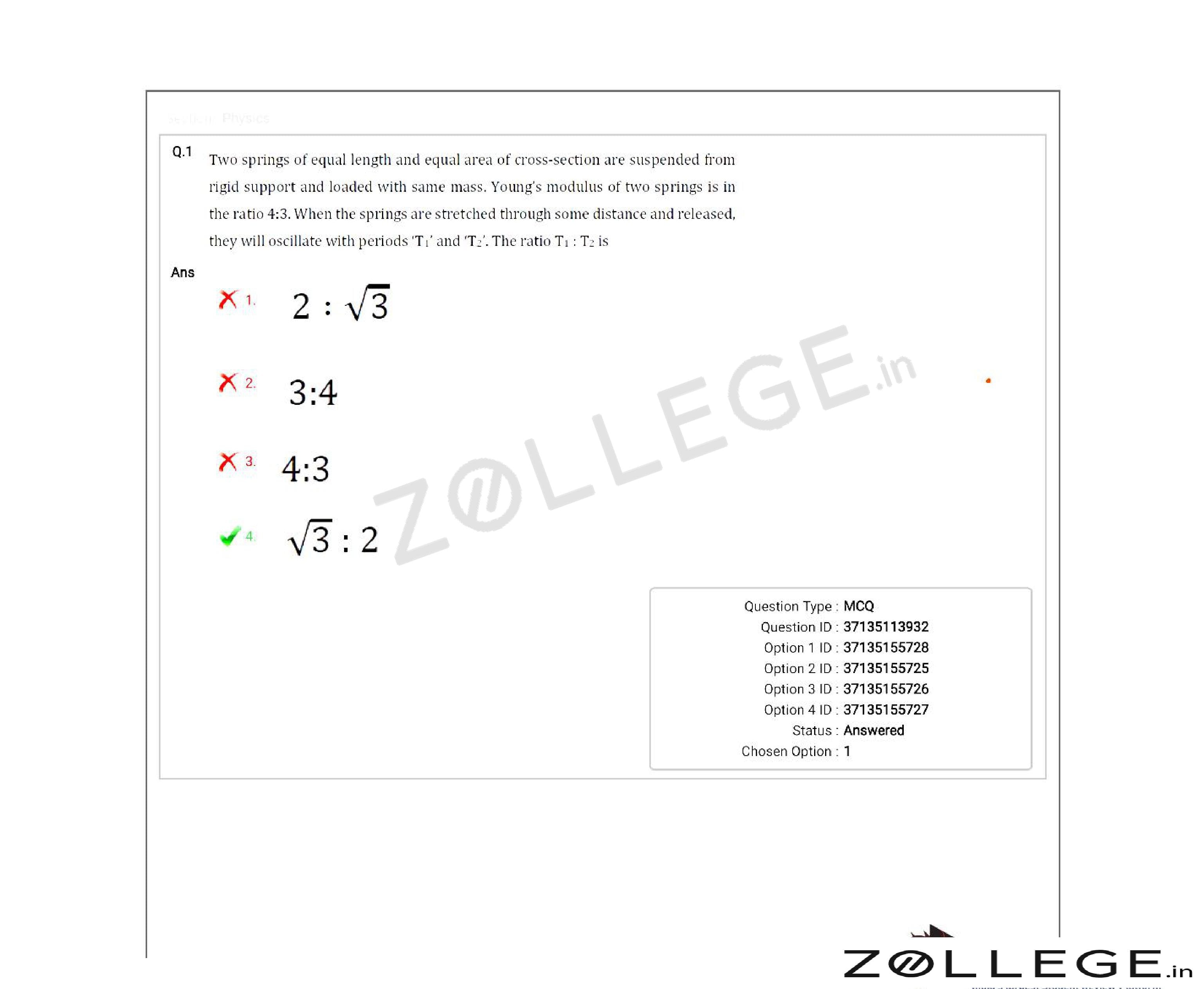
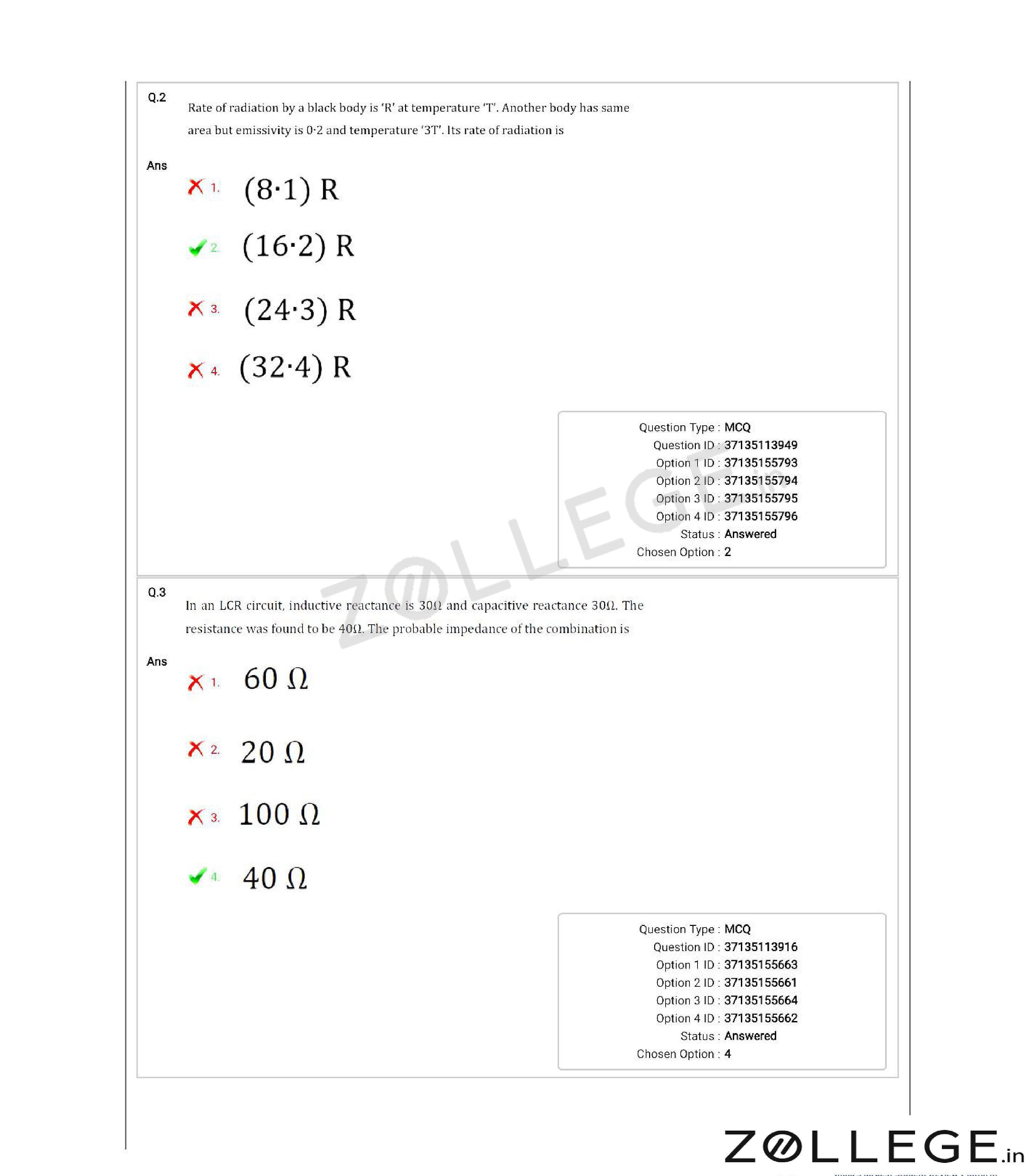
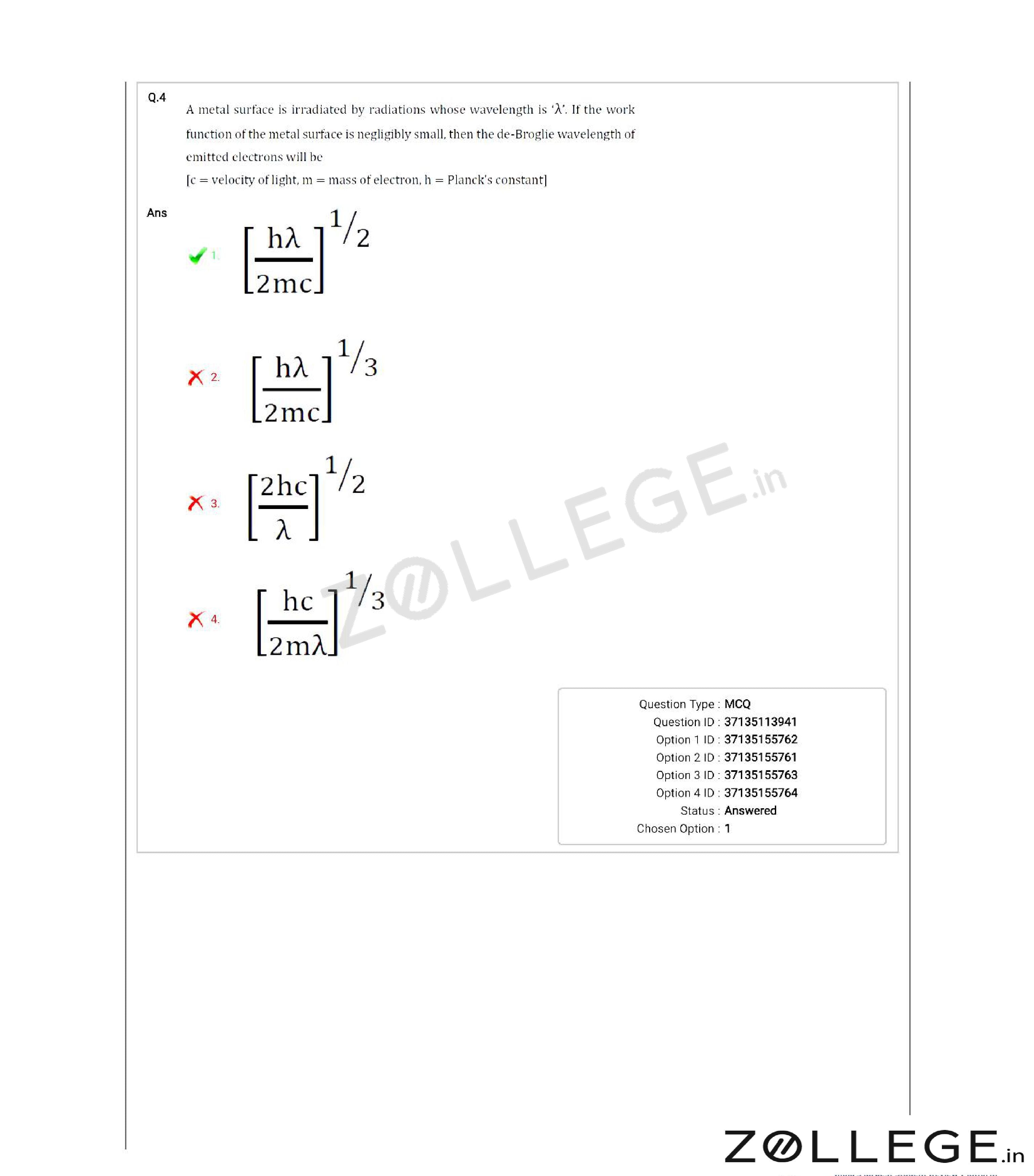
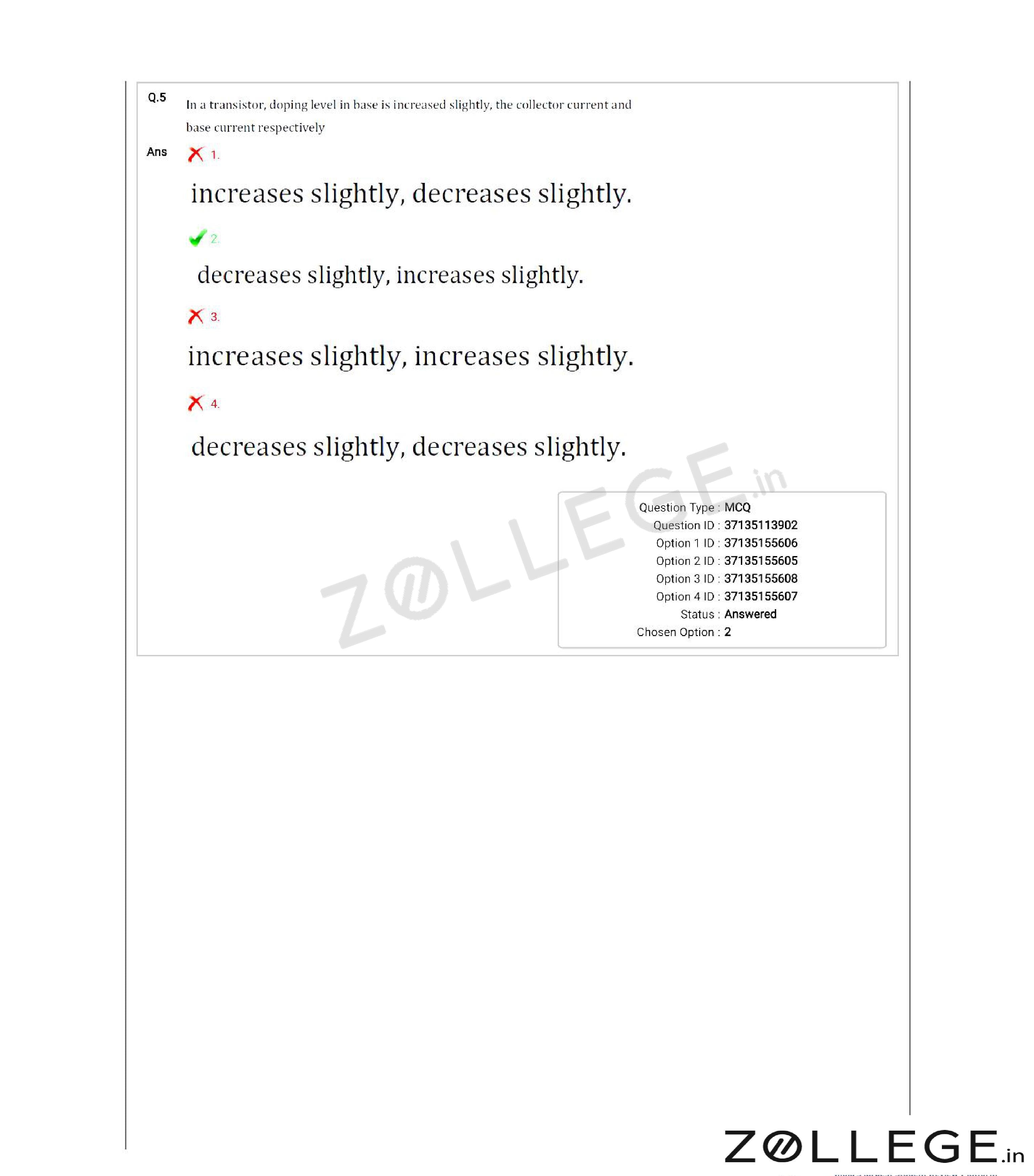
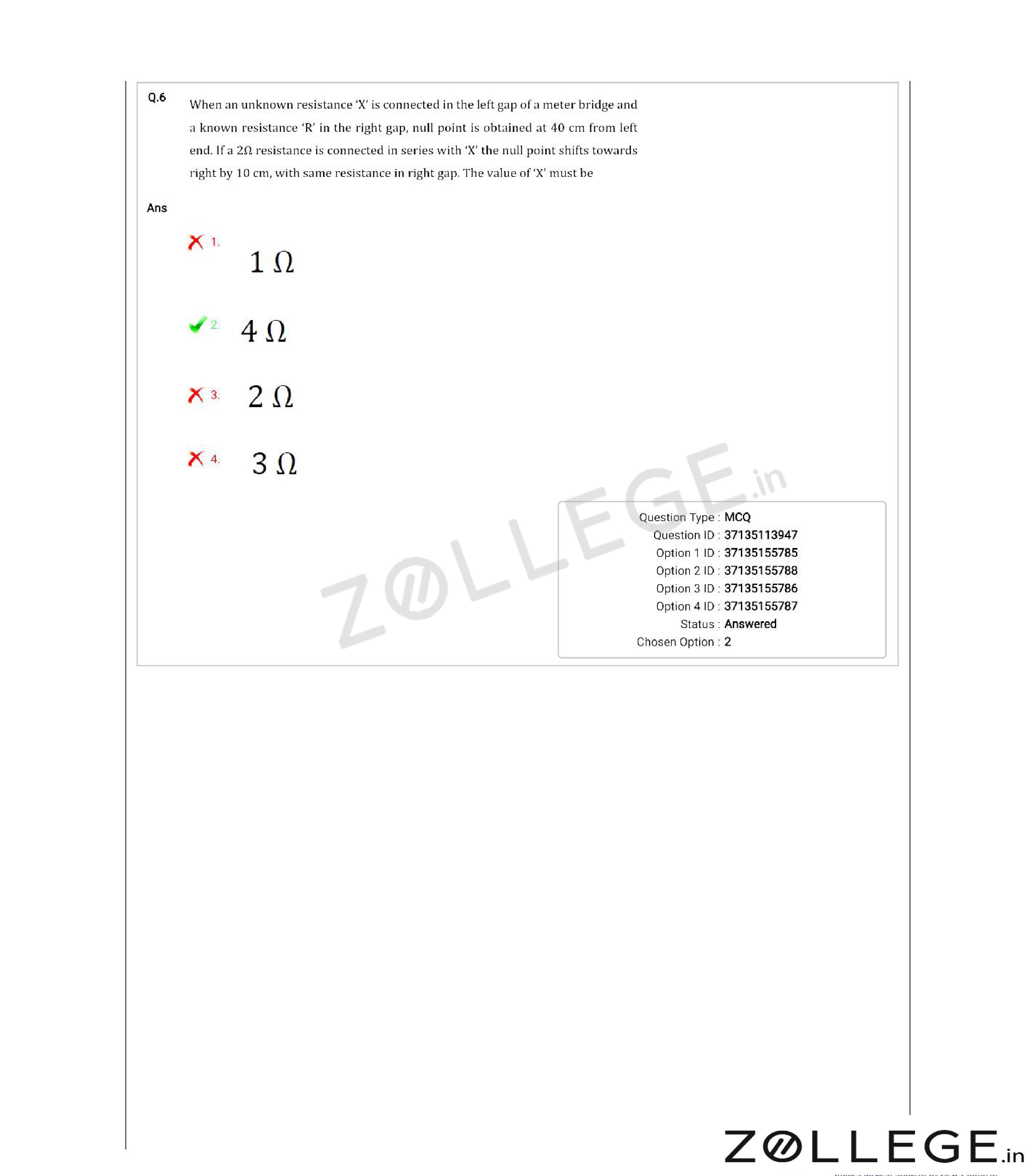
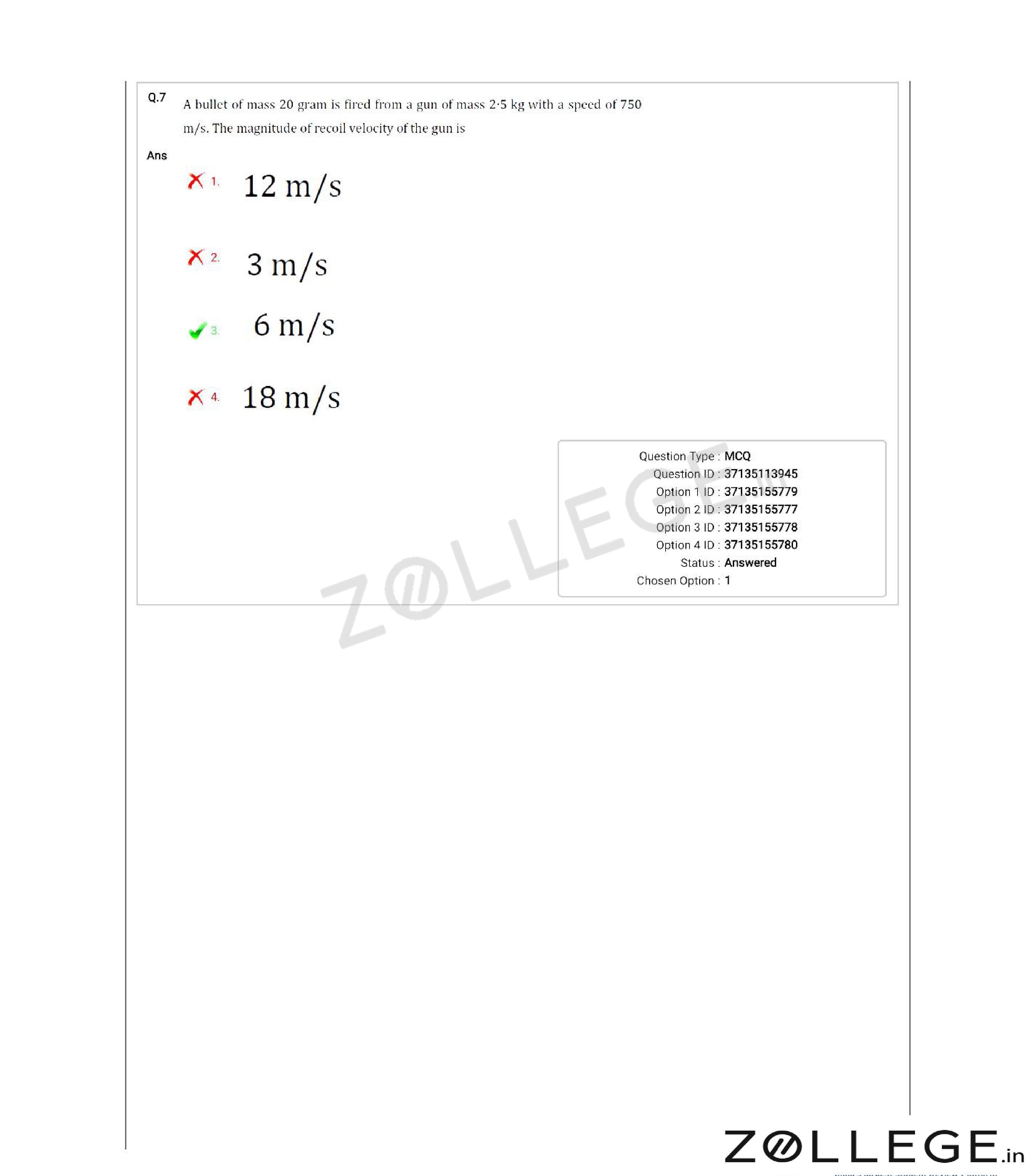
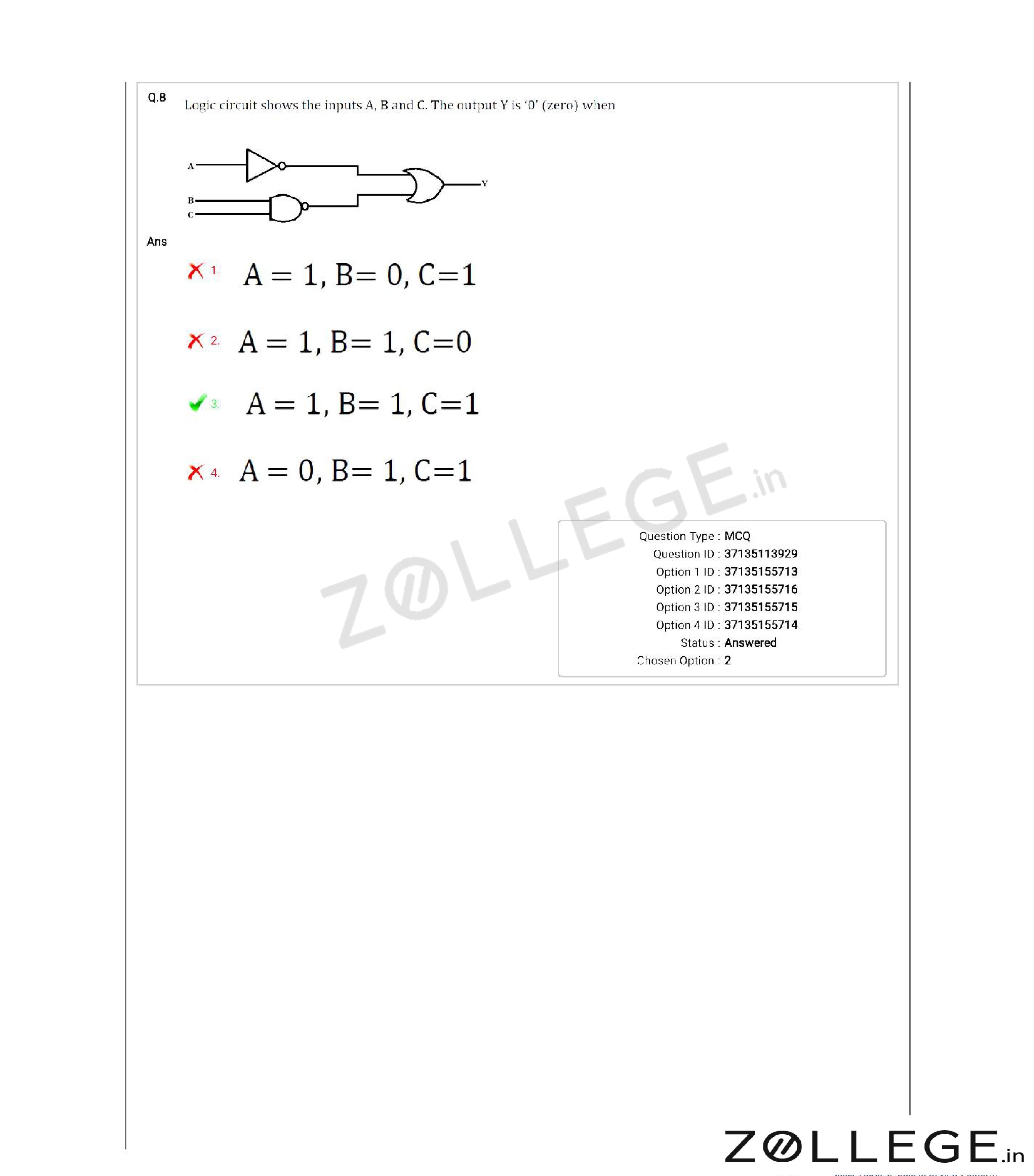
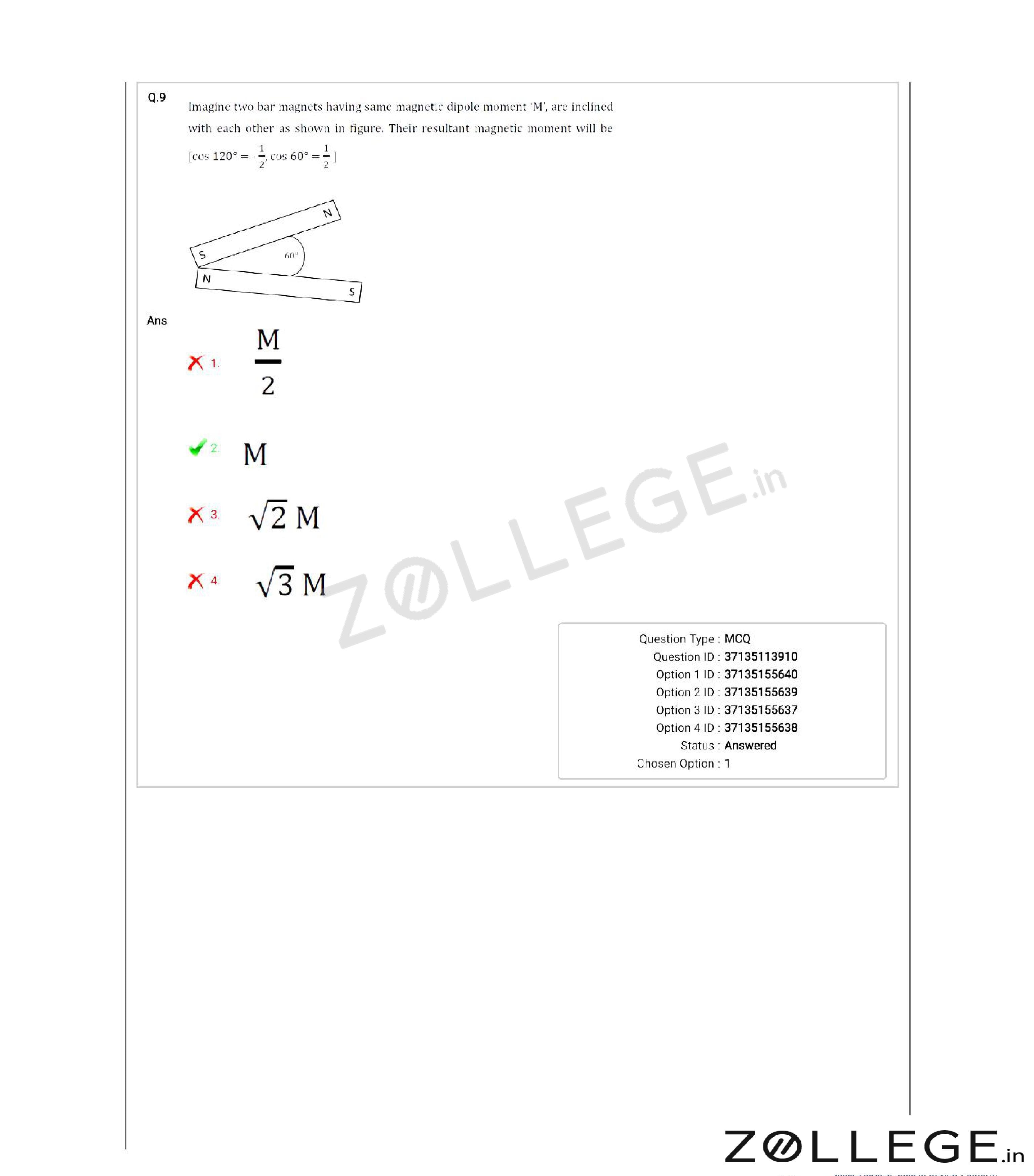
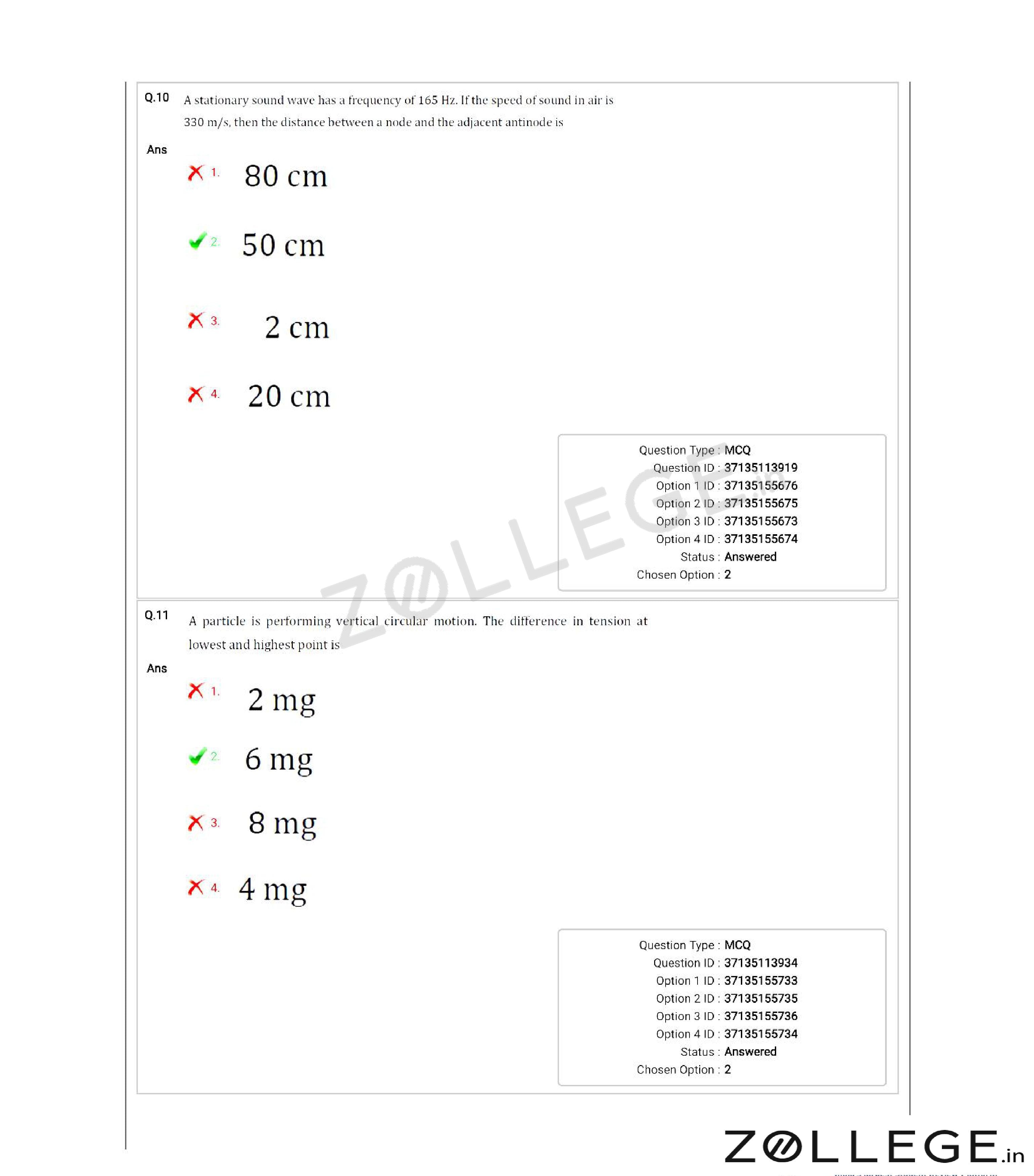
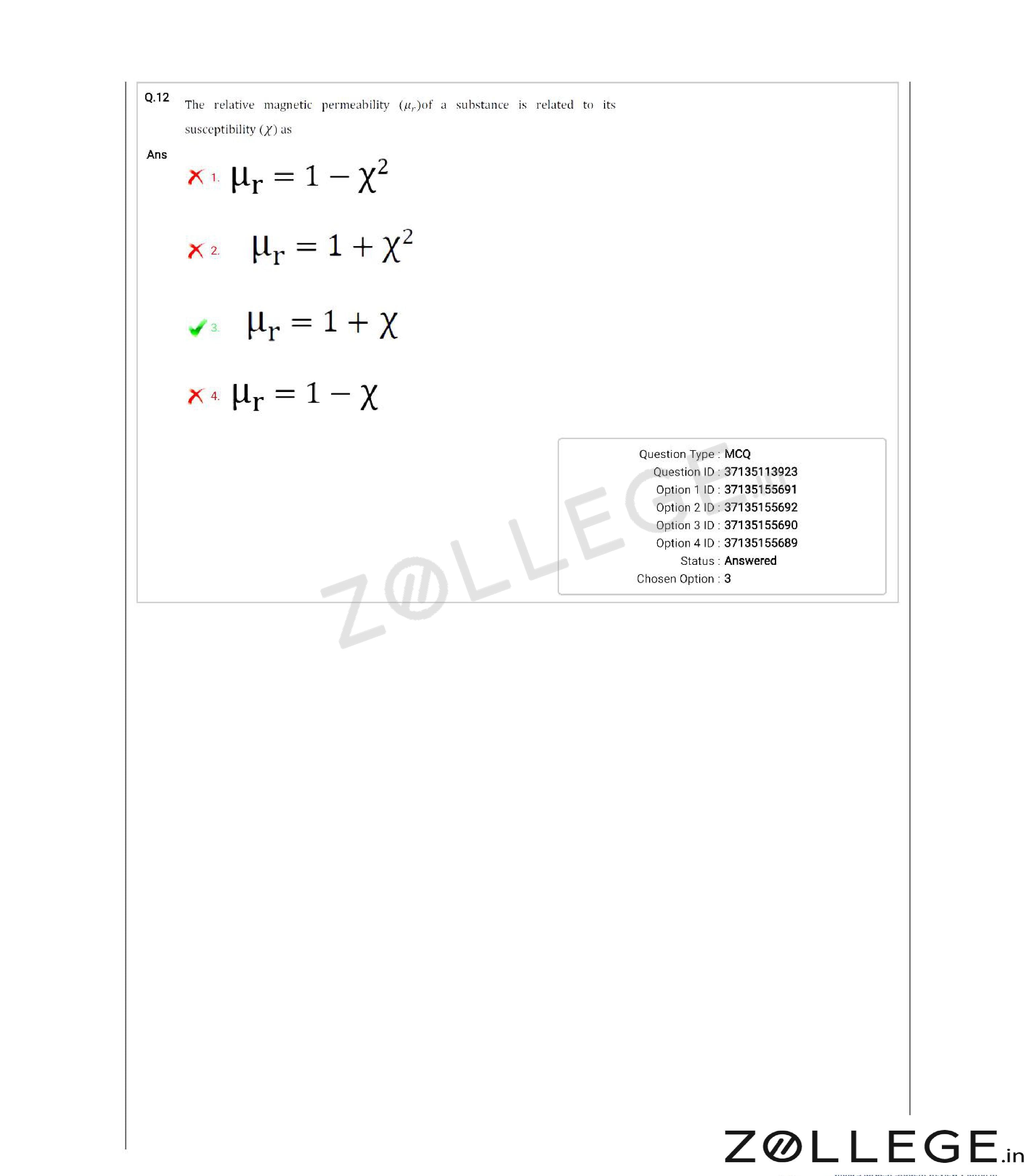
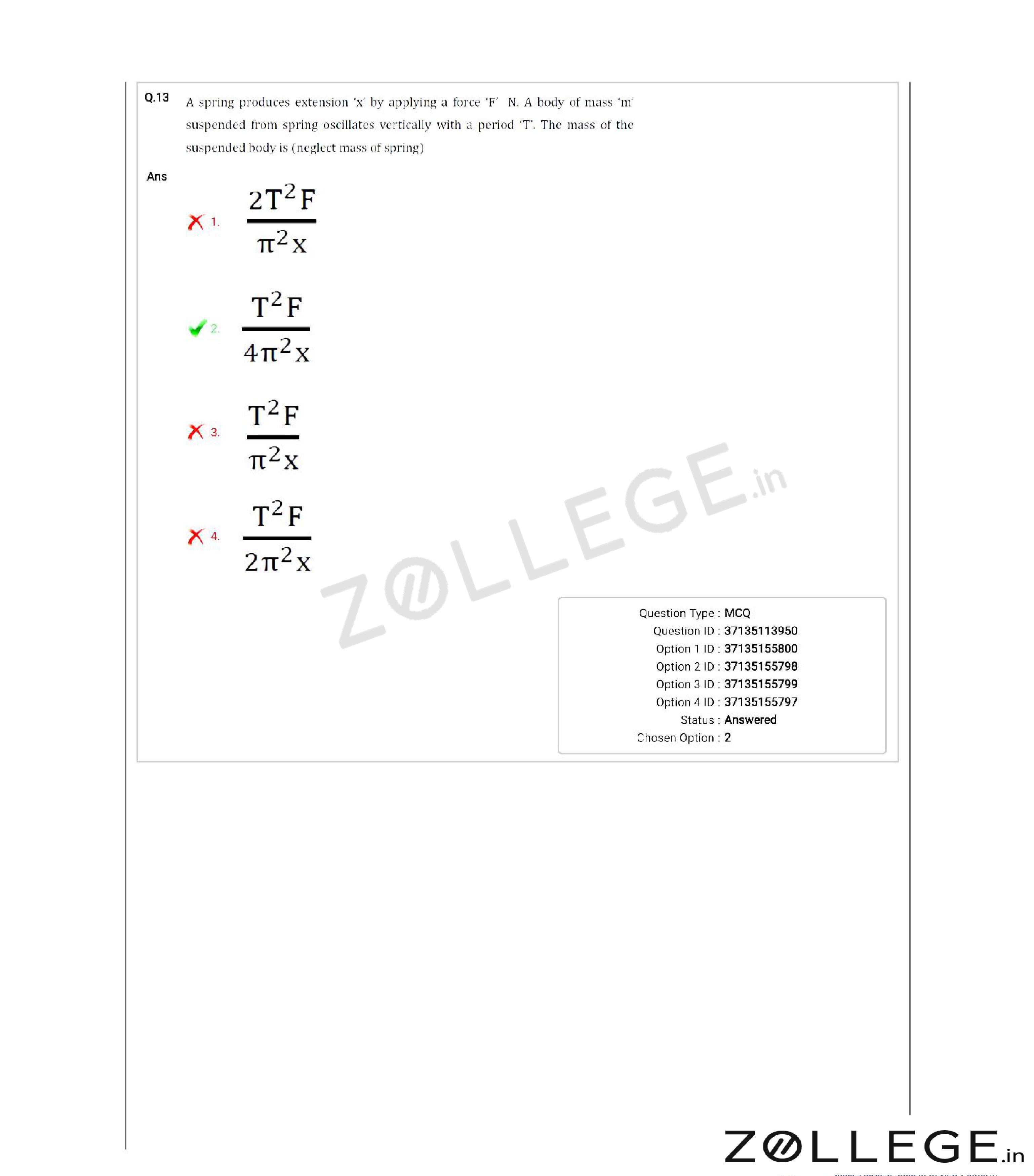
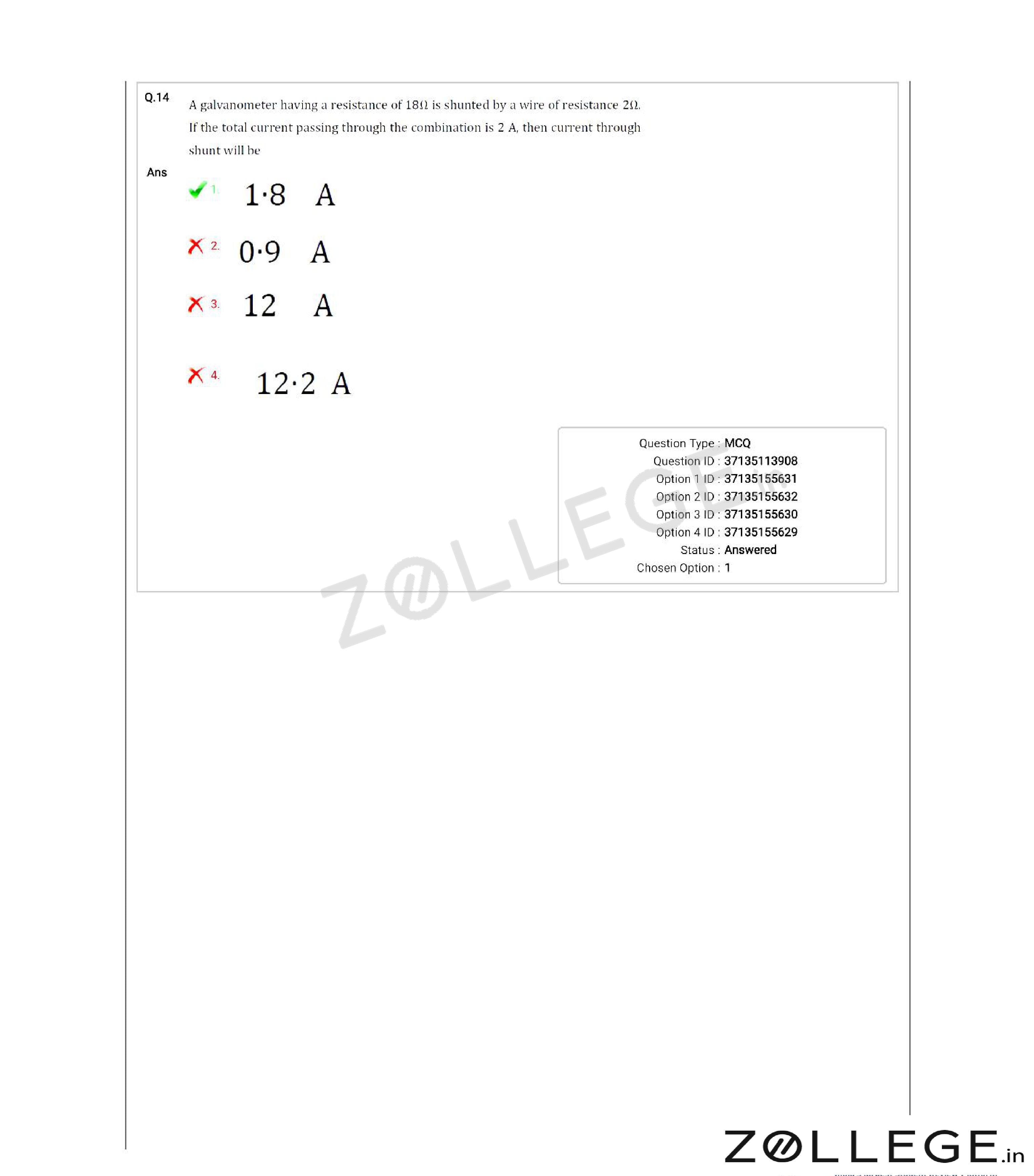
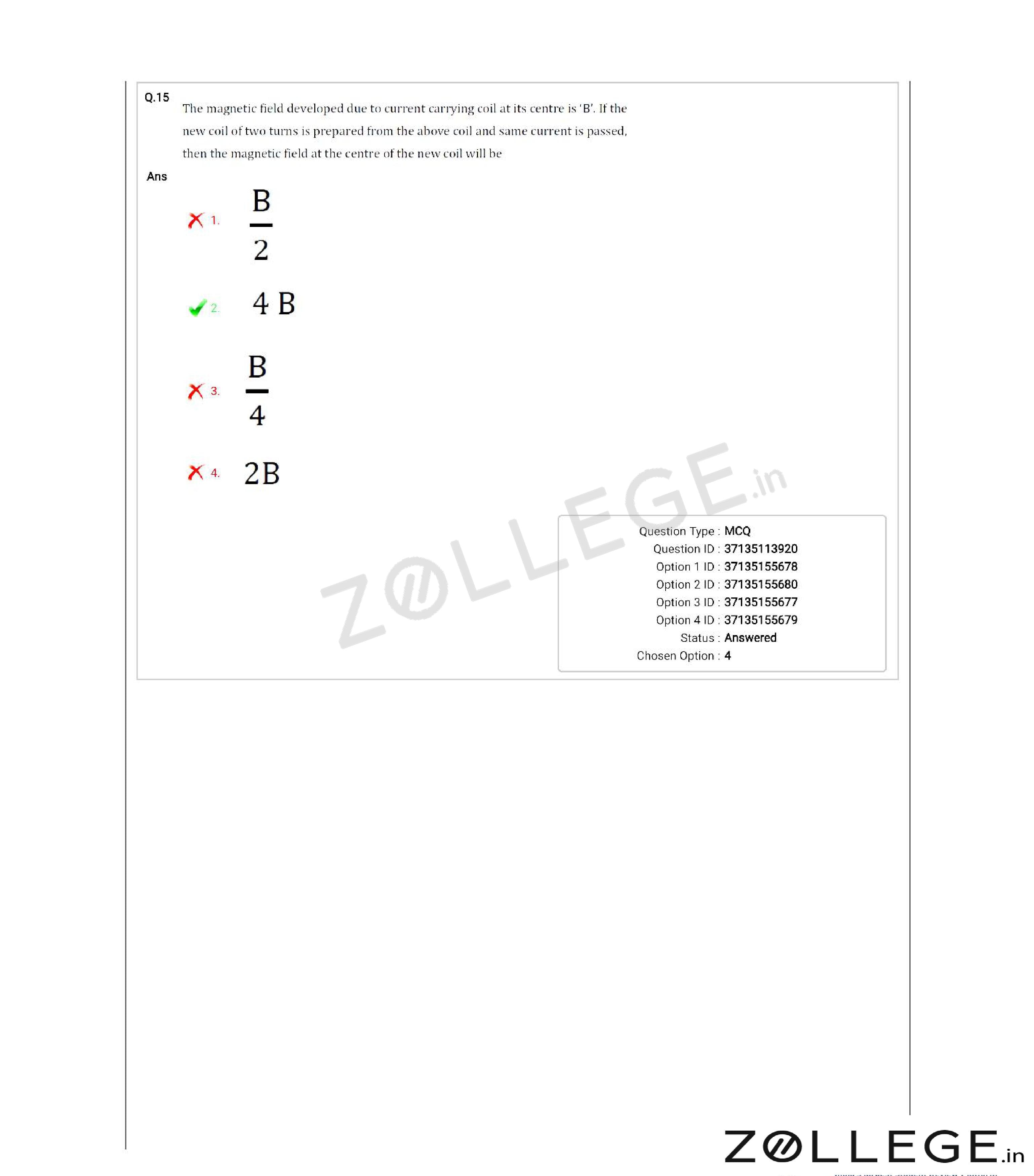
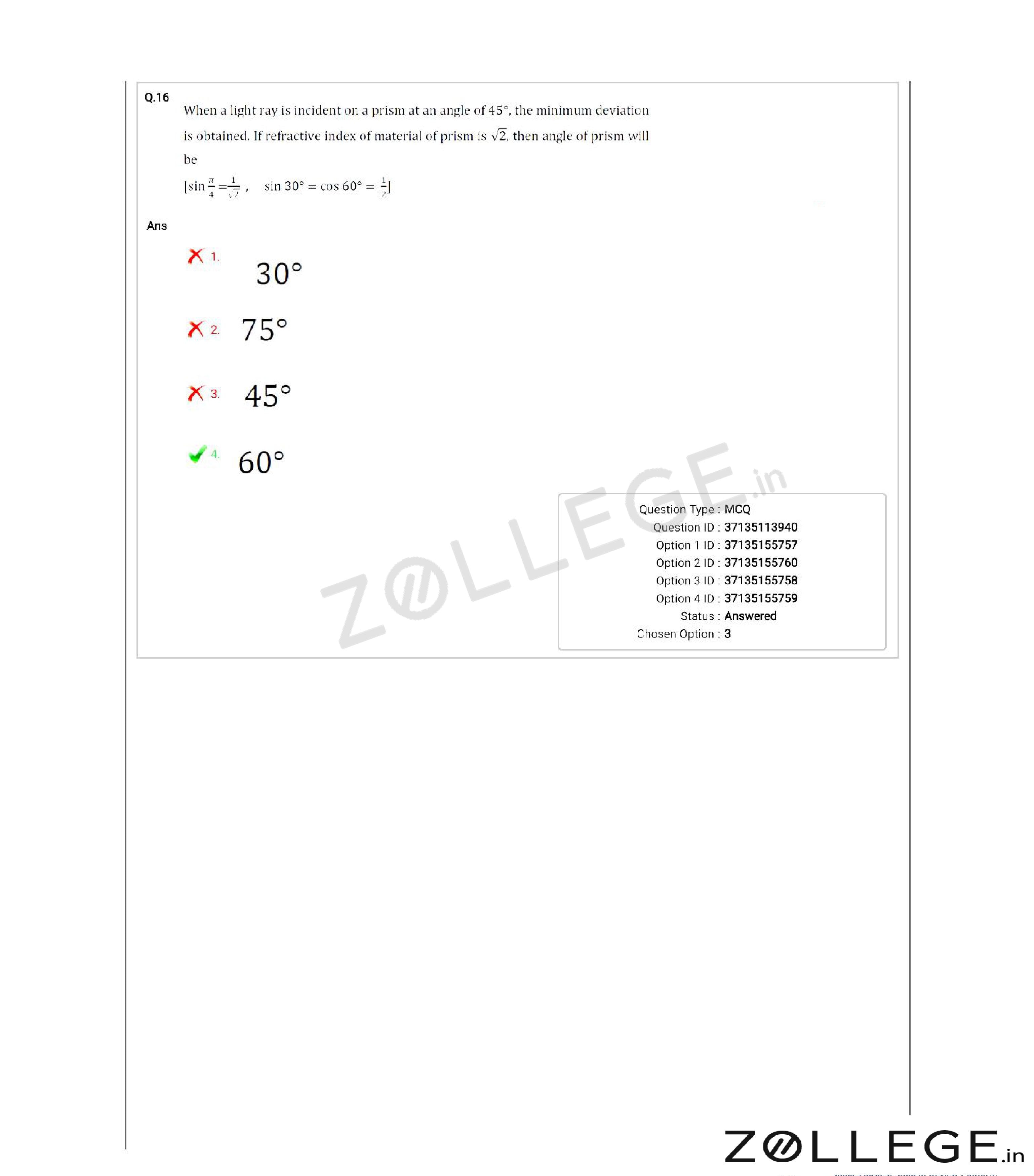
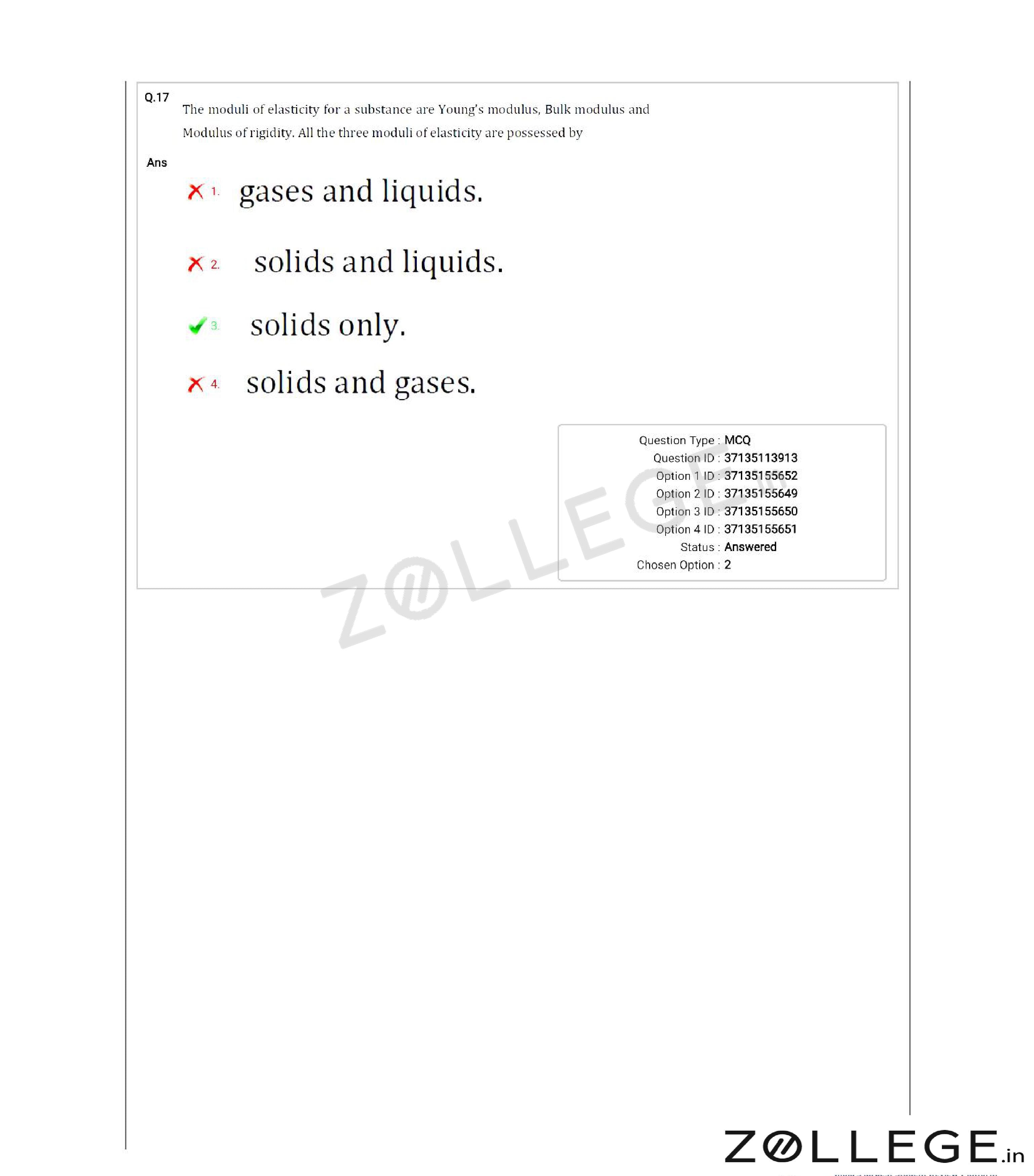
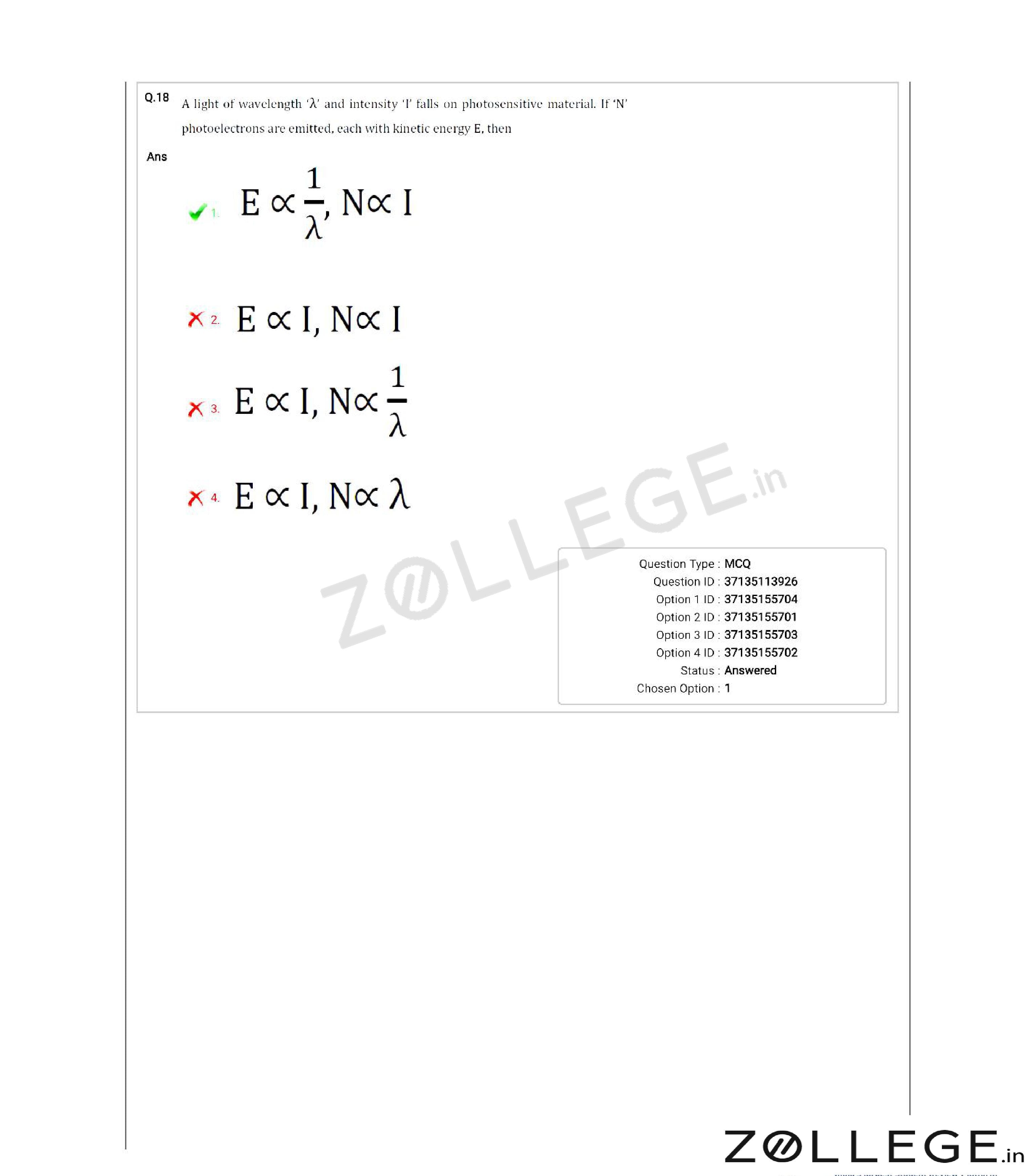
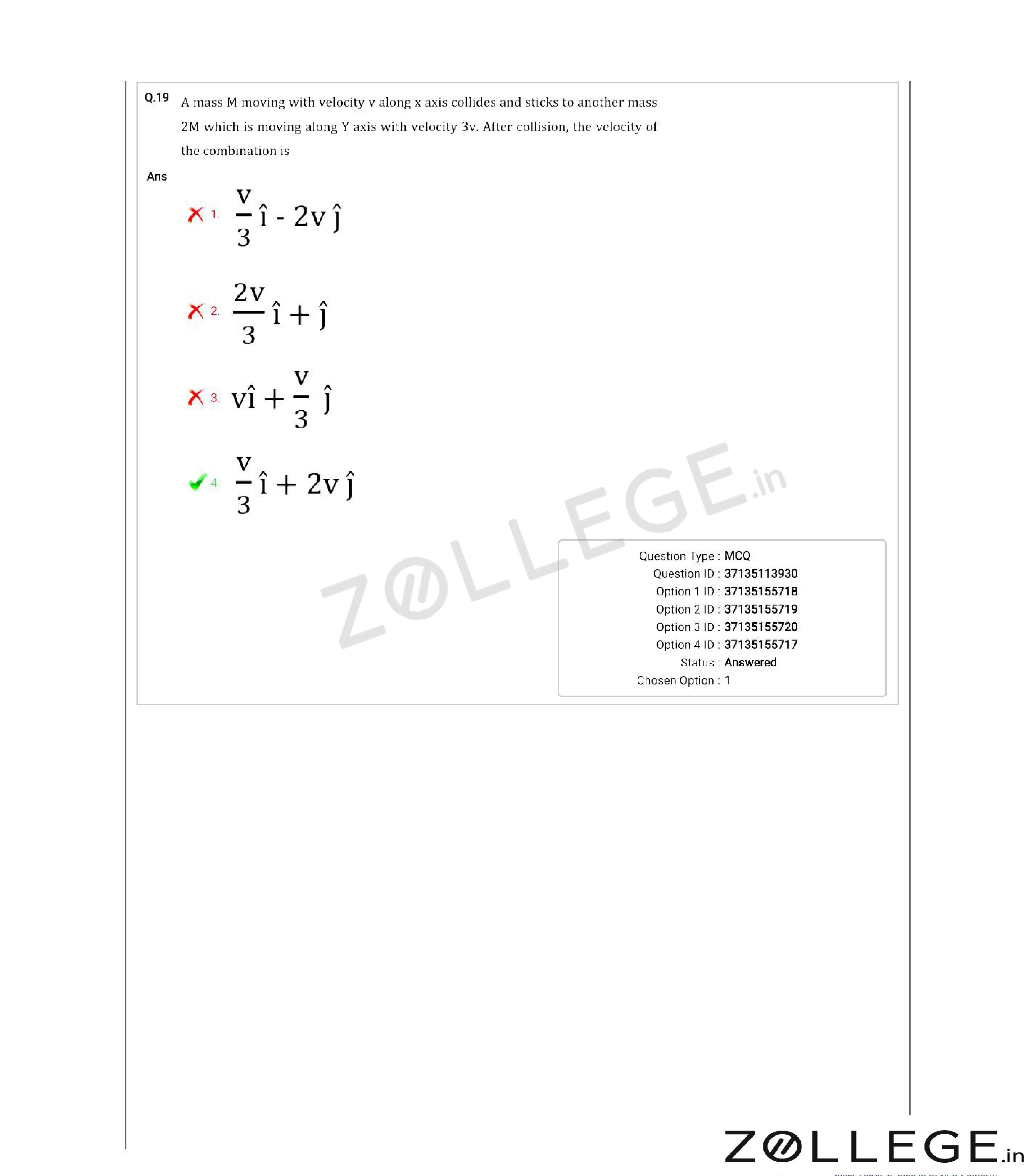
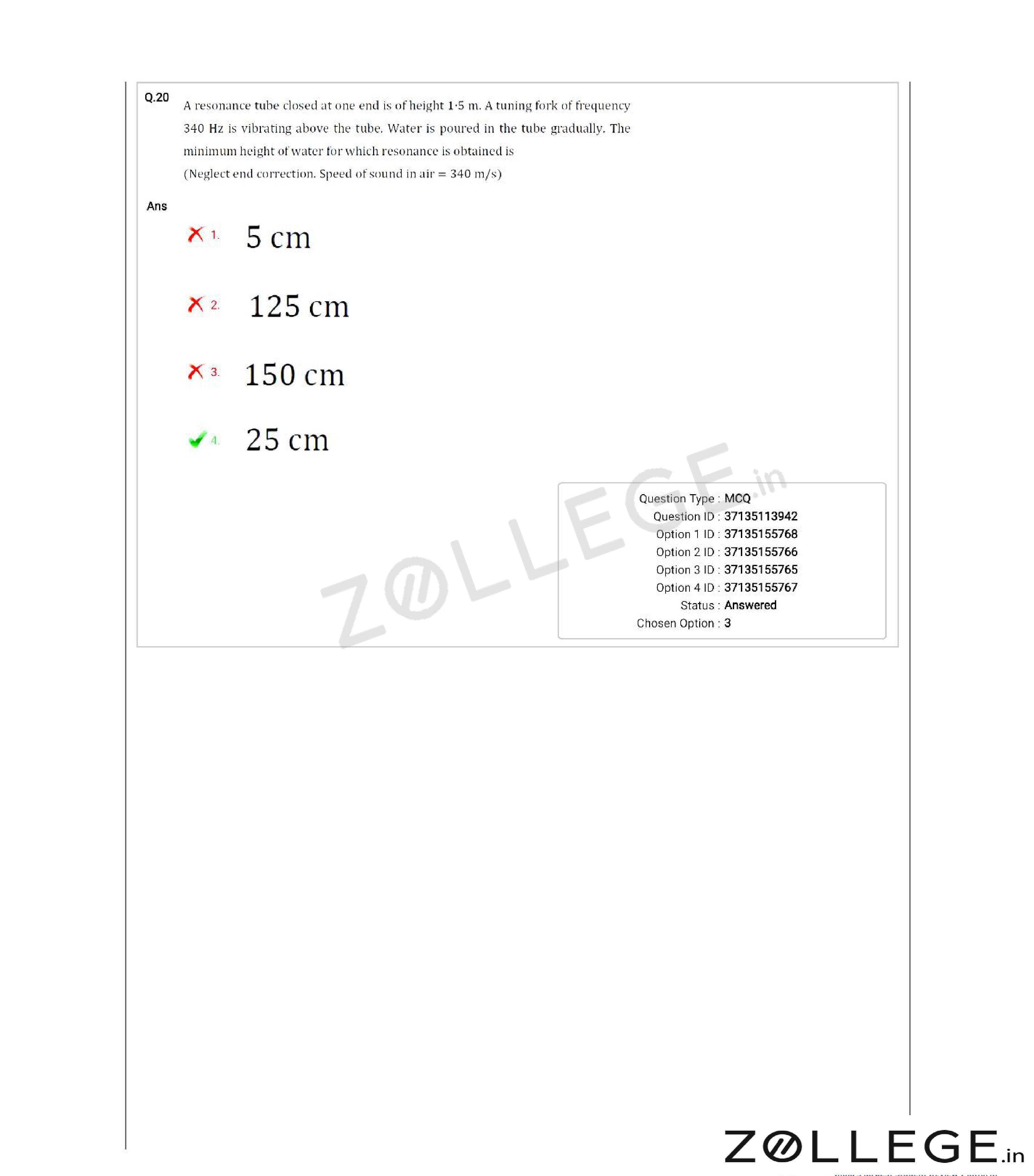
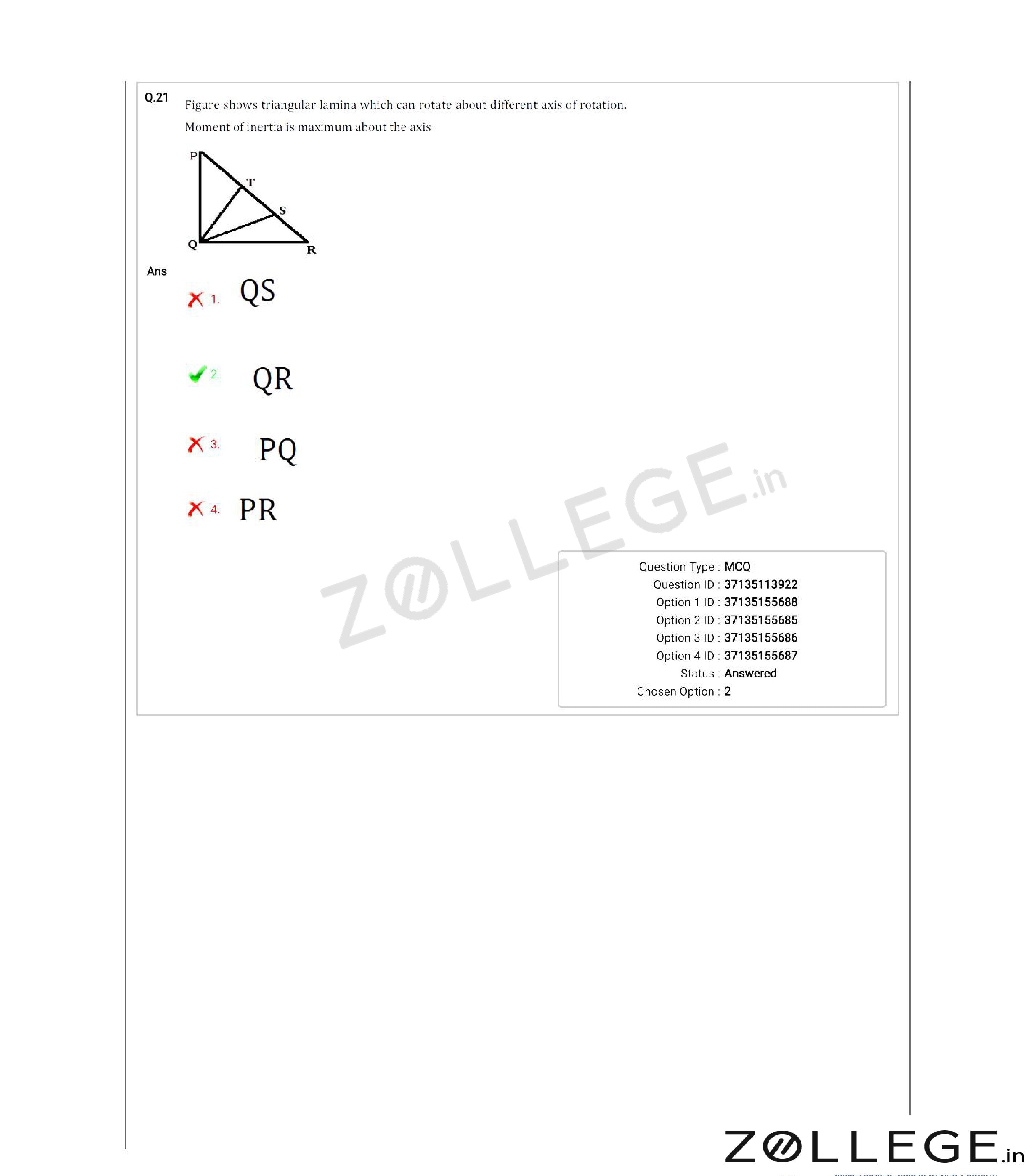
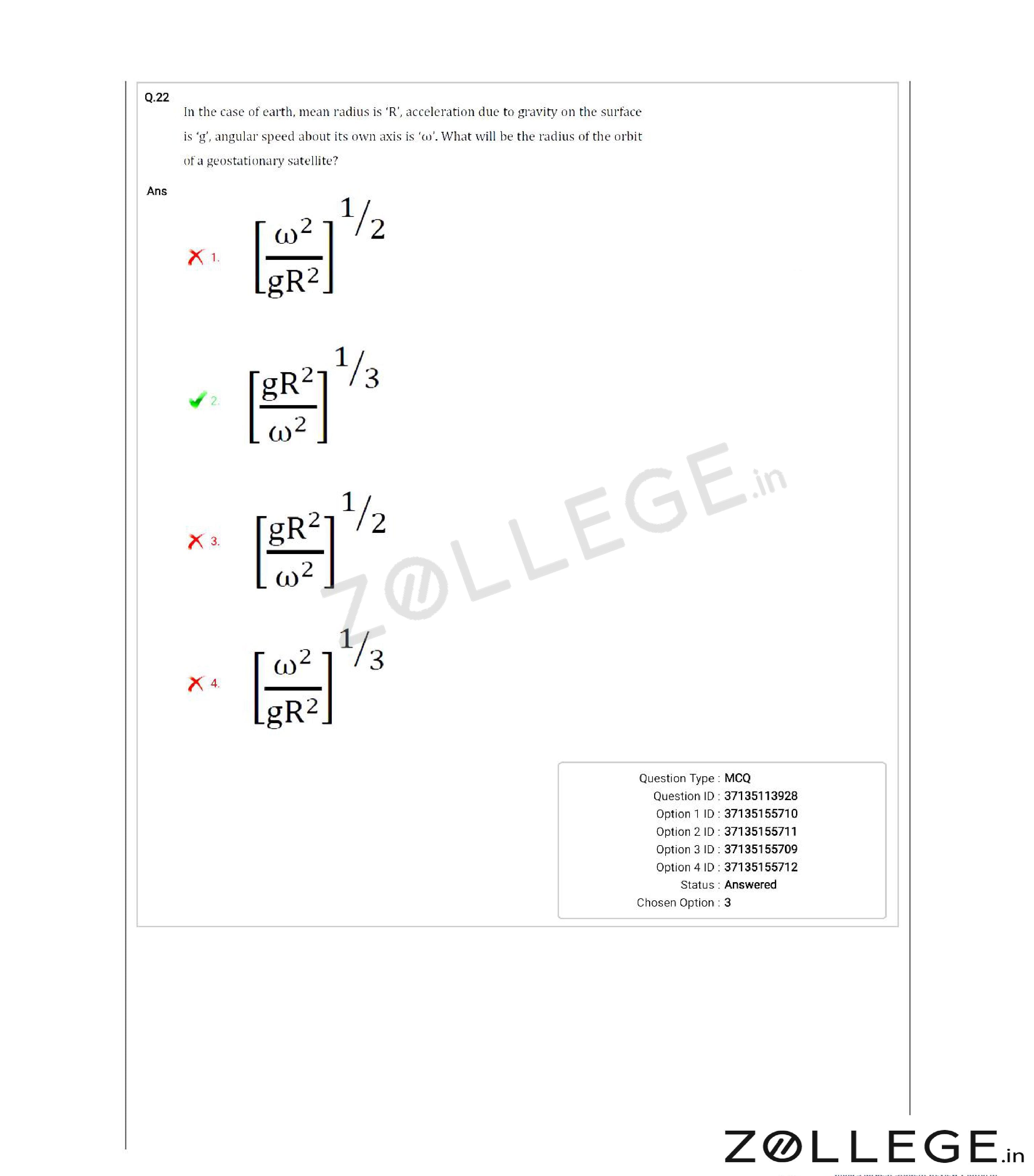
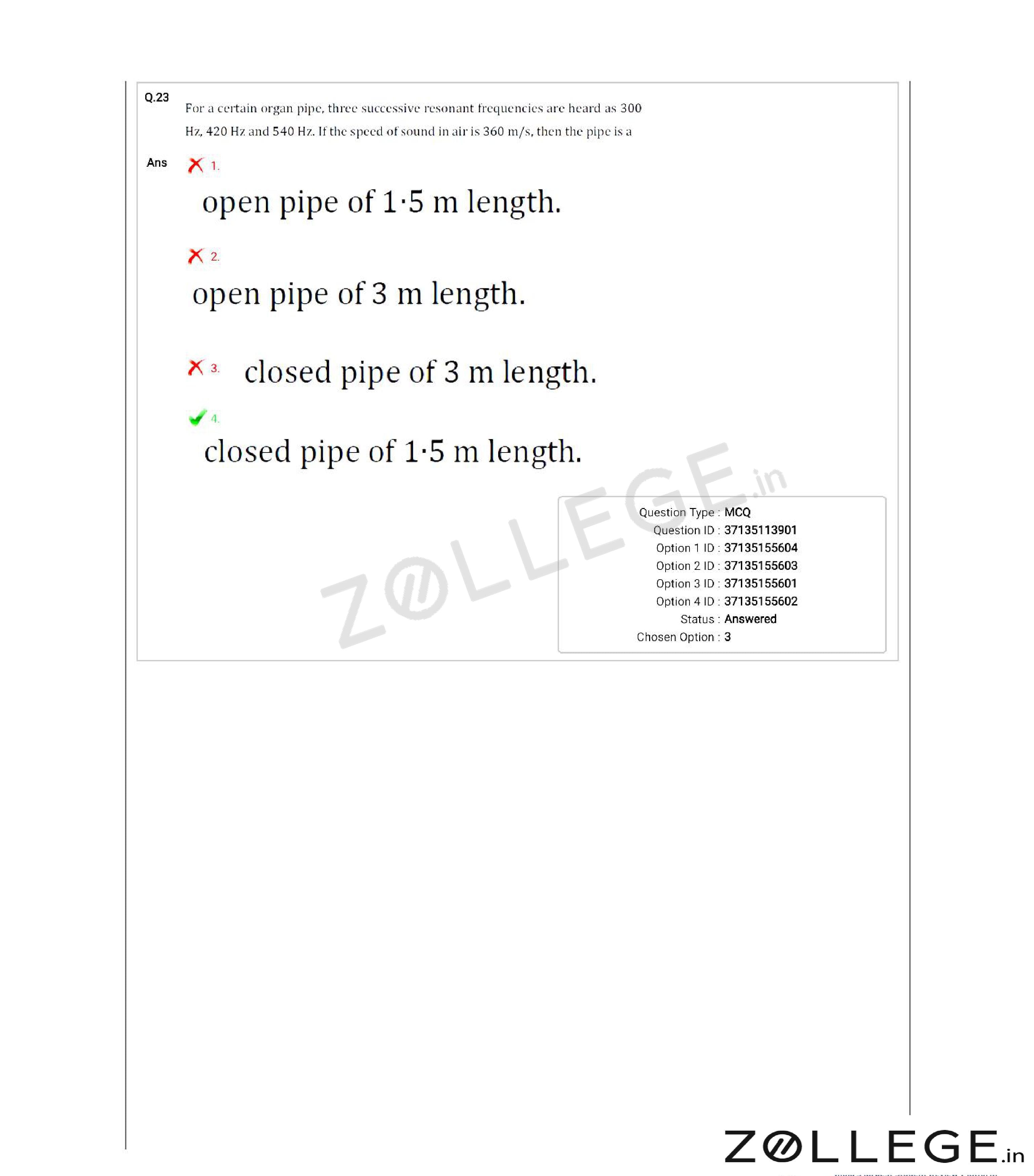
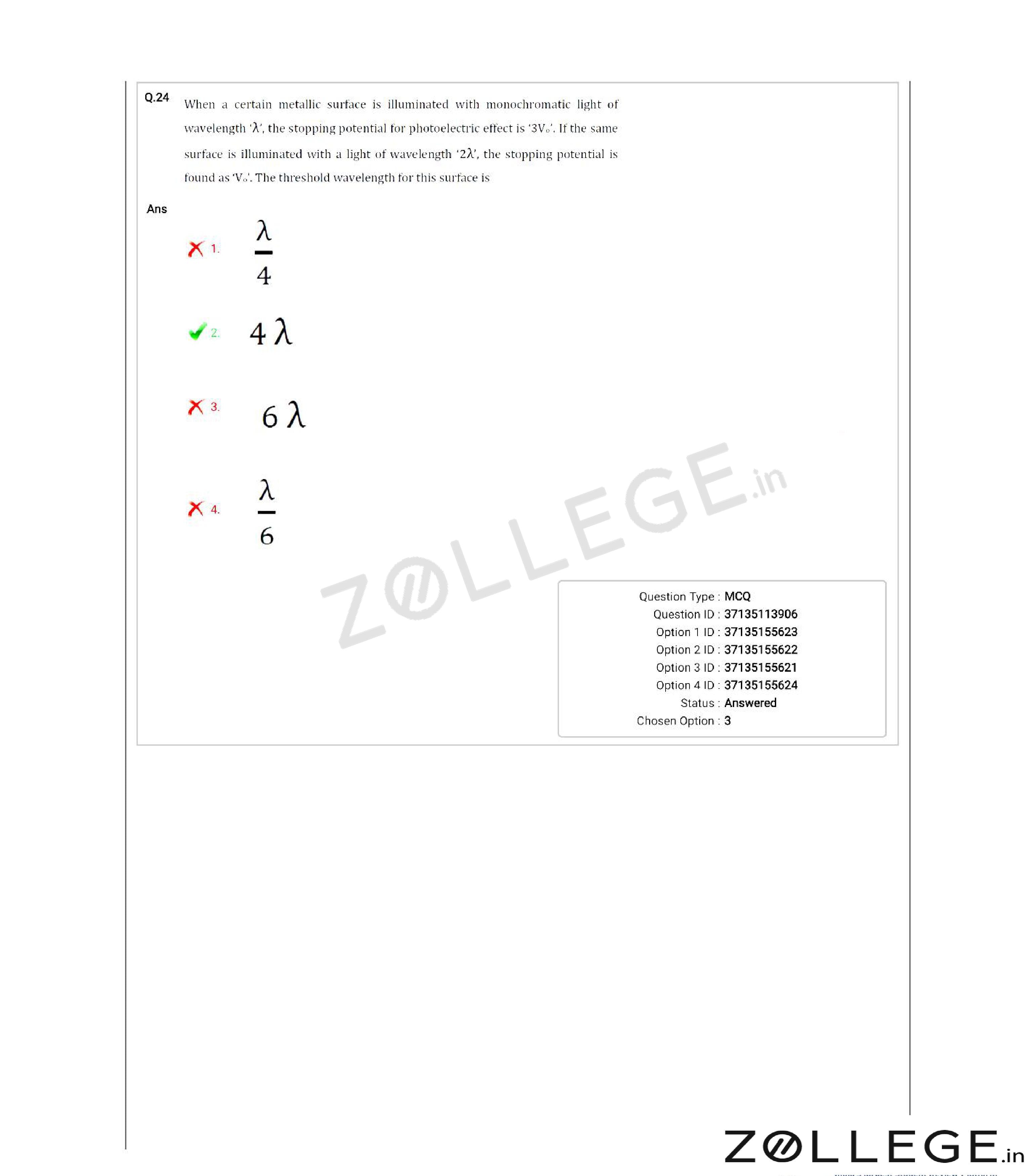
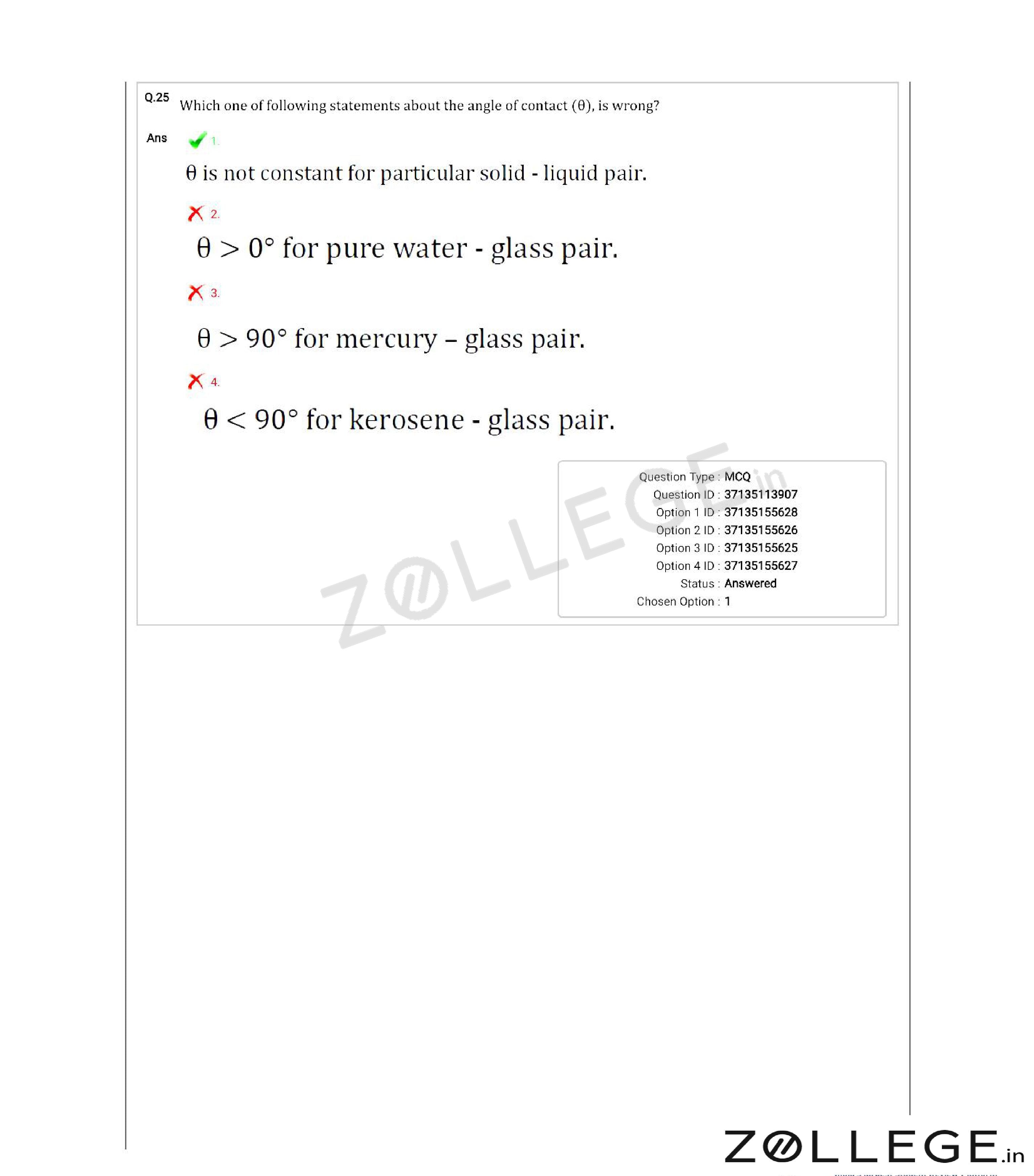
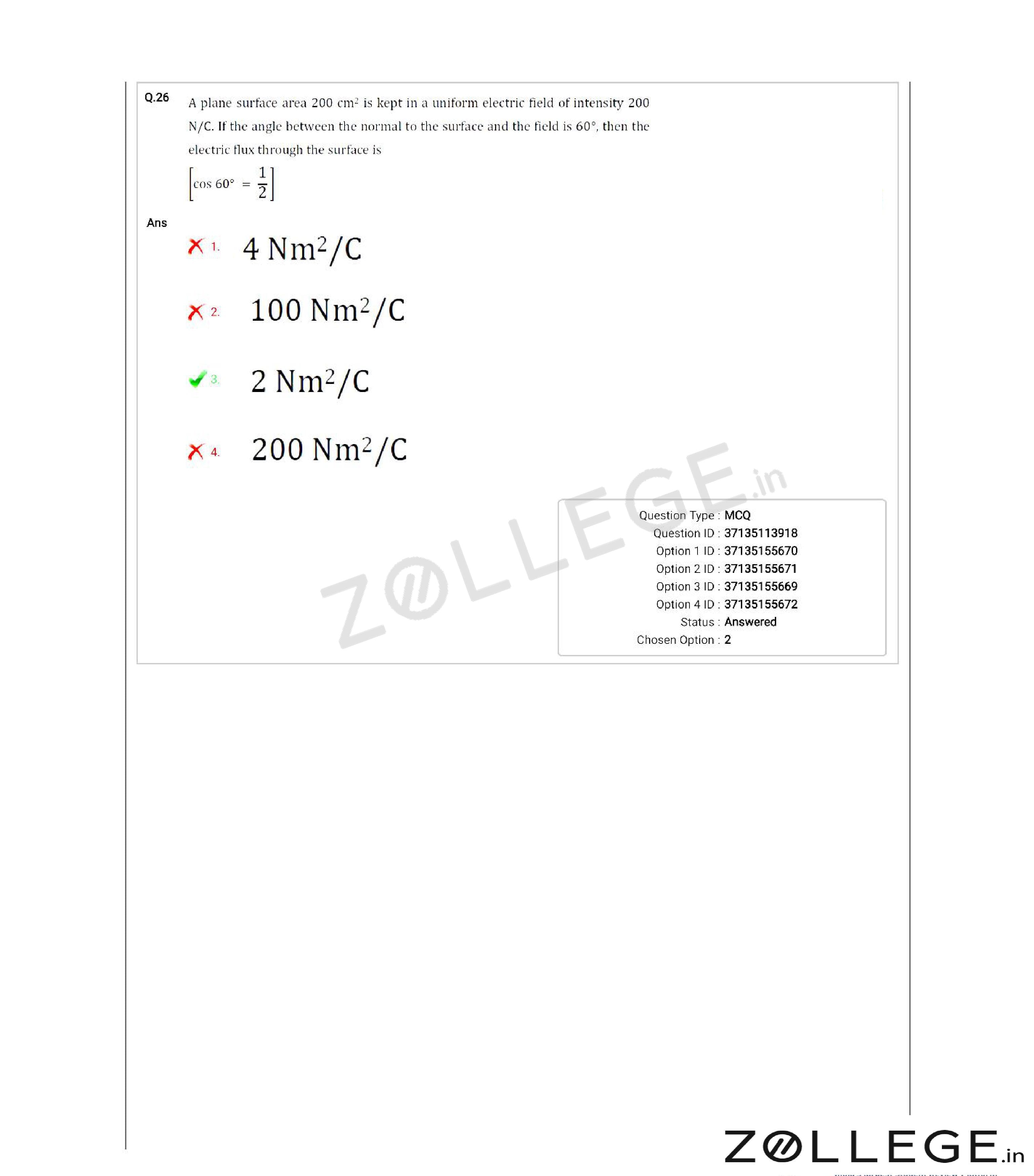
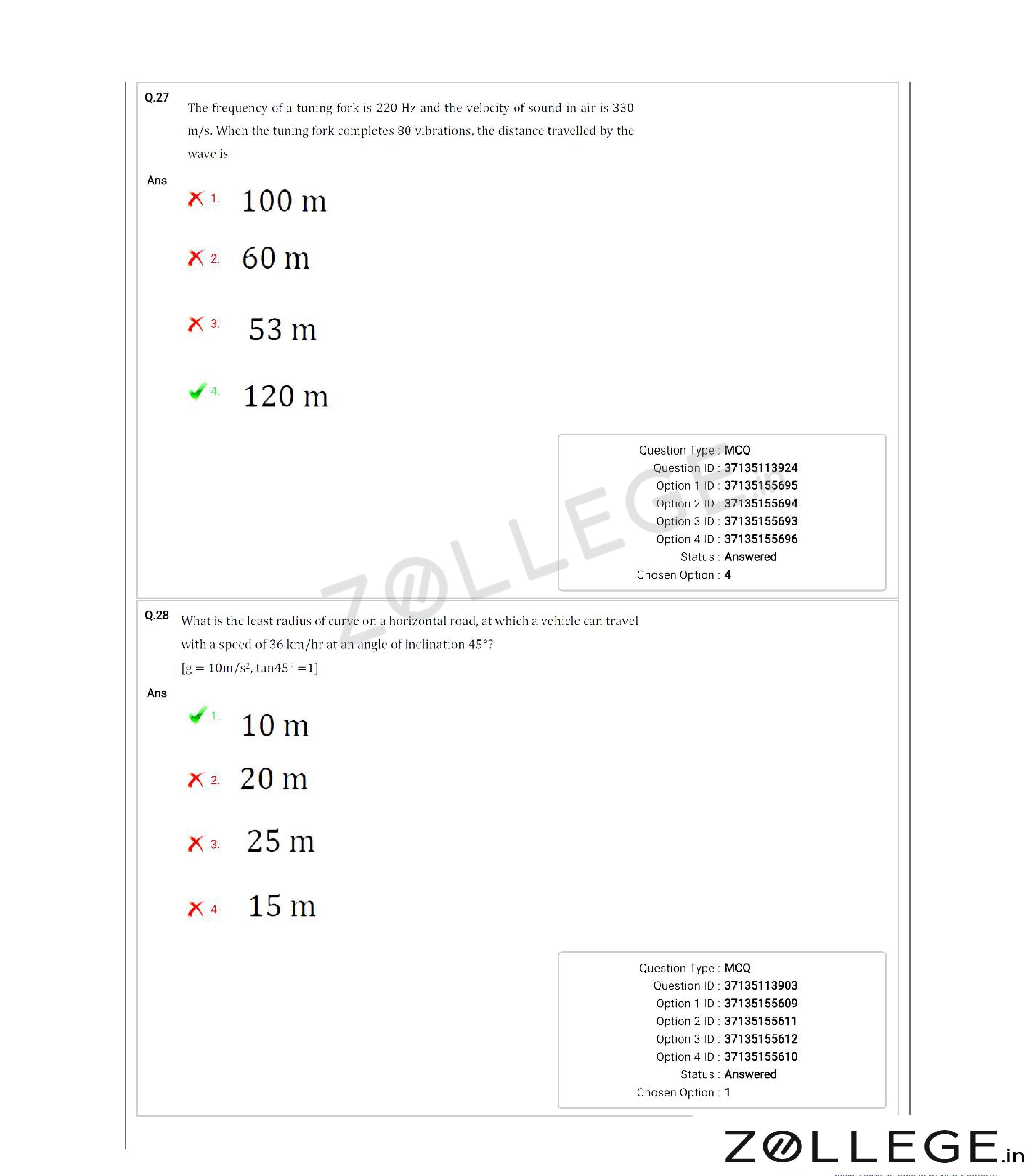
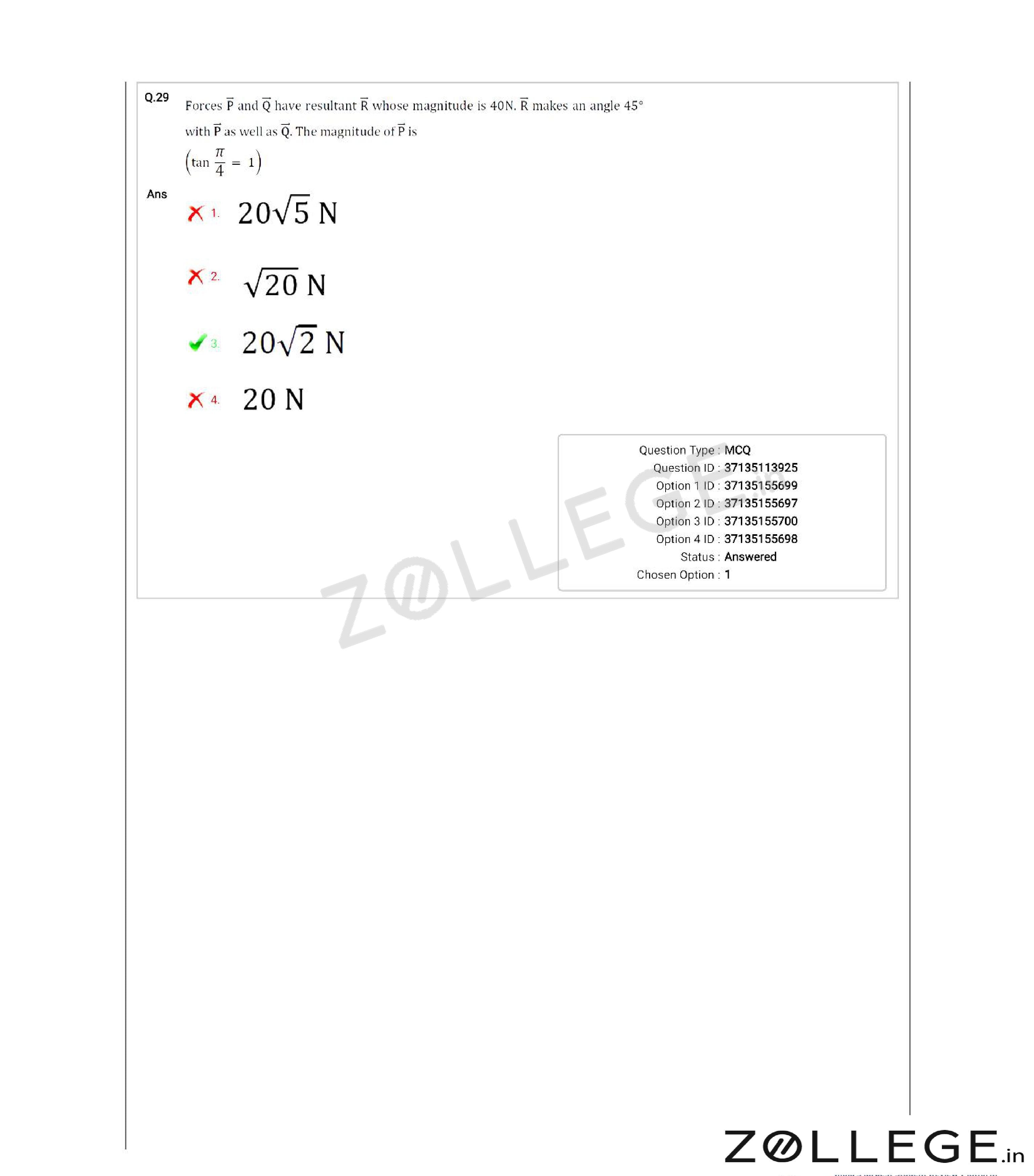
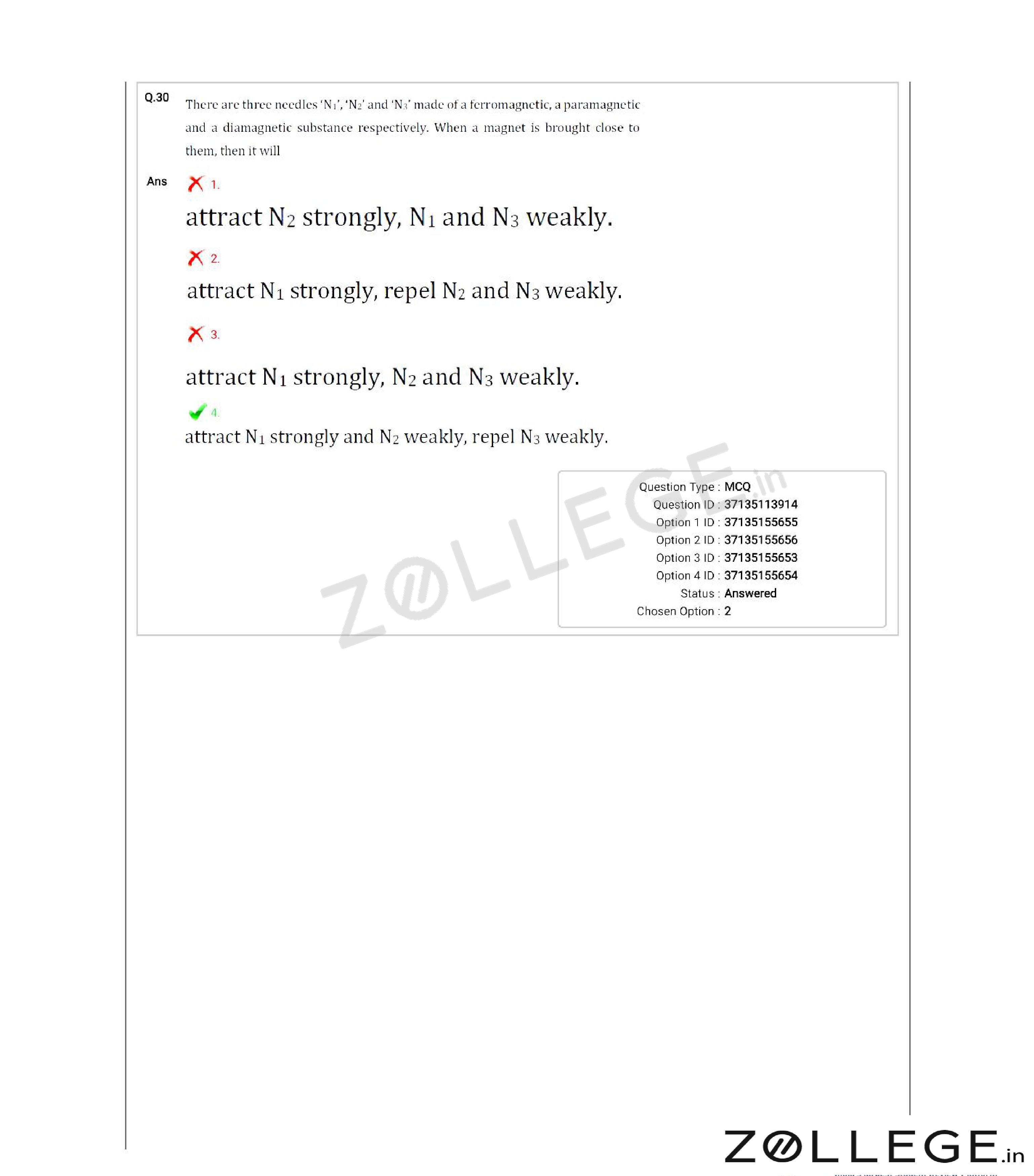
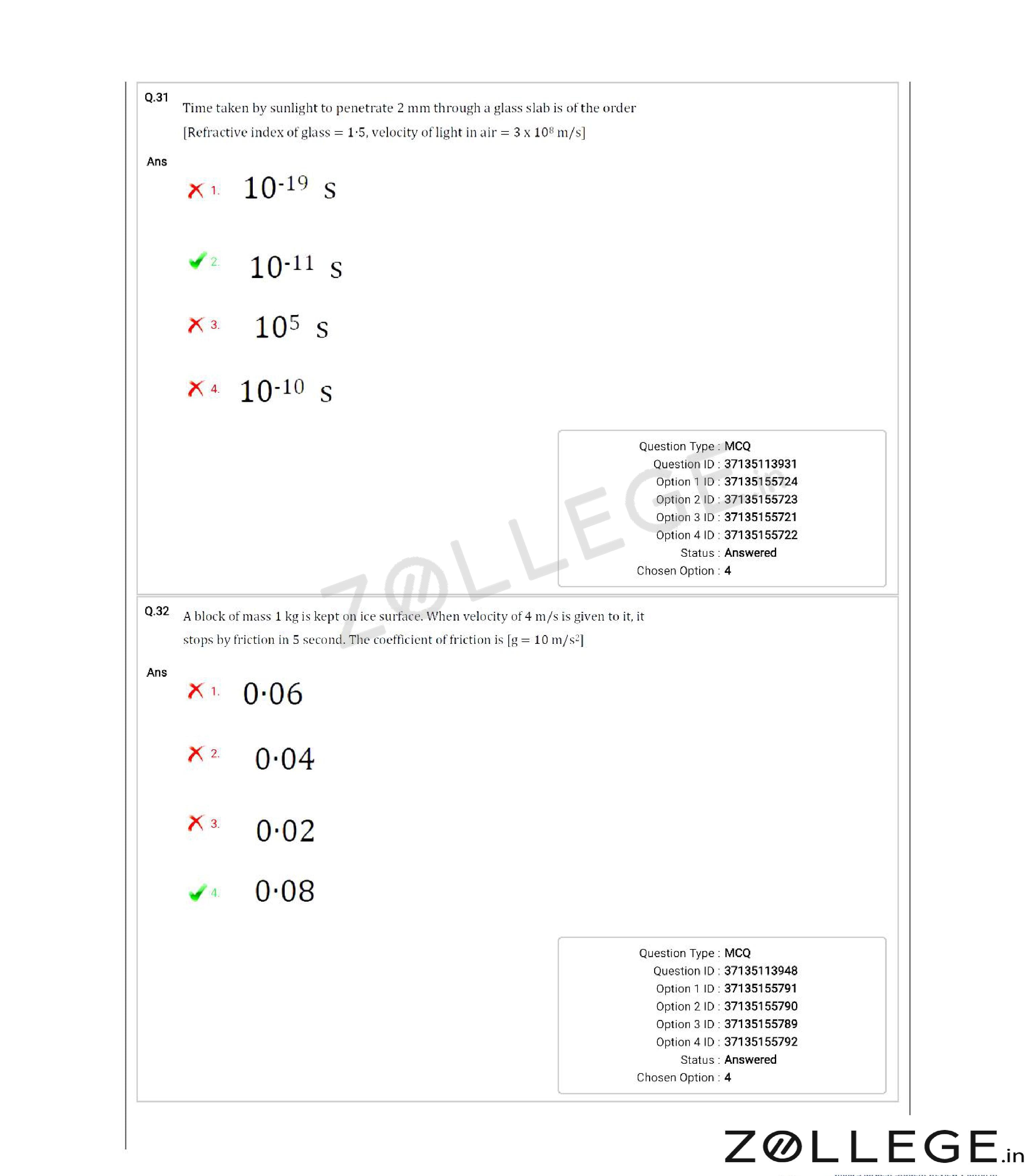
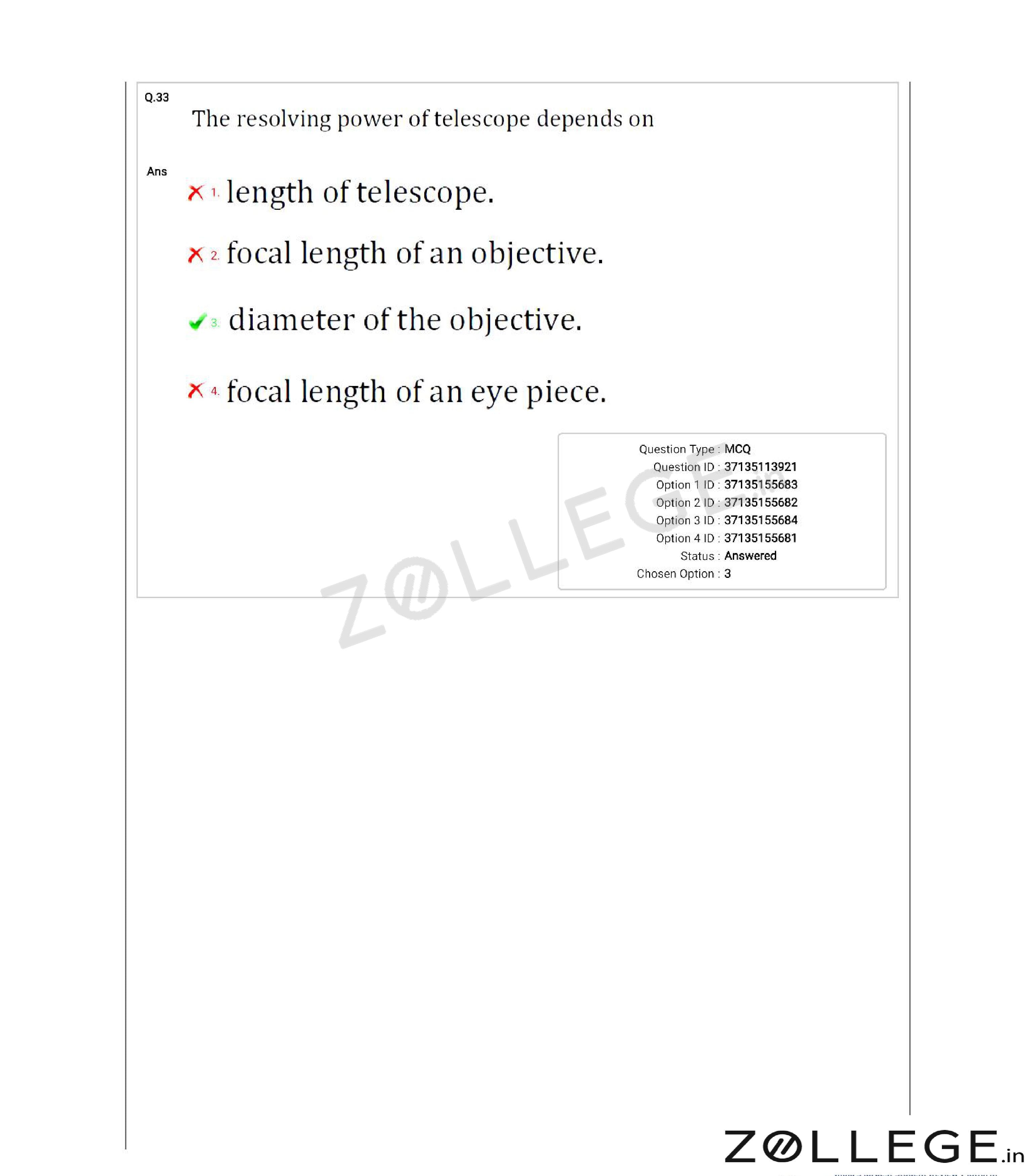
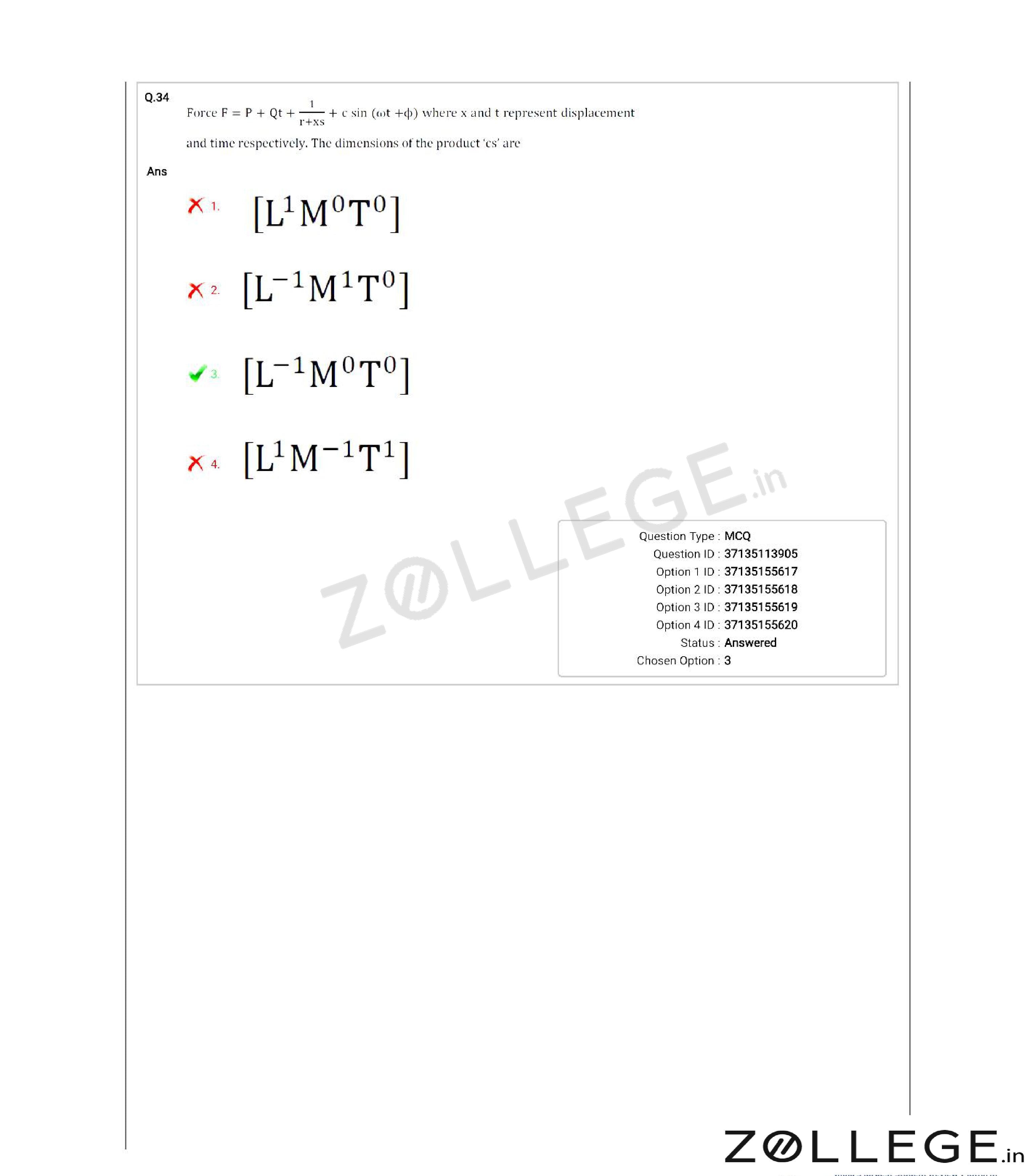
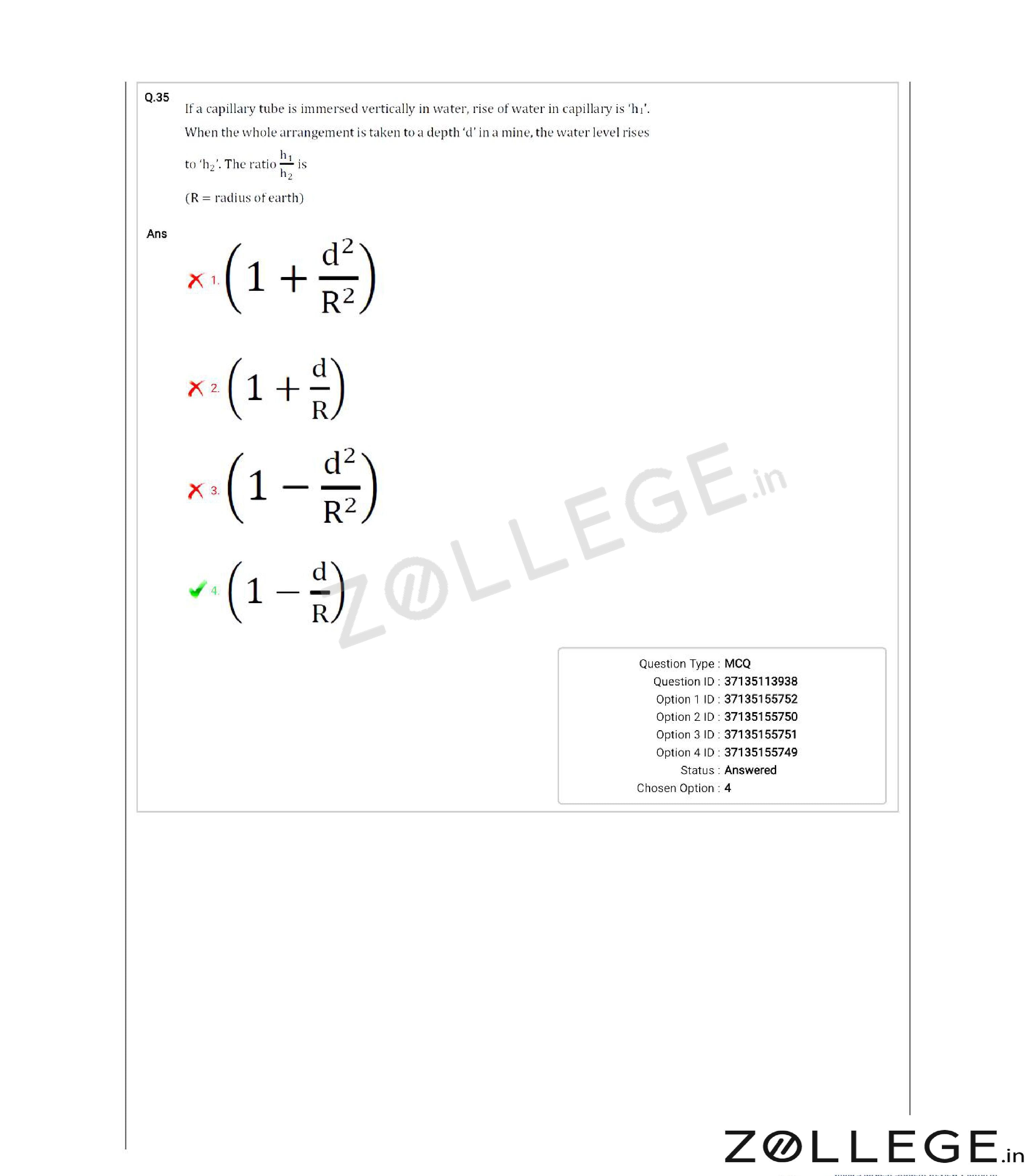
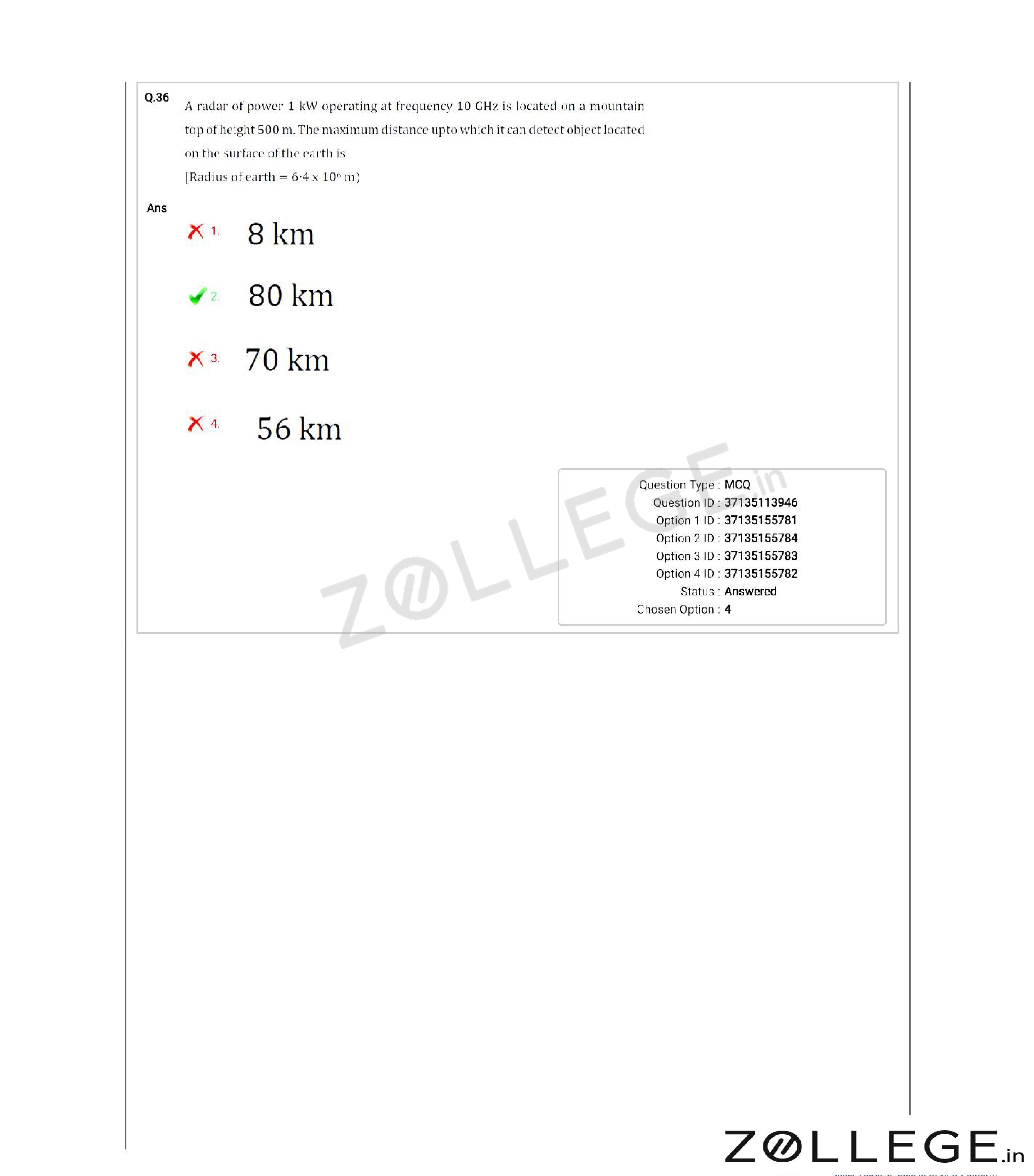
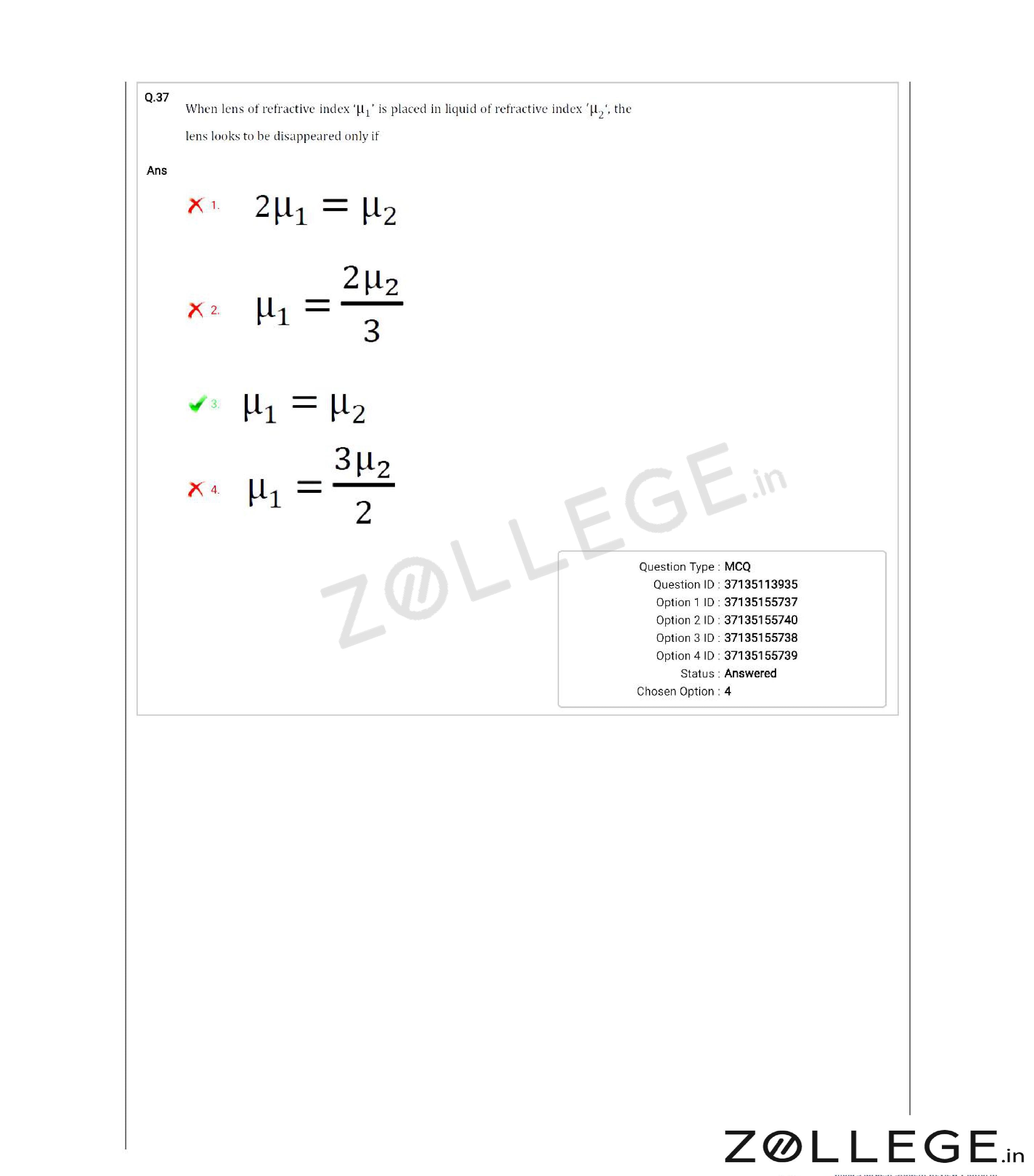
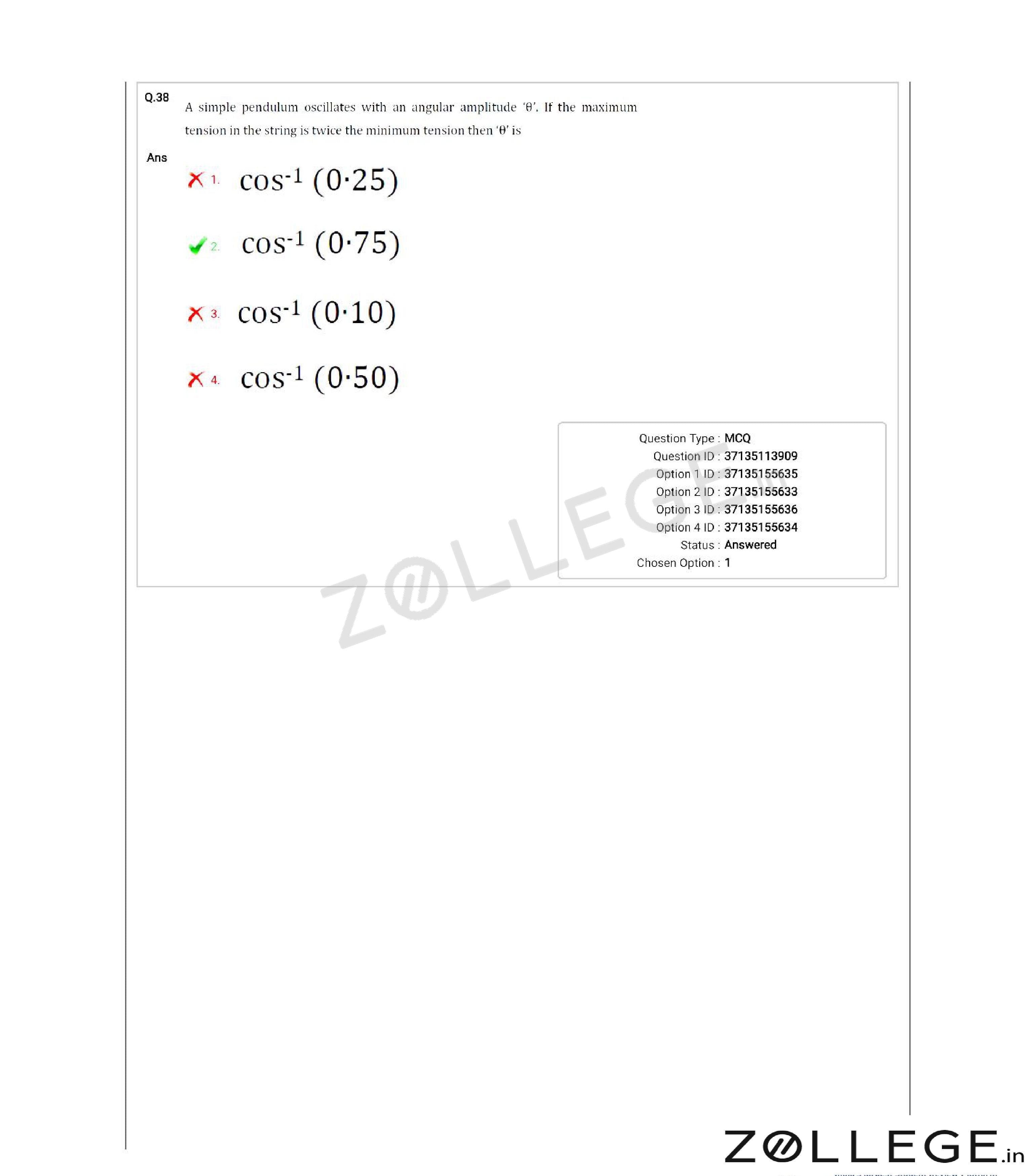
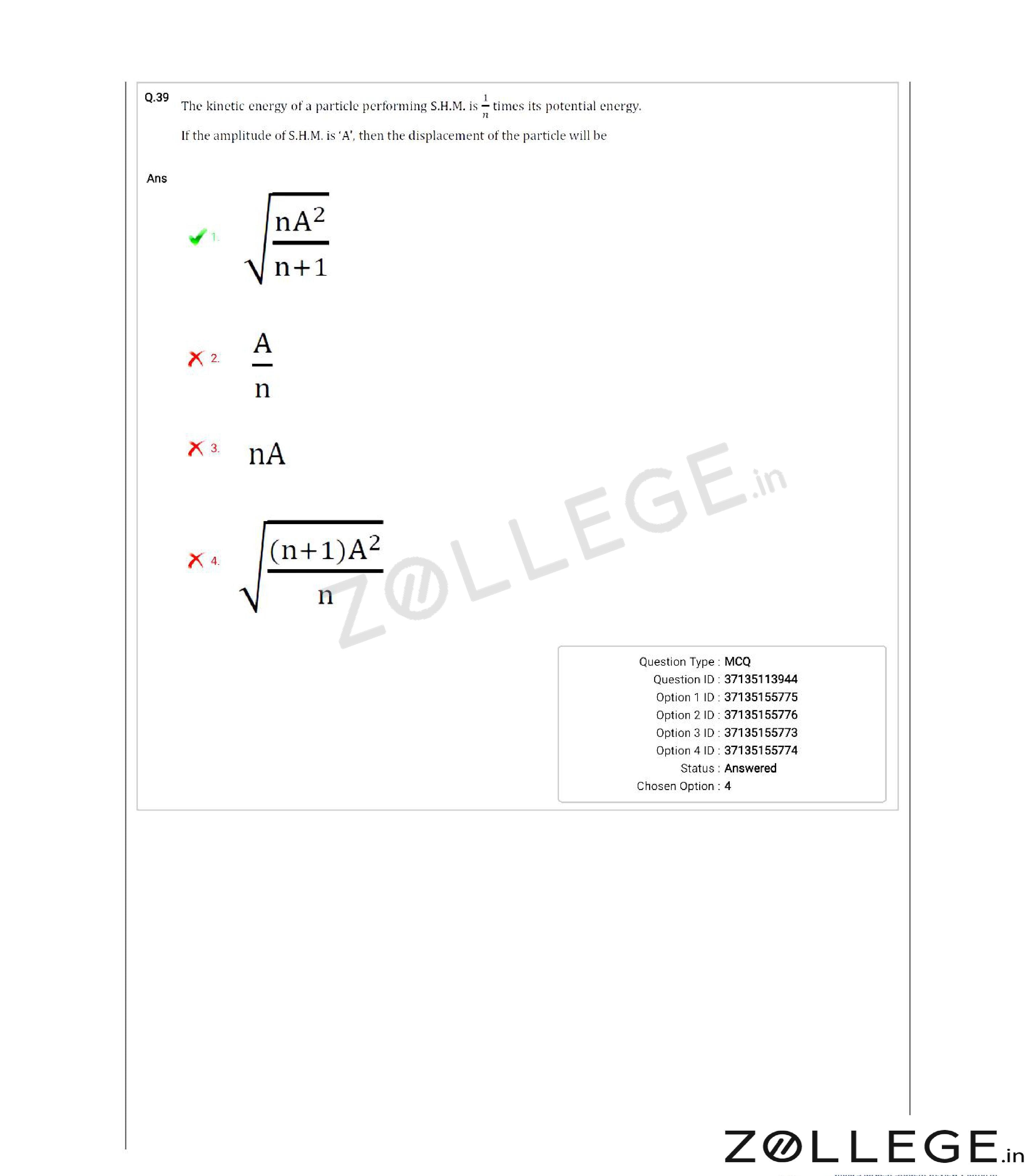
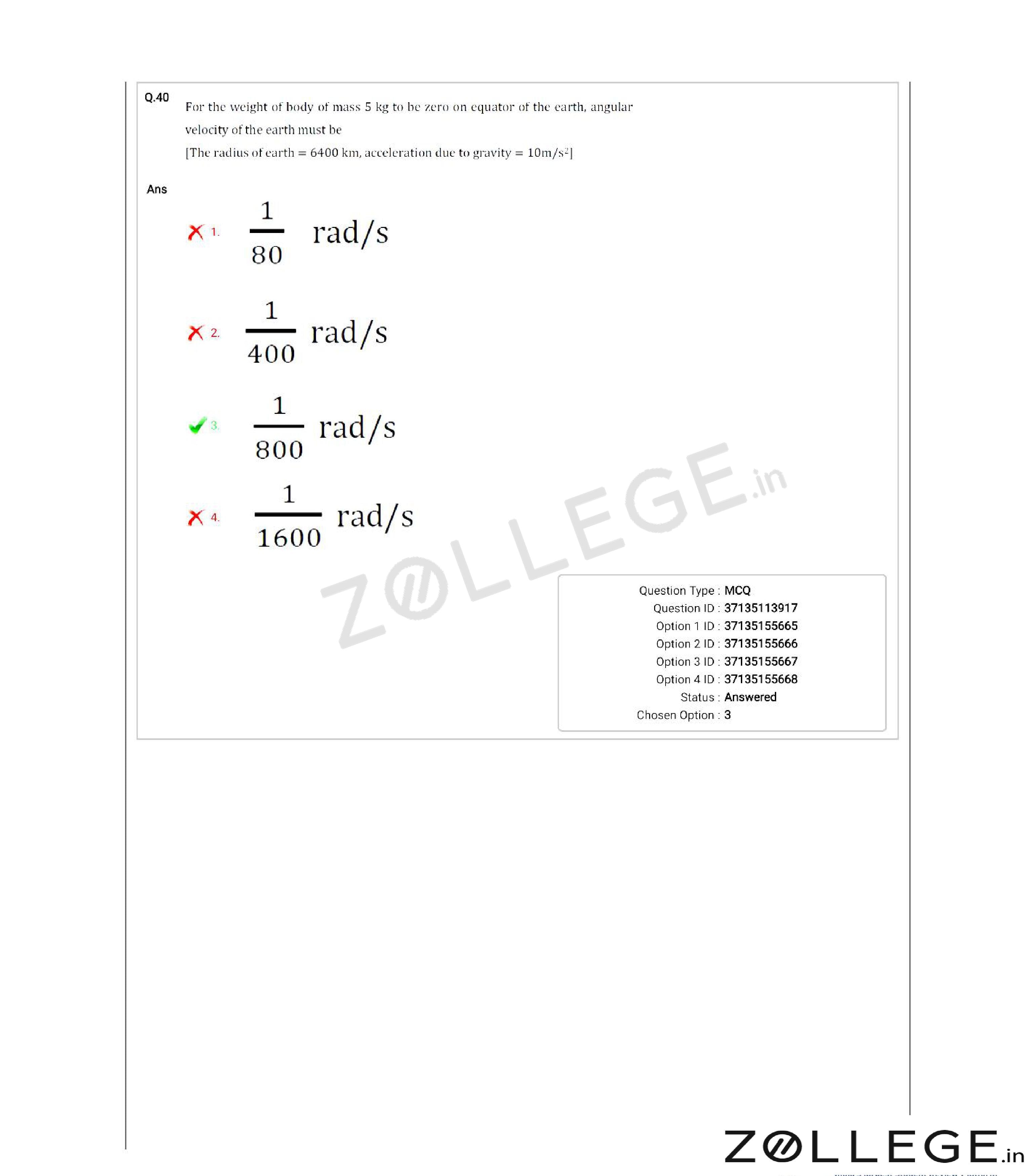
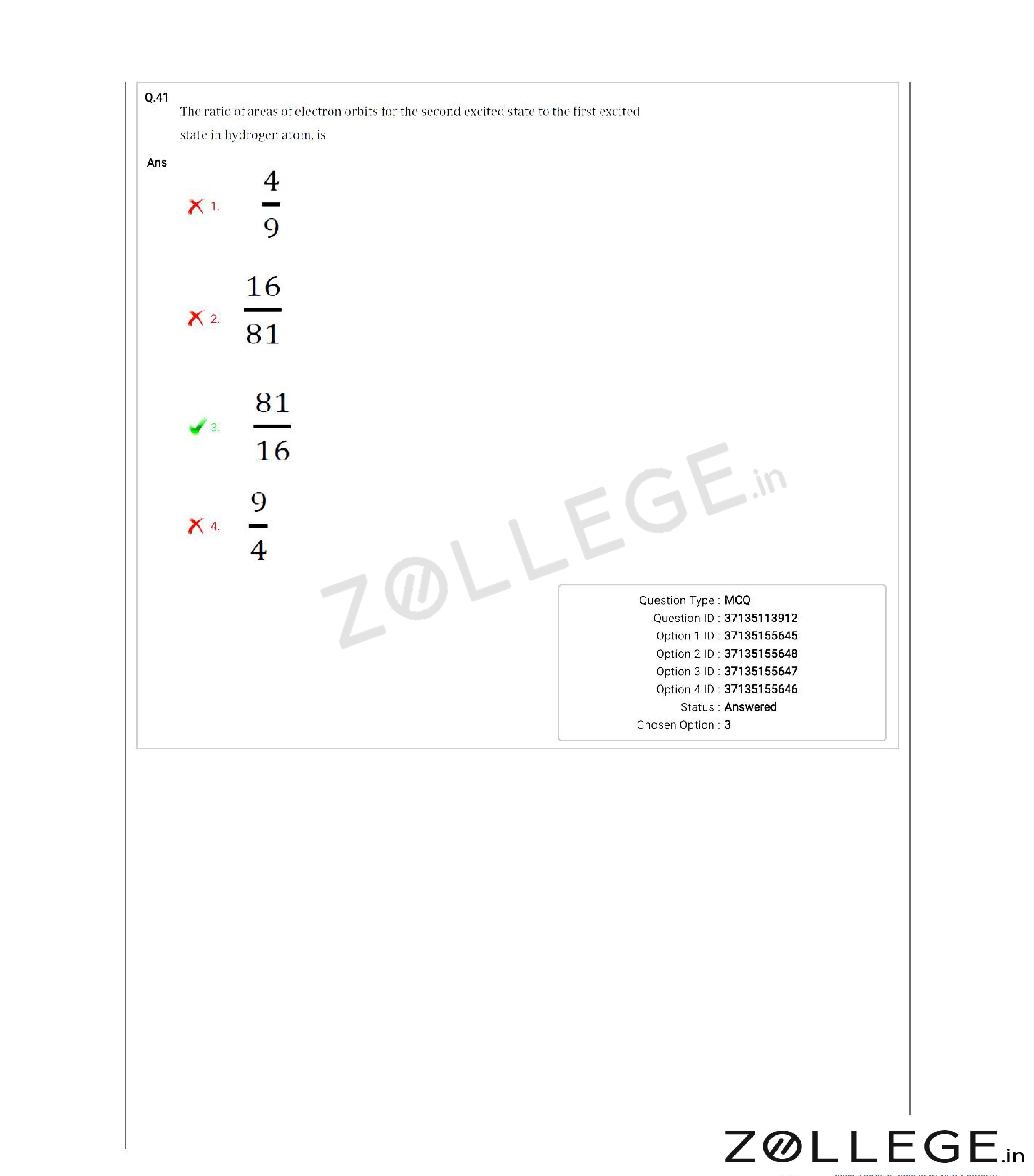
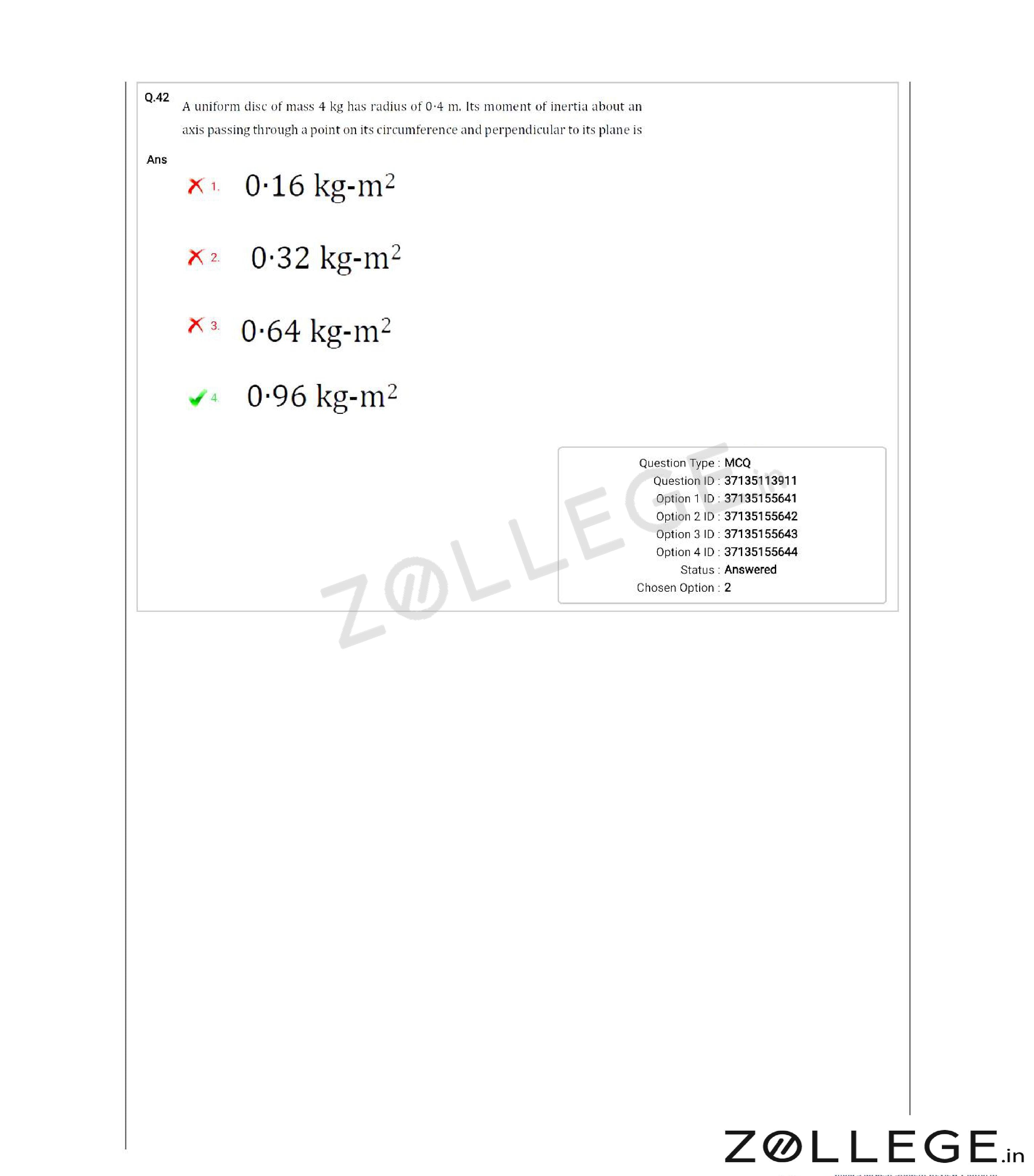
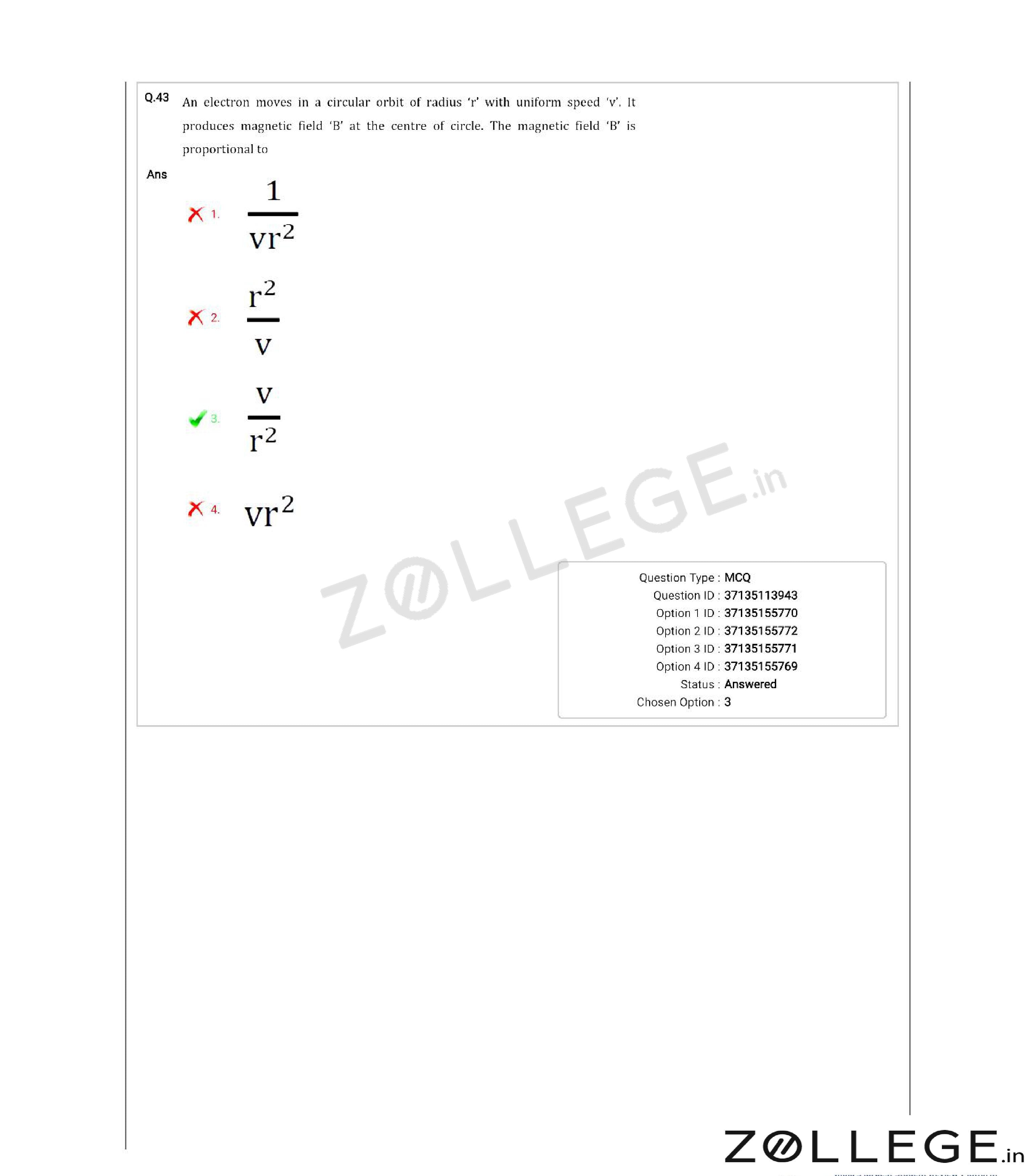
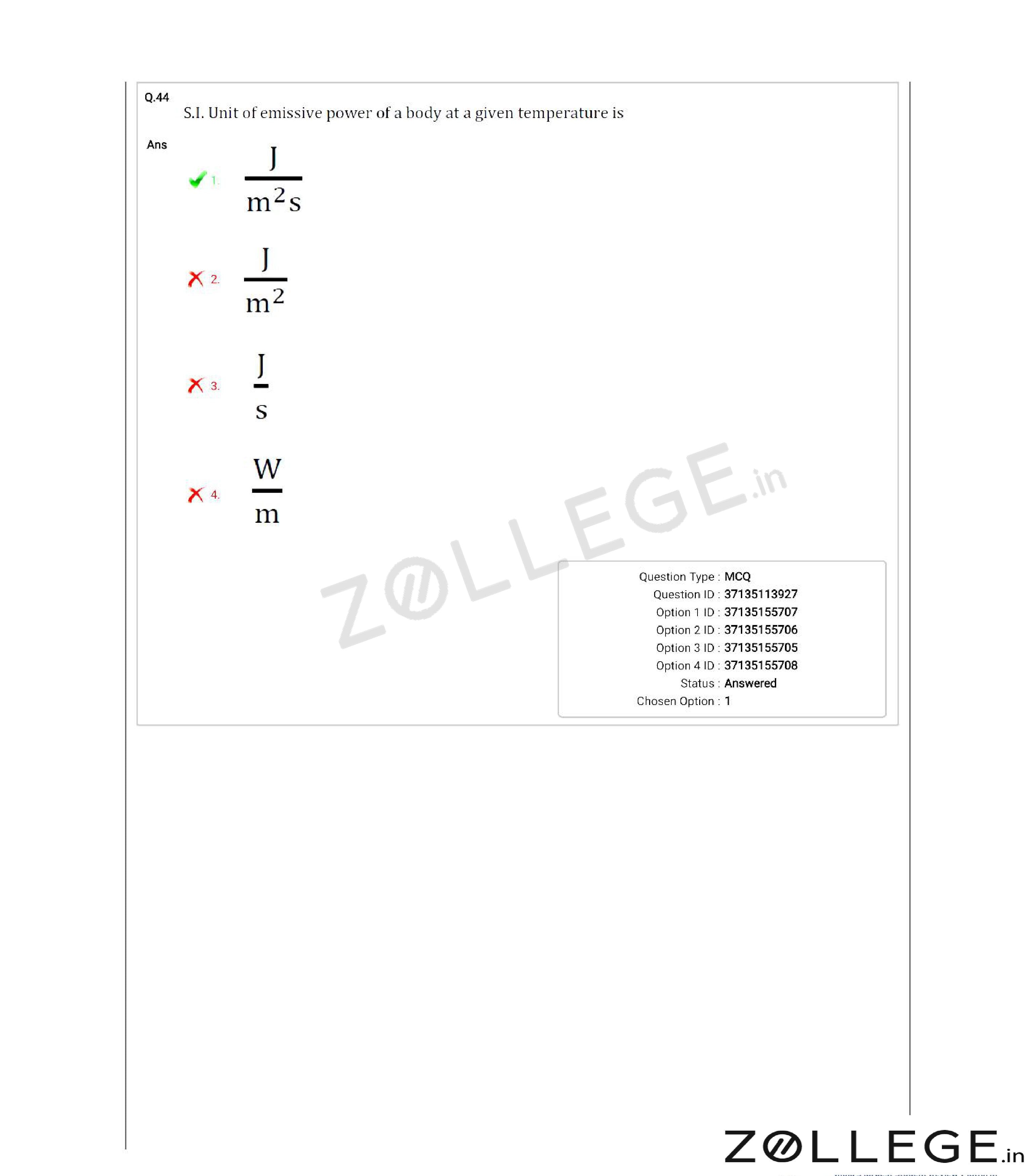
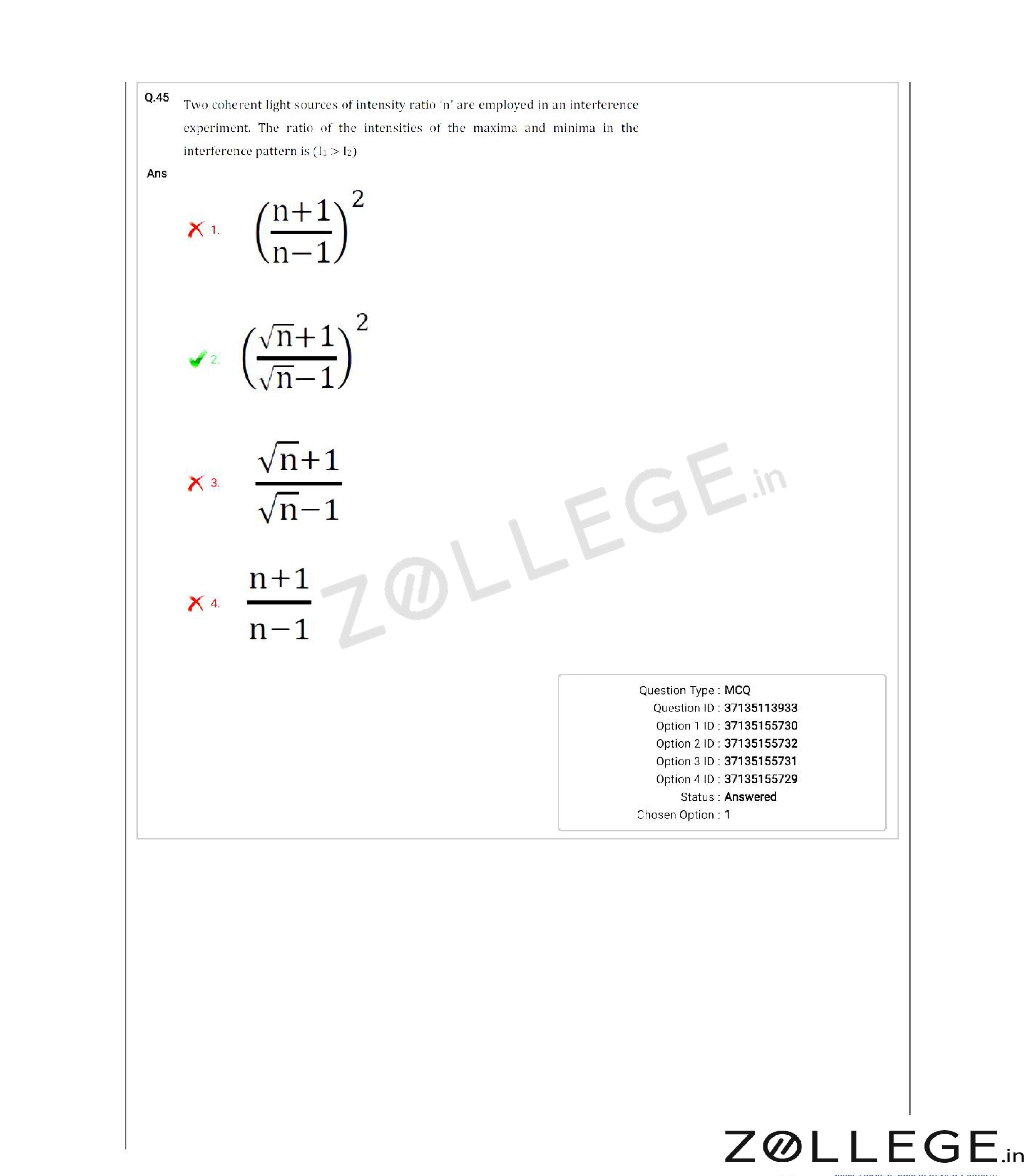
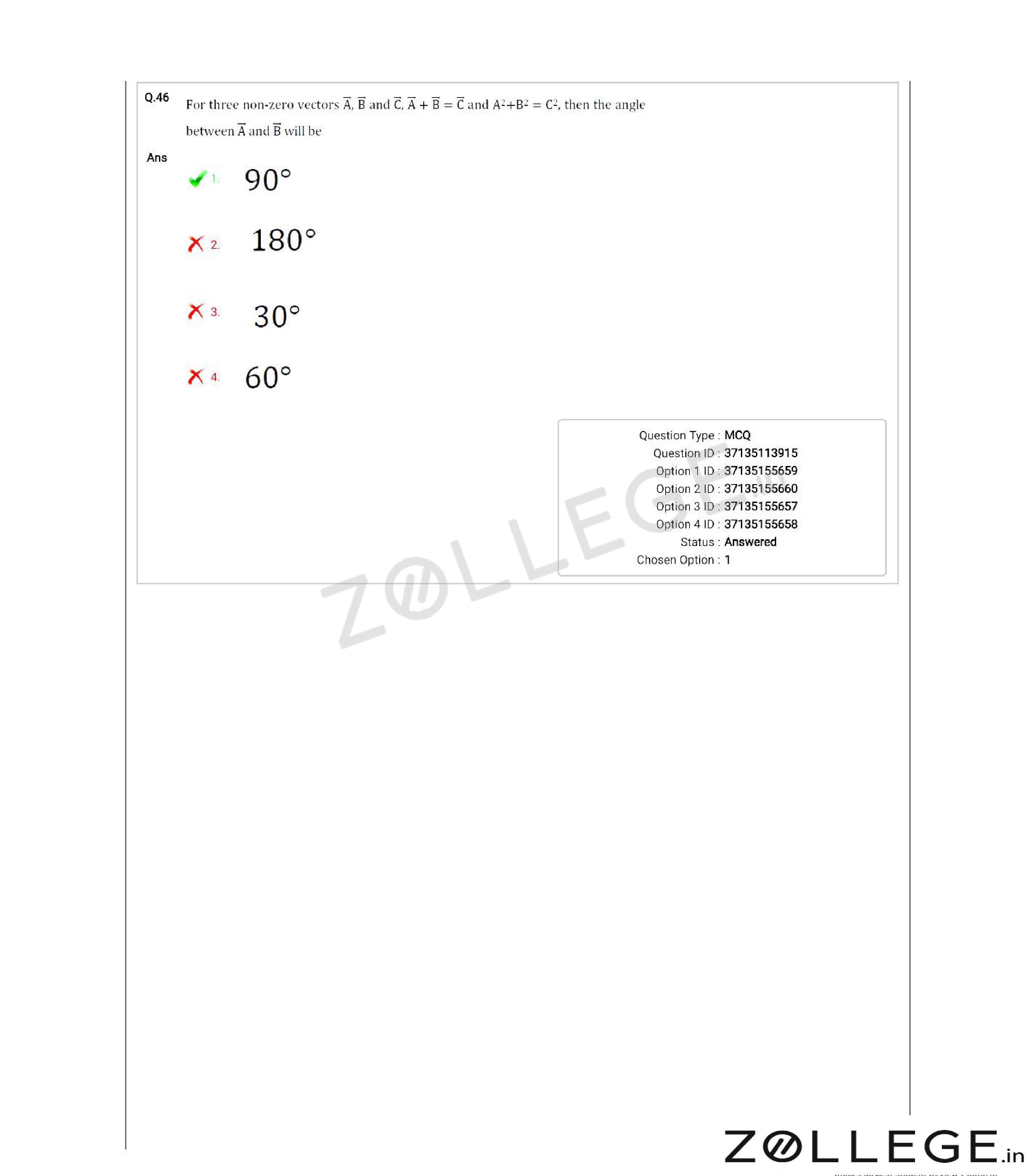
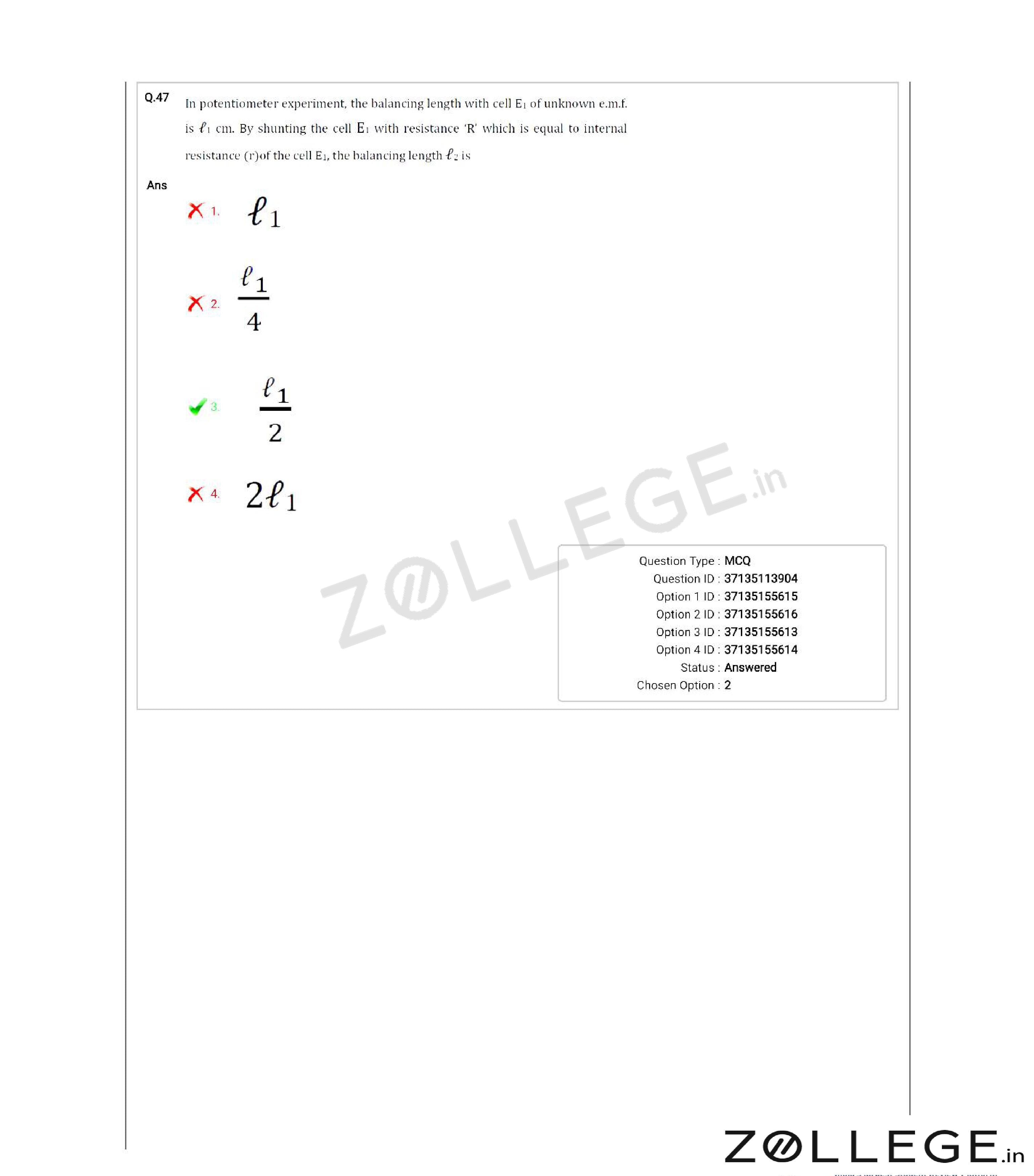
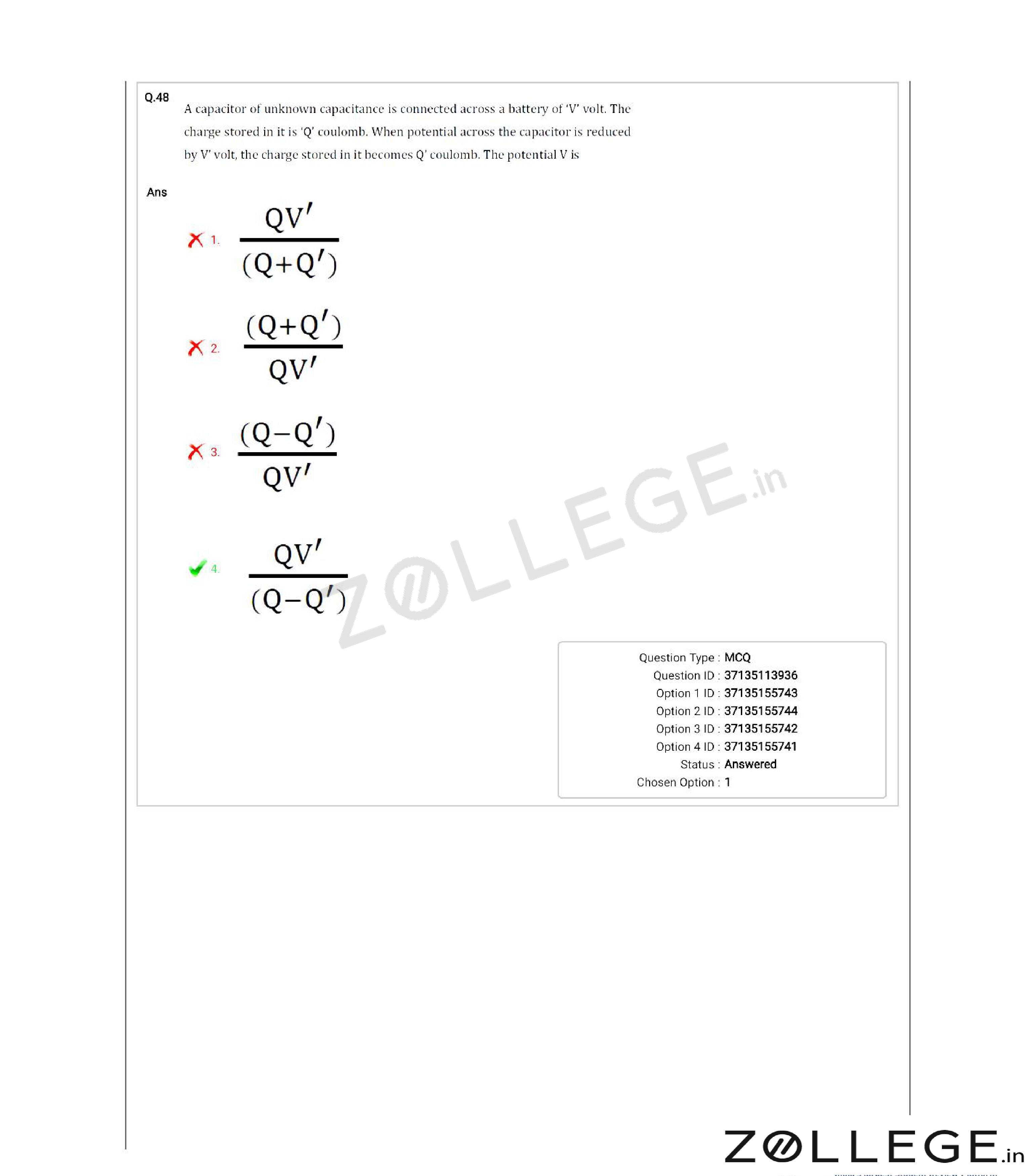
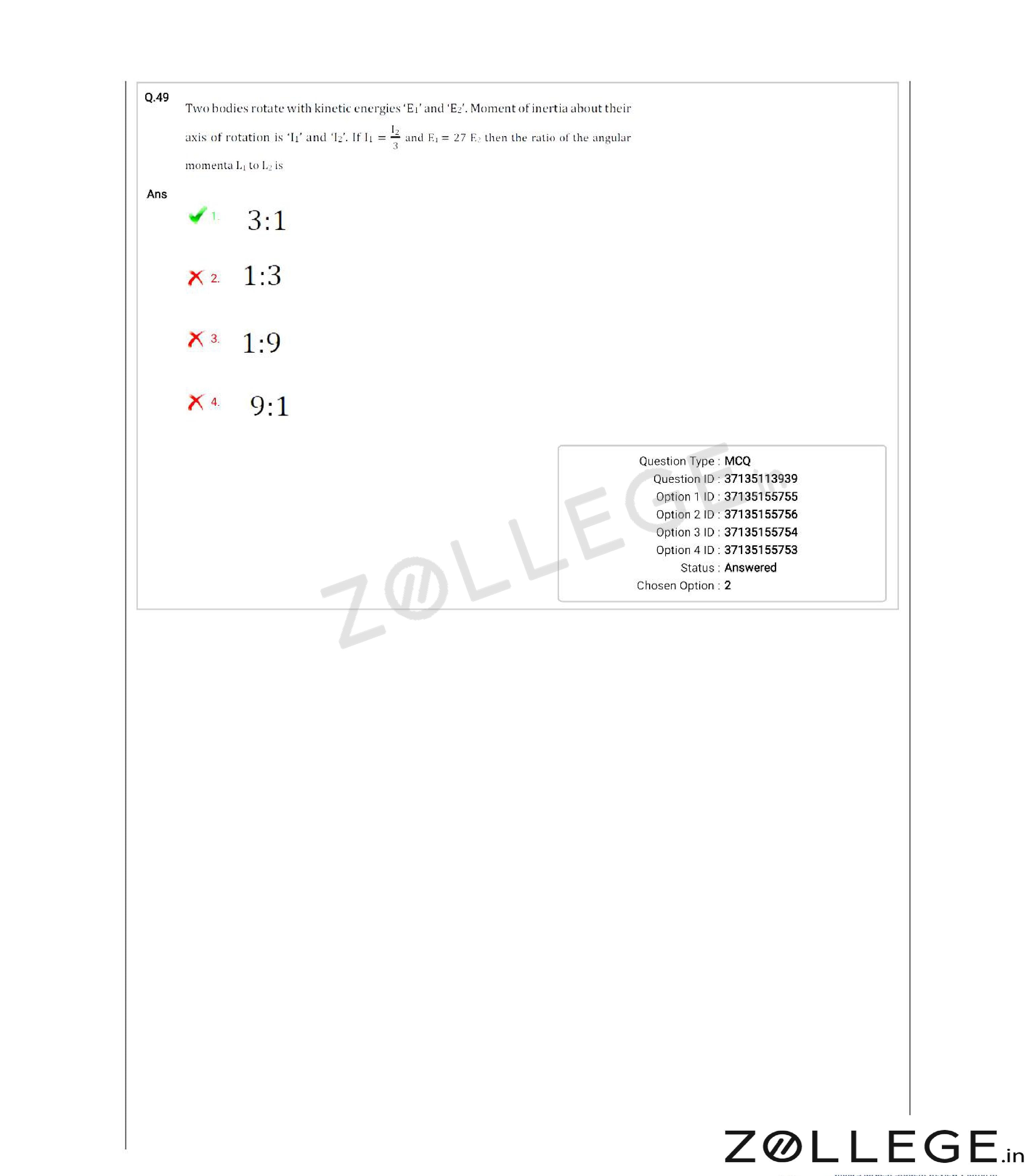
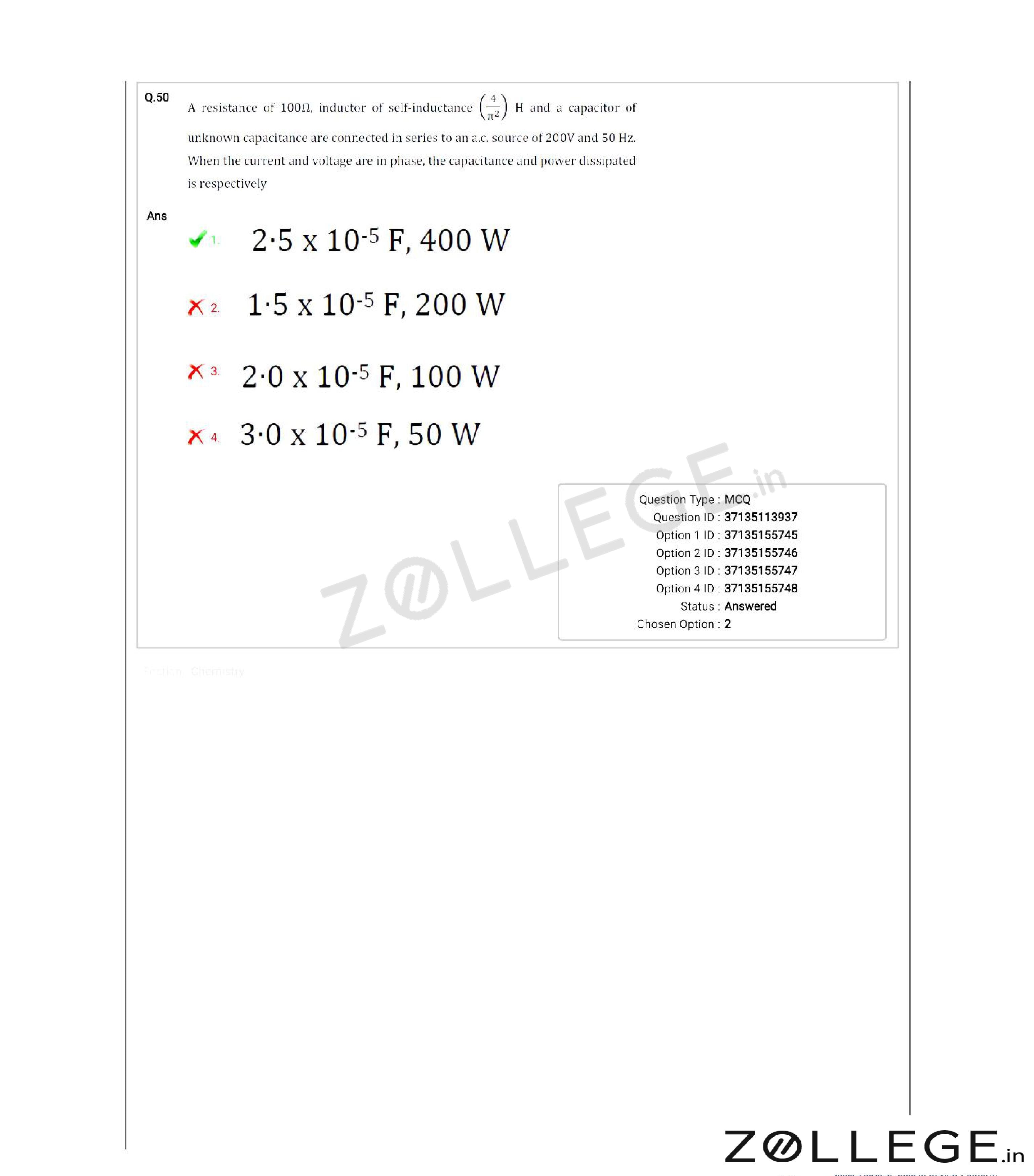
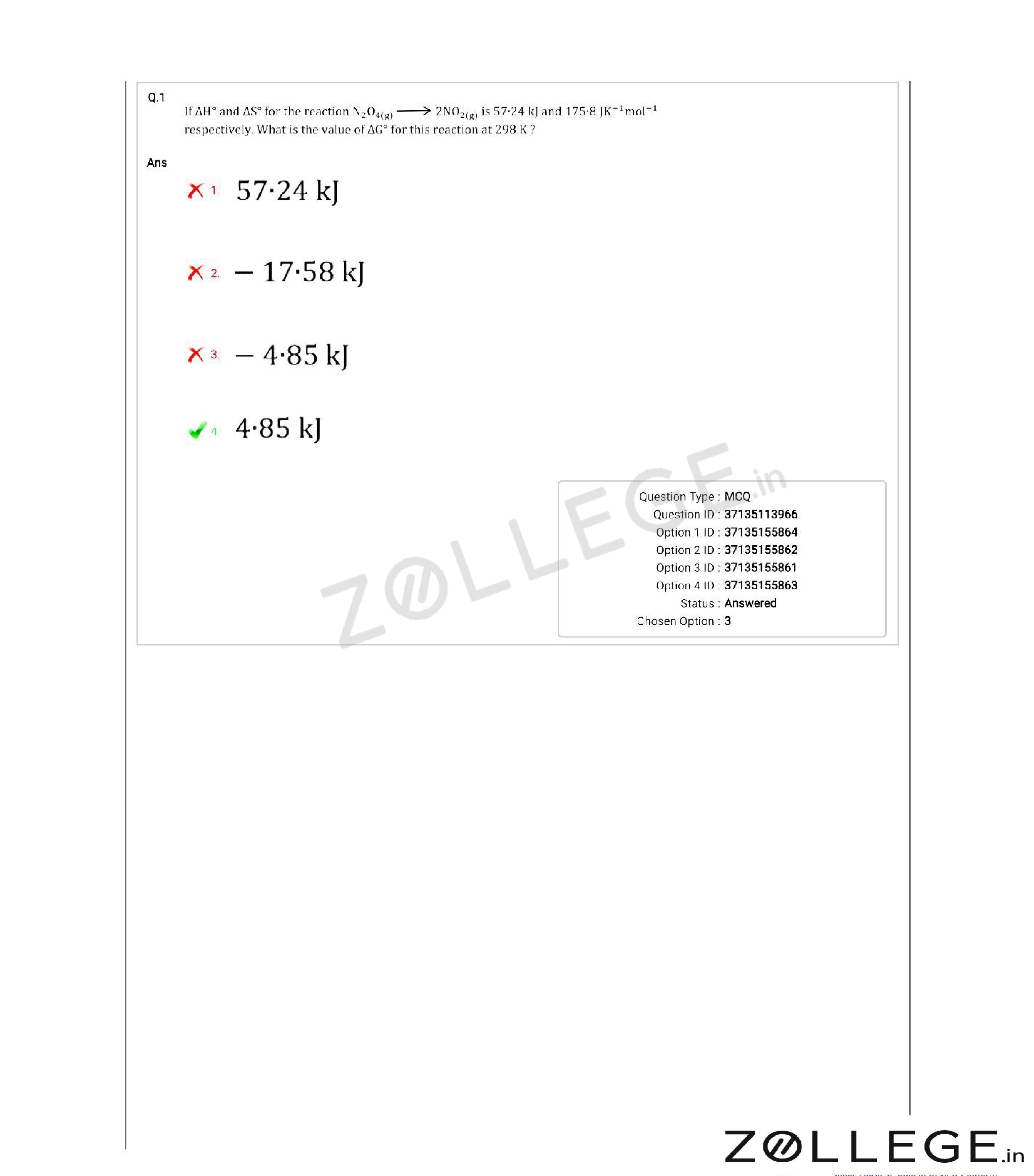
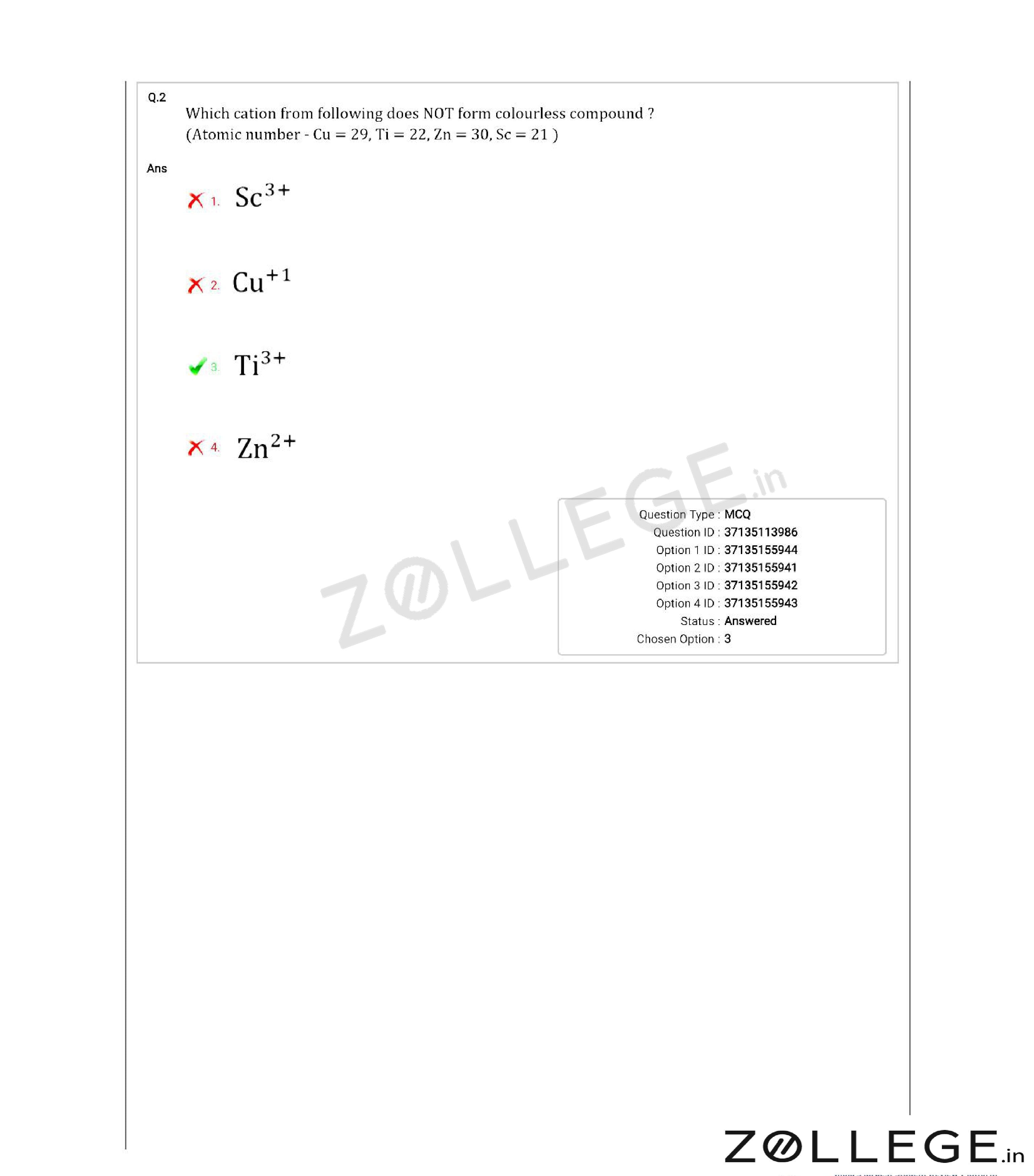
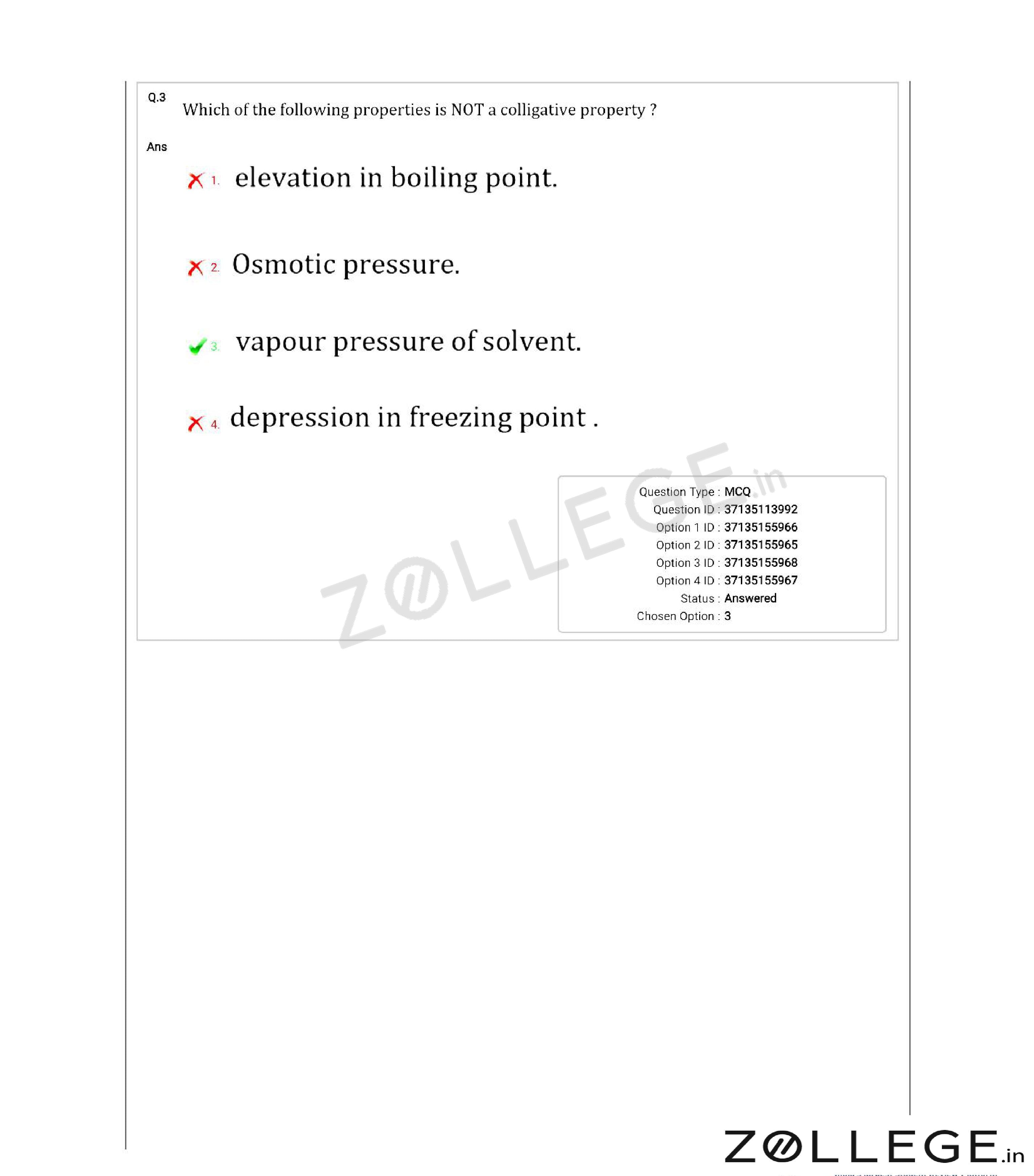
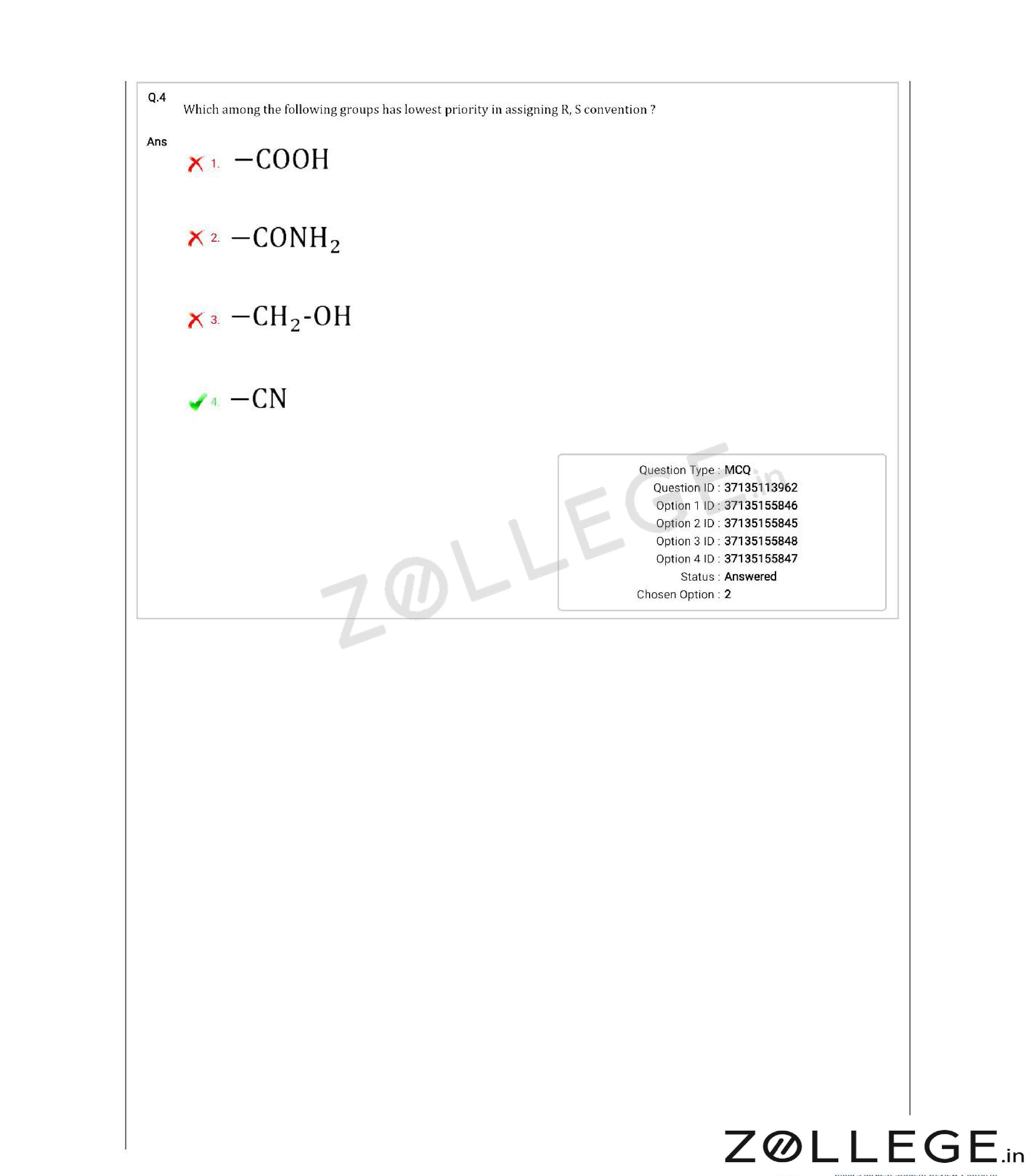
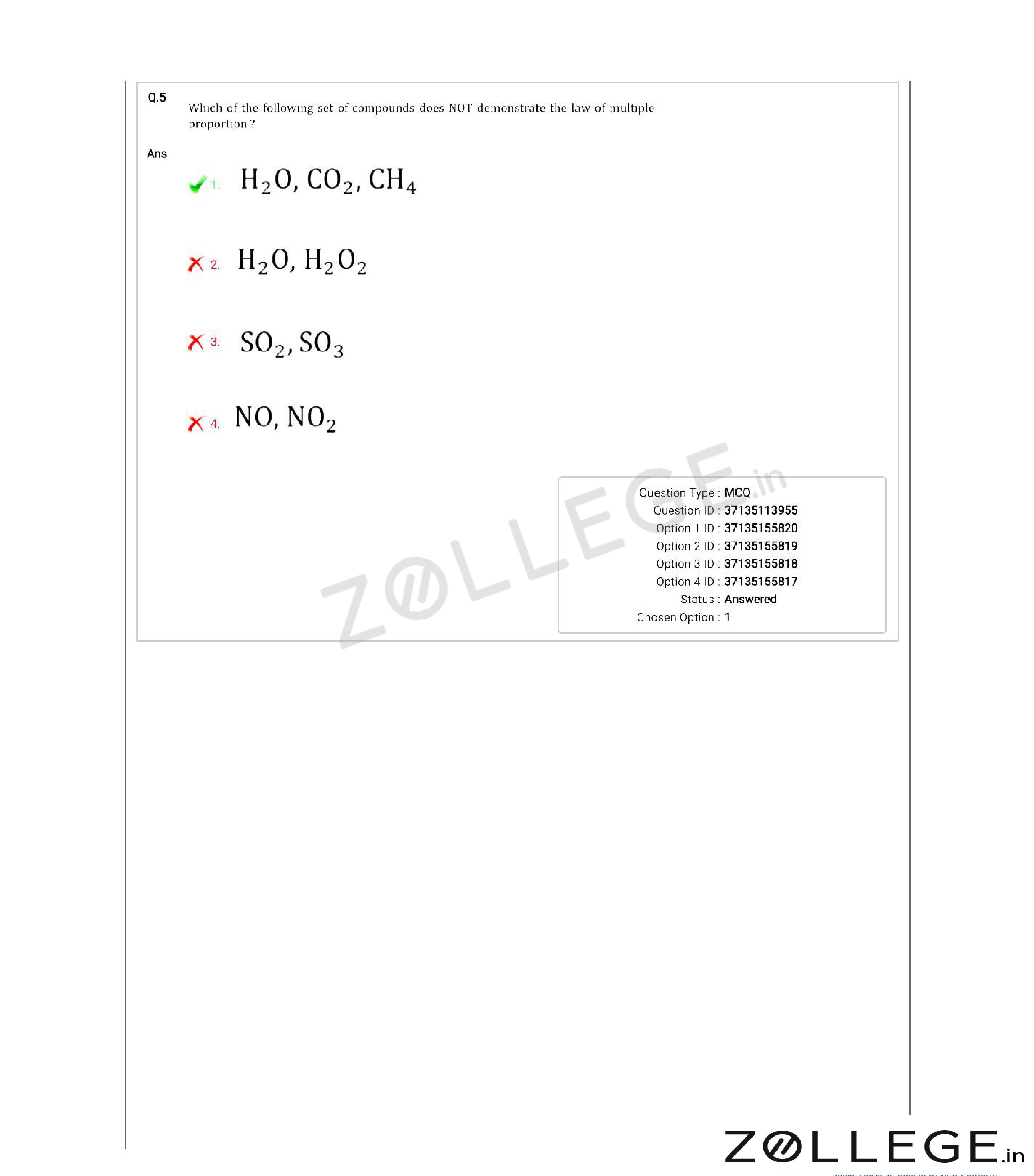
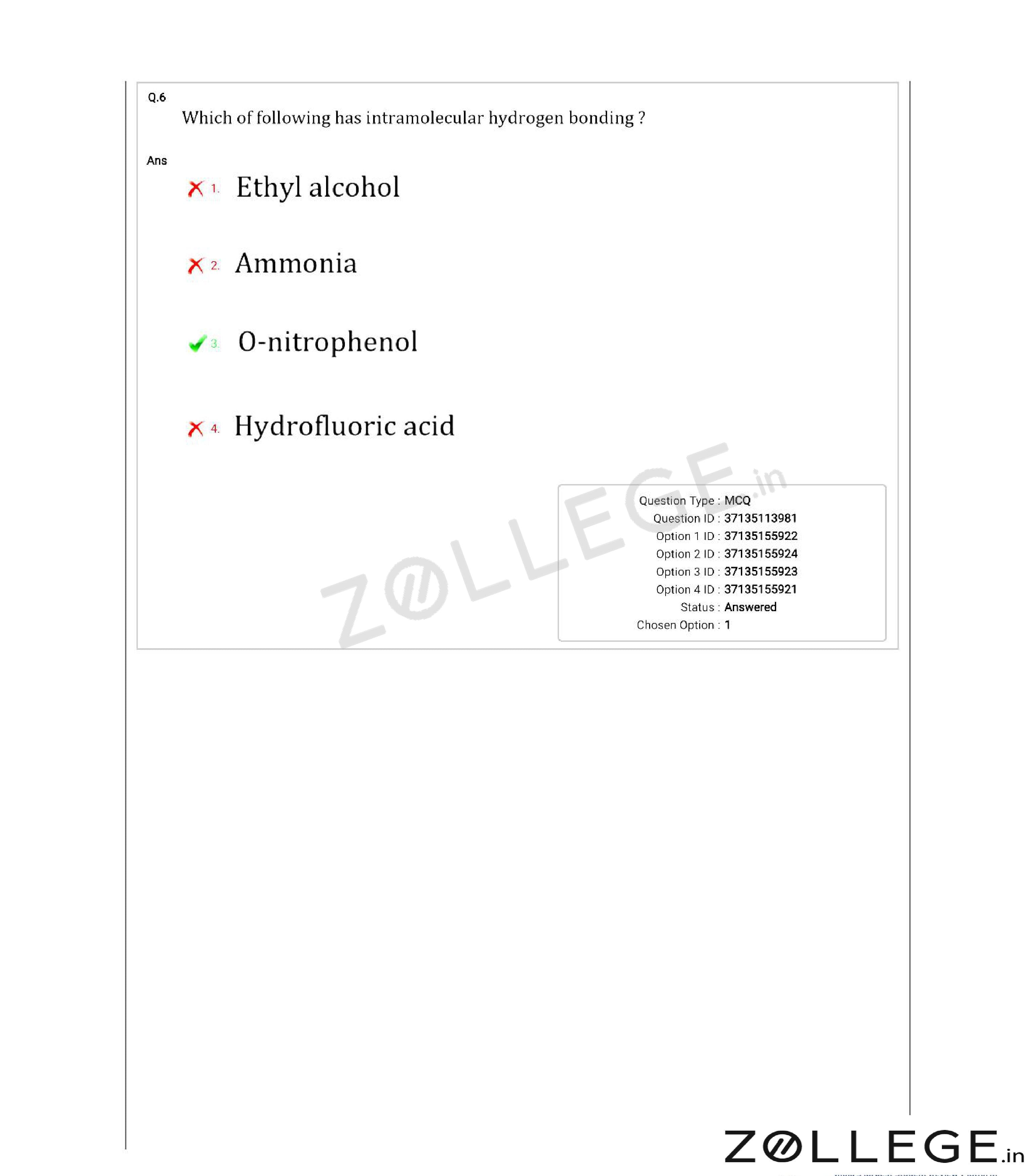
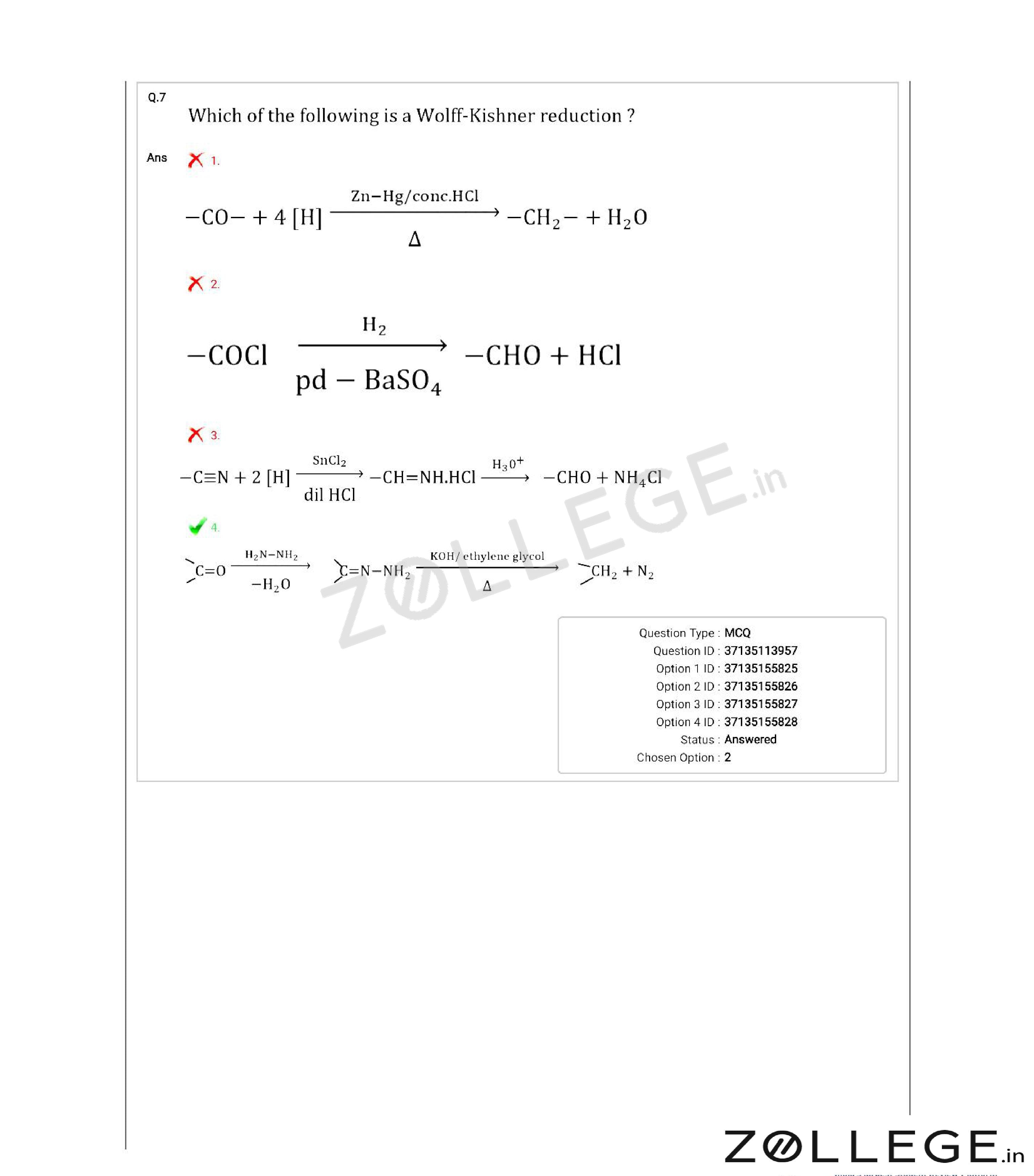
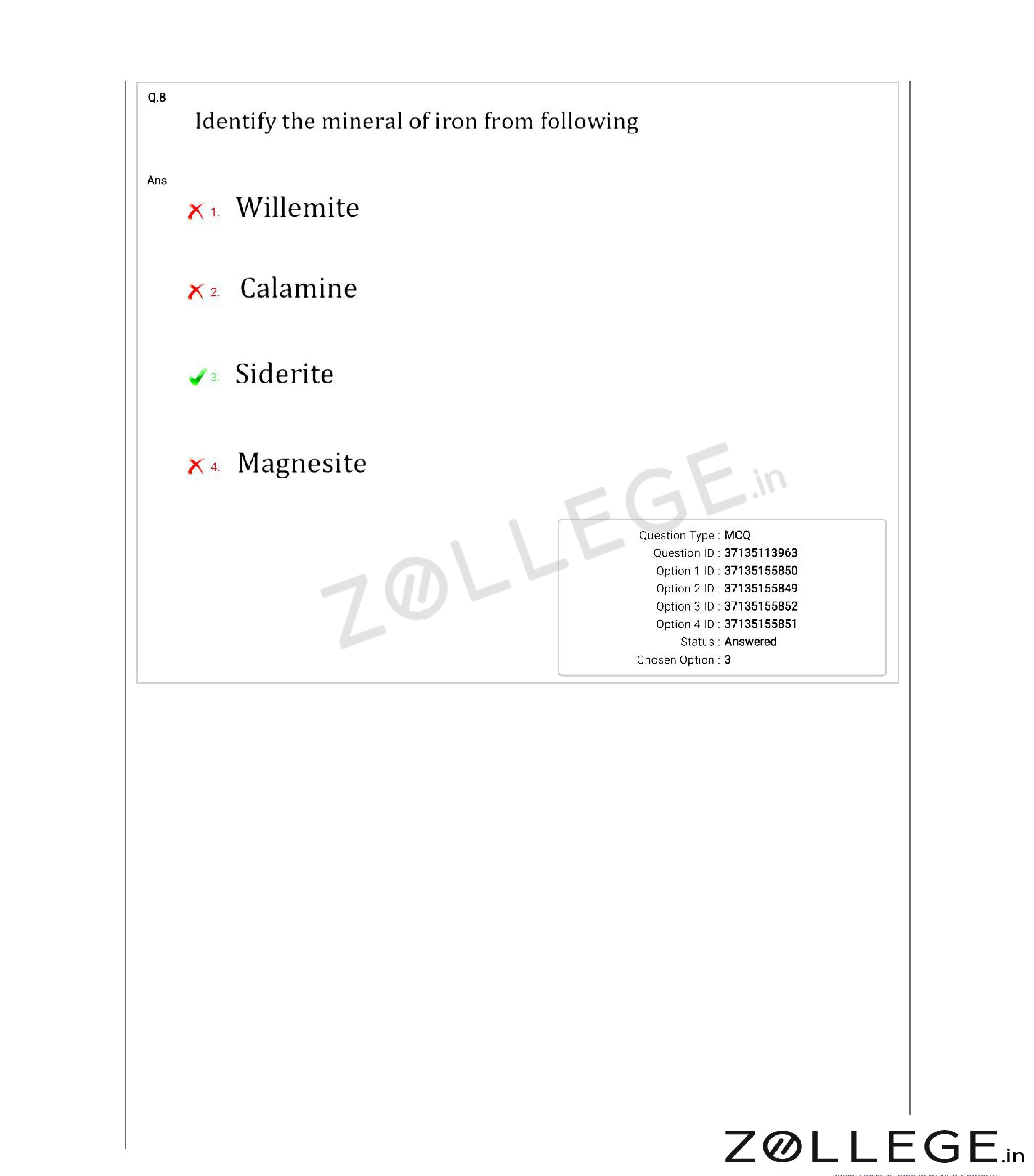
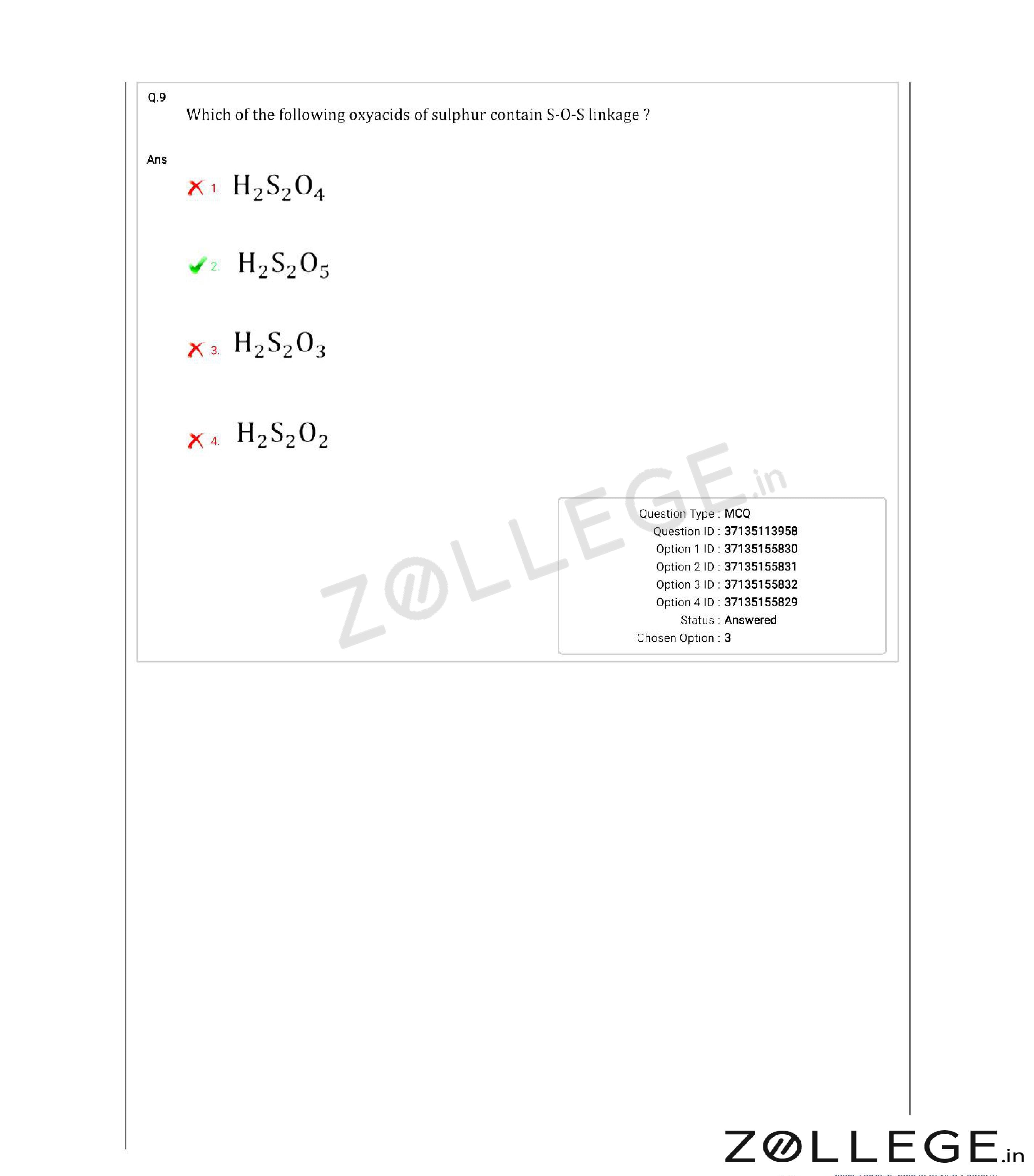
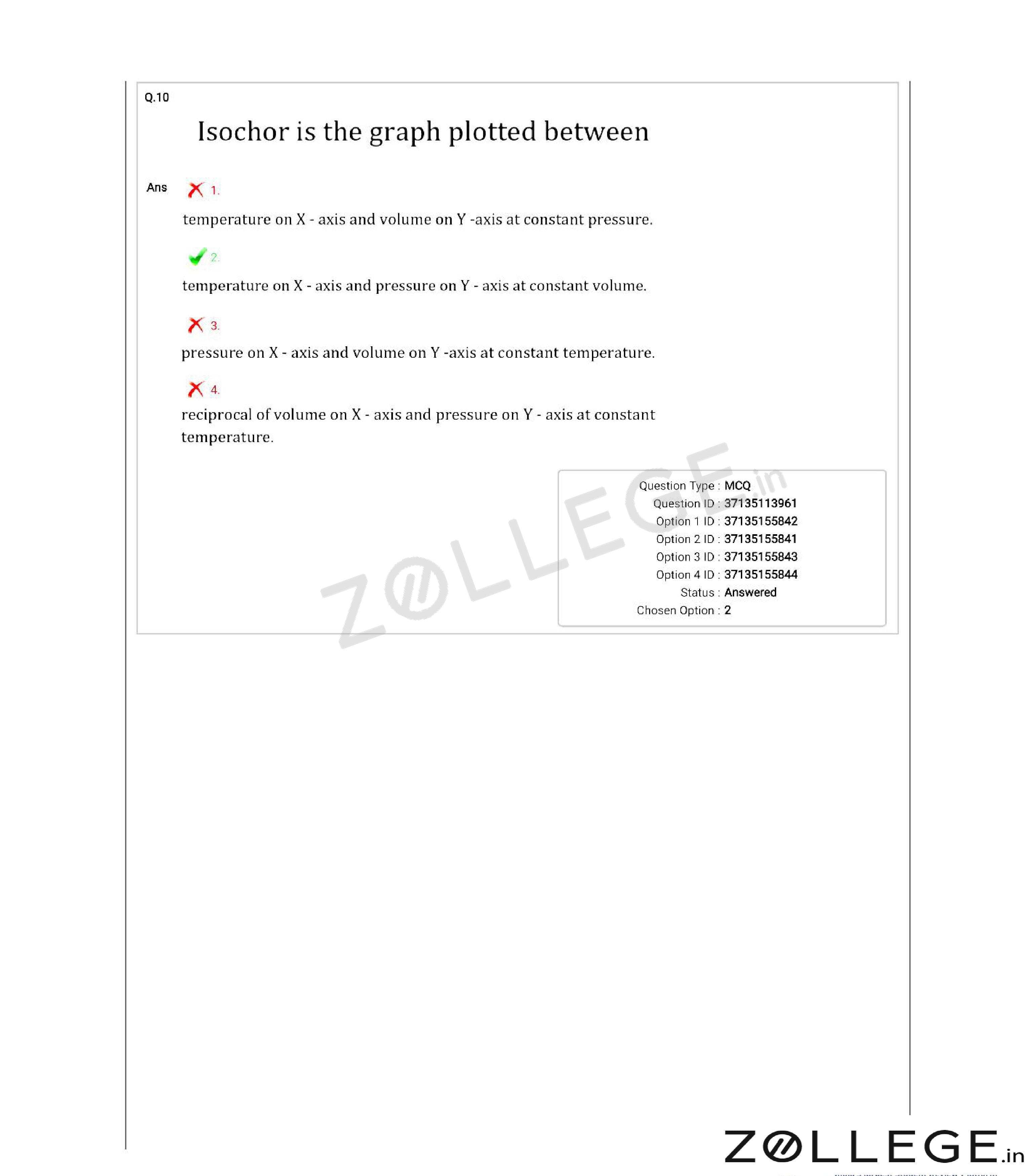
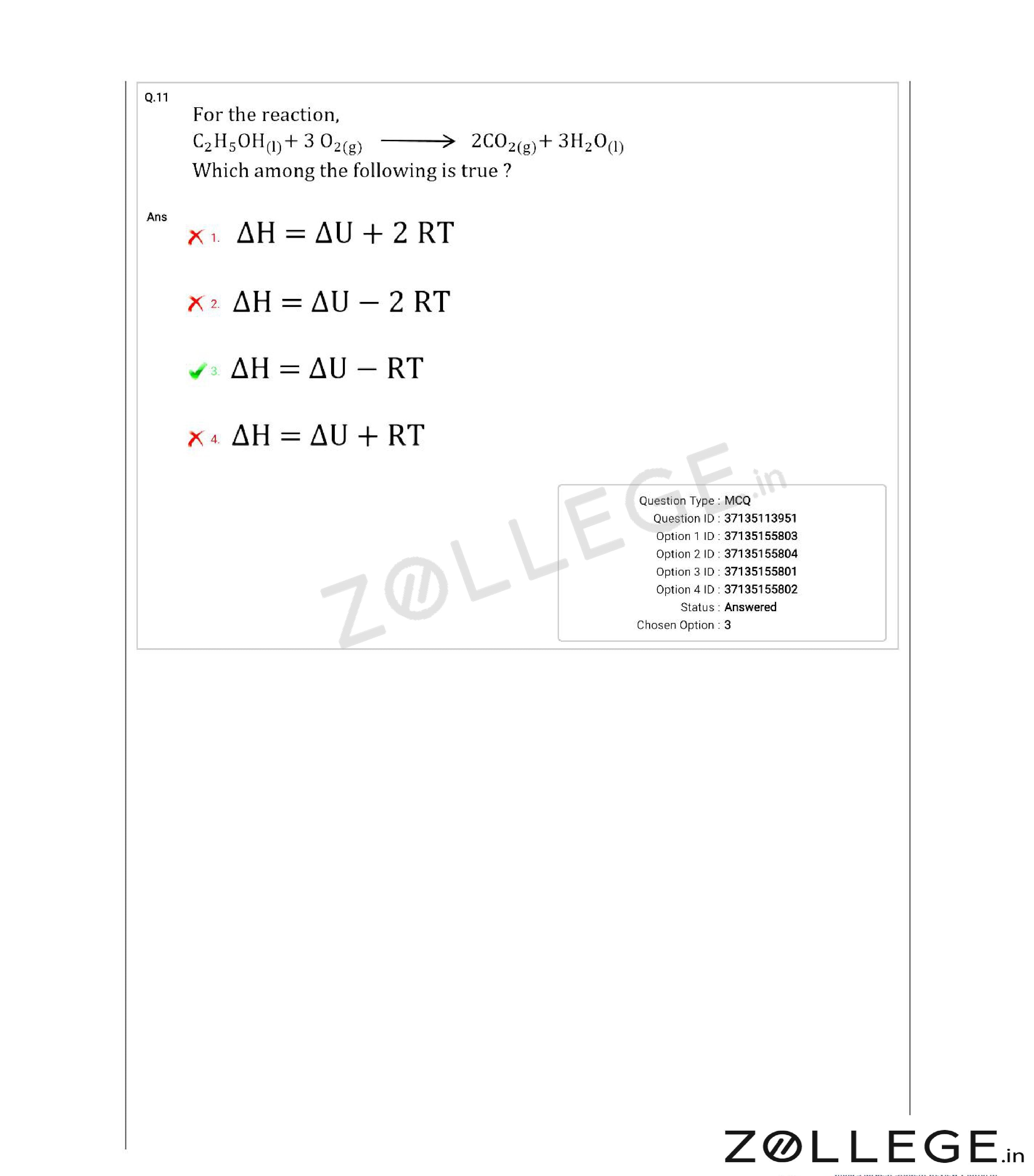
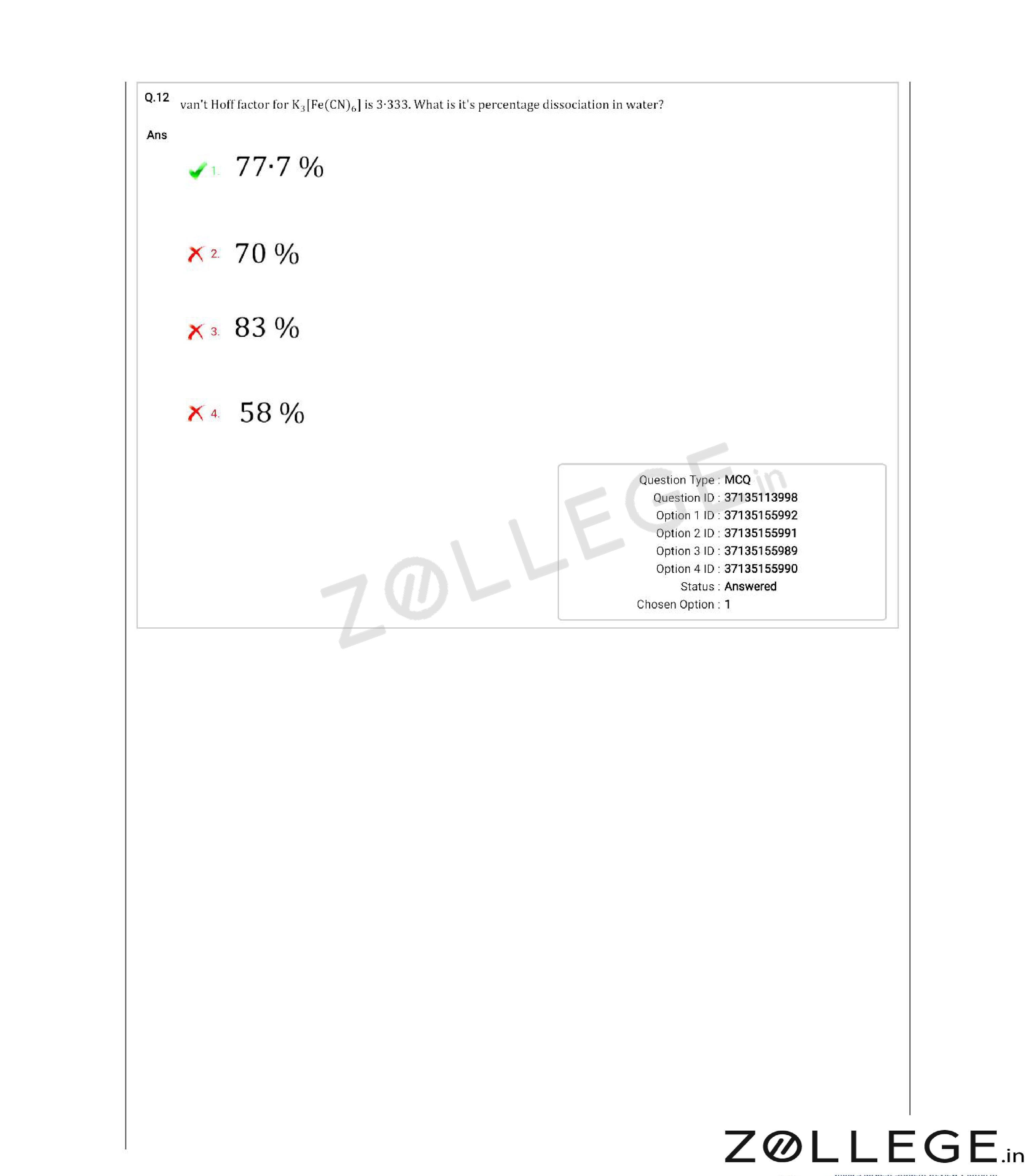
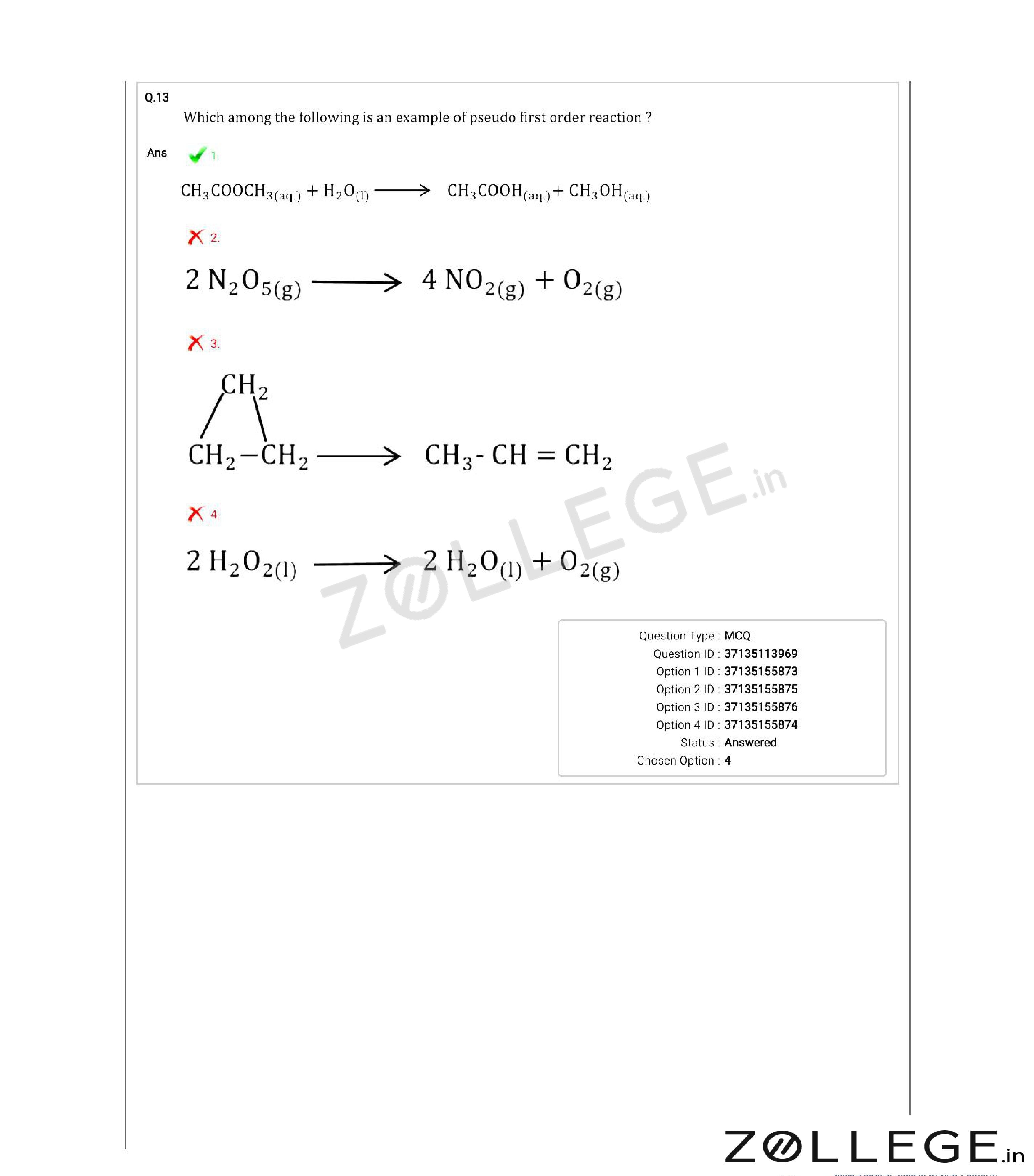
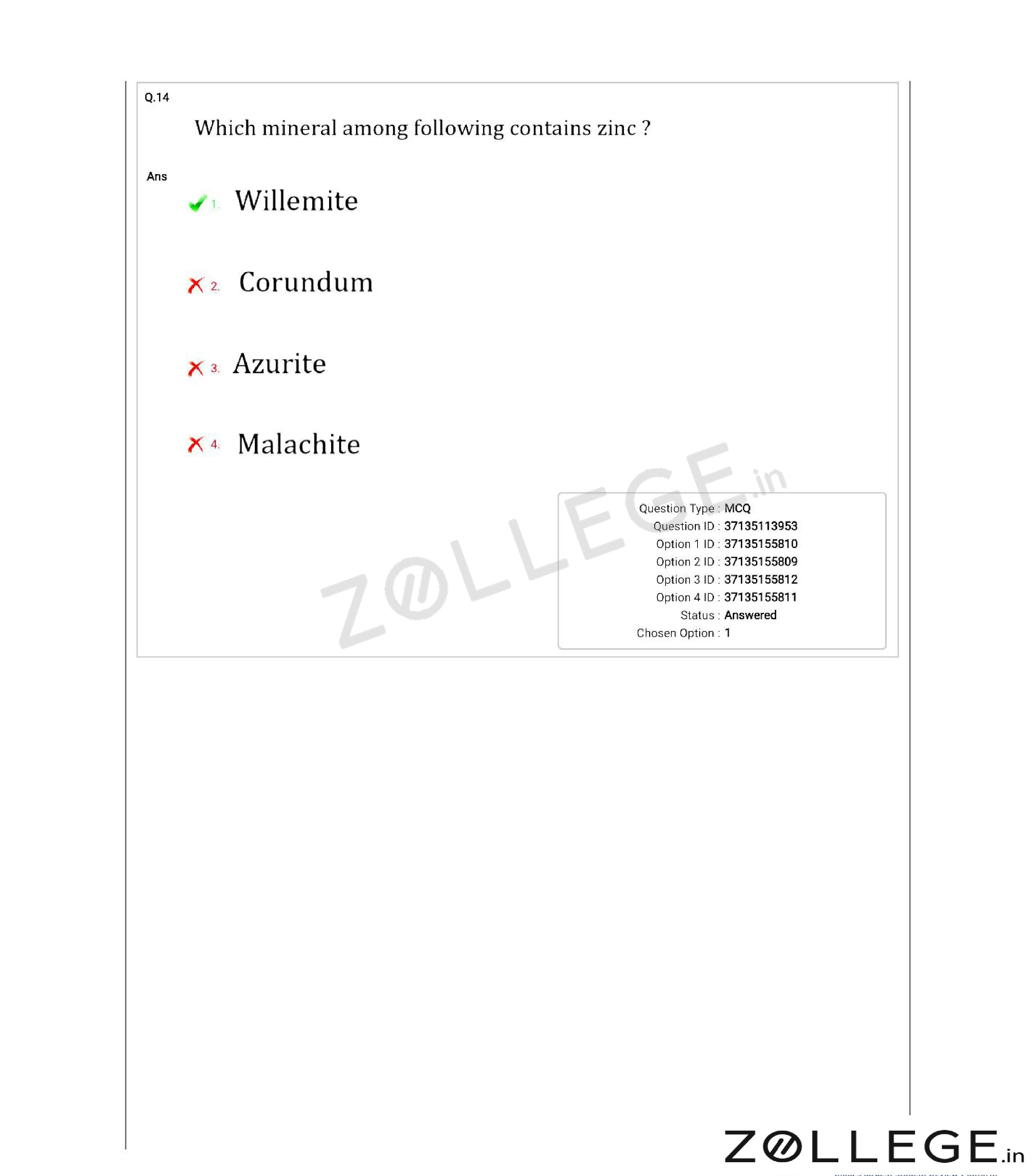
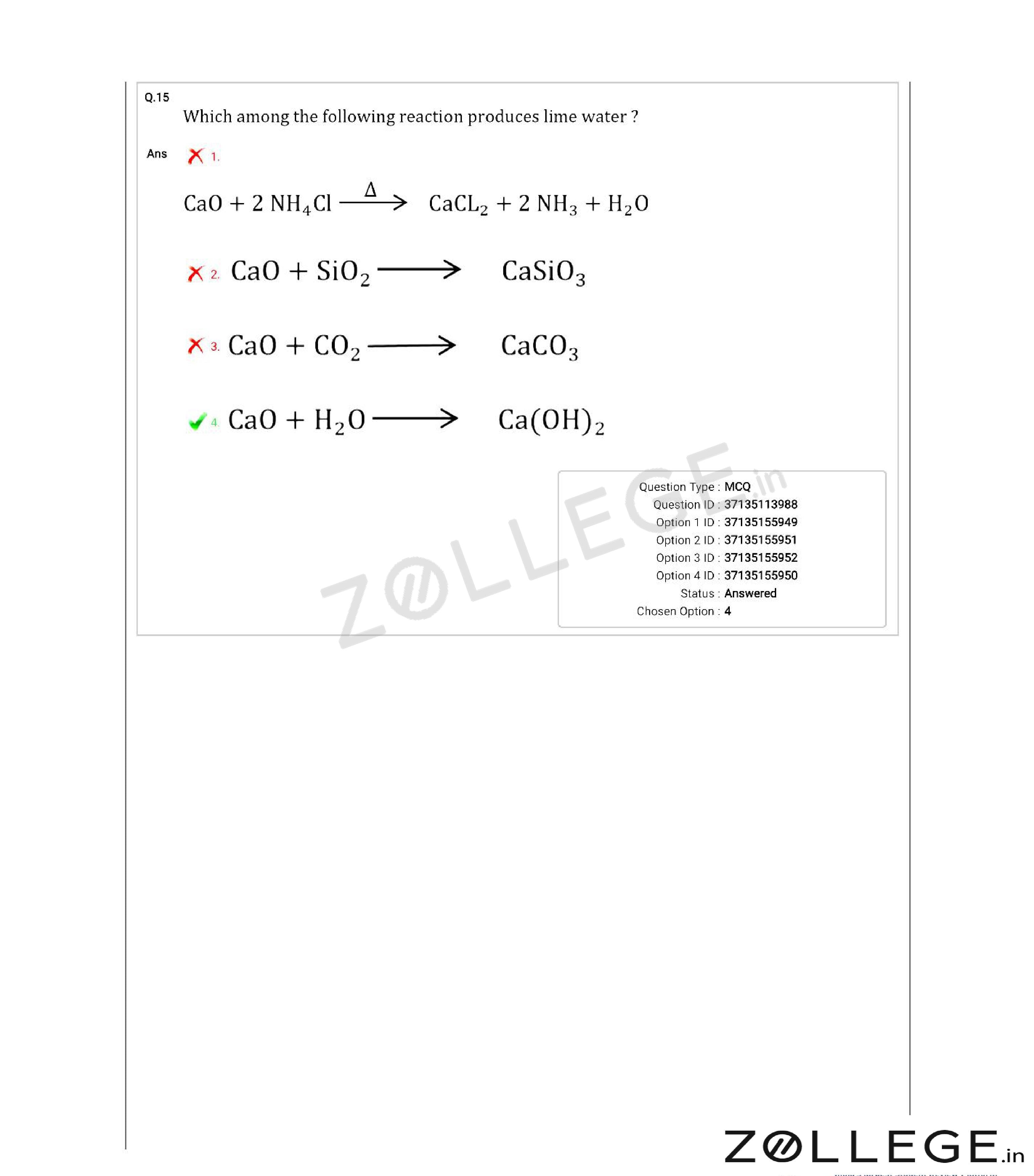
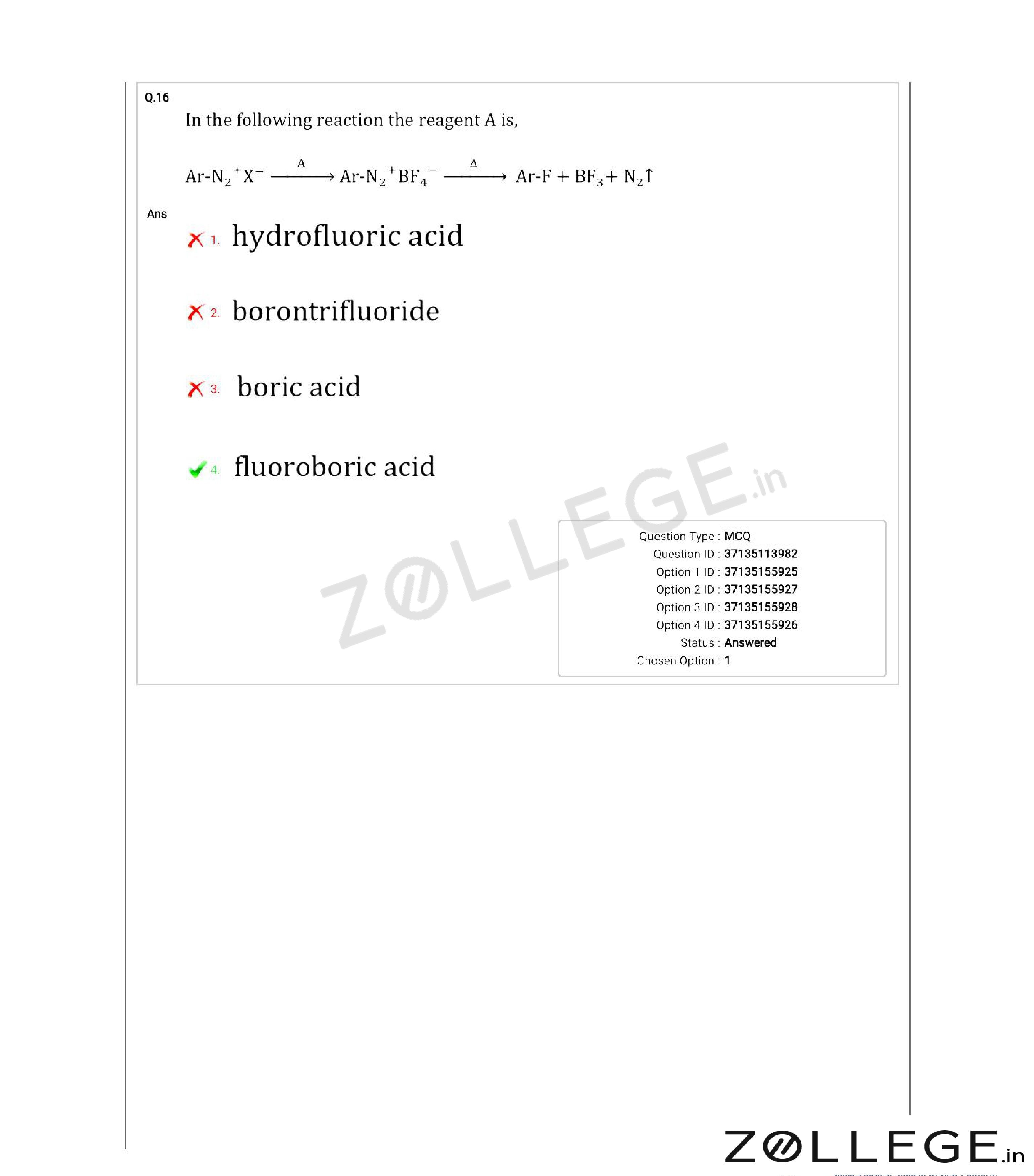
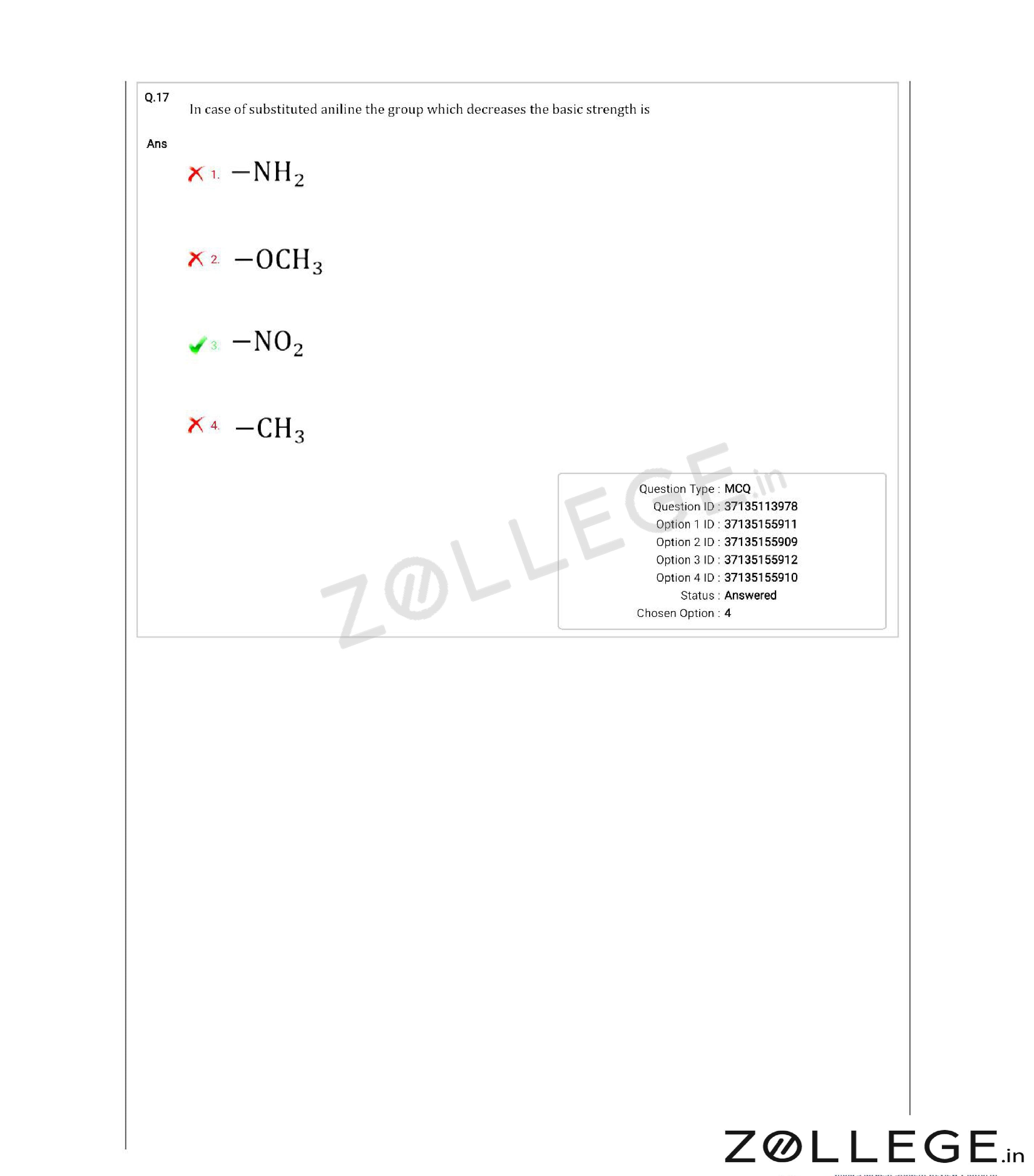
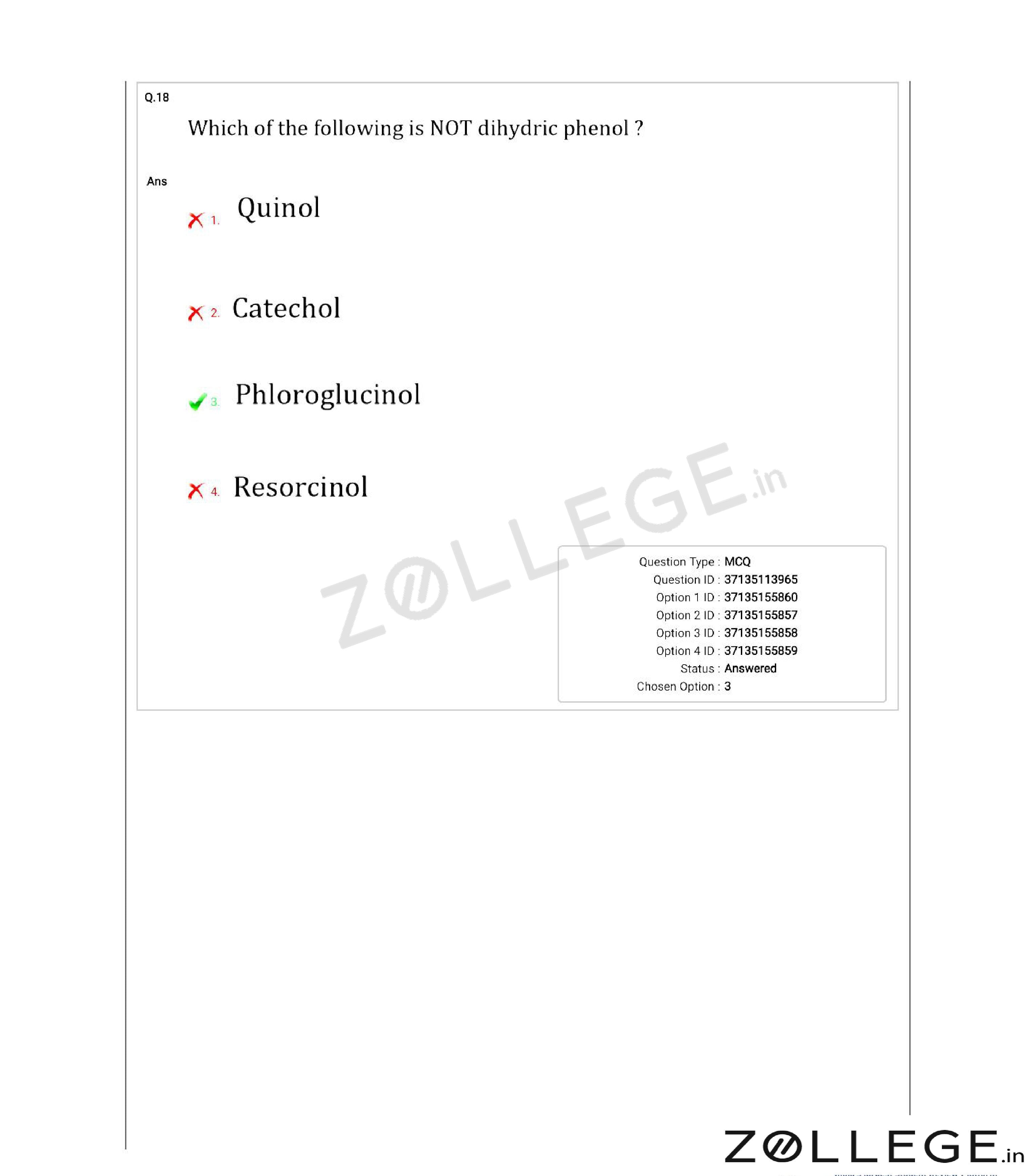
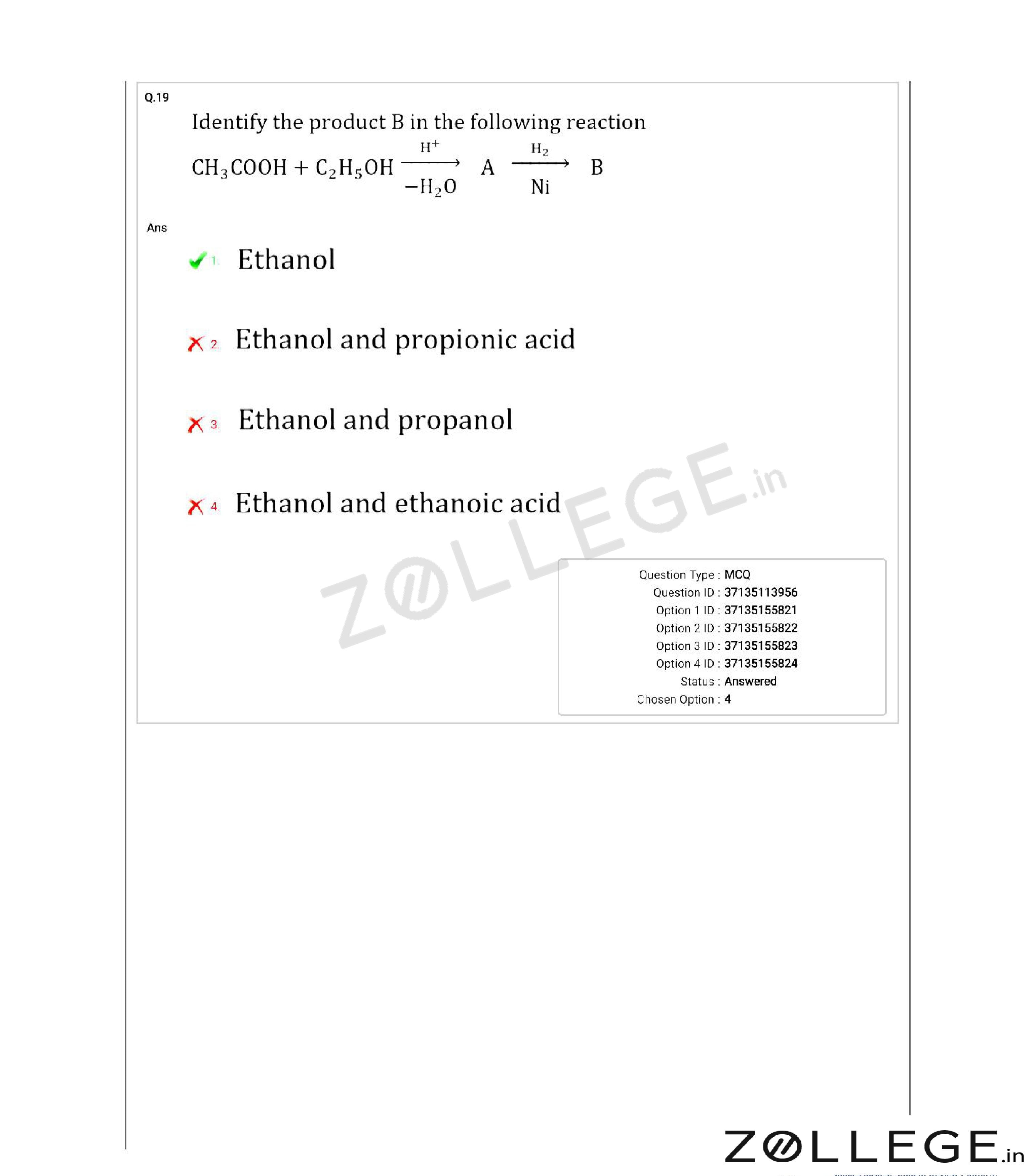
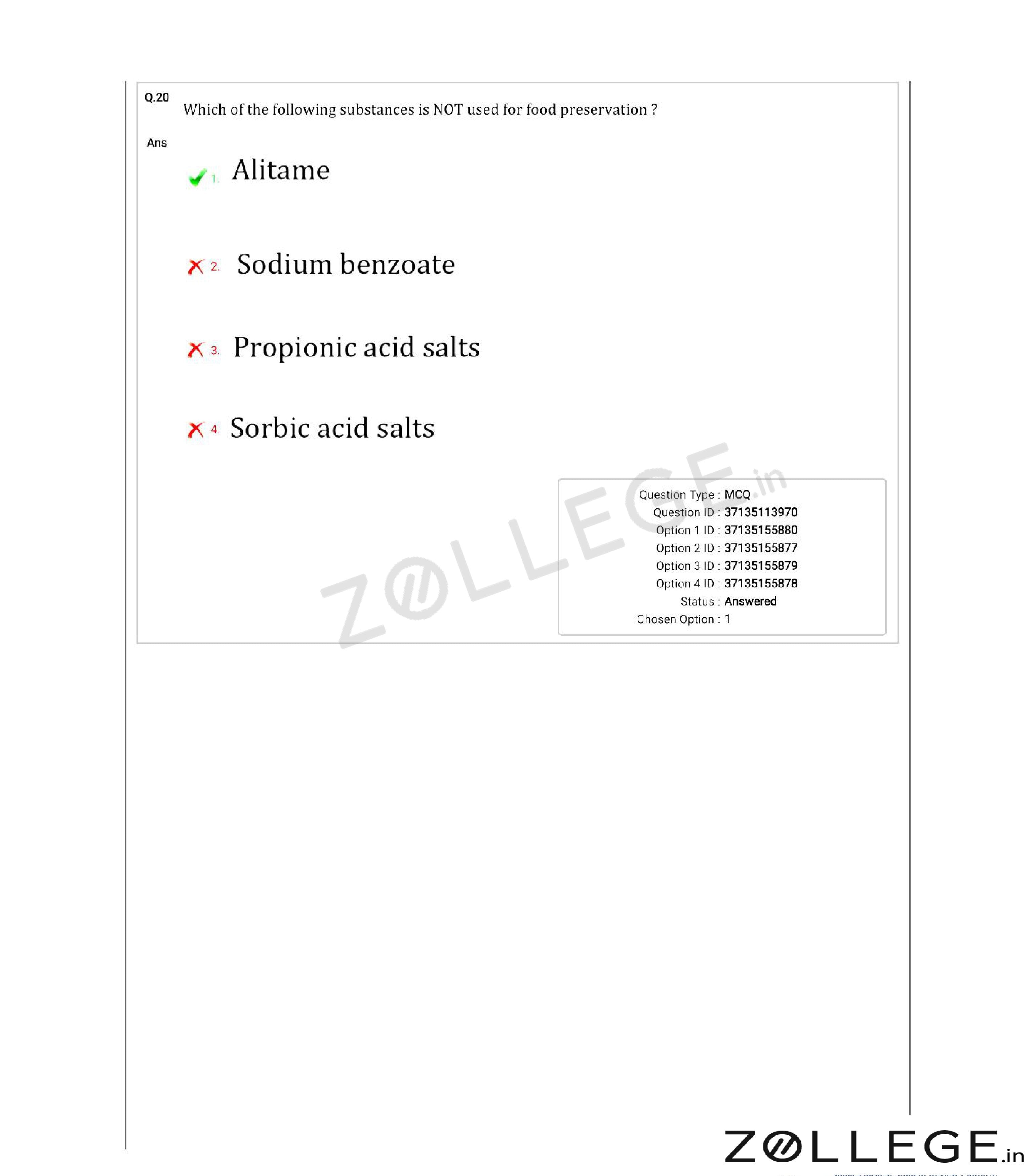
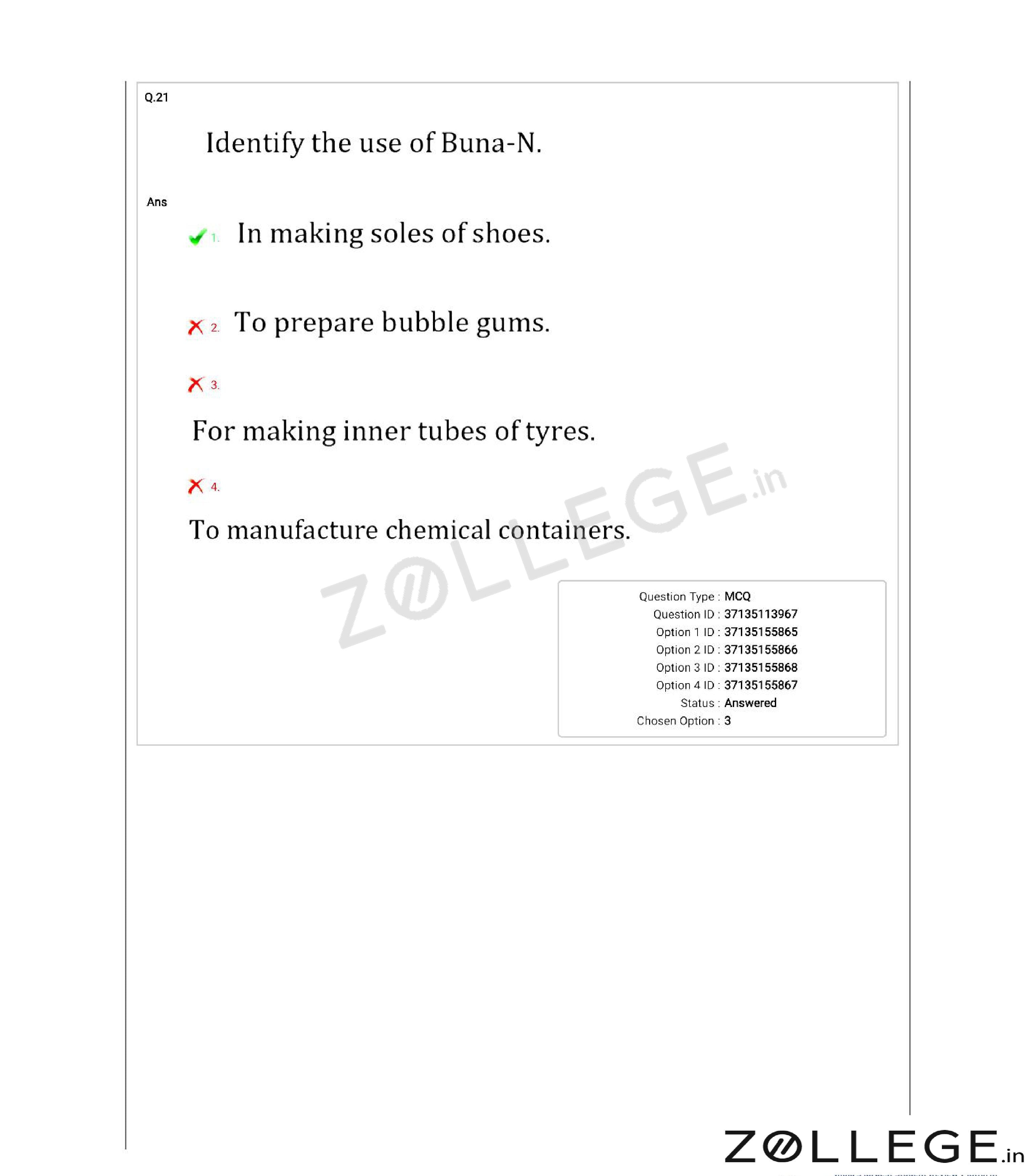
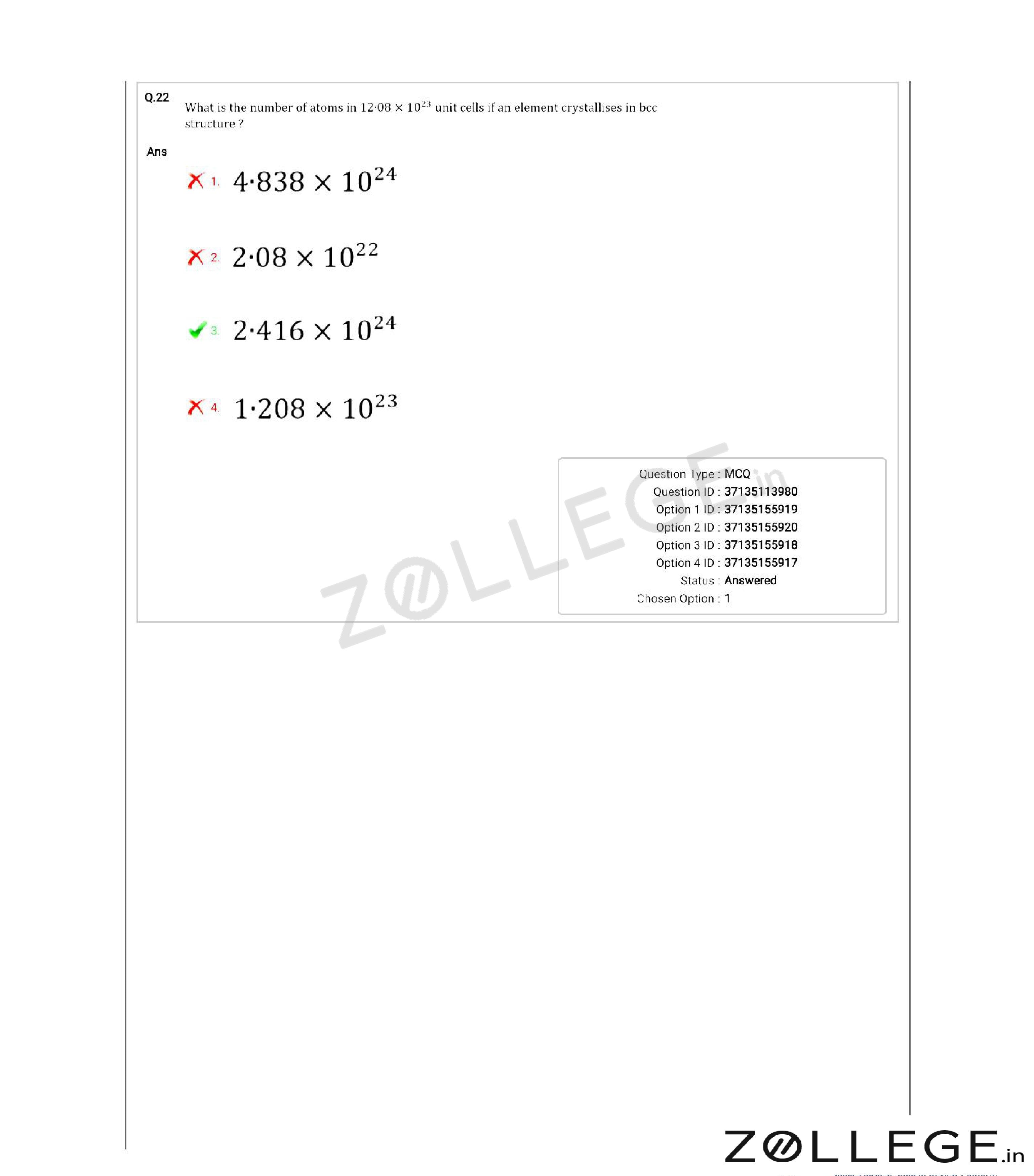
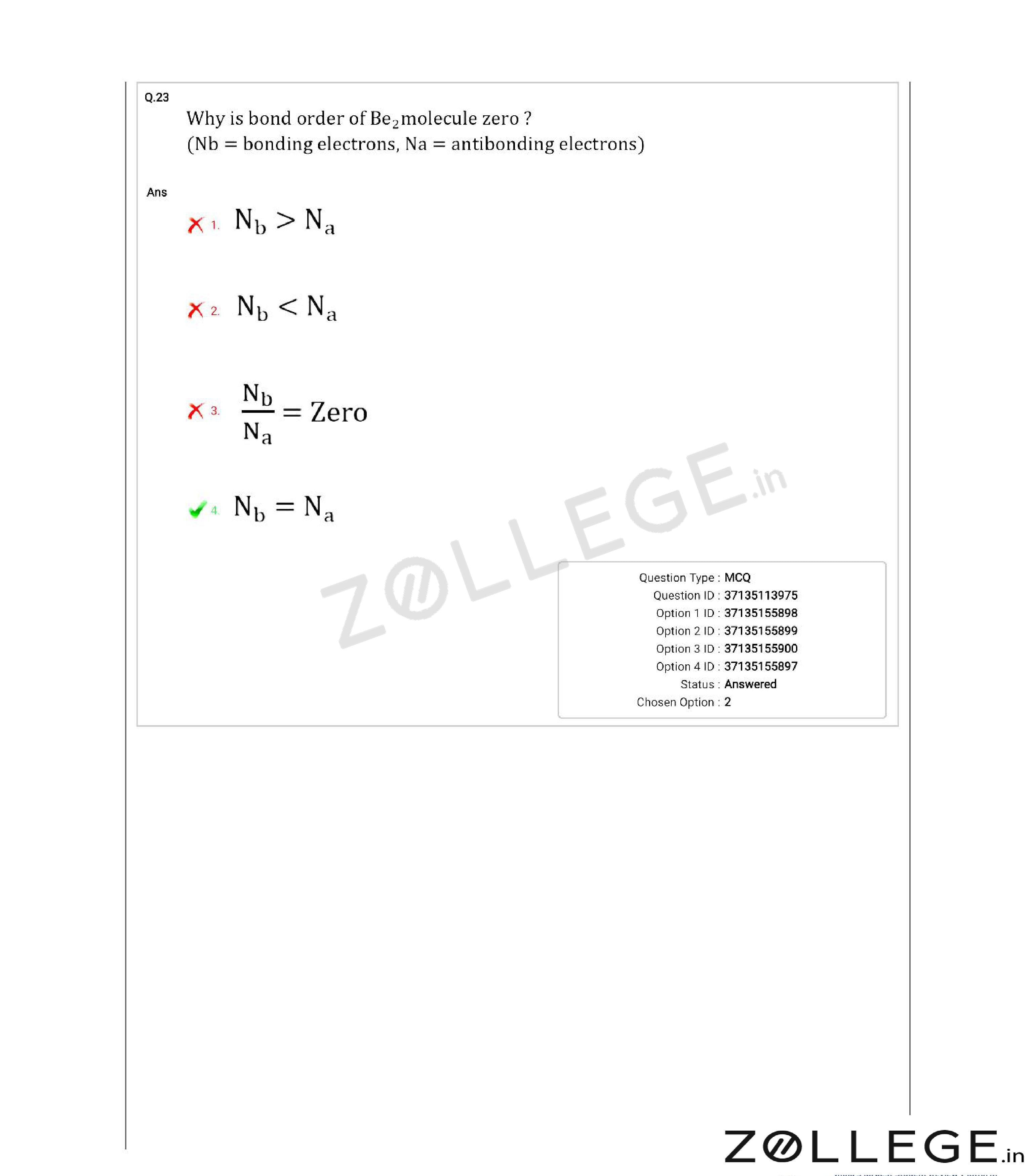
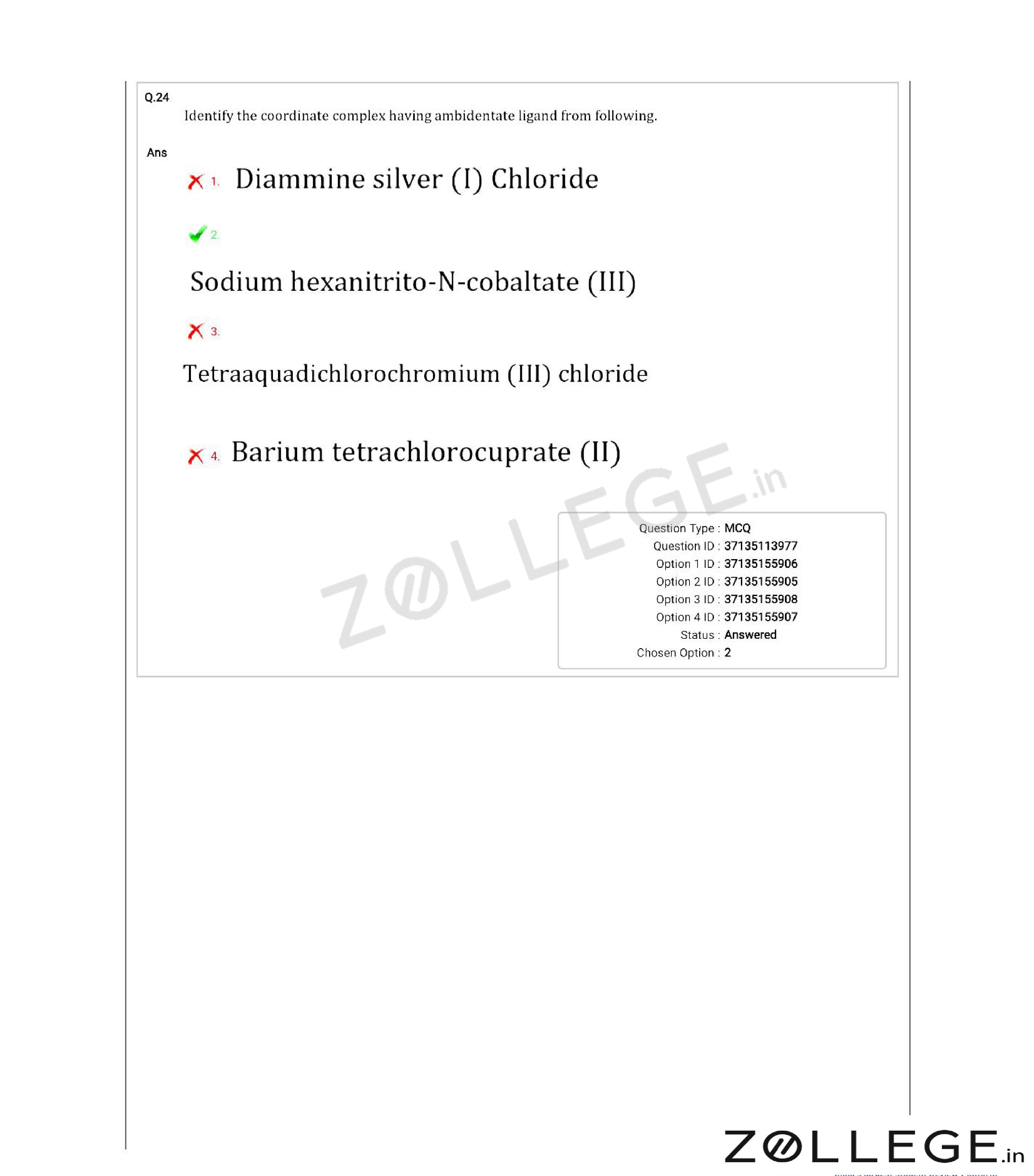
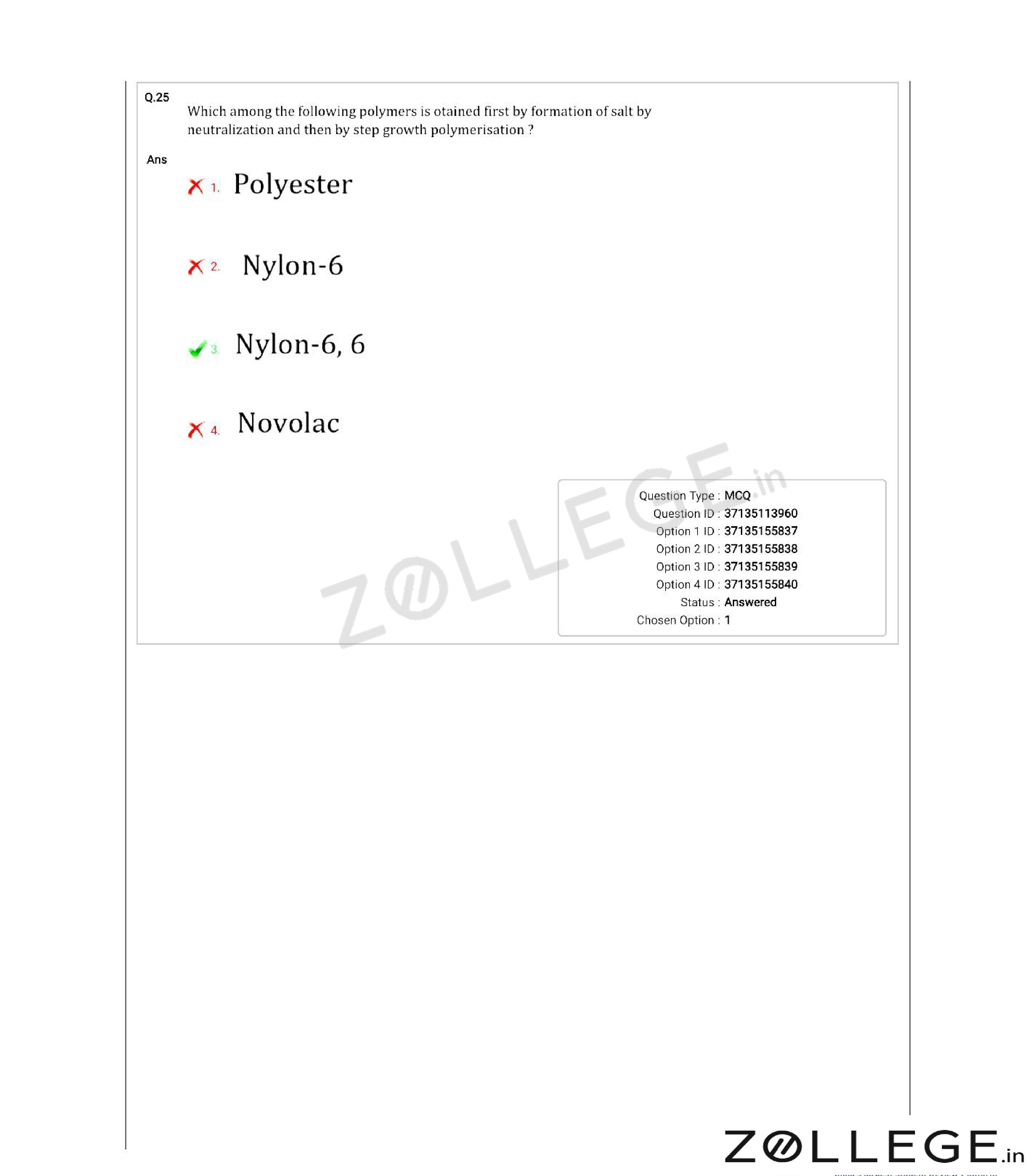
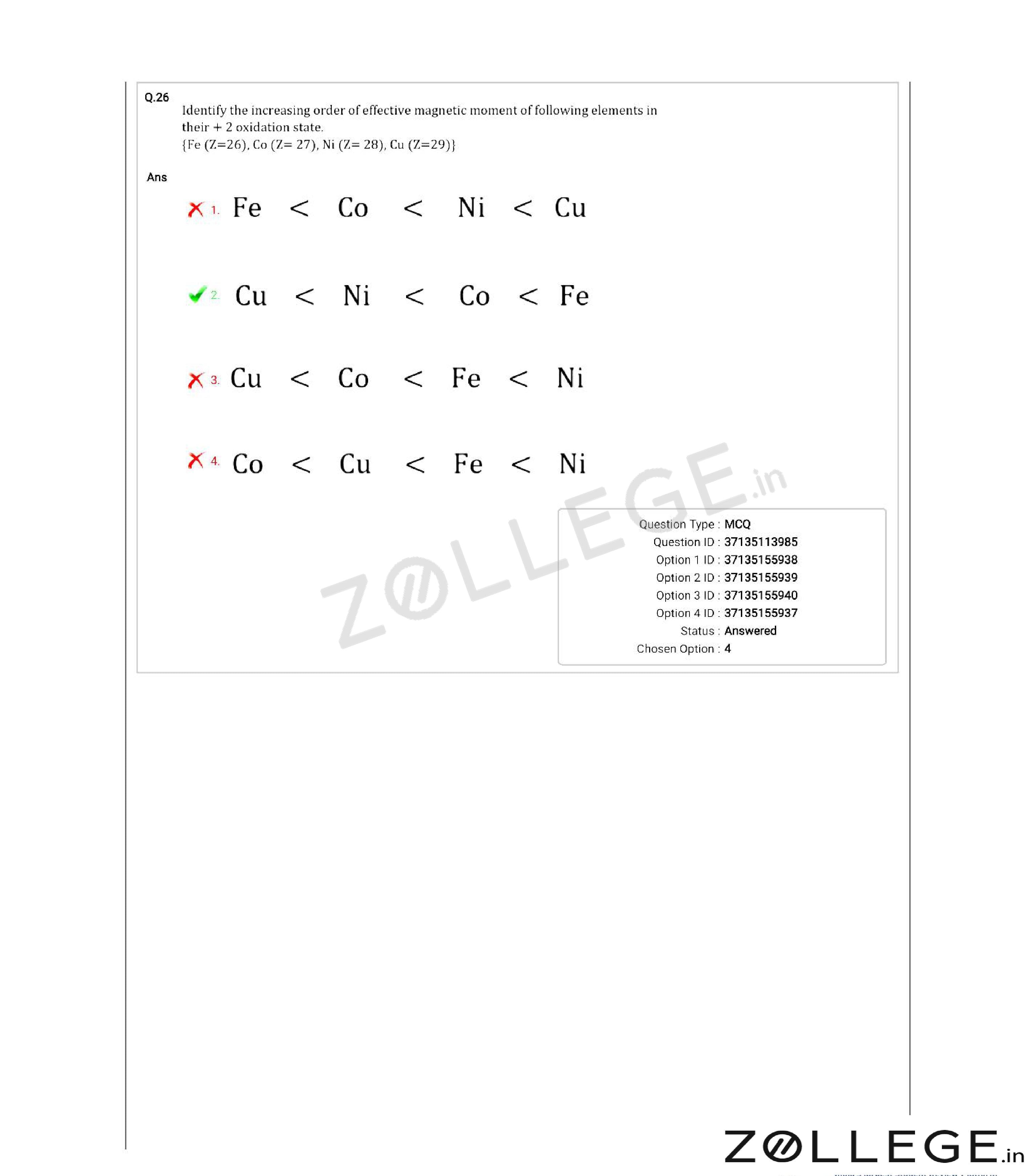
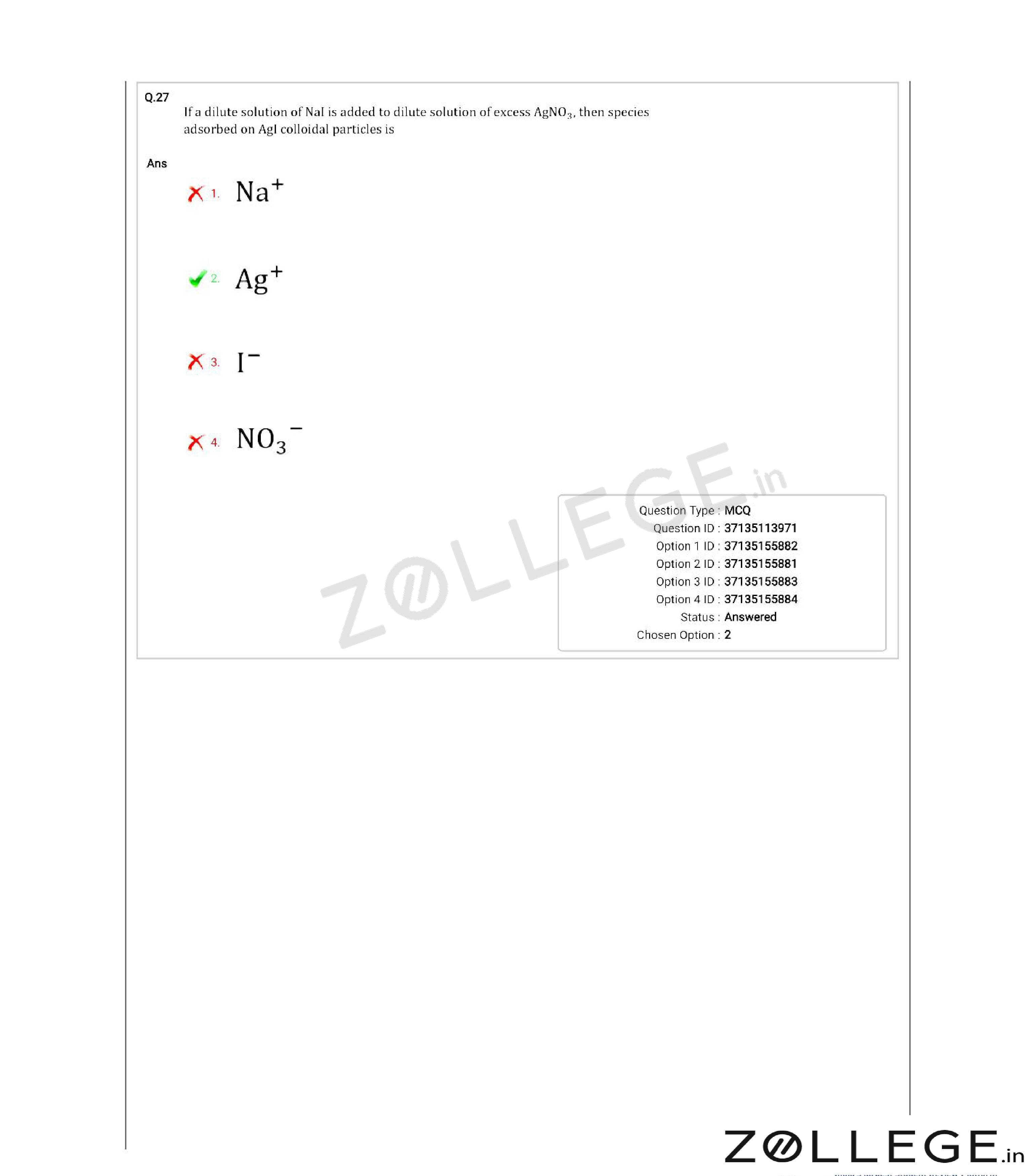
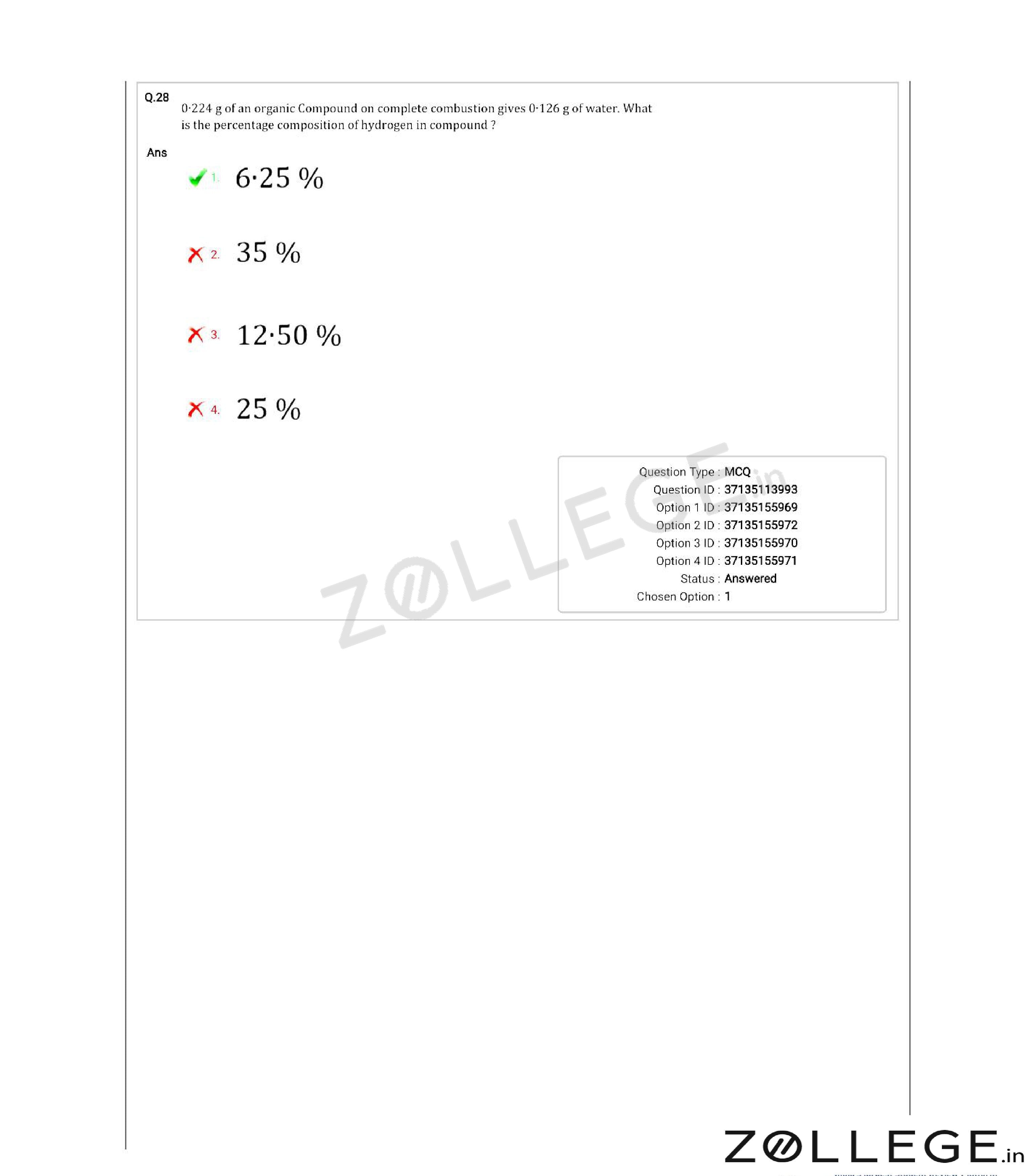
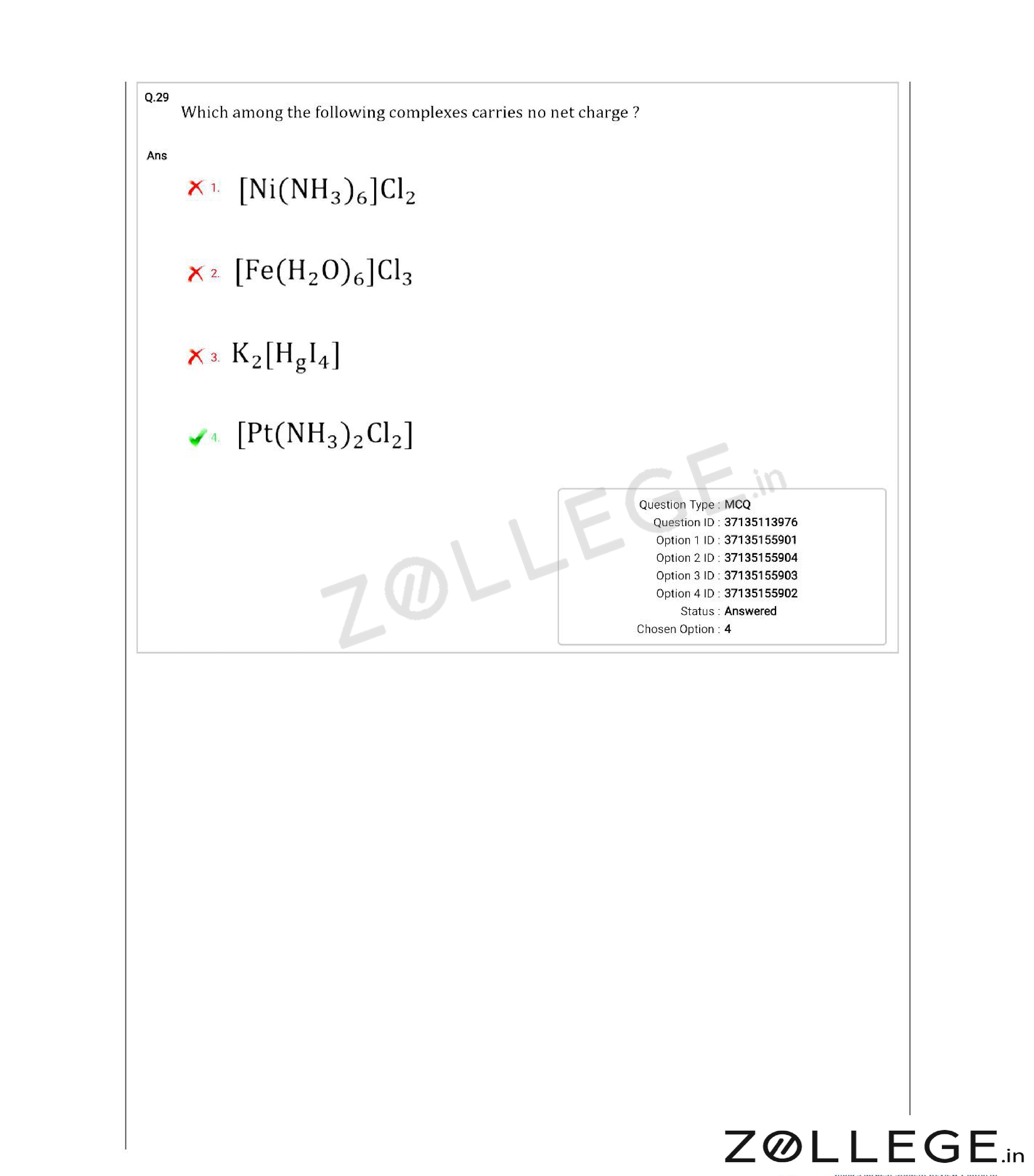
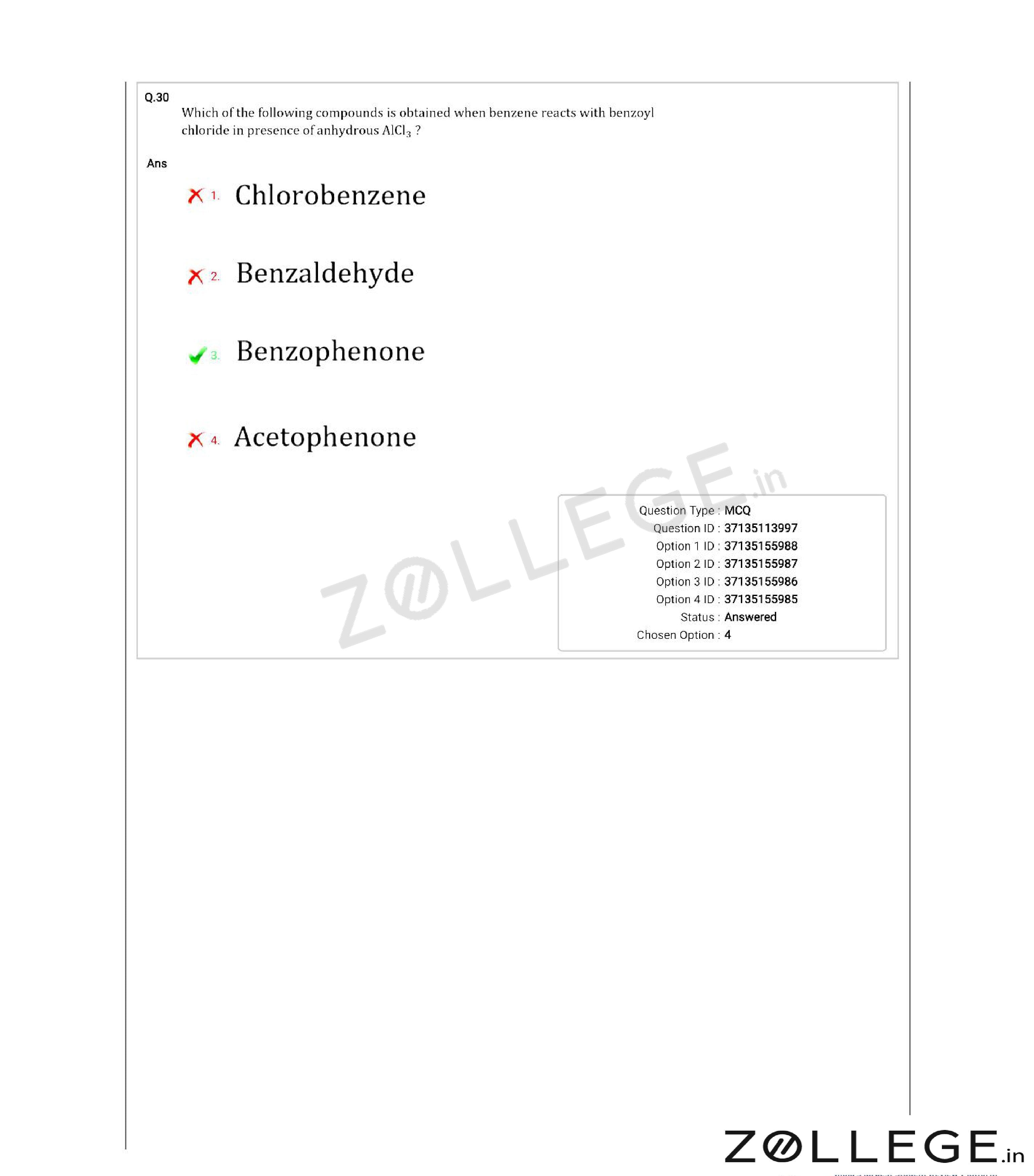
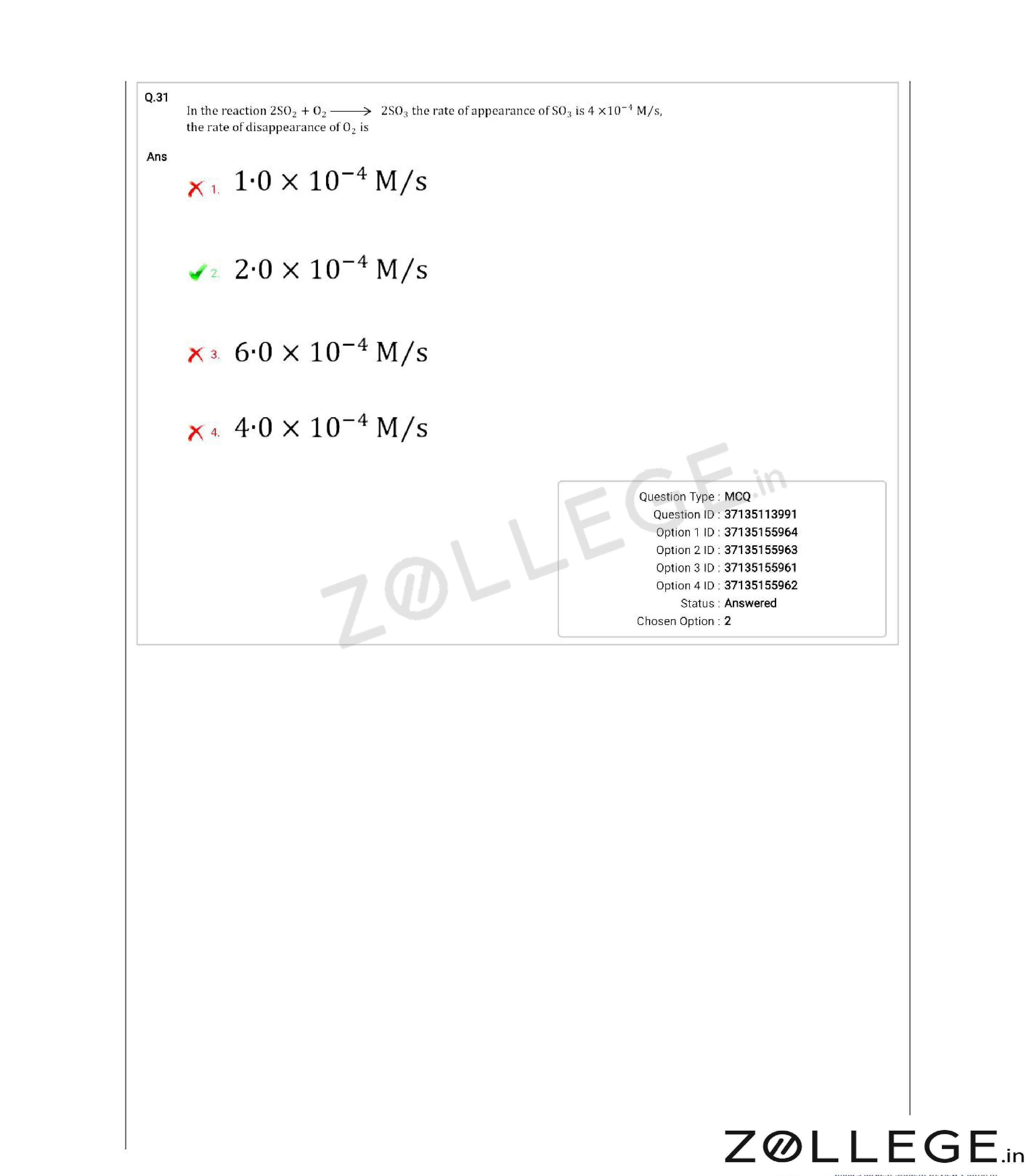
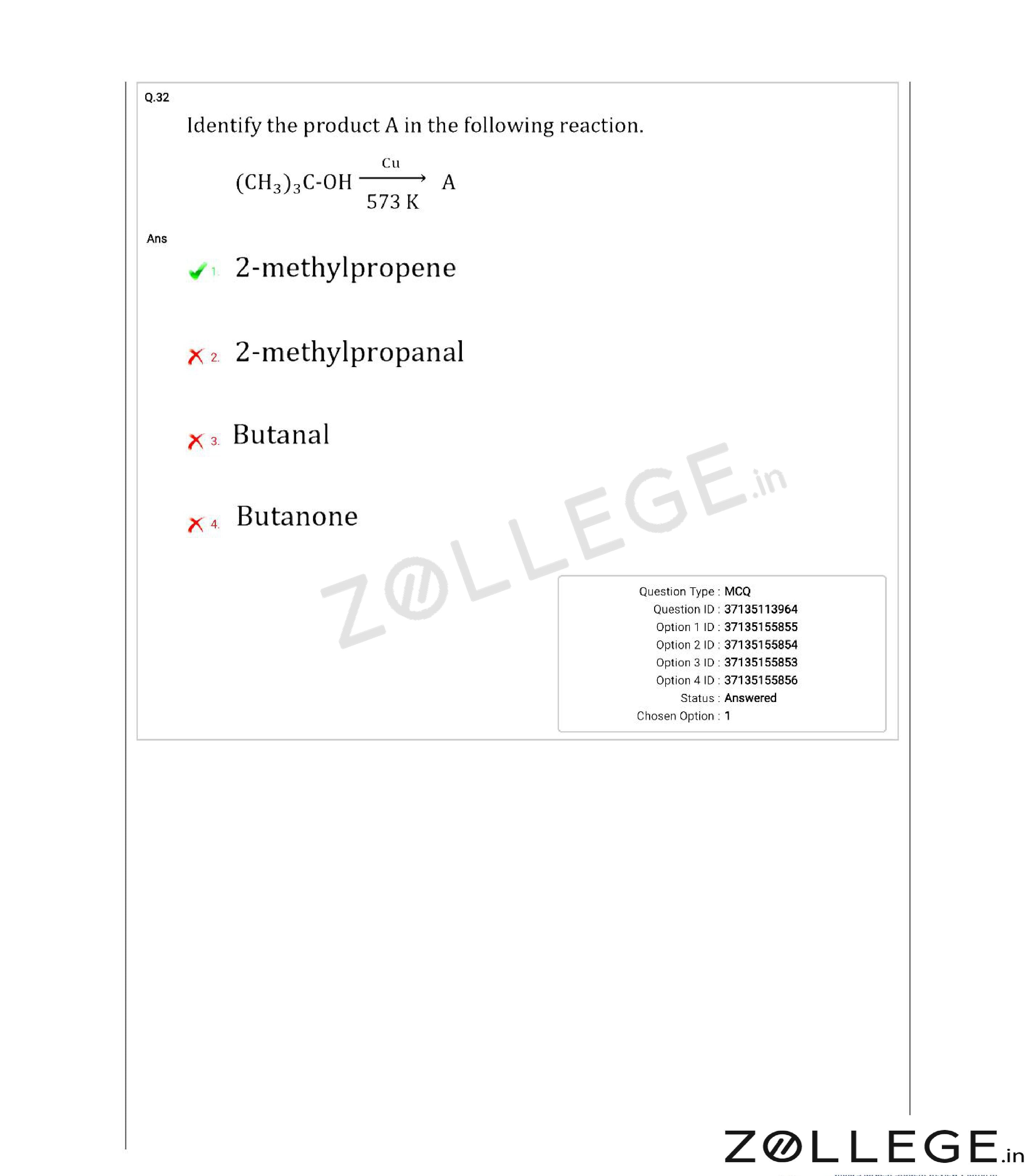
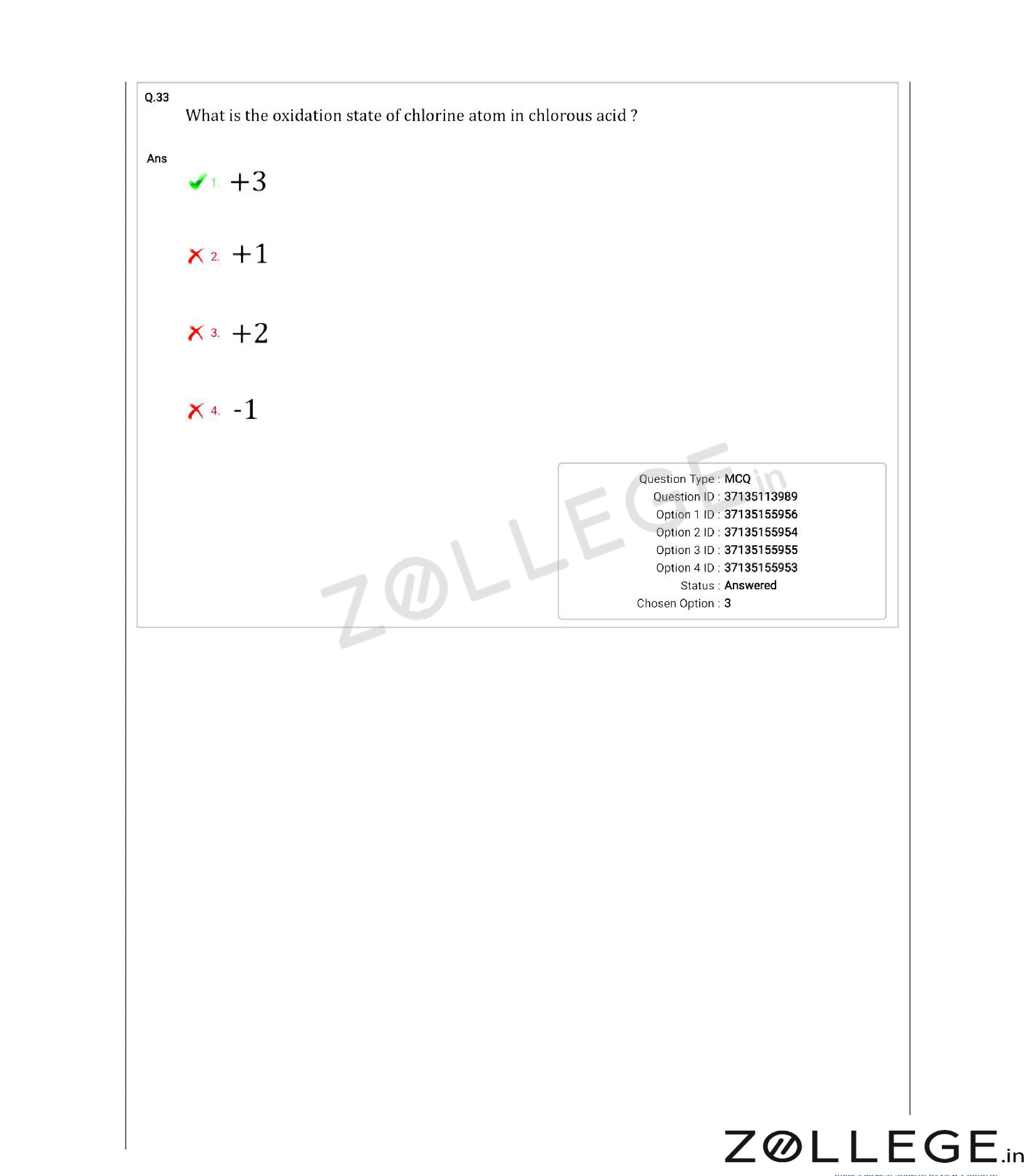
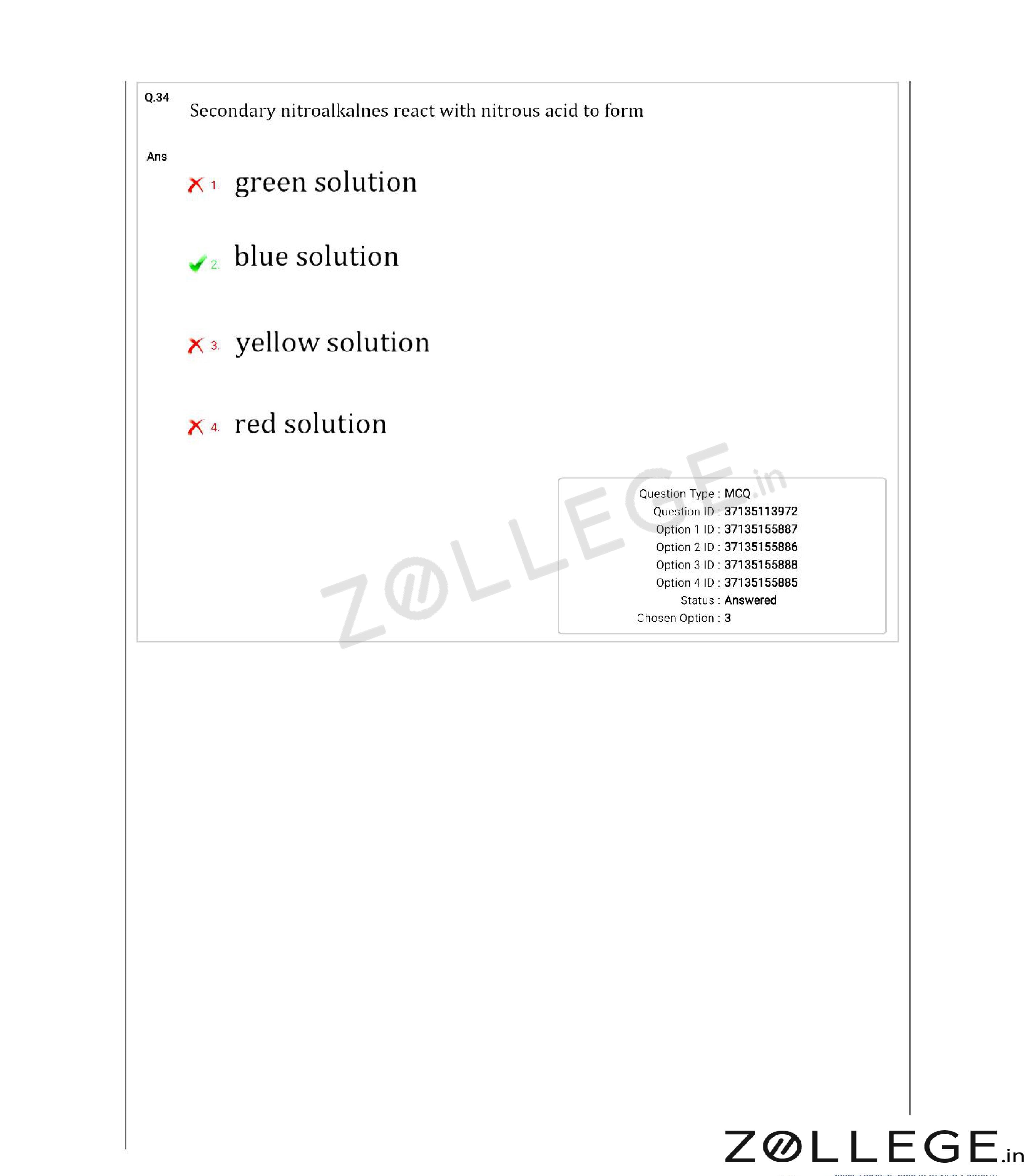
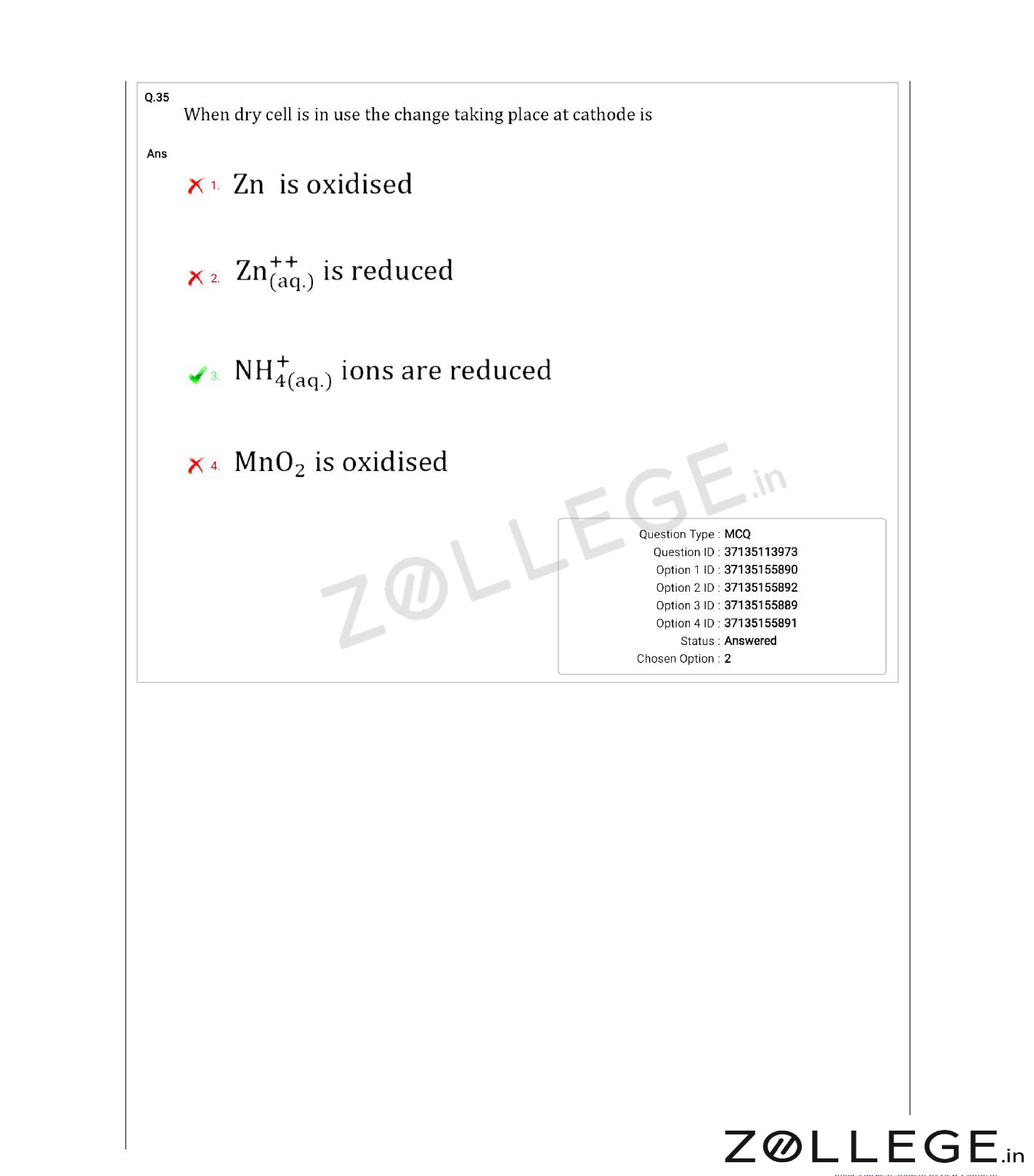
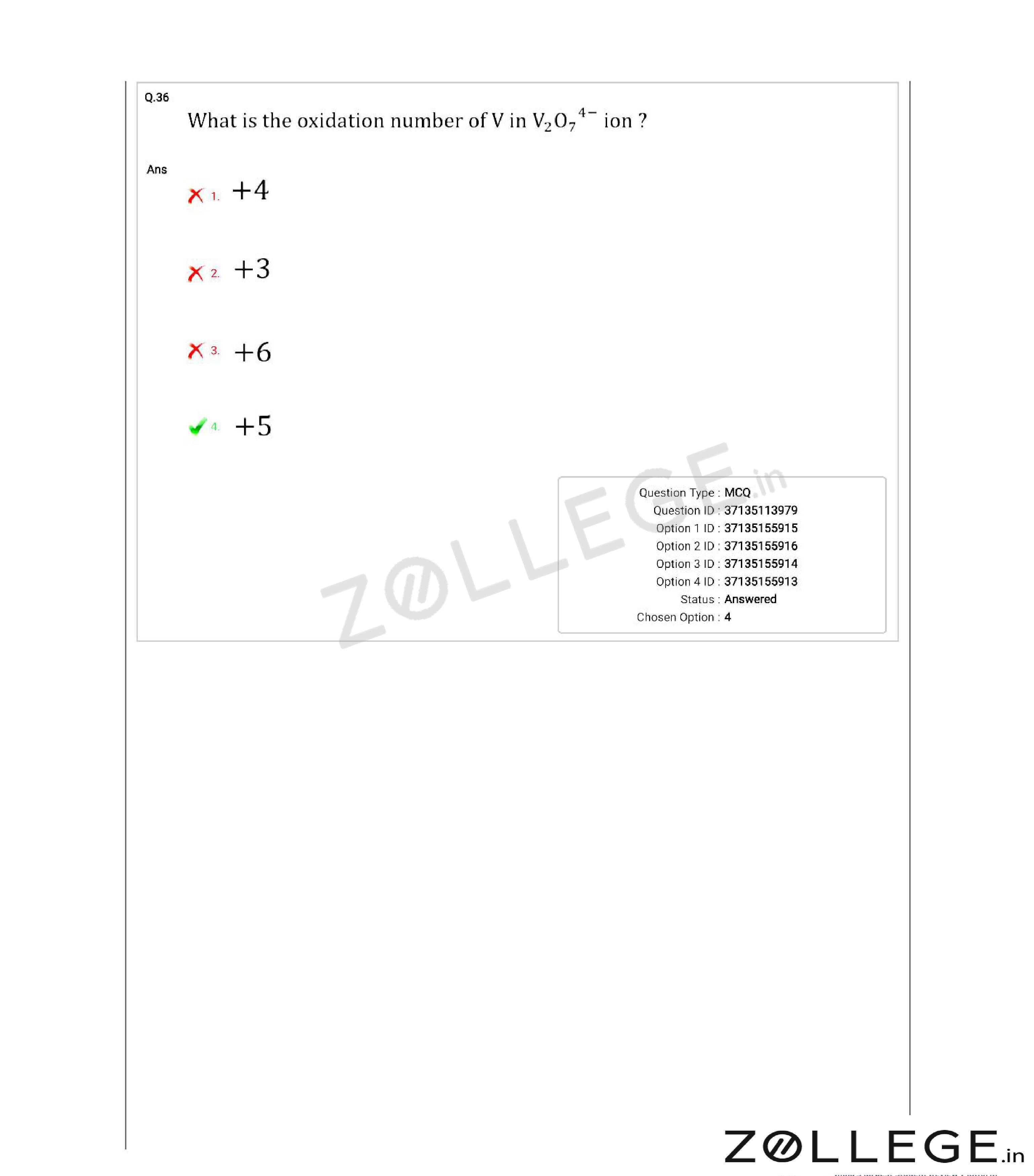
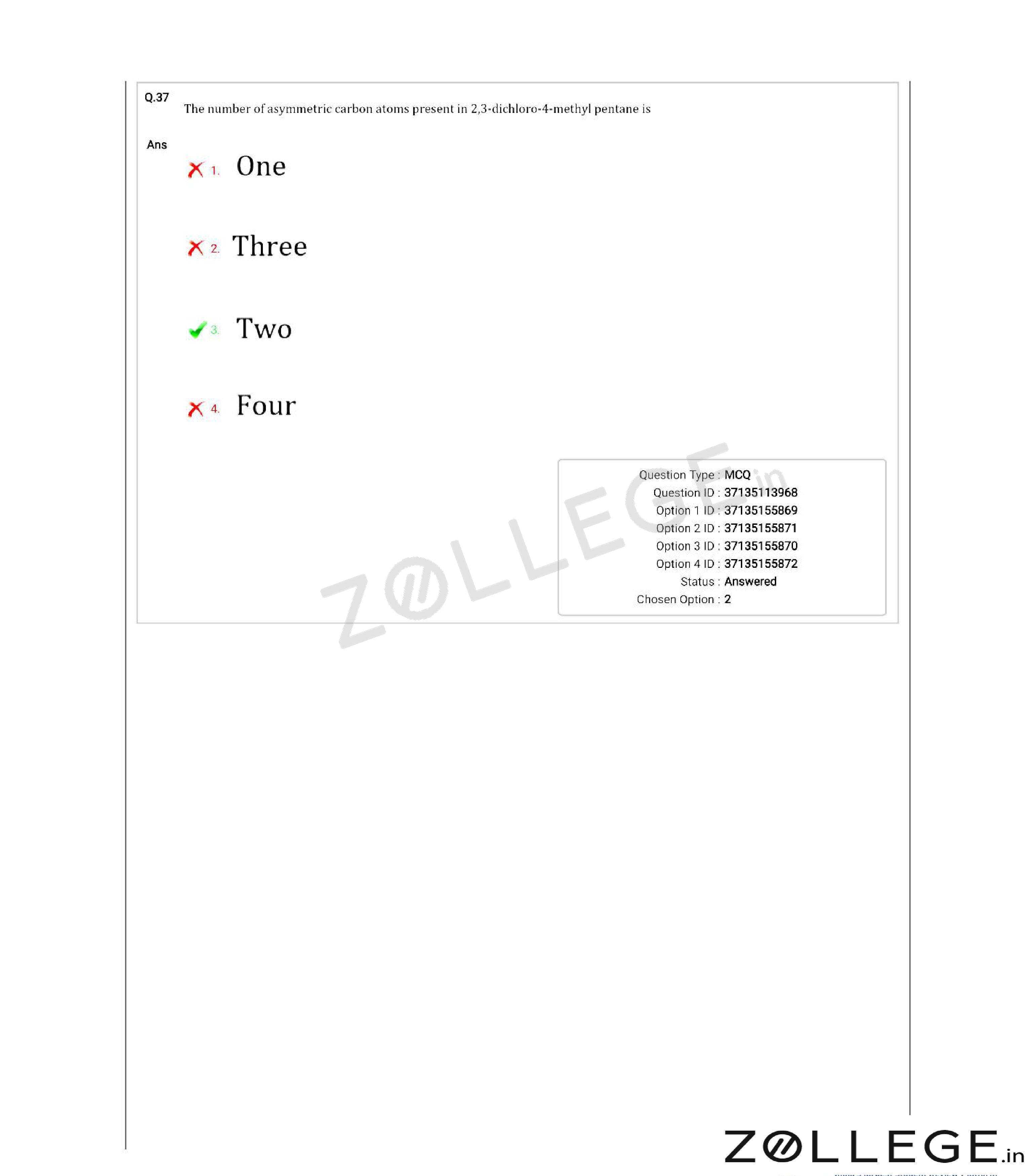
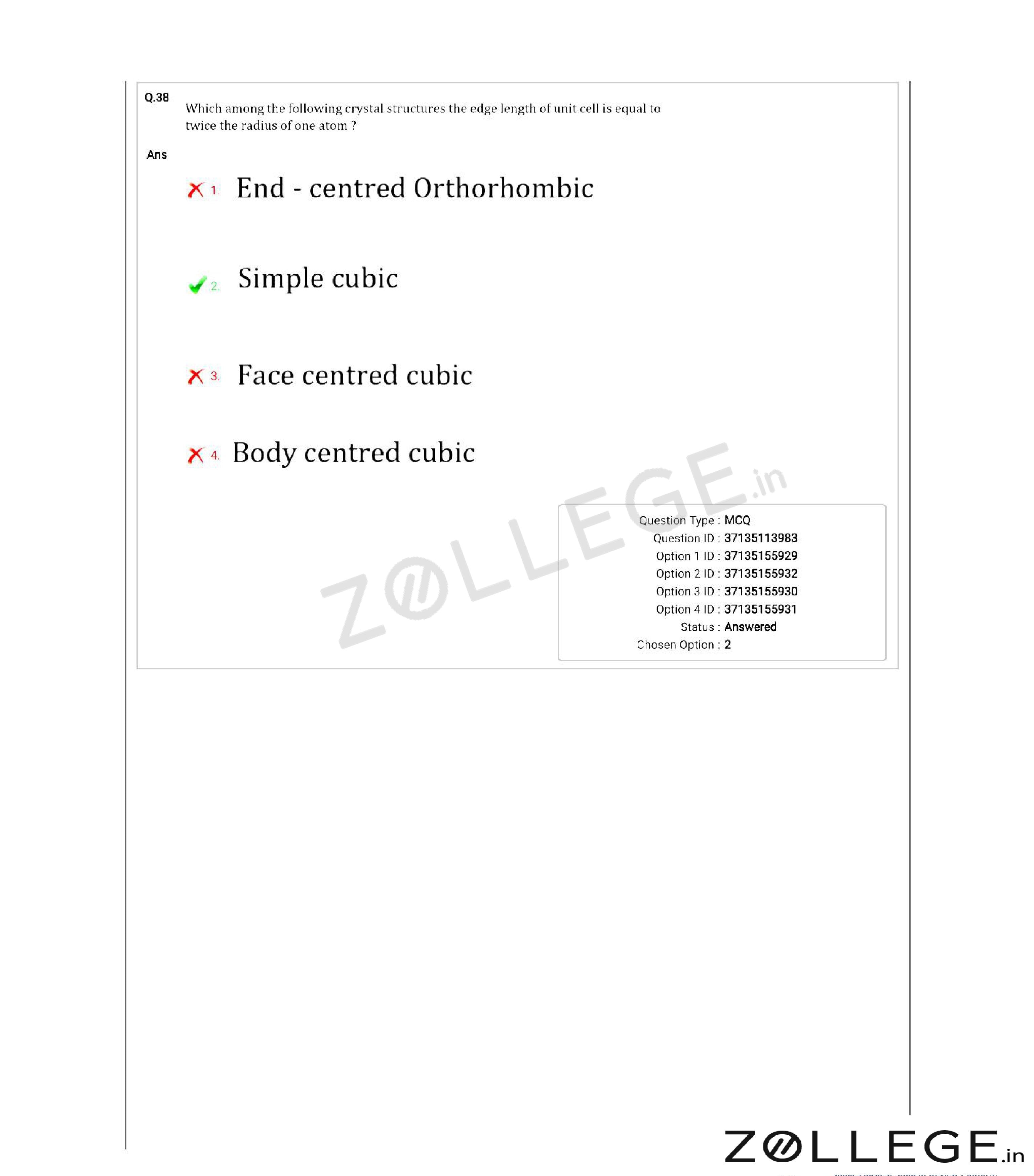
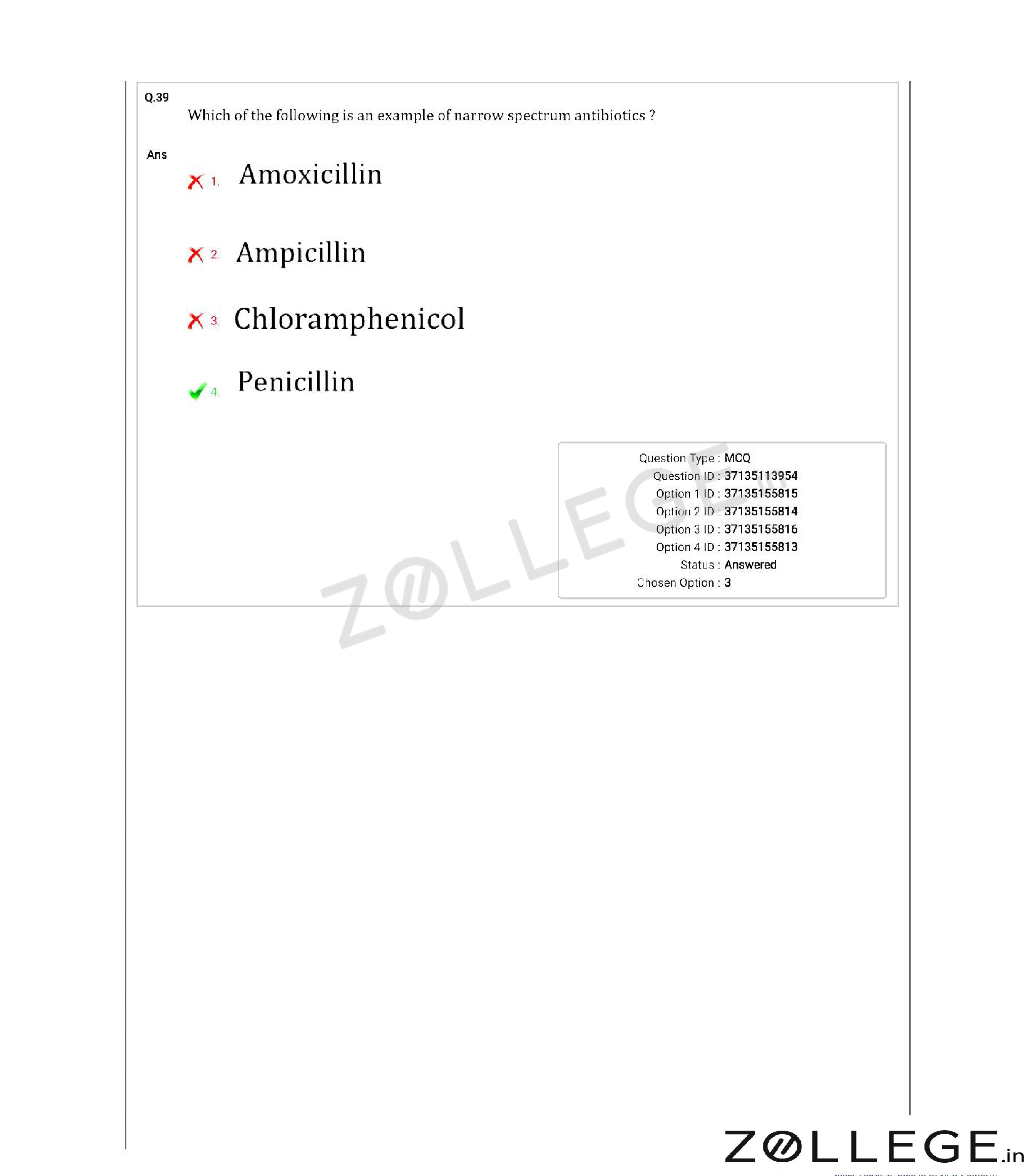
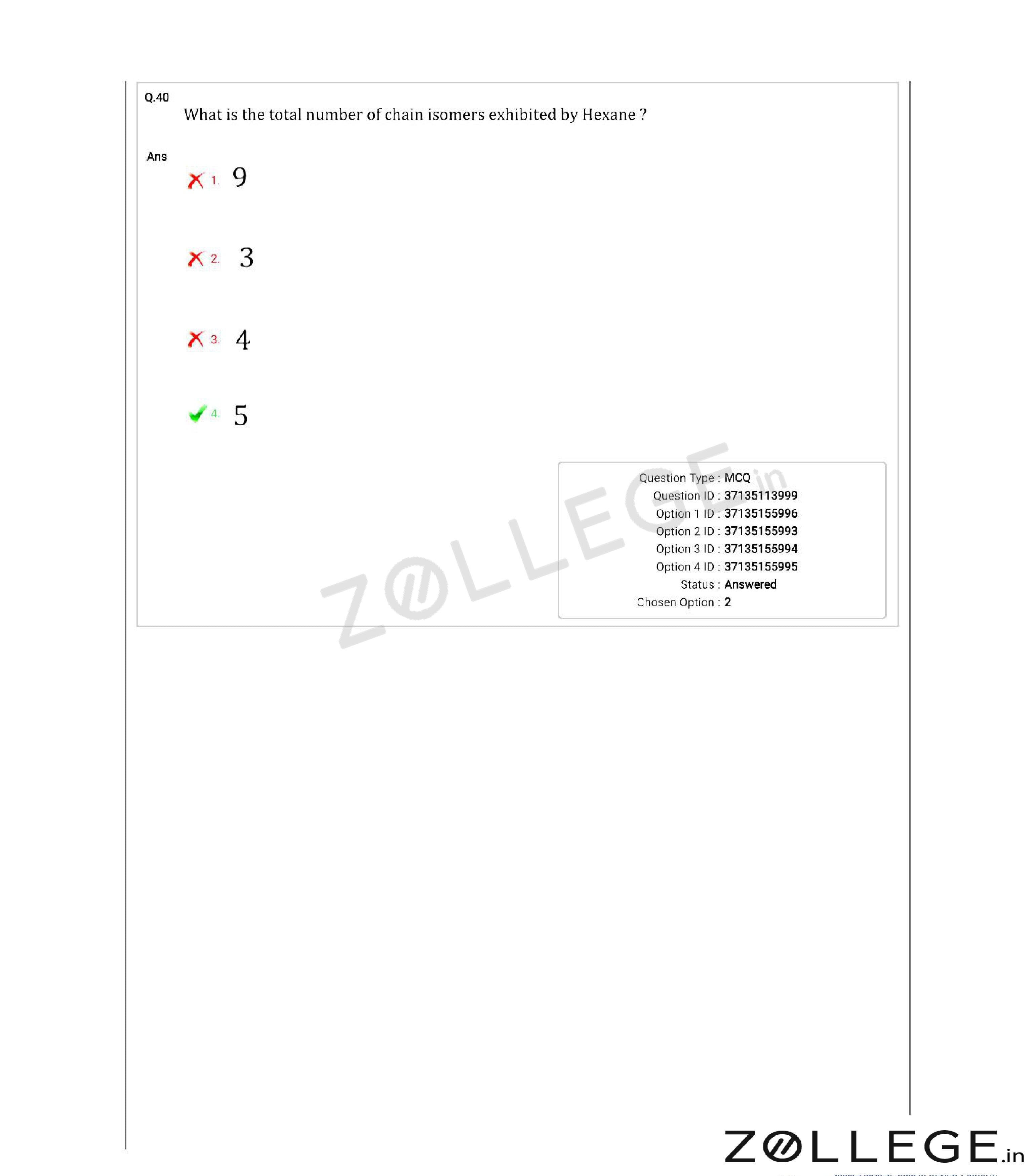
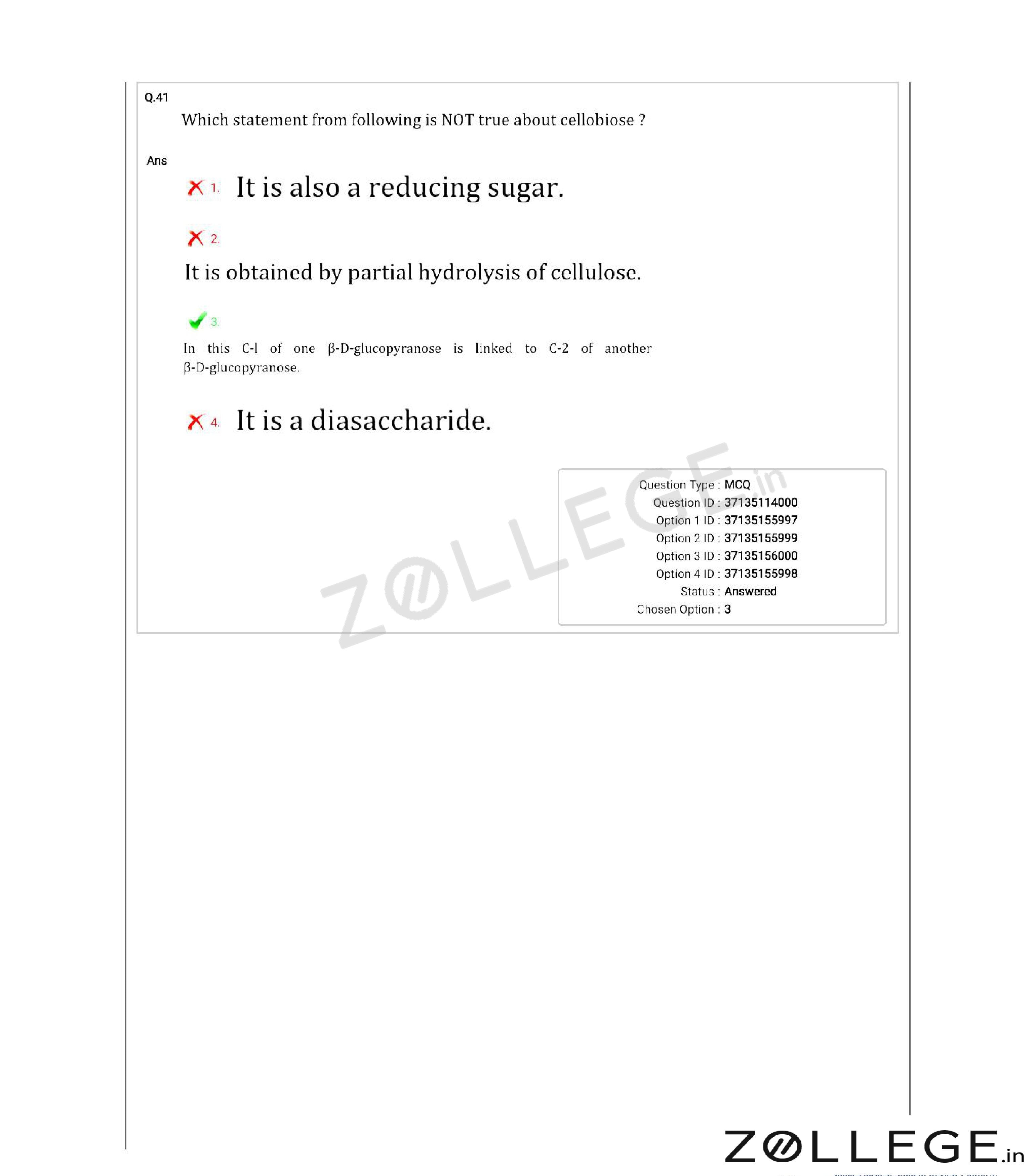
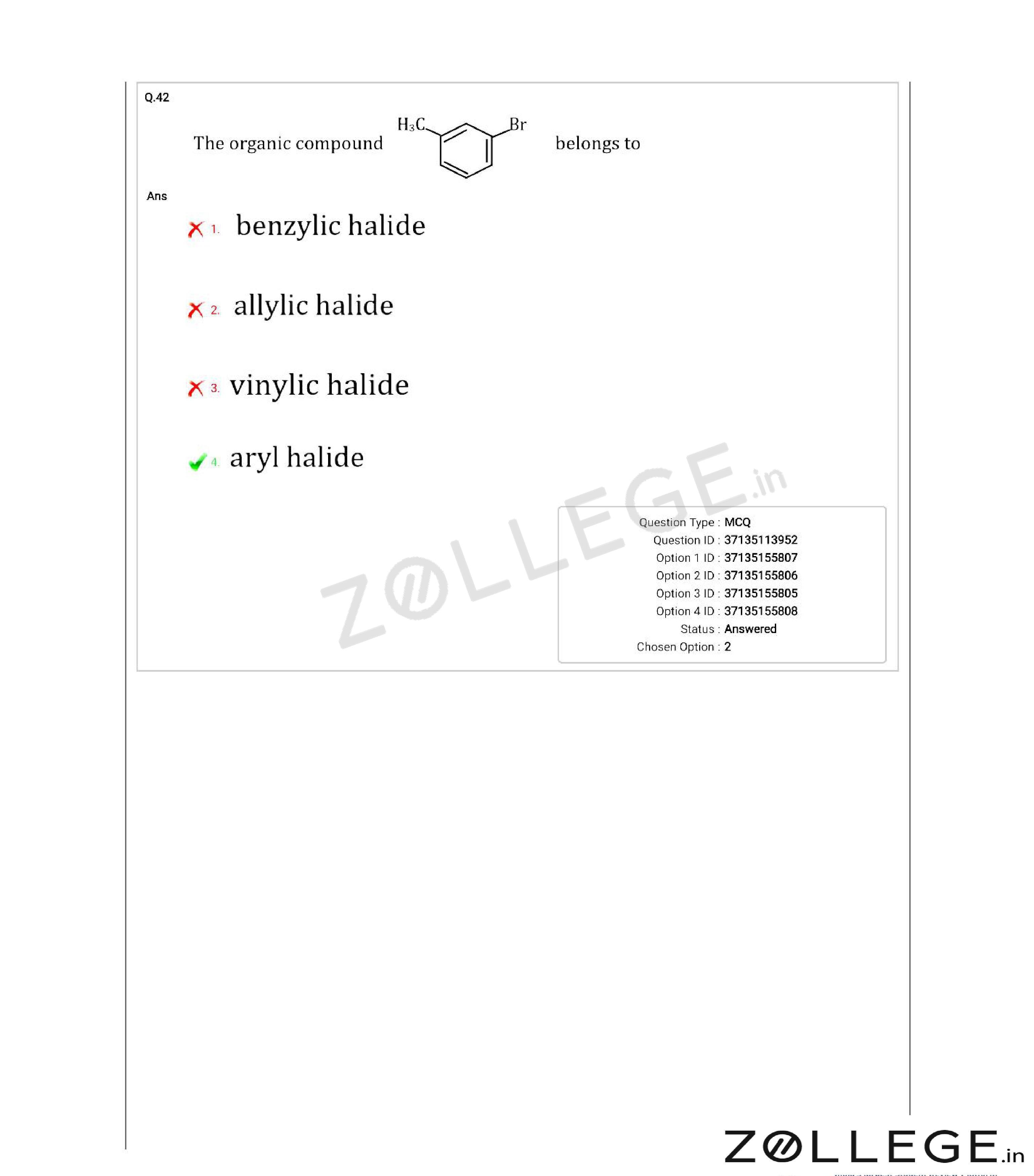
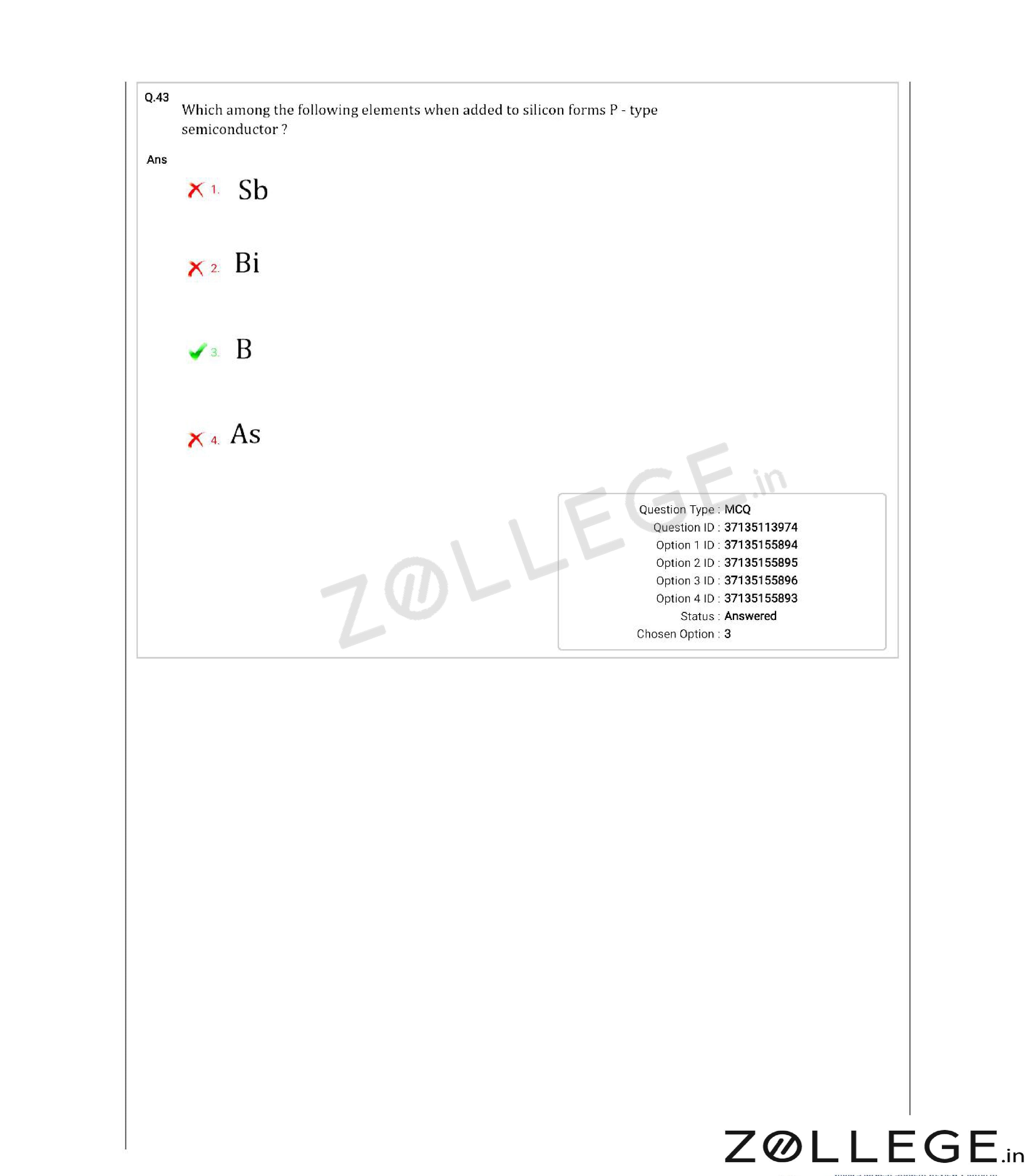
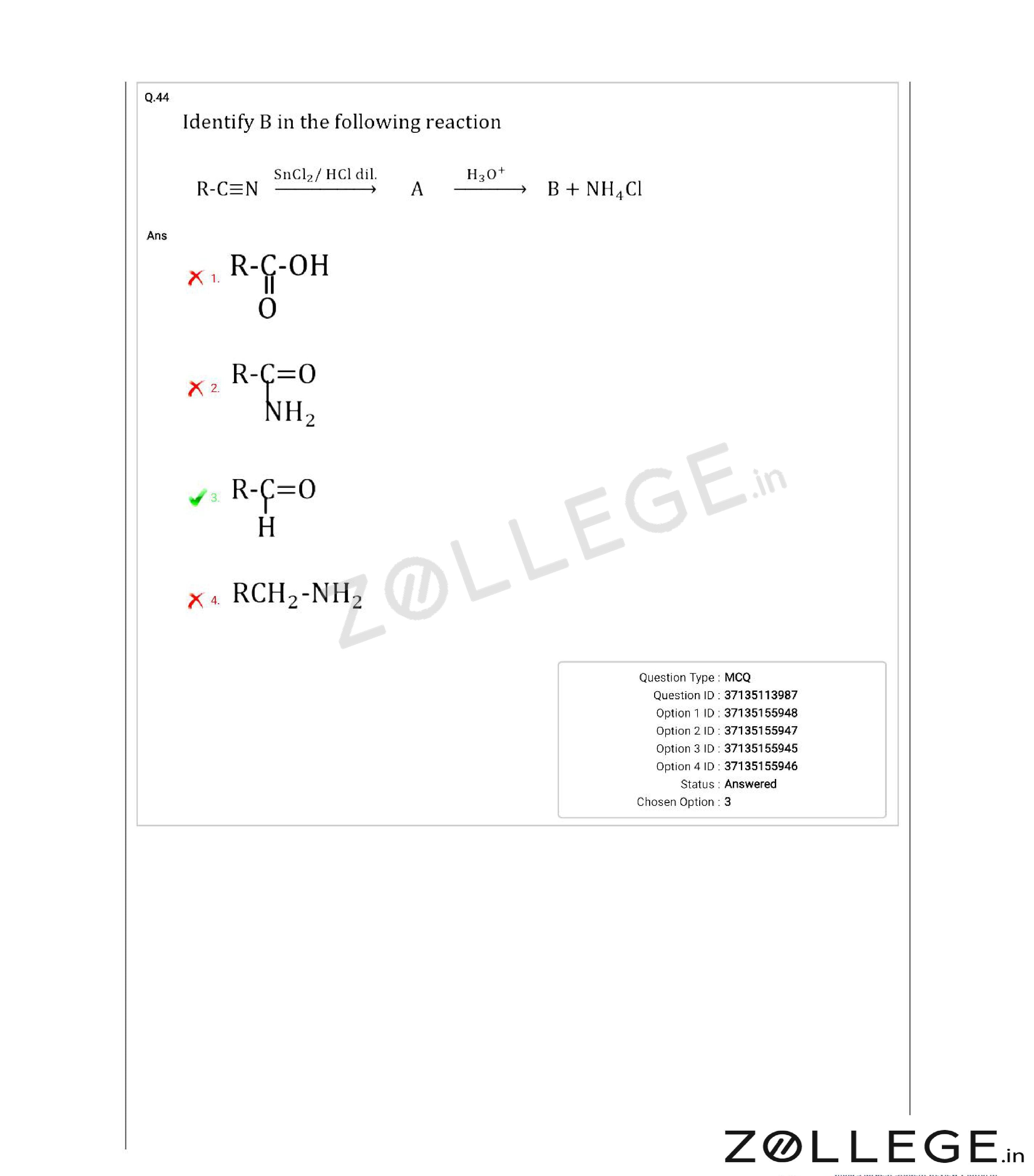
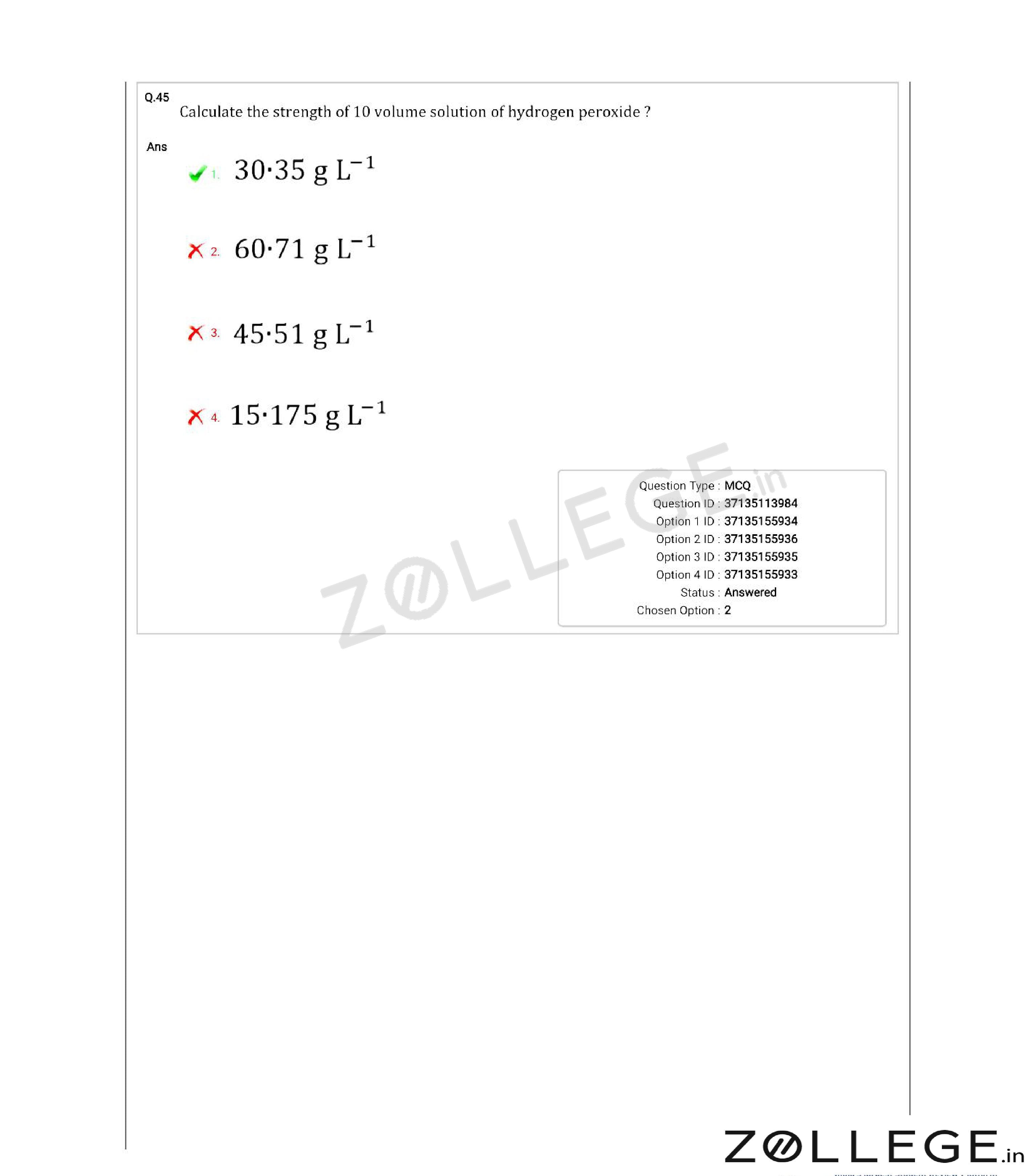
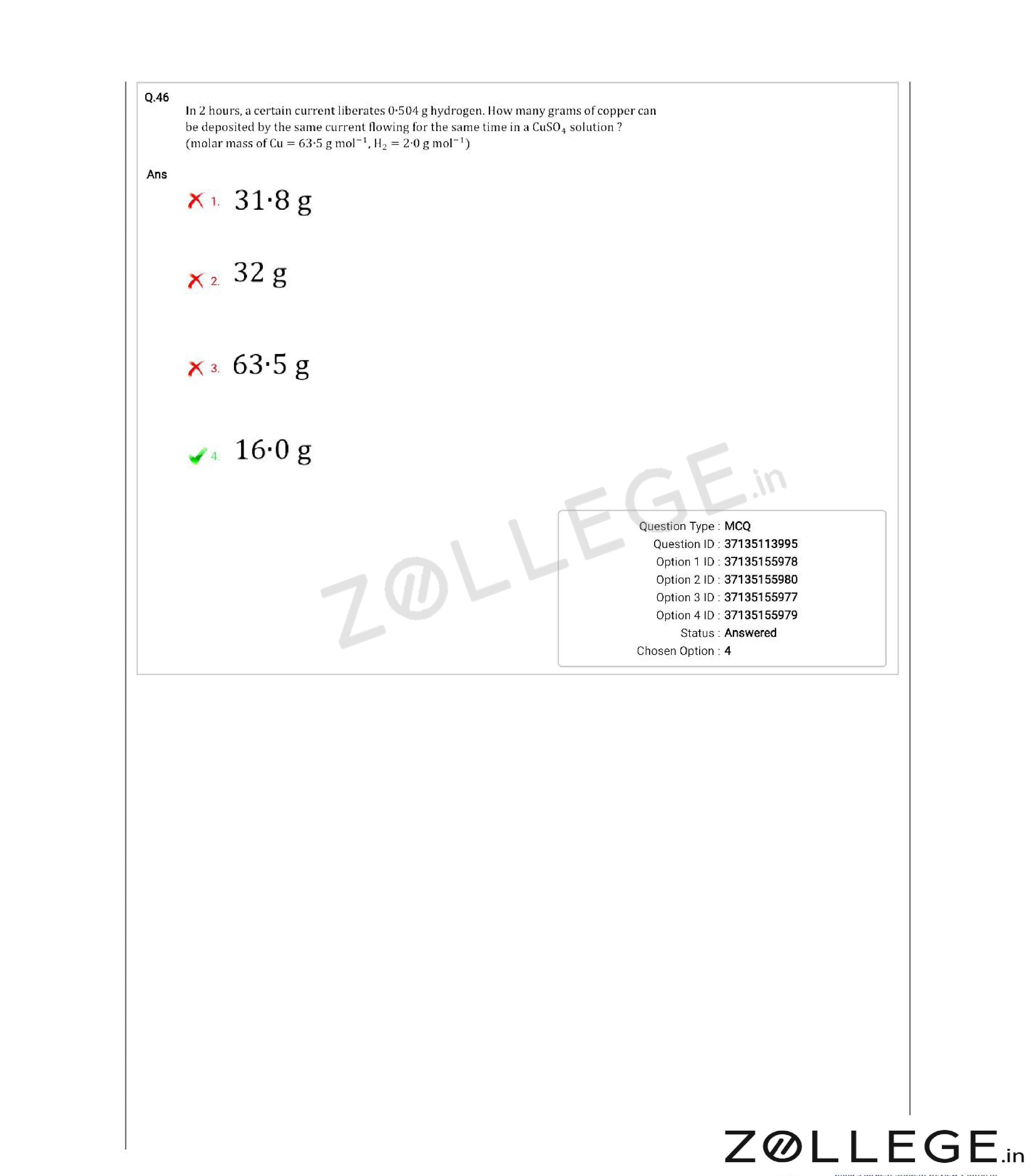
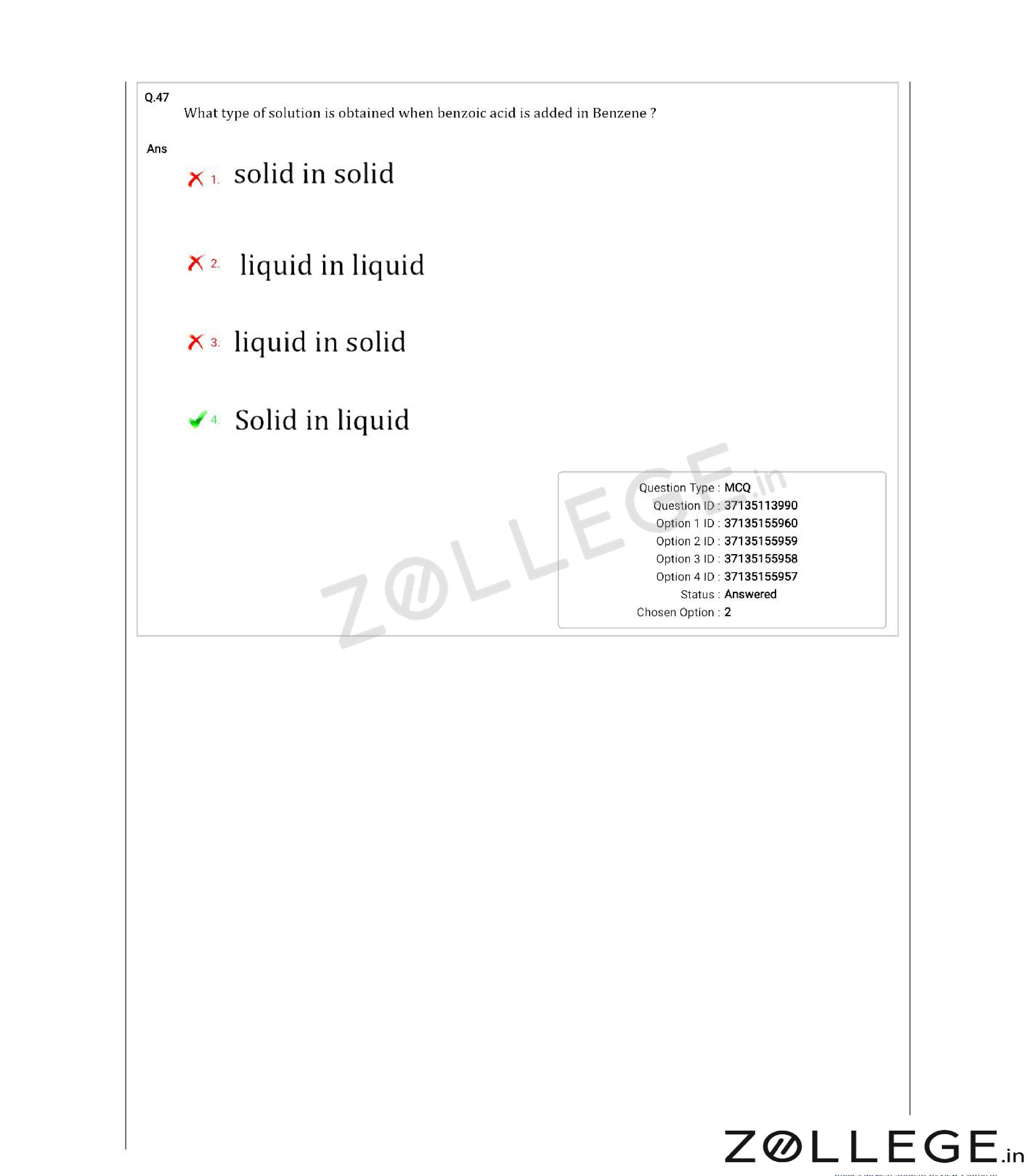
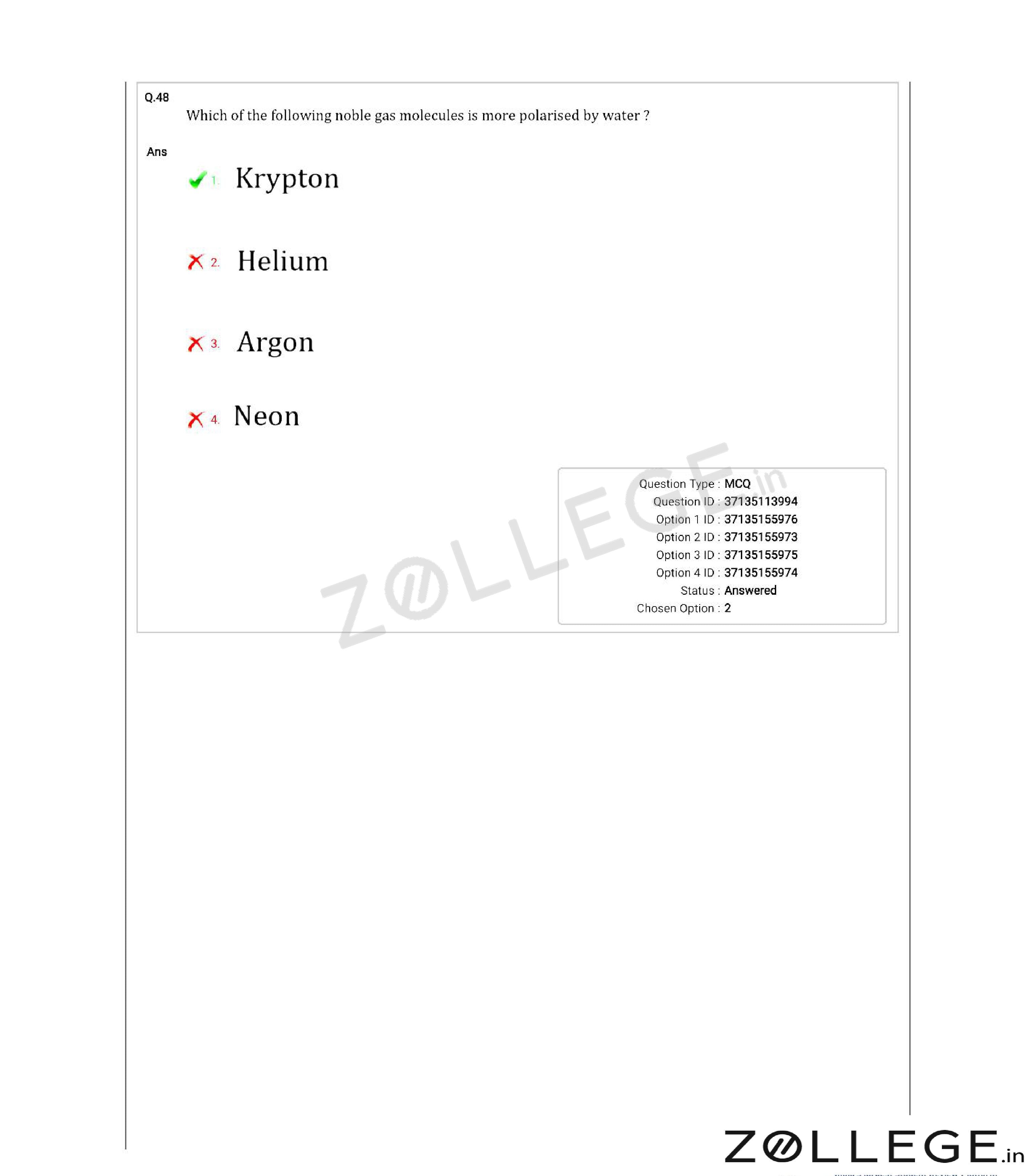
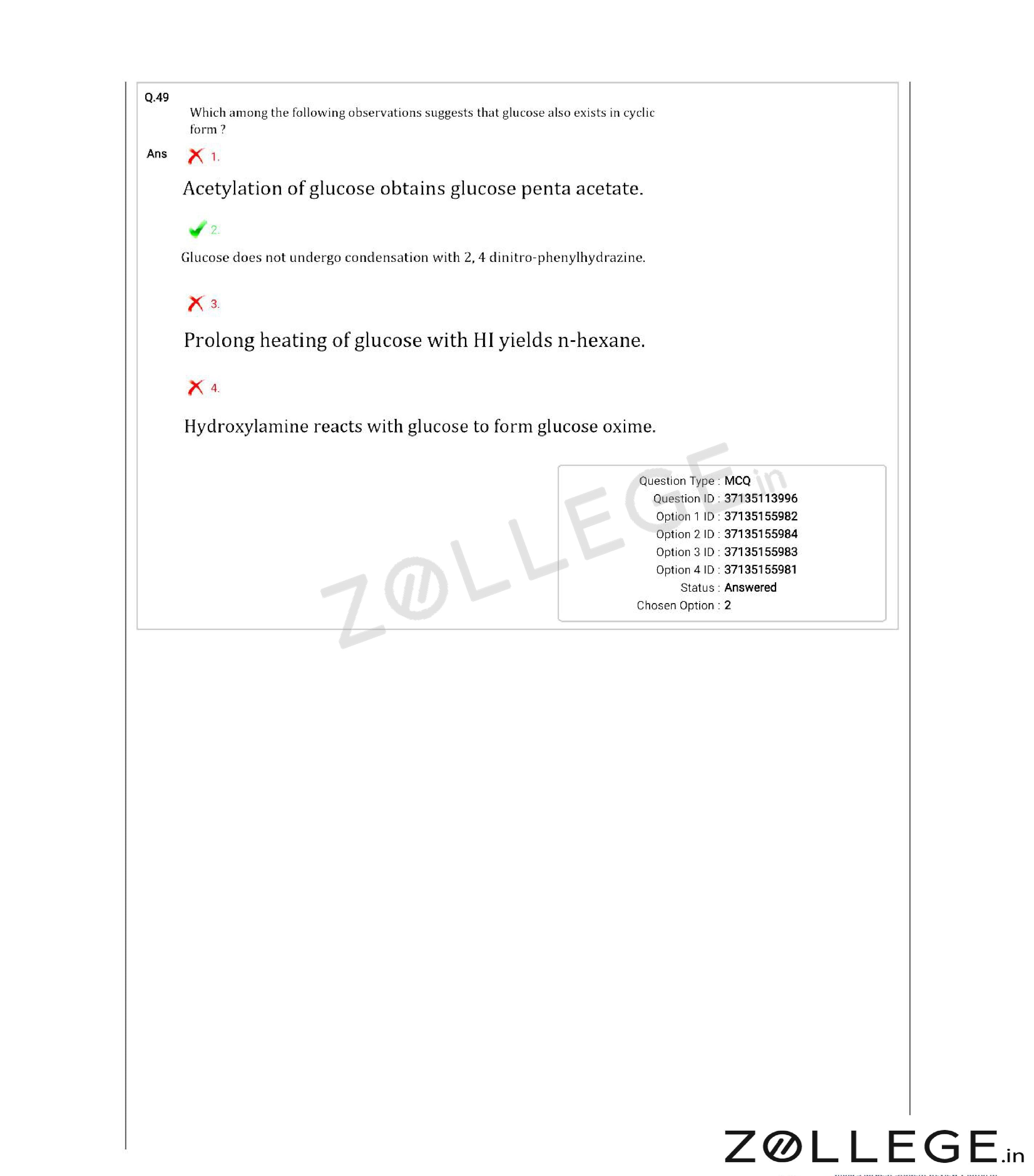
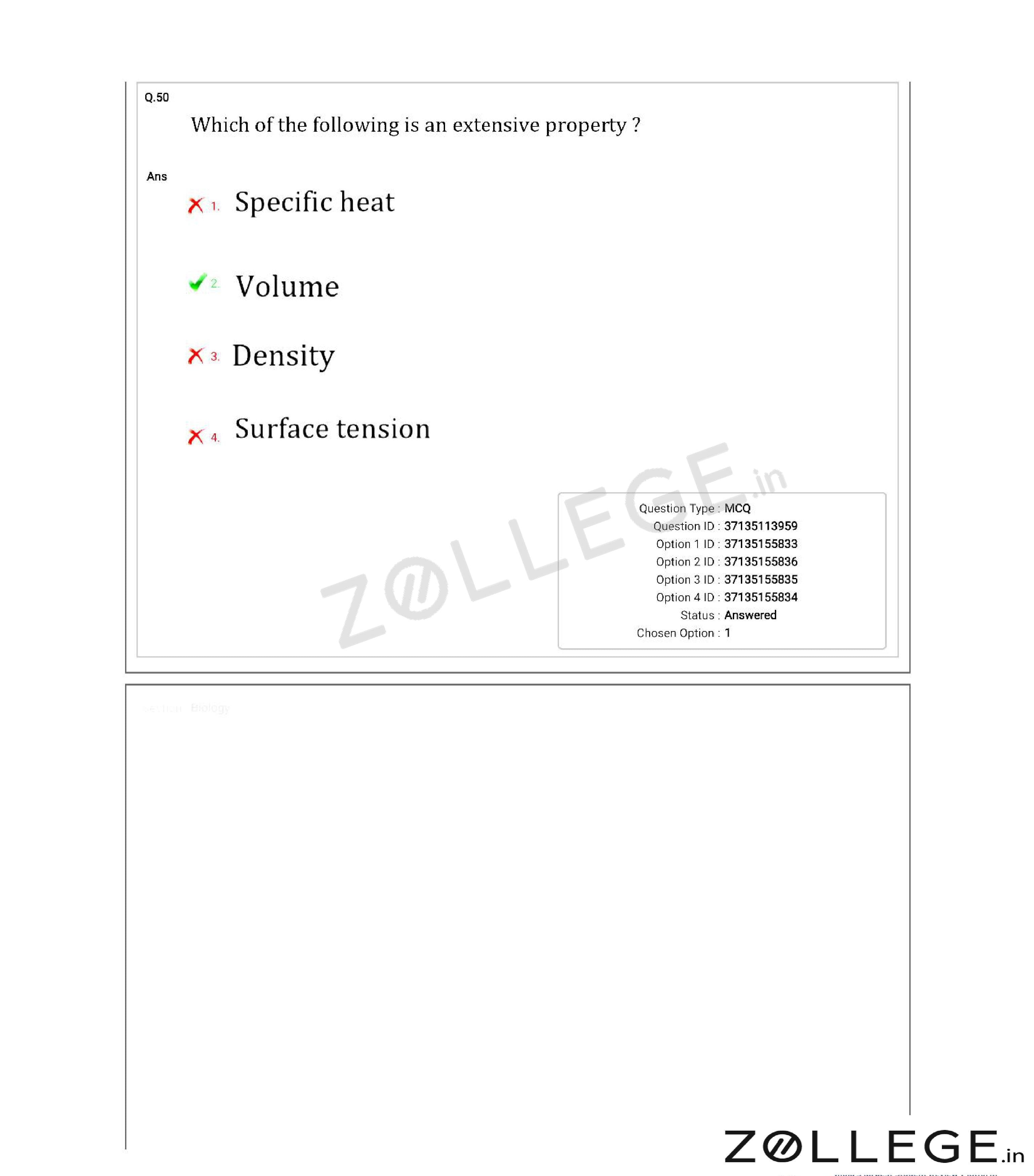
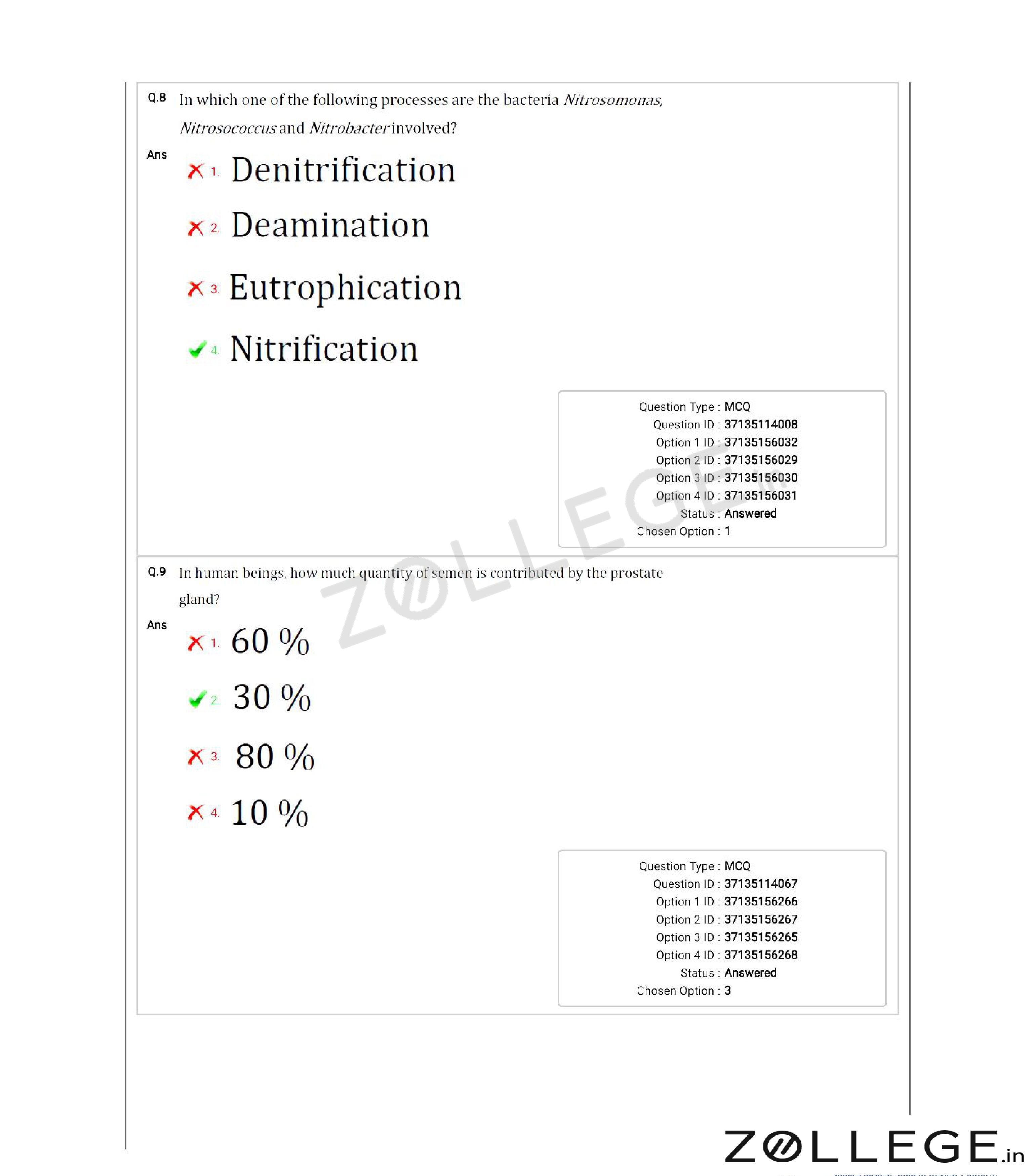
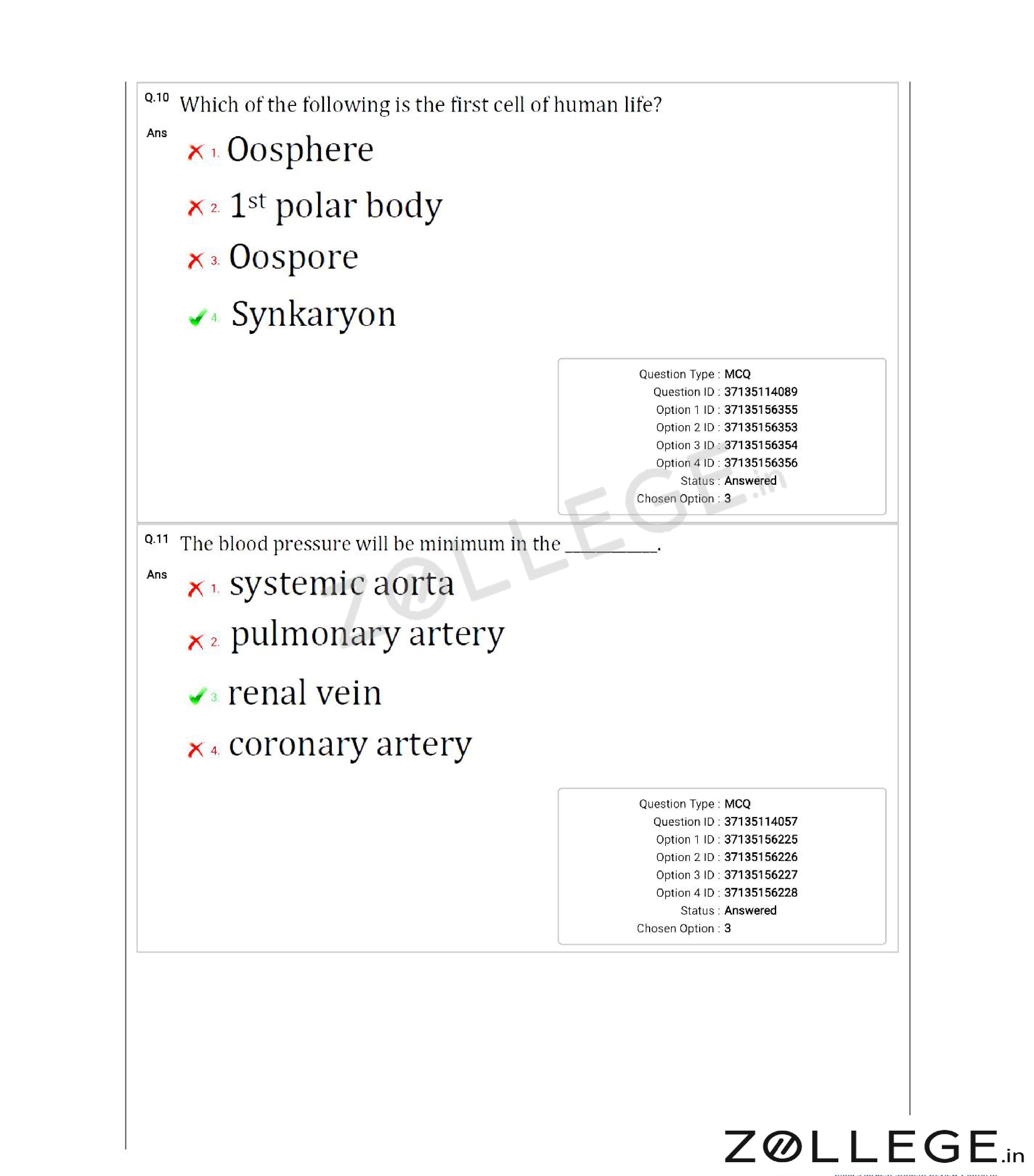
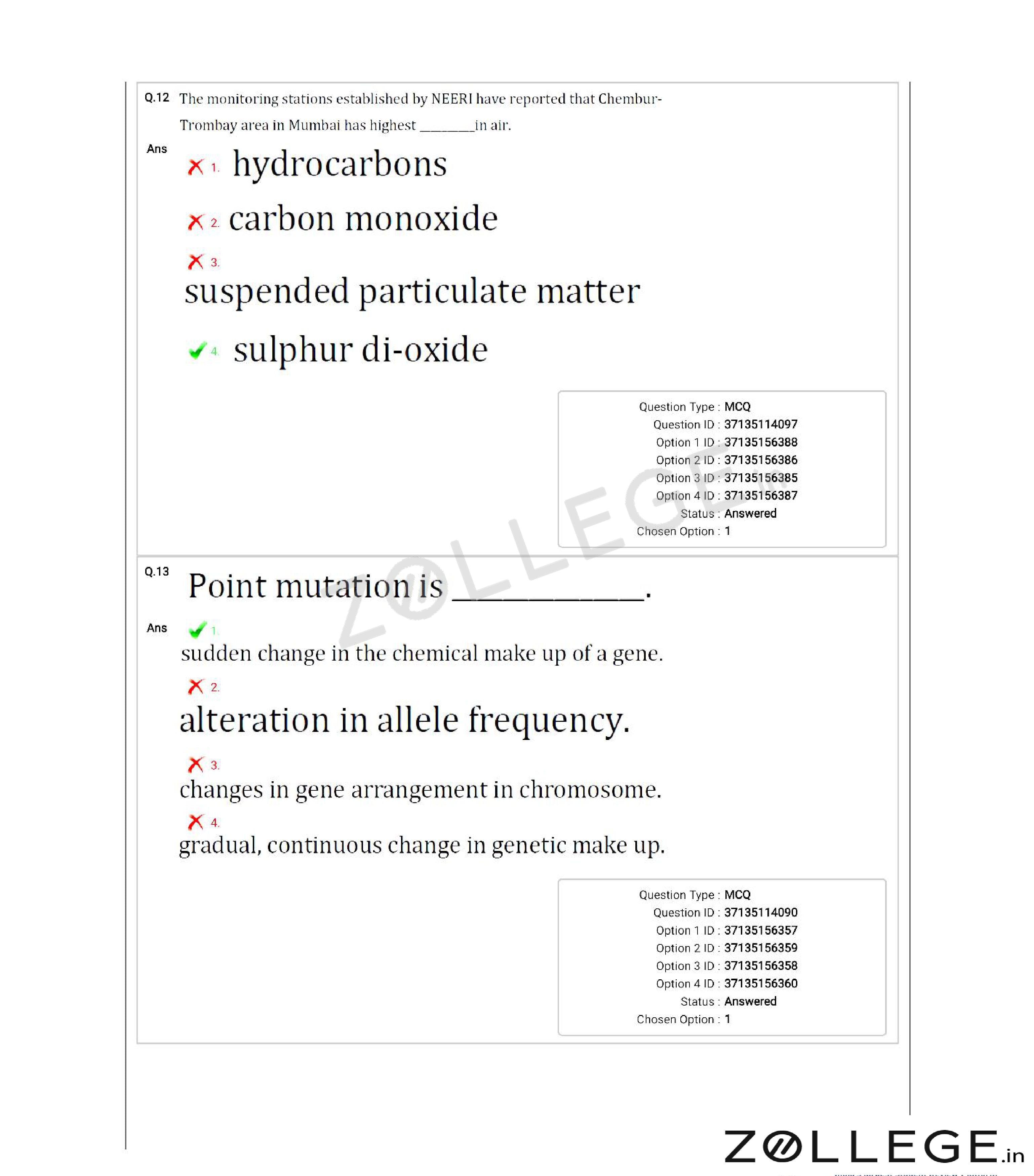
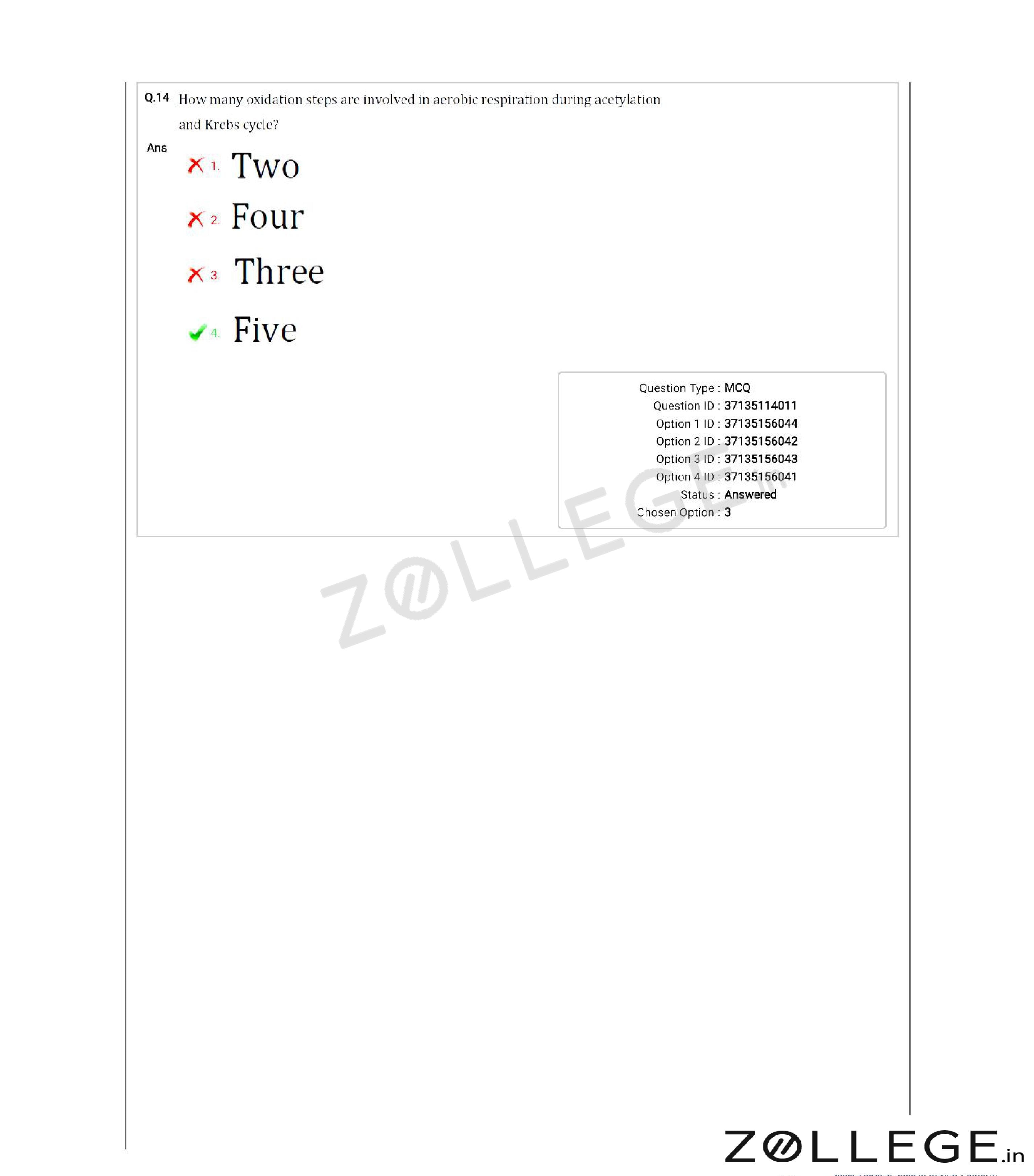
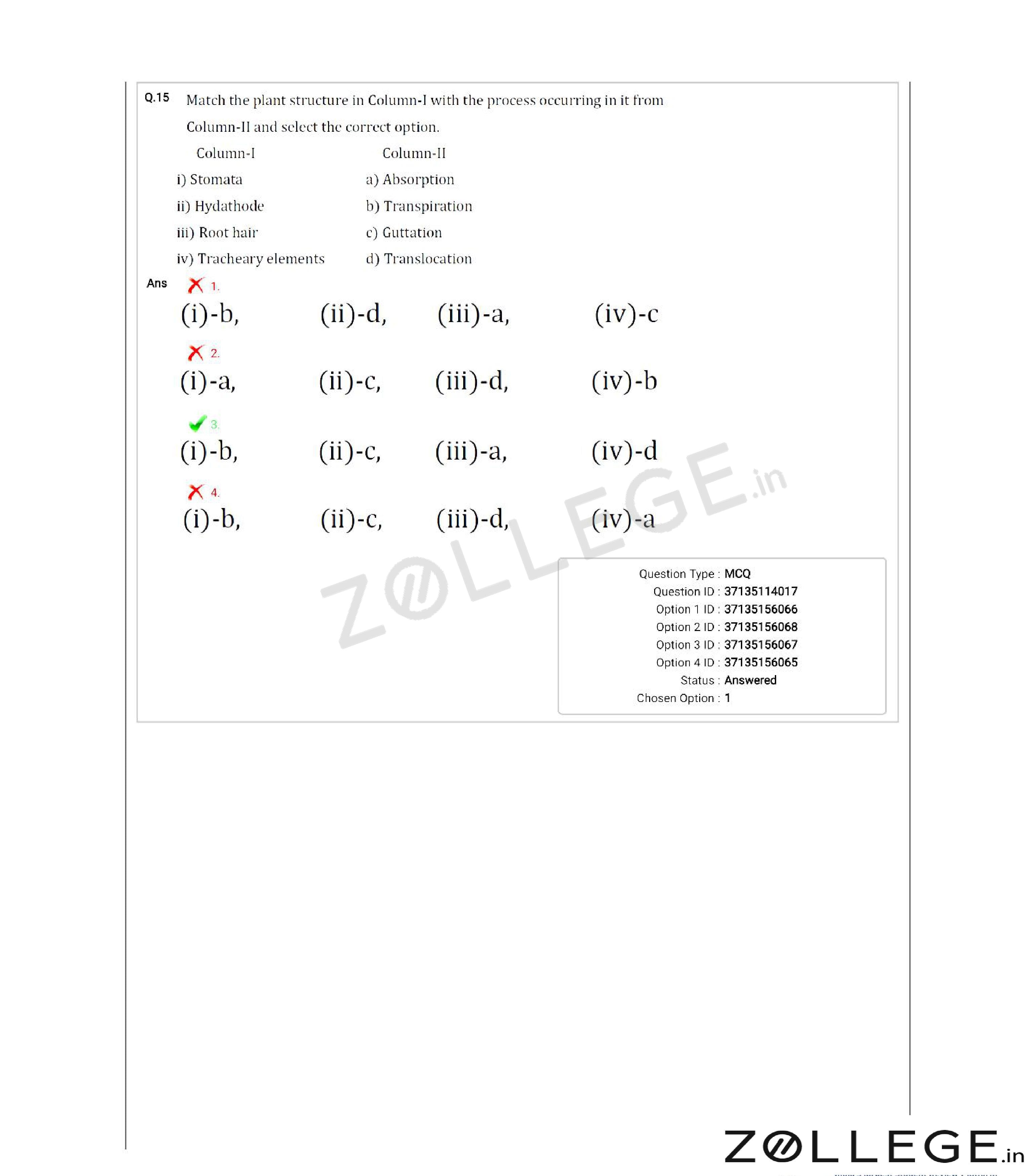
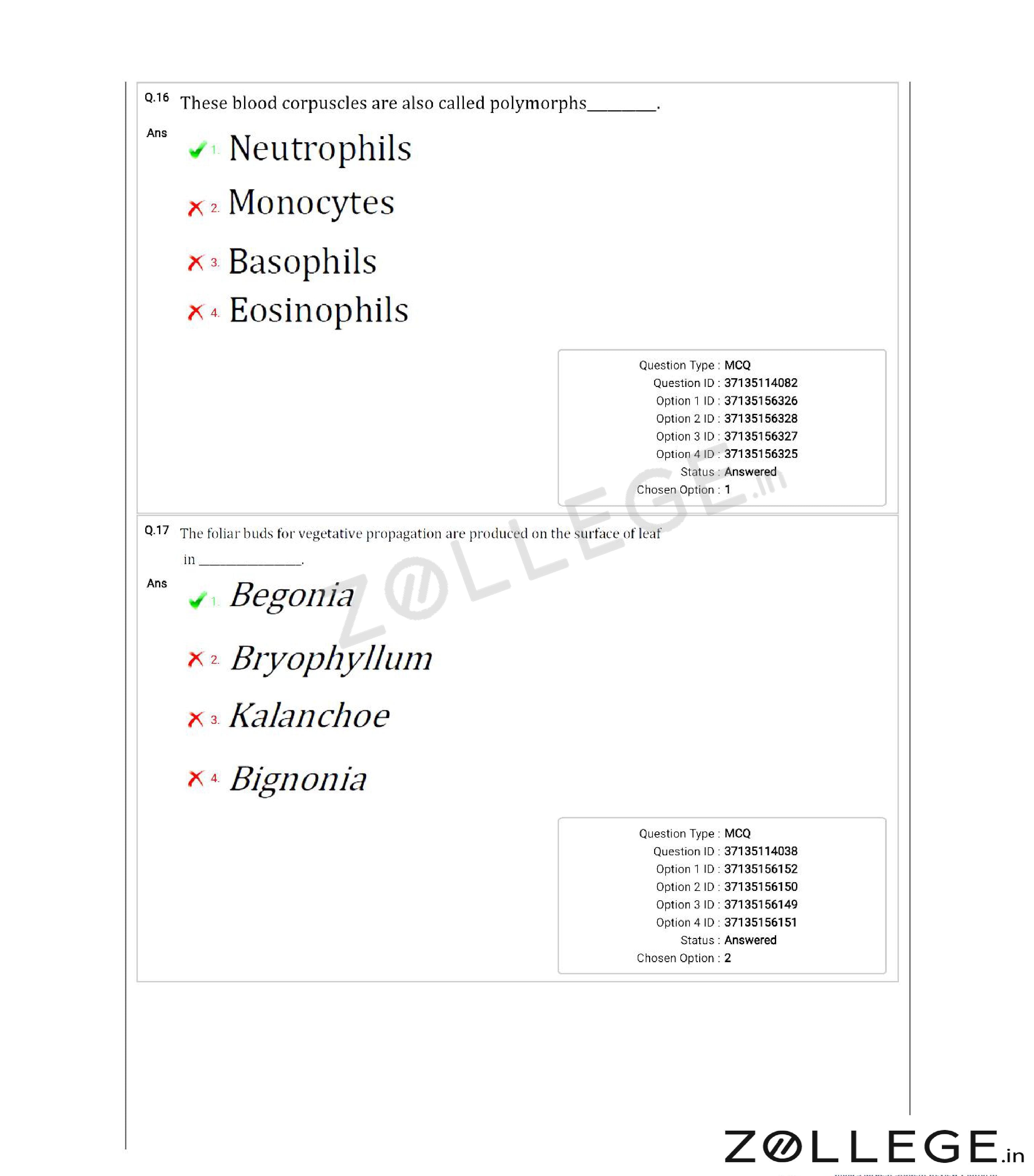
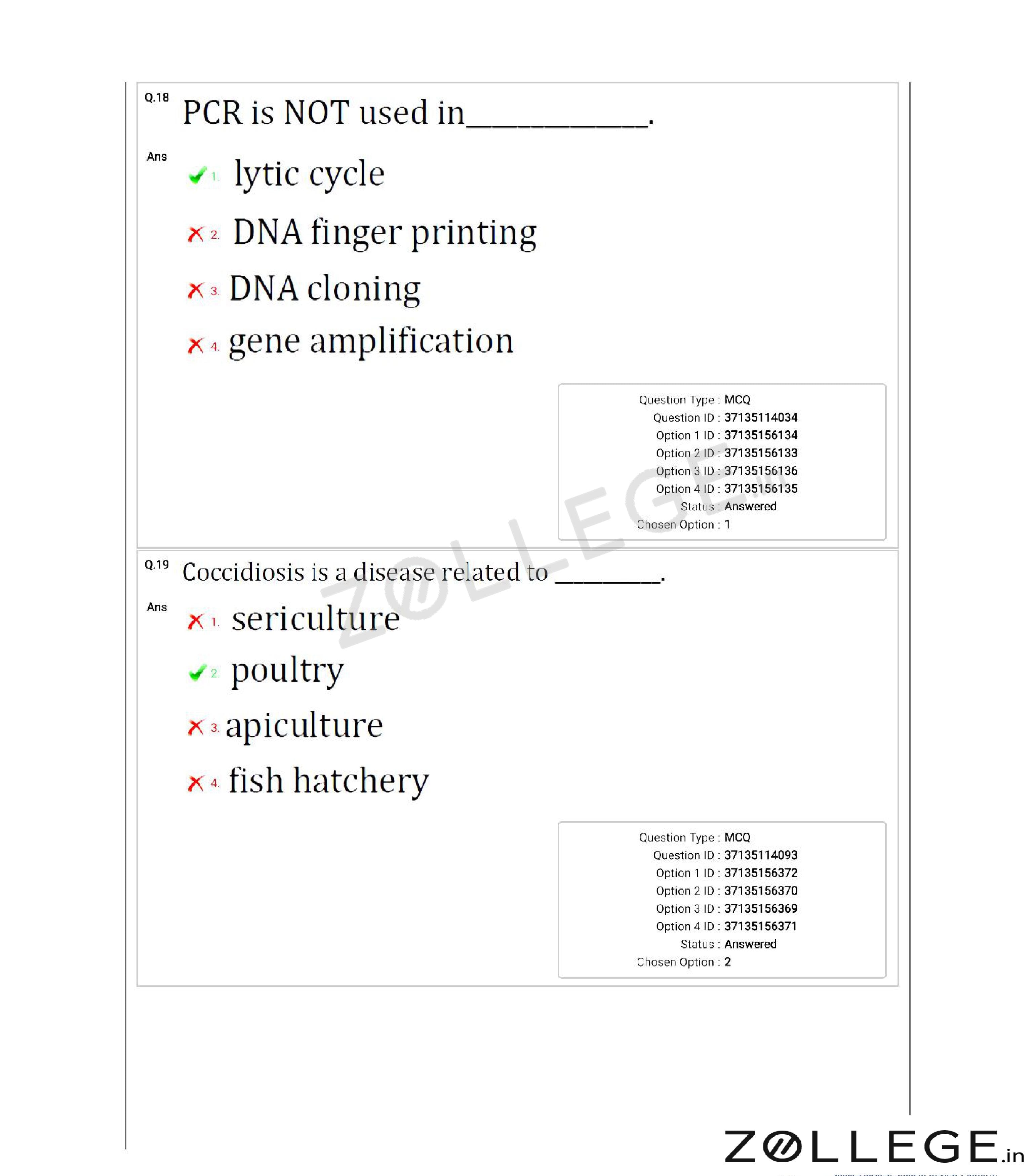
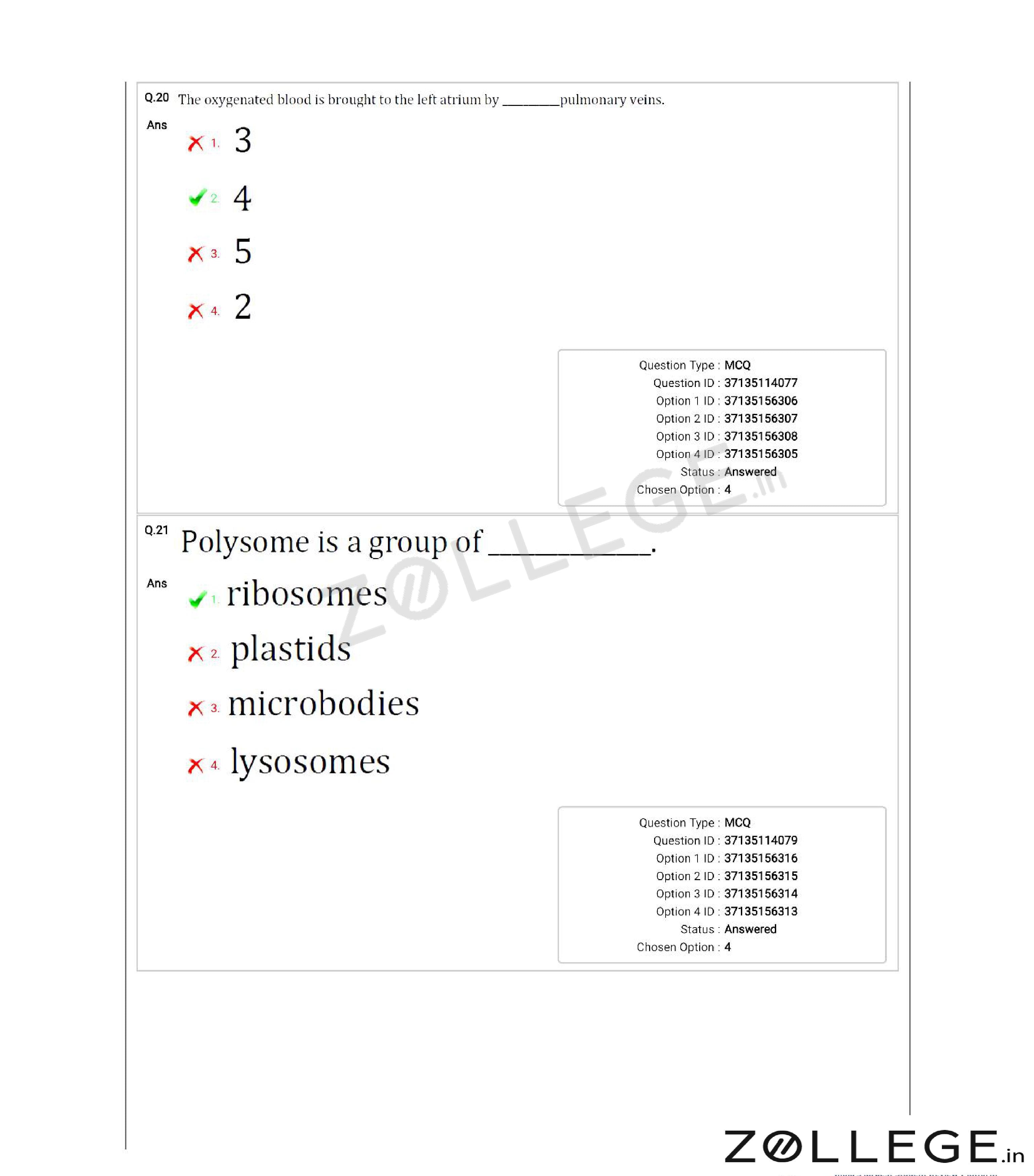
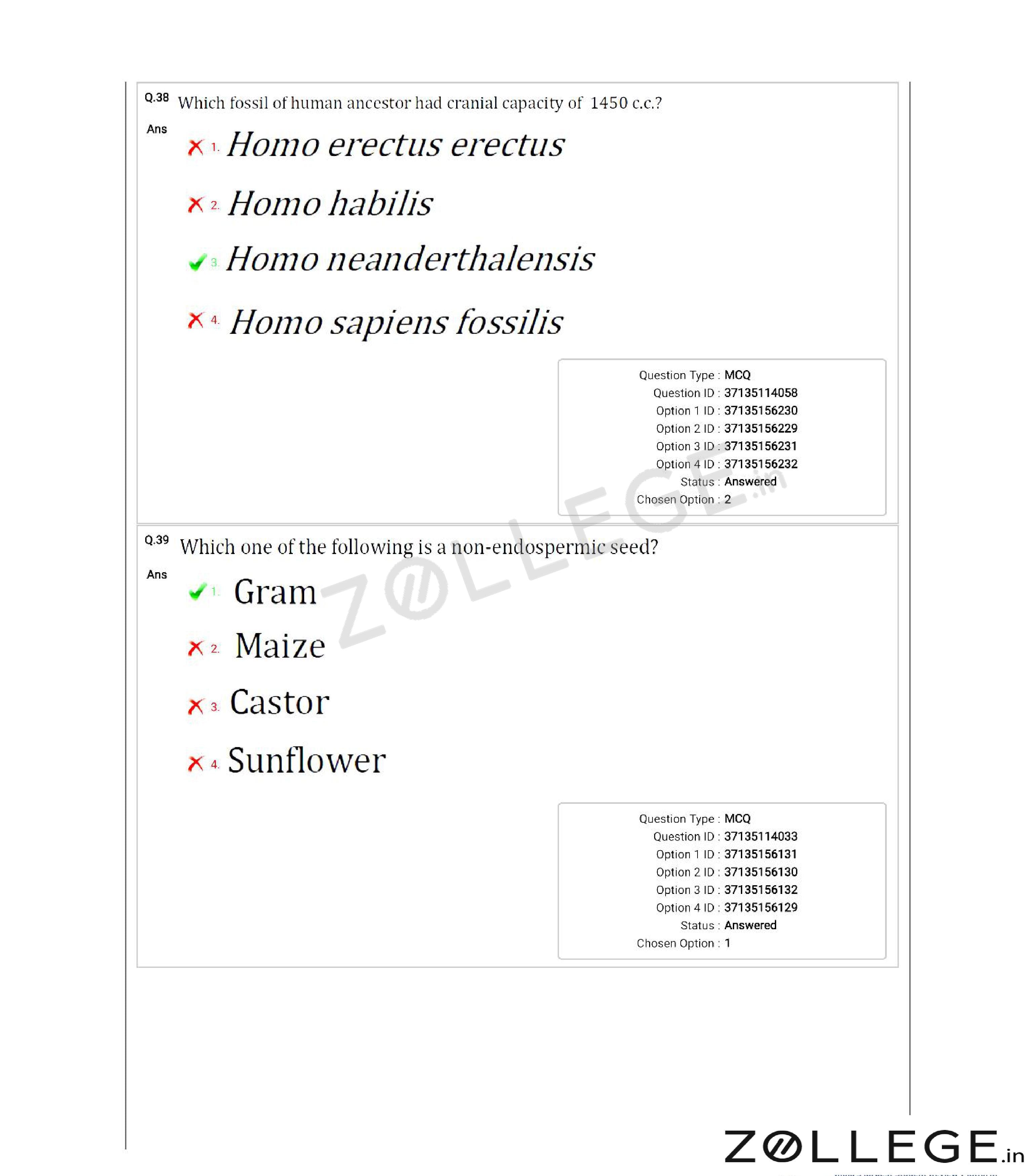
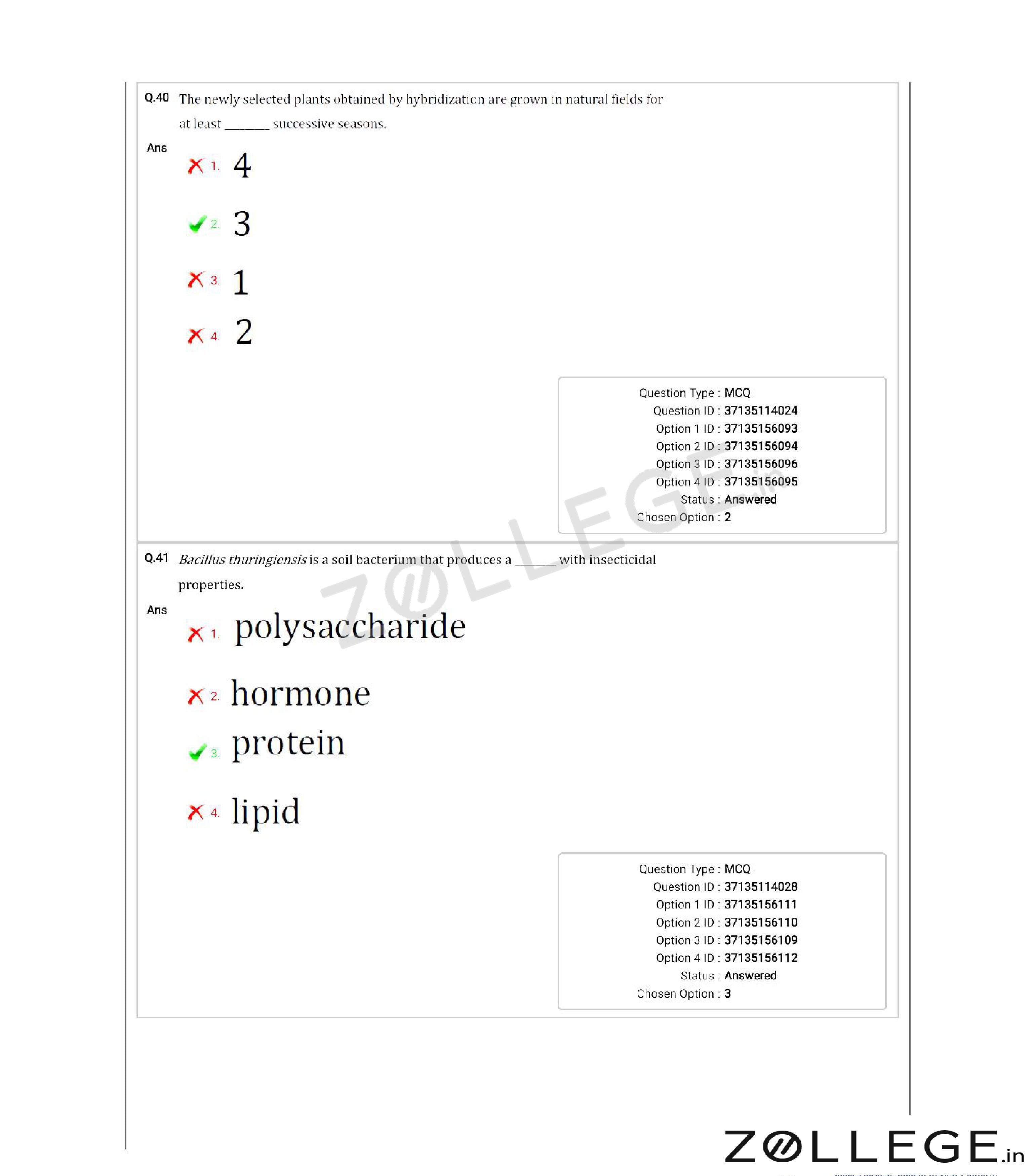
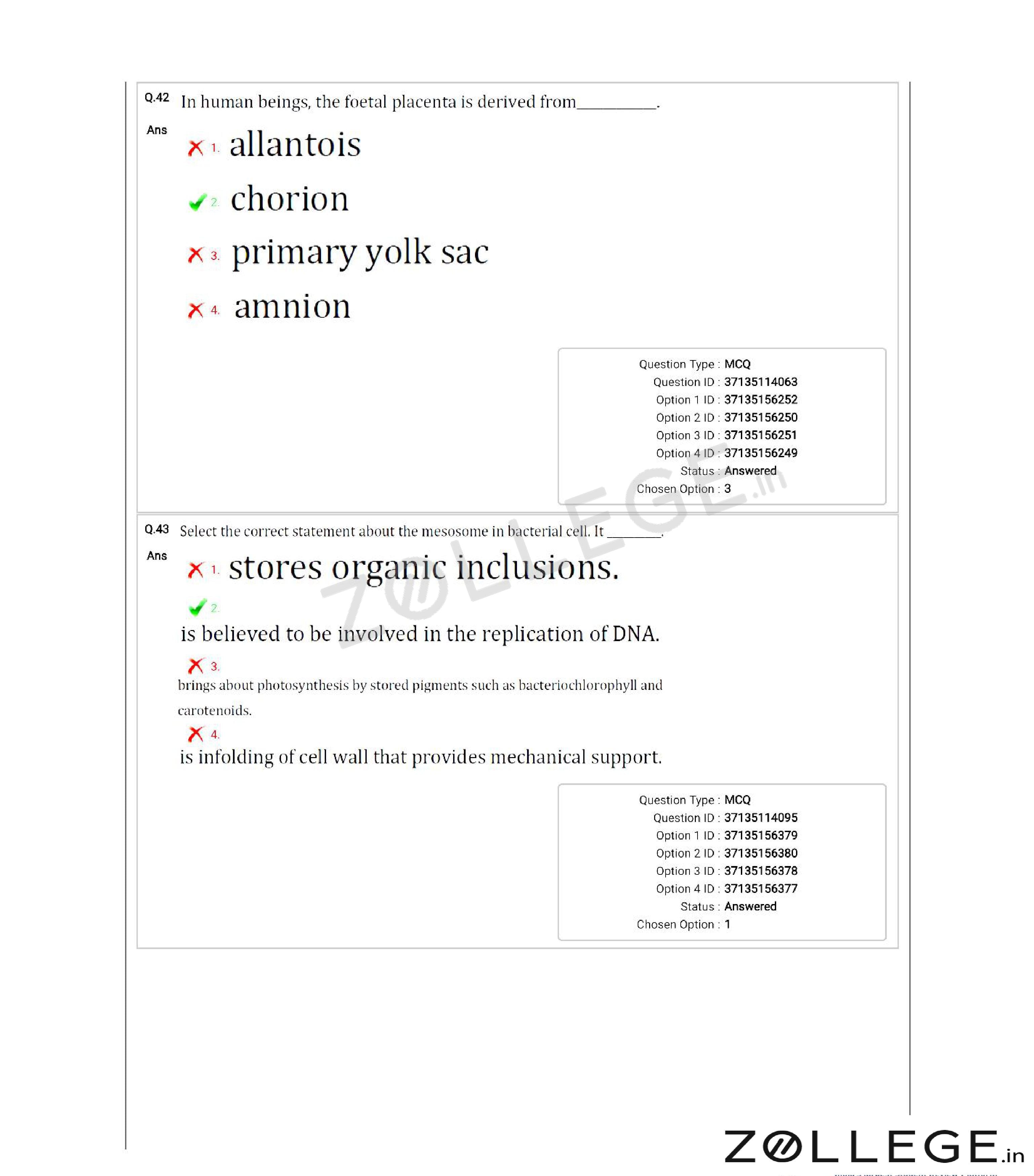
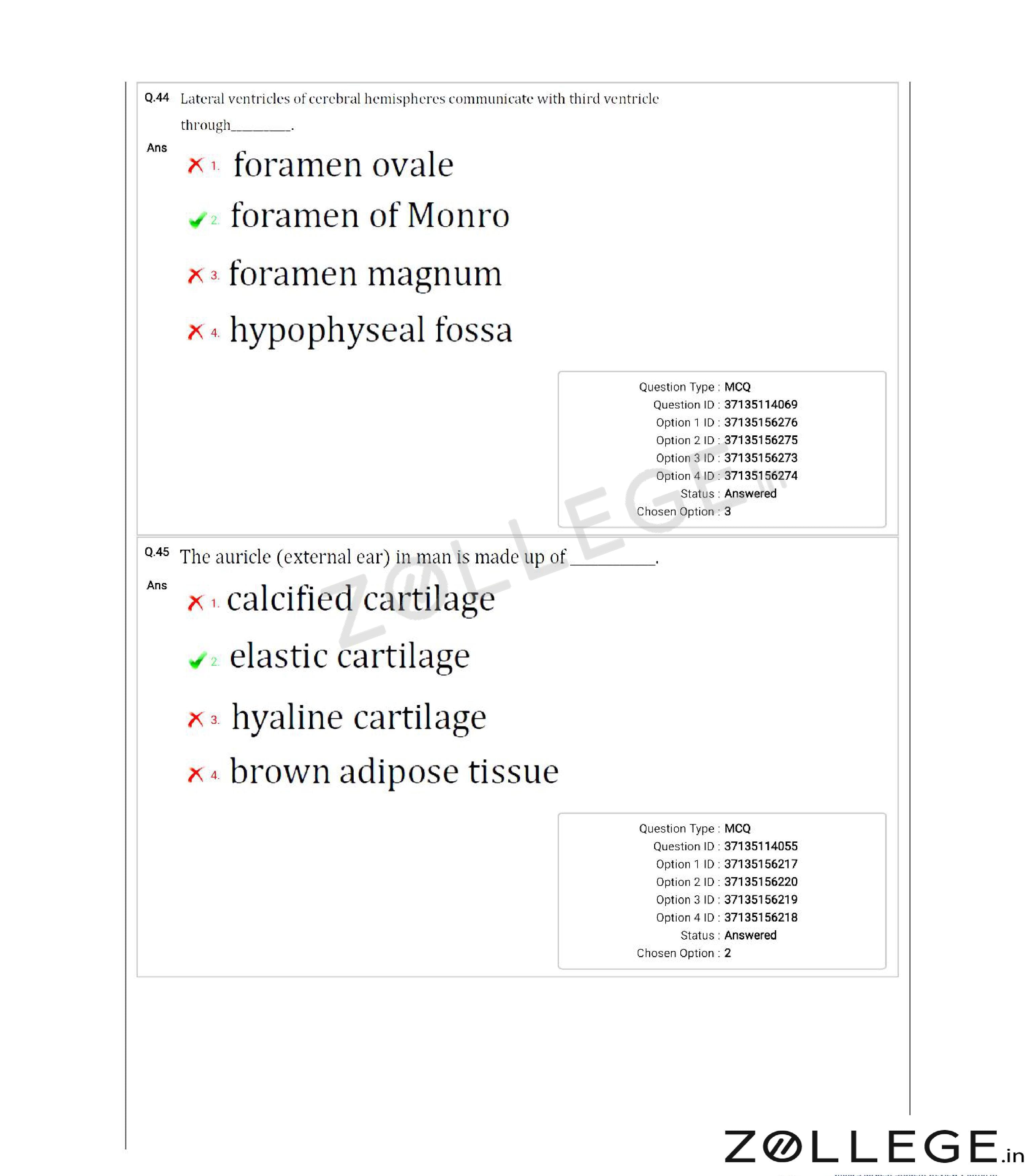
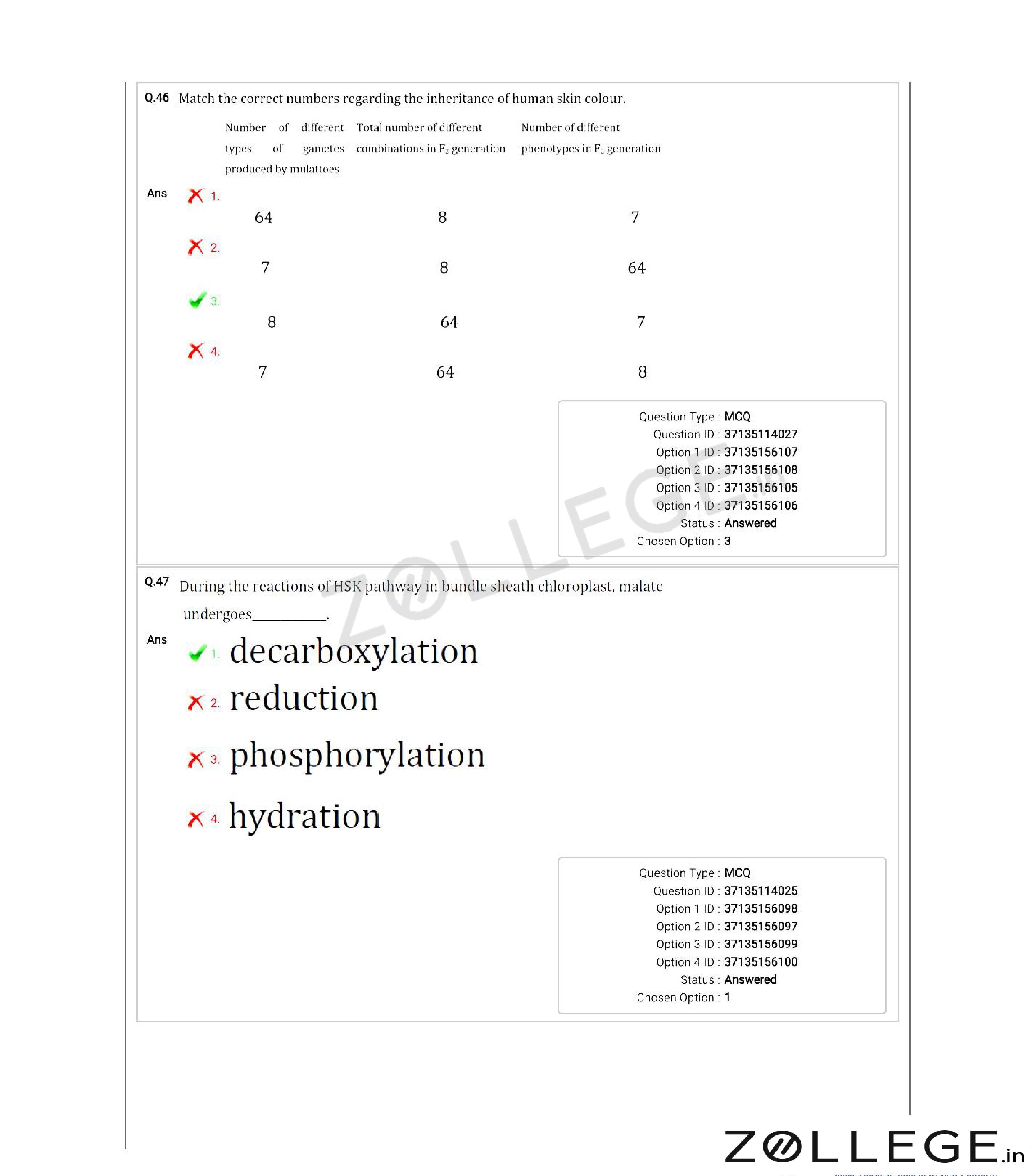
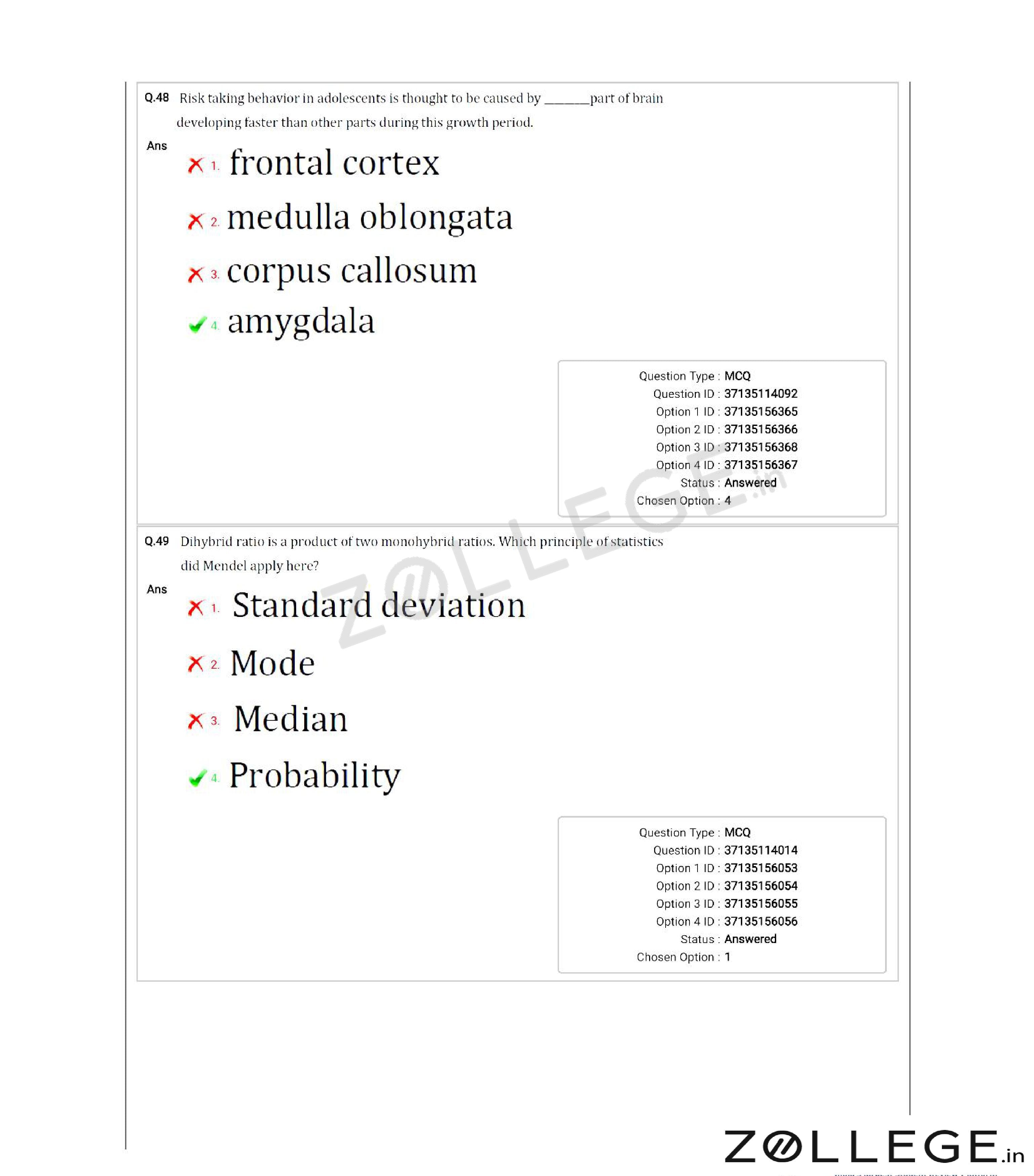
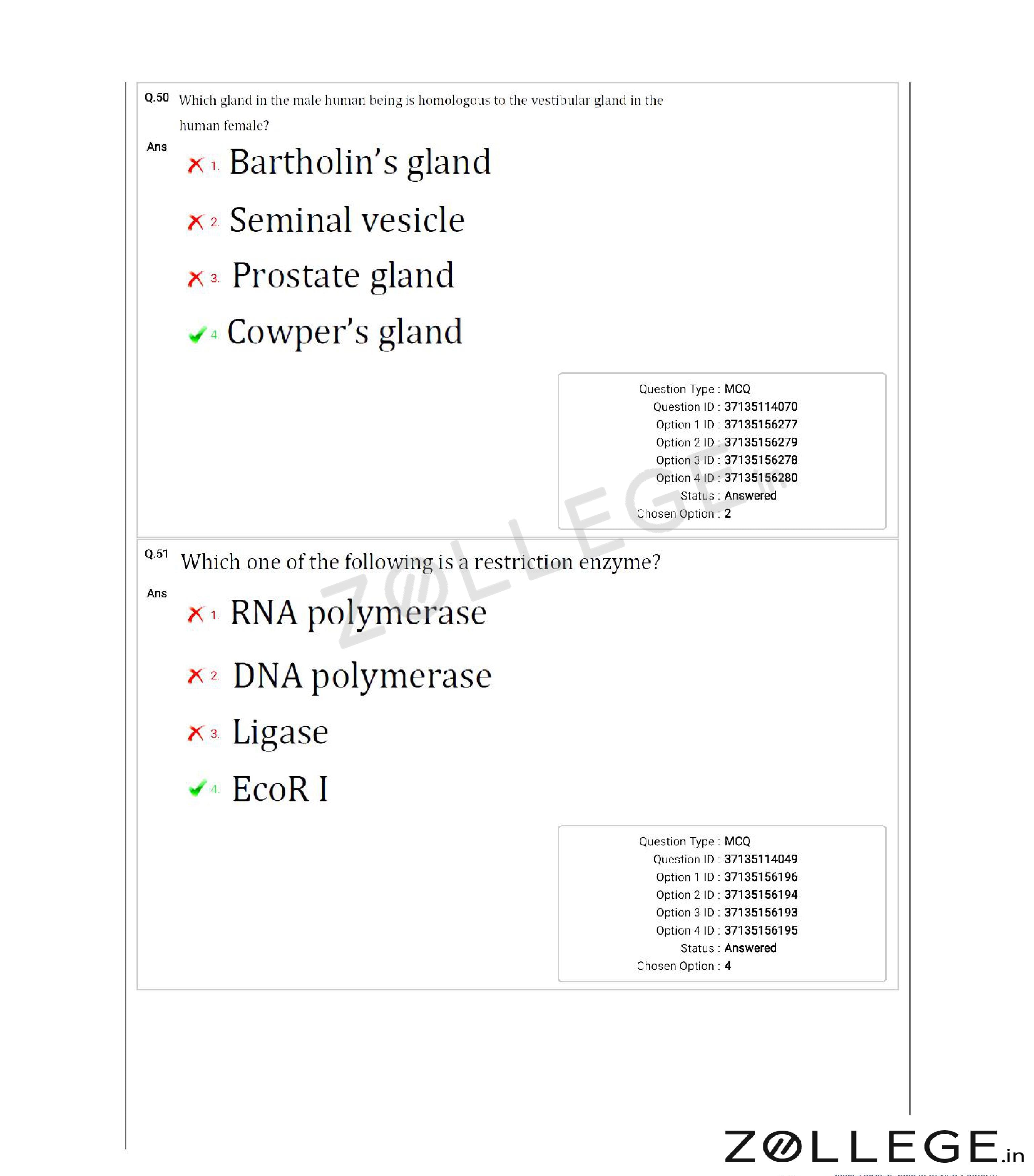
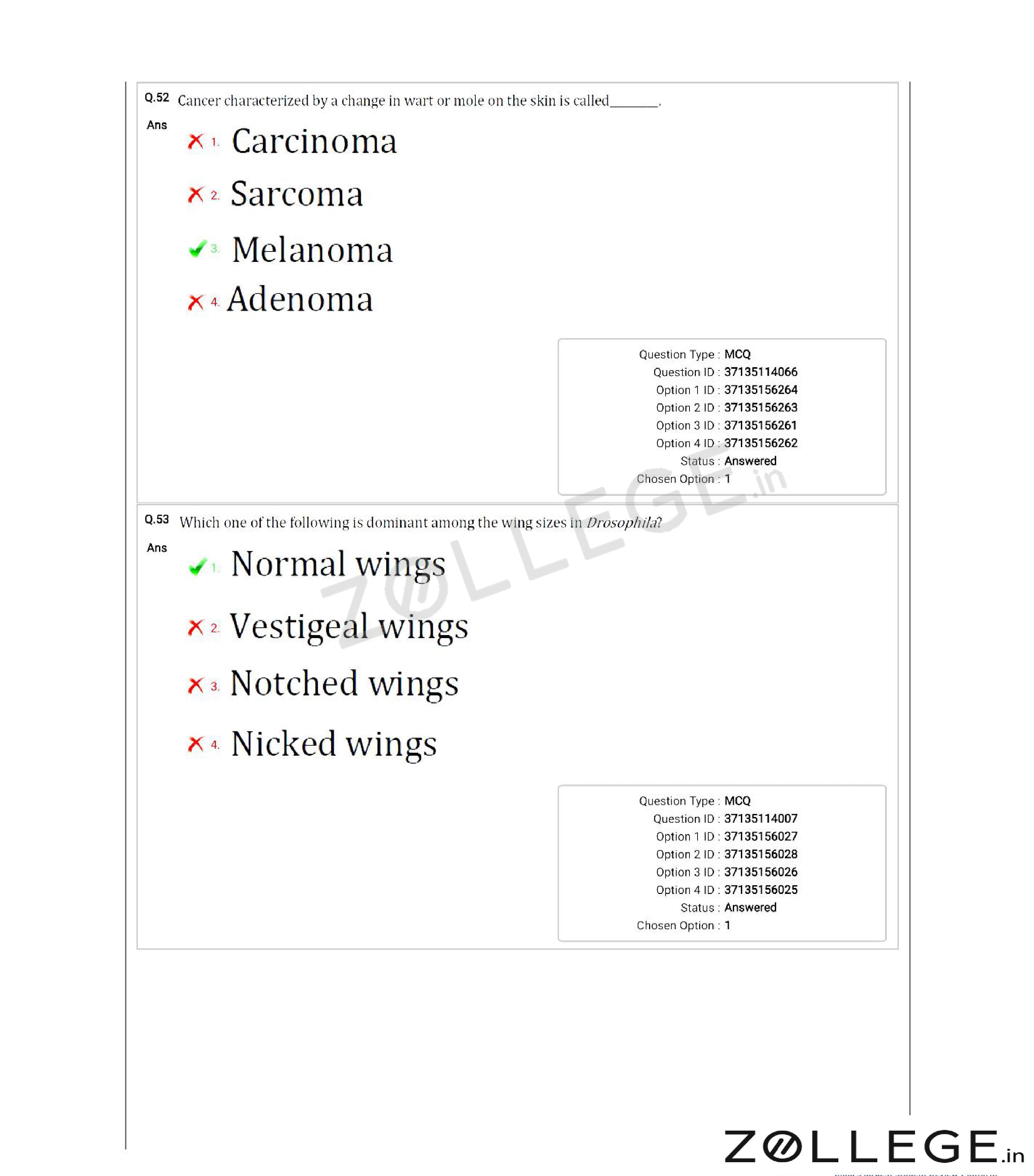
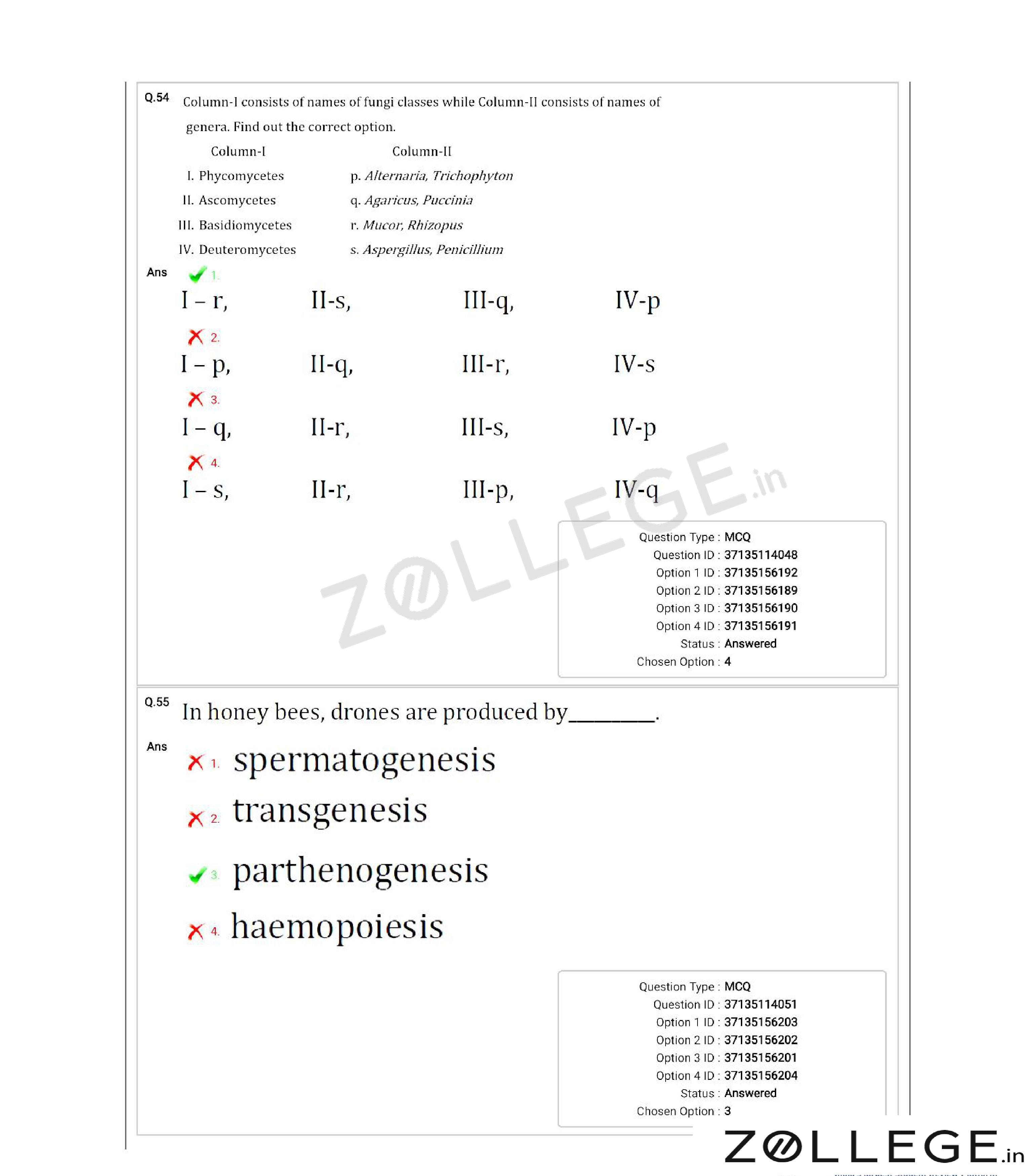
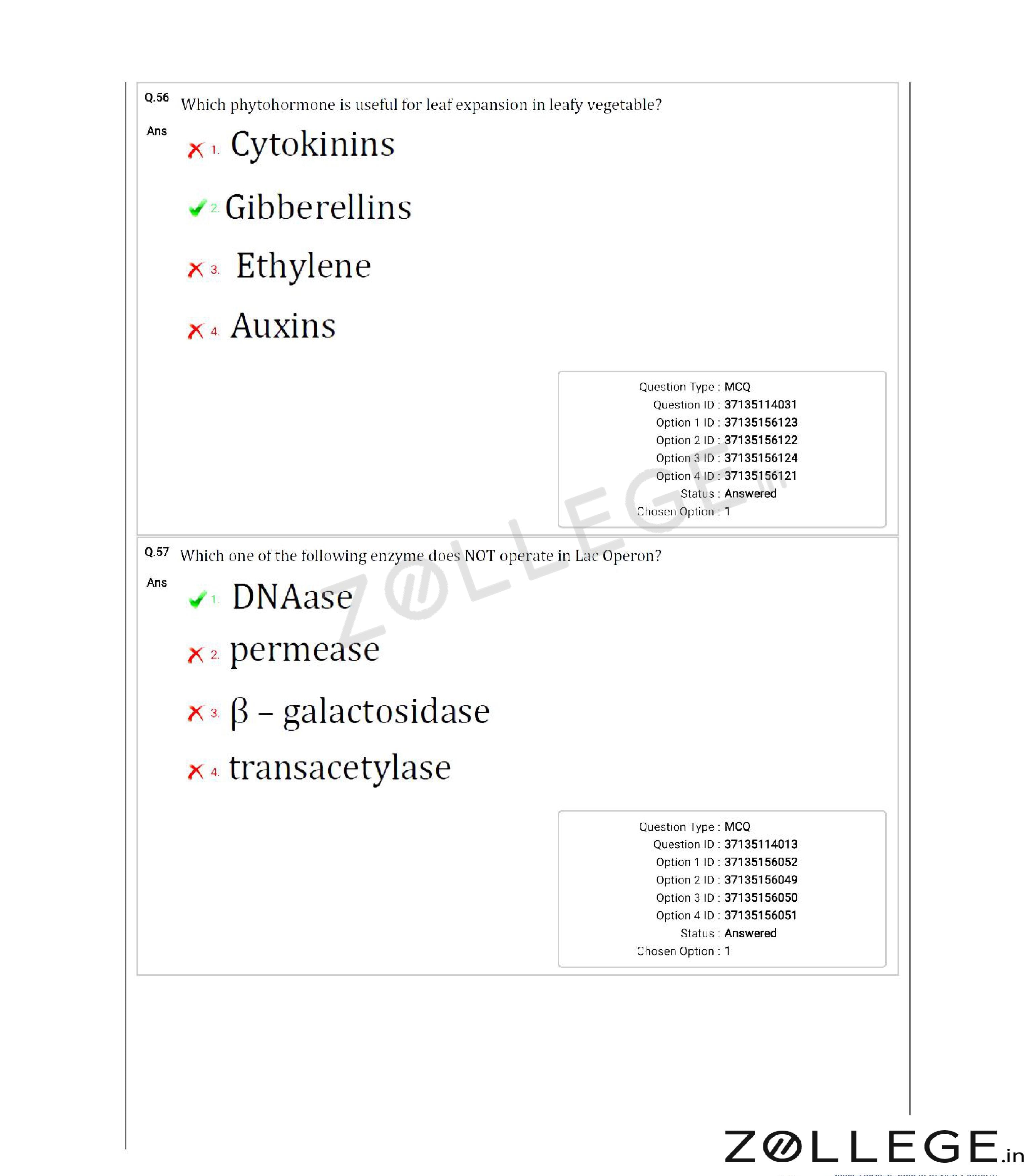
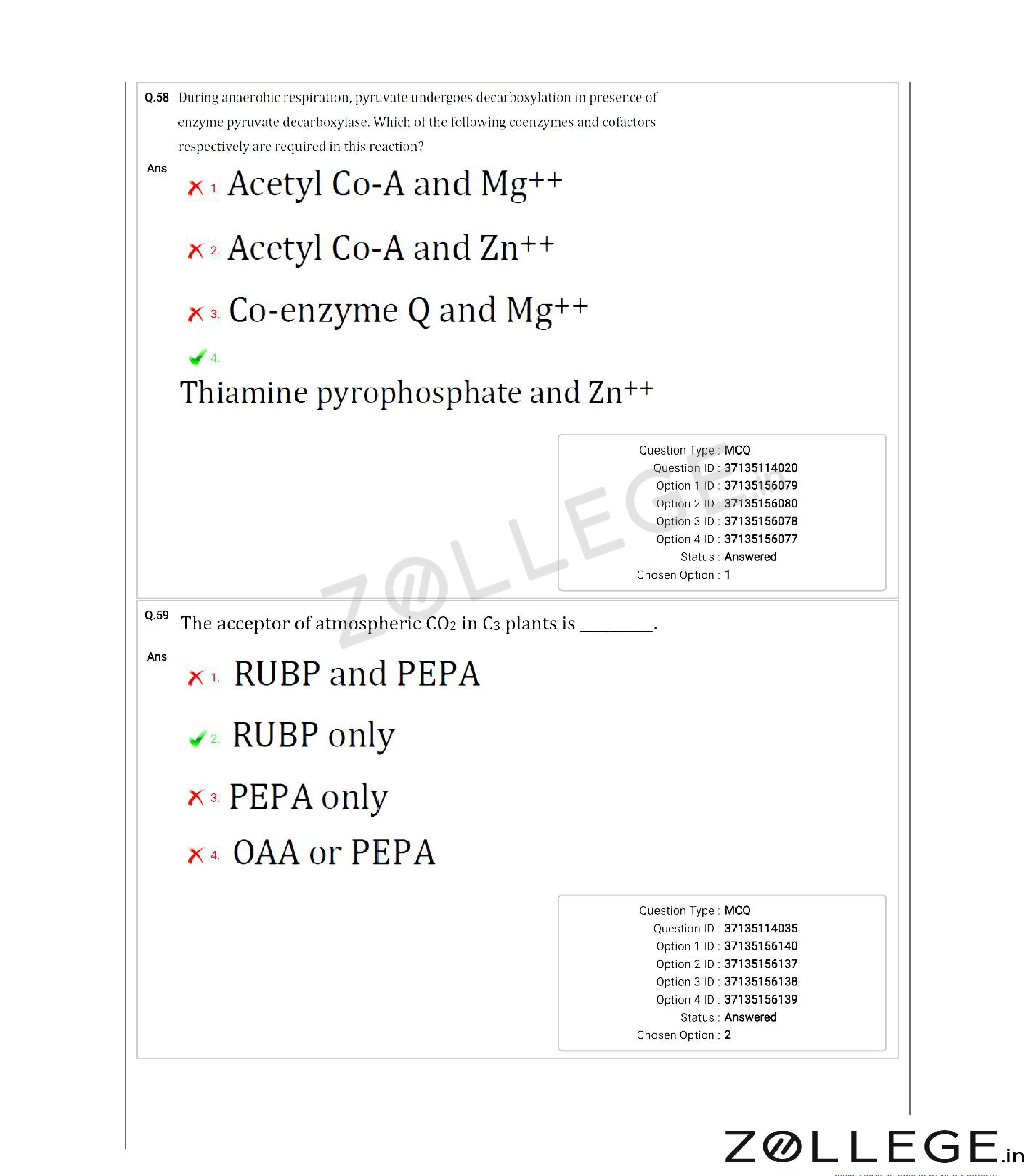
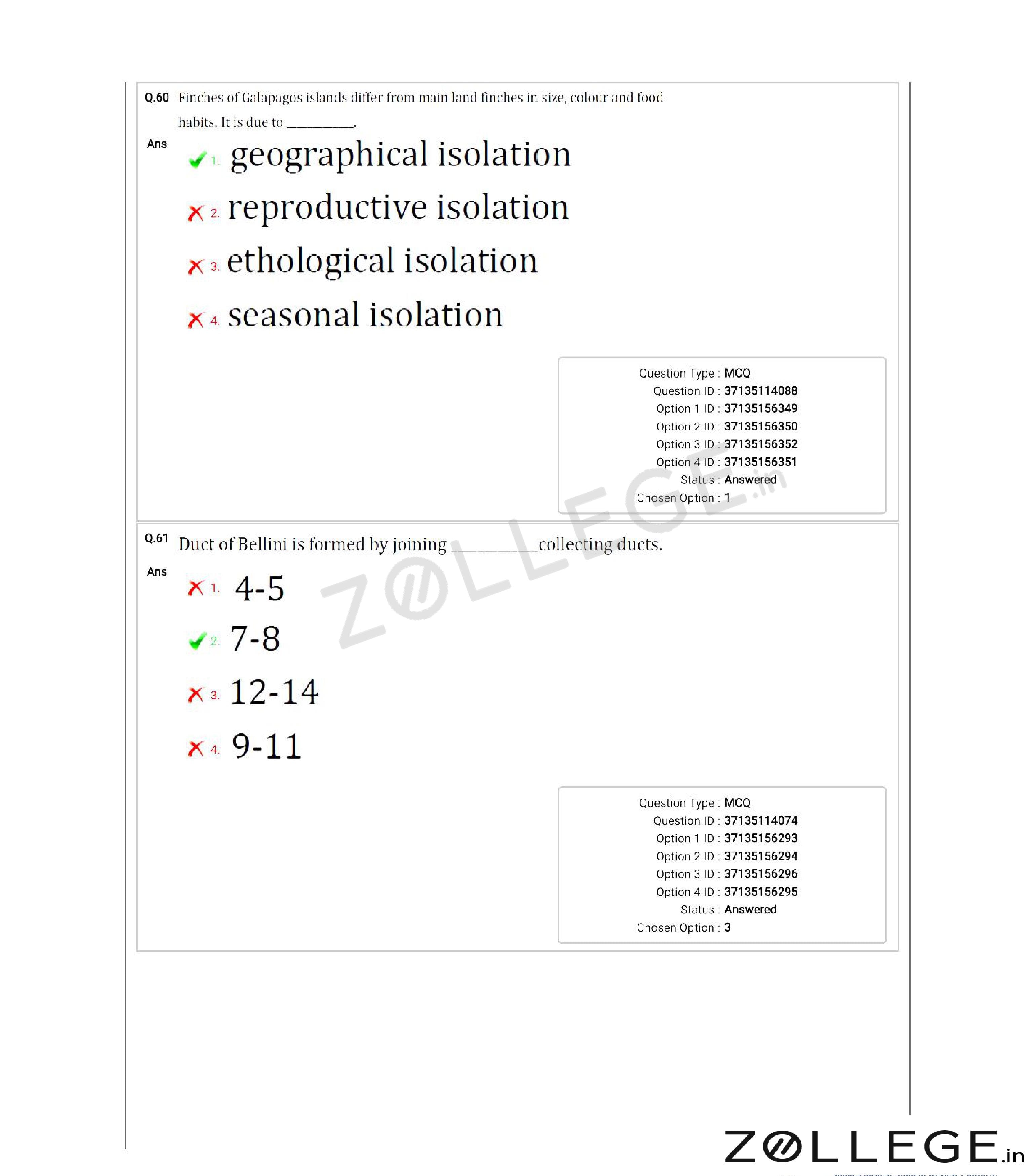
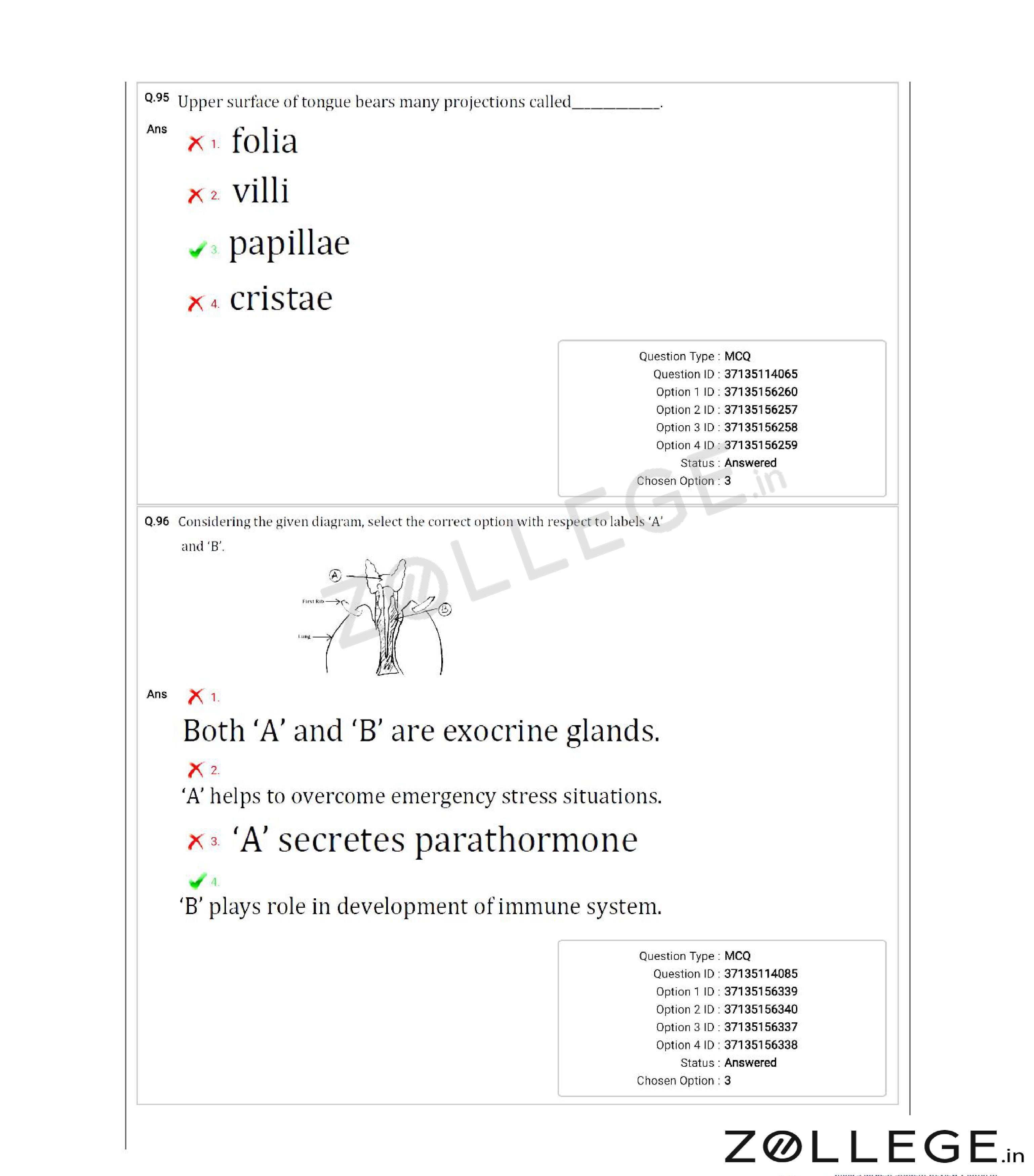
*The article might have information for the previous academic years, please refer the official website of the exam.