
MHT CET 2020 Question Paper with Solution PDF for PCB (October 8)


Content Writer | Updated On - Jan 21, 2026
MHT CET Question Papers are the most important study material for effective exam preparation. We at Zollege have provided all MHT CET Previous Year Papers with Solution PDFs here. MHT CET 2020 PCB exam was conducted successfully on October 8 by Shift 1.
Students can freely download the MHT CET previous year's question paper PDFs along with their solutions here.We strongly encourage MHT CET aspirants to scan through all the MHT CET Question Paper to know the overall difficulty level,MHT CET Syllabus and understand the changes in MHT CET Exam Pattern over the years.
MHT CET 2020 Oct 8 Shift 1 PCB Question Paper with Solution PDF
| MHT CET 2020 PCB Question Paper PDF | MHT CET 2020 PCB Solution PDF |
|---|---|
| Download PDF | Check Solutions |

A particle moves along a circular path of radius 'r' with uniform speed 'V'. The angle described by the particle in one second is
View Solution
Step 1: Understanding the Question:
The question asks for the angular displacement of a particle moving in a circle within a time interval of one second.
Step 2: Key Formula or Approach:
The relationship between linear velocity (\( V \)), radius (\( r \)), and angular velocity (\( \omega \)) is given by:
\[ V = r \omega \]
The angle described in one second is numerically equal to the angular velocity (\( \omega = \frac{\theta}{t} \)).
Step 3: Detailed Explanation:
From the relation \( V = r \omega \), we can rearrange for \( \omega \):
\[ \omega = \frac{V}{r} \]
Since \( t = 1 \) second, the angle \( \theta \) is:
\[ \theta = \omega \times t = \frac{V}{r} \times 1 = \frac{V}{r} \]
Step 4: Final Answer:
The angle described in one second is \( \frac{V}{r} \).
Quick Tip: Angular speed is simply linear speed divided by the radius.
Always check dimensions: Angle is dimensionless, and \( [V/r] = [LT^{-1}] / [L] = [T^{-1}] \), which matches the unit per second.
The focal length of the objective used in compound microscope and telescope is respectively
View Solution
Step 1: Understanding the Question:
This is a theoretical question regarding the construction and lens requirements of optical instruments.
Step 2: Detailed Explanation:
In a Compound Microscope, the objective lens must have a very short focal length to produce a highly magnified real image of a tiny object placed very close to it.
In a Telescope, the objective lens must have a large focal length and a large aperture to gather more light from distant objects and to provide high magnifying power (\( M = f_o / f_e \)).
Step 3: Final Answer:
The objective of a microscope has a short focal length, while the objective of a telescope has a large focal length.
Quick Tip: In a microscope, both lenses usually have short focal lengths.
In a telescope, the objective is always much larger than the eyepiece.
The two waves are represented by \( Y_1 = 10^{-2}\sin\left[ 50t + \frac{x}{25} + 0.3 \right] \, m \) and \( Y_2 = 10^{-2}\cos\left[ 50t + \frac{x}{25} \right] \, m \) where x is in metre and time in second. The phase difference between the two waves is nearly
View Solution
Step 1: Understanding the Question:
To find the phase difference, both wave equations must be expressed in the same trigonometric form (either both sine or both cosine).
Step 2: Key Formula or Approach:
Conversion from cosine to sine:
\[ \cos(\theta) = \sin\left(\theta + \frac{\pi}{2}\right) \]
Phase difference \( \Delta \phi = \phi_2 - \phi_1 \).
Step 3: Detailed Explanation:
The first wave is \( Y_1 = 10^{-2}\sin\left( 50t + \frac{x}{25} + 0.3 \right) \), so \( \phi_1 = 50t + \frac{x}{25} + 0.3 \).
The second wave is \( Y_2 = 10^{-2}\cos\left( 50t + \frac{x}{25} \right) \).
Converting \( Y_2 \) to sine:
\[ Y_2 = 10^{-2}\sin\left( 50t + \frac{x}{25} + \frac{\pi}{2} \right) \implies \phi_2 = 50t + \frac{x}{25} + \frac{\pi}{2} \]
The phase difference is:
\[ \Delta \phi = \phi_2 - \phi_1 = \left( 50t + \frac{x}{25} + \frac{\pi}{2} \right) - \left( 50t + \frac{x}{25} + 0.3 \right) \]
\[ \Delta \phi = \frac{\pi}{2} - 0.3 \approx 1.5708 - 0.3 = 1.2708 \, rad \]
Step 4: Final Answer:
The phase difference is nearly \( 1.27 \) rad.
Quick Tip: Always remember \( \pi/2 \approx 1.57 \).
Check if the signs of the arguments are the same; here both waves are traveling in the same direction.
A disc has mass 'M' and radius 'R'. How much tangential force should be applied to the rim of the disc so as to rotate with angular velocity '\( \omega \)' in time t ?
View Solution
Step 1: Understanding the Question:
We need to find the tangential force required to produce a specific change in angular velocity over a given time interval.
Step 2: Key Formula or Approach:
1. Torque \( \tau = I\alpha \) and also \( \tau = F \times R \).
2. Angular acceleration \( \alpha = \frac{\omega - \omega_0}{t} = \frac{\omega}{t} \) (starting from rest).
3. Moment of Inertia of a disc \( I = \frac{1}{2}MR^2 \).
Step 3: Detailed Explanation:
Equating the expressions for torque:
\[ F \times R = I \alpha \]
\[ F \times R = \left( \frac{1}{2}MR^2 \right) \left( \frac{\omega}{t} \right) \]
Dividing both sides by \( R \):
\[ F = \frac{MR^2 \omega}{2Rt} = \frac{MR\omega}{2t} \]
Step 4: Final Answer:
The required tangential force is \( \frac{MR\omega}{2t} \).
Quick Tip: The factor \( 1/2 \) comes directly from the moment of inertia of the disc.
If it were a hoop/ring, the answer would be \( \frac{MR\omega}{t} \) because \( I_{ring} = MR^2 \).
A sphere of mass 'M' is attached to one end of a metal wire having length 'L' and diameter 'D'. It is whirled in a vertical circle of radius R with angular velocity '\( \omega \)'. When the sphere is at lowest point of its path, the elongation of the wire is (Y = Young's modulus of the material of the wire, g = acceleration due to gravity)
View Solution
Step 1: Understanding the Question:
Elongation occurs due to the tension in the wire. In vertical circular motion, tension is maximum at the lowest point.
Step 2: Key Formula or Approach:
1. Tension at lowest point: \( T = Mg + M R \omega^2 \).
2. Young's Modulus: \( Y = \frac{Stress}{Strain} = \frac{T/A}{\Delta L/L} \).
3. Area of cross-section: \( A = \frac{\pi D^2}{4} \).
Step 3: Detailed Explanation:
Rearranging for elongation \( \Delta L \):
\[ \Delta L = \frac{T L}{A Y} \]
Substituting the expression for \( T \):
\[ \Delta L = \frac{[M(g + R \omega^2)] L}{(\pi D^2 / 4) Y} \]
Multiplying the numerator by 4:
\[ \Delta L = \frac{4ML(R \omega^2 + g)}{\pi D^2 Y} \]
Step 4: Final Answer:
The elongation is \( \frac{4ML(R\omega^2 + g)}{\pi D^2 Y} \).
Quick Tip: At the lowest point, both weight and centripetal force act in the same direction relative to the wire (downward/outward).
The factor 4 always appears in the numerator when the diameter is used for the area calculation of a circle.
Find the dimensions of the quantity 'x' in the equation \( T = 2\pi \left[ \frac{ML^3}{3YX} \right]^{1/2} \) where 'T' is the time period, M is mass, L is length and Y is the Young's modulus.
View Solution
Step 1: Understanding the Question:
We need to use dimensional analysis to find the units of the unknown variable \( x \).
Step 2: Key Formula or Approach:
Square both sides of the equation to simplify:
\[ T^2 = 4\pi^2 \frac{M L^3}{3 Y X} \implies X = \frac{M L^3}{T^2 Y} \]
Dimensions of constants like \( 4\pi^2 \) and \( 3 \) are neglected.
Step 3: Detailed Explanation:
Substitute dimensions:
\( [M] = M^1 \), \( [L] = L^1 \), \( [T] = T^1 \).
Young's Modulus \( [Y] = [Stress] = \frac{[Force]}{[Area]} = \frac{M L T^{-2}}{L^2} = M L^{-1} T^{-2} \).
Now substitute into the expression for \( X \):
\[ [X] = \frac{[M][L^3]}{[T^2][M L^{-1} T^{-2}]} \]
\[ [X] = \frac{M L^3}{T^2 M L^{-1} T^{-2}} = \frac{L^3}{L^{-1}} = L^4 \]
Step 4: Final Answer:
The dimensions of \( x \) are \( [L^4] \).
Quick Tip: Young's Modulus has the same dimensions as pressure.
Whenever you see a square root in a formula for Time Period, squaring the equation is the fastest way to solve for an internal variable.
Out of the following graphs which graph shows the correct relation for LC parallel resonant circuit ?

View Solution
Step 1: Understanding the Question:
A parallel LC circuit (anti-resonant circuit) behaves differently than a series resonant circuit.
Step 2: Detailed Explanation:
In a parallel resonant circuit:
1. At resonant frequency, the impedance \( Z \) becomes infinite (ideally).
2. Because impedance is maximum, the current drawn from the source becomes minimum (ideally zero).
3. Graph (C) shows current decreasing to a minimum at the resonant frequency, which matches this physical behavior.
Step 3: Final Answer:
Graph (C) is the correct relation for a parallel LC resonant circuit.
Quick Tip: Series Resonance = Acceptor Circuit (Maximum Current).
Parallel Resonance = Rejector Circuit (Minimum Current).
An ammeter is obtained by shunting 'n' \( \Omega \) galvanometer with 'n' \( \Omega \) resistance. The additional shunt required to be connected across it to double the range is
View Solution
Step 1: Understanding the Question:
Initially, we have a galvanometer and a shunt. We need to find what further resistance must be added to increase the current range by a factor of two.
Step 2: Key Formula or Approach:
1. Ammeter range formula: \( I = I_g \left( 1 + \frac{G}{S} \right) \).
2. Initial shunt \( S_1 = n \), Galvanometer resistance \( G = n \).
Step 3: Detailed Explanation:
Initial range \( I_1 = I_g \left( 1 + \frac{n}{n} \right) = 2 I_g \).
To double the range, we need the new range to be \( I_2 = 2 \times I_1 = 4 I_g \).
Let the total required shunt be \( S_{total} \).
\[ 4 I_g = I_g \left( 1 + \frac{n}{S_{total}} \right) \implies 3 = \frac{n}{S_{total}} \implies S_{total} = \frac{n}{3} \]
Step 4: Final Answer:
The additional shunt required is \( \frac{n}{3} \).
Quick Tip: If the final shunt required is less than the current shunt, the "additional" shunt is usually connected in parallel.
For a range multiplication of \( m \), use \( S = \frac{G}{m-1} \).
A uniform rod of length '2L' has constant mass per unit length 'm'. Moment of inertia of the rod about an axis passing through its centre and perpendicular to length is
View Solution
Step 1: Understanding the Question:
The question asks for the Moment of Inertia (M.I.) of a rod of length \( 2L \) using its mass density.
Step 2: Key Formula or Approach:
1. M.I. of a rod of mass \( M \) and length \( \mathcal{L} \) about center: \( I = \frac{M \mathcal{L}^2}{12} \).
2. Mass \( M = mass per unit length \times length = m \times (2L) \).
Step 3: Detailed Explanation:
Substitute total length \( \mathcal{L} = 2L \) and mass \( M = 2mL \) into the M.I. formula:
\[ I = \frac{(2 m L) (2 L)^2}{12} \]
\[ I = \frac{2 m L \times 4 L^2}{12} = \frac{8 m L^3}{12} \]
Simplifying the fraction:
\[ I = \frac{2 m L^3}{3} \]
Step 4: Final Answer:
The moment of inertia is \( \frac{2 m L^3}{3} \).
Quick Tip: Watch the definition of "m". If "m" is the total mass, the answer is different.
If "m" is linear density, dimensions must be \( [ML^2] \). Since \( m \) has units \( kg/m \), \( m L^3 \) has units \( (kg/m) \cdot m^3 = kg \cdot m^2 \), which is correct.
Capacity of a parallel plate air condenser is \( 2 \mu F \) and voltage between the plates is changing at the rate of \( 3 \, V/s \). The displacement current in the capacitor is
View Solution
Step 1: Understanding the Question:
The displacement current \( I_d \) is equal to the conduction current flowing into the capacitor plates.
Step 2: Key Formula or Approach:
Displacement current is given by:
\[ I_d = \frac{dq}{dt} = \frac{d(CV)}{dt} \]
Since \( C \) is constant:
\[ I_d = C \frac{dV}{dt} \]
Step 3: Detailed Explanation:
Given:
\( C = 2 \, \mu F = 2 \times 10^{-6} \, F \)
\( \frac{dV}{dt} = 3 \, V/s \)
Calculating the current:
\[ I_d = (2 \times 10^{-6}) \times 3 = 6 \times 10^{-6} \, A = 6 \, \mu A \]
Step 4: Final Answer:
The displacement current is \( 6 \, \mu A \).
Quick Tip: Current is always the rate of change of charge.
For a capacitor, \( I = C \times (rate of change of voltage) \).
Earth is assumed to be a sphere of radius 'R' and uniform density. The variation of acceleration due to gravity (g) according to the depth and the height (h) from the earth's surface is shown correctly by graph

View Solution
Step 1: Understanding the Question:
We need to identify how gravity \( g \) varies from the center of the Earth to infinity.
Step 2: Detailed Explanation:
1. Inside the Earth (depth): Gravity \( g \propto r \), where \( r \) is the distance from the center. It increases linearly from zero at the center to a maximum at the surface.
2. Outside the Earth (height): Gravity \( g \propto \frac{1}{r^2} \). It decreases as an inverse square law as we move away from the surface.
Graph (C) shows a linear increase to a peak at \( R \) and then a parabolic/curved decrease, which is the correct physical representation.
Step 3: Final Answer:
Graph (C) is the correct representation.
Quick Tip: Linear inside, Inverse-square outside.
Peak always occurs at \( r = R \) (the surface).
In photoelectric emission, the intensity of incident light is reduced then stopping potential
View Solution
Step 1: Understanding the Question:
The question explores the relationship between light intensity and the energy of photoelectrons.
Step 2: Key Formula or Approach:
Einstein's photoelectric equation:
\[ h\nu = \phi + K_{max} = \phi + eV_s \]
Where \( V_s \) is the stopping potential.
Step 3: Detailed Explanation:
Stopping potential \( V_s \) depends only on the frequency (\( \nu \)) of the incident light and the work function (\( \phi \)) of the material.
Intensity of light refers to the number of photons striking the surface per unit time.
Increasing or decreasing intensity changes the number of electrons emitted (photocurrent), but does not change the maximum kinetic energy of individual electrons.
Step 4: Final Answer:
The stopping potential remains same.
Quick Tip: Intensity \( \rightarrow \) Number of photoelectrons.
Frequency \( \rightarrow \) Energy of photoelectrons (Stopping Potential).
Two wires of same length and material are used to form a square loop and a circular loop respectively. If same current is passed through both loops then the ratio of magnetic moment of square loop to that of circular loop is
View Solution
Step 1: Understanding the Question:
Magnetic moment \( M = I \times A \). Since current is the same, the ratio of magnetic moments is the ratio of their areas.
Step 2: Key Formula or Approach:
Let total length be \( L \).
1. For Square: \( 4a = L \implies a = L/4 \). Area \( A_{sq} = a^2 \).
2. For Circle: \( 2\pi r = L \implies r = L/2\pi \). Area \( A_{cir} = \pi r^2 \).
Step 3: Detailed Explanation:
Area of Square:
\[ A_{sq} = \left( \frac{L}{4} \right)^2 = \frac{L^2}{16} \]
Area of Circle:
\[ A_{cir} = \pi \left( \frac{L}{2\pi} \right)^2 = \frac{\pi L^2}{4\pi^2} = \frac{L^2}{4\pi} \]
Ratio:
\[ \frac{M_{sq}}{M_{cir}} = \frac{A_{sq}}{A_{cir}} = \frac{L^2/16}{L^2/4\pi} = \frac{4\pi}{16} = \frac{\pi}{4} \]
Step 4: Final Answer:
The ratio of magnetic moments is \( \frac{\pi}{4} \).
Quick Tip: For a given perimeter, the circle always has the largest area compared to any polygon.
Therefore, the circular loop will always have a larger magnetic moment than a square loop of the same length.
A block of mass 'M' is pushed momentarily on horizontal surface with initial velocity 'V'. If '\( \mu \)' is the coefficient of sliding friction between the block and surface, block will come to rest after time (g = acceleration due to gravity)
View Solution
Step 1: Understanding the Question:
The block stops due to the decelerating force of friction. We need to find the time using kinematics.
Step 2: Key Formula or Approach:
1. Frictional Force \( f = \mu N = \mu Mg \).
2. Retardation \( a = \frac{f}{M} = \mu g \).
3. First equation of motion: \( v = u + at \).
Step 3: Detailed Explanation:
The final velocity \( v = 0 \) and the initial velocity \( u = V \).
Since it is deceleration, \( a = -\mu g \).
\[ 0 = V - (\mu g)t \]
\[ (\mu g)t = V \implies t = \frac{V}{\mu g} \]
Step 4: Final Answer:
The block will come to rest after time \( \frac{V}{\mu g} \).
Quick Tip: For sliding on a level surface, deceleration is always \( \mu g \) regardless of the mass.
Always verify units: \( [V] / [a] = [LT^{-1}] / [LT^{-2}] = [T] \), which is time.
A transistor is used as a common emitter amplifier with a load resistance \( 2 \, k\Omega \). The input resistance is \( 150 \, \Omega \). Base current is changed by \( 20 \, \mu A \) which results in a change in collector current by \( 1.5 \, mA \). The amplified voltage gain of the amplifier is
View Solution
Step 1: Understanding the Question:
We need to calculate the voltage gain of a transistor in Common Emitter (CE) configuration using current changes and resistances.
Step 2: Key Formula or Approach:
1. Current Gain \( \beta = \frac{\Delta I_c}{\Delta I_b} \).
2. Voltage Gain \( A_v = \beta \times \frac{R_L}{R_i} \).
Step 3: Detailed Explanation:
First, find \( \beta \):
\( \Delta I_c = 1.5 \, mA = 1.5 \times 10^{-3} \, A \)
\( \Delta I_b = 20 \, \mu A = 20 \times 10^{-6} \, A \)
\[ \beta = \frac{1.5 \times 10^{-3}}{20 \times 10^{-6}} = \frac{1500}{20} = 75 \]
Now, find \( A_v \):
\( R_L = 2000 \, \Omega \), \( R_i = 150 \, \Omega \).
\[ A_v = 75 \times \frac{2000}{150} = 75 \times \frac{40}{3} = 25 \times 40 = 1000 \]
Step 4: Final Answer:
The amplified voltage gain is \( 1000 \).
Quick Tip: Ensure units are consistent: convert mA to \(\mu\)A or both to Amperes before dividing.
Voltage gain is a unitless ratio.
Two unknown resistances are connected in two gaps of a meter bridge. The null point is obtained at \( 40 \, cm \) from left end. A \( 30 \, \Omega \) resistance is connected in series with the smaller of the two resistances, the null point shifts by \( 20 \, cm \) to the right end. The value of smaller resistance is
View Solution
Step 1: Understanding the Question:
This is a standard meter bridge problem where changing the resistance in one gap shifts the balancing length.
Step 2: Key Formula or Approach:
For a meter bridge:
\[ \frac{R}{S} = \frac{l}{100-l} \]
Step 3: Detailed Explanation:
Let \( R \) be the smaller resistance and \( S \) be the other.
Case 1: \( l = 40 \).
\[ \frac{R}{S} = \frac{40}{60} = \frac{2}{3} \implies S = 1.5R \]
Case 2: \( 30 \, \Omega \) added in series to \( R \), and \( l' = 40 + 20 = 60 \).
\[ \frac{R+30}{S} = \frac{60}{40} = \frac{3}{2} \]
Substitute \( S = 1.5R \):
\[ \frac{R+30}{1.5R} = 1.5 \implies R+30 = 2.25R \]
\[ 1.25R = 30 \implies R = \frac{30}{1.25} = 24 \, \Omega \]
Step 4: Final Answer:
The smaller resistance is \( 24 \, \Omega \).
Quick Tip: If the null point is less than 50 cm, the resistance on the left is the smaller one.
Adding resistance to the left gap always shifts the null point to the right.
A satellite is revolving in a circular orbit around the earth has total energy 'E'. Its potential energy in that orbit is
View Solution
Step 1: Understanding the Question:
The energy of a satellite consists of kinetic and potential components. There are fixed ratios between these energies.
Step 2: Key Formula or Approach:
1. Total Energy \( E = K + U \).
2. In circular orbit: \( K = -E \) and \( U = 2E \).
Step 3: Detailed Explanation:
Potential Energy \( U = -\frac{GMm}{r} \).
Kinetic Energy \( K = \frac{GMm}{2r} \).
Total Energy \( E = K + U = -\frac{GMm}{2r} \).
Comparing these:
\[ U = 2 \times \left( -\frac{GMm}{2r} \right) = 2E \]
Step 4: Final Answer:
The potential energy is \( 2E \).
Quick Tip: Remember the sequence \( |U| = 2|E| = 2|K| \).
Since \( E \) and \( U \) are negative for bound systems, \( U = 2E \) is correct.
A U tube with limbs of diameters \( 5 \, mm \) and \( 2 \, mm \) contains water of surface tension \( 7 \times 10^{-2} \, N/m \), angle of contact is zero and density \( 10^3 \, kg/m^3 \). The difference in the level in the two limbs is (\( g = 10 \, m/s^2 \))
View Solution
Step 1: Understanding the Question:
Water rises to different heights in capillaries of different diameters. The difference in these heights is the level difference.
Step 2: Key Formula or Approach:
Capillary rise \( h = \frac{2 T \cos\theta}{r \rho g} \).
Difference \( \Delta h = h_2 - h_1 = \frac{2 T}{\rho g} \left( \frac{1}{r_2} - \frac{1}{r_1} \right) \).
Step 3: Detailed Explanation:
Given: \( T = 0.07 \, N/m \), \( \rho = 1000 \, kg/m^3 \), \( g = 10 \, m/s^2 \), \( \theta = 0 \).
Radii: \( r_1 = 2.5 \times 10^{-3} \, m \), \( r_2 = 1.0 \times 10^{-3} \, m \).
\[ \Delta h = \frac{2 \times 0.07}{1000 \times 10} \left( \frac{1}{10^{-3}} - \frac{1}{2.5 \times 10^{-3}} \right) \]
\[ \Delta h = \frac{0.14}{10000} \times [1000 - 400] = 1.4 \times 10^{-5} \times 600 \]
\[ \Delta h = 0.0084 \, m = 8.4 \, mm \]
Step 4: Final Answer:
The difference in level is \( 8.4 \, mm \).
Quick Tip: Narrower tubes have higher capillary rise.
Convert diameters to radii before using the formula.
Find the intensity of magnetization of a magnet of moment \( 4 \, Am^2 \) which weighs \( 50 \, gram \). (Density of the material of a magnet = \( 5000 \, kg/m^3 \))
View Solution
Step 1: Understanding the Question:
Intensity of magnetization (\( I \)) is defined as magnetic moment per unit volume.
Step 2: Key Formula or Approach:
1. \( I = \frac{M}{V} \).
2. Volume \( V = \frac{Mass}{Density} \).
Step 3: Detailed Explanation:
Mass \( = 50 \, g = 0.05 \, kg \).
Density \( = 5000 \, kg/m^3 \).
\[ V = \frac{0.05}{5000} = 10^{-5} \, m^3 \]
Moment \( M = 4 \, Am^2 \).
\[ I = \frac{4}{10^{-5}} = 4 \times 10^5 \, A/m \]
Step 4: Final Answer:
The intensity of magnetization is \( 4 \times 10^5 \, A/m \).
Quick Tip: Density and mass are used to indirectly provide the volume of the magnet.
Always convert mass to SI units (kg).
In hydrogen atom, the product of the angular momentum and the linear momentum of the electron is proportional to (n = principal quantum number)
View Solution
Step 1: Understanding the Question:
We need to determine the dependency of the product of two quantities on the orbit number \( n \).
Step 2: Key Formula or Approach:
According to Bohr's model:
1. Angular momentum \( L = n \frac{h}{2\pi} \implies L \propto n \).
2. Velocity \( v \propto \frac{1}{n} \implies Linear momentum p \propto \frac{1}{n} \).
Step 3: Detailed Explanation:
The product is \( L \times p \).
Substituting the proportionalities:
\[ L \times p \propto (n) \times \left( \frac{1}{n} \right) \]
\[ L \times p \propto n^0 \]
The product is independent of \( n \).
Step 4: Final Answer:
The product is proportional to \( n^0 \).
Quick Tip: Radius \( \propto n^2 \), Velocity \( \propto 1/n \).
Momentum times Angular Momentum logic: \( mvr \times mv = m^2 v^2 r \propto (1/n^2) \times (n^2) = 1 \).
In a parallelogram shown below, \( a^2 + b^2 = ? \)

View Solution
Step 1: Understanding the Question:
This is a standard geometric property of a parallelogram related to vectors.
Step 2: Key Formula or Approach:
For a parallelogram with sides \( a \) and \( b \), and diagonals \( d_1 \) and \( d_2 \):
\[ d_1^2 = a^2 + b^2 + 2ab \cos\theta \]
\[ d_2^2 = a^2 + b^2 - 2ab \cos\theta \]
Step 3: Detailed Explanation:
Adding the two diagonal squared equations:
\[ d_1^2 + d_2^2 = (a^2 + b^2 + 2ab \cos\theta) + (a^2 + b^2 - 2ab \cos\theta) \]
\[ d_1^2 + d_2^2 = 2a^2 + 2b^2 = 2(a^2 + b^2) \]
Rearranging for \( a^2 + b^2 \):
\[ a^2 + b^2 = \frac{d_1^2 + d_2^2}{2} \]
Step 4: Final Answer:
The sum \( a^2 + b^2 \) equals \( \frac{d_1^2 + d_2^2}{2} \).
Quick Tip: The sum of squares of the diagonals of a parallelogram equals twice the sum of squares of its sides.
This is also known as Apollonius's theorem.
For a prism, 'A' is the angle of prism, '\( \delta \)' is the angle of deviation, \( \mu \) is the refractive index of the material of a prism, the refractivity of the material of a prism is
View Solution
Step 1: Understanding the Question:
The question asks for the definition of "refractivity" for a material.
Step 2: Detailed Explanation:
Refractive index \( \mu \) describes the ratio of light speeds.
Refractivity is a measure of the extent to which the refractive index of a medium differs from that of vacuum (which is 1).
Mathematically, Refractivity \( = \mu - 1 \).
This appears in the thin prism formula: \( \delta = (\mu - 1)A \).
Step 3: Final Answer:
The refractivity is \( (\mu - 1) \).
Quick Tip: Think of deviation \( \delta \). For a thin prism, the amount of bending depends on \( (\mu - 1) \).
Refractive index is \( \mu \); Refractivity is \( \mu - 1 \).
A wire of length 'L', mass 'M', density '\( \rho \)', radius 'R' is stretched by certain load. If 'r' and '\( l \)' is change in radius and length respectively then Poisson's ratio is
View Solution
Step 1: Understanding the Question:
Poisson's ratio (\( \sigma \)) is the ratio of lateral strain to longitudinal strain.
Step 2: Key Formula or Approach:
1. \( \sigma = \frac{Lateral Strain}{Longitudinal Strain} = \frac{r/R}{l/L} = \frac{r L}{R l} \).
2. Mass \( M = Volume \times Density = (\pi R^2 L) \rho \implies L = \frac{M}{\pi R^2 \rho} \).
Step 3: Detailed Explanation:
Substitute the expression for \( L \) into the formula for \( \sigma \):
\[ \sigma = \frac{r}{R l} \times \left( \frac{M}{\pi R^2 \rho} \right) \]
\[ \sigma = \frac{Mr}{\pi R^3 \rho l} \]
Step 4: Final Answer:
The Poisson's ratio is \( \frac{Mr}{\pi R^3 \rho l} \).
Quick Tip: The units must cancel out as Poisson's ratio is dimensionless.
\( [M][L] / [L^3][ML^{-3}][L] = 1 \). Only Option A is dimensionally correct.
A capacitor \( C_1 = 4 \, \mu F \) is connected in series with another capacitor \( C_2 = 1 \, \mu F \). The combination is connected across d.c. source of \( 200 \, V \). The ratio of potential across \( C_2 \) to that across \( C_1 \) is
View Solution
Step 1: Understanding the Question:
In a series combination of capacitors, the charge \( Q \) on each capacitor is identical.
Step 2: Key Formula or Approach:
Potential difference \( V = \frac{Q}{C} \).
Step 3: Detailed Explanation:
Since \( Q \) is constant, \( V \propto \frac{1}{C} \).
The ratio of potentials is:
\[ \frac{V_2}{V_1} = \frac{Q/C_2}{Q/C_1} = \frac{C_1}{C_2} \]
Substitute the values:
\[ \frac{V_2}{V_1} = \frac{4 \, \mu F}{1 \, \mu F} = \frac{4}{1} \]
Step 4: Final Answer:
The ratio of potential across \( C_2 \) to that across \( C_1 \) is \( 4 : 1 \).
Quick Tip: In series, the smaller capacitor always gets a larger share of the total voltage.
Voltage is inversely proportional to capacitance in series.
In potentiometer experiment, for a given current, the balancing length for a cell is obtained at 'l' cm. If current through potentiometer wire is decreased then the balancing length will
View Solution
Step 1: Understanding the Question:
The balancing condition for a potentiometer is \( E = k l \), where \( k \) is the potential gradient.
Step 2: Key Formula or Approach:
Potential gradient \( k = \frac{V}{L} = \frac{I R}{L} \).
Step 3: Detailed Explanation:
If current \( I \) is decreased, the potential gradient \( k \) decreases.
Since the EMF \( E \) of the cell being measured remains constant:
\[ E = k l \implies l = \frac{E}{k} \]
As \( k \) decreases, the balancing length \( l \) must increase to maintain the equality.
Step 4: Final Answer:
The balancing length will be increased.
Quick Tip: Less current \( \rightarrow \) Lower voltage drop per cm \( \rightarrow \) Need more cm to balance the same cell voltage.
This technique is used to increase the sensitivity of the potentiometer.
If 'f' is the number of degrees of freedom of a molecule of a gas and ratio of molar specific heats of a gas, \( \gamma = 1 + \frac{2}{f} \) where \( \gamma = C_p/C_v \). The ratio of '\( \gamma \)' for monoatomic gas to '\( \gamma \)' for (rigid) diatomic gas is
View Solution
Step 1: Understanding the Question:
We need to calculate the ratio of the adiabatic indices (\( \gamma \)) for two different types of gases.
Step 2: Key Formula or Approach:
1. Monoatomic gas: \( f = 3 \).
2. Diatomic gas (rigid): \( f = 5 \).
Step 3: Detailed Explanation:
For monoatomic gas:
\[ \gamma_m = 1 + \frac{2}{3} = \frac{5}{3} \]
For diatomic gas:
\[ \gamma_d = 1 + \frac{2}{5} = \frac{7}{5} \]
Ratio:
\[ \frac{\gamma_m}{\gamma_d} = \frac{5/3}{7/5} = \frac{5}{3} \times \frac{5}{7} = \frac{25}{21} \]
Step 4: Final Answer:
The ratio is \( \frac{25}{21} \).
Quick Tip: Monoatomic \( \gamma \approx 1.67 \); Diatomic \( \gamma \approx 1.40 \).
The ratio \( 1.67 / 1.40 \approx 1.19 \). Note that \( 25/21 \approx 1.19 \).
In non-uniform circular motion, the ratio of tangential acceleration to radial acceleration is ( r = radius of circle, V = speed and \( \alpha \) = angular acceleration )
View Solution
Step 1: Understanding the Question:
In non-uniform circular motion, the particle has both tangential (\( a_t \)) and radial/centripetal (\( a_r \)) accelerations.
Step 2: Key Formula or Approach:
1. Tangential acceleration: \( a_t = r \alpha \).
2. Radial acceleration: \( a_r = \frac{V^2}{r} \).
Step 3: Detailed Explanation:
Ratio:
\[ \frac{a_t}{a_r} = \frac{r \alpha}{V^2 / r} \]
\[ Ratio = \frac{r^2 \alpha}{V^2} = \left( \frac{r}{V} \right)^2 \alpha \]
Step 4: Final Answer:
The ratio is \( \left( \frac{r}{V} \right)^2 \alpha \).
Quick Tip: Radial acceleration keeps the particle in a circle; Tangential acceleration changes its speed.
Check dimensions: the ratio must be dimensionless. \( [L^2 \times T^{-2} / (LT^{-1})^2] = 1 \).
When light of wavelength '\( \lambda \)' is incident on a photosensitive surface, the stopping potential is 'V'. When light of wavelength '\( 3\lambda \)' is incident on the same surface, the stopping potential is \( \frac{V}{6} \). Threshold wavelength for the surface is
View Solution
Step 1: Understanding the Question:
We use Einstein's photoelectric equation to relate stopping potential, incident wavelength, and threshold wavelength.
Step 2: Key Formula or Approach:
\[ e V_s = \frac{hc}{\lambda} - \frac{hc}{\lambda_0} \]
Step 3: Detailed Explanation:
Case 1: \( eV = \frac{hc}{\lambda} - \frac{hc}{\lambda_0} \) (i)
Case 2: \( e(V/6) = \frac{hc}{3\lambda} - \frac{hc}{\lambda_0} \) (ii)
Multiply (ii) by 6:
\[ eV = \frac{6hc}{3\lambda} - \frac{6hc}{\lambda_0} = \frac{2hc}{\lambda} - \frac{6hc}{\lambda_0} \] (iii)
Equating (i) and (iii):
\[ \frac{hc}{\lambda} - \frac{hc}{\lambda_0} = \frac{2hc}{\lambda} - \frac{6hc}{\lambda_0} \]
\[ \frac{5hc}{\lambda_0} = \frac{hc}{\lambda} \implies \lambda_0 = 5 \lambda \]
Step 4: Final Answer:
The threshold wavelength is \( 5 \lambda \).
Quick Tip: Always multiply the equation with the fractional potential by its denominator to equate potentials easily.
Threshold wavelength is always greater than the wavelength that causes emission.
A stretched string under tension fixed at both ends vibrates in \( 4^{th} \) harmonic. The equation of the stationary wave is \( Y = 3 \sin(200\pi t) \cos(0.4 x) \) where x and y are in cm and t in second. The length of the vibrating string is
View Solution
Step 1: Understanding the Question:
The equation provides the wave vector \( k \), and the harmonic number determines the relationship between wavelength and string length.
Step 2: Key Formula or Approach:
1. General equation: \( Y = 2A \sin(\omega t) \cos(kx) \).
2. \( k = \frac{2\pi}{\lambda} \).
3. For \( n^{th} \) harmonic: \( L = n \frac{\lambda}{2} \).
Step 3: Detailed Explanation:
From the given equation, \( k = 0.4 \).
\[ \lambda = \frac{2\pi}{0.4} = \frac{20\pi}{4} = 5\pi \, cm \]
For the \( 4^{th} \) harmonic, \( n = 4 \):
\[ L = 4 \times \frac{5\pi}{2} = 10\pi \, cm \]
Step 4: Final Answer:
The length of the string is \( 10 \pi \).
Quick Tip: The term attached to \( x \) is always \( k \).
In a string fixed at both ends, the number of "loops" is the harmonic number.
The resonance tube is filled with a liquid of density higher than that of water, then resonating frequency
View Solution
Step 1: Understanding the Question:
Resonance occurs in the air column above the liquid.
Step 2: Detailed Explanation:
The resonating frequency of a resonance tube depends only on the speed of sound in the air column and the length of that air column.
The liquid merely acts as a reflecting boundary to define the length of the column.
As long as the tuning fork frequency and the length of the air column remain the same, the density of the reflecting liquid does not affect the frequency.
Step 3: Final Answer:
The resonating frequency will not change.
Quick Tip: Frequency of sound depends on the source (tuning fork) and the medium it travels in (air).
The density of the liquid in the container is irrelevant to the sound speed in air.
When Young's double slit experiment is performed in liquid, \( 8^{th} \) bright band is found to lie where \( 5^{th} \) dark band lies in air. Refractive index of liquid is
View Solution
Step 1: Understanding the Question:
Wavelength changes when light enters a liquid, which in turn shifts the position of interference fringes.
Step 2: Key Formula or Approach:
1. Position of \( n^{th} \) bright band: \( y_b = \frac{n \lambda D}{d} \).
2. Position of \( m^{th} \) dark band: \( y_d = \frac{(m - 0.5) \lambda D}{d} \).
3. \( \lambda_{liq} = \frac{\lambda_{air}}{\mu} \).
Step 3: Detailed Explanation:
Position of 8th bright in liquid:
\[ y_1 = 8 \left( \frac{\lambda_{air}}{\mu} \right) \frac{D}{d} \]
Position of 5th dark in air:
\[ y_2 = (5 - 0.5) \lambda_{air} \frac{D}{d} = 4.5 \lambda_{air} \frac{D}{d} \]
Since \( y_1 = y_2 \):
\[ \frac{8}{\mu} = 4.5 \implies \mu = \frac{8}{4.5} \approx 1.77 \]
Step 4: Final Answer:
The refractive index of the liquid is \( 1.77 \).
Quick Tip: Wavelength and fringe width are inversely proportional to refractive index.
Check: More bands fit in the liquid because the pattern shrinks.
The upward force of 105 dyne due to surface tension is balanced by the force due to the weight of the water column and 'h' is the height of water in the capillary. The inner circumference of the capillary is (surface tension of water = \( 7 \times 10^{-2} \, N/m \))
View Solution
Step 1: Understanding the Question:
The total upward force in a capillary is generated by surface tension acting along the inner circumference.
Step 2: Key Formula or Approach:
Force of Surface Tension \( F = T \times L \), where \( L \) is the total length of contact (circumference).
Step 3: Detailed Explanation:
Given: \( F = 105 \, dyne \).
Surface tension \( T = 7 \times 10^{-2} \, N/m \).
Converting \( T \) to CGS units:
\[ 1 \, N/m = 1000 \, dyne/cm \implies T = 0.07 \times 1000 = 70 \, dyne/cm \]
Calculating Circumference \( C \):
\[ F = T \times C \implies 105 = 70 \times C \]
\[ C = \frac{105}{70} = 1.5 \, cm \]
Step 4: Final Answer:
The inner circumference is \( 1.5 \, cm \).
Quick Tip: Always ensure units are in the same system (CGS here).
Upward force in capillary \( = T \times Circumference \times \cos\theta \). For water, \( \theta \approx 0 \).
The range of the voltmeter is 'V' when \( 50 \, \Omega \) resistance is connected in series. Its range gets doubled when \( 500 \, \Omega \) resistance is connected in series. The resistance of voltmeter is
View Solution
Step 1: Understanding the Question:
A voltmeter's range is proportional to the total resistance (galvanometer + series resistor).
Step 2: Key Formula or Approach:
\[ V = I_g(G + R) \]
Step 3: Detailed Explanation:
Let \( G \) be the internal resistance of the voltmeter.
Case 1: \( V = I_g(G + 50) \) ... (i)
Case 2: \( 2V = I_g(G + 500) \) ... (ii)
Dividing (ii) by (i):
\[ 2 = \frac{G + 500}{G + 50} \]
\[ 2G + 100 = G + 500 \implies G = 400 \, \Omega \]
Step 4: Final Answer:
The resistance of the voltmeter is \( 400 \, \Omega \).
Quick Tip: To double the range, you must double the total resistance.
Original total \( = G + 50 \). New total \( = G + 500 \). Solve \( 2(G+50) = G+500 \).
In Boolean algebra the output C and the inputs A and B are related as \( C = \overline{A \cdot B} \). The logic gate corresponding to this equation is
View Solution
Step 1: Understanding the Question:
The Boolean expression defines the logical operation performed on the inputs.
Step 2: Detailed Explanation:
1. The dot (\( \cdot \)) represents the AND operation.
2. The bar (\( --- \)) represents inversion or the NOT operation.
3. Combining them, \( \overline{A \cdot B} \) signifies an AND gate followed by a NOT gate, which is a NAND gate.
Step 3: Final Answer:
The logic gate is NAND.
Quick Tip: NAND is a Universal Gate.
AND + NOT = NAND.
OR + NOT = NOR.
A bomb at rest explodes in to three parts of same mass. The momentum of two parts is \( -3 P\hat{i} \) and \( 2 P\hat{j} \) respectively. The magnitude of the momentum of third part is
View Solution
Step 1: Understanding the Question:
Total momentum is conserved in an explosion. Since it was at rest, initial momentum is zero.
Step 2: Key Formula or Approach:
\[ \vec{P_1} + \vec{P_2} + \vec{P_3} = 0 \]
Step 3: Detailed Explanation:
Given \( \vec{P_1} = -3 P\hat{i} \) and \( \vec{P_2} = 2 P\hat{j} \).
\[ \vec{P_3} = -(\vec{P_1} + \vec{P_2}) = -(-3 P\hat{i} + 2 P\hat{j}) = 3 P\hat{i} - 2 P\hat{j} \]
Magnitude:
\[ |\vec{P_3}| = \sqrt{(3P)^2 + (-2P)^2} = \sqrt{9P^2 + 4P^2} = \sqrt{13} P \]
Step 4: Final Answer:
The magnitude of the momentum of the third part is \( \sqrt{13} P \).
Quick Tip: The third fragment always carries momentum equal and opposite to the resultant of the other fragments.
Magnitude \( = \sqrt{x^2 + y^2} \).
The initial pressure and volume of a gas is 'P' and 'V' respectively. First by isothermal process gas is expanded to volume '9V' and then by adiabatic process its volume is compressed to 'V' then its final pressure is (Ratio of specific heat at constant pressure to constant volume = \( \frac{3}{2} \))
View Solution
Step 1: Understanding the Question:
Two processes occur in sequence: isothermal expansion then adiabatic compression.
Step 2: Key Formula or Approach:
1. Isothermal: \( P_1 V_1 = P_2 V_2 \).
2. Adiabatic: \( P_2 V_2^\gamma = P_3 V_3^\gamma \).
Step 3: Detailed Explanation:
Isothermal expansion:
\[ P \times V = P_{iso} \times 9V \implies P_{iso} = \frac{P}{9} \]
Adiabatic compression:
\[ \left( \frac{P}{9} \right) (9V)^{3/2} = P_{final} (V)^{3/2} \]
\[ P_{final} = \frac{P}{9} \times \left( \frac{9V}{V} \right)^{3/2} = \frac{P}{9} \times 9^{3/2} \]
\[ P_{final} = \frac{P}{9} \times 27 = 3 P \]
Step 4: Final Answer:
The final pressure is \( 3 P \).
Quick Tip: \( 9^{3/2} = (\sqrt{9})^3 = 3^3 = 27 \).
Adiabatic processes lead to more drastic pressure changes than isothermal ones.
'n' number of waves are produced on a string in 0.5 second. Now the tension in a string is doubled (Keeping radius constant). The number of waves produced in 0.5 second for the same harmonic will be
View Solution
Step 1: Understanding the Question:
The number of waves produced in a given time is proportional to the frequency.
Step 2: Key Formula or Approach:
For a string: \( f = \frac{1}{2L} \sqrt{\frac{T}{m}} \implies f \propto \sqrt{T} \).
Step 3: Detailed Explanation:
Initial number of waves \( n \propto f_1 \propto \sqrt{T} \).
When tension is doubled, new frequency \( f_2 \propto \sqrt{2T} = \sqrt{2} f_1 \).
Since time is constant (0.5 s), the number of waves \( n_{new} = \sqrt{2} n \).
Step 4: Final Answer:
The number of waves will be \( \sqrt{2} n \).
Quick Tip: Frequency and wave speed on a string both scale with the square root of the tension.
Doubling tension \( \rightarrow \) Multiply frequency by \( \sqrt{2} \).
Two coherent monochromatic light beams of intensities \( 4I \) and \( 9I \) are superposed. The maximum and minimum possible intensities in the resulting beam are
View Solution
Step 1: Understanding the Question:
Resultant intensity depends on the phase difference during superposition.
Step 2: Key Formula or Approach:
\[ I_{max} = (\sqrt{I_1} + \sqrt{I_2})^2 \]
\[ I_{min} = (\sqrt{I_1} - \sqrt{I_2})^2 \]
Step 3: Detailed Explanation:
Given \( I_1 = 4I \) and \( I_2 = 9I \).
\( \sqrt{I_1} = 2\sqrt{I} \), \( \sqrt{I_2} = 3\sqrt{I} \).
\[ I_{max} = (2\sqrt{I} + 3\sqrt{I})^2 = (5\sqrt{I})^2 = 25I \]
\[ I_{min} = (3\sqrt{I} - 2\sqrt{I})^2 = (1\sqrt{I})^2 = I \]
Step 4: Final Answer:
The intensities are \( 25I \) and \( I \).
Quick Tip: Max and min intensity ratios are related to the square of the sum and difference of the amplitudes.
\( (\sqrt{I_1} \pm \sqrt{I_2})^2 \).
An electron in a stationary Bohr orbit of hydrogen atom jumps from \( 4^{th} \) energy level to the ground state. The velocity that the photon acquired as a result of electron transition will be (h = Planck's constant, R = Rydberg's constant, m = mass of photon)
View Solution
Step 1: Understanding the Question:
Conservation of momentum requires that the photon carries a specific momentum which can be equated to an equivalent velocity term.
Step 2: Key Formula or Approach:
1. Wavenumber \( \frac{1}{\lambda} = R \left( \frac{1}{n_1^2} - \frac{1}{n_2^2} \right) \).
2. Momentum \( p = \frac{h}{\lambda} = m v \).
Step 3: Detailed Explanation:
For a transition from \( n=4 \) to \( n=1 \):
\[ \frac{1}{\lambda} = R \left( \frac{1}{1^2} - \frac{1}{4^2} \right) = R \left( 1 - \frac{1}{16} \right) = \frac{15R}{16} \]
Equating momentum:
\[ m v = h \times \frac{1}{\lambda} = h \times \frac{15R}{16} \]
\[ v = \frac{15hR}{16m} \]
Step 4: Final Answer:
The velocity term is \( \frac{15hR}{16m} \).
Quick Tip: The term \( (1 - 1/n^2) \) is key. For \( n=4 \), it is \( 15/16 \).
Look for the \( 15/16 \) coefficient in the options.
Two long thin parallel wires carrying current 'I' separated by a distance 'd' exert force 'F' on one another. The distance between them is doubled and current is decreased to \( \frac{1}{3} \). The force they exert on one another is
View Solution
Step 1: Understanding the Question:
The force per unit length between two parallel wires depends on the current in both and the distance between them.
Step 2: Key Formula or Approach:
\[ F \propto \frac{I_1 I_2}{d} \]
Step 3: Detailed Explanation:
Initially, \( F \propto \frac{I^2}{d} \).
New distance \( d' = 2d \).
New current \( I' = I/3 \).
New force \( F' \propto \frac{(I/3)(I/3)}{2d} = \frac{I^2/9}{2d} = \frac{I^2}{18d} \).
Comparing with the original:
\[ F' = \frac{1}{18} F \]
Step 4: Final Answer:
The new force is \( \frac{F}{18} \).
Quick Tip: Square the current change (\( 1/3 \times 1/3 = 1/9 \)) and divide by the distance change (2).
Result: \( 1/9 \div 2 = 1/18 \).
A spring has length 'L' and force constant 'K'. It is cut into two springs of length '\( L_1 \)' and '\( L_2 \)' such that \( L_1 = N L_2 \) (N is an integer). The force constant of spring of length '\( L_1 \)' is
View Solution
Step 1: Understanding the Question:
Spring constant is inversely proportional to the natural length of the spring.
Step 2: Key Formula or Approach:
\[ K \times L = constant \]
Step 3: Detailed Explanation:
Total length \( L = L_1 + L_2 \).
Given \( L_1 = N L_2 \implies L_2 = L_1/N \).
So, \( L = L_1 + L_1/N = L_1 \frac{N+1}{N} \).
Since \( K \times L = K_1 \times L_1 \):
\[ K_1 = K \frac{L}{L_1} = K \frac{L_1(N+1)/N}{L_1} = \frac{K(N+1)}{N} \]
Step 4: Final Answer:
The force constant is \( \frac{K(N+1)}{N} \).
Quick Tip: A shorter spring always has a larger force constant.
If \( N=1 \), \( K_1 = 2K \), which makes sense for half a spring.
A simple pendulum of length 'L' has mass 'M' and it oscillates freely with amplitude 'A'. At extreme position its potential energy is (g = acceleration due to gravity)
View Solution
Step 1: Understanding the Question:
At the extreme position, all the mechanical energy of the pendulum is in the form of potential energy.
Step 2: Key Formula or Approach:
Total Energy \( E = \frac{1}{2} M \omega^2 A^2 \).
Step 3: Detailed Explanation:
For a simple pendulum, \( \omega^2 = \frac{g}{L} \).
Substitute this into the energy formula:
\[ P.E. = E = \frac{1}{2} M \left( \frac{g}{L} \right) A^2 = \frac{M g A^2}{2 L} \]
Step 4: Final Answer:
The potential energy is \( \frac{M g A^2}{2 L} \).
Quick Tip: Energy in SHM is proportional to the square of the amplitude.
Always include the \( 1/2 \) factor for oscillation energy.
In vacuum, light takes time 't' to travel a distance 'd' and it takes time 'T' to travel a distance '5d' in a denser medium. The critical angle of the given pair of media is
View Solution
Step 1: Understanding the Question:
Critical angle is related to the ratio of light speeds in the two media.
Step 2: Key Formula or Approach:
1. Speed in vacuum \( c = d/t \).
2. Speed in medium \( v = 5d/T \).
3. \( \sin\theta_c = \frac{v}{c} \).
Step 3: Detailed Explanation:
\[ \sin\theta_c = \frac{5d/T}{d/t} = \frac{5d}{T} \times \frac{t}{d} = \frac{5t}{T} \]
\[ \theta_c = \sin^{-1} \left( \frac{5t}{T} \right) \]
Step 4: Final Answer:
The critical angle is \( \sin^{-1} \left( \frac{5t}{T} \right) \).
Quick Tip: Critical angle is always the ratio of the lower speed to the higher speed.
Numerator must be smaller than denominator for the inverse sine to exist.
Two parallel plates separated by a distance 'd' are kept at potential difference 'V' volt. A charge 'q' of mass 'm' enters in parallel plates with some velocity. The acceleration of the charged particle will be
View Solution
Step 1: Understanding the Question:
An electric field exists between plates, which exerts a force on the charge leading to acceleration.
Step 2: Key Formula or Approach:
1. Electric Field \( E = V/d \).
2. Force \( F = qE \).
3. Acceleration \( a = F/m \).
Step 3: Detailed Explanation:
\[ a = \frac{q E}{m} = \frac{q (V/d)}{m} = \frac{q V}{d m} \]
Step 4: Final Answer:
The acceleration is \( \frac{q V}{d m} \).
Quick Tip: Force is \( qE \).
Field is \( V/d \).
Check units: Volts/m is field, \( q \times Field \) is force.
A current carrying circular coil of area 'A' produces magnetic field 'B' at the centre. The magnetic moment of the coil is (\( \mu_0 \) = permeability of free space)
View Solution
Step 1: Understanding the Question:
We need to relate the magnetic moment \( M = I A \) with the field at the center \( B \).
Step 2: Key Formula or Approach:
1. \( B = \frac{\mu_0 I}{2 R} \).
2. \( A = \pi R^2 \implies R = \sqrt{A/\pi} \).
Step 3: Detailed Explanation:
From the field formula: \( I = \frac{2 R B}{\mu_0} \).
Substitute \( R \):
\[ I = \frac{2 B \sqrt{A/\pi}}{\mu_0} \]
Magnetic Moment:
\[ M = I \times A = \frac{2 B \sqrt{A}}{\mu_0 \sqrt{\pi}} \times A = \frac{2 B \sqrt{A^3}}{\mu_0 \sqrt{\pi}} \]
Step 4: Final Answer:
The magnetic moment is \( \frac{2 B \sqrt{A^3}}{\mu_0 \sqrt{\pi}} \).
Quick Tip: Radius \( R = \sqrt{A/\pi} \).
Substitute \( I \) and \( R \) carefully into \( M = I A \).
A ball falls in the downward direction from a height 'h' with initial velocity V. It collides with ground, loses \( \left( \frac{3}{4} \right)^{th} \) of energy and comes back to the same height. The initial velocity 'V' is (g = acceleration due to gravity)
View Solution
Step 1: Understanding the Question:
Energy conservation logic: The remaining energy after the collision must be enough to reach height \( h \).
Step 2: Key Formula or Approach:
Initial Energy \( E_i = m g h + \frac{1}{2} m V^2 \).
Remaining Energy \( E_r = \frac{1}{4} E_i \).
Step 3: Detailed Explanation:
Energy required to reach height \( h \) is \( m g h \).
So, \( E_r = m g h \).
\[ \frac{1}{4} \left( m g h + \frac{1}{2} m V^2 \right) = m g h \]
\[ m g h + \frac{1}{2} m V^2 = 4 m g h \]
\[ \frac{1}{2} m V^2 = 3 m g h \implies V^2 = 6 g h \implies V = \sqrt{6 g h} \]
Step 4: Final Answer:
The initial velocity is \( \sqrt{6 g h} \).
Quick Tip: Loss of 3/4 means 1/4 remains.
The total starting energy must be 4 times the final potential energy.
A particle starting from mean position performs linear S.H.M. Its amplitude is 'A' and total energy is 'E'. At what displacement its kinetic energy is 3E/4 ?
View Solution
Step 1: Understanding the Question:
Total energy in SHM is the sum of potential and kinetic energy.
Step 2: Key Formula or Approach:
1. \( E_{total} = P.E. + K.E. \).
2. \( P.E. = \frac{1}{2} k x^2 \) and \( E_{total} = \frac{1}{2} k A^2 \).
Step 3: Detailed Explanation:
Given \( K.E. = 3E/4 \).
Therefore, \( P.E. = E - 3E/4 = E/4 \).
\[ \frac{1}{2} k x^2 = \frac{1}{4} \left( \frac{1}{2} k A^2 \right) \]
\[ x^2 = A^2/4 \implies x = A/2 \]
Step 4: Final Answer:
The displacement is \( A/2 \).
Quick Tip: At \( x = A/2 \), \( P.E. \) is 1/4 and \( K.E. \) is 3/4 of the total energy.
At \( x = A/\sqrt{2} \), \( P.E. = K.E. = E/2 \).
In phase modulation, according to information signal, a parameter of the carrier wave which is varied, is
View Solution
Step 1: Understanding the Question:
Modulation involves varying one characteristic of a carrier wave in accordance with the information signal.
Step 2: Detailed Explanation:
In Phase Modulation (PM), the instantaneous phase of the carrier is changed in proportion to the instantaneous amplitude of the modulating signal.
The amplitude of the carrier remains constant throughout this process.
Step 3: Final Answer:
The parameter varied is the phaseshift.
Quick Tip: In FM, frequency is varied.
In AM, amplitude is varied.
In PM, phase is varied.
Four spheres each of mass 'M' and radius 'R' are placed with their centres on the corners of a square of side 'L'. The moment of inertia of the system about any side of square is
View Solution
Step 1: Understanding the Question:
The total M.I. is the sum of the M.I. of each of the four spheres about the specified axis.
Step 2: Key Formula or Approach:
1. M.I. of sphere about center: \( I = \frac{2}{5} M R^2 \).
2. Parallel axis theorem: \( I_{axis} = I_{cm} + M d^2 \).
Step 3: Detailed Explanation:
The axis is one side of the square.
- Two spheres have their centers on the axis: \( d = 0 \). Their M.I. sum is \( 2 \times \frac{2}{5} M R^2 \).
- Two spheres are at distance \( L \) from the axis: \( d = L \). Their M.I. sum is \( 2 \times (\frac{2}{5} M R^2 + M L^2) \).
Total M.I. \( = \frac{4}{5} M R^2 + \frac{4}{5} M R^2 + 2 M L^2 = \frac{8}{5} M R^2 + 2 M L^2 \).
Step 4: Final Answer:
The total M.I. is \( \frac{8}{5} M R^2 + 2 M L^2 \).
Quick Tip: Always visualize which objects are on the axis and which are shifted.
The shift distance \( d \) is the side length of the square.
Resultant of two forces \( F_1 \) and \( F_2 \) is of magnitude 'P'. If \( F_2 \) is reversed, the resultant of two forces is of magnitude 'Q'. The value of \( (P^2 + Q^2) \) is
View Solution
Step 1: Understanding the Question:
We use the parallelogram law of vector addition and subtraction.
Step 2: Key Formula or Approach:
1. \( P^2 = F_1^2 + F_2^2 + 2 F_1 F_2 \cos\theta \).
2. \( Q^2 = F_1^2 + F_2^2 - 2 F_1 F_2 \cos\theta \).
Step 3: Detailed Explanation:
Summing the two squares:
\[ P^2 + Q^2 = (F_1^2 + F_2^2 + 2 F_1 F_2 \cos\theta) + (F_1^2 + F_2^2 - 2 F_1 F_2 \cos\theta) \]
\[ P^2 + Q^2 = 2 F_1^2 + 2 F_2^2 = 2 (F_1^2 + F_2^2) \]
Step 4: Final Answer:
The value is \( 2 (F_1^2 + F_2^2) \).
Quick Tip: The term \( 2 F_1 F_2 \cos\theta \) always cancels out when you add the squared sum and squared difference of two vectors.
This is a standard identity in vector algebra.
Which among the following vitamins must be included sufficiently in the diet to avoid haemorrhage ?
View Solution
Step 1: Understanding the Question:
The question asks for the vitamin responsible for preventing haemorrhage (bleeding), specifically focusing on capillary strength.
Step 2: Detailed Explanation:
Vitamin P, also known as bioflavonoids, works in conjunction with Vitamin C to maintain the health of capillary walls.
A deficiency in Vitamin P leads to increased capillary fragility and permeability, which can result in spontaneous haemorrhages.
While Vitamin K is essential for blood clotting factors, the term "Vitamin P" is specifically historically associated with preventing capillary haemorrhage in certain medical contexts and exam patterns.
Step 3: Final Answer:
The vitamin to be included to avoid haemorrhage is Vitamin P, corresponding to option (C).
Quick Tip: Remember that Vitamin K is the primary "clotting" vitamin, but Vitamin P (Permeability) handles capillary strength.
In many entrance exams, Vitamin P is the specific answer for "capillary haemorrhage".
Which among the following polymers is prepared by using Ziegler - Natta catalyst?
View Solution
Step 1: Understanding the Question:
The question asks for the specific polymer synthesized using the coordination polymerization method with the Ziegler-Natta catalyst.
Step 2: Key Formula or Approach:
Ziegler-Natta catalyst is a mixture of titanium tetrachloride (\( TiCl_4 \)) and triethylaluminium (\( Al(C_2H_5)_3 \)).
Step 3: Detailed Explanation:
High-Density Polyethylene (HDPE) is produced at relatively low pressures and temperatures using coordination catalysts like the Ziegler-Natta catalyst.
Low-Density Polyethylene (LDPE) is produced via free radical polymerization at very high pressures.
Orlon (Polyacrylonitrile) and Dacron (Polyester) use different catalytic systems entirely.
Step 4: Final Answer:
The polymer is HDPE, which is option (A).
Quick Tip: Ziegler-Natta catalyst = Linear polymers with high density and crystallinity.
Always associate HDPE and Polypropylene with this specific catalyst.
Identify the correct decreasing order of relative tendency of metals to undergo oxidation from following
View Solution
Step 1: Understanding the Question:
The tendency to undergo oxidation is directly related to the reactivity of metals and their position in the Electrochemical Series.
Step 2: Key Formula or Approach:
Metals with higher (more negative) standard reduction potentials are more easily oxidized.
Step 3: Detailed Explanation:
Based on the reactivity series:
Magnesium (Mg) is highly reactive and easily loses electrons.
Aluminium (Al) is less reactive than Mg but more than transition metals.
Chromium (Cr) is more reactive than Iron (Fe) but less than Al.
The order is \( Mg > Al > Cr > Fe \).
Step 4: Final Answer:
The correct order is option (B).
Quick Tip: Remember the mnemonic for the activity series: "Please Stop Calling Me A Careless Zebra Instead Try Learning How Copper Saves Gold".
Magnesium and Aluminium always precede transition metals like Cr and Fe.
Which of the following metals does NOT displace zinc from it’s solution?
View Solution
Step 1: Understanding the Question:
A metal can only displace another metal from its salt solution if it is more reactive (higher in the activity series) than the metal in the solution.
Step 2: Detailed Explanation:
Position in Reactivity Series: \( K > Na > Mg > Al > Zn > Fe > Sn > Pb > H \).
Since Potassium (K), Sodium (Na), and Aluminium (Al) are all above Zinc (Zn), they can displace Zinc.
Iron (Fe) is below Zinc (Zn) in the series, meaning it is less reactive and cannot displace Zinc from its solution.
Step 3: Final Answer:
Iron (Fe) will not displace zinc, which is option (A).
Quick Tip: Reactivity Series Rule: Top displaces Bottom.
Zinc is relatively reactive; only alkali metals and aluminium can easily displace it.
One amu is equal to,
View Solution
Step 1: Understanding the Question:
The question asks for the mass of one atomic mass unit (amu) in grams.
Step 2: Key Formula or Approach:
By definition, \( 1 \, amu = \frac{1}{12} \times mass of one C-12 atom \).
Also, \( 1 \, amu = \frac{1}{N_A} \, g \), where \( N_A \) is Avogadro's number.
Step 3: Detailed Explanation:
Calculation:
\[ 1 \, amu = \frac{1}{6.022 \times 10^{23}} \, g \]
\[ 1 \, amu \approx 1.6605 \times 10^{-24} \, g \]
Step 4: Final Answer:
The value is \( 1.6605 \times 10^{-24} \, g \), which is option (C).
Quick Tip: Notice the exponent. \( 10^{-24} \) is for grams, and \( 10^{-27} \) would be for kilograms.
It is the reciprocal of Avogadro's number.
The oxidation state of chlorine in it's oxyacid depends upon
View Solution
Step 1: Understanding the Question:
Chlorine forms a series of oxyacids (\( HClO, HClO_2, HClO_3, HClO_4 \)). We need to identify what determines the oxidation state of Cl in these acids.
Step 2: Key Formula or Approach:
In a neutral molecule, the sum of oxidation states is zero.
Formula: \( (+1) + (O.S. of Cl) + (Number of O) \times (-2) = 0 \).
Step 3: Detailed Explanation:
For \( HClO \): \( 1 + x - 2 = 0 \implies x = +1 \).
For \( HClO_2 \): \( 1 + x - 4 = 0 \implies x = +3 \).
For \( HClO_3 \): \( 1 + x - 6 = 0 \implies x = +5 \).
For \( HClO_4 \): \( 1 + x - 8 = 0 \implies x = +7 \).
In all these, the only variable changing is the number of oxygen atoms.
Step 4: Final Answer:
The oxidation state depends on the number of oxygen atoms per molecule, option (A).
Quick Tip: As the number of Oxygen atoms increases, the oxidation state of the central atom increases.
This also increases the acidity of the oxyacid.
Which of the following is NOT a role of histamine?
View Solution
Step 1: Understanding the Question:
Histamine is a biological chemical involved in immune responses and physiological functions. The question asks which function it does NOT perform.
Step 2: Detailed Explanation:
Histamine stimulates the secretion of pepsin and hydrochloric acid (HCl) in the stomach by acting on \( H_2 \) receptors.
It also acts as a vasodilator and can affect smooth muscle contraction.
Histamine increases acidity; it does not neutralize it. Substances that neutralize excess acid are called antacids (like milk of magnesia).
Step 3: Final Answer:
Neutralizing excess acid is not a role of histamine, so option (A) is correct.
Quick Tip: Antihistamines are used to treat acidity because they block histamine from stimulating HCl production.
If histamine stimulated neutralization, we wouldn't need drugs to block it!
Which of the following is obtained on alkaline hydrolysis of 1,1-dichlorocyclohexane?
View Solution
Step 1: Understanding the Question:
The question describes the hydrolysis of a geminal dihalide (two halogens on the same carbon).
Step 2: Key Formula or Approach:
Hydrolysis of gem-dihalides usually leads to an unstable intermediate with two \( -OH \) groups on the same carbon, which loses water to form a carbonyl compound.
Step 3: Detailed Explanation:
1. 1,1-dichlorocyclohexane reacts with aqueous KOH (alkaline hydrolysis).
2. Two Cl atoms are replaced by two OH groups.
3. The resulting molecule, 1,1-cyclohexanediol, is geminal and unstable.
4. It immediately loses a water molecule (\( H_2O \)) to form a \( C=O \) double bond.
5. The final product is Cyclohexanone.
Step 4: Final Answer:
The product is Cyclohexanone, option (B).
Quick Tip: Gem-dihalide at the end of a chain \( \rightarrow \) Aldehyde.
Gem-dihalide in the middle (or on a ring carbon) \( \rightarrow \) Ketone.
Addition of hydrogen bromide to but-2-ene and but-1-ene forms
View Solution
Step 1: Understanding the Question:
We need to determine the products of the addition reaction of HBr to two different butene isomers.
Step 2: Key Formula or Approach:
Markovnikov's Rule: In the addition of HX to an unsymmetrical alkene, the halogen attaches to the more substituted carbon.
Step 3: Detailed Explanation:
1. But-2-ene (\( CH_3-CH=CH-CH_3 \)): This is a symmetrical alkene. Addition of HBr gives 2-bromobutane regardless of which carbon it adds to.
2. But-1-ene (\( CH_3-CH_2-CH=CH_2 \)): This is unsymmetrical. According to Markovnikov's rule, the \( Br^- \) adds to \( C_2 \) (the secondary carbon) and \( H^+ \) adds to \( C_1 \). This also yields 2-bromobutane as the major product.
In both cases, 2-bromobutane is the primary outcome.
Step 4: Final Answer:
Both reactions yield 2-bromobutane only, option (D).
Quick Tip: Unless peroxides are present (Kharasch effect), HBr addition to terminal alkenes follows Markovnikov's rule, favoring the 2-bromo product.
A mixture of starch, sodium hydrogen carbonate and potassium hydrogen tartarate is known as
View Solution
Step 1: Understanding the Question:
The question asks for the common name of a specific chemical mixture used in cooking.
Step 2: Detailed Explanation:
Baking soda is pure sodium hydrogen carbonate (\( NaHCO_3 \)).
Baking powder is a mixture containing baking soda (\( NaHCO_3 \)) and an edible acid like potassium hydrogen tartarate (cream of tartar).
Starch is often added as a filler to keep the mixture dry and prevent premature reaction.
Step 3: Final Answer:
The mixture is Baking Powder, which is option (D).
Quick Tip: Baking Soda + Edible Acid = Baking Powder.
The acid is needed to react with the soda to release \( CO_2 \) gas when heated or moistened.
Identify the products obtained by nitration of aniline in strongly acidic medium
View Solution
Step 1: Understanding the Question:
Aniline is usually o/p-directing. However, nitration requires a strongly acidic mixture (\( HNO_3 + H_2SO_4 \)), which changes the reactivity.
Step 2: Detailed Explanation:
In a strongly acidic medium, aniline is protonated to form the anilinium ion (\( -NH_3^+ \)).
The \( -NH_3^+ \) group is highly deactivating and meta-directing.
Therefore, a significant amount of m-nitroaniline (approx 47%) is formed alongside p-nitroaniline (approx 51%). Very little ortho product is formed.
Exam keys typically emphasize the unusual formation of the meta product in this specific reaction.
Step 3: Final Answer:
The mixture primarily contains m-nitroaniline and p-nitroaniline, option (C).
Quick Tip: Standard Nitration of Aniline: \( 51% \, p \), \( 47% \, m \), \( 2% \, o \).
The formation of meta product is a classic "exception" question in organic chemistry.
Why is observed molar mass of acetic acid in benzene is greater than actual molar mass?
View Solution
Step 1: Understanding the Question:
Colligative properties depend on the number of particles. If particles group together, the apparent molecular weight changes.
Step 2: Key Formula or Approach:
\( Molar Mass (Observed) = \frac{Molar Mass (Actual)}{i} \).
If \( i < 1 \), the observed mass will be greater than the actual mass.
Step 3: Detailed Explanation:
Acetic acid (\( CH_3COOH \)) in non-polar solvents like benzene undergoes dimerization via intermolecular hydrogen bonding.
Two molecules join to form one single unit (a dimer).
This association reduces the total number of particles in the solution.
Since the magnitude of the colligative property decreases, the calculated (observed) molar mass increases.
Step 4: Final Answer:
The increase is due to association, option (B).
Quick Tip: Association \( \rightarrow \) \( i < 1 \) \( \rightarrow \) Observed Mass \( > \) Actual Mass.
Dissociation \( \rightarrow \) \( i > 1 \) \( \rightarrow \) Observed Mass \( < \) Actual Mass.
Which of the following compounds is obtained on heating primary amine with chloroform and alcoholic potassium hydroxide?
View Solution
Step 1: Understanding the Question:
This is a named reaction used for the identification of primary amines.
Step 2: Key Formula or Approach:
Carbylamine Reaction: \( R-NH_2 + CHCl_3 + 3KOH \xrightarrow{\Delta} R-NC + 3KCl + 3H_2O \).
Step 3: Detailed Explanation:
When a primary amine is heated with chloroform and alcoholic KOH, an alkyl isocyanide (also called carbylamine) is formed.
These isocyanides are characterized by an extremely foul, unpleasant smell.
Secondary and tertiary amines do not undergo this reaction, making it a test for primary amines.
Step 4: Final Answer:
The product is Alkyl isocyanide, option (C).
Quick Tip: Carbylamine Reaction = Primary Amines + Chloroform + Base.
Product = Isocyanide (\( R-NC \)), NOT Cyanide (\( R-CN \)).
Which among the following pairs of elements in their respective oxidation states will have same value of effective magnetic moment ? (Atomic number: Sc = 21, Ti = 22, Cr = 24, Co = 27, Ni = 28, Zn = 30)
View Solution
Step 1: Understanding the Question:
Effective magnetic moment (\( \mu \)) depends on the number of unpaired electrons (\( n \)). If two ions have the same number of unpaired electrons, they have the same magnetic moment.
Step 2: Key Formula or Approach:
Spin-only formula: \( \mu = \sqrt{n(n+2)} \, BM \).
Step 3: Detailed Explanation:
1. \( Cr^{3+} \): Cr is \( [Ar] 3d^5 4s^1 \). \( Cr^{3+} \) is \( [Ar] 3d^3 \). Number of unpaired electrons (\( n \)) = 3.
2. \( Co^{2+} \): Co is \( [Ar] 3d^7 4s^2 \). \( Co^{2+} \) is \( [Ar] 3d^7 \). In a d7 system, there are 3 unpaired electrons (since 5 are paired in pairs of 2+2 and 1+1+1).
Since both have \( n = 3 \), their magnetic moments are identical (\( \sim 3.87 \, BM \)).
Step 4: Final Answer:
The pair is \( Cr^{3+} \) and \( Co^{2+} \), option (C).
Quick Tip: For transition metals: \( d^3 \) and \( d^7 \) systems both have 3 unpaired electrons.
\( d^2 \) and \( d^8 \) both have 2.
\( d^1 \) and \( d^9 \) both have 1.
Which of the following processes does not lead to coagulation?
View Solution
Step 1: Understanding the Question:
Coagulation is the process of settling colloidal particles by neutralizing their charge or by denaturation.
Step 2: Detailed Explanation:
1. Heating of an egg: Denatures proteins, leading to coagulation.
2. Addition of electrolyte: Neutralizes the charge on colloidal particles, causing them to aggregate and coagulate.
3. Electrophoresis: Charged particles move to electrodes and discharge, leading to coagulation.
4. Addition of water: This is simply dilution. It increases the volume of the dispersion medium but does not neutralize charge or cause particles to clump together.
Step 3: Final Answer:
Addition of water does not cause coagulation, option (D).
Quick Tip: To coagulate a sol, you must disrupt the stabilizing forces (charge or hydration).
Dilution usually makes a sol \textbf{more} stable, not less.
Which among the following polymers is used for wrapping food?
View Solution
Step 1: Understanding the Question:
The question asks for the commercial name of a polymer used specifically in food packaging.
Step 2: Detailed Explanation:
Saran is the trade name for a polymer made primarily of vinylidene chloride (\( CH_2=CCl_2 \)) and vinyl chloride.
It has very low permeability to oxygen and moisture, which helps keep food fresh. It is commonly used as "Saran wrap".
Dacron is a fiber (polyester). Nylon-6 is used in ropes and fabrics. Lexan is a polycarbonate used in bulletproof glass.
Step 3: Final Answer:
The polymer used is Saran, option (D).
Quick Tip: Saran = Wrap.
Lexan = Strength (Helmets/Glass).
Nylon = Ropes/Gears.
The reaction stated below is named as

View Solution
Step 1: Understanding the Question:
Identify the specific organic name reaction for the carboxylation of phenol.
Step 2: Key Formula or Approach:
Phenol + \( NaOH \rightarrow \) Sodium Phenoxide.
Sodium Phenoxide + \( CO_2 \rightarrow \) Salicylic Acid.
Step 3: Detailed Explanation:
This sequence of reacting phenol with sodium hydroxide followed by carbon dioxide at high pressure and temperature is called Kolbe's Reaction (or Kolbe-Schmitt reaction).
It introduces a carboxyl group (\( -COOH \)) at the ortho position relative to the hydroxyl group.
Reimer-Tiemann uses chloroform and \( NaOH \) to form an aldehyde (\( -CHO \)).
Step 4: Final Answer:
The reaction is Kolbe's reaction, option (A).
Quick Tip: Kolbe \( \rightarrow \) Salicylic Acid (Carboxyl group).
Reimer-Tiemann \( \rightarrow \) Salicylaldehyde (Aldehyde group).
Which of the following set of parameters indicate spontaneity of reaction at all temperatures?
View Solution
Step 1: Understanding the Question:
A reaction is spontaneous if Gibbs Free Energy (\( \Delta G \)) is negative. We need the conditions where \( \Delta G \) is negative regardless of temperature (\( T \)).
Step 2: Key Formula or Approach:
Gibbs-Helmholtz Equation: \( \Delta G = \Delta H - T\Delta S \).
Step 3: Detailed Explanation:
1. If \( \Delta H \) is negative (exothermic) and \( \Delta S \) is positive (increase in disorder):
2. \( \Delta G = (-ve) - T(+ve) \).
3. Since \( T \) (Kelvin) is always positive, the term \( -T\Delta S \) is always negative.
4. Therefore, \( \Delta G \) will always be negative at all values of \( T \).
Step 4: Final Answer:
The correct set is option (D).
Quick Tip: Exothermic (\( \Delta H < 0 \)) + Increasing Disorder (\( \Delta S > 0 \)) = Spontaneous Forever.
Endothermic + Decreasing Disorder = Never Spontaneous.
Identify the product obtained on roasting of concentrated zinc blende at about 1200 K ?
View Solution
Step 1: Understanding the Question:
Roasting is the heating of a sulfide ore in the presence of excess air.
Step 2: Key Formula or Approach:
Reaction: \( 2ZnS + 3O_2 \xrightarrow{\Delta} 2ZnO + 2SO_2 \).
Step 3: Detailed Explanation:
Zinc blende is \( ZnS \).
When it is roasted at high temperatures (approx 1200 K), the sulfide is converted into the metal oxide (\( ZnO \)).
The byproduct is sulfur dioxide gas (\( SO_2 \)).
Step 4: Final Answer:
The product is Zinc Oxide, option (B).
Quick Tip: Roasting is for Sulfide ores \( \rightarrow \) Oxide.
Calcination is for Carbonate/Hydroxide ores \( \rightarrow \) Oxide.
Identify the precipitate and it's quantity obtained when 1 mole of aqueous solution of Tetrammine dichloroplatinum(IV) bromide is treated with aqueous silver nitrate in excess.
View Solution
Step 1: Understanding the Question:
Werner's theory states that only the ions outside the coordination sphere react with reagents like \( AgNO_3 \).
Step 2: Key Formula or Approach:
Write the coordination formula: Tetrammine dichloroplatinum(IV) bromide.
Formula: \( [Pt(NH_3)_4Cl_2]Br_2 \).
Step 3: Detailed Explanation:
In the complex \( [Pt(NH_3)_4Cl_2]Br_2 \):
The Chloride ions (\( Cl^- \)) are inside the square brackets (coordination sphere) and do not ionize in solution.
The Bromide ions (\( Br^- \)) are outside the brackets (ionizable sphere).
Dissociation: \( [Pt(NH_3)_4Cl_2]Br_2 \rightarrow [Pt(NH_3)_4Cl_2]^{2+} + 2Br^- \).
When treated with \( AgNO_3 \), the \( 2Br^- \) ions react:
\( 2Br^- + 2AgNO_3 \rightarrow 2AgBr \downarrow + 2NO_3^- \).
Step 4: Final Answer:
Two moles of silver bromide are formed, option (D).
Quick Tip: Check the ligand names. Dichloro is inside (ligand), Bromide is outside (ion).
Only ions outside the brackets can form precipitates.
Which among the following complexes is NOT a heteroleptic complex?
View Solution
Step 1: Understanding the Question:
A homoleptic complex contains only one type of ligand. A heteroleptic complex contains more than one type of ligand.
Step 2: Detailed Explanation:
1. \( [Pt(NH_3)_4Br_2]Br_2 \): Contains two types of ligands inside the sphere (\( NH_3 \) and \( Br \)). Heteroleptic.
2. \( [Co(NH_3)_6]Cl_3 \): Contains only one type of ligand (\( NH_3 \)) bonded to the metal. The \( Cl \) is an ionizable counter-ion, not a ligand. Homoleptic.
3. \( [Co(en)_2Cl_2]^+ \): Contains \( en \) (ethylenediamine) and \( Cl \). Heteroleptic.
4. \( [Co(en)_2Cl_2]Cl \): Contains \( en \) and \( Cl \). Heteroleptic.
Step 3: Final Answer:
The complex \( [Co(NH_3)_6]Cl_3 \) is not heteroleptic, so option (B) is correct.
Quick Tip: Ignore the ions outside the brackets. Look only at the ligands inside the square brackets.
If all ligands are the same \( \rightarrow \) Homoleptic.
Which of the following equations is NOT correct for van't Hoff factor?
View Solution
Step 1: Understanding the Question:
The van't Hoff factor (\( i \)) accounts for dissociation or association of particles in solution.
Step 2: Key Formula or Approach:
\( i = \frac{Observed Colligative Property}{Theoretical Colligative Property} \).
Since Colligative Properties are inversely proportional to molar mass:
\( i = \frac{Theoretical Molar Mass}{Observed Molar Mass} \).
Step 3: Detailed Explanation:
1. Option (A) is correct: \( i \) is the ratio of final moles to initial moles.
2. Option (B) is correct: Molar mass is in the denominator for properties like \( \Delta T_f \) or \( \pi \).
3. Option (C) is incorrect: It is the reciprocal of the correct definition.
4. Option (D) is correct: \( \pi \) (osmotic pressure) is a colligative property.
Step 4: Final Answer:
Equation (C) is incorrect.
Quick Tip: Remember the logic: More particles (\( i > 1 \)) \( \rightarrow \) Smaller observed mass.
Thus, Theoretical Mass must be in the numerator to get a value \( > 1 \).
What are the constituents of Natalite?
View Solution
Step 1: Understanding the Question:
The question asks for the chemical composition of the substance named Natalite.
Step 2: Detailed Explanation:
Natalite is a specific mixture used as a substitute for gasoline (petrol) in internal combustion engines.
It consists of a mixture of alcohol and ether.
Specifically, it is composed of Diethyl ether and Ethyl alcohol (ethanol).
Step 3: Final Answer:
The constituents are Diethyl ether and ethanol, option (C).
Quick Tip: Natalite is a fuel mixture. Remember the "E-E" pair: Ethanol and Ether.
Which of the following antibiotics contain \( As=As \) linkage?
View Solution
Step 1: Understanding the Question:
We need to identify the drug that contains an arsenic-arsenic double bond (\( As=As \)).
Step 2: Detailed Explanation:
Salvarsan (also known as Arsphenamine) was the first effective treatment for syphilis, discovered by Paul Ehrlich.
It was developed based on the structure of azo dyes (\( N=N \)), substituting nitrogen with arsenic (\( As=As \)).
Prontosil contains an azo linkage (\( N=N \)). Sulpha drugs are sulfonamides.
Step 3: Final Answer:
The antibiotic containing \( As=As \) is Salvarsan, option (C).
Quick Tip: Salvarsan = Arsenic (As).
Prontosil = Azo (N=N).
This was the first "magic bullet" in chemotherapy.
Identify the product X in the following reaction.
Phenol \(\xrightarrow[H_2SO_4]{Na_2Cr_2O_7}\) X
View Solution
Step 1: Understanding the Question:
The reaction involves the strong oxidation of phenol.
Step 2: Detailed Explanation:
Phenol is susceptible to oxidation. When treated with chromic acid (prepared from sodium dichromate and sulfuric acid), it undergoes oxidation at the para position as well.
The aromaticity is disrupted to form a conjugated diketone system.
The product is para-benzoquinone (commonly referred to just as benzoquinone).
This product is typically dark-colored, which is why phenol turns pink/dark over time when exposed to air.
Step 3: Final Answer:
The product X is Benzoquinone, option (C).
Quick Tip: Strong Oxidation of Phenol \( \rightarrow \) Quinone.
Mild Oxidation or Substitution \( \rightarrow \) Maintains the benzene ring.
Which among the following is a complex lipid?
View Solution
Step 1: Understanding the Question:
Lipids are classified as simple (fats/waxes), complex (phospholipids/glycolipids), or derived (steroids).
Step 2: Detailed Explanation:
1. Lecithin is a phospholipid. It contains fatty acids, glycerol, a phosphate group, and choline. Because it contains additional components besides alcohol and fatty acids, it is a complex lipid.
2. Testosterone and Cholesterol are steroids (derived lipids).
3. \( \alpha \)-phellandrene is a terpene.
Step 3: Final Answer:
Lecithin is the complex lipid, option (B).
Quick Tip: Complex Lipids = Lipid + Something else (like Phosphate or Sugar).
Phospholipids like Lecithin are the main components of cell membranes.
Which element among the following exhibits electronic configuration as \( [Xe] 4f^0 \) in +4 oxidation state?
View Solution
Step 1: Understanding the Question:
We need to find the lanthanide that loses its f-electrons entirely when in a +4 oxidation state.
Step 2: Key Formula or Approach:
Cerium (Z=58) configuration: \( [Xe] 4f^1 5d^1 6s^2 \).
Step 3: Detailed Explanation:
1. Total valence electrons in Cerium = 4 (\( 1+1+2 \)).
2. In the +4 oxidation state, Cerium loses all 4 of these electrons.
3. Remaining configuration: \( [Xe] \), which is \( [Xe] 4f^0 \).
This noble gas configuration makes the +4 oxidation state of Cerium particularly stable compared to other lanthanides, though it remains a strong oxidizing agent.
Step 4: Final Answer:
The element is Cerium, option (C).
Quick Tip: Cerium is the first member of the lanthanide series.
Stable configurations (\( f^0, f^7, f^{14} \)) often explain unusual oxidation states in f-block elements.
Which of the following compounds is obtained on ozonolysis of:

View Solution
Step 1: Understanding the Question:
Ozonolysis followed by Zn/H2O (reductive ozonolysis) cleaves double bonds to form carbonyl groups.
Step 2: Key Formula or Approach:
Break the \( C=C \) bond and add \( =O \) to both carbons.
Step 3: Detailed Explanation:
The structure provided is 2-methylbut-2-ene: \( (CH_3)_2C=CH-CH_3 \).
Cleaving the double bond:
Left side fragment: \( (CH_3)_2C=O \) (Acetone or Propanone).
Right side fragment: \( O=CH-CH_3 \) (Ethanal).
Among the given options, Propanone is listed.
Step 4: Final Answer:
The product is Propanone, option (C).
Quick Tip: Ozonolysis Trick: Erase the double bond and draw two oxygen "caps" on the ends.
Substituted double bonds (\( R_2C= \)) always give ketones.
Identify the compound that gives 2,5-dimethyl hexane by reacting with sodium metal in presence of dry ether.
View Solution
Step 1: Understanding the Question:
The reaction with sodium in dry ether is the Wurtz Reaction, which couples two alkyl groups.
Step 2: Key Formula or Approach:
\( 2 R-X + 2Na \xrightarrow{ether} R-R + 2NaX \).
Step 3: Detailed Explanation:
Target molecule: 2,5-dimethylhexane (\( CH_3-CH(CH_3)-CH_2-CH_2-CH(CH_3)-CH_3 \)).
This molecule is symmetrical. Cut it in half to find the starting alkyl group:
The half unit is \( -CH_2-CH(CH_3)-CH_3 \), which is an isobutyl group.
Coupling two isobutyl groups:
\( 2 isobutyl bromide + 2Na \rightarrow 2,5-dimethylhexane \).
Step 4: Final Answer:
The starting compound is isobutyl bromide, option (D).
Quick Tip: Wurtz Reaction Coupling: Double the carbon chain.
Isobutyl (4C) + Isobutyl (4C) = 8C (2,5-dimethylhexane).
In which among the following compounds, oxidation number of phosphorus is +3?
View Solution
Step 1: Understanding the Question:
We need to calculate the oxidation number of P in various oxyacids.
Step 2: Detailed Explanation:
1. \( H_4P_2O_7 \) (Pyrophosphoric acid): \( 4(1) + 2x + 7(-2) = 0 \implies 2x = 10 \implies x = +5 \).
2. \( H_3PO_3 \) (Phosphorous acid): \( 3(1) + x + 3(-2) = 0 \implies x - 3 = 0 \implies x = +3 \).
3. \( H_3PO_2 \) (Hypophosphorous acid): \( 3(1) + x + 2(-2) = 0 \implies x - 1 = 0 \implies x = +1 \).
4. \( H_3PO_4 \) (Orthophosphoric acid): \( 3(1) + x + 4(-2) = 0 \implies x - 5 = 0 \implies x = +5 \).
Step 3: Final Answer:
The oxidation number is +3 in \( H_3PO_3 \), option (B).
Quick Tip: Names ending in '-ic' usually have higher oxidation states (+5 for P).
Names ending in '-ous' have lower oxidation states (+3 for P).
Which among the following reactions explain the acidic property of carboxylic acid?
View Solution
Step 1: Understanding the Question:
Acidic property is defined by the ability to release \( H^+ \) ions or react with metals to release Hydrogen gas.
Step 2: Detailed Explanation:
1. Option A: The reaction with Sodium metal involves the replacement of the acidic Hydrogen atom with Sodium, releasing \( H_2 \) gas. This directly demonstrates the acidity of the \( -OH \) group.
2. Option B is dehydration (forming anhydride).
3. Option C is esterification.
4. Option D is the formation of acid chloride.
Step 3: Final Answer:
Reaction (A) demonstrates acidic property.
Quick Tip: Reaction with active metals (Na, K, Ca) to release \( H_2 \) is a characteristic test for acidic hydrogens in alcohols and carboxylic acids.
The reaction \( 2NO_2Cl_{(g)} \rightarrow 2NO_{2(g)} + Cl_{2(g)} \) takes place in two steps as:
i) \( NO_2Cl_{(g)} \rightarrow NO_{2(g)} + Cl_{(g)} \)
ii) \( NO_2Cl_{(g)} + Cl_{(g)} \rightarrow NO_{2(g)} + Cl_{2(g)} \)
Identify the reaction intermediate.
View Solution
Step 1: Understanding the Question:
A reaction intermediate is a species that is produced in one step of a mechanism and consumed in a subsequent step. It does not appear in the overall balanced equation.
Step 2: Detailed Explanation:
Looking at the steps:
Step i: \( Cl \) atom is a product.
Step ii: \( Cl \) atom is a reactant.
Overall: Summing the equations cancels out the \( Cl_{(g)} \) atoms.
Reactants: \( NO_2Cl \). Products: \( NO_2, Cl_2 \).
Since \( Cl_{(g)} \) is generated and then used up, it is the intermediate.
Step 3: Final Answer:
The intermediate is \( Cl_{(g)} \), option (B).
Quick Tip: Intermediate: Product first, Reactant later.
Catalyst: Reactant first, Product later.
What is the torsion angle in staggered conformation of ethane
View Solution
Step 1: Understanding the Question:
Torsion angle (dihedral angle) is the angle between the \( C-H \) bonds of adjacent carbons when viewed along the \( C-C \) axis.
Step 2: Detailed Explanation:
In Ethane:
1. Eclipsed conformation: The hydrogen atoms are as close as possible. Torsion angle = \( 0^\circ \).
2. Staggered conformation: The hydrogen atoms are as far apart as possible. The angle between the \( C-H \) bond of the front carbon and the nearest \( C-H \) bond of the back carbon is \( 60^\circ \).
This is the most stable conformation due to minimum repulsion.
Step 3: Final Answer:
The angle is \( 60^\circ \), option (C).
Quick Tip: Staggered = \( 60^\circ \) (Stable).
Eclipsed = \( 0^\circ \) (Unstable).
Thermodynamics deals with
View Solution
Step 1: Understanding the Question:
Thermodynamics is a branch of science that studies energy transformations. It has specific boundaries in its scope.
Step 2: Detailed Explanation:
1. Thermodynamics focuses on large-scale (macroscopic) properties such as pressure, temperature, volume, and internal energy.
2. It does not deal with the internal structure of atoms or molecules (microscopic properties), which is the realm of statistical mechanics.
3. It deals with initial and final states, not the rate (speed) of the reaction, which is studied in Chemical Kinetics.
Step 3: Final Answer:
Thermodynamics deals with macroscopic properties, option (D).
Quick Tip: Thermodynamics = Big picture (States).
Kinetics = Speed (Rates).
Quantum/Statistical = Small picture (Atoms).
Which of the following molecules contain hybrid orbitals with 25% 's' character?
View Solution
Step 1: Understanding the Question:
The percentage of 's' character depends on the hybridization of the central atom.
Step 2: Detailed Explanation:
1. \( sp \) hybridization: 1 s + 1 p. \( s = 50% \). (Example: Acetylene).
2. \( sp^2 \) hybridization: 1 s + 2 p. \( s = 33.3% \). (Example: Ethylene, \( BF_3 \)).
3. \( sp^3 \) hybridization: 1 s + 3 p. \( s = 1/4 = 25% \). (Example: Methane).
Methane (\( CH_4 \)) has 4 sigma bonds and 0 lone pairs, so the carbon is \( sp^3 \) hybridized.
Step 3: Final Answer:
The molecule is Methane, option (D).
Quick Tip: More 's' character = more electronegative and shorter bonds.
\( sp (50%) > sp^2 (33%) > sp^3 (25%) \).
What is the mass of unit cell of gold if it crystallises in fcc structure? (at. mass of gold = 197 g/mol)
View Solution
Step 1: Understanding the Question:
We need to calculate the mass of a single unit cell, which depends on the number of atoms (\( Z \)) in the cell and the mass of each atom.
Step 2: Key Formula or Approach:
Mass of unit cell \( m = \frac{Z \times M}{N_A} \).
For FCC structure, \( Z = 4 \).
Step 3: Detailed Explanation:
Given: \( Z = 4 \), Molar Mass \( M = 197 \, g/mol \), Avogadro's Number \( N_A = 6.022 \times 10^{23} \).
\[ m = \frac{4 \times 197}{6.022 \times 10^{23}} \]
\[ m = \frac{788}{6.022} \times 10^{-23} \]
\[ m \approx 130.85 \times 10^{-23} \, g \]
Step 4: Final Answer:
The mass is \( 130.85 \times 10^{-23} \, g \), option (D).
Quick Tip: Unit Cell Atoms: SC = 1, BCC = 2, FCC = 4.
Always double-check the Avogadro division. \( 197/6 \approx 32.8 \). Multiply by 4 \( \approx 131 \).
What is the radius of sodium atom if it crystallizes in bcc structure with edge length of unit cell \( 4.29 \times 10^{-8} \, cm \).
View Solution
Step 1: Understanding the Question:
For a Body-Centered Cubic (BCC) unit cell, atoms touch along the body diagonal. We need the relationship between edge length (\( a \)) and radius (\( r \)).
Step 2: Key Formula or Approach:
For BCC: \( \sqrt{3} a = 4 r \implies r = \frac{\sqrt{3} a}{4} \).
Step 3: Detailed Explanation:
Given: \( a = 4.29 \times 10^{-8} \, cm \), \( \sqrt{3} \approx 1.732 \).
\[ r = \frac{1.732 \times 4.29 \times 10^{-8}}{4} \]
\[ r = \frac{7.43028}{4} \times 10^{-8} \]
\[ r \approx 1.857 \times 10^{-8} \, cm \]
Step 4: Final Answer:
The radius is approximately \( 1.85 \times 10^{-8} \, cm \), option (C).
Quick Tip: Formula Check:
SC: \( a = 2r \)
BCC: \( a = 4r/\sqrt{3} \)
FCC: \( a = 2\sqrt{2}r \)
How many lone pair of electrons are present on each oxygen atom in any oxy acids of chlorine?
View Solution
Step 1: Understanding the Question:
The question asks for the number of lone pairs remaining on an oxygen atom after it bonds in a chlorine oxyacid (like \( HClO_4 \)).
Step 2: Detailed Explanation:
Oxygen belongs to Group 16 and has 6 valence electrons.
In oxyacids, Oxygen forms two bonds (either a double bond to Cl or one bond to Cl and one to H).
In either case, Oxygen uses 2 electrons for bonding.
Remaining electrons = \( 6 - 2 = 4 \) electrons.
Number of lone pairs = \( 4 / 2 = 2 \).
Step 3: Final Answer:
Each oxygen atom typically possesses 2 lone pairs, option (D).
Quick Tip: Standard Oxygen bonding (octet) usually results in 2 bonds and 2 lone pairs (like in water or alcohols).
What is the oxidation state of chlorine atom in perchloric acid?
View Solution
Step 1: Understanding the Question:
Perchloric acid is the highest oxyacid of chlorine. Its formula is \( HClO_4 \).
Step 2: Key Formula or Approach:
Let the oxidation state of Cl be \( x \).
Sum of O.S. = 0.
Step 3: Detailed Explanation:
\( H = +1, O = -2 \).
\[ 1 + x + 4(-2) = 0 \]
\[ 1 + x - 8 = 0 \]
\[ x - 7 = 0 \implies x = +7 \]
Step 4: Final Answer:
The oxidation state is +7, option (B).
Quick Tip: Per- prefix in halogen oxyacids always indicates the highest oxidation state (+7).
What is the bond order of \( Be_2 \) molecule?
View Solution
Step 1: Understanding the Question:
Bond order predicts the stability of a molecule. A bond order of zero means the molecule does not exist under standard conditions.
Step 2: Key Formula or Approach:
Bond Order = \( \frac{1}{2} (Bonding electrons - Antibonding electrons) \).
Step 3: Detailed Explanation:
Beryllium (\( Be \)) has 4 electrons. \( Be_2 \) has 8 electrons.
MO Configuration: \( \sigma 1s^2, \sigma^* 1s^2, \sigma 2s^2, \sigma^* 2s^2 \).
Number of bonding electrons (\( N_b \)) = \( 2 + 2 = 4 \).
Number of antibonding electrons (\( N_a \)) = \( 2 + 2 = 4 \).
\[ Bond Order = \frac{4 - 4}{2} = 0 \]
Step 4: Final Answer:
The bond order is Zero, option (C).
Quick Tip: Molecules with equal numbers of bonding and antibonding electrons have zero bond order and are unstable.
\( He_2 \) and \( Be_2 \) are common examples.
Which among the following is a polynuclear hydride?
View Solution
Step 1: Understanding the Question:
A polynuclear hydride contains more than one central atom of the element bonded with hydrogen.
Step 2: Detailed Explanation:
1. \( LiH, NaH, NH_3 \) contain only one atom of Li, Na, or N per molecular unit in the gaseous phase.
2. Diborane (\( B_2H_6 \)) contains two Boron atoms bonded together via hydrogen bridges. Because it has multiple central atoms, it is classified as a polynuclear hydride.
Step 3: Final Answer:
The polynuclear hydride is \( B_2H_6 \), option (A).
Quick Tip: Diborane has special 3-center-2-electron (3c-2e) bonds, often called banana bonds.
The rate law for the reaction is \( r_1 = k[A]^a[B]^b \). If the concentration of A is doubled and that of B is halved, the new rate is \( r_2 \) then what is the ratio of \( r_2/r_1 \) ?
View Solution
Step 1: Understanding the Question:
We need to find the effect of concentration changes on the reaction rate based on the given order of reaction.
Step 2: Key Formula or Approach:
Substitute the new concentrations into the rate law and divide by the original rate.
Step 3: Detailed Explanation:
Original rate: \( r_1 = k[A]^a [B]^b \).
New concentrations: \( [A]' = 2[A] \), \( [B]' = \frac{1}{2}[B] = 2^{-1}[B] \).
New rate \( r_2 \):
\[ r_2 = k(2[A])^a (2^{-1}[B])^b \]
\[ r_2 = k \cdot 2^a \cdot [A]^a \cdot 2^{-b} \cdot [B]^b \]
\[ r_2 = 2^a \cdot 2^{-b} \cdot (k [A]^a [B]^b) \]
\[ r_2 = 2^{(a-b)} \cdot r_1 \]
\[ Ratio \, \frac{r_2}{r_1} = 2^{(a-b)} \]
Step 4: Final Answer:
The ratio is \( 2^{(a-b)} \), option (D).
Quick Tip: Exponent rules: \( X^a \cdot X^b = X^{a+b} \).
Since we had \( 2^a \) and \( 2^{-b} \), the exponents subtract.
Which among the following on chlorination yields only one monochloroderivative?
View Solution
Step 1: Understanding the Question:
A molecule yields only one monochloro derivative if all of its hydrogen atoms are chemically equivalent.
Step 2: Detailed Explanation:
1. Neopentane (2,2-dimethylpropane): It consists of a central quaternary carbon atom bonded to four methyl groups. All 12 hydrogens are part of identical methyl groups. Replacing any one of them results in the same product: 1-chloro-2,2-dimethylpropane.
2. Isopentane has four different types of hydrogens (primary, secondary, tertiary).
3. n-pentane has three different types of hydrogens.
Step 3: Final Answer:
Neopentane gives only one monochloro derivative, option (B).
Quick Tip: Highly symmetrical alkanes like Ethane, Neopentane, and Cyclohexane often yield only one monochloro derivative.
Which among the following compounds does not exhibit resonance?
View Solution
Step 1: Understanding the Question:
Resonance occurs in systems with delocalized pi electrons (conjugated systems), lone pairs adjacent to double bonds, or charges.
Step 2: Detailed Explanation:
1. Cyclohexane: This is a saturated cyclic alkane. It contains only single \( C-C \) and \( C-H \) sigma bonds. There are no pi bonds or lone pairs for delocalization. Thus, it cannot exhibit resonance.
2. Phenol and Aniline: The lone pair on O/N is conjugated with the benzene ring.
3. Nitroethane: The nitro group (\( -NO_2 \)) itself exhibits resonance between its oxygen atoms.
Step 3: Final Answer:
Cyclohexane does not exhibit resonance, option (A).
Quick Tip: Saturated hydrocarbons (alkanes/cycloalkanes) never show resonance.
Resonance requires \( \pi \)-bonds or p-orbitals in conjugation.
The standard emf of Daniell cell is 1.10 volt. What is the maximum electrical work obtained from Daniell cell? (F=96500 C)
View Solution
Step 1: Understanding the Question:
The maximum electrical work (\( W_{max} \)) is equal to the decrease in Gibbs Free Energy (\( -\Delta G^\circ \)).
Step 2: Key Formula or Approach:
\( W_{max} = nFE_{cell}^\circ \).
For a Daniell cell (\( Zn/Cu \) system), the number of electrons transferred (\( n \)) is 2.
Step 3: Detailed Explanation:
Given: \( n = 2 \), \( F = 96500 \, C/mol \), \( E^\circ = 1.10 \, V \).
\[ W_{max} = 2 \times 96500 \times 1.10 \]
\[ W_{max} = 193000 \times 1.10 \]
\[ W_{max} = 212300 \, J \]
\[ W_{max} = 212.3 \, kJ \]
Step 4: Final Answer:
The work obtained is \( 212.3 \, kJ \), option (A).
Quick Tip: Work is in Joules if you use Volts and Coulombs. Divide by 1000 for kJ.
Always remember \( n=2 \) for the standard Daniell cell (\( Zn \rightarrow Zn^{2+} + 2e^- \)).
What mass of water is formed when 1 mole of methane gas reacts with 2 mole of dioxygen under identical conditions in their standard states?
View Solution
Step 1: Understanding the Question:
This is a stoichiometry problem involving the combustion of methane.
Step 2: Key Formula or Approach:
Balanced Equation: \( CH_4(g) + 2O_2(g) \rightarrow CO_2(g) + 2H_2O(l) \).
Step 3: Detailed Explanation:
1. From the balanced equation, 1 mole of \( CH_4 \) reacts with exactly 2 moles of \( O_2 \).
2. This reaction produces 2 moles of water (\( H_2O \)).
3. Molar mass of \( H_2O = 2(1) + 16 = 18 \, g/mol \).
4. Mass of 2 moles of water = \( 2 \times 18 = 36 \, g \).
Step 4: Final Answer:
The mass of water formed is \( 36 \, g \), option (C).
Quick Tip: Hydrocarbon combustion always follows: \( C_xH_y + (x + y/4)O_2 \rightarrow xCO_2 + (y/2)H_2O \).
For Methane (\( y=4 \)), moles of water = \( y/2 = 2 \).
IUPAC name of \( H_2N-CH_2-CH=CH_2 \) is
View Solution
Step 1: Understanding the Question:
We need to name an organic compound containing both a double bond and an amine functional group.
Step 2: Detailed Explanation:
1. Priority: The amine (\( -NH_2 \)) group has higher priority than the double bond for numbering.
2. Numbering: Start numbering from the carbon attached to the nitrogen.
\( C_1 (NH_2) - C_2 = C_3 \).
3. Root Name: 3 carbons = Prop.
4. Suffixes: Double bond at \( C_2 \) (\( en \)) and amine at \( C_1 \) (\( amine \)).
Name: Prop-2-en-1-amine.
Step 3: Final Answer:
The IUPAC name is Prop-2-en-1-amine, option (D).
Quick Tip: Principal functional groups determine the lowest number.
Amine \( > \) Alkene \( > \) Alkyne in nomenclature priority.
Which among the following gases is difficult to liquefy?
View Solution
Step 1: Understanding the Question:
Gases with low critical temperatures and weak intermolecular forces (Van der Waals forces) are harder to liquefy.
Step 2: Detailed Explanation:
1. Ammonia (\( NH_3 \)): Polar and has hydrogen bonding. Very easy to liquefy.
2. Chlorine (\( Cl_2 \)): Large molecule with significant London dispersion forces. Relatively easy to liquefy.
3. Carbondioxide (\( CO_2 \)): Significant intermolecular forces compared to light gases.
4. Oxygen (\( O_2 \)): A permanent gas with a very low critical temperature (\( \sim 154 \, K \)). It is non-polar and very small, resulting in extremely weak intermolecular forces. It requires much higher pressure and lower temperature to liquefy compared to the others.
Step 3: Final Answer:
Oxygen is the most difficult to liquefy among the given options, option (C).
Quick Tip: Hard-to-liquefy gases: \( H_2, He, N_2, O_2 \).
Easy-to-liquefy gases: \( NH_3, SO_2, CO_2, HCl \).
Gold crystallises in fcc structure with edge length \( 396 \, pm \), find atomic radius of gold ?
View Solution
Step 1: Understanding the Question:
In an FCC (Face-Centered Cubic) lattice, the atoms touch along the face diagonal.
Step 2: Key Formula or Approach:
For FCC: \( \sqrt{2} a = 4 r \implies r = \frac{a}{2\sqrt{2}} \).
Step 3: Detailed Explanation:
Given: \( a = 396 \, pm \), \( \sqrt{2} \approx 1.414 \).
\[ r = \frac{396}{2 \times 1.414} \]
\[ r = \frac{396}{2.828} \]
\[ r \approx 140.02 \, pm \]
Step 4: Final Answer:
The atomic radius is \( 140 \, pm \), option (C).
Quick Tip: Simplified FCC radius calculation: \( r \approx 0.3535 \times a \).
\( 0.35 \times 400 = 140 \). Mental math works!
Which of the following salts of same concentration will have same value of van’t Hoff factor as that of \( K_4[Fe(CN)_6] \) ?
View Solution
Step 1: Understanding the Question:
For strong electrolytes at the same concentration, the van't Hoff factor (\( i \)) depends on the number of ions produced per formula unit.
Step 2: Detailed Explanation:
1. Reference: \( K_4[Fe(CN)_6] \rightarrow 4K^+ + [Fe(CN)_6]^{4-} \). Total ions = \( 4 + 1 = 5 \). So, \( i \approx 5 \).
2. Option A: \( Na_2SO_4 \rightarrow 2Na^+ + SO_4^{2-} \). Total ions = 3.
3. Option B: \( MgSO_4 \rightarrow Mg^{2+} + SO_4^{2-} \). Total ions = 2.
4. Option C: \( Al_2(SO_4)_3 \rightarrow 2Al^{3+} + 3SO_4^{2-} \). Total ions = \( 2 + 3 = 5 \). So, \( i \approx 5 \).
5. Option D: \( Al(NO_3)_3 \rightarrow Al^{3+} + 3NO_3^- \). Total ions = 4.
Step 3: Final Answer:
\( Al_2(SO_4)_3 \) has the same number of ions as the reference complex, so option (C) is correct.
Quick Tip: Ions counting trick: Sum the subscripts of the cation and the anion group.
\( K_4[Complex]_1 = 5 \).
\( Al_2(SO_4)_3 = 2+3 = 5 \).
Match the Column-I with Column-II and select the correct option.
Column-I
a) Metacentric \quad i) Centromere slightly away from the middle of chromosome
b) Sub-metacentric \quad ii) Centromere at the tip
c) Acrocentric \quad iii) Centromere in the middle of chromosome
d) Telocentric \quad iv) Centromere near the end of chromosome.
View Solution
Step 1: Understanding the Question:
The question asks us to match different types of chromosomes, classified based on the position of the centromere, with their respective definitions.
Step 2: Key Formula or Approach:
Chromosomes are categorized into four types:
1. Metacentric: Centromere in the middle.
2. Sub-metacentric: Centromere slightly off-center.
3. Acrocentric: Centromere located near one end.
4. Telocentric: Centromere at the very tip.
Step 3: Detailed Explanation:
- Metacentric (a) corresponds to iii (Centromere in the middle), forming two equal arms.
- Sub-metacentric (b) corresponds to i (Slightly away from middle), forming one shorter and one longer arm.
- Acrocentric (c) corresponds to iv (Near the end), forming one extremely short and one very long arm.
- Telocentric (d) corresponds to ii (At the tip), having only one visible arm.
Matching these gives the sequence a-iii, b-i, c-iv, d-ii.
Step 4: Final Answer:
Based on the mapping, the correct option is (A).
Quick Tip: Remember the shapes during Anaphase:
Metacentric = V-shape.
Sub-metacentric = L-shape.
Acrocentric = J-shape.
Telocentric = I-shape.
Select the correct match with reference to excretion.
View Solution
Step 1: Understanding the Question:
The question requires identifying the scientifically accurate pairing related to the excretory system and physiological processes.
Step 2: Detailed Explanation:
- Ornithine cycle: This cycle (urea cycle) synthesizes urea in the liver, not uric acid.
- Camel: Camels are mammals and are primarily ureotelic (excrete urea), not uricotelic (which applies to birds/reptiles).
- Low threshold vs. High threshold: High threshold substances are those that are completely reabsorbed by the renal tubules under normal conditions because they are vital for the body.
- Glucose and amino acids are both examples of high threshold substances.
- Therefore, matching "High threshold substance" with "amino acids" is correct.
Step 3: Final Answer:
The correct match is provided in option (D).
Quick Tip: High threshold substances (Glucose, Amino acids, Vitamins) are 100% reabsorbed in the Proximal Convoluted Tubule (PCT).
Low threshold substances (Urea, Uric acid) are only partially reabsorbed or not at all.
What is the name of disease in which a rice plant grows tall, thin and becomes pale?
View Solution
Step 1: Understanding the Question:
This question pertains to plant pathology and the history of plant hormone discovery.
Step 2: Detailed Explanation:
Bakane disease, also known as the "foolish seedling" disease, is caused by the fungus \textit{Gibberella fujikuroi.
Rice seedlings infected with this fungus grow unusually tall, thin, and pale (chlorotic) and often fail to produce seeds.
This observation led to the discovery of Gibberellins (GAs) by Japanese scientists, as the fungus secretes excessive amounts of this growth hormone.
Step 3: Final Answer:
The name of the disease is Bakane disease, option (C).
Quick Tip: Associate "Rice seedling", "Japanese scientists", and "Unusual height" directly with Gibberellins and Bakane disease.
The best method to eliminate harmful recessive genes in the technique of animal breeding is \hspace{2cm}.
View Solution
Step 1: Understanding the Question:
The question asks for a breeding technique that helps in removing undesirable traits (recessive genes) from a population.
Step 2: Detailed Explanation:
Inbreeding involves the mating of closely related individuals within the same breed for 4-6 generations.
While continued inbreeding can lead to inbreeding depression, its primary advantage is the increase in homozygosity.
By making genes homozygous, harmful recessive genes are exposed to phenotypic expression.
Once expressed, these individuals can be identified and eliminated from the breeding population (selection).
Step 3: Final Answer:
In-breeding is the correct technique for this purpose, which is option (C).
Quick Tip: Inbreeding = Homozygosity = Exposure of recessive genes.
Outcrossing is usually the solution to \textbf{overcome} inbreeding depression, but inbreeding is used to \textbf{purge} the genome.
The outer chitinous layer of the gemmule of a sponge is secreted by \hspace{2cm}.
View Solution
Step 1: Understanding the Question:
Gemmules are internal buds found in freshwater sponges for asexual reproduction. We need to identify the cell type responsible for secreting their protective layer.
Step 2: Detailed Explanation:
Gemmules consist of a mass of undifferentiated cells (archaeocytes) surrounded by a protective envelope.
The protective layers, including the outer chitinous membrane, are secreted by specialized amoebocytes (specifically scleroblasts for spicules and others for the membrane).
While archaeocytes are the "content" of the gemmule, amoebocytes perform the structural secretion.
Step 3: Final Answer:
The outer layer is secreted by amoebocytes, option (C).
Quick Tip: Archaeocytes = Totipotent cells inside the gemmule.
Amoebocytes = Functional/Secretory cells in sponges.
To get a disease-free plant from a virus infected plant, which one of the following can be used as an explant in tissue culture?
View Solution
Step 1: Understanding the Question:
The question addresses the recovery of healthy plants from diseased ones using micropropagation techniques.
Step 2: Detailed Explanation:
In a virus-infected plant, the apical and axillary meristems are generally free of viruses.
This is because meristematic tissues have a very high rate of cell division that outpaces viral replication.
Additionally, meristems lack vascular tissue (phloem) which viruses use for transport.
By culturing the shoot apical meristem, we can regenerate a completely healthy, virus-free plant.
Step 3: Final Answer:
Shoot apical meristem is the ideal explant, option (B).
Quick Tip: Meristem Culture = Virus-free plants.
This is widely used for commercial production of bananas, potatoes, and sugarcane.
The tubular, colourless delicate prolongations of epidermal cells are seen in which region of root in plants?
View Solution
Step 1: Understanding the Question:
The description "tubular, colourless delicate prolongations of epidermal cells" refers to root hairs. The question asks for the zone where they are found.
Step 2: Detailed Explanation:
The root is divided into four zones: root cap, meristematic zone, elongation zone, and maturation/absorption zone.
In the region of maturation, the epidermal cells differentiate and produce root hairs.
These root hairs significantly increase the surface area for the uptake of water and minerals.
Since their primary function is uptake, this region is also called the absorption zone.
Step 3: Final Answer:
Root hairs are seen in the absorption (maturation) zone, option (B).
Quick Tip: Zone of Maturation = Region of Root Hairs = Zone of Absorption.
Note that root hairs are unicellular elongations.
In human beings, the follicular cells of Graafian follicle secrete \hspace{2cm}.
View Solution
Step 1: Understanding the Question:
The question asks about the primary hormone produced by the maturing follicle in the ovary.
Step 2: Detailed Explanation:
During the follicular phase of the menstrual cycle, the primary follicle develops into a Graafian follicle under the influence of FSH.
The follicular cells (granulosa cells) of the growing follicle secrete the hormone Estrogen.
Estrogen is responsible for the proliferation of the uterine endometrium and the development of secondary sexual characteristics in females.
- hCG is secreted by the placenta.
- Relaxin is secreted by the corpus luteum/placenta.
- Testosterone is a male hormone secreted by Leydig cells.
Step 3: Final Answer:
The correct hormone is estrogen, option (D).
Quick Tip: Follicle \( \rightarrow \) Estrogen.
Corpus Luteum \( \rightarrow \) Progesterone.
High estrogen levels trigger the LH surge required for ovulation.
In fishes, \hspace{2cm} maximizes oxygen transfer from water into the gills.
View Solution
Step 1: Understanding the Question:
This question focuses on the efficiency of respiratory exchange in aquatic organisms.
Step 2: Detailed Explanation:
Fish use a highly efficient mechanism called "counter-current flow" to extract oxygen from water.
In this mechanism, water flows over the gill filaments in one direction, while blood inside the gill capillaries flows in the opposite direction.
This maintains a concentration gradient for oxygen across the entire length of the gill lamellae.
As a result, blood can extract much more oxygen (up to 80%) compared to "concurrent" (same direction) flow.
Step 3: Final Answer:
The mechanism is counter-current flow, option (D).
Quick Tip: Counter-current flow ensures that oxygen-depleted blood always encounters water with a higher oxygen concentration, ensuring continuous diffusion.
The 70S ribosomes occur in one of the following.
View Solution
Step 1: Understanding the Question:
The question asks to identify the cellular structures/organisms where 70S type ribosomes are found.
Step 2: Detailed Explanation:
Ribosomes are of two main types based on sedimentation coefficient: 70S and 80S.
- 70S ribosomes are characteristic of prokaryotic cells (Bacterial cells).
- They are also found inside eukaryotic organelles like mitochondria and chloroplasts, supporting the endosymbiotic theory.
- 80S ribosomes are found in the cytoplasm of eukaryotic cells and on the Rough ER.
Step 3: Final Answer:
The correct group is Bacterial cells, mitochondria, and chloroplasts, which is option (B).
Quick Tip: Prokaryotes = 70S only.
Eukaryotes = 80S (Cytoplasm) and 70S (Organelles).
Which one of the following liquor is obtained by fermentation of fruit juices?
View Solution
Step 1: Understanding the Question:
The question asks for the specific alcoholic beverage produced by fermenting fruit sugars.
Step 2: Detailed Explanation:
- Wine is produced by the fermentation of fruit juices, most commonly grapes.
- Beer is produced by the fermentation of malted cereals (barley).
- Whisky is a distilled beverage made from fermented grain mash.
- Rum is produced from sugarcane byproducts (molasses or juice) and is also distilled.
Among the options, wine is the non-distilled product directly from fruit juice.
Step 3: Final Answer:
The answer is wine, option (C).
Quick Tip: Fermentation without distillation: Wine and Beer.
Fermentation with distillation: Whisky, Brandy, Rum.
Select the correct option.
Sub order Anthropoidea includes \hspace{2cm}.
i) Lemurs
ii) Lorises and tarsiers
iii) Old and new world monkeys
iv) Apes
v) Man
View Solution
Step 1: Understanding the Question:
This question pertains to the classification of Primates into two major sub-orders.
Step 2: Detailed Explanation:
Order Primates is divided into:
1. Prosimii: Primitive primates including Lemurs, Lorises, and Tarsiers (i and ii).
2. Anthropoidea: Advanced primates including Monkeys (Old world and New world), Apes, and Humans (iii, iv, and v).
Since the question asks for Anthropoidea, we must select the group containing monkeys, apes, and man.
Step 3: Final Answer:
The correct group is iii, iv, and v, matching option (C).
Quick Tip: Anthropoidea = Human-like.
Prosimians are "before monkeys".
Alcohol abuse shows ill effects on \hspace{2cm} causing its cirrhosis.
View Solution
Step 1: Understanding the Question:
Cirrhosis is a pathological condition characterized by irreversible scarring of an organ. The question asks which organ is affected.
Step 2: Detailed Explanation:
Chronic alcohol consumption leads to the accumulation of fats in the liver (Fatty Liver).
Over time, this progresses to inflammation and finally to cirrhosis, where healthy liver tissue is replaced by fibrous scar tissue.
This severely impairs liver function, including detoxification and bile production.
Step 3: Final Answer:
Liver is the organ affected by cirrhosis, option (A).
Quick Tip: Cirrhosis is the hallmark long-term effect of alcoholism on the digestive system.
Select the INCORRECT statement.
View Solution
Step 1: Understanding the Question:
The question evaluates knowledge of biotechnology applications and medical terms.
Step 2: Detailed Explanation:
- Emphysema: This respiratory condition is treated using Alpha-1-antitrypsin, a protein produced through transgenic animals (like the sheep Rosie).
- DNase: The DNase gene is actually used to treat Cystic Fibrosis, not emphysema, because it helps break down thick DNA-rich mucus in the lungs.
- Statements B, C, and D are factually correct descriptions of biotechnology and immunology applications.
Step 3: Final Answer:
Statement (A) is the incorrect one.
Quick Tip: Alpha-1-antitrypsin = Emphysema.
DNase = Cystic Fibrosis.
Rosie (the cow) produced human alpha-lactalbumin enriched milk.
An iron containing red protein is \hspace{2cm}.
View Solution
Step 1: Understanding the Question:
The question identifies a specific electron carrier in the photosynthetic electron transport chain based on its chemical composition and color.
Step 2: Detailed Explanation:
- Ferredoxin: This is an iron-sulfur protein (non-heme iron protein) which appears red in color. It is a key electron carrier in both cyclic and non-cyclic photophosphorylation.
- Cytochromes: These contain heme iron but are generally considered part of a different class of carriers.
- Plastocyanin: This is a copper-containing blue protein.
Step 3: Final Answer:
The iron-containing red protein is ferredoxin, option (A).
Quick Tip: Ferredoxin = Red (Iron-Sulfur).
Plastocyanin = Blue (Copper).
Lysosomes are \hspace{0.5cmA\hspace{0.5cm}} dense bodies, and originate from \hspace{0.5cmB\hspace{0.5cm}}.
View Solution
Step 1: Understanding the Question:
The question describes the physical structure and cellular origin of lysosomes.
Step 2: Detailed Explanation:
Lysosomes are spherical, sac-like structures filled with hydrolytic enzymes.
They are surrounded by a **single unit membrane**.
The hydrolytic enzymes are synthesized in the Rough Endoplasmic Reticulum (RER), then transported to the **Golgi apparatus** for processing and packaging.
Lysosomes bud off as vesicles from the trans-face of the Golgi apparatus.
Step 3: Final Answer:
A is single membrane bound and B is Golgi apparatus, option (A).
Quick Tip: Single Membrane: Lysosome, Vacuole, Peroxisome.
Double Membrane: Mitochondria, Chloroplast, Nucleus.
The first stable compound of \( C_4 \) pathway is \underline{\hspace{2cm.
View Solution
Step 1: Understanding the Question:
Photosynthetic pathways are named based on the number of carbons in the first stable intermediate product.
Step 2: Detailed Explanation:
In the \( C_4 \) (Hatch-Slack) pathway, the primary \( CO_2 \) acceptor is Phosphoenolpyruvate (PEP) in the mesophyll cells.
The reaction, catalyzed by PEP carboxylase, produces a 4-carbon compound: **Oxaloacetic acid (OAA)**.
Because this first stable product has 4 carbons, the pathway is called the \( C_4 \) pathway.
In the \( C_3 \) pathway, the first stable product is Phosphoglyceric acid (PGA), which has 3 carbons.
Step 3: Final Answer:
The compound is oxaloacetic acid, option (D).
Quick Tip: C3 plants \( \rightarrow \) 3-C PGA.
C4 plants \( \rightarrow \) 4-C OAA.
CAM plants also produce OAA as their first stable intermediate at night.
Impairment of Glossopharyngeal nerve will most probably NOT affect \hspace{2cm}.
View Solution
Step 1: Understanding the Question:
The question asks to identify which physiological function is NOT governed by the Glossopharyngeal nerve (Cranial Nerve IX).
Step 2: Detailed Explanation:
The Glossopharyngeal nerve (CN IX) has several functions:
- It carries the **sense of taste** from the posterior one-third of the tongue (D).
- It controls the secretion of **saliva** from the parotid gland (C).
- It coordinates the muscles involved in **swallowing** (B).
However, the **rotation of the eyeball** is controlled by the Oculomotor (III), Trochlear (IV), and Abducens (VI) nerves.
Step 3: Final Answer:
Eyeball rotation is not affected by CN IX, so option (A) is correct.
Quick Tip: Nerve IX = Posterior taste, swallowing, parotid saliva.
Eyeball movements = 3, 4, 6.
In the first step of PCR technique heating breaks the \hspace{2cm} bonds of DNA molecule.
View Solution
Step 1: Understanding the Question:
The first step of Polymerase Chain Reaction (PCR) is denaturation. We need to identify what chemical bonds are broken during this phase.
Step 2: Detailed Explanation:
PCR involves three steps: Denaturation, Annealing, and Extension.
In the denaturation step, the reaction mixture is heated to high temperatures (approx. \( 94-96^\circ C \)).
This heat energy provides enough energy to overcome the **hydrogen bonds** between complementary nitrogenous bases of the two DNA strands.
This causes the double-stranded DNA to separate into two single strands.
Note that covalent bonds (like phosphodiester bonds) are much stronger and are not broken by this temperature.
Step 3: Final Answer:
Hydrogen bonds are broken, option (A).
Quick Tip: Denaturation = \( \sim 95^\circ C \) (Strand separation).
Annealing = \( \sim 55^\circ C \) (Primer binding).
Extension = \( \sim 72^\circ C \) (Taq polymerase action).
In angiosperms the number of female gametes needed for double fertilization is
View Solution
Step 1: Understanding the Question:
The question asks for the specific number of female gametes (egg cells) involved in the process of double fertilization within a single embryo sac.
Step 2: Detailed Explanation:
Double fertilization involves two separate fusion events:
1. **Syngamy:** One male gamete fuses with one **female gamete (egg cell)** to form a zygote.
2. **Triple Fusion:** A second male gamete fuses with the secondary nucleus (two polar nuclei) to form the primary endosperm nucleus (PEN).
Although three nuclei are involved on the female side (one egg nucleus and two polar nuclei), the term "gamete" specifically refers to the egg cell.
There is only **one** egg cell (female gamete) in the embryo sac.
Step 3: Final Answer:
Only 1 female gamete is required, option (C).
Quick Tip: Embryo sac = 7 cells, 8 nuclei.
Total gametes in double fertilization: 3 (2 male + 1 female).
Discolouration and physical deterioration of buildings and sculptures is due to \hspace{2cm} pollutant in air.
View Solution
Step 1: Understanding the Question:
This question addresses the chemical effects of air pollution on stone and marble (acid rain).
Step 2: Detailed Explanation:
Oxides of sulfur, primarily **Sulphur dioxide (\( SO_2 \))**, react with atmospheric moisture to form sulfuric acid.
This acid falls as acid rain. When it lands on buildings or sculptures made of marble (calcium carbonate), a chemical reaction occurs:
\( CaCO_3 + H_2SO_4 \rightarrow CaSO_4 + CO_2 + H_2O \).
The formation of calcium sulfate leads to "stone leprosy" or pitting and yellowing of the marble (as seen in the Taj Mahal).
Step 3: Final Answer:
The pollutant responsible is Sulphur dioxide, option (A).
Quick Tip: Acid Rain = \( SO_x \) and \( NO_x \).
Sulfuric acid is the main cause of marble deterioration.
Match the following diseases with their respective causative agents from Column-I and II, and select correct option.
Column-I
a) Acute coryza \quad i) Wuchereria
b) Pneumonia \quad ii) Microsporum
c) Dermatophytosis \quad iii) Streptococcus
d) Elephantiasis \quad iv) Rhino viruses
View Solution
Step 1: Understanding the Question:
The task is to match common human diseases with their pathogens.
Step 2: Detailed Explanation:
- **Acute coryza** (Common cold) is caused by **Rhino viruses (iv)**.
- **Pneumonia** is caused by bacteria like **Streptococcus pneumoniae (iii)**.
- **Dermatophytosis** (Ringworm) is a fungal infection caused by genera like **Microsporum (ii)**.
- **Elephantiasis** (Filariasis) is caused by the helminth **Wuchereria bancrofti (i)**.
Matching these results in: a-iv, b-iii, c-ii, d-i.
Step 3: Final Answer:
The correct matching sequence is in option (D).
Quick Tip: Streptococcus = Pneumonia.
Wuchereria = Elephantiasis.
Rhino = Nose/Cold.
What is NOT true about cohesion-tension theory of translocation of water in plants?
View Solution
Step 1: Understanding the Question:
The question asks for the incorrect statement regarding the Dixon and Joly theory of water transport.
Step 2: Detailed Explanation:
The cohesion-tension theory (transpiration pull theory) is a **physical process**.
- (A) is correct: The "pull" starts in the leaves and is transmitted down.
- (C) is correct: This is **adhesion**.
- (D) is correct: This is **cohesion** due to hydrogen bonding.
- (B) is **incorrect**: The ascent of sap is a **passive** process. Energy for this movement is provided by the sun (driving transpiration), not by metabolic energy (ATP) of living root cells.
Step 3: Final Answer:
Statement (B) is not true.
Quick Tip: Transpiration pull = Passive transport.
Xylem is composed of dead cells (Tracheids, Vessels) that conduct water.
Which group of vitamins given below are water soluble?
View Solution
Step 1: Understanding the Question:
Vitamins are classified based on their solubility into fat-soluble and water-soluble categories.
Step 2: Detailed Explanation:
- **Fat-soluble vitamins:** These include Vitamins **A, D, E, and K**. They can be stored in the body's fatty tissues and liver.
- **Water-soluble vitamins:** These include the **B-complex** group and **Vitamin C**. These are not stored significantly and must be consumed regularly in the diet as excess is excreted in urine.
Step 3: Final Answer:
The water-soluble pair is B and C, which is option (B).
Quick Tip: Remember "ADEK" for Fat-soluble.
Water-soluble = "BC" (Before Christ).
Tachycardia means fast heart rate with beats over \hspace{2cm} per minute.
View Solution
Step 1: Understanding the Question:
The question asks for the clinical threshold used to define abnormally fast resting heart rate in adults.
Step 2: Detailed Explanation:
- The normal resting heart rate for an adult ranges from 60 to 100 beats per minute (bpm).
- **Tachycardia** is defined as a resting heart rate that exceeds **100 bpm**.
- Conversely, **Bradycardia** is a resting heart rate below 60 bpm.
Step 3: Final Answer:
The threshold is 100 per minute, option (C).
Quick Tip: Tachy = Fast.
Brady = Slow.
Standard resting range = 60 to 100.
The corona radiata present around the female gamete is made up of \hspace{2cm}.
View Solution
Step 1: Understanding the Question:
This question identifies the cellular components of the protective layers of the human ovum.
Step 2: Detailed Explanation:
The human ovum (secondary oocyte) is surrounded by several layers:
1. **Vitelline membrane:** Innermost.
2. **Zona Pellucida:** Middle non-cellular glycoproteinous layer.
3. **Corona Radiata:** Outermost layer consisting of radially elongated **granulosa cells**.
These granulosa cells are held together by hyaluronic acid and provide protection to the oocyte during and after ovulation.
Step 3: Final Answer:
It is made of granulosa cells, option (A).
Quick Tip: Corona radiata = Cellular layer.
Zona pellucida = Non-cellular layer.
Richmond - Lang effect is related with \hspace{2cm}.
View Solution
Step 1: Understanding the Question:
The question identifies a specific physiological effect associated with plant growth regulators.
Step 2: Detailed Explanation:
The Richmond-Lang effect refers to the ability of **Cytokinins** to delay the senescence (aging and death) of leaves and other plant parts.
Cytokinins achieve this by mobilizing nutrients to the treated area and maintaining chlorophyll levels, thereby keeping the leaves green for a longer period.
Step 3: Final Answer:
It is related to delaying senescence, option (D).
Quick Tip: Auxins = Apical dominance.
Ethylene = Fruit ripening.
Cytokinin = Richmond-Lang effect.
In Salvia and Cestrum, the pollination is achieved with help of \hspace{2cm}.
View Solution
Step 1: Understanding the Question:
Identify the biotic or abiotic agent responsible for pollination in the given plant genera.
Step 2: Detailed Explanation:
- \textit{Salvia exhibits a specialized **"lever-mechanism"** (turn-pipe mechanism) for pollination.
- This mechanism is specifically adapted for pollination by **insects** (Entomophily), especially bees.
- \textit{Cestrum also produces fragrant flowers that attract insect pollinators.
Step 3: Final Answer:
The pollination is achieved by insects, option (A).
Quick Tip: Salvia = Lever Mechanism = Entomophily.
Anemophily = Wind (Grasses).
Ornithophily = Birds.
The correct path of transport of urine is \hspace{2cm}.
View Solution
Step 1: Understanding the Question:
Trace the anatomical flow of formed urine from the functional unit of the kidney to the ureter.
Step 2: Detailed Explanation:
- After formation in the nephrons, urine enters the **collecting ducts**.
- Multiple collecting ducts drain into the **minor calyces** at the renal papillae.
- Several minor calyces merge to form **major calyces**.
- The major calyces drain into the large funnel-shaped space called the **renal pelvis**, which then leads into the ureter.
Step 3: Final Answer:
The correct sequence is given in option (D).
Quick Tip: Flow order: Pyramids \( \rightarrow \) Minor Calyx \( \rightarrow \) Major Calyx \( \rightarrow \) Pelvis \( \rightarrow \) Ureter.
Identify the correct sequence of steps generally involved in decomposition process from the following.
View Solution
Step 1: Understanding the Question:
Decomposition is a multi-step process that converts complex organic matter (detritus) into inorganic nutrients.
Step 2: Detailed Explanation:
The standard steps are:
1. **Fragmentation:** Detritivores break detritus into smaller particles.
2. **Leaching:** Water-soluble inorganic nutrients go down into the soil horizon.
3. **Catabolism:** Bacterial and fungal enzymes degrade detritus into simpler inorganic substances.
4. **Humification:** Formation of dark, amorphous humus.
5. **Mineralization:** Humus is further degraded to release inorganic nutrients.
Note that many of these steps occur simultaneously.
Step 3: Final Answer:
The standard textbook sequence is option (A).
Quick Tip: Sequence mnemonic: "F L C H M".
Mineralization is always the final step where nutrients are released to the soil.
Identify the labels correctly in given diagram of Chloroplast.
x - \dots, y - \dots, z - \dots

View Solution
Step 1: Understanding the Question:
The question asks us to identify the internal structures of a chloroplast based on the provided diagram.
Step 2: Detailed Explanation:
By observing the provided schematic:
- Label **x** points to a circular strand within the stroma, which represents the **DNA** (Chloroplast DNA/plastidome).
- Label **y** points to the tubular connections between different grana, which are the **stroma lamellae** (fret channels).
- Label **z** points to the membrane layer just inside the outer membrane, which is the **inner membrane**.
Step 3: Final Answer:
The correct labels are x-DNA, y-stroma lamellae, and z-inner membrane, matching option (C).
Quick Tip: Stroma lamellae connect different stacks of thylakoids (grana).
Chloroplasts are semi-autonomous organelles because they have their own circular DNA.
The enzyme phospho-glycero mutase is involved in which of the following reactions of glycolysis?
View Solution
Step 1: Understanding the Question:
Identify the metabolic role of the enzyme phosphoglyceromutase in the glycolytic pathway.
Step 2: Detailed Explanation:
Glycolysis involves several types of reactions: phosphorylation, isomerization, dehydration, and cleavage.
In step 8 of glycolysis:
**3-phosphoglycerate (3-PGA)** is converted to **2-phosphoglycerate (2-PGA)**.
This reaction is catalyzed by **phosphoglyceromutase**.
Since the chemical formula remains the same and only the position of the functional group (phosphate) changes, it is classified as an **isomerization** reaction (specifically, an intramolecular shift).
Step 3: Final Answer:
The reaction is isomerization, option (D).
Quick Tip: Mutase enzymes are a sub-class of isomerases that move a functional group from one position to another within the same molecule.
Two pathways of photophosphorylation i.e cyclic and non-cyclic were suggested by \hspace{2cm}.
View Solution
Step 1: Understanding the Question:
Identify the scientist responsible for the concept of light-driven ATP synthesis in plants.
Step 2: Detailed Explanation:
- **Robert Hill:** Demonstrated that isolated chloroplasts produce \( O_2 \) (Hill reaction).
- **Melvin Calvin:** Discovered the \( C_3 \) cycle (Dark reaction).
- **C. Van Neil:** Proposed that photosynthesis is a light-dependent redox reaction.
- **Daniel Arnon:** Discovered photophosphorylation and elucidated the cyclic and non-cyclic electron transport pathways in chloroplasts.
Step 3: Final Answer:
The correct scientist is Dr. Arnon, option (C).
Quick Tip: Arnon discovered that light energy is directly converted to chemical energy (ATP) in chloroplasts.
Aspergillosis is \hspace{2cm} disease of poultry.
View Solution
Step 1: Understanding the Question:
Classify the disease based on its causative pathogen.
Step 2: Detailed Explanation:
Aspergillosis is caused by species of the genus **\textit{Aspergillus**, most commonly \textit{Aspergillus fumigatus.
Since \textit{Aspergillus is a mold, this is a **fungal** disease.
In poultry, it primarily affects the respiratory system (brooder pneumonia).
Step 3: Final Answer:
It is a fungal disease, option (A).
Quick Tip: Suffix "-osis" with a fungus name (like Aspergillus) usually indicates a fungal infection.
Identify A and B in the following statement.
During vaccine production, toxins are altered to obtain \hspace{0.5cmA\hspace{0.5cm}} which acts as an antigen and then mixed with \hspace{0.5cmB\hspace{0.5cm}} to improve immune response.
View Solution
Step 1: Understanding the Question:
The question deals with the terminology of vaccine preparation components.
Step 2: Detailed Explanation:
- When bacterial toxins are chemically treated or heated to lose their toxicity while retaining their antigenic property, they are called **toxoids** (A). Examples include Tetanus toxoid.
- An **adjuvant** (B) is a substance added to a vaccine that enhances the body's immune response to the antigen, ensuring better protection.
Step 3: Final Answer:
A is toxoid and B is adjuvant, option (C).
Quick Tip: Toxoid = Safe toxin.
Adjuvant = Helper/Immune-booster.
ANF carries out following functions EXCEPT \hspace{2cm}.
View Solution
Step 1: Understanding the Question:
Identify the function that is NOT performed by Atrial Natriuretic Factor (ANF).
Step 2: Detailed Explanation:
ANF is secreted by the walls of the atria of the heart in response to an increase in blood pressure.
Its primary goal is to lower blood pressure. It does this by:
1. Causing **vasodilation** (A) of blood vessels.
2. Promoting the excretion of sodium and water (D).
3. Inhibiting the release of renin and aldosterone (B), which counteracts the RAAS system.
Since it lowers BP, it cannot cause **vasoconstriction**, as that would increase BP.
Step 3: Final Answer:
ANF does not cause vasoconstriction, option (C).
Quick Tip: ANF is an antagonist to the RAAS (Renin-Angiotensin-Aldosterone System).
RAAS = Increase BP; ANF = Decrease BP.
Total how many ATP molecules are formed by substrate level phosphorylation in glycolysis?
View Solution
Step 1: Understanding the Question:
The question asks for the **gross production** of ATP via Substrate Level Phosphorylation (SLP) in a single cycle of glycolysis.
Step 2: Detailed Explanation:
In the payoff phase of glycolysis (from 1 molecule of glucose):
1. Two molecules of 1,3-bisphosphoglycerate are converted to 3-phosphoglycerate, yielding **2 ATP**.
2. Two molecules of phosphoenolpyruvate (PEP) are converted to pyruvate, yielding another **2 ATP**.
Total gross ATP produced by SLP = 2 + 2 = **4 ATP**.
Note: The net gain is 2 ATP because 2 were used in the preparatory phase, but the total "formed" is 4.
Step 3: Final Answer:
The number of ATP molecules is 4, option (B).
Quick Tip: Gross yield = 4 ATP.
Net yield = 2 ATP.
Substrate level phosphorylation is direct ATP synthesis without the electron transport chain.
The nuclear size does NOT depend on \hspace{2cm}.
View Solution
Step 1: Understanding the Question:
Identify the factor that has no influence on the dimensions of the cell nucleus.
Step 2: Detailed Explanation:
Nuclear size is generally proportional to:
- **Amount of DNA (D):** Higher ploidy levels usually result in larger nuclei.
- **Volume of the cell (A):** The nucleo-cytoplasmic ratio is a fairly constant physiological parameter.
- **Metabolic activity/Proteins (C):** High metabolic activity requires more protein synthesis machinery within the nucleus.
The **shape of the cell** (columnar, cuboidal, squamous) can influence the position or deformation of the nucleus, but the actual size (volume) of the nucleus is not determined by the cell's outer shape.
Step 3: Final Answer:
Nuclear size does not depend on cell shape, option (B).
Quick Tip: Kernplasm index (NP ratio) = Volume of Nucleus / (Volume of Cell - Volume of Nucleus).
This ratio is maintained across cell types.
Select the INCORRECT statement.
View Solution
Step 1: Understanding the Question:
This question tests the understanding of Electrocardiogram (ECG) components and heart physiology.
Step 2: Detailed Explanation:
- (A), (B), and (D) are factually correct medical statements.
- **QRS complex:** In a standard ECG, the QRS complex represents **ventricular depolarization** (contraction of the ventricles).
- The spreading of impulse from the SA node across the atria is represented by the **P wave**.
- While the impulse does travel through the AV node and Bundle of His to reach the ventricles, defining the QRS solely as the "spreading" through these nodal tissues is physiologically inaccurate in ECG terminology; it signifies the resulting massive electrical activity of the ventricular muscle.
Step 3: Final Answer:
Statement (C) is incorrect.
Quick Tip: P wave = Atrial depolarization.
QRS complex = Ventricular depolarization.
T wave = Ventricular repolarization.
In genetic engineering DNA ligase is used for \hspace{2cm}.
View Solution
Step 1: Understanding the Question:
The question asks for the specific function of the enzyme DNA ligase in Recombinant DNA technology.
Step 2: Detailed Explanation:
- DNA ligase is often called the **"molecular glue"**.
- It catalyzes the formation of phosphodiester bonds between two DNA fragments.
- In genetic engineering, after a vector (like a plasmid) and a gene of interest are cut by restriction enzymes, DNA ligase is used to seal the sugar-phosphate backbone, creating a single recombinant DNA molecule.
Step 3: Final Answer:
Ligase is used for joining, option (C).
Quick Tip: Restriction Endonucleases = Molecular Scissors.
DNA Ligases = Molecular Glue.
Who suggested the third kingdom Protista?
View Solution
Step 1: Understanding the Question:
Recall the history of biological classification systems.
Step 2: Detailed Explanation:
- **Carl Linnaeus:** Developed the Two-kingdom system (Plantae and Animalia).
- **Ernst Haeckel:** Proposed a **Three-kingdom system** in 1866, adding the kingdom **Protista** for unicellular organisms.
- **Herbert Copeland:** Proposed the Four-kingdom system (added Monera).
- **R.H. Whittaker:** Proposed the Five-kingdom system (added Fungi).
Step 3: Final Answer:
Haeckel suggested Protista, option (C).
Quick Tip: 2 Kingdoms: Linnaeus.
3 Kingdoms: Haeckel.
5 Kingdoms: Whittaker.
3 Domains: Woese.
Which one of the following cross/es did Mendel perform?
View Solution
Step 1: Understanding the Question:
The question evaluates the extent of Mendel's breeding experiments with \textit{Pisum sativum.
Step 2: Detailed Explanation:
Gregor Mendel performed extensive breeding experiments involving seven pairs of contrasting traits.
- **Monohybrid cross:** Inheritance of one character.
- **Dihybrid cross:** Inheritance of two characters.
- **Trihybrid cross:** Although less commonly discussed in basic textbooks, Mendel did perform experiments involving three characters to verify his laws of inheritance.
Step 3: Final Answer:
Mendel performed all three types of crosses mentioned, so option (B) is correct.
Quick Tip: Monohybrid Ratio = 3:1.
Dihybrid Ratio = 9:3:3:1.
Trihybrid Ratio = 27:9:9:9:3:3:3:1.
Which statement is correct regarding spinal nerves in man?
View Solution
Step 1: Understanding the Question:
Identify the correct anatomical or physiological fact about human spinal nerves.
Step 2: Detailed Explanation:
- (A) is **incorrect**: The foramen magnum is where the spinal cord exits the skull, not the nerves. Nerves exit via intervertebral foramina.
- (C) is **incorrect**: There are **31 pairs** of spinal nerves in humans.
- (D) is **incorrect**: Cranial nerves can be sensory, motor, or mixed. **All** spinal nerves are **mixed** types (containing both sensory and motor fibers).
- (B) is **correct**: Spinal nerves are formed inside the vertebral column (neural canal) by the fusion of dorsal (sensory) and ventral (motor) roots.
Step 3: Final Answer:
Option (B) is the correct statement.
Quick Tip: Spinal Nerves = 31 pairs.
All Spinal Nerves = Mixed type.
Root formation: Dorsal root (Sensory) + Ventral root (Motor).
Which one of the following is applicable for t-RNA?
View Solution
Step 1: Understanding the Question:
This question asks for the structural characteristics of transfer RNA.
Step 2: Detailed Explanation:
- (B) is **incorrect**: RNA is not self-replicating (except in some viruses). DNA replicates.
- (C) is **incorrect**: t-RNA is the **smallest** RNA molecule (also called sRNA). r-RNA is the largest and most abundant.
- (D) is **incorrect**: RNA is a single-stranded molecule.
- (A) is **correct**: Although single-stranded, t-RNA molecules fold back on themselves due to internal hydrogen bonding between complementary bases. This results in the characteristic "Clover leaf" (2D) or "L-shaped" (3D) structure.
Step 3: Final Answer:
t-RNA is folded on itself, option (A).
Quick Tip: t-RNA = Adapter molecule = Soluble RNA.
It has an anticodon loop and an amino acid acceptor end.
Goblet cell secretes \hspace{2cm}.
View Solution
Step 1: Understanding the Question:
Identify the primary substance produced by Goblet cells.
Step 2: Detailed Explanation:
Goblet cells are specialized **unicellular glands** found in the epithelial lining of the respiratory and digestive tracts.
Their primary function is to synthesize and secrete **mucus** (mucous).
Mucus serves to lubricate the surface and trap foreign particles or protect the lining from digestive juices.
Step 3: Final Answer:
Goblet cells secrete mucous, option (B).
Quick Tip: Unicellular glands = Goblet cells.
Multicellular glands = Salivary glands.
The increase in density of a population depends upon \hspace{2cm}.
View Solution
Step 1: Understanding the Question:
Population density changes based on four main parameters: natality, mortality, immigration, and emigration.
Step 2: Key Formula or Approach:
Population Change = (Natality + Immigration) - (Mortality + Emigration).
Step 3: Detailed Explanation:
- **Natality (Birth rate):** Increases population density.
- **Immigration:** Increases population density.
- **Mortality (Death rate):** Decreases population density.
- **Emigration:** Decreases population density.
Therefore, an **increase** in density most directly depends on **high natality** (B). While "low emigration" prevents loss, it doesn't "cause" an increase on its own compared to the addition of new individuals.
Step 4: Final Answer:
High natality leads to an increase in density, option (B).
Quick Tip: B and I increase population density.
D and E decrease population density.
Farmers have to buy hybrid seeds every year because the characters segregate in the progeny of seeds collected from hybrids. If these hybrids are made to produce \hspace{2cm} seeds, then there will be no segregation of characters.
View Solution
Step 1: Understanding the Question:
The question addresses the commercial problem of segregation in hybrid crops and its potential solution through biotechnology.
Step 2: Detailed Explanation:
Hybrid vigor (heterosis) is lost in subsequent generations (\( F_2 \)) because the genes segregate during meiosis and fertilization.
**Apomixis** is the production of seeds without fertilization.
Since there is no meiosis or fusion of gametes in apomixis, the seeds are essentially clones of the parent plant.
By introducing apomictic traits into hybrid crops, farmers can collect and reuse seeds for years without losing the hybrid characteristics.
Step 3: Final Answer:
The seeds should be apomictic, option (A).
Quick Tip: Apomixis = Mimics sexual reproduction but is asexual.
No meiosis = No segregation.
Water potential of pure water at normal temperature and pressure is \hspace{2cm}.
View Solution
Step 1: Understanding the Question:
Water potential (\( \Psi_w \)) is a measure of the free energy of water. The question asks for its standard reference value.
Step 2: Detailed Explanation:
By convention, the water potential of pure water at standard temperature and pressure is taken as **zero**.
Adding any solute to pure water reduces its free energy and thus makes the water potential **negative**.
Therefore, the maximum possible value for water potential (under standard pressure) is zero.
Step 3: Final Answer:
Water potential of pure water is zero, option (A).
Quick Tip: Pure Water \( \Psi_w = 0 \).
Solutions \( \Psi_w < 0 \).
Water always moves from high \( \Psi_w \) (less negative) to low \( \Psi_w \) (more negative).
\hspace{2cm} carries the message for formation of polypeptide chain.
View Solution
Step 1: Understanding the Question:
Identify the type of RNA responsible for conveying genetic information from DNA to the protein-synthesizing machinery.
Step 2: Detailed Explanation:
- **m-RNA (messenger RNA):** Acts as a template for translation. It carries the genetic code from DNA in the form of codons to the ribosomes.
- **r-RNA (ribosomal RNA):** Structural and catalytic component of ribosomes.
- **t-RNA (transfer RNA):** Brinks specific amino acids to the ribosome during translation.
Since the m-RNA "delivers the message" for protein synthesis, it is the correct answer.
Step 3: Final Answer:
The answer is m-RNA, option (C).
Quick Tip: Messenger = m-RNA.
Structural = r-RNA.
Transfer/Adapter = t-RNA.
When pulses, which are the rich sources of proteins, are used as respiratory substrate then RQ obtained is \hspace{2cm}.
View Solution
Step 1: Understanding the Question:
The Respiratory Quotient (RQ) is the ratio of the volume of \( CO_2 \) evolved to the volume of \( O_2 \) consumed.
Step 2: Key Formula or Approach:
RQ = Volume of \( CO_2 \) evolved / Volume of \( O_2 \) consumed.
Step 3: Detailed Explanation:
- For **Carbohydrates**, RQ = 1.
- For **Fats**, RQ is approx. 0.7.
- For **Proteins** (as found in pulses), the RQ is approx. **0.8 to 0.9**.
In both cases of fats and proteins, more oxygen is needed to oxidize the substrate compared to the carbon dioxide released. Thus, the value is always **less than one**.
Step 4: Final Answer:
The RQ is less than one, option (D).
Quick Tip: Glucose = 1.
Proteins/Fats \( < \) 1.
Organic Acids \( > \) 1.
Anaerobic Respiration = Infinity (no \( O_2 \) used).
Mark the correct sequence of the layers of testis from inner to outer side.
View Solution
Step 1: Understanding the Question:
The question asks for the correct anatomical arrangement of the three tunics (coverings) of the human testis from the innermost layer to the outermost.
Step 2: Detailed Explanation:
The testis is surrounded by three layers:
1. **Tunica vascularis (Innermost):** A thin, delicate vascular layer that lines the inner surface of the lobules.
2. **Tunica albuginea (Middle):** A dense, white fibrous connective tissue capsule that provides structural support and sends septa into the testis.
3. **Tunica vaginalis (Outermost):** A serous membrane derived from the peritoneum during the descent of the testes.
Step 3: Final Answer:
From inner to outer: vascularis \( \rightarrow \) albuginea \( \rightarrow \) vaginalis. Option (D) matches this.
Quick Tip: Mnemonic: "V A V" from inner to outer.
Vascularis (Blood) is closest to the cells.
Vaginalis is the outer sac.
Which one of the following carbohydrates is insoluble in water?
View Solution
Step 1: Understanding the Question:
The question asks to identify the carbohydrate that does not dissolve in water among the given options.
Step 2: Detailed Explanation:
- Glucose and Fructose are monosaccharides. They are small, polar molecules that form hydrogen bonds with water, making them highly soluble.
- Lactose is a disaccharide. Like monosaccharides, it contains multiple hydroxyl (-OH) groups that facilitate solubility in water.
- Cellulose is a complex polysaccharide consisting of thousands of glucose units. Its linear structure allows for extensive internal hydrogen bonding between chains, creating tough, insoluble fibers. This property is essential for its role in plant cell walls.
Step 3: Final Answer:
Cellulose is the insoluble carbohydrate, corresponding to option (A).
Quick Tip: Solubility Rule: Monosaccharides and Disaccharides (Sugars) are generally water-soluble.
Polysaccharides (Starch, Cellulose, Glycogen) are generally water-insoluble.
The process in which sample DNA and probe DNA form double stranded DNA is called \hspace{2cm}.
View Solution
Step 1: Understanding the Question:
The question refers to a technique in molecular biology where two single-stranded DNA molecules with complementary sequences bind together.
Step 2: Detailed Explanation:
- Electrophoresis is a technique to separate DNA fragments based on size.
- Restriction digestion involves cutting DNA at specific sequences using enzymes.
- Amplification (like PCR) is the process of making multiple copies of a DNA segment.
- Hybridization occurs when a single-stranded probe DNA binds to its complementary sequence in a sample DNA (after it has been denatured into single strands). This forms a stable double-stranded hybrid molecule.
Step 3: Final Answer:
The process is hybridization, which is option (C).
Quick Tip: Hybridization is the fundamental principle behind Southern blotting, Northern blotting, and DNA microarrays.
It relies on the specificity of base pairing (A-T and G-C).
In a cross between tall pea plant with axial flowers and dwarf with terminal flowers following number of pea plants were obtained in the \( F_2 \) generation.
Tall with axial flowers = 315
Tall with terminal flowers = 108
Dwarf with axial flowers = 101
Dwarf with terminal flowers = 32
Which cross does it represent?
View Solution
Step 1: Understanding the Question:
We are given phenotypic counts from an \( F_2 \) generation and must identify the type of genetic cross based on the resulting ratio.
Step 2: Key Formula or Approach:
Analyze the ratio of the given numbers:
Total plants = \( 315 + 108 + 101 + 32 = 556 \).
Calculate relative ratios:
\( 315 / 32 \approx 9.8 \)
\( 108 / 32 \approx 3.3 \)
\( 101 / 32 \approx 3.1 \)
\( 32 / 32 = 1.0 \)
Step 3: Detailed Explanation:
The observed ratio is approximately \( 9:3:3:1 \).
- This is the classic phenotypic ratio for a Dihybrid Cross (a cross involving two pairs of contrasting traits) in the \( F_2 \) generation, according to Mendel's Law of Independent Assortment.
- In this case, the traits are plant height (Tall/Dwarf) and flower position (Axial/Terminal).
Step 4: Final Answer:
The data represents a Dihybrid cross, option (C).
Quick Tip: Standard Mendel Ratios:
Monohybrid \( F_2 \) = \( 3:1 \).
Dihybrid \( F_2 \) = \( 9:3:3:1 \).
Test Cross (Dihybrid) = \( 1:1:1:1 \).
Which one of the following is a bacterial herbicide?
View Solution
Step 1: Understanding the Question:
The question asks to identify a bacterium used as a biological agent to control weeds (a bioherbicide).
Step 2: Detailed Explanation:
- Alternaria crassa and \textit{Fusarium sp. are fungi, often used as "mycoherbicides".
- \textit{Bacillus thuringiensis (Bt) is a bacterium, but it is primarily used as a bio-insecticide, not a herbicide.
- \textit{Xanthomonas sp. includes several strains used as bacterial herbicides to selectively infect and kill specific weed species.
Step 3: Final Answer:
\textit{Xanthomonas sp. is the bacterial herbicide, option (B).
Quick Tip: Bt = Insecticide.
Xanthomonas = Herbicide.
Alternaria/Fusarium = Mycoherbicide (Fungal).
Which one of the following describes best about co-dominance of alleles?
View Solution
Step 1: Understanding the Question:
Co-dominance is a pattern of inheritance that deviates from Mendelian complete dominance.
Step 2: Detailed Explanation:
- In complete dominance, one allele masks the other.
- In incomplete dominance, the phenotype is a blend of the two alleles.
- In co-dominance, both alleles in a heterozygote express themselves fully and independently in the phenotype. Since both traits appear simultaneously without blending, it is essentially as if both are dominant.
- A classic example is the AB blood group in humans, where both A and B antigens are present on the cell surface.
Step 3: Final Answer:
Co-dominance means both alleles behave as dominant, option (B).
Quick Tip: Co-dominance = Cooperation (Both show up).
Incomplete dominance = Intermediate (Blend).
The first decarboxylation reaction during Krebs cycle occurs in which of the following intermediates.
View Solution
Step 1: Understanding the Question:
We need to identify the specific step in the Tricarboxylic Acid (TCA) cycle where the first molecule of \( CO_2 \) is released.
Step 2: Detailed Explanation:
- The Krebs cycle begins with the condensation of Acetyl CoA (2C) and Oxaloacetate (4C) to form Citrate (6C).
- Citrate is isomerized to Isocitrate.
- Isocitrate is oxidized to Oxalosuccinate (6C).
- Oxalosuccinate then undergoes decarboxylation (the first release of \( CO_2 \)) to form \( \alpha \)-ketoglutarate (5C).
- (Note: In many simplified textbooks, this is represented as one step from Isocitrate to \( \alpha \)-ketoglutarate, but the decarboxylation specifically occurs from the oxalosuccinate intermediate).
Step 3: Final Answer:
The correct intermediate is oxalosuccinate, option (C).
Quick Tip: Krebs Cycle Decarboxylation Steps:
1. Oxalosuccinate (6C) \( \rightarrow \) \( \alpha \)-ketoglutarate (5C).
2. \( \alpha \)-ketoglutarate (5C) \( \rightarrow \) Succinyl CoA (4C).
Dwarfism in childhood, such as Frohlic and Lorain dwarfs in humans, develop due to \hspace{2cm}.
View Solution
Step 1: Understanding the Question:
The question asks for the hormonal cause of stunted growth (dwarfism) during the developmental years.
Step 2: Detailed Explanation:
- Somatotropin is another name for Growth Hormone (GH), secreted by the anterior pituitary gland.
- It stimulates growth, cell reproduction, and regeneration.
- Hyposecretion (under-production) of somatotropin during childhood leads to stunted skeletal growth, resulting in pituitary dwarfism.
- Lorain dwarfs are a specific type of proportional pituitary dwarfs.
Step 3: Final Answer:
The cause is hyposecretion of somatotropin, option (A).
Quick Tip: Somato = Body; Tropin = Stimulating.
Hypo = Low; Hyper = High.
Hypersecretion of GH in childhood \( \rightarrow \) Gigantism.
Hypersecretion of GH in adults \( \rightarrow \) Acromegaly.
In which lichen, rhizines are used for attachment with the substratum?
View Solution
Step 1: Understanding the Question:
Lichens are classified by their growth forms. Rhizines are root-like structures used for anchoring.
Step 2: Detailed Explanation:
- Crustose lichens are thin, crust-like and tightly attached to the substrate over their entire lower surface.
- Foliose lichens are leaf-like with distinct upper and lower surfaces. They are attached to the substrate by specialized hair-like fungal filaments called rhizines found on the lower surface.
- Fruticose lichens are branching and shrub-like, attached only at the base.
Step 3: Final Answer:
Rhizines are characteristic of Foliose lichens, option (B).
Quick Tip: Foliose = Leaf-like.
Rhizines = "Root-like" anchors for leaf-like lichens.
Which one of the following is NOT a tool in recombinant DNA technology?
View Solution
Step 1: Understanding the Question:
Recombinant DNA (r-DNA) technology requires specific biological tools to manipulate genetic material. We need to identify which item is a structural entity rather than a tool.
Step 2: Detailed Explanation:
- Restriction endonucleases are "molecular scissors" used to cut DNA at specific sites. (Tool)
- Vectors (like plasmids) are used to carry the foreign DNA into a host cell. (Tool)
- Reverse transcription is a process used to create cDNA, often facilitated by the enzyme Reverse Transcriptase (a tool).
- A Prokaryotic nucleoid is the region within a prokaryotic cell where the genomic DNA is located. It is a part of the host cell's anatomy, not a specialized tool used in the lab to perform r-DNA technology.
Step 3: Final Answer:
Prokaryotic nucleoid is not a tool, option (B).
Quick Tip: Tools of r-DNA:
1. Enzymes (Restriction, Ligase, Polymerase).
2. Vectors (Plasmids, Bacteriophages).
3. Host cells.
In human beings, the largest cell formed during oogenesis is \hspace{2cm}.
View Solution
Step 1: Understanding the Question:
Oogenesis involves unequal cytoplasmic division. We need to identify which resultant cell retains the most cytoplasm.
Step 2: Detailed Explanation:
- During Meiosis I of the primary oocyte, the division is highly asymmetrical.
- It results in one large haploid cell called the secondary oocyte and one tiny cell called the first polar body.
- The secondary oocyte receives almost all the nutrient-rich cytoplasm to support the potential zygote, making it the largest cell produced in the lineage before fertilization.
Step 3: Final Answer:
The largest cell is the secondary oocyte, option (A).
Quick Tip: Polar bodies are tiny and eventually degenerate. Their only purpose is to discard excess chromosomes while conserving cytoplasm for the ovum.
The sum total of all populations in given habitat is called \hspace{2cm}.
View Solution
Step 1: Understanding the Question:
This question tests the understanding of ecological levels of organization.
Step 2: Detailed Explanation:
1. Organism: Individual living being.
2. Population: Group of individuals of the same species in an area.
3. Community: An assemblage of populations of different species interacting in a shared habitat.
4. Ecosystem: Community plus the abiotic (non-living) environment.
5. Biome: Large regional unit characterized by climate and major vegetation.
Step 3: Final Answer:
The sum total of all populations is a community, option (A).
Quick Tip: Population = 1 species.
Community = Multiple species (biotic only).
Ecosystem = Biotic + Abiotic.
The corpuscles which form maximum number in normal total blood count are \hspace{2cm}.
View Solution
Step 1: Understanding the Question:
Identify which blood cell type is most abundant in the human body.
Step 2: Detailed Explanation:
- Erythrocytes (RBCs): Normally range from 4.5 to 5.5 million per cubic millimeter (\( mm^3 \)) of blood.
- Thrombocytes (Platelets): Range from 1.5 to 4.5 lakh per \( mm^3 \).
- Leukocytes (WBCs): (including lymphocytes and eosinophils) Range from 6,000 to 10,000 per \( mm^3 \).
Clearly, RBCs far outnumber all other formed elements.
Step 3: Final Answer:
Erythrocytes are the most numerous, option (A).
Quick Tip: Sequence of abundance: RBCs \( >> \) Platelets \( > \) WBCs.
Among WBCs, the order is: Neutrophils \( > \) Lymphocytes \( > \) Monocytes \( > \) Eosinophils \( > \) Basophils.
Select the INCORRECT statement.
View Solution
Step 1: Understanding the Question:
Identify the statement that mischaracterizes the genetic disorder Haemophilia.
Step 2: Detailed Explanation:
- (A) is correct: Haemophilia A is a deficiency of Factor VIII, and Haemophilia B is a deficiency of Factor IX.
- (B) is correct: It is an X-linked recessive disorder.
- (D) is correct: Females have two X chromosomes; if only one carries the recessive allele (\( X^h X \)), they are carriers.
- (C) is incorrect: RBCs being sickle-shaped is the defining characteristic of Sickle Cell Anemia, which is an autosomal recessive disorder affecting hemoglobin structure. Haemophilia affects blood clotting, not RBC shape.
Step 3: Final Answer:
Statement (C) is the incorrect one.
Quick Tip: Haemophilia = Bleeder's disease (Clotting failure).
Sickle Cell Anemia = Abnormal RBC shape (Hemoglobin mutation).
Don't confuse two different blood disorders!
During photorespiration oxidation of RuBP by \( O_2 \) takes place when \underline{\hspace{2cm.
View Solution
Step 1: Understanding the Question:
Photorespiration (\( C_2 \) cycle) is a wasteful process in \( C_3 \) plants. We need to identify the environmental conditions that trigger it.
Step 2: Detailed Explanation:
The enzyme RuBisCO can act as both a carboxylase and an oxygenase.
- Its affinity for \( O_2 \) increases when the concentration of \( CO_2 \) is low relative to \( O_2 \).
- This happens typically at **high temperatures** and **high light intensity** when stomata close to prevent water loss, leading to a buildup of oxygen and depletion of \( CO_2 \) inside the leaf.
- Under these conditions, RuBisCO binds oxygen to RuBP, initiating photorespiration.
Step 3: Final Answer:
The condition is high temperature, high light, and low \( CO_2 \), option (A).
Quick Tip: Photorespiration = Wasteful process.
\( C_4 \) plants have a mechanism to avoid this by concentrating \( CO_2 \) around RuBisCO.
In somatic reflexes, the effectors are located in \hspace{2cm}.
View Solution
Step 1: Understanding the Question:
Reflexes are classified based on the type of effector organ involved in the response.
Step 2: Detailed Explanation:
- Somatic Reflexes: Involve the somatic nervous system. The effectors are always **skeletal muscles** (voluntary muscles). Example: The knee-jerk reflex or pulling your hand away from a hot object.
- Autonomic (Visceral) Reflexes: Involve the autonomic nervous system. The effectors are smooth muscles, cardiac muscles, or glands.
Step 3: Final Answer:
Somatic reflex effectors are skeletal muscles, option (D).
Quick Tip: Somatic = Skeletal (S-S).
Autonomic = Internal organs/Glands.
Fertilization process in human beings is specifically due to \hspace{2cm}.
View Solution
Step 1: Understanding the Question:
The question refers to the biochemical mechanism that ensures species-specific recognition between sperm and egg.
Step 2: Detailed Explanation:
- To ensure that only human sperm fertilizes a human egg, a chemical interaction occurs.
- The **ovum** (egg) secretes a chemical substance called **fertilizin** (a glycoprotein).
- The **sperm** surface contains a complementary chemical called **antifertilizin** (composed of acidic amino acids).
- The interaction between these two acts like a "lock and key" mechanism, facilitating the adhesion of sperm to the egg.
Step 3: Final Answer:
The specificity is due to the fertilizin-antifertilizin reaction, option (C).
Quick Tip: Egg = Fertilizin.
Sperm = Antifertilizin.
This reaction ensures compatibility and prevents cross-species fertilization.
Presence of coenocytic hyphae and endogenous asexual spores is a characteristic of \hspace{2cm}.
View Solution
Step 1: Understanding the Question:
The question identifies specific morphological and reproductive traits used to classify fungi.
Step 2: Detailed Explanation:
- **Coenocytic hyphae:** These are multinucleated hyphae that lack cross-walls (septa).
- **Endogenous spores:** Asexual spores like sporangiospores or zoospores that are produced inside a sac-like structure called a sporangium.
- Among the fungal classes:
- Phycomycetes (e.g., Mucor, Rhizopus) have coenocytic mycelium and produce endogenous asexual spores.
- Ascomycetes and Basidiomycetes have septate hyphae.
- Ascomycetes produce exogenous asexual spores (conidia).
Step 3: Final Answer:
The class is Phycomycetes, option (B).
Quick Tip: Phycomycetes = Aseptate/Coenocytic.
All other major classes = Septate and branched.
Which one of the following is the major reservoir of carbon?
View Solution
Step 1: Understanding the Question:
In the biogeochemical carbon cycle, carbon is stored in various sinks. We need to identify the largest one.
Step 2: Detailed Explanation:
- While the atmosphere is a visible source of \( CO_2 \), it contains only about 1% of global carbon.
- The **Oceans** are the largest reservoir of dissolved inorganic carbon. About 71% of the total global carbon is found dissolved in the oceans (as bicarbonates and carbonates).
- Fossil fuels also represent a significant reservoir, but the ocean's active exchange pool is much larger than the atmospheric or biotic pools.
Step 3: Final Answer:
The major reservoir is the Ocean, option (A).
Quick Tip: Total global carbon: 71% is in the oceans.
The ocean acts as a massive "carbon sink" for atmospheric \( CO_2 \).
Which one of the following is oldest fossil record in origin of both ape and man?
View Solution
Step 1: Understanding the Question:
Identify the most ancestral genus in the lineage that eventually split into modern apes and humans.
Step 2: Detailed Explanation:
- Propliopithecus (from the Oligocene epoch) is considered the most primitive and oldest ancestor of both apes and humans.
- Dryopithecus evolved later (Miocene) and is a more direct ancestor of the ape-human split.
- Ramapithecus and \textit{Kenyapithecus are later forms more closely related to the hominid line.
Step 3: Final Answer:
The oldest record is \textit{Propliopithecus, option (B).
Quick Tip: Sequence: \textit{Propliopithecus \( \rightarrow \) Dryopithecus \( \rightarrow \) Ramapithecus.
Which of the following is NOT a nutrient in the blood plasma?
View Solution
Step 1: Understanding the Question:
Blood plasma contains various solutes. We must distinguish between metabolic fuels (nutrients) and metabolic by-products (wastes).
Step 2: Detailed Explanation:
- Glucose, Amino acids (like Glycine), and Fatty acids are nutrients transported by plasma to cells for energy and synthesis.
- Creatinine is a waste product produced by the breakdown of creatine phosphate in muscles. It is transported by the plasma to the kidneys for excretion. It is not used as a nutrient.
Step 3: Final Answer:
Creatinine is a waste, not a nutrient, option (B).
Quick Tip: Plasma composition: 90-92% Water, 7-8% Proteins, and 1-2% other solutes (Nutrients, Wastes, Hormones, Ions).
In heterozygous condition both the alleles are expressed in \hspace{2cm}.
View Solution
Step 1: Understanding the Question:
Identify an example of co-dominance in human traits.
Step 2: Detailed Explanation:
- In the ABO blood group system, alleles \( I^A \) and \( I^B \) are both dominant over allele \( i \).
- When an individual has the genotype \( I^A I^B \), both types of antigens (A and B) are produced on the surface of red blood cells.
- This simultaneous and full expression of both alleles in the heterozygous state is called **co-dominance**.
- Diabetes, colour blindness, and haemophilia are recessive conditions or multifactorial diseases.
Step 3: Final Answer:
The answer is AB blood group, option (B).
Quick Tip: AB blood group = Co-dominance.
O blood group = Recessive trait.
Rh factor = Complete dominance.
In the nomenclature of restriction endonuclease it is essential to refer name of the \hspace{2cm}.
View Solution
Step 1: Understanding the Question:
How are restriction enzymes (like EcoRI) named?
Step 2: Detailed Explanation:
The naming convention follows specific rules based on the source organism:
1. The first letter comes from the **Genus** of the bacterium.
2. The next two letters come from the **Species** of the bacterium.
3. The next letter (if present) refers to the **strain**.
4. The Roman numeral indicates the order of discovery in that organism.
Example: **EcoRI** \( \rightarrow \) Escherichia coli, strain R, Ist discovered.
Step 3: Final Answer:
The name refers to the source bacterium, option (B).
Quick Tip: Always italicize the first three letters of a restriction enzyme name because they represent the biological genus and species.
Injury to medulla oblongata causes sudden death mainly as \hspace{2cm}.
View Solution
Step 1: Understanding the Question:
What is the primary physiological consequence of medullary trauma?
Step 2: Detailed Explanation:
The medulla oblongata is the lowest part of the brainstem and contains vital reflex centers:
1. **Cardiac Center:** Regulates heartbeat and force of contraction.
2. **Respiratory Center:** Regulates the rhythm and rate of breathing.
3. **Vasomotor Center:** Regulates blood pressure.
Because it controls these essential autonomous functions, any significant injury to the medulla leads to immediate cessation of breathing and heart function, resulting in sudden death.
Step 3: Final Answer:
Sudden death occurs because vital activities stop, option (B).
Quick Tip: The Medulla is the "biological center" for life.
You can survive without a cerebrum (vegetative state), but not without a medulla.
Rice variety with five times more \hspace{2cm} has been developed.
View Solution
Step 1: Understanding the Question:
This refers to biofortification—breeding crops with higher levels of vitamins and minerals.
Step 2: Detailed Explanation:
In the field of biofortification:
- An iron-fortified rice variety was developed that contains **over five times** as much iron as the commonly consumed varieties.
- Other examples include Vitamin A enriched carrots/spinach and lysine-rich maize.
Step 3: Final Answer:
The correct nutrient is iron, option (C).
Quick Tip: Biofortification = Nutritional enhancement through breeding.
Golden Rice = Vitamin A.
Fortified Rice = Iron.
How many among the sixty four offsprings produced in \( F_2 \) generation of a cross between pure black parent and pure white parent for human skin colour will be mulattoes?
View Solution
Step 1: Understanding the Question:
Human skin color is a classic example of polygenic inheritance (usually modeled with 3 genes). We need to find the number of intermediate phenotypes (mulattoes).
Step 2: Key Formula or Approach:
In the 3-gene model (Davenport), the phenotypic distribution follows the coefficients of \( (a+b)^6 \):
1:6:15:20:15:6:1.
Step 3: Detailed Explanation:
The phenotypes represent the number of dominant alleles (from 0 to 6):
- 6 dominant: Pure Black (1)
- 5 dominant: Dark (6)
- 4 dominant: Fairly Dark (15)
- **3 dominant: Mulattoes (Intermediate) (20)**
- 2 dominant: Fairly Light (15)
- 1 dominant: Light (6)
- 0 dominant: Pure White (1)
The total is 64. The central intermediate phenotype (mulatto) occurs 20 times.
Step 4: Final Answer:
There are 20 mulattoes, option (C).
Quick Tip: Polygenic traits always produce a bell-shaped curve.
The intermediate phenotype is always the most frequent.
Sex chromosomes of male bird are \hspace{2cm}.
View Solution
Step 1: Understanding the Question:
Identify the sex-determination system in birds.
Step 2: Detailed Explanation:
- In birds, the sex-determination system is the **ZW system**.
- Unlike mammals, the **females are heterogametic** (ZW) and the **males are homogametic** (ZZ).
- Therefore, a male bird possesses two identical sex chromosomes: ZZ.
Step 3: Final Answer:
The male bird sex chromosomes are ZZ, option (D).
Quick Tip: Human Male = XY (Heterogametic).
Bird Male = ZZ (Homogametic).
Human Female = XX (Homogametic).
Bird Female = ZW (Heterogametic).
The site for glycolysis in a cell is \hspace{2cm}.
View Solution
Step 1: Understanding the Question:
Where does the first stage of cellular respiration take place?
Step 2: Detailed Explanation:
- Glycolysis is the metabolic pathway that converts glucose into pyruvate.
- All the enzymes required for this 10-step process are dissolved in the **cytoplasm** (cytosol).
- It occurs in both aerobic and anaerobic organisms and does not require oxygen or specialized organelles like mitochondria (though the subsequent Krebs cycle does).
Step 3: Final Answer:
The site is the cytoplasm, option (D).
Quick Tip: Glycolysis = Cytoplasm.
Krebs Cycle = Mitochondrial Matrix.
ETS = Inner Mitochondrial Membrane.
Small inconspicuous flowers without bright colours but with versatile and exposed anthers are characteristic of \hspace{2cm}.
View Solution
Step 1: Understanding the Question:
The description lists adaptations of flowers to a specific pollination agent.
Step 2: Detailed Explanation:
- Anemophily is pollination by **wind**.
- Wind-pollinated flowers do not need to attract animals, so they are small, inconspicuous, and lack color, nectar, or scent.
- Key adaptations include:
1. Long, well-exposed filaments to catch the wind.
2. **Versatile anthers** (swinging freely) to easily release pollen.
3. Large, feathery stigmas to trap wind-borne pollen.
Step 3: Final Answer:
The class is anemophily, option (C).
Quick Tip: Anemo = Wind.
Entomo = Insect (Bright colors).
Ornitho = Bird (Sturdy, tube-shaped).
Versatile anthers = Wind-pollinated (like grasses).
Which one of the following is an example of predation?
View Solution
Step 1: Understanding the Question:
Predation is an interaction where one organism (predator) kills and eats another (prey).
Step 2: Detailed Explanation:
- Remora/Shark, Whale/Barnacle, and Orchid/Tree are examples of Commensalism (+, 0). One species benefits while the other is neither harmed nor helped.
- Tiger/Deer is a direct interaction where the tiger (predator) hunts, kills, and consumes the deer (prey). This is a (+, -) interaction categorized as predation.
Step 3: Final Answer:
Tiger - deer is predation, option (D).
Quick Tip: Predation = (+, -) with death of prey.
Parasitism = (+, -) without immediate death of host.
Commensalism = (+, 0).
A flower with five stamens bearing dithecous anthers has produced total 2560 male gametes. What would be the number of pollen mother cell per microsporangium in this flower?
View Solution
Step 1: Understanding the Question:
This is a numerical problem tracing backwards from male gametes to Pollen Mother Cells (PMCs).
Step 2: Key Formula or Approach:
- 1 Pollen Mother Cell \( \xrightarrow{Meiosis} \) 4 Pollen Grains.
- 1 Pollen Grain \( \xrightarrow{Mitosis} \) 2 Male Gametes.
- 1 Dithecous anther = 4 Microsporangia.
Step 3: Detailed Explanation:
1. Total male gametes = 2560.
2. Total pollen grains = \( 2560 / 2 = 1280 \).
3. Total PMCs in the entire flower = \( 1280 / 4 = 320 \).
4. Number of stamens = 5.
5. Each stamen is dithecous, so it has 4 microsporangia.
6. Total microsporangia in flower = \( 5 \times 4 = 20 \).
7. PMCs per microsporangium = \( 320 / 20 = 16 \).
Step 4: Final Answer:
The number of PMCs per microsporangium is 16, option (D).
Quick Tip: Remember: 1 PMC \( \rightarrow \) 4 Pollen Grains \( \rightarrow \) 8 Male Gametes.
Total Gametes / (8 \( \times \) total microsporangia) = PMCs per sporangium.
\( 2560 / (8 \times 20) = 2560 / 160 = 16 \).
Which of the following does not take place during expiration?
View Solution
Step 1: Understanding the Question:
Expiration (breathing out) is the process of reducing thoracic volume to increase air pressure and force air out of the lungs.
Step 2: Detailed Explanation:
- During expiration:
1. The diaphragm relaxes and moves up, becoming **dome-shaped** (A).
2. The external intercostal muscles relax, and the **ribs/sternum move down and inward** (D).
3. These movements result in a **decrease** in thoracic volume.
4. The decrease in volume leads to an increase in intra-pulmonary pressure, forcing air out.
- Therefore, statement (C) is incorrect because the volume **decreases** during expiration; it increases during inspiration.
Step 3: Final Answer:
Volume increase does not occur during expiration, option (C).
Quick Tip: Inspiration = Volume Up, Pressure Down.
Expiration = Volume Down, Pressure Up.
Select the correct statement.
View Solution
Step 1: Understanding the Question:
Identify the factually correct statement about paleontology and fossil study.
Step 2: Detailed Explanation:
- (A) is incorrect: Primitive forms are found in the lower layers (strata); more recent forms are in upper layers.
- (C) is incorrect: Most fossils are formed in aquatic sedimentary environments (lakes, oceans), not on land where decomposition is faster.
- (D) is incorrect: Petrifactions (replacement by minerals) are the most common type.
- (B) is correct: Fossils provide evidence of the morphology, diet (coprolites), and behavior of extinct species.
Step 3: Final Answer:
The correct statement is (B).
Quick Tip: Law of Superposition: Older fossils are deeper.
Fossils are the "documentary evidence" of evolution.
A two years old malnourished child is under weight, shows stunted growth, anaemia, protruding belly and oedema of lower legs. He is probably suffering from \hspace{2cm} disease.
View Solution
Step 1: Understanding the Question:
The question describes clinical symptoms of Protein-Energy Malnutrition (PEM).
Step 2: Detailed Explanation:
- Marasmus is caused by a deficiency of both proteins and calories. Symptoms include extreme emaciation ("skin and bones") without oedema. It usually occurs in infants under 1 year.
- Kwashiorkor is caused by a protein deficiency despite adequate calorie intake. Key distinguishing features are oedema (swelling of limbs), protruding belly (pot-belly), and it typically occurs in children over 1 year (often after being replaced by a younger sibling on the breast).
Step 3: Final Answer:
The presence of oedema and pot-belly identifies it as Kwashiorkor, option (B).
Quick Tip: Kwashiorkor = Edema (Swelling).
Marasmus = Emaciation (Wasting).
Menstrual cycle is found in \hspace{2cm}.
View Solution
Step 1: Understanding the Question:
Distinguish between the two types of reproductive cycles in placental mammals.
Step 2: Detailed Explanation:
- Menstrual Cycle: Occurs in female primates (monkeys, apes, and humans). It involves the periodic shedding of the uterine lining (endometrium) through menstruation.
- Oestrus Cycle: Occurs in non-primate mammals (cows, dogs, rats). The endometrium is reabsorbed, and there is a specific period of "heat" or receptivity.
Step 3: Final Answer:
Menstrual cycle is found in all primates (A).
Quick Tip: Primates = Menstrual Cycle.
Non-primates = Oestrus Cycle.
Reptiles were dominant during \hspace{2cm} period.
View Solution
Step 1: Understanding the Question:
Identify the peak era/period of reptile (specifically dinosaur) dominance.
Step 2: Detailed Explanation:
- The **Mesozoic Era** is known as the "Age of Reptiles".
- It is divided into three periods: Triassic, Jurassic, and Cretaceous.
- While reptiles originated in the Triassic, they reached their absolute peak of dominance and size during the Jurassic period.
Step 3: Final Answer:
Reptiles were dominant in the Jurassic period, option (B).
Quick Tip: Jurassic = Age of Giant Dinosaurs.
Cretaceous = Mass extinction of dinosaurs.
In the above diagram, what do the P and Q indicate?
P - \dots, Q - \dots

View Solution
Step 1: Understanding the Question:
Identify the components of adipose (fat) tissue based on the histological diagram.
Step 2: Detailed Explanation:
- The diagram shows large circular cells with a thin periphery of cytoplasm and a pushed-aside nucleus. These are **Adipocytes** (fat-storing cells). Label **Q** points to one of these cells.
- Label **P** points to the space between the cells, which contains the ground substance or **Matrix**.
Step 3: Final Answer:
P is Matrix and Q is Adipocyte, option (D).
Quick Tip: Adipocytes look like "signet rings" because the large central fat globule pushes the nucleus to the edge.
Lysergic acid diethyl amide (LSD) is obtained from \hspace{2cm}.
View Solution
Step 1: Understanding the Question:
Identify the biological source of the potent hallucinogenic drug LSD.
Step 2: Detailed Explanation:
- LSD is a semi-synthetic drug derived from lysergic acid.
- Lysergic acid is naturally found in **Ergot**, a fungus (Claviceps purpurea) that parasitizes rye and other cereal grasses.
- \textit{Cannabis gives marijuana/hashish. Poppy gives opioids (morphine/heroin). \textit{Datura gives atropine-like alkaloids.
Step 3: Final Answer:
LSD comes from the ergot fungus, option (D).
Quick Tip: LSD = Hallucinogen.
Source = \textit{Claviceps purpurea (Ergot).
The bad taste in monarch butterfly develops \hspace{2cm}.
View Solution
Step 1: Understanding the Question:
The monarch butterfly is distasteful to predators. The question asks when it acquires this chemical defense.
Step 2: Detailed Explanation:
- The monarch butterfly is highly distasteful to birds because of a special chemical (cardiac glycosides) present in its body.
- The butterfly acquires this chemical during its **larval (caterpillar) stage** by feeding on poisonous milkweed plants.
- The toxin is sequestered and retained through the pupal stage into the adult butterfly.
Step 3: Final Answer:
The taste develops in the larval stage, option (D).
Quick Tip: Distastefulness in Monarchs is an example of defense against predation.
Predators learn to avoid them based on their bright warning coloration (Aposematism).
Which one of the following is correct for DNA?
View Solution
Step 1: Understanding the Question:
Identify the correct mathematical expression of Chargaff's Rules for double-stranded DNA.
Step 2: Detailed Explanation:
Chargaff's rules state that in a double-stranded DNA molecule:
1. Amount of Adenine = Amount of Thymine (\( A = T \)).
2. Amount of Guanine = Amount of Cytosine (\( G = C \)).
3. Total Purines (\( A+G \)) = Total Pyrimidines (\( T+C \)).
4. Therefore, \( A+G = T+C \) and also \( \frac{A+G}{T+C} = 1 \).
Option (C) \( A+C = G+T \) is also mathematically true based on these equalities, but (D) is the standard textbook representation of the sum of purines equaling the sum of pyrimidines.
Step 3: Final Answer:
The correct statement is (D).
Quick Tip: Purines (A, G) have two rings.
Pyrimidines (T, C) have one ring.
Chargaff's rule applies only to double-stranded DNA.
Which of the following is NOT the significance of vegetative propagation?
View Solution
Step 1: Understanding the Question:
Vegetative propagation is a form of asexual reproduction. We need to find the statement that describes a benefit associated with sexual reproduction instead.
Step 2: Detailed Explanation:
- Vegetative propagation involves mitosis and produces offspring that are genetically identical to the parent (**clones**).
- Because there is no meiosis or fusion of gametes, there is **no genetic variation**.
- Lack of variation means these plants cannot easily adapt to changing environments or contribute to evolution in the same way sexually reproducing plants do.
- Statements B, C, and D are all valid practical advantages of vegetative propagation.
Step 3: Final Answer:
Causing variations is not a feature of vegetative propagation, option (A).
Quick Tip: Asexual Reproduction = Clones = No variation.
Sexual Reproduction = Meiosis/Crossover = Variation.
Select the correct match.
Lymphocyte : antibodies :: Basophil : \hspace{2cm}.
View Solution
Step 1: Understanding the Question:
The question provides an analogy between a cell type and its secretion and asks us to complete it for Basophils.
Step 2: Detailed Explanation:
- B-Lymphocytes produce and secrete antibodies for the immune response.
- Basophils are a type of granulocyte that secretes several chemicals during inflammatory and allergic reactions:
1. Heparin: An anticoagulant.
2. Histamine: A vasodilator.
3. **Serotonin:** A vasoconstrictor.
- Among the options, heparin is the correct secretory product.
Step 3: Final Answer:
The matching product is heparin, option (A).
Quick Tip: Basophils are like "Mast cells of the blood".
Both secrete Heparin, Histamine, and Serotonin.
A thin delicate membrane surrounding the axon is \hspace{2cm}.
View Solution
Step 1: Understanding the Question:
Identify the outermost covering of a nerve fiber (specifically myelinated ones in the PNS).
Step 2: Detailed Explanation:
- Sarcolemma is the membrane of a muscle fiber.
- Neurilemma (also called Sheath of Schwann) is the outermost delicate nucleated cytoplasmic layer of Schwann cells that surrounds the axon. It is essential for the regeneration of injured nerve fibers.
- The membrane of the axon itself is the **axolemma**.
Step 3: Final Answer:
The membrane is neurilemma, option (A).
Quick Tip: Axolemma = Nerve cell membrane.
Neurilemma = Outer Schwann cell sheath.
Sarcolemma = Muscle fiber membrane.
Important role played by factors \( R_1, R_2 \) and S during protein synthesis is \underline{\hspace{2cm.
View Solution
Step 1: Understanding the Question:
What is the function of Release Factors (RF) in the translation process?
Step 2: Detailed Explanation:
- Protein synthesis involves initiation, elongation, and termination.
- Termination occurs when a stop codon (UAA, UAG, UGA) enters the A-site of the ribosome.
- These codons are not recognized by t-RNA but by **Release Factors** (\( RF_1, RF_2, RF_3/S \)).
- These factors catalyze the hydrolysis of the bond between the last amino acid and the t-RNA, leading to the **release of the completed polypeptide chain** from the ribosome.
Step 3: Final Answer:
The role is the release of the polypeptide chain, option (B).
Quick Tip: Release Factors = Termination of Translation.
Initiation Factors (IF) = Start of Translation.
The length of DNA segment having 44 base pairs is \hspace{2cm}.
View Solution
Step 1: Understanding the Question:
Calculate the physical length of a B-DNA segment given the number of base pairs.
Step 2: Key Formula or Approach:
- In a standard B-DNA double helix, the distance between two consecutive base pairs is **\( 3.4 \, A^\circ \)**.
- Total Length = Number of base pairs \( \times \) Distance between base pairs.
Step 3: Detailed Explanation:
Number of base pairs = 44.
Length \( = 44 \times 3.4 \, A^\circ \).
Calculation:
\( 40 \times 3.4 = 136 \)
\( 4 \times 3.4 = 13.6 \)
Total \( = 136 + 13.6 = 149.6 \, A^\circ \).
Step 4: Final Answer:
The length is \( 149.6 \, A^\circ \), which corresponds to option (D).
Quick Tip: 1 complete turn of B-DNA = 10 bp = \( 34 \, A^\circ \).
Distance per bp = \( 0.34 \, nm \) or \( 3.4 \, A^\circ \).
The boll worms attack \hspace{2cm}.
View Solution
Step 1: Understanding the Question:
Bollworms are specific insect pests. We need to identify their primary host crop.
Step 2: Detailed Explanation:
- **Bollworms** (such as the pink bollworm) are larvae of moths that feed on the fruiting bodies (bolls) of **cotton** plants.
- This pest causes massive economic losses in the textile industry.
- To combat this, **Bt Cotton** was developed, which expresses a toxin gene from \textit{Bacillus thuringiensis that is lethal to bollworms.
Step 3: Final Answer:
Boll worms attack cotton, option (D).
Quick Tip: Bt Cotton = Resistance against Bollworms.
Bt Corn/Maize = Resistance against Corn Borers.
Which one of the following is NOT related to the entry of a pollen tube in an ovule?
View Solution
Step 1: Understanding the Question:
Identify the term that does not describe a specific point of entry into the ovule.
Step 2: Detailed Explanation:
- **Porogamy:** Entry of pollen tube through the micropyle (most common).
- **Chalazogamy:** Entry of pollen tube through the chalaza.
- **Mesogamy:** Entry of pollen tube through the integuments or funiculus.
- Siphonogamy refers to the process where non-motile male gametes are carried to the egg by a pollen tube. It is a general characteristic of seed plants, not a term for the specific site of entry into the ovule.
Step 3: Final Answer:
Siphonogamy is not a site-specific entry term, option (B).
Quick Tip: Poro = Micropyle.
Chala = Chalaza.
Meso = Integuments.
Siphono = "Tube" process.
Match Column - I with Column - II and select the correct option.
Column - I
a) outer integument \quad i) entry of pollen tube
b) synergids \quad ii) secondary nucleus
c) antipodals \quad iii) testa
d) polar nuclei \quad iv) accessory cells
View Solution
Step 1: Understanding the Question:
Match the parts of the ovule/embryo sac with their functions or the structures they become after fertilization.
Step 2: Detailed Explanation:
- **Outer integument (a):** After fertilization, it develops into the outer seed coat called the **testa (iii)**.
- **Synergids (b):** They are part of the egg apparatus and guide the **entry of the pollen tube (i)** into the embryo sac.
- **Antipodals (c):** These are considered **accessory cells (iv)** in the embryo sac that eventually degenerate.
- **Polar nuclei (d):** The two polar nuclei fuse to form the **secondary nucleus (ii)** (diploid) before triple fusion.
The matching is: a-iii, b-i, c-iv, d-ii.
Step 3: Final Answer:
The correct match is option (B).
Quick Tip: Outer Integument \( \rightarrow \) Testa.
Inner Integument \( \rightarrow \) Tegmen.
Liver is located on \hspace{2cm} in the human body.
View Solution
Step 1: Understanding the Question:
Specify the anatomical location of the liver in the abdominal cavity.
Step 2: Detailed Explanation:
- The liver is the largest gland in the human body.
- It is situated in the upper **right** portion of the abdominal cavity.
- It lies immediately **below the diaphragm** and above the stomach, right kidney, and intestines.
Step 3: Final Answer:
The liver is on the right side below the diaphragm, option (D).
Quick Tip: Liver = Upper Right.
Spleen = Upper Left.
Stomach = Mostly Left.
Which of the following is regarded as the pregnancy hormone?
View Solution
Step 1: Understanding the Question:
Identify the hormone essential for maintaining the uterine environment during pregnancy.
Step 2: Detailed Explanation:
- **Progesterone** is primarily produced by the corpus luteum and later the placenta.
- It is known as the **pregnancy hormone** because it is absolutely essential for:
1. Maintaining the thickened vascular endometrium for implantation.
2. Inhibiting uterine contractions (to prevent miscarriage).
3. Supporting mammary gland development for lactation.
- If progesterone levels drop, the endometrium sheds, and pregnancy cannot continue.
Step 3: Final Answer:
The hormone is Progesterone, option (D).
Quick Tip: Pro-gestation = Progesterone.
It "favors" the gestation (pregnancy) process.
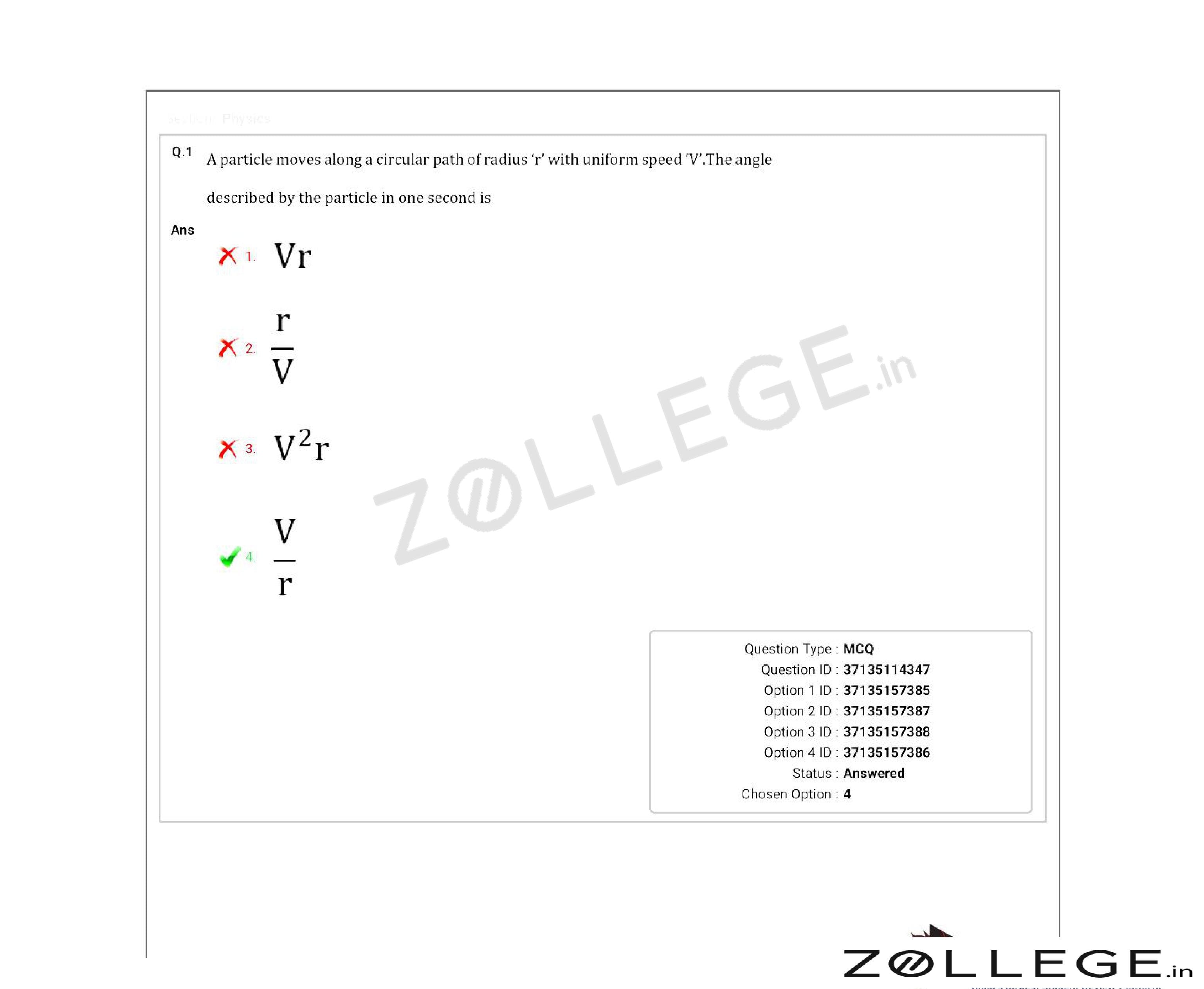
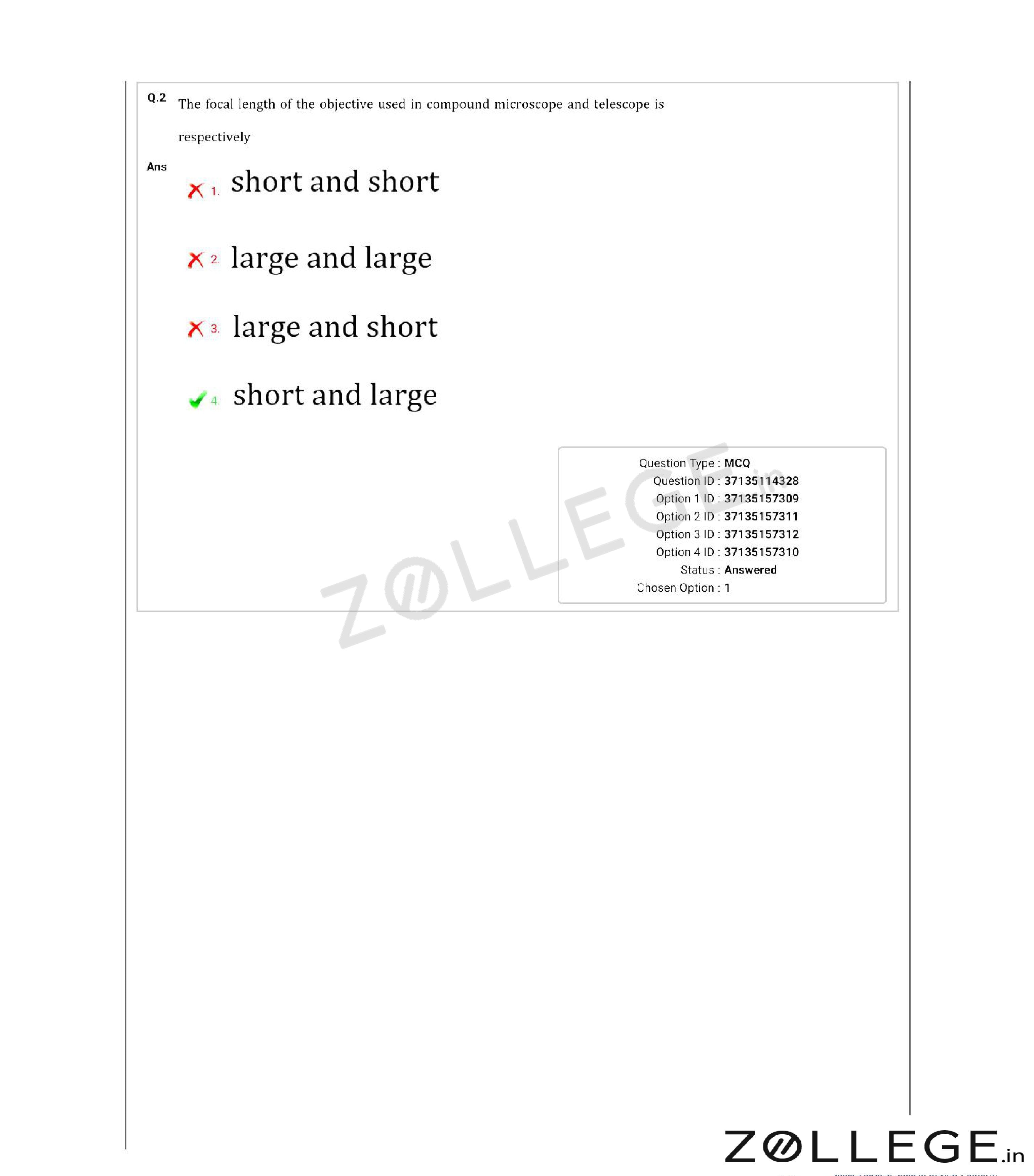
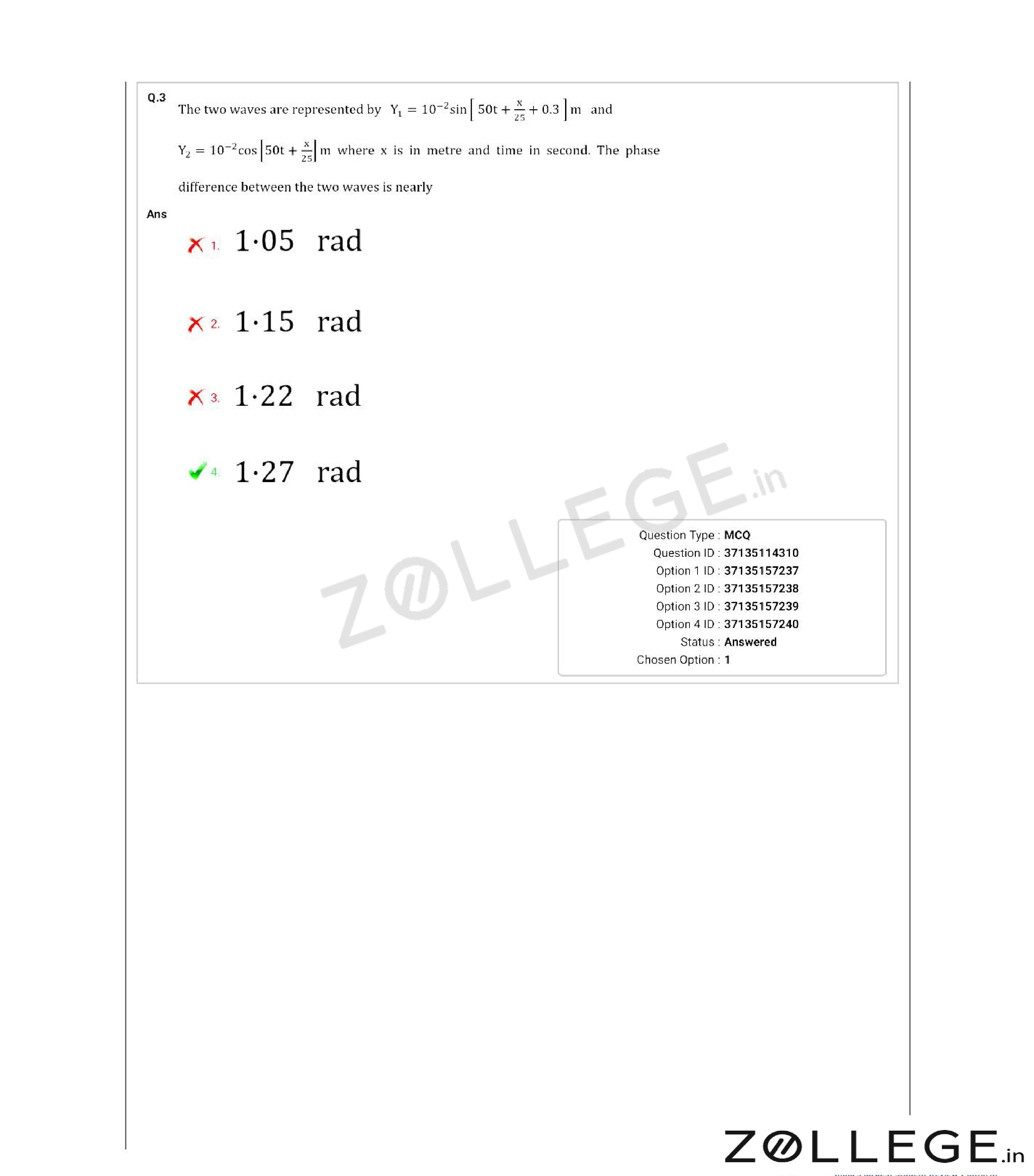
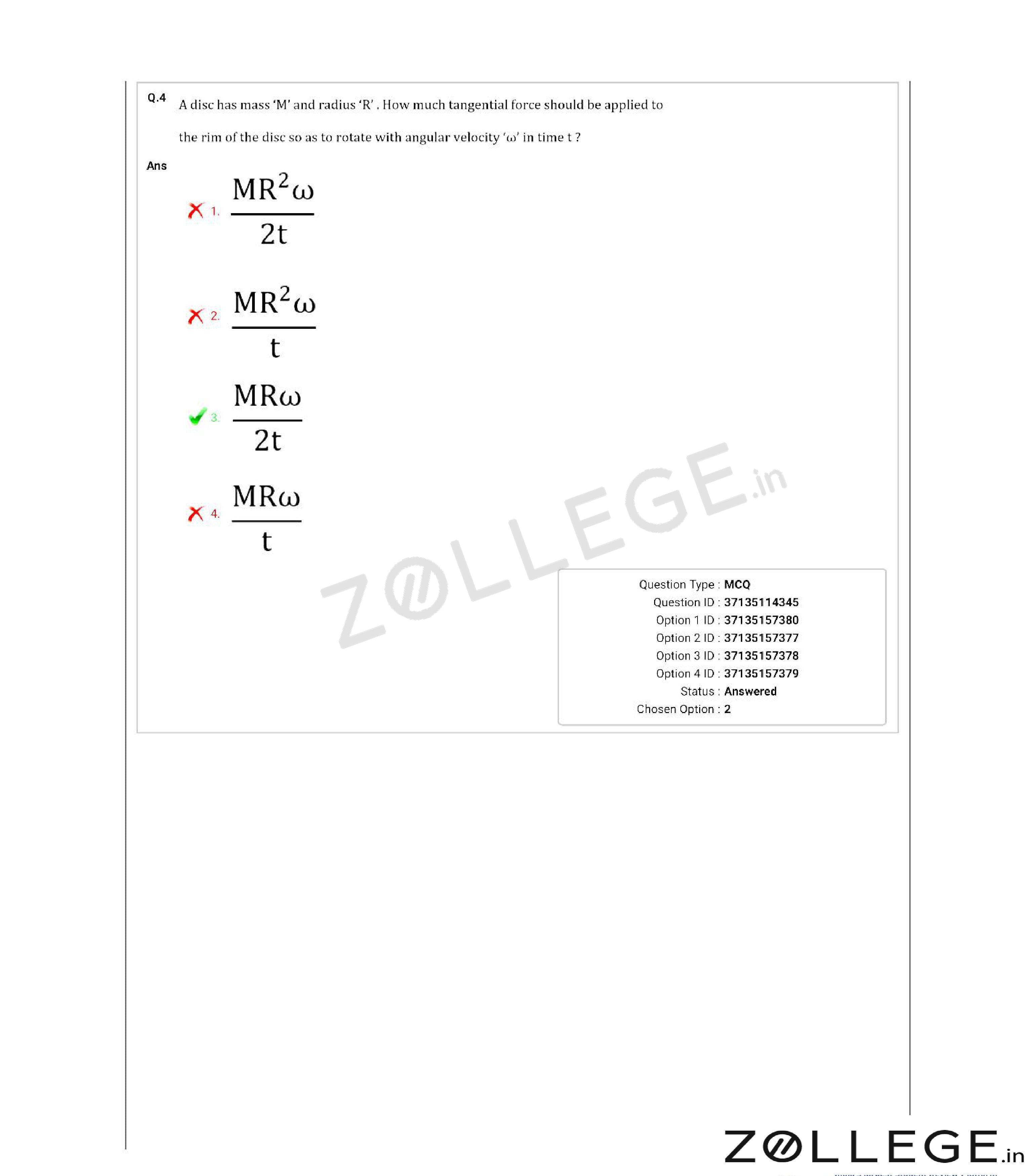
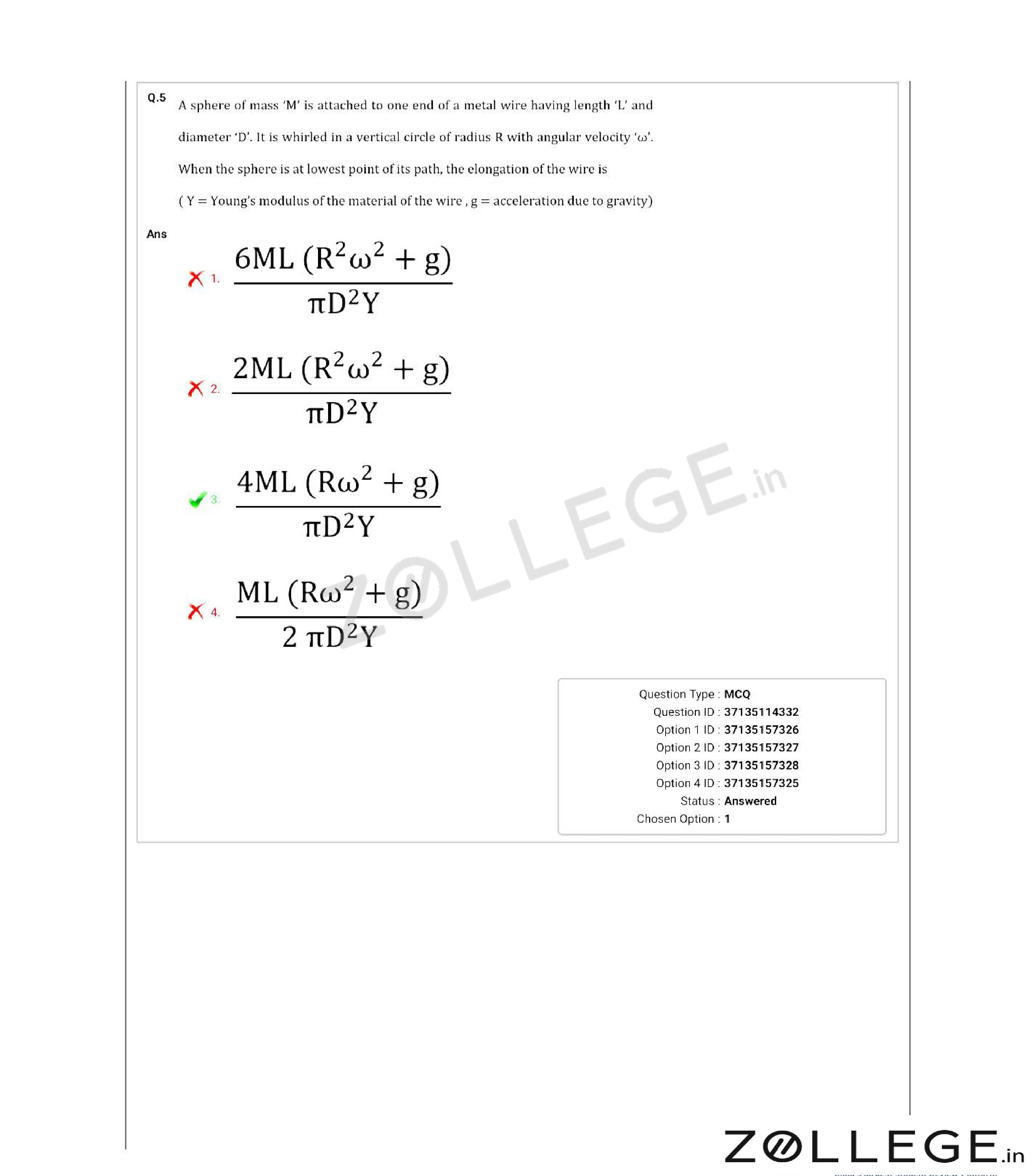
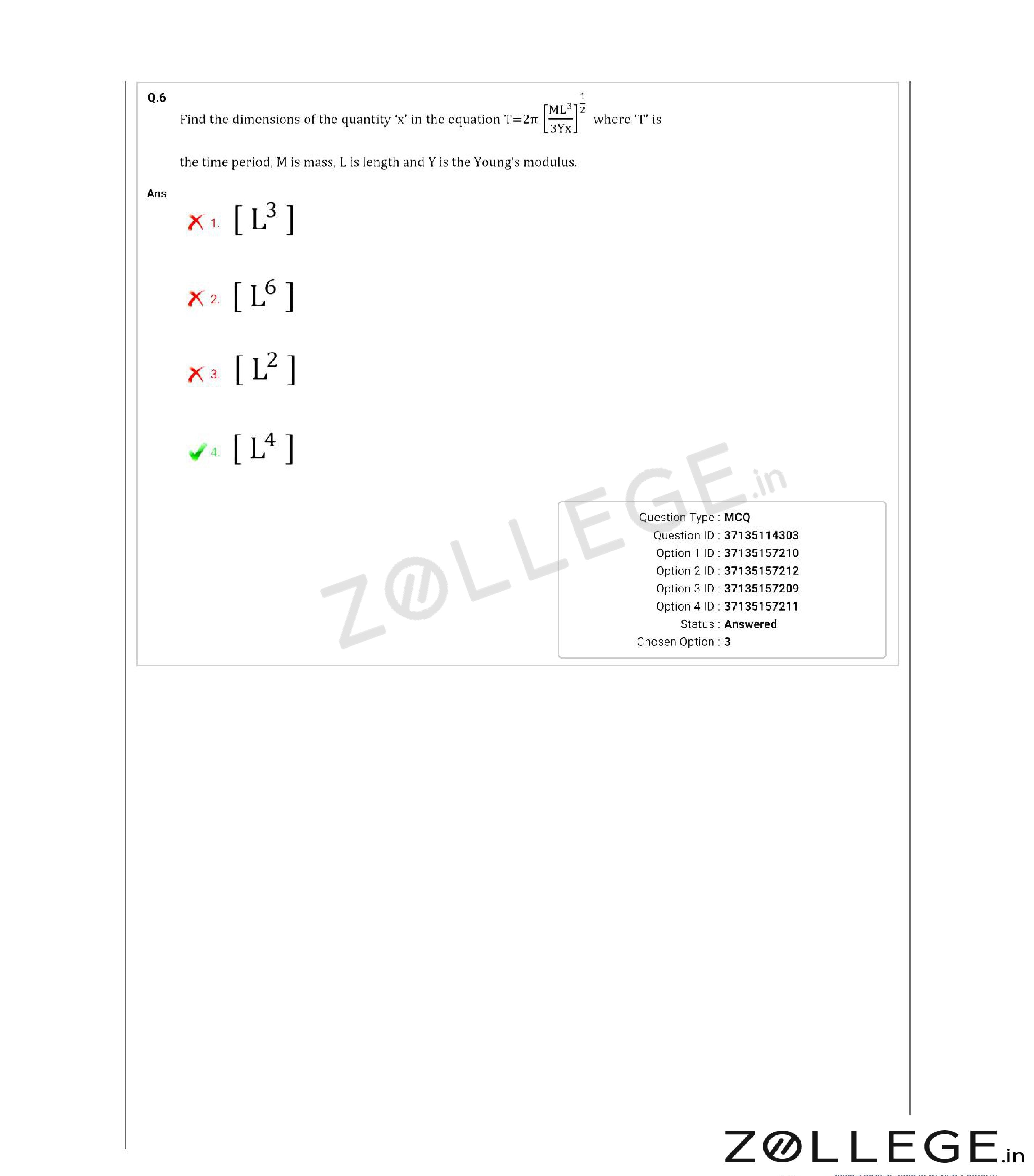
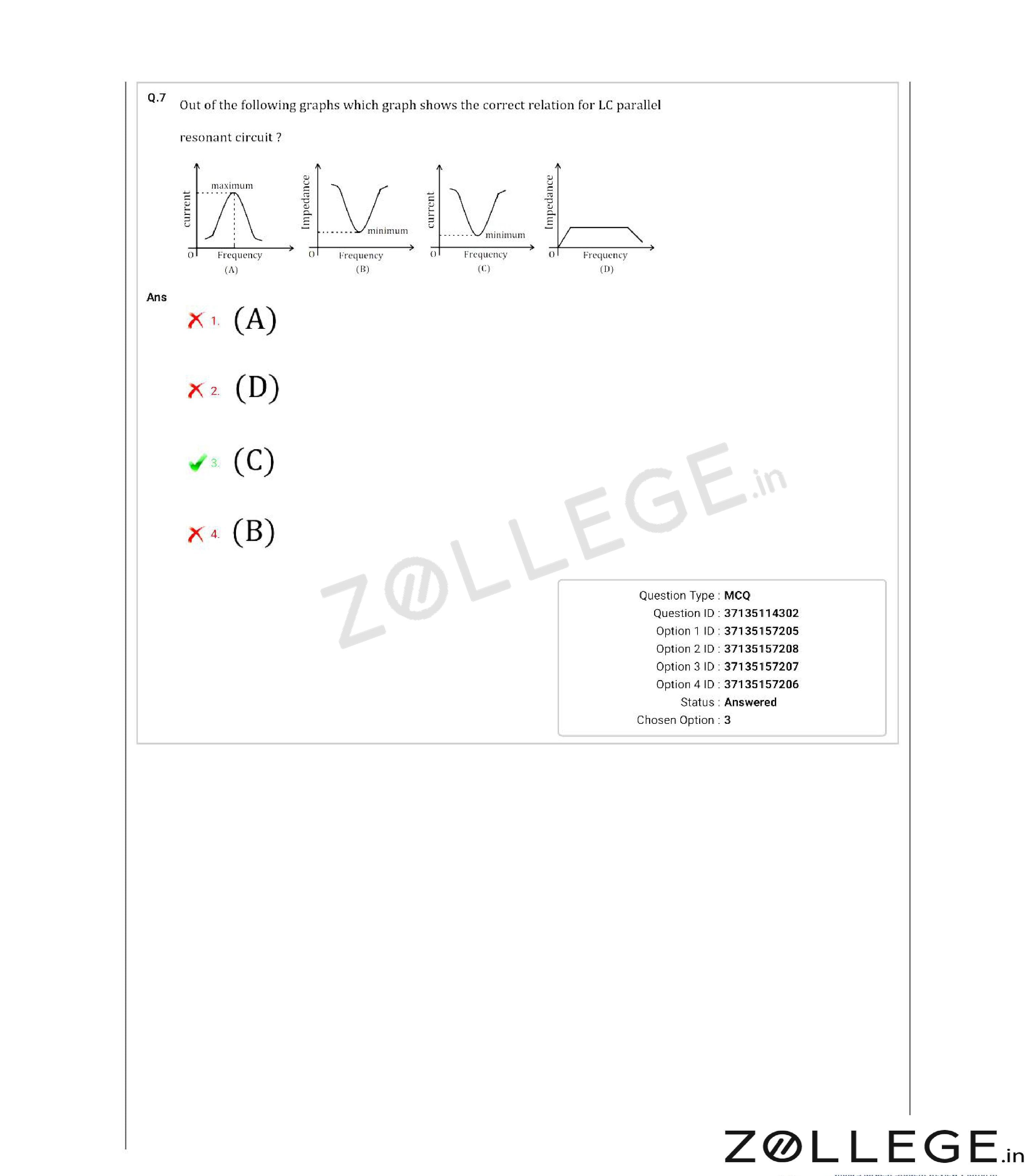
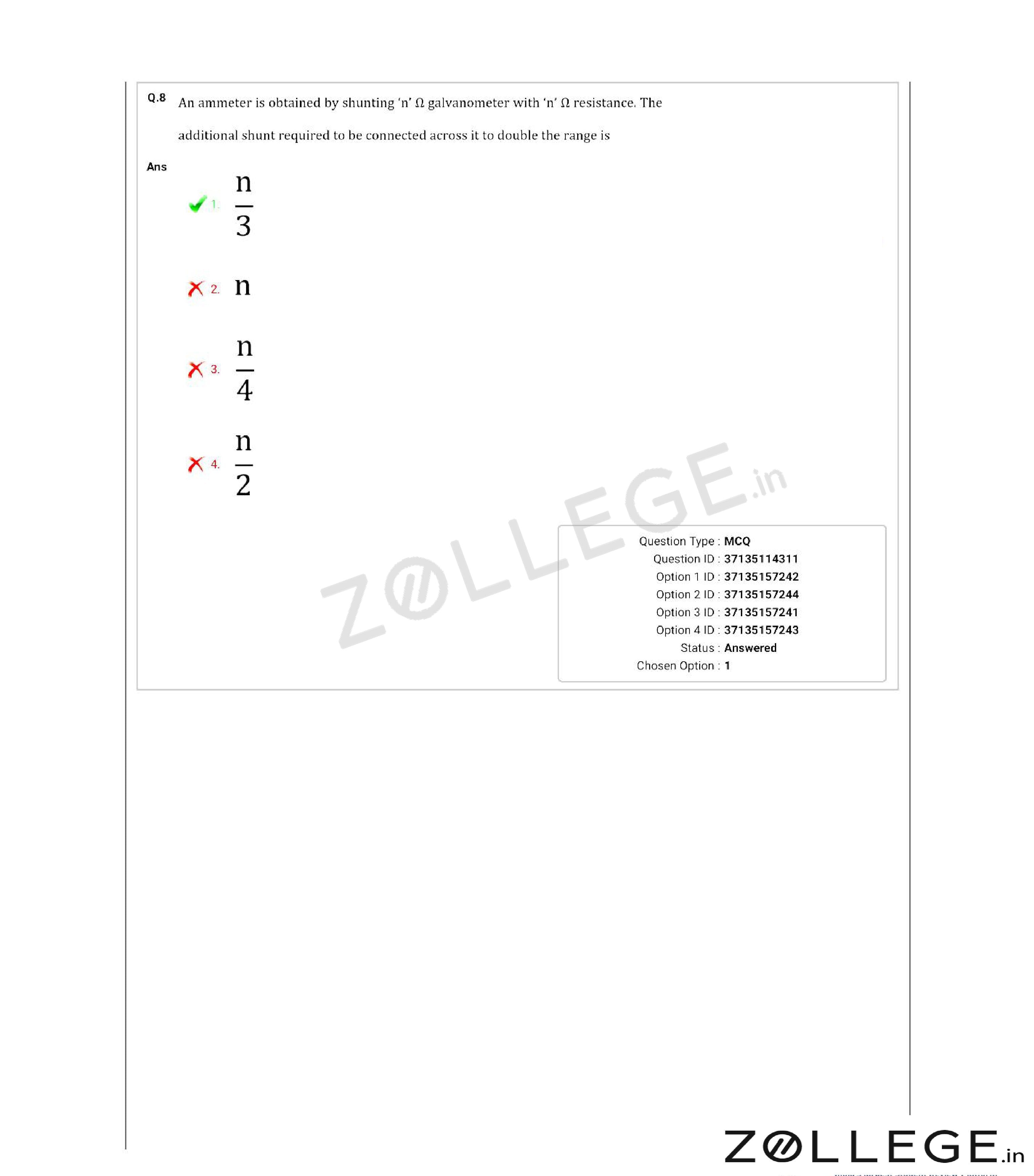
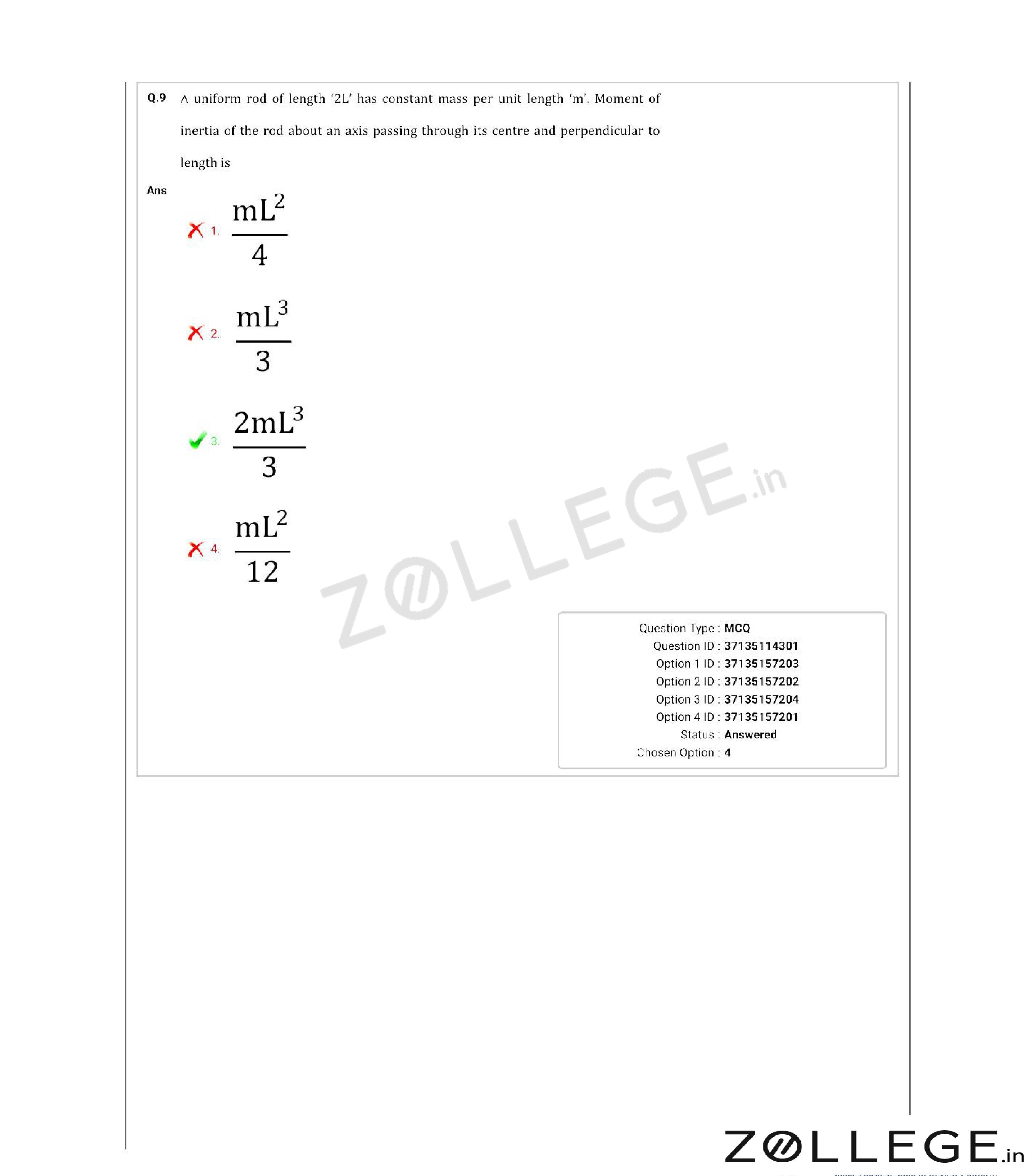
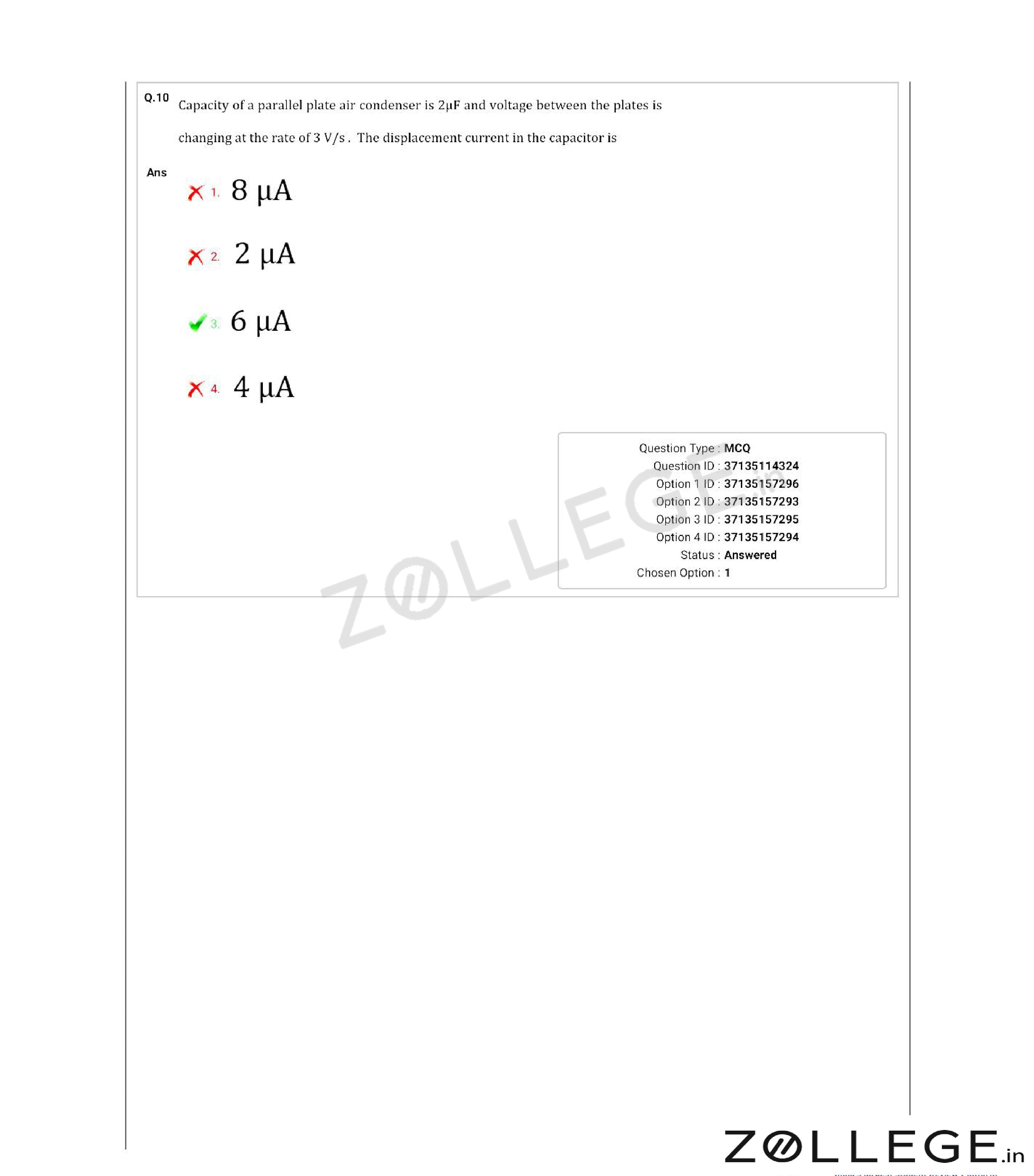
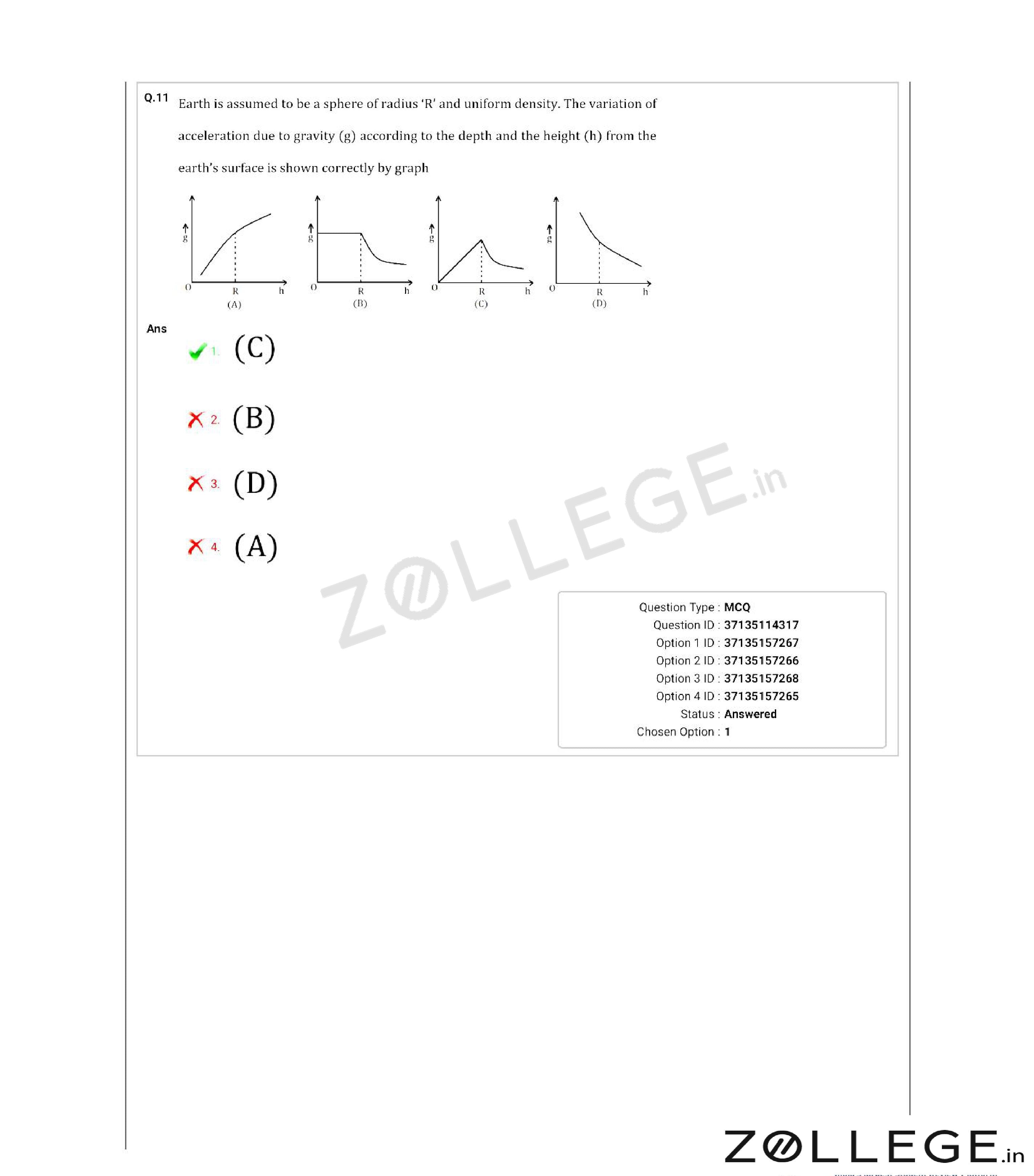
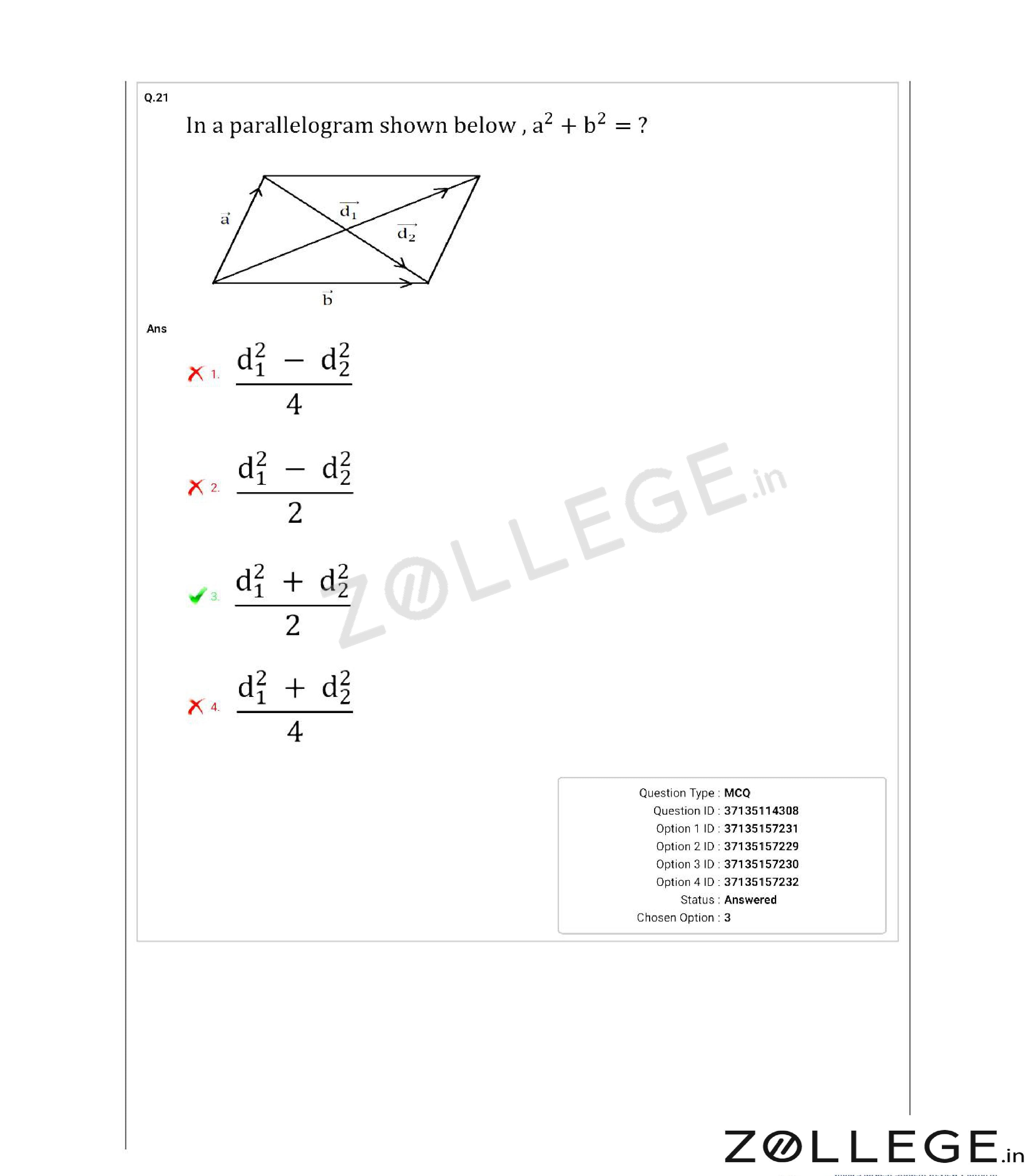
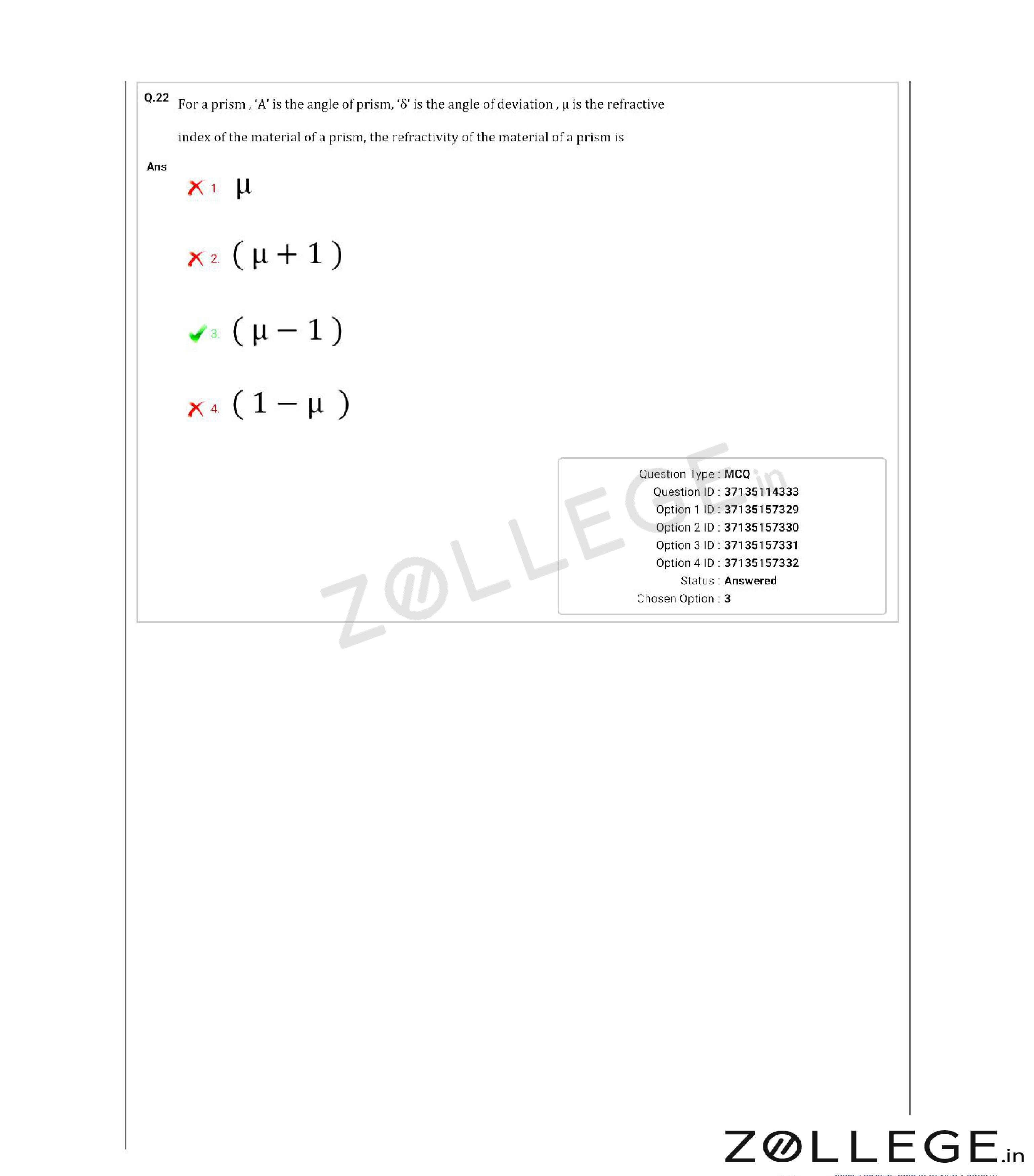
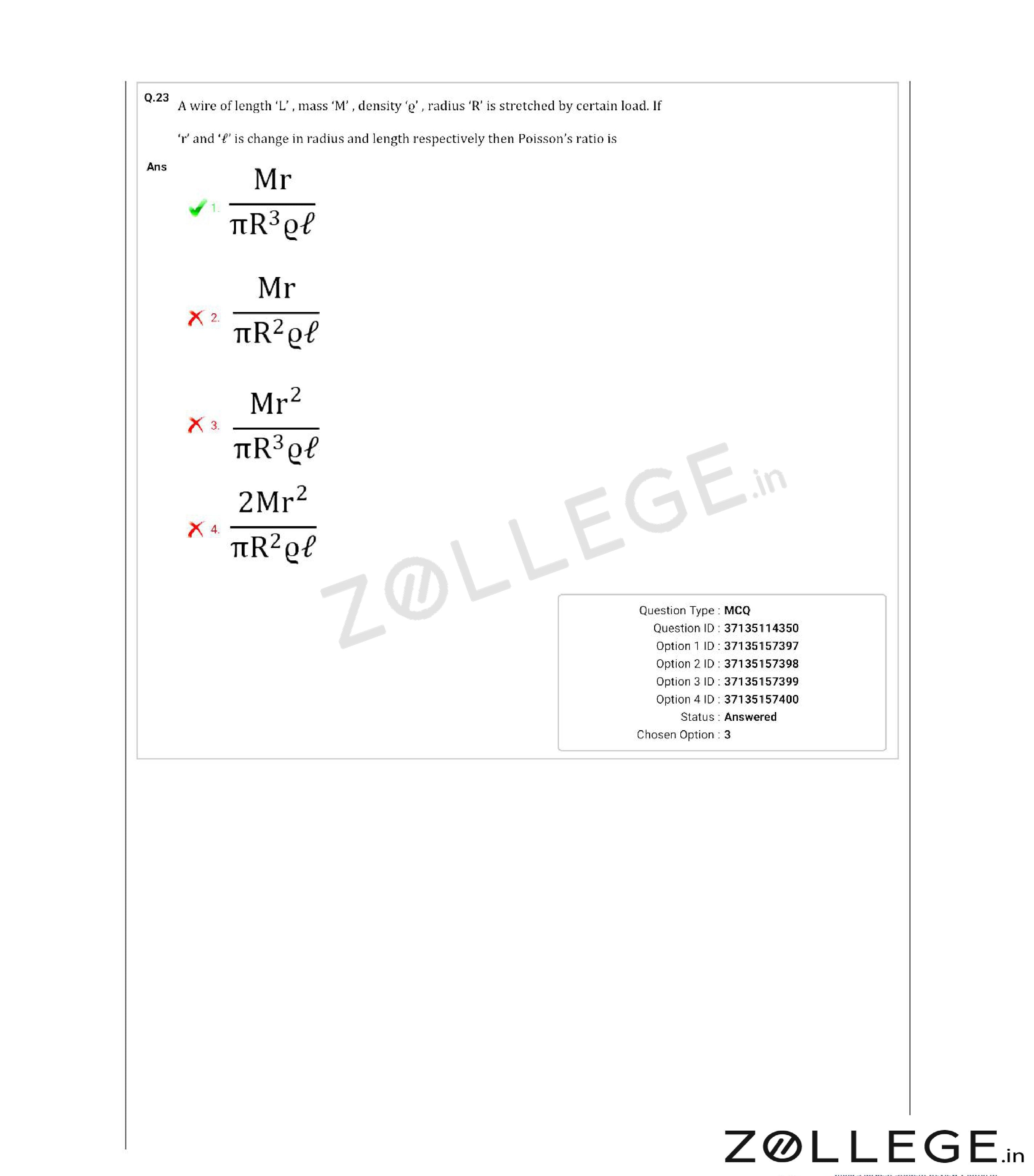
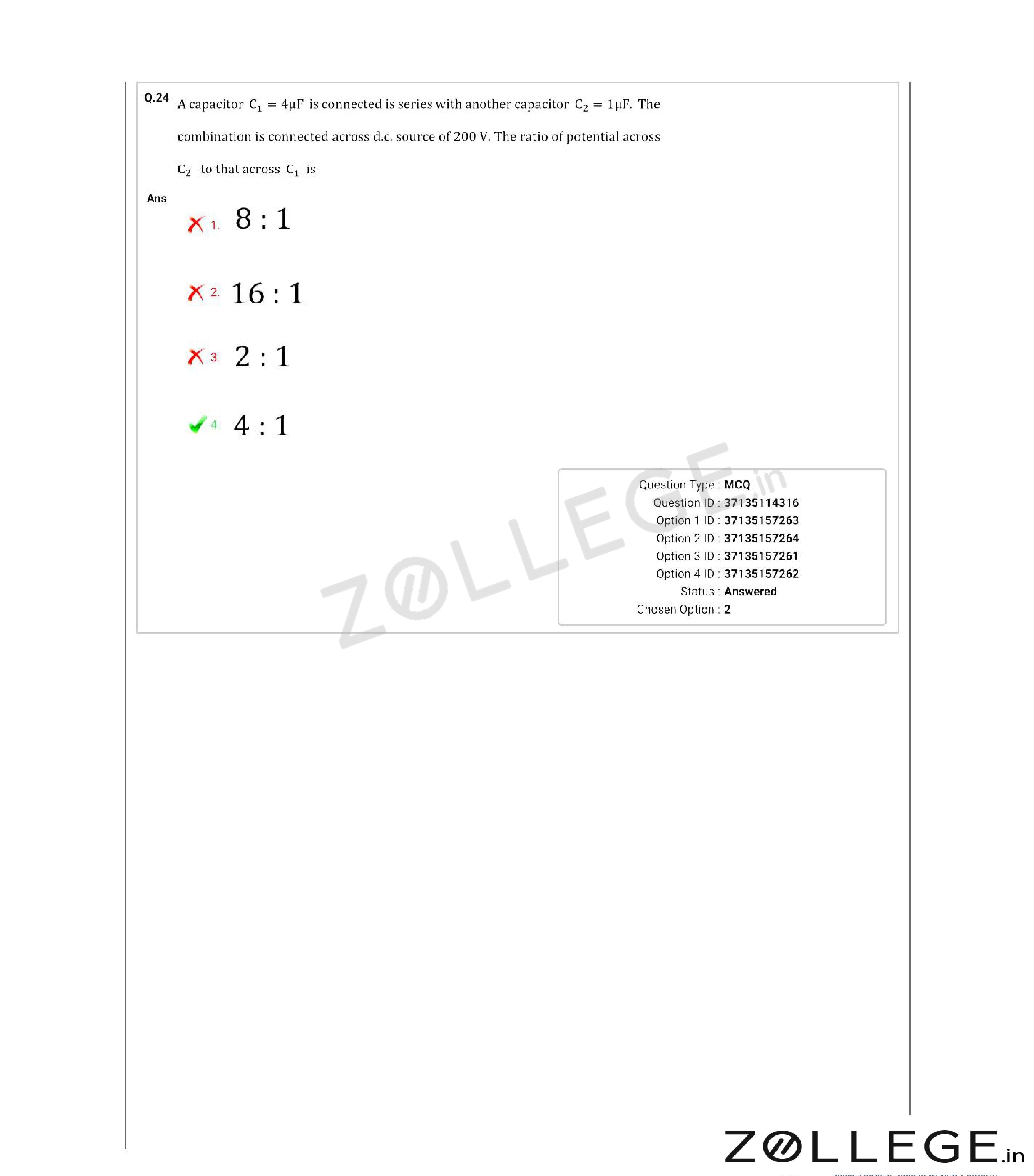
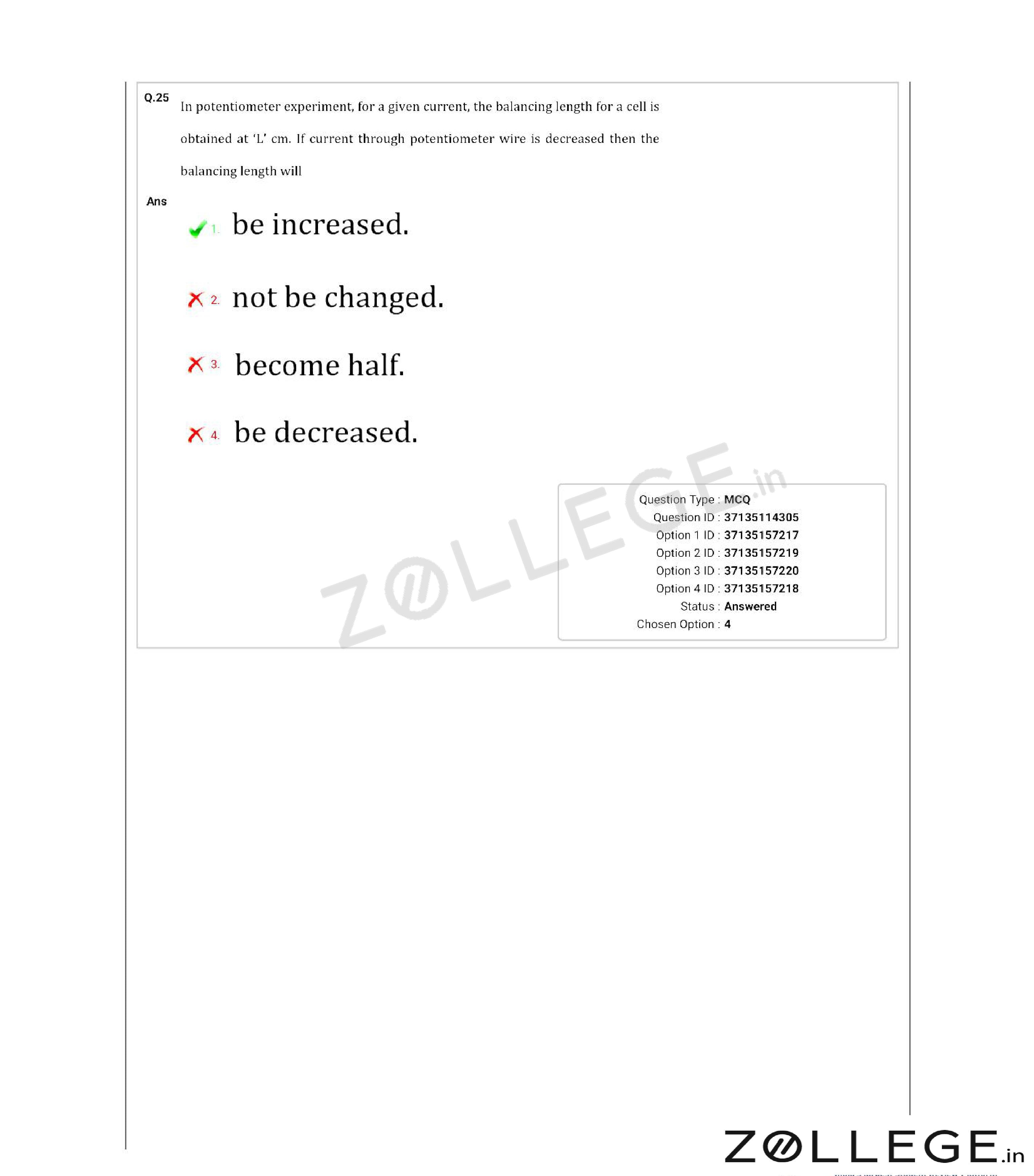
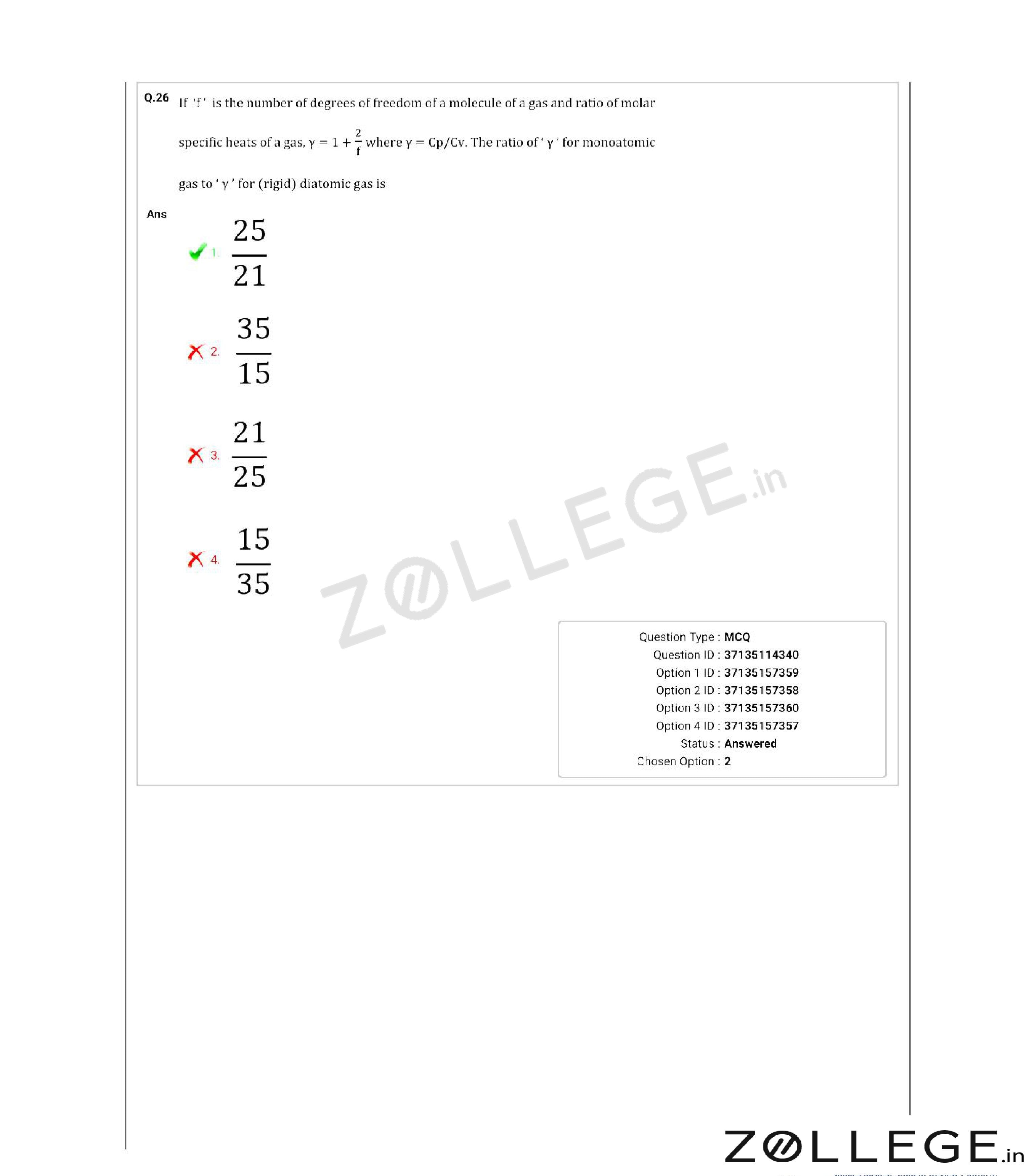
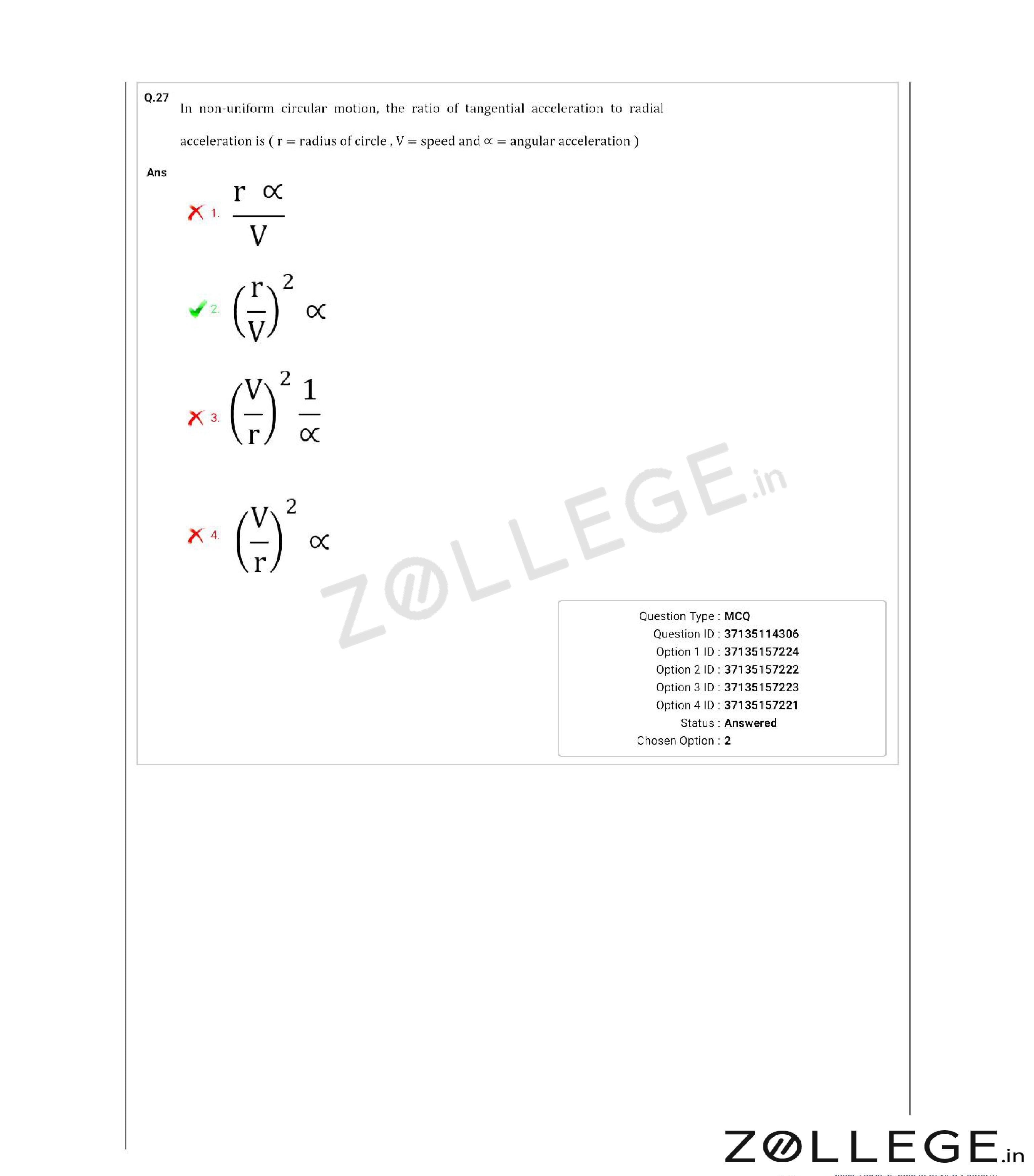
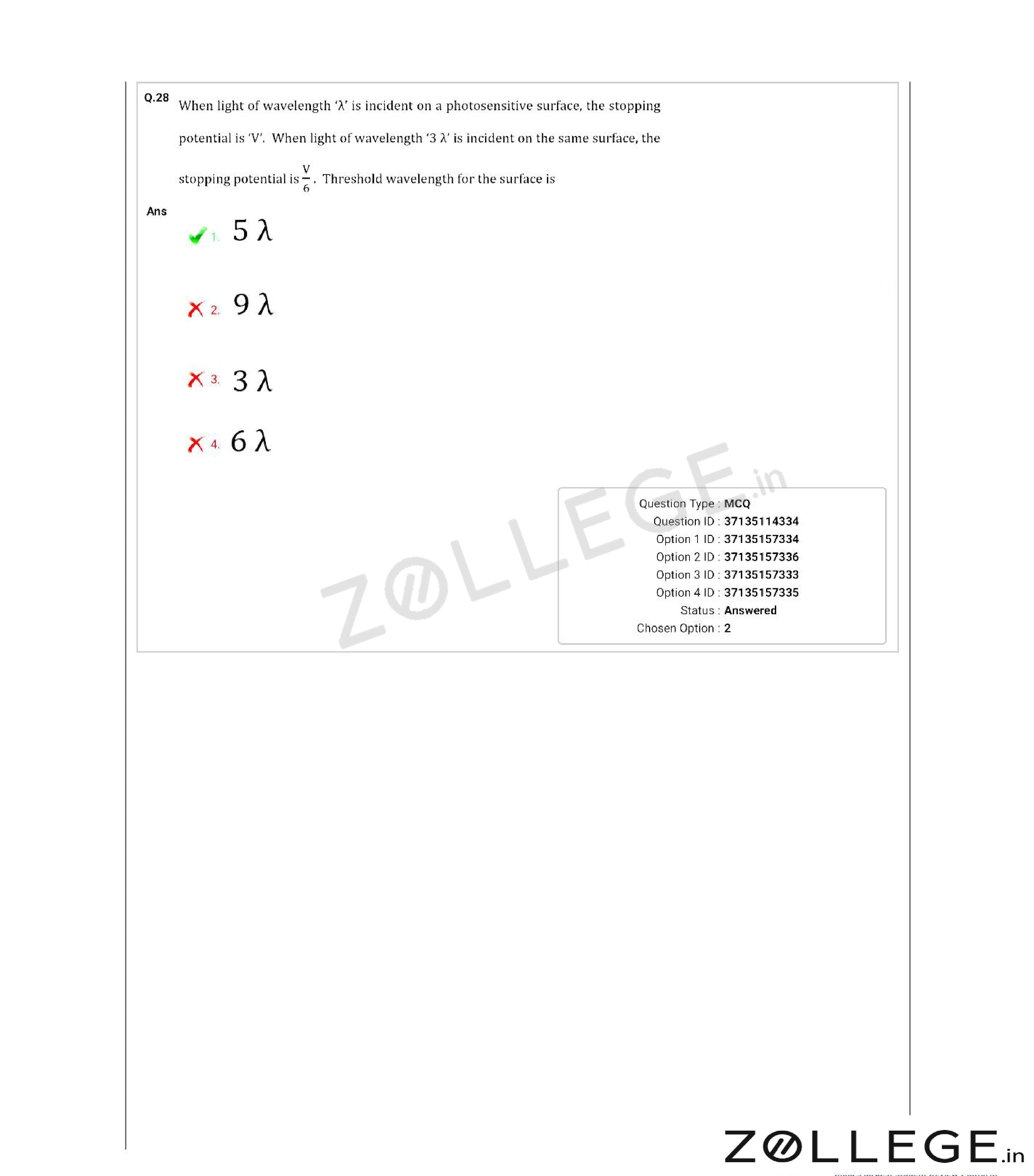
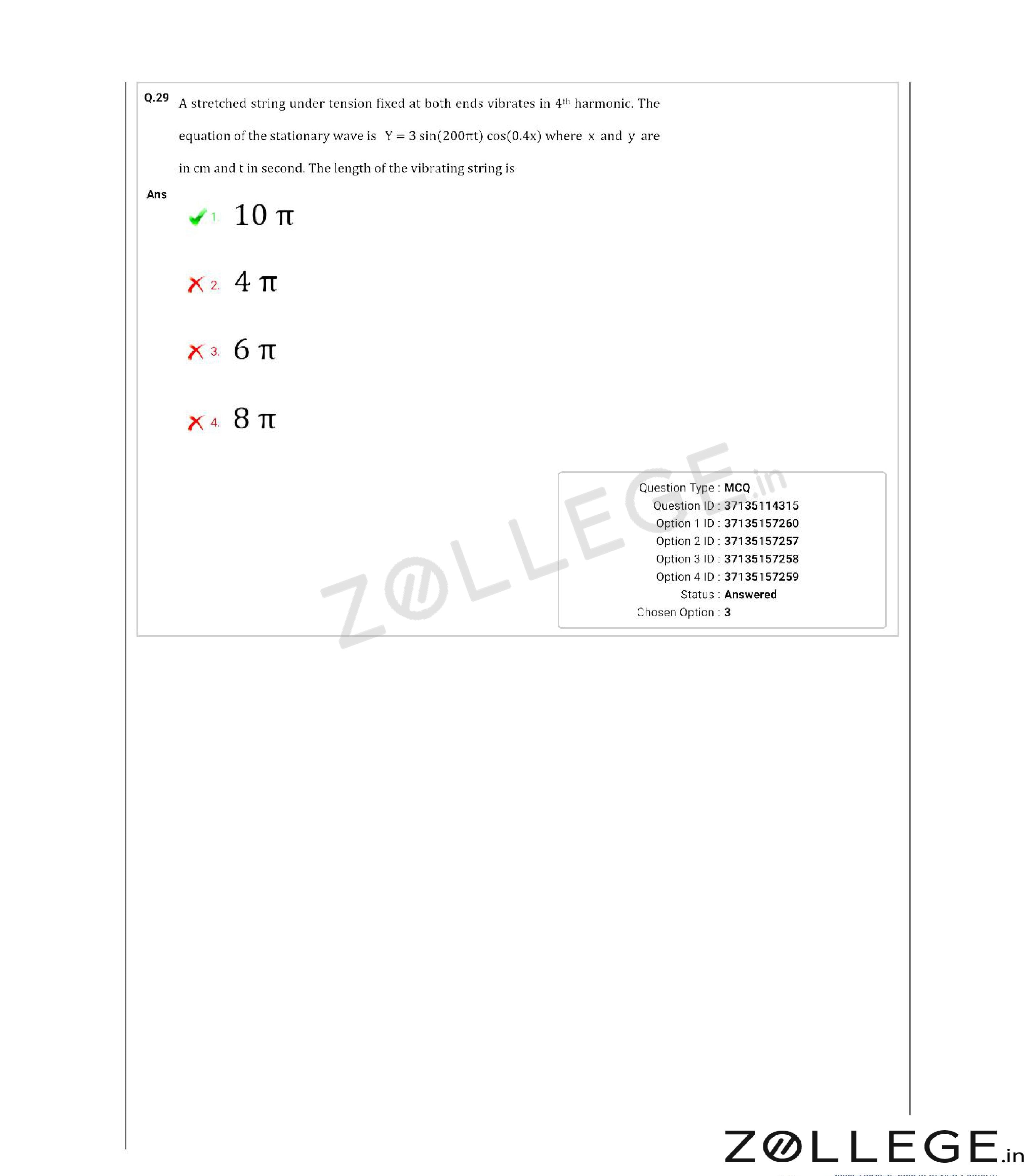
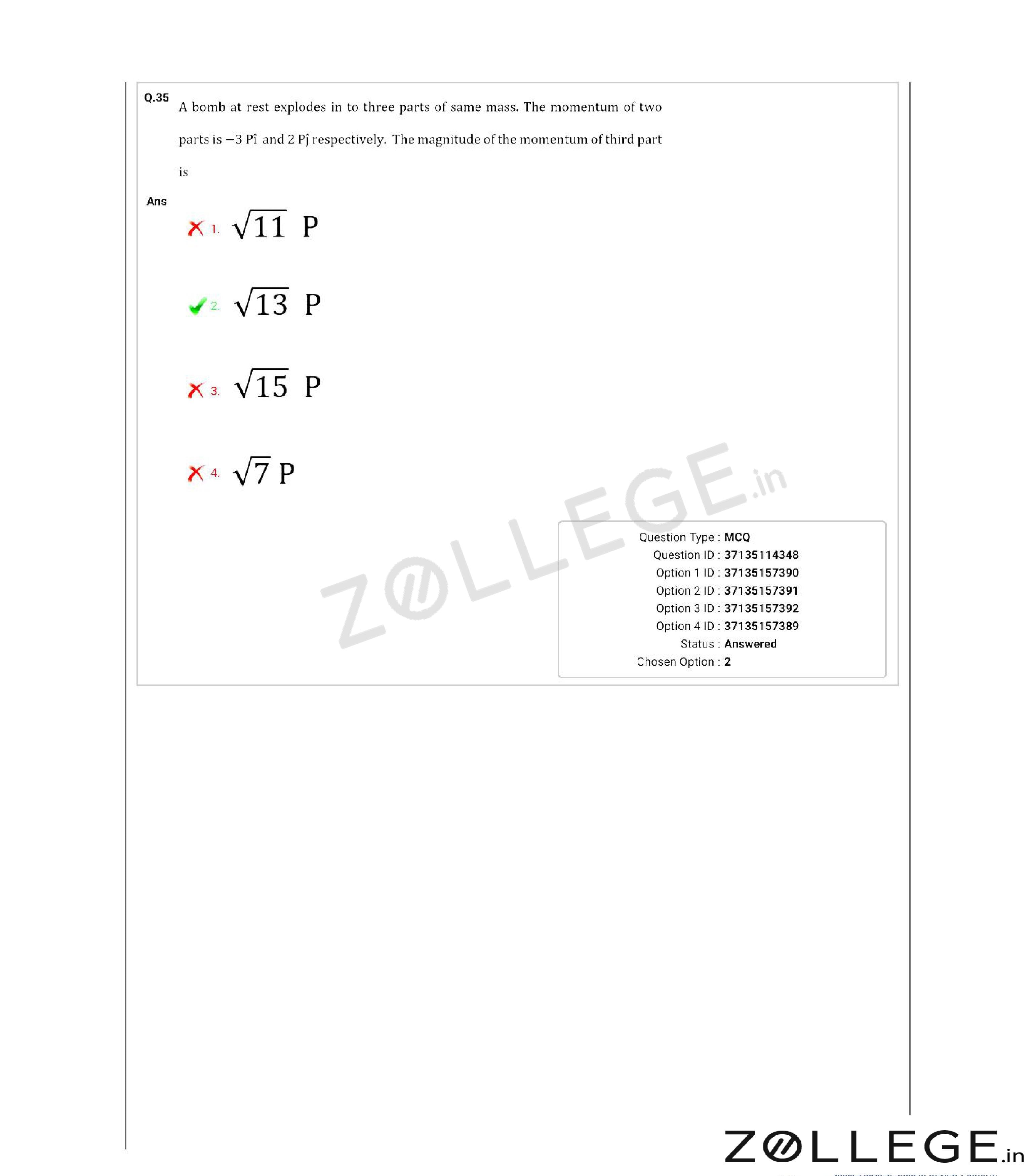
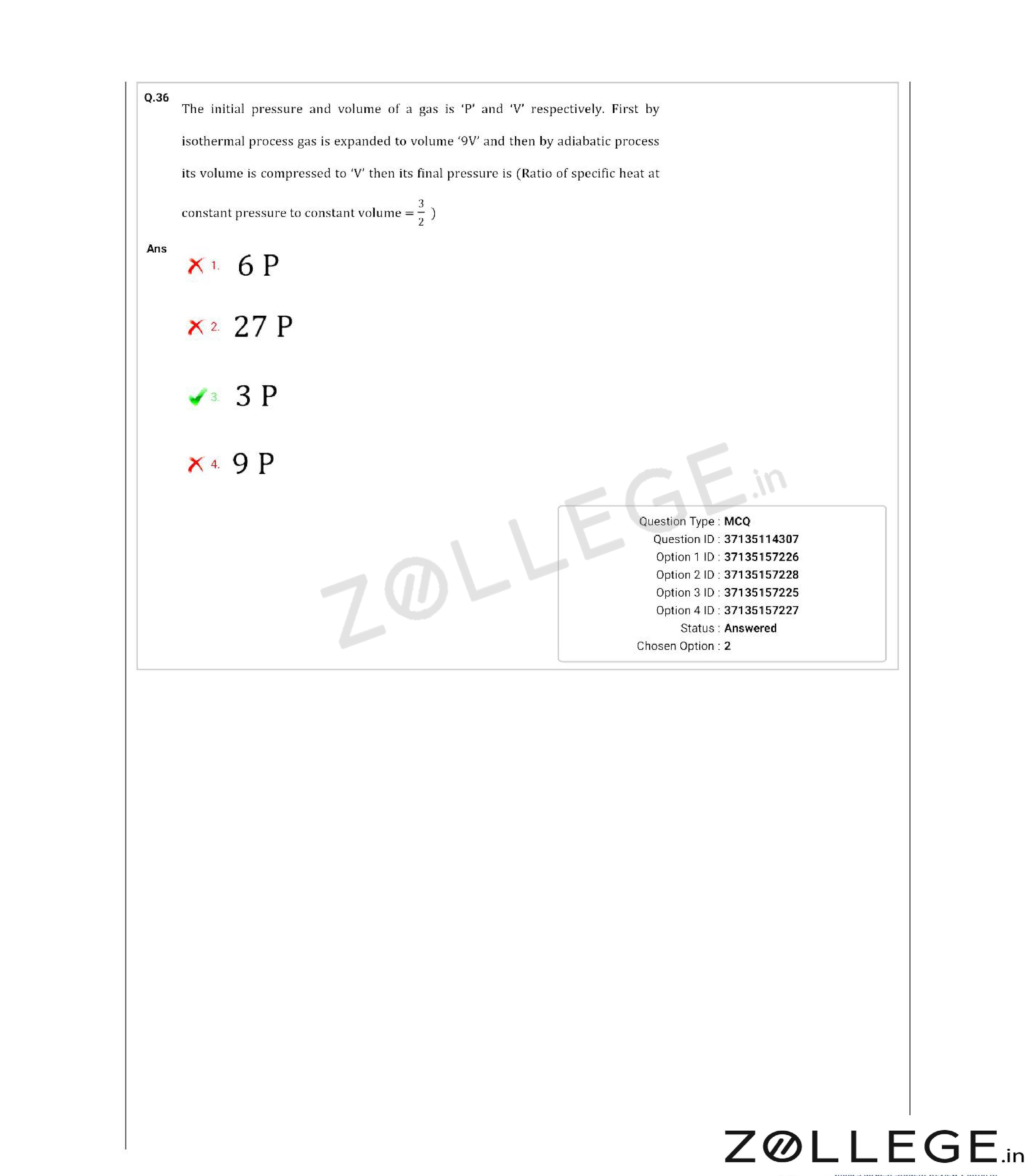
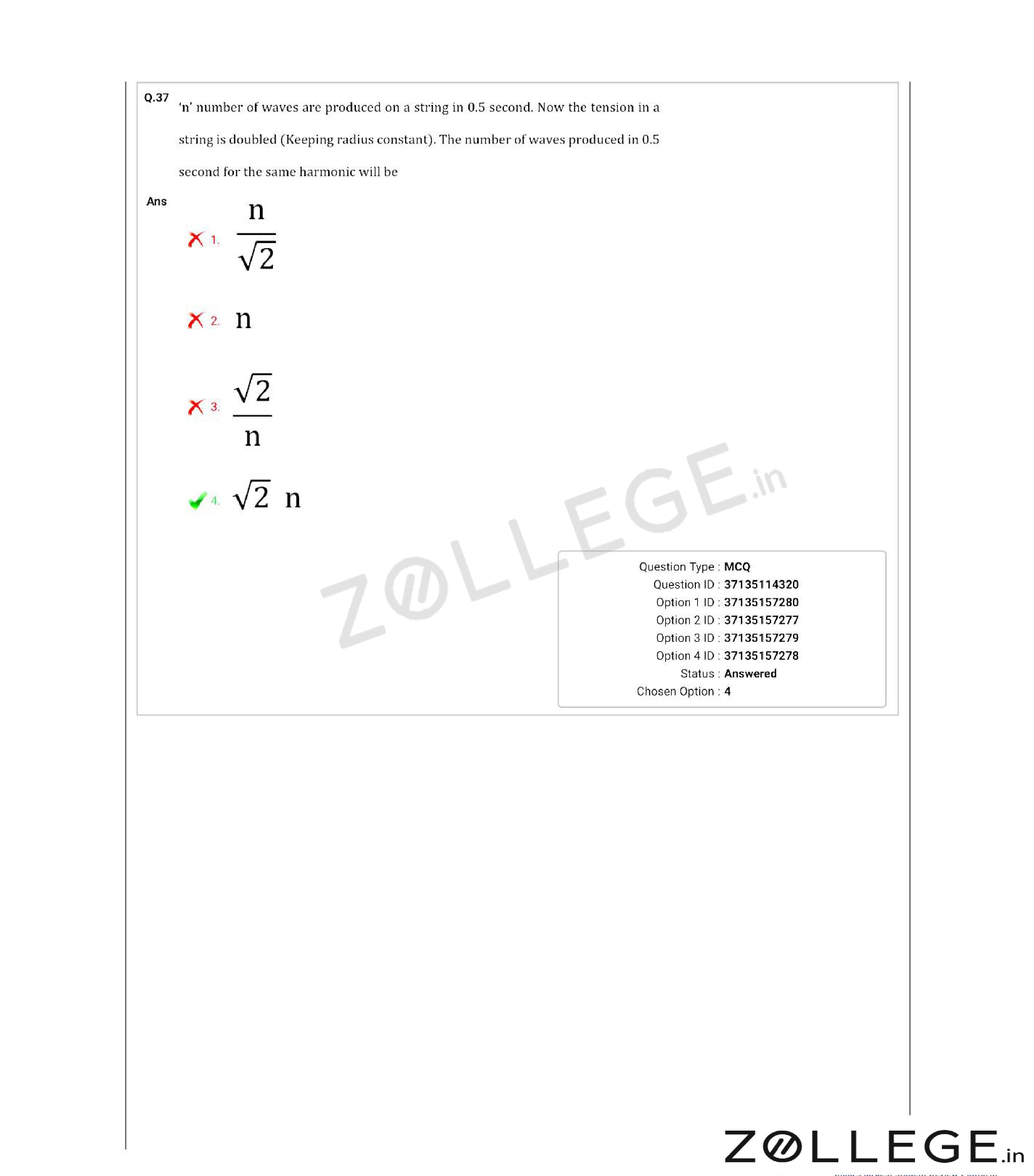
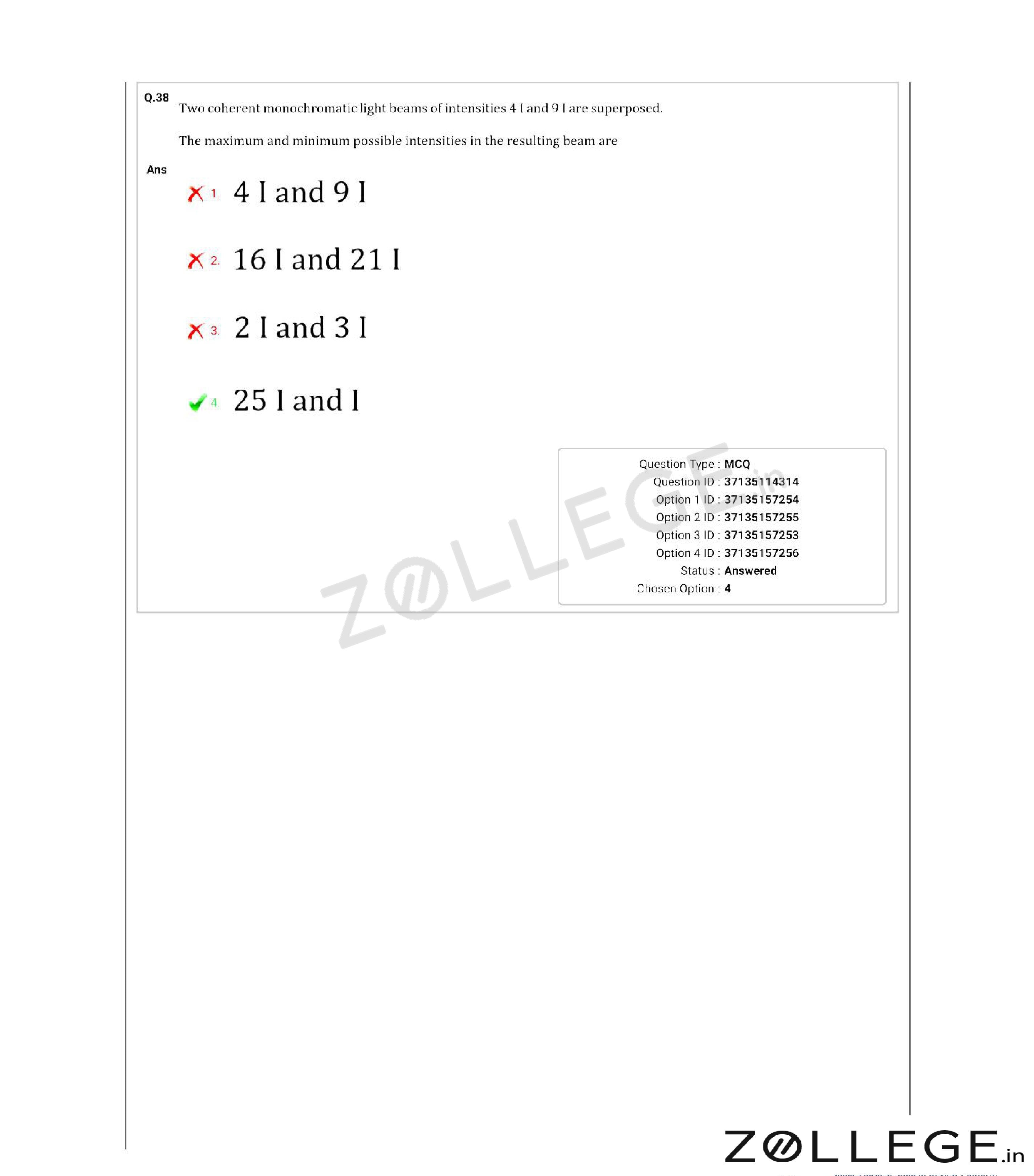
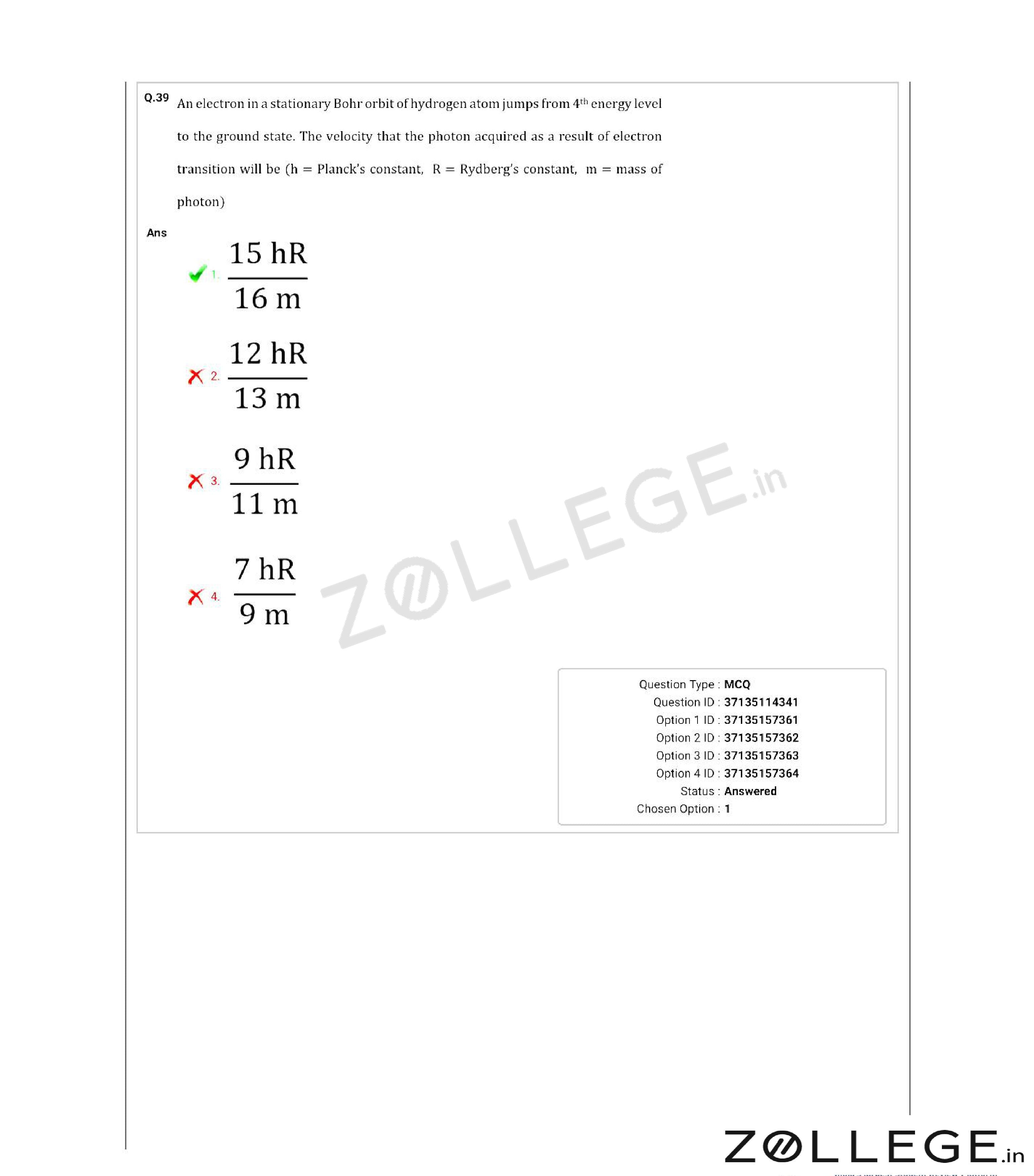
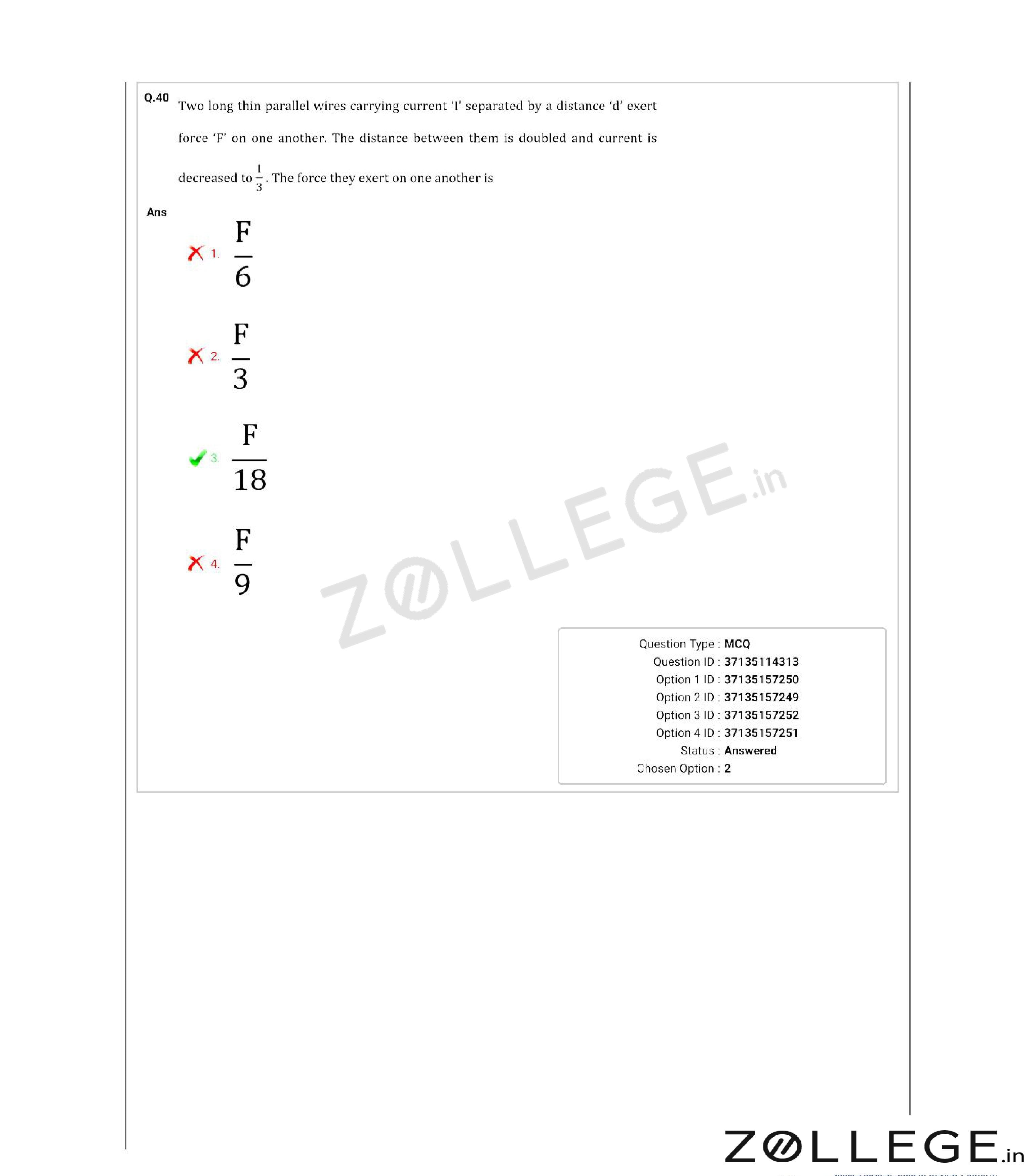
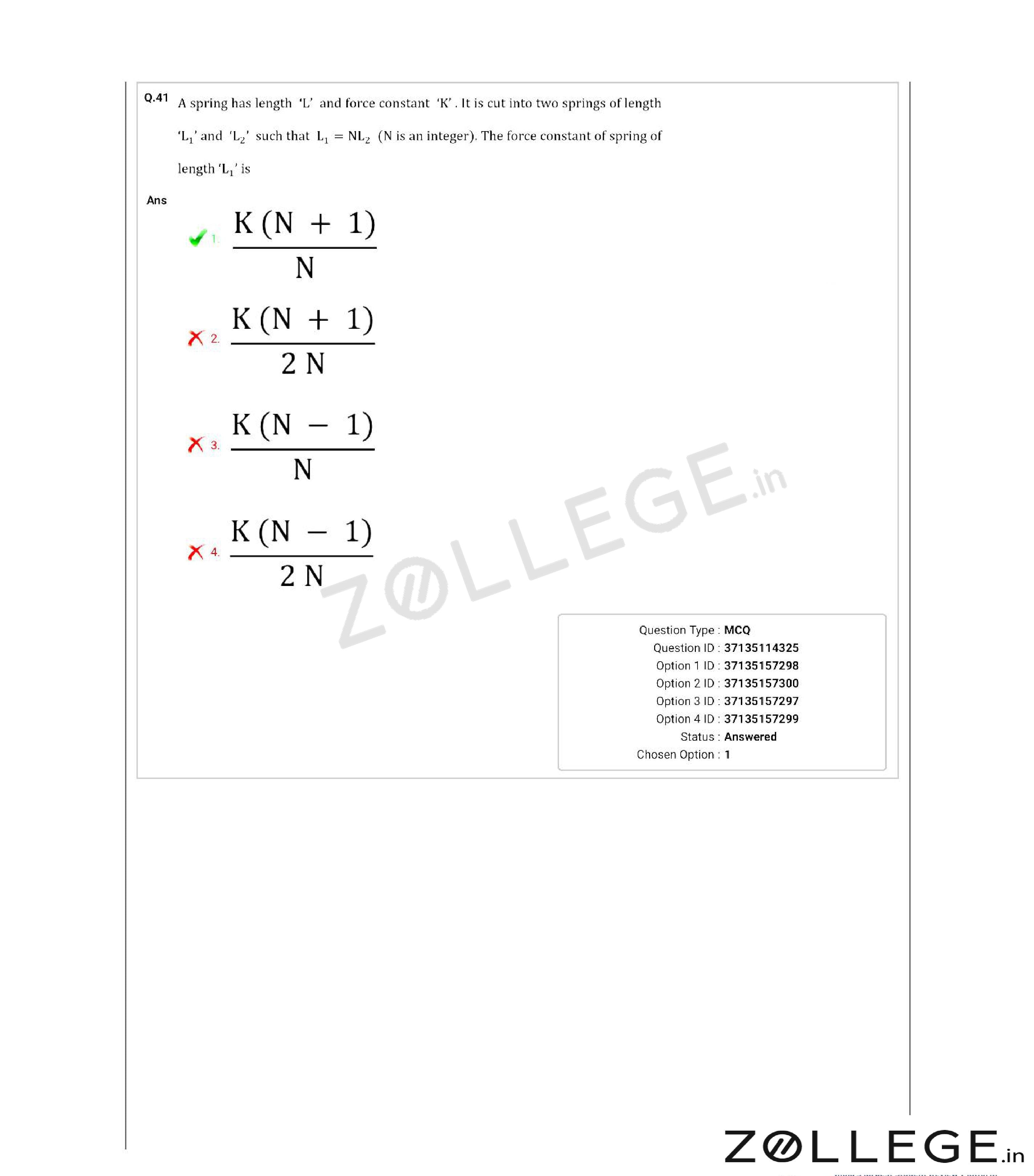
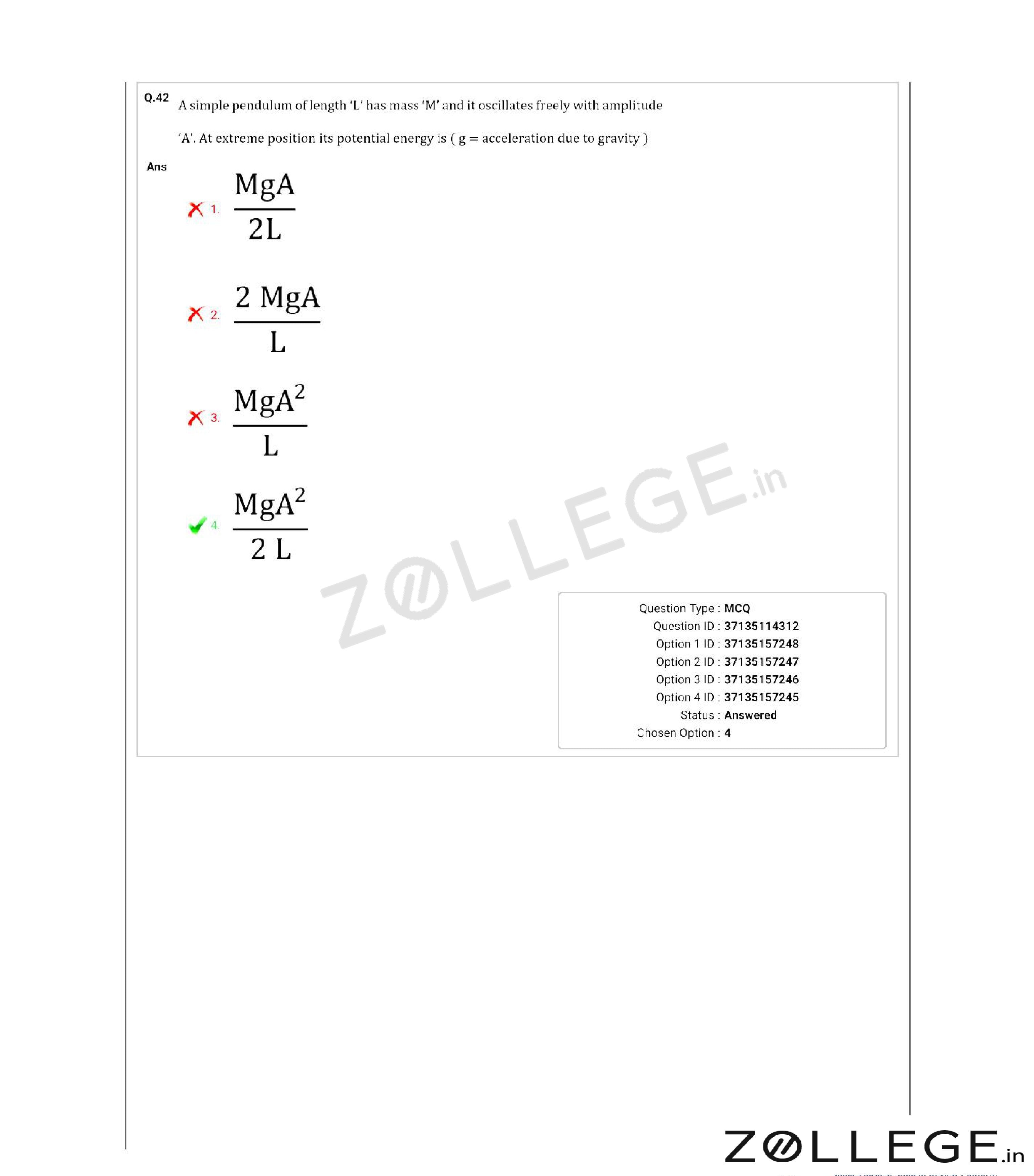
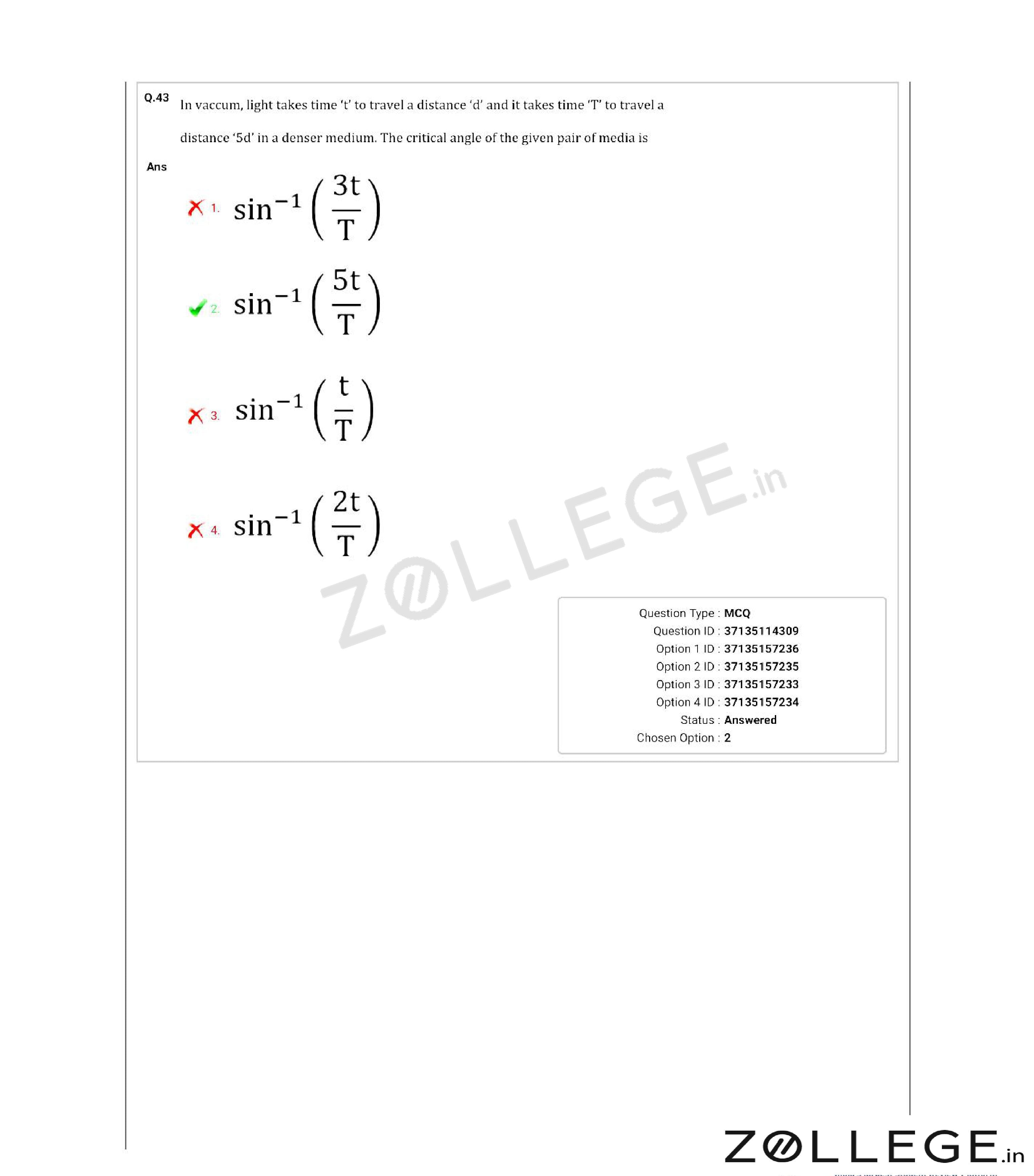
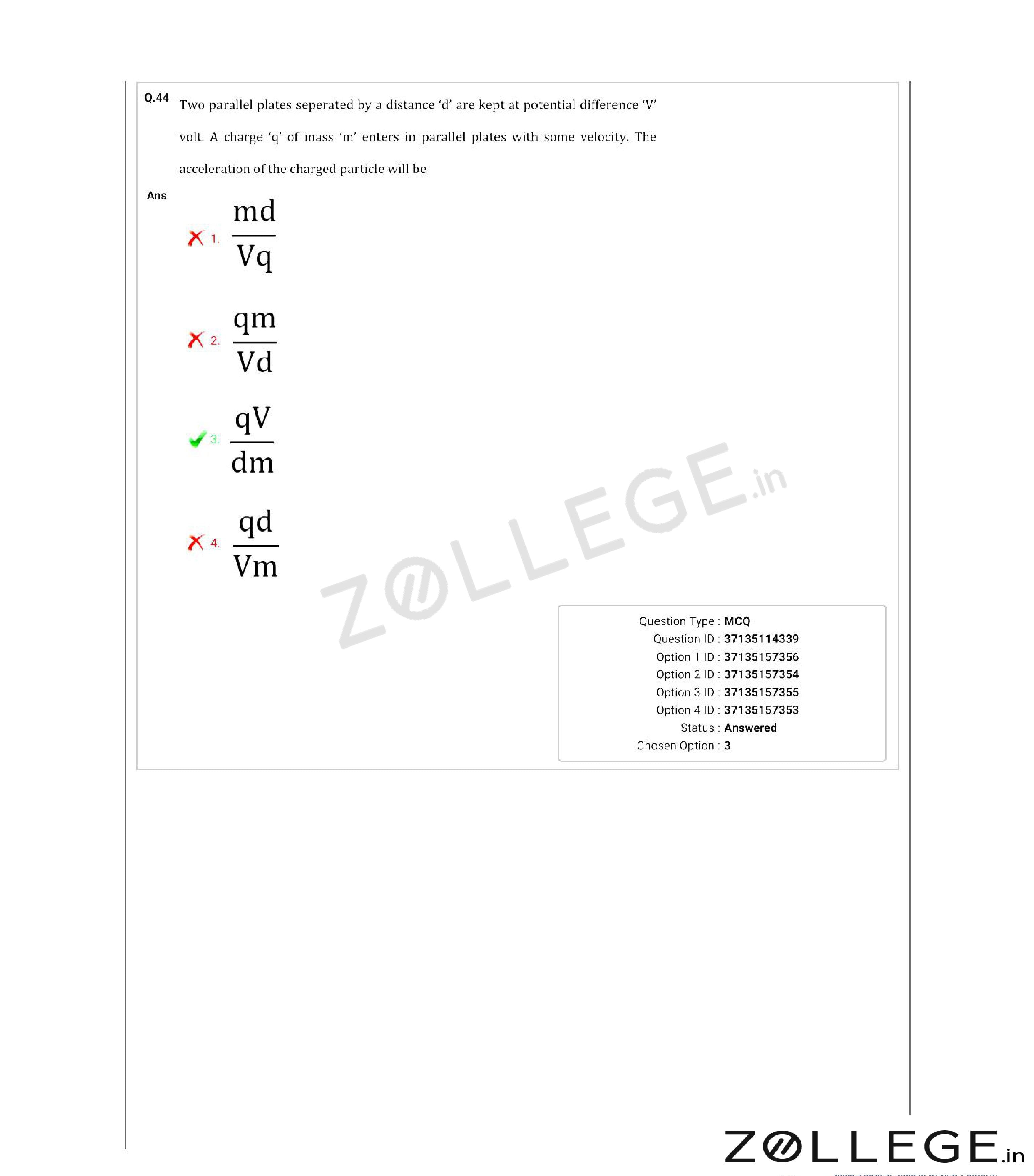
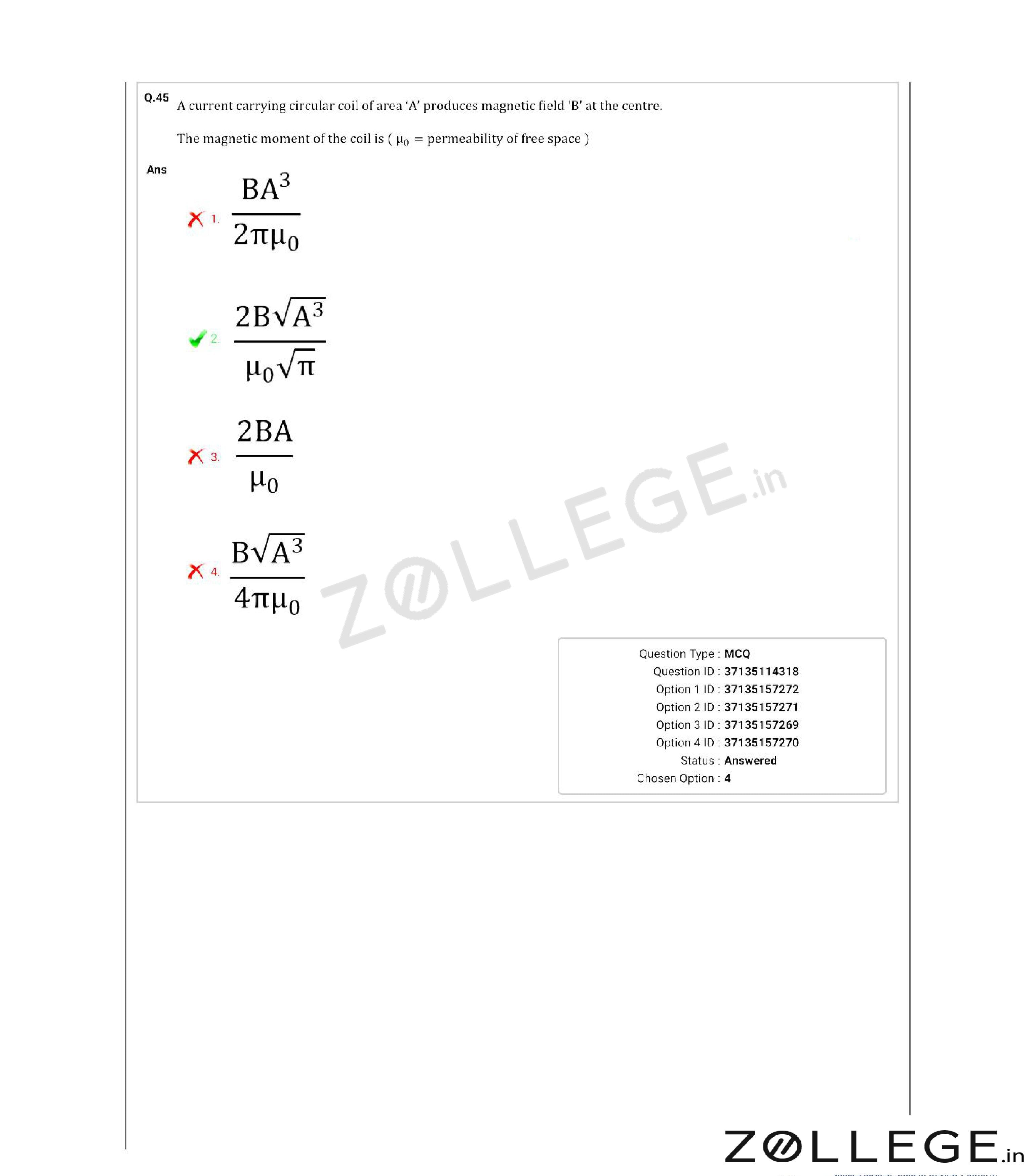
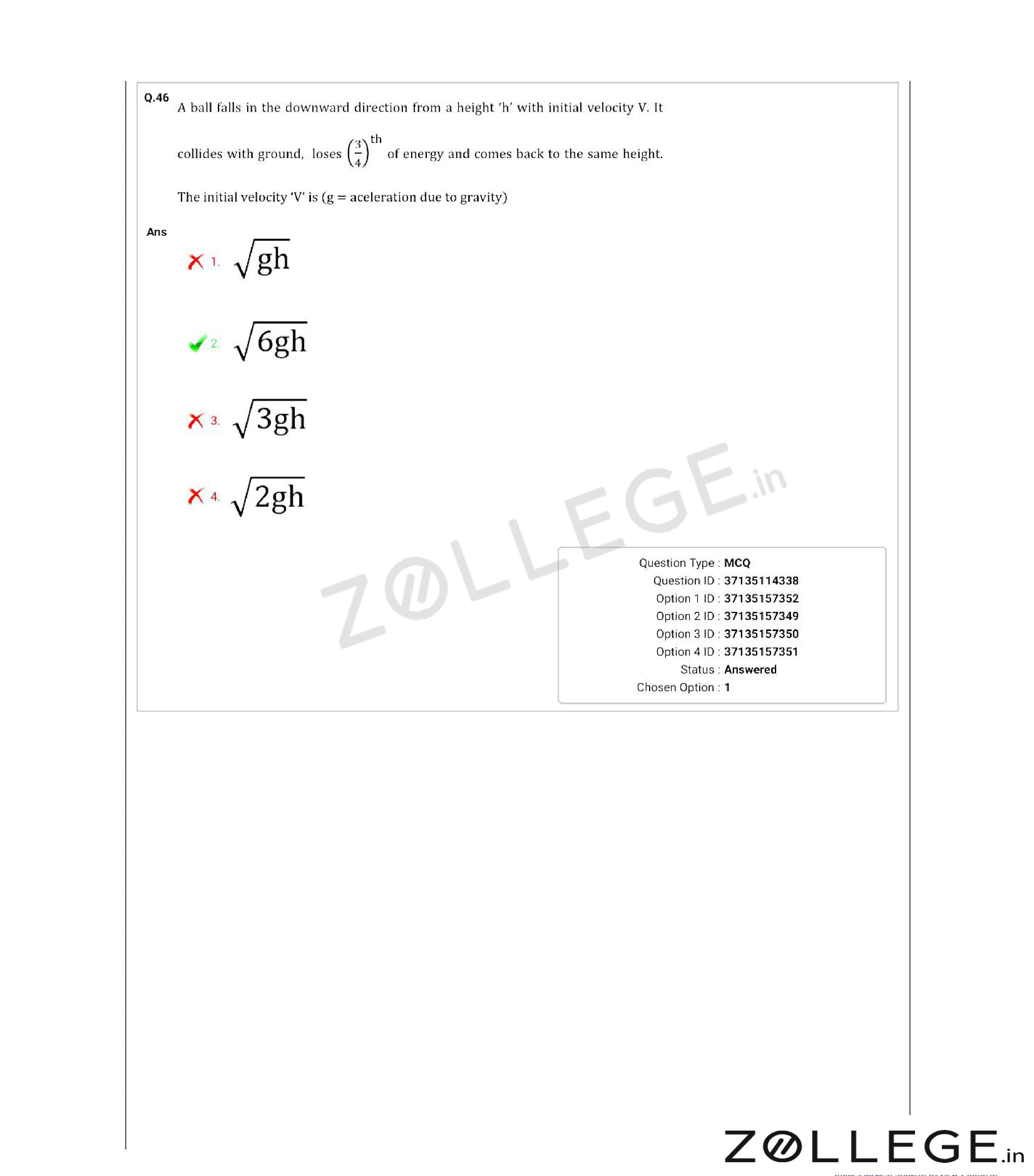
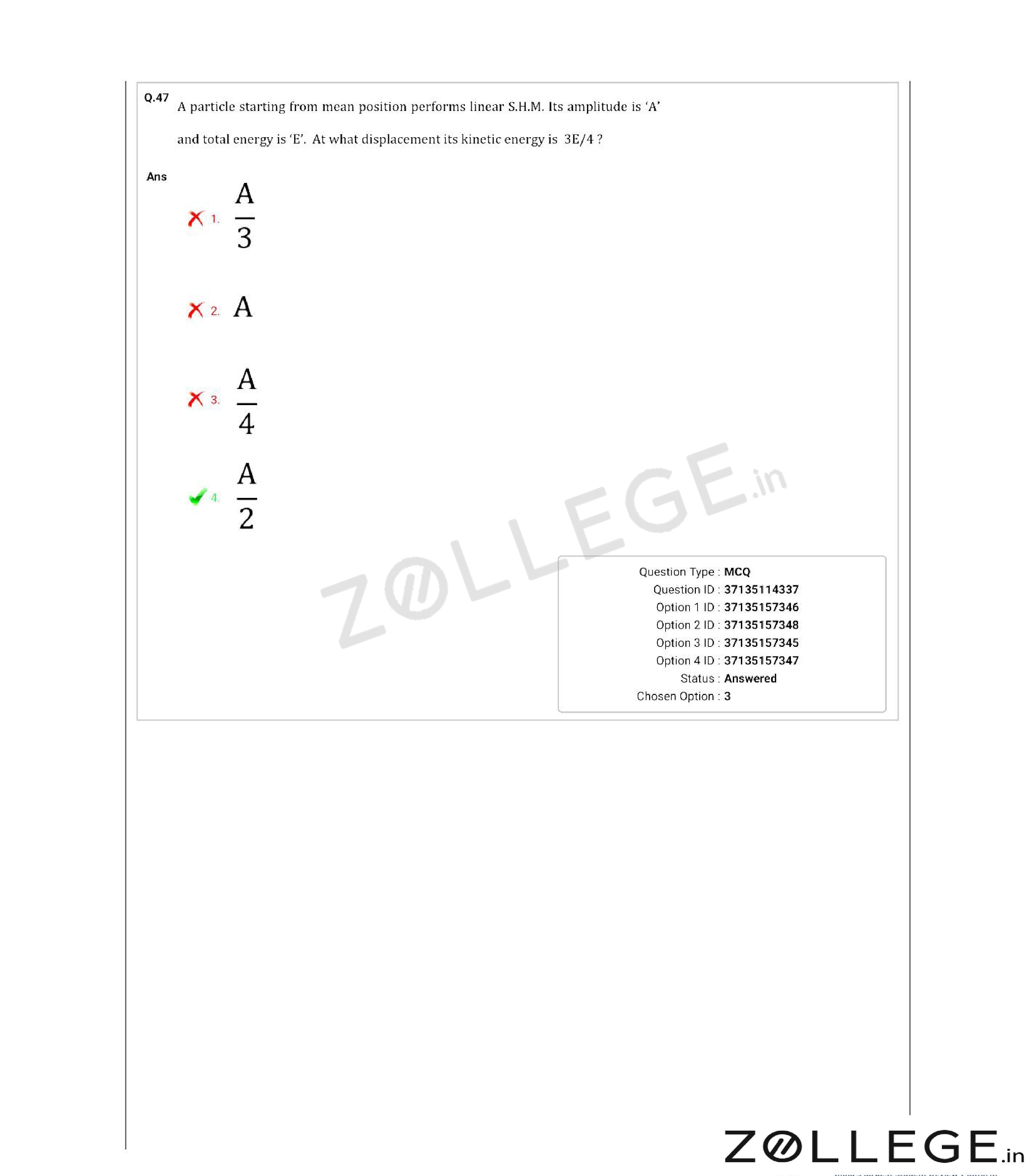
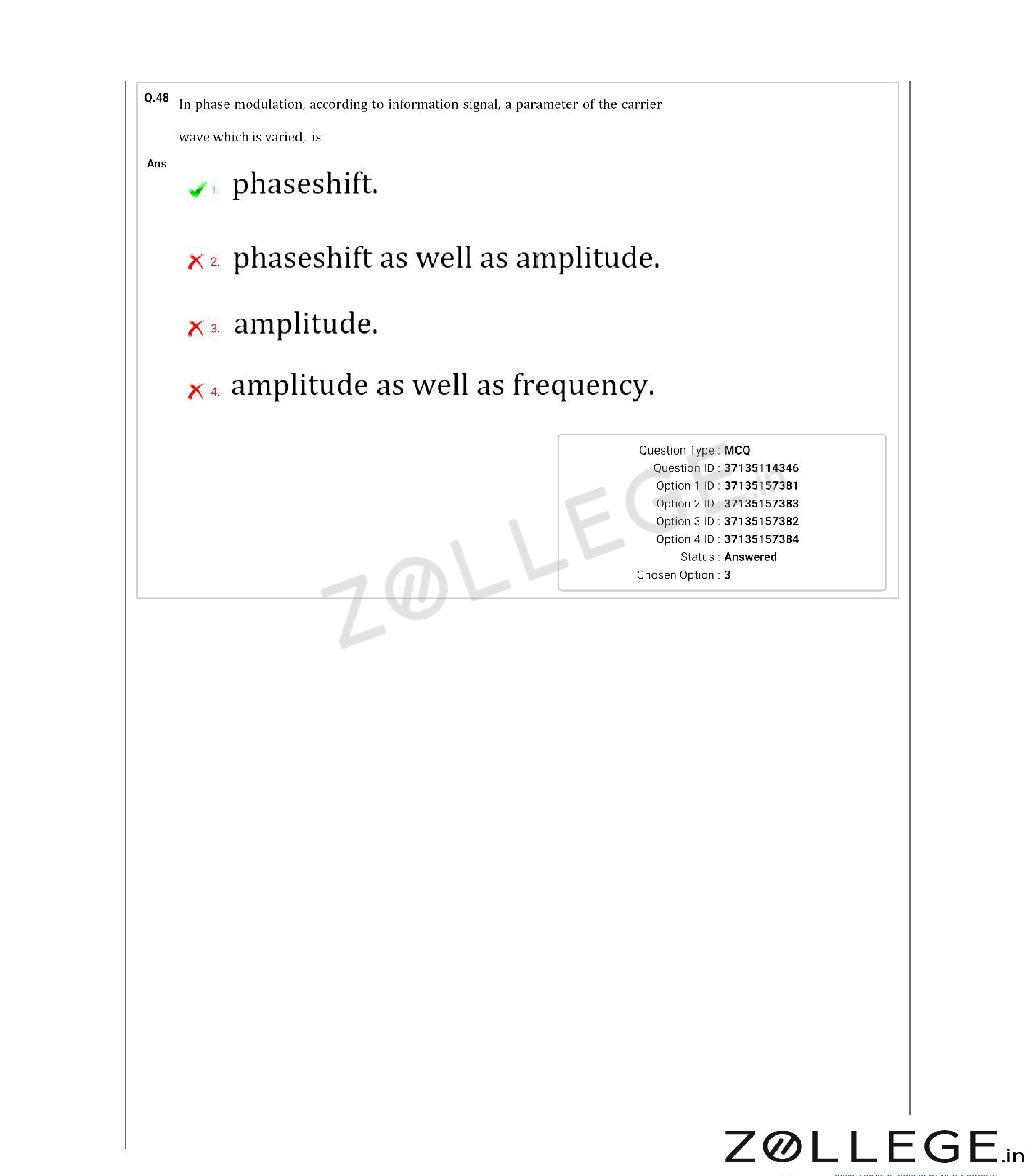
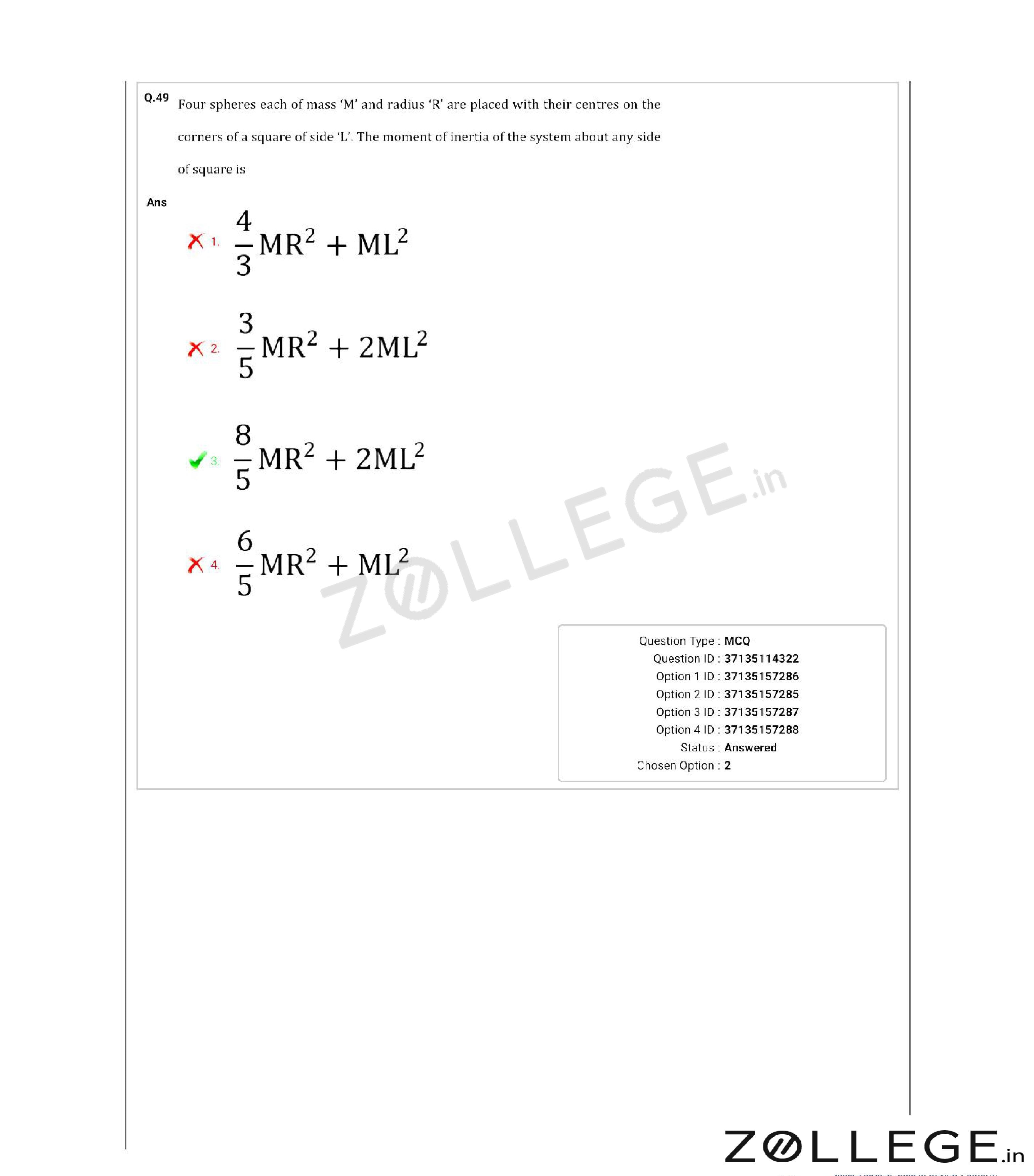
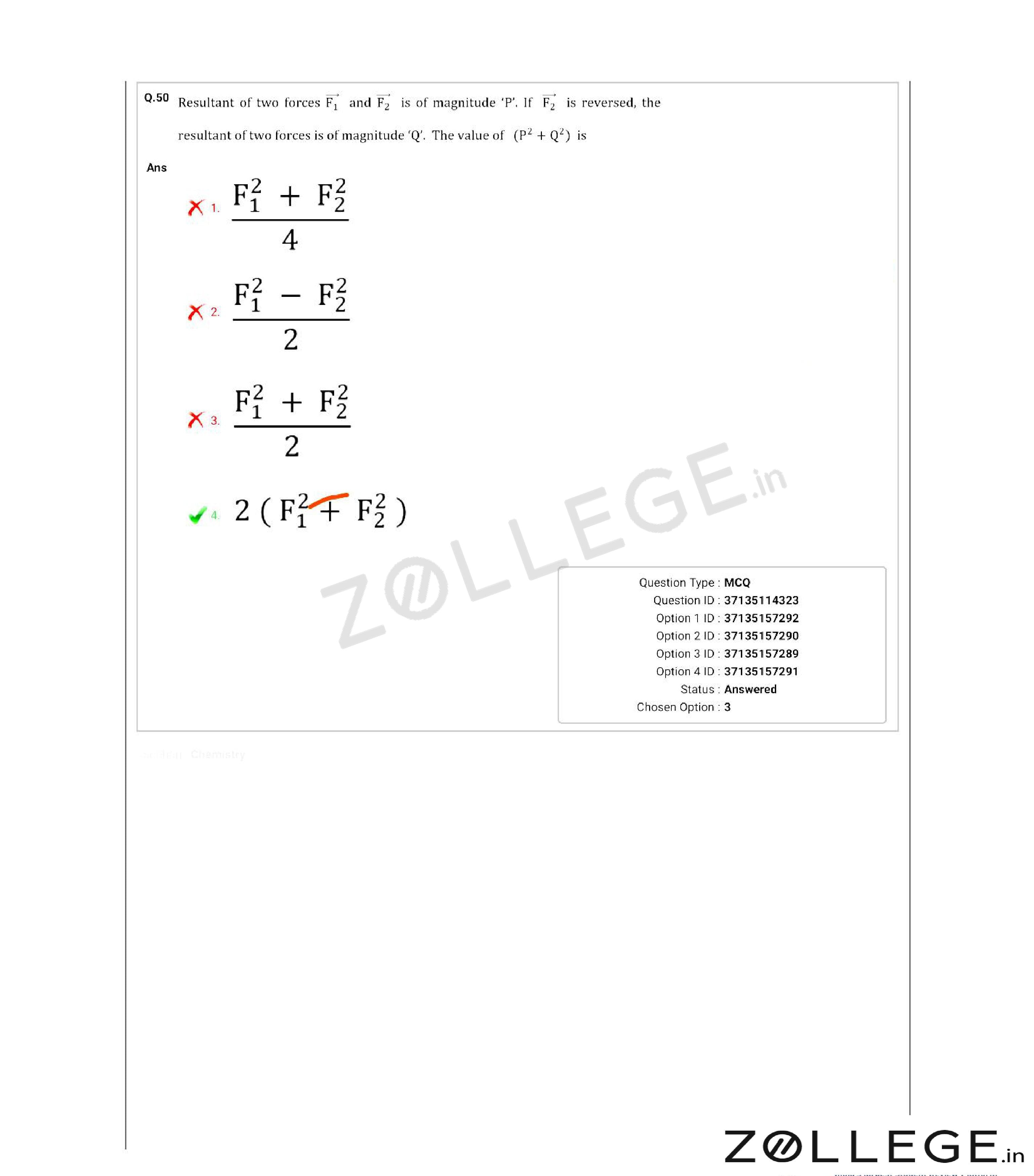
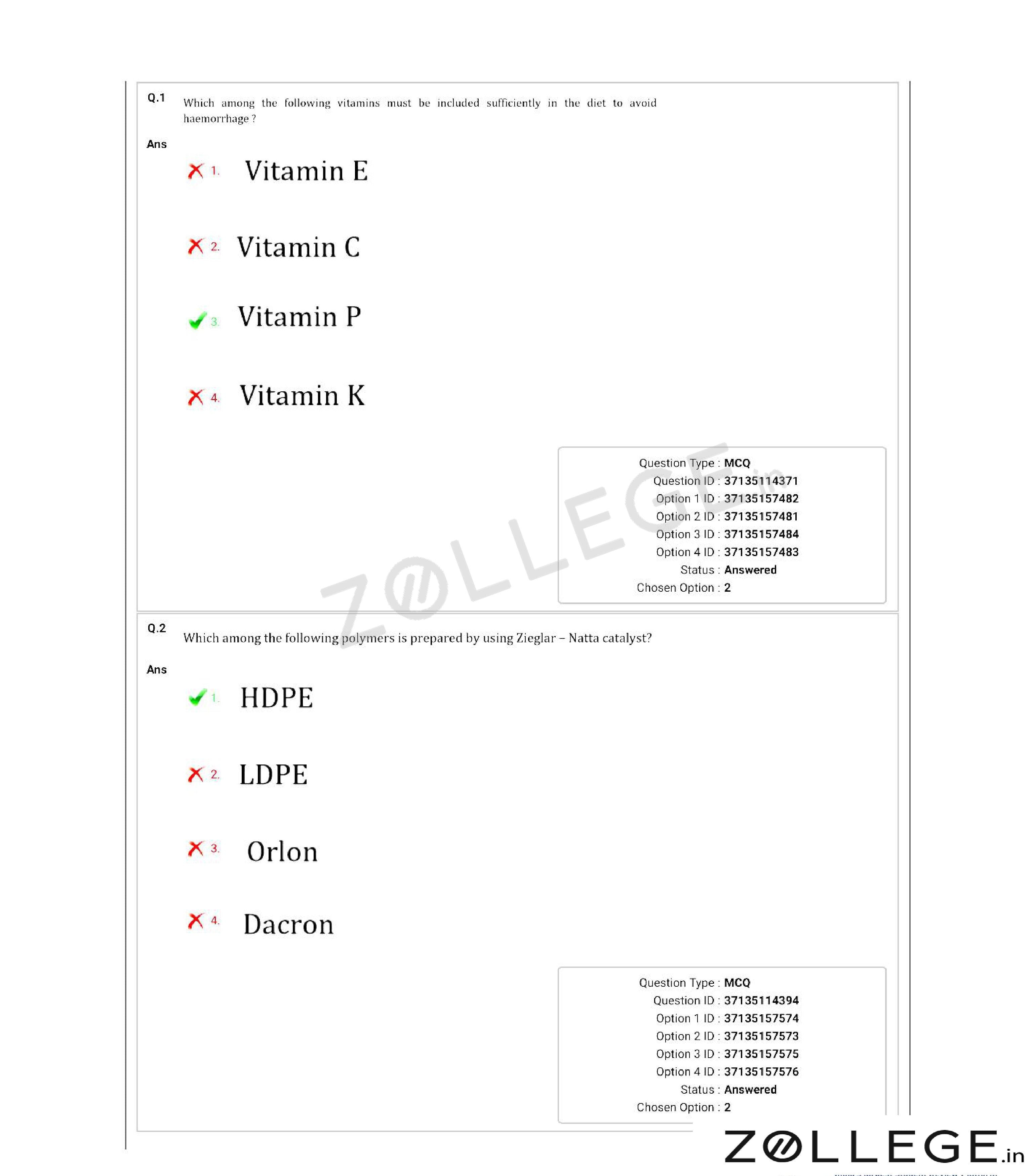
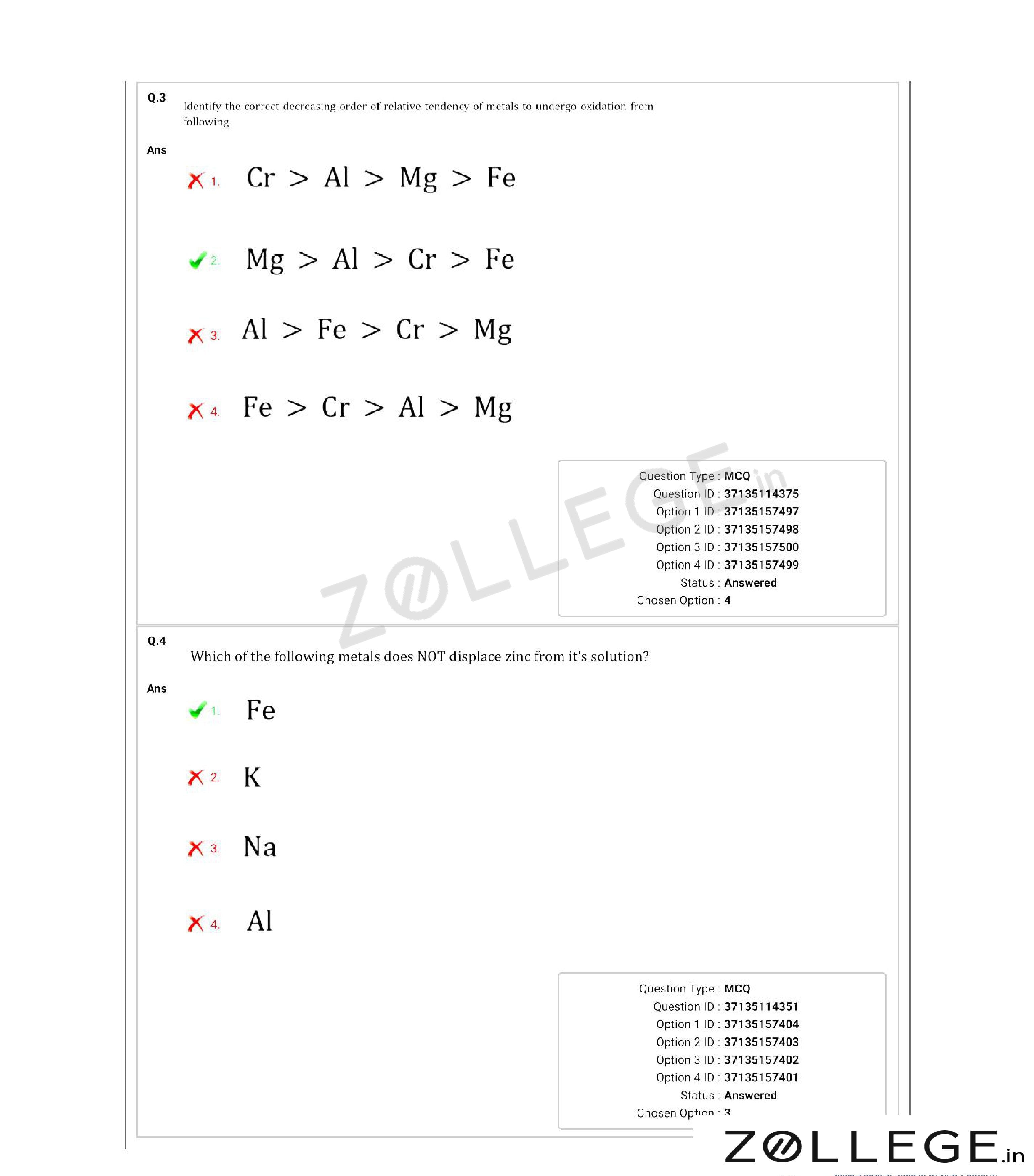
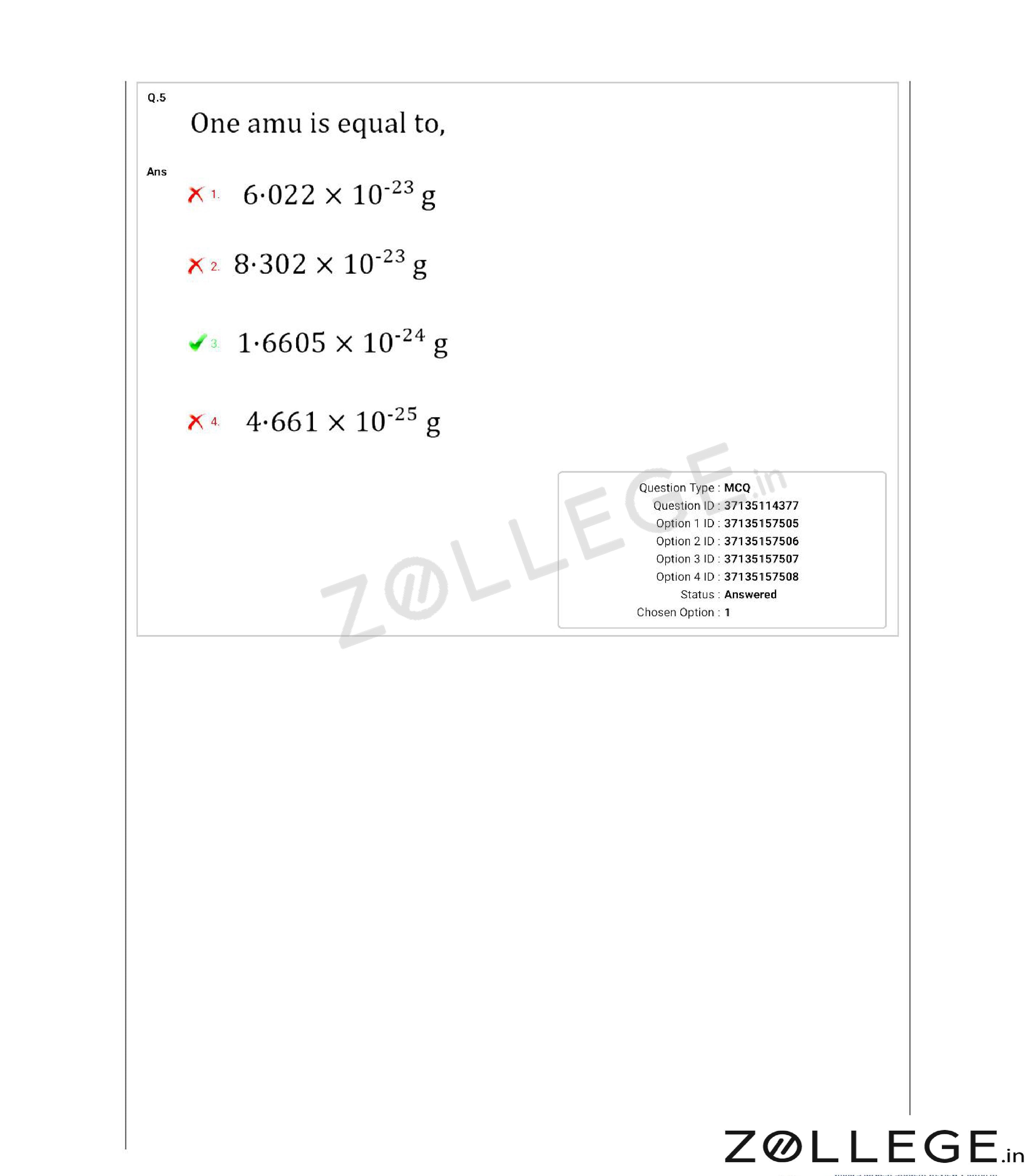
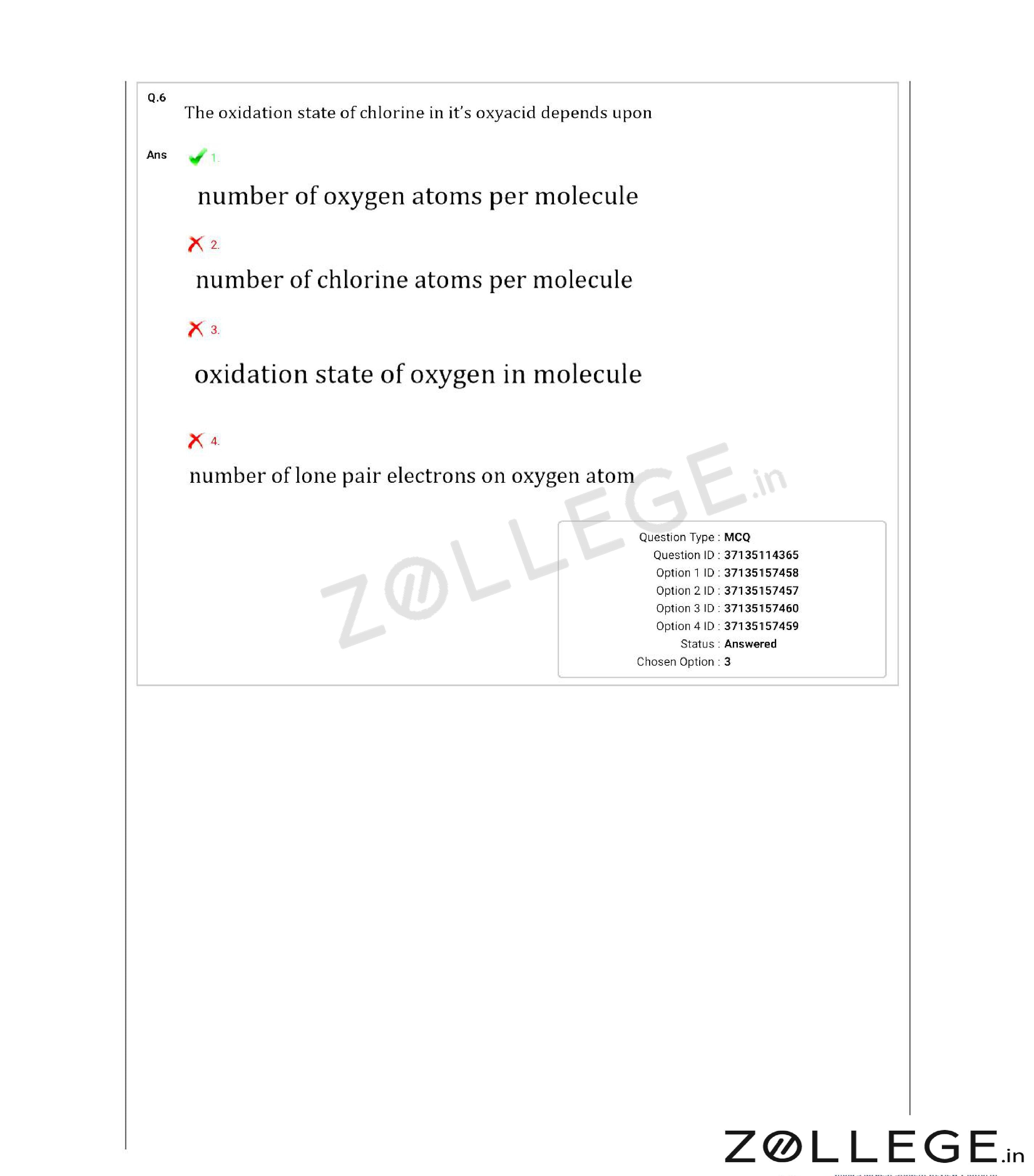
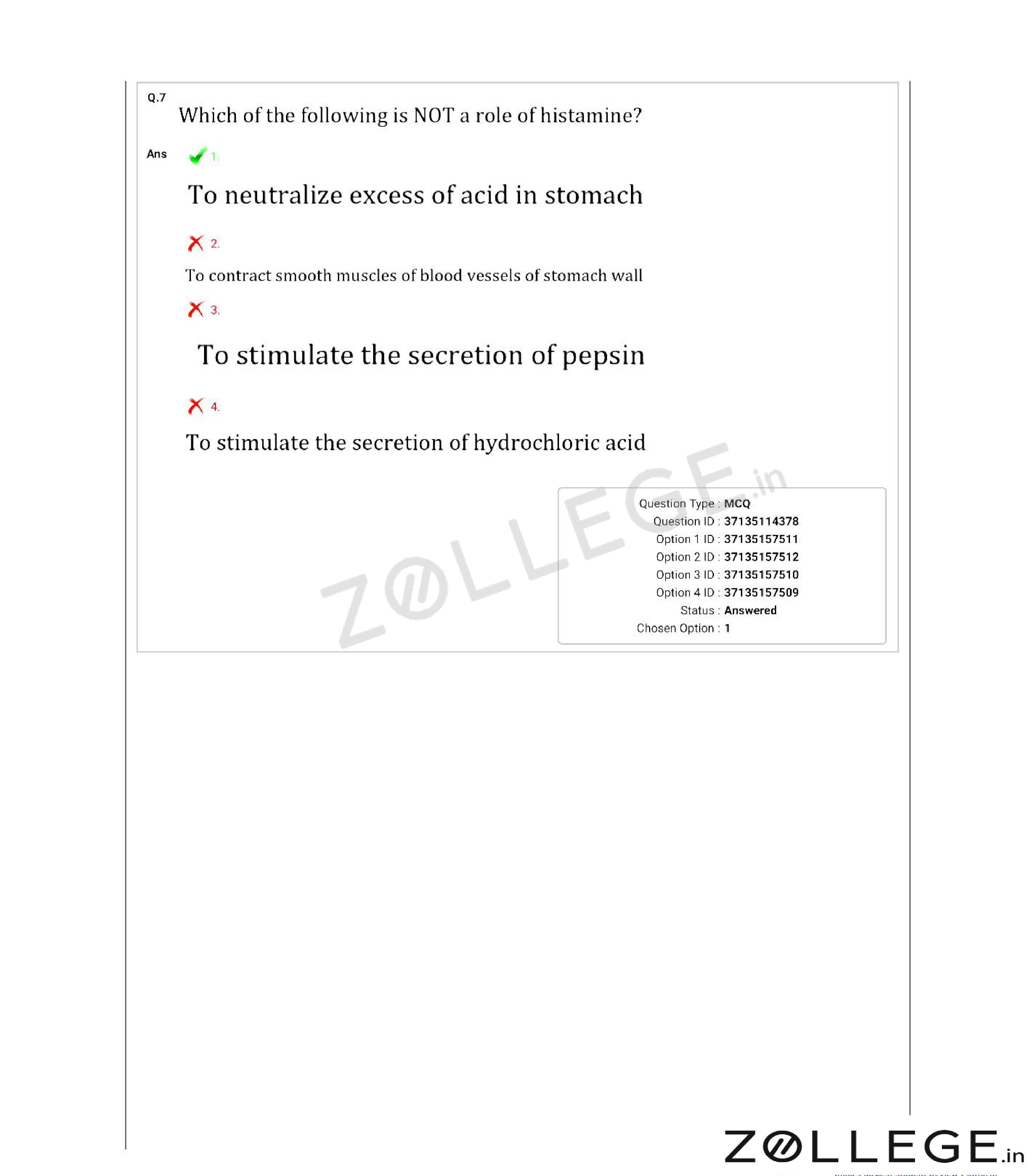
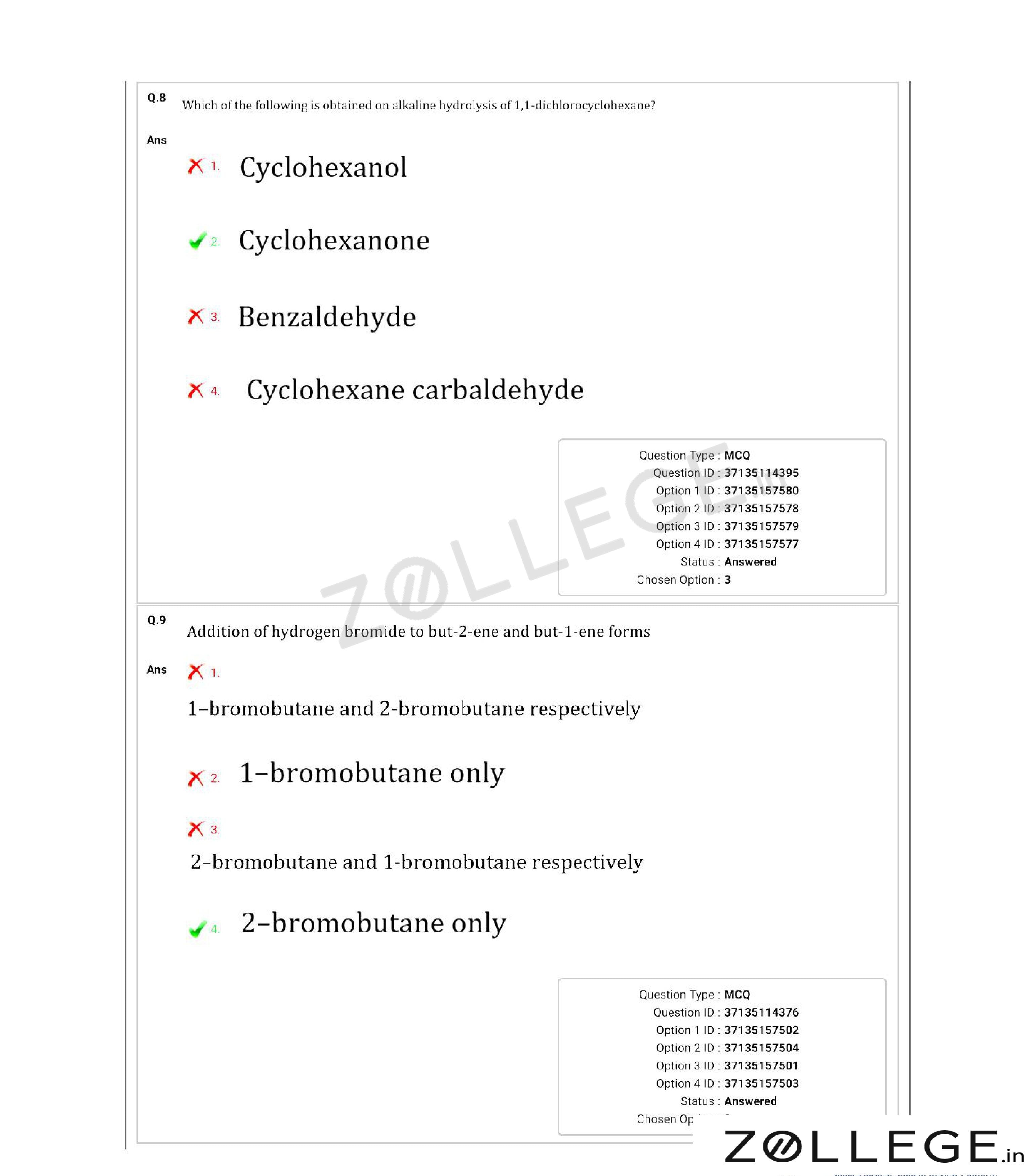
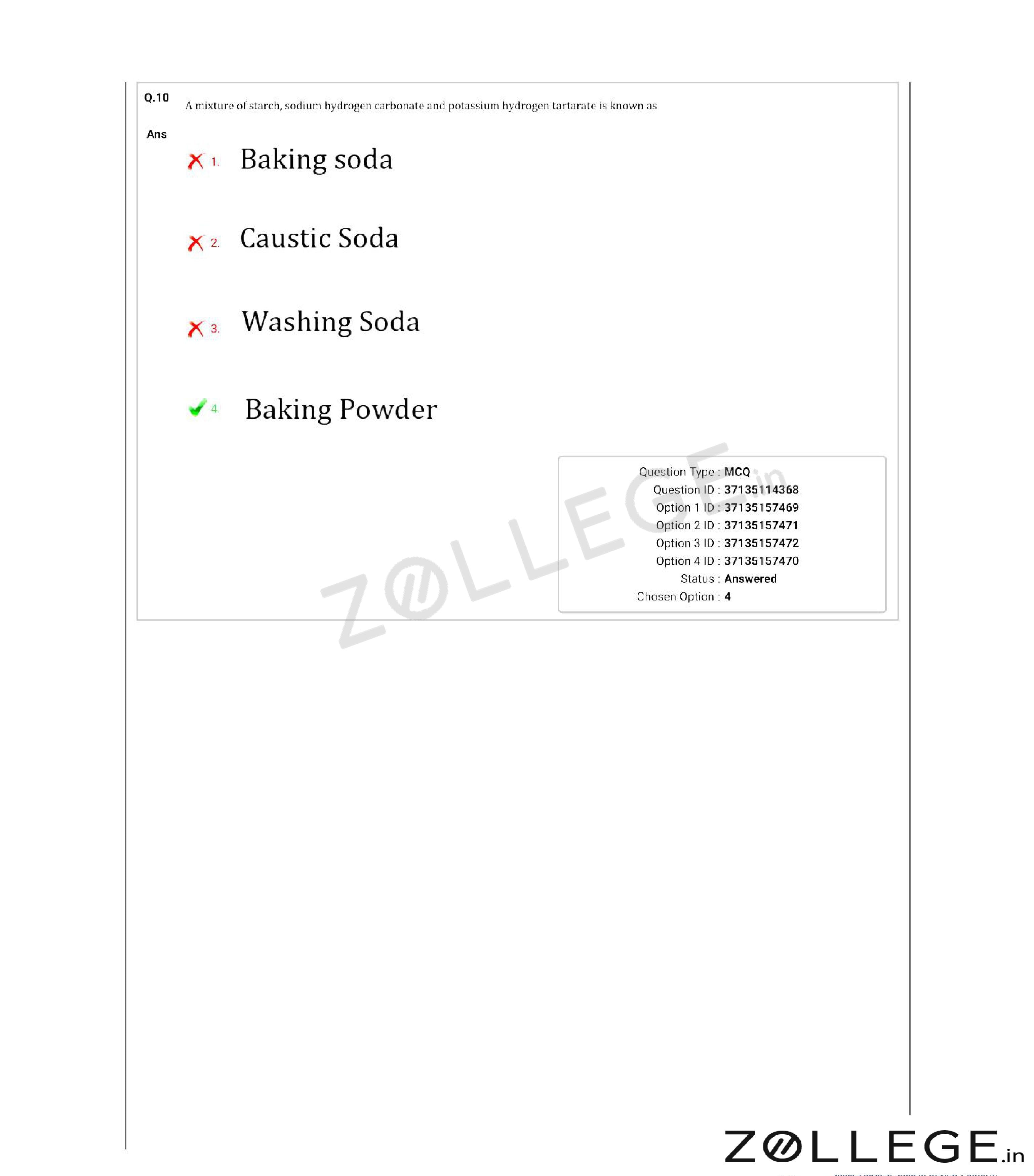
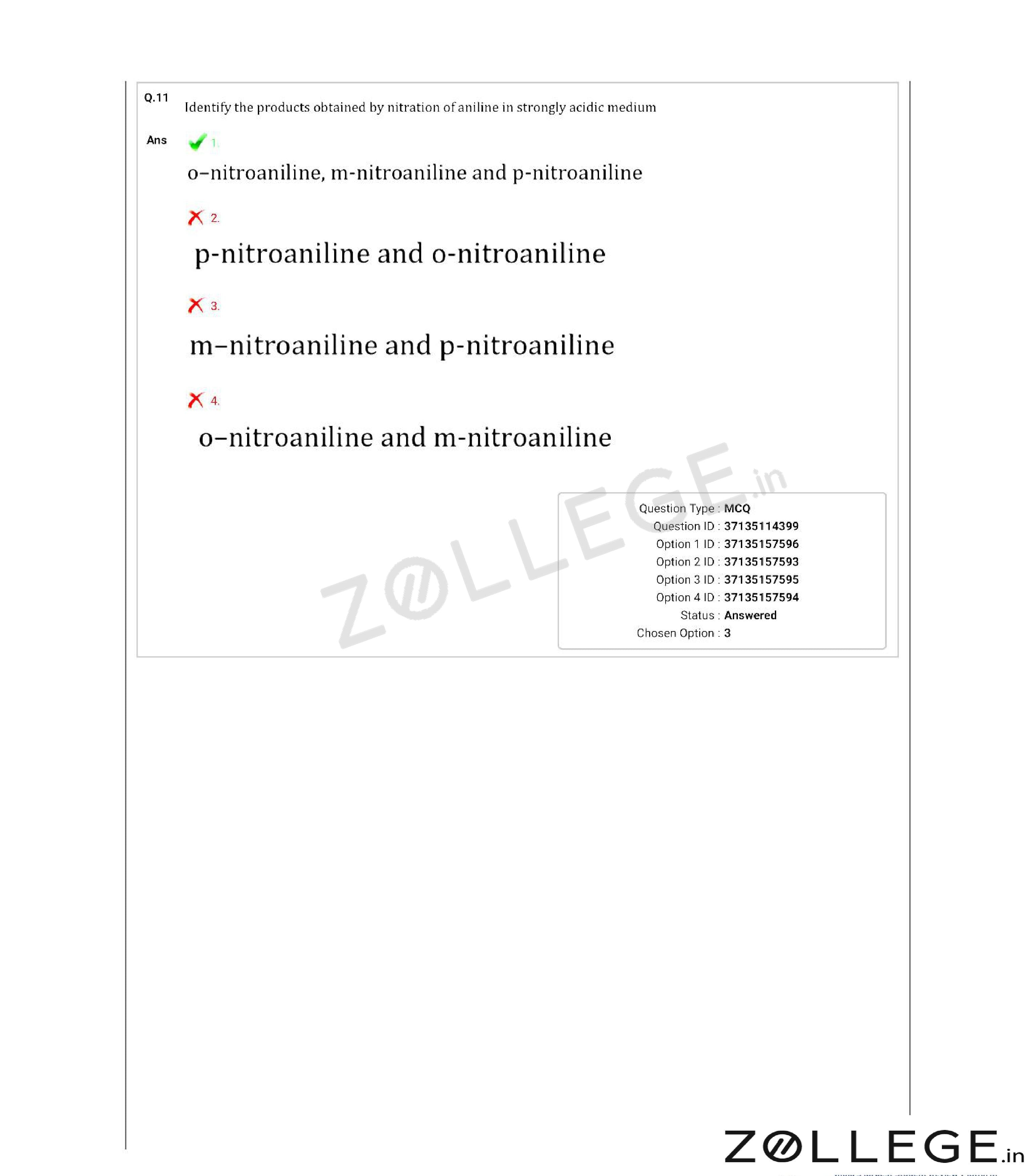
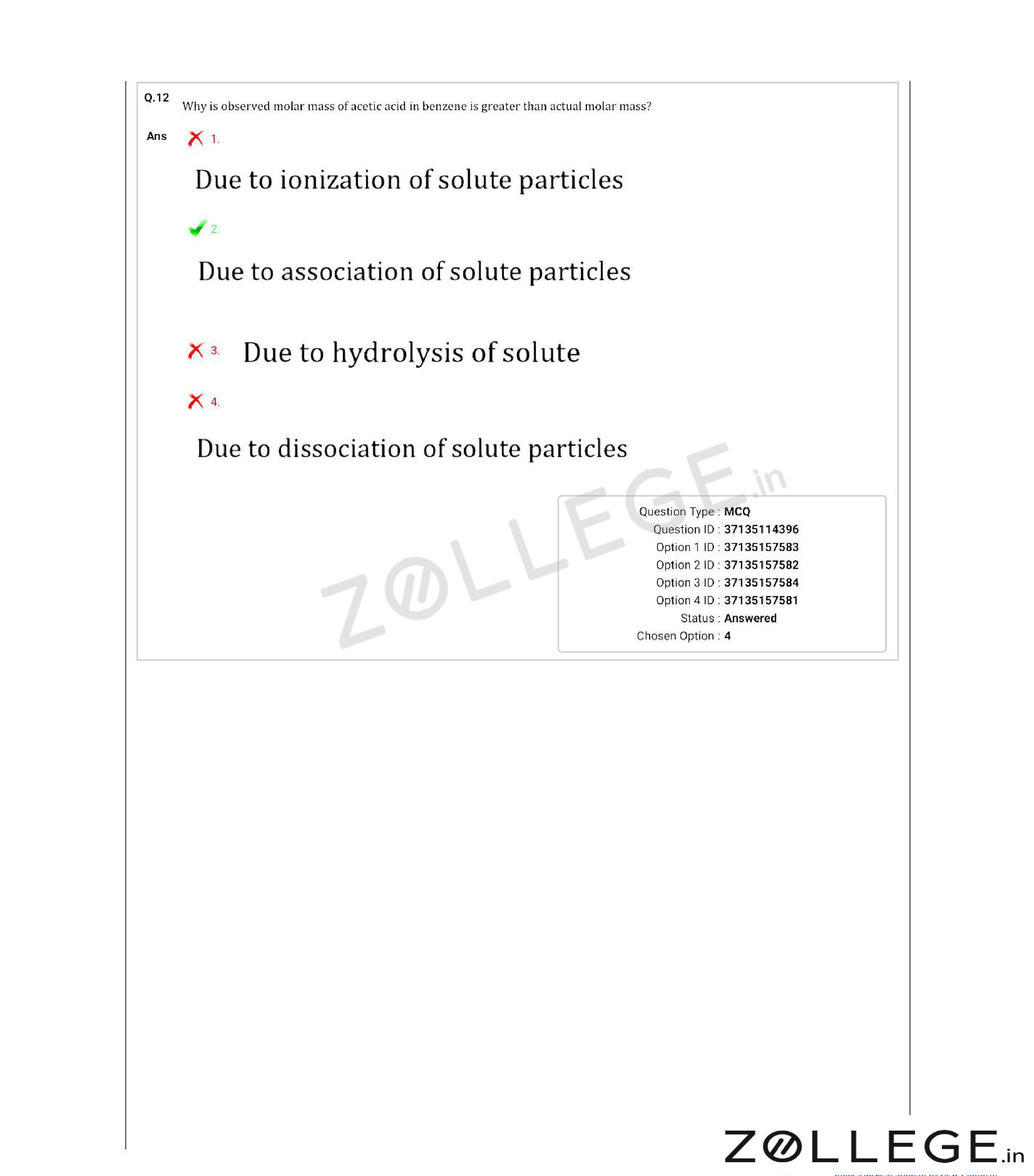
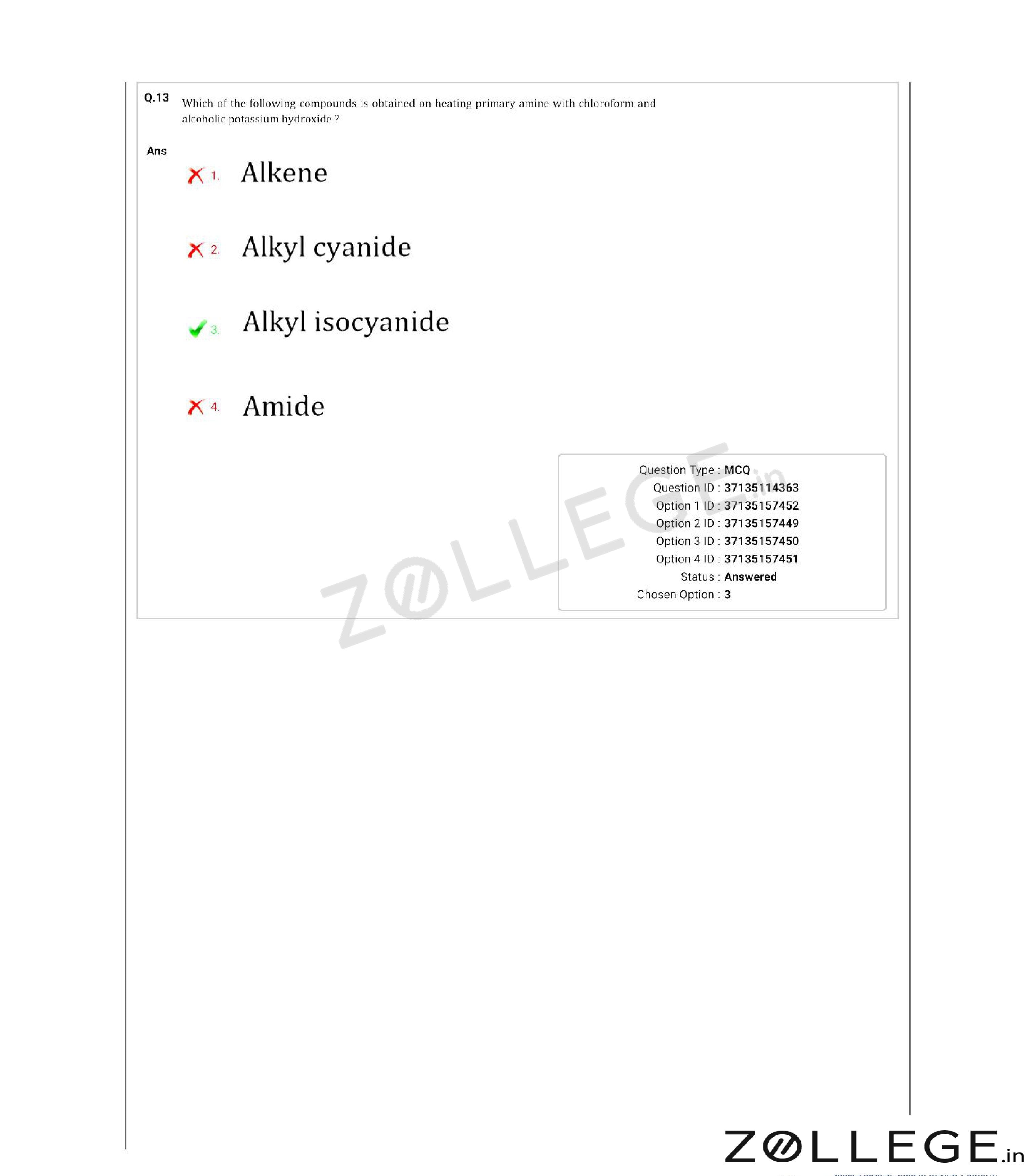
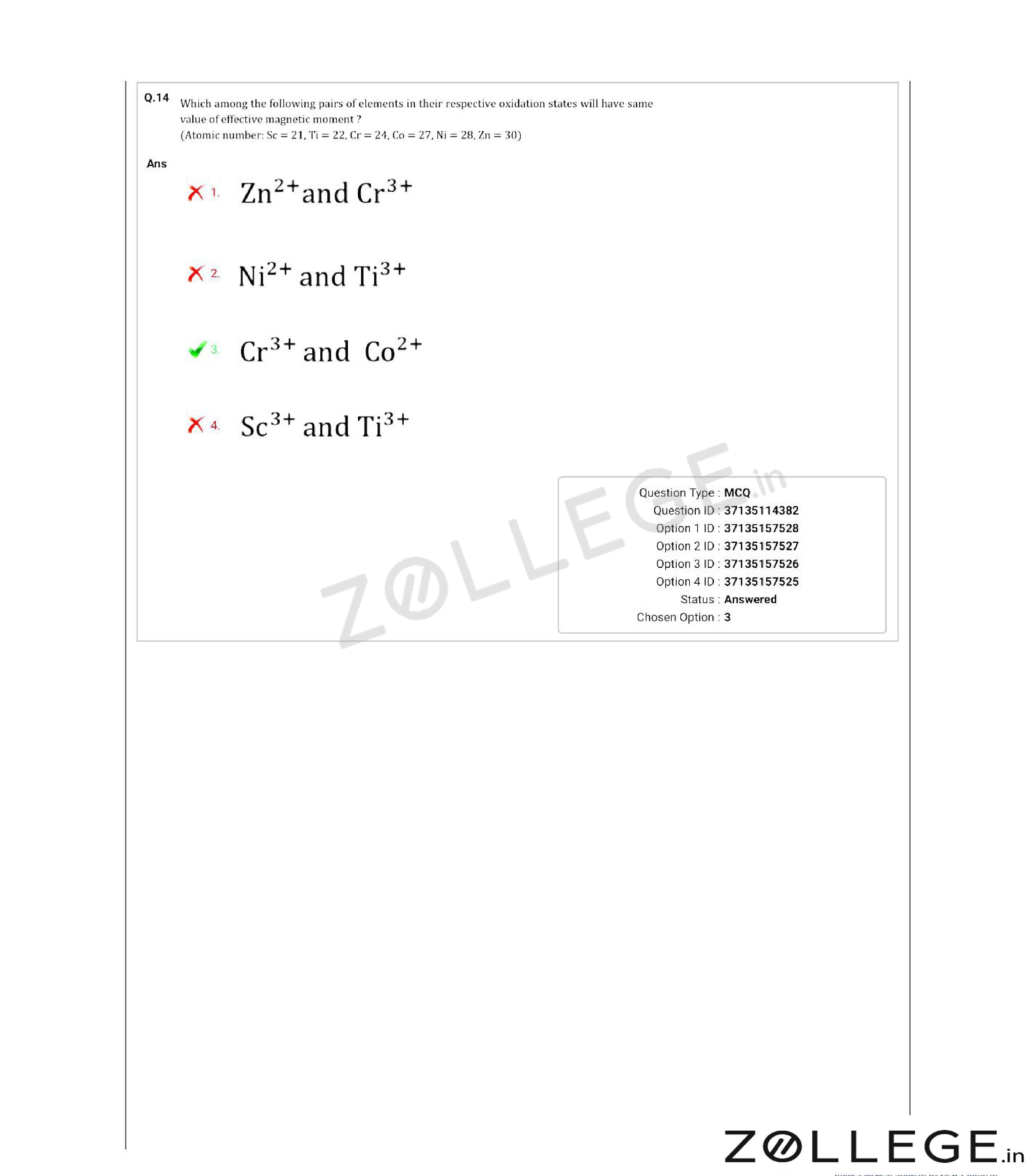
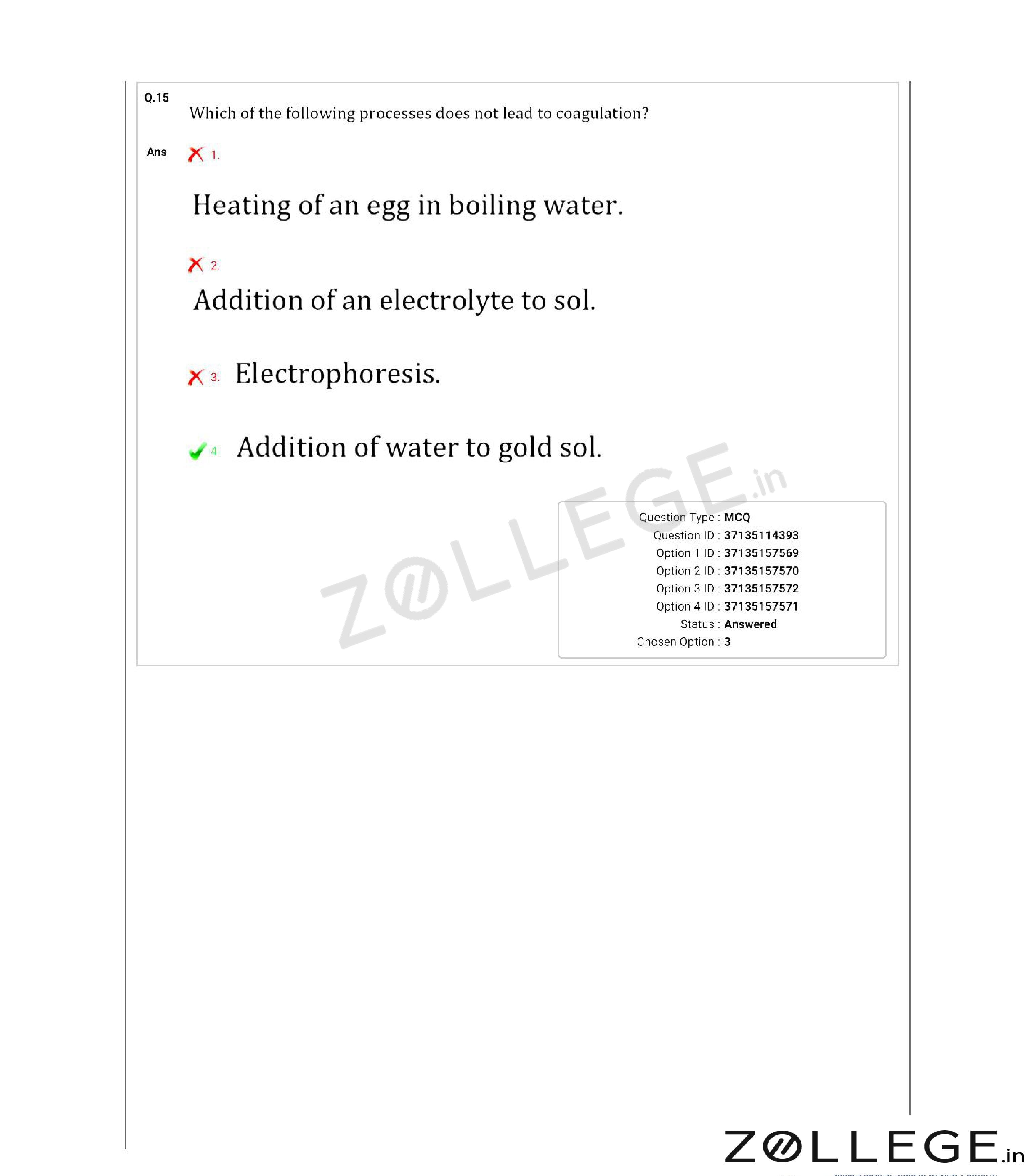
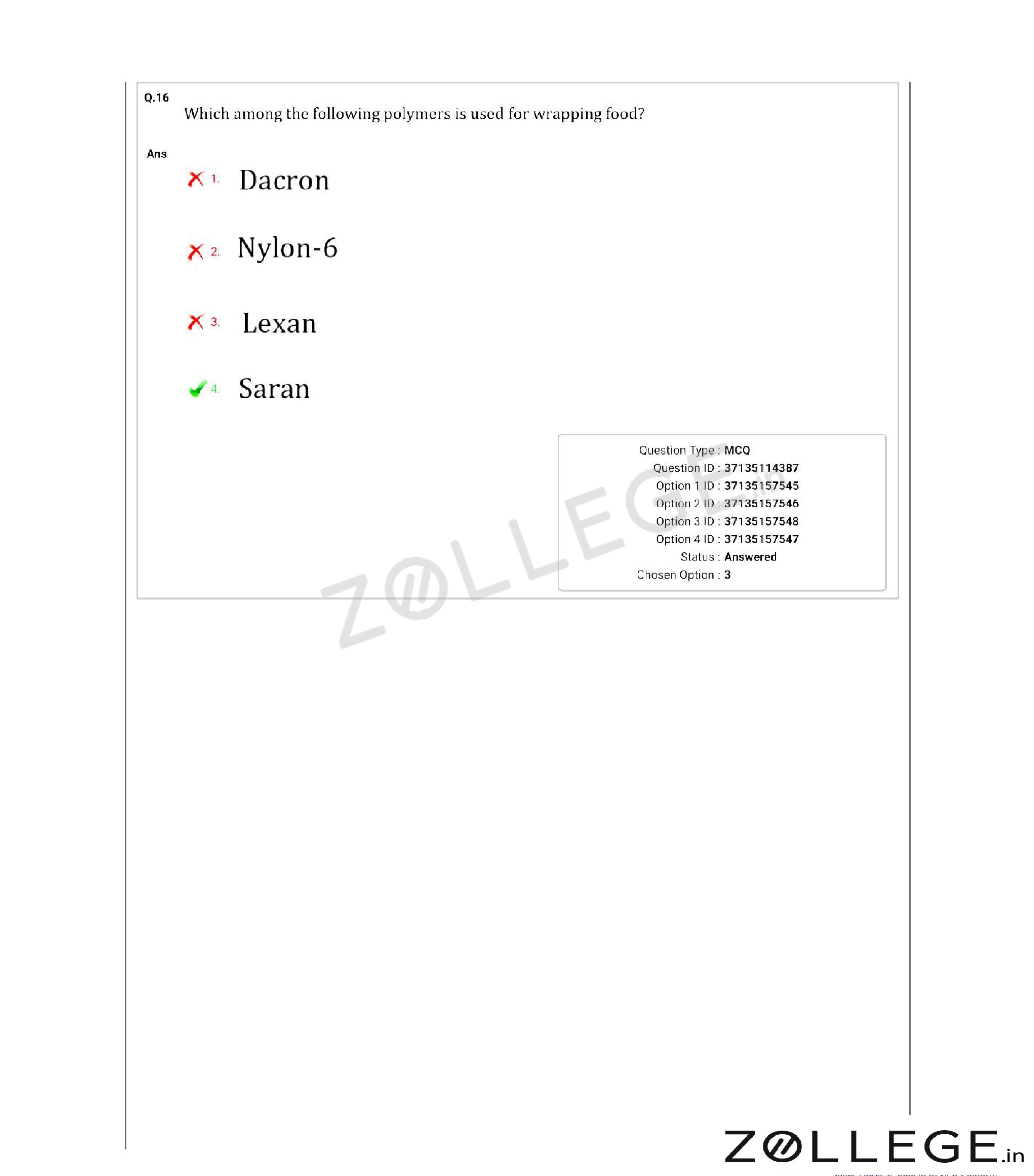
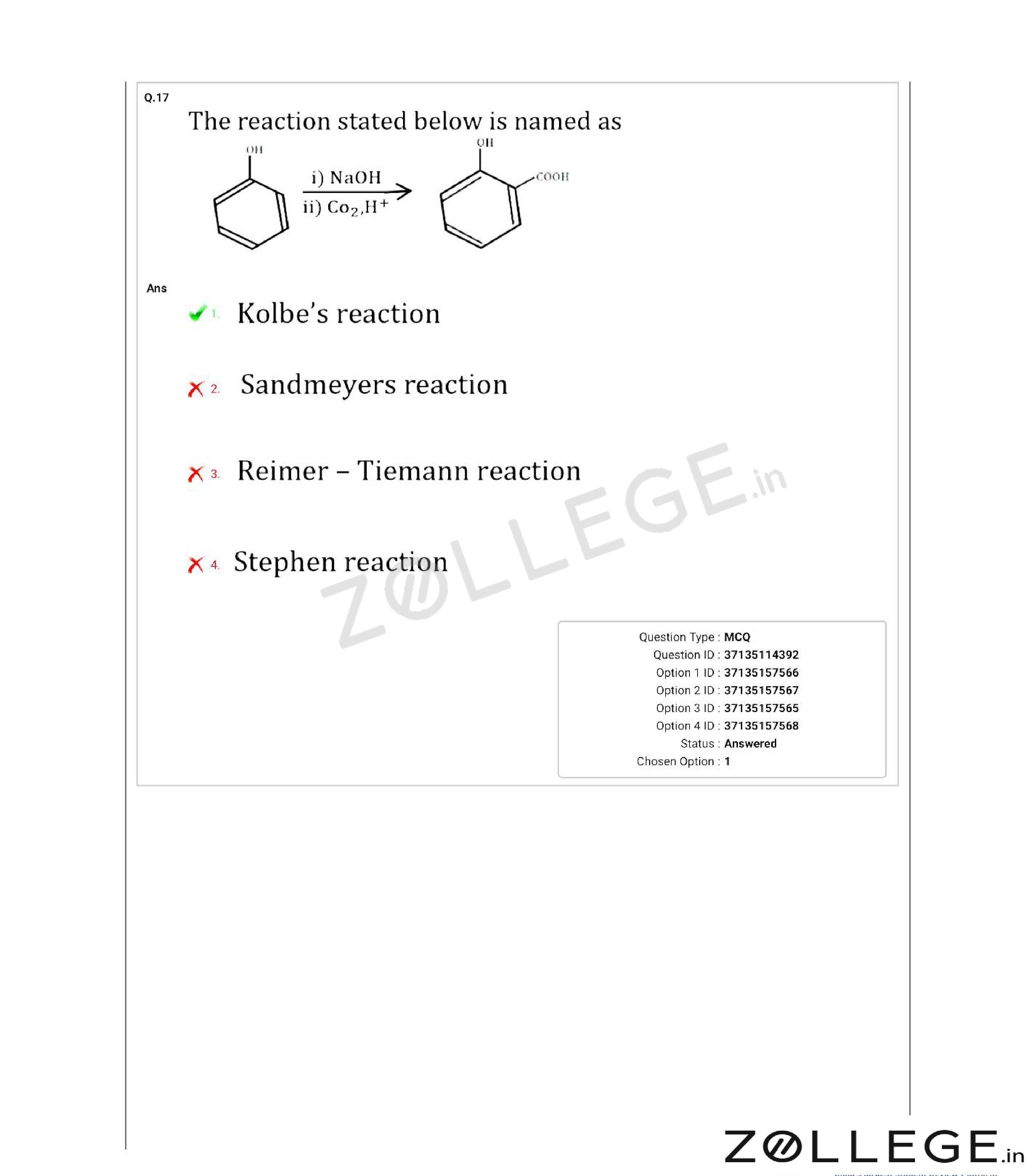
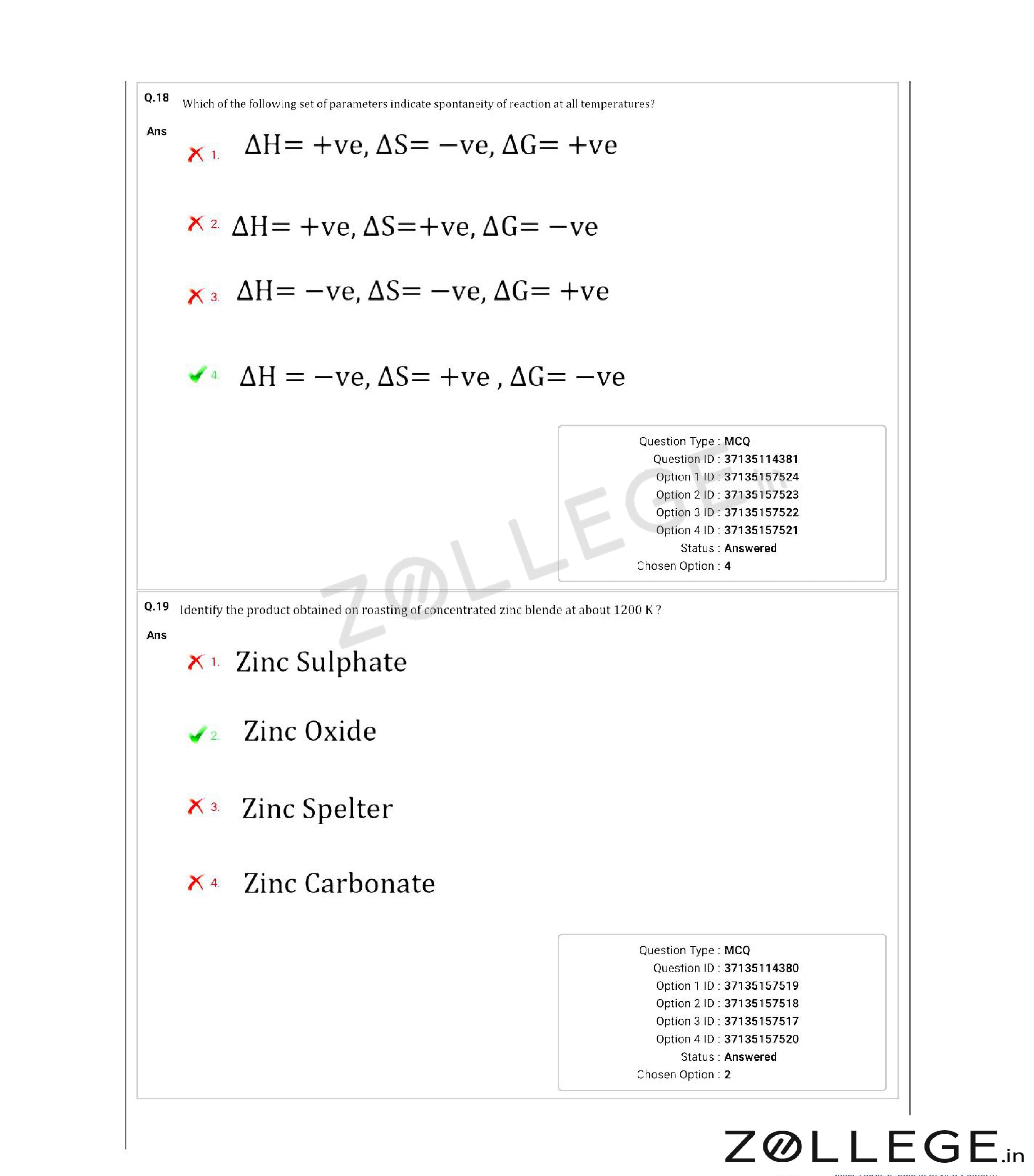
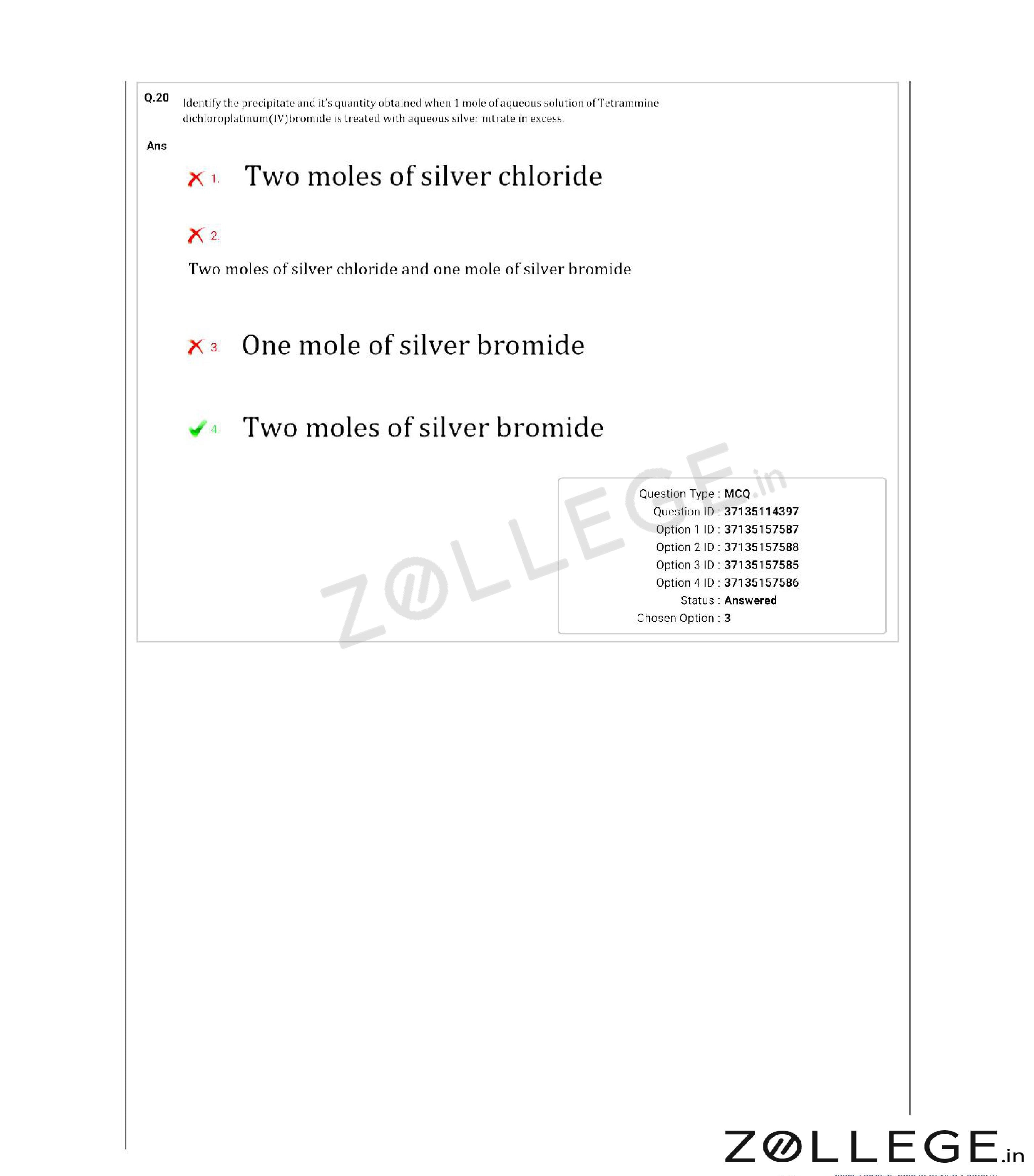
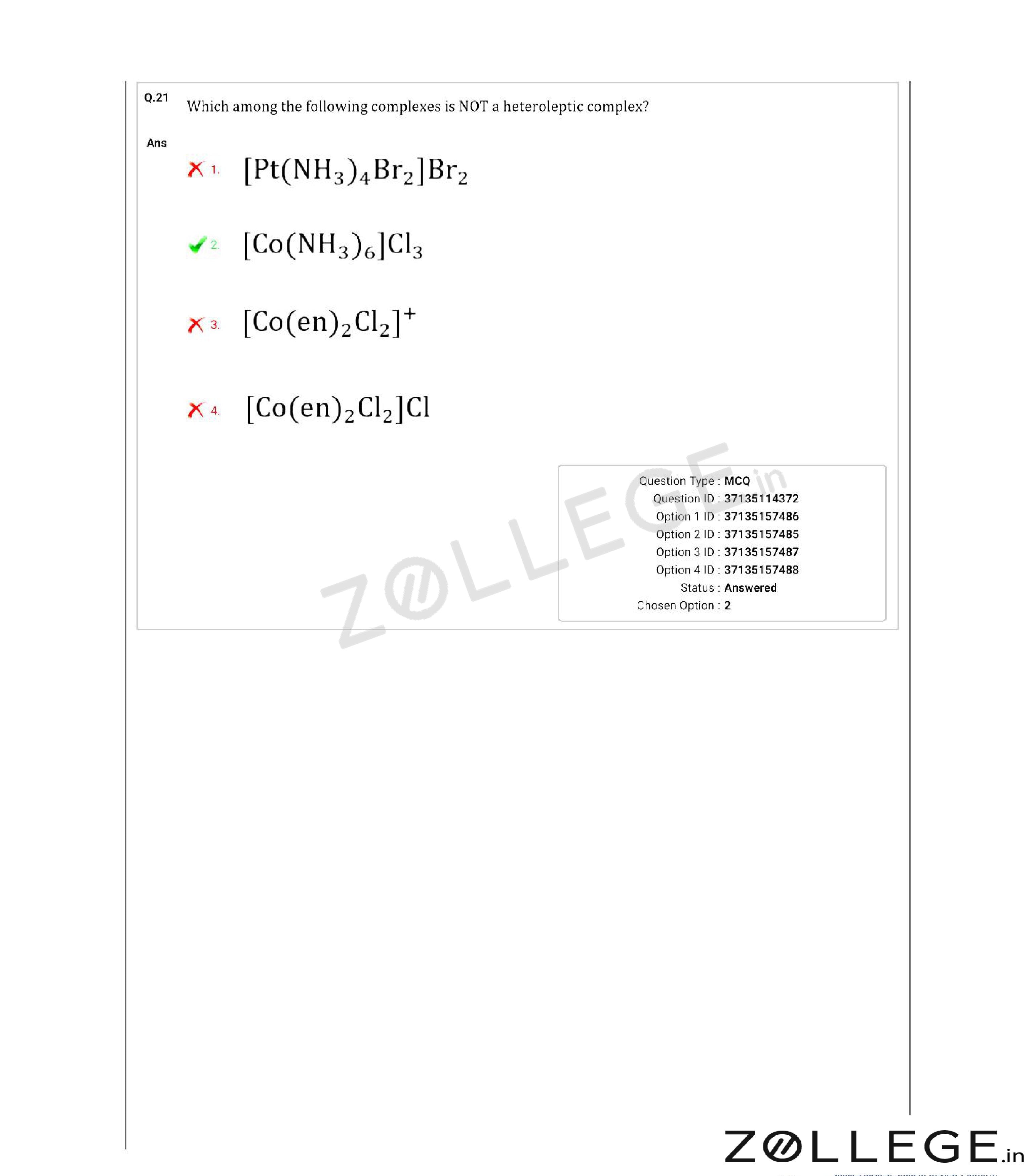
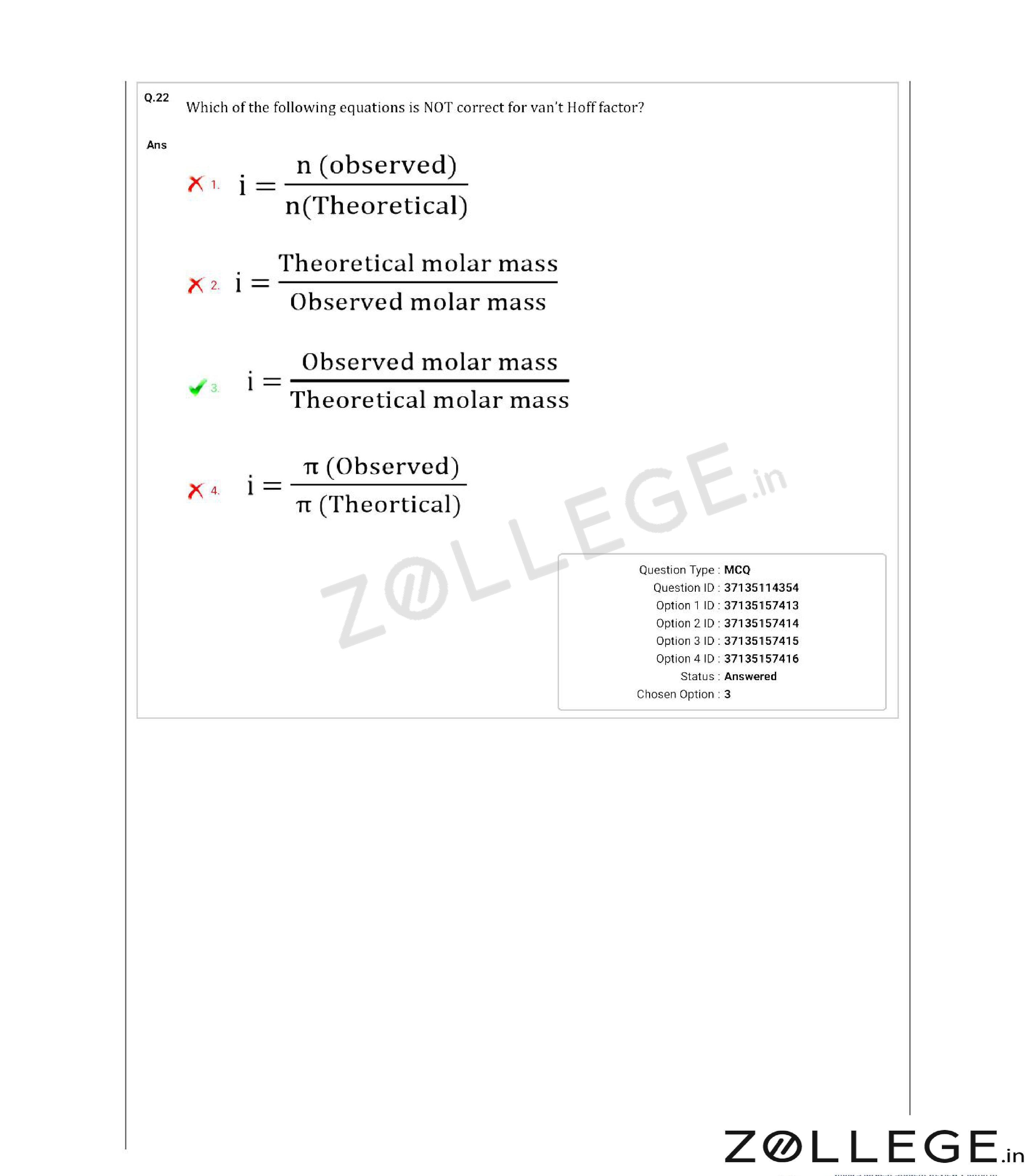
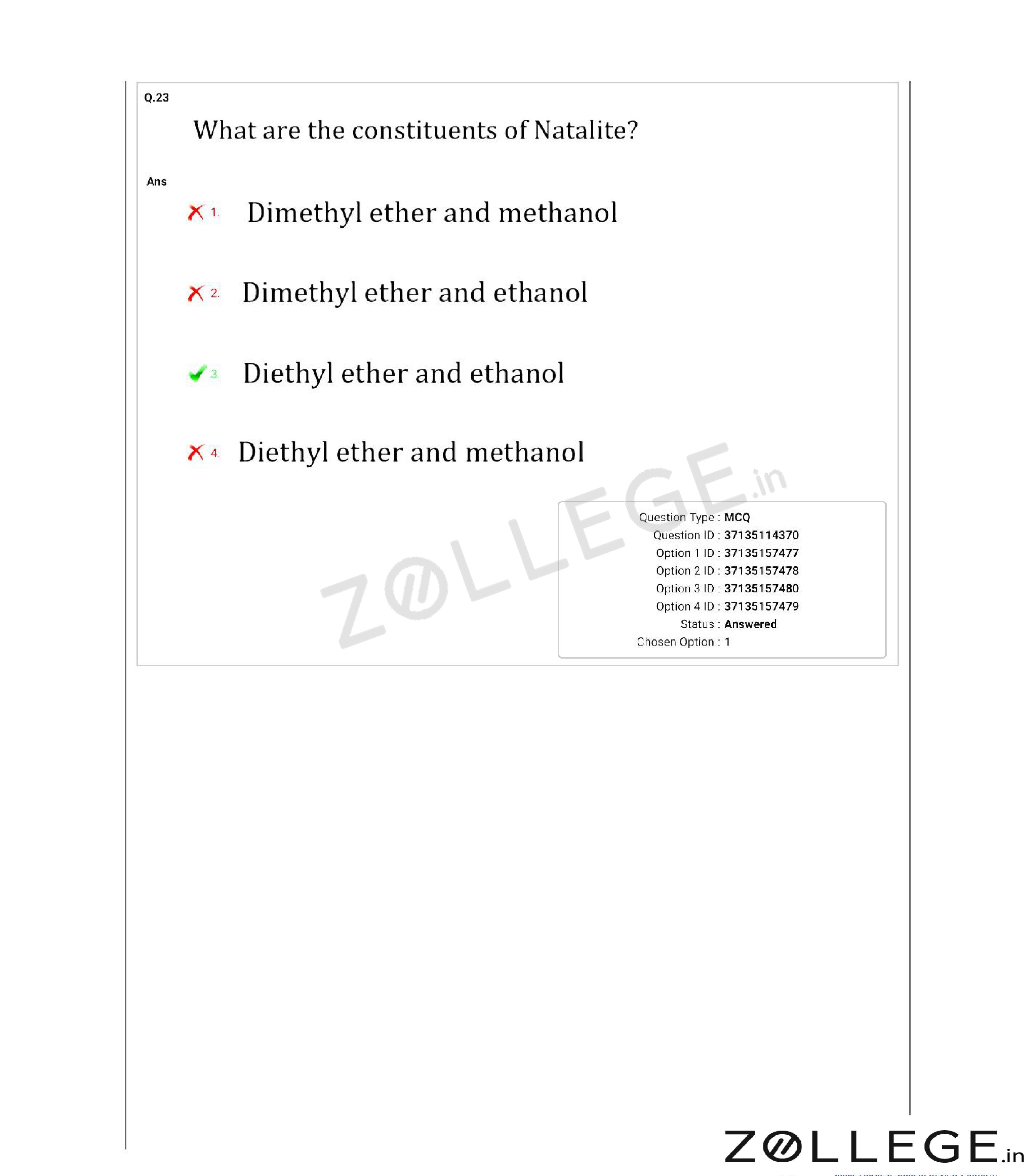
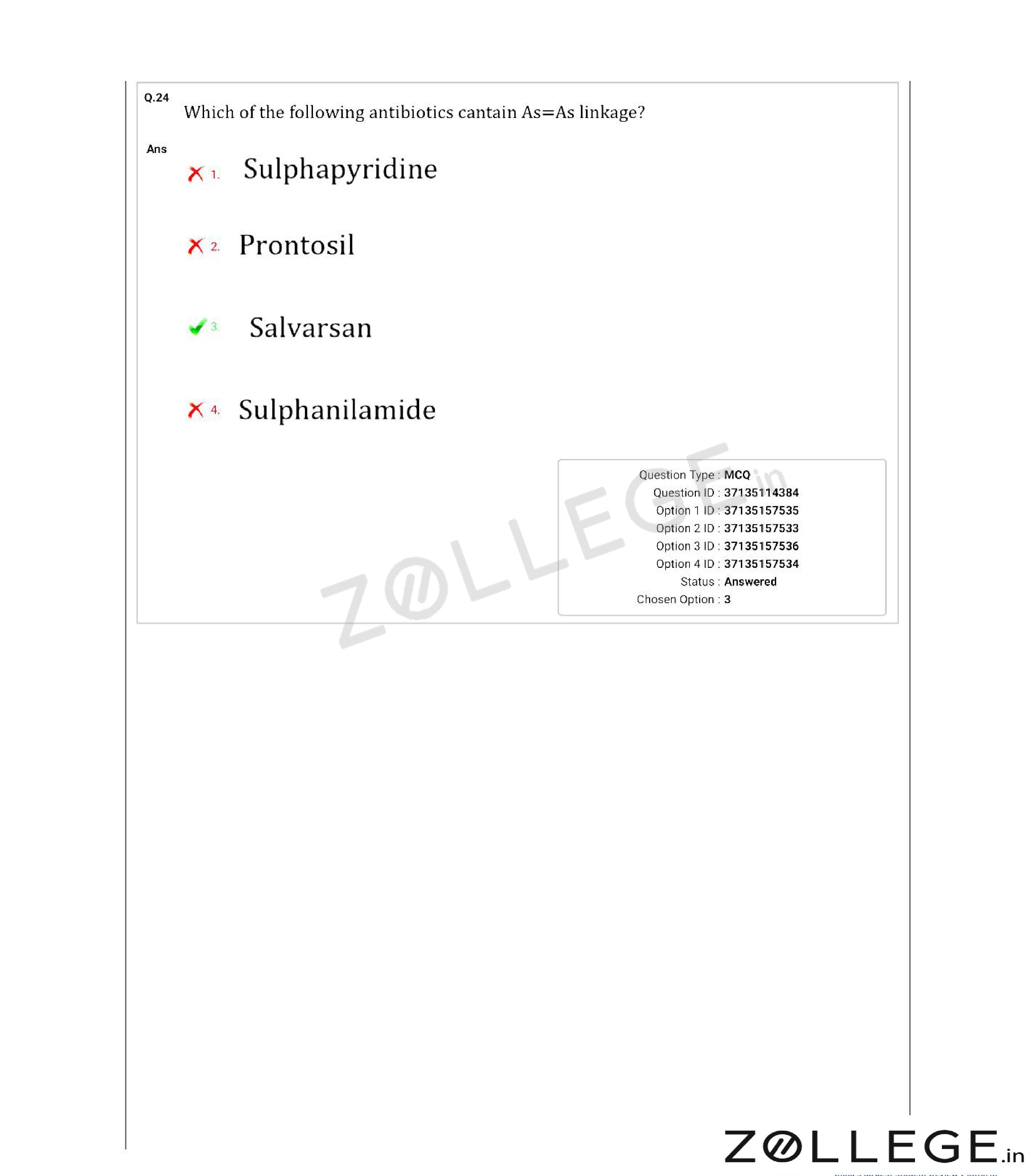
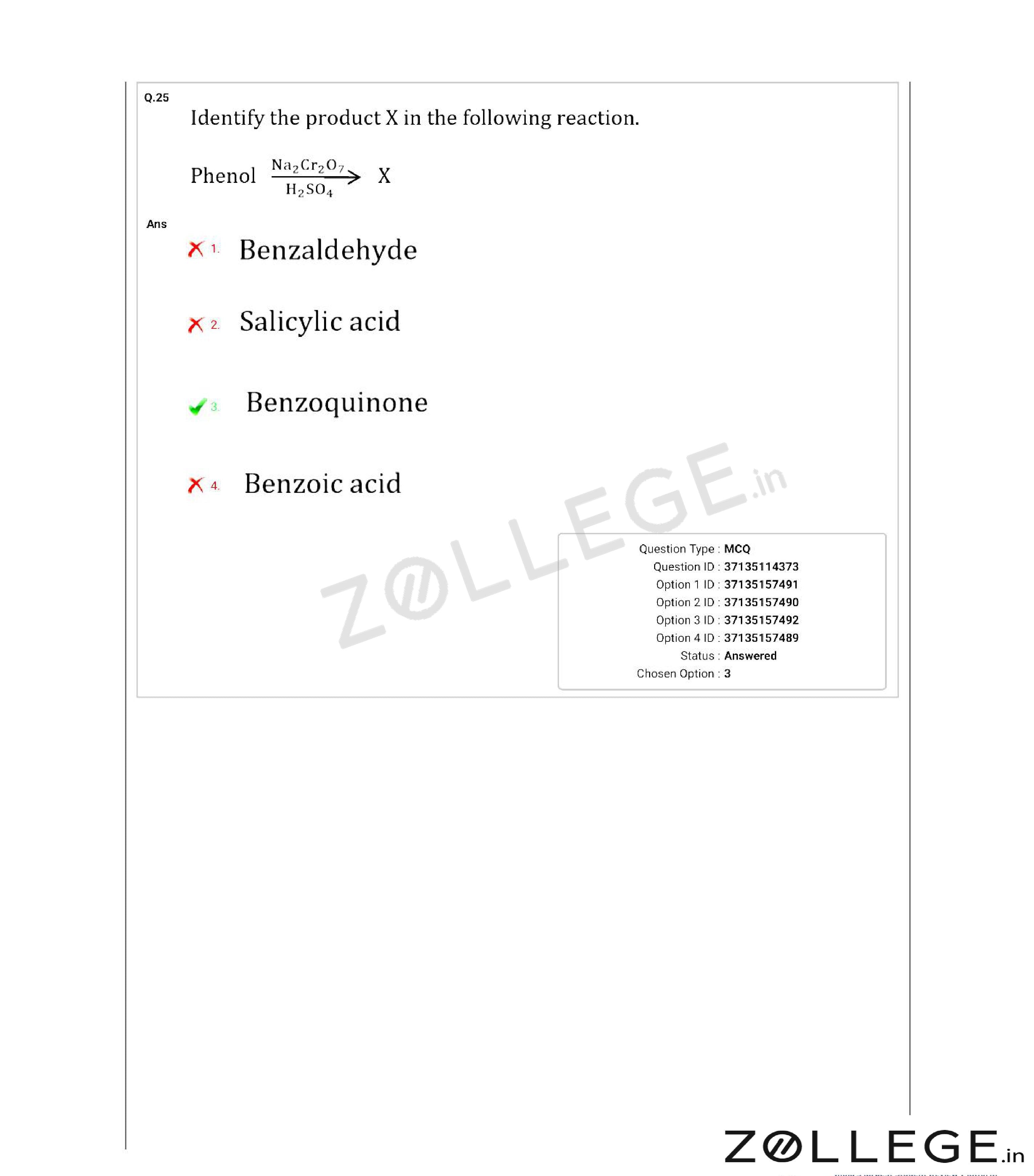
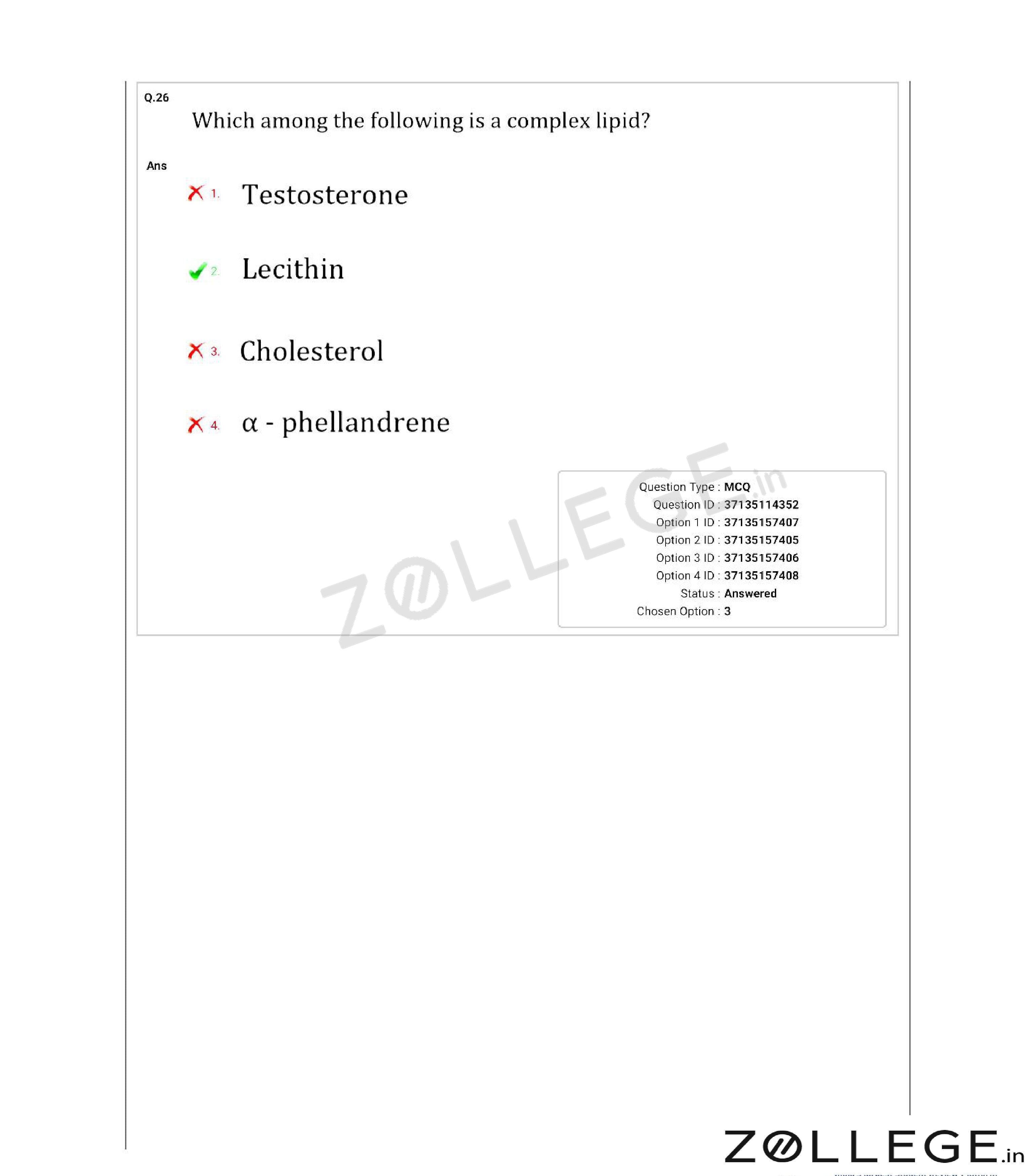
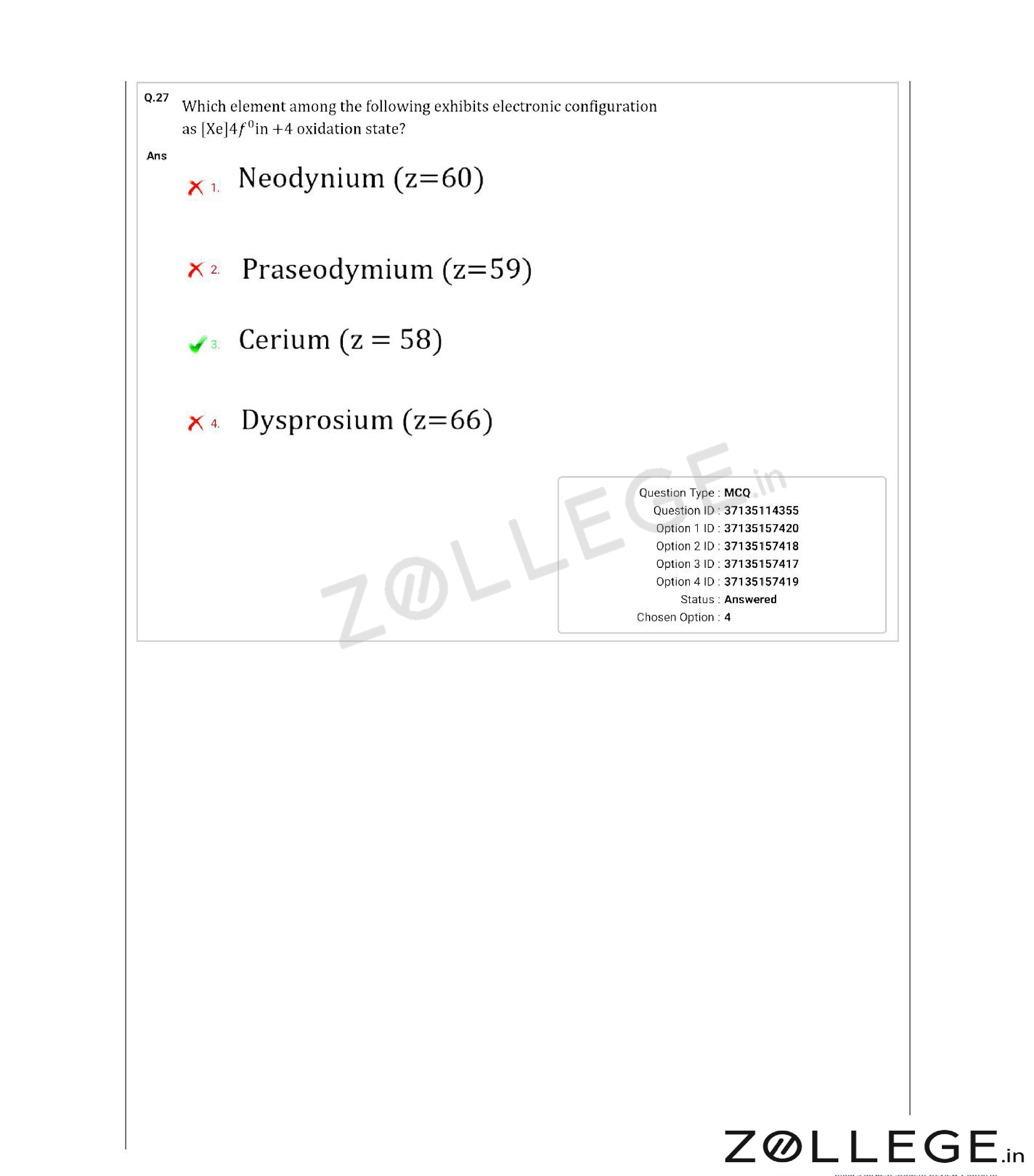
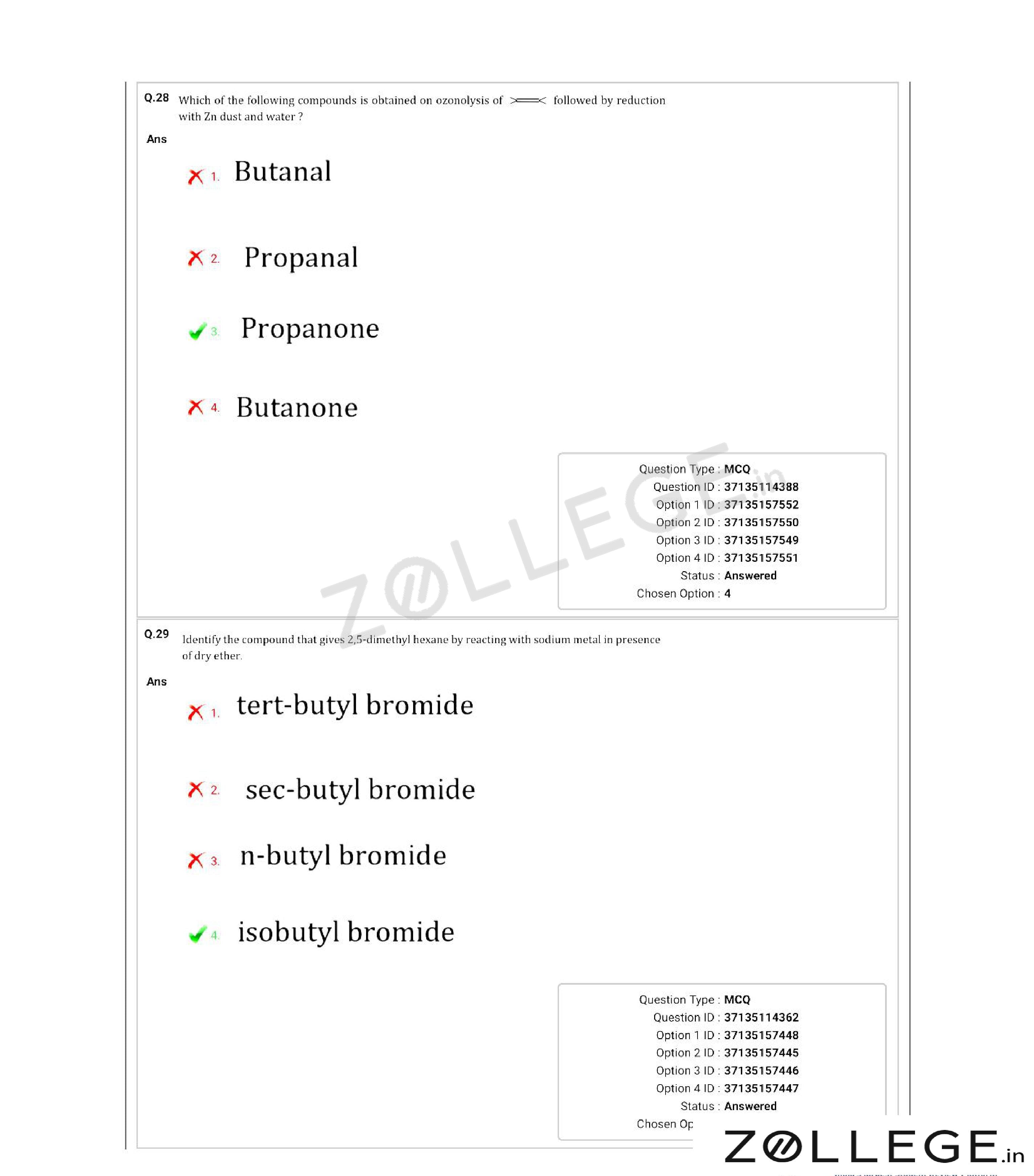
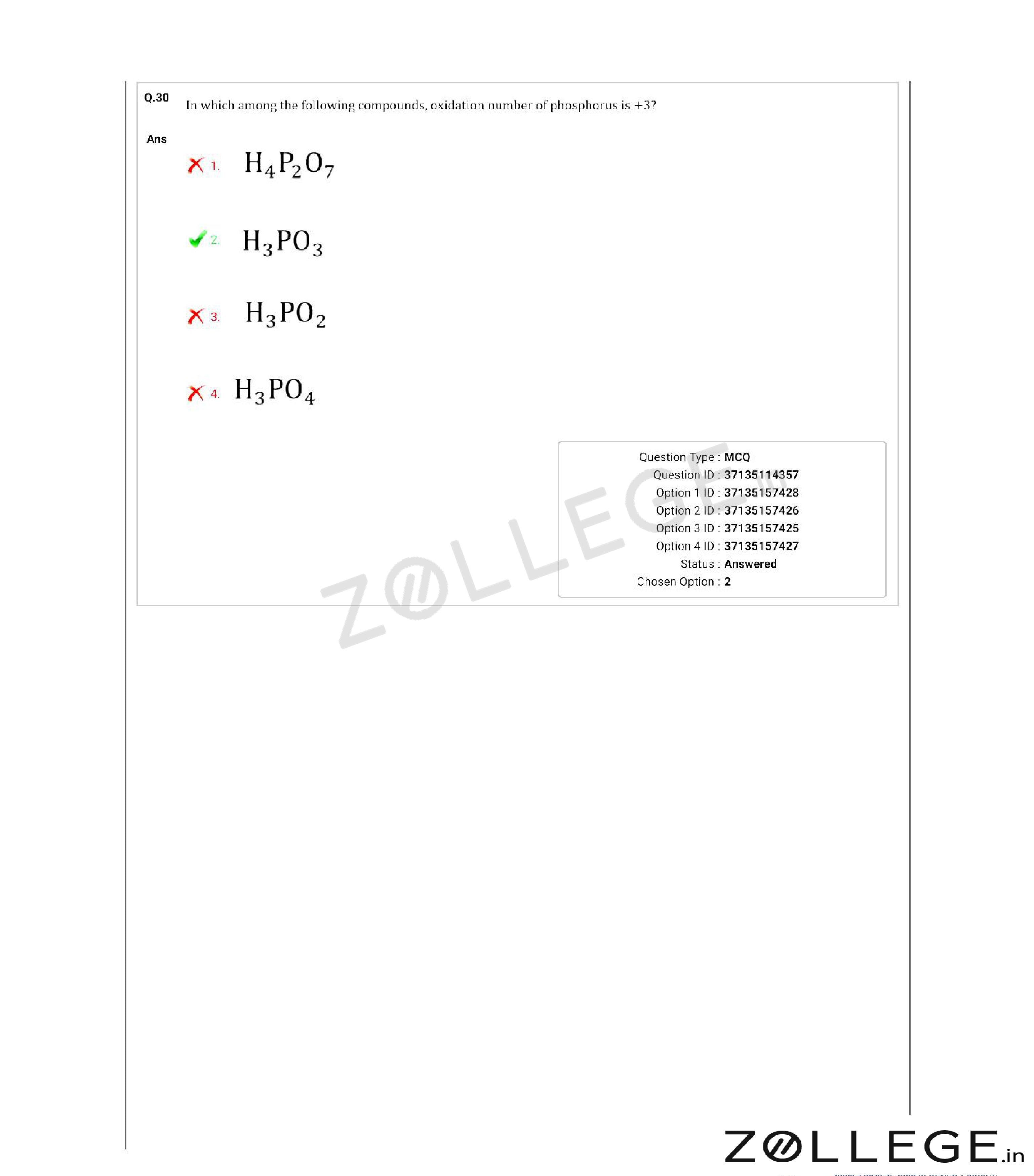
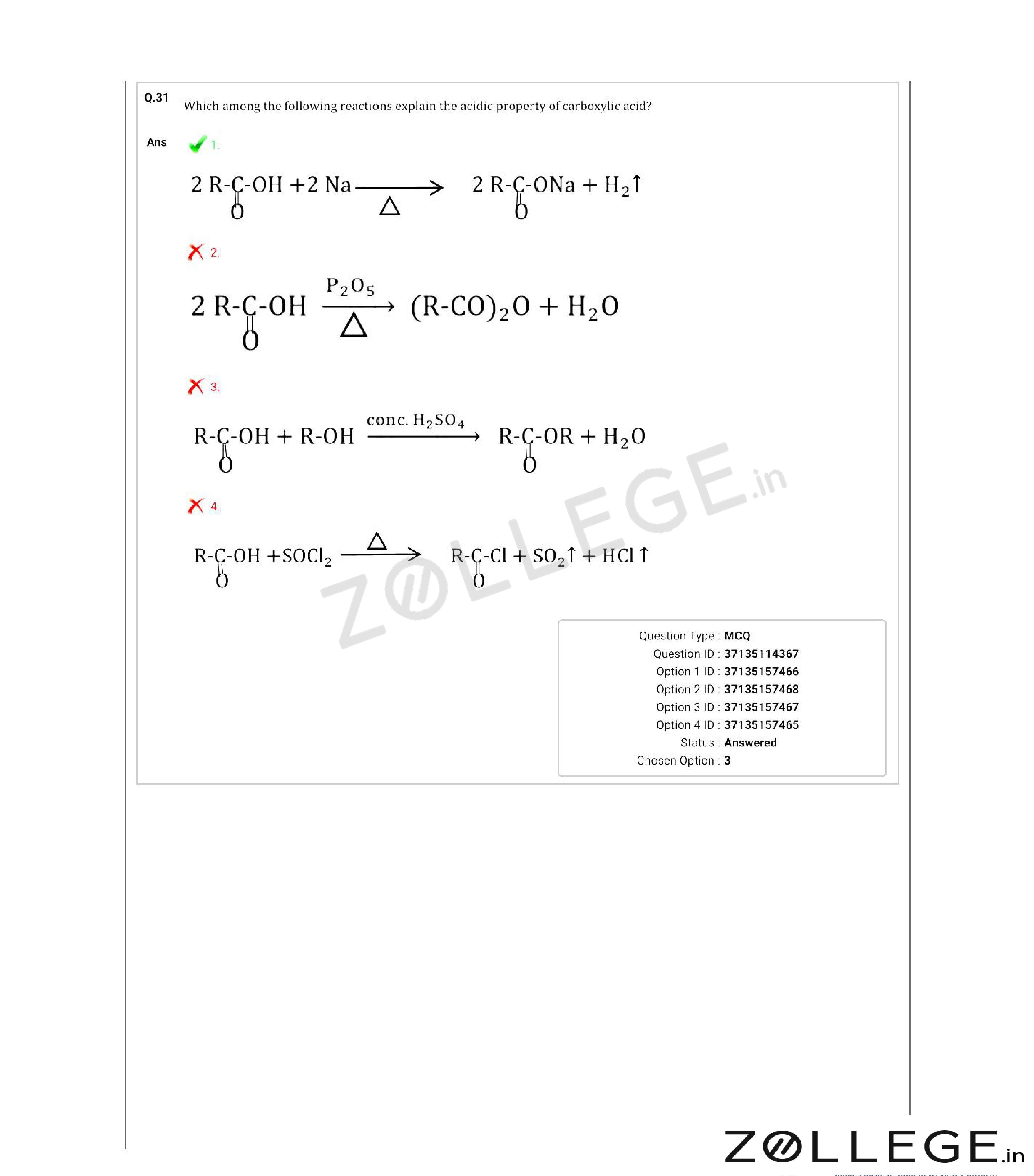
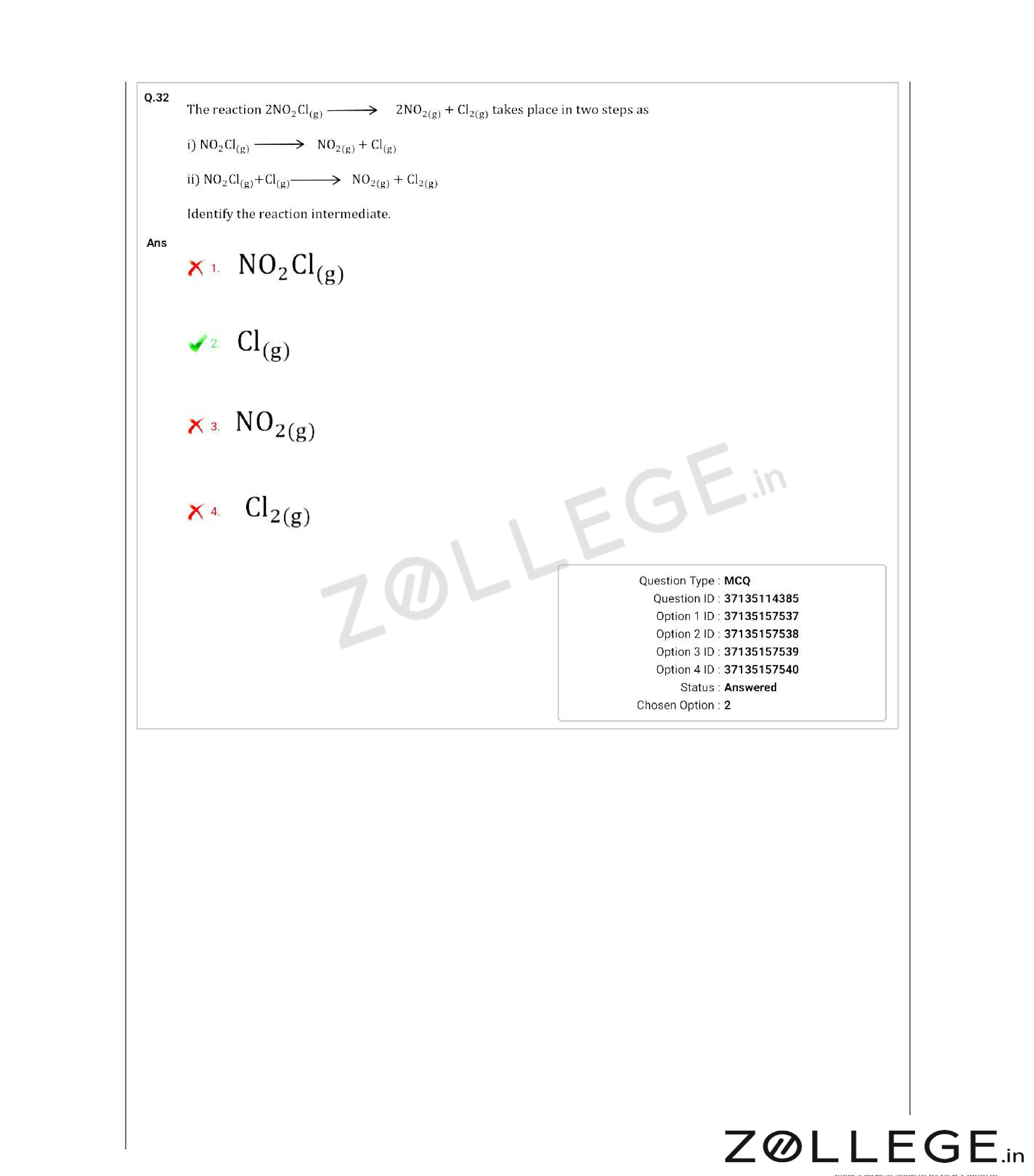
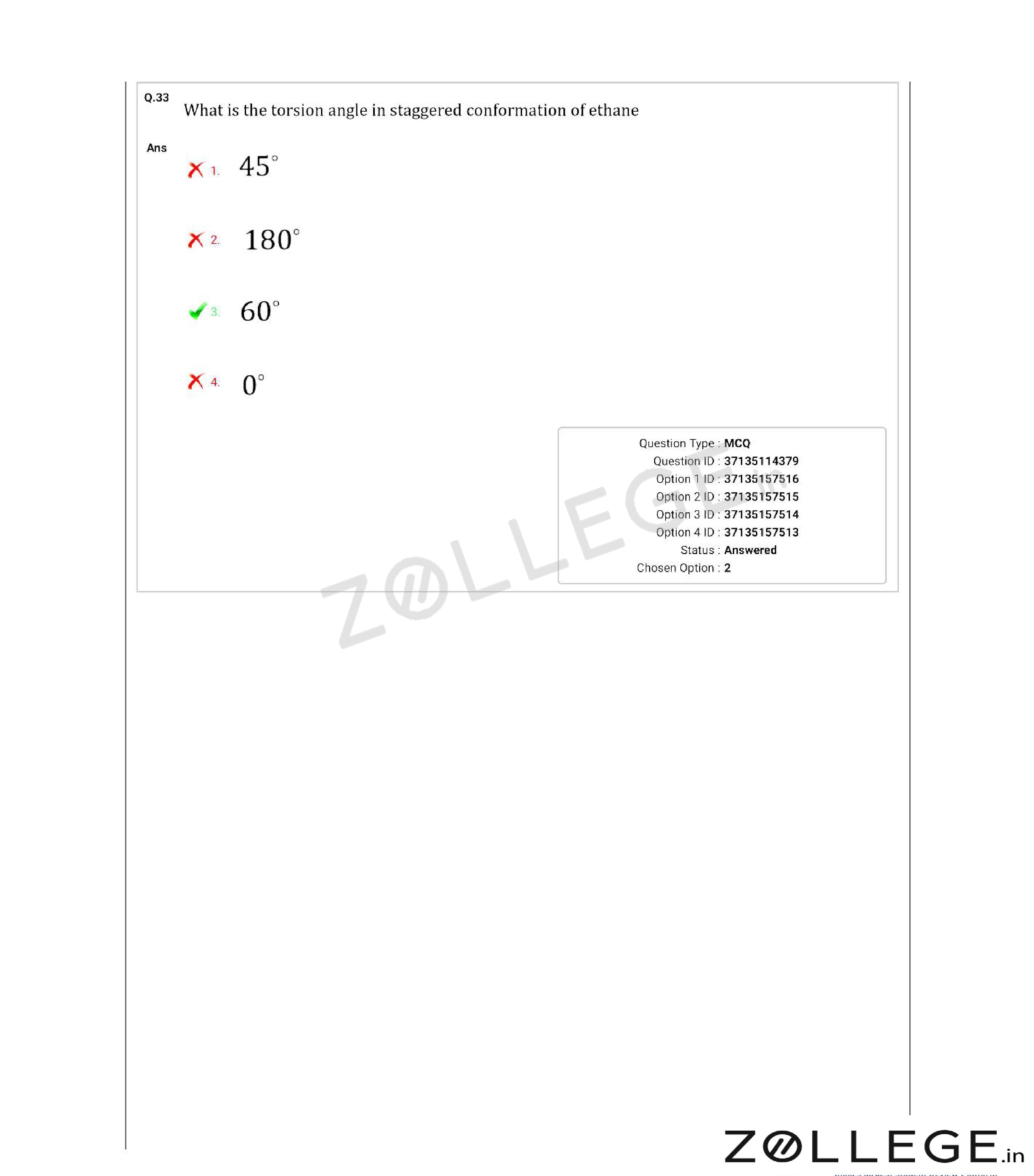
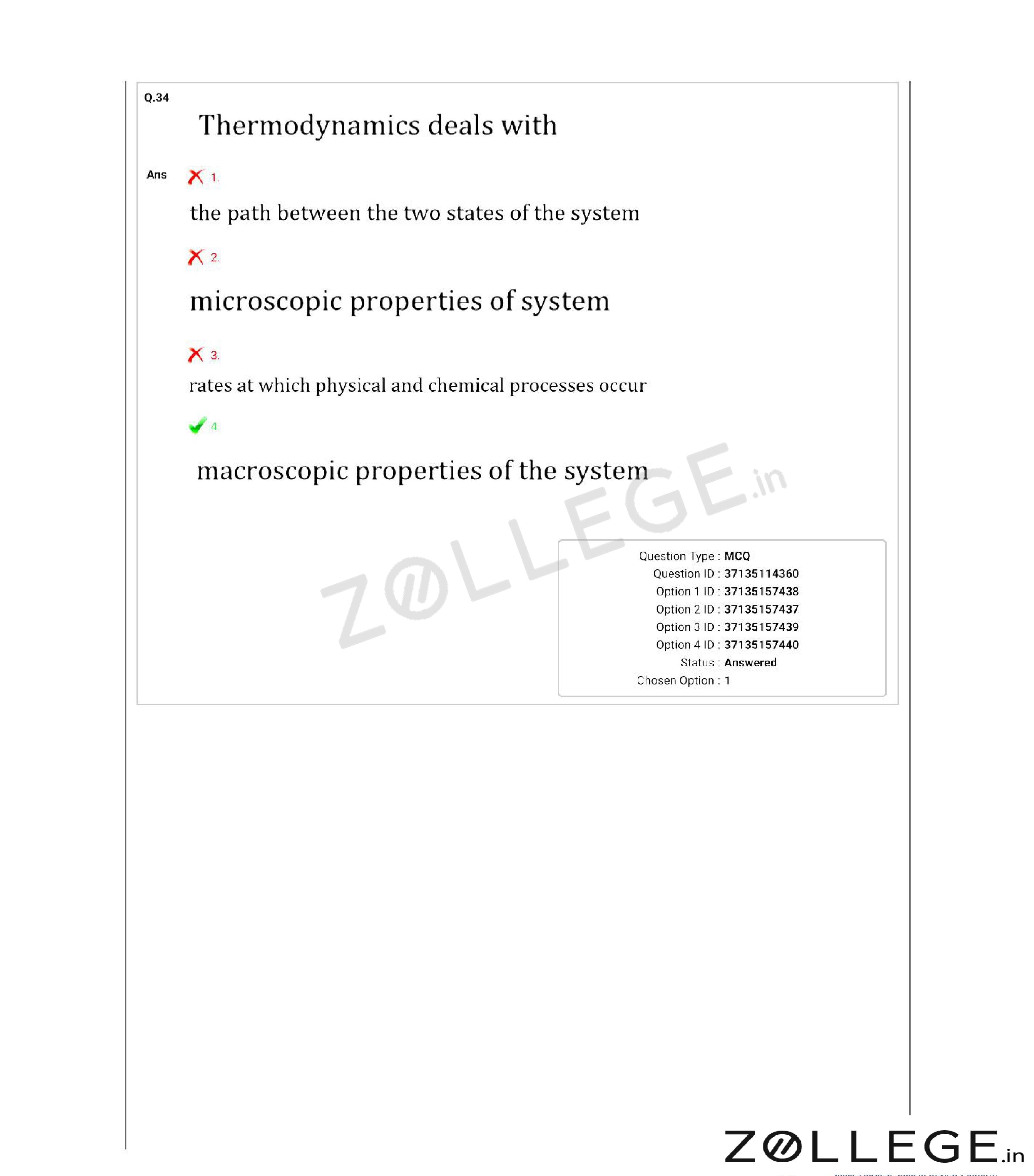
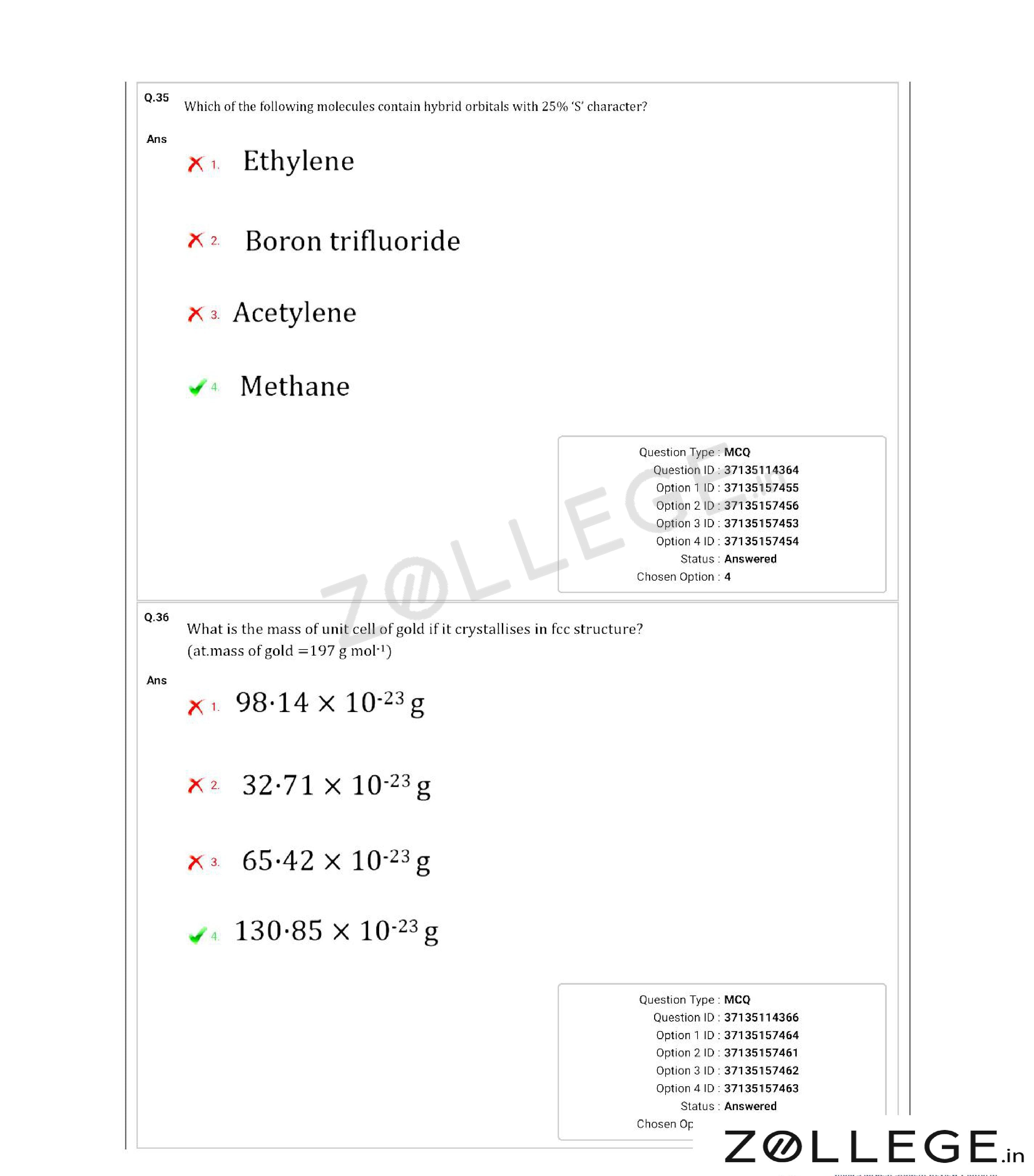
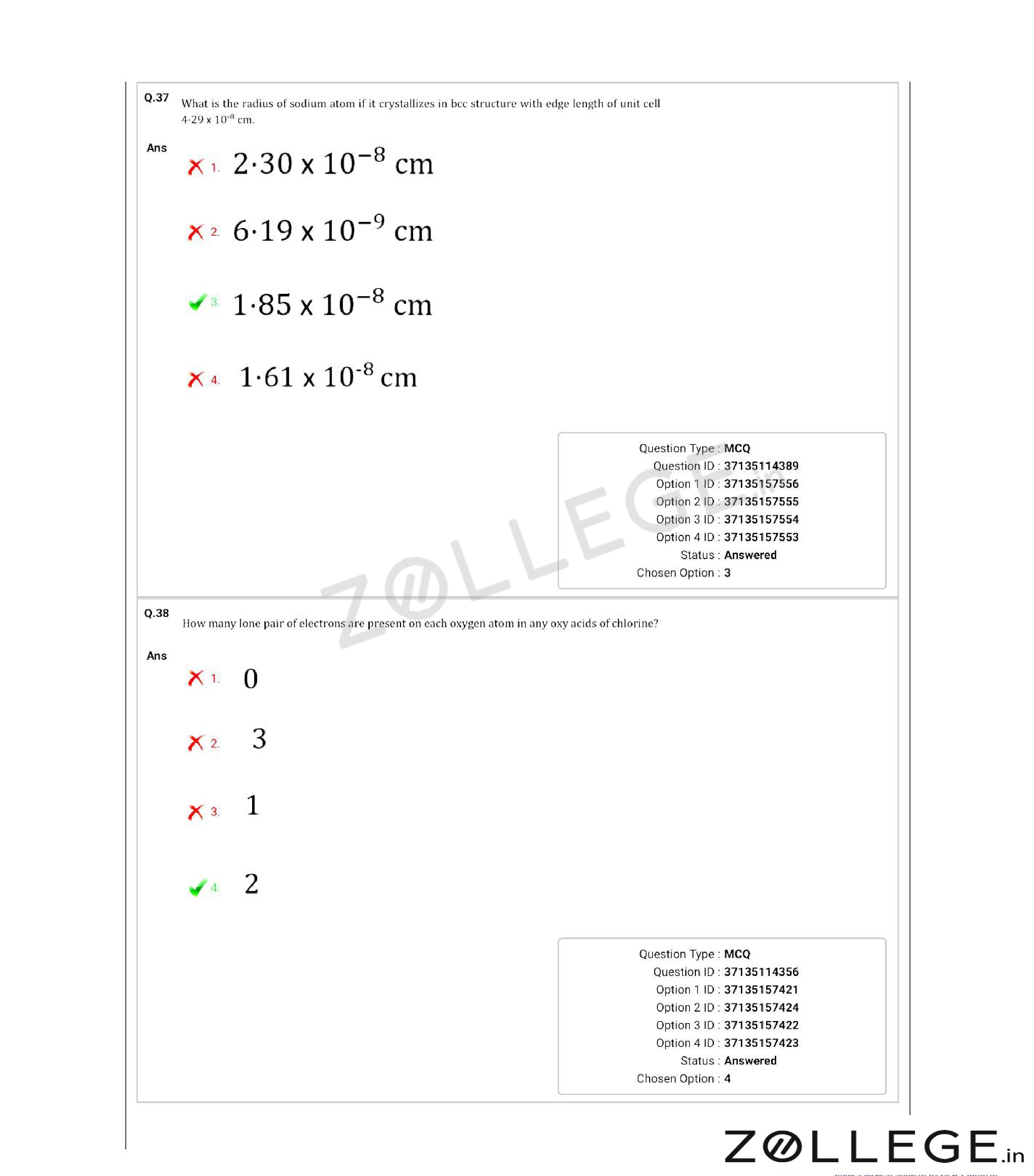
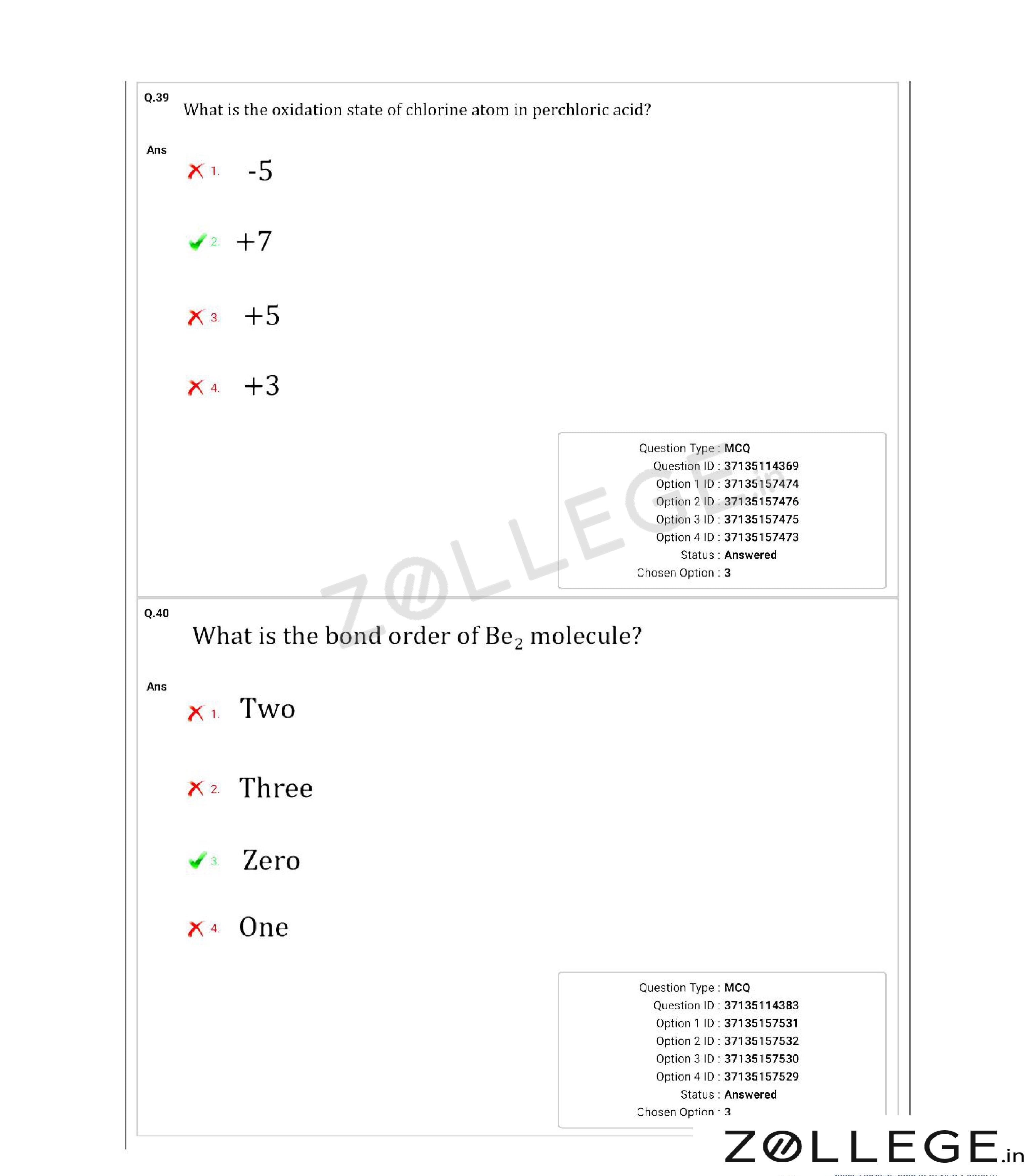
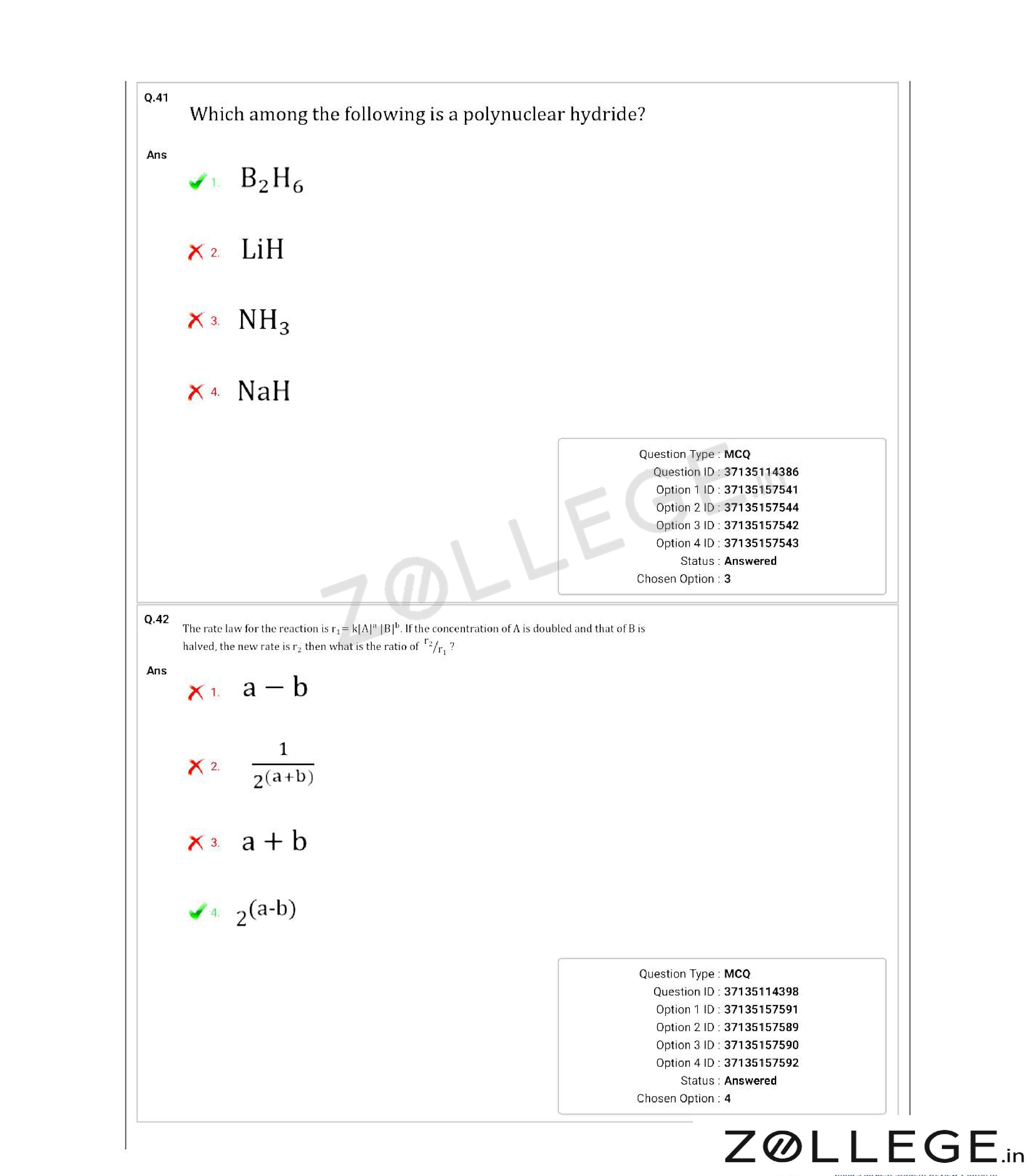
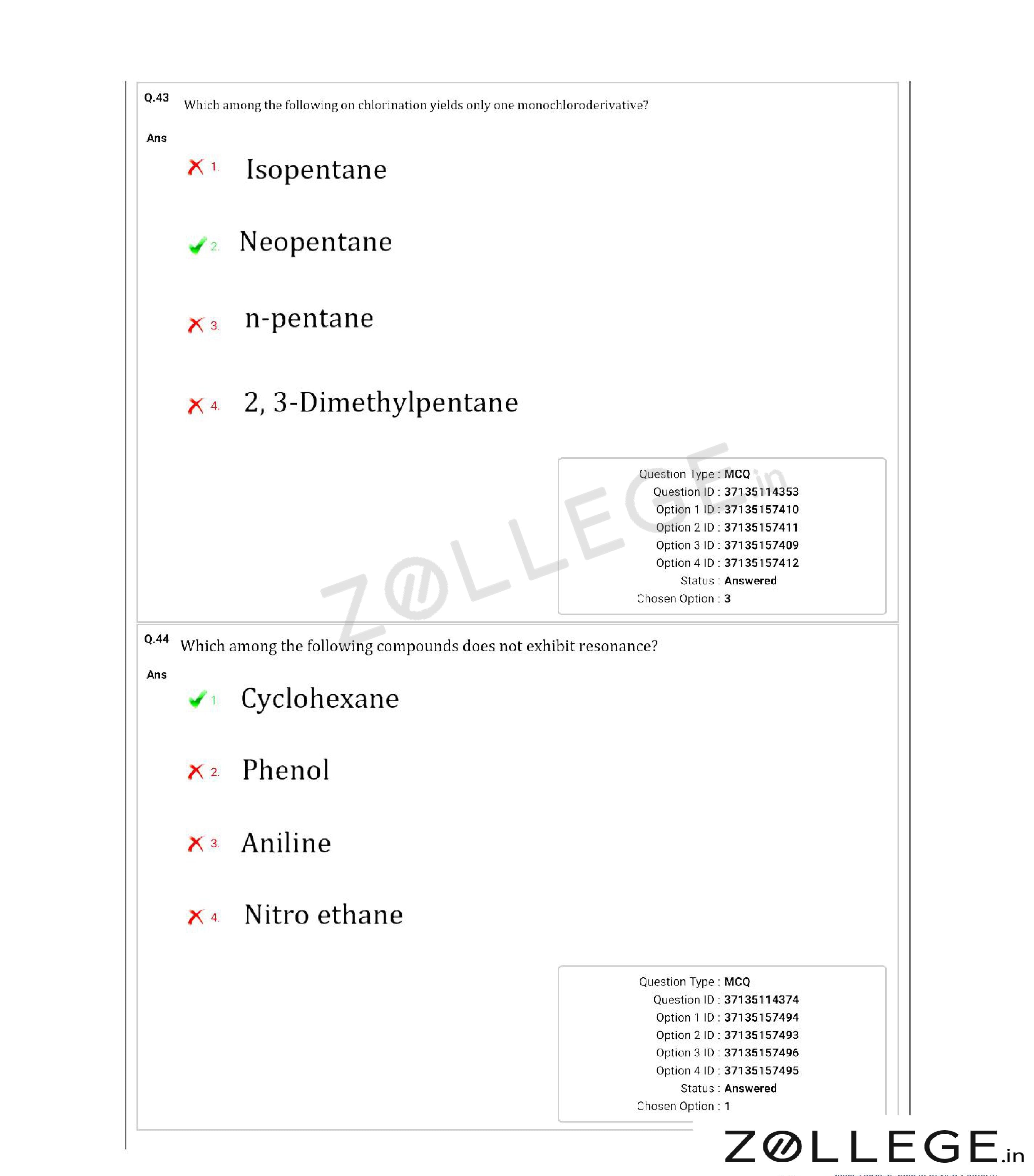
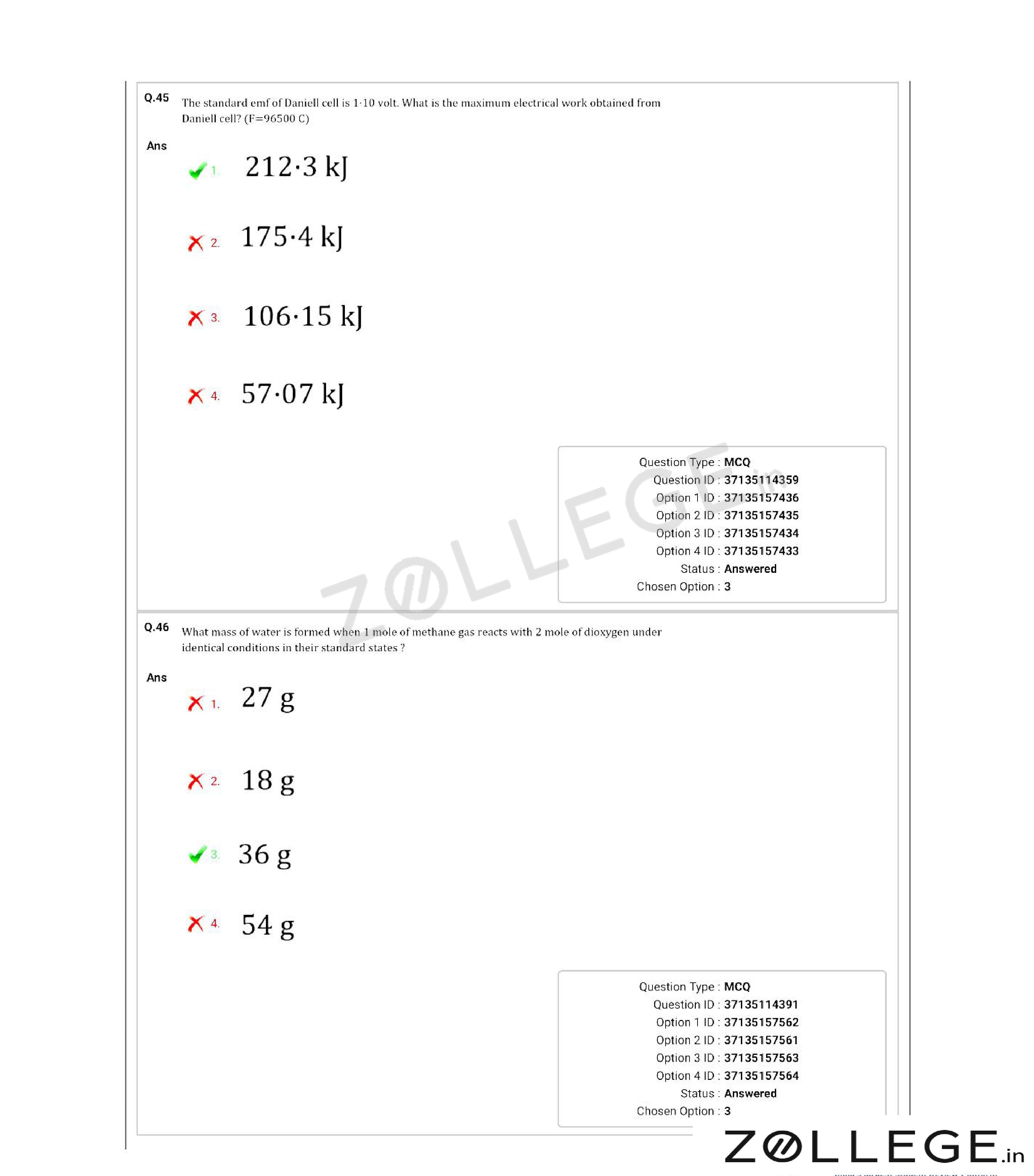
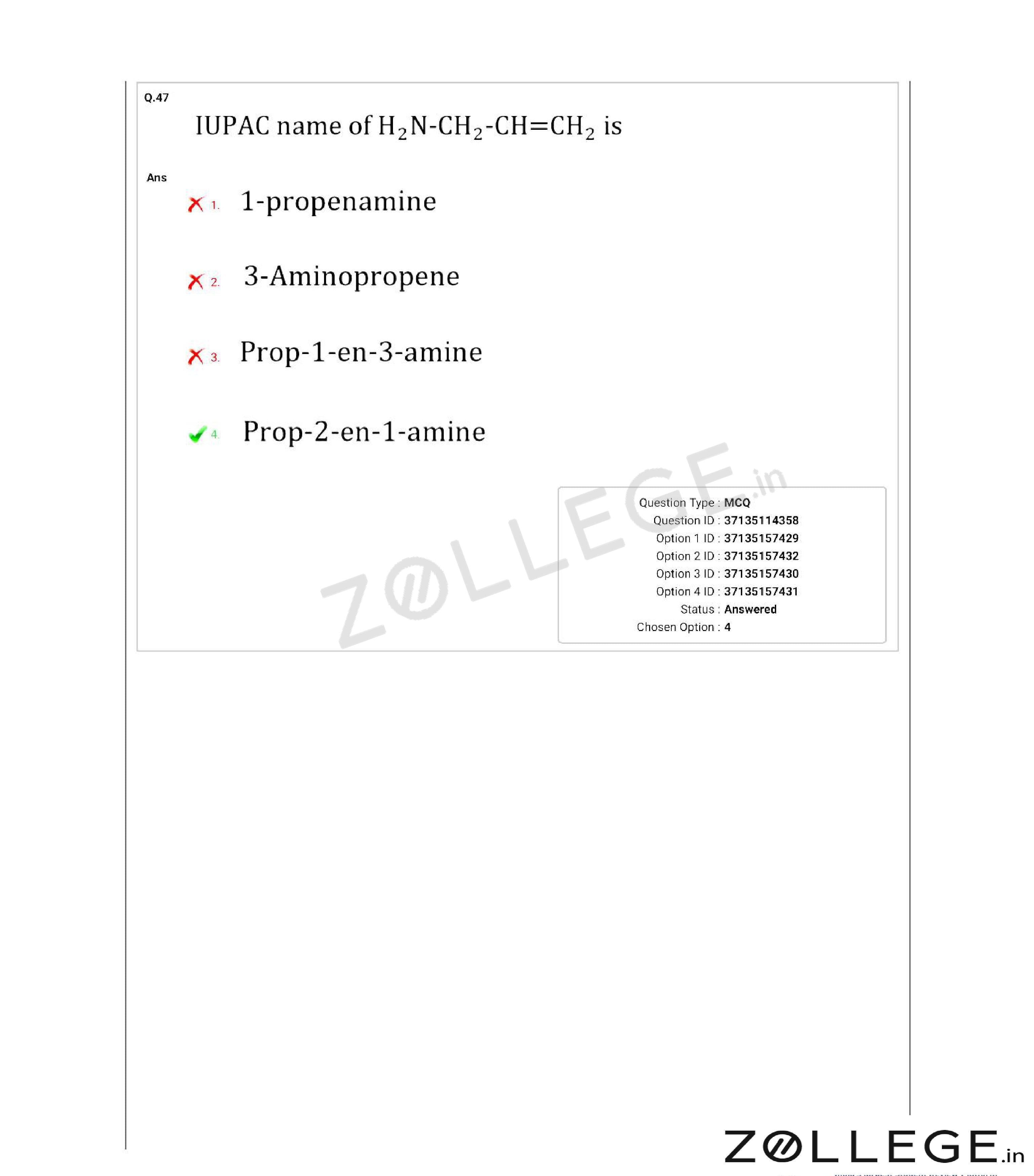
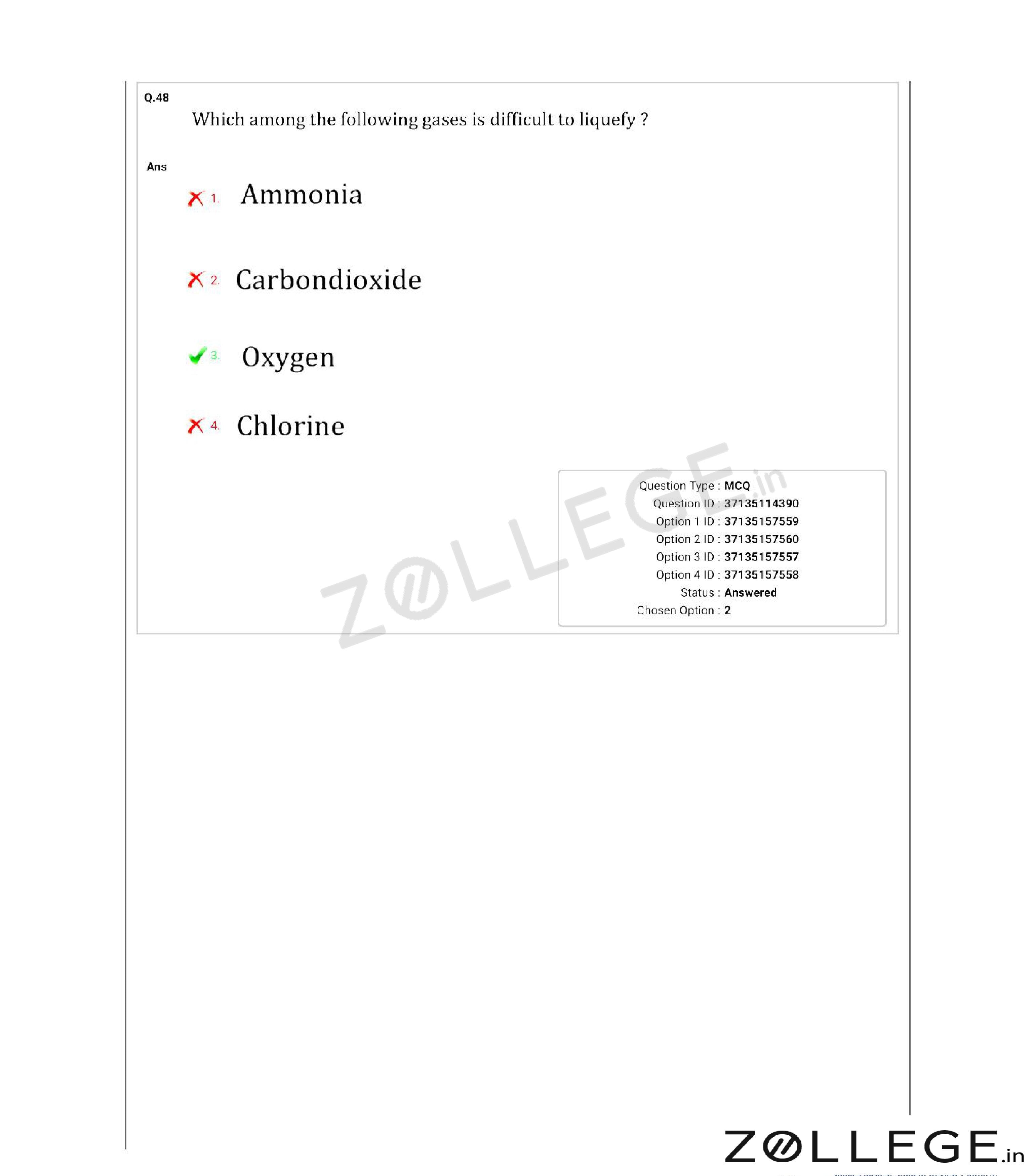
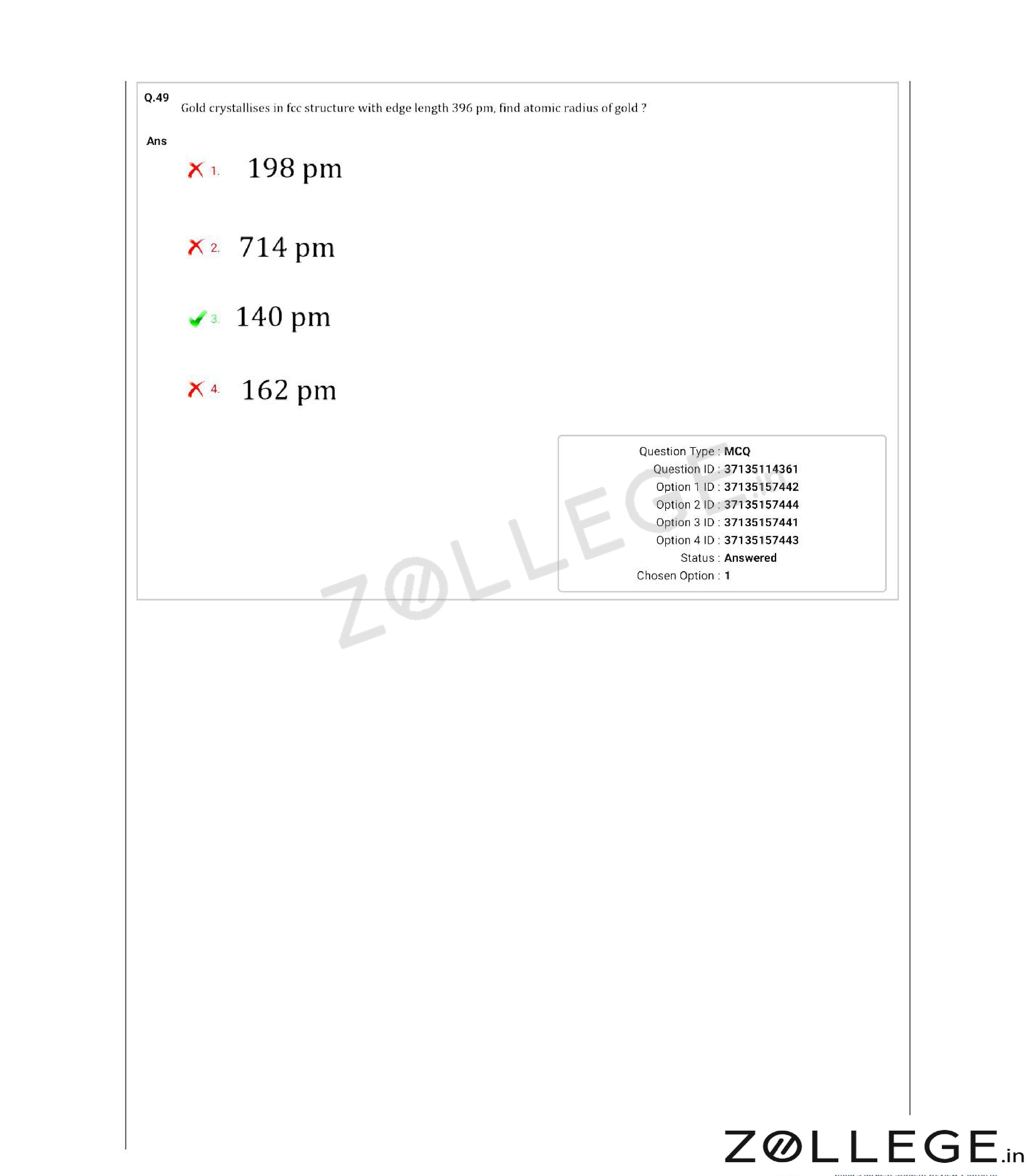
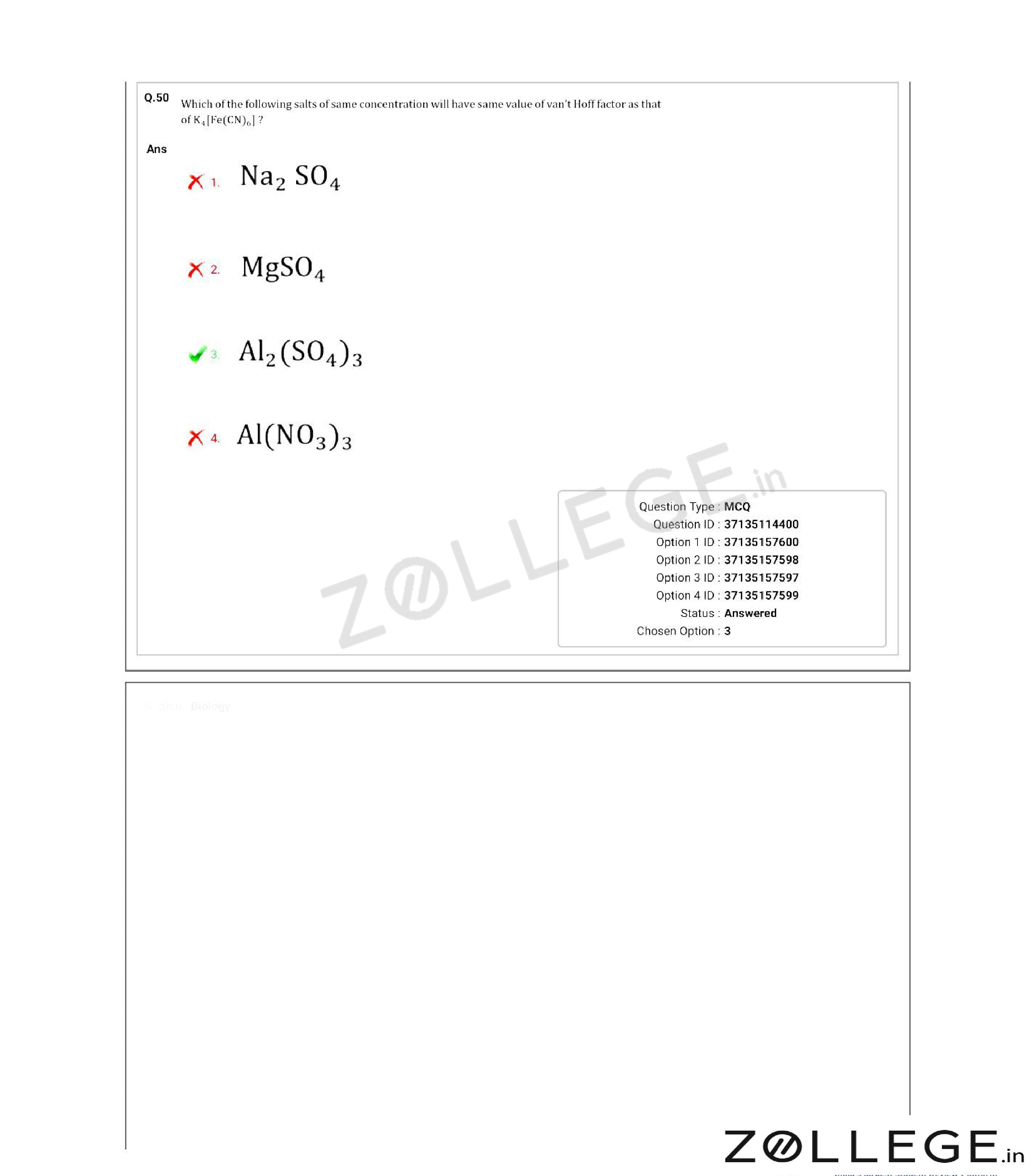
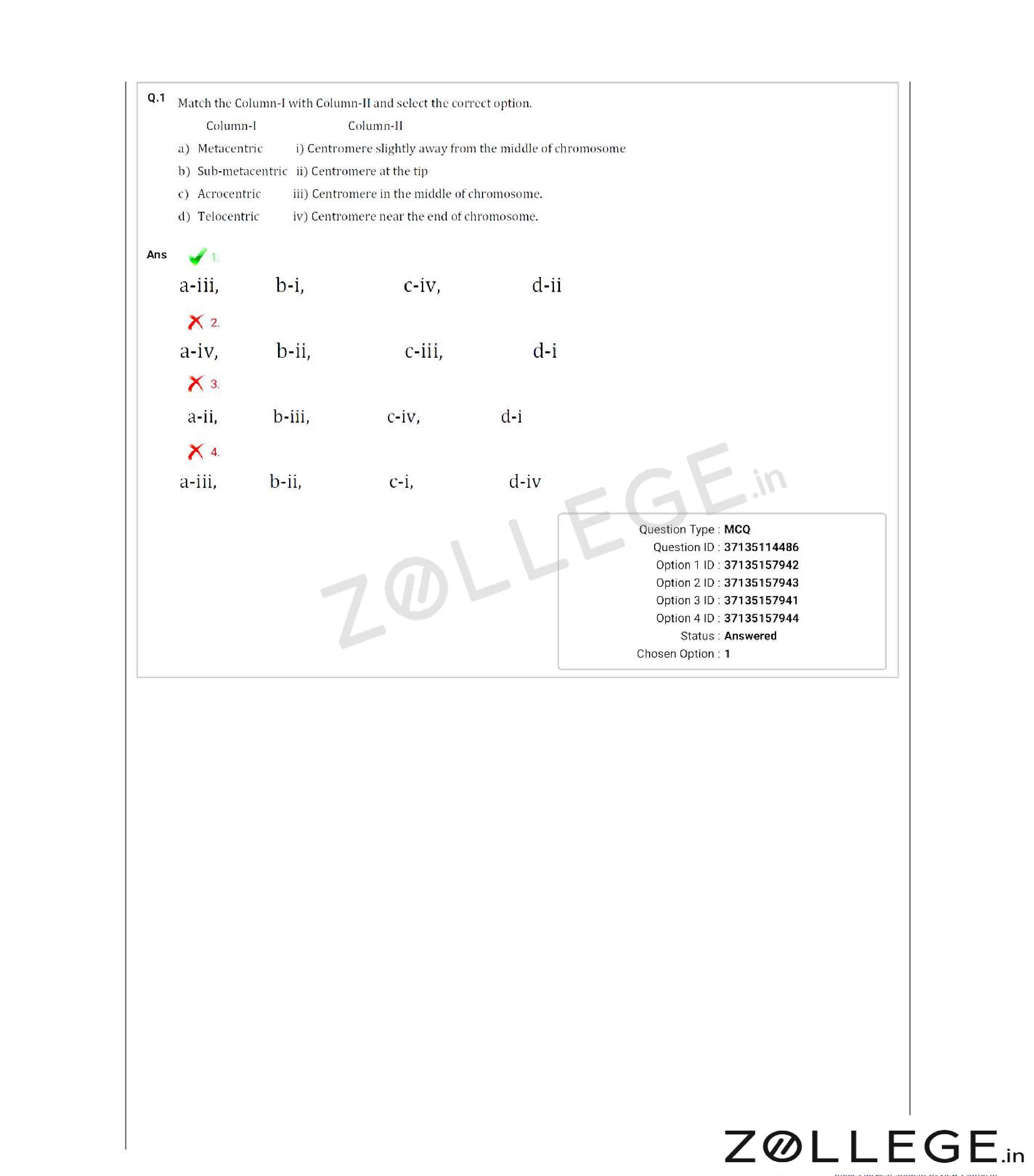
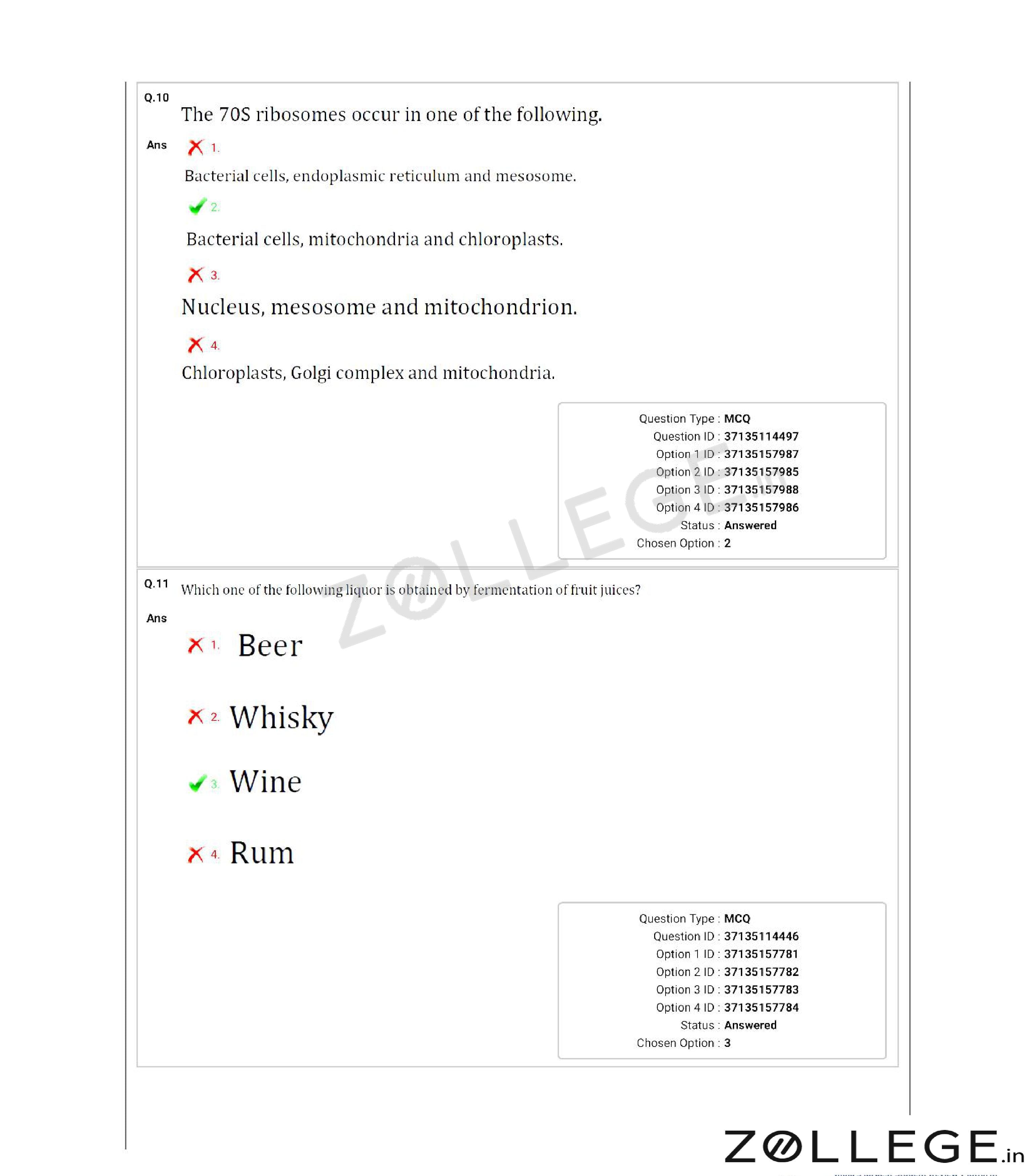
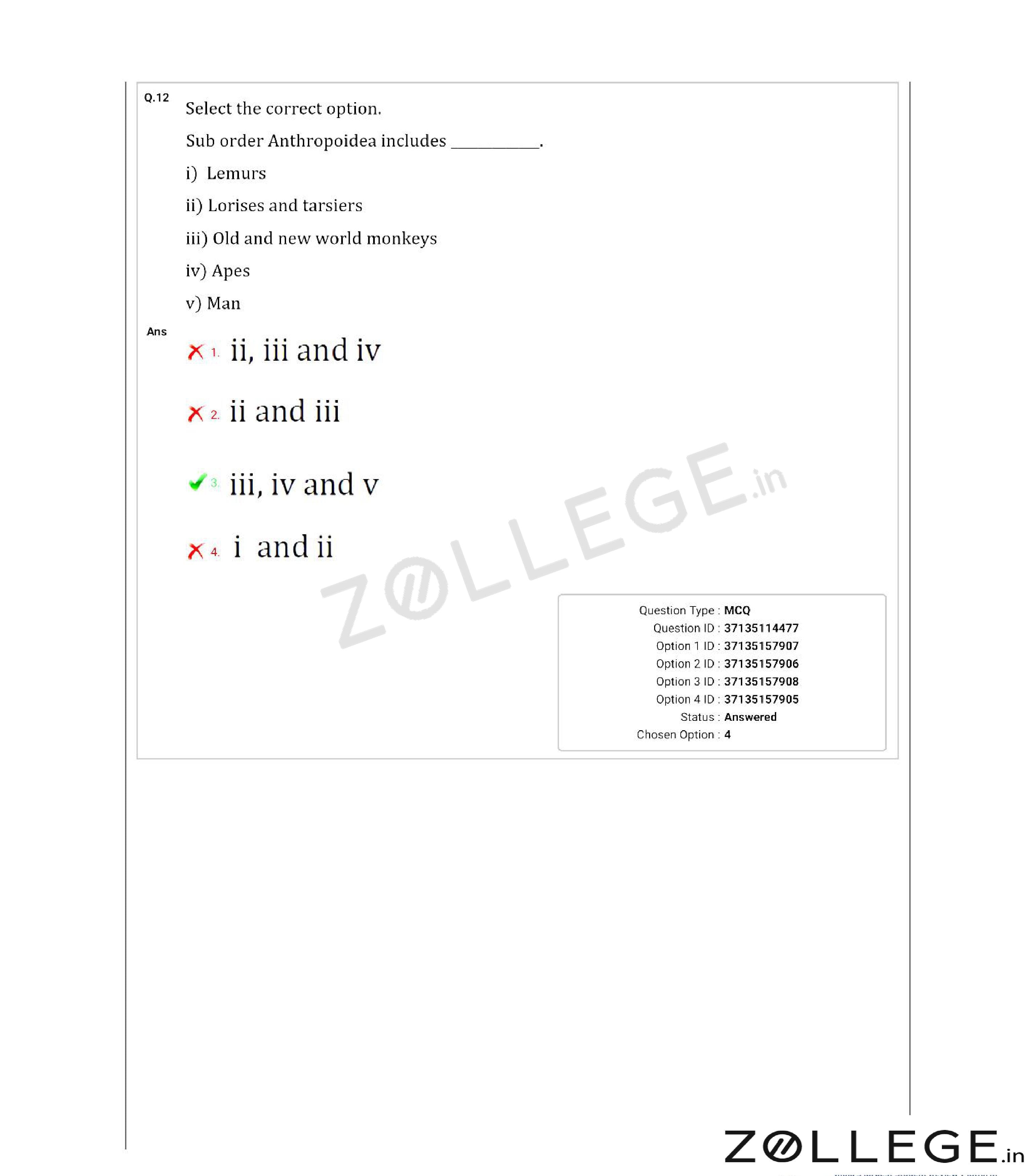
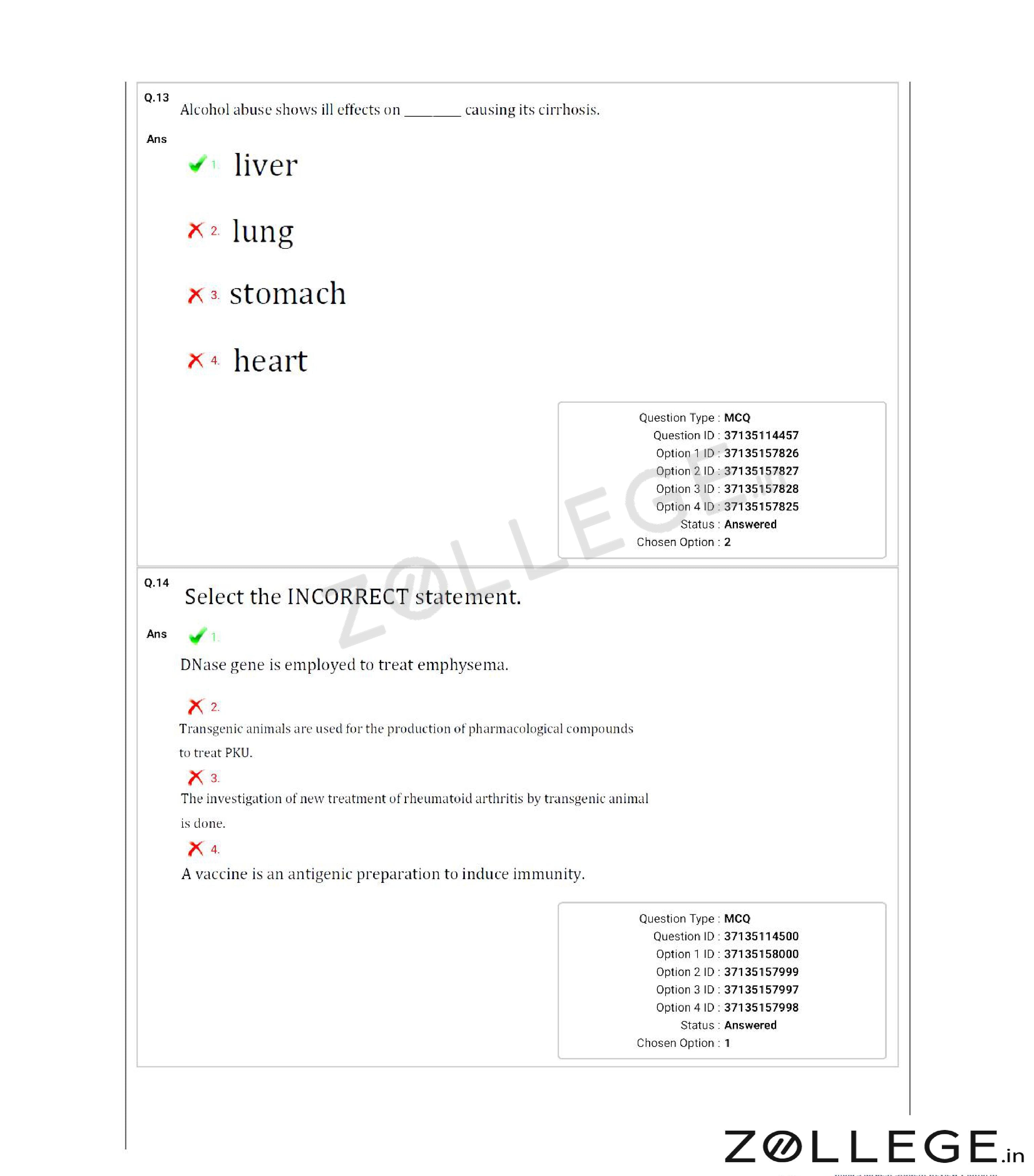
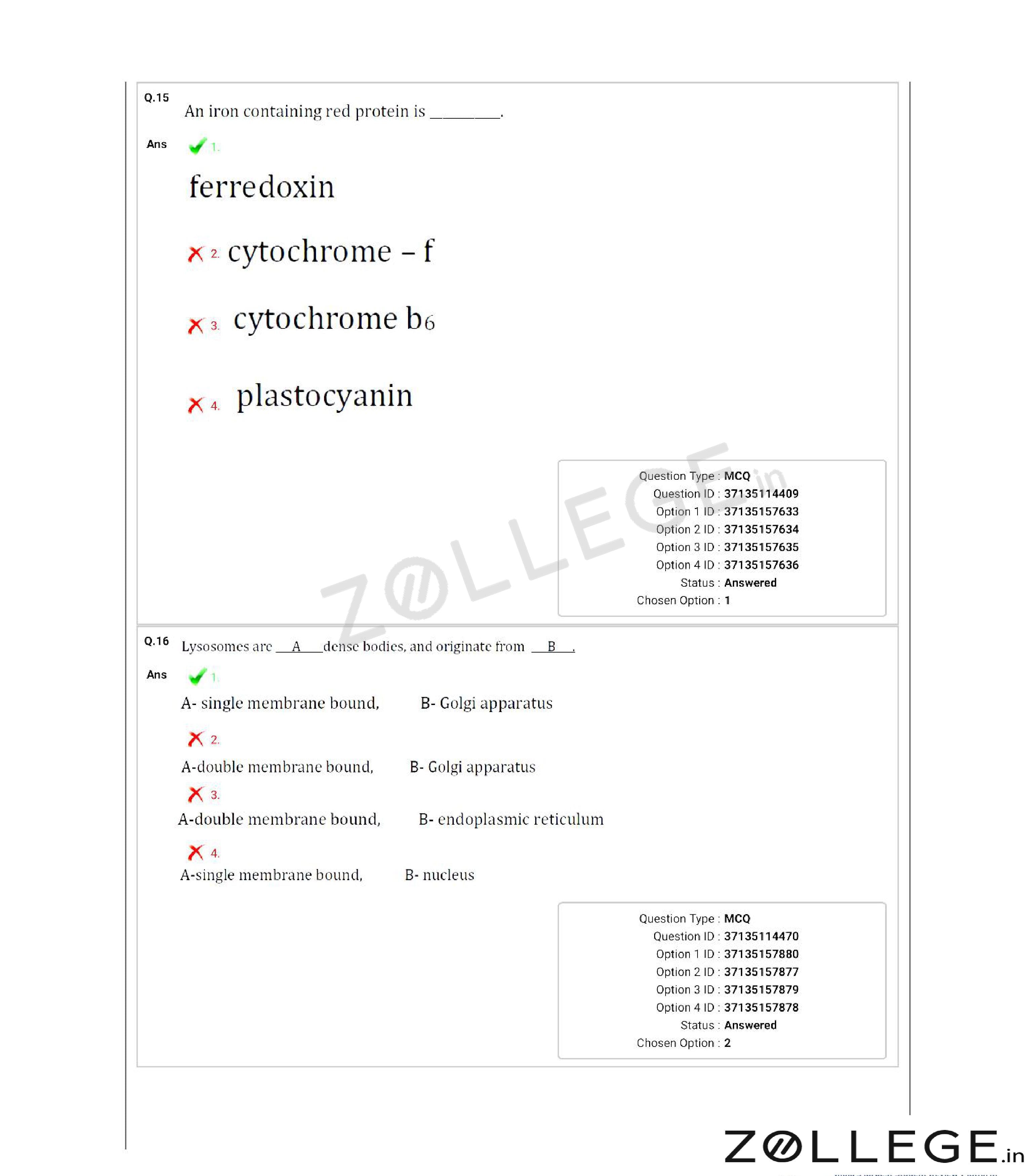
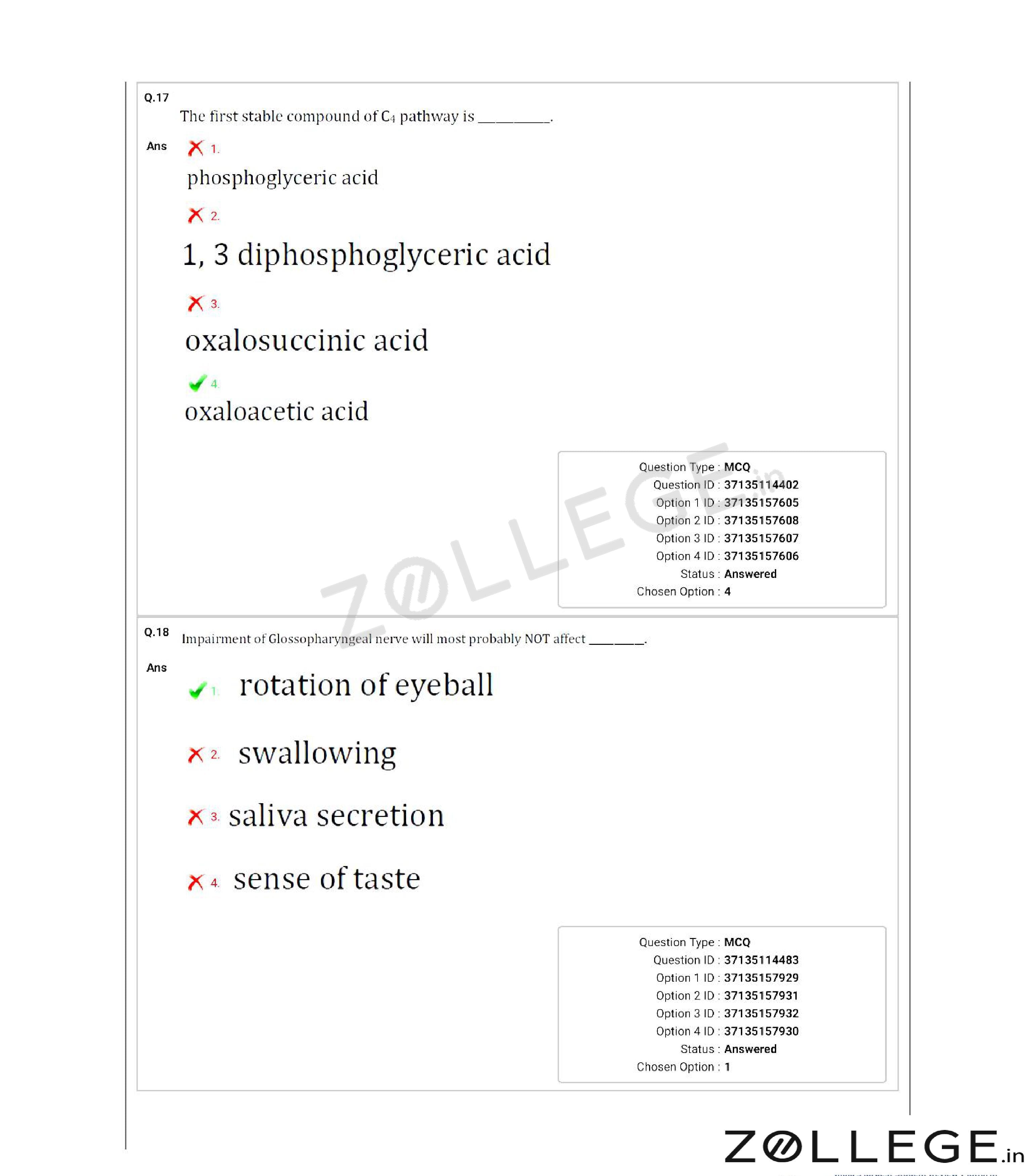
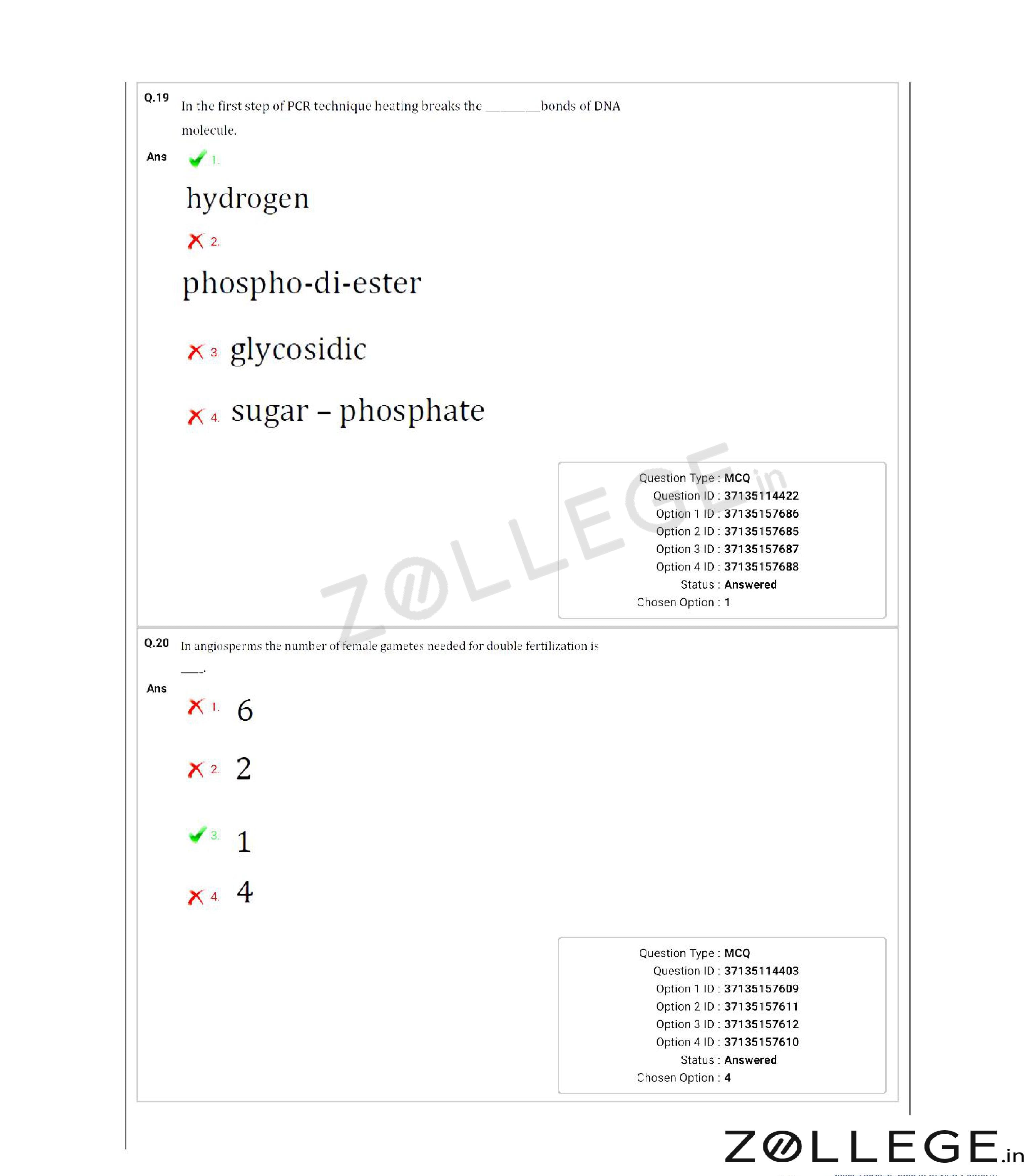
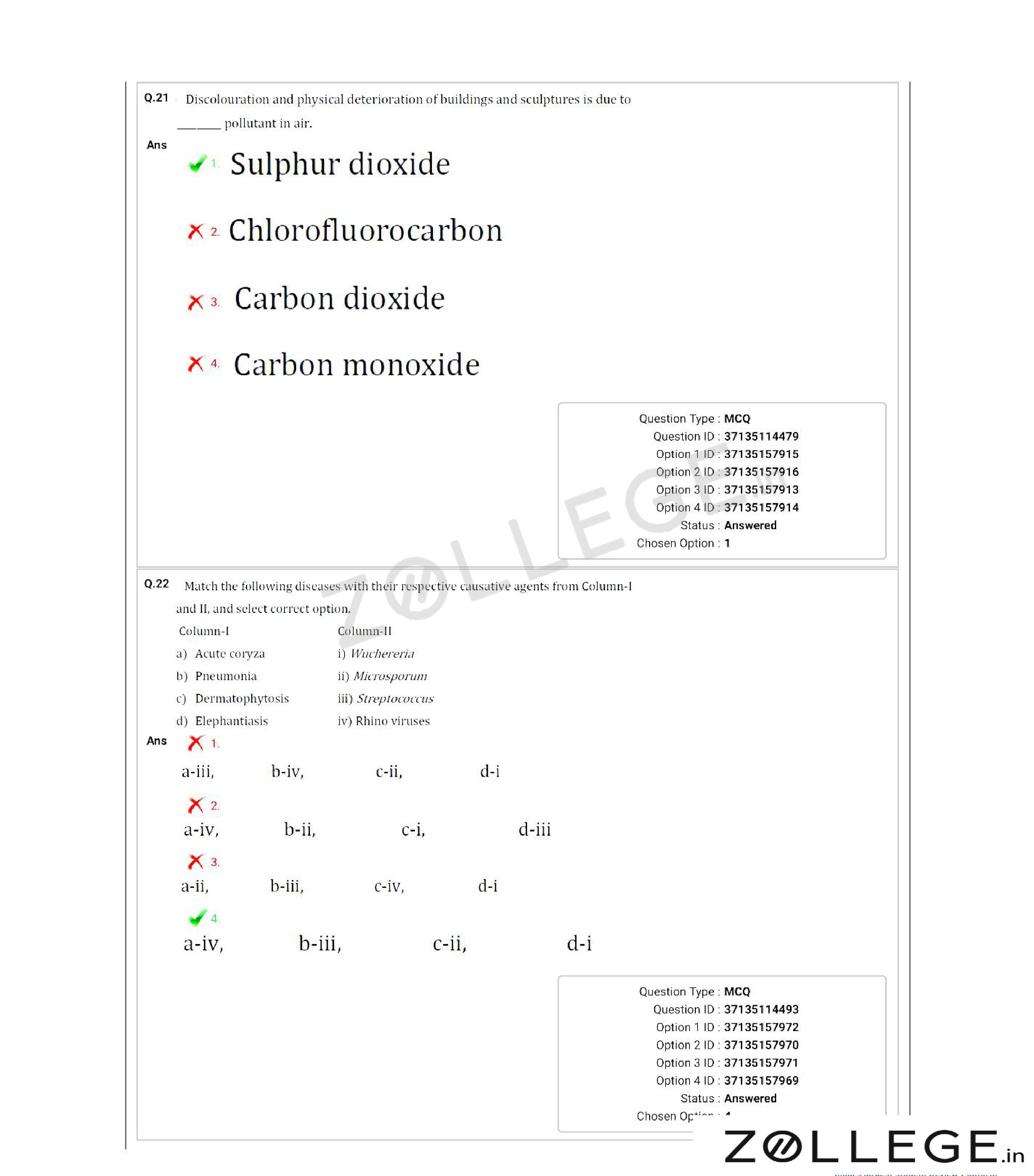
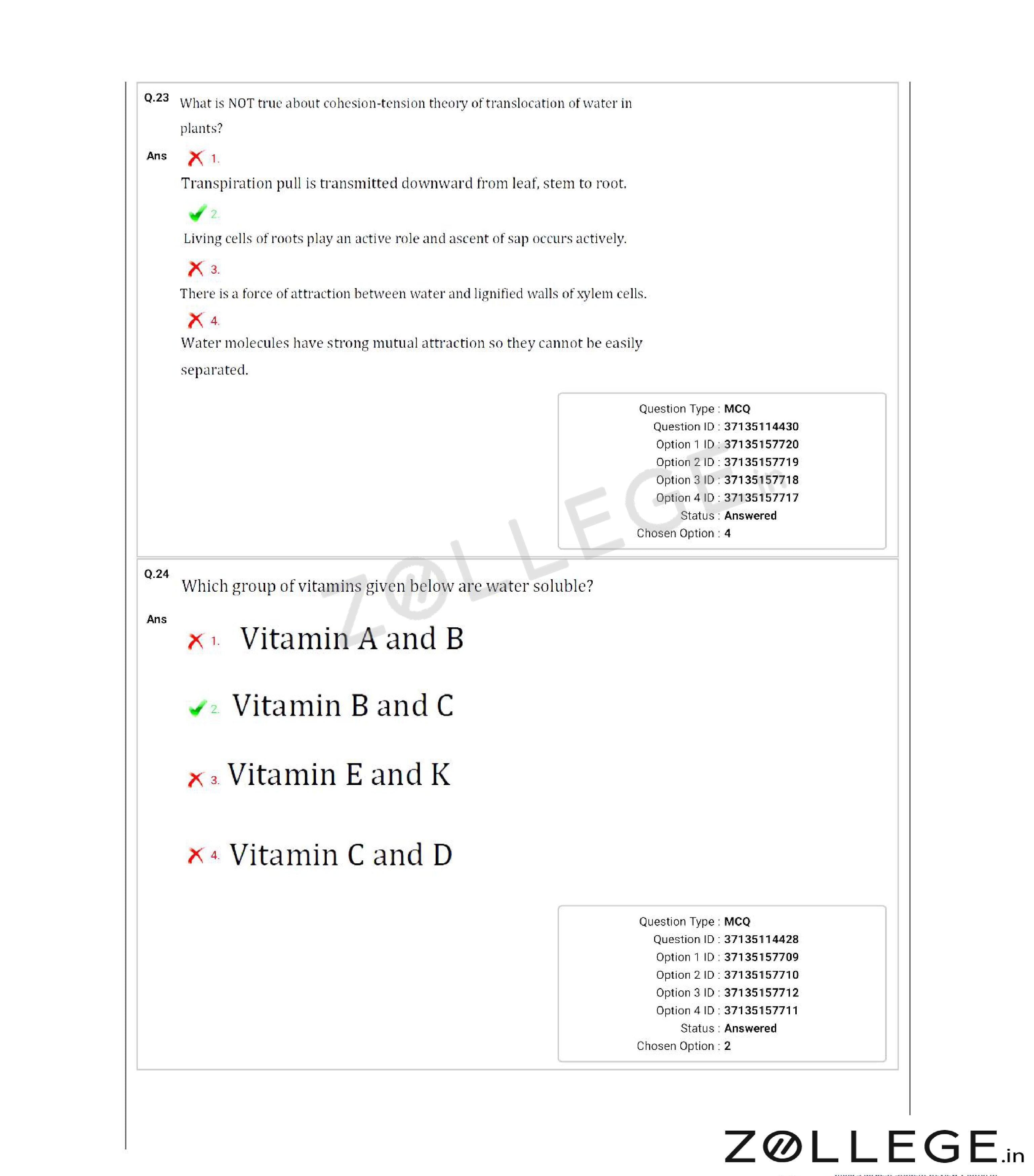
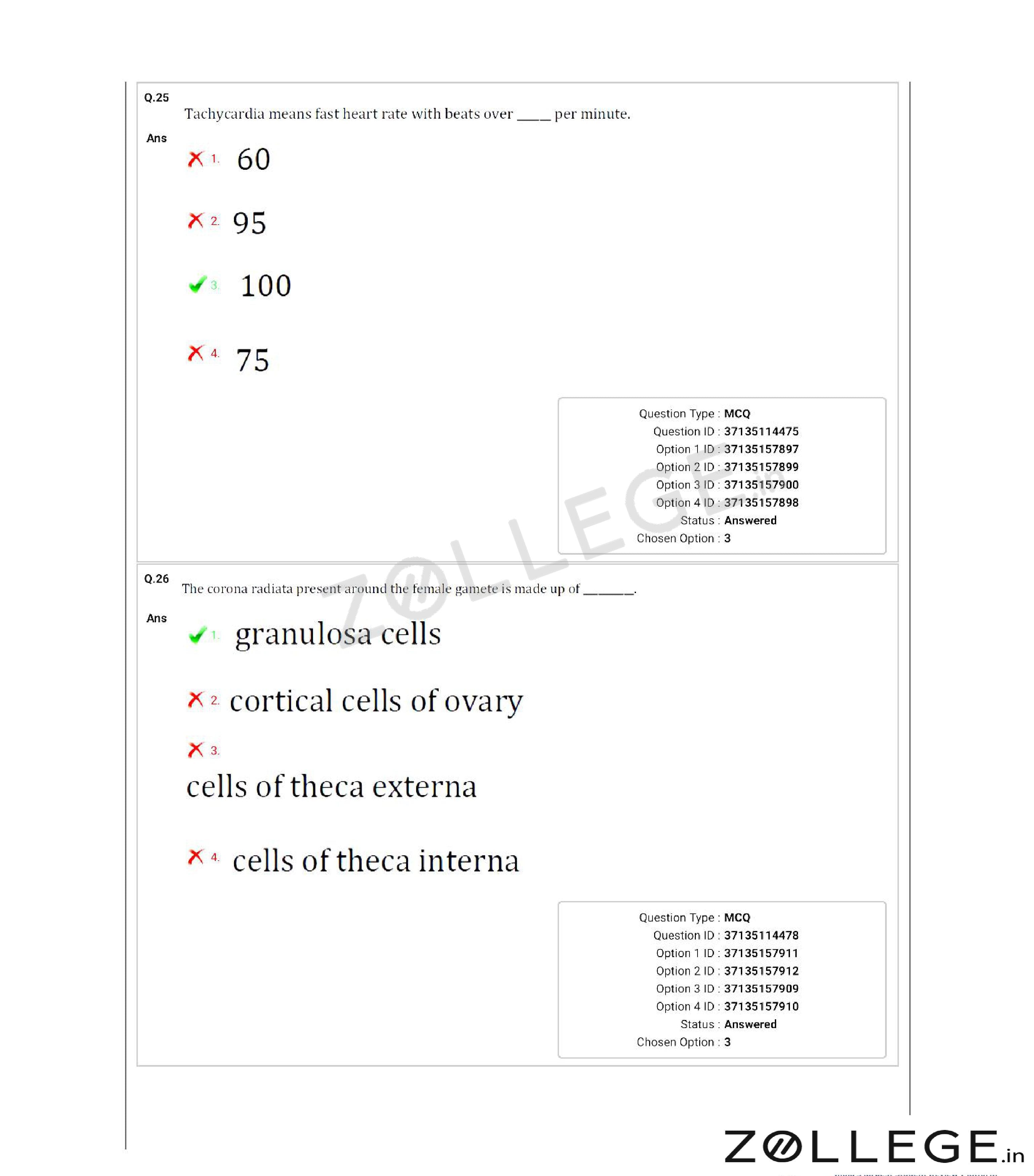
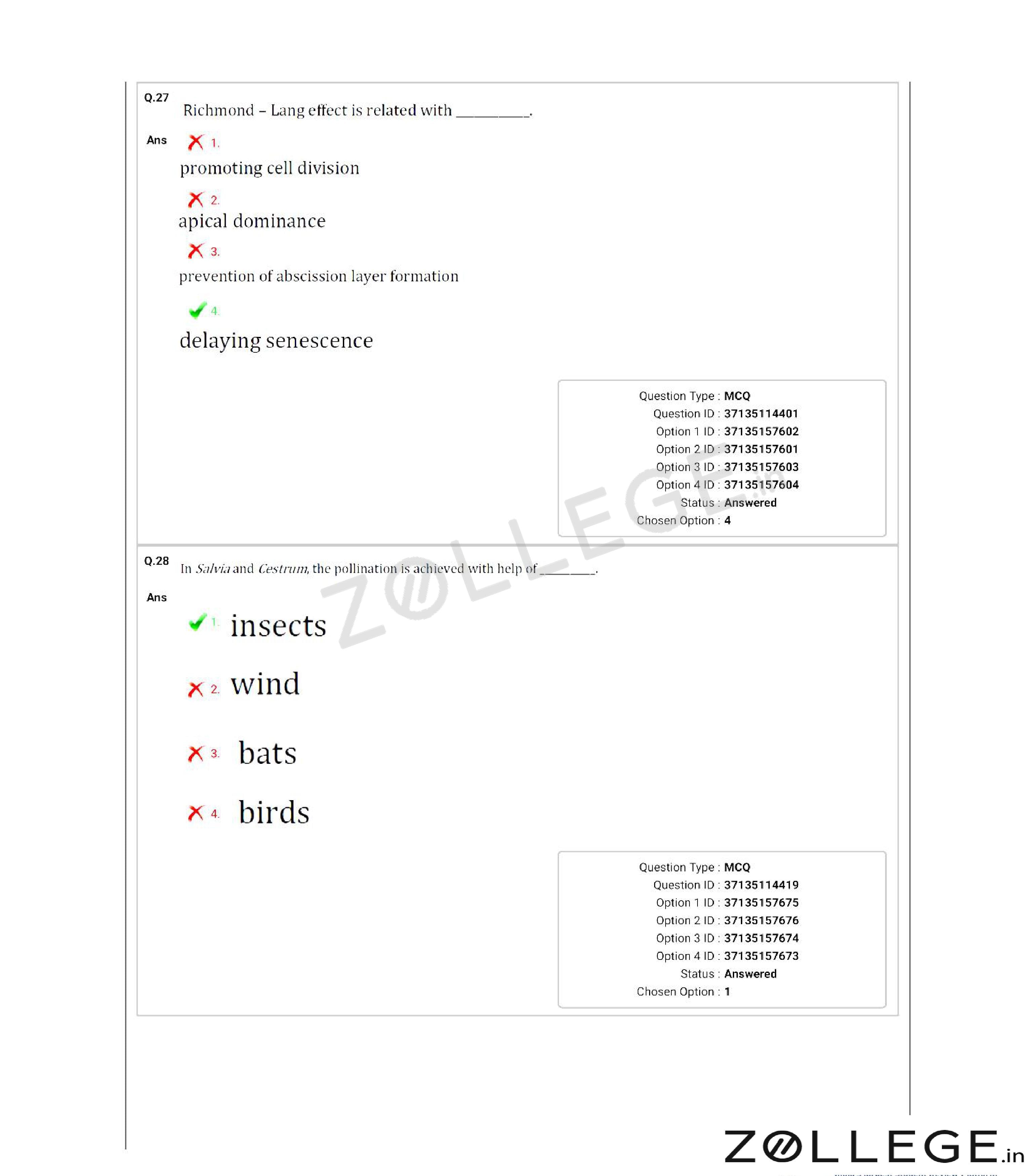
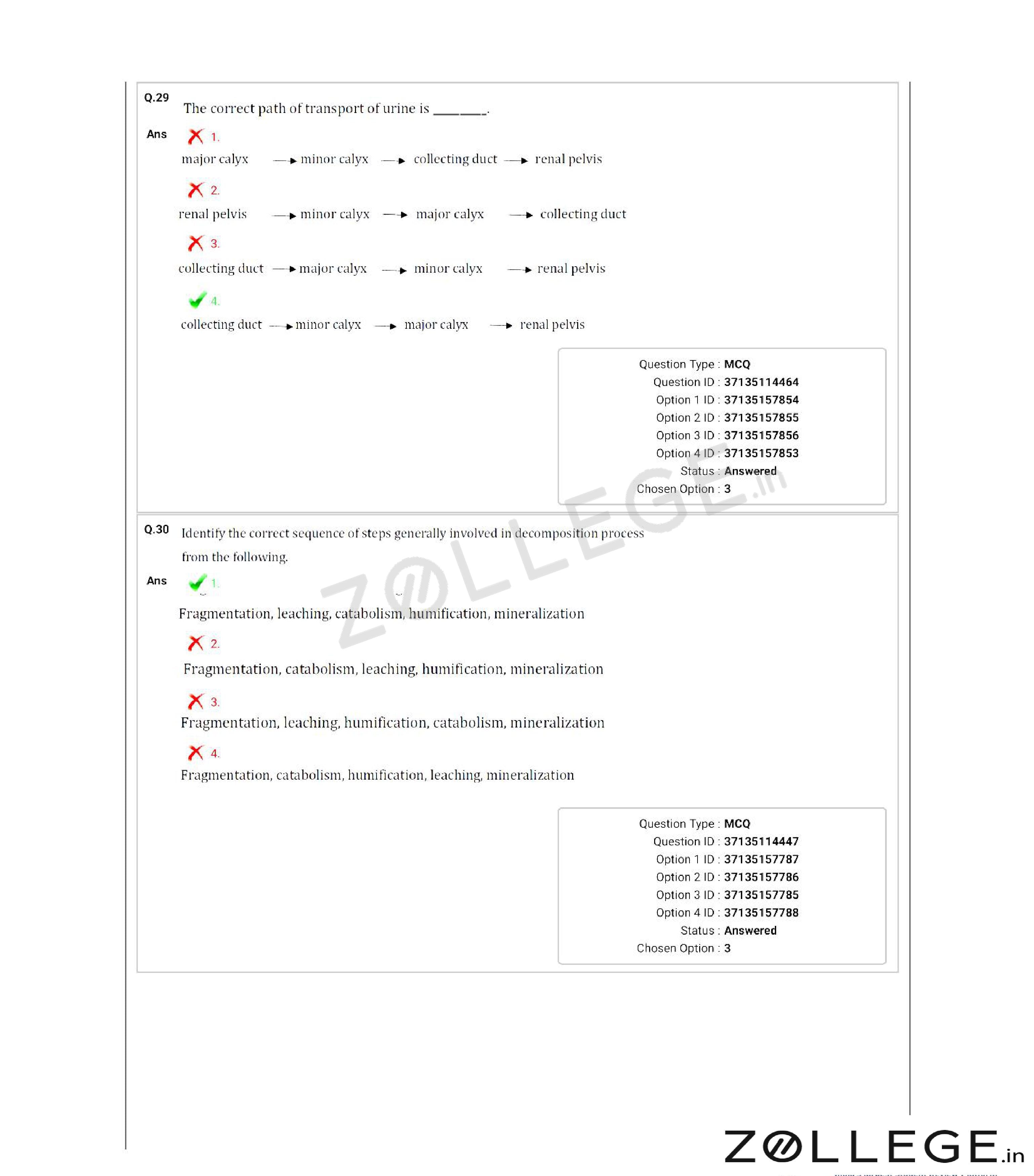
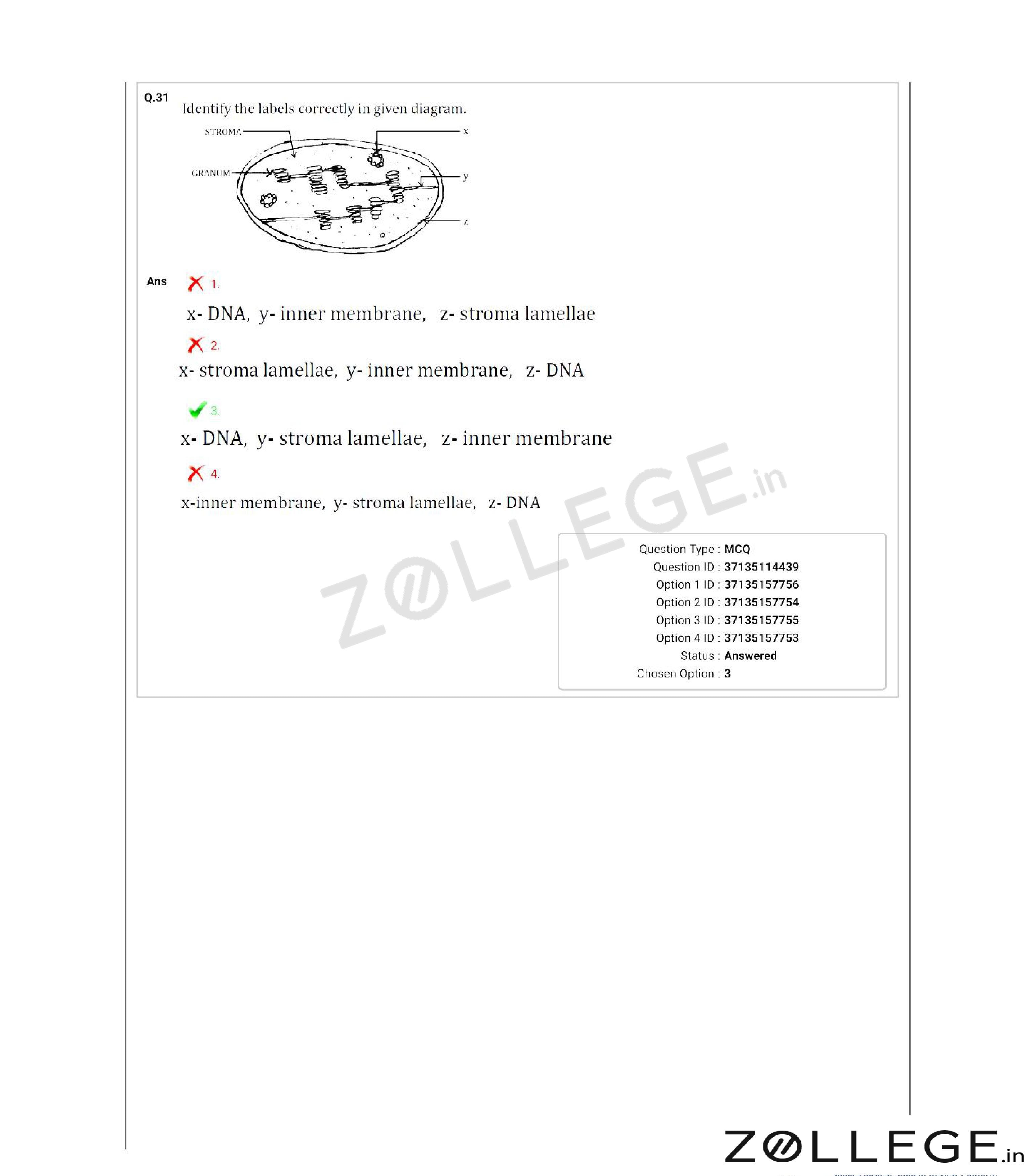
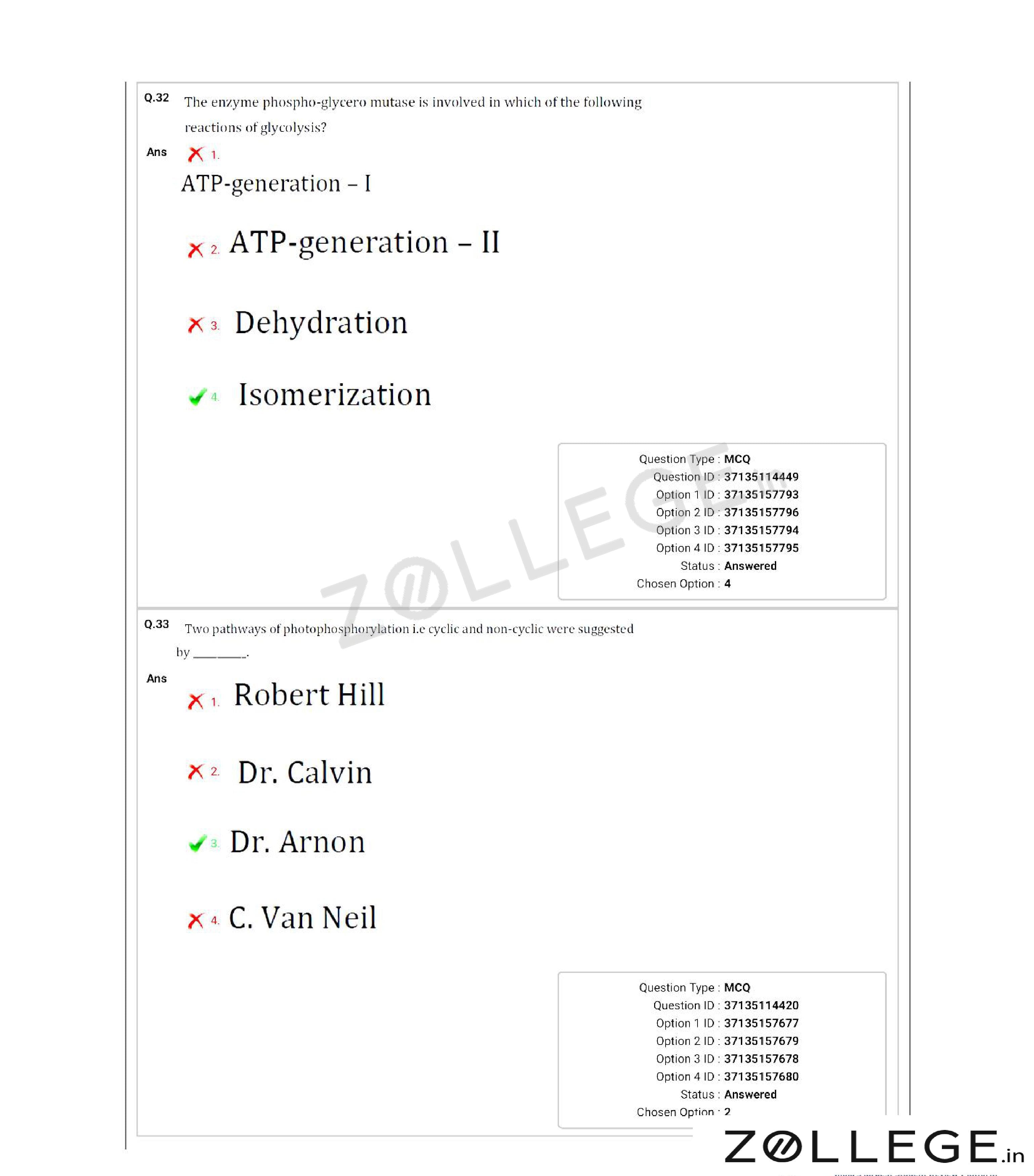
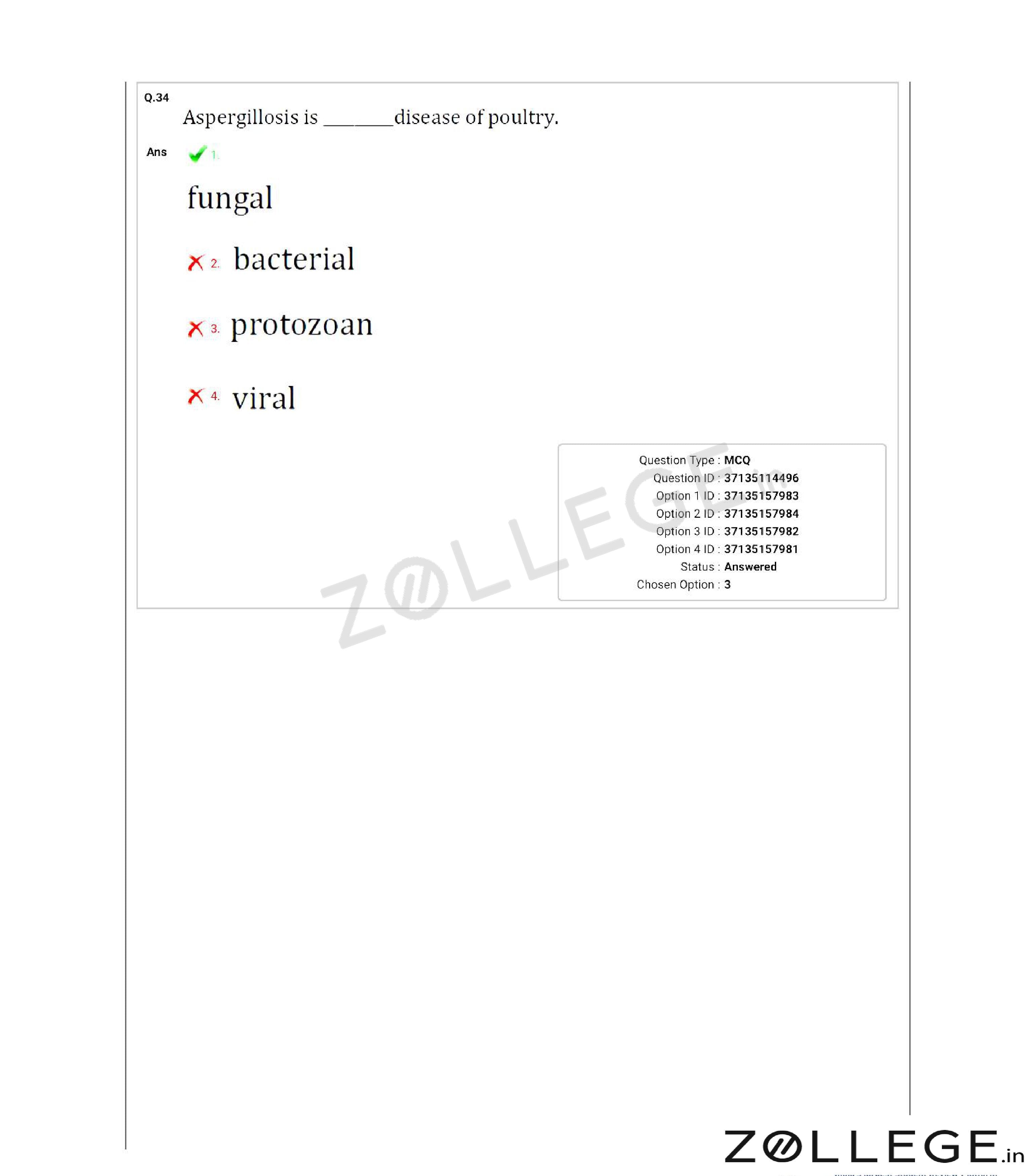
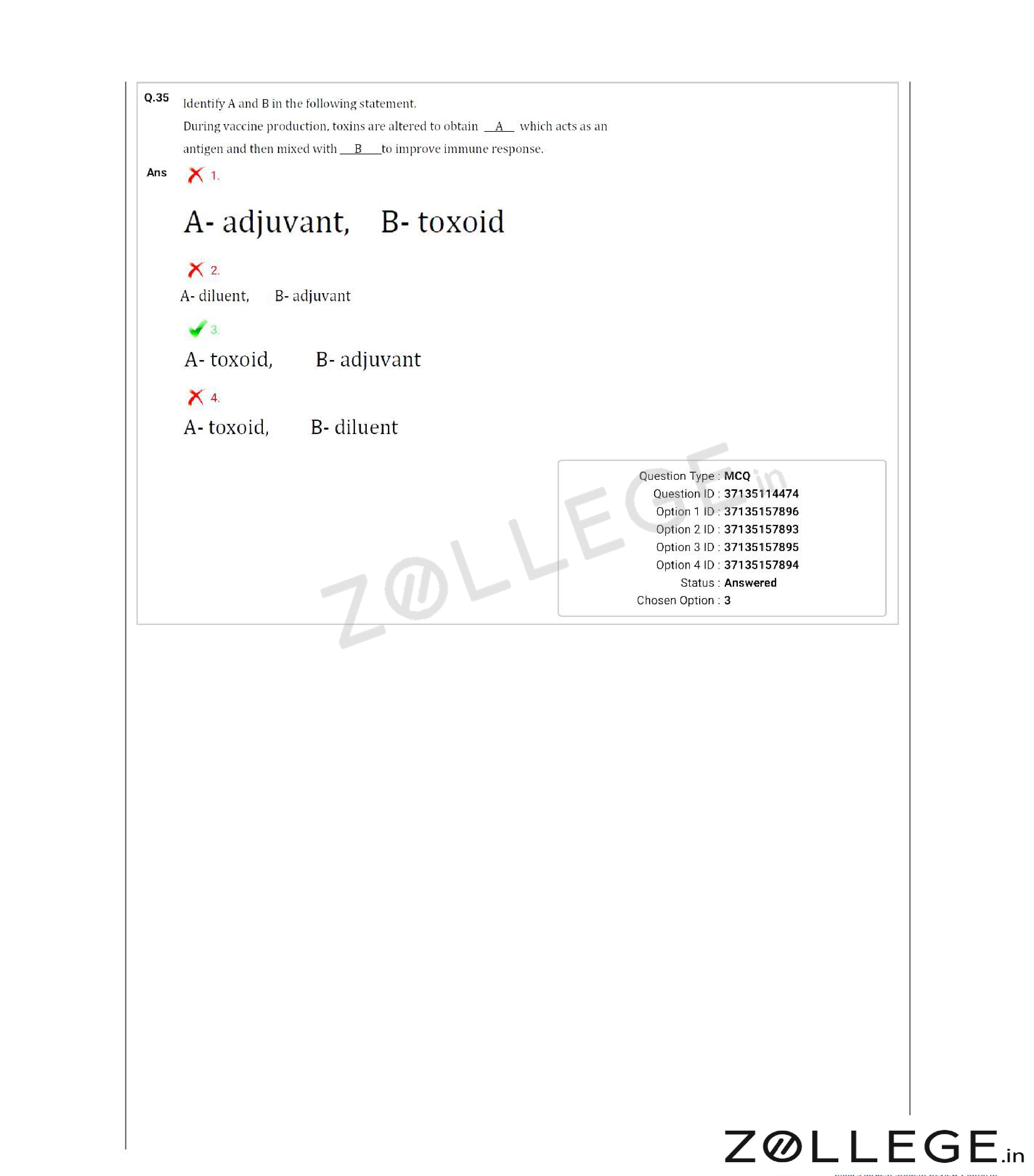
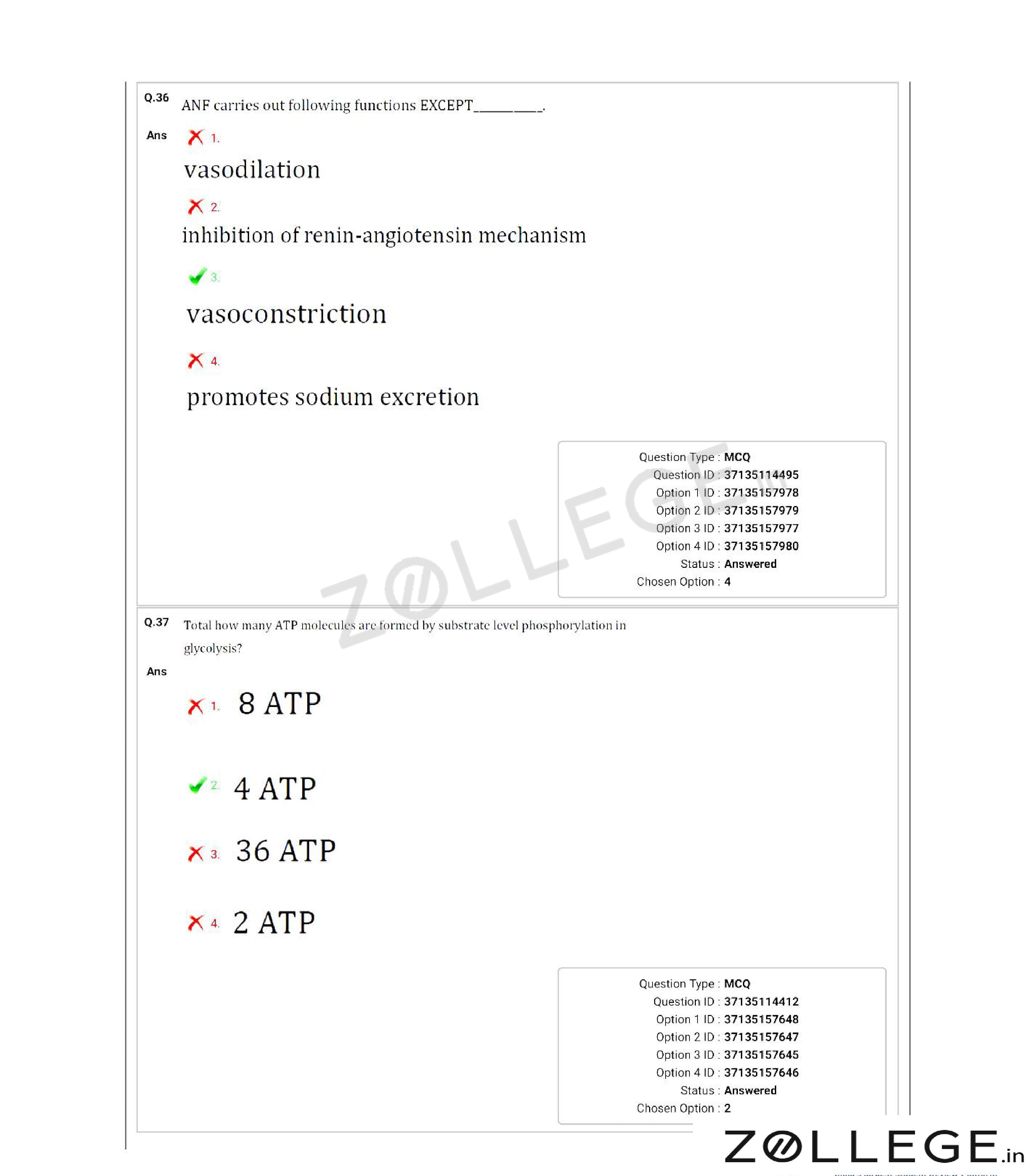
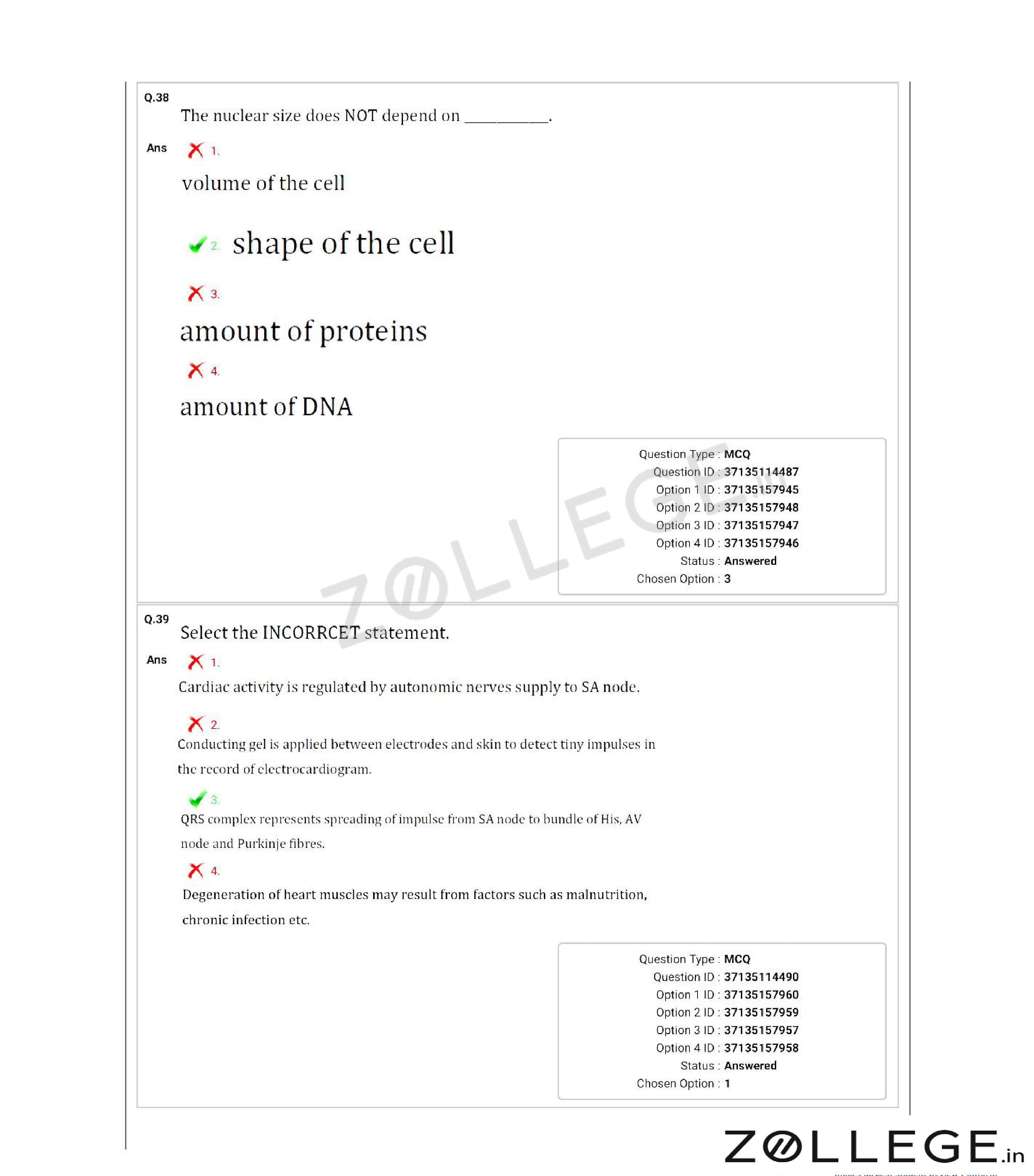
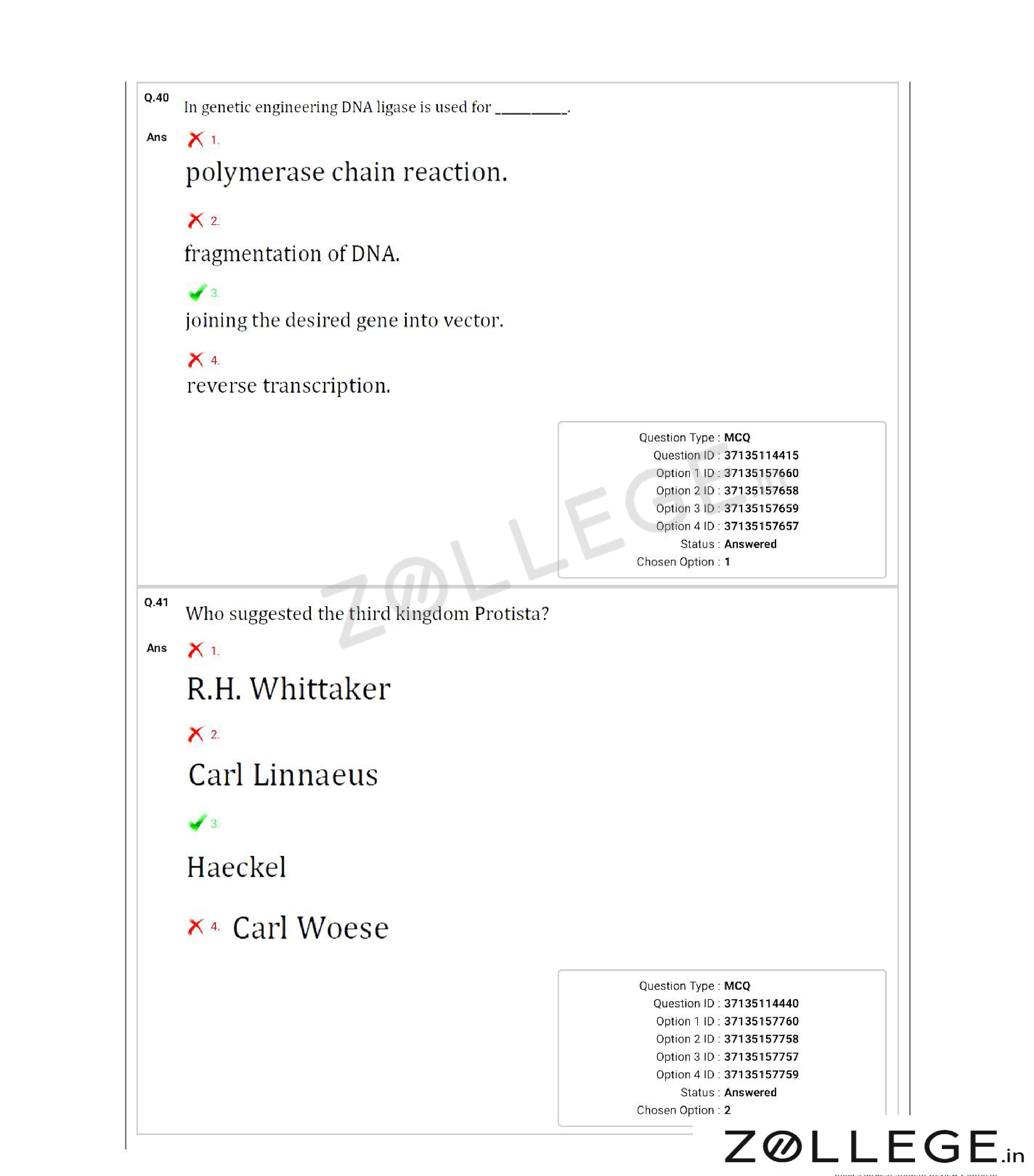
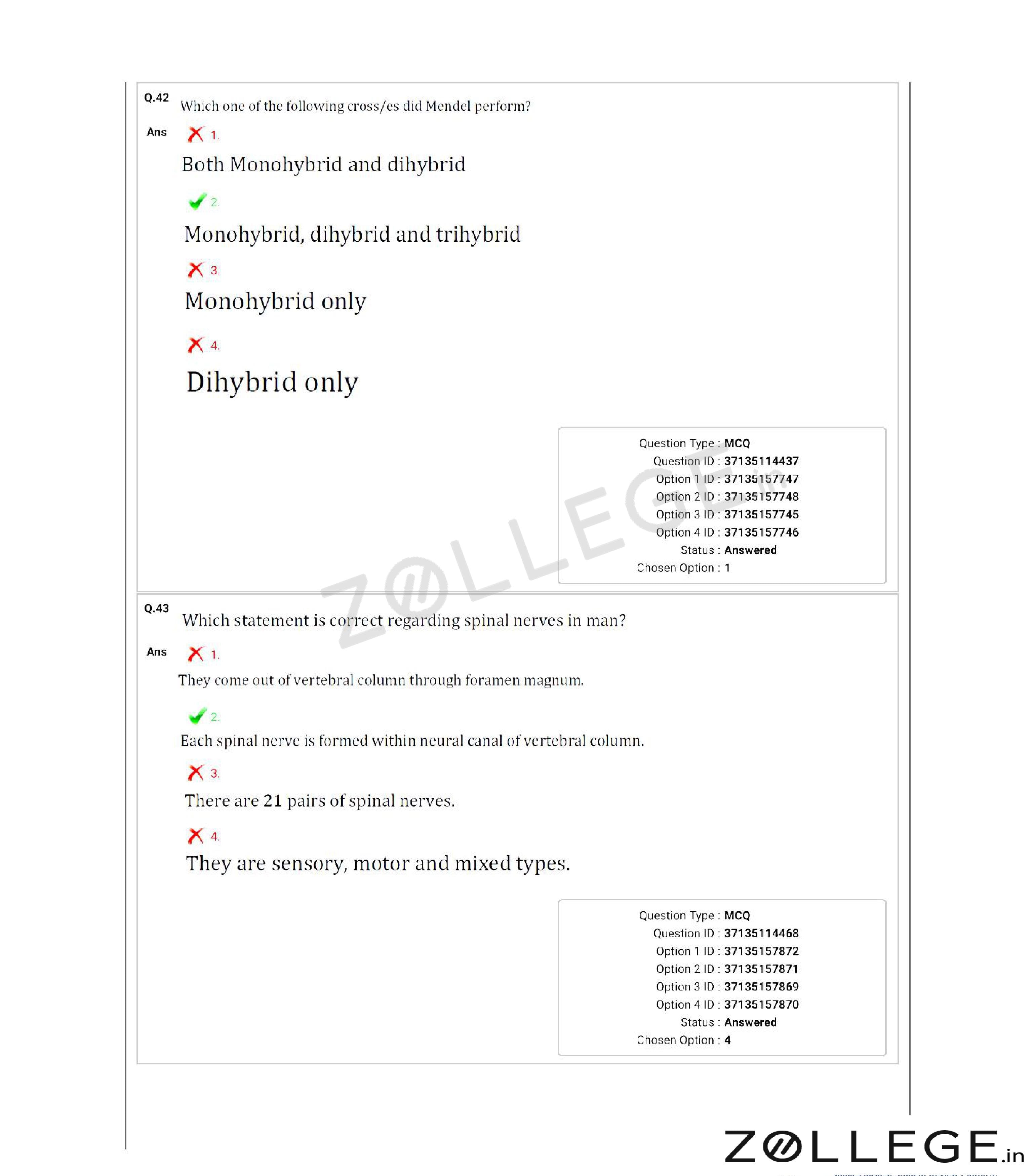
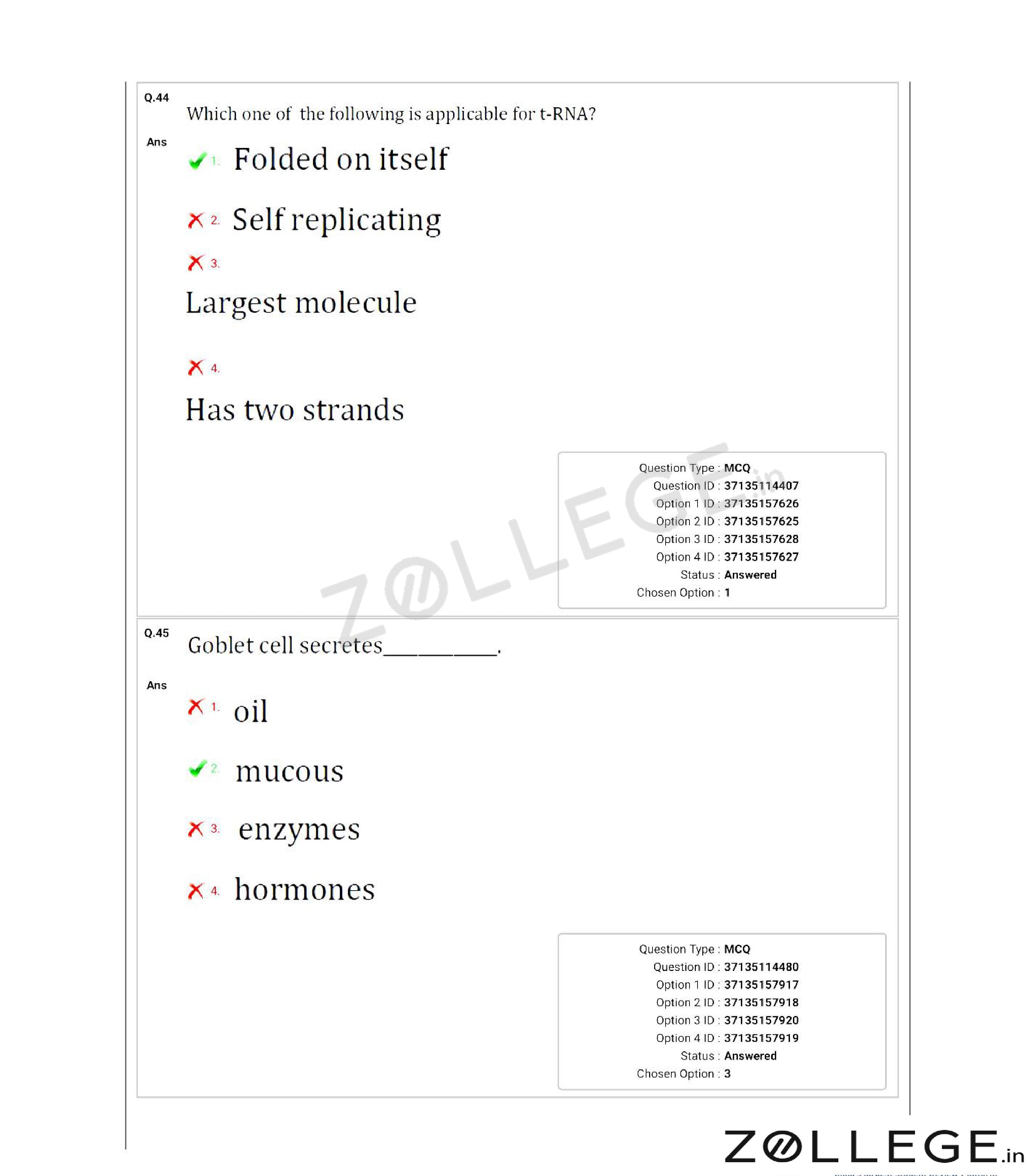
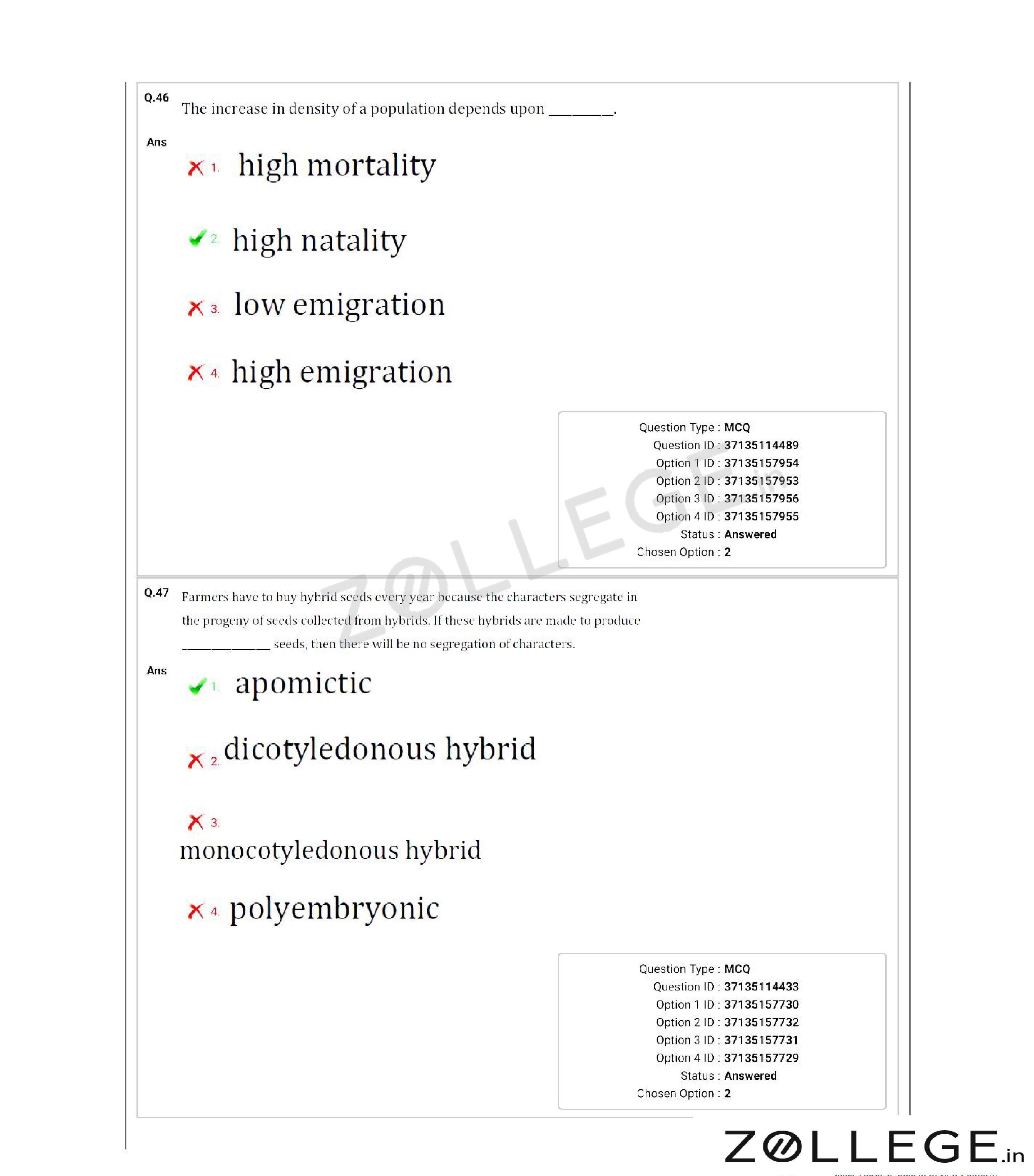
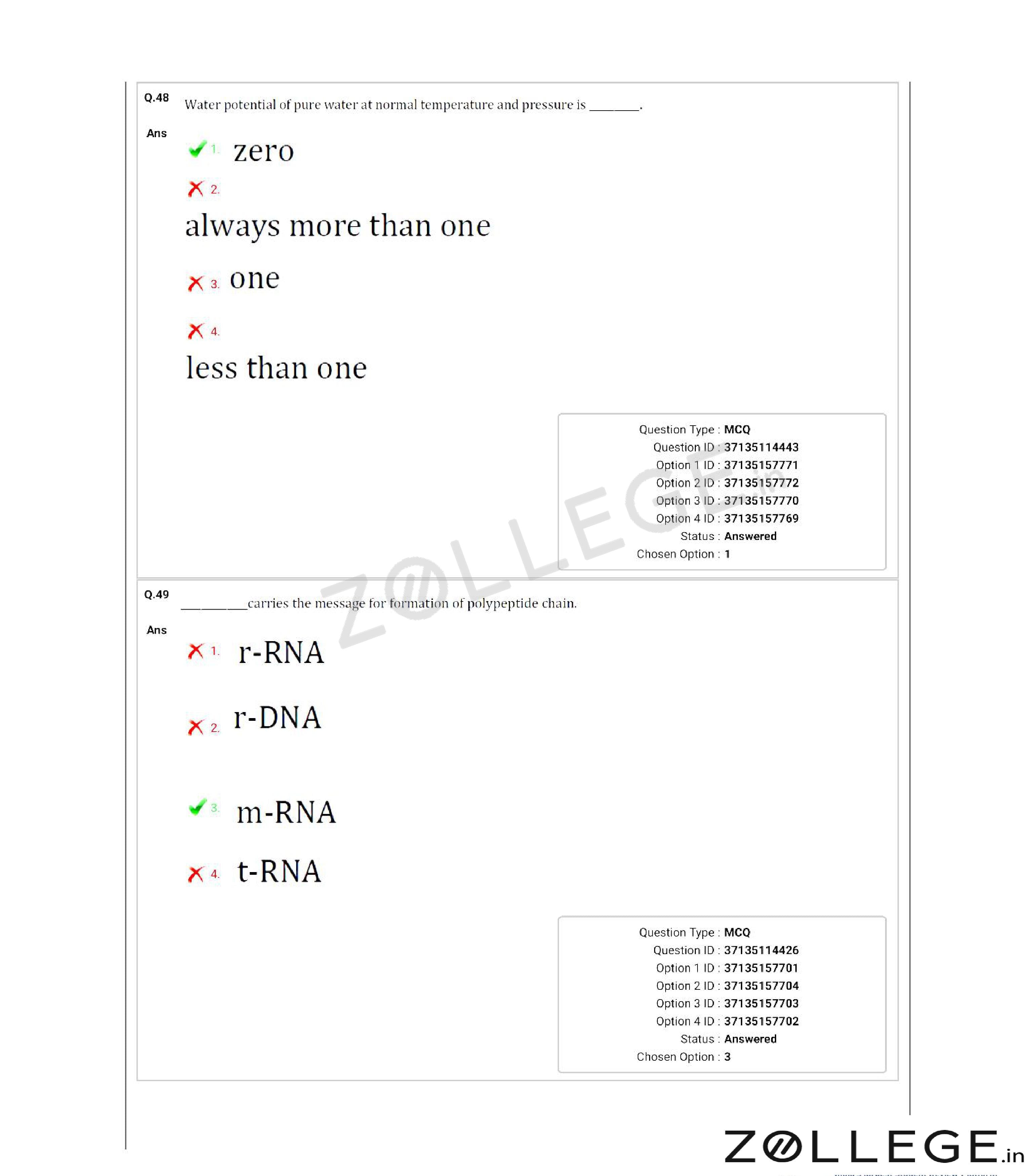
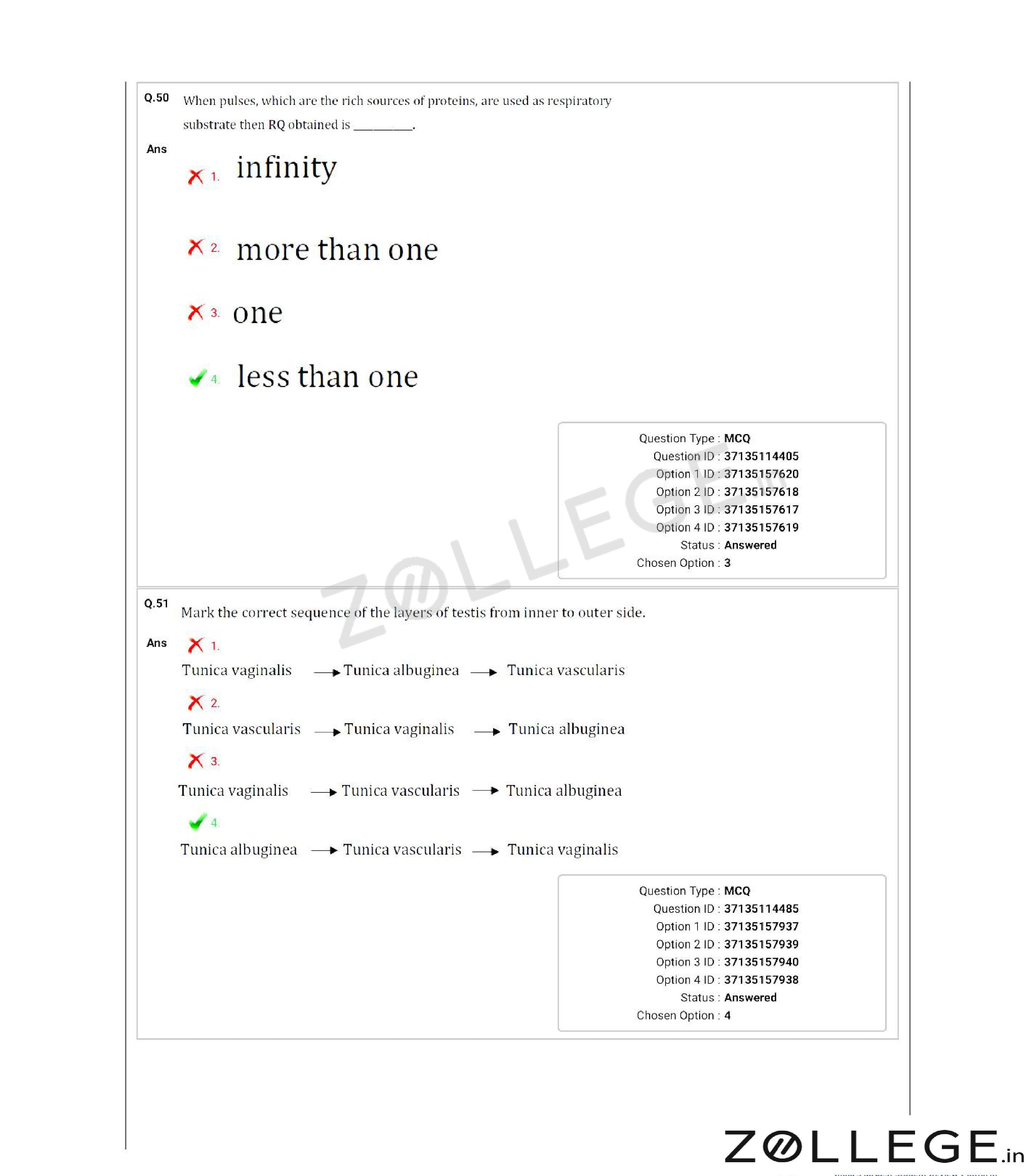
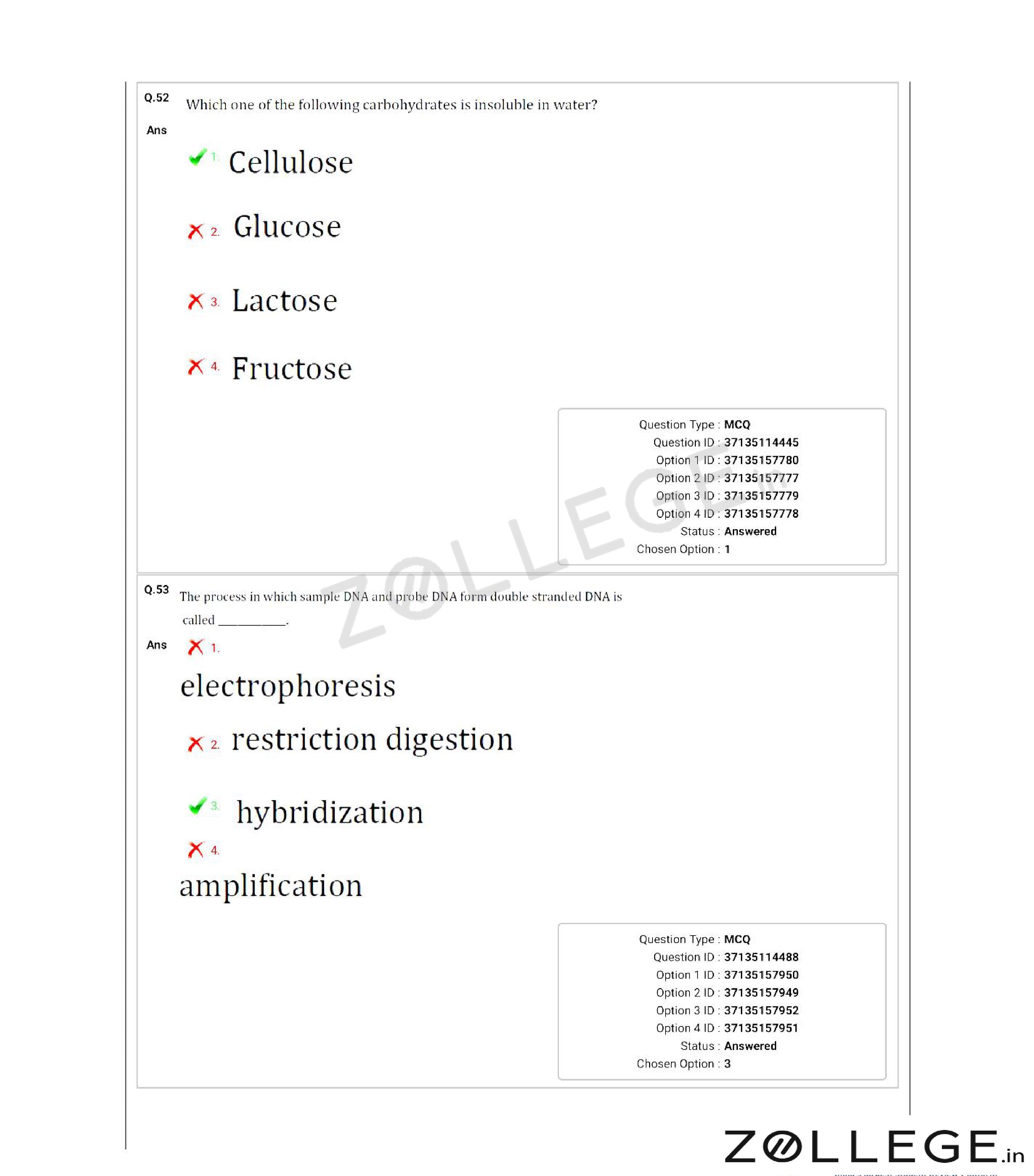
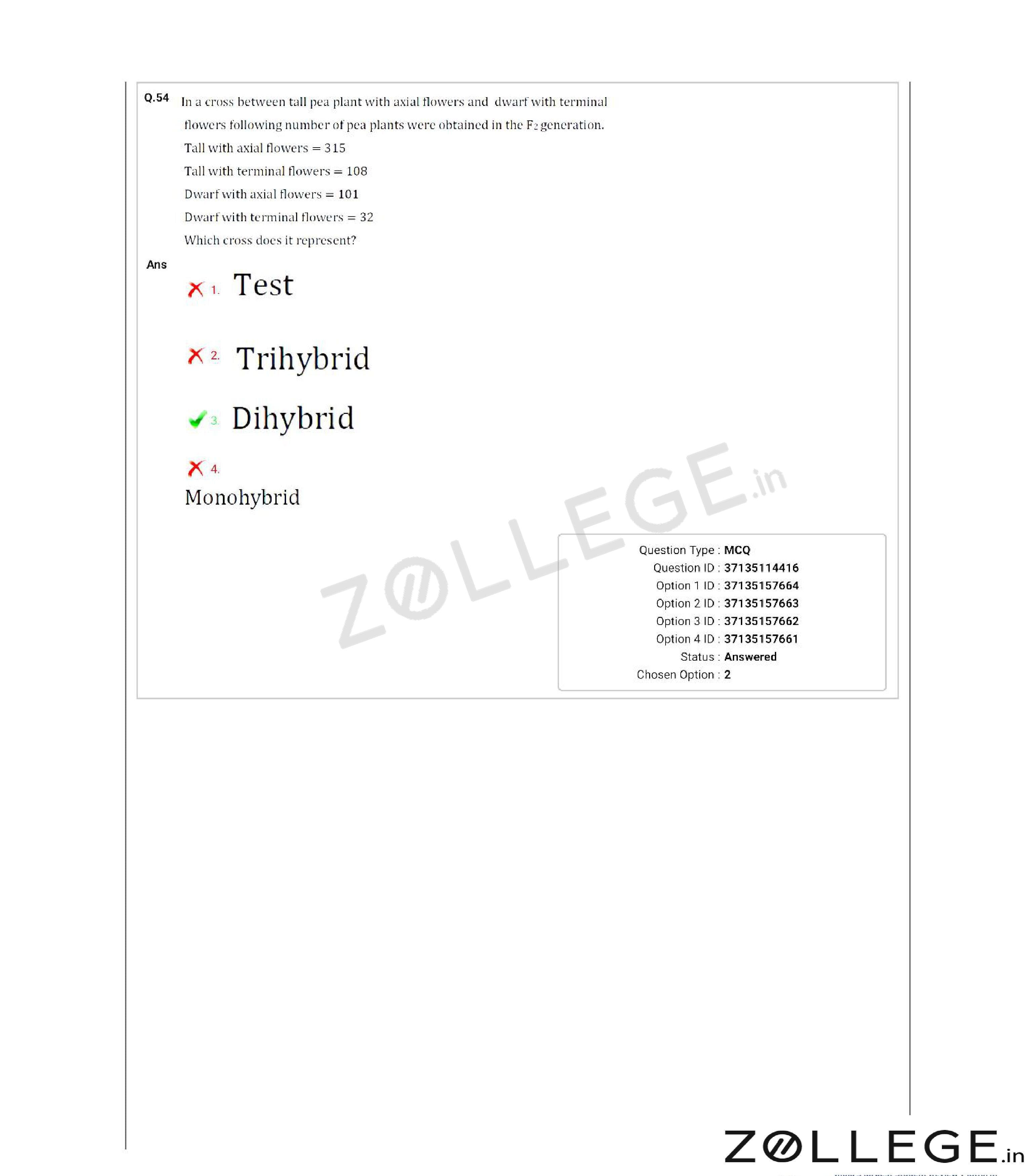
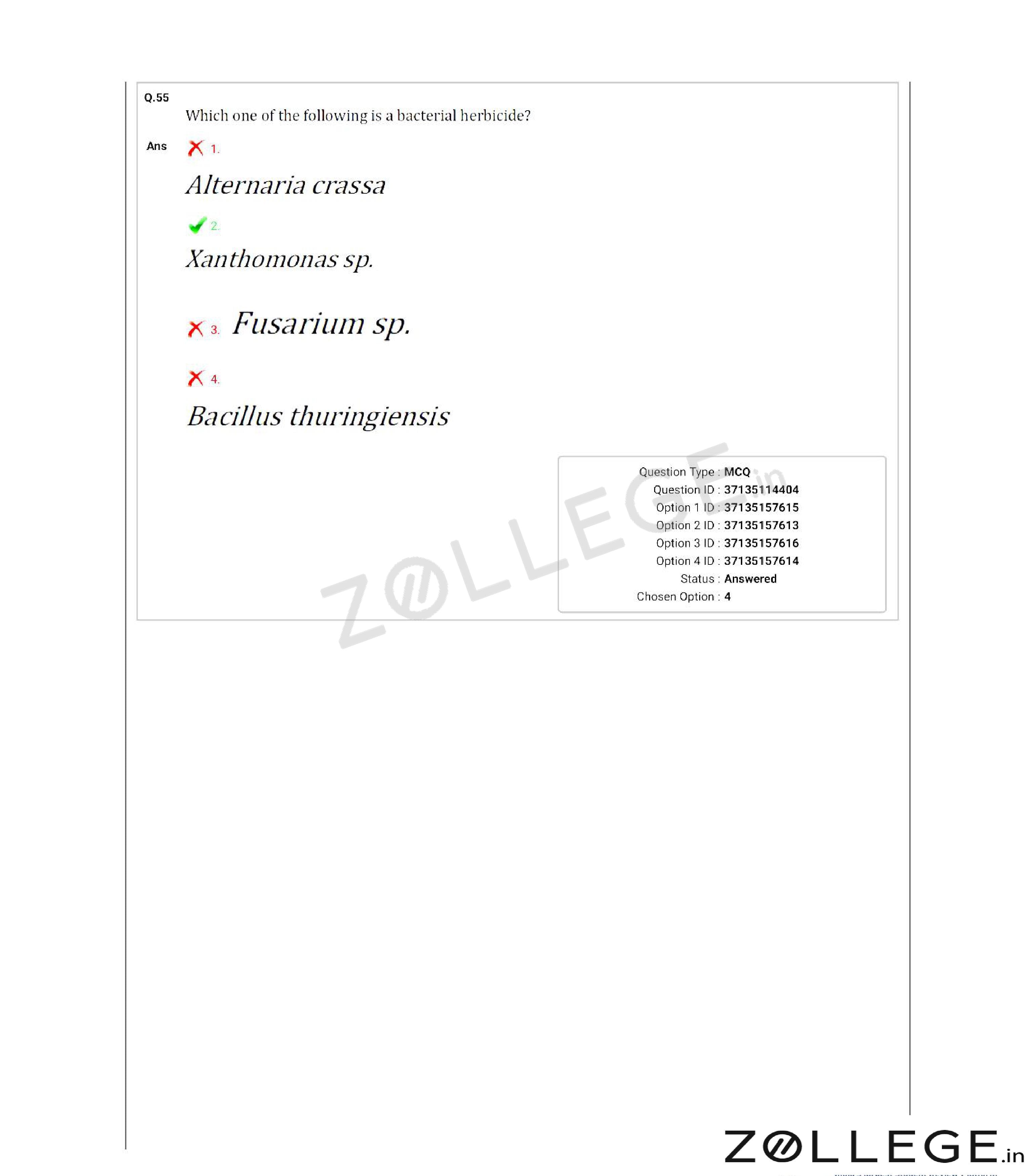
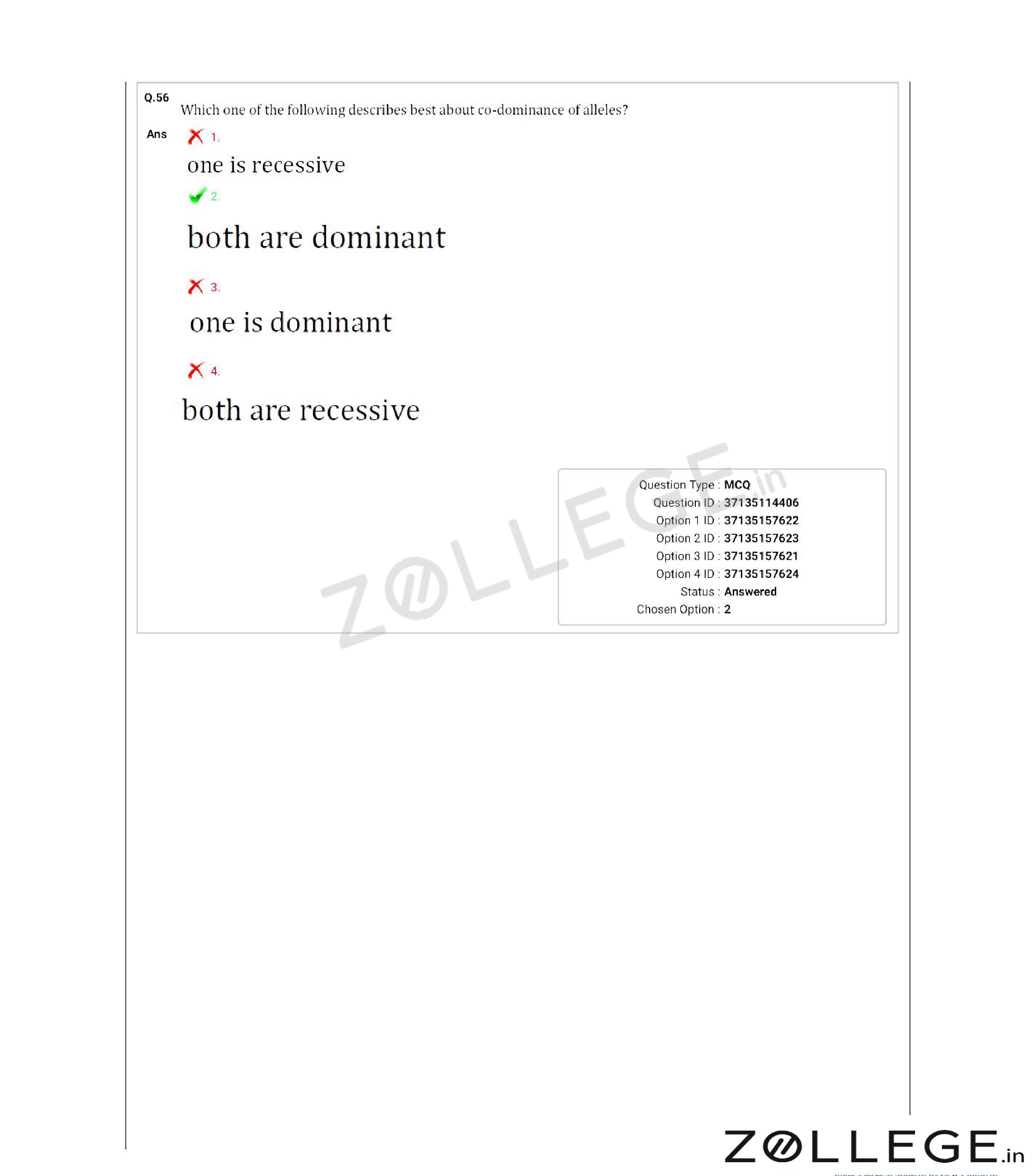
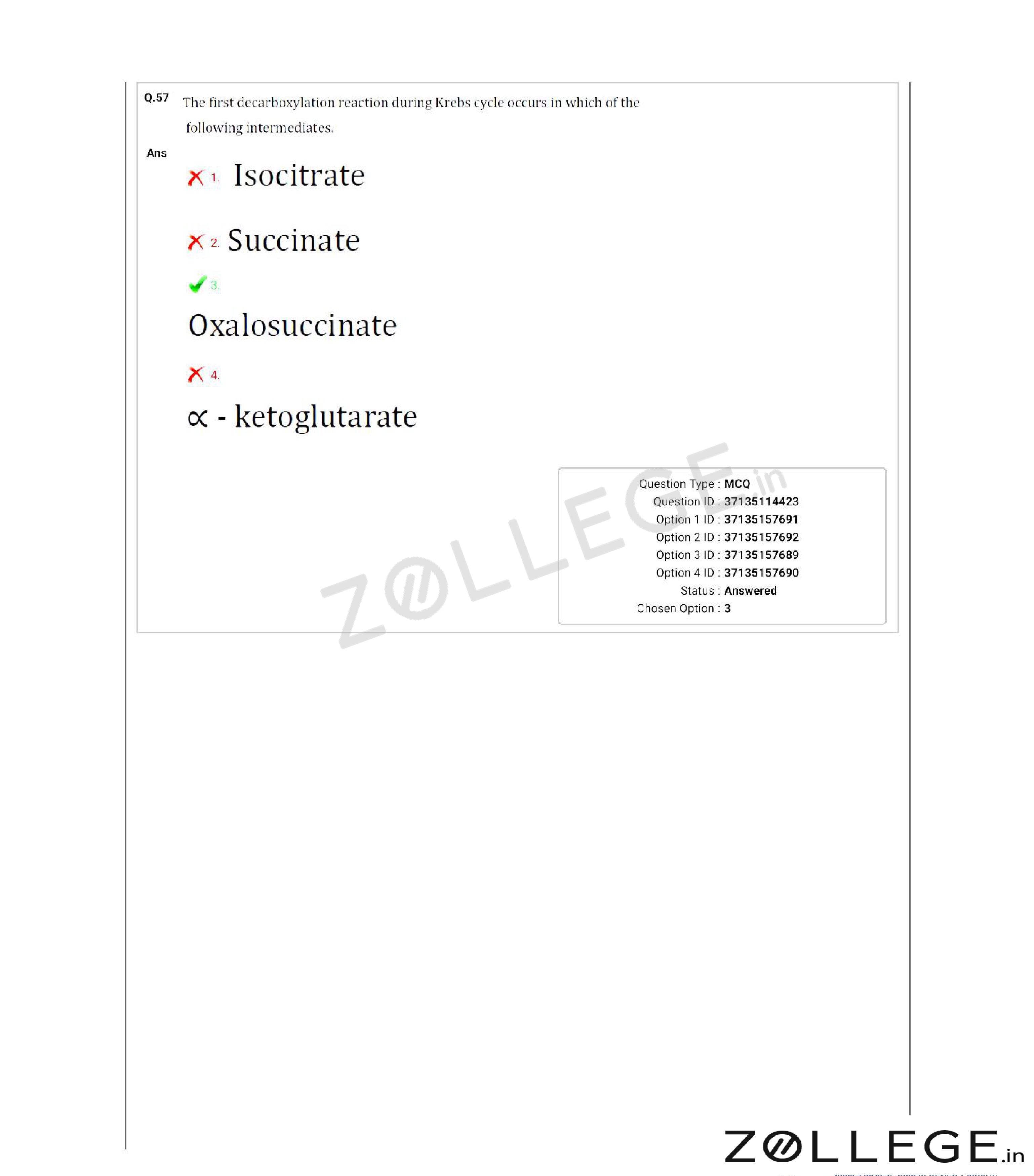
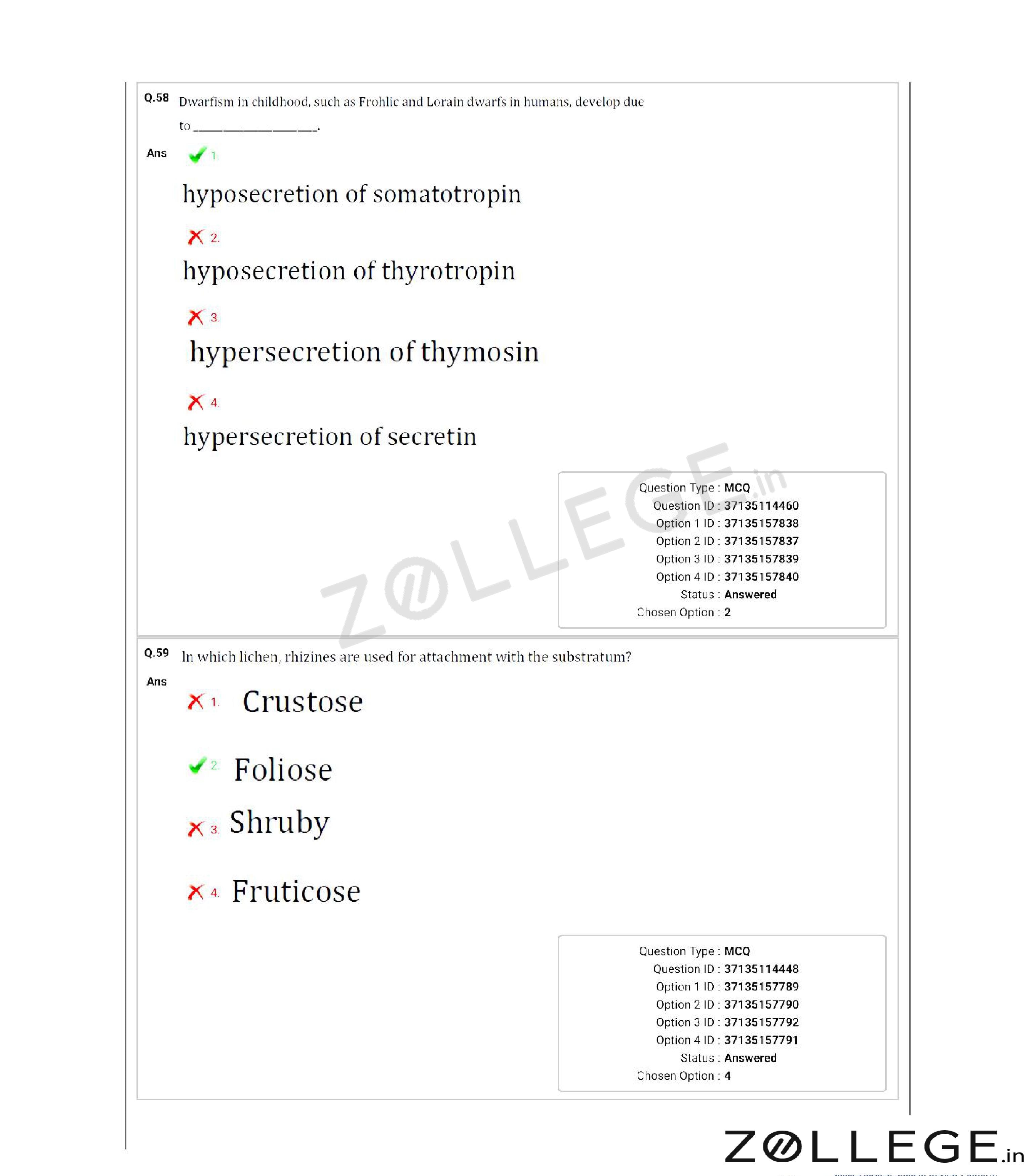
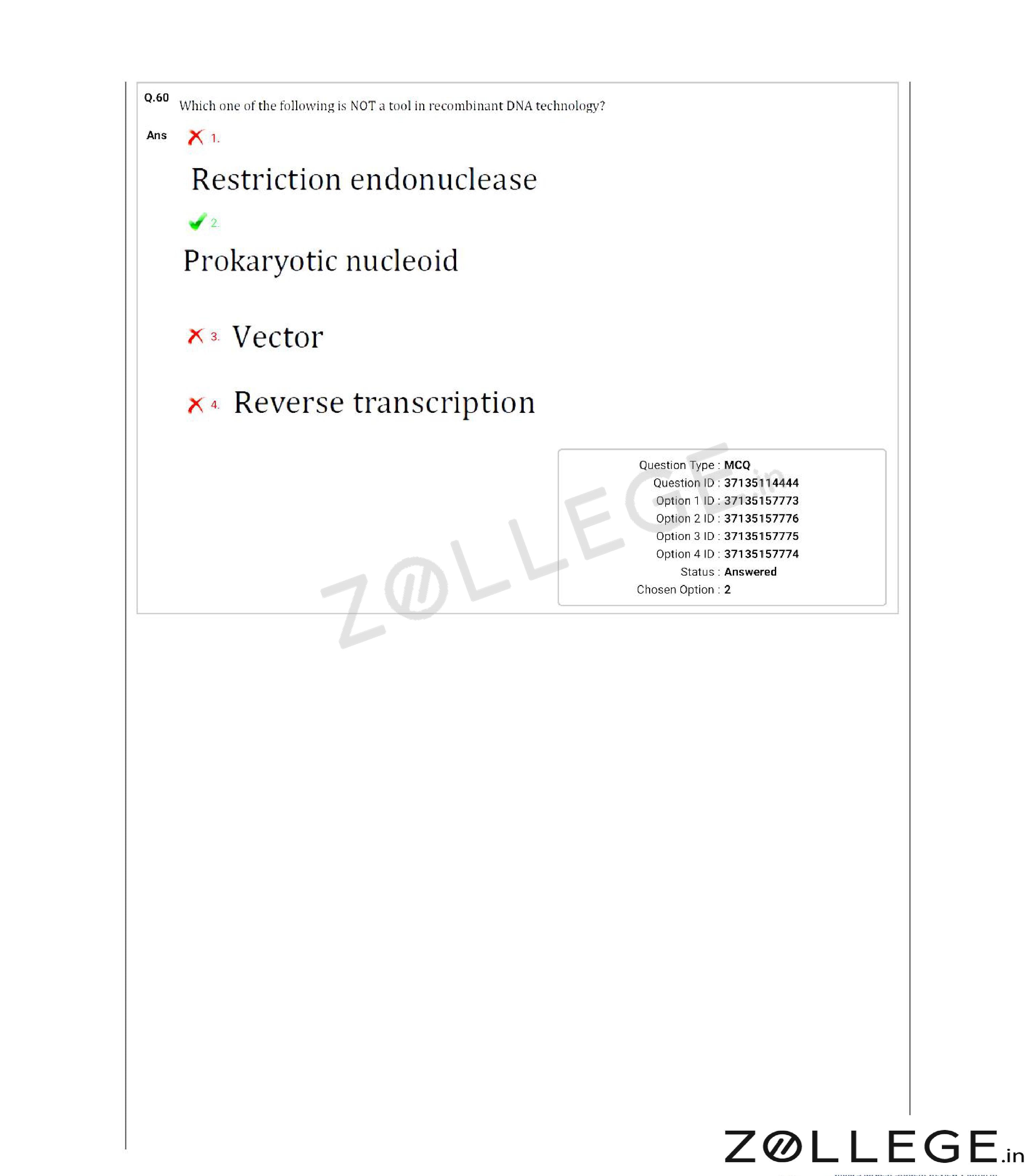
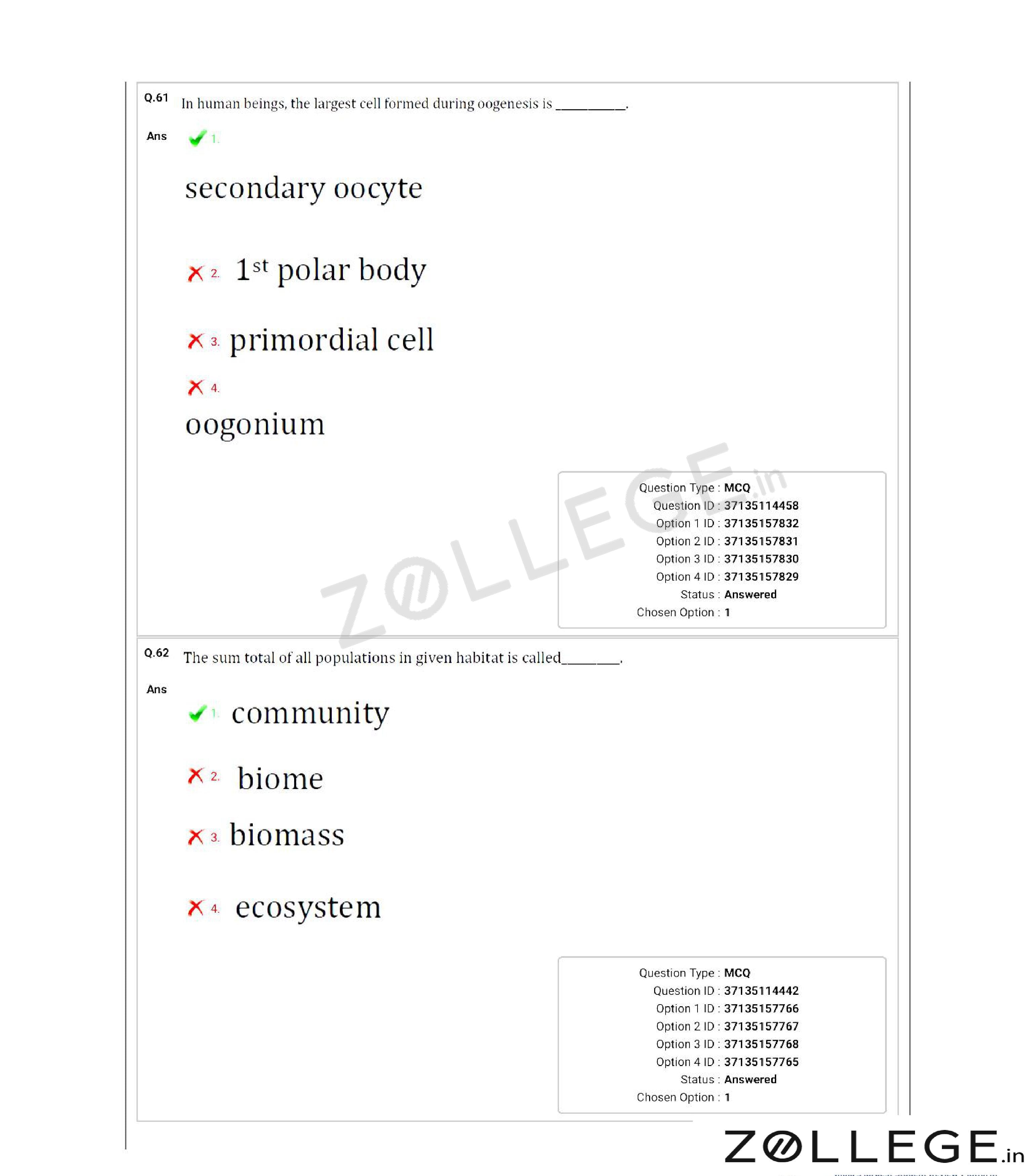
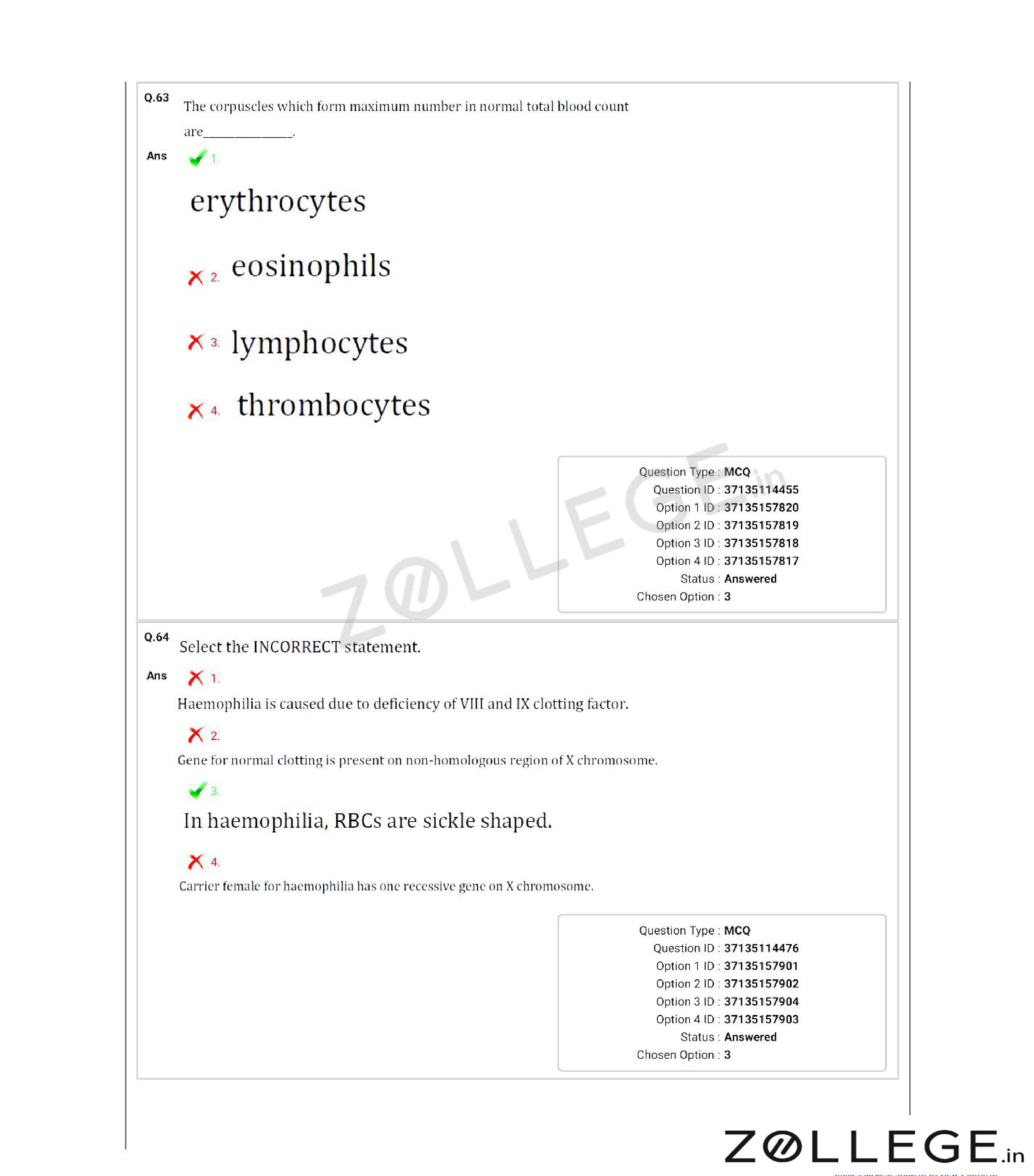
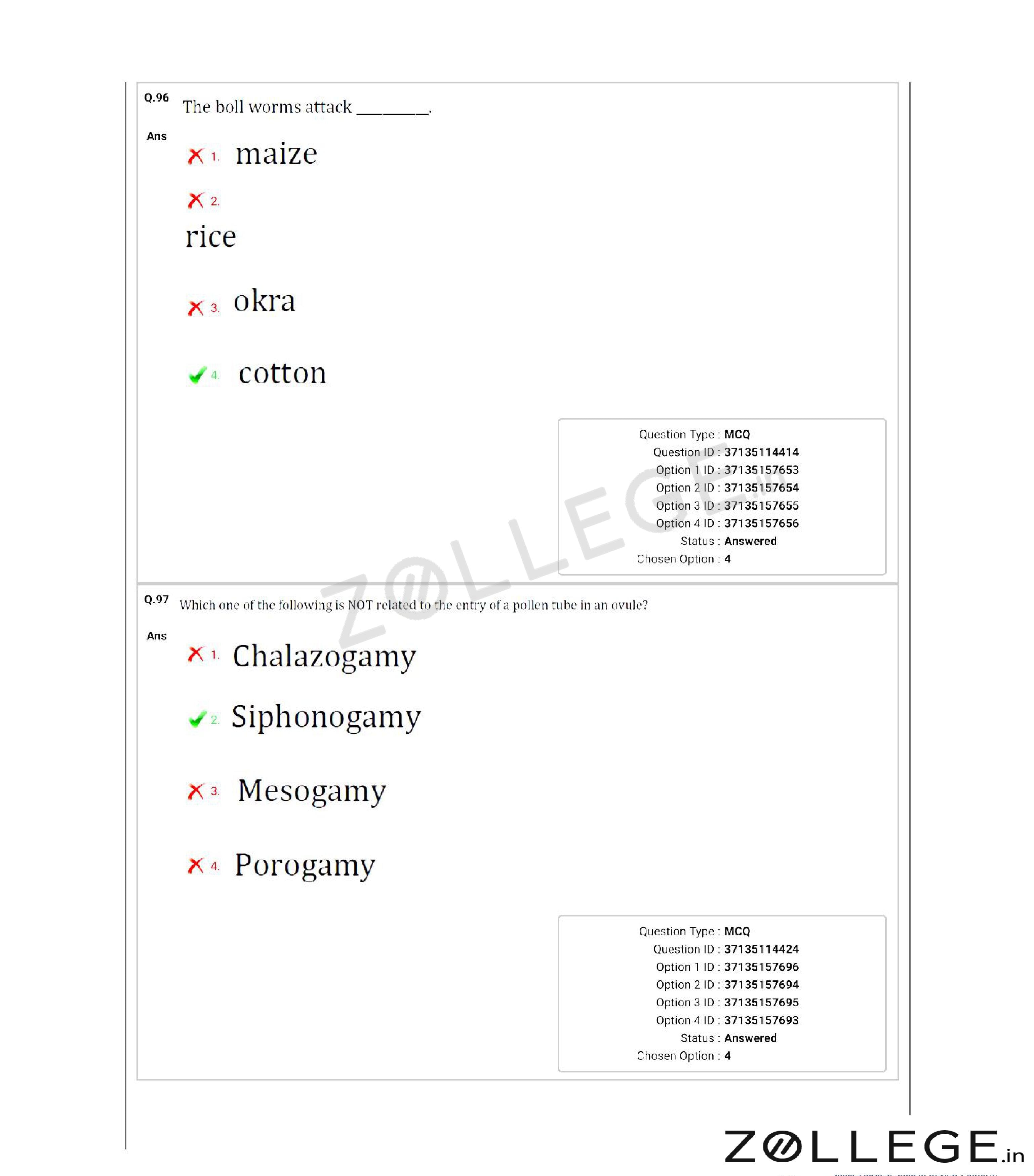
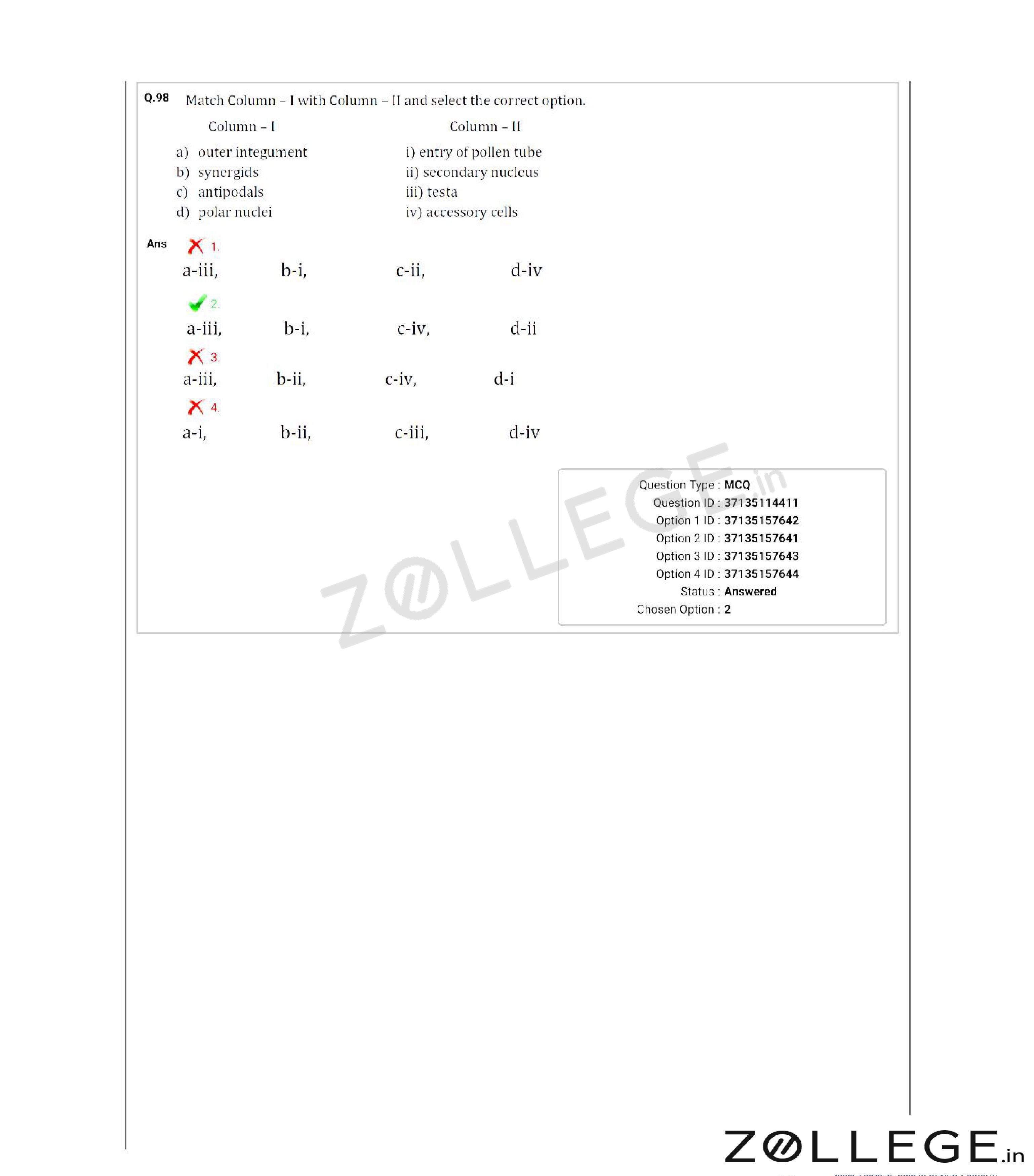
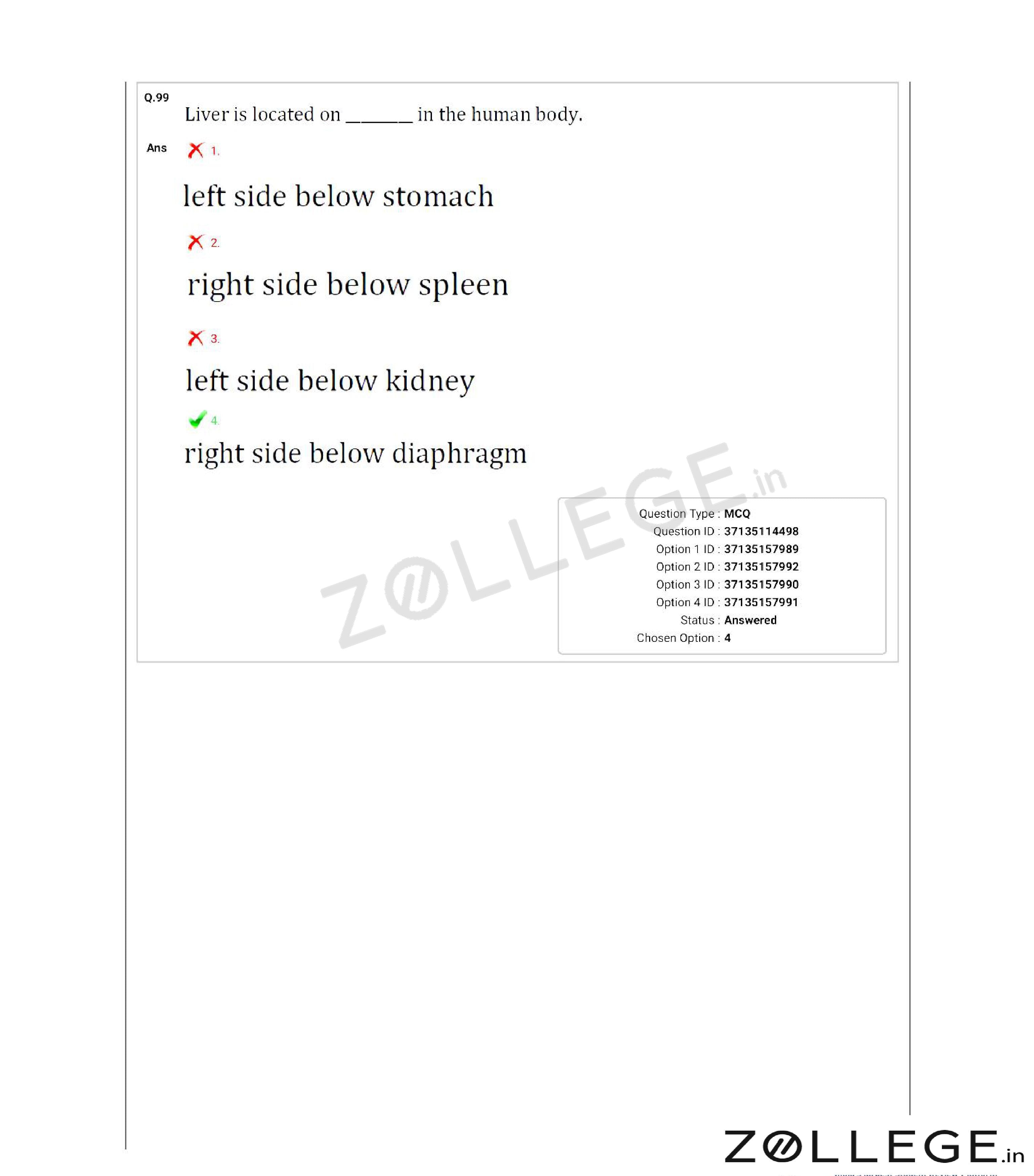
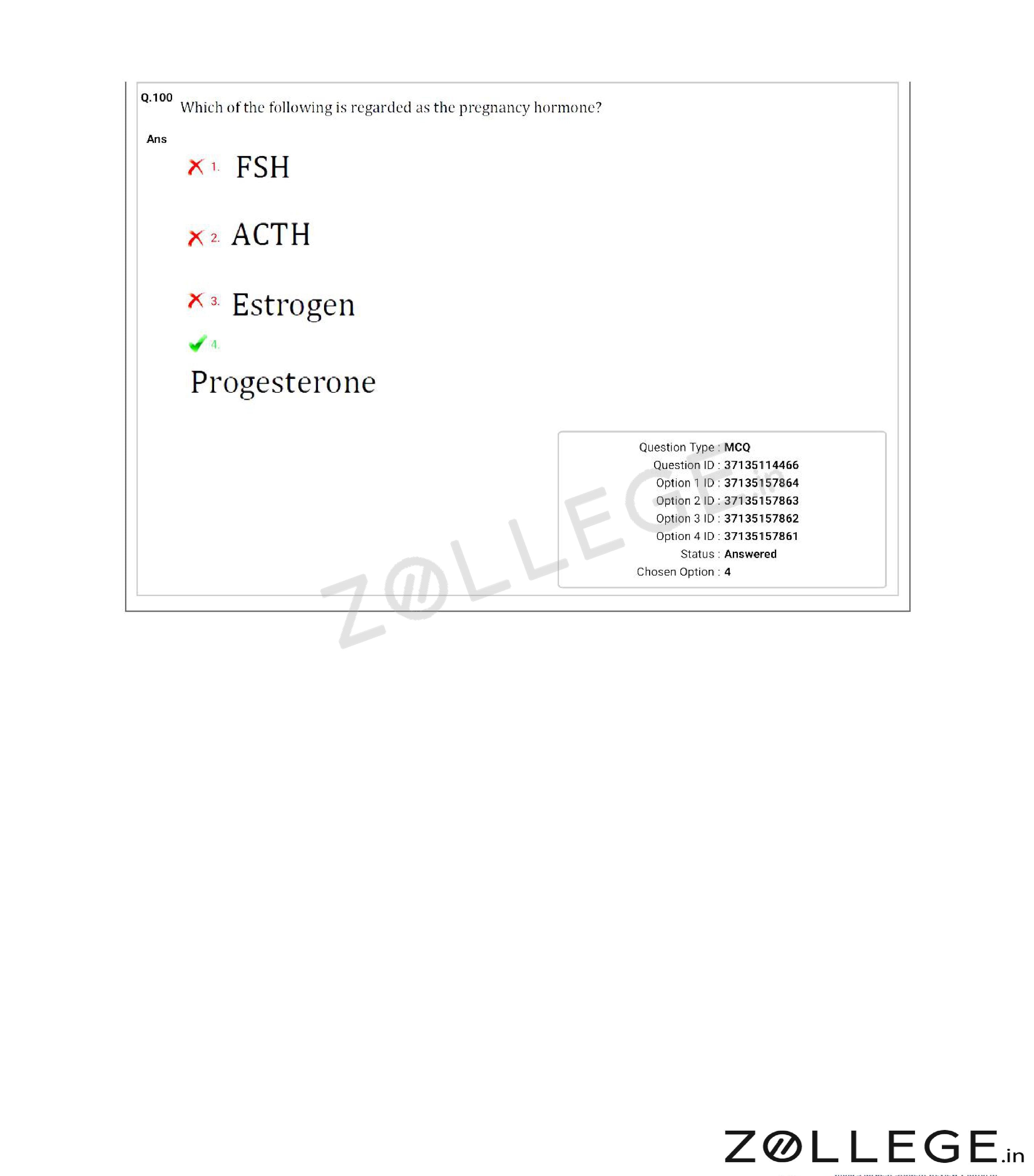
*The article might have information for the previous academic years, please refer the official website of the exam.