
MHT CET 2024 PCM May 2 Shift 2 Question Paper Pdf - Check Solutions with Answer Key Pdf

.jpg?tr=h-55,w-55,c-force)
Content Strategist|Tech-innovator|National Hackathon Winner | Updated On - Jan 17, 2025
MHT CET 2024 PCM May 2 Shift 2 Question Paper with Solution PDF is available for download here. Students found the Physics section moderate, with questions covering various topics. Chemistry was considered easy, featuring straightforward questions. Mathematics was moderate, with a lengthy paper that included questions from previous years with altered values. The overall difficulty level of the paper was easy to moderate.
MHT CET 2024 PCM Question Paper with Answer Key PDF
| MHT CET 2024 PCM 2 May Shift 2 Question Paper with Answer Key |  Download Download |
Check Solution |
MHT CET May 2 Shift 2 2024 PCM Questions with Solutions
Question 1:
If
B = |  3   α  -1 |
    |  1   3   1 |
    | -1   1   3 |
is the adjoint of a 3x3 matrix A, and |A| = 4, then α is equal to:
View Solution
Solution:
We are given that B is the adjoint of a matrix A and the determinant of A is |A| = 4.
The adjoint matrix B is related to the determinant of A as follows:
B = adj(A) = |A| × A⁻¹.
The elements of B are the cofactors of the corresponding elements in A. The element B₁₂ (α in this case) is the cofactor of A₁₂. Since B is given as the adjoint matrix and |A| = 4, the cofactor corresponding to A₁₂ is equal to 1.
Conclusion: Therefore, α = 1.
Question 2:
IUPAC name of the given ether is:
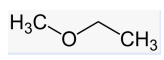
View Solution
Solution:
The IUPAC name of an ether is derived by naming the two alkyl groups attached to the oxygen atom and adding the word "ether" at the end. In this case, the ether has a methoxy group (CH₃O-) and an ethane group (C₂H₅) attached to the oxygen atom.
The correct IUPAC name is "Methoxy ethane," where "methoxy" represents the CH₃ group, and "ethane" represents the C₂H₅ group.
Conclusion: The correct name is Methoxy ethane.
Question 3:
If
A = | 0  1  2 |
    | 1  2  3 |
    | 3  1  1 |
then A⁻¹ is:
View Solution
Solution:
The inverse of a 3x3 matrix A is given by the formula:
A⁻¹ = (1/|A|) × adj(A),
where |A| is the determinant of A and adj(A) is the adjoint matrix.
Step 1: Calculate the determinant of A.
|A| = 0 × | 2 3 | | 1 1 | - 1 × | 1 3 | | 3 1 | + 2 × | 1 2 | | 3 1 |.
|A| = 0 - 1 × (-8) + 2 × (-5) = 8 - 10 = -2.
Step 2: Calculate the adjoint of A.
After calculating cofactors, adj(A) = | -1 -1 -1 | | -8 6 -1 | | 5 -3 1 |.
Step 3: Compute A⁻¹.
A⁻¹ = (1/|A|) × adj(A) = (1/-2) × adj(A) = (1/2) | -1 -1 -1 | | -8 6 -1 | | 5 -3 1 |.
Conclusion: The correct inverse is:
A⁻¹ = (1/2) | -1 -1 -1 | | -8 6 -1 | | 5 -3 1 |.
Question 4:
Which of the following is Clemmensen reduction?
View Solution
Solution:
Clemmensen reduction involves the reduction of aldehydes or ketones to alkanes using zinc amalgam (Zn-Hg) and concentrated hydrochloric acid (HCl).
Reaction:
R-CO-R' + Zn(Hg) + HCl → R-CH₂-R'.
This method is suitable for compounds that are stable in acidic conditions.
Conclusion: Clemmensen reduction reduces aldehydes and ketones to alkanes using zinc amalgam and HCl.
Question 5:
Which element shows the lower oxidation state in the 3d series?
View Solution
Solution:
Zinc (Zn) in the 3d series shows the lowest oxidation state because of its fully filled 3d orbitals (d¹⁰ configuration).
Electronic Configuration:
Zn: [Ar] 3d¹⁰ 4s².
Since the d-orbitals are completely filled, zinc typically shows an oxidation state of +2 by losing two 4s electrons, which is lower than the variable oxidation states seen in other 3d elements.
Conclusion: Zinc has the lowest oxidation state in the 3d series.
Question 6:
Calculate the pH of the solution using the Henderson-Hasselbalch equation.
View Solution
Solution:
The pH of a buffer solution is calculated using the Henderson-Hasselbalch equation:
pH = pKₐ + log([salt]/[acid])
Here:
- pKₐ is the negative logarithm of the acid dissociation constant (Kₐ).
- [salt] is the concentration of the conjugate base (salt).
- [acid] is the concentration of the weak acid.
Conclusion: Use the given concentrations and pKₐ to calculate the pH using the Henderson-Hasselbalch equation.
Question 7:
What is the concentration of H⁺ ions if the pH is 2.7?
View Solution
Solution:
The pH of a solution is related to the concentration of hydrogen ions (H⁺) by the equation:
pH = -log[H⁺]
Given that the pH is 2.7, rearrange the equation to solve for [H⁺]:
[H⁺] = 10⁻²·⁷
Calculating:
[H⁺] ≈ 10⁻²·⁷ ≈ 1.99 × 10⁻³ M
Conclusion: The concentration of hydrogen ions is approximately 1.99 × 10⁻³ M.
Question 8:
The relationship between solubility of a gas in a liquid at constant temperature and external pressure is:
View Solution
Solution:
According to Henry's law, the solubility of a gas (S) in a liquid is directly proportional to the external pressure (P) at constant temperature.
Mathematically:
S ∝ P
Conclusion: The relationship between solubility and pressure is S ∝ P.
Question 9:
How many unit particles are present in a BCC (Body-Centered Cubic) unit cell?
View Solution
Solution:
In a Body-Centered Cubic (BCC) unit cell:
- There is 1 atom at the center of the cube.
- There are 8 atoms at the corners, each contributing 1/8th to the unit cell.
Total contributions:
Corner atoms = 8 × (1/8) = 1 atom
Center atom = 1 atom
Total = 1 + 1 = 2 atoms
Conclusion: The total number of unit particles in a BCC unit cell is 2.
Question 10:
The most suitable reagent for the conversion of R-CH₂-OH to R-CHO is:
View Solution
Solution:
Pyridinium chlorochromate (PCC) is a mild oxidizing agent that selectively oxidizes primary alcohols (R-CH₂-OH) to aldehydes (R-CHO) without further oxidation to carboxylic acids.
Reaction:
R-CH₂-OH + PCC → R-CHO
Conclusion: The most suitable reagent for this conversion is PCC.
Question 11:
What is the edge length of a BCC unit cell?
View Solution
Solution:
For a Body-Centered Cubic (BCC) unit cell, the relation between edge length (a) and the atomic radius (r) is given by:
a = 4r/√3
This relationship is derived from the geometry of the BCC unit cell, where the body diagonal contains 2 atomic radii.
Conclusion: The edge length is 4r/√3.
Question 12:
What is the preliminary test for nanoparticles?
View Solution
Solution:
Nanoparticles are generally characterized using advanced techniques such as Transmission Electron Microscopy (TEM) or Dynamic Light Scattering (DLS). None of the provided options represent preliminary tests for nanoparticles.
Conclusion: The correct answer is None of these.
Question 13:
What is the IUPAC name of the given haloarene?

View Solution
Solution:
The IUPAC name of a haloarene is derived by prefixing "halo-" (e.g., chloro, bromo, iodo) to the name of the parent hydrocarbon (e.g., benzene, toluene). The exact name depends on the specific halogen group present.
Conclusion: The name is based on the halogen and the parent hydrocarbon.
Question 14:
The converse of ((∼p) ∧ q) ⇒ r is:
View Solution
Solution:
The converse of an implication statement A ⇒ B is B ⇒ A.
For the given statement ((∼p) ∧ q) ⇒ r, its converse is r ⇒ ((∼p) ∧ q).
Rewriting r ⇒ ((∼p) ∧ q) using logical equivalence:
(∼r) ⇒ (p ∨ (∼q))
Conclusion: The converse of the statement is (p ∨ (∼q)) ⇒ (∼r).
Question 15:
The negative of (p ∧ (∼q)) ∨ (∼p) is equivalent to:
View Solution
Solution:
To find the negative of (p ∧ (∼q)) ∨ (∼p):
∼[(p ∧ (∼q)) ∨ (∼p)]
Using De Morgan's laws:
∼(p ∧ (∼q)) ∧ ∼(∼p)
(∼p ∨ q) ∧ p
Simplifying:
p ∧ q
Conclusion: The negative of (p ∧ (∼q)) ∨ (∼p) is equivalent to p ∧ q.
Question 16:
The variance of the following probability distribution is:
| x | P(X)   |
|---|--------|
| 0 | 9/16   |
| 1 | 3/8    |
| 2 | 1/16   |
View Solution
Solution:
The variance of a probability distribution is calculated as:
Variance = E(X²) - (E(X))²
Step 1: Calculate E(X):
E(X) = Σ x × P(X)
E(X) = (0 × 9/16) + (1 × 3/8) + (2 × 1/16)
E(X) = 0 + 3/8 + 2/16
E(X) = 4/8 = 1/2
Step 2: Calculate E(X²):
E(X²) = Σ x² × P(X)
E(X²) = (0² × 9/16) + (1² × 3/8) + (2² × 1/16)
E(X²) = 0 + 3/8 + 4/16
E(X²) = 5/8
Step 3: Calculate Variance:
Variance = E(X²) - (E(X))²
Variance = 5/8 - (1/2)²
Variance = 5/8 - 2/8
Variance = 3/8
Conclusion: The variance is 3/8.


*The article might have information for the previous academic years, please refer the official website of the exam.