
UP Board Class 12 2024 Biology Question Paper PDF - Check Solutions with Answer key PDF (Code 348-GI)


Content Writer | Updated On - Sep 24, 2025
UP Board Class 12 Biology 2024 Question Paper (Code 348-GI) PDF is available for download. The exam, conducted by UPMSP in February 2024, was for 70 marks with a 3-hour 15-minute duration. According to initial feedback, the paper was of easy to moderate difficulty. The MCQs were easy, while the Short Answer and Long Answer sections were of moderate difficulty. Overall, students found the paper manageable and are expected to score well.
UP Board Class 12 Biology Question Paper 2024 (Code 348 GI) with Solutions
Candidates can use the link below to download the UP Board Class 12 Biology Question Paper with detailed solutions.
| UP Board Class 12 Biology Question Paper with Answer Key |  Download Download |
Check Solution |
![]()
UP Board Class 12 Biology Questions with Solutions

Multiple Choice Type Questions
Question 1(a):
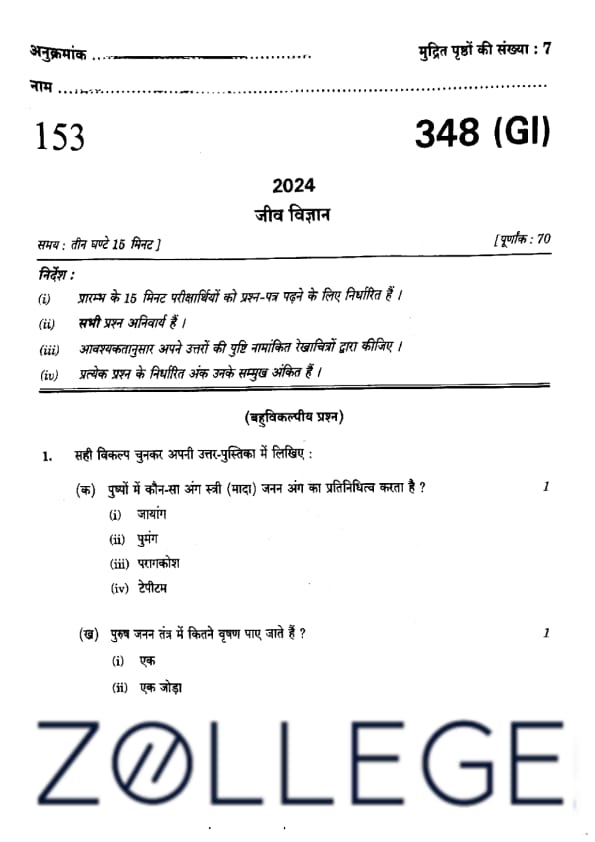
Which organ in flowers represents the female reproductive organ?
View Solution
Solution:
The female reproductive organ in flowers is called the gynoecium. It consists of carpels, which include the stigma, style, and ovary. The ovary contains ovules, which develop into seeds after fertilization.
Question 1(b):
How many testis are found in the male reproductive system?
View Solution
Solution:
The human male reproductive system contains one pair of testis (two testes), which are responsible for producing sperm and male sex hormones such as testosterone.
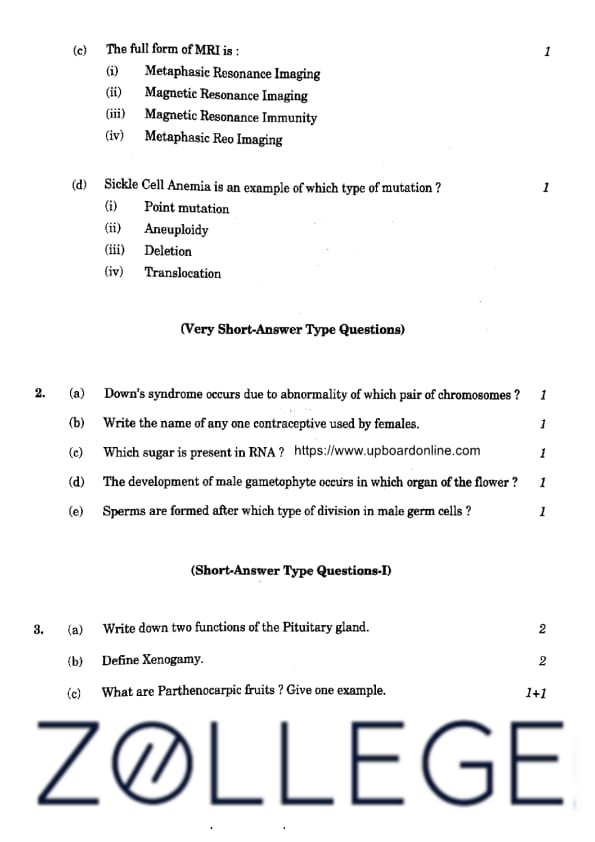
Question 1(c):
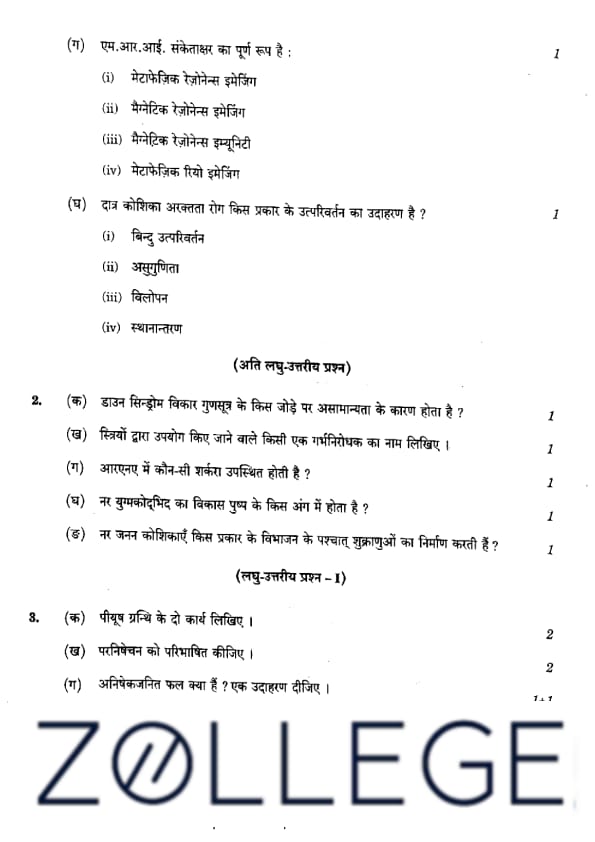
The full form of MRI is:
View Solution
Solution:
MRI (Magnetic Resonance Imaging) is a medical imaging technique used to visualize internal structures of the body using strong magnetic fields and radio waves. It is commonly used for brain, spinal cord, and joint imaging.
Question 1(d):
Sickle Cell Anemia is an example of which type of mutation?
View Solution
Solution:
Sickle cell anemia is caused by a point mutation in the beta-globin gene, where a single nucleotide substitution (adenine to thymine) results in the production of abnormal hemoglobin (HbS). This mutation leads to the deformation of red blood cells into a sickle shape, causing various health complications.
Very Short Answer Type Questions
Question 2(a):
Down's syndrome occurs due to abnormality of which pair of chromosomes?
View Solution
Solution:
Down's syndrome is caused by trisomy of the 21st chromosome, meaning an individual has three copies of chromosome 21 instead of the normal two. This results in developmental delays and characteristic physical features.
Question 2(b):
Write the name of any one contraceptive used by females.
View Solution
Solution:
Oral contraceptive pills contain hormones (estrogen and progesterone) that prevent ovulation and thus pregnancy. Other common contraceptives include intrauterine devices (IUDs) and barrier methods.
Question 2(c):
Which sugar is present in RNA?
View Solution
Solution:
RNA (Ribonucleic Acid) contains ribose sugar, which is a five-carbon sugar with one hydroxyl group (-OH) at the 2' position, making it different from deoxyribose in DNA.
Question 2(d):
The development of male gametophyte occurs in which organ of the flower?
View Solution
Solution:
The male gametophyte (pollen grain) develops inside the anther of a flower, where microspore mother cells undergo meiosis to form haploid microspores that develop into pollen grains.
Question 2(e):
Sperms are formed after which type of division in male germ cells?
View Solution
Solution:
In the male reproductive system, sperms are formed through meiosis in the seminiferous tubules of the testes. This process is called spermatogenesis and results in haploid sperm cells.
Short Answer Type Questions - I
Question 3(a):
Write down two functions of the pituitary gland.
View Solution
Solution:
Two important functions of the pituitary gland are:
1. It regulates growth and development by secreting growth hormone (GH).
2. It controls various endocrine glands such as the thyroid, adrenal glands, and gonads by releasing stimulating hormones.
Question 3(b):
Define Xenogamy.
View Solution
Solution:
Xenogamy is the transfer of pollen grains from the anther of one flower to the stigma of another flower of a different plant of the same species. Xenogamy ensures cross-pollination, leading to genetic variation and improved adaptability in plants.
Question 3(c):
What are parthenocarpic fruits? Give one example.
View Solution
Solution:
Parthenocarpic fruits are seedless fruits that develop without fertilization.
Example: Banana. Parthenocarpy occurs naturally or can be induced artificially through hormone application, producing seedless fruits like bananas and pineapples.
Question 3(d):
Describe any two functions of a promoter.
View Solution
Solution:
Two key functions of a promoter are:
1. It provides a binding site for RNA polymerase to initiate transcription.
2. It regulates the timing and rate of gene expression in response to cellular signals.
Question 3(e):
Write down the names of any two sex-linked diseases in humans.
View Solution
Solution:
Two common sex-linked diseases in humans are:
1. Hemophilia
2. Color blindness
Sex-linked diseases are caused by mutations in genes located on sex chromosomes (X or Y). Since males have only one X chromosome, they are more frequently affected by X-linked disorders.
Short Answer Type Questions – II
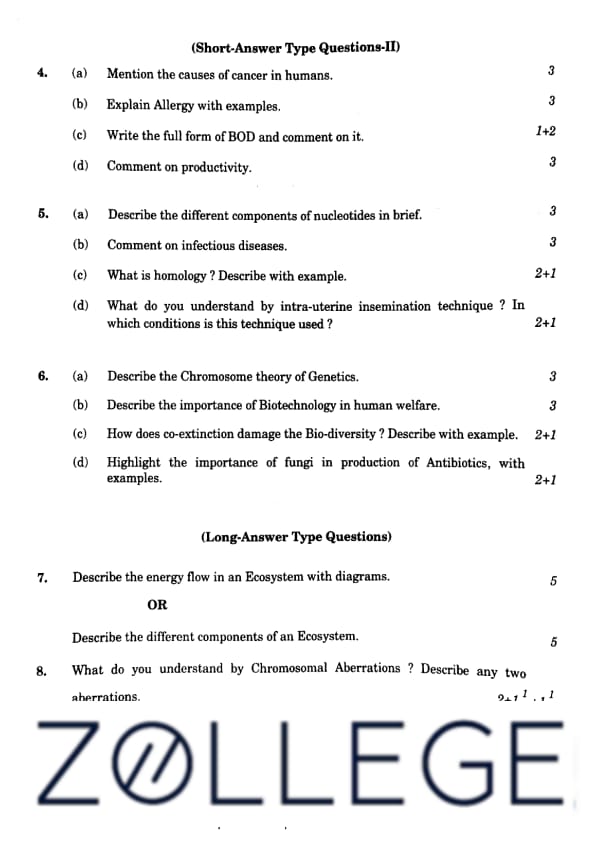
Question 4(a):
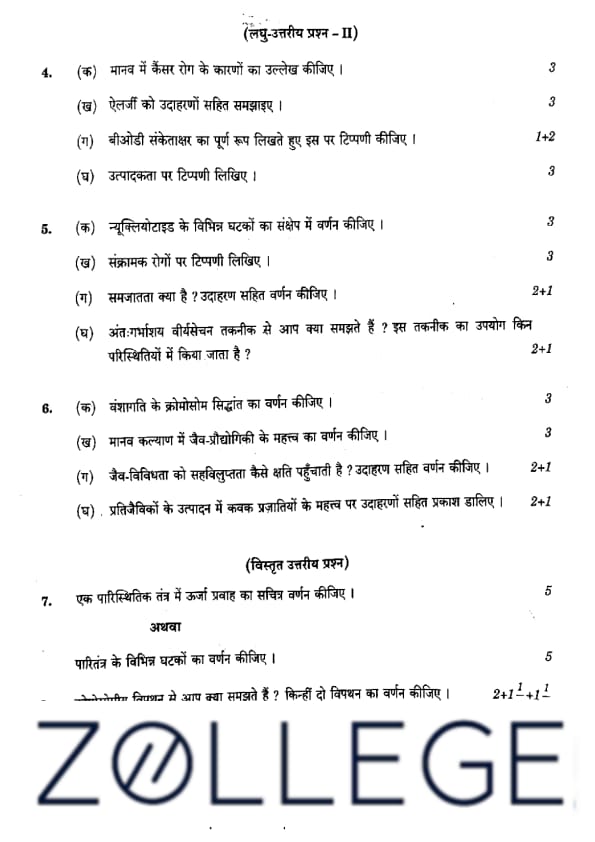
Mention the causes of cancer in humans.
View Solution
Solution:
The main causes of cancer in humans include:
1. Genetic factors: Mutations in oncogenes and tumor suppressor genes.
2. Carcinogens: Exposure to tobacco smoke, radiation, and chemicals.
3. Viral infections: Certain viruses like HPV and Hepatitis B can trigger cancer.
Question 4(b):
Explain Allergy with examples.
View Solution
Solution:
Allergy is an exaggerated immune response to normally harmless substances such as pollen, dust, or certain foods.
Examples:
• Allergic rhinitis (hay fever) due to pollen.
• Skin allergies due to contact with irritants like latex.
Question 4(c):
Write the full form of BOD and comment on it.
View Solution
Solution:
BOD: Biological Oxygen Demand
BOD is a vital tool for assessing the organic pollution load in water bodies and ensuring the sustainability of aquatic ecosystems. By monitoring BOD levels, scientists and policymakers can identify pollution sources, implement effective wastewater treatment strategies, and protect aquatic life. However, its limitations necessitate the use of complementary tests for a more holistic understanding of water quality.
Question 4(d):
Comment on productivity.
View Solution
Solution:
Productivity in an ecosystem refers to the rate of biomass production by producers through photosynthesis It includes:
• Gross Primary Productivity (GPP): Total energy produced.
• Net Primary Productivity (NPP): Energy available after respiratory losses.
Question 6(a):
Describe the Chromosome theory of Genetics.
View Solution
Solution:
The Chromosome Theory of Genetics provides a comprehensive explanation for how genetic information is stored, transmitted, and expressed. By linking Mendel's laws of inheritance to the physical behavior of chromosomes, it established the foundation for modern genetics and continues to guide research in biology, medicine, and biotechnology. This theory underscores the intricate relationship between cellular structures and the inheritance of traits across generations.
Question 6(b):
Describe the importance of Biotechnology in human welfare.
View Solution
Solution:
Biotechnology is a powerful tool for enhancing human welfare by addressing critical issues in health, agriculture, industry, and the environment. Its applications not only improve the quality of life but also promote sustainable development , ensuring a better future for humanity. As advancements in biotechnology continue, its potential to solve global challenges and improve human well-being will only grow stronger. However, ethical considerations and responsible use of biotechnology remain essential to ensure its benefits are shared equitably and safely.
Question 6(c):
How does co-extinction damage biodiversity? Describe with example.
View Solution
Solution:
Co-extinction refers to the phenomenon where the extinction of one species leads to the extinction of another species that is dependent on it. This process highlights the intricate interdependence among organisms within ecosystems and demonstrates how biodiversity loss can cascade through ecological networks. Co-extinction damages biodiversity by disrupting these relationships, leading to a decline in ecosystem stability, functionality, and resilience.
Examples of Co-Extinction
1. Pollinators and Plants
Scenario: Many plants rely on specific pollinators (e.g., bees, butterflies, or birds) for reproduction. If a pollinator species goes extinct due to habitat loss, pesticide use, or climate change, the plants that depend on it may also face extinction.
Example : The extinction of certain bee species could lead to the co-extinction of plant species that rely exclusively on those bees for pollination. For instance, the relationship between the Yucca plant and the Yucca moth is highly specialized. If the Yucca moth were to go extinct, the Yucca plant would lose its only pollinator and could also become extinct.
Question 6(d):
Highlight the importance of fungi in the production of antibiotics, with examples.
View Solution
Solution:
Fungi are indispensable in the production of antibiotics, providing humanity with some of the most effective tools to combat bacterial infections. From penicillin to cephalosporins, fungi-derived antibiotics have saved countless lives and remain a cornerstone of modern medicine. As antibiotic resistance becomes a growing global concern, fungi continue to offer hope for discovering new treatments. Their natural ability to produce diverse antimicrobial compounds underscores their critical role in human health and welfare.
Long Answer Type Questions - I
Question 7:
Describe the energy flow in an ecosystem with diagrams.
View Solution
Solution:
Energy flow in an ecosystem follows the unidirectional transfer of energy from the sun to producers and then to consumers.
Key steps in energy flow:
1. Producers: Capture solar energy through photosynthesis (e.g., plants, algae).
2. Primary Consumers: Herbivores that consume producers (e.g., deer, rabbits).
3. Secondary Consumers: Carnivores that feed on herbivores (e.g., foxes, birds).
4. Tertiary Consumers: Top predators that feed on secondary consumers (e.g., lions, eagles).
Diagram:

OR
Describe the different components of an ecosystem.
View Solution
Solution:
An ecosystem is a complex and dynamic system where biotic and abiotic components interact to sustain life. Producers, consumers, and decomposers form the biological backbone of the ecosystem, while physical and chemical factors provide the necessary environment for life to thrive. Understanding these components and their interactions is crucial for conserving ecosystems and ensuring their sustainability in the face of environmental challenges like climate change, pollution, and habitat destruction.
An ecosystem consists of two main components:
1. Biotic Components (Living):
• Producers: Autotrophs like plants that produce food through photosynthesis.
• Consumers: Herbivores, carnivores, omnivores that obtain energy from other organisms.
• Decomposers: Microorganisms like bacteria and fungi that break down organic matter.
2. Abiotic Components (Non-living):
• Sunlight, temperature, water, air, and soil that influence ecosystem functioning.
Question 8:
What do you understand by chromosomal aberrations? Describe any two aberrations.
View Solution
Solution:
Chromosomal aberrations are structural or numerical changes in chromosomes that lead to genetic disorders.
Types of chromosomal aberrations:
1. Deletion: Loss of a chromosome segment, e.g., Cri-du-chat syndrome.
2. Duplication: A chromosome segment is repeated, leading to genetic disorders.
OR
Describe the Hardy-Weinberg principle.
View Solution
Solution:
The Hardy-Weinberg principle states that allele and genotype frequencies in a population remain constant if no evolutionary influences are acting upon it.
Key conditions:
• Large population size.
• No mutation, migration, or natural selection.
• Random mating within the population.
Equation:
p² + 2pq + q² = 1
where:
• p² = frequency of homozygous dominant genotype,
• 2pq = frequency of heterozygous genotype,
• q² = frequency of homozygous recessive genotype.
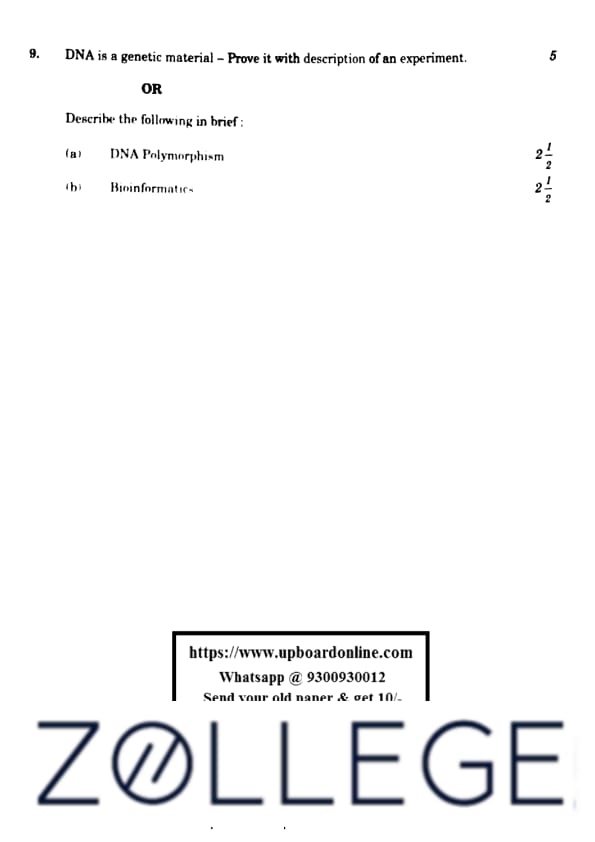
Question 9:
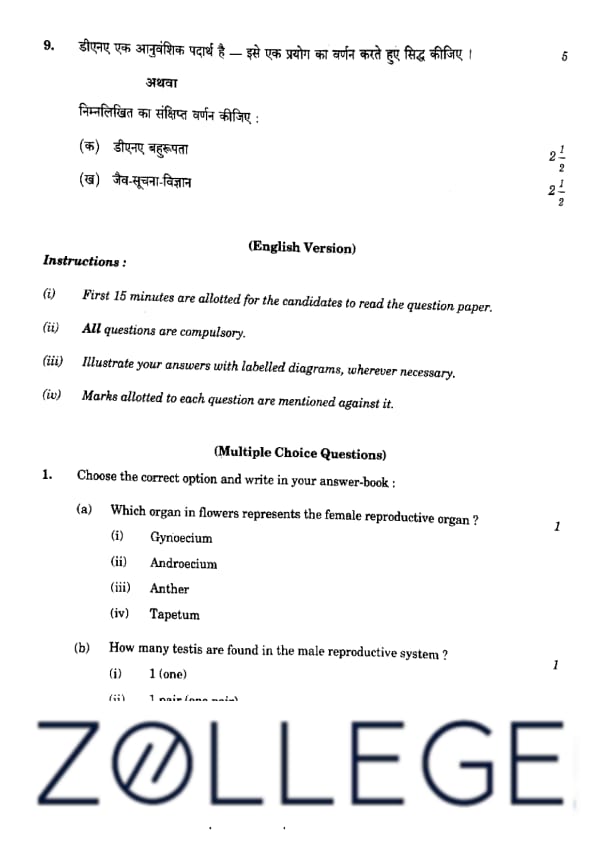
DNA is a genetic material - Prove it with the description of an experiment.
View Solution
Solution:
The experiment that proved DNA as the genetic material was conducted by Avery, MacLeod, and McCarty, followed by confirmation through the Hershey-Chase experiment.
Hershey and Chase Experiment (1952):
1. They used bacteriophages (viruses that infect bacteria) labeled with radioactive isotopes.
2. DNA was labeled with radioactive phosphorus (32P), and proteins were labeled with radioactive sulfur (35S).
3. The bacteriophages were allowed to infect bacterial cells, and the infected cells were analyzed.
4. Radioactive phosphorus (32P) was found inside the bacterial cells, whereas radioactive sulfur (35S) remained outside.
Conclusion:
Since only DNA entered the bacterial cells and directed viral replication, it was concluded that DNA is the genetic material.
OR
Describe the following in brief:
(a) DNA Polymorphism
View Solution
Solution:
DNA polymorphism refers to variations in DNA sequences among individuals of the same species. These variations are commonly found in non-coding regions of the DNA and serve as genetic markers.
Types of DNA Polymorphism:
• Single Nucleotide Polymorphism (SNP): A single base-pair change in the DNA sequence.
• Short Tandem Repeats (STR): Repeated sequences of short DNA segments.
Applications:
• DNA fingerprinting for forensic identification.
• Evolutionary studies and genetic disease research.
(b) Bioinformatics
View Solution
Solution:
Bioinformatics is an interdisciplinary field that combines biology, computer science, and information technology to analyze and interpret biological data such as DNA and protein sequences.
Applications of Bioinformatics:
• Genome sequencing and annotation.
• Drug discovery and personalized medicine.
• Evolutionary studies and protein structure prediction.
*The article might have information for the previous academic years, please refer the official website of the exam.