CUET PG 2024 Food Science and Technology March 16 - Shift 3 Question Paper Pdf- Check Solutions with Answer Key
- Question Paper 2025
- Question Paper 2024
- Question Paper 2023
- Mathematics Papers
- Statistics Question Paper
- English Question Paper
- Chemistry Question Paper
- Pol. Sci. Question Paper
- History Question Paper
- Commerce Question Papers
- Life Science Papers
- Geology Question Papers
- Journalism Question Paper
- B.Ed. HSS Question Paper
- Botany Question Paper
- B.Ed. Question Papers


Content Strategist | Updated On - Jan 15, 2025
CUET PG Question Papers are the most important study material for effective exam preparation. We at Zollege have provided all CUET PG Previous Year Papers with Solution PDFs here. CUET PG 2024 Food Science and Technology exam was conducted successfully on March 16 by NTA.
Students can freely download the CUET PG previous year's question paper PDFs along with their solutions here. We strongly encourage CUET PG aspirants to scan through all the CUET PG Question Paper to know the overall difficulty level, CUET PG Syllabus and understand the changes in CUET PG Exam Pattern over the years.
CUET PG 2024 Food Science and Technology Question Paper with Answer Key PDF
| CUET PG 2024 Food Science and Technology Question Paper with Answer Key |  Download Download |
Check Solution |
Cuet PG Food Science and Technology 2024 Questions with Solutions
Question 1:
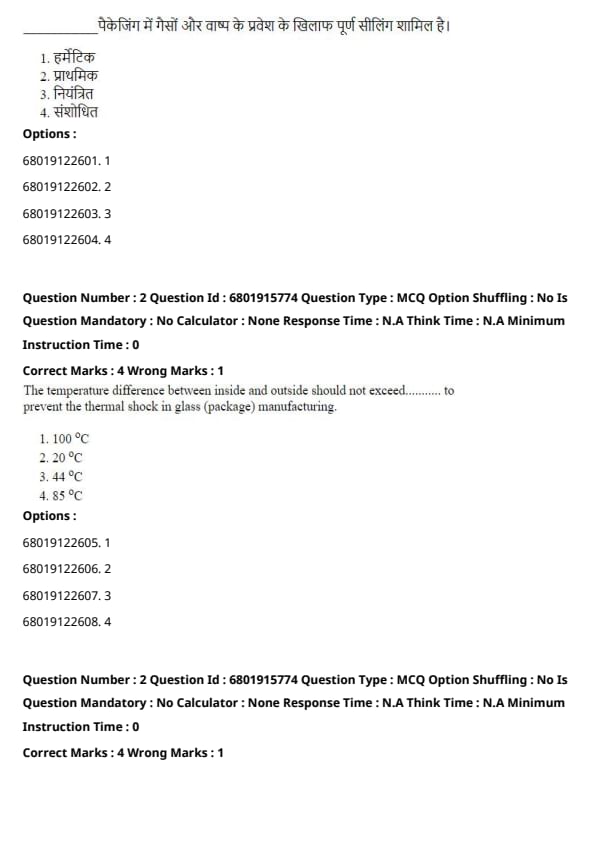
The packaging involves the complete sealing against the ingress of gases and vapour.
View Solution
Hermetic packaging refers to complete sealing against gases and vapours to maintain the quality of the product inside.
Hermetic sealing is crucial for preserving the freshness and shelf life of packaged food products.Question 2:
The temperature difference between inside and outside should not exceed........... to prevent the thermal shock in glass (package) manufacturing.
View Solution
To avoid thermal shock during glass package manufacturing, it is important to maintain a temperature difference of less than 44°C to prevent cracking or breaking of the glass.
A sudden temperature change can cause glass to crack or break, which is why controlling the temperature difference is critical.Question 3:
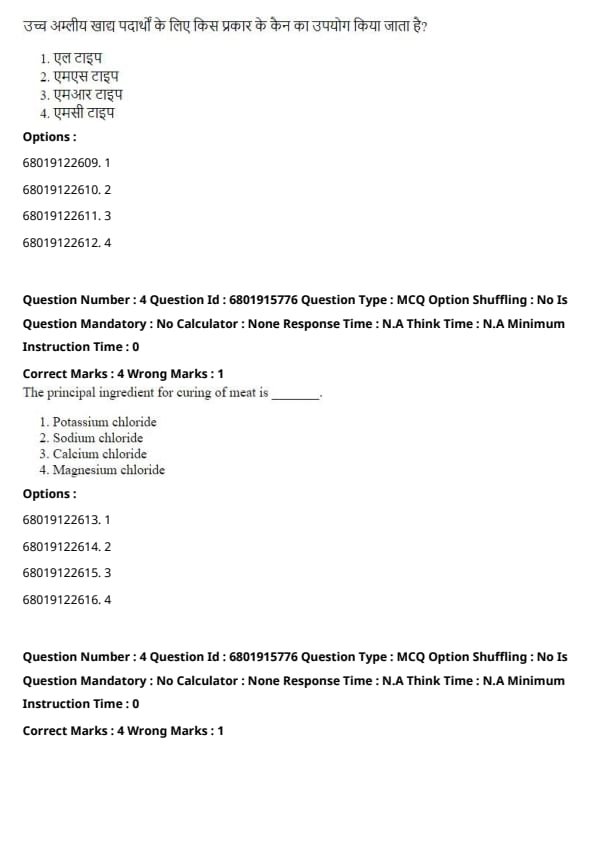
Which type of can is used for high acid foods?
View Solution
L type cans are specifically used for high acid foods as they provide better protection against corrosion from acidic contents.
High acid foods like tomatoes and citrus fruits require specialized cans to prevent corrosion, and L type cans are designed for this purpose.Question 4:
The principal ingredient for curing of meat is
View Solution
Sodium chloride (common salt) is the main ingredient used for curing meat to preserve it and enhance flavor.
Sodium chloride is the most common curing agent due to its effectiveness in preserving meat and preventing bacterial growth.Question 5:
The oxidised form of Oxymyoglobin is
View Solution
Metmyoglobin is the oxidized form of oxymyoglobin, where the iron in the heme group is oxidized to a ferric state.
Metmyoglobin is not able to bind oxygen, which affects the color and quality of meat during storage.Question 6:
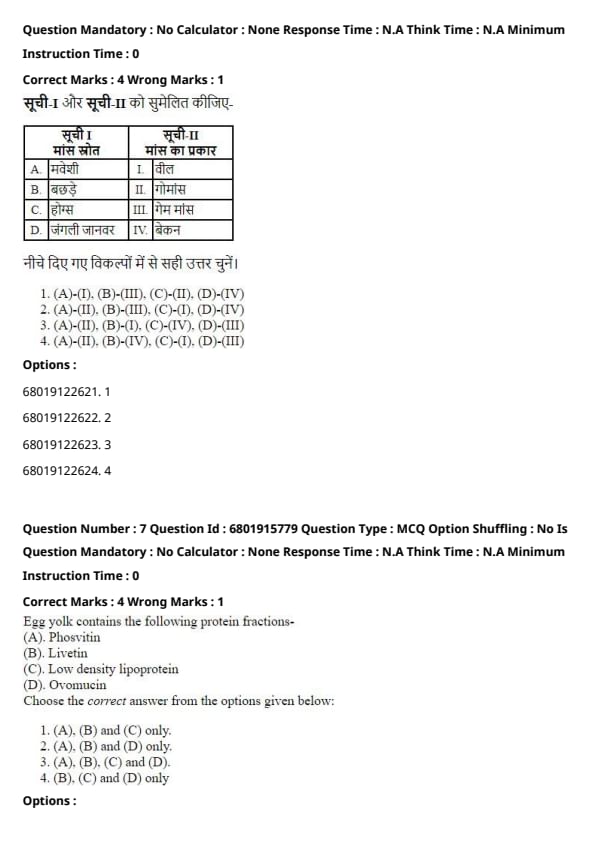
Match List I with List II
| LIST I | LIST II |
|---|---|
| A. Cattle | I. Veal |
| B. Calves | II. Beef |
| C. Hogs | III. Game meat |
| D. Wild Animals | IV. Bacon |
Choose the correct answer from the options given below:
View Solution
- A. Cattle corresponds to Beef (II),
- B. Calves corresponds to Veal (I),
- C. Hogs corresponds to Bacon (IV),
- D. Wild Animals corresponds to Game meat (III).
Question 7:
Egg yolk contains the following protein fractions-
Choose the correct answer from the options given below:
View Solution
Egg yolk contains all these protein fractions, including phosvitin, livetin, and low-density lipoprotein. Ovomucin is not part of this list.
Phosvitin, livetin, and low-density lipoprotein are the primary proteins found in egg yolk, while ovomucin is typically found in egg white.Question 8:
The egg yolk is anchored in the center by
View Solution
The chalaza is a structure in the egg yolk that anchors the yolk in place, ensuring it remains centered in the egg.
The chalaza is essential for maintaining the structural integrity of the egg during incubation.Question 9:
The correct order of production of egg powder is-
(A) Pasteurization
(B) Fermentation
(C) Drying
(D) Cooling
Choose the correct answer from the options given below:
View Solution
The proper sequence for egg powder production is: pasteurization, fermentation, drying, and cooling.
The production of egg powder follows a controlled sequence to ensure the quality and safety of the product.Question 10:
The browning in egg powder can be prevented by
View Solution
The addition of glucose oxidase helps in preventing browning by reducing the levels of glucose, which is responsible for the browning reaction in egg powder.
Enzymes like glucose oxidase can be used to prevent non-enzymatic browning in food products like egg powder.Question 11:
The naturally occurring toxicant in potatoes is
View Solution
Solanine is a naturally occurring toxicant in potatoes, especially in green parts or sprouts, which can cause poisoning when consumed in large quantities.
Avoid consuming green or sprouted potatoes, as they contain solanine, which is toxic.Question 12:
Weight gain in rats upon the consumption of one gram of protein is known
View Solution
The Protein Efficiency Ratio (PER) measures the weight gain of rats per gram of protein consumed, used to assess protein quality.
The Protein Efficiency Ratio (PER) is a standard method to evaluate protein quality by observing weight gain in rats.Question 13:
Butter contains ___% of lactose.
View Solution
Butter contains a small amount of lactose, typically around 0.5%, as it is made primarily from the fat of milk with minimal milk solids.
Butter has a very low lactose content, making it easier to digest for some lactose-intolerant individuals.Question 14:
Match List I with List II
| LIST I | LIST II |
|---|---|
| A. Fluid bread shortenings | II. 20 |
| B. Frying shortenings | III. 30 |
| C. Puff paste fats | IV. 50 |
| D. Confectionery fats | I. 70 |
Choose the correct answer from the options given below:
View Solution
The match is based on the percentage of solids in the various types of shortenings used in baking and confectionery.
Different types of shortenings have varying levels of solids depending on their intended use in different food preparations.Question 15:
Sucrose polyesters act as
View Solution
Sucrose polyesters are a type of engineered fat that are used as fat replacers in food products to reduce calorie content.
Engineered fats like sucrose polyesters are designed to mimic the texture and mouthfeel of fats while reducing their calorie content.Question 16:
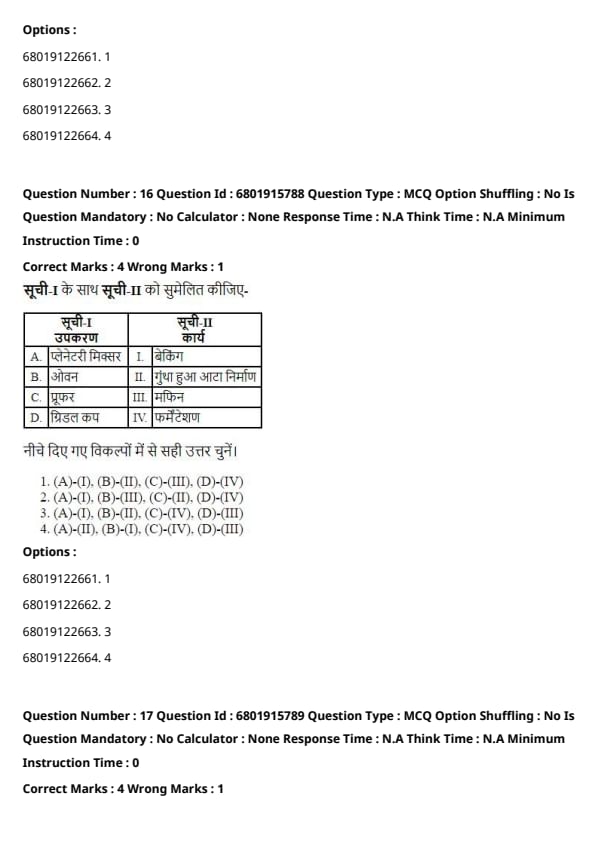
Match List I with List II
| LIST I | LIST II |
|---|---|
| A. Planetary Mixer | II. Dough development |
| B. Oven | I. Baking |
| C. Proofer | IV. Fermentation |
| D. Griddle cup | III. Muffin |
Choose the correct answer from the options given below:
View Solution
Each piece of equipment serves a specific function in baking and dough preparation processes, from mixing to proofing and final baking.
The correct use of each kitchen equipment in the baking process ensures consistent and high-quality results.Question 17:
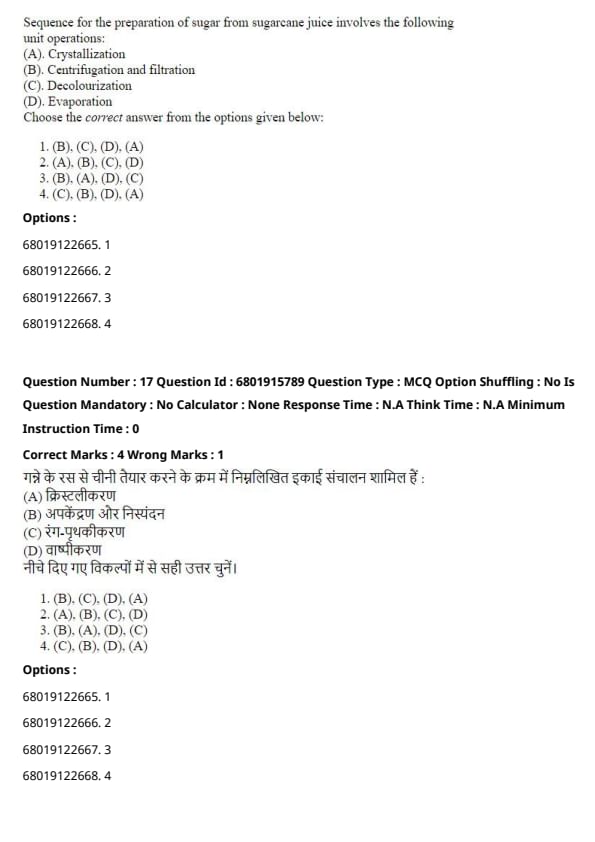
Sequence for the preparation of sugar from sugarcane juice involves the following unit operations:
(A). Crystallization
(B). Centrifugation and filtration
(C). Decolourization
(D). Evaporation
View Solution
The sequence for sugar preparation typically involves centrifugation and filtration, followed by decolourization, evaporation, and finally crystallization.
Understanding the correct sequence of operations in food processing ensures optimal product quality and consistency.Question 18:
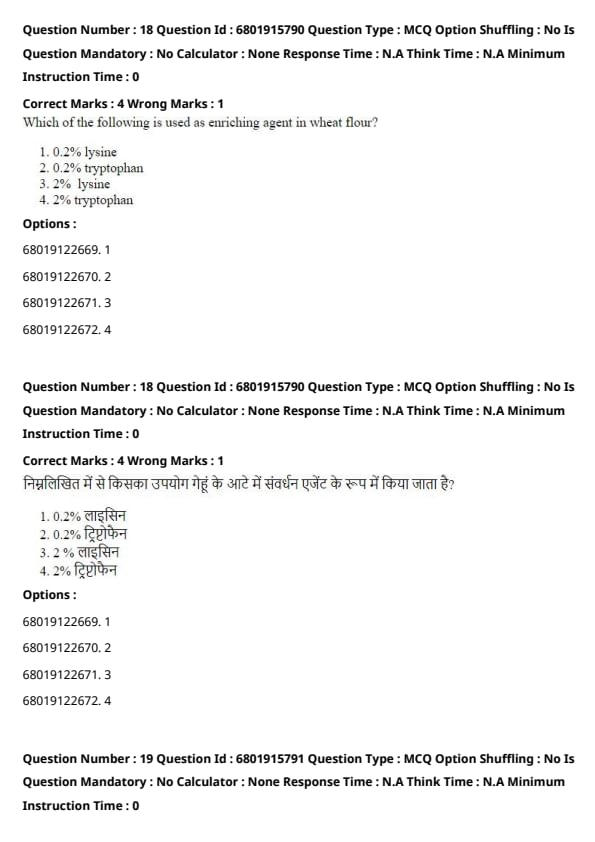
Which of the following is used as an enriching agent in wheat flour?
View Solution
Lysine is commonly added to wheat flour as an enriching agent to improve its amino acid profile, as wheat flour is typically deficient in lysine.
Lysine supplementation is particularly important in enhancing the nutritional value of wheat-based foods.Question 19:
Glycerol mono stearate serves as a/an in cakes.
View Solution
Glycerol mono stearate is used as an emulsifier in cakes, helping to mix ingredients like oil and water that would normally separate.
Emulsifiers like glycerol mono stearate help improve texture and shelf-life in baked goods by stabilizing mixtures.Question 20:
The boiling point of 50% sucrose solution is
View Solution
The boiling point of a 50% sucrose solution is approximately 102°C, due to the elevation in boiling point caused by the dissolved sugar.
Solutions like sucrose in water elevate the boiling point, a phenomenon known as boiling point elevation.Question 21:
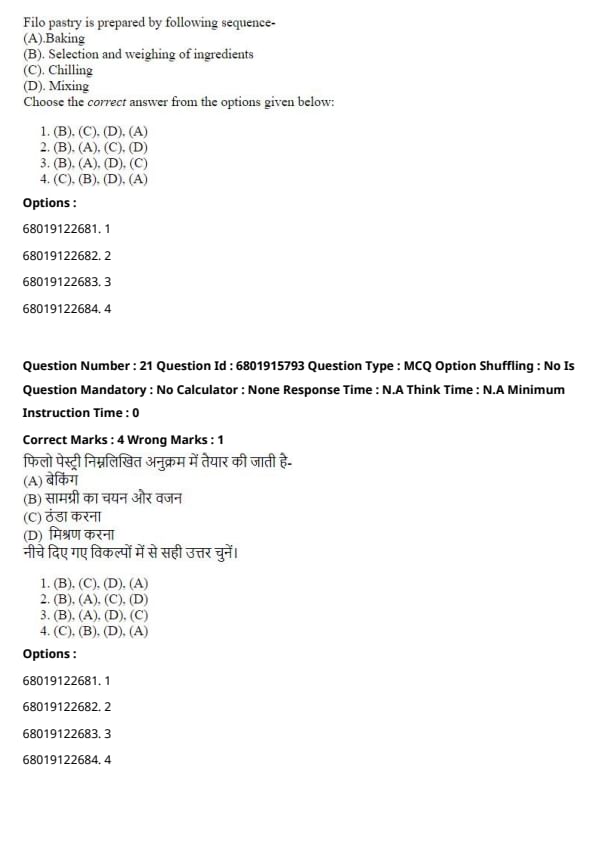
Filo pastry is prepared by following sequence-
(A). Baking
(B). Selection and weighing of ingredients
(C). Chilling
(D). Mixing
View Solution
The correct sequence for the preparation of filo pastry involves weighing and selecting ingredients first, chilling the dough, mixing, and then baking.
The steps for making filo pastry emphasize ingredient preparation, dough handling, and careful baking.Question 22:
High sugar wafers contain more than % sugar.
View Solution
High sugar wafers typically contain more than 10% sugar to achieve the desired sweetness and texture.
Wafers with higher sugar content help maintain crispness and sweetness.Question 23:
Mold growth in muffins is controlled by the addition of
View Solution
Calcium propionate is commonly used as a preservative to control mold growth in baked goods like muffins.
Calcium propionate inhibits mold growth while maintaining the quality of the product.Question 24:
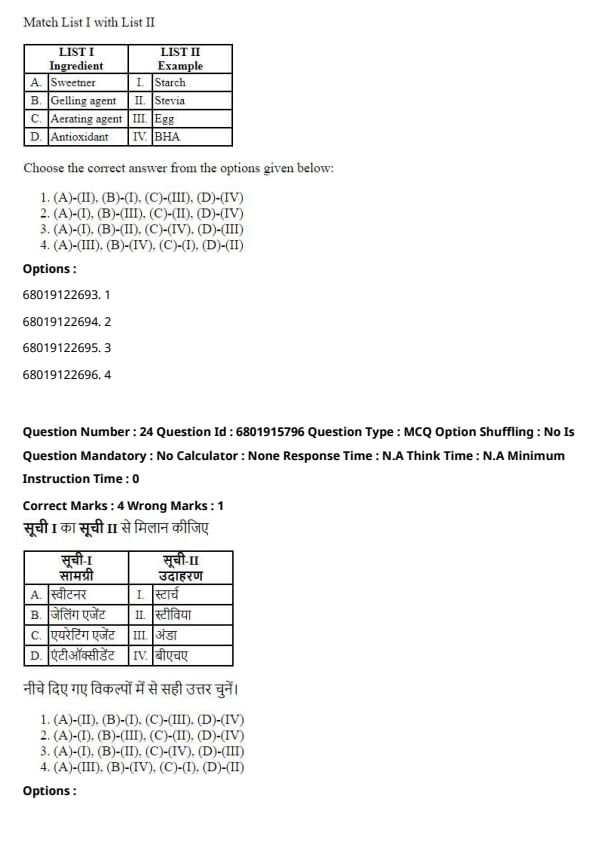
Match List I with List II
| LIST I | LIST II |
|---|---|
| A. Sweetner | II. Stevia |
| B. Gelling agent | I. Starch |
| C. Aerating agent | III. Egg |
| D. Antioxidant | IV. BHA |
Choose the correct answer from the options given below:
View Solution
- Sweetener: Stevia
- Gelling agent: Starch
- Aerating agent: Egg
- Antioxidant: BHA
Question 25:
Test is used to check the fermentation of cocoa beans.
View Solution
The cut test is a method used to assess the extent of fermentation in cocoa beans by examining their interior.
Fermentation is a critical step in cocoa processing to develop flavor and reduce bitterness.Question 26:
Process flow for the manufacturing of the caramel involves the following sequence-
(A). Emulsification
(B). Mixing
(C). Deposition
(D). Caramelization
View Solution
The proper sequence for caramel manufacturing involves mixing the ingredients, emulsifying them, depositing the product, and finally caramelizing it.
The steps involved in caramel production include precise control of temperatures and ingredients for a smooth texture.Question 27:
Blended chocolate should contain not less than cocoa solids.
View Solution
Blended chocolate, as defined by food standards, must contain a minimum of 3% cocoa solids to be classified as chocolate.
The percentage of cocoa solids in chocolate affects its flavor and classification.Question 28:
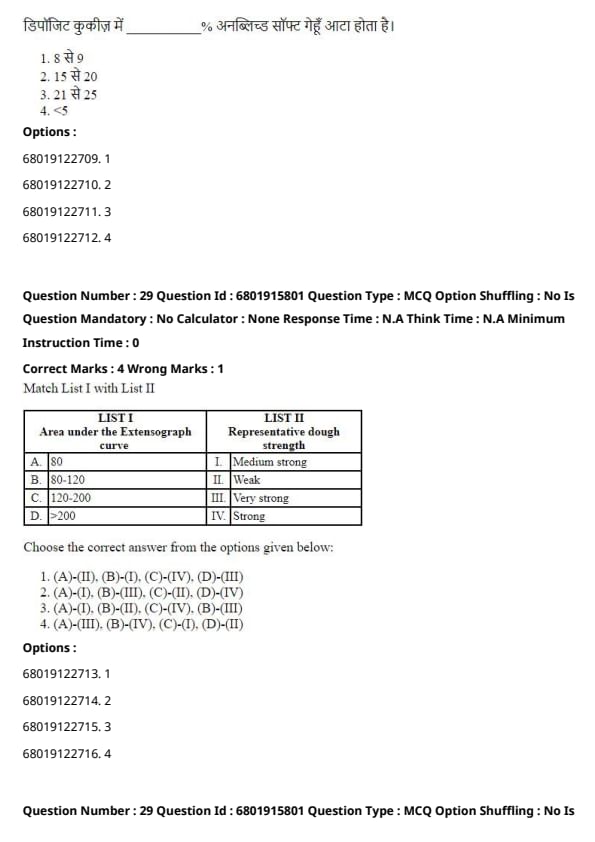
Deposit cookies contain % of unbleached soft wheat flour.
View Solution
Deposit cookies are made with 8 to 9% unbleached soft wheat flour to ensure proper texture and consistency.
The percentage of unbleached flour affects the texture and handling properties of cookies.Question 29:
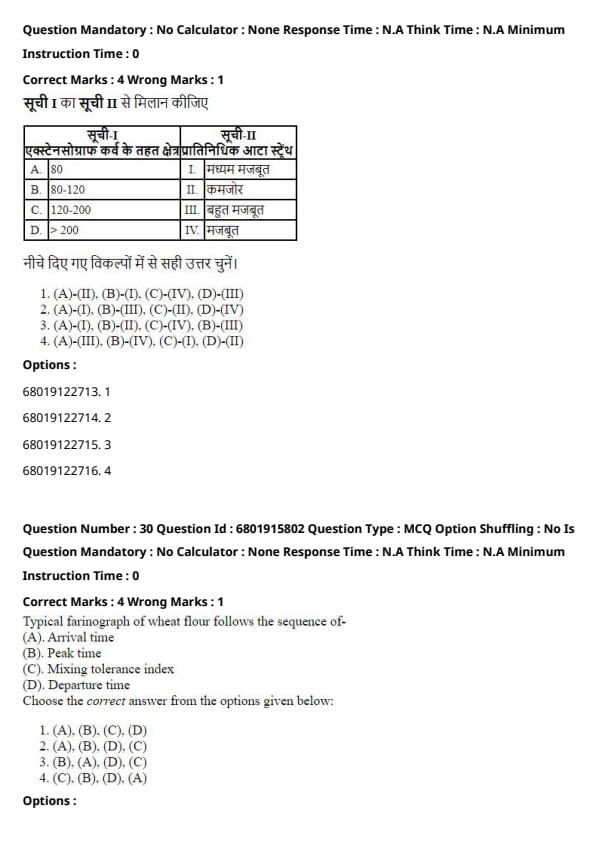
Match List I with List II
| LIST I | LIST II |
|---|---|
| A. 80 | II. Weak |
| B. 80-120 | I. Medium strong |
| C. 120-200 | IV. Strong |
| D. >200 | III. Very strong |
Choose the correct answer from the options given below:
View Solution
The strength of dough, measured using an extensograph, corresponds to the following ranges:
A: 80 corresponds to weak dough
B: 80-120 corresponds to medium strong dough
C: 120-200 corresponds to strong dough
D: >200 corresponds to very strong dough
Question 30:
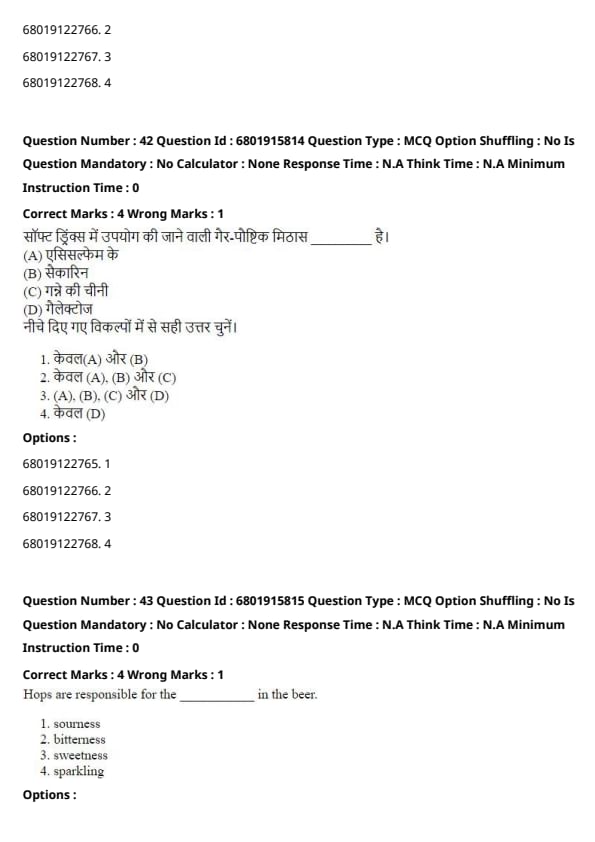
Typical farinograph of wheat flour follows the sequence of-
(A). Arrival time
(B). Peak time
(C). Mixing tolerance index
(D). Departure time
View Solution
The correct sequence for the farinograph curve is as follows:
1. Arrival time (A) - the initial stage of mixing
2. Peak time (B) - when the dough reaches maximum consistency
3. Mixing tolerance index (C) - an indication of dough stability
4. Departure time (D) - when the dough begins to lose its strength
Question 31:
In Farinograph analysis, the reference value for resistance is:
View Solution
In Farinograph analysis, the reference value for resistance is 500 BU, which represents the dough's resistance to mixing and its development.
The resistance value indicates how dough will behave during mixing and affects its handling characteristics.Question 32:
Final viscosity of starch paste increases with an increase in:
View Solution
Amylose content increases the final viscosity of starch paste, as amylose contributes to gel formation and higher viscosity due to its linear structure.
Amylose is responsible for the firm texture of gels, which results in increased viscosity.Question 33:
Gumminess is expressed as:
View Solution
Gumminess is a texture attribute in food products and is calculated as the product of hardness and cohesiveness.
Gumminess is an important texture factor in evaluating foods that require chewing, such as bread and cakes.Question 34:
Pectic enzymes include the following groups:
Choose the correct answer from the options given below:
View Solution
Pectic enzymes involved in the breakdown of pectin include pectin esterase, polygalacturonase, and pectin lyase, which are essential in fruit ripening.
Pectic enzymes help in modifying the structure of pectin, which is important in fruit processing.Question 35:
Phenomenon in which a substance occurs in different crystalline forms is known as:
View Solution
Polymorphism is the ability of a substance to crystallize into different forms with varying physical properties, commonly observed in pharmaceuticals.
Polymorphism can affect the solubility, stability, and bioavailability of compounds in various industries.Question 36:
Change in lipid leading to an undesirable flavour and odour is known as:
View Solution
Rancidity refers to the undesirable changes in the flavour and odour of lipids, usually caused by oxidation or microbial action.
Rancidity is a major concern in the shelf life and quality of oils and fats.Question 37:
Which of the following vitamins are fat soluble?
Choose the correct answer from the options given below:
View Solution
Vitamins A, D, and E are fat-soluble vitamins, meaning they are absorbed and stored in the body's fat tissues.
Fat-soluble vitamins are important for various bodily functions including immune support, bone health, and vision.Question 38:
___ is the rigidity in plant cells resulting from being filled with water.
View Solution
Cell turgor is the pressure exerted by the cell membrane against the cell wall when the vacuole is filled with water. This rigidity helps maintain the structural integrity of plant cells.
Turgor pressure is crucial for maintaining the shape and structural stability of plant cells.Question 39:
Carotenoids are soluble in:
View Solution
Carotenoids are fat-soluble compounds, meaning they dissolve in fats and oils but not in water.
Carotenoids are important for their antioxidant properties and are found in foods such as carrots and leafy greens.Question 40:
Tannins in their natural form are mostly:
Choose the correct answer from the options given below:
View Solution
Tannins in their natural form are mostly colorless. They are polyphenolic compounds found in various plants and contribute to the bitterness in foods and beverages like tea and wine.
< Tannins have astringent properties and are often used for their preservative effects and flavoring.Question 41:
Brix to acid ratio is commonly used to measure fruits and fruit juices.
View Solution
The Brix to acid ratio is a measure used to assess the sweetness (taste) and tartness of fruits and fruit juices. It helps in determining the balance between the sugar and acid content, which is critical for flavor.
This ratio is important for assessing the sensory qualities and maturity of fruits used for juicing.Question 42:
Non-nutritive sweetener used in soft drinks is
Choose the correct answer from the options given below:
View Solution
Acesulfame K and Saccharin are both non-nutritive sweeteners commonly used in soft drinks. Cane sugar and galactose are nutritive sweeteners.
Non-nutritive sweeteners are used to provide sweetness without adding calories.Question 43:
Hops are responsible for the _______ in the beer.
View Solution
Hops are used in beer brewing primarily for their bittering properties, which balance the sweetness from malt and contribute to the beer’s flavor.
Hops also have preservative and aromatic properties, enhancing the flavor of the beer.Question 44:
Protein content of all-purpose flour is %
View Solution
All-purpose flour typically has a protein content of 9.5% to 11.5%, making it suitable for a variety of baked goods.
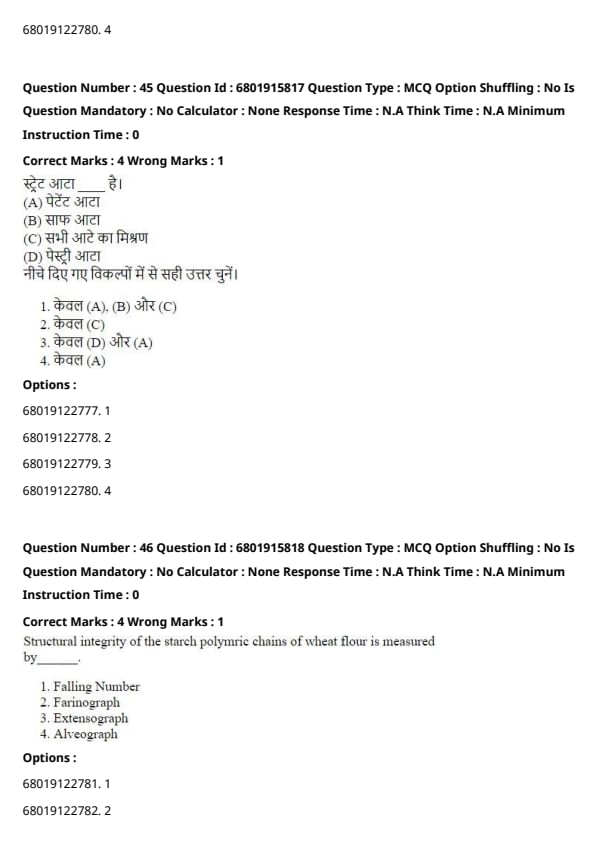
The protein content in flour affects the texture and structure of baked goods, such as bread and pastries.Question 45:
Straight flour is
Choose the correct answer from the options given below:
View Solution
Straight flour refers to flour that is made by milling the entire wheat kernel, and it is often known as patent flour.
Patent flour is often used for bread making and other baked goods that require a strong structure.Question 46:
Structural integrity of the starch polymeric chains of wheat flour is measured by
View Solution
The Falling Number test is used to measure the activity of alpha-amylase enzymes in wheat flour, which can indicate the quality and structural integrity of starch polymers. This is an important test in assessing the flour's suitability for bread-making.
The Falling Number test is a critical indicator in assessing the flour's quality for baking.Question 47:
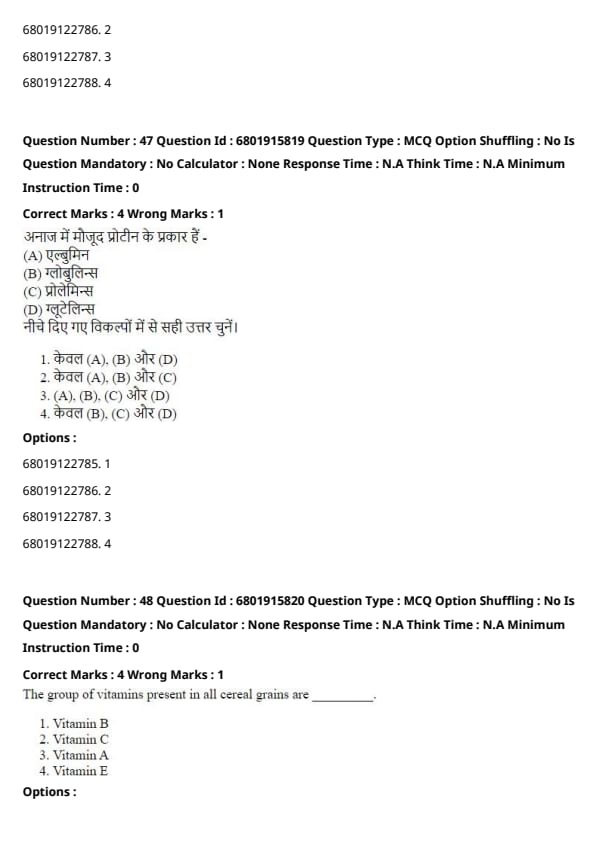
Types of proteins present in cereals are-
Choose the correct answer from the options given below:
View Solution
Cereals contain all of these protein types, which are essential for the nutrition and functional properties of the grains.
The combination of these proteins influences the baking qualities and nutritional value of cereal products.Question 48:
The group of vitamins present in all cereal grains are
View Solution
Cereal grains are rich in B-vitamins, which are essential for energy metabolism and overall health.
The B-vitamins found in cereal grains include thiamine, riboflavin, niacin, and folic acid, among others.Question 49:
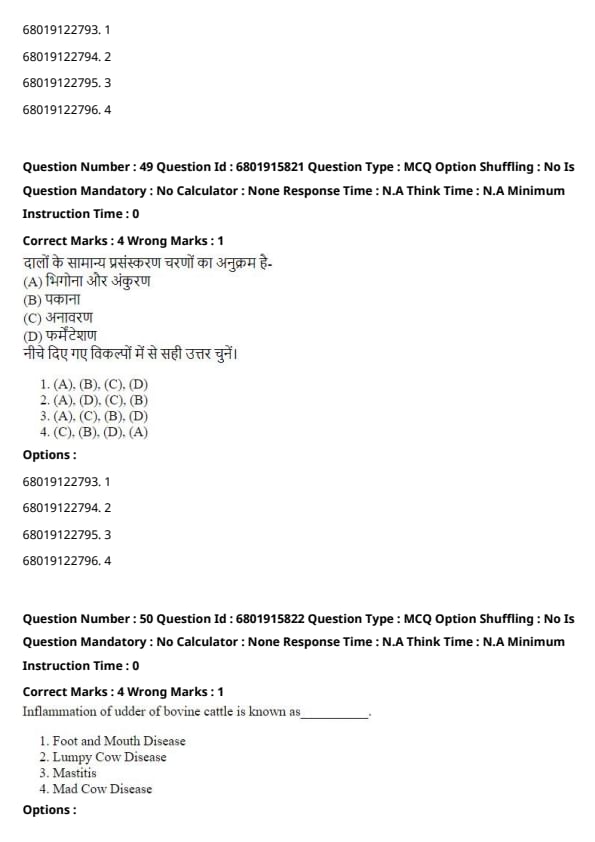
Arrange the general processing steps of pulses
(A) Soaking and Germination
(B) Cooking
(C) Decortication
(D) Fermentation
View Solution
The typical sequence in pulse processing is: 1. Soaking and germination (A),
2. Decortication (C),
3. Cooking (B),
4. Fermentation (D).
Question 50:
Inflammation of udder of bovine cattle is known as
View Solution
Mastitis is the inflammation of the udder caused by infection, usually bacterial, leading to decreased milk production and quality.
Mastitis can be managed with antibiotics and proper hygiene to prevent infection in dairy cattle.Question 51:
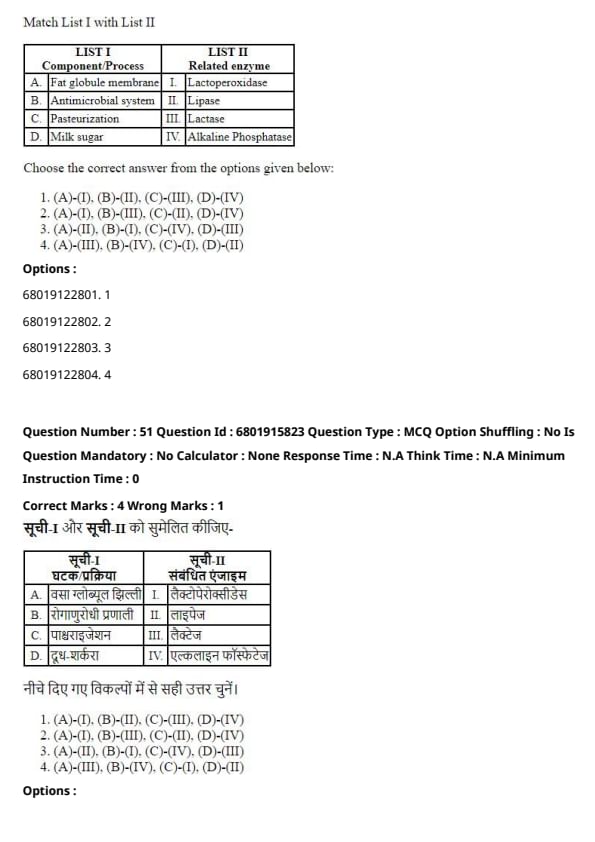
Match List I with List II
| LIST I | LIST II |
|---|---|
| A. Fat globule membrane | I. Lactoperoxidase |
| B. Antimicrobial system | II. Lipase |
| C. Pasteurization | III. Lactase |
| D. Milk sugar | IV. Alkaline Phosphatase |
Choose the correct answer from the options given below:
View Solution
The correct enzyme associations are:
Fat globule membrane with lipase
Antimicrobial system with lactoperoxidase
Pasteurization with alkaline phosphatase
Milk sugar with lactase
Question 52:
Align the key steps involved in the manufacture of the condensed milk –
(A) Preheating and addition of sugar
(B) Standardization
(C) Packaging and storage
(D) Condensation followed by crystallization
View Solution
The correct order of operations in condensed milk production is:
Standardization (B),
Preheating and addition of sugar (A),
Condensation followed by crystallization (D),
Packaging and storage (C).
Question 53:
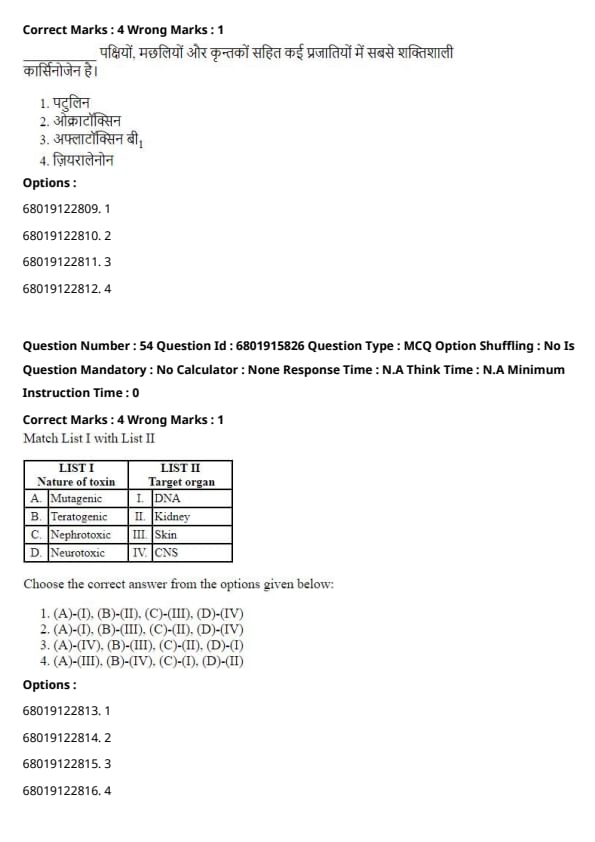
______ is the most potent carcinogen in many species including birds, fish, and rodents.
View Solution
Aflatoxin B1 is a potent carcinogen found in various agricultural products like peanuts and corn and is highly toxic to both humans and animals.
Aflatoxins are among the most studied mycotoxins due to their carcinogenic potential.Question 54:
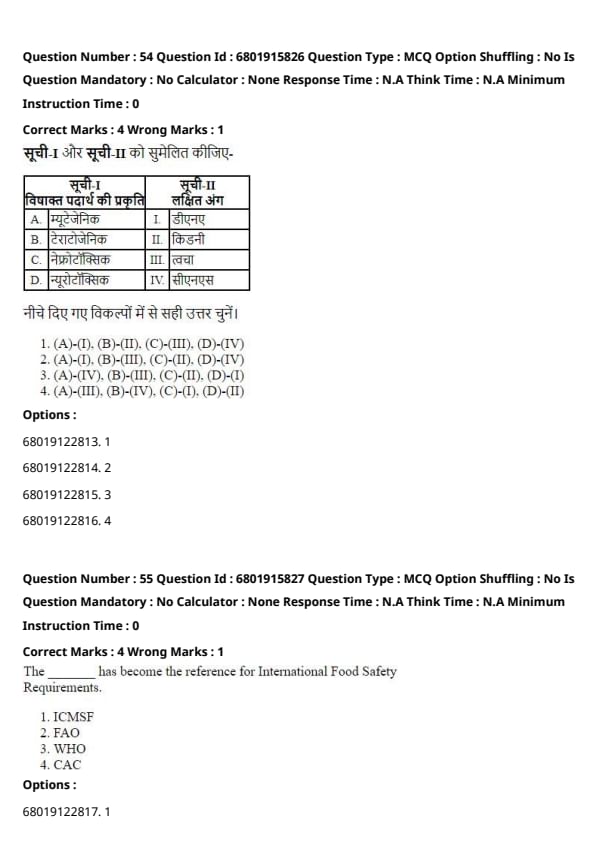
Match List I with List II
| LIST I | LIST II |
|---|---|
| Mutagenic | I. DNA |
| Teratogenic | II. Kidney |
| Nephrotoxic | III. Skin |
| Neurotoxic | IV. CNS |
Choose the correct answer from the options given below:
View Solution
The correct enzyme associations are:
Mutagenic affects DNA (I)
Teratogenic affects the skin (III)
Nephrotoxic affects the kidney (II)
Neurotoxic affects the CNS (IV)
Question 55:
The ______ has become the reference for International Food Safety Requirements.
View Solution
The Codex Alimentarius Commission (CAC) sets the international standards for food safety, making it the key reference body for food safety requirements worldwide.
CAC helps ensure food safety standards are harmonized across borders, facilitating trade and consumer health.Question 56:
______ test is used for haemolysis testing of Listeria monocytogenes.
View Solution
The CAMP test is used to detect Listeria monocytogenes by observing its ability to produce hemolysis in the presence of Staphylococcus aureus.
CAMP test is a diagnostic test to confirm the presence of Listeria monocytogenes in clinical samples.Question 57:
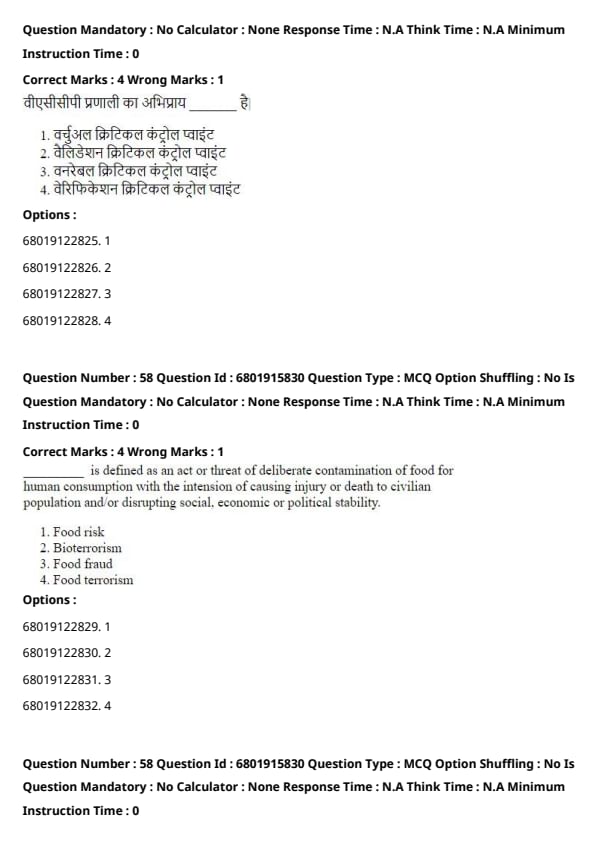
VACCP system stands for
View Solution
The VACCP system focuses on identifying and mitigating vulnerabilities in the food supply chain, ensuring that critical points are controlled to prevent food fraud.
VACCP helps prevent food fraud by addressing vulnerabilities in the food production and distribution systems.Question 58:
______ is defined as an act or threat of deliberate contamination of food for human consumption with the intention of causing injury or death to civilian population and/or disrupting social, economic or political stability.
View Solution
Food terrorism refers to the intentional contamination of food products with the aim of causing harm to public health and disrupting social stability.
Food terrorism is a significant concern in food safety and requires preventive measures to ensure public health.Question 59:
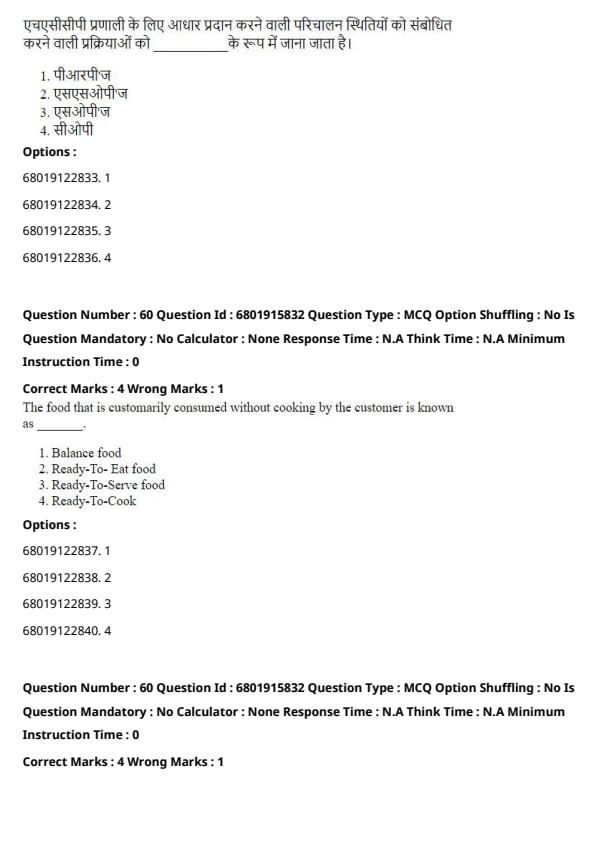
Procedures that address operational conditions providing the foundation for the HACCP system are known as:
View Solution
PRPs (Prerequisite Programs) are essential procedures that form the foundation for the HACCP system, addressing general operational conditions that affect food safety.
PRPs ensure that the basic hygiene and safety conditions are met before applying HACCP principles.Question 60:
The food that is customarily consumed without cooking by the customer is known as:
View Solution
Ready-To-Eat foods are those that do not require any further preparation or cooking before consumption, ensuring convenience for the consumer.
Ready-to-eat foods are typically pre-cooked, packaged, and designed for immediate consumption.Question 61:
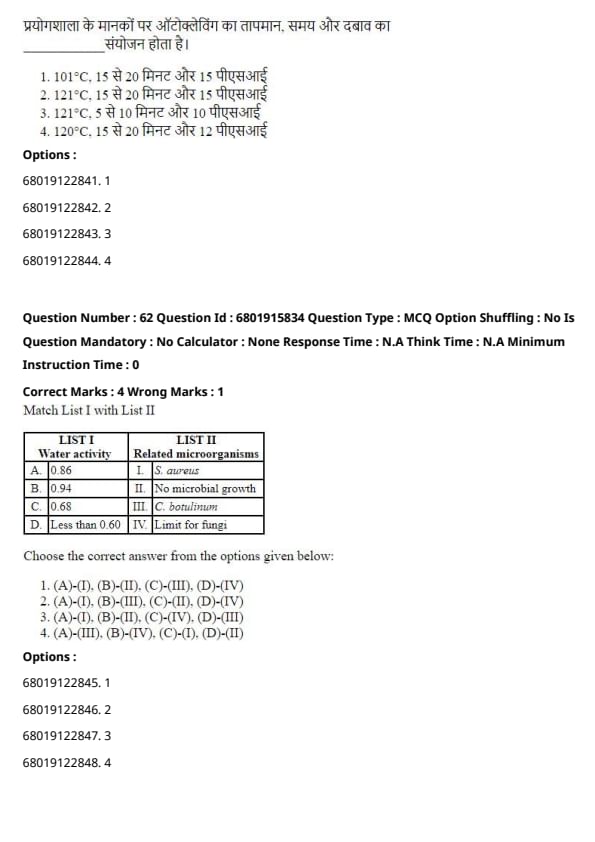
The temperature, time, and pressure combination of autoclaving at laboratory scale is
View Solution
The common autoclaving conditions used for laboratory-scale sterilization typically involve a temperature of 121°C, with a pressure of 15 psi, and a time duration of 15 to 20 minutes.
Autoclaving is an effective method for sterilizing laboratory materials by applying heat and pressure.Question 62:
Match List I with List II
| LIST I | LIST II |
|---|---|
| A. 0.86 | I. S. aureus |
| B. 0.94 | II. No microbial growth |
| C. 0.68 | III. C. botulinum |
| D. Less than 0.60 | IV. Limit for fungi |
Choose the correct answer from the options given below:
View Solution
Water activity values influence the types of microorganisms that can grow. A value of 0.86 is conducive for S. aureus, while a value of less than 0.60 prevents microbial growth and limits fungal growth.
Water activity plays a critical role in controlling microbial growth and preserving food safety.Question 63:
______ is a cheap and energy efficient method of preservation of perishable raw materials.
View Solution
Fermentation is an effective and energy-efficient method to preserve perishable materials while enhancing flavor and nutritional value.
Fermentation extends the shelf life of foods by creating an environment that inhibits spoilage microorganisms.Question 64:
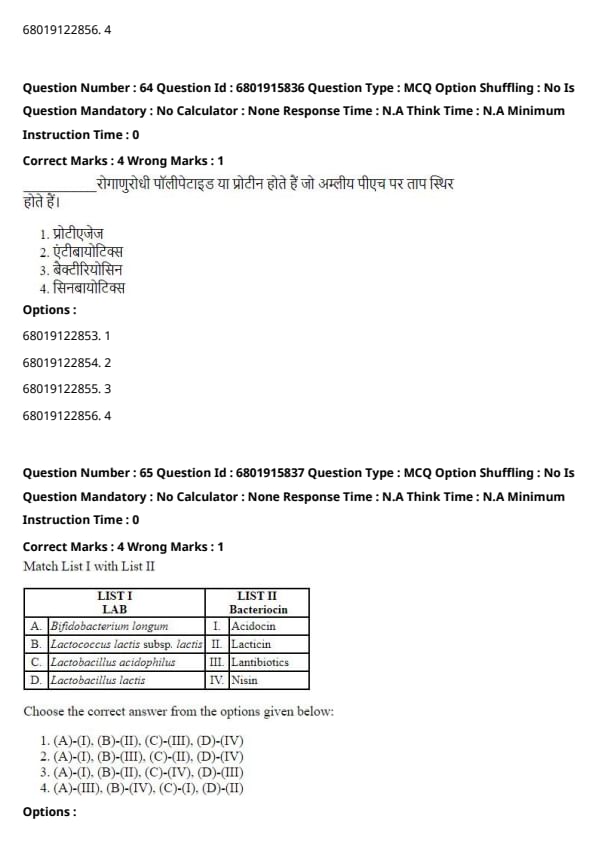
______ are antimicrobial polypeptides or proteins which are heat stable at acidic pH.
View Solution
Bacteriocins are heat-stable antimicrobial proteins produced by bacteria, effective against other microorganisms.
Bacteriocins are used in food preservation and to protect against pathogenic microorganisms.Question 65:
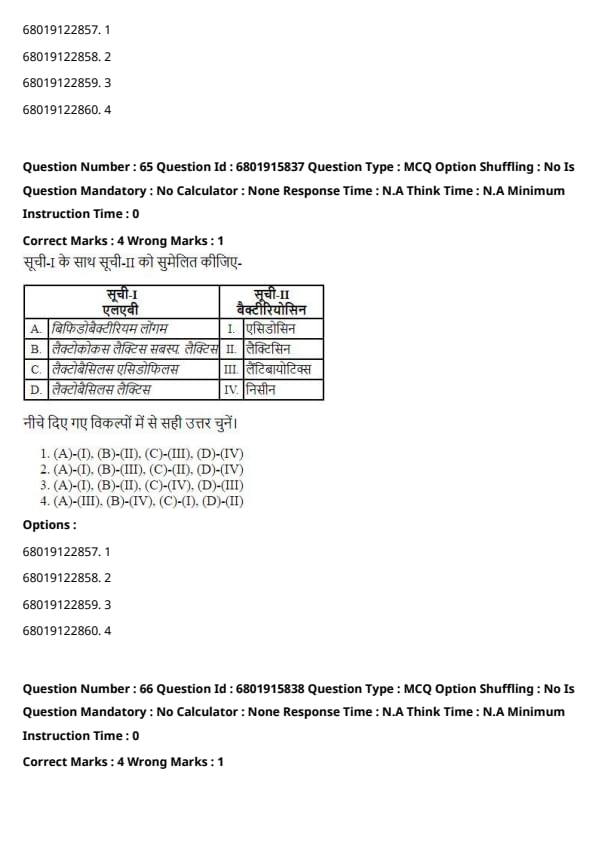
Match List I with List II
| LIST I | LIST II |
|---|---|
| A. Bifidobacterium longum | I. Acidocin |
| B. Lactococcus lactis subsp. lactis | II. Lacticin |
| C. Lactobacillus acidophilus | III. Lantibiotics |
| D. Lactobacillus lactis | IV. Nisin |
Choose the correct answer from the options given below:
View Solution
The matching of LAB strains to their respective bacteriocins is as follows:
- Bifidobacterium longum produces Lantibiotics (III)
- Lactococcus lactis produces Nisin (IV)
- Lactobacillus acidophilus produces Acidocin (I)
- Lactobacillus lactis produces Lacticin (II)
Question 66:
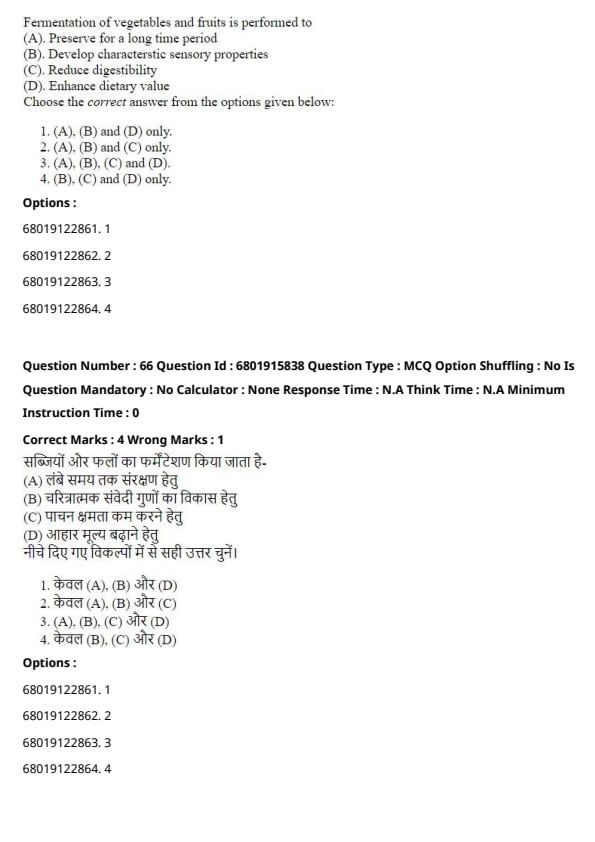
Fermentation of vegetables and fruits is performed to
(A) Preserve for a long time period
(B) Develop characteristic sensory properties
(C) Reduce digestibility
(D) Enhance dietary valu
View Solution
Fermentation of vegetables and fruits helps in:
- Preservation for a long time period (A)
- Developing characteristic sensory properties (B)
- Enhancing dietary value (D)
It does not reduce digestibility (C), hence (C) is excluded.
Fermentation is a natural method to preserve food while enhancing its sensory and dietary properties.Question 67:
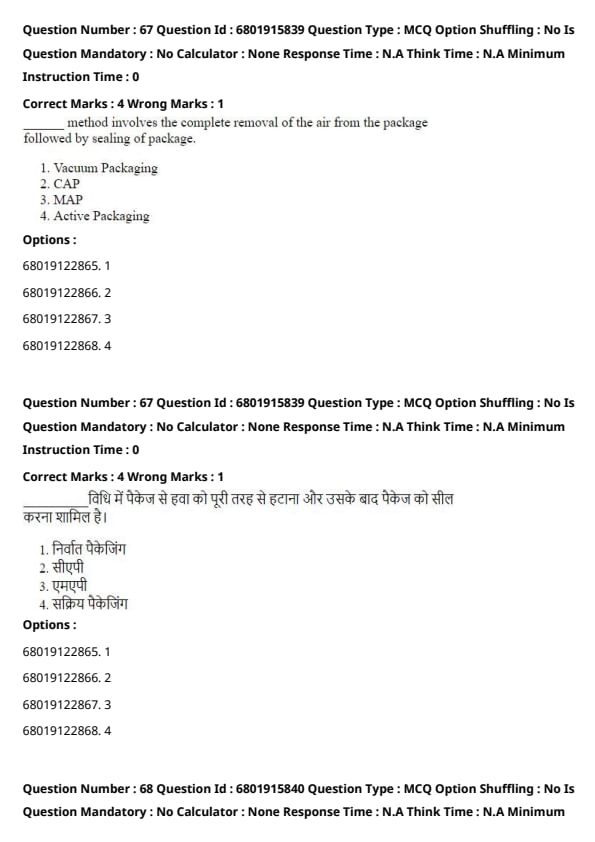
______ method involves the complete removal of the air from the package followed by sealing of package.
View Solution
Vacuum packaging is a method used to remove air from the package to extend shelf life by inhibiting the growth of aerobic bacteria and mold.
Vacuum packaging preserves food by preventing oxidation and microbial growth, enhancing freshness.Question 68:
______ is a gas which is bacteriostatic at low concentration (8µg per ml) but bactericidal at high concentration (40µg per ml).
View Solution
H2O2 (Hydrogen Peroxide) is known for its bacteriostatic properties at low concentrations and bactericidal properties at higher concentrations, making it effective in food preservation and sanitation.
H2O2 is widely used as a disinfectant and in food processing for controlling microbial growth.Question 69:
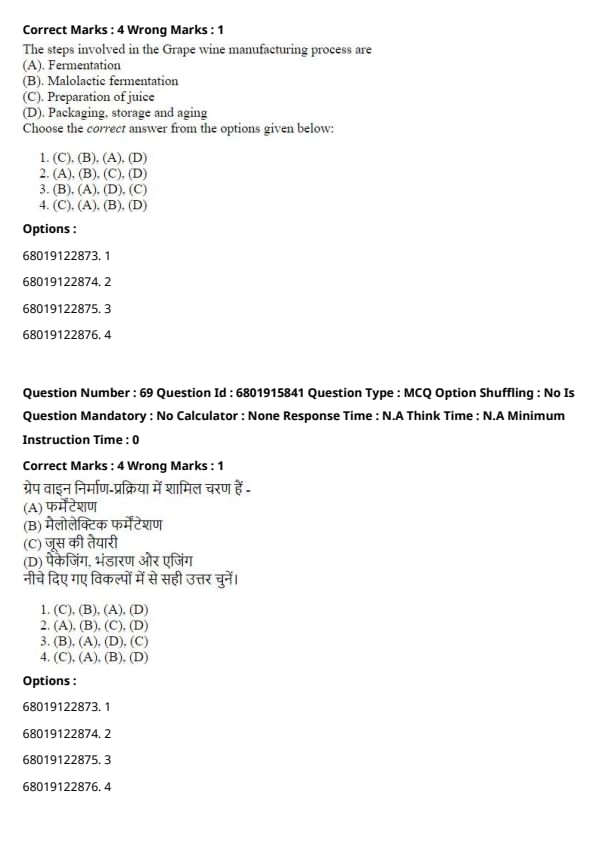
The steps involved in the Grape wine manufacturing process are
(A) Fermentation
(B) Malolactic fermentation
(C) Preparation of juice
(D) Packaging, storage and aging
View Solution
The correct sequence for grape wine manufacturing is:
- Preparation of juice (C)
- Fermentation (A)
- Malolactic fermentation (B)
- Packaging, storage and aging (D)
Question 70:
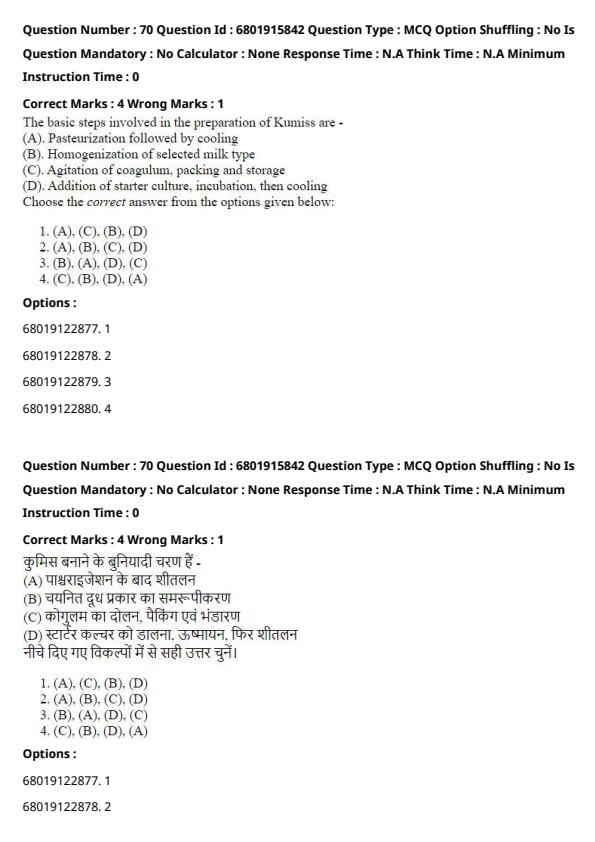
The basic steps involved in the preparation of Kumiss are
(A) Pasteurization followed by cooling
(B) Homogenization of selected milk type
(C) Agitation of coagulum, packing and storage
(D) Addition of starter culture, incubation, then cooling
View Solution
Kumiss preparation involves the following steps:
- Homogenization of selected milk type (B)
- Pasteurization followed by cooling (A)
- Addition of starter culture, incubation, then cooling (D)
- Agitation of coagulum, packing and storage (C)
Question 71:
The order of steps involved in the process of beer manufacture are
(A) Malting
(B) Addition of Hops and Boiling
(C) Mashing and Wort Preparation
(D) Fermentation
View Solution
The beer manufacturing process starts with malting, followed by mashing and wort preparation, then addition of hops and boiling, and finally fermentation.
The order of steps in beer production ensures the correct development of flavors and alcohol content.Question 72:
Sauerkraut is a good source of
View Solution
Sauerkraut, being a fermented cabbage dish, is a good source of Vitamin C, which helps in boosting immunity.
Fermented foods like sauerkraut are rich in Vitamin C and beneficial for gut health.Question 73:
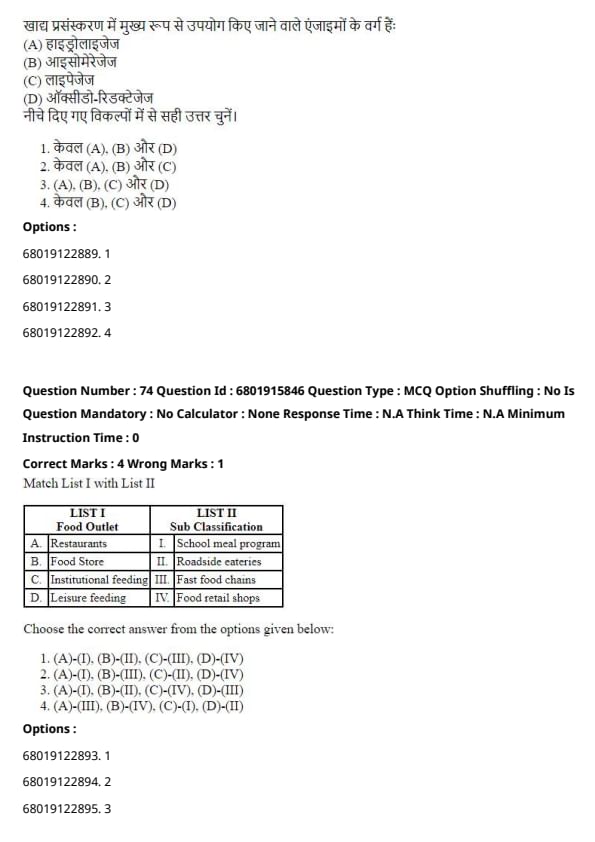
Classes of enzymes predominately used in food processing are
Choose the correct answer from the options given below:
View Solution
The enzymes used in food processing include hydrolyses, isomerases, and oxido-reductases, which are crucial for breaking down, modifying, and oxidizing food components.
Enzymes play a critical role in food processing, improving the texture, flavor, and nutritional quality of food.Question 74:
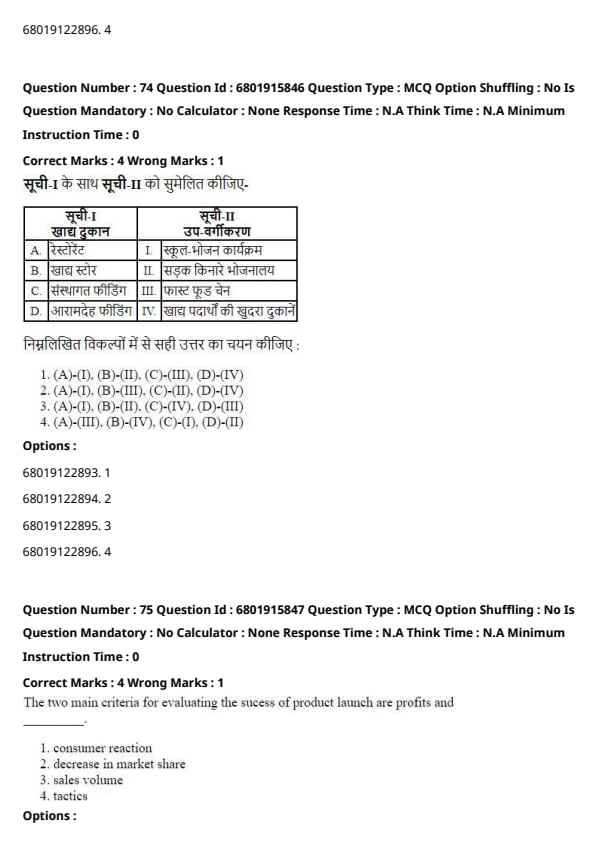
Match List I with List II
| LIST I | LIST II |
|---|---|
| Food Outlet | Sub Classification |
| Restaurants | I. School meal program |
| Food Store | II. Roadside eateries |
| Institutional feeding | III. Fast food chains |
| Leisure feeding | IV. Food retail shops |
Choose the correct answer from the options given below:
View Solution
The matching of food outlets to their sub-classifications is as follows:
- Restaurants are classified under Fast food chains (III)
- Food Store is classified under Food retail shops (IV)
- Institutional feeding is classified under School meal program (I)
- Leisure feeding is classified under Roadside eateries (II)
Question 75:
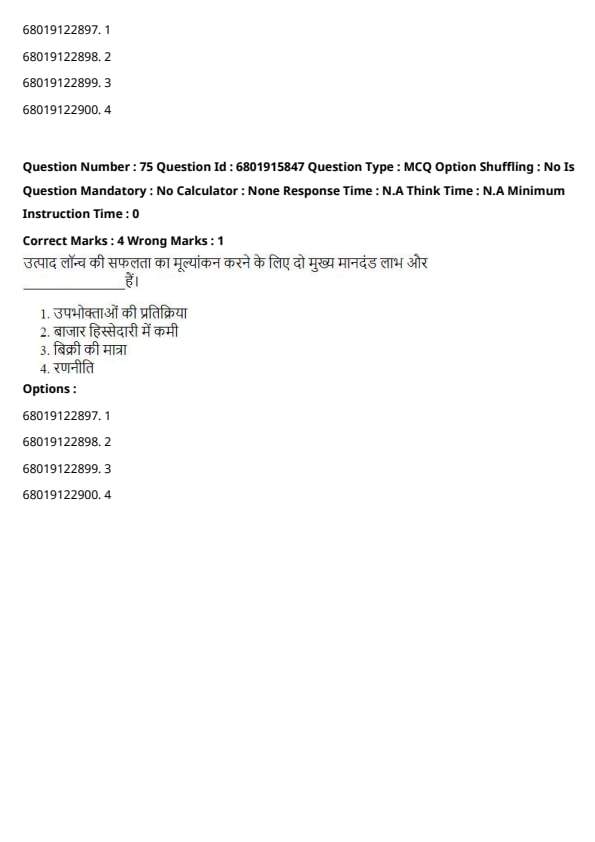
The two main criteria for evaluating the success of product launch are profits and
View Solution
The success of a product launch is commonly evaluated based on sales volume and profits, as these factors reflect the product's market acceptance.
Sales volume is a direct indicator of customer acceptance and product success in the market.


















































*The article might have information for the previous academic years, please refer the official website of the exam.