CUET PG 2024 Question Paper with Answer Key PDF for Life Science (March 22 - Shift 2)
- Question Paper 2025
- Question Paper 2024
- Question Paper 2023
- Mathematics Papers
- Statistics Question Paper
- English Question Paper
- Chemistry Question Paper
- Pol. Sci. Question Paper
- History Question Paper
- Commerce Question Papers
- Life Science Papers
- Geology Question Papers
- Journalism Question Paper
- B.Ed. HSS Question Paper
- Botany Question Paper
- B.Ed. Question Papers


Content Writer | Updated On - Mar 9, 2025
CUET PG Question Papers are the most important study material for effective exam preparation. We at Zollege have provided all CUET PG Previous Year Papers with Solution PDFs here. CUET PG 2024 Life Science exam was conducted successfully on March 22 by NTA.
Students can freely download the CUET PG previous year's question paper PDFs along with their solutions here. We strongly encourage CUET PG aspirants to scan through all the CUET PG Question Paper to know the overall difficulty level, CUET PG Syllabus and understand the changes in CUET PG Exam Pattern over the years.
CUET PG 2024 Life Science Question Paper with Answer Key PDF
| CUET PG 2024 Life Science Question Paper with Answer Key |  Download Download |
Check Solution |
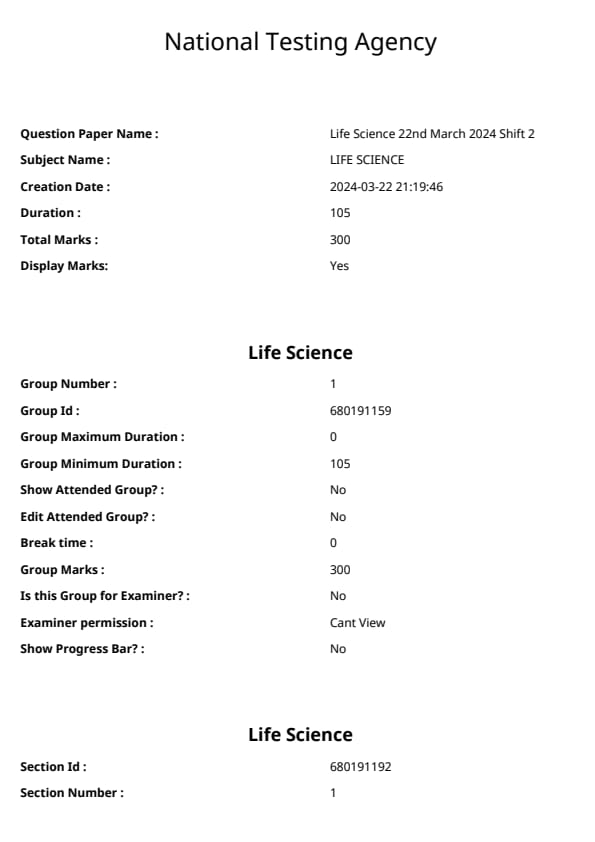
Life Science 2024 Questions with Solutions
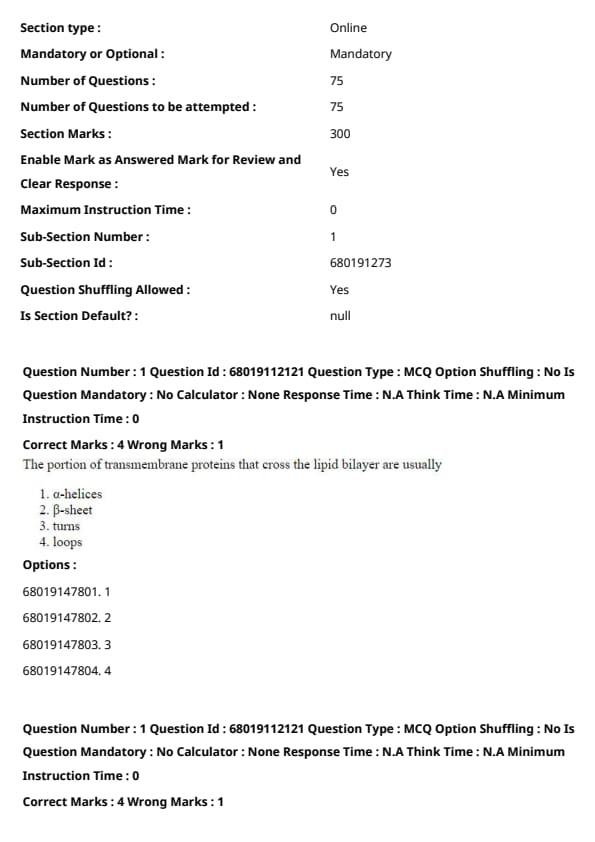
Question 1:
The portion of transmembrane proteins that cross the lipid bilayer are usually:
View Solution
Solution: The transmembrane regions of proteins are commonly formed by α-helices because they are hydrophobic and can span the lipid bilayer. β-sheets are less common and are usually found in pore-forming proteins.
Quick Tip: Transmembrane proteins are hydrophobic in nature, allowing them to pass through the lipid bilayer. The α-helical structure is most favorable for spanning the membrane.
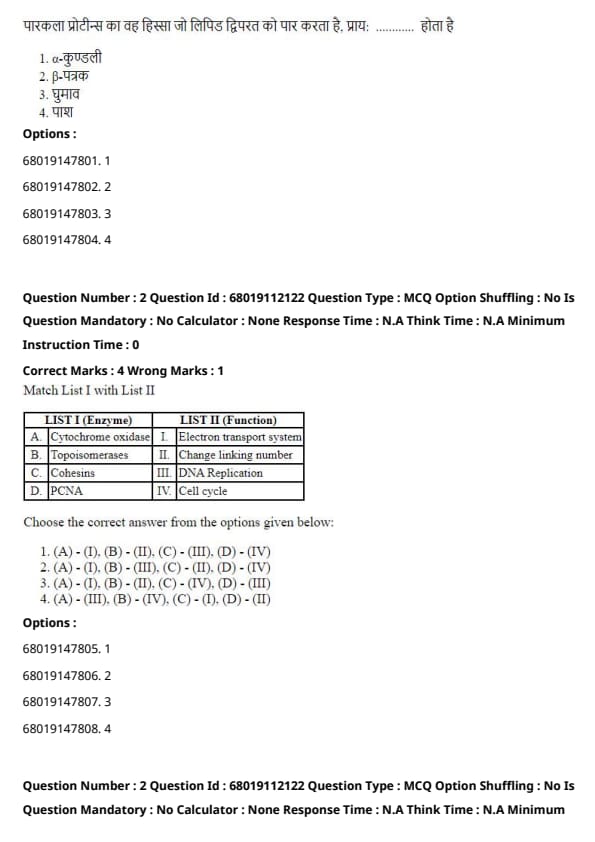
Question 2:
Match List I with List II:
| List I (Enzyme) | List II (Function) |
|---|---|
| (A) Cytochrome oxidase | (I) Electron transport system |
| (B) Topoisomerases | (II) Change linking number |
| (C) Cohesins | (III) DNA Replication |
| (D) PCNA | (IV) Cell cycle |
Choose the correct answer from the options given below:
View Solution
Solution:
• Cytochrome oxidase is a key enzyme in the electron transport chain.
• Topoisomerases are enzymes that change the linking number of DNA, crucial for processes like replication and transcription.
• Cohesins play a significant role in DNA replication by holding sister chromatids together.
• PCNA (Proliferating Cell Nuclear Antigen) is a protein associated with the cell cycle, particularly in DNA synthesis and repair.
Quick Tip: Understanding the functions of enzymes like Cytochrome oxidase, Topoisomerases, Cohesins, and PCNA is essential for matching them correctly with their respective roles.
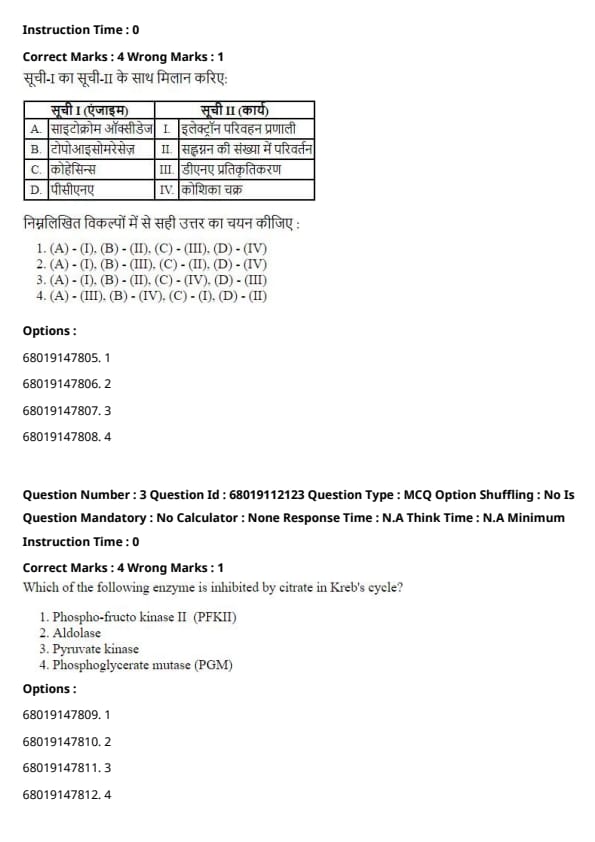
Question 3:
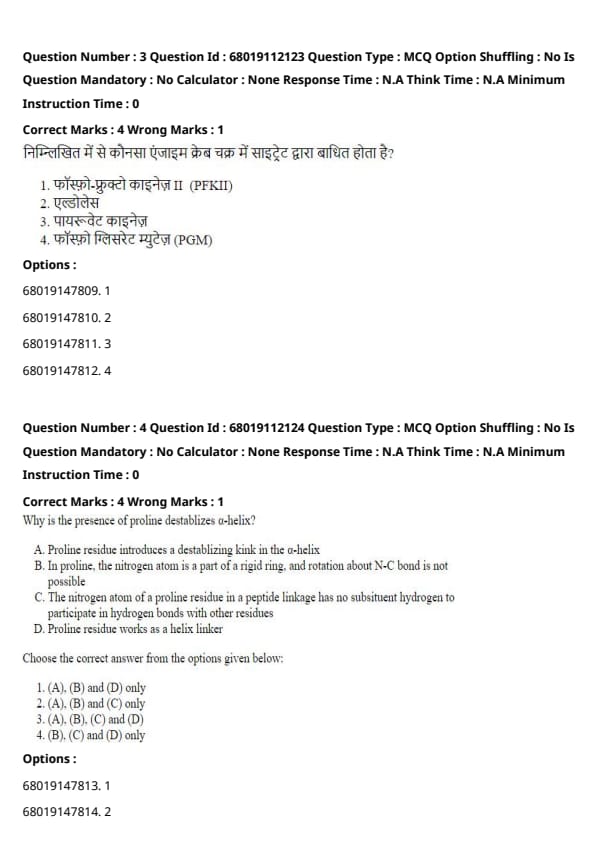
Which of the following enzyme is inhibited by citrate in Kreb's cycle?
View Solution
Solution: Phospho-fructo kinase II (PFKII) is a key enzyme in glycolysis and is inhibited by citrate, an intermediate of the Kreb's cycle, to regulate the metabolic flux between glycolysis and the Kreb's cycle.
Quick Tip: Citrate serves as a feedback inhibitor to regulate glycolysis by inhibiting Phospho-fructo kinase II, ensuring a balance in cellular energy production.
Question 4:
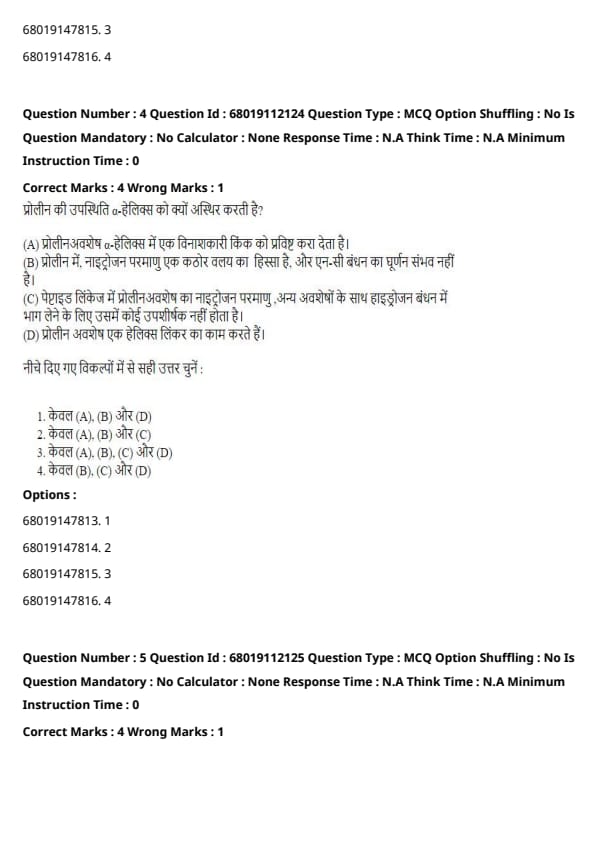
Why is the presence of proline destabilizes α-helix?
View Solution
Solution: Proline is unique because its structure introduces a kink in the α-helix. This is due to its cyclic nature, which restricts rotation, and the lack of an amide hydrogen that can form hydrogen bonds critical for maintaining helix stability.
Quick Tip: Proline is often termed a "helix breaker" because of its rigid structure that disrupts the regularity of α-helices.
Question 5:
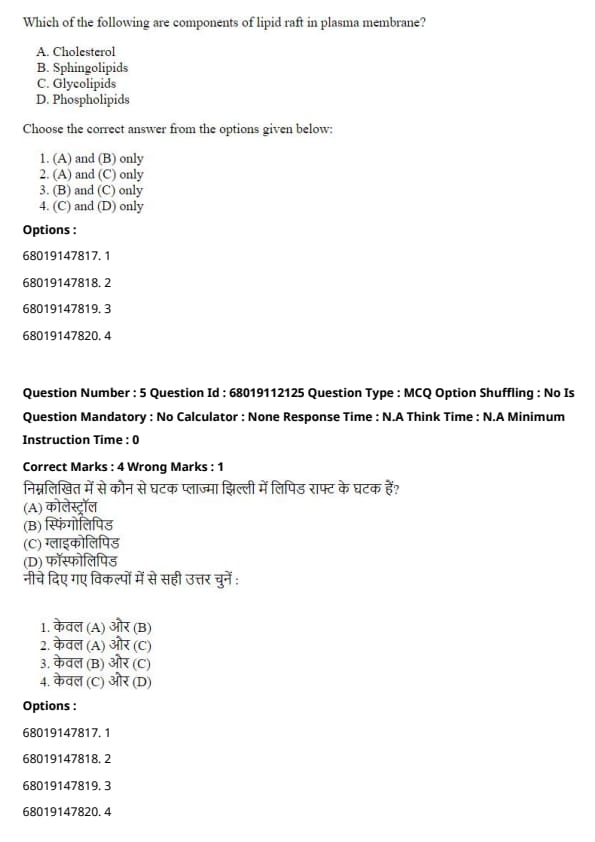
Which of the following are components of lipid raft in plasma membrane?
Choose the correct answer from the options given below:
View Solution
Solution: Lipid rafts are specialized microdomains in the plasma membrane, enriched with cholesterol and sphingolipids. They are crucial for various cellular processes like signal transduction and protein trafficking.
Quick Tip: Lipid rafts are dynamic and serve as platforms for cellular signaling, helping in efficient communication between cells.
Question 6:
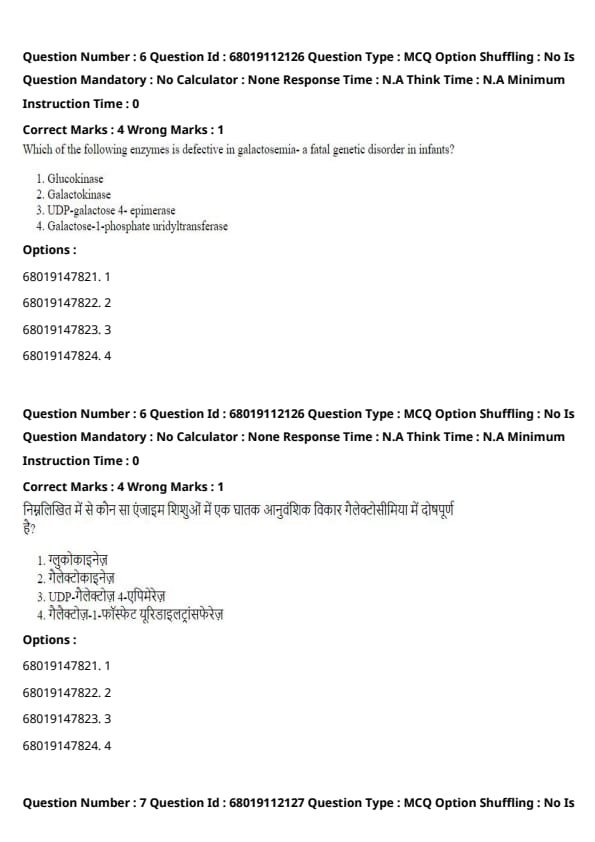
Which of the following enzymes is defective in galactosemia—a fatal genetic disorder in infants?
View Solution
Solution: Galactosemia is most commonly caused by a defect in the enzyme galactose-1-phosphate uridyltransferase (GALT). This enzyme is crucial for the metabolism of galactose, and its deficiency leads to the accumulation of galactose-1-phosphate, which is toxic to cells.
Quick Tip: Screening for galactosemia in newborns is essential for early diagnosis and management, as untreated cases can lead to severe complications like liver damage, developmental delays, and cataracts.
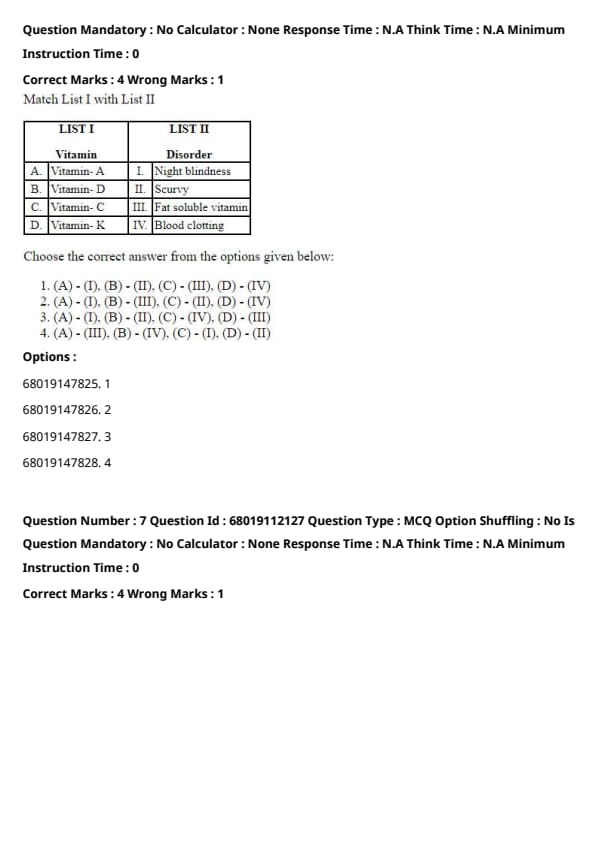
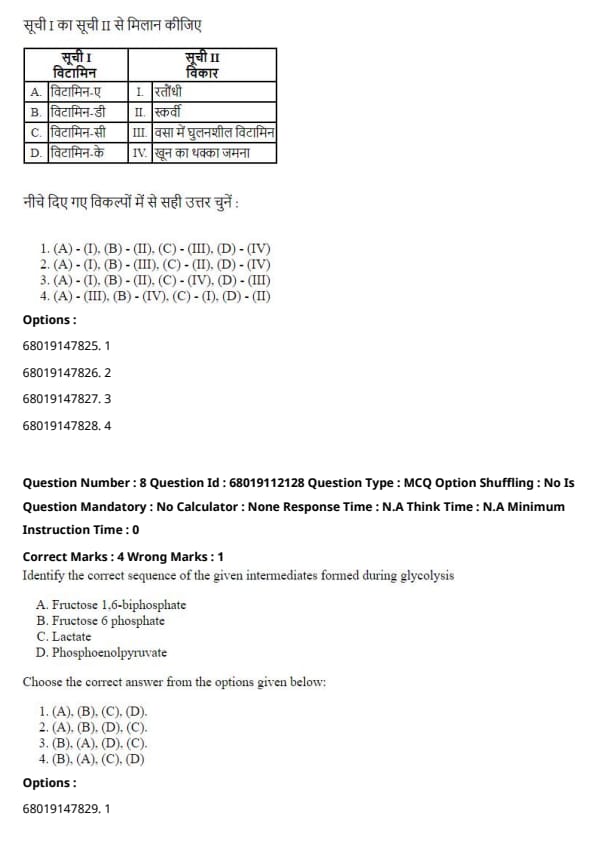
Question 7:
Match List I with List II and choose the correct answer from the options given below:
| List I (Vitamin) | List II (Disorder) |
|---|---|
| (A) Vitamin-A | (I) Night blindness |
| (B) Vitamin-D | (II) Scurvy |
| (C) Vitamin-C | (III) Fat-soluble vitamin |
| (D) Vitamin-K | (IV) Blood clotting |
View Solution
Solution:
• Vitamin-A is associated with night blindness as it is essential for proper vision.
• Vitamin-D is a fat-soluble vitamin crucial for calcium absorption and bone health.
• Vitamin-C deficiency causes scurvy due to its role in collagen synthesis.
• Vitamin-K is necessary for blood clotting processes.
Quick Tip: Vitamins are classified into fat-soluble (A, D, E, K) and water-soluble (B-complex, C) based on their solubility and storage in the body.
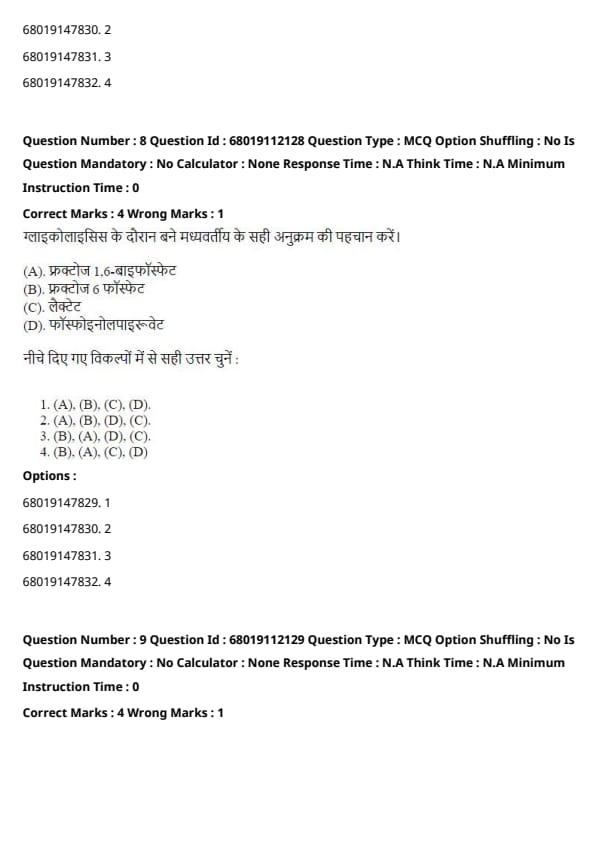
Question 8:
Identify the correct sequence of the given intermediates formed during glycolysis:
Choose the correct answer from the options given below:
View Solution
Solution: The correct sequence of intermediates in glycolysis is Fructose 1,6-biphosphate → Fructose 6-phosphate → Phosphoenolpyruvate → Lactate.
Quick Tip: Glycolysis is a series of reactions where glucose is broken down into pyruvate or lactate, generating ATP and NADH.
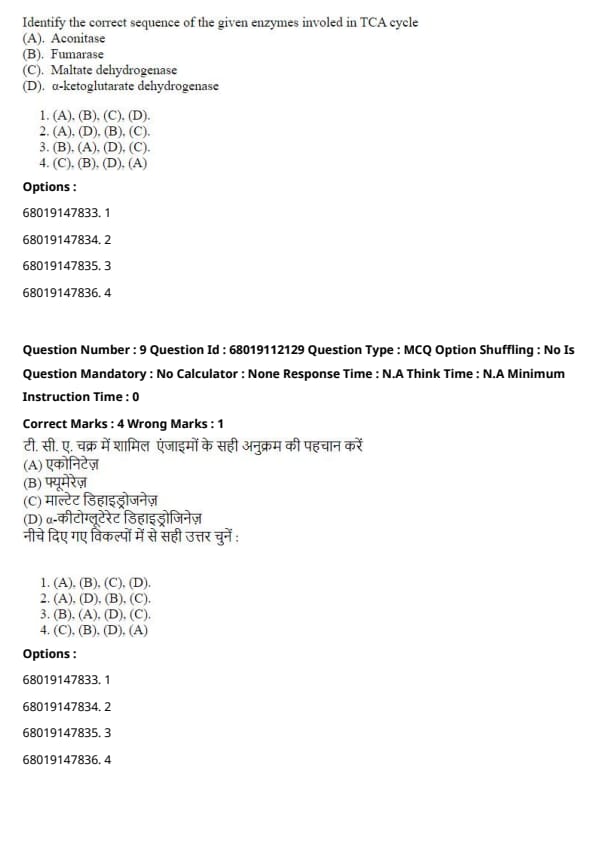
Question 9:
Identify the correct sequence of the given enzymes involved in the TCA cycle:
Choose the correct answer from the options given below:
View Solution
Solution: The enzymes of the TCA cycle act in a sequence starting with Aconitase → α-ketoglutarate dehydrogenase → Fumarase → Malate dehydrogenase.
Quick Tip: The TCA cycle, also known as the Krebs cycle, is a central metabolic pathway that oxidizes acetyl-CoA to CO2 and generates NADH and FADH2.
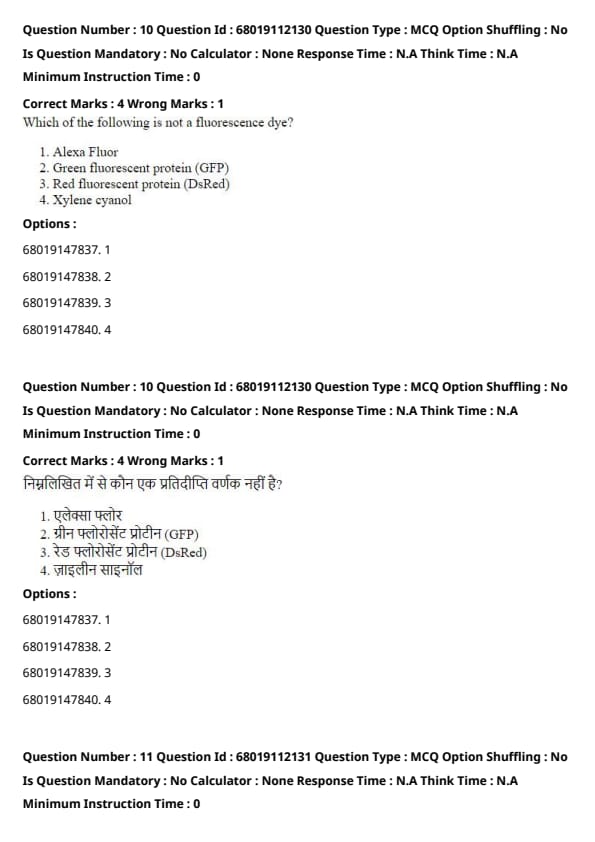
Question 10:
Which of the following is not a fluorescence dye?
View Solution
Solution: Xylene cyanol is a tracking dye used in gel electrophoresis and is not fluorescent, unlike Alexa Fluor, GFP, and DsRed, which are commonly used fluorescent dyes.
Quick Tip: Xylene cyanol is used to monitor DNA/RNA migration in electrophoresis, not for fluorescence studies.
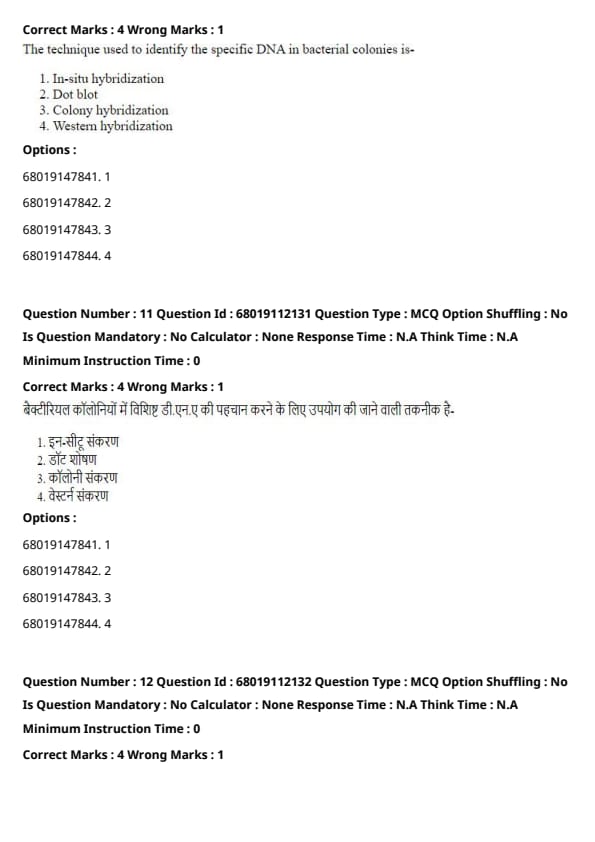
Question 11:
The technique used to identify the specific DNA in bacterial colonies is:
View Solution
Solution: Colony hybridization is a technique to detect DNA sequences within colonies by transferring them onto a membrane and using a labeled probe for hybridization.
Quick Tip: Western hybridization is for proteins, while colony hybridization specifically identifies DNA.
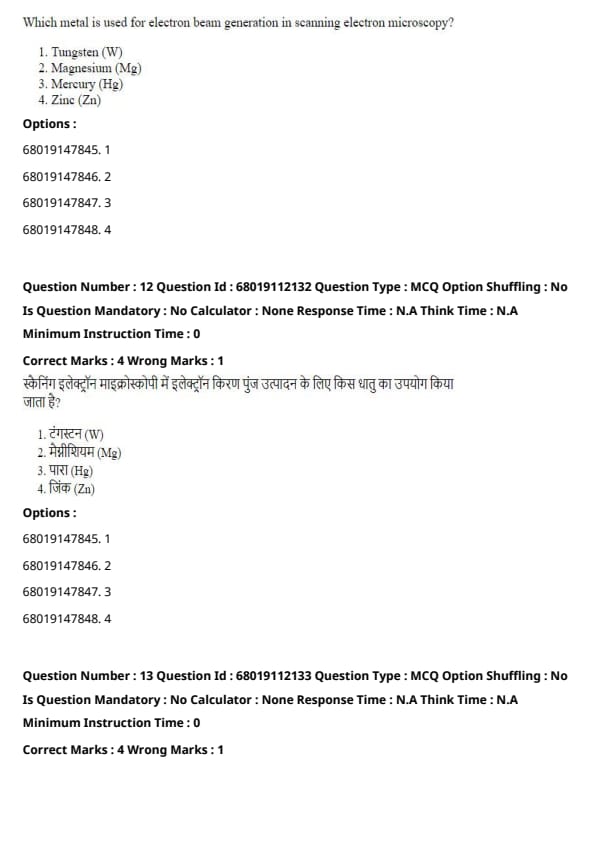
Question 12:
Which metal is used for electron beam generation in scanning electron microscopy?
View Solution
Solution: Tungsten is widely used in electron microscopy as a filament material due to its high melting point and durability.
Quick Tip: The tungsten filament is the most commonly used electron source in electron microscopes.
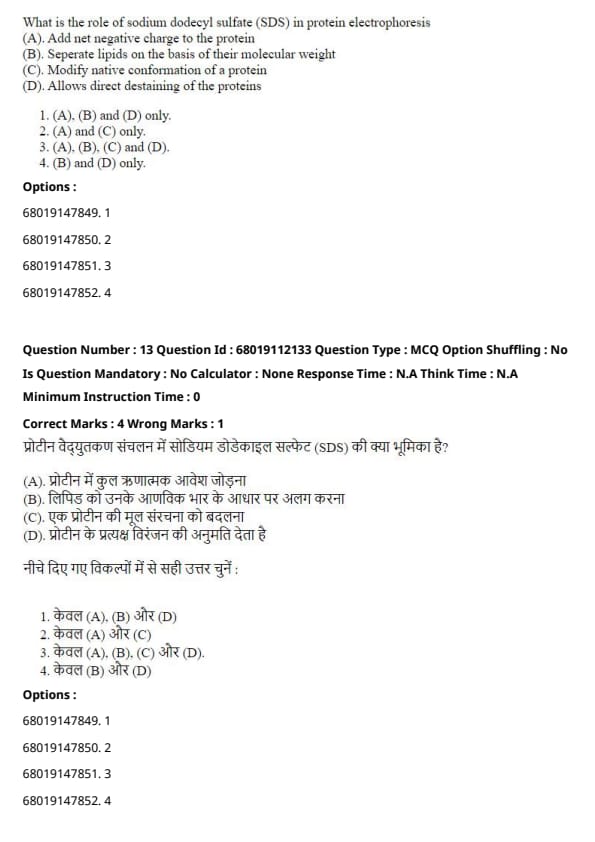
Question 13:
What is the role of sodium dodecyl sulfate (SDS) in protein electrophoresis?
Choose the correct answer from the options given below:
View Solution
Solution: Sodium dodecyl sulfate (SDS) is an anionic detergent that denatures proteins by disrupting non-covalent bonds, thereby modifying their native conformation. It also adds a uniform negative charge to proteins, allowing them to be separated based on size during electrophoresis.
Quick Tip: SDS disrupts protein structures and imparts a uniform negative charge, enabling molecular weight-based separation in SDS-PAGE.
Question 14:
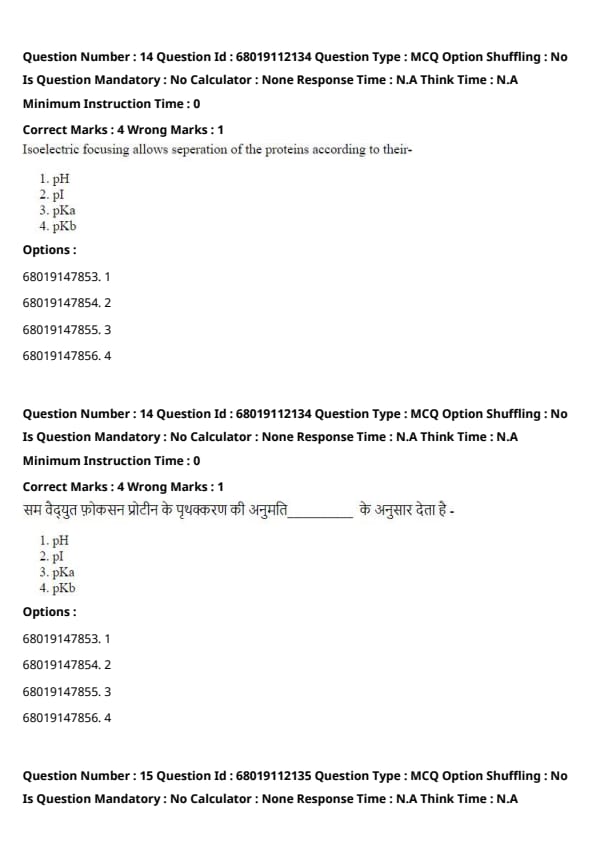
Isoelectric focusing allows separation of the proteins according to their:
View Solution
Solution: Isoelectric focusing is a technique used to separate proteins based on their isoelectric point (pI), the pH at which the protein has no net charge and does not migrate in an electric field.
Quick Tip: Proteins are separated in a pH gradient during isoelectric focusing, stopping movement at their pI.
Question 15:
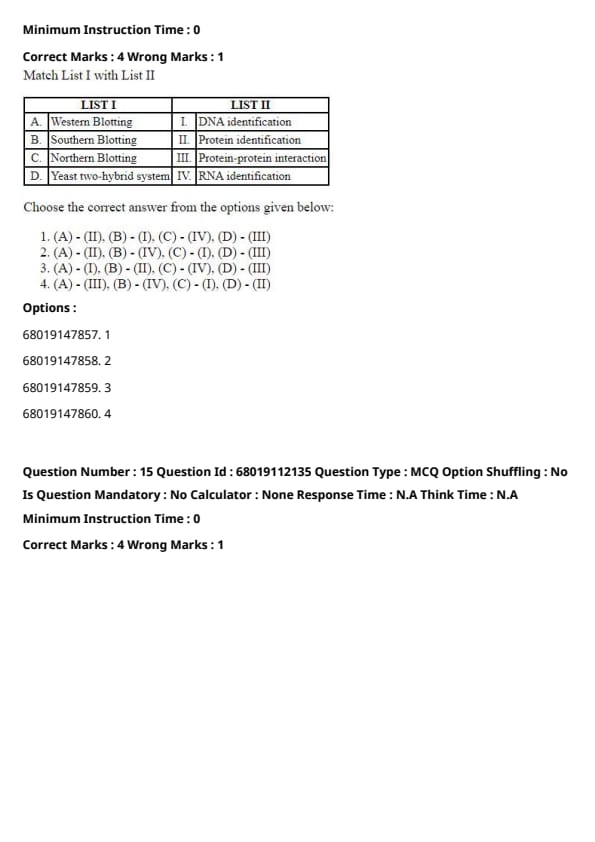
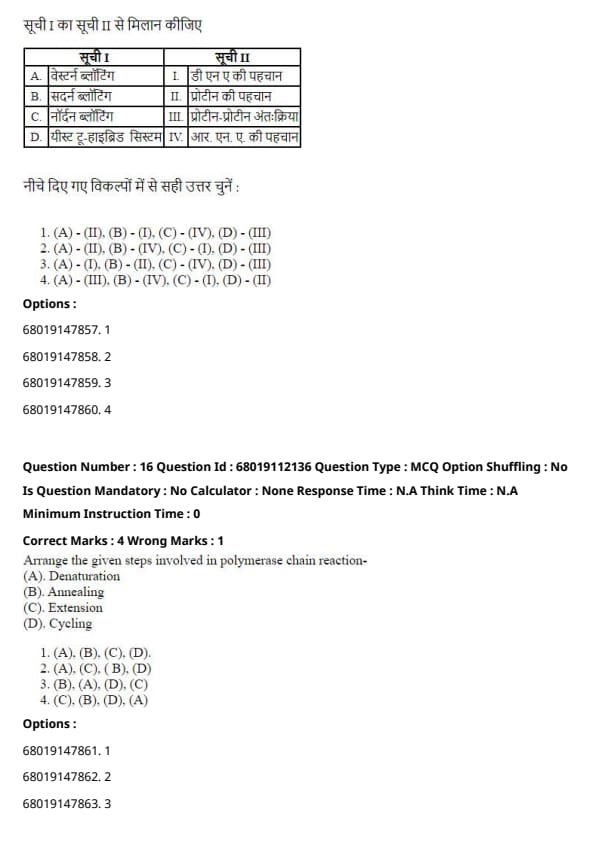
Match List I with List II:
| List I | List II |
|---|---|
| (A) Western Blotting | (I) Protein identification |
| (B) Southern Blotting | (II) DNA identification |
| (C) Northern Blotting | (III) RNA identification |
| (D) Yeast two-hybrid system | (IV) Protein-protein interaction |
Choose the correct answer from the options given below:
View Solution
Solution:
• Western blotting is used for protein identification.
• Southern blotting identifies DNA sequences.
• Northern blotting is for RNA identification.
• Yeast two-hybrid system identifies protein-protein interactions.
Quick Tip: Blotting techniques are named directionally: Southern (DNA), Northern (RNA), Western (Protein).
Question 16:
Arrange the given steps involved in polymerase chain reaction (PCR):
Choose the correct answer from the options given below:
View Solution
Solution: The steps of PCR are as follows:
• Denaturation: The double-stranded DNA is heated to separate it into two single strands.
• Annealing: The temperature is lowered to allow primers to bind to their complementary DNA sequences.
• Extension: DNA polymerase extends the primers to form a new strand of DNA.
• Cycling: These steps are repeated multiple times to amplify the target DNA sequence.
Quick Tip: PCR consists of three main steps: Denaturation, Annealing, and Extension, which are cycled multiple times to amplify DNA.
Question 17:
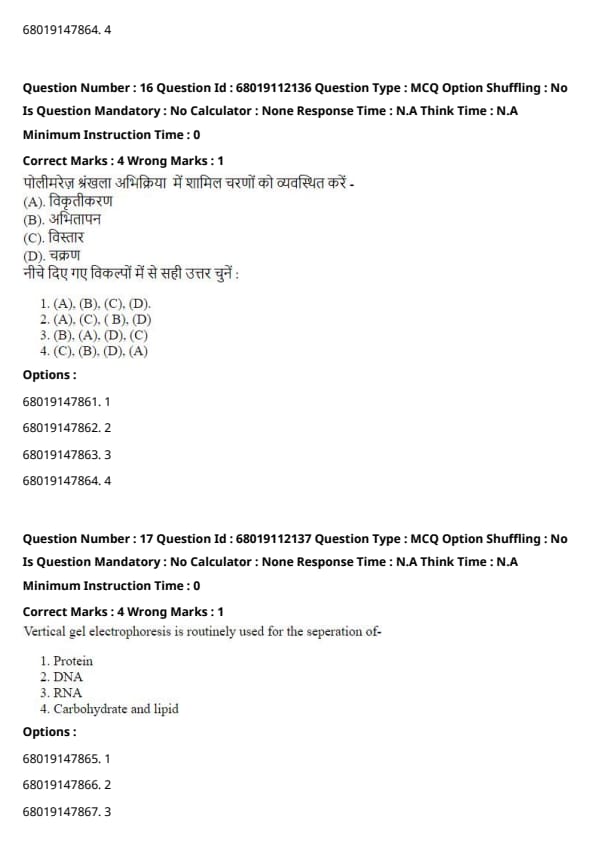
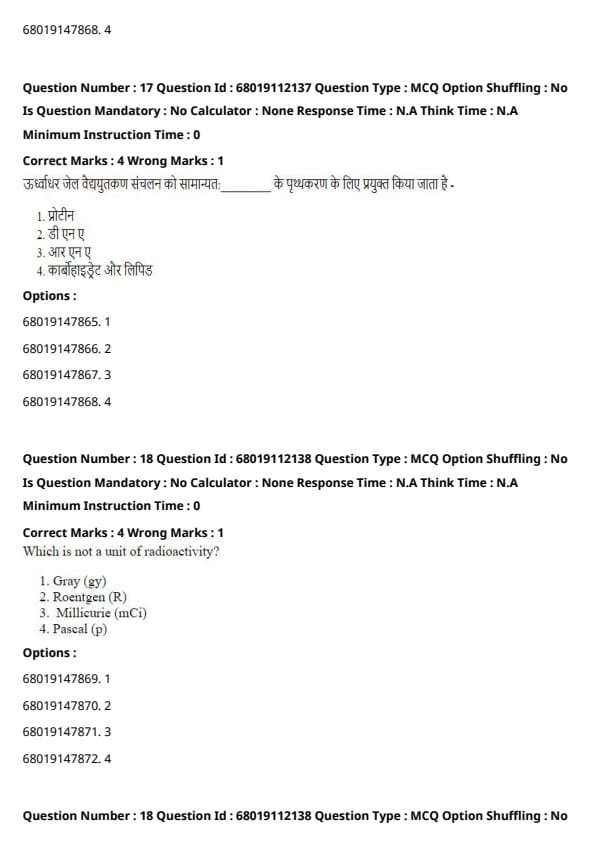
Vertical gel electrophoresis is routinely used for the separation of:
View Solution
Solution: Vertical gel electrophoresis is a technique primarily used for protein separation, especially in methods like SDS-PAGE.
Quick Tip: Vertical electrophoresis is typically associated with polyacrylamide gels used for protein separation.
Question 18:
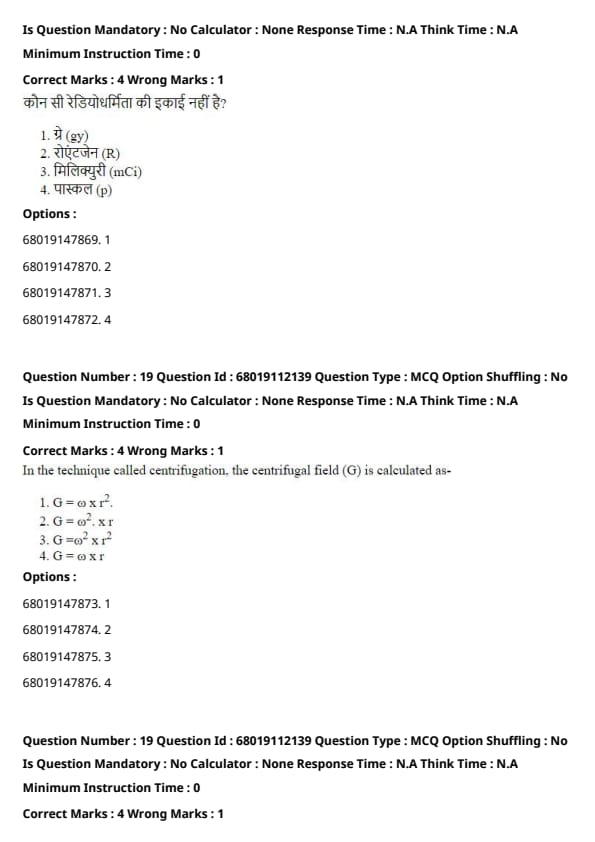
Which is not a unit of radioactivity?
View Solution
Solution: Pascal is a unit of pressure, not related to radioactivity. Units like Gray, Roentgen, and Millicurie are associated with measuring radiation and radioactivity.
Quick Tip: Always distinguish between units of radiation (like Gray) and unrelated units like Pascal.
Question 19:
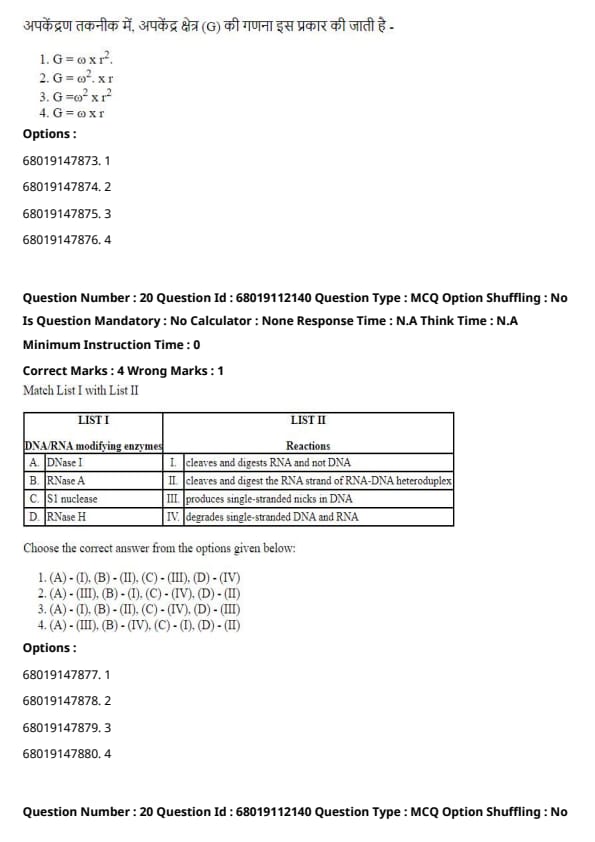
In the technique called centrifugation, the centrifugal field (G) is calculated as:
View Solution
Solution: The centrifugal field is determined by the square of the angular velocity (w) multiplied by the radius (r).
Quick Tip: Remember, the formula G = w2 × r applies to centrifugation, relating angular velocity to radius.
Question 20:
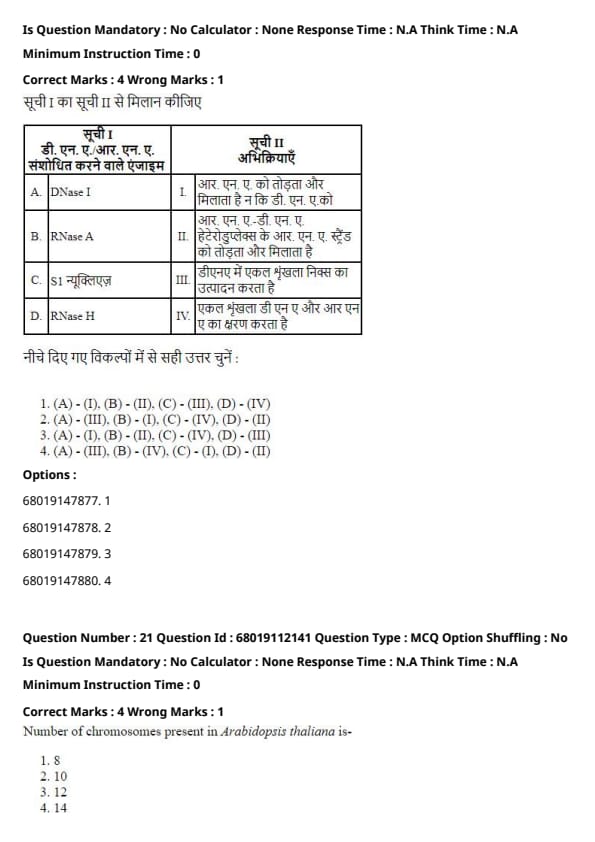
Match List I with List II:
| DNA/RNA modifying enzymes | Reactions |
|---|---|
| (A) DNase I | (I) Cleaves and digests RNA and not DNA |
| (B) RNase A | (II) Cleaves and digests the RNA strand of RNA-DNA heteroduplex |
| (C) S1 nuclease | (III) Produces single-stranded nicks in DNA |
| (D) RNase H | (IV) Degrades single-stranded DNA and RNA |
Choose the correct answer from the options given below:
View Solution
Solution:
• DNase I cleaves and digests DNA but not RNA.
• RNase A cleaves and digests the RNA strand of RNA-DNA heteroduplex.
• S1 nuclease produces single-stranded nicks in DNA.
• RNase H degrades single-stranded DNA and RNA.
Quick Tip: Understanding the specificity of each enzyme is key in matching the correct reactions.
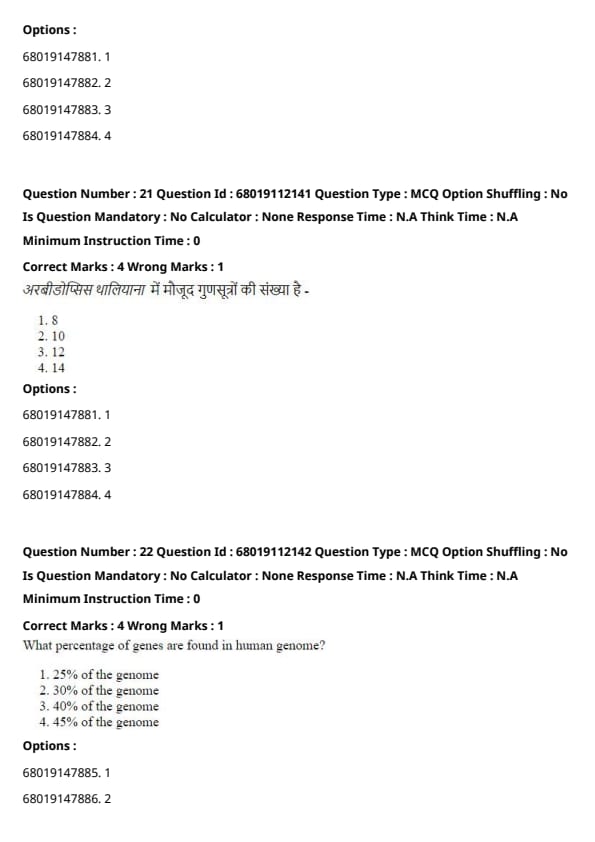
Question 21:
Number of chromosomes present in Arabidopsis thaliana is:
View Solution
Solution: Arabidopsis thaliana is a model organism, and its diploid number of chromosomes is 12.
Quick Tip: Chromosomes present in the organisms differ accordingly.
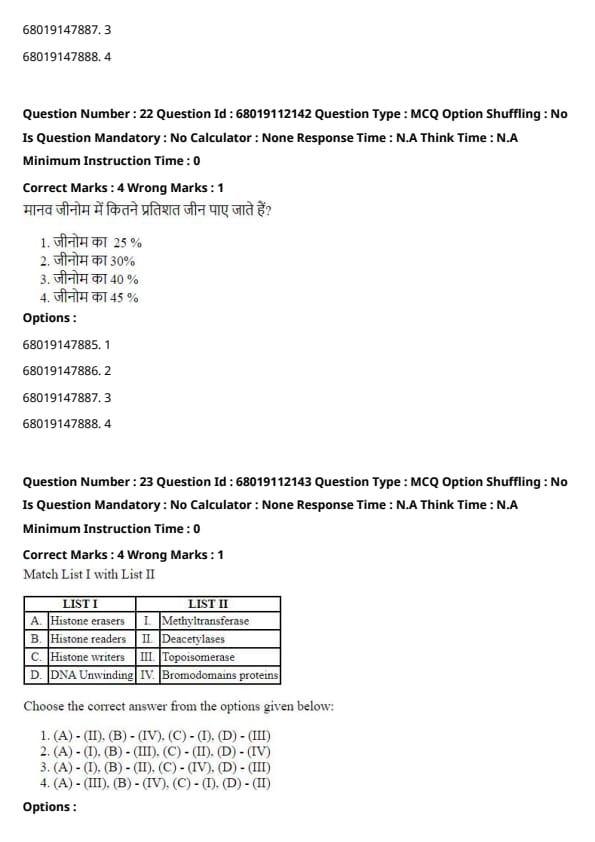
Question 22:
What percentage of genes are found in the human genome?
View Solution
Solution: Approximately 30% of the human genome consists of genes, which code for proteins. The rest of the genome consists of regulatory and non-coding sequences.
Quick Tip: Genomes present in human organisms vary as per the sequence.
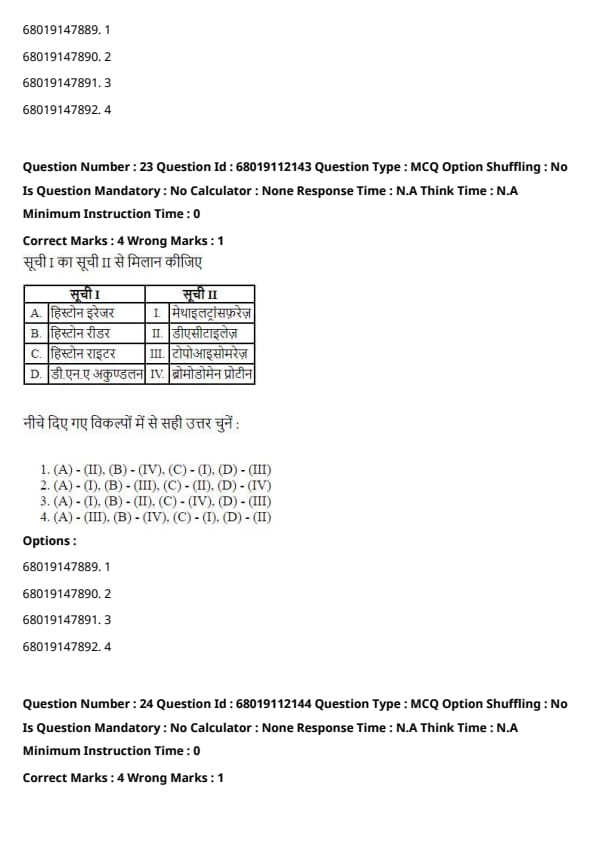
Question 23:
Match List I with List II:
| LIST I | LIST II |
|---|---|
| (A) Histone erasers | (I) Methyltransferase |
| (B) Histone readers | (II) Deacetylases |
| (C) Histone writers | (III) Topoisomerase |
| (D) DNA Unwinding | (IV) Bromodomains proteins |
Choose the correct answer from the options given below:
View Solution
Solution: Histone erasers are associated with Deacetylases activity, histone readers with Bromodomain proteins, histone writers with Methyltransferases, and DNA unwinding is related to Topoisomerases.
Quick Tip: Erasers typically modify by adding or removing groups like methyl (Methyltransferase); Readers recognize modifications and interpret them (Bromodomains); Writers introduce modifications, often acetyl groups (Deacetylases); DNA unwinding involves proteins that interact with the DNA structure (Topoisomerases).
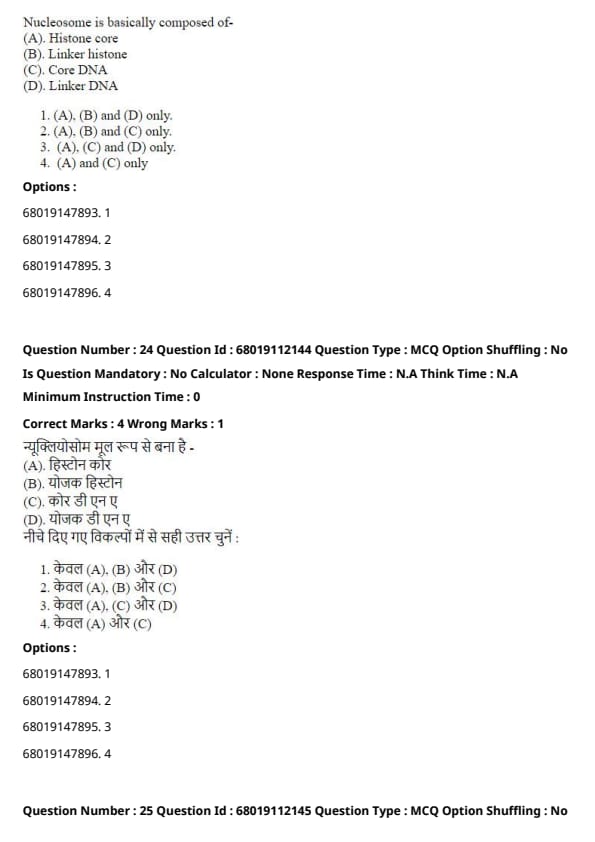
Question 24:
Nucleosome is basically composed of:
Choose the correct answer from the options given below:
View Solution
Solution: A nucleosome is composed of a histone core, linker histone, and core DNA. The linker DNA connects the nucleosomes but is not part of the nucleosome itself.
Quick Tip: The basic structure of the nucleosome consists of the histone core (histone proteins), core DNA wrapped around the histone core, and linker histones that bind to the linker DNA.
Question 25:
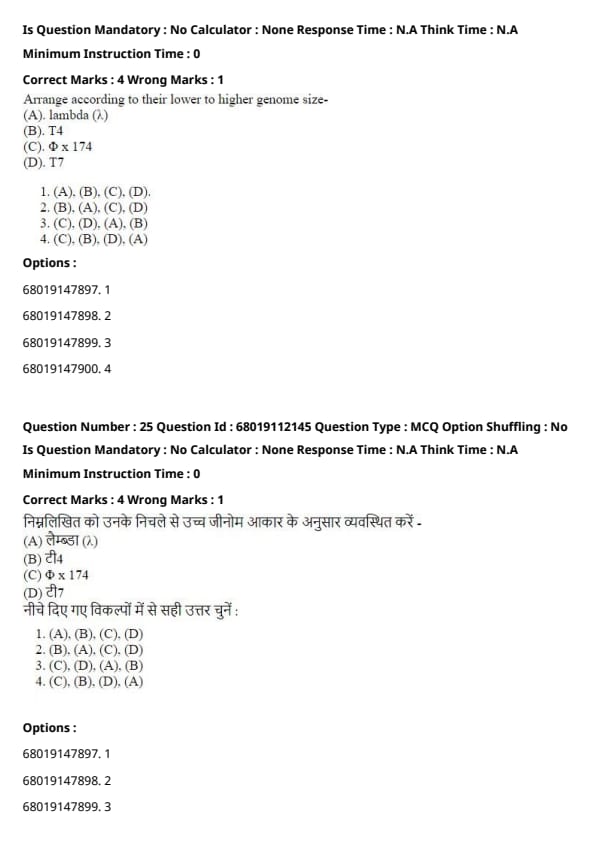
Arrange according to their lower to higher genome size:
Choose the correct answer from the options given below:
View Solution
Solution: The correct order of genome size, from smallest to largest, is:
• Φ x 174 has the smallest genome size.
• T7 has a medium size genome.
• Lambda (λ) comes next.
• T4 has the largest genome size.
Quick Tip: In general, bacteriophages like Φ x 174, T7, lambda (λ), and T4 have genome sizes that differ significantly, with Φ x 174 having the smallest and T4 the largest.
Question 26:
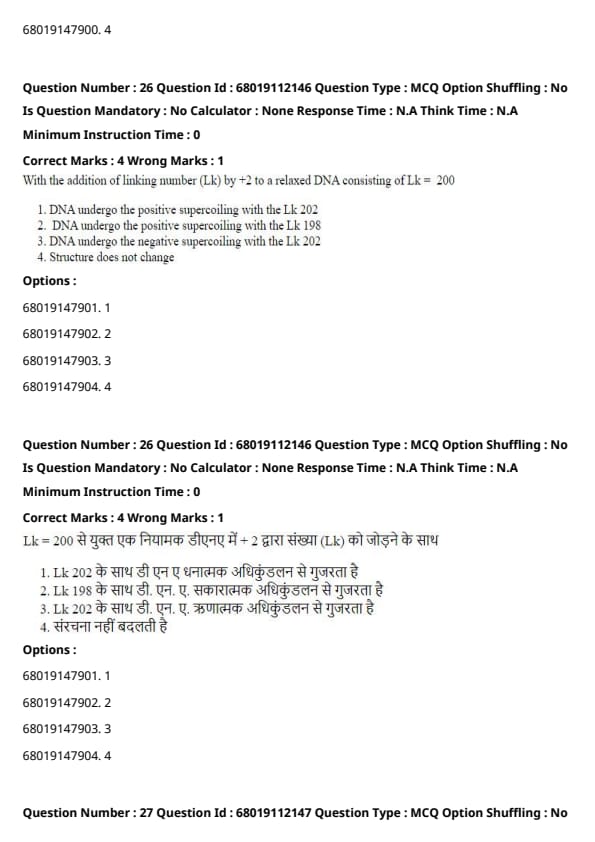
With the addition of linking number (Lk) by +2 to a relaxed DNA consisting of Lk = 200, which of the following occurs?
View Solution
Solution: The addition of two units to the linking number (Lk) results in a positive supercoiling. Hence, the DNA undergoes positive supercoiling with Lk 202.
Quick Tip: Positive supercoiling occurs when the linking number is increased, while negative supercoiling happens when the linking number is decreased.
Question 27:
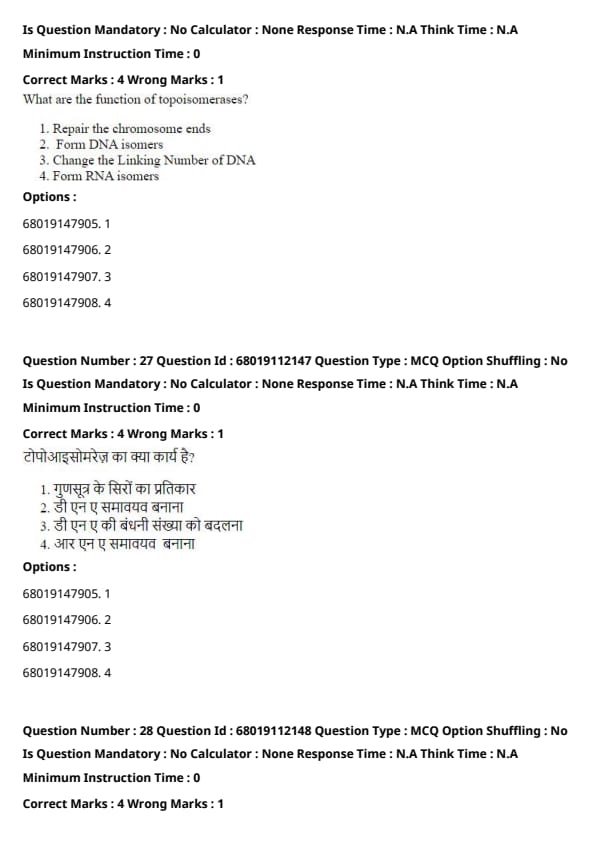
What are the function of topoisomerases?
View Solution
Solution: Topoisomerases are enzymes that modify the topology of DNA by changing the linking number, enabling DNA supercoiling and untangling.
Quick Tip: Topoisomerases help maintain the proper structure of DNA by altering its supercoiling, which is essential for processes like DNA replication and transcription.
Question 28:
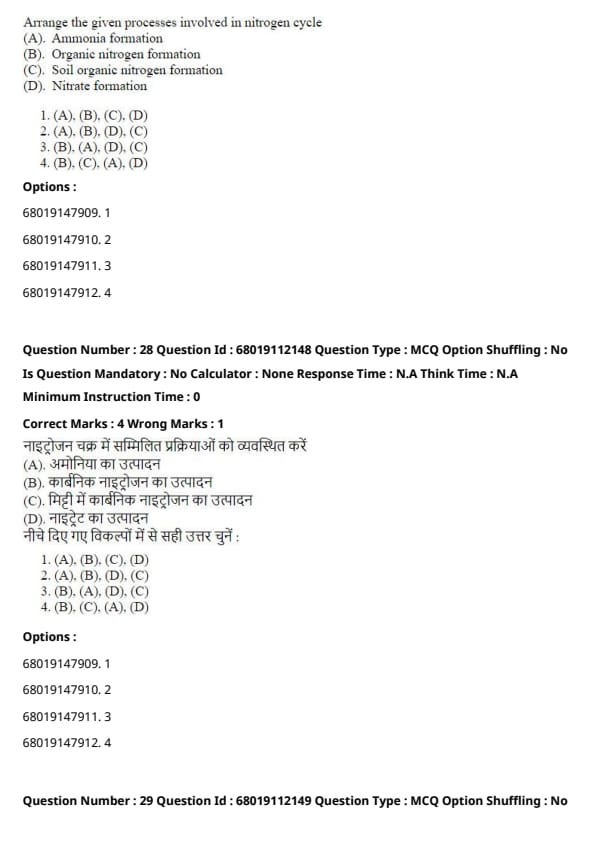
Arrange the given processes involved in nitrogen cycle.
Choose the correct answer from the options given below:
View Solution
Solution: The correct sequence of nitrogen cycle steps begins with ammonia formation, followed by organic nitrogen formation, then soil organic nitrogen formation, and finally nitrate formation.
Quick Tip: Understanding the nitrogen cycle is essential for studying plant nutrition and environmental processes. The correct order is critical for agricultural and ecological applications.
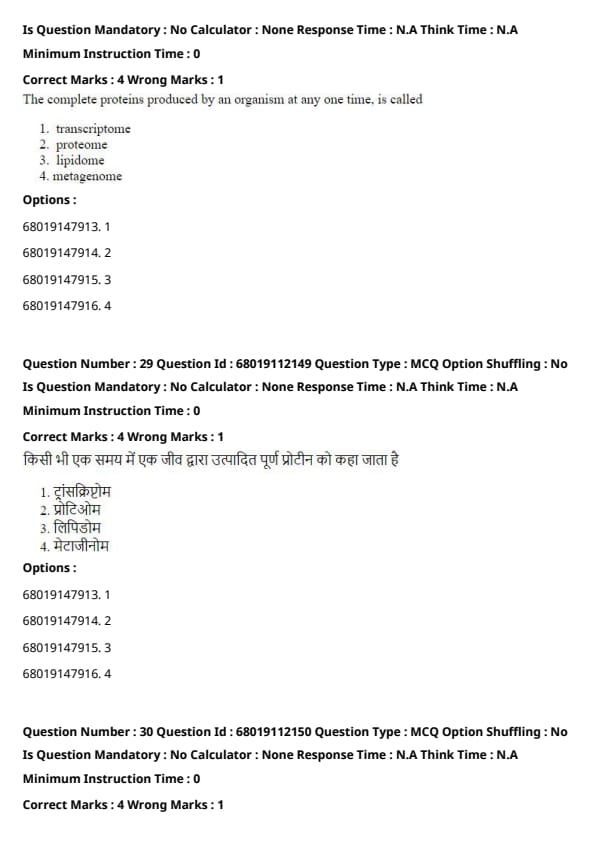
Question 29:
The complete proteins produced by an organism at any one time, is called:
View Solution
Solution: The complete set of proteins expressed by an organism at any given time is referred to as the proteome, not transcriptome or any other term.
Quick Tip: The proteome represents all the proteins in a cell, tissue, or organism, unlike the transcriptome, which represents all RNA molecules.
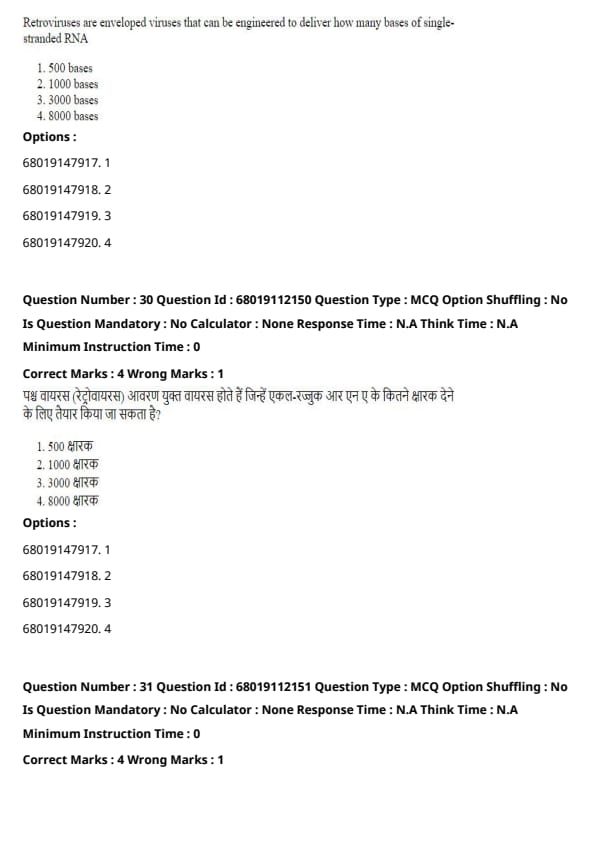
Question 30:
Retroviruses are enveloped viruses that can be engineered to deliver how many bases of single-stranded RNA?
View Solution
Solution: Retroviruses can be engineered to deliver approximately 3000 bases of single-stranded RNA for gene therapy applications.
Quick Tip: Retroviruses are often used in gene therapy because of their ability to integrate their RNA genome into the host DNA.
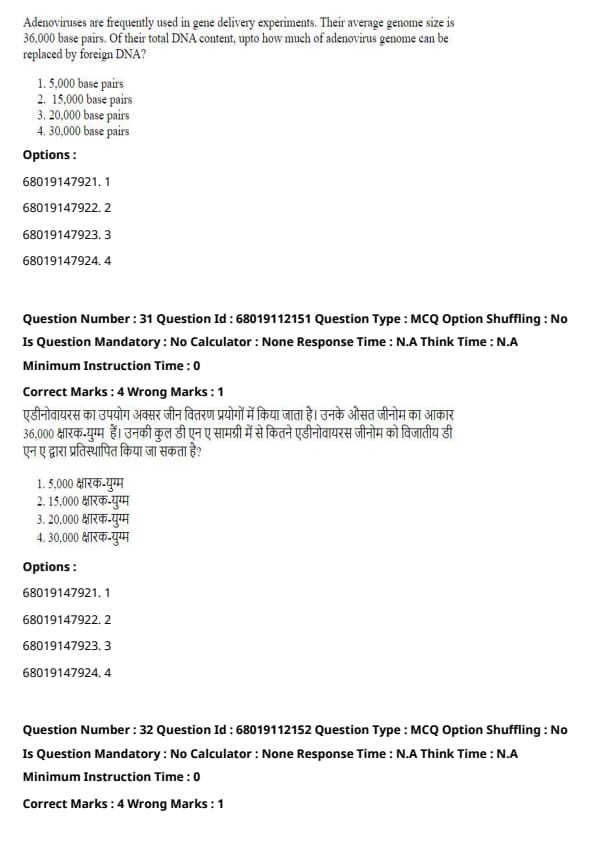
Question 31:
Adenoviruses are frequently used in gene delivery experiments. Their average genome size is 36,000 base pairs. Of their total DNA content, up to how much of adenovirus genome can be replaced by foreign DNA?
View Solution
Solution: Adenoviruses can accommodate up to 20,000 base pairs of foreign DNA in their genome, which makes them a viable option for gene therapy applications.
Quick Tip: Adenoviruses are ideal vectors for gene therapy because they can carry large foreign DNA sequences without compromising their infectivity.
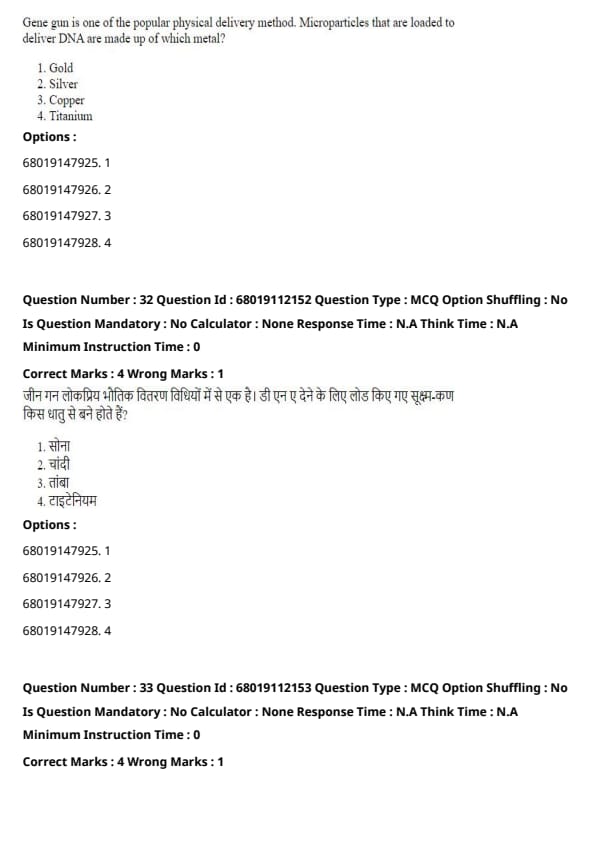
Question 32:
Gene gun is one of the popular physical delivery methods. Microparticles that are loaded to deliver DNA are made up of which metal?
View Solution
Solution: Gold is commonly used in gene gun delivery methods, as it provides stability and is efficient for loading DNA into the particles for gene transfer.
Quick Tip: Gold microparticles are used for DNA delivery in gene gun methods because of their ease of handling and biocompatibility.
Question 33:
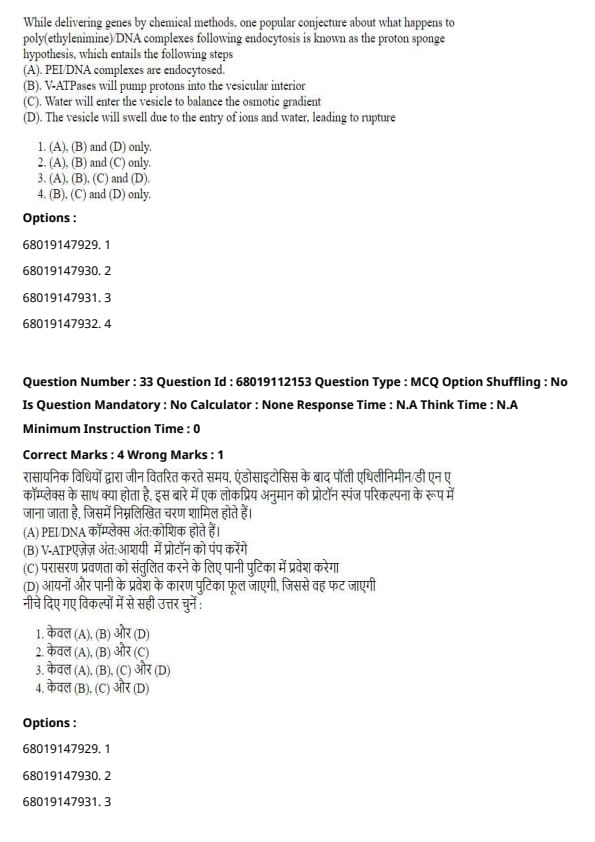
While delivering genes by chemical methods, one popular conjecture about what happens to poly(ethylenimine)/DNA complexes following endocytosis is known as the proton sponge hypothesis, which entails the following steps:
Choose the correct answer from the options given below:
View Solution
Solution: The proton sponge hypothesis suggests that after the PEI/DNA complexes are endocytosed, the V-ATPases pump protons into the vesicle, causing water to enter to balance the osmotic gradient, which eventually leads to the rupture of the vesicle.
Quick Tip: The proton sponge hypothesis is useful for enhancing endosomal escape and improving gene delivery efficiency.
Question 34:
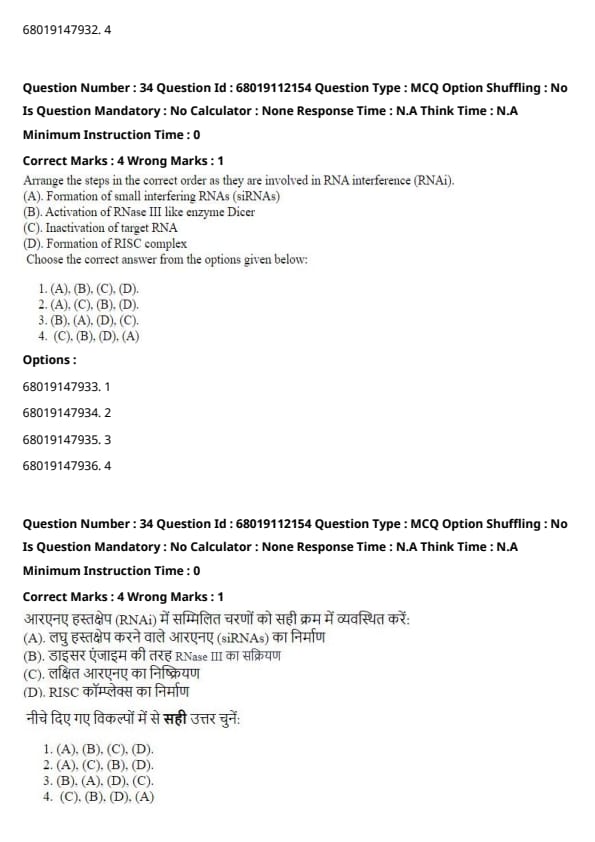
Arrange the steps in the correct order as they are involved in RNA interference (RNAi):
Choose the correct answer from the options given below:
View Solution
Solution: RNA interference begins with the formation of siRNAs, followed by the activation of the Dicer enzyme, which processes the RNA. The target RNA is then inactivated, and the RISC complex is formed to mediate the silencing.
Quick Tip: RNA interference is a vital process for gene silencing and can be used for controlling gene expression.
Question 35:
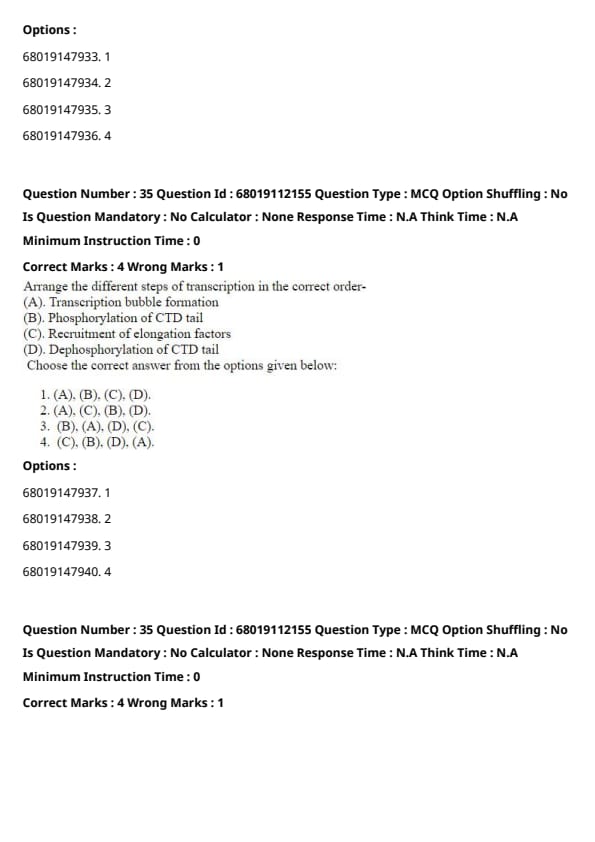
Arrange the different steps of transcription in the correct order:
Choose the correct answer from the options given below:
View Solution
Solution: Transcription starts with the formation of the transcription bubble, followed by phosphorylation of the CTD tail. Elongation factors are recruited, and the process ends with the dephosphorylation of the CTD tail.
Quick Tip: The phosphorylation of the CTD tail is essential for transcription elongation and recruitment of transcription factors.
Question 36:
The complete proteins produced by an organism at any one time, is called:
View Solution
Solution: Proteome refers to the complete set of proteins produced by an organism at any given time, distinguishing it from other omics like transcriptome or metagenome.
Quick Tip: The study of the proteome is crucial for understanding protein functions, interactions, and disease mechanisms.
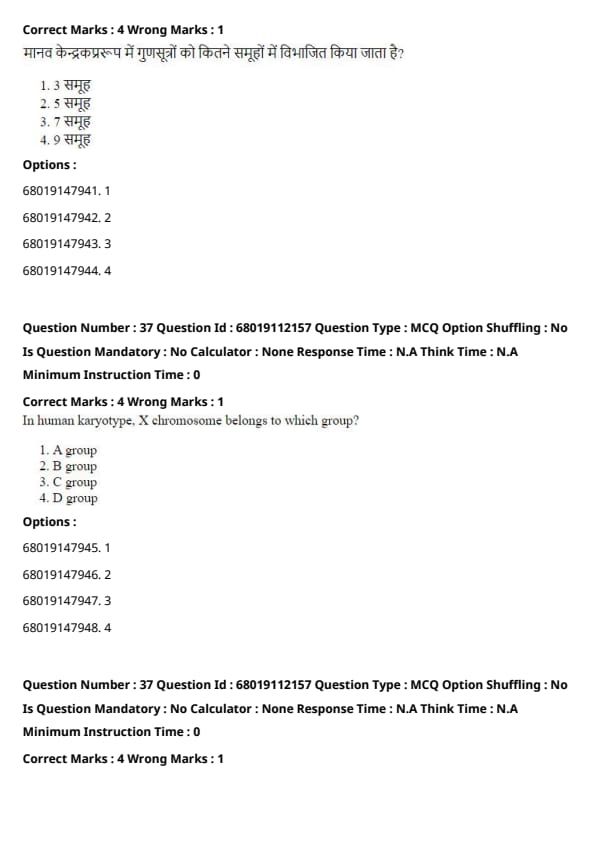
Question 37:
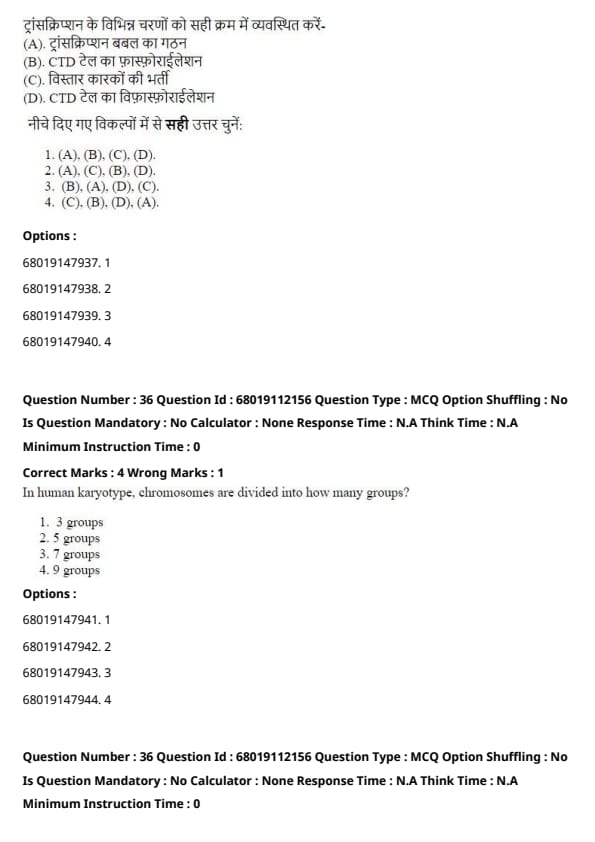
In human karyotype, chromosomes are divided into how many groups?
View Solution
Solution: In a human karyotype, chromosomes are divided into 5 groups based on their size and position of the centromere.
Quick Tip: In human karyotype, chromosomes are grouped into 5 groups: A, B, C, D, and E.
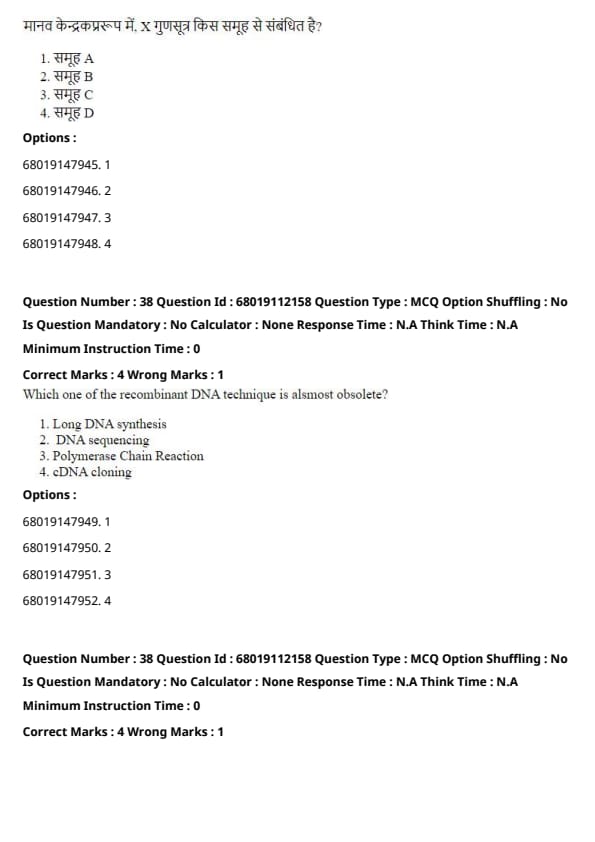
Question 38:
In human karyotype, X chromosome belongs to which group?
View Solution
Solution: The X chromosome in the human karyotype belongs to the B group, which consists of chromosomes with intermediate size.
Quick Tip: The X chromosome is in the B group, which is located in the middle of the karyotype.
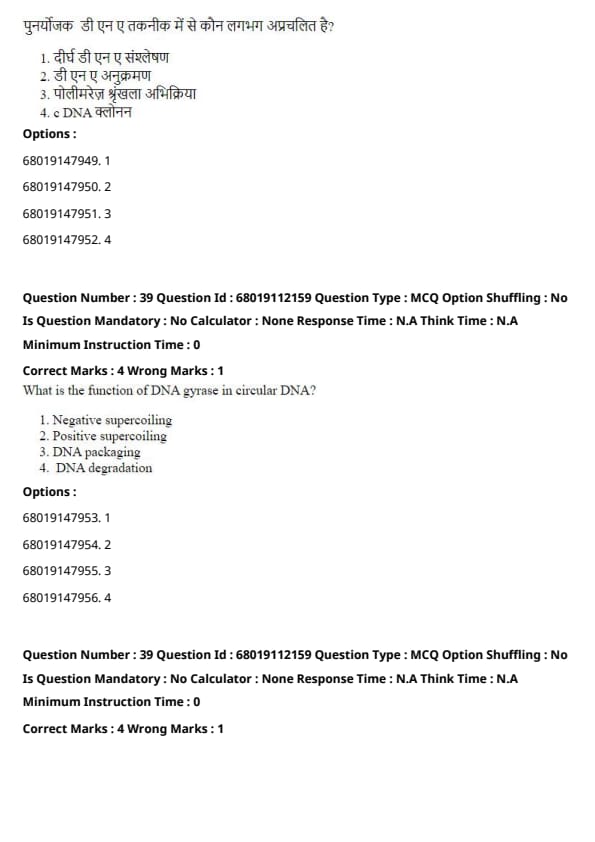
Question 39:
Which one of the recombinant DNA techniques is almost obsolete?
View Solution
Solution: cDNA cloning is becoming almost obsolete due to advancements in other techniques such as high-throughput sequencing and RNA-seq.
Quick Tip: cDNA cloning was commonly used in gene expression studies but is being replaced by more efficient technologies.
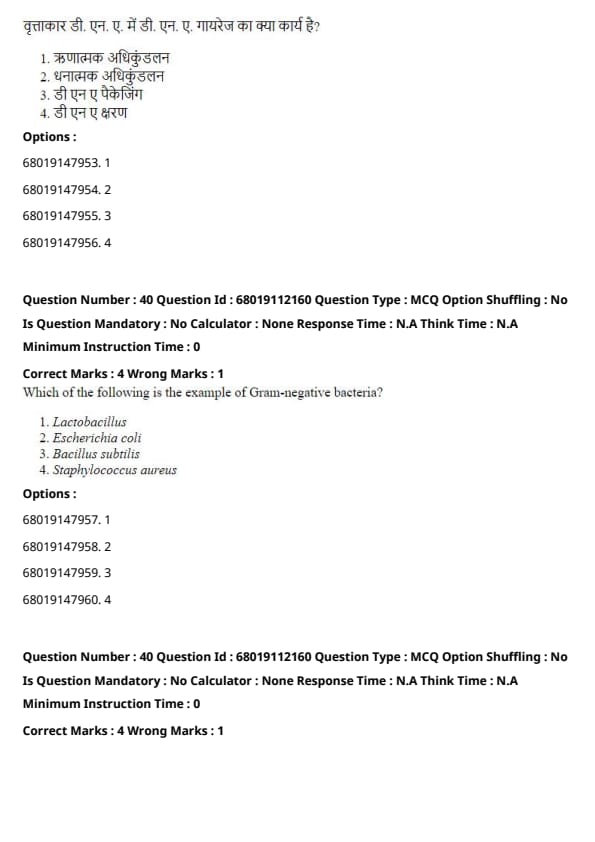
Question 40:
What is the function of DNA gyrase in circular DNA?
View Solution
Solution: DNA gyrase introduces negative supercoiling in circular DNA by inducing breaks and resealing them, which is crucial for DNA replication and transcription.
Quick Tip: DNA gyrase plays a vital role in reducing the tension in DNA by introducing negative supercoiling, making the DNA more accessible.
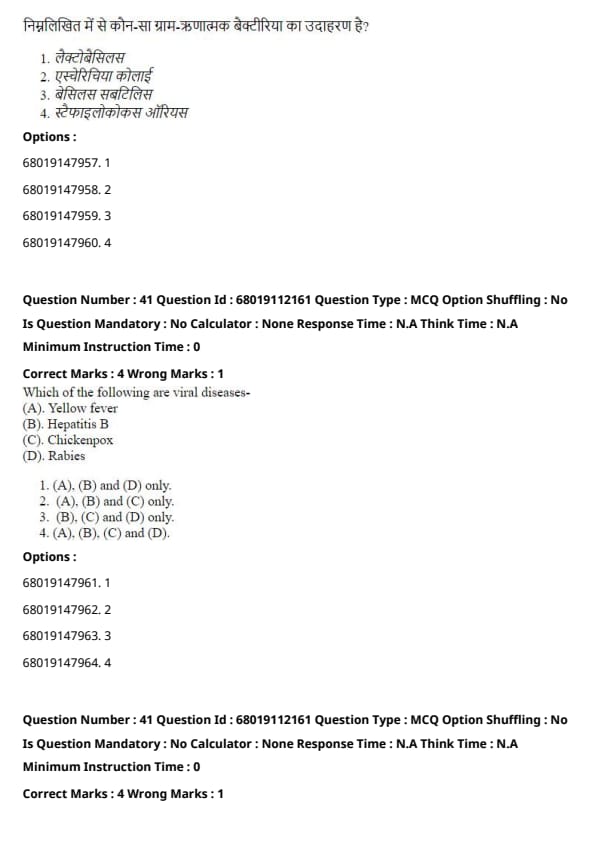
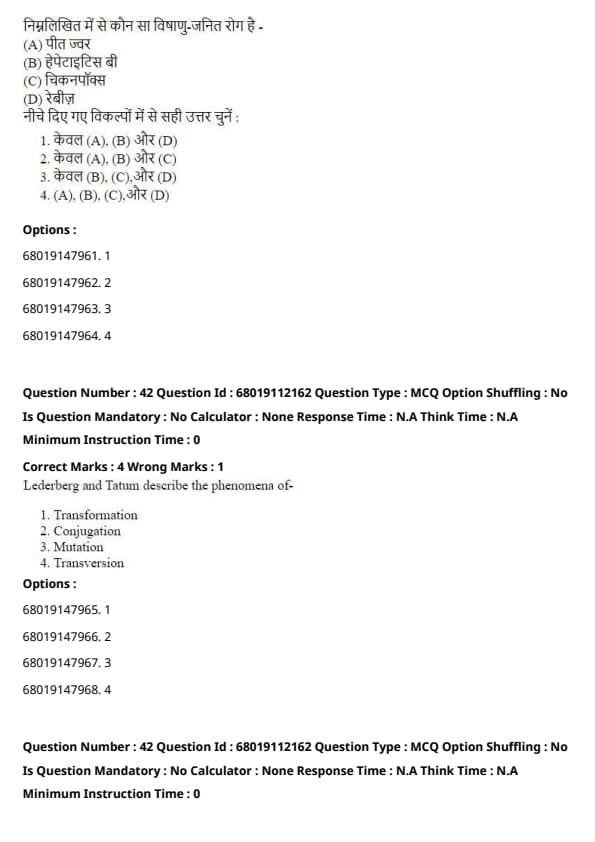
Question 41:
Which of the following are viral diseases?
Choose the correct answer from the options given below:
View Solution
Solution: Yellow fever, Hepatitis B, Chickenpox, and Rabies are all viral diseases. Yellow fever is caused by the Yellow fever virus, Hepatitis B by Hepatitis B virus, Chickenpox by Varicella-zoster virus, and Rabies by Rabies virus.
Quick Tip: Understanding the causative agents of diseases is crucial in identifying and preventing viral infections.
Question 42:
Lederberg and Tatum describe the phenomena of:
View Solution
Solution: Lederberg and Tatum are credited with discovering the phenomenon of conjugation, where genetic material is transferred between bacterial cells through direct contact, a process distinct from transformation, mutation, or transversion.
Quick Tip: Conjugation is an important mechanism of horizontal gene transfer in bacteria.
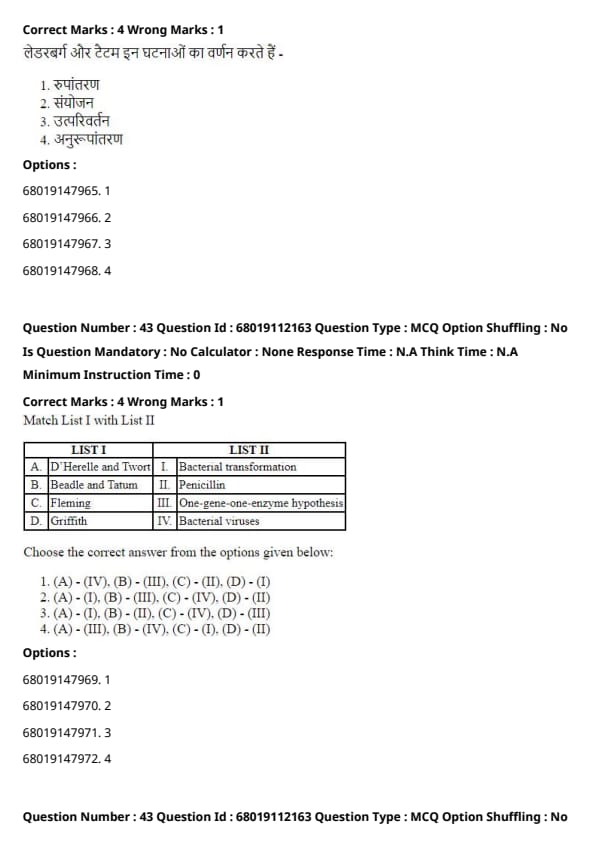
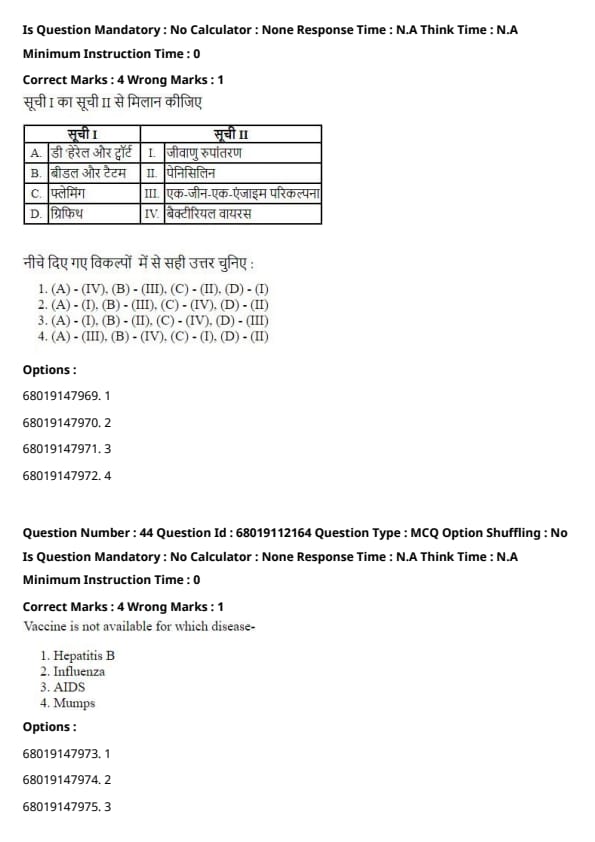
Question 43:
Match List I with List II:
| LIST I | LIST II |
|---|---|
| (A) D'Herelle and Twort | (I) Bacterial transformation |
| (B) Beadle and Tatum | (II) Penicillin |
| (C) Fleming | (III) One-gene-one-enzyme hypothesis |
| (D) Griffith | (IV) Bacterial viruses |
Choose the correct answer from the options given below:
View Solution
Solution:
• D'Herelle and Twort are credited with discovering bacteriophages, which are bacterial viruses (IV).
• Beadle and Tatum developed the one-gene-one-enzyme hypothesis (III).
• Fleming discovered penicillin (II).
• Griffith is known for his discovery of bacterial transformation (I).
Quick Tip: The one-gene-one-enzyme hypothesis was a pioneering concept in genetics, linking genes to the synthesis of enzymes.
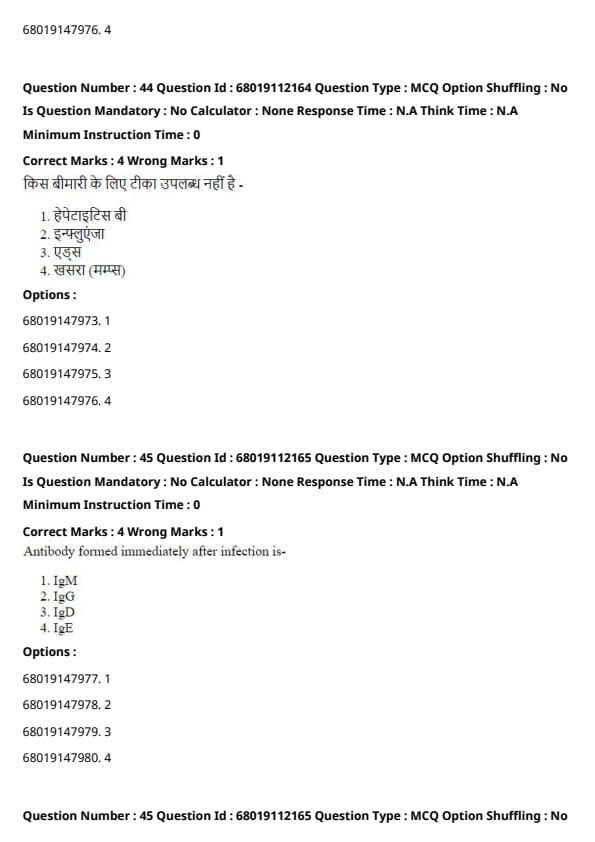
Question 44:
Vaccine is not available for which disease?
View Solution
Solution: Currently, there is no vaccine available for AIDS, which is caused by the HIV virus. Although there are vaccines for Hepatitis B, Influenza, and Mumps, none exists for AIDS.
Quick Tip: While vaccines are available for many viral infections, ongoing research aims to develop a vaccine for HIV/AIDS. Keep an eye on scientific advancements in this area.
Question 45:
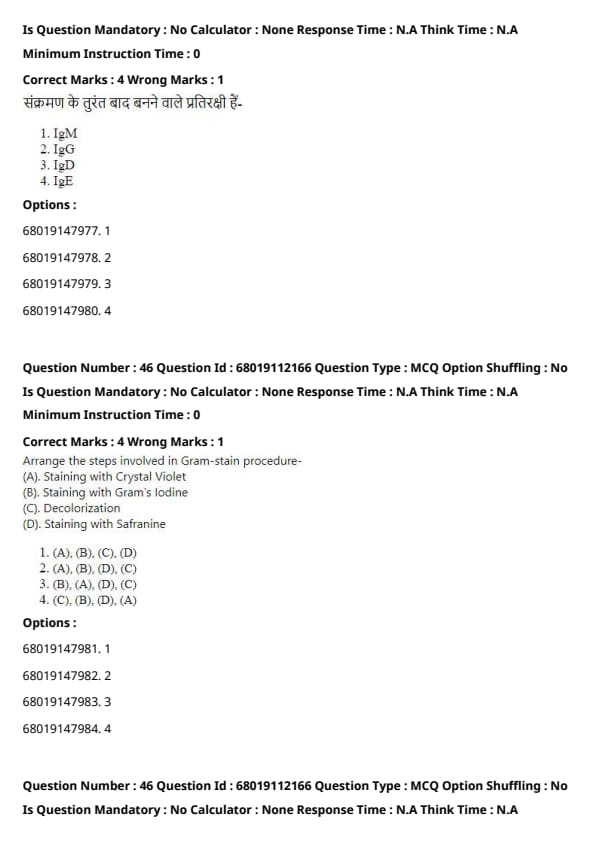
Antibody formed immediately after infection is:
View Solution
Solution: IgM antibodies are the first antibodies produced by the immune system immediately after an infection. They are the primary response to new infections before IgG is produced.
Quick Tip: IgM is the first antibody to be secreted during an immune response, while IgG appears later and provides long-term immunity.
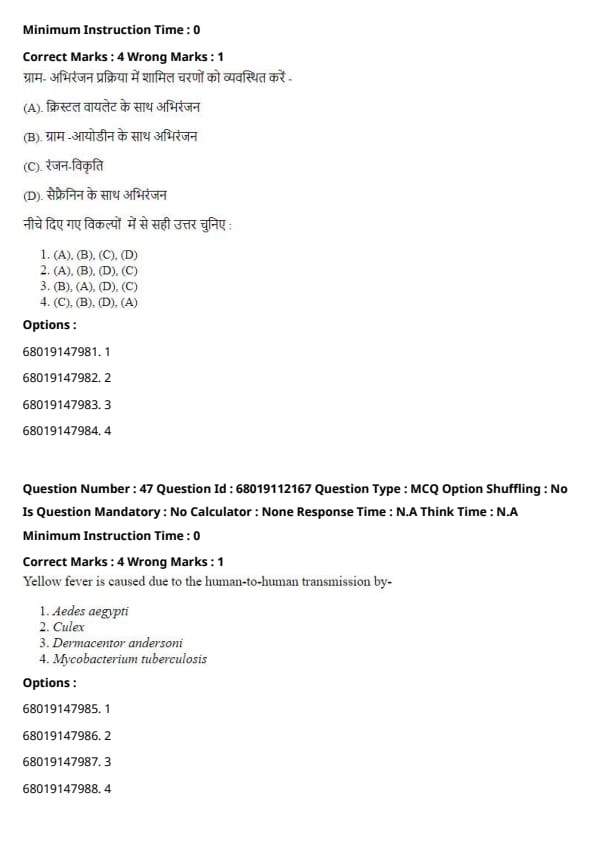
Question 46:
Arrange the steps involved in Gram-stain procedure:
View Solution
Solution: The correct order of the Gram stain procedure is as follows:
1. First, the sample is stained with Crystal Violet (A).
2. Then, Gram's iodine is applied (B) to form a complex with the dye.
3. The sample is decolorized (C) using alcohol or acetone to remove excess dye.
4. Finally, the sample is stained with Safranine (D) to counterstain the Gram-negative bacteria.
Quick Tip: Gram-staining is an essential procedure in microbiology that differentiates bacterial species based on the characteristics of their cell walls. Gram-positive bacteria retain the crystal violet stain, while Gram-negative bacteria take up the counterstain, Safranine.
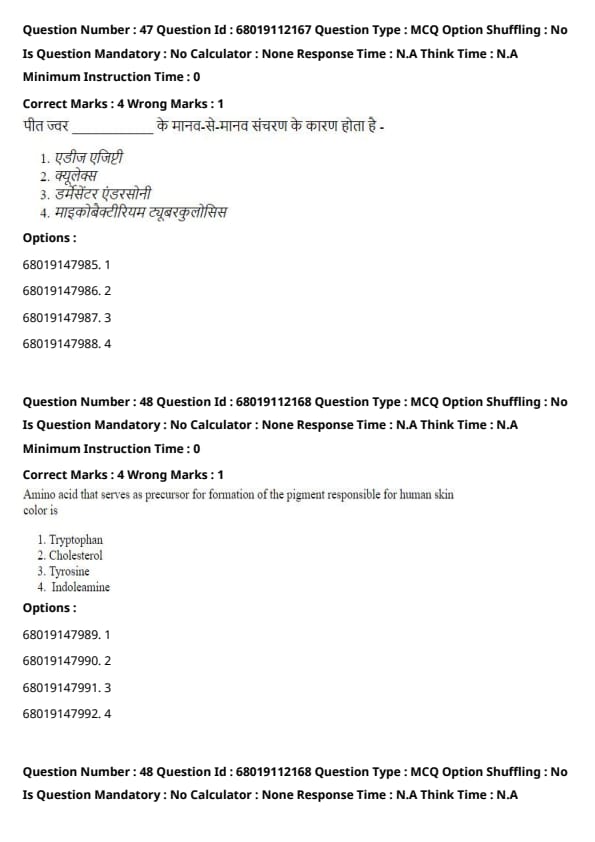
Question 47:
Yellow fever is caused due to the human-to-human transmission by:
View Solution
Solution: Yellow fever is a viral disease transmitted primarily by the Aedes aegypti mosquito. These mosquitoes become infected by biting a person who has the virus in their blood. Other options like Culex and Dermacentor andersoni do not transmit the yellow fever virus, and Mycobacterium tuberculosis is a bacterium that causes tuberculosis, not yellow fever.
Quick Tip: Yellow fever is transmitted by Aedes mosquitoes, not by bacteria or other insects.
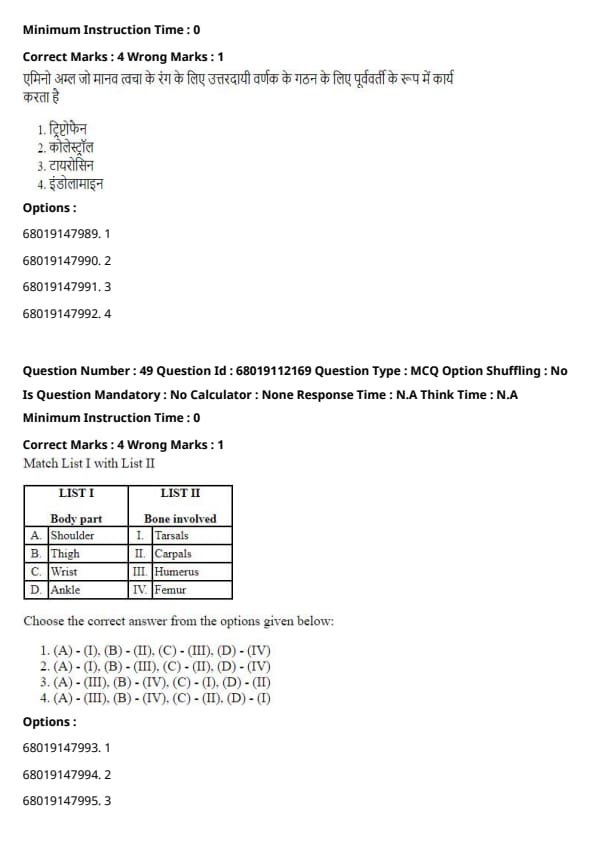
Question 48:
Amino acid that serves as precursor for formation of the pigment responsible for human skin color is:
View Solution
Solution: Tyrosine is the precursor to melanin, the pigment responsible for the color of skin, hair, and eyes in humans. Melanin is produced through a complex biosynthetic pathway, and tyrosine is converted into melanin through enzymatic reactions. Tryptophan is a precursor for serotonin, cholesterol is involved in steroid hormone synthesis, and indoleamine refers to a class of compounds, but none of them are directly involved in melanin production.
Quick Tip: Tyrosine is the primary amino acid involved in melanin production, which determines skin pigmentation.
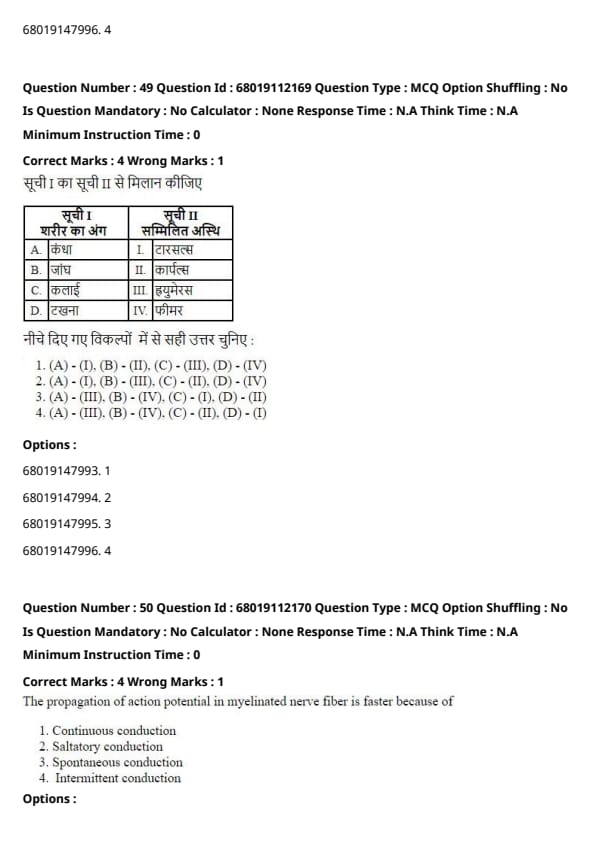
Question 49:
Match List I with List II:
| LIST I | LIST II |
|---|---|
| (A) Shoulder | (I) Tarsals |
| (B) Thigh | (II) Carpals |
| (C) Wrist | (III) Humerus |
| (D) Ankle | (IV) Femur |
Choose the correct answer from the options given below:
View Solution
Solution:
• The shoulder joint involves the humerus bone.
• The thigh involves the femur bone.
• The wrist involves the carpals bones.
• The ankle involves the tarsals bones.
Quick Tip: Bone joints and their associated bones are fundamental in human anatomy. The shoulder joint is the humerus, and the thigh is the femur.
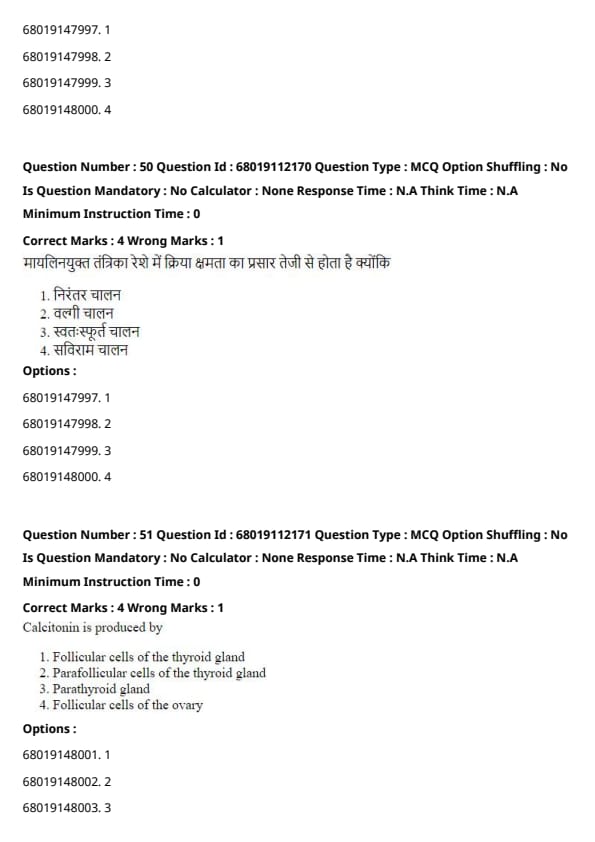
Question 50:
The propagation of action potential in a myelinated nerve fiber is faster because of:
View Solution
Solution: The propagation of action potential in myelinated nerve fibers is faster due to saltatory conduction, which occurs as the action potential jumps from node to node (Nodes of Ranvier) rather than traveling continuously along the axon. This jumping process significantly speeds up signal transmission.
Quick Tip: Saltatory conduction in myelinated axons increases the speed of nerve signal transmission by enabling faster electrical signal jumps across the axon, making communication more efficient.
Question 51:
Calcitonin is produced by:
View Solution
Solution: Calcitonin is a hormone produced by the parafollicular cells (also known as C cells) of the thyroid gland. It helps regulate calcium levels in the blood by inhibiting osteoclast activity, thereby lowering calcium concentrations.
Quick Tip: Calcitonin plays a key role in calcium homeostasis by inhibiting bone resorption and promoting calcium deposition, helping to lower blood calcium levels.
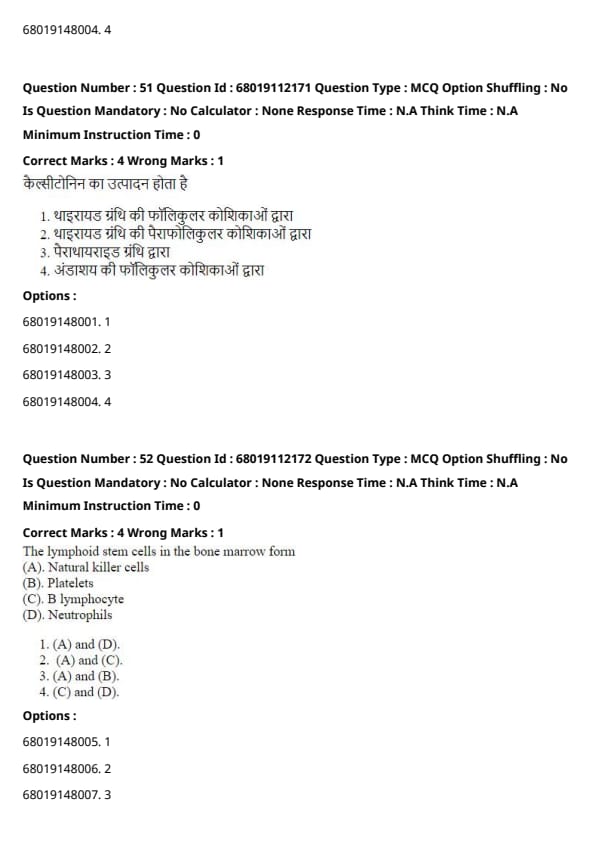
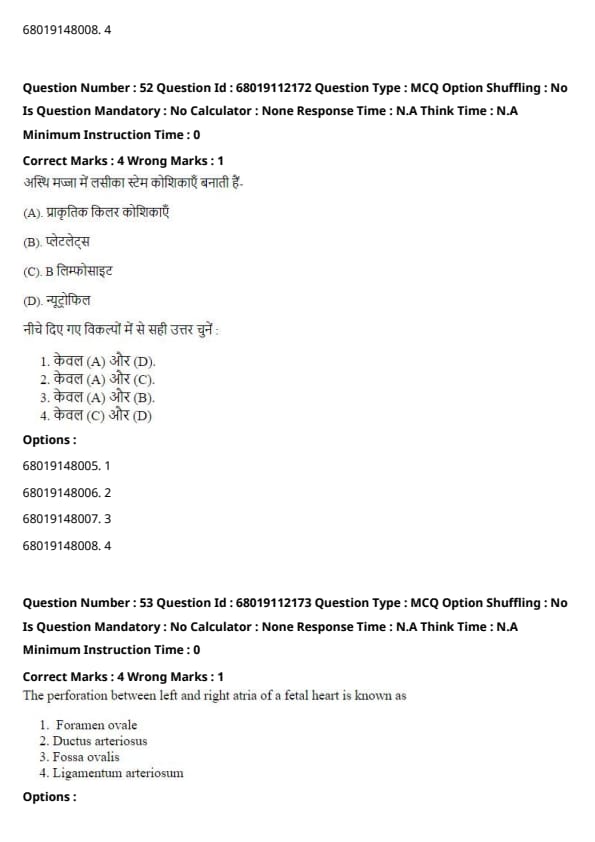
Question 52:
The lymphoid stem cells in the bone marrow form:
Choose the correct answer from the options given below:
View Solution
Solution: Lymphoid stem cells in the bone marrow primarily differentiate into immune cells such as natural killer (NK) cells and B lymphocytes. Platelets and neutrophils are formed from myeloid stem cells, not lymphoid stem cells.
Quick Tip: Lymphoid stem cells give rise to NK cells and B lymphocytes, while myeloid stem cells produce platelets and neutrophils. Understanding this differentiation is key in hematopoiesis.
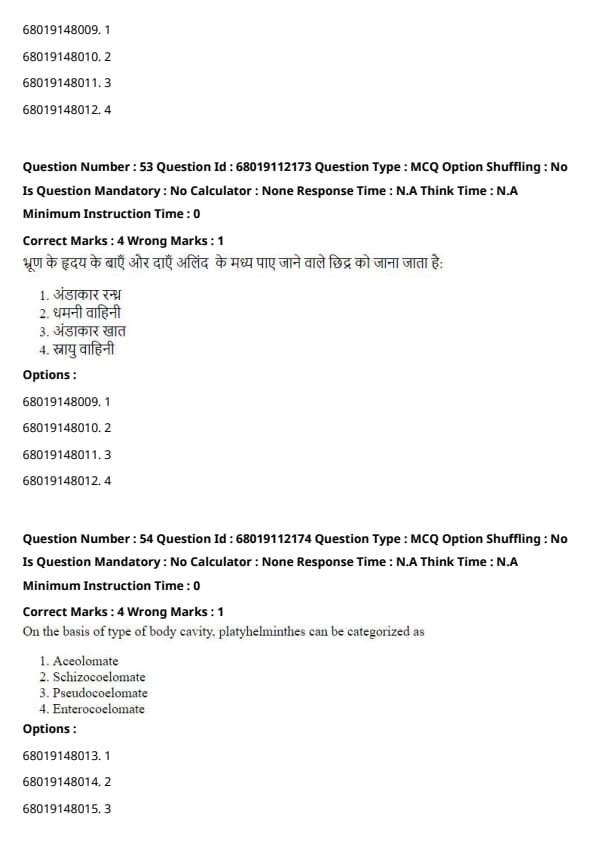
Question 53:
The perforation between left and right atria of a fetal heart is known as:
View Solution
Solution: The foramen ovale is the hole between the left and right atria of the fetal heart. It allows blood to bypass the lungs as the lungs are not yet functional during fetal circulation. After birth, the foramen ovale closes as the lungs begin to function.
Quick Tip: The foramen ovale is essential in fetal circulation and closes shortly after birth to redirect blood flow through the now-functioning lungs.
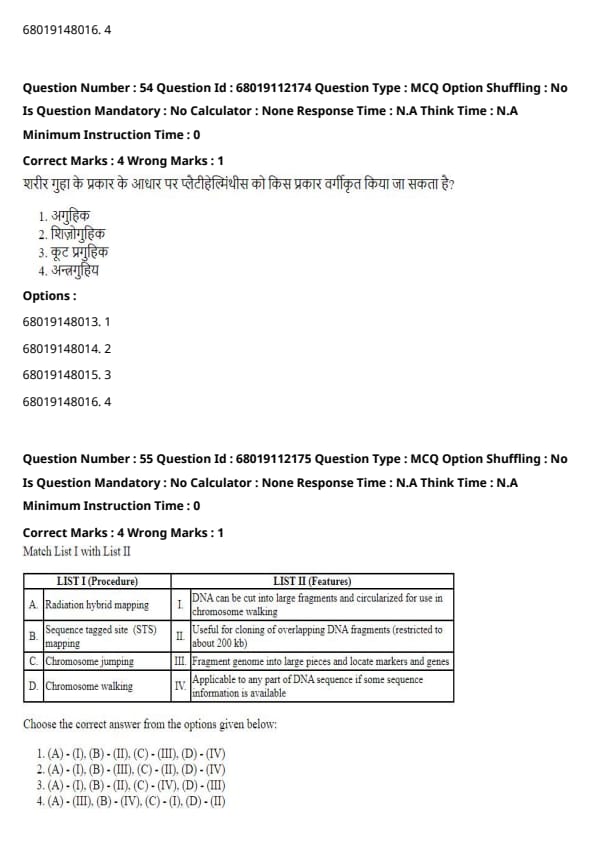
Question 54:
On the basis of type of body cavity, platyhelminthes can be categorized as:
View Solution
Solution: Platyhelminthes, or flatworms, are acoelomates. This means they do not have a true body cavity (coelom). Instead, their body is solid, except for the digestive tract and other internal structures.
Quick Tip: Acoelomates lack a body cavity, unlike pseudocoelomates (which have a false cavity) and coelomates (which have a true body cavity). Flatworms are the classic example of acoelomates.
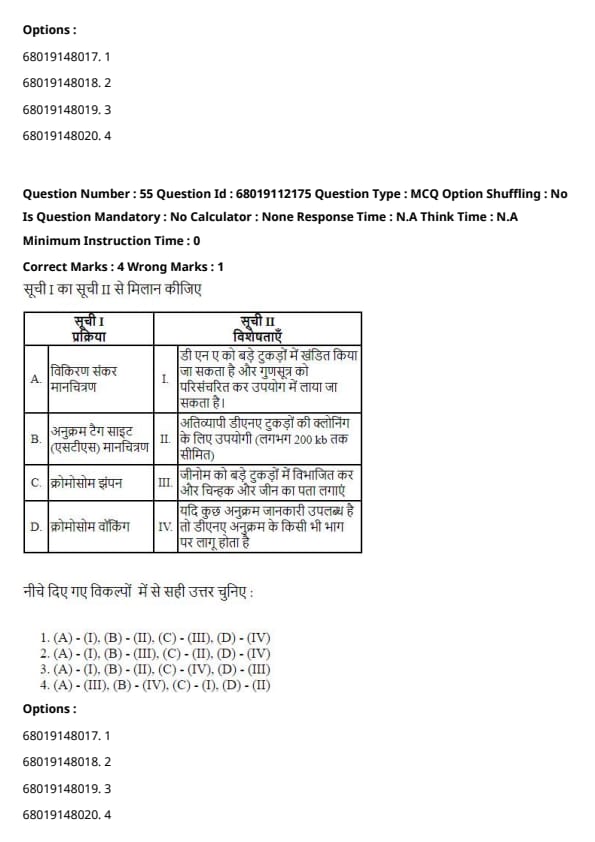
Question 55:
Match List I with List II:
| LIST I | LIST II |
|---|---|
| (A) Radiation hybrid mapping | (I) DNA can be cut into large fragments and cloned |
| (B) Sequence tagged site (STS) mapping | (II) Useful for cloning of overlapping DNA fragments |
| (C) Chromosome jumping | (III) Fragment genome into large pieces |
| (D) Chromosome walking | (IV) Applicable to any part of DNA sequence |
Choose the correct answer from the options given below:
View Solution
Solution:
• Radiation hybrid mapping (A) involves the breaking of DNA into large fragments, which are then used for chromosome walking (I).
• Sequence tagged site (STS) mapping (B) is used for cloning overlapping DNA fragments, typically up to 200 kb (II).
• Chromosome jumping (C) involves fragmenting the genome into large pieces and locating markers and genes (III).
• Chromosome walking (D) can be applied to any part of the DNA sequence if sequence information is available (IV).
Quick Tip: Chromosome walking and jumping are essential techniques in mapping genomes. Walking focuses on mapping a continuous region, while jumping allows for skipping segments.
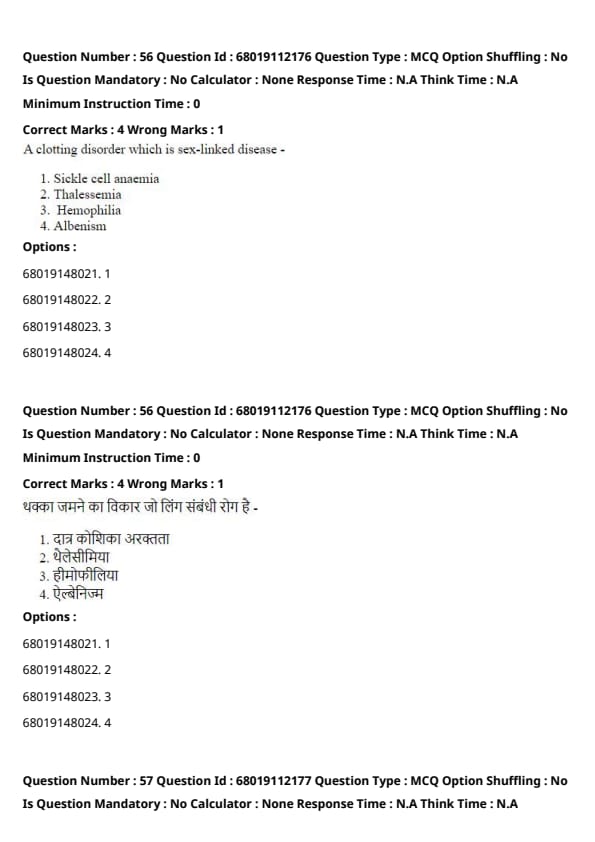
Question 56:
A clotting disorder which is a sex-linked disease:
View Solution
Solution: Hemophilia is a sex-linked recessive genetic disorder that affects blood clotting, making it difficult for blood to clot properly. It is inherited through the X chromosome.
Quick Tip: Hemophilia is a classic example of an X-linked recessive disorder.
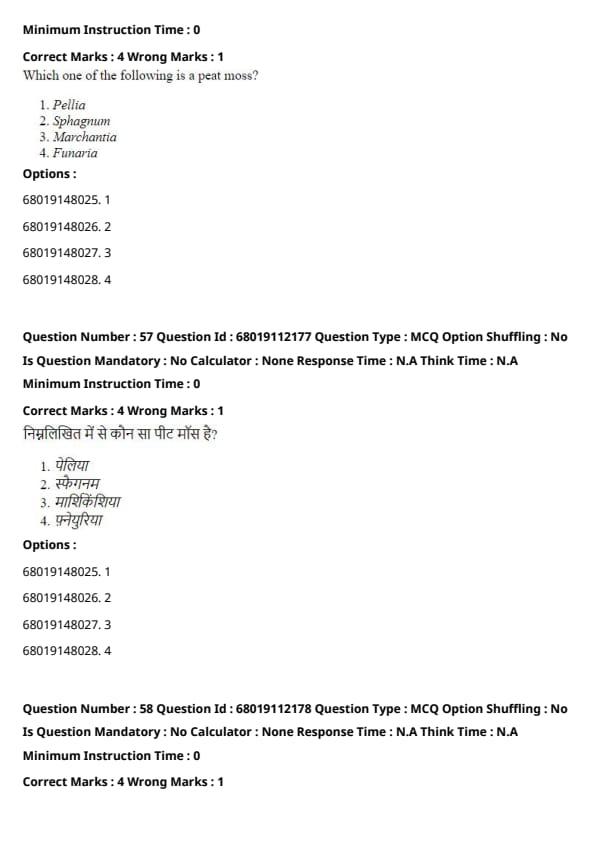
Question 57:
Which one of the following is a peat moss?
View Solution
Solution: Sphagnum, commonly known as peat moss, is a type of moss that forms peat bogs. It is essential for carbon storage in wetland ecosystems and plays a significant role in the global carbon cycle.
Quick Tip: Peat moss (Sphagnum) is often used in horticulture for its water-retaining properties.
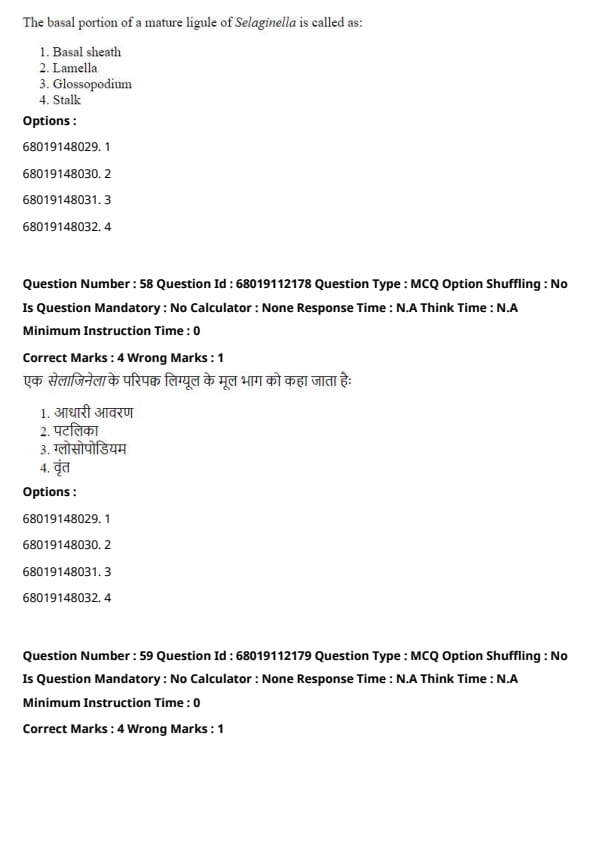
Question 58:
The basal portion of a mature ligule of Selaginella is called:
View Solution
Solution: The basal sheath in Selaginella is the basal portion of its ligule. It functions to protect and support the plant's sporophylls, contributing to its reproductive strategy.
Quick Tip: The basal sheath in Selaginella serves to protect and anchor its reproductive structures.
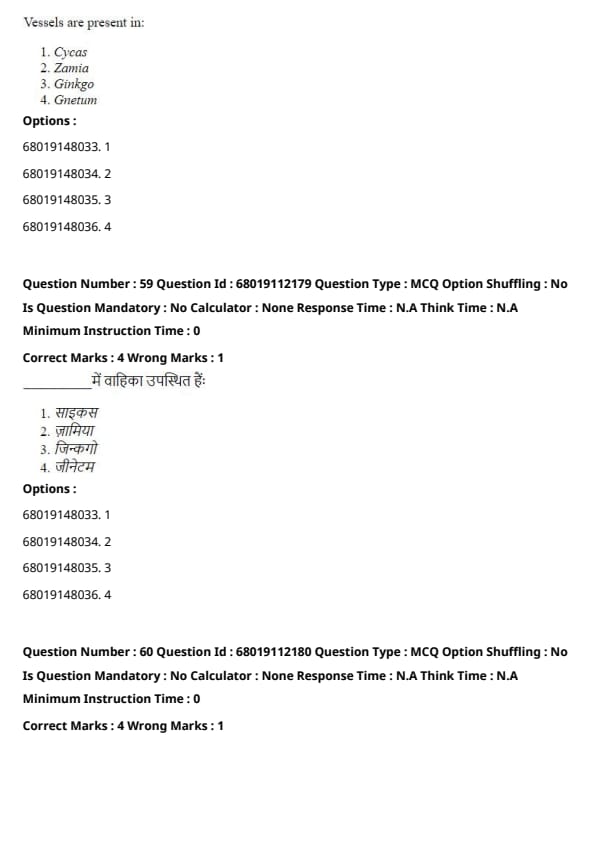
Question 59:
Vessels are present in:
View Solution
Solution: Gnetum is a gymnosperm that possesses vessels, a feature typical of angiosperms, but not found in most other gymnosperms like Cycas or Zamia.
Quick Tip: The presence of vessels is a defining characteristic of Gnetum and is considered an evolutionarily advanced trait in gymnosperms.
Question 60:
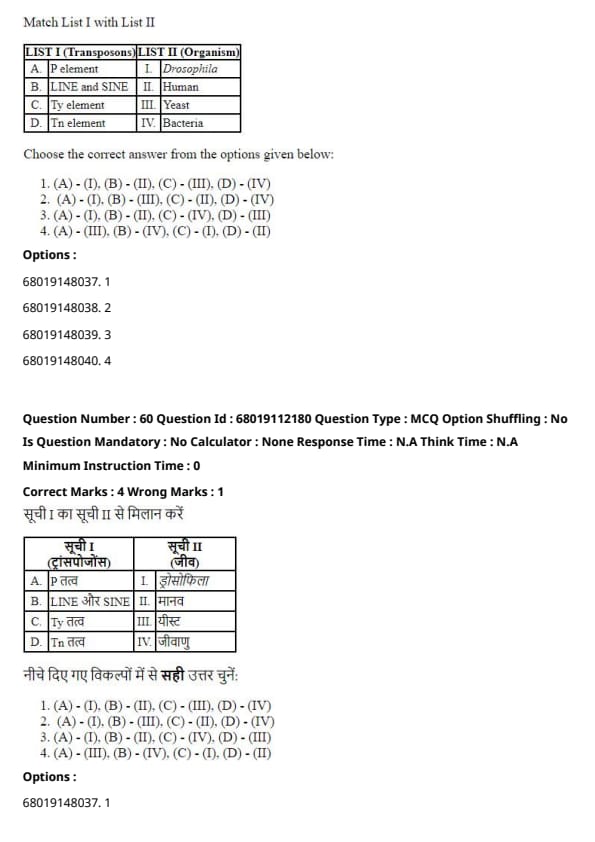
Match List I with List II:
| LIST I (Transposons) | LIST II (Organism) |
|---|---|
| (A) P element | (I) Drosophila |
| (B) LINE and SINE | (II) Human |
| (C) Ty element | (III) Yeast |
| (D) Tn element | (IV) Bacteria |
Choose the correct answer from the options given below:
View Solution
Solution:
(A) P element is a transposon found in Drosophila. Hence, (A) corresponds to (I).
(B) LINE and SINE are long and short interspersed nuclear elements commonly found in humans, making (B) match with (II).
(C) Ty element is a transposon found in yeast, so (C) corresponds to (III).
(D) Tn element is a bacterial transposon, hence (D) corresponds to (IV).
Quick Tip: In biological systems, transposons are important for studying gene mobility and genetic variations across organisms. The matching of transposons to organisms requires familiarity with which organisms harbor specific types of transposable elements.
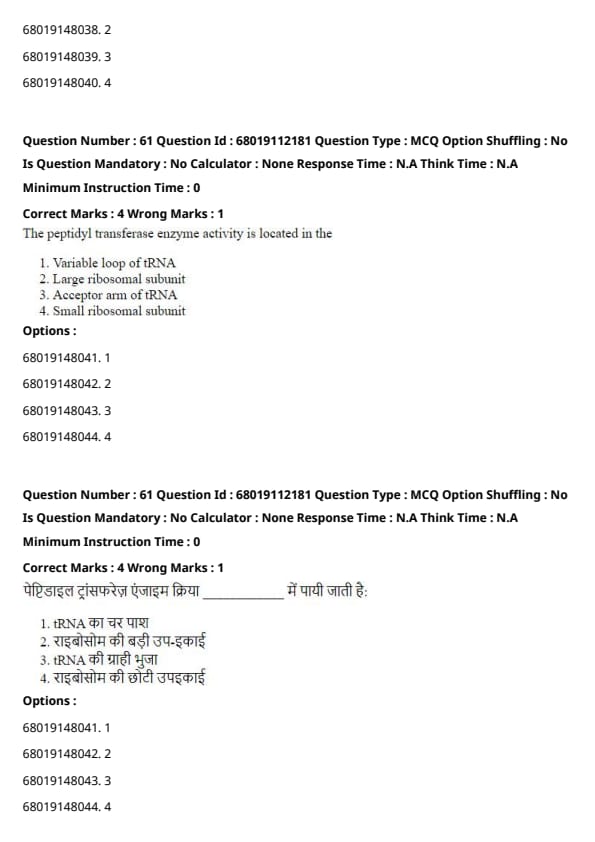
Question 61:
The peptidyl transferase enzyme activity is located in the:
View Solution
Solution: Peptidyl transferase is the enzyme that catalyzes the formation of peptide bonds during protein synthesis. This enzyme activity is located in the large ribosomal subunit, which is responsible for catalyzing the formation of peptide bonds between amino acids in the polypeptide chain. The small ribosomal subunit is responsible for mRNA binding and decoding, while the variable loop and the acceptor arm of tRNA are involved in the recognition and binding of amino acids, but not in catalysis.
Quick Tip: Remember, the peptidyl transferase activity is located in the large ribosomal subunit and is essential for protein synthesis.
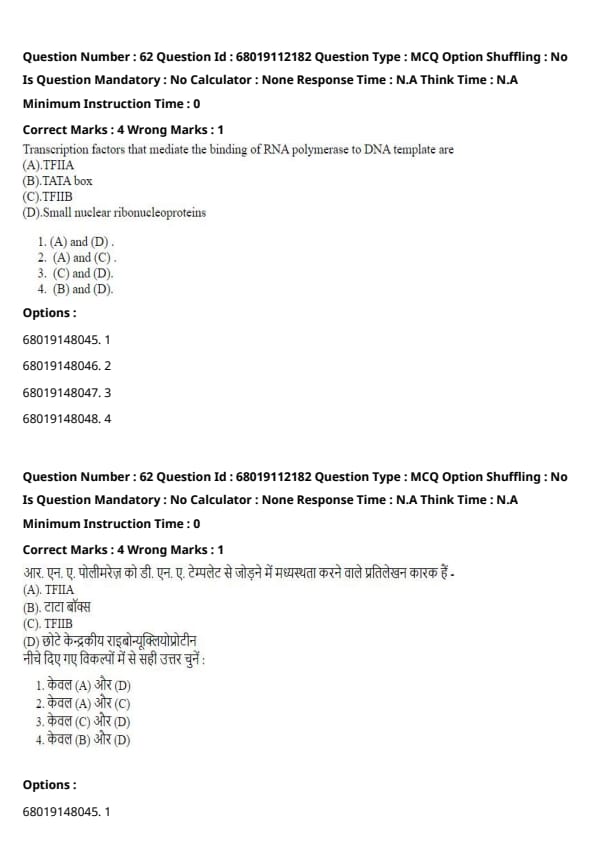
Question 62:
Transcription factors that mediate the binding of RNA polymerase to DNA template are:
Choose the correct answer from the options given below:
View Solution
Solution: The transcription factors that mediate the binding of RNA polymerase to the DNA template include TFIIA and small nuclear ribonucleoproteins (snRNPs). TFIIA is a general transcription factor that helps RNA polymerase II bind to the promoter region of DNA. Small nuclear ribonucleoproteins are involved in the splicing of pre-mRNA and can also play a role in facilitating the binding of RNA polymerase. The TATA box and TFIIB are important for transcription initiation but do not directly mediate the binding of RNA polymerase to the DNA template.
Quick Tip: TFIIA and small nuclear ribonucleoproteins help in the binding of RNA polymerase to DNA during transcription initiation.
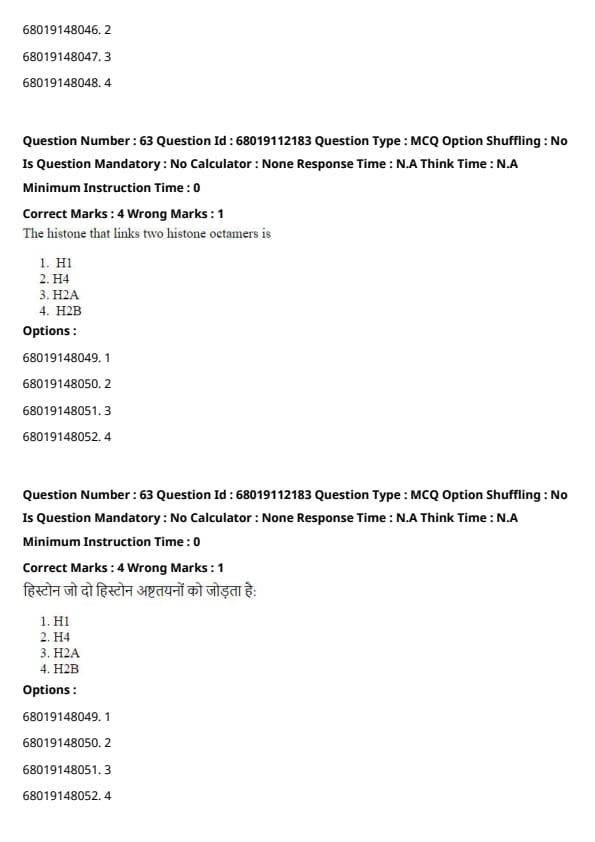
Question 63:
The histone that links two histone octamers is:
View Solution
Solution: Histone H1 is known as the linker histone because it helps link the two nucleosome units together by binding to the DNA between them, stabilizing the nucleosome structure. It plays an important role in the higher-order packaging of the chromatin.
Quick Tip: Histone H1 is not part of the octamer core but acts to stabilize DNA wrapping.
Question 64:
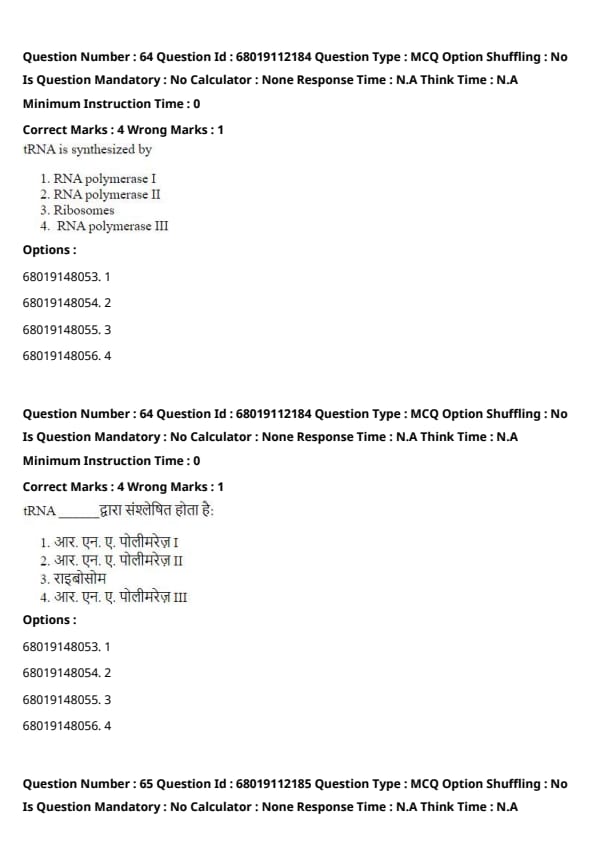
tRNA is synthesized by:
View Solution
Solution: tRNA is synthesized by RNA polymerase III, which is responsible for transcribing small RNA molecules like tRNAs and 5S rRNA. RNA polymerase I synthesizes rRNA, and RNA polymerase II synthesizes mRNA.
Quick Tip: The different RNA polymerases transcribe different types of RNA in eukaryotes.
Question 65:
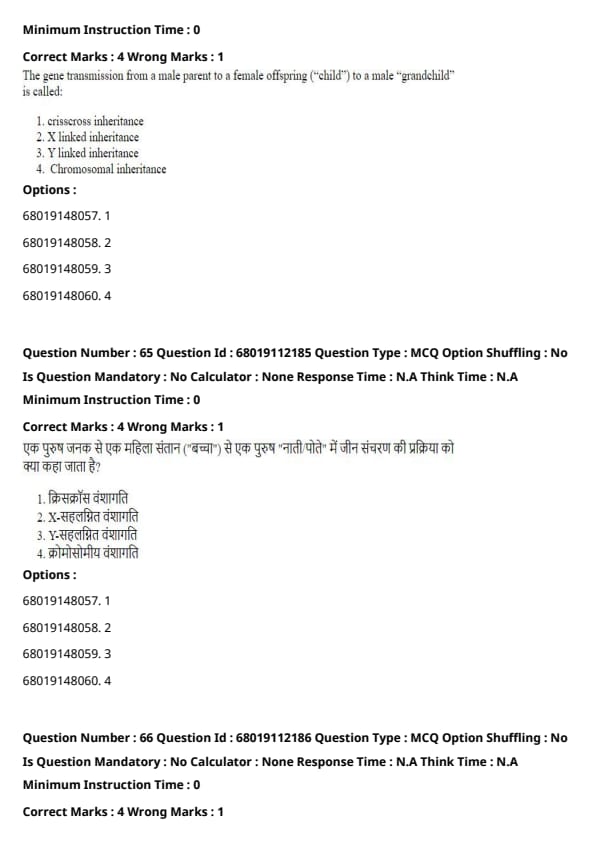
The gene transmission from a male parent to a female offspring ("child") to a male "grandchild" is called:
View Solution
Solution: Crisscross inheritance refers to the transmission of a gene from a father to his daughter and then from the daughter to her son. This is typically seen in X-linked genes where the gene is passed down in a pattern where male offspring inherit the gene from their mother and female offspring inherit it from their father.
Quick Tip: Crisscross inheritance is characteristic of X-linked recessive traits.
Question 66:
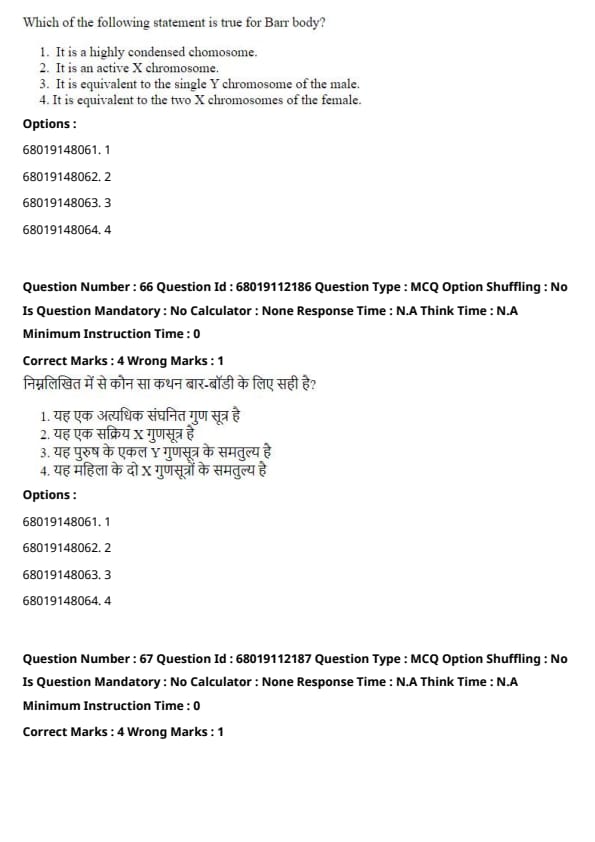
Which of the following statements is true for Barr body?
View Solution
Solution: The Barr body is a highly condensed, inactive X chromosome found in female cells. It is a mechanism for dosage compensation in females, ensuring that both X chromosomes are not active simultaneously. Only one of the X chromosomes in females is active, and the other is condensed into a Barr body.
Quick Tip: Barr bodies are found only in females with more than one X chromosome.
Question 67:
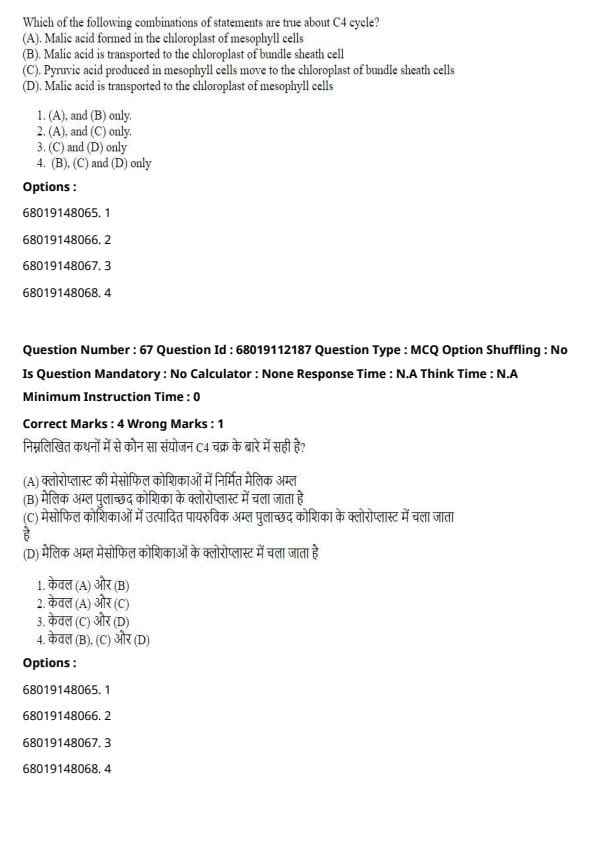
Which of the following combinations of statements are true about the C4 cycle?
Choose the correct answer from the options given below:
View Solution
Solution: In the C4 cycle, malic acid is formed in mesophyll cells and is transported to the bundle sheath cells. In the bundle sheath cells, the malic acid is decarboxylated to release CO2 for the Calvin cycle. Pyruvic acid is also produced in mesophyll cells and moves to the bundle sheath cells to regenerate the phosphoenolpyruvate used in the initial fixation step. Finally, malic acid is not transported back to the mesophyll chloroplast; it is carried to the bundle sheath cells for decarboxylation.
Quick Tip: The C4 pathway is a strategy used by plants to increase the efficiency of carbon fixation under conditions of high light and temperature.
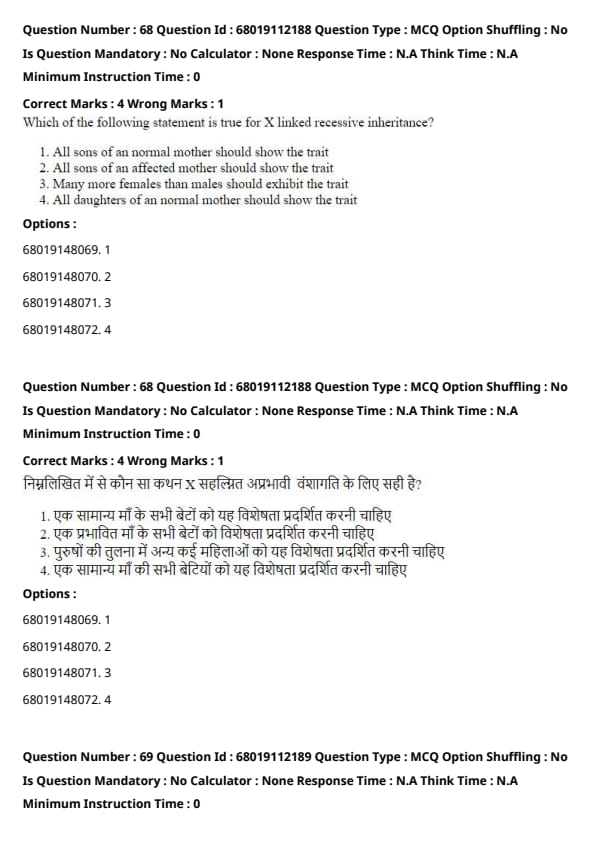
Question 68:
Which of the following statements is true for X-linked recessive inheritance?
View Solution
Solution: In X-linked recessive inheritance, an affected mother will pass the affected X chromosome to all of her sons, resulting in all sons showing the trait. Sons inherit only one X chromosome from their mother, and males are hemizygous for the X chromosome. Therefore, they will express the trait if they inherit the X chromosome carrying the defective gene.
Quick Tip: For X-linked recessive traits, males are more likely to be affected than females because males only have one X chromosome, whereas females need two copies of the defective gene to express the trait.
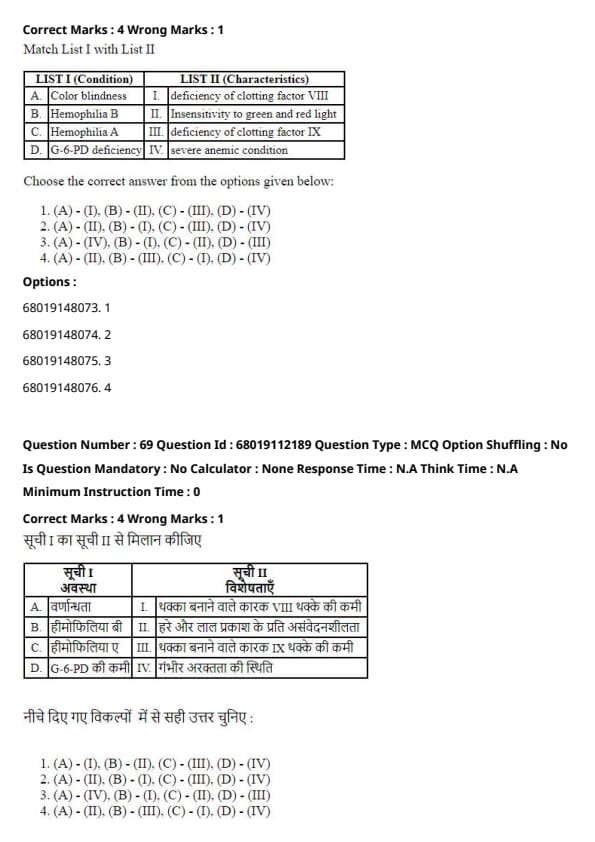
Question 69:
Match List I with List II:
| LIST I (Condition) | LIST II (Characteristics) |
|---|---|
| (A) Color blindness | (I) deficiency of clotting factor VIII |
| (B) Hemophilia B | (II) Insensitivity to green and red light |
| (C) Hemophilia A | (III) deficiency of clotting factor IX |
| (D) G-6-PD deficiency | (IV) severe anemic condition |
Choose the correct answer from the options given below:
View Solution
Solution:
• Color blindness is associated with insensitivity to green and red light.
• Hemophilia B is caused by a deficiency of clotting factor IX.
• Hemophilia A is caused by a deficiency of clotting factor VIII.
• G-6-PD deficiency causes a severe anemic condition.
Quick Tip: In X-linked conditions like color blindness, the gene causing the condition is located on the X chromosome. Males are more commonly affected because they have only one X chromosome.
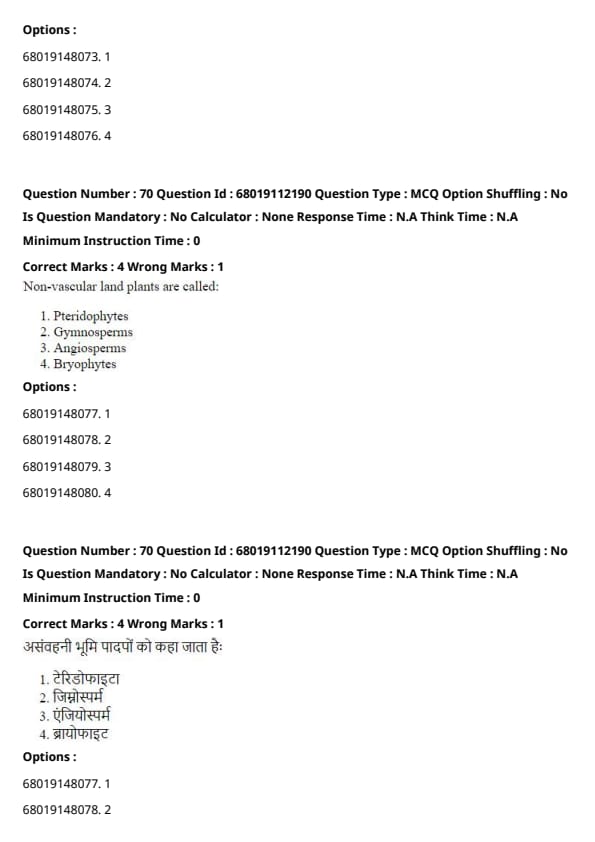
Question 70:
Non-vascular land plants are called:
View Solution
Solution: Bryophytes are non-vascular land plants that lack specialized tissues for water and nutrient conduction. They include mosses, liverworts, and hornworts. These plants thrive in moist environments due to their lack of vascular tissues.
Quick Tip: Bryophytes are the simplest land plants and are typically small due to their lack of vascular systems.
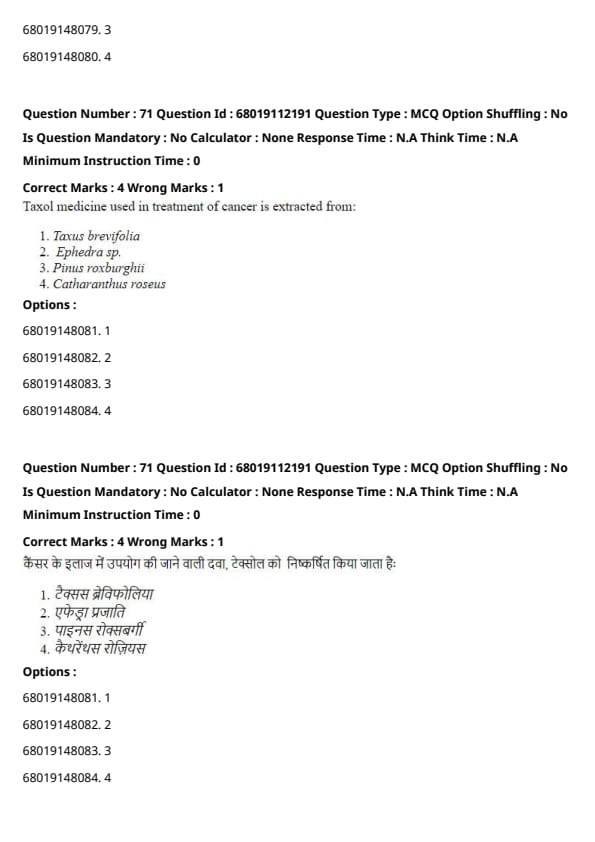
Question 71:
Taxol medicine used in treatment of cancer is extracted from:
View Solution
Solution: Taxol is a chemotherapy drug used in the treatment of cancer, particularly breast and ovarian cancers. It is derived from the bark of the Pacific yew tree, Taxus brevifolia. This plant contains paclitaxel, which is the active component in Taxol.
Quick Tip: Taxol works by inhibiting cell division, making it effective against rapidly dividing cancer cells.
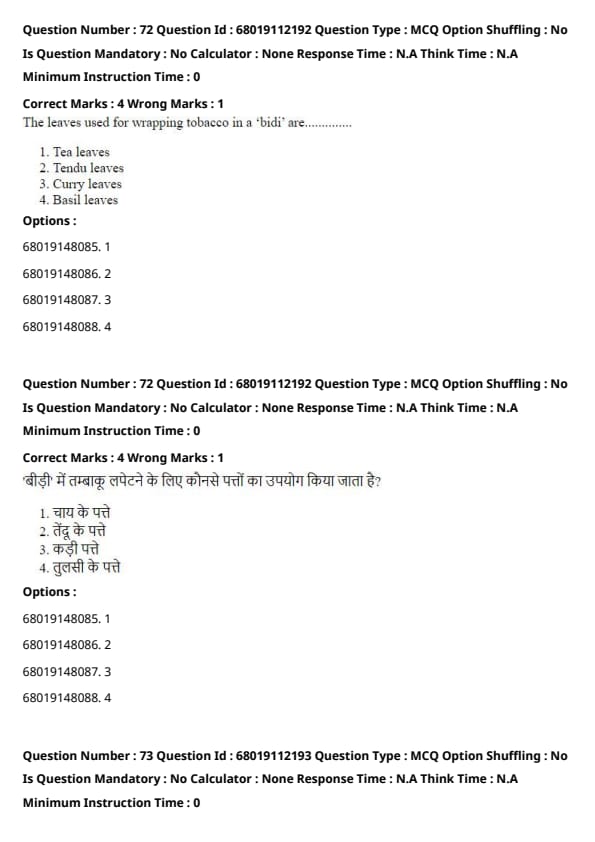
Question 72:
The leaves used for wrapping tobacco in a 'bidi' are:
View Solution
Solution: Tendu leaves, derived from the Diospyros melanoxylon plant (also known as Diospyros lotus), are commonly used for wrapping tobacco in bidis. These leaves are chosen because of their texture and flexibility, making them ideal for creating the characteristic bidi.
Quick Tip: Tendu leaves are also used in traditional medicine in some cultures and play an important role in local economies.
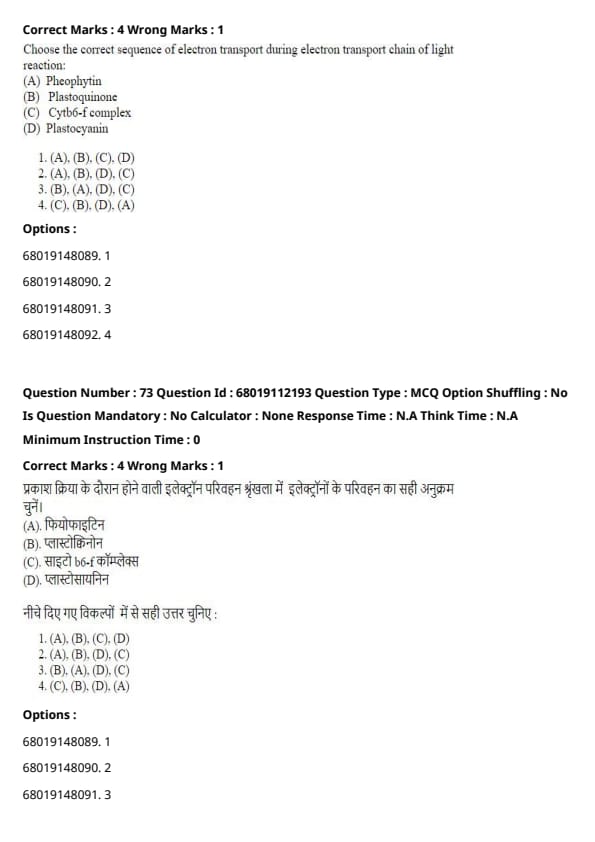
Question 73:
Choose the correct sequence of electron transport during the electron transport chain of light reaction:
Choose the correct answer from the options given below:
View Solution
Solution: In the light reaction of photosynthesis, the electron transport chain begins with Pheophytin, which is the first electron acceptor. The electrons are then transferred to Plastoquinone, followed by Cytb6-f complex, and finally to Plastocyanin, completing the chain of electron transport. This sequence is vital for the formation of NADPH and ATP during photosynthesis.
Quick Tip: Know the sequence in the electron transport chain during the light reaction to understand the flow of electrons for the production of ATP and NADPH.
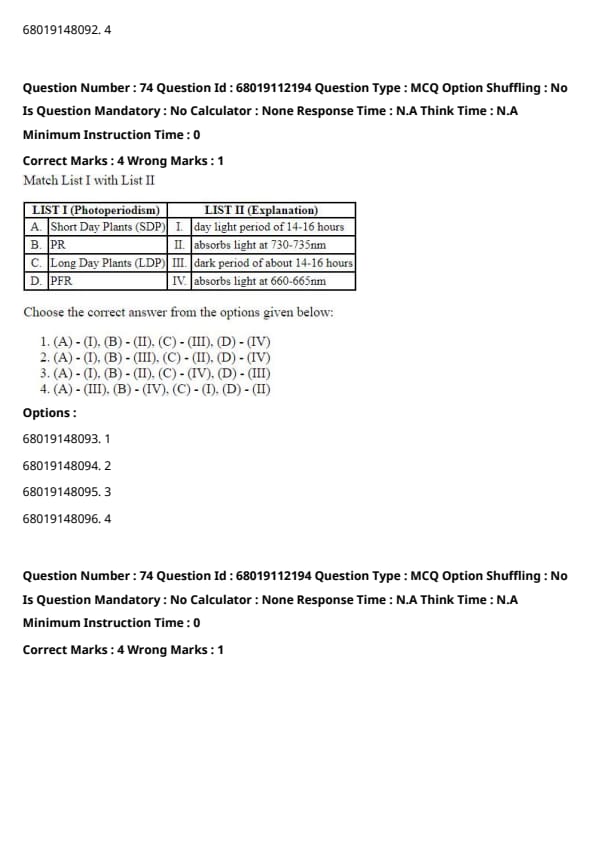
Question 74:
Match List I with List II:
| LIST I (Photoperiodism) | LIST II (Explanation) |
|---|---|
| (A) Short Day Plants (SDP) | (I) day light period of 14-16 hours |
| (B) PR | (II) absorbs light at 730-735nm |
| (C) Long Day Plants (LDP) | (III) dark period of about 14-16 hours |
| (D) PFR | (IV) absorbs light at 660-665nm |
Choose the correct answer from the options given below:
View Solution
Solution:
• Short Day Plants (SDP) typically require a dark period of about 14-16 hours (III).
• PR (phytochrome red) absorbs light in the range of 730-735nm (II).
• Long Day Plants (LDP) require a shorter dark period and a longer light period (I).
• PFR (phytochrome far-red) absorbs light at 660-665nm (IV).
Quick Tip: Phytochromes (PR and PFR) play a significant role in regulating photoperiodism in plants. PR absorbs light in the red spectrum, and PFR absorbs light in the far-red spectrum.
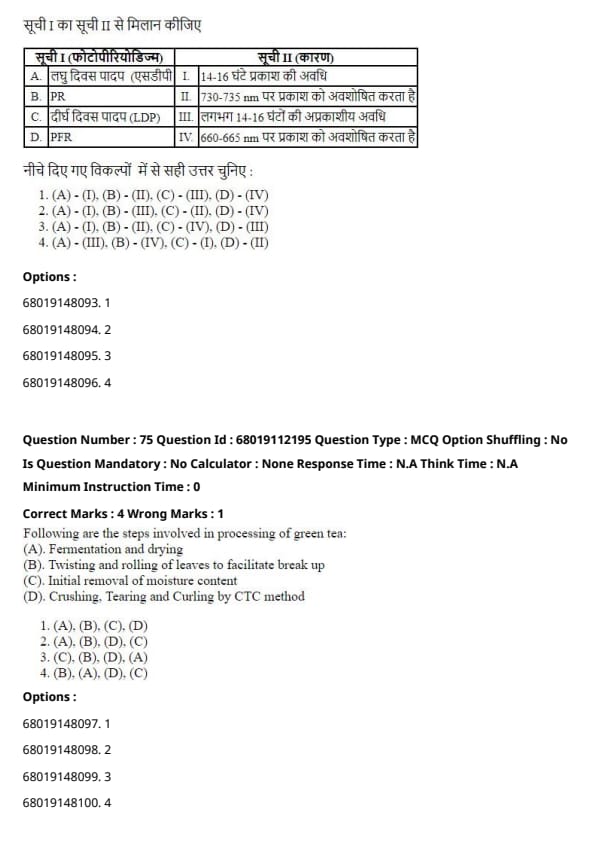
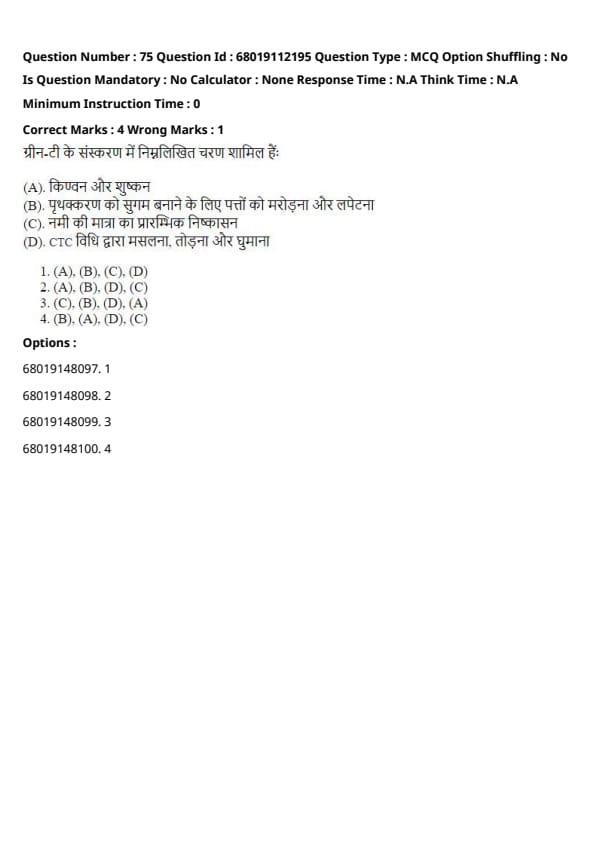
Question 75:
Following are the steps involved in processing of green tea:
Choose the correct answer from the options given below:
View Solution
Solution: In the processing of green tea, the first step involves the initial removal of moisture content (C). Then, the leaves are twisted and rolled (B) to facilitate break-up. After that, the leaves go through the CTC (Crushing, Tearing, and Curling) method (D), followed by fermentation and drying (A) to preserve the flavor and quality of the tea.
Quick Tip: The CTC method plays an important role in determining the texture and flavor of processed green tea.
*The article might have information for the previous academic years, please refer the official website of the exam.