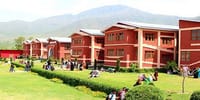
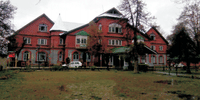
Sher-e-Kashmir University of Agricultural Sciences and Technology of Kashmir (SKUAST-K) is a state agricultural university that the Government of Jammu and Kashmir established in 1982. It is recognised by the University Grants Commission (UGC), affiliated with the Indian Council of Agricultural Research (ICAR), and organised on the land-grant model followed by State Agricultural Universities.
In the NIRF Agriculture and Allied Sectors 2025 rankings, SKUAST-K holds the 7th position among 78 agricultural universities in India. It is also placed 3rd among 74 State Agricultural Universities.
The university teaches more than 12,000 students through a multi-campus system in the Kashmir Valley. Its main campus at Shalimar, Srinagar, covers 560 acres (227 hectares), while other constituent campuses operate at Sopore, Shuhama in Ganderbal, Rangil in Ganderbal, Benhama in Ganderbal, and Mirgund in Baramulla. These locations together house 7 faculties and colleges.
- The 4-year B.Sc Hons Agriculture is taught at the Faculty of Agriculture, Wadura, Sopore, with disciplines such as Agronomy, Soil Science, Plant Breeding, and Agricultural Economics.
- The Faculty of Horticulture at Shalimar offers the 4-year B.Sc Hons Horticulture.
- Students can study the 4-year B.Sc Hons Forestry at the Faculty of Forestry, Benhama.
- The College of Temperate Sericulture at Mirgund conducts the 4-year B.Sc Hons Sericulture.
- The Faculty of Fisheries at Rangil offers the 4-year Bachelor of Fisheries Science (BFSc).
- The Faculty of Veterinary Sciences and Animal Husbandry at Shuhama conducts the 5-year Bachelor of Veterinary Science and Animal Husbandry (BVSc and AH).
- The College of Agricultural Engineering and Technology at Shalimar offers 4-year B.Tech programmes in Agricultural Engineering, Biotechnology, Dairy Technology, Food Technology, and Artificial Intelligence.
- Three-year B.Sc programmes are available in Biochemistry and Microbiology.
- Postgraduate options include M.Sc courses in more than 50 agricultural disciplines, along with MFSc, MVSc, M.Tech, and ME.
- Doctoral study includes PhD programmes in 55 disciplines covering agriculture, veterinary science, forestry, and fisheries.
General-category students pay a total of INR 1.74 Lakhs for the complete 4-year B.Sc Hons Agriculture, Horticulture, Forestry, Sericulture, BFSc, and most B.Tech programmes. The total BVSc and AH fee is INR 2.09 Lakhs for five years. Complete 2-year M.Sc and MFSc programme fees range from INR 54,500 to INR 71,400.
Graduates work in government agricultural departments, ICAR research institutes, Krishi Vigyan Kendras (KVKs), agribusiness companies, and veterinary services. Each faculty has a Career Counselling and Placement Cell (CCPC) that helps students connect with government organisations and industry employers.
SKUAST-K Courses and Fees
Academic options at SKUAST-K include more than 14 undergraduate programmes, 65 postgraduate disciplines, and 55 doctoral disciplines. The subjects cover agriculture, horticulture, veterinary science, forestry, fisheries, and agricultural engineering. For most general-category undergraduate courses lasting four years, the complete fee is INR 1.74 Lakhs.
| Course | Duration | Eligibility | Total Fees (General Category) |
|---|---|---|---|
| B.Sc Hons Agriculture | 4 years | 10+2 with PCB/PCM and 50% aggregate, or 40% for reserved categories | INR 1.74 Lakhs |
| B.Sc Hons Horticulture | 4 years | 10+2 with PCB/PCM and 50% aggregate | INR 1.74 Lakhs |
| B.Sc Hons Forestry | 4 years | 10+2 with PCB/PCM and 50% aggregate | INR 1.74 Lakhs |
| B.Sc Hons Sericulture | 4 years | 10+2 with PCB/PCM and 50% aggregate | INR 1.74 Lakhs |
| Bachelor of Fisheries Science (BFSc) | 4 years | 10+2 with PCB/PCM and 50% aggregate | INR 1.74 Lakhs |
| BVSc and AH | 5 years | 10+2 with PCB and 50% aggregate, along with a valid NEET UG score | INR 2.09 Lakhs |
| B.Tech in Agricultural Engineering, Biotechnology, Dairy Technology, or Food Technology | 4 years | 10+2 with PCM and 50% aggregate | INR 1.74 Lakhs |
| B.Sc in Biochemistry or Microbiology | 3 years | 10+2 with PCB and 50% aggregate | INR 1.36 Lakhs |
| M.Sc in Agriculture and allied disciplines | 2 years | A relevant undergraduate degree with at least 60% aggregate | INR 54,500 to INR 71,400 |
| MFSc, MVSc, M.Tech, or ME | 2 years | A relevant undergraduate degree in the respective discipline | INR 54,500 to INR 71,400 |
| PhD in all disciplines | 3 to 5 years | A relevant postgraduate degree and a valid ICAR JRF or SKUAST-K entrance result | Nominal per semester |
Subject to revision. Kindly check with the official sources to confirm
B.Tech in Artificial Intelligence is a recent addition and follows a separate fee structure. SKUAST-K also teaches specialised programmes in temperate horticulture and temperate sericulture. These fields are closely linked to the Kashmir agro-climatic zone and are not commonly offered by other agricultural universities in India.
SKUAST-K Admission Process
Admission routes depend on the programme and seat quota. Undergraduate seats are divided between the 15% All India Quota and the 85% J&K domicile quota. ICAR manages counselling for the national quota, while SKUAST-K UET or CUET scores are used for the state quota. Veterinary admission requires NEET UG, and postgraduate and doctoral applicants use the entrance route applicable to their quota.
| Programme | Quota | Entrance Exam |
|---|---|---|
| B.Sc Hons Agriculture, Horticulture, Forestry, Sericulture, BFSc, and B.Tech in Agricultural Engineering, Biotechnology, Dairy Technology, or Food Technology | 15% AIQ | ICAR AIEEA UG |
| B.Sc Hons Agriculture, Horticulture, Forestry, BFSc, and B.Tech | 85% State Quota for J&K domicile candidates | SKUAST-K UET or CUET |
| BVSc and AH | AIQ and State Quota | NEET UG followed by VCI counselling |
| M.Sc, MFSc, MVSc, M.Tech, and ME | AIQ and State Quota | ICAR AIEEA PG |
| PhD | AIQ and State Quota | ICAR JRF or SKUAST-K Entrance Test |
UG Programmes: B.Sc Hons, BFSc, and B.Tech
For undergraduate admission, ICAR fills 15% of the seats through the AIEEA All India Quota. The other 85% are meant for J&K domicile applicants and are allotted using SKUAST-K UET or CUET performance.
- Applicants need 10+2 with Physics, Chemistry, and Biology or Mathematics, with at least 50% aggregate marks. The requirement is 40% for SC, ST, and OBC candidates.
- Stage 1: Take ICAR AIEEA UG for an All India Quota seat, or SKUAST-K UET or CUET for a state-quota seat.
- Stage 2: Complete online counselling registration through the SKUAST-K portal.
- Stage 3: Enter faculty and programme choices in order of preference.
- Stage 4: Receive provisional allotment according to merit rank and submitted choices.
- Stage 5: Verify the required documents and pay the fee to confirm admission.
For J&K General Category applicants, closing ranks for state-quota B.Sc Hons Agriculture and Horticulture seats vary with domicile status and CUET scores. NRI-sponsored seats are offered under a higher fee structure.
BVSc and AH
The Veterinary Council of India (VCI) governs admission to the BVSc and AH programme at the Faculty of Veterinary Sciences and Animal Husbandry, Shuhama. A valid NEET UG result is compulsory.
- Students must pass 10+2 with Physics, Chemistry, and Biology and secure at least 50% aggregate marks.
- Every applicant must hold a valid NEET UG score.
- VCI conducts counselling for All India Quota seats, while the state authority handles the J&K domicile quota.
PG Programmes: M.Sc, MFSc, MVSc, M.Tech, and ME
ICAR AIEEA PG is the main entrance route for postgraduate seats under the national quota. For domicile-quota places, SKUAST-K conducts its own entrance examination. Applicants need a relevant undergraduate qualification with a minimum aggregate of 60%.
- Applicants must qualify through ICAR AIEEA PG or the SKUAST-K PG Entrance Test.
- They must register online before taking part in counselling and seat allotment through the SKUAST-K portal.
- Provisional seat allotments were issued for the Autumn 2026 intake.
PhD Programmes
Doctoral study is available in 55 disciplines. Preference is given to applicants who hold a valid ICAR Junior Research Fellowship (JRF), while those without JRF may take the university's doctoral entrance examination.
- A relevant postgraduate degree with at least 60% aggregate is required.
- ICAR JRF holders receive preference during selection.
- Shortlisted applicants complete a written test followed by an interview.
SKUAST-K Placements and Career Outcomes
As a government agricultural university, SKUAST-K does not follow the standard campus-placement format used by many private institutions. Students instead move into government agricultural services, ICAR institutes, agribusiness organisations, veterinary departments, and forest services. Career Counselling and Placement Cells at the faculties connect students with employers and research opportunities.
Many BVSc and AH graduates enter the J&K Veterinary Services cadre or continue to MVSc study at ICAR and State Agricultural University institutes. Agricultural Engineering and Food Technology graduates find roles in food-processing businesses, agri-input companies, and government departments. B.Sc Agriculture and Horticulture students commonly enter state agricultural departments and KVKs or qualify through ICAR JRF for research study.
| Career Pathway | Typical Entry Role | Sector |
|---|---|---|
| Government Agricultural Services | Agricultural Development Officer (ADO) or Horticulture Development Officer | J&K Government and Central Government |
| ICAR Research Institutes | JRF or SRF through the ICAR JRF examination | Research and Development |
| Krishi Vigyan Kendras (KVKs) | Subject Matter Specialist (SMS) | Agricultural Extension |
| Agribusiness and Food Companies | Territory Manager, Quality Analyst, or R&D Associate | Private Sector |
| J&K Veterinary Services | Veterinary Assistant Surgeon | Government Veterinary Department |
| Forest Department | Forest Guard or Range Forest Officer after a competitive examination | State Forest Services |
| Entrepreneurship | Agri-startup, nursery, or orchard enterprise | Self-employment |
Studying in the Kashmir Valley gives graduates regional knowledge of temperate horticulture, saffron cultivation, sericulture, and walnut and apple orchard management. These specialised agricultural fields support government and private employment in Jammu and Kashmir and Himachal Pradesh.
SKUAST-K Rankings
SKUAST-K is listed in the NIRF Agriculture and Allied Sectors category. Its national position improved from 10th in 2024 to 7th in 2025. The university has secured more than 100 patents and participates in international collaborations, including the LOTUS programme with Japanese universities.
| Ranking Body | Category | 2025 Rank | 2024 Rank |
|---|---|---|---|
| NIRF | Agriculture and Allied Sectors | 7 among 78 universities | 10 |
| NIRF | State Agricultural Universities (SAUs) | 3 among 74 SAUs | - |
| NIRF | Overall, all institutions | 94 | - |
SKUAST-K Campus and Infrastructure
The 560-acre main campus at Shalimar, Srinagar, contains the Faculty of Horticulture, College of Agricultural Engineering and Technology, central administrative block, Central Library, and student hostels. Academic work is spread across five main locations in the Kashmir Valley, and the university's reach also extends to Ladakh.
The library network consists of 1 Central Library, 5 Faculty and College Libraries, 10 Research Station Libraries, and 8 KVK Libraries. Separate boys' and girls' hostels are available, with yearly charges ranging from INR 11,250 to INR 12,250. Research farms, advanced agricultural laboratories, and infrastructure for 70 skill-development courses also support teaching and practical training.
At Shuhama, the Faculty of Veterinary Sciences operates a teaching veterinary hospital that serves Ganderbal district. The Faculty of Fisheries at Rangil has aquaculture research ponds and fish-processing facilities beside a major water body. Mirgund's College of Temperate Sericulture is among the few Indian institutions devoted specifically to temperate silkworm rearing suited to the Baramulla agro-climate.
SKUAST-K vs SKUAST Jammu vs GBPUAT Pantnagar
Students shortlisted through ICAR AIEEA UG may consider SKUAST-K alongside SKUAST Jammu and G.B. Pant University of Agriculture and Technology (GBPUAT) in Pantnagar, Uttarakhand. GBPUAT is the largest agricultural university in India. The institutions differ in campus scale, regional specialisations, fees, and undergraduate options.
| Parameter | SKUAST-K, Srinagar | SKUAST Jammu | GBPUAT, Pantnagar |
|---|---|---|---|
| Established | 1982 | 1999 | 1960 |
| State | Jammu and Kashmir | Jammu and Kashmir | Uttarakhand |
| NIRF Agriculture 2025 Rank | 7 | 23 | Not available |
| Flagship UG | B.Sc Hons Agriculture, Horticulture, and BVSc and AH | B.Sc Hons Agriculture and B.Tech in Agricultural Engineering | B.Sc Agriculture, B.Tech in Agricultural Engineering, and BVSc and AH |
| UG Total Fees, General Category, 4 years | INR 1.74 Lakhs | Similar structure | Higher under central institution fee norms |
| Campus Type | Multi-campus system in the Kashmir Valley | Multi-campus system in the Jammu region | One large campus covering 17,476 acres |
| Specialisation Strength | Temperate Horticulture, Sericulture, and Fisheries | Sub-tropical Agriculture and Animal Sciences | Crop Sciences, Agricultural Engineering, and Dairy Technology |
Among these institutions, SKUAST-K has the leading stated NIRF position and provides temperate horticulture and sericulture programmes that GBPUAT does not offer. GBPUAT has a much larger campus, more engineering choices, and closer industry connections within the plains agribusiness sector. For J&K domicile students interested in sub-tropical agriculture or Jammu-based campuses, SKUAST Jammu is an alternative. SKUAST-K is particularly suited to research interests connected with Kashmir's distinct agro-climatic fields.
SKUAST-K FAQs
Ques. Where did SKUAST-K stand in the 2025 NIRF rankings?
Ans. In NIRF Agriculture and Allied Sectors 2025, SKUAST-K secured the 7th rank among 78 agricultural universities. It also placed 3rd among 74 State Agricultural Universities and 94th overall across all ranked institutions.
Ques. Which admission route is available to students from outside Jammu and Kashmir?
Ans. Applicants without J&K domicile can compete through the ICAR AIEEA All India Quota, which covers 15% of the seats and uses national counselling conducted by ICAR. The other 85% are reserved for J&K domicile candidates selected through SKUAST-K UET or CUET.
Ques. How much does the complete B.Sc Hons Agriculture programme cost at SKUAST-K?
Ans. A general-category student pays INR 1,73,700 for the full 4-year B.Sc Hons Agriculture programme. The university collects the fee year by year, while NRI-sponsored applicants follow a higher fee rate.
Ques. Can SKUAST-K students stay in university hostels?
Ans. Yes. Separate boys' and girls' hostels operate across the university campuses. The annual hostel charge is between INR 11,250 and INR 12,250. Rooms include a bed, study table, almirah, and fan.
Ques. What jobs or further-study routes can follow a B.Sc Agriculture from SKUAST-K?
Ans. Graduates may work as Agricultural Development Officers or Horticulture Development Officers with the J&K Government. Other options include qualifying through the ICAR JRF examination for research, joining agri-input or food-processing companies, and working in orchard-management enterprises. Many graduates also complete an M.Sc or PhD before entering teaching and research careers.
Ques. What are the selection requirements for SKUAST-K's BVSc and AH course?
Ans. The Faculty of Veterinary Sciences and Animal Husbandry at Shuhama, Ganderbal, offers the 5-year BVSc and AH programme. Admission requires a valid NEET UG score. The Veterinary Council of India manages counselling for national-quota seats, and the state authority conducts counselling for J&K domicile seats.
Ques. Which specialised courses distinguish SKUAST-K from many other agricultural universities?
Ans. The College of Temperate Sericulture at Mirgund offers B.Sc Hons Sericulture and is one of India's few institutions specialising in temperate silkworm rearing. B.Sc Hons Horticulture focuses on Kashmir-related temperate crops such as apple, walnut, and saffron. The university also offers Bachelor of Fisheries Science with research facilities for cold-water fisheries.