
Travel in Germany for International students in the most popular modes of transportation include cycles, bikes, buses, trains, pool cars, metro. For international students who are set to study in Germany, it is recommended to use bicycles, as these are the most cost-efficient and readily available modes of transportation. In Germany, every city or town has marked lanes reserved for cyclists called Radwege. For availing bus services, it is reported that an average monthly cost of around Euro 80 — Euro 90 (INR 7,168.80–8,064.90) is required.
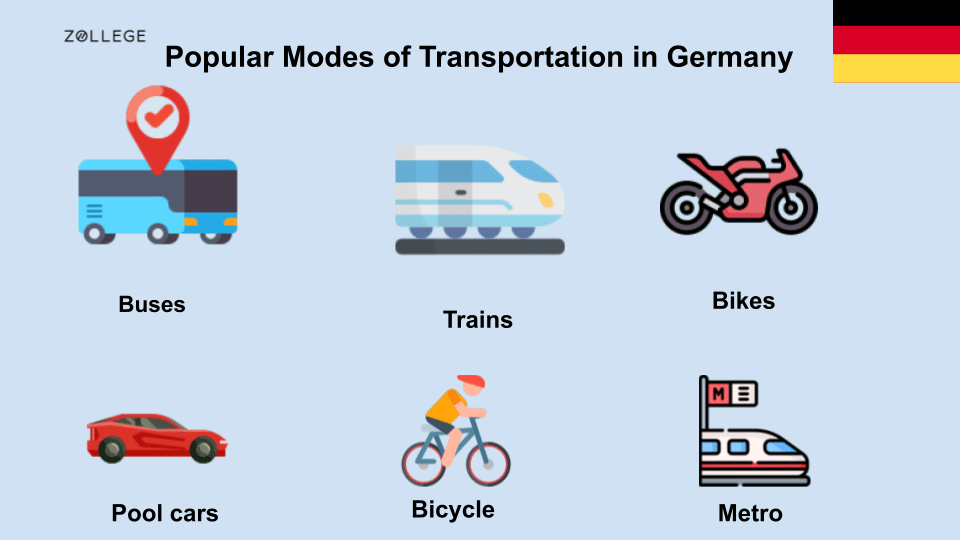
Cab Services or Pool cars are also available in Germany for international students at a nominal rate of Euro 9.39 (INR 841.44). Cabs can be booked from local taxi online or from the nearest railway station. You can also rent a car in Germany from various car stations, with an average starting price of Euro 4 (INR 358.44). These prices however may vary according to the season and location of booking.
Bus, tram, or metro usually cost around Euro 1 — Euro 2 (INR 89.61 — INR 179.22) for a single journey. Monthly pass is also available for international students at a rate of Euro 80 — Euro 90 (INR 7,168.80– INR 8,064.90). As an international student, you can also receive a travel card (“Semester Ticket”) from the university that allows you to cover all the transportation expenses in the cost of living in Germany. The cost of the ticket will depend on the specific semester you are applying from and type of ticket chosen.
Top Public Transportation in Germany
The modes of public transportation in Germany is available at various travel agency Germany. You must select the type of transportation which fits your needs as well as budget. You need a German student visa to stay and travel in Germany as a student. Cycling is considered to be the cheapest way to travel in Germany. However, for your reference we have given below the popular transportation in Germany:
- Cycling: One of the most cost-efficient and readily available modes of transportation in Germany is bicycling. Germany is known for its cycling friendly culture and developed infrastructure.
- Bike Rental: In Germany, you can also rent bikes for travel and commuting purposes. Bikes can be rented for short periods such as few hours or for longer duration.
- Taxis: Taxis are the most reliable modes of transportation available. Most taxis in Germany have meter system to calculate the exact fare of a passenger.
- Buses: Buses are very convenient to international students for their affordability and accessibility. Most buses in Germany are equipped with digital displays.
- Local Railway: Germany’s local railway system connects the nearby cities, towns, rural and urban areas. Tickets can be purchased from stations or from online.
- Car-Pooling: Car-Pooling is very popular and environment friendly in Germany. It provides huge savings for students compared to personal transportation. The cars run on a sharing basis in Germany.
Transportation Costs in Germany
The modes of transportation in Germany includes buses, tram, metro, trains, pool cars, rental cars, etc. In Germany, you can also buy monthly passes if you are a regular traveller between specific places. You need to incur these costs while moving from student accommodation in Germany to different places. Air travel in Germany or train travel in Germany can vary depending on the conditions and time of travel. Below given is the approximate cost of travel in Germany in various modes of transportation:
| Transportation | Approximate Cost |
| Single bus, tram, or metro trips (Monthly Pass) | Euro 80 — Euro 90 (INR 7,168.80–8,064.90) |
| Trains | Euro 20 (INR 1,792.20) |
| Cab Service | Euro 9.39 (INR 841.44) |
| Rental Car | Euro 4 (INR 358.44) (Starting Price) |
| Other Local Transportation | Euro 40 (INR 3,584.40) |
Euro 1 = INR 89.61 as dated on 21st February 2024
Travel to Germany Requirements
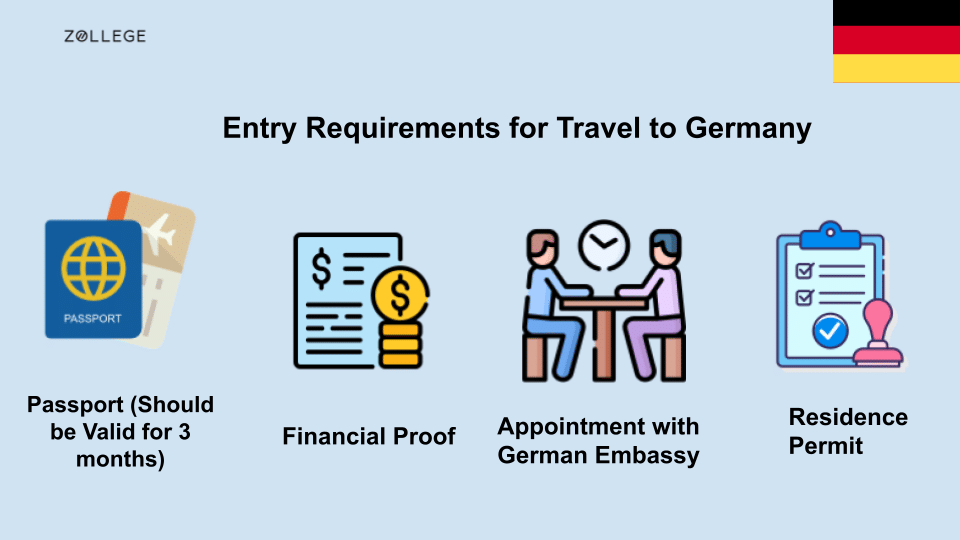
For travel to Germany, you would have to qualify for certain requirements. International students can get apply for multiple jobs in Germany. The basic rate for travel allowance Germany is 0.30 euros (INR 26.88) per kilometre. As international visitors, the best credit card for travel in Germany is Awa7® Visa. Below given are some important travel to Germany requirements:
The best places to travel in Germany in summer for students include cities like Berlin, Munich, Cologne, etc. You can reach there by train, bus as well as by pool cars. The cheapest way to travel in Germany can be through public buses or carpooling. However, you can always contact any travel agency Germany has and get the best current rates of their public transportations.
FAQs
Ques. How can I travel in Germany
Ans. To travel in Germany, you would require minimal costs as compared to other countries. The costs vary as per the mode of travel you are selecting for your purpose.
Ques. Does the German Embassy need to be contacted for travelling to Germany?
Ans. It is recommended that you must also book an appointment with the German Embassy after applying for a visa.
Ques. How can I stay for a longer duration in Germany?
Ans. If you want to stay in Germany for a longer period of time, you must apply for a residence permit there.
Ques. What is the approximate cost of monthly pass for buses in Germany?
Ans. Approximately Euro 80 — Euro 90 (INR 7,168.80–8,064.90) is charged for a monthly pass of buses, trams, or metro services.
Ques. From where can I avail these transportation facilities?
Ans. The modes of transportation can be availed or booked through the popular travel agency Germany. You can easily locate them through the city map of Germany.
Ques. What is the best time to travel to Germany?
Ans. The best time to travel in Germany according to some experts is around May-September. You can reach Germany by a proper German visa.
Ques. What documents will I require travelling in Germany?
Ans. For entry in Germany, you would require documents such as visa application form, ID proof, financial proof, health insurance certificates, etc. These documents must be proper and authentic.
Ques. What is the average cost of living in Germany?
Ans. The average cost of living in Germany is around Euro 4,900 (INR 4,37,940.47 per month. Before arriving in Germany, we suggest that you must make a proper travel plan according to your budget.
Ques. What is the rate for travel allowance in Germany?
Ans. The basic rate for travel allowance Germany is 0.30 euros (INR 26.81) per kilometer. However, it may vary depending on the situation.
Ques. What is the best credit card to travel in Germany?
Ans. As international visitors, the best credit card for travel in Germany is Awa7® Visa. It can be used for various expenses depending on the circumstances.
Ques. What is the cost for a per day in Germany?
Ans. According to some unofficial sources of travel guide and reviews of travellers, it is estimated that you would require around Euro 205 (INR 18,322) for a per day in Germany.
Ques. What is the best way to travel around Germany?
Ans. For travelling in Germany, the best modes of public transportation available are cycles, bikes, buses, trains, pool cars, metro, etc.
Ques. Is Germany an expensive place to visit?
Ans. Germany is centrally located on the continent. It is costlier than eastern countries like Romania or Bulgaria, but it is less expensive as compared to the western countries like France or Spain.
Ques. Is 7 days enough for Germany?
Ans. Yes, a one week visit in Germany gives enough time to visit some beautiful regions and splendid cities throughout the country of Germany.
Ques. What are famous foods in Germany?
Ans. The famous foods in Germany include Brot & Brötchen, Käsespätzle, Currywurst, Kartoffelpuffer & Bratkartoffeln, Rouladen, Schnitzel, Eintopf, Sauerbraten etc. You can explore these foods at different locations of the city.
Ques. What currency does Germany use?
Ans. The currency that Germany uses is Euro. Each euro is divided into 100 cents. Once you're in Germany, you'll see the symbol € used to show prices.
Ques. What is Germany's favorite drink?
Ans. The most favorite drink of Germany is mineral water. Around 86 percent of the population consume mineral water on a regular basis in Germany.
Ques. What is the climate of Germany?
Ans. The climate of Germany is approximately 8.2 °C. It is located in the parts of the temperate, rainy climate zone of the mid-latitudes.
Ques. What is the national animal of Germany?
Ans. The Golden Eagle is the most common official national animal in the world—it's the emblem of Albania, Germany, Austria, Mexico, and Kazakhstan.
Ques. What is the main sport in Germany?
Ans. Football (soccer), known in Germany as Fußball, is insanely popular in all parts of the country and can be considered a national sport.

![Humboldt University of Berlin [HU]](https://static.zollege.in/public/college_data/images/studyabroad/logos/college_632_29-15:02_6.png?tr=w-50,h-50,c-force?tr=h-40,w-35,c-force)
![Technical University Munich [TUM]](https://static.zollege.in/public/college_data/images/studyabroad/logos/college_691_02-13:08_691.png?tr=w-50,h-50,c-force?tr=h-40,w-35,c-force)
![Ludwig Maximilian University of Munich [LMU]](https://static.zollege.in/public/college_data/images/studyabroad/logos/college_690_02-13:05_690.png?tr=w-50,h-50,c-force?tr=h-40,w-35,c-force)
![Free University of Berlin [FU]](https://static.zollege.in/public/college_data/images/studyabroad/logos/college_631_29-15:01_5.png?tr=w-50,h-50,c-force?tr=h-40,w-35,c-force)
.png?tr=w-50,h-50,c-force?tr=h-40,w-35,c-force)


