
CUET 2024 Biology Question Paper: Download Question Paper with Answers PDF (May 15 Shift 1B)


| Updated On - Dec 7, 2024
CUET 2024 Biology Question Paper PDF with Solutions is available here . NTA conducted CUET 2024 Biology Paper on May 15, 2024, in Shift 1B from 12.15 PM to 1 PM. According to reports, the Biology paper in CUET 2024 was moderately difficult. We, at Zollege, provide CUET question paper with solution PDFs for free download.
CUET 2024 Biology paper is a pen & paper exam. In the CUET Question Paper for Biology, you have to answer 40 multiple choice questions out of 50 questions. The exam duration is 45 minutes. You score 5 marks for every correct answer and lose 1 mark for every incorrect answer.
Students can freely download the CUET previous year's question paper PDFs along with their solutions here. We strongly encourage aspirants to scan through all the CUET Question Paper to know the overall difficulty level, CUET Syllabus and understand the changes in CUET Exam Pattern over the years.
CUET 2024 Biology Question Paper with Solution PDF
| CUET 2024 Biology Question Paper with Answer Key SET A |  Download Download |
Check Solution |
| CUET 2024 Biology Question Paper with Answer Key SET B | Download |
Check Solution |
| CUET 2024 Biology Question Paper with Answer Key SET C | Download |
Check Solution |
| CUET 2024 Biology Question Paper with Answer Key SET D | Download |
Check Solution |
| CUET 2024 Online Biology Question Paper with Answer Key |  Download Download |
Check Solution |
CUET 2024 BIOLOGY Answer Key (Set A)
| Question | Answer | Detailed Solution |
| Q1. Analogous structures are a result of: 1. Convergent evolution 2. Divergent evolution 3. Parallel evolution 4. Retrogressive evolution |
(1) Convergent evolution | Solution: Analogous structures arise when unrelated organisms develop similar traits due to similar environmental pressures, a process known as convergent evolution. |
| Q2. Which of the following does not affect the Hardy-Weinberg equilibrium? 1. Natural selection 2. Genetic drift 3. Gene pool 4. Gene migration |
(3) Gene pool | Solution: The gene pool itself does not directly affect Hardy-Weinberg equilibrium. Factors like natural selection, genetic drift, and gene migration do affect the equilibrium. |
| Q3. Which of the following primates was more like an ape? 1. Homo erectus 2. Dryopithecus 3. Australopithecines 4. Ramapithecus |
(2) Dryopithecus | Solution: Dryopithecus is considered more ape-like than other listed primates, as it shares more characteristics with early apes. |
| Q4. Nucleosome is associated with molecules of histones. 1. Four 2. Nine 3. Two 4. Eight |
(4) Eight | Solution: Each nucleosome consists of eight histone proteins, forming an octamer around which DNA is wrapped. |
| Q5. Select the observations drawn from the human genome project which are correct. (A) The human genome contains 3164.7 million bp. (B) The average gene consists of 3000 bases. (C) Total number of genes is estimated at 30,000. (D) The functions are unknown for over 50% of discovered genes. (E) Less than 2% of the genome codes for proteins. Choose the correct answer from the options given below: 1. (A), (B), (C) and (D) only 2. (A), (C), (D) and (E) only 3. (A), (C) and (E) only 4. (A), (B), (C), (D) and (E) |
(4) (A), (B), (C), (D) and (E) | Solution: All statements (A) to (E) are correct observations from the human genome project, including details on base pairs, gene count, and protein-coding portions. |
| Q6. Match List-I with List-II: List-I (Placental Mammals) List-II (Counterpart Marsupials) (A) Anteater (I) Spotted cuscus (B) Bobcat (II) Numbat (C) Lemur (III) Flying Phalanger (D) Flying squirrel (IV) Tasmanian tiger cat Choose the correct answer from the options given below: |
(1) (A) - (II), (B) - (IV), (C) - (I), (D) - (III) | Solution: In the correct pairing, (A) Anteater is matched with (II) Numbat, (B) Bobcat with (IV) Tasmanian tiger cat, (C) Lemur with (I) Spotted cuscus, (D) Flying squirrel with (III) Flying Phalanger. |
| Q7. Identify the incorrect statement/s: (A) Intestinal perforation and death may occur in severe cases of typhoid infection. (B) Common cold is caused by Rhinoviruses (C) Lips and fingernails may turn grey to bluish colour in severe cases of pneumonia. (D) Pneumonia is caused by Salmonella. (E) Typhoid fever could be confirmed by Widal test. Choose the answer from the options given below: |
(3) (D) only | Solution: Statement (D) is incorrect because pneumonia is not caused by Salmonella; it is caused by bacteria such as Streptococcus pneumoniae. |
| Q8. Match List-I with List-II: List-I (Types of Barriers) List-II (Examples) (A) Cytokine barriers (I) Mucus coating (B) Physical barriers (II) Tears from eyes (C) Cellular barriers (III) Phagocytosis (D) Physiological barriers (IV) Interferons Choose the correct answer from the options given below: |
(4) (A) - (IV), (B) - (I), (C) - (III), (D) - (II) | Solution: In the correct pairing, (A) Cytokine barriers are matched with (IV) Interferons, (B) Physical barriers with (I) Mucus coating, (C) Cellular barriers with (III) Phagocytosis, (D) Physiological barriers with (II) Tears from eyes. |
| Q9. Smack is chemically: 1. Diacetyl morphine 2. Cocaine 3. Benzodiazepine 4. Amphetamine |
(1) Diacetyl morphine | Solution: Smack, also known as heroin, is chemically diacetyl morphine, a derivative of morphine that is highly addictive. |
| Q10. Antibodies are secreted by: 1. T-Cells 2. B-Cells 3. α-Cells 4. β-Cells |
(2) B-Cells | Solution: Antibodies are produced and secreted by B-cells, which play a key role in the adaptive immune response by targeting pathogens. |
| Q11. In sewage treatment, flocs are: 1. The solids that settle during sedimentation. 2. The supernatant that is formed above the primary sludge. 3. The masses of bacteria associated with fungal filaments. 4. The bacteria which grow anaerobically and are also called anaerobic sludge digesters. |
(3) The masses of bacteria associated with fungal filaments. | Solution: In sewage treatment, flocs are masses of bacteria associated with fungal filaments. These flocs help in the biological treatment of wastewater by breaking down organic matter. |
| Q12. Match List-I with List-II: List-I (Products) List-II (Organisms) (A) Statin (III) Monascus (B) Clot buster (I) Streptococcus (C) Swiss cheese (IV) Propionibacterium (D) Cyclosporin-A (II) Trichoderma Choose the correct answer from the options given below: |
(2) (A) - (III), (B) - (I), (C) - (IV), (D) - (II) | Solution: The correct matches are (A) Statin with (III) Monascus, (B) Clot buster with (I) Streptococcus, (C) Swiss cheese with (IV) Propionibacterium, (D) Cyclosporin-A with (II) Trichoderma. |
| Q13. The beetle used as a biocontrol agent for aphids and mosquitoes is: 1. Trichoderma 2. Dragonflies 3. Ladybird 4. Silver fish |
(3) Ladybird | Solution: Ladybird beetles are commonly used as biocontrol agents against pests like aphids, which they feed on, helping to control pest populations. |
| Q14. Downstream processing method involves: 1. Identification 2. Amplification 3. Fermentation 4. Purification |
(4) Purification | Solution: Downstream processing in biotechnology involves purification steps to isolate and refine the desired product after fermentation or synthesis. |
| Q15. Which of the following is not the correctly matched pair of organism and its respective cell wall degrading enzyme? 1. Fungi – Chitinase 2. Algae – Methylase 3. Plant cells – Cellulase 4. Bacteria – Lysozyme |
(2) Algae – Methylase | Solution: Methylase is not a cell wall-degrading enzyme associated with algae. Algae typically have cell wall-degrading enzymes specific to their cell wall composition, but methylase is involved in methylation processes rather than cell wall degradation. |
| Q16. Arrange the following steps involved in transformation of bacteria in a sequence from initiation to end. (A) Incubation of rDNA with bacterial cell on ice (B) Treatment with divalent cations (C) Heat shock treatment (D) Selection on antibiotic containing agar plate (E) Placed them again on ice Choose the correct answer from the options given below: |
(2) (B), (A), (C), (E), (D) | Solution: The correct sequence of steps in bacterial transformation is (B) Treatment with divalent cations, (A) Incubation of rDNA with bacterial cell on ice, (C) Heat shock treatment, (E) Placed them again on ice, (D) Selection on antibiotic-containing agar plate. |
| Q17. Which of the following statements are incorrect? (A) Fragments of DNA can be separated by ELISA. (B) Transformation is a procedure through which a piece of DNA is introduced in a host bacterium. (C) Recombinant DNA technology does not involve isolation of a desired DNA fragment. (D) DNA ligases are used for stitching DNA fragments into a vector. Choose the answer from the options given below: |
(1) (A) and (C) only | Solution: Statements (A) and (C) are incorrect. ELISA is used for detecting proteins or antibodies, not for separating DNA fragments. Recombinant DNA technology involves the isolation of a desired DNA fragment. |
| Q18. Which of the following statements are true? (A) Milk obtained from ‘Rosie’ is nutritionally more balanced for human babies than natural human milk. (B) Biopiracy refers to the use of bioresources without proper authorisation from MNCs. (C) GEAC is the decisive body for safety and validity of GMOs and GM research respectively. (D) Transgenic animals help us to understand the contribution of genes in the development of disease. Choose the correct answer from the options given below: |
(2) (C) and (D) only | Solution: Statements (C) and (D) are true. The Genetic Engineering Approval Committee (GEAC) is responsible for assessing the safety and validity of GMOs and related research. Transgenic animals are used to study the role of specific genes in the development of diseases. Statements (A) and (B) are incorrect as biopiracy refers to the unauthorized use of bioresources by entities, not specifically MNCs, and there is no evidence that milk from ‘Rosie’ is more balanced for human babies than natural human milk. |
| Q19. Match List-I with List-II: List-I (Transgene) List-II (Used for/Products) (A) α-1-antitrypsin (I) Meloidegyne incognitia (B) cryIAc (II) Corn borer (C) Antisense RNA (III) Treat emphysema (D) cryIAb (IV) Cotton bollworms Choose the correct answer from the options given below: |
(1) (A) - (III), (B) - (IV), (C) - (I), (D) - (II) | Solution: The correct matches are (A) α-1-antitrypsin with (III) Treat emphysema, (B) cryIAc with (IV) Cotton bollworms, (C) Antisense RNA with (I) Meloidegyne incognitia, (D) cryIAb with (II) Corn borer. |
| Q20. Expand “GEAC”: 1. Genetic and Environmental Advisory Committee 2. Gene Establishment Approval Committee 3. Genetic Engineering Advisory Committee 4. Genetic Engineering Approval Committee |
(4) Genetic Engineering Approval Committee | Solution: GEAC stands for Genetic Engineering Approval Committee, which is responsible for evaluating the safety and validity of genetically modified organisms (GMOs) and GM research in India. |
| Q21. When an insect feeds on the Bt plant, the insect dies due to the conversion of inactive protein to active protein in: 1. Alkaline pH of the gut. 2. Acidic pH of the gut. 3. Acidic pH of saliva. 4. Alkaline pH of saliva. |
(1) Alkaline pH of the gut. | Solution: When an insect consumes parts of a Bt plant, the Bt toxin (inactive protein) is converted into its active form in the insect’s gut, which has an alkaline pH. This active toxin then binds to gut cells, creating pores that eventually kill the insect. |
| Q22. Match List-I with List-II: List-I (Interspecies Relationships) List-II (Features) (A) Commensalism (IV) One species benefits and the other remains unaffected (B) Mutualism (III) Both species are benefitted (C) Amensalism (II) One species is harmed and the other is unaffected (D) Parasitism (I) One species is benefitted at the expense of the other Choose the correct answer from the options given below: |
(2) (A) - (IV), (B) - (III), (C) - (II), (D) - (I) | Solution: The correct matches are: (A) Commensalism with (IV) One species benefits and the other remains unaffected. (B) Mutualism with (III) Both species are benefitted. (C) Amensalism with (II) One species is harmed and the other is unaffected. (D) Parasitism with (I) One species is benefitted at the expense of the other. |
| Q23. In a country, at any time, the population has the same number of young and mature ones. What type of growth does it reflect? 1. Expanding 2. Declining 3. Stable 4. S-shaped |
(3) Stable | Solution: When a population has an equal number of young and mature individuals, it reflects a stable growth rate, indicating neither an increase nor a decrease in population size. |
| Q24. Two closely related species can co-exist indefinitely and violate the Gause’s ‘Competitive Exclusion Principle’ by: 1. eliminating the inferior species. 2. resource partitioning. 3. interacting with each other symbiotically. 4. changing the area of grazing. |
(2) resource partitioning. | Solution: Resource partitioning allows two closely related species to co-exist by dividing resources, thus avoiding direct competition and enabling them to occupy the same area without excluding each other. |
| Q25. The process of mineralisation by microorganisms helps in the release of: 1. inorganic nutrients from detritus and formation of humus. 2. organic nutrients from humus. 3. inorganic nutrients from humus. 4. organic and inorganic nutrients from detritus. |
(1) inorganic nutrients from detritus and formation of humus. | Solution: Mineralisation by microorganisms releases inorganic nutrients from detritus and contributes to the formation of humus, enriching the soil. |
| Q26. In which ecosystem is the biomass of primary consumers greater than producers? 1. Forests 2. Grassland 3. Desert 4. Sea |
(4) Sea | Solution: In marine ecosystems (sea), the biomass of primary consumers (like zooplankton) is often greater than that of producers (like phytoplankton) due to rapid reproduction and consumption cycles of phytoplankton. |
| Q27. Choose the correct statements with respect to decomposition from the following: (A) Decomposition is an anaerobic process. (B) Decomposition rate of detritus depends upon the chemical nature of it. (C) Water-soluble organic nutrients go into the soil and get precipitated in the process of leaching. (D) Humification follows mineralisation. Choose the correct answer from the options given below: |
(1) (B) and (D) only | Solution: Statement (B) is correct as decomposition rate depends on the chemical composition of detritus. Statement (D) is also correct because humification, which results in the formation of humus, generally follows mineralisation. Statement (A) is incorrect as decomposition is typically an aerobic process, and statement (C) is incorrect regarding nutrient precipitation in leaching. |
| Q28. Match List-I with List-II: List-I (Concepts) List-II (Explanation) (A) Standing state (I) Available biomass for the consumption of heterotrophs (B) Secondary productivity (II) Rate of formation of organic matter by consumers (C) Standing crop (III) Mass of living matter in a trophic level at a given time (D) Net primary productivity (IV) Amount of mineral nutrients in the soil at a given time Choose the correct answer from the options given below: |
(3) (A) - (IV), (B) - (II), (C) - (III), (D) - (I) | Solution: The correct matches are: (A) Standing state with (IV) Amount of mineral nutrients in the soil at a given time (B) Secondary productivity with (II) Rate of formation of organic matter by consumers (C) Standing crop with (III) Mass of living matter in a trophic level at a given time (D) Net primary productivity with (I) Available biomass for the consumption of heterotrophs. |
| Q29. Which of the following is not a Sexually Transmitted Disease? 1. Chlamydiasis 2. Filariasis 3. Genital herpes 4. Trichomoniasis |
(2) Filariasis | Solution: Filariasis is a parasitic disease transmitted by mosquitoes and is not classified as a sexually transmitted disease (STD), unlike Chlamydiasis, Genital herpes, and Trichomoniasis. |
| Q30. Which of the following statements is incorrect with respect to Medical Termination of Pregnancy? 1. They are considered safe during the first trimester. 2. It is legalised in India from 1971. 3. MTPs can be performed even after 24 weeks, but with the opinion of 2 registered medical practitioners on specific grounds. 4. About 20% of the total number of conceived pregnancies undergo MTP in a year globally. |
(4) About 20% of the total number of conceived pregnancies undergo MTP in a year globally. | Solution: The statement that “About 20% of the total number of conceived pregnancies undergo MTP in a year globally” is incorrect, as this percentage is not representative of the global rate for MTPs. |
| Q31. Match List-I with List-II: List-I (Various Assisted Reproductive Technologies) List-II (Process Involved) (A) ZIFT (I) Formation of embryo in vitro by injecting sperm directly into ovum (B) ICSI (II) Transferring of embryo with more than 8 blastomeres into the uterus (C) IUI (III) Transferring of fertilised egg up to 8 blastomeres into fallopian tube (D) IUT (IV) Transfer of semen from a healthy donor into the uterus artificially Choose the correct answer from the options given below: |
(2) (A) - (III), (B) - (I), (C) - (IV), (D) - (II) | Solution: The correct matches are: (A) ZIFT with (III) Transferring of fertilised egg up to 8 blastomeres into fallopian tube (B) ICSI with (I) Formation of embryo in vitro by injecting sperm directly into ovum (C) IUI with (IV) Transfer of semen from a healthy donor into the uterus artificially (D) IUT with (II) Transferring of embryo with more than 8 blastomeres into the uterus. |
| Q32. Which of the following methods of contraception is not meant for females? 1. IUDs 2. Lactational amenorrhea 3. Vasectomy 4. Condoms |
(3) Vasectomy | Solution: Vasectomy is a surgical contraceptive method for males, whereas IUDs, lactational amenorrhea, and condoms (which are used by both genders) are contraceptive methods for females. |
| Q33. ‘Saheli’ – an oral contraceptive pill, also known as the ‘Once a week’ pill, was developed by: 1. AIIMS 2. NBRI 3. CDRI 4. NBPGR |
(3) CDRI | Solution: ‘Saheli’ was developed by the Central Drug Research Institute (CDRI) in India. It is a non-hormonal oral contraceptive pill taken once a week. |
| Q34. Which of the following is not a characteristic of a stable biological community? 1. It must be resistant to invasions by alien species. 2. It should not show too much variation in productivity from year to year. 3. All the species are equally important in a stable community and absence of any one leads to its instability. 4. It is resilient to occasional disturbances, whether natural or man-made. |
(3) All the species are equally important in a stable community and absence of any one leads to its instability. | Solution: In a stable community, while each species plays a role, not all species are equally critical for stability. Certain key species may be more influential in maintaining community stability, making statement 3 incorrect. |
| Q35. In ‘rivet popper hypothesis’ the ‘rivet’ signifies: 1. Key species 2. Endemic species 3. Community 4. Species |
(4) Species | Solution: In the ‘rivet popper hypothesis,’ each species is likened to a rivet in an airplane, where the loss of too many rivets (species) could lead to system failure. |
| Q36. The scientist who proved that species richness directly correlates with the stability of a community, was: 1. Paul Ehrlich 2. David Tilman 3. Robert May 4. Edward Wilson |
(2) David Tilman | Solution: David Tilman conducted experiments demonstrating that species richness is directly related to the stability of ecological communities. |
| Q37. Among the vertebrates, which of the following is the most species-rich group? 1. Reptiles 2. Fishes 3. Insects 4. Mammals |
(2) Fishes | Solution: Fishes are the most species-rich group among vertebrates, with an immense diversity in both marine and freshwater environments. |
| Q38. The following are the various hypotheses proposed in explaining the greatest biological diversity in tropics except: 1. Temperate regions are subjected to glaciations, but tropical latitudes have remained relatively undisturbed. 2. Tropical environments have more humidity/moisture which helps the diversity to flourish. 3. Tropical environments are less seasonal and more constant. 4. There is more solar energy available in the tropics which contributes to higher productivity and hence, biodiversity. |
(2) Tropical environments have more humidity/moisture which helps the diversity to flourish. | Solution: The statement regarding humidity and moisture (Option 2) is not a commonly cited hypothesis for higher biodiversity in tropical regions. Other factors like consistent climate, solar energy, and lack of glaciations are recognized as major contributors. |
| Q39. Cells present in the mature pollen grains are: 1. Central cell and generative cell 2. Antipodal cell and vegetative cell 3. Vegetative cell and generative cell 4. Filiform cell and micropylar cell |
(3) Vegetative cell and generative cell | Solution: In mature pollen grains, the two cells present are the vegetative cell, which supports pollen tube growth, and the generative cell, which divides to form sperm cells for fertilization. |
| Q40. Match List-I with List-II: List-I (Structures) (A) Filiform apparatus (B) Tapetum (C) Exine (D) Funicle List-II (Functions) (I) Made up of sporopollenin (II) Attachment of ovule to the placenta (III) Guides pollen tube into the synergid (IV) Nourishes the pollen grain |
(2) (A) - (III), (B) - (IV), (C) - (I), (D) - (II) | Solution: The correct matches are: (A) Filiform apparatus with (III) Guides pollen tube into the synergid (B) Tapetum with (IV) Nourishes the pollen grain (C) Exine with (I) Made up of sporopollenin (D) Funicle with (II) Attachment of ovule to the placenta |
| Q41. Primary Endosperm Nucleus is the product of: 1. Double fusion 2. Triple fusion 3. Parthenogenesis 4. Apomixis |
(2) Triple fusion | Solution: The Primary Endosperm Nucleus is formed by the fusion of a male gamete with two polar nuclei, a process called triple fusion, which contributes to endosperm formation in flowering plants. |
| Q42. In humans, mammary gland is divided into lobes: 1. 10 – 12 2. 25 – 30 3. 30 – 35 4. 15 – 20 |
(4) 15 – 20 | Solution: Human mammary glands are typically divided into 15–20 lobes, each containing alveoli that produce milk. |
| Q43. Sex in human embryo is determined by: 1. ‘X’ chromosome of egg 2. ‘X’ or ‘Y’ chromosome of sperm 3. Only ‘Y’ chromosome of sperm 4. Health of mother |
(2) ‘X’ or ‘Y’ chromosome of sperm | Solution: Sex determination in humans depends on the sperm cell, which can carry either an X or a Y chromosome. If the sperm carries an X chromosome, the offspring will be female (XX); if it carries a Y chromosome, the offspring will be male (XY). |
| Q44. Arrange the following stages of oogenesis in order of their occurrence: (A) Ovum (B) Oogonia (C) Primary oocyte (D) Secondary oocyte |
(2) (B), (C), (D), (A) | Solution: The stages in oogenesis occur in the order: (B) Oogonia → (C) Primary oocyte → (D) Secondary oocyte → (A) Ovum. |
| Q45. Which of the following pair of contrasting traits was not studied by Mendel? 1. Pink and white flowers 2. Inflated and constricted pods 3. Axial and terminal flowers 4. Green and yellow pods |
(1) Pink and white flowers | Solution: Mendel did not study the trait of pink and white flowers in his experiments. He primarily studied simple, contrasting traits like flower position, pod shape, and pod color. |
| Q46. Failure of chromatids to segregate during cell division cycle results in: 1. Polyploidy 2. Euploidy 3. Aneuploidy 4. Autopolyploidy |
(3) Aneuploidy | Solution: Aneuploidy occurs when chromatids fail to segregate properly during cell division, leading to an abnormal number of chromosomes in the resulting cells. |
| Q47. Select the correctly matched pair about sickle cell anaemia: Genotype : Phenotype (A) HbA HbA : Diseased phenotype (B) HbA HbS : Diseased phenotype (C) HbS HbS : Diseased phenotype (D) HbS HbA : Carrier of disease |
(1) (C) and (D) only | Solution: In sickle cell anaemia, individuals with the genotype HbS HbS exhibit the diseased phenotype, while those with HbA HbA are normal. Heterozygous individuals (HbA HbS) are carriers and typically do not show symptoms of the disease. Thus, (C) and (D) are correctly matched. |
| Q48. Match List-I with List-II: List-I (Scientists) (A) Sutton and Boveri (B) Sturtevant (C) Henking (D) Griffith List-II (Discovery) (I) X-Body (II) Chromosomal Theory of Inheritance (III) Transformation in bacteria (IV) Genetic maps |
(1) (A) - (II), (B) - (IV), (C) - (I), (D) - (III) | Solution: The correct matches are: (A) Sutton and Boveri with (II) Chromosomal Theory of Inheritance (B) Sturtevant with (IV) Genetic maps (C) Henking with (I) X-Body (D) Griffith with (III) Transformation in bacteria |
| Q49. Which of the following statements are incorrect with respect to nucleotides? (A) Purines and pyrimidines are nitrogenous bases. (B) Nucleotides are non-enzymatic molecules. (C) Phosphate group is linked to – OH of 5’ C of a nucleoside through phosphoester linkage. (D) In RNA, every nucleotide residue has an additional – OH group present at 2’ position in the ribose. (E) Thymine is an example of Pyrimidine. |
(4) (B) and (E) only | Solution: Statement (B) is incorrect as nucleotides can play enzymatic roles, especially in RNA-based enzymes. Statement (E) is also incorrect because thymine is a pyrimidine found in DNA, while in RNA, uracil replaces thymine. |
| Q50. Arrange the given steps of DNA fingerprinting in the sequence from initiation to end: (A) Digestion of DNA by restriction endonuclease (B) Isolation of DNA (C) Hybridisation using labelled VNTR probe (D) Transferring (blotting) of separated DNA fragments to synthetic membrane |
(3) (B), (A), (D), (C) | Solution: The correct order of steps in DNA fingerprinting is: (B) Isolation of DNA → (A) Digestion of DNA by restriction endonuclease → (D) Transferring (blotting) of separated DNA fragments to synthetic membrane → (C) Hybridisation using labelled VNTR probe. |
CUET 2024 BIOLOGY Answer Key (Set B)
| Question | Answer | Detailed Solution |
|---|---|---|
| Q1. The beetle used as a biocontrol agent for aphids and mosquitoes is: (1) Trichoderma (2) Dragonflies (3) Ladybird (4) Silver fish |
Correct answer: (3) Ladybird | Explanation: Ladybirds, especially ladybird beetles, are effective biocontrol agents. They feed on aphids and other small pests, helping in pest management. This makes them a natural and eco-friendly alternative to chemical pesticides. |
| Q2. Downstream processing method involves: (1) Identification (2) Amplification (3) Fermentation (4) Purification |
Correct answer: (4) Purification | Explanation: Downstream processing refers to the steps in biotechnological processes that involve the recovery and purification of biosynthetic products, especially pharmaceuticals, from natural sources such as cells. |
| Q3. Smack is chemically: (1) Diacetyl morphine (2) Cocaine (3) Benzodiazepine (4) Amphetamine |
Correct answer: (1) Diacetyl morphine | Explanation: Smack is another name for heroin, which is chemically diacetyl morphine, a semi-synthetic opioid drug. |
| Q4. Antibodies are secreted by: (1) T-Cells (2) B-Cells (3) α-Cells (4) β-Cells |
Correct answer: (2) B-Cells | Explanation: B-cells, a type of white blood cell, are responsible for producing and secreting antibodies to fight infections. |
| Q5. In sewage treatment, flocs are: (1) The solids that settle during sedimentation. (2) The supernatant that is formed above the primary sludge. (3) The masses of bacteria associated with fungal filaments. (4) The bacteria which grow anaerobically and are also called anaerobic sludge digesters. |
Correct answer: (3) The masses of bacteria associated with fungal filaments. | Explanation: In sewage treatment, flocs refer to the masses of bacteria and other microorganisms that grow together with fungal filaments, which help in the decomposition of organic matter. |
| Q6. Match List-I with List-II: List-I (Products) | List-II (Organisms) (A) Statin (B) Clot buster (C) Swiss cheese (D) Cyclosporin-A (I) Streptococcus (II) Trichoderma (III) Monascus (IV) Propionibacterium |
Correct answer: 2. (A) - (III), (B) - (I), (C) - (IV), (D) - (II) | Explanation: (A) Statin (III) Monascus - Lowers cholesterol. (B) Clot buster (I) Streptococcus - Produces enzymes (e.g., Streptokinase). (C) Swiss cheese (IV) Propionibacterium - Used in cheese fermentation. (D) Cyclosporin-A (II) Trichoderma - An immunosuppressant. |
| Q7. Which of the following is not the correctly matched pair of organism and its respective cell wall degrading enzyme? (1) Fungi – Chitinase (2) Algae – Methylase (3) Plant cells – Cellulase (4) Bacteria – Lysozyme |
Correct answer: 2. Algae – Methylase | Explanation: Methylase is not involved in degrading algal cell walls. Algal cell walls are typically degraded by cellulase or other specific enzymes. The other pairs are correctly matched: - Fungi: Chitinase breaks down chitin in fungal cell walls. - Plant cells: Cellulase degrades cellulose in plant cell walls. - Bacteria: Lysozyme hydrolyzes peptidoglycan in bacterial cell walls. |
| Q8. Arrange the following steps involved in the transformation of bacteria in a sequence from initiation to end: (A) Incubation of rDNA with bacterial cell on ice (B) Treatment with divalent cations (C) Heat shock treatment (D) Selection on antibiotic-containing agar plate (E) Placed them again on ice |
Correct answer: 2. (B), (A), (C), (E), (D) | Explanation: (B) Treatment with divalent cations - Divalent cations (e.g., Ca2+) make bacterial membranes permeable. (A) Incubation of rDNA on ice - rDNA is mixed with bacterial cells for uptake. (C) Heat shock treatment - Heat shock facilitates DNA entry into bacterial cells. (E) Placed them again on ice - Stabilizes the membrane after heat shock. (D) Selection on antibiotic plate - Identifies transformed cells with the desired trait. |
| Q9. Which of the following statements are incorrect? (A) Fragments of DNA can be separated by ELISA. (B) Transformation is a procedure through which a piece of DNA is introduced in a host bacterium. (C) Recombinant DNA technology does not involve isolation of a desired DNA fragment. (D) DNA ligases are used for stitching DNA fragments into a vector. |
Correct answer: 1. (A) and (C) only | Explanation: (A) is incorrect: ELISA is a technique used to detect antigens or antibodies, not for DNA fragment separation. DNA fragments are separated by techniques like gel electrophoresis. (C) is incorrect: Recombinant DNA technology does involve isolation of the desired DNA fragment as one of the initial steps. (B) and (D) are correct: Transformation introduces DNA into a host, and DNA ligases stitch DNA fragments into vectors. |
| Q10. Which of the following statements are true? (A) Milk obtained from ‘Rosie’ is nutritionally more balanced for human babies than natural human milk. (B) Biopiracy refers to the use of bioresources without proper authorisation from MNCs. (C) GEAC is the decisive body for safety and validity of GMOs and GM research respectively. (D) Transgenic animals help us to understand the contribution of genes in the development of disease. |
Correct answer: 2. (C) and (D) only | Explanation: (A) is false: While ‘Rosie’ produces milk enriched with human proteins, it is not more balanced than natural human milk. (B) is false: Biopiracy refers to the use of bioresources without proper authorisation, but it does not specifically involve MNCs. (C) is true: GEAC (Genetic Engineering Appraisal Committee) is responsible for the safety and regulation of GMOs and GM research in India. (D) is true: Transgenic animals are used to study genes and their role in diseases. |
| Q11. Match List-I with List-II: List-I (Transgene) | List-II (Used for/Products) (A) α-1-antitrypsin (B) cryIAc (C) Antisense RNA (D) cryIAb (I) Meloidogyne incognita (II) Trichoderma (III) Monascus (IV) Propionibacterium |
Correct answer: 3. (A) - (III), (B) - (II), (C) - (I), (D) - (IV) | Explanation: (A) α-1-antitrypsin: Used in the treatment of emphysema caused by genetic disorders. (B) cryIAc: A gene from Bacillus thuringiensis, effective against the corn borer pest. (C) Antisense RNA: Used to silence genes in Meloidogyne incognita, a nematode pest. (D) cryIAb: Another gene from Bacillus thuringiensis, targets cotton bollworms. |
| Q12. Expand “GEAC”: (1) Genetic and Environmental Advisory Committee (2) Gene Establishment Approval Committee (3) Genetic Engineering Advisory Committee (4) Genetic Engineering Approval Committee |
Correct answer: 4. Genetic Engineering Approval Committee | Explanation: GEAC stands for Genetic Engineering Approval Committee, which is responsible for the approval of genetically modified organisms (GMOs) and research related to them in India. |
| Q13. When an insect feeds on the Bt plant, the insect dies due to the conversion of inactive protein to active protein in: (1) Alkaline pH of the gut (2) Acidic pH of the gut (3) Acidic pH of saliva (4) Alkaline pH of saliva |
Correct answer: 1. Alkaline pH of the gut | Explanation: The Bt toxin produced by Bacillus thuringiensis is an inactive protoxin. When ingested by an insect, it is activated in the insect’s gut due to the alkaline pH, which converts the protoxin into an active form. This active toxin binds to the gut cells, creating pores and eventually killing the insect. |
| Q14. Match List-I with List-II: List-I (Interspecies Relationships) | List-II (Features) (A) Commensalism (B) Mutualism (C) Amensalism (D) Parasitism (I) One species is benefitted at the expense of the other (II) One species is harmed and the other is unaffected (III) Both the species are benefitted (IV) One species benefits and other remains unaffected |
Correct answer: 2. (A) - (IV), (B) - (III), (C) - (II), (D) - (I) | Explanation: (A) Commensalism: (IV) One species benefits while the other remains unaffected. (B) Mutualism: (III) Both species benefit. (C) Amensalism: (II) One species is harmed while the other remains unaffected. (D) Parasitism: (I) One species benefits at the expense of the other. |
| Q15. In a country, at any time, the population has the same number of young and mature ones. What type of growth does it reflect? (1) Expanding (2) Declining (3) Stable (4) S-shaped |
Correct answer: 3. Stable | Explanation: A stable population is characterized by an equal proportion of young and mature individuals, indicating that the birth and death rates are balanced, and the population size remains constant over time. |
| Q16. Two closely related species can co-exist indefinitely and violate Gause’s ‘Competitive Exclusion Principle’ by: (1) eliminating the inferior species. (2) resource partitioning. (3) interacting with each other symbiotically. (4) changing the area of grazing. |
Correct answer: 2. Resource partitioning | Explanation: Resource partitioning allows two closely related species to utilize different resources or the same resource in different ways, reducing direct competition and enabling their coexistence, thereby violating the Competitive Exclusion Principle. |
| Q17. The process of mineralisation by microorganisms helps in the release of: (1) inorganic nutrients from detritus and formation of humus. (2) organic nutrients from humus. (3) inorganic nutrients from humus. (4) organic and inorganic nutrients from detritus. |
Correct answer: 1. Inorganic nutrients from detritus and formation of humus | Explanation: Mineralisation refers to the process by which microorganisms decompose organic matter in detritus, releasing inorganic nutrients into the soil while also forming humus, which is essential for soil fertility. |
| Q18. In which ecosystem is the biomass of primary consumers greater than producers? (1) Forests (2) Grassland (3) Desert (4) Sea |
Correct answer: 4. Sea | Explanation: In aquatic ecosystems like the sea, the biomass of primary consumers (e.g., zooplankton) can be greater than that of producers (e.g., phytoplankton) due to the fast turnover rate of phytoplankton. They reproduce quickly, providing a continuous supply of food. |
| Q19. Choose the correct statements with respect to decomposition from the following: (A) Decomposition is an anaerobic process. (B) Decomposition rate of detritus depends upon the chemical nature of it. (C) Water-soluble organic nutrients go into the soil and get precipitated in the process of leaching. (D) Humification follows mineralisation. Options: (1) (B) and (D) only (2) (A) and (C) only (3) (B) and (C) only (4) (A) and (D) only |
Correct answer: 1. (B) and (D) only | Explanation: - (A) is incorrect: Decomposition is primarily an aerobic process, requiring oxygen for microbial activity. - (B) is correct: The decomposition rate of detritus is influenced by its chemical composition, such as the ratio of lignin to nitrogen. - (C) is incorrect: Water-soluble organic nutrients are leached into the soil, but they do not get precipitated. - (D) is correct: Humification, the process of forming humus, follows mineralisation during decomposition. |
|
Q20. Match List-I with List-II:
|
Correct answer: 3. (A) - (IV), (B) - (II), (C) - (III), (D) - (I) | Explanation: - (A) Standing state: Refers to the amount of mineral nutrients present in the soil or environment at a specific time (IV). - (B) Secondary productivity: Refers to the rate at which consumers convert organic matter into their own biomass (II). - (C) Standing crop: Refers to the mass of living matter (e.g., plants, animals) in a trophic level at a particular time (III). - (D) Net primary productivity: Refers to the biomass available for consumption by heterotrophs after respiration (I). |
| Q21. Which of the following is not a Sexually Transmitted Disease? (1) Chlamydiasis (2) Filariasis (3) Genital herpes (4) Trichomoniasis |
Correct answer: 2. Filariasis | Explanation: Filariasis is caused by a parasitic worm and is transmitted through mosquito bites, not through sexual contact. On the other hand, Chlamydiasis, Genital herpes, and Trichomoniasis are sexually transmitted diseases (STDs). |
| Q22. Which of the following statements is incorrect with respect to Medical Termination of Pregnancy (MTP)? (1) They are considered safe during the first trimester. (2) It is legalised in India from 1971. (3) MTPs can be performed even after 24 weeks, but with the opinion of 2 registered medical practitioners on specific grounds. (4) About 20% of the total number of conceived pregnancies undergo MTP in a year globally. |
Correct answer: 4. About 20% of the total number of conceived pregnancies undergo MTP in a year globally. | Explanation: - (1) is correct: MTPs are considered safe during the first trimester (up to 12 weeks). - (2) is correct: The Medical Termination of Pregnancy Act was enacted in India in 1971. - (3) is correct: MTPs can be performed after 24 weeks under special conditions, such as health risks to the mother or fetus, with approval from two registered medical practitioners. - (4) is incorrect: The percentage of pregnancies that undergo MTP globally is significantly lower than 20%. |
| Q23. Match List-I with List-II: List-I (Interspecies Relationships) | List-II (Features) (A) Commensalism (B) Mutualism (C) Amensalism (D) Parasitism (I) One species is benefitted at the expense of the other (II) One species is harmed and the other is unaffected (III) Both the species are benefitted (IV) One species benefits and the other remains unaffected |
Correct answer: 2. (A) - (III), (B) - (I), (C) - (IV), (D) - (II) | Explanation: - (A) Commensalism: One species benefits, the other remains unaffected (IV). - (B) Mutualism: Both species benefit (III). - (C) Amensalism: One species is harmed while the other remains unaffected (II). - (D) Parasitism: One species benefits at the expense of the other (I). |
| Q24. Which of the following methods of contraception is not meant for females? (1) IUDs (2) Lactational amenorrhea (3) Vasectomy (4) Condoms |
Correct answer: 3. Vasectomy | Explanation: Vasectomy is a permanent contraceptive method performed on males, involving the surgical cutting or sealing of the vas deferens to prevent sperm release. |
| Q25. Saheli—an oral contraceptive pill, also known as the ‘Once a week’ pill, was developed by: (1) AIIMS (2) NBRI (3) CDRI (4) NBPGR |
Correct answer: 3. CDRI | Explanation: The Saheli pill was developed by the Central Drug Research Institute (CDRI), Lucknow. It is unique because it is taken only once a week and is a non-steroidal contraceptive. |
| Q26. Which of the following is not a characteristic of a stable biological community? (1) It must be resistant to invasions by alien species. (2) It should not show too much variation in productivity from year to year. (3) All the species are equally important in a stable community and absence of any one leads to its instability. (4) It is resilient to occasional disturbances, whether natural or man-made. |
Correct answer: 3. All the species are equally important in a stable community and absence of any one leads to its instability. | Explanation: In a stable community, all species do not have equal importance. Some species, like keystone species, have a disproportionately large impact on the ecosystem, while others may have minor roles. The absence of all species does not lead to instability. |
| Q27. In the ‘rivet popper hypothesis’, the ‘rivet’ signifies: (1) Key species (2) Endemic species (3) Community (4) Species |
Correct answer: 4. Species | Explanation: The rivet popper hypothesis compares species in an ecosystem to rivets in an airplane. Each species (rivet) contributes to the stability of the ecosystem (airplane), and the loss of multiple species may cause a collapse. |
| Q28. The scientist who proved that species richness directly correlates with the stability of a community was: (1) Paul Ehrlich (2) David Tilman (3) Robert May (4) Edward Wilson |
Correct answer: 2. David Tilman | Explanation: David Tilman demonstrated through experiments that ecosystems with greater species richness are more stable and resilient to environmental changes. |
| Q29. Among the vertebrates, which of the following is the most species-rich group? (1) Reptiles (2) Fishes (3) Insects (4) Mammals |
Correct answer: 2. Fishes | Explanation: Fishes are the most species-rich group among vertebrates, with over 33,000 known species. They are highly diverse and occupy a wide range of aquatic habitats. |
| Q30. The following are the various hypotheses proposed in explaining the greatest biological diversity in tropics, except: (1) Temperate regions are subjected to glaciations, but tropical latitudes have remained relatively undisturbed. (2) Tropical environments have more humidity/moisture which helps the diversity to flourish. (3) Tropical environments are less seasonal and more constant. (4) There is more solar energy available in the tropics which contributes to higher productivity and hence, biodiversity. |
Correct answer: 2. Tropical environments have more humidity/moisture which helps the diversity to flourish. | Explanation: While tropical environments are diverse, humidity/moisture alone does not explain the greatest biodiversity in the tropics. Factors like stability, solar energy, and historical undisturbance play more significant roles. |
| Q31. Cells present in the mature pollen grains are: (1) Central cell and generative cell (2) Antipodal cell and vegetative cell (3) Vegetative cell and generative cell (4) Filiform cell and micropylar cell |
Correct answer: 3. Vegetative cell and generative cell | Explanation: Mature pollen grains consist of two cells: a large vegetative cell and a smaller generative cell, which divides to form sperm cells during fertilization. |
| Q32. Match List-I with List-II: List-I (Structures) List-II (Functions) (A) Filiform apparatus (I) Made up of sporopollenin (B) Tapetum (II) Attachment of ovule to the placenta (C) Exine (III) Guides pollen tube into the synergid (D) Funicle (IV) Nourishes the pollen grain |
Correct answer: 2. (A) - (III), (B) - (IV), (C) - (I), (D) - (II) | Explanation:
|
| Q33. Primary Endosperm Nucleus is the product of: (1) Double fusion (2) Triple fusion (3) Parthenogenesis (4) Apomixis |
Correct answer: 2. Triple fusion | Explanation: The primary endosperm nucleus is formed by the fusion of one sperm nucleus with the two polar nuclei in the embryo sac, a process called triple fusion. |
| Q34. In humans, mammary gland is divided into lobes: (1) 10 – 12 (2) 25 – 30 (3) 30 – 35 (4) 15 – 20 |
Correct answer: 4. 15 – 20 | Explanation: The human mammary gland is divided into 15–20 lobes, each containing milk-producing alveoli. |
| Q35. Sex in human embryo is determined by: (1) ‘X’ chromosome of egg (2) ‘X’ or ‘Y’ chromosome of sperm (3) Only ‘Y’ chromosome of sperm (4) Health of mother |
Correct answer: 2. ‘X’ or ‘Y’ chromosome of sperm | Explanation: Sex in human embryos is determined by the type of sperm that fertilizes the egg. Sperm carrying an X chromosome results in a female, while sperm carrying a Y chromosome results in a male. |
| Q36. Arrange the following stages of oogenesis in order of their occurrence: (A) Ovum (B) Oogonia (C) Primary oocyte (D) Secondary oocyte Options: • (1) (C), (B), (D), (A) • (2) (B), (C), (D), (A) • (3) (D), (C), (A), (B) • (4) (A), (D), (C), (B) |
Correct answer: 2. (B), (C), (D), (A) | Explanation: The correct sequence of oogenesis is: 1. Oogonia (immature germ cells). 2. Primary oocyte (formed during fetal development). 3. Secondary oocyte (formed during meiosis I). 4. Ovum (formed after meiosis II and fertilization). |
| Q37. Which of the following pair of contrasting traits was not studied by Mendel? (1) Pink and white flowers (2) Inflated and constricted pods (3) Axial and terminal flowers (4) Green and yellow pods |
Correct answer: 1. Pink and white flowers | Explanation: Mendel studied traits like seed shape, seed color, flower position, and pod shape, but he did not study flower color as pink and white (he studied purple and white). |
| Q38. Failure of chromatids to segregate during cell division cycle results in: (1) Polyploidy (2) Euploidy (3) Aneuploidy (4) Autopolyploidy |
Correct answer: 3. Aneuploidy | Explanation: Aneuploidy occurs when there is an addition or loss of chromosomes due to improper segregation of chromatids during cell division. For example, Down syndrome results from an extra chromosome 21. |
| Q39. Select the correctly matched pair about sickle cell anaemia: Genotype : Phenotype (A) HbAHbA : Diseased phenotype (B) HbAHbS : Diseased phenotype (C) HbSHbS : Diseased phenotype (D) HbSHbA : Carrier of disease Options: • (1) (C) and (D) only • (2) (A) and (C) only • (3) (B), (C) and (D) only • (4) (A), (B), and (C) only |
Correct answer: 1. (C) and (D) only | Explanation: - HbAHbA: Normal phenotype (not diseased). - HbAHbS: Carrier of sickle cell anaemia. - HbSHbS: Diseased phenotype (sickle cell anaemia). - HbSHbA: Carrier of disease. |
| Q40. Match List-I with List-II: List-I (Scientists) | List-II (Discovery) (A) Sutton and Boveri | (I) X-Body (B) Sturtevant | (II) Chromosomal Theory of Inheritance (C) Henking | (III) Transformation in bacteria (D) Griffith | (IV) Genetic maps Options: • (1) (A) - (II), (B) - (IV), (C) - (I), (D) - (III) • (2) (A) - (III), (B) - (I), (C) - (IV), (D) - (II) • (3) (A) - (I), (B) - (III), (C) - (II), (D) - (IV) • (4) (A) - (IV), (B) - (I), (C) - (III), (D) - (II) |
Correct answer: 1. (A) - (II), (B) - (IV), (C) - (I), (D) - (III) | Explanation: - Sutton and Boveri: Proposed the Chromosomal Theory of Inheritance. - Sturtevant: Developed genetic maps. - Henking: Discovered the X-Body, now known as the X chromosome. - Griffith: Demonstrated bacterial transformation in his experiments. |
| Q41. Which of the following statements are incorrect with respect to nucleotides? (A) Purines and pyrimidines are nitrogenous bases. (B) Nucleotides are non-enzymatic molecules. (C) Phosphate group is linked to –OH of 5’ C of a nucleoside through phosphoester linkage. (D) In RNA, every nucleotide residue has an additional –OH group present at 2’ position in the ribose. (E) Thymine is an example of Pyrimidine. Options: • (1) (A), (B), and (E) only • (2) (D) and (E) only • (3) (B) and (D) only • (4) (B) and (E) only |
Correct answer: 2. (D) and (E) only | Explanation: - (A) Correct: Purines (adenine, guanine) and pyrimidines (cytosine, thymine, uracil) are nitrogenous bases. - (B) Correct: Nucleotides are not enzymes. - (C) Correct: Phosphate attaches to 5’ carbon of nucleoside. - (D) Incorrect: In RNA, the ribose sugar has a 2’ –OH group, but not every nucleotide residue has this group. - (E) Incorrect: Thymine is a pyrimidine found in DNA, but not in RNA. |
| Q42. Arrange the given steps of DNA fingerprinting in order of their occurrence: (A) Digestion of DNA by restriction endonuclease (B) Isolation of DNA (C) Hybridisation using labelled VNTR probe (D) Transferring (blotting) of separated DNA fragments to synthetic membrane Options: • (1) (A), (B), (C), (D) • (2) (A), (D), (B), (C) • (3) (B), (A), (D), (C) • (4) (C), (D), (A), (B) |
Correct answer: 3. (B), (A), (D), (C) | Explanation: The correct sequence for DNA fingerprinting is: 1. Isolation of DNA (B): DNA is extracted from the sample. 2. Digestion by restriction endonucleases (A): DNA is cut into fragments. 3. Blotting to synthetic membrane (D): DNA fragments are transferred to a nylon or nitrocellulose membrane. 4. Hybridisation with VNTR probe (C): Probes hybridize with complementary DNA sequences. |
| Q43. Nucleosome is associated with molecules of histones. (1) Four (2) Nine (3) Two (4) Eight |
Correct answer: 4. Eight | Explanation: A nucleosome consists of eight histone proteins, forming an octamer (two each of H2A, H2B, H3, and H4), around which DNA is wrapped. |
| Q44. Select the observations drawn from the human genome project which are correct: (A) The human genome contains 3164.7 million bp. (B) The average gene consists of 3000 bases. (C) Total number of genes is estimated at 30,000. (D) The functions are unknown for over 50% of discovered genes. (E) Less than 2% of the genome codes for proteins. Options: • (1) (A), (B), (C) and (D) only • (2) (A), (C), (D) and (E) only • (3) (A), (C) and (E) only • (4) (A), (B), (C), (D) and (E) |
Correct answer: 4. (A), (B), (C), (D) and (E) | Explanation: All listed statements are true observations from the Human Genome Project, which revealed the detailed composition and structure of the human genome. - (A) The human genome contains 3.164 billion base pairs. - (B) The average gene consists of around 3000 bases. - (C) The estimated number of genes is around 30,000. - (D) Functions of more than 50% of discovered genes are still unknown. - (E) Less than 2% of the genome codes for proteins. |
| Q45. Analogous structures are a result of: (1) Convergent evolution (2) Divergent evolution (3) Parallel evolution (4) Retrogressive evolution |
Correct answer: 1. Convergent evolution | Explanation: Analogous structures arise from convergent evolution, where different organisms independently evolve similar traits to adapt to similar environments. |
| Q46. Which of the following does not affect the Hardy-Weinberg equilibrium? (1) Natural selection (2) Genetic drift (3) Gene pool (4) Gene migration |
Correct answer: 3. Gene pool | Explanation: The Hardy-Weinberg equilibrium is disturbed by factors like natural selection, genetic drift, gene flow, and mutation. The gene pool itself does not directly affect the equilibrium unless it undergoes change. |
| Q47. Which of the following primates was more like an ape? (1) Homo erectus (2) Dryopithecus (3) Australopithecines (4) Ramapithecus |
Correct answer: 2. Dryopithecus | Explanation: Dryopithecus is considered an early ape-like primate. It was quadrupedal and arboreal, more similar to modern apes than humans. |
| Q48. Match List-I with List-II: List-I (Placental mammals) | List-II (Counterpart Marsupials) (A) Anteater | (I) Spotted cuscus (B) Bobcat | (II) Numbat (C) Lemur | (III) Flying Phalanger (D) Flying squirrel | (IV) Tasmanian tiger cat Options: • (1) (A) - (II), (B) - (IV), (C) - (I), (D) - (III) • (2) (A) - (III), (B) - (I), (C) - (IV), (D) - (II) • (3) (A) - (IV), (B) - (I), (C) - (II), (D) - (III) • (4) (A) - (IV), (B) - (I), (C) - (III), (D) - (II) |
Correct answer: 1. (A) - (II), (B) - (IV), (C) - (I), (D) - (III) | Explanation: - Anteater matches with the marsupial Numbat. - Bobcat corresponds to Tasmanian tiger cat. - Lemur pairs with Spotted cuscus. - Flying squirrel is matched with Flying Phalanger. |
| Q49. Identify the incorrect statement/s: (A) Intestinal perforation and death may occur in severe cases of typhoid infection. (B) Common cold is caused by Rhinoviruses. (C) Lips and fingernails may turn grey to bluish colour in severe cases of pneumonia. (D) Pneumonia is caused by Salmonella. (E) Typhoid fever could be confirmed by Widal test. Options: • (1) (A), (C) and (D) only • (2) (B) and (E) only • (3) (D) only • (4) (A) and (D) only |
Correct answer: 3. (D) only | Explanation: - (A) Correct: Typhoid can lead to intestinal perforation. - (B) Correct: Common cold is caused by Rhinoviruses. - (C) Correct: Bluish lips and fingernails indicate hypoxia in pneumonia. - (D) Incorrect: Pneumonia is caused by Streptococcus pneumoniae or other bacteria, not Salmonella. - (E) Correct: Widal test is used for diagnosing typhoid. |
| Q50. Match List-I with List-II: List-I (Types of barriers) | List-II (Examples) (A) Cytokine barriers | (I) Mucus coating (B) Physical barriers | (II) Tears from eyes (C) Cellular barriers | (III) Phagocytosis (D) Physiological barriers | (IV) Interferons Options: • (1) (A) - (IV), (B) - (III), (C) - (I), (D) - (II) • (2) (A) - (IV), (B) - (II), (C) - (III), (D) - (I) • (3) (D) - (I), (B) - (C), (C) - (IV), (A) - (III) • (4) (A) - (IV), (B) - (I), (C) - (II), (D) - (III) |
Correct answer: 2. (A) - (IV), (B) - (II), (C) - (III), (D) - (I) | Explanation: - Cytokine barriers: Interferons (antiviral proteins). - Physical barriers: Tears protect from infections. - Cellular barriers: Phagocytosis by macrophages. - Physiological barriers: Mucus traps pathogens. |
CUET 2024 BIOLOGY Answer Key (Set C)
| Question | Answer | Detailed Solution |
| Q1: Cells present in the mature pollen grains are: 1. Central cell and generative cell 2. Antipodal cell and vegetative cell 3. Vegetative cell and generative cell 4. Filiform cell and micropylar cell |
3. Vegetative cell and generative cell | Solution: Mature pollen grains consist of two cells: a large vegetative cell, which provides nourishment, and a smaller generative cell, which divides to form sperm cells during fertilization. |
| Q2: Match List-I with List-II: List-I (Structures) List-II (Functions) (A) Filiform apparatus (B) Tapetum (C) Exine (D) Funicle Options: 1. (A) - (IV), (B) - (I), (C) - (II), (D) - (III) 2. (A) - (III), (B) - (IV), (C) - (I), (D) - (II) 3. (A) - (II), (B) - (I), (C) - (III), (D) - (IV) 4. (A) - (I), (B) - (III), (C) - (IV), (D) - (II) |
2. (A) - (III), (B) - (IV), (C) - (I), (D) - (II) | Solution: - Filiform apparatus: Guides pollen tube to the synergid. - Tapetum: Provides nourishment to the developing pollen grains. - Exine: Made of sporopollenin, providing durability. - Funicle: Connects the ovule to the placenta. |
| Q3: Primary Endosperm Nucleus is the product of: 1. Double fusion 2. Triple fusion 3. Parthenogenesis 4. Apomixis |
2. Triple fusion | Solution: The primary endosperm nucleus forms when one sperm nucleus fuses with the two polar nuclei in the embryo sac, a process called triple fusion. |
| Q4: In humans, mammary gland is divided into lobes: 1. 10–12 2. 25–30 3. 30–35 4. 15–20 |
4. 15–20 | Solution: The human mammary gland is divided into 15–20 lobes, each containing milk-producing alveoli. |
| Q5: Sex in human embryo is determined by: 1. ‘X’ chromosome of egg 2. ‘X’ or ‘Y’ chromosome of sperm 3. Only ‘Y’ chromosome of sperm 4. Health of mother |
2. ‘X’ or ‘Y’ chromosome of sperm | Solution: The sex of the embryo depends on the sperm’s chromosome: - Sperm with an X chromosome → Female (XX). - Sperm with a Y chromosome → Male (XY). |
| Q6: Arrange the following stages of oogenesis in order of their occurrence: (A) Ovum (B) Oogonia (C) Primary oocyte (D) Secondary oocyte Options: 1. (C), (B), (D), (A) 2. (B), (C), (D), (A) 3. (D), (C), (A), (B) 4. (A), (D), (C), (B) |
2. (B), (C), (D), (A) | Solution: The correct sequence: 1. Oogonia (immature germ cells). 2. Primary oocyte (formed during fetal development). 3. Secondary oocyte (formed during meiosis I). 4. Ovum (formed after meiosis II and fertilization). |
| Q7: Which of the following pair of contrasting traits was not studied by Mendel? 1. Pink and white flowers 2. Inflated and constricted pods 3. Axial and terminal flowers 4. Green and yellow pods |
1. Pink and white flowers | Solution: Mendel studied traits like seed shape, seed color, flower position, and pod shape. He did not study flower colors as pink and white but rather purple and white. |
| Q8: Failure of chromatids to segregate during cell division results in: 1. Polyploidy 2. Euploidy 3. Aneuploidy 4. Autopolyploidy |
3. Aneuploidy | Solution: Aneuploidy occurs due to improper segregation of chromatids during cell division, leading to an abnormal chromosome number. Example: Down syndrome results from an extra chromosome 21. |
| Q9: Select the correctly matched pair about sickle cell anemia: Genotype: Phenotype (A) HbAHbA: Diseased phenotype (B) HbAHbS: Diseased phenotype (C) HbSHbS: Diseased phenotype (D) HbSHbA: Carrier of disease Options: 1. (C) and (D) only 2. (A) and (C) only 3. (B), (C), and (D) only 4. (A), (B), and (C) only |
1. (C) and (D) only | Solution: - HbAHbA: Normal phenotype (not diseased). - HbAHbS: Carrier of sickle cell anemia. - HbSHbS: Diseased phenotype (sickle cell anemia). - HbSHbA: Carrier of disease. |
| Q10: Match List-I with List-II: List-I (Scientists) List-II (Discovery) (A) Sutton and Boveri (B) Sturtevant (C) Henking (D) Griffith Options: 1. (A) - (II), (B) - (IV), (C) - (I), (D) - (III) 2. (A) - (III), (B) - (I), (C) - (IV), (D) - (II) 3. (A) - (IV), (B) - (II), (C) - (III), (D) - (I) 4. (A) - (I), (B) - (III), (C) - (IV), (D) - (II) |
1. (A) - (II), (B) - (IV), (C) - (I), (D) - (III) | Solution: - Sutton and Boveri: Proposed the Chromosomal Theory of Inheritance. - Sturtevant: Developed genetic maps. - Henking: Discovered the X-Body (X chromosome). - Griffith: Demonstrated bacterial transformation. |
| Q11: Which of the following statements are incorrect with respect to nucleotides? (A) Purines and pyrimidines are nitrogenous bases. (B) Nucleotides are non-enzymatic molecules. (C) Phosphate group is linked to –OH of 5 C of a nucleoside through phosphoester linkage. (D) In RNA, every nucleotide residue has an additional –OH group present at 2 position in the ribose. (E) Thymine is an example of Pyrimidine. Correct Answer: (D) and (E) only |
(D) and (E) only | Solution: - (A) Correct: Purines and pyrimidines are nitrogenous bases. - (B) Correct: Nucleotides are non-enzymatic molecules. - (C) Correct: Phosphate group links to 5 carbon of nucleoside. - (D) Incorrect: In RNA, ribose has a 2 –OH group, but not every residue has it. - (E) Incorrect: Thymine is found in DNA, not RNA. |
| Q12: Arrange the steps of DNA fingerprinting in sequence: (A) Digestion of DNA by restriction endonuclease (B) Isolation of DNA (C) Hybridisation using labelled VNTR probe (D) Transferring (blotting) of separated DNA fragments to synthetic membrane Correct Answer: (B), (A), (D), (C) |
(B), (A), (D), (C) | Solution: 1. Isolation of DNA (B): Extracting DNA from cells. 2. Digestion by restriction enzymes (A): Cutting DNA into fragments. 3. Blotting to membrane (D): Transferring DNA fragments. 4. Hybridisation (C): Probing complementary sequences. |
| Q13: Nucleosome is associated with molecules of histones. 1. Four 2. Nine 3. Two 4. Eight Correct Answer: Eight |
Eight | Solution: A nucleosome consists of an octamer of histones (two each of H2A, H2B, H3, and H4) around which DNA is wrapped. |
| Q14: Select the correct observations from the Human Genome Project: (A) The human genome contains 3164.7 million bp. (B) The average gene consists of 3000 bases. (C) Total number of genes is estimated at 30,000. (D) The functions are unknown for over 50% of discovered genes. (E) Less than 2% of the genome codes for proteins. Correct Answer: (A), (B), (C), (D), and (E) |
(A), (B), (C), (D), and (E) | Solution: All observations listed are accurate conclusions drawn from the Human Genome Project. |
| Q15: Analogous structures are a result of: 1. Convergent evolution 2. Divergent evolution 3. Parallel evolution 4. Retrogressive evolution Correct Answer: Convergent evolution |
Convergent evolution | Solution: Analogous structures arise from convergent evolution, where organisms independently evolve similar traits to adapt to similar environments. |
| Q16: Which of the following does not affect the Hardy-Weinberg equilibrium? 1. Natural selection 2. Genetic drift 3. Gene pool 4. Gene migration |
3. Gene pool | The Hardy-Weinberg equilibrium is influenced by factors like selection, drift, migration, and mutation. The static gene pool itself does not disturb the equilibrium. |
| Q17: Which of the following primates was more like an ape? 1. Homo erectus 2. Dryopithecus 3. Australopithecines 4. Ramapithecus |
2. Dryopithecus | Dryopithecus was quadrupedal and arboreal, resembling modern apes more than humans. |
| Q18: Match List-I with List-II: List-I (Placental mammals) List-II (Counterpart Marsupials) (A) Anteater (I) Spotted cuscus (B) Bobcat (II) Numbat (C) Lemur (III) Flying Phalanger (D) Flying squirrel (IV) Tasmanian tiger cat |
1. (A) - (II), (B) - (IV), (C) - (I), (D) - (III) | - Anteater matches with the marsupial Numbat. - Bobcat corresponds to Tasmanian tiger cat. - Lemur pairs with Spotted cuscus. - Flying squirrel is matched with Flying Phalanger. |
| Q19: Identify the incorrect statement/s: (A) Intestinal perforation and death may occur in severe cases of typhoid infection. (B) Common cold is caused by Rhinoviruses. (C) Lips and fingernails may turn grey to bluish colour in severe cases of pneumonia. (D) Pneumonia is caused by Salmonella. (E) Typhoid fever could be confirmed by Widal test. |
3. (D) only | - (A) Correct: Severe typhoid can lead to intestinal perforation. - (B) Correct: Rhinoviruses cause the common cold. - (C) Correct: Bluish lips and fingernails indicate severe hypoxia in pneumonia. - (D) Incorrect: Pneumonia is caused by Streptococcus pneumoniae, not Salmonella. - (E) Correct: Widal test is used for diagnosing typhoid. |
| Q20: Match List-I with List-II: List-I (Types of barriers) List-II (Examples) (A) Cytokine barriers (I) Mucus coating (B) Physical barriers (II) Tears from eyes (C) Cellular barriers (III) Phagocytosis (D) Physiological barriers (IV) Interferons |
2. (A) - (IV), (B) - (II), (C) - (III), (D) - (I) | - **Cytokine barriers**: **Interferons** (antiviral proteins). - **Physical barriers**: **Tears** protect from infections. - **Cellular barriers**: **Phagocytosis** by macrophages. - **Physiological barriers**: **Mucus** traps pathogens. Therefore, the correct answer is Option **2. (A) - (IV), (B) - (II), (C) - (III), (D) - (I)**. |
| Q21: Smack is chemically: 1. Diacetyl morphine 2. Cocaine 3. Benzodiazepine 4. Amphetamine |
1. Diacetyl morphine | **Smack**, commonly known as **heroin**, is chemically **diacetyl morphine**, a semi-synthetic opioid. Therefore, the correct answer is **1. Diacetyl morphine**. |
| Q22: Antibodies are secreted by: 1. T-Cells 2. B-Cells 3. α-Cells 4. β-Cells |
2. B-Cells | **B-cells** are specialized white blood cells that produce and secrete **antibodies** as part of the adaptive immune response. Therefore, the correct answer is **2. B-Cells**. |
| Q23: In sewage treatment, flocs are: 1. The solids that settle during sedimentation. 2. The supernatant formed above primary sludge. 3. The masses of bacteria associated with fungal filaments. 4. The bacteria which grow anaerobically and are also called anaerobic sludge digesters. |
3. The masses of bacteria associated with fungal filaments. | In **sewage treatment**, **flocs** are aggregates of **bacteria and fungi** that aid in the decomposition of organic matter during secondary treatment. Therefore, the correct answer is **3. The masses of bacteria associated with fungal filaments**. |
| Q24: Match List-I with List-II: List-I (Products) List-II (Organisms) (A) Statin (I) Streptococcus (B) Clot buster (II) Trichoderma (C) Swiss cheese (III) Monascus (D) Cyclosporin-A (IV) Propionibacterium Options: 1. (A) - (II), (B) - (I), (C) - (IV), (D) - (III) 2. (A) - (III), (B) - (I), (C) - (IV), (D) - (II) 3. (A) - (III), (B) - (IV), (C) - (II), (D) - (I) 4. (A) - (II), (B) - (III), (C) - (I), (D) - (IV) |
2. (A) - (III), (B) - (I), (C) - (IV), (D) - (II) | Product | Organism/Explanation **Statin** | **Monascus** - Lowers cholesterol. **Clot buster** | **Streptococcus** - Produces streptokinase. **Swiss cheese** | **Propionibacterium** - Used in fermentation. **Cyclosporin-A** | **Trichoderma** - Acts as an immunosuppressant. Therefore, the correct answer is **Option 2. (A) - (III), (B) - (I), (C) - (IV), (D) - (II)**. |
| Q25: The beetle used as a biocontrol agent for aphids and mosquitoes is: 1. Trichoderma 2. Dragonflies 3. Ladybird 4. Silver fish |
3. Ladybird | **Ladybird beetles** are natural predators of aphids and other pests, making them effective **biocontrol agents**. Therefore, the correct answer is **3. Ladybird**. |
| Q26: Downstream processing method involves: 1. Identification 2. Amplification 3. Fermentation 4. Purification |
4. Purification | **Downstream processing** refers to the steps in biotechnological processes that involve the recovery and **purification** of products such as proteins or other biosynthetic compounds. Therefore, the correct answer is **4. Purification**. |
| Q27: Which of the following is not the correctly matched pair of organism and its respective cell wall degrading enzyme? 1. Fungi – Chitinase 2. Algae – Methylase 3. Plant cells – Cellulase 4. Bacteria – Lysozyme |
2. Algae – Methylase | **Methylase** does not degrade algal cell walls. Algal cell walls are typically degraded by **cellulase** or other specific enzymes. Therefore, the correct answer is **2. Algae – Methylase**. |
| Q28: Arrange the following steps involved in the transformation of bacteria in a sequence from initiation to end: (A) Incubation of rDNA with bacterial cell on ice (B) Treatment with divalent cations (C) Heat shock treatment (D) Selection on antibiotic-containing agar plate (E) Placed them again on ice Options: 1. (A), (B), (D), (C), (E) 2. (B), (A), (C), (E), (D) 3. (B), (C), (D), (A), (E) 4. (A), (C), (B), (D), (E) |
2. (B), (A), (C), (E), (D) | The **transformation process** in bacteria follows this sequence: - **Divalent cations** → Incubation with **rDNA** on ice → **Heat shock treatment** → Ice → **Selection on antibiotic plates**. Therefore, the correct answer is **2. (B), (A), (C), (E), (D)**. |
| Q29: Which of the following statements are incorrect? (A) Fragments of DNA can be separated by ELISA. (B) Transformation is a procedure through which a piece of DNA is introduced in a host bacterium. (C) Recombinant DNA technology does not involve isolation of a desired DNA fragment. (D) DNA ligases are used for stitching DNA fragments into a vector. Options: 1. (A) and (C) only 2. (A) and (B) only 3. (B) and (C) only 4. (A), (C), and (D) only |
1. (A) and (C) only | - (A) is incorrect: **ELISA** detects **proteins/antibodies**, not DNA fragments. - (C) is incorrect: **Recombinant DNA technology** does include **isolating the desired DNA fragment**. Therefore, the correct answer is **1. (A) and (C) only**. |
| Q30: Which of the following statements are true? (A) Milk obtained from ‘Rosie’ is nutritionally more balanced for human babies than natural human milk. (B) Biopiracy refers to the use of bioresources without proper authorization from MNCs. (C) GEAC is the decisive body for safety and validity of GMOs and GM research respectively. (D) Transgenic animals help us to understand the contribution of genes in the development of disease. Options: 1. (A) and (C) only 2. (C) and (D) only 3. (B) and (C) only 4. (A), (B), and (C) only |
2. (C) and (D) only | - (A) is false: While **Rosie** produces milk enriched with human proteins, it is **not** nutritionally more balanced than human milk. - (B) is false: **Biopiracy** involves unauthorized use of bioresources, not specifically related to MNCs. - (C) is true: **GEAC** regulates GMO safety and validity. - (D) is true: **Transgenic animals** help in understanding gene contributions to diseases. Therefore, the correct answer is **2. (C) and (D) only**. |
| Q31: Match List-I with List-II: List-I (Transgene) List-II (Used for/Products) (A) α-1-antitrypsin (I) Meloidogyne incognita (B) cryIAc (II) Corn borer (C) Antisense RNA (III) Treat emphysema (D) cryIAb (IV) Cotton bollworms Options: 1. (A) - (III), (B) - (IV), (C) - (I), (D) - (II) 2. (A) - (I), (B) - (III), (C) - (III), (D) - (IV) 3. (A) - (III), (B) - (II), (C) - (I), (D) - (IV) 4. (A) - (I), (B) - (IV), (C) - (III), (D) - (II) |
3. (A) - (III), (B) - (II), (C) - (I), (D) - (IV) | - (A) **α-1-antitrypsin**: Treats emphysema caused by genetic disorders. - (B) **cryIAc**: Effective against **corn borer** pest. - (C) **Antisense RNA**: Used to silence genes in **Meloidogyne incognita** (nematodes). - (D) **cryIAb**: Targets **cotton bollworms**. Therefore, the correct answer is **3. (A) - (III), (B) - (II), (C) - (I), (D) - (IV)**. |
| Q32: Expand “GEAC”: 1. Genetic and Environmental Advisory Committee 2. Gene Establishment Approval Committee 3. Genetic Engineering Advisory Committee 4. Genetic Engineering Approval Committee |
4. Genetic Engineering Approval Committee | **GEAC** stands for **Genetic Engineering Approval Committee** and is responsible for the regulation and approval of genetically modified organisms (GMOs) and related research in India. Therefore, the correct answer is **4. Genetic Engineering Approval Committee**. |
| Q33: When an insect feeds on the Bt plant, the insect dies due to the conversion of inactive protein to active protein in: 1. Alkaline pH of the gut. 2. Acidic pH of the gut. 3. Acidic pH of saliva. 4. Alkaline pH of saliva. |
1. Alkaline pH of the gut | The **Bt toxin** (produced by **Bacillus thuringiensis**) is an inactive protoxin. In an insect’s gut, the **alkaline pH** activates the toxin, which binds to the gut cells, creating pores and ultimately killing the insect. Therefore, the correct answer is **1. Alkaline pH of the gut**. |
| Q34: Match List-I with List-II: List-I (Interspecies Relationships) List-II (Features) (A) Commensalism (I) One species is benefitted at the expense of the other (B) Mutualism (II) One species is harmed and the other is unaffected (C) Amensalism (III) Both species benefit (D) Parasitism (IV) One species benefits, the other remains unaffected Options: 1. (A) - (I), (B) - (II), (C) - (III), (D) - (IV) 2. (A) - (IV), (B) - (III), (C) - (II), (D) - (I) 3. (A) - (II), (B) - (I), (C) - (III), (D) - (IV) 4. (A) - (III), (B) - (IV), (C) - (I), (D) - (II) |
2. (A) - (IV), (B) - (III), (C) - (II), (D) - (I) | - **Commensalism**: One species benefits, the other remains unaffected. - **Mutualism**: Both species benefit. - **Amensalism**: One species is harmed, the other remains unaffected. - **Parasitism**: One species benefits at the expense of the other. Therefore, the correct answer is **2. (A) - (IV), (B) - (III), (C) - (II), (D) - (I)**. |
| Q35: In a country, at any time, the population has the same number of young and mature ones. What type of growth does it reflect? 1. Expanding 2. Declining 3. Stable 4. S-shaped |
3. Stable | A **stable population** is characterized by **equal proportions** of young and mature individuals, indicating balanced birth and death rates, resulting in a constant population size. Therefore, the correct answer is **3. Stable**. |
| Q36: Two closely related species can co-exist indefinitely and violate Gause’s ‘Competitive Exclusion Principle’ by: 1. Eliminating the inferior species. 2. Resource partitioning. 3. Interacting with each other symbiotically. 4. Changing the area of grazing. |
2. Resource partitioning | **Resource partitioning** allows two similar species to utilize different aspects of the environment or the same resources in different ways, reducing direct competition and enabling coexistence. Therefore, the correct answer is **2. Resource partitioning**. |
| Q37: The process of mineralisation by microorganisms helps in the release of: 1. Inorganic nutrients from detritus and formation of humus. 2. Organic nutrients from humus. 3. Inorganic nutrients from humus. 4. Organic and inorganic nutrients from detritus. |
1. Inorganic nutrients from detritus and formation of humus | **Mineralisation** occurs when microorganisms break down organic matter in detritus, releasing inorganic nutrients essential for plant growth and forming humus that enhances soil fertility. Therefore, the correct answer is **1. Inorganic nutrients from detritus and formation of humus**. |
| Q38: In which ecosystem is the biomass of primary consumers greater than producers? 1. Forests 2. Grassland 3. Desert 4. Sea |
4. Sea | In **aquatic ecosystems**, such as seas, the biomass of primary consumers (e.g., zooplankton) often exceeds that of producers (e.g., phytoplankton) due to the rapid turnover rate of phytoplankton, which reproduce quickly. Therefore, the correct answer is **4. Sea**. |
| Q39: Choose the correct statements with respect to decomposition from the following: (A) Decomposition is an anaerobic process. (B) Decomposition rate of detritus depends upon its chemical nature. (C) Water-soluble organic nutrients go into the soil and get precipitated in the process of leaching. (D) Humification follows mineralisation. Options: 1. (B) and (D) only 2. (A) and (C) only 3. (B) and (C) only 4. (A) and (D) only |
1. (B) and (D) only | - **(A)** is incorrect: Decomposition is primarily an **aerobic** process. - **(B)** is correct: The rate of decomposition depends on the **chemical nature** of detritus (e.g., lignin content). - **(C)** is incorrect: Water-soluble organic nutrients are leached into the soil but do not precipitate. - **(D)** is correct: **Humification** follows **mineralisation** in the decomposition process. Therefore, the correct answer is **1. (B) and (D) only**. |
| Q40: Match List-I with List-II: List-I (Concepts) List-II (Explanation) (A) Standing state (I) Available biomass for heterotrophs (B) Secondary productivity (II) Rate of organic matter formation by consumers (C) Standing crop (III) Mass of living matter in a trophic level (D) Net primary productivity (IV) Amount of mineral nutrients in soil Options: 1. (A) - (IV), (B) - (III), (C) - (II), (D) - (I) 2. (A) - (I), (B) - (II), (C) - (III), (D) - (IV) 3. (A) - (IV), (B) - (II), (C) - (III), (D) - (I) 4. (A) - (I), (B) - (IV), (C) - (II), (D) - (III) |
3. (A) - (IV), (B) - (II), (C) - (III), (D) - (I) | - **(A) Standing state**: Refers to the amount of **nutrients** in soil at a given time. - **(B) Secondary productivity**: Rate at which **consumers** produce organic matter. - **(C) Standing crop**: Mass of living matter in a specific **trophic level**. - **(D) Net primary productivity**: Biomass available for **heterotroph** consumption. Therefore, the correct answer is **3. (A) - (IV), (B) - (II), (C) - (III), (D) - (I)**. |
| Q41: Which of the following is not a Sexually Transmitted Disease (STD)? 1. Chlamydiasis 2. Filariasis 3. Genital herpes 4. Trichomoniasis |
2. Filariasis | **Filariasis** is a vector-borne disease caused by parasitic worms transmitted through mosquito bites, not an STD. In contrast, Chlamydiasis, Genital herpes, and Trichomoniasis are sexually transmitted diseases. Therefore, the correct answer is **2. Filariasis**. |
| Q42: Which of the following statements is incorrect with respect to Medical Termination of Pregnancy (MTP)? 1. They are considered safe during the first trimester. 2. It is legalized in India from 1971. 3. MTPs can be performed even after 24 weeks, but with the opinion of 2 registered medical practitioners on specific grounds. 4. About 20% of the total number of conceived pregnancies undergo MTP in a year globally. |
4. About 20% of the total number of conceived pregnancies undergo MTP in a year globally. | - (1) is correct: MTPs are safe up to 12 weeks (first trimester). - (2) is correct: The Medical Termination of Pregnancy Act was enacted in India in 1971. - (3) is correct: MTPs after 24 weeks require special approval for valid medical reasons. - (4) is incorrect: The actual global percentage of pregnancies undergoing MTP is significantly lower. Therefore, the correct answer is **4. About 20% of the total number of conceived pregnancies undergo MTP in a year globally**. |
| Q43: Match List-I with List-II: List-I (ART Techniques) List-II (Processes) (A) ZIFT (I) Formation of embryo in vitro by injecting sperm into ovum (B) ICSI (II) Transferring embryos with ¿8 blastomeres into uterus (C) IUI (III) Transfer of fertilized egg (up to 8 blastomeres) into fallopian tube (D) IUT (IV) Artificial transfer of semen into uterus Options: 1. (A) - (III), (B) - (I), (C) - (II), (D) - (IV) 2. (A) - (III), (B) - (I), (C) - (IV), (D) - (II) 3. (A) - (II), (B) - (III), (C) - (IV), (D) - (I) 4. (A) - (IV), (B) - (III), (C) - (I), (D) - (II) |
2. (A) - (III), (B) - (I), (C) - (IV), (D) - (II) | - **ZIFT**: Transfer of fertilized eggs with up to 8 blastomeres into the **fallopian tube**. - **ICSI**: Formation of embryos in vitro by direct injection of sperm into the **ovum**. - **IUI**: Artificial insemination of **semen into the uterus**. - **IUT**: Transfer of embryos with more than 8 blastomeres into the **uterus**. Therefore, the correct answer is **2. (A) - (III), (B) - (I), (C) - (IV), (D) - (II)**. |
| Q44: Which of the following methods of contraception is not meant for females? 1. IUDs 2. Lactational amenorrhea 3. Vasectomy 4. Condoms |
3. Vasectomy | **Vasectomy** is a permanent contraceptive method performed on males, involving the surgical cutting or sealing of the vas deferens to prevent sperm release. Therefore, the correct answer is **3. Vasectomy**. |
| Q45: Saheli—an oral contraceptive pill, also known as the ‘Once a week’ pill, was developed by: 1. AIIMS 2. NBRI 3. CDRI 4. NBPGR |
3. CDRI | The **Saheli pill**, developed by the **Central Drug Research Institute (CDRI)**, Lucknow, is a unique non-steroidal contraceptive that is taken once a week. Therefore, the correct answer is **3. CDRI**. |
| Q46: Which of the following is not a characteristic of a stable biological community? 1. It must be resistant to invasions by alien species. 2. It should not show too much variation in productivity from year to year. 3. All the species are equally important in a stable community, and absence of any one leads to its instability. 4. It is resilient to occasional disturbances, whether natural or man-made. |
3. All the species are equally important in a stable community, and absence of any one leads to its instability. | In a stable community, not all species are equally important. **Keystone species** often have a disproportionately large impact on community stability, while other species may play minor roles. Therefore, the correct answer is **3. All the species are equally important in a stable community, and absence of any one leads to its instability**. |
| Q47: In the ‘rivet popper hypothesis,’ the ‘rivet’ signifies: 1. Key species 2. Endemic species 3. Community 4. Species |
4. Species | The **rivet popper hypothesis** compares species in an ecosystem to rivets in an airplane. Each species contributes to ecosystem stability, and the loss of too many species may lead to collapse. Therefore, the correct answer is **4. Species**. |
| Q48: The scientist who proved that species richness directly correlates with the stability of a community was: 1. Paul Ehrlich 2. David Tilman 3. Robert May 4. Edward Wilson |
2. David Tilman | **David Tilman**’s experiments demonstrated that ecosystems with greater species richness are more stable and resilient to environmental changes. Therefore, the correct answer is **2. David Tilman**. |
| Q49: Among vertebrates, which of the following is the most species-rich group? 1. Reptiles 2. Fishes 3. Insects 4. Mammals |
2. Fishes | **Fishes** are the most species-rich group among vertebrates, with over 33,000 known species. They occupy diverse aquatic habitats worldwide. Therefore, the correct answer is **2. Fishes**. |
| Q50: The following are the various hypotheses proposed in explaining the greatest biological diversity in tropics, except: 1. Temperate regions are subjected to glaciations, but tropical latitudes have remained relatively undisturbed. 2. Tropical environments have more humidity/moisture which helps the diversity to flourish. 3. Tropical environments are less seasonal and more constant. 4. There is more solar energy available in the tropics which contributes to higher productivity and hence, biodiversity. |
2. Tropical environments have more humidity/moisture which helps the diversity to flourish. | While humidity and moisture may contribute to tropical diversity, other factors like **stability**, **solar energy**, and **lack of glaciation** are more significant. Therefore, the correct answer is **2. Tropical environments have more humidity/moisture which helps the diversity to flourish**. |
CUET 2024 BIOLOGY Answer Key (Set D)
| Question | Answer | Detailed Solution |
| Q1. In a country, at any time, the population has the same number of young and mature ones. What type of growth does it reflect? • (1) Expanding • (2) Declining • (3) Stable • (4) S-shaped |
Correct answer: 3. Stable | Explanation: A stable population shows equal proportions of young and mature individuals, which reflects balanced birth and death rates over time. |
| Q2. Two closely related species can co-exist indefinitely and violate Gause’s ‘Competitive Exclusion Principle’ by: • (1) Eliminating the inferior species • (2) Resource partitioning • (3) Interacting with each other symbiotically • (4) Changing the area of grazing |
Correct answer: 2. Resource partitioning | Explanation: Resource partitioning allows closely related species to divide resources or use them in different ways, reducing competition and enabling coexistence. |
| Q3. The process of mineralisation by microorganisms helps in the release of: • (1) Inorganic nutrients from detritus and formation of humus • (2) Organic nutrients from humus • (3) Inorganic nutrients from humus • (4) Organic and inorganic nutrients from detritus |
Correct answer: 1. Inorganic nutrients from detritus and formation of humus | Explanation: Mineralisation involves the breakdown of detritus by microorganisms, releasing inorganic nutrients essential for plant growth and forming humus. |
| Q4. In which ecosystem is the biomass of primary consumers greater than producers? • (1) Forests • (2) Grassland • (3) Desert • (4) Sea |
Correct answer: 4. Sea | Explanation: In aquatic ecosystems like seas, primary consumers such as zooplankton often have a greater biomass than phytoplankton due to the rapid turnover of phytoplankton. |
| Q5. Match List-I with List-II: List-I (Relationships) | List-II (Features) (A) Commensalism | (I) One species is benefitted at the expense of the other (B) Mutualism | (II) One species is harmed, the other is unaffected (C) Amensalism | (III) Both species benefit (D) Parasitism | (IV) One species benefits, the other remains unaffected Options: (1) (A) - (I), (B) - (II), (C) - (III), (D) - (IV) (2) (A) - (IV), (B) - (III), (C) - (II), (D) - (I) (3) (A) - (II), (B) - (I), (C) - (III), (D) - (IV) (4) (A) - (III), (B) - (IV), (C) - (I), (D) - (II) |
Correct answer: 2. (A) - (IV), (B) - (III), (C) - (II), (D) - (I) | Explanation: - Commensalism: One species benefits, the other remains unaffected. - Mutualism: Both species benefit. - Amensalism: One species is harmed, the other unaffected. - Parasitism: One species benefits at the expense of the other. |
| Q6. Choose the correct statements with respect to decomposition from the following: (A) Decomposition is an anaerobic process. (B) Decomposition rate of detritus depends upon its chemical nature. (C) Water-soluble organic nutrients go into the soil and get precipitated in the process of leaching. (D) Humification follows mineralisation. Options: • (1) (B) and (D) only • (2) (A) and (C) only • (3) (B) and (C) only • (4) (A) and (D) only |
Correct answer: 1. (B) and (D) only | Explanation: - (A) Incorrect: Decomposition is primarily an aerobic process. - (B) Correct: Decomposition depends on the chemical nature of detritus (e.g., lignin content). - (C) Incorrect: Water-soluble nutrients are leached into the soil but do not precipitate. - (D) Correct: Humification occurs after mineralisation. |
| Q7. Match List-I with List-II: List-I (Concepts) | List-II (Explanation) (A) Standing state | (I) Available biomass for heterotrophs (B) Secondary productivity | (II) Rate of organic matter formation by consumers (C) Standing crop | (III) Mass of living matter in a trophic level (D) Net primary productivity | (IV) Amount of mineral nutrients in soil Options: (1) (A) - (IV), (B) - (III), (C) - (II), (D) - (I) (2) (A) - (I), (B) - (II), (C) - (III), (D) - (IV) (3) (A) - (IV), (B) - (II), (C) - (III), (D) - (I) (4) (A) - (I), (B) - (IV), (C) - (II), (D) - (III) |
Correct answer: 3. (A) - (IV), (B) - (II), (C) - (III), (D) - (I) | Explanation: - (A) Standing state: Refers to the amount of nutrients in the soil. - (B) Secondary productivity: Organic matter production rate by consumers. - (C) Standing crop: Mass of living matter in a trophic level. - (D) Net primary productivity: Biomass available for heterotroph consumption. |
| Q8: Which of the following is not a Sexually Transmitted Disease (STD)? Options: 1. Chlamydiasis 2. Filariasis 3. Genital herpes 4. Trichomoniasis |
2. Filariasis | Solution: Filariasis is a mosquito-borne disease caused by parasitic worms, while the others listed are sexually transmitted diseases. |
| Q9: Which of the following statements is incorrect with respect to Medical Termination of Pregnancy (MTP)? Options: 1. They are considered safe during the first trimester. 2. It is legalized in India from 1971. 3. MTPs can be performed even after 24 weeks, but with the opinion of 2 registered medical practitioners on specific grounds. 4. About 20% of the total number of conceived pregnancies undergo MTP in a year globally. |
4. About 20% of the total number of conceived pregnancies undergo MTP in a year globally. | Solution: MTPs are generally safe during the first trimester and regulated in India under the Medical Termination of Pregnancy Act (1971). However, the global figure of 20% is incorrect. |
| Q10: Match List-I with List-II: List-I (ART Techniques) List-II (Processes) (A) ZIFT (I) Formation of embryo in vitro by injecting sperm into ovum (B) ICSI (II) Transferring embryos with ≤8 blastomeres into uterus (C) IUI (III) Transfer of fertilized egg (up to 8 blastomeres) into fallopian tube (D) IUT (IV) Artificial transfer of semen into uterus |
2. (A) - (III), (B) - (I), (C) - (IV), (D) - (II) | Solution: - ZIFT: Transfer of fertilized eggs (up to 8 blastomeres) into the fallopian tube. - ICSI: Formation of embryos by injecting sperm into the ovum in vitro. - IUI: Artificial insemination of semen into the uterus. - IUT: Transfer of embryos with more than 8 blastomeres into the uterus. |
| Q11: Which of the following methods of contraception is not meant for females? Options: 1. IUDs 2. Lactational amenorrhea 3. Vasectomy 4. Condoms |
3. Vasectomy | Solution: Vasectomy is a permanent contraceptive method performed on males. It involves cutting or sealing the vas deferens to prevent the release of sperm. |
| Q12: Saheli—an oral contraceptive pill, also known as the "Once a week" pill, was developed by: Options: 1. AIIMS 2. NBRI 3. CDRI 4. NBPGR |
3. CDRI | Solution: Saheli, developed by the Central Drug Research Institute (CDRI), Lucknow, is a non-steroidal contraceptive pill taken once a week. It is recognized as a safe and effective method of contraception. |
| Q13: Which of the following is not a characteristic of a stable biological community? Options: 1. It must be resistant to invasions by alien species. 2. It should not show too much variation in productivity from year to year. 3. All the species are equally important in a stable community, and absence of any one leads to its instability. 4. It is resilient to occasional disturbances, whether natural or man-made. |
3. All the species are equally important in a stable community, and absence of any one leads to its instability. | Solution: In a stable biological community, not all species are equally important. Keystone species have a disproportionate impact on community stability, while other species play minor roles. |
| Q14: In the ’rivet popper hypothesis,’ the ’rivet’ signifies: Options: 1. Key species 2. Endemic species 3. Community 4. Species |
4. Species | Solution: The rivet popper hypothesis compares species in an ecosystem to rivets in an airplane. Each species contributes to ecosystem stability, and losing too many species may lead to ecosystem collapse. |
| Q15: The scientist who proved that species richness directly correlates with the stability of a community was: Options: 1. Paul Ehrlich 2. David Tilman 3. Robert May 4. Edward Wilson |
2. David Tilman | Solution: David Tilman’s experiments demonstrated that ecosystems with greater species richness are more stable and resilient to environmental disturbances. His findings highlight the role of biodiversity in maintaining ecosystem functionality. |
| Q16: Among vertebrates, which of the following is the most species-rich group? Options: 1. Reptiles 2. Fishes 3. Insects 4. Mammals |
2. Fishes | Solution: Fishes are the most species-rich group among vertebrates, with over 33,000 species identified. They inhabit diverse aquatic environments worldwide, contributing significantly to global biodiversity. |
| Q17: The following are the various hypotheses proposed in explaining the greatest biological diversity in the tropics, except: Options: 1. Temperate regions are subjected to glaciations, but tropical latitudes have remained relatively undisturbed. 2. Tropical environments have more humidity/moisture which helps the diversity to flourish. 3. Tropical environments are less seasonal and more constant. 4. There is more solar energy available in the tropics which contributes to higher productivity and hence, biodiversity. |
2. Tropical environments have more humidity/moisture which helps the diversity to flourish. | Solution: While humidity and moisture may support tropical diversity, other factors such as stability, constant climate, and solar energy are more significant contributors to high biodiversity. |
| Q18: Cells present in the mature pollen grains are . Options: 1. Central cell and generative cell 2. Antipodal cell and vegetative cell 3. Vegetative cell and generative cell 4. Filiform cell and micropylar cell |
3. Vegetative cell and generative cell | Solution: Mature pollen grains consist of two cells: a large vegetative cell and a smaller generative cell, which divides to form sperm cells during fertilization. |
| Q19: Match List-I with List-II: List-I (Structures) List-II (Functions) (A) Filiform apparatus (I) Made up of sporopollenin (B) Tapetum (II) Attachment of ovule to the placenta (C) Exine (III) Guides pollen tube into the synergid (D) Funicle (IV) Nourishes the pollen grain Options: 1. (A) - (IV), (B) - (I), (C) - (II), (D) - (III) 2. (A) - (III), (B) - (IV), (C) - (I), (D) - (II) 3. (A) - (II), (B) - (I), (C) - (III), (D) - (IV) 4. (A) - (I), (B) - (III), (C) - (IV), (D) - (II) |
2. (A) - (III), (B) - (IV), (C) - (I), (D) - (II) | Solution: - Filiform apparatus: Guides pollen tube to the synergid. - Tapetum: Provides nourishment to the developing pollen grains. - Exine: Made of sporopollenin, providing durability. - Funicle: Connects the ovule to the placenta. |
| Q20: Primary Endosperm Nucleus is the product of: Options: 1. Double fusion 2. Triple fusion 3. Parthenogenesis 4. Apomixis |
2. Triple fusion | Solution: The primary endosperm nucleus is formed by the fusion of one sperm nucleus with the two polar nuclei in the embryo sac, a process called triple fusion. |
| Q21: In humans, mammary gland is divided into lobes. Options: 1. 10 – 12 2. 25 – 30 3. 30 – 35 4. 15 – 20 |
4. 15 – 20 | Solution: The human mammary gland is divided into 15–20 lobes, each containing milk-producing alveoli. |
| Q22: Sex in human embryo is determined by: Options: 1. ‘X’ chromosome of egg 2. ‘X’ or ‘Y’ chromosome of sperm 3. Only ‘Y’ chromosome of sperm 4. Health of mother |
2. ‘X’ or ‘Y’ chromosome of sperm | Solution: Sex in human embryos is determined by the type of sperm that fertilizes the egg. Sperm carrying an X chromosome results in a female, while sperm carrying a Y chromosome results in a male. |
| Q23: Arrange the following stages of oogenesis in order of their occurrence: (A) Ovum (B) Oogonia (C) Primary oocyte (D) Secondary oocyte Options: 1. (C), (B), (D), (A) 2. (B), (C), (D), (A) 3. (D), (C), (A), (B) 4. (A), (D), (C), (B) |
2. (B), (C), (D), (A) | Solution: The correct sequence of oogenesis is: 1. Oogonia (immature germ cells). 2. Primary oocyte (formed during fetal development). 3. Secondary oocyte (formed during meiosis I). 4. Ovum (formed after meiosis II and fertilization). |
| Q24: Which of the following pair of contrasting traits was not studied by Mendel? Options: 1. Pink and white flowers 2. Inflated and constricted pods 3. Axial and terminal flowers 4. Green and yellow pods |
1. Pink and white flowers | Solution: Mendel studied traits like seed shape, seed color, flower position, and pod shape, but he did not study flower color as pink and white (he studied purple and white). |
| Q25: Failure of chromatids to segregate during cell division cycle results in: Options: 1. Polyploidy 2. Euploidy 3. Aneuploidy 4. Autopolyploidy |
3. Aneuploidy | Solution: Aneuploidy occurs when there is an addition or loss of chromosomes due to improper segregation of chromatids during cell division. For example, Down syndrome results from an extra chromosome 21. |
| Q26: Select the correctly matched pair about sickle cell anaemia: Genotype : Phenotype (A) HbAHbA : Diseased phenotype (B) HbAHbS : Diseased phenotype (C) HbSHbS : Diseased phenotype (D) HbSHbA : Carrier of disease Options: 1. (C) and (D) only 2. (A) and (C) only 3. (B), (C) and (D) only 4. (A), (B), and (C) only |
1. (C) and (D) only | Solution: - HbAHbA: Normal phenotype (not diseased). - HbAHbS: Carrier of sickle cell anaemia. - HbSHbS: Diseased phenotype (sickle cell anaemia). - HbSHbA: Carrier of disease. |
| Q27: Match List-I with List-II: List-I (Scientists) List-II (Discovery) (A) Sutton and Boveri (B) Sturtevant (C) Henking (D) Griffith Options: 1. (A) - (II), (B) - (IV), (C) - (I), (D) - (III) 2. (A) - (III), (B) - (I), (C) - (IV), (D) - (II) 3. (A) - (I), (B) - (III), (C) - (II), (D) - (IV) 4. (A) - (IV), (B) - (I), (C) - (III), (D) - (II) |
1. (A) - (II), (B) - (IV), (C) - (I), (D) - (III) | Solution: - Sutton and Boveri: Proposed the Chromosomal Theory of Inheritance. - Sturtevant: Developed genetic maps. - Henking: Discovered the X-Body, now known as the X chromosome. - Griffith: Demonstrated bacterial transformation in his experiments. |
| Q28: Which of the following statements are incorrect with respect to nucleotides? (A) Purines and pyrimidines are nitrogenous bases. (B) Nucleotides are non-enzymatic molecules. (C) Phosphate group is linked to –OH of 5’ C of a nucleoside through phosphoester linkage. (D) In RNA, every nucleotide residue has an additional –OH group present at 2’ position in the ribose. (E) Thymine is an example of Pyrimidine. Options: 1. (A), (B), and (E) only 2. (D) and (E) only 3. (B) and (D) only 4. (B) and (E) only |
2. (D) and (E) only | Solution: - (A) Correct: Purines (adenine, guanine) and pyrimidines (cytosine, thymine, uracil) are nitrogenous bases. - (B) Correct: Nucleotides are not enzymes. - (C) Correct: Phosphate attaches to 5’ carbon of nucleoside. - (D) Incorrect: In RNA, the ribose sugar has a 2’ –OH group, but not every nucleotide residue has this group. - (E) Incorrect: Thymine is a pyrimidine found in DNA, but not in RNA. |
| Q29: Arrange the given steps of DNA fingerprinting in the sequence from initiation to end: (A) Digestion of DNA by restriction endonuclease (B) Isolation of DNA (C) Hybridisation using labelled VNTR probe (D) Transferring (blotting) of separated DNA fragments to synthetic membrane Options: 1. (A), (B), (C), (D) 2. (A), (D), (B), (C) 3. (B), (A), (D), (C) 4. (C), (D), (A), (B) |
3. (B), (A), (D), (C) | Solution: The correct sequence for DNA fingerprinting is: 1. Isolation of DNA (B): DNA is extracted from the sample. 2. Digestion by restriction endonucleases (A): DNA is cut into fragments. 3. Blotting to synthetic membrane (D): DNA fragments are transferred to a nylon or nitrocellulose membrane. 4. Hybridisation with VNTR probe (C): Probes hybridize with complementary DNA sequences. |
| Q30: Nucleosome is associated with molecules of histones. Options: 1. Four 2. Nine 3. Two 4. Eight |
4. Eight | Solution: A nucleosome consists of eight histone proteins, forming an octamer (two each of H2A, H2B, H3, and H4), around which DNA is wrapped. |
| Q31: Select the observations drawn from the human genome project which are correct: (A) The human genome contains 3164.7 million bp. (B) The average gene consists of 3000 bases. (C) Total number of genes is estimated at 30,000. (D) The functions are unknown for over 50% of discovered genes. (E) Less than 2% of the genome codes for proteins. Options: 1. (A), (B), (C) and (D) only 2. (A), (C), (D) and (E) only 3. (A), (C) and (E) only 4. (A), (B), (C), (D) and (E) |
4. (A), (B), (C), (D) and (E) | Solution: All listed statements are true observations from the Human Genome Project, which revealed the detailed composition and structure of the human genome. |
| Q32: Analogous structures are a result of: Options: 1. Convergent evolution 2. Divergent evolution 3. Parallel evolution 4. Retrogressive evolution |
1. Convergent evolution | Solution: Analogous structures arise from convergent evolution, where different organisms independently evolve similar traits to adapt to similar environments. |
| Q33: Which of the following does not affect the Hardy-Weinberg equilibrium? Options: 1. Natural selection 2. Genetic drift 3. Gene pool 4. Gene migration |
3. Gene pool | Solution: The Hardy-Weinberg equilibrium is disturbed by factors like natural selection, genetic drift, gene flow, and mutation. The gene pool itself does not directly affect the equilibrium unless it undergoes change. |
| Q34: Which of the following primates was more like an ape? Options: 1. Homo erectus 2. Dryopithecus 3. Australopithecines 4. Ramapithecus |
2. Dryopithecus | Solution: Dryopithecus is considered an early ape-like primate. It was quadrupedal and arboreal, more similar to modern apes than humans. |
| Q35: Match List-I with List-II: List-I (Placental mammals) List-II (Counterpart Marsupials) (A) Anteater (I) Spotted cuscus (B) Bobcat (II) Numbat (C) Lemur (III) Flying Phalanger (D) Flying squirrel (IV) Tasmanian tiger cat Options: 1. (A) - (II), (B) - (IV), (C) - (I), (D) - (III) 2. (A) - (III), (B) - (I), (C) - (IV), (D) - (II) 3. (A) - (IV), (B) - (I), (C) - (II), (D) - (III) 4. (A) - (IV), (B) - (I), (C) - (III), (D) - (II) |
1. (A) - (II), (B) - (IV), (C) - (I), (D) - (III) | Solution: - Anteater matches with the marsupial Numbat. - Bobcat corresponds to Tasmanian tiger cat. - Lemur pairs with Spotted cuscus. - Flying squirrel is matched with Flying Phalanger. |
| Q36: Identify the incorrect statement(s): (A) Intestinal perforation and death may occur in severe cases of typhoid infection. (B) Common cold is caused by Rhinoviruses. (C) Lips and fingernails may turn grey to bluish color in severe cases of pneumonia. (D) Pneumonia is caused by Salmonella. (E) Typhoid fever could be confirmed by Widal test. Options: 1. (A), (C), and (D) only 2. (B) and (E) only 3. (D) only 4. (A) and (D) only |
3. (D) only | Solution: - (A) Correct: Severe typhoid can cause intestinal perforation. - (B) Correct: Common cold is caused by Rhinoviruses. - (C) Correct: Bluish lips and fingernails indicate hypoxia in severe pneumonia. - (D) Incorrect: Pneumonia is caused by Streptococcus pneumoniae, not Salmonella. - (E) Correct: Widal test diagnoses typhoid fever. |
| Q37: Match List-I with List-II: List-I (Types of barriers) List-II (Examples) (A) Cytokine barriers (I) Mucus coating (B) Physical barriers (II) Tears from eyes (C) Cellular barriers (III) Phagocytosis (D) Physiological barriers (IV) Interferons Options: 1. (A) - (IV), (B) - (III), (C) - (I), (D) - (II) 2. (A) - (IV), (B) - (II), (C) - (III), (D) - (I) 3. (D) - (I), (B) - (C), (C) - (IV), (A) - (III) 4. (A) - (IV), (B) - (I), (C) - (II), (D) - (III) |
2. (A) - (IV), (B) - (II), (C) - (III), (D) - (I) | Solution: - (A) Cytokine barriers: Interferons act as antiviral proteins. - (B) Physical barriers: Tears protect from infections. - (C) Cellular barriers: Phagocytosis by macrophages. - (D) Physiological barriers: Mucus traps pathogens. |
| Q38: Smack is chemically: Options: 1. Diacetyl morphine 2. Cocaine 3. Benzodiazepine 4. Amphetamine |
1. Diacetyl morphine | Solution: Smack, commonly known as heroin, is chemically diacetyl morphine, a semisynthetic opioid. |
| Q39: Antibodies are secreted by: Options: 1. T-Cells 2. B-Cells 3. α-Cells 4. β-Cells |
2. B-Cells | Solution: B-cells are specialized white blood cells that produce and secrete antibodies as part of the adaptive immune response. |
| Q40: In sewage treatment, flocs are: Options: 1. The solids that settle during sedimentation. 2. The supernatant formed above primary sludge. 3. The masses of bacteria associated with fungal filaments. 4. The bacteria which grow anaerobically and are also called anaerobic sludge digesters. |
3. The masses of bacteria associated with fungal filaments. | Solution: Flocs are aggregates of bacteria and fungi that aid in decomposing organic matter during the secondary treatment of sewage. |
| Q41: Match List-I with List-II: List-I (Products) List-II (Organisms) (A) Statin (I) Streptococcus (B) Clot buster (II) Trichoderma (C) Swiss cheese (III) Monascus (D) Cyclosporin-A (IV) Propionibacterium Options: 1. (A) - (II), (B) - (I), (C) - (IV), (D) - (III) 2. (A) - (III), (B) - (I), (C) - (IV), (D) - (II) 3. (A) - (III), (B) - (IV), (C) - (II), (D) - (I) 4. (A) - (II), (B) - (III), (C) - (I), (D) - (IV) |
2. (A) - (III), (B) - (I), (C) - (IV), (D) - (II) | Solution: Product Organism/Explanation: - Statin: Monascus - Lowers cholesterol. - Clot buster: Streptococcus - Produces streptokinase. - Swiss cheese: Propionibacterium - Used in fermentation. - Cyclosporin-A: Trichoderma - Acts as an immunosuppressant. |
| Q42: The beetle used as a biocontrol agent for aphids and mosquitoes is: Options: 1. Trichoderma 2. Dragonflies 3. Ladybird 4. Silverfish |
3. Ladybird | Solution: Ladybird beetles are natural predators of aphids and other pests, making them effective biocontrol agents. |
| Q43: Downstream processing method involves: Options: 1. Identification 2. Amplification 3. Fermentation 4. Purification |
4. Purification | Solution: Downstream processing refers to the recovery and purification of biosynthetic products such as proteins, which ensures their usability. |
| Q44: Which of the following is not the correctly matched pair of organism and its respective cell wall degrading enzyme? Options: 1. Fungi – Chitinase 2. Algae – Methylase 3. Plant cells – Cellulase 4. Bacteria – Lysozyme |
2. Algae – Methylase | Solution: Methylase modifies nucleic acids rather than degrading algal cell walls. Other pairs (Chitinase, Cellulase, Lysozyme) are correct matches. |
| Q45: Arrange the following steps involved in the transformation of bacteria in sequence from initiation to end: (A) Incubation of rDNA with bacterial cells on ice (B) Treatment with divalent cations (C) Heat shock treatment (D) Selection on antibiotic-containing agar plate (E) Placed them again on ice Options: 1. (A), (B), (D), (C), (E) 2. (B), (A), (C), (E), (D) 3. (B), (C), (D), (A), (E) 4. (A), (C), (B), (D), (E) |
2. (B), (A), (C), (E), (D) | Solution: Steps in bacterial transformation: 1. Treatment with divalent cations (e.g., Ca2+) increases cell permeability. 2. Incubation with rDNA on ice aids DNA uptake. 3. Heat shock creates conditions for DNA entry. 4. Ice stabilization follows. 5. Antibiotic selection identifies transformed cells. |
| Q46: Which of the following statements are incorrect? (A) Fragments of DNA can be separated by ELISA. (B) Transformation introduces DNA into a host bacterium. (C) Recombinant DNA technology does not involve isolation of a desired DNA fragment. (D) DNA ligases are used for stitching DNA fragments into a vector. Options: 1. (A) and (C) only 2. (A) and (B) only 3. (B) and (C) only 4. (A), (C), and (D) only |
1. (A) and (C) only | Solution: - (A) Incorrect: ELISA is used to detect antigens or antibodies, not DNA fragments. - (C) Incorrect: Isolation of the desired DNA fragment is an essential step in recombinant DNA technology. - (B) and (D) are correct: Transformation introduces DNA, and ligases join DNA fragments. |
| Q47: Which of the following statements are true? (A) Milk from ‘Rosie’ is nutritionally more balanced for human babies than natural human milk. (B) Biopiracy refers to the use of bioresources without proper authorization. (C) GEAC is the decisive body for GMO safety and research. (D) Transgenic animals help us study the contribution of genes in the development of diseases. Options: 1. (A) and (C) only 2. (C) and (D) only 3. (B) and (C) only 4. (A), (B), and (C) only |
2. (C) and (D) only | Solution: - (A) False: While ‘Rosie’ produces milk enriched with human proteins, it is not more balanced than human milk. - (B) False: Biopiracy involves unauthorized use of bioresources but is not specific to MNCs. - (C) True: GEAC regulates GMO safety. - (D) True: Transgenic animals help in genetic research for disease understanding. |
| Q48: Match List-I with List-II: List-I (Transgene) List-II (Used for/Products) (A) α-1-antitrypsin (I) Meloidogyne incognita (B) cryIAc (II) Corn borer (C) Antisense RNA (III) Treat emphysema (D) cryIAb (IV) Cotton bollworms Options: 1. (A) - (III), (B) - (IV), (C) - (I), (D) - (II) 2. (A) - (I), (B) - (III), (C) - (III), (D) - (IV) 3. (A) - (III), (B) - (II), (C) - (I), (D) - (IV) 4. (A) - (I), (B) - (IV), (C) - (III), (D) - (II) |
3. (A) - (III), (B) - (II), (C) - (I), (D) - (IV) | Solution: Transgene Explanation: - α-1-antitrypsin: Treats emphysema caused by genetic disorders. - cryIAc: Effective against the corn borer pest. - Antisense RNA: Used to silence genes in nematode pests (Meloidogyne incognita). - cryIAb: Targets cotton bollworms. |
| Q49: Expand “GEAC”: 1. Genetic and Environmental Advisory Committee 2. Gene Establishment Approval Committee 3. Genetic Engineering Advisory Committee 4. Genetic Engineering Approval Committee |
4. Genetic Engineering Approval Committee | Solution: The Genetic Engineering Approval Committee (GEAC) is responsible for the safety and regulation of genetically modified organisms (GMOs) and related research in India. |
| Q50: When an insect feeds on the Bt plant, the insect dies due to the conversion of inactive protein to active protein in: 1. Alkaline pH of the gut. 2. Acidic pH of the gut. 3. Acidic pH of saliva. 4. Alkaline pH of saliva. |
1. Alkaline pH of the gut | Solution: Bt toxin, produced by Bacillus thuringiensis, is an inactive protoxin. In an insect’s gut, the alkaline pH activates the toxin, which binds to gut cells, creating pores that kill the insect. |
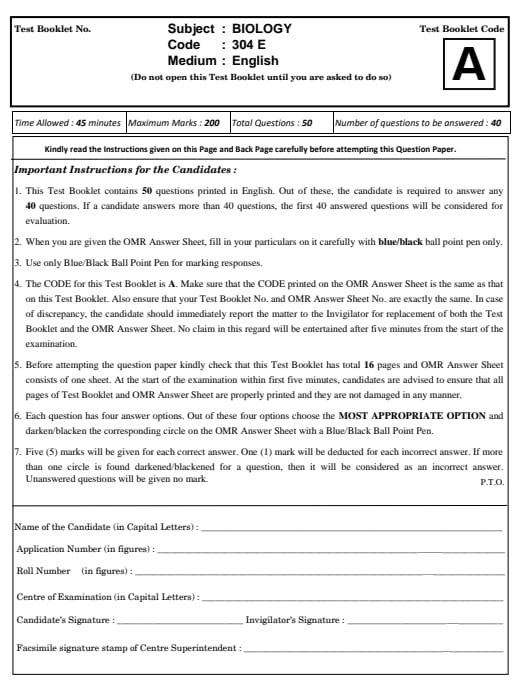
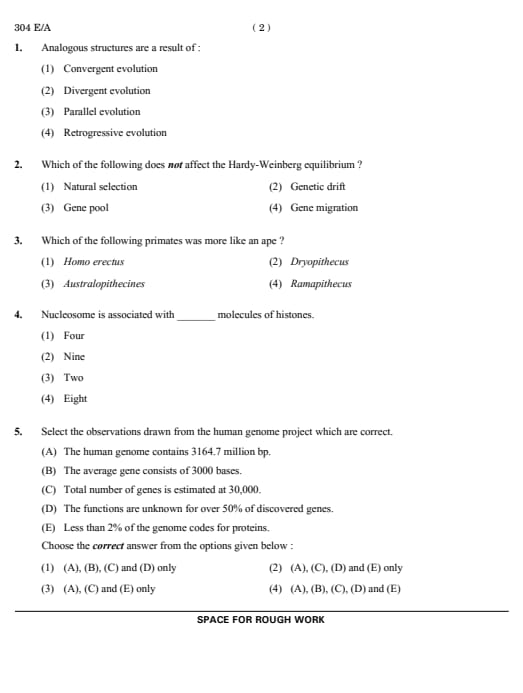
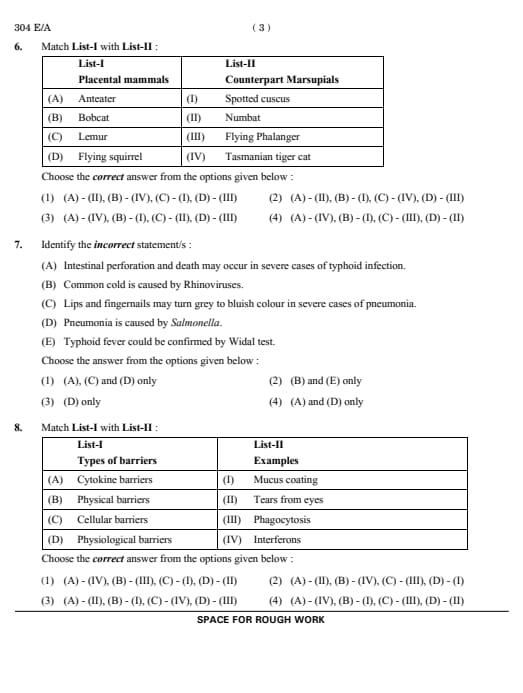
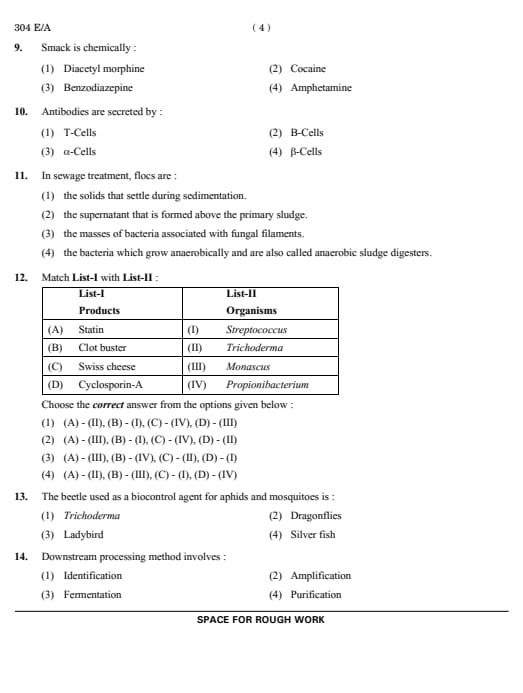
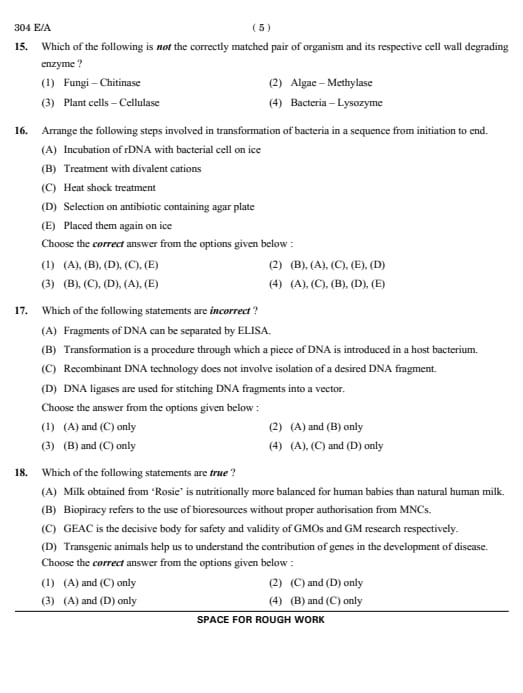
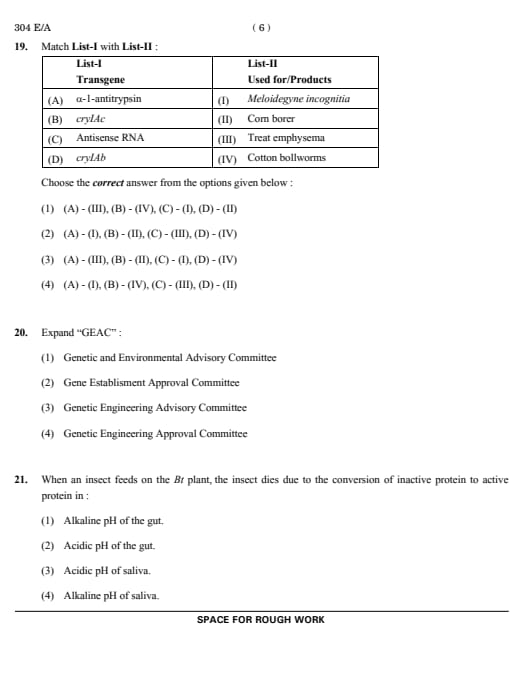
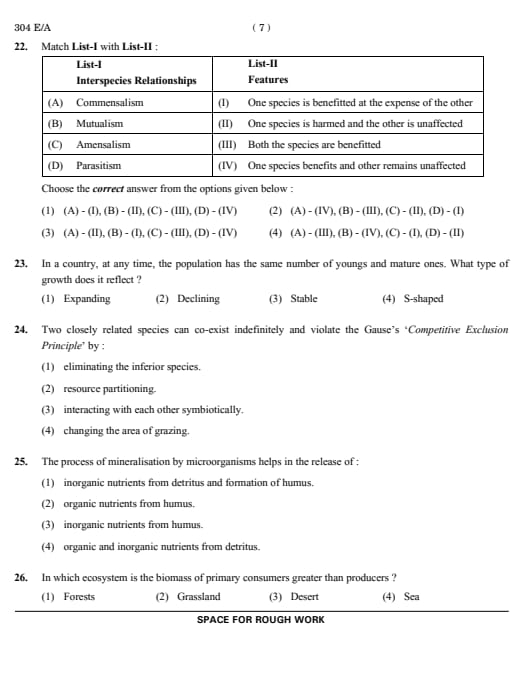
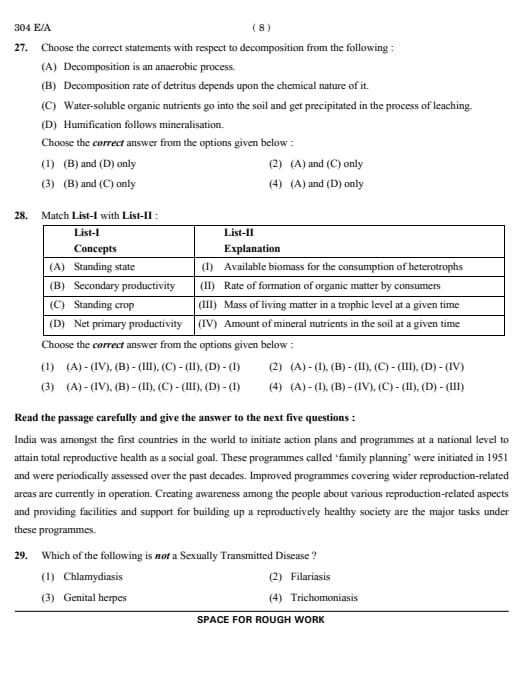
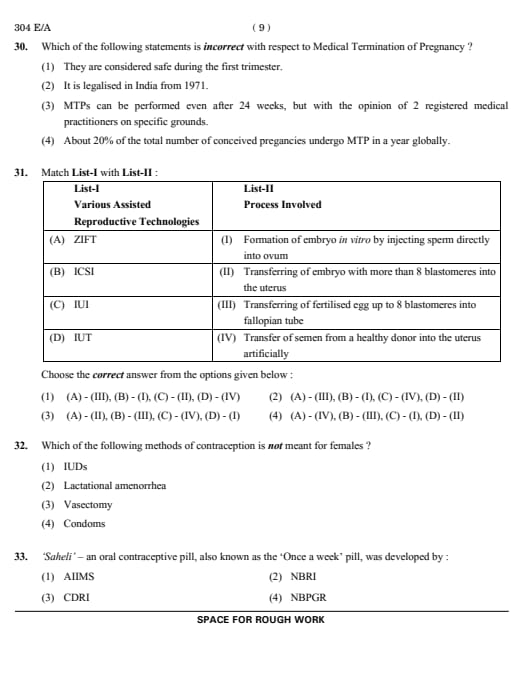
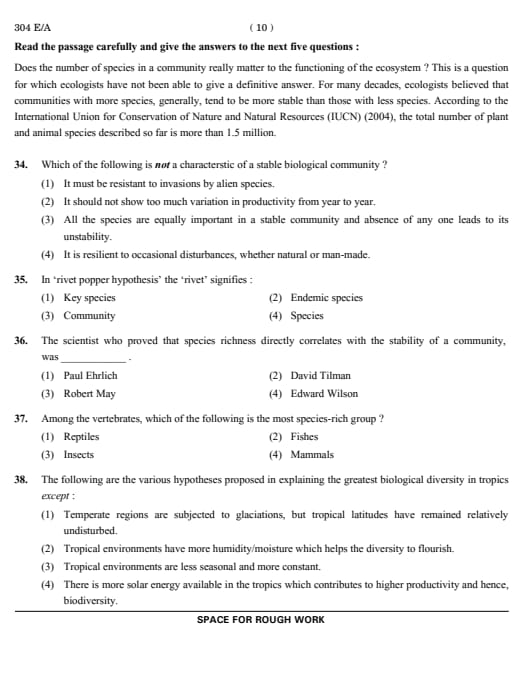
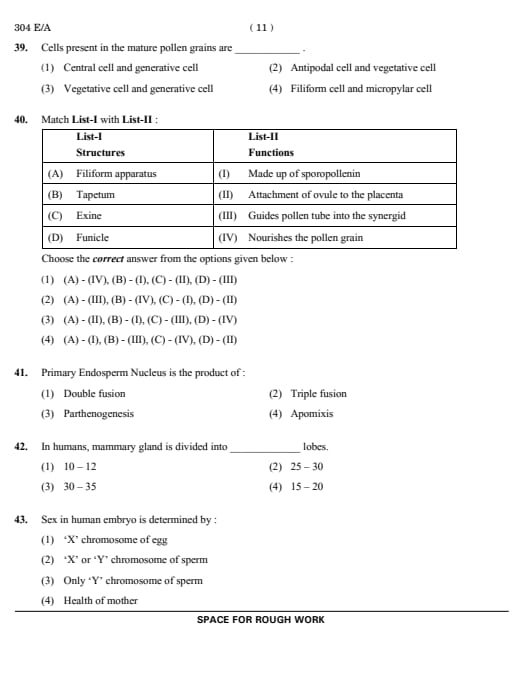
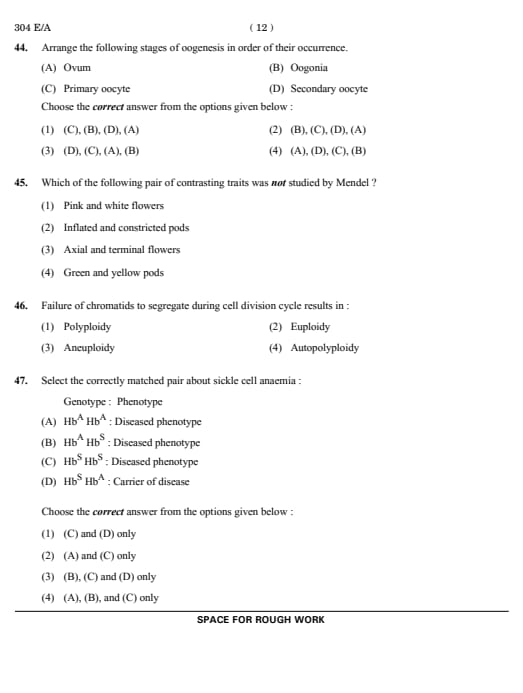
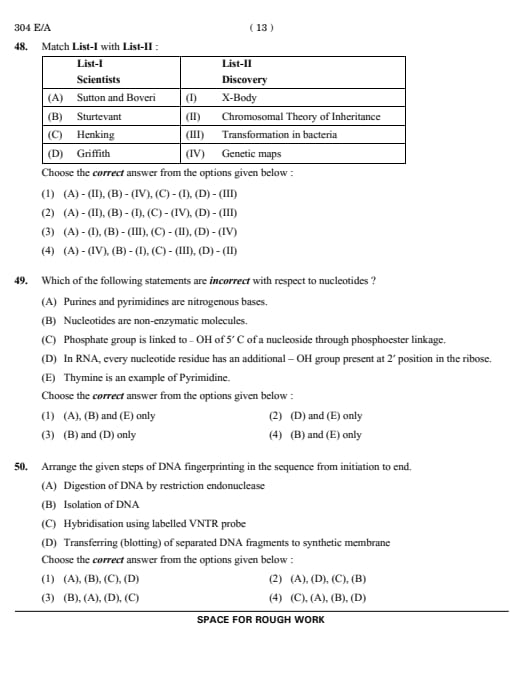


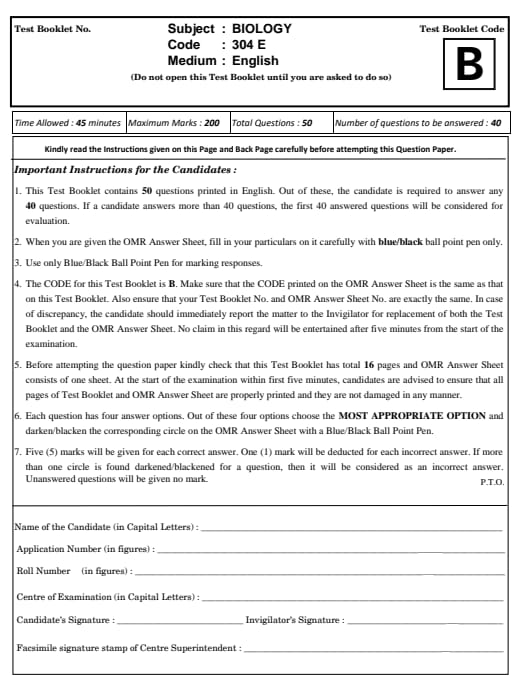
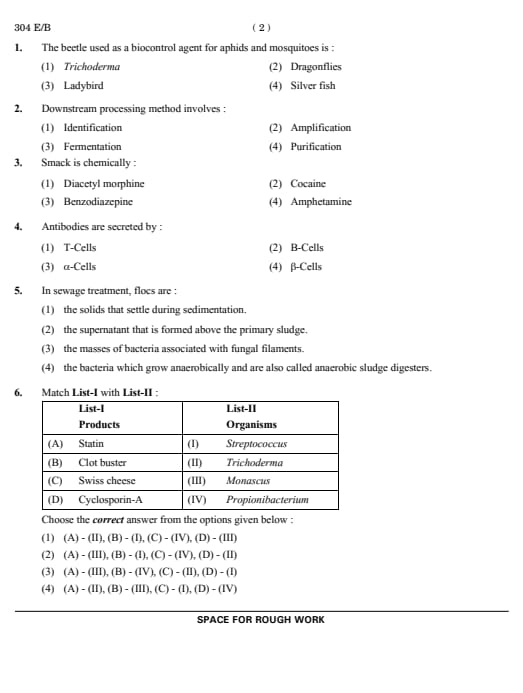
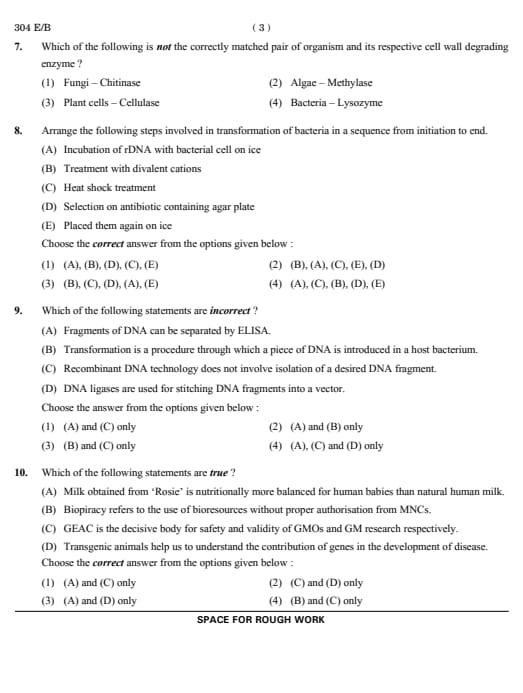
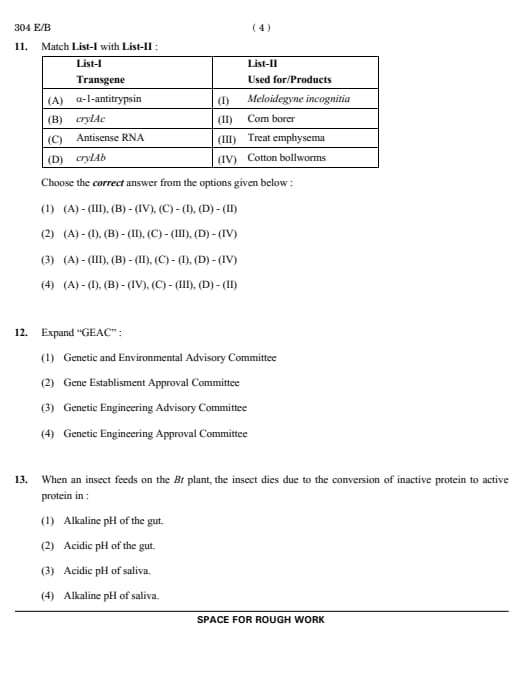
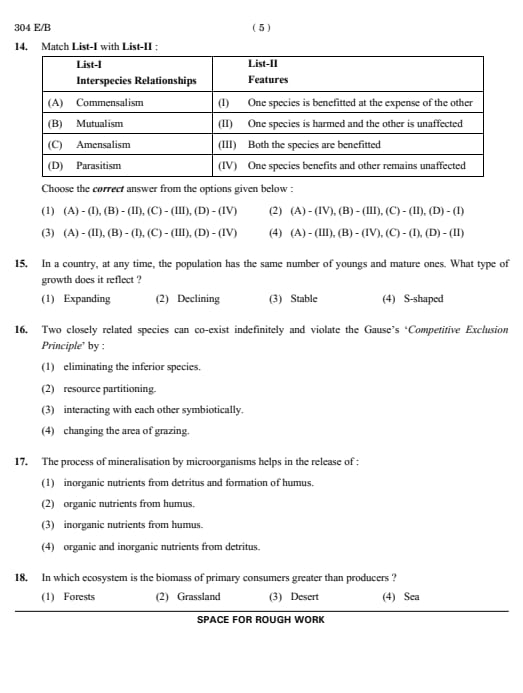
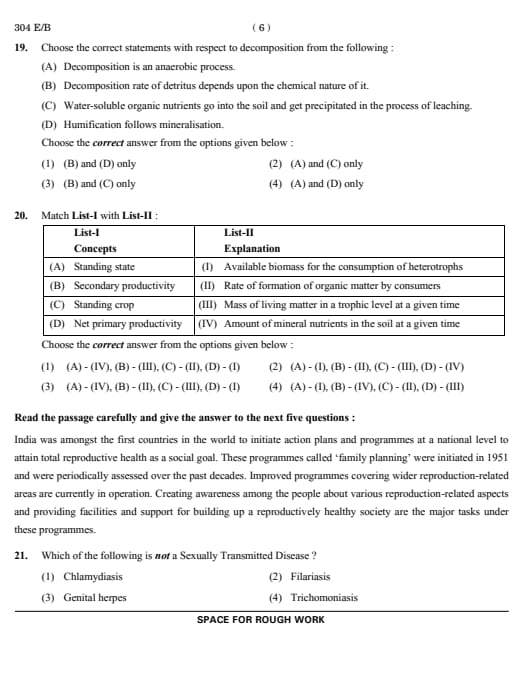
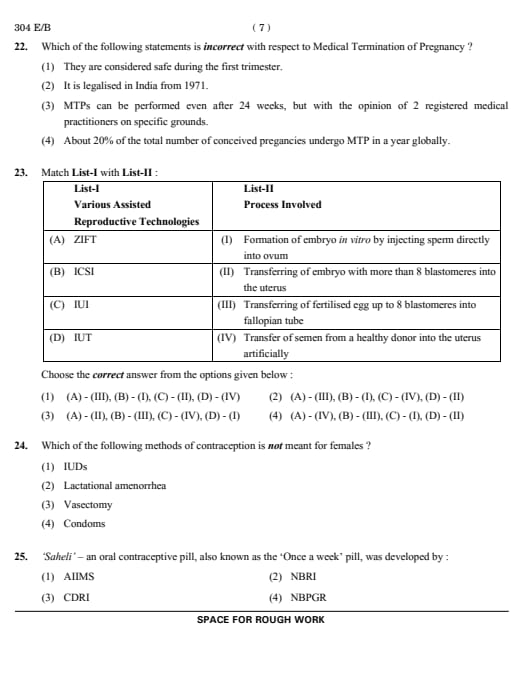
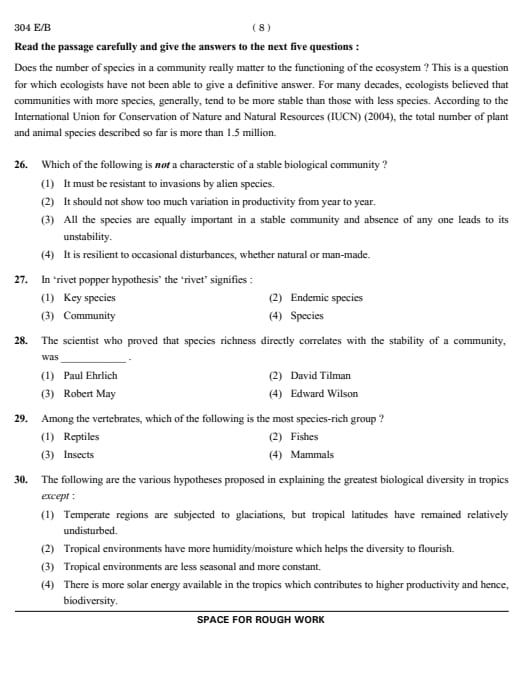
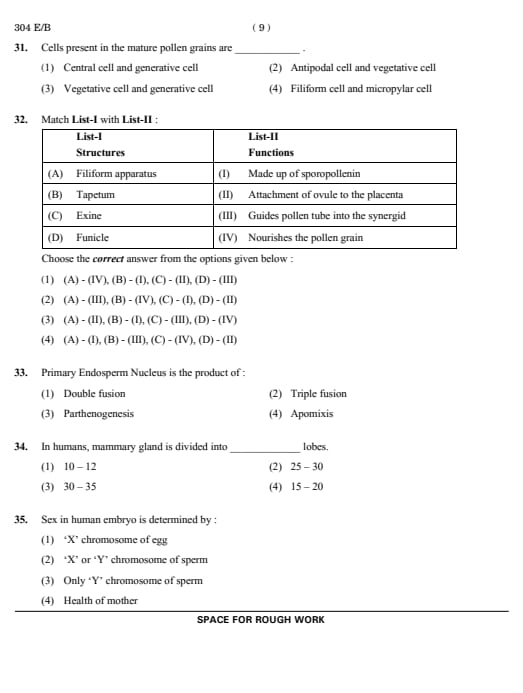
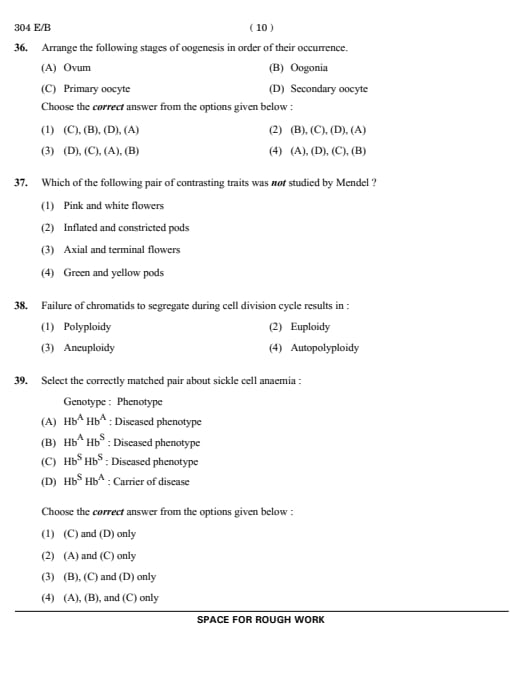
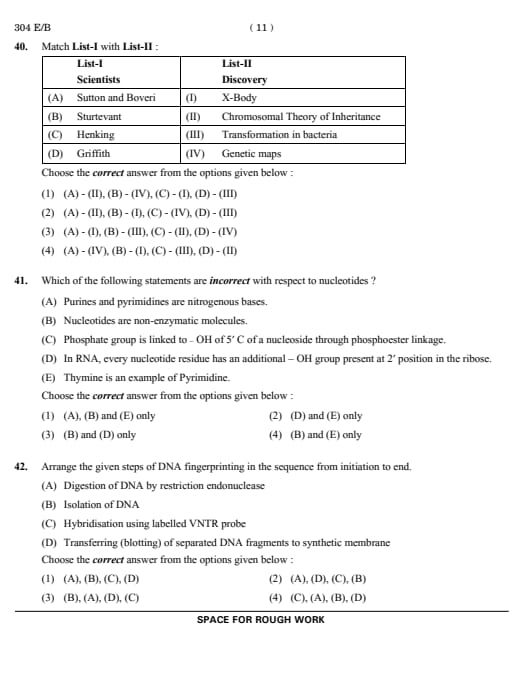
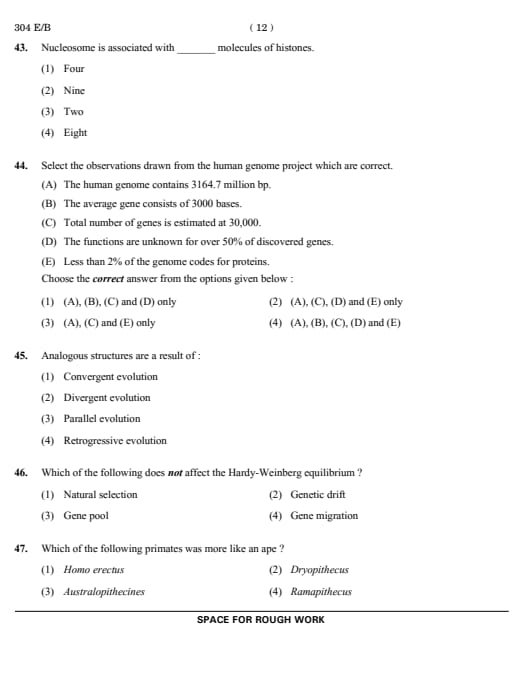
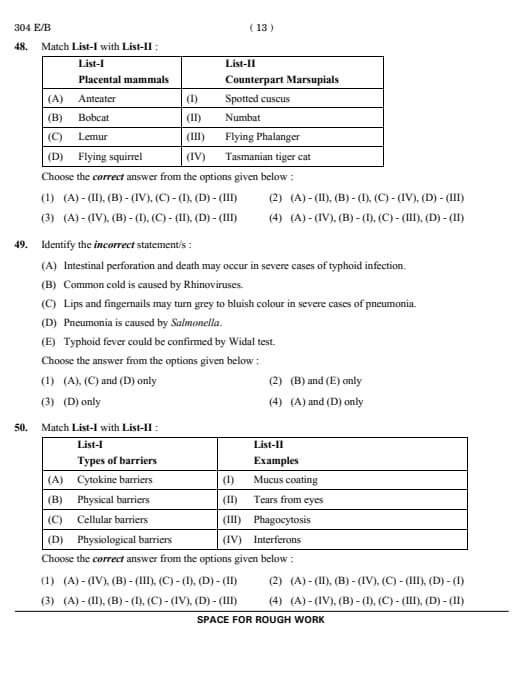


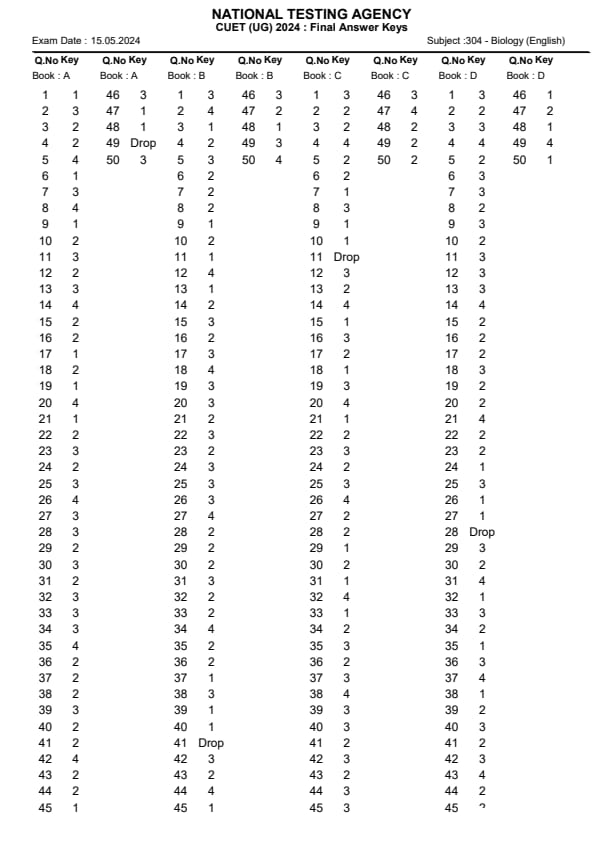

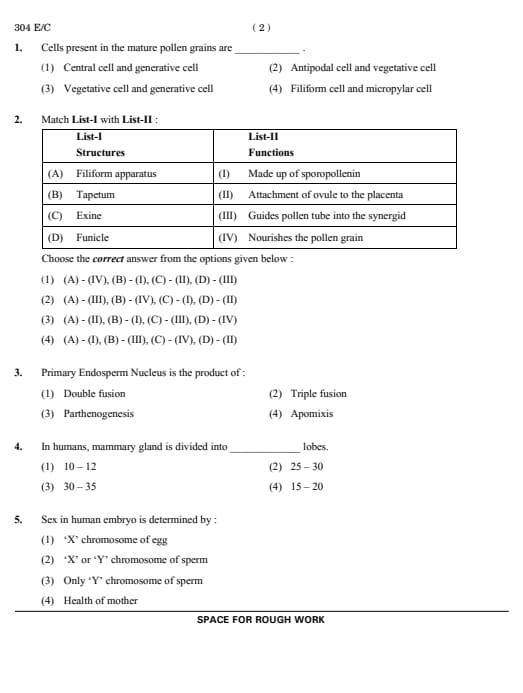


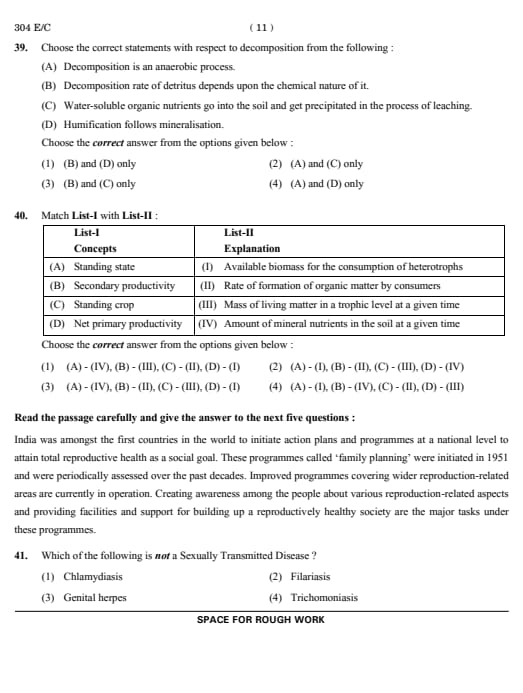


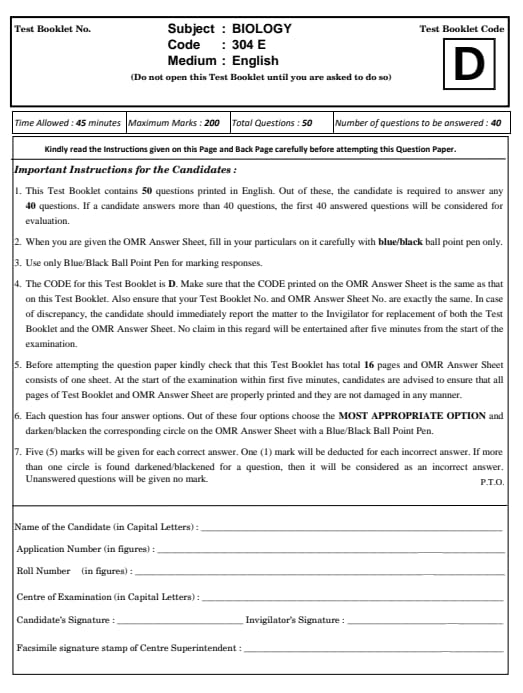
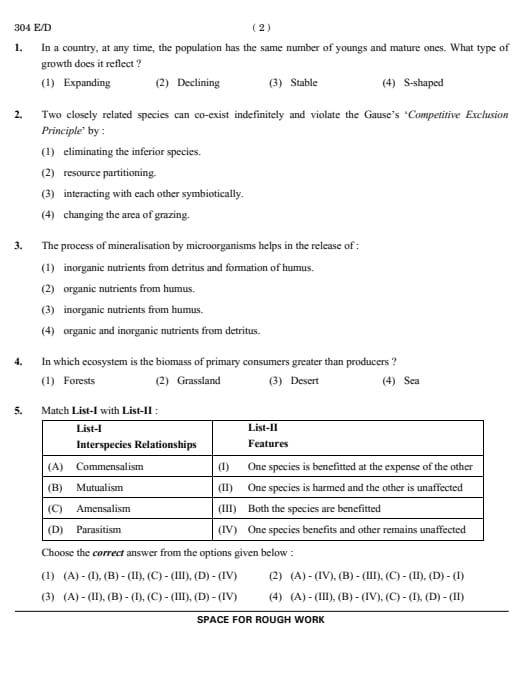
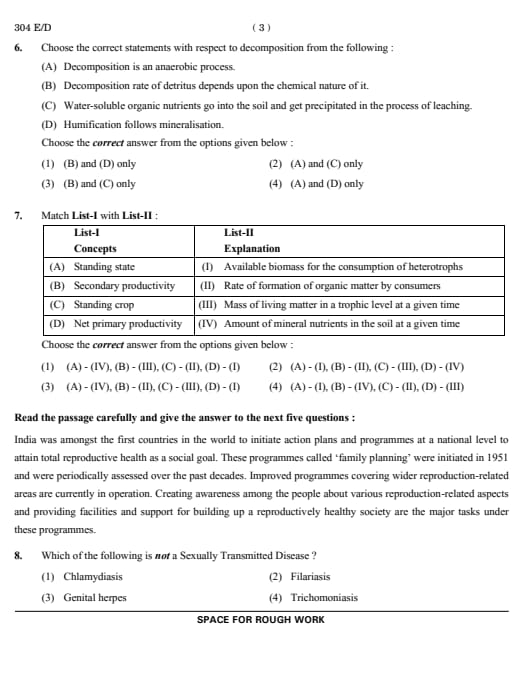
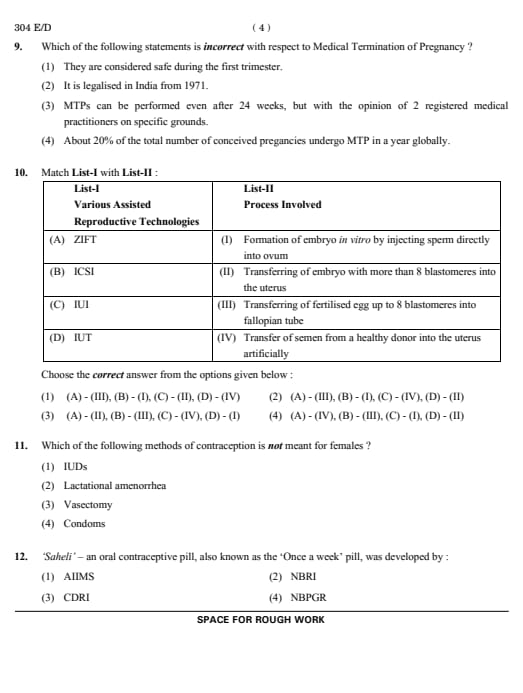
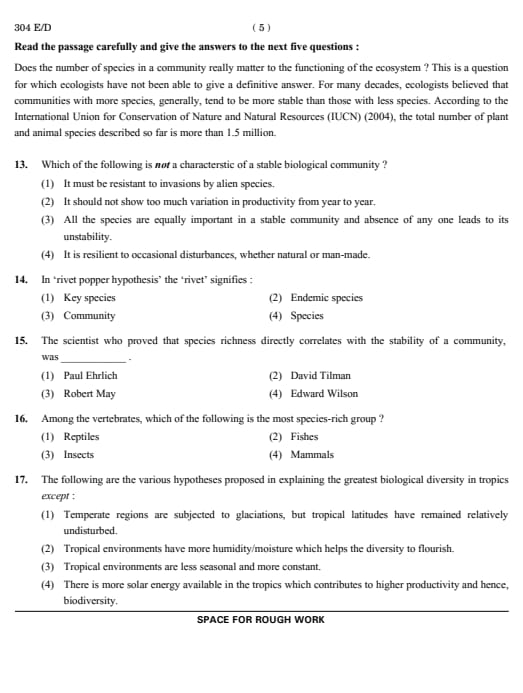
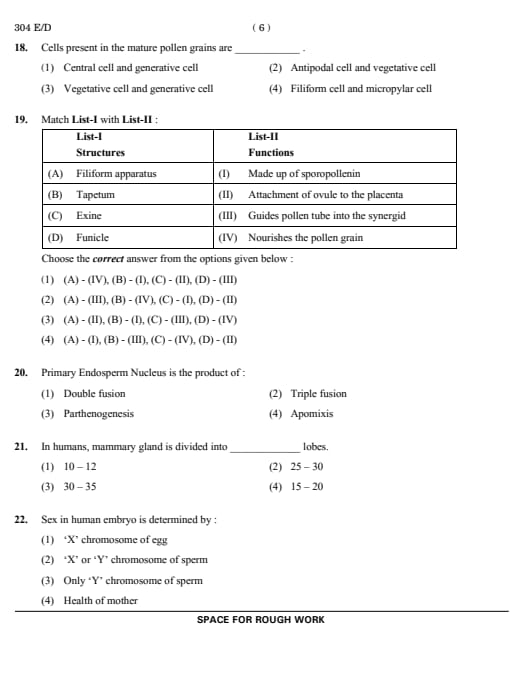
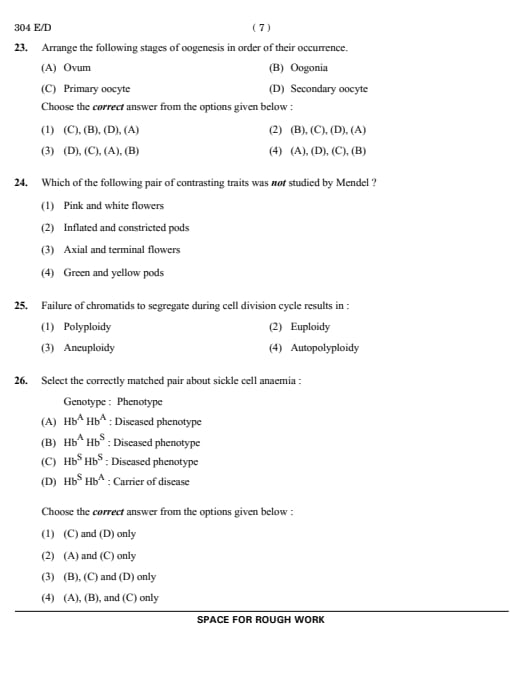
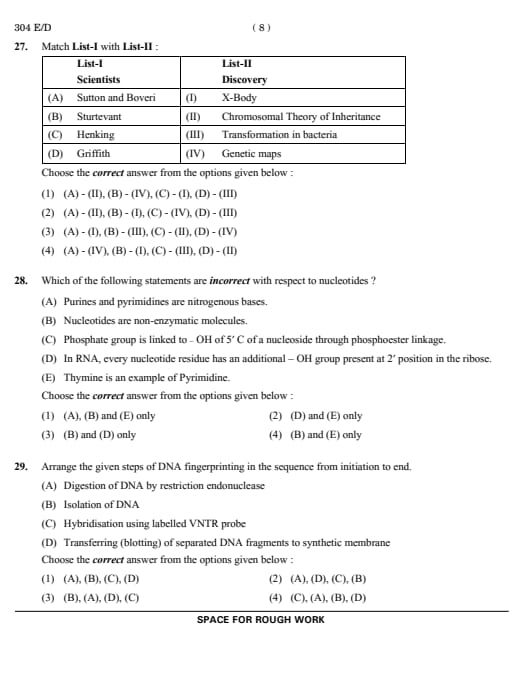
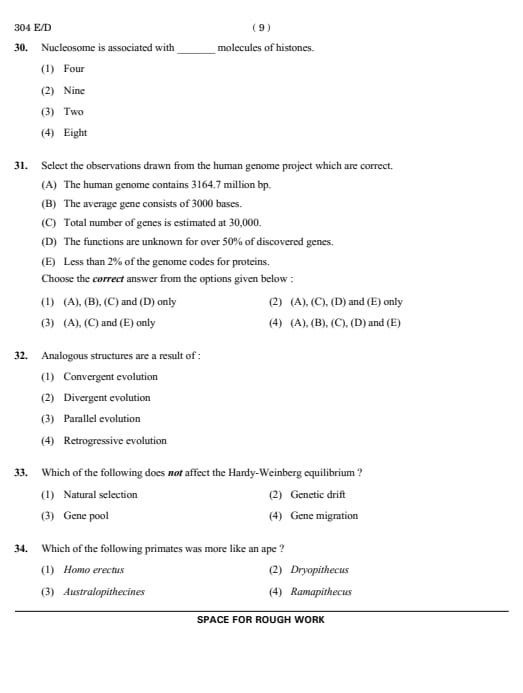
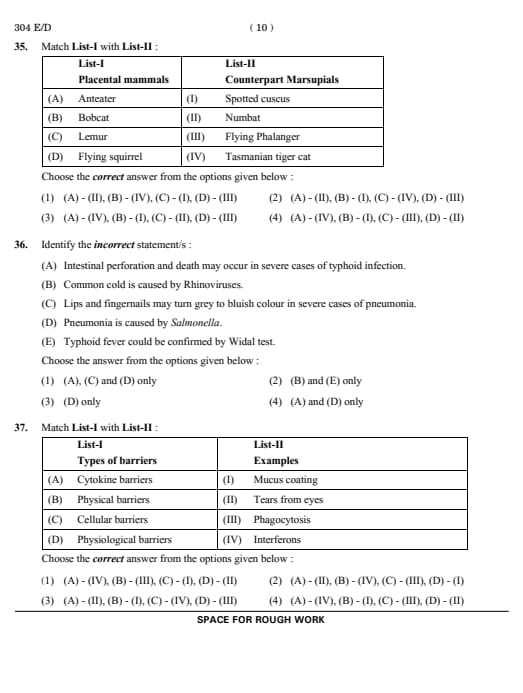
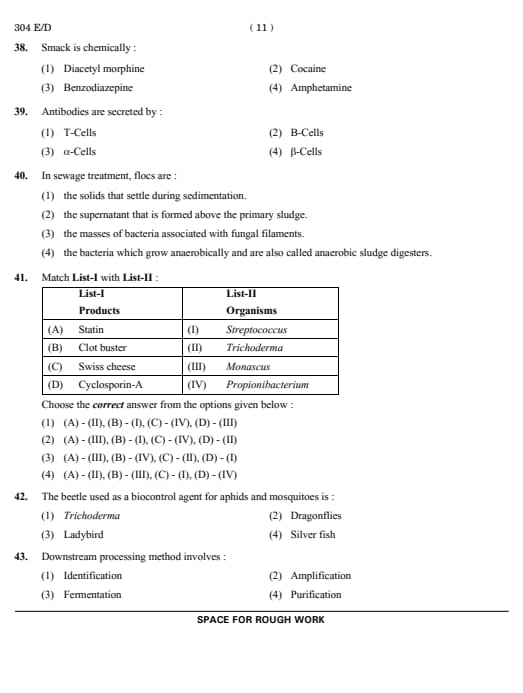
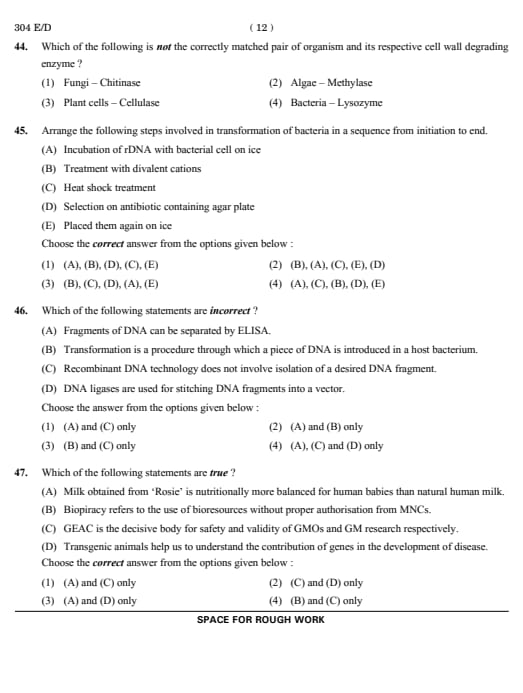
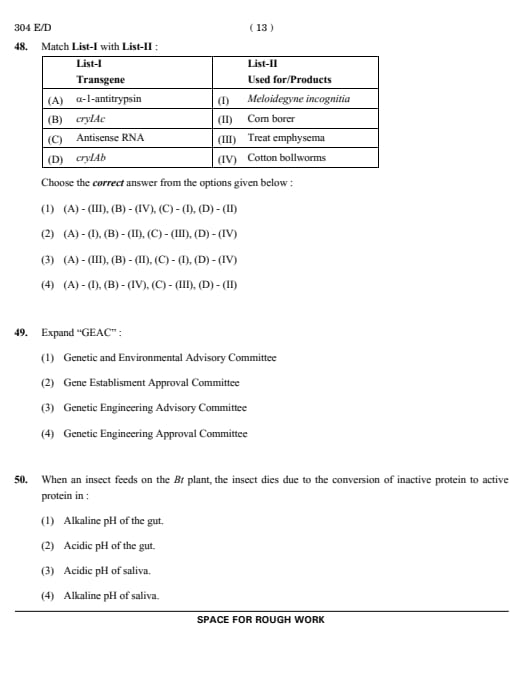


*The article might have information for the previous academic years, please refer the official website of the exam.