.jpg?tr=h-55,w-55,c-force)
The UP Board Class 12 Geography examination for Code 322 (EL) was conducted on March 5, 2024, by the Uttar Pradesh Madhyamik Shiksha Parishad (UPMSP). The exam took place in the afternoon session from 2:00 PM to 5:15 PM. The question paper comprised a total of 26 questions, covering various topics outlined in the syllabus. As per students' initial reactions, the Geography paper was reported to be of easy to moderate difficulty. The distribution of questions was balanced, assessing both theoretical knowledge and practical understanding of geographical concepts
UP Board Class 12 Geography examination (Code 322 (EL)) 2024 Answer Key With Solution
Candidates can download the UP Board Class 12 Geography Question Paper with Solution and Answer Key PDFs for Question Paper (Code 322 (EL)) using the link below.
| UP Board Class 12 Geography examination (Code 322 (EL)) 2024 Question Paper with Answer Key |  Download Download |
Check Solution |
UP Board Class 12 Geography examination Question Paper with Solutions
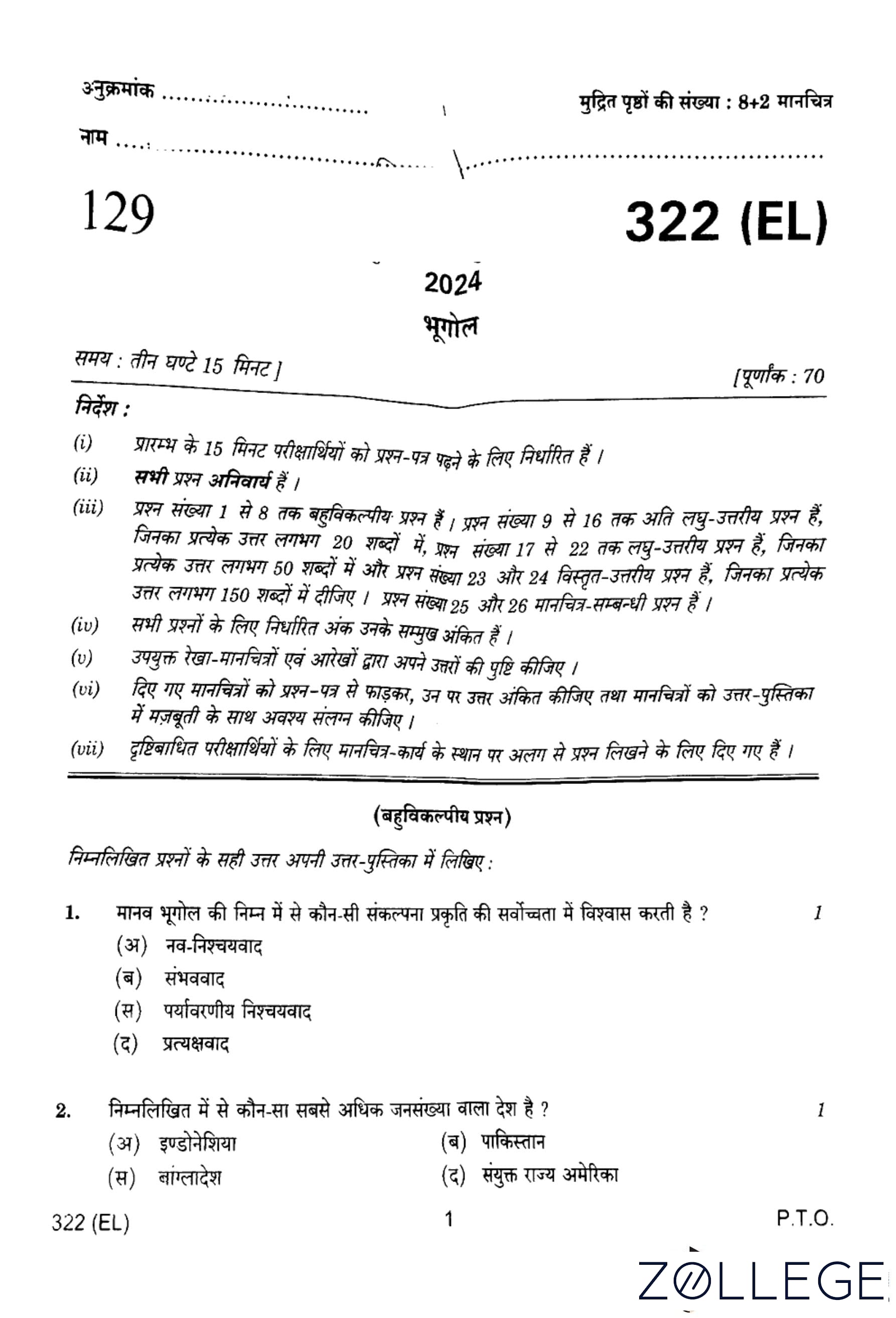
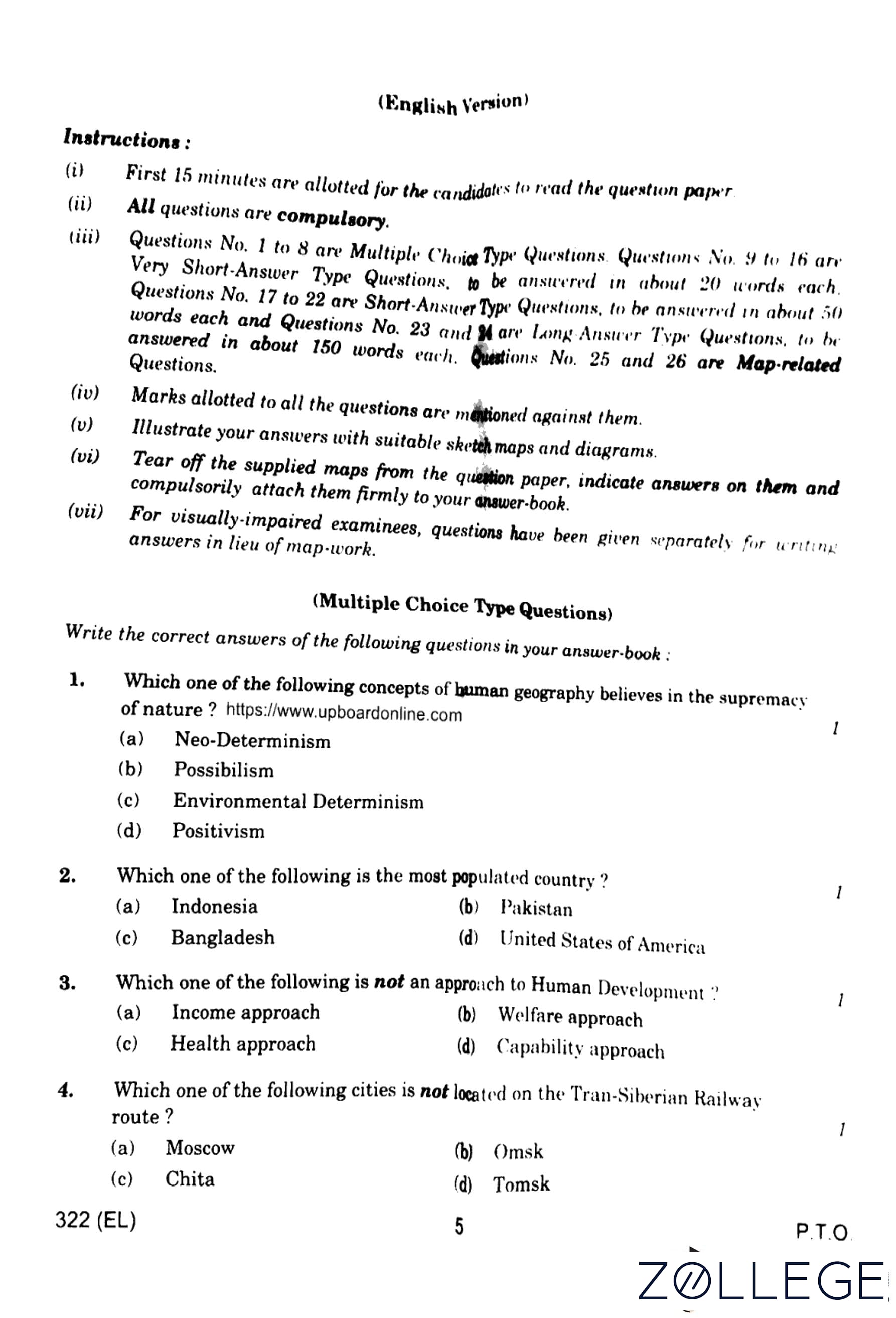
Question 1:
Which one of the following concepts of human geography believes in the supremacy of nature?
Correct Answer: (C) Environmental Determinism
View Solution
Environmental Determinism asserts that the physical environment, especially climate, dictates human behavior and societal development. This view emphasizes nature's control over human actions, limiting the scope of human agency and cultural variations. It suggests that human activities are predetermined by environmental factors, implying a direct causal relationship between nature and human progress.
Question 2:
Which one of the following is the most populated country?
Correct Answer: (A) Indonesia
View Solution
Indonesia is the fourth most populous country globally, with a population exceeding 270 million. Its large population is distributed across numerous islands, creating diverse cultural and linguistic landscapes. Factors contributing to its high population include a relatively young demographic profile, declining mortality rates, and sustained, albeit uneven, economic growth.
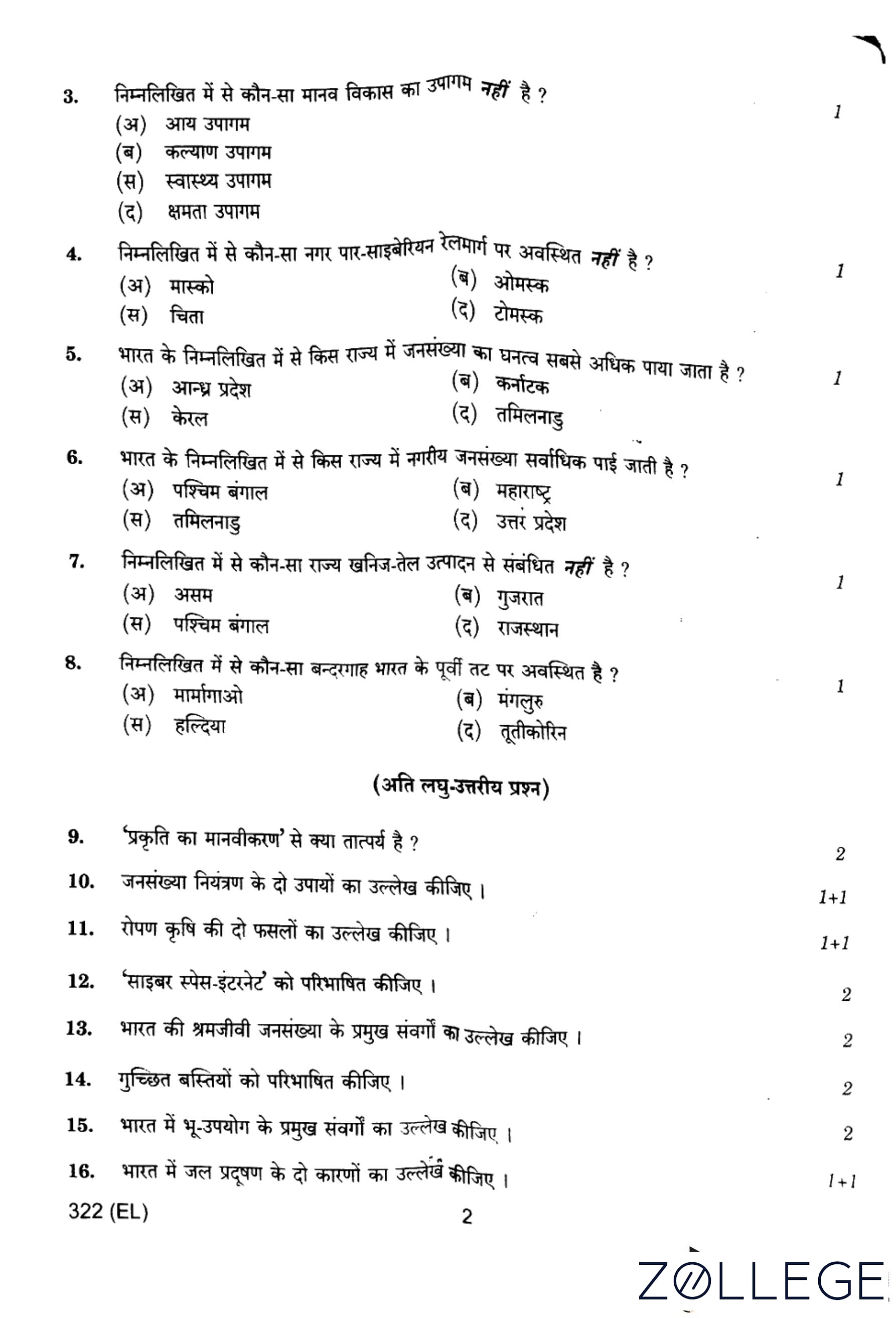
Question 3:
Which one of the following is not an approach to Human Development?
Correct Answer: (C) Health approach
View Solution
While health is a crucial component of human development, a distinct "health approach" isn't a recognized framework for measuring or analyzing human development. The established approaches include:
- Income Approach: Focuses on economic growth and per capita income as indicators of development.
- Welfare Approach: Emphasizes social indicators like education, healthcare, and housing as measures of well-being.
- Capability Approach: Prioritizes individual freedoms and opportunities to achieve desired outcomes, considering factors like health, education, and social justice.
Question 4:
Which one of the following cities is not located on the Trans-Siberian Railway route?
Correct Answer: (D) Tomsk
View Solution
The Trans-Siberian Railway's main line stretches from Moscow in the west to Vladivostok in the east, passing through cities like Omsk and Chita. Tomsk, while a significant city in Siberia, is located on a branch line and not directly on the primary route. Reaching Tomsk by rail requires a detour from the main Trans-Siberian line.
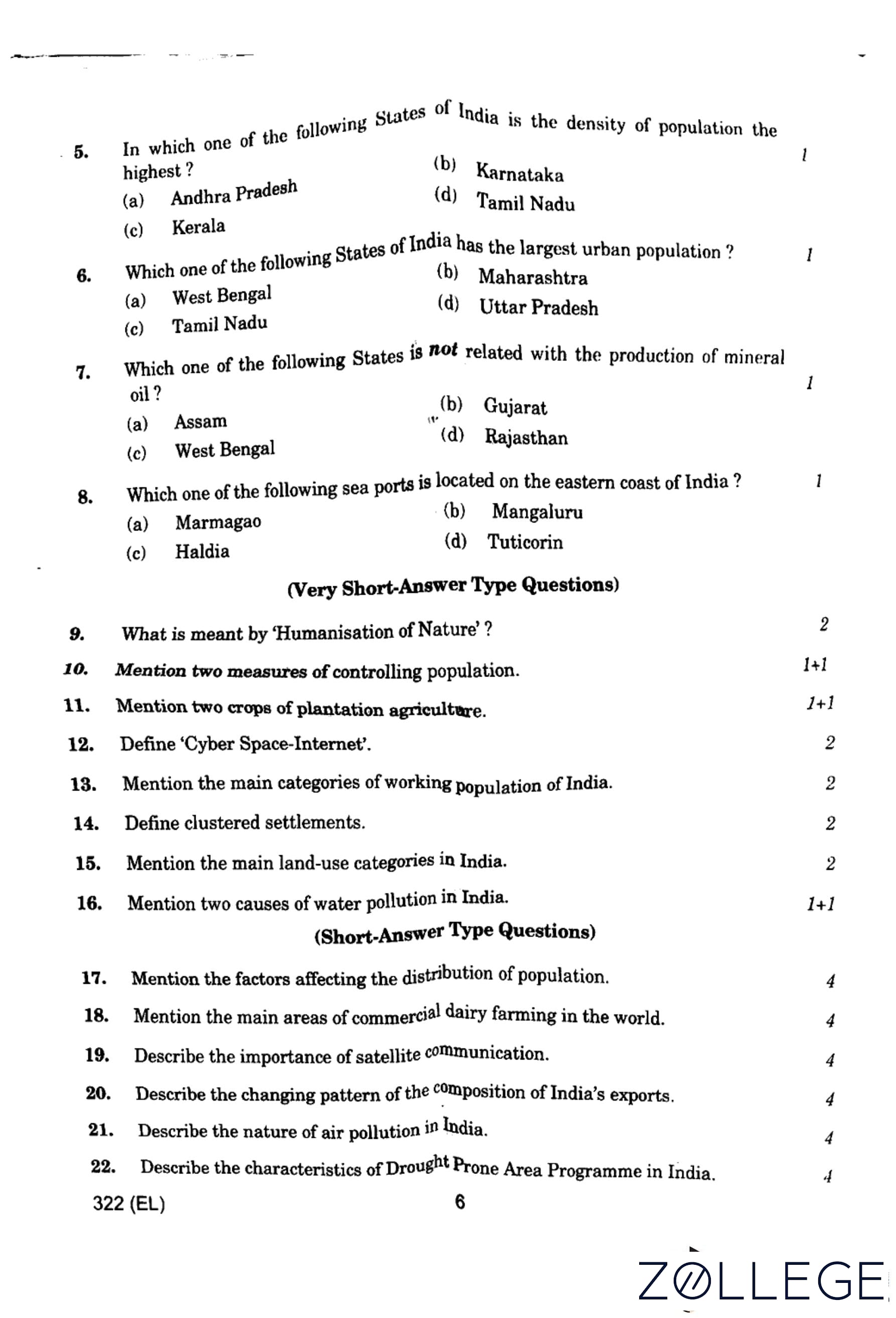
Question 5:
In which one of the following States of India is the density of population the highest?
Correct Answer: (C) Kerala
View Solution
Kerala has a high population density due to its relatively small geographical area and a large population. This density is influenced by factors like high birth rates, improved healthcare leading to lower mortality rates, and limited space for expansion due to the state's coastal geography and the Western Ghats mountain range.
Question 6:
Which one of the following States of India has the largest urban population?
Correct Answer: (B) Maharashtra
View Solution
Maharashtra's large urban population is primarily concentrated in major cities like Mumbai, Pune, Nagpur, and Thane. These cities act as significant industrial, commercial, and cultural hubs, attracting migrants from other parts of India and contributing to the state's high urbanization levels.
Question 7:
Which one of the following States is not related to the production of mineral oil?
Correct Answer: (C) West Bengal
View Solution
While Assam, Gujarat, and Rajasthan have significant oil and natural gas reserves and production facilities, West Bengal is not a major producer of mineral oil. Its primary energy resources are coal and, to a lesser extent, renewable energy sources.
Question 8:
Which one of the following seaports is located on the eastern coast of India?
Correct Answer: (D) Tuticorin (Thoothukudi)
View Solution
Tuticorin (now officially Thoothukudi), located in Tamil Nadu, is a major seaport on India's eastern coast. Marmagao and Mangaluru are on the western coast, while Haldia, although on the east coast, is a river port located inland on the Hooghly River in West Bengal.
Question 9:
What is meant by ‘Humanisation of Nature’?
View Solution
"Humanisation of Nature" describes the ongoing process by which humans transform natural landscapes to reflect their needs and values. This involves adapting to natural conditions, utilizing resources, and shaping the environment through agriculture, urbanization, industrial development, and technological innovation. This demonstrates the complex and dynamic relationship between humans and their surroundings, highlighting the extent of human influence on the natural world.
Question 10:
Mention two measures of controlling population.
View Solution
- Promoting Family Planning and Contraceptive Use: Providing accessible and affordable family planning services, including education and a range of contraceptive options, allows individuals to make informed choices about family size and spacing, thereby influencing birth rates.
- Spreading Awareness through Education: Educating communities about the social and economic benefits of smaller families, emphasizing gender equality, and promoting delayed marriages can contribute to changing social norms and encouraging responsible reproductive behavior.
Question 11:
Mention two crops of plantation agriculture.
View Solution
Plantation agriculture focuses on large-scale cultivation of cash crops for commercial purposes, often involving specific geographical conditions and labor arrangements. Two prominent examples:
- Tea: Requires warm, humid climates and specific soil conditions, making regions like Assam, Darjeeling (India), and Sri Lanka ideal for tea plantations.
- Coffee: Thrives in tropical and subtropical highlands, as seen in regions like Karnataka and Kerala (India), Colombia, and Brazil.
Question 12:
Define ‘Cyber Space-Internet’.
View Solution
Cyber Space-Internet is the virtual environment created by interconnected computer networks worldwide. It facilitates information exchange, communication, and access to online platforms, digital services, and data-sharing systems. Cyber Space has revolutionized various aspects of human life, including communication, commerce, education, and entertainment, by creating a borderless digital world.
Question 13:
Mention the main categories of working population of India.
View Solution
- Primary Sector: Direct extraction and utilization of natural resources (agriculture, fishing, forestry, mining).
- Secondary Sector: Processing raw materials into finished goods (manufacturing, construction, industrial production).
- Tertiary Sector: Provision of services (healthcare, education, IT, finance, retail, transportation).
Question 14:
Define clustered settlements.
View Solution
Clustered rural settlements are characterized by a concentration of houses in a relatively small area, often with limited space between dwellings. This pattern is commonly observed in fertile agricultural regions, where access to water and arable land is crucial. Clustered settlements can foster strong social bonds and facilitate shared resource management, but may also face challenges related to overcrowding and limited infrastructure.
Question 15:
Mention the main land-use categories in India.
View Solution
- Agricultural Land: Used for crop cultivation and horticulture.
- Forest Land: Designated for conservation and forestry practices.
- Wasteland: Barren or uncultivable land with limited productive potential.
- Land for Settlements and Infrastructure: Allocated for housing, industries, transportation networks, and public utilities.
Question 16:
Mention two causes of water pollution in India.
View Solution
- Industrial Discharge: Untreated effluents containing heavy metals, chemicals, and other toxins released into water bodies.
- Agricultural Runoff: Pesticides, fertilizers, and other agrochemicals from farms contaminating surface and groundwater.
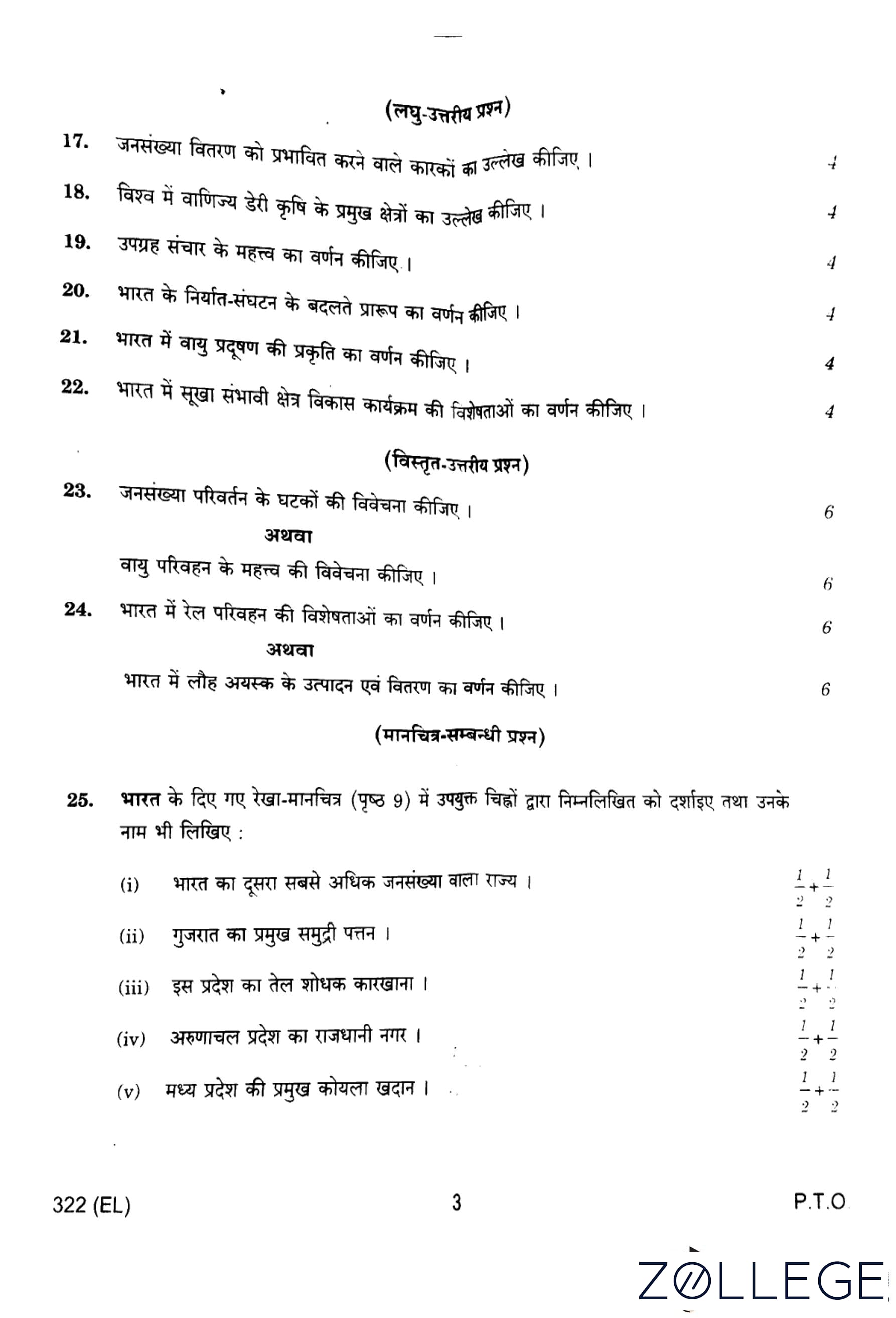
Question 17:
Mention the factors affecting the distribution of population.
View Solution
Population distribution is influenced by a complex interplay of factors:
- Physical Factors: Climate, topography, water resources, soil fertility.
- Economic Factors: Job opportunities, industrial development, access to resources, infrastructure.
- Social Factors: Cultural preferences, historical settlement patterns, access to education and healthcare, social networks.
- Political Factors: Government policies, political stability, migration regulations.
Question 18:
Mention the main areas of commercial dairy farming in the world.
View Solution
- North American Prairies (USA, Canada): Extensive grasslands suitable for large-scale cattle grazing.
- European Steppes (Netherlands, Germany, France): Fertile pastures and advanced dairy farming technologies.
- New Zealand: Temperate climate and abundant grazing land support a substantial dairy industry.
- Southern Australia: Favorable climate and grazing resources contribute to commercial dairy farming.
Question 19:
Describe the importance of satellite communication.
View Solution
Satellite communication is crucial for:
- Long-Distance Communication: Facilitates television broadcasts, radio signals, and internet connectivity across vast geographical areas.
- Weather Forecasting and Disaster Management: Provides real-time weather data, enabling accurate forecasts and timely warnings for natural disasters.
- Navigation: Supports Global Positioning System (GPS) technology for precise location tracking and navigation.
- Global Connectivity and Economic Growth: Enables seamless communication across borders, fostering international trade and economic development.
Question 20:
Describe the changing pattern of the composition of India’s exports.
View Solution
India's export composition has shifted significantly:
- From Agricultural to Manufactured Goods: A transition from traditional agricultural exports (tea, spices, jute) towards manufactured products (textiles, machinery, engineering goods).
- Growth of Software and IT Services: A significant increase in software and IT-enabled services exports, making India a global IT hub.
- Decline in Traditional Goods: Reduced export share of traditional items like jute and leather due to global competition and changing demand patterns.
- Increase in Petroleum Product Exports: Growth in refined petroleum product exports due to increased refining capacity.
Question 21:
Describe the nature of air pollution in India.
View Solution
Air pollution in India is a complex issue with diverse sources and severe impacts:
- Sources: Vehicular emissions, industrial discharges, construction activities, biomass burning, and seasonal factors like dust storms and stubble burning.
- Urban Smog: High pollutant concentrations, especially during winter, lead to smog formation in major cities, severely reducing air quality and visibility.
- Health Impacts: Respiratory and cardiovascular diseases, exacerbated by prolonged exposure to pollutants.
- Climate Change Contribution: Greenhouse gas emissions from various sources contribute to global warming and climate change.
Question 22:
Describe the characteristics of Drought Prone Area Programme in India.
View Solution
The Drought Prone Area Programme (DPAP) in India focuses on mitigating the adverse effects of drought through integrated development:
- Water Conservation and Irrigation: Implementing watershed development projects, promoting rainwater harvesting, and improving irrigation efficiency.
- Afforestation and Soil Conservation: Planting trees and implementing soil conservation measures to enhance soil fertility and reduce land degradation.
- Diversification of Livelihoods: Promoting drought-resistant crops, agroforestry, animal husbandry, and other sustainable income-generating activities.
- Drought-Resistant Crops: Encouraging the cultivation of crops that require less water and can withstand dry spells.
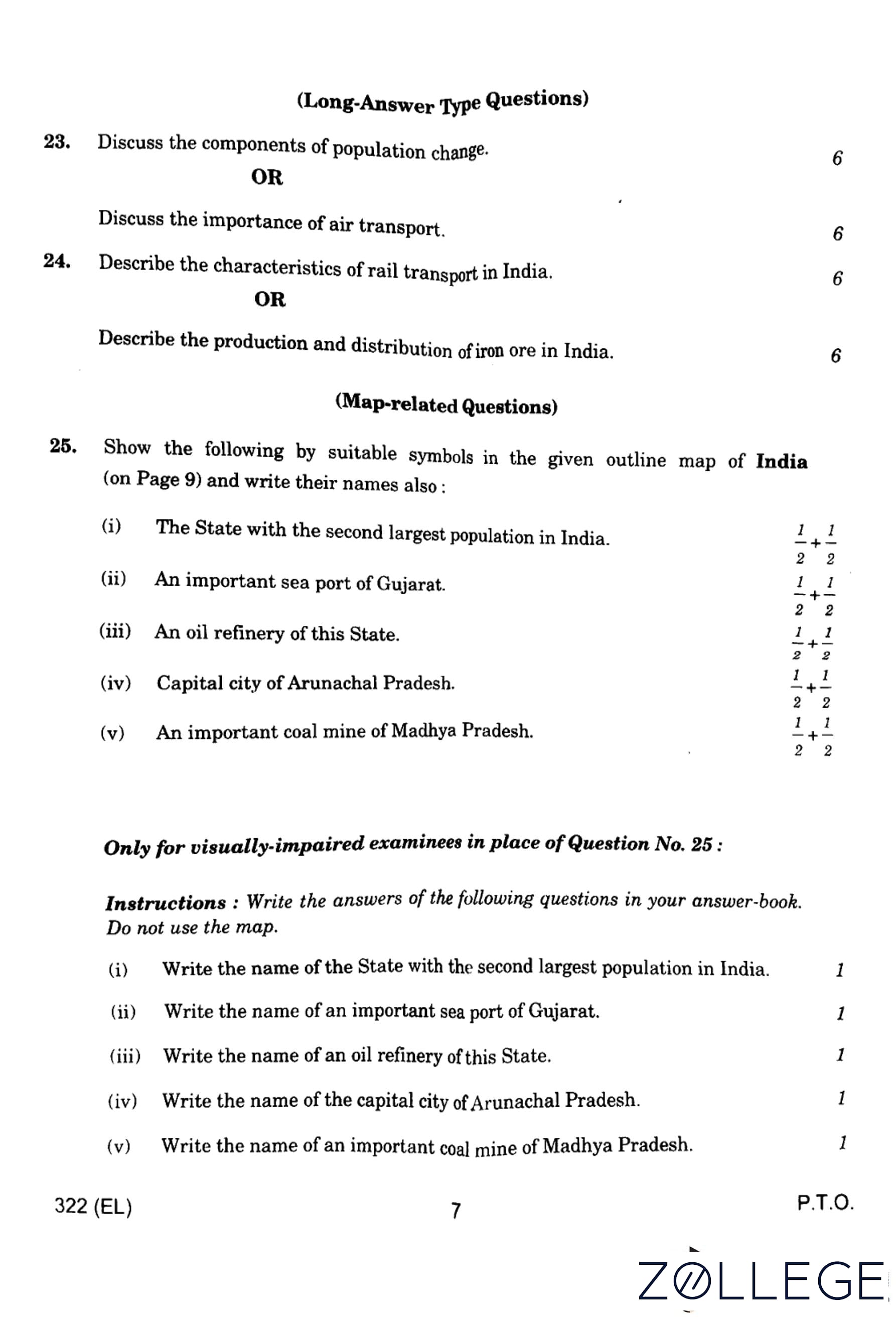
Question 23:
Discuss the components of population change.
View Solution
Population change is driven by three core components:
- Birth Rate: The number of live births per 1,000 people per year. Influenced by factors like cultural norms, economic conditions, healthcare access, and family planning practices. A high birth rate contributes to population growth.
- Death Rate: The number of deaths per 1,000 people per year. Affected by healthcare quality, nutrition, sanitation, and disease prevalence. A declining death rate, often due to improved healthcare, can lead to population increase.
- Migration: The movement of people between regions or countries. Can be internal (within a country) or international. Driven by factors like economic opportunities, political stability, and environmental conditions. Affects population size and composition in both origin and destination areas.
Question 23 (OR):
Discuss the importance of air transport.
View Solution
Air transport is crucial for:
- Rapid Connectivity: Significantly reduces travel time over long distances, facilitating business, tourism, and personal travel.
- Economic Growth: Enables efficient movement of goods, supporting international trade and tourism, boosting economies.
- Disaster Relief: Essential for delivering aid, supplies, and personnel quickly to disaster-stricken areas.
- Globalization: Promotes cultural exchange, facilitates international business and cooperation, fostering interconnectedness.
- National Defense: Allows rapid deployment of troops, equipment, and resources for strategic advantage and security.
Question 24:
Describe the characteristics of rail transport in India.
View Solution
Indian Railways is characterized by:
- Extensive Network: One of the world's largest rail networks, connecting diverse regions across the country.
- Key Role in Freight and Passenger Transport: Carries a substantial share of both goods and passengers, contributing significantly to the economy.
- Zonal and Divisional Structure: Divided into zones for efficient management and operation.
- Connectivity to Remote Areas: Links remote and rural regions with urban centers, facilitating development.
- Support for Industrial Development: Enables efficient transport of raw materials and finished goods, boosting industrial growth.
Question 24 (OR):
Describe the production and distribution of iron ore in India.
View Solution
Production:
- India is a leading global producer of iron ore, primarily hematite and magnetite.
- Major production is concentrated in Odisha, Chhattisgarh, and Karnataka.
- Odisha is the largest producing state.
Distribution:
- Odisha (over 50% of national production).
- Chhattisgarh (Bailadila mines known for high-grade ore).
- Karnataka (Kudremukh mines rich in magnetite).
Exports:
- Major export destinations include China, Japan, and South Korea.
- Exports contribute significantly to foreign exchange earnings.
Question 25:
Question 1:
Write the name of the State with the second largest population in India.
Correct Answer: Maharashtra
View Solution
Maharashtra is the State with the second largest population in India. Located on the western coast, Maharashtra has a population of over 120 million people. It is one of the most developed states in India, with Mumbai, the financial capital, being the most populous city. Maharashtra plays a key role in India’s economy due to its thriving industrial sector, including manufacturing, IT, and entertainment industries.
Question 2:
Write the name of an important sea port of Gujarat.
Correct Answer: Kandla
View Solution
Kandla is an important sea port in Gujarat. Located on the west coast, near the Gulf of Kutch, Kandla is one of the busiest ports in India. It serves as a major gateway for imports and exports, especially petroleum, chemicals, and textiles. The port plays a significant role in the economic development of Gujarat and the surrounding regions.
Question 3:
Write the name of an oil refinery of this State (Gujarat).
Correct Answer: Jamnagar
View Solution
Jamnagar in Gujarat is home to one of the largest oil refineries in India. The Jamnagar Refinery, owned by Reliance Industries, is the largest refinery in India and one of the largest in the world. It plays a crucial role in the country’s petroleum processing and export, handling crude oil refining, petrochemicals, and the production of various petroleum products. The refinery significantly contributes to the economic growth of Gujarat and India’s energy security.
Question 4:
Write the name of the capital city of Arunachal Pradesh.
Correct Answer: Itanagar
View Solution
Itanagar is the capital city of Arunachal Pradesh. Located in the northeastern part of India, Itanagar serves as the administrative and political center of the state. The city is known for its scenic beauty, with lush green landscapes, forests, and hills. Itanagar is also an important hub for tourism, providing access to nearby tribal areas and cultural heritage sites.
Question 5:
Write the name of an important coal mine of Madhya Pradesh.
Correct Answer: Singrauli
View Solution
Singrauli is an important coal mining region in Madhya Pradesh. Located in the northeastern part of the state, Singrauli is home to several large coal mines that supply coal for power generation and other industries. The region is often referred to as the “Energy Capital of India” due to its contribution to the country’s coal-based energy production. Singrauli plays a key role in meeting India’s energy demands, particularly through thermal power plants.
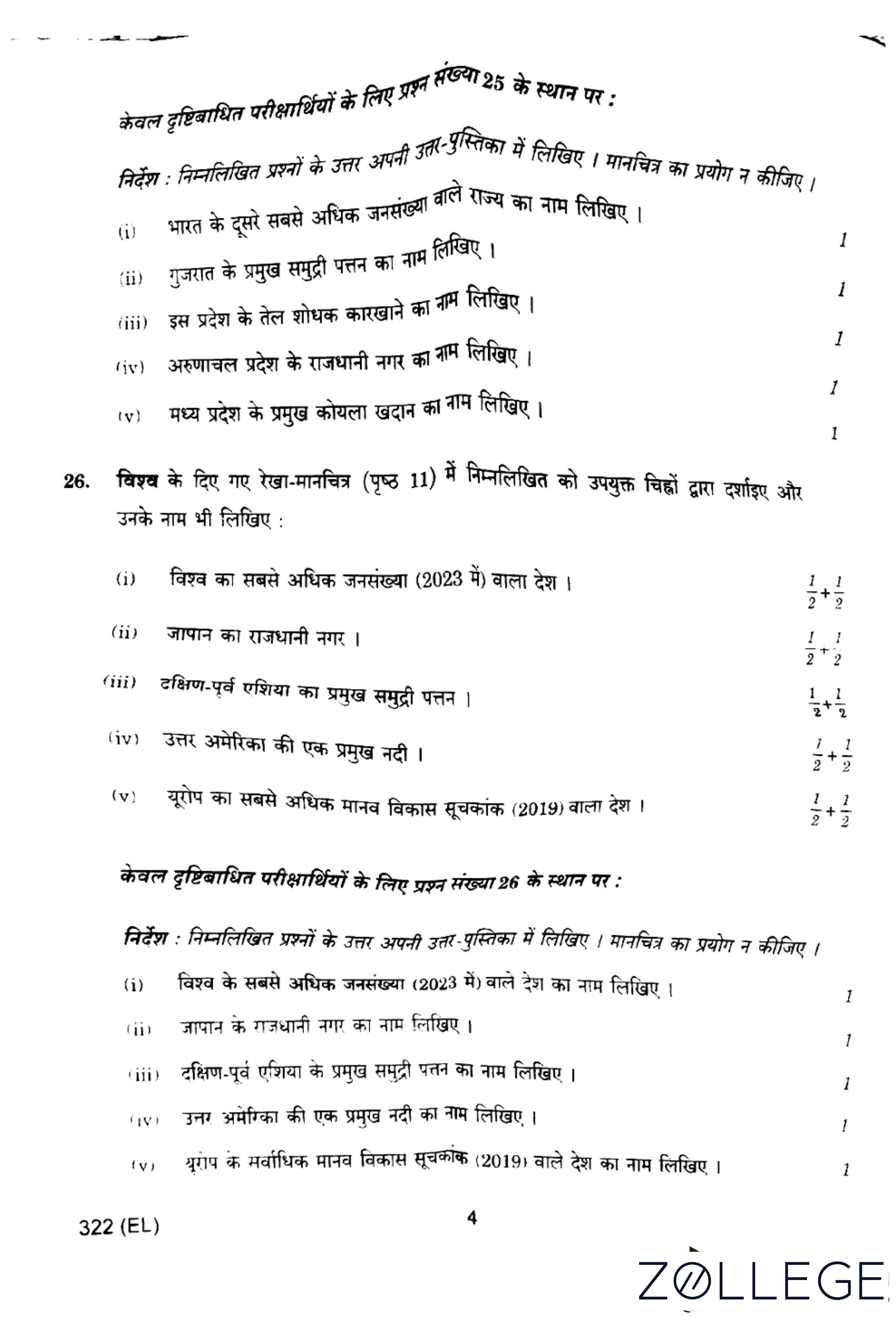
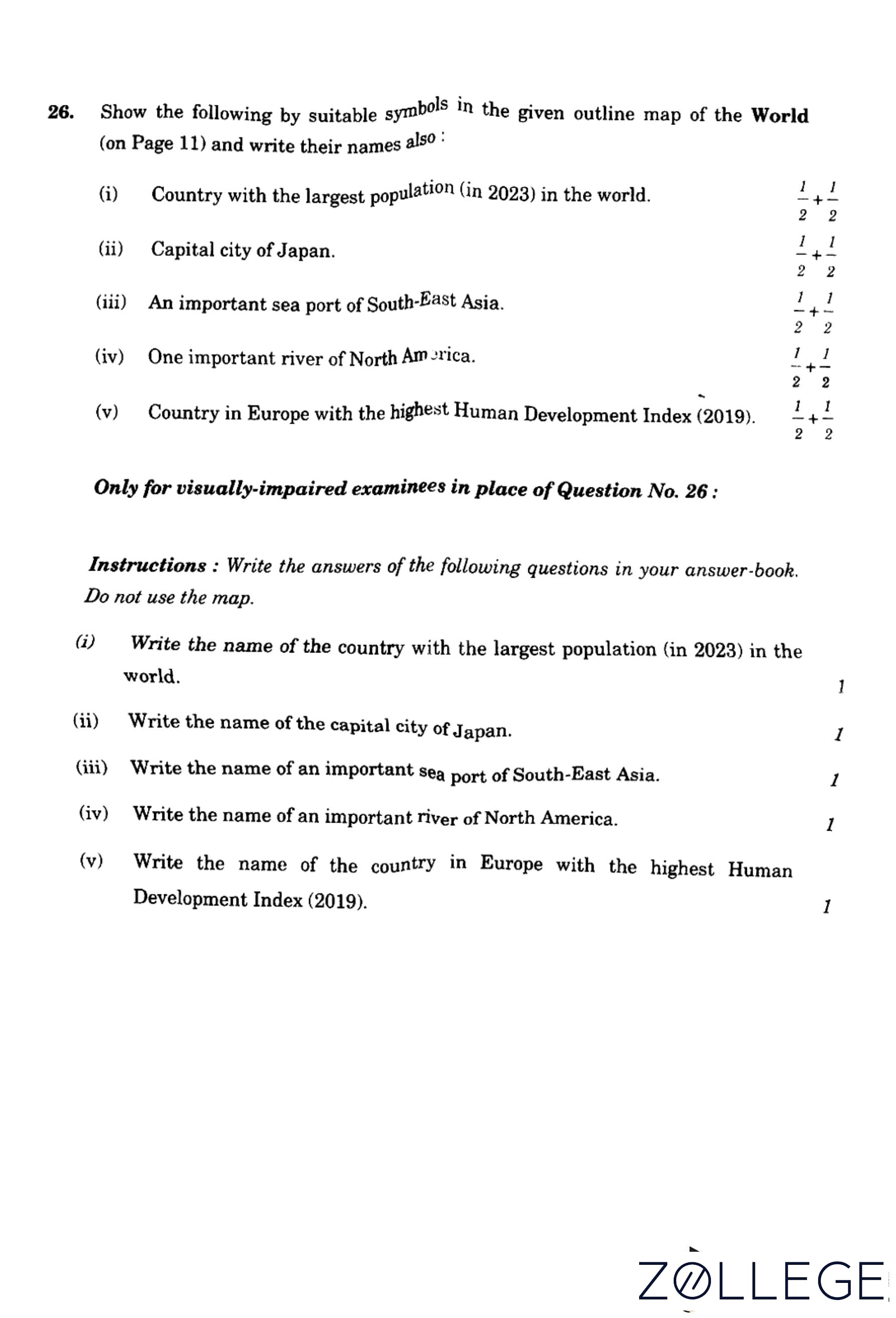
Question 26:
Question 1:
Country with the largest population (in 2023) in the world.
Correct Answer: India
View Solution
India is the country with the largest population in 2023. With over 1.4 billion people, India has surpassed China in population size. This rapid population growth is due to a combination of factors, including high birth rates and improved healthcare, which has led to longer life expectancy. India’s demographic shift is expected to have a significant impact on its economy, social structures, and infrastructure needs in the coming years.
Question 2:
Capital city of Japan.
Correct Answer: Tokyo
View Solution
Tokyo is the capital city of Japan. It is one of the most populous and technologically advanced cities in the world, known for its blend of modern architecture and traditional culture. Tokyo is a global center for finance, technology, and culture, and it has one of the most efficient public transportation systems globally. The city is also famous for its cuisine, historical landmarks, and vibrant lifestyle.
Question 3:
An important sea port of South-East Asia.
Correct Answer: Singapore
View Solution
Singapore is a significant sea port in South-East Asia. It is one of the busiest and most important ports in the world, serving as a critical gateway for global shipping and trade. The Port of Singapore handles a wide range of goods, including oil, containerized cargo, and manufactured products. Its strategic location along the Strait of Malacca enables it to facilitate maritime trade between the East and West, contributing to its status as a global maritime hub.
Question 4:
One important river of North America.
Correct Answer: Mississippi River
View Solution
The Mississippi River is a major river in North America. It flows through the central United States and serves as a crucial waterway for transporting goods, especially agricultural products. The Mississippi is also important culturally and historically, playing a key role in the development of the United States. Its basin supports diverse ecosystems and contributes significantly to the nation’s economy by facilitating trade and providing water resources for millions of people.
Question 5:
Country in Europe with the highest Human Development Index (2019).
Correct Answer: Norway
View Solution
Norway is the European country with the highest HDI in 2019. Norway has consistently ranked at the top of the Human Development Index due to its high standards of living, excellent healthcare system, comprehensive education, and strong economy. The country’s focus on social welfare, environmental sustainability, and quality of life has contributed to its top position on global development indices. Norway’s government ensures equitable distribution of resources and opportunities for all citizens.
Question 26: (For Visually-Impaired)
Question 1:
Write the name of the country with the largest population (in 2023) in the world.
Correct Answer: India
View Solution
India is the country with the largest population in 2023. With a population of over 1.4 billion people, India has surpassed China in population size, making it the most populous country in the world. This rapid population growth has led to challenges such as overpopulation, urbanization, and the need for sustainable resource management. India’s young population also offers a demographic advantage for future economic growth, provided that sufficient investments are made in education, healthcare, and infrastructure.
Question 2:
Write the name of the capital city of Japan.
Correct Answer: Tokyo
View Solution
Tokyo is the capital city of Japan. Tokyo, one of the most populous and technologically advanced cities in the world, serves as the political, economic, and cultural heart of Japan. The city is known for its modern architecture, efficient public transportation system, and significant influence on global finance and culture. Tokyo is also home to various historical landmarks such as the Imperial Palace, Meiji Shrine, and numerous museums and temples.
Question 3:
Write the name of an important sea port of South-East Asia.
Correct Answer: Singapore
View Solution
Singapore is a significant sea port in South-East Asia. As one of the busiest and most important ports in the world, Singapore plays a central role in global trade and logistics. The port is a vital hub for container shipping, oil trade, and bulk goods, connecting the East to the West. Singapore’s strategic location along the Strait of Malacca makes it an essential gateway for maritime trade between Europe, Asia, and the Americas.
Question 4:
Write the name of an important river of North America.
Correct Answer: Mississippi River
View Solution
The Mississippi River is a major river in North America. Flowing through the central United States, the Mississippi River has historically been a critical waterway for transportation, agriculture, and trade. The river basin supports diverse ecosystems and contributes significantly to the national economy. The river also played a crucial role in the westward expansion of the United States and continues to be essential for moving goods between the interior of the country and international ports.
Question 5:
Write the name of the country in Europe with the highest Human Development Index (2019).
Correct Answer: Norway
View Solution
Norway is the European country with the highest HDI in 2019. Norway’s high HDI is attributed to its outstanding healthcare system, high levels of education, and a strong economy driven by its natural resources, such as oil and gas. The country also prioritizes social welfare, ensuring equality in access to services and opportunities for its citizens. Norway’s commitment to environmental sustainability and wealth redistribution further enhances its HDI, making it one of the highest-ranked countries globally.