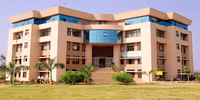
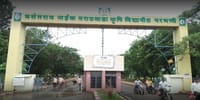
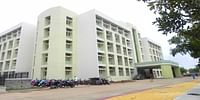
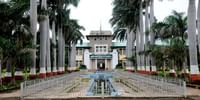
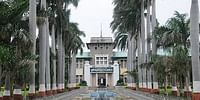
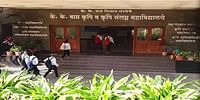
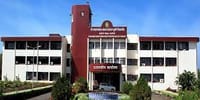
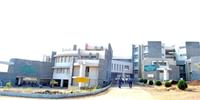
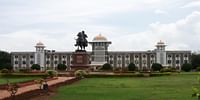
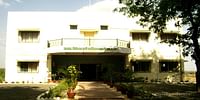
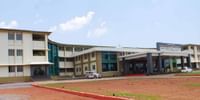
Mahatma Phule Krishi Vidyapeeth (MPKV) is a Maharashtra state agricultural university founded on March 29, 1968, and functioning since 1969. Named in honour of social reformer Mahatma Jyotiba Phule, it holds recognition from UGC, ICAR and the Association of Indian Universities (AIU). It is among Maharashtra’s 4 state agricultural universities and serves as the principal agricultural education institution for 10 western Maharashtra districts, including Pune, Nashik, Ahmednagar, Solapur, Satara, Sangli and Kolhapur.
Its main campus at Rahuri in Ahmednagar district occupies 4,762 hectares. The introductory campus information identifies more than 3,739 hectares for agricultural farm research, placing MPKV among India’s largest agricultural university campuses by land area. Research priorities include dryland farming, sugarcane, grapes, pomegranate and irrigation technologies that conserve water under western Maharashtra’s agro-climatic conditions.
Academic provision extends from undergraduate and diploma study to postgraduate and doctoral research. MSc programmes cover more than 21 agricultural disciplines, while PhD study spans 18 agriculture disciplines and 4 engineering disciplines. The university’s network comprises 15 constituent colleges across western Maharashtra.
Table of Contents
MPKV Important Dates
| Event | Date |
|---|---|
| UGC NET December 2026 examination, relevant to the NET/JRF qualification route listed for doctoral admission | December 14 to 18 and December 21, 2026 (Tentative) |
Subject to revision. Kindly check with the official sources to confirm
The main Maharashtra Agriculture CAP allotment rounds for 2026-27 have concluded. Candidates seeking an unfilled seat should check university announcements for any further spot-admission opportunity.
MPKV Major Courses and Fees
MPKV provides courses in agriculture, horticulture, animal husbandry, agricultural engineering, food technology, biotechnology and agricultural business management. Maharashtra government regulations govern state-quota fees, while self-financing and management-quota seats have higher charges.
| Course | Total Fee |
|---|---|
| BSc (Hons) Agriculture | INR 86,900 |
| BSc (Hons) Horticulture | INR 86,900 |
| BSc (Hons) Animal Husbandry | INR 1,80,000 |
| BSc (Hons) Agri Business Management | INR 2,40,000 |
| BTech Agricultural Engineering | INR 86,900 |
| BTech Food Technology | INR 86,900 |
| BTech Biotechnology | INR 86,900 |
| Diploma in Organic Agriculture | INR 20,000 |
| MSc Agriculture | INR 33,100 |
| MSc Horticulture | INR 33,100 |
| MSc Agriculture Biotechnology | INR 57,100 |
| MTech Agricultural Engineering | INR 33,100 |
| MBA Agriculture | INR 1,17,100 |
| PhD in Agriculture, Engineering, Horticulture, Food Science, Forestry and other listed fields | INR 1,13,200 to INR 1,20,900 |
Subject to revision. Kindly check with the official sources to confirm
Course Duration and Academic Eligibility
| Programme | Duration | Eligibility Listed |
|---|---|---|
| BSc (Hons) Agriculture | 4 years | Class XII with PCB or PCM and at least 50%, or 40% for SC/ST, plus MHT-CET. |
| BSc (Hons) Horticulture | 4 years | Class XII PCB with at least 50%, plus MHT-CET. |
| BSc (Hons) Animal Husbandry | 4 years | Class XII PCB with at least 50%, plus MHT-CET. |
| BSc (Hons) Agri Business Management | 4 years | Class XII with at least 50%, MHT-CET and a group discussion/interview. |
| BTech Agricultural Engineering | 4 years | Class XII PCM with at least 50%, plus MHT-CET. |
| BTech Food Technology | 4 years | Class XII PCM or PCB with at least 50%, plus MHT-CET. |
| BTech Biotechnology | 4 years | Class XII PCB with at least 50%, plus MHT-CET. |
| Diploma in Organic Agriculture | 1 year | BSc Agriculture or an equivalent qualification. |
| MSc Agriculture | 2 years | BSc Agriculture with at least 60%. |
| MSc Horticulture | 2 years | BSc Horticulture with at least 60%. |
| MSc Agriculture Biotechnology | 2 years | BSc Agriculture or Life Sciences with at least 60%. |
| MTech Agricultural Engineering | 2 years | BTech Agricultural Engineering with at least 60%. |
| MBA Agriculture | 2 years | Graduation in any discipline with at least 50%. |
| PhD | Minimum 3 years | Postgraduation with at least 60% and NET/JRF or SRF qualification. |
Undergraduate choices include honours degrees in Agriculture, Horticulture, Animal Husbandry and Agriculture Business Management, together with BTech programmes in Agricultural Engineering, Food Technology and Biotechnology. Postgraduate study includes MSc specialisations such as Agronomy, Soil Science, Plant Pathology and Agricultural Economics, as well as MTech specialisations in Agricultural Engineering.
The Agri Business Management programme prepares students for corporate agriculture, commodity markets and rural banking.
MPKV Admission Process
The supplied admission information describes two undergraduate channels: Maharashtra’s Agriculture Centralised Admission Process, administered by MAHACET Cell, for 85% of seats, and the ICAR channel for the remaining 15%. It identifies MHT-CET Agriculture for the state route and ICAR AIEEA UG, administered by NTA, for the ICAR route. State-quota participation is predominantly by Maharashtra candidates, while the ICAR quota accepts applicants from any state.
Programme-Wise Selection Routes
| Programme Group | Entrance or Selection Route Listed | Seat Channel |
|---|---|---|
| BSc Agriculture / Horticulture / Animal Husbandry | MHT-CET Agriculture | 85% state quota |
| BSc Agriculture / Horticulture | ICAR AIEEA UG | 15% ICAR quota |
| BTech Agricultural Engineering / Food Technology / Biotechnology | MHT-CET PCM | State quota |
| BSc Agri Business Management | MHT-CET Agriculture followed by group discussion/interview | State quota |
| MSc / MTech | ICAR PGS or MPKV PG Entrance Test | University allocation |
| PhD | UGC NET/JRF or ICAR SRF, followed by interview | University allocation |
Undergraduate Admission Steps
The general undergraduate requirements specify Class XII from a recognised board with at least 50%, reduced to 40% for SC/ST candidates. The admission description specifies PCB for Agriculture and Horticulture and PCM for Agricultural Engineering; the course eligibility table also lists PCM as an option for BSc Agriculture.
- Check the subject combination and minimum marks required for the selected programme.
- Take the relevant entrance examination and obtain a valid MHT-CET Agriculture score for the state route or the listed ICAR entrance qualification for the ICAR route.
- After MHT-CET results, register for Agriculture CAP through the MAHACET portal.
- Enter preferences for MPKV constituent colleges and courses.
- Check the allotment, which considers the MHT-CET score, reservation category and applicable MPKV allocation norms.
- Complete document verification and pay the required fee at the allotted college.
Postgraduate Admission Steps
MSc and MTech applicants need BSc Agriculture or another relevant undergraduate degree with at least 60%. The supplied information describes a separate postgraduate entrance and interview process, generally held in July to August each year.
- Confirm that the undergraduate qualification matches the intended postgraduate programme.
- Apply through the ICAR PGS, or Post Graduate Scholarship, examination route or the MPKV postgraduate entrance-test route described in the admission information.
- Complete the applicable entrance and interview requirements.
- Proceed through university seat allocation. ICAR JRF/SRF holders receive priority consideration for research-oriented seats.
Doctoral Admission Steps
Doctoral eligibility is listed as an MSc with at least 60% and UGC NET, ICAR JRF or SRF qualification. Research programmes cover 18 agriculture disciplines and 4 engineering disciplines.
- Watch for the university’s annual PhD application announcement.
- Submit the application with the required postgraduate and NET/JRF/SRF credentials.
- Attend the interview before the Research Advisory Committee.
MPKV Cutoffs
The supplied article describes BSc Agriculture admission at the flagship College of Agriculture, Rahuri, as typically requiring a higher MHT-CET cutoff than peripheral colleges. It does not provide numerical cutoff scores.
| Programme and Campus | Cutoff Information |
|---|---|
| BSc Agriculture, College of Agriculture, Rahuri | Typically higher MHT-CET cutoffs than peripheral colleges; no numerical value is supplied. |
MPKV Campus Life and Infrastructure
The Rahuri campus in Ahmednagar district spans 4,762 hectares. Its detailed land-use description assigns 3,739 hectares to experimental and research farms growing wheat, sugarcane, grapes, pomegranate and other horticultural crops, and lists 1,022 hectares for academic buildings, laboratories, hostels and administration. These component figures are retained as supplied, although they total 4,761 hectares.
Rahuri houses the Post Graduate Institute, the College of Agricultural Engineering and central research facilities, including All India Coordinated Research Project (AICRP) centres. MPKV’s AICRP centres have received national Best Centre Awards within the ICAR research system. The central library offers agricultural science journals, ICAR publications and digital research databases.
Sports facilities include a cricket ground, basketball courts, volleyball and kho-kho grounds, badminton courts, a yoga hall and a football ground. Main-campus hostels accommodate 590 male students and 432 female students, with a separate international hostel for 18 students. Hostel charges reach INR 11,000 per year.
MPKV Constituent Colleges
MPKV’s 15 constituent colleges are distributed across western Maharashtra. The institutional description includes 8 Colleges of Agriculture, 2 Agricultural Engineering colleges, 2 Horticulture colleges, and colleges devoted to Agri Business Management and Food Technology.
Named institutions include the Colleges of Agriculture at Pune, Dhule, Kolhapur, Karad and Nandurbar; the College of Agricultural Engineering at Rahuri; Horticulture colleges; the College of Agri Business Management; the College of Food Technology; and the Post Graduate Institute at Rahuri.
MPKV, Dr. PDKV and VNMKV Comparison
Applicants considering agricultural education in Maharashtra often compare MPKV Rahuri with Dr. Panjabrao Deshmukh Krishi Vidyapeeth (Dr. PDKV), Akola, and Vasantrao Naik Marathwada Krishi Vidyapeeth (VNMKV), Parbhani. All three are state agricultural universities with comparable programme portfolios and MHT-CET-based admission routes.
| Comparison Area | MPKV Rahuri | Dr. PDKV Akola | VNMKV Parbhani |
|---|---|---|---|
| Year established | 1968 | 1969 | 1972 |
| Jurisdiction | 10 western Maharashtra districts, including Pune, Nashik, Ahmednagar and Solapur | 6 Vidarbha districts: Amravati, Akola, Buldhana, Washim, Yavatmal and Wardha | 8 Marathwada and north Maharashtra districts, including Aurangabad and Latur |
| Main-campus area | 4,762 hectares | 1,800+ hectares | 1,500+ hectares |
| Constituent colleges | 15 | 10+ | 10+ |
| Admission routes listed | MHT-CET Agriculture and ICAR AIEEA | MHT-CET Agriculture and ICAR AIEEA | MHT-CET Agriculture and ICAR AIEEA |
| Principal crop-research areas | Sugarcane, grapes, pomegranate and wheat | Cotton, soybean and tur, or pigeon pea | Sorghum, sugarcane and soybean |
The supplied comparison positions MPKV as the preferred option for western Maharashtra students interested in horticulture, viticulture and sugarcane agronomy. It associates Dr. PDKV with Vidarbha students pursuing dryland crops such as cotton and soybean, while VNMKV serves Marathwada with an emphasis on dryland and rain-fed agriculture.
MPKV FAQs
Ques. Which university does the abbreviation MPKV identify, and what area does it serve?
Ans. MPKV refers to Mahatma Phule Krishi Vidyapeeth, whose main campus is at Rahuri in Ahmednagar district, Maharashtra. Its jurisdiction extends across 10 western Maharashtra districts, including Pune, Nashik, Ahmednagar, Solapur, Satara, Sangli and Kolhapur.
Ques. What application route is described for an undergraduate seat at MPKV?
Ans. The supplied admission information assigns 85% of undergraduate seats to the Maharashtra state route through MHT-CET Agriculture and 15% to the ICAR AIEEA UG route. For state admission, candidates register for MHT-CET Agriculture, take the examination and participate in Agriculture CAP through the MAHACET portal. The required Class XII PCB or PCM qualification and a valid entrance score are compulsory.
Ques. How much is the listed four-year state-quota fee for BSc Agriculture?
Ans. BSc Agriculture has a listed total fee of INR 86,900 for its 4-year state-quota programme. BTech Agricultural Engineering carries the same total of INR 86,900. Self-financing and management-quota charges may be higher under Maharashtra government norms.
Ques. What residential capacity is available at the Rahuri campus?
Ans. The main-campus hostels provide places for 590 male students and 432 female students. A dedicated international students’ hostel accommodates another 18 students. Hostel charges go up to INR 11,000 annually.
Ques. Which institutions form part of MPKV’s constituent-college network?
Ans. The university has 15 constituent colleges across western Maharashtra. Examples include the Colleges of Agriculture at Pune, Dhule, Kolhapur, Karad and Nandurbar, the College of Agricultural Engineering at Rahuri, Horticulture colleges, the College of Agri Business Management, the College of Food Technology and the Post Graduate Institute at Rahuri.
Ques. What is MPKV’s ownership and recognition status?
Ans. MPKV is a state government agricultural university established by the Maharashtra government in 1968. It is recognised by UGC, ICAR and the Association of Indian Universities. The Government of Maharashtra regulates its fees and admission norms.
Ques. Where can an MPKV agriculture graduate work or continue studying?
Ans. BSc Agriculture graduates can enter the seeds, fertilisers and pesticides industry; banking and agricultural finance; food processing; commodity trading; or rural-development NGOs. Government opportunities include Agriculture Officer posts through MPSC and UPSC. Further-study options include MSc Agriculture and MBA Agribusiness.

.png?tr=h-40,w-155,c-force)