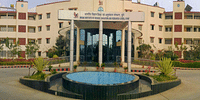
Tata Institute of Fundamental Research (TIFR), Mumbai began in 1945 under Dr Homi J. Bhabha. It is a national research institution and a Deemed University recognised by the University Grants Commission. The Department of Atomic Energy, Government of India funds TIFR, which carries out basic research in natural sciences, mathematics and computer science. It holds a NAAC Grade A accreditation.
TIFR secured the 17th position with a score of 57.96 in the NIRF Research Institutions ranking for 2025. Its main campus covers 15 acres on Homi Bhabha Road in Colaba, Mumbai, beside the Arabian Sea. The institute also operates centres in Pune, Bengaluru and Hyderabad.
- PhD: a research doctorate available in Mathematics, Physics, Chemistry, Biology, Computer and Systems Sciences, and Science Education
- Integrated M.Sc + PhD: a five-year course in Biology, Chemistry, Mathematics or Physics for students beginning postgraduate study
- M.Sc in Biology: a standalone postgraduate degree completed over two years
- M.Sc in Wildlife Sciences: a two-year postgraduate course offered at the National Centre for Biological Sciences campus in Bengaluru
The PhD course has total fees of INR 21,000. PhD and integrated PhD students receive INR 37,000 per month before registration and INR 42,000 per month after registration. They are also given a contingency grant and access to subsidised campus housing. TIFR has no campus placement system. Graduates commonly enter postdoctoral research, teaching, national laboratories or industrial research and development roles in India and abroad.
TIFR Admission Dates 2027
The Graduate Studies 2027 admission process is underway for programmes starting in August 2027. Applicants must finish their registration before the current deadline. The remaining schedule is given below.
| Event | Date |
|---|---|
| Last date to complete GS 2027 online registration | 11 pm on 25 October 2026 |
| Hall ticket download begins | Mid-November 2026 |
| GS 2027 written examination | 13 December 2026 |
| Interview and selection period, tentative | February to April 2027 |
| Programme begins | 1 August 2027 |
Subject to revision. Kindly check with the official sources to confirm
TIFR sets a separate Graduate Studies paper for each subject. In selected disciplines, applicants with strong CSIR UGC NET, GATE or JEST results may be shortlisted for an interview without taking the written test. The applicable admission route for each course is shown here.
| Programme | Entrance Route |
|---|---|
| PhD in Physics | TIFR GS Physics or JEST for interview shortlisting |
| PhD in Mathematics | TIFR GS Mathematics |
| PhD in Chemistry | TIFR GS Chemistry |
| PhD in Biology | TIFR GS Biology |
| PhD in Computer and Systems Sciences | TIFR GS Computer Science |
| Integrated M.Sc + PhD | Subject-specific TIFR GS examination |
| M.Sc in Biology | TIFR GS Biology |
TIFR Courses and Fees
TIFR provides postgraduate and doctoral courses centred on research. Fees are kept low through institutional support. Students admitted to the PhD and integrated PhD tracks may also receive monthly funding from the Department of Atomic Energy.
| Course | Duration | Eligibility | Fee | Fellowship |
|---|---|---|---|---|
| PhD in Sciences | 4 to 6 years | M.Sc or an equivalent qualification in the relevant subject | INR 21,000 | INR 37,000 to INR 42,000 per month |
| PhD in Information Science | 4 to 6 years | M.Sc or an equivalent qualification | INR 3,24,000 | According to DAE rules |
| Integrated M.Sc + PhD in Biology, Chemistry, Mathematics or Physics | 5 years | A relevant B.Sc or B.Tech degree | INR 20,000 | INR 37,000 to INR 42,000 per month after enrolment in the PhD stage |
| M.Sc in Biology | 2 years | B.Sc in Biology or Life Sciences | INR 5,000 | Stipend according to institute rules |
| M.Sc in Wildlife Sciences | 2 years | B.Sc in a relevant science subject | INR 1,150 | According to NCBS rules |
Subject to revision. Kindly check with the official sources to confirm
At the Mumbai campus, doctoral research is available in Physics, Chemistry, Biology, Mathematics, and Computer and Systems Sciences. The National Centre for Biological Sciences in Bengaluru conducts the M.Sc in Wildlife Sciences. Selected research fields are also offered through the International Centre for Theoretical Sciences in Bengaluru and TIFR Hyderabad.
TIFR Admission Process
PhD and Integrated PhD Admission
Applicants seeking a PhD or integrated PhD seat normally take the national-level TIFR Graduate Studies examination and then attend an interview. Each discipline has its own question paper, and a student may apply for one subject during an admission cycle.
- PhD applicants need an M.Sc or an equivalent degree in the relevant field with at least 55% aggregate marks.
- For the integrated M.Sc + PhD route, applicants must hold a relevant B.Sc, B.E. or B.Tech degree.
- The main entrance route is the subject-specific TIFR GS written test. JEST results are accepted for shortlisting in Physics and Computer Science.
- Selection moves through the written-test shortlist, an in-person interview at TIFR Mumbai or another TIFR centre, the final merit list and the fellowship offer letter.
In certain subjects, high scorers in CSIR UGC NET JRF, GATE or JEST can be exempted from the TIFR GS written paper and called directly for an interview. Competition is especially high in Physics and Mathematics, where the usual acceptance rate is below 5 percent.
M.Sc in Biology Admission
The standalone M.Sc in Biology at TIFR Mumbai lasts two years. Selection is based on the TIFR GS Biology examination. Applicants should have a strong academic record and a B.Sc in Biological Sciences or a related area.
M.Sc in Wildlife Sciences Admission
NCBS Bengaluru uses a separate entrance examination followed by an interview for admission to its M.Sc in Wildlife Sciences. A B.Sc in any basic science or an equivalent qualification is required, together with evidence of interest in ecology and conservation biology.
TIFR Career Outcomes
TIFR does not organise campus placements. Its doctoral graduates move into academic research, government science organisations and private-sector research and development in India and other countries.
| Career Path | Typical Starting Role | Notes |
|---|---|---|
| Academic research | Postdoctoral fellow with pay of INR 55,000 to INR 80,000 per month | Common destinations include IITs, IISc, IISER campuses and universities abroad |
| Faculty or scientist | Assistant Professor or Scientist-D with pay of INR 1.0 to INR 1.5 lakhs per month | Opportunities are available at IITs, IISERs, BARC, DRDO and national laboratories |
| Industry research and development | Research Scientist with a salary of INR 12 to INR 20 LPA | Relevant sectors include pharmaceuticals, technology, semiconductors and defence |
| International positions | Postdoctoral work abroad or a tenure-track faculty role | This route is common among Physics, Mathematics and Biology PhD graduates |
The TIFR PhD is recognised internationally. Alumni have taken faculty posts at IIT Bombay, IIT Delhi, IISc, IISER campuses, MIT, Stanford and other leading institutions. TIFR graduates are also regularly recruited by BARC, DRDO, ISRO, DST organisations, national laboratories and TIFR itself.
TIFR Rankings
TIFR is listed in the Research Institutions category of NIRF and regularly places among India’s top 20 research institutes. It also has a strong international standing in citation-based measures for Physics, Mathematics and Biological Sciences.
| Ranking Body | Category | 2025 Rank |
|---|---|---|
| NIRF | Research Institutions | 17, with a score of 57.96 |
Because TIFR enters NIRF only as a Research Institution, it is not listed in the University or Overall categories. The institute also appears in several international subject rankings for Physics and Mathematics.
TIFR Mumbai Campus and Infrastructure
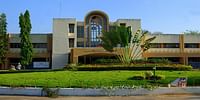
The Mumbai campus occupies 15 acres on Homi Bhabha Road in Colaba and faces the Arabian Sea. It contains the research departments, administrative buildings, residential quarters and a central library.
Its research infrastructure includes spectroscopy laboratories, particle-physics detector facilities and high-performance computing clusters. TIFR is also connected with the National Balloon Facility operated from Hyderabad and the Giant Metrewave Radio Telescope run by the National Centre for Radio Astrophysics in Pune. PhD scholars and fellows can use subsidised hostel accommodation on campus.
Four major centres operate away from the Mumbai campus. Bengaluru is home to the National Centre for Biological Sciences, a leading Indian centre for life-sciences research, and the International Centre for Theoretical Sciences, which works in theoretical physics and applied mathematics. TIFR Hyderabad focuses on research in chemistry and physics. NCRA Pune manages the Giant Metrewave Radio Telescope, an important international radio-astronomy facility.
TIFR vs IISc Bangalore vs IISER Pune
TIFR Mumbai, IISc Bangalore and IISER Pune are highly selective Indian institutions for postgraduate and doctoral study in the basic sciences. Their locations, programmes and main academic areas differ.
| Parameter | TIFR Mumbai | IISc Bangalore | IISER Pune |
|---|---|---|---|
| Location | Colaba, Mumbai | Bangalore, Karnataka | Pune, Maharashtra |
| Established | 1945 | 1909 | 2006 |
| Funding | Department of Atomic Energy | MHRD, Government of India | MHRD, Government of India |
| Programmes Offered | PhD, integrated M.Sc + PhD and M.Sc | PhD, integrated M.Tech-PhD, M.Sc and B.Sc Research | BS-MS, M.Sc, PhD and integrated PhD |
| PhD Fellowship | INR 37,000 to INR 42,000 per month | INR 37,000 to INR 42,000 per month | INR 37,000 to INR 42,000 per month |
| Focus Area | Pure science and mathematics | Science, engineering and applied research | Multidisciplinary science |
IISc Bangalore covers engineering as well as science and offers a B.Sc Research degree, which TIFR does not provide. IISER Pune accepts students at the BS-MS stage and therefore supports a longer route through science education. TIFR has no undergraduate or engineering degrees and concentrates more closely on fundamental research and direct doctoral study.
TIFR FAQs
Ques. Where did TIFR place in the 2025 NIRF research ranking?
Ans. TIFR held the 17th rank in the NIRF Research Institutions category for 2025 and received a score of 57.96. It does not appear in the NIRF University or Overall lists because it participates only in the Research Institutions category.
Ques. How are students selected for a TIFR PhD?
Ans. The usual route begins with the TIFR GS Graduate Studies written examination and continues with an in-person interview. The GS 2027 examination will be held on 13 December 2026. Applicants with strong JEST, CSIR UGC NET JRF or GATE scores may receive a written-test exemption in selected subjects and move to the interview stage.
Ques. How much fellowship is given to TIFR PhD scholars?
Ans. A PhD scholar receives INR 37,000 per month before registration and INR 42,000 per month after registration under the DAE fellowship. An annual contingency grant and subsidised campus housing are also provided. The PhD programme does not charge tuition fees.
Ques. Can a student join TIFR for a B.Sc or B.Tech degree?
Ans. No. TIFR has no undergraduate programmes. Students with a B.Sc or B.Tech can enter through the integrated M.Sc + PhD route, while M.Sc holders can apply directly for a PhD. At least a bachelor’s degree in a relevant science field is needed for entry.
Ques. Which career routes are common after completing a PhD from TIFR?
Ans. Many graduates first take postdoctoral fellowships at IITs, IISc, IISER campuses or universities outside India and later become faculty members or scientists. BARC, ISRO, DRDO, DST organisations and other national laboratories recruit TIFR graduates. Research and development jobs in pharmaceuticals, semiconductors and technology are other common options.
Ques. How should a Physics applicant choose between TIFR and IISc?
Ans. TIFR Mumbai and IISc Bangalore are both highly ranked and selective choices for doctoral research in Physics. TIFR has a long record in theoretical and experimental physics, while IISc covers a wider mix of applied and interdisciplinary work. Both provide comparable DAE or MHRD fellowships. The suitable choice depends on the applicant’s research interests and the availability of a supervisor.