Gandhigram Rural Institute (GRI), Dindigul, was established in 1956 on Mahatma Gandhi’s Nai Talim approach to education. UGC granted it Deemed to be University status in 1976, and the Ministry of Education, Government of India, provides central funding. GRI is known for rural development, cooperative management, agriculture and education linked with productive work. It received a NAAC A grade during its third-cycle re-accreditation in 2016 and had earlier earned Five-Star status in 2002.
GRI was placed 91st in the NIRF University Ranking 2024, bringing it within India’s top 100 universities. Its 200-acre environment-friendly campus is in Gandhigram village near the Sirumalai range in Tamil Nadu’s Dindigul district. This fully residential community has 3,000 students and 150 teaching faculty members. Ambathurai railway station provides rail access to the institute.
- More than 50 programmes are offered through seven faculties:
- The Rural Development and Social Sciences faculty runs MA Rural Development, MA Rural Sociology, MSW, MA Social Work, MBA Cooperative Management, and rural extension certificate and diploma programmes.
- Agriculture and Science options include B.Sc Hons Agriculture, M.Sc Agriculture, B.Sc Botany, B.Sc Zoology, M.Sc Chemistry, M.Sc Physics, M.Sc Mathematics and M.Sc Botany.
- Engineering and Technology programmes comprise B.Tech Civil Engineering, B.Tech Mechanical Engineering, M.Tech Renewable Energy and MCA.
- The Education and Physical Education faculty offers B.Ed, M.Ed and BPES.
- Commerce and Management choices include BBA, B.Com, MBA Cooperative Management, MA Economics and MA Demography.
- Language and Humanities courses include BA English, MA English, MA Tamil and MA Hindi.
- All seven faculties offer PhD programmes supported through UGC-funded research fellowships.
Annual hostel charges for both men and women are capped at INR 16,500. GRI also keeps its course fees among the lowest charged by deemed universities in Tamil Nadu. During the 2023-24 placement season, 25 companies generated 337 offers. Placement rates across programme types ranged from 36% to 47%, while many students prepared for public-sector, research and rural-development careers.
GRI Tentative Admission Dates 2027
The expected schedule for the 2027-28 admission cycle is given below. These time frames follow earlier admission patterns and are tentative until CUET, NTA and GRI release their notices.
| Event | Date |
|---|---|
| CUET UG 2027 registration for all UG programmes | January to February 2027 (Tentative) |
| CUET PG 2027 registration for all PG programmes | January to March 2027 (Tentative) |
| CUET PG 2027 examination for all PG programmes | March to May 2027 (Tentative) |
| CUET UG 2027 examination for all UG programmes | May 2027 (Tentative) |
| GRI UG and PG admissions for all programmes | July to September 2027 (Tentative) |
Subject to revision. Kindly check with the official sources to confirm
GRI accepts different entrance examinations for its programme groups, as listed here.
| Course Family | Entrance Exam Accepted |
|---|---|
| BA, B.Sc, BBA and B.Com | CUET UG or GRI Entrance Test |
| B.Tech Civil Engineering and Mechanical Engineering | JEE Main or TNEA, Tamil Nadu Engineering Admissions |
| B.Sc Hons Agriculture | CUET UG Agriculture group |
| B.Ed and BPES | CUET UG or GRI Entrance Test |
| MA, M.Sc, MBA, MCA, M.Ed and MSW | CUET PG or GRI Entrance Test |
| M.Tech Renewable Energy | GATE or GRI Entrance Test |
| PhD | UGC NET, GATE or GRI Research Entrance Test |
GRI Courses and Fees
Seven faculties at GRI collectively provide more than 50 programmes. The following table gives the duration, admission requirements and total fee for courses whose fee figures are available.
| Course | Duration | Eligibility | Total Fees |
|---|---|---|---|
| BA English | 3 years | 10+2 in any stream and CUET UG | INR 78,710 |
| B.Sc Botany | 3 years | 10+2 with Biology and CUET UG | INR 90,160 |
| BPES, Physical Education and Sports | 3 years | 10+2, Physical Fitness Test and CUET UG | INR 1,36,330 |
| MA Demography | 2 years | Graduation in a relevant discipline and CUET PG | INR 43,390 |
Subject to revision. Kindly check with the official sources to confirm
Other available courses include B.Tech Civil Engineering, B.Tech Mechanical Engineering, B.Sc Hons Agriculture, BBA, B.Com, MBA Cooperative Management, MCA and M.Tech Renewable Energy. Students can also choose MA Rural Development, MA Sociology, MA English, MA Tamil, M.Sc Chemistry, M.Sc Physics, M.Sc Botany, M.Sc Mathematics, M.Ed, MSW and PhD programmes across the faculties. Their fees follow GRI’s centrally funded model, and programme-specific charges are announced for each academic cycle.
GRI Admission Process
CUET, the Central Universities Common Entrance Test conducted by NTA, is the main admission route for most GRI courses. Depending on the programme, GRI may use its own entrance examination either with CUET or as an alternative. Professional courses also have additional selection requirements.
UG Admissions: BA, B.Sc, BBA, B.Com, B.Ed and BPES
- General category applicants must have at least 50% in 10+2, while the minimum for SC and ST applicants is 45%.
- Applicants must take CUET UG in the subject group required for their chosen programme.
- GRI prepares a centralised merit list and assigns UG seats through that list.
- B.Sc Hons Agriculture applicants must have a CUET UG score from the Agriculture subject group.
- BPES applicants must complete a Physical Fitness Test in addition to CUET UG.
B.Tech Admissions
- Applicants for Civil or Mechanical Engineering must have studied Physics, Chemistry and Mathematics in 10+2 and secured at least 60%.
- Selection is made through JEE Main rank or TNEA counselling.
- Tamil Nadu domicile applicants can seek admission through GRI’s participation in TNEA.
- GRI may use its own entrance examination to fill a quota of B.Tech seats.
PG Admissions: MA, M.Sc, MBA, MCA, M.Tech, M.Ed and MSW
- A relevant bachelor’s degree with at least 50% is required for PG admission.
- CUET PG is the main selection criterion for these programmes.
- M.Tech Renewable Energy applicants must also hold a valid GATE score.
- For MBA Cooperative Management, GRI considers CUET PG, CAT and its management entrance examination.
- After publication of the merit list, every PG applicant must attend a personal interview conducted by GRI.
PhD Admissions
- Applicants need a relevant PG degree with at least 55%. The requirement is 50% for reserved categories.
- They must have a valid UGC NET, JRF or GATE score, or qualify through the GRI Research Entrance Test.
- PhD admission is held once or twice each year, and applications are submitted through the portal at ruraluniv.ac.in.
GRI Placements and Career Outcomes
GRI’s career support reflects its focus on rural development and community service. In 2023-24, the institute recorded visits from 25 companies and received 337 placement offers. The placement rate varied from 36% to 47% among different programme types.
| Placement Measure | 2023-24 Figure |
|---|---|
| Companies visiting the campus | 25 |
| Total placement offers | 337 |
| Eligible UG students | 484 |
| UG students placed | 173 |
| Eligible PG students | 390 |
| PG students placed | 148 |
| Median package for three-year UG graduates | INR 1.80 LPA |
| Median package for four-year Agriculture Hons graduates | INR 2.40 LPA |
Campus recruitment by companies is one route available to graduates, but GRI students also move into government service, public-sector units, research and rural-development organisations. Science graduates prepare for CSIR NET, GATE and technical posts filled through state public service commissions. Agriculture graduates seek roles with ICAR, state agriculture departments and cooperative banks.
Common career routes for graduates from different GRI programmes are shown below.
| Graduate Profile | Career Pathway |
|---|---|
| B.Sc and M.Sc Sciences | CSIR NET, GATE, UGC-JRF, research positions and TNPSC |
| B.Sc Agriculture Hons | ICAR, state agriculture departments, cooperative banks and Krishi Vigyan Kendras |
| MBA Cooperative Management | Cooperative societies, NABARD and rural banking |
| MA Rural Development and MSW | NGOs, government social welfare departments and MGNREGA programme officer roles |
| B.Tech Civil Engineering and Mechanical Engineering | GATE, PSU recruitment and government engineering departments |
| B.Ed and M.Ed | Teaching positions in government and aided schools, TNTET and CTET |
Dindigul district’s agricultural economy and Tamil Nadu’s cooperative banking network support employment in agricultural extension, cooperative management and rural banking. These are the most active placement areas for GRI’s agriculture and management graduates.
GRI Rankings
GRI has appeared within the top 100 to 200 institutions in the NIRF University category. Its 91st position in 2024 placed the rural deemed university among India’s top 100 universities.
| Ranking Body | Category | 2024 Rank | 2022 Rank |
|---|---|---|---|
| NIRF | University | 91 | 151-200 Band |
The institute received a NAAC A grade in its third-cycle assessment in 2016. It had previously become one of India’s early institutions to secure NAAC Five-Star status in 2002. Its position as a centrally funded deemed university under the Ministry of Education gives it UGC academic autonomy and access to national resources for rural-development programmes and research.
GRI Campus and Infrastructure
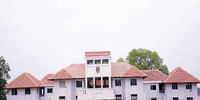
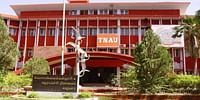
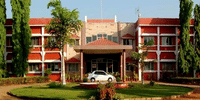
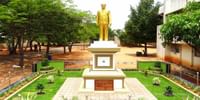
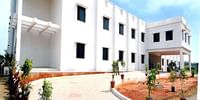
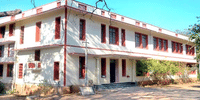
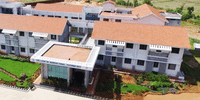
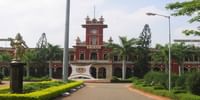
GRI occupies an environment-friendly campus covering 200 acres in Gandhigram village, Tamil Nadu. It lies in Dindigul district, about 10 km from Dindigul town, and is close to the Sirumalai range. Its setting within a rural farming community supports the institute’s Gandhian approach of connecting education with productive work.
The residential campus serves 3,000 students through separate hostels for men and women, with charges of up to INR 16,500 per year. Facilities include a central library, computer laboratories, an agricultural farm, engineering workshops, a health centre and a Gandhian heritage centre. Ambathurai railway station is the closest railhead and connects Gandhigram with Dindigul and Madurai.
Through its UGC-funded research centres, GRI maintains international research connections. It has taken part in collaborative projects with institutions in the UK, Germany and South Korea under the Ministry of Education’s international exchange programmes.
GRI vs Bharathidasan University vs Alagappa University
GRI, Bharathidasan University in Tiruchirappalli and Alagappa University in Karaikudi are publicly funded institutions in Tamil Nadu. Each offers affordable postgraduate study in science, arts and management, but their university types, academic strengths and campus models differ.
| Parameter | GRI, Dindigul | Bharathidasan University, Trichy | Alagappa University, Karaikudi |
|---|---|---|---|
| Type | Deemed University, centrally funded | State University | State University |
| Established | 1956, deemed status in 1976 | 1982 | 1985 |
| NAAC Grade | A | A+ | A+ |
| NIRF University 2024 | 91 | Top 100 range | Top 100 range |
| Campus | 200 acres in rural Dindigul | Large campus in Trichy | Large campus in Karaikudi |
| Key Distinction | Rural-development focus, central funding and a fully residential campus | State funding and a large network of affiliated colleges | Distance-education strength and state funding |
Bharathidasan University and Alagappa University have NAAC A+ grades and larger affiliated-college networks, compared with GRI’s NAAC A grade. GRI differs through central funding, a fully residential setting and specialised study in rural development and cooperative management. These particular programmes are not available at the other two universities. Its rural science, cooperative banking and agricultural extension options are relevant for students seeking careers in those fields.
GRI FAQs
Ques. Does Gandhigram Rural Institute come under the central government or a state government?
Ans. GRI is not a state university. It is a centrally funded Deemed to be University supported by the Ministry of Education, Government of India. UGC granted it deemed university status in 1976. Central funding helps the institute keep its fees among the lowest for deemed universities in Tamil Nadu and provides direct UGC grants for research and infrastructure.
Ques. Where does GRI stand in the NIRF University ranking?
Ans. GRI secured the national rank of 91 in the NIRF University Ranking 2024, placing it within India’s top 100 universities. It also holds a NAAC A grade from the third-cycle assessment conducted in 2016 and had Five-Star NAAC status in 2002.
Ques. What steps are involved in applying for a PG course at GRI?
Ans. PG selection mainly uses CUET PG scores from the NTA examination. An applicant must register for CUET PG, take the paper relevant to the chosen subject and submit a separate application through GRI’s online admission portal. After the merit list is released, GRI conducts a personal interview. A valid GATE score is also required for M.Tech Renewable Energy.
Ques. Can students stay in hostels on the GRI Dindigul campus?
Ans. Yes. GRI’s fully residential 200-acre campus has men’s and women’s hostels and accommodates 3,000 students. Hostel charges are up to INR 16,500 per year. The rural Dindigul campus can be reached through Ambathurai railway station.
Ques. Which placement and career opportunities are available to GRI students?
Ans. Public-sector work, cooperative organisations and research are major career routes, while corporate recruitment is another option. During 2023-24, 25 companies visited GRI and made 337 offers. The median salary was INR 1.80 LPA for three-year UG graduates and INR 2.40 LPA for B.Sc Agriculture Hons graduates. Many students also prepare for CSIR NET, GATE, TNPSC and ICAR examinations.
Ques. Which specialised courses distinguish GRI from mainstream urban universities?
Ans. GRI’s rural-development role is reflected in programmes such as MBA Cooperative Management, M.Tech Renewable Energy, MA Rural Development, MA Rural Sociology and M.Sc Agriculture. The MBA prepares students for areas including cooperative banks and the NABARD sector. Such programmes are not commonly available at mainstream urban universities and serve students interested in rural and cooperative-sector careers.