![Gandhigram Rural Institute - [GRI]](https://static.zollege.in/public/college_data/images/logos/1517311041goedt8523.png?tr=h-94,w-94,c-force)


Gandhigram Rural Institute (GRI), Dindigul, follows Mahatma Gandhi’s Nai Talim approach, which connects education with productive work and rural life. Founded in 1956, it became a deemed university under UGC in 1976. Funding comes from the Ministry of Education, Government of India.
GRI ranked 91 in the 2024 NIRF University category, earning a place among India’s top 100 universities. Its third-cycle NAAC assessment in 2016 awarded it an A grade; its earlier assessment in 2002 awarded Five-Star status. The institute has more than 50 programmes across seven faculties, with a focus on rural development, cooperative management, agriculture and community service.
A fully residential, eco-friendly campus of 200 acres houses 3,000 students and has 150 teaching faculty. It lies in Gandhigram village near the Sirumalai range in Tamil Nadu’s Dindigul district, with rail access through Ambathurai station. Annual hostel charges for men and women go up to INR 16,500. Central funding helps keep course fees among the lowest charged by deemed universities in Tamil Nadu. During 2023-24, 25 companies made 337 placement offers; placement rates across programme types ranged from 36 to 47 percent. Public sector work, research and rural development remain major career routes for graduates.
- Students can choose from more than 50 programmes across seven faculties:
- Rural Development and Social Sciences: MA Rural Development, MA Rural Sociology, MSW, MA Social Work, MBA (Cooperative Management), and certificate and diploma courses in rural extension.
- Agriculture and Sciences: B.Sc (Hons) Agriculture, M.Sc Agriculture, B.Sc Botany, B.Sc Zoology, M.Sc Chemistry, M.Sc Physics, M.Sc Mathematics and M.Sc Botany.
- Engineering and Technology: B.Tech Civil Engineering, B.Tech Mechanical Engineering, M.Tech Renewable Energy and MCA.
- Education and Physical Education: B.Ed, M.Ed and BPES.
- Commerce and Management: BBA, B.Com, MBA (Cooperative Management), MA Economics and MA Demography.
- Languages and Humanities: BA English, MA English, MA Tamil and MA Hindi.
- All seven faculties offer PhD study supported by UGC-funded research fellowships.
Applications and admission notices are available through the official GRI website.
GRI Important Dates
The upcoming entrance examination dates below are tentative. They appear in the official NTA examination calendar.
| Event | Date |
|---|---|
| JEE Main 2027 Session 1 examination, tentative | January 22 to 24 and January 28 to 30, 2027; buffer date: January 31, 2027 |
| CUET PG 2027 examination, tentative | March 1 to 5, March 8, March 12 to 20, and March 24 to 25, 2027; buffer dates: March 30 and 31, 2027 |
Subject to revision. Kindly check with the official sources to confirm
GRI Courses and Fees
Course options at GRI span more than 50 programmes across seven faculties. Fees remain low across study levels under its centrally funded deemed university model. Total course charges, duration and entry requirements for selected programmes are listed below.
| Course | Duration | Eligibility | Fee |
|---|---|---|---|
| BA (English) | 3 years | 10+2 in any stream and CUET UG | INR 78,710 |
| B.Sc (Botany) | 3 years | 10+2 with Biology and CUET UG | INR 90,160 |
| BPES (Physical Education and Sports) | 3 years | 10+2, Physical Fitness Test and CUET UG | INR 1,36,330 |
| MA (Demography) | 2 years | Graduation in a relevant discipline and CUET PG | INR 43,390 |
Subject to revision. Kindly check with the official sources to confirm
Other choices include B.Tech in Civil and Mechanical Engineering, B.Sc (Hons) Agriculture, BBA, B.Com, MBA (Cooperative Management), MCA and M.Tech (Renewable Energy). Students can also pursue MA courses in Rural Development, Sociology, English and Tamil; M.Sc courses in Chemistry, Physics, Botany and Mathematics; M.Ed; MSW; and PhD programmes across the faculties. These courses follow the institute’s low-fee model. Check the GRI website for each programme’s fee notice for the relevant academic session.
GRI Admission Process
For most GRI courses, selection depends on scores in the Common University Entrance Test (CUET), run by the National Testing Agency (NTA). Courses with professional or practical skill requirements may use an institute entrance test alongside CUET or as an alternative. Entry conditions and selection routes differ by programme.
- Check the required qualification, minimum marks and entrance examination for the chosen course.
- Register for the relevant entrance examination and take the required subject paper or subject group.
- Submit a separate online application to GRI through its admission portal.
- Follow the institute’s merit list and the selection route for the course. B.Tech applicants using TNEA must follow its counselling process.
- Complete any additional course requirement, such as the BPES Physical Fitness Test or the personal interview required for PG applicants.
Undergraduate Entry: BA, B.Sc, BBA, B.Com, B.Ed and BPES
General category applicants need at least 50% in 10+2; the minimum for SC and ST applicants is 45%. A valid CUET UG score in the relevant subject group is required, and GRI uses a centralised merit list to allot seats. B.Sc (Hons) Agriculture applicants need a CUET UG Agriculture subject group score. For BPES, students must also take a Physical Fitness Test.
B.Tech Selection
Civil and Mechanical Engineering applicants must have studied Physics, Chemistry and Mathematics in 10+2 and secured at least 60%. Selection uses a JEE Main rank or Tamil Nadu Engineering Admissions (TNEA) counselling. GRI takes part in TNEA for applicants with Tamil Nadu domicile. An institute entrance test may also be used to fill a quota of seats.
Postgraduate Entry: MA, M.Sc, MBA, MCA, M.Tech, M.Ed and MSW
A relevant bachelor’s degree with at least 50% is needed for PG entry. CUET PG scores form the main basis for selection. M.Tech Renewable Energy applicants additionally need a valid GATE score. For MBA Cooperative Management, GRI considers CUET PG, CAT and its management entrance test. After publication of the merit list, every PG applicant must attend a personal interview conducted by the institute.
PhD Selection
Research applicants need a relevant postgraduate degree with at least 55%, reduced to 50% for reserved categories. They must have a valid UGC NET/JRF or GATE score, or pass GRI’s Research Entrance Test. PhD admissions take place once or twice each year, with applications through ruraluniv.ac.in.
Entrance Routes by Programme
The accepted examinations vary across course groups.
| Course Group | Accepted Entrance Examination |
|---|---|
| BA, B.Sc, BBA and B.Com | CUET UG or GRI Entrance Test |
| B.Tech Civil and Mechanical Engineering | JEE Main or TNEA (Tamil Nadu Engineering Admissions) |
| B.Sc (Hons) Agriculture | CUET UG, Agriculture group |
| B.Ed and BPES | CUET UG or GRI Entrance Test |
| MA, M.Sc, MBA, MCA, M.Ed and MSW | CUET PG or GRI Entrance Test |
| M.Tech Renewable Energy | GATE or GRI Entrance Test |
| PhD | UGC NET, GATE or GRI Research Entrance Test |
GRI Placements and Career Routes
Rural development and community service shape the careers students pursue after GRI. Government services, public sector units, rural development organisations and research are the main routes, while corporate campus hiring plays a smaller role. In 2023-24, campus recruitment brought 25 companies and 337 offers.
| Placement Measure | 2023-24 Figure |
|---|---|
| Companies participating | 25 |
| Total placement offers | 337 |
| Eligible UG students | 484 |
| UG students placed | 173 |
| Eligible PG students | 390 |
| PG students placed | 148 |
| Placement rate across programme types | 36 to 47 percent |
| Median annual package, three-year UG courses | INR 1.80 lakh |
| Median annual package, four-year B.Sc Agriculture Hons | INR 2.40 lakh |
Science postgraduates take examinations such as CSIR NET, GATE and state Public Service Commission technical service tests. Agriculture graduates seek work with ICAR, state agriculture departments and cooperative banks. The main options for each graduate group are shown below.
| Graduate Group | Examinations and Career Options |
|---|---|
| B.Sc and M.Sc Sciences | CSIR NET, GATE, UGC-JRF, research posts and TNPSC |
| B.Sc Agriculture Hons | ICAR, state agriculture departments, cooperative banks and Krishi Vigyan Kendras |
| MBA Cooperative Management | Cooperative societies, NABARD and rural banking |
| MA Rural Development and MSW | NGOs, government social welfare departments and MGNREGA programme officer roles |
| B.Tech Civil and Mechanical Engineering | GATE, public sector unit recruitment and government engineering departments |
| B.Ed and M.Ed | Government and aided school teaching posts, TNTET and CTET |
Dindigul’s farming economy and Tamil Nadu’s cooperative banking network influence local employment opportunities. For management and agriculture graduates, rural banking, cooperative management and agricultural extension are the most active placement sectors.
GRI Rankings and Accreditation
GRI’s NIRF University positions have ranged within India’s top 100 to 200 universities. Its 2024 rank of 91 placed this rural deemed university, located outside a major city, in the national top 100.
| Ranking Organisation | Category | 2024 Rank | 2022 Rank |
|---|---|---|---|
| NIRF | University | 91 | 151-200 band |
The institute received an A grade in its third NAAC assessment in 2016. Earlier, in 2002, it was among the first Indian institutions to earn NAAC Five-Star status. As a centrally funded deemed university under the Ministry of Education, GRI has UGC academic autonomy and access to national funding and resources for research and rural development programmes.
GRI Campus Life and Facilities
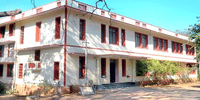
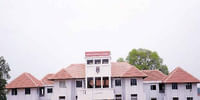
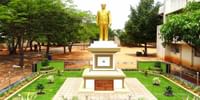
Life at GRI takes place on an eco-friendly, fully residential campus covering 200 acres in Gandhigram village. Dindigul town is about 10 km away. The nearby Sirumalai range and surrounding farming community reflect the institute’s Gandhian approach to learning through productive work in rural areas.
Men’s and women’s hostels accommodate 3,000 students, with annual hostel charges reaching INR 16,500 for either. Students have access to a central library, computer laboratories, an agricultural farm, engineering workshops, a health centre and a Gandhian heritage centre. Ambathurai, the closest railway station, provides connections to Dindigul and Madurai.
UGC-funded research centres support GRI’s international research links. Through the Ministry of Education’s international exchange programmes, the institute has joined collaborative projects with institutions in the UK, Germany and South Korea.
Comparing GRI, Bharathidasan University and Alagappa University
For postgraduate study or research in Tamil Nadu, students often consider GRI alongside Bharathidasan University (BDU) in Tiruchirappalli and Alagappa University in Karaikudi. Each is publicly funded and offers affordable PG courses in science, arts and management.
| Feature | GRI, Dindigul | Bharathidasan University, Trichy | Alagappa University, Karaikudi |
|---|---|---|---|
| University status | Centrally funded deemed university | State university | State university |
| Founding year | 1956; deemed university status in 1976 | 1982 | 1985 |
| NAAC grade | A | A+ | A+ |
| NIRF University position, 2024 | 91 | Top 100 range | Top 100 range |
| Campus setting | 200 acres in rural Dindigul | Large campus in Trichy | Large campus in Karaikudi |
| Main distinguishing features | Rural development focus, central funding and a fully residential campus | State funding and a large affiliated college network | State funding and strength in distance education |
Both BDU and Alagappa have larger affiliated college networks and hold NAAC A+ grades, compared with GRI’s A grade. GRI combines central funding with residential study and specialised rural development and cooperative management programmes that are unavailable at the other two universities. These options make it relevant for students planning careers in rural sciences, cooperative banking or agricultural extension.
GRI Frequently Asked Questions
Ques. Which government funds GRI, and what university status does it hold?
Ans. The Ministry of Education, Government of India, funds GRI. It holds deemed university status, granted by UGC in 1976, and is not a state university. Direct UGC grants support research and infrastructure. Central funding also helps keep its fees among the lowest for deemed universities in Tamil Nadu.
Ques. Where did GRI stand in the 2024 university rankings, and what is its accreditation history?
Ans. A national position of 91 in the 2024 NIRF University ranking placed GRI in India’s top 100 universities. NAAC awarded it an A grade during the third assessment cycle in 2016. Its earlier NAAC assessment in 2002 resulted in Five-Star status.
Ques. What steps must a postgraduate applicant complete to join GRI?
Ans. Applicants generally begin by registering for NTA’s CUET PG and taking the relevant subject paper. They must then apply separately through GRI’s online admission portal. Once the merit list is released, a personal interview at GRI is compulsory. M.Tech Renewable Energy applicants also need a valid GATE score.
Ques. What accommodation can students use on the Gandhigram campus, and how much does it cost?
Ans. GRI provides separate hostels for men and women on its fully residential 200-acre campus. The hostels accommodate 3,000 students, and annual charges go up to INR 16,500. The rural Dindigul campus can be reached through Ambathurai railway station.
Ques. Which career routes do GRI graduates follow, and what were its recent placement figures?
Ans. Public sector jobs, cooperative organisations and research form the main career routes, with corporate campus recruitment playing a smaller part. In 2023-24, 25 companies visited and made 337 offers. The median annual package was INR 1.80 lakh for UG graduates and INR 2.40 lakh for B.Sc Agriculture Hons graduates. Most graduates prepare for examinations such as CSIR NET, GATE, TNPSC and ICAR.
Ques. Which GRI courses serve students interested in rural development and cooperative-sector work?
Ans. Options linked to these fields include MBA Cooperative Management, aimed at cooperative banks and the NABARD sector; M.Tech Renewable Energy; MA Rural Development; MA Rural Sociology; and M.Sc Agriculture. These courses reflect GRI’s rural development focus and are less commonly available at mainstream urban universities. They suit students seeking careers in rural and cooperative organisations.



![Thanthai Roever Institute of Agriculture and Rural Development - [TRIARD]](https://static.zollege.in/public/college_data/images/logos/col6728.jpg?tr=h-40,w-40,c-force)
![Kumaraguru Institute of Agriculture - [KIA]](https://static.zollege.in/public/college_data/images/logos/1467200136Logo.png?tr=h-40,w-40,c-force)
![Madurai Kamaraj University - [MKU]](https://static.zollege.in/public/college_data/images/logos/1509348111logo.jpeg?tr=h-40,w-40,c-force)
![Agricultural College and Research Institute - [ACRI]](https://static.zollege.in/public/college_data/images/logos/1467199190logo1.png?tr=h-40,w-40,c-force)

![College of Agricultural Technology, Tamil Nadu Agricultural University - [CAT]](https://static.zollege.in/public/college_data/images/logos/1467279950logo.png?tr=h-40,w-40,c-force)
![Thanthai Roever Institute of Agriculture and Rural Development - [TRIARD]](https://static.zollege.in/public/college_data/images/appImage/6728_ROEVERAGRI.jpg?tr=h-100,w-200,c-force)
![Kumaraguru Institute of Agriculture - [KIA]](https://static.zollege.in/public/college_data/images/appImage/56229_App_New.jpg?tr=h-100,w-200,c-force)
![Madurai Kamaraj University - [MKU]](https://static.zollege.in/public/college_data/images/appImage/1649844525download2.jpg?tr=h-100,w-200,c-force)
![Agricultural College and Research Institute - [ACRI]](https://static.zollege.in/public/college_data/images/appImage/6508_TANU_APP.jpg?tr=h-100,w-200,c-force)

![College of Agricultural Technology, Tamil Nadu Agricultural University - [CAT]](https://static.zollege.in/public/college_data/images/appImage/56238_build.png?tr=h-100,w-200,c-force)


![Annamalai University - [AU]](https://static.zollege.in/public/college_data/images/appImage/16469085971.jpg?tr=h-100,w-200,c-force)
![Tamil Nadu Agricultural University - [TNAU]](https://static.zollege.in/public/college_data/images/appImage/1647241841tnauslider01a1024x368.jpg?tr=h-100,w-200,c-force)
![Anbil Dharmalingam Agricultural College and Research Institute - [ADAC&RI]](https://static.zollege.in/public/college_data/images/appImage/6518_ADACRI_APP.png?tr=h-100,w-200,c-force)
![Imayam Institute of Agriculture and Technology - [IIAT]](https://static.zollege.in/public/college_data/images/appImage/56226_App_New.jpg?tr=h-100,w-200,c-force)