Indian Association for the Cultivation of Science (IACS) is an autonomous research institute and Deemed-to-be University in Jadavpur, Kolkata, West Bengal. Dr. Mahendra Lal Sircar founded it in 1876, making it one of Asia's oldest scientific research institutions. IACS works under the Department of Science and Technology (DST), Government of India, and focuses on fundamental research in physical, chemical, biological and mathematical sciences.
Sir C.V. Raman carried out his major studies on light scattering at IACS between 1907 and 1933. His work led to the discovery of the Raman Effect in 1928 and the Nobel Prize in Physics in 1930. IACS is not included in the published NIRF Research Institutions 2025 ranked list.
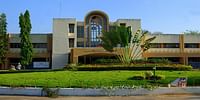
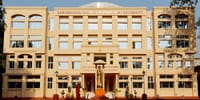
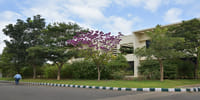
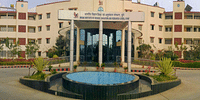
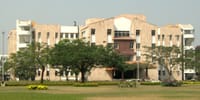
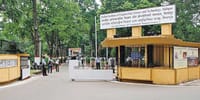
The institute is located at 2A and 2B Raja S.C. Mullick Road, Jadavpur, Kolkata 700032. Its urban research campus includes specialised laboratories for six Schools of Science, a large central library and housing for research students and faculty members.
- Research-focused courses at IACS are offered through the Schools of Applied and Interdisciplinary Sciences, Biological Sciences, Chemical Sciences, Materials Sciences, Mathematical and Computational Sciences, and Physical Sciences.
- BS-MS, a 5-year integrated programme, is available in Physical Sciences, Chemical Sciences, Biological Sciences, and Mathematical and Computational Sciences.
- Integrated M.Sc + PhD, a 5-year programme, is offered in Biological Sciences.
- PhD programmes are available through all six schools, with admissions for the Spring and Autumn semesters every year.
The five-year BS-MS course costs INR 1,12,400 in total, or INR 22,480 per year. The total fee for the five-year Integrated M.Sc + PhD in Biological Sciences is INR 1,47,800.
Doctoral students can receive financial support throughout their PhD through national schemes such as CSIR-JRF, UGC-JRF, DST-INSPIRE and NBHM. After completing their research programmes, IACS graduates move into postdoctoral study, faculty posts and research scientist positions in India and other countries.
IACS Admission Dates 2027
Admissions for the PhD and BS-MS courses are handled separately. IACS admits PhD scholars twice a year, with the Spring term starting in January and the Autumn term beginning in July. The Spring 2027 admission cycle is active. For the 2027 BS-MS batch, the institute is expected to accept applications in early 2027 and conduct its own entrance examination.
PhD Admissions: Spring 2027
| Event | Date |
|---|---|
| Applications open | October 2026 |
| Application deadline | November 2026 |
| Written test and interview | December 2026 |
| Classes begin | January 2027 |
Subject to revision. Kindly check with the official sources to confirm
BS-MS 2027 Batch: Tentative Schedule
| Event | Date |
|---|---|
| Online applications begin | January 2027 |
| Application deadline | March 2027 |
| IACS entrance examination | May 2027 |
| Interview for shortlisted applicants | June 2027 |
| Classes begin | July 2027 |
Subject to revision. Kindly check with the official sources to confirm
IACS Courses and Fees
Students can choose from three main types of programmes at IACS. The BS-MS introduces research at the undergraduate stage, while the Integrated M.Sc + PhD in Biological Sciences combines advanced classes with research over five years. All six schools admit PhD scholars each semester, and the institute keeps each doctoral group small to support close academic supervision.
| Course | Duration | Total Fee | Annual Fee |
|---|---|---|---|
| BS-MS (Integrated) | 5 years | INR 1,12,400 | INR 22,480 |
| Integrated M.Sc + PhD (Biological Sciences) | 5 years | INR 1,47,800 | INR 29,560 |
| PhD (Annual Registration Fee) | Variable | INR 47,800 per year | INR 47,800 |
Subject to revision. Kindly check with the official sources to confirm
These amounts cover institutional charges. A PhD scholar's monthly CSIR-JRF, UGC-JRF or DST-INSPIRE fellowship is paid separately from the annual registration fee. Fellowship income can therefore cover the effective cost of doctoral study at IACS.
IACS Admission Process
Selection at IACS is based on merit and the applicant's readiness for research. BS-MS applicants do not take a shared national admission test because IACS holds a separate entrance examination each year.
BS-MS eligibility and selection: Applicants need at least 60 per cent marks in Class 12 with Physics, Chemistry, and either Mathematics or Biology. First, they take a written examination on basic science subjects. Shortlisted students then attend a personal interview. Each stream has 25 to 30 seats. Students who have taken JEE and other competitive science tests also apply, but the IACS examination separately checks scientific aptitude and problem-solving skills.
PhD eligibility and selection: The accepted qualifying examinations depend on the field. Applicants may use JEST for Physical Sciences and Theoretical Computer Science, CSIR-NET or UGC-NET for Chemical Sciences and Biological Sciences, GATE for Materials Science and related areas, or NBHM for Mathematical Sciences. Eligible applicants must complete a written test and an interview at IACS. Final selection is entirely merit-based, and Government of India reservation rules apply.
Integrated M.Sc + PhD in Biological Sciences: This programme follows the Biological Sciences PhD selection route. Applicants primarily need a valid CSIR-NET or UGC-NET score and must subsequently attend an IACS interview.
The application process can be understood in these steps:
- Choose the programme and check its academic and qualifying-examination requirements.
- Complete the IACS application within the announced admission period.
- Appear for the required written test or submit the applicable JEST, CSIR-NET, UGC-NET, GATE or NBHM score.
- Attend the personal interview if shortlisted.
- Complete admission after selection according to the applicable merit list and reservation rules.
IACS Career Outcomes
IACS prepares students for scientific research and academic careers rather than running a standard campus recruitment programme. Its outcomes are therefore reflected in admission to PhD and postdoctoral programmes, faculty appointments and research positions instead of company salary packages.
After the BS-MS, students commonly enter doctoral programmes at IISc Bangalore, TIFR Mumbai, IISER campuses, central universities, and universities in the United States, Europe and Japan. Graduates also perform well in fellowship examinations such as CSIR-NET and GATE, which can lead to competitive PhD admission with full financial support.
Students completing the PhD or integrated programme take up postdoctoral work at research institutes and universities in India and abroad. Other routes include teaching and research posts at IITs, IISERs and central universities; scientist roles in CSIR laboratories; positions at DAE and DRDO research centres; and work in national laboratories. IACS alumni across the Indian scientific community also help graduates connect with research opportunities in different disciplines.
IACS Scholarships
Institutional and national funding schemes support most IACS students during their courses. Research scholars can receive financial assistance for the full length of their studies through several fellowship routes.
DST-INSPIRE Scholarship for BS-MS: Eligible BS-MS students can receive the DST-INSPIRE Scholarship for Higher Education (SHE). It pays INR 80,000 per year and includes a further INR 20,000 annual mentorship grant throughout the five-year programme. This funding helps meet study and living expenses.
CSIR-JRF and UGC-JRF for PhD and Integrated M.Sc + PhD: Students who qualify through CSIR-NET or UGC-NET receive a Junior Research Fellowship of INR 37,000 per month during the first two years. From the third year, the Senior Research Fellowship amount is INR 42,000 per month.
NBHM Scholarship: Mathematical Sciences PhD students may seek the National Board for Higher Mathematics scholarship. It provides monthly support for the entire doctoral programme at the rates fixed by DAE.
DST-INSPIRE PhD Fellowship: PhD scholars selected through DST-INSPIRE receive INR 31,000 per month for their first two years and INR 35,000 per month for the remaining period. A research contingency grant is also included.
IACS Campus and Infrastructure
IACS has a compact city campus in Jadavpur organised around six Schools of Science. Each school maintains specialised wet laboratories for hands-on experiments and dry laboratories for theoretical or computer-based research. Chemical Sciences facilities include NMR, mass spectrometry and X-ray crystallography equipment. The Physical Sciences school has laboratories for laser spectroscopy and condensed matter physics.
The central library contains a broad collection of research monographs and offers online access to major scientific journals and databases. Research scholars can receive campus housing as part of their fellowship arrangements. IACS also maintains a museum on C.V. Raman's scientific work, including the Nobel Prize-winning research he completed at the institute over more than two decades. The campus is connected by road, and Jadavpur Metro station is nearby.
IACS vs IISER Kolkata vs TIFR Mumbai
IACS, IISER Kolkata and TIFR Mumbai differ in their academic structure, setting and routes of admission. Students considering these research institutes can compare their main features below.
| Parameter | IACS | IISER Kolkata | TIFR Mumbai |
|---|---|---|---|
| Year Established | 1876 | 2006 | 1945 |
| Location | Jadavpur, Kolkata | Mohanpur, West Bengal | Colaba, Mumbai |
| Governing Body | DST, GoI | MoE, GoI | DAE, GoI |
| BS-MS Programme | Yes (5 years) | Yes (5 years) | No |
| PhD Programme | Yes | Yes | Yes |
| BS-MS Fees (5 years) | INR 1,12,400 | Not applicable to IACS comparison | Not offered |
| BS-MS Admission Mode | IACS Entrance Test | IAT (IISER Aptitude Test) | Not applicable |
| PhD Admission Mode | JEST / CSIR-NET / GATE / UGC-NET | JEST / CSIR-NET / GATE | JEST / CSIR-NET |
IACS offers a long-established research setting in Kolkata and has strong traditions in Chemistry and Physics. IISER Kolkata has a larger multidisciplinary research community and a newer campus outside the city. TIFR Mumbai mainly admits doctoral students and is particularly suited to those interested in Fundamental Physics and Mathematics.
IACS FAQs
Ques. Which courses can students study at IACS?
Ans. Undergraduate students can join the five-year integrated BS-MS in Physical Sciences, Chemical Sciences, Biological Sciences, or Mathematical and Computational Sciences. IACS also runs a five-year Integrated M.Sc + PhD in Biological Sciences and PhD programmes through all six Schools of Science. Doctoral admission takes place for both the Spring and Autumn semesters.
Ques. How much does the five-year IACS BS-MS cost?
Ans. The total institutional charge is INR 1,12,400, which equals INR 22,480 per year. Eligible students may also receive the DST-INSPIRE Scholarship of INR 80,000 annually with an additional INR 20,000 mentorship grant each year. This support can meet a large share of study and living expenses.
Ques. What steps are involved in BS-MS selection at IACS?
Ans. IACS uses its own written entrance test on fundamental science topics and then interviews shortlisted applicants. To apply, students must have completed Class 12 with Physics, Chemistry, and Mathematics or Biology, securing at least 60 per cent marks. No common national examination is used for admission to this programme.
Ques. Are students recruited through a regular placement drive at IACS?
Ans. No. IACS focuses on preparing students for academic and research careers and does not conduct a conventional campus placement programme. Graduates enter PhD courses at IISc, TIFR, IISERs and overseas universities, or move into postdoctoral work and research scientist positions at universities and national laboratories in India and abroad.
Ques. How are IACS PhD scholars financially supported?
Ans. National fellowship programmes provide doctoral stipends. CSIR-NET and UGC-NET qualifiers receive INR 37,000 per month as JRFs for two years, followed by INR 42,000 per month as SRFs from the third year. DST-INSPIRE PhD Fellows initially receive INR 31,000 per month, which increases to INR 35,000 per month from the third year. Mathematical Sciences students supported by NBHM receive funding for the full doctoral period at DAE-approved rates.