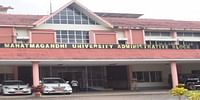
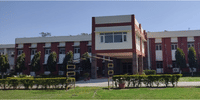
CSIR-Central Food Technological Research Institute, Mysore (CFTRI) is India’s national laboratory for food science and technology. It operates under the Council of Scientific and Industrial Research (CSIR), Ministry of Science and Technology, Government of India, and was established on 21 October 1950. Its academic degrees are awarded by the Academy of Scientific and Innovative Research (AcSIR), an Institution of National Importance created through an Act of Parliament.
AcSIR holds the 9th position among Research Institutions in NIRF Research 2025. CFTRI has more than 150 scientists and researchers working in food engineering, nutrition, biochemistry, biotechnology and food safety. Its 148-acre campus in Mysuru includes pilot plants, advanced instrumentation services, a library, cafeteria and medical centre.
Students can choose from the following postgraduate and research programmes:
- The 2-year M.Sc Food Technology is CFTRI’s main taught postgraduate programme and has 30 general seats in each batch.
- The integrated M.Sc and PhD in Nutritional Biology runs for 5 to 6 years and is designed for students seeking a research-focused route.
- PhD options in Sciences and Engineering cover Biochemistry, Biological Sciences, Biotechnology, Chemical Sciences, Chemistry, Food Science and Nutrition, Food Science and Technology, Microbiology and Engineering.
CFTRI Admission Dates 2027
CFTRI holds a national-level entrance examination at Mysuru each year for M.Sc Food Technology admission. AcSIR manages PhD selection through an aptitude test and interview. The next admission activities are expected during the periods listed below.
| Event | Date |
|---|---|
| M.Sc Food Technology 2027-29 notification and application | Early 2027 |
| M.Sc Food Technology 2027-29 national entrance examination | June to July 2027 |
| Applications open for the AcSIR PhD February 2027 session | November 2026 to January 2027 |
| CFTRI interview for the PhD February 2027 session | January to February 2027 |
Subject to revision. Kindly check with the official sources to confirm
CFTRI Courses and Fees
CFTRI provides specialised postgraduate and research education through AcSIR. It does not run undergraduate courses. Laboratory research and work with pilot-plant facilities form an important part of every programme.
| Course | Duration | Eligibility | Total Fees |
|---|---|---|---|
| M.Sc Food Technology | 2 years (4 semesters) | B.Sc or B.Tech in a relevant science or technology subject with 55% marks | INR 1.24 Lakhs |
| Integrated M.Sc and PhD in Nutritional Biology | 5 to 6 years | B.Sc in a relevant science subject with 60% marks | INR 2.80 Lakhs |
| PhD in Food Technology, Food Science and Technology, or Food Science and Nutrition | 3 to 5 years | Master degree in a relevant field with 55% marks and a JRF or SRF fellowship | INR 85,000 |
| PhD in Biochemistry, Biotechnology, Biological Sciences, Microbiology, Chemical Sciences, or Chemistry | 3 to 5 years | Master degree in a relevant science subject with 55% marks and a JRF or SRF fellowship | INR 85,000 |
| PhD in Engineering (Food Process Engineering) | 3 to 5 years | M.E. or M.Tech with 55% marks, or B.Tech with 75% marks, along with a fellowship | INR 85,000 |
Subject to revision. Kindly check with the official sources to confirm
The M.Sc Food Technology intake includes 30 general seats. There are also 2 seats each for Defence personnel, industry-sponsored applicants and foreign nationals. Most PhD scholars obtain CSIR-JRF or SRF, UGC-JRF, DBT, DST or ICMR support, which covers a monthly stipend and contingency expenses.
CFTRI Admission Process
M.Sc Food Technology
CFTRI selects M.Sc Food Technology students through its own objective-type National-Level Entrance Examination. The test is normally held once a year at Mysuru during June or July.
- Applicants must hold a B.Sc or B.Tech in Food Technology, Food Science, Chemistry, Biochemistry, Microbiology, Biotechnology, Nutrition or a related science subject. The minimum aggregate is 55%, reduced to 50% for SC, ST and PH applicants.
- Eligible students take the written examination at CFTRI Mysuru, after which the institute prepares the merit list.
- The seat distribution is 30 general seats, 2 Defence seats, 2 industry-sponsored seats and 2 seats for foreign nationals.
- SC, ST, OBC, EWS and PH reservations follow Government of India rules.
PhD (Sciences and Engineering)
AcSIR conducts CFTRI PhD admissions twice each year for its February and August sessions.
- For a Science PhD, an applicant needs a 2-year Master degree in Science with 55% marks, or 50% for SC, ST and PH categories. A 4-year B.Sc with 75% marks is another accepted qualification.
- Engineering PhD applicants require an M.E. or M.Tech with 55% marks. Those holding a 4-year B.Tech must have 75% marks.
- Most seats require a valid national fellowship such as CSIR-NET JRF, UGC-NET JRF, DBT-JRF, ICMR-JRF, DST-INSPIRE or GATE with an MHRD scholarship. Shortlisted applicants then attend an aptitude test and interview at CFTRI.
- Applications must be filed through the AcSIR portal at acsir.res.in.
M.Sc and PhD in Nutritional Biology (Integrated)
Selection for this integrated course takes place through a separate CFTRI entrance test or a direct interview. Applicants need a B.Sc in a relevant science field with at least 60% marks.
CFTRI Placements and Career Outcomes
CFTRI students move into food-sector jobs, research positions and industry R and D roles. Food and FMCG companies recruit M.Sc Food Technology graduates through campus placements. PhD holders commonly pursue academic work, government research or senior industry research positions.
| Programme | Career Pathway | Typical Entry Compensation |
|---|---|---|
| M.Sc Food Technology | R and D, quality assurance and product development roles at Hindustan Unilever, ITC, Nestle, Britannia, Cargill and similar FMCG companies | INR 8 to 10 LPA median for campus offers |
| Integrated M.Sc and PhD in Nutritional Biology | Research posts at ICMR or NIN, food policy work and academic faculty positions | INR 60,000 to 80,000 per month in a government position after the PhD |
| PhD in Sciences and Engineering | Post-doctoral study in India or abroad, CSIR laboratory posts, university teaching and senior R and D management in the food, pharmaceutical or agricultural industry | INR 47,000 per month as a JRF during the PhD; INR 8 to 14 LPA for an industry position after the PhD |
CFTRI Rankings
Degrees offered at CFTRI come from AcSIR, the national research university established by an Act of Parliament for CSIR constituent laboratories. NIRF evaluates AcSIR in its Research Institutions category rather than assigning CFTRI a separate position.
| Ranking Body | Category | 2025 Rank |
|---|---|---|
| NIRF, through AcSIR | Research Institutions | 9 |
The 9th-place NIRF Research 2025 ranking represents the combined research output and academic quality of AcSIR and all 37 CSIR constituent laboratories, including CFTRI Mysore.
CFTRI Campus and Infrastructure
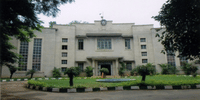
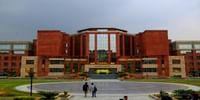
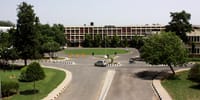
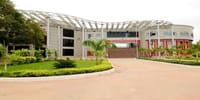
CSIR-CFTRI occupies a 148-acre campus in Mysuru, Karnataka. Research laboratories and pilot plants operate alongside a residential colony. Students and researchers have access to a central library, an instrumentation centre, an auditorium, a cafeteria, a gym and a medical centre. Eligible PhD scholars can also receive housing on campus.
The pilot plants support food-processing research in milling, extrusion, fermentation, spray drying, cold-storage simulation and specialised food packaging. CFTRI’s High-End Instrumentation Facility contains equipment for NMR, mass spectrometry, electron microscopy and flow cytometry, and research scholars can use these services. The campus is a DSIR-certified in-house R and D facility and supports industry collaboration through CSIR Open Source Drug Discovery and Technology Business Incubator models.
CFTRI vs NIFTEM vs IICPT Thanjavur
Students exploring government-funded food technology institutes may compare CFTRI Mysore, NIFTEM in Kundli and IICPT Thanjavur. Their courses and research areas support different academic and career routes within the food sector.
| Parameter | CFTRI Mysore | NIFTEM Kundli, Haryana | IICPT Thanjavur, Tamil Nadu |
|---|---|---|---|
| Type | CSIR National Research Laboratory | Institute of National Importance, Government of India | CSIR Constituent Laboratory |
| Established | 1950 | 2012 | 1989 |
| Focus | Full range of food research and technology | Food technology education and entrepreneurship | Crop processing and packaging |
| Flagship Programme | M.Sc Food Technology with 30 seats and PhD programmes | B.Tech Food Technology, M.Tech and MBA in Food Business | M.Tech Food Processing Technology and PhD |
| Degree Awarding Body | AcSIR, ranked 9th in NIRF Research | NIFTEM, a deemed university | AcSIR |
| Admission Basis | CFTRI entrance examination; JRF qualification for PhD admission | JEE Main for B.Tech; GATE for M.Tech | GATE or JRF for PhD; entrance examination for M.Tech |
| Industry Links | ITC, Hindustan Unilever, Nestle, Britannia and Cargill | National food-processing industry | Food industry in Tamil Nadu and southern India |
CFTRI is distinguished by its research facilities, its scientific work since 1950 and the connection between its M.Sc curriculum and CSIR pilot plants. NIFTEM provides B.Tech and food-processing entrepreneurship routes. IICPT concentrates on crop processing and post-harvest work, making it relevant to students interested in the agricultural processing sector of Tamil Nadu.
CFTRI FAQs
Ques. Which degrees can students pursue at CFTRI Mysore?
Ans. The institute runs a 2-year M.Sc Food Technology course with 30 general seats, a 5 to 6-year integrated M.Sc and PhD in Nutritional Biology, and full-time PhD courses. Research fields include Food Technology, Biochemistry, Biotechnology, Biological Sciences, Chemical Sciences, Microbiology, Food Science and Nutrition, and Engineering. CFTRI has no undergraduate programmes. AcSIR, an Institution of National Importance, awards all these degrees.
Ques. Who can seek admission to CFTRI’s M.Sc Food Technology course?
Ans. A B.Sc or B.Tech in Food Technology, Food Science, Chemistry, Biochemistry, Microbiology, Biotechnology, Nutrition or a related science field is required. Applicants need at least 55% aggregate marks, while SC, ST and PH applicants need 50%. Selection depends on CFTRI’s national-level entrance examination, generally conducted once each year at Mysuru in June or July.
Ques. Is financial support available to CFTRI PhD scholars?
Ans. Yes. Most scholars receive monthly support from national funding programmes. A CSIR-JRF provides INR 37,000 per month, which increases to INR 42,000 per month at the SRF stage. UGC-JRF, DBT-JRF, ICMR-JRF and DST-INSPIRE awards are also accepted. Students holding these fellowships may apply for the CFTRI PhD through AcSIR, and the full programme fee is INR 85,000.
Ques. Does CFTRI have an independent NIRF position?
Ans. No separate NIRF rank is assigned to CFTRI. Its degrees are awarded through AcSIR, which secured the 9th rank in the NIRF Research Institutions category in 2025. This collective ranking covers all 37 CSIR constituent laboratories, including CFTRI Mysore.
Ques. What jobs and salaries can follow an M.Sc Food Technology from CFTRI?
Ans. Graduates enter R and D, quality assurance, product development and regulatory affairs. Recruiters from earlier years include Hindustan Unilever, ITC Limited, Nestle and Britannia. The median campus package is typically INR 8 to 10 LPA. After a PhD, students may take post-doctoral roles, join research organisations such as CSIR, ICMR or NIN, or enter senior industry R and D positions paying INR 8 to 14 LPA.
Ques. What steps are involved in applying for a CFTRI PhD?
Ans. Candidates apply through the AcSIR portal at acsir.res.in for the February or August intake. They normally need a national JRF qualification through CSIR-NET, UGC-NET, DBT, ICMR or DST-INSPIRE. Shortlisted applicants complete an aptitude test and interview at CFTRI. Final selection considers their research ability and how well their proposed work matches active CFTRI projects.




.png?tr=h-40,w-40,c-force)