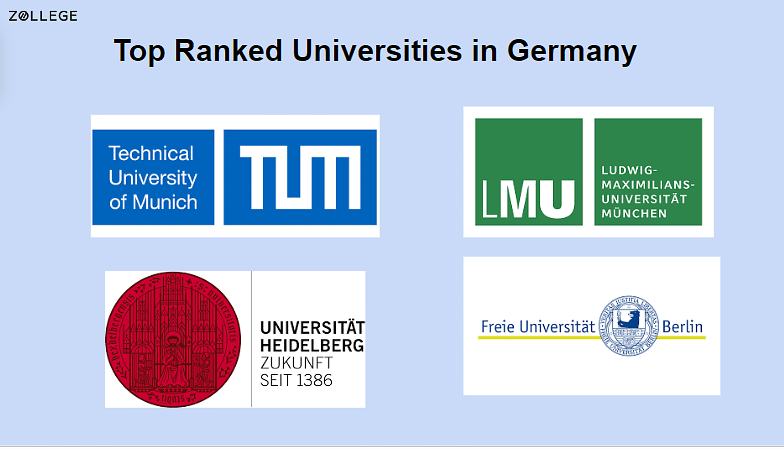
Universities in Germany offer international students the chance to study at top-ranked universities without any tuition fee. Students with a tight budget can surely choose the best universities in Germany for quality education. Confirmation from any university would help students to immigrate to Germany. The most well-ranked universities in Germany are the Technical University of Munich (TUM), Ludwig Maximilian University of Munich, Heidelberg University, and Freie Universität Berlin.
Students also have a choice to choose between public and private universities in Germany. Best private universities in Germany include names like Berlin School of Business and Innovation, GISMA Business School, Bard College of Berlin, etc. Private universities are at par in terms of education and quality course choices like public universities in Germany.
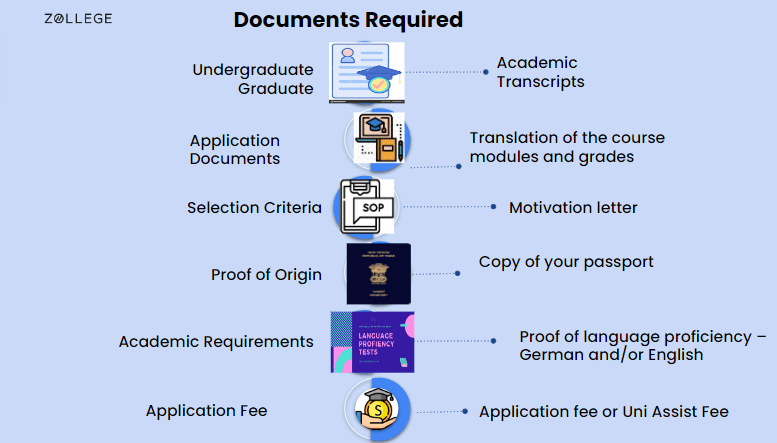
Few public universities like the Technical University of Munich (TUM), and Heidelberg University have tuition fees for international students. All private universities in Germany charge tuition fees, although nominal in the range of EUR 7,800- EUR 39,900. Documents required for admission to any top university in Germany include submission of academic transcripts, SOP, Language exam certificates, etc. The intakes are in summer and winter semesters mostly for both domestic and international students. Students after confirmation of admission can apply for a German student visa to relocate and start their studies.
Top Public Universities in Germany
One of the few nations that provides free education to both domestic and foreign students is Germany. With a few exceptions, more than 180 public universities offer free English-taught courses to study in Germany. Germany is therefore a fantastic choice for students on a tight budget. Living expenses are the only expense you will need to worry about, these normally run between EUR 700 and EUR 1200 per month. Considering that there won't be a tuition fee, this is reasonably priced when compared to other nations. Students can refer to the table below for Top Public Universities in Germany. All the universities mentioned, also have their world ranks mentioned, and their tuition fee.
| University | World Rank | Tuition Fee (Per Semester) | Location |
| Technical University of Munich (TUM) | # #37 in QS World University Rankings 2024 | EUR 2,000- EUR 6,000 | Munich |
| Ludwig Maximilian University of Munich | #54 in QS World University Rankings 2024 | No Tuition Fee | Munich |
| Heidelberg University | #=87 in QS World University Rankings 2024 | EUR 1500 | Heidelberg |
| Freie Universität Berlin | #98 in QS World University Rankings 2024 | No Tuition Fees | Berlin |
| RWTH Aachen University | #106 in QS World University Rankings 2024 | No Tuition Fees | Aachen |
| Karlsruhe Institute of Technology (KIT) | #119 in QS World University Rankings 2024 | EUR 1,500 | Karlsruhe |
| Humboldt University Berlin | #120 in QS World University Rankings 2024 | No Tuition Fee | Berlin |
| Technical University Berlin | #=154 in QS World University Rankings 2024 | No Tuition Fee | Berlin |
| University of Freiburg | #=192 in QS World University Rankings 2024 | EUR 1500 | Freiburg |
| Technical University Dresden | #=246 in QS World University Rankings 2024 | EUR 5,600 | Dresden |
Best Private Universities in Germany
While public universities are the ones that most students aspire to, private universities in Germany offer advantages and opportunities of their own. Despite their smaller size, they don't compromise on the standard of instruction. The only differences here are that private universities are not tuition-free, and the cost of living in Germany becomes more expensive if the tuition fee is higher. The majority of private universities in Germany provide a wide range of bachelor's and master's degree courses, just like public universities do. Listed below are some of the best private universities in Germany for international students.
| University | Annual Tuition Fee | Location |
| Berlin School of Business and Innovation | EUR 13,500- EUR 14,150 | Berlin |
| GISMA Business School | EUR 18,000 | Berlin |
| Bard College of Berlin | EUR 34,650 | Berlin |
| Munich Business School | EUR 24,900- EUR 39,900 | Munich |
| SRH Hochschule Berlin | EUR 7,800- EUR 12,900 | Berlin |
Document Requirements for Best Universities in Germany
Due to its reputation for offering world-class education, Germany attracts a sizable number of international students. On the other hand, a lot of students are unclear about the documentation requirements and other related matters when they apply to German universities. Listed in the infographic are all the document requirements needed for admission at any top Universities in Germany.
Intakes for Top Universities in Germany
German intakes primarily occur twice a year, during the summer and winter seasons. All programs in Germany primarily accept applications in the winter and summer. Therefore, knowing which German intakes are appropriate is essential to your admissions process. Winter intake is the primary application period for universities in Germany. The majority of programs take applications during this intake session and have deadlines in July or August at the best universities in Germany. Listed below are the intakes in Germany along with the course start months and a list of top universities open for the intakes.
| Intakes | Course Start | Top Universities |
| Summer Intake | March-April |
|
| Winter Intake | September |
|
Students will find all the relevant information on best private universities in Germany from intakes to documents required in the highlighted tables. The world rankings in 2024 of Top Universities in Germany are also shared. Also highlighted are the locations and tuition fees of the best universities in Germany.
FAQs
Ques: Are universities in Germany free?
Ans: All sixteen states in Germany eliminated undergraduate tuition fees at public universities in 2014. This implies that undergraduates at German public universities, both domestic and foreign, can currently study for free, paying only a small fee each semester to cover other costs such as administration.
Ques: What is Germany's No. 1 university?
Ans: Munich, home to Ludwig Maximilian University (LMU) and the Technical University of Munich (TUM), and Berlin, home to the HU, FU, and TU, are the two epicenters of academic brilliance.
Ques: Is IELTS required in Germany?
Ans: Indeed, to be admitted to undergraduate and graduate programs in Germany, one must take the IELTS exam. Undergraduate programs require an IELTS band score of 6.0, while postgraduate courses require a score between 6.0 and 6.5.
Ques: Which course is famous in Germany?
Ans: Germany's engineering programs are well-known. Courses in mechanical engineering, electrical engineering, computer science, automotive engineering, and information technology are popular among Indian students.
Ques: Is Germany good for Indian students?
Ans: Compared to Canada, Germany is a beautiful study-abroad option for Indian students. The cheap or nonexistent tuition at many of its public universities is one of its most alluring benefits.
Ques: Which language is spoken in Germany?
Ans: German is the official language of Germany, where more than 95% of the population speaks Standard German or a German dialect as their first language. This number includes Northern Low Saxon speakers, a recognized minority or regional language included in statistics but not counted as a separate language from Standard German.
Ques: Can I study in Germany without knowing German?
Ans: Even though you can study in Germany without learning German, being able to speak another language is still a great advantage that will only make your time studying abroad more enjoyable! There are plenty of chances to practice your German if you're keen to do so while residing overseas.
Ques: Which city is better to study in Germany?
Ans: The capital city of Germany, Berlin, is among the top destinations for foreign students. Berlin has everything one could want, including a vibrant nightlife, a varied cultural landscape, and a city. It could be enjoyable, but also somewhat difficult for students studying here to adjust to a town where there are language barriers.
Ques: Is Germany a student-friendly country?
Ans: Germany's modern infrastructure, reasonably priced living expenses, and excellent educational system make it a popular choice for international students. The nation is home to several internationally renowned universities that offer their students a wide range of options and a high rate of employability.
Ques: Which exam is required for Germany?
Ans: The Goethe-Zertifikat/DSH/TestDaf for German language proficiency, the GRE/GMAT for certain academic programs, and the IELTS/TOEFL for English language proficiency are the main entrance exams for studying in Germany.
Ques: Can I go to Germany after the 12th?
Ans: You can start looking for German universities after high school, but you have to meet the requirements. When you apply at the institution of your choice, the majority of them offer online applications that require a fee.
Ques: What is the success rate of a German student visa?
Ans: Obtaining a student visa for Germany is very simple. The success rate for German student visas is approximately 95%, according to research. Put another way, about 95 out of 100 students are successful in obtaining a German student visa.
Ques: Can I study in Germany with 70%?
Ans: Your academic history, particularly your school or college CGPA (minimum 60–70 percent) and prior accomplishments, will determine your admittance to study in Germany. While each university determines what paperwork is necessary, most of the following will usually be included: a certified copy of a degree that has already been earned or a high school diploma.
Ques: Who can sponsor me to study in Germany?
Ans: This person ought to be living in Germany, first and foremost. Secondly, the individual must possess a valid residence permit (one that extends for the entire duration of the student's stay) or be a citizen of Germany or the European Union. Thirdly, there must be adequate creditworthiness for the sponsor.
Ques: Do Indians get jobs in Germany easily?
Ans: Germany is a highly sought-after destination for Indian jobseekers owing to its robust economy and elevated need for proficient laborers. With low unemployment rates and a wide range of job opportunities across multiple industries, Germany's job market is regarded as one of the strongest in Europe.

![Humboldt University of Berlin [HU]](https://static.zollege.in/public/college_data/images/studyabroad/logos/college_632_29-15:02_6.png?tr=w-50,h-50,c-force?tr=h-40,w-35,c-force)
![Technical University Munich [TUM]](https://static.zollege.in/public/college_data/images/studyabroad/logos/college_691_02-13:08_691.png?tr=w-50,h-50,c-force?tr=h-40,w-35,c-force)
![Ludwig Maximilian University of Munich [LMU]](https://static.zollege.in/public/college_data/images/studyabroad/logos/college_690_02-13:05_690.png?tr=w-50,h-50,c-force?tr=h-40,w-35,c-force)
![Free University of Berlin [FU]](https://static.zollege.in/public/college_data/images/studyabroad/logos/college_631_29-15:01_5.png?tr=w-50,h-50,c-force?tr=h-40,w-35,c-force)
.png?tr=w-50,h-50,c-force?tr=h-40,w-35,c-force)