
Germany is the fifth most desired country for immigration purposes. Most people immigrate to Germany due to its well-performing economy, education system, and employment opportunities. There are multiple ways for nationals to immigrate to Germany, majority of them immigrate to study in Germany. The other ways to get Germany permanent residence for Indian includes:
- Immigrate to Germany for employment
- Immigrate to Germany for entrepreneurs
- Immigrate to Germany for family reunions
- Immigrate to Germany residence permits
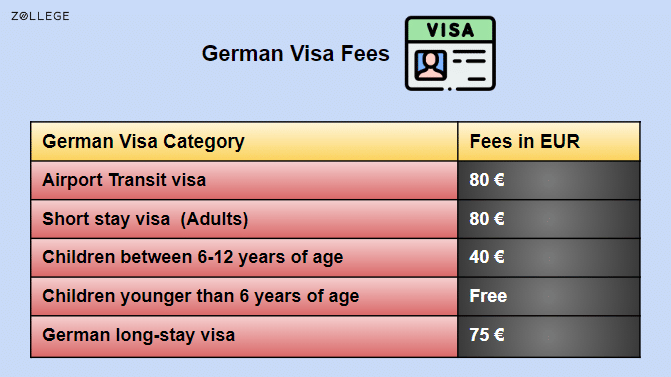
Most people who wish to immigrate to Germany from India are skilled workers and students. Students need a German student visa to get into any of the universities. The new Skilled Immigration Act (FEG) makes it easier to immigrate to Germany for skilled workers with vocational training. The new EU Blue Card given to international citizens with High skilled work visa will be restructured and expand the possibilities from November 2023.
Germany is the world’s 5th largest economy, which makes them a hotspot for skilled workers and work visas. Germany offers diverse opportunities for professionals with the right background. The education is free for most universities in Germany. Students need to pay a very minimal fee for college development and students club.
Immigrate To Germany Eligibility
Eligibility to immigrate to Germany depends on your circumstances and the purpose of your stay. You have the option to study free in Germany also. The Germany permanent residence requirements vary for different types of immigrations. You must note that the laws regarding immigration might change and hence, it is always suggested to take professional help. The basic requirements for Germany and Immigration are:
- Prove financial stability
- Have health insurance
- Have at least basic proficiency in German
- Get a German visa
- Quaifying scores in exams to study in Germany
Germany Immigration for Employment
Germany is looking for skilled immigrants due to a shortage of skilled workers. The demand for skilled workers is high, as per the latest reports from Germany immigration site. To get into jobs as skilled immigrant, you need a work permit visa in Germany. You can obtain a Germany permanent residence if you are a skilled worker. There facilities for immigration to Germany from India are:
- 1.8 million job openings
- Needs 400,000 skilled immigrants each year
- No IELTS required
- Earn an average annual salary of €50,000 in jobs in Germany
- Issues 3000 job seeker visas/year
A skilled worker can apply for a PR process for Germany job search for a maximum duration of 6 months as per Germany immigration website. The skilled worker needs to hold a university degree for Germany immigration from India. According to the “Act on the Residence”, the Germany PR requirements to apply for a German Employment Visa are as follows:
- Highly qualified foreigners, in particular:
- researchers with special technical knowledge
- teaching personnel in prominent positions or scientific personnel in prominent positions
- Intra-corporate or same company with different branch in Germany transfers, in particular: managers or specialists
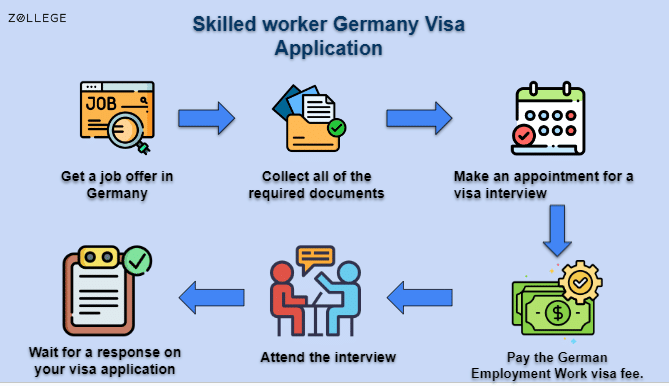
PR Requirements Germany
The time taken to process a German work visa application is around 1-3 months for Indian immigration to Germany. The processing time also depends on the number of applications the embassy is receiving. It is also dependent on the time, as well as your situation. You may be required to show a degree obtained from any of the private or public universities in Germany. The documents required for application includes:
- Two fully completed application forms.
- Two passport photographs for immigration to Germany skilled worker
- Valid national passport
- Proof of residence. Your driver’s license and/or utility bill in your name as proof of residence
- Health insurance. Compulsory certificate from German employer, valid from date of employment.
- An employment contract / binding job offer with details of gross annual salary and a detailed description of the employment in Germany.
- Approval by the Federal Employment Agency (If applicable).
- Updated CV with academic qualifications and your job experience.
- Proof of Qualification for skilled migration Germany
- Personal cover letter explaining the exact purpose and duration of stay.
- Proof of a clean criminal record.
- Proof of paid visa fee.
- Declaration of Accuracy of Information for Germany skilled immigration
Immigrate to Germany for Education
Unlike the USA, UK or Canada Germany offers free education for all international and local students. Hence, it has become a hotspot for international studies. You must obtain a study Visa for education in Germany. You must plan at least 3 months before the course starts. Check the German student visa rejection reasons beforehand, so thatyou can ace the process. The fee for a German student visa application is 75 EUR. There are three types of study visas for educational activities in Germany:
- Language Course Visa – for educational activities lasting from 3 months up to 1 year to participate in short German language courses.
- Student Applicant Visa – if you want to study in Germany, but are still trying to find the right program or you still haven’t got the confirmation letter from your University
- Student Visa – if you have already been accepted to a German university by applying via Uni Assist
The processing time for a Germany long-stay study visa takes from 6-12 weeks from the day of application. The short-stay study visas are usually decided within 15-30 days by the German missions abroad.
PR Process for Germany
If you get one of the visas for immigration, you will also be eligible for a residence permit. There are two types of residence permits - Temporary and Permanent. The temporary and permanent residence types are divided into three categories which can provide Germany permanent residence card:
Standard Residence Permit
Used for all immigration purposes such as completing training courses, former Germans who want to return to Germany and those who go to Germany for political and humanitarian reasons. The standard residence permit is temporary and is valid for some time. It can also be extended later.
European Union (EU) Blue Card
The EU Blue Card for Germany is given to foreign national workers (who are not citizens of EU countries). They must have high qualifications and want to work in Germany. To qualify for the EU Blue Card Visa, you will need to have a job in Germany, and the minimum annual salary must be 56,800 Euros to cover the cost of living in Germany.
- The EU Blue Card grants its holders the right to stay in Germany for four years
- Possibility of changing residence permit into a permanent settlement.
- Show German proficiency and meet specific financial requirements
- Worked in Germany for more than 33 months in their place of employment
Permanent Residence Permit
The permanent residence permit in Germany is called the Settlement Permit. The Settlement Permit is given to those who have had either a standard residence permit or an EU Blue Card for at least five years and meet certain language requirements.
This article focuses on information about how to move to Germany and general immigration to Germany. You can apply for a residence permit or short stay permit in Germany. Please note that if you do not get PR, you must leave the country once the visa expires.
FAQs
Ques: Who needs a visa to immigrate to Germany?
Ans: Anyone who is not a citizen of an EU/EEA country or Switzerland requires a visa to live and work in Germany. All the international tourists visiting for a short time also require a visa to go to Germany.
Ques: What are the different types of visas for Germany?
Ans: There are various visas, including work visas, student visas, family reunion visas, and freelancer visas. Each has specific requirements and eligibility as per the government of Germany. You must follow the rules before applying.
Ques: How long does it take to get a visa for Germany?
Ans: The time taken to process a German work visa application is around 1-3 months. Processing times can vary depending on the visa type and your nationality. It can range from a few weeks to several months.
Ques: What are the language requirements for immigrating to Germany?
Ans: The language requirements for immigration to Germany are English and German. German language proficiency is often required for work and study visas. Levels vary depending on the visa type and profession.
Ques: How much money do I need to immigrate to Germany?
Ans: You need to demonstrate sufficient financial means to support yourself, typically through bank statements or proof of income. To get a European Blue Card, you must have 56,800 Euros in your account.
Ques: What are the job opportunities like in Germany?
Ans: Germany has a strong economy with numerous job opportunities, especially in skilled professions like engineering, IT, and healthcare. There has been a shortage of skilled workers in Germany and hence, the demand has increased.
Ques: How do I find a job in Germany?
Ans: To find a job in Germany, you can use job boards, network with professionals, and contact relevant agencies like the Federal Employment Agency (BA). You can also search online on various job websites.
Ques: What is the Skilled Immigration Act?
Ans: This skilled immigration act simplifies immigration for skilled professionals with qualifications in demand in Germany. The skilled immigration act makes it easier for professionals to move and get PR in Germany.
Ques: Do I need my foreign qualifications recognized in Germany?
Ans: No, you do not always need a foreign qualification that is recognized in Germany. Depending on your profession, you might need your qualifications recognized by a relevant authority.
Ques: Can I bring my spouse and children with me?
Ans: Yes, you can definitely bring your spouse and children to Germany. The family members can apply for visas based on your residence permit. Once the visa is approved, your family can reach and stay with you in Germany.
Ques: What are the different types of study visas in Germany?
Ans: There are three types of study visas available in Germany. These types of Visas include the language courses visa, university studies visa, and research stays where you already are accepted in a university.
Ques: What are the tuition fees for universities in Germany?
Ans: There are no tuition fees for studying in Germany. Public universities in Germany generally have low or no tuition fees for international students. You just need to pay for your accommodation in Germany during the duration of study.
Ques: How do I apply to a university in Germany?
Ans: To apply to a university in Germany, you must research universities and programs that fit your interests and qualifications. You can then follow their application procedures from the official website and apply. Once the application is done, you must wait for the confirmation.
Ques: Can I work while studying in Germany?
Ans: Yes, students are allowed to work part-time (up to 20 hours/week) with a student visa. Hence, you can work while studying in Germany to cover your expenses.
Ques: What is the cost of living in Germany?
Ans: The living costs in Germany vary depending on location and lifestyle. Larger cities tend to be more expensive, while smaller cities are less expensive. The average cost of living per month for a single person is around 1200-1500.
Ques: How can I find accommodation in Germany?
Ans: You can find accommodation in Germany by looking for apartments online, through agencies, or contact local landlords. If you are coming to study, you can contact the admissions department. If you are coming to Germany on a work visa, you can contact your employer for options.
Ques: What is the healthcare system like in Germany?
Ans: Germany has a universal healthcare system with high-quality care. You need to register with a health insurance provider. You need to register before you can shift to Germany. This can also be done during the Visa process.
Ques: Can I keep my home country citizenship when becoming a German citizen?
Ans: Yes, you can keep the citizenship of your country while also being a German resident. Germany allows dual citizenship under certain conditions. You can check with your home country's regulations before applying.
Ques: Where can I find more information about immigrating to Germany?
Ans: You can find more information about immigrating to Germany on their official website. The Official websites like Make it in Germany and the Federal Foreign Office provide comprehensive information and resources.

![Humboldt University of Berlin [HU]](https://static.zollege.in/public/college_data/images/studyabroad/logos/college_632_29-15:02_6.png?tr=w-50,h-50,c-force?tr=h-40,w-35,c-force)
![Technical University Munich [TUM]](https://static.zollege.in/public/college_data/images/studyabroad/logos/college_691_02-13:08_691.png?tr=w-50,h-50,c-force?tr=h-40,w-35,c-force)
![Ludwig Maximilian University of Munich [LMU]](https://static.zollege.in/public/college_data/images/studyabroad/logos/college_690_02-13:05_690.png?tr=w-50,h-50,c-force?tr=h-40,w-35,c-force)
![Free University of Berlin [FU]](https://static.zollege.in/public/college_data/images/studyabroad/logos/college_631_29-15:01_5.png?tr=w-50,h-50,c-force?tr=h-40,w-35,c-force)
.png?tr=w-50,h-50,c-force?tr=h-40,w-35,c-force)


