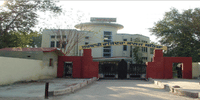
Central University of Punjab (CUP) conducts Admission 2026 for undergraduate, postgraduate, integrated and PhD programmes at its Bathinda, Punjab campus. B.Tech CSE and B.Pharmacy are among its major courses. The admission counselling fee is INR 1,000, while SC, ST and PwD students pay INR 500.
Students from every part of India can apply because CUP is a central university. None of its programmes has a Punjab domicile requirement or state quota. Admissions are handled through CUET and counselling conducted by the university.
CUP Admission Portal 2026: cup.edu.in
- For UG courses, the CUET-UG 2026 result has been announced and university counselling is underway.
- Admission to PG courses is based on CUET-PG.
- PhD applicants must clear the CUP entrance examination and interview.
- CUP applies central reservation rules: SC 15 percent, ST 7.5 percent, OBC 27 percent and EWS 10 percent.
- Students must pay a counselling charge of INR 1,000. The amount is INR 500 for SC, ST and PwD applicants.
- Applicants who have qualified NET, GATE or GPAT do not have to take the PhD written examination.
- NCET 2026, rather than CUET, is used to fill seats in the integrated B.Ed programmes.
CUP has no management quota. Seats are allotted through CUET scores and centralised counselling.
CUP UG Admission 2026
Undergraduate applicants are selected mainly through CUET-UG 2026. CUP offers integrated B.A. LL.B (Hons), B.Tech CSE, B.Pharmacy and integrated BS-MS science degrees through this route. Integrated B.Ed courses follow the NCET 2026 admission route instead.
CUP UG Eligibility Criteria 2026
- Applicants must have passed 10+2 from a recognised board.
- Each course requires the minimum marks listed in the UG prospectus.
- Students must have a valid CUET-UG 2026 score in the subjects required for their chosen programme.
- Those applying for an integrated B.Ed programme must qualify NCET 2026 instead of CUET-UG.
CUP UG Selection Criteria 2026
- The CUET-UG score alone determines admission merit.
- CUP uses these scores to prepare a separate merit list for each programme.
- Students on the shortlist take part in online counselling and select their preferred seats.
- A seat becomes final only after the university checks the documents and receives the required fee.
How to Apply for UG at CUP?
- Complete CUET-UG 2026 registration and submit the application through the NTA portal.
- Take the CUET-UG papers selected in the application form.
- Sign up for CUP counselling through the Samarth portal.
- Confirm the preferred programme choices and submit the documents for verification.
CUP PG Admission 2026
CUET-PG 2026 scores are used to fill CUP postgraduate seats. Available options include MA, M.Sc, M.Pharm and M.Tech specialisations such as Cyber Security. The university manages the counselling process through its Samarth portal.
CUP PG Eligibility Criteria 2026
- A bachelor’s degree in the relevant field is required.
- Applicants must meet the minimum marks stated for their course in the PG prospectus.
- The required CUET-PG 2026 paper must have been taken, and the applicant must hold a valid score.
CUP PG Selection Criteria 2026
- The CUET-PG score is the basis for the merit calculation.
- CUP publishes provisional merit lists separately for each programme.
- Eligible students pay the counselling fee and confirm their course preferences.
- The university allots seats before checking the documents for final admission.
CUP PhD Admission 2026
Doctoral study is available through several CUP schools. Applicants normally take the university research entrance examination and then attend an interview. NET, GATE and GPAT qualifiers are excused from the written test.
CUP PhD Eligibility Criteria
- A master’s degree with at least 55 percent marks is required.
- The minimum for SC, ST and PwD applicants is 50 percent.
CUP PhD Selection Criteria
- Applicants who are not exempt must first sit for the CUP research entrance examination.
- NET-qualified applicants receive weightage when the university calculates merit.
- Candidates selected at the next stage must appear for a personal interview.
- CUP prepares the final selection list using the entrance test and interview scores.
CUP Scholarships 2026
CUP students may apply for government financial support through central schemes and programmes meant for specific categories.
- Eligible students can seek Central Sector scholarships and other Government of India scholarships.
- SC, ST, OBC and minority students can apply for relevant schemes through the National Scholarship Portal.
- Applicants from reserved categories receive relaxation in the entry-mark requirements.
CUP Admission FAQs
Ques. Which examinations are accepted for undergraduate and postgraduate entry at CUP?
Ans. CUP uses CUET-UG for undergraduate courses and CUET-PG for postgraduate courses. Integrated B.Ed applicants must take NCET instead of CUET.
Ques. Are any CUP seats reserved only for applicants from Punjab?
Ans. No. Students are admitted from across India because CUP is a central university. It does not apply a Punjab domicile condition or state quota.
Ques. What score determines selection for a CUP undergraduate programme?
Ans. The university uses only the CUET-UG score to calculate UG merit. Separate programme-wise merit lists are then prepared for counselling.
Ques. What must a student have before applying for a CUP postgraduate course?
Ans. The student must hold a bachelor’s degree in the relevant subject and have a valid CUET-PG 2026 score.
Ques. What stages are included in the CUP PhD selection process?
Ans. PhD selection normally includes the university entrance examination followed by an interview. Applicants who have qualified NET, GATE or GPAT are not required to sit for the written test.
Ques. How much must applicants pay to join CUP counselling?
Ans. The counselling fee is INR 1,000 for general applicants. SC, ST and PwD applicants are charged INR 500.
Ques. What percentage of seats is covered by each central reservation category at CUP?
Ans. CUP follows central norms of SC 15 percent, ST 7.5 percent, OBC 27 percent and EWS 10 percent.
Ques. How are students selected for CUP integrated B.Ed courses?
Ans. Integrated B.A. B.Ed and B.Sc B.Ed admissions use NCET 2026. These programmes do not follow the CUET admission route.
Ques. Can an applicant obtain a CUP seat through a management quota?
Ans. No. CUP has no management quota, and seats are assigned through CUET and counselling.