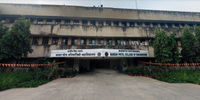
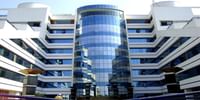
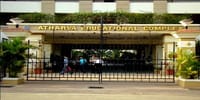
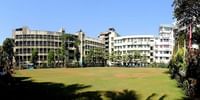
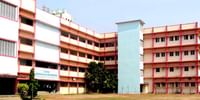
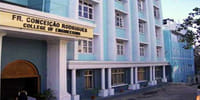
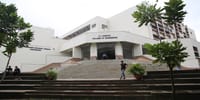
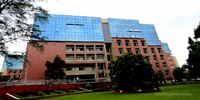
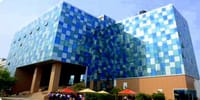
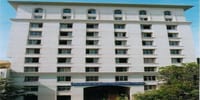
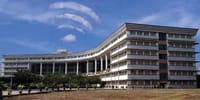
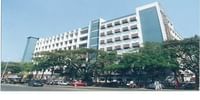
Thakur College of Engineering and Technology (TCET) began operating in 2001-02 as a private engineering college in Mumbai, Maharashtra. It functions under the Thakur Educational Trust as a Hindi Linguistic Minority institution with empowered autonomous status. Its affiliation is with the University of Mumbai, and its programmes have approval from the All India Council for Technical Education (AICTE).
Students study at the Thakur Educational Campus in Thakur Village, Kandivali East, Mumbai 400101, in the city's northern suburbs. Industry-linked learning facilities include centres run with Accenture and Tata Technologies, a Cisco Wireless Network Laboratory, and laboratories developed with Texas Instruments and Intel.
TCET's position in NIRF Engineering 2025 is 319 nationally. Several programmes have National Board of Accreditation (NBA) accreditation, and the college's 5th accreditation cycle is in progress. Its academic options cover engineering, management, computer applications, vocational studies and doctoral research.
- BE/B.Tech spans 11 branches with more than 1,020 sanctioned seats in total. Computer Engineering accounts for 240 seats. The branches are Computer Engineering, Information Technology, Electronics and Telecom Engineering, Mechanical Engineering, Civil Engineering, Mechatronics Engineering, Cyber Security, Computer Science and Electronics, AI and Data Science, AI and Machine Learning, and Internet of Things.
- MBA and MCA each take 2 years, with admission through the relevant MAH-CET examination.
- ME/M.Tech takes 2 years and is available in several specialisations.
- BBA and BCA each run for 4 years.
- B.Voc takes 3 years. Its two streams are Graphics and Animation; and Data Analytics, Data Science, and Software Development.
- PhD study is available across all disciplines and requires at least 3 years.
Institute-level applications are handled through the official TCET admission portal.
TCET Mumbai Important Dates
Students considering TCET's postgraduate courses can follow the examination schedules below. GATE is an entrance option for ME/M.Tech, while MAT is among the examinations accepted for MBA admission.
GATE 2027 Schedule
The official GATE 2027 schedule lists these ongoing and upcoming events.
| Event | Date |
|---|---|
| GATE 2027 application correction window | October 14 to 21, 2026 |
| GATE 2027 examination city notification | January 4, 2027 |
| GATE 2027 examination | February 6, 7, 13, 14, 20 and 21, 2027 |
| GATE 2027 result announcement | March 19, 2027 |
Subject to revision. Kindly check with the official sources to confirm
MAT December 2026 Schedule
AIMA has published the following dates on the official MAT website. PBT means paper-based test, and CBT means computer-based test.
| Event | Date |
|---|---|
| MAT December 2026 PBT registration deadline | December 14, 2026 |
| MAT December 2026 PBT admit card release | December 17, 2026 |
| MAT December 2026 PBT examination | December 20, 2026 |
| MAT December 2026 CBT registration deadline | December 21, 2026 |
| MAT December 2026 CBT admit card release | December 24, 2026 |
| MAT December 2026 CBT examination | December 27, 2026 |
| MAT December 2026 result declaration | By the first week of January 2027 |
Subject to revision. Kindly check with the official sources to confirm
TCET Mumbai Courses and Fees
A four-year engineering degree costs INR 5,76,000, with the same total fee across all 11 BE/B.Tech branches. Among the college's programmes, the two-year MBA has the highest total fee at INR 6,05,000. For postgraduate engineering, the two-year ME/M.Tech is the least expensive option at INR 1,34,452. Undergraduate and postgraduate choices also include management and computer applications.
| Course | Duration | Fee |
|---|---|---|
| MBA | 2 years | INR 6,05,000 total |
| BE, every branch | 4 years | INR 5,76,000 total |
| B.Tech in AI and Data Science, AI and Machine Learning, or Internet of Things | 4 years | INR 5,76,000 total |
| MCA | 2 years | INR 5,45,000 total |
| BE/B.Tech through lateral entry | 3 years | INR 4,78,500 total |
| B.Voc in Graphics and Animation | 3 years | INR 4,26,679 total |
| B.Voc in Data Analytics, Data Science, and Software Development | 3 years | INR 3,86,219 total |
| BCA | 4 years | INR 3,58,024 total |
| BBA | 4 years | INR 3,15,484 total |
| PhD in any discipline | At least 3 years | INR 2,25,000 for the first 3 years |
| ME/M.Tech in any specialisation | 2 years | INR 1,34,452 total |
Subject to revision. Kindly check with the official sources to confirm
Fees for Individual BE and B.Tech Branches
| Course | Degree | Fee for 4 Years |
|---|---|---|
| Computer Engineering | BE | INR 5,76,000 |
| Information Technology | BE | INR 5,76,000 |
| Electronics and Telecom Engineering | BE | INR 5,76,000 |
| Cyber Security | BE | INR 5,76,000 |
| Mechanical Engineering | BE | INR 5,76,000 |
| Civil Engineering | BE | INR 5,76,000 |
| Mechatronics Engineering | BE | INR 5,76,000 |
| Computer Science and Electronics | BE | INR 5,76,000 |
| AI and Data Science | B.Tech | INR 5,76,000 |
| AI and Machine Learning | B.Tech | INR 5,76,000 |
| Internet of Things | B.Tech | INR 5,76,000 |
Subject to revision. Kindly check with the official sources to confirm
Annual Hostel Charges
| Accommodation | Fee per Year |
|---|---|
| Boys' hostel | INR 60,000 to 92,000 |
| Girls' hostel | INR 1,42,500 to 2,11,600 |
Subject to revision. Kindly check with the official sources to confirm
TCET Mumbai Admission Process
Engineering applicants enter TCET through DTE Maharashtra's Centralised Admission Process (CAP) or the college's separate institute-level route. The seat split is 51% for Hindi Minority applicants, 29% through state-merit CAP and 20% through institute-level admission. Students using the minority category must establish that Hindi is their mother tongue during document verification.
The college's 2026-27 admission cycle has concluded. That session's BE/B.Tech, MBA and MCA admissions used CAP after the respective MHT-CET 2026, MAH-MBA-CET 2026 and MAH-MCA-CET 2026 examinations.
| Course | Academic Requirements | Entrance Route |
|---|---|---|
| First-year BE/B.Tech | Class 12 with Physics and Mathematics; at least 45% aggregate, or 40% for reserved categories | A non-zero MHT-CET or JEE Main score |
| BE/B.Tech lateral entry | A 3-year engineering diploma with at least 45%; the minimum is 40% for reserved categories | DTE Maharashtra's lateral-entry CAP |
| MBA | A bachelor's degree with at least 50% aggregate | MAH-MBA-CET, CAT, MAT, CMAT or ATMA |
| MCA | A bachelor's degree with at least 50%, plus Mathematics at Class 12 or degree level | MAH-MCA-CET |
| ME/M.Tech | A relevant BE/B.Tech degree with at least 50% | MAH-M.E./M.Tech-CET or GATE |
Steps for Applicants
- Check the academic requirements for the course you want to join.
- Take the relevant entrance examination. For first-year BE/B.Tech, an MHT-CET or JEE Main score above zero is necessary.
- Use DTE Maharashtra CAP for centrally allotted seats. Engineering diploma holders seeking direct second-year entry use the lateral-entry CAP route.
- Submit the required documents for verification. Hindi Minority applicants must include proof of Hindi as their mother tongue.
- For the separate 20% institute-level allocation, apply through TCET's admission portal. Applicants without a CAP allotment can also use this route.
- Follow the applicable merit list for allotment. TCET prepares its own entrance-score merit list for institute-level seats.
For the 2026 BE/B.Tech institute-level intake, applicants still needed a valid MHT-CET 2026 or JEE Main 2026 score. These seats were filled directly by TCET outside the CAP rounds.
High-merit students can receive Tuition Fee Waiver Scheme (TFWS) seats through DTE CAP. This separate category appears in the DTE allotment lists and removes 100% of tuition fees throughout the programme.
TCET Mumbai Cutoffs
Computer Engineering admission through the Open category reached 96.86 percentile in the 2025 MHT-CET-based DTE CAP round. The usual admission range for Hindi Minority applicants is 93 to 95 percentile. Seat availability and the number of applicants affect the cutoff each year.
| Course | Category | MHT-CET Percentile | Year or Basis |
|---|---|---|---|
| BE Computer Engineering | Open | 96.86 | 2025 closing cutoff |
| BE Computer Engineering | Hindi Minority | 93 to 95 | Typical admission range |
TCET Mumbai Placements
Recruitment in 2025-26 resulted in placements for 445 students, with 137 companies taking part. Annual salary packages reached INR 21 lakh at the highest, while the average was INR 7.65 lakh and the median was INR 7 lakh. LPA means lakh per annum.
| Measure | 2025-26 Outcome |
|---|---|
| Highest annual package | INR 21 LPA |
| Average annual package | INR 7.65 LPA |
| Median annual package | INR 7 LPA |
| Students securing placements | 445 |
| Companies participating in recruitment | 137 |
Placement rates differ by branch. Computer Science, Information Technology, AI and Data Science, and AI and Machine Learning consistently record 80 to 100%. Core engineering branches, including Mechanical and Civil, record 40 to 60%.
Employers and Preparation Support
Regular campus employers include TCS, LTIMindtree, Tata Technologies, Capgemini, Infosys, Accenture, Mahindra and Mahindra, Volkswagen, JP Morgan and Chase, and Amazon. The campus Accenture Innovation Centre supports recurring recruitment by Accenture, which makes multiple offers each year.
Mechanical and Mechatronics students work on live projects at the Tata Technologies Centre. These projects use computer-aided design and computer-aided engineering, known as CAD/CAE, and give students early industry experience that supports final placements.
Preparation runs throughout the year through the placement cell. Students practise aptitude tests, technical interviews and group discussions, and attend workshops focused on their fields. Campus technology labs also support competitive programming and system design practice for Computer Science and IT students. Electronics and Telecom Engineering graduates have secured roles in telecommunications, embedded systems and consumer electronics.
The 40 to 60% placement range in Mechanical Engineering reflects wider core-engineering recruitment patterns at Mumbai's private colleges. MBA recruitment is managed by a separate business-school placement cell, with employers from management consulting, manufacturing, and banking, financial services and insurance (BFSI).
TCET Mumbai Rankings
TCET takes part in the NIRF exercise every year. Its engineering position for 2025 is 319, placing it within India's top 320 engineering institutions among more than 6,000 AICTE-approved colleges. Programme accreditation is recorded separately below.
| Organisation | Area | Position or Accreditation | Year or Cycle |
|---|---|---|---|
| NIRF | Engineering | 319 | 2025 |
| NBA | Programme accreditation | Several programmes accredited | 5th cycle in progress |
NBA accreditation covers the major BE and B.Tech programmes. The college is currently undergoing its 5th accreditation cycle.
TCET Mumbai Campus and Infrastructure
The college shares the Thakur Educational Campus with other institutions run by the Thakur Trust. Its address is Thakur Village, Kandivali East, Mumbai 400101. This northern Mumbai location has access to the Western Railway line and Kandivali railway station. Chhatrapati Shivaji Maharaj International Airport is 15 km away.
Academic resources include 2,749 computers and a central library holding 37,185 items. Industry-linked facilities support practical work in several fields:
- The Accenture Innovation Centre connects IT and software training with Accenture's recruitment activities.
- The Tata Technologies Centre gives Mechanical and Mechatronics students experience with CAD/CAE projects.
- The Cisco Wireless Network Laboratory supports hands-on learning in networking and cybersecurity.
- Texas Instruments and Intel laboratories support embedded systems and very-large-scale integration (VLSI), the design of chips containing many electronic components.
Students can use facilities for badminton, cricket, football, table tennis, volleyball, throwball, kabaddi and carom. A cafeteria and medical facility are also available. A shuttle service supports student travel within the Kandivali area.
Boys and girls have separate hostel arrangements. Annual charges are INR 60,000 to 92,000 for boys and INR 1,42,500 to 2,11,600 for girls. The girls' hostel charge depends on the selected room and meal plan. Rail connections also make accommodation outside the campus a practical choice for local Mumbai students.
TCET Mumbai Scholarships
Financial support for eligible students comes through TCET, DTE Maharashtra, and Central and Maharashtra government schemes. The main options include merit-based tuition support, income-based assistance and scholarships for eligible categories.
| Scheme | Support | Who Can Qualify |
|---|---|---|
| Tuition Fee Waiver Scheme (TFWS) | 100% tuition fee waiver for the full programme | High-merit applicants receiving TFWS allotments through DTE CAP |
| EBC Scholarship | 50% tuition fee waiver | Students whose annual family income is below INR 8 lakh |
| Maharashtra Government Minority Scholarship | Benefit follows government rules | Technical-education students from Muslim, Buddhist, Christian, Sikh, Parsi, Jain or Jewish communities |
| Central Government Pragati Scholarship | Benefit follows government rules | Girl students studying technical programmes |
TFWS can reduce the tuition component of a BE degree to zero. EBC assistance covers half the tuition fee and applies across affiliated programmes, reducing costs for eligible middle-income families. Government portals administer Pragati and minority scholarships directly. Students can use the MahaDBT and National Scholarship portals to apply for government scholarship support.
TCET Mumbai, DJSCE and KJSCE Comparison
Students choosing a private engineering college in Mumbai through MHT-CET often consider TCET alongside DJ Sanghvi College of Engineering (DJSCE) and KJ Somaiya School of Engineering (KJSCE). All three are affiliated with the University of Mumbai and accessible through DTE CAP. Their fees, NIRF positions and quota arrangements differ.
| Comparison Point | TCET Mumbai | DJSCE Mumbai | KJSCE Mumbai |
|---|---|---|---|
| NIRF Engineering position | 319 in 2025 | 201 to 300 band in 2025 | 201 to 300 band in 2024 |
| University affiliation | University of Mumbai | University of Mumbai | University of Mumbai |
| Accepted engineering entrance tests | MHT-CET / JEE Main | MHT-CET / JEE Main | MHT-CET / JEE Main |
| Hindi Minority allocation | 51% of seats | None | None |
| Four-year BE fee | INR 5,76,000 | INR 9,14,000 | INR 20,80,000 to 22,68,000 |
| Campus area | Kandivali East | Vile Parle West | Vidyavihar East |
Subject to revision. Kindly check with the official sources to confirm
At INR 5,76,000 for four years, TCET has the lowest BE fee in this group. DJSCE charges INR 9,14,000, while KJSCE charges INR 20,80,000 to 22,68,000. DJSCE and KJSCE have higher NIRF positions and stronger placement recognition among tier-1 technology recruiters.
TCET's Hindi Minority reservation distinguishes it among major Mumbai engineering colleges. Applicants whose mother tongue is Hindi compete through a separate merit list, which often closes below the college's Open-category cutoff. Students scoring 95 to 97 percentile in MHT-CET who miss the Computer Engineering cutoffs at DJSCE and KJSCE often make TCET their first private-college choice in Mumbai.
As an autonomous deemed institution, KJSCE is outside DTE Maharashtra's fee regulation, accounting for its substantially higher charges. TCET and DJSCE are DTE-affiliated institutions with regulated fees. TCET's minority-institution framework supports a lower approved fee. Among these three options, it combines the lowest cost with a Mumbai campus and a place within the national NIRF top 320.
TCET Mumbai FAQs
Ques. How much should a student budget for four years of engineering at TCET?
Ans. Every BE and B.Tech branch carries a four-year fee of INR 5,76,000, equivalent to INR 1,44,000 per year. The same charge applies across all 11 branches, including Computer Engineering, IT, Electronics, Mechanical, Civil, Mechatronics, Cyber Security, AI and Data Science, AI and Machine Learning, and Internet of Things. A TFWS allotment through DTE CAP removes the entire tuition component.
Ques. Who competes for the seats reserved under TCET's Hindi Minority category?
Ans. Applicants with Hindi as their mother tongue can compete for the 51% reservation in every programme. TCET has Hindi Linguistic Minority status, and applicants must provide supporting proof during document verification. DTE Maharashtra prepares a separate merit list for this category, so competition for these seats is among eligible Hindi-mother-tongue applicants.
Ques. Which percentile figures help assess the chances of entering TCET Computer Engineering?
Ans. The Open-category closing figure in the 2025 DTE CAP round was 96.86 percentile in MHT-CET. Hindi Minority admissions usually fall within 93 to 95 percentile. These figures change with seat availability and the applicant pool; the 2025 cutoff does not fix the cutoff for 2026.
Ques. What salary outcomes and recruiter participation did TCET record in 2025-26?
Ans. The top annual offer reached INR 21 LPA, and the average was INR 7.65 LPA, with 137 companies recruiting. Employers included Volkswagen, Mahindra and Mahindra, Tata Technologies, Capgemini, Infosys, Accenture, JP Morgan and Chase, and Amazon. Computer Science, IT, AI and Data Science, and AI and Machine Learning recorded the strongest placement rates, at 80 to 100%.
Ques. Which financial-support schemes can eligible TCET students use?
Ans. The four main choices are TFWS, EBC, the Maharashtra Government Minority Scholarship and the Central Government Pragati Scholarship. High-merit applicants allotted TFWS seats through DTE CAP receive a 100% tuition waiver. EBC provides a 50% tuition waiver when annual family income is below INR 8 lakh. The minority scheme supports technical-education students from notified minority communities, while Pragati is for girl students in technical courses. Government scholarship applications are available through the MahaDBT and National Scholarship portals.
Ques. What are the accommodation choices and annual hostel costs at TCET?
Ans. Separate hostels serve boys and girls. Boys pay INR 60,000 to 92,000 per year; girls pay INR 1,42,500 to 2,11,600 per year, depending on the room and meal plan. Kandivali station on the Western Railway line provides convenient access, so local Mumbai students can also consider accommodation outside the campus.
Ques. Where does TCET stand nationally, and what programme accreditation does it hold?
Ans. The Ministry of Education's NIRF 2025 engineering rankings place TCET at 319. This puts it among the country's top 320 engineering institutions, against more than 6,000 AICTE-approved colleges. Several programmes also hold NBA accreditation, with the 5th accreditation cycle currently underway.
.png?tr=h-40,w-155,c-force)