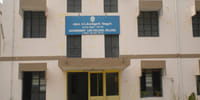
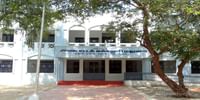
Dr. Ambedkar Government Law College, Chennai began as Madras Law College on 2 May 1891 under the Government of Tamil Nadu. Its present name was adopted in 1990 to mark the birth centenary of Dr. B.R. Ambedkar, the principal architect of the Indian Constitution. The college is affiliated with Tamil Nadu Dr. Ambedkar Law University (TNDALU) and has recognition from the Bar Council of India (BCI).
One of India’s oldest government law colleges, the institution traces its legal education history in Madras to the early nineteenth century. It is not listed in the NIRF 2025 Law Rankings. Its former students include leaders of the judiciary, government, legal profession and civil services.
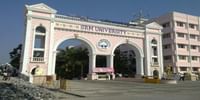
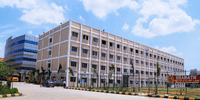
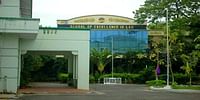
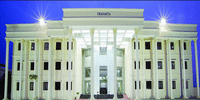
The college shifted from its original premises in 2018 after metro rail construction caused structural damage. It now works from two locations. The Pudupakkam Campus in Chengalpet, Kancheepuram district, has 1,205 students enrolled in five-year integrated courses. The Pattaraiperumbudur Campus in Thiruvallur district serves 1,123 students pursuing the three-year LL.B. Before the move, the college occupied an Indo-Saracenic building beside the High Court of Madras. Architect Henry Irwin designed that building in 1899.
- B.A.LL.B is a five-year integrated undergraduate law course taught at the Pudupakkam Campus.
- LL.B is a three-year law course for graduates and is conducted at the Pattaraiperumbudur Campus.
- LL.M is a two-year postgraduate course with specialisations in Family Law and Environmental Law, Energy and Climate Change.
The complete five-year B.A.LL.B fee is INR 7,020. Students pay a total of INR 4,870 for the three-year LL.B and INR 4,960 for the two-year LL.M.
Conventional campus recruitment is not conducted by Dr. Ambedkar Government Law College. Its graduates move into advocacy, the judiciary, civil services and government legal work. Notable alumni include former President R. Venkataraman, former Union Finance Minister P. Chidambaram and several Chief Justices of India.
- Dr. Ambedkar Government Law College Admission Dates 2027
- Dr. Ambedkar Government Law College Courses and Fees
- Dr. Ambedkar Government Law College Admission Process
- Dr. Ambedkar Government Law College Career Outcomes
- Dr. Ambedkar Government Law College Campus and Infrastructure
- Dr. Ambedkar Government Law College vs Government Law College Madurai vs Government Law College Tiruchirappalli
- Dr. Ambedkar Government Law College FAQs
Dr. Ambedkar Government Law College Admission Dates 2027
Tamil Nadu Dr. Ambedkar Law University manages admissions to the college through centralised merit counselling. The five-year integrated course admission cycle for 2026-27 is complete. Applications for the 2027-28 session are expected to begin in mid-2027.
The following schedule is tentative and follows TNDALU’s usual annual admission timeline. TNDALU will publish the confirmed dates on its admission portal.
| Event | Date |
|---|---|
| 2027-28 application portal opening | April to May 2027 |
| 2027-28 application deadline | June 2027 |
| 2027-28 merit list and counselling | July to August 2027 |
| 2027-28 programme commencement | September 2027 |
Subject to revision. Kindly check with the official sources to confirm
Each course uses academic marks for selection, and the college does not hold its own entrance examination.
| Programme | Admission Basis | Governing Authority |
|---|---|---|
| B.A.LL.B (5-year) | Aggregate marks in 10+2 and TNDALU centralised merit | TNDALU |
| LL.B (3-year) | Graduation aggregate marks and TNDALU centralised merit | TNDALU |
| LL.M (2-year) | LL.B aggregate marks and the TNDALU merit process | TNDALU |
Dr. Ambedkar Government Law College Courses and Fees
Students can study law at undergraduate, graduate or postgraduate level. The options are a five-year integrated B.A.LL.B, a three-year LL.B for graduates and a two-year LL.M. As a government institution, the college charges a low total fee for each programme.
| Course | Duration | Eligibility | Total Fees |
|---|---|---|---|
| B.A.LL.B | 5 years | 10+2 from a recognised board with at least 45% | INR 7,020 |
| LL.B | 3 years | A bachelor’s degree from a recognised university | INR 4,870 |
| LL.M (Family Law) | 2 years | LL.B with a minimum aggregate of 50% | INR 4,960 |
| LL.M (Environmental Law, Energy and Climate Change) | 2 years | LL.B with a minimum aggregate of 50% | INR 4,960 |
Subject to revision. Kindly check with the official sources to confirm
The Pudupakkam Campus conducts the B.A.LL.B, while the Pattaraiperumbudur Campus is used for the LL.B. At the postgraduate level, students may choose Family Law or Environmental Law, Energy and Climate Change.
Admission-related charges make the first-year fee higher for each course. The remaining years have nominal annual charges. Consequently, the full cost of a degree at this government college is lower than the cost commonly charged by private law institutions in Tamil Nadu.
Dr. Ambedkar Government Law College Admission Process
Applicants enter Dr. Ambedkar Government Law College through TNDALU’s centralised merit system. One merit rank list covers the government law colleges affiliated with the university. A student submits a single application, after which the allotted college and campus depend on merit rank, category and stated preferences.
B.A.LL.B (5-Year Integrated Programme)
Students may enter legal education after Class 12 through the five-year B.A.LL.B course.
- Eligibility: Class 12 from a recognised board with at least 45% aggregate marks for the General Category
- Minimum age: 17 years when admission takes place
- Selection process: TNDALU prepares the merit rank from 10+2 marks
- Stages: Submit the online TNDALU application, receive a merit rank, register for counselling, complete campus and seat allotment, verify documents and confirm admission at the Pudupakkam Campus
SC, ST, OBC and MBC applicants receive seats under the relevant Tamil Nadu reservation rules within TNDALU’s overall seat matrix. General Category closing percentages at the college have historically been among the highest for government colleges affiliated with TNDALU because of the institution’s age and demand.
LL.B (3-Year Programme)
Graduates from any academic subject can apply for the three-year LL.B.
- Eligibility: A bachelor’s degree in any discipline from a recognised university
- Selection: TNDALU creates the central merit list using the applicant’s graduation aggregate percentage
- Campus allotment: Pattaraiperumbudur Campus in Thiruvallur district
- Stages: Apply online, enter the merit list, attend counselling, receive an allotment and complete document verification
LL.M (2-Year Postgraduate Programme)
Law graduates who want advanced study can apply for the two-year LL.M.
- Eligibility: An LL.B degree with at least 50% aggregate marks
- Specialisations: Family Law and Environmental Law, Energy and Climate Change
- Selection: TNDALU uses the applicant’s LL.B percentage for its merit process
Dr. Ambedkar Government Law College Career Outcomes
As a state government law college, the institution has no conventional campus placement programme. Students generally build careers through independent legal practice, litigation, judicial examinations, civil services or legal positions in government.
Its alumni record includes former President of India R. Venkataraman, who served as the eighth President from 1987 to 1992, former Union Finance Minister P. Chidambaram and former Defence Minister V.K. Krishna Menon. Former Andhra Pradesh Chief Minister Damodaram Sanjivayya and former Madras State Chief Minister M. Bhaktavatsalam also studied here. Judicial alumni include Koka Subba Rao, the ninth Chief Justice of India, and P. Sathasivam, the 40th Chief Justice of India, as well as many judges of the High Courts and Supreme Court.
| Career Pathway | Entry Route | Notes |
|---|---|---|
| Litigation and Independent Practice | After completing LL.B, enrol with the Bar Council of Tamil Nadu and Puducherry | This is the main route followed by most graduates |
| State Judiciary | Take the Tamil Nadu State Judicial Service TNPSC Civil Judge examination | Selection includes a competitive written test and an interview |
| Government Legal Service | Enter Central or State Government advocate posts through UPSC or TNPSC | Roles include Government Pleader and Public Prosecutor |
| Civil Services | Appear for the UPSC Civil Services Examination for IAS, IPS or IFS | Legal study is particularly useful for IAS and legal services |
| Higher Education and Research | Complete an LL.M, followed by NET or a Ph.D. | This route can lead to faculty positions in law schools |
Entry-level government and judicial jobs, including government advocate, judicial service probationer and public sector legal officer positions, offer starting pay of INR 40,000 to INR 75,000 per month. Earnings from independent practice differ greatly according to experience and area of specialisation.
Dr. Ambedkar Government Law College Campus and Infrastructure
The college’s former home was an Indo-Saracenic structure beside the High Court of Madras. Henry Irwin designed it in 1899, and it remained in use for more than a century. Damage linked to metro rail construction led the institution to leave the building in 2018.
Teaching now takes place at two campuses. Pudupakkam Campus is in Chengalpet taluk, Kancheepuram district, and serves 1,205 students in the five-year B.A.LL.B. Pattaraiperumbudur Campus is in Thiruvallur district and has 1,123 students in the three-year LL.B. Together, these campuses have 2,328 students.
Neither current campus provides a hostel within its grounds. Separate off-campus accommodation in Chennai is available to students from outside the city. The men’s hostel, operating since 1959, is located at No. 92, Millers Road, Kilpauk, Chennai. The women’s hostel is at No. 133, Walajah Road, Chepauk, Chennai. Rooms are assigned by merit and depend on availability. The college’s former location near the High Court of Madras gave students direct contact with court proceedings and senior advocates. Some of that connection continues through faculty links and the alumni network.
Dr. Ambedkar Government Law College vs Government Law College Madurai vs Government Law College Tiruchirappalli
Dr. Ambedkar Government Law College, Government Law College Madurai and Government Law College Tiruchirappalli are state-run institutions affiliated with TNDALU. The same centralised admission system covers all three, so a student eligible for one may also be considered for the others. Course choices, location and the history of each college are the main differences.
| Parameter | Dr. Ambedkar Govt Law College, Chennai | Govt Law College, Madurai | Govt Law College, Tiruchirappalli |
|---|---|---|---|
| Affiliation | TNDALU affiliated and BCI recognised | TNDALU affiliated and BCI recognised | TNDALU affiliated and BCI recognised |
| Programmes | B.A.LL.B, LL.B and LL.M | B.A.LL.B and LL.B | B.A.LL.B and LL.B |
| LL.M Availability | Available in two specialisations | Not offered | Not offered |
| Campus Location | Chengalpet and Thiruvallur districts | Madurai city | Tiruchirappalli city |
| Admission | TNDALU centralised merit | TNDALU centralised merit | TNDALU centralised merit |
| Legacy and Alumni | Founded in 1891, with a President and Chief Justices of India among its alumni | Founded in the mid-20th century | Founded in the mid-20th century |
Its establishment in 1891, two LL.M specialisations and alumni in senior national judicial and political offices set Dr. Ambedkar Government Law College apart. The Madurai and Tiruchirappalli colleges may be more convenient for students from those areas. They award the same TNDALU degree and have similar government fee structures. Qualifications from all three colleges are recognised by the BCI and can support legal careers across India.
Dr. Ambedkar Government Law College FAQs
Ques. Why is Dr. Ambedkar Government Law College important in Indian legal education?
Ans. Founded as Madras Law College in 1891, it is among India’s oldest government law institutions. The college is affiliated with TNDALU and recognised by the BCI. Its alumni include former President R. Venkataraman, former Union Finance Minister P. Chidambaram, Chief Justices of India Koka Subba Rao and P. Sathasivam, and several judges of the High Courts and Supreme Court.
Ques. How much does each law programme at Dr. Ambedkar Government Law College cost?
Ans. The full five-year B.A.LL.B fee is INR 7,020, while the three-year LL.B costs INR 4,870 in total. The complete two-year LL.M fee is INR 4,960. Admission-related charges make the first-year amount higher than the fees for later years.
Ques. What selection method does Dr. Ambedkar Government Law College use?
Ans. TNDALU conducts a centralised, merit-based admission process. B.A.LL.B merit is decided from 10+2 aggregate marks, while graduation marks determine the LL.B merit rank. The college does not hold a separate entrance test. Students apply on the TNDALU admission portal, and campus allotment depends on their merit rank and preferences.
Ques. Where can students of Dr. Ambedkar Government Law College find hostel accommodation?
Ans. Hostel rooms are not available on either current campus. Students can apply for separate off-campus hostels in Chennai. The men’s hostel in Kilpauk has operated since 1959, while the women’s hostel is in Chepauk. Allocation depends on merit and room availability.
Ques. Does Dr. Ambedkar Government Law College have an NIRF law ranking?
Ans. The college is absent from the NIRF 2025 Law Rankings. It nevertheless has a long place in Indian legal education as one of the country’s oldest operating government law colleges, with alumni who have reached senior positions in the Indian judiciary and executive.
Ques. Which postgraduate law subjects can students study at Dr. Ambedkar Government Law College?
Ans. Its two-year LL.M is available in Family Law and Environmental Law, Energy and Climate Change. Applicants need an LL.B with at least 50% aggregate marks. TNDALU selects students through its centralised merit system.
Ques. Which careers do graduates of Dr. Ambedkar Government Law College usually pursue?
Ans. Many graduates enrol with the Bar Council of Tamil Nadu and Puducherry before entering litigation or independent practice. Others take the Tamil Nadu Judicial Service examination for Civil Judge posts. Government advocacy through UPSC or TNPSC, civil services, teaching and legal research are additional options. The college does not run conventional campus placements.