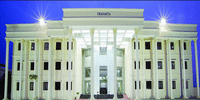
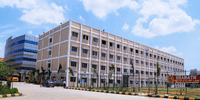
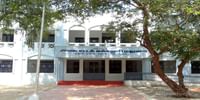
Dr. Ambedkar Government Law College Chennai offers three law programs at the UG and PG levels: LLB, BA LLB, and LLM. The LLB is listed as the popular course. Its hostel, mess, and living costs are separate from the academic fee and may vary.
- LLB has a total fee of INR 4,870.
- LLM has a total fee of INR 4,960.
- BA LLB has a total fee of INR 7,020.
- Dr. Ambedkar Government Law College Chennai Course Overview 2026
- Dr. Ambedkar Government Law College Chennai UG Fees 2026
- Dr. Ambedkar Government Law College Chennai PG Fees 2026
- Dr Ambedkar Government Law College Chennai Scholarships 2026
- Dr Ambedkar Government Law College Chennai Courses & Fees FAQs
Dr. Ambedkar Government Law College Chennai Course Overview 2026
The college provides law education through three programs. LLB and BA LLB are UG courses, while LLM is offered at the PG level. Admission to all three programs is based on the applicable academic qualification and a CLAT score.
Dr. Ambedkar Government Law College Chennai UG Fees 2026
The UG options include the three-year LLB for graduates and the five-year BA LLB for students who have completed Class 12. The fee and admission details for the 2025-2026 session are given below.
LLB Fees and Eligibility
The three-year LLB costs INR 4,870 in total, including a first-year fee of INR 500. Applicants must hold a bachelor's degree from a recognised university with at least 45%. Selection is based on the CLAT score.
| Course | Duration | Academic Requirement | Selection Basis | First-Year Fee | Total Fee |
|---|---|---|---|---|---|
| LLB | 3 years | Graduation from a recognised university with at least 45% | CLAT score | INR 500 | INR 4,870 |
Subject to revision. Kindly check with the official sources to confirm
FAQs on the Dr. Ambedkar Government Law College Chennai LLB Course
Ques. Which approval allows LLB graduates of the college to pursue legal practice?
Ans. The LLB is approved by the Bar Council of India through the college's affiliation with TNDALU. Graduates become eligible for legal practice after clearing the Bar exam.
Ques. Are accommodation and living expenses part of the stated LLB fee?
Ans. No. The stated amount covers academic fees only. Hostel, mess, and other living expenses are charged separately and vary. Government law colleges often provide low-cost hostel facilities.
BA LLB Fees and Eligibility
The five-year BA LLB has a total fee of INR 7,020 for 2025-2026, while the first-year charge is INR 500. Students need Class 12 or an equivalent qualification from a recognised board with at least 45%. Admission depends on the CLAT score.
| Course | Duration | Academic Requirement | Selection Basis | First-Year Fee | Total Fee |
|---|---|---|---|---|---|
| BA LLB | 5 years | 10+2 from a recognised board with at least 45% | CLAT score | INR 500 | INR 7,020 |
Subject to revision. Kindly check with the official sources to confirm
FAQs on the Dr. Ambedkar Government Law College Chennai BA LLB Course
Ques. What is the approved annual intake for BA LLB?
Ans. The sanctioned intake for BA LLB is about 60 seats each year.
Ques. Which language is generally used to teach BA LLB classes?
Ans. English is the main medium of instruction. Some professors may also teach in Tamil during classes.
Dr. Ambedkar Government Law College Chennai PG Fees 2026
At the PG level, the college offers a two-year LLM in Family Law and Environmental Law, Energy and Climate Change. Applicants need an LLB from a recognised university with at least 50%, and selection is based on the CLAT score.
LLM Fees and Specialisations
For the 2025-2026 session, the first-year LLM fee is INR 1,000 and the complete program fee is INR 4,960.
| Course | Duration | First-Year Fee | Total Fee | Selection Basis |
|---|---|---|---|---|
| LLM | 2 years | INR 1,000 | INR 4,960 | CLAT score |
Subject to revision. Kindly check with the official sources to confirm
Both LLM specialisations follow the same eligibility condition and total fee.
| Specialisation | Total Fee | Eligibility |
|---|---|---|
| Family Law | INR 4,960 | LLB with at least 50% and a CLAT score |
| Environmental Law, Energy & Climate Change | INR 4,960 | LLB with at least 50% and a CLAT score |
Subject to revision. Kindly check with the official sources to confirm
FAQs on the Dr. Ambedkar Government Law College Chennai LLM Course
Ques. Which career paths can students consider after completing the LLM?
Ans. LLM graduates may enter academic teaching or law research, specialised practice in areas such as constitutional, family, or corporate law, legal consultancy, policy roles, or judicial services after clearing the required examinations. They may also continue into a PhD or international law studies.
Ques. Do LLM students need to attend classes regularly?
Ans. Yes. The LLM is a regular campus program, and consistent class attendance is generally part of its course requirements.
Dr Ambedkar Government Law College Chennai Scholarships 2026
The college provides scholarships and endowment awards for students based on need, merit, rank, or achievement in particular areas of law. The available awards and their conditions are listed below.
| Scholarship or Endowment | Form of Support | Who Can Qualify |
|---|---|---|
| Jeeva Endowment Scholarship | Cash prize or medal | Top rank holders in the 3-year/5-year LLB and LLM programs |
| Thirumalaisamy Audiseshan Endowment | Cash prize or medal | Students securing first rank in law degree courses |
| Justice P.N. Bhagwathi Endowment | Cash prize | Students with the highest achievement in Human Rights or International Law |
| Sri V. Sridevan Endowment Scholarship | Cash award | Academic excellence, mainly among PG law students |
| Sri A.S. Venkatrama Iyer Endowment | Cash prize | Students showing excellence in Business Law subjects |
| Hon'ble Mr Justice K. Veerasamy Endowment | Cash prize or medal | Top performers in Constitutional Law |
| Thiru P. Ananda Rao Endowment | Cash award | Students earning the highest marks in specified law subjects |
| Shri V. Ayodhya Ramaiah Endowment | Cash prize or medal | Subject toppers in CPC, Evidence, and other listed subjects |
| Shri V.V. Ramana Rao Patnaik Endowment | Cash prize | Students with academic merit in procedural law subjects |
| Prof. J. Paul Endowment | Books or academic support | Meritorious LLM students |
FAQs on Dr. Ambedkar Government Law College Chennai Scholarships
Ques. Can attendance influence a student's scholarship eligibility?
Ans. Yes. Many scholarship schemes set a minimum attendance condition. In Tamil Nadu, an attendance requirement of 90% is often enforced.
Ques. How much time can scholarship processing require?
Ans. Processing may continue for several weeks or months. Applicants should monitor their status on the relevant portals and remain in contact with the college scholarship office.
Dr Ambedkar Government Law College Chennai Courses & Fees FAQs
Ques. What academic background and support does the college's faculty provide?
Ans. The faculty includes professors, assistant professors, and lecturers who teach the main curriculum, mentor students, support research, and guide practical legal training. Faculty members hold advanced qualifications such as LLM and PhD degrees and cover fields including Constitutional Law, Criminal Law, International Law, Business Law, and other core legal subjects. Many teachers combine academic knowledge with practical legal experience, helping students connect legal theory with its real-world use.
Ques. How does the college combine classroom study with wider student activities?
Ans. Students take part in cultural, social, and practical learning alongside demanding legal studies. National moot court competitions bring participants from across the country and encourage competitive legal discussion. Formal placement opportunities are limited, but student associations and union groups arrange workshops, seminars, and guest lectures by judges and senior advocates. These activities introduce students to current legal developments and professional viewpoints.
Ques. Which activities help students build legal and professional skills?
Ans. Internal assessments, assignments, and written examinations develop legal writing and drafting. Moot courts, mock trials, and advocacy exercises provide practical training and are mandatory under Bar Council of India norms.
Students are encouraged to complete internships during semester breaks with advocates, senior counsels, district courts, the Madras High Court, NGOs, and legal aid organisations. Through legal aid clinics and legal literacy programs, they meet members of the public, support basic legal awareness, and observe dispute resolution at the grassroots level. Seminars, workshops, conferences, and lectures delivered by judges, academicians, and experienced lawyers also strengthen their knowledge of current legal developments and professional ethics.