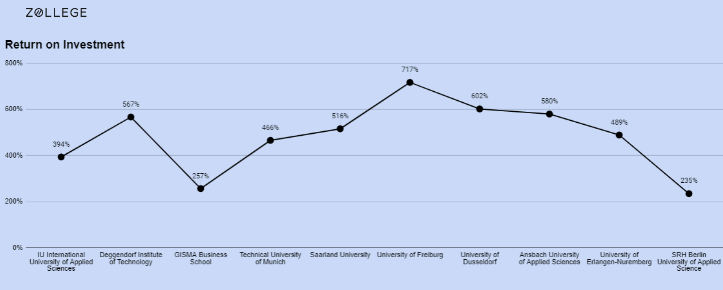
Artificial Intelligence is booming with innovation and opportunity today and in the upcoming days. Artificial intelligence in Germany is used in industries like healthcare, automobile, research, and whatnot. MS in Artificial Intelligence in Germany is a 2-year course provided by over 50 universities. The course comes with a thesis which is an integral part of the course, lasting up to 4 to 6 months. Most German universities do not charge any tuition fees for their courses. So you can study in Germany for free by only paying the living expenses. In Germany, admission to masters in AI in Germany happens in 2 intakes, which are Winter and Summer. Hence, you should be prepared with all the required documents before admission opens for study in Germany. The admission deadline varies as per university, but is typically between April 15 and March 21 for the Winter semester and between May 15 and January 15 for the Summer semester. The graduates after MS in Artificial Intelligence in Germany can earn an average annual salary of 56,000 EUR (51 lakhs INR) per annum. Since the tuition fees are very nominal in most German universities, it helps to improve the return on investment.
Artificial Intelligence is a rapidly growing field that helps machines to make intelligent decisions like humans. It has come into our lives and has taken an integral part, and will continue to do so in the future. The program is taught in English and German. The eligibility criteria include a bachelor in a relevant subject, knowledge of mathematics, data analytics, and relevant scientific and technical fields. The scores required for exams to study in Germany are TestDaf level 4 in each section, DSH level II, TOEFL score of 88 and IELTS score of 6.5 and above. Some German universities also accept Goethe certificates also. Not only that, you must also have a few documents like an academic transcript, Personal statement or Motivation letter, Updated CV, LOR among others to be eligible. Some of the top colleges and universities include IU International University of Applied Sciences, Deggendorf Institute of Technology, GISMA Business School, Technical University of Munich, Saarland University, University of Freiburg and many more.
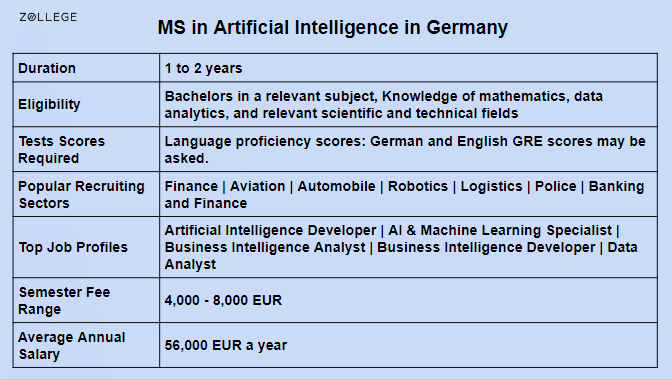
If you want to be part of this revolution and help shape its future course, you must ensure that you have a respected and well-paid job in the future. Some job sectors include business intelligence, cybersecurity, healthcare, construction, transportation, retail, IT and manufacturing. Some top recruiters include Airbus, Vodafone, SAP, John Deere, Seedbox Ventures and many more.
Reasons to Study MS in Artificial Intelligence in Germany
Artificial Intelligence Masters in Germany provides you the opportunity to work with the brightest minds in the field and learn from professors who are the best in the AI research field. AI in artificial intelligence in Germany provides one of the best job opportunities in Germany and to learn the future at the lowest cost.
- The global market for artificial intelligence is expected to grow by 36.1% CAGR till 2024.
- The rising value of the industry is expected to be US$ 3,061.35 billion by the end of 2024.
- The salary of AI graduates increases by almost 10-15% every year.
- AI has become indispensable across multiple industries, including healthcare, finance, and retail.
Top Universities for MS in Artificial Intelligence in Germany
One of the biggest perks of studying in German universities are their tuition fees. Most public universities in Germany offer tuition for free. If you want to study in Germany, you must check the fees of the university. This will help you to manage your finances accordingly.
| University Name | Course Name | Course Fees |
| IU International University of Applied Sciences | Master’s in Applied Artificial Intelligence | € 329 per month |
| Deggendorf Institute of Technology | Master’s in Applied Artificial Intelligence and Data Science | € 72 per semester (2 semester a year) |
| GISMA Business School | MSc Data Science, AI and Digital Business | € 11,575 per year |
| Technical University of Munich | Master’s in Artificial Intelligence | No Tuition fees |
| Saarland University | Data Science and Artificial Intelligence (M.Sc.) | €318.50 per semester |
| University of Freiburg | MS in Computer Science (AI specialization) | No Tuition fees |
| University of Dusseldorf | Master program AI and Data Science | EUR 300 |
| Ansbach University of Applied Sciences | Applied Artificial Intelligence and Digital Transformation (KDT) | No Tuition fees |
| University of Erlangen-Nuremberg | Master’s program in Artificial Intelligence (AI) | 144 euros per semester |
| SRH Berlin University of Applied Science | Big Data and Artificial Intelligence | EUR 6800 / semester |
1 EUR = 90.33 INR, dated 25th March, 2024
Application Fees and Deadlines
The most important aspect that you must look at before admission is the fees and the application deadline or intakes in Germany. The tricky part for the application deadline is that it is different for every university and also the courses. So, if you are looking for a course that starts in the summer semester, the deadline is around January 15th. However, for the winter semester, most universities have their deadlines in July. You must immigrate to Germany only after confirmation from the university. You also do not need to worry much about the application fees since you can apply to most colleges for free.
| University Name | Application Fees | Application Deadline |
| IU International University of Applied Sciences | No Fees | Rolling, no specific deadline |
| Deggendorf Institute of Technology | €50 application fee | 30 November for entries in March |
| GISMA Business School | No application fees Deposit of €3,000 |
September 2024 session: June 30, 2024 |
| Technical University of Munich | No Fees | Winter semester: 31.05. 2024 Summer semester: 30.11. 2024 |
| Saarland University | No Fees | 15 January, 2024 (Closed) |
| University of Freiburg | No Fees | Rolling Admission |
| University of Dusseldorf | No Fees | July 15th 2024 |
| Ansbach University of Applied Sciences | No Fees | July 15, 2024 |
| University of Erlangen-Nuremberg | No Fees | Winter Semester: 30th May Summer Semester: 30th November |
| SRH Berlin University of Applied Science | No Fees | Summer Semester (April intake): 1 February Winter Semester (October intake): 15 August |
1 EUR = 90.33 INR, dated 25th March, 2024
Documents Required for MS in Artificial Intelligence in Germany
Knowing the deadline, application fees and tuition fees are not enough for admission. The most important part comes while submitting the application and the documents required during the process. Most universities require similar types of documents like academic transcript, passport, LOR, SOP, German Student visa etc. There are some universities that might request some exceptional documents. You must check the official website for details.
- Academic Transcripts
- Bachelor's degree in related field
- Curriculum vitae
- Higher education Consultants with entrance qualification
- Letter of recommendation
- Copy of passport
- Digital photo
- Statement of purpose
- Proof of language proficiency in German or English
- SOP for Germany
- Passport/ID proof
- Medical certificate
- German Student Visa
Cost of Living in Germany
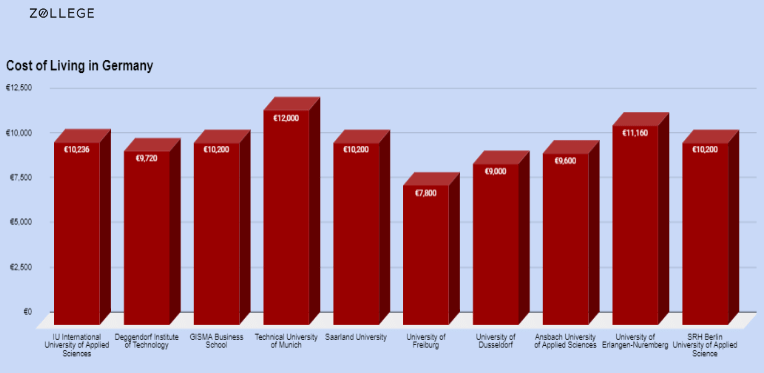
The Cost of living in Germany is, on average, 192.5% higher than in India. If you want to rent an apartment and not stay in university hostels, the rent in Germany is, on average, 338.7% higher than in India. The estimated cost of living in Germany is around € 1000 depending on the type of expense and your lifestyle. Germany is a great place to live with its great history, picturesque landscapes, and vibrant culture. The food prices in Germany are pretty reasonable if you shop at local markets or discount supermarkets like Aldi.
Scholarships for MS in Artificial Intelligence in Germany
Germany not only provides tuition at a very low cost but also helps students financially with scholarships. There are three types of scholarships that you can opt for in Germany. They are university scholarships, government funded scholarships and outside scholarships. The list of scholarships in Germany for international students are:
| Universities | Scholarship | Eligibility | Value |
| IU International University of Applied Sciences | Scholarship for Women in Tech | MINT-subjects (subjects from the area of mathematics, IT or technology) letter or video of motivation detailing your motivation for working in this field. | Varies |
| Deggendorf Institute of Technology | Fond International scholarship fund | Registered for a post-graduate or Master's programme at a Bavarian university. Applicants are selected on the basis of academic credentials, personal qualification, experience, need, and other relevant factors. | Varies as per needs |
| GISMA Business School | Future Leaders Scholarship | Graduates from high school or undergraduate programs, as well as professionals who wish to change career paths or expand their knowledge. | EUR 1 million, 50% of tuition fees funded by GISMA |
| Technical University of Munich | Scholarship Deutschlandstipendium | Academic achievement and aptitude. Social engagement, a sense of responsibility and special circumstances such as physical handicaps or a minority status (immigrant background) | € 300 per month |
| Saarland University | Deutschlandstipendium | Academic achievement and aptitude. Social engagement, a sense of responsibility and special circumstances such as physical handicaps or a minority status (immigrant background) | € 300 per month |
| University of Freiburg | Deutschlandstipendium (Germany Scholarship) | Candidates are required to demonstrate excellent academic performance and above-average commitment | EUR 300 (INR 27025.26) each month |
| University of Dusseldorf | Study scholarships - Master's studies for all academic subjects | one year of study in Germany as part of a postgraduate or master's degree with a degree from your home university. | Monthly scholarship installment of 934 euros |
| Ansbach University of Applied Sciences | Semester grants for International Students | Only advanced full time students with very good academic performance can apply for a grant. | Varies |
| University of Erlangen-Nuremberg | Financial support for international students about to graduate | Good or very good grades German language proficiency | 900-1000 EUR in total |
| SRH Berlin University of Applied Science | SRH Berlin Scholarships for international students | Something that sets you apart: previous academic performance and/or artistic portfolio where applicable | up to 50% of your first year tuition fees |
1 EUR = 90.33 INR, dated 25th March, 2024
Jobs after MS in Artificial Intelligence in Germany
Once you are done with your graduation, you must look for jobs to stay in Germany. You can also opt for part-time jobs in Germany while looking for better opportunities. It is not very difficult to get a job in Artificial intelligence in Germany. Most graduates land up a job within 6 months after completing graduation. Some top job profiles and their salary are:
| Job Roles | Annual Salary |
| AI Specialist | 70,000 |
| Data Scientist | 54,600 |
| AI Researcher | 62,400 |
| Software Engineer | 57,000 |
| Robotics Engineer | 54,500 |
| Machine Learning Engineer | 60,000 |
| Head of Analytics | 124,800 |
1 EUR = 90.33 INR, dated 25th March, 2024
Top Recruiters for MS in AI in Germany
Not only does Germany provide a great salary for graduates, they have some top companies in the world. These companies hire graduates from computer science and artificial intelligence. Some of the top recruiters for MS in AI in Germany are:
- MTU Aero Engines
- Airbus
- AVL
- Vodafone
- Merantics
- SAP
- NVIDIA
- Orangewood Labs
Work Permit after MS in Germany
If you want to stay and work in Germany after completion of MS in Germany, you might require a German work permit visa. Germany always welcomes candidates with good results and educational backgrounds. You must apply for a German work Visa for 18 months. Your German student visa does not come with an associated work visa. Hence, applying for it separately is mandatory. You will require the following documents for a work visa in Germany.
- Offer of employment letter
- A bank statement
- SOP for a work permit resume
- Health insurance records
- Passport Size Photographs Transcripts
- LOR
MS in Artificial Intelligence in Germany teaches students about the usage of Science and artificial intelligence to create systems and machines that can surpass human capabilities. You not only get to interact with the real world but also build innovative learning and adaptive system to help the world. Since Artificial intelligence is high in demand, getting a job is easier in Germany. Also, you get to study at a very low cost in Germany since most universities are free of tuition fees.
FAQs
Ques: Is Germany good for Masters in Artificial Intelligence?
Ans: Yes, Germany is good for masters in artificial intelligence. The graduates after MS in Artificial Intelligence in Germany can earn an average annual salary of 56,000 EUR (51 lakhs INR) per annum.
Ques: Which country is best for masters in AI?
Ans: The United States is widely regarded as the global leader in AI research and development. Germany also comes among the top 10 countries. Many countries nowadays are investigating Artificial intelligence.
Ques: Is German Masters valid in India?
Ans: Yes, masters in Germany is valid in India. The Association of Indian Universities (AIU) recognizes international degrees, making them valuable and recognized in India. If AIU recognizes your degree, you will receive an Equivalence Certificate.
Ques: Is MS in artificial intelligence worth it?
Ans: A master's degree in artificial intelligence is a great tool for ambitious professionals. With a master's, you can seek data analytics, research science, and software engineering positions.
Ques: Which country has the best scope for AI?
Ans: The countries that are best for AI are Canada, the United States, Germany, Japan, China and Russia. Most countries are growing their artificial intelligence sector across the globe.
Ques: Which skill is high in demand in Germany?
Ans: Engineering jobs are highly in demand in Germany, particularly electrical, mechanical, and civil engineers. The demand for engineers is high due to the development in the automobile and machinery industry.
Ques: What is the salary after MS in Germany?
Ans: The average salary is around EUR 55,000 (INR 47,95,456) per year. Top companies and multinationals in Germany offer permanent employment to fresh MS graduates with an IT background.
Ques: Is it easy to get a job in Germany after masters?
Ans: Yes, since there are many jobs available, the chances of getting a job after MS in Germany are pretty high. But, you need to assure the Germans that you can certainly manage to live there.
Ques: Which job is in shortage in Germany?
Ans: Professions such as social work, childcare, and education, and sales have the largest shortage of skilled professionals in Germany.
Ques: Which course is highly paid in Germany?
Ans: The average salary of a medical or dentistry graduate is around €80,000 per year. Hence the salary is on the higher side. Also, physicians earn more than any other degree course right from the beginning of the career with salaries of around €50,000 annually.
Ques: Which job is highly paid in Germany?
Ans: Medical & Healthcare jobs like Doctors, surgeons, medical practitioners, and pharmacists are few in this category, and they earn the badge of the highest paying medical jobs in Germany. Miscellaneous high-demand fields: Pilots, Lawyers, Judges, and Tax advisors are also the highest paying jobs in Germany.
Ques: Which field is best in Germany?
Ans: With over 136,000 international students, engineering is the most popular field of study in Germany. Germany has a reputation of a global leader in engineering and technology. This makes more students join engineering fields.
Ques: Which job is easy and has a high salary in Germany?
Ans: The jobs that are easy and highly paid include jobs in medical and engineering fields. Graduates earn upto EUR 80,000 as their starting salary in Germany.
Ques: What is the most respected job in Germany?
Ans: A recent survey has revealed the most reputable jobs in Germany. Firefighters and nurses enjoy the best reputation amongst Germans, whilst insurance agents are considered the worst.
Ques: Is Germany better than Canada?
Ans: Germany may be a better choice if you're looking for a world-class university experience without paying tuition fees. Canada may be a better choice if you're looking for a more extended post-study work permit.

![Humboldt University of Berlin [HU]](https://static.zollege.in/public/college_data/images/studyabroad/logos/college_632_29-15:02_6.png?tr=w-50,h-50,c-force?tr=h-40,w-35,c-force)
![Technical University Munich [TUM]](https://static.zollege.in/public/college_data/images/studyabroad/logos/college_691_02-13:08_691.png?tr=w-50,h-50,c-force?tr=h-40,w-35,c-force)
![Ludwig Maximilian University of Munich [LMU]](https://static.zollege.in/public/college_data/images/studyabroad/logos/college_690_02-13:05_690.png?tr=w-50,h-50,c-force?tr=h-40,w-35,c-force)
![Free University of Berlin [FU]](https://static.zollege.in/public/college_data/images/studyabroad/logos/college_631_29-15:01_5.png?tr=w-50,h-50,c-force?tr=h-40,w-35,c-force)
.png?tr=w-50,h-50,c-force?tr=h-40,w-35,c-force)