- DCAC UG Admission 2024: NTA postponed CUET UG 2024 result and the new dates will be released soon.
- DCAC PG Admission 2024: CSAS(PG) Round 2 allocation is released and the last date for fee payment is July 9, 2024. Round 3 allocation will be released on July 16, 2024, and the last date for fee payment is July 21, 2024. The mid-entry window will be open from July 11 to 13, 2024.

DCAC, Delhi University: Admission 2026, Fees, Courses, Cutoff, Ranking, Placement
New Delhi, Delhi NCR
Public CollegeUGC ApprovedNAAC Grade B+ | Scale 2.5


Content Curator | Updated On - Oct 25, 2026
DCAC Latest Updates
Delhi College of Arts and Commerce (DCAC) is a government constituent college of the University of Delhi. Established in 1987, the UGC-recognised college is located in Netaji Nagar, New Delhi. It provides undergraduate education in Arts, Commerce and applied subjects under the University of Delhi framework. NAAC has accredited the college with a B+ grade and a CGPA of 2.5.
DCAC holds the 30th position in the 2025 NIRF College category. Its main academic options include commerce, humanities, vocational subject combinations and foreign-language courses.
The college occupies a 5-acre campus in South Delhi. Students have access to four computer laboratories, Wi-Fi, a sports ground, a medical room and a library containing more than 62,000 books.
- The leading commerce choices are B.Com Hons and B.Com General.
- BA Hons is available in Economics, English, Hindi, History, Journalism, Political Science and German.
- BA Vocational choices include Commerce with Economics, Commerce with Computer Applications, Computer Applications with Mathematics, Operational Research with Computer Applications and other combinations.
- French, German and Spanish are offered through certificate and diploma courses.
Admission Update: The 2027-28 admission cycle is expected to begin with CUET UG 2027 registration in February 2027. Undergraduate admission will use CUET UG scores followed by the University of Delhi Common Seat Allocation System, or CSAS, counselling. Check the official DCAC website for admission notices.
Table of Contents
DCAC Delhi Admission Dates 2027
The next DCAC undergraduate admission cycle will begin with CUET UG registration. Applicants seeking admission for 2027-28 must take CUET UG 2027 and choose the subjects required for their preferred programme.
| Event | Date |
|---|---|
| CUET UG 2027 registration for the 2027-28 admission cycle | February 2027 (Tentative) |
Subject to revision. Kindly check with the official sources to confirm
DCAC Delhi Courses and Fees
DCAC follows the University of Delhi four-year undergraduate curriculum, or FYUP, for its main UG courses. Its academic portfolio includes BA Hons, multidisciplinary BA and B.Com Hons programmes. The college also runs certificate, diploma and advanced diploma courses in French, German and Spanish.
Standard B.Com Hons and BA Hons programmes charge INR 4,000 to INR 7,600 per year under the government-regulated DU fee structure. Annual fees for BA Vocational combinations are higher at INR 19,800 to INR 20,400. Across the listed three-year programmes, total fees extend from INR 13,400 for standard BA or B.Com courses to INR 61,200 for vocational BA combinations.
| Course | Duration | Fee |
|---|---|---|
| B.Com Hons | 3 to 4 years | INR 13,400 |
| BA Hons in Economics, English, Hindi, History, Political Science or German | 3 to 4 years | INR 13,400 per programme |
| BA Hons Journalism | 3 to 4 years | INR 22,750 |
| BA Vocational in Commerce and Economics, Commerce and Computer Applications, and similar combinations | 3 years | INR 59,400 to INR 61,200 |
| Certificate course in French, German or Spanish | 1 year | INR 15,000 each |
| Diploma in French, German or Spanish | 1 year | INR 17,000 each |
| Advanced Diploma in French, German or Spanish | 1 year | INR 18,000 each |
Subject to revision. Kindly check with the official sources to confirm
The French, German and Spanish courses are self-financing, so their charges are separate from the regular BA and B.Com fee structure. Students enrolled at other University of Delhi colleges may also join these language programmes.
DCAC Delhi Admission Process
Admission to every DCAC undergraduate programme is based on CUET UG scores and completed through the University of Delhi Common Seat Allocation System (CSAS). DCAC does not conduct an independent entrance examination or interview. The allocation process considers the applicant's CUET UG score, submitted programme preferences and the number of available seats.
- Eligibility: Applicants must have completed 10+2 in any stream from a recognised board. They must also meet the CUET UG subject conditions prescribed for the selected programme.
- Step 1: Complete CUET UG registration at cuet.samarth.ac.in and choose the required language, domain and General Test papers for the intended course.
- Step 2: Once the CUET UG result is available, register through the DU CSAS portal. Add DCAC and the preferred B.Com Hons, BA Hons or vocational courses to the preference list.
- Step 3: Review the seat offered according to the CUET UG score and vacancy position, then accept it online before the response period closes.
- Step 4: Present the original documents at DCAC and submit the applicable fee to secure the seat.
The CUET UG paper combination depends on the programme selected by the applicant.
| Programme | CUET UG Subjects Required |
|---|---|
| B.Com Hons and B.Com | Accountancy or Business Studies, one language domain and the General Test |
| BA Hons in Economics, Political Science, History, English, Hindi and other subjects | The relevant domain subject, one language domain and the General Test |
| BA Vocational combinations | Relevant domain subjects for the chosen combination and the General Test |
In recent admission cycles, the General Category cutoff for B.Com Hons settled at a normalised composite score of 833 out of 800. For BA Hons Political Science, the recorded composite cutoff was 793. These levels can change each year with the number of applicants and seats available.
CUET UG is not required for direct admission to the foreign-language certificate and diploma courses. These courses accept University of Delhi students as well as other applicants who have passed 10+2.
DCAC Delhi Placements
The DCAC placement and career guidance cell arranges links between final-year students and employers in consulting, finance and technology. During the 2023-24 placement cycle, the reported average package was INR 3.6 LPA. EY, KPMG, Wipro and Google were among the recruiters associated with the campus.
Direct placement is not the only route chosen by graduates of this Arts and Commerce college. Many continue to MA Economics, MBA, CA or LLB programmes. B.Com Hons students commonly seek opportunities in accounting, auditing and financial services, while BA Economics students also enter policy and research internships.
| Career Pathway | Typical Route |
|---|---|
| Finance and Consulting | Accounting and audit positions with EY and KPMG |
| Technology | Analyst and associate opportunities linked to campus visits by Wipro and Google |
| Higher Studies, a popular choice | MBA admission through CAT or XAT, MA Economics, CA Final or LLB |
| Civil Services | A significant share of Economics and Political Science Hons graduates prepare for UPSC and Delhi state services |
DCAC Delhi Rankings
In the national institutional ranking framework, DCAC secured the 30th rank in the 2025 NIRF College category. India Today placed the college at 35th for Arts and Commerce in 2024. Its accreditation grade is NAAC B+ with a CGPA of 2.5.
| Ranking Body | Category | Rank or Grade |
|---|---|---|
| NIRF | College, India | 30 in 2025 |
| India Today | Arts and Commerce | 35 in 2024 |
| NAAC | Accreditation | B+ with CGPA 2.5 |
DCAC Delhi Campus and Infrastructure
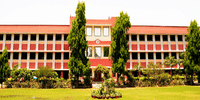
DCAC occupies a 5-acre site in the residential area of Netaji Nagar, South Delhi. Moti Bagh, Safdarjung and AIIMS metro stations provide access to the campus. Lecture halls and faculty rooms for the Arts and Commerce departments are located in the main academic block. Four computer laboratories serve students taking vocational and computer-application subject combinations.
The central library contains more than 62,000 print titles and provides subscriptions to digital journals. Campus facilities also include Wi-Fi in academic areas, a medical room for basic healthcare and a sports ground used for cricket, volleyball and badminton. DCAC has no hostel within the campus. Students who need accommodation generally arrange it privately in nearby Netaji Nagar or R.K. Puram.
DCAC Delhi Scholarships
DCAC students may apply for central and state government scholarships as well as grants offered by private foundations. Since DCAC is a University of Delhi constituent college, its eligible students can access UGC and Government of India schemes on the same terms as students at other DU colleges.
| Scholarship | Eligibility | How to Apply |
|---|---|---|
| Central Sector Scholarship, Ministry of Education | Students who passed Class 12 within the top 20 percentile of their board and have a family income below INR 8 lakhs | Apply through scholarships.gov.in, the National Scholarship Portal |
| Post-Matric Scholarship for SC, ST and OBC students | SC, ST or OBC students whose family income falls within the prescribed limit | Submit the application through scholarships.gov.in, the National Scholarship Portal |
| Shree Maheshwari Foundation | DCAC undergraduate students who need financial support | Contact the college scholarship cell for assistance of INR 5,000 per semester |
| DU Single Girl Child Scholarship | Female students who are the only girl child in their family | Apply on the University of Delhi portal |
DCAC Delhi vs Shivaji College vs Aryabhatta College
For Arts and Commerce studies at the University of Delhi, applicants may compare DCAC in Netaji Nagar with Shivaji College in Raja Garden and Aryabhatta College in Dwarka. Shivaji College and Aryabhatta College are in West Delhi, while DCAC is in South Delhi. Each is a co-educational government college under DU, and all three use CUET UG scores and CSAS for undergraduate admission.
| Parameter | DCAC Netaji Nagar | Shivaji College | Aryabhatta College |
|---|---|---|---|
| Established | 1987 | 1961 | 1993 |
| Type | DU Government College | DU Government College | DU Government College |
| NIRF College Rank, 2025 | 30 | - | - |
| NAAC Grade | B+ with CGPA 2.5 | A | A |
| Location | South Delhi | West Delhi | West Delhi |
| Hostel | No | No | No |
Among these three colleges, DCAC has the highest stated NIRF position. Shivaji College and Aryabhatta College, however, carry an A grade from NAAC compared with DCAC's B+. Their fee patterns and Arts and Commerce course selections are similar, and none provides a hostel. Consequently, campus location is often a major consideration for students choosing among them.
DCAC Delhi FAQs
Ques. How can a student secure an undergraduate seat at DCAC?
Ans. An applicant must take CUET UG and then complete registration on the University of Delhi CSAS portal. Seat decisions use the CUET UG composite score, category, selected programme preferences and available capacity. DCAC does not hold a separate entrance test or admission interview.
Ques. Which CUET UG scores were required for popular DCAC courses in 2025-26?
Ans. In the 2025-26 round, the General Category cutoff was 833.09 for B.Com Hons and 793.36 for BA Hons Political Science. The required score may differ in later years because applicant numbers and seat availability change.
Ques. Where did DCAC stand in the 2025 NIRF College ranking?
Ans. DCAC was placed 30th in the NIRF College category in 2025, giving it a high position among the University of Delhi's constituent colleges in the national framework. The college also has a NAAC B+ grade with a CGPA of 2.5.
Ques. Can DCAC students stay in a college hostel?
Ans. No, the college does not operate an on-campus hostel. Students coming from outside Delhi usually find private rooms or paying guest accommodation in Netaji Nagar, R.K. Puram or Safdarjung near the college.
Ques. Which academic options are DCAC particularly known for?
Ans. B.Com Hons and BA Hons Economics are regarded as the college's flagship programmes. BA Hons courses in Political Science, English and Hindi are also important choices. Students from colleges across the University of Delhi also join DCAC's French, German and Spanish programmes at the certificate, diploma and advanced diploma levels.
Ques. What career support is available to DCAC graduates?
Ans. The college has a placement cell that organises recruitment drives. Students achieved an average package of INR 3.6 LPA in 2023-24, and recruiters included EY, KPMG, Wipro and Google. Instead of entering campus recruitment, many B.Com Hons graduates choose CA, an MBA through CAT or XAT, or another postgraduate course.
DCAC, Delhi University Popular Courses
Full Time Courses
Top Courses | 1st Year Fees | Total Fees | Eligibility | Ranking | Application Dates | Cutoff |
|---|---|---|---|---|---|---|
B.A {Hons.} (Journalism) +6 More B.A {Hons.} Courses | ₹22,750 | ₹68,250 | 10+2 with 50%+CUET | 120 out of 203 by India Today View More | 3 Aug - 24 Aug 2026 | 767.24CUETCheck Details |
BA (General) +23 More BA Courses | ₹13,400 | ₹40,200 | 10+2 with 50%+CUET | 120 out of 203 by India Today View More | 3 Aug - 24 Aug 2026 | - |
Certification (Accountancy & Tax Procedure) +5 More Certification Courses | - | ₹null | 10+2 with 50% | 34 out of 251 by India Today View More | - | - |
Diploma (French) +2 More Diploma Courses | - | ₹17,000 | 10+2 with 50% | 120 out of 203 by India Today View More | - | - |
Diploma (French) +2 More Diploma Courses | - | ₹18,000 | Diploma in French with 55% | - | - | - |
Top Courses, Fees & Eligibility
Select degree :
B.ComB.A {Hons.}BACertificationDiplomaB.Com {Hons.}
Select stream :
CommerceArtsMass CommunicationsManagement
- All
- Honours
1st Yr Fees
₹ 13,400Duration3 Year(s)
Exams accepted
Exams accepted
Application Date3 Aug
-
24 Aug 2026
Eligibility10+2 with 50%+CUET
Eligibility10+2 with 50%+CUET
Cut off806.03 B.ComRanking# 34 by India Today
1st Yr Fees
₹ 13,400Duration3 Year(s)
Exams accepted
Exams accepted
Application Date3 Aug
-
24 Aug 2026
Eligibility10+2 with 50%+CUET
Eligibility10+2 with 50%+CUET
Cut off767.24 BA (Hons.) JournalismRanking# 120 by India Today
1st Yr Fees
₹ 13,400Duration3 Year(s)
Exams accepted
Exams accepted
Application Date3 Aug
-
24 Aug 2026
Eligibility10+2 with 50%+CUET
Eligibility10+2 with 50%+CUET
Cut off690.51 BA Operational Research + Computer ApplicationsRanking# 120 by India Today
Total Fees
₹ 15,000Duration1 Year(s)
Exams accepted
Exams accepted
No Exams Found
Application Date-
Eligibility10+2 with 50%
Eligibility10+2 with 50%
Cut off-Ranking# 34 by India Today
Total Fees
₹ 17,000Duration1 Year(s)
Exams accepted
Exams accepted
No Exams Found
Application Date-
Eligibility10+2 with 50%
Eligibility10+2 with 50%
Cut off-Ranking# 120 by India Today
1st Yr Fees
₹ 13,400Duration3 Year(s)
Exams accepted
Exams accepted
Application Date3 Aug
-
24 Aug 2026
Eligibility10+2 with 50%+CUET
Eligibility10+2 with 50%+CUET
Cut off828.11 B.Com (Hons.)Ranking# 34 by India Today
DCAC, Delhi University Admission 2026 Dates
Important Events
| Event | Date |
|---|---|
| CUET Notification | Jan 03, 2027 |
| CUET UG Application Registration Window | Jan 03, 2027 - Jan 30, 2027 (Tentative) |
| CUET UG Admit Card Release Date | May 04, 2027 (Tentative) |
| CUET UG Exam Date | May 11, 2027 - May 31, 2027 (Tentative) |
| CUET UG Result Declaration Date | Jun 30, 2027 (Tentative) |
College Compared
Popular Colleges Compared With Delhi College of Arts and Commerce - [DCAC] , New Delhi
Ranking
# 32 by NIRF (college)
Avg Fees/Year
₹ 53870
Ranking
# 29 by NIRF (college)
Avg Fees/Year
₹ 25785
- Stream
- Course Tag
- Course
- Batch
Commerce (24)
Arts (19)
Reviews found (43)
Course Curriculum Overview:
I opted for B.com hons. I opted for the course to gain knowledge about commerce. The faculty is experienced and knowledgeable about the subject very well. Also the classes are interactive. Many subjects include presentations in the internal assessment which helped me to understand the topic better.
Placement Experience:
I did not appear for placements. But broadway was responsible for placements. One can get an average of 3-6 lakhs per annum from campus. Getting more than the average completely depends on one's caliber and ability.
Read Full ReviewReviewed on April 2, 2025|
Course Curriculum Overview:
During my school days i developed an interest in finance thats why i chose commerce. Quality of the faculty is pretty good. I don't like the behaviour of some teachers as some of them are so arrogant. Exams are conducted timely i.e twice in a year. Difficulty level of the exam say easy to moderate.
Remarks:
Admission is based on CUET score only. You have to cross minimum cutoff to be eligible for admission. No I didn't face any other eligibilty requirement as it is solely based on your CUET score and you can crack it easily.
Read Full ReviewReviewed on March 5, 2025|
Course Curriculum Overview:
As I have opted Commerce in my class 12th,it was quite obvious that I should go in a field related to Commerce.What can be better than persuing bcom hons in a delhi University college for a Commerce student. The faculty of DCAC for bcom hons is perhaps the biggest in delhi university.Talking about the quality of faculty,the faculty is very experienced. The teaching method is interesting in many ways.Timely presentation and tests are conducted so that student revise on a regular basis.
Remarks:
Talking about the good aspects,DCAC has so many societies that are quite good in engagement among students and the faculties have always the backbone of the college.Bad aspects would be the infrastructure and the size of the campus.The infra and the college size is very disappointing. The admission procedure was simple.You just give an exam named CUET and clear the cutoff and get admitted.The cutoff of the college for the unreserved was 735 out of 800.There were no gd and pi. I have done the preparation by myself only.Self study is more than enough as the syllabus is almost same as class 12th boards.
Read Full ReviewReviewed on March 1, 2025|
Course Curriculum Overview:
The majority of the faculty members are PhD holders, and the exam level is moderate. You can easily score well by studying previous years' question papers. However, many teachers are not highly engaged in teaching and often rely on shortcuts to cover the syllabus.
Placement Experience:
Placement and internship opportunities are majority for B.com students and some how for economics student otherwise no placement opportunities is available for other courses. Initially the opportunities were available but since newly inducted students were unable to bring opportunities for each course and hence not everyone except a few were able to get job opportunities and even internship.
Read Full ReviewReviewed on February 16, 2025|
Course Curriculum Overview:
I chose this course because I had a commerce background and I wanted to study commerce. My first preference was Bcom hons. But unfortunately I wasn't able to get that in good colleges so I opted for bcom. Some faculty members are very good and helpful like vikas sir and vipra ma'am. Some professors are strict also with the class attendance but it depends totally on the professor you are getting. Exams happen every semester which is same as all the delhi University colleges.
Placement Experience:
CGPA matters for placements so if you want to get placed after graduation you need to maintain your CGPA above 7.5 atleast. The package can start from 5 lpa and go upto 10 lpa. KPMG also comes for hiring. Many people go for civil services or post graduation.
Read Full ReviewReviewed on February 8, 2025|
Course Curriculum Overview:
I wasn't having intrest in literature lately but i thought of giving one chance to it so did i and that shot was worth it , i really love the course. Teaching staff if Highly educated with phds and some professor are Howard graduates . So teaching staff is excellent and keeping professionalism and friendly nature parallel.
Placement Experience:
There are placement for commerce and economics background students only they don't provide any kind of placement to other students . Being a english department student i certainly don't know much about it but as per rumours its not that great
Read Full ReviewReviewed on January 13, 2025|
Course Curriculum Overview:
Course is top notch, faculty are very well qualified and holds phd degree from india and abroad as well , but their is no carrier and placement cell you have to take your own effort for placement and intership.
Placement Experience:
No carrier and placement cell 70 %- 80 % choose higher studies like they enrolled in jnu or IIMS some of them are preparing for ca and competative exams like UPSC and banking exams rrb garde B , po and other exam's.
Read Full ReviewReviewed on December 22, 2024|
Course Curriculum Overview:
I chose this course because I had a great interest in political science and faculty and staff of the college is really good and supportive Especially if I talk about the canteen food that is very cheap and has a good taste.
Placement Experience:
Placement and job opportunities are remarkable like recently one senior got a job in amazon The jobs and placements are given on the skills of a person that he/she holds. So skills are very important.
Read Full ReviewReviewed on December 15, 2024|
Course Curriculum Overview:
I choose this College because i have interest in spanish and the college is near my home. The faculty and teachers are very helpful and polite. Teachers explains really good and they clear everyone's doubt. The college have two exams per year for 1st semester and 2nd semester. The semester exams are not that hard.
Remarks:
My reason to choose this College is the course and location of this College. The college is in netaji nagar and nearby metro station is bhikaji cama place about 1-1.5km away. Good aspect: Everything of this College is very good from faculty to crowd and attendance system also, if you are preparing for other exams like Ca, upsc, ssc etc then this College is for u. Bad aspect: The only bad aspect of this College is infrastructure the college have only two old buildings and a small ground. The college is very outstanding in every aspects expect infrastructure. If you are preparing for other exams then you can add this College in your priority list. For taking admission in this College you need to give an exam called Cuet as this College comes under delhi University. You need good number in this exam for taking the admission in this College you need atleast 600+ score in cuet and for high-demanding courses the score increases.
Read Full ReviewReviewed on December 14, 2024|
College Faculty
Basic Information About Faculty
Dr. Rajiv Kumar Goel
Professor, Department of Commerce
Mrs. Anita
Professor, Department of Commerce
Dr. Lalit Bhanot
Assistant Professor, Department of Physical Education
Mr. Sudhanshu Kumar
Assistant Professor, Department of Political Science
Dr. Krushna Chichuan
Assistant Professor, Department of Political Science
Mrs. Meera Malhan
Associate Professor, Department of Economics
Dr. Vinita Gupta Chaturvedi
Associate Professor, Department of English
Dr. Tarjeet Sabharwal
Associate Professor, Departments of Journalism
Dr. Anil Chauhan
Associate Professor, Department of History

College Facilities
Basic Information About Facilities
Comp Labs
Sports
Medical
Cafeteria
Laboratory
Library
Auditorium
Classrooms
Placement
Find Placement Details about Delhi College of Arts and Commerce - [DCAC] here.
 S&P Capital IQ
 Ernst & Young
 Genpact
College Ranking
Ranking of Delhi College of Arts and Commerce - [DCAC]
In News
Catch All Media Coverage Of This College
DU Admission 2026 CSAS UG Round 1 Seat Allotment Out Check Allotment Status Online
The University of Delhi (DU) has announced the Round 1 seat allotment for undergraduate admissions under the Common Seat Allocation System (CSAS) 2026. Candidates who participated in the admission process can now check their allotment status by logging in to the official CSAS portal using their CUET
DU UG Admission 2026 Simulated Rank List Released Preference Window Open
The University of Delhi (DU) has published the CSAS UG 2026 simulated rank list for candidates who completed Phase 2 of the admission process. The simulated ranks were made available on July 12, 2026, at 5:00 PM through the official CSAS UG admission portal.
Along with the simulated ranks, Delhi
NIRF Rankings 2025 Released Top Institutes in India
The Ministry of Education released the National Institutional Ranking Framework (NIRF) 2025 results on September 4. IIT Madras kept its top position in both the Overall and Engineering categories, while IISc Bengaluru remained the best university in the country.
NIRF, started in 2015, has
Delhi University Releases Second Merit List for PhD Admission 2024
Department of Education, University of Delhi released the second merit list for PhD Admission 2024. Selected Candidates must report at the Delhi University campus before February 14, 2025.
Check the DU PhD Admission 2nd Merit List Here
DU PhD Admission Schedule
Students also visited


Kamala Nehru College - [KNC]New Delhi

Jesus and Mary College - [JMC]New Delhi

Delhi University - [DU]New Delhi


Aditi Mahavidyalaya - [AMV]New Delhi
Contact details & location
Get contact details of Delhi College of Arts and Commerce - [DCAC]
New Moti Bagh, Netaji Nagar India - 110023
Get Email ContactGet SMS Contact
Ask your question
Similar Colleges You Might Be Interested In
- Similar Colleges
- Near By

Shaheed Bhagat Singh College - [SBSC]
New Delhi, Delhi NCR6.7/10(63 Reviews)
Follow

6.5/10(26 Reviews)
Follow

7.4/10(32 Reviews)
Follow
7.1/10(1392 Reviews)
Follow
Atma Ram Sanatan Dharma College - [ARSD]
New Delhi, Delhi NCR7.2/10(86 Reviews)
Follow

7.2/10(6 Reviews)
Follow
7.4/10(45 Reviews)
Follow

7.4/10(63 Reviews)
Follow

Indraprastha College for Women - [IP]
New Delhi, Delhi NCR7.5/10(57 Reviews)
Follow

Sri Guru Gobind Singh College of Commerce
New Delhi, Delhi NCR7.8/10(23 Reviews)
Follow

7.9/10(71 Reviews)
Follow

6/10(25 Reviews)
Follow

7.7/10(110 Reviews)
Follow
7.2/10(45 Reviews)
Follow

7/10(43 Reviews)
Follow
8/10(125 Reviews)
Follow