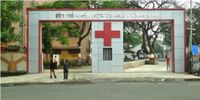
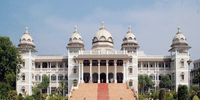
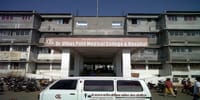
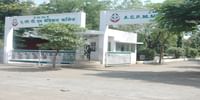
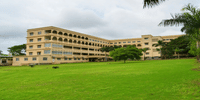
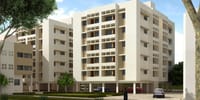
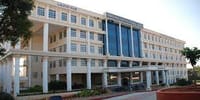
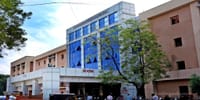
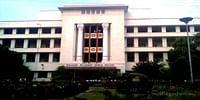
Mahatma Gandhi Institute of Medical Sciences (MGIMS), located in Sevagram, Wardha, is a private medical institution founded by the Kasturba Health Society in 1969. It is often called India’s first rural medical college. The institute was established in the village associated with Mahatma Gandhi’s ashram to support the Gandhian goal of improving rural health. MGIMS is affiliated with Maharashtra University of Health Sciences (MUHS), Nashik, recognised by the National Medical Commission (NMC), and accredited with a NAAC A+ Grade.
MGIMS was placed in the 101 to 150 band under the Medical category in NIRF 2025. Its 450-acre campus is in Maharashtra’s Vidarbha region. The campus includes the 972-bed Kasturba Hospital, which is the institute’s main teaching hospital and provides healthcare to rural communities in Wardha, Yavatmal, and nearby districts.
- The MBBS programme has 100 seats and runs for 5.5 years, including a compulsory rotating internship of one year.
- MGIMS has 82 postgraduate seats across all disciplines. Its MD specialisations are Anaesthesiology, Anatomy, Biochemistry, Community Medicine, Dermatology, Forensic Medicine, General Medicine, Microbiology, Paediatrics, Pathology, Pharmacology, Physiology, Psychiatry, Radiodiagnosis, Radiology, and Radiotherapy. MS options include E.N.T., General Surgery, Obstetrics and Gynaecology, Ophthalmology, and Orthopaedics.
- PG Diploma courses are available in Anaesthesia, Child Health, Dermatology (DVL), Obstetrics and Gynaecology, Ophthalmic Medicine and Surgery, Orthopaedics, Psychiatric Medicine, Otorhinolaryngology, and Medical Radio Diagnosis.
- The institute runs the Dr. Sushila Nayar School of Public Health, which concentrates on community health and social medicine.
The complete MBBS course costs INR 9,54,400, while the total fee for a three-year MD or MS programme is INR 6,72,960. A PG Diploma costs INR 4,95,460. MBBS selection depends entirely on NEET UG performance. After the internship, every MBBS student must complete one year of rural service under a service bond. Failure to meet this condition leads to a penalty of INR 10 Lakhs.
MGIMS Admission Dates 2027
MGIMS admits MBBS students through Maharashtra state NEET UG counselling, which is coordinated by the State Common Entrance Test Cell of the Government of Maharashtra. The expected 2027-28 schedule is listed below.
| Event | Date |
|---|---|
| NEET UG 2027 examination | May 2027 (Tentative) |
| Maharashtra MBBS counselling | July to September 2027 (Tentative) |
| NEET PG 2027 examination for MD and MS admission | March 2027 (Tentative) |
| NEET PG 2027 counselling | April to July 2027 (Tentative) |
Subject to revision. Kindly check with the official sources to confirm
The entrance test and counselling route vary by programme:
| Programme | Entrance Exam | Selection Mode |
|---|---|---|
| MBBS | NEET UG | NEET UG merit followed by Maharashtra counselling |
| MD / MS | NEET PG | NEET PG merit followed by Maharashtra PG counselling |
| PG Diploma | NEET PG | NEET PG merit followed by Maharashtra PG counselling |
MGIMS Courses and Fees
MGIMS focuses on medical education at the MBBS, MD, MS, PG Diploma, and PhD levels. Training is connected with the clinical work of Kasturba Hospital and the institute’s focus on rural and community medicine. The fees in the table cover the full duration of each listed course.
| Programme | Duration | Seats | Eligibility | Total Fees |
|---|---|---|---|---|
| MBBS | 5.5 years | 100 | 10+2 with PCB, 50% for the General Category, and NEET UG | INR 9,54,400 |
| MD in clinical disciplines | 3 years | Included in the total of 82 PG seats | MBBS and NEET PG | INR 6,72,960 |
| MD in pre-clinical or para-clinical disciplines | 3 years | Included in the total of 82 PG seats | MBBS and NEET PG | INR 6,72,960 |
| MS in surgical disciplines | 3 years | Included in the total of 82 PG seats | MBBS and NEET PG | INR 6,72,960 |
| PG Diploma | 2 years | Multiple disciplines | MBBS and NEET PG | INR 4,95,460 |
Subject to revision. Kindly check with the official sources to confirm
Students can choose from 16 MD disciplines: Anaesthesiology, Anatomy, Biochemistry, Community Medicine, Dermatology (DVL), Forensic Medicine, General Medicine, Microbiology, Paediatrics, Pathology, Pharmacology, Physiology, Psychiatry, Radiodiagnosis, Radiology, and Radiotherapy. The 5 MS specialities are E.N.T., General Surgery, Obstetrics and Gynaecology, Ophthalmology, and Orthopaedics. PG Diploma choices include Anaesthesia, Child Health, DVL, Obstetrics and Gynaecology, Ophthalmic Medicine and Surgery, Orthopaedics, Psychiatric Medicine, Otorhinolaryngology, and Medical Radio Diagnosis.
MGIMS Admission Process
Admission to MGIMS is based on the relevant national entrance examination and the Maharashtra counselling process. NEET UG is used for MBBS, while MD, MS, and PG Diploma applicants need a valid NEET PG score.
MBBS Admission
The Maharashtra State CET Cell conducts centralised counselling for the 85% State Quota seats. The Medical Counselling Committee manages the remaining 15% All India Quota seats. Applicants must meet these conditions:
- Physics, Chemistry, and Biology must be core subjects in 10+2.
- The required PCB aggregate is at least 50% for the General Category and 40% for SC, ST, and OBC applicants.
- Applicants need a valid NEET UG score from the admission year.
- The minimum age is 17 years as of December 31 in the admission year.
The MBBS admission process follows these steps:
- Meet the age and 10+2 subject and marks requirements.
- Appear for NEET UG and obtain a valid score for the current admission cycle.
- Join the appropriate Maharashtra State CET Cell or MCC counselling process.
- Complete admission after a seat is allotted on NEET UG merit.
- Sign the compulsory rural service bond.
In recent admission cycles, the General Category closing score under the Maharashtra State Quota has usually been within the 600 to 640 marks range. This makes admission competitive among Maharashtra’s private medical colleges. Category-wise closing ranks and the current seat matrix should be checked through the Maharashtra CET Cell and NMC.
MD, MS, and PG Diploma Admission
Selection for MD, MS, and PG Diploma courses is made through NEET PG merit and Maharashtra PG Medical counselling conducted by the State CET Cell. An applicant must hold an MBBS degree from an NMC-recognised institution and must have completed the compulsory one-year internship.
- Complete an MBBS degree from an institution recognised by NMC.
- Finish the required one-year internship.
- Obtain a valid NEET PG score.
- Register for Maharashtra PG Medical counselling.
- Complete admission after receiving a seat through NEET PG merit.
MGIMS Career Pathways and Outcomes
MGIMS does not organise standard campus placement drives. After MBBS, graduates generally prepare for NEET PG, join government health services, enter private practice, or move into research. Because training has a strong rural focus, a significant share of graduates takes up primary care and community health work in rural and semi-urban parts of Maharashtra.
| Career Stage or Pathway | Typical Compensation | Notes |
|---|---|---|
| Rotating internship | Stipend according to MUHS or Maharashtra government norms | Compulsory one-year internship at Kasturba Hospital |
| Rural or government bond service | Maharashtra government medical officer pay scale | One year of service, with an INR 10 Lakhs penalty for non-compliance |
| NEET PG route for MD or MS, including residency | INR 50,000 to INR 75,000 per month in government hospitals | This is the route followed by most MGIMS graduates |
| Government medical officer after PG | INR 75,000 to INR 1,00,000+ per month | Positions are available with the Maharashtra government and NHM |
| Private practice or hospital employment after PG | Depends on the speciality and work location | Opportunities include private hospitals in Vidarbha and other regions |
Community Medicine and Public Health are notable areas of strength at MGIMS, supported by the Dr. Sushila Nayar School of Public Health. Community Medicine graduates often work with the National Health Mission, the medical cadre of the Indian Administrative Service, or international health organisations. Those completing clinical MD programmes find specialist practice and hospital roles in Maharashtra’s government and private healthcare sectors.
MGIMS Rankings
MGIMS appears in the NIRF Medical category and also holds NAAC A+ Grade accreditation. Its latest stated national ranking is shown below.
| Ranking Body | Category | 2025 Rank |
|---|---|---|
| NIRF | Medical | 101 to 150 band |
MGIMS Campus and Infrastructure
MGIMS has a self-contained 450-acre campus in Sevagram, Wardha, where Mahatma Gandhi’s ashram is located. Teaching spaces, hospital services, and residential facilities are available within the rural campus. Its location and design support the institute’s community health mission.
The teaching hospital is the 972-bed Kasturba Hospital, which has several clinical departments and works as a tertiary care referral centre for rural Vidarbha. It provides outpatient, inpatient, emergency, and intensive care services. The hospital also operates an Arogyadham centre for preventive healthcare and wellness. The Dr. Sushila Nayar School of Public Health connects community and social medicine training with fieldwork in nearby villages.
Academic facilities include a modern anatomy laboratory with a Virtual Dissection Table, simulation facilities, a central library, and a Learning Management System. The campus has separate hostels for MBBS and postgraduate students. Wi-Fi and video-conferencing facilities support study and academic collaboration, while sports and recreation facilities are available to students living on campus.
MGIMS vs JNMC Wardha vs GMC Nagpur
Medical applicants in Vidarbha may compare MGIMS with Jawaharlal Nehru Medical College (JNMC), Wardha, in the same district, and Government Medical College (GMC), Nagpur, the region’s major government medical college. Their ownership, fees, seat numbers, hospitals, and academic settings differ.
| Parameter | MGIMS, Sevagram | JNMC, DMIMSU, Wardha | GMC, Nagpur |
|---|---|---|---|
| Established | 1969 | 1990 | 1947 |
| Type | Private, operated by the Kasturba Health Society | Private, operated by the Datta Meghe Group | Government, under the Government of Maharashtra |
| MBBS Seats | 100 | 150 | 250 |
| MBBS Total Fee | INR 9,54,400 | Higher private management fee | INR 7.82 Lakhs under the Government Quota |
| Attached Hospital | Kasturba Hospital, 972 beds | Acharya Vinoba Bhave Rural Hospital | GMCH, 1,700+ beds |
| Bond Obligation | One year of rural service, with an INR 10 Lakhs penalty | According to MUHS norms | One year of rural service in Maharashtra |
| Distinctive Character | Gandhian rural health mission and a focus on community medicine | Private college within a multi-faculty university campus | Maharashtra’s largest government medical college with government funding |
MGIMS is suited to students interested in a Gandhian academic setting with a strong focus on rural primary care. GMC Nagpur has the region’s largest hospital bed strength and the lowest Government Quota fee, so it is often preferred by high-scoring NEET applicants seeking a government college. JNMC DMIMSU provides the wider campus setting of a private multi-faculty university. The most suitable option depends on a student’s NEET score, budget, and career goals.
MGIMS FAQs
Ques. How much does the complete MBBS programme at MGIMS cost?
Ans. The fee for all 5.5 years of MBBS, including the internship year and fees across the semesters, totals INR 9,54,400. Admission is decided through NEET UG merit and Maharashtra state counselling.
Ques. Must every MGIMS MBBS student complete service after the internship?
Ans. Yes. Each MBBS student signs a bond for one year of rural service after the internship. The service can be with the Government of Maharashtra, local self-government, defence services, or the Kasturba Health Society. A student who does not fulfil the bond must pay INR 10 Lakhs, so this condition should be considered before applying.
Ques. What NEET UG score has usually closed General Category MBBS admission at MGIMS?
Ans. For the Maharashtra State Quota, the General Category closing score in recent cycles has generally fallen between 600 and 640 marks. The result changes with the number of applicants and available seats each year. Students should use the Maharashtra CET Cell counselling results for current category-wise figures.
Ques. Where did MGIMS stand in the NIRF 2025 Medical ranking?
Ans. NIRF 2025 placed MGIMS in the 101 to 150 band for Medical institutions. MGIMS also has a NAAC A+ Grade.
Ques. What is the postgraduate seat intake at MGIMS?
Ans. MGIMS has 82 PG seats in total across its MD and MS courses. Students can choose among 16 MD disciplines and 5 MS surgical specialities. The institute also offers PG Diplomas in 9 disciplines. NEET PG scores and Maharashtra state PG counselling determine admission to all these programmes.
Ques. Is MGIMS Wardha privately managed?
Ans. Yes. MGIMS is a private medical college run by the Kasturba Health Society, a trust based on Gandhian principles. It is affiliated with Maharashtra University of Health Sciences, Nashik, and recognised by the National Medical Commission. Although privately managed, its fees and institutional approach focus on accessible healthcare for rural communities rather than commercial medical education.
Ques. Are regular recruitment drives conducted on the MGIMS campus?
Ans. No. MGIMS does not conduct conventional campus placements. Graduates usually take NEET PG for specialist education, work as government medical officers, often through the service bond, or enter private practice. The institute’s rural and community health focus also leads a significant proportion of graduates towards primary healthcare and public health work.