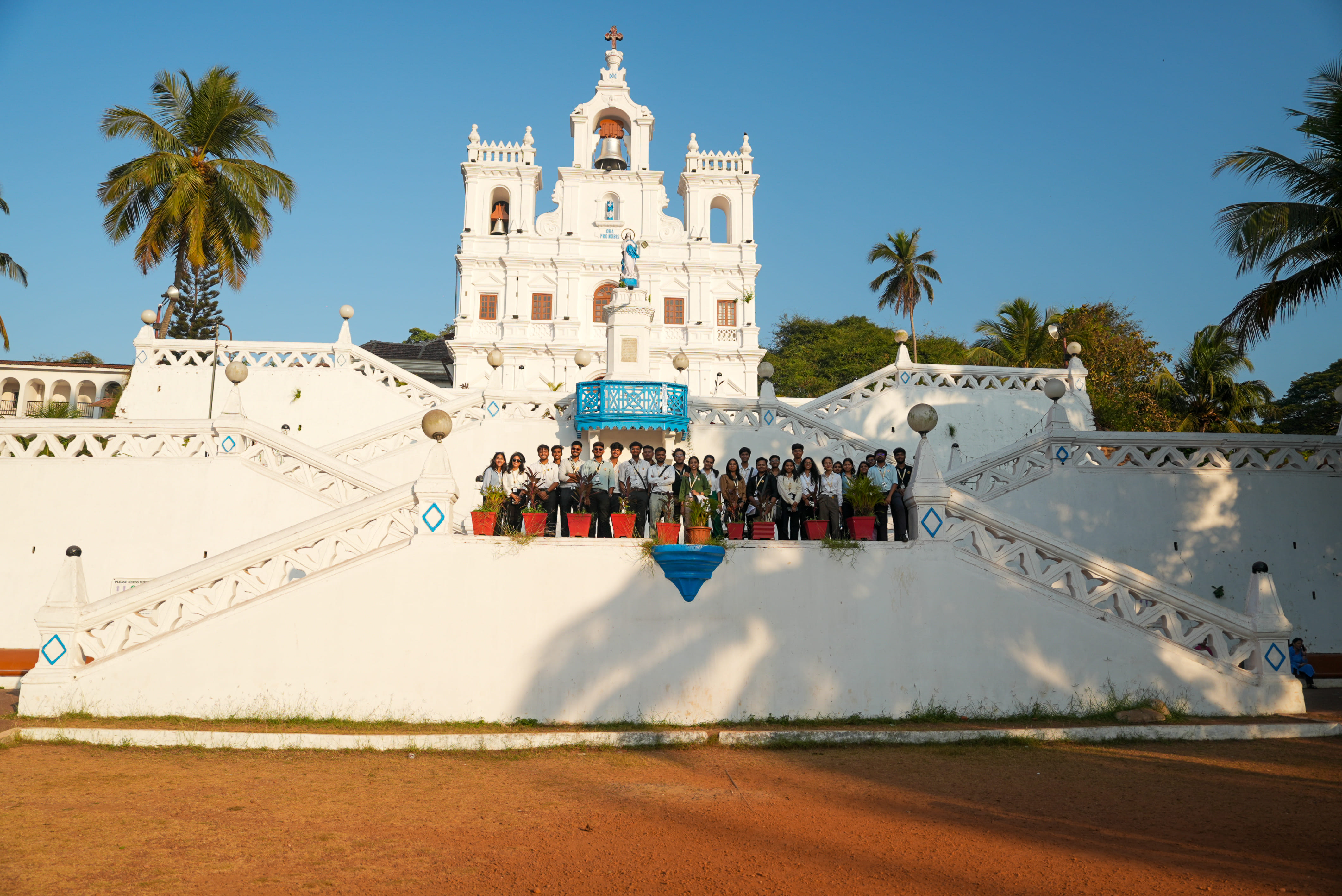
Parul University is committed to transforming traditional education into experiential learning, and this vision came alive during its recent architectural study tour in Goa. By stepping into historic churches, chapels, and convents, students from Parul University gained first-hand exposure to structures that are not just monuments but living examples of design evolution shaped by history, faith, and culture.
Through this initiative, Parul University highlighted the importance of learning beyond classrooms, where the interaction with real spaces deepens understanding in ways textbooks cannot. For the university’s architecture students, Goa became more than a destination; it became an open-air studio where staircases, altars, and facades told centuries-old stories through their forms and details.
Key Highlights of the Church Tour
- Hands-On Learning: No textbooks, only walls that spoke, staircases that guided, and altars that illuminated centuries-old religious and architectural practices.
- Cultural Synthesis in Stone: Students witnessed how Goan churches blend local materials like laterite and basalt with European design styles.
- Architectural Storytelling: Each structure showed a different layer of history, from humble chapels to grand cathedrals.
Architectural Marvels Explored
| Church / Chapel | Era / Significance | Architectural Highlights |
| Our Lady of the Immaculate Conception Church, Panaji | Built from 1541 onwardsFamous for 78-step zigzag staircase and golden altars | White facade, dramatic interplay of simplicity and grandeur, huge Augustinian bell |
| St. Sebastian Chapel, Fontainhas | 19th-century quiet structure in Panaji’s Latin Quarter | Small, blends with colorful surroundings, houses crucifix from Inquisition palace |
| Basilica of Bom Jesus, Old Goa | 1594 -1605Baroque masterpiece housing St. Francis Xavier’s silver casket | Dark exterior, golden altars, exquisite marble details, Baroque style |
| Sé Cathedral, Old Goa | One of Asia’s largest churches (250 ft × 181 ft) | Grand arches, intentional spatial design, central altar dedicated to Saint Catherine, famous Golden Bell |
| Church of St. Francis of Assisi, Old Goa | Built in 1661Plain exterior, Baroque interior | Detailed floral carvings, murals, museum displaying paintings and relics from Goa’s past |
Why Architecture Students Found It So Valuable
- Material Lessons: Observation of how local materials (laterite, basalt, lime plaster) integrate with European design principles.
- Form and Function: Study of shapes, lines, and volumes - from wide staircases to towering spires - to inspire sketches and models.
- History in Architecture: A layered understanding of cultural, religious, and political influence on structural evolution.
Expanding the Horizons: More Learning Beyond Classrooms
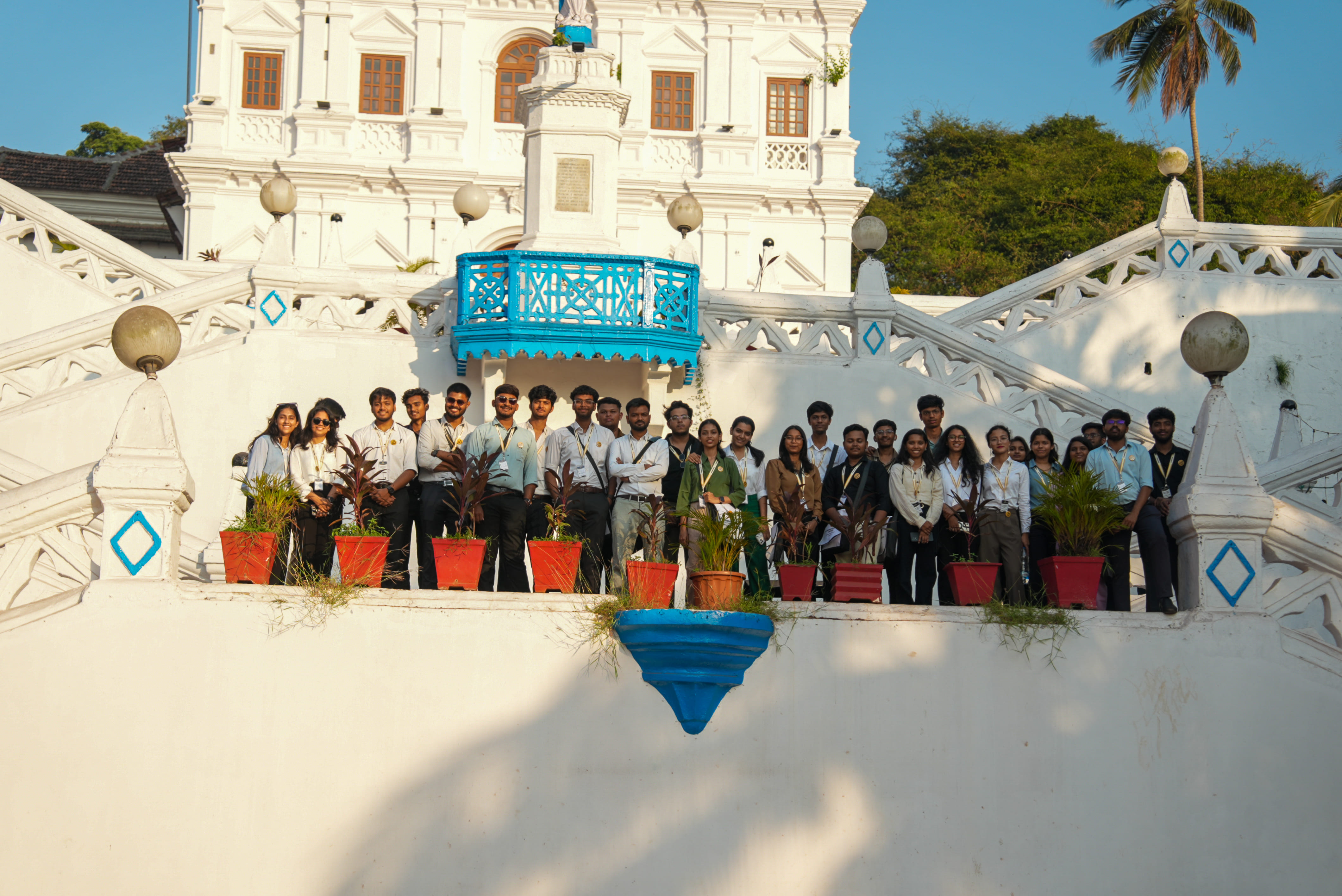
This Goa architectural tour is part of a wider movement at Parul University to bring real-world learning to students through immersive city-based explorations:
- Mumbai: Writer’s Tour showcasing literary heritage spots.
- Chennai: Robotics Tour combining machines and innovation.
- Delhi, Mumbai, Bangalore: Leadership Tours into startup ecosystems and business hubs.
- Hyderabad: Biopharma Tour through cutting-edge laboratories.
Core Philosophy:
Learning is not confined to books but thrives in cities, people, and real-life experiences.
Transforming Education
The immersive church tour in Goa exemplifies how architecture students can deeply understand design by walking through history, feeling materials, and experiencing structures firsthand. As more such real-world explorations unfold across India, the future of education lies in breaking walls and building connections with the world outside classrooms.