University of Kashmir (KU), Srinagar, is a UGC-recognised state public university founded in 1948. As one of the oldest universities in the Jammu and Kashmir Union Territory, KU affiliates colleges across the Kashmir Valley instead of being affiliated with an outside body. It received the highest NAAC accreditation, an A++ grade, in June 2025.
In the NIRF University 2025 ranking, KU holds the 34th position, improving from 45th in 2024. It is also ranked 59th in the NIRF Overall 2025 category. The university is known for its wide range of programmes across engineering, sciences, humanities, management, law, pharmacy, education and research.
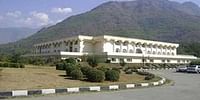
KU's main campus covers 247 acres at Hazratbal in Srinagar, with Dal Lake on its eastern side and Nigeen Lake on the western side. It also runs campuses in Anantnag, Baramulla and Kupwara. The Allama Iqbal Library, the largest academic library in J&K, contains more than 7 Lakh books and 56,000 back volumes of journals.
- Engineering: The 4-year B.Tech is available in CSE, AI and Data Science, ECE, Civil, Electrical, Mechanical and CSE-Cyber Security.
- Sciences: Options include B.Sc in Nursing and Medical Lab Technology, along with integrated B.Sc+M.Sc courses in Botany, Physics, Electronics, AI and Data Science and Home Science.
- Arts and Humanities: Students can pursue integrated BA+MA in Hindi, Mass Communication or Sanskrit. MA subjects include Economics, English, History, Sociology, Political Science, Psychology, Islamic Studies, Kashmiri, Urdu and 15 additional disciplines.
- Commerce and Management: The university provides B.Com (Hons.), a 2-year MBA, MBA in Financial Management and a 5-year integrated BBA+MBA.
- Law: The course list covers the 3-year LLB, 5-year integrated BA+LLB and LLM.
- Pharmacy: KU offers a 4-year B.Pharm and a 2-year M.Pharm.
- Technology: M.Tech specialisations include CSE, ECE, Embedded Systems, Design Engineering and Power Systems.
- Education and Social Sciences: Available programmes include B.Ed, M.Ed, MSW, M.Lib in Library Science, M.Phil and PhD.
Admission Update: For the 2026-27 academic session, most undergraduate programmes use CUET UG 2026 scores, while B.Tech admission is based on JKCET 2026. The session began in August 2026. B.Sc Nursing and affiliated medical programmes require NEET UG 2026.
University of Kashmir Courses and Fees
KU conducts more than 142 programmes at undergraduate, postgraduate and doctoral levels. Its academic areas include engineering, science, arts, law, pharmacy, education and management. The following fees apply to general quota seats, while management and NRI quota charges are higher.
| Course | Duration | Eligibility | Fee |
| B.Tech in CSE, Civil, ECE, Electrical, Mechanical or AI | 4 years | 10+2 with PCM and JKCET/CUET UG | INR 2.81 Lakhs |
| B.Pharm | 4 years | 10+2 with PCB and CUET UG/JKCET | INR 1.47 Lakhs |
| Integrated BA+LLB | 5 years | 10+2 in any stream and Law entrance | INR 1.87 Lakhs |
| B.Sc Nursing | 4 years | 10+2 with PCB and NEET UG | INR 3.71 Lakhs |
| Integrated B.Sc+M.Sc in AI and Data Science | 5 years | 10+2 with PCM and CUET | INR 3.11 Lakhs |
| Integrated BBA+MBA | 5 years | 10+2 in any stream | INR 1.87 Lakhs |
| MBA | 2 years | Graduation in any discipline and KU PG entrance | INR 75,320 |
| MA in humanities and social sciences | 2 years | Relevant bachelor's degree and KU PG entrance | INR 74,573 to 75,320 |
| M.Sc in most streams | 2 years | Relevant B.Sc and KU PG entrance | INR 78,320 to 1,12,045 |
| LLB | 3 years | Graduation in any discipline and KU Law entrance | INR 1.08 Lakhs |
| M.Tech in 5 streams | 2 years | Relevant B.Tech and GATE | INR 1.36 Lakhs |
| M.Pharm | 2 years | B.Pharm and GPAT | INR 78,820 |
| PhD in all disciplines | Minimum 3 years | Postgraduate degree and KU Research Entrance Test | INR 1.22 to 1.24 Lakhs |
Subject to revision. Kindly check with the official sources to confirm
The total general quota charge for every B.Tech branch is INR 2.81 Lakhs over four years. A 2-year MBA costs INR 75,320, while the 2-year MA and M.Sc fee range extends from INR 74,573 to 1,12,045. The subsidised fee policy for J&K students keeps the MBA and MA totals at INR 75,320 and INR 74,573 to 75,320, respectively. Integrated BA+LLB, BBA+MBA and B.Sc+M.Sc programmes allow students to continue to the higher degree without entering a separate postgraduate admission cycle.
University of Kashmir Admission Process
KU uses different selection routes for its programmes. J&K domicile applicants receive priority for general quota B.Tech seats through JKCET, while open and non-domicile seats may use central examination scores. Depending on the course, postgraduate admission is decided through the university entrance test, CUET PG, a national examination or marks in the qualifying degree. Selection for the 2026-27 PG session was conducted from June to August 2026.
| Programme | Entrance Exam | Quota / Notes |
| B.Tech in all branches | JKCET / CUET UG | JKCET gives priority to J&K domicile applicants, while CUET is used for open seats |
| B.Sc Nursing / MLT | NEET UG | JKBOPEE counselling |
| B.Pharm | CUET UG / JKCET | JKBOPEE counselling |
| BA / B.Com (Hons.) / BBA | CUET UG with merit-based selection | KU admissions office |
| MBA / MA / M.Sc | KU PG Entrance Test / CUET PG | Some programmes also consider merit in the qualifying degree |
| M.Tech | GATE | KU engineering departments |
| LLB / BA+LLB | KU Law Entrance Test | KU School of Law |
The general admission sequence is:
- Choose the programme and confirm its academic eligibility and required entrance examination.
- Complete the relevant KU, NTA or JKBOPEE application and appear for the examination where required.
- Join the applicable counselling or merit selection process after the result.
- Report for document checking, pay the course fee and obtain admission confirmation.
B.Tech Admission
For J&K domicile applicants, B.Tech selection mainly follows the JKCET route administered by JKBOPEE. CUET UG scores are considered for non-domicile and NRI seats. JKCET was held in April 2026, followed by counselling and seat allocation from May to July.
- Applicants must have completed 10+2 with Physics, Chemistry and Mathematics from a recognised board, securing at least 45% in aggregate.
- A valid JKCET 2026 rank is needed for J&K domicile CET seats, while the other route considers a CUET UG score.
- Selection includes JKBOPEE online counselling, verification of documents at the KU Engineering Department, fee payment and final confirmation.
Students can choose from seven B.Tech specialisations: CSE, AI and Data Science, ECE, Electrical Engineering, Civil Engineering, Mechanical Engineering and CSE with Cyber Security. Diploma holders may enter the 3-year lateral B.Tech through a separate DCET merit process.
PG Admission for MBA, MA, M.Sc and LLB
Admission to MBA, MA, M.Sc, LLB and related postgraduate courses depends on the KU Postgraduate Entrance Test, also called PGCET, or qualifying-degree merit, as specified for each programme. M.Tech applicants need GATE, and M.Pharm applicants require GPAT. MBA and LLB selection combines entrance-based and merit-based routes.
- MBA applicants need a bachelor's degree with at least 50%, reduced to 45% for SC/ST candidates.
- MA and M.Sc admission requires a relevant undergraduate degree with a minimum of 50%.
- The 3-year LLB accepts graduates with at least 45% and a valid KU Law Entrance Test result.
- PhD applicants need a postgraduate degree with 55% and must qualify through the KU Research Entrance Test or an equivalent NET/GATE route.
UG Admission for BA, B.Com and BBA
Class 12 marks and CUET UG scores form the basis of admission to arts, commerce and management courses in the main campus departments. JKBOPEE manages NEET UG counselling for B.Sc Nursing, while B.Pharm uses CUET UG or JKCET merit. Each department runs a separate application cycle for the 5-year BA+LLB, BBA+MBA and B.Sc+M.Sc programmes.
University of Kashmir Placements and Career Outcomes
KU graduates enter campus jobs, public services, teaching, legal practice, healthcare and research. According to NIRF 2025 figures, campus recruitment placed 671 students from a graduating group of 3,460. The reported median salary range for placed graduates is INR 7 to 10 LPA.
Placement activity is strongest for B.Tech and Computer Science students. Tata Group companies, ONGC and Wipro are among the recruiters. Many graduates from science and social science courses instead move into JKAS, UPSC, the J&K Police, defence services, postdoctoral research or teaching after qualifying through JKSET.
| Graduate Stream | Primary Career Pathway |
| B.Tech in CSE, ECE or AI | IT placements with product and service companies |
| MBA | Banking, finance, FMCG and management positions in government PSUs |
| LLB / BA+LLB | J&K High Court, district judiciary, legal services and UPSC with law as an optional subject |
| MA / M.Sc in humanities and sciences | NET or JKSET qualification, university or college teaching and research |
| B.Sc Nursing / B.Pharm | AIIMS, GMC, private hospital networks and pharmaceutical companies |
KU has a long record of graduates entering the J&K Administrative Service and UPSC civil services. NET and JKSET also help many MA and M.Sc graduates qualify for college teaching posts, an important career route in the Kashmir Valley's education sector.
University of Kashmir Rankings
KU moved up 11 places in the NIRF University category, rising from 45th in 2024 to 34th in 2025. For 2025, it also stands 59th in the Overall category and 8th among India's State Public Universities. NAAC awarded the university its highest A++ grade in June 2025.
| Ranking Body | Category | 2025 Rank | 2024 Rank |
| NIRF | University | 34 | 45 |
| NIRF | Overall | 59 | 69 |
The June 2025 NAAC result places KU in the council's highest accreditation band. Its movement from rank 45 to 34 was one of the biggest year-on-year gains recorded by a state public university during the 2025 NIRF cycle.
University of Kashmir Campus and Infrastructure
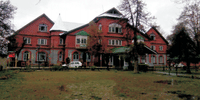
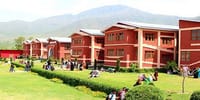
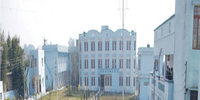
KU's Hazratbal campus occupies 247 acres across Naseem Bagh, Mirza Bagh and the central Hazratbal area. Dal Lake lies on one side of the campus and Nigeen Lake on the other. The site contains the main academic departments, administrative buildings, the vice-chancellor's office and the university's principal facilities.
Allama Iqbal Library provides more than 7 Lakh books, 56,000 back volumes of journals, manuscripts, theses and access to Indian and international online databases. Engineering, biotechnology, chemistry, physics and electronics departments have laboratories fitted with research-grade instruments. Other facilities include 24-hour WiFi, an auditorium, a museum, sports areas, a canteen, an NSS centre and separate hostel blocks for male and female students. The hostel fee is INR 1,450 per term.
KU extends its teaching network through satellite campuses at Anantnag in South Kashmir, Baramulla in North Kashmir and Kupwara in the border district. These centres offer selected undergraduate and postgraduate programmes, allowing students from distant districts to study without moving to Srinagar.
University of Kashmir vs Central University of Kashmir vs University of Jammu
Students considering major universities in Jammu and Kashmir often compare KU with the Central University of Kashmir and the University of Jammu. Each is an important higher education institution in the Union Territory, but their funding structure, location and academic priorities differ.
| Parameter | University of Kashmir, Srinagar | Central University of Kashmir, Ganderbal | University of Jammu |
| Established | 1948 | 2009 | 1969 |
| Type | State Public University under the J&K UT | Central University funded by the Government of India | State Public University under the J&K UT |
| NAAC Grade | A++ (2025) | Not yet accredited | A (2016) |
| NIRF University 2025 | 34 | Not ranked | Not ranked |
| Primary Location | Hazratbal, Srinagar | Ganderbal, Kashmir | Jammu |
| B.Tech Fees for General Quota | INR 2.81 Lakhs for 4 years | INR 3 to 4 Lakhs | INR 2 to 3 Lakhs |
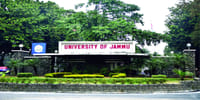
Among the three, KU is the oldest and has the broadest ranking record, including an A++ NAAC grade in 2025 and the 34th position in the NIRF University category. The Central University of Kashmir receives central government funding, which can support research infrastructure and central government employment quotas, but it currently has neither NAAC accreditation nor an NIRF rank. The University of Jammu serves students from the Jammu division and operates as KU's state-level counterpart within the same Union Territory. Students who want to study, conduct research or seek work in the Kashmir Valley often consider KU because of its range of programmes and satellite campus network.
University of Kashmir FAQs
Ques. In which year did University of Kashmir begin operating?
Ans. University of Kashmir was founded in 1948 and is among the oldest universities in the Jammu and Kashmir Union Territory. It is a UGC-recognised state public university that received an A++ NAAC grade in 2025.
Ques. Where does KU stand in the 2025 NIRF rankings?
Ans. KU is placed 34th in the NIRF University 2025 category after holding the 45th position in 2024. Its NIRF Overall 2025 rank is 59, and it is 8th among State Public Universities in India.
Ques. Which test should a student take for KU B.Tech admission?
Ans. J&K domicile students mainly enter KU's B.Tech programmes through JKCET, which JKBOPEE conducts. CUET UG scores are used for non-domicile and NRI seats. Applicants need 10+2 with Physics, Chemistry and Mathematics and must have at least 45% in aggregate.
Ques. How much does the complete B.Tech programme cost at KU?
Ans. General quota students pay INR 2.81 Lakhs for the full 4-year B.Tech, stated as INR 70,000 per year. The total is INR 4.81 Lakhs under the management quota and INR 6.81 Lakhs under the NRI quota.
Ques. What do KU's placement figures show?
Ans. NIRF 2025 data records 671 placed students from a graduating batch of 3,460, with the median salary falling in the INR 7 to 10 LPA range. Tata Group, ONGC and Wipro recruit from the university. Many other graduates enter JKAS, UPSC and other government services, qualify for teaching through NET or JKSET, or continue into research, so these outcomes do not appear in campus placement totals.
Ques. What NAAC grade has University of Kashmir received?
Ans. Yes, the university is NAAC accredited. It received the council's highest grade, A++, in June 2025, placing KU in the top accreditation band for public universities in India.
Ques. Where is KU's main campus, and are student hostels available?
Ans. KU's main campus is a 247-acre site at Hazratbal, Srinagar, between Dal Lake and Nigeen Lake. Separate hostel facilities are provided for male and female students at a nominal charge. The university also serves students in other districts through campuses at Anantnag, Baramulla and Kupwara.