Karnatak University, Dharwad (KUD) was formally constituted on 1 March 1950 under the Karnatak University Act, 1949. This public state university is recognised by the University Grants Commission and holds a NAAC A Grade with a 3.13 CGPA in 2022. The UGC has also named KUD a University with Potential for Excellence, a distinction held by a limited number of state universities in India. In NIRF 2025, it secured the 151-200 band among universities and 116th place in Humanities and Social Sciences. It was not listed separately in the NIRF 2025 College category.
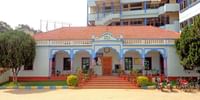
KUD has an 888-acre main campus at Pavate Nagar in Dharwad, Karnataka. Vidya Soudha, built in 1959, is its landmark building and combines Indian and Neoclassical architecture. The university also runs postgraduate centres in Karwar, established in 1975 with a focus on marine sciences, Gadag, established in 2000, and Haveri, established in 2001.
The university is known for teaching and research in humanities, social sciences and pure sciences. It has 7 faculties and 51 postgraduate departments, while PhD study is available across all 51 departments. Its notable alumni include author and playwright Girish Karnad, Union Minister Mallikarjun Kharge and entrepreneur Sudha Murty, reflecting KUD's contribution to the arts, social sciences and public life.
- Karnatak University provides postgraduate, doctoral and continuing education programmes through 7 faculties and 51 PG departments:
- Arts and Social Sciences: MA programmes in Kannada, English, Hindi, History, Sociology, Economics, Political Science, Geography, Linguistics, Music, Sanskrit, Urdu, Russian, French and German
- Science and Technology: M.Sc programmes in Mathematics, Physics, Organic Chemistry, Inorganic Chemistry, Physical Chemistry, Botany, Zoology, Genetics, Biotechnology, Microbiology, Biochemistry, Computer Science, Electronics, Marine Biology, Applied Geology, Forensic Science and Statistics
- Commerce and Management: MBA, MBA in Logistics Management and M.Com with various specialisations
- Law: Two-year LLM programmes in different specialisations
- Education: M.Ed and M.Lib in Library and Information Science
- Applied and Vocational: M.Sc in Pulp and Paper Science, PG Diploma in Guidance and Counselling, Diploma in Library Science, and certificate or diploma courses in French, German, Russian and Kannada
- Research: Ph.D. programmes in all 51 departments
- Karnatak University Admission Dates 2027-28
- Karnatak University Courses and Fees
- Karnatak University Admission Process
- Karnatak University Rankings
- Karnatak University Scholarships
- Karnatak University Campus and Infrastructure
- Karnatak University vs Kuvempu University vs Mangalore University
- Karnatak University FAQs
Karnatak University Admission Dates 2027-28
The next admission schedule is expected to begin with KUET and KUDCET notifications. These entrance tests are used for admission to KUD's postgraduate departments.
| Event | Date |
|---|---|
| Opening of the 2027-28 admission cycle | April 2027 |
| Expected KUET and KUDCET PG entrance tests | June 2027 |
| Expected completion of admissions for the 2027-28 session | By August 2027 |
Subject to revision. Kindly check with the official sources to confirm
Karnatak University Courses and Fees
Through 51 departments at its Dharwad campus, KUD directly conducts more than 100 postgraduate, diploma and doctoral programmes. It also affiliates over 250 colleges that provide undergraduate courses across north Karnataka. As a state university, its main-campus fees are subsidised and set by the Karnataka government.
| Course | Duration | Eligibility | Total Fees |
|---|---|---|---|
| MBA | 2 years | Graduation with KUET or PGCET | INR 1.11 Lakhs |
| MBA in Logistics Management | 2 years | Graduation with KUET or PGCET | INR 1.25 Lakhs |
| M.Com | 2 years | B.Com with KUDCET | INR 1.55 Lakhs |
| M.Sc in Mathematics, Physics, Chemistry, Botany, Zoology, Statistics or Geography | 2 years | B.Sc in the relevant subject with KUDCET | INR 1.40 to INR 1.46 Lakhs |
| M.Sc in Biotechnology | 2 years | B.Sc in Botany, Zoology or Microbiology with KUDCET | INR 3.46 Lakhs |
| M.Sc in Computer Science | 2 years | B.Sc CS, BCA or B.E. with KUDCET | INR 2.68 Lakhs |
| M.Sc in Microbiology | 2 years | B.Sc in Life Sciences with KUDCET | INR 3.08 Lakhs |
| M.Sc in Forensic Science and Criminology | 2 years | B.Sc in Science with KUDCET | INR 1.06 Lakhs |
| M.Sc in Marine Biology | 2 years | B.Sc in Zoology or Life Sciences with KUDCET | INR 1.48 Lakhs |
| M.Sc in Pulp and Paper Science | 2 years | B.Sc in Chemistry or Physics with KUDCET | INR 3.65 Lakhs |
| M.Ed | 2 years | B.Ed and a relevant UG degree with KUDCET | INR 1.36 Lakhs |
| MA in humanities disciplines | 2 years | UG degree in the relevant subject with KUDCET | INR 90,000 to INR 1.10 Lakhs |
| LLM | 2 years | LLB with KUDCET | INR 95,000 to INR 1.00 Lakh |
| Foreign Language Certificate, Diploma or Advanced Diploma | 1 year for each level | 10+2 or graduation, depending on the level | INR 8,090 to INR 13,120 |
| Ph.D. in all disciplines | 3 to 5 years | PG degree with 55% and the KUD PhD Entrance Test | INR 3.00 to INR 6.00 Lakhs, estimated |
Subject to revision. Kindly check with the official sources to confirm
Pulp and Paper Science is a rare specialised technology programme among south Indian state universities. Students interested in fisheries science and coastal ecology can study Marine Biology at the Karwar PG Centre. KUD also offers French, German and Russian as electives and continuing education options, with fees among the lowest in the region.
Karnatak University Admission Process
Admission routes vary by course. KUDCET is used for programmes in the university's own postgraduate departments, while some professional and undergraduate courses follow entrance or counselling systems managed by Karnataka authorities.
| Programme | Admission Route | Notes |
|---|---|---|
| MA in all disciplines | KUDCET | Selection considers the entrance score and graduation merit |
| MBA | KUET, KMAT or Karnataka PGCET | A state PGCET or KMAT score is accepted |
| M.Sc in all disciplines | KUDCET | A relevant B.Sc background is required |
| M.Com | KUDCET | B.Com is required |
| M.Ed and M.Lib | KUDCET or state norms | B.Ed is required for M.Ed |
| LLM | KUDCET or institutional process | LLB is required |
| Ph.D. | KUD PhD Entrance Test | A PG degree with 55% marks is required |
PG Admission to Dharwad Departments (MA, M.Sc, MBA, M.Com, M.Ed, LLM)
Applicants to KUD's 51 postgraduate departments usually take KUDCET, the Karnatak University Dharwad Common Entrance Test. A relevant undergraduate degree from a recognised university is required, with at least 45% aggregate marks or 40% for SC and ST applicants. The test assesses subject knowledge, reasoning and general awareness.
- Complete the KUDCET registration.
- Appear for the entrance examination.
- Receive a merit rank based on the applicable selection rules.
- Submit course and department choices.
- Take part in seat allotment.
- Complete document verification and report to the allotted department.
State university rules give Karnataka-domicile applicants priority during seat allotment. For MBA seats, KUD also accepts Karnataka PGCET, which is administered by KEA, and KMAT. Applicants with CAT or XAT scores may be considered when the eligibility rules for the particular MBA programme allow it.
PhD Admission
KUD holds its PhD Entrance Test once or twice each year. Applicants need a postgraduate degree in the relevant field with at least 55% marks. Those qualified through UGC-NET/JRF, CSIR-NET, ICMR or GATE do not have to take the KUD entrance examination and may apply directly for PhD registration.
UG Admissions at Affiliated Colleges (250+ colleges)
Undergraduate admission at KUD-affiliated colleges follows separate state procedures under the Karnataka Examination Authority. KCET applies to science courses, while arts and commerce admissions are based directly on merit at the college level. Each affiliated college may have its own cut-off, admission rules and seat matrix.
Language Courses (Certificate, Diploma, Advanced Diploma)
The Department of Foreign Languages at the Dharwad campus directly manages admission to certificate and diploma courses in French, German, Russian and Kannada. A 10+2 qualification is required for a certificate course, while entry to the next level requires the relevant diploma.
Karnatak University Rankings
KUD takes part in NIRF under the University category. Its NAAC A Grade and UGC designation as a University with Potential for Excellence further mark its position among Karnataka's state universities. Its Humanities and Social Sciences result is linked to the university's broad range of MA and doctoral programmes.
| Ranking Body | Category | 2025 Rank |
|---|---|---|
| NIRF | University | 151-200 band |
| NIRF | Humanities and Social Sciences | 116 |
The work of KUD's 51 postgraduate departments contributes to its NIRF position, particularly research in Life Sciences, Chemistry and Social Sciences. The university also appears in the Times Higher Education World University Rankings for its international research engagement. Its position can change each year according to factors such as research output, faculty numbers and PhD enrolment.
Karnatak University Scholarships
Students pursuing postgraduate or research programmes at KUD may seek support through Karnataka schemes, central government scholarships on the National Scholarship Portal and fellowships for eligible doctoral researchers.
| Scholarship | Eligibility | Coverage |
|---|---|---|
| UGC-JRF / SRF | NET-qualified students registered for a PhD at KUD | INR 37,000 per month for JRF and INR 42,000 per month for SRF |
| CSIR Fellowship | CSIR-NET-qualified students pursuing a science PhD | INR 37,000 to INR 42,000 per month |
| Post Matric Scholarship for Karnataka SC/ST students | SC/ST students whose family income is below the state limit | Tuition fee reimbursement and a maintenance allowance |
| Ambedkar Fellowship, Karnataka | SC/ST PhD students at Karnataka government universities | A maintenance stipend and contingency allowance under Karnataka rules |
| PM-USP CSSS Scholarship, Central Government | At least 60% in the qualifying examination and family income below INR 4.5 Lakhs per annum | INR 10,000 to INR 20,000 per annum for PG students |
| OBC Post Matric Scholarship | Karnataka-domicile students in the OBC-A or OBC-B category whose income is below the state limit | Support for tuition fees and maintenance |
Doctoral students in life sciences and physical sciences can also access DBT, DST and ICMR research fellowships with KUD's support. Under the Karnataka government's Vidyasiri scheme, SC/ST students studying at state universities receive maintenance grants.
Karnatak University Campus and Infrastructure
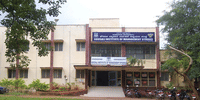
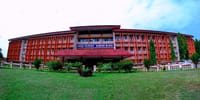
The 888-acre Pavate Nagar campus is one of south India's largest university campuses by area. Its Vidya Soudha administrative building dates to 1959 and brings together Indian and Neoclassical design. Separate academic blocks serve the arts, sciences, commerce, management, law and education departments.
KUD Library, among the oldest and largest libraries in north Karnataka, contains more than 4 lakh books and journal subscriptions. Specialised laboratories support Biotechnology, Microbiology, Applied Genetics, Chemistry, Electronics and Computer Science. Funded research projects operate in the Physics and Chemistry departments, while the coastal Karwar PG Centre provides marine biology laboratories.
The Dharwad campus provides separate hostels for boys and girls. Annual charges reach INR 1,80,000 for boys and INR 1,29,750 for girls. The final amount depends on room type and meal plan. Other facilities include sports areas, a health centre, a cooperative bank and canteens. The campus has road links to Dharwad city and lies 7 km from Hubballi Airport.
Karnatak University vs Kuvempu University vs Mangalore University
Karnatak University, Kuvempu University in Shivamogga district and Mangalore University in Dakshina Kannada are public state universities considered by students seeking postgraduate or research study in Karnataka. Each institution is recognised by the UGC and accredited by NAAC.
| Parameter | Karnatak University (Dharwad) | Kuvempu University (Shivamogga) | Mangalore University |
|---|---|---|---|
| Established | 1950 | 1987 | 1980 |
| NAAC Grade | A, CGPA 3.13 | A | A, CGPA 3.14 |
| UGC Designation | University with Potential for Excellence | University with Potential for Excellence | University with Potential for Excellence |
| NIRF 2025, University category | 151-200 band | Data not available | 151-200 band |
| Affiliated Colleges | 250+ | 200+ | 200+ |
| Campus Size | 888 acres, Dharwad | Large campus at Shankaraghatta | 100 acres, Mangalagangotri |
| Geographic Focus | North Karnataka: Dharwad, Haveri, Gadag and Uttara Kannada | Central Karnataka: Shivamogga, Chitradurga and Chikmagalur | Coastal Karnataka: Dakshina Kannada and Udupi |
Of these three universities, KUD has the longest history and the largest campus area. Its main academic strengths are arts, humanities and pure science research. Mangalore University has a similar NAAC score and NIRF band, along with stronger industry links in coastal Karnataka. Kuvempu University mainly serves central Karnataka. A student's home region and distance from each campus often influence the final choice.
Karnatak University FAQs
Ques. On what date did Karnatak University begin operating as a university?
Ans. Karnatak University was formally established in Dharwad on March 1, 1950, under the Karnatak University Act, 1949. It is a public state university and one of north Karnataka's oldest universities.
Ques. How are students selected for KUD postgraduate courses?
Ans. Applicants to KUD's 51 postgraduate departments normally take KUDCET. Selection uses the entrance result, applicable category and other programme rules. Students register through the KUD portal before taking the test and participating in seat allotment. MBA applicants may also submit Karnataka PGCET or KMAT scores. PhD applicants take the KUD PhD Entrance Test, but NET, JRF or GATE-qualified candidates are exempt.
Ques. Where did Karnatak University place in NIRF 2025?
Ans. KUD was placed in the 151-200 band of the NIRF 2025 University category and ranked 116 in Humanities and Social Sciences. It also has a NAAC A Grade with a 3.13 CGPA and the UGC designation of University with Potential for Excellence.
Ques. How much does the KUD MBA programme cost?
Ans. The two-year MBA has a total fee of INR 1.11 Lakhs. For the two-year MBA in Logistics Management, the total is INR 1.25 Lakhs. These are government-subsidised fees for MBA study at a state university.
Ques. Can students stay in hostels at the Dharwad campus?
Ans. Yes. Separate hostels for boys and girls are available on KUD's 888-acre main campus. Depending on the room and meal plan, annual fees go up to INR 1,80,000 for boys and INR 1,29,750 for girls.
Ques. In which academic fields does KUD have a strong record?
Ans. KUD is particularly known for humanities, social sciences and pure sciences. Its research-active subjects include Kannada, History, Economics, Sociology, Chemistry, Botany, Zoology, Biotechnology and Genetics. Its strength in humanities and social science research is also reflected in its 116th position in the NIRF 2025 Humanities and Social Sciences category.
Ques. What is the size of Karnatak University's affiliated college network?
Ans. KUD affiliates more than 250 colleges across north Karnataka. It also directly manages 5 constituent colleges in Dharwad and postgraduate centres at Karwar, Gadag and Haveri.
Ques. What fellowship support can a PhD student receive at KUD?
Ans. A PhD student with a UGC-NET JRF qualification may receive INR 37,000 per month as JRF, rising to INR 42,000 per month as SRF after two years. Science researchers who qualify through CSIR-NET may use CSIR fellowships. PhD students without JRF can apply for the UGC non-NET fellowships provided through the university.