Karnatak University, Dharwad (KUD) is a public state university created under the Karnatak University Act, 1949, and formally constituted on 1 March 1950. It is recognised by the University Grants Commission (UGC) and holds a NAAC A Grade with a 3.13 CGPA in 2022. UGC has also named KUD a University with Potential for Excellence, a distinction held by a limited number of state universities in India.
In NIRF 2025, KUD is placed in the 151-200 band among universities and at 116 in Humanities and Social Sciences. The university is known for teaching and research in humanities, social sciences and pure sciences.
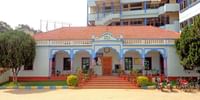
The university has an 888-acre campus at Pavate Nagar in Dharwad, Karnataka. Vidya Soudha, built in 1959, is its landmark building and combines Indian and Neoclassical design. KUD also runs postgraduate centres at Karwar for marine sciences, established in 1975, Gadag, established in 2000, and Haveri, established in 2001.
- Karnatak University provides postgraduate, doctoral and continuing education programmes through 7 faculties and 51 PG departments:
- Arts and Social Sciences: MA courses in Kannada, English, Hindi, History, Sociology, Economics, Political Science, Geography, Linguistics, Music, Sanskrit, Urdu, Russian, French and German
- Science and Technology: M.Sc courses in Mathematics, Physics, Chemistry with Organic, Inorganic and Physical specialisations, Botany, Zoology, Genetics, Biotechnology, Microbiology, Biochemistry, Computer Science, Electronics, Marine Biology, Applied Geology, Forensic Science and Statistics
- Commerce and Management: MBA, MBA in Logistics Management and M.Com with different specialisations
- Law: Two-year LLM courses in different specialisations
- Education: M.Ed and M.Lib in Library and Information Science
- Applied and Vocational: M.Sc in Pulp and Paper Science, PG Diploma in Guidance and Counselling, Diploma in Library Science, and certificate and diploma courses in French, German, Russian and Kannada
- Research: Ph.D. programmes across all 51 departments
- Karnatak University Important Admission Dates 2027-28
- Karnatak University Courses and Fees
- Karnatak University Admission Process
- Karnatak University Rankings
- Karnatak University Campus and Infrastructure
- Karnatak University Scholarships
- Karnatak University vs Kuvempu University vs Mangalore University
- Karnatak University FAQs
Karnatak University Important Admission Dates 2027-28
KUD is expected to begin its next admission cycle in April 2027. The schedule for the entrance tests and completion of admissions is tentative.
| Event | Date |
|---|---|
| Opening of the 2027-28 admission cycle and expected KUET / KUDCET notification | April 2027 |
| Expected KUET / KUDCET postgraduate entrance tests | June 2027 |
| Expected completion of 2027-28 admissions | August 2027 |
Subject to revision. Kindly check with the official sources to confirm
Karnatak University Courses and Fees
KUD directly conducts more than 100 postgraduate, diploma and doctoral programmes through 51 PG departments at its Dharwad campus. More than 250 colleges across north Karnataka are affiliated with the university and offer undergraduate programmes under KUD. As a state university, its main-campus fees are set at subsidised rates by the Karnataka government.
| Course | Duration | Eligibility | Fee |
|---|---|---|---|
| MBA | 2 years | Graduation and KUET/PGCET | INR 1.11 Lakhs |
| MBA in Logistics Management | 2 years | Graduation and KUET/PGCET | INR 1.25 Lakhs |
| M.Com | 2 years | B.Com and KUDCET | INR 1.55 Lakhs |
| M.Sc in Mathematics, Physics, Chemistry, Botany, Zoology, Statistics or Geography | 2 years | B.Sc in the relevant subject and KUDCET | INR 1.40 to INR 1.46 Lakhs |
| M.Sc in Biotechnology | 2 years | B.Sc in Botany, Zoology or Microbiology and KUDCET | INR 3.46 Lakhs |
| M.Sc in Computer Science | 2 years | B.Sc CS, BCA or B.E. and KUDCET | INR 2.68 Lakhs |
| M.Sc in Microbiology | 2 years | B.Sc in Life Sciences and KUDCET | INR 3.08 Lakhs |
| M.Sc in Forensic Science and Criminology | 2 years | B.Sc in Science and KUDCET | INR 1.06 Lakhs |
| M.Sc in Marine Biology | 2 years | B.Sc in Zoology or Life Sciences and KUDCET | INR 1.48 Lakhs |
| M.Sc in Pulp and Paper Science | 2 years | B.Sc in Chemistry or Physics and KUDCET | INR 3.65 Lakhs |
| M.Ed | 2 years | B.Ed, a relevant undergraduate degree and KUDCET | INR 1.36 Lakhs |
| MA in humanities disciplines | 2 years | Undergraduate degree in the relevant subject and KUDCET | INR 90,000 to INR 1.10 Lakhs |
| LLM | 2 years | LLB and KUDCET | INR 95,000 to INR 1.00 Lakh |
| Foreign Language Certificate, Diploma or Advanced Diploma | 1 year for each level | 10+2 or graduation, depending on the level | INR 8,090 to INR 13,120 |
| Ph.D. in all disciplines | 3 to 5 years | Postgraduate degree with 55% and KUD PhD Entrance Test | INR 3.00 to INR 6.00 Lakhs, estimated |
Subject to revision. Kindly check with the official sources to confirm
Pulp and Paper Science is a rare specialised technology programme among south Indian state universities. The Marine Biology course at the Karwar PG Centre focuses on areas that include coastal ecology and fisheries sciences. French, German and Russian courses are available as electives and through continuing education, with fees among the lowest in the region.
Karnatak University Admission Process
Admission routes differ by programme. KUDCET is used for postgraduate courses in the university departments, while some programmes also accept state-level or national entrance scores. Undergraduate admissions at affiliated colleges follow the rules of the relevant college and Karnataka authorities.
| Programme | Admission Route | Notes |
|---|---|---|
| MA in all disciplines | KUDCET | Selection uses the entrance score and graduation merit |
| MBA | KUET / KMAT / Karnataka PGCET | State PGCET or KMAT scores are accepted |
| M.Sc in all disciplines | KUDCET | A relevant B.Sc background is required |
| M.Com | KUDCET | B.Com is required |
| M.Ed and M.Lib | KUDCET / State norms | B.Ed is required for M.Ed |
| LLM | KUDCET / Institutional admission | LLB is required |
| Ph.D. | KUD PhD Entrance Test | A postgraduate degree with 55% marks is required |
PG Admission to Dharwad Departments
Admission to MA, M.Sc, MBA, M.Com, M.Ed and LLM courses in KUD's 51 departments is mainly based on KUDCET, the Karnatak University Dharwad Common Entrance Test. Applicants need an undergraduate degree in the relevant subject with at least 45% aggregate marks. The minimum is 40% for SC and ST applicants.
KUDCET tests subject knowledge, reasoning and general awareness. The admission process follows these stages:
- Complete KUDCET registration.
- Appear for the entrance examination.
- Check the merit rank prepared from the applicable selection criteria.
- Submit course and seat choices.
- Take part in seat allotment and document verification.
- Report to the allotted department to complete admission.
Under state university rules, Karnataka-domicile applicants receive priority during seat allotment. MBA seats are also filled through Karnataka PGCET, which is managed by the Karnataka Examination Authority. Depending on programme-specific rules, applicants with valid KMAT, CAT or XAT scores may also be considered.
PhD Admission
KUD normally conducts its PhD Entrance Test once or twice each year. Applicants need a postgraduate degree with at least 55% marks in the relevant field. Those qualified in UGC-NET/JRF, CSIR-NET, ICMR or GATE do not have to take the KUD entrance test and may apply directly for PhD registration.
UG Admission at Affiliated Colleges
More than 250 KUD-affiliated colleges follow separate state-level admission systems for undergraduate courses. Science admissions are handled through the Karnataka Examination Authority and KCET. Arts and commerce seats are filled directly by individual colleges according to merit. CUET applies to select programmes. Each affiliated college may have its own admission rules, cutoffs and seat matrix.
Language Course Admission
The Department of Foreign Languages at the Dharwad campus directly handles admission to certificate, diploma and advanced diploma courses in French, German, Russian and Kannada. A 10+2 qualification is needed for certificate study, while entry to the next level requires the relevant diploma.
Karnatak University Rankings
KUD takes part in NIRF under the University category. Its NAAC A accreditation and UGC status as a University with Potential for Excellence also mark its position among Karnataka's state universities. The 116th position in Humanities and Social Sciences in NIRF 2025 is linked to its broad MA and doctoral research base.
| Ranking Body | Category | 2025 Rank |
|---|---|---|
| NIRF | University | 151-200 band |
| NIRF | Humanities and Social Sciences | 116 |
KUD was not listed separately in the NIRF 2025 College category. Research from its 51 PG departments, especially in Life Sciences, Chemistry and Social Sciences, contributes to its NIRF standing. The university also appears in the Times Higher Education World University Rankings for its global research activity. Ranking positions can change each year with research output, faculty numbers and PhD enrolment.
Karnatak University Campus and Infrastructure
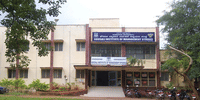
KUD's main campus covers 888 acres at Pavate Nagar in Dharwad and is one of south India's largest university campuses by area. Vidya Soudha, its administrative building from 1959, combines Indian and Neoclassical architectural features. Separate academic blocks serve the arts, science, commerce, management, law and education departments.
The KUD Library is among the oldest and largest libraries in north Karnataka. Its collection includes more than 4 lakh books along with journal subscriptions. Students and researchers use specialised laboratories for Biotechnology, Microbiology, Applied Genetics, Chemistry, Electronics and Computer Science. The Physics and Chemistry departments conduct funded research projects, while the Karwar PG Centre has coastal laboratories for Marine Biology.
Boys' and girls' hostels are available on the main campus. Annual charges go up to INR 1,80,000 for the boys' hostel and INR 1,29,750 for the girls' hostel. The campus also provides sports facilities, a health centre, a cooperative bank and canteen services. It is linked with Dharwad city and is 7 km from Hubballi Airport.
Karnatak University Scholarships
Students in KUD postgraduate and research programmes can apply for Karnataka state schemes, central government support through the National Scholarship Portal, and research fellowships. Available state schemes include the Post Matric Scholarship, Ambedkar Fellowship and Vidyasiri.
| Scholarship | Eligibility | Coverage |
|---|---|---|
| UGC-JRF / SRF | NET-qualified students pursuing a PhD at KUD | INR 37,000 per month for JRF and INR 42,000 per month for SRF |
| CSIR Fellowship | CSIR-NET-qualified students in science PhD programmes | INR 37,000 to INR 42,000 per month |
| Post Matric Scholarship for Karnataka SC/ST students | SC/ST students whose family income is below state limits | Tuition fee reimbursement and a maintenance allowance |
| Ambedkar Fellowship, Karnataka | SC/ST PhD students at Karnataka government universities | Maintenance stipend and contingency allowance under Karnataka rules |
| PM-USP CSSS Scholarship | At least 60% in the qualifying examination and annual family income below INR 4.5 Lakhs | INR 10,000 to INR 20,000 per year for postgraduate students |
| OBC Post Matric Scholarship | Karnataka-domicile students in the OBC-A or OBC-B category whose income is below state limits | Tuition fee and maintenance support |
KUD also helps eligible doctoral students in life and physical sciences access DBT, DST and ICMR research fellowships. Under the Karnataka government's Vidyasiri scheme, SC/ST students enrolled at state universities can receive maintenance grants.
Karnatak University vs Kuvempu University vs Mangalore University
Karnatak University, Kuvempu University in Shivamogga district and Mangalore University in Dakshina Kannada are public state universities recognised by UGC and accredited by NAAC. Students considering postgraduate study or research can compare their history, accreditation, coverage areas and campus profiles.
| Parameter | Karnatak University, Dharwad | Kuvempu University, Shivamogga | Mangalore University |
|---|---|---|---|
| Established | 1950 | 1987 | 1980 |
| NAAC Grade | A, CGPA 3.13 | A | A, CGPA 3.14 |
| UGC Designation | University with Potential for Excellence | University with Potential for Excellence | University with Potential for Excellence |
| NIRF 2025 University Category | 151-200 band | Data not available | 151-200 band |
| Affiliated Colleges | 250+ | 200+ | 200+ |
| Campus Size | 888 acres, Dharwad | Large campus at Shankaraghatta | 100 acres, Mangalagangotri |
| Geographic Focus | North Karnataka, including Dharwad, Haveri, Gadag and Uttara Kannada | Central Karnataka, including Shivamogga, Chitradurga and Chikmagalur | Coastal Karnataka, including Dakshina Kannada and Udupi |
Among these three institutions, KUD has the longest history and the largest campus area. It has particular strength in arts, humanities and pure science research. Mangalore University has a similar NAAC score and NIRF range, with stronger industry links in coastal Karnataka. Kuvempu University mainly serves central Karnataka. A student's home region and travel convenience often influence the choice.
Karnatak University FAQs
Ques. On what date did Karnatak University begin?
Ans. Karnatak University was formally constituted on 1 March 1950 under the Karnatak University Act, 1949. This public state university is located in Dharwad and is one of north Karnataka's oldest universities.
Ques. How are students selected for KUD postgraduate courses?
Ans. KUDCET is the main admission test for postgraduate courses offered by the university's 51 departments. MBA applicants may also use Karnataka PGCET or KMAT scores. After registering through the KUD portal and taking the entrance test, applicants receive seats according to their score and category. PhD selection uses the KUD PhD Entrance Test, but NET, JRF and GATE-qualified applicants are exempt.
Ques. Where does Karnatak University stand in NIRF 2025?
Ans. KUD is in the 151-200 university band and holds the 116th rank in Humanities and Social Sciences in NIRF 2025. It also has a NAAC A Grade with a 3.13 CGPA and UGC recognition as a University with Potential for Excellence.
Ques. How much does the KUD MBA programme cost?
Ans. The total fee for the two-year MBA is INR 1.11 Lakhs. The two-year MBA in Logistics Management costs INR 1.25 Lakhs. These are government-subsidised state university fees.
Ques. Can students stay in hostels at Karnatak University?
Ans. Yes. Boys' and girls' hostels are provided on the 888-acre main campus. Depending on the room and meal plan, annual fees reach INR 1,80,000 for boys and INR 1,29,750 for girls.
Ques. What academic fields are especially strong at KUD?
Ans. KUD is known for humanities, social sciences and pure sciences. Kannada, History, Economics, Sociology, Chemistry, Botany, Zoology, Biotechnology and Genetics have established research records. Its research depth is also reflected in the NIRF 2025 rank of 116 for Humanities and Social Sciences.
Ques. What is the number of colleges affiliated with KUD?
Ans. More than 250 colleges across north Karnataka are affiliated with Karnatak University. KUD also directly runs 5 constituent colleges in Dharwad and postgraduate centres at Karwar, Gadag and Haveri.
Ques. What fellowship support can KUD PhD students receive?
Ans. PhD students with UGC-NET JRF can receive INR 37,000 per month as JRF. After two years, this rises to INR 42,000 per month at the SRF stage. Science students qualified through CSIR-NET may receive CSIR fellowships, while PhD applicants without JRF can apply for UGC non-NET fellowships available through the university.