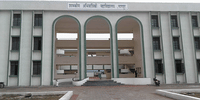
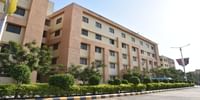
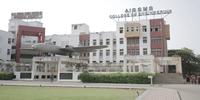
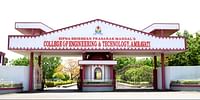
DBATU offers undergraduate, postgraduate, Ph.D., diploma, and certificate programmes in several fields. B.Tech is its main undergraduate course and has 12 specialisations, while M.Tech is available with 11 specialisations. The first-year B.Tech fee is INR 44,000.
Admission to B.Tech is based on JEE Main or MHT CET. At the postgraduate level, Dr. Babasaheb Ambedkar Technological University also offers MBA, M.Tech, M.Pharm, and MCA.
DBATU UG Admission 2026
Dr. Babasaheb Ambedkar Technological University conducts B.Tech admission across 12 specialisations. The available fields include Computer Science Engineering, Information Technology, Electrical Engineering, Mechanical Engineering, and Civil Engineering. Students seeking admission must qualify through JEE Main or MHT CET, followed by the Centralised Admission Process. The B.Tech fee for the first year is INR 44,000.
| Course | Eligibility and Admission Basis |
|---|---|
| B.Tech | Students must complete Class 12 with 50% marks and have a valid JEE Main score. Admission may also be based on MHT CET through CAP. |
B.Tech Seat Intake
The branch-wise intake for the B.Tech programme is listed below.
| Branch | Seat Intake |
|---|---|
| Mechanical Engineering | 54 |
| Electrical Engineering | 54 |
| Electronics & Telecommunication Engineering | 60 |
| Chemical Engineering | 54 |
| Petrochemical Engineering | 54 |
| Computer Engineering | 54 |
| Information Technology Engineering | 54 |
| Civil Engineering | 54 |
| VLSI Design and Technology | 30 |
| Electronics & Telecommunication Engineering | 30 |
DBATU PG Admission 2026
Postgraduate options at DBATU include MBA, M.Tech, M.Pharm, and MCA. M.Tech is offered in 11 specialisations, including Computer Engineering, Environmental Engineering, Chemical Engineering, Cyber Security, and VLSI Design. Its first-year fee is INR 31,000.
| Course | Eligibility and Admission Basis |
|---|---|
| M.Tech | Applicants need a graduation degree with 50% marks and a valid GATE score. |
M.Tech Seat Intake
Seats available in each M.Tech branch are given below.
| Branch | Seat Intake |
|---|---|
| Chemical Engineering | 16 |
| Computer Engineering | 16 |
| Electronics & Telecommunication Engineering | 16 |
| Manufacturing Engineering | 16 |
| Power & System Electrical Engineering | 16 |
| Thermal & Fluids Engineering | 16 |
| Environmental Engineering | 16 |
| Remote Sensing and GIS | 30 |
| Cyber Security | 30 |
| VLSI Design | 30 |
| Advanced Communication Technology | 30 |
DBATU Ph.D. Admission 2026
DBATU offers Ph.D. programmes in different engineering disciplines.
DBATU Diploma and Certificate Admission 2026
Diploma and certificate courses are also available at DBATU.
DBATU MHT CET Cutoff
The 2025 MHT CET cutoff had not been released. For the GOPENS category, the stated 2024 cutoff range is 22.06 to 81.77. The last-round cutoff information also records a 2024 GOPENS range of 32.18 to 81.64. Course-wise last-round percentiles for 2024, 2023, and 2022 are shown below.
| Course | Last Round Cutoff Percentile (2024) | Last Round Cutoff Percentile (2023) | Last Round Cutoff Percentile (2022) |
|---|---|---|---|
| Information Technology | 75.35 | 80.41 | - |
| Computer Engineering | 74.93 | 85.18 | 81.64 |
| Chemical Engineering | 58.12 | 32.37 | 42.3 |
| Electrical Engineering | 72.61 | 51.06 | 35.98 |
| Civil Engineering | 32.18 | 58.74 | 90.01 |
| Mechanical Engineering | 44.89 | 49.05 | 62.38 |
| VLSI Design | 47.42 | 54.63 | - |
| Petrochemical Engineering | 34.58 | 37.13 | - |
| Electronics & Telecommunication Engineering | 50.6 | 73.41 | - |
DBATU Admission FAQs
Ques. Which degree programmes can students pursue at DBATU?
Ans. Students can study B.Tech at the undergraduate level, M.Tech and MBA at the postgraduate level, or pursue a Ph.D. in different engineering disciplines.
Ques. Which entrance scores are accepted for DBATU B.Tech admission?
Ans. B.Tech selection mainly uses MHT CET or JEE Main scores. Eligible students take part in CAP, which is the Centralised Admission Process.
Ques. How much is the first-year M.Tech fee at DBATU?
Ans. The first-year M.Tech fee is INR 31,000. The programme is available in 11 specialisations.
Ques. Can students take admission to DBATU through a management quota?
Ans. Dr. Babasaheb Ambedkar Technological University does not provide management quota admission. Its affiliated private colleges may follow their own procedures.