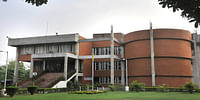
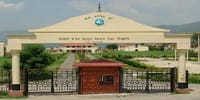
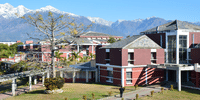
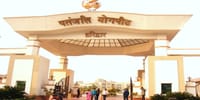
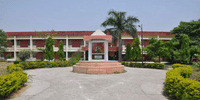
Gurukula Kangri (Deemed to be University) [GKV], Haridwar traces its beginnings to 1902, when Swami Shraddhanandaji founded it beside the Ganga in Uttarakhand. This centrally funded institution is among India's oldest residential universities. Its teaching brings together Vedic learning in the Gurukula tradition and modern subjects such as engineering, pharmacy, management and science.
Recognition from the University Grants Commission (UGC) accompanies NAAC Grade B accreditation, received in the university's third consecutive accreditation cycle. Engineering courses have AICTE approval, while pharmacy courses have approval from the Pharmacy Council of India (PCI).
Students can choose from more than 50 programmes across engineering, pharmacy, management, natural sciences, humanities, Vedic studies and physical education. The main study options are:
- B.Tech: A 4-year degree with branches in CSE, ECE, Electrical Engineering, Mechanical Engineering, and Robotics and Automation. Seats are allotted through JoSAA and CSAB counselling.
- B.Pharm and D.Pharma: Pharmaceutical sciences courses leading to an undergraduate degree or a diploma.
- BBA Hons and MBA: Management degrees for undergraduate and postgraduate students.
- B.Sc Hons: Subject choices cover Physics, Chemistry, Mathematics, Botany, Zoology, Microbiology, Environmental Science, Computer Science, Physical Sciences and Yogic Science.
- BA Hons: Students can study English, Hindi, Sanskrit, Veda, History, Philosophy, Psychology or Music.
- PG programmes: Postgraduate options include M.Tech in CSE and ECE, along with M.Pharm, M.Sc, MA, MCA and M.P.Ed in different subjects.
- Ph.D: Research opportunities span engineering, sciences, pharmacy, management and humanities.
GKV Important Dates
Applicants preparing for the 2027-28 admission cycle can use the entrance examination schedule below. The proposed JEE Main, CMAT and CUET PG dates appear in the NTA examination calendar. GATE dates are available on the official GATE 2027 website.
| Event | Date |
|---|---|
| CAT 2026 examination, for the MBA admission route | November 29, 2026 |
| JEE Main 2027 Session 1 for B.Tech applicants, proposed examination dates | January 22 to 24 and January 28 to 30, 2027; January 31, 2027 is the buffer date |
| GATE 2027 examination, for the M.Tech admission route | February 6, 7, 13, 14, 20 and 21, 2027 |
| CMAT 2027 examination, for the MBA admission route, proposed date | February 7, 2027 |
| CUET PG 2027 for MCA, M.Sc and MA applicants, proposed examination dates | March 1 to 5, March 8, March 12 to 20, and March 24 to 25, 2027; March 30 and 31, 2027 are buffer dates |
Subject to revision. Kindly check with the official sources to confirm
GKV Courses and Fees
GKV's course range covers more than 50 programmes in eight subject groups. Humanities, Vedic studies and science courses have particularly low fees for a UGC-funded deemed university in North India. Engineering and pharmacy cost more, reflecting the costs of meeting AICTE and PCI requirements, although their fees remain below those of most private deemed universities in the region.
The amounts below cover each complete programme. PCM means Physics, Chemistry and Mathematics; PCB means Physics, Chemistry and Biology.
| Course | Duration | Eligibility | Fee for the Full Programme |
|---|---|---|---|
| B.Tech in CSE, ECE, Electrical Engineering or Mechanical Engineering | 4 years | Class 12 with PCM and a qualifying JEE Main score | INR 5.00 Lakhs |
| B.Tech in Robotics and Automation | 4 years | Class 12 with PCM and a qualifying JEE Main score | INR 5.64 Lakhs |
| B.Pharm | 4 years | Class 12 with PCM or PCB and 45% marks | INR 3.95 Lakhs |
| D.Pharma | 2 years | Class 12 with PCM or PCB and 45% marks | INR 1.41 Lakhs |
| BBA Hons | 4 years | Class 12 in any stream with 45% marks | INR 2.25 Lakhs |
| B.Sc Hons in science subjects | 4 years | Class 12 with PCM or PCB and 45% marks | INR 66,400 to 67,200 |
| BA Hons in humanities and Vedic subjects | 4 years | Class 12 in any stream | INR 18,800 to 24,800 |
| MBA | 2 years | Graduation with 50% marks and CAT or CMAT | INR 2.33 Lakhs |
| M.Tech in CSE or ECE | 2 years | B.Tech with 55% marks and a valid GATE score | INR 1.94 Lakhs |
| M.Pharm | 2 years | B.Pharm with 55% marks | INR 2.28 Lakhs |
| MCA | 2 years | Graduation with 50% marks | INR 1.03 Lakhs |
| M.Sc in science subjects | 2 years | B.Sc in the relevant subject | INR 26,800 to 63,600 |
| MA in humanities and Vedic subjects | 2 years | Graduation in the relevant subject | INR 13,000 to 26,800 |
Subject to revision. Kindly check with the official sources to confirm
Classical learning remains part of the course choices. Yogic Science is available at B.Sc and M.Sc levels, while BA and MA options include Vedic Studies and Jyotir Vigyan. A separate MA in Yoga Science is also available. Rooted in the Gurukula tradition, these subjects draw students from across India who want to combine modern study with classical education. Mainstream engineering and management universities in Uttarakhand do not offer these disciplines.
GKV Admission Process
Entrance examination results form the basis of admission across GKV programmes. B.Tech seats are allotted centrally through JoSAA and CSAB. For most other courses, selection uses CUET results or an entrance examination run by GKV. Admissions for the 2026-27 session have concluded; B.Tech selection for that session used JEE Main 2026 scores through JoSAA and CSAB.
Students follow these stages according to their chosen course:
- Check the subject requirements, qualifying marks and accepted entrance examination for the programme.
- Take the relevant examination and obtain the required score.
- Register for JoSAA or CSAB for B.Tech, or apply through the relevant GKV admission process for other courses.
- Complete choice filling, counselling, an interview or a research test wherever the programme requires it.
- After selection, attend document verification and pay the applicable fees to complete admission.
Entrance Examinations and Selection Routes
The examination and final selection method depend on the course.
| Course | Accepted Entrance Examination | How Selection Works |
|---|---|---|
| B.Tech | JEE Main | Seat allocation through central JoSAA and CSAB counselling |
| B.Pharm | CUET UG or GKV Entrance | GKV counselling based on merit |
| BBA Hons | CUET UG | Selection by merit |
| B.Sc Hons and BA Hons | CUET UG | Selection by merit |
| MBA | CAT, CMAT or GKV Management Test | Score-based shortlist, followed by a group discussion and personal interview |
| M.Tech | GATE | GATE score merit and a departmental interview |
| MCA | CUET PG or GKV Entrance | Selection by merit |
| M.Sc and MA | CUET PG or GKV Entrance | Selection by merit |
| Ph.D | GKV Research Entrance Test (RET) | A written examination followed by an interview with the research committee |
B.Tech Admission
Applicants seeking an engineering seat must meet all three requirements:
- Pass Class 12 with Physics, Chemistry and Mathematics.
- Obtain at least 45% in PCM overall, or 40% for SC/ST/PH applicants.
- Hold a valid JEE Main score from the current or preceding year.
- Register on the JoSAA portal after qualifying for consideration.
- Enter the preferred institutes and branches, then lock the choices.
- Once a seat is allotted, visit GKV's Faculty of Engineering and Technology (FET) campus to verify documents and pay fees.
- If JoSAA does not allot a seat, apply for the CSAB Special Rounds.
B.Pharm and D.Pharma Admission
A minimum of 45% overall in Class 12 is required, with Physics and Chemistry alongside Biology or Mathematics. For B.Pharm, applicants use CUET UG results or take GKV's pharmacy entrance examination. D.Pharma follows the same academic requirements, with admission handled through the Uttarakhand State Pharmacy Council process. Selection depends on merit, and documents are checked at the main GKV campus.
MBA Admission
Graduates of any subject can apply if their overall marks reach 50%. A valid CAT or CMAT result is used to shortlist applicants, who then attend a group discussion and personal interview (GDPI) at GKV Haridwar. Those who have not appeared for either examination can take the university's separately conducted management entrance test.
Admission to B.Sc Hons, BA Hons and BBA Hons
CUET UG scores determine merit for these undergraduate courses. Science applicants need the relevant Class 12 subject combination and an overall score of 45%. BA and BBA applicants may come from any Class 12 stream and need 45% marks. After CUET UG results, GKV publishes merit lists and allocates seats through counselling on campus.
Postgraduate and Ph.D Admission
For M.Tech, students need a B.Tech in the relevant engineering branch with at least 55% overall and a valid GATE score. The selection route includes GATE merit and a departmental interview. MCA and M.Sc applicants can use CUET PG results or appear for GKV's entrance examination; the final merit list takes both academic performance and entrance results into account. MA selection also accepts CUET PG or GKV Entrance scores.
Ph.D selection has two stages: the written Research Entrance Test (RET) and an interview with the departmental research committee. The department may waive RET for applicants who have qualified for JRF or NET.
GKV B.Tech Cutoffs
Previous JoSAA rounds indicate the following broad closing-rank pattern. A closing rank is the rank of the last applicant allotted a seat. The number changes each year with the available seats and the applicants competing for them.
| Branch or Category | Previous Closing-Rank Pattern |
|---|---|
| B.Tech CSE, General Category | Usually between 60,000 and 1,50,000 in JEE Main through JoSAA |
| ECE, Electrical Engineering and Mechanical Engineering | Closing ranks are generally numerically higher than those for CSE |
| SC/ST and OBC categories | Closing ranks are usually substantially higher numerically than the General Category cutoff |
GKV Placements
Campus hiring for B.Tech, MBA, MCA, M.Sc and M.Pharm graduates is coordinated by GKV's placement cell, which is accredited by TCS. Engineering and management graduates account for most students placed each year. Recruitment drives largely take place at the FET campus, and the Haridwar industrial corridor helps bring core engineering employers to the university.
Employers that have participated in GKV recruitment include:
| Industry | Recruiting Organisations |
|---|---|
| Information technology | TCS, Wipro, Tech Mahindra, Newgen Software |
| Banking, financial services and insurance (BFSI) | Bajaj Finance, Axis Bank, Motilal Oswal |
| Manufacturing and fast-moving consumer goods (FMCG) | Panasonic, ITC, Godrej, Dabur |
| Core engineering and process industries | Neel Metal Products, BHEL Haridwar, and industrial units in Haridwar and Rishikesh |
Mechanical and Electrical Engineering students can access manufacturing employers in the Haridwar and Sidcul industrial belt, including companies that seldom recruit at urban engineering campuses. IT service firms mainly hire from CSE and ECE. For MBA and MCA graduates, employers are chiefly BFSI and IT service companies working in North India. Hiring differs between branches, with CSE and ECE seeing more placement activity than Mechanical and Electrical Engineering.
GKV Campus and Infrastructure
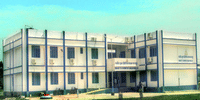
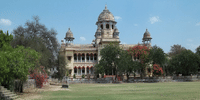
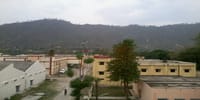
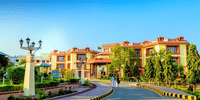
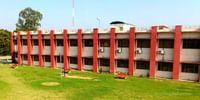
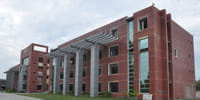
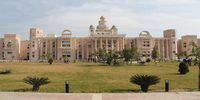
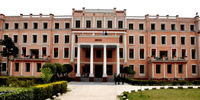
The Kankhal campus in Haridwar has an institutional history of over 120 years. It stands on the Ganga's western bank, 6 km from Haridwar railway station and 200 km from Delhi. Arts, sciences, management, pharmacy and Vedic studies are taught here. Engineering has a separate FET campus on the National Highway, 5 km from the main campus. Its facilities include computing laboratories, electronics and communication laboratories, mechanical workshops, and a placement centre for engineering students.
A central library provides printed and digital material. Students also have access to a sports complex, a medical centre and separate hostels for men and women on the main campus. Annual hostel charges, including accommodation and mess, range from INR 57,000 to 62,000. GKV's two Kanya Gurukula campuses offer fully residential study exclusively for women in humanities and science programmes: the Dehradun campus began in 1922, and the Haridwar campus in 1993.
Residential study follows the Gurukula model, giving GKV a distinctive setting among UGC-funded universities in Uttarakhand. Students taking Vedic studies, Sanskrit and yoga often live in a semi-gurukula environment. Cultural and spiritual events at the Ganga ghats are readily accessible from Haridwar. Alumni of non-Vedic courses also regularly identify these experiences as a memorable part of studying at GKV.
GKV Scholarships
Financial assistance at GKV combines merit and need-based institutional awards, the Arya Pragati Scholarship Test, and central and state government schemes. The SC/ST Cell helps administer government scholarships. Students with strong academic results and those from economically weaker backgrounds can access more than one scholarship at the same time.
| Scholarship or Award | Who Can Apply | Financial Support |
|---|---|---|
| Arya Pragati Scholarship Test | All new applicants; the test takes place annually before the academic session begins | A tuition fee waiver linked to test performance |
| Sanskrit and Vedic Studies Award | BA and MA students studying Vedic Literature or Sanskrit, selected by merit | INR 600 per month and INR 1,000 each year for books |
| Philosophy Students Award | BA and MA Philosophy students, selected by merit | INR 600 per month |
| National Scholarship Portal (NSP) | SC/ST/OBC/Minority students with at least 50% marks and parental income below INR 2.5 Lakhs per annum | Support according to central government rules |
| Uttarakhand State Scholarship | Uttarakhand domicile holders who meet the financial eligibility conditions | Support according to state government rules |
Applicants to government schemes can get help from the SC/ST Cell with documents and registration on the relevant portals. Every incoming student may take the Arya Pragati Scholarship Test, regardless of course or stream. Separate stipends for Vedic and Sanskrit students help meet part of their yearly fees.
GKV, Graphic Era University and HNB Garhwal University Compared
Students from Uttarakhand and nearby hill districts often consider these three institutions. GKV in Haridwar attracts JEE Main and CUET applicants. Graphic Era University in Dehradun draws engineering students seeking a private deemed university, while Hemwati Nandan Bahuguna Garhwal University in Srinagar, Uttarakhand, attracts science and humanities applicants seeking a central university. Their applicant groups overlap across the Garhwal region.
| Feature | GKV, Haridwar | Graphic Era University, Dehradun | HNB Garhwal University, Srinagar |
|---|---|---|---|
| Institution type | Centrally funded deemed university supported by UGC | Private deemed university | Central university |
| Year established | 1902 | 1993 | 1973 |
| NAAC accreditation | B | A | A |
| B.Tech fees | INR 5.00 Lakhs for 4 years | Higher fees in the private university range | Subsidised central university fees |
| B.Tech entrance route | JEE Main through JoSAA | JEE Main or CUET UG | JEE Main |
| Subjects offered | Engineering, Pharmacy, Sciences, Humanities, Vedic studies and Yoga | Engineering, Management and Pharmacy | Sciences, Engineering, Social Sciences and Law |
| Hostel provision | Available; INR 57,000 to 62,000 per year | Available | Available |
Subject to revision. Kindly check with the official sources to confirm
GKV stands out for its range of subjects, especially Vedic studies, Yoga and Pharmacy, and for affordable fees among centrally funded options. Engineering placement activity is usually higher at Graphic Era University, helped by its position in Dehradun's IT corridor. HNB Garhwal combines full central university benefits with the lowest fees and is better suited to students who place pure sciences, social sciences or law ahead of engineering. Students should weigh their preferred subject, available budget and career plans because the three universities have different strengths.
GKV FAQs
Ques. Which steps must an engineering applicant complete to join GKV?
Ans. Start with a valid JEE Main score and the required Class 12 subjects: Physics, Chemistry and Mathematics. PCM marks must total at least 45%, with a 40% requirement for SC/ST/PH applicants. B.Tech seats are allotted entirely through JoSAA and CSAB central counselling. After a JoSAA allotment, visit the FET campus for document checks and fee payment. Applicants without a seat after JoSAA can participate in the CSAB Special Rounds.
Ques. How much does each GKV B.Tech option cost over four years?
Ans. CSE, ECE, Electrical Engineering and Mechanical Engineering each carry a full programme fee of INR 5.00 Lakhs for 4 years. Robotics and Automation costs INR 5.64 Lakhs over the same period. UGC sets these fees under GKV's centrally funded deemed university status. They are among the lowest fees for AICTE-approved B.Tech courses in Uttarakhand.
Ques. Who funds GKV, and what is its university status?
Ans. GKV is a centrally funded deemed-to-be university rather than a private institution. Its funding comes fully from the University Grants Commission and the Government of India. The central government meets most operating costs, keeping tuition substantially below private deemed university fees. Its public funding model is comparable to that of institutions such as Tezpur University and Visva-Bharati.
Ques. What do earlier counselling rounds indicate about the rank needed for CSE?
Ans. Previous JoSAA cycles place the usual General Category closing rank for GKV B.Tech CSE between 60,000 and 1,50,000 in JEE Main. ECE, Electrical Engineering and Mechanical Engineering generally close at higher numerical ranks, allowing applicants with lower rank positions to be considered. SC/ST and OBC closing ranks are also usually substantially higher numerically than the General Category cutoff. Seat availability and the number of applicants change each year, so the final rank varies.
Ques. What residential arrangements and yearly charges can students expect?
Ans. Men and women have separate hostels at the main GKV campus. Accommodation and mess together cost INR 57,000 to INR 62,000 per year. Women studying humanities or science can also use the fully residential Kanya Gurukula campuses in Dehradun and Haridwar, which are exclusively for female students.
Ques. Which employers visit GKV, and which branches do they hire from?
Ans. Recruiters include TCS, Wipro, Tech Mahindra, Newgen Software, Bajaj Finance, Axis Bank, Motilal Oswal, Panasonic, ITC, Godrej and Dabur. Manufacturing employers in the Haridwar and Sidcul belt, including Neel Metal Products and BHEL Haridwar, recruit Mechanical and Electrical Engineering graduates. At the FET campus, IT employers mainly select CSE and ECE students.
Ques. Which accreditation and professional approvals does GKV hold?
Ans. The university received NAAC Grade B in its third consecutive accreditation cycle. UGC recognises GKV, AICTE approves its engineering programmes, and PCI approves its pharmacy programmes. Its deemed-to-be university status dates from formal recognition under UGC rules.
Ques. Can a CAT score be used for GKV's MBA, and what follows shortlisting?
Ans. A valid CAT or CMAT score is accepted for MBA selection. Applicants may hold a degree in any subject but need at least 50% overall. Those shortlisted attend a group discussion and personal interview (GDPI) at the Haridwar campus. Students who have taken neither CAT nor CMAT can apply through GKV's management entrance examination. The complete 2-year MBA costs INR 2.33 Lakhs.





.jpg?tr=h-40,w-40,c-force)