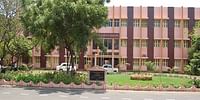
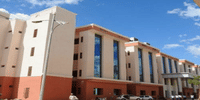
RGUKT Nuzvid admits students to its 6-year integrated B.Tech programme through the centralised RGUKT Andhra Pradesh online admission process. Selection depends entirely on Class 10 SSC or equivalent examination merit, with no entrance examination. The residential programme comprises 2 years of PUC followed by 4 years of B.Tech.
The total tuition fee is INR 2,90,000. Application charges are INR 400 for OC/BC candidates, INR 250 for SC/ST candidates and INR 1,000 for applicants from other states. A single application covers all RGUKT-AP campuses, with applicants ranking their campus preferences before merit-based allotment.
Apply through the RGUKT Andhra Pradesh admission portal.
Table of Contents
RGUKT Nuzvid Important Dates
| Event | Date |
|---|---|
| Sports quota original certificate verification, submission of sports forms and admission counselling at RGUKT Nuzvid | November 4, 2026 |
| Expected opening of applications for the 2027-28 admission cycle | April 2027, tentative; official notification awaited |
Subject to revision. Kindly check with the official sources to confirm
RGUKT Nuzvid Integrated B.Tech Admission 2026
Nuzvid admits 1,100 students annually to its integrated programme. In 2026-27, the four RGUKT-AP campuses received 44,104 applications for 4,400 seats, described in the supplied account as a ratio of 10 applicants per seat. All Nuzvid seats follow centralised merit selection; there is no management quota or direct admission route.
Programme Structure and Engineering Branches
Students complete 2 years of PUC before entering the 4-year B.Tech phase. The programme operates in fully residential mode.
| Programme Aspect | Details |
|---|---|
| Total duration | 6 years |
| Initial phase | 2-year PUC |
| Engineering phase | 4-year B.Tech |
| Engineering branches | Computer Science Engineering (CSE), Electronics and Communication Engineering (ECE), Electrical and Electronics Engineering (EEE), Mechanical, Civil, Chemical and Metallurgical Engineering |
| Branch allocation | After PUC, using PUC CGPA and preferences submitted online |
Applicants choose campus preferences at admission, rather than an engineering branch. Strong PUC performance can help a student obtain a preferred branch such as CSE or ECE, even when the initial campus allotment was a lower preference.
Eligibility Requirements
For the stated 2026 cycle, applicants must have passed SSC or an equivalent Class 10 examination in 2026, with results declared by May 30, 2026. No minimum qualifying-mark threshold is prescribed; selection follows merit ranking.
| Criterion | Requirement |
|---|---|
| Qualifying examination | SSC, Class 10 or equivalent, passed in 2026 |
| Accepted boards | Andhra Pradesh Board, CBSE, ICSE or another recognised board |
| General/OBC/EWS age limit | Below 18 years on December 31, 2026 |
| SC/ST age limit | Below 21 years on December 31, 2026 |
| Merit-seat domicile | Andhra Pradesh residents meeting local/non-local status rules |
| Other-state applicants | Eligible for 5% supernumerary and 10% EWS supernumerary seats |
Reservation and Regional Distribution
- 85% of seats are stated as available to Andhra Pradesh domicile candidates. The supplied overview describes other-state opportunities as 15% supernumerary seats, detailed as 5% supernumerary and 10% EWS supernumerary seats.
- Within Andhra Pradesh, the regional distribution is 65.62% for the AU region and 34.38% for the SVU region.
- Women receive 33.33% reservation across categories.
- The stated category reservations are SC 15%, ST 6%, BC-A through BC-E 27%, EWS 10% supernumerary and PH 5%.
- NCC, Sports, CAP and Bharat Scouts & Guides special-category seats are filled in Phase III.
Merit Calculation and Campus Allotment
Selection uses SSC marks after adding the applicable deprivation score. Campus allotment considers merit rank, statutory reservation, campus preferences and seat availability.
- SSC merit is calculated from 600 marks, comprising 6 subjects worth 100 marks each.
- Government, ZP and Municipal school students receive the stated 0.4 GPA deprivation advantage.
- The supplied marks-based description adds 4% to each subject, with a maximum increase of 24 marks out of 600.
- Ties are resolved first through Mathematics marks, then General Science and finally English.
- Applicants rank Nuzvid, RK Valley, Ongole and Srikakulam in one application.
- Seats are allotted according to merit and availability, following the applicant’s stated campus order.
Application Charges
| Applicant Category | Application Fee |
|---|---|
| OC/BC | INR 400 |
| SC/ST | INR 250 |
| Other-state applicants | INR 1,000 |
Subject to revision. Kindly check with the official sources to confirm
Online Application and Admission Steps
- Visit the RGUKT admission portal and open the application link.
- Pay the applicable application charge online.
- Register using the SSC hall-ticket number and personal information.
- Complete the form and rank all 4 campuses by preference.
- Upload the required documents and submit the application.
- Download and retain the confirmation containing the application ID.
- If provisionally selected, complete document verification and fee payment to confirm admission.
Applicants should monitor the admission portal for the anticipated April 2027 next-cycle notification and check the official RGUKT website for the confirmed notification date.
Documents Required
- SSC marks memo and pass certificate
- Study certificates from Classes 4 to 10
- Caste or community certificate for reserved-category applicants
- EWS income and asset certificate for EWS applicants
- Income certificate issued by a competent authority
- Applicable NCC, Sports, CAP or Bharat Scouts & Guides certificate
- Aadhaar card and passport-size photographs
Tuition, Reporting and Mess Charges
| Fee Component | Amount |
|---|---|
| PUC tuition, Years 1 and 2 | INR 45,000 per year |
| B.Tech tuition, Years 3 to 6 | INR 50,000 per year |
| Total tuition for the complete 6-year programme | INR 2,90,000 |
| Admission fee at reporting, General category | INR 4,200 |
| Admission fee at reporting, SC/ST | INR 3,700 |
| Monthly residential mess charge | INR 3,500, indicative |
Subject to revision. Kindly check with the official sources to confirm
Confirm the applicable charges with RGUKT Nuzvid or through its admission portal.
RGUKT Nuzvid Indicative SSC Cutoffs
The supplied Phase I selection figures for 2026 indicate the level of competition. These category-wise ranges refer to SSC marks out of 600 and can change with applicant numbers and examination performance.
| Category | Indicative SSC Marks Range |
|---|---|
| OC | 591 to 593 |
| BC-A | 589 to 591 |
| EWS | 586 to 589 |
| SC | 583 to 588 |
| ST | 573 to 578 |
RGUKT Nuzvid Scholarships and Student Support
Government assistance supports students from economically weaker backgrounds. Eligible recipients can have their full tuition covered through fee reimbursement.
- Jagananna Vidya Deevena: Full tuition reimbursement for eligible SC, ST, BC, EWS and Minority students with annual family income below INR 2.5 lakh. The government pays the fees directly to the institution.
- AP Post-Matric Scholarship: Available to eligible BC and economically backward students through the Jnanabhumi portal, jnanabhumi.ap.gov.in. Applications are made through the college scholarship desk after admission.
- SC/ST Fee Reimbursement: Full tuition reimbursement by the state government, with applications submitted after admission through official channels.
- Laptop Scheme: Every admitted student receives a university-provided laptop without an additional charge.
RGUKT Nuzvid Admission Questions
Ques. What determines admission rank when no entrance examination is held?
Ans. Selection depends entirely on Class 10 SSC marks. The applicable deprivation score for government-school students is added before merit ranking.
Ques. Which qualification, age and residence rules apply to the 2026 intake?
Ans. Applicants must pass SSC or an equivalent Class 10 examination in 2026. General candidates must be below 18 years on December 31, 2026, while SC/ST candidates have a limit of below 21 years. Andhra Pradesh residents qualify under merit-seat rules, and other-state applicants may seek supernumerary seats.
Ques. How does the deprivation benefit affect eligible school students’ SSC scores?
Ans. Government, ZP and Municipal school students receive the stated 0.4 GPA advantage. The supplied calculation adds 4% to each SSC subject, up to 24 marks out of 600.
Ques. What previous selection ranges are stated for OC, SC and ST applicants?
Ans. The 2026 Phase I figures give 591 to 593 out of 600 for OC, 583 to 588 for SC and 573 to 578 for ST. The ranges vary annually with applicant numbers and performance.
Ques. When do students choose among the available engineering branches?
Ans. Options include CSE, ECE, EEE, Mechanical, Civil, Chemical and Metallurgical Engineering. Branch allocation occurs after the 2-year PUC, using PUC CGPA and preferences submitted online, rather than at initial admission.
Ques. How is tuition distributed across the PUC and engineering phases?
Ans. Total tuition is INR 2,90,000 for 6 years. PUC costs INR 45,000 annually, followed by B.Tech tuition of INR 50,000 annually. Eligible students can obtain full reimbursement through Jagananna Vidya Deevena, subject to the stated annual family-income limit of below INR 2.5 lakh.
Ques. Can an applicant obtain a Nuzvid seat outside centralised merit selection?
Ans. No. The college offers neither management quota nor direct admission. All 1,100 seats are filled through the centralised RGUKT-AP merit process.
Ques. What opportunities and application charges apply to students from other states?
Ans. Other-state applicants may seek 5% supernumerary and 10% EWS supernumerary seats. Their application charge is INR 1,000, and selection also follows SSC merit.
Ques. How are applicants assigned to Nuzvid, RK Valley, Ongole or Srikakulam?
Ans. Applicants rank all 4 campuses in their application. Allotment follows merit rank and available seats in the order of the stated preferences.
Ques. When should applicants begin watching for the next admission notification?
Ans. The 2027-28 cycle is expected to open in April 2027. Check the admission portal and the RGUKT website for the exact notification date.