Content Curator | Updated On - Oct 28, 2026
Bachelor of Science + Bachelor of Laws [B.Sc L.L.B.] is a five-year integrated degree that ends with two degrees, a science degree and a law degree. It is offered by the national law universities and by a growing number of state universities, and admission runs through CLAT and the state law entrance tests. The degree is recognised by the Bar Council of India. Bachelor of Laws on Zollege lists the institutions that run it.
| Key point | Course outcome |
|---|---|
| Science foundation | Work through the core science of the first three years, with the laboratory and the mathematics that a science degree needs. |
| Legal reasoning | Read a statute, a precedent and a contract, and turn the words into an argument that a court would accept. |
| Procedure in practice | Follow a case through the courts, draft the pleadings and learn the rules of evidence and of limitation. |
| Legal language and drafting | Write a legal notice, a memorandum, a contract and a submission, in plain English and in the form the court expects. |
| Client and courtroom work | Interview a client, advise on the position of a case, and take part in a moot court or a mediation exercise. |
| Ethics and professional duty | Work inside the rules of the profession, including the duty of confidentiality, of candour and of the independence of an advocate. |
- B.Sc LLB Highlights and Specialisations
- B.Sc LLB Course Details
- B.Sc LLB Eligibility Criteria
- B.Sc LLB Admission Procedure
- B.Sc LLB Related Entrance Exams
- B.Sc LLB Syllabus Year Wise
- B.Sc LLB Future Scope and Career Opportunities
- Top Colleges for B.Sc LLB
- B.Sc LLB Scholarships
- B.Sc LLB Frequently Asked Questions
B.Sc LLB Highlights and Specialisations
The five-year integrated degree is the route that the national law universities were built around, and the reason is the time. A separate three-year science degree followed by a three-year law degree takes six years, and a student who is sure about both subjects does not want to spend the extra year. The integrated degree holds both together and awards the law degree after five years.
| Particular | Details |
|---|---|
| Full form | Bachelor of Science and Bachelor of Laws |
| Level | Integrated undergraduate degree in two disciplines |
| Duration | Five years in ten semesters, ending with the law degree |
| Regulator | The Bar Council of India for the law degree, and the University Grants Commission for the credit and the curriculum framework |
| Structure | Three years of the science programme followed by two years of the law programme, or the order reversed in some states |
| Science component | The first three years carry the papers of a science degree, with the mathematics and the laboratory work that it needs |
| Law component | The law papers of the first three years run alongside the science, and the last two years are the law programme proper |
| Professional outcome | The degree is a recognised degree of law for enrolment with the state bar council |
Directions inside the degree
| Area | What you study |
|---|---|
| The science papers | The chosen science subject with its mathematics, its laboratory and its elective papers, carried through the first three years |
| Foundational law | Legal language, the constitution, contract law, the law of evidence, the criminal law and the procedure, and the law of tort |
| Professional law | The substantive law and the procedure in full, the law of evidence, the law of property, company law and the law of banking |
| Public law | The constitution, the administrative law, the judiciary, the electoral law and the law of the union and the states |
| Commercial and corporate practice | The drafting of a contract, the company law, the insolvency law, the law of the banking and the commercial disputes |
| Clinical and alternative methods | Moot court, mediation, negotiation, the drafting clinic, the legal aid and the pro bono work |
B.Sc LLB Course Details
The five years are not two courses side by side. The science papers are taught as a science degree is taught, with the laboratory and the tutorials, and the law papers are taught as a professional subject, because the Bar Council of India recognises the degree only if the law content meets its rules. The clinical teaching starts early and runs to the end.
How the semesters usually run
| Stage | Focus |
|---|---|
| Years 1 to 2 | The science papers with their mathematics and their laboratory, and the first law papers on legal language, the constitution and contract law, with the moot court beginning |
| Years 3 to 4 | The rest of the science papers and the elective papers, and the law papers on the criminal law, the procedure, the evidence and the law of tort |
| Year 5 | The professional law papers on property, company law, taxation, banking and the administrative law, with the clinical work, the internships and the drafting clinics at their heaviest |
Who suits this course
This degree suits a student who wants two things at once and is prepared to work for both. You need an interest in science that survives the law years, a memory for the detail of a statute, and the willingness to argue a position in front of a bench of student judges without losing your temper.
- A genuine interest in science and in the way a rule is made and applied
- The ability to read a long document and pull out the part that decides the case
- Clear spoken and written English, because the law is a subject of language
- The confidence to stand up and argue, in the moot court and outside it
- The stamina for a five-year course and the habits of a working professional
B.Sc LLB Eligibility Criteria
| B.Sc LLB eligibility particulars | Requirements |
|---|---|
| Qualifying examination | Class 12 from a recognised board, in any stream for most institutions, with some universities asking for a science background for the integrated science degree |
| Minimum marks | At least 50 percent in the aggregate, with a relaxation of 5 to 10 percent for the reserved category candidates |
| Age limit | No upper age limit for the undergraduate integrated programme at the institutions that run it |
| Entrance examination | CLAT for the national law universities, or a state law entrance test such as the state lawcet or the state common entrance test for the state universities |
| Medical fitness | A medical fitness certificate is usually required at the time of joining |
| Language | A knowledge of English and of the language of the state is expected, because the teaching and the court work are in that language |
Official references: Bar Council of India, UGC curriculum framework for undergraduate education, National Testing Agency examination portal, National Scholarship Portal.
B.Sc LLB Admission Procedure
Admission to the integrated degree runs on the same pattern as the other professional programmes. The candidate sits for the entrance, applies to the participating institutions through a single portal, and then takes part in the counselling that allocates the seat.
The usual steps
- Register for CLAT or for the state law entrance test and pay the fee before the closing date
- Appear for the examination and keep the score card and the admit card
- Fill the application form of the central portal with the course preference and the order of institutions
- Upload the mark sheet, the class 12 certificate, the category certificate and the photograph
- Take part in the counselling and accept the allotted institution
- Pay the fee of the institution and report with the original certificates for verification
Admission through the entrance route
| Stage | What happens |
|---|---|
| Registration | The candidate creates an account on the examining body portal and selects the integrated programme |
| Examination | The entrance test is held, and the score is reported for the candidate |
| Application | The application goes to the central portal of the participating institutions with the score card and the preferences |
| Counselling | The seats are allotted on the score, the preference order and the category, with a personal appearance at some institutions |
| Fee and joining | The allotted candidate pays the institution fee, reports with the documents and joins the orientation programme |
B.Sc LLB Related Entrance Exams
The integrated law degree is reached through a national test or through a state test, and which one applies depends on the institution. The national law universities take CLAT, and the state universities and the private universities that run the integrated degree use the state lawcet or a university entrance of their own.
| Entrance route | Who conducts it | Who uses it |
|---|---|---|
| National law entrance test | The National Testing Agency through the CLAT portal | The national law universities and the institutions that have joined the common test |
| State law entrance test | The state higher education department, as in TS LAWCET and AP LAWCET | The state universities and the colleges that use the state merit list |
| State common entrance test | The state higher education department, as in MHT-CET Law | The universities of that state that sit in the common entrance |
| University entrance test | The university itself | Deemed universities, private universities and universities that keep their own test |
How to read the admission notice
- The subjects at class 12, because a science background is required for the integrated science degree at some institutions
- The minimum marks, which are usually 50 percent in the aggregate for the general category
- Whether a personal appearance at the institution is part of the counselling
- The fee of the institution, which is separate from the fee of the entrance test
- The hostel and the mess charges, because the integrated course is five years away from home
B.Sc LLB Syllabus Year Wise
The Bar Council of India sets what the law component must contain, and the university decides the science papers and the credit structure. The table below is the usual arrangement, and it is the standard followed by the national law universities and by most of the state universities that run the integrated degree.
| Year | Science and law content |
|---|---|
| Year 1 | The first science papers with their mathematics and their laboratory, legal language and the constitution, contract law and the law of tort, with the moot court introduced |
| Year 2 | The next science papers and their laboratory, the criminal law and the criminal procedure, the law of evidence and the law of contract in depth, with the drafting clinic and the negotiations |
| Year 3 | The science electives and the last of the core science papers, the principles of taxation, the law of banking and the law of company administration, with the clinical work and the internships beginning |
| Year 4 | The professional law papers on the code of civil procedure, the law of evidence, the law of property, the administrative law and the law of taxation, with the mediation and the legal aid work |
| Year 5 | The professional papers on company law, the law of banking, the international law, the law of insurance and the drafting and advocacy subjects, with the moot court, the internship and the project at their heaviest |
How the clinical teaching runs
- Moot court, in which the students argue a real or a simulated case before student judges and a lawyer
- Drafting and negotiation clinics, in which a working lawyer sets the problem and reviews the drafting
- Mediation and mediation training, so that the student learns to settle a dispute rather than only to fight it
- Legal aid and the pro bono work attached to the institution, which puts the student in front of a live client
- Internships with a court, a law firm, a corporate legal department or a public interest organisation
B.Sc LLB Future Scope and Career Opportunities
The five-year integrated degree is the most expensive and the most complete route into the law, and it leaves a graduate with two degrees and a profession that can be practised. The science half also opens a second line, because a lawyer who understands a laboratory report or a clinical trial is useful in a field where the evidence is technical.
| Role | What the work involves | Usual next step |
|---|---|---|
| Advocate | Taking up the case of a client, appearing in the court and giving the opinion that the client acts on | Enrolment with the state bar council and the practice in a chamber |
| Judicial service | Reading the file, hearing the parties, and deciding the case on the law and the evidence before the court | The judicial service examination of the state or of the union |
| Corporate counsel | Drafting the agreement, advising the business on the law and managing the risk of the company | Experience in a law firm, then a corporate legal department |
| Legal operations and compliance | Building the contract system, the compliance calendar and the reporting that a regulator expects | A master degree in law or in business law, and the experience of a legal team |
| Legal and policy research | Studying the law, the evidence and the policy, and writing the report that a department acts on | A master degree in law and a Ph.D., for the academic roles |
| Forensic, regulatory and scientific legal work | Reading the technical evidence in a dispute or an investigation, and testing it against the law | A specialist qualification in the area, built on the science degree |
Two cautions are worth stating plainly. A placement table cannot be published for this degree without official institute placement data, and a salary figure quoted without that source tells a student very little. The second is that the degree alone does not entitle anyone to practise, because enrolment with the state bar council and the training that the legal profession requires come after it.
Top Colleges for B.Sc LLB
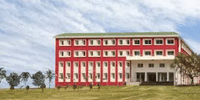
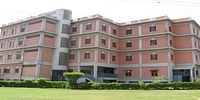
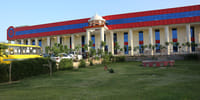
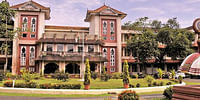
The institutions below run the integrated law degree or the law programmes that feed it, and they are listed on Zollege. This is not a ranking. For the integrated degree, the clinical teaching and the quality of the moot court matter more than the campus, and the National Law Universities have to be considered on their own terms.
The wider set of institutions that run the law programmes is listed at Bachelor of Laws colleges in India, and the subject of law itself is at Law on Zollege.
B.Sc LLB Scholarships
A five-year integrated degree is a long time away from home, so the scholarship matters. Most of the money comes from a state scheme or from the fee support of the institution, and the central schemes are listed on the National Scholarship Portal, which is where the application is filed once the seat is confirmed.
| Scheme | Who it supports | What the student receives |
|---|---|---|
| Central Sector Scholarship for College and University Students | Students who are not availing another scholarship, with family income up to INR 4.5 Lakhs | Part of the daily study cost, paid through direct benefit transfer to the student |
| Post matric scholarship for the scheduled castes and the scheduled tribes | Students of the reserved categories who study at a recognised institution | A maintenance allowance and a fee reimbursement set by the state, with the rates fixed by the central scheme |
| Post matric scholarship for the other backward classes | Students of the backward categories who are not covered by an earlier scheme | A maintenance allowance and a fee reimbursement at the rates set by the state |
| State merit scholarship for the first rank holders | Students who come first in the board examination or in the university merit list | A cash award and sometimes a fee waiver, set by the state |
| Fee support of the national and state law universities | Meritorious students who are admitted to the integrated programme | A concession on the tuition fee, or a full waiver in the reserved categories, set by the institution |
| Department scholarship and assistantship | Students who help with the moot court, the clinic or the research of the department | A stipend, a teaching assistantship or a travel grant for the clinical work |
How to hold on to a scholarship
- Apply on the National Scholarship Portal as soon as the institution confirms the admission
- Keep the income certificate, the category certificate and the bank passbook ready, because a mismatch in the name stalls the payment
- Do not miss the renewal date, because a scholarship that is not renewed stops for that year
- Check with the institution office that the application has been forwarded, since a rejected or incomplete file is never returned to the student
B.Sc LLB Frequently Asked Questions
Ques. What is the duration of the B.Sc LLB course?
Ans: The integrated degree runs for five years in ten semesters. The first three years carry the science papers and the last two years carry the professional law papers, and the degree ends with the law degree, which is the recognised degree of law for enrolment.
Ques. What is the eligibility for B.Sc LLB admission?
Ans: A candidate needs class 12 from a recognised board with at least 50 percent in the aggregate, with a relaxation for the reserved categories. Most institutions accept any stream, though some ask for a science background for the science degree.
Ques. Is CLAT needed for B.Sc LLB admission?
Ans: It depends on the institution. The national law universities and the institutions that joined the common test take admission through CLAT, while the state universities and the private universities use the state lawcet, a state common entrance test or their own entrance.
Ques. Which subjects are allowed for the B.Sc LLB course?
Ans: Most institutions accept any combination at class 12 for the degree, and the science subject of the first three years is chosen after the admission. A few universities ask for a science background, so the combination has to be read from the notice.
Ques. What can I do after the B.Sc LLB course?
Ans: The degree leads into the practice of law after enrolment with the state bar council, into the judicial service examinations, and into the corporate legal department, the legal operations and the compliance roles. The science half also helps in the forensic work.
Ques. Is the B.Sc LLB course available as a distance programme?
Ans: Almost never, and the reason is the clinical teaching. The moot court, the drafting clinics, the mediation training and the internship all need the candidate in the room, and the Bar Council of India expects the law teaching to be in person.
Ques. Which colleges offer the B.Sc LLB course?
Ans: The national law universities, a number of state universities and several private and deemed universities run the integrated degree. Zollege lists them with the courses that each one teaches, so the institutions near you are quick to find and compare.
Ques. How much does the B.Sc LLB course cost?
Ans: The fee differs sharply between the institutions, and a state university charges far less than a private one. Every institution publishes its own fee notice, broken into the tuition, the examination, the library, the hostel and the mess charges.
Ques. Are scholarships available for the B.Sc LLB course?
Ans: Yes. The National Scholarship Portal carries the central schemes, including the Central Sector Scholarship for students with a family income up to INR 4.5 Lakhs, and the post matric schemes for the reserved categories. The law universities also run their own fee support.