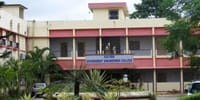
University of Kalyani began in 1960 as a state public research university established by the Government of West Bengal. It is recognised by the University Grants Commission and holds NAAC Grade A with a CGPA of 3.12. Its academic system includes 37 departments under 6 faculty councils, while 57 colleges in Nadia and Murshidabad are affiliated with the university. More than 6,100 students study on campus.
In NIRF 2025, the university entered the 51-100 band in both the Overall and State Public Universities categories. Its Overall position had been in the 151-200 band during 2024.
The university occupies a 400-acre campus in Kalyani, Nadia district, about 50 km north of Kolkata. It is described as West Bengal's largest state university campus by area. Its research facilities include the Bioinformatics Infrastructure Facility and the ENVIS Centre, which supports environmental information and research.
- The 4-year B.Tech is available in Computer Science and Engineering, Electronics and Communication Engineering, Electronics and Instrumentation Engineering, and Information Technology.
- The 2-year MA is taught through 14 departments. Subjects include Bengali, English, Economics, History, Political Science, Philosophy, Hindi, Sociology, Geography, Sanskrit, Santali, and Folklore Studies.
- MSc courses lasting 2 to 4 years cover more than 20 fields, including Physics, Chemistry, Botany, Zoology, Data Science, Genome Science, Nano Sciences, Biophysics, and Molecular Biology and Biotechnology.
- Professional and technical options include the 2-year MBA, 2-year MCA, 2-year LLM, and M.Tech in CSE, IT, and Communication Engineering.
- Other programmes include B.Ed, M.Ed, B.P.Ed, M.P.Ed, M.Lib, and MFA in Painting.
- PhD study is offered across the Science, Engineering, Arts, Commerce, and Education faculties.
- University of Kalyani Courses and Fees
- University of Kalyani Admission Process
- University of Kalyani Placements
- University of Kalyani Rankings
- University of Kalyani Scholarships
- University of Kalyani Campus and Infrastructure
- University of Kalyani vs University of Burdwan vs Vidyasagar University
- University of Kalyani FAQs
University of Kalyani Courses and Fees
More than 60 programmes are available in Engineering, Arts, Science, Commerce, Law, Education, and Management. Traditional Arts and Science courses carry subsidised fees, while some interdisciplinary and professional programmes have different fee structures.
| Course | Duration | Eligibility | Total Fees |
|---|---|---|---|
| B.Tech (CSE) | 4 years | 10+2 with PCM and 45% marks, plus WBJEE | INR 2.14 Lakhs |
| B.Tech (ECE/EIE/IT) | 4 years | 10+2 with PCM and 45% marks, plus WBJEE | INR 73,390 |
| MBA | 2 years | Graduation with 50% marks and a CAT, MAT, CMAT, or JEMAT score | INR 76,270 |
| MCA | 2 years | Graduation with Mathematics or Computer Science, plus JECA | INR 86,170 |
| LLM | 2 years | LLB with 55% marks | INR 1.25 Lakhs |
| MSc (Data Science/Genome Science/Nano Sciences) | 2 years | BSc in a relevant subject | INR 1.25 Lakhs |
| M.Tech (CSE) | 2 years | B.Tech with 60% marks and GATE | INR 85,970 |
| MSc (Physics/Chemistry/Math/Botany/Zoology) | 2 years | BSc in a relevant subject | INR 8,370 |
| MA (humanities disciplines) | 2 years | BA in a relevant subject | INR 6,770 to INR 8,370 |
| B.Ed | 2 years | Graduation with 50% marks | INR 35,310 |
Subject to revision. Kindly check with the official sources to confirm
The School of Interdisciplinary Studies runs newer MSc programmes in Data Science, Genome Science, and Nano Sciences and Technology. These courses have higher fees and focus on preparation for research and industry work in emerging fields. The integrated BSc and MSc in Statistics takes 5 years and costs INR 75,750 in total. Students may also choose the 2-year Masters in Rural Studies, which covers rural development, governance, and community studies. The MFA in Painting provides postgraduate education in visual arts.
University of Kalyani Admission Process
Admission rules differ by course. Entrance examination scores are used for B.Tech and several professional postgraduate courses, whereas traditional MA and MSc selections are based on academic merit through the university's online admission portal.
B.Tech Admission
All four B.Tech branches use the WBJEE route. The West Bengal Joint Entrance Examinations Board conducts centralised online counselling and allocates the available seats.
- Applicants must have studied Physics and Mathematics in 10+2. They need at least 45% aggregate marks, or 40% for reserved categories, along with at least 30% in English.
- A valid WBJEE rank is compulsory for admission to the 4-year B.Tech.
- Diploma holders seeking entry to the 3-year lateral-entry B.Tech must have a valid JELET rank.
The process has four stages. Students first enter their choices on the WBJEE portal. Seats are then assigned through as many as three stages: Round 1, Round 2 upgradation, and the mop-up round. Selected students attend document verification on campus and pay the required fee to secure admission. During Round 2, a student can move to a branch placed higher in the preference list if a seat is open. WBJEE-category seats are offered in CSE, ECE, EIE, and IT.
MA, MSc, and Other PG Admissions
Qualifying examination marks determine admission to MA, MSc, M.Com, M.Ed, M.P.Ed, M.Lib, MFA, and Masters in Rural Studies. Students submit an online form during the announced application period. The university prepares a provisional merit list from the marks obtained in the relevant degree. Admission is completed after verification by the concerned department and payment of fees. An MA applicant must hold a bachelor's degree in the relevant discipline. Each department decides its own percentage cutoff and publishes it with the merit list.
MBA, MCA, and M.Tech Admissions
For the MBA, applicants need a bachelor's degree with at least 50% marks and a valid CAT, MAT, CMAT, JEMAT, or EMAT score. After entrance-score shortlisting, the university may use a Group Discussion and Personal Interview for final selection.
MCA applicants must hold a related bachelor's degree with Mathematics as a core subject and have a valid JECA rank. M.Tech selection is based on GATE, and applicants need at least 60% in B.Tech.
Course-wise Selection Routes
The selection test or merit route for each main programme group is shown below.
| Programme | Entrance Exam | Mode |
|---|---|---|
| B.Tech (4-year) | WBJEE | State-level centralised counselling |
| B.Tech Lateral Entry (3-year) | JELET | Entry route for diploma holders |
| MBA | CAT/MAT/CMAT/JEMAT/EMAT | Shortlisting through examination scores |
| MCA | JECA | State-level entrance test |
| MA/MSc/M.Com/M.Ed | Merit based on qualifying examination marks | Direct merit list |
| LLM | Merit based on LLB marks | Direct merit list |
| PhD | KURET/NET/GATE/JRF | University research eligibility test or an applicable exemption |
PhD Admission
Applicants normally qualify through the Kalyani University Research Eligibility Test, known as KURET. Those with a valid UGC-NET, CSIR-JRF, or GATE qualification may receive an exemption from this test. Doctoral study is available in more than 25 disciplines within Science, Arts, Commerce, Engineering, and Education. Every admitted research scholar must finish compulsory pre-PhD coursework before beginning research.
University of Kalyani Placements
The Training and Placement Cell organises campus recruitment for B.Tech students. MA, MSc, MBA, and MCA do not have structured campus placement drives. Students completing these courses commonly prepare for central and state government examinations, apply for research fellowships, or seek academic work.
During the 2025 placement season, employers selected 102 of 189 eligible B.Tech graduates. This produced a 54% placement rate, while NIRF data reported a median package of INR 8.50 LPA.
| Sector | Top Recruiters in the 2025 Season |
|---|---|
| IT and Software | TCS, Infosys, Wipro, Cognizant, Capgemini |
| E-commerce and Technology | Amazon |
| BFSI | ICICI Bank |
| Analytics and Market Research | Ipsos |
| IT Services | Accenture |
Most offers come from IT and software employers. Within the recruiter pool, CSE and IT students generally receive access to comparatively higher-paying roles. Physics, Chemistry, Mathematics, and Life Sciences MSc graduates mainly use CSIR-NET, UGC-NET, or GATE as routes into academic and research careers. MBA graduates consider management trainee posts and private employment, as well as government banking examinations such as IBPS and SBI and positions in state public sector undertakings.
University of Kalyani Rankings
The university's Overall NIRF position moved from the 151-200 band in 2024 to the 51-100 band in 2025. It also has NAAC Grade A accreditation with a CGPA of 3.12, awarded in 2015.
| Ranking Body | Category | 2025 | 2024 |
|---|---|---|---|
| NIRF | Overall | 51-100 band | 151-200 band |
| NIRF | State Public Universities | 51-100 band | - |
University of Kalyani is a member of the Association of Indian Universities. Its improved NIRF position reflects growth in research work, peer perception, and PhD enrolment, which exceeds 700 doctoral scholars. These areas carry considerable weight in the NIRF method. The NAAC result also covers the university's academic quality and administrative standards.
University of Kalyani Scholarships
Eligible undergraduate and postgraduate students can use state and central government support schemes. The available options consider factors such as academic performance, household income, social category, disability, minority status, and gender.
| Scholarship | Eligibility | Coverage |
|---|---|---|
| Swami Vivekananda Merit cum Means (SVMCM) | 75% or above in the qualifying examination, family income below INR 2.5 LPA, and West Bengal domicile | Monthly support for UG and PG students |
| OASIS Scholarship | SC, ST, or OBC students who are domiciled in West Bengal | Tuition support and a maintenance allowance according to state rules |
| Kanyashree Prakalpa | Girl students aged 13 to 18 who study in West Bengal institutions | An annual cash grant and a one-time payment on turning 18 |
| National Scholarship Portal (NSP) | Conditions set under different central schemes, including merit, minority, and disability criteria | Access to multiple central government schemes |
| WB Student Credit Card | Students enrolled in recognised institutions in West Bengal | An education loan of up to INR 10 Lakhs at 4% annual interest |
SVMCM is widely used by students at West Bengal state universities. Applicants need a family income below INR 2.5 LPA and at least 75% in the Class 12 examination. The WB Student Credit Card does not apply income or merit conditions to enrolled students. A single loan account may cover tuition, hostel charges, and living costs.
University of Kalyani Campus and Infrastructure
Located in Kalyani city in Nadia district, the 400-acre campus lies 50 km north of Kolkata and is identified as West Bengal's largest state university campus by area. Kalyani has a direct railway connection to Kolkata through the Sealdah-Krishnanagar route.
Students have access to separate hostels for boys and girls, a central library, libraries serving all 37 departments, a gymnasium, swimming pool, health centre, guest house, and central auditorium. Research facilities include the DBT-funded Bioinformatics Infrastructure Facility and the ENVIS Centre for environmental research and data. Dedicated computing laboratories and instrumentation facilities for B.Tech and M.Tech are maintained by the Faculty of Engineering, Technology and Management.
The university's 57 affiliated colleges are spread across Nadia and Murshidabad, making it the main academic institution for a broad rural and semi-urban region of West Bengal. Campus enrolment is above 6,100 students, including more than 700 registered doctoral scholars.
University of Kalyani vs University of Burdwan vs Vidyasagar University
All three institutions are state public affiliating universities in West Bengal. They run multidisciplinary postgraduate programmes at subsidised fees, oversee large groups of affiliated colleges, and serve rural and semi-urban parts of their respective regions.
| Parameter | University of Kalyani | University of Burdwan | Vidyasagar University |
|---|---|---|---|
| Established | 1960 | 1960 | 1981 |
| Location | Kalyani, Nadia | Bardhaman | Midnapore |
| NAAC Accreditation | Grade A, CGPA 3.12 | Grade A | Grade B++ |
| NIRF 2025 (Overall) | 51-100 band | - | - |
| B.Tech on Campus | Yes, in CSE, ECE, EIE, and IT | No | No |
| Campus Area | 400 acres | 170 acres | 640+ acres |
| Affiliated Colleges | 57 | 150+ | 50+ |
Among these institutions, University of Kalyani has the listed NIRF position and is the only one with B.Tech courses on its main campus. This supports its placement facilities and contact with recruiters. University of Burdwan manages the widest college network, covering the Bardhaman division and a large student population. Vidyasagar University has the largest campus in this comparison and serves Paschim Medinipur and Bankura districts. The three universities charge similarly low fees for MA and MSc courses.
University of Kalyani FAQs
Ques. Is University of Kalyani run by the government?
Ans. Yes. The Government of West Bengal established University of Kalyani in 1960 as a state public research university. It is recognised by the UGC and accredited with NAAC Grade A, CGPA 3.12.
Ques. Which examination is used to select students for University of Kalyani B.Tech courses?
Ans. Applicants to the regular B.Tech need a valid WBJEE rank. They must have studied Physics and Mathematics in 10+2 and secured at least 45% aggregate marks. Diploma holders applying to the 3-year lateral-entry B.Tech need a valid JELET score.
Ques. Where does University of Kalyani stand in the NIRF rankings?
Ans. NIRF 2025 placed the university in the 51-100 band for both Overall and State Public Universities. Its Overall result improved from the 151-200 band in 2024.
Ques. How much does the complete B.Tech programme cost at University of Kalyani?
Ans. The full 4-year CSE B.Tech costs INR 2.14 Lakhs. The total fee for B.Tech in ECE, Electronics and Instrumentation Engineering, or IT is INR 73,390. These fee levels are low compared with those at other West Bengal institutions offering engineering programmes.
Ques. Are hostels provided on the University of Kalyani campus?
Ans. Yes. Boys and girls have separate hostel facilities. Other student facilities include the central library, health centre, gymnasium, and swimming pool. Hostel rooms are assigned according to university rules and the number of seats available.
Ques. What placement results did University of Kalyani record for B.Tech in 2025?
Ans. In the 2025 season, 102 of 189 eligible B.Tech students secured placements, giving a 54% placement rate. The median package was INR 8.50 LPA. Recruiters included TCS, Infosys, Wipro, Amazon, and Cognizant. Campus hiring mainly serves B.Tech branches, while Arts and Science postgraduate students generally move towards research careers and government competitive examinations.
Ques. Which financial support schemes can University of Kalyani students apply for?
Ans. The choices include SVMCM, OASIS for SC, ST, and OBC students, Kanyashree Prakalpa for girl students, and schemes listed on the National Scholarship Portal. Enrolled students may also use the West Bengal Student Credit Card for an education loan of up to INR 10 Lakhs at 4% yearly interest.
Ques. What is the size of University of Kalyani's affiliated college network?
Ans. The university has 57 affiliated colleges and 7 recognised institutes across Nadia and Murshidabad districts. It acts as the main academic authority for examinations and degree awards at these institutions.