- BMS College of Engineering BE Admission 2024: KCET 2024 results are released and the counselling process is expected to start soon. For other state-category students, COMEDK UGET 2024 counseling is ongoing and the registration deadline is June 7, 2024.
- BMS College of Engineering M.Tech, MBA, and MCA Admission 2024: Karnataka PGCET 2024 application process is open till June 17, 2024, and the exam is scheduled for July 13 to 14, 2024.
![BMS College of Engineering - [BMSCE]](https://static.zollege.in/public/college_data/images/logos/1690278332logo.jpg?tr=h-94,w-94,c-force)
BMS Bangalore: Admission 2025, Fees, Courses, Cutoff, Ranking, Placement
Bangalore, Karnataka
Private (Autonomous) CollegeAICTE, COA, NBA ApprovedNAAC Grade A


Content Specialist | Updated On - Sep 30, 2026
BMSCE Bangalore Latest Updates
BMS College of Engineering (BMSCE) is a Bengaluru engineering college founded in 1946 by the late B.M. Sreenivasaiah under the BMS Educational Trust. It is affiliated with Visvesvaraya Technological University (VTU), approved by AICTE, and known as India’s first private engineering institution.
BMSCE has a NAAC A++ Grade in the Third Cycle and several of its programmes have NBA accreditation. In NIRF Engineering 2025, the college was placed in the 151 to 200 band among engineering institutions in India.
The college works from an 11-acre campus on Bull Temple Road, Basavanagudi, in southern Bengaluru. The campus has separate laboratory blocks for each department, a central library with more than 70,000 volumes, separate hostels for men and women, and a multi-purpose auditorium.
- B.E. programmes (13 branches): BMSCE offers Computer Science and Engineering, Information Science and Engineering, Electronics and Communication Engineering, Electrical and Electronics Engineering, Mechanical Engineering, Civil Engineering, Chemical Engineering, Biotechnology, Computer Science (AI and ML), Computer Science (Data Science), Computer Science (IoT), Artificial Intelligence and Data Science, and Industrial Engineering and Management. The total UG intake is more than 1,700 seats across all branches.
- Postgraduate programmes: The college offers M.Tech in 13 specialisations, including VLSI Design and Embedded Systems, Computer Networks, Machine Intelligence, Manufacturing Engineering, and Environmental Engineering. It also runs a 2-year MBA and a 2-year MCA.
- Research: Students can pursue Ph.D. programmes in Engineering, Management, and Applied Sciences through VTU.
For B.E. KCET Government Aided quota seats, the fee is INR 43,810 per year, making the four-year total INR 1.75 lakhs. COMEDK and JEE Main quota seats cost INR 2,21,960 per year, with a four-year total of INR 8.87 lakhs. The MBA fee is INR 8 lakhs per year, while most M.Tech specialisations under the PGCET quota cost between INR 49,000 and INR 1 lakh per year.
Scholarship support at BMSCE includes merit-based and need-based options such as the AICTE YASHASVI scheme, Reliance Foundation Undergraduate Scholarship, government Social Welfare Department schemes for SC and ST students, and corporate awards from Quest Global and Huawei.
During the 2024 to 2025 placement cycle, BMSCE received 1,307 offers from 383 companies. The highest package was INR 51.5 LPA, and the average package was INR 11.4 LPA.
Table of Contents
BMSCE Admission Dates 2027
BMSCE B.E. admission is handled through two main routes. KCET counselling by the Karnataka Examination Authority (KEA) is used for government-quota seats, while COMEDK UGET or JEE Main counselling is used for private-quota seats. These admission schedules usually move side by side each year.
KCET 2027 Admissions
| Event | Date |
|---|---|
| KCET 2027 Notification | February 2027 |
| KCET 2027 Application Window | February to March 2027 |
| KCET 2027 Examination | April to May 2027 |
| KCET 2027 Results | June 2027 |
| KEA Counselling Rounds | July to August 2027 |
Subject to revision. Kindly check with the official sources to confirm
Note: COMEDK UGET 2027 and JEE Main 2027 counselling are expected to follow parallel timelines. Students seeking COMEDK seats must register separately with the Consortium of Medical, Engineering, and Dental Colleges of Karnataka. All 2027 dates are tentative and need confirmation from the respective authorities.
BMSCE Courses and Fees
BMSCE offers B.E. in 13 branches, M.Tech in 13 specialisations, MBA, MCA, and Ph.D. programmes. B.E. fees change by admission route. KCET fills 70% Government Aided seats at the VTU-regulated fee of INR 43,810 per year. COMEDK or JEE Main fills 25% unaided seats at INR 2,21,960 per year. The remaining 5% management quota seats have branch-wise rates under the Karnataka Fee Regulatory Committee ceiling.
| Course | Fee |
|---|---|
| B.E. Computer Science and Engineering, 4 years | KCET Aided: INR 43,810 per year; COMEDK: INR 2,21,960 per year |
| B.E. Electronics and Communication Engineering, 4 years | KCET Aided: INR 43,810 per year; COMEDK: INR 2,21,960 per year |
| B.E. Mechanical Engineering, 4 years | KCET Aided: INR 43,810 per year; COMEDK: INR 2,21,960 per year |
| B.E. Civil Engineering, 4 years | KCET Aided: INR 43,810 per year; COMEDK: INR 2,21,960 per year |
| B.E. Electrical and Electronics Engineering, 4 years | KCET Aided: INR 43,810 per year; COMEDK: INR 2,21,960 per year |
| B.E. Biotechnology, 4 years | KCET Aided: INR 43,810 per year; COMEDK: INR 2,21,960 per year |
| B.E. Chemical Engineering, 4 years | KCET Aided: INR 43,810 per year; COMEDK: INR 2,21,960 per year |
| M.Tech, most specialisations under PGCET quota, 2 years | INR 49,000 to INR 1,00,000 per year |
| M.Tech VLSI Design and Embedded Systems, 2 years | INR 16 lakhs total for the industry-integrated programme |
| MBA, 2 years | INR 8,00,000 per year |
| MCA, 2 years | INR 7,00,000 per year |
Subject to revision. Kindly check with the official sources to confirm
The KCET aided fee makes BMSCE one of the lower-cost options among Bengaluru’s leading private engineering colleges. Students must pay hostel and mess charges separately. These charges range from INR 90,000 to INR 1,20,000 per year, based on the room type.
BMSCE Admission Process
BMSCE fills B.E. seats through three admission channels. KCET accounts for 70% of seats, COMEDK UGET or JEE Main accounts for 25%, and direct management quota admission accounts for 5%.
Eligibility for B.E.: Students must pass 10+2 or an equivalent exam with Physics, Mathematics, and Chemistry as core subjects. The minimum aggregate is 45% for General category students and 40% for SC and ST students. A valid KCET, COMEDK UGET, or JEE Main score is also needed for the relevant quota.
KCET route: Karnataka resident students take KCET, after which KEA conducts rank-based seat allotment in several counselling rounds. For Computer Science and Engineering at BMSCE, the KCET cutoff for the General category has usually stayed between rank 1,000 and 3,000. Civil Engineering and Chemical Engineering generally close at higher rank numbers. The final cutoff changes every year because it depends on that year’s rank distribution.
COMEDK and JEE Main route: Students from Karnataka and outside Karnataka can apply through COMEDK UGET, which is a separate entrance test held by the consortium. JEE Main scores are also accepted under this quota. COMEDK counselling is conducted separately from KEA counselling.
Management quota: Direct applications to the college are used for a small 5% seat share. Students applying through this route must meet the same eligibility rules. The fee is fixed branch-wise under the Fee Regulatory Committee ceiling.
Postgraduate admissions: M.Tech admission is based on GATE and PGCET. MBA admission is through KMAT or PGCET. MCA admission is through PGCET.
BMSCE Placements
The Training and Placement Office at BMSCE manages recruitment for engineering, technology, and management students. The recruiter base includes product companies, global research and development centres, and financial services firms based in Bengaluru.
The main placement numbers for the 2024 to 2025 placement cycle are listed below.
| Metric | 2024 to 2025 Cycle |
|---|---|
| Highest CTC | INR 51.5 LPA |
| Average CTC | INR 11.4 LPA |
| Median CTC (NIRF 2025 data) | INR 8.5 LPA |
| Total Offers | 1,307 |
| Students Placed | 968 |
| Recruiting Companies | 383 |
Major recruiters in the 2024 to 2025 cycle included Atlassian, Adobe, Amazon, Oracle, Nutanix, Goldman Sachs, Cisco, Samsung R&D India, Mercedes-Benz R&D India, Fidelity Investments, and NetApp. Recruiters such as Mercedes-Benz, Samsung, and Goldman Sachs also show the college’s strength in Electronics and Electrical streams, along with its regular CSE hiring.
Computer Science and Engineering usually gets the strongest highest and average packages. Electronics and Communication Engineering, along with Electrical and Electronics Engineering, also receives good offers from semiconductor and R&D companies. Mechanical, Civil, and Chemical Engineering students are placed in manufacturing, infrastructure, and process industries, where average packages usually fall in the INR 5 to 8 LPA range.
The college also has a career development cell that starts industry-interface activities, internship drives, and competitive coding preparation from the second year onward. This helps widen the placement pipeline.
BMSCE Rankings
BMSCE is part of major national ranking and accreditation systems. Its key recognitions in 2025 are shown below.
| Ranking or Accreditation Body | Status or Rank |
|---|---|
| NIRF Engineering 2025 | 151 to 200 Band |
| NAAC (Third Cycle) | A++ Grade |
| NBA Accreditation | Multiple Programmes Accredited |
| AICTE Approval | All Programmes Approved |
| VTU Affiliation | Affiliated (Autonomous Institute Status for Internal Assessment) |
The NAAC A++ grade, which is NAAC’s highest grade, reflects BMSCE’s performance in teaching-learning, research output, infrastructure, and student support. In the NIRF 151 to 200 band, BMSCE is behind MSRIT at rank 75 and RVCE in the 101 to 150 band among Bengaluru private engineering colleges, while still standing ahead of many nationally known institutes. NBA accreditation for multiple programmes shows that several courses meet professional engineering education standards.
BMSCE Scholarships
BMSCE connects eligible students with several scholarship schemes. The scholarships available for 2026 to 2027 enrolments include government, corporate, trust-based, and institutional support.
| Scholarship | Category | Eligibility |
|---|---|---|
| AICTE YASHASVI Scholarship | Government (AICTE) | Merit-cum-means for technically qualified students |
| Social Welfare Department SC/ST SSP | Government (Karnataka) | SC and ST students admitted through KCET |
| ST and Defence Scholarship | Government (Karnataka) | ST students and wards of defence personnel |
| National Scholarship Portal Schemes | Government (Central) | Multiple central government criteria |
| Reliance Foundation Undergraduate Scholarship | Corporate (Reliance Foundation) | Merit-based, first-year UG students |
| Quest Scholarship (IEEE WIE) | Corporate (Quest Global) | Women engineering students. Award of INR 50,000 |
| WIE Scholarship | Corporate (Private Sponsors) | Women in engineering programmes |
| Huawei Scholarship | Corporate (Huawei) | Merit-based, final-year students |
| J.T. Viswanathan Educational Trust Scholarship | Institutional Trust | Financial need criteria set by the trust |
| International Scholarship | Institutional | OCI card holders and foreign passport holders enrolled through International Division |
Students apply for government scholarships through the National Scholarship Portal and the Karnataka State Scholarship Portal. Corporate scholarships are announced by the college’s student affairs office at the start of each academic year. SC and ST students admitted through KCET are automatically covered under the State Social Security Programme (SSP) fee waiver, which pays a major part of the annual fee.
BMSCE Campus and Infrastructure
BMSCE has an 11-acre campus in Basavanagudi, one of Bengaluru’s older residential and education areas. Since 1946, the campus has expanded into a compact academic space with facilities for 13 engineering departments.
Academic infrastructure: Every department has its own laboratory block with experimental and computing equipment. The central library has more than 70,000 printed volumes and provides digital access to international journal databases through VTU’s e-library subscriptions. A Computer Centre supports campus-wide 24x7 internet connectivity.
Hostels: The campus has separate hostel blocks for male and female students. Hostel fees, including mess charges, range from INR 90,000 to INR 1,20,000 per year, depending on room type and occupancy. Hostel seats are limited and given to outstation students on a first-come-first-served basis.
Other facilities: BMSCE has a multi-purpose auditorium for academic events, cultural programmes, and industry seminars. Students also have access to indoor and outdoor sports facilities, a cafeteria, a gym, Wi-Fi, and a medical centre with a resident nurse for first-level health care.
Research and innovation centres: The college runs active research centres in VLSI and embedded systems, machine learning, environmental engineering, and biotechnology. Industry-sponsored laboratories from Bosch, Texas Instruments, and Infosys support student projects and faculty research on campus.
BMSCE vs RV College of Engineering vs MS Ramaiah Institute of Technology
BMSCE, R.V. College of Engineering (RVCE), and M.S. Ramaiah Institute of Technology (MSRIT) are among the leading VTU-affiliated private engineering colleges in Bengaluru. All three have NAAC accreditation and NBA approval, admit students through KCET and COMEDK, and attract many of the same recruiters from Bengaluru’s technology corridor. Their main differences are seen in rankings, placement averages, and branch-wise strengths.
| Parameter | BMSCE | RVCE | MSRIT |
|---|---|---|---|
| Established | 1946 | 1963 | 1962 |
| Location | Basavanagudi, Bengaluru | Mysore Road, Bengaluru | MSR Nagar, Mathikere, Bengaluru |
| NIRF Engineering 2025 | 151 to 200 Band | 101 to 150 Band | 75 |
| NAAC Grade | A++ | A+ | A++ |
| B.E. Highest CTC 2025 | INR 51.5 LPA | INR 67 LPA | INR 58 LPA |
| B.E. Average CTC 2025 | INR 11.4 LPA | INR 16.86 LPA | INR 8.25 LPA |
| KCET Aided Fee (per year) | INR 43,810 | INR 43,810 | INR 43,810 |
| COMEDK Fee (per year, CSE) | INR 2,21,960 | INR 3,31,710 | Not specified |
Among these three colleges, MSRIT has the highest NIRF rank, followed by RVCE and then BMSCE. RVCE has the highest average placement package. BMSCE stands out because it is India’s first private engineering college, offers the same government-regulated KCET aided fee, and has an A++ NAAC grade, while RVCE has an A+ grade. For KCET-route students, the yearly aided fee is the same at all three colleges, so placements and NIRF rank become major comparison points.
BMSCE FAQs
Ques. Where did BMSCE stand in NIRF Engineering 2025?
Ans. BMSCE was placed in the 151 to 200 band in the NIRF Engineering 2025 ranking. It also has a NAAC A++ Grade in the Third Cycle, which is the highest NAAC grade, and several of its programmes are accredited by NBA.
Ques. What fee does a KCET student pay for B.E. at BMSCE?
Ans. A student admitted through the KCET Government Aided quota pays INR 43,810 per year. This quota covers 70% of B.E. seats, and the four-year total is INR 1.75 lakhs. For COMEDK or JEE Main seats, which make up 25% unaided seats, the annual fee is INR 2,21,960, and the four-year total is INR 8.87 lakhs.
Ques. Is RVCE ahead of BMSCE in placements?
Ans. In the 2024 to 2025 placement cycle, RVCE reported an average CTC of INR 16.86 LPA and a highest CTC of INR 67 LPA. BMSCE reported an average CTC of INR 11.4 LPA and a highest CTC of INR 51.5 LPA. Both colleges share major recruiters such as Amazon, Adobe, Cisco, and Goldman Sachs. RVCE has a higher NIRF position, with a 101 to 150 band compared with BMSCE’s 151 to 200 band, while BMSCE has a higher NAAC grade of A++ compared with RVCE’s A+.
Ques. What rank is usually needed for Computer Science at BMSCE through KCET?
Ans. For General category Karnataka residents, the KCET cutoff for Computer Science and Engineering at BMSCE has usually been in the 1,000 to 3,000 rank range. The exact closing rank changes every year because it depends on the number of applicants and available seats. Civil and Chemical Engineering generally close at higher rank numbers. Students should check the Karnataka Examination Authority’s official counselling records for year-wise closing ranks.
Ques. Are hostels available at BMSCE?
Ans. Yes, BMSCE has separate hostels for male and female students on its Basavanagudi campus. The yearly hostel fee, including mess charges, ranges from INR 90,000 to INR 1,20,000, depending on the room type and occupancy. Seats are limited and are usually given on priority to outstation students. Students should apply for hostel accommodation during the college admission process to improve their chance of getting a first-year seat.
Ques. Why is BMSCE known as India’s first private engineering college?
Ans. BMSCE was started in 1946 by the late B.M. Sreenivasaiah. This made it the first institution in India to bring private-sector participation into engineering education. It was founded before IIT Kharagpur, which was established in 1950. At that time, engineering education in India was mostly run by the government, so the BMS Educational Trust gave the college its place in history as the country’s first privately managed engineering college.
BMS Bangalore Popular Courses
Full Time Courses
Top Courses | 1st Year Fees | Total Fees | Eligibility | Ranking | Application Dates | Cutoff |
|---|---|---|---|---|---|---|
BE (Computer Science And Engineering) +12 More BE Courses | ₹3.22 Lakhs | ₹12.88 Lakhs | 10+2 with 45% + COMED-K/KCET | 6 out of 275 by India Today View More | 8 July - 09 Sept 2026 | 10204KCETCheck Details |
M.Tech (Computer Science And Engineering) +10 More M.Tech Courses | - | ₹1.97 Lakhs | Graduation with 50%+GATE | 6 out of 275 by India Today View More | 25 Apr - 12 May 2026 | 2121Karnataka-PGCETCheck Details |
| MBA (General) | - | ₹8 Lakhs | Graduation with 50% + PGCET | 188 out of 275 by India Today View More | 31 Oct 2026 | 451Karnataka-PGCETCheck Details |
Ph.D (Computer Science And Engineering) +14 More Ph.D Courses | - | ₹1.51 Lakhs | Post Graduation+ NTA Ph.D Exam | 188 out of 275 by India Today View More | 12 Feb - 05 Mar 2026 | - |
BE {Lateral} (Mechanical Engineering) +11 More BE {Lateral} Courses | - | ₹18 Lakhs | Diploma with 45% | 6 out of 275 by India Today View More | - | - |
Top Courses, Fees & Eligibility
Select degree :
BEM.TechMBAM.C.APh.DBE {Lateral}Ph.D.
Select stream :
EngineeringComputer ApplicationsManagementScience
- All
- Lateral
- Part Time
- Full Time
1st Yr Fees
₹ 3,22,000Duration4 Year(s)
Exams accepted
Exams accepted
Application Date8 July
-
09 Sept 2026
Eligibility10+2 with 45% + COMED-K/KCET
Eligibility10+2 with 45% + COMED-K/KCET
Cut off2462 BE IOT & Cyber Security Including BlockchainRanking# 6 by India Today
Total Fees
₹ 98,020Duration2 Year(s)
Exams accepted
Exams accepted
Application Date25 Apr
-
12 May 2026
EligibilityGraduation with 50%+GATE
EligibilityGraduation with 50%+GATE
Cut off-Ranking# 6 by India Today
Total Fees
₹ 8,00,000Duration2 Year(s)
Exams acceptedSee All
Exams acceptedSee All
Application Date31 Oct 2026
EligibilityGraduation with 50% + PGCET
EligibilityGraduation with 50% + PGCET
Cut off-Ranking# 188 by India Today
Total Fees
₹ 7,00,000Duration2 Year(s)
Exams accepted
Exams accepted
Application Date31 Oct 2026
EligibilityGraduation with 50%+PGCET
EligibilityGraduation with 50%+PGCET
Cut off152 M.C.ARankingNo Ranking Found
Total Fees
₹ 1,50,600Duration3 Year(s)
Exams accepted
Exams accepted
No Exams Found
Application Date12 Feb
-
05 Mar 2026
EligibilityPost Graduation+ NTA Ph.D Exam
EligibilityPost Graduation+ NTA Ph.D Exam
Cut off-Ranking# 188 by India Today
Total Fees
₹ 18,00,000Duration3 Year(s)
Exams accepted
Exams accepted
No Exams Found
Application Date-
EligibilityDiploma with 45%
EligibilityDiploma with 45%
Cut off-Ranking# 6 by India Today
Total Fees
₹ 1,50,600Duration3 Year(s)
Exams accepted
Exams accepted
No Exams Found
Application Date12 Feb
-
05 Mar 2026
Eligibility-
Eligibility-
Cut off-Ranking# 6 by India Today
BMS Bangalore Admission 2026 Dates
Important Events
| Event | Date |
|---|---|
| Last Date for Application - KMAT for Admission 2026 [MCA] | Oct 31, 2026 |
| KMAT 2026 Session 2 Registration | Sep 28, 2026 - Oct 31, 2026 |
| CMAT Form Correction | Nov 20, 2026 - Nov 22, 2026 |
| CAT Admit Card | Nov 04, 2026 - Nov 29, 2026 |
| CAT Exam Date | Nov 29, 2026 |
| MAT PBT Registration | Sep 28, 2026 - Dec 14, 2026 |
| MAT Admit Card | Dec 17, 2026 |
| MAT PBT Exam Date | Dec 20, 2026 |
| MAT CBT Registration | Sep 28, 2026 - Dec 21, 2026 |
| MAT CBT Exam Date | Dec 27, 2026 |
College Compared
Popular Colleges Compared With BMS College of Engineering - [BMSCE] , Bangalore
Ranking
# 151 by NIRF Innovation
Avg Fees/Year
₹ 3,01,735
- Stream
- Course Tag
- Course
- Batch
Engineering (98)
Management (2)
Reviews found (100)
Course Curriculum Overview:
The course curriculum is a little outdated, they are trying to make it relevant now but some subjects taught are still outdated and not very relevant. I chose this course as I have always been fascinated by technology. The faculties are qualified but they are not very helpful. Some are polite and good but some are really arrogant. They are not very knowledgeable either.The teaching method is bad and outdated. The term exams are held every 4-5 months. The difficulty is not very hard, medium only.
Placement Experience:
Placements are average, you have to work hard to get selected because the college strength is a lot. Most companies look for 8-8.5+ CGPA,no active backlogs. Offers made last year were about 1200, 300+ companies came. The highest package was around 35lpa, average 10lpa. About 65% students get placed.
Read Full ReviewReviewed on September 4, 2025|
Course Curriculum Overview:
i have chosen BMSCE over other colleges because I was getting cse in BMSCE because , bmsce is one of the top ranked private colleges in India with experienced faculties . i had also an option to join vit chennai cse under category 1 but BMSCE was an upper option for me because in vit the student strength is a major problem and in BMSCE it is quite good .
Placement Experience:
The placements are the major reasons which attracted me also to join this college . the top recruiters are Google , Microsoft , Amazon , TCS , Infosys etc . The companies gives good packages to the students who have skills . highest package of BMSCE is around 50 LPA and lowest is around 5 LPA with an average of 10 LPA .
Read Full ReviewReviewed on March 16, 2025|
Course Curriculum Overview:
Course curriculum is hectic after entering the branch 6 main subjects per sem 3 labs and 2 low credit subjects which make students pressurized and cant complete syllabus academics is ok but faculties are chill
Placement Experience:
Placements in our college is good as compared to many other colleges in bengaluru our college bring many high paying companies but they pick only one or two per persons per role average is around 7 to 8 lakhs which is less in current situation
Read Full ReviewReviewed on March 3, 2025|
Course Curriculum Overview:
The Actually the circulum of first year is quite ok in 1st semester as far i know but caed is a useless course i heard that ec from 3rd semester is too hard too stidy and things keep going above our head
Remarks:
The main thing i joined here is i had my brother here so if stay at same place we were like our expenses come down n if at different place would find a huge expense and at bmsce hostel fees is not baeable
Read Full ReviewReviewed on February 25, 2025|
Course Curriculum Overview:
The faculties are really good and understanding. Few are a little rude and unapproachable but most of the teachers are very understanding and help us out on academics and even personal matters The timings are a little hectic
Remarks:
The cut off for cet for biotechnology was 36 thousand Bms is the top 1 college especially for biotechnology when compared to rv and msr. The teachers are really good and very experienced We are provided with previous year papers
Read Full ReviewReviewed on February 23, 2025|
Course Curriculum Overview:
Faculty are good not too bad till now, but also for attendance shortage some will take advantage of it . Some teaching is good others are decent and some are worse because it is there first teaching experience.
Remarks:
Only exam kcet I gave , based on it's ranking I got the government seat , same with the comed-k . I choose this college because it is one of top colleges in Bengaluru. It has some good campus placement.
Read Full ReviewReviewed on February 19, 2025|
Course Curriculum Overview:
I choose Bachelor of Engineering in Artificial Intelligence and Machine learning course because of my interest in related field and carrier opportunities it offers. BMSCE had a good reputation regarding faculty, placements , and so on which influenced my decision.
Placement Experience:
Since, I am in first year here in BMSCE. I have no experience about the placement opportunities but got to know about the top visiting companies such as ORACLE, HP, Samsung, Accenture , new startups and so on which offers good packages.
Read Full ReviewReviewed on February 11, 2025|
Course Curriculum Overview:
The course which I been join is better course in computer science cluster so we get highly professional professor to teach us and they also help in any kind of problem faced by students and they have grate teaching facilities in that department
Placement Experience:
There is better placement and job opportunity in our college there are collaborate with many companies and they help students to get the job in there study time as I know the highest pack is 43 lakh per annum and lowest is 5 Lakh per annum and the average is 8 Lakh per annum
Read Full ReviewReviewed on February 11, 2025|
Course Curriculum Overview:
I chose this course cause I'm interested in AI and I also got to know that I've a bright future in Machine learning and the curriculum here is just awesome, the environment here is the best I think to achieve it.
Placement Experience:
The college offers decent placement opportunities with a range of companies visiting campus. However, students need to be proactive in developing skills and networking to secure good job offers. Im sure that I'll make it.
Read Full ReviewReviewed on February 11, 2025|
Course Curriculum Overview:
AI and ML is a emerging course which has been making a big impact over the world. And being able to be a part of this change by being an engineer is something to be proud of. To accomplish this a good study environment and a suitable network of people who are experienced are needed which is why joining BMSCE is a good choice. Well experienced lecturers who are approachable and student friendly make even complex topics, easier for understanding. As the admissions through government quotas were delayed by the government this year our exams were carried out in a rush but otherwise it'll be carried at timings best for students.
Remarks:
The reputation that this college has maintained has truly attracted a large number of admissions every year. Everyone is friendly and approachable. Especially the seniors help a lot by clarifying doubts regarding academics and others too. Clubs of BMSCE will support social works, e-sports, sports, business ideologies, and anything which a person may need. Nerds won't be disappointed either there's everything you'll ever need. Alumni network is one thing that's needs to be appreciated. The negative part is some think it's too crowded, and there is also regional, language hindrance for socializing.
Read Full ReviewReviewed on February 11, 2025|
College Faculty
Basic Information About Faculty
Dr. A. S. Arun Kumar
Professor, Department Of Civil Engineering
Dr. H. S. Jagadeesh
Professor, Department Of Civil Engineering
Dr. B.N.Sarada
Professor, Department Of Mechanical Engineering
Dr. J Sharana Basavaraja
Professor, Department Of Mechanical Engineering
Dr.C. Lakshminarayana
Professor, Department Of EEE
Dr.Padmavathi K
Professor, Department Of EEE
Dr.R.S.Geetha
Professor, Department Of EEE
Dr. Y. K. Suneetha
Associate Professor and Head - Department of Chemical Engineering
Dr. C T Puttaswamy
Professor, Department of Chemical Engineering

College Facilities
Basic Information About Facilities
Comp Labs
Sports
Gym
Medical
Cafeteria
Laboratory
Library
Auditorium
Hostel
Classrooms
Transport
Communication Centre
Placement
Find Placement Details about BMS College of Engineering - [BMSCE] here.
 Aditya Birla Group
 Adobe
Adobe Amazon
College Ranking
Ranking of BMS College of Engineering - [BMSCE]
In News
Catch All Media Coverage Of This College
KCET 2024 Document Verification Status Displayed
Karnataka Examination Authority (KEA) has released KCET 2024 document verification status at the official website kea.kar.nic.in. All those candidates who went for physical verification of documents at KCET centres can check its status by logging in to the candidate portal.
Successfully registere
Students also visited
![New Horizon College of Engineering - [NHCE]](https://static.zollege.in/public/college_data/images/logos/1599678159WhatsAppImage20200909at11.02.53.jpeg?tr=h-40,w-40,c-force)

![The National Institute of Engineering - [NIE]](https://static.zollege.in/public/college_data/images/logos/col27917.jpg?tr=h-40,w-40,c-force)
![Sir M Visvesvaraya Institute of Technology - [Sir MVIT]](https://static.zollege.in/public/college_data/images/logos/1471606637sri logo.png?tr=h-40,w-40,c-force)
![Bangalore Institute of Technology - [BIT]](https://static.zollege.in/public/college_data/images/logos/1485945274c3.jpg?tr=h-40,w-40,c-force)
![Nitte Meenakshi Institute of Technology - [NMIT]](https://static.zollege.in/public/college_data/images/logos/1610186093484177952225523327723511416482282908418048n.jpg?tr=h-40,w-40,c-force)
Contact details & location
Get contact details of BMS College of Engineering - [BMSCE]
P.O. Box No.: 1908 Bull Temple Road, Bangalore, Karnataka, India - 560019
Get Email ContactGet SMS Contact
Ask your question
Similar Colleges You Might Be Interested In
- Similar Colleges
- Near By
![New Horizon College of Engineering - [NHCE]](https://static.zollege.in/public/college_data/images/appImage/16481168471200pxNHCECampus.jpg?tr=h-100,w-200,c-force)
New Horizon College of Engineering - [NHCE]
Bangalore, Karnataka7.6/10(42 Reviews)
Follow
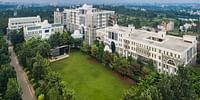
7.8/10(117 Reviews)
Follow
![The National Institute of Engineering - [NIE]](https://static.zollege.in/public/college_data/images/appImage/16540029855.jpg?tr=h-100,w-200,c-force)
The National Institute of Engineering - [NIE]
Mysore, Karnataka7.8/10(53 Reviews)
Follow
![Sir M Visvesvaraya Institute of Technology - [Sir MVIT]](https://static.zollege.in/public/college_data/images/appImage/16499195231489547065php2zxunC2.jpeg?tr=h-100,w-200,c-force)
Sir M Visvesvaraya Institute of Technology - [Sir MVIT]
Bangalore, Karnataka6.9/10(34 Reviews)
Follow
![Bangalore Institute of Technology - [BIT]](https://static.zollege.in/public/college_data/images/appImage/1647244738collegephotocopy1024x6551.jpg?tr=h-100,w-200,c-force)
Bangalore Institute of Technology - [BIT]
Bangalore, Karnataka6.6/10(60 Reviews)
Follow
![Nitte Meenakshi Institute of Technology - [NMIT]](https://static.zollege.in/public/college_data/images/appImage/164767943653.jpg?tr=h-100,w-200,c-force)
Nitte Meenakshi Institute of Technology - [NMIT]
Bangalore, Karnataka7.7/10(102 Reviews)
Follow
![Dayananda Sagar College of Engineering - [DSCE]](https://static.zollege.in/public/college_data/images/appImage/1648457923DayanandaSagarCollegeofEngineeringBangalore1.jpg?tr=h-100,w-200,c-force)
Dayananda Sagar College of Engineering - [DSCE]
Bangalore, Karnataka7.5/10(123 Reviews)
Follow
![BMS Institute of Technology and Management - [BMSIT]](https://static.zollege.in/public/college_data/images/appImage/1647413575admin.jpg?tr=h-100,w-200,c-force)
BMS Institute of Technology and Management - [BMSIT]
Bangalore, Karnataka7.5/10(71 Reviews)
Follow
![CMR Institute of Technology - [CMRIT]](https://static.zollege.in/public/college_data/images/appImage/1647417269aboutoverview1.jpg?tr=h-100,w-200,c-force)
CMR Institute of Technology - [CMRIT]
Bangalore, Karnataka7.4/10(104 Reviews)
Follow
![Ramaiah Institute of Technology - [RIT]](https://static.zollege.in/public/college_data/images/appImage/1647003160maxresdefault1.jpg?tr=h-100,w-200,c-force)
Ramaiah Institute of Technology - [RIT]
Bangalore, Karnataka7.7/10(64 Reviews)
Follow
![Dr. Ambedkar Institute of Technology - [AIT]](https://static.zollege.in/public/college_data/images/appImage/1647348508CampusViewofDrAmbedkarInstituteofTechnologyBangaloreCampusView.jpg?tr=h-100,w-200,c-force)
Dr. Ambedkar Institute of Technology - [AIT]
Bangalore, Karnataka6.9/10(49 Reviews)
Follow
![R V College of Engineering - [RVCE]](https://static.zollege.in/public/college_data/images/appImage/1648117292Img3800x4804.jpg?tr=h-100,w-200,c-force)
R V College of Engineering - [RVCE]
Bangalore, Karnataka7.7/10(91 Reviews)
Follow
![RNS Institute of Technology - [RNSIT]](https://static.zollege.in/public/college_data/images/appImage/16474955611539672588phpQcHsz1.jpeg?tr=h-100,w-200,c-force)
RNS Institute of Technology - [RNSIT]
Bangalore, Karnataka7.4/10(71 Reviews)
Follow
![PES University - [PESU]](https://static.zollege.in/public/college_data/images/appImage/1647243711CampusViewofPESUniversityBangaloreCampusView.jpg?tr=h-100,w-200,c-force)
7.7/10(84 Reviews)
Follow
![Acharya Institute of Technology - [AIT]](https://static.zollege.in/public/college_data/images/appImage/16472606591573113371phpaHyVvt1.jpeg?tr=h-100,w-200,c-force)
Acharya Institute of Technology - [AIT]
Bangalore, Karnataka7.8/10(32 Reviews)
Follow
![B. N. M. Institute of Technology - [BNMIT]](https://static.zollege.in/public/college_data/images/appImage/1647348468BNMInstituteofTechnologyBangalore3.jpg?tr=h-100,w-200,c-force)
B. N. M. Institute of Technology - [BNMIT]
Bangalore, Karnataka7.7/10(25 Reviews)
Follow